

Large language models encode clinical knowledge
Open accessThe DOI matches its Crossref record; 115 of the 116 references it cites were found in a registry or an index.
Abstract
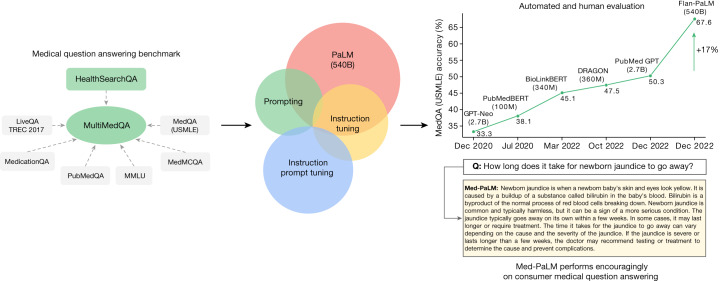
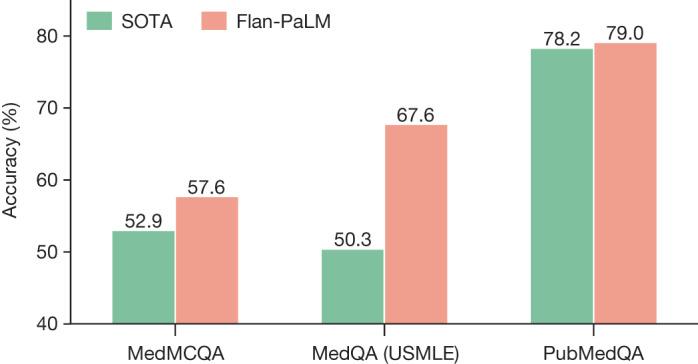
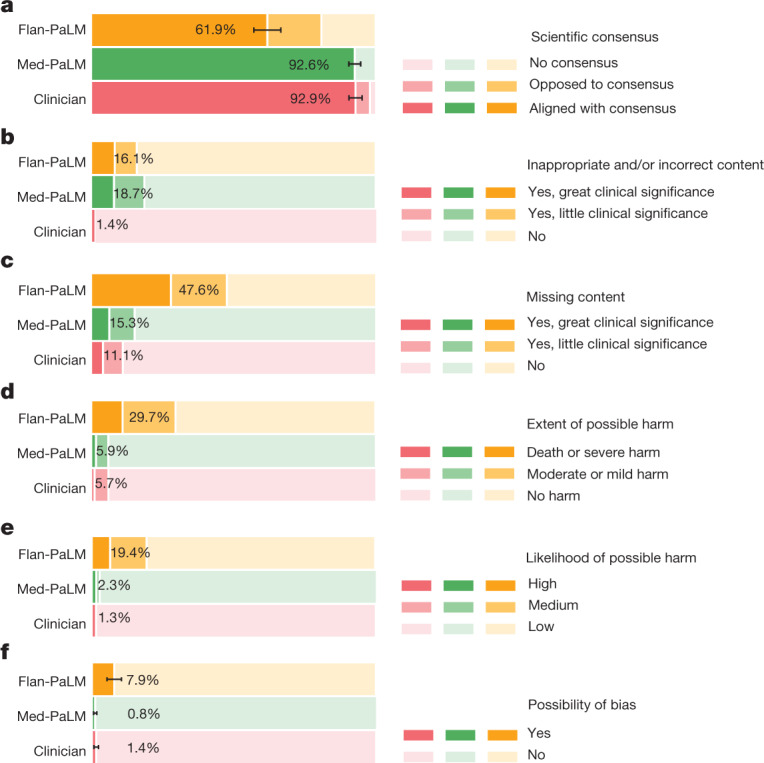
Large language models (LLMs) have demonstrated impressive capabilities, but the bar for clinical applications is high. Attempts to assess the clinical knowledge of models typically rely on automated evaluations based on limited benchmarks. Here, to address these limitations, we present MultiMedQA, a benchmark combining six existing medical question answering datasets spanning professional medicine, research and consumer queries and a new dataset of medical questions searched online, HealthSearchQA. We propose a human evaluation framework for model answers along multiple axes including factuality, comprehension, reasoning, possible harm and bias. In addition, we evaluate Pathways Language Model 1 (PaLM, a 540-billion parameter LLM) and its instruction-tuned variant, Flan-PaLM 2 on MultiMedQA. Using a combination of prompting strategies, Flan-PaLM achieves state-of-the-art accuracy on every MultiMedQA multiple-choice dataset (MedQA 3 , MedMCQA 4 , PubMedQA 5 and Measuring Massive Multitask Language Understanding (MMLU) clinical topics 6 ), including 67.6% accuracy on MedQA (US Medical Licensing Exam-style questions), surpassing the prior state of the art by more than 17%. However, human evaluation reveals key gaps. To resolve this, we introduce instruction prompt tuning, a parameter-efficient approach for aligning LLMs to new domains using a few exemplars. The resulting model, Med-PaLM, performs encouragingly, but remains inferior to clinicians. We show that comprehension, knowledge recall and reasoning improve with model scale and instruction prompt tuning, suggesting the potential utility of LLMs in medicine. Our human evaluations reveal limitations of today’s models, reinforcing the importance of both evaluation frameworks and method development in creating safe, helpful LLMs for clinical applications.
Overview
The claims and statistics of this paper haven’t been checked yet.
Free: it reads the open-access text and checks the first 5 claims that cite a source we can check. Create a free account to check every claim.
Integrity signals
Registry
Cites
Statistics
Figures
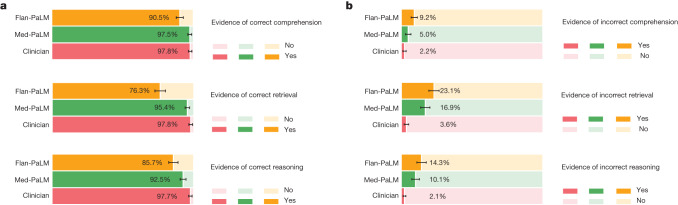
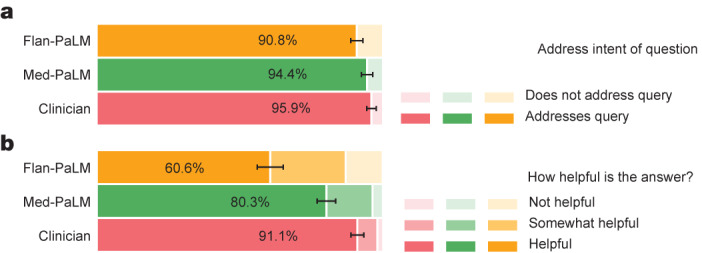
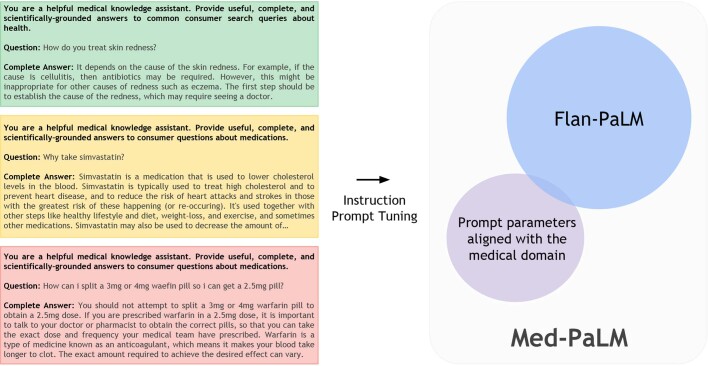
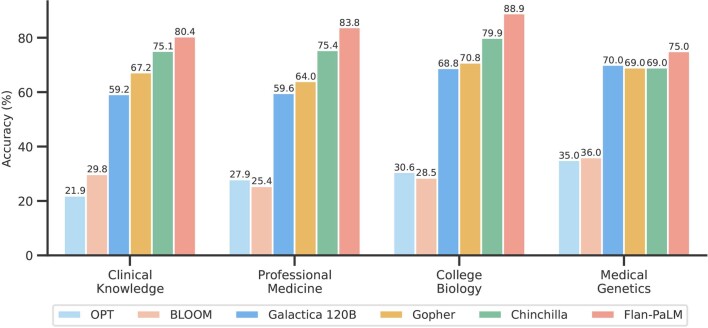
Verification
Claims the paper makes
The claims and statistics of this paper haven’t been checked yet.
Free: it reads the open-access text and checks the first 5 claims that cite a source we can check. Create a free account to check every claim.
Claims other papers make about this one
Each is checked against this paper’s own text: does it say what the citing paper says it does?
The cited source doesn’t support the claim as written.
In the citing paper
“Notably, in healthcare, medical NLP benchmarks like MedQA7, PubMedQA8 and the Massive Multitask Language Understanding (MMLU) serve as the de-facto reporting standard for state-of-the-art medical LLMs9–11 with claims of ‘superhuman’ performance in patient-facing tasks12.”
From Medical large language models are vulnerable to data-poisoning attacks (2025) · cites this paper as [9]
Checked by a reasoning model — may be wrong.
Experimental — accuracy not yet measuredThe cited source doesn’t support the claim as written.
In the citing paper
“Med-PaLM achieved a passing score of 67.6% on USMLE-style MedQA questions”
From Trustworthy Medical Question Answering: An Evaluation-Centric Survey (2025) · cites this paper as Singhal et al., 2023
Checked by a reasoning model — may be wrong.
Experimental — accuracy not yet measuredThe source backs part of the claim, not all of it — or backs it for a different population, condition or comparison.
In the citing paper
“Previous work has demonstrated potential across clinical NLP tasks22,23, adapting to the medical domain by training a new model24,25, fine-tuning an existing model26,27 or supplying task-specific examples in the model prompt27,28.”
From Adapted large language models can outperform medical experts in clinical text summarization (2024) · cites this paper as [24]
Experimental — accuracy not yet measuredThe source backs part of the claim, not all of it — or backs it for a different population, condition or comparison.
In the citing paper
“For example, Google’s Med-PaLM 2 demonstrated proficiency in medical question answering, achieving performance comparable to clinical experts on medical licensing examinations and performing better than generalist physicians in real-world medical questions.70”
From A foundational architecture for AI agents in healthcare (2025) · cites this paper as [70]
Experimental — accuracy not yet measuredThe source backs part of the claim, not all of it — or backs it for a different population, condition or comparison.
In the citing paper
“Large language models (LLMs) and multimodal foundation models now exhibit enhanced reasoning capabilities, natural language understanding, and the ability to interact with external tools such as calculators, databases, and application programming interfaces.”
From Medical AI Agents for Clinical Decision Support: Viewpoint Using the Planning, Action, Reflection, and Memory (PARM) Analytical Lens (2026) · cites this paper as [8]
Experimental — accuracy not yet measured
40 more claims about this paper
Create a free account to see every claim other papers make about this one.
Self-check
Percentages, sums and reported differences re-computed from the paper’s own numbers.
The self-check needs the paper’s full text.
Citations
Cites
Vaswani, A., Shazeer, N., Parmar, N., Uszkoreit, J., Jones, L., Gomez, A. N., Kaiser, L., & Polosukhin, I. (2017) · arXiv · doi:10.48550/arxiv.1706.03762 · Cited by 120,404 · cited 1×
“They owe their success to scaling up the training of transformer-based models [84].”
BackgroundExploring the Limits of Transfer Learning with a Unified Text-to-Text Transformer
Raffel, C., Shazeer, N., Roberts, A., Lee, K., Narang, S., Matena, M., Zhou, Y., Li, W., & Liu, P. J. (2019) · arXiv · doi:10.48550/arxiv.1910.10683 · Cited by 31,859 · cited 1×
“Large language models (LLMs) Over the past few years, LLMs have shown impressive performance on natural language processing (NLP) tasks [12, 14, 15, 30, 69, 70, 73, 89, 91, 99].”
BackgroundLanguage Models are Few-Shot Learners
Brown, T. B., Mann, B., Ryder, N., Subbiah, M., Kaplan, J., Dhariwal, P., Neelakantan, A., Shyam, P., Sastry, G., Askell, A., et al. (2020) · arXiv · doi:10.48550/arxiv.2005.14165 · Cited by 23,372
BLEU: a method for automatic evaluation of machine translation
Papineni, K., Roukos, S., Ward, T., & Zhu, W.-J. (2001) · Proceedings of the 40th Annual Meeting on Association for Computational Linguistics - ACL '02 · doi:10.3115/1073083.1073135 · Cited by 21,344
Decoupled Weight Decay Regularization
Loshchilov, I., & Hutter, F. (2017) · arXiv · doi:10.48550/arxiv.1711.05101 · Cited by 12,522
Scaling Laws for Neural Language Models
Kaplan, J., McCandlish, S., Henighan, T., Brown, T. B., Chess, B., Child, R., Gray, S., Radford, A., Wu, J., & Amodei, D. (2020) · arXiv · doi:10.48550/arxiv.2001.08361 · Cited by 9,550 · cited 1×
“It has been shown that model performance and data-efficiency scales with model size and dataset size [37].”
BioBERT: a pre-trained biomedical language representation model for biomedical text mining
Lee, J., Yoon, W., Kim, S., Kim, D., Kim, S., So, C. H., & Kang, J. (2020) · Bioinformatics · doi:10.1093/bioinformatics/btz682 · Cited by 7,218
Boateng, G. O., Neilands, T. B., Frongillo, E. A., Melgar-Quiñonez, H. R., & Young, S. L. (2018) · Frontiers in Public Health · doi:10.3389/fpubh.2018.00149 · Cited by 5,925
Chain-Of-Thought Prompting Elicits Reasoning in Large Language Models
Wei, J., Wang, X., Schuurmans, D., Bosma, M., Ichter, B., Xia, F., Chi, E., Le, Q. V., & Zhou, D. (2022) · Advances in Neural Information Processing Systems 35 · doi:10.52202/068431-1800 · Cited by 4,505
Self-citationLiu, P., Yuan, W., Fu, J., Jiang, Z., Hayashi, H., & Neubig, G. (2023) · ACM Computing Surveys · doi:10.1145/3560815 · Cited by 4,361
Research works printed but not linked: 2
- Abacha, A. B. et al. in Studies in Health Technology and Informatics (eds Ohno-Machado, L. & Séroussi, B.) 25–29 (IOS Press, 2019).
- Matheny, M., Israni, S. T., Ahmed, M. & Whicher, D. eds. Artificial Intelligence in Health Care: The Hope, the Hype, the Promise, the Peril (National Academy of Medicine, 2022). 39146448
Cited by
Items 201–300 of 1,129
Foundation Models in Radiology: What, How, Why, and Why Not
Paschali, M., Chen, Z., Blankemeier, L., Varma, M., Youssef, A., Blüthgen, C., Langlotz, C. P., Gatidis, S., & Chaudhari, A. S. (2025) · Radiology · doi:10.1148/radiol.240597 · Cited by 168
AlpaCare:Instruction-tuned Large Language Models for Medical ApplicationPreprint
Zhang, X., Tian, C., Yang, X., Chen, L.-C., Li, Z., & Petzold, L. R. (2023) · arXiv (Cornell University) · doi:10.48550/arxiv.2310.14558 · Cited by 182
“The MedPaLM (Singhal et al., 2022; 2023) have shown performance in answering medical questions on par with that of medical professionals.”
GPT versus Resident Physicians — A Benchmark Based on Official Board Scores
Katz, U., Cohen, E., Shachar, E., Somer, J., Fink, A., Morse, E., Shreiber, B., & Wolf, I. (2024) · NEJM AI · doi:10.1056/aidbp2300192 · Cited by 135
Biomedical knowledge graph-optimized prompt generation for large language models
Soman, K., Rose, P. W., Morris, J. H., Akbas, R. E., Smith, B., Peetoom, B., Villouta-Reyes, C., Cerono, G., Shi, Y., Rizk-Jackson, A., et al. (2024) · Bioinformatics · doi:10.1093/bioinformatics/btae560 · Cited by 135
“This approach has led to the creation of models such as PubMedBERT (Lee et al. 2020, Gu et al. 2021) BlueBERT (Peng et al. 2019), SciBERT (Beltagy et al. 2019), ClinicalBERT (Huang et al. 2019), BioGPT (Luo et al. 2022), Med-PaLM (Singhal et al. 2022), and BioMedGPT (Luo et al. 2023).”
MethodDeveloping ChemDFM as a large language foundation model for chemistry
Zhao, Z., Ma, D., Chen, L., Sun, L., Li, Z., Xia, Y., Chen, B., Xu, H., Zhu, Z., Su, Z., et al. (2025) · Cell Reports Physical Science · doi:10.1016/j.xcrp.2025.102523 · Cited by 197
“For example, Med-PaLM [Singhal et al., 2023] and PMC-LLaMa [Wu et al., 2023a] are specialized LLMs for biology and medicine.”
A comprehensive evaluation of large Language models on benchmark biomedical text processing tasks
Jahan, I., Laskar, M. T. R., Peng, C., & Huang, J. X. (2024) · Computers in Biology and Medicine · doi:10.1016/j.compbiomed.2024.108189 · Cited by 106
Jiang, P., Sonne, C., Li, W., You, F., & You, S. (2024) · Engineering · doi:10.1016/j.eng.2024.04.002 · Cited by 166
Jeong, M., Sohn, J., Sung, M., & Kang, J. (2024) · Bioinformatics · doi:10.1093/bioinformatics/btae238 · Cited by 132
“This enhances generalizability in the biomedical and clinical domains preserving the abilities of text generation and self-assessment of its generated explanations with reflective tokens.”
BackgroundMethodInfluentialKnowledge Injection to Counter Large Language Model (LLM) Hallucination
Martino, A., Iannelli, M., & Truong, C. (2023) · Extended Semantic Web Conference · doi:10.1007/978-3-031-43458-7_34 · Cited by 180
“, updates to business information made post-training) and (2) it is difficult to encode all knowledge into the model’s parameters [6].”
BackgroundSurvey of Different Large Language Model Architectures: Trends, Benchmarks, and Challenges
Shao, M., Basit, A., Karri, R., & Shafique, M. (2024) · IEEE Access · doi:10.1109/access.2024.3482107 · Cited by 180
A survey on large language models with multilingualism: recent advances and new frontiers
Huang, K., Mo, F., Zhang, X., Li, H., Li, Y., Zhang, Y., yi, W., Mao, Y., Liu, J., Xu, Y., et al. (2026) · Artificial Intelligence Review · doi:10.1007/s10462-026-11534-5 · Cited by 146
Self-citationAI-Powered Educational Agents: Opportunities, Innovations, and Ethical Challenges
Esparza, D. M. C. (2025) · Information · doi:10.3390/info16060469 · Cited by 163
“Fine-tuned models excel at providing detailed feedback on student essays or explaining technical concepts in fields such as engineering or medicine [25].”
Maharjan, J., Garikipati, A., Singh, N. P., Cyrus, L., Sharma, M., Ciobanu, M., Barnes, G., Thapa, R., Mao, Q., & Das, R. (2024) · Scientific Reports · doi:10.1038/s41598-024-64827-6 · Cited by 157
“A range of OS foundation LLMs were tested to determine the model which achieved the best performance on the four medical benchmarks of interest (i.e., MedQA, MedMCQA, and the medical-subset of the MMLU benchmarks).”
MethodInfluentialFoundation models for fast, label-free detection of glioma infiltration
Kondepudi, A., Pekmezci, M., Hou, X., Scotford, K., Jiang, C., Rao, A. T., Harake, E. S., Chowdury, A., Al‐Holou, W. N., Wang, L., et al. (2024) · Nature · doi:10.1038/s41586-024-08169-3 · Cited by 151
“Foundation models will have a central role in the safe and effective deployment of AI in healthcare and clinical medicine 17,45,46 .”
LLM for SoC Security: A Paradigm Shift
Saha, D., Tarek, S., Yahyaei, K., Saha, S. K., Zhou, J., Tehranipoor, M., & Farahmandi, F. (2024) · IEEE Access · doi:10.1109/access.2024.3427369 · Cited by 93
“The remarkable success of these models has catalyzed the development of fine-tuned domain-specific LLMs such as Med-PaLM [18], BloombergGPT [19], AugGPT [20], BioBERT [21], SciBERT [22], etc.”
BackgroundBuilding machines that learn and think with people
Collins, K. M., Sucholutsky, I., Bhatt, U., Chandra, K., Wong, L., Lee, M., Zhang, C. E., Zhi-Xuan, T., Ho, M., Mansinghka, V., et al. (2024) · Nature Human Behaviour · doi:10.1038/s41562-024-01991-9 · Cited by 73
“Already, foundation models are becoming proficient in medical assessments 80,81 , seemingly capable of easing the heavy burden on doctors by assisting and partnering 82,83 , and even providing preferable responses to patients 84 .”
Higher Layers Need More LoRA ExpertsPreprint
Gao, C., Chen, K., Rao, J., Sun, B., Liu, R., Peng, D., Zhang, Y., Guo, X., Yang, J., & Subrahmanian, V. S. (2024) · arXiv (Cornell University) · doi:10.48550/arxiv.2402.08562 · Cited by 128
“Large Language Models (LLMs) have shown impressive proficiency and transfer learning capabilities across a variety of tasks and domains (Chowdhery et al., 2022; Zhang et al., 2023b; Anil et al., 2023; Jiang et al., 2024; Singhal et al., 2022; Zhu et al., 2023; Lv et al., 2023).”
BackgroundZheng, S., Pan, K., Liu, J., & Chen, Y. (2024) · Reliability Engineering & System Safety · doi:10.1016/j.ress.2024.110382 · Cited by 127
Wang, D., Feng, L., Ye, J., Zou, J., & Zheng, Y. (2023) · MedComm – Future Medicine · doi:10.1002/mef2.43 · Cited by 120
Deep learning for cross-domain data fusion in urban computing: Taxonomy, advances, and outlook
Zou, X., Yan, Y., Hao, X., Hu, Y., Wen, H., Liu, E., Zhang, J., Li, Y., Li, T., Zheng, Y., et al. (2024) · Information Fusion · doi:10.1016/j.inffus.2024.102606 · Cited by 178
The generative era of medical AI
Fahrner, J., Chen, E., Topol, E. J., & Rajpurkar, P. (2025) · Cell · doi:10.1016/j.cell.2025.05.018 · Cited by 145
Lu, W., Luu, R. K., & Buehler, M. J. (2025) · npj Computational Materials · doi:10.1038/s41524-025-01564-y · Cited by 126
Better to Ask in English: Cross-Lingual Evaluation of Large Language Models for Healthcare Queries
Jin, Y., Chandra, M., Verma, G., Hu, Y., De Choudhury, M., & Kumar, S. (2024) · Proceedings of the ACM Web Conference 2024 · doi:10.1145/3589334.3645643 · Cited by 75
“The outcomes of these experiments revealed disparities inherent in LLM responses across these languages, under-scoring the pressing necessity for advancements in cross-lingual capabilities.”
BackgroundMethodInfluentialEvolution and Prospects of Foundation Models: From Large Language Models to Large Multimodal Models
Chen, Z., Xu, L., Zheng, H., Chen, L., Tolba, A. K. R., Zhao, L., Yu, K., & Feng, H. (2024) · Computers, materials & continua/Computers, materials & continua (Print) · doi:10.32604/cmc.2024.052618 · Cited by 180
Transparent medical image AI via an image–text foundation model grounded in medical literature
Kim, C., Gadgil, S. U., DeGrave, A. J., Omiye, J. A., Cai, Z. R., Daneshjou, R., & Lee, S.-I. (2024) · Nature Medicine · doi:10.1038/s41591-024-02887-x · Cited by 125
“For instance, recently proposed updates to CLIP solve technical issues—such as failure to account for synonyms—by leveraging external medical databases 59 or knowledge embedded in large language models 60,61 , and our core idea of concept annotation is readily adaptable to these updates.”
Improved Performance of ChatGPT-4 on the OKAP Examination: A Comparative Study with ChatGPT-3.5
Teebagy, S., Colwell, L., Wood, E., Yaghy, A., & Faustina, M. (2023) · Journal of Academic Ophthalmology · doi:10.1055/s-0043-1774399 · Cited by 86
The Use of ChatGPT to Assist in Diagnosing Glaucoma Based on Clinical Case Reports
Delsoz, M., Raja, H., Madadi, Y., Tang, A. A., Wirostko, B. M., Kahook, M. Y., & Yousefi, S. (2023) · Ophthalmology and Therapy · doi:10.1007/s40123-023-00805-x · Cited by 116
“More recently, large language models (LLMs), particularly Chat Generative Pretrained Transformer (ChatGPT), have received significant interest in ophthalmology, as they have shown promise in understanding clinical knowledge and providing reasonable responses [20, 21].”
BackgroundLarge language models for drug discovery and development
Zheng, Y., Koh, H. Y., Ju, J., Yang, M., May, L. T., Webb, G. I., Li, L., Pan, S., & Church, G. M. (2025) · Patterns · doi:10.1016/j.patter.2025.101346 · Cited by 134
“Med-PaLM, 6 a large-scale LLM incorporating clinical knowledge, has even surpassed human experts on United States Medical Licensing Examination (USMLE)-style medical questions, illustrating the potential of LLMs to reduce the burden of clinical-trial tasks.”
AI in Rehabilitation Medicine: Opportunities and Challenges
Lanotte, F., O’Brien, M. K., & Jayaraman, A. (2023) · Annals of Rehabilitation Medicine · doi:10.5535/arm.23131 · Cited by 148
“Developers and users should continuously assess AI models for factuality, comprehension, reasoning (i.e., by asking the model to show its reasoning process), possible harm, and bias [102].”
BackgroundE-waste Challenges of Generative Artificial Intelligence
Wang, P., Zhang, L.-Y., Tzachor, A., Masanet, E., & Chen, W.-Q. (2024) · doi:10.21203/rs.3.rs-3978528/v1 · Cited by 122
Roles and potential of Large language models in healthcare: A comprehensive review
Lin, C., & Kuo, C. (2025) · Biomedical Journal · doi:10.1016/j.bj.2025.100868 · Cited by 143
“Models such as BioBERT [15] and ClinicalBERT [16] [8].”
Bays, H. E., Fitch, A., Cuda, S., Gonsahn-Bollie, S., Rickey, E., Hablutzel, J., Coy, R., & Censani, M. (2023) · Obesity Pillars · doi:10.1016/j.obpill.2023.100065 · Cited by 105
MedChatZH: A tuning LLM for traditional Chinese medicine consultations
Tan, Y., Zhang, Z., Li, M., Pan, F., Duan, H., Huang, Z., Deng, H., Yu, Z., Yang, C., Shen, G., et al. (2024) · Computers in Biology and Medicine · doi:10.1016/j.compbiomed.2024.108290 · Cited by 141
Self-citationChatScene: Knowledge-Enabled Safety-Critical Scenario Generation for Autonomous Vehicles
Zhang, J., Xu, C., & Li, B. (2024) · IEEE Computer Society Conference on Computer Vision and Pattern Recognition/Proceedings - IEEE Computer Society Conference on Computer Vision and Pattern Recognition/Proceedings · doi:10.1109/cvpr52733.2024.01464 · Cited by 234
Huang, Y., Gomaa, A., Semrau, S., Haderlein, M., Lettmaier, S., Weissmann, T., Grigo, J., Tkhayat, H. B., Frey, B., Gaipl, U., et al. (2023) · Frontiers in Oncology · doi:10.3389/fonc.2023.1265024 · Cited by 112
“Some LLMs, in particular Med-PaLM (6) and its newer version Med-PaLM 2 (53), are fi ne-tuned speci fi cally for medical applications, which have the potential to outperform ChatGPT-4 in radiation oncology.”
InfluentialGenerative artificial intelligence in medicine
Teo, Z. L., Thirunavukarasu, A. J., Elangovan, K., Cheng, H., Moova, P., Soetikno, B., Nielsen, C., Pollreisz, A., Ting, D. S. J., Morris, R. J. T., et al. (2025) · Nature Medicine · doi:10.1038/s41591-025-03983-2 · Cited by 119
“Since then, developers have undertaken specific training and fine-tuning to improve GAI performance in these examinations; the latest models are now approaching or exceeding the performance of expert clinicians 4,77,78 .”
Rajashekar, N. C., Shin, Y. E., Pu, Y., Chung, S., You, K., Giuffre, M., Chan, C. E., Saarinen, T., Hsiao, A., Sekhon, J., et al. (2024) · Proceedings of the CHI Conference on Human Factors in Computing Systems · doi:10.1145/3613904.3642024 · Cited by 85
“LLMs’ ability to generate text answers to clinical questions positions it as a potentially useful tool that providers can interact with similarly to how they interact with human team members and experts [95].”
BackgroundPeople Overtrust AI-Generated Medical Advice despite Low Accuracy
Shekar, S., Pataranutaporn, P., Sarabu, C. R., Cecchi, G., & Maes, P. (2025) · NEJM AI · doi:10.1056/aioa2300015 · Cited by 139
Exploring the Potential of ChatGPT as a Supplementary Tool for Providing Orthopaedic Information
Kaarre, J., Feldt, R., Keeling, L. E., Dadoo, S., Zsidai, B., Hughes, J. D., Samuelsson, K., & Musahl, V. (2023) · Knee Surgery Sports Traumatology Arthroscopy · doi:10.1007/s00167-023-07529-2 · Cited by 117
“Given this, the performance of the model may be limited when attempting to acquire expert-level knowledge, indicating a potential for further improvement [19].”
BackgroundKnowledge sharing in manufacturing using LLM-powered tools: user study and model benchmarking
Freire, S. K., Wang, C., Foosherian, M., Wellsandt, S., Ruiz-Arenas, S., & Niforatos, E. (2024) · Frontiers in Artificial Intelligence · doi:10.3389/frai.2024.1293084 · Cited by 143
“Experts also evaluate the performance of large-language models (LLMs) in specific downstream tasks, such as using physicians to evaluate the output of medical specific LLMs (Singhal et al., 2023).”
BackgroundA large language model for advanced power dispatch
Cheng, Y., Zhao, H. Q., Zhou, X., Zhao, J., Cao, Y., Yang, C., & Cai, X. (2025) · Scientific Reports · doi:10.1038/s41598-025-91940-x · Cited by 154
“In the medical field, Med-PaLM 19 utilized Instruction Tuning 20 to fine-tune the Flan-PaLM 21 model efficiently, and its training data is obtained through random selection and manual evaluation filtering.”
Smith, L. A., Oakden-Rayner, L., Bird, A., Zeng, M., To, M.-S., Mukherjee, S., & Palmer, L. J. (2023) · The Lancet Digital Health · doi:10.1016/s2589-7500(23)00177-2 · Cited by 116
Prediction of recurrence risk in endometrial cancer with multimodal deep learning
Volinsky-Fremond, S., Horeweg, N., Andani, S., Wolf, J. B., Lafarge, M. W., de Kroon, C. D., Ørtoft, G., Høgdall, E. V. S., Dijkstra, J., Jobsen, J. J., et al. (2024) · Nature Medicine · doi:10.1038/s41591-024-02993-w · Cited by 140
“…of HECTOR could be an extension of its inputs to consecutive digitized H&E-stained hysterectomy sections followed by three-dimensional reconstruction 50 , routinely performed IHC-stained WSIs 51 , preoperative radiology images 52 or a clinical report encoding patient-level clinical information 53 .”
Zhui, L., Fenghe, L., Xuehu, W., Qining, F., & Wei, R. (2024) · Journal of Medical Internet Research · doi:10.2196/60083 · Cited by 91
“Failure to address training data bias and adjust algorithms perpetuates unfairness in terms of clinical practices [24].”
Le Guellec, B., Lefèvre, A., Geay, C., Shorten, L., Bruge, C., Hacein-Bey, L., Amouyel, P., Pruvo, J.-P., Kuchcinski, G., & Hamroun, A. (2024) · Radiology: Artificial Intelligence · doi:10.1148/ryai.230364 · Cited by 115
“Recent studies emphasize the innate medical knowledge of LLMs and their logical abilities (23,24), which improved with a low number of contextual examples (19).”
BackgroundChatGPT's Ability to Assist with Clinical Documentation: A Randomized Controlled Trial
Baker, H. P., Dwyer, E., Kalidoss, S., Hynes, K., Wolf, J., & Strelzow, J. A. (2024) · Journal of the American Academy of Orthopaedic Surgeons · doi:10.5435/jaaos-d-23-00474 · Cited by 115
Artificial intelligence: revolutionizing cardiology with large language models
Boonstra, M., Weissenbacher, D., Moore, J. H., Gonzalez-Hernandez, G., & Asselbergs, F. (2024) · European Heart Journal · doi:10.1093/eurheartj/ehad838 · Cited by 84
“Both generic LLMs, like BERT, 42 PaLM, 7 BLOOM, 43 or LLaMa, 44 and domain (Med-PaLM 45 and PubMedBERT 46 ) and language-specific (MedRoBERTa.nl 47 ) models are used for various tasks, for example to provide an overview of relevant medical literature 48 (evidencehunt.com).”
Large Language Model–Based Responses to Patients’ In-Basket Messages
Small, W. R., Wiesenfeld, B., Brandfield-Harvey, B., Jonassen, Z., Mandal, S., Stevens, E. R., Major, V. J., Lostraglio, E., Szerencsy, A., Jones, S., et al. (2024) · JAMA Network Open · doi:10.1001/jamanetworkopen.2024.22399 · Cited by 106
Large language models streamline automated machine learning for clinical studies
Tayebi Arasteh, S., Han, T., Lotfinia, M., Kuhl, C., Kather, J. N., Truhn, D., & Nebelung, S. (2024) · Nature Communications · doi:10.1038/s41467-024-45879-8 · Cited by 114
“We did not fi nd signs of “ hallucinations ” , i.e., factually erroneous responses 27,34 .”
Balas, M., & Ing, E. B. (2023) · JFO Open Ophthalmology · doi:10.1016/j.jfop.2023.100005 · Cited by 110
Generative agent‐based modeling: an introduction and tutorial
Ghaffarzadegan, N., Majumdar, A., Williams, R., & Hosseinichimeh, N. (2024) · System Dynamics Review · doi:10.1002/sdr.1761 · Cited by 148
“…et al., 2023), providing support for mental wellbeing (Ma et al., 2023), exploring economic behavior (Horton, 2023), predicting U.S. Supreme Court decisions (Hamilton, 2023), assisting with research design and experiments (Boiko et al., 2023), and encoding clinical knowledge (Singhal et al., 2023).”
Chain of Thought Utilization in Large Language Models and Application in Nephrology
Miao, J., Thongprayoon, C., Suppadungsuk, S., Krisanapan, P., Radhakrishnan, Y., & Cheungpasitporn, W. (2024) · Medicina · doi:10.3390/medicina60010148 · Cited by 101
“However, a different study revealed that chain-of-thought prompting did not significantly outperform the few-shot prompting approach in medical question-answering tasks [26].”
BackgroundInfluentialA toolbox for surfacing health equity harms and biases in large language models
Pfohl, S. R., Cole-Lewis, H., Sayres, R., Neal, D., Asiedu, M., Dieng, A., Tomasev, N., Rashid, Q. M., Azizi, S., Rostamzadeh, N., et al. (2024) · Nature Medicine · doi:10.1038/s41591-024-03258-2 · Cited by 113
Self-citationNg, F. Y. C., Thirunavukarasu, A. J., Cheng, H., Tan, T. F., Gutierrez, L., Lan, Y., Ong, J. C. L., Chong, Y. S., Ngiam, K. Y., Ho, D., et al. (2023) · Cell Reports Medicine · doi:10.1016/j.xcrm.2023.101230 · Cited by 113
Xu, T., Liu, Y., Jin, Y., Qu, Y., Bai, J., Zhang, W., & Zhou, Y. (2025) · British Journal of Educational Technology · doi:10.1111/bjet.13530 · Cited by 67
Self-citationChen, S., Gao, M., Sasse, K., Hartvigsen, T., Anthony, B., Fan, L., Aerts, H., Gallifant, J., & Bitterman, D. S. (2025) · npj Digital Medicine · doi:10.1038/s41746-025-02008-z · Cited by 112
Artificial intelligence in neurology: opportunities, challenges, and policy implications
Voigtlaender, S., Pawelczyk, J., Geiger, M., Vaios, E., Karschnia, P., Cudkowicz, M., Dietrich, J., Haraldsen, I., Feigin, V. L., Owolabi, M. O., et al. (2024) · Journal of Neurology · doi:10.1007/s00415-024-12220-8 · Cited by 127
“FMs such as MedPaLM [19] and MedPaLM multimodal [20] are the first generalist biomedical models of their kind, achieving state-of-the-art performance and zero-shot generalization capabilities across a wide range of medical tasks (cf. Panel I) [19, 20].”
InfluentialSelf-citationSynthetic data in biomedicine via generative artificial intelligence
van Breugel, B., Liu, T., Oglić, D., & van der Schaar, M. (2024) · Nature Reviews Bioengineering · doi:10.1038/s44222-024-00245-7 · Cited by 152
“For example, the physics-based multicellular simulator PhysiCell 219 can simulate interacting cells in dynamic tissue microenvironments, and interacting physiological models can be applied to study whole-body responses to diseases and injuries 19 .”
Perils and opportunities in using large language models in psychological research
Abdurahman, S., Atari, M., Karimi-Malekabadi, F., Xue, M. J., Trager, J., Park, P. S., Golazizian, P., Omrani, A., & Dehghani, M. (2024) · PNAS Nexus · doi:10.1093/pnasnexus/pgae245 · Cited by 111
Potential of large language models in health care: Delphi study
Denecke, K., May, R., LLMHealthGroup, & Rivera Romero, O. (2024) · Journal of Medical Internet Research · doi:10.2196/52399 · Cited by 111
“First described in 2017 by researchers from Google [3], LLMs are very well suited to NLP [6,7] for tasks such as machine translation [8], document summarization [9], natural language generation [10], and emotion recognition [11].”
BackgroundReichenpfader, D., Müller, H., & Denecke, K. (2024) · npj Digital Medicine · doi:10.1038/s41746-024-01219-0 · Cited by 140
TeleQnA: A Benchmark Dataset to Assess Large Language Models Telecommunications Knowledge
Maatouk, A., Ayed, F., Piovesan, N., Domenico, A. D., Debbah, M. A., & Luo, Z.-Q. T. (2025) · IEEE Network · doi:10.1109/mnet.2025.3576035 · Cited by 157
“The successful integration and adoption of LLMs within specific fields hinge critically on the models’ depth of knowledge and expertise in those particular areas.”
Small language models learn enhanced reasoning skills from medical textbooks
Kim, H., Hwang, H., Lee, J., Park, S., Kim, D., Lee, T., Yoon, C., Sohn, J., Park, J., Reykhart, O., et al. (2025) · npj Digital Medicine · doi:10.1038/s41746-025-01653-8 · Cited by 59
Firth, J., Torous, J., López‐Gil, J. F., Linardon, J., Milton, A., Lambert, J., Smith, L., Jarić, I., Fabian, H., Vancampfort, D., et al. (2024) · World Psychiatry · doi:10.1002/wps.21188 · Cited by 80
Unveiling LLM Evaluation Focused on Metrics: Challenges and SolutionsPreprint
Hu, T., & Zhou, X. (2024) · arXiv · doi:10.48550/arxiv.2404.09135 · Cited by 139
Recent Advances in Large Language Models for Healthcare
Nassiri, K., & Akhloufi, M. A. (2024) · BioMedInformatics · doi:10.3390/biomedinformatics4020062 · Cited by 136
“Based on these results, the Med-PaLM model was introduced using instruction tuning, proving its effectiveness in areas such as clinical expertise, scientific consensus, and medical reasoning processes [99].”
BackgroundMethodTowards Trustworthy Retrieval Augmented Generation for Large Language Models: A Survey
Ni, B., Liu, Z., Lei, Y., Wang, L., Zhao, Y., Cheng, X., Zeng, Q., Dong, L., Xia, Y., Kenthapadi, K., et al. (2026) · ACM Computing Surveys · doi:10.1145/3837074 · Cited by 139
“Reliability: The reliability intervention negatively impacts safety and fairness by expanding retrieval coverage, increasing the likelihood that harmful or demographically biased content enters the context window.”
GoLLIE: Annotation Guidelines improve Zero-Shot Information-Extraction
Sainz, O., García-Ferrero, I., Agerri, R., de Lacalle, O. L., Rigau, G., & Agirre, E. (2024) · International Conference on Learning Representations · doi:10.48550/arxiv.2310.03668 · Cited by 185
“…capabilities in various challenging tasks, including coding Wang & Komatsuzaki (2021) In the field of Information Extraction (IE), recent shared tasks (Fetahu et al., 2023) have shown that encoder-only language models such as XLM-RoBERTa (Conneau et al., 2020) and mDEBERTA (He et al., 2023)…”
BackgroundUse of an ambient artificial intelligence tool to improve quality of clinical documentation
Balloch, J., Sridharan, S., Oldham, G., Wray, J., Gough, P., Robinson, R., Sebire, N. J., Khalil, S., Asgari, E., Tan, C., et al. (2024) · Future Healthcare Journal · doi:10.1016/j.fhj.2024.100157 · Cited by 107
A review on knowledge graphs for healthcare: Resources, applications, and promises
Cui, H., Lu, J., Xu, R., Wang, S.-Y., Ma, W., Yu, Y., Yu, S., Kan, X., Ling, C., Zhao, L., et al. (2025) · Journal of Biomedical Informatics · doi:10.1016/j.jbi.2025.104861 · Cited by 130
Wang, F., Zhang, Z., Zhang, X., Wu, Z., Mo, T., Lu, Q., Wang, W., Li, R., Xu, J., Tang, X., et al. (2025) · ACM Transactions on Intelligent Systems and Technology · doi:10.1145/3768165 · Cited by 106
Artificial intelligence for diabetes care: current and future prospects
Sheng, B., Pushpanathan, K., Guan, Z., Lim, Q. H., Lim, Z. W., Yew, S. M. E., Goh, J. H. L., Bee, Y. M., Sabanayagam, C., Sevdalis, N., et al. (2024) · The Lancet Diabetes & Endocrinology · doi:10.1016/s2213-8587(24)00154-2 · Cited by 106
Ge, J., Li, M., Delk, M. B., & Lai, J. C. (2024) · Gastroenterology · doi:10.1053/j.gastro.2023.12.019 · Cited by 94
Fairness in Large Language Models: A Taxonomic Survey
Chu, Z., Wang, Z., & Zhang, W. (2024) · ACM SIGKDD Explorations Newsletter · doi:10.1145/3682112.3682117 · Cited by 59
“Section 3 provides background information on LLMs to facilitate an understanding of fairness in LLMs explores current definitions of fairness in ML and the adaptations necessary to address linguistic in defin-34 1 SIGKDD Explorations fairness in LLMs is presented in Section 6.”
LLM-assisted systematic review of large language models in clinical medicine
Chen, S. F., Alyakin, A., Seas, A., Yang, E., Choi, J. J., Lee, J. V., Chen, A. L., Warman, P. I., Bitolas, R., Steele, R. J., et al. (2026) · Nature Medicine · doi:10.1038/s41591-026-04229-5 · Cited by 147
“The rarest models studied were Inflection’s ‘Pi’ chatbot Licensing Examination 8–10 .”
Capabilities of GPT‑5 on multimodal medical reasoning
Wang, S., Hu, M., Li, Q., Safari, M., Qiu, R. L. J., & Yang, X. (2026) · SPIE Medical Imaging: Imaging Informatics for Healthcare, Research, and Applications · doi:10.1117/12.3086794 · Cited by 125
“In medical scenarios, real-world problems often span multiple forms of evidence, including medical history text [4, 5], structured indicators [6], and medical imaging [7, 8].”
DARWIN Series: Domain Specific Large Language Models for Natural Science
Xie, T., Wan, Y., Huang, W. H., Yin, Z., Liu, Y., Wang, S., Linghu, Q., Kit, C., Grazian, C., Zhang, W., et al. (2023) · arXiv (Cornell University) · doi:10.48550/arxiv.2308.13565 · Cited by 33
“Some studies train LLMs tailored to specific scientific domains, exemplified by endeavors such as PMC-LLaMA [26] and Med-PaLM [27] in the medical field.”
Self-citationZhang, G., Jin, Q., Zhou, Y., Wang, S., Idnay, B., Luo, Y., Park, E., Nestor, J. G., Spotnitz, M. E., Soroush, A., et al. (2024) · npj Digital Medicine · doi:10.1038/s41746-024-01239-w · Cited by 78
Inadequacies of Large Language Model Benchmarks in the Era of Generative Artificial Intelligence
McIntosh, T. R., Susnjak, T., Arachchilage, N., Liu, T., Xu, D., Watters, P., & Halgamuge, M. N. (2026) · IEEE Transactions on Artificial Intelligence · doi:10.1109/tai.2025.3569516 · Cited by 104
“• MultiMedQA [10]: The study applied standardized benchmarks (MultiMedQA) to Flan-PaLM, a model not exclusively trained on medical data.”
BackgroundMethodInfluentialLi, J., Zong, H., Wu, E., Wu, R., Peng, Z., Zhao, J., Yang, L., Xie, H., & Shen, B. (2024) · BMC Medical Education · doi:10.1186/s12909-024-05738-y · Cited by 104
“Large language models (LLMs) are artificial intelligence (AI) tools that have remarkable ability to understand and generate text [1, 2].”
BackgroundLi, R., Kumar, A., & Chen, J. H. (2023) · JAMA Internal Medicine · doi:10.1001/jamainternmed.2023.1835 · Cited by 104
Performance of a Large Language Model in Screening Citations
Oami, T., Okada, Y., & Nakada, T.-A. (2024) · JAMA Network Open · doi:10.1001/jamanetworkopen.2024.20496 · Cited by 84
Overcoming data scarcity in biomedical imaging with a foundational multi-task model
Schäfer, R., Nicke, T., Höfener, H., Lange, A., Merhof, D., Feuerhake, F., Schulz, V., Lotz, J., & Kiessling, F. M. (2024) · Nature Computational Science · doi:10.1038/s43588-024-00662-z · Cited by 139
Augmenting Black-box LLMs with Medical Textbooks for Biomedical Question Answering
Wang, Y., Ma, X., & Chen, W. (2024) · Findings of the Association for Computational Linguistics: EMNLP 2024 · doi:10.18653/v1/2024.findings-emnlp.95 · Cited by 42
“No-table models in this category include BioBERT , SciBERT , BioLinkBERT , PubmedBERT , Flan-PaLM (540B) , Meditron-70B , Med PaLM 2 (Lee et al., 2020; Beltagy et al., 2019; Yasunaga et al., 2022; Gu et al., 2021; Singhal et al., 2022; Chen et al., 2023; Singhal et al., 2023).”
Inadequacies of Large Language Model Benchmarks in the Era of Generative Artificial Intelligence
McIntosh, T. R., Susnjak, T., Arachchilage, N., Liu, T., Watters, P., & Halgamuge, M. N. (2024) · arXiv · doi:10.48550/arxiv.2402.09880 · Cited by 104
“• MultiMedQA [10]: The study applied standardized benchmarks (MultiMedQA) to Flan-PaLM, a model not exclusively trained on medical data.”
BackgroundMethodInfluentialAssessing the Risk of Bias in Randomized Clinical Trials With Large Language Models
Lai, H., Ge, L., Sun, M., Pan, B., Huang, J., Hou, L., Yang, Q., Liu, J., Liu, J., Ye, Z., et al. (2024) · JAMA Network Open · doi:10.1001/jamanetworkopen.2024.12687 · Cited by 103
Digital Literacy 5.0 to Enhance Multicultural Education
Anurogo, D., Ramba, H. L., Putri, N. D., & Putri, U. M. P. (2023) · Multicultural Islamic Education Review · doi:10.23917/mier.v1i2.3414 · Cited by 148
Large language models should be used as scientific reasoning engines, not knowledge databases
Truhn, D., Reis-Filho, J. S., & Kather, J. N. (2023) · Nature Medicine · doi:10.1038/s41591-023-02594-z · Cited by 102
Taiyi: a bilingual fine-tuned large language model for diverse biomedical tasks
Luo, L., Ning, J., Zhao, Y., Wang, Z., Ding, Z., Chen, P., Fu, W., Han, Q., Xu, G., Qiu, Y., et al. (2024) · Journal of the American Medical Informatics Association · doi:10.1093/jamia/ocae037 · Cited by 83
“Finally, our Taiyi model can be applied to various BioNLP tasks and it is evaluated on 13 test sets covering 4 BioNLP task types.”
MethodSelf-citationCarlà, M. M., Gambini, G., Baldascino, A., Giannuzzi, F., Boselli, F., Crincoli, E., D’Onofrio, N. C., & Rizzo, S. (2024) · British Journal of Ophthalmology · doi:10.1136/bjo-2023-325143 · Cited by 95
LLM-driven multimodal target volume contouring in radiation oncology
Oh, Y., Park, S., Byun, H. K., Cho, Y., Lee, I. J., Kim, J. S., & Ye, J. C. (2024) · Nature Communications · doi:10.1038/s41467-024-53387-y · Cited by 81
Prompt injection attacks on vision language models in oncology
Clusmann, J., Ferber, D., Wiest, I. C., Schneider, C. V., Brinker, T. J., Foersch, S., Truhn, D., & Kather, J. N. (2025) · Nature Communications · doi:10.1038/s41467-024-55631-x · Cited by 75
Alhur, A., Khlaif, Z. N., Hamamra, B. T., & Hussein, E. T. (2025) · JMIR Medical Education · doi:10.2196/74947 · Cited by 119
“The rapid incorporation of artificial intelligence in education (AIED) has significantly changed the educational landscape, providing unique chances for tailored teaching and learning experiences, instant feedback, and enhanced efficiency [1].”
Clinical Text Summarization: Adapting Large Language Models Can Outperform Human Experts
Veen, D. V., Uden, C. V., Blankemeier, L., Delbrouck, J.-B., Aali, A., Bluethgen, C., Pareek, A., Polacin, M., Reis, E. P., Seehofnerova, A., et al. (2023) · doi:10.21203/rs.3.rs-3483777/v1 · Cited by 892
“Recent work in clinical natural language processing (NLP) has demonstrated potential on medical text [75, 86], adapting to the medical domain by either training a new model [68, 79], fine-tuning an existing model [76, 81], or supplying task-specific examples in the model prompt [53, 81].”
BackgroundMethodDiagnostic Accuracy of a Large Language Model in Pediatric Case Studies
Barile, J., Margolis, A., Cason, G., Kim, R., Kalash, S., Tchaconas, A., & Milanaik, R. (2024) · JAMA Pediatrics · doi:10.1001/jamapediatrics.2023.5750 · Cited by 93
SciEval: A Multi-Level Large Language Model Evaluation Benchmark for Scientific Research
Sun, L., Yang, H., Zhao, Z., Ma, D., Shen, Z., Chen, B., Chen, L., & Yu, K. (2024) · Proceedings of the AAAI Conference on Artificial Intelligence · doi:10.1609/aaai.v38i17.29872 · Cited by 206
Large Language Model Prompting Techniques for Advancement in Clinical Medicine
Shah, K., Xu, A. Y., Sharma, Y. K., Daher, M., McDonald, C. L., Diebo, B. G., & Daniels, A. H. (2024) · Journal of Clinical Medicine · doi:10.3390/jcm13175101 · Cited by 111
“This spatial arrangement facilitates the model’s ability to recognize and apply the nuanced relationships between words, enhancing its understanding of language patterns and context [12].”
BackgroundInfluentialEvaluating large language models and agents in healthcare: key challenges in clinical applications
Chen, X., Xiang, J., Lu, S., Liu, Y., He, M., & Shi, D. (2025) · Intelligent Medicine · doi:10.1016/j.imed.2025.03.002 · Cited by 68
Self-citationThirunavukarasu, A. J., Mahmood, S., Malem, A., Foster, W. P., Sanghera, R., Hassan, R., Zhou, S., Wong, S. W., Wong, Y. L., Chong, Y. J., et al. (2024) · PLOS Digital Health · doi:10.1371/journal.pdig.0000341 · Cited by 88
“…of LLM chatbots have suggested that LLM responses may be equivalent or even superior to human doctors in terms of accuracy and empathy, and experiments using complicated case studies suggest that LLMs operate well even outside typical presentations and more common medical conditions [4,25,26].”
BackgroundPrompt Engineering in Healthcare
Patil, R., Heston, T. F., & Bhuse, V. (2024) · Electronics · doi:10.3390/electronics13152961 · Cited by 113
“AI models can generate draft clinical notes, referral letters, and other documentation by designing prompts that accurately capture patient information, medical history, and clinical findings, saving clinicians valuable time [25].”
Metadata
- Authors
- Singhal, K., Azizi, S., Tu, T., Mahdavi, S. S., Wei, J., Chung, H. W., Scales, N., Tanwani, A., Cole-Lewis, H., Pfohl, S., Payne, P., Seneviratne, M., Gamble, P., Kelly, C., Babiker, A., Schärli, N., Chowdhery, A., Mansfield, P., Demner-Fushman, D., Agüera y Arcas, B., Webster, D., Corrado, G. S., Matias, Y., Chou, K., Gottweis, J., Tomasev, N., Liu, Y., Rajkomar, A., Barral, J., Semturs, C., Karthikesalingam, A., & Natarajan, V.
- Affiliations
- Google (United States) (US)
- Corresponding author
- Singhal, Karan
- Azizi, Shekoofeh
- Karthikesalingam, Alan
- Natarajan, Vivek
- ORCID
- Singhal, Karan
- Azizi, Shekoofeh
- Mahdavi, S. Sara
- Chung, Hyung Won
- Tanwani, Ajay
- Cole-Lewis, Heather
- Seneviratne, Martin
- Kelly, Chris
- Chowdhery, Aakanksha
- Mansfield, Philip
- Webster, Dale
- Corrado, Greg S.
- Matias, Yossi
- Chou, Katherine
- Gottweis, Juraj
- Tomasev, Nenad
- Liu, Yun
- Rajkomar, Alvin
- Barral, Joelle
- Semturs, Christopher
- Karthikesalingam, Alan
- Natarajan, Vivek
- Venue
- Nature
- Published
- 2023-07-12
- Volume
- 620
- Issue
- 7972
- Pages
- 172-180
- ISSN
- 0028-0836 (ISSN-L)
- 1476-4687
- PMC
- PMC10396962
- OpenAlex
- W4384071683
- Semantic Scholar
- 6052486bc9144dc1730c12bf35323af3792a1fd0
- Cited by
- 4,083
- References
- 85
- Citations by year
- 2026: 1627 · 2025: 1275 · 2024: 933 · 2023: 247
- FWCI
- 162.53
- Type
- journal article
- Language
- en
- Update notices
- correction (2023-07-27)
- Open access
- hybrid
- doi.org
- Licence
- cc-by
- creativecommons.org/licenses/by/4.0 (tdm)
- creativecommons.org/licenses/by/4.0 (vor)
- Locations
- Nature (publishedVersion, cc-by)
- PubMed Central (publishedVersion, cc-by)
- PubMed (publishedVersion)
- arXiv (Cornell University) (submittedVersion)
- RePEc: Research Papers in Economics (submittedVersion)
- arXiv (Cornell University) (cc-by)
- Funders
- DeepMind
- U.S. National Library of Medicine
- Topics
- Health Sciences › Medicine › Health Informatics › Artificial Intelligence in Healthcare and Education
- Physical Sciences › Computer Science › Artificial Intelligence › Topic Modeling
- Physical Sciences › Computer Science › Artificial Intelligence › Machine Learning in Healthcare
- Keywords
- large language models, clinical knowledge, medical question answering, human evaluation, Arecaceae, MedQA, MedMCQA, PubMedQA, MMLU, clinical reasoning
- MeSH terms
- Clinical Competence, Computer Simulation, Humans, Licensure, Medicine, Natural Language Processing, Physicians, Bias, Knowledge, Benchmarking, Comprehension, Patient Safety, Datasets as Topic
About these checks
Registry, retraction, Cites and statistics results are computed, not judged, with one exception: a printed reference that no index lists is read once by a model before it counts as a citation error. Claims are extracted by a model and kept only when their quote appears verbatim in the text; each cited source is then checked, with a model’s help, for whether it says what the claim relies on. Those verdicts can be wrong — read the claim’s quote and the cited source before relying on one.
Statistics and arithmetic are recomputed, not judged.
Confidence bands are shown only for fields calibrated on our annotated test set. None is calibrated yet, so no band is shown.
What counts as a claim ›How we measure confidence ›How we check this ›
Are you an author, or do you see a problem with this page? Request a review
Data sources
Bibliographic data: Semantic Scholar, OpenAlex, Crossref.
Contains information from the Semantic Scholar Academic Graph Datasets, made available under the ODC Attribution License (ODC-BY 1.0).
Semantic Scholar’s data is described in: Kinney, R., et al. (2023). The Semantic Scholar Open Data Platform. arXiv:2301.10140.
