

Voluntary upregulation of heart rate variability through biofeedback is improved by mental contemplative training
Open accessThe DOI matches its Crossref record; 108 of the 108 references it cites were found in a registry or an index; 24 of the 100 sources its claims cite were checked for support.
Abstract
Regulation of the parasympathetic nervous system, indexed through high frequency heart rate variability (HF-HRV), is indicative of physical and psychological health. However, little is known about the trainability of this capacity. We investigated the effects of a 9-month mental training program (the ReSource Project; n = 298) on voluntary HF-HRV upregulation, assessed with a novel biofeedback procedure. The program consisted of attentional, interoceptive, socio-affective and socio-cognitive training elements, all of which potentially influence parasympathetic regulation. Based on known links between oxytocin and parasympathetic activity, we also explored the relationship of HF-HRV upregulation to the oxytocin receptor system. We found that HF-HRV during the biofeedback session increased after 3 months of training, concomitant with prolonged respiration cycles. Breathing-controlled changes in HF-HRV upregulation, indicative of improved parasympathetic control, were significantly increased after 6 months of training. Homozygous risk allele carriers (AA) of the oxytocin receptor gene polymorphism rs53576 showed initially lower parasympathetic control, but fully compensated for their initial deficits through the training. No changes were found for HF-HRV at rest. Our data demonstrate that a mental training intervention extending over several months can increase the capacity for voluntary regulation of HF-HRV, with important implications for improving individual and societal health.
Overview
CoChat Summary
## TL;DR
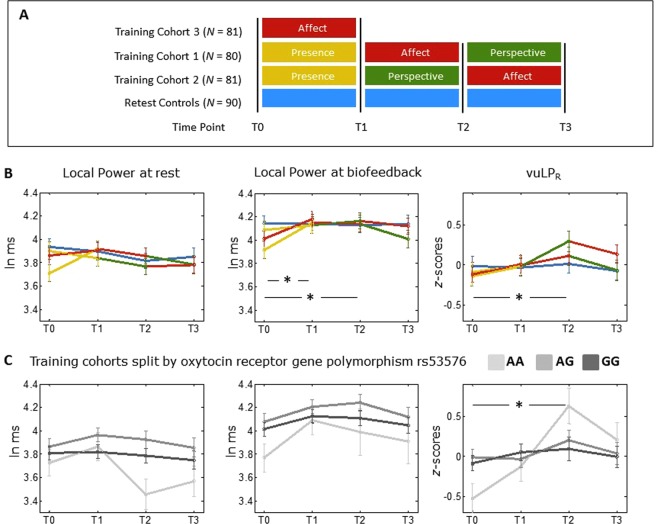
This study found that a 9-month contemplative mental training program improved participants’ voluntary upregulation of heart rate variability (HF-HRV) during a biofeedback task, but not HF-HRV at rest. The strongest gains appeared after 3 and 6 months, and were partly explained by slower breathing and, by 6 months, by breathing-controlled increases suggesting improved parasympathetic control.
## Key findings
- In the training cohorts, LP_BF increased after 3 months: time × training interaction t(738.5) = 2.48, p = 0.007, Cohen’s d = 0.240; respiratory period also increased t(736.1) = 2.34, p = 0.010, d = 0.295.
- After 6 months, the training effect on LP_BF remained significant: t(746.3) = 2.29, p = 0.011, d = 0.254, and breathing-controlled voluntary upregulation (vuLPR) also increased: t(780.8) = 1.77, p = 0.039, d = 0.288.
- No changes were found for resting HF-HRV measures: LP_Rest and breathing-controlled resting power showed p > 0.10 for all tests.
- At baseline, rs53576 genotype was associated with voluntary parasympathetic upregulation: F(2,284) = 3.198, p = 0.042; AA carriers had lower vuLPR than AG (p = 0.027, d = 0.411) and GG (p = 0.014, d = 0.454) carriers.
- Among trained participants, AA carriers showed stronger training-related gains in vuLPR than AG/GG carriers: t(566.1) = −2.30, p = 0.022, and by T3 genotype differences were no longer significant: F(2,140) = 0.234, p = 0.792.
## Methods
- The study used data from the ReSource Project, a 9-month contemplative training intervention with four cohorts: two counterbalanced full-training cohorts, one Affect-only cohort, and one retest control cohort; physiological data were available for N = 298 participants (173 female, M age = 40.4; n = 287 with complete gene data).
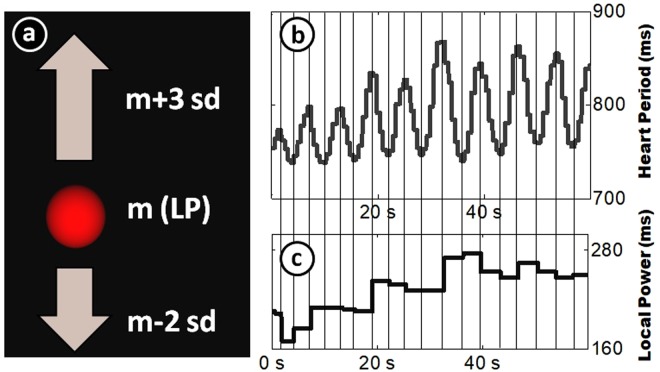
- Participants completed 5-minute resting recordings and a biofeedback task at T0, T1, T2, and T3; ECG and respiration were recorded, and the biofeedback task used a spinning ball whose height reflected Local Power (LP).
- Main analyses used linear mixed models in R/lme4, testing time × training interactions and then collapsing training types when no module-specific differences were found; rs53576 genotyping was also examined as a moderator.
## Limitations
- The paper states that the genetic analyses were exploratory, had small subgroup sizes (AA n = 38, AG n = 120, GG n = 129), and “should be treated with great caution”; it also says they would not survive correction for multiple comparisons.
- The authors note that the biofeedback task may have been affected by declining interest or changing strategies over repeated measurements, which they call a limitation of the biofeedback task in repeated-measure designs.
- The manuscript states that it cannot disentangle training-general from module-specific effects, because there were no module-specific effects; it also says future work is needed to separate the roles of social vs interoceptive components.
Model-written summary. Check it against the paper before relying on it.
Integrity signals
Registry
Cites
Statistics
Figures
Verification
Claims the paper makes
14 Valid · 1 Not valid · 23 Not checked · 79 Own results and interpretations
Some cited sources support this claim and some don’t — read each source’s verdict below.
In the paper
“Earlier studies have failed to find any effects of contemplative mental training on HF-HRV at rest52–54.”
§ Voluntary upregulation of heart rate variability through biofeedback is improved by mental contemplative training > Introduction
What the sources say
- Supportedcites [52] Arch JJ Self-compassion training modulates alpha-amylase, heart rate variability, and subjective responses to social evaluative threat in women Psychoneuroendocrinology 2014 42 49 58 10.1016/j.psyneuen.2013.12.018 24636501 PMC3985278 source
The Results section (“Baseline condition differences”) reports that baseline RSA—identified in Methods as high-frequency heart-rate variability—did not differ between the self-compassion training and control groups (ps > .21). The paper therefore supports the cited sentence as one example of a study finding no training effect on HF-HRV at rest; it does not establish the result for every earlier study. (LLM, conf=0.88)
- Disputedcites [53] Kemeny ME Contemplative/emotion training reduces negative emotional behavior and promotes prosocial responses Emotion 2012 12 338 350 10.1037/a0026118 22148989 sourceExperimental — accuracy not yet measured
The Discussion (p. 10) says earlier studies demonstrated immediate effects on basal respiratory sinus arrhythmia (RSA), rather than finding no effect at rest. This paper's own RSA results concern reactivity and recovery from a stress task, not resting HF-HRV. (LLM, conf=0.86)
Checked by a reasoning model — may be wrong.
- Not checked — no full text of the sourcecites [54] Grossman, P., Deuring, G., Walach, H., Schwarzer, B. & Schmidt, S. Mindfulness-based Intervention does not Influence Cardiac Autonomic Control or Pattern of Physical Activity in Fibromyalgia During Daily Life: An Ambulatory, Multi-measure Randomized Controlled Trial*. The Clinical Journal of Pain (2016). 27518489 source
plain- Asserted: passes — The authors put it forward as true.
- Checkable: passes — It can be checked against evidence.
- Load-bearing: passes — The paper’s conclusions depend on it.
- Based: passes — The paper gives a reason why it holds.
- Supported
Every source the paper cites for this claim was checked and supports it.
In the paper
“Further, the changes in the training cohorts might be partially attributed to regression towards the mean67.”
§ Voluntary upregulation of heart rate variability through biofeedback is improved by mental contemplative training > Results > Changes in HRV regulation
What the sources say
- Supportedcites [67] Bland JM Altman DG Regression towards the mean BMJ: British Medical Journal 1994 308 1499 10.1136/bmj.308.6942.1499 8019287 PMC2540330 source
In “Regression towards the mean” (p. 1), Bland and Altman explain that a group's subsequent mean can be closer to the overall mean for statistical reasons, rather than because of a substantive effect. This supports the citing sentence's cautious suggestion that regression towards the mean might partly explain changes; the paper does not assess the training cohorts themselves. (LLM, conf=0.85)
hedgedstates a possible cause- Asserted: passes — The authors put it forward as true.
- Checkable: passes — It can be checked against evidence.
- Load-bearing: unclear — It is unclear whether the paper’s conclusions depend on it.
- Based: passes — The paper gives a reason why it holds.
- Supported
The cited sources support only part of this claim — read each source’s verdict below.
In the paper
“Homozygous carriers of the minor allele (A; hitherto referred to as ‘risk allele’) of rs53576 have been shown to exhibit lower interpersonal sensitivity59–62.”
§ Voluntary upregulation of heart rate variability through biofeedback is improved by mental contemplative training > Introduction
What the sources say
- Partly supportedcites [59] Bakermans-Kranenburg MJ van Ijzendoorn MH Oxytocin receptor (OXTR) and serotonin transporter (5-HTT) genes associated with observed parenting Social cognitive and affective neuroscience 2008 3 128 134 10.1093/scan/nsn004 19015103 PMC2555463 sourceExperimental — accuracy not yet measured
The Results report lower observed maternal sensitivity for mothers with rs53576 AA or AG genotypes than for those with GG. The methods state that AA and AG were combined, so the study does not establish a separate effect for homozygous AA carriers. The Discussion presents broader interpersonal sensitivity as a possibility, not a measured finding. (LLM, conf=0.91)
- Partly supportedcites [60] Riem MM Pieper S Out D Bakermans-Kranenburg MJ van IJzendoorn MH Oxytocin receptor gene and depressive symptoms associated with physiological reactivity to infant crying Social cognitive and affective neuroscience 2011 6 294 300 10.1093/scan/nsq035 20400491 PMC3110427 sourceExperimental — accuracy not yet measured
Riem et al. (2011) do report that carriers of the rs53576 A allele are less sensitive, but only in the narrow sense of physiological (heart-rate) reactivity to repeated infant cries: the DISCUSSION states 'Participants with the OXTR GG genotype displayed more pronounced physiological reactivity across the cry paradigm than participants with the AA or AG genotype,' and the conclusion speaks of 'increased sensitivity in the OXTR GG genotype'. Two parts of the claim are not in our copy: (a) the construct 'interpersonal sensitivity' — the paper measures autonomic reactivity to infant crying in a subclinical, mostly non-parent twin sample, and calls the A variants merely 'potentially less effective/less efficient' while noting in the limitations that these OXTR variants 'have not yet been shown to be functional'; (b) the homozygous-AA contrast — the paper explicitly combined AA and AG genotypes because of small genotype group sizes (Genotyping: n = 10 AA, 38 AG, 32 GG), so no AA-vs-other comparison is reported. The claim is therefore only partly attributable to this source. (LLM, conf=0.78)
- Supportedcites [61] Tost H A common allele in the oxytocin receptor gene (OXTR) impacts prosocial temperament and human hypothalamic-limbic structure and function Proceedings of the National Academy of Sciences of the United States of America 2010 107 13936 13941 10.1073/pnas.1003296107 20647384 PMC2922278 source
The temperament results report that A/A homozygotes had the lowest reward-dependence scores, significantly below G/G homozygotes. The paper describes reward dependence as a measure of prosocial interpersonal traits, supporting the paraphrase “lower interpersonal sensitivity” (Temperamental Correlates and Assessment of Prosocial Personality Traits; page numbers unavailable). (LLM, conf=0.91)
- Not checked yetcites [62] McQuaid, R. J., McInnis, O. A., Matheson, K. & Anisman, H. Distress of ostracism: oxytocin receptor gene polymorphism confers sensitivity to social exclusion. Social cognitive and affective neuroscience, nsu166 (2015). PMC4526486 25564674 source
Checked before — its earlier verdict is held back until a new check runs.
plainstates an association- Asserted: passes — The authors put it forward as true.
- Checkable: passes — It can be checked against evidence.
- Load-bearing: passes — The paper’s conclusions depend on it.
- Based: passes — The paper gives a reason why it holds.
- Partly supported
The cited sources support only part of this claim — read each source’s verdict below.
In the paper
“intranasal administration of oxytocin has been found to increase HF-HRV in humans27–30”
§ Voluntary upregulation of heart rate variability through biofeedback is improved by mental contemplative training > Discussion The goals of this study were to investigate whether voluntary upregulation of HF-HRV can be improved by contemplative mental training and if so, to determine which types of mental practices can bring about such increases in autonomic control. We used a novel biofeedback task to measure voluntary upregulation of HF-HRV, a cardiac marker of parasympathetic (vagal) control. We investigated this in the context of the ReSource project, a 9-month long mental training study consisting of three different 3-month training modules49. We showed that after 3 months of Presence training, a module focusing on present moment attention and interoception, participants indeed showed increased HF-HRV during the biofeedback task (measured by raw Local Power, a short-term measure of high frequency fluctuations in heart rate). No such changes were found for a retest control cohort. Increased regulation after these first 3 months of training, which included practices such as “breathing meditation” and “body scan”, was largely achieved by adopting slower breathing rates that are known to increase the influence of the vagus nerve on the heart7,65,68. We therefore suggest that the first months of training, which have a strong emphasis on body and breath observation, make participants more aware of ways to influence their bodily state through breath control. The ability to increase HF-HRV through slower breathing has been linked to symptom reduction in a variety of bodily and mental disorders, such as cardiovascular33 and pulmonary disease31,32, as well as depression34 and PTSD35, making these findings clinically relevant. It is noteworthy that participants in the control cohort showed descriptively slightly better biofeedback performance to begin with. These differences were, however, not significant and statistical control for baseline-dependency of change did not change the observed changes from T0 to T1, speaking for robust training-related increases. Still, future studies with less variance in the starting conditions may be helpful in replicating and validating our findings. Interestingly, when using a breathing-controlled parameter of HF-HRV regulation (i.e., increases in Local Power from a resting baseline to the biofeedback, controlling for simultaneous increases in respiration cycle length), participants showed a significant increase after 6 months, that is, after completing either the Affect module or the Perspective module. These modules focused on socio-affective (compassion, loving-kindness) and socio-cognitive skills (perspective taking on self and others). In addition to classical meditation, these modules also included 10 minute contemplative dyadic exercises51. These findings suggest that the participants’ ability to increase the vagal influence of the heart has grown beyond breathing control. This could be attributed to the social nature of the training modules participants complete between month 3 and month 6. As the vagus is strongly implicated in social interaction9,42,69, intersubjective mental training may have had additional beneficial effects on its deliberate regulation. The vagus also plays an important role in the mammalian system underlying care-giving behaviour18–20,70. As the Affect module explicitly aims at fostering care-giving towards one-self (self-compassion)71 and others (pro-social behaviour), improvements in vagal upregulation might also be attributed to stronger activation of the care-system. Interestingly, however, our analyses revealed that there were no module-specific effects, but that it was rather training time which determined the observed increases on the two autonomic markers used here. Thus, the present data do not allow us to disentangle training-general from module-specific effects. We know from an earlier study55 that all of the investigated modules enhance the ability to feel the body (interoception, as measured by a heartbeat perception task). Thus, rather than the social nature of the Affect and Perspective training modules, it could also be an improved awareness of their own bodies which causes the observed enhancement in parasympathetic control. Future studies are warranted to disentangle the contributions of social and interoceptive training components on parasympathetic control. They could also strive to disentangle the effects of different training components such as silent retreats and weekly group sessions, as well as single meditation and dyadic practices on HF-HRV regulation. All training effects were in a range of Cohen’s d = 0.240 and d = 0.295, which are conventionally labelled small effects72. However, this effect may play out in a lot of different physiological and psychological domains, given that HRV has been implicated in a wide range of outcomes from cardiac health, and emotion regulation to altruistic behaviour9,10,73. The increases in HF-HRV control demonstrated after 6 months were no longer significant when tested 3 months later (at the end of the study). This unexpected finding may be due to the nature of the employed task. Whereas participants generally reacted with great interest to the biofeedback task in the initial measurement sessions, this interest may have declined through repetition, yielding changes in strategies or a lower involvement in the task. This may explain the slight drop of performance observable in the last measurement period. These fluctuations in interest in the task may be a limitation of the biofeedback task in repeated-measure designs. Apart from that, the data suggest that the task is sensitive to training-induced changes, rendering the novel biofeedback task a feasible tool for future research on voluntary autonomic regulation. An alternative explanation for the unexpected drop in HF-HRV control at T3 is that the training effects are volatile or that they characterize only a transient improvement. Investigation of participants’ performance at later time points (several months after the end of the training) may clarify this issue. Finally, after having established that mental training can indeed have beneficial influences on voluntary parasympathetic regulation, we explored how this ability is modulated by the oxytocin system. The vagus nerve is densely populated by oxytocin receptors19,21–26 and intranasal administration of oxytocin has been found to increase HF-HRV in humans27–30. We thus explored whether individual differences on the oxytocin receptor gene polymorphism rs53576 modulated respiration-controlled HF-HRV regulation. We found that homozygous carriers of the risk allele (AA) of rs53576 showed a lower capacity for voluntary parasympathetic control at baseline. Previous studies have shown that AA-carriers exhibit lower interpersonal sensitivity59–62. Because relating to others is partially based on vagal regulation2,9,15,69,74,75 these two findings may be linked: The reduced social sensitivity of AA-carriers may also be partially rooted in a relative inability to regulate vagal activity. Furthermore, we found that the trajectories of training-related increases in autonomic control differ by genotype, with AA-carriers profiting most from the training. In fact, the increase in AA-carriers seems to drive the overall increases in the training cohorts. Possibly, their initial deficits may make the social exercises most fruitful for them, leading to stronger improvements than in G-allele carriers. Conversely, a ceiling effect may prevent G-carriers from increasing as much as homozygous A-carriers. Together, our explorative analyses and preliminary findings suggest a genetic basis for individual differences in parasympathetic control as well as its malleability through training. However, due to the relatively small sample sizes of the groups with an N of only 38 for AA carriers (and Ns of 120 and 129 for AG and GG carriers, respectively) these genetic analyses should be treated with great caution and future replication studies in bigger samples are clearly needed. It should also be noted that this genetic effect would not survive correction for multiple comparisons. No effects of the training were found for Local Power at rest. This is in line with earlier studies investigating the effects of contemplative mental training on HF-HRV52–54. The only exception is a study by Tang et al.76. Notice, though, that this is the only study using normalised HF units instead of raw HF power, and that it uses a non-standard frequency band, 0.16–0.45, to determine the HF range. It thus seems that the training does not affect autonomic balance at rest, but rather the ability to induce changes therein. Both heart and breathing rhythm as well as the vagus nerve are under the control of evolutionarily old brainstem structures such as the pons and medulla oblongata77,78. Due to their vital role in preserving basic functions of the organism and their involvement in a large host of brain processes79, their basic activity may be slow to change. This may explain why it is hard to alter resting HF-HRV. The activity of those areas is, however, modulated by cortical activity, particularly by the medial prefrontal cortex80 (mPFC). This is probably how HF-HRV is affected through conscious effort81, such as the regulatory activity during biofeedback. We speculate that participants in our study have improved in the ability to exert a phasic influence of the mPFC on the brainstem, thus affecting HF-HRV. Such modulation is not tonic however, leaving resting HF-HRV unaltered. Future research with long-term practitioners of contemplative mental training (e.g., 15–40 years82) could clarify whether the modulatory effects become tonic, leading to permanently elevated levels of HF-HRV. To summarise, we have shown that a mental training intervention increases the ability to voluntarily increase HF-HRV. This has implications for the use of such interventions in healthy and impaired populations. Mental training may prove particularly fruitful for people who exhibit altered or reduced vagal flexibility, as found in children at risk of psychopathology83 and people suffering from depression84 or social phobia85. Such programs may also be helpful for people suffering from psychotic symptoms, who have been found to benefit from increased HF-HRV control in a biofeedback study86. In addition, increased vagal control may have benefits for healthy individuals, as increases in vagal activity promote relaxation and restoration of the organism, thus increasing general well-being and resilience87–90. Furthermore, the ability to self-induce states of higher vagal activity may serve as a resource that allows individuals to more successfully reach out to other people in need, as suggested by previous studies14–16. Our results thus indicate that the investigated types of contemplative mental training may help build a healthier and more caring society.
What the sources say
- Not checked — no full text of the sourcecites [27] Engert V Koester AM Riepenhausen A Singer T Boosting recovery rather than buffering reactivity: Higher stress-induced oxytocin secretion is associated with increased cortisol reactivity and faster vagal recovery after acute psychosocial stress Psychoneuroendocrinology 2016 74 111 120 10.1016/j.psyneuen.2016.08.029 27608360 source
- Partly supportedcites [28] Kubzansky LD Mendes WB Appleton AA Block J Adler GK A heartfelt response: Oxytocin effects on response to social stress in men and women Biological Psychology 2012 90 1 9 10.1016/j.biopsycho.2012.02.010 22387929 PMC3327158 sourceExperimental — accuracy not yet measured
The Methods (§2.4; page unavailable) define RSA using high-frequency HRV power, and the Results (§3.2; page unavailable) report greater vagal rebound after social stress in participants given intranasal oxytocin than in those given placebo. The finding is limited to post-stress recovery: the paper reports no effect on RSA during the stress task, so it does not establish an increase in HF-HRV generally. (LLM, conf=0.88)
- Partly supportedcites [29] Kemp AH Oxytocin increases heart rate variability in humans at rest: implications for social approach-related motivation and capacity for social engagement PLoS One 2012 7 e44014 10.1371/journal.pone.0044014 22937145 PMC3429409 sourceExperimental — accuracy not yet measured
The Heart Rate Variability results report higher high-frequency HRV after intranasal oxytocin than after placebo, but the HF comparison was not statistically significant (p = 0.08; the stated threshold was p < 0.05). The study tested healthy men at rest, so the unqualified claim that oxytocin has been found to increase HF-HRV in humans overstates this result. (LLM, conf=0.86)
- Not checked — no full text of the sourcecites [30] Norman GJ Oxytocin increases autonomic cardiac control: moderation by loneliness Biol Psychol 2011 86 174 180 10.1016/j.biopsycho.2010.11.006 21126557 source
plainstates a cause- Asserted: passes — The authors put it forward as true.
- Checkable: passes — It can be checked against evidence.
- Load-bearing: passes — The paper’s conclusions depend on it.
- Based: passes — The paper gives a reason why it holds.
The cited sources support only part of this claim — read each source’s verdict below.
In the paper
“Previous studies have shown that AA-carriers exhibit lower interpersonal sensitivity59–62.”
§ Voluntary upregulation of heart rate variability through biofeedback is improved by mental contemplative training > Discussion The goals of this study were to investigate whether voluntary upregulation of HF-HRV can be improved by contemplative mental training and if so, to determine which types of mental practices can bring about such increases in autonomic control. We used a novel biofeedback task to measure voluntary upregulation of HF-HRV, a cardiac marker of parasympathetic (vagal) control. We investigated this in the context of the ReSource project, a 9-month long mental training study consisting of three different 3-month training modules49. We showed that after 3 months of Presence training, a module focusing on present moment attention and interoception, participants indeed showed increased HF-HRV during the biofeedback task (measured by raw Local Power, a short-term measure of high frequency fluctuations in heart rate). No such changes were found for a retest control cohort. Increased regulation after these first 3 months of training, which included practices such as “breathing meditation” and “body scan”, was largely achieved by adopting slower breathing rates that are known to increase the influence of the vagus nerve on the heart7,65,68. We therefore suggest that the first months of training, which have a strong emphasis on body and breath observation, make participants more aware of ways to influence their bodily state through breath control. The ability to increase HF-HRV through slower breathing has been linked to symptom reduction in a variety of bodily and mental disorders, such as cardiovascular33 and pulmonary disease31,32, as well as depression34 and PTSD35, making these findings clinically relevant. It is noteworthy that participants in the control cohort showed descriptively slightly better biofeedback performance to begin with. These differences were, however, not significant and statistical control for baseline-dependency of change did not change the observed changes from T0 to T1, speaking for robust training-related increases. Still, future studies with less variance in the starting conditions may be helpful in replicating and validating our findings. Interestingly, when using a breathing-controlled parameter of HF-HRV regulation (i.e., increases in Local Power from a resting baseline to the biofeedback, controlling for simultaneous increases in respiration cycle length), participants showed a significant increase after 6 months, that is, after completing either the Affect module or the Perspective module. These modules focused on socio-affective (compassion, loving-kindness) and socio-cognitive skills (perspective taking on self and others). In addition to classical meditation, these modules also included 10 minute contemplative dyadic exercises51. These findings suggest that the participants’ ability to increase the vagal influence of the heart has grown beyond breathing control. This could be attributed to the social nature of the training modules participants complete between month 3 and month 6. As the vagus is strongly implicated in social interaction9,42,69, intersubjective mental training may have had additional beneficial effects on its deliberate regulation. The vagus also plays an important role in the mammalian system underlying care-giving behaviour18–20,70. As the Affect module explicitly aims at fostering care-giving towards one-self (self-compassion)71 and others (pro-social behaviour), improvements in vagal upregulation might also be attributed to stronger activation of the care-system. Interestingly, however, our analyses revealed that there were no module-specific effects, but that it was rather training time which determined the observed increases on the two autonomic markers used here. Thus, the present data do not allow us to disentangle training-general from module-specific effects. We know from an earlier study55 that all of the investigated modules enhance the ability to feel the body (interoception, as measured by a heartbeat perception task). Thus, rather than the social nature of the Affect and Perspective training modules, it could also be an improved awareness of their own bodies which causes the observed enhancement in parasympathetic control. Future studies are warranted to disentangle the contributions of social and interoceptive training components on parasympathetic control. They could also strive to disentangle the effects of different training components such as silent retreats and weekly group sessions, as well as single meditation and dyadic practices on HF-HRV regulation. All training effects were in a range of Cohen’s d = 0.240 and d = 0.295, which are conventionally labelled small effects72. However, this effect may play out in a lot of different physiological and psychological domains, given that HRV has been implicated in a wide range of outcomes from cardiac health, and emotion regulation to altruistic behaviour9,10,73. The increases in HF-HRV control demonstrated after 6 months were no longer significant when tested 3 months later (at the end of the study). This unexpected finding may be due to the nature of the employed task. Whereas participants generally reacted with great interest to the biofeedback task in the initial measurement sessions, this interest may have declined through repetition, yielding changes in strategies or a lower involvement in the task. This may explain the slight drop of performance observable in the last measurement period. These fluctuations in interest in the task may be a limitation of the biofeedback task in repeated-measure designs. Apart from that, the data suggest that the task is sensitive to training-induced changes, rendering the novel biofeedback task a feasible tool for future research on voluntary autonomic regulation. An alternative explanation for the unexpected drop in HF-HRV control at T3 is that the training effects are volatile or that they characterize only a transient improvement. Investigation of participants’ performance at later time points (several months after the end of the training) may clarify this issue. Finally, after having established that mental training can indeed have beneficial influences on voluntary parasympathetic regulation, we explored how this ability is modulated by the oxytocin system. The vagus nerve is densely populated by oxytocin receptors19,21–26 and intranasal administration of oxytocin has been found to increase HF-HRV in humans27–30. We thus explored whether individual differences on the oxytocin receptor gene polymorphism rs53576 modulated respiration-controlled HF-HRV regulation. We found that homozygous carriers of the risk allele (AA) of rs53576 showed a lower capacity for voluntary parasympathetic control at baseline. Previous studies have shown that AA-carriers exhibit lower interpersonal sensitivity59–62. Because relating to others is partially based on vagal regulation2,9,15,69,74,75 these two findings may be linked: The reduced social sensitivity of AA-carriers may also be partially rooted in a relative inability to regulate vagal activity. Furthermore, we found that the trajectories of training-related increases in autonomic control differ by genotype, with AA-carriers profiting most from the training. In fact, the increase in AA-carriers seems to drive the overall increases in the training cohorts. Possibly, their initial deficits may make the social exercises most fruitful for them, leading to stronger improvements than in G-allele carriers. Conversely, a ceiling effect may prevent G-carriers from increasing as much as homozygous A-carriers. Together, our explorative analyses and preliminary findings suggest a genetic basis for individual differences in parasympathetic control as well as its malleability through training. However, due to the relatively small sample sizes of the groups with an N of only 38 for AA carriers (and Ns of 120 and 129 for AG and GG carriers, respectively) these genetic analyses should be treated with great caution and future replication studies in bigger samples are clearly needed. It should also be noted that this genetic effect would not survive correction for multiple comparisons. No effects of the training were found for Local Power at rest. This is in line with earlier studies investigating the effects of contemplative mental training on HF-HRV52–54. The only exception is a study by Tang et al.76. Notice, though, that this is the only study using normalised HF units instead of raw HF power, and that it uses a non-standard frequency band, 0.16–0.45, to determine the HF range. It thus seems that the training does not affect autonomic balance at rest, but rather the ability to induce changes therein. Both heart and breathing rhythm as well as the vagus nerve are under the control of evolutionarily old brainstem structures such as the pons and medulla oblongata77,78. Due to their vital role in preserving basic functions of the organism and their involvement in a large host of brain processes79, their basic activity may be slow to change. This may explain why it is hard to alter resting HF-HRV. The activity of those areas is, however, modulated by cortical activity, particularly by the medial prefrontal cortex80 (mPFC). This is probably how HF-HRV is affected through conscious effort81, such as the regulatory activity during biofeedback. We speculate that participants in our study have improved in the ability to exert a phasic influence of the mPFC on the brainstem, thus affecting HF-HRV. Such modulation is not tonic however, leaving resting HF-HRV unaltered. Future research with long-term practitioners of contemplative mental training (e.g., 15–40 years82) could clarify whether the modulatory effects become tonic, leading to permanently elevated levels of HF-HRV. To summarise, we have shown that a mental training intervention increases the ability to voluntarily increase HF-HRV. This has implications for the use of such interventions in healthy and impaired populations. Mental training may prove particularly fruitful for people who exhibit altered or reduced vagal flexibility, as found in children at risk of psychopathology83 and people suffering from depression84 or social phobia85. Such programs may also be helpful for people suffering from psychotic symptoms, who have been found to benefit from increased HF-HRV control in a biofeedback study86. In addition, increased vagal control may have benefits for healthy individuals, as increases in vagal activity promote relaxation and restoration of the organism, thus increasing general well-being and resilience87–90. Furthermore, the ability to self-induce states of higher vagal activity may serve as a resource that allows individuals to more successfully reach out to other people in need, as suggested by previous studies14–16. Our results thus indicate that the investigated types of contemplative mental training may help build a healthier and more caring society.
What the sources say
- Partly supportedcites [59] Bakermans-Kranenburg MJ van Ijzendoorn MH Oxytocin receptor (OXTR) and serotonin transporter (5-HTT) genes associated with observed parenting Social cognitive and affective neuroscience 2008 3 128 134 10.1093/scan/nsn004 19015103 PMC2555463 sourceExperimental — accuracy not yet measured
The Results report that mothers with OXTR AA or AG genotypes were less sensitive to their toddlers than mothers with the GG genotype. The study measured maternal sensitivity during parent–toddler tasks, not interpersonal sensitivity generally; the Discussion presents that broader possibility as a hypothesis requiring further research. The AA and AG genotypes were also combined in the analysis. (LLM, conf=0.87)
- Partly supportedcites [60] Riem MM Pieper S Out D Bakermans-Kranenburg MJ van IJzendoorn MH Oxytocin receptor gene and depressive symptoms associated with physiological reactivity to infant crying Social cognitive and affective neuroscience 2011 6 294 300 10.1093/scan/nsq035 20400491 PMC3110427 sourceExperimental — accuracy not yet measured
Riem et al. (2011) do report a genotype difference in sensitivity, but of a narrower kind than the claim states: the DISCUSSION says 'Participants with the OXTR GG genotype displayed more pronounced physiological reactivity across the cry paradigm than participants with the AA or AG genotype,' i.e. heart-rate reactivity to recorded infant crying in a sample of young women/twins, and only in those with low depressive symptoms (the three-way episode x OXTR x CES-D interaction, RESULTS). The paper never measures 'interpersonal sensitivity' as such, and the behavioural sensitivity finding it invokes is credited to another work — Bakermans-Kranenburg and Van IJzendoorn (2008), who 'found that mothers with OXTR GG genotype were more sensitive to their toddlers' signals than mothers with the AA or AG genotype' (DISCUSSION/INTRODUCTION). Additionally, the paper analysed AA together with AG ('the necessary combination of the OXTR AA and AG genotypes', DISCUSSION limitations), so it says nothing about AA homozygotes specifically. Thus the direction of the genotype effect is supported, but the generalization to lower interpersonal sensitivity in AA-carriers is not. (LLM, conf=0.72)
- Supportedcites [61] Tost H A common allele in the oxytocin receptor gene (OXTR) impacts prosocial temperament and human hypothalamic-limbic structure and function Proceedings of the National Academy of Sciences of the United States of America 2010 107 13936 13941 10.1073/pnas.1003296107 20647384 PMC2922278 source
The temperament results report that A/A homozygotes had the lowest reward-dependence scores, significantly below G/G homozygotes. The paper describes low reward dependence as socially detached interpersonal traits and, in the Discussion, interprets the result as decreased sociality. The indexed passages provide section labels but no page numbers. (LLM, conf=0.88)
- Not checked yetcites [62] McQuaid, R. J., McInnis, O. A., Matheson, K. & Anisman, H. Distress of ostracism: oxytocin receptor gene polymorphism confers sensitivity to social exclusion. Social cognitive and affective neuroscience, nsu166 (2015). PMC4526486 25564674 source
Checked before — its earlier verdict is held back until a new check runs.
plainstates an association- Asserted: passes — The authors put it forward as true.
- Checkable: passes — It can be checked against evidence.
- Load-bearing: unclear — It is unclear whether the paper’s conclusions depend on it.
- Based: passes — The paper gives a reason why it holds.
- Partly supported
46 more claims · 3 with their cited sources checked
Create a free account to see all 117 claims and to verify the 5 references still open.
- Probably not a substantial claim. 42
- It may state two separate claims as one. 31
Claims other papers make about this one
Each is checked against this paper’s own text: does it say what the citing paper says it does?
The cited source says what the claim attributes to it.
In the citing paper
“Meditation could also be complementary; voluntary upregulation of HRV through biofeedback may be improved by mental contemplative training109.”
From Effect of breathwork on stress and mental health: A meta-analysis of randomised-controlled trials (2023) · cites this paper as [109]
Statistics that don’t add up
Each reported p-value recomputed from its test statistic and degrees of freedom, each partial η² from its F, and each ratio, mean difference or B printed with a p checked against its own confidence interval.
Rated minor: it would not touch a result — a value no result rests on, a p-value that stays on the same side of the significance level, or a conflict that is clerical, resolved elsewhere in the paper, or outside its own findings.
In the paper
“t(784.6) = 1.31, p = 0.13”
§ Voluntary upregulation of heart rate variability through biofeedback is improved by mental contemplative training > Results > Changes in HRV regulation
Reported p = .13 · recomputed p = .191
Statistics recomputed
Every reported test result, recomputed from its test statistic and degrees of freedom. A result shows as not adding up only once an independent check has confirmed it.
- Doesn’t add upt(784.6) = 1.31reported p = .13 · recomputed p = .191
“t(784.6) = 1.31, p = .13”
- Consistentt(738.5) = 2.48reported p = .007 · recomputed p = .013
“t(738.5) = 2.48, p = .007”
The paper states a one-tailed test
- Consistentt(736.1) = 2.34reported p = .01 · recomputed p = .020
“t(736.1) = 2.34, p = .010”
The paper states a one-tailed test
- Consistentt(767) = 0.89reported p = .188 · recomputed p = .374
“t(767.0) = 0.89, p = .188”
The paper states a one-tailed test
- Consistentt(746.3) = 2.29reported p = .011 · recomputed p = .022
“t(746.3) = 2.29, p = .011”
The paper states a one-tailed test
11 more recomputed tests
Create a free account to see every test the Stats check recomputed.
Self-check
Percentages, sums and reported differences re-computed from the paper’s own numbers.
Self-check results appear here once an independent check has confirmed them.
Citations
Cites
Fitting Linear Mixed-Effects Models Using lme4
Bates, D., Mächler, M., Bolker, B., & Walker, S. (2015) · Journal of Statistical Software · doi:10.18637/jss.v067.i01 · Cited by 86,835
Heart Rate Variability: Standards of Measurement, Physiological Interpretation, and Clinical Use
Electrophysiology, T. F. O. T. E. S. O. C. T. N. A. (1996) · Circulation · doi:10.1161/01.cir.93.5.1043 · Cited by 17,159
Heart rate variability: Standards of measurement, physiological interpretation, and clinical use
Malik, M., Bigger, J. T., Camm, A. J., Kleiger, R. E., Malliani, A., Moss, A. J., & Schwartz, P. J. (1996) · European Heart Journal · doi:10.1093/oxfordjournals.eurheartj.a014868 · Cited by 15,289
(2008) · Medical Entomology and Zoology · Cited by 7,477
How do you feel? Interoception: The sense of the physiological condition of the body
Craig, A. D. (2002) · Nature Reviews Neuroscience · doi:10.1038/nrn894 · Cited by 6,006
Heart rate variability: origins, methods, and interpretive caveats
BERNTSON, G. G., THOMAS BIGGER, J., ECKBERG, D. L., GROSSMAN, P., KAUFMANN, P. G., MALIK, M., NAGARAJA, H. N., PORGES, S. W., SAUL, J. P., STONE, P. H., et al. (1997) · Psychophysiology · doi:10.1111/j.1469-8986.1997.tb02140.x · Cited by 3,962
Emmons, R. A., & McCullough, M. E. (2003) · Journal of Personality and Social Psychology · doi:10.1037//0022-3514.84.2.377 · Cited by 3,826
Frith, C., & Frith, U. (2005) · Current Biology · doi:10.1016/j.cub.2005.08.041 · Cited by 3,481
Handbook of emotion regulation
(2014) · Choice Reviews Online · doi:10.5860/choice.52-1127 · Cited by 3,280
Thayer, J. F., Åhs, F., Fredrikson, M., Sollers, J. J., & Wager, T. D. (2012) · Neuroscience & Biobehavioral Reviews · doi:10.1016/j.neubiorev.2011.11.009 · Cited by 3,224
Ellis, P. D. (2010) · doi:10.1017/cbo9780511761676 · Cited by 2,461
Thayer, J. F., & Lane, R. D. (2009) · Neuroscience & Biobehavioral Reviews · doi:10.1016/j.neubiorev.2008.08.004 · Cited by 2,040
Carmody, J., & Baer, R. A. (2008) · Journal of Behavioral Medicine · doi:10.1007/s10865-007-9130-7 · Cited by 1,823
Chiesa, A., & Serretti, A. (2009) · The Journal of Alternative and Complementary Medicine · doi:10.1089/acm.2008.0495 · Cited by 1,681
Experimental disclosure and its moderators: A meta-analysis.
Frattaroli, J. (2006) · Psychological Bulletin · doi:10.1037/0033-2909.132.6.823 · Cited by 1,502
Long-term meditators self-induce high-amplitude gamma synchrony during mental practice
Lutz, A., Greischar, L. L., Rawlings, N. B., Ricard, M., & Davidson, R. J. (2004) · Proceedings of the National Academy of Sciences · doi:10.1073/pnas.0407401101 · Cited by 1,328
Why We (Usually) Don't Have to Worry About Multiple Comparisons
Gelman, A., Hill, J., & Yajima, M. (2012) · Journal of Research on Educational Effectiveness · doi:10.1080/19345747.2011.618213 · Cited by 1,274
Affective consciousness: core emotional feelings in animals and humans.
Panksepp, J. (2005) · Consciousness and Cognition · doi:10.1016/j.concog.2004.10.004 · Cited by 1,217
Neural mechanisms of autonomic, affective, and cognitive integration
Critchley, H. D. (2005) · Journal of Comparative Neurology · doi:10.1002/cne.20749 · Cited by 1,214
Gratitude and Prosocial Behavior: Helping When It Costs You
Bartlett, M. Y., & DeSteno, D. (2006) · Psychological Science · doi:10.1111/j.1467-9280.2006.01705.x · Cited by 1,161
BERNTSON, G. G., CACIOPPO, J. T., & QUIGLEY, K. S. (1993) · Psychophysiology · doi:10.1111/j.1469-8986.1993.tb01731.x · Cited by 998
depue, R. A., & morrone-strupinsky, J. V. (2005) · Behavioral and Brain Sciences · doi:10.1017/s0140525x05000063 · Cited by 958
Lutz, A., Brefczynski-Lewis, J., Johnstone, T., & Davidson, R. J. (2008) · PLoS ONE · doi:10.1371/journal.pone.0001897 · Cited by 942
Boehm, J. K., & Kubzansky, L. D. (2012) · Psychological Bulletin · doi:10.1037/a0027448 · Cited by 909
Physiology of the Autonomic Nervous System
McCorry, L. K. (2007) · American Journal of Pharmaceutical Education · doi:10.5688/aj710478 · Cited by 888
The Polyvagal Theory: phylogenetic contributions to social behavior
Porges, S. W. (2003) · Physiology & Behavior · doi:10.1016/s0031-9384(03)00156-2 · Cited by 848
Reconstructing and deconstructing the self: cognitive mechanisms in meditation practice
Dahl, C. J., Lutz, A., & Davidson, R. J. (2015) · Trends in Cognitive Sciences · doi:10.1016/j.tics.2015.07.001 · Cited by 809
Oxytocin pathways and the evolution of human behavior
Carter, C. S. (2014) · Annual Review of Psychology · doi:10.1146/annurev-psych-010213-115110 · Cited by 714
Central and autonomic nervous system interaction is altered by short-term meditation
Tang, Y.-Y., Ma, Y., Fan, Y., Feng, H., Wang, J., Feng, S., Lu, Q., Hu, B., Lin, Y., Li, J., et al. (2009) · Proceedings of the National Academy of Sciences · doi:10.1073/pnas.0904031106 · Cited by 680
Tost, H., Kolachana, B., Hakimi, S., Lemaitre, H., Verchinski, B. A., Mattay, V. S., Weinberger, D. R., & Meyer–Lindenberg, A. (2010) · Proceedings of the National Academy of Sciences · doi:10.1073/pnas.1003296107 · Cited by 564
Antelmi, I., De Paula, R. S., Shinzato, A. R., Peres, C. A., Mansur, A. J., & Grupi, C. J. (2004) · The American Journal of Cardiology · doi:10.1016/j.amjcard.2003.09.065 · Cited by 555
Statistic Notes: Regression towards the mean
Bland, J. M., & Altman, D. G. (1994) · BMJ · doi:10.1136/bmj.308.6942.1499 · Cited by 547
Respiratory sinus arrhythmia, emotion, and emotion regulation during social interaction
Butler, E. A., Wilhelm, F. H., & Gross, J. J. (2006) · Psychophysiology · doi:10.1111/j.1469-8986.2006.00467.x · Cited by 520
Oxytocin receptor (OXTR) and serotonin transporter (5-HTT) genes associated with observed parenting
Bakermans-Kranenburg, M. J., & van IJzendoorn, M. H. (2008) · Social Cognitive and Affective Neuroscience · doi:10.1093/scan/nsn004 · Cited by 474
Social Engagement and Attachment: A Phylogenetic Perspective
PORGES, S. W. (2003) · Annals of the New York Academy of Sciences · doi:10.1196/annals.1301.004 · Cited by 472
Grossman, P., Karemaker, J., & Wieling, W. (1991) · Psychophysiology · doi:10.1111/j.1469-8986.1991.tb00412.x · Cited by 471
Human feelings: why are some more aware than others?
Craig, A. D. (. (2004) · Trends in Cognitive Sciences · doi:10.1016/j.tics.2004.04.004 · Cited by 445
Karavidas, M. K., Lehrer, P. M., Vaschillo, E., Vaschillo, B., Marin, H., Buyske, S., Malinovsky, I., Radvanski, D., & Hassett, A. (2007) · Applied Psychophysiology and Biofeedback · doi:10.1007/s10484-006-9029-z · Cited by 440
Eckberg, D. L. (2003) · The Journal of Physiology · doi:10.1113/jphysiol.2002.037192 · Cited by 431
Contemplative/emotion training reduces negative emotional behavior and promotes prosocial responses.
Kemeny, M. E., Foltz, C., Cavanagh, J. F., Cullen, M., Giese-Davis, J., Jennings, P., Rosenberg, E. L., Gillath, O., Shaver, P. R., Wallace, B. A., et al. (2012) · Emotion · doi:10.1037/a0026118 · Cited by 391
A comparison of three quantification methods for estimation of respiratory sinus arrhythmia.
Grossman, P., van Beek, J., & Wientjes, C. (1990) · Psychophysiology · doi:10.1111/j.1469-8986.1990.tb03198.x · Cited by 381
The origins of altruism in offspring care.
Preston, S. D. (2013) · Psychological Bulletin · doi:10.1037/a0031755 · Cited by 368
The anova to mixed model transition
Boisgontier, M. P., & Cheval, B. (2016) · Neuroscience & Biobehavioral Reviews · doi:10.1016/j.neubiorev.2016.05.034 · Cited by 367
Zucker, T. L., Samuelson, K. W., Muench, F., Greenberg, M. A., & Gevirtz, R. N. (2009) · Applied Psychophysiology and Biofeedback · doi:10.1007/s10484-009-9085-2 · Cited by 335
Cardiac vagal tone is associated with social engagement and self-regulation
Geisler, F. C. M., Kubiak, T., Siewert, K., & Weber, H. (2013) · Biological Psychology · doi:10.1016/j.biopsycho.2013.02.013 · Cited by 313
The Mindful Way through Depression: Freeing Yourself from Chronic Unhappiness
Williams, J. M. G. (2012) · Cited by 309
Efferent connections of the ventral medulla oblongata in the rat
Loewy, A. D., Wallach, J. H., & McKellar, S. (1981) · Brain Research Reviews · doi:10.1016/0165-0173(81)90012-6 · Cited by 293
Arch, J. J., Brown, K. W., Dean, D. J., Landy, L. N., Brown, K. D., & Laudenslager, M. L. (2014) · Psychoneuroendocrinology · doi:10.1016/j.psyneuen.2013.12.018 · Cited by 290
ARTiiFACT: a tool for heart rate artifact processing and heart rate variability analysis.
Kaufmann, T., Sütterlin, S., Schulz, S. M., & Vögele, C. (2011) · Behavior Research Methods · doi:10.3758/s13428-011-0107-7 · Cited by 284
The impact of heart rate variability on subjective well-being is mediated by emotion regulation
Geisler, F. C. M., Vennewald, N., Kubiak, T., & Weber, H. (2010) · Personality and Individual Differences · doi:10.1016/j.paid.2010.06.015 · Cited by 279
Immunohistochemical localization of oxytocin receptors in human brain
Boccia, M. L., Petrusz, P., Suzuki, K., Marson, L., & Pedersen, C. A. (2013) · Neuroscience · doi:10.1016/j.neuroscience.2013.08.048 · Cited by 276
Rockliff, H., Gilbert, P., McEwan, K., Lightman, S. L., & Glover, D. G. (2008) · Explore Bristol Research · Cited by 276
The animal and human neuroendocrinology of social cognition, motivation and behavior
McCall, C., & Singer, T. (2012) · Nature Neuroscience · doi:10.1038/nn.3084 · Cited by 273
Self-citationAffective and physiological responses to the suffering of others: Compassion and vagal activity.
Stellar, J. E., Cohen, A., Oveis, C., & Keltner, D. (2015) · Journal of Personality and Social Psychology · doi:10.1037/pspi0000010 · Cited by 271
Chen, F. S., Kumsta, R., von Dawans, B., Monakhov, M., Ebstein, R. P., & Heinrichs, M. (2011) · Proceedings of the National Academy of Sciences · doi:10.1073/pnas.1113079108 · Cited by 268
Biofeedback treatment for asthma.
Lehrer, P. M., Vaschillo, E., Vaschillo, B., Lu, S.-E., Scardella, A., Siddique, M., & Habib, R. H. (2004) · Chest · doi:10.1378/chest.126.2.352 · Cited by 264
Relationships between features of autonomic cardiovascular control and cognitive performance
Duschek, S., Muckenthaler, M., Werner, N., & Reyes del Paso, G. A. (2009) · Biological Psychology · doi:10.1016/j.biopsycho.2009.03.003 · Cited by 249
Internal family systems therapy
(1998) · PsycEXTRA Dataset · doi:10.1037/e537692004-001 · Cited by 247
Heart rate dynamics during three forms of meditation.
Peng, C.-K., Henry, I. C., Mietus, J. E., Hausdorff, J. M., Khalsa, G., Benson, H., & Goldberger, A. L. (2004) · International Journal of Cardiology · doi:10.1016/j.ijcard.2003.02.006 · Cited by 247
STOCK, S., & UVNÄS‐MOBERG, K. (1988) · Acta Physiologica Scandinavica · doi:10.1111/j.1748-1716.1988.tb08294.x · Cited by 230
Tribollet, E., Charpak, S., Schmidt, A., Dubois-Dauphin, M., & Dreifuss, J. (1989) · The Journal of Neuroscience · doi:10.1523/jneurosci.09-05-01764.1989 · Cited by 228
Oxytocin increases autonomic cardiac control: Moderation by loneliness
Norman, G. J., Cacioppo, J. T., Morris, J. S., Malarkey, W. B., Berntson, G. G., & DeVries, A. C. (2011) · Biological Psychology · doi:10.1016/j.biopsycho.2010.11.006 · Cited by 211
The art of living : Vipassana meditation as taught by S.N. Goenka
Hart, W., & Goenka, S. N. (1990) · Cited by 207
Bornemann, B., & Singer, T. (2017) · Psychophysiology · doi:10.1111/psyp.12790 · Cited by 204
Self-citationEckberg, D. L. (2009) · Journal of Applied Physiology · doi:10.1152/japplphysiol.91107.2008 · Cited by 190
Leslie, R. A. (1985) · Neurochemistry International · doi:10.1016/0197-0186(85)90106-8 · Cited by 174
Koenig, J., Jarczok, M. N., Warth, M., Ellis, R. J., Bach, C., Hillecke, T. K., & Thayer, J. F. (2014) · The Journal of nutrition, health and aging · doi:10.1007/s12603-014-0022-6 · Cited by 173
Immediate Effect of Slow Pace Bhastrika Pranayama on Blood Pressure and Heart Rate
Pramanik, T., Sharma, H. O., Mishra, S., Mishra, A., Prajapati, R., & Singh, S. (2009) · The Journal of Alternative and Complementary Medicine · doi:10.1089/acm.2008.0440 · Cited by 172
(2007) · Cited by 169
Pasupathi, M. (2003) · Memory · doi:10.1080/741938212 · Cited by 168
Del Pozo, J. M., Gevirtz, R. N., Scher, B., & Guarneri, E. (2004) · American Heart Journal · doi:10.1016/j.ahj.2003.08.013 · Cited by 165
Kemp, A. H., Quintana, D. S., Kuhnert, R.-L., Griffiths, K., Hickie, I. B., & Guastella, A. J. (2012) · PLoS ONE · doi:10.1371/journal.pone.0044014 · Cited by 158
Baroreflex control of heart rate by oxytocin in the solitary-vagal complex
Higa, K. T., Mori, E., Viana, F. F., Morris, M., & Michelini, L. C. (2002) · American Journal of Physiology-Regulatory, Integrative and Comparative Physiology · doi:10.1152/ajpregu.00806.2000 · Cited by 157
Vagal rebound during resolution of tearful crying among depressed and nondepressed individuals
Rottenberg, J., Wilhelm, F. H., Gross, J. J., & Gotlib, I. H. (2003) · Psychophysiology · doi:10.1111/1469-8986.00001 · Cited by 151
Patriquin, M. A., Scarpa, A., Friedman, B. H., & Porges, S. W. (2013) · Developmental Psychobiology · doi:10.1002/dev.21002 · Cited by 149
A heartfelt response: oxytocin effects on response to social stress in men and women
Kubzansky, L. D., Mendes, W. B., Appleton, A. A., Block, J., & Adler, G. K. (2012) · Biological Psychology · doi:10.1016/j.biopsycho.2012.02.010 · Cited by 142
Loup, F., Tribollet, E., Dubois-Dauphin, M., Pizzolato, G., & Dreifuss, J. J. (1989) · Brain Research · doi:10.1016/0006-8993(89)90317-x · Cited by 136
Heart Rate Variability Biofeedback
Lehrer, P., Vaschillo, E., Lu, S.-E., Eckberg, D., Vaschillo, B., Scardella, A., & Habib, R. (2006) · Chest · doi:10.1378/chest.129.2.278 · Cited by 136
Miller, J. G., Kahle, S., & Hastings, P. D. (2015) · Psychological Science · doi:10.1177/0956797615578476 · Cited by 135
Vagal flexibility: A physiological predictor of social sensitivity.
Muhtadie, L., Koslov, K., Akinola, M., & Mendes, W. B. (2015) · Journal of Personality and Social Psychology · doi:10.1037/pspp0000016 · Cited by 128
McAllister, T. W., & Trzepacz, P. T. (1992) · Journal of Neuropsychiatry · doi:10.1176/jnp.4.1.106 · Cited by 120
(1981) · PubMed · Cited by 117
Restricted autonomic flexibility in children with social phobia
Schmitz, J., Krämer, M., Tuschen‐Caffier, B., Heinrichs, N., & Blechert, J. (2011) · Journal of Child Psychology and Psychiatry · doi:10.1111/j.1469-7610.2011.02417.x · Cited by 116
Effects of two yoga based relaxation techniques on heart rate variability (HRV).
Sarang, P., & Telles, S. (2006) · International Journal of Stress Management · doi:10.1037/1072-5245.13.4.460 · Cited by 116
Riem, M. M. E., Pieper, S., Out, D., Bakermans-Kranenburg, M. J., & van IJzendoorn, M. H. (2011) · Social Cognitive and Affective Neuroscience · doi:10.1093/scan/nsq035 · Cited by 113
Stimulatory action of oxytocin on neurones of the dorsal motor nucleus of the vagus nerve
Charpak, S., Armstrong, W. E., Mühlethaler, M., & Dreifuss, J. J. (1984) · Brain Research · doi:10.1016/0006-8993(84)91342-8 · Cited by 107
GILL, K. L., & CALKINS, S. D. (2003) · Development and Psychopathology · doi:10.1017/s095457940300004x · Cited by 106
Miller, J. G., Chocol, C., Nuselovici, J. N., Utendale, W. T., Simard, M., & Hastings, P. D. (2013) · Biological Psychology · doi:10.1016/j.biopsycho.2012.12.005 · Cited by 103
Engert, V., Koester, A. M., Riepenhausen, A., & Singer, T. (2016) · Psychoneuroendocrinology · doi:10.1016/j.psyneuen.2016.08.029 · Cited by 103
Self-citationUvnäs‐Moberg, K. (1994) · Psychoneuroendocrinology · doi:10.1016/0306-4530(94)90050-7 · Cited by 102
It takes nerve to dampen inflammation
Metz, C. N., & Tracey, K. J. (2005) · Nature Immunology · doi:10.1038/ni0805-756 · Cited by 101
Kok, B. E., & Singer, T. (2017) · JAMA Psychiatry · doi:10.1001/jamapsychiatry.2016.3360 · Cited by 99
Self-citationThe heart of the story: Peripheral physiology during narrative exposure predicts charitable giving
Barraza, J. A., Alexander, V., Beavin, L. E., Terris, E. T., & Zak, P. J. (2015) · Biological Psychology · doi:10.1016/j.biopsycho.2015.01.008 · Cited by 90
[Physiology of the autonomic nervous system].
Espanes, E. M. D. (1953) · PubMed · Cited by 85
Autonomic and hypothalamic-pituitary-adrenal stress resilience: impact of cardiac vagal tone.
Smeets, T. (2010) · Biological Psychology · doi:10.1016/j.biopsycho.2010.02.015 · Cited by 83
Autonomic Regulation, Polyvagal Theory, and Children’s Prosocial Development
Hastings, P. D., & Miller, J. G. (2014) · Prosocial Development · doi:10.1093/acprof:oso/9780199964772.003.0006 · Cited by 69
Distress of ostracism: oxytocin receptor gene polymorphism confers sensitivity to social exclusion
McQuaid, R. J., McInnis, O. A., Matheson, K., & Anisman, H. (2015) · Social Cognitive and Affective Neuroscience · doi:10.1093/scan/nsu166 · Cited by 67
Gratefulness, The Heart Of Prayer: An Approach To Life In Fullness
Steindl-Rast, D. (1984) · Cited by 63
Bornemann, B., Kok, B. E., Böckler, A., & Singer, T. (2016) · Biological Psychology · doi:10.1016/j.biopsycho.2016.07.004 · Cited by 62
Self-citationPeripheral Autonomic Nervous System
Hamill, R. W., Shapiro, R. E., & Vizzard, M. A. (2011) · Elsevier eBooks · doi:10.1016/b978-0-12-386525-0.00004-4 · Cited by 58
A randomized-controlled trial of heart rate variability biofeedback for psychotic symptoms
Clamor, A., Koenig, J., Thayer, J. F., & Lincoln, T. M. (2016) · Behaviour Research and Therapy · doi:10.1016/j.brat.2016.10.003 · Cited by 40
Socioemotional Development in the Toddler Years: Transitions and Transformations.
Penfold, S. (2009) · PubMed Central · Cited by 36
Sharpley, C. F. (2002) · Australian Psychologist · doi:10.1080/00050060210001706686 · Cited by 35
Affect and motivation are critical in constructive meditation
Engen, H. G., & Singer, T. (2016) · Trends in Cognitive Sciences · doi:10.1016/j.tics.2015.11.004 · Cited by 31
Self-citationEffects of tonic and phasic respiratory sinus arrhythmia on affective stress responses.
Cribbet, M. R., Williams, P. G., Gunn, H. E., & Rau, H. K. (2011) · Emotion · doi:10.1037/a0021789 · Cited by 29
Grossman, P., Deuring, G., Walach, H., Schwarzer, B., & Schmidt, S. (2017) · The Clinical Journal of Pain · doi:10.1097/ajp.0000000000000420 · Cited by 26
(2014) · Routledge eBooks · doi:10.4324/9781315824376 · Cited by 25
(1996) · PubMed
Research works printed but not linked: 6
- Singer, T. et al. The ReSource Project: Background, Design, Samples, and Measurements (2nd ed.). (Max Planck Institute for Human Cognitive and Brain Sciences, 2016).
- Germer, C. K. The Mindful Path to Self-Compassion. (Guilford Press, 2009).
- Acharya, U. R., Joseph, K. P., Kannathal, N., Min, L. C. & Suri, J. S. In Advances in cardiac signal processing 121–165 (Springer, 2007).
- Pocock, G., Richards, C. D. & Richards, D. A. Human physiology. (Oxford university press, 2013).
- Lane, R. D., Reiman, E. M., Ahern, G. L. & Thayer, J. F. In Brain and Cognition. 97–100 (Academinc Press Inc 525 B ST, STE 1900, San Diego, CA 92101–4495, USA).
- Holmes, T. Parts Work: An Illustrated Guide to Your Inner Life. (Winged Heart Press, 2007).
Cited by
Effect of breathwork on stress and mental health: A meta-analysis of randomised-controlled trials
Fincham, G. W., Strauss, C., Montero-Marin, J., & Cavanagh, K. (2023) · Scientific Reports · doi:10.1038/s41598-022-27247-y · Cited by 224
Raio, C. M., Konova, A. B., & Otto, A. R. (2020) · Scientific Reports · doi:10.1038/s41598-020-64540-0 · Cited by 52
Schulte‐Frankenfeld, P. M., & Trautwein, F. (2022) · Applied Psychology: Health and Well-Being · doi:10.1111/aphw.12328 · Cited by 51
Post-Traumatic Stress Disorder in Intensive Care Unit Nurses: A Concept Analysis
Levi, P., Patrician, P. A., Vance, D. E., Montgomery, A. P., & Moss, J. A. (2020) · Workplace Health & Safety · doi:10.1177/2165079920971999 · Cited by 70
“HRV can be a valuable, noninvasive measure in detection of psychological stress and assessment of the autonomic nervous system (Bornemann et al., 2019; Hourani et al., 2020).”
BackgroundUpregulating positive affect through compassion: Psychological and physiological evidence
Förster, K., & Kanske, P. (2022) · International Journal of Psychophysiology · doi:10.1016/j.ijpsycho.2022.03.009 · Cited by 64
Metadata
- Authors
- Bornemann, B., Kovacs, P., & Singer, T.
- Affiliations
- Max Planck Institute for Human Cognitive and Brain Sciences (DE)
- IFB Adiposity Diseases (DE)
- Max Planck Society (DE)
- Corresponding author
- Bornemann, Boris
- Venue
- Scientific Reports
- Published
- 2019-05-27
- Volume
- 9
- Issue
- 1
- Pages
- 7860-7860
- ISSN
- 2045-2322 (ISSN-L)
- PMC
- PMC6536553
- OpenAlex
- W2946624458
- Cited by
- 30
- References
- 108
- Citations by year
- 2025: 5 · 2024: 3 · 2023: 7 · 2022: 1 · 2021: 5 · 2020: 8 · 2019: 1
- FWCI
- 2.71
- Type
- journal article
- Language
- en
- Open access
- gold
- doi.org
- Licence
- cc-by
- creativecommons.org/licenses/by/4.0 (tdm)
- creativecommons.org/licenses/by/4.0 (vor)
- Locations
- Scientific Reports (publishedVersion, cc-by)
- PubMed Central (publishedVersion, cc-by)
- PubMed (publishedVersion)
- DOAJ (DOAJ: Directory of Open Access Journals) (submittedVersion)
- MPG.PuRe (Max Planck Society) (submittedVersion, other-oa)
- Funders
- Bundesministerium f&#x00FC;r Bildung und Forschung (FKZ: 01EO1501, AD2-06E95)
- Max-Planck-Gesellschaft
- Topics
- Health Sciences › Medicine › Cardiology and Cardiovascular Medicine › Heart Rate Variability and Autonomic Control
- Social Sciences › Psychology › Clinical Psychology › Mindfulness and Compassion Interventions
- Life Sciences › Neuroscience › Neurology › Vagus Nerve Stimulation Research
- Keywords
- heart rate variability, parasympathetic nervous system, biofeedback, mental training, resource projects, oxytocin receptor, interoception, attention training, respiratory control, voluntary regulation, neuroplasticity
- MeSH terms
- Adult, Attention, Biofeedback, Psychology, Breathing Exercises, Female, Heart Rate, Humans, Male, Mental Healing, Parasympathetic Nervous System, Polymorphism, Genetic, Respiration, Receptors, Oxytocin
About these checks
Registry, retraction, Cites and statistics results are computed, not judged, with one exception: a printed reference that no index lists is read once by a model before it counts as a citation error. Claims are extracted by a model and kept only when their quote appears verbatim in the text; each cited source is then checked, with a model’s help, for whether it says what the claim relies on. Those verdicts can be wrong — read the claim’s quote and the cited source before relying on one.
The claim verdicts this report counts are experimental: their accuracy is not yet measured.
A language model drew the claims from the paper on 2026-10-10, under version 3 of the claim definition (model deepseek-v4.1-flash, prompt extract-v3).
A second model labelled each claim on 2026-10-10 (model jev-1.13-20260917, definition revision gold-guideline-v0.2).
Cited sources are checked with a language model’s help (gpt-6-sol and qwen3.8-omni-flash).
Statistics and arithmetic are recomputed, not judged.
Confidence bands are shown only for fields calibrated on our annotated test set. None is calibrated yet, so no band is shown.
What counts as a claim ›How we measure confidence ›How we check this ›
Are you an author, or do you see a problem with this page? Request a review
Data sources
Bibliographic data: Semantic Scholar, OpenAlex, Crossref.
Contains information from the Semantic Scholar Academic Graph Datasets, made available under the ODC Attribution License (ODC-BY 1.0).
Semantic Scholar’s data is described in: Kinney, R., et al. (2023). The Semantic Scholar Open Data Platform. arXiv:2301.10140.
