

PHTNet: Characterization and Deep Mining of Involuntary Pathological Hand Tremor using Recurrent Neural Network Models
Open accessThe DOI matches its Crossref record; 72 of the 74 references it cites were found in a registry or an index; 11 of the 28 sources its claims cite were checked for support.
Abstract
The global aging phenomenon has increased the number of individuals with age-related neurological movement disorders including Parkinson's Disease (PD) and Essential Tremor (ET). Pathological Hand Tremor (PHT), which is considered among the most common motor symptoms of such disorders, can severely affect patients' independence and quality of life. To develop advanced rehabilitation and assistive technologies, accurate estimation/prediction of nonstationary PHT is critical, however, the required level of accuracy has not yet been achieved. The lack of sizable datasets and generalizable modeling techniques that can fully represent the spectrotemporal characteristics of PHT have been a critical bottleneck in attaining this goal. This paper addresses this unmet need through establishing a deep recurrent model to predict and eliminate the PHT component of hand motion. More specifically, we propose a machine learning-based, assumption-free, and real-time PHT elimination framework, the PHTNet, by incorporating deep bidirectional recurrent neural networks. The PHTNet is developed over a hand motion dataset of 81 ET and PD patients collected systematically in a movement disorders clinic over 3 years. The PHTNet is the first intelligent systems model developed on this scale for PHT elimination that maximizes the resolution of estimation and allows for prediction of future and upcoming sub-movements.
Overview
CoChat Summary
TL;DR
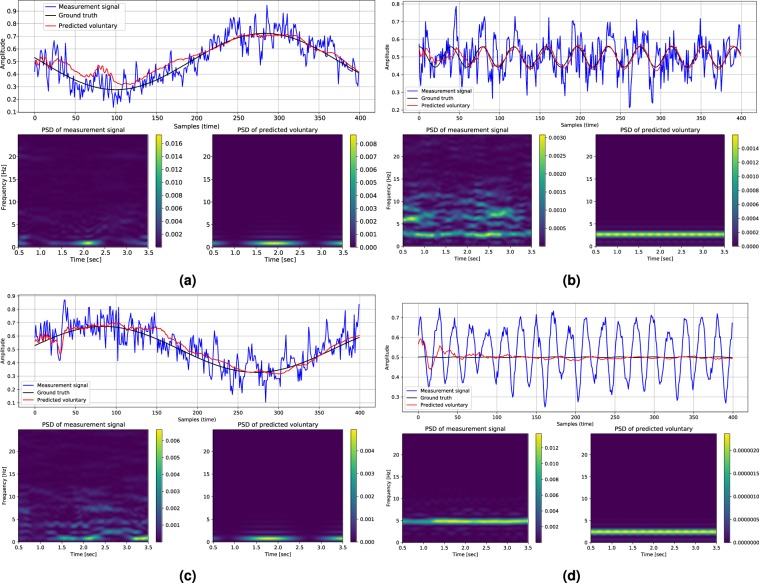
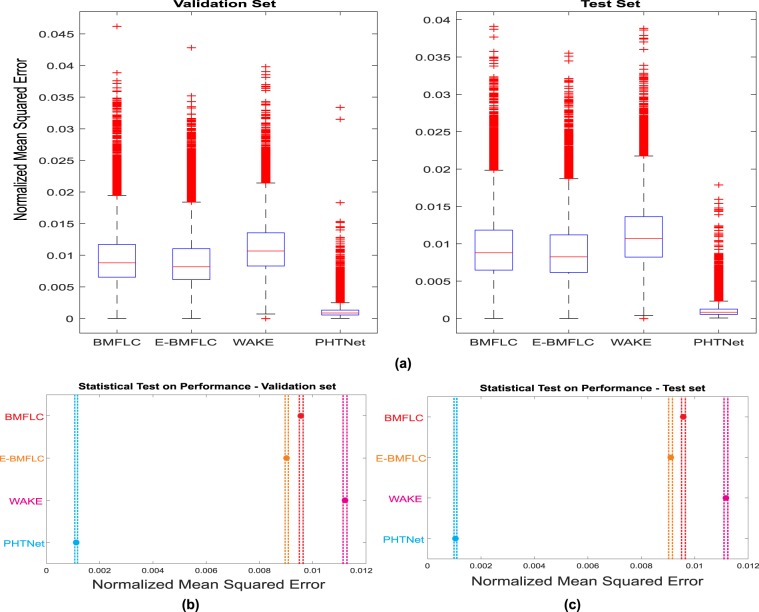
PHTNet is a deep bidirectional recurrent neural network for estimating and predicting the voluntary component of pathological hand tremor, trained on a large single-centre dataset of 81 PD/ET patients. The paper reports that PHTNet outperforms BMFLC, EBMFLC, and WAKE on pseudo-synthesized validation/test data and shows generalization on real action tremor and healthy-control recordings.
Key findings
- The dataset used to develop PHTNet included 81 PD and ET individuals from a single-centre movement disorders clinic; the paper also reports 87.5 hours of data from 81 patients and 250 tremor assessments in total.
- For model development, recordings were split by subject into 49 training, 16 validation, and 16 test subjects; data were downsampled to 100 Hz.
- On pseudo-synthesized validation and test sets, PHTNet was evaluated over 24,300 samples per set and 48,600 input-output pairs in total for predictive-behavior analysis; the paper states that PHTNet showed significantly better performance than BMFLC, EBMFLC, and WAKE using ANOVA and pairwise Z-tests.
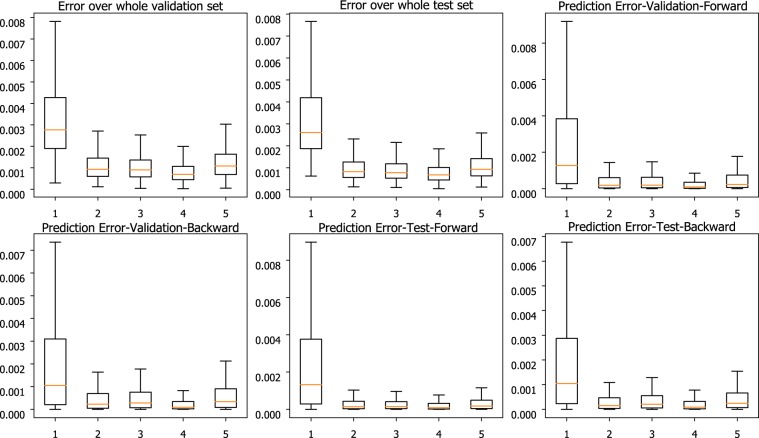
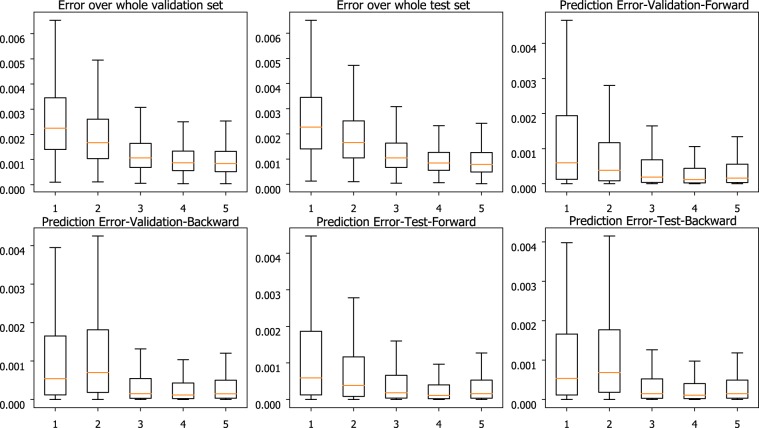
- The authors report a 4-layer GRU/BiRNN architecture, 400 features as best for hidden representation, and 4-second input sequences as the best accuracy/computation tradeoff; the model uses MSE training with Adam at 0.0001 learning rate.
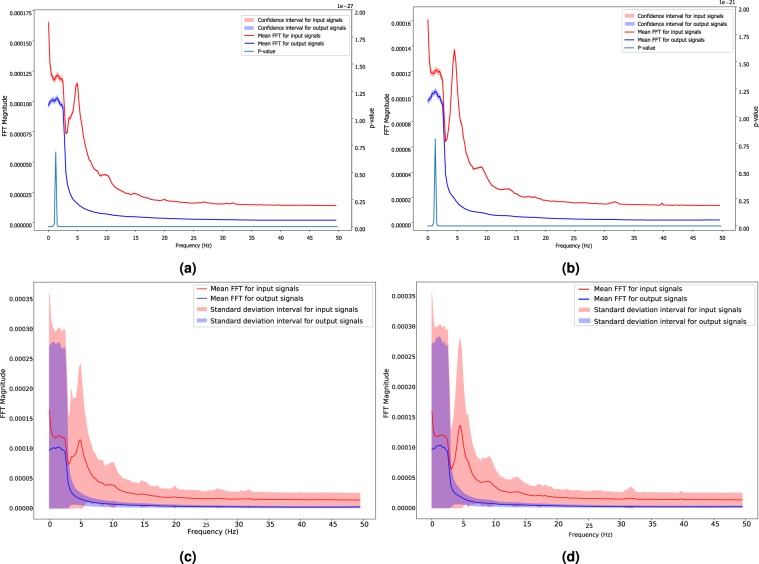
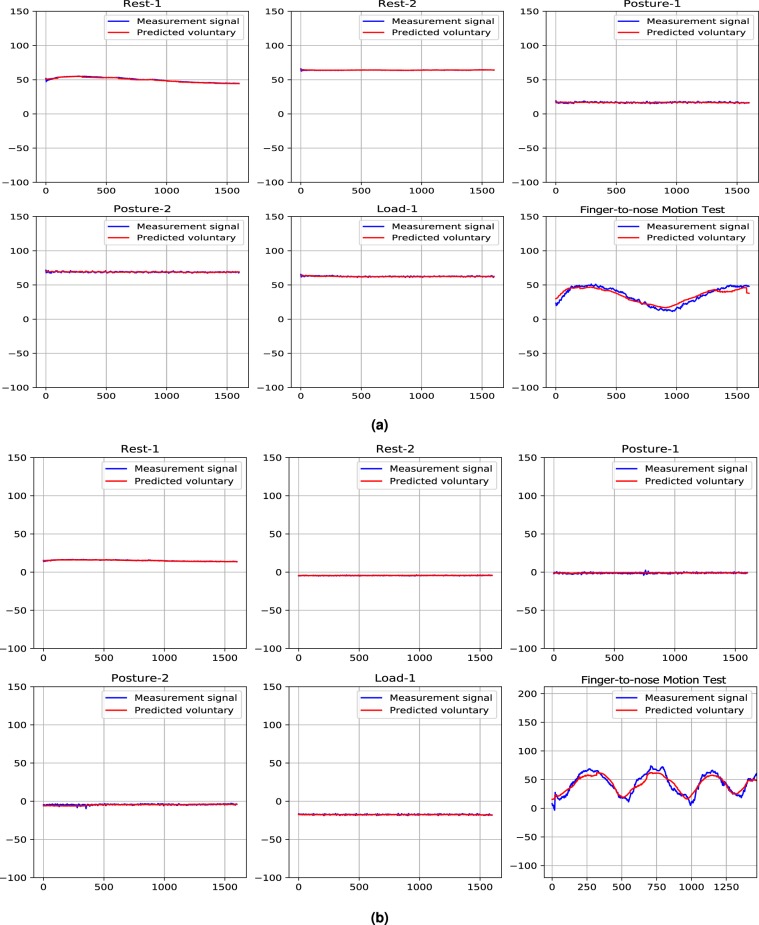
- In the healthy-control experiment, the paper reports recordings from 2 healthy male volunteers aged 28 and 37, and says PHTNet’s estimated signals “perfectly match” the inputs.
Methods
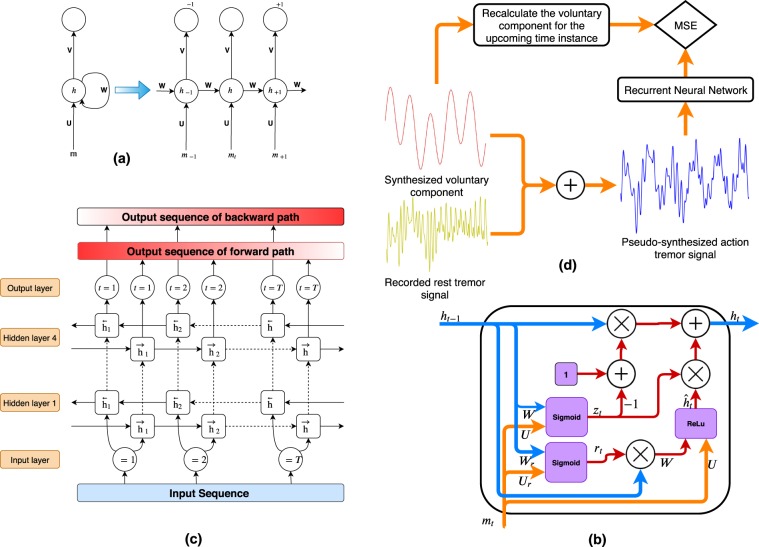
- The paper proposes PHTNet, a deep bidirectional recurrent neural network built from GRU cells in a sequence-to-sequence setup, with separate forward (online/predictive) and backward (offline) processing pipelines and no mixing matrix.
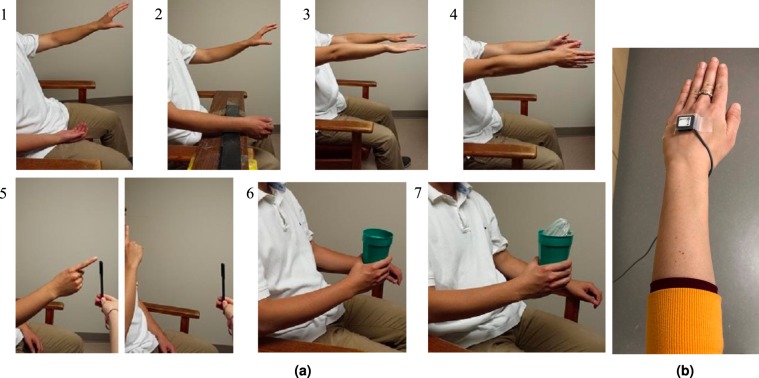
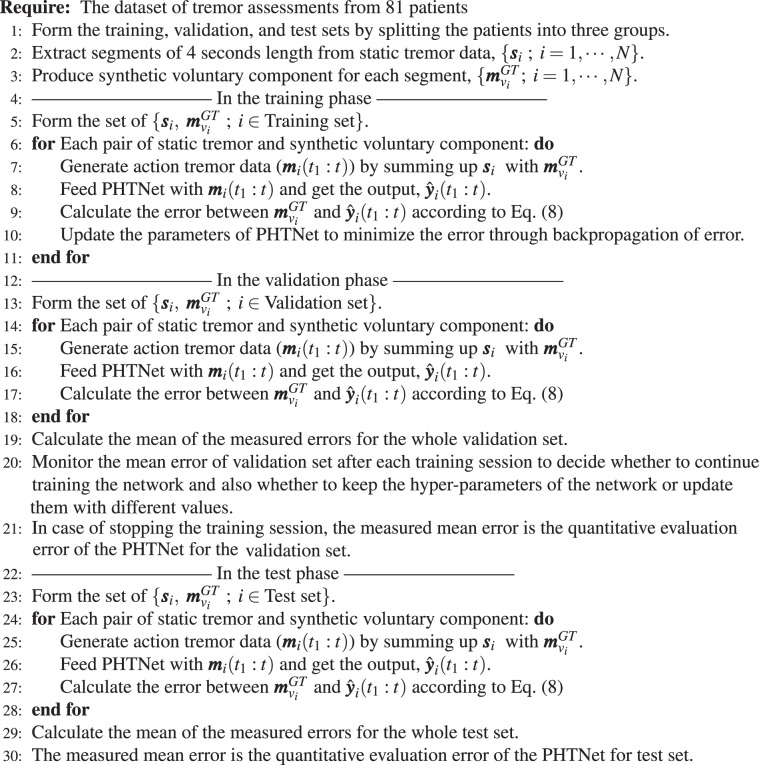
- Training and evaluation used a subject-level split of clinical hand-motion recordings from 81 PD/ET patients collected at the London Movement Disorders Centre; tasks included 7 scripted 20-second tasks over three trials, with static tremor from 6 tasks and action tremor from a finger-to-nose task.
- To obtain ground truth for action tremor, the authors used an inverse evaluation method: they created pseudo-synthesized action tremor by mixing synthesized voluntary sinusoidal components with real static tremor recordings; performance was quantified with MSE, and statistical comparisons used ANOVA, pairwise Z-tests, and D’Agostino–Pearson normality tests.
Limitations
- The paper states that the achieved horizon of prediction was limited and that it is working on improving prediction by augmenting input space and expanding the dataset.
- The authors note that the deep model requires relatively stronger computational support, which may limit deployment when computational resources are constrained.
- Evident from the text: the clinical dataset is from a single centre and the healthy-control validation used only 2 volunteers; these factors may limit external generalizability (evident from the text).
Model-written summary. Check it against the paper before relying on it.
Integrity signals
Registry
Cites
Statistics
Figures
Verification
Claims the paper makes
5 Valid · 5 Not valid · 3 Not checked · 56 Own results and interpretations
Some cited sources support this claim and some don’t — read each source’s verdict below.
In the paper
“The participants recruited met the inclusion/exclusion criteria35,39.”
§ PHTNet: Characterization and Deep Mining of Involuntary Pathological Hand Tremor using Recurrent Neural Network Models > Methods > Dataset
What the sources say
- Supportedcites [35] Rahimi, F., Samotus, O., Lee, J. & Jog, M. Effective management of upper limb parkinsonian tremor by incobotulinumtoxina injections using sensor-based biomechanical patterns. Tremor Other Hyperkinetic Movements5 (2015). PMC4636031 26566459 source
The Methods section reports recruiting 28 participants with Parkinson’s disease and specifies the study’s inclusion and exclusion criteria. The Results section notes that some participants later failed to maintain those criteria; that does not contradict the claim about recruitment. (LLM, conf=0.88)
- Disputedcites [39] Samotus O Rahimi F Lee J Jog M Functional ability improved in essential tremor by incobotulinumtoxina injections using kinematically determined biomechanical patterns–a new future PloS one 2016 11 e0153739 10.1371/journal.pone.0153739 27101283 PMC4839603 sourceExperimental — accuracy not yet measured
Methods (Study Criteria; page unavailable) limits eligibility to participants aged 18–80. Results (Participant Demographics; page unavailable) lists recruited participants aged 82, 84, and 85, so the paper’s own data contradict the claim that all recruited participants met the stated criteria. (LLM, conf=0.88)
Checked by a reasoning model — may be wrong.
plain- Asserted: passes — The authors put it forward as true.
- Checkable: passes — It can be checked against evidence.
- Load-bearing: passes — The paper’s conclusions depend on it.
- Based: passes — The paper gives a reason why it holds.
- Supported
The cited sources support only part of this claim — read each source’s verdict below.
In the paper
“Despite the crucial need for PHT elimination techniques and the numerous research advancements on this topic51–55, including our previous work13,14, there is an unmet need for a reliable, adaptable, and generalizable processing framework that can be directly translated to clinical settings for estimation, extraction, and prediction of action tremor with high spectrotemporal resolution.”
§ PHTNet: Characterization and Deep Mining of Involuntary Pathological Hand Tremor using Recurrent Neural Network Models > Introduction
What the sources say
- Not checked — no full text of the sourcecites [51] Veluvolu K Ang W Estimation and filtering of physiological tremor for real-time compensation in surgical robotics applications The Int. J. Med. Robotics Comput. Assist. Surg. 2010 6 334 342 10.1002/rcs.340 20623480 source
- Partly supportedcites [52] Hossen A Muthuraman M Raethjen J Deuschl G Heute U Discrimination of parkinsonian tremor from essential tremor by implementation of a wavelet-based soft-decision technique on emg and accelerometer signals Biomed. Signal Process. Control. 2010 5 181 188 10.1016/j.bspc.2010.02.005 sourceExperimental — accuracy not yet measured
The Discussion and conclusions describes a wavelet-based method for distinguishing essential from Parkinsonian tremor and says larger patient studies are needed before routine clinical use. That supports a limited clinical-translation need, but the paper does not establish an unmet need for a generalizable framework to estimate, extract, and predict action tremor at high spectrotemporal resolution. (LLM, conf=0.82)
- Not checked — no full text of the sourcecites [53] Ai L Wang J Yao R Classification of parkinsonian and essential tremor using empirical mode decomposition and support vector machine Digit. Signal Process. 2011 21 543 550 10.1016/j.dsp.2011.01.010 source
- Not checked — no full text of the sourcecites [54] Sushkova O Time–frequency analysis of simultaneous measurements of electroencephalograms, electromyograms, 41 and mechanical tremor under parkinson disease J. Commun. Technol. Electron. 2015 60 1109 1116 10.1134/S1064226915100113 source
- Could not verifycites [55] Elble RJ Hellriegel H Raethjen J Deuschl G Assessment of head tremor with accelerometers versus gyroscopic transducers Mov. Disord. Clin. Pract. 2017 4 205 211 10.1002/mdc3.12379 30363428 PMC6174406 sourceExperimental — accuracy not yet measured
The citation is attached to the statement about advances in PHT elimination, not directly to the citing authors’ conclusion that a generalizable framework is needed. The cited paper’s Methods and Discussion describe measuring head tremor with accelerometers and gyroscopes; the passages found for elimination techniques and action-tremor processing do not address PHT elimination or the stated framework need. (LLM, conf=0.74)
- Not checked — no full text of the sourcecites [13] Atashzar SF Characterization of upper-limb pathological tremors: Application to design of an augmented haptic rehabilitation system IEEE J. Sel. Top. Signal Process. 2016 10 888 903 10.1109/JSTSP.2016.2530632 source
- Partly supportedcites [14] Shahtalebi S Atashzar SF Patel RV Mohammadi A Wake: Wavelet decomposition coupled with adaptive kalman filtering for pathological tremor extraction Biomed. Signal Process. Control. 2019 48 179 188 10.1016/j.bspc.2018.10.007 sourceExperimental — accuracy not yet measured
The Introduction (page unavailable) says variable tremor challenges accurate real-time extraction and motivates methods combining temporal and spectral features. WAKE is itself an adaptive extraction and prediction framework, so the citation supports identifying it as prior work. The paper does not establish the broader claim that a generalizable, directly clinically translatable framework remains unavailable. (LLM, conf=0.82)
plain- Asserted: passes — The authors put it forward as true.
- Checkable: unclear — It is unclear whether it could be checked against evidence.
- Load-bearing: passes — The paper’s conclusions depend on it.
- Based: passes — The paper gives a reason why it holds.
A result the paper reports from its own data — it cites no other source for it, so there is none to check. The quote shows it is in the paper.
In the paper
“As it can be observed, performance of the PHTNet improves as the length of the input signal increases to a certain point and then either degrades or remains, more or less, unchanged.”
§ PHTNet: Characterization and Deep Mining of Involuntary Pathological Hand Tremor using Recurrent Neural Network Models > Methods > Proposed geometry of the PHTNet
plainstates a cause- Asserted: passes — The authors put it forward as true.
- Checkable: passes — It can be checked against evidence.
- Load-bearing: passes — The paper’s conclusions depend on it.
- Based: passes — The paper gives a reason why it holds.
A result the paper states — it cites no source for it, so there is none to check. The quote shows it is in the paper.
In the paper
“The PHTNet, therefore, yields the best performance when input sequences of 4 seconds are fed into the network considering jointly accuracy and computational cost in perspective.”
§ PHTNet: Characterization and Deep Mining of Involuntary Pathological Hand Tremor using Recurrent Neural Network Models > Methods > Proposed geometry of the PHTNet
plainstates a cause- Asserted: passes — The authors put it forward as true.
- Checkable: passes — It can be checked against evidence.
- Load-bearing: passes — The paper’s conclusions depend on it.
- Based: passes — The paper gives a reason why it holds.
A result the paper reports from its own data — it cites no other source for it, so there is none to check. The quote shows it is in the paper.
In the paper
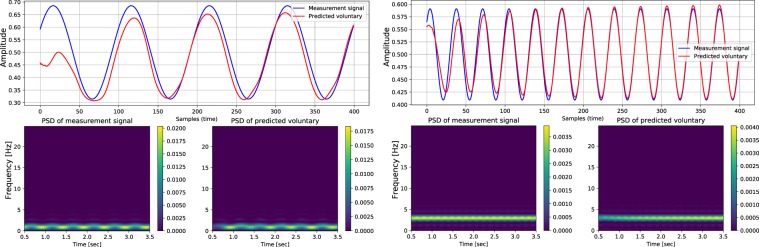
“As shown in Fig. 3, the best performance of the PHTNet is achieved when 4 hidden layers are stacked to each other.”
§ PHTNet: Characterization and Deep Mining of Involuntary Pathological Hand Tremor using Recurrent Neural Network Models > Methods > Proposed geometry of the PHTNet
plainstates a cause- Asserted: passes — The authors put it forward as true.
- Checkable: passes — It can be checked against evidence.
- Load-bearing: unclear — It is unclear whether the paper’s conclusions depend on it.
- Based: passes — The paper gives a reason why it holds.
18 more claims
Create a free account to see all 69 claims and every source verdict.
- It may state two separate claims as one. 31
- Probably not a substantial claim. 25
- The quote only partly states this claim. 1
Claims other papers make about this one
Each is checked against this paper’s own text: does it say what the citing paper says it does?
The source backs part of the claim, not all of it — or backs it for a different population, condition or comparison.
In the citing paper
“Shahtalebi et al.7 developed an AI algorithm that achieved 95.6% accuracy and further developed an explainable AI, Gradient-weighted class Activation Mapping, to understand the AI model.”
From Explainable artificial intelligence for searching frequency characteristics in Parkinson's disease tremor (2023) · cites this paper as Shahtalebi et al.7
Experimental — accuracy not yet measuredThe source backs part of the claim, not all of it — or backs it for a different population, condition or comparison.
In the citing paper
“they reported that the PD is characterised by the low-frequency vibration on hand, and ET is mainly characterised by the high spectral activity.”
From Explainable artificial intelligence for searching frequency characteristics in Parkinson's disease tremor (2023) · cites this paper as Shahtalebi et al.7
Experimental — accuracy not yet measured
Citations
Cites
Adam: A Method for Stochastic Optimization
Kingma, D. P., & Ba, J. (2014) · arXiv · doi:10.48550/arxiv.1412.6980 · Cited by 98,946
LeCun, Y., Bengio, Y., & Hinton, G. (2015) · Nature · doi:10.1038/nature14539 · Cited by 84,126
Learning Phrase Representations using RNN Encoder–Decoder for Statistical Machine Translation
Cho, K., van Merrienboer, B., Gulcehre, C., Bahdanau, D., Bougares, F., Schwenk, H., & Bengio, Y. (2014) · Proceedings of the 2014 Conference on Empirical Methods in Natural Language Processing (EMNLP) · doi:10.3115/v1/d14-1179 · Cited by 25,545
(2010) · International Conference on Machine Learning · Cited by 13,995
Discrete-Time Signal Processing
Oppenheim, A. V., & Schafer, R. W. (1989) · Cited by 12,728
Empirical Evaluation of Gated Recurrent Neural Networks on Sequence Modeling
Chung, J., Gulcehre, C., Cho, K., & Bengio, Y. (2014) · arXiv · doi:10.48550/arxiv.1412.3555 · Cited by 11,008 · cited 1×
“The update gate, on the other hand, defines the degree of updating a hidden state based on the newly arrived data 67 .”
BackgroundBidirectional recurrent neural networks
Schuster, M., & Paliwal, K. K. (1997) · IEEE Transactions on Signal Processing · doi:10.1109/78.650093 · Cited by 10,172 · cited 5×
“However, in this work, through an architectural modification of the model, the BRNN kernel is applied without the mixing matrix.”
MethodInfluentialProceedings of the 25th international conference on Machine learning - ICML '08
(2008) · doi:10.1145/1390156 · Cited by 6,680
Frequency Dependence of Signal Power and Spatial Reach of the Local Field Potential
Leski, S., Lindén, H., Tetzlaff, T., Pettersen, K. H., & Einevoll, G. T. (2013) · PubMed · doi:10.18154/rwth-conv-084442 · Cited by 3,639
Consensus Statement of the Movement Disorder Society on Tremor
Deuschl, G., Bain, P., & Brin, M. (2008) · Movement Disorders · doi:10.1002/mds.870131303 · Cited by 1,981 · cited 1×
“Postural and kinetic tremors are commonly observed in ET patients 15 .”
BackgroundSakar, C. O., Serbes, G., Gunduz, A., Tunc, H. C., Nizam, H., Sakar, B. E., Tutuncu, M., Aydin, T., Isenkul, M. E., & Apaydin, H. (2019) · Applied Soft Computing · doi:10.1016/j.asoc.2018.10.022 · Cited by 550
Deuschl, G., Raethjen, J., Lindemann, M., & Krack, P. (2001) · Muscle & Nerve · doi:10.1002/mus.1063 · Cited by 508 · cited 1×
“Although efficacy is reported for these PHT interventions, about 25% of patients are unresponsive or experience short-term suboptimal response 12,22,23 , and adverse side effects are also commonly observed.”
BackgroundTreatment of patients with essential tremor
Deuschl, G., Raethjen, J., Hellriegel, H., & Elble, R. (2011) · The Lancet Neurology · doi:10.1016/s1474-4422(10)70322-7 · Cited by 428
Evolution of autonomous and semi‐autonomous robotic surgical systems: a review of the literature
Moustris, G. P., Hiridis, S. C., Deliparaschos, K. M., & Konstantinidis, K. M. (2011) · The International Journal of Medical Robotics and Computer Assisted Surgery · doi:10.1002/rcs.408 · Cited by 321
Tests for departure from normality: Comparison of powers
PEARSON, E. S., D'''AGOSTINO, R. B., & BOWMAN, K. O. (1977) · Biometrika · doi:10.1093/biomet/64.2.231 · Cited by 280
Toward active tremor canceling in handheld microsurgical instruments
Riviere, C. N., Ang, W. T., & Khosla, P. K. (2003) · IEEE Transactions on Robotics and Automation · doi:10.1109/tra.2003.817506 · Cited by 245
Predicting Severity Of Parkinson’s Disease Using Deep Learning
Grover, S., Bhartia, S., Akshama, Yadav, A., & K.R., S. (2018) · Procedia Computer Science · doi:10.1016/j.procs.2018.05.154 · Cited by 237
Clinical Neurophysiology of Tremor
Deuschl, G., Krack, P., Lauk, M., & Timmer, J. (1996) · Journal of Clinical Neurophysiology · doi:10.1097/00004691-199603000-00002 · Cited by 210 · cited 2×
“the subcategories of postural, kinetic, and isometric 16 .”
BackgroundMotion Estimation in Beating Heart Surgery
Ortmaier, T., Groger, M., Boehm, D. H., Falk, V., & Hirzinger, G. (2005) · IEEE Transactions on Biomedical Engineering · doi:10.1109/tbme.2005.855716 · Cited by 187 · cited 1×
“Such technologies 40,42,45,46 are mainly developed to remove (damp out or compensate) the tremor and assist patients in performing their voluntary movements 41,47–49 .”
BackgroundMachine learning-based classification of simple drawing movements in Parkinson's disease
Kotsavasiloglou, C., Kostikis, N., Hristu-Varsakelis, D., & Arnaoutoglou, M. (2017) · Biomedical Signal Processing and Control · doi:10.1016/j.bspc.2016.08.003 · Cited by 182 · cited 2×
“π φ = + m t a ft ( ) sin(2 ), (1) v (GT)”
BackgroundDifferential diagnosis of common tremor syndromes
Bhidayasiri, R. (2005) · Postgraduate Medical Journal · doi:10.1136/pgmj.2005.032979 · Cited by 177
Feature-driven machine learning to improve early diagnosis of Parkinson's disease
Parisi, L., RaviChandran, N., & Manaog, M. L. (2018) · Expert Systems with Applications · doi:10.1016/j.eswa.2018.06.003 · Cited by 174
Attenuation of pathological tremors by functional electrical stimulation I: Method
Prochazka, A., Elek, J., & Javidan, M. (1992) · Annals of Biomedical Engineering · doi:10.1007/bf02368521 · Cited by 150 · cited 1×
“PHT therapies such as oral medication, therapeutic lesions, Gamma-knife radiosurgery, and Deep Brain Stimulation (DBS) 18 focus on alleviating tremor severity and improving arm functionality 19–21 .”
BackgroundLahmiri, S., & Shmuel, A. (2018) · Biomedical Signal Processing and Control · doi:10.1016/j.bspc.2018.08.029 · Cited by 147
Robotic Motion Compensation for Beating Heart Intracardiac Surgery
Yuen, S. G., Kettler, D. T., Novotny, P. M., Plowes, R. D., & Howe, R. D. (2009) · The International Journal of Robotics Research · doi:10.1177/0278364909104065 · Cited by 145 · cited 2×
“Recently, robotic rehabilitation and assistive technologies 40–44 have attracted a great deal of interest due to their promising performance in compensating the involuntary tremor in both rehabilitation and assistive settings.”
BackgroundHaptic interaction in robot‐assisted endoscopic surgery: a sensorized end‐effector
Tavakoli, M., Patel, R. V., & Moallem, M. (2005) · The International Journal of Medical Robotics and Computer Assisted Surgery · doi:10.1002/rcs.16 · Cited by 132 · cited 1×
“Recently, robotic rehabilitation and assistive technologies 40–44 have attracted a great deal of interest due to their promising performance in compensating the involuntary tremor in both rehabilitation and assistive settings.”
BackgroundSelf-citationElectrical stimulation for the suppression of pathological tremor
Popović Maneski, L., Jorgovanović, N., Ilić, V., Došen, S., Keller, T., Popović, M. B., & Popović, D. B. (2011) · Medical & Biological Engineering & Computing · doi:10.1007/s11517-011-0803-6 · Cited by 129 · cited 1×
“PHT therapies such as oral medication, therapeutic lesions, Gamma-knife radiosurgery, and Deep Brain Stimulation (DBS) 18 focus on alleviating tremor severity and improving arm functionality 19–21 .”
BackgroundA Systematic Review of Multilateral Teleoperation Systems
Shahbazi, M., Atashzar, S. F., & Patel, R. V. (2018) · IEEE Transactions on Haptics · doi:10.1109/toh.2018.2818134 · Cited by 122 · cited 1×
“It is worth noting that phase lag (even in the order of 10 ms) can easily make a high-gain rehabilitation robot unstable which can sacrifice safety 13,56–59 .”
BackgroundSelf-citationRobotic Compensation of Biological Motion to Enhance Surgical Accuracy
Riviere, C. N., Gangloff, J., & de Mathelin, M. (2006) · Proceedings of the IEEE · doi:10.1109/jproc.2006.880722 · Cited by 120 · cited 1×
“Such technologies 40,42,45,46 are mainly developed to remove (damp out or compensate) the tremor and assist patients in performing their voluntary movements 41,47–49 .”
BackgroundTowards remote monitoring of Parkinson’s disease tremor using wearable motion capture systems
Delrobaei, M., Memar, S., Pieterman, M., Stratton, T. W., McIsaac, K., & Jog, M. (2017) · Journal of the Neurological Sciences · doi:10.1016/j.jns.2017.11.004 · Cited by 120
Self-citationEstimation of physiological tremor from accelerometers for real-time applications
Veluvolu, K. C., & Ang, W. T. (2011) · Sensors · doi:10.3390/s110303020 · Cited by 117
Dynamic Handwriting Analysis for Supporting Earlier Parkinson’s Disease Diagnosis
Impedovo, D., Pirlo, G., & Vessio, G. (2018) · Information · doi:10.3390/info9100247 · Cited by 100
Veluvolu, K. C., & Ang, W. T. (2010) · The International Journal of Medical Robotics and Computer Assisted Surgery · doi:10.1002/rcs.340 · Cited by 83
Atashzar, S. F., Shahbazi, M., Tavakoli, M., & Patel, R. V. (2017) · IEEE Transactions on Control Systems Technology · doi:10.1109/tcst.2016.2594584 · Cited by 78
Self-citationTatinati, S., Veluvolu, K. C., & Ang, W. T. (2015) · IEEE Transactions on Cybernetics · doi:10.1109/tcyb.2014.2381495 · Cited by 77
Rosario, K., Mettel, K. A., Benner, B. E., Johnson, R., Scott, C., Yusseff-Vanegas, S. Z., Baker, C. C. M., Cassill, D. L., Storer, C., Varsani, A., et al. (2018) · PeerJ · doi:10.7717/peerj.5761 · Cited by 73
Ai, L., Wang, J., & Yao, R. (2011) · Digital Signal Processing · doi:10.1016/j.dsp.2011.01.010 · Cited by 71
Resting tremor classification and detection in Parkinson's disease patients
Camara, C., Isasi, P., Warwick, K., Ruiz, V., Aziz, T., Stein, J., & Bakštein, E. (2015) · Biomedical Signal Processing and Control · doi:10.1016/j.bspc.2014.09.006 · Cited by 70 · cited 1×
“h b Wh Um t t t t ( ) f( ( 1) ( : )), (2) 1 = + − +”
Rest tremor revisited: Parkinson’s disease and other disorders
Chen, W., Hopfner, F., Becktepe, J. S., & Deuschl, G. (2017) · Translational Neurodegeneration · doi:10.1186/s40035-017-0086-4 · Cited by 66
Rastegari, E., Azizian, S., & Ali, H. (2019) · Hawaii International Conference on System Sciences (HICSS) · doi:10.24251/hicss.2019.511 · Cited by 66
Itani, W., Geara, F. B., Haykal, J., Haddadin, M. J., & Gali‐Muhtasib, H. U. (2007) · Radiation Oncology · doi:10.1186/1748-717x-2-1 · Cited by 64
Gillard, D. M., Cameron, T., Prochazka, A., & Gauthier, M. J. A. (1999) · IEEE Transactions on Rehabilitation Engineering · doi:10.1109/86.788474 · Cited by 61
Hossen, A., Muthuraman, M., Raethjen, J., Deuschl, G., & Heute, U. (2010) · Biomedical Signal Processing and Control · doi:10.1016/j.bspc.2010.02.005 · Cited by 57
Atashzar, S. F., Polushin, I. G., & Patel, R. V. (2017) · IEEE Transactions on Robotics · doi:10.1109/tro.2016.2623336 · Cited by 57 · cited 2×
“It should be noted that the time resolution of signal processing plays a very important role when the control loop gain and the frequency of activations in a control system are high (such as the robotic rehabilitation devices) 56 .”
BackgroundSelf-citationMemar, S., Delrobaei, M., Pieterman, M., McIsaac, K., & Jog, M. (2018) · Journal of the Neurological Sciences · doi:10.1016/j.jns.2018.02.001 · Cited by 57
Self-citationRahimi, F., Samotus, O., Lee, J., & Jog, M. (2015) · Tremor and Other Hyperkinetic Movements · doi:10.5334/tohm.240 · Cited by 55
Self-citationHandbook of Essential Tremor and Other Tremor Disorders
(2005) · doi:10.1201/b14115 · Cited by 54
Pathological Tremor and Voluntary Motion Modeling and Online Estimation for Active Compensation
Bo, A. P. L., Poignet, P., & Geny, C. (2011) · IEEE Transactions on Neural Systems and Rehabilitation Engineering · doi:10.1109/tnsre.2010.2091283 · Cited by 53 · cited 1×
“Such technologies 40,42,45,46 are mainly developed to remove (damp out or compensate) the tremor and assist patients in performing their voluntary movements 41,47–49 .”
BackgroundAdaptive Suppression of Severe Pathological Tremor by Torque Estimation Method
Taheri, B., Case, D., & Richer, E. (2015) · IEEE/ASME Transactions on Mechatronics · doi:10.1109/tmech.2014.2317948 · Cited by 53 · cited 1×
“PHT therapies such as oral medication, therapeutic lesions, Gamma-knife radiosurgery, and Deep Brain Stimulation (DBS) 18 focus on alleviating tremor severity and improving arm functionality 19–21 .”
BackgroundAn Active Hand-Held Instrument for Enhanced Microsurgical Accuracy
Ang, W. T., Riviere, C. N., & Khosla, P. K. (2000) · Lecture Notes in Computer Science · doi:10.1007/978-3-540-40899-4_91 · Cited by 52
Shah, S. A., Tinkhauser, G., Chen, C. C., Little, S. J., & Brown, P. (2018) · Annual International Conference of the IEEE Engineering in Medicine and Biology Society (EMBC) · doi:10.1109/embc.2018.8512741 · Cited by 52
Multistep Prediction of Physiological Tremor for Surgical Robotics Applications
Veluvolu, K. C., Tatinati, S., Hong, S.-M., & Ang, W. T. (2013) · IEEE Transactions on Biomedical Engineering · doi:10.1109/tbme.2013.2264546 · Cited by 51 · cited 1×
“It is shown 50 that a phase-lag as low as 20 ms in the signal filtering part noticeably degrades the system performance.”
BackgroundSamotus, O., Rahimi, F., Lee, J., & Jog, M. (2016) · PLOS ONE · doi:10.1371/journal.pone.0153739 · Cited by 46 · cited 2×
“Thus, some of the recently-developed techniques and therapies (e.g. BoNT-A therapy) 35–39 that finely tailor dosing and muscle selection for targeted therapy based on accurate signal monitoring, would not be feasible for patients with prominent action tremor.”
BackgroundSelf-citationAtashzar, S. F., Shahbazi, M., Samotus, O., Tavakoli, M., Jog, M. S., & Patel, R. V. (2016) · IEEE Journal of Selected Topics in Signal Processing · doi:10.1109/jstsp.2016.2530632 · Cited by 45 · cited 11×
“Existing methods including EBMFLC and WAKE, share a similar characteristic by assuming that the spectral contents of voluntary and involuntary components are distinct and one could be derived by removing the other from the measurement signal.”
BackgroundInfluentialSelf-citationAdaptive sliding bandlimited multiple fourier linear combiner for estimation of pathological tremor
Wang, S., Gao, Y., Zhao, J., & Cai, H. (2014) · Biomedical Signal Processing and Control · doi:10.1016/j.bspc.2013.10.004 · Cited by 42
Atashzar, S. F., Shahbazi, M., Tavakoli, M., & Patel, R. V. (2017) · The International Journal of Robotics Research · doi:10.1177/0278364916689139 · Cited by 41
Self-citationCompact Sensing Design of a Handheld Active Tremor Compensation Instrument
Latt, W. T., Tan, U.-X., Shee, C. Y., Riviere, C. N., & Ang, W. T. (2009) · IEEE Sensors Journal · doi:10.1109/jsen.2009.2030980 · Cited by 39
Characterization of multi-joint upper limb movements in a single task to assess bradykinesia
Delrobaei, M., Tran, S., Gilmore, G., McIsaac, K., & Jog, M. (2016) · Journal of the Neurological Sciences · doi:10.1016/j.jns.2016.07.056 · Cited by 39
Self-citationClosed-Loop Control of Tremor-Predominant Parkinsonian State Based on Parameter Estimation
Liu, C., Wang, J., Deng, B., Wei, X., Yu, H., Li, H., Fietkiewicz, C., & Loparo, K. A. (2016) · IEEE Transactions on Neural Systems and Rehabilitation Engineering · doi:10.1109/tnsre.2016.2535358 · Cited by 38
Serrano, J. I., Romero, J. P., del Castillo, M. D., Rocón, E., Louis, E. D., & Benito‐León, J. (2017) · Scientific Reports · doi:10.1038/s41598-017-02122-3 · Cited by 36 · cited 1×
“σ = + − r U m W h t t t ( ( : ) ( 1)), (4) r r 1”
Assessment of Head Tremor with Accelerometers Versus Gyroscopic Transducers
Elble, R. J., Hellriegel, H., Raethjen, J., & Deuschl, G. (2017) · Movement Disorders Clinical Practice · doi:10.1002/mdc3.12379 · Cited by 35 · cited 1×
“Despite the crucial need for PHT elimination techniques and the numerous research advancements on this topic 51–55 , including our previous work 13,14 , there is an unmet need for a reliable, adaptable, and generalizable processing framework that can be directly translated to clinical settings for…”
BackgroundSmits, E. J., Tolonen, A. J., Cluitmans, L., van Gils, M., Zietsma, R. C., Borgemeester, R. W. K., van Laar, T., & Maurits, N. M. (2015) · IEEE Journal of Biomedical and Health Informatics · doi:10.1109/jbhi.2015.2503802 · Cited by 29
Rahimi, F., Samotus, O., Lee, J., et al. (2015) · PubMed · doi:10.7916/d8bp0270 · Cited by 29 · cited 3×
“This information has also been used to tailor dosing and regimen of therapy, such as botulinum toxin type A (BoNT-A) injections 35 .”
BackgroundMethodSelf-citationShahtalebi, S., Atashzar, S. F., Patel, R. V., & Mohammadi, A. (2019) · Biomedical Signal Processing and Control · doi:10.1016/j.bspc.2018.10.007 · Cited by 29 · cited 9×
“WAKE exploits Wavelet transforms and Kalman filtering to obtain a spectrotemporal representation of motion signals to separate the voluntary and involuntary components.”
BackgroundInfluentialSelf-citationA Multi-Layer Gaussian Process for Motor Symptom Estimation in People With Parkinson's Disease
Lang, M., Hirche, S., Pfister, F., Fröhner, J., Abedinpour, K., Pichler, D., Fietzek, U. M., Um, T. T., Kulić, D., & Endo, S. (2019) · IEEE Transactions on Biomedical Engineering · doi:10.1109/tbme.2019.2900002 · Cited by 21
Atashzar, S. F., Shahbazi, M., Tavakoli, M., & Patel, R. V. (2015) · IEEE/RSJ International Conference on Intelligent Robots and Systems (IROS) · doi:10.1109/iros.2015.7354025 · Cited by 20 · cited 1×
“Details can be found in our previous papers in 13,60 .”
BackgroundSelf-citation“Old” and emerging Therapies of Human Tremor
Grimaldi, G., & Manto, M. U. (2010) · Clinical Medicine Insights Therapeutics · doi:10.4137/cmt.s2999 · Cited by 19 · cited 1×
“Although efficacy is reported for these PHT interventions, about 25% of patients are unresponsive or experience short-term suboptimal response 12,22,23 , and adverse side effects are also commonly observed.”
Backgroundde Koste, J. R. V. S., Cuijpers, J. P., de Geest, F., Lagerwaard, F. J., Slotman, B. J., & Senan, S. (2007) · Radiation Oncology · doi:10.1186/1748-717x-2-32 · Cited by 17
Molparia, B., Schrader, B. N., Cohen, E., Wagner, J. L., Gupta, S. R., Gould, S., Hwynn, N., Spencer, E. G., & Torkamani, A. (2018) · PeerJ · doi:10.7717/peerj.5308 · Cited by 15
Tremor detection using smartphone-based acoustic sensing
Wang, W., Xie, L., & Wang, X. (2017) · ACM International Joint Conference on Pervasive and Ubiquitous Computing (UbiComp) · doi:10.1145/3123024.3123168 · Cited by 13 · cited 1×
“The severity and characteristics of PHT are assessed and monitored 3,24–34 through recording and processing of hand motions in clinical settings while performing different tasks.”
MethodSushkova, O. S., Gabova, A. V., Karabanov, A. V., Kershner, I. A., Obukhov, K. Y., & Obukhov, Y. V. (2015) · Journal of Communications Technology and Electronics · doi:10.1134/s1064226915100113 · Cited by 9
Hssayeni, M. D., Shahed, J. J., & Ghoraani, B. (2019) · Entropy · doi:10.3390/e21020137 · Cited by 8 · cited 1×
“The severity and characteristics of PHT are assessed and monitored 3,24–34 through recording and processing of hand motions in clinical settings while performing different tasks.”
MethodAn Optimized Method for the Limb Tremor Measurement
Zeng, W., Su, H., Zhong, H., Cui, H., Sun, L., & Xia, L. (2018) · International Conference on Medical and Health Informatics (ICMHI) · doi:10.1145/3239438.3239478 · Cited by 2
Research works printed but not linked: 1
- Goodfellow, I., Courville, A. & Bengio, Y. Deep learning, vol. 1 (MIT press Cambridge, 2016).
Cited by
Parkinson’s disease diagnosis using neural networks: Survey and comprehensive evaluation
Tanveer, M., Rashid, A. H., Kumar, R., & Raman, B. (2022) · Information Processing & Management · doi:10.1016/j.ipm.2022.102909 · Cited by 55
Machine Learning in Tremor Analysis: Critique and Directions
De, A., Bhatia, K. P., Volkmann, J., Peach, R. L., & Schreglmann, S. R. (2023) · Movement Disorders · doi:10.1002/mds.29376 · Cited by 47
“RNN 82 and its modi fi ed versions, long short-term memory (LSTM) 96 and gated recurrent unit, proved very useful in sequential tremor time-series analysis.”
BackgroundMethodInfluentialA deep explainable artificial intelligent framework for neurological disorders discrimination
Shahtalebi, S., Atashzar, S. F., Patel, R. V., Jog, M., & Mohammadi, A. (2021) · Scientific Reports · doi:10.1038/s41598-021-88919-9 · Cited by 39
Self-citationRana, A., Dumka, A., Singh, R., Panda, M. K., & Priyadarshi, N. (2022) · Diagnostics · doi:10.3390/diagnostics12112708 · Cited by 39
“, 2020 [173] Tremor 3D Convolutional Neural Network Develop a deep recurrent model to predict and eliminate the PHT component of hand motion Not mentioned Collected from the participants 81 PD Not mentioned”
BackgroundReal-Time Voluntary Motion Prediction and Parkinson’s Tremor Reduction Using Deep Neural Networks
Ibrahim, A. H., Zhou, Y., Jenkins, M. E., Trejos, A. L., & Naish, M. D. (2021) · IEEE Transactions on Neural Systems and Rehabilitation Engineering · doi:10.1109/tnsre.2021.3097007 · Cited by 34
Metadata
- Authors
- Shahtalebi, S., Atashzar, S. F., Samotus, O., Patel, R. V., Jog, M. S., & Mohammadi, A.
- Affiliations
- Concordia University (CA)
- New York University (US)
- London Health Sciences Centre (CA)
- Western University (CA)
- Corresponding author
- Mohammadi, Arash
- ORCID
- Venue
- Scientific Reports
- Published
- 2020-02-10
- Volume
- 10
- Issue
- 1
- Pages
- 2195-2195
- ISSN
- 2045-2322 (ISSN-L)
- PMC
- PMC7010677
- OpenAlex
- W3004983582
- Cited by
- 32
- References
- 74
- Citations by year
- 2026: 2 · 2025: 8 · 2024: 1 · 2023: 6 · 2022: 8 · 2021: 4 · 2020: 3
- FWCI
- 2.82
- Type
- journal article
- Language
- en
- Open access
- gold
- doi.org
- Licence
- cc-by
- creativecommons.org/licenses/by/4.0 (tdm)
- creativecommons.org/licenses/by/4.0 (vor)
- Locations
- Scientific Reports (publishedVersion, cc-by)
- PubMed Central (publishedVersion, cc-by)
- PubMed (publishedVersion)
- Funders
- Gouvernement du Canada | Natural Sciences and Engineering Research Council of Canada (RGPIN-2016-049988)
- Topics
- Life Sciences › Neuroscience › Cognitive Neuroscience › Motor Control and Adaptation
- Health Sciences › Medicine › Clinical Neurology › Deep Brain Stimulation and Movement Disorders
- Health Sciences › Health Professions › Speech and Hearing › Voice and Speech Disorders
- Keywords
- Parkinson's disease, essential tremor, bidirectional recurrent neural network, hand movement, movement disorders, rehabilitation technology, assistive technology
- MeSH terms
- Machine Learning, Aged, Aged, 80 and over, Female, Hand, Humans, Male, Middle Aged, Motion, Movement, Parkinson Disease, Prognosis, Quality of Life, Tremor, Neural Networks, Computer, Essential Tremor
About these checks
Registry, retraction, Cites and statistics results are computed, not judged, with one exception: a printed reference that no index lists is read once by a model before it counts as a citation error. Claims are extracted by a model and kept only when their quote appears verbatim in the text; each cited source is then checked, with a model’s help, for whether it says what the claim relies on. Those verdicts can be wrong — read the claim’s quote and the cited source before relying on one.
The claim verdicts this report counts are experimental: their accuracy is not yet measured.
A language model drew the claims from the paper on 2026-09-29, under version 3 of the claim definition (model deepseek-v4.1-flash, prompt extract-v3).
A second model labelled each claim on 2026-09-29 (model jev-1.13-20260917, definition revision gold-guideline-v0.2).
Cited sources are checked with a language model’s help (gpt-6-sol).
Statistics and arithmetic are recomputed, not judged.
Confidence bands are shown only for fields calibrated on our annotated test set. None is calibrated yet, so no band is shown.
What counts as a claim ›How we measure confidence ›How we check this ›
Are you an author, or do you see a problem with this page? Request a review
Data sources
Bibliographic data: Semantic Scholar, OpenAlex, Crossref.
Contains information from the Semantic Scholar Academic Graph Datasets, made available under the ODC Attribution License (ODC-BY 1.0).
Semantic Scholar’s data is described in: Kinney, R., et al. (2023). The Semantic Scholar Open Data Platform. arXiv:2301.10140.
