

The role of bodily self-consciousness in episodic memory of naturalistic events: an immersive virtual reality study
Open accessPublished version of a preprint
The DOI matches its Crossref record; 104 of the 105 references it cites were found in a registry or an index.
Abstract
Recent studies suggest that the human body plays a critical role in episodic memory. Still, the precise relationship between bodily self-consciousness (BSC) and memory formation of specific events, especially in real-life contexts, remains a topic of ongoing research. The present study investigated the relationship between BSC and episodic memory (EM) using immersive virtual reality (VR) technology. Participants were immersed in an urban environment with naturalistic events, while their visuomotor feedback was manipulated in three within-subjects conditions: Synchronous, Asynchronous, and No-body. Our results show that asynchronous visuomotor feedback and not seeing one’s body, compared to synchronous feedback, decrease the sense of self-identification, self-location and agency, and sense of presence. Moreover, navigating in the Asynchronous condition had a detrimental impact on incidental event memory, perceptual details, contextual association, subjective sense of remembering, and memory consolidation. In contrast, participants in the No-Body condition were only impaired in egocentric spatial memory and the sense of remembering at ten-day delay. We discuss these findings in relation to the role of bodily self-representation in space during event memory encoding. This study sheds light on the complex interplay between BSC, sense of presence, and episodic memory processes, and strengthens the potential of embodiment and VR technology in studying and enhancing human cognition.
Overview
The claims and statistics of this paper haven’t been checked yet.
Free: it reads the open-access text and checks the first 5 claims that cite a source we can check. Create a free account to check every claim.
Integrity signals
Registry
Cites
Statistics
Figures
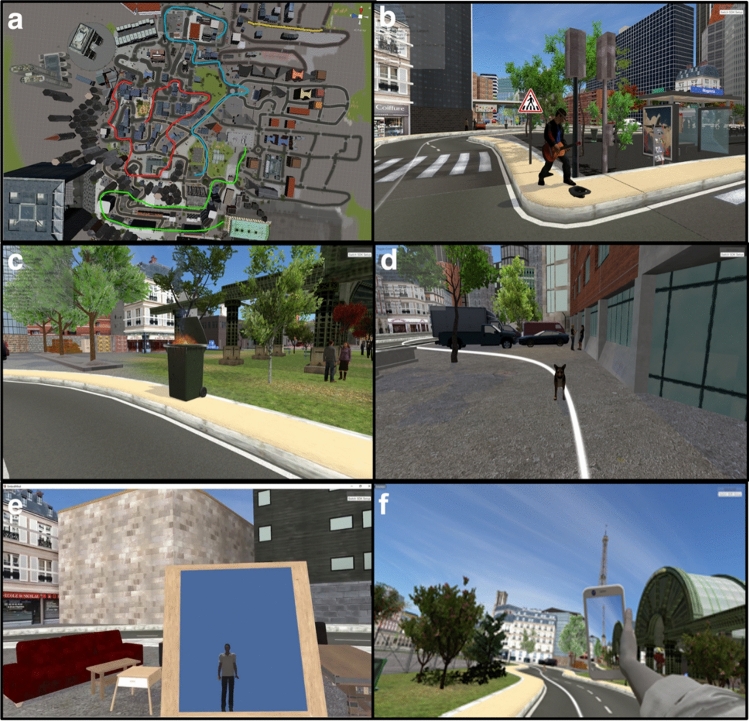
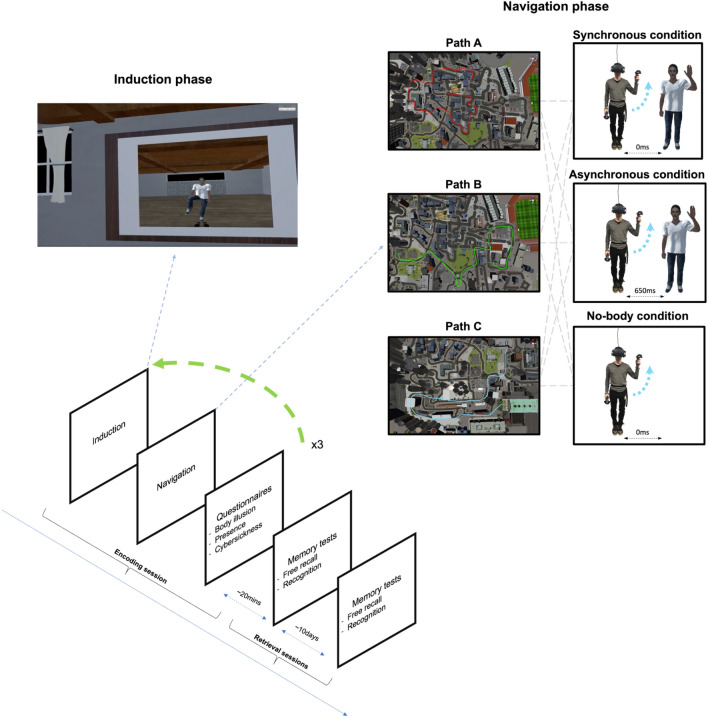
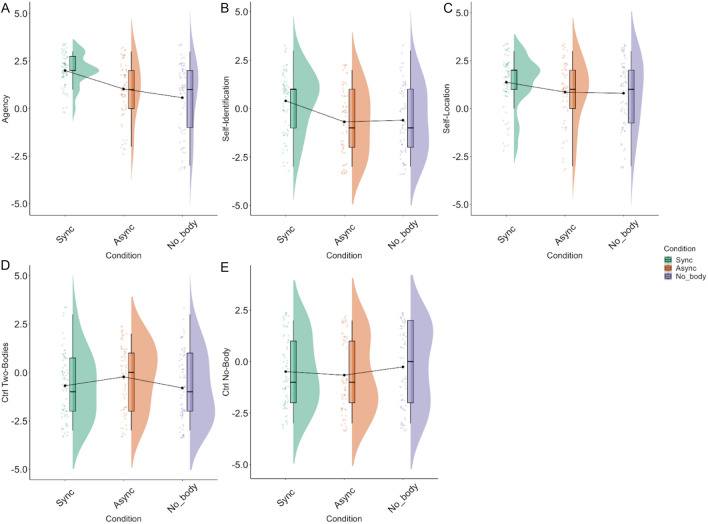
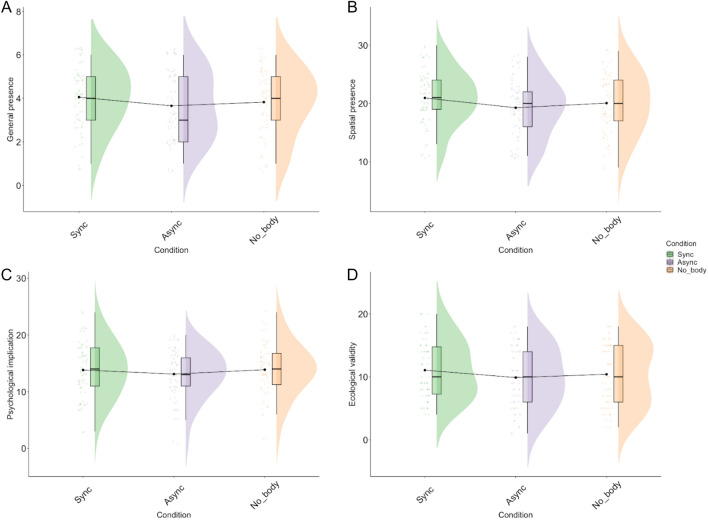
Verification
Claims the paper makes
The claims and statistics of this paper haven’t been checked yet.
Free: it reads the open-access text and checks the first 5 claims that cite a source we can check. Create a free account to check every claim.
Claims other papers make about this one
Each is checked against this paper’s own text: does it say what the citing paper says it does?
The cited source says what the claim attributes to it.
In the citing paper
“XR enables conditions that are simultaneously controlled and ecologically validthat is, realistic enough to resemble the settings in which memories actually formthrough embodied, first-person enactment in space and time (Lenormand et al., 2024;Penaud et al., 2023).”
From Mediating memory through immersive technologies and artificial intelligence: revisiting individual and collectively co-created pasts and futures (2026) · cites this paper as Penaud et al., 2023
Self-check
Percentages, sums and reported differences re-computed from the paper’s own numbers.
The self-check needs the paper’s full text.
Citations
Cites
A general and simple method for obtaining R 2 from generalized linear mixed‐effects models
Nakagawa, S., & Schielzeth, H. (2013) · Methods in Ecology and Evolution · doi:10.1111/j.2041-210x.2012.00261.x · Cited by 10,356
Barsalou, L. W. (2008) · Annual Review of Psychology · doi:10.1146/annurev.psych.59.103006.093639 · Cited by 5,936 · cited 1×
“Proponents of the embodied approach of EM argue that bodily and sensorimotor information is integrated into the memory trace and later reactivated to support memory retrieval 24–26 .”
Backgroundperformance: An R Package for Assessment, Comparison and Testing of Statistical Models
Lüdecke, D., Ben-Shachar, M., Patil, I., Waggoner, P., & Makowski, D. (2021) · Journal of Open Source Software · doi:10.21105/joss.03139 · Cited by 5,836 · cited 1×
“Estimates, confidence intervals, and p-values for fixed effects estimates were computed using a Wald t-distri-bution approximation using the parameters function of the performance package 72 .”
MethodEpisodic memory: from mind to brain
Tulving, E. (2002) · Annual Review of Psychology · doi:10.1146/annurev.psych.53.100901.135114 · Cited by 4,950
Tulving, E. (1985) · Canadian Psychology / Psychologie canadienne · doi:10.1037/h0080017 · Cited by 4,638 · cited 1×
“…degree of remembering (i.e., reexperiencing) on a continuous scale (0 = I don’t remember, I know; 100 = I fully remember) 69 , which is a more fine-grained measure of remembering experienced events than the classic dichotomous Remember/Know paradigm 7 used for simple material such as words 70 .”
BackgroundPhilosophical conceptions of the self: implications for cognitive science.
Gallagher, S. (2000) · Trends in Cognitive Sciences · doi:10.1016/s1364-6613(99)01417-5 · Cited by 2,881
The Experience of Presence: Factor Analytic Insights
Schubert, T., Friedmann, F., & Regenbrecht, H. (2001) · Presence: Teleoperators and Virtual Environments · doi:10.1162/105474601300343603 · Cited by 2,303 · cited 2×
“Next, to test for differences in the sense of presence, we analyzed each subscore of the IPQ independently while controlling for the nausea subscore and navigation duration.”
MethodConway, M. A. (2005) · Journal of Memory and Language · doi:10.1016/j.jml.2005.08.005 · Cited by 2,155
From presence to consciousness through virtual reality.
Sanchez-Vives, M. V., & Slater, M. (2005) · Nature reviews. Neuroscience · doi:10.1038/nrn1651 · Cited by 1,831 · cited 1×
“VR is a computer-generated immersive technology that enables users to interact with a simulated world in a three-dimensional space, providing a sense of presence or “being there” 36,37 .”
BackgroundThe rubber hand illusion revisited: visuotactile integration and self-attribution
Tsakiris, M., & Haggard, P. (2005) · Journal of Experimental Psychology: Human Perception and Performance · doi:10.1037/0096-1523.31.1.80 · Cited by 1,328 · cited 1×
“Research has consistently demonstrated that simultaneous visual and tactile or motor stimulation that is both spatially and temporally congruent can trigger body illusions defined as an incorporation of an extra-corporeal body part or even an entire body into the sense of bodily-self 21,22 .”
BackgroundDeconstructing episodic memory with construction
Hassabis, D., & Maguire, E. A. (2007) · Trends in Cognitive Sciences · doi:10.1016/j.tics.2007.05.001 · Cited by 1,229
Multisensory brain mechanisms of bodily self-consciousness.
Blanke, O. (2012) · Nature Reviews Neuroscience · doi:10.1038/nrn3292 · Cited by 1,147
Sense of agency in the human brain
Haggard, P. (2017) · Nature Reviews Neuroscience · doi:10.1038/nrn.2017.14 · Cited by 1,107 · cited 2×
“Thus, as the visual feedback delay increases, the sense of agency should be diminished or abolished 76 .”
BackgroundMethodFirst person experience of body transfer in virtual reality
Slater, M., Spanlang, B., Sanchez-Vives, M. V., & Blanke, O. (2010) · PLoS ONE · doi:10.1371/journal.pone.0010564 · Cited by 1,090 · cited 1×
“Research has consistently demonstrated that simultaneous visual and tactile or motor stimulation that is both spatially and temporally congruent can trigger body illusions defined as an incorporation of an extra-corporeal body part or even an entire body into the sense of bodily-self 21,22 .”
BackgroundEpisodic memory and beyond: the hippocampus and neocortex in transformation
Moscovitch, M., Cabeza, R., Winocur, G., & Nadel, L. (2016) · Annual Review of Psychology · doi:10.1146/annurev-psych-113011-143733 · Cited by 1,062
An Interoceptive Predictive Coding Model of Conscious Presence
Seth, A. K., Suzuki, K., & Critchley, H. D. (2012) · Frontiers in Psychology · doi:10.3389/fpsyg.2011.00395 · Cited by 950
robustlmm: An R Package for Robust Estimation of Linear Mixed-Effects Models
Koller, M. (2016) · Journal of Statistical Software · doi:10.18637/jss.v075.i06 · Cited by 713 · cited 1×
“When data residuals were not normally distributed (as assessed by a Shapiro–Wilk test), we used a robust version of the lmer function named rlmer using the robustlmm package 71 .”
MethodBehavioral, Neural, and Computational Principles of Bodily Self-Consciousness
Blanke, O., Slater, M., & Serino, A. (2015) · Neuron · doi:10.1016/j.neuron.2015.09.029 · Cited by 698
Banakou, D., Groten, R., & Slater, M. (2013) · Proceedings of the National Academy of Sciences · doi:10.1073/pnas.1306779110 · Cited by 695 · cited 2×
“Interestingly, recent studies have shown that BSC may influence both spatial 57 and temporal processing 58 , as well as their association in the hippocampus 59 .”
BackgroundMultisensory integration and the body schema: Close to hand and within reach
Maravita, A., Spence, C., & Driver, J. (2003) · Current Biology · doi:10.1016/s0960-9822(03)00449-4 · Cited by 578 · cited 1×
“Interacting with the environment requires monitoring the position of one’s body and effectors in relation to external objects 79 .”
BackgroundKilteni, K., Maselli, A., Kording, K. P., & Slater, M. (2015) · Frontiers in Human Neuroscience · doi:10.3389/fnhum.2015.00141 · Cited by 523 · cited 1×
“Moreover, visuomotor signals bear significant signals for the self-other distinction and have been shown to produce stronger and more stable changes in BSC (for a review, see Kilteni et al. 63 ).”
BackgroundThe Integrative Self: How Self-Reference Integrates Perception and Memory
Sui, J., & Humphreys, G. W. (2015) · Trends in Cognitive Sciences · doi:10.1016/j.tics.2015.08.015 · Cited by 502 · cited 1×
“Thus, the interaction between the BSC system and the memory system may help bind the various dimensions of experience into a well-integrated representation of the event in memory encoding, reinstatement, and long-term consolidation 81,82 .”
BackgroundAutobiographical memory and sense of self.
Prebble, S. C., Addis, D. R., & Tippett, L. J. (2013) · Psychological Bulletin · doi:10.1037/a0030146 · Cited by 466 · cited 3×
“Several recent theoretical frameworks on memory and the self have also stressed the influence of bodily processes and BSC on autonoetic consciousness and mental time travel 27–32 .”
BackgroundA contextual binding theory of episodic memory: systems consolidation reconsidered
Yonelinas, A. P., Ranganath, C., Ekstrom, A. D., & Wiltgen, B. J. (2019) · Nature Reviews Neuroscience · doi:10.1038/s41583-019-0150-4 · Cited by 450 · cited 1×
“The integration of spatial and temporal information encoding, along with associative mechanisms that bind items and contextual information, is at the core of EM 56 .”
BackgroundBlakemore, S.-J., & Frith, C. (2003) · Current Opinion in Neurobiology · doi:10.1016/s0959-4388(03)00043-6 · Cited by 448 · cited 2×
“For the Asynchronous condition, we expected sense of agency scores to follow self-identification as a sense of agency is known to depend on the comparison between the expected and actual multi-sensory consequences of motor commands, including their temporal dynamics 75 .”
BackgroundMethodVirtual hand illusion induced by visuomotor correlations
Sanchez-Vives, M. V., Spanlang, B., Frisoli, A., Bergamasco, M., & Slater, M. (2010) · PLoS ONE · doi:10.1371/journal.pone.0010381 · Cited by 441 · cited 1×
“We used HMD to embody participants in a personalized avatar seen from a first-person perspective and manipulated visuo-motor feedback to modulate BSC. Visuomotor stimulation has been widely used to induce body-part and full-body illusions 61,62 .”
MethodThe Missing Link in CognitionOrigins of self-reflective consciousness
Terrace, H. S., & Metcalfe, J. (2005) · doi:10.1093/acprof:oso/9780195161564.001.0001 · Cited by 417
A continuous dual-process model of remember/know judgments.
Wixted, J. T., & Mickes, L. (2010) · Psychological Review · doi:10.1037/a0020874 · Cited by 406 · cited 1×
“…of encoding) and their degree of remembering (i.e., reexperiencing) on a continuous scale (0 = I don’t remember, I know; 100 = I fully remember) 69 , which is a more fine-grained measure of remembering experienced events than the classic dichotomous Remember/Know paradigm 7 used for simple…”
BackgroundCabeza, R., Prince, S. E., Daselaar, S. M., Greenberg, D. L., Budde, M., Dolcos, F., LaBar, K. S., & Rubin, D. C. (2004) · Journal of Cognitive Neuroscience · doi:10.1162/0898929042568578 · Cited by 376
Piolino, P., Desgranges, B., & Eustache, F. (2009) · Neuropsychologia · doi:10.1016/j.neuropsychologia.2009.01.020 · Cited by 328
Self-citationKokkinara, E., & Slater, M. (2014) · Perception · doi:10.1068/p7545 · Cited by 300 · cited 1×
“We used HMD to embody participants in a personalized avatar seen from a first-person perspective and manipulated visuo-motor feedback to modulate BSC. Visuomotor stimulation has been widely used to induce body-part and full-body illusions 61,62 .”
MethodPlancher, G., Tirard, A., Gyselinck, V., Nicolas, S., & Piolino, P. (2012) · Neuropsychologia · doi:10.1016/j.neuropsychologia.2011.12.013 · Cited by 280 · cited 1×
“Altogether, the present results reinforce our prior research on the effect of self-awareness on EM of naturalistic events using virtual reality 9,47,85 and extend previous studies (see Table 1) revealing that BSC plays a crucial role in incidental encoding of naturalistic events supporting…”
ResultSelf-citationThe Concept of Body Ownership and Its Relation to Multisensory Integration
Ehrsson, H. H. (2012) · The New Handbook of Multisensory Processing · doi:10.7551/mitpress/8466.003.0067 · Cited by 267
Coupling Inner and Outer Body for Self-Consciousness
Park, H.-D., & Blanke, O. (2019) · Trends in Cognitive Sciences · doi:10.1016/j.tics.2019.02.002 · Cited by 266 · cited 1×
“Neuroimaging studies have identified a network of interconnected brain regions, including frontoparietal, temporoparietal, and subcortical areas associated with BSC, with different sub-networks supporting spatial and self-components of BSC 90 .”
BackgroundDepersonalization: a selective impairment of self-awareness
Sierra, M., & David, A. S. (2011) · Consciousness and Cognition · doi:10.1016/j.concog.2010.10.018 · Cited by 254 · cited 1×
“In addition, a growing amount of clinical evidence indicates that compromised BSC is associated with impairments in EM, as observed in individuals with schizophrenia or depersonalization disorders 27,33 .”
BackgroundA unifying account of angular gyrus contributions to episodic and semantic cognition
Humphreys, G. F., Lambon Ralph, M. A., & Simons, J. S. (2021) · Trends in Neurosciences · doi:10.1016/j.tins.2021.01.006 · Cited by 220
Act-In: An integrated view of memory mechanisms
Versace, R., Vallet, G. T., Riou, B., Lesourd, M., Labeye, É., & Brunel, L. (2014) · Journal of Cognitive Psychology · doi:10.1080/20445911.2014.892113 · Cited by 210
Out-of-body-induced hippocampal amnesia
Bergouignan, L., Nyberg, L., & Ehrsson, H. H. (2014) · Proceedings of the National Academy of Sciences · doi:10.1073/pnas.1318801111 · Cited by 199 · cited 4×
“However, other studies on BSC and EM have demonstrated that spatial, including sense of self-location 59 and perspective 9 , and agentive components of BSC may also play a role in EM encoding.”
BackgroundInfluentialViard, A., Piolino, P., Desgranges, B., Chetelat, G., Lebreton, K., Landeau, B., Young, A., De La Sayette, V., & Eustache, F. (2007) · Cerebral Cortex · doi:10.1093/cercor/bhl153 · Cited by 194
Self-citationEmbodied memories: Reviewing the role of the body in memory processes
Ianì, F. (2019) · Psychonomic Bulletin & Review · doi:10.3758/s13423-019-01674-x · Cited by 179 · cited 1×
“Proponents of the embodied approach of EM argue that bodily and sensorimotor information is integrated into the memory trace and later reactivated to support memory retrieval 24–26 .”
BackgroundVirtual reality in episodic memory research: A review
Smith, S. A. (2019) · Psychonomic Bulletin & Review · doi:10.3758/s13423-019-01605-w · Cited by 176 · cited 1×
“Devices such as Virtual Reality (VR) provide many advantages for evaluating EM 34,35 .”
BackgroundCLME: An R Package for Linear Mixed Effects Models under Inequality Constraints
Jelsema, C. M., & Peddada, S. D. (2016) · Journal of Statistical Software · doi:10.18637/jss.v075.i01 · Cited by 174
Virtual reality: A new method to investigate cognitive load during navigation
Armougum, A., Orriols, E., Gaston-Bellegarde, A., Marle, C. J.-L., & Piolino, P. (2019) · Journal of Environmental Psychology · doi:10.1016/j.jenvp.2019.101338 · Cited by 144 · cited 1×
“Consistent with this claim is that participants in the Asynchronous condition exhibited longer navigation duration, which is a consequence of higher cognitive load 40 .”
ResultSelf-citationKondo, R., Sugimoto, M., Minamizawa, K., Hoshi, T., İnami, M., & Kitazaki, M. (2018) · Scientific Reports · doi:10.1038/s41598-018-25951-2 · Cited by 135 · cited 1×
“Similarly, Kondo et al. 87 found that the mere perception of spatially congruent but disconnected hands and feet might suffice to create a sense of self-identification, sense of agency, and sense of self-location over the corresponding interpolated body.”
BackgroundIllusory ownership of an invisible body reduces autonomic and subjective social anxiety responses
Guterstam, A., Abdulkarim, Z., & Ehrsson, H. H. (2015) · Scientific Reports · doi:10.1038/srep09831 · Cited by 132 · cited 2×
“The body-illusion questionnaire included five statements and was adapted from various existing questionnaires to accommodate ratings on visible and invisible virtual bodies 53,66 (see Table 2).”
BackgroundMethodSelf as Object: Emerging Trends in Self Research
Sui, J., & Gu, X. (2017) · Trends in Neurosciences · doi:10.1016/j.tins.2017.09.002 · Cited by 128 · cited 1×
“Thus, the interaction between the BSC system and the memory system may help bind the various dimensions of experience into a well-integrated representation of the event in memory encoding, reinstatement, and long-term consolidation 81,82 .”
BackgroundVandekerckhove, M. M. P., & Panksepp, J. (2011) · Neuroscience & Biobehavioral Reviews · doi:10.1016/j.neubiorev.2011.04.001 · Cited by 126
Does delay in feedback diminish sense of agency? A review
Wen, W. (2019) · Consciousness and Cognition · doi:10.1016/j.concog.2019.05.007 · Cited by 126 · cited 1×
“However, in our study, visuo-motor delay was kept constant, allowing participants to adjust to the altered temporal gap between their actions and consequences, thereby increasing their sense of agency over time 77 .”
BackgroundA Theory of Autobiographical Memory: Necessary Components and Disorders Resulting from their Loss
Klein, S. B., German, T. P., Cosmides, L., & Gabriel, R. (2004) · Social Cognition · doi:10.1521/soco.22.5.460.50765 · Cited by 121
Editorial: A Review of Self-Processing Biases in Cognition
Cunningham, S. J., & Turk, D. J. (2017) · Quarterly Journal of Experimental Psychology · doi:10.1080/17470218.2016.1276609 · Cited by 118
Klein, S. B. (2015) · WIREs Cognitive Science · doi:10.1002/wcs.1333 · Cited by 112
Specifying a Causal Role for Angular Gyrus in Autobiographical Memory
Bonnici, H. M., Cheke, L. G., Green, D. A. E., FitzGerald, T. H. M. B., & Simons, J. S. (2018) · The Journal of Neuroscience · doi:10.1523/jneurosci.1239-18.2018 · Cited by 109
The influence of action on episodic memory: A virtual reality study
Plancher, G., Barra, J., Orriols, E., & Piolino, P. (2013) · Quarterly Journal of Experimental Psychology · doi:10.1080/17470218.2012.722657 · Cited by 108 · cited 1×
“For example, the enactment effect—the finding that actively navigating in a virtual environment enhances EM compared to passively observing—generally improves factual, contextual, and associative memory and the sense of remembering 46,47 .”
BackgroundSelf-citationOuellet, É., Boller, B., Corriveau-Lecavalier, N., Cloutier, S., & Belleville, S. (2018) · Journal of Neuroscience Methods · doi:10.1016/j.jneumeth.2018.03.010 · Cited by 108
Virtual Reality Headsets - A Theoretical and Pragmatic Approach
Fuchs, P. (2017) · CRC Press eBooks · doi:10.1201/9781315208244 · Cited by 99 · cited 1×
“VR is a computer-generated immersive technology that enables users to interact with a simulated world in a three-dimensional space, providing a sense of presence or “being there” 36,37 .”
BackgroundThe Use of Virtual Reality for Episodic Memory Assessment: Effects of Active Navigation
Sauzéon, H., Arvind Pala, P., Larrue, F., Wallet, G., Déjos, M., Zheng, X., Guitton, P., & N’Kaoua, B. (2012) · Experimental Psychology · doi:10.1027/1618-3169/a000131 · Cited by 98
Effects of Enactment in Episodic Memory: A Pilot Virtual Reality Study with Young and Elderly Adults
Jebara, N., Orriols, E., Zaoui, M., Berthoz, A., & Piolino, P. (2014) · Frontiers in Aging Neuroscience · doi:10.3389/fnagi.2014.00338 · Cited by 94 · cited 2×
“Altogether, the present results reinforce our prior research on the effect of self-awareness on EM of naturalistic events using virtual reality 9,47,85 and extend previous studies (see Table 1) revealing that BSC plays a crucial role in incidental encoding of naturalistic events supporting…”
BackgroundResultSelf-citationFirst-person view of one’s body in immersive virtual reality: Influence on episodic memory
Bréchet, L., Mange, R., Herbelin, B., Theillaud, Q., Gauthier, B., Serino, A., & Blanke, O. (2019) · PLOS ONE · doi:10.1371/journal.pone.0197763 · Cited by 85 · cited 5×
“In support of this claim, Bréchet et al. 50 found that seeing one’s own body in a given environment retroactively strengthened memories of material encoded in this environment.”
BackgroundResultInfluentialThe Emergence of Primary Anoetic Consciousness in Episodic Memory
Vandekerckhove, M. M. P., Bulnes, L. C., & Panksepp, J. (2014) · Frontiers in Behavioral Neuroscience · doi:10.3389/fnbeh.2013.00210 · Cited by 85
Multi-sensory and sensorimotor foundation of bodily self-consciousness—an interdisciplinary approach
Ionta, S., Gassert, R., & Blanke, O. (2011) · Frontiers in Psychology · doi:10.3389/fpsyg.2011.00383 · Cited by 84 · cited 1×
“Sense of body in space relies heavily on multi-sensory integration processes that blend spatial information about body position from various modalities 80 .”
BackgroundWallet, G., Sauzéon, H., Pala, P. A., Larrue, F., Zheng, X., & N'Kaoua, B. (2011) · Cyberpsychology, Behavior, and Social Networking · doi:10.1089/cyber.2009.0187 · Cited by 79 · cited 1×
“Furthermore, knowledge acquired in VR is more easily transferable to the real world 44 .”
BackgroundBack to square one: the bodily roots of conscious experiences in early life
Ciaunica, A., Safron, A., & Delafield-Butt, J. (2021) · Neuroscience of Consciousness · doi:10.1093/nc/niab037 · Cited by 77
Perception of Our Own Body Influences Self-Concept and Self-Incoherence Impairs Episodic Memory
Tacikowski, P., Weijs, M. L., & Ehrsson, H. H. (2020) · iScience · doi:10.1016/j.isci.2020.101429 · Cited by 75 · cited 3×
“More recently, Tacikowski et al. (2020) 52 asked pairs of friends to complete a personality-trait judgment task serving as an incidental encoding.”
BackgroundInfluentialVirtual Reality as an Embodied Tool to Enhance Episodic Memory in Elderly
Repetto, C., Serino, S., Macedonia, M., & Riva, G. (2016) · Frontiers in Psychology · doi:10.3389/fpsyg.2016.01839 · Cited by 73 · cited 1×
“VR has also established itself as an embodied technology, allowing us to assess the influence of the body on cognition 45 .”
BackgroundBrain mechanisms underlying the subjective experience of remembering
Simons, J. S., Ritchey, M., & Fernyhough, C. (2022) · Annual Review of Psychology · doi:10.1146/annurev-psych-030221-025439 · Cited by 70
La Corte, V., Sperduti, M., Abichou, K., & Piolino, P. (2019) · Frontiers in Psychology · doi:10.3389/fpsyg.2019.00173 · Cited by 61
Self-citationLalanne, J., Rozenberg, J., Grolleau, P., & Piolino, P. (2013) · Current Alzheimer Research · doi:10.2174/15672050113106660175 · Cited by 58
Self-citationTime Course of Reach Adaptation and Proprioceptive Recalibration during Visuomotor Learning
Ruttle, J. E., Cressman, E. K., Hart, B. M. ’., & Henriques, D. Y. P. (2016) · PLoS ONE · doi:10.1371/journal.pone.0163695 · Cited by 58 · cited 1×
“For example, adaptation time to a mismatch can be very rapid, with some studies reporting adaptation after only a few trials 88 Moreover, it has been shown that visuomotor adaptation rate is robust to cognitive load 89 .”
BackgroundNida‐Rümelin, M. (2016) · Review of Philosophy and Psychology · doi:10.1007/s13164-016-0328-x · Cited by 58
Bréchet, L., Grivaz, P., Gauthier, B., & Blanke, O. (2018) · Frontiers in Behavioral Neuroscience · doi:10.3389/fnbeh.2018.00270 · Cited by 53 · cited 1×
“Interestingly, recent behavioral and neuroimaging studies suggest that the multi-sensory processes involved in BSC are integrated into the memory trace to support encoding and episodic remembering 66,94 .”
BackgroundCadet, L. B., Reynaud, E., & Chainay, H. (2021) · Virtual Reality · doi:10.1007/s10055-021-00537-y · Cited by 49 · cited 1×
“It allows researchers to create self-involving experiences and simulate expansive and ecologically valid environments that better capture how cognition operates in real-world settings over various populations, including children, young adults, and healthy and pathological aging 38–42 .”
BackgroundAbdulkarim, Z., Hayatou, Z., & Ehrsson, H. H. (2021) · Experimental Brain Research · doi:10.1007/s00221-021-06211-8 · Cited by 48
Bréchet, L., Hausmann, S. B., Mange, R., Herbelin, B., Blanke, O., & Serino, A. (2020) · Brain and Behavior · doi:10.1002/brb3.1571 · Cited by 47 · cited 3×
“…with previous studies showing that asynchronous visuo-tactile stimulation diminishes memory performance for factual information using words 52 , 3D objects 49,50 , and complex video scenes 53 , and extends this result to the incidental encoding of ecological events in naturalistic settings.”
BackgroundResultSense of self impacts spatial navigation and hexadirectional coding in human entorhinal cortex
Moon, H.-J., Gauthier, B., Park, H.-D., Faivre, N., & Blanke, O. (2022) · Communications Biology · doi:10.1038/s42003-022-03361-5 · Cited by 43 · cited 4×
“They demonstrated fewer distance errors and shorter path navigations when the participants saw the avatar associated with synchronous sensorimotor stimulation 60 .”
BackgroundInfluentialOut-of-body memory encoding causes third-person perspective at recall
Bergouignan, L., Nyberg, L. H., & Ehrsson, H. H. (2021) · Journal of Cognitive Psychology · doi:10.1080/20445911.2021.1958823 · Cited by 41 · cited 1×
“Moreover, Bergouignan et al. 59,96 found that experimentally induced out-of-body experience reduced hippocampal activity during retrieval and the ability to remember events from a field perspective.”
BackgroundThe impure phenomenology of episodic memory
Boyle, A. (2019) · Mind & Language · doi:10.1111/mila.12261 · Cited by 40
Gauthier, B., Bréchet, L., Lance, F., Mange, R., Herbelin, B., Faivre, N., Bolton, T. A. W., Ville, D. V. D., & Blanke, O. (2020) · NeuroImage · doi:10.1016/j.neuroimage.2020.117370 · Cited by 39 · cited 4×
“Only a few studies have investigated the impact of synchronous visuo-motor stimulation on memory performance compared to a No-Body condition 49–51 , but they have reported inconsistent results.”
BackgroundResultInfluentialGut markers of bodily self-consciousness in men
Monti, A., Porciello, G., Panasiti, M. S., & Aglioti, S. M. (2022) · iScience · doi:10.1016/j.isci.2022.105061 · Cited by 39
Iriye, H., & Ehrsson, H. H. (2021) · iScience · doi:10.1016/j.isci.2021.103584 · Cited by 38 · cited 10×
“This form of bodily illusion has been employed to investigate the role of body self-consciousness in EM 48–53 (see Table 1).”
BackgroundMethodResultInfluentialMemory, autonoetic consciousness and the self: Consciousness as a continuum of stages
Vandekerckhove, M. M. P. (2009) · Self and Identity · doi:10.1080/15298860801961927 · Cited by 37
A causal role for the right angular gyrus in self-location mediated perspective taking
de Boer, D. M. L., Johnston, P., Kerr, G., Meinzer, M., & Cleeremans, A. (2020) · Scientific Reports · doi:10.1038/s41598-020-76235-7 · Cited by 36
The Assembly of the Self from Sensory and Motor Foundations
Salomon, R. (2017) · Social Cognition · doi:10.1521/soco.2017.35.2.87 · Cited by 35 · cited 1×
“…sense of identification with one’s own body (i.e., self-identification ), the sense of being located in space and time (i.e., self-location ), the feeling of having control over one’s own body (i.e., agency ) and the centeredness of experience around the body (i.e., first-person perspective ) 23 .”
BackgroundQuo vadis ‘episodic memory’? – Past, present, and perspective
Staniloiu, A., Kordon, A., & Markowitsch, H. J. (2020) · Neuropsychologia · doi:10.1016/j.neuropsychologia.2020.107362 · Cited by 35
Lenormand, D., & Piolino, P. (2021) · Neuroscience & Biobehavioral Reviews · doi:10.1016/j.neubiorev.2021.12.022 · Cited by 32
Self-citationSense of own body shapes neural processes of memory encoding and reinstatement
Iriye, H., Chancel, M., & Ehrsson, H. H. (2023) · Cerebral Cortex · doi:10.1093/cercor/bhad443 · Cited by 30
Visual Perspectives in Episodic Memory and the Sense of Self
Lin, Y.-T. (2018) · Frontiers in Psychology · doi:10.3389/fpsyg.2018.02196 · Cited by 28
Virtual Reality for Assessment of Episodic Memory in Normal and Pathological Aging
Plancher, G., & Piolino, P. (2017) · Oxford University Press eBooks · doi:10.1093/oso/9780190234737.003.0015 · Cited by 28
Self-citationPenaud, S., Jebara, N., Zaoui, M., Orriols, E., Berthoz, A., & Piolino, P. (2022) · Journal of Environmental Psychology · doi:10.1016/j.jenvp.2022.101801 · Cited by 25 · cited 4×
“However, other studies on BSC and EM have demonstrated that spatial, including sense of self-location 59 and perspective 9 , and agentive components of BSC may also play a role in EM encoding.”
BackgroundMethodResultInfluentialSelf-citationAndrews, G., Murphy, K. A., & Dunbar, M. (2020) · Journal of Experimental Child Psychology · doi:10.1016/j.jecp.2020.104919 · Cited by 25
Bögge, L., COLÁS-BLANCO, I., & Piolino, P. (2022) · Frontiers in Neuroscience · doi:10.3389/fnins.2022.791498 · Cited by 24
Self-citationBack to Square One: The Bodily Roots of Conscious Experiences in Early LifePreprint
Ciaunica, A., Safron, A., & Delafield‐Butt, J. T. (2021) · doi:10.31234/osf.io/zspm2 · Cited by 23
How virtual embodiment affects episodic memory functioning: A proof-of-concept study
Tuena, C., Serino, S., Gaston‐Bellegarde, A., Orriols, É., Makowski, D., Riva, G., & Piolino, P. (2017) · BOA (University of Milano-Bicocca) · Cited by 22
Self-citationReggente, N. (2023) · Current topics in behavioral neurosciences · doi:10.1007/7854_2023_425 · Cited by 22
Simulator Sickness Questionnaire--French Revision
Bouchard, S., Robillard, G., & Renaud, P. (2007) · PsycTESTS Dataset · doi:10.1037/t73606-000 · Cited by 21
Embodied time and the out-of-body experience of the self
Droit‐Volet, S., Monceau, S., Dambrun, M., & Martinelli, N. N. (2020) · PeerJ · doi:10.7717/peerj.8565 · Cited by 21 · cited 2×
“These results depart from a recent study showing that BSC may modulate time perception 58 .”
BackgroundResultNeuropsydia.py: A Python Module for Creating Experiments, Tasks and Questionnaires
Makowski, D., & Dutriaux, L. (2017) · The Journal of Open Source Software · doi:10.21105/joss.00259 · Cited by 20
Personal Memories and Bodily-Cues Influence Our Sense of Self
Bréchet, L. (2022) · Frontiers in Psychology · doi:10.3389/fpsyg.2022.855450 · Cited by 19 · cited 1×
“The role of bodily self-consciousness (BSC) in episodic memory (EM) has been the subject of increasing interest in recent years due to growing evidence suggesting that the body plays a crucial part in memory formation and retrieval 8,9 .”
BackgroundLesur, M. R., Weijs, M. L., Nguyen, T. D., & Lenggenhager, B. (2021) · Cognition · doi:10.1016/j.cognition.2021.104769 · Cited by 19
“What is the Self?”: Approaches to a Very Elusive Question
Klein, S. B. (2012) · Social Cognition · doi:10.1521/soco.2012.30.4.363 · Cited by 11
Additional cognitive load decreases performance but not adaptation to a visuomotor transformation
Langsdorf, L., Göhringer, F., Schween, R., Schenk, T., & Hegele, M. (2022) · Acta Psychologica · doi:10.1016/j.actpsy.2022.103586 · Cited by 11 · cited 1×
“For example, adaptation time to a mismatch can be very rapid, with some studies reporting adaptation after only a few trials 88 Moreover, it has been shown that visuomotor adaptation rate is robust to cognitive load 89 .”
BackgroundSense of self impacts spatial navigation and hexadirectional coding in human entorhinal cortexPreprint
Moon, H.-J., Gauthier, B., Park, H.-D., Faivre, N., & Blanke, O. (2020) · bioRxiv (Cold Spring Harbor Laboratory) · doi:10.1101/2020.09.13.295246 · Cited by 10
The diminishing precision of memory for time
Scofield, J. E., & Johnson, J. D. (2021) · Psychonomic Bulletin & Review · doi:10.3758/s13423-021-01984-z · Cited by 8 · cited 1×
“Similar to spatial measurements, further studies could examine different types of temporal information to better understand the role of BSC in the precision of EM for temporal information 83 .”
BackgroundThe Sense of Body Ownership and the Neural Processes of Memory Encoding and ReinstatementPreprint
Iriye, H., Chancel, M., & Ehrsson, H. H. (2023) · bioRxiv (Cold Spring Harbor Laboratory) · doi:10.1101/2023.03.07.531497 · Cited by 2 · cited 4×
“The authors concluded that sense of bodily-self in space during encoding is likely a fundamental contextual memory cue based on spatial relationships that delineate oneself from the external world 84 .”
BackgroundResultInfluentialYeh et al., CyberPsy26, 2023.pdf
Yeh, D., Penaud, S., Scoriels, L., Krebs, M., & Piolino, P. (2023) · doi:10.13140/rg.2.2.19912.08961 · Cited by 1
Self-citation
Research works printed but not linked: 1
- Durneva P Ma Y Marakas G Aguirre-Urreta M Being there: Spatial presence in immersive environments AMCIS Proc. 2022 2022 89
Cited by
Virtual Experiences, Real Memories? A Study on Information Recall and Recognition in the Metaverse
Xi, N., Chen, J., Gama, F., Korkeila, H., & Hamari, J. (2024) · Information Systems Frontiers · doi:10.1007/s10796-024-10500-2 · Cited by 20
“…AR) by comparing different design interfaces, content, interaction and perceptions (see e.g., 2D vs. 3D content, Lin et al., 2023; immersion, Smith & Mulligan, 2021; bodily self-consciousness, Penaud et al., 2023), rather than comparing the different experiences brought by the two XR technologies.”
Decoding episodic autobiographical memory in naturalistic virtual reality
Lenormand, D., Mentec, I., Gaston-Bellegarde, A., Orriols, E., & Piolino, P. (2024) · Scientific Reports · doi:10.1038/s41598-024-76944-3 · Cited by 12
Self-citationTell me why: the missing w in episodic memory’s what, where, and when
Morales-Calva, F., & Leal, S. L. (2024) · Cognitive Affective & Behavioral Neuroscience · doi:10.3758/s13415-024-01234-4 · Cited by 17
“…and ethnic makeups (Mannion et al., 2023), the use of technological advancements, such as virtual and augmented reality (Iriye & St. Jacques, 2021; Penaud et al., 2023), and the use of real-world neural recordings in freely moving participants (Topalovic et al., 2023) are essential toward tapping…”
Sunardi, S., Meyliana, M., Warnars, H. L. H. S., & Rosmansyah, Y. (2025) · IEEE Access · doi:10.1109/access.2025.3565385 · Cited by 24
Lucarini, V., Alouit, A., Yeh, D., Coq, J. L., Savatte, R., Charre, M., Louveau, C., Houamri, M. B., Penaud, S., Gaston‐Bellegarde, A., et al. (2023) · BMC Psychiatry · doi:10.1186/s12888-023-05347-x · Cited by 12
“This task has been designed by Delphine Yeh under the supervision of Pascale Piolino, and derived from Sylvain Penaud’s protocol for the procedures linked to the minimal self-reference [90].”
MethodSelf-citation
Metadata
- Authors
- Penaud, S., Yeh, D., Gaston-Bellegarde, A., & Piolino, P.
- Affiliations
- Université Paris Cité (FR)
- Corresponding author
- Penaud, Sylvain
- Piolino, Pascale
- Venue
- Scientific Reports
- Published
- 2023-10-09
- Volume
- 13
- Issue
- 1
- Pages
- 17013-17013
- ISSN
- 2045-2322 (ISSN-L)
- PMC
- PMC10562507
- OpenAlex
- W4387451633
- Semantic Scholar
- f7664907802f280306204cb840a835c62a01e568
- Cited by
- 29
- References
- 105
- Citations by year
- 2026: 9 · 2025: 12 · 2024: 7 · 2023: 1
- FWCI
- 5.02
- Type
- journal article
- Language
- en
- Open access
- gold
- doi.org
- Licence
- cc-by
- creativecommons.org/licenses/by/4.0 (tdm)
- creativecommons.org/licenses/by/4.0 (vor)
- Locations
- Scientific Reports (publishedVersion, cc-by)
- Research Square (acceptedVersion, cc-by)
- PubMed Central (publishedVersion, cc-by)
- PubMed (publishedVersion)
- HAL (submittedVersion, cc-by)
- DOAJ (DOAJ: Directory of Open Access Journals) (submittedVersion, cc-by-sa)
- Topics
- Physical Sciences › Computer Science › Human-Computer Interaction › Virtual Reality Applications and Impacts
- Life Sciences › Neuroscience › Cognitive Neuroscience › Memory Processes and Influences
- Life Sciences › Neuroscience › Cognitive Neuroscience › Memory and Neural Mechanisms
- Keywords
- bodily self-consciousness, episodic memory, embodiment, immersive virtual reality, visuomotor feedback, asynchronous feedback, presence, self-localization, sense of agency, memory consolidation, incidental memory, urban navigation
- MeSH terms
- Virtual Reality, Consciousness, Emotions, Humans, Mental Recall, Memory, Episodic
About these checks
Registry, retraction, Cites and statistics results are computed, not judged, with one exception: a printed reference that no index lists is read once by a model before it counts as a citation error. Claims are extracted by a model and kept only when their quote appears verbatim in the text; each cited source is then checked, with a model’s help, for whether it says what the claim relies on. Those verdicts can be wrong — read the claim’s quote and the cited source before relying on one.
Statistics and arithmetic are recomputed, not judged.
Confidence bands are shown only for fields calibrated on our annotated test set. None is calibrated yet, so no band is shown.
What counts as a claim ›How we measure confidence ›How we check this ›
Are you an author, or do you see a problem with this page? Request a review
Data sources
Bibliographic data: Semantic Scholar, OpenAlex, Crossref.
Contains information from the Semantic Scholar Academic Graph Datasets, made available under the ODC Attribution License (ODC-BY 1.0).
Semantic Scholar’s data is described in: Kinney, R., et al. (2023). The Semantic Scholar Open Data Platform. arXiv:2301.10140.
