

The DOI matches its Crossref record; 157 of the 157 references it cites were found in a registry or an index; none of the 132 sources its claims cite is checked for support yet.
Drivers of diversity in human thermal perception – A review for holistic comfort models
Open accessAbstract
Understanding the drivers leading to individual differences in human thermal perception has become increasingly important, amongst other things due to challenges such as climate change and an ageing society. This review summarizes existing knowledge related to physiological, psychological, and context-related drivers of diversity in thermal perception. Furthermore, the current state of knowledge is discussed in terms of its applicability in thermal comfort models, by combining modelling approaches of the thermoneutral zone (TNZ) and adaptive thermal heat balance model (ATHB). In conclusion, the results of this review show the clear contribution of some physiological and psychological factors, such as body composition, metabolic rate, adaptation to certain thermal environments and perceived control, to differences in thermal perception. However, the role of other potential diversity-causing parameters, such as age and sex, remain uncertain. Further research is suggested, especially regarding the interaction of different diversity-driving factors with each other, both physiological and psychological, to help establishing a holistic picture.
Overview
AI snapshot
Written from the paper’s full text.
TL;DR
This review synthesizes physiological, psychological, and contextual drivers of individual differences in human thermal perception and discusses how they might be integrated into holistic comfort models. It finds clear contributions from body composition, metabolic rate, thermal adaptation, and perceived control, while evidence for age and sex remains inconclusive.
Key findings
- The review identifies body composition, metabolic rate, adaptation to thermal environments, and perceived control as important established drivers of diversity; age- and sex-related differences are described as ambiguous/inconclusive.
- Personal control showed significant effects in 7 of 9 studies; where neutral temperature effects were reported, they ranged from 0 K to 3.4 K, with a mean effect of 2.16 K (SD = 1.28), and the review later states neutral temperature differs by about 2 K between high and low personal control.
- For body composition, overweight children perceived the thermal environment as hotter, and higher BMI was associated with lower comfort temperature (−0.4°C in Southern Brazil and −0.7°C in India); frail/less healthy individuals preferred higher temperatures (1.5°C higher in winter and 0.8°C higher in summer).
- For sex, a systematic review by Wang et al. found no significant neutral-temperature differences between men and women in 9 of 11 laboratory studies and 18 of 25 field studies, although women were often reported as more sensitive to temperature fluctuations and more often dissatisfied.
Methods
- Two-stage review: stage 1 reviewed existing review papers for physiological drivers; stage 2 used rapid evidence assessments of original papers for psychological and context-related drivers, searching Science Direct and Scopus in June and July 2018 and using Parsifal for screening.
- Table 2 reports records processed: for the review of reviews, 408 identified, 290 after de-duplication, 19 included by title/abstract, and 9 after full screening; for psychological drivers, 332 identified, 207 after de-duplication, 59 included by title/abstract, and 12 after full screening; for context-related drivers, 408 identified, 290 after de-duplication, 6 included by title/abstract, and 4 after full screening.
- The modelling discussion combines the thermoneutral zone (TNZ) model by Kingma et al. with the adaptive thermal heat balance (ATHB) framework by Schweiker and Wagner, using pdfTNZ and predicted percentage of satisfied (PPS) comparisons.
Limitations
- The paper states that the review is not fully systematic, so relevant publications might have been missed; the physiological part included only existing literature reviews, and the physiological adaptation literature was predominantly focused on (sub)tropical conditions with few cold-environment examples.
- The paper states that the modelling comparison is based solely on combining TNZ and ATHB; metabolic rate was estimated by scaling predicted resting metabolic rate (0.8 MET) to the ASHRAE MET equivalent, with unknown scaling error, and body tissue insulation lacks dedicated papers on variation across subpopulations.
- The paper states that using height and weight to estimate resting metabolic rate cannot distinguish higher weight due to muscular tissue from other causes; evident from the text, psychological evidence is limited (12 studies, 9 on personal control), proposed psychological pathways remain hypotheses, some tissue-insulation values are assumed, and transient effects/alliesthesia cannot yet be replicated by heat-balance or thermophysiological models.
Model-written summary. Check it against the paper before relying on it.
Integrity signals
Registry
Cites
Statistics
Figures

Verification
Claims the paper makes
91 Not checked yet · 52 No basis given · 28 Own interpretation · 11 Own result · 6 Own method
None of the sources cited for this claim have been checked yet.
In the paper
“Five review papers have been identified that discuss the influence of age on preferred temperature or synonymous concepts such as neutral temperature or thermal comfort (Table 3) [58–62].”
§ Drivers of diversity in human thermal perception – A review for holistic comfort models > Review results > Physiological drivers of diversity in thermal perception
What the sources say
plain- Asserted: passes — The authors put it forward as true.
- Checkable: passes — It can be checked against evidence.
- Load-bearing: unclear — It is unclear whether the paper’s conclusions depend on it.
- Based: passes — The paper gives a reason why it holds.
The paper states this without a source or data behind it here, so there is nothing to check it against. The quote shows it is in the paper.
In the paper
“Overall, the results were ambiguous.”
§ Drivers of diversity in human thermal perception – A review for holistic comfort models > Review results > Physiological drivers of diversity in thermal perception
plain- Asserted: passes — The authors put it forward as true.
- Checkable: passes — It can be checked against evidence.
- Load-bearing: unclear — It is unclear whether the paper’s conclusions depend on it.
- Based: passes — The paper gives a reason why it holds.
A result the paper reports from its own data — it cites no other source for it, so there is none to check. The quote shows it is in the paper.
In the paper
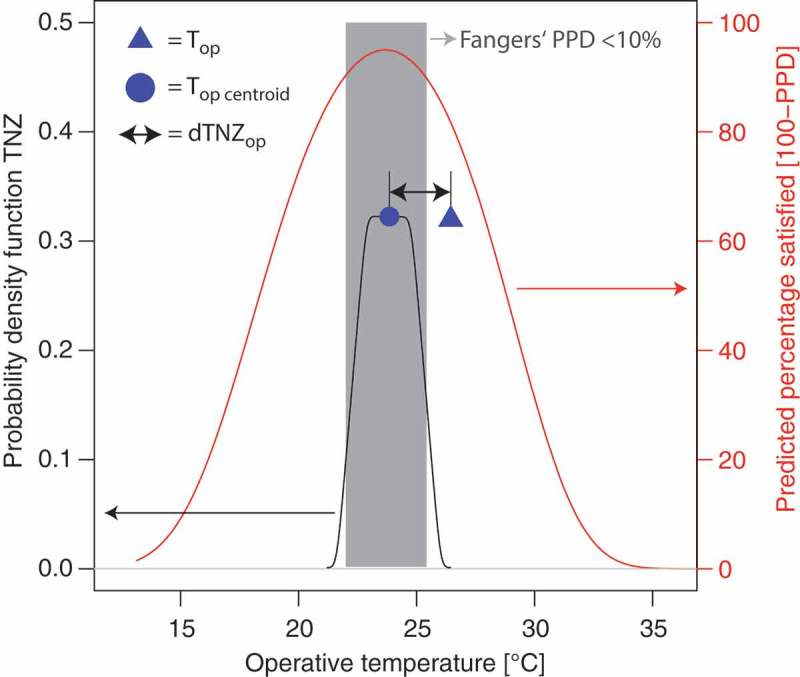
“For the same environmental conditions, Figure 3 shows a close relationship between pdfTNZ and the PPS curve – the latter based on Fangers’ PMV.”
§ Drivers of diversity in human thermal perception – A review for holistic comfort models > Methods > Modelling
plaincorrelational- Asserted: passes — The authors put it forward as true.
- Checkable: passes — It can be checked against evidence.
- Load-bearing: passes — The paper’s conclusions depend on it.
- Based: passes — The paper gives a reason why it holds.
None of the sources cited for this claim have been checked yet.
In the paper
“Several earlier physiological researches report higher body temperatures in obese individuals when compared with lean counterparts upon heat exposure and exercise [69–71].”
§ Drivers of diversity in human thermal perception – A review for holistic comfort models > Review results > Physiological drivers of diversity in thermal perception
What the sources say
plaincorrelational- Asserted: passes — The authors put it forward as true.
- Checkable: passes — It can be checked against evidence.
- Load-bearing: unclear — It is unclear whether the paper’s conclusions depend on it.
- Based: passes — The paper gives a reason why it holds.
None of the sources cited for this claim have been checked yet.
In the paper
“Out of four laboratory studies in normal-weight and overweight children, three show significant differences in thermal sensation between the two groups [70,74,77].”
§ Drivers of diversity in human thermal perception – A review for holistic comfort models > Review results > Physiological drivers of diversity in thermal perception
What the sources say
plaincorrelational- Asserted: passes — The authors put it forward as true.
- Checkable: passes — It can be checked against evidence.
- Load-bearing: passes — The paper’s conclusions depend on it.
- Based: passes — The paper gives a reason why it holds.
None of the sources cited for this claim have been checked yet.
In the paper
“Similar results were obtained by office studies in adults, showing that comfort temperature decreased with increasing BMI [78–80].”
§ Drivers of diversity in human thermal perception – A review for holistic comfort models > Review results > Physiological drivers of diversity in thermal perception
What the sources say
plaincorrelational- Asserted: passes — The authors put it forward as true.
- Checkable: passes — It can be checked against evidence.
- Load-bearing: unclear — It is unclear whether the paper’s conclusions depend on it.
- Based: passes — The paper gives a reason why it holds.
The paper states this without a source or data behind it here, so there is nothing to check it against. The quote shows it is in the paper.
In the paper
“In contrast, young children and infants preferred lower temperatures, when compared with college-aged/middle-aged populations.”
§ Drivers of diversity in human thermal perception – A review for holistic comfort models > Review results > Physiological drivers of diversity in thermal perception
plaincorrelational- Asserted: passes — The authors put it forward as true.
- Checkable: passes — It can be checked against evidence.
- Load-bearing: unclear — It is unclear whether the paper’s conclusions depend on it.
- Based: passes — The paper gives a reason why it holds.
The paper states this without a source or data behind it here, so there is nothing to check it against. The quote shows it is in the paper.
In the paper
“If a difference is reported, in all but one case, higher preferred temperatures in elderly were evident.”
§ Drivers of diversity in human thermal perception – A review for holistic comfort models > Review results > Physiological drivers of diversity in thermal perception
plaincorrelational- Asserted: passes — The authors put it forward as true.
- Checkable: passes — It can be checked against evidence.
- Load-bearing: passes — The paper’s conclusions depend on it.
- Based: passes — The paper gives a reason why it holds.
In the paper
“For neutral temperature, however, a systematic review by Wang et al. [62], presenting results from eleven laboratory and 25 field studies, found no significant differences between men and women in nine out of eleven laboratory studies and in 18 out of 25 field studies.”
§ Drivers of diversity in human thermal perception – A review for holistic comfort models > Review results > Physiological drivers of diversity in thermal perception
What the sources say
- Not checked yetcites [62] source
plain- Asserted: passes — The authors put it forward as true.
- Checkable: passes — It can be checked against evidence.
- Load-bearing: passes — The paper’s conclusions depend on it.
- Based: passes — The paper gives a reason why it holds.
The paper states this without a source or data behind it here, so there is nothing to check it against. The quote shows it is in the paper.
In the paper
“Only few of the studies mentioned in the respective reviews presented in Table 3 describe a distinct, significant difference of neutral/preferred/comfort temperature amongst different age groups.”
§ Drivers of diversity in human thermal perception – A review for holistic comfort models > Review results > Physiological drivers of diversity in thermal perception
plain- Asserted: passes — The authors put it forward as true.
- Checkable: passes — It can be checked against evidence.
- Load-bearing: passes — The paper’s conclusions depend on it.
- Based: passes — The paper gives a reason why it holds.
- Probably not a substantial claim. 55
- It may state two separate claims as one. 69
- The quote only partly states this claim. 1
A result the paper reports from its own data — it cites no other source for it, so there is none to check. The quote shows it is in the paper.
In the paper
“As there were no relevant review articles identified for psychological drivers in stage one, a rapid evidence assessment on original empirical works (as opposed to review papers) was conducted.”
§ Drivers of diversity in human thermal perception – A review for holistic comfort models > Methods > Review methods
plain- Asserted: passes — The authors put it forward as true.
- Checkable: passes — It can be checked against evidence.
- Load-bearing: passes — The paper’s conclusions depend on it.
- Based: passes — The paper gives a reason why it holds.
Probably not a substantial claim.
The paper states this without a source or data behind it here, so there is nothing to check it against. The quote shows it is in the paper.
In the paper
“For both psychological and contextual factors, existing review literature identified by the first stage of search was scarce and not sufficiently covering potential drivers of diversity, which is why in a second stage, original literature was reviewed for both factors.”
§ Drivers of diversity in human thermal perception – A review for holistic comfort models > Methods > Review methods
plaindirect- Asserted: passes — The authors put it forward as true.
- Checkable: passes — It can be checked against evidence.
- Load-bearing: passes — The paper’s conclusions depend on it.
- Based: passes — The paper gives a reason why it holds.
It may state two separate claims as one.
The paper states this without a source or data behind it here, so there is nothing to check it against. The quote shows it is in the paper.
In the paper
“The potentially diversity-driving factors that have been identified amongst these review papers include age, sex, body composition and fitness, metabolic rate, and physiological adaptation due to temperature acclimation and habituation of different climatic zones, seasonal adaptation, and circadian/diurnal rhythm.”
§ Drivers of diversity in human thermal perception – A review for holistic comfort models > Review results > Physiological drivers of diversity in thermal perception
hedgedcorrelational- Asserted: passes — The authors put it forward as true.
- Checkable: passes — It can be checked against evidence.
- Load-bearing: passes — The paper’s conclusions depend on it.
- Based: passes — The paper gives a reason why it holds.
It may state two separate claims as one.
The paper states this without a source or data behind it here, so there is nothing to check it against. The quote shows it is in the paper.
In the paper
“Nine records were retained for the review.”
§ Drivers of diversity in human thermal perception – A review for holistic comfort models > Review results > Physiological drivers of diversity in thermal perception
plain- Asserted: passes — The authors put it forward as true.
- Checkable: passes — It can be checked against evidence.
- Load-bearing: fails — The paper’s conclusions may not depend on it.
- Based: passes — The paper gives a reason why it holds.
Probably not a substantial claim. The paper’s conclusions may not depend on it. The quote only partly states this claim.
A result the paper reports from its own data — it cites no other source for it, so there is none to check. The quote shows it is in the paper.
In the paper
“Several relevant review papers for context-related drivers were identified in stage one, but additional search terms were used to focus on specific aspects of the built environment that impact thermal perception.”
§ Drivers of diversity in human thermal perception – A review for holistic comfort models > Methods > Review methods
plain- Asserted: passes — The authors put it forward as true.
- Checkable: passes — It can be checked against evidence.
- Load-bearing: fails — The paper’s conclusions may not depend on it.
- Based: passes — The paper gives a reason why it holds.
Probably not a substantial claim. The paper’s conclusions may not depend on it.
None of the sources cited for this claim have been checked yet.
In the paper
“Overweight children perceived the thermal environment as being hotter than the non-overweight group, with corresponding higher body temperatures in the overweight children.”
§ Drivers of diversity in human thermal perception – A review for holistic comfort models > Review results > Physiological drivers of diversity in thermal perception
What the sources say
plaincorrelational- Asserted: passes — The authors put it forward as true.
- Checkable: passes — It can be checked against evidence.
- Load-bearing: passes — The paper’s conclusions depend on it.
- Based: passes — The paper gives a reason why it holds.
It may state two separate claims as one.
None of the sources cited for this claim have been checked yet.
In the paper
“Also, different clothing patterns of women and men are regularly reported in field studies, with women usually exhibiting lower CLO values than men [59,67].”
§ Drivers of diversity in human thermal perception – A review for holistic comfort models > Review results > Physiological drivers of diversity in thermal perception
plaincorrelational- Asserted: passes — The authors put it forward as true.
- Checkable: passes — It can be checked against evidence.
- Load-bearing: unclear — It is unclear whether the paper’s conclusions depend on it.
- Based: passes — The paper gives a reason why it holds.
It may state two separate claims as one.
None of the sources cited for this claim have been checked yet.
In the paper
“However, other studies have shown no effect of body fat percentage on heat loss and/or body temperature, which the authors have attributed to high skin blood flow in heat and exercise [72–74].”
§ Drivers of diversity in human thermal perception – A review for holistic comfort models > Review results > Physiological drivers of diversity in thermal perception
What the sources say
plain- Asserted: passes — The authors put it forward as true.
- Checkable: passes — It can be checked against evidence.
- Load-bearing: fails — The paper’s conclusions may not depend on it.
- Based: passes — The paper gives a reason why it holds.
Probably not a substantial claim. The paper’s conclusions may not depend on it. It may state two separate claims as one.
The paper states this without a source or data behind it here, so there is nothing to check it against. The quote shows it is in the paper.
In the paper
“In general, the evidence for age-related differences of preferred temperature/comfort temperature is unclear and it is therefore difficult to draw definite conclusions from the available data.”
§ Drivers of diversity in human thermal perception – A review for holistic comfort models > Review results > Physiological drivers of diversity in thermal perception
hedged- Asserted: passes — The authors put it forward as true.
- Checkable: passes — It can be checked against evidence.
- Load-bearing: passes — The paper’s conclusions depend on it.
- Based: passes — The paper gives a reason why it holds.
It may state two separate claims as one.
None of the sources cited for this claim have been checked yet.
In the paper
“In summary, most original studies identified by the review papers presented in Table 4 report women to be more sensitive to temperature fluctuations, women to be more often dissatisfied than men, women to have smaller comfort zones and to be more often uncomfortably hot or cold than men [59–61,67].”
§ Drivers of diversity in human thermal perception – A review for holistic comfort models > Review results > Physiological drivers of diversity in thermal perception
What the sources say
plaincorrelational- Asserted: passes — The authors put it forward as true.
- Checkable: passes — It can be checked against evidence.
- Load-bearing: passes — The paper’s conclusions depend on it.
- Based: passes — The paper gives a reason why it holds.
It may state two separate claims as one.
In the paper
“Regarding the effect of metabolic rate on subjective perception, Luo et al. [82] report two studies showing that level of activity influences preferred ambient temperature: the more active an individual is, the lower is the preferred temperature.”
§ Drivers of diversity in human thermal perception – A review for holistic comfort models > Review results > Physiological drivers of diversity in thermal perception
What the sources say
- Not checked yetcites [82] source
plaindirect- Asserted: passes — The authors put it forward as true.
- Checkable: passes — It can be checked against evidence.
- Load-bearing: unclear — It is unclear whether the paper’s conclusions depend on it.
- Based: passes — The paper gives a reason why it holds.
It may state two separate claims as one.
The paper states this without a source or data behind it here, so there is nothing to check it against. The quote shows it is in the paper.
In the paper
“Seven out of nine studies found a significant effect of personal control, three of which took place in the field as opposed to a lab setting.”
§ Drivers of diversity in human thermal perception – A review for holistic comfort models > Review results > Psychological drivers of diversity
plaincorrelational- Asserted: passes — The authors put it forward as true.
- Checkable: passes — It can be checked against evidence.
- Load-bearing: passes — The paper’s conclusions depend on it.
- Based: passes — The paper gives a reason why it holds.
It may state two separate claims as one.
A result the paper reports from its own data — it cites no other source for it, so there is none to check. The quote shows it is in the paper.
In the paper
“When considering those five studies that reported an effect of personal control on the thermal neutral temperature, the effect was between 0 K4 and 3.4 K. The mean effect was 2.16 K (SD = 1.28).”
§ Drivers of diversity in human thermal perception – A review for holistic comfort models > Review results > Psychological drivers of diversity
plaindirect- Asserted: passes — The authors put it forward as true.
- Checkable: passes — It can be checked against evidence.
- Load-bearing: unclear — It is unclear whether the paper’s conclusions depend on it.
- Based: passes — The paper gives a reason why it holds.
It may state two separate claims as one.
In the paper
“A general overview of literature on thermal perception under heterogeneous (non-uniform) and dynamic indoor conditions is provided by Mishra et al. [104] showing that in general, the indoor environment can be variable and acceptable at the same time.”
§ Drivers of diversity in human thermal perception – A review for holistic comfort models > Review results > Contextual drivers of diversity
What the sources say
- Not checked yetcites [104] source
plain- Asserted: passes — The authors put it forward as true.
- Checkable: passes — It can be checked against evidence.
- Load-bearing: fails — The paper’s conclusions may not depend on it.
- Based: passes — The paper gives a reason why it holds.
Probably not a substantial claim. The paper’s conclusions may not depend on it.
None of the sources cited for this claim have been checked yet.
In the paper
“It is important to note that the cited studies often exchange the terms thermal comfort and thermal sensation and, repeatedly, treat them as synonyms.”
§ Drivers of diversity in human thermal perception – A review for holistic comfort models > Review results > Contextual drivers of diversity
plain- Asserted: passes — The authors put it forward as true.
- Checkable: passes — It can be checked against evidence.
- Load-bearing: fails — The paper’s conclusions may not depend on it.
- Based: passes — The paper gives a reason why it holds.
Probably not a substantial claim. The paper’s conclusions may not depend on it.
In the paper
“Data obtained from laboratory studies showed that thermal sensation was affected significantly by the trait extraversion, and thermal preference was affected by neuroticism, openness and specSE.”
§ Drivers of diversity in human thermal perception – A review for holistic comfort models > Review results > Psychological drivers of diversity
What the sources say
- Not checked yetcites [49] source
plaindirect- Asserted: passes — The authors put it forward as true.
- Checkable: passes — It can be checked against evidence.
- Load-bearing: passes — The paper’s conclusions depend on it.
- Based: passes — The paper gives a reason why it holds.
It may state two separate claims as one.
In the paper
“Regarding the effect of physical fitness on temperature perception, a field study in hospitals showed that higher perceived fitness was associated with significantly lower preferred temperatures, and the other way round, people who reported feeling frail and less vigorous preferred warmer environments [81].”
§ Drivers of diversity in human thermal perception – A review for holistic comfort models > Review results > Physiological drivers of diversity in thermal perception
What the sources say
- Not checked yetcites [81] source
plaincorrelational- Asserted: passes — The authors put it forward as true.
- Checkable: passes — It can be checked against evidence.
- Load-bearing: unclear — It is unclear whether the paper’s conclusions depend on it.
- Based: passes — The paper gives a reason why it holds.
It may state two separate claims as one.
The paper states this without a source or data behind it here, so there is nothing to check it against. The quote shows it is in the paper.
In the paper
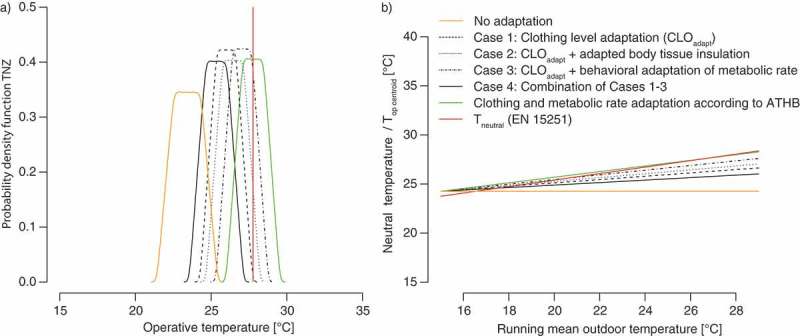
“The approach by Schweiker et al. can also be applied to the TNZ model by adjusting clothing insulation level and metabolic rate based on the running mean outdoor temperature (Trm). Consequently, the pdfTNZ is shifted towards higher operative temperatures (Figure 5a green line) and the Top centroid (Figure 5b green line) shows the same trend as the neutral temperature calculated according to EN 152”
§ Drivers of diversity in human thermal perception – A review for holistic comfort models > Discussion of diversity drivers with respect to the prediction of thermal perception > Physiological differences
plaindirect- Asserted: passes — The authors put it forward as true.
- Checkable: passes — It can be checked against evidence.
- Load-bearing: unclear — It is unclear whether the paper’s conclusions depend on it.
- Based: passes — The paper gives a reason why it holds.
It may state two separate claims as one.
The paper states this without a source or data behind it here, so there is nothing to check it against. The quote shows it is in the paper.
In the paper
“It has been established based on the existing literature that habituation of different climatic zones, as well as seasonal changes of the thermal environment, induce physiological adaptation, which is also accompanied by subjective adaptation of thermal perception.”
§ Drivers of diversity in human thermal perception – A review for holistic comfort models > Discussion of diversity drivers with respect to the prediction of thermal perception > Physiological differences
boosteddirect- Asserted: passes — The authors put it forward as true.
- Checkable: passes — It can be checked against evidence.
- Load-bearing: fails — The paper’s conclusions may not depend on it.
- Based: fails — The paper may give no reason why it holds.
Probably not a substantial claim. The paper’s conclusions may not depend on it. The paper may give no reason why it holds. It may state two separate claims as one.
None of the sources cited for this claim have been checked yet.
In the paper
“The literature review has shown ambiguous results for age- and sex-related differences, but a clear trend for body composition (weight and BMI) and metabolic rate.”
§ Drivers of diversity in human thermal perception – A review for holistic comfort models > Discussion of diversity drivers with respect to the prediction of thermal perception > Physiological differences
boostedcorrelational- Asserted: passes — The authors put it forward as true.
- Checkable: passes — It can be checked against evidence.
- Load-bearing: passes — The paper’s conclusions depend on it.
- Based: passes — The paper gives a reason why it holds.
It may state two separate claims as one.
The paper states this without a source or data behind it here, so there is nothing to check it against. The quote shows it is in the paper.
In the paper
“The review on psychological drivers describes personal control as one othe most investigated psychological driver with clear effects on thermal perception.”
§ Drivers of diversity in human thermal perception – A review for holistic comfort models > Discussion of diversity drivers with respect to the prediction of thermal perception > Differences due to psychological drivers of diversity
boosteddirect- Asserted: passes — The authors put it forward as true.
- Checkable: passes — It can be checked against evidence.
- Load-bearing: fails — The paper’s conclusions may not depend on it.
- Based: fails — The paper may give no reason why it holds.
Probably not a substantial claim. The paper’s conclusions may not depend on it. The paper may give no reason why it holds. It may state two separate claims as one.
In the paper
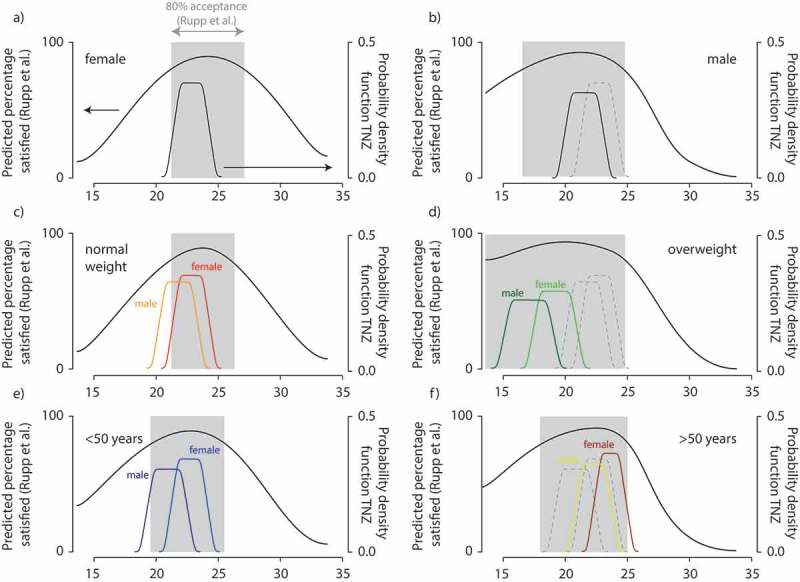
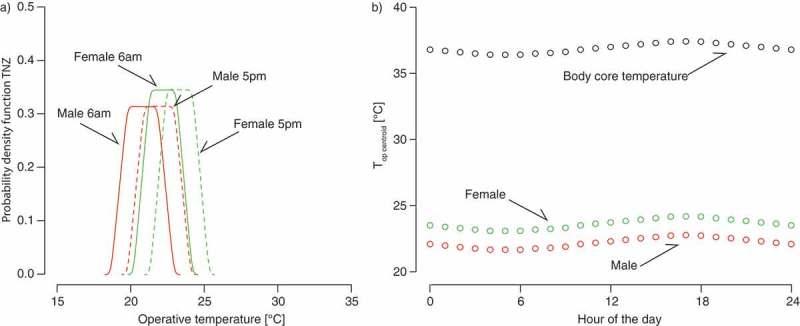
“For instance, the pdfTNZ for males is shifted to the cold side compared to that for females in a similar way like the PPS curve shifts and the pdfTNZ for males has a wider plateau while the shaded area of 80%-acceptance from Rupp et al. is also wider for males.”
§ Drivers of diversity in human thermal perception – A review for holistic comfort models > Discussion of diversity drivers with respect to the prediction of thermal perception > Physiological differences
What the sources say
- Not checked yetcites [80] source
plaincorrelational- Asserted: passes — The authors put it forward as true.
- Checkable: passes — It can be checked against evidence.
- Load-bearing: unclear — It is unclear whether the paper’s conclusions depend on it.
- Based: passes — The paper gives a reason why it holds.
It may state two separate claims as one.
The paper states this without a source or data behind it here, so there is nothing to check it against. The quote shows it is in the paper.
In the paper
“However, these studies do not discuss potential pathways or mechanisms how perceived control may affect thermal perception.”
§ Drivers of diversity in human thermal perception – A review for holistic comfort models > Discussion of diversity drivers with respect to the prediction of thermal perception > Differences due to psychological drivers of diversity
plain- Asserted: passes — The authors put it forward as true.
- Checkable: passes — It can be checked against evidence.
- Load-bearing: passes — The paper’s conclusions depend on it.
- Based: passes — The paper gives a reason why it holds.
Probably not a substantial claim.
The paper states this without a source or data behind it here, so there is nothing to check it against. The quote shows it is in the paper.
In the paper
“The topic of control, here the effect of control on indoor environmental conditions, and clothing adaptation, which are both drivers of diversity between individuals, are well known and replicable by means of existing thermal comfort models.”
§ Drivers of diversity in human thermal perception – A review for holistic comfort models > Discussion of diversity drivers with respect to the prediction of thermal perception > Context-related differences
boosteddirect- Asserted: passes — The authors put it forward as true.
- Checkable: passes — It can be checked against evidence.
- Load-bearing: fails — The paper’s conclusions may not depend on it.
- Based: passes — The paper gives a reason why it holds.
Probably not a substantial claim. The paper’s conclusions may not depend on it.
The paper states this without a source or data behind it here, so there is nothing to check it against. The quote shows it is in the paper.
In the paper
“The review on contextual drivers showed that local effects and radiant asymmetries do affect thermal perception of individual body parts and can affect the overall sensation.”
§ Drivers of diversity in human thermal perception – A review for holistic comfort models > Discussion of diversity drivers with respect to the prediction of thermal perception > Context-related differences
plaindirect- Asserted: passes — The authors put it forward as true.
- Checkable: passes — It can be checked against evidence.
- Load-bearing: passes — The paper’s conclusions depend on it.
- Based: unclear — It is unclear why the paper says it holds.
It may state two separate claims as one.
The paper states this without a source or data behind it here, so there is nothing to check it against. The quote shows it is in the paper.
In the paper
“This review confirms that many different variables have been taken into consideration to explain the vast diversity of thermal perception among humans, as exemplarily demonstrated in Figure 1.”
§ Drivers of diversity in human thermal perception – A review for holistic comfort models > General discussion and conclusions
boostedcorrelational- Asserted: passes — The authors put it forward as true.
- Checkable: passes — It can be checked against evidence.
- Load-bearing: passes — The paper’s conclusions depend on it.
- Based: passes — The paper gives a reason why it holds.
Probably not a substantial claim.
The paper states this without a source or data behind it here, so there is nothing to check it against. The quote shows it is in the paper.
In the paper
“For example, the existing review publications regarding physiological adaptation and thermal perception was predominantly focused on (sub)tropical conditions but lacked examples for cold environments.”
§ Drivers of diversity in human thermal perception – A review for holistic comfort models > General discussion and conclusions > Limitations
plain- Asserted: passes — The authors put it forward as true.
- Checkable: passes — It can be checked against evidence.
- Load-bearing: fails — The paper’s conclusions may not depend on it.
- Based: passes — The paper gives a reason why it holds.
Probably not a substantial claim. The paper’s conclusions may not depend on it. It may state two separate claims as one.
The paper states this without a source or data behind it here, so there is nothing to check it against. The quote shows it is in the paper.
In the paper
“With respect to physiological adaptation, modelling the adaptation of metabolic rate and body tissue insulation can replicate the observations of field studies.”
§ Drivers of diversity in human thermal perception – A review for holistic comfort models > General discussion and conclusions > Demographic and physiological drivers of diversity
plaindirect- Asserted: passes — The authors put it forward as true.
- Checkable: passes — It can be checked against evidence.
- Load-bearing: fails — The paper’s conclusions may not depend on it.
- Based: fails — The paper may give no reason why it holds.
Probably not a substantial claim. The paper’s conclusions may not depend on it. The paper may give no reason why it holds.
The paper states this without a source or data behind it here, so there is nothing to check it against. The quote shows it is in the paper.
In the paper
“In conclusion, there is a huge variety of potential drivers of diversity and much more research is required to understand better the underlying mechanism of diversity.”
§ Drivers of diversity in human thermal perception – A review for holistic comfort models > General discussion and conclusions > Conclusions
plain- Asserted: passes — The authors put it forward as true.
- Checkable: fails — It may be too vague to check against evidence.
- Load-bearing: passes — The paper’s conclusions depend on it.
- Based: fails — The paper may give no reason why it holds.
Probably not a substantial claim. It may be too vague to check against evidence. The paper may give no reason why it holds.
The paper states this without a source or data behind it here, so there is nothing to check it against. The quote shows it is in the paper.
In the paper
“In our review, we show that body composition, metabolic rate, adaptation to certain thermal environments, and personal control can be considered as important previously-established drivers of diversity.”
§ Drivers of diversity in human thermal perception – A review for holistic comfort models > General discussion and conclusions
plaincorrelational- Asserted: passes — The authors put it forward as true.
- Checkable: passes — It can be checked against evidence.
- Load-bearing: passes — The paper’s conclusions depend on it.
- Based: passes — The paper gives a reason why it holds.
It may state two separate claims as one.
The paper states this without a source or data behind it here, so there is nothing to check it against. The quote shows it is in the paper.
In the paper
“As shown above, both pathways can replicate the effects of psychological drivers found in the literature.”
§ Drivers of diversity in human thermal perception – A review for holistic comfort models > Discussion of diversity drivers with respect to the prediction of thermal perception > Differences due to psychological drivers of diversity
plaindirect- Asserted: passes — The authors put it forward as true.
- Checkable: passes — It can be checked against evidence.
- Load-bearing: fails — The paper’s conclusions may not depend on it.
- Based: fails — The paper may give no reason why it holds.
Probably not a substantial claim. The paper’s conclusions may not depend on it. The paper may give no reason why it holds. It may state two separate claims as one.
The paper states this without a source or data behind it here, so there is nothing to check it against. The quote shows it is in the paper.
In the paper
“While psychological variability can be replicated by adjusting the metabolic rate or by a shift in the interpretation of the physiological signal, much more research is needed to fully understand what the drivers of psychological variability are and how they exert an influence.”
§ Drivers of diversity in human thermal perception – A review for holistic comfort models > General discussion and conclusions > Psychological drivers of diversity
plaindirect- Asserted: passes — The authors put it forward as true.
- Checkable: fails — It may be too vague to check against evidence.
- Load-bearing: passes — The paper’s conclusions depend on it.
- Based: passes — The paper gives a reason why it holds.
Probably not a substantial claim. It may be too vague to check against evidence. It may state two separate claims as one.
A result the paper reports from its own data — it cites no other source for it, so there is none to check. The quote shows it is in the paper.
In the paper
“However, a review of the relationship between perceived control, stress, and metabolic rate was beyond the scope of this review and initial searches did not reveal any paper measuring the metabolic rate under different thermal and psychological stressors.”
§ Drivers of diversity in human thermal perception – A review for holistic comfort models > Discussion of diversity drivers with respect to the prediction of thermal perception > Differences due to psychological drivers of diversity
plain- Asserted: passes — The authors put it forward as true.
- Checkable: passes — It can be checked against evidence.
- Load-bearing: fails — The paper’s conclusions may not depend on it.
- Based: passes — The paper gives a reason why it holds.
Probably not a substantial claim. The paper’s conclusions may not depend on it. It may state two separate claims as one.
The paper states this without a source or data behind it here, so there is nothing to check it against. The quote shows it is in the paper.
In the paper
“This review has shown that body composition co-determines people’s perception of the thermal environment; people with overweight have been shown to prefer cooler environments.”
§ Drivers of diversity in human thermal perception – A review for holistic comfort models > General discussion and conclusions > Holistic perspectives
boostedcorrelational- Asserted: passes — The authors put it forward as true.
- Checkable: passes — It can be checked against evidence.
- Load-bearing: passes — The paper’s conclusions depend on it.
- Based: unclear — It is unclear why the paper says it holds.
It may state two separate claims as one.
The paper states this without a source or data behind it here, so there is nothing to check it against. The quote shows it is in the paper.
In the paper
“In addition, those ramps found to be perceived and not explainable by a steady-state approach, i.e. ramps with a change >2 K/h, are beyond temperature ramps found in buildings in reality, which are below 1 K/h due to existing thermal mass.”
§ Drivers of diversity in human thermal perception – A review for holistic comfort models > Discussion of diversity drivers with respect to the prediction of thermal perception > Context-related differences
plaindirect- Asserted: passes — The authors put it forward as true.
- Checkable: passes — It can be checked against evidence.
- Load-bearing: fails — The paper’s conclusions may not depend on it.
- Based: fails — The paper may give no reason why it holds.
Probably not a substantial claim. The paper’s conclusions may not depend on it. The paper may give no reason why it holds. It may state two separate claims as one.
A result the paper reports from its own data — it cites no other source for it, so there is none to check. The quote shows it is in the paper.
In the paper
“Using the pdfTNZ approach, we show that theoretically, there is an overlap of neutral temperatures for males and females, but towards the fringes of the probability density function, this overlap gradually disappears.”
§ Drivers of diversity in human thermal perception – A review for holistic comfort models > General discussion and conclusions > Demographic and physiological drivers of diversity
boostedcorrelational- Asserted: passes — The authors put it forward as true.
- Checkable: passes — It can be checked against evidence.
- Load-bearing: passes — The paper’s conclusions depend on it.
- Based: passes — The paper gives a reason why it holds.
It may state two separate claims as one.
The paper states this without a source or data behind it here, so there is nothing to check it against. The quote shows it is in the paper.
In the paper
“The effect of temperature gradients is ambiguous and not related to gradients naturally occurring in buildings.”
§ Drivers of diversity in human thermal perception – A review for holistic comfort models > General discussion and conclusions
plain- Asserted: passes — The authors put it forward as true.
- Checkable: passes — It can be checked against evidence.
- Load-bearing: unclear — It is unclear whether the paper’s conclusions depend on it.
- Based: unclear — It is unclear why the paper says it holds.
It may state two separate claims as one.
The paper states this without a source or data behind it here, so there is nothing to check it against. The quote shows it is in the paper.
In the paper
“The overlap shifts to different temperatures and/or decreases in magnitude with a change of body composition and also with age.”
§ Drivers of diversity in human thermal perception – A review for holistic comfort models > General discussion and conclusions > Demographic and physiological drivers of diversity
plaindirect- Asserted: passes — The authors put it forward as true.
- Checkable: passes — It can be checked against evidence.
- Load-bearing: passes — The paper’s conclusions depend on it.
- Based: passes — The paper gives a reason why it holds.
It may state two separate claims as one.
In the paper
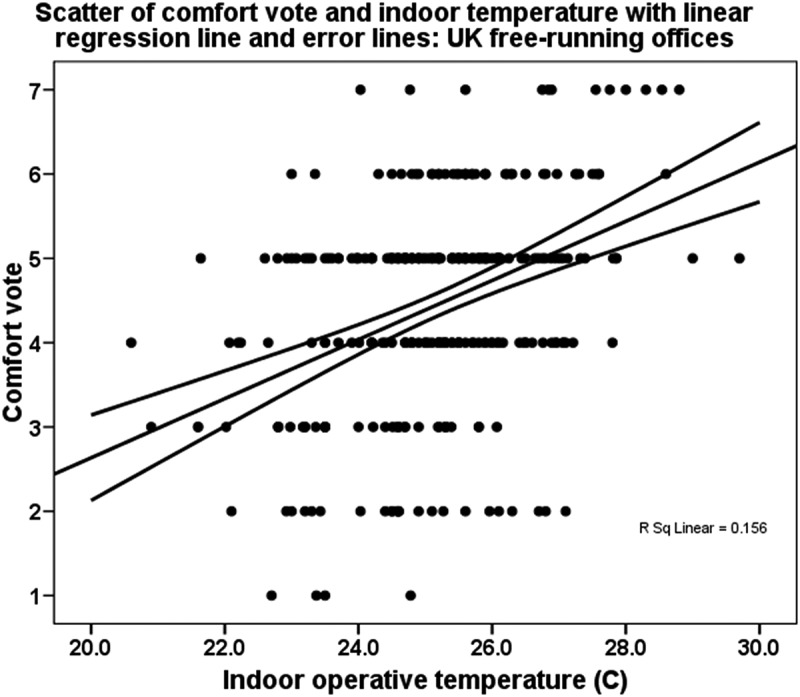
“The data presented uncovers the diversity of thermal perception: on the one hand, people are feeling comfortable (4 on y-axis) between 20°C and 28°C. On the other hand, in the range between 22°C and 28°C votes between ‘much too warm’ (7 on y-axis) and ‘much too cool’ (1 on y-axis) can be found for any given temperature.”
§ Drivers of diversity in human thermal perception – A review for holistic comfort models > Introduction > Individual differences
What the sources say
- Not checked yetcites [1] source
plain- Asserted: passes — The authors put it forward as true.
- Checkable: passes — It can be checked against evidence.
- Load-bearing: passes — The paper’s conclusions depend on it.
- Based: passes — The paper gives a reason why it holds.
It may state two separate claims as one.
The paper states this without a source or data behind it here, so there is nothing to check it against. The quote shows it is in the paper.
In the paper
“In contrast, the adjusted heat balance models try to capture effects of thermal adaptation. However, the majority is based on the PMV approach, which – due to its partly empirical nature – does not offer a straightforward solution to include individual differences in physiological characteristics.”
§ Drivers of diversity in human thermal perception – A review for holistic comfort models > Introduction > Modelling approaches
plaindirect- Asserted: passes — The authors put it forward as true.
- Checkable: passes — It can be checked against evidence.
- Load-bearing: passes — The paper’s conclusions depend on it.
- Based: passes — The paper gives a reason why it holds.
It may state two separate claims as one.
The paper states this without a source or data behind it here, so there is nothing to check it against. The quote shows it is in the paper.
In the paper
“it is now understood and accepted that people’s thermal perception is diverse (either due to physiological differences or through their lifestyle/behavior).”
§ Drivers of diversity in human thermal perception – A review for holistic comfort models > Objectives, scope and definitions > Objectives
boosteddirect- Asserted: passes — The authors put it forward as true.
- Checkable: fails — It may be too vague to check against evidence.
- Load-bearing: passes — The paper’s conclusions depend on it.
- Based: fails — The paper may give no reason why it holds.
Probably not a substantial claim. It may be too vague to check against evidence. The paper may give no reason why it holds.
In the paper
“Secondly, in the EU-28, the proportion of adults (aged 18 years and over) who were considered to be overweight is steadily rising and was estimated in 2014 to be approximately 51.6%, whereof 15.9% were obese (BMI >30 kg/m2) [40].”
§ Drivers of diversity in human thermal perception – A review for holistic comfort models > Introduction > Global and local challenges related to thermal perception
What the sources say
- Not checked yetcites [40] European Commission. European health interview survey (EHIS): overweight and obesity – BMI statistics. 2017.
hedged- Asserted: passes — The authors put it forward as true.
- Checkable: passes — It can be checked against evidence.
- Load-bearing: fails — The paper’s conclusions may not depend on it.
- Based: passes — The paper gives a reason why it holds.
Probably not a substantial claim. The paper’s conclusions may not depend on it. It may state two separate claims as one.
In the paper
“Firstly, the population in many European countries is ageing; predictions for the EU-28 indicate that the share of the elderly in the total population will increase from 19.2% at the start of 2016 to 29.1% by 2080, corresponding to more than 50 million people [39].”
§ Drivers of diversity in human thermal perception – A review for holistic comfort models > Introduction > Global and local challenges related to thermal perception
What the sources say
- Not checked yetcites [39] Eurostat. People in the EU – population projections. 2018 [cited 2018 Jul 26]. Available from: http://ec.europa.eu/eurostat/statistics-explained/index.php?title=People_in_the_EU_-_population_projections.
hedged- Asserted: passes — The authors put it forward as true.
- Checkable: passes — It can be checked against evidence.
- Load-bearing: passes — The paper’s conclusions depend on it.
- Based: passes — The paper gives a reason why it holds.
It may state two separate claims as one.
The paper states this without a source or data behind it here, so there is nothing to check it against. The quote shows it is in the paper.
In the paper
“However, as outlined in the next section of this introduction, existing thermal comfort models do not (fully) capture the diversity observed.”
- Also stated in: § Modelling approaches · plain
“Despite their variety and in parts complexity, neither of these approaches is able to capture the observed individual differences.”
- Also stated in: § Objectives · plain
“However (2), up until now, existing models predicting thermal perception do not capture such adaptive processes and individual or subpopulation differences holistically.”
§ Drivers of diversity in human thermal perception – A review for holistic comfort models > Introduction > Individual differences
plain- Asserted: passes — The authors put it forward as true.
- Checkable: passes — It can be checked against evidence.
- Load-bearing: passes — The paper’s conclusions depend on it.
- Based: passes — The paper gives a reason why it holds.
It may state two separate claims as one.
- Also stated in: § Modelling approaches · plain
None of the sources cited for this claim have been checked yet.
In the paper
“At the same time, research has shown that people accept much broader thermal conditions than anticipated by above standards [1,3,14,47], andtheir perception of thermal conditions is much more dynamic [48–51].”
§ Drivers of diversity in human thermal perception – A review for holistic comfort models > Objectives, scope and definitions > Scope and definitions
What the sources say
boosted- Asserted: passes — The authors put it forward as true.
- Checkable: passes — It can be checked against evidence.
- Load-bearing: passes — The paper’s conclusions depend on it.
- Based: passes — The paper gives a reason why it holds.
It may state two separate claims as one.
None of the sources cited for this claim have been checked yet.
In the paper
“Around the comfort temperature determined at a particular day, for 80% occupancy acceptability, a comfort zone width of ±3.5 K [41], or ±3.0 K is allowed [43].”
§ Drivers of diversity in human thermal perception – A review for holistic comfort models > Objectives, scope and definitions > Scope and definitions
What the sources say
- Not checked yetcites [41] ASHRAE. Standard 55-2013. Thermal environmental conditions for human occupancy. Am. Soc. Heating, Refrig. Air-Conditioning Eng. Atlanta, USA. 2013;
- Not checked yetcites [43] CEN 15251. Indoor environmental input parameters for design and assessment of energy performance of buildings addressing indoor air quality, thermal environment, lighting and acoustics; German version EN 15251:2012. 2012.
plain- Asserted: passes — The authors put it forward as true.
- Checkable: passes — It can be checked against evidence.
- Load-bearing: fails — The paper’s conclusions may not depend on it.
- Based: passes — The paper gives a reason why it holds.
Probably not a substantial claim. The paper’s conclusions may not depend on it. It may state two separate claims as one.
None of the sources cited for this claim have been checked yet.
In the paper
“Climate change predicts increased average and maximum temperatures in summer and a higher frequency and severity of heat waves [29,30], but also higher precipitation rates, rising sea levels due to melting snow and ice, and warmer oceans.”
§ Drivers of diversity in human thermal perception – A review for holistic comfort models > Introduction > Global and local challenges related to thermal perception
plaindirect- Asserted: passes — The authors put it forward as true.
- Checkable: passes — It can be checked against evidence.
- Load-bearing: fails — The paper’s conclusions may not depend on it.
- Based: passes — The paper gives a reason why it holds.
Probably not a substantial claim. The paper’s conclusions may not depend on it. It may state two separate claims as one.
None of the sources cited for this claim have been checked yet.
In the paper
“It is broadly established that heat waves and cold spells are associated with thermal discomfort, decreased physical and cognitive performance [36], and increased mortality [37].”
§ Drivers of diversity in human thermal perception – A review for holistic comfort models > Introduction > Global and local challenges related to thermal perception
boostedcorrelational- Asserted: passes — The authors put it forward as true.
- Checkable: passes — It can be checked against evidence.
- Load-bearing: fails — The paper’s conclusions may not depend on it.
- Based: passes — The paper gives a reason why it holds.
Probably not a substantial claim. The paper’s conclusions may not depend on it. It may state two separate claims as one.
In the paper
“While this does not make thermal comfort synonymous to health or productivity per se [38], the constructs are aligned in the way that thermally comfortable conditions are associated with minimal thermoregulatory effort for the body.”
§ Drivers of diversity in human thermal perception – A review for holistic comfort models > Introduction > Global and local challenges related to thermal perception
What the sources say
- Not checked yetcites [38] source
plaincorrelational- Asserted: passes — The authors put it forward as true.
- Checkable: passes — It can be checked against evidence.
- Load-bearing: fails — The paper’s conclusions may not depend on it.
- Based: passes — The paper gives a reason why it holds.
Probably not a substantial claim. The paper’s conclusions may not depend on it.
In the paper
“Predictions forecast that climate change will increase the need for cooling in summer and decrease the heating demand in winter, with total energy use predicted to rise if no countermeasures are implemented [32].”
§ Drivers of diversity in human thermal perception – A review for holistic comfort models > Introduction > Global and local challenges related to thermal perception
What the sources say
- Not checked yetcites [32] Aebischer B, 2007, Proc Eceee
plaindirect- Asserted: passes — The authors put it forward as true.
- Checkable: passes — It can be checked against evidence.
- Load-bearing: fails — The paper’s conclusions may not depend on it.
- Based: passes — The paper gives a reason why it holds.
Probably not a substantial claim. The paper’s conclusions may not depend on it. It may state two separate claims as one.
In the paper
“While these seven variables are able to explain part of the variance seen e.g. in Figure 1 by Nicol et al. [1], which is based on operative temperature only, there remains a high variance even when all six variables are considered.”
§ Drivers of diversity in human thermal perception – A review for holistic comfort models > Objectives, scope and definitions > Scope and definitions
What the sources say
- Not checked yetcites [1] source
plaincorrelational- Asserted: passes — The authors put it forward as true.
- Checkable: passes — It can be checked against evidence.
- Load-bearing: passes — The paper’s conclusions depend on it.
- Based: passes — The paper gives a reason why it holds.
It may state two separate claims as one.
In the paper
“In theory, this might lead to a higher preferred temperature of the elderly, however, from his analysis he concluded that age did not have an influence on preferred ambient temperature.”
§ Drivers of diversity in human thermal perception – A review for holistic comfort models > Review results > Physiological drivers of diversity in thermal perception
What the sources say
- Not checked yetcites [58] Fanger PO, 1973, Br J Ind Med
plain- Asserted: passes — The authors put it forward as true.
- Checkable: passes — It can be checked against evidence.
- Load-bearing: fails — The paper’s conclusions may not depend on it.
- Based: passes — The paper gives a reason why it holds.
Probably not a substantial claim. The paper’s conclusions may not depend on it.
A conclusion the paper draws from its own results — it cites no other source for it, so there is none to check. The quote shows it is in the paper.
In the paper
“At the same time, the TNZ model is still a rather simple model compared to more complex thermoregulative models, so that the implementation of adaptive mechanisms could be done straightforward.”
§ Drivers of diversity in human thermal perception – A review for holistic comfort models > Methods > Modelling
hedgedconditional- Asserted: passes — The authors put it forward as true.
- Checkable: passes — It can be checked against evidence.
- Load-bearing: passes — The paper’s conclusions depend on it.
- Based: fails — The paper may give no reason why it holds.
Probably not a substantial claim. The paper may give no reason why it holds. It may state two separate claims as one.
A conclusion the paper draws from its own results — it cites no other source for it, so there is none to check. The quote shows it is in the paper.
In the paper
“Such results imply that the TNZ model can be applied also in the context of thermal satisfaction or thermal comfort.”
§ Drivers of diversity in human thermal perception – A review for holistic comfort models > Methods > Modelling
plain- Asserted: passes — The authors put it forward as true.
- Checkable: passes — It can be checked against evidence.
- Load-bearing: passes — The paper’s conclusions depend on it.
- Based: passes — The paper gives a reason why it holds.
Probably not a substantial claim.
- The authors state this as an assumption: The internal heat balance is dependent on heat production, body tissue insulation, body core, and skin temperatures.
- The authors state this as an assumption: The external heat balance is dependent on heat production, clothing insulation, air speed, skin wettedness, relative humidity, skin and operative temperatures.
- The authors state this as an assumption: Physiologically feasible solutions are defined where body core temperature is within a specific range (e.g. 36.5°C to 37.5°C), and body tissue insulation is constrained to what is within thermoregulatory bounds.
The paper states this without a source or data behind it here, so there is nothing to check it against. The quote shows it is in the paper.
In the paper
“This physical condition of an individual’s body is determined by demographic factors, which are a given, such as sex and age, and a number of physiological variables such as body composition, adaptation state, and level of fitness, which might change over time or according to the situation.”
§ Drivers of diversity in human thermal perception – A review for holistic comfort models > Review results > Physiological drivers of diversity in thermal perception
plaindirect- Asserted: passes — The authors put it forward as true.
- Checkable: passes — It can be checked against evidence.
- Load-bearing: passes — The paper’s conclusions depend on it.
- Based: passes — The paper gives a reason why it holds.
Probably not a substantial claim.
A conclusion the paper draws from its own results — it cites no other source for it, so there is none to check. The quote shows it is in the paper.
In the paper
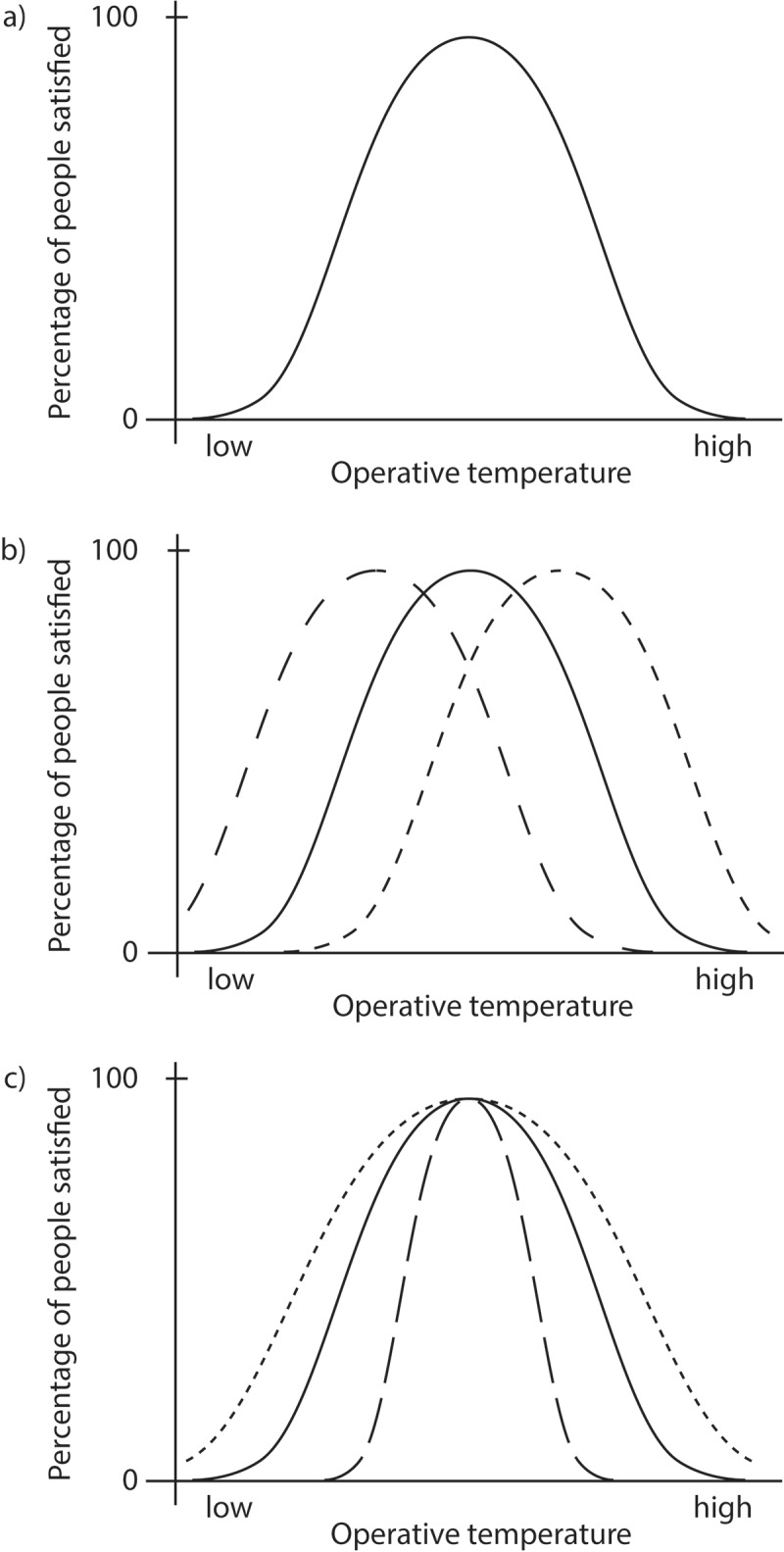
“Inter- or intrapersonal differences in physiological, psychological, and/or context related drivers can lead to (b) a shift of the PPS-curve to the left or right and/or (c) a wider/narrower curve.”
§ Drivers of diversity in human thermal perception – A review for holistic comfort models > Objectives, scope and definitions > Scope and definitions
plaindirect- Asserted: passes — The authors put it forward as true.
- Checkable: passes — It can be checked against evidence.
- Load-bearing: passes — The paper’s conclusions depend on it.
- Based: fails — The paper may give no reason why it holds.
Probably not a substantial claim. The paper may give no reason why it holds.
In the paper
“They are a consequence of changes of thermal effectors such as the abilities to sweat, shiver and control skin blood flow, and also changes in sensory function, which is also likely to cause discrepancies in thermal perception [56].”
§ Drivers of diversity in human thermal perception – A review for holistic comfort models > Review results > Physiological drivers of diversity in thermal perception
What the sources say
- Not checked yetcites [56] source
hedgeddirect- Asserted: passes — The authors put it forward as true.
- Checkable: passes — It can be checked against evidence.
- Load-bearing: passes — The paper’s conclusions depend on it.
- Based: passes — The paper gives a reason why it holds.
It may state two separate claims as one.
None of the sources cited for this claim have been checked yet.
In the paper
“These physiological changes include, for example, a lower body temperature in both older males and females as well as structural changes of the skin and metabolic alterations.”
§ Drivers of diversity in human thermal perception – A review for holistic comfort models > Review results > Physiological drivers of diversity in thermal perception
plaindirect- Asserted: passes — The authors put it forward as true.
- Checkable: passes — It can be checked against evidence.
- Load-bearing: unclear — It is unclear whether the paper’s conclusions depend on it.
- Based: passes — The paper gives a reason why it holds.
It may state two separate claims as one.
In the paper
“b. physiological adaptation by adjusting the metabolic rate related to the given activity (MET0) based on Trm through (2)”
§ Drivers of diversity in human thermal perception – A review for holistic comfort models > Methods > Modelling
What the sources say
- Not checked yetcites [14] source
plaindirect- Asserted: passes — The authors put it forward as true.
- Checkable: passes — It can be checked against evidence.
- Load-bearing: fails — The paper’s conclusions may not depend on it.
- Based: passes — The paper gives a reason why it holds.
Probably not a substantial claim. The paper’s conclusions may not depend on it.
The paper states this without a source or data behind it here, so there is nothing to check it against. The quote shows it is in the paper.
In the paper
“In contrast to PMV and SET, the TNZ model also offers the potential to vary additional input parameters such as age, sex, and body tissue insulation, relevant for the discussion of findings based on the literature review.”
§ Drivers of diversity in human thermal perception – A review for holistic comfort models > Methods > Modelling
hedged- Asserted: passes — The authors put it forward as true.
- Checkable: passes — It can be checked against evidence.
- Load-bearing: passes — The paper’s conclusions depend on it.
- Based: passes — The paper gives a reason why it holds.
Probably not a substantial claim.
- The authors state this as an assumption: The internal heat balance is dependent on heat production, body tissue insulation, body core, and skin temperatures.
- The authors state this as an assumption: The external heat balance is dependent on heat production, clothing insulation, air speed, skin wettedness, relative humidity, skin and operative temperatures.
- The authors state this as an assumption: Physiologically feasible solutions are defined where body core temperature is within a specific range (e.g. 36.5°C to 37.5°C), and body tissue insulation is constrained to what is within thermoregulatory bounds.
In the paper
“It has been proposed that the relative contribution of core and skin temperatures to thermal comfort is approximately 50%:50% [55].”
§ Drivers of diversity in human thermal perception – A review for holistic comfort models > Review results > Physiological drivers of diversity in thermal perception
What the sources say
- Not checked yetcites [55] source
hedgedcorrelational- Asserted: fails — The authors may not put it forward as true.
- Checkable: passes — It can be checked against evidence.
- Load-bearing: fails — The paper’s conclusions may not depend on it.
- Based: passes — The paper gives a reason why it holds.
Probably not a substantial claim. The authors may not put it forward as true. The paper’s conclusions may not depend on it.
In the paper
“a. behavioral adaptation by adjusting the clothing insulation level based on the running mean outdoor temperature (Trm) according to (1)”
§ Drivers of diversity in human thermal perception – A review for holistic comfort models > Methods > Modelling
What the sources say
- Not checked yetcites [14] source
plaindirect- Asserted: passes — The authors put it forward as true.
- Checkable: passes — It can be checked against evidence.
- Load-bearing: fails — The paper’s conclusions may not depend on it.
- Based: passes — The paper gives a reason why it holds.
Probably not a substantial claim. The paper’s conclusions may not depend on it.
In the paper
“In contrast, a later review by van Hoof [61] established that differences in preferred ambient temperatures were evident in several studies, stating that older people preferred higher temperatures, which the author ascribed to lower activity levels and lower basal metabolic rate.”
§ Drivers of diversity in human thermal perception – A review for holistic comfort models > Review results > Physiological drivers of diversity in thermal perception
What the sources say
- Not checked yetcites [61] source
boosteddirect- Asserted: passes — The authors put it forward as true.
- Checkable: passes — It can be checked against evidence.
- Load-bearing: fails — The paper’s conclusions may not depend on it.
- Based: passes — The paper gives a reason why it holds.
Probably not a substantial claim. The paper’s conclusions may not depend on it. It may state two separate claims as one.
The paper states this without a source or data behind it here, so there is nothing to check it against. The quote shows it is in the paper.
In the paper
“The TNZ model offers similar opportunities to include individual processes for adaptive mechanisms as the PMV and SET model.”
§ Drivers of diversity in human thermal perception – A review for holistic comfort models > Methods > Modelling
plain- Asserted: passes — The authors put it forward as true.
- Checkable: passes — It can be checked against evidence.
- Load-bearing: passes — The paper’s conclusions depend on it.
- Based: fails — The paper may give no reason why it holds.
Probably not a substantial claim. The paper may give no reason why it holds.
- The authors state this as an assumption: The internal heat balance is dependent on heat production, body tissue insulation, body core, and skin temperatures.
- The authors state this as an assumption: The external heat balance is dependent on heat production, clothing insulation, air speed, skin wettedness, relative humidity, skin and operative temperatures.
- The authors state this as an assumption: Physiologically feasible solutions are defined where body core temperature is within a specific range (e.g. 36.5°C to 37.5°C), and body tissue insulation is constrained to what is within thermoregulatory bounds.
In the paper
“c. psychological adaptation by adjusting the metabolic rate either based on a fixed value related to a specific and fixed psychological effect such as the number of persons in a room or a variable value depending e.g. on indoor operative temperature.”
§ Drivers of diversity in human thermal perception – A review for holistic comfort models > Methods > Modelling
What the sources say
- Not checked yetcites [14] source
plaindirect- Asserted: passes — The authors put it forward as true.
- Checkable: passes — It can be checked against evidence.
- Load-bearing: fails — The paper’s conclusions may not depend on it.
- Based: passes — The paper gives a reason why it holds.
Probably not a substantial claim. The paper’s conclusions may not depend on it. It may state two separate claims as one.
A conclusion the paper draws from its own results — it cites no other source for it, so there is none to check. The quote shows it is in the paper.
In the paper
“Therefore, these two approaches offer the potential to look at individual differences and adaptive processes in thermal sensation and thermal satisfaction.”
§ Drivers of diversity in human thermal perception – A review for holistic comfort models > Methods > Modelling
hedgedconditional- Asserted: passes — The authors put it forward as true.
- Checkable: passes — It can be checked against evidence.
- Load-bearing: passes — The paper’s conclusions depend on it.
- Based: passes — The paper gives a reason why it holds.
It may state two separate claims as one.
In the paper
“With the introduction of the TNZ model it was also shown that the ”thermal comfort zone“ lies within the physiological thermoneutral zone, and that they share the same center [15].”
§ Drivers of diversity in human thermal perception – A review for holistic comfort models > Methods > Modelling
What the sources say
- Not checked yetcites [15] source
plaincorrelational- Asserted: passes — The authors put it forward as true.
- Checkable: passes — It can be checked against evidence.
- Load-bearing: passes — The paper’s conclusions depend on it.
- Based: passes — The paper gives a reason why it holds.
It may state two separate claims as one.
A conclusion the paper draws from its own results — it cites no other source for it, so there is none to check. The quote shows it is in the paper.
In the paper
“This can be explained with a smaller absolute mass in children, as equal changes in metabolic rate (W/m2) should therefore result in a larger change in body temperature in children compared to adults, and therefore may explain a greater sensitivity to changes in metabolic rate.”
§ Drivers of diversity in human thermal perception – A review for holistic comfort models > Review results > Physiological drivers of diversity in thermal perception
hedgedconditional- Asserted: passes — The authors put it forward as true.
- Checkable: passes — It can be checked against evidence.
- Load-bearing: passes — The paper’s conclusions depend on it.
- Based: passes — The paper gives a reason why it holds.
It may state two separate claims as one.
None of the sources cited for this claim have been checked yet.
In the paper
“women have a higher surface-to-volume ratio (which allows for greater heat loss via the skin), different body composition (higher fat mass and less muscle mass) and lower metabolic rate (less [metabolically-active] fat-free mass in women and thus up to 20% less heat production [63–65]).”
§ Drivers of diversity in human thermal perception – A review for holistic comfort models > Review results > Physiological drivers of diversity in thermal perception
What the sources say
plaindirect- Asserted: passes — The authors put it forward as true.
- Checkable: passes — It can be checked against evidence.
- Load-bearing: passes — The paper’s conclusions depend on it.
- Based: passes — The paper gives a reason why it holds.
It may state two separate claims as one.
In the paper
“Three studies indicate elderly feeling cooler or preferring a higher ambient temperature; two papers state differences in neutral temperature but results of those not conclusive.”
§ Drivers of diversity in human thermal perception – A review for holistic comfort models > Review results > Physiological drivers of diversity in thermal perception
What the sources say
- Not checked yetcites [59] source
hedgedcorrelational- Asserted: passes — The authors put it forward as true.
- Checkable: passes — It can be checked against evidence.
- Load-bearing: passes — The paper’s conclusions depend on it.
- Based: passes — The paper gives a reason why it holds.
Probably not a substantial claim. It may state two separate claims as one.
In the paper
“This lower heat production in women is partly compensated for by their lower body surface area, but not completely [66].”
§ Drivers of diversity in human thermal perception – A review for holistic comfort models > Review results > Physiological drivers of diversity in thermal perception
What the sources say
- Not checked yetcites [66] source
plaindirect- Asserted: passes — The authors put it forward as true.
- Checkable: passes — It can be checked against evidence.
- Load-bearing: unclear — It is unclear whether the paper’s conclusions depend on it.
- Based: passes — The paper gives a reason why it holds.
It may state two separate claims as one.
In the paper
“Moreover, one of the factors mentioned is that children seem to have a greater sensitivity to changes in their metabolism.”
§ Drivers of diversity in human thermal perception – A review for holistic comfort models > Review results > Physiological drivers of diversity in thermal perception
What the sources say
- Not checked yetcites [60] source
hedgedcorrelational- Asserted: passes — The authors put it forward as true.
- Checkable: passes — It can be checked against evidence.
- Load-bearing: fails — The paper’s conclusions may not depend on it.
- Based: passes — The paper gives a reason why it holds.
Probably not a substantial claim. The paper’s conclusions may not depend on it.
The paper states this without a source or data behind it here, so there is nothing to check it against. The quote shows it is in the paper.
In the paper
“However, it is well known that in real-life situations the environmental conditions that humans are experiencing are often varying, sometimes mildly and gradually, such as increasing the heating set-point, but sometimes more extreme and abrupt, for example when entering an air-conditioned building during a hot summer day.”
§ Drivers of diversity in human thermal perception – A review for holistic comfort models > Review results > Contextual drivers of diversity
boosted- Asserted: passes — The authors put it forward as true.
- Checkable: passes — It can be checked against evidence.
- Load-bearing: passes — The paper’s conclusions depend on it.
- Based: fails — The paper may give no reason why it holds.
Probably not a substantial claim. The paper may give no reason why it holds. It may state two separate claims as one.
In the paper
“Thermal sensation of subjects could be well predicted by the PMV model in an experiment with active cooling through convection by mixing ventilation (uniform conditions), but not for the case in which active cooling through radiation by the floor was combined with displacement ventilation.”
§ Drivers of diversity in human thermal perception – A review for holistic comfort models > Review results > Contextual drivers of diversity
What the sources say
- Not checked yetcites [106] source
hedged- Asserted: passes — The authors put it forward as true.
- Checkable: passes — It can be checked against evidence.
- Load-bearing: passes — The paper’s conclusions depend on it.
- Based: passes — The paper gives a reason why it holds.
It may state two separate claims as one.
None of the sources cited for this claim have been checked yet.
In the paper
“A small steady rate of change (0.5 K/h) is in general not significantly noticeable [108–111], but its effect increases after some time and significantly affects sensation after 3 – 4 hours (depending on clothing) [113].”
§ Drivers of diversity in human thermal perception – A review for holistic comfort models > Review results > Contextual drivers of diversity
What the sources say
plaindirect- Asserted: passes — The authors put it forward as true.
- Checkable: passes — It can be checked against evidence.
- Load-bearing: unclear — It is unclear whether the paper’s conclusions depend on it.
- Based: passes — The paper gives a reason why it holds.
It may state two separate claims as one.
The paper states this without a source or data behind it here, so there is nothing to check it against. The quote shows it is in the paper.
In the paper
“The heat balance approach, such as incorporated in the PMV model, relies on steady state and deterministic effects.”
§ Drivers of diversity in human thermal perception – A review for holistic comfort models > Review results > Contextual drivers of diversity
plaindirect- Asserted: passes — The authors put it forward as true.
- Checkable: passes — It can be checked against evidence.
- Load-bearing: fails — The paper’s conclusions may not depend on it.
- Based: fails — The paper may give no reason why it holds.
Probably not a substantial claim. The paper’s conclusions may not depend on it. The paper may give no reason why it holds.
In the paper
“For visitors who had been inside for 20 min or less, the thermal sensation vote had a significant relation with the outdoor temperature but not the indoor temperature.”
§ Drivers of diversity in human thermal perception – A review for holistic comfort models > Review results > Contextual drivers of diversity
What the sources say
- Not checked yetcites [116] source
plaincorrelational- Asserted: passes — The authors put it forward as true.
- Checkable: passes — It can be checked against evidence.
- Load-bearing: unclear — It is unclear whether the paper’s conclusions depend on it.
- Based: passes — The paper gives a reason why it holds.
It may state two separate claims as one.
In the paper
“Their literature review reveals that sample sizes are small, studies are predominantly confined to climate chamber experiments, and results are not consistent.”
§ Drivers of diversity in human thermal perception – A review for holistic comfort models > Review results > Contextual drivers of diversity
What the sources say
- Not checked yetcites [105] source
plain- Asserted: passes — The authors put it forward as true.
- Checkable: passes — It can be checked against evidence.
- Load-bearing: passes — The paper’s conclusions depend on it.
- Based: passes — The paper gives a reason why it holds.
Probably not a substantial claim. It may state two separate claims as one.
In the paper
“Hensen [112] concluded from several studies that if the amplitude of the cyclical variation is larger than 1 K, the acceptable temperature range decreases with increasing variation frequency, i.e. larger rate of changes, and the largest acceptable temperature range is under steady state conditions.”
§ Drivers of diversity in human thermal perception – A review for holistic comfort models > Review results > Contextual drivers of diversity
What the sources say
- Not checked yetcites [112] source
plaindirect- Asserted: passes — The authors put it forward as true.
- Checkable: passes — It can be checked against evidence.
- Load-bearing: unclear — It is unclear whether the paper’s conclusions depend on it.
- Based: passes — The paper gives a reason why it holds.
It may state two separate claims as one.
In the paper
“They showed that a temperature drift of 2 K/h resulted in slightly decreased thermal comfort compared to constant temperatures, but drifting conditions were still perceived as acceptable.”
§ Drivers of diversity in human thermal perception – A review for holistic comfort models > Review results > Contextual drivers of diversity
What the sources say
- Not checked yetcites [114] source
plaindirect- Asserted: passes — The authors put it forward as true.
- Checkable: passes — It can be checked against evidence.
- Load-bearing: unclear — It is unclear whether the paper’s conclusions depend on it.
- Based: passes — The paper gives a reason why it holds.
It may state two separate claims as one.
In the paper
“Moreover, the radiant field is mostly perceived in the combined form of radiant asymmetry and mean radiant temperature (MRT), which is a result of the asymmetry.”
§ Drivers of diversity in human thermal perception – A review for holistic comfort models > Review results > Contextual drivers of diversity
What the sources say
- Not checked yetcites [105] source
plaindirect- Asserted: passes — The authors put it forward as true.
- Checkable: passes — It can be checked against evidence.
- Load-bearing: unclear — It is unclear whether the paper’s conclusions depend on it.
- Based: passes — The paper gives a reason why it holds.
It may state two separate claims as one.
In the paper
“After entering the museum, most people felt warm due to the warm outdoor conditions and perceived the cool indoor conditions as comfortable, but as visitors were longer in the museum, they gradually started feeling cooler and more uncomfortable.”
§ Drivers of diversity in human thermal perception – A review for holistic comfort models > Review results > Contextual drivers of diversity
What the sources say
- Not checked yetcites [116] source
plaindirect- Asserted: passes — The authors put it forward as true.
- Checkable: passes — It can be checked against evidence.
- Load-bearing: unclear — It is unclear whether the paper’s conclusions depend on it.
- Based: passes — The paper gives a reason why it holds.
It may state two separate claims as one.
In the paper
“Personal conditioning typically targets local discomfort, and hence, results in non-uniform environments [122]: the hands and arms are critical body parts in cool environments, whereas the head and neck are critical body parts in warm environments.”
§ Drivers of diversity in human thermal perception – A review for holistic comfort models > Review results > Contextual drivers of diversity
What the sources say
- Not checked yetcites [122] source
plaindirect- Asserted: passes — The authors put it forward as true.
- Checkable: passes — It can be checked against evidence.
- Load-bearing: passes — The paper’s conclusions depend on it.
- Based: passes — The paper gives a reason why it holds.
It may state two separate claims as one.
None of the sources cited for this claim have been checked yet.
In the paper
“Evidence regarding clothing level differences between males and females differs; while Schiavon & Lee [130] report similar clothing insulation levels, de Vecchi et al. [131] state that males’ clothing insulation level is less variable than that of females.”
§ Drivers of diversity in human thermal perception – A review for holistic comfort models > Review results > Contextual drivers of diversity
What the sources say
- Not checked yetcites [130] source
- Not checked yetcites [131] De VR, 2017
plaincorrelational- Asserted: passes — The authors put it forward as true.
- Checkable: passes — It can be checked against evidence.
- Load-bearing: unclear — It is unclear whether the paper’s conclusions depend on it.
- Based: passes — The paper gives a reason why it holds.
It may state two separate claims as one.
In the paper
“Parkinson et al. [118] concluded that it is even possible to evoke alliesthesia within the TNZ, which is most representative for the physiological state of building occupants in most indoor environments.”
§ Drivers of diversity in human thermal perception – A review for holistic comfort models > Review results > Contextual drivers of diversity
What the sources say
- Not checked yetcites [118] source
hedgedconditional- Asserted: passes — The authors put it forward as true.
- Checkable: passes — It can be checked against evidence.
- Load-bearing: fails — The paper’s conclusions may not depend on it.
- Based: passes — The paper gives a reason why it holds.
Probably not a substantial claim. The paper’s conclusions may not depend on it.
A conclusion the paper draws from its own results — it cites no other source for it, so there is none to check. The quote shows it is in the paper.
In the paper
“Besides the psychological effect on thermal perception as discussed in the previous section on personal control, building control can significantly influence the course of indoor environmental parameters, and hence, occupants’ thermal comfort.”
§ Drivers of diversity in human thermal perception – A review for holistic comfort models > Review results > Contextual drivers of diversity
plaindirect- Asserted: passes — The authors put it forward as true.
- Checkable: passes — It can be checked against evidence.
- Load-bearing: fails — The paper’s conclusions may not depend on it.
- Based: fails — The paper may give no reason why it holds.
Probably not a substantial claim. The paper’s conclusions may not depend on it. The paper may give no reason why it holds. It may state two separate claims as one.
None of the sources cited for this claim have been checked yet.
In the paper
“A first intent can be seen in the approach by Schweiker et al., which adjusts the metabolic rate as input to either PMV [13,14] and/or SET [13] calculation to model effects of physiological adaptation as described in section ”Methodology”, Equation (2). As a result, the output of the PMV model aligns with the results of the adaptive comfort model [13,14].”
§ Drivers of diversity in human thermal perception – A review for holistic comfort models > Discussion of diversity drivers with respect to the prediction of thermal perception > Physiological differences
plaindirect- Asserted: passes — The authors put it forward as true.
- Checkable: passes — It can be checked against evidence.
- Load-bearing: unclear — It is unclear whether the paper’s conclusions depend on it.
- Based: passes — The paper gives a reason why it holds.
It may state two separate claims as one.
None of the sources cited for this claim have been checked yet.
In the paper
“Comfort can be maintained by chair heating at air temperatures down to 15°C [126] and by radiant floor heating at air temperatures down to 18°C [127].”
§ Drivers of diversity in human thermal perception – A review for holistic comfort models > Review results > Contextual drivers of diversity
plaindirect- Asserted: passes — The authors put it forward as true.
- Checkable: passes — It can be checked against evidence.
- Load-bearing: unclear — It is unclear whether the paper’s conclusions depend on it.
- Based: passes — The paper gives a reason why it holds.
It may state two separate claims as one.
What the paper did — it cites no source for this, so there is none to check. The quote shows it is in the paper.
In the paper
“Firstly, as the present review is not of a fully systematic nature, relevant publications might have been missed.”
§ Drivers of diversity in human thermal perception – A review for holistic comfort models > General discussion and conclusions > Limitations
hedgedconditional- Asserted: passes — The authors put it forward as true.
- Checkable: passes — It can be checked against evidence.
- Load-bearing: fails — The paper’s conclusions may not depend on it.
- Based: passes — The paper gives a reason why it holds.
Probably not a substantial claim. The paper’s conclusions may not depend on it.
What the paper did — it cites no source for this, so there is none to check. The quote shows it is in the paper.
In the paper
“Secondly, the comparison of review results with implications for modelling is based solely on the combination of TNZ and ATHB approach.”
§ Drivers of diversity in human thermal perception – A review for holistic comfort models > General discussion and conclusions > Limitations
plain- Asserted: passes — The authors put it forward as true.
- Checkable: passes — It can be checked against evidence.
- Load-bearing: fails — The paper’s conclusions may not depend on it.
- Based: passes — The paper gives a reason why it holds.
Probably not a substantial claim. The paper’s conclusions may not depend on it.
A conclusion the paper draws from its own results — it cites no other source for it, so there is none to check. The quote shows it is in the paper.
In the paper
“These differences are, however, difficult to pick up, if a survey is conducted without collecting all relevant variables and at stable thermal conditions.”
§ Drivers of diversity in human thermal perception – A review for holistic comfort models > General discussion and conclusions > Demographic and physiological drivers of diversity
plain- Asserted: passes — The authors put it forward as true.
- Checkable: passes — It can be checked against evidence.
- Load-bearing: fails — The paper’s conclusions may not depend on it.
- Based: fails — The paper may give no reason why it holds.
Probably not a substantial claim. The paper’s conclusions may not depend on it. The paper may give no reason why it holds.
What the paper did — it cites no source for this, so there is none to check. The quote shows it is in the paper.
In the paper
“The required physiological input parameter “metabolic rate” was estimated by scaling the predicted resting metabolic rate (measured in reclined position: 0.8 MET) to the ASHRAE MET equivalent corresponding to resting/seated activity. It is not known how the scaling influences the error of the metabolic rate production.”
§ Drivers of diversity in human thermal perception – A review for holistic comfort models > General discussion and conclusions > Limitations
plain- Asserted: passes — The authors put it forward as true.
- Checkable: passes — It can be checked against evidence.
- Load-bearing: fails — The paper’s conclusions may not depend on it.
- Based: passes — The paper gives a reason why it holds.
Probably not a substantial claim. The paper’s conclusions may not depend on it.
A conclusion the paper draws from its own results — it cites no other source for it, so there is none to check. The quote shows it is in the paper.
In the paper
“It is likely that physiological adaptation differs even more, for example, between groups with different age and/or body composition.”
§ Drivers of diversity in human thermal perception – A review for holistic comfort models > General discussion and conclusions > Demographic and physiological drivers of diversity
hedgedcorrelational- Asserted: passes — The authors put it forward as true.
- Checkable: passes — It can be checked against evidence.
- Load-bearing: fails — The paper’s conclusions may not depend on it.
- Based: fails — The paper may give no reason why it holds.
Probably not a substantial claim. The paper’s conclusions may not depend on it. The paper may give no reason why it holds.
A conclusion the paper draws from its own results — it cites no other source for it, so there is none to check. The quote shows it is in the paper.
In the paper
“However, this approach requires a clear understanding of all physical and physiological influences on thermal perception, which – according to this review – does not exist yet.”
§ Drivers of diversity in human thermal perception – A review for holistic comfort models > General discussion and conclusions > Context-related drivers of diversity
plain- Asserted: passes — The authors put it forward as true.
- Checkable: passes — It can be checked against evidence.
- Load-bearing: passes — The paper’s conclusions depend on it.
- Based: passes — The paper gives a reason why it holds.
It may state two separate claims as one.
What the paper did — it cites no source for this, so there is none to check. The quote shows it is in the paper.
In the paper
“Firstly, as the present review is not of a fully systematic nature, relevant publications might have been missed.”
§ Drivers of diversity in human thermal perception – A review for holistic comfort models > General discussion and conclusions > Limitations
plain- Asserted: passes — The authors put it forward as true.
- Checkable: passes — It can be checked against evidence.
- Load-bearing: fails — The paper’s conclusions may not depend on it.
- Based: passes — The paper gives a reason why it holds.
Probably not a substantial claim. The paper’s conclusions may not depend on it.
A conclusion the paper draws from its own results — it cites no other source for it, so there is none to check. The quote shows it is in the paper.
In the paper
“The effect of context-related differences on thermal perception, such as radiant asymmetries or step changes, requires more complex modelling approaches than heat balance models.”
§ Drivers of diversity in human thermal perception – A review for holistic comfort models > General discussion and conclusions > Context-related drivers of diversity
plaindirect- Asserted: passes — The authors put it forward as true.
- Checkable: fails — It may be too vague to check against evidence.
- Load-bearing: passes — The paper’s conclusions depend on it.
- Based: fails — The paper may give no reason why it holds.
Probably not a substantial claim. It may be too vague to check against evidence. The paper may give no reason why it holds.
A conclusion the paper draws from its own results — it cites no other source for it, so there is none to check. The quote shows it is in the paper.
In the paper
“Being able to model the effect of important individual drivers on thermal perception and related knowledge regarding the boundaries of thermal comfort can serve as a basis to look at variables affecting diversity in the adaptive capacity.”
§ Drivers of diversity in human thermal perception – A review for holistic comfort models > General discussion and conclusions > Holistic perspectives
plaincorrelational- Asserted: passes — The authors put it forward as true.
- Checkable: fails — It may be too vague to check against evidence.
- Load-bearing: passes — The paper’s conclusions depend on it.
- Based: fails — The paper may give no reason why it holds.
Probably not a substantial claim. It may be too vague to check against evidence. The paper may give no reason why it holds.
A conclusion the paper draws from its own results — it cites no other source for it, so there is none to check. The quote shows it is in the paper.
In the paper
“Evaluation of demographic and physiological differences showed that differences between age- and sex-groups, as well as the ambiguity of results related to these drivers, may be explained by differences in resting metabolic rate and body composition.”
§ Drivers of diversity in human thermal perception – A review for holistic comfort models > General discussion and conclusions > Demographic and physiological drivers of diversity
hedgedconditional- Asserted: passes — The authors put it forward as true.
- Checkable: passes — It can be checked against evidence.
- Load-bearing: passes — The paper’s conclusions depend on it.
- Based: passes — The paper gives a reason why it holds.
It may state two separate claims as one.
A conclusion the paper draws from its own results — it cites no other source for it, so there is none to check. The quote shows it is in the paper.
In the paper
“However, these adaptive processes are highly speculative and more complex mechanisms are most likely in place.”
§ Drivers of diversity in human thermal perception – A review for holistic comfort models > General discussion and conclusions > Demographic and physiological drivers of diversity
hedged- Asserted: passes — The authors put it forward as true.
- Checkable: fails — It may be too vague to check against evidence.
- Load-bearing: fails — The paper’s conclusions may not depend on it.
- Based: fails — The paper may give no reason why it holds.
Probably not a substantial claim. It may be too vague to check against evidence. The paper’s conclusions may not depend on it. The paper may give no reason why it holds. It may state two separate claims as one.
A conclusion the paper draws from its own results — it cites no other source for it, so there is none to check. The quote shows it is in the paper.
In the paper
“In the context of global warming, this leads to a further rise in the cooling demand of buildings, in order to achieve thermal comfort of building occupants, given the fact that obesity prevalence is expected to increase even more in future.”
§ Drivers of diversity in human thermal perception – A review for holistic comfort models > General discussion and conclusions > Holistic perspectives
plaindirect- Asserted: passes — The authors put it forward as true.
- Checkable: passes — It can be checked against evidence.
- Load-bearing: fails — The paper’s conclusions may not depend on it.
- Based: fails — The paper may give no reason why it holds.
Probably not a substantial claim. The paper’s conclusions may not depend on it. The paper may give no reason why it holds. It may state two separate claims as one.
A conclusion the paper draws from its own results — it cites no other source for it, so there is none to check. The quote shows it is in the paper.
In the paper
“Knowing the true drivers of diversity will be helpful in preparation for global challenges because the indoor thermal conditions chosen by an individual do not only affect the energy use – in itself a driver of climate change – but also affect health, wellbeing, and productivity.”
§ Drivers of diversity in human thermal perception – A review for holistic comfort models > General discussion and conclusions > Conclusions
plaindirect- Asserted: passes — The authors put it forward as true.
- Checkable: fails — It may be too vague to check against evidence.
- Load-bearing: passes — The paper’s conclusions depend on it.
- Based: passes — The paper gives a reason why it holds.
Probably not a substantial claim. It may be too vague to check against evidence.
- Rests on an assumption: Indoor thermal conditions chosen by an individual affect energy use.
- Rests on an assumption: Energy use is a driver of climate change.
- Rests on an assumption: Indoor thermal conditions chosen by an individual affect health, wellbeing, and productivity.
A conclusion the paper draws from its own results — it cites no other source for it, so there is none to check. The quote shows it is in the paper.
In the paper
“Hence, there are likely to be temperatures (temperature ranges) at which men are still comfortable, but women are not, and the other way around.”
§ Drivers of diversity in human thermal perception – A review for holistic comfort models > General discussion and conclusions > Demographic and physiological drivers of diversity
hedgedcorrelational- Asserted: passes — The authors put it forward as true.
- Checkable: passes — It can be checked against evidence.
- Load-bearing: passes — The paper’s conclusions depend on it.
- Based: passes — The paper gives a reason why it holds.
It may state two separate claims as one.
The authors state this as an assumption.
Occupants can freely adjust and acclimatize to several environmental parameters such as air speed, humidity levels and clothing.
“The extended comfort ranges (seasonal variation) of adaptive comfort models rely on the assumption that occupants can freely adjust, and acclimatize to several environmental parameters such as air speed, humidity levels and clothing.”
The authors state this as an assumption.
Dissatisfaction is expressed by thermal sensation votes outside the three middle categories.
“the assumption that dissatisfaction is expressed by thermal sensation votes outside the three middle categories [8]”
The authors state this as an assumption.
The internal heat balance is dependent on heat production, body tissue insulation, body core, and skin temperatures.
“The internal heat balance is dependent on heat production, body tissue insulation, body core, and skin temperatures.”
The authors state this as an assumption.
The external heat balance is dependent on heat production, clothing insulation, air speed, skin wettedness, relative humidity, skin and operative temperatures.
“The external heat balance is dependent on heat production, clothing insulation, air speed, skin wettedness, relative humidity, skin and operative temperatures.”
The authors state this as an assumption.
Physiologically feasible solutions are defined where body core temperature is within a specific range (e.g. 36.5°C to 37.5°C), and body tissue insulation is constrained to what is within thermoregulatory bounds.
“Physiologically feasible solutions are defined where body core temperature is within a specific range (e.g. 36.5°C to 37.5°C), and body tissue insulation is constrained to what is within thermoregulatory bounds (e.g. highest body tissue insulation for maximal vasoconstriction and lowest body tissue insulation for maximal vasodilation).”
The authors state this as an assumption.
Thermal perception and preferred temperature are affected by body composition.
“Therefore, it can be assumed that thermal perception and preferred temperature are affected by body composition.”
The authors state this as an assumption.
A shift of thermal sensation and comfort temperatures over the year occurs in climatic regions with distinct seasonal temperature differences.
“From the perspective of physiological adaptation presented in the above, also a shift of thermal sensation and comfort temperatures over the year may be assumed, at least for those climatic regions, which have distinct temperature differences over the different seasons.”
The authors state this as an assumption.
A decrease of metabolic rate in hot environments is not due to physiological changes but is rather attributable to behavioral adjustments.
“it can be assumed that a decrease of metabolic rate in hot environments, which has earlier been suggested to be a physiological consequence of heat adaptation [140], is not due to physiological changes but is rather attributable to behavioral adjustments [90].”
The authors state this as an assumption.
Body tissue insulation decreases with adaptation to heat.
“from the increased peripheral blood flow resulting from heat adaptation, it is plausible that body tissue insulation decreases.”
The authors state this as an assumption.
There is a relationship between stress level (potentially increased by a lack of perceived control) and metabolic rate.
“following the assumption of a relationship between stress level (potentially increased by a lack of perceived control) and metabolic rate [14].”
The paper relies on this without support.
The PMV's double heat balance equation only accounts for the mean radiant temperature (MRT).
“However, the PMV’s double heat balance equation only accounts for the MRT.”
The paper relies on this without support.
Indoor thermal conditions chosen by an individual affect energy use.
“Knowing the true drivers of diversity will be helpful in preparation for global challenges because the indoor thermal conditions chosen by an individual do not only affect the energy use – in itself a driver of climate change – but also affect health, wellbeing, and productivity.”
The paper relies on this without support.
Energy use is a driver of climate change.
“Knowing the true drivers of diversity will be helpful in preparation for global challenges because the indoor thermal conditions chosen by an individual do not only affect the energy use – in itself a driver of climate change – but also affect health, wellbeing, and productivity.”
The paper relies on this without support.
Indoor thermal conditions chosen by an individual affect health, wellbeing, and productivity.
“Knowing the true drivers of diversity will be helpful in preparation for global challenges because the indoor thermal conditions chosen by an individual do not only affect the energy use – in itself a driver of climate change – but also affect health, wellbeing, and productivity.”
Claims other papers make about this one
Each is checked against this paper’s own text: does it say what the citing paper says it does?
In the citing paper
“Wang [24] and Schweiker [25] independently surveyed sources of diversity in human thermal perception and dedicated a paragraph to circadian rhythms related to variations in core body temperature. However, none of these works focused specifically on reviewing studies investigating the dependency of thermal perception on the time of day.”
From Human thermal perception and time of day: A review (2021) · cites this paper as [25]
Self-check
Percentages, sums and reported differences re-computed from the paper’s own numbers.
Rated minor: it would not touch a result — a value no result rests on, a p-value that stays on the same side of the significance level, or a conflict that is clerical, resolved elsewhere in the paper, or outside its own findings.
In the paper
“| Rupp, Vasquez and Lamberts, 2015 [60] | 8 | Systematic review; 2 laboratory studies, 3 field studies |”
§ Drivers of diversity in human thermal perception – A review for holistic comfort models > Review results > Physiological drivers of diversity in thermal perception
Reported 8 · recomputed 5
Citations
Cites
2011 Compendium of Physical Activities: A Second Update of Codes and MET Values
AINSWORTH, B. E., HASKELL, W. L., HERRMANN, S. D., MECKES, N., BASSETT, D. R., TUDOR-LOCKE, C., GREER, J. L., VEZINA, J., WHITT-GLOVER, M. C., & LEON, A. S. (2011) · Medicine & Science in Sports & Exercise · doi:10.1249/mss.0b013e31821ece12 · Cited by 6,317
Thermal Environmental Conditions for Human Occupancy
Ashrae, S. (1992) · Medical Entomology and Zoology · Cited by 6,092
A formula to estimate the approximate surface area if height and weight be known. 1916.
Bois, D. D., & Bois, E. F. D. (1989) · PubMed · Cited by 5,303
Thermal comfort: Analysis and applications in environmental engineering
Fanger, P. O. (1972) · Applied Ergonomics · doi:10.1016/s0003-6870(72)80074-7 · Cited by 4,515
Compendium of Physical Activities: Classification of energy costs of human physical activities
AINSWORTH, B. E., HASKELL, W. L., LEON, A. S., JACOBS, D. R., MONTOYE, H. J., SALLIS, J. F., & PAFFENBARGER, R. S. (1993) · Medicine & Science in Sports & Exercise · doi:10.1249/00005768-199301000-00011 · Cited by 4,102
Are there social limits to adaptation to climate change?
Adger, W. N., Dessai, S., Goulden, M. C., Hulme, M., Lorenzoni, I., Nelson, D. R., Næss, L. O., Wolf, J., & Wreford, A. (2008) · Climatic Change · doi:10.1007/s10584-008-9520-z · Cited by 2,684
Scaling: Why is Animal Size so Important?
Schmidt-Nielsen, K. (1984) · doi:10.1017/cbo9781139167826 · Cited by 2,677
Heat Stress and Public Health: A Critical Review
Kovats, S. R., & Hajat, S. (2007) · Annual Review of Public Health · doi:10.1146/annurev.publhealth.29.020907.090843 · Cited by 2,011
Adaptive thermal comfort and sustainable thermal standards for buildings
Nicol, F., & Humphreys, M. (2002) · Energy and Buildings · doi:10.1016/s0378-7788(02)00006-3 · Cited by 1,986
A biometric study of human basal metabolism
Harris, J. A., & Benedict, F. G. (1918) · Proceedings of the National Academy of Sciences · doi:10.1073/pnas.4.12.370 · Cited by 1,980
Research works printed but not linked: 21
- Shipworth D, 2016, Proc. 9th Wind. Conf. Mak. Comf. Relev., 1
- de Dear RJ, 1997, Final Rep. ASHRAE Res. Proj. 884. Macquarie Univ. Sydney
- Rijal HB, 2008, ASHRAE Trans, 114, 555
- Humphreys MA, 1976, J Inst Heat Vent Eng, 44, 5
- Gagge AP, 1986, ASHRAE Trans, 92, 709
- Fiala D, 2009, ASHRAE Trans, 109, 179
- Aebischer B, 2007, Proc Eceee
- Hensel H, 1981, Monogr Physiol Soc, 38, 18
- Fanger PO, 1973, Br J Ind Med, 30, 313
- Tc IUPS, 2001, Jpn J Physiol, 51, 245
- Pallubinsky H, 2017, Temp (Austin, Tex.), 4, 176
- Candido C, 2012, Transform Mark Built Environ Routledge
- Paciuk M, 1990, Environ Des Res Assoc, 21, 303
- Auliciems A, 1975, Build Serv Eng, 43, 94
- Berglund L, 1978, Ashrae J, 20, 38
- Rohles JRF, 1985, ASHRAE Trans, 91, 116
- Kolarik J, 2005, Proc. Energy Effic. Technol. Indoor Environ. Gliwice, Poland
- Wyon D, 1971, Proc. 5th Int. Congr. heating, Vent. air Cond, 87
- Du Bois D, 1989, Nutrition, 5, 303
- Huebner GM, 2017, Int Conf Environ Psychol Coruna
- Brager GS, 2004, ASHRAE Trans, 110, 17
Cited by
Sorted by citations
Items 101–200 of 232
Women have a greater cardiac vagal withdrawal to heat stress compared to men
Ferreira, F. C., Padilha, M. C. S. V., Tobadini, E., Bellocchi, C., Carandina, A., Montano, N., Soares, P. P. D. S., & Rodrigues, G. D. (2022) · Temperature · doi:10.1080/23328940.2022.2135354 · Cited by 15
“Women often have a smaller body size and a higher surface area-to-mass (A D /m) ratio favoring heat exchange, which is considered a thermoregulatory advantage [25,26].”
BackgroundLaouadi, A. (2024) · Buildings · doi:10.3390/buildings14123861 · Cited by 13
“Thermal comfort is a fascinating discipline that has been under continuous research for more than a century [1,2].”
Ács, F., Kristóf, E., & Zsákai, A. (2022) · International Journal of Climatology · doi:10.1002/joc.7910 · Cited by 13
“It was not until recently that methods using the latter approach appeared (e.g., Thuomaala et al., 2013; Zhou et al., 2013; Schweiker et al., 2018; Ács et al., 2021b).”
MethodLocal thermal responses of male college students of three thermal preference groups
Yin, H., Wang, L., Yang, J., & Chen, M. (2020) · Energy and Buildings · doi:10.1016/j.enbuild.2020.110497 · Cited by 13
Crosby, S., & Rysanek, A. (2021) · Building and Environment · doi:10.1016/j.buildenv.2021.108569 · Cited by 13
Ma, J., Panic, D., Yus, R., & Bouloukakis, G. (2024) · IEEE International Conference on Pervasive Computing and Communications · doi:10.1109/percom59722.2024.10494430 · Cited by 13
“However, achieving thermal comfort is challenging because it varies among individuals due to several factors [4] including physiological (such as age, sex and fitness); psychological (including effects of personal control, thermo-specific self-efficacy and personality); and the built environment’s…”
BackgroundHou, H. C., Lan, H., Lin, M., & Xu, P. (2024) · Journal of Building Engineering · doi:10.1016/j.jobe.2024.109805 · Cited by 12
Vojvodíková, B., Tichá, I., & Starzewska-Sikorska, A. (2022) · Land · doi:10.3390/land11101712 · Cited by 12
Schakib‐Ekbatan, K., Lechner, S., & Schweiker, M. (2019) · Frontiers in Built Environment · doi:10.3389/fbuil.2019.00117 · Cited by 11
Self-citationWei, Y., Han, Y., Zhang, Q., Cui, H., Tao, B., & Cui, X. (2026) · Building and Environment · doi:10.1016/j.buildenv.2026.114210 · Cited by 10
McCabe, S., Abbiss, C. R., Libert, J., & Bach, V. (2022) · Frontiers in Psychiatry · doi:10.3389/fpsyt.2022.866951 · Cited by 11
“It can be used to determine optimal (or otherwise) factors for function in occupational and domestic settings, and accounts for effects of ambient temperatures and airflow, and effects of various types of materials used in buildings, bedding and clothing (35).”
BackgroundCarstens, M. I., Mahroke, A., Şelescu, T., & Carstens, E. E. (2024) · Journal of Thermal Biology · doi:10.1016/j.jtherbio.2024.103868 · Cited by 12
Dai, H., Imani, S., & Choi, J.-H. (2025) · Energies · doi:10.3390/en18092280 · Cited by 11
The Need for a Paradigm Shift toward an Occupant-Centered Environmental Control Model
Wegertseder, P. (2023) · Sustainability · doi:10.3390/su15075980 · Cited by 10
Schoech, L., Allie, K. N., Salvador, P. M., Martinez, M., & Rivas, E. (2021) · Perceptual and Motor Skills · doi:10.1177/00315125211002096 · Cited by 10
“For example, females have a higher skin surface-to-volume ratio and a higher percentage of fat mass than males (Schweiker, 2018), and this contributes to the increased heat storage while exercising in hot conditions (Havenith & van Middendorp, 1990).”
BackgroundBaborska-Narożny, M., Laska, M., Fidorów-Kaprawy, N., Mokrzecka, M., Małyszko, M., Smektała, M., Stefanowicz, E., & Piechurski, K. (2021) · Energy and Buildings · doi:10.1016/j.enbuild.2021.111178 · Cited by 10
Thermal stress and hospital admissions for cardiorespiratory disease in Brazil
Réquia, W. J., Castelhano, F. J., Moore, J., da Silva, R. M. D., & Dias, M. A. (2024) · Environment International · doi:10.1016/j.envint.2024.108694 · Cited by 9
Liu, Y., Zhang, X., Wei, H., Cao, Z., & Guo, P. (2024) · Journal of Thermal Biology · doi:10.1016/j.jtherbio.2024.104025 · Cited by 9
He, W., Yin, D., Li, K., Zhan, J., & Wang, S. (2025) · Energy and Buildings · doi:10.1016/j.enbuild.2025.115657 · Cited by 11
Kuwahara, R., & Kim, H. (2022) · Buildings · doi:10.3390/buildings12070953 · Cited by 8
Bourikas, L., Teli, D., Amin, R., James, P. A. B., & Bahaj, A. S. (2020) · IOP Conference Series Earth and Environmental Science · doi:10.1088/1755-1315/410/1/012021 · Cited by 9
Shinoda, J., Bivolarova, M. P., Bidstrup, C., Hvitved, T., & Toftum, J. (2024) · Energy and Buildings · doi:10.1016/j.enbuild.2024.115110 · Cited by 10
Decision-Refillable-Based Shared Feature-Guided Fuzzy Classification for Personal Thermal Comfort
Xu, Z., Lu, W., Hu, Z., Yan, W. M., Xue, W., Zhou, T., & Jiang, F. (2023) · Applied Sciences · doi:10.3390/app13106332 · Cited by 7
Wu, C. (2023) · European Journal of Sustainable Development · doi:10.14207/ejsd.2023.v12n3p131 · Cited by 7
A Low-Cost and Scalable Personalized Thermal Comfort Estimation System in Indoor Environments
Wei, P., Liu, Y., Kang, H., Yang, C., & Jiang, X. (2021) · doi:10.1145/3458648.3460006 · Cited by 7
“Different studies have shown that individuals have different thermal preferences [19, 24], and thus an aggregate model may achieve an average thermal comfort without satisfying individual thermal comfort preferences.”
BackgroundHaggar, P. C., Ampatzi, E., Potoglou, D., & Schweiker, M. (2021) · Energy and Buildings · doi:10.1016/j.enbuild.2021.111786 · Cited by 7
“Fundamental to our current understanding of thermal comfort is the appreciation that the human physiology, behaviour, and psychology all have an impact on thermal perceptions [22].”
BackgroundSelf-citationMazzone, A. (2024) · Social Science & Medicine · doi:10.1016/j.socscimed.2024.117481 · Cited by 6
Mohammed, K. M., Luo, W., Walker, S. S. W., & Kramer, R. P. (2025) · Energy and Buildings · doi:10.1016/j.enbuild.2025.116228 · Cited by 6
Self-citationZhu, L., Samuelson, H. W., Biljecki, F., Tan, C. L., Wong, N. H., & Ang, Y. Q. (2026) · Building and Environment · doi:10.1016/j.buildenv.2026.114322 · Cited by 6
Personal comfort models in long-term monitoring using physiological data from wearable sensors
Gnecco, V. M., Pigliautile, I., & Pisello, A. L. (2023) · Journal of Physics Conference Series · doi:10.1088/1742-6596/2600/9/092005 · Cited by 6
“The data collection is a key stage to effectively develop PCMs, considering the impact of environmental, physiological and psychological drivers in the subjects’ perception and adaptation [8].”
BackgroundSpatial and temporal patterns of brain neural activity mediating human thermal sensations
Watanabe, H., Shibuya, S., Masuda, Y., Sugi, T., Saito, K., & Nagashima, K. (2024) · Neuroscience · doi:10.1016/j.neuroscience.2024.11.045 · Cited by 6
“It has been reported that thermal perception varies considerably among individuals depending on sex, age, body composition, and upbringing (Schweiker et al., 2018).”
Omoya, T. D., Bruneau, D., Recht, T., & Barlet, A. (2024) · Building and Environment · doi:10.1016/j.buildenv.2024.112479 · Cited by 6
REDEFINING THE NOTION OF OUTDOOR THERMAL COMFORT
Teoh, M.-Y., Shinozaki, M., & Ismail, S. (2020) · doi:10.34436/sjse.1.1_52 · Cited by 6
Walshe, R., & Law, L. (2023) · Cities · doi:10.1016/j.cities.2023.104707 · Cited by 6
Hellwig, R. T., Teli, D., Schweiker, M., Mora, R., Choi, J.-H., Rawal, R., Lee, M. C. J., Wang, Z., & Al‐Atrash, F. Z. (2022) · VBN Forskningsportal (Aalborg Universitet) · doi:10.54337/aau510903564 · Cited by 7
Self-citationT, A. A. P. D., Rijal, H. B., & Shahzad, S. (2025) · Applied Energy · doi:10.1016/j.apenergy.2025.127051 · Cited by 7
Shao, Z., Guo, Y., Wu, J., Ni, Z., Wang, Y., Liang, Y., Wang, Y., & Chen, S. (2026) · Building and Environment · doi:10.1016/j.buildenv.2025.114194 · Cited by 5
Christogianni, A., Bibb, R., & Filingeri, D. (2024) · Journal of Thermal Biology · doi:10.1016/j.jtherbio.2024.103887 · Cited by 5
“…et al., 2023), these do not fully capture how individual differences in thermal sensitivity, such as those resulting from sex, age, and importantly, clinical status, contribute to people ’ s responses, preferences, and vulnerability to different thermal environments (Schweiker et al., 2018).”
Nasrollahi, F., & de Dear, R. (2026) · Building and Environment · doi:10.1016/j.buildenv.2026.114493 · Cited by 5
Application areas and effects of aquatic therapy WATSU – A survey among practitioners
Schitter, A. M., Radlinger, L., Kurpiers, N., & Frei, P. (2021) · Complementary Therapies in Clinical Practice · doi:10.1016/j.ctcp.2021.101513 · Cited by 9
Rostamzadeh, S., Abouhossein, A., Vosoughi, S., Gendeshmin, S. B., & Yarahmadi, R. (2023) · International Journal of Occupational Safety and Ergonomics · doi:10.1080/10803548.2023.2293391 · Cited by 4
“To reduce the effect of heat on the driver and their physiologicalperformance[56],theinteriortemperatureofthe cabin was tuned in the range of 21–25 °C.”
DEMSA: a DT-enabled Middleware for Self-adaptive Smart Spaces
Ma, J., Bouloukakis, G., Kattepur, A., Yus, R., & Conan, D. (2023) · doi:10.1145/3631319.3632303 · Cited by 4
“Furthermore, thermal comfort preferences/sensations have been identified as a factor of several drivers [13] including: physiological (such as age, sex, body composition and fitness, metabolic rate); psychological (including effects of personal control, thermo-specific self-efficacy, personality,…”
Occupants’ Perceptions of Comfort, Control, and Adaptation in Colonial Revival Style Residences
Adekunle, T. O. (2023) · Sustainability · doi:10.3390/su15031932 · Cited by 4
Gurton, W. H., Gough, L. A., Lynn, A., & Ranchordas, M. K. (2025) · Nutrients · doi:10.3390/nu17213383 · Cited by 4
Ma, J., Panic, D., Yus, R., & Bouloukakis, G. (2025) · Pervasive and Mobile Computing · doi:10.1016/j.pmcj.2025.102076 · Cited by 3
Motzkin, T., Svoray, T., & Erell, E. (2025) · Urban Climate · doi:10.1016/j.uclim.2025.102598 · Cited by 3
Neuroimaging of pleasantness and unpleasantness induced by thermal stimuli
Banožić, A. (2021) · Temperature · doi:10.1080/23328940.2021.1959288 · Cited by 4
“The [37], draw attention to physiological and psychological factors, such as body composition, metabolic rate, adaptation to certain thermal environments, and perceived control, to differences in thermal perception.”
BackgroundRagupathy, S., Pranavi, A. S., Latha, P. K., Garg, S. S., & Venugopal, V. (2025) · Human Factors and Ergonomics in Manufacturing & Service Industries · doi:10.1002/hfm.21062 · Cited by 5
“However, a lot of workers distance themselves from heat ‐ vulnerable stakeholders and do not believe that they are susceptible to hot weather because “ heat is natural ” (Bonafede et al. 2022; Schweiker et al. 2018).”
Neural correlates of thermal stimulation during active touch
Park, W., Κορρές, Γ., Jamil, M. H., & Eid, M. A. (2024) · Frontiers in Neuroscience · doi:10.3389/fnins.2023.1320417 · Cited by 3
“…vibrotactile sensation showed different EEG responses depending on the intensity of stimuli (Park et al., 2021), different mental or physical characteristics as well as different temperature standards for (very) cold and (very) hot depending on their personal experiences (Schweiker et al., 2018).”
BackgroundOuldboukhitine, S.-E., Belazi, W., Bakkour, A., & Bouchaïr, A. (2025) · Science and Technology for the Built Environment · doi:10.1080/23744731.2025.2474906 · Cited by 3
“Body composition, including body fat percentage and muscle mass, also impacts heat retention and dissipation, affecting an individual ’ s thermal sensation and comfort levels (Schweiker et al. 2018).”
InfluentialJabbar, R., Zaidan, E., Said, A. B., & Ghofrani, A. (2021) · arXiv (Cornell University) · doi:10.48550/arxiv.2111.08333 · Cited by 3
Willems, S., Saelens, D., & Heylighen, A. (2024) · Building Research & Information · doi:10.1080/09613218.2024.2374354 · Cited by 2
“For example, the role that birth sex and age play in thermal comfort is unclear (Kaikaew et al., 2018; Schweiker et al., 2018; Wang et al., 2018).”
Physiology of exercise at environmental extremes: Sex as a biological variable
Greenfield, A. M., Seeley, A. D., Alba, B. K., Giersch, G. E. W., & Charkoudian, N. (2024) · Elsevier eBooks · doi:10.1016/b978-0-443-22266-5.00004-5 · Cited by 2
Wang, B., Zhang, W., Guo, Y., Ai, G., Zhao, H., Tao, W., & Han, B. (2025) · Journal of Thermal Biology · doi:10.1016/j.jtherbio.2025.104316 · Cited by 2
Li, Y., Zhao, H. Q., Su, G., Meng, Y., Zhang, Y., Li, Y., Ding, R., Chen, Z., & Yan, J. (2026) · Building and Environment · doi:10.1016/j.buildenv.2026.114586 · Cited by 2
Circadian winter thermal profiles and thermal comfort in historical housing — field study
Baborska-Narożny, M., Laska, M., Fidorόw-Kaprawy, N., & Małyszko, M. (2021) · Journal of Physics Conference Series · doi:10.1088/1742-6596/2069/1/012081 · Cited by 2
The Potential Impact of Heat on Athletes' Sleep at the Paris 2024 Olympics and Paralympics Games
Rosa, J. P. P., Silva, A., de Lira, C. A. B., & de Mello, M. T. (2024) · Sleep Science · doi:10.1055/s-0044-1791236 · Cited by 5
“A recent review 21 demonstrated that Paralympic athletes have a low amount (7.06hour) of sleep with poor quality and high sleep latency (28.05minute), and 57.2% have daytime sleepiness, with the majority belonging to the indifferent chronotype (53.5%), con fi rming that sleep-related issues are…”
InfluentialRen, R., Lin, D., Zhou, S., Zhen, M., & Sheng, Z. (2025) · Measurement · doi:10.1016/j.measurement.2025.118961 · Cited by 2
Jabbar, R., Zaidan, E., Said, A. B., & Ghofrani, A. (2021) · ISOCARP World Planning Congress · doi:10.47472/dlpsdrmx · Cited by 2
Neill, L., Eske, E., Yip, W. H., Gurram, L., de Oliveira, B., McArdle, A. M., Cooper, M., Jacques, A., & McKenna, L. J. (2025) · Sexual & Reproductive Healthcare · doi:10.1016/j.srhc.2025.101082 · Cited by 1
Květoňová, V., Pánek, J., Šerý, M., & Lehnert, M. (2025) · Geographica Pannonica · doi:10.5937/gp29-59002 · Cited by 1
Socioeconomic and racial disparities in thermal comfort conditions in Brazil
Réquia, W. J., da Silva, R. M. D., Hoinaski, L., & Castelhano, F. J. (2025) · City and Environment Interactions · doi:10.1016/j.cacint.2025.100249 · Cited by 1
Nie, T., Lian, Z., Duanmu, L., Zhai, Y., Cao, B., Zhou, X. J., Wang, Z., & Zhang, X. (2025) · Energy and Buildings · doi:10.1016/j.enbuild.2025.116780 · Cited by 1
Alamirah, H., & Aoul, K. A. T. (2025) · Journal of Building Engineering · doi:10.1016/j.jobe.2025.115049 · Cited by 1
Thermophysiological comfort in multilayered clothing for cold weather: a scientific overview
Singh, S., Midha, V. K., & Sikka, M. P. (2026) · Journal of Thermal Analysis and Calorimetry · doi:10.1007/s10973-026-15317-6 · Cited by 1
“Impact of Physiological Features and Mechanisms — Thermophysiological comfort is strongly influenced by human physiological traits such as age, sex, and body composition [35, 36].”
Changes in temperature perception in transgender persons undergoing gender-affirming hormone therapy
Zimmermann, P., Kaar, M., Bokeloh, T., Moll, L., Labinski, F., Eippert, F., Blüher, M., Stümvoll, M., Heinitz, S., & Schlögl, H. (2026) · Communications Medicine · doi:10.1038/s43856-026-01420-0 · Cited by 1
Seasonal and personality trait associations with neutral temperatures in home workspaces
Arata, S., & Kawakubo, S. (2026) · Energy and Buildings · doi:10.1016/j.enbuild.2026.117203 · Cited by 1
Karatzas, S. K., Mountzouris, C., Protopsaltis, G., Gialelis, J. V., & Parlikad, A. K. (2026) · Indoor and Built Environment · doi:10.1177/1420326x251403352 · Cited by 2
Sharma, A., Kulkarni, K. S., & Kumar, A. (2026) · Science and Technology for the Built Environment · doi:10.1080/23744731.2026.2631346 · Cited by 1
Park, J., Hsiao, H., Lee, B., Lee, K. Y., & Son, J. H. (2026) · International Journal of Industrial Ergonomics · doi:10.1016/j.ergon.2026.103995 · Cited by 1
Between heat and comfort: Residential cooling practices and housing conditions in australia
Amin, R., & Zander, K. K. (2026) · Energy Research & Social Science · doi:10.1016/j.erss.2026.104811 · Cited by 1
ARAM: a threshold model for understanding occupant acceptance of architectural robot adaptations
Nguyen, A. B. V. D., Christoforou, R., Pigliautile, I., Gnecco, V. M., Pogladič, A., Arko, S., Pisello, A. L., Schaumann, D., Schweiker, M., & Moere, A. V. (2026) · Frontiers in Computer Science · doi:10.3389/fcomp.2026.1896307 · Cited by 1
Self-citationEquitable, ethical, and environmental approaches to building control interfaces
Orthel, B. D., & Day, J. K. (2023) · Interiors Design Architecture and Culture · doi:10.1080/20419112.2024.2336342 · Cited by 1
“We know those standards are unjust for how they understand differences in human perception (Schweiker et al. 2018), how they bias economic access to energy (Chen, Xu, and Day 2017), and how political influence pro-longs the use of energy sources detrimental to ecological health (Goldberg 2023;…”
Wu, C., Yu, Z., & Song, D. (2024) · E3S Web of Conferences · doi:10.1051/e3sconf/202454602003 · Cited by 1
“…visual and design element of residential interiors, not only enhances thermal perceptions under the same physical conditions [4], reducing blood oxygen saturation and stress levels [5] but also affects residents' thermal comfort evaluations [6] and willingness to control their environment [7].”
BackgroundParincu, P.-D. (2020) · IOP Conference Series Materials Science and Engineering · doi:10.1088/1757-899x/789/1/012050
Bu, R. K. M., Abdullah, Z., & Din, N. B. C. (2021) · Journal of Building Performance
Cognitive and physiological influences on energy related judgments
Lim, K. L. (2021) · DR-NTU (Nanyang Technological University) · doi:10.32657/10356/152384
Neill, L., Eske, E., Yip, W. H., Gurram, L., de Oliveira, B., McArdle, A. M., Cooper, M., Jacques, A., & McKenna, L. J. (2020) · doi:10.21203/rs.3.rs-26696/v1
“Perception may be in uenced by participants’ pre-conceived ideas that the breast would be more sensitive than the calf [34].”
BackgroundInfluentialToo hot to study? Gender and SES differences in the effect of temperature on school performancePreprint
Keivabu, R. C. (2020) · SocArXiv (OSF Preprints) · doi:10.31235/osf.io/whtf5
Ozarisoy, B., & Altan, H. (2022) · Springer eBooks · doi:10.1007/978-3-031-11854-8_7 · Cited by 1
A influência da vegetação no ambiente termoacústico em espaços abertos
Zanlorenzi, H. C. P. (2022) · doi:10.11606/t.16.2022.tde-13012023-175417
التباين الزماني والمكاني لمستويات الراحة الحرارية في المملكة العربية السعودية
العتيبي, م. ب. ج. (2021) · Journal of King Abdulaziz University Arts and Humanities · doi:10.4197/art.29-6.6
Fundamentals of IEQ and Occupant Needs
Schweiker, M., Berger, C., Day, J., & Mahdavi, A. (2023) · Routledge eBooks · doi:10.1201/9781003176985-2
Self-citationThe Paradigm of Environmental Comfort in the Global South: Unattainable Goal or Design Tool?
Trujillo, J. H. S., & Arango-Díaz, L. (2023) · Green energy and technology · doi:10.1007/978-3-031-24208-3_32
Kang, E., Lee, H., Yoon, J.-H., Cho, H., Chaichana, C., & Kim, D. (2024) · SSRN Electronic Journal · doi:10.2139/ssrn.4690713
Personal thermal comfort in dynamic indoor environments
Kramer, T. (2024) · Queensland University of Technology · doi:10.5204/thesis.eprints.246103
Vegetation Dynamics and Urban Microclimate: Integrating Remote Sensing and Human PerceptionPreprint
Gómez-Tosca, E. G., Equihua, M., Alvarado‐Castillo, G., Álvarez-Palacios, J. L., Lagunes-Díaz, E., Palestina, R., Landero, L. A. S., & Benı́tez, G. (2024) · SSRN Electronic Journal · doi:10.2139/ssrn.4814134
Hassani, A., Jancewicz, B., Wrotek, M., Chwałczyk, F., & Castell, N. (2024) · SSRN Electronic Journal · doi:10.2139/ssrn.4822002
Cosoli, G., Seferi, R., Ago, D., Arnesano, M., Schweiker, M., Christoforou, R., Moayedi, M., & Revel, G. M. (2024) · IEEE International Workshop on Metrology for Living Environment (MetroLivEnv) · doi:10.1109/metrolivenv60384.2024.10615597
“However, it is worthy to note that human perception is subjective and is affected also by the thermal history of the subject and many other factors [10]; this means that different occupants of a same room can differently perceive thermal conditions as well as react in a subjectively and objectively…”
BackgroundSelf-citationMöller, E., Ruszynski, R., & Schweiker, M. (2024) · Bauphysik · doi:10.1002/bapi.202400030
Self-citationBehavioural Aspects and Human Factors
Samad, W. A., Badran, A., & Azar, E. (2024) · Cambridge University Press eBooks · doi:10.1017/9781009471527.015
Toward Smart Buildings and Communities in the Gulf States
Abulibdeh, A. O., Zaidan, E., & Jafari, M. A. (2024) · Cambridge University Press eBooks · doi:10.1017/9781009471527.017
Meidenbauer, K. L., Luna, C. M., Stilson, P. J., Santiago, I., Cook, D. J., & Schmitter‐Edgecombe, M. (2026) · Environmental Research Communications · doi:10.1088/2515-7620/ae6239
“…may arise from biological (i.e. body mass, recent exercise) and psychological influences (i.e. perceived control, current mood), leading to variability both between individuals and within individuals in a given situation (Zhou et al 2014, Schweiker et al 2018, Wang et al 2018, Özbey et al 2023).”
Development of a BIM-Based Platform for the Assessment of Indoor Multidomain Comfort
Cosoli, G., Seferi, R., Ciuffreda, I., Colaneri, O., Christoforou, R., Moayedi, M., Schweiker, M., Arnesano, M., & Revel, G. M. (2025) · IEEE International Workshop on Metrology for Living Environment (MetroLivEnv) · doi:10.1109/metrolivenv64961.2025.11106980
“…role in the perceived comfort [3,4], together with demographic and psychological factors, among others [4,5]; it is beyond doubt that more people in a room will have different sensations and this is due to multiple factors such as metabolic activity [6], thermal history [7], mental state [8], etc.”
Self-citationEffects of bed cooling on sleep thermal comfort and sleep quality in overheated bedroomsPreprint
Bhadra, J., Beizaee, A., Hartescu, I., & Lomas, K. J. (2025) · SSRN Electronic Journal · doi:10.2139/ssrn.5492530
Effects of bed cooling on sleep thermal comfort and sleep quality in overheated bedroomsPreprint
Bhadra, J., Beizaee, A., Hartescu, I., & Lomas, K. J. (2025) · SSRN Electronic Journal · doi:10.2139/ssrn.5492528
Development of corrected perceptual strain index (CPeSI) with higher validity
Yazdanirad, S., Abbasi, M., & Eskandari, T. (2025) · Heliyon · doi:10.1016/j.heliyon.2025.e44304
Adaptive Thermal Comfort in Mechanically Conditioned Lecture Theatre in Berlin, GermanyPreprint
Nasrollahi, F., & de Dear, R. (2026) · SSRN Electronic Journal · doi:10.2139/ssrn.6017023
The effects of bed cooling on sleep quality and sleep thermal comfort in overheated bedrooms
Bhadra, J., Beizaee, A., Hartescu, I., & Lomas, K. J. (2026) · Building and Environment · doi:10.1016/j.buildenv.2026.114213
Proano, C., Pasut, W., & Varin, C. (2026) · SSRN Electronic Journal · doi:10.2139/ssrn.6065457
Metadata
- Authors
- Schweiker, M., Huebner, G. M., Kingma, B. R. M., Kramer, R., & Pallubinsky, H.
- Affiliations
- Karlsruhe Institute of Technology (DE)
- Energy Institute (GB)
- Netherlands Organisation for Applied Scientific Research (NL)
- Maastricht University (NL)
- Corresponding author
- Kingma, Boris R. M.
- Venue
- Temperature
- Publisher
- Informa UK Limited
- Published
- 2018-10-02
- Volume
- 5
- Issue
- 4
- Pages
- 308-342
- ISSN
- 2332-8940 (ISSN-L)
- 2332-8959
- PMC
- PMC6298492
- OpenAlex
- W2898597150
- Semantic Scholar
- 963169b7d9de143d8748abbbac298d0661e83499
- Cited by
- 231
- References
- 156
- Citations by year
- 2026: 49 · 2025: 23 · 2024: 35 · 2023: 26 · 2022: 26 · 2021: 33 · 2020: 26 · 2019: 13
- FWCI
- 1.99
- Type
- journal article
- Language
- en
- Open access
- hybrid
- doi.org
- Licence
- cc-by-nc-nd
- Locations
- Temperature (publishedVersion, cc-by-nc-nd)
- Europe PMC (PubMed Central) (publishedVersion, cc-by-nc-nd)
- PubMed Central (publishedVersion, cc-by-nc-nd)
- PubMed (publishedVersion)
- Research Publications (Maastricht University) (publishedVersion, cc-by-nc-nd)
- TU/e Research Portal (publishedVersion, other-oa)
- Repository KITopen (Karlsruhe Institute of Technology) (submittedVersion, cc-by-nc-nd)
- TNO Repository (submittedVersion)
- TU/e Research Portal (submittedVersion)
- UCL Discovery (University College London) (submittedVersion)
- Repository hosted by TU Delft Library (TU Delft) (submittedVersion)
- Data Archiving and Networked Services (DANS) (submittedVersion, other-oa)
- TU/e Research Portal (submittedVersion, other-oa)
- Research Publications (Maastricht University) (submittedVersion, other-oa)
- KITopen
- Funders
- Heidelberger Akademie der Wissenschaften (WIN-Kolleg Thermal comfort and pain)
- Horizon 2020 (668786)
- RCUK Centre for Energy Epidemiology (EP/K011839/1)
- Topics
- Physical Sciences › Engineering › Building and Construction › Building Energy and Comfort Optimization
- Health Sciences › Medicine › Physiology (medical) › Thermoregulation and physiological responses
- Physical Sciences › Environmental Science › Environmental Engineering › Urban Heat Island Mitigation
- Keywords
- thermal sensation, individual differences, thermal comfort models, thermoneutral zone, psychological factors, perceived control, body composition, metabolic rate, thermal adaptation, aging, sex differences, age differences
About these checks
Registry, retraction, Cites and statistics results are computed, not judged, with one exception: a printed reference that no index lists is read once by a model before it counts as a citation error. Claims are extracted by a model and kept only when their quote appears verbatim in the text; each cited source is then checked, with a model’s help, for whether it says what the claim relies on. Those verdicts can be wrong — read the claim’s quote and the cited source before relying on one.
A language model drew the claims from the paper on 2026-10-10, under version 3 of the claim definition (model deepseek-v4.1-flash, prompt extract-v3).
A second model labelled each claim on 2026-10-10 (model jev-1.13-20260917, definition revision gold-guideline-v0.2).
Statistics and arithmetic are recomputed, not judged.
Confidence bands are shown only for fields calibrated on our annotated test set. None is calibrated yet, so no band is shown.
What counts as a claim ›How we measure confidence ›How we check this ›
Are you an author, or do you see a problem with this page? Request a review
