

STRING v11: protein–protein association networks with increased coverage, supporting functional discovery in genome-wide experimental datasets
Open accessThe DOI matches its Crossref record; 64 of the 64 references it cites were found in a registry or an index.
Abstract
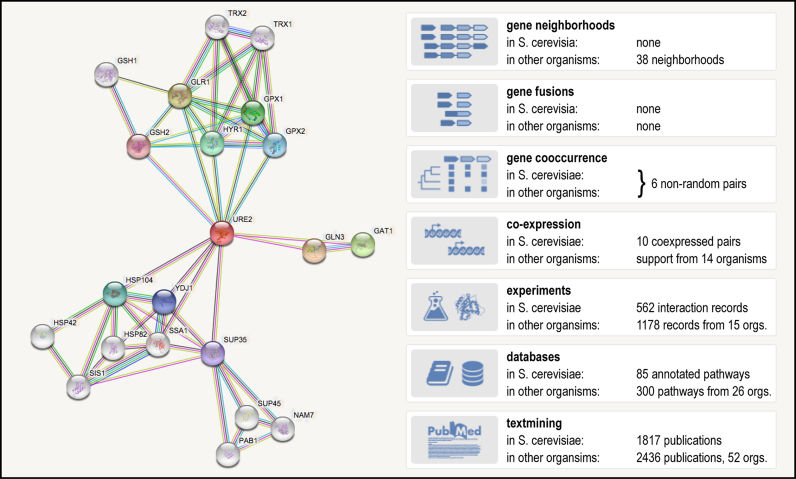
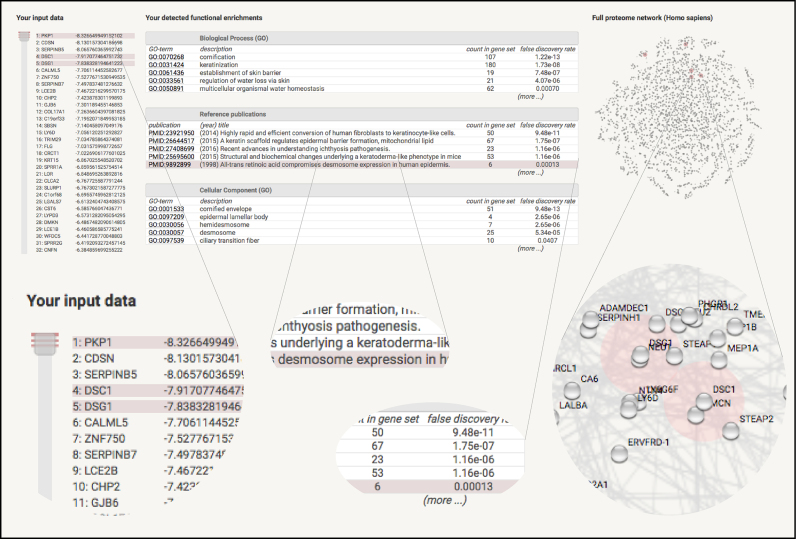
Proteins and their functional interactions form the backbone of the cellular machinery. Their connectivity network needs to be considered for the full understanding of biological phenomena, but the available information on protein-protein associations is incomplete and exhibits varying levels of annotation granularity and reliability. The STRING database aims to collect, score and integrate all publicly available sources of protein-protein interaction information, and to complement these with computational predictions. Its goal is to achieve a comprehensive and objective global network, including direct (physical) as well as indirect (functional) interactions. The latest version of STRING (11.0) more than doubles the number of organisms it covers, to 5090. The most important new feature is an option to upload entire, genome-wide datasets as input, allowing users to visualize subsets as interaction networks and to perform gene-set enrichment analysis on the entire input. For the enrichment analysis, STRING implements well-known classification systems such as Gene Ontology and KEGG, but also offers additional, new classification systems based on high-throughput text-mining as well as on a hierarchical clustering of the association network itself. The STRING resource is available online at https://string-db.org/.
Overview
The claims and statistics of this paper haven’t been checked yet.
Free: it reads the open-access text and checks the first 5 claims that cite a source we can check. Create a free account to check every claim.
Integrity signals
Registry
Cites
Statistics
Figures
Verification
Claims the paper makes
The claims and statistics of this paper haven’t been checked yet.
Free: it reads the open-access text and checks the first 5 claims that cite a source we can check. Create a free account to check every claim.
Claims other papers make about this one
Each is checked against this paper’s own text: does it say what the citing paper says it does?
The source backs part of the claim, not all of it — or backs it for a different population, condition or comparison.
In the citing paper
“high correlation between expression profiles was strongly associated with high STRING protein-protein interaction confidence scores”
From Mapping information-rich genotype-phenotype landscapes with genome-scale Perturb-seq (2022) · cites this paper as Szklarczyk et al., 2019
Experimental — accuracy not yet measuredThe source backs part of the claim, not all of it — or backs it for a different population, condition or comparison.
In the citing paper
“Among them, FKBP4, PTGES3, UBE2I, HOXB13 and GATA2 showed evidence for physical subnetwork interactions with AR37.”
From Genome-scale CRISPR screens identify PTGES3 as a direct modulator of androgen receptor function in advanced prostate cancer (2025) · cites this paper as [37]
Experimental — accuracy not yet measuredThe cited source says what the claim attributes to it.
In the citing paper
“Protein–protein interaction (PPI) is another data type that was included in the latest version by adding the most recent PPI data from STRING 11 (19).”
From TCRD and pharos 2021: mining the human proteome for disease biology (2021) · cites this paper as [19]
In the citing paper
“while tau oligomerization for 60 min shows GO annotation groups for programmed cell death and signaling by receptor tyrosine kinases”
From Interaction of tau with HNRNPA2B1 and N6-methyladenosine RNA mediates the progression of tauopathy (2021) · cites this paper as Szklarczyk et al., 2019
Self-check
Percentages, sums and reported differences re-computed from the paper’s own numbers.
The self-check needs the paper’s full text.
Citations
Cites
Controlling the False Discovery Rate: A Practical and Powerful Approach to Multiple Testing
Benjamini, Y., & Hochberg, Y. (1995) · Journal of the Royal Statistical Society Series B: Statistical Methodology · doi:10.1111/j.2517-6161.1995.tb02031.x · Cited by 109,482
(2008) · Journal of Machine Learning Research · Cited by 33,051
WGCNA: an R package for weighted correlation network analysis
Langfelder, P., & Horvath, S. (2008) · BMC Bioinformatics · doi:10.1186/1471-2105-9-559 · Cited by 27,252
STRING v10: protein–protein interaction networks, integrated over the tree of life
Szklarczyk, D., Franceschini, A., Wyder, S., Forslund, K., Heller, D., Huerta-Cepas, J., Simonovic, M., Roth, A., Santos, A., Tsafou, K. P., et al. (2015) · Nucleic Acids Research · doi:10.1093/nar/gku1003 · Cited by 10,436
Self-citationNCBI GEO: archive for functional genomics data sets—update
Barrett, T., Wilhite, S. E., Ledoux, P., Evangelista, C., Kim, I. F., Tomashevsky, M., Marshall, K. A., Phillippy, K. H., Sherman, P. M., Holko, M., et al. (2012) · Nucleic Acids Research · doi:10.1093/nar/gks1193 · Cited by 10,418 · cited 1×
“In the case of transcript data, STRING re-processes and maps the large number of experiments stored in the NCBI Gene Expression Omnibus (46), followed by normalization, redundancy reduction and Pearson correlation (described in (29)).”
MethodKEGG: new perspectives on genomes, pathways, diseases and drugs
Kanehisa, M., Furumichi, M., Tanabe, M., Sato, Y., & Morishima, K. (2017) · Nucleic Acids Research · doi:10.1093/nar/gkw1092 · Cited by 8,865 · cited 6×
“The database channel is based on manually curated interaction records assembled by expert curators, at KEGG (41), Reactome (50), BioCyc (51) and Gene Ontology (52), as well as legacy datasets from PID and BioCarta.”
BackgroundMethodInfluentialUniProt: the Universal Protein knowledgebase
Apweiler, R. (2004) · Nucleic Acids Research · doi:10.1093/nar/gkh131 · Cited by 7,498
Szklarczyk, D., Morris, J. H., Cook, H., Kuhn, M., Wyder, S., Simonovic, M., Santos, A., Doncheva, N. T., Roth, A., Bork, P., et al. (2017) · Nucleic Acids Research · doi:10.1093/nar/gkw937 · Cited by 6,980 · cited 1×
“Many of the features of STRING have been made available and described earlier (28–31) and the website is currently accessed by around 3500 distinct users daily; its hosting facilities have recently been replicated and placed under a commercial load balancer, to provide added stability and capacity.”
BackgroundSelf-citationThe Reactome pathway Knowledgebase
Fabregat, A., Sidiropoulos, K., Garapati, P., Gillespie, M., Hausmann, K., Haw, R., Jassal, B., Jupe, S., Korninger, F., McKay, S., et al. (2016) · Nucleic Acids Research · doi:10.1093/nar/gkv1351 · Cited by 5,605 · cited 1×
“The database channel is based on manually curated interaction records assembled by expert curators, at KEGG (41), Reactome (50), BioCyc (51) and Gene Ontology (52), as well as legacy datasets from PID and BioCarta.”
MethodUniProt: the universal protein knowledgebase
The UniProt Consortium (2017) · Nucleic Acids Research · doi:10.1093/nar/gkw1099 · Cited by 4,436
Cited by
Items 1,001–1,100 of 1,147
Glousker, G., Briod, A., Quadroni, M., & Lingner, J. (2020) · The EMBO Journal · doi:10.15252/embj.2020104500 · Cited by 51
Zhang, W., Roy Burman, S. S., Chen, J., Donovan, K. A., Cao, Y., Shu, C., Zhang, B., Zeng, Z., Gu, S., Zhang, Y., et al. (2022) · Genomics, Proteomics & Bioinformatics · doi:10.1016/j.gpb.2022.11.008 · Cited by 51
On the lifetime of bioinformatics web services
Kern, F., Fehlmann, T., & Keller, A. (2020) · Nucleic Acids Research · doi:10.1093/nar/gkaa1125 · Cited by 50
Eng, T., Banerjee, D., Lau, A. K., Bowden, E., Herbert, R. A., Trinh, J., Prahl, J.-P., Deutschbauer, A., Tanjore, D., & Mukhopadhyay, A. (2021) · Metabolic Engineering · doi:10.1016/j.ymben.2021.04.015 · Cited by 50
“However, a STRINGdb meta-analysis (Szklarczyk et al., 2019) also identified potentially conserved protein-protein interactions between GacA and other relevant candidate effector proteins (Supplementary Figure 3).”
Massively parallel assessment of human variants with base editor screens
Hanna, R. E., Hegde, M., Fagre, C. R., DeWeirdt, P. C., Sangree, A. K., Szegletes, Z., Griffith, A., Feeley, M. N., Sanson, K. R., Baidi, Y., et al. (2020) · doi:10.1101/2020.05.17.100818 · Cited by 314
Biomedical data, computational methods and tools for evaluating disease–disease associations
Xiang, J., Zhang, J., Zhao, Y., Wu, F.-X., & Li, M. (2022) · Briefings in Bioinformatics · doi:10.1093/bib/bbac006 · Cited by 49
Paranjpe, M. D., Belonwu, S., Wang, J. K., Oskotsky, T., Gupta, A., Taubes, A., Zalocusky, K. A., Paranjpe, I., Glicksberg, B. S., Huang, Y., et al. (2021) · Frontiers in Aging Neuroscience · doi:10.3389/fnagi.2021.735611 · Cited by 49
“Network visualization using the STRING v11 (Szklarczyk et al., 2019) database was used to assess evidence for protein-protein interactions between hub genes.”
MethodRoberts, J. A., Varma, V. R., An, Y., Varma, S., Candia, J., Fantoni, G., Tiwari, V., Anerillas, C., Williamson, A., Saito, A., et al. (2021) · Science Advances · doi:10.1126/sciadv.abi8178 · Cited by 49
Employing core regulatory circuits to define cell identity
Almeida, N., Chung, M. W. H., Drudi, E. M., Engquist, E. N., Hamrud, E., Isaacson, A., Tsang, V. S. K., Watt, F. M., & Spagnoli, F. M. (2021) · The EMBO Journal · doi:10.15252/embj.2020106785 · Cited by 49
“Furthermore, experimental protein – protein interaction information curated in databases, such as StringDB (Szklarczyk et al, 2018), IntAct (Orchard et al, 2014), and BioGrid (Oughtred et al, 2018), enable consideration of co-factors and TF complexes in building a CRC.”
H3K4me2 regulates the recovery of protein biosynthesis and homeostasis following DNA damage
Wang, S., Meyer, D. H., & Schumacher, B. (2020) · Nature Structural & Molecular Biology · doi:10.1038/s41594-020-00513-1 · Cited by 49
Binder, J., Ursu, O., Bologa, C., Jiang, S., Maphis, N., Dadras, S., Chisholm, D., Weick, J., Myers, O., Kumar, P., et al. (2022) · Communications Biology · doi:10.1038/s42003-022-03068-7 · Cited by 49
The metabolic growth limitations of petite cells lacking the mitochondrial genome
Vowinckel, J., Hartl, J., Marx, H., Kerick, M., Runggatscher, K., Keller, M. A., Mülleder, M., Day, J., Weber, M., Rinnerthaler, M., et al. (2021) · Nature Metabolism · doi:10.1038/s42255-021-00477-6 · Cited by 48
Toral-Rios, D., Long, J. M., Ulrich, J. D., Yu, J., Strickland, M. R., Han, X., Holtzman, D. M., Cashikar, A. G., & Paul, S. M. (2024) · Journal of Experimental Medicine · doi:10.1084/jem.20232000 · Cited by 47
“To help illustrate protein – protein interactions within specific enriched biological processes, the STRING databases (Szklarczyk et al., 2019) were used to draw interactive networks of those key biological pathways using CytoScape (Shannon et al., 2003).”
MethodLI, J., WANG, S.-P., WANG, Y.-Q., SHI, L., ZHANG, Z.-K., DONG, F., LI, H.-R., ZHANG, J.-Y., & MAN, Y.-Q. (2021) · Chinese Journal of Natural Medicines · doi:10.1016/s1875-5364(21)60023-7 · Cited by 47
Evidence for Selection in the Abundant Accessory Gene Content of a Prokaryote Pangenome
Whelan, F. J., Hall, R. J., & McInerney, J. O. (2021) · Molecular Biology and Evolution · doi:10.1093/molbev/msab139 · Cited by 46
“The STRING database (Szklarczyk et al. 2019) was used to identify whether the protein products of associating, dissociating, and random abundant accessory gene pairs interact with each other.”
MethodStructure and interactions of the endogenous human Commander complex
Laulumaa, S., Kumpula, E.-P., Huiskonen, J. T., & Varjosalo, M. (2024) · Nature Structural & Molecular Biology · doi:10.1038/s41594-024-01246-1 · Cited by 46
“79) and STRING (only with a STRING score greater >0.9) databases 80 .”
InfluentialStructure and Interactions of the Endogenous Human Commander Complex
Laulumaa, S., Kumpula, E.-P., Huiskonen, J. T., & Varjosalo, M. (2023) · doi:10.1101/2023.04.03.535349 · Cited by 46
The Serum Proteome and Ursodeoxycholic Acid Response in Primary Biliary Cholangitis
Barron‐Millar, B., Ogle, L., Mells, G., Flack, S., Badrock, J., Sandford, R., Kirby, J., Palmer, J., Jopson, L., Brain, J., et al. (2021) · Hepatology · doi:10.1002/hep.32011 · Cited by 45
Ten Years of Collaborative Progress in the Quest for Orthologs
Linard, B., Ebersberger, I., McGlynn, S. E., Glover, N., Mochizuki, T., Patricio, M., Lecompte, O., Nevers, Y., Thomas, P. D., Gabaldón, T., et al. (2021) · Molecular Biology and Evolution · doi:10.1093/molbev/msab098 · Cited by 45
“In FunCoup, functional associations from well-studied species are transferred to other organisms using orthologous relations from InParanoid (Sonnhammer and €Ostlund 2015), whereas STRING uses hierarchical orthologous relations from EggNOG (Huerta-Cepas et al. 2016).”
BackgroundMethodInfluentialSelf-citationRebak, A. S., Hendriks, I. A., Elsborg, J. D., Buch-Larsen, S. C., Nielsen, C. H., Terslev, L., Kirsch, R., Damgaard, D., Doncheva, N. T., Lennartsson, C., et al. (2024) · Nature Structural & Molecular Biology · doi:10.1038/s41594-024-01214-9 · Cited by 45
“All targets were ordered by this value and the whole ranked list was used as input for the STRING v11 gene-set enrichment analysis 102 .”
Self-citationAttaway, A. H., Bellar, A., Mishra, S., Karthikeyan, M., Sekar, J., Welch, N., Musich, R., Singh, S. S., Kumar, A., Menon, A., et al. (2023) · The Journal of Physiology · doi:10.1113/jp283700 · Cited by 45
“The primary molecular sensors of cellular oxygen, hypoxia-inducible factors (primarily HIF1α and HIF2α), mediate the adaptive responses by inhibiting highly energy-dependent processes including mitochondrial oxidative phosphorylation (Thomas & Ashcroft, 2019).”
BackgroundTransmembrane protein 97 is a potential synaptic amyloid beta receptor in human Alzheimer’s disease
Colom-Cadena, M., Toombs, J., Simzer, E., Holt, K., McGeachan, R., Tulloch, J., Jackson, R. J., Catterson, J. H., Spires-Jones, M. P., Rose, J., et al. (2024) · Acta Neuropathologica · doi:10.1007/s00401-023-02679-6 · Cited by 44
“STRING (Version 11.5) pathway analysis of Abeta + Drug vs. Abeta + Vehicle conditions (unadjusted p value < 0.05) [81].”
InfluentialSilva, K. P. T., Sundar, G., & Khare, A. (2023) · Nature Communications · doi:10.1038/s41467-023-38507-4 · Cited by 44
“Gene neighborhood analysis using the STRING database 41 indicated that the three ef fl ux pumps (along with a hemolysin III family protein) are found next to each other in the genome in almost all Staphylococcus species (Supplementary Fig.”
Li, S., Wu, S., Wang, L., Li, F., Jiang, H., & Bai, F. (2022) · Current Opinion in Structural Biology · doi:10.1016/j.sbi.2022.102344 · Cited by 42
Chivu-Economescu, M., Necula, L. G., Matei, L., Dragu, D., Bleotu, C., Sorop, A., Herlea, V., Dima, S., Popescu, I., & Diaconu, C. C. (2022) · International Journal of Molecular Sciences · doi:10.3390/ijms23063214 · Cited by 42
Fairfield, H., Costa, S., Falank, C., Farrell, M., Murphy, C. S., D’Amico, A., Driscoll, H., & Reagan, M. R. (2021) · Frontiers in Oncology · doi:10.3389/fonc.2020.584683 · Cited by 42
Baldoni, E., Frugis, G., Martinelli, F., Benny, J., Paffetti, D., & Buti, M. (2021) · International Journal of Molecular Sciences · doi:10.3390/ijms222313062 · Cited by 41
Mercado-Evans, V., Mejia, M. E., Zulk, J. J., Ottinger, S., Hameed, Z. A., Serchejian, C., Marunde, M. G., Robertson, C. M., Ballard, M. B., Ruano, S. H., et al. (2024) · Nature Communications · doi:10.1038/s41467-024-45336-6 · Cited by 40
Mitochondrial matrix RTN4IP1/OPA10 is an oxidoreductase for coenzyme Q synthesis
Park, I., Kim, K.-E., Kim, J., Kim, A.-K., Bae, S., Jung, M., Choi, J., Mishra, P. K., Kim, T.-M., Kwak, C., et al. (2024) · Nature Chemical Biology · doi:10.1038/s41589-023-01452-w · Cited by 39
Das, R., Sjöström, M., Shrestha, R., Yogodzinski, C., Egusa, E. A., Chesner, L. N., Chen, W. S., Chou, J., Dang, D. K., Swinderman, J. T., et al. (2021) · Nature Communications · doi:10.1038/s41467-021-24919-7 · Cited by 38
Absence of miRNA-146a Differentially Alters Microglia Function and Proteome
Martin, N. A., Hyrlov, K. H., Elkjaer, M. L., Thygesen, E. K., Wlodarczyk, A., Elbaek, K. J., Aboo, C., Okarmus, J., Benedikz, E., Reynolds, R., et al. (2020) · Frontiers in Immunology · doi:10.3389/fimmu.2020.01110 · Cited by 36
“org) was used to analyze known functional protein interactions of the selected variables from the sPLS-DA (31).”
MethodLipid metabolism transcriptomics of murine microglia in Alzheimer’s disease and neuroinflammation
Shippy, D. C., & Ulland, T. K. (2023) · Scientific Reports · doi:10.1038/s41598-023-41897-6 · Cited by 35
“Additionally, PPI analysis was performed to identify interactions of the selected proteins based on their gene IDs using the STRING database 68 .”
MethodKrause, G. J., Diaz, A., Jafari, M., Khawaja, R. R., Agullo‐Pascual, E., Santiago‐Fernández, O., Richards, A. L., Chen, K., Dmitriev, P., Sun, Y., et al. (2022) · Aging Cell · doi:10.1111/acel.13713 · Cited by 35
Benjaskulluecha, S., Boonmee, A., Pattarakankul, T., Wongprom, B., Klomsing, J., & Palaga, T. (2022) · Scientific Reports · doi:10.1038/s41598-022-05929-x · Cited by 34
Wu, Y., Liu, Q., Qiu, Y., & Xie, L. (2022) · PLOS Computational Biology · doi:10.1371/journal.pcbi.1010367 · Cited by 34
RAPPPID: towards generalizable protein interaction prediction with AWD-LSTM twin networks
Szymborski, J., & Emad, A. (2022) · Bioinformatics · doi:10.1093/bioinformatics/btac429 · Cited by 34
Retrieval-Augmented Generation with Graphs (GraphRAG)
Han, H., Wang, Y., Shomer, H., Guo, K., Ding, J., Lei, Y., Halappanavar, M., Rossi, R. A., Mukherjee, S., Tang, X., et al. (2025) · arXiv · doi:10.48550/arxiv.2501.00309 · Cited by 34
A cyclin-dependent kinase-mediated phosphorylation switch of disordered protein condensation
Valverde, J. M., Dubra, G., Phillips, M., Haider, A., Elena-Real, C., Fournet, A., Alghoul, E., Chahar, D., Andrés-Sanchez, N., Paloni, M., et al. (2023) · Nature Communications · doi:10.1038/s41467-023-42049-0 · Cited by 33
Primary cilia are required for the persistence of memory and stabilization of perineuronal nets
Jovasevic, V., Zhang, H., Sananbenesi, F., Guedea, A. L., Soman, K. V., Wiktorowicz, J. E., Fischer, A., & Radulovic, J. (2021) · iScience · doi:10.1016/j.isci.2021.102617 · Cited by 32
Structure of mycobacterial respiratory complex I
Liang, Y., Plourde, A., Bueler, S. A., Liu, J., Brzezinski, P., Vahidi, S., & Rubinstein, J. L. (2023) · Proceedings of the National Academy of Sciences · doi:10.1073/pnas.2214949120 · Cited by 31
Associations between obesity and Alzheimer’s disease: Multiple bioinformatic analyses.
Zhuang, Q.-S., Meng, L., Wang, Z., Shen, L., & Ji, H.-F. (2021) · Journal of Alzheimer's Disease · doi:10.3233/jad-201235 · Cited by 31
“To investigate the PPI information between overlapped genes and AD susceptibility genes, we constructed network-based analyses by STRING databases (Version 11.0) [16].”
InfluentialTranscriptional profiling of normal, stenotic, and regurgitant human aortic valves
Greene, C. L., Jaatinen, K. J., Wang, H., Koyano, T. K., Bilbao, M. S., & Woo, Y. J. (2020) · Genes · doi:10.3390/genes11070789 · Cited by 30
Shaikh, F. Y., Gills, J. J., Mohammad, F., White, J. R., Stevens, C. M., Ding, H., Fu, J., Tam, A., Blosser, R. L., Domingue, J. C., et al. (2022) · Cancer Immunology, Immunotherapy · doi:10.1007/s00262-022-03169-6 · Cited by 30
“0) to identify GO annotated pathways enriched in responding tumors [15].”
BackgroundTarawneh, R. (2023) · Biomolecules · doi:10.3390/biom13050830 · Cited by 29
Association of SPI1 haplotypes with altered SPI1 gene expression and Alzheimer’s disease risk
Cao, H., Initiative, A. D. N., Zhou, X., Chen, Y., Ip, F. C. F., Chen, Y., Lai, N. C. H., Lo, R. M. N., Tong, E. P. S., Mok, V. C. T., et al. (2022) · Journal of Alzheimer s Disease · doi:10.3233/jad-215311 · Cited by 29
“We subsequently queried the STRING database for the protein–protein interaction (PPI) network of genes enriched in different biological processes [32].”
Veerasubramanian, P. K., Shao, H., Meli, V. S., Phan, T. A. Q., Luu, T. U., Liu, W. F., & Downing, T. L. (2021) · Biomaterials · doi:10.1016/j.biomaterials.2021.121236 · Cited by 28
“Mapping the proteinprotein interactions using the tools from String database [33], we find that several of the adhesome and inflammatory genes under consideration have been reported to be associated on a protein level as well (Fig.”
MethodSchoeman, E. M., Bringans, S., Peters, K., Casey, T., Andronis, C., Chen, L., Duong, M., Girling, J. E., Healey, M., Boughton, B. A., et al. (2025) · Human Reproduction · doi:10.1093/humrep/deae278 · Cited by 27
Zhang, C., Zheng, W., Cheng, M., Omenn, G. S., Freddolino, P. L., & Zhang, Y. (2021) · Journal of Proteome Research · doi:10.1021/acs.jproteome.0c00359 · Cited by 27
Sequence of proteome profiles in preclinical and symptomatic Alzheimer's disease
Li, X., Tsolis, K. C., Koper, M. J., Ronisz, A., Ospitalieri, S., von Arnim, C. A. F., Vandenberghe, R., Tousseyn, T., Scheuerle, A., Economou, A., et al. (2021) · Alzheimer's & Dementia · doi:10.1002/alz.12345 · Cited by 27
Xu, Y., Zhang, J., Hu, Y., Li, X., Sun, L., Peng, Y., Sun, Y., Liu, B., Bian, Z., & Rong, Z. (2021) · Cell Reports · doi:10.1016/j.celrep.2021.109524 · Cited by 27
A large-scale benchmark for network inference from single-cell perturbation data
Chevalley, M., Roohani, Y. H., Mehrjou, A., Leskovec, J., & Schwab, P. (2025) · Communications Biology · doi:10.1038/s42003-025-07764-y · Cited by 26
Unravelling the shared genetic mechanisms underlying 18 autoimmune diseases using a systems approach
Gokuladhas, S., Schierding, W., Golovina, E., Fadason, T., & O’Sullivan, J. (2021) · doi:10.1101/2021.03.28.437437 · Cited by 26
Yin, J., Zhao, Z., Huang, J., Xiao, Y., Rehmutulla, M., Zhang, B., Zhang, Z., Xiang, M., Tong, Q., & Zhang, Y. (2023) · Cell Discovery · doi:10.1038/s41421-023-00578-4 · Cited by 24
Limits and potential of combined folding and docking
Pozzati, G., Zhu, W., Bassot, C., Lamb, J., Kundrotas, P., & Elofsson, A. (2022) · Bioinformatics · doi:10.1093/bioinformatics/btab760 · Cited by 25
“Several interaction databases exist [24,25], and methods, including co-evolution based methods [26], to predict interactions have been developed.”
MethodUnravelling the Shared Genetic Mechanisms Underlying 18 Autoimmune Diseases Using a Systems Approach
Gokuladhas, S., Schierding, W., Golovina, E., Fadason, T., & O’Sullivan, J. (2021) · Frontiers in Immunology · doi:10.3389/fimmu.2021.693142 · Cited by 25
“0 (Szklarczyk et al., 2019).”
Genetic control over biogenic crystal morphogenesis in zebrafish
Deis, R., Lerer-Goldshtein, T., Baiko, O., Eyal, Z., Brenman-Begin, D., Goldsmith, M., Kaufmann, S., Heinig, U., Dong, Y., Lushchekina, S., et al. (2025) · Nature Chemical Biology · doi:10.1038/s41589-024-01722-1 · Cited by 24
“…isolated iridophores from zebrafish larvae at 5 days postfertilization (dpf), a stage at which intensive crystal d , GO enrichment analysis highlighting upregulated (purple) and downregulated biological processes (pink) for identified proteins using a modified Fisher’s extract test from STRING 41 .”
Exploring the landscape of ectodomain shedding by quantitative protein terminomics
Tsumagari, K., Chang, C.-H., & Ishihama, Y. (2021) · iScience · doi:10.1016/j.isci.2021.102259 · Cited by 24
Grünberger, F., Schmid, G., El Ahmad, Z., Fenk, M., Vogl, K., Reichelt, R., Hausner, W., Urlaub, H., Lenz, C., & Grohmann, D. (2023) · mBio · doi:10.1128/mbio.02174-23 · Cited by 24
“Functional analysis was performed using the STRING database to identify known and predicted protein-protein interactions (PPIs) among the differentially expressed genes (109).”
MethodZhan, X., Yuan, W., Zhou, Y., Ma, R., & Ge, Z. (2022) · BMC Genomics · doi:10.1186/s12864-022-08590-w · Cited by 23
“Szklarczyk D, Gable AL, Lyon D, Junge A, Wyder S, Huerta-Cepas J, et al. STRING v11: protein-protein association networks with increased coverage, supporting functional discovery in genome-wide experimental datasets.”
MethodWang, S., Song, Z., Tan, B., Zhang, J., Zhang, J., & Liu, S. (2021) · Frontiers in Oncology · doi:10.3389/fonc.2021.614531 · Cited by 22
Finney, C. A., Delerue, F., Gold, W. A., Brown, D. A., & Shvetcov, A. (2023) · Computational and Structural Biotechnology Journal · doi:10.1016/j.csbj.2022.12.018 · Cited by 22
“Importantly, STRING allows for the identification of interaction networks and gene-enrichment analysis [33].”
MethodStructure-based design of CDC42 effector interaction inhibitors for the treatment of cancer
Jahid, S., Ortega, J. A., Vuong, L. M., Acquistapace, I. M., Hachey, S. J., Flesher, J. L., La Serra, M. A., Brindani, N., La Sala, G., Manigrasso, J., et al. (2022) · Cell Reports · doi:10.1016/j.celrep.2022.110641 · Cited by 21
Proteomic Identification of a Gastric Tumor ECM Signature Associated With Cancer Progression
Moreira, A. M., Ferreira, R. M., Carneiro, P., Figueiredo, J., Osório, H., Barbosa, J., Preto, J., Pinto-do-Ó, P., Carneiro, F., & Seruca, R. (2022) · Frontiers in Molecular Biosciences · doi:10.3389/fmolb.2022.818552 · Cited by 21
“org/; (Szklarczyk et al., 2019)] was used to identify functional systems or pathways overrepresented in our sets, when compared with the software’s default background (Whole genome, Homo sapiens).”
ResultStructural coverage of the human interactome
Kosoglu, K., Aydin, Z., Tuncbag, N., Gursoy, A., & Keskin, O. (2023) · Briefings in Bioinformatics · doi:10.1093/bib/bbad496 · Cited by 21
(2025) · doi:10.1038/s41467-025-58439-5 · Cited by 21
“Further details about the RL-GenRisk can be found in the “Methods” section.”
(2021) · doi:10.7554/elife.74005 · Cited by 21
“GO analysis was performed using both Flybase ( Larkin et al., 2021 ) and STRING v11 ( Szklarczyk et al., 2019 ).”
Das, M., Mao, W., Shao, E., Tamhankar, S., Yu, G.-Q., Yu, X., Ho, K., Wang, X., Wang, J., & Mucke, L. (2021) · iScience · doi:10.1016/j.isci.2021.103245 · Cited by 21
“To look for potential interactions among transcripts whose levels were altered by both hAPP expression and LEV treatment, we used STRING analysis (Szklarczyk et al., 2019).”
MethodInfluentialCollective Regulation of Metabolism, Development and Longevity Through a Socially Exchanged Fluid
Hakala, S., Meurville, M.-P., Stumpe, M., & LeBoeuf, A. (2021) · doi:10.1101/2021.01.28.428590 · Cited by 21
Skowron, M. A., Eul, K., Stephan, A., Ludwig, G. F., Wakileh, G. A., Bister, A., Söhngen, C., Raba, K., Petzsch, P., Poschmann, G., et al. (2022) · Molecular Oncology · doi:10.1002/1878-0261.13282 · Cited by 20
Candida albicans requires iron to sustain hyphal growth
Luo, G., Wang, T., Zhang, J., Zhang, P., & Lu, Y. (2021) · Biochemical and Biophysical Research Communications · doi:10.1016/j.bbrc.2021.05.039 · Cited by 18
Goh, C. J. H., Wong, J. H., El Farran, C., Tan, B. X., Coffill, C. R., Loh, Y.-H., Lane, D., & Arumugam, P. (2021) · G3 Genes|Genomes|Genetics · doi:10.1093/g3journal/jkaa069 · Cited by 20
Li, Y., Xu, M., Xiang, B.-L., Li, X., Zhang, D.-F., Zhao, H., Bi, R., & Yao, Y.-G. (2023) · Neuropsychopharmacology · doi:10.1038/s41386-023-01542-2 · Cited by 20
“Cells with or without A β treatment for 3h were harvested for quanti fi cation of mRNA levels of cytokines by using qRT-PCR (Supplementary Table S1).”
MethodBrain-wide alterations revealed by spatial transcriptomics and proteomics in COVID-19 infection
Zhang, T., Li, Y., Pan, L., Sha, J., Bailey, M., Faure-Kumar, E., Williams, C. K., Wohlschlegel, J., Magaki, S., Niu, C., et al. (2024) · Nature Aging · doi:10.1038/s43587-024-00730-z · Cited by 20
“Hub genes networks were generated using STRING 43,139 version 11 and Cytoscape 140 version 3.10.2 (Fig.”
InfluentialThe hGID GID4 E3 ubiquitin ligase complex targets ARHGAP11A to regulate cell migration
(2024) · doi:10.26508/lsa.202403046 · Cited by 19
Söhngen, C., Thomas, D. J., Skowron, M. A., Bremmer, F., Eckstein, M., Stefanski, A., Driessen, M. D., Wakileh, G. A., Stühler, K., Altevogt, P., et al. (2023) · The FEBS Journal · doi:10.1111/febs.16880 · Cited by 19
The hGID GID4 E3 ubiquitin ligase complex targets ARHGAP11A to regulate cell migration
Bagci, H., Winkler, M., Uliana, F., Boulais, J., Mohamed, W. I., Park, S. L., Côté, J.-F., & Peter, M. (2023) · doi:10.1101/2023.07.20.549906 · Cited by 19
A biochemical network modeling of a whole-cell
Burke, P. E. P., Campos, C. B. D. L., Costa, L. D. F., & Quiles, M. G. (2020) · Scientific Reports · doi:10.1038/s41598-020-70145-4 · Cited by 18
Zhu, Q., Niu, Y., Gundry, M., & Zong, C. (2021) · Science Advances · doi:10.1126/sciadv.abf3329 · Cited by 18
“Next, we conducted STRING analysis (43) and observed a large protein interaction network (fig.”
MethodBroad functional profiling of fission yeast proteins using phenomics and machine learning
Rodríguez-López, M., Bordin, N., Lees, J., Scholes, H., Hassan, S., Saintain, Q., Kamrad, S., Orengo, C., & Bähler, J. (2023) · eLife · doi:10.7554/elife.88229.3 · Cited by 18
Ren, B., Burkovetskaya, M., Jung, Y., Bergdolt, L., Totusek, S., Martinez‐Cerdeno, V., Stauch, K., Korade, Z., & Dunaevsky, A. (2023) · Glia · doi:10.1002/glia.24331 · Cited by 18
“Network analysis and Markov Clustering (MCL) were performed using the online STRING database (Szklarczyk et al., 2019) for the list of downregulated and upregulated DEPs with a minimum required interaction score of 0.700 (high confidence).”
MethodInfluentialMonzón-Sandoval, J., Burlacu, E., Agarwal, D., Handel, A. E., Wei, L., Davis, J., Cowley, S. A., Cader, M. Z., & Webber, C. (2022) · Disease Models & Mechanisms · doi:10.1242/dmm.049349 · Cited by 18
Hofford, R. S., Euston, T. J., Wilson, R. S., Meckel, K. R., Peck, E. G., Godino, A., Landry, J. A., Calipari, E. S., Lam, T. T., & Kiraly, D. D. (2021) · The Journal of Neuroscience · doi:10.1523/jneurosci.1452-20.2020 · Cited by 17
KIR+ CD8+ T Lymphocytes in Cancer Immunosurveillance and Patient Survival: Gene Expression Profiling
Gimeno, L., Serrano-López, E. M., Campillo, J. A., Cánovas-Zapata, M. A., Acuña, O. S., García-Cózar, F., Martínez-Sánchez, M. V., Martínez-Hernández, M. D., Soto-Ramírez, M. F., López-Cubillana, P., et al. (2020) · Cancers · doi:10.3390/cancers12102991 · Cited by 17
A Comparative Transcriptome Between Anti-drug Sensitive and Resistant Candida auris in China
Zhou, W., Li, X., Lin, Y., Yan, W., Jiang, S., Huang, X., Yang, X., Qiao, D., & Li, N. (2021) · Frontiers in Microbiology · doi:10.3389/fmicb.2021.708009 · Cited by 16
“The STRING (Search Tool for the Retrieval of Interacting Genes) database (Szklarczyk et al., 2019) was used to construct a protein–protein association network and to visualize the interactome network.”
MethodDiessner, B. J., Pankratz, N., Hooten, A. J., Mirabello, L., Sarver, A. L., Mills, L. J., Malkin, D., Kelley, A. C., & Spector, L. G. (2020) · JCO Precision Oncology · doi:10.1200/po.20.00087 · Cited by 16
Hidden information on protein function in censuses of proteome foldedness
Cox, D., Ang, C.-S., Nillegoda, N. B., Reid, G. E., & Hatters, D. M. (2022) · Nature Communications · doi:10.1038/s41467-022-29661-2 · Cited by 16
Systematic elucidation of genetic mechanisms underlying cholesterol uptake
Hamilton, M. C., Fife, J. D., Akinci, E., Yu, T., Khowpinitchai, B., Cha, M., Barkal, S., Thi, T. T., Yeo, G. H. T., Ramos Barroso, J. P., et al. (2023) · Cell Genomics · doi:10.1016/j.xgen.2023.100304 · Cited by 16
Naserkheil, M., Manzari, Z., Dang, C. G., Lee, S. S., & Park, M. N. (2022) · Current Issues in Molecular Biology · doi:10.3390/cimb44120414 · Cited by 15
mGWAS-Explorer: Linking SNPs, Genes, Metabolites, and Diseases for Functional Insights
Chang, L., Zhou, G., Ou, H., & Xia, J. (2022) · Metabolites · doi:10.3390/metabo12060526 · Cited by 15
Tsumagari, K., Sato, Y., Shimozawa, A., Aoyagi, H., Okano, H., & Kuromitsu, J. (2022) · iScience · doi:10.1016/j.isci.2022.104832 · Cited by 15
Tran, K. A., Gilbert, M., Vazquez, B. N., Ianni, A., Garcia, B. A., Vaquero, A., & Berger, S. L. (2025) · Molecular Cell · doi:10.1016/j.molcel.2025.05.025 · Cited by 15
(2024) · doi:10.1101/2024.02.05.578810 · Cited by 15
Recognition of DNA Methylation Molecular Features for Diagnosis and Prognosis in Gastric Cancer
Liu, D., Li, L., Wang, L., Wang, C., Hu, X., Jiang, Q., Wang, X., Xue, G., Liu, Y., & Xue, D. (2021) · Frontiers in Genetics · doi:10.3389/fgene.2021.758926 · Cited by 14
“For each given gene list, PPI enrichment analysis was carried out using the following databases: STRING (Szklarczyk et al., 2019), BioGrid (Oughtred et al.”
MethodInfluentialChaotic aging: intrinsically disordered proteins in aging-related processes
Manyilov, V. D., Ilyinsky, N. S., Nesterov, S. V., Saqr, B. M. G. A., Dayhoff, G. W., Zinovev, E. V., Matrenok, S. S., Fonin, A. V., Kuznetsova, I. M., Turoverov, K. K., et al. (2023) · Cellular and Molecular Life Sciences · doi:10.1007/s00018-023-04897-3 · Cited by 14
Huang, Y., Driedonks, T. A. P., Cheng, L., Rajapaksha, H., Turchinovich, A., Routenberg, D. A., Nagaraj, R., Redding-Ochoa, J., Arab, T., Powell, B. H., et al. (2022) · Neurology Genetics · doi:10.1212/nxg.0000000000200026 · Cited by 14
“Cellular component annotations of identified proteins were enriched by STRING.(33) Only those categories with FDR < 0.”
MethodInfluentialSingle-cell and spatial detection of senescent cells using DeepScence
Qu, Y., Ji, B., Dong, R., Gu, L., Chan, C., Xie, J., Glass, C., Wang, X.-F., Nixon, A. B., & Ji, Z. (2025) · Cell Genomics · doi:10.1016/j.xgen.2025.101035 · Cited by 30
Gandarilla-Pérez, C. A., Pinilla, S., Bitbol, A.-F., & Weigt, M. (2023) · PLOS Computational Biology · doi:10.1371/journal.pcbi.1011010 · Cited by 13
“While it is difficult to be certain that two protein families do not have common functional constraints, we picked two pairs of families that are encoded in close proximity on prokaryotic genomes but do not have known physical interactions [31].”
Adcox, H. E., Hunt, J. R., Allen, P. E., Siff, T. E., Rodino, K. G., Ottens, A. K., & Carlyon, J. A. (2024) · Nature Communications · doi:10.1038/s41467-024-52119-6 · Cited by 13
Cunningham, M., Pins, D., Dezső, Z., Torrent, M., Vasanthakumar, A., & Pandey, A. (2023) · Journal of Cheminformatics · doi:10.1186/s13321-023-00735-7 · Cited by 13
“Degree, closeness, betweenness, eigen centrality, and PageRank of each protein in the protein–protein interaction network were calculated using information from the STRING database [37].”
MethodFu, R., Zu, S.-J., Liu, Y.-J., Li, J.-C., Dang, W.-Z., Liao, L.-P., Liu, L.-P., Chen, P.-Y., Huang, H.-M., Wu, K.-H., et al. (2022) · Bioengineered · doi:10.1080/21655979.2022.2066756 · Cited by 12
“0 and Cytoscape to determine the proteinprotein interactions (PPIs) [46,47].”
Background
Metadata
- Authors
- Szklarczyk, D., Gable, A. L., Lyon, D., Junge, A., Wyder, S., Huerta-Cepas, J., Simonovic, M., Doncheva, N. T., Morris, J. H., Bork, P., Jensen, L. J., & Mering, C. V.
- Affiliations
- SIB Swiss Institute of Bioinformatics (CH)
- University of Copenhagen (DK)
- Centro de Biotecnología y Genómica de Plantas, Universidad Politécnica de Madrid (UPM)—Instituto Nacional de Investigación y Tecnología Agraria y Alimentaria (INIA), 28223 Madrid, Spain
- University of California, San Francisco (US)
- Structural and Computational Biology Unit, European Molecular Biology Laboratory, 69117 Heidelberg, Germany
- Corresponding author
- Jensen, Lars J
- Mering, Christian von
- ORCID
- Venue
- Nucleic Acids Research
- Publisher
- Oxford University Press (OUP)
- Published
- 2018-11-22
- Volume
- 47
- Issue
- D1
- Pages
- D607-D613
- ISSN
- 0305-1048 (ISSN-L)
- 1362-4962
- PMC
- PMC6323986
- OpenAlex
- W2900569176
- Cited by
- 17,749
- References
- 64
- Citations by year
- 2026: 1049 · 2025: 1843 · 2024: 2377 · 2023: 2759 · 2022: 3359 · 2021: 3711 · 2020: 2202 · 2019: 401 · 2018: 7
- FWCI
- 577.31
- Type
- journal article
- Language
- en
- Open access
- gold
- doi.org
- Licence
- Locations
- Nucleic Acids Research (publishedVersion, cc-by)
- Europe PMC (PubMed Central) (publishedVersion, cc-by)
- PubMed Central (publishedVersion, cc-by)
- PubMed (publishedVersion)
- Research at the University of Copenhagen (University of Copenhagen) (publishedVersion, cc-by)
- MDC Repository (Max-Delbrueck-Center for Molecular Medicine) (acceptedVersion)
- Zurich Open Repository and Archive (University of Zurich) (acceptedVersion, cc-by)
- DIGITAL.CSIC (Spanish National Research Council (CSIC)) (submittedVersion, cc-by)
- eScholarship (California Digital Library) (submittedVersion, cc-by)
- Zurich Open Repository and Archive (University of Zurich) (submittedVersion, cc-by)
- Zurich Open Repository and Archive (University of Zurich)
- Funders
- Swiss Institute of Bioinformatics (NNF14CC0001)
- Danish Council for Independent Research (DFF-4005-00443)
- National Institutes of Health (U54 CA189205, U24 224370)
- National Institute of General Medical Sciences (P41 GM103504)
- Bundesministerium für Bildung und Forschung (#031A537B)
- Topics
- Life Sciences › Biochemistry, Genetics and Molecular Biology › Molecular Biology › Bioinformatics and Genomic Networks
- Health Sciences › Medicine › Health Informatics › Biomedical Text Mining and Ontologies
- Life Sciences › Biochemistry, Genetics and Molecular Biology › Molecular Biology › Genomics and Phylogenetic Studies
- Keywords
- STRING database, protein-protein interaction network, gene set enrichment analysis, Gene Ontology, KEGG, hierarchical clustering, network visualization
- MeSH terms
- Animals, Humans, Software, Genomics, Protein Interaction Mapping, Databases, Genetic, Gene Ontology
About these checks
Registry, retraction, Cites and statistics results are computed, not judged, with one exception: a printed reference that no index lists is read once by a model before it counts as a citation error. Claims are extracted by a model and kept only when their quote appears verbatim in the text; each cited source is then checked, with a model’s help, for whether it says what the claim relies on. Those verdicts can be wrong — read the claim’s quote and the cited source before relying on one.
Statistics and arithmetic are recomputed, not judged.
Confidence bands are shown only for fields calibrated on our annotated test set. None is calibrated yet, so no band is shown.
What counts as a claim ›How we measure confidence ›How we check this ›
Are you an author, or do you see a problem with this page? Request a review
Data sources
Bibliographic data: Semantic Scholar, OpenAlex, Crossref.
Contains information from the Semantic Scholar Academic Graph Datasets, made available under the ODC Attribution License (ODC-BY 1.0).
Semantic Scholar’s data is described in: Kinney, R., et al. (2023). The Semantic Scholar Open Data Platform. arXiv:2301.10140.
