

The DOI matches its Crossref record; 153 of the 155 references it cites were found in a registry or an index, and 2 are not checked yet.
The neural basis of metacognitive ability
Open accessAbstract
Ability in various cognitive domains is often assessed by measuring task performance, such as the accuracy of a perceptual categorization. A similar analysis can be applied to metacognitive reports about a task to quantify the degree to which an individual is aware of his or her success or failure. Here, we review the psychological and neural underpinnings of metacognitive accuracy, drawing on research in memory and decision-making. These data show that metacognitive accuracy is dissociable from task performance and varies across individuals. Convergent evidence indicates that the function of the rostral and dorsal aspect of the lateral prefrontal cortex (PFC) is important for the accuracy of retrospective judgements of performance. In contrast, prospective judgements of performance may depend upon medial PFC. We close with a discussion of how metacognitive processes relate to concepts of cognitive control, and propose a neural synthesis in which dorsolateral and anterior prefrontal cortical subregions interact with interoceptive cortices (cingulate and insula) to promote accurate judgements of performance.
Overview
The claims and statistics of this paper haven’t been checked yet.
Run the check — free, no account needed. It reads the open-access text and checks the sources it cites.
Integrity signals
Registry
Cites
Statistics
Figures
Verification
Claims the paper makes
The claims and statistics of this paper haven’t been checked yet.
Run the check — free, no account needed. It reads the open-access text and checks the sources it cites.
Claims other papers make about this one
Each is checked against this paper’s own text: does it say what the citing paper says it does?
The cited source says what the claim attributes to it.
In the citing paper
“Weil et al. (2013) showed that metacognitive efficiency increases during adolescence, consistent with the maturation of prefrontal regions thought to underpin metacognition (Fleming and Dolan, 2012).”
From How to measure metacognition (2014) · cites this paper as Fleming and Dolan, 2012
Self-check
Percentages, sums and reported differences re-computed from the paper’s own numbers.
The self-check needs the paper’s full text.
Citations
Cites
James, W. (1891) · Personality Culture Society · doi:10.1037/11059-000 · Cited by 25,876
Telling more than we can know: Verbal reports on mental processes.
Nisbett, R. E., & Wilson, T. D. (1977) · Psychological Review · doi:10.1037/0033-295x.84.3.231 · Cited by 11,317 · cited 1×
“inaccurate [2, 3].”
Metacognition and cognitive monitoring: A new area of cognitive–developmental inquiry
Flavell, J. H. (1979) · American Psychologist · doi:10.1037/0003-066x.34.10.906 · Cited by 11,282 · cited 1×
“By focussing on self-reports about memory performance—metacognitive reports—Flavell provided a systematic framework for the study of self-knowledge in healthy individuals [13].”
Background(1966) · Medical Entomology and Zoology · Cited by 10,293
Signal detection theory and psychophysics
Ingleby, D. (1967) · Journal of Sound and Vibration · doi:10.1016/0022-460x(67)90197-6 · Cited by 8,616
Kruger, J., & Dunning, D. (1999) · Journal of Personality and Social Psychology · doi:10.1037/0022-3514.77.6.1121 · Cited by 7,731 · cited 1×
“Despite being dissociable, it turns out that metacognitive accuracy generally scales with task performance [33, 77–80].”
Conflict monitoring and cognitive control
Botvinick, M. M., Braver, T. S., Barch, D. M., Carter, C. S., & Cohen, J. D. (2001) · Psychological Review · doi:10.1037/0033-295x.108.3.624 · Cited by 7,351
Detection Theory: A User's Guide
Macmillan, N. A., & Creelman, C. D. (1991) · Cited by 5,415
Dual-Processing Accounts of Reasoning, Judgment, and Social Cognition
Evans, J. S. B. T. (2008) · Annual Review of Psychology · doi:10.1146/annurev.psych.59.103006.093629 · Cited by 5,137 · cited 1×
“other low-level, based on non-verbal epistemic feelings of uncertainty [125, 126].”
BackgroundA theory of cortical responses.
Friston, K. (2005) · Philosophical Transactions of the Royal Society B: Biological Sciences · doi:10.1098/rstb.2005.1622 · Cited by 4,578 · cited 1×
“Indeed, several recent models of local and large-scale brain function rely on hierarchy as a principal organising factor [9, 10].”
BackgroundEricsson (1993) · doi:10.1037/0033-295x.87.3.215 · Cited by 4,539 · cited 1×
“Here, metacognitive report is treated as an object of study in its own right, and the accuracy of such reports (as dissociated from accuracy, or performance, on the task itself) provides an empirical scaffold upon which to build studies of self-knowledge [14, 15].”
BackgroundThe principles of psychology, Vol I.
James, W. (1890) · doi:10.1037/10538-000 · Cited by 4,514
The Neural Basis of Decision Making
Gold, J. I., & Shadlen, M. N. (2007) · Annual Review of Neuroscience · doi:10.1146/annurev.neuro.29.051605.113038 · Cited by 3,764 · cited 1×
“Interestingly, this model makes strong predictions about post-decision neural activity in the parietal and frontal cortices previously associated with pre-decision evidence accumulation [75], and recent developments of PDW methods in non-human primates may allow this and related hypotheses to be tested [76].”
BackgroundMacDonald, A. W., Cohen, J. D., Stenger, V. A., & Carter, C. S. (2000) · Science · doi:10.1126/science.288.5472.1835 · Cited by 3,666 · cited 1×
“adjustments, such as increased caution, following high-conflict trials [120, 121].”
BackgroundThe role of the medial frontal cortex in cognitive control
Ridderinkhof, K. R., Ullsperger, M., Crone, E. A., & Nieuwenhuis, S. (2004) · Science · doi:10.1126/science.1100301 · Cited by 2,974
Detection theory: A user's guide
Lories, G. (1993) · Behavioural Processes · doi:10.1016/0376-6357(93)90083-4 · Cited by 2,903
Anterior Cingulate Conflict Monitoring and Adjustments in Control
Kerns, J. G., Cohen, J. D., MacDonald, A. W., Cho, R. Y., Stenger, V. A., & Carter, C. S. (2004) · Science · doi:10.1126/science.1089910 · Cited by 2,891 · cited 1×
“adjustments, such as increased caution, following high-conflict trials [120, 121].”
BackgroundMeasuring utility by a single-response sequential method
Becker, G. M., DeGroot, M. H., & Marschak, J. (1964) · Systems Research and Behavioral Science · doi:10.1002/bs.3830090304 · Cited by 2,720 · cited 1×
“used to elicit item values in behavioural economics [36].”
MethodMetamemory: A Theoretical Framework and New Findings
Nelson, T. O. (1990) · Psychology of Learning and Motivation · doi:10.1016/s0079-7421(08)60053-5 · Cited by 2,583
Persistent activity in the prefrontal cortex during working memory
Curtis, C. E., & D'Esposito, M. (2003) · Trends in Cognitive Sciences · doi:10.1016/s1364-6613(03)00197-9 · Cited by 2,001
Uniting the Tribes of Fluency to Form a Metacognitive Nation
Alter, A. L., & Oppenheimer, D. M. (2009) · Personality and Social Psychology Review · doi:10.1177/1088868309341564 · Cited by 1,821 · cited 1×
“[58, 59], the accessibility or relatedness of cue information to the target [60], and,”
Background(1994) · The MIT Press eBooks · doi:10.7551/mitpress/4561.001.0001 · Cited by 1,770
Measuring Utility by a Single-Response Sequential Method (1964)
Becker, G. M., & DeGroot, M. H. (1974) · Springer eBooks · doi:10.1007/978-94-010-9276-0_16 · Cited by 1,579
Monitoring one’s own knowledge during study: A cue-utilization approach to judgments of learning
Koriat, A. (1997) · Journal of Experimental Psychology: General · doi:10.1037/0096-3445.126.4.349 · Cited by 1,363
Object perception as Bayesian inference
Kersten, D., Mamassian, P., & Yuille, A. (2004) · Annual Review of Psychology · doi:10.1146/annurev.psych.55.090902.142005 · Cited by 1,269 · cited 1×
“Before closing our discussion on measures of metacognition, we note that a separate line of research has assessed the extent to which humans and other species use, or represent, uncertainty about the consequences of their actions to optimise decision-making (see [45, 46] for reviews).”
BackgroundDeconstructing episodic memory with construction
Hassabis, D., & Maguire, E. A. (2007) · Trends in Cognitive Sciences · doi:10.1016/j.tics.2007.05.001 · Cited by 1,229
Anterior prefrontal cortex: insights into function from anatomy and neuroimaging
Ramnani, N., & Owen, A. M. (2004) · Nature Reviews Neuroscience · doi:10.1038/nrn1343 · Cited by 1,170 · cited 1×
“top of the cognitive hierarchy, receiving information from other prefrontal cortical regions, cingulate and anterior temporal cortex [99].”
BackgroundNieuwenhuis, S., Ridderinkhof, K. R., Blom, J., Band, G. P. H., & Kok, A. (2001) · Psychophysiology · doi:10.1111/1469-8986.3850752 · Cited by 1,170
Detection theory: A user's guide, 2nd ed.
Macmillan, N. A., & Creelman, C. D. (2005) · Cited by 1,117
The structural basis of inter-individual differences in human behaviour and cognition
Kanai, R., & Rees, G. (2011) · Nature reviews. Neuroscience · doi:10.1038/nrn3000 · Cited by 1,055 · cited 1×
“Such findings are consistent with individual differences in localised brain structure affecting a region’s functional properties [97].”
BackgroundRepresentation of Confidence Associated with a Decision by Neurons in the Parietal Cortex
Kiani, R., & Shadlen, M. N. (2009) · Science · doi:10.1126/science.1169405 · Cited by 1,027 · cited 1×
“Recent single-neuron recording studies have begun to outline candidate mechanisms for a representation of uncertainty in the decision system [52, 53].”
BackgroundA comparison of current measures of the accuracy of feeling-of-knowing predictions
Nelson, T. O. (1984) · Psychological Bulletin · doi:10.1037/0033-2909.95.1.109 · Cited by 976 · cited 2×
“Here, metacognitive report is treated as an object of study in its own right, and the accuracy of such reports (as dissociated from accuracy, or performance, on the task itself) provides an empirical scaffold upon which to build studies of self-knowledge [14, 15].”
BackgroundHow do we know that we know? The accessibility model of the feeling of knowing
Koriat, A. (1993) · Psychological Review · doi:10.1037/0033-295x.100.4.609 · Cited by 895
Maniscalco, B., & Lau, H. (2012) · Consciousness and Cognition · doi:10.1016/j.concog.2011.09.021 · Cited by 883
Metacognition: Knowing about Knowing
Allen, B. (1995) · Information Processing & Management · doi:10.1016/0306-4573(95)80050-4 · Cited by 877
Neural correlates, computation and behavioural impact of decision confidence
Kepecs, A., Uchida, N., Zariwala, H. A., & Mainen, Z. F. (2008) · Nature · doi:10.1038/nature07200 · Cited by 809
Relating Introspective Accuracy to Individual Differences in Brain Structure
Fleming, S. M., Weil, R. S., Nagy, Z., Dolan, R. J., & Rees, G. (2010) · Science · doi:10.1126/science.1191883 · Cited by 809
Self-citationMemory and the feeling-of-knowing experience.
Hart, J. (1965) · Journal of Educational Psychology · doi:10.1037/h0022263 · Cited by 802 · cited 2×
“subsequent recognition or recall phase [28].”
Anterior Prefrontal Function and the Limits of Human Decision-Making
Koechlin, É., & Hyafil, A. (2007) · Science · doi:10.1126/science.1142995 · Cited by 776
Executive Attention and Metacognitive Regulation
Fernandez‐Duque, D., Baird, J. A., & Posner, M. I. (2000) · Consciousness and Cognition · doi:10.1006/ccog.2000.0447 · Cited by 739 · cited 1×
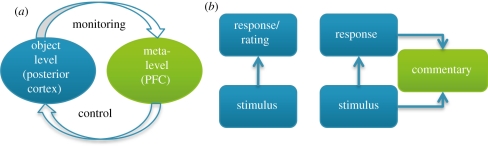
“1); indeed, a previous review proposed metacognition might be commensurate with cognitive control [122].”
BackgroundTwo-stage dynamic signal detection: A theory of choice, decision time, and confidence.
Pleskac, T. J., & Busemeyer, J. R. (2010) · Psychological Review · doi:10.1037/a0019737 · Cited by 722 · cited 2×
“Recent models have been couched in an ‘evidence accumulation’ framework, in which samples of data are accumulated over time in order to model the temporal evolution of a decision [18, 72, 73].”
MethodFailure to Detect Mismatches Between Intention and Outcome in a Simple Decision Task
Johansson, P., Hall, L., Sikström, S., & Olsson, A. (2005) · Science · doi:10.1126/science.1111709 · Cited by 717
Metacognition in human decision-making: confidence and error monitoring
Yeung, N., & Summerfield, C. (2012) · Philosophical Transactions of the Royal Society B: Biological Sciences · doi:10.1098/rstb.2011.0416 · Cited by 667
Discrimination and learning without awareness: A methodological survey and evaluation.
Eriksen, C. W. (1960) · Psychological Review · doi:10.1037/h0041622 · Cited by 660 · cited 1×
“One potential problem with eliciting subjective confidence is that of reliability: why should the subject be motivated to reveal his or her true confidence when there is little incentive to do so [32]? In addition, the necessarily subjective instructions given when eliciting reports of confidence preclude the use of t…”
BackgroundNeural mechanisms mediating optimism bias
Sharot, T., Riccardi, A. M., Raio, C. M., & Phelps, E. A. (2007) · Nature · doi:10.1038/nature06280 · Cited by 659
The domain of supervisory processes and temporal organization of behaviour
Shallice, T., & Burgess, P. W. (1996) · Philosophical Transactions of the Royal Society B Biological Sciences · doi:10.1098/rstb.1996.0124 · Cited by 633 · cited 1×
“This approach shares similarities with an influential model of executive function [17].”
ResultSelf-Knowledge: Its Limits, Value, and Potential for Improvement
Wilson, T. D., & Dunn, E. W. (2004) · Annual Review of Psychology · doi:10.1146/annurev.psych.55.090902.141954 · Cited by 629 · cited 1×
“inaccurate [2, 3].”
Knecht, A. A. (1972) · JONA The Journal of Nursing Administration · doi:10.1097/00005110-197203000-00014 · Cited by 627
How we know our own minds: The relationship between mindreading and metacognition
Carruthers, P. (2009) · Behavioral and Brain Sciences · doi:10.1017/s0140525x09000545 · Cited by 610 · cited 1×
“nition [123]: one involving declarative (conscious) meta-representation [124]; the”
BackgroundMetacognition and consciousness
Koriat, A. (2007) · The Cambridge Handbook of Consciousness · doi:10.1017/cbo9780511816789.012 · Cited by 554
The domain of supervisory processes and the temporal organization of behaviour
Shallice, T., & Burgess, P. W. (1998) · Oxford University Press eBooks · doi:10.1093/acprof:oso/9780198524410.003.0003 · Cited by 551
Relative blindsight in normal observers and the neural correlate of visual consciousness
Lau, H. C., & Passingham, R. E. (2006) · Proceedings of the National Academy of Sciences · doi:10.1073/pnas.0607716103 · Cited by 518 · cited 2×
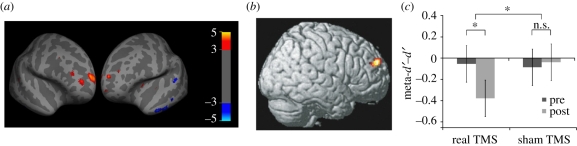
“As an example of this approach, Lau and Passingham [67] matched performance between two visual masking conditions, but found differences in threshold for metacognitive commentaries about the stimulus (‘seen’ responses) that were associated with activity in left dorsolateral PFC (dlPFC; peak: -46, 48, 14).”
BackgroundA review of the tip-of-the-tongue experience
Brown, A. S. (1991) · Psychological Bulletin · doi:10.1037/0033-2909.109.2.204 · Cited by 517 · cited 1×
“A related phenomenon to FOKs is tip-of-the-tongue states, in which an item cannot be recalled despite a feeling that retrieval is possible [29].”
BackgroundDecision Processes in Visual Perception
(1979) · Elsevier eBooks · doi:10.1016/c2013-0-11654-6 · Cited by 513
Visualization for the analysis of fluid motion
Fujii, K. (2005) · Journal of Visualization · doi:10.1007/bf03181591 · Cited by 509
Cognitive impairment following frontal lobe damage and its relevance to human amnesia.
Janowsky, J. S., Shimamura, A. P., Kritchevsky, M., & Squire, L. R. (1989) · Behavioral Neuroscience · doi:10.1037//0735-7044.103.3.548 · Cited by 496
Re-representing consciousness: dissociations between experience and meta-consciousness
Schooler, J. W. (2002) · Trends in Cognitive Sciences · doi:10.1016/s1364-6613(02)01949-6 · Cited by 485
Conscious perception of errors and its relation to the anterior insula
Ullsperger, M., Harsay, H. A., Wessel, J. R., & Ridderinkhof, K. R. (2010) · Brain Structure and Function · doi:10.1007/s00429-010-0261-1 · Cited by 463
Post-decision wagering objectively measures awareness
Persaud, N., McLeod, P., & Cowey, A. (2007) · Nature Neuroscience · doi:10.1038/nn1840 · Cited by 454
The opacity of mind: an integrative theory of self-knowledge
(2012) · Choice Reviews Online · doi:10.5860/choice.49-6194 · Cited by 441
Perception and misperception of bias in human judgment
Pronin, E. (2006) · Trends in Cognitive Sciences · doi:10.1016/j.tics.2006.11.001 · Cited by 433 · cited 1×
“leading to an ‘introspection illusion’ [6].”
Boring, E. G. (1953) · Psychological Bulletin · doi:10.1037/h0090793 · Cited by 408 · cited 1×
“Such subjective inaccuracy can account for the demise of an introspectionist method in the late nineteenth century; if verbal reports vary from setting to setting, and can be contradicted from trial to trial, then what hope is there for an objective science of the subjective? [7].”
BackgroundRounis, E., Maniscalco, B., Rothwell, J. C., Passingham, R. E., & Lau, H. (2010) · Cognitive Neuroscience · doi:10.1080/17588921003632529 · Cited by 407 · cited 5×
“role in representing confidence rather than monitoring for response errors [19].”
BackgroundMethodInfluentialThe Opacity of MindAn Integrative Theory of Self-Knowledge
Carruthers, P. (2011) · Oxford University Press eBooks · doi:10.1093/acprof:oso/9780199596195.001.0001 · Cited by 406
Galvin, S. J., Podd, J. V., Drga, V., & Whitmore, J. (2003) · Psychonomic Bulletin & Review · doi:10.3758/bf03196546 · Cited by 405 · cited 2×
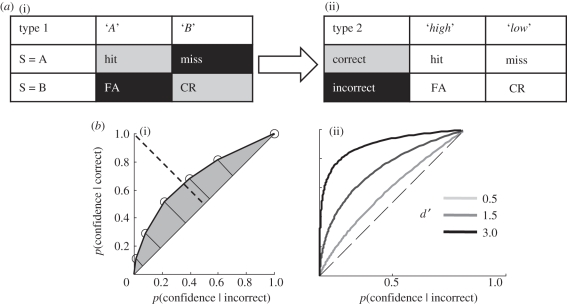
“Galvin and colleagues showed that the conditional probability of being correct or incorrect for a given decision signal is a linear transformation of Type 1 probability distributions [41].”
BackgroundHeekeren, H. R., Marrett, S., Ruff, D. A., Bandettini, P. A., & Ungerleider, L. G. (2006) · Proceedings of the National Academy of Sciences · doi:10.1073/pnas.0603949103 · Cited by 404
Prefrontal Contributions to Metacognition in Perceptual Decision Making
Fleming, S. M., Huijgen, J., & Dolan, R. J. (2012) · The Journal of Neuroscience · doi:10.1523/jneurosci.6489-11.2012 · Cited by 391 · cited 4×
“To address this question, we asked subjects to carry out a near-threshold perceptual judgement task in the fMRI scanner [109].”
BackgroundMethodInfluentialSelf-citationActive maintenance in prefrontal area 46 creates distractor-resistant memory
Sakai, K., Rowe, J. B., & Passingham, R. E. (2002) · Nature Neuroscience · doi:10.1038/nn846 · Cited by 390
Clinical and pathological features of alcohol-related brain damage
Zahr, N. M., Alexander, K. L., & Harper, C. G. (2011) · Nature Reviews Neurology · doi:10.1038/nrneurol.2011.42 · Cited by 385 · cited 1×
“regions that include the orbitofrontal cortices and thalamus [84].”
BackgroundToward a Cognitive Neuroscience of Metacognition
Shimamura, A. P. (2000) · Consciousness and Cognition · doi:10.1006/ccog.2000.0450 · Cited by 384 · cited 1×
“neuropsychological cases [82].”
Cognitive impairment following frontal lobe damage and its relevance to human amnesia.
Janowsky, J. S., Shimamura, A. P., Kritchevsky, M., et al. (1989) · Behavioral Neuroscience · doi:10.1037/0735-7044.103.3.548 · Cited by 361
On small differences in sensation
Peirce, C. S., & Jastrow, J. (1884) · PhilPapers (PhilPapers Foundation) · Cited by 342
Causal role of prefrontal cortex in the threshold for access to consciousness
Del Cul, A., Dehaene, S., Reyes, P., Bravo, E., & Slachevsky, A. (2009) · Brain · doi:10.1093/brain/awp111 · Cited by 337
Unconscious knowledge of artificial grammars is applied strategically.
Dienes, Z. P., Altmann, G. T. M., Kwan, L., & Goode, A. (1995) · Journal of Experimental Psychology Learning Memory and Cognition · doi:10.1037/0278-7393.21.5.1322 · Cited by 331 · cited 1×
“performance, then these correlation coefficients will be significantly non-zero [37].”
BackgroundThe Cambridge Handbook of Consciousness
(2012) · Cambridge University Press eBooks · doi:10.1017/cbo9780511816789.001 · Cited by 321
Decision theory: what “should” the nervous system do?
Körding, K. (2007) · Science · doi:10.1126/science.1142998 · Cited by 313
Prefrontal cortex, cognitive control, and the registration of decision costs
McGuire, J. T., & Botvinick, M. (2010) · Proceedings of the National Academy of Sciences · doi:10.1073/pnas.0910662107 · Cited by 309
A computational framework for the study of confidence in humans and animals
Kepecs, A., & Mainen, Z. F. (2012) · Philosophical Transactions of the Royal Society B: Biological Sciences · doi:10.1098/rstb.2012.0037 · Cited by 305 · cited 1×
“Thus, measures of metacognitive accuracy cannot be computed based on pairwise correlations between the two response types (see also [54]).”
BackgroundAnatomical coupling between distinct metacognitive systems for memory and visual perception
McCurdy, L. Y., Maniscalco, B., Metcalfe, J., Liu, K. Y., de Lange, F. P., & Lau, H. (2013) · The Journal of Neuroscience · doi:10.1523/jneurosci.1890-12.2013 · Cited by 299 · cited 1×
“nitive accuracy in both memory and perceptual tasks [114].”
BackgroundMemory and metamemory: a study of the feeling-of-knowing phenomenon in amnesic patients
Shimamura, A. P., & Squire, L. R. (1986) · Journal of Experimental Psychology: Learning, Memory, and Cognition · doi:10.1037/0278-7393.12.3.452 · Cited by 294
Confidence and accuracy of near-threshold discrimination responses
Kunimoto, C., Miller, J., & Pashler, H. (2001) · Consciousness and Cognition · doi:10.1006/ccog.2000.0494 · Cited by 291
Observer-Independent Cytoarchitectonic Mapping of the Human Superior Parietal Cortex
Scheperjans, F., Hermann, K., Eickhoff, S. B., Amunts, K., Schleicher, A., & Zilles, K. (2007) · Cerebral Cortex · doi:10.1093/cercor/bhm116 · Cited by 282
Accounts of the confidence-accuracy relation in recognition memory
Busey, T. A., Tunnicliff, J., Loftus, G. R., & Loftus, E. F. (2000) · Psychonomic Bulletin & Review · doi:10.3758/bf03210724 · Cited by 277 · cited 1×
“[58, 59], the accessibility or relatedness of cue information to the target [60], and,”
BackgroundModeling confidence and response time in recognition memory.
Ratcliff, R., & Starns, J. J. (2009) · Psychological Review · doi:10.1037/a0014086 · Cited by 261
Individual differences in metacognition: Evidence against a general metacognitive ability
Kelemen, W. L., Frost, P. J., & Weaver, C. A. (2000) · Memory & Cognition · doi:10.3758/bf03211579 · Cited by 252
Corpus callosal connection mapping using cortical gray matter parcellation and DT‐MRI
Park, H., Kim, J., Lee, S., Seok, J., Chun, J., Kim, D. I., & Lee, J. D. (2006) · Human Brain Mapping · doi:10.1002/hbm.20314 · Cited by 250 · cited 1×
“4a), and greater metacognitive accuracy was associated with increased white-matter integrity (fractional anisotropy) in a region of the corpus callosum known to project to the rlPFC [96].”
BackgroundMetamemory Experiments in Neurological Populations: A Review
Pannu, J. K., & Kaszniak, A. W. (2005) · Neuropsychology Review · doi:10.1007/s11065-005-7091-6 · Cited by 240
Fleck, M. S. (2005) · Cerebral Cortex · doi:10.1093/cercor/bhj097 · Cited by 239
Failures of metacognition and lack of insight in neuropsychiatric disorders.
David, A. S., Bedford, N., Wiffen, B., & Gilleen, J. (2012) · Philosophical Transactions of the Royal Society B Biological Sciences · doi:10.1098/rstb.2012.0002 · Cited by 227 · cited 1×
“A crucial variable of interest is the accuracy of metacognitive report with respect to object-level targets; in other words, how well do we know our own minds? A detailed, and eventually mechanistic, account of metacognition at the neural level is a necessary first step to understanding the failures of metacognition t…”
BackgroundStatistical decision theory and trade-offs in the control of motor response
Maloney, L. T., Landy, M. S., & Trommershäuser, J. (2003) · Spatial Vision · doi:10.1163/156856803322467527 · Cited by 225
Domain General Mechanisms of Perceptual Decision Making in Human Cortex
Ho, T. C., Brown, S. D., & Serences, J. T. (2009) · Journal of Neuroscience · doi:10.1523/jneurosci.5984-08.2009 · Cited by 225
Effortless control: Executive attention and conscious feeling of mental effort are dissociable
Naccache, L., Dehaene, S., Cohen, L., Habert, M.-O., Guichart-Gomez, E., Galanaud, D., & Willer, J.-C. (2005) · Neuropsychologia · doi:10.1016/j.neuropsychologia.2004.11.024 · Cited by 211
Spatial Organization of Neurons in the Frontal Pole Sets Humans Apart from Great Apes
Semendeferi, K., Teffer, K., Buxhoeveden, D. P., Park, M. S., Bludau, S., Amunts, K., Travis, K., & Buckwalter, J. (2011) · Cerebral Cortex · doi:10.1093/cercor/bhq191 · Cited by 210
Resolution of Uncertainty in Prefrontal Cortex
Yoshida, W., & Ishii, S. (2006) · Neuron · doi:10.1016/j.neuron.2006.05.006 · Cited by 201
Magic at the marketplace: Choice blindness for the taste of jam and the smell of tea
Hall, L., Johansson, P., Tärning, B., Sikström, S., & Deutgen, T. (2010) · Cognition · doi:10.1016/j.cognition.2010.06.010 · Cited by 200 · cited 1×
“they had in fact just rejected [4, 5].”
Spatial attention increases performance but not subjective confidence in a discrimination task
Wilimzig, C., Tsuchiya, N., Fahle, M., Einhäuser, W., & Koch, C. (2008) · Journal of Vision · doi:10.1167/8.5.7 · Cited by 196
Subjective measures of unconscious knowledge
Dienes, Z. P. (2007) · Progress in brain research · doi:10.1016/s0079-6123(07)68005-4 · Cited by 194 · cited 2×
“[23, 31]).”
BackgroundSubliminal priming of actions influences sense of control over effects of action
Wenke, D., Fleming, S. M., & Haggard, P. (2009) · Cognition · doi:10.1016/j.cognition.2009.10.016 · Cited by 194 · cited 1×
“Interestingly, subjective effects of heightened decision conflict may themselves be reportable in the absence of awareness of antecedents of this conflict [129], and thus it is not always simple to decide whether performance monitoring involves meta-representation.”
BackgroundSelf-citationTwo Types of ROC Curves and Definitions of Parameters
Clarke, F. R., Birdsall, T. G., & Tanner, W. P. (1959) · The Journal of the Acoustical Society of America · doi:10.1121/1.1907764 · Cited by 183
Schnyer, D. M., Verfaellie, M., Alexander, M. P., LaFleche, G., Nicholls, L., & Kaszniak, A. W. (2004) · Neuropsychologia · doi:10.1016/j.neuropsychologia.2003.11.020 · Cited by 175
Chua, E. F., Schacter, D. L., Rand-Giovannetti, E., & Sperling, R. A. (2006) · NeuroImage · doi:10.1016/j.neuroimage.2005.09.058 · Cited by 174
Discrimination of item strength at time of presentation.
Arbuckle, T. Y., & Cuddy, L. L. (1969) · Journal of Experimental Psychology · doi:10.1037/h0027455 · Cited by 170
Kim, H., & Cabeza, R. (2007) · The Journal of Neuroscience · doi:10.1523/jneurosci.3408-07.2007 · Cited by 165 · cited 1×
“Complementary functional brain imaging studies have shown that regions in the medial and lateral prefrontal cortex are active during metamemorial judgements, with activity in PFC modulated by both prospective and retrospective confidence judgements [90–94].”
BackgroundProbing the locus of confidence judgments: Experiments on the time to determine confidence.
Baranski, J. V., & Petrusic, W. M. (1998) · Journal of Experimental Psychology Human Perception & Performance · doi:10.1037//0096-1523.24.3.929 · Cited by 163 · cited 1×
“for retrospective confidence judgements, the speed of a previous decision [16, 61].”
BackgroundNeural Correlates for Feeling-of-Knowing
Kikyo, H., Ohki, K., & Miyashita, Y. (2002) · Neuron · doi:10.1016/s0896-6273(02)00939-x · Cited by 161
Relating inter-individual differences in metacognitive performance on different perceptual tasks
Song, C., Kanai, R., Fleming, S. M., Weil, R. S., Schwarzkopf, D. S., & Rees, G. (2011) · Consciousness and Cognition · doi:10.1016/j.concog.2010.12.011 · Cited by 158
Self-citationThe amnesic syndrome: Descriptions and explanations.
Hirst, W. C. (1982) · Psychological Bulletin · doi:10.1037/0033-2909.91.3.435 · Cited by 157
Cognitive Illusions of Authorship Reveal Hierarchical Error Detection in Skilled Typists
Logan, G. D., & Crump, M. J. C. (2010) · Science · doi:10.1126/science.1190483 · Cited by 150 · cited 1×
“Such reports can be empirically dissociated from monitoring and control, for example, skilled typists show subtle post-error adjustments in the absence of awareness, and yet accept blame for errors that are surreptitiously inserted by the experimenters on the screen [128].”
BackgroundChoice, difficulty, and confidence in the brain
Rolls, E. T., Grabenhorst, F., & Deco, G. (2010) · NeuroImage · doi:10.1016/j.neuroimage.2010.06.073 · Cited by 148 · cited 1×
“Confidence, therefore, is directly equated with the difficulty of the decision in these approaches [63, 64].”
BackgroundA proposed common neural mechanism for categorization and perceptual decisions
Freedman, D. J., & Assad, J. A. (2011) · Nature Neuroscience · doi:10.1038/nn.2740 · Cited by 146
Neural correlates of self-evaluative accuracy after traumatic brain injury
Schmitz, T. W., Rowley, H. A., Kawahara, T. N., & Johnson, S. C. (2005) · Neuropsychologia · doi:10.1016/j.neuropsychologia.2005.07.012 · Cited by 139
Proust, J. (2007) · Synthese · doi:10.1007/s11229-007-9208-3 · Cited by 138
Separable Forms of Reality Monitoring Supported by Anterior Prefrontal Cortex
Simons, J. S., Henson, R. N., Gilbert, S. J., & Fletcher, P. C. (2007) · Journal of Cognitive Neuroscience · doi:10.1162/jocn.2008.20036 · Cited by 135
Localizing the rostrolateral prefrontal cortex at the individual level
Smith, R. M., Keramatian, K., & Kalina Christoff, A. (2007) · NeuroImage · doi:10.1016/j.neuroimage.2007.04.032 · Cited by 127
Neural correlates of actual and predicted memory formation
Kao, Y.-C., Davis, E. S., & Gabrieli, J. D. E. (2005) · Nature Neuroscience · doi:10.1038/nn1595 · Cited by 126
The Role of VMPC in Metamemorial Judgments of Content Retrievability
Schnyer, D. M., Nicholls, L., & Verfaellie, M. H. (2005) · Journal of Cognitive Neuroscience · doi:10.1162/0898929053747694 · Cited by 123 · cited 1×
“ments, and increased connectivity with medial temporal lobe memory structures in the FOK condition compared to a low-level control task [95].”
Implicit knowledge of visual uncertainty guides decisions with asymmetric outcomes
Whiteley, L., & Sahani, M. (2008) · Journal of Vision · doi:10.1167/8.3.2 · Cited by 120
Gilbert, S. J., Spengler, S., Simons, J. S., Frith, C., & Burgess, P. W. (2005) · Cerebral Cortex · doi:10.1093/cercor/bhj113 · Cited by 114
Probing the locus of confidence judgments: Experiments on the time to determine confidence.
Baranski, J. V., & Petrusic, W. M. (1998) · Journal of Experimental Psychology Human Perception & Performance · doi:10.1037/0096-1523.24.3.929 · Cited by 111
A Specific Brain Structural Basis for Individual Differences in Reality Monitoring
Buda, M., Fornito, A., Bergström, Z. M., & Simons, J. S. (2011) · Journal of Neuroscience · doi:10.1523/jneurosci.3595-11.2011 · Cited by 109
Yokoyama, O., Miura, N., Watanabe, J., Takemoto, A., Uchida, S., Sugiura, M., Horie, K., Sato, S., Kawashima, R., & Nakamura, K. (2010) · Neuroscience Research · doi:10.1016/j.neures.2010.07.2041 · Cited by 105 · cited 4×
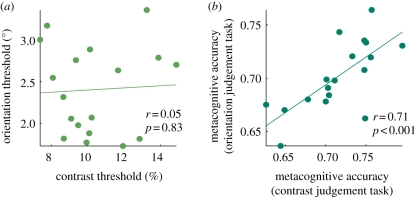
“Metacognitive accuracy correlated with the level of activity in right posteriorlateral BA10 [98] (peak: 16, 56, 28), despite being uncorrelated with task performance (Fig.”
BackgroundInfluentialMedalla, M., & Barbas, H. (2010) · Journal of Neuroscience · doi:10.1523/jneurosci.1773-10.2010 · Cited by 103
Neural correlates of memory confidence
Moritz, S., Gläscher, J. P., Sommer, T., Büchel, C., & Braus, D. F. (2006) · NeuroImage · doi:10.1016/j.neuroimage.2006.08.003 · Cited by 103
Bistability for audiovisual stimuli: Perceptual decision is modality specific.
Hupé, J., Joffo, L., & Pressnitzer, D. (2008) · Journal of Vision · doi:10.1167/8.7.1 · Cited by 95
Confidence-Related Decision Making
Insabato, A., Pannunzi, M., Rolls, E. T., & Deco, G. (2010) · Journal of Neurophysiology · doi:10.1152/jn.01068.2009 · Cited by 95
Methodological Problems and Pitfalls in the Study of Human Metacognition
Schwartz, B. L., & Metcalfe, J. (1994) · The MIT Press eBooks · doi:10.7551/mitpress/4561.003.0007 · Cited by 94 · cited 1×
“In healthy individuals, metacognitive judgements are usually predictive of subsequent or past task performance [55].”
BackgroundSubjective aspects of cognitive control at different stages of processing
Morsella, E., Wilson, L. E., Berger, C. C., Honhongva, M., Gazzaley, A. H., & Bargh, J. A. (2009) · Attention Perception & Psychophysics · doi:10.3758/app.71.8.1807 · Cited by 94 · cited 1×
“This two-level framework has also been extended to study monitoring of perception [18, 19], decision-making [20, 21], sense of agency [22] and learning [23].”
BackgroundEvaluation of Objective Uncertainty in the Visual System
Barthelmé, S., & Mamassian, P. (2009) · PLoS Computational Biology · doi:10.1371/journal.pcbi.1000504 · Cited by 92 · cited 1×
“To highlight one example, Barthelme and Mamassian [47] showed that when human observers are allowed to choose between pairs of visual stimuli upon which to carry out a task, they systematically chose the less uncertain, thus improving their performance.”
BackgroundModirrousta, M., & Fellows, L. K. (2008) · Neuropsychologia · doi:10.1016/j.neuropsychologia.2008.06.011 · Cited by 91
The highs and lows of theoretical interpretation in animal-metacognition research
Smith, J. D., Couchman, J. J., & Beran, M. J. (2012) · Philosophical Transactions of the Royal Society B Biological Sciences · doi:10.1098/rstb.2011.0366 · Cited by 90 · cited 1×
“Related work has demonstrated that subjects use knowledge of uncertainty to optimally bias decisionmaking in perceptual [48, 49] and motor [50] tasks, and that species as diverse as dolphins, pigeons and monkeys can use an ‘opt-out’ response to improve their reward rate when decisions are uncertain [51].”
BackgroundArango‐Muñoz, S. (2010) · Philosophia · doi:10.1007/s11406-010-9279-0 · Cited by 87 · cited 1×
“nition [123]: one involving declarative (conscious) meta-representation [124]; the”
BackgroundMarti, S., Sackur, J., Sigman, M., & Dehaene, S. (2010) · Cognition · doi:10.1016/j.cognition.2010.01.003 · Cited by 87 · cited 1×
“This two-level framework has also been extended to study monitoring of perception [18, 19], decision-making [20, 21], sense of agency [22] and learning [23].”
BackgroundEffects of loss aversion on post-decision wagering: Implications for measures of awareness
Fleming, S. M., & Dolan, R. J. (2009) · Consciousness and Cognition · doi:10.1016/j.concog.2009.11.002 · Cited by 86 · cited 2×
“2b; although see [42, 43]).”
Self-citationBlindsight in normal subjects?
Morgan, M. J., Mason, A. J. S., & Solomon, J. A. (1997) · Nature · doi:10.1038/385401b0 · Cited by 82 · cited 1×
“Despite being dissociable, it turns out that metacognitive accuracy generally scales with task performance [33, 77–80].”
BackgroundA Neurocognitive Approach to Metacognitive Monitoring and Control
Shimamura, A. P. (2015) · Routledge eBooks · doi:10.4324/9780203805503.ch19 · Cited by 77
Higham, P. A., Perfect, T. J., & Bruno, D. (2009) · Journal of Experimental Psychology Learning Memory and Cognition · doi:10.1037/a0013865 · Cited by 70 · cited 1×
“Two corollaries arise from this ‘direct translation hypothesis’ [65].”
BackgroundFlow visualization of coaxial jet excited with varying phase differences
Kiwata, T., & Okajimai, A. (2004) · Journal of Visualization · doi:10.1007/bf03181475 · Cited by 68
Evaluation of a 'bias-free' measure of awareness
Azzopardi, P., & Evans, S. (2007) · Spatial Vision · doi:10.1163/156856807779369742 · Cited by 68 · cited 1×
“2b; although see [42, 43]).”
Judgements of agency in schizophrenia: an impairment in autonoetic metacognition
Metcalfe, J., Snellenberg, J. X. V., DeRosse, P., Balsam, P. D., & Malhotra, A. K. (2012) · Philosophical Transactions of the Royal Society B Biological Sciences · doi:10.1098/rstb.2012.0006 · Cited by 68
Getting technical about awareness
Clifford, C. W. G., Arabzadeh, E., & Harris, J. A. (2008) · Trends in Cognitive Sciences · doi:10.1016/j.tics.2007.11.009 · Cited by 67 · cited 1×
“[43, 62]).”
Neural correlates of metamemory
Chua, E. F., Schacter, D., & Sperling, R. (2009) · Journal of Cognitive Neuroscience · doi:10.1162/jocn.2009.21123 · Cited by 53 · cited 1×
“Complementary functional brain imaging studies have shown that regions in the medial and lateral prefrontal cortex are active during metamemorial judgements, with activity in PFC modulated by both prospective and retrospective confidence judgements [90–94].”
BackgroundMetamemory for faces following frontal lobe damage
Pannu, J. K., Kaszniak, A. W., & Rapcsak, S. Z. (2005) · Journal of the International Neuropsychological Society · doi:10.1017/s1355617705050873 · Cited by 52
Metacognition in monkeys during an oculomotor task
Middlebrooks, P. G., & Sommer, M. A. (2011) · Journal of Experimental Psychology: Learning, Memory, and Cognition · doi:10.1037/a0021611 · Cited by 51
Jain, A., Sally, S. L., & Papathomas, T. V. (2008) · Journal of Vision · doi:10.1167/8.15.7 · Cited by 42
Landy, M. S., Goutcher, R., Trommershäuser, J., & Mamassian, P. (2007) · Journal of Vision · doi:10.1167/7.6.4 · Cited by 38 · cited 1×
“Related work has demonstrated that subjects use knowledge of uncertainty to optimally bias decisionmaking in perceptual [48, 49] and motor [50] tasks, and that species as diverse as dolphins, pigeons and monkeys can use an ‘opt-out’ response to improve their reward rate when decisions are uncertain [51].”
BackgroundThompson, W. B., & Mason, S. E. (1996) · Memory & Cognition · doi:10.3758/bf03200883 · Cited by 34
Izaute, M., & Bacon, É. (2004) · Neuropsychopharmacology · doi:10.1038/sj.npp.1300564 · Cited by 32 · cited 1×
“Importantly, both these hypotheses have been empirically falsified: for the same level of task performance, judgement confidence may differ considerably between conditions [66–68], and, when performance is held constant using a staircase procedure, metacognitive accuracy varies across individuals [20], and can be diss…”
BackgroundMetamemory as evidence of animal consciousness: the type that does the trick
Shea, N. J., & Heyes, C. M. (2009) · Biology & Philosophy · doi:10.1007/s10539-009-9171-0 · Cited by 30 · cited 1×
“For present purposes, we focus on monitoring processes that are consciously reportable, and thus available for deployment outside of a ‘closed-loop’ optimisation of the task at hand (see also [127]).”
BackgroundFrontiers of ConsciousnessChichele Lectures
Weiskrantz, L., & Davies, M. (2008) · Oxford University Press eBooks · doi:10.1093/acprof:oso/9780199233151.001.0001 · Cited by 28
A proposal for MRI-based parcellation of the frontal pole
John, J. P., Yashavantha, B. S., Gado, M., Veena, R., Jain, S., Ravishankar, S., & Csernansky, J. G. (2007) · Brain Structure and Function · doi:10.1007/s00429-007-0157-x · Cited by 23
Comparing signal detection models of perceptual decision confidence
Maniscalco, B., & Lau, H. (2010) · Journal of Vision · doi:10.1167/10.7.213 · Cited by 15
Busey, T. A., & Arici, A. (2009) · Journal of Experimental Psychology Learning Memory and Cognition · doi:10.1037/a0016646 · Cited by 11 · cited 1×
“Importantly, both these hypotheses have been empirically falsified: for the same level of task performance, judgement confidence may differ considerably between conditions [66–68], and, when performance is held constant using a staircase procedure, metacognitive accuracy varies across individuals [20], and can be diss…”
BackgroundSubjective beliefs formation and elicitation rules : experimental evidencePreprint
Hollard, G., Massoni, S., & Vergnaud, J. (2010) · RePEc: Research Papers in Economics · Cited by 11
Studying Metacognitive Processes at the Single Neuron Level
Middlebrooks, P. G., Abzug, Z. M., & Sommer, M. A. (2014) · Springer eBooks · doi:10.1007/978-3-642-45190-4_10 · Cited by 6
Evaluating signal detection models of perceptual decision confidence
Lau, H. C. (2009) · Frontiers in Systems Neuroscience · doi:10.3389/conf.neuro.06.2009.03.335 · Cited by 1
Research works printed but not linked: 3
- Shimamura A. P., 2008, Handbook of memory and metamemory: essays in honor of Thomas O. Nelson, 373
- Schwartz B., 2008, Handbook of memory and metamemory: essays in honor of Thomas O. Nelson, 355
- Lau H., 2010, Frontiers of consciousness: Chichele lectures
Cited by
Sorted by citations
Neural correlates of consciousness: progress and problems
Koch, C., Massimini, M., Boly, M., & Tononi, G. (2016) · Nature Reviews Neuroscience · doi:10.1038/nrn.2016.22 · Cited by 1,600
Fleming, S. M., & Lau, H. C. (2014) · Frontiers in Human Neuroscience · doi:10.3389/fnhum.2014.00443 · Cited by 1,408
Self-citationFox, K. C. R., Nijeboer, S., Dixon, M. L., Floman, J. L., Ellamil, M., Rumak, S. P., Sedlmeier, P., & Christoff, K. (2014) · Neuroscience & Biobehavioral Reviews · doi:10.1016/j.neubiorev.2014.03.016 · Cited by 804
The neural correlates of dreaming
Siclari, F., Baird, B., Perogamvros, L., Bernardi, G., LaRocque, J. J., Riedner, B., Boly, M., Postle, B. R., & Tononi, G. (2017) · Nature Neuroscience · doi:10.1038/nn.4545 · Cited by 758
Lutz, A., Jha, A. P., Dunne, J. D., & Saron, C. D. (2015) · American Psychologist · doi:10.1037/a0039585 · Cited by 697
“As noted above, this capacity to detect the “background” or lived subjective context of one’s object-focused experience contrasts with an “inward turn” of attention, often characterized as “introspection,” or retrospective second-order judgment (Fleming & Dolan, 2012; Overgaard & Sandberg, 2012).”
Background
Metadata
- Authors
- Fleming, S. M., & Dolan, R. J.
- Affiliations
- New York University (US)
- Wellcome Centre for Human Neuroimaging (GB)
- Corresponding author
- Fleming, Stephen M.
- Venue
- Philosophical Transactions of the Royal Society B: Biological Sciences
- Publisher
- The Royal Society
- Published
- 2012-05-19
- Volume
- 367
- Issue
- 1594
- Pages
- 1338-1349
- ISSN
- 0962-8436 (ISSN-L)
- 1471-2970
- PMC
- PMC3318765
- OpenAlex
- W2155610381
- Semantic Scholar
- 6067b80d698ec3f84bd5329f7154f302e0cde788
- Cited by
- 747
- References
- 153
- Citations by year
- 2026: 71 · 2025: 69 · 2024: 65 · 2023: 52 · 2022: 49 · 2021: 64 · 2020: 66 · 2019: 57 · 2018: 49 · 2017: 55 · 2016: 46 · 2015: 30 · 2014: 39 · 2013: 22 · 2012: 9
- FWCI
- 2.53
- Type
- journal article
- Language
- en
- Open access
- hybrid
- doi.org
- Locations
- Philosophical Transactions of the Royal Society B Biological Sciences (publishedVersion, cc-by)
- Europe PMC (PubMed Central) (publishedVersion, cc-by)
- PubMed Central (publishedVersion, cc-by)
- PubMed (publishedVersion)
- UCL Discovery (University College London) (submittedVersion)
- Max Planck Digital Library (submittedVersion, other-oa)
- MPG.PuRe (Max Planck Society) (submittedVersion, other-oa)
- Funders
- Wellcome Trust (091593, 078865/Z/05/Z)
- Topics
- Life Sciences › Neuroscience › Cognitive Neuroscience › Neural and Behavioral Psychology Studies
- Life Sciences › Neuroscience › Cognitive Neuroscience › Memory Processes and Influences
- Social Sciences › Psychology › Experimental and Cognitive Psychology › Cognitive Functions and Memory
- Keywords
- metacognition, metacognitive accuracy, lateral prefrontal cortex, medial prefrontal cortex, dorsolateral prefrontal cortex, anterior cingulate cortex, insula, interoception, cognitive control, memory, decision-making, individual differences
- MeSH terms
- Animals, Cognition, Decision Making, Humans, Memory, Neural Pathways, Prefrontal Cortex
About these checks
Registry, retraction, Cites and statistics results are computed, not judged, with one exception: a printed reference that no index lists is read once by a model before it counts as a citation error. Claims are extracted by a model and kept only when their quote appears verbatim in the text; each cited source is then checked, with a model’s help, for whether it says what the claim relies on. Those verdicts can be wrong — read the claim’s quote and the cited source before relying on one.
Statistics and arithmetic are recomputed, not judged.
Confidence bands are shown only for fields calibrated on our annotated test set. None is calibrated yet, so no band is shown.
What counts as a claim ›How we measure confidence ›How we check this ›
Are you an author, or do you see a problem with this page? Request a review
