

Workplace interventions to improve well-being and reduce burnout for nurses, physicians and allied healthcare professionals: a systematic review.
Open accessThe DOI matches its Crossref record; 63 of the 68 references it cites were found in a registry or an index; 34 of the 120 sources its claims cite were checked for support.
Abstract
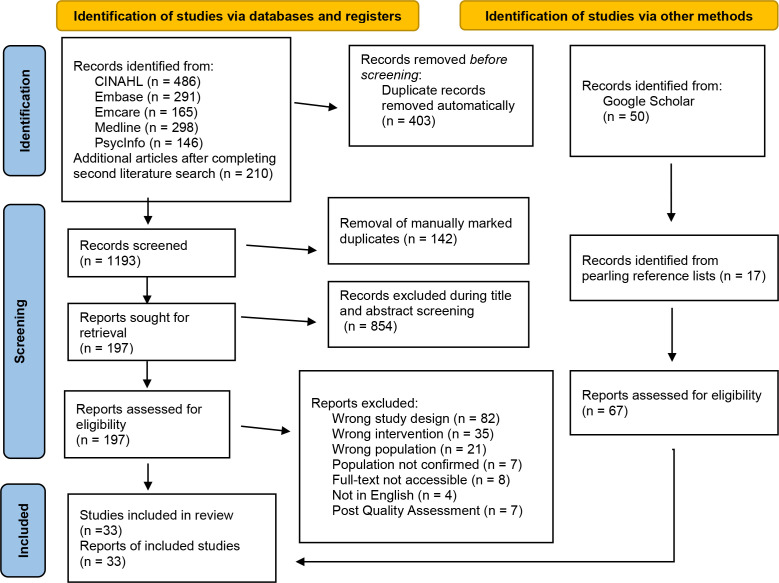
There is a growing need for interventions to improve well-being in healthcare workers, particularly since the onset of COVID-19. OBJECTIVES: To synthesise evidence since 2015 on the impact of interventions designed to address well-being and burnout in physicians, nurses and allied healthcare professionals. DESIGN: Systematic literature review. DATA SOURCES: Medline, Embase, Emcare, CINAHL, PsycInfo and Google Scholar were searched in May-October 2022. ELIGIBILITY CRITERIA FOR SELECTING STUDIES: Studies that primarily investigated burnout and/or well-being and reported quantifiable preintervention and postintervention outcomes using validated well-being measures were included. DATA EXTRACTION AND SYNTHESIS: Full-text articles in English were independently screened and quality assessed by two researchers using the Medical Education Research Study Quality Instrument. Results were synthesised and presented in both quantitative and narrative formats. Meta-analysis was not possible due to variations in study designs and outcomes. RESULTS: A total of 1663 articles were screened for eligibility, with 33 meeting inclusion criterium. Thirty studies used individually focused interventions, while three were organisationally focused. Thirty-one studies used secondary level interventions (managed stress in individuals) and two were primary level (eliminated stress causes). Mindfulness-based practices were adopted in 20 studies; the remainder used meditation, yoga and acupuncture. Other interventions promoted a positive mindset (gratitude journaling, choirs, coaching) while organisational interventions centred on workload reduction, job crafting and peer networks. Effective outcomes were reported in 29 studies, with significant improvements in well-being, work engagement, quality of life and resilience, and reductions in burnout, perceived stress, anxiety and depression. CONCLUSION: The review found that interventions benefitted healthcare workers by increasing well-being, engagement and resilience, and reducing burnout. It is noted that the outcomes of numerous studies were impacted by design limitations that is, no control/waitlist control, and/or no post intervention follow-up. Suggestions are made for future research.
Overview
CoChat Summary
TL;DR
This systematic review found that workplace well-being interventions for nurses, physicians, and allied healthcare professionals generally improved well-being and reduced burnout, but the evidence was limited by heterogeneity and weak study designs. Most of the 33 included studies used individually focused, secondary-level interventions such as mindfulness-based education.
Key findings
- The searches screened 1,663 articles and included 33 studies after quality assessment; 29 studies reported effective outcomes.
- Thirty studies used individually focused interventions and 3 were organisationally focused; 31 studies were secondary-level interventions and 2 were primary-level interventions.
- Mindfulness-based education was the most common intervention (20 studies); the review also found positive effects for meditation, yoga, acupuncture, gratitude, coaching, workload reduction, job crafting, and peer support networks.
- Reported benefits included improvements in well-being, work engagement, quality of life, resilience, mindfulness, and reductions in burnout, perceived stress, anxiety, and depressive symptoms; for example, one gratitude trial reported significantly less perceived stress and reduced depressive symptoms over time, and one professional coaching study reported a 19.5% decrease in high emotional exhaustion at 5-month follow-up in the intervention group.
Methods
- Systematic review of workplace interventions published since 2015, searching Medline, Embase, Emcare, CINAHL, PsycInfo, and Google Scholar between May and October 2022.
- Included studies had to involve nurses, physicians, or allied health personnel and report quantifiable pre/post outcomes using validated well-being or burnout measures.
- Two researchers independently screened and quality-assessed studies using MERSQI; results were synthesized narratively and quantitatively, but meta-analysis was not possible because of variation in designs, interventions, instruments, and analyses.
Limitations
- The paper states that meta-analysis was not possible because of marked heterogeneity in study designs, interventions, survey instruments, and statistical analyses.
- The paper states that organisational studies were under-represented, with only 3 of the 33 included studies.
- Evident from the text: many studies lacked control groups, used waitlist controls, and/or had no post-intervention follow-up, which weakens causal inference and limits conclusions about long-term effects.
Model-written summary. Check it against the paper before relying on it.
Integrity signals
Registry
Cites
Statistics
Figures
Verification
Claims the paper makes
21 Valid · 7 Not valid · 56 Not checked · 56 Own results and interpretations
The cited sources support only part of this claim — read each source’s verdict below.
In the paper
“Widely acknowledged as the cost of caring, healthcare workers report higher rates of absences due to psychological distress and job burnout than workers in other sectors.1–6”
§ Workplace interventions to improve well-being and reduce burnout for nurses, physicians and allied healthcare professionals: a systematic review > Introduction
What the sources say
- Not checked — no full text of the sourcecites [1] Buchanan, 2018, Reducing anxiety and improving engagement in health care providers through an Auricular Acupuncture intervention, Dimens Crit Care Nurs source
- Partly supportedcites [2] Ledikwe, 2017, Implementation of a national workplace wellness program for health workers in Botswana, J Occup Environ Med sourceExperimental — accuracy not yet measured
The paper’s Abstract says health professionals are particularly vulnerable to occupational stress and describes the demands of caring for patients. It does not report rates of absence due to psychological distress or burnout, or compare healthcare workers’ absences with those of workers in other sectors; searches for absenteeism and sick leave found no such passage. (LLM, conf=0.84)
- Partly supportedcites [3] Carolan, 2017, Improving employee well-being and effectiveness: systematic review and meta-analysis of web-based psychological interventions delivered in the workplace, J Med Internet Res sourceExperimental — accuracy not yet measured
The Introduction > Background (page unavailable) says work-related stress, depression, and anxiety can result in absenteeism among workers generally. It does not say healthcare workers have higher absence rates than workers in other sectors or link those absences to job burnout. (LLM, conf=0.83)
- Not checked — no full text of the sourcecites [4] Mistretta, 2018, Resilience training for work-related stress among health care workers, Journal of Occupational & Environmental Medicine source
- Partly supportedcites [5] Martindale, 2022, Operational stress control service: an organizational program to support health care worker well-being, J Occup Environ Med sourceExperimental — accuracy not yet measured
The “Parallels and Application to a Health Care Setting” section (page unavailable) says healthcare workers face a heavy mental-health burden from burnout and emotional trauma. It does not report rates of absence due to those conditions or compare healthcare workers with workers in other sectors. (LLM, conf=0.78)
- Partly supportedcites [6] Brand, 2017, Whole-system approaches to improving the health and wellbeing of Healthcare workers: A systematic review, PLoS One sourceExperimental — accuracy not yet measured
The Introduction reports markedly high rates of sickness absence, burnout, and distress among healthcare professionals compared with other sectors. It does not say that psychological distress or burnout causes the absences, as the citing sentence implies. (LLM, conf=0.84)
boostedstates an association- Asserted: passes — The authors put it forward as true.
- Checkable: passes — It can be checked against evidence.
- Load-bearing: passes — The paper’s conclusions depend on it.
- Based: passes — The paper gives a reason why it holds.
The cited sources support only part of this claim — read each source’s verdict below.
In the paper
“Furthermore, workplace interventions that focus on self-care, worker empowerment and access to mental health services such as mindfulness sessions or meditation, have been found to decrease levels of psychological stress, anxiety and burnout in healthcare workers.20”
§ Workplace interventions to improve well-being and reduce burnout for nurses, physicians and allied healthcare professionals: a systematic review > Introduction
What the sources say
- Partly supportedcites [20] Zhang, 2022, Addressing workplace stressors emerging from the pandemic, Am J Health Promot sourceExperimental — accuracy not yet measured
Split into 2 atoms — 0 confirmed, 2 partially supported, 0 disputed, 0 misattributed, 0 unverifiable. Expand the claim to see per-atom verdicts.
plainstates a cause- Asserted: passes — The authors put it forward as true.
- Checkable: passes — It can be checked against evidence.
- Load-bearing: passes — The paper’s conclusions depend on it.
- Based: passes — The paper gives a reason why it holds.
- Partly supported
The sources with a verdict support this claim; the rest weren’t checked yet, have no full text we could read, or their verdicts aren’t rated yet.
In the paper
“Both studies reported statistically significant changes in levels of stress as measured by the Nurse Stress Scale (NSS) despite the varied study designs.37 47”
§ Workplace interventions to improve well-being and reduce burnout for nurses, physicians and allied healthcare professionals: a systematic review > Results > Individually focused interventions
What the sources say
- Supportedcites [37] matched to “Reducing nurses' stress: A randomized controlled trial of a web-based stress management program for nurses” (2016) source
The Results (Primary Outcome Measures) report significantly greater improvement in the BREATHE group than the control group on the full Nursing Stress Scale. This supports the finding attributed to this study; the other study has a separate citation. (LLM, conf=0.92)
- Not checked — no full text of the sourcecites [47] Dutton, 2020, Evaluating the outcomes of a web-based stress management program for nurses and nursing assistants, Worldviews Evid Based Nurs source
plainstates a cause- Asserted: passes — The authors put it forward as true.
- Checkable: passes — It can be checked against evidence.
- Load-bearing: unclear — It is unclear whether the paper’s conclusions depend on it.
- Based: passes — The paper gives a reason why it holds.
- Supported
Every source the paper cites for this claim was checked and supports it.
In the paper
“Caponnetto et al59 also reported a significant reduction in perceived stress as measured by the PSS.”
§ Workplace interventions to improve well-being and reduce burnout for nurses, physicians and allied healthcare professionals: a systematic review > Results > Individually focused interventions
What the sources say
- Supportedcites [59] Caponnetto, 2018, Quality of life, work motivation, burn-out and stress perceptions benefits of a stress management program by Autogenic training for emergency room staff: A pilot study, Ment Illn source
The Data analytic strategy section reports a significant pre- to post-program difference on the Perceived Stress Scale (P<0.001). The Discussion and Conclusions section describes improved stress perceptions, supporting the reported direction of change. Page numbers are unavailable in our copy. (LLM, conf=0.91)
plainstates a cause- Asserted: passes — The authors put it forward as true.
- Checkable: passes — It can be checked against evidence.
- Load-bearing: unclear — It is unclear whether the paper’s conclusions depend on it.
- Based: passes — The paper gives a reason why it holds.
- Supported
The sources with a verdict support this claim; the rest weren’t checked yet, have no full text we could read, or their verdicts aren’t rated yet.
In the paper
“Five of the thirty individually focused studies implemented interventions designed to promote a positive mindset in participants including gratitude journaling,12 49 62 choir singing58 and professional coaching.43”
§ Workplace interventions to improve well-being and reduce burnout for nurses, physicians and allied healthcare professionals: a systematic review > Results > Individually focused interventions
What the sources say
- Not checked — no full text of the sourcecites [12] Cheng, 2015, Improving mental health in health care practitioners: randomized controlled trial of a gratitude intervention, J Consult Clin Psychol source
- Supportedcites [49] Sexton, 2019, Forty-five good things: a prospective pilot study of the three good things wellbeing intervention in the USA for Healthcare worker emotional exhaustion, depression, work-life balance and happiness, BMJ Open source
The Introduction describes Three Good Things as an intervention intended to cultivate positive thoughts and emotions. The Method (‘Good things intervention’) describes participants recording three things that went well each night and selecting a positive emotion, including gratitude. This supports the paper’s use as an example of a positive-mindset journaling intervention; the count of five studies and the choir-singing and coaching examples are not attributed to this source. (LLM, conf=0.91)
- Not checked — no full text of the sourcecites [62] Komase, 2019, Effects of a newly developed gratitude intervention program on work engagement among Japanese workers, J Occup Environ Med source
plain- Asserted: passes — The authors put it forward as true.
- Checkable: passes — It can be checked against evidence.
- Load-bearing: unclear — It is unclear whether the paper’s conclusions depend on it.
- Based: passes — The paper gives a reason why it holds.
47 more claims · 4 with their cited sources checked
Create a free account to see all 140 claims and to verify the 3 references still open.
- Probably not a substantial claim. 34
- It may state two separate claims as one. 66
- The quote only partly states this claim. 1
Citations
Cites
The PRISMA 2020 statement: an updated guideline for reporting systematic reviews
Page, M. J., McKenzie, J. E., Bossuyt, P. M., Boutron, I., Hoffmann, T. C., Mulrow, C. D., Shamseer, L., Tetzlaff, J. M., Akl, E. A., Brennan, S. E., et al. (2021) · Systematic Reviews · doi:10.1186/s13643-021-01626-4 · Cited by 13,874
The Job Demands‐Resources model: state of the art
Bakker, A. B., & Demerouti, E. (2007) · Journal of Managerial Psychology · doi:10.1108/02683940710733115 · Cited by 12,996
The PRISMA 2020 statement: an updated guideline for reporting systematic reviews
Page, M. J., McKenzie, J., Bossuyt, P., Boutron, I., Hoffmann, T., mulrow, C., Shamseer, L., Tetzlaff, J., Akl, E., Brennan, S. E., et al. (2020) · doi:10.31222/osf.io/v7gm2_v1 · Cited by 8,090
The PRISMA 2020 statement: an updated guideline for reporting systematic reviews
Page, M. J., McKenzie, J., Bossuyt, P., Boutron, I., Hoffmann, T., mulrow, C., Shamseer, L., Tetzlaff, J., Akl, E., Brennan, S. E., et al. (2020) · doi:10.31222/osf.io/v7gm2 · Cited by 5,177
Crafting a Job: Revisioning Employees as Active Crafters of Their Work
Wrzesniewski, A., & Dutton, J. E. (2001) · The Academy of Management Review · doi:10.2307/259118 · Cited by 4,965
Cook, D. A., & Reed, D. A. (2015) · Academic Medicine · doi:10.1097/acm.0000000000000786 · Cited by 781
Carolan, S., Harris, P. R., & Cavanagh, K. (2017) · Journal of Medical Internet Research · doi:10.2196/jmir.7583 · Cited by 385
Kriakous, S. A., Elliott, K. A., Lamers, C., & Owen, R. (2021) · Mindfulness · doi:10.1007/s12671-020-01500-9 · Cited by 342 · cited 2×
“Kriakous et al 24 also found that mindfulness based stress reduction techniques were effective in reducing healthcare professionals’ experiences of anxiety, depression and stress but were less effective at reducing burnout or improving resiliency.”
BackgroundIndividual job redesign: job crafting interventions in Healthcare
Gordon, H. J., Demerouti, E., Le Blanc, P. M., Bakker, A. B., Bipp, T., & Verhagen, M. A. M. T. (2018) · Journal of Vocational Behavior · doi:10.1016/j.jvb.2017.07.002 · Cited by 323 · cited 8×
“Finally, the second intervention group within the study by Gordon et al 56 implemented individual job crafting to improve work engagement and lower burnout.”
BackgroundMethodResultInfluentialExploratory randomized controlled trial evaluating the impact of a waiting list control design
Cunningham, J. A., Kypri, K., & McCambridge, J. (2013) · BMC Medical Research Methodology · doi:10.1186/1471-2288-13-150 · Cited by 321
Dyrbye, L. N., Shanafelt, T. D., Gill, P. R., Satele, D. V., & West, C. P. (2019) · JAMA Internal Medicine · doi:10.1001/jamainternmed.2019.2425 · Cited by 313 · cited 1×
“58 Dyrbye et al 43 implemented professional coaching for 44 participants and assigned the same number of participants to a control group (no treatment).”
BackgroundBrand, S. L., Thompson Coon, J., Fleming, L. E., Carroll, L., Bethel, A., & Wyatt, K. (2017) · PLOS ONE · doi:10.1371/journal.pone.0188418 · Cited by 257
Job burnout in mental health providers: A meta-analysis of 35 years of intervention research
Dreison, K. C., Luther, L., Bonfils, K. A., Sliter, M. T., McGrew, J. H., & Salyers, M. P. (2018) · Journal of Occupational Health Psychology · doi:10.1037/ocp0000047 · Cited by 244
Workplace Stress Management Interventions and Health Promotion
Tetrick, L. E., & Winslow, C. J. (2015) · Annual Review of Organizational Psychology and Organizational Behavior · doi:10.1146/annurev-orgpsych-032414-111341 · Cited by 244 · cited 1×
“26 27 26 27 A second approach to implementing workplace well-being interventions can be achieved through first identifying the presence and likely cause of occupational stress and then applying the intervention at either the primary, secondary or tertiary level.”
BackgroundFox, K. E., Johnson, S. T., Berkman, L. F., Sianoja, M., Soh, Y., Kubzansky, L. D., & Kelly, E. L. (2022) · Work & Stress · doi:10.1080/02678373.2021.1969476 · Cited by 227 · cited 3×
“21 21 25 A recent surge in the understanding of workplace wellness and causes of occupational stress further promotes the need to explore and invest in organisational strategies.”
BackgroundMethodDuarte, J., & Pinto-Gouveia, J. (2016) · International Journal of Nursing Studies · doi:10.1016/j.ijnurstu.2016.10.002 · Cited by 225 · cited 2×
“Statistically significant reductions in burnout were reported postintervention in the studies by Duarte and Pinto-Gouveia 60 and Hevezi.”
MethodA systematic review of the impact of mindfulness on the well‐being of healthcare professionals
Lomas, T., Medina, J. C., Ivtzan, I., Rupprecht, S., & Eiroa‐Orosa, F. J. (2018) · Journal of Clinical Psychology · doi:10.1002/jclp.22515 · Cited by 222 · cited 5×
“Multiple systematic reviews conducted by Lomas et al 22 23 achieved similar results with overall study findings reporting that mindfulness was generally associated with positive outcomes in relation to most measures, however, the quality of assessed studies was inconsistent, especially noting the lack of RCT study des…”
BackgroundResultInfluentialEffect of Organization-Directed Workplace Interventions on Physician Burnout: A Systematic Review
DeChant, P. F., Acs, A., Rhee, K. B., Boulanger, T. S., Snowdon, J. L., Tutty, M. A., Sinsky, C. A., & Thomas Craig, K. J. (2019) · Mayo Clinic Proceedings: Innovations, Quality & Outcomes · doi:10.1016/j.mayocpiqo.2019.07.006 · Cited by 192
The Use of Yoga to Manage Stress and Burnout in Healthcare Workers: A Systematic Review
Cocchiara, R. A., Peruzzo, M., Mannocci, A., Ottolenghi, L., Villari, P., Polimeni, A., Guerra, F., & La Torre, G. (2019) · Journal of Clinical Medicine · doi:10.3390/jcm8030284 · Cited by 189 · cited 2×
“For example, Lomas et al 22 conducted a meta-analysis investigating the impact of mindfulness-based interventions on healthcare workers, Cocchiara et al 29 investigated the use of yoga to manage stress and burnout in healthcare workers and Klein et al 30 investigated the benefits of mindfulness-based interventions on…”
BackgroundCheng, S.-T., Tsui, P. K., & Lam, J. H. M. (2015) · Journal of Consulting and Clinical Psychology · doi:10.1037/a0037895 · Cited by 188
Yoga for Self-Care and Burnout Prevention Among Nurses
Alexander, G. K., Rollins, K., Walker, D., Wong, L., & Pennings, J. (2015) · Workplace Health & Safety · doi:10.1177/2165079915596102 · Cited by 180 · cited 2×
“In the single yoga study by Alexander et al 39 the intervention group reported significant improvements in self-care as measured by the Health Promoting Lifestyle Profile (HPLP II) and mindfulness as measured by the Freiburg Mindfulness Inventory (FMI) as well as significant reductions in EE and DP postintervention.”
MethodHersch, R. K., Cook, R. F., Deitz, D. K., Kaplan, S., Hughes, D., Friesen, M. A., & Vezina, M. (2016) · Applied Nursing Research · doi:10.1016/j.apnr.2016.04.003 · Cited by 159 · cited 2×
“47 Hersch et al 37 implemented an RCT design with a total of 104 participants while Dutton and Kozachik 47 used a single group pretest/ posttest study design with 31 participants.”
BackgroundMethodLomas, T., Medina, J. C., Ivtzan, I., Rupprecht, S., & Eiroa-Orosa, F. J. (2019) · Mindfulness · doi:10.1007/s12671-018-1062-5 · Cited by 152 · cited 1×
“Multiple systematic reviews conducted by Lomas et al 22 23 achieved similar results with overall study findings reporting that mindfulness was generally associated with positive outcomes in relation to most measures, however, the quality of assessed studies was inconsistent, especially noting the…”
ResultA Scoping Review of Psychosocial Risks to Health Workers during the Covid-19 Pandemic
Franklin, P., & Gkiouleka, A. (2021) · International Journal of Environmental Research and Public Health · doi:10.3390/ijerph18052453 · Cited by 147
Duchemin, A.-M., Steinberg, B. A., Marks, D. R., Vanover, K., & Klatt, M. (2015) · Journal of Occupational & Environmental Medicine · doi:10.1097/jom.0000000000000371 · Cited by 146
Sexton, J. B., & Adair, K. C. (2019) · BMJ Open · doi:10.1136/bmjopen-2018-022695 · Cited by 135 · cited 2×
“The gratitude study by Sexton and Adair 49 also reported significant improvements in both depressive symptoms (Center for Epidemiologic Studies Depression Scale (CES-D)) and subjective happiness (Subjective Happi-ness Scale (SHS)) following participants keeping a log of everything that went well for 15 days.”
Backgrounddos Santos, T. M., Kozasa, E. H., Carmagnani, I. S., Tanaka, L. H., Lacerda, S. S., & Nogueira-Martins, L. A. (2016) · EXPLORE · doi:10.1016/j.explore.2015.12.005 · Cited by 131
Occupational Safety and Health Staging Framework for Decent Work
Schulte, P. A., Iavicoli, I., Fontana, L., Leka, S., Dollard, M. F., Salmen-Navarro, A., Salles, F. J., Olympio, K. P. K., Lucchini, R. G., Fingerhut, M. A., et al. (2022) · International Journal of Environmental Research and Public Health · doi:10.3390/ijerph191710842 · Cited by 127 · cited 1×
“15 This view is reflected in the 2030 United Nations Goal that employment respects the ‘… physical and mental integrity of the worker in the exercise of his or her employment’.”
BackgroundA Pilot Evaluation of a Mindful Self-care and Resiliency (MSCR) Intervention for Nurses
Craigie, M., Slatyer, S., Hegney, D., Osseiran-Moisson, R., Gentry, E., Davis, S., Dolan, T., & Rees, C. (2016) · Mindfulness · doi:10.1007/s12671-016-0516-x · Cited by 122
Mistretta, E. G., Davis, M. C., Temkit, M., Lorenz, C., Darby, B., & Stonnington, C. M. (2018) · Journal of Occupational & Environmental Medicine · doi:10.1097/jom.0000000000001285 · Cited by 114 · cited 3×
“The smartphone intervention group in the study by Mistretta et al 4 reported less significant changes in outcome measures compared with the in-person MBE intervention group.”
BackgroundMethodResultSchroeder, D. A., Stephens, E., Colgan, D., Hunsinger, M., Rubin, D., & Christopher, M. S. (2018) · American Journal of Lifestyle Medicine · doi:10.1177/1559827616629121 · Cited by 109 · cited 3×
“Schroeder et al 38 and Colgan et al 40 both reported improvements in resiliency levels using the Brief Resilience Scale for participants following the MBE sessions compared with the control groups.”
BackgroundMethodHevezi, J. A. (2016) · Journal of Holistic Nursing · doi:10.1177/0898010115615981 · Cited by 106 · cited 2×
“51 There were significant reductions in EE as well as Depersonal-isation (DP) levels but not overall burnout in the study by Caponnetto et al 59 with Verweij et al 57 documenting significantly reduced DP levels only.”
BackgroundXu, H. (., Kynoch, K., Tuckett, A., & Eley, R. (2020) · JBI Evidence Synthesis · doi:10.11124/jbisrir-d-19-00252 · Cited by 83
Klein, A., Taieb, O., Xavier, S., Baubet, T., & Reyre, A. (2020) · EXPLORE · doi:10.1016/j.explore.2019.09.002 · Cited by 79 · cited 2×
“For example, Lomas et al 22 conducted a meta-analysis investigating the impact of mindfulness-based interventions on healthcare workers, Cocchiara et al 29 investigated the use of yoga to manage stress and burnout in healthcare workers and Klein et al 30 investigated the benefits of mindfulness-based interventions on…”
BackgroundVerweij, H., Waumans, R. C., Smeijers, D., Lucassen, P. L., Donders, A. R. T., van der Horst, H. E., & Speckens, A. E. (2016) · British Journal of General Practice · doi:10.3399/bjgp16x683497 · Cited by 78 · cited 1×
“51 There were significant reductions in EE as well as Depersonal-isation (DP) levels but not overall burnout in the study by Caponnetto et al 59 with Verweij et al 57 documenting significantly reduced DP levels only.”
BackgroundElston, J., Gradinger, F., Asthana, S., Lilley-Woolnough, C., Wroe, S., Harman, H., & Byng, R. (2019) · Primary Health Care Research & Development · doi:10.1017/s1463423619000598 · Cited by 78
Systematic review of interventions to improve the psychological well-being of general practitioners
Murray, M., Murray, L., & Donnelly, M. (2016) · BMC Family Practice · doi:10.1186/s12875-016-0431-1 · Cited by 75 · cited 2×
“Other systematic reviews have focused on specific populations, for example, DeChant et al 31 investigated the effect of organisation-directed work-place interventions on physician burnout and Murray et al 32 investigated interventions to improve the psychological well-being of general practitioners.”
BackgroundImproving Resiliency in Healthcare Employees
Werneburg, B. L., Jenkins, S. M., Friend, J. L., Berkland, B. E., Clark, M. M., Rosedahl, J. K., Preston, H. R., Daniels, D. C., Riley, B. A., Olsen, K. D., et al. (2018) · American Journal of Health Behavior · doi:10.5993/ajhb.42.1.4 · Cited by 61 · cited 2×
“Werneburg et al 45 and Ofei-Dodoo et al 7 also both reported changes in resilience levels using the Connor Davidson Resilience Scale (CD-RISC) and the Resilience Scale (RS-14), respectively.”
BackgroundMethodAn Organizational Intervention to Reduce Physician Burnout
Gregory, S. T., Menser, T., & Gregory, B. T. (2018) · Journal of Healthcare Management · doi:10.1097/jhm-d-16-00037 · Cited by 56 · cited 8×
“Gregory et al 26 and Gordon et al 56 measured levels of emotional exhaustion (EE) for their participants using the Maslach Burnout Inventory (MBI) and the Oldenburg Burnout Inventory (OLBI).”
BackgroundMethodResultInfluentialImplementation of a National Workplace Wellness Program for Health Workers in Botswana
Ledikwe, J. H., Semo, B.-W., Sebego, M., Mpho, M., Mothibedi, H., Mawandia, S., & O’Malley, G. (2017) · Journal of Occupational & Environmental Medicine · doi:10.1097/jom.0000000000001028 · Cited by 55
Ofei-Dodoo, S., Cleland-Leighton, A., Nilsen, K., Cloward, J. L., & Casey, E. (2020) · Journal of Occupational & Environmental Medicine · doi:10.1097/jom.0000000000001892 · Cited by 53 · cited 1×
“7 17 17–19 The literature demonstrates that workers who receive treatment for absenteeism and presenteeism, for example, through workplace well-being interventions, report higher levels of productivity, which can then lead to higher levels of job satisfaction.”
BackgroundInterventions: Employees’ Perceptions of What Reduces Stress
Pignata, S., Boyd, C. M., Winefield, A. H., & Provis, C. (2017) · BioMed Research International · doi:10.1155/2017/3919080 · Cited by 49 · cited 3×
“28 Secondary and tertiary interventions are designed to treat workers who are already showing signs of occupational stress.”
BackgroundInfluentialSelf-citationBuchanan, T. M., Reilly, P. M., Vafides, C., & Dykes, P. (2018) · Dimensions of Critical Care Nursing · doi:10.1097/dcc.0000000000000288 · Cited by 47
Dobie, A., Tucker, A., Ferrari, M., & Rogers, J. M. (2016) · Australasian Psychiatry · doi:10.1177/1039856215618524 · Cited by 43 · cited 3×
“It is worth noting however, that the study by Dobie et al 55 had strong limitations in that they recruited the smallest sample size of just nine participants.”
BackgroundMethodResultImplementing a peer support network to promote compassion without fatigue
Wahl, C., Hultquist, T. B., Struwe, L., & Moore, J. (2018) · JONA: The Journal of Nursing Administration · doi:10.1097/nna.0000000000000691 · Cited by 40 · cited 6×
“Wahl et al 52 implemented a single group pretest/post-test study design method and recorded a significantly smaller sample size of just 20 participants compared with the other two organisational studies (107 56 and 69, 26 respectively).”
BackgroundMethodResultInfluentialBonamer, J. (., & Aquino-Russell, C. (2019) · Journal for Nurses in Professional Development · doi:10.1097/nnd.0000000000000522 · Cited by 39
Colgan, D. D., Christopher, M., Bowen, S. W., Brems, C., Hunsinger, M., Tucker, B., & Dapolonia, E. (2019) · Primary Health Care Research & Development · doi:10.1017/s1463423619000173 · Cited by 39 · cited 2×
“Schroeder et al 38 and Colgan et al 40 both reported improvements in resiliency levels using the Brief Resilience Scale for participants following the MBE sessions compared with the control groups.”
BackgroundMethodAn evaluation of workplace choir singing amongst Health Service staff in Ireland
Moss, H., & O’Donoghue, J. (2020) · Health Promotion International · doi:10.1093/heapro/daz044 · Cited by 37 · cited 2×
“The study by Moss and O’Donoghue 58 reported no significant improvement for any quantifiable outcome measure in this study, however, qualitative findings reported that a workplace choir can promote social connectedness, enjoyment at work and staff engagement.”
BackgroundResultHand, M. M., Margolis, J., & Staffileno, B. A. (2019) · Clinical journal of oncology nursing · doi:10.1188/19.cjon.375-381 · Cited by 32
van der Plaat, D. A., Edge, R., Coggon, D., van Tongeren, M., Muiry, R., Parsons, V., Cullinan, P., & Madan, I. (2021) · BMJ Open · doi:10.1136/bmjopen-2021-054533 · Cited by 29
Komase, Y., Watanabe, K., Imamura, K., & Kawakami, N. (2019) · Journal of Occupational & Environmental Medicine · doi:10.1097/jom.0000000000001661 · Cited by 26
McNulty, D. S., LaMonica-Way, C., & Senneff, J.-A. (2022) · JONA: The Journal of Nursing Administration · doi:10.1097/nna.0000000000001137 · Cited by 22
Caponnetto, P., Magro, R., Inguscio, L., & Cannella, M. C. (2019) · Mental Illness · doi:10.4081/mi.2018.7913 · Cited by 21 · cited 2×
“51 There were significant reductions in EE as well as Depersonal-isation (DP) levels but not overall burnout in the study by Caponnetto et al 59 with Verweij et al 57 documenting significantly reduced DP levels only.”
BackgroundMethodThe Use of Mindfulness-Based Interventions to Mitigate Stress and Burnout in Nurses
Bianchini, C., & Copeland, D. (2021) · Journal for Nurses in Professional Development · doi:10.1097/nnd.0000000000000708 · Cited by 21 · cited 2×
“7 17 17–19 The literature demonstrates that workers who receive treatment for absenteeism and presenteeism, for example, through workplace well-being interventions, report higher levels of productivity, which can then lead to higher levels of job satisfaction.”
BackgroundBurnout in Nurses Working With Youth With Chronic Pain: A Pilot Intervention
Rodrigues, N. P., Cohen, L. L., McQuarrie, S. C., & Reed-Knight, B. (2018) · Journal of Pediatric Psychology · doi:10.1093/jpepsy/jsx132 · Cited by 18
Implementation of Watson's Theory of Human Caring: A Case Study
Ozan, Y. D., Lash, A. A., & Lash, A. A. (2015) · Cited by 17
Bevan, N. A., & Emerson, A. M. (2020) · Advances in Nursing Science · doi:10.1097/ans.0000000000000307 · Cited by 17
Evaluating the Outcomes of a Web‐Based Stress Management Program for Nurses and Nursing Assistants
Dutton, S., & Kozachik, S. L. (2020) · Worldviews on Evidence-Based Nursing · doi:10.1111/wvn.12417 · Cited by 16 · cited 2×
“47 Hersch et al 37 implemented an RCT design with a total of 104 participants while Dutton and Kozachik 47 used a single group pretest/ posttest study design with 31 participants.”
MethodA discussion paper on key issues impacting the sonographer workforce in Australia
Bowman, A. L., Harreveld, B., & Lawson, C. (2019) · Sonography · doi:10.1002/sono.12198 · Cited by 16
The effect of emotional intelligence training on employed nurses
Sabzevar, A. V., Sarpoosh, H., Esmaeili, F., et al. (2016) · Journal of Nursing and Midwifery Sciences · doi:10.18869/acadpub.jnms.3.3.46 · Cited by 16
Addressing Workplace Stressors Emerging from the Pandemic
Zhang, Y., Woods, E. H., Roemer, E. C., Kent, K. B., & Goetzel, R. Z. (2022) · American Journal of Health Promotion · doi:10.1177/08901171221112488b · Cited by 16 · cited 1×
“20 Workplace interventions may be designed and applied based on the level at which behavioural changes are targeted, for example, the individual worker, manager or the organisation itself.”
BackgroundSupporting Well-being Through the Implementation of Education and a Relaxing Retreat Space
Van Horne, S., Downing, V., & Farley, H. (2020) · JONA: The Journal of Nursing Administration · doi:10.1097/nna.0000000000000955 · Cited by 9 · cited 2×
“Van Horne et al 53 reported a reduction in burnout for participants who attended three or more OASIS sessions versus those who reported not attending any sessions, however, this study did not report all mean scores.”
BackgroundMartindale, S. L., Shura, R. D., Cooper, M. A., Womack, S. F., Hurley, R. A., Vair, C. L., & Rowland, J. A. (2022) · Journal of Occupational & Environmental Medicine · doi:10.1097/jom.0000000000002352 · Cited by 9
Cited by
Li, L. Z., Yang, P., Singer, S. J., Pfeffer, J., Mathur, M. B., & Shanafelt, T. (2024) · JAMA Network Open · doi:10.1001/jamanetworkopen.2024.43059 · Cited by 501
Asgari, E., Kaur, J., Nuredini, G., Balloch, J., Taylor, A. M., Sebire, N., Robinson, R., Peters, C., Sridharan, S., & Pimenta, D. (2024) · JMIR Medical Informatics · doi:10.2196/55499 · Cited by 142
“Individual strategies, such as self-care, stress management, and professional pastoral help, are crucial for clinicians to mitigate and recover from burnout [84].”
BackgroundPatel, H., Perry, S., Badu, E., Mwangi, F., Onifade, O., Mazurskyy, A., Walters, J., Tavener, M., Noble, D., Chidarikire, S., et al. (2025) · BMC Medical Education · doi:10.1186/s12909-025-06969-3 · Cited by 131
“Studies consistently demonstrate that when team members from diverse healthcare backgrounds work together, patient outcomes improve significantly [7, 114].”
Burnout, Depression, and Diminished Well-Being among Physicians
Guille, C., & Sen, S. (2024) · New England Journal of Medicine · doi:10.1056/nejmra2302878 · Cited by 143
Hirsch, K. G., Amorim, E., Coppler, P. J., Drennan, I. R., Elliott, A., Gordon, A. J., Jentzer, J. C., Johnson, N. J., Moskowitz, A., Mumma, B. E., et al. (2025) · Circulation · doi:10.1161/cir.0000000000001375 · Cited by 138
Metadata
- Authors
- Cohen, C., Pignata, S., Bezak, E., Tie, M., & Childs, J.
- Affiliations
- University of South Australia (AU)
- Australian Radiology Clinics, Adelaide, South Australia, Australia
- Corresponding author
- Cohen, Catherine
- Venue
- BMJ open
- Publisher
- BMJ
- Published
- 2023-06
- Volume
- 13
- Issue
- 6
- Pages
- e071203
- ISSN
- 2044-6055 (ISSN-L)
- PMC
- PMC10314589
- OpenAlex
- W4382600715
- Cited by
- 514
- References
- 68
- Citations by year
- 2026: 201 · 2025: 220 · 2024: 78 · 2023: 15
- FWCI
- 26.02
- Type
- journal article
- Language
- en
- Open access
- gold
- doi.org
- Licence
- Locations
- BMJ Open (publishedVersion, cc-by-nc)
- PubMed Central (publishedVersion, cc-by-nc)
- PubMed (publishedVersion)
- UniSA Research Outputs Repository (University of South Australia) (submittedVersion, other-oa)
- Adelaide Research & Scholarship (AR&S) (University of Adelaide) (submittedVersion, cc-by-nc)
- DOAJ (DOAJ: Directory of Open Access Journals) (submittedVersion, cc-by-sa)
- HighWire Press Open Archive (submittedVersion)
- Topics
- Health Sciences › Health Professions › General Health Professions › Healthcare professionals’ stress and burnout
- Social Sciences › Psychology › Social Psychology › Stress and Burnout Research
- Health Sciences › Medicine › Public Health, Environmental and Occupational Health › Occupational Health and Burnout
- Keywords
- burnout, well-being, workplace interventions, healthcare workers, nurses, physicians, allied health professionals, mindfulness-based interventions, meditation, yoga, acupuncture, gratitude journaling, coaching, workload reduction, job crafting, peer support, resilience, work engagement, quality of life, perceived stress, COVID-19 pandemic
- MeSH terms
- Burnout, Psychological, COVID-19, Delivery of Health Care, Health Personnel, Humans, Nurses, Physicians, Quality of Life, Workplace
About these checks
Registry, retraction, Cites and statistics results are computed, not judged, with one exception: a printed reference that no index lists is read once by a model before it counts as a citation error. Claims are extracted by a model and kept only when their quote appears verbatim in the text; each cited source is then checked, with a model’s help, for whether it says what the claim relies on. Those verdicts can be wrong — read the claim’s quote and the cited source before relying on one.
The claim verdicts this report counts are experimental: their accuracy is not yet measured.
A language model drew the claims from the paper on 2026-10-10, under version 3 of the claim definition (model deepseek-v4.1-flash, prompt extract-v3).
A second model labelled each claim on 2026-10-10 (model jev-1.13-20260917, definition revision gold-guideline-v0.2).
Cited sources are checked with a language model’s help (gpt-6-sol and qwen3.8-omni-flash).
Statistics and arithmetic are recomputed, not judged.
Confidence bands are shown only for fields calibrated on our annotated test set. None is calibrated yet, so no band is shown.
What counts as a claim ›How we measure confidence ›How we check this ›
Are you an author, or do you see a problem with this page? Request a review
Data sources
Bibliographic data: Semantic Scholar, OpenAlex, Crossref.
Contains information from the Semantic Scholar Academic Graph Datasets, made available under the ODC Attribution License (ODC-BY 1.0).
Semantic Scholar’s data is described in: Kinney, R., et al. (2023). The Semantic Scholar Open Data Platform. arXiv:2301.10140.
