

Iron behaving badly: inappropriate iron chelation as a major contributor to the aetiology of vascular and other progressive inflammatory and degenerative diseases
Open accessThe DOI matches its Crossref record; 2,499 of the 2,563 references it cites were found in a registry or an index, and 9 are not checked yet; 66 of the 633 sources its claims cite were checked for support.
Abstract
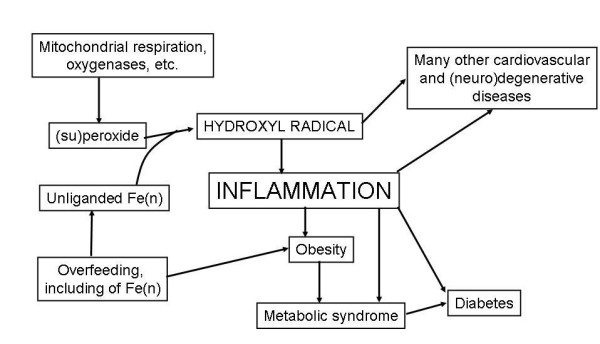
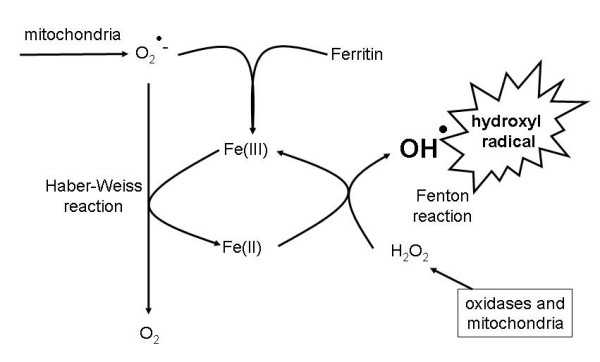
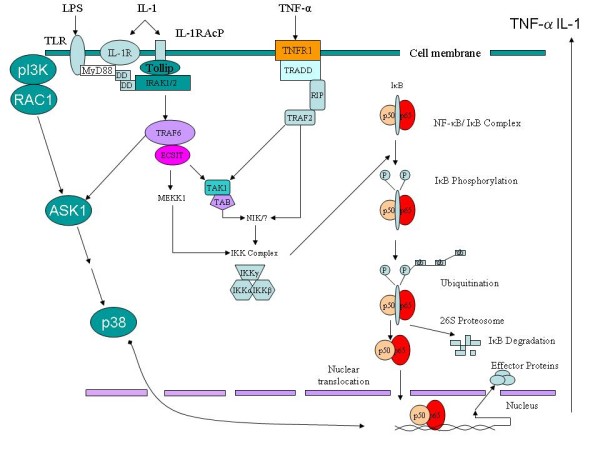
Background: The production of peroxide and superoxide is an inevitable consequence of aerobic metabolism, and while these particular 'reactive oxygen species' (ROSs) can exhibit a number of biological effects, they are not of themselves excessively reactive and thus they are not especially damaging at physiological concentrations.However, their reactions with poorly liganded iron species can lead to the catalytic production of the very reactive and dangerous hydroxyl radical, which is exceptionally damaging, and a major cause of chronic inflammation.Review: We review the considerable and wide-ranging evidence for the involvement of this combination of (su)peroxide and poorly liganded iron in a large number of physiological and indeed pathological processes and inflammatory disorders, especially those involving the progressive degradation of cellular and organismal performance.These diseases share a great many similarities and thus might be considered to have a common cause (i.e.iron-catalysed free radical and especially hydroxyl radical generation).The studies reviewed include those focused on a series of cardiovascular, metabolic and neurological diseases, where iron can be found at the sites of plaques and lesions, as well as studies showing the significance of iron to aging and longevity.The effective chelation of iron by natural or synthetic ligands is thus of major physiological (and potentially therapeutic) importance.As systems properties, we need to recognise that physiological observables have multiple molecular causes, and studying them in isolation leads to inconsistent patterns of apparent causality when it is the simultaneous combination of multiple factors that is responsible.This explains, for instance, the decidedly mixed effects of antioxidants that have been observed, since in some circumstances (especially the presence of poorly liganded iron) molecules that are nominally antioxidants can actually act as pro-oxidants.The reduction of redox stress thus requires suitable levels of both antioxidants and effective iron chelators.Some polyphenolic antioxidants may serve both roles.Understanding the exact speciation and liganding of iron in all its states is thus crucial to separating its various pro-and anti-inflammatory activities.Redox stress, innate immunity and pro-(and some anti-)inflammatory cytokines are linked in particular via signalling pathways involving NF-kappaB and p38, with the oxidative roles of iron here seemingly involved upstream of the IkappaB kinase (IKK) reaction.In a number of cases it is possible to identify mechanisms by which ROSs and poorly BioMed Central Open Access liganded iron act synergistically and autocatalytically, leading to 'runaway' reactions that are hard to control unless one tackles multiple sites of action simultaneously.Some molecules such as statins and erythropoietin, not traditionally associated with anti-inflammatory activity, do indeed have 'pleiotropic' anti-inflammatory effects that may be of benefit here.Conclusion: Overall we argue, by synthesising a widely dispersed literature, that the role of poorly liganded iron has been rather underappreciated in the past, and that in combination with peroxide and superoxide its activity underpins the behaviour of a great many physiological processes that degrade over time.Understanding these requires an integrative, systems-level approach that may lead to novel therapeutic targets. Background and preambleThe 'balkanisation' of the literature is in part due to the amount of it (some 25,000 journals with presently 2.5 million peer-reviewed papers per year, i.e. ~5 per minute [1]), with a number http://www.nlm.nih.gov/ bsd/medline_cit_counts_yr_pub.htmlincreasing by something approaching 2 per minute at PubMed/Medline alone.In addition, the disconnect between the papers in the literature (usually as pdf files) and the metadata describing them (author, journal, year, pages, etc) is acute and badly needs filling [2].Without solving this problem, and without automation of the processes of reading, interpreting and exploiting this literature and its metadata in a digital format, we cannot make use of the existing tools for text mining and natural language processing (e.g.[3-5]), for joining disparate concepts [6], for literature-based discovery (e.g.[7-11], and for studies of bibliometrics [12, 13], literature dynamics [14], knowledge domains [15], detecting republication [16] and so on.Until we recognise these possibilities we are unlikely to seek to realise them.The present article (and see [17] for a preprint) serves to show some of the benefits than can accrue from a more overarching view of the otherwise highly disparate literature in a particular domain (see also [18]), but was done 'the hard way', i.e. with a few bibliographic and bibliometric tools but without the kind of automation implied above.For the record, the main tools used (see a review in [2]) were Web of Knowledge and Scopus for literature a
Verified 2026-10-05 · 9 references not checked yet
Overview
CoChat Summary
TL;DR
This review argues that poorly liganded iron, reacting with superoxide/peroxide to generate hydroxyl radicals, is an underappreciated common driver of progressive inflammatory and degenerative diseases. It synthesizes dispersed evidence across cardiovascular, metabolic, neurological, renal, and other conditions and proposes that effective iron chelation, often combined with antioxidants, is a rational therapeutic strategy.
Key findings
- Poorly liganded iron catalyses hydroxyl radical production via Fenton/Haber-Weiss chemistry; the review states that 1–4% of reduced O₂ forms partially reduced species such as hydrogen peroxide and superoxide, which are comparatively non-toxic until they encounter poorly liganded iron.
- Iron is implicated across many diseases reviewed, including pre-eclampsia, diabetes, metabolic syndrome, hypertension, atherosclerosis, stroke, Alzheimer’s/Parkinson’s, Friedreich’s ataxia, ALS, aging/frailty, rheumatoid arthritis, lupus, asthma, IBD, AMD, psoriasis, gout, liver disease, COPD, cancer, malaria, sepsis/SIRS, and others.
- Antioxidant trials have been mixed or disappointing; the review argues this may occur because antioxidants can act as pro-oxidants in the presence of poorly liganded Fe(II), so redox stress reduction requires both suitable antioxidants and effective iron chelators.
- Quantitative examples cited include EPR-detectable iron in atherosclerotic tissue being 17 times greater than healthy tissue, aspirin lowering colon cancer incidence by 40% (age-adjusted relative risk = 0.6), and NGAL serum concentrations approaching 20–30 nM during inflammation.
Methods
- Narrative literature review/meta-analysis synthesizing widely dispersed literature; the main review was completed on June 30th, 2008, with some updates after refereeing.
- Literature and citation searching used Web of Knowledge and Scopus, supplemented by Google Scholar; some use was made of ARROWSMITH, GOPubMed, Taverna workflows, and Endnote for citations/metadata.
- The paper develops a systems-biology argument rather than reporting primary experimental data; it includes a mind-map overview and discusses iron chemistry, chelator pharmacology, signalling pathways, and disease associations.
Limitations
- Stated: the review notes that it is “not easy to state at this time” how much deranged iron metabolism is causal in accelerated aging, that few studies have been mechanistically specific, and that interpretation of chelation experiments is not always clear-cut.
- Stated: for pre-eclampsia, no serum hepcidin measurements had been reported to date; for obesity, the authors “see no major evidence as yet for a causative role of deranged iron metabolism or chelation in causing obesity.”
- Evident: this is a broad narrative synthesis, not a systematic review with formal search/selection criteria or quantitative meta-analysis, and many disease links are presented as mechanistic hypotheses supported by dispersed, often indirect evidence.
Model-written summary of a shortened version of the paper’s full text (it is longer than we read). Check it against the paper before relying on it.
Integrity signals
Registry
Cites
Statistics
Figures
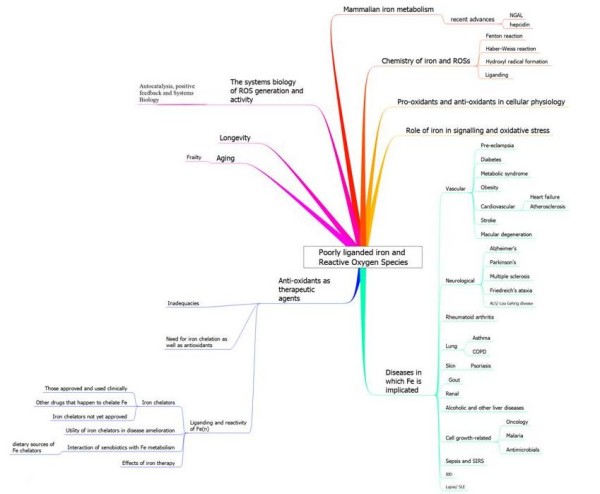
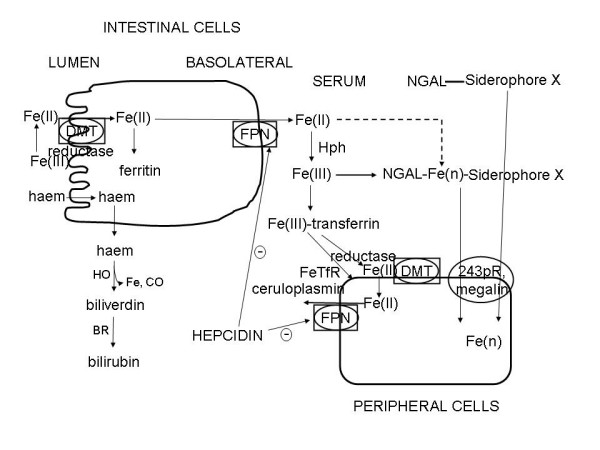
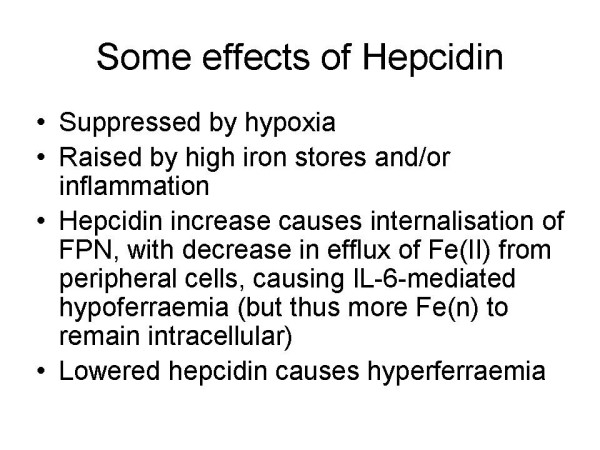
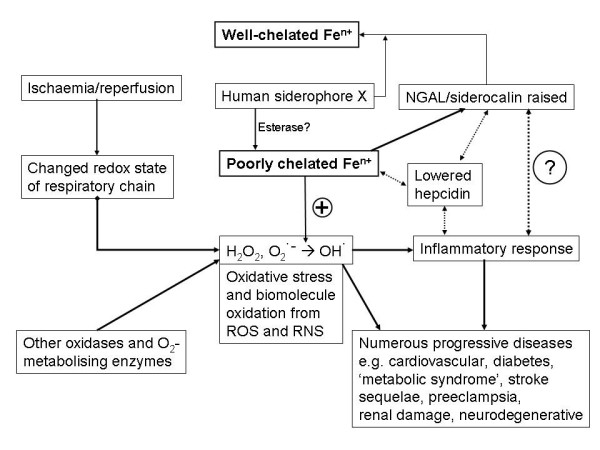
Verification
Claims the paper makes
32 Valid · 6 Not valid · 122 Not checked · 46 Own results and interpretations
The sources with a verdict support this claim; the rest weren’t checked yet, have no full text we could read, or their verdicts aren’t rated yet.
In the paper
“that acts in part as a negative regulator of iron efflux [328] by causing the internalisation of ferroportin [329-333].”
§ Iron behaving badly: inappropriate iron chelation as a major contributor to the aetiology of vascular and other progressive inflammatory and degenerative diseases > Mammalian iron metabolism > Hepcidin
What the sources say
- Supportedcites [328] Knutson MD Oukka M Koss LM Aydemir F Wessling-Resnick M Iron release from macrophages after erythrophagocytosis is up-regulated by ferroportin 1 overexpression and down-regulated by hepcidin Proc Natl Acad Sci USA 2005 102 1324 8 15665091 PMC547844 source
Citation [328] is attached to the claim that hepcidin negatively regulates iron efflux, not to the subsequent internalisation mechanism cited to [329–333]. The Discussion calls hepcidin a negative regulator of iron export, and the Results report reduced iron release from hepcidin-treated macrophages. (LLM, conf=0.94)
- Not checked yetcites [329] Nemeth E Tuttle MS Powelson J Vaughn MB Donovan A Ward DM Ganz T Kaplan J Hepcidin regulates cellular iron efflux by binding to ferroportin and inducing its internalization Science 2004 306 2090 2093 15514116 source
- Not checked yetcites [330] Delaby C Pilard N Goncalves AS Beaumont C Canonne-Hergaux F Presence of the iron exporter ferroportin at the plasma membrane of macrophages is enhanced by iron loading and down-regulated by hepcidin Blood 2005 106 3979 84 16081696 source
- Not checked yetcites [331] Ganz T Hepcidin – a regulator of intestinal iron absorption and iron recycling by macrophages Best Practice & Research Clinical Haematology 2005 18 171 182 15737883 source
- Supportedcites [332] Papanikolaou G Tzilianos M Christakis JI Bogdanos D Tsimirika K MacFarlane J Goldberg YP Sakellaropoulos N Ganz T Nemeth E Hepcidin in iron overload disorders Blood 2005 105 4103 4105 15671438 PMC1895089 source
The Abstract states that hepcidin inhibits cellular iron efflux by binding to ferroportin and inducing its internalization and degradation. The Introduction also states that hepcidin binds ferroportin and causes its internalization. (LLM, conf=0.94)
- Supportedcites [333] Lesbordes-Brion JC Viatte L Bennoun M Lou DQ Ramey G Houbron C Hamard G Kahn A Vaulont S Targeted disruption of the hepcidin 1 gene results in severe hemochromatosis Blood 2006 108 1402 1405 16574947 source
The Introduction states that hepcidin limits iron egress by binding to ferroportin and inducing its internalization and degradation, decreasing cellular iron export. This supports the attributed role as a negative regulator of iron efflux. (LLM, conf=0.94)
plainstates a cause- Asserted: passes — The authors put it forward as true.
- Checkable: passes — It can be checked against evidence.
- Load-bearing: unclear — It is unclear whether the paper’s conclusions depend on it.
- Based: passes — The paper gives a reason why it holds.
- Supported
The cited sources support only part of this claim — read each source’s verdict below.
In the paper
“the well-known adverse vascular effects of homocysteine (in inhibiting flow-mediated dilatation) are in fact iron-dependent [701-703]”
§ Iron behaving badly: inappropriate iron chelation as a major contributor to the aetiology of vascular and other progressive inflammatory and degenerative diseases > Some disease manifestations in which iron may be implicated > Cardiovascular diseases
What the sources say
- Partly supportedcites [701] Zheng H Dimayuga C Hudaihed A Katz SD Effect of dexrazoxane on homocysteine-induced endothelial dysfunction in normal subjects Arterioscler Thromb Vasc Biol 2002 22 E15 8 12117747 sourceExperimental — accuracy not yet measured
The Abstract and Results of Zheng et al. (2002) do show, as a measured fact in 10 healthy volunteers, that the iron-chelating prodrug dexrazoxane 'completely abrogate[d] the homocysteine-induced reduction in FMD' after a methionine load, without lowering homocysteine itself — so the source supports iron-dependence of homocysteine's inhibition of flow-mediated dilatation in that acute model. However, the paper hedges the causal/mechanistic claim it is credited with establishing: the Iron-Based Oxidative Stress section states homocysteine toxicity 'may be dependent in part on interactions with intracellular LMW-Fe2+', and the Conclusions say iron-based hydroxyl-radical production 'may contribute' and that chelation 'may have therapeutic potential'. The citing sentence asserts the effects 'are in fact iron-dependent' and 'well-known', a confident generalisation the source does not make, and the source's data come only from transient hyperhomocysteinemia in normal subjects, not from chronic or other vascular outcomes. (LLM, conf=0.72)
- Not checked yetcites [702] Zheng H Huang X Zhang Q Katz SD Iron sucrose augments homocysteine-induced endothelial dysfunction in normal subjects Kidney Int 2006 69 679 84 16395269 PMC2988421 source
- Not checked yetcites [703] Sullivan JL Is homocysteine an iron-dependent cardiovascular risk factor? Kidney Int 2006 69 642 4 16467888 source
boostedstates a cause- Asserted: passes — The authors put it forward as true.
- Checkable: passes — It can be checked against evidence.
- Load-bearing: passes — The paper’s conclusions depend on it.
- Based: passes — The paper gives a reason why it holds.
- Partly supported
The cited sources support only part of this claim — read each source’s verdict below.
In the paper
“There is no doubt that the iron-mediated causal chain of ischaemia → (su)peroxide → OH• radical formation occurs during the development of heart disease, especially during reperfusion injury [710-713]”
§ Iron behaving badly: inappropriate iron chelation as a major contributor to the aetiology of vascular and other progressive inflammatory and degenerative diseases > Some disease manifestations in which iron may be implicated > Cardiovascular diseases
What the sources say
- Not checked yetcites [710] Smith JK Carden DL Grisham MB Granger DN Korthuis RJ Role of iron in postischemic microvascular injury Am J Physiol 1989 256 H1472 7 2719141
- Partly supportedcites [711] Kukreja RC Hess ML The oxygen free radical system: from equations through membrane protein interactions to cardiovascular injury and protection Cardiovasc Res 1992 26 641 655 1423428 sourceExperimental — accuracy not yet measured
The Conclusions passage and the Figure 8 legend in our copy state exactly the iron-mediated chain the claim attributes: ischaemia/reperfusion generates superoxide, which dismutates to H2O2 and, in the presence of iron, forms .OH via iron-catalysed Fenton and Haber-Weiss reactions, initiating membrane lipid peroxidation and myocardial injury. However, the source hedges this as a proposal ('This hypothesis proposes...', radicals 'are thought to be responsible for much of this injury', 'it now appears that the oxygen free radical system plays a pivotal role'), and the Masterclass section explicitly notes 'Many investigators, but not all' found scavenger protection — so the citing sentence's 'there is no doubt' overstates the source. Our copy also bounds the mechanism to myocardial ischaemia/reperfusion, stunning, arrhythmias and inflammation, not to the general 'development of heart disease'. (LLM, conf=0.78)
- Not checked yetcites [712] Lesnefsky E Ye J Exogenous intracellular, but not extracellular, iron augments myocardial reperfusion injury Amer J Physiol 1994 266 H384 H392 8141338
- Not checked yetcites [713] Berenshtein E Mayer B Goldberg C Kitrossky N Chevion M Patterns of mobilization of copper and iron following myocardial ischemia: Possible predictive criteria for tissue injury J Mol Cell Cardiol 1997 29 3025 3034 9405177 source
boostedstates a cause- Asserted: passes — The authors put it forward as true.
- Checkable: passes — It can be checked against evidence.
- Load-bearing: passes — The paper’s conclusions depend on it.
- Based: passes — The paper gives a reason why it holds.
The cited sources support only part of this claim — read each source’s verdict below.
In the paper
“Iron and oxidised lipids are both found in atherosclerotic lesions [141,765-777]”
§ Iron behaving badly: inappropriate iron chelation as a major contributor to the aetiology of vascular and other progressive inflammatory and degenerative diseases > Some disease manifestations in which iron may be implicated > Atherosclerosis
What the sources say
- Not checked yetcites [141] Brewer GJ Iron and copper toxicity in diseases of aging, particularly atherosclerosis and Alzheimer's disease Exp Biol Med 2007 232 323 335 17259340
- Partly supportedcites [765] Smith C Mitchinson MJ Aruoma OI Halliwell B Stimulation of lipid peroxidation and hydroxyl radical generation by the contents of human atherosclerotic lesions Biochem J 1992 286 901 905 1329721 PMC1132988 sourceExperimental — accuracy not yet measured
The Abstract reports bleomycin-detectable iron in every sample from advanced human atherosclerotic lesions. It reports that the samples stimulated lipid peroxidation in rat liver microsomes, but does not establish that oxidised lipids were present in the lesions themselves; the Discussion describes lipid damage in lesions as a proposal. (LLM, conf=0.86)
- Not checked yetcites [766] Ramakrishna G Rooke TW Cooper LT Iron and peripheral arterial disease: revisiting the iron hypothesis in a different light Vasc Med 2003 8 203 210 14989563 source
- Supportedcites [767] Stadler N Lindner RA Davies MJ Direct detection and quantification of transition metal ions in human atherosclerotic plaques: evidence for the presence of elevated levels of iron and copper Arterioscler Thromb Vasc Biol 2004 24 949 54 15001454 source
The paper reports in its Abstract that oxidized lipids have been detected in human plaques. Its Discussion reports elevated iron levels in advanced human carotid lesions compared with healthy tissue. Together, these passages support the claim; page numbers are unavailable in our copy. (LLM, conf=0.91)
- Not checked yetcites [768] Wolff B Volzke H Ludemann J Robinson D Vogelgesang D Staudt A Kessler C Dahm JB John U Felix SB Association between high serum ferritin levels and carotid atherosclerosis in the study of health in Pomerania (SHIP) Stroke 2004 35 453 7 14726541 source
- Not checked yetcites [769] Roijers RB Dutta RK Mutsaers PHA Gijbels MJJ de Winther MPJ de Goeij JJM Vusse GJ van der Spatial correlation of trace elements with morphological features of atherosclerotic plaques Nuclear Instruments & Methods in Physics Research Section B-Beam Interactions with Materials and Atoms 2005 231 239 244 source
- Not checked yetcites [770] Stocker R Keaney JF New insights on oxidative stress in the artery wall Journal of Thrombosis and Haemostasis 2005 3 1825 1834 16102049 source
- Not checked yetcites [771] Stanley N Stadler N Woods AA Bannon PG Davies MJ Concentrations of iron correlate with the extent of protein, but not lipid, oxidation in advanced human atherosclerotic lesions Free Radical Biology and Medicine 2006 40 1636 1643 16632123 source
- Not checked yetcites [772] Watt F Rajendran R Ren MQ Tan BKH Halliwell B A nuclear microscopy study of trace elements Ca, Fe, Zn and Cu in atherosclerosis Nucl Instr Meth Phys Res B 2006 249 646 652 source
- Partly supportedcites [773] Fernandes de Godoy M Takakura IT Machado RD Grassi LV Nogueira PR Serum ferritin and obstructive coronary artery disease: Angiographic correlation Arquivos Brasileiros De Cardiologia 2007 88 430 433 17546273 sourceExperimental — accuracy not yet measured
The Discussion (page unavailable) reports increased expression of the iron-storage protein ferritin in atherosclerotic coronary arteries. It only speculates that this might affect lipid oxidation in the vessel wall; it does not establish that oxidised lipids were found in the lesions. (LLM, conf=0.82)
plainstates an association- Asserted: passes — The authors put it forward as true.
- Checkable: passes — It can be checked against evidence.
- Load-bearing: passes — The paper’s conclusions depend on it.
- Based: passes — The paper gives a reason why it holds.
The sources with a verdict support this claim; the rest weren’t checked yet, have no full text we could read, or their verdicts aren’t rated yet.
In the paper
“while iron chelation improves it [797-800].”
§ Iron behaving badly: inappropriate iron chelation as a major contributor to the aetiology of vascular and other progressive inflammatory and degenerative diseases > Some disease manifestations in which iron may be implicated > Atherosclerosis
What the sources say
- Supportedcites [797] Duffy SJ Biegelsen ES Holbrook M Russell JD Gokce N Keaney JF Jr Vita JA Iron chelation improves endothelial function in patients with coronary artery disease Circulation 2001 103 2799 804 11401935 source
The Abstract (Methods and Results / Conclusions) of our copy states that deferoxamine (an iron chelator) improved the blood flow response to methacholine in patients with coronary artery disease (P<0.01) and concludes 'Deferoxamine improved nitric oxide-mediated, endothelium-dependent vasodilation in patients with coronary artery disease.' The paper's title itself is 'Iron Chelation Improves Endothelial Function in Patients With Coronary Artery Disease,' so the paraphrase matches the source, with the population qualifier (CAD patients) intact; deferoxamine had no effect in normal volunteers, consistent with the stated finding. (LLM, conf=0.93)
- Supportedcites [798] Ishizaka N Saito K Mori I Matsuzaki G Ohno M Nagai R Iron chelation suppresses ferritin upregulation and attenuates vascular dysfunction in the aorta of angiotensin II-infused rats Arterioscler Thromb Vasc Biol 2005 25 2282 8 16100038 source
The Results section ('Relaxations of Aortic Segments') states that deferoxamine reversed the impaired acetylcholine-induced (endothelium-dependent) relaxation in the aortas of angiotensin II–infused rats (50.4±5.7% → 69.2±6.0%, n=10), i.e. an improvement in endothelial function, with Figure 4A showing the same. The Discussion frames this as iron chelation suppressing Ang II-induced impaired vascular relaxation, attributing it to reduced iron-catalysed oxidative stress. The support is for the direction of the claim in a rat aorta model and is described as partial rather than complete reversal, which is the only qualifier the unqualified citing sentence omits. (LLM, conf=0.80)
- Not checked yetcites [799] Saito K Ishizaka N Aizawa T Sata M Iso-o N Noiri E Mori I Ohno M Nagai R Iron chelation and a free radical scavenger suppress angiotensin II-induced upregulation of TGF-beta1 in the heart Am J Physiol Heart Circ Physiol 2005 288 H1836 43 15550525 source
- Not checked yetcites [800] Thomas SR Schulz E Keaney JF Hydrogen peroxide restrains endothelium-derived nitric oxide bioactivity – Role for iron-dependent oxidative stress Free Radical Biology and Medicine 2006 41 681 688 16864001 source
plainstates a cause- Asserted: passes — The authors put it forward as true.
- Checkable: passes — It can be checked against evidence.
- Load-bearing: passes — The paper’s conclusions depend on it.
- Based: passes — The paper gives a reason why it holds.
- Supported
81 more claims · 6 with their cited sources checked
Create a free account to see all 206 claims and to verify the 567 references still open.
- Probably not a substantial claim. 42
- It may state two separate claims as one. 95
Claims other papers make about this one
Each is checked against this paper’s own text: does it say what the citing paper says it does?
The source backs part of the claim, not all of it — or backs it for a different population, condition or comparison.
In the citing paper
“Due to the presence of high-affinity iron binding and storage proteins, the actual toxicity of iron is restricted to the so called “labile iron pool”.”
From The interaction of asbestos and iron in lung tissue revealed by synchrotron-based scanning X-ray microscopy (2013) · cites this paper as [18]
Experimental — accuracy not yet measuredThe source backs part of the claim, not all of it — or backs it for a different population, condition or comparison.
In the citing paper
“Fe (II) reacting with unsaturated fatty acids in the presence of H 2 O 2 can initiate lipid peroxidation cascade in biological membranes and lipoproteins by production of HO•.”
From Iron, Oxidative Stress and Health (2012) · cites this paper as Kell, 2009
Experimental — accuracy not yet measuredThe source backs part of the claim, not all of it — or backs it for a different population, condition or comparison.
In the citing paper
“Lipid peroxidation increases membrane fragility of cell organelles such as mitochondria, lysosomes and endoplasmic reticulum leading to impaired cell function”
From Iron, Oxidative Stress and Health (2012) · cites this paper as Kell, 2009
Experimental — accuracy not yet measuredThe cited source says what the claim attributes to it.
In the citing paper
“Importantly, dysregulated iron homeostasis is associated with progressive inflammatory and degenerative diseases, as well as cancer [2].”
From The utility of iron chelators in the management of inflammatory disorders (2015) · cites this paper as [2]
The cited source says what the claim attributes to it.
In the citing paper
“Concerning this issue, the recent reviews by D. Kell1819 analyse the wide but dispersed literature via a systems biology approach, and indicate that iron that is weakly complexed boosts many biochemical processes leading to a large variety of apparently unrelated diseases.”
From The interaction of asbestos and iron in lung tissue revealed by synchrotron-based scanning X-ray microscopy (2013) · cites this paper as [18]
3 more claims about this paper
Create a free account to see every claim other papers make about this one.
Citations
Cites
3 retracted
Items 2,401–2,563 of 2,563
Topical simvastatin: Preclinical evidence for a treatment of skin inflammatory conditions
Otuki, M. F., Pietrovski, E. F., & Cabrini, D. A. (2006) · Journal of Dermatological Science · doi:10.1016/j.jdermsci.2006.04.006 · Cited by 27
Troeger, C., Holzgreve, W., Ladewig, A., Zhong, X. Y., & Hahn, S. (2005) · Fetal Diagnosis and Therapy · doi:10.1159/000089068 · Cited by 27 · cited 1×
“[531, 2242-2245], consistent with a view that the body is”
BackgroundPrevention of Preeclampsia With Antioxidants: Evidence From Randomized Trials
Spinnato, J. A., & Livingston, J. C. (2005) · Clinical Obstetrics & Gynecology · doi:10.1097/01.grf.0000160312.74983.f3 · Cited by 27 · cited 1×
“this [425-489], while some have noted the importance of”
BackgroundIron chelating agents with clinical potential
Hider, R. C., Singh, S., & Porter, J. B. (1992) · Proceedings of the Royal Society of Edinburgh Section B Biological Sciences · doi:10.1017/s0269727000013117 · Cited by 27
Plagemann, A., Rodekamp, E., & Harder, T. (2004) · Diabetologia · doi:10.1007/s00125-004-1446-z · Cited by 27
Bayesian inference of the sites of perturbations in metabolic pathways via Markov chain Monte Carlo
Jayawardhana, B., Kell, D. B., & Rattray, M. (2008) · Bioinformatics · doi:10.1093/bioinformatics/btn103 · Cited by 26 · cited 1×
“[2314-2320]) – for a recent example see [2321].”
BackgroundSelf-citationThe Treatment of Malaria with Iron Chelators
Hider, R. C., & Liu, Z. (1997) · Journal of Pharmacy and Pharmacology · doi:10.1111/j.2042-7158.1997.tb06162.x · Cited by 26 · cited 1×
“[1320-1336], but cf.”
Zhang, H. (2006) · Biochemical and Biophysical Research Communications · doi:10.1016/j.bbrc.2006.10.086 · Cited by 26
BIOSPIDER: A WEB SERVER FOR AUTOMATING METABOLOME ANNOTATIONS
Knox, C., Shrivastava, S., Stothard, P., Eisner, R., & Wishart, D. S. (2006) · Pacific Symposium on Biocomputing (PSB) · doi:10.1142/9789812772435_0015 · Cited by 26
Abou‐Raya, A., El-Hallous, D., & Fayed, H. M. (2004) · PubMed · Cited by 26
Rokutan, K., Teshima, S., Miyoshi, M., Kawai, T., Nikawa, T., & Kishi, K. (1998) · Journal of Gastroenterology · doi:10.1007/s005350050151 · Cited by 26
Furlani, D., Klopsch, C., Gäbel, R., Uğurlucan, M., Pittermann, E., Klee, D., Wagner, K. F., Li, W., Wang, W., Ong, L. L. S., et al. (2008) · Transplantation Proceedings · doi:10.1016/j.transproceed.2008.03.033 · Cited by 26
Validating discovery in literature-based discovery
Kostoff, R. N. (2007) · Journal of Biomedical Informatics · doi:10.1016/j.jbi.2007.05.001 · Cited by 26
Metabolization of iron by plant cells using O-Trensox, a high-affinity abiotic iron-chelating agent
Caris, C., Baret, P., Beguin, C. G., Serratrice, G., Pierre, J., & Laulhère, J. P. (1995) · Biochemical Journal · doi:10.1042/bj3120879 · Cited by 26
Varughese, G. I., & Lip, G. Y. H. (2005) · Journal of Human Hypertension · doi:10.1038/sj.jhh.1001833 · Cited by 25 · cited 1×
“inflammatory in nature [678-686], is related to the”
BackgroundRichardson, D. R., & Ponka, P. (1998) · Journal of Laboratory and Clinical Medicine · doi:10.1016/s0022-2143(98)90049-x · Cited by 25 · cited 2×
“Thus, pyridoxal isonicotinyl hydrazone (PIH) [1507; 1546-1551] is a promising molecule (also proposed in anti-cancer therapy), although it is hydrolysed both in vivo and in vitro [1552].”
BackgroundImaging of the unstable plaque
Tan, K. T., & Lip, G. Y. H. (2008) · International Journal of Cardiology · doi:10.1016/j.ijcard.2007.11.054 · Cited by 25
Molecular regulation of hepatic expression of iron regulatory hormone hepcidin
Oates, P. S., & Ahmed, U. (2007) · Journal of Gastroenterology and Hepatology · doi:10.1111/j.1440-1746.2007.04950.x · Cited by 25 · cited 1×
“In the liver and elsewhere, many aspects of iron metabolism are regulated by a recently discovered 25amino acid polypeptide called hepcidin [163; 186; 190; 212; 230-255] that acts in part as a negative regulator of iron efflux [256] by causing the internalisation of ferroportin [257-261].”
BackgroundExogenous intracellular, but not extracellular, iron augments myocardial reperfusion injury
Lesnefsky, E. J., & Ye, J. (1994) · American Journal of Physiology-Heart and Circulatory Physiology · doi:10.1152/ajpheart.1994.266.2.h384 · Cited by 25
Rogachev, I., Kampel', V. T., Gusis, V., Cohen, N., Gressel, J., & Warshawsky, A. (1998) · Pesticide Biochemistry and Physiology · doi:10.1006/pest.1998.2336 · Cited by 25
Mello, G., Parretti, E., Cioni, R., Lagazio, C., Mealli, F., & Pratesi, M. (2002) · The Journal of Maternal-Fetal & Neonatal Medicine · doi:10.1080/jmf.11.2.93.99 · Cited by 25 · cited 1×
“Indeed, many studies implicate oxidative stress as a substantial contributor to this [344-385] [386-408], while some have noted the importance of iron status [40; 98; 369; 409-427], and so far as is known the transporters of iron in the placenta are similar to those in other cells [428].”
BackgroundMetabolic Markers of Hypoxia: Systems Biology Application in Biomedicine
Serkova, N. J., Reisdorph, N. A., & van Patot, M. C. T. (2008) · Toxicology Mechanisms and Methods · doi:10.1080/15376510701795769 · Cited by 25
The potential therapeutic role of statins in central nervous system autoimmune disorders
ve, O. S. A. U., Youssef, S., Dunn, S. E., Slavin, A., Steinman, L., & Zamvil, S. S. (2003) · Cellular and Molecular Life Sciences · doi:10.1007/s00018-003-3146-0 · Cited by 25
On Parts and Wholes in Metabolism
KACSER, H. (1986) · Springer eBooks · doi:10.1007/978-1-4684-5311-9_28 · Cited by 25
Hydrophilic and Lipophilic Iron Chelators with the Same Complexing Abilities
Imbert, D., Baret, P., Gaude, D., Gautier‐Luneau, I., Gellon, G., Thomas, F., Serratrice, G., & Pierre, J. (2002) · Chemistry - A European Journal · Cited by 25
Heart and iron deficiency anaemia in rats with renal insufficiency: The role of hepcidin
Toblli, J. E., Cao, G., Rivas, C., & Kulaksiz, H. (2008) · Nephrology · doi:10.1111/j.1440-1797.2008.01019.x · Cited by 24
Lee, S., Lee, J., Lee, H., Lee, J., Jeon, B. H., Jun, C., Lee, S., & Kim, E. (2006) · Journal of Oral Pathology and Medicine · doi:10.1111/j.1600-0714.2006.00415.x · Cited by 24
Statins: potent vascular anti-inflammatory agents
Liao, J. K. (2004) · International Journal of Clinical Practice · doi:10.1111/j.1368-504x.2004.00375.x · Cited by 24
Garber, K. (2008) · Science · doi:10.1126/science.319.5859.20 · Cited by 24
Antioxidant effect of bisphosphonates and simvastatin on chondrocyte lipid peroxidation
Dombrecht, E. J., Tollenaere, C. B. D., Aerts, K., Cos, P., Schuerwegh, A. J., Bridts, C. H., Offel, J. F. V., Ebo, D. G., Stevens, W. J., & Clerck, L. S. D. (2006) · Biochemical and Biophysical Research Communications · doi:10.1016/j.bbrc.2006.07.075 · Cited by 24
Bao, Y., Jia, R., Yuan, J. J., & Li, J. (2007) · Pharmacology · doi:10.1159/000103232 · Cited by 24 · cited 1×
“[561-565]), and are even active aganst cerebral ischaemia”
BackgroundErythropoietin in pregnancies complicated by severe anemia of renal failure
Yankowitz, J., Piraino, B., Laifer, S. A., Frassetto, L. A., Gavin, L., Kitzmiller, J. L., & Crombleholme, W. R. (1993) · International Journal of Gynecology & Obstetrics · doi:10.1016/0020-7292(93)90169-w · Cited by 24
Selective in vitro antioxidant properties of bisphosphonates
Dombrecht, E. J., Cos, P., Berghe, D. V., Offel, J. F. V., Schuerwegh, A. J., Bridts, C. H., Stevens, W. J., & De Clerck, L. S. (2004) · Biochemical and Biophysical Research Communications · doi:10.1016/j.bbrc.2003.12.149 · Cited by 23 · cited 1×
“[1263], though membrane-impermeant chelators such”
Hubel, C. A., Bodnar, L. M., Many, A., Harger, G. F., Ness, R. B., & Roberts, J. M. (2004) · Clinical Chemistry · doi:10.1373/clinchem.2003.030932 · Cited by 23
Promotion of atherogenesis by copper or iron—Which is more likely?
Rajendran, R., Minqin, R., Ning, P., Huat, B. T. K., Halliwell, B. B., & Watt, F. (2006) · Biochemical and Biophysical Research Communications · doi:10.1016/j.bbrc.2006.11.038 · Cited by 23
The role of transferrin in atherosclerosis
Kibel, A., Belovari, T., & Drenjančević, I. (2007) · Medical Hypotheses · doi:10.1016/j.mehy.2007.07.039 · Cited by 22 · cited 3×
“There is a correlation between iron status and atherosclerosis [671; 682-691], plausibly caused in part by the known ability of poorly liganded iron to effect lipid [683] and protein peroxidation, and by the effects of primed neutrophils [692] and transferrin [664].”
BackgroundVesicular transport of Fe and interaction with other metal ions in polarized Caco2 Cell monolayers
LINDER, M. C., MORIYA, M., WHON, A., KASSA, A., & GILLEY, C. (2006) · Biological Research · doi:10.4067/s0716-97602006000100016 · Cited by 22
Scheibel, L. W., & Rodriguez, S. (1989) · PubMed · Cited by 22
Interplay between ferritin metabolism, reactive oxygen species and nitric oxide
Lipiński, P., & Drapier, J. (1997) · JBIC Journal of Biological Inorganic Chemistry · doi:10.1007/s007750050170 · Cited by 22
Beard, J. (2002) · American Journal of Clinical Nutrition · doi:10.1093/ajcn/76.6.1189 · Cited by 22
Obesity in BSB Mice Is Correlated with Expression of Genes for Iron Homeostasis and Leptin
Farahani, P., Chiu, S., Bowlus, C. L., Boffelli, D., Lee, E., Fisler, J. S., Krauss, R. M., & Warden, C. H. (2004) · Obesity Research · doi:10.1038/oby.2004.26 · Cited by 22 · cited 1×
“[644], what little evidence there is [645, 646] suggests that”
BackgroundStatins and their potential targets in multiple sclerosis therapy
Stüve, O., Prod’homme, T., Slavin, A., Youssef, S., Dunn, S. E., Steinman, L., & Zamvil, S. S. (2003) · Expert Opinion on Therapeutic Targets · doi:10.1517/14728222.7.5.613 · Cited by 22
myExperiment – A Web 2.0 Virtual Research Environment
Roure, D. D., & Goble, C. (2007) · ePrints Soton (University of Southampton) · Cited by 22
Iron Chelation and Vascular Function: In Search of the Mechanisms
Ferrara, D. E., & Taylor, W. R. (2005) · Arteriosclerosis, Thrombosis, and Vascular Biology · doi:10.1161/01.atv.0000189303.45609.1f · Cited by 21 · cited 1×
“Iron and oxidised lipids are both found in atherosclerotic lesions [106; 670-677], and iron depletion by dietary or other means delays this [678-681].”
BackgroundDoulias, P.-T., Vlachou, C., Boudouri, C., Kanavaros, P., Siamopoulos, K. C., & Galaris, D. (2008) · Free Radical Research · doi:10.1080/10715760801911649 · Cited by 21 · cited 1×
“tend to increase with age [1151-1155], partly due to”
BackgroundWhitcomb, D. C., Aoun, E., Vodovotz, Y., Clermont, G., & Barmada, M. M. (2005) · Digestive Diseases and Sciences · doi:10.1007/s10620-005-3033-7 · Cited by 21 · cited 1×
“[1918] Whitcomb, D.”
Iron Out-of-Balance: A Risk Factor for Acute and Chronic Diseases
Weinberg, E. D. (2008) · Hemoglobin · doi:10.1080/03630260701680805 · Cited by 21
Oxidative damage to DNA: levels of thymine glycol and thymidine glycol in neoplastic human urines
Cao, E., & Wang, J.-J. (1993) · Carcinogenesis · doi:10.1093/carcin/14.7.1359 · Cited by 21 · cited 1×
“Many small molecule metabolic markers for this kind of oxidative stress induced by the hydroxyl radical and other ‘reactive oxygen species’ (ROSs) are known [16; 52-59], and include 8oxo-guanine [60-64], 8-hydroxy guanine [65], 8-hydroxy-2’-deoxy-guanosine [66; 67], 8-oxo-GTP [68], 4-hydroxy-2-hexenal [69], 4-hydroxy-…”
BackgroundMolecular and Genetic Aspects of Preeclampsia: State of the Art
Tálosi, G., Endreffy, E., Túri, S., & Németh, I. (2000) · Molecular Genetics and Metabolism · doi:10.1006/mgme.2000.3099 · Cited by 21
Galey, J.-B., Destrée, O., Dumats, J., Génard, S., & Tachon, P. (2000) · Journal of Medicinal Chemistry · doi:10.1021/jm9911635 · Cited by 21 · cited 1×
“As mentioned above, one interesting strategy is to devise chelators that are only activated by oxidative stress [1589; 1605-1608].”
BackgroundConcentrations of Pentosidine, an Advanced Glycation End-product, in Umbilical Cord Blood
Tsukahara, H., Ohta, N., Sato, S., Hiraoka, M., Shukunami, K., Uchiyama, M., Kawakami, H., Sekine, K., & Mayumi, M. (2004) · Free Radical Research · doi:10.1080/1071576042000220256 · Cited by 21 · cited 1×
“Indeed, many studies implicate oxidative stress as a substantial contributor to this [344-385] [386-408], while some have noted the importance of iron status [40; 98; 369; 409-427], and so far as is known the transporters of iron in the placenta are similar to those in other cells [428].”
BackgroundCancer as a Ferrotoxic Disease: Are We Getting Hard Stainless Evidence?
Edgren, G., Nyrén, O., & Melbye, M. (2008) · JNCI Journal of the National Cancer Institute · doi:10.1093/jnci/djn225 · Cited by 21
Sesti, F., Ticconi, C., Bonifacio, S., & Piccione, E. (2002) · Gynecologic and Obstetric Investigation · doi:10.1159/000064688 · Cited by 21
Open Access: Taking Full Advantage of the Content
Bourne, P. E., Fink, J. L., & Gerstein, M. (2008) · PLoS Computational Biology · doi:10.1371/journal.pcbi.1000037 · Cited by 21
Pavlović, R., & Santaniello, E. (2007) · Journal of Pharmacy and Pharmacology · doi:10.1211/jpp.59.12.0011 · Cited by 20 · cited 1×
“reaction of NO and superoxide) [46, 149-154] leading to”
BackgroundClinical applications of the altered iron kinetics of toxemia of pregnancy
Entman, S. S., & Richardson, L. D. (1983) · American Journal of Obstetrics and Gynecology · doi:10.1016/0002-9378(83)90804-9 · Cited by 20 · cited 1×
“Indeed, many studies implicate oxidative stress as a substantial contributor to this [344-385] [386-408], while some have noted the importance of iron status [40; 98; 369; 409-427], and so far as is known the transporters of iron in the placenta are similar to those in other cells [428].”
BackgroundPromising therapeutic agents for sepsis
Aneja, R. K., & Fink, M. P. (2006) · Trends in Microbiology · doi:10.1016/j.tim.2006.11.005 · Cited by 20
Reduced Serum Hydroxyl Radical Scavenging Activity in Erythropoietin Therapy Resistant Renal Anemia
Hirayama, A., Nagase, S., Gotoh, M., Ueda, A., Ishizu, T., Yoh, K., Aoyagi, K., Terao, J., & Kôyama, A. (2002) · Free Radical Research · doi:10.1080/1071576021000016418 · Cited by 20
Anti-inflammatory Effects of Statins in Patients with Aortic Stenosis
Pate, G. E., Tahir, M. N., Murphy, R. T., & Foley, J. B. (2003) · Journal of Cardiovascular Pharmacology and Therapeutics · doi:10.1177/107424840300800305 · Cited by 20 · cited 1×
“plaques, is arguably well explained, especially within the context of the present review, via their additional anti-inflammatory effects [710; 712; 736-756] [121; 716-718; 723; 729; 730; 757-785],”
BackgroundPharmacological intervention in invertebrate aging
Lithgow, G. J., Gill, M. S., Olsen, A., & Sampayo, J. N. (2005) · AGE · doi:10.1007/s11357-005-3625-3 · Cited by 20 · cited 1×
“(and stress resistance) of Drosophila [1064; 1104-1106] while that of Caenorhadbitis elegans could be extended by mimics [1107] of SOD and catalase [1060], and by a variety of antioxidant and other pharmacological agents [1108].”
BackgroundMETAL ION CATALYZED AUTOXIDATION REACTIONS: KINETICS AND MECHANISMS
FÁBIÁN, I., & CSORDÁS, V. (2003) · Advances in Inorganic Chemistry · doi:10.1016/s0898-8838(03)54008-9 · Cited by 19 · cited 4×
“Thus, “A compound suitable for the treatment of neurodegenerative disease should possess a number of qualities, namely (1) strong affinity for FeIII, (2) low molecular weight, (3) lipophilicity high enough to accommodate permeation of cell membranes and the BBB, (4) oral activity, and (5) minimal toxicity [952].”
ResultInfluentialErythropoietin Depletes Iron Stores: Antioxidant Neuroprotection for Ischemic Stroke?
Bailey, D. M., Robach, P., Thomsen, J. J., & Lundby, C. (2006) · Stroke · doi:10.1161/01.str.0000239787.92203.16 · Cited by 19
Bisti, S., & Soteriadou, K. (2006) · Microbes and Infection · doi:10.1016/j.micinf.2006.01.004 · Cited by 19 · cited 3×
“Oxidative stress seems to act upstream of IKK [1842], on IκBα directly [1878] and in the p38 MAP kinase pathway [1821; 1842; 1879], and there is also evidence that at least some of the statins act on the PI3K-akt and NF-κB pathways too [712; 776; 1880-1887].”
BackgroundMetal chelators react also with reactive oxygen and nitrogen species
Balcerczyk, A., Sowa, K., & Bartosz, G. (2006) · Biochemical and Biophysical Research Communications · doi:10.1016/j.bbrc.2006.11.053 · Cited by 19
Nash, insulin resistance and iron
MACHADO, M., & CORTEZ‐PINTO, H. (2006) · Liver International · doi:10.1111/j.1478-3231.2006.01394.x · Cited by 18 · cited 2×
“Thus, serum ferritin is also related to insulin resistance [517; 542; 543] and iron levels are raised [534; 544].”
BackgroundIntestinal absorption of peptide drugs: advances in our understanding and clinical implications.
Catnach, S. M., Fairclough, P. D., & Hammond, S. M. (1994) · Gut · doi:10.1136/gut.35.4.441 · Cited by 18 · cited 1×
“porters [1682-1685]) and must therefore be given”
Signalling networks, inflammation and innate immunity
Dower, S. K., & Qwarnstrom, E. E. (2003) · Biochemical Society Transactions · doi:10.1042/bst0311462 · Cited by 18 · cited 1×
“Thus, although this is not the focus of the present more physiologically based review, we recognise that many of relationships between ROSs and oxidative stress and overt progressive diseases may be mediated via the inflammatory signalling pathways involved in ‘innate immunity’ [793; 1819-1821].”
BackgroundCan Iron Chelators Influence the Progression of Atherosclerosis?
Marx, J. J. M., Kartikasari, A. E. R., & Georgiou, N. A. (2008) · Hemoglobin · doi:10.1080/03630260701726871 · Cited by 18 · cited 1×
“There is a correlation between iron status and atherosclerosis [671; 682-691], plausibly caused in part by the known ability of poorly liganded iron to effect lipid [683] and protein peroxidation, and by the effects of primed neutrophils [692] and transferrin [664].”
BackgroundDrechsel, H., & Jung, G.-N. (1998) · PubMed · doi:10.1002/(sici)1099-1387(199805)4:3%3c147::aid-psc136%3e3.0.co;2-c · Cited by 18
Knowledge Discovery for Biology with Taverna
Goble, C., Wolstencroft, K., Goderis, A., Hull, D., Zhao, J., Alper, P., Lord, P., Wroe, C., Belhajjame, K., Turi, D., et al. (2007) · Springer eBooks · doi:10.1007/978-0-387-48438-9_17 · Cited by 18
Serum Iron, Transferrin Saturation, Ferritin, and Dietary Data in Age-Related Macular Degeneration
Richer, S., Rudy, D., Statkute, L., Karofty, K., & Frankowski, J. (2002) · American Journal of Therapeutics · doi:10.1097/00045391-200201000-00006 · Cited by 17 · cited 4×
“Age-related macular degeneration (AMD) [1188] is now the leading cause of blindness and visual disability in the elderly in developed countries [1189-1192].”
BackgroundInfluentialMcCullough, K. D., & Bartfay, W. J. (2007) · Biological Research For Nursing · doi:10.1177/109980040629873 · Cited by 17 · cited 1×
“lead to hepatotoxicity [1359-1362] and liver cancer [1363,”
BackgroundAnimal models of neonatal stroke and response to erythropoietin and cardiotrophin‐1
Sola, A., Peng, H., Rogido, M. R., & Wen, T. (2007) · International Journal of Developmental Neuroscience · doi:10.1016/j.ijdevneu.2007.08.016 · Cited by 17 · cited 1×
“ischaemia/reperfusion injury and stroke [924-939], by a”
F. Ritchie, R., E. Palomaki, G., M. Neveux, L., Navolotskaia, O., B. Ledue, T., & Y.Craig, W. (2002) · Journal of Clinical Laboratory Analysis · doi:10.1002/jcla.10047 · Cited by 17 · cited 1×
“tend to increase with age [1151-1155], partly due to”
BackgroundVanrolleghem, P. A., & Heijnen, J. J. (1998) · Biotechnology and Bioengineering · doi:10.1002/(sici)1097-0290(19980420)58:2/3<119::aid-bit1>3.3.co;2-w · Cited by 17
URINARY THYMIDINE GLYCOL AS A BIOMARKER FOR OXIDATIVE STRESS AFTER KIDNEY TRANSPLANTATION
Makropoulos, W., Kocher, K., Heintz, B., Schwarz, E. R., Mertens, P. R., & Stefanidis, I. (2000) · Renal Failure · doi:10.1081/jdi-100100891 · Cited by 17
Virgili, G., Diana, V., Bressler, N. M., & Menchini, U. (2006) · Acta Ophthalmologica Scandinavica · doi:10.1111/j.1600-0420.2006.00711.x · Cited by 17 · cited 1×
“The source of the iron appears to be excess angiogenesis and leakage from blood vessels catalysed by VEGF, and a PEGylated aptamer [12031205] against VEGF (pegaptanib) or a monoclonal antibody (ranibizumab) have shown significant promise in the treatment of macular degeneration [1206-1211].”
BackgroundRapid oxygen‐induced reduction of b‐type cytochromes in Paracoccus denitrificans
John, P., & Papa, S. (1978) · FEBS Letters · doi:10.1016/0014-5793(78)81275-7 · Cited by 17 · cited 1×
“[1439] John, P.”
Integrating systems approaches into pharmaceutical sciences
Westerhoff, H. V., Mosekilde, E., Noe, C. R., & Clemensen, A. M. (2008) · European Journal of Pharmaceutical Sciences · doi:10.1016/j.ejps.2008.05.011 · Cited by 17
Chemical reactions of vitamin C with intravenous-iron formulations
Wang, S., Geraci, G., Kuhlmann, M. K., Levin, N. W., & Handelman, G. J. (2007) · Nephrology Dialysis Transplantation · doi:10.1093/ndt/gfm557 · Cited by 17
Evaluation of HMG-CoA Reductase Inhibitors for Multiple Sclerosis: Opportunities and Obstacles
Neuhaus, O., ve, O. S. A. U., Zamvil, S. S., & Hartung, H.-P. (2005) · CNS Drugs · doi:10.2165/00023210-200519100-00003 · Cited by 17
Tobacco smoke iron: an initiator/promoter of multiple diseases
Weinberg, E. D. (2008) · BioMetals · doi:10.1007/s10534-008-9156-5 · Cited by 17
Three autocrine feedback loops determine HIF1α expression in chronic hypoxia
Qutub, A. A., & Popel, A. S. (2007) · The FASEB Journal · doi:10.1096/fasebj.21.6.a857 · Cited by 17
Is homocysteine an iron-dependent cardiovascular risk factor?
Sullivan, J. L. (2006) · Kidney International · doi:10.1038/sj.ki.5000229 · Cited by 16 · cited 1×
“[701-703], and that reducing homocysteine (e.”
The Molecular Circuitry Regulating the Switch between Iron Deficiency and Overload in Mice
Mok, H., Mlodnicka, A., Hentze, M. W., Muckenthaler, M. U., & Schumacher, A. (2006) · Journal of Biological Chemistry · doi:10.1074/jbc.m509857200 · Cited by 16 · cited 1×
“In the liver and elsewhere, many aspects of iron metabolism are regulated by a recently discovered 25amino acid polypeptide called hepcidin [163; 186; 190; 212; 230-255] that acts in part as a negative regulator of iron efflux [256] by causing the internalisation of ferroportin [257-261].”
BackgroundChattopadhyay, A., Choudhury, T. D., Basu, M. K., & Datta, A. G. (1992) · Molecular and Cellular Biochemistry · doi:10.1007/bf00249691 · Cited by 16
Maternal serum ceruloplasmin in preeclampsia
Üstün, Y. E., Üstün, Y., Kamacı, M., & Şekeroğlu, R. (2005) · International Journal of Gynecology & Obstetrics · doi:10.1016/j.ijgo.2005.01.024 · Cited by 16
Effects of ICL670 (deferasirox) on cardiac iron concentrations
Kontoghiorghes, G. J. (2005) · The Lancet · doi:10.1016/s0140-6736(05)67205-4 · Cited by 16 · cited 1×
“[1689-1702] is the most recent chelator approved for”
BackgroundObstetric conditions and erythropoietin levels
Goldstein, J. D., Garry, D. J., & Maulik, D. (2000) · American Journal of Obstetrics and Gynecology · doi:10.1067/mob.2000.105389 · Cited by 16
Brenner, S. (1995) · Current Biology · doi:10.1016/s0960-9822(95)00063-7 · Cited by 16
Heinz, U., Hegetschweiler, Κ., Acklin, P., et al. (1999) · PubMed · Cited by 16
Ferritina sérica e coronariopatia obstrutiva: correlação angiográfica
Godoy, M. F. D., Takakura, I. T., Machado, R. D., Grassi, L. V., & Nogueira, P. R. (2007) · Arquivos Brasileiros de Cardiologia · doi:10.1590/s0066-782x2007000400011 · Cited by 15 · cited 1×
“both found in atherosclerotic lesions [141, 765-777],”
Iron metabolism in the mononuclear phagocyte system
Kong, W., Duan, X., Shi, Z., & Chang, Y. (2008) · Progress in Natural Science Materials International · doi:10.1016/j.pnsc.2008.03.024 · Cited by 15
Altered Ferrokinetics in Toxemia of Pregnancy: A Possible Indicator of Decreased Red Cell Survival
Entman, S. S., Richardson, L. D., & Killam, A. P. (1983) · Clinical and Experimental Hypertension Part B Hypertension in Pregnancy · doi:10.3109/10641958309023469 · Cited by 15 · cited 1×
“Indeed, many studies implicate oxidative stress as a substantial contributor to this [344-385] [386-408], while some have noted the importance of iron status [40; 98; 369; 409-427], and so far as is known the transporters of iron in the placenta are similar to those in other cells [428].”
BackgroundIRON CHELATORS: CORRELATION BETWEEN EFFECTS ON PLASMODIUM SPP. AND IMMUNE FUNCTIONS
Golenser, J., Domb, A. J., Mordechai-Daniel, T., Leshem, B., Luty, A. J. F., & Kremsner, P. G. (2006) · Journal of Parasitology · doi:10.1645/ge-3517.1 · Cited by 15 · cited 1×
“[1320-1336], but cf.”
The endotoxin-lipoprotein hypothesis – an update
Sandek, A., Utchill, S., & Rauchhaus, M. (2008) · Cited by 15
Antimalarial Activity of Selected Aromatic Chelators
SCHEIBEL, L. W., & ADLER, A. (1980) · Molecular Pharmacology · doi:10.1016/s0026-895x(25)14414-3 · Cited by 14
Kallianpur, A. R. (2005) · Free Radical Biology and Medicine · doi:10.1016/j.freeradbiomed.2005.07.014 · Cited by 14 · cited 1×
“ic lesions [106; 670, 671, 672, 673, 674, 675, 676, 677], and iron depletion by dietary or other means delays this [678, 679, 680, 681]. There is a correlation between iron status and atherosclerosis [671; 682, 683, 684, 685, 686, 687, 688, 689, 690, 691], plausibly caused in part by the known ability of poorly ligand…”
BackgroundPerspective: Atherosclerosis: a manifestation of chronic iron toxicity?
Zacharski, L. R., & Gerhard, G. S. (2003) · Vascular Medicine · doi:10.1191/1358863x03vm492ed · Cited by 14
Yang, J., Li, X., Zhao, S., Li, J., Li, J., & Xie, X. (2006) · Clinica Chimica Acta · doi:10.1016/j.cca.2005.12.029 · Cited by 14
Altered iron homeostasis involvement in arsenite-mediated cell transformation
Wu, J., Eckard, J., Chen, H., Costa, M., Frenkel, K., & Huang, X. (2005) · Free Radical Biology and Medicine · doi:10.1016/j.freeradbiomed.2005.08.035 · Cited by 14
Mithen, R. F. (2007) · International Journal for Vitamin and Nutrition Research · doi:10.1024/0300-9831.77.3.205 · Cited by 14
Protection of U937 cells against oxidative injury by a novel series of iron chelators
Galey, J.-B., Destrée, O., Dumats, J., Pichaud, P., Marché, J., Génard, S., Bracciolli, G., Capitaine, L. L., Plessix, H., Brambilla, L., et al. (1998) · Free Radical Biology and Medicine · doi:10.1016/s0891-5849(98)00113-0 · Cited by 14
Shiraki, H. (1975) · PubMed · Cited by 13
Henry, C., Rakba, N., Imbert, D., Thomas, F., Baret, P., Serratrice, G., Gaude, D., Pierre, J., Ward, R. J., Crichton, R. R., et al. (2001) · Biochemical Pharmacology · doi:10.1016/s0006-2952(01)00779-1 · Cited by 13
Iron Dysregulation Combined with Aging Prevents Sepsis-Induced Apoptosis1
Javadi, P., Buchman, T. G., Stromberg, P. E., Turnbull, I. R., Vyas, D., Hotchkiss, R. S., Karl, I. E., & Coopersmith, C. M. (2005) · Journal of Surgical Research · doi:10.1016/j.jss.2005.03.022 · Cited by 12
Hague, T., Andrews, P. L. R., Barker, J., & Naughton, D. P. (2006) · Behavioural Pharmacology · doi:10.1097/00008877-200609000-00008 · Cited by 12 · cited 1×
“may also act to chelate iron as well [1073, 1829-1843].”
BackgroundThe potential of erythropoietin for conferring cardioprotection complementing reperfusion
Binbrek, A. S., Mittal, B., Rao, K. N. S., & Sobel, B. E. (2007) · Coronary Artery Disease · doi:10.1097/mca.0b013e3282ef4ed6 · Cited by 12
Am I an atheist or an agnostic
Russell, B. (1950) · Haldeman-Julius eBooks · Cited by 12
Hershko, C., Peto, T. E., & Weatherall, D. J. (1988) · PubMed · Cited by 11
Common ancestors: Chronic progressive diseases have the same pathogenesis
Forrester, J. S. (2004) · Clinical Cardiology · doi:10.1002/clc.4960270403 · Cited by 11 · cited 1×
“[731-762] characterized by the accumulation of both”
Erythropoietin in preeclampsia
Kaupke, C. J., Vaziri, N. D., Powers, D., & Gonzales, E. (1992) · International Journal of Gynecology & Obstetrics · doi:10.1016/0020-7292(92)91073-w · Cited by 11
Mobilization of iron from cells by hydroxyquinoline-based chelators
Mouralian, C., Buss, J. L., Stranix, B. R., Chin, J., & Poňka, P. (2005) · Biochemical Pharmacology · doi:10.1016/j.bcp.2005.10.032 · Cited by 11
Tatsuta, M., Iishi, H., Baba, M., Mikuni, T., Narahara, H., Uedo, N., & Yano, H. (2003) · Cancer Letters · doi:10.1016/s0304-3835(01)00797-2 · Cited by 11
Corradini, E., Ferrara, F., & Pietrangelo, A. (2004) · PubMed · Cited by 11
Conformational and spacial preferences for substrates of PepT1
Bailey, P. D., Boyd, C. A. R., Collier, I. D., George, J. G., Kellett, G. L., Meredith, D., Morgan, K. M., Pettecrew, R., Price, R. A., & Pritchard, R. G. (2005) · Chemical Communications · doi:10.1039/b510697d · Cited by 10 · cited 1×
“porters [1682-1685]) and must therefore be given”
The NADPH- and iron-dependent lipid peroxidation in human placental microsomes
Milczarek, R., Sokolowska, E., Hallmann, A., & Klimek, J. (2006) · Molecular and Cellular Biochemistry · doi:10.1007/s11010-006-9279-3 · Cited by 10
Cytokines, Hypoxia, and Preeclampsia
Keelan, J. A., & Mitchell, M. D. (2005) · Journal of the Society for Gynecologic Investigation · doi:10.1016/j.jsgi.2005.07.001 · Cited by 10 · cited 1×
“Oxidative stress of this type is of course inflammatory in nature and inflammation is observed in PE [391; 395; 403; 405; 429-435].”
BackgroundRobustness of MetaNet graph models:
Kohn, M. C., Tohmaz, A. S., Giroux, K. J., Blumenthal, G. M., Feezor, M. D., & Millington, D. S. (2002) · Biosystems · doi:10.1016/s0303-2647(02)00002-3 · Cited by 10
New therapies in the prevention of preeclampsia
Spinnato, J. A. (2006) · Current Opinion in Obstetrics & Gynecology · doi:10.1097/01.gco.0000247393.86968.e6 · Cited by 10
Iron, pre‐eclampsia and hypoxia‐inducible factor
Smith, T., & Robbins, P. A. (2007) · BJOG An International Journal of Obstetrics & Gynaecology · doi:10.1111/j.1471-0528.2007.01490.x · Cited by 10
Blackburn, S. (2006) · The Journal of Perinatal & Neonatal Nursing · doi:10.1097/00005237-200604000-00005 · Cited by 10
Pleiotropic effects of statins and related pharmacological experimental approaches.
Alegret, M., & Silvestre, J. S. (2007) · PubMed · Cited by 10
Databases and Visualization for Metabolomics
Li, X., Brazhnik, O., Kamal, A. H., Guo, D., Lee, C., Hoops, S., & Mendes, P. (2003) · Springer eBooks · doi:10.1007/978-1-4615-0333-0_16 · Cited by 10
Pettifer, S. R., Wolstencroft, K., Alper, P., Attwood, T. K., Coletta, A., Goble, C., Li, P., McDermott, P., Marsh, J., Oinn, T., et al. (2007) · Springer eBooks · doi:10.1007/978-3-540-73255-6_8 · Cited by 10
Hepcidin is Linked to Anemia and Inflammation in Peritoneal Dialysis Patients
Malyszko, J., Malyszko, J. S., Pawlak, K., Drozdowska-Rams, L., Brzosko, S., & Mysliwiec, M. (2008) · Peritoneal Dialysis International: Journal of the International Society for Peritoneal Dialysis · doi:10.1177/089686080802800420 · Cited by 9 · cited 1×
“and is an early inflammatory marker [245, 341-345].”
BackgroundSimunek, T., Sterba, M., Popelova, O., Kaiserova, H., Potacova, A., Adamcova, M., Mazurova, Y., Ponka, P., & Gersl, V. (2008) · Hemoglobin · doi:10.1080/03630260701680276 · Cited by 9 · cited 2×
“Thus, pyridoxal isonicotinyl hydrazone (PIH) [1507; 1546-1551] is a promising molecule (also proposed in anti-cancer therapy), although it is hydrolysed both in vivo and in vitro [1552].”
BackgroundActivities of erythropoietin on tumors: An immunological perspective
Ghezzi, P., & Mengozzi, M. (2007) · European Journal of Immunology · doi:10.1002/eji.200737401 · Cited by 9
Trace elemental distributions in induced atherosclerotic lesions using nuclear microscopy
Minqin, R., Watt, F., Huat, B. T. K., & Halliwell, B. B. (2003) · Nuclear Instruments and Methods in Physics Research Section B Beam Interactions with Materials and Atoms · doi:10.1016/s0168-583x(03)01062-0 · Cited by 9 · cited 1×
“ic lesions [106; 670, 671, 672, 673, 674, 675, 676, 677], and iron depletion by dietary or other means delays this [678, 679, 680, 681]. There is a correlation between iron status and atherosclerosis [671; 682, 683, 684, 685, 686, 687, 688, 689, 690, 691], plausibly caused in part by the known ability of poorly ligand…”
BackgroundSignificance of serum iron levels as a biochemical marker in pregnancy‐induced hypertension
Das, S., Dhall, G. I., Dhall, K., & Dash, S. (1994) · International Journal of Gynecology & Obstetrics · doi:10.1016/0020-7292(94)90758-7 · Cited by 9
Antioxidants in critical care medicine
Coleman, N. A. (2001) · Environmental Toxicology and Pharmacology · doi:10.1016/s1382-6689(01)00082-5 · Cited by 9
Toll-like receptors: the key to the stable door?
Hopkins, P. A., & Cohen, J. D. (2002) · Critical Care · doi:10.1186/cc1481 · Cited by 9
Hippurate Metabolism as a Hydroxyl Radical Trapping Mechanism in the Rat Kidney
Mályusz, M., Kähler, W., & Gronow, G. (2001) · Kidney & Blood Pressure Research · doi:10.1159/000054222 · Cited by 8 · cited 1×
“including hippurate [1612], melatonin [1233, 1585,”
Iron chelators as drugs against malaria pose a potential risk
Golenser, J., Domb, A. J., Leshem, B., Kremsner, P. G., & Luty, A. J. F. (2003) · Redox Report · doi:10.1179/135100003225002880 · Cited by 8
Antioxidants for Prevention of Preterm Delivery
Connors, N. K., & Merrill, D. (2004) · Clinical Obstetrics & Gynecology · doi:10.1097/01.grf.0000141431.23642.fc · Cited by 8
Zacharski, L. R., Chow, B. R., Lavori, P. W., Howes, P. S., Bell, M. R., DiTommaso, M. A., Carnegie, N. M., Bech, F. R., Amidi, M., & Muluk, S. C. (2000) · American Heart Journal · doi:10.1067/mhj.2000.102909 · Cited by 8
Preeclampsia and the C282Y Mutation in the Hemochromatosis (HFE) Gene
Senden, I. P., de Groot, C. J. M., Steegers, E. A. P., Bertina, R. M., & Swinkels, D. W. (2004) · Clinical Chemistry · doi:10.1373/clinchem.2004.031591 · Cited by 7 · cited 1×
“prediction is borne out for α-thalassemia [448; 449] although not, interestingly, for haemochromatosis [450].”
BackgroundBibliometric Analysis and Visualisation of Intellectual Capital
Kasztler, A., & Leitner, K. (2002) · doi:10.3217/jucs-008-05-0516 · Cited by 7
An Architecture for Visualisation and Interactive Analysis of Proteins
McDermott, P., Sinnott, J., Thorne, D. J., Pettifer, S. R., & Attwood, T. K. (2006) · International Conference on Coordinated and Multiple Views in Exploratory Visualization (CMV) · doi:10.1109/cmv.2006.3 · Cited by 7 · cited 1×
“tures such as ONDEX [2464] and Utopia [2465-2468]”
BackgroundAre statins analogues of vitamin D?
Li, H.-F. (2006) · The Lancet · doi:10.1016/s0140-6736(06)69508-1 · Cited by 6
Moison, R. M. W., Bloemhof, F. E., Geerdink, J. A. M., de Beaufort, A. J., & Berger, H. M. (2000) · Transfusion · doi:10.1046/j.1537-2995.2000.40111346.x · Cited by 6
Iron Chelators and Their Therapeutic Potential
Ward, R. J., & Crichton, R. R. (2004) · Metal ions in biological systems · doi:10.1201/9780203913703.ch6 · Cited by 6 · cited 1×
“[1286; 1287; 1507-1513]) cover aspects of iron chelators that have had or may have utility clinically.”
Background[Pre-eclampsia and oxygenated free radicals].
Lefèvre, G., Berkane, N., Uzan, S., et al. (1997) · PubMed · Cited by 6
[Pre-eclampsia and oxygenated free radicals].
Lefèvre, G., Berkane, N. B., Uzan, S., & Étienne, J. (1997) · PubMed · Cited by 6
rHuEPO in the management of pregnancy complicated by anti‐Dib
Donato, E., Guinot, M., Vilar, C., García, R., & Cañigral, G. (2003) · Transfusion · doi:10.1046/j.1537-2995.2003.00370.x · Cited by 5
Spatial correlation of trace elements with morphological features of atherosclerotic plaques
Roijers, R. B., Dutta, R. K., Mutsaers, P. H. A., Gijbels, M. J. J., de Winther, M. P. J., de Goeij, J. J. M., & van der Vusse, G. J. (2005) · Nuclear Instruments and Methods in Physics Research Section B: Beam Interactions with Materials and Atoms · doi:10.1016/j.nimb.2005.01.064 · Cited by 4 · cited 1×
“both found in atherosclerotic lesions [141, 765-777],”
Statins do not directly activate vitamin D receptor
Wu-Wong, J. R., Nakane, M., MA, J., & Ju, T. (2007) · Journal of Thrombosis and Haemostasis · doi:10.1111/j.1538-7836.2007.02316.x · Cited by 4 · cited 1×
“[1162]), and indeed it there is evidence that statins may be of benefit in the treatment and even reversal of lupus”
BackgroundYakobson, M. G., Антонов, А. Р., Golovatyuk, A. V., Ефремов, А. В., Markel', A. L., & Yakobson, G. S. (2001) · Bulletin of Experimental Biology and Medicine · doi:10.1023/a:1017900121039 · Cited by 4
The origin of increased serum iron in pregnancy‐induced hypertension
Samuels, P., Main, E. K., Mt, M., & Sg, G. (1988) · International Journal of Gynecology & Obstetrics · doi:10.1016/0020-7292(88)90060-4 · Cited by 4
The role of statins in the prevention of stroke
Amarenco, P., Lavallée, P. C., Mazighi, M., & Labreuche, J. (2008) · Cited by 4
The Big Idea: the coxib crisis Iron, aspirin and heart disease risk revisited
Sullivan, J. L. (2007) · Journal of the Royal Society of Medicine · doi:10.1258/jrsm.100.7.346 · Cited by 3
High iron stores and cardiovascular disease in systemic lupus erythematosus
Mascitelli, L., & Pezzetta, F. (2005) · Journal of Internal Medicine · doi:10.1111/j.1365-2796.2005.01577.x · Cited by 3 · cited 1×
“metabolism appears to play a significant role [1274]”
BackgroundProgress being made on standards for use in data sharing
Kell, D. B. (2008) · Nature · doi:10.1038/456029c · Cited by 3 · cited 1×
“chemical networks in a principled way [2425-2428],”
Self-citationPharmaceutical futures: A fiendish puzzle
Abbott, A. (2008) · Nature · doi:10.1038/4551164a · Cited by 3
Brenner, S. (1996) · Current Biology · doi:10.1016/s0960-9822(02)00426-8 · Cited by 3
Haljan, G. J., Maitland, A., Buchan, A. M., King, M., Haigh, J. D., Culleton, B. F., Faris, P., & Zygun, D. A. (2006) · Critical Care · doi:10.1186/cc4574 · Cited by 3
Becker, R. C. (2007) · Journal of Thrombosis and Thrombolysis · doi:10.1007/s11239-006-0007-3 · Cited by 2
A New Window on How Genomes Work
Pennisi, E. (2007) · Science · doi:10.1126/science.316.5828.1120 · Cited by 2
Preventing and Treating Stroke and Transient Ischemic Attack
Yeh, D. D., & Waters, D. D. (2007) · The American Journal of Cardiology · doi:10.1016/j.amjcard.2007.07.072 · Cited by 1 · cited 1×
“[2128] DeFaria Yeh, D.”
The Role of Serum Iron Levels in Diagnosing Hypertensive Disorders in Pregnancy
Sizoo, B. B., Paarlberg, M. M., Bouman, A. A., & Dekker, G. (1997) · Hypertension in Pregnancy · doi:10.3109/10641959709031650 · Cited by 1
Integrating Abstract and Physical Molecular Model Interaction
Thorne, D., Pettifer, S. R., & Attwood, T. K. (2005) · Eurographics · doi:10.2312/localchapterevents/tpcg/tpcguk05/075-082 · Cited by 1
Systems biology - The grand challenge for european biology.
Westerhoff, H. V. (2008) · VU Research Portal · Cited by 1
(2001) · PubMed
Research works printed but not linked: 9
- Kell DB Iron behaving badly: inappropriate iron chelation as a major contributor to the aetiology of vascular and other progressive inflammatory and degenerative diseases 2008 PMC2672098 19133145
- Weinberg ED Exposing the hidden dangers of iron: what every medical professional should know about the impact of iron on the disease process 2004 Cumberland House
- Brown GM The living end: the future of death, aging and immortality 2008 Macmillan, London
- Warner DS Sheng H Batinić-Haberle I Oxidants, antioxidants and the ischemic brain J Exp Biol 2004 207 3221 31 15299043 · DOI · Paper page
- Lovejoy DB Richardson DR Iron chelators as anti-neoplastic agents: current developments and promise of the PIH class of chelators Curr Med Chem 2003 10 1035 49 12678675 · DOI · Paper page
- Kalt W Joseph JA Shukitt-Hale B Blueberries and human health: a review of current reseach J Amer Pomol Soc 2007 61 151 160
- Curin Y Andriantsitohaina R Polyphenols as potential therapeutical agents against cardiovascular diseases Pharmacological Reports 2005 57 97 107 16415490
- Tapscott D Williams A Wikinomics: how masscollaboration changes everything 2007 New Paradigm
- Leadbeater C We-think 2008 Profile Books, London
Cited by
Advances in metal-induced oxidative stress and human disease
Jomova, K., & Valko, M. (2011) · Toxicology · doi:10.1016/j.tox.2011.03.001 · Cited by 3,207
“To avoid harmful effect of free iron, ts proper chelation is of key importance (Kell, 2009).”
BackgroundFluorescent Sensors for Measuring Metal Ions in Living Systems
Carter, K. P., Young, A. M., & Palmer, A. E. (2014) · Chemical Reviews · doi:10.1021/cr400546e · Cited by 2,451
The role of iron and reactive oxygen species in cell death
Dixon, S. J., & Stockwell, B. R. (2014) · Nature Chemical Biology · doi:10.1038/nchembio.1416 · Cited by 2,381
Graves, D. B. (2012) · Journal of Physics D: Applied Physics · doi:10.1088/0022-3727/45/26/263001 · Cited by 1,518
Heavy metals: toxicity and human health effects
Jomova, K., Alomar, S. Y., Nepovimova, E., Kuca, K., & Valko, M. (2025) · Archives of Toxicology · doi:10.1007/s00204-024-03903-2 · Cited by 983
Metadata
- Authors
- Kell, D. B.
- Affiliations
- University of Manchester (GB)
- Corresponding author
- Kell, Douglas B
- ORCID
- Kell, Douglas B
- Venue
- BMC Medical Genomics
- Published
- 2009-01-08
- Volume
- 2
- Issue
- 1
- Pages
- 2-2
- ISSN
- 1755-8794 (ISSN-L)
- PMC
- PMC2672098
- OpenAlex
- W2159509177
- Semantic Scholar
- a7d7f7c7ee6e75c693c508186ec809c0e5d2def4
- Cited by
- 554
- References
- 2,555
- Citations by year
- 2026: 15 · 2025: 14 · 2024: 29 · 2023: 26 · 2022: 30 · 2021: 26 · 2020: 32 · 2019: 33 · 2018: 28 · 2017: 30 · 2016: 31 · 2015: 39 · 2014: 41 · 2013: 45 · 2012: 42
- FWCI
- 29.55
- Type
- journal article
- Language
- en
- Open access
- gold
- doi.org
- Licence
- Locations
- BMC Medical Genomics (publishedVersion, other-oa)
- PubMed Central (publishedVersion, cc-by)
- PubMed (publishedVersion)
- arXiv (Cornell University) (submittedVersion)
- DOAJ (DOAJ: Directory of Open Access Journals) (submittedVersion, cc-by-sa)
- Research Explorer (The University of Manchester) (submittedVersion)
- arXiv (Cornell University)
- Funders
- British Heart Foundation
- Engineering and Physical Sciences Research Council
- Biotechnology and Biological Sciences Research Council (BB/F018398/1)
- Topics
- Health Sciences › Medicine › Hematology › Iron Metabolism and Disorders
- Health Sciences › Medicine › Biochemistry (medical) › Antioxidant Activity and Oxidative Stress
- Health Sciences › Medicine › Physiology (medical) › Nitric Oxide and Endothelin Effects
- Keywords
- iron chelation, hydroxyl radicals, reactive oxygen species, oxidative stress, chronic inflammation, vascular disease, neurodegenerative diseases, aging, antioxidants, antioxidant polyphenols, NF-κB signaling, p38 MAPK, statins, erythropoietin, iron speciation
About these checks
Registry, retraction, Cites and statistics results are computed, not judged, with one exception: a printed reference that no index lists is read once by a model before it counts as a citation error. Claims are extracted by a model and kept only when their quote appears verbatim in the text; each cited source is then checked, with a model’s help, for whether it says what the claim relies on. Those verdicts can be wrong — read the claim’s quote and the cited source before relying on one.
The claim verdicts this report counts are experimental: their accuracy is not yet measured.
A language model drew the claims from the paper on 2026-10-05, under version 3 of the claim definition (model deepseek-v4.1-flash, prompt extract-v3).
A second model labelled each claim on 2026-10-05 (model jev-1.13-20260917, definition revision gold-guideline-v0.2).
Cited sources are checked with a language model’s help (gpt-6-sol and qwen3.8-omni-flash).
Statistics and arithmetic are recomputed, not judged.
Confidence bands are shown only for fields calibrated on our annotated test set. None is calibrated yet, so no band is shown.
What counts as a claim ›How we measure confidence ›How we check this ›
Are you an author, or do you see a problem with this page? Request a review
Data sources
Bibliographic data: Semantic Scholar, OpenAlex, Crossref.
Contains information from the Semantic Scholar Academic Graph Datasets, made available under the ODC Attribution License (ODC-BY 1.0).
Semantic Scholar’s data is described in: Kinney, R., et al. (2023). The Semantic Scholar Open Data Platform. arXiv:2301.10140.
