

Iron behaving badly: inappropriate iron chelation as a major contributor to the aetiology of vascular and other progressive inflammatory and degenerative diseases
Open accessThe DOI matches its Crossref record; 2,499 of the 2,563 references it cites were found in a registry or an index, and 9 are not checked yet; 66 of the 633 sources its claims cite were checked for support.
Abstract
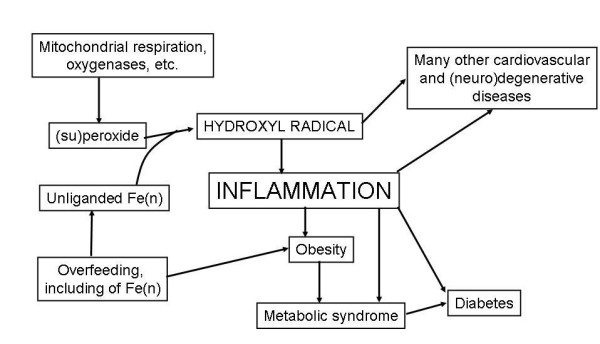
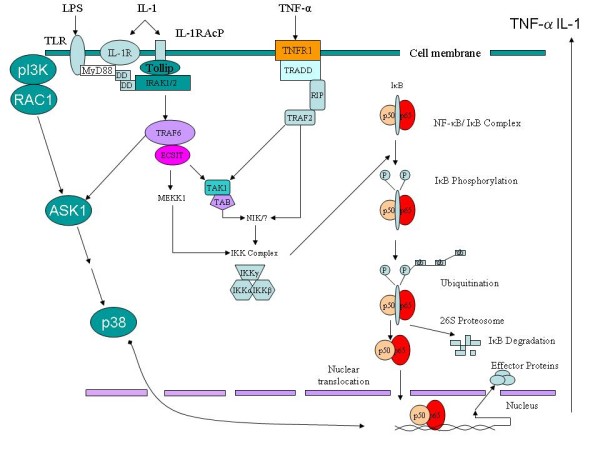
Background: The production of peroxide and superoxide is an inevitable consequence of aerobic metabolism, and while these particular 'reactive oxygen species' (ROSs) can exhibit a number of biological effects, they are not of themselves excessively reactive and thus they are not especially damaging at physiological concentrations.However, their reactions with poorly liganded iron species can lead to the catalytic production of the very reactive and dangerous hydroxyl radical, which is exceptionally damaging, and a major cause of chronic inflammation.Review: We review the considerable and wide-ranging evidence for the involvement of this combination of (su)peroxide and poorly liganded iron in a large number of physiological and indeed pathological processes and inflammatory disorders, especially those involving the progressive degradation of cellular and organismal performance.These diseases share a great many similarities and thus might be considered to have a common cause (i.e.iron-catalysed free radical and especially hydroxyl radical generation).The studies reviewed include those focused on a series of cardiovascular, metabolic and neurological diseases, where iron can be found at the sites of plaques and lesions, as well as studies showing the significance of iron to aging and longevity.The effective chelation of iron by natural or synthetic ligands is thus of major physiological (and potentially therapeutic) importance.As systems properties, we need to recognise that physiological observables have multiple molecular causes, and studying them in isolation leads to inconsistent patterns of apparent causality when it is the simultaneous combination of multiple factors that is responsible.This explains, for instance, the decidedly mixed effects of antioxidants that have been observed, since in some circumstances (especially the presence of poorly liganded iron) molecules that are nominally antioxidants can actually act as pro-oxidants.The reduction of redox stress thus requires suitable levels of both antioxidants and effective iron chelators.Some polyphenolic antioxidants may serve both roles.Understanding the exact speciation and liganding of iron in all its states is thus crucial to separating its various pro-and anti-inflammatory activities.Redox stress, innate immunity and pro-(and some anti-)inflammatory cytokines are linked in particular via signalling pathways involving NF-kappaB and p38, with the oxidative roles of iron here seemingly involved upstream of the IkappaB kinase (IKK) reaction.In a number of cases it is possible to identify mechanisms by which ROSs and poorly BioMed Central Open Access liganded iron act synergistically and autocatalytically, leading to 'runaway' reactions that are hard to control unless one tackles multiple sites of action simultaneously.Some molecules such as statins and erythropoietin, not traditionally associated with anti-inflammatory activity, do indeed have 'pleiotropic' anti-inflammatory effects that may be of benefit here.Conclusion: Overall we argue, by synthesising a widely dispersed literature, that the role of poorly liganded iron has been rather underappreciated in the past, and that in combination with peroxide and superoxide its activity underpins the behaviour of a great many physiological processes that degrade over time.Understanding these requires an integrative, systems-level approach that may lead to novel therapeutic targets. Background and preambleThe 'balkanisation' of the literature is in part due to the amount of it (some 25,000 journals with presently 2.5 million peer-reviewed papers per year, i.e. ~5 per minute [1]), with a number http://www.nlm.nih.gov/ bsd/medline_cit_counts_yr_pub.htmlincreasing by something approaching 2 per minute at PubMed/Medline alone.In addition, the disconnect between the papers in the literature (usually as pdf files) and the metadata describing them (author, journal, year, pages, etc) is acute and badly needs filling [2].Without solving this problem, and without automation of the processes of reading, interpreting and exploiting this literature and its metadata in a digital format, we cannot make use of the existing tools for text mining and natural language processing (e.g.[3-5]), for joining disparate concepts [6], for literature-based discovery (e.g.[7-11], and for studies of bibliometrics [12, 13], literature dynamics [14], knowledge domains [15], detecting republication [16] and so on.Until we recognise these possibilities we are unlikely to seek to realise them.The present article (and see [17] for a preprint) serves to show some of the benefits than can accrue from a more overarching view of the otherwise highly disparate literature in a particular domain (see also [18]), but was done 'the hard way', i.e. with a few bibliographic and bibliometric tools but without the kind of automation implied above.For the record, the main tools used (see a review in [2]) were Web of Knowledge and Scopus for literature a
Verified 2026-10-05 · 9 references not checked yet
Overview
CoChat Summary
TL;DR
This review argues that poorly liganded iron, reacting with superoxide/peroxide to generate hydroxyl radicals, is an underappreciated common driver of progressive inflammatory and degenerative diseases. It synthesizes dispersed evidence across cardiovascular, metabolic, neurological, renal, and other conditions and proposes that effective iron chelation, often combined with antioxidants, is a rational therapeutic strategy.
Key findings
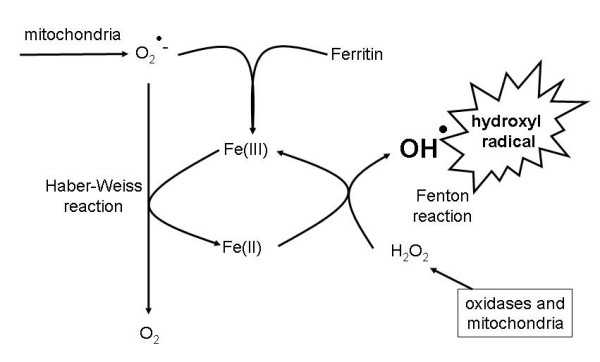
- Poorly liganded iron catalyses hydroxyl radical production via Fenton/Haber-Weiss chemistry; the review states that 1–4% of reduced O₂ forms partially reduced species such as hydrogen peroxide and superoxide, which are comparatively non-toxic until they encounter poorly liganded iron.
- Iron is implicated across many diseases reviewed, including pre-eclampsia, diabetes, metabolic syndrome, hypertension, atherosclerosis, stroke, Alzheimer’s/Parkinson’s, Friedreich’s ataxia, ALS, aging/frailty, rheumatoid arthritis, lupus, asthma, IBD, AMD, psoriasis, gout, liver disease, COPD, cancer, malaria, sepsis/SIRS, and others.
- Antioxidant trials have been mixed or disappointing; the review argues this may occur because antioxidants can act as pro-oxidants in the presence of poorly liganded Fe(II), so redox stress reduction requires both suitable antioxidants and effective iron chelators.
- Quantitative examples cited include EPR-detectable iron in atherosclerotic tissue being 17 times greater than healthy tissue, aspirin lowering colon cancer incidence by 40% (age-adjusted relative risk = 0.6), and NGAL serum concentrations approaching 20–30 nM during inflammation.
Methods
- Narrative literature review/meta-analysis synthesizing widely dispersed literature; the main review was completed on June 30th, 2008, with some updates after refereeing.
- Literature and citation searching used Web of Knowledge and Scopus, supplemented by Google Scholar; some use was made of ARROWSMITH, GOPubMed, Taverna workflows, and Endnote for citations/metadata.
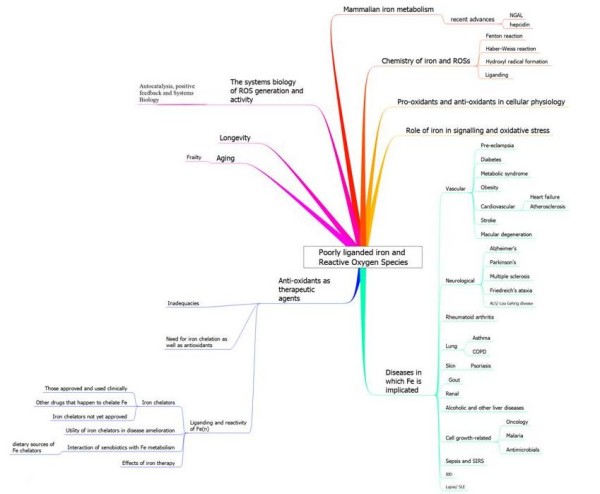
- The paper develops a systems-biology argument rather than reporting primary experimental data; it includes a mind-map overview and discusses iron chemistry, chelator pharmacology, signalling pathways, and disease associations.
Limitations
- Stated: the review notes that it is “not easy to state at this time” how much deranged iron metabolism is causal in accelerated aging, that few studies have been mechanistically specific, and that interpretation of chelation experiments is not always clear-cut.
- Stated: for pre-eclampsia, no serum hepcidin measurements had been reported to date; for obesity, the authors “see no major evidence as yet for a causative role of deranged iron metabolism or chelation in causing obesity.”
- Evident: this is a broad narrative synthesis, not a systematic review with formal search/selection criteria or quantitative meta-analysis, and many disease links are presented as mechanistic hypotheses supported by dispersed, often indirect evidence.
Model-written summary of a shortened version of the paper’s full text (it is longer than we read). Check it against the paper before relying on it.
Integrity signals
Registry
Cites
Statistics
Figures
Verification
Claims the paper makes
32 Valid · 6 Not valid · 122 Not checked · 46 Own results and interpretations
The sources with a verdict support this claim; the rest weren’t checked yet, have no full text we could read, or their verdicts aren’t rated yet.
In the paper
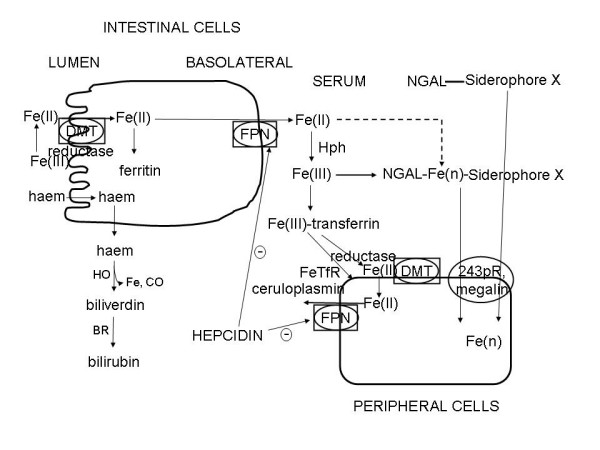
“that acts in part as a negative regulator of iron efflux [328] by causing the internalisation of ferroportin [329-333].”
§ Iron behaving badly: inappropriate iron chelation as a major contributor to the aetiology of vascular and other progressive inflammatory and degenerative diseases > Mammalian iron metabolism > Hepcidin
What the sources say
- Supportedcites [328] Knutson MD Oukka M Koss LM Aydemir F Wessling-Resnick M Iron release from macrophages after erythrophagocytosis is up-regulated by ferroportin 1 overexpression and down-regulated by hepcidin Proc Natl Acad Sci USA 2005 102 1324 8 15665091 PMC547844 source
Citation [328] is attached to the claim that hepcidin negatively regulates iron efflux, not to the subsequent internalisation mechanism cited to [329–333]. The Discussion calls hepcidin a negative regulator of iron export, and the Results report reduced iron release from hepcidin-treated macrophages. (LLM, conf=0.94)
- Not checked yetcites [329] Nemeth E Tuttle MS Powelson J Vaughn MB Donovan A Ward DM Ganz T Kaplan J Hepcidin regulates cellular iron efflux by binding to ferroportin and inducing its internalization Science 2004 306 2090 2093 15514116 source
- Not checked yetcites [330] Delaby C Pilard N Goncalves AS Beaumont C Canonne-Hergaux F Presence of the iron exporter ferroportin at the plasma membrane of macrophages is enhanced by iron loading and down-regulated by hepcidin Blood 2005 106 3979 84 16081696 source
- Not checked yetcites [331] Ganz T Hepcidin – a regulator of intestinal iron absorption and iron recycling by macrophages Best Practice & Research Clinical Haematology 2005 18 171 182 15737883 source
- Supportedcites [332] Papanikolaou G Tzilianos M Christakis JI Bogdanos D Tsimirika K MacFarlane J Goldberg YP Sakellaropoulos N Ganz T Nemeth E Hepcidin in iron overload disorders Blood 2005 105 4103 4105 15671438 PMC1895089 source
The Abstract states that hepcidin inhibits cellular iron efflux by binding to ferroportin and inducing its internalization and degradation. The Introduction also states that hepcidin binds ferroportin and causes its internalization. (LLM, conf=0.94)
- Supportedcites [333] Lesbordes-Brion JC Viatte L Bennoun M Lou DQ Ramey G Houbron C Hamard G Kahn A Vaulont S Targeted disruption of the hepcidin 1 gene results in severe hemochromatosis Blood 2006 108 1402 1405 16574947 source
The Introduction states that hepcidin limits iron egress by binding to ferroportin and inducing its internalization and degradation, decreasing cellular iron export. This supports the attributed role as a negative regulator of iron efflux. (LLM, conf=0.94)
plainstates a cause- Asserted: passes — The authors put it forward as true.
- Checkable: passes — It can be checked against evidence.
- Load-bearing: unclear — It is unclear whether the paper’s conclusions depend on it.
- Based: passes — The paper gives a reason why it holds.
- Supported
The cited sources support only part of this claim — read each source’s verdict below.
In the paper
“the well-known adverse vascular effects of homocysteine (in inhibiting flow-mediated dilatation) are in fact iron-dependent [701-703]”
§ Iron behaving badly: inappropriate iron chelation as a major contributor to the aetiology of vascular and other progressive inflammatory and degenerative diseases > Some disease manifestations in which iron may be implicated > Cardiovascular diseases
What the sources say
- Partly supportedcites [701] Zheng H Dimayuga C Hudaihed A Katz SD Effect of dexrazoxane on homocysteine-induced endothelial dysfunction in normal subjects Arterioscler Thromb Vasc Biol 2002 22 E15 8 12117747 sourceExperimental — accuracy not yet measured
The Abstract and Results of Zheng et al. (2002) do show, as a measured fact in 10 healthy volunteers, that the iron-chelating prodrug dexrazoxane 'completely abrogate[d] the homocysteine-induced reduction in FMD' after a methionine load, without lowering homocysteine itself — so the source supports iron-dependence of homocysteine's inhibition of flow-mediated dilatation in that acute model. However, the paper hedges the causal/mechanistic claim it is credited with establishing: the Iron-Based Oxidative Stress section states homocysteine toxicity 'may be dependent in part on interactions with intracellular LMW-Fe2+', and the Conclusions say iron-based hydroxyl-radical production 'may contribute' and that chelation 'may have therapeutic potential'. The citing sentence asserts the effects 'are in fact iron-dependent' and 'well-known', a confident generalisation the source does not make, and the source's data come only from transient hyperhomocysteinemia in normal subjects, not from chronic or other vascular outcomes. (LLM, conf=0.72)
- Not checked yetcites [702] Zheng H Huang X Zhang Q Katz SD Iron sucrose augments homocysteine-induced endothelial dysfunction in normal subjects Kidney Int 2006 69 679 84 16395269 PMC2988421 source
- Not checked yetcites [703] Sullivan JL Is homocysteine an iron-dependent cardiovascular risk factor? Kidney Int 2006 69 642 4 16467888 source
boostedstates a cause- Asserted: passes — The authors put it forward as true.
- Checkable: passes — It can be checked against evidence.
- Load-bearing: passes — The paper’s conclusions depend on it.
- Based: passes — The paper gives a reason why it holds.
- Partly supported
The cited sources support only part of this claim — read each source’s verdict below.
In the paper
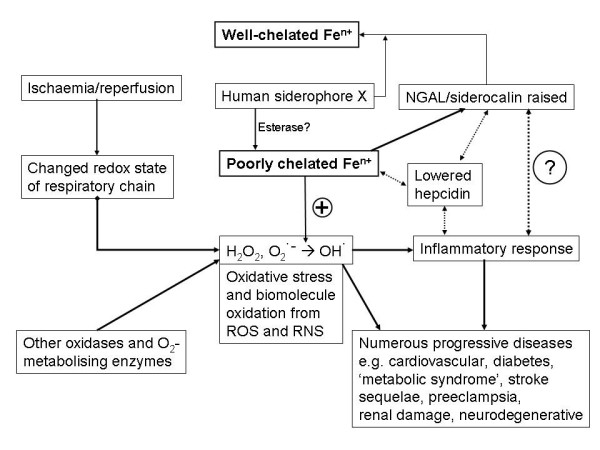
“There is no doubt that the iron-mediated causal chain of ischaemia → (su)peroxide → OH• radical formation occurs during the development of heart disease, especially during reperfusion injury [710-713]”
§ Iron behaving badly: inappropriate iron chelation as a major contributor to the aetiology of vascular and other progressive inflammatory and degenerative diseases > Some disease manifestations in which iron may be implicated > Cardiovascular diseases
What the sources say
- Not checked yetcites [710] Smith JK Carden DL Grisham MB Granger DN Korthuis RJ Role of iron in postischemic microvascular injury Am J Physiol 1989 256 H1472 7 2719141
- Partly supportedcites [711] Kukreja RC Hess ML The oxygen free radical system: from equations through membrane protein interactions to cardiovascular injury and protection Cardiovasc Res 1992 26 641 655 1423428 sourceExperimental — accuracy not yet measured
The Conclusions passage and the Figure 8 legend in our copy state exactly the iron-mediated chain the claim attributes: ischaemia/reperfusion generates superoxide, which dismutates to H2O2 and, in the presence of iron, forms .OH via iron-catalysed Fenton and Haber-Weiss reactions, initiating membrane lipid peroxidation and myocardial injury. However, the source hedges this as a proposal ('This hypothesis proposes...', radicals 'are thought to be responsible for much of this injury', 'it now appears that the oxygen free radical system plays a pivotal role'), and the Masterclass section explicitly notes 'Many investigators, but not all' found scavenger protection — so the citing sentence's 'there is no doubt' overstates the source. Our copy also bounds the mechanism to myocardial ischaemia/reperfusion, stunning, arrhythmias and inflammation, not to the general 'development of heart disease'. (LLM, conf=0.78)
- Not checked yetcites [712] Lesnefsky E Ye J Exogenous intracellular, but not extracellular, iron augments myocardial reperfusion injury Amer J Physiol 1994 266 H384 H392 8141338
- Not checked yetcites [713] Berenshtein E Mayer B Goldberg C Kitrossky N Chevion M Patterns of mobilization of copper and iron following myocardial ischemia: Possible predictive criteria for tissue injury J Mol Cell Cardiol 1997 29 3025 3034 9405177 source
boostedstates a cause- Asserted: passes — The authors put it forward as true.
- Checkable: passes — It can be checked against evidence.
- Load-bearing: passes — The paper’s conclusions depend on it.
- Based: passes — The paper gives a reason why it holds.
The cited sources support only part of this claim — read each source’s verdict below.
In the paper
“Iron and oxidised lipids are both found in atherosclerotic lesions [141,765-777]”
§ Iron behaving badly: inappropriate iron chelation as a major contributor to the aetiology of vascular and other progressive inflammatory and degenerative diseases > Some disease manifestations in which iron may be implicated > Atherosclerosis
What the sources say
- Not checked yetcites [141] Brewer GJ Iron and copper toxicity in diseases of aging, particularly atherosclerosis and Alzheimer's disease Exp Biol Med 2007 232 323 335 17259340
- Partly supportedcites [765] Smith C Mitchinson MJ Aruoma OI Halliwell B Stimulation of lipid peroxidation and hydroxyl radical generation by the contents of human atherosclerotic lesions Biochem J 1992 286 901 905 1329721 PMC1132988 sourceExperimental — accuracy not yet measured
The Abstract reports bleomycin-detectable iron in every sample from advanced human atherosclerotic lesions. It reports that the samples stimulated lipid peroxidation in rat liver microsomes, but does not establish that oxidised lipids were present in the lesions themselves; the Discussion describes lipid damage in lesions as a proposal. (LLM, conf=0.86)
- Not checked yetcites [766] Ramakrishna G Rooke TW Cooper LT Iron and peripheral arterial disease: revisiting the iron hypothesis in a different light Vasc Med 2003 8 203 210 14989563 source
- Supportedcites [767] Stadler N Lindner RA Davies MJ Direct detection and quantification of transition metal ions in human atherosclerotic plaques: evidence for the presence of elevated levels of iron and copper Arterioscler Thromb Vasc Biol 2004 24 949 54 15001454 source
The paper reports in its Abstract that oxidized lipids have been detected in human plaques. Its Discussion reports elevated iron levels in advanced human carotid lesions compared with healthy tissue. Together, these passages support the claim; page numbers are unavailable in our copy. (LLM, conf=0.91)
- Not checked yetcites [768] Wolff B Volzke H Ludemann J Robinson D Vogelgesang D Staudt A Kessler C Dahm JB John U Felix SB Association between high serum ferritin levels and carotid atherosclerosis in the study of health in Pomerania (SHIP) Stroke 2004 35 453 7 14726541 source
- Not checked yetcites [769] Roijers RB Dutta RK Mutsaers PHA Gijbels MJJ de Winther MPJ de Goeij JJM Vusse GJ van der Spatial correlation of trace elements with morphological features of atherosclerotic plaques Nuclear Instruments & Methods in Physics Research Section B-Beam Interactions with Materials and Atoms 2005 231 239 244 source
- Not checked yetcites [770] Stocker R Keaney JF New insights on oxidative stress in the artery wall Journal of Thrombosis and Haemostasis 2005 3 1825 1834 16102049 source
- Not checked yetcites [771] Stanley N Stadler N Woods AA Bannon PG Davies MJ Concentrations of iron correlate with the extent of protein, but not lipid, oxidation in advanced human atherosclerotic lesions Free Radical Biology and Medicine 2006 40 1636 1643 16632123 source
- Not checked yetcites [772] Watt F Rajendran R Ren MQ Tan BKH Halliwell B A nuclear microscopy study of trace elements Ca, Fe, Zn and Cu in atherosclerosis Nucl Instr Meth Phys Res B 2006 249 646 652 source
- Partly supportedcites [773] Fernandes de Godoy M Takakura IT Machado RD Grassi LV Nogueira PR Serum ferritin and obstructive coronary artery disease: Angiographic correlation Arquivos Brasileiros De Cardiologia 2007 88 430 433 17546273 sourceExperimental — accuracy not yet measured
The Discussion (page unavailable) reports increased expression of the iron-storage protein ferritin in atherosclerotic coronary arteries. It only speculates that this might affect lipid oxidation in the vessel wall; it does not establish that oxidised lipids were found in the lesions. (LLM, conf=0.82)
plainstates an association- Asserted: passes — The authors put it forward as true.
- Checkable: passes — It can be checked against evidence.
- Load-bearing: passes — The paper’s conclusions depend on it.
- Based: passes — The paper gives a reason why it holds.
The sources with a verdict support this claim; the rest weren’t checked yet, have no full text we could read, or their verdicts aren’t rated yet.
In the paper
“while iron chelation improves it [797-800].”
§ Iron behaving badly: inappropriate iron chelation as a major contributor to the aetiology of vascular and other progressive inflammatory and degenerative diseases > Some disease manifestations in which iron may be implicated > Atherosclerosis
What the sources say
- Supportedcites [797] Duffy SJ Biegelsen ES Holbrook M Russell JD Gokce N Keaney JF Jr Vita JA Iron chelation improves endothelial function in patients with coronary artery disease Circulation 2001 103 2799 804 11401935 source
The Abstract (Methods and Results / Conclusions) of our copy states that deferoxamine (an iron chelator) improved the blood flow response to methacholine in patients with coronary artery disease (P<0.01) and concludes 'Deferoxamine improved nitric oxide-mediated, endothelium-dependent vasodilation in patients with coronary artery disease.' The paper's title itself is 'Iron Chelation Improves Endothelial Function in Patients With Coronary Artery Disease,' so the paraphrase matches the source, with the population qualifier (CAD patients) intact; deferoxamine had no effect in normal volunteers, consistent with the stated finding. (LLM, conf=0.93)
- Supportedcites [798] Ishizaka N Saito K Mori I Matsuzaki G Ohno M Nagai R Iron chelation suppresses ferritin upregulation and attenuates vascular dysfunction in the aorta of angiotensin II-infused rats Arterioscler Thromb Vasc Biol 2005 25 2282 8 16100038 source
The Results section ('Relaxations of Aortic Segments') states that deferoxamine reversed the impaired acetylcholine-induced (endothelium-dependent) relaxation in the aortas of angiotensin II–infused rats (50.4±5.7% → 69.2±6.0%, n=10), i.e. an improvement in endothelial function, with Figure 4A showing the same. The Discussion frames this as iron chelation suppressing Ang II-induced impaired vascular relaxation, attributing it to reduced iron-catalysed oxidative stress. The support is for the direction of the claim in a rat aorta model and is described as partial rather than complete reversal, which is the only qualifier the unqualified citing sentence omits. (LLM, conf=0.80)
- Not checked yetcites [799] Saito K Ishizaka N Aizawa T Sata M Iso-o N Noiri E Mori I Ohno M Nagai R Iron chelation and a free radical scavenger suppress angiotensin II-induced upregulation of TGF-beta1 in the heart Am J Physiol Heart Circ Physiol 2005 288 H1836 43 15550525 source
- Not checked yetcites [800] Thomas SR Schulz E Keaney JF Hydrogen peroxide restrains endothelium-derived nitric oxide bioactivity – Role for iron-dependent oxidative stress Free Radical Biology and Medicine 2006 41 681 688 16864001 source
plainstates a cause- Asserted: passes — The authors put it forward as true.
- Checkable: passes — It can be checked against evidence.
- Load-bearing: passes — The paper’s conclusions depend on it.
- Based: passes — The paper gives a reason why it holds.
- Supported
81 more claims · 6 with their cited sources checked
Create a free account to see all 206 claims and to verify the 567 references still open.
- Probably not a substantial claim. 42
- It may state two separate claims as one. 95
Claims other papers make about this one
Each is checked against this paper’s own text: does it say what the citing paper says it does?
The source backs part of the claim, not all of it — or backs it for a different population, condition or comparison.
In the citing paper
“Due to the presence of high-affinity iron binding and storage proteins, the actual toxicity of iron is restricted to the so called “labile iron pool”.”
From The interaction of asbestos and iron in lung tissue revealed by synchrotron-based scanning X-ray microscopy (2013) · cites this paper as [18]
Experimental — accuracy not yet measuredThe source backs part of the claim, not all of it — or backs it for a different population, condition or comparison.
In the citing paper
“Fe (II) reacting with unsaturated fatty acids in the presence of H 2 O 2 can initiate lipid peroxidation cascade in biological membranes and lipoproteins by production of HO•.”
From Iron, Oxidative Stress and Health (2012) · cites this paper as Kell, 2009
Experimental — accuracy not yet measuredThe source backs part of the claim, not all of it — or backs it for a different population, condition or comparison.
In the citing paper
“Lipid peroxidation increases membrane fragility of cell organelles such as mitochondria, lysosomes and endoplasmic reticulum leading to impaired cell function”
From Iron, Oxidative Stress and Health (2012) · cites this paper as Kell, 2009
Experimental — accuracy not yet measuredThe cited source says what the claim attributes to it.
In the citing paper
“Importantly, dysregulated iron homeostasis is associated with progressive inflammatory and degenerative diseases, as well as cancer [2].”
From The utility of iron chelators in the management of inflammatory disorders (2015) · cites this paper as [2]
The cited source says what the claim attributes to it.
In the citing paper
“Concerning this issue, the recent reviews by D. Kell1819 analyse the wide but dispersed literature via a systems biology approach, and indicate that iron that is weakly complexed boosts many biochemical processes leading to a large variety of apparently unrelated diseases.”
From The interaction of asbestos and iron in lung tissue revealed by synchrotron-based scanning X-ray microscopy (2013) · cites this paper as [18]
3 more claims about this paper
Create a free account to see every claim other papers make about this one.
Citations
Cites
3 retracted
Items 1,001–1,200 of 2,563
On the selectivity of superoxide dismutase mimetics and its importance in pharmacological studies
Muscoli, C., Cuzzocrea, S., Riley, D. P., Zweier, J. L., Thiemermann, C., Wang, Z., & Salvemini, D. (2003) · British Journal of Pharmacology · doi:10.1038/sj.bjp.0705430 · Cited by 271 · cited 1×
“radicals we need both to decrease their production and increase their removal to harmless substances [2141],”
BackgroundIron Chelation Improves Endothelial Function in Patients With Coronary Artery Disease
Duffy, S. J., Biegelsen, E. S., Holbrook, M., Russell, J. D., Gokce, N., Keaney, J. F., & Vita, J. A. (2001) · Circulation · doi:10.1161/01.cir.103.23.2799 · Cited by 271 · cited 1×
“injury [1773, 1774], coronary disease [714, 797], renal”
Sepsis and the systemic inflammatory response syndrome: Neuromuscular manifestations
Bolton, C. F. (1996) · Critical Care Medicine · doi:10.1097/00003246-199608000-00022 · Cited by 271
Causes of Oxidative Stress in the Pre- and Perinatal Period
Gitto, E., Reiter, R. J., Karbownik, M., Tan, D.-X., Gitto, P., Barberi, S., & Barberi, I. (2002) · Neonatology · doi:10.1159/000051527 · Cited by 271
Statins and sepsis: multiple modifications at multiple levels
Terblanche, M., Almog, Y., Rosenson, R. S., Smith, T. S., & Hackam, D. G. (2007) · The Lancet Infectious Diseases · doi:10.1016/s1473-3099(07)70111-1 · Cited by 271
Kelloff, G. J., Lippman, S. M., Dannenberg, A. J., Sigman, C. C., Pearce, H. L., Reid, B. J., Szabo, E., Jordan, V. C., Spitz, M. R., Mills, G. B., et al. (2006) · Clinical Cancer Research · doi:10.1158/1078-0432.ccr-06-1104 · Cited by 270 · cited 2×
“In addition to the issues of smoking, the development of cancer can certainly contain an inflammatory component [1268-1278], and indeed the long-term use of prophylactic anti-inflammatory aspirin lowers colon cancer incidence by 40% (age-adjusted relative risk = 0.”
BackgroundIron-withholding strategy in innate immunity
Ong, S. T., Shan Ho, J. Z., Ho, B., & Ding, J. L. (2006) · Immunobiology · doi:10.1016/j.imbio.2006.02.004 · Cited by 269 · cited 1×
“[152] Ong, S.”
Bai, S.-K., Lee, S.-J., Na, H.-J., Ha, K.-S., Han, J.-A., Lee, H., Kwon, Y.-G., Chung, C.-K., & Kim, Y.-M. (2005) · Experimental & Molecular Medicine · doi:10.1038/emm.2005.42 · Cited by 269
Using literature-based discovery to identify disease candidate genes
Hristovski, D., Peterlin, B., Mitchell, J. A., & Humphrey, S. M. (2005) · International Journal of Medical Informatics · doi:10.1016/j.ijmedinf.2004.04.024 · Cited by 269
Inflammation-associated cancer: NF-κB is the lynchpin
Li, Q., Withoff, S., & Verma, I. M. (2005) · Trends in Immunology · doi:10.1016/j.it.2005.04.003 · Cited by 268
Kruman, I. I., Pedersen, W. A., Springer, J. E., & Mattson, M. P. (1999) · Experimental Neurology · doi:10.1006/exnr.1999.7190 · Cited by 268 · cited 1×
“It has largely defied efforts to uncover the genetic basis of any predisposition [1025], save for a very clear association with defects in a Cu/Zn superoxide dismutase [8; 1026-1028] that can obviously lead to an increase in the steady-state levels of superoxide (and hence hydroxyl radical formation).”
Background8-Isoprostane as a Biomarker of Oxidative Stress in Interstitial Lung Diseases
MONTUSCHI, P., TONI, G. C., PAREDI, P., PANTELIDIS, P., du BOIS, R. M., KHARITONOV, S. A., & BARNES, P. J. (1998) · American Journal of Respiratory and Critical Care Medicine · doi:10.1164/ajrccm.158.5.9803102 · Cited by 267
Design of clinically useful iron(III)‐selective chelators
Liu, Z. D., & Hider, R. C. (2002) · Medicinal Research Reviews · doi:10.1002/med.1027 · Cited by 266
Enhancement of cytotoxicity of artemisinins toward cancer cells by ferrous iron
Efferth, T., Benakis, A., Romero, M. R., Tomicic, M., Rauh, R., Steinbach, D., Häfer, R., Stamminger, T., Oesch, F., Kaina, B., et al. (2004) · Free Radical Biology and Medicine · doi:10.1016/j.freeradbiomed.2004.06.023 · Cited by 266 · cited 1×
“cytotoxic) mode of action of artemisinin [1336; 1338-1346], and this reaction is in fact inhibited by iron chelators [1347] such that a combined artemisinin-chelator therapy would be contraindicated.”
BackgroundLiu, J., Killilea, D. W., & Ames, B. N. (2002) · Proceedings of the National Academy of Sciences · doi:10.1073/pnas.261709098 · Cited by 266 · cited 2×
“Continuing the theme of polypharmacology, R-(α)-lipoic acid [1584-1587] is also an antioxidant.”
BackgroundBeyond lipid lowering: the role of statins in vascular protection
Liao, J. K. (2002) · International Journal of Cardiology · doi:10.1016/s0167-5273(02)00195-x · Cited by 266 · cited 1×
“[708] Liao, J.”
Targeting eNOS for stroke protection
Endres, M., Laufs, U., Liao, J. K., & Moskowitz, M. A. (2004) · Trends in Neurosciences · doi:10.1016/j.tins.2004.03.009 · Cited by 266
Minireview: The Role of Oxidative Stress in Relation to Caloric Restriction and Longevity
Gredilla, R., & Barja, G. (2005) · Endocrinology · doi:10.1210/en.2005-0378 · Cited by 265
Hahn, P., Qian, Y., Dentchev, T., Chen, L., Beard, J., Harris, Z. L., & Dunaief, J. L. (2004) · Proceedings of the National Academy of Sciences · doi:10.1073/pnas.0405146101 · Cited by 264
Piga, A. G., Galanello, R., Forni, G. L., Cappellini, M. D., Origa, R., Zappu, A., Donato, G., Bordone, E., Lavagetto, A., Zanaboni, L., et al. (2006) · PubMed · Cited by 264
Jeong, W.-S., Kim, I.-W., Hu, R., & Kong, A.-N. T. (2004) · Pharmaceutical Research · doi:10.1023/b:pham.0000022413.43212.cf · Cited by 264 · cited 2×
“[1268] [1761] [1762] [1763] [1764] [1765] [1766] [1767] [1768] [1769] [1770] [1771] [1772] [1724] [1773] [1774] [1775] [1776] [1777] [1778] [1779] [1780] [1725] [1273] [1781] [1782] [1783] [1784] [1785] [1786] [1787] [1788] [1276] [1789] [1790] [1791] [1792] [1793] [1794] [1795]”
The cutaneous pathology of lupus erythematosus: a review
Crowson, A. N., & Magro, C. (2001) · Journal of Cutaneous Pathology · doi:10.1034/j.1600-0560.2001.280101.x · Cited by 264 · cited 1×
“[1148-1156]), but characterised in particular by fatigue [1157], often as a result of anaemia.”
BackgroundThe Access/Impact Problem and the Green and Gold Roads to Open Access: An Update
Harnad, S. R., Brody, T., Vallières, F., Carr, L. A., Hitchcock, S., Gingras, Y., Oppenheim, C., Hajjem, C., & Hilf, E. R. (2008) · Serials Review · doi:10.1016/j.serrev.2007.12.005 · Cited by 264
Growth control of the eukaryote cell: a systems biology study in yeast
Castrillo, J. I., Zeef, L. A., Hoyle, D. C., Zhang, N., Hayes, A., Gardner, D. C., Cornell, M. J., Petty, J., Hakes, L., Wardleworth, L., et al. (2007) · Journal of Biology · doi:10.1186/jbiol54 · Cited by 263 · cited 1×
“Changes in individual reaction steps (or even single manipulations) can changes the levels of scores or hundreds of transcripts [1929], proteins [1930] or metabolites [631].”
BackgroundSelf-citationApoptosis in the Trophoblast—Role of Apoptosis in Placental Morphogenesis
Huppertz, B., & Kingdom, J. C. P. (2004) · Journal of the Society for Gynecologic Investigation · doi:10.1016/j.jsgi.2004.06.002 · Cited by 262 · cited 1×
“apoptosis during the placental remodelling [417-423].”
Calabrese, E. J. (2008) · British Journal of Clinical Pharmacology · doi:10.1111/j.1365-2125.2008.03243.x · Cited by 262
Iron and pregnancy—a delicate balance
Milman, N. (2006) · Annals of Hematology · doi:10.1007/s00277-006-0108-2 · Cited by 262 · cited 1×
“latter stages [526, 527], and that this does of course lead”
BackgroundQian, S. Y., & Buettner, G. R. (1999) · Free Radical Biology and Medicine · doi:10.1016/s0891-5849(99)00002-7 · Cited by 262 · cited 1×
“as the perferryl ion (Fe-O) [144] and reactive nitrogen”
BackgroundStatins and the vascular endothelial inflammatory response
Greenwood, J., & Mason, J. C. (2007) · Trends in Immunology · doi:10.1016/j.it.2006.12.003 · Cited by 262 · cited 1×
“plaques, is arguably well explained, especially within the context of the present review, via their additional anti-inflammatory effects [710; 712; 736-756] [121; 716-718; 723; 729; 730; 757-785],”
BackgroundFat as an Endocrine Organ: Relationship to the Metabolic Syndrome
Hutley, L., & Prins, J. B. (2005) · The American Journal of the Medical Sciences · doi:10.1097/00000441-200512000-00005 · Cited by 262
Iron homeostasis and toxicity in retinal degeneration
He, X., Hahn, P., Iacovelli, J., Wong, R., King, C., Bhisitkul, R., Massaro-Giordano, M., & Dunaief, J. L. (2007) · Progress in Retinal and Eye Research · doi:10.1016/j.preteyeres.2007.07.004 · Cited by 260 · cited 4×
“Age-related macular degeneration (AMD) [1188] is now the leading cause of blindness and visual disability in the elderly in developed countries [1189-1192].”
BackgroundInfluentialHepatic Steatosis: A Mediator of the Metabolic Syndrome. Lessons From Animal Models
den Boer, M., Voshol, P. J., Kuipers, F., Havekes, L. M., & Romijn, J. A. (2004) · Arteriosclerosis, Thrombosis, and Vascular Biology · doi:10.1161/01.atv.0000116217.57583.6e · Cited by 260 · cited 1×
“observed in the one may be observed during the development of the other. The metabolic syndrome is also an independent indicator for chronic kidney disease [545] and may be related to liver steatosis [546]. Metabolic disorders of this type too are closely intertwined with inflammation [490; 496; 502; 547], that is of…”
BackgroundSod mimetics are coming of age
Salvemini, D., Riley, D. P., & Cuzzocrea, S. (2002) · Nature Reviews Drug Discovery · doi:10.1038/nrd796 · Cited by 260
The Prevalence of Blindness and Visual Impairment among Nursing Home Residents in Baltimore
Tielsch, J. M., Javitt, J. C., Coleman, A., Katz, J., & Sommer, A. (1995) · New England Journal of Medicine · doi:10.1056/nejm199505043321806 · Cited by 260 · cited 1×
“Age-related macular degeneration (AMD) [1188] is now the leading cause of blindness and visual disability in the elderly in developed countries [1189-1192].”
BackgroundStatins in atherosclerosis: lipid-lowering agents with antioxidant capabilities
Rosenson, R. S. (2004) · Atherosclerosis · doi:10.1016/s0021-9150(03)00239-9 · Cited by 260
Craven, C. M., Alexander, J., Eldridge, M., Kushner, J. P., Bernstein, S., & Kaplan, J. (1987) · Proceedings of the National Academy of Sciences · doi:10.1073/pnas.84.10.3457 · Cited by 259 · cited 2×
“While upwards of 500 microbial siderophores have been identified [138], with new ones still appearing [153], and with the most common one in medical use, desferrioxamine or DFO, being such a bacterial product (see below), it is an astonishing fact that no human siderophore has been chemically identified, even though s…”
BackgroundNishina, S., Hino, K., Korenaga, M., Vecchi, C., Pietrangelo, A., Mizukami, Y., Furutani, T., Sakai, A., Okuda, M., Hidaka, I., et al. (2008) · Gastroenterology · doi:10.1053/j.gastro.2007.10.011 · Cited by 259
The IκB kinase – a bridge between inflammation and cancer
Karin, M. (2008) · Cell Research · doi:10.1038/cr.2008.30 · Cited by 259
Hahn, P. (2003) · Archives of Ophthalmology · doi:10.1001/archopht.121.8.1099 · Cited by 258 · cited 2×
“[1197] Hahn, P.”
BackgroundIron deposits in multiple sclerosis and Alzheimer's disease brains
LeVine, S. M. (1997) · Brain Research · doi:10.1016/s0006-8993(97)00470-8 · Cited by 258
Skeletal muscle insulin resistance: role of inflammatory cytokines and reactive oxygen species
Wei, Y., Chen, K., Whaley-Connell, A. T., Stump, C. S., Ibdah, J. A., & Sowers, J. R. (2008) · American Journal of Physiology-Regulatory, Integrative and Comparative Physiology · doi:10.1152/ajpregu.00561.2007 · Cited by 258 · cited 1×
“aetiology to be inflammatory in nature [553, 571-590].”
BackgroundCancer cell iron metabolism and the development of potent iron chelators as anti-tumour agents
Richardson, D. R., Kalinowski, D. S., Lau, S., Jansson, P. J., & Lovejoy, D. B. (2009) · Biochimica et Biophysica Acta (BBA) - General Subjects · doi:10.1016/j.bbagen.2008.04.003 · Cited by 258
Martı&#x;n, A. R., Villegas, I., La Casa, C., & de la Lastra, C. A. (2004) · Biochemical Pharmacology · doi:10.1016/j.bcp.2003.12.024 · Cited by 258 · cited 1×
“their origins are somewhat uncertain [1301-1304].”
Interactions Between Nitric Oxide and Lipid Oxidation Pathways: Implications for Vascular Disease
O’Donnell, V. B., & Freeman, B. A. (2001) · Circulation Research · doi:10.1161/01.res.88.1.12 · Cited by 257 · cited 1×
“nitrotyrosine [112], or nitro-fatty acid [155, 156] or”
Targeted disruption of the hepcidin 1 gene results in severe hemochromatosis
Lesbordes-Brion, J.-C., Viatte, L., Bennoun, M., Lou, D.-Q., Ramey, G., Houbron, C., Hamard, G., Kahn, A., & Vaulont, S. (2006) · Blood · doi:10.1182/blood-2006-02-003376 · Cited by 257 · cited 1×
“In the liver and elsewhere, many aspects of iron metabolism are regulated by a recently discovered 25amino acid polypeptide called hepcidin [163; 186; 190; 212; 230-255] that acts in part as a negative regulator of iron efflux [256] by causing the internalisation of ferroportin [257-261].”
BackgroundSimvastatin Inhibits Cigarette Smoking–induced Emphysema and Pulmonary Hypertension in Rat Lungs
Lee, J.-H., Lee, D.-S., Kim, E.-K., Choe, K.-H., Oh, Y.-M., Shim, T.-S., Kim, S.-E., Lee, Y.-S., & Lee, S.-D. (2005) · American Journal of Respiratory and Critical Care Medicine · doi:10.1164/rccm.200501-041oc · Cited by 257
Maternal-Placental Interactions of Oxidative Stress and Antioxidants in Preeclampsia
Walsh, S. (1998) · Seminars in Reproductive Medicine · doi:10.1055/s-2007-1016256 · Cited by 257
Antioxidant vitamin and mineral supplements for preventing age-related macular degeneration
Evans, J. R., & Lawrenson, J. G. (2017) · Cochrane Database of Systematic Reviews · doi:10.1002/14651858.cd000253.pub4 · Cited by 257
Microbial iron transport via a siderophore shuttle: A membrane ion transport paradigm
Stintzi, A., Barnes, C., Xu, J., & Raymond, K. N. (2000) · Proceedings of the National Academy of Sciences · doi:10.1073/pnas.200318797 · Cited by 256
Anemia as a risk factor and therapeutic target in heart failure
Felker, G. M., Adams, K. F., Gattis, W. A., & O'Connor, C. M. (2004) · Journal of the American College of Cardiology · doi:10.1016/j.jacc.2004.05.070 · Cited by 255 · cited 1×
“occurrence (and risk factor) in heart failure [727-729],”
BackgroundObesity and preeclampsia: the potential role of inflammation*1
WOLF, M. (2001) · Obstetrics & Gynecology · doi:10.1016/s0029-7844(01)01551-4 · Cited by 254
The lipid and non-lipid effects of statins
Wierzbicki, A. S., Poston, R., & Ferro, A. (2003) · Pharmacology & Therapeutics · doi:10.1016/s0163-7258(03)00055-x · Cited by 253
Molecular Physiology of Preconditioning-Induced Brain Tolerance to Ischemia
Obrenovitch, T. P. (2008) · Physiological Reviews · doi:10.1152/physrev.00039.2006 · Cited by 253 · cited 2×
“[816] Obrenovitch, T.”
Roles of oxidative stress and antioxidant therapy in chronic kidney disease and hypertension
Vaziri, N. D. (2004) · Current Opinion in Nephrology and Hypertension · doi:10.1097/00041552-200401000-00013 · Cited by 253
White, A. J. (2003) · Thorax · doi:10.1136/thorax.58.1.73 · Cited by 252
Lass, A., Sohal, B. H., Weindruch, R., Forster, M. J., & Sohal, R. S. (1998) · Free Radical Biology and Medicine · doi:10.1016/s0891-5849(98)00144-0 · Cited by 251
Mechanisms of Toxicity, Clinical Features, and Management of Diquat Poisoning: A Review
Jones, G. M., & Vale, J. A. (2000) · Journal of Toxicology: Clinical Toxicology · doi:10.1081/clt-100100926 · Cited by 251 · cited 1×
“such as diquat and paraquat [1794-1799] (whose BMC Medical Genomics 2009, 2:2 http://www.”
BackgroundA natural class of robust networks
Aldana, M., & Cluzel, P. (2003) · Proceedings of the National Academy of Sciences · doi:10.1073/pnas.1536783100 · Cited by 251
Design, synthesis and in vitro antimalarial activity of an acylhydrazone library
Melnyk, P., Leroux, V., Sergheraert, C., & Grellier, P. (2006) · Bioorganic & Medicinal Chemistry Letters · doi:10.1016/j.bmcl.2005.09.058 · Cited by 251
Iron, Atherosclerosis, and Ischemic Heart Disease
de Valk, B., & Marx, J. J. M. (1999) · Archives of Internal Medicine · doi:10.1001/archinte.159.14.1542 · Cited by 250 · cited 2×
“atherosclerosis [766, 776, 783-794], evidently caused in”
BackgroundIron uptake mechanisms and their regulation in pathogenic bacteria
Braun, V. (2001) · International Journal of Medical Microbiology · doi:10.1078/1438-4221-00103 · Cited by 249 · cited 1×
“[136; 149; 1335; 1352-1371]), and its chelation in a form not available to bacteria offers a route to at least a bacteriostatic kind of antibiotic or to novel therapies based on the lowering of iron available to microbes by using hepcidin [1372].”
BackgroundPlacental isoprostane is significantly increased in preeclampsia
Walsh, S. W., Vaughan, J. E., Wang, Y., & Roberts, L. J. (2000) · The FASEB Journal · doi:10.1096/fasebj.14.10.1289 · Cited by 249
Mitsnefes, M. M., Kathman, T. S., Mishra, J., Kartal, J., Khoury, P. R., Nickolas, T. L., Barasch, J., & Devarajan, P. (2007) · Pediatric Nephrology · doi:10.1007/s00467-006-0244-x · Cited by 249 · cited 1×
“renal injury [375-389], and perhaps as a therapeutic”
BackgroundCytokines in the Pathogenesis of Atherosclerosis
Young, J., Libby, P., & Schönbeck, U. (2002) · Thrombosis and Haemostasis · doi:10.1055/s-0037-1613256 · Cited by 248
Erythropoietin both protects from and reverses experimental diabetic neuropathy
Bianchi, R., Buyukakilli, B., Brines, M., Savino, C., Cavaletti, G., Oggioni, N., Lauria, G., Borgna, M., Lombardi, R., Cimen, B., et al. (2004) · Proceedings of the National Academy of Sciences · doi:10.1073/pnas.0307823100 · Cited by 248
Hypoxia Stimulates Cytokine Production by Villous Explants from the Human Placenta1
Benyo, D. F., Miles, T. M., & Conrad, K. P. (1997) · The Journal of Clinical Endocrinology & Metabolism · doi:10.1210/jcem.82.5.3916 · Cited by 248
Kulaksiz, H., Gehrke, S. G., Janetzko, A., Rost, D., Bruckner, T., Kallinowski, B., & Stremmel, W. (2004) · Gut · doi:10.1136/gut.2003.022863 · Cited by 247
Evolution of dietary antioxidants
Benzie, I. F. F. (2003) · Comparative Biochemistry and Physiology Part A: Molecular & Integrative Physiology · doi:10.1016/s1095-6433(02)00368-9 · Cited by 247 · cited 1×
“[1804-1813], are widely used as food antioxidants [1814,”
MethodHolmes, M. A., Paulsene, W., Jide, X., Ratledge, C., & Strong, R. K. (2005) · Structure · doi:10.1016/j.str.2004.10.009 · Cited by 246 · cited 3×
“However, while it is certainly the case that siderocalin can reduce the virulence of bacteria when it binds the relevant bacterial siderophores [288-293] and that bacteria can ‘evade’ this by synthesising siderophores that siderocalin cannot bind (e.”
BackgroundShachar, D. B., Kahana, N., Kampel, V., Warshawsky, A., & Youdim, M. B. H. (2004) · Neuropharmacology · doi:10.1016/j.neuropharm.2003.09.005 · Cited by 246 · cited 2×
“particular, VK-28, combines various pertinent moieties and has shown some promise in the treatment of neurological disorders [1558-1561].”
BackgroundFree radicals and antioxidants in sepsis
GOODE, H. F., & WEBSTER, N. R. (1993) · Critical Care Medicine · doi:10.1097/00003246-199311000-00029 · Cited by 246
In Vivo Anti-Inflammatory Effect of Statins Is Mediated by Nonsterol Mevalonate Products
Diomede, L., Albani, D., Sottocorno, M., Donati, M. B., Bianchi, M., Fruscella, P., & Salmona, M. (2001) · Arteriosclerosis, Thrombosis, and Vascular Biology · doi:10.1161/hq0801.094222 · Cited by 246
Iron and copper toxicity in diseases of aging, particularly atherosclerosis and Alzheimer's disease.
Brewer, G. J. (2007) · PubMed · Cited by 245
Kim, Y.-M., Chung, H.-T., Simmons, R. L., & Billiar, T. R. (2000) · Journal of Biological Chemistry · doi:10.1074/jbc.275.15.10954 · Cited by 245
Relation between iron stores and non-insulin dependent diabetes in men: case-control study
Salonen, J. T., Tuomainen, T.-P., Nyyssönen, K., Lakka, H.-M., & Punnonen, K. (1998) · BMJ · doi:10.1136/bmj.317.7160.727 · Cited by 242
Tramontano, A. F., Muniyappa, R., Black, A. D., Blendea, M. C., Cohen, I., Deng, L., Sowers, J. R., Cutaia, M. V., & El-Sherif, N. (2003) · Biochemical and Biophysical Research Communications · doi:10.1016/s0006-291x(03)01503-1 · Cited by 242 · cited 1×
“These included cardiovascular disease [627; 628; 1975-1992], stroke and other related neurological diseases [817-819; 821; 822; 826; 829; 830; 1974; 1993-2020], diabetic neuropathy [2021], kidney injury [1992; 2022-2028], intestinal injury [2029] and shock (both septic and nonseptic) [1434; 1435; 2030].”
BackgroundSalvioli, S., Capri, M., Valensin, S., Tieri, P., Monti, D., Ottaviani, E., & Franceschi, C. (2006) · Current Pharmaceutical Design · doi:10.2174/138161206777947470 · Cited by 242 · cited 1×
“Mainstream theories of aging [121; 123; 1036-1053] recognise the relationship between progressive inflammation, cellular damage and repair and the higher-level manifestations of the aging process, and (‘the free radical theory of aging’ [1037; 1054]) ROSs are of course strongly implicated as partial contributors to th…”
BackgroundKulaksiz, H., Theilig, F., Bachmann, S., Gehrke, S. G., Rost, D., Janetzko, A., Cetin, Y., & Stremmel, W. (2005) · Journal of Endocrinology · doi:10.1677/joe.1.05729 · Cited by 241 · cited 1×
“[262]), via an 84-aa precursor called pre-pro-hepcidin and a 60mer called pro-hepcidin [245; 263; 264] although the active”
BackgroundYatsiv, I., Grigoriadis, N., Simeonidou, C., Stahel, P. F., Schmidt, O. I., Alexandrovich, A. G., Tsenter, J., & Shohami, E. (2005) · The FASEB Journal · doi:10.1096/fj.05-3907fje · Cited by 241
Emerging strategies in microbial haem capture: MicroReview
Genco, C. A., & Dixon, D. W. (2001) · Molecular Microbiology · doi:10.1046/j.1365-2958.2001.02231.x · Cited by 240
Antioxidant/Pro-oxidant Equilibrium Regulates HIF-1α and NF-κB Redox Sensitivity
Haddad, J. J. E., Olver, R. E., & Land, S. C. (2000) · Journal of Biological Chemistry · doi:10.1074/jbc.m000737200 · Cited by 240
Oxidative stress interference with the nuclear factor- κB activation pathways
Schoonbroodt, S., & Piette, J. (2000) · Biochemical Pharmacology · doi:10.1016/s0006-2952(00)00371-3 · Cited by 240 · cited 1×
“e stress and overt progressive diseases may be mediated via the inflammatory signalling pathways involved in ‘innate immunity’ [793; 1819, 1820, 1821]. The NF-κB system is intimately involved in this [1299; 1822, 1823, 1824, 1825, 1826, 1827, 1828, 1829, 1830, 1831, 1832, 1833, 1834, 1835, 1836, 1837, 1838, 1839, 1840…”
Zamboni, P. (2006) · Journal of the Royal Society of Medicine · doi:10.1258/jrsm.99.11.589 · Cited by 239 · cited 1×
“diseases, and in the behaviour of wounds [896-899].”
BackgroundThe story so far: molecular regulation of the heme oxygenase-1 gene in renal injury
Sikorski, E. M., Hock, T., Hill-Kapturczak, N., & Agarwal, A. (2004) · American Journal of Physiology-Renal Physiology · doi:10.1152/ajprenal.00297.2003 · Cited by 238
Ashikawa, K., Majumdar, S., Banerjee, S., Bharti, A. C., Shishodia, S., & Aggarwal, B. B. (2002) · The Journal of Immunology · doi:10.4049/jimmunol.169.11.6490 · Cited by 238
Tataranni, P. A., & Ortega, E. (2005) · Diabetes · doi:10.2337/diabetes.54.4.917 · Cited by 238
Neutrophil gelatinase-associated lipocalin-mediated iron traffic in kidney epithelia
Schmidt-Ott, K. M., Mori, K., Kalandadze, A., Li, J.-Y., Paragas, N., Nicholas, T., Devarajan, P., & Barasch, J. (2006) · Current Opinion in Nephrology & Hypertension · doi:10.1097/01.mnh.0000232886.81142.58 · Cited by 237 · cited 1×
“renal injury [375-389], and perhaps as a therapeutic”
BackgroundYang, C. W., Li, C., Young Jung, J., Shin, S. J., Choi, B. S., Lim, S. W., Sun, B. K., Kim, Y. S., Kim, J., Chang, Y. S., et al. (2003) · The FASEB Journal · doi:10.1096/fj.02-1191fje · Cited by 237 · cited 1×
“These included cardiovascular disease [627; 628; 1975-1992], stroke and other related neurological diseases [817-819; 821; 822; 826; 829; 830; 1974; 1993-2020], diabetic neuropathy [2021], kidney injury [1992; 2022-2028], intestinal injury [2029] and shock (both septic and nonseptic) [1434; 1435; 2030].”
BackgroundBrain iron metabolism: Neurobiology and neurochemistry
Ke, Y., & Qian, Z. M. (2007) · Progress in Neurobiology · doi:10.1016/j.pneurobio.2007.07.009 · Cited by 236 · cited 1×
“Iron (and in some cases copper) is also strongly implicated in a variety of neurodegenerative diseases [867] [868] [869] [870] [871] [872] [836] [873] [837] [850] [874] [875] [876] [877] [854] [878] [879] [880] [881] [842] [882] [883] [884] [885] [886] [887] [888] [889] [890] [891] [892] [893] [894] [895] [896] [897]…”
Exploring recombinant human erythropoietin in chronic progressive multiple sclerosis
Ehrenreich, H., Fischer, B., Norra, C., Schellenberger, F., Stender, N., Stiefel, M., Sirén, A.-L., Paulus, W., Nave, K.-A., Gold, R., et al. (2007) · Brain · doi:10.1093/brain/awm203 · Cited by 236
Role of erythropoietin in the brain
Noguchi, C. T., Asavaritikrai, P., Teng, R., & Jia, Y. (2007) · Critical Reviews in Oncology/Hematology · doi:10.1016/j.critrevonc.2007.03.001 · Cited by 236
Free Radicals: Key to Brain Aging and Heme Oxygenase as a Cellular Response to Oxidative Stress
Poon, H. F., Calabrese, V., Scapagnini, G., & Butterfield, D. A. (2004) · The Journals of Gerontology Series A: Biological Sciences and Medical Sciences · doi:10.1093/gerona/59.5.m478 · Cited by 236
Iron and neurodegenerative disorders
Thompson, K. J., Shoham, S., & Connor, J. R. (2001) · Brain Research Bulletin · doi:10.1016/s0361-9230(01)00510-x · Cited by 235 · cited 1×
“Indeed Thompson and colleagues comment [136] that”
The Role of Iron Chelation in Cancer Therapy
Buss, J., Torti, F., & Torti, S. (2003) · Current Medicinal Chemistry · doi:10.2174/0929867033457638 · Cited by 235
Regulation of iron acquisition and iron distribution in mammals
Ganz, T., & Nemeth, E. (2006) · Biochimica et Biophysica Acta (BBA) - Molecular Cell Research · doi:10.1016/j.bbamcr.2006.03.014 · Cited by 235 · cited 1×
“[99; 104; 151; 167-186]), including a series on ‘iron imports’ [187-193], and for our present purposes (Fig 2) mainly involves the intestinal (mainly duodenal) uptake of Fe(II) (produced from Fe(III) using a luminal ferrireductase) via a divalent metal ion transporter DMT1/DCT1/NRAMP [194; 195] and its”
BackgroundRole of melatonin in neurodegenerative diseases
Srinivasan, V., Pandi-Perumal, S. R., Maestroni, G. J. M., Esquifino, A. I., Hardeland, R., & Cardinali, D. P. (2005) · Neurotoxicity Research · doi:10.1007/bf03033887 · Cited by 235 · cited 1×
“Finally, a variety of molecules can trap hydroxyl radicals, including hippurate [1449], melatonin [1104; 1423; 1424; 1450-1467] and salicylate [1468].”
BackgroundRadical medicine: treating ageing to cure disease
Finkel, T. (2005) · Nature Reviews Molecular Cell Biology · doi:10.1038/nrm1763 · Cited by 234 · cited 2×
“age-related, and (see [162-165] and later), and that most”
BackgroundThe Metabolism of Neuronal Iron and Its Pathogenic Role in Neurological Disease: Review
MOOS, T., & MORGAN, E. H. (2004) · Annals of the New York Academy of Sciences · doi:10.1196/annals.1306.002 · Cited by 234
Rate of generation of oxidative stress-related damage and animal longevity
Barja, G. (2002) · Free Radical Biology and Medicine · doi:10.1016/s0891-5849(02)00910-3 · Cited by 234
Altered Placental Oxidative Stress Status in Gestational Diabetes Mellitus
Coughlan, M. T., Vervaart, P. P., Permezel, M., Georgiou, H. M., & Rice, G. E. (2004) · Placenta · doi:10.1016/s0143-4004(03)00183-8 · Cited by 234
Facchini, F. S., Hua, N. W., & Stoohs, R. A. (2002) · Gastroenterology · doi:10.1053/gast.2002.32403 · Cited by 233 · cited 1×
“Iron is also strongly implicated in non-alcoholic steatohepatitis, considered an early marker of insulin resistance [532-534].”
BackgroundKotamraju, S., Chitambar, C. R., Kalivendi, S. V., Joseph, J., & Kalyanaraman, B. (2002) · Journal of Biological Chemistry · doi:10.1074/jbc.m111604200 · Cited by 233
YOUDIM, M. B. H., STEPHENSON, G., & SHACHAR, D. B. (2004) · Annals of the New York Academy of Sciences · doi:10.1196/annals.1306.025 · Cited by 233 · cited 2×
“particular, VK-28, combines various pertinent moieties and has shown some promise in the treatment of neurological disorders [1558-1561].”
BackgroundRitter, C., Andrades, M. E., Reinke, A., Menna-Barreto, S., Moreira, J. C. F., & Dal-Pizzol, F. (2004) · Critical Care Medicine · doi:10.1097/01.ccm.0000109454.13145.ca · Cited by 233 · cited 1×
“In this regard, it is especially interesting that the antioxidant melatonin is particularly effective in preventing septic shock [1423-1425], and a variety of suitable antioxidants have shown potential here [1411; 1426-1429], notably in combination with iron chelators [1430; 1431] (and see also [1432; 1433]).”
BackgroundIron, Free Radicals, and Oxidative Injury
McCord, J. M. (2004) · The Journal of Nutrition · doi:10.1093/jn/134.11.3171s · Cited by 233
Yoon, D., Pastore, Y. D., Divoky, V., Liu, E., Mlodnicka, A. E., Rainey, K., Ponka, P., Semenza, G. L., Schumacher, A., & Prchal, J. T. (2006) · Journal of Biological Chemistry · doi:10.1074/jbc.m602329200 · Cited by 232
Cellular iron: Ferroportin is the only way out
Ganz, T. (2005) · Cell Metabolism · doi:10.1016/j.cmet.2005.02.005 · Cited by 232 · cited 1×
“Iron(II) is subsequently exported through the basolateral membrane of the enterocyte by ferroportin-1 (FPN1) [209-211].”
BackgroundStatins and Prostate Cancer Risk: A Case-Control Study
Shannon, J., Tewoderos, S., Garzotto, M., Beer, T. M., Derenick, R., Palma, A., & Farris, P. E. (2005) · American Journal of Epidemiology · doi:10.1093/aje/kwi203 · Cited by 232
Macular degeneration: recent advances and therapeutic opportunities
Rattner, A., & Nathans, J. (2006) · Nature Reviews Neuroscience · doi:10.1038/nrn2007 · Cited by 231
Inflammation and cancer: Role of nuclear factor‐kappaB activation
Maeda, S., & Omata, M. (2008) · Cancer Science · doi:10.1111/j.1349-7006.2008.00763.x · Cited by 231
Cancer prevention – the potential for diet to modulate molecular signalling
Manson, M. M. (2003) · Trends in Molecular Medicine · doi:10.1016/s1471-4914(02)00002-3 · Cited by 231
Common Misconceptions in the Diagnosis and Management of Anemia in Inflammatory Bowel Disease
Gisbert, J. P., & Gomollón, F. (2008) · The American Journal of Gastroenterology · doi:10.1111/j.1572-0241.2008.01846.x · Cited by 230 · cited 1×
“[1305, 1306], and very probably absorption [1307,”
The Chelatable Iron Pool in Living Cells: A Methodically Defined Quantity
Petrat, F., Groot, H. D., Sustmann, R., & Rauen, U. (2002) · Biological Chemistry · doi:10.1515/bc.2002.051 · Cited by 230 · cited 1×
“dria (see [258-262]), while ferritin [263] too can bind”
BackgroundZacharski, L. R., Chow, B. K., Howes, P. S., Shamayeva, G., Baron, J. A., Dalman, R. L., Malenka, D. J., Ozaki, C. K., & Lavori, P. W. (2008) · JNCI Journal of the National Cancer Institute · doi:10.1093/jnci/djn209 · Cited by 230
Bacillus anthracis requires siderophore biosynthesis for growth in macrophages and mouse virulence
Cendrowski, S., MacArthur, W., & Hanna, P. (2004) · Molecular Microbiology · doi:10.1046/j.1365-2958.2003.03861.x · Cited by 229 · cited 1×
“[150] Cendrowski, S.”
Devarajan, P., Mishra, J., Supavekin, S., Patterson, L. T., & Steven Potter, S. (2003) · Molecular Genetics and Metabolism · doi:10.1016/j.ymgme.2003.09.012 · Cited by 229 · cited 1×
“injury in kidney cells [372-374], and prognostic of”
BackgroundInsights into Oxidative Stress: The Isoprostanes
Montuschi, P., Barnes, P., & Jackson Roberts, L. (2007) · Current Medicinal Chemistry · doi:10.2174/092986707780059607 · Cited by 229
Antioxidant systems in normal pregnancy and in pregnancy-induced hypertension
Wisdom, S. J., Wilson, R., McKillop, J. H., & Walker, J. J. (1991) · American Journal of Obstetrics and Gynecology · doi:10.1016/0002-9378(91)90018-m · Cited by 228
The chemistry of cell signaling by reactive oxygen and nitrogen species and 4-hydroxynonenal
Forman, H. J., Fukuto, J. M., Miller, T., Zhang, H., Rinna, A., & Levy, S. (2008) · Archives of Biochemistry and Biophysics · doi:10.1016/j.abb.2008.06.011 · Cited by 226
Intralysosomal iron: a major determinant of oxidant-induced cell death
Yu, Z., Persson, H. L., Eaton, J. W., & Brunk, U. T. (2003) · Free Radical Biology and Medicine · doi:10.1016/s0891-5849(03)00109-6 · Cited by 226
Spatial Redox Regulation of a Critical Cysteine Residue of NF-κB in Vivo
Nishi, T., Shimizu, N., Hiramoto, M., Sato, I., Yamaguchi, Y., Hasegawa, M., Aizawa, S., Tanaka, H., Kataoka, K., Watanabe, H., et al. (2002) · Journal of Biological Chemistry · doi:10.1074/jbc.m202970200 · Cited by 226
Robustness as a Measure of Plausibility in Models of Biochemical Networks
MOROHASHI, M., WINN, A. E., BORISUK, M. T., BOLOURI, H., DOYLE, J., & KITANO, H. (2002) · Journal of Theoretical Biology · doi:10.1006/jtbi.2002.2537 · Cited by 226
Iron Loading and Disease Surveillance
Weinberg, E. D. (1999) · Emerging Infectious Diseases · doi:10.3201/eid0503.990305 · Cited by 225 · cited 1×
“significance in promoting oncogenesis [1290-1305].”
Signal Transduction in the Erythropoietin Receptor System
Wojchowski, D. M., Gregory, R. C., Miller, C. P., Pandit, A. K., & Pircher, T. J. (1999) · Experimental Cell Research · doi:10.1006/excr.1999.4673 · Cited by 225 · cited 1×
“[1637; 2031; 2032]) seem to act via many of the same signalling pathways as do inflammatory agents [835; 1969; 2033-2042].”
BackgroundRowley, D., Gutteridge, J. M. C., Blake, D., Farrs, M., & Halliwell, B. (1984) · Clinical Science · doi:10.1042/cs0660691 · Cited by 225 · cited 2×
“[1124] Rowley, D.”
BackgroundWu, J., Wong, W. W.-L., Khosravi, F., Minden, M. D., & Penn, L. Z. (2004) · Cancer Research · doi:10.1158/0008-5472.can-04-0866 · Cited by 225
Wright, G. L., Hanlon, P., Amin, K., Steenbergen, C., Murphy, E., & Arcasoy, M. O. (2004) · The FASEB Journal · doi:10.1096/fj.03-1289fje · Cited by 225
Prevalence of Body Iron Excess in the Metabolic Syndrome
Bozzini, C., Girelli, D., Olivieri, O., Martinelli, N., Bassi, A., De Matteis, G., Tenuti, I., Lotto, V., Friso, S., Pizzolo, F., et al. (2005) · Diabetes Care · doi:10.2337/diacare.28.8.2061 · Cited by 224 · cited 1×
“Thus, serum ferritin is also related to insulin resistance [517; 542; 543] and iron levels are raised [534; 544].”
BackgroundLimson, J., Nyokong, T., & Daya, S. (1998) · Journal of Pineal Research · doi:10.1111/j.1600-079x.1998.tb00361.x · Cited by 223
Fiordaliso, F., Chimenti, S., Staszewsky, L., Bai, A., Carlo, E., Cuccovillo, I., Doni, M., Mengozzi, M., Tonelli, R., Ghezzi, P., et al. (2005) · Proceedings of the National Academy of Sciences · doi:10.1073/pnas.0409329102 · Cited by 223 · cited 1×
“n-erthyropoetic derivatives) is protective in a number of inflammatory conditions that accompany many diseases such as those listed above [832; 834; 1967- 1974]. These included cardiovascular disease [628; 1975, 1976, 1977, 1978, 1979, 1980, 1981, 1982, 1983, 1984, 1985, 1986, 1987, 1988, 1989, 1990, 1991, 1992], stro…”
Iron in Asbestos Chemistry and Carcinogenicity
Hardy, J. A., & Aust, A. E. (1995) · Chemical Reviews · doi:10.1021/cr00033a005 · Cited by 222
8‐hydroxydeoxyguanosine as a urinary biomarker of oxidative DNA damage
Loft, S., Fischer‐Nielsen, A., Jeding, I. B., Vistisen, K., & Poulsen, H. E. (1993) · Journal of Toxicology and Environmental Health · doi:10.1080/15287399309531806 · Cited by 222 · cited 1×
“guanine [95], 8-hydroxy-2'-deoxy-guanosine [96, 97],”
Kalinowski, D. S., Yu, Sharpe, P. C., Islam, M., Liao, Y.-T., Lovejoy, D. B., Kumar, N., Bernhardt, P. V., & Richardson, D. R. (2007) · Journal of Medicinal Chemistry · doi:10.1021/jm070445z · Cited by 222
Hepatotoxicity of Iron Overload: Mechanisms of Iron-Induced Hepatic Fibrogenesis
Ramm, G. A., & Ruddell, R. G. (2005) · Seminars in Liver Disease · doi:10.1055/s-2005-923315 · Cited by 221
Lau, F. C., Bielinski, D. F., & Joseph, J. A. (2007) · Journal of Neuroscience Research · doi:10.1002/jnr.21205 · Cited by 221 · cited 1×
“found in blueberries [1907-1913] (and see [1914]),”
Metal chelating and hydrogen peroxide scavenging effects of melatonin
Gulcin, İ., Buyukokuroglu, M. E., & Kufrevioglu, O. I. (2003) · Journal of Pineal Research · doi:10.1034/j.1600-079x.2003.00042.x · Cited by 221 · cited 1×
“Examples include flavones such as quercetin [807; 1642; 1658; 1683-1693], rutin [1658; 1686; 1687; 1694; 1695], baicalin [1689; 1696], curcumin [1642; 1697-1701], kolaviron [1702], flavonol [1703], floranol [1704], xanthones such as mangiferin [1705-1708], morin [1705], catechins [963; 1636; 1667; 1683; 1709; 1710] an…”
Hypoxia, oxidative stress and rheumatoid arthritis
Mapp, P. I., Grootveld, M. C., & Blake, D. R. (1995) · British Medical Bulletin · doi:10.1093/oxfordjournals.bmb.a072970 · Cited by 220
Treatment of Alzheimer’s Disease with Clioquinol
Regland, B., Lehmann, W., Abedini, I., Blennow, K., Jonsson, M., Karlsson, I., Sjögren, M., Wallin, A., Xilinas, M., & Gottfries, C.-G. (2001) · Dementia and Geriatric Cognitive Disorders · doi:10.1159/000051288 · Cited by 220 · cited 5×
“Nevertheless, iron chelators have demonstrated therapeutic benefits in Alzheimer’s [1509; 1541; 1598-1600], Parkinson’s [928; 1560; 1601], cold-induced brain injury [1602; 1603], coronary disease [621; 694], renal diseases [1604], various kinds of infection [1592] and of course in iron overload diseases [1591; 1596].”
BackgroundInfluentialAssociation of Oxidative Stress, Insulin Resistance, and Diabetes Risk Phenotypes
Meigs, J. B., Larson, M. G., Fox, C. S., Keaney, J. F., Vasan, R. S., & Benjamin, E. J. (2007) · Diabetes Care · doi:10.2337/dc07-0817 · Cited by 220 · cited 1×
“insulin resistance [549-556] and in a variety of diabetic”
BackgroundRinehart, B. K., Terrone, D. A., Lagoo-Deenadayalan, S., Barber, W. H., Hale b, E. A., Martin, J. N., & Bennett, W. A. (1999) · American Journal of Obstetrics and Gynecology · doi:10.1016/s0002-9378(99)70325-x · Cited by 220
Sukhova, G. K., Williams, J. K., & Libby, P. (2002) · Arteriosclerosis, Thrombosis, and Vascular Biology · doi:10.1161/01.atv.0000030360.72503.56 · Cited by 220
Friedreich ataxia: the oxidative stress paradox
Seznec, H., Simon, D., Bouton, C., Reutenauer, L., Hertzog, A., Golik, P., Procaccio, V., Patel, M., Drapier, J.-C., Koenig, M., et al. (2005) · Human Molecular Genetics · doi:10.1093/hmg/ddi042 · Cited by 219 · cited 1×
“that are seen as paradoxical [1139] are in fact easily”
BackgroundReview article: the role of inflammation in the pathogenesis of gastric cancer
Ernst, P. (1999) · Alimentary Pharmacology & Therapeutics · doi:10.1046/j.1365-2036.1999.00003.x · Cited by 219
Oxidative Damage to Specific Proteins in Replicative and Chronological-aged Saccharomyces cerevisiae
Reverter-Branchat, G., Cabiscol, E., Tamarit, J., & Ros, J. (2004) · Journal of Biological Chemistry · doi:10.1074/jbc.m404849200 · Cited by 218 · cited 1×
“It is therefore also of great interest that caloric restriction also benefits iron status [1102] and that it is this improved iron status that in part promotes longevity [1103].”
BackgroundThe role of oxidative stress in adult critical care
Crimi, E., Sica, V., Williams-Ignarro, S., Zhang, H., Slutsky, A. S., Ignarro, L. J., & Napoli, C. (2006) · Free Radical Biology and Medicine · doi:10.1016/j.freeradbiomed.2005.10.054 · Cited by 218
The Role of Iron in Neurodegeneration: Prospects for Pharmacotherapy of Parkinson??s Disease
Jellinger, K. A. (1999) · Drugs & Aging · doi:10.2165/00002512-199914020-00004 · Cited by 218 · cited 1×
“Iron (and in some cases copper) is also strongly implicated in a variety of neurodegenerative diseases [867] [868] [869] [870] [871] [872] [836] [873] [837] [850] [874] [875] [876] [877] [854] [878] [879] [880] [881] [842] [882] [883] [884] [885] [886] [887] [888] [889] [890] [891] [892] [893] [894] [895] [896] [897]…”
A survey of visualization tools for biological network analysis
Pavlopoulos, G. A., Wegener, A.-L., & Schneider, R. (2008) · BioData Mining · doi:10.1186/1756-0381-1-12 · Cited by 218
Oxygen radicals in lung pathology
Doelman, C. J. A., & Bast, A. (1990) · Free Radical Biology and Medicine · doi:10.1016/0891-5849(90)90015-b · Cited by 218
Using ARROWSMITH: a computer-assisted approach to formulating and assessing scientific hypotheses
Smalheiser, N. R., & Swanson, D. R. (1998) · Computer Methods and Programs in Biomedicine · doi:10.1016/s0169-2607(98)00033-9 · Cited by 218
Single-molecule DNA sequencing technologies for future genomics research
Gupta, P. K. (2008) · Trends in Biotechnology · doi:10.1016/j.tibtech.2008.07.003 · Cited by 218
Role of the hypoxia inducible factors HIF in iron metabolism
Peyssonnaux, C., Nizet, V., & Johnson, R. S. (2008) · Cell Cycle · doi:10.4161/cc.7.1.5145 · Cited by 217 · cited 1×
“as IL-1, IL-6 and TNF-a [2254-2256] under conditions”
The Effect of the Host’s Iron Status on Tuberculosis
Boelaert, J. R., Vandecasteele, S. J., Appelberg, R., & Gordeuk, V. R. (2007) · The Journal of Infectious Diseases · doi:10.1086/518040 · Cited by 217 · cited 1×
“[136; 149; 1335; 1352-1371]), and its chelation in a form not available to bacteria offers a route to at least a bacteriostatic kind of antibiotic or to novel therapies based on the lowering of iron available to microbes by using hepcidin [1372].”
BackgroundRedox metals and neu rodegenerative disease
Sayre, L. M., Perry, G., & Smith, M. A. (1999) · Current Opinion in Chemical Biology · doi:10.1016/s1367-5931(99)80035-0 · Cited by 217
Quantitative analysis of signaling networks
Sauro, H. M., & Kholodenko, B. N. (2004) · Progress in Biophysics and Molecular Biology · doi:10.1016/j.pbiomolbio.2004.03.002 · Cited by 217
Atypical antipsychotics in the treatment of drug-induced psychosis in Parkinson's disease
Friedman, J. H., & Factor, S. A. (2000) · Movement Disorders · doi:10.1002/1531-8257(200003)15:2<309::aid-mds1016>3.0.co;2-p · Cited by 216
Kim, N. H. S., Fesler, P., Channick, R. N., Knowlton, K. U., Ben-Yehuda, O., Lee, S. H., Naeije, R., & Rubin, L. J. (2004) · Circulation · doi:10.1161/01.cir.0000111841.28126.d4 · Cited by 216
Nelson, S. K., Bose, S. K., Grunwald, G. K., Myhill, P., & McCord, J. M. (2006) · Free Radical Biology and Medicine · doi:10.1016/j.freeradbiomed.2005.08.043 · Cited by 215
Human genetic diseases: a cross-talk between man and yeast
Foury, F. (1997) · Gene · doi:10.1016/s0378-1119(97)00140-6 · Cited by 215
Oxidative stress and neurodegenerative disorders
Sun, A. Y., & Chen, Y.-M. (1998) · Journal of Biomedical Science · doi:10.1007/bf02255928 · Cited by 215
Lennernäs, H., & Abrahamsson, B. (2005) · Journal of Pharmacy and Pharmacology · doi:10.1211/0022357055263 · Cited by 215
Statins as immunomodulators: Comparison with interferon-β1b in MS
Neuhaus, O., Strasser-Fuchs, S., Fazekas, F., Kieseier, B. C., Niederwieser, G., Hartung, H. P., & Archelos, J. J. (2002) · Neurology · doi:10.1212/wnl.59.7.990 · Cited by 215
Immunoregulation in normal pregnancy and pre-eclampsia: an overview
Sargent, I. L., Borzychowski, A. M., & Redman, C. W. (2006) · Reproductive BioMedicine Online · doi:10.1016/s1472-6483(10)60659-1 · Cited by 215
The orchestration of body iron intake: how and where do enterocytes receive their cues?
Frazer, D. M., & Anderson, G. J. (2003) · Blood Cells, Molecules, and Diseases · doi:10.1016/s1079-9796(03)00039-1 · Cited by 214
The Role of Heme Oxygenase-1 in Pulmonary Disease
Fredenburgh, L. E., Perrella, M. A., & Mitsialis, S. A. (2007) · American Journal of Respiratory Cell and Molecular Biology · doi:10.1165/rcmb.2006-0331tr · Cited by 214
Shoskes, D. A. (1998) · Transplantation · doi:10.1097/00007890-199807270-00001 · Cited by 214
østensen, M., & Husby, G. (1983) · Arthritis & Rheumatism · doi:10.1002/art.1780260915 · Cited by 214
Iron Imports. II. Iron uptake at the apical membrane in the intestine
Mackenzie, B., & Garrick, M. D. (2005) · American Journal of Physiology-Gastrointestinal and Liver Physiology · doi:10.1152/ajpgi.00363.2005 · Cited by 213
Goyarzu, P., Malin, D. H., Lau, F. C., Taglialatela, G., Moon, W. D., Jennings, R., Moy, E., Moy, D., Lippold, S., Shukitt-Hale, B., et al. (2004) · Nutritional Neuroscience · doi:10.1080/10284150410001710410 · Cited by 213
Molecular basis of chemoprevention by resveratrol: NF-κB and AP-1 as potential targets
Kundu, J. K., & Surh, Y.-J. (2004) · Mutation Research - Fundamental and Molecular Mechanisms of Mutagenesis · doi:10.1016/j.mrfmmm.2004.05.019 · Cited by 212 · cited 2×
“[1268] [1761] [1762] [1763] [1764] [1765] [1766] [1767] [1768] [1769] [1770] [1771] [1772] [1724] [1773] [1774] [1775] [1776] [1777] [1778] [1779] [1780] [1725] [1273] [1781] [1782] [1783] [1784] [1785] [1786] [1787] [1788] [1276] [1789] [1790] [1791] [1792] [1793] [1794] [1795]”
BackgroundCheng, I. F., & Breen, K. (2000) · Biometals · doi:10.1023/a:1009229429250 · Cited by 212
What Is Responsible for the Initiating Chemistry of Iron-Mediated Lipid Peroxidation: An Update
Cheng, Z., & Li, Y. (2007) · Chemical Reviews · doi:10.1021/cr040077w · Cited by 211
Pomegranate derived products for cancer chemoprevention
Syed, D. N., Afaq, F., & Mukhtar, H. (2007) · Seminars in Cancer Biology · doi:10.1016/j.semcancer.2007.05.004 · Cited by 211 · cited 1×
“[1796] [1797] [1798] [1799] [1800] [1801] [1802] [1803] [1804] [1805] [1806] [1807] [1808] [1809] [1741] [1810] [1729] [1811] [1812] [1813] [1814] [1815] [1816] [1817] [1818]).”
MADAMANCHI, N. R., HAKIM, Z. S., & RUNGE, M. S. (2005) · Journal of Thrombosis and Haemostasis · doi:10.1111/j.1538-7836.2004.01085.x · Cited by 211
Graph-based analysis and visualization of experimental results with ONDEX
Köhler, J., Baumbach, J., Taubert, J., Specht, M., Skusa, A., Rüegg, A., Rawlings, C., Verrier, P., & Philippi, S. (2006) · Bioinformatics · doi:10.1093/bioinformatics/btl081 · Cited by 211
Processed meat intake and incidence of Type 2 diabetes in younger and middle-aged women
Schulze, M. B., Manson, J. E., Willett, W. C., & Hu, F. B. (2003) · Diabetologia · doi:10.1007/s00125-003-1220-7 · Cited by 210 · cited 1×
“[1963] Schulze, M.”
Effect of Iron Chelation Therapy on Recovery from Deep Coma in Children with Cerebral Malaria
Gordeuk, V., Thuma, P., Brittenham, G., McLaren, C., Parry, D., Backenstose, A., Biemba, G., Msiska, R., Holmes, L., McKinley, E., et al. (1992) · New England Journal of Medicine · doi:10.1056/nejm199211193272101 · Cited by 210 · cited 1×
“[1320-1336], but cf.”
Iannetti, A., Pacifico, F., Acquaviva, R., Lavorgna, A., Crescenzi, E., Vascotto, C., Tell, G., Salzano, A. M., Scaloni, A., Vuttariello, E., et al. (2008) · Proceedings of the National Academy of Sciences · doi:10.1073/pnas.0710846105 · Cited by 210
Bösel, J., Gandor, F., Harms, C., Synowitz, M., Harms, U., Djoufack, P. C., Megow, D., Dirnagl, U., Hörtnagl, H., Fink, K. B., et al. (2005) · Journal of Neurochemistry · doi:10.1111/j.1471-4159.2004.02980.x · Cited by 210 · cited 1×
“2128], traumatic brain injury [2129-2131], neurodegenerative diseases [753-755; 813; 1164; 1886; 2132-2148], neurotoxicity [2149] and cancer [2150-2164].”
BackgroundCarrı̀, M. T., Ferri, A., Cozzolino, M., Calabrese, L., & Rotilio, G. (2003) · Brain Research Bulletin · doi:10.1016/s0361-9230(03)00179-5 · Cited by 209 · cited 1×
“can occur with Fe-S proteins in SOD-deficiency [1148], with”
BackgroundSimvastatin improves sepsis-induced mortality and acute kidney injury via renal vascular effects.
Yasuda, H., Yuen, P. S. T., Hu, X., Zhou, H., & Star, R. A. (2006) · Kidney International · doi:10.1038/sj.ki.5000300 · Cited by 209 · cited 1×
“heart failure [2105], pain perception [2106], lupus and related diseases [1163; 2107], diabetes [770; 2108], rheumatoid arthritis [759; 762; 783; 2109-2114], kidney disease [2115-2117], inflammatory skin disease [2118], emphysema [2119], ischemia-reperfusion injury [2120], stroke [757; 765; 2121-”
BackgroundUNDERSTANDING THE NET EFFECTS OF PESTICIDES ON AMPHIBIAN TREMATODE INFECTIONS
Rohr, J. R., Raffel, T. R., Sessions, S. K., & Hudson, P. J. (2008) · Ecological Applications · doi:10.1890/07-1429.1 · Cited by 209 · cited 1×
“[2314-2320]) – for a recent example see [2321].”
BackgroundIron chelation in the biological activity of curcumin
Jiao, Y., Wilkinson, J., Christine Pietsch, E., Buss, J. L., Wang, W., Planalp, R., Torti, F. M., & Torti, S. V. (2006) · Free Radical Biology and Medicine · doi:10.1016/j.freeradbiomed.2005.11.003 · Cited by 209
Defrosting the Digital Library: Bibliographic Tools for the Next Generation Web
Hull, D., Pettifer, S. R., & Kell, D. B. (2008) · PLoS Computational Biology · doi:10.1371/journal.pcbi.1000204 · Cited by 209
Self-citationRedox imbalance in the critically ill
Gutteridge, J. M. C., & Mitchell, J. (1999) · British Medical Bulletin · doi:10.1258/0007142991902295 · Cited by 209 · cited 2×
“(SIRS) [1541-1551] that leads to the MOF, both via”
BackgroundEngberding, N., Spiekermann, S., Schaefer, A., Heineke, A., Wiencke, A., Müller, M., Fuchs, M., Hilfiker-Kleiner, D., Hornig, B., Drexler, H., et al. (2004) · Circulation · doi:10.1161/01.cir.0000144303.24894.1c · Cited by 209
The Heme Catabolic Pathway and its Protective Effects on Oxidative Stress‐Mediated Diseases
(2007) · Advances in Clinical Chemistry · doi:10.1016/s0065-2423(06)43001-8 · Cited by 209
Mitochondrial dysfunction, oxidative stress and neurodegeneration
Mancuso, M., Coppede, F., Migliore, L., Siciliano, G., & Murri, L. (2006) · Journal of Alzheimer's Disease · doi:10.3233/jad-2006-10110 · Cited by 208
Patel, N. S. A., Sharples, E. J., Cuzzocrea, S., Chatterjee, P. K., Britti, D., Yaqoob, M. M., & Thiemermann, C. (2004) · Kidney International · doi:10.1111/j.1523-1755.2004.00847.x · Cited by 208 · cited 1×
“These included cardiovascular disease [627; 628; 1975-1992], stroke and other related neurological diseases [817-819; 821; 822; 826; 829; 830; 1974; 1993-2020], diabetic neuropathy [2021], kidney injury [1992; 2022-2028], intestinal injury [2029] and shock (both septic and nonseptic) [1434; 1435; 2030].”
BackgroundMetals ions and neurodegeneration
Molina-Holgado, F., Hider, R. C., Gaeta, A., Williams, R., & Francis, P. (2007) · BioMetals · doi:10.1007/s10534-006-9033-z · Cited by 207
Early activation of transcription factor NF-κB during ischemia in perfused rat heart
Li, C., Browder, W., & Kao, R. L. (1999) · American Journal of Physiology-Heart and Circulatory Physiology · doi:10.1152/ajpheart.1999.276.2.h543 · Cited by 207 · cited 1×
“e stress and overt progressive diseases may be mediated via the inflammatory signalling pathways involved in ‘innate immunity’ [793; 1819, 1820, 1821]. The NF-κB system is intimately involved in this [1299; 1822, 1823, 1824, 1825, 1826, 1827, 1828, 1829, 1830, 1831, 1832, 1833, 1834, 1835, 1836, 1837, 1838, 1839, 1840…”
Borsari, M., Ferrari, E., Grandi, R., & Saladini, M. (2002) · Inorganica Chimica Acta · doi:10.1016/s0020-1693(01)00687-9 · Cited by 207 · cited 1×
“Examples include flavones such as quercetin [807; 1642; 1658; 1683-1693], rutin [1658; 1686; 1687; 1694; 1695], baicalin [1689; 1696], curcumin [1642; 1697-1701], kolaviron [1702], flavonol [1703], floranol [1704], xanthones such as mangiferin [1705-1708], morin [1705], catechins [963; 1636; 1667; 1683; 1709; 1710] an…”
Welch, K. D., Davis, T. Z., Van Eden, M. E., & Aust, S. D. (2002) · Free Radical Biology and Medicine · doi:10.1016/s0891-5849(02)00760-8 · Cited by 205 · cited 3×
“[41] Welch, K.”
BackgroundInfluentialChallis, G. (2000) · FEMS Microbiology Letters · doi:10.1016/s0378-1097(00)00184-1 · Cited by 205
Oxygen Free Radicals and the Systemic Inflammatory Response
Closa, D., & Folch‐Puy, E. (2004) · IUBMB Life · doi:10.1080/15216540410001701642 · Cited by 205
Large-scale chemical dissection of mitochondrial function
Wagner, B. K., Kitami, T., Gilbert, T. J., Peck, D., Ramanathan, A., Schreiber, S. L., Golub, T. R., & Mootha, V. K. (2008) · Nature Biotechnology · doi:10.1038/nbt1387 · Cited by 205 · cited 1×
“distinct expression profiles [841] that are inconsistent”
Urinary neutrophil gelatinase-associated lipocalcin in D+HUS: a novel marker of renal injury
Investigators of the HUS-SYNSORB Pk Multicenter Clinical Trial, Trachtman, H., Christen, E., Cnaan, A., Patrick, J., Mai, V., Mishra, J., Jain, A., Bullington, N., & Devarajan, P. (2006) · Pediatric Nephrology · doi:10.1007/s00467-006-0146-y · Cited by 204 · cited 2×
“[303] Trachtman, H.”
BackgroundFormation of Syncytial Knots is Increased by Hyperoxia, Hypoxia and Reactive Oxygen Species
Heazell, A. E. P., Moll, S. J., Jones, C. J. P., Baker, P. N., & Crocker, I. P. (2007) · Placenta · doi:10.1016/j.placenta.2006.10.007 · Cited by 204 · cited 2×
“There is widespread agreement [335] that a poor connection of the placenta to the uterus leads to ischaemia and thus oxidative stress, with a substantial involvement of apoptosis during the placental remodelling [336-342].”
BackgroundCarrillo‐Vico, A., Lardone, P. J., Naji, L., Fernández‐Santos, J. M., Martín‐Lacave, I., Guerrero, J. M., & Calvo, J. R. (2005) · Journal of Pineal Research · doi:10.1111/j.1600-079x.2005.00265.x · Cited by 204 · cited 1×
“venting septic shock [1585-1587], and a variety of”
BackgroundCurrent Status of Metals as Therapeutic Targets in Alzheimer's Disease
Finefrock, A. E., Bush, A. I., & Doraiswamy, P. M. (2003) · Journal of the American Geriatrics Society · doi:10.1046/j.1532-5415.2003.51368.x · Cited by 204
Kapiotis, S., Holzer, G., Schaller, G., Haumer, M., Widhalm, H., Weghuber, D., Jilma, B., Röggla, G., Wolzt, M., Widhalm, K., et al. (2006) · Arteriosclerosis, Thrombosis, and Vascular Biology · doi:10.1161/01.atv.0000245795.08139.70 · Cited by 204
Research works printed but not linked: 9
- Kell DB Iron behaving badly: inappropriate iron chelation as a major contributor to the aetiology of vascular and other progressive inflammatory and degenerative diseases 2008 PMC2672098 19133145
- Weinberg ED Exposing the hidden dangers of iron: what every medical professional should know about the impact of iron on the disease process 2004 Cumberland House
- Brown GM The living end: the future of death, aging and immortality 2008 Macmillan, London
- Warner DS Sheng H Batinić-Haberle I Oxidants, antioxidants and the ischemic brain J Exp Biol 2004 207 3221 31 15299043 · DOI · Paper page
- Lovejoy DB Richardson DR Iron chelators as anti-neoplastic agents: current developments and promise of the PIH class of chelators Curr Med Chem 2003 10 1035 49 12678675 · DOI · Paper page
- Kalt W Joseph JA Shukitt-Hale B Blueberries and human health: a review of current reseach J Amer Pomol Soc 2007 61 151 160
- Curin Y Andriantsitohaina R Polyphenols as potential therapeutical agents against cardiovascular diseases Pharmacological Reports 2005 57 97 107 16415490
- Tapscott D Williams A Wikinomics: how masscollaboration changes everything 2007 New Paradigm
- Leadbeater C We-think 2008 Profile Books, London
Cited by
Advances in metal-induced oxidative stress and human disease
Jomova, K., & Valko, M. (2011) · Toxicology · doi:10.1016/j.tox.2011.03.001 · Cited by 3,207
“To avoid harmful effect of free iron, ts proper chelation is of key importance (Kell, 2009).”
BackgroundFluorescent Sensors for Measuring Metal Ions in Living Systems
Carter, K. P., Young, A. M., & Palmer, A. E. (2014) · Chemical Reviews · doi:10.1021/cr400546e · Cited by 2,451
The role of iron and reactive oxygen species in cell death
Dixon, S. J., & Stockwell, B. R. (2014) · Nature Chemical Biology · doi:10.1038/nchembio.1416 · Cited by 2,381
Graves, D. B. (2012) · Journal of Physics D: Applied Physics · doi:10.1088/0022-3727/45/26/263001 · Cited by 1,518
Heavy metals: toxicity and human health effects
Jomova, K., Alomar, S. Y., Nepovimova, E., Kuca, K., & Valko, M. (2025) · Archives of Toxicology · doi:10.1007/s00204-024-03903-2 · Cited by 983
Metadata
- Authors
- Kell, D. B.
- Affiliations
- University of Manchester (GB)
- Corresponding author
- Kell, Douglas B
- ORCID
- Kell, Douglas B
- Venue
- BMC Medical Genomics
- Published
- 2009-01-08
- Volume
- 2
- Issue
- 1
- Pages
- 2-2
- ISSN
- 1755-8794 (ISSN-L)
- PMC
- PMC2672098
- OpenAlex
- W2159509177
- Semantic Scholar
- a7d7f7c7ee6e75c693c508186ec809c0e5d2def4
- Cited by
- 554
- References
- 2,555
- Citations by year
- 2026: 15 · 2025: 14 · 2024: 29 · 2023: 26 · 2022: 30 · 2021: 26 · 2020: 32 · 2019: 33 · 2018: 28 · 2017: 30 · 2016: 31 · 2015: 39 · 2014: 41 · 2013: 45 · 2012: 42
- FWCI
- 29.55
- Type
- journal article
- Language
- en
- Open access
- gold
- doi.org
- Licence
- Locations
- BMC Medical Genomics (publishedVersion, other-oa)
- PubMed Central (publishedVersion, cc-by)
- PubMed (publishedVersion)
- arXiv (Cornell University) (submittedVersion)
- DOAJ (DOAJ: Directory of Open Access Journals) (submittedVersion, cc-by-sa)
- Research Explorer (The University of Manchester) (submittedVersion)
- arXiv (Cornell University)
- Funders
- British Heart Foundation
- Engineering and Physical Sciences Research Council
- Biotechnology and Biological Sciences Research Council (BB/F018398/1)
- Topics
- Health Sciences › Medicine › Hematology › Iron Metabolism and Disorders
- Health Sciences › Medicine › Biochemistry (medical) › Antioxidant Activity and Oxidative Stress
- Health Sciences › Medicine › Physiology (medical) › Nitric Oxide and Endothelin Effects
- Keywords
- iron chelation, hydroxyl radicals, reactive oxygen species, oxidative stress, chronic inflammation, vascular disease, neurodegenerative diseases, aging, antioxidants, antioxidant polyphenols, NF-κB signaling, p38 MAPK, statins, erythropoietin, iron speciation
About these checks
Registry, retraction, Cites and statistics results are computed, not judged, with one exception: a printed reference that no index lists is read once by a model before it counts as a citation error. Claims are extracted by a model and kept only when their quote appears verbatim in the text; each cited source is then checked, with a model’s help, for whether it says what the claim relies on. Those verdicts can be wrong — read the claim’s quote and the cited source before relying on one.
The claim verdicts this report counts are experimental: their accuracy is not yet measured.
A language model drew the claims from the paper on 2026-10-05, under version 3 of the claim definition (model deepseek-v4.1-flash, prompt extract-v3).
A second model labelled each claim on 2026-10-05 (model jev-1.13-20260917, definition revision gold-guideline-v0.2).
Cited sources are checked with a language model’s help (gpt-6-sol and qwen3.8-omni-flash).
Statistics and arithmetic are recomputed, not judged.
Confidence bands are shown only for fields calibrated on our annotated test set. None is calibrated yet, so no band is shown.
What counts as a claim ›How we measure confidence ›How we check this ›
Are you an author, or do you see a problem with this page? Request a review
Data sources
Bibliographic data: Semantic Scholar, OpenAlex, Crossref.
Contains information from the Semantic Scholar Academic Graph Datasets, made available under the ODC Attribution License (ODC-BY 1.0).
Semantic Scholar’s data is described in: Kinney, R., et al. (2023). The Semantic Scholar Open Data Platform. arXiv:2301.10140.
