

Iron behaving badly: inappropriate iron chelation as a major contributor to the aetiology of vascular and other progressive inflammatory and degenerative diseases
Open accessThe DOI matches its Crossref record; 2,499 of the 2,563 references it cites were found in a registry or an index, and 9 are not checked yet; 66 of the 633 sources its claims cite were checked for support.
Abstract
Background: The production of peroxide and superoxide is an inevitable consequence of aerobic metabolism, and while these particular 'reactive oxygen species' (ROSs) can exhibit a number of biological effects, they are not of themselves excessively reactive and thus they are not especially damaging at physiological concentrations.However, their reactions with poorly liganded iron species can lead to the catalytic production of the very reactive and dangerous hydroxyl radical, which is exceptionally damaging, and a major cause of chronic inflammation.Review: We review the considerable and wide-ranging evidence for the involvement of this combination of (su)peroxide and poorly liganded iron in a large number of physiological and indeed pathological processes and inflammatory disorders, especially those involving the progressive degradation of cellular and organismal performance.These diseases share a great many similarities and thus might be considered to have a common cause (i.e.iron-catalysed free radical and especially hydroxyl radical generation).The studies reviewed include those focused on a series of cardiovascular, metabolic and neurological diseases, where iron can be found at the sites of plaques and lesions, as well as studies showing the significance of iron to aging and longevity.The effective chelation of iron by natural or synthetic ligands is thus of major physiological (and potentially therapeutic) importance.As systems properties, we need to recognise that physiological observables have multiple molecular causes, and studying them in isolation leads to inconsistent patterns of apparent causality when it is the simultaneous combination of multiple factors that is responsible.This explains, for instance, the decidedly mixed effects of antioxidants that have been observed, since in some circumstances (especially the presence of poorly liganded iron) molecules that are nominally antioxidants can actually act as pro-oxidants.The reduction of redox stress thus requires suitable levels of both antioxidants and effective iron chelators.Some polyphenolic antioxidants may serve both roles.Understanding the exact speciation and liganding of iron in all its states is thus crucial to separating its various pro-and anti-inflammatory activities.Redox stress, innate immunity and pro-(and some anti-)inflammatory cytokines are linked in particular via signalling pathways involving NF-kappaB and p38, with the oxidative roles of iron here seemingly involved upstream of the IkappaB kinase (IKK) reaction.In a number of cases it is possible to identify mechanisms by which ROSs and poorly BioMed Central Open Access liganded iron act synergistically and autocatalytically, leading to 'runaway' reactions that are hard to control unless one tackles multiple sites of action simultaneously.Some molecules such as statins and erythropoietin, not traditionally associated with anti-inflammatory activity, do indeed have 'pleiotropic' anti-inflammatory effects that may be of benefit here.Conclusion: Overall we argue, by synthesising a widely dispersed literature, that the role of poorly liganded iron has been rather underappreciated in the past, and that in combination with peroxide and superoxide its activity underpins the behaviour of a great many physiological processes that degrade over time.Understanding these requires an integrative, systems-level approach that may lead to novel therapeutic targets. Background and preambleThe 'balkanisation' of the literature is in part due to the amount of it (some 25,000 journals with presently 2.5 million peer-reviewed papers per year, i.e. ~5 per minute [1]), with a number http://www.nlm.nih.gov/ bsd/medline_cit_counts_yr_pub.htmlincreasing by something approaching 2 per minute at PubMed/Medline alone.In addition, the disconnect between the papers in the literature (usually as pdf files) and the metadata describing them (author, journal, year, pages, etc) is acute and badly needs filling [2].Without solving this problem, and without automation of the processes of reading, interpreting and exploiting this literature and its metadata in a digital format, we cannot make use of the existing tools for text mining and natural language processing (e.g.[3-5]), for joining disparate concepts [6], for literature-based discovery (e.g.[7-11], and for studies of bibliometrics [12, 13], literature dynamics [14], knowledge domains [15], detecting republication [16] and so on.Until we recognise these possibilities we are unlikely to seek to realise them.The present article (and see [17] for a preprint) serves to show some of the benefits than can accrue from a more overarching view of the otherwise highly disparate literature in a particular domain (see also [18]), but was done 'the hard way', i.e. with a few bibliographic and bibliometric tools but without the kind of automation implied above.For the record, the main tools used (see a review in [2]) were Web of Knowledge and Scopus for literature a
Verified 2026-10-05 · 9 references not checked yet
Overview
CoChat Summary
TL;DR
This review argues that poorly liganded iron, reacting with superoxide/peroxide to generate hydroxyl radicals, is an underappreciated common driver of progressive inflammatory and degenerative diseases. It synthesizes dispersed evidence across cardiovascular, metabolic, neurological, renal, and other conditions and proposes that effective iron chelation, often combined with antioxidants, is a rational therapeutic strategy.
Key findings
- Poorly liganded iron catalyses hydroxyl radical production via Fenton/Haber-Weiss chemistry; the review states that 1–4% of reduced O₂ forms partially reduced species such as hydrogen peroxide and superoxide, which are comparatively non-toxic until they encounter poorly liganded iron.
- Iron is implicated across many diseases reviewed, including pre-eclampsia, diabetes, metabolic syndrome, hypertension, atherosclerosis, stroke, Alzheimer’s/Parkinson’s, Friedreich’s ataxia, ALS, aging/frailty, rheumatoid arthritis, lupus, asthma, IBD, AMD, psoriasis, gout, liver disease, COPD, cancer, malaria, sepsis/SIRS, and others.
- Antioxidant trials have been mixed or disappointing; the review argues this may occur because antioxidants can act as pro-oxidants in the presence of poorly liganded Fe(II), so redox stress reduction requires both suitable antioxidants and effective iron chelators.
- Quantitative examples cited include EPR-detectable iron in atherosclerotic tissue being 17 times greater than healthy tissue, aspirin lowering colon cancer incidence by 40% (age-adjusted relative risk = 0.6), and NGAL serum concentrations approaching 20–30 nM during inflammation.
Methods
- Narrative literature review/meta-analysis synthesizing widely dispersed literature; the main review was completed on June 30th, 2008, with some updates after refereeing.
- Literature and citation searching used Web of Knowledge and Scopus, supplemented by Google Scholar; some use was made of ARROWSMITH, GOPubMed, Taverna workflows, and Endnote for citations/metadata.
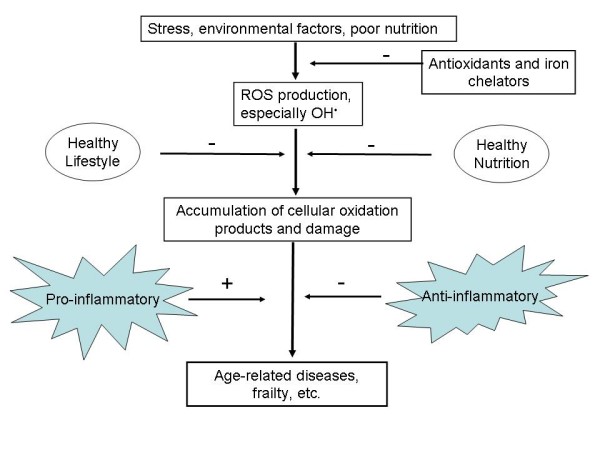
- The paper develops a systems-biology argument rather than reporting primary experimental data; it includes a mind-map overview and discusses iron chemistry, chelator pharmacology, signalling pathways, and disease associations.
Limitations
- Stated: the review notes that it is “not easy to state at this time” how much deranged iron metabolism is causal in accelerated aging, that few studies have been mechanistically specific, and that interpretation of chelation experiments is not always clear-cut.
- Stated: for pre-eclampsia, no serum hepcidin measurements had been reported to date; for obesity, the authors “see no major evidence as yet for a causative role of deranged iron metabolism or chelation in causing obesity.”
- Evident: this is a broad narrative synthesis, not a systematic review with formal search/selection criteria or quantitative meta-analysis, and many disease links are presented as mechanistic hypotheses supported by dispersed, often indirect evidence.
Model-written summary of a shortened version of the paper’s full text (it is longer than we read). Check it against the paper before relying on it.
Integrity signals
Registry
Cites
Statistics
Figures
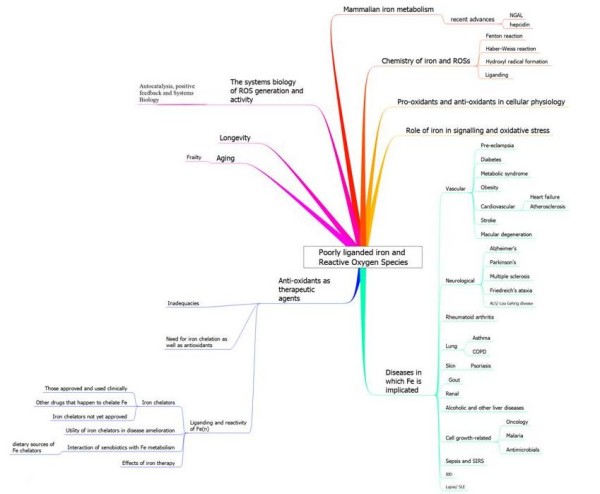
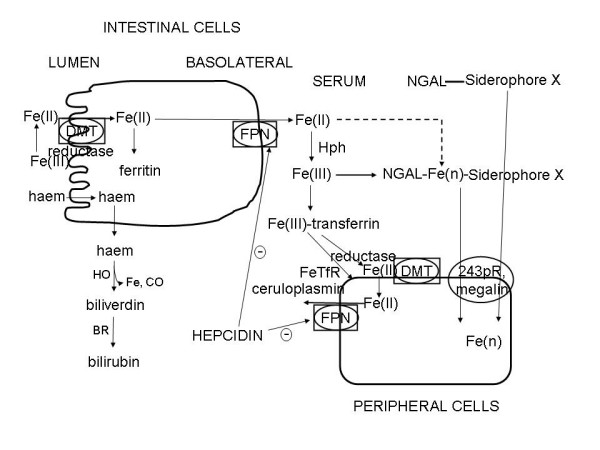
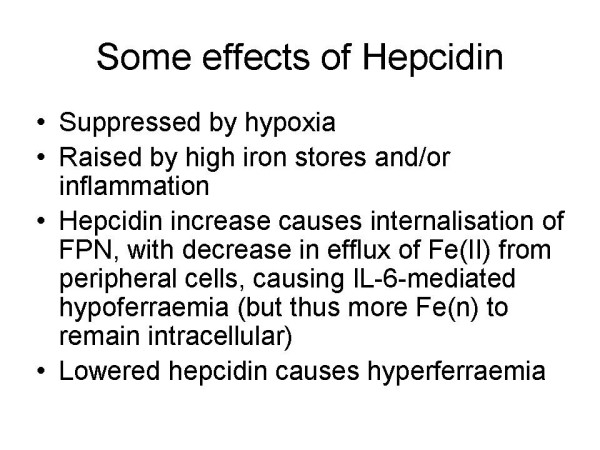
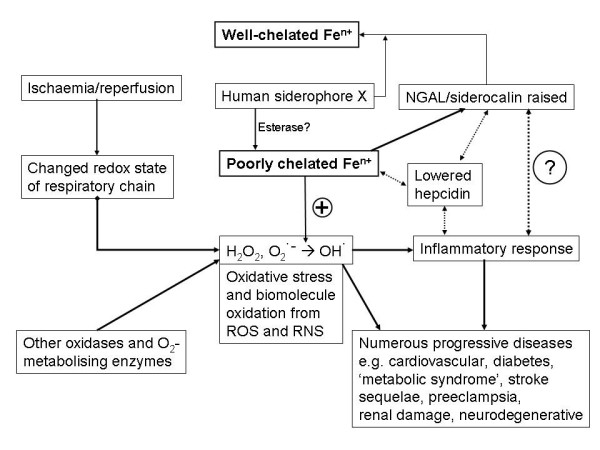
Verification
Claims the paper makes
32 Valid · 6 Not valid · 122 Not checked · 46 Own results and interpretations
The sources with a verdict support this claim; the rest weren’t checked yet, have no full text we could read, or their verdicts aren’t rated yet.
In the paper
“that acts in part as a negative regulator of iron efflux [328] by causing the internalisation of ferroportin [329-333].”
§ Iron behaving badly: inappropriate iron chelation as a major contributor to the aetiology of vascular and other progressive inflammatory and degenerative diseases > Mammalian iron metabolism > Hepcidin
What the sources say
- Supportedcites [328] Knutson MD Oukka M Koss LM Aydemir F Wessling-Resnick M Iron release from macrophages after erythrophagocytosis is up-regulated by ferroportin 1 overexpression and down-regulated by hepcidin Proc Natl Acad Sci USA 2005 102 1324 8 15665091 PMC547844 source
Citation [328] is attached to the claim that hepcidin negatively regulates iron efflux, not to the subsequent internalisation mechanism cited to [329–333]. The Discussion calls hepcidin a negative regulator of iron export, and the Results report reduced iron release from hepcidin-treated macrophages. (LLM, conf=0.94)
- Not checked yetcites [329] Nemeth E Tuttle MS Powelson J Vaughn MB Donovan A Ward DM Ganz T Kaplan J Hepcidin regulates cellular iron efflux by binding to ferroportin and inducing its internalization Science 2004 306 2090 2093 15514116 source
- Not checked yetcites [330] Delaby C Pilard N Goncalves AS Beaumont C Canonne-Hergaux F Presence of the iron exporter ferroportin at the plasma membrane of macrophages is enhanced by iron loading and down-regulated by hepcidin Blood 2005 106 3979 84 16081696 source
- Not checked yetcites [331] Ganz T Hepcidin – a regulator of intestinal iron absorption and iron recycling by macrophages Best Practice & Research Clinical Haematology 2005 18 171 182 15737883 source
- Supportedcites [332] Papanikolaou G Tzilianos M Christakis JI Bogdanos D Tsimirika K MacFarlane J Goldberg YP Sakellaropoulos N Ganz T Nemeth E Hepcidin in iron overload disorders Blood 2005 105 4103 4105 15671438 PMC1895089 source
The Abstract states that hepcidin inhibits cellular iron efflux by binding to ferroportin and inducing its internalization and degradation. The Introduction also states that hepcidin binds ferroportin and causes its internalization. (LLM, conf=0.94)
- Supportedcites [333] Lesbordes-Brion JC Viatte L Bennoun M Lou DQ Ramey G Houbron C Hamard G Kahn A Vaulont S Targeted disruption of the hepcidin 1 gene results in severe hemochromatosis Blood 2006 108 1402 1405 16574947 source
The Introduction states that hepcidin limits iron egress by binding to ferroportin and inducing its internalization and degradation, decreasing cellular iron export. This supports the attributed role as a negative regulator of iron efflux. (LLM, conf=0.94)
plainstates a cause- Asserted: passes — The authors put it forward as true.
- Checkable: passes — It can be checked against evidence.
- Load-bearing: unclear — It is unclear whether the paper’s conclusions depend on it.
- Based: passes — The paper gives a reason why it holds.
- Supported
The cited sources support only part of this claim — read each source’s verdict below.
In the paper
“the well-known adverse vascular effects of homocysteine (in inhibiting flow-mediated dilatation) are in fact iron-dependent [701-703]”
§ Iron behaving badly: inappropriate iron chelation as a major contributor to the aetiology of vascular and other progressive inflammatory and degenerative diseases > Some disease manifestations in which iron may be implicated > Cardiovascular diseases
What the sources say
- Partly supportedcites [701] Zheng H Dimayuga C Hudaihed A Katz SD Effect of dexrazoxane on homocysteine-induced endothelial dysfunction in normal subjects Arterioscler Thromb Vasc Biol 2002 22 E15 8 12117747 sourceExperimental — accuracy not yet measured
The Abstract and Results of Zheng et al. (2002) do show, as a measured fact in 10 healthy volunteers, that the iron-chelating prodrug dexrazoxane 'completely abrogate[d] the homocysteine-induced reduction in FMD' after a methionine load, without lowering homocysteine itself — so the source supports iron-dependence of homocysteine's inhibition of flow-mediated dilatation in that acute model. However, the paper hedges the causal/mechanistic claim it is credited with establishing: the Iron-Based Oxidative Stress section states homocysteine toxicity 'may be dependent in part on interactions with intracellular LMW-Fe2+', and the Conclusions say iron-based hydroxyl-radical production 'may contribute' and that chelation 'may have therapeutic potential'. The citing sentence asserts the effects 'are in fact iron-dependent' and 'well-known', a confident generalisation the source does not make, and the source's data come only from transient hyperhomocysteinemia in normal subjects, not from chronic or other vascular outcomes. (LLM, conf=0.72)
- Not checked yetcites [702] Zheng H Huang X Zhang Q Katz SD Iron sucrose augments homocysteine-induced endothelial dysfunction in normal subjects Kidney Int 2006 69 679 84 16395269 PMC2988421 source
- Not checked yetcites [703] Sullivan JL Is homocysteine an iron-dependent cardiovascular risk factor? Kidney Int 2006 69 642 4 16467888 source
boostedstates a cause- Asserted: passes — The authors put it forward as true.
- Checkable: passes — It can be checked against evidence.
- Load-bearing: passes — The paper’s conclusions depend on it.
- Based: passes — The paper gives a reason why it holds.
- Partly supported
The cited sources support only part of this claim — read each source’s verdict below.
In the paper
“There is no doubt that the iron-mediated causal chain of ischaemia → (su)peroxide → OH• radical formation occurs during the development of heart disease, especially during reperfusion injury [710-713]”
§ Iron behaving badly: inappropriate iron chelation as a major contributor to the aetiology of vascular and other progressive inflammatory and degenerative diseases > Some disease manifestations in which iron may be implicated > Cardiovascular diseases
What the sources say
- Not checked yetcites [710] Smith JK Carden DL Grisham MB Granger DN Korthuis RJ Role of iron in postischemic microvascular injury Am J Physiol 1989 256 H1472 7 2719141
- Partly supportedcites [711] Kukreja RC Hess ML The oxygen free radical system: from equations through membrane protein interactions to cardiovascular injury and protection Cardiovasc Res 1992 26 641 655 1423428 sourceExperimental — accuracy not yet measured
The Conclusions passage and the Figure 8 legend in our copy state exactly the iron-mediated chain the claim attributes: ischaemia/reperfusion generates superoxide, which dismutates to H2O2 and, in the presence of iron, forms .OH via iron-catalysed Fenton and Haber-Weiss reactions, initiating membrane lipid peroxidation and myocardial injury. However, the source hedges this as a proposal ('This hypothesis proposes...', radicals 'are thought to be responsible for much of this injury', 'it now appears that the oxygen free radical system plays a pivotal role'), and the Masterclass section explicitly notes 'Many investigators, but not all' found scavenger protection — so the citing sentence's 'there is no doubt' overstates the source. Our copy also bounds the mechanism to myocardial ischaemia/reperfusion, stunning, arrhythmias and inflammation, not to the general 'development of heart disease'. (LLM, conf=0.78)
- Not checked yetcites [712] Lesnefsky E Ye J Exogenous intracellular, but not extracellular, iron augments myocardial reperfusion injury Amer J Physiol 1994 266 H384 H392 8141338
- Not checked yetcites [713] Berenshtein E Mayer B Goldberg C Kitrossky N Chevion M Patterns of mobilization of copper and iron following myocardial ischemia: Possible predictive criteria for tissue injury J Mol Cell Cardiol 1997 29 3025 3034 9405177 source
boostedstates a cause- Asserted: passes — The authors put it forward as true.
- Checkable: passes — It can be checked against evidence.
- Load-bearing: passes — The paper’s conclusions depend on it.
- Based: passes — The paper gives a reason why it holds.
The cited sources support only part of this claim — read each source’s verdict below.
In the paper
“Iron and oxidised lipids are both found in atherosclerotic lesions [141,765-777]”
§ Iron behaving badly: inappropriate iron chelation as a major contributor to the aetiology of vascular and other progressive inflammatory and degenerative diseases > Some disease manifestations in which iron may be implicated > Atherosclerosis
What the sources say
- Not checked yetcites [141] Brewer GJ Iron and copper toxicity in diseases of aging, particularly atherosclerosis and Alzheimer's disease Exp Biol Med 2007 232 323 335 17259340
- Partly supportedcites [765] Smith C Mitchinson MJ Aruoma OI Halliwell B Stimulation of lipid peroxidation and hydroxyl radical generation by the contents of human atherosclerotic lesions Biochem J 1992 286 901 905 1329721 PMC1132988 sourceExperimental — accuracy not yet measured
The Abstract reports bleomycin-detectable iron in every sample from advanced human atherosclerotic lesions. It reports that the samples stimulated lipid peroxidation in rat liver microsomes, but does not establish that oxidised lipids were present in the lesions themselves; the Discussion describes lipid damage in lesions as a proposal. (LLM, conf=0.86)
- Not checked yetcites [766] Ramakrishna G Rooke TW Cooper LT Iron and peripheral arterial disease: revisiting the iron hypothesis in a different light Vasc Med 2003 8 203 210 14989563 source
- Supportedcites [767] Stadler N Lindner RA Davies MJ Direct detection and quantification of transition metal ions in human atherosclerotic plaques: evidence for the presence of elevated levels of iron and copper Arterioscler Thromb Vasc Biol 2004 24 949 54 15001454 source
The paper reports in its Abstract that oxidized lipids have been detected in human plaques. Its Discussion reports elevated iron levels in advanced human carotid lesions compared with healthy tissue. Together, these passages support the claim; page numbers are unavailable in our copy. (LLM, conf=0.91)
- Not checked yetcites [768] Wolff B Volzke H Ludemann J Robinson D Vogelgesang D Staudt A Kessler C Dahm JB John U Felix SB Association between high serum ferritin levels and carotid atherosclerosis in the study of health in Pomerania (SHIP) Stroke 2004 35 453 7 14726541 source
- Not checked yetcites [769] Roijers RB Dutta RK Mutsaers PHA Gijbels MJJ de Winther MPJ de Goeij JJM Vusse GJ van der Spatial correlation of trace elements with morphological features of atherosclerotic plaques Nuclear Instruments & Methods in Physics Research Section B-Beam Interactions with Materials and Atoms 2005 231 239 244 source
- Not checked yetcites [770] Stocker R Keaney JF New insights on oxidative stress in the artery wall Journal of Thrombosis and Haemostasis 2005 3 1825 1834 16102049 source
- Not checked yetcites [771] Stanley N Stadler N Woods AA Bannon PG Davies MJ Concentrations of iron correlate with the extent of protein, but not lipid, oxidation in advanced human atherosclerotic lesions Free Radical Biology and Medicine 2006 40 1636 1643 16632123 source
- Not checked yetcites [772] Watt F Rajendran R Ren MQ Tan BKH Halliwell B A nuclear microscopy study of trace elements Ca, Fe, Zn and Cu in atherosclerosis Nucl Instr Meth Phys Res B 2006 249 646 652 source
- Partly supportedcites [773] Fernandes de Godoy M Takakura IT Machado RD Grassi LV Nogueira PR Serum ferritin and obstructive coronary artery disease: Angiographic correlation Arquivos Brasileiros De Cardiologia 2007 88 430 433 17546273 sourceExperimental — accuracy not yet measured
The Discussion (page unavailable) reports increased expression of the iron-storage protein ferritin in atherosclerotic coronary arteries. It only speculates that this might affect lipid oxidation in the vessel wall; it does not establish that oxidised lipids were found in the lesions. (LLM, conf=0.82)
plainstates an association- Asserted: passes — The authors put it forward as true.
- Checkable: passes — It can be checked against evidence.
- Load-bearing: passes — The paper’s conclusions depend on it.
- Based: passes — The paper gives a reason why it holds.
The sources with a verdict support this claim; the rest weren’t checked yet, have no full text we could read, or their verdicts aren’t rated yet.
In the paper
“while iron chelation improves it [797-800].”
§ Iron behaving badly: inappropriate iron chelation as a major contributor to the aetiology of vascular and other progressive inflammatory and degenerative diseases > Some disease manifestations in which iron may be implicated > Atherosclerosis
What the sources say
- Supportedcites [797] Duffy SJ Biegelsen ES Holbrook M Russell JD Gokce N Keaney JF Jr Vita JA Iron chelation improves endothelial function in patients with coronary artery disease Circulation 2001 103 2799 804 11401935 source
The Abstract (Methods and Results / Conclusions) of our copy states that deferoxamine (an iron chelator) improved the blood flow response to methacholine in patients with coronary artery disease (P<0.01) and concludes 'Deferoxamine improved nitric oxide-mediated, endothelium-dependent vasodilation in patients with coronary artery disease.' The paper's title itself is 'Iron Chelation Improves Endothelial Function in Patients With Coronary Artery Disease,' so the paraphrase matches the source, with the population qualifier (CAD patients) intact; deferoxamine had no effect in normal volunteers, consistent with the stated finding. (LLM, conf=0.93)
- Supportedcites [798] Ishizaka N Saito K Mori I Matsuzaki G Ohno M Nagai R Iron chelation suppresses ferritin upregulation and attenuates vascular dysfunction in the aorta of angiotensin II-infused rats Arterioscler Thromb Vasc Biol 2005 25 2282 8 16100038 source
The Results section ('Relaxations of Aortic Segments') states that deferoxamine reversed the impaired acetylcholine-induced (endothelium-dependent) relaxation in the aortas of angiotensin II–infused rats (50.4±5.7% → 69.2±6.0%, n=10), i.e. an improvement in endothelial function, with Figure 4A showing the same. The Discussion frames this as iron chelation suppressing Ang II-induced impaired vascular relaxation, attributing it to reduced iron-catalysed oxidative stress. The support is for the direction of the claim in a rat aorta model and is described as partial rather than complete reversal, which is the only qualifier the unqualified citing sentence omits. (LLM, conf=0.80)
- Not checked yetcites [799] Saito K Ishizaka N Aizawa T Sata M Iso-o N Noiri E Mori I Ohno M Nagai R Iron chelation and a free radical scavenger suppress angiotensin II-induced upregulation of TGF-beta1 in the heart Am J Physiol Heart Circ Physiol 2005 288 H1836 43 15550525 source
- Not checked yetcites [800] Thomas SR Schulz E Keaney JF Hydrogen peroxide restrains endothelium-derived nitric oxide bioactivity – Role for iron-dependent oxidative stress Free Radical Biology and Medicine 2006 41 681 688 16864001 source
plainstates a cause- Asserted: passes — The authors put it forward as true.
- Checkable: passes — It can be checked against evidence.
- Load-bearing: passes — The paper’s conclusions depend on it.
- Based: passes — The paper gives a reason why it holds.
- Supported
81 more claims · 6 with their cited sources checked
Create a free account to see all 206 claims and to verify the 567 references still open.
- Probably not a substantial claim. 42
- It may state two separate claims as one. 95
Claims other papers make about this one
Each is checked against this paper’s own text: does it say what the citing paper says it does?
The source backs part of the claim, not all of it — or backs it for a different population, condition or comparison.
In the citing paper
“Due to the presence of high-affinity iron binding and storage proteins, the actual toxicity of iron is restricted to the so called “labile iron pool”.”
From The interaction of asbestos and iron in lung tissue revealed by synchrotron-based scanning X-ray microscopy (2013) · cites this paper as [18]
Experimental — accuracy not yet measuredThe source backs part of the claim, not all of it — or backs it for a different population, condition or comparison.
In the citing paper
“Fe (II) reacting with unsaturated fatty acids in the presence of H 2 O 2 can initiate lipid peroxidation cascade in biological membranes and lipoproteins by production of HO•.”
From Iron, Oxidative Stress and Health (2012) · cites this paper as Kell, 2009
Experimental — accuracy not yet measuredThe source backs part of the claim, not all of it — or backs it for a different population, condition or comparison.
In the citing paper
“Lipid peroxidation increases membrane fragility of cell organelles such as mitochondria, lysosomes and endoplasmic reticulum leading to impaired cell function”
From Iron, Oxidative Stress and Health (2012) · cites this paper as Kell, 2009
Experimental — accuracy not yet measuredThe cited source says what the claim attributes to it.
In the citing paper
“Importantly, dysregulated iron homeostasis is associated with progressive inflammatory and degenerative diseases, as well as cancer [2].”
From The utility of iron chelators in the management of inflammatory disorders (2015) · cites this paper as [2]
The cited source says what the claim attributes to it.
In the citing paper
“Concerning this issue, the recent reviews by D. Kell1819 analyse the wide but dispersed literature via a systems biology approach, and indicate that iron that is weakly complexed boosts many biochemical processes leading to a large variety of apparently unrelated diseases.”
From The interaction of asbestos and iron in lung tissue revealed by synchrotron-based scanning X-ray microscopy (2013) · cites this paper as [18]
3 more claims about this paper
Create a free account to see every claim other papers make about this one.
Citations
Cites
3 retracted
Items 1,801–2,000 of 2,563
Déjà vu—A study of duplicate citations in Medline
Errami, M., Hicks, J. M., Fisher, W., Trusty, D., Wren, J. D., Long, T. C., & Garner, H. R. (2008) · Bioinformatics · doi:10.1093/bioinformatics/btm574 · Cited by 95
Role of iron in hepatic fibrosis: One piece in the puzzle
Philippe, M. A. (2007) · World Journal of Gastroenterology · doi:10.3748/wjg.v13.i35.4746 · Cited by 95 · cited 1×
“[1228] Philippe, M.”
Hepcidin, a key regulator of iron metabolism, is transcriptionally activated by p53
Weizer‐Stern, O., Adamsky, K., Margalit, O., Ashur‐Fabian, O., Givol, D., Amariglio, N., & Rechavi, G. (2007) · British Journal of Haematology · doi:10.1111/j.1365-2141.2007.06638.x · Cited by 95 · cited 1×
“[354], and may play a role in the degradation of”
BackgroundBernabé-Pineda, M., Ramı́rez-Silva, M. T., Romero-Romo, M., Vergara, E. G., & Rojas-Hernándéz, A. (2004) · Spectrochimica Acta Part A Molecular and Biomolecular Spectroscopy · doi:10.1016/s1386-1425(03)00344-5 · Cited by 95
Yokoyama, H., Kuroiwa, H., Yano, R., & Araki, T. (2008) · Neurological Sciences · doi:10.1007/s10072-008-0986-2 · Cited by 95
High‐order combination effects and biological robustness
Lehár, J., Krueger, A., Zimmermann, G., & Borisy, A. (2008) · Molecular Systems Biology · doi:10.1038/msb.2008.51 · Cited by 95
Haddad, J. J. E., & Land, S. C. (2000) · American Journal of Physiology-Lung Cellular and Molecular Physiology · doi:10.1152/ajplung.2000.278.3.l492 · Cited by 95
Inflammatory response in preeclampsia
Schießl, B. (2007) · Molecular Aspects of Medicine · doi:10.1016/j.mam.2007.04.004 · Cited by 95 · cited 1×
“this [425-489], while some have noted the importance of”
BackgroundIron and the liver: Update 2008
Deugnier, Y., Brissot, P., & Loréal, O. (2008) · Journal of Hepatology · doi:10.1016/j.jhep.2008.01.014 · Cited by 95
On the Search Properties of Different Crossover Operators in Genetic Programming
Poli, R., & Langdon, W. B. (2001) · Cited by 95
Iron, Oxidative Stress, and Disease Risk
Reddy, M. B., & Clark, L. (2004) · Nutrition Reviews · doi:10.1301/nr.2004.mar.120-124 · Cited by 94
Lu, C., & Cortopassi, G. (2007) · Archives of Biochemistry and Biophysics · doi:10.1016/j.abb.2006.09.010 · Cited by 94 · cited 1×
“chaperone protein [1102-1109], involved in the safe”
Iron, Oxidative Stress, and Disease Risk
(2004) · Nutrition Reviews · doi:10.1111/j.1753-4887.2004.tb00033.x · Cited by 94
Zhang, B., Tanaka, J., Yang, L., Yang, L., Sakanaka, M., Hata, R., Maeda, N., & Mitsuda, N. (2004) · Neuroscience · doi:10.1016/j.neuroscience.2004.03.057 · Cited by 94
The iron hypothesis of atherosclerosis and its clinical impact
Yuan, X., & Li, W. (2003) · Annals of Medicine · doi:10.1080/07853890310016342 · Cited by 93 · cited 1×
“The ‘iron hypothesis’ of the benefits of some iron depletion due to menstruation was devised to account for the lowering of heart-disease risk in young women (that disappears in those post-menopause) and was proposed by Jerome Sullivan in 1981 [603-605] (and see also [606; 607]).”
BackgroundAsthma and oxidant stress: nutritional, environmental, and genetic risk factors.
Greene, L. S. (1995) · Journal of the American College of Nutrition · doi:10.1080/07315724.1995.10718516 · Cited by 93 · cited 1×
“Asthma is a well-known inflammatory disease, and has been linked with ROS generation [1170] catalysed by iron [217; 1171-1173].”
BackgroundRyberg, H., & Caidahl, K. (2007) · Journal of Chromatography B · doi:10.1016/j.jchromb.2007.02.001 · Cited by 93 · cited 1×
“[110], neopterin [111], nitrotyrosine [112-115] and”
Taverna/myGrid: Aligning a Workflow System with the Life Sciences Community
Oinn, T., Li, P., Kell, D. B., Goble, C., Goderis, A., Greenwood, R. M., Hull, D., Stevens, R., Turi, D., & Zhao, J. (2007) · Springer eBooks · doi:10.1007/978-1-84628-757-2_19 · Cited by 93
Self-citationMillan, M., Sobrino, T., Castellanos, M., Nombela, F., Arenillas, J. F., Riva, E., Cristobo, I., García, M. M., Vivancos, J., Serena, J., et al. (2007) · Stroke · doi:10.1161/01.str.0000251798.25803.e0 · Cited by 92 · cited 1×
“These predictions are indeed borne out [103; 798-807].”
BackgroundInference in Bayesian networks
Needham, C. J., Bradford, J. R., Bulpitt, A. J., & Westhead, D. R. (2006) · Nature Biotechnology · doi:10.1038/nbt0106-51 · Cited by 92
Asbestos causes apoptosis in alveolar epithelial cells: Role of iron-induced free radicals
Aljandali, A., Pollack, H., Yeldandi, A., LI, Y., Weitzman, S. A., & Kamp, D. W. (2001) · Journal of Laboratory and Clinical Medicine · doi:10.1067/mlc.2001.114826 · Cited by 92 · cited 1×
“production [1463-1475], while there seem to be com-”
BackgroundIron Accumulation During Cellular Senescence in Human Fibroblasts In Vitro
Killilea, D. W., Atamna, H., Liao, C., & Ames, B. N. (2003) · Antioxidants & Redox Signaling · doi:10.1089/152308603770310158 · Cited by 92 · cited 1×
“The iron content of cells also increases as cells age normally [1082].”
BackgroundNF-κB, inflammation and pancreatic carcinogenesis: NF-κB as a chemoprevention target (Review)
Zhang, Z., & Rigas, B. (2006) · International Journal of Oncology · doi:10.3892/ijo.29.1.185 · Cited by 92
Recent trends in erythropoietin‐mediated neuroprotection
McPherson, R. J., & Juul, S. E. (2007) · International Journal of Developmental Neuroscience · doi:10.1016/j.ijdevneu.2007.08.012 · Cited by 92 · cited 2×
“These included cardiovascular disease [628; 1975, 1976, 1977, 1978, 1979, 1980, 1981, 1982, 1983, 1984, 1985, 1986, 1987, 1988, 1989, 1990, 1991, 1992], stroke and other related neurological diseases [817-819; 821; 822; 826; 829; 830; 1974; 1993-2020], diabetic neuropathy [2021], kidney injury [1992; 2022, 2023, 2024,…”
BackgroundA general map of iron metabolism and tissue-specific subnetworks
Hower, V., Mendes, P., Torti, F. M., Laubenbacher, R., Akman, S., Shulaev, V., & Torti, S. V. (2009) · Molecular BioSystems · doi:10.1039/b816714c · Cited by 91
Potential Use of Iron Chelators against Oxidative Damage
Galey, J.-B. (1996) · Advances in pharmacology · doi:10.1016/s1054-3589(08)60984-9 · Cited by 91 · cited 1×
“As mentioned above, one interesting strategy is to devise chelators that are only activated by oxidative stress [1589; 1605-1608].”
BackgroundSerum Ferritin and the Assessment of Iron Deficiency in Rheumatoid Arthritis
Hansen, T. M., Hansen, N. E., Birgens, H. S., Helund, B., & Lorenzen, I. (1983) · Scandinavian Journal of Rheumatology · doi:10.3109/03009748309099740 · Cited by 91 · cited 2×
“What is known of the role of iron metabolism? Generally an overall low iron status – anaemia – is a characteristic of rheumatoid arthritis [1118-1122], whereas by contrast iron is elevated in the synovial fluid of arthritic joints [1123-1126].”
BackgroundDeterminants of F2-isoprostane biosynthesis and inhibition in man
Davì, G., Falco, A., & Patrono, C. (2003) · Chemistry and Physics of Lipids · doi:10.1016/j.chemphyslip.2003.10.001 · Cited by 91
Pegaptanib and ranibizumab for neovascular age-related macular degeneration: a systematic review
Takeda, A. L., Colquitt, J., Clegg, A. J., & Jones, J. (2007) · British Journal of Ophthalmology · doi:10.1136/bjo.2007.118562 · Cited by 91
The interplay between inflammation and neurodegeneration in CNS disease
Esiri, M. M. (2006) · Journal of Neuroimmunology · doi:10.1016/j.jneuroim.2006.11.013 · Cited by 91 · cited 1×
“These included cardiovascular disease [627; 628; 1975-1992], stroke and other related neurological diseases [817-819; 821; 822; 826; 829; 830; 1974; 1993-2020], diabetic neuropathy [2021], kidney injury [1992; 2022-2028], intestinal injury [2029] and shock (both septic and nonseptic) [1434; 1435; 2030].”
BackgroundHernández‐Romero, M. D. C., Argüelles, S., Villarán, R. F., De Pablos, R. M., Delgado‐Cortés, M. J., Santiago, M., Herrera, A. J., Cano, J., & Machado, A. (2008) · Journal of Neurochemistry · doi:10.1111/j.1471-4159.2007.05148.x · Cited by 91 · cited 1×
“plaques, is arguably well explained, especially within the context of the present review, via their additional anti-inflammatory effects [710; 712; 736-756] [121; 716-718; 723; 729; 730; 757-785],”
BackgroundHubel, Kozlov, Kagan, Evans, Davidge, McLaughlin, & Roberts (1996) · American Journal of Obstetrics and Gynecology · doi:10.1053/ob.1996.v175.a74252 · Cited by 91 · cited 1×
“Indeed, many studies implicate oxidative stress as a substantial contributor to this [344-385] [386-408], while some have noted the importance of iron status [40; 98; 369; 409-427], and so far as is known the transporters of iron in the placenta are similar to those in other cells [428].”
BackgroundSerum iron and copper status and oxidative stress in severe and mild preeclampsia
Serdar, Z., Gür, E., & Develioğlu, O. (2006) · Cell Biochemistry and Function · doi:10.1002/cbf.1235 · Cited by 91
Pegaptanib sodium for the treatment of neovascular age-related macular degeneration: A review
Kourlas, H., & Schiller, D. S. (2006) · Clinical Therapeutics · doi:10.1016/j.clinthera.2006.01.009 · Cited by 91 · cited 1×
“The source of the iron appears to be excess angiogenesis and leakage from blood vessels catalysed by VEGF, and a PEGylated aptamer [12031205] against VEGF (pegaptanib) or a monoclonal antibody (ranibizumab) have shown significant promise in the treatment of macular degeneration [1206-1211].”
BackgroundA new measure of the robustness of biochemical networks
Chen, B.-S., Wang, Y., Wu, W.-S., & Li, W. (2005) · Computer applications in the biosciences · doi:10.1093/bioinformatics/bti348 · Cited by 91
Iron levels in human retina: sex difference and increase with age
Hahn, P., Ying, G.-S., Beard, J., & Dunaief, J. L. (2006) · NeuroReport · doi:10.1097/wnr.0b013e3280107776 · Cited by 90 · cited 1×
“increase with age [1322], iron is significantly implicated in”
BackgroundAlcaraz, M. J., Vicente, A. M., Araíco, A., Domínguez, J. N., Terencio, M. C., & Ferrándiz, M. L. (2004) · British Journal of Pharmacology · doi:10.1038/sj.bjp.0705821 · Cited by 90
Westerhoff, H. V., Kell, D. B., & Nielsen, I. B. J. (2009) · Biotechnology and Bioengineering · doi:10.1002/bit.22458 · Cited by 90
Self-citationErythropoietin and the cardiorenal syndrome: cellular mechanisms on the cardiorenal connectors
Jie, K. E., Verhaar, M. C., Cramer, M. J., van der Putten, K., Gaillard, S., Doevendans, P. A., Koomans, H. A., Joles, J. A., & Braam, B. G. (2006) · American Journal of Physiology-Renal Physiology · doi:10.1152/ajprenal.00200.2006 · Cited by 89
Molecular therapies in β‐thalassaemia
Quek, L., & Thein, S. L. (2007) · British Journal of Haematology · doi:10.1111/j.1365-2141.2006.06408.x · Cited by 88
Erythromycin inhibits the assembly of the large ribosomal subunit in growing Escherichia coli cells
Chittum, H. S., & Champney, W. S. (1995) · Current Microbiology · doi:10.1007/bf00295501 · Cited by 88 · cited 1×
“Iron is also strongly implicated in non-alcoholic steatohepatitis, considered an early marker of insulin resistance [532-534].”
BackgroundGazzano, E., Turci, F., Foresti, E., Putzu, M. G., Aldieri, E., Silvagno, F., Lesci, I. G., Tomatis, M., Riganti, C., Romano, C., et al. (2007) · Chemical Research in Toxicology · doi:10.1021/tx600354f · Cited by 88 · cited 2×
“production [1463-1475], while there seem to be com-”
BackgroundThe Ferroxidase Activity of Yeast Frataxin
Park, S., Gakh, O., Mooney, S. M., & Isaya, G. (2002) · Journal of Biological Chemistry · doi:10.1074/jbc.m206711200 · Cited by 88 · cited 1×
“specifically via Fenton chemistry [1135, 1136], since the”
MethodWetli, H. A., Buckett, P. D., & Wessling‐Resnick, M. (2006) · Chemistry & Biology · doi:10.1016/j.chembiol.2006.08.005 · Cited by 88 · cited 1×
“[1790], and iron can catalyse their oxidation [1791].”
BackgroundRoe, M. A., Spinks, C., Heath, A.-L. M., Harvey, L. J., Foxall, R., Wimperis, J., Wolf, C., & Fairweather-Tait, S. J. (2007) · British Journal of Nutrition · doi:10.1017/s0007114507336829 · Cited by 88
Serum ferritin as a serologic marker of activity in systemic lupus erythematosus
Lim, M.-K., Lee, C.-K., Ju, Y.-M., Cho, Y. S., Lee, M.-S., Yoo, B., & Moon, H. (2001) · Rheumatology International · doi:10.1007/s002960000083 · Cited by 87 · cited 4×
“Lupus, or Systemic Lupus Erythematosus (SLE) [1146; 1147] describes a syndrome, somewhat related to arthritis and rheumatism, of broadly auto-immunological or inflammatory origin, and with a large variety of manifestations (e.g. [1148-1156]), but characterised in particular by fatigue [1157], often as a result of anae…”
BackgroundInfluentialGeneration of Reactive Oxygen Species by Mitochondrial Complex I: Implications in Neurodegeneration
Fato, R., Bergamini, C., Leoni, S., Strocchi, P., & Lenaz, G. (2008) · Neurochemical Research · doi:10.1007/s11064-008-9747-0 · Cited by 87
Nitric oxide, peroxynitrite and lipoxygenase in atherogenesis: mechanistic insights
Rubbo, H., & O’Donnell, V. B. (2004) · Toxicology · doi:10.1016/j.tox.2004.11.019 · Cited by 87 · cited 1×
“reaction of NO and superoxide) [46, 149-154] leading to”
BackgroundLicastro, F., Porcellini, E., Caruso, C., Lio, D., & Corder, E. H. (2006) · Neurobiology of Aging · doi:10.1016/j.neurobiolaging.2006.07.007 · Cited by 87
A computational model of intracellular oxygen sensing by hypoxia-inducible factor HIF1α
Qutub, A. A., & Popel, A. S. (2006) · Journal of Cell Science · doi:10.1242/jcs.03087 · Cited by 87
Gilmour, P. S., Brown, D. M., Beswick, P. H., MacNee, W., Rahman, I., & Donaldson, K. (1997) · Environmental Health Perspectives · doi:10.1289/ehp.97105s51313 · Cited by 86 · cited 1×
“production [1463-1475], while there seem to be com-”
BackgroundMałyszko, J., Bachórzewska-Gajewska, H., Sitniewska, E. M., Małyszko, J. S., Poniatowski, B., & Dobrzycki, S. (2008) · Renal Failure · doi:10.1080/08860220802134607 · Cited by 86
Mitochondrial Inhibition and Oxidative Stress: Reciprocating Players in Neurodegeneration
Zeevalk, G. D., Bernard, L. P., Song, C., Gluck, M., & Ehrhart, J. (2005) · Antioxidants & Redox Signaling · doi:10.1089/ars.2005.7.1117 · Cited by 86
Madonna, R., Napoli, P. D., Massaro, M., Grilli, A., Felaco, M., Caterina, A. D., Tang, D., Caterina, R. D., & Geng, Y. (2005) · Journal of Biological Chemistry · doi:10.1074/jbc.m411859200 · Cited by 86
Clioquinol-Zinc Chelate: A Candidate Causative Agent of Subacute Myelo-Optic Neuropathy
Arbiser, J. L., Kraeft, S.-K., van Leeuwen, R., Hurwitz, S. J., Selig, M., Dickersin, G. R., Flint, A., Byers, H. R., & Chen, L. B. (1998) · Molecular Medicine · doi:10.1007/bf03401927 · Cited by 85 · cited 2×
“[1544] Arbiser, J.”
BackgroundRichardson, D. R., & Ponka, P. (1998) · American Journal of Hematology · doi:10.1002/(sici)1096-8652(199808)58:4<306::aid-ajh10>3.0.co;2-5 · Cited by 85
Serum transferrin receptor assays and their application
Worwood, M. (2002) · Annals of Clinical Biochemistry: International Journal of Laboratory Medicine · doi:10.1258/0004563021902152 · Cited by 85 · cited 2×
“Similar processes occur in the peripheral tissues, with significant transfer of iron from transferrin occurring via the transferrin receptor [214].”
BackgroundMolecular Mechanisms and Regulation of Iron Transport
Chung, J., & Wessling-Resnick, M. (2003) · Critical Reviews in Clinical Laboratory Sciences · doi:10.1080/713609332 · Cited by 85 · cited 1×
“[99; 104; 151; 167-186]), including a series on ‘iron imports’ [187-193], and for our present purposes (Fig 2) mainly involves the intestinal (mainly duodenal) uptake of Fe(II) (produced from Fe(III) using a luminal ferrireductase) via a divalent metal ion transporter DMT1/DCT1/NRAMP [194; 195] and its”
BackgroundEnhancement of the chemical semantic web through the use of InChI identifiers
Coles, S. J., Day, N. E., Murray-Rust, P., Rzepa, H. S., & Zhang, Y. (2005) · Organic & Biomolecular Chemistry · doi:10.1039/b502828k · Cited by 85 · cited 2×
“Note that the trivial names in common use for this kind of metabolite are not helpful and may even be ambiguous or misleading, and it is desirable (e.g. [87]) to refer to such molecules using terminology that relates them either to molecules identified in persistent curated datbases such as ChEBI [88] or KEGG [89], or…”
BackgroundRitter, C., da Cunha, A. A., Echer, I. C., Andrades, M., Reinke, A., Lucchiari, N., Rocha, J., Streck, E. L., Menna-Barreto, S., Moreira, J. C. F., et al. (2006) · Critical Care Medicine · doi:10.1097/01.ccm.0000199069.19193.89 · Cited by 85 · cited 1×
“In this regard, it is especially interesting that the antioxidant melatonin is particularly effective in preventing septic shock [1423-1425], and a variety of suitable antioxidants have shown potential here [1411; 1426-1429], notably in combination with iron chelators [1430; 1431] (and see also [1432; 1433]).”
BackgroundIron accumulation and lipid peroxidation in aging C57BL/6J mice
Massie, H. R., Aiello, V. R., & Banziger, V. (1983) · Experimental Gerontology · doi:10.1016/0531-5565(83)90038-4 · Cited by 85 · cited 1×
“the cardiovascular system [1084] and of course cognitive function [1085]), and iron metabolism is known to change considerably as humans age [872; 1086], with anaemia a typical accompaniment of aging [1087].”
BackgroundNonprotein-bound Iron in Postasphyxial Reperfusion Injury of the Newborn
Dorrepaal, C. A., Berger, H. M., Benders, M. J. N. L., van Zoeren-Grobben, D., Van De Bor, M., & Van Bel, F. (1996) · Pediatrics · doi:10.1542/peds.98.5.883 · Cited by 85
Comparison of the main siderophores produced by some species of Streptomyces
Imbert, M. X. E. N., B�chet, M., & Blondeau, R. (1995) · Current Microbiology · doi:10.1007/bf00294289 · Cited by 84
Fritsche, G., Larcher, C., Schennach, H., & Weiss, G. (2001) · The Journal of Infectious Diseases · doi:10.1086/319860 · Cited by 84 · cited 1×
“[1320-1336], but cf.”
Erythropoietin induces heme oxygenase-1 expression and attenuates oxidative stress
Katavetin, P., Inagi, R., Miyata, T., Shao, J., Sassa, R., Adler, S., Eto, N., Kato, H., Fujita, T., & Nangaku, M. (2007) · Biochemical and Biophysical Research Communications · doi:10.1016/j.bbrc.2007.05.207 · Cited by 84 · cited 1×
“[2228], and in particular – from the perspective of this”
BackgroundBoos, C. J., & Lip, G. Y. H. (2005) · Journal of Human Hypertension · doi:10.1038/sj.jhh.1001858 · Cited by 84 · cited 1×
“inflammatory in nature [678-686], is related to the”
BackgroundIron Transport in Escherichia Coli: All has not been said and Done
Grass, G. (2006) · BioMetals · doi:10.1007/s10534-005-4341-2 · Cited by 84 · cited 1×
“siderophores [170-189] (and for haemophores see”
Pardon, M. (2007) · Brain Research Reviews · doi:10.1016/j.brainresrev.2007.02.007 · Cited by 84
Increased oxidative stress in asymptomatic current chronic smokers and GOLD stage 0 COPD
Rytilä, P., Rehn, T., Ilumets, H., Rouhos, A., Sovijärvi, A., Myllärniemi, M., & Kinnula, V. L. (2006) · Respiratory Research · doi:10.1186/1465-9921-7-69 · Cited by 84
Jou, M. (2008) · Advanced Drug Delivery Reviews · doi:10.1016/j.addr.2008.06.004 · Cited by 84
Type 2 diabetes mellitus as inflammatory disease
Zozulińska‐Ziółkiewicz, D., & Wierusz‐Wysocka, B. (2006) · Diabetes Research and Clinical Practice · doi:10.1016/j.diabres.2006.06.007 · Cited by 84 · cited 1×
“ther diseases we review here, studies of pro-inflammatory markers (such as TNF-α, IL-1 and C-reactive protein [485]) during the development of diabetes show its aetiology to be inflammatory in nature [468; 486, 487, 488, 489, 490, 491, 492, 493, 494, 495, 496, 497, 498, 499, 500, 501, 502, 503, 504, 505]. Iron ‘excess…”
BackgroundTechnology Insight: biomarker development in acute kidney injury—what can we anticipate?
Molitoris, B. A., Melnikov, V. Y., Okusa, M. D., & Himmelfarb, J. (2008) · Nature Reviews Nephrology · doi:10.1038/ncpneph0723 · Cited by 84
Richardson, D. R., & Ponka, P. (1998) · American Journal of Hematology · doi:10.1002/(sici)1096-8652(199808)58:4<299::aid-ajh9>3.0.co;2-l · Cited by 84
Gao, F., Linhartova, L., Johnston, A. M., & Thickett, D. R. (2008) · British Journal of Anaesthesia · doi:10.1093/bja/aem406 · Cited by 83 · cited 1×
“[699; 2091]) they may exert benefit in a huge variety of syndromes [731], including sepsis [732; 1887; 2092-2104],”
BackgroundHuang, X., Li, W., Attfield, M. D., Nádas, A., Frenkel, K., & Finkelman, R. B. (2005) · Environmental Health Perspectives · doi:10.1289/ehp.7679 · Cited by 83 · cited 1×
“the significance of exposure to iron [1382] (as well as”
BackgroundSepsis: the critical role of iron
Bullen, J., Griffiths, E., Rogers, H., & Ward, G. (2000) · Microbes and Infection · doi:10.1016/s1286-4579(00)00326-9 · Cited by 83
Role of oxidative stress in experimental sepsis and multisystem organ dysfunction
Crimi, E., Sica, V., Slutsky, A. S., Zhang, H., Williams‐Ignarro, S., Ignarro, L. J., & Claudio Napoli, A. (2006) · Free Radical Research · doi:10.1080/10715760600669612 · Cited by 83 · cited 1×
“There is by now little doubt that these phenomena too are associated with the hyperproduction of ROSs [1384; 1389; 1393-1408].”
BackgroundAn integrative biology approach for analysis of drug action in models of human vascular inflammation
Kunkel, E. J., Dea, M., Ebens, A., Hytopoulos, E., Melrose, J., Nguyen, D., Ota, K. S., Plavec, I., Wang, Y., Watson, S. R., et al. (2004) · The FASEB Journal · doi:10.1096/fj.04-1538fje · Cited by 83
Oxidation, lipoproteins, and atherosclerosis: which is wrong, the antioxidants or the theory?
Williams, K. J., & Fisher, E. A. (2005) · Current Opinion in Clinical Nutrition and Metabolic Care · doi:10.1097/00075197-200503000-00006 · Cited by 83 · cited 1×
“sclerosis [106, 764], cardiovascular disease [1641-1645],”
Erythropoietin is a multifunctional tissue-protective cytokine.
Erbayraktar, S., Yilmaz, O., Gökmen, N., & Brines, M. L. (2003) · PubMed · Cited by 83
(2002) · WORLD SCIENTIFIC eBooks · doi:10.1142/9789812775733 · Cited by 83
Ritter, C., Reinke, A., Andrades, M., Martins, M. R., Rocha, J., Menna-Barreto, S., Quevedo, J., Moreira, J. C. F., & Dal-Pizzol, F. (2004) · Critical Care Medicine · doi:10.1097/01.ccm.0000142699.54266.d9 · Cited by 82 · cited 1×
“Iron overload is well known to lead to hepatotoxicity [1229; 1230] and liver cancer [1231; 1232], and lowering or chelating it is protective [1233; 1234].”
BackgroundCellular inflammatory responses: Novel insights for obesity and insulin resistance
Chen, H. (2006) · Pharmacological Research · doi:10.1016/j.phrs.2006.03.003 · Cited by 82
Coordination chemistry and biology of chelators for the treatment of iron overload disorders
Bernhardt, P. V. (2007) · Dalton Transactions · doi:10.1039/b708133b · Cited by 82 · cited 1×
“[1286; 1287; 1507-1513]) cover aspects of iron chelators that have had or may have utility clinically.”
BackgroundMultiple organ dysfunction syndrome: a narrative review
Johnson, D., & Mayers, I. (2001) · Canadian Journal of Anesthesia/Journal canadien d anesthésie · doi:10.1007/bf03028318 · Cited by 82
Risk factors in coronary atherosclerosis athero-inflammation: the meeting point
Altman, R. (2003) · Thrombosis Journal · doi:10.1186/1477-9560-1-4 · Cited by 82
Kodach, L. L., Bleuming, S. A., Peppelenbosch, M. P., Hommes, D. W., BRINK, G. R. V. D., & Hardwick, J. C. H. (2007) · Gastroenterology · doi:10.1053/j.gastro.2007.08.021 · Cited by 82 · cited 1×
“2128], traumatic brain injury [2129-2131], neurodegenerative diseases [753-755; 813; 1164; 1886; 2132-2148], neurotoxicity [2149] and cancer [2150-2164].”
BackgroundCoronary artery disease in systemic lupus erythematosus: A review of the literature
Karrar, A., Sequeira, W., & Block, J. A. (2001) · Seminars in Arthritis and Rheumatism · doi:10.1053/sarh.2001.23498 · Cited by 82
8-Isoprostane as a marker of oxidative stress in nonsymptomatic cigarette smokers and COPD
Kinnula, V. L., Ilumets, H., Myllärniemi, M., Sovijärvi, A. R., & Rytilä, P. H. (2006) · European Respiratory Journal · doi:10.1183/09031936.00023606 · Cited by 82 · cited 1×
“Consequently, there is considerable evidence for the evidence for the involvement of inflammation and ROSs in both the ‘stable’ and ‘exacerbated’ stages [1241-1248].”
BackgroundDiagnostic Utility of Serum Transferrin Receptors Measurement in Assessing Iron Status
Ahluwalia, N. (2009) · Nutrition Reviews · doi:10.1111/j.1753-4887.1998.tb01738.x · Cited by 81 · cited 1×
“Serum transferrin receptor seems to be a rather sensitive measure of this iron deficiency [214; 1142; 1143].”
BackgroundTissue Involution and the Acute Phase Response
NILSEN‐HAMILTON, M., LIU, Q., RYON, J., BENDICKSON, L., LEPONT, P., & CHANG, Q. (2003) · Annals of the New York Academy of Sciences · doi:10.1111/j.1749-6632.2003.tb03213.x · Cited by 81
Weinreb, O., Amit, T., & Youdim, M. B. H. (2007) · Free Radical Biology and Medicine · doi:10.1016/j.freeradbiomed.2007.05.011 · Cited by 81
Pegaptanib for the treatment of age-related macular degeneration
Zhou, B., & Wang, B. (2006) · Experimental Eye Research · doi:10.1016/j.exer.2006.02.010 · Cited by 81 · cited 2×
“The source of the iron appears to be excess angiogenesis and leakage from blood vessels catalysed by VEGF, and a PEGylated aptamer [12031205] against VEGF (pegaptanib) or a monoclonal antibody (ranibizumab) have shown significant promise in the treatment of macular degeneration [1206-1211].”
BackgroundHMG-CoA reductase inhibitors and the kidney
Campese, V. M., & Park, J. (2007) · Kidney International · doi:10.1038/sj.ki.5002174 · Cited by 81
Iron Dysregulation and Neurodegeneration: The Molecular Connection
Lee, D. W. (2006) · Molecular Interventions · doi:10.1124/mi.6.2.6 · Cited by 80 · cited 1×
“Iron (and in some cases copper) is also strongly implicated in a variety of neurodegenerative diseases [867] [868] [869] [870] [871] [872] [836] [873] [837] [850] [874] [875] [876] [877] [854] [878] [879] [880] [881] [842] [882] [883] [884] [885] [886] [887] [888] [889] [890] [891] [892] [893] [894] [895] [896] [897]…”
Weizer‐Stern, O., Adamsky, K., Amariglio, N., Levin, C., Koren, A., Breuer, W., Rachmilewitz, E., Breda, L., Rivella, S., Ioav Cabantchik, Z., et al. (2006) · British Journal of Haematology · doi:10.1111/j.1365-2141.2006.06258.x · Cited by 80
Iron Imports. III. Transfer of iron from the mucosa into circulation
Wessling-Resnick, M. (2006) · American Journal of Physiology-Gastrointestinal and Liver Physiology · doi:10.1152/ajpgi.00415.2005 · Cited by 80
Hepcidin: a new tool in the management of anaemia in patients with chronic kidney disease?
Swinkels, D. W., & Wetzels, J. F. M. (2008) · Nephrology Dialysis Transplantation · doi:10.1093/ndt/gfn267 · Cited by 80
Airway iron and iron-regulatory cytokines in cystic fibrosis
Reid, D. W., Lam, Q. T., Schneider, H., & Walters, E. H. (2004) · European Respiratory Journal · doi:10.1183/09031936.04.00104803 · Cited by 80
Duarte, T. L., Almeida, G. M., & Jones, G. D. D. (2007) · Toxicology Letters · doi:10.1016/j.toxlet.2007.02.005 · Cited by 80 · cited 1×
“[1443] Duarte, T.”
Aging: Is Oxidative Stress a Marker or Is It Causal?
Fukagawa, N. K. (1999) · Proceedings of the Society for Experimental Biology and Medicine · doi:10.1046/j.1525-1373.1999.d01-146.x · Cited by 80
A genome-scale, constraint-based approach to systems biology of human metabolism
Mo, M. L., Jamshidi, N., & Palsson, B. Ø. (2007) · Molecular BioSystems · doi:10.1039/b705597h · Cited by 80
Gao, E., Boucher, M., Chuprun, J. K., Zhou, R., Eckhart, A. D., & Koch, W. J. (2007) · American Journal of Physiology-Heart and Circulatory Physiology · doi:10.1152/ajpheart.00227.2007 · Cited by 80
Science review: recombinant human erythropoietin in critical illness: a role beyond anemia?
Coleman, T. R., & Brines, M. L. (2004) · Critical Care · doi:10.1186/cc2897 · Cited by 80 · cited 1×
“[1637; 2031; 2032]) seem to act via many of the same signalling pathways as do inflammatory agents [835; 1969; 2033-2042].”
BackgroundPlacental cytokines and preeclampsia
Keelan, J. A. (2006) · Frontiers in bioscience · doi:10.2741/2266 · Cited by 80
Brigelius‐Flohé, R., & Banning, A. (2006) · Free Radical Research · doi:10.1080/10715760600722643 · Cited by 80
Lao, T. T., Tse, K.-Y., Chan, L. Y., Tam, K.-F., & Ho, L.-F. (2003) · Diabetes Care · doi:10.2337/diacare.26.11.3011 · Cited by 79
The role of reactive oxygen and nitrogen species in cellular iron metabolism
MLADĚNKA, P., ŠIMŮNEK, T., HÜBL, M., & HRDINA, R. (2006) · Free Radical Research · doi:10.1080/10715760500511484 · Cited by 79 · cited 1×
“synovial fluid (and elsewhere [1260]), thereby catalysing”
Mapping and characterization of iron compounds in Alzheimer's tissue
Collingwood, J., & Dobson, J. (2006) · Journal of Alzheimer's Disease · doi:10.3233/jad-2006-102-308 · Cited by 79
Correlation of iron and zinc levels with lesion depth in newly formed atherosclerotic lesions
Minqin, R., Watt, F., Huat, B. T. K., & Halliwell, B. (2003) · Free Radical Biology and Medicine · doi:10.1016/s0891-5849(02)01427-2 · Cited by 79
Chemical biology and the limits of reductionism
Peterson, R. T. (2008) · Nature Chemical Biology · doi:10.1038/nchembio1108-635 · Cited by 79
Haruna, Y., Morita, Y., Yada, T., Satoh, M., Fox, D. A., & Kashihara, N. (2007) · Arthritis & Rheumatism · doi:10.1002/art.22632 · Cited by 79
van Oostrom, A. J. H. H. M., van Wijk, J. P. H., & Cabezas, M. C. (2004) · Drugs · doi:10.2165/00003495-200464002-00004 · Cited by 78
Kotze, M. J., de Villiers, J. N. P., Rooney, R. N., Grobbelaar, J. J., Mansvelt, E. P. G., Bouwens, C. S. H., Carr, J. A., Stander, I. A., & du Plessis, L. (2001) · Blood Cells Molecules and Diseases · doi:10.1006/bcmd.2000.0349 · Cited by 78
Shvartsman, M., Kikkeri, R., Shanzer, A., & Cabantchik, Z. I. (2007) · American Journal of Physiology-Cell Physiology · doi:10.1152/ajpcell.00054.2007 · Cited by 78
Souza-Costa, D. C., Sandrim, V. C., Lopes, L. F., Gerlach, R. F., Rego, E. M., & Tanus-Santos, J. E. (2006) · Atherosclerosis · doi:10.1016/j.atherosclerosis.2006.07.020 · Cited by 78
Literature-related discovery (LRD): Methodology
Kostoff, R. N., Briggs, M. B., Solka, J. L., & Rushenberg, R. L. (2007) · Technological Forecasting and Social Change · doi:10.1016/j.techfore.2007.11.010 · Cited by 78
The mode of action of the antimalarial artemisinin and its derivatives
Kamchonwongpaisan, S., & Meshnick, S. R. (1996) · General Pharmacology: The Vascular System · doi:10.1016/0306-3623(95)02047-0 · Cited by 77 · cited 1×
“cytotoxic) mode of action of artemisinin [1336; 1338-1346], and this reaction is in fact inhibited by iron chelators [1347] such that a combined artemisinin-chelator therapy would be contraindicated.”
BackgroundLight and shadows in the iron chelation treatment of haematological diseases
Maggio, A. (2007) · British Journal of Haematology · doi:10.1111/j.1365-2141.2007.06666.x · Cited by 77
Dopamine and Iron Induce Apoptosis in PC12 Cells
Velez‐Pardo, C., Jimenez Del Rio, M., Verschueren, H., Ebinger, G., & Vauquelin, G. (1997) · Pharmacology & Toxicology · doi:10.1111/j.1600-0773.1997.tb00287.x · Cited by 77
Crouch, P. J., White, A. R., & Bush, A. I. (2007) · The FEBS Journal · doi:10.1111/j.1742-4658.2007.05918.x · Cited by 77
Factors accounting for high ferritin levels in obesity
Lecube, A., Hernández, C., Pelegrí, D., & Simó, R. (2008) · International Journal of Obesity · doi:10.1038/ijo.2008.154 · Cited by 77 · cited 1×
“[644], what little evidence there is [645, 646] suggests that”
BackgroundProtein-bound 4-hydroxy-2-hexenal as a marker of oxidized n-3 polyunsaturated fatty acids
Yamada, S., Funada, T., Shibata, N., Kobayashi, M., Kawai, Y., Tatsuda, E., Furuhata, A., & Uchida, K. (2004) · Journal of Lipid Research · doi:10.1194/jlr.m300376-jlr200 · Cited by 77
Perspectives on Iron Absorption
Hallberg, L., & Hulthén, L. (2002) · Blood Cells Molecules and Diseases · doi:10.1006/bcmd.2002.0603 · Cited by 77 · cited 1×
“good overall marker of iron status [265-267].”
Evolution of web services in bioinformatics
Neerincx, P. B. T. (2005) · Briefings in Bioinformatics · doi:10.1093/bib/6.2.178 · Cited by 77
Murakami, A., Takahashi, D., Koshimįzu, K., & Ohigashi, H. (2003) · Mutation research. Fundamental and molecular mechanisms of mutagenesis · doi:10.1016/s0027-5107(02)00331-7 · Cited by 77 · cited 1×
“[1268] [1761] [1762] [1763] [1764] [1765] [1766] [1767] [1768] [1769] [1770] [1771] [1772] [1724] [1773] [1774] [1775] [1776] [1777] [1778] [1779] [1780] [1725] [1273] [1781] [1782] [1783] [1784] [1785] [1786] [1787] [1788] [1276] [1789] [1790] [1791] [1792] [1793] [1794] [1795]”
Are statins a treatment option for multiple sclerosis?
Neuhaus, O., Stüve, O., Zamvil, S. S., & Hartung, H.-P. (2004) · The Lancet Neurology · doi:10.1016/s1474-4422(04)00770-7 · Cited by 77
Effects of Exogenous Melatonin - A Review
Anisimov, V. N. (2003) · Toxicologic Pathology · doi:10.1080/01926230390257885 · Cited by 77
Literature Dynamics: Studies on Growth, Diffusion, and Epidemics
Tabah, A. N. (1999) · Cited by 77
Effect of iron chelation therapy on mortality in Zambian children with cerebral malaria
Thuma, P. E., Mabeza, G. F., Biemba, G., Bhat, G. J., McLaren, C. E., Moyo, V. M., Zulu, S., Khumalo, H., Mabeza, P., M'Hango, A., et al. (1998) · Transactions of the Royal Society of Tropical Medicine and Hygiene · doi:10.1016/s0035-9203(98)90753-2 · Cited by 76
Progress in defining the molecular biology of age related macular degeneration
Lotery, A. J., & Trump, D. (2007) · Human Genetics · doi:10.1007/s00439-007-0406-3 · Cited by 76
Iron Absorption and Serum Ferritin in Chronic Inflammatory Bowel Disease
Bartels, U., Pedersen, N. S., & Jarnum, S. (1978) · Scandinavian Journal of Gastroenterology · doi:10.3109/00365527809181777 · Cited by 76
Protective effect of erythropoietin in neonatal hypoxic ischemia in mice
Matsushita, H., Johnston, M. V., Lange, M. S., & Wilson, M. A. (2003) · NeuroReport · doi:10.1097/00001756-200309150-00020 · Cited by 76 · cited 1×
“Given its role in iron metabolism, it is of considerable interest that erythropoietin also seems to be very effective in protecting against brain ischaemia/reperfusion injury and stroke [817-831], by a mechanism independent of erythropoiesis [832-834], and one that appears to involve anti-inflammatory activity [835].”
BackgroundJo, W. J., Loguinov, A., Chang, M., Wintz, H., Nislow, C., Arkin, A. P., Giaever, G., & Vulpe, C. D. (2008) · Toxicological Sciences · doi:10.1093/toxsci/kfm226 · Cited by 76 · cited 1×
“some other aspects of iron metabolism [1111], it is”
BackgroundHepcidin: an important new regulator of iron homeostasis
Hugman, A. (2006) · Clinical & Laboratory Haematology · doi:10.1111/j.1365-2257.2006.00768.x · Cited by 76
Inference in Bayesian Networks
(2010) · Chapman & Hall/CRC series in computer science & data analysis/Series in computer science and data analysis · doi:10.1201/b10391-5 · Cited by 76
Insulin resistance and the metabolic syndrome—or the pitfalls of epidemiology
Yudkin, J. S. (2007) · Diabetologia · doi:10.1007/s00125-007-0711-3 · Cited by 75 · cited 2×
“Although some of its origins may be pre-natal [462], many of the features of these diseases are also seen in the Metabolic Syndrome [537-541].”
BackgroundSUPEROXIDE ANION OVERPRODUCTION IN SEPSIS: EFFECTS OF VITAMIN E AND SIMVASTATIN
Durant, R., Klouche, K., Delbosc, S., Morena, M., Amigues, L., Beraud, J. J., Canaud, B., & Cristol, J. P. (2004) · Shock · doi:10.1097/01.shk.0000129197.46212.7e · Cited by 75 · cited 1×
“plaques, is arguably well explained, especially within the context of the present review, via their additional anti-inflammatory effects [710; 712; 736-756] [121; 716-718; 723; 729; 730; 757-785],”
BackgroundMoon, C., Krawczyk, M., Paik, D., Lakatta, E. G., & Talan, M. I. (2005) · Cardiovascular Drugs and Therapy · doi:10.1007/s10557-005-3189-6 · Cited by 75 · cited 1×
“cardiovascular disease [721, 722, 2156-2175], stroke and”
The Nonlipid Effects of Statins on Endothelial Function
Beckman, J. A., & Creager, M. A. (2006) · Trends in Cardiovascular Medicine · doi:10.1016/j.tcm.2006.03.003 · Cited by 75 · cited 1×
“plaques, is arguably well explained, especially within the context of the present review, via their additional anti-inflammatory effects [710; 712; 736-756] [121; 716-718; 723; 729; 730; 757-785],”
BackgroundSerratrice, G., Boukhalfa, H., Béguin, C., Baret, P., Caris, C., & Pierre, J.-L. (1997) · Inorganic Chemistry · doi:10.1021/ic9608096 · Cited by 75
HMG-CoA reductase inhibitors (statins) as anticancer drugs (Review)
Fritz, G. (2005) · International Journal of Oncology · doi:10.3892/ijo.27.5.1401 · Cited by 75
Griffin, S. (2003) · Nephrology Dialysis Transplantation · doi:10.1093/ndt/gfg1069 · Cited by 75
Hepcidin: the Missing Link between Hemochromatosis andInfections
Ashrafian, H. (2003) · Infection and Immunity · doi:10.1128/iai.71.12.6693-6700.2003 · Cited by 74 · cited 1×
“[136; 149; 1335; 1352-1371]), and its chelation in a form not available to bacteria offers a route to at least a bacteriostatic kind of antibiotic or to novel therapies based on the lowering of iron available to microbes by using hepcidin [1372].”
BackgroundBayne, A.-C. V., & Sohal, R. S. (2002) · Free Radical Biology and Medicine · doi:10.1016/s0891-5849(02)00849-3 · Cited by 74
Common Eye Diseases of Elderly People: Identifying and Treating Causes of Vision Loss
Harvey, P. T. (2003) · Gerontology · doi:10.1159/000066507 · Cited by 74
Kazi, T. G., Afridi, H. I., Kazi, N. G., Jamali, M. K., Arain, M. B., Sarfraz, R. A., Jalbani, N. B., Ansari, R., Shah, A. Q., Memon, A. R., et al. (2008) · Clinica Chimica Acta · doi:10.1016/j.cca.2007.12.004 · Cited by 74
RYON, J., BENDICKSON, L., & NILSEN-HAMILTON, M. (2002) · Biochemical Journal · doi:10.1042/bj20020026 · Cited by 74 · cited 1×
“reflect its high expression in the uterus [361, 537-539].”
BackgroundRecent advances in understanding of preeclampsia.
Bdolah, Y., Karumanchi, S. A., & Sachs, B. P. (2005) · PubMed · Cited by 74
Brække, K., Holthe, M. R., Harsem, N. K., Fagerhol, M. K., & Staff, A. C. (2005) · American Journal of Obstetrics and Gynecology · doi:10.1016/j.ajog.2004.11.055 · Cited by 74
Demougeot, C., Van Hoecke, M., Bertrand, N., Prigent-Tessier, A., Mossiat, C., Beley, A., & Marie, C. (2004) · The Journal of Pharmacology and Experimental Therapeutics · doi:10.1124/jpet.104.072744 · Cited by 73 · cited 1×
“These predictions are indeed borne out [103; 798-807].”
BackgroundAdvancements in the pathophysiology of Friedreich’s Ataxia and new prospects for treatments
Babady, N. E., Carelle, N., Wells, R. D., Rouault, T. A., Hirano, M., Lynch, D. R., Delatycki, M. B., Wilson, R. B., Isaya, G., & Puccio, H. (2007) · Molecular Genetics and Metabolism · doi:10.1016/j.ymgme.2007.05.009 · Cited by 73 · cited 1×
“chaperone protein [1102-1109], involved in the safe”
Friedreich's Ataxia, No Changes in Mitochondrial Labile Iron in Human Lymphoblasts and Fibroblasts
Sturm, B., Bistrich, U., Schranzhofer, M., Sarsero, J. P., Rauen, U., Scheiber-Mojdehkar, B., de Groot, H., Ioannou, P., & Petrat, F. (2005) · Journal of Biological Chemistry · doi:10.1074/jbc.m408717200 · Cited by 73
Kallianpur, A. R., Lee, S., Gao, Y.-T., Lu, W., Zheng, Y., Ruan, Z.-X., Dai, Q., Gu, K., Shu, X., & Zheng, W. (2007) · Breast Cancer Research and Treatment · doi:10.1007/s10549-007-9538-3 · Cited by 73
Efficacy and safety of a novel synergistic drug candidate, CRx-102, in hand osteoarthritis
Kvien, T. K., Fjeld, E., Slatkowsky-Christensen, B., Nichols, M., Zhang, Y., Prøven, A., Mikkelsen, K., Palm, Ø., Borisy, A. A., & Lessem, J. N. (2007) · Annals of the Rheumatic Diseases · doi:10.1136/ard.2007.074401 · Cited by 73
Prostacyclin/thromboxane early changes in pregnancies that are complicated by preeclampsia
Chavarrı́a, M. E., Lara-González, L., Gleason, A. G., García, Y., Vital-Reyes, V. S., & Reyes, A. (2003) · American Journal of Obstetrics and Gynecology · doi:10.1067/mob.2003.203 · Cited by 73
Rand, D. A. (2008) · Journal of The Royal Society Interface · doi:10.1098/rsif.2008.0084.focus · Cited by 73
Hydroxyquinolines as Iron Chelators
Pierre, J. L., Baret, P., & Serratrice, G. (2003) · Current Medicinal Chemistry · doi:10.2174/0929867033457584 · Cited by 73
Atorvastatin inhibits inflammatory hypernociception
Santodomingo-Garzón, T., Cunha, T. M., Verri, W. A., Jr., Valério, D. A. R., Parada, C. A., Poole, S., Ferreira, S. H., & Cunha, F. Q. (2006) · British Journal of Pharmacology · doi:10.1038/sj.bjp.0706836 · Cited by 73
Pretreatment with Simvastatin Reduces Lung Injury Related to Intestinal Ischemia-Reperfusion in Rats
Pirat, A., Zeyneloğlu, P., Aldemir, D., Yücel, M., Özen, Ö., Candan, S., & Arslan, G. (2005) · Anesthesia & Analgesia · doi:10.1213/01.ane.0000189554.41095.98 · Cited by 73
Green tea catechins as brain-permeable, non toxic iron chelators to “iron out iron” from the brain
Mandel, S. A., Weinreb, O., Reznichenko, L., Kalfon, L., & Amit, T. (2006) · Springer eBooks · doi:10.1007/978-3-211-33328-0_26 · Cited by 73
Fernandez-Pol, J. A. (1978) · Cell · doi:10.1016/0092-8674(78)90235-0 · Cited by 72
Shatos, M. A., Doherty, J. M., Marsh, J. P., & Mossman, B. T. (1987) · Environmental Research · doi:10.1016/s0013-9351(87)80090-7 · Cited by 72
Uterocalin: A mouse acute phase protein expressed in the uterus around birth
Liu, Q., Ryon, J., & Nilsen-Hamilton, M. (1997) · Molecular Reproduction and Development · doi:10.1002/(sici)1098-2795(199704)46:4<507::aid-mrd9>3.0.co;2-s · Cited by 72
Zanella, I., Derosas, M., Corrado, M., Cocco, E., Cavadini, P., Biasiotto, G., Poli, M., Verardi, R., & Arosio, P. (2007) · Biochimica et Biophysica Acta (BBA) - Molecular Basis of Disease · doi:10.1016/j.bbadis.2007.11.006 · Cited by 72
Pinho, R. A., Silveira, P. C. L., da Silva, L. A., STRECK, E. L., Dal‐Pizzol, F., & Moreira, J. C. F. (2005) · Environmental Research · doi:10.1016/j.envres.2005.03.005 · Cited by 72
Effectiveness of Statins in Reducing the Rate of Severe Sepsis: A Retrospective Evaluation
Martin, C. P., Talbert, R. L., Burgess, D. S., & Peters, J. I. (2007) · Pharmacotherapy: The Journal of Human Pharmacology and Drug Therapy · doi:10.1592/phco.27.1.20 · Cited by 72 · cited 1×
“[699; 2091]) they may exert benefit in a huge variety of syndromes [731], including sepsis [732; 1887; 2092-2104],”
BackgroundMelatonin suppresses iron-induced neurodegeneration in rat brain
Lin, A. M.-Y., & Ho, L. (2000) · Free Radical Biology and Medicine · doi:10.1016/s0891-5849(00)00169-6 · Cited by 72
Hydroxyl radical production in the presence of fibres by a fenton-type reaction
Gulumian, M., & Van Wyk, J. A. (1987) · Chemico-Biological Interactions · doi:10.1016/0009-2797(87)90081-0 · Cited by 71 · cited 1×
“production [1463-1475], while there seem to be com-”
BackgroundOxidative Stress and the Induction of Cyclooxygenase Enzymes and Apoptosis in the Murine Placenta
Burdon, C., Mann, C., Cindrova-Davies, T., Ferguson-Smith, A. C., & Burton, G. J. (2007) · Placenta · doi:10.1016/j.placenta.2006.12.001 · Cited by 71 · cited 1×
“this [425-489], while some have noted the importance of”
BackgroundWeizer-Stern, O., Adamsky, K., Amariglio, N., Rachmilewitz, E., Breda, L., Rivella, S., & Rechavi, G. (2006) · American Journal of Hematology · doi:10.1002/ajh.20549 · Cited by 71 · cited 2×
“changes in hepcidin concentration [277], with in many cases the hypoxic response (decreased hepcidin) seeming to dominate that due to inflammation (increased hepcidin) even when iron levels are high [278; 279]. Specifically, lowered hepcidin causes hyperferraemia. Hepcidin is also activated by p53 [280], and may play…”
BackgroundMorel, N. M., Holland, J. M., van der Greef, J., Marple, E. W., Clish, C., Loscalzo, J., & Naylor, S. (2004) · Mayo Clinic Proceedings · doi:10.4065/79.5.651 · Cited by 71
Molecular and clinical aspects of iron homeostasis: from anemia to hemochromatosis
Nairz, M., & Weiß, G. (2006) · Wiener klinische Wochenschrift · doi:10.1007/s00508-006-0653-7 · Cited by 71
Chapter 6 Iron Homeostasis and Erythropoiesis
Wrighting, D. M., & Andrews, N. C. (2008) · Current topics in developmental biology/Current Topics in Developmental Biology · doi:10.1016/s0070-2153(07)00006-3 · Cited by 71 · cited 1×
“[186] Wrighting, D.”
Frataxin: its role in iron metabolism and the pathogenesis of Friedreich's ataxia
Becker, E., & Richardson, D. R. (2001) · The International Journal of Biochemistry & Cell Biology · doi:10.1016/s1357-2725(00)00067-4 · Cited by 71 · cited 1×
“As are some other aspects of iron metabolism [995] , it is highly conserved in eukaryotes from yeast to humans [996; 997], a fact that made the unravelling of its function considerably easier [998-1007].”
BackgroundAntioxidant vitamin and mineral supplements for preventing age-related macular degeneration
Evans, J. R., & Henshaw, K. S. (2008) · Cochrane Database of Systematic Reviews · doi:10.1002/14651858.cd000253.pub2 · Cited by 71
Protective effect of erythropoietin on renal ischemia and reperfusion injury
Ateş, E., Yalçın, A. U., Yılmaz, S., Köken, T., & Tokyol, Ç. (2005) · ANZ Journal of Surgery · doi:10.1111/j.1445-2197.2005.03612.x · Cited by 71
Monitoring the Health to Disease Continuum with Global Metabolic Profiling and Systems Biology
Schnackenberg, L. K., & Beger, R. D. (2006) · Pharmacogenomics · doi:10.2217/14622416.7.7.1077 · Cited by 71
An Open Standard for Chemical Structure Representation: The IUPAC Chemical Identifier
Stein, S. E., Heller, S. R., & Tchekhovskoi, D. V. (2003) · Cited by 71
Emerging Indications for Statins: A Pluripotent Family of Agents with Several Potential Applications
Paraskevas, K., Tzovaras, A., Briana, D., & Mikhailidis, D. (2007) · Current Pharmaceutical Design · doi:10.2174/138161207782794194 · Cited by 70 · cited 1×
“variety of syndromes [838], including sepsis [839, 2060,”
BackgroundConsumption of blueberry polyphenols reduces exercise-induced oxidative stress compared to vitamin C
McAnulty, S. R., McAnulty, L. S., Nieman, D. C., Dumke, C. L., Morrow, J. D., Utter, A. C., Henson, D. A., Proulx, W. R., & George, G. L. (2004) · Nutrition Research · doi:10.1016/j.nutres.2003.10.003 · Cited by 70 · cited 1×
“found in blueberries [1907-1913] (and see [1914]),”
Evolving strategies in the treatment of sepsis and systemic inflammatory response syndrome (SIRS)
Horn, K. (1998) · QJM · doi:10.1093/qjmed/91.4.265 · Cited by 70
Biomarkers for diet and cancer prevention research: potentials and challenges
Davis, C. D., & Milner, J. A. (2007) · Acta Pharmacologica Sinica · doi:10.1111/j.1745-7254.2007.00678.x · Cited by 70
Iron deficiency in inflammatory bowel disease
Thomson, A. B. R., Brust, R. W., Ali, M., Mant, M. J., & VALBERG, L. S. (1978) · Digestive Diseases and Sciences · doi:10.1007/bf01072356 · Cited by 70
A human protein atlas based on antibody proteomics.
Persson, A. B., Hober, S., & Uhlén, M. (2006) · PubMed · Cited by 70
Okatani, Y., Wakatsuki, A., Shinohara, K., Taniguchi, K., & Fukaya, T. (2001) · Journal of Pineal Research · doi:10.1034/j.1600-079x.2001.310212.x · Cited by 70 · cited 1×
“Finally, a variety of molecules can trap hydroxyl radicals, including hippurate [1449], melatonin [1104; 1423; 1424; 1450-1467] and salicylate [1468].”
BackgroundNair, S., Hebbar, V., Shen, G., Gopalakrishnan, A., Khor, T. O., Yu, S., Xu, C., & Kong, A. T. (2007) · Pharmaceutical Research · doi:10.1007/s11095-007-9364-7 · Cited by 70 · cited 2×
“[1814] Nair, S.”
Hofmeyr, J. S., & Westerhoff, H. V. (2001) · Journal of Theoretical Biology · doi:10.1006/jtbi.2000.2216 · Cited by 70 · cited 1×
“[1945-1949]).”
Simvastatin prolongs survival times in prion infections of the central nervous system
Mok, S. W. F., Thelen, K., Riemer, C., Bamme, T., Gültner, S., Lütjohann, D., & Baier, M. (2006) · Biochemical and Biophysical Research Communications · doi:10.1016/j.bbrc.2006.07.123 · Cited by 70 · cited 1×
“2128], traumatic brain injury [2129-2131], neurodegenerative diseases [753-755; 813; 1164; 1886; 2132-2148], neurotoxicity [2149] and cancer [2150-2164].”
BackgroundErythropoietin for Neurologic Protection and Diabetic Neuropathy
Lipton, S. A. (2004) · New England Journal of Medicine · doi:10.1056/nejmcibr041121 · Cited by 70
Antimalarial Activity of Selected Aromatic Chelators
Scheibel, L. W., & Adler, A. (1981) · Molecular Pharmacology · doi:10.1016/s0026-895x(25)13895-9 · Cited by 69
Biemond, P., Swaak, A. J. G., Van Eijk, H. G., & Koster, J. F. (1986) · Arthritis & Rheumatism · doi:10.1002/art.1780291002 · Cited by 69
Metabolic complications of obesity: inflated or inflamed?
Chandalia, M., & Abate, N. I. (2007) · Journal of Diabetes and its Complications · doi:10.1016/j.jdiacomp.2006.10.004 · Cited by 69 · cited 1×
“Importantly, considerable evidence suggests that obesity and inflammation are significantly related [121; 405; 490; 496; 551; 555-572], not least because adipocytes produce and release various adipokines including pro-inflammatory cytokines such”
BackgroundA perspective of publicly accessible/open-access chemistry databases
Williams, A. J. (2008) · Drug Discovery Today · doi:10.1016/j.drudis.2008.03.017 · Cited by 69
Suire, S., STEWART, F., Beauchamp, J., & Kennedy, M. W. (2001) · Biochemical Journal · doi:10.1042/0264-6021:3560369 · Cited by 69
Buzan, T. (2002) · Medical Entomology and Zoology · Cited by 69
Human, nonhuman primate, and rat pancreatic islets express erythropoietin receptors1
Fenjves, E. S., Ochoa, M. S., Cabrera, O., Mendez, A. J., Kenyon, N. S., Inverardi, L., & Ricordi, C. (2003) · Transplantation · doi:10.1097/01.tp.0000062862.88375.bd · Cited by 68 · cited 1×
“[1967] Fenjves, E.”
Iron and Atherosclerosis: Inhibition by the Iron Chelator Deferiprone (L1)
Matthews, A. J., Vercellotti, G. M., Menchaca, H. J., Bloch, P. H. S., Michalek, V. N., Marker, P. H., Murar, J., & Buchwald, H. (1997) · Journal of Surgical Research · doi:10.1006/jsre.1997.5180 · Cited by 68
Depressed glutathione synthesis precedes oxidative stress and atherogenesis in Apo-E−/− mice
Biswas, S. K., Newby, D. E., Rahman, I., & Megson, I. L. (2005) · Biochemical and Biophysical Research Communications · doi:10.1016/j.bbrc.2005.10.098 · Cited by 68
INHIBITORS OF NADPH OXIDASE REDUCE THE ORGAN INJURY IN HEMORRHAGIC SHOCK
Abdelrahman, M., Mazzon, E., Bauer, M., Bauer, I., Delbosc, S., Cristol, J.-P., Patel, N. S. A., Cuzzocrea, S., & Thiemermann, C. (2005) · Shock · doi:10.1097/01.shk.0000151028.15377.f7 · Cited by 68 · cited 1×
“There is by now little doubt that these phenomena too are associated with the hyperproduction of ROSs [1384; 1389; 1393-1408].”
Background
Research works printed but not linked: 9
- Kell DB Iron behaving badly: inappropriate iron chelation as a major contributor to the aetiology of vascular and other progressive inflammatory and degenerative diseases 2008 PMC2672098 19133145
- Weinberg ED Exposing the hidden dangers of iron: what every medical professional should know about the impact of iron on the disease process 2004 Cumberland House
- Brown GM The living end: the future of death, aging and immortality 2008 Macmillan, London
- Warner DS Sheng H Batinić-Haberle I Oxidants, antioxidants and the ischemic brain J Exp Biol 2004 207 3221 31 15299043 · DOI · Paper page
- Lovejoy DB Richardson DR Iron chelators as anti-neoplastic agents: current developments and promise of the PIH class of chelators Curr Med Chem 2003 10 1035 49 12678675 · DOI · Paper page
- Kalt W Joseph JA Shukitt-Hale B Blueberries and human health: a review of current reseach J Amer Pomol Soc 2007 61 151 160
- Curin Y Andriantsitohaina R Polyphenols as potential therapeutical agents against cardiovascular diseases Pharmacological Reports 2005 57 97 107 16415490
- Tapscott D Williams A Wikinomics: how masscollaboration changes everything 2007 New Paradigm
- Leadbeater C We-think 2008 Profile Books, London
Cited by
Advances in metal-induced oxidative stress and human disease
Jomova, K., & Valko, M. (2011) · Toxicology · doi:10.1016/j.tox.2011.03.001 · Cited by 3,207
“To avoid harmful effect of free iron, ts proper chelation is of key importance (Kell, 2009).”
BackgroundFluorescent Sensors for Measuring Metal Ions in Living Systems
Carter, K. P., Young, A. M., & Palmer, A. E. (2014) · Chemical Reviews · doi:10.1021/cr400546e · Cited by 2,451
The role of iron and reactive oxygen species in cell death
Dixon, S. J., & Stockwell, B. R. (2014) · Nature Chemical Biology · doi:10.1038/nchembio.1416 · Cited by 2,381
Graves, D. B. (2012) · Journal of Physics D: Applied Physics · doi:10.1088/0022-3727/45/26/263001 · Cited by 1,518
Heavy metals: toxicity and human health effects
Jomova, K., Alomar, S. Y., Nepovimova, E., Kuca, K., & Valko, M. (2025) · Archives of Toxicology · doi:10.1007/s00204-024-03903-2 · Cited by 983
Metadata
- Authors
- Kell, D. B.
- Affiliations
- University of Manchester (GB)
- Corresponding author
- Kell, Douglas B
- ORCID
- Kell, Douglas B
- Venue
- BMC Medical Genomics
- Published
- 2009-01-08
- Volume
- 2
- Issue
- 1
- Pages
- 2-2
- ISSN
- 1755-8794 (ISSN-L)
- PMC
- PMC2672098
- OpenAlex
- W2159509177
- Semantic Scholar
- a7d7f7c7ee6e75c693c508186ec809c0e5d2def4
- Cited by
- 554
- References
- 2,555
- Citations by year
- 2026: 15 · 2025: 14 · 2024: 29 · 2023: 26 · 2022: 30 · 2021: 26 · 2020: 32 · 2019: 33 · 2018: 28 · 2017: 30 · 2016: 31 · 2015: 39 · 2014: 41 · 2013: 45 · 2012: 42
- FWCI
- 29.55
- Type
- journal article
- Language
- en
- Open access
- gold
- doi.org
- Licence
- Locations
- BMC Medical Genomics (publishedVersion, other-oa)
- PubMed Central (publishedVersion, cc-by)
- PubMed (publishedVersion)
- arXiv (Cornell University) (submittedVersion)
- DOAJ (DOAJ: Directory of Open Access Journals) (submittedVersion, cc-by-sa)
- Research Explorer (The University of Manchester) (submittedVersion)
- arXiv (Cornell University)
- Funders
- British Heart Foundation
- Engineering and Physical Sciences Research Council
- Biotechnology and Biological Sciences Research Council (BB/F018398/1)
- Topics
- Health Sciences › Medicine › Hematology › Iron Metabolism and Disorders
- Health Sciences › Medicine › Biochemistry (medical) › Antioxidant Activity and Oxidative Stress
- Health Sciences › Medicine › Physiology (medical) › Nitric Oxide and Endothelin Effects
- Keywords
- iron chelation, hydroxyl radicals, reactive oxygen species, oxidative stress, chronic inflammation, vascular disease, neurodegenerative diseases, aging, antioxidants, antioxidant polyphenols, NF-κB signaling, p38 MAPK, statins, erythropoietin, iron speciation
About these checks
Registry, retraction, Cites and statistics results are computed, not judged, with one exception: a printed reference that no index lists is read once by a model before it counts as a citation error. Claims are extracted by a model and kept only when their quote appears verbatim in the text; each cited source is then checked, with a model’s help, for whether it says what the claim relies on. Those verdicts can be wrong — read the claim’s quote and the cited source before relying on one.
The claim verdicts this report counts are experimental: their accuracy is not yet measured.
A language model drew the claims from the paper on 2026-10-05, under version 3 of the claim definition (model deepseek-v4.1-flash, prompt extract-v3).
A second model labelled each claim on 2026-10-05 (model jev-1.13-20260917, definition revision gold-guideline-v0.2).
Cited sources are checked with a language model’s help (gpt-6-sol and qwen3.8-omni-flash).
Statistics and arithmetic are recomputed, not judged.
Confidence bands are shown only for fields calibrated on our annotated test set. None is calibrated yet, so no band is shown.
What counts as a claim ›How we measure confidence ›How we check this ›
Are you an author, or do you see a problem with this page? Request a review
Data sources
Bibliographic data: Semantic Scholar, OpenAlex, Crossref.
Contains information from the Semantic Scholar Academic Graph Datasets, made available under the ODC Attribution License (ODC-BY 1.0).
Semantic Scholar’s data is described in: Kinney, R., et al. (2023). The Semantic Scholar Open Data Platform. arXiv:2301.10140.
