

Iron behaving badly: inappropriate iron chelation as a major contributor to the aetiology of vascular and other progressive inflammatory and degenerative diseases
Open accessThe DOI matches its Crossref record; 2,499 of the 2,563 references it cites were found in a registry or an index, and 9 are not checked yet; 66 of the 633 sources its claims cite were checked for support.
Abstract
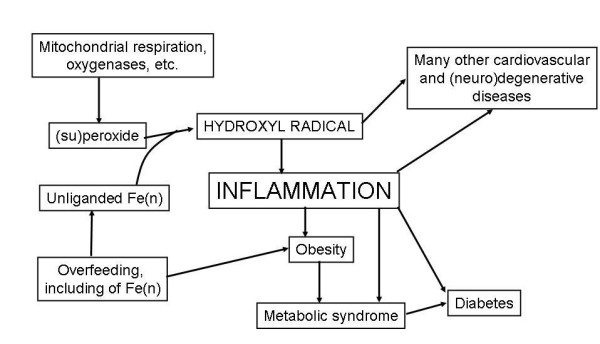
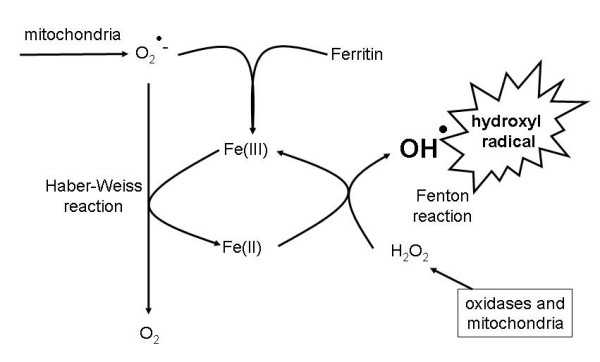
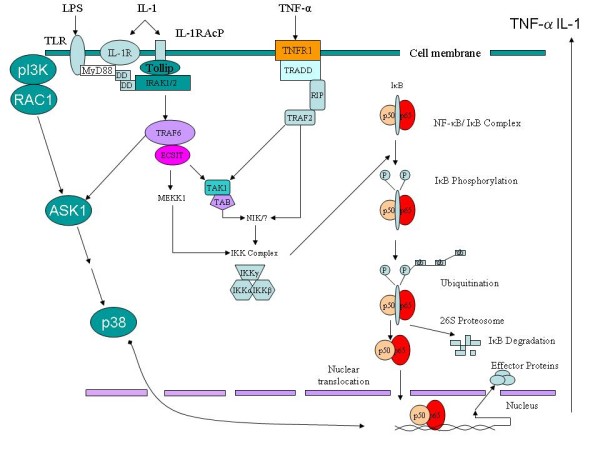
Background: The production of peroxide and superoxide is an inevitable consequence of aerobic metabolism, and while these particular 'reactive oxygen species' (ROSs) can exhibit a number of biological effects, they are not of themselves excessively reactive and thus they are not especially damaging at physiological concentrations.However, their reactions with poorly liganded iron species can lead to the catalytic production of the very reactive and dangerous hydroxyl radical, which is exceptionally damaging, and a major cause of chronic inflammation.Review: We review the considerable and wide-ranging evidence for the involvement of this combination of (su)peroxide and poorly liganded iron in a large number of physiological and indeed pathological processes and inflammatory disorders, especially those involving the progressive degradation of cellular and organismal performance.These diseases share a great many similarities and thus might be considered to have a common cause (i.e.iron-catalysed free radical and especially hydroxyl radical generation).The studies reviewed include those focused on a series of cardiovascular, metabolic and neurological diseases, where iron can be found at the sites of plaques and lesions, as well as studies showing the significance of iron to aging and longevity.The effective chelation of iron by natural or synthetic ligands is thus of major physiological (and potentially therapeutic) importance.As systems properties, we need to recognise that physiological observables have multiple molecular causes, and studying them in isolation leads to inconsistent patterns of apparent causality when it is the simultaneous combination of multiple factors that is responsible.This explains, for instance, the decidedly mixed effects of antioxidants that have been observed, since in some circumstances (especially the presence of poorly liganded iron) molecules that are nominally antioxidants can actually act as pro-oxidants.The reduction of redox stress thus requires suitable levels of both antioxidants and effective iron chelators.Some polyphenolic antioxidants may serve both roles.Understanding the exact speciation and liganding of iron in all its states is thus crucial to separating its various pro-and anti-inflammatory activities.Redox stress, innate immunity and pro-(and some anti-)inflammatory cytokines are linked in particular via signalling pathways involving NF-kappaB and p38, with the oxidative roles of iron here seemingly involved upstream of the IkappaB kinase (IKK) reaction.In a number of cases it is possible to identify mechanisms by which ROSs and poorly BioMed Central Open Access liganded iron act synergistically and autocatalytically, leading to 'runaway' reactions that are hard to control unless one tackles multiple sites of action simultaneously.Some molecules such as statins and erythropoietin, not traditionally associated with anti-inflammatory activity, do indeed have 'pleiotropic' anti-inflammatory effects that may be of benefit here.Conclusion: Overall we argue, by synthesising a widely dispersed literature, that the role of poorly liganded iron has been rather underappreciated in the past, and that in combination with peroxide and superoxide its activity underpins the behaviour of a great many physiological processes that degrade over time.Understanding these requires an integrative, systems-level approach that may lead to novel therapeutic targets. Background and preambleThe 'balkanisation' of the literature is in part due to the amount of it (some 25,000 journals with presently 2.5 million peer-reviewed papers per year, i.e. ~5 per minute [1]), with a number http://www.nlm.nih.gov/ bsd/medline_cit_counts_yr_pub.htmlincreasing by something approaching 2 per minute at PubMed/Medline alone.In addition, the disconnect between the papers in the literature (usually as pdf files) and the metadata describing them (author, journal, year, pages, etc) is acute and badly needs filling [2].Without solving this problem, and without automation of the processes of reading, interpreting and exploiting this literature and its metadata in a digital format, we cannot make use of the existing tools for text mining and natural language processing (e.g.[3-5]), for joining disparate concepts [6], for literature-based discovery (e.g.[7-11], and for studies of bibliometrics [12, 13], literature dynamics [14], knowledge domains [15], detecting republication [16] and so on.Until we recognise these possibilities we are unlikely to seek to realise them.The present article (and see [17] for a preprint) serves to show some of the benefits than can accrue from a more overarching view of the otherwise highly disparate literature in a particular domain (see also [18]), but was done 'the hard way', i.e. with a few bibliographic and bibliometric tools but without the kind of automation implied above.For the record, the main tools used (see a review in [2]) were Web of Knowledge and Scopus for literature a
Verified 2026-10-05 · 9 references not checked yet
Overview
CoChat Summary
TL;DR
This review argues that poorly liganded iron, reacting with superoxide/peroxide to generate hydroxyl radicals, is an underappreciated common driver of progressive inflammatory and degenerative diseases. It synthesizes dispersed evidence across cardiovascular, metabolic, neurological, renal, and other conditions and proposes that effective iron chelation, often combined with antioxidants, is a rational therapeutic strategy.
Key findings
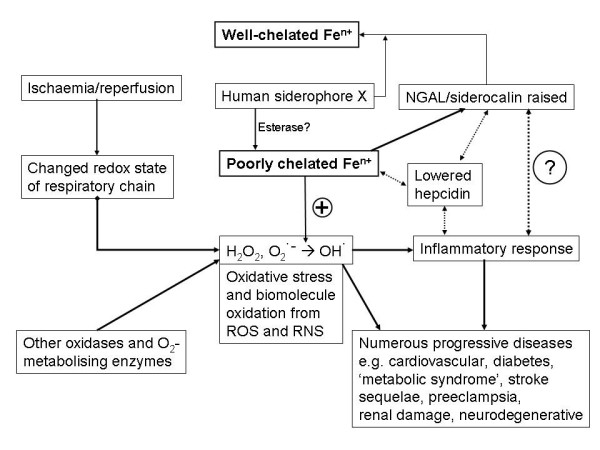
- Poorly liganded iron catalyses hydroxyl radical production via Fenton/Haber-Weiss chemistry; the review states that 1–4% of reduced O₂ forms partially reduced species such as hydrogen peroxide and superoxide, which are comparatively non-toxic until they encounter poorly liganded iron.
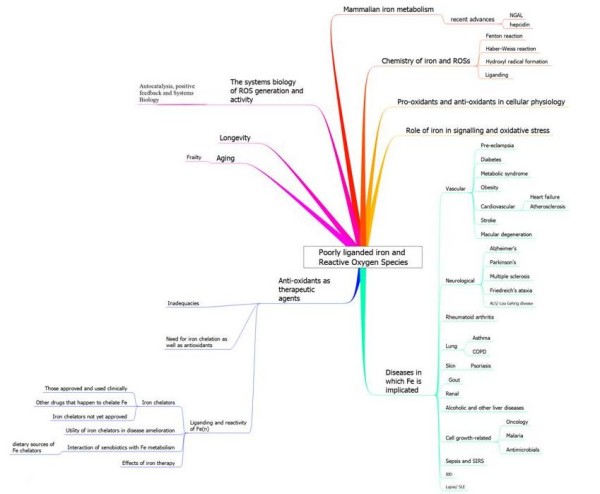
- Iron is implicated across many diseases reviewed, including pre-eclampsia, diabetes, metabolic syndrome, hypertension, atherosclerosis, stroke, Alzheimer’s/Parkinson’s, Friedreich’s ataxia, ALS, aging/frailty, rheumatoid arthritis, lupus, asthma, IBD, AMD, psoriasis, gout, liver disease, COPD, cancer, malaria, sepsis/SIRS, and others.
- Antioxidant trials have been mixed or disappointing; the review argues this may occur because antioxidants can act as pro-oxidants in the presence of poorly liganded Fe(II), so redox stress reduction requires both suitable antioxidants and effective iron chelators.
- Quantitative examples cited include EPR-detectable iron in atherosclerotic tissue being 17 times greater than healthy tissue, aspirin lowering colon cancer incidence by 40% (age-adjusted relative risk = 0.6), and NGAL serum concentrations approaching 20–30 nM during inflammation.
Methods
- Narrative literature review/meta-analysis synthesizing widely dispersed literature; the main review was completed on June 30th, 2008, with some updates after refereeing.
- Literature and citation searching used Web of Knowledge and Scopus, supplemented by Google Scholar; some use was made of ARROWSMITH, GOPubMed, Taverna workflows, and Endnote for citations/metadata.
- The paper develops a systems-biology argument rather than reporting primary experimental data; it includes a mind-map overview and discusses iron chemistry, chelator pharmacology, signalling pathways, and disease associations.
Limitations
- Stated: the review notes that it is “not easy to state at this time” how much deranged iron metabolism is causal in accelerated aging, that few studies have been mechanistically specific, and that interpretation of chelation experiments is not always clear-cut.
- Stated: for pre-eclampsia, no serum hepcidin measurements had been reported to date; for obesity, the authors “see no major evidence as yet for a causative role of deranged iron metabolism or chelation in causing obesity.”
- Evident: this is a broad narrative synthesis, not a systematic review with formal search/selection criteria or quantitative meta-analysis, and many disease links are presented as mechanistic hypotheses supported by dispersed, often indirect evidence.
Model-written summary of a shortened version of the paper’s full text (it is longer than we read). Check it against the paper before relying on it.
Integrity signals
Registry
Cites
Statistics
Figures
Verification
Claims the paper makes
32 Valid · 6 Not valid · 122 Not checked · 46 Own results and interpretations
The sources with a verdict support this claim; the rest weren’t checked yet, have no full text we could read, or their verdicts aren’t rated yet.
In the paper
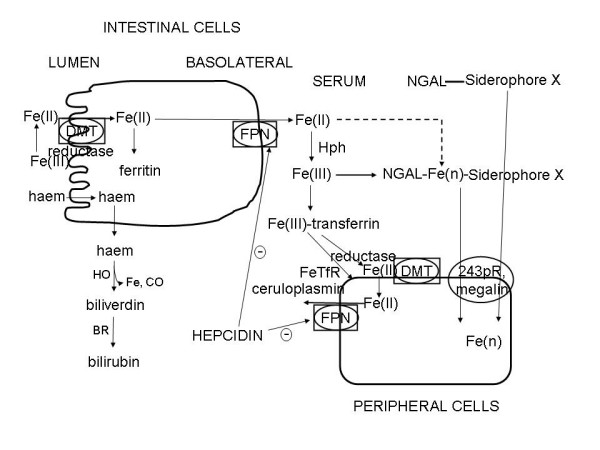
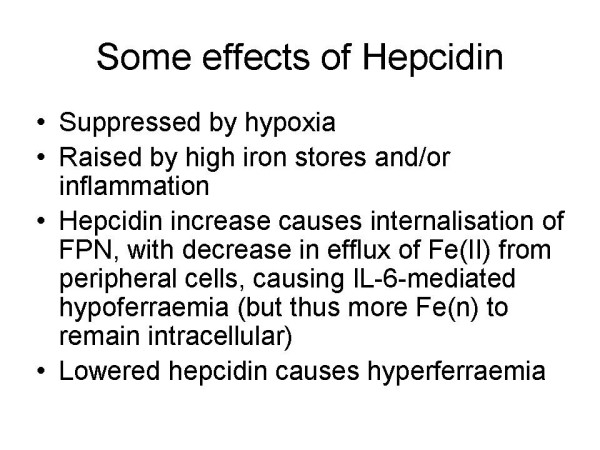
“that acts in part as a negative regulator of iron efflux [328] by causing the internalisation of ferroportin [329-333].”
§ Iron behaving badly: inappropriate iron chelation as a major contributor to the aetiology of vascular and other progressive inflammatory and degenerative diseases > Mammalian iron metabolism > Hepcidin
What the sources say
- Supportedcites [328] Knutson MD Oukka M Koss LM Aydemir F Wessling-Resnick M Iron release from macrophages after erythrophagocytosis is up-regulated by ferroportin 1 overexpression and down-regulated by hepcidin Proc Natl Acad Sci USA 2005 102 1324 8 15665091 PMC547844 source
Citation [328] is attached to the claim that hepcidin negatively regulates iron efflux, not to the subsequent internalisation mechanism cited to [329–333]. The Discussion calls hepcidin a negative regulator of iron export, and the Results report reduced iron release from hepcidin-treated macrophages. (LLM, conf=0.94)
- Not checked yetcites [329] Nemeth E Tuttle MS Powelson J Vaughn MB Donovan A Ward DM Ganz T Kaplan J Hepcidin regulates cellular iron efflux by binding to ferroportin and inducing its internalization Science 2004 306 2090 2093 15514116 source
- Not checked yetcites [330] Delaby C Pilard N Goncalves AS Beaumont C Canonne-Hergaux F Presence of the iron exporter ferroportin at the plasma membrane of macrophages is enhanced by iron loading and down-regulated by hepcidin Blood 2005 106 3979 84 16081696 source
- Not checked yetcites [331] Ganz T Hepcidin – a regulator of intestinal iron absorption and iron recycling by macrophages Best Practice & Research Clinical Haematology 2005 18 171 182 15737883 source
- Supportedcites [332] Papanikolaou G Tzilianos M Christakis JI Bogdanos D Tsimirika K MacFarlane J Goldberg YP Sakellaropoulos N Ganz T Nemeth E Hepcidin in iron overload disorders Blood 2005 105 4103 4105 15671438 PMC1895089 source
The Abstract states that hepcidin inhibits cellular iron efflux by binding to ferroportin and inducing its internalization and degradation. The Introduction also states that hepcidin binds ferroportin and causes its internalization. (LLM, conf=0.94)
- Supportedcites [333] Lesbordes-Brion JC Viatte L Bennoun M Lou DQ Ramey G Houbron C Hamard G Kahn A Vaulont S Targeted disruption of the hepcidin 1 gene results in severe hemochromatosis Blood 2006 108 1402 1405 16574947 source
The Introduction states that hepcidin limits iron egress by binding to ferroportin and inducing its internalization and degradation, decreasing cellular iron export. This supports the attributed role as a negative regulator of iron efflux. (LLM, conf=0.94)
plainstates a cause- Asserted: passes — The authors put it forward as true.
- Checkable: passes — It can be checked against evidence.
- Load-bearing: unclear — It is unclear whether the paper’s conclusions depend on it.
- Based: passes — The paper gives a reason why it holds.
- Supported
The cited sources support only part of this claim — read each source’s verdict below.
In the paper
“the well-known adverse vascular effects of homocysteine (in inhibiting flow-mediated dilatation) are in fact iron-dependent [701-703]”
§ Iron behaving badly: inappropriate iron chelation as a major contributor to the aetiology of vascular and other progressive inflammatory and degenerative diseases > Some disease manifestations in which iron may be implicated > Cardiovascular diseases
What the sources say
- Partly supportedcites [701] Zheng H Dimayuga C Hudaihed A Katz SD Effect of dexrazoxane on homocysteine-induced endothelial dysfunction in normal subjects Arterioscler Thromb Vasc Biol 2002 22 E15 8 12117747 sourceExperimental — accuracy not yet measured
The Abstract and Results of Zheng et al. (2002) do show, as a measured fact in 10 healthy volunteers, that the iron-chelating prodrug dexrazoxane 'completely abrogate[d] the homocysteine-induced reduction in FMD' after a methionine load, without lowering homocysteine itself — so the source supports iron-dependence of homocysteine's inhibition of flow-mediated dilatation in that acute model. However, the paper hedges the causal/mechanistic claim it is credited with establishing: the Iron-Based Oxidative Stress section states homocysteine toxicity 'may be dependent in part on interactions with intracellular LMW-Fe2+', and the Conclusions say iron-based hydroxyl-radical production 'may contribute' and that chelation 'may have therapeutic potential'. The citing sentence asserts the effects 'are in fact iron-dependent' and 'well-known', a confident generalisation the source does not make, and the source's data come only from transient hyperhomocysteinemia in normal subjects, not from chronic or other vascular outcomes. (LLM, conf=0.72)
- Not checked yetcites [702] Zheng H Huang X Zhang Q Katz SD Iron sucrose augments homocysteine-induced endothelial dysfunction in normal subjects Kidney Int 2006 69 679 84 16395269 PMC2988421 source
- Not checked yetcites [703] Sullivan JL Is homocysteine an iron-dependent cardiovascular risk factor? Kidney Int 2006 69 642 4 16467888 source
boostedstates a cause- Asserted: passes — The authors put it forward as true.
- Checkable: passes — It can be checked against evidence.
- Load-bearing: passes — The paper’s conclusions depend on it.
- Based: passes — The paper gives a reason why it holds.
- Partly supported
The cited sources support only part of this claim — read each source’s verdict below.
In the paper
“There is no doubt that the iron-mediated causal chain of ischaemia → (su)peroxide → OH• radical formation occurs during the development of heart disease, especially during reperfusion injury [710-713]”
§ Iron behaving badly: inappropriate iron chelation as a major contributor to the aetiology of vascular and other progressive inflammatory and degenerative diseases > Some disease manifestations in which iron may be implicated > Cardiovascular diseases
What the sources say
- Not checked yetcites [710] Smith JK Carden DL Grisham MB Granger DN Korthuis RJ Role of iron in postischemic microvascular injury Am J Physiol 1989 256 H1472 7 2719141
- Partly supportedcites [711] Kukreja RC Hess ML The oxygen free radical system: from equations through membrane protein interactions to cardiovascular injury and protection Cardiovasc Res 1992 26 641 655 1423428 sourceExperimental — accuracy not yet measured
The Conclusions passage and the Figure 8 legend in our copy state exactly the iron-mediated chain the claim attributes: ischaemia/reperfusion generates superoxide, which dismutates to H2O2 and, in the presence of iron, forms .OH via iron-catalysed Fenton and Haber-Weiss reactions, initiating membrane lipid peroxidation and myocardial injury. However, the source hedges this as a proposal ('This hypothesis proposes...', radicals 'are thought to be responsible for much of this injury', 'it now appears that the oxygen free radical system plays a pivotal role'), and the Masterclass section explicitly notes 'Many investigators, but not all' found scavenger protection — so the citing sentence's 'there is no doubt' overstates the source. Our copy also bounds the mechanism to myocardial ischaemia/reperfusion, stunning, arrhythmias and inflammation, not to the general 'development of heart disease'. (LLM, conf=0.78)
- Not checked yetcites [712] Lesnefsky E Ye J Exogenous intracellular, but not extracellular, iron augments myocardial reperfusion injury Amer J Physiol 1994 266 H384 H392 8141338
- Not checked yetcites [713] Berenshtein E Mayer B Goldberg C Kitrossky N Chevion M Patterns of mobilization of copper and iron following myocardial ischemia: Possible predictive criteria for tissue injury J Mol Cell Cardiol 1997 29 3025 3034 9405177 source
boostedstates a cause- Asserted: passes — The authors put it forward as true.
- Checkable: passes — It can be checked against evidence.
- Load-bearing: passes — The paper’s conclusions depend on it.
- Based: passes — The paper gives a reason why it holds.
The cited sources support only part of this claim — read each source’s verdict below.
In the paper
“Iron and oxidised lipids are both found in atherosclerotic lesions [141,765-777]”
§ Iron behaving badly: inappropriate iron chelation as a major contributor to the aetiology of vascular and other progressive inflammatory and degenerative diseases > Some disease manifestations in which iron may be implicated > Atherosclerosis
What the sources say
- Not checked yetcites [141] Brewer GJ Iron and copper toxicity in diseases of aging, particularly atherosclerosis and Alzheimer's disease Exp Biol Med 2007 232 323 335 17259340
- Partly supportedcites [765] Smith C Mitchinson MJ Aruoma OI Halliwell B Stimulation of lipid peroxidation and hydroxyl radical generation by the contents of human atherosclerotic lesions Biochem J 1992 286 901 905 1329721 PMC1132988 sourceExperimental — accuracy not yet measured
The Abstract reports bleomycin-detectable iron in every sample from advanced human atherosclerotic lesions. It reports that the samples stimulated lipid peroxidation in rat liver microsomes, but does not establish that oxidised lipids were present in the lesions themselves; the Discussion describes lipid damage in lesions as a proposal. (LLM, conf=0.86)
- Not checked yetcites [766] Ramakrishna G Rooke TW Cooper LT Iron and peripheral arterial disease: revisiting the iron hypothesis in a different light Vasc Med 2003 8 203 210 14989563 source
- Supportedcites [767] Stadler N Lindner RA Davies MJ Direct detection and quantification of transition metal ions in human atherosclerotic plaques: evidence for the presence of elevated levels of iron and copper Arterioscler Thromb Vasc Biol 2004 24 949 54 15001454 source
The paper reports in its Abstract that oxidized lipids have been detected in human plaques. Its Discussion reports elevated iron levels in advanced human carotid lesions compared with healthy tissue. Together, these passages support the claim; page numbers are unavailable in our copy. (LLM, conf=0.91)
- Not checked yetcites [768] Wolff B Volzke H Ludemann J Robinson D Vogelgesang D Staudt A Kessler C Dahm JB John U Felix SB Association between high serum ferritin levels and carotid atherosclerosis in the study of health in Pomerania (SHIP) Stroke 2004 35 453 7 14726541 source
- Not checked yetcites [769] Roijers RB Dutta RK Mutsaers PHA Gijbels MJJ de Winther MPJ de Goeij JJM Vusse GJ van der Spatial correlation of trace elements with morphological features of atherosclerotic plaques Nuclear Instruments & Methods in Physics Research Section B-Beam Interactions with Materials and Atoms 2005 231 239 244 source
- Not checked yetcites [770] Stocker R Keaney JF New insights on oxidative stress in the artery wall Journal of Thrombosis and Haemostasis 2005 3 1825 1834 16102049 source
- Not checked yetcites [771] Stanley N Stadler N Woods AA Bannon PG Davies MJ Concentrations of iron correlate with the extent of protein, but not lipid, oxidation in advanced human atherosclerotic lesions Free Radical Biology and Medicine 2006 40 1636 1643 16632123 source
- Not checked yetcites [772] Watt F Rajendran R Ren MQ Tan BKH Halliwell B A nuclear microscopy study of trace elements Ca, Fe, Zn and Cu in atherosclerosis Nucl Instr Meth Phys Res B 2006 249 646 652 source
- Partly supportedcites [773] Fernandes de Godoy M Takakura IT Machado RD Grassi LV Nogueira PR Serum ferritin and obstructive coronary artery disease: Angiographic correlation Arquivos Brasileiros De Cardiologia 2007 88 430 433 17546273 sourceExperimental — accuracy not yet measured
The Discussion (page unavailable) reports increased expression of the iron-storage protein ferritin in atherosclerotic coronary arteries. It only speculates that this might affect lipid oxidation in the vessel wall; it does not establish that oxidised lipids were found in the lesions. (LLM, conf=0.82)
plainstates an association- Asserted: passes — The authors put it forward as true.
- Checkable: passes — It can be checked against evidence.
- Load-bearing: passes — The paper’s conclusions depend on it.
- Based: passes — The paper gives a reason why it holds.
The sources with a verdict support this claim; the rest weren’t checked yet, have no full text we could read, or their verdicts aren’t rated yet.
In the paper
“while iron chelation improves it [797-800].”
§ Iron behaving badly: inappropriate iron chelation as a major contributor to the aetiology of vascular and other progressive inflammatory and degenerative diseases > Some disease manifestations in which iron may be implicated > Atherosclerosis
What the sources say
- Supportedcites [797] Duffy SJ Biegelsen ES Holbrook M Russell JD Gokce N Keaney JF Jr Vita JA Iron chelation improves endothelial function in patients with coronary artery disease Circulation 2001 103 2799 804 11401935 source
The Abstract (Methods and Results / Conclusions) of our copy states that deferoxamine (an iron chelator) improved the blood flow response to methacholine in patients with coronary artery disease (P<0.01) and concludes 'Deferoxamine improved nitric oxide-mediated, endothelium-dependent vasodilation in patients with coronary artery disease.' The paper's title itself is 'Iron Chelation Improves Endothelial Function in Patients With Coronary Artery Disease,' so the paraphrase matches the source, with the population qualifier (CAD patients) intact; deferoxamine had no effect in normal volunteers, consistent with the stated finding. (LLM, conf=0.93)
- Supportedcites [798] Ishizaka N Saito K Mori I Matsuzaki G Ohno M Nagai R Iron chelation suppresses ferritin upregulation and attenuates vascular dysfunction in the aorta of angiotensin II-infused rats Arterioscler Thromb Vasc Biol 2005 25 2282 8 16100038 source
The Results section ('Relaxations of Aortic Segments') states that deferoxamine reversed the impaired acetylcholine-induced (endothelium-dependent) relaxation in the aortas of angiotensin II–infused rats (50.4±5.7% → 69.2±6.0%, n=10), i.e. an improvement in endothelial function, with Figure 4A showing the same. The Discussion frames this as iron chelation suppressing Ang II-induced impaired vascular relaxation, attributing it to reduced iron-catalysed oxidative stress. The support is for the direction of the claim in a rat aorta model and is described as partial rather than complete reversal, which is the only qualifier the unqualified citing sentence omits. (LLM, conf=0.80)
- Not checked yetcites [799] Saito K Ishizaka N Aizawa T Sata M Iso-o N Noiri E Mori I Ohno M Nagai R Iron chelation and a free radical scavenger suppress angiotensin II-induced upregulation of TGF-beta1 in the heart Am J Physiol Heart Circ Physiol 2005 288 H1836 43 15550525 source
- Not checked yetcites [800] Thomas SR Schulz E Keaney JF Hydrogen peroxide restrains endothelium-derived nitric oxide bioactivity – Role for iron-dependent oxidative stress Free Radical Biology and Medicine 2006 41 681 688 16864001 source
plainstates a cause- Asserted: passes — The authors put it forward as true.
- Checkable: passes — It can be checked against evidence.
- Load-bearing: passes — The paper’s conclusions depend on it.
- Based: passes — The paper gives a reason why it holds.
- Supported
81 more claims · 6 with their cited sources checked
Create a free account to see all 206 claims and to verify the 567 references still open.
- Probably not a substantial claim. 42
- It may state two separate claims as one. 95
Claims other papers make about this one
Each is checked against this paper’s own text: does it say what the citing paper says it does?
The source backs part of the claim, not all of it — or backs it for a different population, condition or comparison.
In the citing paper
“Due to the presence of high-affinity iron binding and storage proteins, the actual toxicity of iron is restricted to the so called “labile iron pool”.”
From The interaction of asbestos and iron in lung tissue revealed by synchrotron-based scanning X-ray microscopy (2013) · cites this paper as [18]
Experimental — accuracy not yet measuredThe source backs part of the claim, not all of it — or backs it for a different population, condition or comparison.
In the citing paper
“Fe (II) reacting with unsaturated fatty acids in the presence of H 2 O 2 can initiate lipid peroxidation cascade in biological membranes and lipoproteins by production of HO•.”
From Iron, Oxidative Stress and Health (2012) · cites this paper as Kell, 2009
Experimental — accuracy not yet measuredThe source backs part of the claim, not all of it — or backs it for a different population, condition or comparison.
In the citing paper
“Lipid peroxidation increases membrane fragility of cell organelles such as mitochondria, lysosomes and endoplasmic reticulum leading to impaired cell function”
From Iron, Oxidative Stress and Health (2012) · cites this paper as Kell, 2009
Experimental — accuracy not yet measuredThe cited source says what the claim attributes to it.
In the citing paper
“Importantly, dysregulated iron homeostasis is associated with progressive inflammatory and degenerative diseases, as well as cancer [2].”
From The utility of iron chelators in the management of inflammatory disorders (2015) · cites this paper as [2]
The cited source says what the claim attributes to it.
In the citing paper
“Concerning this issue, the recent reviews by D. Kell1819 analyse the wide but dispersed literature via a systems biology approach, and indicate that iron that is weakly complexed boosts many biochemical processes leading to a large variety of apparently unrelated diseases.”
From The interaction of asbestos and iron in lung tissue revealed by synchrotron-based scanning X-ray microscopy (2013) · cites this paper as [18]
3 more claims about this paper
Create a free account to see every claim other papers make about this one.
Citations
Cites
3 retracted
Items 801–1,000 of 2,563
Human neutrophil gelatinase-associated lipocalin and homologous proteins in rat and mouse
Kjeldsen, L., Cowland, J. B., & Borregaard, N. (2000) · Biochimica et Biophysica Acta (BBA) - Protein Structure and Molecular Enzymology · doi:10.1016/s0167-4838(00)00152-7 · Cited by 368
Inflammatory Markers and the Metabolic Syndrome
Koh, K. K., Han, S. H., & Quon, M. J. (2005) · Journal of the American College of Cardiology · doi:10.1016/j.jacc.2005.06.082 · Cited by 368
Aging and Immortality: Quasi-Programmed Senescence and Its Pharmacologic Inhibition
Blagosklonny, M. V. (2006) · Cell Cycle · doi:10.4161/cc.5.18.3288 · Cited by 368 · cited 1×
“[1071] Blagosklonny, M.”
Ferrali, M., Signorini, C., Caciotti, B., Sugherini, L., Ciccoli, L., Giachetti, D., & Comporti, M. (1997) · FEBS Letters · doi:10.1016/s0014-5793(97)01182-4 · Cited by 367 · cited 1×
“Examples include flavones such as quercetin [807; 1642; 1658; 1683-1693], rutin [1658; 1686; 1687; 1694; 1695], baicalin [1689; 1696], curcumin [1642; 1697-1701], kolaviron [1702], flavonol [1703], floranol [1704], xanthones such as mangiferin [1705-1708], morin [1705], catechins [963; 1636; 1667; 1683; 1709; 1710] an…”
The response of Pseudomonas aeruginosa to iron: genetics, biochemistry and virulence
Vasil, M. L., & Ochsner, U. A. (1999) · Molecular Microbiology · doi:10.1046/j.1365-2958.1999.01586.x · Cited by 366
Are reactive oxygen species involved in Alzheimer's disease?
Benzi, G. (1995) · Neurobiology of Aging · doi:10.1016/0197-4580(95)00066-n · Cited by 365
A systematic look at an old problem
Kirkwood, T. B. L. (2008) · Nature · doi:10.1038/451644a · Cited by 363 · cited 1×
“sapiens [1180]), and appears to act at the root of”
BackgroundOxidative stress in Alzheimer's disease brain: New insights from redox proteomics
Butterfield, D. A., Perluigi, M., & Sultana, R. (2006) · European Journal of Pharmacology · doi:10.1016/j.ejphar.2006.06.026 · Cited by 363
The role of iron in type 2 diabetes in humans
Rajpathak, S. N., Crandall, J. P., Wylie-Rosett, J., Kabat, G. C., Rohan, T. E., & Hu, F. B. (2009) · Biochimica et Biophysica Acta (BBA) - General Subjects · doi:10.1016/j.bbagen.2008.04.005 · Cited by 363 · cited 2×
“associated with diabetes [603, 605-609], including”
Oxidative Stress, Accumulation of Biological 'Garbage', and Aging
Terman, A., & Brunk, U. T. (2006) · Antioxidants & Redox Signaling · doi:10.1089/ars.2006.8.197 · Cited by 363
Surh, Y.-J., Kundu, J. K., Na, H.-K., & Lee, J.-S. (2005) · The Journal of Nutrition · doi:10.1093/jn/135.12.2993s · Cited by 363
Biswas, S. K., McClure, D., Jimenez, L. A., Megson, I. L., & Rahman, I. (2005) · Antioxidants & Redox Signaling · doi:10.1089/ars.2005.7.32 · Cited by 363
Brain iron pathways and their relevance to Parkinson's disease
Berg, D., Gerlach, M., Youdim, M. B. H., Double, K. L., Zecca, L., Riederer, P., & Becker, G. (2001) · Journal of Neurochemistry · doi:10.1046/j.1471-4159.2001.00608.x · Cited by 362
Biomarkers of inflammation and progression of chronickidney disease
Tonelli, M., Sacks, F., Pfeffer, M., Jhangri, G. S., & Curhan, G. (2005) · Kidney International · doi:10.1111/j.1523-1755.2005.00398.x · Cited by 362
Acquisition of siderophores in Gram-negative bacteria
Faraldo-Gómez, J. D., & Sansom, M. S. P. (2003) · Nature Reviews Molecular Cell Biology · doi:10.1038/nrm1015 · Cited by 361
Caniggia, I., Grisaru-Gravnosky, S., Kuliszewsky, M., Post, M., & Lye, S. J. (1999) · Journal of Clinical Investigation · doi:10.1172/jci6380 · Cited by 360 · cited 2×
“give rise to the symptoms of 10 hypertension, proteinuria, and sudden oedema characteristic of preeclampsia [40]. Indeed, many studies implicate oxidative stress as a substantial contributor to this [344, 345, 346, 347, 348, 349, 350, 351, 352, 353, 354, 355, 356, 357, 358, 359, 360, 361, 362, 363, 364, 365, 366, 367,…”
BackgroundIron, Infections, and Anemia of Inflammation
Jurado, R. L. (1997) · Clinical Infectious Diseases · doi:10.1086/515549 · Cited by 358 · cited 1×
“siderophores [170-189] (and for haemophores see”
Raymond, K. N., Müller, G., & Matzanke, B. F. (1984) · Topics in Current Chemistry · doi:10.1007/3-540-13099-3_2 · Cited by 357 · cited 1×
“siderophores [170-189] (and for haemophores see”
Ferritin as a source of iron for oxidative damage
Reif, D. W. (1992) · Free Radical Biology and Medicine · doi:10.1016/0891-5849(92)90091-t · Cited by 357 · cited 4×
“Thus, “A compound suitable for the treatment of neurodegenerative disease should possess a number of qualities, namely (1) strong affinity for FeIII, (2) low molecular weight, (3) lipophilicity high enough to accommodate permeation of cell membranes and the BBB, (4) oral activity, and (5) minimal toxicity [952].”
ResultInfluentialSystems biology in practice: concepts, implementation and application
(2005) · Choice Reviews Online · doi:10.5860/choice.43-2192 · Cited by 357
Nguyen, H. B., Rivers, E. P., Abrahamian, F. M., Moran, G. J., Abraham, E., Trzeciak, S., Huang, D. T., Osborn, T., Stevens, D., & Talan, D. A. (2006) · Annals of Emergency Medicine · doi:10.1016/j.annemergmed.2006.02.015 · Cited by 356 · cited 2×
“[1388] Nguyen, H.”
BackgroundIron Metabolism in the Reticuloendothelial System
Knutson, M., & Wessling-Resnick, M. (2003) · Critical Reviews in Biochemistry and Molecular Biology · doi:10.1080/713609210 · Cited by 355 · cited 1×
“[99; 104; 151; 167-186]), including a series on ‘iron imports’ [187-193], and for our present purposes (Fig 2) mainly involves the intestinal (mainly duodenal) uptake of Fe(II) (produced from Fe(III) using a luminal ferrireductase) via a divalent metal ion transporter DMT1/DCT1/NRAMP [194; 195] and its”
BackgroundCowland, J. B., Sørensen, O. E., Sehested, M., & Borregaard, N. (2003) · The Journal of Immunology · doi:10.4049/jimmunol.171.12.6630 · Cited by 354
Statins as anti-inflammatory agents
Weitz-Schmidt, G. (2002) · Trends in Pharmacological Sciences · doi:10.1016/s0165-6147(02)02077-1 · Cited by 354
Metals and amyloid‐β in Alzheimer's disease
Maynard, C. J., Bush, A. I., Masters, C. L., Cappai, R., & Li, Q. (2005) · International Journal of Experimental Pathology · doi:10.1111/j.0959-9673.2005.00434.x · Cited by 353
Oxidative Stress and Iron Homeostasis: Mechanistic and Health Aspects
Galaris, D., & Pantopoulos, K. (2008) · Critical Reviews in Clinical Laboratory Sciences · doi:10.1080/10408360701713104 · Cited by 352 · cited 1×
“unliganded or incompletely liganded iron ions [61-63].”
Basic Mechanisms of Oxidative Stress and Reactive Oxygen Species in Cardiovascular Injury
Papaharalambus, C. A., & Griendling, K. K. (2007) · Trends in Cardiovascular Medicine · doi:10.1016/j.tcm.2006.11.005 · Cited by 351
Cellular Thiols and Reactive Oxygen Species in Drug-Induced Apoptosis
Davis, W., Ronai, Z., & Tew, K. D. (2001) · The Journal of Pharmacology and Experimental Therapeutics · doi:10.1016/s0022-3565(24)29655-5 · Cited by 351
Cloning and expression of the hyman erythropoietin gene
Lin, F. (1985) · Medical Entomology and Zoology · Cited by 351
Hvidberg, V., Jacobsen, C., Strong, R. K., Cowland, J. B., Moestrup, S. K., & Borregaard, N. (2005) · FEBS Letters · doi:10.1016/j.febslet.2004.12.031 · Cited by 350 · cited 1×
“In humans the megalin receptor can bind siderocalin (and its siderophore payload) and mediate its intracellular uptake [314].”
BackgroundFunctional classification of drugs by properties of their pairwise interactions
Yeh, P., Tschumi, A. I., & Kishony, R. (2006) · Nature Genetics · doi:10.1038/ng1755 · Cited by 350
Trenkwalder, C., Paulus, W., & Walters, A. S. (2005) · The Lancet Neurology · doi:10.1016/s1474-4422(05)70139-3 · Cited by 350
Hemdahl, A.-L., Gabrielsen, A., Zhu, C., Eriksson, P., Hedin, U., Kastrup, J., Thorén, P., & Hansson, G. K. (2006) · Arteriosclerosis, Thrombosis, and Vascular Biology · doi:10.1161/01.atv.0000193567.88685.f4 · Cited by 350
Association of age, sex, and race with body iron stores in adults: Analysis of NHANES III data
Zacharski, L. R., Ornstein, D. L., Woloshin, S., & Schwartz, L. M. (2000) · American Heart Journal · doi:10.1067/mhj.2000.106646 · Cited by 349
Inflammation in Atherosclerosis and Implications for Therapy
Paoletti, R., Gotto, A. M., & Hajjar, D. P. (2004) · Circulation · doi:10.1161/01.cir.0000131514.71167.2e · Cited by 349 · cited 1×
“[731-762] characterized by the accumulation of both”
DiFederico, E., Genbacev, O., & Fisher, S. J. (1999) · The American Journal of Pathology · doi:10.1016/s0002-9440(10)65123-1 · Cited by 348 · cited 1×
“apoptosis during the placental remodelling [417-423].”
Breast Cancer Growth Prevention by Statins
Campbell, M. J., Esserman, L. J., Zhou, Y., Shoemaker, M., Lobo, M., Borman, E., Baehner, F., Kumar, A. S., Adduci, K., Marx, C., et al. (2006) · Cancer Research · doi:10.1158/0008-5472.can-05-4061 · Cited by 348 · cited 1×
“2128], traumatic brain injury [2129-2131], neurodegenerative diseases [753-755; 813; 1164; 1886; 2132-2148], neurotoxicity [2149] and cancer [2150-2164].”
BackgroundThe non‐haematopoietic biological effects of erythropoietin
Arcasoy, M. O. (2008) · British Journal of Haematology · doi:10.1111/j.1365-2141.2008.07014.x · Cited by 347
Iron imports. IV. Hepcidin and regulation of body iron metabolism
Ganz, T., & Nemeth, E. (2006) · American Journal of Physiology-Gastrointestinal and Liver Physiology · doi:10.1152/ajpgi.00412.2005 · Cited by 347 · cited 3×
“production [245, 339, 340] (Fig 3), such that just while”
BackgroundAnti-inflammatory and immunomodulatory effects of statins
Blanco-Colio, L. M., Tuñón, J., Martín-Ventura, J. L., & Egido, J. (2003) · Kidney International · doi:10.1046/j.1523-1755.2003.00744.x · Cited by 347
The Toxicities of Native and Modified Hemoglobins
Everse, J., & Hsia, N. (1997) · Free Radical Biology and Medicine · doi:10.1016/s0891-5849(96)00499-6 · Cited by 346 · cited 1×
“including adrenaline (epinephrine) [1607], haemin [1608],”
Bioflavonoids as antiradicals, antioxidants and DNA cleavage protectors
Russo, A., Acquaviva, R., Campisi, A., Sorrenti, V., Di Giacomo, C., Virgata, G., Barcellona, M. L., & Vanella, A. (2000) · Cell Biology and Toxicology · doi:10.1023/a:1007685909018 · Cited by 346
Iron binding characteristics of phenolic compounds: some tentative structure–activity relations
Khokhar, S., & Owusu Apenten, R. K. (2003) · Food Chemistry · doi:10.1016/s0308-8146(02)00394-1 · Cited by 346
The molecular basis of asbestos induced lung injury
Kamp, D. W., & Weitzman, S. A. (1999) · Thorax · doi:10.1136/thx.54.7.638 · Cited by 345 · cited 1×
“production [1463-1475], while there seem to be com-”
BackgroundRespiratory deficiency due to loss of mitochondrial DNA in yeast lacking the frataxin homologue
Wilson, R. B., & Roof, D. M. (1997) · Nature Genetics · doi:10.1038/ng0897-352 · Cited by 345
MATTHAY, R. A., SCHWARZ, M. I., PETTY, T. L., STANFORD, R. E., GUPTA, R. C., SAHN, S. A., & STEIGERWALD, J. C. (1975) · Medicine · doi:10.1097/00005792-197509000-00003 · Cited by 345
Oxidative stress and aging: beyond correlation
Golden, T. R., Hinerfeld, D. A., & Melov, S. (2002) · Aging Cell · doi:10.1046/j.1474-9728.2002.00015.x · Cited by 344 · cited 1×
“[1065] Golden, T.”
Dichtl, W., Dulak, J., Frick, M., Alber, H. F., Schwarzacher, S. P., Ares, M. P. S., Nilsson, J., Pachinger, O., & Weidinger, F. (2003) · Arteriosclerosis, Thrombosis, and Vascular Biology · doi:10.1161/01.atv.0000043456.48735.20 · Cited by 344
Virulence factors of Escherichia coli O157 and other Shiga toxin-producing E. coli
Law, D. (2000) · Journal of Applied Microbiology · doi:10.1046/j.1365-2672.2000.01031.x · Cited by 344
Rostom, A., Dubé, C., Lewin, G., Tsertsvadze, A., Barrowman, N., Code, C., Sampson, M., & Moher, D. (2007) · Annals of Internal Medicine · doi:10.7326/0003-4819-146-5-200703060-00010 · Cited by 343
The Relevance of Iron in the Pathogenesis of Parkinson's Disease
GÖTZ, M. E., DOUBLE, K., GERLACH, M., YOUDIM, M. B. H., & RIEDERERE, P. (2004) · Annals of the New York Academy of Sciences · doi:10.1196/annals.1306.017 · Cited by 342 · cited 1×
“] [885] [886] [887] [888] [889] [890] [891] [892] [893] [894] [895] [896] [897] [898] [899] [900] [901] [902] [903] [904] [905] [906] [907] [908] [909] [910] [911] [912] [810] [913] [914] [915] [916] [917] [918] [919] [920] [921] [922] [923] [924] [925] [219] [926] [927] [928] [929] [930] [931] [932] [933] [934] [935]…”
Maternal Obesity, Metabolism, and Pregnancy Outcomes
King, J. C. (2006) · Annual Review of Nutrition · doi:10.1146/annurev.nutr.24.012003.132249 · Cited by 341 · cited 1×
“[456-460]), and also predispose towards PE.”
Brain ferritin iron may influence age- and gender-related risks of neurodegeneration
Bartzokis, G., Tishler, T. A., Lu, P. H., Villablanca, P., Altshuler, L. L., Carter, M., Huang, D., Edwards, N., & Mintz, J. (2007) · Neurobiology of Aging · doi:10.1016/j.neurobiolaging.2006.02.005 · Cited by 341 · cited 1×
“Iron (and in some cases copper) is also strongly implicated in a variety of neurodegenerative diseases [867] [868] [869] [870] [871] [872] [836] [873] [837] [850] [874] [875] [876] [877] [854] [878] [879] [880] [881] [842] [882] [883] [884] [885] [886] [887] [888] [889] [890] [891] [892] [893] [894] [895] [896] [897]…”
Iron misregulation in the brain: a primary cause of neurodegenerative disorders
Ke, Y., & Qian, Z. M. (2003) · The Lancet Neurology · doi:10.1016/s1474-4422(03)00353-3 · Cited by 340 · cited 1×
“Iron (and in some cases copper) is also strongly implicated in a variety of neurodegenerative diseases [867] [868] [869] [870] [871] [872] [836] [873] [837] [850] [874] [875] [876] [877] [854] [878] [879] [880] [881] [842] [882] [883] [884] [885] [886] [887] [888] [889] [890] [891] [892] [893] [894] [895] [896] [897]…”
Free Radicals in Medicine. II. Involvement in Human Disease
SOUTHORN, P. A., & POWIS, G. (1988) · Mayo Clinic Proceedings · doi:10.1016/s0025-6196(12)64862-9 · Cited by 339
The Effect of Statins on Mortality in Patients with Bacteremia
Liappis, A. P., Kan, V. L., Rochester, C. G., & Simon, G. L. (2001) · Clinical Infectious Diseases · doi:10.1086/323334 · Cited by 338
Reiter, R. J. (2003) · Best Practice & Research Clinical Endocrinology & Metabolism · doi:10.1016/s1521-690x(03)00016-2 · Cited by 337
Ins and outs of dietary phytochemicals in cancer chemoprevention
Russo, G. L. (2007) · Biochemical Pharmacology · doi:10.1016/j.bcp.2007.02.014 · Cited by 337 · cited 1×
“celebrated (trans-)-resveratrol molecule [1888-1902] may”
Mechanism-based in vitro screening of potential cancer chemopreventive agents
Gerhäuser, C., Klimo, K., Heiss, E., Neumann, I., Gamal-Eldeen, A., Knauft, J., Liu, G.-Y., Sitthimonchai, S., & Frank, N. (2003) · Mutation Research - Fundamental and Molecular Mechanisms of Mutagenesis · doi:10.1016/s0027-5107(02)00332-9 · Cited by 337
Causes of oxidative stress in Alzheimer disease
Zhu, X., Su, B., Wang, X., Smith, M. A., & Perry, G. (2007) · Cellular and Molecular Life Sciences · doi:10.1007/s00018-007-7218-4 · Cited by 336 · cited 1×
“Iron (and in some cases copper) is also strongly implicated in a variety of neurodegenerative diseases [867] [868] [869] [870] [871] [872] [836] [873] [837] [850] [874] [875] [876] [877] [854] [878] [879] [880] [881] [842] [882] [883] [884] [885] [886] [887] [888] [889] [890] [891] [892] [893] [894] [895] [896] [897]…”
Role of Oxidative Stress and Antioxidants in Neurodegenerative Diseases
Rao, A. V., & Balachandran, B. (2002) · Nutritional Neuroscience · doi:10.1080/1028415021000033767 · Cited by 336
García-Ruiz, C., Colell, A., Morales, A., Kaplowitz, N., & Fernández-Checa, J. C. (1995) · Molecular Pharmacology · doi:10.1016/s0026-895x(25)10539-7 · Cited by 336
Abramson, J. L., Jurkovitz, C. T., Vaccarino, V., Weintraub, W. S., & Mcclellan, W. (2003) · Kidney International · doi:10.1046/j.1523-1755.2003.00109.x · Cited by 336 · cited 1×
“[709]), all consistent with their having in part a common cause – we believe inflammation).”
BackgroundIntegrating biological databases
Stein, L. D. (2003) · Nature Reviews Genetics · doi:10.1038/nrg1065 · Cited by 336
Baker, K., Marcus, C. B., Huffman, K., Kruk, H., Malfroy, B., & Doctrow, S. R. (1998) · The Journal of Pharmacology and Experimental Therapeutics · doi:10.1016/s0022-3565(24)37225-8 · Cited by 335
Haas, H. (2003) · Applied Microbiology and Biotechnology · doi:10.1007/s00253-003-1335-2 · Cited by 334 · cited 1×
“by bacteria (and indeed fungi [166-169]) long ago in”
BackgroundPathophysiology of Preeclampsia: Linking Placental Ischemia/Hypoxia with Microvascular Dysfunction
GRANGER, J. P., ALEXANDER, B. T., LLINAS, M. T., BENNETT, W. A., & KHALIL, R. A. (2002) · Microcirculation · doi:10.1038/sj.mn.7800137 · Cited by 334 · cited 1×
“this [425-489], while some have noted the importance of”
BackgroundAgnello, D., Bigini, P., Villa, P., Mennini, T., Cerami, A., Brines, M. L., & Ghezzi, P. (2002) · Brain Research · doi:10.1016/s0006-8993(02)03239-0 · Cited by 334
Cell killing and DNA damage by hydrogen peroxide are mediated by intracellular iron
Mello Filho, A. C., Hoffmann, M. E., & Meneghini, R. (1984) · Biochemical Journal · doi:10.1042/bj2180273 · Cited by 333 · cited 1×
“[1744, 1745], 2-benzoylpyridine thiosemicarbazones”
Hypoxia-inducible factors in the kidney
Haase, V. H. (2006) · American Journal of Physiology-Renal Physiology · doi:10.1152/ajprenal.00071.2006 · Cited by 332 · cited 2×
“The source of the iron appears to be excess angiogenesis and leakage from blood vessels catalysed by VEGF, and a PEGylated aptamer [1203- 1205] against VEGF (pegaptanib) or a monoclonal antibody (ranibizumab) have shown significant promise in the treatment of macular degeneration [1206-1211].”
BackgroundEVOLUTIONARY AND MECHANISTIC THEORIES OF AGING
Hughes, K. A., & Reynolds, R. M. (2005) · Annual Review of Entomology · doi:10.1146/annurev.ento.50.071803.130409 · Cited by 331 · cited 1×
“mance and fitness with advancing age [1150].”
The music of life : biology beyond genes
Noble, D. (2008) · Oxford University Press eBooks · Cited by 330
Serum Ferritin as a Component of the Insulin Resistance Syndrome
Fernández-Real, J.-M., Ricart-Engel, W., Arroyo, E., Balançá, R., Casamitjana-Abella, R., Cabrero, D., Fernández-Castañer, M., & Soler, J. (1998) · Diabetes Care · doi:10.2337/diacare.21.1.62 · Cited by 328 · cited 1×
“associated with diabetes [603, 605-609], including”
Nisbet-Brown, E., Olivieri, N. F., Giardina, P. J., Grady, R. W., Neufeld, E. J., Séchaud, R., Krebs-Brown, A. J., Anderson, J. R., Alberti, D., Sizer, K. C., et al. (2003) · The Lancet · doi:10.1016/s0140-6736(03)13309-0 · Cited by 328
Erythropoietin as an antiapoptotic, tissue-protective cytokine
Ghezzi, P., & Brines, M. (2004) · Cell Death & Differentiation · doi:10.1038/sj.cdd.4401450 · Cited by 327 · cited 1×
“[1968] Ghezzi, P.”
Oxidative and nitrosative events in asthma
Andreadis, A. A., Hazen, S. L., Comhair, S. A. A., & Erzurum, S. C. (2003) · Free Radical Biology and Medicine · doi:10.1016/s0891-5849(03)00278-8 · Cited by 327 · cited 1×
“been linked with ROS generation [1297] catalysed by”
BackgroundIron-dependent free radical generation from the antimalarial agent artemisinin (qinghaosu)
Meshnick, S. R., Yang, Y. Z., Lima, V, Kuypers, F., Kamchonwongpaisan, S., & Yuthavong, Y. (1993) · Antimicrobial Agents and Chemotherapy · doi:10.1128/aac.37.5.1108 · Cited by 327 · cited 1×
“cytotoxic) mode of action of artemisinin [1336; 1338-1346], and this reaction is in fact inhibited by iron chelators [1347] such that a combined artemisinin-chelator therapy would be contraindicated.”
BackgroundAmin-Hanjani, S., Stagliano, N. E., Yamada, M., Huang, P. L., Liao, J. K., & Moskowitz, M. A. (2001) · Stroke · doi:10.1161/01.str.32.4.980 · Cited by 327 · cited 1×
“[2123] Amin-Hanjani, S.”
Stephens, N., Parsons, A., Schofield, P., Mitchinson, M., & Brown, M. (1996) · Clinical Science · doi:10.1042/cs091016pb · Cited by 327
Savoia, C., & Schiffrin, E. L. (2007) · Clinical Science · doi:10.1042/cs20060247 · Cited by 326 · cited 1×
“inflammatory in nature [678-686], is related to the”
BackgroundTHORPE SR ROLE OF OXIDATIVE STRESS IN DIABETIC COMPLICATIONS: A NEW PERSPECTIVE ON AN OLD PARADIGM
Baynes, J. (1999) · Cited by 326
Pathophysiology of oxidative stress in diabetes mellitus
Lipinski, B. (2001) · Journal of Diabetes and its Complications · doi:10.1016/s1056-8727(01)00143-x · Cited by 324 · cited 1×
“insulin resistance [549-556] and in a variety of diabetic”
BackgroundNovel anti-inflammatory therapy for Parkinson's disease
Gao, H.-M., Liu, B., Zhang, W., & Hong, J.-S. (2003) · Trends in Pharmacological Sciences · doi:10.1016/s0165-6147(03)00176-7 · Cited by 324
Metals and Alzheimer's disease
Adlard, P. A., & Bush, A. I. (2006) · Journal of Alzheimer's Disease · doi:10.3233/jad-2006-102-303 · Cited by 324
Robustness, evolvability, and neutrality
Wagner, A. (2005) · FEBS Letters · doi:10.1016/j.febslet.2005.01.063 · Cited by 324
Text mining and its potential applications in systems biology
Ananiadou, S., Kell, D. B., & Tsujii, J.-I. (2006) · Trends in Biotechnology · doi:10.1016/j.tibtech.2006.10.002 · Cited by 324
Self-citationRoberts, C. K., Barnard, R. J., Sindhu, R. K., Jurczak, M., Ehdaie, A., & Vaziri, N. D. (2006) · Metabolism · doi:10.1016/j.metabol.2006.02.022 · Cited by 322
Barros, M. H., Bandy, B., Tahara, E. B., & Kowaltowski, A. J. (2004) · Journal of Biological Chemistry · doi:10.1074/jbc.m408918200 · Cited by 322
Iron Metabolism: A Comprehensive Review
Beard, J. L., Dawson, H., & Piñero, D. J. (2009) · Nutrition Reviews · doi:10.1111/j.1753-4887.1996.tb03794.x · Cited by 322
Sandur, S. K., Ichikawa, H., Sethi, G., Ahn, K. S., & Aggarwal, B. B. (2006) · Journal of Biological Chemistry · doi:10.1074/jbc.m601595200 · Cited by 322
How pathogenic bacteria evade mammalian sabotage in the battle for iron
Fischbach, M. A., Lin, H., Liu, D. R., & Walsh, C. T. (2006) · Nature Chemical Biology · doi:10.1038/nchembio771 · Cited by 321 · cited 2×
“rulence of bacteria when it binds the relevant bacterial siderophores [288, 289, 290, 291, 292, 293] and that bacteria can ‘evade’ this by synthesising siderophores that siderocalin cannot bind (e.g. [142; 143; 320; 321]), it is questionable whether the only role of siderocalin lies in fact in its antibacterial activi…”
BackgroundStatins and sepsis in patients with cardiovascular disease: a population-based cohort analysis
Hackam, D. G., Mamdani, M., Li, P., & Redelmeier, D. A. (2006) · The Lancet · doi:10.1016/s0140-6736(06)68041-0 · Cited by 321
Solution equilibria of enterobactin and metal-enterobactin complexes
Loomis, L. D., & Raymond, K. N. (1991) · Inorganic Chemistry · doi:10.1021/ic00005a008 · Cited by 321 · cited 1×
“These typically have extremely tight binding constants (Kf > 10 30 [191]) and can solubilise and sequester iron such that it can be internalised via suitable”
BackgroundCancer-preventive isothiocyanates: measurement of human exposure and mechanism of action
Zhang, Y. (2004) · Mutation Research - Fundamental and Molecular Mechanisms of Mutagenesis · doi:10.1016/j.mrfmmm.2004.04.017 · Cited by 320
Mechanisms of Disease: pre-eclampsia
Noris, M., Perico, N., & Remuzzi, G. (2005) · Nature Clinical Practice Nephrology · doi:10.1038/ncpneph0035 · Cited by 320 · cited 2×
“Indeed, many studies implicate oxidative stress as a substantial contributor to this [344-385] [386-408], while some have noted the importance of iron status [40; 98; 369; 409-427], and so far as is known the transporters of iron in the placenta are similar to those in other cells [428].”
BackgroundThe pathogen-associated iroA gene cluster mediates bacterial evasion of lipocalin 2
Fischbach, M. A., Lin, H., Zhou, L., Yu, Y., Abergel, R. J., Liu, D. R., Raymond, K. N., Wanner, B. L., Strong, R. K., Walsh, C. T., et al. (2006) · Proceedings of the National Academy of Sciences · doi:10.1073/pnas.0604636103 · Cited by 319
Expression of Inflammatory Cytokines in Placentas from Women with Preeclampsia1
Benyo, D. F., Smarason, A., Redman, C. W. G., Sims, C., & Conrad, K. P. (2001) · The Journal of Clinical Endocrinology & Metabolism · doi:10.1210/jcem.86.6.7585 · Cited by 319
Melatonin: a novel protective agent against oxidative injury of the ischemic/reperfused heart
REITER, R., & TAN, D. (2003) · Cardiovascular Research · doi:10.1016/s0008-6363(02)00827-1 · Cited by 316
STAT3 Is Required for IL-6-gp130–Dependent Activation of Hepcidin In Vivo
Pietrangelo, A., Dierssen, U., Valli, L., Garuti, C., Rump, A., Corradini, E., Ernst, M., Klein, C., & Trautwein, C. (2007) · Gastroenterology · doi:10.1053/j.gastro.2006.10.018 · Cited by 315 · cited 1×
“pression of a variety of genes involved in intestinal iron absorption, including Dcytb, DMT1 and ferroportin, leading to iron overload [272]. STAT3 is another positive effector of hepcidin expression [273; 274], and ROSs inhibit this effect [275], thereby creating a link between ROSs and Fe metabolism. To 8 understand…”
BackgroundNeufeld, E. J. (2006) · Blood · doi:10.1182/blood-2006-02-002394 · Cited by 315 · cited 1×
“Table 1: Comparison of the main available iron chelators to an ideal chelation drug (modified from [2469])”
BackgroundInsulin Resistance and Atherosclerosis
Nigro, J., Osman, N., Dart, A. M., & Little, P. J. (2006) · Endocrine Reviews · doi:10.1210/er.2005-0007 · Cited by 314
Dormancy in non-sporulating bacteria
Kaprelyants, A. (1993) · FEMS Microbiology Letters · doi:10.1016/0378-1097(93)90600-7 · Cited by 314
Self-citationDrechsel, D. A., & Patel, M. (2008) · Free Radical Biology and Medicine · doi:10.1016/j.freeradbiomed.2008.02.008 · Cited by 314
Pleiotropic Effects of Statins: Lipid Reduction and Beyond
McFarlane, S. I. (2002) · Journal of Clinical Endocrinology & Metabolism · doi:10.1210/jc.87.4.1451 · Cited by 314
Signal transduction of inflammatory cytokines and tumor development
Yoshimura, A. (2006) · Cancer Science · doi:10.1111/j.1349-7006.2006.00197.x · Cited by 314 · cited 1×
“In addition to the issues of smoking, the development of cancer can certainly contain an inflammatory component [1268-1278], and indeed the long-term use of prophylactic anti-inflammatory aspirin lowers colon cancer incidence by 40% (age-adjusted relative risk = 0.”
BackgroundHepcidin: from discovery to differential diagnosis
Kemna, E. H. J. M., Tjalsma, H., Willems, H. L., & Swinkels, D. W. (2008) · Haematologica · doi:10.3324/haematol.11705 · Cited by 313
Tuomainen, T.-P., Nyyssönen, K., Salonen, R., Tervahauta, A., Korpela, H., Lakka, T., Kaplan, G. A., & Salonen, J. T. (1997) · Diabetes Care · doi:10.2337/diacare.20.3.426 · Cited by 312
Quantitative Mass Spectrometry Identifies Insulin Signaling Targets in C. elegans
Dong, M.-Q., Venable, J. D., Au, N., Xu, T., Park, S. K., Cociorva, D., Johnson, J. R., Dillin, A., & Yates, J. R. (2007) · Science · doi:10.1126/science.1139952 · Cited by 312
The Music of Life: Biology beyond the Genome
Noble, D. (2006) · doi:10.1093/oso/9780199295739.001.0001 · Cited by 312
Constitutive hepcidin expression prevents iron overload in a mouse model of hemochromatosis
Nicolas, G., Viatte, L., Lou, D.-Q., Bennoun, M., Beaumont, C., Kahn, A., Andrews, N. C., & Vaulont, S. (2003) · Nature Genetics · doi:10.1038/ng1150 · Cited by 311 · cited 1×
“In the liver and elsewhere, many aspects of iron metabolism are regulated by a recently discovered 25amino acid polypeptide called hepcidin [163; 186; 190; 212; 230-255] that acts in part as a negative regulator of iron efflux [256] by causing the internalisation of ferroportin [257-261].”
BackgroundStadler, N., Lindner, R. A., & Davies, M. J. (2004) · Arteriosclerosis, Thrombosis, and Vascular Biology · doi:10.1161/01.atv.0000124892.90999.cb · Cited by 310 · cited 2×
“[694, 695, 696, 697]. However, phlebotomy provided no clinical benefit here [698]. Note that iron levels in plaques correlate with the amount of oxidised proteins therein [675], and that in one study [672], the EPR-detectable iron (essentially Fe(III)) in atherosclerotic tissue was seventeen times greater than that in…”
BackgroundMetal complexing agents as therapies for Alzheimer’s disease
Bush, A. I. (2002) · Neurobiology of Aging · doi:10.1016/s0197-4580(02)00120-3 · Cited by 310 · cited 7×
“Nevertheless, iron chelators have demonstrated therapeutic benefits in Alzheimer’s [1509; 1541; 1598-1600], Parkinson’s [928; 1560; 1601], cold-induced brain injury [1602; 1603], coronary disease [621; 694], renal diseases [1604], various kinds of infection [1592] and of course in iron overload diseases [1591; 1596].”
BackgroundInfluentialImmune cells: free radicals and antioxidants in sepsis
Victor, V. M., Rocha, M., & De la Fuente, M. (2004) · International Immunopharmacology · doi:10.1016/j.intimp.2004.01.020 · Cited by 310
Multiple molecular targets in cancer chemoprevention by curcumin
Thangapazham, R. L., Sharma, A., & Maheshwari, R. K. (2006) · The AAPS Journal · doi:10.1208/aapsj080352 · Cited by 310 · cited 1×
“[1796] [1797] [1798] [1799] [1800] [1801] [1802] [1803] [1804] [1805] [1806] [1807] [1808] [1809] [1741] [1810] [1729] [1811] [1812] [1813] [1814] [1815] [1816] [1817] [1818]).”
Inflammatory Process in Type 2 Diabetes: The Role of Cytokines
ALEXANDRAKI, K., PIPERI, C., KALOFOUTIS, C., SINGH, J., ALAVERAS, A., & KALOFOUTIS, A. (2006) · Annals of the New York Academy of Sciences · doi:10.1196/annals.1372.039 · Cited by 309
Harrison-Findik, D. D., Schafer, D., Klein, E., Timchenko, N. A., Kulaksiz, H., Clemens, D., Fein, E., Andriopoulos, B., Pantopoulos, K., & Gollan, J. (2006) · Journal of Biological Chemistry · doi:10.1074/jbc.m602098200 · Cited by 308
Iron toxicity and antioxidant nutrients
Fraga, C. (2002) · Toxicology · doi:10.1016/s0300-483x(02)00379-7 · Cited by 308 · cited 1×
“tannins and anthocyanidins) [1821-1828] so implicated”
Mitochondria, oxygen free radicals, and apoptosis
Raha, S., & Robinson, B. H. (2001) · American Journal of Medical Genetics · doi:10.1002/ajmg.1398 · Cited by 306 · cited 1×
“[3-17]).”
Antioxidants for preventing pre-eclampsia
Rumbold, A., Duley, L., Crowther, C. A., & Haslam, R. R. (2008) · Cochrane Database of Systematic Reviews · doi:10.1002/14651858.cd004227.pub3 · Cited by 306
Mense, S. M., & Zhang, L. (2006) · Cell Research · doi:10.1038/sj.cr.7310086 · Cited by 305
Wu, H., Lu, D., Jiang, H., Xiong, Y., Qu, C., Li, B., Mahmood, A., Zhou, D., & Chopp, M. (2008) · Journal of Neurotrauma · doi:10.1089/neu.2007.0369 · Cited by 305
A hybrid approach for efficient and robust parameter estimation in biochemical pathways
Rodriguez-Fernandez, M., Mendes, P., & Banga, J. R. (2006) · Biosystems · doi:10.1016/j.biosystems.2005.06.016 · Cited by 304 · cited 1×
“[1951-1954].”
Yeast Model Uncovers Dual Roles of Mitochondria in the Action of Artemisinin
Li, W., Mo, W., Shen, D., Sun, L., Wang, J., Lu, S., Gitschier, J. M., & Zhou, B. (2005) · PLoS Genetics · doi:10.1371/journal.pgen.0010036 · Cited by 304 · cited 1×
“1333, 1334, 1335, 1336], but cf. [1337]). Note in this context that iron-catalysed radical formation is also significantly involved in the antimalarial (i.e. cytotoxic) mode of action of artemisinin [1336; 1338, 1339, 1340, 1341, 1342, 1343, 1344, 1345, 1346], and this reaction is in fact inhibited by iron chelators […”
BackgroundKeum, Y.-S., Yu, S., Chang, P. P.-J., Yuan, X., Kim, J.-H., Xu, C., Han, J., Agarwal, A., & Kong, A.-N. T. (2006) · Cancer Research · doi:10.1158/0008-5472.can-05-3513 · Cited by 303 · cited 1×
“[1268] [1761] [1762] [1763] [1764] [1765] [1766] [1767] [1768] [1769] [1770] [1771] [1772] [1724] [1773] [1774] [1775] [1776] [1777] [1778] [1779] [1780] [1725] [1273] [1781] [1782] [1783] [1784] [1785] [1786] [1787] [1788] [1276] [1789] [1790] [1791] [1792] [1793] [1794] [1795]”
Erythropoietin and the hypoxic brain
Marti, H. H. (2004) · Journal of Experimental Biology · doi:10.1242/jeb.01049 · Cited by 303
Bjelakovic, G., Nikolova, D., Gluud, L. L., Simonetti, R. G., & Gluud, C. (2008) · Cochrane Database of Systematic Reviews · doi:10.1002/14651858.cd007176 · Cited by 302 · cited 1×
“for ALS [1476], atherosclerosis [76; 669], cardiovascular disease [1477-1481], neuroprotection [1482], macular degeneration [1483], preeclampsia [1484-1488], critical care medicine [1489], aging [1039; 1042; 1490; 1491], lung disease [1492], elective surgery involving ischaemia-reperfusion [1493], all-cause mortality…”
BackgroundHorvath, I., Donnelly, L. E., Kiss, A., Paredi, P., Kharitonov, S. A., & Barnes, P. J. (1998) · Thorax · doi:10.1136/thx.53.8.668 · Cited by 302
Collino, M., Aragno, M., Mastrocola, R., Gallicchio, M., Rosa, A. C., Dianzani, C., Danni, O., Thiemermann, C., & Fantozzi, R. (2006) · European Journal of Pharmacology · doi:10.1016/j.ejphar.2005.11.049 · Cited by 302 · cited 2×
“[483] Collino, M.”
BackgroundVisapää, I., Fellman, V., Vesa, J., Dasvarma, A., Hutton, J. L., Kumar, V., Payne, G. S., Makarow, M., Van Coster, R., Taylor, R. W., et al. (2002) · The American Journal of Human Genetics · doi:10.1086/342773 · Cited by 302 · cited 1×
“III due to mutations in the BCS1L gene [1140, 1141].”
BackgroundMicrobial siderophore-mediated transport.
Winkelmann, G. (2002) · Biochemical Society Transactions · doi:10.1042/bst0300691 · Cited by 301 · cited 1×
“siderophores [170-189] (and for haemophores see”
The possible role of iron in the etiopathology of parkinson's disease
Youdim, M. B. H., Ben‐Shachar, D., & Riederer, P. (1993) · Movement Disorders · doi:10.1002/mds.870080102 · Cited by 301
Iron in Chronic Brain Disorders: Imaging and Neurotherapeutic Implications
Stankiewicz, J., Panter, S. S., Neema, M., Arora, A., Batt, C. E., & Bakshi, R. (2007) · Neurotherapeutics · doi:10.1016/j.nurt.2007.05.006 · Cited by 301
Xu, C., Shen, G., Chen, C., Gélinas, C., & Kong, A.-N. T. (2005) · Oncogene · doi:10.1038/sj.onc.1208656 · Cited by 301
Smahi, A. (2002) · Human Molecular Genetics · doi:10.1093/hmg/11.20.2371 · Cited by 300
Cleland, J. L., Lam, X., Kendrick, B., Yang, J., Yang, T., Overcashier, D., Brooks, D., Hsu, C., & Carpenter, J. F. (2001) · Journal of Pharmaceutical Sciences · doi:10.1002/1520-6017(200103)90:3<310::aid-jps6>3.0.co;2-r · Cited by 299
Short- and Long-Term Changes in Plasma Inflammatory Markers Associated With Preeclampsia
Freeman, D. J., McManus, F., Brown, E. A., Cherry, L., Norrie, J., Ramsay, J. E., Clark, P., Walker, I. D., Sattar, N., & Greer, I. A. (2004) · Hypertension · doi:10.1161/01.hyp.0000143849.67254.ca · Cited by 299
Belguendouz, L., Fremont, L., & Linard, A. (1997) · Biochemical Pharmacology · doi:10.1016/s0006-2952(96)00820-9 · Cited by 299
NF‐κB and cancer: Mechanisms and targets
Karin, M. (2006) · Molecular Carcinogenesis · doi:10.1002/mc.20217 · Cited by 298
Nonsteroidal Anti-Inflammatory Drugs and Cancer Prevention
Baron, J. A., & Sandler, R. S. (2000) · Annual Review of Medicine · doi:10.1146/annurev.med.51.1.511 · Cited by 297 · cited 1×
“6) [1426] (though note that this may have other side-”
BackgroundQuintana, C., Bellefqih, S., Laval, J. Y., Guerquin-Kern, J. L., Wu, T. D., Avila, J., Ferrer, I., Arranz, R., & Patiño, C. (2006) · Journal of Structural Biology · doi:10.1016/j.jsb.2005.11.001 · Cited by 297
Systems biology, metabolic modelling and metabolomics in drug discovery and development
Kell, D. B. (2006) · Drug Discovery Today · doi:10.1016/j.drudis.2006.10.004 · Cited by 297
Self-citationGlutathione, Stress Responses, and Redox Signaling in Lung Inflammation
Rahman, I., Biswas, S. K., Jimenez, L. A., Torres, M., & Forman, H. J. (2005) · Antioxidants & Redox Signaling · doi:10.1089/ars.2005.7.42 · Cited by 297 · cited 1×
“The induction of NF-κB by ROSs appears to involve a coupling via the glutathione system [1835; 1863; 1864; 1888-1905] (and see also [1906; 1907]).”
MethodOxidative degradation of pharmaceuticals: Theory, mechanisms and inhibition
Hovorka, S. W., & Schöneich, C. (2001) · Journal of Pharmaceutical Sciences · doi:10.1002/1520-6017(200103)90:3<253::aid-jps1>3.0.co;2-w · Cited by 297
George, J. N., & Raskob, G. E. (1998) · PubMed · Cited by 296
Anemia predicts mortality in severe heart failure
Mozaffarian, D., Nye, R., & Levy, W. C. (2003) · Journal of the American College of Cardiology · doi:10.1016/s0735-1097(03)00425-x · Cited by 294 · cited 1×
“occurrence (and risk factor) in heart failure [727-729],”
BackgroundMancuso, C. (2007) · Frontiers in Bioscience · doi:10.2741/2130 · Cited by 294
The Placenta Cytokine Network and Inflammatory Signals
Hauguel-de Mouzon, S., & Guerre-Millo, M. (2006) · Placenta · doi:10.1016/j.placenta.2005.08.009 · Cited by 294
Madamanchi, N. R., Moon, S.-K., Hakim, Z. S., Clark, S., Mehrizi, A., Patterson, C., & Runge, M. S. (2005) · Arteriosclerosis, Thrombosis, and Vascular Biology · doi:10.1161/01.atv.0000161050.77646.68 · Cited by 294
Cranberry and Its Phytochemicals: A Review of In Vitro Anticancer Studies
Neto, C. C. (2007) · The Journal of Nutrition · doi:10.1093/jn/137.1.186s · Cited by 294
Medawar, P. B. (1982) · Cited by 294
Beaumont, C., Leneuve, P., Devaux, I., Scoazec, J.-Y., Berthier, M., Loiseau, M.-N., Grandchamp, B., & Bonneau, D. (1995) · Nature Genetics · doi:10.1038/ng1295-444 · Cited by 293
Intravenous Iron Alone for the Treatment of Anemia in Patients With Chronic Heart Failure
Bolger, A. P., Bartlett, F. R., Penston, H. S., O’Leary, J., Pollock, N., Kaprielian, R., & Chapman, C. M. (2006) · Journal of the American College of Cardiology · doi:10.1016/j.jacc.2006.07.015 · Cited by 292 · cited 1×
“occurrence (and risk factor) in heart failure [727-729],”
BackgroundDi Vaira, M., Bazzicalupi, C., Orioli, P., Messori, L., Bruni, B., & Zatta, P. (2004) · Inorganic Chemistry · doi:10.1021/ic0494051 · Cited by 292 · cited 1×
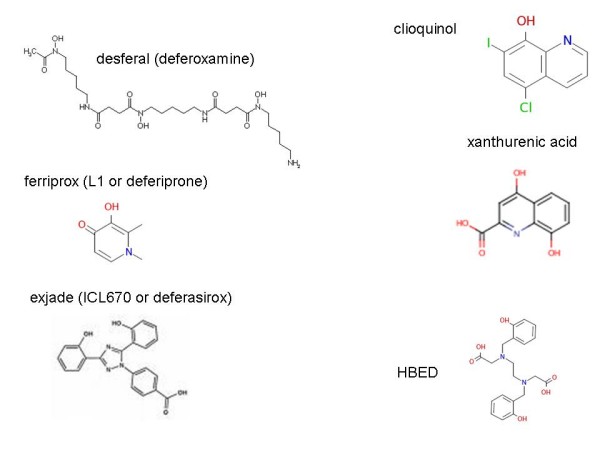
“Clioquinol (CQ) [952; 1509; 1541; 1542] (Fig 7) is one existing (anti-parasitic) drug that has been proposed for use as an iron chelator, as it contains the known iron-chelatiing 8-hydroxyquinoline moiety.”
BackgroundAsbestos catalyzes hydroxyl and superoxide radical generation from hydrogen peroxide
Weitzman, S. A., & Graceffa, P. (1984) · Archives of Biochemistry and Biophysics · doi:10.1016/0003-9861(84)90078-x · Cited by 292 · cited 1×
“production [1463-1475], while there seem to be com-”
BackgroundAthletic induced iron deficiency: new insights into the role of inflammation, cytokines and hormones
Peeling, P., Dawson, B., Goodman, C., Landers, G., & Trinder, D. (2008) · European Journal of Applied Physiology · doi:10.1007/s00421-008-0726-6 · Cited by 292
Interaction of Iron with Polyphenolic Compounds: Application to Antioxidant Characterization
Yoshino, M., & Murakami, K. (1998) · Analytical Biochemistry · doi:10.1006/abio.1997.2522 · Cited by 291 · cited 1×
“may also act to chelate iron as well [1073, 1829-1843].”
BackgroundLevites, Y., Youdim, M. B. H., Maor, G., & Mandel, S. (2002) · Biochemical Pharmacology · doi:10.1016/s0006-2952(01)00813-9 · Cited by 291
Poon, H. F., Calabrese, V., Scapagnini, G., & Butterfield, D. A. (2004) · Clinics in Geriatric Medicine · doi:10.1016/j.cger.2004.02.005 · Cited by 291
Mandel, S., Amit, T., Reznichenko, L., Weinreb, O., & Youdim, M. B. H. (2006) · Molecular Nutrition & Food Research · doi:10.1002/mnfr.200500156 · Cited by 291 · cited 1×
“Examples include flavones such as quercetin [807; 1642; 1658; 1683-1693], rutin [1658; 1686; 1687; 1694; 1695], baicalin [1689; 1696], curcumin [1642; 1697-1701], kolaviron [1702], flavonol [1703], floranol [1704], xanthones such as mangiferin [1705-1708], morin [1705], catechins [963; 1636; 1667; 1683; 1709; 1710] an…”
Discovering erythropoietin's extra-hematopoietic functions: Biology and clinical promise
Brines, M., & Cerami, A. (2006) · Kidney International · doi:10.1038/sj.ki.5001546 · Cited by 290 · cited 1×
“[1971] Brines, M.”
Brain iron uptake and homeostatic mechanisms: An overview
Burdo, J. R., & Connor, J. R. (2003) · Biometals · doi:10.1023/a:1020718718550 · Cited by 290
Miller, N. J., Castelluccio, C., Tijburg, L., & Rice-Evans, C. (1996) · FEBS Letters · doi:10.1016/0014-5793(96)00780-6 · Cited by 289
Iron trafficking in the mitochondrion: novel pathways revealed by disease
Napier, I., Ponka, P., & Richardson, D. R. (2005) · Blood · doi:10.1182/blood-2004-10-3856 · Cited by 288
Lipoic acid as a novel treatment for Alzheimer's disease and related dementias
Holmquist, L., Stuchbury, G., Berbaum, K., Muscat, S., Young, S., Hager, K., Engel, J., & Münch, G. (2007) · Pharmacology & Therapeutics · doi:10.1016/j.pharmthera.2006.07.001 · Cited by 288 · cited 1×
“lipoic acid [1754-1757] is also an antioxidant, that”
BackgroundHung, T.-H., Skepper, J. N., & Burton, G. J. (2001) · The American Journal of Pathology · doi:10.1016/s0002-9440(10)61778-6 · Cited by 288 · cited 2×
“Indeed, many studies implicate oxidative stress as a substantial contributor to this [344-385] [386-408], while some have noted the importance of iron status [40; 98; 369; 409-427], and so far as is known the transporters of iron in the placenta are similar to those in other cells [428].”
BackgroundDesign of iron chelators with therapeutic application
Liu, Z. D., & Hider, R. C. (2002) · Coordination Chemistry Reviews · doi:10.1016/s0010-8545(02)00050-4 · Cited by 287
Statin treatment after onset of sepsis in a murine model improves survival.
Merx, M. W., Liehn, E. A., Graf, J., van de Sandt, A., Schaltenbrand, M., Schrader, J., Hanrath, P., & Weber, C. (2005) · Circulation · doi:10.1161/circulationaha.104.502195 · Cited by 287 · cited 1×
“[699; 2091]) they may exert benefit in a huge variety of syndromes [731], including sepsis [732; 1887; 2092-2104],”
BackgroundMolecular control of vertebrate iron homeostasis by iron regulatory proteins
Wallander, M. L., Leibold, E. A., & Eisenstein, R. S. (2006) · Biochimica et Biophysica Acta (BBA) - Molecular Cell Research · doi:10.1016/j.bbamcr.2006.05.004 · Cited by 287 · cited 1×
“[226-229]), which is not our main focus.”
Association Between Body Iron Stores and the Risk of Acute Myocardial Infarction in Men
Tuomainen, T.-P., Punnonen, K., Nyyssönen, K., & Salonen, J. T. (1998) · Circulation · doi:10.1161/01.cir.97.15.1461 · Cited by 286 · cited 1×
“n the absence of lowering iron has shown no clinical benefit to date [611], thereby suggestion iron mediation. By contrast, iron stores represent an established risk factor for cardiovascular disease [612]. Of course many factors such as lipid levels, stress, smoking and so are well-known risk factors for cardiovascul…”
BackgroundHypoxia-Induced Stroke Tolerance in the Mouse Is Mediated by Erythropoietin
Prass, K., Scharff, A., Ruscher, K., Löwl, D., Muselmann, C., Victorov, I., Kapinya, K., Dirnagl, U., & Meisel, A. (2003) · Stroke · doi:10.1161/01.str.0000080381.76409.b2 · Cited by 286
WANG, S., KOTAMRAJU, S., KONOREV, E., KALIVENDI, S., JOSEPH, J., & KALYANARAMAN, B. (2002) · Biochemical Journal · doi:10.1042/bj20020752 · Cited by 286
GOODMAN, L. (1953) · The Journal of Nervous and Mental Disease · doi:10.1097/00005053-195308000-00001 · Cited by 286 · cited 1×
“Iron (and in some cases copper) is also strongly implicated in a variety of neurodegenerative diseases [867] [868] [869] [870] [871] [872] [836] [873] [837] [850] [874] [875] [876] [877] [854] [878] [879] [880] [881] [842] [882] [883] [884] [885] [886] [887] [888] [889] [890] [891] [892] [893] [894] [895] [896] [897]…”
Keyes, L. E., Armaza, F. J., Niermeyer, S., Vargas, E., Young, D. A., & Moore, L. G. (2003) · Pediatric Research · doi:10.1203/01.pdr.0000069846.64389.dc · Cited by 285 · cited 1×
“one prediction, that is borne out [487, 530], is that PE”
BackgroundLipocalins as biochemical markers of disease
Xu, S., & Venge, P. (2000) · Biochimica et Biophysica Acta (BBA) - Protein Structure and Molecular Enzymology · doi:10.1016/s0167-4838(00)00163-1 · Cited by 285
(1996) · PubMed · Cited by 284
Delaby, C., Pilard, N., Gonçalves, A. S., Beaumont, C., & Canonne-Hergaux, F. (2005) · Blood · doi:10.1182/blood-2005-06-2398 · Cited by 283 · cited 1×
“In the liver and elsewhere, many aspects of iron metabolism are regulated by a recently discovered 25amino acid polypeptide called hepcidin [163; 186; 190; 212; 230-255] that acts in part as a negative regulator of iron efflux [256] by causing the internalisation of ferroportin [257-261].”
BackgroundKretz-Remy, C., Mehlen, P., Mirault, M. E., & Arrigo, A. P. (1996) · The Journal of cell biology · doi:10.1083/jcb.133.5.1083 · Cited by 283 · cited 1×
“The induction of NF-κB by ROSs appears to involve a coupling via the glutathione system [1835; 1863; 1864; 1888-1905] (and see also [1906; 1907]).”
MethodKotha, A., Sekharam, M., Cilenti, L., Siddiquee, K., Khaled, A., Zervos, A. S., Carter, B., Turkson, J., & Jove, R. (2006) · Molecular Cancer Therapeutics · doi:10.1158/1535-7163.mct-05-0268 · Cited by 283
Aktas, O., Waiczies, S., Smorodchenko, A., Dörr, J., Seeger, B., Prozorovski, T., Sallach, S., Endres, M., Brocke, S., Nitsch, R., et al. (2003) · The Journal of Experimental Medicine · doi:10.1084/jem.20021425 · Cited by 282
Laufs, U., Gertz, K., Dirnagl, U., Böhm, M., Nickenig, G., & Endres, M. (2002) · Brain Research · doi:10.1016/s0006-8993(02)02649-5 · Cited by 282
Increased placental apoptosis in pregnancies complicated by preeclampsia
Leung, D. N., Smith, S. C., To, K. F., Sahota, D. S., & Baker, P. N. (2001) · American Journal of Obstetrics and Gynecology · doi:10.1067/mob.2001.112906 · Cited by 281 · cited 1×
“apoptosis during the placental remodelling [417-423].”
Ribosomal RNA in Alzheimer Disease Is Oxidized by Bound Redox-active Iron
Honda, K., Smith, M. A., Zhu, X., Baus, D., Merrick, W. C., Tartakoff, A. M., Hattier, T., Harris, P. L., Siedlak, S. L., Fujioka, H., et al. (2005) · Journal of Biological Chemistry · doi:10.1074/jbc.m500526200 · Cited by 280
Giasson, B. I., Ischiropoulos, H., Lee, V. M.-Y., & Trojanowski, J. Q. (2002) · Free Radical Biology and Medicine · doi:10.1016/s0891-5849(02)00804-3 · Cited by 279 · cited 1×
“Iron (and in some cases copper) is also strongly implicated in a variety of neurodegenerative diseases [867] [868] [869] [870] [871] [872] [836] [873] [837] [850] [874] [875] [876] [877] [854] [878] [879] [880] [881] [842] [882] [883] [884] [885] [886] [887] [888] [889] [890] [891] [892] [893] [894] [895] [896] [897]…”
Zheng, H., Weiner, L. M., Bar-Am, O., Epsztejn, S., Cabantchik, Z. I., Warshawsky, A., Youdim, M. B. H., & Fridkin, M. (2005) · Bioorganic & Medicinal Chemistry · doi:10.1016/j.bmc.2004.10.037 · Cited by 278 · cited 1×
“To this end, Youdim and colleagues in particular have developed a series of multifunctional 8-hydroxyquinoline [1570] derivatives that are effective bidentate iron chelators and that seem to show considerable promise in the treatment of a variety of neurodegenerative diseases [928; 1558-1560; 1609-1613] (see also US P…”
BackgroundCornelis, P., & Matthijs, S. (2002) · Environmental Microbiology · doi:10.1046/j.1462-2920.2002.00369.x · Cited by 278 · cited 1×
“siderophores [170-189] (and for haemophores see”
Oxidative Stress and Its Role in Skin Disease
Trouba, K. J., Hamadeh, H. K., Amin, R. P., & Germolec, D. R. (2002) · Antioxidants & Redox Signaling · doi:10.1089/15230860260220175 · Cited by 277 · cited 1×
“Psoriasis is an anflammatory disease in which the production of free radicals and ROSs are strongly implicated [1212-1214].”
BackgroundHMG-CoA Reductase Inhibitor Simvastatin Profoundly Improves Survival in a Murine Model of Sepsis
Merx, M. W., Liehn, E. A., Janssens, U., Lütticken, R., Schrader, J., Hanrath, P., & Weber, C. (2004) · Circulation · doi:10.1161/01.cir.0000129774.09737.5b · Cited by 277
Bibliometrics and beyond: some thoughts on web-based citation analysis
Cronin, B. (2001) · Journal of Information Science · doi:10.1177/0165551014233482 · Cited by 277
Inflammation and Infection in Clinical Stroke
Emsley, H. C. A., & Tyrrell, P. J. (2002) · Journal of Cerebral Blood Flow & Metabolism · doi:10.1097/00004647-200212000-00001 · Cited by 276
Chemical combination effects predict connectivity in biological systems
Lehár, J., Zimmermann, G. R., Krueger, A. S., Molnar, R. A., Ledell, J. T., Heilbut, A. M., Short, G. F., Giusti, L. C., Nolan, G. P., Magid, O. A., et al. (2007) · Molecular Systems Biology · doi:10.1038/msb4100116 · Cited by 275 · cited 1×
“and that on general grounds [1706-1708, 2142] such a”
BackgroundDissecting the Chemistry of Protein Splicing and Its Applications
Noren, C. J., Wang, J., & Perler, F. B. (2000) · Angewandte Chemie International Edition · doi:10.1002/(sici)1521-3773(20000204)39:3<450::aid-anie450>3.0.co;2-f · Cited by 274
GALTER, D., MIHM, S., & DRÖGE, W. (1994) · European Journal of Biochemistry · doi:10.1111/j.1432-1033.1994.tb18776.x · Cited by 274
A literature review of the epidemiology and treatment of acute gout
Kim, K. Y., Ralph Schumacher, H., Hunsche, E., Wertheimer, A. I., & Kong, S. X. (2003) · Clinical Therapeutics · doi:10.1016/s0149-2918(03)80158-3 · Cited by 274 · cited 1×
“Gout is another important inflammatory disease, characterised by the accumulation of uric acid [1218].”
BackgroundBrain Injury After Intracerebral Hemorrhage: The Role of Thrombin and Iron
Hua, Y., Keep, R. F., Hoff, J. T., & Xi, G. (2007) · Stroke · doi:10.1161/01.str.0000247868.97078.10 · Cited by 273
Fleming, R. E., & Sly, W. S. (2001) · Proceedings of the National Academy of Sciences · doi:10.1073/pnas.161296298 · Cited by 273 · cited 1×
“In the liver and elsewhere, many aspects of iron metabolism are regulated by a recently discovered 25amino acid polypeptide called hepcidin [163; 186; 190; 212; 230-255] that acts in part as a negative regulator of iron efflux [256] by causing the internalisation of ferroportin [257-261].”
BackgroundIron and infection: the heart of the matter
Bullen, J. J., Rogers, H. J., Spalding, P. B., & Ward, C. G. (2005) · FEMS Immunology & Medical Microbiology · doi:10.1016/j.femsim.2004.11.010 · Cited by 273 · cited 1×
“[136; 149; 1335; 1352-1371]), and its chelation in a form not available to bacteria offers a route to at least a bacteriostatic kind of antibiotic or to novel therapies based on the lowering of iron available to microbes by using hepcidin [1372].”
BackgroundAugmented Placental Production of Leptin in Preeclampsia: Possible Involvement of Placental Hypoxia1
Mise, H., Sagawa, N., Matsumoto, T., Yura, S., Nanno, H., Itoh, H., Mori, T., Masuzaki, H., Hosoda, K., Ogawa, Y., et al. (1998) · The Journal of Clinical Endocrinology & Metabolism · doi:10.1210/jcem.83.9.5117 · Cited by 273
Robustness properties of circadian clock architectures
Stelling, J., Gilles, E. D., & Doyle, F. J. (2004) · Proceedings of the National Academy of Sciences · doi:10.1073/pnas.0401463101 · Cited by 273
Chen, C., & Kong, A.-N. T. (2005) · Trends in Pharmacological Sciences · doi:10.1016/j.tips.2005.04.004 · Cited by 273 · cited 1×
“[1268] [1761] [1762] [1763] [1764] [1765] [1766] [1767] [1768] [1769] [1770] [1771] [1772] [1724] [1773] [1774] [1775] [1776] [1777] [1778] [1779] [1780] [1725] [1273] [1781] [1782] [1783] [1784] [1785] [1786] [1787] [1788] [1276] [1789] [1790] [1791] [1792] [1793] [1794] [1795]”
Chelators as Antidotes of Metal Toxicity: Therapeutic and Experimental Aspects
Blanusa, M., Varnai, V. M., Piasek, M., & Kostial, K. (2005) · Current Medicinal Chemistry · doi:10.2174/092986705774462987 · Cited by 272
Research works printed but not linked: 9
- Kell DB Iron behaving badly: inappropriate iron chelation as a major contributor to the aetiology of vascular and other progressive inflammatory and degenerative diseases 2008 PMC2672098 19133145
- Weinberg ED Exposing the hidden dangers of iron: what every medical professional should know about the impact of iron on the disease process 2004 Cumberland House
- Brown GM The living end: the future of death, aging and immortality 2008 Macmillan, London
- Warner DS Sheng H Batinić-Haberle I Oxidants, antioxidants and the ischemic brain J Exp Biol 2004 207 3221 31 15299043 · DOI · Paper page
- Lovejoy DB Richardson DR Iron chelators as anti-neoplastic agents: current developments and promise of the PIH class of chelators Curr Med Chem 2003 10 1035 49 12678675 · DOI · Paper page
- Kalt W Joseph JA Shukitt-Hale B Blueberries and human health: a review of current reseach J Amer Pomol Soc 2007 61 151 160
- Curin Y Andriantsitohaina R Polyphenols as potential therapeutical agents against cardiovascular diseases Pharmacological Reports 2005 57 97 107 16415490
- Tapscott D Williams A Wikinomics: how masscollaboration changes everything 2007 New Paradigm
- Leadbeater C We-think 2008 Profile Books, London
Cited by
Advances in metal-induced oxidative stress and human disease
Jomova, K., & Valko, M. (2011) · Toxicology · doi:10.1016/j.tox.2011.03.001 · Cited by 3,207
“To avoid harmful effect of free iron, ts proper chelation is of key importance (Kell, 2009).”
BackgroundFluorescent Sensors for Measuring Metal Ions in Living Systems
Carter, K. P., Young, A. M., & Palmer, A. E. (2014) · Chemical Reviews · doi:10.1021/cr400546e · Cited by 2,451
The role of iron and reactive oxygen species in cell death
Dixon, S. J., & Stockwell, B. R. (2014) · Nature Chemical Biology · doi:10.1038/nchembio.1416 · Cited by 2,381
Graves, D. B. (2012) · Journal of Physics D: Applied Physics · doi:10.1088/0022-3727/45/26/263001 · Cited by 1,518
Heavy metals: toxicity and human health effects
Jomova, K., Alomar, S. Y., Nepovimova, E., Kuca, K., & Valko, M. (2025) · Archives of Toxicology · doi:10.1007/s00204-024-03903-2 · Cited by 983
Metadata
- Authors
- Kell, D. B.
- Affiliations
- University of Manchester (GB)
- Corresponding author
- Kell, Douglas B
- ORCID
- Kell, Douglas B
- Venue
- BMC Medical Genomics
- Published
- 2009-01-08
- Volume
- 2
- Issue
- 1
- Pages
- 2-2
- ISSN
- 1755-8794 (ISSN-L)
- PMC
- PMC2672098
- OpenAlex
- W2159509177
- Semantic Scholar
- a7d7f7c7ee6e75c693c508186ec809c0e5d2def4
- Cited by
- 554
- References
- 2,555
- Citations by year
- 2026: 15 · 2025: 14 · 2024: 29 · 2023: 26 · 2022: 30 · 2021: 26 · 2020: 32 · 2019: 33 · 2018: 28 · 2017: 30 · 2016: 31 · 2015: 39 · 2014: 41 · 2013: 45 · 2012: 42
- FWCI
- 29.55
- Type
- journal article
- Language
- en
- Open access
- gold
- doi.org
- Licence
- Locations
- BMC Medical Genomics (publishedVersion, other-oa)
- PubMed Central (publishedVersion, cc-by)
- PubMed (publishedVersion)
- arXiv (Cornell University) (submittedVersion)
- DOAJ (DOAJ: Directory of Open Access Journals) (submittedVersion, cc-by-sa)
- Research Explorer (The University of Manchester) (submittedVersion)
- arXiv (Cornell University)
- Funders
- British Heart Foundation
- Engineering and Physical Sciences Research Council
- Biotechnology and Biological Sciences Research Council (BB/F018398/1)
- Topics
- Health Sciences › Medicine › Hematology › Iron Metabolism and Disorders
- Health Sciences › Medicine › Biochemistry (medical) › Antioxidant Activity and Oxidative Stress
- Health Sciences › Medicine › Physiology (medical) › Nitric Oxide and Endothelin Effects
- Keywords
- iron chelation, hydroxyl radicals, reactive oxygen species, oxidative stress, chronic inflammation, vascular disease, neurodegenerative diseases, aging, antioxidants, antioxidant polyphenols, NF-κB signaling, p38 MAPK, statins, erythropoietin, iron speciation
About these checks
Registry, retraction, Cites and statistics results are computed, not judged, with one exception: a printed reference that no index lists is read once by a model before it counts as a citation error. Claims are extracted by a model and kept only when their quote appears verbatim in the text; each cited source is then checked, with a model’s help, for whether it says what the claim relies on. Those verdicts can be wrong — read the claim’s quote and the cited source before relying on one.
The claim verdicts this report counts are experimental: their accuracy is not yet measured.
A language model drew the claims from the paper on 2026-10-05, under version 3 of the claim definition (model deepseek-v4.1-flash, prompt extract-v3).
A second model labelled each claim on 2026-10-05 (model jev-1.13-20260917, definition revision gold-guideline-v0.2).
Cited sources are checked with a language model’s help (gpt-6-sol and qwen3.8-omni-flash).
Statistics and arithmetic are recomputed, not judged.
Confidence bands are shown only for fields calibrated on our annotated test set. None is calibrated yet, so no band is shown.
What counts as a claim ›How we measure confidence ›How we check this ›
Are you an author, or do you see a problem with this page? Request a review
Data sources
Bibliographic data: Semantic Scholar, OpenAlex, Crossref.
Contains information from the Semantic Scholar Academic Graph Datasets, made available under the ODC Attribution License (ODC-BY 1.0).
Semantic Scholar’s data is described in: Kinney, R., et al. (2023). The Semantic Scholar Open Data Platform. arXiv:2301.10140.
