

Factors contributing to men’s grief following pregnancy loss and neonatal death: further development of an emerging model in an Australian sample
Open accessPublished version of a preprint
The DOI matches its Crossref record; 109 of the 112 references it cites were found in a registry or an index; 13 of the 99 sources its claims cite were checked for support.
Abstract
Background: Historically, men’s experiences of grief following pregnancy loss and neonatal death have been under-explored in comparison to women. However, investigating men’s perspectives is important, given potential gendered differences concerning grief styles, help-seeking and service access. Few studies have comprehensively examined the various individual, interpersonal, community and system/policy-level factors which may contribute to the intensity of grief in bereaved parents, particularly for men. Methods: Men ( N = 228) aged at least 18 years whose partner had experienced an ectopic pregnancy, miscarriage, stillbirth, termination of pregnancy for foetal anomaly, or neonatal death within the last 20 years responded to an online survey exploring their experiences of grief. Multiple linear regression analyses were used to examine the factors associated with men’s grief intensity and style. Results: Men experienced significant grief across all loss types, with the average score sitting above the minimum cut-off considered to be a high degree of grief. Men’s total grief scores were associated with loss history, marital satisfaction, availability of social support, acknowledgement of their grief from family/friends, time spent bonding with the baby during pregnancy, and feeling as though their role of ‘supporter’ conflicted with their ability to process grief. Factors contributing to grief also differed depending on grief style. Intuitive (emotion-focused) grief was associated with support received from healthcare professionals. Instrumental (activity-focused) grief was associated with time and quality of attachment to the baby during pregnancy, availability of social support, acknowledgement of men’s grief from their female partner, supporter role interfering with their grief, and tendencies toward self-reliance. Conclusions: Following pregnancy loss and neonatal death, men can experience high levels of grief, requiring acknowledgement and validation from all healthcare professionals, family/friends, community networks and workplaces. Addressing male-specific needs, such as balancing a desire to both support and be supported, requires tailored information and support. Strategies to support men should consider grief styles and draw upon father-inclusive practice recommendations. Further research is required to explore the underlying causal mechanisms of associations found.
Overview
CoChat Summary
## TL;DR
This Australian online survey of 228 men found that grief after pregnancy loss or neonatal death was often high, with average grief above the cut-off for a high degree of grief. Grief was associated with loss history, social support, acknowledgment from others, attachment to the baby, marital satisfaction, and feeling that a supporter role interfered with grieving, and these associations differed for intuitive versus instrumental grief styles.
## Key findings
- Men’s grief was high across loss types: the average total grief score was above the minimum cut-off for a high degree of grief (cut-off = 91).
- In the total grief model, higher grief was associated with a greater number of previous losses, lower overall support, more time spent bonding/attachment during pregnancy, lower marital satisfaction, lower acknowledgment from friends, and stronger agreement that being a “supporter” interfered with grieving.
- Intuitive grief was associated with lower acknowledgment from healthcare professionals; the discussion also notes possible links with viewing an ultrasound image, identifying with an ethnicity other than Australian, higher attachment quality, higher overall support, and lower self-reliance, though those estimates were less certain.
- Instrumental grief was associated with higher time in attachment, lower quality of attachment, lower overall support, lower acknowledgment from a partner, stronger perceptions that supporter role interfered with grief, higher self-reliance, and not informing the workplace of the loss.
## Methods
- Cross-sectional online survey of Australian men aged 18+ whose partner had experienced ectopic pregnancy, miscarriage, stillbirth, termination of pregnancy for fetal anomaly, or neonatal death within the last 20 years.
- Final sample: 228 completed surveys out of 277 who started (82% completion); age at survey ranged from 19 to 60 years (M = 36, SD = 7.4).
- Main analysis used multiple stepwise generalized linear/multiple linear regression models in SPSS V.25 to test associations with total grief, intuitive grief, and instrumental grief, guided by a socioecological model.
## Limitations
- The authors state the study used retrospective accounts, so it is open to recall bias, especially for losses up to 20 years earlier.
- The authors state the sample was a convenience sample recruited through support/advocacy organizations, which may introduce sampling bias and miss men not connected to those organizations.
- Evident from the text: the sample was limited in diversity, with only one bisexual participant and no gay or transgender participants, and the authors note limited cultural diversity.
Model-written summary. Check it against the paper before relying on it.
Integrity signals
Registry
Cites
Statistics
Figures
Verification
Claims the paper makes
11 Valid · 0 Not valid · 20 Not checked · 76 Own results and interpretations
The cited sources support only part of this claim — read each source’s verdict below.
In the paper
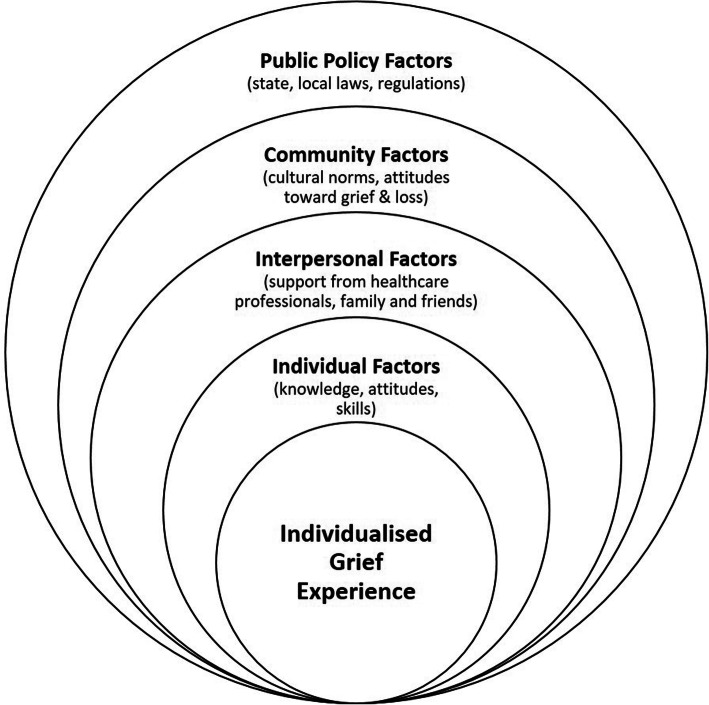
“At the individual level, factors contributing to men’s grief include demographic elements (e.g., age, religion, ethnicity), pregnancy loss/neonatal death history and number of living children.”
§ Factors contributing to men’s grief following pregnancy loss and neonatal death: further development of an emerging model in an Australian sample > Background
What the sources say
- Partly supportedcites [36] Obst KL Due C Oxlad M Middleton P Men's grief following pregnancy loss and neonatal loss: a systematic review and emerging theoretical model BMC Pregnancy Childbirth 2020 20 11 10.1186/s12884-019-2677-9 31918681 PMC6953275 sourceExperimental — accuracy not yet measured
The Results (Individual factors; page not provided) examine age, religion, previous losses and living children as possible influences on men’s grief, but report mixed findings for age, previous losses and living children. The same section says ethnicity did not emerge as a significant predictor and was rarely explored, so the sentence overstates the evidence by presenting all the listed elements as contributing factors. (LLM, conf=0.87)
plainstates an association- Asserted: passes — The authors put it forward as true.
- Checkable: passes — It can be checked against evidence.
- Load-bearing: passes — The paper’s conclusions depend on it.
- Based: passes — The paper gives a reason why it holds.
- Partly supported
The cited sources support only part of this claim — read each source’s verdict below.
In the paper
“Finally, at the system/policy level, experiences within the healthcare system following pregnancy loss or neonatal death have been established as fundamental to shaping bereaved parents’ grief experience [4, 9, 42].”
§ Factors contributing to men’s grief following pregnancy loss and neonatal death: further development of an emerging model in an Australian sample > Background
What the sources say
- Not checked — no full text of the sourcecites [4] Mills TA Ricklesford C Cooke A Heazell AEP Whitworth M Lavender T Parents' experiences and expectations of care in pregnancy after stillbirth or neonatal death: a metasynthesis BJOG. 2014 121 8 943 950 10.1111/1471-0528.12656 24589119 source
- Partly supportedcites [9] Kelley MC Trinidad SB Silent loss and the clinical encounter: Parents' and physicians' experiences of stillbirth - a qualitative analysis BMC Pregnancy Childbirth. 2012 12 137 10.1186/1471-2393-12-137 23181615 PMC3533522 sourceExperimental — accuracy not yet measured
The Results section on clinician empathy describes how hospital staff’s actions helped or distressed parents after stillbirth, and the Discussion links recognition and support to parents’ grieving and remembrance (page unavailable). The study concerns stillbirth; it does not establish the same finding for pregnancy loss more broadly or for neonatal death. (LLM, conf=0.85)
- Partly supportedcites [42] Farrales LL Cacciatore J Jonas-Simpson C Dharamsi S Ascher J Klein MC What bereaved parents want health care providers to know when their babies are stillborn: a community-based participatory study BMC Psychol 2020 8 18 10.1186/s40359-020-0385-x 32066494 PMC7027220 sourceExperimental — accuracy not yet measured
The Background describes healthcare providers’ role around stillbirth as critical, and the Conclusion says provider acknowledgement may affect bereaved parents for years. The study concerns parents whose babies were stillborn; it does not establish the same finding for neonatal death or pregnancy loss more broadly. (LLM, conf=0.86)
boostedstates a cause- Asserted: passes — The authors put it forward as true.
- Checkable: passes — It can be checked against evidence.
- Load-bearing: passes — The paper’s conclusions depend on it.
- Based: passes — The paper gives a reason why it holds.
The sources with a verdict support this claim; the rest weren’t checked yet, have no full text we could read, or their verdicts aren’t rated yet.
In the paper
“Although this measure of ‘toughness’ did not emerge as a significant predictor in any of the models in the current study, it may still be an important factor to consider, as a low alpha value may indicate that this measure did not adequately capture men’s experiences of needing to be ‘strong’ or ‘tough’ as reported in previous qualitative studies [10, 12, 13, 31, 36].”
§ Factors contributing to men’s grief following pregnancy loss and neonatal death: further development of an emerging model in an Australian sample > Discussion > Strengths, limitations and future research
What the sources say
- Not checked — no full text of the sourcecites [10] Obst KL Due C Australian men's experiences of support following pregnancy loss: a qualitative study Midwifery. 2019 70 1 6 10.1016/j.midw.2018.11.013 30529832 source
- Not checked — no full text of the sourcecites [12] McCreight BS A grief ignored: narratives of pregnancy loss from a male perspective Sociol Health Illn 2004 26 3 326 350 10.1111/j.1467-9566.2004.00393.x 15043602 source
- Not checked — no full text of the sourcecites [13] Bonnette S Broom A On grief, fathering and the male role in men's accounts of stillbirth J Sociol 2011 49 3 249 265 source
- Not checked — no full text of the sourcecites [31] Jones K Robb M Murphy S Davies A New understandings of fathers' experiences of grief and loss following stillbirth and neonatal death: a scoping review Midwifery. 2019 79 102531 10.1016/j.midw.2019.102531 31493675 source
- Supportedcites [36] Obst KL Due C Oxlad M Middleton P Men's grief following pregnancy loss and neonatal loss: a systematic review and emerging theoretical model BMC Pregnancy Childbirth 2020 20 11 10.1186/s12884-019-2677-9 31918681 PMC6953275 source
The Results section (Community factors) reports that men in 13 qualitative studies described a need to be “strong” and an expectation to hide their grief. The citation supports that account of men’s experiences; the low-alpha interpretation concerns the citing authors’ own measure, not a finding attributed to this review. (LLM, conf=0.92)
hedgedstates a possible cause- Asserted: passes — The authors put it forward as true.
- Checkable: passes — It can be checked against evidence.
- Load-bearing: passes — The paper’s conclusions depend on it.
- Based: passes — The paper gives a reason why it holds.
A result the paper reports from its own data — it cites no other source for it, so there is none to check. The quote shows it is in the paper.
In the paper
“Men’s total grief scores were associated with loss history, marital satisfaction, availability of social support, acknowledgement of their grief from family/friends, time spent bonding with the baby during pregnancy, and feeling as though their role of ‘supporter’ conflicted with their ability to process grief.”
§ Factors contributing to men’s grief following pregnancy loss and neonatal death: further development of an emerging model in an Australian sample > Abstract > Results
plainstates an association- Asserted: passes — The authors put it forward as true.
- Checkable: passes — It can be checked against evidence.
- Load-bearing: passes — The paper’s conclusions depend on it.
- Based: passes — The paper gives a reason why it holds.
54 more claims
Create a free account to see all 107 claims and every source verdict.
- It may state two separate claims as one. 25
- Probably not a substantial claim. 30
- The quote only partly states this claim. 2
Claims other papers make about this one
Each is checked against this paper’s own text: does it say what the citing paper says it does?
The source backs part of the claim, not all of it — or backs it for a different population, condition or comparison.
In the citing paper
“A systematic review by Obst 2021 found that men may suppress their own grief reactions and refrain from seeking support in order to assume the “supporter” role and be seen as “strong” following pregnancy and neonatal loss.”
From Support for parents and families after stillbirth and neonatal death (2024) · cites this paper as Obst 2021
Experimental — accuracy not yet measuredThe cited source says what the claim attributes to it.
In the citing paper
“For men, the impacts of stillbirth and neonatal death have been under‐explored (Due 2017; Jones 2019; Obst 2021)”
From Support for parents and families after stillbirth and neonatal death (2024) · cites this paper as Obst 2021
Statistics recomputed
Every reported test result, recomputed from its test statistic and degrees of freedom. A result shows as not adding up only once an independent check has confirmed it.
- ConsistentF(2, 215) = 0.556reported p = .574 · recomputed p = .574
“F(2,215) = .556, p = .574”
- Consistentt(223) = 4.611reported p < .001 · recomputed p < .001
“t (223) = 4.611, p < .001”
- Consistentt(223) = 38.9reported p < .001 · recomputed p < .001
“t (223) = 38.9, p < .001”
Self-check
Percentages, sums and reported differences re-computed from the paper’s own numbers.
Self-check results appear here once an independent check has confirmed them.
Citations
Cites
Tabachnick, B. G., & Fidell, L. S. (1983) · Cited by 80,054
Review of Psychometric theory (2nd ed.).
SITGREAVES, R. (1979) · Contemporary Psychology: A Journal of Reviews · doi:10.1037/018882 · Cited by 11,425
Nelder, J. A., & Wedderburn, R. W. M. (1972) · Journal of the Royal Statistical Society. Series A (General) · doi:10.2307/2344614 · Cited by 7,194
Review of Using Multivariate Statistics.
Hays, W. L. (1983) · Contemporary Psychology: A Journal of Reviews · doi:10.1037/022267 · Cited by 3,139
A Primer of Multivariate Statistics
Strauss, D. J., & Harris, R. J. (1975) · Biometrics · doi:10.2307/2529445 · Cited by 1,975
Development of the Conformity to Masculine Norms Inventory.
Mahalik, J. R., Locke, B. D., Ludlow, L. H., Diemer, M. A., Scott, R. P. J., Gottfried, M., & Freitas, G. (2003) · Psychology of Men & Masculinity · doi:10.1037/1524-9220.4.1.3 · Cited by 1,295
Panter‐Brick, C., Burgess, A., Eggerman, M., McAllister, F., Pruett, K., & Leckman, J. F. (2014) · Journal of Child Psychology and Psychiatry · doi:10.1111/jcpp.12280 · Cited by 737
The assessment of antenatal emotional attachment: Development of a questionnaire instrument
Condon, J. T. (1993) · British Journal of Medical Psychology · doi:10.1111/j.2044-8341.1993.tb01739.x · Cited by 596
Smith, G. (2018) · Journal of Big Data · doi:10.1186/s40537-018-0143-6 · Cited by 532
Burden, C., Bradley, S., Storey, C., Ellis, A., Heazell, A. E. P., Downe, S., Cacciatore, J., & Siassakos, D. (2016) · BMC Pregnancy and Childbirth · doi:10.1186/s12884-016-0800-8 · Cited by 445
Stepwise Model Fitting and Statistical Inference: Turning Noise into Signal Pollution
Mundry, R., & Nunn, C. L. (2009) · The American Naturalist · doi:10.1086/593303 · Cited by 440
Complicated grief after perinatal loss
Kersting, A., & Wagner, B. (2012) · Dialogues in Clinical Neuroscience · doi:10.31887/dcns.2012.14.2/akersting · Cited by 419
Tokhi, M., Comrie-Thomson, L., Davis, J., Portela, A., Chersich, M., & Luchters, S. (2018) · PLOS ONE · doi:10.1371/journal.pone.0191620 · Cited by 411
Interventions for tubal ectopic pregnancy
Hajenius, P. J., Mol, F., Mol, B. W. J., Bossuyt, P. M., Ankum, W. M., & Van der Veen, F. (2007) · Cochrane Database of Systematic Reviews · doi:10.1002/14651858.cd000324.pub2 · Cited by 393
Ellis, A., Chebsey, C., Storey, C., Bradley, S., Jackson, S., Flenady, V., Heazell, A., & Siassakos, D. (2016) · BMC Pregnancy and Childbirth · doi:10.1186/s12884-016-0806-2 · Cited by 322
Hoffkling, A., Obedin-Maliver, J., & Sevelius, J. (2017) · BMC Pregnancy and Childbirth · doi:10.1186/s12884-017-1491-5 · Cited by 311
Fathers’ engagement in pregnancy and childbirth: evidence from a national survey
Redshaw, M., & Henderson, J. (2013) · BMC Pregnancy and Childbirth · doi:10.1186/1471-2393-13-70 · Cited by 296
Perinatal Loss and Parental Grief: The Challenge of Ambiguity and Disenfranchised Grief
Lang, A., Fleiszer, A. R., Duhamel, F., Sword, W., Gilbert, K. R., & Corsini-Munt, S. (2011) · OMEGA - Journal of Death and Dying · doi:10.2190/om.63.2.e · Cited by 239
A grief ignored: narratives of pregnancy loss from a male perspective
McCreight, B. S. (2004) · Sociology of Health & Illness · doi:10.1111/j.1467-9566.2004.00393.x · Cited by 237
Measuring grief: A short version of the perinatal grief scale
Potvin, L., Lasker, J., & Toedter, L. (1989) · Journal of Psychopathology and Behavioral Assessment · doi:10.1007/bf00962697 · Cited by 227
Measurement of masculinity ideologies: A (critical) review.
Thompson, E. H., & Bennett, K. M. (2015) · Psychology of Men & Masculinity · doi:10.1037/a0038609 · Cited by 227
Levant, R. F., Hall, R. J., & Rankin, T. J. (2013) · Journal of Counseling Psychology · doi:10.1037/a0031545 · Cited by 222
Obst, K. L., Due, C., Oxlad, M., & Middleton, P. (2020) · BMC Pregnancy and Childbirth · doi:10.1186/s12884-019-2677-9 · Cited by 222
Self-citationMultivariable Modeling Strategies
Harrell, F. E. (2015) · Springer Series in Statistics · doi:10.1007/978-3-319-19425-7_4 · Cited by 221
Engaging men in psychological treatment: a scoping review
Seidler, Z. E., Rice, S. M., Ogrodniczuk, J. S., Oliffe, J. L., & Dhillon, H. M. (2018) · American Journal of Men s Health · doi:10.1177/1557988318792157 · Cited by 210
J. Toedter, J. N. L. (2001) · Death Studies · doi:10.1080/07481180125971 · Cited by 207
Toedter, L. J., Lasker, J. N., & Janssen, H. J. E. M. (2001) · Death Studies · doi:10.1080/074811801750073251 · Cited by 207
Ellis, S. A., Wojnar, D. M., & Pettinato, M. (2015) · Journal of Midwifery & Women's Health · doi:10.1111/jmwh.12213 · Cited by 188
Doka, K. J., & Martin, T. L. (2011) · Routledge eBooks · doi:10.4324/9780203886069 · Cited by 182
Charter, R., Ussher, J. M., Perz, J., & Robinson, K. H. (2018) · International Journal of Transgenderism · doi:10.1080/15532739.2017.1399496 · Cited by 173
Kelley, M. C., & Trinidad, S. B. (2012) · BMC Pregnancy and Childbirth · doi:10.1186/1471-2393-12-137 · Cited by 164
Big Samples and Small Effects: Let's Not Trade Relevance and Rigor for Power
Combs, J. G. (2010) · Academy of Management Journal · doi:10.5465/amj.2010.48036305 · Cited by 161
A longitudinal study of father-to-infant attachment: antecedents and correlates
Condon, J., Corkindale, C., Boyce, P., & Gamble, E. (2013) · Journal of Reproductive and Infant Psychology · doi:10.1080/02646838.2012.757694 · Cited by 157
Mills, T., Ricklesford, C., Cooke, A., Heazell, A., Whitworth, M., & Lavender, T. (2014) · BJOG: An International Journal of Obstetrics & Gynaecology · doi:10.1111/1471-0528.12656 · Cited by 155
A Prospective Study of Risk Factors Predicting Grief Intensity Following Pregnancy Loss
Janssen, H. J. E. M. (1997) · Archives of General Psychiatry · doi:10.1001/archpsyc.1997.01830130062013 · Cited by 147
The Crisis Support Scale: psychometric qualities and further validation
Elklit, A., Schmidt Pedersen, S., & Jind, L. (2001) · Personality and Individual Differences · doi:10.1016/s0191-8869(00)00220-8 · Cited by 141
The impact of pregnancy loss on men’s health and wellbeing: a systematic review
Due, C., Chiarolli, S., & Riggs, D. W. (2017) · BMC Pregnancy and Childbirth · doi:10.1186/s12884-017-1560-9 · Cited by 140
Self-citationA Waste of Life: Fathers' Experience of Losing a Child Before Birth
Samuelsson, M., Rådestad, I., & Segesten, K. (2001) · Birth · doi:10.1046/j.1523-536x.2001.00124.x · Cited by 138
Bereaved parents’ experience of stillbirth in UK hospitals: a qualitative interview study
Downe, S., Schmidt, E., Kingdon, C., & Heazell, A. E. P. (2013) · BMJ Open · doi:10.1136/bmjopen-2012-002237 · Cited by 134
(2010) · Medical Entomology and Zoology · Cited by 131
Comrie-Thomson, L., Tokhi, M., Ampt, F., Portela, A., Chersich, M., Khanna, R., & Luchters, S. (2015) · Culture, Health & Sexuality · doi:10.1080/13691058.2015.1053412 · Cited by 128
Fathers’ Perspectives During Pregnancy, Postperinatal Loss
O'Leary, J., & Thorwick, C. (2006) · Journal of Obstetric, Gynecologic & Neonatal Nursing · doi:10.1111/j.1552-6909.2006.00017.x · Cited by 124
Recurrent miscarriage: Psychological and relational consequences for couples
Serrano, F., & Lima, M. L. (2006) · Psychology and Psychotherapy: Theory, Research and Practice · doi:10.1348/147608306x96992 · Cited by 112
Couples' grief and experience of support in the aftermath of miscarriage
Conway, K., & Russell, G. (2000) · British Journal of Medical Psychology · doi:10.1348/000711200160714 · Cited by 106
Jones, K., Robb, M., Murphy, S., & Davies, A. (2019) · Midwifery · doi:10.1016/j.midw.2019.102531 · Cited by 105
An exploratory study of the psychological impact and clinical care of perinatal loss
Bennett, S. M., Litz, B. T., Maguen, S., & Ehrenreich, J. T. (2008) · Journal of Loss and Trauma · doi:10.1080/15325020802171268 · Cited by 91
The legitimacy of grieving: The partner's experience at miscarriage
Puddifoot, J. E., & Johnson, M. P. (1997) · Social Science & Medicine · doi:10.1016/s0277-9536(96)00424-8 · Cited by 90
The grief response in the partners of women who miscarry
Johnson, M. P., & Puddifoot, J. E. (1996) · British Journal of Medical Psychology · doi:10.1111/j.2044-8341.1996.tb01875.x · Cited by 89
Explanatory Versus Predictive Modeling
Sainani, K. L. (2014) · PM&R · doi:10.1016/j.pmrj.2014.08.941 · Cited by 85
Guilt‐ and shame‐proneness and the grief of perinatal bereavement
Barr, P. (2004) · Psychology and Psychotherapy: Theory, Research and Practice · doi:10.1348/1476083042555442 · Cited by 85
Volgsten, H., Jansson, C., Svanberg, A. S., Darj, E., & Stavreus-Evers, A. (2018) · Midwifery · doi:10.1016/j.midw.2018.05.003 · Cited by 85
Antenatal maternal depressive mood and parental–fetal attachment at the end of pregnancy
Seimyr, L., Sjögren, B., Welles‐Nyström, B., & Nissen, E. (2009) · Archives of Women s Mental Health · doi:10.1007/s00737-009-0079-0 · Cited by 84
Hodgson, J., Pitt, P., Metcalfe, S., Halliday, J., Menezes, M., Fisher, J., Hickerton, C., Petersen, K., & McClaren, B. (2016) · Australian and New Zealand Journal of Obstetrics and Gynaecology · doi:10.1111/ajo.12501 · Cited by 83
Cacciatore, J., Erlandsson, K., & Rådestad, I. (2013) · International Journal of Nursing Studies · doi:10.1016/j.ijnurstu.2012.10.014 · Cited by 82
The psychological, social, and economic impact of stillbirth on families
Murphy, S., & Cacciatore, J. (2017) · Seminars in Fetal and Neonatal Medicine · doi:10.1016/j.siny.2017.02.002 · Cited by 82
The experience of early miscarriage from a male perspective
Murphy, F. A. (1998) · Journal of Clinical Nursing · doi:10.1046/j.1365-2702.1998.00153.x · Cited by 80
Stillbirth and Stigma: The Spoiling and Repair of Multiple Social Identities
Brierley-Jones, L., Crawley, R., Lomax, S., & Ayers, S. (2014) · OMEGA - Journal of Death and Dying · doi:10.2190/om.70.2.a · Cited by 78
Franche, R. (2001) · Obstetrics & Gynecology · doi:10.1016/s0029-7844(00)01199-6 · Cited by 78 · cited 2×
“Although early quantitative research measured ‘attachment’ using increasing gestational age or whether or not men viewed an ultrasound of their developing baby [20, 22, 23, 37, 38], qualitative studies have suggested that a broader exploration of prenatal attachment (e.”
BackgroundOn grief, fathering and the male role in men’s accounts of stillbirth
Bonnette, S., & Broom, A. (2012) · Journal of Sociology · doi:10.1177/1440783311413485 · Cited by 73 · cited 10×
“This subscale was chosen in line with previous literature which suggests men often feel the need to hide their grief from others, preferring to cope in isolation [10, 12, 13, 16, 29, 33].”
BackgroundMethodResultInfluentialParental grief and relationships after the loss of a stillborn baby
Avelin, P., Rådestad, I., Säflund, K., Wredling, R., & Erlandsson, K. (2013) · Midwifery · doi:10.1016/j.midw.2012.06.007 · Cited by 72
Australian men's experiences of support following pregnancy loss: A qualitative study
Obst, K. L., & Due, C. (2019) · Midwifery · doi:10.1016/j.midw.2018.11.013 · Cited by 71
Self-citationMiller, E. J., Temple-Smith, M. J., & Bilardi, J. E. (2019) · PLOS ONE · doi:10.1371/journal.pone.0217395 · Cited by 71
Exploring Fathers’ Experiences of Pregnancy After a Prior Perinatal Loss
Armstrong, D. (2001) · MCN, The American Journal of Maternal/Child Nursing · doi:10.1097/00005721-200105000-00012 · Cited by 69
Johnson, M. P., & Baker, S. R. (2004) · Journal of Psychosomatic Obstetrics & Gynecology · doi:10.1080/01674820412331282240 · Cited by 67
The Pregnancy Experience of Gay Couples Expecting a Child Through Overseas Surrogacy
Ziv, I., & Freund-Eschar, Y. (2015) · The Family Journal · doi:10.1177/1066480714565107 · Cited by 66
Pollock, D., Pearson, E., Cooper, M., Ziaian, T., Foord, C., & Warland, J. (2020) · Women and Birth · doi:10.1016/j.wombi.2019.03.002 · Cited by 65
Predictors of Maternal Grief in the Year after a Newborn Death
Engler, A. J., & Lasker, J. N. (2000) · Illness, Crisis & Loss · doi:10.1177/105413730000800302 · Cited by 62
Waltzing Matilda: An Autoethnography of a Father’s Stillbirth
Weaver-Hightower, M. B. (2012) · Journal of Contemporary Ethnography · doi:10.1177/0891241611429302 · Cited by 57
Horstman, H. K., Holman, A., & McBride, M. C. (2019) · Health Communication · doi:10.1080/10410236.2019.1570430 · Cited by 56
Changes in identity and paternal–foetal attachment across a first pregnancy
Habib, C., & Lancaster, S. (2010) · Journal of Reproductive and Infant Psychology · doi:10.1080/02646830903298723 · Cited by 53
Puddifoot, J. E., & Johnson, M. P. (1999) · Journal of Reproductive and Infant Psychology · doi:10.1080/02646839908404587 · Cited by 50
Lafarge, C., Mitchell, K., & Fox, P. (2013) · Prenatal Diagnosis · doi:10.1002/pd.4218 · Cited by 49
The psychological and social consequences of miscarriage
van den Akker, O. B. (2011) · Expert Review of Obstetrics & Gynecology · doi:10.1586/eog.11.14 · Cited by 48
Predicting Outcomes after Pregnancy Loss: Results from Studies Using the Perinatal Grief Scale
Lasker, J. N., & Toedter, L. J. (2000) · Illness, Crisis & Loss · doi:10.1177/105413730000800402 · Cited by 48
Pregnancy Loss in Rural Ireland: An Experience of Disenfranchised Grief
Mulvihill, A., & Walsh, T. (2014) · British Journal of Social Work · doi:10.1093/bjsw/bct078 · Cited by 46
Predicting depressive symptoms and grief after pregnancy loss
Mann, J. R., McKeown, R. E., Bacon, J., Vesselinov, R., & Bush, F. (2008) · Journal of Psychosomatic Obstetrics & Gynecology · doi:10.1080/01674820802015366 · Cited by 45
Risk factors for rupture in tubal ectopic pregnancy: definition of the clinical findings
Göksedef, B. P. Ç., Kef, S., Akça, A., et al. (2010) · European Journal of Obstetrics & Gynecology and Reproductive Biology · doi:10.1016/j.ejogrb.2010.08.016 · Cited by 44
McSpedden, M., Mullan, B., Sharpe, L., Breen, L. J., & Lobb, E. A. (2017) · Death Studies · doi:10.1080/07481187.2016.1210696 · Cited by 44
Parents’ evaluation of support in Australian hospitals following stillbirth
Basile, M. L., & Thorsteinsson, E. B. (2015) · PeerJ · doi:10.7717/peerj.1049 · Cited by 43
Huffman, C. S., Schwartz, T. A., & Swanson, K. M. (2015) · Women's Health Issues · doi:10.1016/j.whi.2015.04.005 · Cited by 41
Condemning Self, Condemning Other: Blame and Mental Health in Women Suffering Stillbirth
Cacciatore, J., Frøen, J. F., & Killian, M. (2013) · Journal of Mental Health Counseling · doi:10.17744/mehc.35.4.15427g822442h11m · Cited by 41
Riggs, D. W., Due, C., & Tape, N. (2021) · OMEGA - Journal of Death and Dying · doi:10.1177/0030222818819339 · Cited by 39 · cited 3×
“Such high levels of grief may be related to both the unexpected nature of stillbirth, speci c challenges associated with TOPFA, and with the stigma and disenfranchisement that many bereaved parents experience [1, 5-8, 10, 17, 89, 90].”
BackgroundSelf-citationFarrales, L. L., Cacciatore, J., Jonas-Simpson, C., Dharamsi, S., Ascher, J., & Klein, M. C. (2020) · BMC Psychology · doi:10.1186/s40359-020-0385-x · Cited by 39
Sample size requirements for multiple regression interval estimation
Bonett, D. G., & Wright, T. A. (2010) · Journal of Organizational Behavior · doi:10.1002/job.717 · Cited by 37
Fathers’ Lived Experiences of Miscarriage
Wagner, N. J., Vaughn, C. T., & Tuazon, V. E. (2018) · The Family Journal · doi:10.1177/1066480718770154 · Cited by 36
Erlandsson, K., Avelin, P., Säflund, K., Wredling, R., & Rådestad, I. (2010) · Journal of Child Health Care · doi:10.1177/1367493509355621 · Cited by 35
Rahman, A. E., Perkins, J. E., Salam, S. S., Mhajabin, S., Hossain, A. T., Mazumder, T., & Arifeen, S. E. (2020) · BMC Pregnancy and Childbirth · doi:10.1186/s12884-020-2854-x · Cited by 35
Cope, H., Garrett, M. E., Gregory, S., & Ashley-Koch, A. (2015) · Prenatal Diagnosis · doi:10.1002/pd.4603 · Cited by 33
Nazaré, B., Fonseca, A., & Canavarro, M. C. (2014) · Journal of Loss and Trauma · doi:10.1080/15325024.2012.743335 · Cited by 30
Men’s Experiences of Miscarriage: A Passive Phenomenological Analysis of Online Data
Story Chavez, M., Handley, V., Lucero Jones, R., Eddy, B., & Poll, V. (2019) · Journal of Loss and Trauma · doi:10.1080/23802359.2019.1611230 · Cited by 29
Experience of Perinatal Death From the Father’s Perspective
Lizcano Pabón, L. D. M., Moreno Fergusson, M. E., & Palacios, A. M. (2019) · Nursing Research · doi:10.1097/nnr.0000000000000369 · Cited by 29
Nazaré, B., Fonseca, A., & Canavarro, M. C. (2013) · Journal of Reproductive and Infant Psychology · doi:10.1080/02646838.2013.806789 · Cited by 28
Barr, P. (2012) · Psychology and Psychotherapy: Theory, Research and Practice · doi:10.1111/j.2044-8341.2011.02034.x · Cited by 27
Hunfeld, J. A. M., Wladimiroff, J. W., Verhage, F., & Passchier, J. (1995) · Social Science & Medicine · doi:10.1016/0277-9536(94)e0118-c · Cited by 27
(1994) · PubMed · Cited by 27
Holding a stillborn baby: the view from a specialist perinatal bereavement service
Wilson, P. A., Boyle, F. M., & Ware, R. S. (2015) · Australian and New Zealand Journal of Obstetrics and Gynaecology · doi:10.1111/ajo.12327 · Cited by 25
Bereavement and Stress of a Miscarriage: As it Affects the Couple
Alderman, L., Chisholm, J., Denmark, F., & Salbod, S. (1998) · OMEGA - Journal of Death and Dying · doi:10.2190/dqnq-pfam-7v00-52f3 · Cited by 24
The Unifying Difference: Dyadic Coping With Spontaneous Abortion Among Religious Jewish Couples
Hamama-Raz, Y., Hemmendinger, S., & Buchbinder, E. (2010) · Qualitative Health Research · doi:10.1177/1049732309357054 · Cited by 24
Factors influencing father’s antenatal and perinatal involvement in maternal health care
Maken, Z. H., Idrees, I. N., Zahid, A., Zulfiqar, A. L., Munib, A., Hassan, F., & Mahmood, R. (2017) · The Journal of Maternal-Fetal & Neonatal Medicine · doi:10.1080/14767058.2017.1347920 · Cited by 23
Rich, D. E. (2000) · Illness, Crisis & Loss · doi:10.1177/105413730000800303 · Cited by 22 · cited 2×
“For example, quantitative studies comparing heterosexual couples’ experiences following pregnancy loss and neonatal death suggest that men typically experience less intense and enduring levels of grief than women [18-23].”
BackgroundObst, K. L., Due, C., Oxlad, M., & Middleton, P. (2020) · Community Work & Family · doi:10.1080/13668803.2020.1823319 · Cited by 22 · cited 1×
“For example, the Australian government recently announced policy changes to allow parents up to 12 months of unpaid leave following a stillbirth [105].”
BackgroundSelf-citationBy the way knowledge: Grandparents, stillbirth and neonatal death
Murphy, S., & Jones, K. S. (2014) · Human Fertility · doi:10.3109/14647273.2014.930190 · Cited by 21
Love, listen and learn: grandmothers' experiences of grief following their child's pregnancy loss
Lockton, J., Due, C., & Oxlad, M. (2020) · Women and Birth · doi:10.1016/j.wombi.2019.07.007 · Cited by 19
Self-citationSun, J., Rei, W., CHANG, M.-Y., & Sheu, S. (2018) · Journal of Nursing Research · doi:10.1097/jnr.0000000000000246 · Cited by 18
Avelin, P., Erlandsson, K., Hildingsson, I., Bremborg, A. D., & Rådestad, I. (2012) · The Journal of Perinatal Education · doi:10.1891/1058-1243.21.2.90 · Cited by 17
King, M. Q., Oka, M., & Robinson, W. D. (2021) · Death Studies · doi:10.1080/07481187.2019.1626936 · Cited by 16
Breeze, C. (2016) · PubMed · Cited by 13
Gamino, L. A., Sewell, K. W., Prosser-Dodds, L., & Hogan, N. S. (2020) · OMEGA - Journal of Death and Dying · doi:10.1177/0030222818786403 · Cited by 12
A Pilot Study of the Development of a Tool to Measure Instrumental and Intuitive Styles of Grieving
Martin, T. L., & Wang, W.-C. (2006) · OMEGA - Journal of Death and Dying · doi:10.2190/y888-0t65-7t87-8136 · Cited by 11
Grieving Styles of Young Banso Widows
Lange, R. W. D., Dykeman, C., & Beckett, C. (2018) · OMEGA - Journal of Death and Dying · doi:10.1177/0030222818785090 · Cited by 7
Research works printed but not linked: 7
- Australian Institute of Health and Welfare Stillbirths and neonatal deaths in Australia 2020 Canberra AIHW
- Consultative Council on Obstetric and Paediatric Mortality and Morbidity Congenital anomalies in Victoria 2015-2016 2017 Melbourne Safer Care Victoria
- Victorian Law Reform Commission Law of abortion: final report 2008 Melbourne VLRC
- Levant RF The male role: an investigation of norms J Ment Health Couns 1992 14 3 325 337
- Nunnally J Psychometric theory 1978 2 New York McGraw-Hill
- Doka KJ Martin T Grieving styles: gender and grief Grief Matters Aust J Grief Bereavement 2011 14 2 42 45
- Fletcher R Bringing fathers in handbook: how to engage with men for the benefit of everyone in the family 2004 Newcastle Family Action Centre, University of Newcastle
Cited by
Barriers and opportunities for health service access among fathers: A review of empirical evidence
Wynter, K. H., Mansour, K. A., Forbes, F., & Macdonald, J. A. (2024) · Health Promotion Journal of Australia · doi:10.1002/hpja.846 · Cited by 49
Paternal Experiences of Perinatal Loss—A Scoping Review
Mota, C., Sánchez, C., Carreño, J., & López, M. E. G. (2023) · International Journal of Environmental Research and Public Health · doi:10.3390/ijerph20064886 · Cited by 47
“, (2021) [16] Australia Quantitative 228 heterosexual males over 18 years Gestational and neonatal The past 20 years”
BackgroundInfluentialUța, C., Tîrziu, A., Zimbru, E.-L., Zimbru, R.-I., Georgescu, M., Haidar, L., & Panaitescu, C. B. (2024) · Medicina · doi:10.3390/medicina60111896 · Cited by 39
“This lack of recognition can lead to a sense of disenfranchised grief, where men feel that their sorrow is somehow invalid or secondary [11,12].”
Azeez, S., Obst, K. L., Due, C., Oxlad, M., & Middleton, P. (2022) · Death Studies · doi:10.1080/07481187.2022.2030431 · Cited by 21
“Recent studies have acknowledged a gap in understanding regarding men’s grief following pregnancy loss, and researchers have sought to rectify this (e.g., see (Jones et al., 2019; Martinez et al., 2019; Nguyen et al., 2019; Obst et al., 2020, 2021).”
BackgroundSelf-citationLGBTQ+ peoples’ experiences of workplace leave and support following pregnancy loss
Rose, A., & Oxlad, M. (2022) · Community Work & Family · doi:10.1080/13668803.2021.2020727 · Cited by 25
“Thus, it is unsurprising that in contrast to research indicating high pregnancy loss disclosure rates amongst heterosexual cis men (Obst et al., 2021), we found that people with diverse genders and sexualities are often apprehensive about disclosing their pregnancies and losses at work.”
BackgroundResultSelf-citation
Metadata
- Authors
- Obst, K. L., Oxlad, M., Due, C., & Middleton, P.
- Affiliations
- The University of Adelaide (AU)
- South Australian Health and Medical Research Institute (AU)
- Corresponding author
- Obst, Kate Louise
- Venue
- BMC Pregnancy and Childbirth
- Published
- 2021-01-07
- Volume
- 21
- Issue
- 1
- Pages
- 29-29
- ISSN
- 1471-2393 (ISSN-L)
- PMC
- PMC7792062
- OpenAlex
- W3112843353
- Cited by
- 61
- References
- 112
- Citations by year
- 2026: 7 · 2025: 12 · 2024: 13 · 2023: 7 · 2022: 16 · 2021: 6
- FWCI
- 7.15
- Type
- journal article
- Language
- en
- Open access
- gold
- doi.org
- Licence
- cc-by
- creativecommons.org/licenses/by/4.0 (tdm)
- creativecommons.org/licenses/by/4.0 (vor)
- Locations
- BMC Pregnancy and Childbirth (publishedVersion, cc-by)
- Research Square (acceptedVersion, cc-by)
- Europe PMC (PubMed Central) (publishedVersion, other-oa)
- PubMed Central (publishedVersion, cc-by)
- PubMed (publishedVersion)
- Adelaide Research & Scholarship (AR&S) (University of Adelaide) (submittedVersion, cc-by)
- DOAJ (DOAJ: Directory of Open Access Journals) (submittedVersion, cc-by-sa)
- Funders
- Westpac Bicentennial Foundation (Future Leaders Scholarship)
- Australian Government Research Training Program
- Topics
- Social Sciences › Psychology › Clinical Psychology › Grief, Bereavement, and Mental Health
- Health Sciences › Medicine › Pediatrics, Perinatology and Child Health › Global Maternal and Child Health
- Health Sciences › Medicine › Pediatrics, Perinatology and Child Health › Maternal and Neonatal Healthcare
- Keywords
- men's grief, miscarriage, neonatal death, grief intensity, social support, marital satisfaction, paternal attachment, health worker support, stillbirth, ectopic pregnancy
- MeSH terms
- Abortion, Spontaneous, Abortion, Induced, Gender Role, Adolescent, Adult, Australia, Family, Fathers, Female, Fetus, Grief, Health Personnel, Humans, Infant, Newborn, Male, Men, Middle Aged, Object Attachment, Pregnancy, Social Support, Linear Models, Friends, Stillbirth, Young Adult, Masculinity, Perinatal Death
About these checks
Registry, retraction, Cites and statistics results are computed, not judged, with one exception: a printed reference that no index lists is read once by a model before it counts as a citation error. Claims are extracted by a model and kept only when their quote appears verbatim in the text; each cited source is then checked, with a model’s help, for whether it says what the claim relies on. Those verdicts can be wrong — read the claim’s quote and the cited source before relying on one.
The claim verdicts this report counts are experimental: their accuracy is not yet measured.
A language model drew the claims from the paper on 2026-10-09, under version 3 of the claim definition (model deepseek-v4.1-flash, prompt extract-v3).
A second model labelled each claim on 2026-10-09 (model jev-1.13-20260917, definition revision gold-guideline-v0.2).
Cited sources are checked with a language model’s help (gpt-6-sol).
Statistics and arithmetic are recomputed, not judged.
Confidence bands are shown only for fields calibrated on our annotated test set. None is calibrated yet, so no band is shown.
What counts as a claim ›How we measure confidence ›How we check this ›
Are you an author, or do you see a problem with this page? Request a review
Data sources
Bibliographic data: Semantic Scholar, OpenAlex, Crossref.
Contains information from the Semantic Scholar Academic Graph Datasets, made available under the ODC Attribution License (ODC-BY 1.0).
Semantic Scholar’s data is described in: Kinney, R., et al. (2023). The Semantic Scholar Open Data Platform. arXiv:2301.10140.
