

The DOI matches its Crossref record; 243 of the 243 references it cites were found in a registry or an index; 12 of the 216 sources its claims cite were checked for support.
Proteolysis targeting chimeras (PROTACs) are emerging therapeutics for hematologic malignancies
Open accessAbstract
Proteolysis targeting chimeras (PROTACs) are heterobifunctional small molecules that utilize the ubiquitin proteasome system (UPS) to degrade proteins of interest (POI). PROTACs are potentially superior to conventional small molecule inhibitors (SMIs) because of their unique mechanism of action (MOA, i.e., degrading POI in a sub-stoichiometric manner), ability to target “undruggable” and mutant proteins, and improved target selectivity. Therefore, PROTACs have become an emerging technology for the development of novel targeted anticancer therapeutics. In fact, some of these reported PROTACs exhibit unprecedented efficacy and specificity in degrading various oncogenic proteins and have advanced to various stages of preclinical and clinical development for the treatment of cancer and hematologic malignancy. In this review, we systematically summarize the known PROTACs that have the potential to be used to treat various hematologic malignancies and discuss strategies to improve the safety of PROTACs for clinical application. Particularly, we propose to use the latest human pan-tissue single-cell RNA sequencing data to identify hematopoietic cell type-specific/selective E3 ligases to generate tumor-specific/selective PROTACs. These PROTACs have the potential to become safer therapeutics for hematologic malignancies because they can overcome some of the on-target toxicities of SMIs and PROTACs.
Overview
AI snapshot
Written from the paper’s full text.
TL;DR
This review summarizes PROTACs targeting oncoproteins in hematologic malignancies and proposes using human pan-tissue single-cell RNA sequencing to identify cell type- or tumor-selective E3 ligases for safer degraders. It catalogs preclinical PROTACs with potent in vitro and in vivo activity but notes that none has yet entered clinical trials for hematologic malignancies.
Key findings
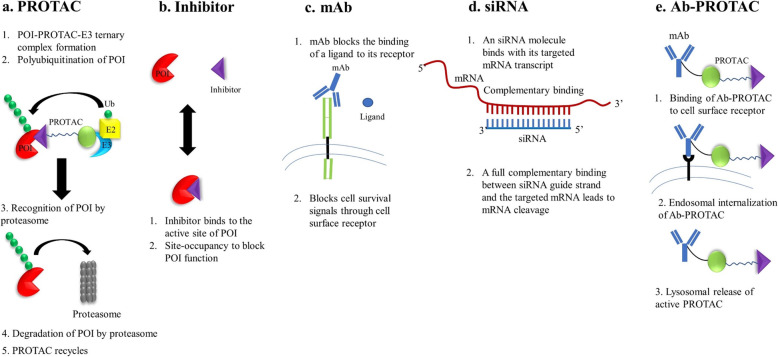
- PROTACs act catalytically and sub-stoichiometrically, can target “undruggable” and mutant proteins, and may overcome resistance to small molecule inhibitors; Table 1 compares PROTACs with SMIs, monoclonal antibodies, and therapeutic nucleic acids.
- Representative degraders in Table 2 include DT2216 (VHL, Bcl-xL), which degraded Bcl-xL in MOLT-4 cells with DC50 63 nM and Dmax 90.8%, and once-weekly dosing completely inhibited MOLT-4 xenografts; SIAIS178 (VHL, BCR-ABL) degraded BCR-ABL in K562 cells with DC50 8.5 nM and EC50 24 nM and dose-dependently inhibited K562 xenograft growth; SD-36 (CRBN, STAT3) achieved Dmax 90% in MOLM-16 cells and induced complete tumor regression in MOLM-16 xenografts at 100 mg/kg weekly or 50 mg/kg twice weekly for 4 weeks; MD-224 (CRBN, MDM2) had EC50 1.5 nM in RS4-11 cells and achieved complete tumor regression at 25 mg/kg daily 5 days/week for 2 weeks or 50 mg/kg every other day for 3 weeks.
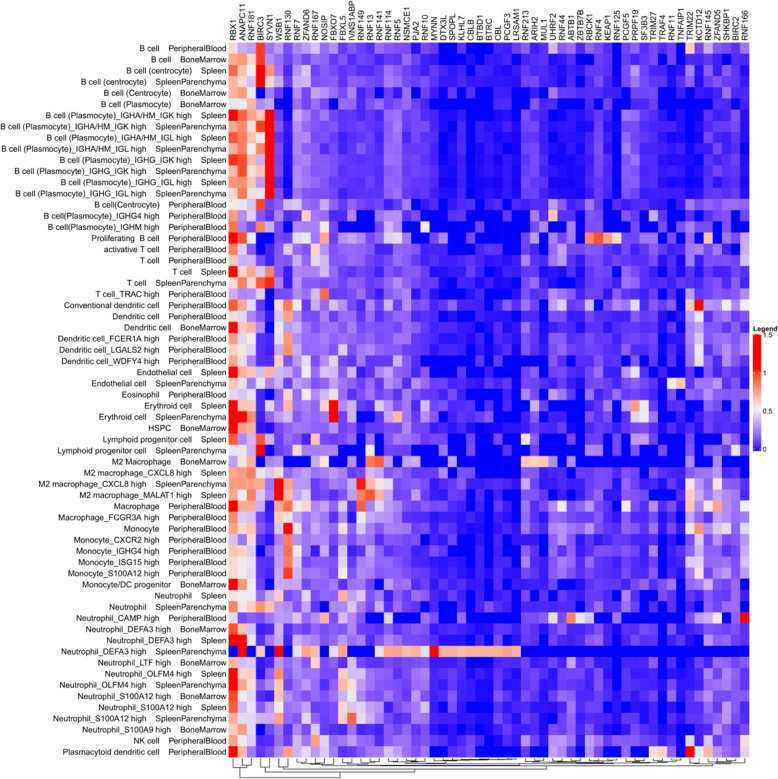
- Using Human Cell Landscape scRNA-seq data from 37 adult tissues and 315 cell types, the authors identified transcripts for 574 of more than 600 putative E3 ligases; they highlight BIRC3 as highly expressed in several hematologic malignant cells and SYVN1 as plasmocyte-selective, proposing them as candidates for cell-selective PROTACs.
- Safety concerns include complete and prolonged target depletion, loss of scaffolding functions, off-target degradation (e.g., CRBN neosubstrates SALL4, IKZF1, IKZF3), the Hook effect, and limitations of VHL- and CRBN-based PROTACs; no PROTAC has entered clinical trials for hematologic malignancies.
Methods
- Narrative review that systematically summarizes reported PROTACs against targets implicated in hematologic malignancies and discusses safety and clinical translation.
- Literature review plus analysis of human pan-tissue scRNA-seq data (Human Cell Landscape) from 37 adult tissues and 315 cell types; 574 E3 ligase transcripts were identified from more than 600 putative E3 ligases.
- scRNA-seq processing used Seurat with quality filtering (unique transcript counts <300 or >2500, >20% mitochondrial counts removed), global-scaling normalization, log-transformation, mean expression per cell type, and heatmap visualization; Table 2 compiles DC50, EC50, Dmax, and in vivo efficacy data.
Limitations
- The paper states that PROTACs may cause greater on-target toxicity than SMIs due to complete target depletion, loss of scaffolding functions, and prolonged target depletion; it also states off-target degradation, Hook effect, E3 ligase-related drawbacks, and potential VHL/CRBN tumor suppressor issues.
- The paper states that no PROTAC has entered clinical trials for hematologic malignancies, so the reviewed hematologic malignancy PROTAC data are preclinical.
- Evident from the text: this is a narrative review rather than a systematic review or meta-analysis, and the proposed cell type-selective E3 ligase strategy is based on descriptive scRNA-seq analysis without experimental validation; the paper also notes that identifying appropriate E3 ligase ligands remains critical and challenging.
Model-written summary. Check it against the paper before relying on it.
Integrity signals
Registry
Cites
Statistics
Figures
Verification
Claims the paper makes
139 Not checked yet · 29 Own interpretation · 15 No basis given · 8 Own result · 4 Supported · 3 Partly supported · accuracy not yet measured
The cited sources support only part of this claim — read each source’s verdict below.
In the paper
“Subsequently, several potent BTK PROTACs aimed at targeting mutant BTK in ibrutinib-resistant B cell malignancies with improved cellular activities and possessing in vivo potencies were reported by different groups [7, 44, 118–120].”
§ Proteolysis targeting chimeras (PROTACs) are emerging therapeutics for hematologic malignancies > PROTACs against hematologic malignancies > BTK
What the sources say
- Partly supportedcites [7] Zorba A, Nguyen C, Xu Y, Starr J, Borzilleri K, Smith J, et al. Delineating the role of cooperativity in the design of potent PROTACs for BTK. Proc Natl Acad Sci U S A. 2018;115:E7285–92. sourceExperimental — accuracy not yet measured
The Results report potent BTK degradation by several PROTACs in cultured Ramos cells and dose-dependent degradation by PROTAC 10 in rat spleen (pages not provided). The paper mentions C481S mutations as a reason to seek new treatments, but our copy does not show these PROTACs targeting mutant BTK in ibrutinib-resistant malignancies or demonstrate in vivo antitumor potency. (LLM, conf=0.88)
- Supportedcites [44] Dobrovolsky D, Wang ES, Morrow S, Leahy C, Faust T, Nowak RP, et al. Bruton tyrosine kinase degradation as a therapeutic strategy for cancer. Blood. 2019;133:952–61. source
The Discussion reports highly potent BTK degraders that overcome clinically relevant ibrutinib resistance, inhibit cellular signaling and proliferation, and show efficacy in patient-derived xenograft models in vivo. The Abstract identifies DD-03-171 as the optimized lead with enhanced antiproliferative effects in vitro and in vivo efficacy; it does not imply that every degrader was tested in vivo. (LLM, conf=0.88)
- Not checked yetcites [118] Sun Y, Ding N, Song Y, Yang Z, Liu W, Zhu J, et al. Degradation of Bruton’s tyrosine kinase mutants by PROTACs for potential treatment of ibrutinib-resistant non-Hodgkin lymphomas. Leukemia. 2019;33:2105–10. source
- Partly supportedcites [119] Jaime-Figueroa S, Buhimschi AD, Toure M, Hines J, Crews CM. Design, synthesis and biological evaluation of proteolysis targeting chimeras (PROTACs) as a BTK degraders with improved pharmacokinetic properties. Bioorg Med Chem Lett. 2020;30:126877. sourceExperimental — accuracy not yet measured
The Introduction (page unavailable) describes ibrutinib-resistant CLL and reports that the earlier PROTAC MT802 degraded C481S mutant BTK. The Results and discussion (page unavailable) report potent cellular BTK degradation by the new PROTACs SJF608 and SJF620 and improved pharmacokinetics. They do not report improved cellular activity over MT802 or in vivo potency; the authors instead propose SJF620 for future in vivo studies. (LLM, conf=0.88)
- Partly supportedcites [120] Gabizon R, Shraga A, Gehrtz P, Livnah E, Shorer Y, Gurwicz N, et al. Efficient targeted degradation via reversible and irreversible covalent PROTACs. J Am Chem Soc. 2020. https://doi.org/10.1021/jacs.9b13907. sourceExperimental — accuracy not yet measured
The Results report several potent BTK PROTACs, including degradation in patient-derived CLL cells, and test mutant BTK C481S in vitro and in engineered cells (Figures 4–6; page numbers unavailable). They do not establish activity in ibrutinib-resistant B-cell malignancies or report in vivo potency; those parts of the claim are unsupported by this paper. (LLM, conf=0.88)
plaindirect- Asserted: passes — The authors put it forward as true.
- Checkable: passes — It can be checked against evidence.
- Load-bearing: passes — The paper’s conclusions depend on it.
- Based: passes — The paper gives a reason why it holds.
- Partly supported
The cited sources support only part of this claim — read each source’s verdict below.
In the paper
“Moreover, ATP-competitive inhibitors cannot disrupt the scaffolding functions of CDK6, which is important for the transcription function of CDK6 [124, 125].”
§ Proteolysis targeting chimeras (PROTACs) are emerging therapeutics for hematologic malignancies > PROTACs against hematologic malignancies > CDK6
What the sources say
- Partly supportedcites [124] Kollmann K, Heller G, Schneckenleithner C, Warsch W, Scheicher R, Ott RG, et al. A kinase-independent function of CDK6 links the cell cycle to tumor angiogenesis. Cancer Cell. 2013;24:167–81. sourceExperimental — accuracy not yet measured
The Results section, “Transcriptional Regulation of Vegf-A by CDK6” (page unavailable), reports that an ATP-pocket CDK4/6 inhibitor reduced proliferation but did not change Vegf-A or p16INK4a mRNA levels. “Interaction Partners of CDK6” describes CDK6 in transcriptional complexes. These findings support a kinase-independent transcriptional role, but the paper does not directly show that the inhibitor leaves scaffolding interactions intact or establish that all ATP-competitive inhibitors cannot disrupt them. (LLM, conf=0.84)
- Not checked yetcites [125] Tigan A-S, Bellutti F, Kollmann K, Tebb G, Sexl V. CDK6-a review of the past and a glimpse into the future: from cell-cycle control to transcriptional regulation. Oncogene. 2016;35:3083–91. source
plain- Asserted: passes — The authors put it forward as true.
- Checkable: passes — It can be checked against evidence.
- Load-bearing: passes — The paper’s conclusions depend on it.
- Based: passes — The paper gives a reason why it holds.
- Partly supported
Every source the paper cites for this claim was checked and supports it.
In the paper
“MD-224 potently induced rapid degradation of MDM2 in leukemia cells.”
§ Proteolysis targeting chimeras (PROTACs) are emerging therapeutics for hematologic malignancies > PROTACs against hematologic malignancies > MDM2
What the sources say
- Supportedcites [46] Li Y, Yang J, Aguilar A, McEachern D, Przybranowski S, Liu L, et al. Discovery of MD-224 as a first-in-class, highly potent, and efficacious proteolysis targeting chimera murine double minute 2 degrader capable of achieving complete and durable tumor regression. J Med Chem. 2019;62:448–66. source
The Introduction states that MD-224 induces rapid MDM2 degradation at low nanomolar concentrations in leukemia cells. The Results and Discussion further report marked MDM2 depletion after a 2-hour treatment at concentrations of 1 nM or less in the RS4;11 and MV4;11 leukemia cell lines. (LLM, conf=0.94)
plaindirect- Asserted: passes — The authors put it forward as true.
- Checkable: passes — It can be checked against evidence.
- Load-bearing: passes — The paper’s conclusions depend on it.
- Based: passes — The paper gives a reason why it holds.
- Supported
Every source the paper cites for this claim was checked and supports it.
In the paper
“The discovery of deazaneplanocin A (DZNep) is the first attempt to inhibit EZH2 function, which could effectively deplete EZH2, SUZ12, and EED at cellular levels [156].”
§ Proteolysis targeting chimeras (PROTACs) are emerging therapeutics for hematologic malignancies > PROTACs against hematologic malignancies > PRC2
What the sources say
- Supportedcites [156] Tan J, Yang X, Zhuang L, Jiang X, Chen W, Lee PL, et al. Pharmacologic disruption of Polycomb-repressive complex 2-mediated gene repression selectively induces apoptosis in cancer cells. Genes Dev. 2007;21:1050–63. source
The section “DZNep depletes PRC2 proteins and inhibits histone H3-K27 methylation” reports that DZNep treatment dramatically reduced cellular protein levels of EZH2, SUZ12, and EED in MCF-7 and HCT116 cells. No page number is provided in our copy. (LLM, conf=0.94)
hedgeddirect- Asserted: passes — The authors put it forward as true.
- Checkable: passes — It can be checked against evidence.
- Load-bearing: unclear — It is unclear whether the paper’s conclusions depend on it.
- Based: passes — The paper gives a reason why it holds.
- Supported
The cited sources support only part of this claim — read each source’s verdict below.
In the paper
“Whereas SMARCA2 is essential for the growth of tumor cells that harbor loss of function mutations in SMARCA4 [166].”
§ Proteolysis targeting chimeras (PROTACs) are emerging therapeutics for hematologic malignancies > PROTACs against hematologic malignancies > SMARCA2, SMARCA4, and PBRM1
What the sources say
- Partly supportedcites [166] Hoffman GR, Rahal R, Buxton F, Xiang K, McAllister G, Frias E, et al. Functional epigenetics approach identifies BRM/SMARCA2 as a critical synthetic lethal target in BRG1-deficient cancers. Proc Natl Acad Sci U S A. 2014;111:3128–33. sourceExperimental — accuracy not yet measured
The Abstract identifies BRM/SMARCA2 as essential for growth of BRG1/SMARCA4 loss-of-function tumor cells. The Discussion qualifies this finding: BRG1-deficient cells that express BRM are sensitive to its depletion, but some BRG1-mutant or deficient cell lines with little or no BRM expression did not respond. The claim omits that exception. (LLM, conf=0.86)
plaindirect- Asserted: passes — The authors put it forward as true.
- Checkable: passes — It can be checked against evidence.
- Load-bearing: unclear — It is unclear whether the paper’s conclusions depend on it.
- Based: passes — The paper gives a reason why it holds.
- Partly supported
Every source the paper cites for this claim was checked and supports it.
In the paper
“An off-target effect can also arise from the neomorphic interactions with neosubstrates of an E3 ligase if the E3 ligase ligand used to generate the PROTAC or the PROTAC itself can bind the neosubstrates [206].”
§ Proteolysis targeting chimeras (PROTACs) are emerging therapeutics for hematologic malignancies > Safety concerns of PROTACs
What the sources say
- Supportedcites [206] Moreau K, Coen M, Zhang AX, Pachl F, Castaldi MP, Dahl G, et al. Proteolysis-targeting chimeras in drug development: a safety perspective. Br J Pharmacol. 2020;177:1709–18. source
Section 3.2 (page not provided) identifies neomorphic recruitment of neosubstrates to an E3 ligase as a cause of off-target degradation. The paper also says PROTACs can degrade neosubstrates not predicted from the E3-ligase ligand alone; Section 3.4 gives examples of PROTACs whose incorporated ligands led to degradation of IMiD neosubstrates. (LLM, conf=0.93)
plainconditional- Asserted: passes — The authors put it forward as true.
- Checkable: passes — It can be checked against evidence.
- Load-bearing: passes — The paper’s conclusions depend on it.
- Based: passes — The paper gives a reason why it holds.
- Supported
Every source the paper cites for this claim was checked and supports it.
In the paper
“several PROTACs have shown promising preclinical results in the treatment of hematologic malignancies [3, 4, 44]”
§ Proteolysis targeting chimeras (PROTACs) are emerging therapeutics for hematologic malignancies > Clinical translation of PROTACs > PROTACs in preclinical development for hematologic malignancies
What the sources say
- Supportedcites [3] Bai L, Zhou H, Xu R, Zhao Y, Chinnaswamy K, McEachern D, et al. A potent and selective small-molecule degrader of STAT3 achieves complete tumor regression in vivo. Cancer Cell. 2019;36:498–511.e17. source
The Results section, “SD-36 achieves complete and long-lasting tumor regression in mice” (page not provided), reports complete tumor regression in three xenograft models treated with the PROTAC SD-36. The paper thus supplies a preclinical example supporting the sentence’s claim; the other citations need not be established by this source. (LLM, conf=0.92)
- Supportedcites [4] Khan S, Zhang X, Lv D, Zhang Q, He Y, Zhang P, et al. A selective BCL-XL PROTAC degrader achieves safe and potent antitumor activity. Nat Med. 2019;25:1938–47. source
The Abstract reports that DT2216, a PROTAC, was potent against leukemia cells and inhibited xenograft tumor growth. The Extended Data describe regression of MOLT-4 T-ALL xenografts, providing a preclinical example in a hematologic malignancy. This source supports one example within the sentence’s collective claim about several PROTACs. (LLM, conf=0.90)
- Supportedcites [44] Dobrovolsky D, Wang ES, Morrow S, Leahy C, Faust T, Nowak RP, et al. Bruton tyrosine kinase degradation as a therapeutic strategy for cancer. Blood. 2019;133:952–61. source
The Introduction describes multiple BTK degraders with efficacy in cellular models of lymphoma and leukemia. The Discussion also reports promising antiproliferative effects and efficacy in patient-derived xenograft models, supporting the broad claim of promising preclinical results in hematologic malignancies. (LLM, conf=0.91)
plainconditional- Asserted: passes — The authors put it forward as true.
- Checkable: passes — It can be checked against evidence.
- Load-bearing: passes — The paper’s conclusions depend on it.
- Based: passes — The paper gives a reason why it holds.
- Supported
In the paper
“However, the ability of these PROTACs to degrade mutant forms of BTK was not evaluated [115].”
§ Proteolysis targeting chimeras (PROTACs) are emerging therapeutics for hematologic malignancies > PROTACs against hematologic malignancies > BTK
What the sources say
- Not checked yetcites [115] Huang H-T, Dobrovolsky D, Paulk J, Yang G, Weisberg EL, Doctor ZM, et al. A chemoproteomic approach to query the degradable kinome using a multi-kinase degrader. Cell Chem Biol. 2018;25:88–99.e6. source
plain- Asserted: passes — The authors put it forward as true.
- Checkable: passes — It can be checked against evidence.
- Load-bearing: unclear — It is unclear whether the paper’s conclusions depend on it.
- Based: passes — The paper gives a reason why it holds.
A result the paper reports from its own data — it cites no other source for it, so there is none to check. The quote shows it is in the paper.
In the paper
“In addition, the expression of SYVN1 is low in other cell types in the hematopoietic system (Fig. 3).”
§ Proteolysis targeting chimeras (PROTACs) are emerging therapeutics for hematologic malignancies > Identification of cell type-specific/selective E3 ligases
plain- Asserted: passes — The authors put it forward as true.
- Checkable: passes — It can be checked against evidence.
- Load-bearing: unclear — It is unclear whether the paper’s conclusions depend on it.
- Based: passes — The paper gives a reason why it holds.
In the paper
“Finally, transcripts for 574 from more than 600 putative E3 ligases were successfully identified in the HCL data [213].”
§ Proteolysis targeting chimeras (PROTACs) are emerging therapeutics for hematologic malignancies > Identification of cell type-specific/selective E3 ligases
What the sources say
- Not checked yetcites [213] Li W, Bengtson MH, Ulbrich A, Matsuda A, Reddy VA, Orth A, et al. Genome-wide and functional annotation of human E3 ubiquitin ligases identifies MULAN, a mitochondrial E3 that regulates the organelle’s dynamics and signaling. PLoS One. 2008;3:e1487.
plain- Asserted: passes — The authors put it forward as true.
- Checkable: passes — It can be checked against evidence.
- Load-bearing: unclear — It is unclear whether the paper’s conclusions depend on it.
- Based: passes — The paper gives a reason why it holds.
- It may state two separate claims as one. 79
- Probably not a substantial claim. 20
A result the paper reports from its own data — it cites no other source for it, so there is none to check. The quote shows it is in the paper.
In the paper
“SYVN1 is lowly expressed in proliferating B cells and moderately expressed in some differentiated B cells, i.e., centrocytes, but highly expressed in plasmocytes (Fig. 3), suggesting that its expression is upregulated during B cell differentiation.”
§ Proteolysis targeting chimeras (PROTACs) are emerging therapeutics for hematologic malignancies > Identification of cell type-specific/selective E3 ligases
hedgedcorrelational- Asserted: passes — The authors put it forward as true.
- Checkable: passes — It can be checked against evidence.
- Load-bearing: passes — The paper’s conclusions depend on it.
- Based: passes — The paper gives a reason why it holds.
It may state two separate claims as one.
The paper states this without a source or data behind it here, so there is nothing to check it against. The quote shows it is in the paper.
In the paper
“Besides the E3 ligases discussed above, there are many other cell type-specific E3 ligases identified at the single-cell level (Fig. 3), such as KCTD12 in blood dendritic cells, and TRIM22 in blood plasmacytoid dendritic cells.”
§ Proteolysis targeting chimeras (PROTACs) are emerging therapeutics for hematologic malignancies > Identification of cell type-specific/selective E3 ligases
plain- Asserted: passes — The authors put it forward as true.
- Checkable: passes — It can be checked against evidence.
- Load-bearing: fails — The paper’s conclusions may not depend on it.
- Based: passes — The paper gives a reason why it holds.
Probably not a substantial claim. The paper’s conclusions may not depend on it.
A result the paper reports from its own data — it cites no other source for it, so there is none to check. The quote shows it is in the paper.
In the paper
“KRT8 is highly expressed in cells in gastrointestinal tract, prostate, and pancreas, but lowly expressed in cells of brain and hematopoietic system (Additional file 1).”
§ Proteolysis targeting chimeras (PROTACs) are emerging therapeutics for hematologic malignancies > Identification of cell type-specific/selective E3 ligases
plain- Asserted: passes — The authors put it forward as true.
- Checkable: passes — It can be checked against evidence.
- Load-bearing: unclear — It is unclear whether the paper’s conclusions depend on it.
- Based: passes — The paper gives a reason why it holds.
It may state two separate claims as one.
In the paper
“BCR-ABL is an oncogenic fusion protein implicated in the development of chronic myelogenous leukemia (CML) [74].”
§ Proteolysis targeting chimeras (PROTACs) are emerging therapeutics for hematologic malignancies > PROTACs against hematologic malignancies > BCR-ABL
What the sources say
- Not checked yetcites [74] Hantschel O, Superti-Furga G. Regulation of the c-Abl and Bcr-Abl tyrosine kinases. Nat Rev Mol Cell Biol. 2004;5:33–44. source
plaincorrelational- Asserted: passes — The authors put it forward as true.
- Checkable: passes — It can be checked against evidence.
- Load-bearing: passes — The paper’s conclusions depend on it.
- Based: passes — The paper gives a reason why it holds.
Probably not a substantial claim.
In the paper
“DT2216, a representative PROTAC that hijacks the VHL E3 ligase to achieve tissue/cell-selective degradation of Bcl-xL, was found to be more potent against Bcl-xL-dependent tumor cells and less toxic against platelets in comparison to conventional Bcl-xL inhibitors.”
§ Proteolysis targeting chimeras (PROTACs) are emerging therapeutics for hematologic malignancies > PROTACs against hematologic malignancies > Bcl-2 family proteins
What the sources say
- Not checked yetcites [4] Khan S, Zhang X, Lv D, Zhang Q, He Y, Zhang P, et al. A selective BCL-XL PROTAC degrader achieves safe and potent antitumor activity. Nat Med. 2019;25:1938–47. source
plaindirect- Asserted: passes — The authors put it forward as true.
- Checkable: passes — It can be checked against evidence.
- Load-bearing: passes — The paper’s conclusions depend on it.
- Based: passes — The paper gives a reason why it holds.
It may state two separate claims as one.
In the paper
“Mcl-1 is upregulated in various hematologic malignancies (e.g., multiple myeloma (MM) and AML) and some solid tumors (e.g., hepatocellular carcinoma and NSCLC) [64].”
§ Proteolysis targeting chimeras (PROTACs) are emerging therapeutics for hematologic malignancies > PROTACs against hematologic malignancies > Bcl-2 family proteins
What the sources say
- Not checked yetcites [64] Fletcher S. MCL-1 inhibitors - where are we now (2019)? Expert Opin Ther Pat. 2019;29:909–19. source
plaincorrelational- Asserted: passes — The authors put it forward as true.
- Checkable: passes — It can be checked against evidence.
- Load-bearing: unclear — It is unclear whether the paper’s conclusions depend on it.
- Based: passes — The paper gives a reason why it holds.
It may state two separate claims as one.
In the paper
“Although the PROTAC molecules could degrade Bcl-6 in a number of cells, they did not improve antiproliferative activity over Bcl-6 inhibitors in DLBCL cells.”
§ Proteolysis targeting chimeras (PROTACs) are emerging therapeutics for hematologic malignancies > PROTACs against hematologic malignancies > Bcl-6
What the sources say
- Not checked yetcites [42] McCoull W, Cheung T, Anderson E, Barton P, Burgess J, Byth K, et al. Development of a novel B-cell lymphoma 6 (BCL6) PROTAC to provide insight into small molecule targeting of BCL6. ACS Chem Biol. 2018;13:3131–41. source
plain- Asserted: passes — The authors put it forward as true.
- Checkable: passes — It can be checked against evidence.
- Load-bearing: passes — The paper’s conclusions depend on it.
- Based: passes — The paper gives a reason why it holds.
It may state two separate claims as one.
In the paper
“Third, PROTACs can be used to overcome drug resistance resulting from mutations of a POI or compensatory increase in POI induced by SMIs [3].”
§ Proteolysis targeting chimeras (PROTACs) are emerging therapeutics for hematologic malignancies > Introduction
What the sources say
- Not checked yetcites [3] Bai L, Zhou H, Xu R, Zhao Y, Chinnaswamy K, McEachern D, et al. A potent and selective small-molecule degrader of STAT3 achieves complete tumor regression in vivo. Cancer Cell. 2019;36:498–511.e17. source
plaindirect- Asserted: passes — The authors put it forward as true.
- Checkable: passes — It can be checked against evidence.
- Load-bearing: passes — The paper’s conclusions depend on it.
- Based: passes — The paper gives a reason why it holds.
It may state two separate claims as one.
The paper states this without a source or data behind it here, so there is nothing to check it against. The quote shows it is in the paper.
In the paper
“Because of this unique mechanism of action (MOA), PROTACs produce longer and stronger biological effects than SMIs on a target”
§ Proteolysis targeting chimeras (PROTACs) are emerging therapeutics for hematologic malignancies > Introduction
plaindirect- Asserted: passes — The authors put it forward as true.
- Checkable: passes — It can be checked against evidence.
- Load-bearing: passes — The paper’s conclusions depend on it.
- Based: passes — The paper gives a reason why it holds.
It may state two separate claims as one.
In the paper
“However, due to the challenge of disrupting PPI, these Bcl-6 inhibitors have suffered from low potency [72] and thus have limited clinical application.”
§ Proteolysis targeting chimeras (PROTACs) are emerging therapeutics for hematologic malignancies > PROTACs against hematologic malignancies > Bcl-6
What the sources say
- Not checked yetcites [72] Sameshima T, Yamamoto T, Sano O, Sogabe S, Igaki S, Sakamoto K, et al. Discovery of an irreversible and cell-active BCL6 inhibitor selectively targeting Cys53 located at the protein-protein interaction interface. Biochemistry. 2018;57:1369–79. source
plaindirect- Asserted: passes — The authors put it forward as true.
- Checkable: passes — It can be checked against evidence.
- Load-bearing: passes — The paper’s conclusions depend on it.
- Based: passes — The paper gives a reason why it holds.
It may state two separate claims as one.
A conclusion the paper draws from its own results — it cites no other source for it, so there is none to check. The quote shows it is in the paper.
In the paper
“Considering these limitations of using monoclonal antibodies and TNAs, PROTACs have a better chance for faster clinical development against a broader range of targets in multiple tumor types.”
§ Proteolysis targeting chimeras (PROTACs) are emerging therapeutics for hematologic malignancies > Advantages of using PROTACs over other approaches to inhibit a POI
hedgedconditional- Asserted: passes — The authors put it forward as true.
- Checkable: passes — It can be checked against evidence.
- Load-bearing: passes — The paper’s conclusions depend on it.
- Based: passes — The paper gives a reason why it holds.
It may state two separate claims as one.
In the paper
“Moreover, DT2216 potently degraded Bcl-xL protein and inhibited MOLT-4 T-ALL in vitro and in vivo.”
§ Proteolysis targeting chimeras (PROTACs) are emerging therapeutics for hematologic malignancies > PROTACs against hematologic malignancies > Bcl-2 family proteins
What the sources say
- Not checked yetcites [4] Khan S, Zhang X, Lv D, Zhang Q, He Y, Zhang P, et al. A selective BCL-XL PROTAC degrader achieves safe and potent antitumor activity. Nat Med. 2019;25:1938–47. source
boosteddirect- Asserted: passes — The authors put it forward as true.
- Checkable: passes — It can be checked against evidence.
- Load-bearing: passes — The paper’s conclusions depend on it.
- Based: passes — The paper gives a reason why it holds.
It may state two separate claims as one.
In the paper
“By degrading Bcl-6 via the UPS, BI-3802 displayed stronger de-repression of target genes than Bcl-6 inhibitors and demonstrated antiproliferative effects in several DLBCL cell lines [73].”
§ Proteolysis targeting chimeras (PROTACs) are emerging therapeutics for hematologic malignancies > PROTACs against hematologic malignancies > Bcl-6
What the sources say
- Not checked yetcites [73] Kerres N, Steurer S, Schlager S, Bader G, Berger H, Caligiuri M, et al. Chemically induced degradation of the oncogenic transcription factor BCL6. Cell Rep. 2017;20:2860–75. source
boosteddirect- Asserted: passes — The authors put it forward as true.
- Checkable: passes — It can be checked against evidence.
- Load-bearing: passes — The paper’s conclusions depend on it.
- Based: passes — The paper gives a reason why it holds.
It may state two separate claims as one.
In the paper
“SIAIS178 potently degraded BCR-ABL protein (DC50 = 8.5 nM) and inhibited the proliferation of K562 cells (EC50 = 24 nM), and further efficiently inhibited tumor growth and induced BCR-ABL degradation in K562 xenografts.”
§ Proteolysis targeting chimeras (PROTACs) are emerging therapeutics for hematologic malignancies > PROTACs against hematologic malignancies > BCR-ABL
What the sources say
- Not checked yetcites [6] Zhao Q, Ren C, Liu L, Chen J, Shao Y, Sun N, et al. Discovery of SIAIS178 as an effective BCR-ABL degrader by recruiting Von Hippel-Lindau (VHL) E3 ubiquitin ligase. J Med Chem. 2019;62:9281–98. source
plaindirect- Asserted: passes — The authors put it forward as true.
- Checkable: passes — It can be checked against evidence.
- Load-bearing: passes — The paper’s conclusions depend on it.
- Based: passes — The paper gives a reason why it holds.
It may state two separate claims as one.
None of the sources cited for this claim have been checked yet.
In the paper
“It is broadly expressed in many lymphomas and plays a significant role in lymphomagenesis by being involved in the formation of germinal centers (GCs) during the humoral immune response [66–69].”
§ Proteolysis targeting chimeras (PROTACs) are emerging therapeutics for hematologic malignancies > PROTACs against hematologic malignancies > Bcl-6
What the sources say
- Not checked yetcites [66] Cardenas MG, Oswald E, Yu W, Xue F, MacKerell AD, Melnick AM. The expanding role of the BCL6 oncoprotein as a cancer therapeutic target. Clin Cancer Res. 2017;23:885–93. source
- Not checked yetcites [67] Dent AL, Shaffer AL, Yu X, Allman D, Staudt LM. Control of inflammation, cytokine expression, and germinal center formation by BCL-6. Science. 1997;276:589–92. source
- Not checked yetcites [68] Fukuda T, Yoshida T, Okada S, Hatano M, Miki T, Ishibashi K, et al. Disruption of the Bcl6 gene results in an impaired germinal center formation. J Exp Med. 1997;186:439–48. source
- Not checked yetcites [69] Ye BH, Cattoretti G, Shen Q, Zhang J, Hawe N, de Waard R, et al. The BCL-6 proto-oncogene controls germinal-Centre formation and Th2-type inflammation. Nat Genet. 1997;16:161–70. source
plaindirect- Asserted: passes — The authors put it forward as true.
- Checkable: passes — It can be checked against evidence.
- Load-bearing: unclear — It is unclear whether the paper’s conclusions depend on it.
- Based: passes — The paper gives a reason why it holds.
It may state two separate claims as one.
None of the sources cited for this claim have been checked yet.
In the paper
“These Bcl-xL degraders showed significantly reduced cytotoxicity against platelets but improved killing of various tumor cells and senescent cells due to differential expression of these E3 ligases”
§ Proteolysis targeting chimeras (PROTACs) are emerging therapeutics for hematologic malignancies > PROTACs against hematologic malignancies > Bcl-2 family proteins
What the sources say
- Not checked yetcites [60] He Y, Zhang X, Chang J, Kim H-N, Zhang P, Wang Y, et al. Using proteolysis-targeting chimera technology to reduce navitoclax platelet toxicity and improve its senolytic activity. Nat Commun. 2020;11:1996. source
- Not checked yetcites [61] Zhang X, He Y, Zhang P, Budamagunta V, Lv D, Thummuri D, et al. Discovery of IAP-recruiting BCL-XL PROTACs as potent degraders across multiple cancer cell lines. Eur J Med Chem. 2020;199:112397. source
- Not checked yetcites [62] Zhang X, Thummuri D, Liu X, Hu W, Zhang P, Khan S, et al. Discovery of PROTAC BCL-XL degraders as potent anticancer agents with low on-target platelet toxicity. Eur J Med Chem. 2020;192:112186. source
- Not checked yetcites [63] Zhang X, Thummuri D, He Y, Liu X, Zhang P, Zhou D, et al. Utilizing PROTAC technology to address the on-target platelet toxicity associated with inhibition of BCL-XL, 55. Chem Commun (Camb). 2019:14765–8. source
plaindirect- Asserted: passes — The authors put it forward as true.
- Checkable: passes — It can be checked against evidence.
- Load-bearing: passes — The paper’s conclusions depend on it.
- Based: passes — The paper gives a reason why it holds.
It may state two separate claims as one.
None of the sources cited for this claim have been checked yet.
In the paper
“However, TKIs need to be administered continuously for life to treat CML patients likely due to the scaffolding functions of BCR-ABL that activate compensatory signaling pathways to promote the survival of leukemic stem cells (LSCs) [76, 77].”
§ Proteolysis targeting chimeras (PROTACs) are emerging therapeutics for hematologic malignancies > PROTACs against hematologic malignancies > BCR-ABL
What the sources say
- Not checked yetcites [76] Ichim CV. Kinase-independent mechanisms of resistance of leukemia stem cells to tyrosine kinase inhibitors. Stem Cells Transl Med. 2014;3:405–15. source
- Not checked yetcites [77] Hamilton A, Helgason GV, Schemionek M, Zhang B, Myssina S, Allan EK, et al. Chronic myeloid leukemia stem cells are not dependent on Bcr-Abl kinase activity for their survival. Blood. 2012;119:1501–10. source
hedgedconditional- Asserted: passes — The authors put it forward as true.
- Checkable: passes — It can be checked against evidence.
- Load-bearing: passes — The paper’s conclusions depend on it.
- Based: passes — The paper gives a reason why it holds.
It may state two separate claims as one.
In the paper
“Mutations in the FLT-3 gene have been found in patients with ALL (1–3%), myelodysplasia (5–10%), and AML (15–35%), making it one of the most frequently mutated genes in hematologic malignancies [128].”
§ Proteolysis targeting chimeras (PROTACs) are emerging therapeutics for hematologic malignancies > PROTACs against hematologic malignancies > FLT-3
What the sources say
- Not checked yetcites [128] Stirewalt DL, Radich JP. The role of FLT3 in haematopoietic malignancies. Nat Rev Cancer. 2003;3:650–65. source
plaincorrelational- Asserted: passes — The authors put it forward as true.
- Checkable: passes — It can be checked against evidence.
- Load-bearing: unclear — It is unclear whether the paper’s conclusions depend on it.
- Based: passes — The paper gives a reason why it holds.
It may state two separate claims as one.
A result the paper reports from its own data — it cites no other source for it, so there is none to check. The quote shows it is in the paper.
In the paper
“YX-2-107, a CRBN-recruiting PROTAC, degraded CDK6 selectively in Ph-like and MLL-rearranged cell lines, and inhibited their proliferation.”
§ Proteolysis targeting chimeras (PROTACs) are emerging therapeutics for hematologic malignancies > PROTACs against hematologic malignancies > CDK6
plaindirect- Asserted: passes — The authors put it forward as true.
- Checkable: passes — It can be checked against evidence.
- Load-bearing: passes — The paper’s conclusions depend on it.
- Based: passes — The paper gives a reason why it holds.
It may state two separate claims as one.
In the paper
“Rao’s group reported a BTK degrader, named P13I, which efficiently degraded both wild-type and C418S BTK with DC50 values of 10 nM and 28 nM, respectively.”
§ Proteolysis targeting chimeras (PROTACs) are emerging therapeutics for hematologic malignancies > PROTACs against hematologic malignancies > BTK
What the sources say
- Not checked yetcites [117] Sun Y, Zhao X, Ding N, Gao H, Wu Y, Yang Y, et al. PROTAC-induced BTK degradation as a novel therapy for mutated BTK C481S induced ibrutinib-resistant B-cell malignancies. Cell Res. 2018;28:779–81. source
plaindirect- Asserted: passes — The authors put it forward as true.
- Checkable: passes — It can be checked against evidence.
- Load-bearing: unclear — It is unclear whether the paper’s conclusions depend on it.
- Based: passes — The paper gives a reason why it holds.
It may state two separate claims as one.
In the paper
“TD-428 possesses two unique properties: high specificity and lacking the Hook effect.”
§ Proteolysis targeting chimeras (PROTACs) are emerging therapeutics for hematologic malignancies > PROTACs against hematologic malignancies > BRD4
What the sources say
- Not checked yetcites [110] Kim SA, Go A, Jo S-H, Park SJ, Jeon YU, Kim JE, et al. A novel cereblon modulator for targeted protein degradation. Eur J Med Chem. 2019;166:65–74. source
plain- Asserted: passes — The authors put it forward as true.
- Checkable: passes — It can be checked against evidence.
- Load-bearing: unclear — It is unclear whether the paper’s conclusions depend on it.
- Based: passes — The paper gives a reason why it holds.
It may state two separate claims as one.
In the paper
“MT-802, but not ibrutinib, was found to reduce activated-BTK levels in patient-derived CLL cells harboring the C481S mutation [116].”
§ Proteolysis targeting chimeras (PROTACs) are emerging therapeutics for hematologic malignancies > PROTACs against hematologic malignancies > BTK
What the sources say
- Not checked yetcites [116] Buhimschi AD, Armstrong HA, Toure M, Jaime-Figueroa S, Chen TL, Lehman AM, et al. Targeting the C481S ibrutinib-resistance mutation in Bruton’s tyrosine kinase using PROTAC-mediated degradation. Biochemistry. 2018;57:3564–75. source
plaindirect- Asserted: passes — The authors put it forward as true.
- Checkable: passes — It can be checked against evidence.
- Load-bearing: passes — The paper’s conclusions depend on it.
- Based: passes — The paper gives a reason why it holds.
It may state two separate claims as one.
In the paper
“QCA570 is the most potent BET PROTAC that displays picomolar potency against human acute leukemia cell lines in vitro and in vivo [93].”
§ Proteolysis targeting chimeras (PROTACs) are emerging therapeutics for hematologic malignancies > PROTACs against hematologic malignancies > BRD4
What the sources say
- Not checked yetcites [93] Qin C, Hu Y, Zhou B, Fernandez-Salas E, Yang C-Y, Liu L, et al. Discovery of QCA570 as an exceptionally potent and efficacious proteolysis targeting chimera (PROTAC) degrader of the bromodomain and extra-terminal (BET) proteins capable of inducing complete and durable tumor regression. J Med Chem. 2018;61:6685–704. source
plain- Asserted: passes — The authors put it forward as true.
- Checkable: passes — It can be checked against evidence.
- Load-bearing: unclear — It is unclear whether the paper’s conclusions depend on it.
- Based: passes — The paper gives a reason why it holds.
It may state two separate claims as one.
In the paper
“only selectively induce BRD3/4 degradation without any effect on BRD2, but still possess the anti-proliferation effect against AML cells [89].”
§ Proteolysis targeting chimeras (PROTACs) are emerging therapeutics for hematologic malignancies > PROTACs against hematologic malignancies > BRD4
What the sources say
- Not checked yetcites [89] Chan K-H, Zengerle M, Testa A, Ciulli A. Impact of target warhead and linkage vector on inducing protein degradation: comparison of bromodomain and extra-terminal (BET) degraders derived from triazolodiazepine (JQ1) and tetrahydroquinoline (I-BET726) BET inhibitor scaffolds. J Med Chem. 2018;61:504–13. source
plaindirect- Asserted: passes — The authors put it forward as true.
- Checkable: passes — It can be checked against evidence.
- Load-bearing: passes — The paper’s conclusions depend on it.
- Based: passes — The paper gives a reason why it holds.
It may state two separate claims as one.
A conclusion the paper draws from its own results — it cites no other source for it, so there is none to check. The quote shows it is in the paper.
In the paper
“These PROTACs have the potential to become safer therapeutics for hematologic malignancies because they can overcome some of the on-target toxicities of SMIs and PROTACs.”
§ Proteolysis targeting chimeras (PROTACs) are emerging therapeutics for hematologic malignancies > Abstract
hedgedconditional- Asserted: passes — The authors put it forward as true.
- Checkable: passes — It can be checked against evidence.
- Load-bearing: passes — The paper’s conclusions depend on it.
- Based: passes — The paper gives a reason why it holds.
It may state two separate claims as one.
In the paper
“BSJ-03-123, a CRBN-based CDK6 degrader, was reported to selectively degrade CDK6 but not CDK4 in AML cell lines because it can form a ternary complex with CDK6 and CRBN but not with CDK4 and CRBN [121].”
§ Proteolysis targeting chimeras (PROTACs) are emerging therapeutics for hematologic malignancies > PROTACs against hematologic malignancies > CDK6
What the sources say
- Not checked yetcites [121] Brand M, Jiang B, Bauer S, Donovan KA, Liang Y, Wang ES, et al. Homolog-selective degradation as a strategy to probe the function of CDK6 in AML. Cell Chem Biol. 2019;26:300–306.e9. source
plaindirect- Asserted: passes — The authors put it forward as true.
- Checkable: passes — It can be checked against evidence.
- Load-bearing: unclear — It is unclear whether the paper’s conclusions depend on it.
- Based: passes — The paper gives a reason why it holds.
It may state two separate claims as one.
None of the sources cited for this claim have been checked yet.
In the paper
“Later, ARV-825 and ARV-771 were tested widely and displayed potent in vitro and in vivo efficacies against AML [104, 105], post-myeloproliferative neoplasm secondary AML [106, 107], MM [108], mantle cell lymphoma (MCL) [8], and DLBCL [109].”
§ Proteolysis targeting chimeras (PROTACs) are emerging therapeutics for hematologic malignancies > PROTACs against hematologic malignancies > BRD4
What the sources say
- Not checked yetcites [104] Mill CP, Fiskus W, DiNardo CD, Qian Y, Raina K, Rajapakshe K, et al. RUNX1-targeted therapy for AML expressing somatic or germline mutation in RUNX1. Blood. 2019;134:59–73. source
- Not checked yetcites [105] Piya S, Mu H, Bhattacharya S, Lorenzi PL, Davis RE, McQueen T, et al. BETP degradation simultaneously targets acute myelogenous leukemia stem cells and the microenvironment. J Clin Invest. 2019;129:1878–94. source
- Not checked yetcites [106] Saenz DT, Fiskus W, Qian Y, Manshouri T, Rajapakshe K, Raina K, et al. Novel BET protein proteolysis-targeting chimera exerts superior lethal activity than bromodomain inhibitor (BETi) against post-myeloproliferative neoplasm secondary (s) AML cells. Leukemia. 2017;31:1951–61. source
- Not checked yetcites [107] Saenz DT, Fiskus W, Mill CP, Perera D, Manshouri T, Lara BH, et al. Mechanistic basis and efficacy of targeting the β-catenin-TCF7L2-JMJD6-c-Myc axis to overcome resistance to BET inhibitors. Blood. 2020;135:1255–69. source
- Not checked yetcites [108] Zhang X, Lee HC, Shirazi F, Baladandayuthapani V, Lin H, Kuiatse I, et al. Protein targeting chimeric molecules specific for bromodomain and extra-terminal motif family proteins are active against pre-clinical models of multiple myeloma. Leukemia. 2018;32:2224–39. source
plaindirect- Asserted: passes — The authors put it forward as true.
- Checkable: passes — It can be checked against evidence.
- Load-bearing: passes — The paper’s conclusions depend on it.
- Based: passes — The paper gives a reason why it holds.
It may state two separate claims as one.
In the paper
“Bruton’s tyrosine kinase (BTK) is involved in constitutively active B cell receptor (BCR) signaling in various B cell malignancies CLL, DLBCL, and MCL, and thus, is an important therapeutic target in these malignancies [112].”
§ Proteolysis targeting chimeras (PROTACs) are emerging therapeutics for hematologic malignancies > PROTACs against hematologic malignancies > BTK
What the sources say
- Not checked yetcites [112] Woyach JA, Bojnik E, Ruppert AS, Stefanovski MR, Goettl VM, Smucker KA, et al. Bruton’s tyrosine kinase (BTK) function is important to the development and expansion of chronic lymphocytic leukemia (CLL). Blood. 2014;123:1207–13. source
plaindirect- Asserted: passes — The authors put it forward as true.
- Checkable: passes — It can be checked against evidence.
- Load-bearing: passes — The paper’s conclusions depend on it.
- Based: passes — The paper gives a reason why it holds.
It may state two separate claims as one.
In the paper
“BETd-260 exerted high potency to rapidly degrade BRD2/3/4 and inhibit the growth of RS4-11 B cell acute lymphoblastic leukemia (B-ALL) cells in vitro and in a mouse xenograft model [92].”
§ Proteolysis targeting chimeras (PROTACs) are emerging therapeutics for hematologic malignancies > PROTACs against hematologic malignancies > BRD4
What the sources say
- Not checked yetcites [92] Zhou B, Hu J, Xu F, Chen Z, Bai L, Fernandez-Salas E, et al. Discovery of a small-molecule degrader of bromodomain and extra-terminal (BET) proteins with picomolar cellular potencies and capable of achieving tumor regression. J Med Chem. 2018;61:462–81. source
plaindirect- Asserted: passes — The authors put it forward as true.
- Checkable: passes — It can be checked against evidence.
- Load-bearing: unclear — It is unclear whether the paper’s conclusions depend on it.
- Based: passes — The paper gives a reason why it holds.
It may state two separate claims as one.
In the paper
“The RN486-based degrader, named DD-04-015, efficiently and selectively degraded BTK and produced a similar antiproliferative activity as RN486 in BTK-dependent TMD8 DLBCL cells.”
§ Proteolysis targeting chimeras (PROTACs) are emerging therapeutics for hematologic malignancies > PROTACs against hematologic malignancies > BTK
What the sources say
- Not checked yetcites [115] Huang H-T, Dobrovolsky D, Paulk J, Yang G, Weisberg EL, Doctor ZM, et al. A chemoproteomic approach to query the degradable kinome using a multi-kinase degrader. Cell Chem Biol. 2018;25:88–99.e6. source
plaindirect- Asserted: passes — The authors put it forward as true.
- Checkable: passes — It can be checked against evidence.
- Load-bearing: unclear — It is unclear whether the paper’s conclusions depend on it.
- Based: passes — The paper gives a reason why it holds.
It may state two separate claims as one.
In the paper
“A1874), which not only degrades BRD4, but also stabilizes p53, and exhibited high anti-proliferative effect in several tumor cell lines including BL and myeloid leukemia [95].”
§ Proteolysis targeting chimeras (PROTACs) are emerging therapeutics for hematologic malignancies > PROTACs against hematologic malignancies > BRD4
What the sources say
- Not checked yetcites [95] Hines J, Lartigue S, Dong H, Qian Y, Crews CM. MDM2-recruiting PROTAC offers superior, synergistic antiproliferative activity via simultaneous degradation of BRD4 and stabilization of p53. Cancer Res. 2019;79:251–62. source
plaindirect- Asserted: passes — The authors put it forward as true.
- Checkable: passes — It can be checked against evidence.
- Load-bearing: unclear — It is unclear whether the paper’s conclusions depend on it.
- Based: passes — The paper gives a reason why it holds.
It may state two separate claims as one.
In the paper
“In addition, long-term dosing or high concentrations associated with BETi treatment also leads to obvious BRD4 protein accumulation and inefficient c-MYC suppression [85].”
§ Proteolysis targeting chimeras (PROTACs) are emerging therapeutics for hematologic malignancies > PROTACs against hematologic malignancies > BRD4
What the sources say
- Not checked yetcites [85] Lu J, Qian Y, Altieri M, Dong H, Wang J, Raina K, et al. Hijacking the E3 ubiquitin ligase cereblon to efficiently target BRD4. Chem Biol. 2015;22:755–63. source
plaindirect- Asserted: passes — The authors put it forward as true.
- Checkable: passes — It can be checked against evidence.
- Load-bearing: passes — The paper’s conclusions depend on it.
- Based: passes — The paper gives a reason why it holds.
It may state two separate claims as one.
In the paper
“Wu et al. proposed that HDAC6-IKZFs dual degraders would achieve an enhanced anti-myeloma activity based on the synergistic effect of HDAC6 inhibitors and immunomodulatory imide drugs (IMiDs) [11].”
§ Proteolysis targeting chimeras (PROTACs) are emerging therapeutics for hematologic malignancies > PROTACs against hematologic malignancies > HDAC family proteins
What the sources say
- Not checked yetcites [11] Wu H, Yang K, Zhang Z, Leisten ED, Li Z, Xie H, et al. Development of multifunctional histone deacetylase 6 degraders with potent antimyeloma activity. J Med Chem. 2019;62:7042–57. source
hedgeddirect- Asserted: passes — The authors put it forward as true.
- Checkable: passes — It can be checked against evidence.
- Load-bearing: fails — The paper’s conclusions may not depend on it.
- Based: passes — The paper gives a reason why it holds.
Probably not a substantial claim. The paper’s conclusions may not depend on it.
In the paper
“In an early study, using a CRBN-recruiting PROTAC based on a promiscuous kinase inhibitor to target multiple kinases failed to significantly degrade FLT-3, likely due to its poor cell permeability [115].”
§ Proteolysis targeting chimeras (PROTACs) are emerging therapeutics for hematologic malignancies > PROTACs against hematologic malignancies > FLT-3
What the sources say
- Not checked yetcites [115] Huang H-T, Dobrovolsky D, Paulk J, Yang G, Weisberg EL, Doctor ZM, et al. A chemoproteomic approach to query the degradable kinome using a multi-kinase degrader. Cell Chem Biol. 2018;25:88–99.e6. source
hedgedconditional- Asserted: passes — The authors put it forward as true.
- Checkable: passes — It can be checked against evidence.
- Load-bearing: unclear — It is unclear whether the paper’s conclusions depend on it.
- Based: passes — The paper gives a reason why it holds.
It may state two separate claims as one.
In the paper
“In addition, both the FLT-3 PROTAC and inhibitor were ineffective against other types of hematologic malignancies, such as K562 CML cells, suggesting that the antitumor effect of the FLT-3 PROTAC on different FLT-3 ITD mutated cells is cell-dependent.”
§ Proteolysis targeting chimeras (PROTACs) are emerging therapeutics for hematologic malignancies > PROTACs against hematologic malignancies > FLT-3
What the sources say
- Not checked yetcites [10] Burslem GM, Song J, Chen X, Hines J, Crews CM. Enhancing antiproliferative activity and selectivity of a FLT-3 inhibitor by proteolysis targeting chimera conversion. J Am Chem Soc. 2018;140:16428–32. source
hedgedconditional- Asserted: passes — The authors put it forward as true.
- Checkable: passes — It can be checked against evidence.
- Load-bearing: passes — The paper’s conclusions depend on it.
- Based: passes — The paper gives a reason why it holds.
It may state two separate claims as one.
In the paper
“As expected, MD-224 can only inhibit the growth of leukemia cells carrying the wild-type P53 but not those with P53 mutants [46].”
§ Proteolysis targeting chimeras (PROTACs) are emerging therapeutics for hematologic malignancies > PROTACs against hematologic malignancies > MDM2
What the sources say
- Not checked yetcites [46] Li Y, Yang J, Aguilar A, McEachern D, Przybranowski S, Liu L, et al. Discovery of MD-224 as a first-in-class, highly potent, and efficacious proteolysis targeting chimera murine double minute 2 degrader capable of achieving complete and durable tumor regression. J Med Chem. 2019;62:448–66. source
plaindirect- Asserted: passes — The authors put it forward as true.
- Checkable: passes — It can be checked against evidence.
- Load-bearing: unclear — It is unclear whether the paper’s conclusions depend on it.
- Based: passes — The paper gives a reason why it holds.
It may state two separate claims as one.
In the paper
“Several MDM2 SMIs including nutlins (nutlin 1, nutlin 2, nutlin 3) and their derivatives have been developed and exhibit good activities against various solid and hematologic malignancies, but can also cause hematopoietic suppression and gastrointestinal toxicity [144].”
§ Proteolysis targeting chimeras (PROTACs) are emerging therapeutics for hematologic malignancies > PROTACs against hematologic malignancies > MDM2
What the sources say
- Not checked yetcites [144] Tisato V, Voltan R, Gonelli A, Secchiero P, Zauli G. MDM2/X inhibitors under clinical evaluation: perspectives for the management of hematological malignancies and pediatric cancer. J Hematol Oncol. 2017;10:133. source
plaindirect- Asserted: passes — The authors put it forward as true.
- Checkable: passes — It can be checked against evidence.
- Load-bearing: unclear — It is unclear whether the paper’s conclusions depend on it.
- Based: passes — The paper gives a reason why it holds.
It may state two separate claims as one.
In the paper
“EZH2 acts as the core catalytic subunit of PRC2, and EED and SUZ12 subunits are indispensable for EZH2 catalytic activity [151].”
§ Proteolysis targeting chimeras (PROTACs) are emerging therapeutics for hematologic malignancies > PROTACs against hematologic malignancies > PRC2
What the sources say
- Not checked yetcites [151] Cao R, Wang L, Wang H, Xia L, Erdjument-Bromage H, Tempst P, et al. Role of histone H3 lysine 27 methylation in Polycomb-group silencing. Science. 2002;298:1039–43. source
plaindirect- Asserted: passes — The authors put it forward as true.
- Checkable: passes — It can be checked against evidence.
- Load-bearing: unclear — It is unclear whether the paper’s conclusions depend on it.
- Based: passes — The paper gives a reason why it holds.
It may state two separate claims as one.
None of the sources cited for this claim have been checked yet.
In the paper
“Overexpression of MDM2 has been often observed in various human cancers and can contribute to tumorigenesis [142, 143].”
§ Proteolysis targeting chimeras (PROTACs) are emerging therapeutics for hematologic malignancies > PROTACs against hematologic malignancies > MDM2
What the sources say
- Not checked yetcites [142] Jones SN, Hancock AR, Vogel H, Donehower LA, Bradley A. Overexpression of Mdm2 in mice reveals a p53-independent role for Mdm2 in tumorigenesis. Proc Natl Acad Sci U S A. 1998;95:15608–12. source
- Not checked yetcites [143] Teoh G, Urashima M, Ogata A, Chauhan D, DeCaprio JA, Treon SP, et al. MDM2 protein overexpression promotes proliferation and survival of multiple myeloma cells. Blood. 1997;90:1982–92. source
plainconditional- Asserted: passes — The authors put it forward as true.
- Checkable: passes — It can be checked against evidence.
- Load-bearing: unclear — It is unclear whether the paper’s conclusions depend on it.
- Based: passes — The paper gives a reason why it holds.
It may state two separate claims as one.
In the paper
“The degradation effect of this PROTAC was more significant on HDAC1-2 in comparison to HDAC3, which can probably be attributed to the HDAC binding preference of the warhead.”
§ Proteolysis targeting chimeras (PROTACs) are emerging therapeutics for hematologic malignancies > PROTACs against hematologic malignancies > HDAC family proteins
What the sources say
- Not checked yetcites [140] Smalley JP, Adams GE, Millard CJ, Song Y, Norris JKS, Schwabe JWR, et al. PROTAC-mediated degradation of class I histone deacetylase enzymes in corepressor complexes, Chem Commun (Camb). 2020;56:4476–9. source
hedgedconditional- Asserted: passes — The authors put it forward as true.
- Checkable: passes — It can be checked against evidence.
- Load-bearing: unclear — It is unclear whether the paper’s conclusions depend on it.
- Based: passes — The paper gives a reason why it holds.
It may state two separate claims as one.
In the paper
“HDAC6 seems to be very sensitive to PROTAC-mediated degradation, probably because of its dominant cytoplasmic localization, whereas most other isoforms are localized in the nucleus [139].”
§ Proteolysis targeting chimeras (PROTACs) are emerging therapeutics for hematologic malignancies > PROTACs against hematologic malignancies > HDAC family proteins
What the sources say
- Not checked yetcites [139] Boyault C, Sadoul K, Pabion M, Khochbin S. HDAC6, at the crossroads between cytoskeleton and cell signaling by acetylation and ubiquitination. Oncogene. 2007;26:5468–76. source
hedgedconditional- Asserted: passes — The authors put it forward as true.
- Checkable: passes — It can be checked against evidence.
- Load-bearing: unclear — It is unclear whether the paper’s conclusions depend on it.
- Based: passes — The paper gives a reason why it holds.
It may state two separate claims as one.
None of the sources cited for this claim have been checked yet.
In the paper
“Most of the approved drugs have limited isoform selectivity and none of the drug candidates have achieved clinical success for treating solid tumors as a single agent, which is probably due to their inability to achieve high concentrations in solid tumor tissues.”
§ Proteolysis targeting chimeras (PROTACs) are emerging therapeutics for hematologic malignancies > PROTACs against hematologic malignancies > HDAC family proteins
What the sources say
- Not checked yetcites [133] Guha M. HDAC inhibitors still need a home run, despite recent approval. Nat Rev Drug Discov. 2015;14:225–6. source
- Not checked yetcites [134] Gryder BE, Sodji QH, Oyelere AK. Targeted cancer therapy: giving histone deacetylase inhibitors all they need to succeed. Future Med Chem. 2012;4:505–24. source
hedgedconditional- Asserted: passes — The authors put it forward as true.
- Checkable: passes — It can be checked against evidence.
- Load-bearing: unclear — It is unclear whether the paper’s conclusions depend on it.
- Based: passes — The paper gives a reason why it holds.
It may state two separate claims as one.
In the paper
“MDM2 is a known E3 ubiquitin ligase that acts as a powerful inhibitor of the tumor suppressor P53 [141].”
§ Proteolysis targeting chimeras (PROTACs) are emerging therapeutics for hematologic malignancies > PROTACs against hematologic malignancies > MDM2
What the sources say
- Not checked yetcites [141] Kruse J-P, Gu W. Modes of p53 regulation. Cell. 2009;137:609–22. source
boosteddirect- Asserted: passes — The authors put it forward as true.
- Checkable: passes — It can be checked against evidence.
- Load-bearing: passes — The paper’s conclusions depend on it.
- Based: passes — The paper gives a reason why it holds.
It may state two separate claims as one.
In the paper
“However, the in vitro anti-proliferative activity of the FLT-3 PROTAC varies among AML cells compared to the FLT-3 inhibitor that was used to develop the PROTAC. For example, the PROTAC exerted a significantly better activity against MV4-11 and wild-type MOLM-14 AML cells, but was less potent in OCI-AML3 cells, than the FLT-3 inhibitor, which is likely attributed to the extent of kinase engagement”
§ Proteolysis targeting chimeras (PROTACs) are emerging therapeutics for hematologic malignancies > PROTACs against hematologic malignancies > FLT-3
What the sources say
- Not checked yetcites [10] Burslem GM, Song J, Chen X, Hines J, Crews CM. Enhancing antiproliferative activity and selectivity of a FLT-3 inhibitor by proteolysis targeting chimera conversion. J Am Chem Soc. 2018;140:16428–32. source
hedgedconditional- Asserted: passes — The authors put it forward as true.
- Checkable: passes — It can be checked against evidence.
- Load-bearing: unclear — It is unclear whether the paper’s conclusions depend on it.
- Based: passes — The paper gives a reason why it holds.
It may state two separate claims as one.
In the paper
“Mu et al. reported a CRBN-based BRD4/PLK1 dual degrader, HBL-4, which is more potent than its parental inhibitor BI2536 [145].”
§ Proteolysis targeting chimeras (PROTACs) are emerging therapeutics for hematologic malignancies > PROTACs against hematologic malignancies > PLK1
What the sources say
- Not checked yetcites [145] Mu X, Bai L, Xu Y, Wang J, Lu H. Protein targeting chimeric molecules specific for dual bromodomain 4 (BRD4) and polo-like kinase 1 (PLK1) proteins in acute myeloid leukemia cells. Biochem Biophys Res Commun. 2020;521:833–9. source
plain- Asserted: passes — The authors put it forward as true.
- Checkable: passes — It can be checked against evidence.
- Load-bearing: unclear — It is unclear whether the paper’s conclusions depend on it.
- Based: passes — The paper gives a reason why it holds.
It may state two separate claims as one.
In the paper
“Achieving a complete and sustained inhibition of FLT-3 ITD signaling to maintain effective clinical response requires a high dose of inhibitors, which leads to off-target toxicities [131].”
§ Proteolysis targeting chimeras (PROTACs) are emerging therapeutics for hematologic malignancies > PROTACs against hematologic malignancies > FLT-3
What the sources say
- Not checked yetcites [131] Grunwald MR, Levis MJ. FLT3 inhibitors for acute myeloid leukemia: a review of their efficacy and mechanisms of resistance. Int J Hematol. 2013;97:683–94. source
plaindirect- Asserted: passes — The authors put it forward as true.
- Checkable: passes — It can be checked against evidence.
- Load-bearing: passes — The paper’s conclusions depend on it.
- Based: passes — The paper gives a reason why it holds.
It may state two separate claims as one.
In the paper
“In addition, MDM2 inhibitor can lead to a significant compensatory increase in MDM2 expression, which can lead rapid degradation of p53 upon clearance of the MDM2 [46].”
§ Proteolysis targeting chimeras (PROTACs) are emerging therapeutics for hematologic malignancies > PROTACs against hematologic malignancies > MDM2
What the sources say
- Not checked yetcites [46] Li Y, Yang J, Aguilar A, McEachern D, Przybranowski S, Liu L, et al. Discovery of MD-224 as a first-in-class, highly potent, and efficacious proteolysis targeting chimera murine double minute 2 degrader capable of achieving complete and durable tumor regression. J Med Chem. 2019;62:448–66. source
plaindirect- Asserted: passes — The authors put it forward as true.
- Checkable: passes — It can be checked against evidence.
- Load-bearing: unclear — It is unclear whether the paper’s conclusions depend on it.
- Based: passes — The paper gives a reason why it holds.
It may state two separate claims as one.
None of the sources cited for this claim have been checked yet.
In the paper
“By converting an HDACi into an isoform-selective HDAC PROTAC, it is possible to achieve improved potency and reduced off-target toxicity as reported recently [11, 135–138].”
§ Proteolysis targeting chimeras (PROTACs) are emerging therapeutics for hematologic malignancies > PROTACs against hematologic malignancies > HDAC family proteins
What the sources say
- Not checked yetcites [11] Wu H, Yang K, Zhang Z, Leisten ED, Li Z, Xie H, et al. Development of multifunctional histone deacetylase 6 degraders with potent antimyeloma activity. J Med Chem. 2019;62:7042–57. source
- Not checked yetcites [135] Yang K, Wu H, Zhang Z, Leisten ED, Nie X, Liu B, et al. Development of selective histone deacetylase 6 (HDAC6) degraders recruiting Von Hippel-Lindau (VHL) E3 ubiquitin ligase. ACS Med Chem Lett. 2020;11:575–81. source
- Not checked yetcites [136] Yang K, Song Y, Xie H, Wu H, Wu Y-T, Leisten ED, et al. Development of the first small molecule histone deacetylase 6 (HDAC6) degraders. Bioorg Med Chem Lett. 2018;28:2493–7. source
- Not checked yetcites [137] Yang H, Lv W, He M, Deng H, Li H, Wu W, et al. Plasticity in designing PROTACs for selective and potent degradation of HDAC6. Chem Commun (Camb). 2019;55:14848–51. source
- Not checked yetcites [138] An Z, Lv W, Su S, Wu W, Rao Y. Developing potent PROTACs tools for selective degradation of HDAC6 protein. Protein Cell. 2019;10:606–9. source
hedgeddirect- Asserted: passes — The authors put it forward as true.
- Checkable: passes — It can be checked against evidence.
- Load-bearing: passes — The paper’s conclusions depend on it.
- Based: passes — The paper gives a reason why it holds.
It may state two separate claims as one.
A conclusion the paper draws from its own results — it cites no other source for it, so there is none to check. The quote shows it is in the paper.
In the paper
“The oncogenic CALR mutant protein could be an excellent PROTAC target to treat MPN patients with CALR mutations.”
§ Proteolysis targeting chimeras (PROTACs) are emerging therapeutics for hematologic malignancies > Potential oncoproteins that can be targeted by PROTAC in hematologic malignancies > CALR
hedgedconditional- Asserted: passes — The authors put it forward as true.
- Checkable: fails — It may be too vague to check against evidence.
- Load-bearing: fails — The paper’s conclusions may not depend on it.
- Based: passes — The paper gives a reason why it holds.
Probably not a substantial claim. It may be too vague to check against evidence. The paper’s conclusions may not depend on it.
None of the sources cited for this claim have been checked yet.
In the paper
“However, such inhibitors have failed to inhibit tumor cell growth [48] because the ATPase domain but not the bromodomain is essential for tumor cell growth [169].”
§ Proteolysis targeting chimeras (PROTACs) are emerging therapeutics for hematologic malignancies > PROTACs against hematologic malignancies > SMARCA2, SMARCA4, and PBRM1
What the sources say
- Not checked yetcites [48] Farnaby W, Koegl M, Roy MJ, Whitworth C, Diers E, Trainor N, et al. BAF complex vulnerabilities in cancer demonstrated via structure-based PROTAC design. Nat Chem Biol. 2019;15:672–80. source
- Not checked yetcites [169] Vangamudi B, Paul TA, Shah PK, Kost-Alimova M, Nottebaum L, Shi X, et al. The SMARCA2/4 ATPase domain surpasses the bromodomain as a drug target in SWI/SNF-mutant cancers: insights from cDNA rescue and PFI-3 inhibitor studies. Cancer Res. 2015;75:3865–78. source
plaindirect- Asserted: passes — The authors put it forward as true.
- Checkable: passes — It can be checked against evidence.
- Load-bearing: passes — The paper’s conclusions depend on it.
- Based: passes — The paper gives a reason why it holds.
It may state two separate claims as one.
In the paper
“Several SMIs that block the dimerization of STAT3 have reached the clinical development stage, but only exhibited very limited clinical activity [173].”
§ Proteolysis targeting chimeras (PROTACs) are emerging therapeutics for hematologic malignancies > PROTACs against hematologic malignancies > STAT3
What the sources say
- Not checked yetcites [173] Johnson DE, O’Keefe RA, Grandis JR. Targeting the IL-6/JAK/STAT3 signalling axis in cancer. Nat Rev Clin Oncol. 2018;15:234–48. source
plain- Asserted: passes — The authors put it forward as true.
- Checkable: passes — It can be checked against evidence.
- Load-bearing: passes — The paper’s conclusions depend on it.
- Based: passes — The paper gives a reason why it holds.
It may state two separate claims as one.
None of the sources cited for this claim have been checked yet.
In the paper
“CALR mutations are mutually exclusive with JAK2 or MPL mutations in MPNs, suggesting common oncogenic pathways.”
§ Proteolysis targeting chimeras (PROTACs) are emerging therapeutics for hematologic malignancies > Potential oncoproteins that can be targeted by PROTAC in hematologic malignancies > CALR
What the sources say
- Not checked yetcites [188] Nangalia J, Massie CE, Baxter EJ, Nice FL, Gundem G, Wedge DC, et al. Somatic CALR mutations in myeloproliferative neoplasms with nonmutated JAK2. N Engl J Med. 2013;369:2391–405. source
- Not checked yetcites [189] Klampfl T, Gisslinger H, Harutyunyan AS, Nivarthi H, Rumi E, Milosevic JD, et al. Somatic mutations of calreticulin in myeloproliferative neoplasms. N Engl J Med. 2013;369:2379–90. source
- Not checked yetcites [190] Broséus J, Park J-H, Carillo S, Hermouet S, Girodon F. Presence of calreticulin mutations in JAK2-negative polycythemia vera. Blood. 2014;124:3964–6. source
hedgedcorrelational- Asserted: passes — The authors put it forward as true.
- Checkable: passes — It can be checked against evidence.
- Load-bearing: unclear — It is unclear whether the paper’s conclusions depend on it.
- Based: passes — The paper gives a reason why it holds.
It may state two separate claims as one.
None of the sources cited for this claim have been checked yet.
In the paper
“NPM1c+ acts as a dominant negative mutant for NPM1 function and has a gain-of-function role in pathogenesis of the AML phenotype [196, 197].”
§ Proteolysis targeting chimeras (PROTACs) are emerging therapeutics for hematologic malignancies > Potential oncoproteins that can be targeted by PROTAC in hematologic malignancies > NPM1
What the sources say
- Not checked yetcites [196] Bolli N, Nicoletti I, De Marco MF, Bigerna B, Pucciarini A, Mannucci R, et al. Born to be exported: COOH-terminal nuclear export signals of different strength ensure cytoplasmic accumulation of nucleophosmin leukemic mutants. Cancer Res. 2007;67:6230–7. source
- Not checked yetcites [197] Alcalay M, Tiacci E, Bergomas R, Bigerna B, Venturini E, Minardi SP, et al. Acute myeloid leukemia bearing cytoplasmic nucleophosmin (NPMc+ AML) shows a distinct gene expression profile characterized by up-regulation of genes involved in stem-cell maintenance. Blood. 2005;106:899–902. source
plaindirect- Asserted: passes — The authors put it forward as true.
- Checkable: passes — It can be checked against evidence.
- Load-bearing: passes — The paper’s conclusions depend on it.
- Based: passes — The paper gives a reason why it holds.
It may state two separate claims as one.
In the paper
“Brander’s group reported a selective degrader of BRD9, named dBRD9, which efficiently degraded BRD9 and exerted a 10–100-fold increase in antiproliferative activity than the corresponding inhibitor against MOLM-13 and other AML cell lines [180].”
§ Proteolysis targeting chimeras (PROTACs) are emerging therapeutics for hematologic malignancies > PROTACs against hematologic malignancies > Other targets
What the sources say
- Not checked yetcites [180] Remillard D, Buckley DL, Paulk J, Brien GL, Sonnett M, Seo H-S, et al. Degradation of the BAF complex factor BRD9 by heterobifunctional ligands. Angew Chem Int Ed Engl. 2017;56:5738–43. source
plaindirect- Asserted: passes — The authors put it forward as true.
- Checkable: passes — It can be checked against evidence.
- Load-bearing: unclear — It is unclear whether the paper’s conclusions depend on it.
- Based: passes — The paper gives a reason why it holds.
It may state two separate claims as one.
In the paper
“Meanwhile, SMIs that target the allosteric binding site of the SMARCA2/4 ATPase domain and are orally bioavailable with in vivo antitumor activity have been reported [170].”
§ Proteolysis targeting chimeras (PROTACs) are emerging therapeutics for hematologic malignancies > PROTACs against hematologic malignancies > SMARCA2, SMARCA4, and PBRM1
What the sources say
- Not checked yetcites [170] Papillon JPN, Nakajima K, Adair CD, Hempel J, Jouk AO, Karki RG, et al. Discovery of orally active inhibitors of brahma homolog (BRM)/SMARCA2 ATPase activity for the treatment of brahma related gene 1 (BRG1)/SMARCA4-mutant cancers. J Med Chem. 2018;61:10155–72. source
plain- Asserted: passes — The authors put it forward as true.
- Checkable: passes — It can be checked against evidence.
- Load-bearing: unclear — It is unclear whether the paper’s conclusions depend on it.
- Based: passes — The paper gives a reason why it holds.
It may state two separate claims as one.
In the paper
“Further, SD-36 had desirable PK/pharmacodynamic (PD) properties, was well tolerated and achieved complete and long-lasting tumor regression in mice xenografted with AML and ALCL cell lines.”
§ Proteolysis targeting chimeras (PROTACs) are emerging therapeutics for hematologic malignancies > PROTACs against hematologic malignancies > STAT3
What the sources say
- Not checked yetcites [3] Bai L, Zhou H, Xu R, Zhao Y, Chinnaswamy K, McEachern D, et al. A potent and selective small-molecule degrader of STAT3 achieves complete tumor regression in vivo. Cancer Cell. 2019;36:498–511.e17. source
plaindirect- Asserted: passes — The authors put it forward as true.
- Checkable: passes — It can be checked against evidence.
- Load-bearing: passes — The paper’s conclusions depend on it.
- Based: passes — The paper gives a reason why it holds.
It may state two separate claims as one.
In the paper
“The most potent compound named PROTAC2 developed by Bloecher’s group selectively degraded EED, EZH2, and SUZ12, and reduced the proliferation of EZH-dependent tumor cells Karpas422 [161].”
§ Proteolysis targeting chimeras (PROTACs) are emerging therapeutics for hematologic malignancies > PROTACs against hematologic malignancies > PRC2
What the sources say
- Not checked yetcites [161] Hsu JH-R, Rasmusson T, Robinson J, Pachl F, Read J, Kawatkar S, et al. EED-targeted PROTACs degrade EED, EZH2, and SUZ12 in the PRC2 complex. Cell Chem Biol. 2020;27:41–46.e17. source
plaindirect- Asserted: passes — The authors put it forward as true.
- Checkable: passes — It can be checked against evidence.
- Load-bearing: unclear — It is unclear whether the paper’s conclusions depend on it.
- Based: passes — The paper gives a reason why it holds.
It may state two separate claims as one.
In the paper
“The most potent compounds named UNC6852 developed by James’ group also selectively degraded EED, EZH2, and SUZ12, and potently inhibited the proliferation of DLBCL cell lines with a wild-type and Y641N mutant EZH2 [47].”
§ Proteolysis targeting chimeras (PROTACs) are emerging therapeutics for hematologic malignancies > PROTACs against hematologic malignancies > PRC2
What the sources say
- Not checked yetcites [47] Potjewyd F, Turner A-MW, Beri J, Rectenwald JM, Norris-Drouin JL, Cholensky SH, et al. Degradation of polycomb repressive complex 2 with an EED-targeted bivalent chemical degrader. Cell Chem Biol. 2020;27:47–56.e15. source
plaindirect- Asserted: passes — The authors put it forward as true.
- Checkable: passes — It can be checked against evidence.
- Load-bearing: unclear — It is unclear whether the paper’s conclusions depend on it.
- Based: passes — The paper gives a reason why it holds.
It may state two separate claims as one.
In the paper
“Among the four distinct families of CRCs (SWI/SNF, ISWI, CHD, INO80), SWI/SNF complexes are the most implicated in diseases with more than 20% of human cancers bearing mutations in the genes encoding mammalian SWI/SNF (mSWI/SNF) subunits [163].”
§ Proteolysis targeting chimeras (PROTACs) are emerging therapeutics for hematologic malignancies > PROTACs against hematologic malignancies > SMARCA2, SMARCA4, and PBRM1
What the sources say
- Not checked yetcites [163] St Pierre R, Kadoch C. Mammalian SWI/SNF complexes in cancer: emerging therapeutic opportunities. Curr Opin Genet Dev. 2017;42:56–67. source
plain- Asserted: passes — The authors put it forward as true.
- Checkable: passes — It can be checked against evidence.
- Load-bearing: fails — The paper’s conclusions may not depend on it.
- Based: passes — The paper gives a reason why it holds.
Probably not a substantial claim. The paper’s conclusions may not depend on it.
A conclusion the paper draws from its own results — it cites no other source for it, so there is none to check. The quote shows it is in the paper.
In the paper
“The development of a PROTAC specifically targeting NPM1c+ could be a superb strategy.”
§ Proteolysis targeting chimeras (PROTACs) are emerging therapeutics for hematologic malignancies > Potential oncoproteins that can be targeted by PROTAC in hematologic malignancies > NPM1
hedged- Asserted: passes — The authors put it forward as true.
- Checkable: fails — It may be too vague to check against evidence.
- Load-bearing: fails — The paper’s conclusions may not depend on it.
- Based: passes — The paper gives a reason why it holds.
Probably not a substantial claim. It may be too vague to check against evidence. The paper’s conclusions may not depend on it.
None of the sources cited for this claim have been checked yet.
In the paper
“Aberrant activation of STAT3 is associated with many human malignancies [172–174], because STAT3 regulates numerous genes involved in tumorigenesis, progression, and drug resistance, and thus it has become an attractive cancer target [172].”
§ Proteolysis targeting chimeras (PROTACs) are emerging therapeutics for hematologic malignancies > PROTACs against hematologic malignancies > STAT3
What the sources say
- Not checked yetcites [172] Yu H, Jove R. The STATs of cancer—new molecular targets come of age. Nat Rev Cancer. 2004;4:97–105. source
- Not checked yetcites [173] Johnson DE, O’Keefe RA, Grandis JR. Targeting the IL-6/JAK/STAT3 signalling axis in cancer. Nat Rev Clin Oncol. 2018;15:234–48. source
- Not checked yetcites [174] Bromberg JF, Wrzeszczynska MH, Devgan G, Zhao Y, Pestell RG, Albanese C, et al. Stat3 as an oncogene. Cell. 1999;98:295–303. source
plaincorrelational- Asserted: passes — The authors put it forward as true.
- Checkable: passes — It can be checked against evidence.
- Load-bearing: passes — The paper’s conclusions depend on it.
- Based: passes — The paper gives a reason why it holds.
It may state two separate claims as one.
In the paper
“Schiedel et al. reported a PROTAC against sirtuin 2 (SIRT2). This PROTAC selectively induced SIRT2 degradation in HeLa cells and led to more pronounced acetylation of the microtubule network than the corresponding inhibitor [177].”
§ Proteolysis targeting chimeras (PROTACs) are emerging therapeutics for hematologic malignancies > PROTACs against hematologic malignancies > Other targets
What the sources say
- Not checked yetcites [177] Schiedel M, Herp D, Hammelmann S, Swyter S, Lehotzky A, Robaa D, et al. Chemically induced degradation of sirtuin 2 (Sirt2) by a proteolysis targeting chimera (PROTAC) based on sirtuin rearranging ligands (SirReals). J Med Chem. 2018;61:482–91. source
plaindirect- Asserted: passes — The authors put it forward as true.
- Checkable: passes — It can be checked against evidence.
- Load-bearing: unclear — It is unclear whether the paper’s conclusions depend on it.
- Based: passes — The paper gives a reason why it holds.
It may state two separate claims as one.
In the paper
“ACBI1 potently induced SMARCA2/4 and PBRM1 degradation in the AML cell line, and inhibited cell growth in multiple cancer cell lines [48].”
§ Proteolysis targeting chimeras (PROTACs) are emerging therapeutics for hematologic malignancies > PROTACs against hematologic malignancies > SMARCA2, SMARCA4, and PBRM1
What the sources say
- Not checked yetcites [48] Farnaby W, Koegl M, Roy MJ, Whitworth C, Diers E, Trainor N, et al. BAF complex vulnerabilities in cancer demonstrated via structure-based PROTAC design. Nat Chem Biol. 2019;15:672–80. source
boosteddirect- Asserted: passes — The authors put it forward as true.
- Checkable: passes — It can be checked against evidence.
- Load-bearing: passes — The paper’s conclusions depend on it.
- Based: passes — The paper gives a reason why it holds.
It may state two separate claims as one.
In the paper
“Interestingly, although SD-36 also binds to other STAT proteins, such as STAT1 and STAT4, it only degrades STAT3.”
§ Proteolysis targeting chimeras (PROTACs) are emerging therapeutics for hematologic malignancies > PROTACs against hematologic malignancies > STAT3
What the sources say
- Not checked yetcites [3] Bai L, Zhou H, Xu R, Zhao Y, Chinnaswamy K, McEachern D, et al. A potent and selective small-molecule degrader of STAT3 achieves complete tumor regression in vivo. Cancer Cell. 2019;36:498–511.e17. source
plaindirect- Asserted: passes — The authors put it forward as true.
- Checkable: passes — It can be checked against evidence.
- Load-bearing: unclear — It is unclear whether the paper’s conclusions depend on it.
- Based: passes — The paper gives a reason why it holds.
It may state two separate claims as one.
None of the sources cited for this claim have been checked yet.
In the paper
“CALR mutations has been shown to be pathogenic and serve as a disease-initiating event to favor the expansion of the megakaryocytic lineage by specific activation of the thrombopoietin receptor and uncontrolled activation of the JAK2/STAT pathway [191, 192].”
§ Proteolysis targeting chimeras (PROTACs) are emerging therapeutics for hematologic malignancies > Potential oncoproteins that can be targeted by PROTAC in hematologic malignancies > CALR
What the sources say
- Not checked yetcites [191] Marty C, Pecquet C, Nivarthi H, El-Khoury M, Chachoua I, Tulliez M, et al. Calreticulin mutants in mice induce an MPL-dependent thrombocytosis with frequent progression to myelofibrosis. Blood. 2016;127:1317–24. source
- Not checked yetcites [192] Chachoua I, Pecquet C, El-Khoury M, Nivarthi H, Albu R-I, Marty C, et al. Thrombopoietin receptor activation by myeloproliferative neoplasm associated calreticulin mutants. Blood. 2016;127:1325–35. source
plaindirect- Asserted: passes — The authors put it forward as true.
- Checkable: passes — It can be checked against evidence.
- Load-bearing: passes — The paper’s conclusions depend on it.
- Based: passes — The paper gives a reason why it holds.
It may state two separate claims as one.
In the paper
“MS1943 could effectively degrade EZH2 and selectively kill EZH2-dependent TNBC cells, whereas EZH2 inhibitors are ineffective in blocking the proliferation of TNBC cells.”
§ Proteolysis targeting chimeras (PROTACs) are emerging therapeutics for hematologic malignancies > PROTACs against hematologic malignancies > PRC2
What the sources say
- Not checked yetcites [162] Ma A, Stratikopoulos E, Park K-S, Wei J, Martin TC, Yang X, et al. Discovery of a first-in-class EZH2 selective degrader. Nat Chem Biol. 2020;16:214–22. source
hedgeddirect- Asserted: passes — The authors put it forward as true.
- Checkable: passes — It can be checked against evidence.
- Load-bearing: unclear — It is unclear whether the paper’s conclusions depend on it.
- Based: passes — The paper gives a reason why it holds.
It may state two separate claims as one.
None of the sources cited for this claim have been checked yet.
In the paper
“In addition, PROTACs targeting tripartite motif-containing protein 24 (TRIM24), receptor-interacting protein kinase 2 (RIPK2), and the Janus kinase family enzymes for degradation may also have the potential to be used to treat certain types of hematologic malignancies but require further studies [185–187].”
§ Proteolysis targeting chimeras (PROTACs) are emerging therapeutics for hematologic malignancies > PROTACs against hematologic malignancies > Other targets
What the sources say
- Not checked yetcites [185] Gechijian LN, Buckley DL, Lawlor MA, Reyes JM, Paulk J, Ott CJ, et al. Functional TRIM24 degrader via conjugation of ineffectual bromodomain and VHL ligands. Nat Chem Biol. 2018;14:405–12. source
- Not checked yetcites [186] Mares A, Miah AH, Smith IED, Rackham M, Thawani AR, Cryan J, et al. Extended pharmacodynamic responses observed upon PROTAC-mediated degradation of RIPK2. Commun Biol. 2020;3:140. source
- Not checked yetcites [187] Shah RR, Redmond JM, Mihut A, Menon M, Evans JP, Murphy JA, et al. Hi-JAK-ing the ubiquitin system: the design and physicochemical optimisation of JAK PROTACs. Bioorg Med Chem. 2020;28:115326. source
hedgedconditional- Asserted: passes — The authors put it forward as true.
- Checkable: passes — It can be checked against evidence.
- Load-bearing: unclear — It is unclear whether the paper’s conclusions depend on it.
- Based: passes — The paper gives a reason why it holds.
It may state two separate claims as one.
A conclusion the paper draws from its own results — it cites no other source for it, so there is none to check. The quote shows it is in the paper.
In the paper
“Degradation of SMARCA2/4 and PBRM1 subunits may disrupt the integrity of the BAF and PBAF complexes, resulting in the dissociation of other subunits.”
§ Proteolysis targeting chimeras (PROTACs) are emerging therapeutics for hematologic malignancies > PROTACs against hematologic malignancies > SMARCA2, SMARCA4, and PBRM1
hedgedconditional- Asserted: passes — The authors put it forward as true.
- Checkable: passes — It can be checked against evidence.
- Load-bearing: passes — The paper’s conclusions depend on it.
- Based: fails — The paper may give no reason why it holds.
Probably not a substantial claim. The paper may give no reason why it holds.
A conclusion the paper draws from its own results — it cites no other source for it, so there is none to check. The quote shows it is in the paper.
In the paper
“Theoretically, these oncofusion proteins could be ideal PROTAC targets, since they are “alien” to human cells and the side effects would be easier to manage.”
§ Proteolysis targeting chimeras (PROTACs) are emerging therapeutics for hematologic malignancies > Potential oncoproteins that can be targeted by PROTAC in hematologic malignancies > Oncofusion proteins
hedgedconditional- Asserted: passes — The authors put it forward as true.
- Checkable: passes — It can be checked against evidence.
- Load-bearing: fails — The paper’s conclusions may not depend on it.
- Based: passes — The paper gives a reason why it holds.
Probably not a substantial claim. The paper’s conclusions may not depend on it. It may state two separate claims as one.
In the paper
“It is encouraging that the PROTACs targeting AR and ER have advanced to the clinic and the preliminary results from these clinical studies reveal that the AR PROTAC ARV-110 appears clinically effective in a patient with metastatic castration-resistant prostate cancer (https://ir.arvinas.com/node/7666/pdf).”
§ Proteolysis targeting chimeras (PROTACs) are emerging therapeutics for hematologic malignancies > Safety concerns of PROTACs
What the sources say
- Not checked yetcites https://ir.arvinas.com/node/7666/pdf
hedgeddirectSingle case- Asserted: passes — The authors put it forward as true.
- Checkable: passes — It can be checked against evidence.
- Load-bearing: unclear — It is unclear whether the paper’s conclusions depend on it.
- Based: passes — The paper gives a reason why it holds.
It may state two separate claims as one.
None of the sources cited for this claim have been checked yet.
In the paper
“It is well established that chromosomal translocations promote the development of hematologic malignancies either through the formation of oncogenic fusion protein or through oncogene activation by a stronger promoter or enhancer [200, 201].”
§ Proteolysis targeting chimeras (PROTACs) are emerging therapeutics for hematologic malignancies > Potential oncoproteins that can be targeted by PROTAC in hematologic malignancies > Oncofusion proteins
What the sources say
boosteddirect- Asserted: passes — The authors put it forward as true.
- Checkable: passes — It can be checked against evidence.
- Load-bearing: unclear — It is unclear whether the paper’s conclusions depend on it.
- Based: passes — The paper gives a reason why it holds.
It may state two separate claims as one.
A conclusion the paper draws from its own results — it cites no other source for it, so there is none to check. The quote shows it is in the paper.
In the paper
“Although PROTACs can be more potent than SMIs against a POI, they might produce greater on-target toxicities than SMIs for several reasons. First, SMIs rarely inhibit the functions of their targets completely, while PROTACs can almost entirely deplete their targets.”
§ Proteolysis targeting chimeras (PROTACs) are emerging therapeutics for hematologic malignancies > Safety concerns of PROTACs
hedgedconditional- Asserted: passes — The authors put it forward as true.
- Checkable: passes — It can be checked against evidence.
- Load-bearing: passes — The paper’s conclusions depend on it.
- Based: passes — The paper gives a reason why it holds.
It may state two separate claims as one.
A conclusion the paper draws from its own results — it cites no other source for it, so there is none to check. The quote shows it is in the paper.
In the paper
“These binary complexes can potentially recruit off-targets and lead to their degradation and off-target toxicities.”
§ Proteolysis targeting chimeras (PROTACs) are emerging therapeutics for hematologic malignancies > Safety concerns of PROTACs
hedgedconditional- Asserted: passes — The authors put it forward as true.
- Checkable: passes — It can be checked against evidence.
- Load-bearing: passes — The paper’s conclusions depend on it.
- Based: passes — The paper gives a reason why it holds.
It may state two separate claims as one.
None of the sources cited for this claim have been checked yet.
In the paper
“Although numerous PROTACs have been generated in the past few years, only a few of them are tumor-selective to avoid normal tissue toxicity, including platelet sparing Bcl-xL PROTACs reported by us recently by taking advantage of the E3 ligases that are barely expressed in platelets [4, 60–63].”
§ Proteolysis targeting chimeras (PROTACs) are emerging therapeutics for hematologic malignancies > Cell type- and tumor-specific/selective PROTACs
What the sources say
- Not checked yetcites [4] Khan S, Zhang X, Lv D, Zhang Q, He Y, Zhang P, et al. A selective BCL-XL PROTAC degrader achieves safe and potent antitumor activity. Nat Med. 2019;25:1938–47. source
- Not checked yetcites [60] He Y, Zhang X, Chang J, Kim H-N, Zhang P, Wang Y, et al. Using proteolysis-targeting chimera technology to reduce navitoclax platelet toxicity and improve its senolytic activity. Nat Commun. 2020;11:1996. source
- Not checked yetcites [61] Zhang X, He Y, Zhang P, Budamagunta V, Lv D, Thummuri D, et al. Discovery of IAP-recruiting BCL-XL PROTACs as potent degraders across multiple cancer cell lines. Eur J Med Chem. 2020;199:112397. source
- Not checked yetcites [62] Zhang X, Thummuri D, Liu X, Hu W, Zhang P, Khan S, et al. Discovery of PROTAC BCL-XL degraders as potent anticancer agents with low on-target platelet toxicity. Eur J Med Chem. 2020;192:112186. source
- Not checked yetcites [63] Zhang X, Thummuri D, He Y, Liu X, Zhang P, Zhou D, et al. Utilizing PROTAC technology to address the on-target platelet toxicity associated with inhibition of BCL-XL, 55. Chem Commun (Camb). 2019:14765–8. source
plaindirect- Asserted: passes — The authors put it forward as true.
- Checkable: passes — It can be checked against evidence.
- Load-bearing: passes — The paper’s conclusions depend on it.
- Based: passes — The paper gives a reason why it holds.
It may state two separate claims as one.
In the paper
“However, high concentrations of PROTACs produce the “Hook effect,” which may lead to the formation of binary complexes of PROTACs and E3 ligases [28].”
§ Proteolysis targeting chimeras (PROTACs) are emerging therapeutics for hematologic malignancies > Safety concerns of PROTACs
What the sources say
- Not checked yetcites [28] Pettersson M, Crews CM. PROteolysis targeting chimeras (PROTACs)—past, present and future. Drug Discov Today Technol. 2019;31:15–27. source
hedgedconditional- Asserted: passes — The authors put it forward as true.
- Checkable: passes — It can be checked against evidence.
- Load-bearing: passes — The paper’s conclusions depend on it.
- Based: passes — The paper gives a reason why it holds.
It may state two separate claims as one.
None of the sources cited for this claim have been checked yet.
In the paper
“A well-characterized example of off-target activities of PROTACs are CRBN-based PROTACs because CRBN ligands, including thalidomide, pomalidomide, and lenalidomide, used for the CRBN-targeted PROTACs can recruit several neo-substrates such as SALL4, IKZF1, and IKZF3 to CRBN to induce their degradation [207, 208]. This can lead to some adverse effects including teratogenic effect and cardiovascular”
§ Proteolysis targeting chimeras (PROTACs) are emerging therapeutics for hematologic malignancies > Safety concerns of PROTACs
What the sources say
- Not checked yetcites [207] Donovan KA, An J, Nowak RP, Yuan JC, Fink EC, Berry BC, et al. Thalidomide promotes degradation of SALL4, a transcription factor implicated in Duane radial ray syndrome. Elife. 2018;7. source
- Not checked yetcites [208] Sievers QL, Petzold G, Bunker RD, Renneville A, Słabicki M, Liddicoat BJ, et al. Defining the human C2H2 zinc finger degrome targeted by thalidomide analogs through CRBN. Science. 2018;362. source
plaindirect- Asserted: passes — The authors put it forward as true.
- Checkable: passes — It can be checked against evidence.
- Load-bearing: passes — The paper’s conclusions depend on it.
- Based: passes — The paper gives a reason why it holds.
It may state two separate claims as one.
In the paper
“The oncofusion proteins are often specific for subtype of hematologic malignancies, which also have potential value for PROTAC development in terms of E3 ligase selections, e.g., there are four most prevalent oncofusion proteins in AML: PML-RARα, AML1-ETO, CBFβ-MYH11, and MLL-fusions, while ETV6-RUNX1 and TCF3-PBX1 fusions are common in B-cell ALL [202].”
§ Proteolysis targeting chimeras (PROTACs) are emerging therapeutics for hematologic malignancies > Potential oncoproteins that can be targeted by PROTAC in hematologic malignancies > Oncofusion proteins
What the sources say
- Not checked yetcites [202] Rowley JD. Chromosomal translocations: revisited yet again. Blood. 2008;112:2183–9. source
plaincorrelational- Asserted: passes — The authors put it forward as true.
- Checkable: passes — It can be checked against evidence.
- Load-bearing: unclear — It is unclear whether the paper’s conclusions depend on it.
- Based: passes — The paper gives a reason why it holds.
It may state two separate claims as one.
A conclusion the paper draws from its own results — it cites no other source for it, so there is none to check. The quote shows it is in the paper.
In the paper
“Third, SMIs may cause a transient inhibition of a protein function while PROTACs induce prolonged depletion of the target protein due to their unique MOA.”
§ Proteolysis targeting chimeras (PROTACs) are emerging therapeutics for hematologic malignancies > Safety concerns of PROTACs
hedgedconditional- Asserted: passes — The authors put it forward as true.
- Checkable: passes — It can be checked against evidence.
- Load-bearing: passes — The paper’s conclusions depend on it.
- Based: passes — The paper gives a reason why it holds.
It may state two separate claims as one.
In the paper
“These findings are in agreement with Crews’ recent suggestion that developing tumor-specific/selective PROTACs has the potential to reduce the on-target toxicities of PROTACs [2].”
§ Proteolysis targeting chimeras (PROTACs) are emerging therapeutics for hematologic malignancies > Cell type- and tumor-specific/selective PROTACs
What the sources say
- Not checked yetcites [2] Schapira M, Calabrese MF, Bullock AN, Crews CM. Targeted protein degradation: expanding the toolbox. Nat Rev Drug Discov. 2019;18:949–63. source
hedgedconditional- Asserted: passes — The authors put it forward as true.
- Checkable: passes — It can be checked against evidence.
- Load-bearing: fails — The paper’s conclusions may not depend on it.
- Based: passes — The paper gives a reason why it holds.
Probably not a substantial claim. The paper’s conclusions may not depend on it.
In the paper
“Similarly, the VHL E3 ligase is essential for the ubiquitination and degradation of hypoxia-inducible factor-1 alpha (HIF1a) [209], a TF that regulates many genes necessary for tumor growth. If VHL is overly engaged by a PROTAC, it can potentially inhibit the degradation of HIF1a to promote tumorigenesis.”
§ Proteolysis targeting chimeras (PROTACs) are emerging therapeutics for hematologic malignancies > Safety concerns of PROTACs
What the sources say
- Not checked yetcites [209] Maxwell PH, Wiesener MS, Chang GW, Clifford SC, Vaux EC, Cockman ME, et al. The tumour suppressor protein VHL targets hypoxia-inducible factors for oxygen-dependent proteolysis. Nature. 1999;399:271–5. source
hedgedconditional- Asserted: passes — The authors put it forward as true.
- Checkable: passes — It can be checked against evidence.
- Load-bearing: unclear — It is unclear whether the paper’s conclusions depend on it.
- Based: passes — The paper gives a reason why it holds.
It may state two separate claims as one.
In the paper
“An example is BTK, that is important for B cell development and can promote the development of B cell lymphoma [118].”
§ Proteolysis targeting chimeras (PROTACs) are emerging therapeutics for hematologic malignancies > Cell type- and tumor-specific/selective PROTACs
What the sources say
- Not checked yetcites [118] Sun Y, Ding N, Song Y, Yang Z, Liu W, Zhu J, et al. Degradation of Bruton’s tyrosine kinase mutants by PROTACs for potential treatment of ibrutinib-resistant non-Hodgkin lymphomas. Leukemia. 2019;33:2105–10. source
plaindirect- Asserted: passes — The authors put it forward as true.
- Checkable: passes — It can be checked against evidence.
- Load-bearing: unclear — It is unclear whether the paper’s conclusions depend on it.
- Based: passes — The paper gives a reason why it holds.
It may state two separate claims as one.
A conclusion the paper draws from its own results — it cites no other source for it, so there is none to check. The quote shows it is in the paper.
In the paper
“The most challenging step for such PROTAC development will be the screening for relative specific ligands for such oncofusion proteins.”
§ Proteolysis targeting chimeras (PROTACs) are emerging therapeutics for hematologic malignancies > Potential oncoproteins that can be targeted by PROTAC in hematologic malignancies > Oncofusion proteins
plain- Asserted: passes — The authors put it forward as true.
- Checkable: passes — It can be checked against evidence.
- Load-bearing: fails — The paper’s conclusions may not depend on it.
- Based: passes — The paper gives a reason why it holds.
Probably not a substantial claim. The paper’s conclusions may not depend on it.
A conclusion the paper draws from its own results — it cites no other source for it, so there is none to check. The quote shows it is in the paper.
In the paper
“Second, some POIs have both enzymatic and scaffold functions. The latter may be important for normal cell functions. In this case, in contrast to SMIs which only inhibit enzymatic function, PROTACs can completely deplete the protein, resulting in the loss of both enzymatic activity and scaffolding function, which can potentially cause some undesirable consequences.”
§ Proteolysis targeting chimeras (PROTACs) are emerging therapeutics for hematologic malignancies > Safety concerns of PROTACs
hedgeddirect- Asserted: passes — The authors put it forward as true.
- Checkable: passes — It can be checked against evidence.
- Load-bearing: passes — The paper’s conclusions depend on it.
- Based: passes — The paper gives a reason why it holds.
It may state two separate claims as one.
A conclusion the paper draws from its own results — it cites no other source for it, so there is none to check. The quote shows it is in the paper.
In the paper
“The available crystal structures for some of these oncofusion proteins will aid this endeavor.”
§ Proteolysis targeting chimeras (PROTACs) are emerging therapeutics for hematologic malignancies > Potential oncoproteins that can be targeted by PROTAC in hematologic malignancies > Oncofusion proteins
hedgedconditional- Asserted: passes — The authors put it forward as true.
- Checkable: passes — It can be checked against evidence.
- Load-bearing: fails — The paper’s conclusions may not depend on it.
- Based: passes — The paper gives a reason why it holds.
Probably not a substantial claim. The paper’s conclusions may not depend on it.
In the paper
“The incomplete inhibition of a POI with SMIs may be tolerable [203], while their complete depletion with a PROTAC might be detrimental if the POI is essential for normal cell function.”
§ Proteolysis targeting chimeras (PROTACs) are emerging therapeutics for hematologic malignancies > Safety concerns of PROTACs
What the sources say
- Not checked yetcites [203] Strelow JM. A perspective on the kinetics of covalent and irreversible inhibition. SLAS Discov. 2017;22:3–20. source
hedgedconditional- Asserted: passes — The authors put it forward as true.
- Checkable: passes — It can be checked against evidence.
- Load-bearing: passes — The paper’s conclusions depend on it.
- Based: passes — The paper gives a reason why it holds.
It may state two separate claims as one.
The paper states this without a source or data behind it here, so there is nothing to check it against. The quote shows it is in the paper.
In the paper
“To date, two PROTACs have entered into clinical trials for the treatment of prostate and breast cancers.”
§ Proteolysis targeting chimeras (PROTACs) are emerging therapeutics for hematologic malignancies > Clinical translation of PROTACs
plain- Asserted: passes — The authors put it forward as true.
- Checkable: passes — It can be checked against evidence.
- Load-bearing: fails — The paper’s conclusions may not depend on it.
- Based: fails — The paper may give no reason why it holds.
Probably not a substantial claim. The paper’s conclusions may not depend on it. The paper may give no reason why it holds.
The paper states this without a source or data behind it here, so there is nothing to check it against. The quote shows it is in the paper.
In the paper
“the high molecular weight and complex structure of PROTACs makes some of the PROTACs have low in vivo efficacy.”
§ Proteolysis targeting chimeras (PROTACs) are emerging therapeutics for hematologic malignancies > Conclusions and perspectives of PROTACs as therapeutics for hematologic malignancies
plaindirect- Asserted: passes — The authors put it forward as true.
- Checkable: passes — It can be checked against evidence.
- Load-bearing: passes — The paper’s conclusions depend on it.
- Based: passes — The paper gives a reason why it holds.
Probably not a substantial claim.
In the paper
“Breakthroughs in scRNA-seq have greatly enhanced our ability to determine cell-type specific transcriptomes [12], and enable us to understand the profile of oncogenic targets and E3 ligases at the single-cell level.”
§ Proteolysis targeting chimeras (PROTACs) are emerging therapeutics for hematologic malignancies > Conclusions and perspectives of PROTACs as therapeutics for hematologic malignancies
What the sources say
- Not checked yetcites [12] Han X, Zhou Z, Fei L, Sun H, Wang R, Chen Y, et al. Construction of a human cell landscape at single-cell level. Nature. 2020;581:303–9. source
boosteddirect- Asserted: passes — The authors put it forward as true.
- Checkable: passes — It can be checked against evidence.
- Load-bearing: passes — The paper’s conclusions depend on it.
- Based: passes — The paper gives a reason why it holds.
It may state two separate claims as one.
A conclusion the paper draws from its own results — it cites no other source for it, so there is none to check. The quote shows it is in the paper.
In the paper
“The development of tumor-specific/selective PROTACs based on cell-type and tumor-specific/selective E3 ligases may revolutionize the field of PROTACs as antitumor therapeutics.”
§ Proteolysis targeting chimeras (PROTACs) are emerging therapeutics for hematologic malignancies > Conclusions and perspectives of PROTACs as therapeutics for hematologic malignancies
hedgedconditional- Asserted: passes — The authors put it forward as true.
- Checkable: fails — It may be too vague to check against evidence.
- Load-bearing: passes — The paper’s conclusions depend on it.
- Based: passes — The paper gives a reason why it holds.
Probably not a substantial claim. It may be too vague to check against evidence.
The paper states this without a source or data behind it here, so there is nothing to check it against. The quote shows it is in the paper.
In the paper
“ARV-471 is currently in a phase I clinical trial (NCT04072952).”
§ Proteolysis targeting chimeras (PROTACs) are emerging therapeutics for hematologic malignancies > Clinical translation of PROTACs > PROTACs in clinical trials
plain- Asserted: passes — The authors put it forward as true.
- Checkable: passes — It can be checked against evidence.
- Load-bearing: fails — The paper’s conclusions may not depend on it.
- Based: passes — The paper gives a reason why it holds.
Probably not a substantial claim. The paper’s conclusions may not depend on it.
The paper states this without a source or data behind it here, so there is nothing to check it against. The quote shows it is in the paper.
In the paper
“ARV-471 is a PROTAC designed to specifically target ER.”
§ Proteolysis targeting chimeras (PROTACs) are emerging therapeutics for hematologic malignancies > Clinical translation of PROTACs > PROTACs in clinical trials
plain- Asserted: passes — The authors put it forward as true.
- Checkable: passes — It can be checked against evidence.
- Load-bearing: fails — The paper’s conclusions may not depend on it.
- Based: passes — The paper gives a reason why it holds.
Probably not a substantial claim. The paper’s conclusions may not depend on it.
A conclusion the paper draws from its own results — it cites no other source for it, so there is none to check. The quote shows it is in the paper.
In the paper
“This can be accomplished by profiling E3 ligase expression at a cellular level as discussed below.”
§ Proteolysis targeting chimeras (PROTACs) are emerging therapeutics for hematologic malignancies > Cell type- and tumor-specific/selective PROTACs
plaindirect- Asserted: passes — The authors put it forward as true.
- Checkable: passes — It can be checked against evidence.
- Load-bearing: fails — The paper’s conclusions may not depend on it.
- Based: fails — The paper may give no reason why it holds.
Probably not a substantial claim. The paper’s conclusions may not depend on it. The paper may give no reason why it holds.
A conclusion the paper draws from its own results — it cites no other source for it, so there is none to check. The quote shows it is in the paper.
In the paper
“Targeted protein degradation using PROTACs has emerged as a novel therapeutic modality in drug discovery.”
§ Proteolysis targeting chimeras (PROTACs) are emerging therapeutics for hematologic malignancies > Conclusions and perspectives of PROTACs as therapeutics for hematologic malignancies
plain- Asserted: passes — The authors put it forward as true.
- Checkable: passes — It can be checked against evidence.
- Load-bearing: passes — The paper’s conclusions depend on it.
- Based: passes — The paper gives a reason why it holds.
Probably not a substantial claim.
The paper states this without a source or data behind it here, so there is nothing to check it against. The quote shows it is in the paper.
In the paper
“ARV-110 is an orally bioavailable AR PROTAC that entered into a clinical trial to treat patients with metastatic castrate-resistant prostate cancer (NCT03888612) in 2019.”
§ Proteolysis targeting chimeras (PROTACs) are emerging therapeutics for hematologic malignancies > Clinical translation of PROTACs > PROTACs in clinical trials
plain- Asserted: passes — The authors put it forward as true.
- Checkable: passes — It can be checked against evidence.
- Load-bearing: fails — The paper’s conclusions may not depend on it.
- Based: passes — The paper gives a reason why it holds.
Probably not a substantial claim. The paper’s conclusions may not depend on it. It may state two separate claims as one.
A conclusion the paper draws from its own results — it cites no other source for it, so there is none to check. The quote shows it is in the paper.
In the paper
“Based on this, we can choose more specific E3 ligases to target POIs to improve the efficiency of PROTACs and maximally reduce the toxicities to normal cells, which may be particularly applicable for hematologic malignancies.”
§ Proteolysis targeting chimeras (PROTACs) are emerging therapeutics for hematologic malignancies > Conclusions and perspectives of PROTACs as therapeutics for hematologic malignancies
hedgeddirect- Asserted: passes — The authors put it forward as true.
- Checkable: passes — It can be checked against evidence.
- Load-bearing: passes — The paper’s conclusions depend on it.
- Based: passes — The paper gives a reason why it holds.
Probably not a substantial claim. It may state two separate claims as one.
The paper states this without a source or data behind it here, so there is nothing to check it against. The quote shows it is in the paper.
In the paper
“although numerous PROTACs have been developed to target oncoproteins associated with hematologic malignancies, none has entered into the clinical trials for this indication thus far.”
§ Proteolysis targeting chimeras (PROTACs) are emerging therapeutics for hematologic malignancies > Clinical translation of PROTACs
plain- Asserted: passes — The authors put it forward as true.
- Checkable: passes — It can be checked against evidence.
- Load-bearing: passes — The paper’s conclusions depend on it.
- Based: unclear — It is unclear why the paper says it holds.
It may state two separate claims as one.
The paper relies on this without support.
The E3 ligases used in PROTACs are expressed in the relevant target cells or tissues.
“These PROTACs are expected to avoid the on-target degradation of POIs in cells or tissues where the specific/selective E3 ligases are not expressed.”
The paper relies on this without support.
Numerous POIs are ubiquitously expressed in both tumor and normal tissues and are indispensable for normal cell functions.
“However, numerous POIs are ubiquitously expressed in both tumor and normal tissues and are indispensable for normal cell functions.”
The paper relies on this without support.
The recent advancement in scRNA-Seq technology has allowed us to profile gene expression at a single-cell level and deconvolute cell-type heterogeneity in tissues.
“The recent advancement in the single-cell RNA-Seq (scRNA-Seq) technology has allowed us to profile gene expression at a single-cell level and deconvolute the cell-type heterogeneity in tissues.”
Claims other papers make about this one
Each is checked against this paper’s own text: does it say what the citing paper says it does?
The source backs part of the claim, not all of it — or backs it for a different population, condition or comparison.
In the citing paper
“Unlike the occupancy mode of small molecule inhibitors, which increase the risk of off-target effects, PROTAC adopts the pattern of “event-driven” pharmacology binding at any point within the structure of potential targets (23, 24).”
From Small-molecule PROTAC mediates targeted protein degradation to treat STAT3-dependent epithelial cancer (2022) · cites this paper as [23]
Experimental — accuracy not yet measuredThe source backs part of the claim, not all of it — or backs it for a different population, condition or comparison.
In the citing paper
“Third, PROTAC molecules exhibit improved therapeutic efficacy and minimized drug resistance because of the potential for unique catalytic recycling (23, 24).”
From Small-molecule PROTAC mediates targeted protein degradation to treat STAT3-dependent epithelial cancer (2022) · cites this paper as [23]
Experimental — accuracy not yet measuredThe cited source says what the claim attributes to it.
In the citing paper
“Moreover, the catalytic nature of PROTAC can achieve and maintain enhanced target degradation at low doses (23, 25).”
From Small-molecule PROTAC mediates targeted protein degradation to treat STAT3-dependent epithelial cancer (2022) · cites this paper as [23]
In the citing paper
“several recent reviews have analysed and categorized publicly available datasets — such as GTEx, The Cancer Genome Atlas (TCGA), ProteinAtlas and others — for ligase expression in healthy and diseased states, to highlight ligases with clear and distinct expression profiles80,99,143,144.”
From PROTAC targeted protein degraders: the past is prologue (2022) · cites this paper as [144]
Self-check
Percentages, sums and reported differences re-computed from the paper’s own numbers.
Each contradiction between two passages listed here was confirmed by an independent check.
Rated major: it would touch a result — a value a result rests on, reported and recomputed p-values on opposite sides of the significance level, two passages that conflict with no sign which is right, or a cited work retracted before this paper was published.
In the paper
§ Proteolysis targeting chimeras (PROTACs) are emerging therapeutics for hematologic malignancies > Identification of cell type-specific/selective E3 ligases
“KRT8 is highly expressed in cells in gastrointestinal tract, prostate, and pancreas, but lowly expressed in cells of brain and hematopoietic system”
§ Proteolysis targeting chimeras (PROTACs) are emerging therapeutics for hematologic malignancies > Identification of cell type-specific/selective E3 ligases
“RBX1, ZFAND5, WSB1, ANAPC11, SOCS3, KRT8, RNF181, LGALS3BP, BIRC3, and IVNS1ABP are the top 10 ubiquitously expressed E3 ligases in various hematopoietic cells”
Rated minor: it would not touch a result — a value no result rests on, a p-value that stays on the same side of the significance level, or a conflict that is clerical, resolved elsewhere in the paper, or outside its own findings.
In the paper
§ Proteolysis targeting chimeras (PROTACs) are emerging therapeutics for hematologic malignancies > PROTACs against hematologic malignancies
“| CDK6 | CRBN | YX-2-017 | Ph+ ALL |”
§ Proteolysis targeting chimeras (PROTACs) are emerging therapeutics for hematologic malignancies > PROTACs against hematologic malignancies
“Ph+ALL xenografts: NSG mice were given YX-2-107 at 150 mg/kg per day for 3 consecutive days.”
Citations
Cites
Comprehensive Integration of Single-Cell Data
Stuart, T., Butler, A., Hoffman, P., Hafemeister, C., Papalexi, E., Mauck, W. M., Hao, Y., Stoeckius, M., Smibert, P., & Satija, R. (2019) · Cell · doi:10.1016/j.cell.2019.05.031 · Cited by 15,453
Arber, D. A., Orazi, A., Hasserjian, R., Thiele, J., Borowitz, M. J., Le Beau, M. M., Bloomfield, C. D., Cazzola, M., & Vardiman, J. W. (2016) · Blood · doi:10.1182/blood-2016-03-643544 · Cited by 10,119
Complex heatmaps reveal patterns and correlations in multidimensional genomic data
Gu, Z., Eils, R., & Schlesner, M. (2016) · Bioinformatics · doi:10.1093/bioinformatics/btw313 · Cited by 10,037
Akira, S., & Takeda, K. (2004) · Nature reviews. Immunology · doi:10.1038/nri1391 · Cited by 8,312
The tumour suppressor protein VHL targets hypoxia-inducible factors for oxygen-dependent proteolysis
Maxwell, P. H., Wiesener, M. S., Chang, G.-W., Clifford, S. C., Vaux, E. C., Cockman, M. E., Wykoff, C. C., Pugh, C. W., Maher, E. R., & Ratcliffe, P. J. (1999) · Nature · doi:10.1038/20459 · Cited by 5,180
Darnell, J. E. (1997) · Science · doi:10.1126/science.277.5332.1630 · Cited by 3,979
Role of Histone H3 Lysine 27 Methylation in Polycomb-Group Silencing
Cao, R., Wang, L., Wang, H., Xia, L., Erdjument-Bromage, H., Tempst, P., Jones, R. S., & Zhang, Y. (2002) · Science · doi:10.1126/science.1076997 · Cited by 3,775
Targeting the IL-6/JAK/STAT3 signalling axis in cancer
Johnson, D. E., O'Keefe, R. A., & Grandis, J. R. (2018) · Nature Reviews Clinical Oncology · doi:10.1038/nrclinonc.2018.8 · Cited by 3,110
ABT-199, a potent and selective BCL-2 inhibitor, achieves antitumor activity while sparing platelets
Souers, A. J., Leverson, J. D., Boghaert, E. R., Ackler, S. L., Catron, N. D., Chen, J., Dayton, B. D., Ding, H., Enschede, S. H., Fairbrother, W. J., et al. (2013) · Nature Medicine · doi:10.1038/nm.3048 · Cited by 3,058
Bromberg, J. F., Wrzeszczynska, M. H., Devgan, G., Zhao, Y., Pestell, R. G., Albanese, C., & Darnell, J. E. (1999) · Cell · doi:10.1016/s0092-8674(00)81959-5 · Cited by 2,790
AR-V7 and Resistance to Enzalutamide and Abiraterone in Prostate Cancer
Antonarakis, E. S., Lu, C., Wang, H., Luber, B., Nakazawa, M., Roeser, J. C., Chen, Y., Mohammad, T. A., Chen, Y., Fedor, H. L., et al. (2014) · New England Journal of Medicine · doi:10.1056/nejmoa1315815 · Cited by 2,710
Sakamoto, K. M., Kim, K. B., Kumagai, A., Mercurio, F., Crews, C. M., & Deshaies, R. J. (2001) · Proceedings of the National Academy of Sciences · doi:10.1073/pnas.141230798 · Cited by 2,609
The STATs of cancer — new molecular targets come of age
Yu, H., & Jove, R. (2004) · Nature Reviews Cancer · doi:10.1038/nrc1275 · Cited by 2,278
Targeting BTK with Ibrutinib in Relapsed Chronic Lymphocytic Leukemia
Byrd, J. C., Furman, R. R., Coutre, S. E., Flinn, I. W., Burger, J. A., Blum, K. A., Grant, B., Sharman, J. P., Coleman, M., Wierda, W. G., et al. (2013) · New England Journal of Medicine · doi:10.1056/nejmoa1215637 · Cited by 2,270
Identification of a Primary Target of Thalidomide Teratogenicity
Ito, T., Ando, H., Suzuki, T., Ogura, T., Hotta, K., Imamura, Y., Yamaguchi, Y., & Handa, H. (2010) · Science · doi:10.1126/science.1177319 · Cited by 2,136
Regulation of apoptosis in health and disease: the balancing act of BCL-2 family proteins
Singh, R., Letai, A., & Sarosiek, K. (2019) · Nature Reviews Molecular Cell Biology · doi:10.1038/s41580-018-0089-8 · Cited by 2,111
Death and anti-death: tumour resistance to apoptosis
Igney, F. H., & Krammer, P. H. (2002) · Nature reviews. Cancer · doi:10.1038/nrc776 · Cited by 2,073
Somatic Mutations of Calreticulin in Myeloproliferative Neoplasms
Klampfl, T., Gisslinger, H., Harutyunyan, A. S., Nivarthi, H., Rumi, E., Milosevic, J. D., Them, N. C. C., Berg, T., Gisslinger, B., Pietra, D., et al. (2013) · New England Journal of Medicine · doi:10.1056/nejmoa1311347 · Cited by 2,003
Cytoplasmic Nucleophosmin in Acute Myelogenous Leukemia with a Normal Karyotype
Falini, B., Mecucci, C., Tiacci, E., Alcalay, M., Rosati, R., Pasqualucci, L., La Starza, R., Diverio, D., Colombo, E., Santucci, A., et al. (2005) · New England Journal of Medicine · doi:10.1056/nejmoa041974 · Cited by 1,892
Phthalimide conjugation as a strategy for in vivo target protein degradation
Winter, G. E., Buckley, D. L., Paulk, J., Roberts, J. M., Souza, A., Dhe-Paganon, S., & Bradner, J. E. (2015) · Science · doi:10.1126/science.aab1433 · Cited by 1,760
Somatic CALR Mutations in Myeloproliferative Neoplasms with Nonmutated JAK2
Nangalia, J., Massie, C. E., Baxter, E. J., Nice, F. L., Gundem, G., Wedge, D. C., Avezov, E., Li, J., Kollmann, K., Kent, D. G., et al. (2013) · New England Journal of Medicine · doi:10.1056/nejmoa1312542 · Cited by 1,756
Mutations and Treatment Outcome in Cytogenetically Normal Acute Myeloid Leukemia
Schlenk, R. F., Döhner, K., Krauter, J., Fröhling, S., Corbacioglu, A., Bullinger, L., Habdank, M., Späth, D., Morgan, M., Benner, A., et al. (2008) · New England Journal of Medicine · doi:10.1056/nejmoa074306 · Cited by 1,628
Kruse, J.-P., & Gu, W. (2009) · Cell · doi:10.1016/j.cell.2009.04.050 · Cited by 1,610
The genetic basis of early T-cell precursor acute lymphoblastic leukaemia
Zhang, J., Ding, L., Holmfeldt, L., Wu, G., Heatley, S. L., Payne-Turner, D., Easton, J., Chen, X., Wang, J., Rusch, M., et al. (2012) · Nature · doi:10.1038/nature10725 · Cited by 1,596 · cited 2×
“Abbreviations ABC-DLBCL: Activated B cell-like diffused large B cell lymphoma; AbPROTACs: Antibody-PROTAC conjugates; ADC: Antibody-drug conjugate; ALK: Anaplastic lymphoma kinase; AML: Acute myeloid leukemia; AR: Androgen receptor; BTK: Bruton’s tyrosine kinase; BAF: BRG-/BRMassociated factor; Bcl-2: B cell lymphoma…”
BackgroundKadoch, C., Hargreaves, D. C., Hodges, H. C., Elias, L., Ho, L., Ranish, J. A., & Crabtree, G. R. (2013) · Nature Genetics · doi:10.1038/ng.2628 · Cited by 1,493
Induced protein degradation: an emerging drug discovery paradigm
Lai, A. C., & Crews, C. M. (2017) · Nature Reviews Drug Discovery · doi:10.1038/nrd.2016.211 · Cited by 1,486
The impact of translocations and gene fusions on cancer causation
Mitelman, F., Johansson, B., & Mertens, F. (2007) · Nature Reviews Cancer · doi:10.1038/nrc2091 · Cited by 1,400
Catalytic in vivo protein knockdown by small-molecule PROTACs
Bondeson, D. P., Mares, A., Smith, I. E. D., Ko, E., Campos, S., Miah, A. H., Mulholland, K. E., Routly, N., Buckley, D. L., Gustafson, J. L., et al. (2015) · Nature Chemical Biology · doi:10.1038/nchembio.1858 · Cited by 1,356
Resistance Mechanisms for the Bruton's Tyrosine Kinase Inhibitor Ibrutinib
Woyach, J. A., Furman, R. R., Liu, T.-M., Ozer, H. G., Zapatka, M., Ruppert, A. S., Xue, L., Li, D. H.-H., Steggerda, S. M., Versele, M., et al. (2014) · New England Journal of Medicine · doi:10.1056/nejmoa1400029 · Cited by 1,275 · cited 21×
“Although most of the CLL patients on ibrutinib therapy show durable responses, the resistance to ibrutinib emerges due to a cysteine to serine mutation (C418S) at the ibrutinib binding site in BTK [113, 114].”
BackgroundInfluentialStructural basis of PROTAC cooperative recognition for selective protein degradation
Gadd, M. S., Testa, A., Lucas, X., Chan, K.-H., Chen, W., Lamont, D. J., Zengerle, M., & Ciulli, A. (2017) · Nature Chemical Biology · doi:10.1038/nchembio.2329 · Cited by 1,242
Hijacking the E3 Ubiquitin Ligase Cereblon to Efficiently Target BRD4
Lu, J., Qian, Y., Altieri, M., Dong, H., Wang, J., Raina, K., Hines, J., Winkler, J. D., Crew, A. P., Coleman, K., et al. (2015) · Chemistry & Biology · doi:10.1016/j.chembiol.2015.05.009 · Cited by 1,140
Construction of a human cell landscape at single-cell level
Han, X., Zhou, Z., Fei, L., Sun, H., Wang, R., Chen, Y., Chen, H., Wang, J., Tang, H., Ge, W., et al. (2020) · Nature · doi:10.1038/s41586-020-2157-4 · Cited by 1,087
Selective Small Molecule Induced Degradation of the BET Bromodomain Protein BRD4
Zengerle, M., Chan, K.-H., & Ciulli, A. (2015) · ACS Chemical Biology · doi:10.1021/acschembio.5b00216 · Cited by 1,056
Lysine Acetylation: Codified Crosstalk with Other Posttranslational Modifications
Yang, X.-J., & Seto, E. (2008) · Molecular Cell · doi:10.1016/j.molcel.2008.07.002 · Cited by 1,006
Targeted protein degradation: expanding the toolbox
Schapira, M., Calabrese, M. F., Bullock, A. N., & Crews, C. M. (2019) · Nature Reviews Drug Discovery · doi:10.1038/s41573-019-0047-y · Cited by 960
Control of Inflammation, Cytokine Expression, and Germinal Center Formation by BCL-6
Dent, A. L., Shaffer, A. L., Yu, X., Allman, D., & Staudt, L. M. (1997) · Science · doi:10.1126/science.276.5312.589 · Cited by 950
Control of mitochondrial apoptosis by the Bcl-2 family
Brunelle, J. K., & Letai, A. G. (2009) · Journal of Cell Science · doi:10.1242/jcs.031682 · Cited by 928
Lessons in PROTAC Design from Selective Degradation with a Promiscuous Warhead
Bondeson, D. P., Smith, B. E., Burslem, G. M., Buhimschi, A. D., Hines, J., Jaime-Figueroa, S., Wang, J., Hamman, B. D., Ishchenko, A., & Crews, C. M. (2018) · Cell Chemical Biology · doi:10.1016/j.chembiol.2017.09.010 · Cited by 923
Tan, J., Yang, X., Zhuang, L., Jiang, X., Chen, W., Lee, P. L., Karuturi, R. K. M., Tan, P. B. O., Liu, E. T., & Yu, Q. (2007) · Genes & Development · doi:10.1101/gad.1524107 · Cited by 895
Li, W., Bengtson, M. H., Ulbrich, A., Matsuda, A., Reddy, V. A., Orth, A. P., Chanda, S. K., Batalov, S., & Joazeiro, C. A. P. (2008) · PLoS ONE · doi:10.1371/journal.pone.0001487 · Cited by 875
The role of FLT3 in haematopoietic malignancies
Stirewalt, D. L., & Radich, J. P. (2003) · Nature Reviews Cancer · doi:10.1038/nrc1169 · Cited by 865
PROTAC-induced BET protein degradation as a therapy for castration-resistant prostate cancer
Raina, K., Lu, J., Qian, Y., Altieri, M., Gordon, D., Rossi, A. M. K., Wang, J., Chen, X., Dong, H., Siu, K., et al. (2016) · Proceedings of the National Academy of Sciences · doi:10.1073/pnas.1521738113 · Cited by 852
Ubiquitin-mediated proteolysis: biological regulation via destruction
Ciechanover, A. J., Orian, A., & Schwartz, A. L. (2000) · BioEssays · doi:10.1002/(sici)1521-1878(200005)22:5 · Cited by 848
PROteolysis TArgeting Chimeras (PROTACs) — Past, present and future
Pettersson, M., & Crews, C. M. (2019) · Drug Discovery Today Technologies · doi:10.1016/j.ddtec.2019.01.002 · Cited by 830
The BCL-6 proto-oncogene controls germinal-centre formation and Th2-type inflammation
Ye, B. H., Cattoretti, G., Shen, Q. “., Zhang, J., Hawe, N., de Waard, R., Leung, C. C., Nouri-Shirazi, M. A., Orazi, A., Chaganti, R. S. K., et al. (1997) · Nature Genetics · doi:10.1038/ng0697-161 · Cited by 820
Distinct Ubiquitin-Ligase Complexes Define Convergent Pathways for the Degradation of ER Proteins
Carvalho, P., Goder, V., & Rapoport, T. A. (2006) · Cell · doi:10.1016/j.cell.2006.05.043 · Cited by 726
A novel cereblon modulator recruits GSPT1 to the CRL4CRBN ubiquitin ligase
Matyskiela, M. E., Lu, G., Ito, T., Pagarigan, B., Lu, C.-C., Miller, K., Fang, W., Wang, N.-Y., Nguyen, D., Houston, J., et al. (2016) · Nature · doi:10.1038/nature18611 · Cited by 701
A selective BCL-XL PROTAC degrader achieves safe and potent antitumor activity
Khan, S., Zhang, X., Lv, D., Zhang, Q., He, Y., Zhang, P., Liu, X., Thummuri, D., Yuan, Y., Wiegand, J. S., et al. (2019) · Nature Medicine · doi:10.1038/s41591-019-0668-z · Cited by 688
Self-citationA Potent and Selective Small-Molecule Degrader of STAT3 Achieves Complete Tumor Regression In Vivo
Bai, L., Zhou, H., Xu, R., Zhao, Y., Chinnaswamy, K., McEachern, D., Chen, J., Yang, C.-Y., Liu, Z., Wang, M., et al. (2019) · Cancer Cell · doi:10.1016/j.ccell.2019.10.002 · Cited by 652
Schneekloth, A. R., Pucheault, M., Tae, H. S., & Crews, C. M. (2008) · Bioorganic & Medicinal Chemistry Letters · doi:10.1016/j.bmcl.2008.07.114 · Cited by 635
Modular PROTAC design for the degradation of oncogenic BCR-ABL
Lai, A. C., Toure, M., Hellerschmied, D., Salami, J., Jaime‐Figueroa, S., Ko, E., Hines, J., & Crews, C. M. (2016) · Angewandte Chemie International Edition · doi:10.1002/anie.201507634 · Cited by 618
Plasticity in binding confers selectivity in ligand-induced protein degradation
Nowak, R. P., DeAngelo, S. L., Buckley, D., He, Z., Donovan, K. A., An, J., Safaee, N., Jedrychowski, M. P., Ponthier, C. M., Ishoey, M., et al. (2018) · Nature Chemical Biology · doi:10.1038/s41589-018-0055-y · Cited by 615
Expression and prognostic significance of IAP-family genes in human cancers and myeloid leukemias.
Tamm, I., Kornblau, S. M., Segall, H., Krajewski, S., Welsh, K., Kitada, S., Scudiero, D. A., Tudor, G., Qui, Y. H., Monks, A. P., et al. (2000) · PubMed · Cited by 609
BAF complex vulnerabilities in cancer demonstrated via structure-based PROTAC design
Farnaby, W., Koegl, M., Roy, M. J., Whitworth, C., Diers, E., Trainor, N., Zollman, D., Steurer, S., Karolyi-Oezguer, J., Riedmueller, C., et al. (2019) · Nature Chemical Biology · doi:10.1038/s41589-019-0294-6 · Cited by 562
Defining the human C2H2 zinc finger degrome targeted by thalidomide analogs through CRBN
Sievers, Q. L., Petzold, G., Bunker, R. D., Renneville, A., Słabicki, M., Liddicoat, B. J., Abdulrahman, W., Mikkelsen, T., Ebert, B. L., & Thomä, N. H. (2018) · Science · doi:10.1126/science.aat0572 · Cited by 537 · cited 1×
“A well-characterized example of off-target activities of PROTACs are CRBN-based PROTACs because CRBN ligands, including thalidomide, pomalidomide, and lenalidomide, used for the CRBNtargeted PROTACs can recruit several neo-substrates such as SALL4, IKZF1, and IKZF3 to CRBN to induce their degradation [207, 208].”
BackgroundTargeting ALK: Precision Medicine Takes on Drug Resistance
Lin, J. J., Riely, G. J., & Shaw, A. T. (2017) · Cancer Discovery · doi:10.1158/2159-8290.cd-16-1123 · Cited by 532
Donovan, K. A., An, J., Nowak, R. P., Yuan, J. C., Fink, E. C., Berry, B. C., Ebert, B. L., & Fischer, E. S. (2018) · eLife · doi:10.7554/elife.38430 · Cited by 509
Chemical Genetic Control of Protein Levels: Selective in Vivo Targeted Degradation
Schneekloth, J. S., Fonseca, F. N., Koldobskiy, M. A., Mandal, A., Deshaies, R. J., Sakamoto, K. M., & Crews, C. M. (2004) · Journal of the American Chemical Society · doi:10.1021/ja039025z · Cited by 507
Regulation of the c-Abl and Bcr–Abl tyrosine kinases
Hantschel, O. D., & Superti‐Furga, G. (2004) · Nature Reviews Molecular Cell Biology · doi:10.1038/nrm1280 · Cited by 500
Protac-Induced Protein Degradation in Drug Discovery: Breaking the Rules or Just Making New Ones?
Churcher, I. (2018) · Journal of Medicinal Chemistry · doi:10.1021/acs.jmedchem.7b01272 · Cited by 491 · cited 1×
“In addition, PROTACs have several other advantages including high tissue and target selectivity, and capacity to target undruggable and mutated proteins [28, 29].”
BackgroundElectrophilic PROTACs that degrade nuclear proteins by engaging DCAF16
Zhang, X., Crowley, V. M., Wucherpfennig, T. G., Dix, M. M., & Cravatt, B. F. (2019) · Nature Chemical Biology · doi:10.1038/s41589-019-0279-5 · Cited by 487
Self-citationWinter, G. E., Mayer, A., Buckley, D. L., Erb, M. A., Roderick, J. E., Vittori, S., Reyes, J. M., di Iulio, J., Souza, A., Ott, C. J., et al. (2017) · Molecular Cell · doi:10.1016/j.molcel.2017.06.004 · Cited by 465
Role of SWI/SNF in acute leukemia maintenance and enhancer-mediated Myc regulation
Shi, J., Whyte, W. A., Zepeda-Mendoza, C. J., Milazzo, J. P., Shen, C., Roe, J.-S., Minder, J. L., Mercan, F., Wang, E., Eckersley-Maslin, M. A., et al. (2013) · Genes & Development · doi:10.1101/gad.232710.113 · Cited by 463
McMahon, C. M., Ferng, T., Canaani, J., Wang, E. S., Morrissette, J. J. D., Eastburn, D. J., Pellegrino, M., Durruthy-Durruthy, R., Watt, C. D., Asthana, S., et al. (2019) · Cancer Discovery · doi:10.1158/2159-8290.cd-18-1453 · Cited by 446
Nagy, Z., & Tora, L. (2007) · Oncogene · doi:10.1038/sj.onc.1210604 · Cited by 440
Chronic myeloid leukemia stem cells are not dependent on Bcr-Abl kinase activity for their survival
Hamilton, A., Helgason, G. V., Schemionek, M., Zhang, B., Myssina, S., Allan, E. K., Nicolini, F. E., Müller‐Tidow, C., Bhatia, R., Brunton, V. G., et al. (2011) · Blood · doi:10.1182/blood-2010-12-326843 · Cited by 440
A Chemoproteomic Approach to Query the Degradable Kinome Using a Multi-kinase Degrader
Huang, H.-T., Dobrovolsky, D., Paulk, J., Yang, G., Weisberg, E. L., Doctor, Z. M., Buckley, D. L., Cho, J.-H., Ko, E., Jang, J., et al. (2018) · Cell Chemical Biology · doi:10.1016/j.chembiol.2017.10.005 · Cited by 437
Harnessing the anti-cancer natural product nimbolide for targeted protein degradation
Spradlin, J. N., Hu, X., Ward, C. C., Brittain, S. M., Jones, M. D., Ou, L., To, M., Proudfoot, A., Ornelas, E., Woldegiorgis, M., et al. (2019) · Nature Chemical Biology · doi:10.1038/s41589-019-0304-8 · Cited by 432
Bcl-2 family proteins are essential for platelet survival
Zhang, H., Nimmer, P. M., Tahir, S. K., Chen, J., Fryer, R. M., Hahn, K. R., Iciek, L. A., Morgan, S. J., Nasarre, M. C., Nelson, R., et al. (2007) · Cell Death & Differentiation · doi:10.1038/sj.cdd.4402081 · Cited by 427
Development of Protacs to Target Cancer-promoting Proteins for Ubiquitination and Degradation
Sakamoto, K. M., Kim, K. B., Verma, R., Ransick, A., Stein, B., Crews, C. M., & Deshaies, R. J. (2003) · Molecular & Cellular Proteomics · doi:10.1074/mcp.t300009-mcp200 · Cited by 425
Hoffman, G. R., Rahal, R., Buxton, F., Xiang, K., McAllister, G., Frias, E., Bagdasarian, L., Huber, J., Lindeman, A., Chen, D., et al. (2014) · Proceedings of the National Academy of Sciences · doi:10.1073/pnas.1316793111 · Cited by 421
A Luminal Surveillance Complex that Selects Misfolded Glycoproteins for ER-Associated Degradation
Denic, V., Toyama, E. Q., & Weissman, J. S. (2006) · Cell · doi:10.1016/j.cell.2006.05.045 · Cited by 419
Delineating the role of cooperativity in the design of potent PROTACs for BTK
Zorba, A., Nguyen, C., Xu, Y., Starr, J., Borzilleri, K., Smith, J., Zhu, H., Farley, K. A., Ding, W., Schiemer, J., et al. (2018) · Proceedings of the National Academy of Sciences · doi:10.1073/pnas.1803662115 · Cited by 419
Itoh, Y., Ishikawa, M., Naito, M., & Hashimoto, Y. (2010) · Journal of the American Chemical Society · doi:10.1021/ja100691p · Cited by 404
Targeted Cancer Therapy: Giving Histone Deacetylase Inhibitors All They Need To Succeed
Gryder, B. E., Sodji, Q. H., & Oyelere, A. K. (2012) · Future Medicinal Chemistry · doi:10.4155/fmc.12.3 · Cited by 404
HDAC6, at the crossroads between cytoskeleton and cell signaling by acetylation and ubiquitination
Boyault, C., Sadoul, K., Pabion, M., & Khochbin, S. (2007) · Oncogene · doi:10.1038/sj.onc.1210614 · Cited by 397
Buhimschi, A. D., Armstrong, H. A., Toure, M., Jaime-Figueroa, S., Chen, T. L., Lehman, A. M., Woyach, J. A., Johnson, A. J., Byrd, J. C., & Crews, C. M. (2018) · Biochemistry · doi:10.1021/acs.biochem.8b00391 · Cited by 394
A Perspective on the Kinetics of Covalent and Irreversible Inhibition
Strelow, J. M. (2017) · SLAS Discovery · doi:10.1177/1087057116671509 · Cited by 392
Overexpression of Mdm2 in mice reveals a p53-independent role for Mdm2 in tumorigenesis
Jones, S. N., Hancock, A. R., Vogel, H., Donehower, L. A., & Bradley, A. (1998) · Proceedings of the National Academy of Sciences · doi:10.1073/pnas.95.26.15608 · Cited by 386
Light-Induced Protein Degradation with Photocaged PROTACs
Xue, G., Wang, K., Zhou, D., Zhong, H., & Pan, Z. (2019) · Journal of the American Chemical Society · doi:10.1021/jacs.9b06422 · Cited by 377
Self-citationZhou, B. N., Hu, J., Xu, F., Chen, Z., Bai, L., Fernández‐Salas, E., Lin, M., Liu, L., Yang, C., Zhao, Y., et al. (2017) · Journal of Medicinal Chemistry · doi:10.1021/acs.jmedchem.6b01816 · Cited by 376
Zhang, L., Riley-Gillis, B., Vijay, P., & Shen, Y. (2019) · Molecular Cancer Therapeutics · doi:10.1158/1535-7163.mct-18-1129 · Cited by 365
Alcalay, M., Tiacci, E., Bergomas, R., Bigerna, B., Venturini, E., Minardi, S. P., Meani, N., Diverio, D., Bernard, L., Tizzoni, L., et al. (2005) · Blood · doi:10.1182/blood-2005-02-0560 · Cited by 362
Disruption of the Bcl6 Gene Results in an Impaired Germinal Center Formation
Fukuda, T., Yoshida, T., Okada, S., Hatano, M., Miki, T., Ishibashi, K., Okabe, S., Koseki, H., Hirosawa, S., Taniguchi, M., et al. (1997) · The Journal of Experimental Medicine · doi:10.1084/jem.186.3.439 · Cited by 356
Human FLT3/FLK2 gene: cDNA cloning and expression in hematopoietic cells
Rosnet, O., Schiff, C., Pébusque, M., Marchetto, S., Tonnelle, C., Toiron, Y., Birg, F., & Birnbaum, D. (1993) · Blood · doi:10.1182/blood.v82.4.1110.1110 · Cited by 353
Thrombopoietin receptor activation by myeloproliferative neoplasm associated calreticulin mutants
Chachoua, I., Pecquet, C., El-Khoury, M., Nivarthi, H., Albu, R.-I., Marty, C., Gryshkova, V., Defour, J., Vertenoeil, G., Ngo, A., et al. (2015) · Blood · doi:10.1182/blood-2015-11-681932 · Cited by 351
Antibody–PROTAC Conjugates Enable HER2-Dependent Targeted Protein Degradation of BRD4
Maneiro, M., Forte, N., Shchepinova, M. M., Kounde, C. S., Chudasama, V., Baker, J. R., & Tate, E. W. (2020) · ACS Chemical Biology · doi:10.1021/acschembio.0c00285 · Cited by 350
Hines, J., Lartigue, S., Dong, H., Qian, Y., & Crews, C. M. (2019) · Cancer Research · doi:10.1158/0008-5472.can-18-2918 · Cited by 348
Roles of unphosphorylated STATs in signaling
Yang, J., & Stark, G. R. (2008) · Cell Research · doi:10.1038/cr.2008.41 · Cited by 347
PHOTACs enable optical control of protein degradation
Reynders, M., Matsuura, B. S., Bérouti, M., Simoneschi, D., Marzio, A., Pagano, M., & Trauner, D. H. (2020) · Science Advances · doi:10.1126/sciadv.aay5064 · Cited by 344
Zoppi, V., Hughes, S. J., Maniaci, C., Testa, A., Gmaschitz, T., Wieshofer, C., Koegl, M., Riching, K. M., Daniels, D. L., Spallarossa, A., et al. (2019) · Journal of Medicinal Chemistry · doi:10.1021/acs.jmedchem.8b01413 · Cited by 336
Ward, C. C., Kleinman, J. I., Brittain, S. M., Lee, P. S., Chung, C. Y. S., Kim, K., Petri, Y., Thomas, J. R., Tallarico, J. A., McKenna, J. M., et al. (2019) · ACS Chemical Biology · doi:10.1021/acschembio.8b01083 · Cited by 336
Xie, H., Xu, J., Hsu, J. H.-R., Nguyen, M., Fujiwara, Y., Peng, C., & Orkin, S. H. (2013) · Cell stem cell · doi:10.1016/j.stem.2013.10.001 · Cited by 334
Reversible Spatiotemporal Control of Induced Protein Degradation by Bistable PhotoPROTACs
Pfaff, P., Samarasinghe, K. T. G., Crews, C. M., & Carreira, E. M. (2019) · ACS Central Science · doi:10.1021/acscentsci.9b00713 · Cited by 320
Houzelstein, D., Bullock, S. L., Lynch, D. E., Grigorieva, E. F., Wilson, V. A., & Beddington, R. S. P. (2002) · Molecular and Cellular Biology · doi:10.1128/mcb.22.11.3794-3802.2002 · Cited by 318
An, X., Tiwari, A. K., Sun, Y., Ding, P.-R., Ashby, C. R., & Chen, Z. (2010) · Leukemia Research · doi:10.1016/j.leukres.2010.04.016 · Cited by 316
An allosteric PRC2 inhibitor targeting the H3K27me3 binding pocket of EED
Qi, W., Zhao, K., Gu, J., Huang, Y., Wang, Y., Zhang, H., Zhang, M., Zhang, J., Yu, Z., Li, L., et al. (2017) · Nature Chemical Biology · doi:10.1038/nchembio.2304 · Cited by 316
A Kinase-Independent Function of CDK6 Links the Cell Cycle to Tumor Angiogenesis
Kollmann, K., Heller, G., Schneckenleithner, C., Warsch, W., Scheicher, R., Ott, R. G., Schäfer, M., Fajmann, S., Schlederer, M., Schiefer, A.-I., et al. (2013) · Cancer Cell · doi:10.1016/j.ccr.2013.07.012 · Cited by 313
Li, Y., Yang, J., Aguilar, A., McEachern, D., Przybranowski, S., Liu, L., Yang, C.-Y., Wang, M., Han, X., & Wang, S. (2019) · Journal of Medicinal Chemistry · doi:10.1021/acs.jmedchem.8b00909 · Cited by 312
Light-induced control of protein destruction by opto-PROTAC
Liu, J., Chen, H., Ma, L., He, Z., Wang, D., Liu, Y., Lin, Q., Zhang, T., Gray, N. S., Kanıskan, H. Ü., et al. (2020) · Science Advances · doi:10.1126/sciadv.aay5154 · Cited by 310
Cyclin D-Cdk4,6 Drives Cell-Cycle Progression via the Retinoblastoma Protein’s C-Terminal Helix
Topacio, B. R., Zatulovskiy, E. A., Cristea, S., Xie, S., Tambo, C. S., Rubin, S. M., Sage, J., Kõivomägi, M., & Skotheim, J. M. (2019) · Molecular Cell · doi:10.1016/j.molcel.2019.03.020 · Cited by 309
Small‐Molecule Inhibitors of the Interaction between the E3 Ligase VHL and HIF1α
Buckley, D. L., Gustafson, J. L., Van Molle, I., Roth, A. G., Tae, H. S., Gareiss, P. C., Jorgensen, W. L., Ciulli, A., & Crews, C. M. (2012) · Angewandte Chemie International Edition · doi:10.1002/anie.201206231 · Cited by 302
Sun, Y., Zhao, X., Ding, N., Gao, H., Wu, Y., Yang, Y., Zhao, M., Hwang, J., Song, Y., Liu, W., et al. (2018) · Cell Research · doi:10.1038/s41422-018-0055-1 · Cited by 295
Degradation of the BAF Complex Factor BRD9 by Heterobifunctional Ligands
Remillard, D., Buckley, D. L., Paulk, J., Brien, G. L., Sonnett, M., Seo, H., Dastjerdi, S., Wühr, M., Dhe‐Paganon, S., Armstrong, S. A., et al. (2017) · Angewandte Chemie International Edition · doi:10.1002/anie.201611281 · Cited by 293
Vangamudi, B., Paul, T. A., Shah, P. K., Kost-Alimova, M., Nottebaum, L., Shi, X., Zhan, Y., Leo, E., Mahadeshwar, H. S., Protopopov, A., et al. (2015) · Cancer Research · doi:10.1158/0008-5472.can-14-3798 · Cited by 281
Qin, C., Hu, Y., Zhou, B., Fernandez-Salas, E., Yang, C.-Y., Liu, L., McEachern, D., Przybranowski, S., Wang, M., Stuckey, J., et al. (2018) · Journal of Medicinal Chemistry · doi:10.1021/acs.jmedchem.8b00506 · Cited by 281
He, Y., Zhang, X., Chang, J., Kim, H.-N., Zhang, P., Wang, Y., Khan, S., Liu, X., Zhang, X., Lv, D., et al. (2020) · Nature Communications · doi:10.1038/s41467-020-15838-0 · Cited by 280
Self-citationCytoplasmic destruction of p53 by the endoplasmic reticulum‐resident ubiquitin ligase ‘Synoviolin’
Yamasaki, S., Yagishita, N., Sasaki, T., Nakazawa, M., Kato, Y., Yamadera, T., Bae, E.-K., Toriyama, S., Ikeda, R., Zhang, L., et al. (2006) · The EMBO Journal · doi:10.1038/sj.emboj.7601490 · Cited by 278
Schiedel, M., Herp, D., Hammelmann, S., Swyter, S., Lehotzky, A., Robaa, D., Oláh, J., Ovádi, J., Sippl, W., & Jung, M. (2017) · Journal of Medicinal Chemistry · doi:10.1021/acs.jmedchem.6b01872 · Cited by 277
Marty, C., Pecquet, C., Nivarthi, H., El-Khoury, M., Chachoua, I., Tulliez, M., Villeval, J., Raslová, H., Královics, R., Constantinescu, S. N., et al. (2015) · Blood · doi:10.1182/blood-2015-11-679571 · Cited by 274
A key role for EZH2 and associated genes in mouse and human adult T-cell acute leukemia
Simon, C., Chagraoui, J., Krosl, J., Gendron, P., Wilhelm, B., Lemieux, S., Boucher, G., Chagnon, P., Drouin, S., Lambert, R., et al. (2012) · Genes & Development · doi:10.1101/gad.186411.111 · Cited by 264
Tisato, V., Voltan, R., Gonelli, A., Secchiero, P., & Zauli, G. (2017) · Journal of Hematology & Oncology · doi:10.1186/s13045-017-0500-5 · Cited by 259
Homolog-Selective Degradation as a Strategy to Probe the Function of CDK6 in AML
Brand, M., Jiang, B., Bauer, S., Donovan, K. A., Liang, Y., Wang, E. S., Nowak, R. P., Yuan, J. C., Zhang, T., Kwiatkowski, N., et al. (2019) · Cell Chemical Biology · doi:10.1016/j.chembiol.2018.11.006 · Cited by 258
PROteolysis TArgeting Chimeras (PROTACs) as emerging anticancer therapeutics
Khan, S., He, Y., Zhang, X., Yuan, Y., Pu, S., Kong, Q., Zheng, G., & Zhou, D. (2020) · Oncogene · doi:10.1038/s41388-020-1336-y · Cited by 252
Self-citationClinical trials for BET inhibitors run ahead of the science
Andrieu, G., Belkina, A. C., & Denis, G. V. (2016) · Drug Discovery Today: Technologies · doi:10.1016/j.ddtec.2016.06.004 · Cited by 247
Maniaci, C., Hughes, S. J., Testa, A., Chen, W., Lamont, D. J., Rocha, S., Alessi, D. R., Romeo, R., & Ciulli, A. (2017) · Nature Communications · doi:10.1038/s41467-017-00954-1 · Cited by 245
Discovery of a first-in-class EZH2 selective degrader
Ma, A., Στρατικόπουλος, Η., Park, K., Wei, J., Martin, T. C., Yang, X., Schwarz, M. C., Leshchenko, V. V., Rialdi, A., Dale, B., et al. (2019) · Nature Chemical Biology · doi:10.1038/s41589-019-0421-4 · Cited by 245
Papillon, J. P. N., Nakajima, K., Adair, C. D., Hempel, J., Jouk, A. O., Karki, R. G., Mathieu, S., Möbitz, H., Ntaganda, R., Smith, T., et al. (2018) · Journal of Medicinal Chemistry · doi:10.1021/acs.jmedchem.8b01318 · Cited by 244
FLT3 inhibitors in acute myeloid leukemia: ten frequently asked questions
Antar, A. I., Otrock, Z. K., Jabbour, E., Mohty, M., & Bazarbachi, A. (2020) · Leukemia · doi:10.1038/s41375-019-0694-3 · Cited by 243
Zhou, H., Bai, L., Xu, R., Zhao, Y., Chen, J., McEachern, D., Chinnaswamy, K., Wen, B., Dai, L., Kumar, P., et al. (2019) · Journal of Medicinal Chemistry · doi:10.1021/acs.jmedchem.9b01530 · Cited by 233
Extended pharmacodynamic responses observed upon PROTAC-mediated degradation of RIPK2
Mares, A., Miah, A. H., Smith, I. E. D., Rackham, M., Thawani, A. R., Cryan, J., Haile, P. A., Votta, B. J., Beal, A. M., Capriotti, C., et al. (2020) · Communications Biology · doi:10.1038/s42003-020-0868-6 · Cited by 232
Chromosomal Abnormalities in Cancer
Fröhling, S., & Döhner, H. (2008) · New England Journal of Medicine · doi:10.1056/nejmra0803109 · Cited by 229
Proteolysis‐targeting chimeras in drug development: A safety perspective
Moreau, K., Coen, M., Zhang, A. X., Pachl, F., Castaldi, M. P., Dahl, G., Boyd, H., Scott, C., & Newham, P. (2020) · British Journal of Pharmacology · doi:10.1111/bph.15014 · Cited by 229
Proteolysis Targeting Chimeras (PROTACs) of Anaplastic Lymphoma Kinase (ALK)
Zhang, C., Han, X.-R., Yang, X., Jiang, B., Liu, J., Xiong, Y., & Jin, J. (2018) · European Journal of Medicinal Chemistry · doi:10.1016/j.ejmech.2018.03.071 · Cited by 226
Chan, K.-H., Zengerle, M., Testa, A., & Ciulli, A. (2017) · Journal of Medicinal Chemistry · doi:10.1021/acs.jmedchem.6b01912 · Cited by 223
Woyach, J. A., Bojnik, E., Ruppert, A. S., Stefanovski, M. R., Goettl, V. M., Smucker, K. A., Smith, L. L., Dubovsky, J. A., Towns, W. H., MacMurray, J., et al. (2013) · Blood · doi:10.1182/blood-2013-07-515361 · Cited by 222
Functional TRIM24 degrader via conjugation of ineffectual bromodomain and VHL ligands
Gechijian, L. N., Buckley, D. L., Lawlor, M. A., Reyes, J. M., Paulk, J., Ott, C. J., Winter, G. E., Erb, M. A., Scott, T. G., Xu, M., et al. (2018) · Nature Chemical Biology · doi:10.1038/s41589-018-0010-y · Cited by 222
Self-citationAntibody Conjugation of a Chimeric BET Degrader Enables in vivo Activity
Pillow, T. H., Adhikari, P., Blake, R. A., Chen, J., Del Rosario, G., Deshmukh, G., Figueroa, I., Gascoigne, K. E., Kamath, A. V., Kaufman, S., et al. (2020) · ChemMedChem · doi:10.1002/cmdc.201900497 · Cited by 216
Efficient targeted degradation via reversible and irreversible covalent PROTACs
Gabizon, R., Shraga, A., Gehrtz, P., Livnah, E., Gurwicz, N., Avram, L., Unger, T., Albeck, S., Shulman, Z., & London, N. (2020) · doi:10.26434/chemrxiv.11494398.v1 · Cited by 213
Targeting BCR-ABL1 in Chronic Myeloid Leukemia by PROTAC-Mediated Targeted Protein Degradation
Burslem, G. M., Schultz, A. R., Bondeson, D. P., Eide, C. A., Savage Stevens, S. L., Druker, B. J., & Crews, C. M. (2019) · Cancer Research · doi:10.1158/0008-5472.can-19-1236 · Cited by 212
Potent and Preferential Degradation of CDK6 via Proteolysis Targeting Chimera Degraders
Su, S., Yang, Z., Gao, H., Yang, H., Zhu, S., An, Z., Wang, J., Li, Q., Chandarlapaty, S., Deng, H., et al. (2019) · Journal of Medicinal Chemistry · doi:10.1021/acs.jmedchem.9b00871 · Cited by 210
Chemically Induced Degradation of the Oncogenic Transcription Factor BCL6
Kerres, N., Steurer, S., Schlager, S., Bader, G., Berger, H., Caligiuri, M., Dank, C., Engen, J. R., Ettmayer, P., Fischerauer, B., et al. (2017) · Cell Reports · doi:10.1016/j.celrep.2017.08.081 · Cited by 207
Tigan, A.-S., Bellutti, F., Kollmann, K., Tebb, G., & Sexl, V (2016) · Oncogene · doi:10.1038/onc.2015.407 · Cited by 204
EED-Targeted PROTACs Degrade EED, EZH2, and SUZ12 in the PRC2 Complex
Hsu, J. H.-R., Rasmusson, T., Robinson, J., Pachl, F., Read, J., Kawatkar, S., O’ Donovan, D. H., Bagal, S., Code, E., Rawlins, P., et al. (2020) · Cell Chemical Biology · doi:10.1016/j.chembiol.2019.11.004 · Cited by 202
Targeted Degradation of BET Proteins in Triple-Negative Breast Cancer
Bai, L., Zhou, B., Yang, C.-Y., Ji, J., McEachern, D., Przybranowski, S., Jiang, H., Hu, J., Xu, F., Zhao, Y., et al. (2017) · Cancer Research · doi:10.1158/0008-5472.can-16-2622 · Cited by 199
Chemically Induced Degradation of Anaplastic Lymphoma Kinase (ALK)
Powell, C. E., Gao, Y., Tan, L., Donovan, K. A., Nowak, R. P., Loehr, A., Bahcall, M., Fischer, E. S., Jänne, P. A., George, R. E., et al. (2018) · Journal of Medicinal Chemistry · doi:10.1021/acs.jmedchem.7b01655 · Cited by 198
ALK: a tyrosine kinase target for cancer therapyPreprint
Holla, V. R., Elamin, Y. Y., Bailey, A. M., Johnson, A. M., Litzenburger, B. C., Khotskaya, Y. B., Sánchez, N., Zeng, J., Shufean, M. A., Shaw, K. R. M., et al. (2017) · Molecular Case Studies · doi:10.1101/mcs.a001115 · Cited by 196
Costales, M. G., Aikawa, H., Li, Y., Childs‐Disney, J. L., Abegg, D., Hoch, D. G., Velagapudi, S. P., Nakai, Y., Khan, T. M., Wang, K. W., et al. (2020) · Proceedings of the National Academy of Sciences · doi:10.1073/pnas.1914286117 · Cited by 194
Development of the first small molecule histone deacetylase 6 (HDAC6) degraders
Yang, K., Song, Y., Xie, H., Wu, H., Wu, Y.-T., Leisten, E. D., & Tang, W. (2018) · Bioorganic & Medicinal Chemistry Letters · doi:10.1016/j.bmcl.2018.05.057 · Cited by 190
Azo-PROTAC: Novel Light-Controlled Small-Molecule Tool for Protein Knockdown
Jin, Y., Lu, M., Wang, Y., Shan, W.-X., Wang, X.-Y., You, Q., & Jiang, Z. (2020) · Journal of Medicinal Chemistry · doi:10.1021/acs.jmedchem.9b02058 · Cited by 189
Saenz, D. T., Fiskus, W. C., Qian, Y., Manshouri, T., Rajapakshe, K., Raina, K., Coleman, K. G., Crew, A. P. A., Shen, A., Mill, C. P., et al. (2017) · Leukemia · doi:10.1038/leu.2016.393 · Cited by 187
Modulating PCAF/GCN5 Immune Cell Function through a PROTAC Approach
Bassi, Z. I., Fillmore, M. C., Miah, A. H., Chapman, T. D., Maller, C., Roberts, E. J., Davis, L. C., Lewis, D. E., Galwey, N. W., Waddington, K. E., et al. (2018) · ACS Chemical Biology · doi:10.1021/acschembio.8b00705 · Cited by 186
PROTACs: A novel strategy for cancer therapy
Liu, J., Ma, J., Liu, Y., Xia, J., Li, Y., Wang, Z. P., & Wei, W. (2020) · Seminars in Cancer Biology · doi:10.1016/j.semcancer.2020.02.006 · Cited by 186
Brd2 disruption in mice causes severe obesity without Type 2 diabetes
Wang, F., Liu, H., Blanton, W. P., Belkina, A., Lebrasseur, N. K., & Denis, G. V. (2010) · Biochemical Journal · doi:10.1042/bj20090928 · Cited by 185
Sun, B., Fiskus, W. C., Qian, Y., Rajapakshe, K., Raina, K., Coleman, K. G., Crew, A. P. A., Shen, A., Saenz, D. T., Mill, C. P., et al. (2017) · Leukemia · doi:10.1038/leu.2017.207 · Cited by 185
The Expanding Role of the BCL6 Oncoprotein as a Cancer Therapeutic Target
Cárdenas, M., Oswald, E. M., Yu, W., Xue, F., MacKerell, A. D., & Melnick, A. M. (2016) · Clinical Cancer Research · doi:10.1158/1078-0432.ccr-16-2071 · Cited by 181
Degradation of Polycomb Repressive Complex 2 with an EED-Targeted Bivalent Chemical Degrader
Potjewyd, F., Turner, A. W., Beri, J., Rectenwald, J. M., Norris-Drouin, J. L., Cholensky, S. H., Margolis, D. M., Pearce, K. H., Herring, L. E., & James, L. I. (2019) · Cell chemical biology · doi:10.1016/j.chembiol.2019.11.006 · Cited by 181
Souers, A. J., Leverson, J. D., Boghaert, E. R., Ackler, S., Catron, N. D., Chen, J., Dayton, B. D., Ding, H., Enschede, S. H., Fairbrother, W. J., et al. (2013) · Cited by 180
Development of Multifunctional Histone Deacetylase 6 Degraders with Potent Antimyeloma Activity
Wu, H., Yang, K., Zhang, Z., Leisten, E. D., Li, Z., Xie, H., Liu, J., Smith, K. A., Novakova, Z., Barinka, C., et al. (2019) · Journal of Medicinal Chemistry · doi:10.1021/acs.jmedchem.9b00516 · Cited by 180
Hines, J. F., Gough, J. D., Corson, T. W., & Crews, C. M. (2013) · Proceedings of the National Academy of Sciences · doi:10.1073/pnas.1217206110 · Cited by 177
Zobel, K., Wang, L., Varfolomeev, E. E., Franklin, M. C., Elliott, L. O., Wallweber, H. J. A., Okawa, D. C., Flygare, J. A., Vucic, D., Fairbrother, W. J., et al. (2006) · ACS Chemical Biology · doi:10.1021/cb600276q · Cited by 176
Rationally designed BCL6 inhibitors target activated B cell diffuse large B cell lymphoma
Cardenas, M. G., Yu, W., Beguelin, W., Teater, M. R., Geng, H., Goldstein, R. L., Oswald, E., Hatzi, K., Yang, S.-N., Cohen, J., et al. (2016) · Journal of Clinical Investigation · doi:10.1172/jci85795 · Cited by 176
Burslem, G. M., Song, J., Chen, X., Hines, J., & Crews, C. M. (2018) · Journal of the American Chemical Society · doi:10.1021/jacs.8b10320 · Cited by 176 · cited 15×
“For example, the PROTAC exerted a significantly better activity against MV4-11 and wild-type MOLM-14 AML cells, but was less potent in OCI-AML3 cells, than the FLT-3 inhibitor, which is likely attributed to the extent of kinase engagement/selectivity of the PROTAC [10].”
BackgroundInfluentialRequirement for CDK6 in MLL-rearranged acute myeloid leukemia
Placke, T., Faber, K., Nonami, A., Putwain, S. L., Salih, H. R., Heidel, F. H., Krämer, A., Root, D. E., Barbie, D. A., Krivtsov, A. V., et al. (2014) · Blood · doi:10.1182/blood-2014-02-558114 · Cited by 170
Bruton tyrosine kinase degradation as a therapeutic strategy for cancer
Dobrovolsky, D., Wang, E. S., Morrow, S., Leahy, C., Faust, T., Nowak, R. P., Donovan, K. A., Yang, G., Li, Z., Fischer, E. S., et al. (2019) · Blood · doi:10.1182/blood-2018-07-862953 · Cited by 169
Mammalian SWI/SNF complexes in cancer: emerging therapeutic opportunities
Pierre, R. S., & Kadoch, C. (2017) · Current Opinion in Genetics & Development · doi:10.1016/j.gde.2017.02.004 · Cited by 165
How We Think about Targeting RNA with Small Molecules
Costales, M. G., Childs‐Disney, J. L., Haniff, H. S., & Disney, M. D. (2020) · Journal of Medicinal Chemistry · doi:10.1021/acs.jmedchem.9b01927 · Cited by 164
Homo-PROTACs for the Chemical Knockdown of Cereblon
Steinebach, C., Lindner, S., Udeshi, N. D., Mani, D. R., Kehm, H., Köpff, S., Carr, S. A., Gütschow, M., & Krönke, J. (2018) · ACS Chemical Biology · doi:10.1021/acschembio.8b00693 · Cited by 160
FLT3 inhibitors for acute myeloid leukemia: a review of their efficacy and mechanisms of resistance
Grunwald, M. R., & Levis, M. J. (2013) · International Journal of Hematology · doi:10.1007/s12185-013-1334-8 · Cited by 157
Double bromodomain‐containing gene Brd2 is essential for embryonic development in mouse
Shang, E., Wang, X., Wen, D., Greenberg, D. A., & Wolgemuth, D. J. (2009) · Developmental Dynamics · doi:10.1002/dvdy.21911 · Cited by 156
Recent advances in the development of Mcl-1 inhibitors for cancer therapy
Hird, A. W., & Tron, A. E. (2019) · Pharmacology & Therapeutics · doi:10.1016/j.pharmthera.2019.02.007 · Cited by 150
Gibaja, V, Shen, F., Harari, J., Korn, J., Ruddy, D., Saenz-Vash, V, Zhai, H., Rejtar, T., Paris, C. G., Yu, Z., et al. (2016) · Oncogene · doi:10.1038/onc.2015.114 · Cited by 149
Chromosomal translocations: revisited yet again
Rowley, J. D. (2008) · Blood · doi:10.1182/blood-2008-04-097931 · Cited by 148
Shibata, N., Nagai, K., Morita, Y., Ujikawa, O., Ohoka, N., Hattori, T., Koyama, R., Sano, O., Imaeda, Y., Nara, H., et al. (2017) · Journal of Medicinal Chemistry · doi:10.1021/acs.jmedchem.7b00168 · Cited by 148
Sun, Y., Ding, N., Song, Y., Yang, Z., Liu, W., Zhu, J., & Rao, Y. (2019) · Leukemia · doi:10.1038/s41375-019-0440-x · Cited by 148
McCoull, W., Cheung, T., Anderson, E., Barton, P., Burgess, J., Byth, K., Cao, Q., Castaldi, M. P., Chen, H., Chiarparin, E., et al. (2018) · ACS Chemical Biology · doi:10.1021/acschembio.8b00698 · Cited by 139
Opposing roles of polycomb repressive complexes in hematopoietic stem and progenitor cells
Majewski, I. J., Ritchie, M. E., Phipson, B., Corbin, J., Pakusch, M., Ebert, A., Busslinger, M., Koseki, H., Hu, Y., Smyth, G. K., et al. (2010) · Blood · doi:10.1182/blood-2009-12-260760 · Cited by 135 · cited 1×
“As PRC2 is highly associated with hematopoietic differentiation and proliferation [152], EZH2, EED, or SUZ12 loss-of-function mutations are related to the increased activity of hematologic stem cells (HSCs) and progenitor cells [153].”
BackgroundDrug Discovery Targeting Anaplastic Lymphoma Kinase (ALK)
Kong, X., Pan, P., Sun, H., Xia, H., Wang, X., Li, Y., & Hou, T. (2019) · Journal of Medicinal Chemistry · doi:10.1021/acs.jmedchem.9b00446 · Cited by 135
Targeting IRAK4 for Degradation with PROTACs
Nunes, J., McGonagle, G. A., Eden, J., Kiritharan, G., Touzet, M., Lewell, X., Emery, J., Eidam, H., Harling, J. D., & Anderson, N. A. (2019) · ACS Medicinal Chemistry Letters · doi:10.1021/acsmedchemlett.9b00219 · Cited by 134
Zhao, Q., Ren, C., Liu, L., Chen, J., Shao, Y., Sun, N., Sun, R., Kong, Y., Ding, X., Zhang, X., et al. (2019) · Journal of Medicinal Chemistry · doi:10.1021/acs.jmedchem.9b01264 · Cited by 134
Self-citationDeveloping potent PROTACs tools for selective degradation of HDAC6 protein
An, Z., Lv, W., Su, S., Wu, W., & Rao, Y. (2019) · Protein & Cell · doi:10.1007/s13238-018-0602-z · Cited by 133
Okuhira, K., Demizu, Y., Hattori, T., Ohoka, N., Shibata, N., Nishimaki‐Mogami, T., Okuda, H., Kurihara, M., & Naito, M. (2013) · Cancer Science · doi:10.1111/cas.12272 · Cited by 132
Kang, C. H., Lee, D.-H., Lee, C. O., Ha, J. D., Park, C. H., & Hwang, J. Y. (2018) · Biochemical and Biophysical Research Communications · doi:10.1016/j.bbrc.2018.09.169 · Cited by 126
Demizu, Y., Shibata, N., Hattori, T., Ohoka, N., Motoi, H., Misawa, T., Shoda, T., Naito, M., & Kurihara, M. (2016) · Bioorganic & Medicinal Chemistry Letters · doi:10.1016/j.bmcl.2016.09.041 · Cited by 125
Yang, K., Wu, H., Zhang, Z., Leisten, E. D., Nie, X., Liu, B., Wen, Z., Zhang, J., Cunningham, M. D., & Tang, W. (2020) · ACS Medicinal Chemistry Letters · doi:10.1021/acsmedchemlett.0c00046 · Cited by 124
Zhang, X., Thummuri, D., Liu, X., Hu, W., Zhang, P., Khan, S., Yuan, Y., Zhou, D., & Zheng, G. (2020) · European Journal of Medicinal Chemistry · doi:10.1016/j.ejmech.2020.112186 · Cited by 123
Self-citationPROTAC-mediated degradation of class I histone deacetylase enzymes in corepressor complexes
Smalley, J. P., Adams, G. E., Millard, C. J., Song, Y., Norris, J. K. S., Schwabe, J. W. R., Cowley, S. M., & Hodgkinson, J. T. (2020) · Chemical Communications · doi:10.1039/d0cc01485k · Cited by 121
HDAC inhibitors still need a home run, despite recent approval
Guha, M. (2015) · Nature Reviews Drug Discovery · doi:10.1038/nrd4583 · Cited by 120 · cited 1×
“Importantly, doselimiting adverse effects such as cardiac toxicity associated with hERG K channel activation are hindering their progress in the clinic [133, 134].”
BackgroundWang, Z., He, N., Guo, Z., Niu, C., Song, T., Guo, Y., Cao, K., Wang, A., Zhu, J., Zhang, X., et al. (2019) · Journal of Medicinal Chemistry · doi:10.1021/acs.jmedchem.9b00919 · Cited by 120
Self-citationAntibody-mediated delivery of chimeric protein degraders which target estrogen receptor alpha (ERα)
Dragovich, P. S., Adhikari, P., Blake, R. A., Blaquiere, N., Chen, J., Cheng, Y.-X., den Besten, W., Han, J., Hartman, S. J., He, J., et al. (2020) · Bioorganic & Medicinal Chemistry Letters · doi:10.1016/j.bmcl.2019.126907 · Cited by 120
Bolli, N., Nicoletti, I., Marco, M., Bigerna, B., Pucciarini, A., Mannucci, R., Martelli, M. P., Liso, A., Mecucci, C., Fabbiano, F., et al. (2007) · Cancer Research · doi:10.1158/0008-5472.can-07-0273 · Cited by 119
Development of Small Molecule Chimeras That Recruit AhR E3 Ligase to Target Proteins
Ohoka, N., Tsuji, G., Shoda, T., Fujisato, T., Kurihara, M., Demizu, Y., & Naito, M. (2019) · ACS Chemical Biology · doi:10.1021/acschembio.9b00704 · Cited by 119
EZH2 in normal hematopoiesis and hematological malignancies
Herviou, L., Cavalli, G., Cartron, G., Klein, B., & Moreaux, J. (2015) · Oncotarget · doi:10.18632/oncotarget.6198 · Cited by 113
Gerstenberger, B. S., Trzupek, J. D., Tallant, C., Fedorov, O., Filippakopoulos, P., Brennan, P. E., Fedele, V., Martin, S., Picaud, S., Rogers, C. M., et al. (2016) · Journal of Medicinal Chemistry · doi:10.1021/acs.jmedchem.6b00012 · Cited by 113
Qin, J., Jiang, Z., Qian, Y., Casanova, J.-L., & Li, X. (2004) · Journal of Biological Chemistry · doi:10.1074/jbc.m400785200 · Cited by 110
Disruption of IRE1α through its kinase domain attenuates multiple myeloma
Harnoss, J. M., Le Thomas, A., Shemorry, A., Marsters, S. A., Lawrence, D. A., Lu, M., Chen, Y.-C. A., Qing, J., Totpal, K., Kan, D., et al. (2019) · Proceedings of the National Academy of Sciences · doi:10.1073/pnas.1906999116 · Cited by 109
Plasticity in designing PROTACs for selective and potent degradation of HDAC6
Yang, H., Lv, W., He, M., Deng, H., Li, H., Wu, W., & Rao, Y. (2019) · Chemical Communications · doi:10.1039/c9cc08509b · Cited by 108
Emerging EZH2 Inhibitors and Their Application in Lymphoma
Lue, J. K., & Amengual, J. E. (2018) · Current Hematologic Malignancy Reports · doi:10.1007/s11899-018-0466-6 · Cited by 106
Ohoka, N., Morita, Y., Nagai, K., Shimokawa, K., Ujikawa, O., Fujimori, I., Ito, M., Hayase, Y., Okuhira, K., Shibata, N., et al. (2018) · Journal of Biological Chemistry · doi:10.1074/jbc.ra117.001091 · Cited by 105
From Inhibition to Degradation: Targeting the Antiapoptotic Protein Myeloid Cell Leukemia 1 (MCL1)
Papatzimas, J. W., Gorobets, E., Maity, R., Muniyat, M. I., MacCallum, J. L., Neri, P., Bahlis, N. J., & Derksen, D. J. (2019) · Journal of Medicinal Chemistry · doi:10.1021/acs.jmedchem.9b00455 · Cited by 103
Shibata, N., Miyamoto, N., Nagai, K., Shimokawa, K., Sameshima, T., Ohoka, N., Hattori, T., Imaeda, Y., Nara, H., Cho, N., et al. (2017) · Cancer Science · doi:10.1111/cas.13284 · Cited by 102
Presence of calreticulin mutations in JAK2-negative polycythemia vera
Broséus, J., Park, J.-H., Carillo, S., Hermouet, S., & Girodon, F. (2014) · Blood · doi:10.1182/blood-2014-06-583161 · Cited by 98
RUNX1-targeted therapy for AML expressing somatic or germline mutation in RUNX1
Mill, C. P., Fiskus, W. C., Dinardo, C. D., Qian, Y., Raina, K., Rajapakshe, K., Perera, D. N., Coarfa, C., Kadia, T. M., Khoury, J. D., et al. (2019) · Blood · doi:10.1182/blood.2018893982 · Cited by 98
MDM2 Protein Overexpression Promotes Proliferation and Survival of Multiple Myeloma Cells
Teoh, G. K. H., Urashima, M., Ogata, A., Chauhan, D., DeCaprio, J. A., Treon, S. P., Schlossman, R. L., & Anderson, K. C. (1997) · Blood · doi:10.1182/blood.v90.5.1982 · Cited by 97
De Dominici, M., Porazzi, P., Xiao, Y., Chao, A., Tang, H.-Y., Kumar, G., Fortina, P., Spinelli, O., Rambaldi, A., Peterson, L. F., et al. (2020) · Blood · doi:10.1182/blood.2019003604 · Cited by 94
Jaime-Figueroa, S., Buhimschi, A. D., Toure, M., Hines, J., & Crews, C. M. (2020) · Bioorganic & Medicinal Chemistry Letters · doi:10.1016/j.bmcl.2019.126877 · Cited by 88
Etchin, J., Montero, J., Berezovskaya, A., Le, B. T., Kentsis, A., Christie, A. L., Conway, A. S., Chen, W. C., Reed, C., Mansour, M. R., et al. (2015) · Leukemia · doi:10.1038/leu.2015.194 · Cited by 87
Development of target protein-selective degradation inducer for protein knockdown
Itoh, Y., Ishikawa, M., Kitaguchi, R., Sato, S., Naito, M., & Hashimoto, Y. (2011) · Bioorganic & Medicinal Chemistry · doi:10.1016/j.bmc.2011.03.057 · Cited by 87
BCL6 as a therapeutic target for lymphoma
Leeman‐Neill, R. J., & Bhagat, G. (2017) · Expert Opinion on Therapeutic Targets · doi:10.1080/14728222.2018.1420782 · Cited by 86
Zhang, X., Lee, H. C., Shirazi, F., Baladandayuthapani, V., Lin, H. Y., Kuiatse, I., Wang, H., Jones, R. J., Berkova, Z., Singh, R., et al. (2018) · Leukemia · doi:10.1038/s41375-018-0044-x · Cited by 86
Self-citation
Research works printed but not linked: 1
- Winter GE, Buckley DL, Paulk J, Roberts JM, Souza A, Dhe-Paganon S, et al. Drug development. Phthalimide conjugation as a strategy for in vivo target protein degradation. Science. 2015;348:1376–81. · DOI · Paper page
Cited by
Sorted by citations
PROTAC targeted protein degraders: the past is prologue
Békés, M., Langley, D. R., & Crews, C. M. (2022) · Nature Reviews Drug Discovery · doi:10.1038/s41573-021-00371-6 · Cited by 3,395
Target and tissue selectivity of PROTAC degraders
Guenette, R. G., Yang, S. W., Min, J., Pei, B., & Potts, P. R. (2022) · Chemical Society Reviews · doi:10.1039/d2cs00200k · Cited by 324
Development of a BCL-xL and BCL-2 dual degrader with improved anti-leukemic activity,
Lv, D., Pal, P., Liu, X., Jia, Y., Thummuri, D., Zhang, P., Hu, W., Pei, J., Zhang, Q., Zhou, S., et al. (2021) · Nature Communications · doi:10.1038/s41467-021-27210-x · Cited by 158
Self-citationProgress and Challenges in Targeted Protein Degradation for Neurodegenerative Disease Therapy
Fang, Y., Wang, J., Zhao, M., Zheng, Q., Ren, C., Wang, Y., & Zhang, J. (2022) · Journal of Medicinal Chemistry · doi:10.1021/acs.jmedchem.2c00844 · Cited by 100
The Omnipresence of DYRK1A in Human Diseases
Deboever, E., Fistrovich, A., Hulme, C., & Dunckley, T. (2022) · International Journal of Molecular Sciences · doi:10.3390/ijms23169355 · Cited by 77
Metadata
- Authors
- He, Y., Khan, S., Huo, Z., Lv, D., Zhang, X., Liu, X., Yuan, Y., Hromas, R., Xu, M., Zheng, G., & Zhou, D.
- Affiliations
- University of Florida (US)
- University of Florida Health (US)
- The University of Texas at San Antonio Health Science Center (US)
- Corresponding author
- Zhou, Daohong
- ORCID
- Venue
- Journal of Hematology & Oncology
- Published
- 2020-07-27
- Volume
- 13
- Issue
- 1
- Pages
- 103-103
- ISSN
- 1756-8722 (ISSN-L)
- PMC
- PMC7384229
- OpenAlex
- W3044807330
- Semantic Scholar
- 6bf5b759a25e9ce07202fa806cd9b850830046de
- Cited by
- 126
- References
- 243
- Citations by year
- 2026: 18 · 2025: 23 · 2024: 19 · 2023: 20 · 2022: 29 · 2021: 12 · 2020: 3
- FWCI
- 1.56
- Type
- journal article
- Language
- en
- Open access
- gold
- doi.org
- Locations
- Journal of Hematology & Oncology (publishedVersion, cc-by)
- PubMed Central (publishedVersion, cc-by)
- PubMed (publishedVersion)
- DOAJ (DOAJ: Directory of Open Access Journals) (submittedVersion, cc-by-sa)
- Funders
- National Institutes of Health (R01CA211963, R01CA219836, R01CA242003, R21CA223371, R01CA241191)
- Topics
- Life Sciences › Biochemistry, Genetics and Molecular Biology › Molecular Biology › Protein Degradation and Inhibitors
- Life Sciences › Biochemistry, Genetics and Molecular Biology › Molecular Biology › Ubiquitin and proteasome pathways
- Physical Sciences › Chemistry › Organic Chemistry › Chemical Synthesis and Analysis
- Keywords
- PROTACs, hematologic malignancies, ubiquitin-proteasome system, protein degradation, E3 ubiquitin ligase, on-target toxicity, anticancer agents, single-cell RNA sequencing
- MeSH terms
- Animals, Clinical Trials as Topic, Humans, Leukemia, Ligands, Lymphoma, Multiple Myeloma, Neoplasm Proteins, Neoplasms, Organ Specificity, Protein Processing, Post-Translational, Recombinant Proteins, Ubiquitin, Ubiquitin-Conjugating Enzymes, Ubiquitin-Protein Ligases, Proteasome Endopeptidase Complex, Ubiquitination, Molecular Targeted Therapy, Proteolysis
About these checks
Registry, retraction, Cites and statistics results are computed, not judged, with one exception: a printed reference that no index lists is read once by a model before it counts as a citation error. Claims are extracted by a model and kept only when their quote appears verbatim in the text; each cited source is then checked, with a model’s help, for whether it says what the claim relies on. Those verdicts can be wrong — read the claim’s quote and the cited source before relying on one.
A language model drew the claims from the paper on 2026-10-10, under version 3 of the claim definition (model deepseek-v4.1-flash, prompt extract-v3).
A second model labelled each claim on 2026-10-10 (model jev-1.13-20260917, definition revision gold-guideline-v0.2).
Cited sources are checked with a language model’s help (gpt-6-sol).
Statistics and arithmetic are recomputed, not judged.
Confidence bands are shown only for fields calibrated on our annotated test set. None is calibrated yet, so no band is shown.
What counts as a claim ›How we measure confidence ›How we check this ›
Are you an author, or do you see a problem with this page? Request a review
