

Effectiveness of a positive psychology and mindfulness-based app on mental health for parents of children with a neurodevelopmental disorder: study protocol of a pragmatic international randomized controlled trial
Open accessThe DOI matches its Crossref record; 72 of the 72 references it cites were found in a registry or an index; 29 of the 52 sources its claims cite were checked for support.
Abstract
Introduction: Parents of children with a neurodevelopmental disorder (NDD) experience more stress than parents of typically developing children. In a cocreation process with experts and parents, a low-threshold application that uses exercises based on the principles of positive psychology and mindfulness was developed. This application, called “Adappt,” aims at enhancing the ability to adapt of the parents and caregivers of children with NDDs and at supporting their mental health. This protocol describes the evaluation study of the effectiveness of Adappt, its core working mechanisms and user experiences. Method: A pragmatic international multicenter randomized controlled trial will compare the effectiveness of Adappt with a (delayed) waitlist control condition. At least 212 parents or primary caregivers of children younger than 18 years diagnosed with or suspected of a NDD will be randomly assigned to the intervention or waitlist control condition. Participants are excluded if they have severe anxiety or depression levels or are in treatment for mental health issues. Measures will be collected online at baseline, post-intervention (1 month after baseline), and 4 and 7 months after baseline. The primary outcome is the improvement in generic sense of ability to adapt as measured with the Generic Sense of Ability to Adapt Scale (GSAAS; (Front Psychol 14:985408, 2023)) at 4-month follow-up. Secondary outcomes are mental well-being, (parental) distress, and client satisfaction with “Adappt.” Discussion: Results of this study will contribute to knowledge on the effectiveness of a low-threshold application for parents of children with a NDD in multiple countries. If the application is found to be effective in improving mental health, recommendations will be made for implementation in health care. Trial registration: This study is registered on clinicaltrials.gov (NCT06248762) on February 8, 2024, and the Open Science Framework (https://osf.io/5znqv). © The Author(s) 2024.
Overview
CoChat Summary
## TL;DR
This paper is a study protocol for a pragmatic international randomized controlled trial testing “Adappt,” a self-help app based on positive psychology and mindfulness for parents of children with neurodevelopmental disorders. The trial will compare Adappt with a delayed waitlist control in at least 212 parents across five countries, with the primary outcome of ability to adapt at 4-month follow-up.
## Key findings
- The study is designed to enroll at least 212 parents or primary caregivers of children younger than 18 years diagnosed with or suspected of a neurodevelopmental disorder, randomized 1:1 to Adappt or a waitlist control.
- The primary outcome is improvement in generic sense of ability to adapt measured by the 10-item GSAAS, assessed at 4 months after baseline.
- Secondary outcomes include mental well-being, perceived stress, anxiety, depressive symptoms, parental self-efficacy, positive aspects of caregiving, and child behavior/prosocial behavior, plus client satisfaction with the app.
- The sample size calculation targets 80% power at a 5% two-sided significance level; 106 participants per arm are needed to detect a moderate effect size (Cohen’s d = 0.5) at 4 months, assuming 10% attrition between assessments and AR1 correlation ρ = 0.5.
## Methods
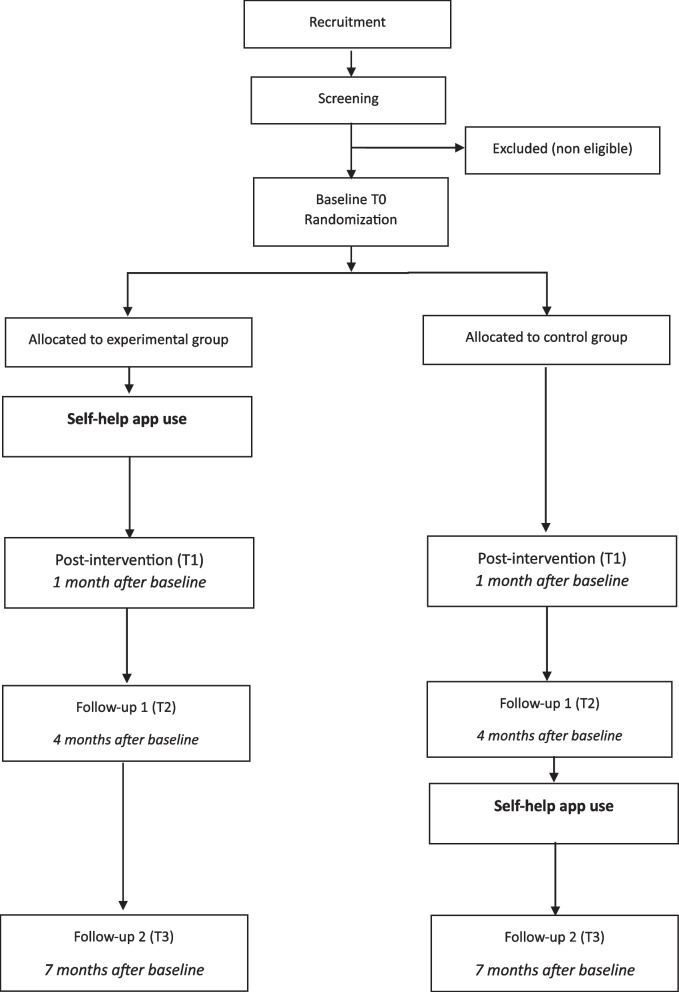
- Design: Non-blinded pragmatic international randomized controlled trial with a delayed waitlist control; participants are recruited in France, Germany, Israel, Switzerland, and The Netherlands, with participation also open to people in other countries if they can understand French, German, Hebrew, or Dutch.
- Sample/data: Eligible participants are at least 18 years old, are parents/primary caregivers of a child younger than 18 with a diagnosed or suspected NDD, have email and a smartphone/tablet with internet access, and are willing to use the app for about 10–15 minutes a day for a month; exclusions include current mental health treatment, GAD-7 ≥ 15, or PHQ-9 ≥ 15.
- Analysis: Primary analyses will use intention-to-treat linear mixed models with time, group, and time-by-group interactions; the paper also plans single and multiple mediation analyses for five mechanisms, and will report Cohen’s d effect sizes with 95% CIs.
## Limitations
- The paper states that the majority of participants are expected to be mothers, which may limit generalizability to fathers.
- The paper states that dropout and intervention non-adherence can result in bias.
- Evident from the text: this is a study protocol, so no results are reported yet; data collection is expected to be completed by the end of 2025.
Model-written summary. Check it against the paper before relying on it.
Integrity signals
Registry
Cites
Statistics
Figures
Verification
Claims the paper makes
20 Valid · 1 Not valid · 12 Not checked · 13 Own results and interpretations
Every source the paper cites for this claim was checked and supports it.
In the paper
“Recently, a self-help application has shown to significantly improve the perceived ability to adapt in people with mild to moderate distress [73].”
§ Effectiveness of a positive psychology and mindfulness-based app on mental health for parents of children with a neurodevelopmental disorder: study protocol of a pragmatic international randomized controlled trial > Introduction
What the sources say
- Supportedcites [73] Tönis KJM, Kraiss JT, Drossaert CHC, Joyce Karreman J, Oostinga MSD, Kloos N, Austin J & Bohlmeijer ET. Regaining mental well-being in the Covid-19 aftermath with a digital multicomponent positive psychology intervention: a randomized controlled trial [Manuscript submitted for publication]. In U. o. Twente (Ed.); 2024. source
The Abstract describes a trial of a self-help application in adults with mild to moderate anxiety and depression levels and reports a significant effect on ability to adapt compared with the control group. Section 2.5.2 specifies that the outcome measured participants’ perceived ability to adapt. (LLM, conf=0.92)
plainstates a cause- Asserted: passes — The authors put it forward as true.
- Checkable: passes — It can be checked against evidence.
- Load-bearing: passes — The paper’s conclusions depend on it.
- Based: passes — The paper gives a reason why it holds.
- Supported
Every source the paper cites for this claim was checked and supports it.
In the paper
“Although (early) interventions targeted at the child’s behavior or development can improve adaptive behavior of children with ASD [76] and ADHD symptoms in children with ADHD [16], these interventions did not have a significant effect on parenting stress [16].”
§ Effectiveness of a positive psychology and mindfulness-based app on mental health for parents of children with a neurodevelopmental disorder: study protocol of a pragmatic international randomized controlled trial > Introduction
What the sources say
- Supportedcites [16] Coates J Taylor JA Sayal K Parenting interventions for ADHD: a systematic literature review and meta-analysis J Atten Disord 2015 19 10 831 843 10.1177/1087054714535952 24915737 source
The Parenting Stress results (p. 9) report that the effect of parent-administered behavioral interventions for children with ADHD was moderate but not statistically significant. The Discussion (p. 11) likewise describes a non-significant improvement in parental stress. (LLM, conf=0.91)
plain- Asserted: passes — The authors put it forward as true.
- Checkable: passes — It can be checked against evidence.
- Load-bearing: passes — The paper’s conclusions depend on it.
- Based: passes — The paper gives a reason why it holds.
- Supported
Every source the paper cites for this claim was checked and supports it.
In the paper
“This is especially relevant for parents of children with NDDs, since disturbances in emotion regulation of parents were found to correlate significantly with parental stress in parents of children with ASD [43].”
§ Effectiveness of a positive psychology and mindfulness-based app on mental health for parents of children with a neurodevelopmental disorder: study protocol of a pragmatic international randomized controlled trial > Introduction
What the sources say
- Supportedcites [43] Hu X Han ZR Bai L Gao MM The mediating role of parenting stress in the relations between parental emotion regulation and parenting behaviors in Chinese families of children with autism spectrum disorders: a dyadic analysis J Autism Dev Disord 2019 49 10 3983 3998 10.1007/s10803-019-04103-z 31197635 PMC6751273 source
The Results (Preliminary Analysis; page unavailable) state that parents’ emotion dysregulation was significantly associated with their own parenting stress. The Discussion likewise reports that Chinese parents with greater emotion-regulation difficulties reported more parenting stress while caring for children with ASD. (LLM, conf=0.94)
plainstates an association- Asserted: passes — The authors put it forward as true.
- Checkable: passes — It can be checked against evidence.
- Load-bearing: passes — The paper’s conclusions depend on it.
- Based: passes — The paper gives a reason why it holds.
- Supported
Every source the paper cites for this claim was checked and supports it.
In the paper
“Psychometric properties were found to be good [52].”
§ Effectiveness of a positive psychology and mindfulness-based app on mental health for parents of children with a neurodevelopmental disorder: study protocol of a pragmatic international randomized controlled trial > Method > Outcome measures
What the sources say
- Supportedcites [52] Lamers SM Westerhof GJ Bohlmeijer ET ten Klooster PM Keyes CL Evaluating the psychometric properties of the mental health continuum-short form (MHC-SF) J Clin Psychol 2011 67 1 99 110 10.1002/jclp.20741 20973032 source
The Discussion reports good internal reliability for the MHC-SF subscales, moderate test-retest reliability, and good convergent validity. These findings support the citing sentence’s broad assessment of its psychometric properties. (LLM, conf=0.94)
plain- Asserted: passes — The authors put it forward as true.
- Checkable: passes — It can be checked against evidence.
- Load-bearing: unclear — It is unclear whether the paper’s conclusions depend on it.
- Based: passes — The paper gives a reason why it holds.
- Supported
Every source the paper cites for this claim was checked and supports it.
In the paper
“Psychometric properties of the GSAAS were found to be good [32].”
§ Effectiveness of a positive psychology and mindfulness-based app on mental health for parents of children with a neurodevelopmental disorder: study protocol of a pragmatic international randomized controlled trial > Method > Outcome measures
What the sources say
- Supportedcites [32] Franken K Schuffelen P Ten Klooster P van Doesum K Westerhof G Bohlmeijer E Introduction of the generic sense of ability to adapt scale and validation in a sample of outpatient adults with mental health problems Front Psychol 2023 14 985408 10.3389/fpsyg.2023.985408 37063565 PMC10090661 source
The Study 2 Results (page not provided) report strong GSAAS item loadings, adequate-to-good fit for the revised factor model, and correlations with validation measures consistent with convergent validity. The initial unmodified model had poor fit on some indices, but the paper’s overall results support the broad characterization of good psychometric properties. (LLM, conf=0.90)
plain- Asserted: passes — The authors put it forward as true.
- Checkable: passes — It can be checked against evidence.
- Load-bearing: unclear — It is unclear whether the paper’s conclusions depend on it.
- Based: passes — The paper gives a reason why it holds.
- Supported
19 more claims · 7 with their cited sources checked
Create a free account to see all 46 claims and every source verdict.
- It may state two separate claims as one. 14
- Probably not a substantial claim. 16
Self-check
Percentages, sums and reported differences re-computed from the paper’s own numbers.
Each contradiction between two passages listed here was confirmed by an independent check.
Rated major: it would touch a result — a value a result rests on, reported and recomputed p-values on opposite sides of the significance level, two passages that conflict with no sign which is right, or a cited work retracted before this paper was published.
In the paper
§ Effectiveness of a positive psychology and mindfulness-based app on mental health for parents of children with a neurodevelopmental disorder: study protocol of a pragmatic international randomized controlled trial > Abstract > Method
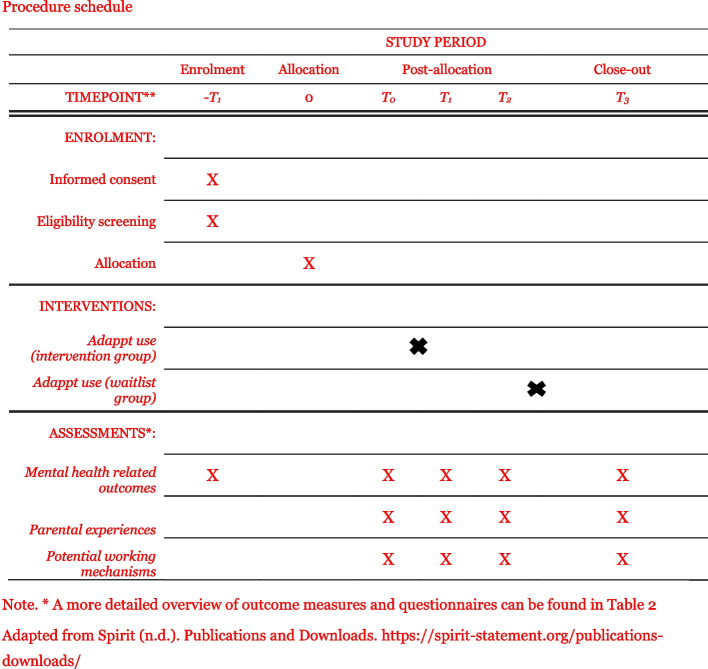
“Measures will be collected online at baseline, post-intervention (1 month after baseline), and 4 and 7 months after baseline.”
§ Effectiveness of a positive psychology and mindfulness-based app on mental health for parents of children with a neurodevelopmental disorder: study protocol of a pragmatic international randomized controlled trial > Method > Study design
“Furthermore, two follow-up measures will be conducted, at 4 months (T2) and 6 months after baseline (T3).”
Citations
Cites
The Hospital Anxiety and Depression Scale
Zigmond, A. S., & Snaith, R. P. (1983) · Acta Psychiatrica Scandinavica · doi:10.1111/j.1600-0447.1983.tb09716.x · Cited by 47,139
The PHQ-9: Validity of a brief depression severity measure
Kroenke, K., Spitzer, R. L., & Williams, J. B. W. (2001) · Journal of General Internal Medicine · doi:10.1046/j.1525-1497.2001.016009606.x · Cited by 44,910
A Global Measure of Perceived Stress
Cohen, S., Kamarck, T., & Mermelstein, R. (1983) · Journal of Health and Social Behavior · doi:10.2307/2136404 · Cited by 32,807 · cited 1×
“Perceived stress will be measured with the 10-item perceived stress scale (PSS; [17]).”
MethodA Brief Measure for Assessing Generalized Anxiety Disorder: The GAD-7
Spitzer, R. L., Kroenke, K., Williams, J. B. W., & Löwe, B. (2006) · Archives of Internal Medicine · doi:10.1001/archinte.166.10.1092 · Cited by 31,765
Depression and quality of life in older persons: A review
Sivertsen, H., Bjørkløf, G. H., Engedal, K., Selbæk, G., & Helvik, A.-S. (2015) · Dementia and Geriatric Cognitive Disorders · doi:10.1159/000437299 · Cited by 14,152
The benefits of being present: Mindfulness and its role in psychological well-being
Brown, K. W., & Ryan, R. M. (2003) · Journal of Personality and Social Psychology · doi:10.1037/0022-3514.84.4.822 · Cited by 13,448 · cited 1×
“Mindfulness will be measured with the 15-item Mind-fulness Attention Awareness Scale (MAAS; [11]).”
MethodThe validity of the Hospital Anxiety and Depression Scale
Bjelland, I., Dahl, A. A., Haug, T. T., & Neckelmann, D. (2002) · Journal of Psychosomatic Research · doi:10.1016/s0022-3999(01)00296-3 · Cited by 9,779 · cited 1×
“Psychometric properties were found to be good [6].”
BackgroundSPIRIT 2013 Statement: Defining Standard Protocol Items for Clinical Trials
Chan, A.-W., Tetzlaff, J. M., Altman, D. G., Laupacis, A., Gøtzsche, P. C., Krleža-Jerić, K., Hróbjartsson, A., Mann, H., Dickersin, K., Berlin, J. A., et al. (2013) · Annals of Internal Medicine · doi:10.7326/0003-4819-158-3-201302050-00583 · Cited by 7,363 · cited 1×
“The Standard Protocol Items: Recommendations for Interventional Trials [14] guideline was followed to report this protocol.”
MethodBond, F. W., Hayes, S. C., Baer, R. A., Carpenter, K. M., Guenole, N., Orcutt, H. K., Waltz, T., & Zettle, R. D. (2011) · Behavior Therapy · doi:10.1016/j.beth.2011.03.007 · Cited by 3,950 · cited 1×
“Psychological flexibility will be measured with the 7-item Acceptance and Action Questionnaire-II (AAQ-II; [8]).”
MethodSin, N. L., & Lyubomirsky, S. (2009) · Journal of Clinical Psychology · doi:10.1002/jclp.20593 · Cited by 2,955 · cited 1×
“PPIs are interventions that aim to promote positive behavior, cognitions, and feelings [64].”
BackgroundEysenbach, G. (2005) · Journal of Medical Internet Research · doi:10.2196/jmir.7.1.e11 · Cited by 2,524 · cited 1×
“Secondly, study dropout and intervention non-adherence can result in bias [28].”
BackgroundNegative life events, cognitive emotion regulation and emotional problems
Garnefski, N., Kraaij, V, & Spinhoven, P. (2001) · Personality and Individual Differences · doi:10.1016/s0191-8869(00)00113-6 · Cited by 2,494 · cited 1×
“Sum scores will be calculated ( Positive coping skills will be measured with the sub-scales Acceptance, Positive refocusing, Positive reap-praisal, and Putting into perspective of the Cognitive Emotion Regulation Questionnaire (CERQ; [35]).”
MethodReview of the Psychometric Evidence of the Perceived Stress Scale
Lee, E.-H. (2012) · Asian Nursing Research · doi:10.1016/j.anr.2012.08.004 · Cited by 2,305 · cited 1×
“Psychometric properties have been found to be acceptable [54].”
BackgroundCONSORT 2010 statement: Updated guidelines for reporting parallel group randomised trials
Schulz, K. F., Altman, D. G., & Moher, D. (2010) · Journal of Pharmacology and Pharmacotherapeutics · doi:10.4103/0976-500x.72352 · Cited by 2,165
Hayes, S. A., & Watson, S. L. (2013) · Journal of Autism and Developmental Disorders · doi:10.1007/s10803-012-1604-y · Cited by 1,847 · cited 1×
“Parents of children with ASD [9, 38], ADHD [71], or NDDs [18] have shown to experience more stress than parents of children with a typical development.”
BackgroundThe client satisfaction questionnaire
Attkisson, C. C., & Zwick, R. (1982) · Evaluation and Program Planning · doi:10.1016/0149-7189(82)90074-x · Cited by 1,743 · cited 1×
“Satisfaction with Adappt will be measured with the 8-item Client Satisfaction Questionnaire (CSQ-8; [4]).”
MethodEvaluating the psychometric properties of the mental health continuum-short form (MHC-SF)
Lamers, S. M. A., Westerhof, G. J., Bohlmeijer, E. T., ten Klooster, P. M., & Keyes, C. L. M. (2011) · Journal of Clinical Psychology · doi:10.1002/jclp.20741 · Cited by 1,402 · cited 1×
“Psychometric properties were found to be good [52].”
BackgroundSelf-citationPersuasive System Design Does Matter: a Systematic Review of Adherence to Web-based Interventions
Kelders, S. M., Kok, R. N., Ossebaard, H. C., & Van Gemert-Pijnen, J. E. (2012) · Journal of Medical Internet Research · doi:10.2196/jmir.2104 · Cited by 1,308 · cited 1×
“Several persuasive technology elements are included in the app to improve to intervention [46], such as guiding participants through the application (tunnelling), and notifications to remind the participant of practicing.”
BackgroundEvaluation of the mental health continuum–short form (MHC–SF) in setswana‐speaking South Africans
Keyes, C. L. M., Wissing, M., Potgieter, J. P., Temane, M., Kruger, A., & van Rooy, S. (2008) · Clinical Psychology & Psychotherapy · doi:10.1002/cpp.572 · Cited by 1,118 · cited 1×
“Mental health‑related outcomes Mental well-being will be measured with the 14-item Mental Health Continuum – Short Form (MHC-SF; [47]) with three subscales: emotional (3 items), social (5 items), and psychological (6 items) well-being.”
MethodCriticizing and reassuring oneself: an exploration of forms, styles and reasons in female students
Gilbert, P., Clarke, M., Hempel, S., Miles, J. N. V., & Irons, C. (2004) · British Journal of Clinical Psychology · doi:10.1348/014466504772812959 · Cited by 877 · cited 1×
“Self-reassuring will be measured with the 5-item reassuring self-subscale of the Forms of Criticism/ Self-Attacking and Self-Reassuring Scale Short Form (FSCRS-SF; [36, 65]).”
MethodBohlmeijer, E., Prenger, R., Taal, E., & Cuijpers, P. (2010) · Journal of Psychosomatic Research · doi:10.1016/j.jpsychores.2009.10.005 · Cited by 822 · cited 1×
“Mindfulness is defined as being fully aware of cognitions, emotions, and experiences with a non-judgmental attitude from moment-to-moment [7, 44], and is supposed to improve emotion regulation [69].”
BackgroundSelf-citationA Systematic Review of Early Intensive Intervention for Autism Spectrum Disorders
Warren, Z., McPheeters, M. L., Sathe, N., Foss-Feig, J. H., Glasser, A., & Veenstra-VanderWeele, J. (2011) · Pediatrics · doi:10.1542/peds.2011-0426 · Cited by 790 · cited 1×
“Although (early) interventions targeted at the child’s behavior or development can improve adaptive behavior of children with ASD [76] and ADHD symptoms in children with ADHD [16], these interventions did not have a significant effect on parenting stress [16].”
BackgroundSavoring Beliefs Inventory (SBI): A scale for measuring beliefs about savouring
Bryant, F. (2003) · Journal of Mental Health · doi:10.1080/0963823031000103489 · Cited by 697 · cited 2×
“Potential working mechanisms Savoring will be measured with the 8-item savoring the moment subscale of the Savoring Beliefs Inventory (SBI; [12]).”
BackgroundMethodEffectiveness of positive psychology interventions: a systematic review and meta-analysis
Carr, A., Cullen, K., Keeney, C., Canning, C., Mooney, O., Chinseallaigh, E., & O’Dowd, A. (2021) · The Journal of Positive Psychology · doi:10.1080/17439760.2020.1818807 · Cited by 645 · cited 2×
“A recently performed large meta-analysis ( n ≥ 72,000 participants) showed the effectiveness of PPIs for both clinical and non-clinical samples on various indicators of mental health [13].”
BackgroundMethodTarlow, B. J., Wisniewski, S. R., Belle, S. H., Rubert, M., Ory, M. G., & Gallagher-Thompson, D. (2004) · Research on Aging · doi:10.1177/0164027504264493 · Cited by 588
Teper, R., Segal, Z. V., & Inzlicht, M. (2013) · Current Directions in Psychological Science · doi:10.1177/0963721413495869 · Cited by 554
Parenting Stress in Families of Children With ADHD: A Meta-Analysis
Theule, J., Wiener, J., Tannock, R., & Jenkins, J. M. (2013) · Journal of Emotional and Behavioral Disorders · doi:10.1177/1063426610387433 · Cited by 539
Different ways to estimate treatment effects in randomised controlled trials
J, T., L, B., T, H., J, R., M, W., & M, H. (2018) · Contemporary Clinical Trials Communications · doi:10.1016/j.conctc.2018.03.008 · Cited by 532
Curry, O. S., Rowland, L. A., Van Lissa, C. J., Zlotowitz, S., McAlaney, J., & Whitehouse, H. (2018) · Journal of Experimental Social Psychology · doi:10.1016/j.jesp.2018.02.014 · Cited by 528 · cited 1×
“…Taking care of yourself Best possible self [61] Improved connectedness Improve relationships through attention and gratitude Acts of kindness [21] Accept Asking & Getting help Ask, refuse, and accept help Gratitude diary [45] were not available for a certain language were translated by…”
BackgroundMaternal self-efficacy and associated parenting cognitions among mothers of children with autism.
Kuhn, J. C., & Carter, A. S. (2006) · American Journal of Orthopsychiatry · doi:10.1037/0002-9432.76.4.564 · Cited by 453 · cited 1×
“In addition, a significant association was found between parenting self-efficacy and well-being in mothers of children with ASD [51].”
BackgroundHinz, A., & Brähler, E. (2011) · Journal of Psychosomatic Research · doi:10.1016/j.jpsychores.2011.01.005 · Cited by 413 · cited 1×
“Sum scores will be calculated (0–21), that can be interpreted as no symptoms of anxiety (0–7), possibly an anxiety disorder (8–10), and likely an anxiety disorder (11– 21) [42].”
BackgroundHedeker, D., Gibbons, R. D., & Waternaux, C. (1999) · Journal of Educational and Behavioral Statistics · doi:10.3102/10769986024001070 · Cited by 410 · cited 1×
“The required sample size was computed with RMASS2 software for two-group longitudinal designs with attrition [39].”
MethodStress and Parents of Children with Autism: A Review of Literature
Bonis, S. (2016) · Issues in Mental Health Nursing · doi:10.3109/01612840.2015.1116030 · Cited by 404 · cited 3×
“Parents of children with ASD [9, 38], ADHD [71], or NDDs [18] have shown to experience more stress than parents of children with a typical development.”
BackgroundReducing distress in mothers of children with autism and other disabilities: a randomized trial
Dykens, E. M., Fisher, M. H., Taylor, J. L., Lambert, W., & Miodrag, N. (2014) · Pediatrics · doi:10.1542/peds.2013-3164 · Cited by 355 · cited 1×
“Mindfulness training has also shown to be effective in reducing parenting stress in parents of children with ADHD [53, 70] and mothers of children with ASD [25].”
BackgroundFrancés, L., Quintero, J., Fernández, A., Ruiz, A., Caules, J., Fillon, G., Hervás, A., & Soler, C. V. (2022) · Child and Adolescent Psychiatry and Mental Health · doi:10.1186/s13034-022-00462-1 · Cited by 344
Parenting stress among parents of children with Neurodevelopmental Disorders
Craig, F., Operto, F. F., De Giacomo, A., Margari, L., Frolli, A., Conson, M., Ivagnes, S., Monaco, M., & Margari, F. (2016) · Psychiatry Research · doi:10.1016/j.psychres.2016.05.016 · Cited by 326 · cited 1×
“Parents of children with ASD [9, 38], ADHD [71], or NDDs [18] have shown to experience more stress than parents of children with a typical development.”
BackgroundHendriks, T., Schotanus-Dijkstra, M., Hassankhan, A., de Jong, J., & Bohlmeijer, E. (2020) · Journal of Happiness Studies · doi:10.1007/s10902-019-00082-1 · Cited by 317 · cited 1×
“Combinations of interventions are called multicomponent PPIs (mPPIs) [40].”
BackgroundSelf-citationGál, É., Ștefan, S., & Cristea, I. A. (2021) · Journal of Affective Disorders · doi:10.1016/j.jad.2020.09.134 · Cited by 289 · cited 1×
“Gál et al. [34] performed a meta-analysis of RCTs on mindfulness interventions delivered as digital application and found significant effects on anxiety, depression, perceived stress, and psychological well-being in diverse populations (e.g., students, clinical samples, general population).”
BackgroundHendriks, T., Warren, M. A., Schotanus-Dijkstra, M., Hassankhan, A., Graafsma, T., Bohlmeijer, E., & de Jong, J. (2019) · The Journal of Positive Psychology · doi:10.1080/17439760.2018.1484941 · Cited by 280
Self-citationPsychometric Properties of the Chinese Translation of the Mindful Attention Awareness Scale (MAAS)
Deng, Y.-Q., Li, S., Tang, Y.-Y., Zhu, L.-H., Ryan, R., & Brown, K. (2012) · Mindfulness · doi:10.1007/s12671-011-0074-1 · Cited by 266
Da Paz, N. S., & Wallander, J. L. (2017) · Clinical Psychology Review · doi:10.1016/j.cpr.2016.10.006 · Cited by 176
Sexton, J. B., & Adair, K. C. (2019) · BMJ Open · doi:10.1136/bmjopen-2018-022695 · Cited by 135
Kaczmarek, L. D., Kashdan, T. B., Drążkowski, D., Enko, J., Kosakowski, M., Szäefer, A., & Bujacz, A. (2014) · Personality and Individual Differences · doi:10.1016/j.paid.2014.11.004 · Cited by 129 · cited 1×
“…Best possible self [61] Improved connectedness Improve relationships through attention and gratitude Acts of kindness [21] Accept Asking & Getting help Ask, refuse, and accept help Gratitude diary [45] were not available for a certain language were translated by native speakers with back-and-forth”
BackgroundHow imagining personal future scenarios influences affect: Systematic review and meta-analysis
Schubert, T., Eloo, R., Scharfen, J., & Morina, N. (2019) · Clinical Psychology Review · doi:10.1016/j.cpr.2019.101811 · Cited by 104 · cited 1×
“…light Attention for the nice small things can be helpful Three good things [63] Attention for yourself Taking care of yourself Best possible self [61] Improved connectedness Improve relationships through attention and gratitude Acts of kindness [21] Accept Asking & Getting help Ask, refuse, and…”
BackgroundParenting Interventions for ADHD: A Systematic Literature Review and Meta-Analysis
Coates, J., Taylor, J. A., & Sayal, K. (2015) · Journal of Attention Disorders · doi:10.1177/1087054714535952 · Cited by 97
A Qualitative Study of Coping in Mothers of Children with an Autism Spectrum Disorder
Kuhaneck, H. M., Burroughs, T., Wright, J., Lemanczyk, T., & Darragh, A. R. (2010) · Physical & Occupational Therapy In Pediatrics · doi:10.3109/01942638.2010.481662 · Cited by 93 · cited 1×
“Furthermore, mothers are perceived to be the primary caregiver of children with a NDD [2, 50].”
BackgroundBonis, S. A., & Sawin, K. J. (2016) · Journal of Pediatric Nursing · doi:10.1016/j.pedn.2016.08.006 · Cited by 93 · cited 1×
“Taking care of a child with a NDD can also be challenging because the child’s needs change over time [10] and parents continuously face new challenges [22].”
BackgroundCognitive defusion in acceptance and commitment therapy: What are the basic processes of change?
Assaz, D. A., Roche, B., Kanter, J. W., & Oshiro, C. K. B. (2018) · The Psychological Record · doi:10.1007/s40732-017-0254-z · Cited by 85
Hu, X., Han, Z. R., Bai, L., & Gao, M. M. (2019) · Journal of Autism and Developmental Disorders · doi:10.1007/s10803-019-04103-z · Cited by 84 · cited 1×
“This is especially relevant for parents of children with NDDs, since disturbances in emotion regulation of parents were found to correlate significantly with parental stress in parents of children with ASD [43].”
BackgroundInterventions to Promote Well-Being in Parents of Children with Autism: a Systematic Review
Frantz, R., Hansen, S. G., & Machalicek, W. (2018) · Review Journal of Autism and Developmental Disorders · doi:10.1007/s40489-017-0123-3 · Cited by 76 · cited 1×
“A wide range of interventions have been developed to improve mental health of parents of children with NDDs, including mindfulness and positive psychology interventions (PPIs) [20, 22, 33, 53].”
BackgroundNi’matuzahroh, Suen, M.-W., Ningrum, V., Widayat, Yuniardi, M. S., Hasanati, N., & Wang, J.-H. (2021) · Healthcare · doi:10.3390/healthcare10010052 · Cited by 71 · cited 1×
“Increased levels of parental stress are associated with a reduced family life dimension of parental quality of life [30], parental quality of life [56], health-related quality of life of children [15], and negatively influence the ability to raise the child (i.e., care and behavior management) [9].”
BackgroundFamily adjustment and interventions in neurodevelopmental disorders
Dykens, E. M. (2015) · Current Opinion in Psychiatry · doi:10.1097/yco.0000000000000129 · Cited by 63 · cited 1×
“A large body of research has been conducted on (causes of) stress in parents of children with NDDs, mainly in parents of children with ASD [24].”
BackgroundFeliu-Soler, A., Reche-Camba, E., Borràs, X., Pérez-Aranda, A., Andrés-Rodríguez, L., Peñarrubia-María, M. T., Navarro-Gil, M., García-Campayo, J., Bellón, J. A., & Luciano, J. V. (2017) · Frontiers in Psychology · doi:10.3389/fpsyg.2017.02075 · Cited by 49
Emser, T. S., Mazzucchelli, T. G., Christiansen, H., & Sanders, M. R. (2016) · Research in Developmental Disabilities · doi:10.1016/j.ridd.2015.09.006 · Cited by 46 · cited 2×
“; [27]).”
BackgroundSommers-Spijkerman, M., Trompetter, H., ten Klooster, P., Schreurs, K., Gilbert, P., & Bohlmeijer, E. (2018) · Psychological Assessment · doi:10.1037/pas0000514 · Cited by 43 · cited 2×
“Psychometric properties were evaluated and found to be good [19, 55, 65].”
BackgroundMethodSelf-citationThe Liberative Potential of Mindfulness
Kabat‐Zinn, J. (2021) · Mindfulness · doi:10.1007/s12671-021-01608-6 · Cited by 37 · cited 1×
“Mindfulness is defined as being fully aware of cognitions, emotions, and experiences with a non-judgmental attitude from moment-to-moment [7, 44], and is supposed to improve emotion regulation [69].”
BackgroundAmes, J. L., Ladd-Acosta, C., Fallin, M. D., Qian, Y., Schieve, L. A., DiGuiseppi, C., Lee, L.-C., Kasten, E. P., Zhou, G., Pinto-Martin, J., et al. (2021) · Biological Psychiatry · doi:10.1016/j.biopsych.2021.04.002 · Cited by 36 · cited 1×
“Furthermore, mothers are perceived to be the primary caregiver of children with a NDD [2, 50].”
BackgroundKloos, N., Austin, J., van ‘t Klooster, J.-W., Drossaert, C., & Bohlmeijer, E. (2022) · Journal of Happiness Studies · doi:10.1007/s10902-022-00586-3 · Cited by 36 · cited 3×
“Therefore, participants will be referred to a Qualtrics questionnaire where they can register themselves and give informed consent, following the procedure of Kloos et al. [48].”
BackgroundInfluentialSelf-citationTercelli, I., & Ferreira, N. (2019) · Global Psychiatry · doi:10.2478/gp-2019-0007 · Cited by 35 · cited 1×
“Mindfulness training has also shown to be effective in reducing parenting stress in parents of children with ADHD [53, 70] and mothers of children with ASD [25].”
BackgroundChildren with neurodevelopmental disorders: how do they sleep?
Belli, A., Breda, M., Maggio, C. D., Esposito, D., Marcucci, L., & Bruni, O. (2022) · Current Opinion in Psychiatry · doi:10.1097/yco.0000000000000790 · Cited by 32 · cited 1×
“For example, NDDs are associated with a higher prevalence of sleep issues impacting the well-being of the family [5].”
BackgroundLee, C. S. C., Ng, K.-H., Chan, P. C. K., & Peng, X. (2022) · Hong Kong Journal of Occupational Therapy · doi:10.1177/15691861211073826 · Cited by 28 · cited 2×
“A wide range of interventions have been developed to improve mental health of parents of children with NDDs, including mindfulness and positive psychology interventions (PPIs) [20, 22, 33, 53].”
BackgroundCurley, K., Colman, R., Rushforth, A., & Kotera, Y. (2023) · Youth · doi:10.3390/youth3010017 · Cited by 27 · cited 1×
“A wide range of interventions have been developed to improve mental health of parents of children with NDDs, including mindfulness and positive psychology interventions (PPIs) [20, 22, 33, 53].”
BackgroundChuang, I.-C., Tseng, M.-H., Lu, L., Shieh, J.-Y., & Cermak, S. A. (2014) · Research in Autism Spectrum Disorders · doi:10.1016/j.rasd.2014.05.015 · Cited by 21
Developing a Student Respite Provider System for Children With Autism
Openden, D., Symon, J. B., Koegel, L. K., & Koegel, R. L. (2006) · Journal of Positive Behavior Interventions · doi:10.1177/10983007060080020301 · Cited by 20 · cited 1×
“Traditional face-to-face (group) interventions can have disadvantages that can cause additional stress, especially for parents of children with a NDD, such as availability restrictions, waitlists, and issues with arranging a babysitter [57, 72].”
BackgroundConfirmatory Factor Analysis of the French Version of the Savoring Beliefs Inventory
Golay, P., Thonon, B., Nguyen, A., Fankhauser, C., & Favrod, J. (2018) · Frontiers in Psychology · doi:10.3389/fpsyg.2018.00181 · Cited by 20 · cited 1×
“Psychometric properties were found to be good [12, 37].”
BackgroundFranken, K., Schuffelen, P., ten Klooster, P., van Doesum, K., Westerhof, G., & Bohlmeijer, E. (2023) · Frontiers in Psychology · doi:10.3389/fpsyg.2023.985408 · Cited by 16 · cited 2×
“The primary outcome, ability to adapt will be measured with the 10-item Generic Sense of Ability to Adapt Scale (GSAAS; [32]).”
MethodSelf-citationChapter 8. Positive Psychotherapeutic and Behavioral Interventions
Parks, A. C., Kleiman, E. M., Kashdan, T. B., Hausmann, L. R. M., Meyer-Kalos, P., Day, A. M., Spillane, N. S., & Kahler, C. W. (2015) · American Psychiatric Association Publishing eBooks · doi:10.1176/appi.books.9781615370818.dj08 · Cited by 13
Navarrete, J., Herrero, R., Soler, J., Domínguez-Clavé, E., Baños, R., & Cebolla, A. (2021) · PLOS ONE · doi:10.1371/journal.pone.0252089 · Cited by 13 · cited 1×
“Psychometric properties were evaluated and found to be good [19, 55, 65].”
BackgroundRodríguez-Sabiote, C., Ibáñez-Cubillas, P., López-Rodríguez, S., & Álvarez-Rodríguez, J. (2021) · Frontiers in Psychology · doi:10.3389/fpsyg.2021.695147 · Cited by 11
Tönis, K. J. M., Kraiss, J. T., Drossaert, C. H. C., Karreman, J., Oostinga, M. S. D., Kloos, N., Austin, J., & Bohlmeijer, E. T. (2024) · Journal of Happiness Studies · doi:10.1007/s10902-024-00793-0 · Cited by 9
Self-citationTranslational Medicine Strategies in Drug Development for Neurodevelopmental Disorders
Srivastava, S., Şahin, M., & Prock, L. A. (2019) · Handbook of behavioral neuroscience · doi:10.1016/b978-0-12-803161-2.00022-9 · Cited by 9
Cunha, M., Xavier, A., Salvador, M. C., & Castilho, P. (2024) · Child & Youth Care Forum · doi:10.1007/s10566-023-09765-6 · Cited by 7 · cited 1×
“Psychometric properties were evaluated and found to be good [19, 55, 65].”
Background
Research works printed but not linked: 3
- El Menshawy N. Effects on mental well-being and depressive symptoms of online positive psychology interventions: a meta-analysis. MA thesis, University of Twente; 2018.
- Fernandes SS Machado M Machado F Parental acceptance, parental stress, and quality of life: a study with parents of ADHD children Italian J Special Educ Inclusion 2015 3 1 71 84
- Tönis KJM, Drossaert CHC, ten Klooster PM, Staal WG, Schaer M & Bohlmeijer ET. Stress, Stressors and Coping Mechanisms of Parents and Caregivers of Children with Autism Spectrum Disorder: An Umbrella Review In U. o. Twente (Ed.); 2023.
Cited by
Tönis, K. J. M., Velikova, S. R., Drossaert, C. H. C., ten Klooster, P. M., Staal, W., & Bohlmeijer, E. T. (2025) · Research in Neurodiversity · doi:10.1016/j.rin.2025.100009 · Cited by 3
Self-citationPutra, F. D., Unde, A. A., Cangara, H., et al. (2025) · Scripta Medica · doi:10.5937/scriptamed56-54966
Tönis, K. J. M., Drossaert, C. H. C., ten Klooster, P. M., Segers, J., Keren, N., Staal, W., & Bohlmeijer, E. T. (2026) · Research in Neurodiversity · doi:10.1016/j.rin.2026.100050
Self-citation
Metadata
- Authors
- Tönis, K. J. M., Drossaert, C. H. C., ten Klooster, P. M., Schaer, M., Bourgeron, T., Buitelaar, J. K., Sadaka, Y., Freitag, C. M., Lapidus, K. M., Chiocchetti, A. G., Staal, W. G., & Bohlmeijer, E. T.
- Affiliations
- University of Twente (NL)
- University of Geneva (CH)
- Centre National de la Recherche Scientifique (FR)
- Radboud University Nijmegen (NL)
- Soroka Medical Center (IL)
- Goethe University Frankfurt (DE)
- Israel Ministry of Health (IL)
- Leiden University (NL)
- Corresponding author
- Tönis, Kim J. M.
- ORCID
- Venue
- Trials
- Published
- 2024-06-26
- Volume
- 25
- Issue
- 1
- Pages
- 412-412
- ISSN
- 1745-6215 (ISSN-L)
- PMC
- PMC11210113
- OpenAlex
- W4400041781
- Cited by
- 3
- References
- 72
- Citations by year
- 2026: 1 · 2025: 2
- FWCI
- 1.19
- Type
- journal article
- Language
- en
- Open access
- gold
- doi.org
- Licence
- cc-by
- creativecommons.org/licenses/by/4.0 (tdm)
- creativecommons.org/licenses/by/4.0 (vor)
- Locations
- Trials (publishedVersion, cc-by)
- PubMed Central (publishedVersion, cc-by)
- PubMed (publishedVersion)
- HAL (submittedVersion, cc-by)
- PUBLISSO (German National Library of Medicine) (submittedVersion, cc-by)
- Radboud Repository (Radboud University) (submittedVersion)
- DOAJ (DOAJ: Directory of Open Access Journals) (submittedVersion, cc-by-sa)
- University of Twente Research Information (submittedVersion, cc-by)
- Funders
- HORIZON EUROPE Framework Programme (101057385)
- Topics
- Social Sciences › Psychology › Applied Psychology › Digital Mental Health Interventions
- Social Sciences › Psychology › Clinical Psychology › Family and Disability Support Research
- Social Sciences › Psychology › Clinical Psychology › Mindfulness and Compassion Interventions
- Keywords
- positive psychology, mindfulness, mobile health apps, parental mental health, parental stress, caregiver well-being, low-threshold intervention, user experience
- MeSH terms
- Psychology, Positive, Adaptation, Psychological, Adolescent, Child, Humans, Mental Health, Parents, Stress, Psychological, Multicenter Studies as Topic, Randomized Controlled Trials as Topic, Treatment Outcome, Mobile Applications, Pragmatic Clinical Trials as Topic, Mindfulness, Neurodevelopmental Disorders
About these checks
Registry, retraction, Cites and statistics results are computed, not judged, with one exception: a printed reference that no index lists is read once by a model before it counts as a citation error. Claims are extracted by a model and kept only when their quote appears verbatim in the text; each cited source is then checked, with a model’s help, for whether it says what the claim relies on. Those verdicts can be wrong — read the claim’s quote and the cited source before relying on one.
The claim verdicts this report counts are experimental: their accuracy is not yet measured.
A language model drew the claims from the paper on 2026-10-11, under version 3 of the claim definition (model deepseek-v4.1-flash, prompt extract-v3).
A second model labelled each claim on 2026-10-11 (model jev-1.13-20260917, definition revision gold-guideline-v0.2).
Cited sources are checked with a language model’s help (gpt-6-sol).
Statistics and arithmetic are recomputed, not judged.
Confidence bands are shown only for fields calibrated on our annotated test set. None is calibrated yet, so no band is shown.
What counts as a claim ›How we measure confidence ›How we check this ›
Are you an author, or do you see a problem with this page? Request a review
Data sources
Bibliographic data: Semantic Scholar, OpenAlex, Crossref.
Contains information from the Semantic Scholar Academic Graph Datasets, made available under the ODC Attribution License (ODC-BY 1.0).
Semantic Scholar’s data is described in: Kinney, R., et al. (2023). The Semantic Scholar Open Data Platform. arXiv:2301.10140.
