

Research trends and hotspots of cognitive behavioral therapy for tinnitus: a bibliometric analysis
Open accessThe DOI matches its Crossref record; 87 of the 88 references it cites were found in a registry or an index; 20 of the 46 sources its claims cite were checked for support.
Abstract
Background: Tinnitus, defined as the perception of sound without an external auditory stimulus, affects millions worldwide, significantly diminishing their quality of life. Cognitive behavioral therapy (CBT) is the most evidence-based treatment for tinnitus management, proven effective in reducing tinnitus-related distress and severity. This study aims to evaluate the current status, emerging trends, and research hotspots in CBT for tinnitus using bibliometric methods, offering valuable insights for future studies in this field. Methods: Publications related to CBT for tinnitus were retrieved from the Web of Science Core Collection (WoSCC) database from 1985 to 2024. Bibliometric analysis and visualization were performed using VOSviewer, CiteSpace, and the R package “bibliometrix.” Results: A total of 209 publications were included in this study. Research on CBT for tinnitus has shown a steady upward trend. Sweden, the United Kingdom and the United States have made notable contributions to this field. Linköping University and Karolinska Institute are the leading research institutions. Gerhard Andersson is the most prolific author and ranks first in citation frequency. The most prolific journal is the American Journal of Audiology, while Ear and Hearing is the most frequently co-cited journal. The highly cited references primarily encompass clinical trials, systematic reviews, and meta-analyses that focus on cognitive-behavioral therapy interventions. Recent keyword trends highlight topics such as “mindfulness,” “acceptance and commitment therapy,” and “internet-based interventions.” Addressing psychological comorbidities of tinnitus, including depression and anxiety, is identified as a future research focus. Conclusion: This bibliometric analysis provides a comprehensive overview of the research landscape for CBT in tinnitus management. Current research emphasizes various CBT modalities to treat psychological comorbidities associated with tinnitus. Future studies should prioritize high-quality research to confirm the long-term efficacy of CBT in tinnitus management. Copyright © 2025 He, Liu, Cheng, Ye, Li, Gao and Xu.
Overview
CoChat Summary
## TL;DR
This bibliometric analysis mapped 209 Web of Science Core Collection publications on cognitive behavioral therapy (CBT) for tinnitus from 1985–2024 and found a steadily growing, internationally concentrated research field. The main hotspots were tinnitus with depression/anxiety and newer CBT forms such as iCBT, ACT, and MBCT.
## Key findings
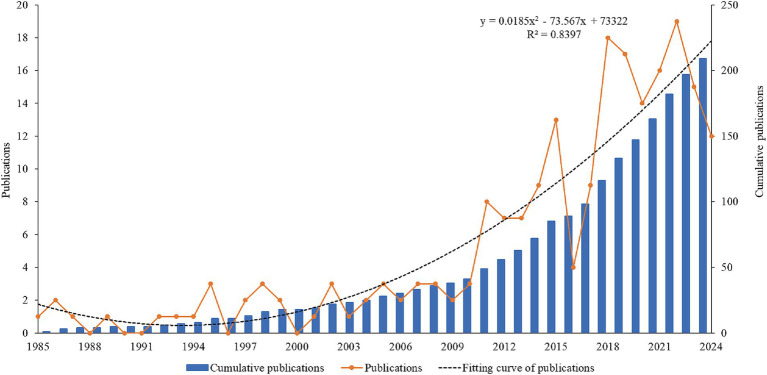
- The study included 209 publications and found that annual output showed a steady upward trend; publication volume peaked at 19 in 2022, and annual publications exceeded 10 in the last 7 years.
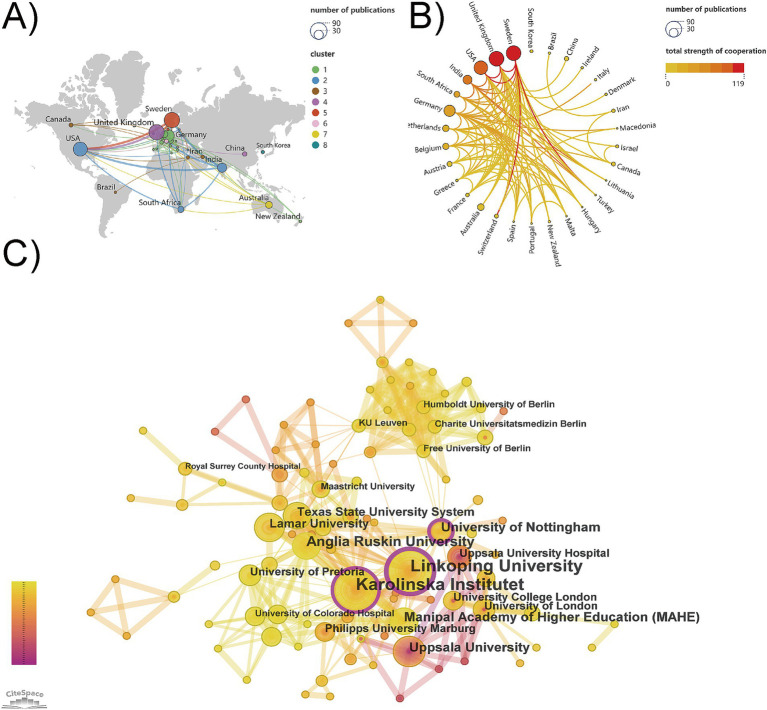
- Research involvement covered 30 countries/regions and 313 institutions; Sweden and the United Kingdom led with 68 publications each, followed by the USA (58) and Germany (40).
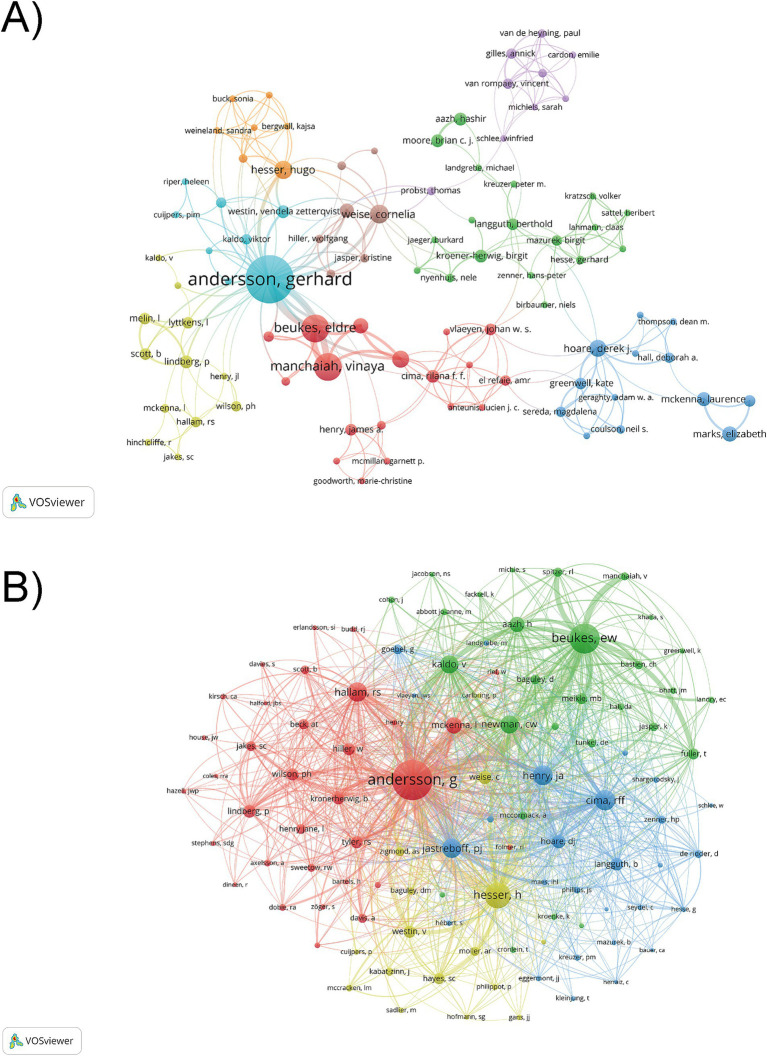
- At the institution level, Linköping University led with 52 publications, followed by Karolinska Institutet (48) and Anglia Ruskin University (23); Gerhard Andersson was the most prolific author with 60 papers and also ranked first in citation frequency.
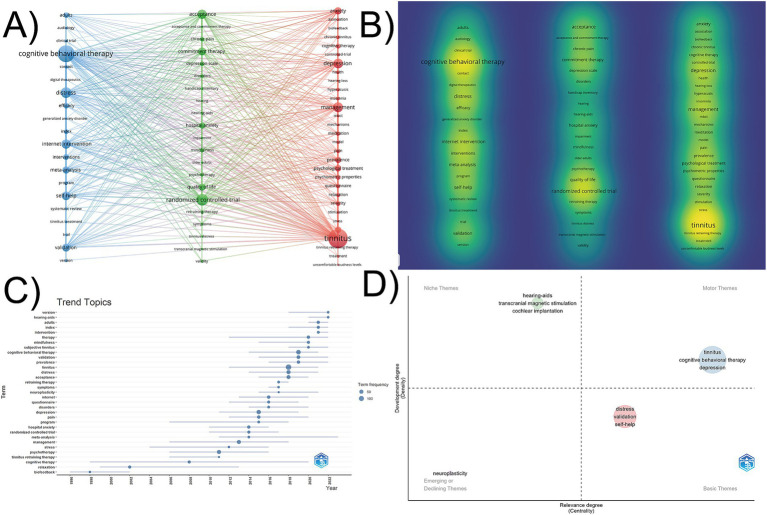
- Keyword and burst analyses highlighted hotspots including “mindfulness,” “acceptance and commitment therapy,” and “internet-based interventions”; frequent keywords included “tinnitus (131),” “cognitive behavioral therapy (105),” “randomized controlled trial (62),” “distress (54),” “management (47),” “depression (45),” and “internet intervention (44)”.
## Methods
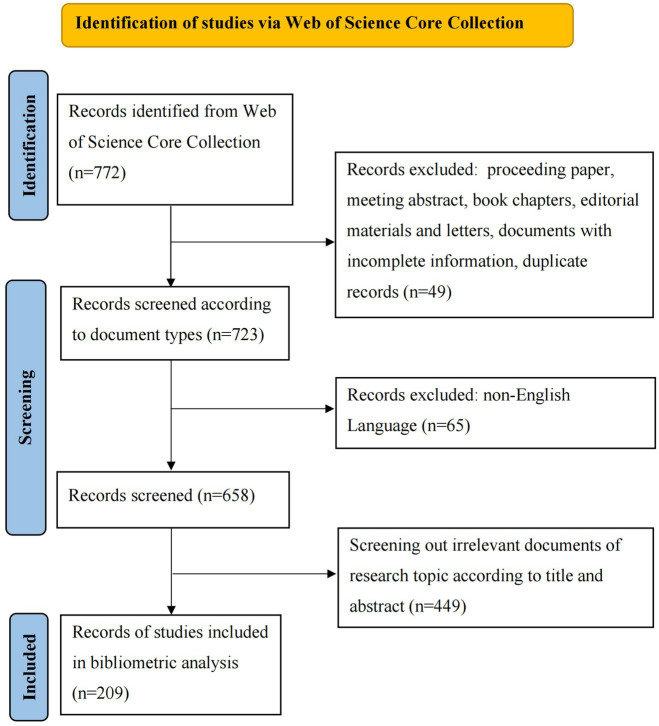
- Bibliometric study using Web of Science Core Collection records on CBT for tinnitus, with a search window from January 1, 1985 to August 2, 2024.
- Included original research articles and reviews in English that explicitly mentioned CBT and tinnitus; excluded proceedings, meeting abstracts, book chapters, editorials, letters, duplicates, and incomplete records.
- Analysis and visualization were performed with VOSviewer, CiteSpace, bibliometrix, and Microsoft Excel 2016.
## Limitations
- The paper states that it used only the WoSCC database, which may have missed relevant literature from PubMed, Google Scholar, and Scopus.
- The paper states that it was limited to English-language original research articles and reviews, which may have excluded non-English papers and other publication types.
- The paper states that data collection and processing relied heavily on software tools whose parameter settings and analytical methods lack systematic standards.
- Evident from the text: this is a bibliometric analysis, so it maps publication patterns and hotspots rather than directly testing CBT effectiveness in patients.
Model-written summary. Check it against the paper before relying on it.
Integrity signals
Registry
Cites
Statistics
Figures
Verification
Claims the paper makes
19 Valid · 3 Not valid · 22 Not checked · 85 Own results and interpretations
The sources with a verdict support this claim; the rest weren’t checked yet, have no full text we could read, or their verdicts aren’t rated yet.
In the paper
“Currently, CBT is the only intervention strongly recommended in clinical practice guidelines for tinnitus (Tunkel et al., 2014; Cima et al., 2019; Ogawa et al., 2020)”
§ Research trends and hotspots of cognitive behavioral therapy for tinnitus: a bibliometric analysis > Introduction Tinnitus is an auditory perception without external sound stimulus (Piccirillo et al., 2020). It is estimated that the global prevalence of tinnitus among adults is approximately 14%, with about 2% of adults suffering from severe forms (Jarach et al., 2022). Over 120 million people worldwide are severely affected, making tinnitus a prominent global health concern (Jarach et al., 2022). Although the prevalence increases with age, tinnitus can occur at any age (Oosterloo et al., 2021). One of the primary risk factors for tinnitus is noise exposure. It disrupts the synaptic connections between cochlear hair cells and auditory nerve fibers (ANFs) through mechanical damage or metabolic overload, leading to cochlear synaptopathy and reduced auditory input to the brain (Shore et al., 2016). This peripheral damage can trigger maladaptive neuroplasticity in the central auditory system, characterized by hyperactivity in the dorsal cochlear nucleus and auditory cortex, involving increased spontaneous firing rates (SFR) and enhanced neural synchrony, ultimately resulting in the phantom perception of sound (Eggermont and Roberts, 2004; Shore and Wu, 2019). Demographic shifts and rising exposure to occupational and recreational noise suggest that the incidence of tinnitus will continue to grow (Roberts et al., 2010). Tinnitus extends beyond “ringing in the ears,” often accompanied by hyperacusis, hearing difficulties, sleep disorders, anxiety, depression, irritability, and concentration issues, all of which diminish patients’ quality of life (Langguth, 2011). Economically, tinnitus management imposes a significant financial burden on healthcare systems, patients, and society (Trochidis et al., 2021). It is estimated that in 2017, tinnitus treatment in the UK incurred a total annual healthcare cost of approximately £750 million (Stockdale et al., 2017). Various therapeutic approaches are available for tinnitus, including pharmacological treatments, sound-based therapies, and psychological interventions. However, due to the high heterogeneity and complexity of tinnitus, these treatments have yet to eradicate tinnitus symptoms, and their efficacy is often unsatisfactory for patients. Treatments generally fall into two categories: those targeting tinnitus perception (e.g., repetitive transcranial magnetic stimulation and sound therapy) (Lefaucheur et al., 2014; Sereda et al., 2018) and those addressing the emotional and psychological responses to tinnitus, such as cognitive-behavioral therapy (CBT), relaxation techniques, and stress management (Andersson and Lyttkens, 1999; Andersson, 2002). CBT, a psychological intervention widely used for conditions like depression and anxiety, has gained particular recognition in tinnitus management (Jun and Park, 2013). It aims to reduces the negative emotional responses to tinnitus and helps patients gradually adapt to the sound of tinnitus through psychological education, cognitive restructuring, and behavioral modification. Currently, CBT is the only intervention strongly recommended in clinical practice guidelines for tinnitus (Tunkel et al., 2014; Cima et al., 2019; Ogawa et al., 2020), and it has been proven to significantly reduce tinnitus-related distress, anxiety, and depression, and improve the quality of life for tinnitus patients (Cima et al., 2014). Over the past few decades, CBT has evolved significantly—from the “first wave” of Behavioral Therapy (BT), which focused primarily on behavioral correction, to the “second wave” of Cognitive Therapy (CT), which emphasized cognitive restructuring, and eventually to the “third wave” in the early 21st century. This latest wave integrates principles of acceptance and mindfulness, with Acceptance and Commitment Therapy (ACT) and Mindfulness-Based Cognitive Therapy (MBCT) being prominent representatives (Thoma et al., 2015; Hayes, 2016). In 2014, McKenna et al. proposed a cognitive-behavioral model of tinnitus, suggesting that negative cognitions trigger attentional focus and emotional deterioration, which in turn amplify the subjective distress associated with tinnitus, creating a vicious cycle (McKenna et al., 2014). In 2016, Ghodratitoostani et al. introduced a neurofunctional model that highlighted the role of cognitive-emotional valuation in tinnitus-related distress (Ghodratitoostani et al., 2016), further enriching the theoretical framework of CBT-t (CBT for tinnitus). As the field continues to develop, CBT interventions for tinnitus have become increasingly diverse. In addition to traditional face-to-face individual therapy, new modalities such as internet- or app-based remote psychotherapy, group-based CBT, and integrative programs combining relaxation training, biofeedback, and other therapeutic strategies have emerged. These innovations not only enhance accessibility and flexibility of care, but also offer more personalized treatment options for patients with varying needs. With the growing global attention to tinnitus and the increasing endorsement of CBT in clinical guidelines, research on its clinical application has expanded accordingly. However, to date, no study has provided a comprehensive overview of the research landscape, trends, and emerging hotspots in this field. Bibliometrics is a quantitative research method that uses mathematical and statistical tools to analyze publication patterns and trends in scientific literature (Ninkov et al., 2022). By constructing a knowledge map of academic publications, researchers can identify key countries, journals, institutions, and authors, as well as uncover significant references and keywords. This approach also reveals the current state, development trends, and emerging hotspots in the field. Indeed, several studies have investigated the research trends and hotspots in the field of tinnitus treatment. For instance, Ye et al. (2022) conducted a systematic evaluation of global research trends and emerging topics in tinnitus treatment in the 21st century, highlighting cognitive behavioral therapy (CBT) as a notable research focus, although without providing a deeper exploration of this aspect. Similarly, Hu et al. (2023) adopted an innovative approach by integrating bibliometric analysis with product comparison methods to examine the research trends, product characteristics, and translational outcomes of mobile health (mHealth) applications in tinnitus management. However, their study primarily concentrated on digital therapeutics rather than psychological intervention strategies. While these studies have contributed to our understanding of tinnitus treatment, there remains a lack of bibliometric research specifically focusing on the application of CBT in this context. Therefore, the present study employs a rigorous knowledge mapping methodology and visualization techniques to systematically characterize the current landscape, developmental trajectory, and research hotspots of CBT in the treatment of tinnitus, addressing a critical gap in the literature. This work aims to advance tinnitus management, benefiting both researchers and clinicians.
What the sources say
- Not checked — no full text of the sourcecites Tunkel et al., 2014 matched to “Clinical practice guideline: tinnitus” (2014) source
- Supportedcites Cima et al., 2019 matched to “A multidisciplinary European guideline for tinnitus: diagnostics, assessment, and treatment” (2019) source
The guideline’s “Strong recommendation for” section recommends CBT for tinnitus and cites high-level evidence for its effectiveness and safety. Its hearing-aid section gives a weak recommendation, while its sound-therapy section gives no recommendation; this supports the claim as attributed to this guideline. (LLM, conf=0.90)
- Not checked — no full text of the sourcecites Ogawa et al., 2020 matched to “Clinical practice guidelines for diagnosis and treatment of chronic tinnitus in Japan” (2020) source
boosted- Asserted: passes — The authors put it forward as true.
- Checkable: passes — It can be checked against evidence.
- Load-bearing: unclear — It is unclear whether the paper’s conclusions depend on it.
- Based: passes — The paper gives a reason why it holds.
Every source the paper cites for this claim was checked and supports it.
In the paper
“The most cited paper (39 citations) was “Cognitive behavioral therapy for tinnitus (Fuller et al., 2020),” published in the Cochrane Database of Systematic Reviews.”
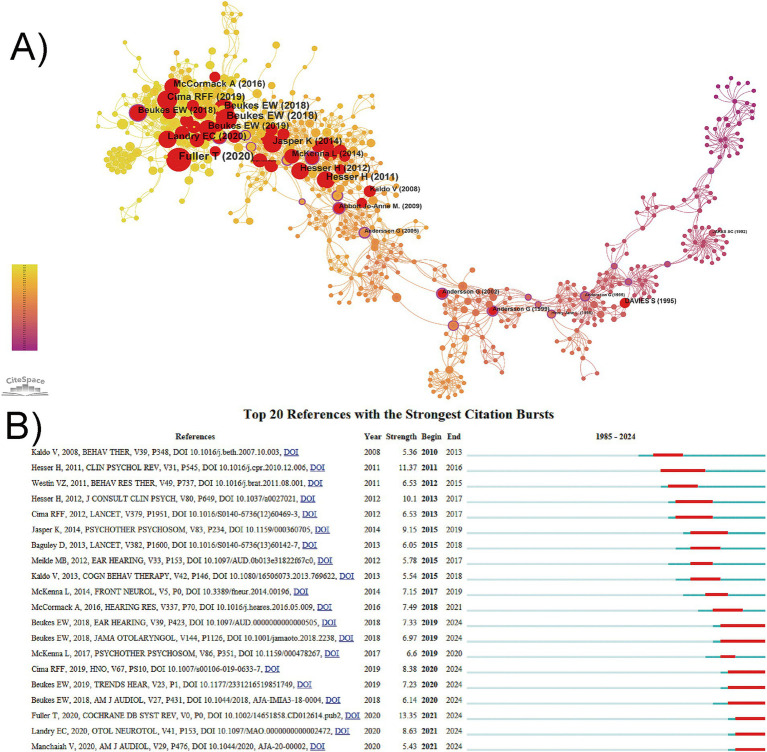
§ Research trends and hotspots of cognitive behavioral therapy for tinnitus: a bibliometric analysis > Result > Analysis of co-cited references and reference bursts The CiteSpace’s co-citation analysis of references is a core feature of this program. A scaling factor k = 25 was set, and 798 cited references with certain influences were extracted using g-index that allowed the identification of homogeneous clusters of literature that was cited more frequently and was associated with CBT for tinnitus research. Table 6 summarizes the top 10 most cited articles on CBT for tinnitus treatment. These articles span from 2011 to 2020, and apart from one guideline for tinnitus, the types of literature include randomized controlled trials, systematic reviews, and meta-analyses. Figure 6A shows the co-citation mapping of CBT for tinnitus. The size of the nodes represents the co-citation frequency, with larger nodes indicate higher co-citation frequencies and red nodes represent burst citations. The most cited paper (39 citations) was “Cognitive behavioral therapy for tinnitus (Fuller et al., 2020),” published in the Cochrane Database of Systematic Reviews. References with citation bursts refer to those that experience a sudden and significant increase in citation frequency within a specific period. As shown in Figure 6B, the earliest citation burst in the field of cognitive behavioral therapy for tinnitus began in 2010. The strongest burst (strength:13.35) occurred in a paper entitled “Cognitive behavioral therapy for tinnitus” published in Cochrane Database of Systematic Reviews by Fuller et al. (2020), with citation burst from 2021 to 2024. This is followed by “A systematic review and meta-analysis of randomized controlled trials of cognitive-behavioral therapy for tinnitus distress” (strength: 11.37, publication year: 2011) and “A Randomized Controlled Trial of Internet-Delivered Cognitive Behaviour Therapy and Acceptance and Commitment Therapy in the Treatment of Tinnitus” (strength: 10.1, publication year: 2012), and Hesser, Hugo is the same authors of these two papers (Hesser et al., 2011; Hesser et al., 2012). Moreover, eight references had citation bursts lasting through 2024.
What the sources say
- Supportedcites Fuller et al., 2020 matched to “Cognitive behavioural therapy for tinnitus” (2020) source
The citation identifies the paper: our copy is titled “Cognitive behavioural therapy for tinnitus,” and the Cochrane Library passage identifies the Cochrane Database of Systematic Reviews. The “most cited” ranking and 39-citation count are the citing authors’ bibliometric findings, not findings attributed to Fuller et al. (LLM, conf=0.90)
plain- Asserted: passes — The authors put it forward as true.
- Checkable: passes — It can be checked against evidence.
- Load-bearing: passes — The paper’s conclusions depend on it.
- Based: passes — The paper gives a reason why it holds.
- Supported
The cited sources support only part of this claim — read each source’s verdict below.
In the paper
“Compared to audiological care and tinnitus retraining therapy, CBT is more effective in improving quality of life.”
§ Research trends and hotspots of cognitive behavioral therapy for tinnitus: a bibliometric analysis > Discussion > General information
What the sources say
- Partly supportedcites Fuller et al., 2020 matched to “Cognitive behavioural therapy for tinnitus” (2020) sourceExperimental — accuracy not yet measured
The ‘CBT versus audiological care’ section reports that CBT probably reduces tinnitus’s impact on quality of life compared with audiological care. The ‘CBT versus tinnitus retraining therapy’ section reports a possible benefit, but it is based on one study with low-certainty evidence; the Discussion says there is insufficient evidence to conclude that CBT is superior to TRT. The claim states that comparison more definitively than the source supports. (LLM, conf=0.88)
plainstates a cause- Asserted: passes — The authors put it forward as true.
- Checkable: passes — It can be checked against evidence.
- Load-bearing: passes — The paper’s conclusions depend on it.
- Based: passes — The paper gives a reason why it holds.
- Partly supported
Every source the paper cites for this claim was checked and supports it.
In the paper
“This review, through the analysis of 28 randomized controlled trials, found that compared to no treatment or waiting list control for tinnitus, CBT significantly improved the severity of tinnitus and may to a lesser extent reduce depressive symptoms.”
§ Research trends and hotspots of cognitive behavioral therapy for tinnitus: a bibliometric analysis > Discussion > General information
What the sources say
- Supportedcites Fuller et al., 2020 matched to “Cognitive behavioural therapy for tinnitus” (2020) source
The Discussion’s Summary of main results reports 28 included randomized trials and says CBT was superior to no intervention or wait-list control in reducing tinnitus’s impact on quality of life, with evidence of reduced depression. The comparison analysis reports a reduction at the end of treatment (SMD −0.56, 95% CI −0.83 to −0.30). The review describes the depression benefit as less certain. (LLM, conf=0.88)
plainstates a cause- Asserted: passes — The authors put it forward as true.
- Checkable: passes — It can be checked against evidence.
- Load-bearing: passes — The paper’s conclusions depend on it.
- Based: passes — The paper gives a reason why it holds.
- Supported
Every source the paper cites for this claim was checked and supports it.
In the paper
“This review, through the analysis of 28 randomized controlled trials, found that compared to no treatment or waiting list control for tinnitus, CBT significantly improved the severity of tinnitus and may to a lesser extent reduce depressive symptoms.”
§ Research trends and hotspots of cognitive behavioral therapy for tinnitus: a bibliometric analysis > Discussion > General information
What the sources say
- Supportedcites Fuller et al., 2020 matched to “Cognitive behavioural therapy for tinnitus” (2020) source
The Discussion (Summary of main results) says the review included 28 randomized controlled trials and found that CBT reduced both the impact of tinnitus and depression compared with no intervention or a waiting-list control. The Authors’ conclusions describe the benefit for depressive symptoms as small and note uncertainty about the evidence quality, consistent with the claim’s cautious wording. (LLM, conf=0.93)
hedgedstates a possible cause- Asserted: passes — The authors put it forward as true.
- Checkable: passes — It can be checked against evidence.
- Load-bearing: passes — The paper’s conclusions depend on it.
- Based: passes — The paper gives a reason why it holds.
- Supported
69 more claims · 3 with their cited sources checked
Create a free account to see all 129 claims and to verify the 2 references still open.
- Probably not a substantial claim. 17
- It may state two separate claims as one. 43
Citations
Cites
Acceptance and commitment therapy: model, processes and outcomes
Hayes, S. C., Luoma, J. B., Bond, F. W., Masuda, A., & Lillis, J. (2006) · Behaviour Research and Therapy · doi:10.1016/j.brat.2005.06.006 · Cited by 6,587 · cited 1×
“ACT is a behavioral treatment grounded in functional contextualism and guided by relational frame theory (Hayes et al., 2006).”
Lefaucheur, J.-P., André-Obadia, N., Antal, A., Ayache, S. S., Baeken, C., Benninger, D. H., Cantello, R. M., Cincotta, M., de Carvalho, M., De Ridder, D., et al. (2014) · Clinical Neurophysiology · doi:10.1016/j.clinph.2014.05.021 · Cited by 2,119
Advantages and limitations of Internet-based interventions for common mental disorders
Andersson, G., & Titov, N. (2014) · World Psychiatry · doi:10.1002/wps.20083 · Cited by 1,160
Bibliometrics: methods for studying academic publishing
Ninkov, A., Frank, J. R., & Maggio, L. A. (2021) · Perspectives on Medical Education · doi:10.1007/s40037-021-00695-4 · Cited by 1,048
The impact of guidance on Internet-based mental health interventions — A systematic review
Baumeister, H., Reichler, L., Munzinger, M., & Lin, J. (2014) · Internet Interventions · doi:10.1016/j.invent.2014.08.003 · Cited by 1,037
Eggermont, J. J., & Roberts, L. E. (2004) · Trends in Neurosciences · doi:10.1016/j.tins.2004.08.010 · Cited by 991
Hayes, S. C. (2016) · Behavior Therapy · doi:10.1016/j.beth.2016.11.006 · Cited by 785 · cited 1×
“This latest wave integrates principles of acceptance and mindfulness, with Acceptance and Commitment Therapy (ACT) and Mindfulness-Based Cognitive Therapy (MBCT) being prominent representatives (Thoma et al., 2015; Hayes, 2016).”
Clinical practice guideline: tinnitus
Tunkel, D. E., Bauer, C. A., Sun, G. H., Rosenfeld, R. M., Chandrasekhar, S. S., Cunningham, E. R., Archer, S. M., Blakley, B. W., Carter, J. M., Granieri, E. C., et al. (2014) · Otolaryngology–Head and Neck Surgery · doi:10.1177/0194599814545325 · Cited by 769 · cited 1×
“Currently, CBT is the only intervention strongly recommended in clinical practice guidelines for tinnitus (Tunkel et al., 2014; Cima et al., 2019; Ogawa et al., 2020), and it has been proven to significantly reduce tinnitus-related distress, anxiety, and depression, and improve the quality of life…”
Internet-delivered psychological treatments: from innovation to implementation
Andersson, G., Titov, N., Dear, B. F., Rozental, A., & Carlbring, P. (2019) · World Psychiatry · doi:10.1002/wps.20610 · Cited by 750
Ringing Ears: The Neuroscience of Tinnitus: Figure 1.
Roberts, L. E., Eggermont, J. J., Caspary, D. M., Shore, S. E., Melcher, J. R., & Kaltenbach, J. A. (2010) · The Journal of Neuroscience · doi:10.1523/jneurosci.4028-10.2010 · Cited by 586
Global Prevalence and Incidence of Tinnitus: A Systematic Review and Meta-analysis
Jarach, C. M., Lugo, A., Scala, M., van den Brandt, P. A., Cederroth, C. R., Odone, A., Garavello, W., Schlee, W., Langguth, B., & Gallus, S. (2022) · JAMA Neurology · doi:10.1001/jamaneurol.2022.2189 · Cited by 548
A descriptive and historical review of bibliometrics with applications to medical sciences
Thompson, D. F., & Walker, C. K. (2015) · Pharmacotherapy: The Journal of Human Pharmacology and Drug Therapy · doi:10.1002/phar.1586 · Cited by 481
Maladaptive plasticity in tinnitus — triggers, mechanisms and treatment
Shore, S. E., Roberts, L. E., & Langguth, B. (2016) · Nature Reviews Neurology · doi:10.1038/nrneurol.2016.12 · Cited by 474
A multidisciplinary European guideline for tinnitus: diagnostics, assessment, and treatment
Cima, R. F. F., Mazurek, B., Haider, H., Kikidis, D., Lapira, A., Noreña, A., & Hoare, D. J. (2019) · HNO · doi:10.1007/s00106-019-0633-7 · Cited by 442 · cited 1×
“Currently, CBT is the only intervention strongly recommended in clinical practice guidelines for tinnitus (Tunkel et al., 2014; Cima et al., 2019; Ogawa et al., 2020), and it has been proven to significantly reduce tinnitus-related distress, anxiety, and depression, and improve the quality of life…”
Karyotaki, E., Kleiboer, A., Smit, F., Turner, D. T., Pastor, A. M., Andersson, G., Berger, T., Botella, C., Breton, J. M., Carlbring, P., et al. (2015) · Psychological Medicine · doi:10.1017/s0033291715000665 · Cited by 408
Relationships between tinnitus and the prevalence of anxiety and depression
Bhatt, J. M., Bhattacharyya, N., & Lin, H. W. (2017) · The Laryngoscope · doi:10.1002/lary.26107 · Cited by 391
Hesser, H., Weise, C., Westin, V. Z., & Andersson, G. (2011) · Clinical Psychology Review · doi:10.1016/j.cpr.2010.12.006 · Cited by 340
Langguth, B., Landgrebe, M., Kleinjung, T., Sand, G. P., & Hajak, G. (2011) · The World Journal of Biological Psychiatry · doi:10.3109/15622975.2011.575178 · Cited by 321 · cited 1×
“Tinnitus extends beyond “ringing in the ears,” often accompanied by hyperacusis, hearing difficulties, sleep disorders, anxiety, depression, irritability, and concentration issues, all of which diminish patients’ quality of life (Langguth, 2011).”
Internet interventions: Past, present and future
Andersson, G. (2018) · Internet Interventions · doi:10.1016/j.invent.2018.03.008 · Cited by 315 · cited 2×
“Internet-delivered interventions were initially developed and assessed in the mid-1990s (Ruwaard et al., 2011), and have since gained widespread dissemination and increasing recognition, iCBT being the most common form of internet intervention (Andersson, 2018).”
Andersson, G. (2002) · Psychosomatic Medicine · doi:10.1097/01.psy.0000031577.42041.f8 · Cited by 312 · cited 1×
“…stimulation and sound therapy) (Lefaucheur et al., 2014; Sereda et al., 2018) and those addressing the emotional and psychological responses to tinnitus, such as cognitive-behavioral therapy (CBT), relaxation techniques, and stress management (Andersson and Lyttkens, 1999; Andersson, 2002).”
Psychological aspects of tinnitus and the application of cognitive–behavioral therapy
Andersson, G. (2002) · Clinical Psychology Review · doi:10.1016/s0272-7358(01)00124-6 · Cited by 261
Hesser, H., Gustafsson, T., Lundén, C., Henrikson, O., Fattahi, K., Johnsson, E., Westin, V. Z., Carlbring, P., Mäki-Torkko, E., Kaldo, V., et al. (2012) · Journal of Consulting and Clinical Psychology · doi:10.1037/a0027021 · Cited by 257
Tinnitus and anxiety disorders: a review
Pattyn, T., Van Den Eede, F., Vanneste, S., Cassiers, L., Veltman, D. J., Van De Heyning, P., & Sabbe, B. C. G. (2016) · Hearing Research · doi:10.1016/j.heares.2015.08.014 · Cited by 233
A scientific cognitive-behavioral model of tinnitus: Novel conceptualizations of tinnitus distress.
McKenna, L., Handscomb, L., Hoare, D. J., & Hall, D. A. (2014) · Frontiers in Neurology · doi:10.3389/fneur.2014.00196 · Cited by 232
Relationship between tinnitus severity and psychiatric disorders
Zöger, S., Svedlund, J., & Holgers, K.-M. (2006) · Psychosomatics · doi:10.1176/appi.psy.47.4.282 · Cited by 230
Editorial: towards an understanding of tinnitus heterogeneity
Cederroth, C. R., Gallus, S., Hall, D. A., Kleinjung, T., Langguth, B., Maruotti, A., Meyer, M., Norena, A., Probst, T., Pryss, R., et al. (2019) · Frontiers in Aging Neuroscience · doi:10.3389/fnagi.2019.00053 · Cited by 227
A meta-analytic review of psychological treatments for tinnitus
Andersson, G., & Lyttkens, L. (1999) · British Journal of Audiology · doi:10.3109/03005369909090101 · Cited by 222
A review of tinnitus symptoms beyond ‘ringing in the ears’: a call to action
Langguth, B. (2011) · Current Medical Research and Opinion · doi:10.1185/03007995.2011.595781 · Cited by 219
Cognitive behavioural therapy for tinnitus
Fuller, T., Cima, R., Langguth, B., Mazurek, B., Vlaeyen, J. W., & Hoare, D. J. (2020) · Cochrane Database of Systematic Reviews · doi:10.1002/14651858.cd012614.pub2 · Cited by 212
Contemporary cognitive behavior therapy: A review of theory, history, and evidence
Thoma, N., Pilecki, B., & McKay, D. (2015) · Psychodynamic Psychiatry · doi:10.1521/pdps.2015.43.3.423 · Cited by 197 · cited 1×
“This latest wave integrates principles of acceptance and mindfulness, with Acceptance and Commitment Therapy (ACT) and Mindfulness-Based Cognitive Therapy (MBCT) being prominent representatives (Thoma et al., 2015; Hayes, 2016).”
Sullivan, M. D., Katon, W., Dobie, R., Sakai, C., Russo, J., & Harrop-Griffiths, J. (1988) · General Hospital Psychiatry · doi:10.1016/0163-8343(88)90037-0 · Cited by 189
Westin, V. Z., Schulin, M., Hesser, H., Karlsson, M., Noe, R. Z., Olofsson, U., Stalby, M., Wisung, G., & Andersson, G. (2011) · Behaviour Research and Therapy · doi:10.1016/j.brat.2011.08.001 · Cited by 175
Mechanisms of Noise-Induced Tinnitus: Insights from Cellular Studies
Shore, S. E., & Wu, C. (2019) · Neuron · doi:10.1016/j.neuron.2019.05.008 · Cited by 170
Cognitive-behavioral treatments for tinnitus: a review of the literature
Cima, R. F. F., Andersson, G., Schmidt, C. J., & Henry, J. A. (2014) · Journal of the American Academy of Audiology · doi:10.3766/jaaa.25.1.4 · Cited by 155 · cited 1×
“…recommended in clinical practice guidelines for tinnitus (Tunkel et al., 2014; Cima et al., 2019; Ogawa et al., 2020), and it has been proven to significantly reduce tinnitus-related distress, anxiety, and depression, and improve the quality of life for tinnitus patients (Cima et al., 2014).”
Sound therapy (using amplification devices and/or sound generators) for tinnitus.
Sereda, M., Xia, J., El Refaie, A., Hall, D. A., & Hoare, D. J. (2018) · Cochrane Database of Systematic Reviews · doi:10.1002/14651858.cd013094.pub2 · Cited by 135
Directions for the International Society for Research on Internet Interventions (ISRII)
Ritterband, L. M., Andersson, G., Christensen, H. M., Carlbring, P., & Cuijpers, P. (2006) · Journal of Medical Internet Research · doi:10.2196/jmir.8.3.e23 · Cited by 132
Jasper, K., Weise, C., Conrad, I., Andersson, G., Hiller, W., & Kleinstäuber, M. (2014) · Psychotherapy and Psychosomatics · doi:10.1159/000360705 · Cited by 126
Mindfulness-based cognitive therapy: a promising new approach to preventing depressive relapse
Williams, J. M. G., & Kuyken, W. (2012) · British Journal of Psychiatry · doi:10.1192/bjp.bp.111.104745 · Cited by 126 · cited 1×
“MBCT integrates elements of mindfulness-based stress reduction (MBSR) and CBT, aiming to alter individuals’ responses to their own thoughts and feelings through the practice of mindfulness, and is commonly used to treat recurrent depressive disorders (Williams and Kuyken, 2012).”
Anxiety and depression, personality traits relevant to tinnitus: A scoping review
Durai, M., & Searchfield, G. (2016) · International Journal of Audiology · doi:10.1080/14992027.2016.1198966 · Cited by 112
Prevalence of Tinnitus in an Aging Population and Its Relation to Age and Hearing Loss
Oosterloo, B. C., Croll, P. H., de Jong, R. J. B., Ikram, M. K., & Goedegebure, A. (2020) · Otolaryngology · doi:10.1177/0194599820957296 · Cited by 111
An economic evaluation of the healthcare cost of tinnitus management in the UK
Stockdale, D., McFerran, D., Brazier, P., Pritchard, C., Kay, T., Dowrick, C., & Hoare, D. J. (2017) · BMC Health Services Research · doi:10.1186/s12913-017-2527-2 · Cited by 108
Beukes, E. W., Baguley, D. M., Allen, P. M., Manchaiah, V., & Andersson, G. (2018) · Ear & Hearing · doi:10.1097/aud.0000000000000505 · Cited by 104
Brown, L. A., Gaudiano, B. A., & Miller, I. W. (2011) · Behavior Modification · doi:10.1177/0145445510393730 · Cited by 103
Internet-Delivered Cognitive-Behavior Therapy for Tinnitus: A Randomized Controlled Trial
Weise, C., Kleinstäuber, M., & Andersson, G. (2016) · Psychosomatic Medicine · doi:10.1097/psy.0000000000000310 · Cited by 99 · cited 1×
“Research has demonstrated that guided iCBT is effective for managing chronic tinnitus (Weise et al., 2016).”
Tinnitus and its relation to depression, anxiety, and stress-a population-based cohort study
Hackenberg, B., Döge, J., O’Brien, K., Bohnert, A., Lackner, K. J., Beutel, M. E., Michal, M., Münzel, T., Wild, P. S., Pfeiffer, N., et al. (2023) · Journal of Clinical Medicine · doi:10.3390/jcm12031169 · Cited by 95
McKenna, L., Marks, E. M., Hallsworth, C. A., & Schaette, R. (2017) · Psychotherapy and Psychosomatics · doi:10.1159/000478267 · Cited by 93
Weise, C., Heinecke, K., & Rief, W. (2008) · Journal of Consulting and Clinical Psychology · doi:10.1037/a0013811 · Cited by 85
Systematic Review on Healthcare and Societal Costs of Tinnitus
Trochidis, I., Lugo, A., Borroni, E., Cederroth, C. R., Cima, R. F. F., Kikidis, D., Langguth, B., Schlee, W., & Gallus, S. (2021) · International Journal of Environmental Research and Public Health · doi:10.3390/ijerph18136881 · Cited by 85
Cognitive Behavioral Therapy for Tinnitus: Evidence and Efficacy
Jun, H. J., & Park, M. K. (2013) · Korean Journal of Audiology · doi:10.7874/kja.2013.17.3.101 · Cited by 76
Ecological Momentary Assessment of Tinnitus Using Smartphone Technology: A Pilot Study
Wilson, M. B., Kallogjeri, D., Joplin, C. N., Gorman, M. D., Krings, J. G., Lenze, E. J., Nicklaus, J. E., Spitznagel, E., & Piccirillo, J. F. (2015) · Otolaryngology · doi:10.1177/0194599815569692 · Cited by 72
McCormack, A., Edmondson-Jones, M., Fortnum, H., Dawes, P. D., Middleton, H., Munro, K. J., & Moore, D. R. (2015) · International Journal of Audiology · doi:10.3109/14992027.2015.1014577 · Cited by 71
Gander, P. E., Hoare, D. J., Collins, L., Smith, S., & Hall, D. A. (2011) · BMC Health Services Research · doi:10.1186/1472-6963-11-162 · Cited by 65
Piccirillo, J. F., Rodebaugh, T. L., & Lenze, E. J. (2020) · JAMA · doi:10.1001/jama.2020.0697 · Cited by 65 · cited 1×
“Tinnitus is an auditory perception without external sound stimulus (Piccirillo et al., 2020).”
Clinical practice guidelines for diagnosis and treatment of chronic tinnitus in Japan
Ogawa, K., Sato, H., Takahashi, M., Wada, T., Naito, Y., Kawase, T., Murakami, S., Hara, A., & Kanzaki, S. (2020) · Auris Nasus Larynx · doi:10.1016/j.anl.2019.09.007 · Cited by 61
Recent Updates on Tinnitus Management
Lee, H. Y., & Jung, D. J. (2023) · Journal of Audiology & Otology · doi:10.7874/jao.2023.00416 · Cited by 59
Tinnitus services in the United Kingdom: a survey of patient experiences
McFerran, D., Hoare, D. J., Carr, S., Ray, J., & Stockdale, D. (2018) · BMC Health Services Research · doi:10.1186/s12913-018-2914-3 · Cited by 58 · cited 1×
“Within the UK healthcare system, for instance, tinnitus patients encounter dual obstacles in accessing psychological interventions: a shortage of mental health professionals and inefficient referral pathways to psychological services (Gander et al., 2011; McFerran et al., 2018).”
Exploring tinnitus heterogeneity
(2021) · Progress in Brain Research · doi:10.1016/bs.pbr.2020.05.022 · Cited by 55
Moritz, S., Schröder, J., Meyer, B., & Hauschildt, M. (2013) · Depression and Anxiety · doi:10.1002/da.21988 · Cited by 53
Aazh, H., & Moore, B. C. J. (2018) · American Journal of Audiology · doi:10.1044/2018_aja-17-0096 · Cited by 51
Development and technical functionality of an Internet-based intervention for tinnitus in the UK
Beukes, E. W., Vlaescu, G., Manchaiah, V., Baguley, D. M., Allen, P. M., Kaldo, V., & Andersson, G. (2016) · Internet Interventions · doi:10.1016/j.invent.2016.08.002 · Cited by 48
Long-Term Efficacy of Audiologist-Guided Internet-Based Cognitive Behavior Therapy for Tinnitus
Beukes, E. W., Allen, P. M., Baguley, D. M., Manchaiah, V., & Andersson, G. (2018) · American Journal of Audiology · doi:10.1044/2018_aja-imia3-18-0004 · Cited by 45
Theoretical Tinnitus Framework: A Neurofunctional Model
Ghodratitoostani, I., Zana, Y., Delbem, A. C. B., Sani, S. S., Ekhtiari, H., & Sánchez, T. G. (2016) · Frontiers in Neuroscience · doi:10.3389/fnins.2016.00370 · Cited by 45
Living with tinnitus and the health care journey: An interpretative phenomenological analysis.
Marks, E., Smith, P., & McKenna, L. (2019) · British Journal of Health Psychology · doi:10.1111/bjhp.12351 · Cited by 43
McKenna, L., Marks, E. M., & Vogt, F. (2018) · Ear & Hearing · doi:10.1097/aud.0000000000000491 · Cited by 41
Coexistence of anxiety sensitivity and psychiatric comorbidities in patients with chronic tinnitus
Gul, A. I., Aydın, R., Simsek, G. G., Saydam, L., & Özkırış, M. (2015) · Neuropsychiatric Disease and Treatment · doi:10.2147/ndt.s77786 · Cited by 41
Rheker, J., Andersson, G., & Weise, C. (2015) · Internet Interventions · doi:10.1016/j.invent.2015.03.007 · Cited by 38
Efficacy and Effectiveness of Online Cognitive Behavioral Treatment: A Decade of Interapy Research
Jeroen, R., Alfred, L., Bart, S., & Paul, E. (2011) · Studies in Health Technology and Informatics · doi:10.3233/978-1-60750-766-6-9 · Cited by 36
Rodrigo, H., Beukes, E. W., Andersson, G., & Manchaiah, V. (2021) · doi:10.2196/preprints.28999 · Cited by 33 · cited 2×
“In artificial intelligence applications, data mining techniques and machine learning models have been employed to predict treatment outcomes of iCBT for tinnitus (Rodrigo et al., 2021).”
Roles of Cognitive Characteristics in Tinnitus Patients
Lee, S.-Y., Kim, J.-H., Hong, S.-H., & Lee, D.-S. (2004) · Journal of Korean Medical Science · doi:10.3346/jkms.2004.19.6.864 · Cited by 30
Manchaiah, V., Vlaescu, G., Varadaraj, S., Aronson, E. P., Fagelson, M. A., Munoz, M. F., Andersson, G., & Beukes, E. W. (2020) · American Journal of Audiology · doi:10.1044/2020_aja-20-00002 · Cited by 29
The Evolution of Cognitive Behavioural Therapy—The Third Generation and Its Effectiveness
Carvalho, S., Martins, C. P., Almeida, H. S., & Silva, F. (2017) · European Psychiatry · doi:10.1016/j.eurpsy.2017.01.1461 · Cited by 28 · cited 1×
“It aims to enhance the effectiveness of the first and second waves by emphasizing strategies that focus on contextual and experiential changes (Carvalho et al., 2017).”
Effectiveness of telerehabilitation interventions for self-management of tinnitus: systematic review
Demoen, S., Chalimourdas, A., Timmermans, A., Van Rompaey, V., Vanderveken, O. M., Jacquemin, L., Schlee, W., Marneffe, W., Luyten, J., Gilles, A., et al. (2023) · Journal of Medical Internet Research · doi:10.2196/39076 · Cited by 24
Psychological Comorbidities of Tinnitus
Hébert, S. (2021) · Current topics in behavioral neurosciences · doi:10.1007/7854_2021_218 · Cited by 23
A clinical trial of a patient-customized virtual reality intervention for tinnitus
Park, D. H., Han, S. S., Han, M. S., Park, S., Kim, H. N., Kim, J., Aan, H., Kim, J., Kim, S., Kim, K., et al. (2022) · Scientific Reports · doi:10.1038/s41598-022-16764-5 · Cited by 20
Henry, J. A., Goodworth, M.-C., Lima, E., Zaugg, T., & Thielman, E. J. (2022) · Ear & Hearing · doi:10.1097/aud.0000000000001150 · Cited by 18 · cited 1×
“Additionally, the ability of audiologists to manage significant comorbid mental health issues may be limited (Henry et al., 2022), possibly due to specialization in medical fields and differing emphases on specialized knowledge.”
Engelke, M., Simoes, J. P., Vogel, C., Schoisswohl, S., Schecklmann, M., Wölflick, S., Pryss, R. C., Probst, T., Langguth, B., & Schlee, W. (2023) · PLOS Digital Health · doi:10.1371/journal.pdig.0000183 · Cited by 17
Walter, U., Pennig, S., Bleckmann, L., Röschmann-Doose, K., Wittig, T., Thomsen, J., & Schlee, W. (2025) · Journal of Medical Internet Research · doi:10.2196/59575 · Cited by 17
Prediction of acoustic tinnitus suppression using resting-state EEG via explainable AI approach
Shabestari, P. S., Schoisswohl, S., Wellauer, Z., Naas, A., Kleinjung, T., Schecklmann, M., Langguth, B., & Neff, P. K. A. (2025) · Scientific Reports · doi:10.1038/s41598-025-95351-w · Cited by 16
Bardy, F., Jacquemin, L., Wong, C. L., Maslin, M. R. D., Purdy, S. C., & Thai-Van, H. (2024) · Frontiers in Audiology and Otology · doi:10.3389/fauot.2023.1302215 · Cited by 14
Taylor, J., Thompson, D. M., Hall, D. A., Walker, D., McMurran, M., Casey, A., Featherstone, D., MacDonald, C., Stockdale, D., & Hoare, D. J. (2020) · International Journal of Audiology · doi:10.1080/14992027.2020.1788730 · Cited by 14
Jeong, Y., Song, J., Yang, J., & Kang, S. M. (2024) · IEEE Access · doi:10.1109/access.2024.3383020 · Cited by 12
Burke, L. A., & Refaie, A. E. (2024) · Audiology Research · doi:10.3390/audiolres14030035 · Cited by 9
Tao, Y., Chen, K., Li, D., Yin, K., Li, Y., Long, J., & Hui, L. (2023) · Frontiers in Neurology · doi:10.3389/fneur.2022.1085684 · Cited by 9
Hu, Y., Lu, Y., Tian, C., He, Y., Rong, K., Pan, S., & Lei, J. (2023) · JMIR mhealth and uhealth · doi:10.2196/47553 · Cited by 8
Self-citationApplication of hydrogels in cancer immunotherapy: a bibliometric analysis
Liu, X., Zhou, Q., Yang, Y., & Chen, E. (2024) · Frontiers in Immunology · doi:10.3389/fimmu.2024.1433050 · Cited by 7
Sia, E., Tirelli, G., Gatto, A., Mineo, C. A., Curlin, K., & Abouzari, M. (2024) · Journal of Personalized Medicine · doi:10.3390/jpm14080813 · Cited by 6 · cited 1×
“Furthermore, iCBT effectively enhances patient compliance by improving treatment accessibility and reducing costs, overcoming some of the limitations of traditional therapies and marking a significant advancement in tinnitus management (Sia et al., 2024).”
Using Participatory Action Research to Redirect Tinnitus Treatment and Research—An Interview Study
Kajüter, J., Schaap, G., Sools, A. M., & Simoes, J. P. (2024) · Journal of Clinical Medicine · doi:10.3390/jcm13113099 · Cited by 2
Cited by
Hack, S., Tessler, I., Saltz, D., Hayu, D., Henry, J. A., Sanda, G., Boldes, T., Wolfovitz, A., Horn, D. L., Zalzal, H. G., et al. (2026) · Otology & Neurotology · doi:10.1097/mao.0000000000005015 · Cited by 2
Hsieh, T.-M., Chen, K.-Y., & Hsieh, H.-Y. (2026) · Applied Sciences · doi:10.3390/app16052474
Metadata
- Authors
- He, Y., Liu, J., Cheng, H., Ye, H., Li, C., Gao, Y., & Xu, X.
- Affiliations
- Hubei University of Chinese Medicine (CN)
- Hubei Provincial Hospital of Traditional Chinese Medicine (CN)
- Corresponding author
- Gao, Yahan
- Xu, Xinyin
- Venue
- Frontiers in Neuroscience
- Publisher
- Frontiers Media SA
- Published
- 2025-05-09
- Volume
- 19
- Pages
- 1536224-1536224
- ISSN
- 1662-453X (ISSN-L)
- PMC
- PMC12098376
- OpenAlex
- W4410247658
- Cited by
- 2
- References
- 88
- Citations by year
- 2026: 2
- FWCI
- 1.27
- Type
- journal article
- Language
- en
- Open access
- gold
- doi.org
- Licence
- Locations
- Frontiers in Neuroscience (publishedVersion, cc-by)
- PubMed Central (publishedVersion, cc-by)
- PubMed (publishedVersion)
- DOAJ (DOAJ: Directory of Open Access Journals) (submittedVersion, cc-by-sa)
- Funders
- Natural Science Foundation of Hubei Province (2023AFD179)
- Topics
- Life Sciences › Neuroscience › Sensory Systems › Hearing, Cochlea, Tinnitus, Genetics
- Health Sciences › Health Professions › Speech and Hearing › Hearing Loss and Rehabilitation
- Physical Sciences › Physics and Astronomy › Acoustics and Ultrasonics › Noise Effects and Management
- Keywords
- cognitive behavioral therapy, tinnitus, tinnitus management, research trends, research hotspots, mindfulness, acceptance and commitment therapy, online intervention, depression, anxiety, psychological comorbidity, tinnitus distress
About these checks
Registry, retraction, Cites and statistics results are computed, not judged, with one exception: a printed reference that no index lists is read once by a model before it counts as a citation error. Claims are extracted by a model and kept only when their quote appears verbatim in the text; each cited source is then checked, with a model’s help, for whether it says what the claim relies on. Those verdicts can be wrong — read the claim’s quote and the cited source before relying on one.
The claim verdicts this report counts are experimental: their accuracy is not yet measured.
A language model drew the claims from the paper on 2026-10-11, under version 3 of the claim definition (model deepseek-v4.1-flash, prompt extract-v3).
A second model labelled each claim on 2026-10-11 (model jev-1.13-20260917, definition revision gold-guideline-v0.2).
Cited sources are checked with a language model’s help (gpt-6-sol).
Statistics and arithmetic are recomputed, not judged.
Confidence bands are shown only for fields calibrated on our annotated test set. None is calibrated yet, so no band is shown.
What counts as a claim ›How we measure confidence ›How we check this ›
Are you an author, or do you see a problem with this page? Request a review
Data sources
Bibliographic data: Semantic Scholar, OpenAlex, Crossref.
Contains information from the Semantic Scholar Academic Graph Datasets, made available under the ODC Attribution License (ODC-BY 1.0).
Semantic Scholar’s data is described in: Kinney, R., et al. (2023). The Semantic Scholar Open Data Platform. arXiv:2301.10140.
