

Bioactive Compounds and Bioactivities of Ginger (Zingiber officinale Roscoe)
Open accessThe DOI matches its Crossref record; 117 of the 117 references it cites were found in a registry or an index.
Abstract
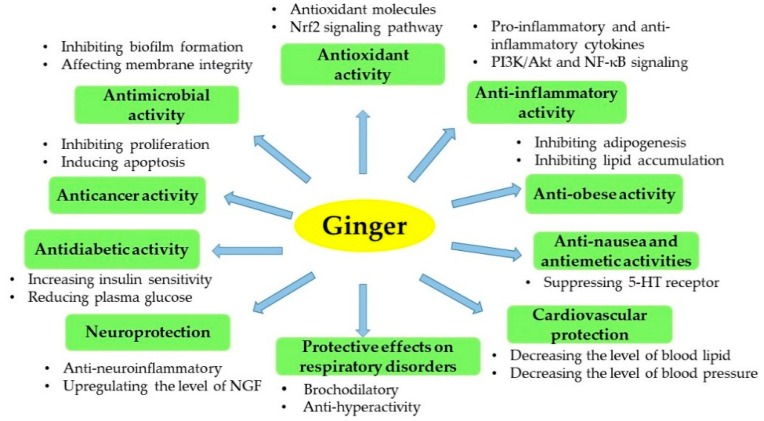
Ginger (Zingiber officinale Roscoe) is a common and widely used spice. It is rich in various chemical constituents, including phenolic compounds, terpenes, polysaccharides, lipids, organic acids, and raw fibers. The health benefits of ginger are mainly attributed to its phenolic compounds, such as gingerols and shogaols. Accumulated investigations have demonstrated that ginger possesses multiple biological activities, including antioxidant, anti-inflammatory, antimicrobial, anticancer, neuroprotective, cardiovascular protective, respiratory protective, antiobesity, antidiabetic, antinausea, and antiemetic activities. In this review, we summarize current knowledge about the bioactive compounds and bioactivities of ginger, and the mechanisms of action are also discussed. We hope that this updated review paper will attract more attention to ginger and its further applications, including its potential to be developed into functional foods or nutraceuticals for the prevention and management of chronic diseases.
Overview
The claims and statistics of this paper haven’t been checked yet.
Free: it reads the open-access text and checks the first 5 claims that cite a source we can check. Create a free account to check every claim.
Integrity signals
Registry
Cites
Statistics
Figures
Verification
Claims the paper makes
The claims and statistics of this paper haven’t been checked yet.
Free: it reads the open-access text and checks the first 5 claims that cite a source we can check. Create a free account to check every claim.
Claims other papers make about this one
Each is checked against this paper’s own text: does it say what the citing paper says it does?
In the citing paper
“A meta-analysis of 13 randomized control trials (n = 1174) found that ginger significantly improves overall pregnancy-associated nausea and vomiting, comparable to vitamin B6 [230] and as effective as standard antiemetics like dimenhydrinate [231].”
From Nutritional Approaches to Enhance GLP-1 Analogue Therapy in Obesity: A Narrative Review (2025) · cites this paper as [231]
Self-check
Percentages, sums and reported differences re-computed from the paper’s own numbers.
The self-check needs the paper’s full text.
Citations
Cites
Bray, F., Ferlay, J., Soerjomataram, I., Siegel, R. L., Torre, L. A., & Jemal, A. (2018) · CA: A Cancer Journal for Clinicians · doi:10.3322/caac.21492 · Cited by 84,109
Targeting Free Radicals in Oxidative Stress-Related Human Diseases
Poprac, P., Jomova, K., Simunkova, M., Kollar, V., Rhodes, C. J., & Valko, M. (2017) · Trends in Pharmacological Sciences · doi:10.1016/j.tips.2017.04.005 · Cited by 1,107 · cited 1×
“It has been known that overproduction of free radicals, such as reactive oxygen species (ROS), plays an important part in the development of many chronic diseases [17].”
BackgroundPlant-derived exosomal MicroRNAs shape the gut microbiota
Teng, Y., Ren, Y., Sayed, M., Hu, X., Lei, C., Kumar, A., Hutchins, E., Mu, J., Deng, Z., Luo, C., et al. (2018) · Cell Host & Microbe · doi:10.1016/j.chom.2018.10.001 · Cited by 1,027 · cited 1×
“Moreover, microRNAs of ginger exosome-like nanoparticles (GELN) ameliorated mouse colitis by inducing the production of IL-22, a barrier function improvement factor [41].”
BackgroundZhang, M., Viennois, E., Prasad, M., Zhang, Y., Wang, L., Zhang, Z., Han, M. K., Xiao, B., Xu, C., Srinivasan, S., et al. (2016) · Biomaterials · doi:10.1016/j.biomaterials.2016.06.018 · Cited by 1,026 · cited 12×
“Besides, ginger extract and zingerone inhibited NF-κB activation and decreased the level of IL-1β in the colons of mice, which alleviated colitis induced by 2, 4, 6-trinitrobenzene sulfonic acid [38].”
BackgroundInfluentialAntioxidant capacities and total phenolic contents of 62 fruits
Fu, L., Xu, B.-T., Xu, X.-R., Gan, R.-Y., Zhang, Y., Xia, E.-Q., & Li, H.-B. (2011) · Food Chemistry · doi:10.1016/j.foodchem.2011.04.079 · Cited by 757
Self-citationGinger and Its Constituents: Role in Prevention and Treatment of Gastrointestinal Cancer
Prasad, S., & Tyagi, A. K. (2015) · Gastroenterology Research and Practice · doi:10.1155/2015/142979 · Cited by 439 · cited 2×
“Besides these, polysaccharides, lipids, organic acids, and raw fibers are also present in ginger [13,16].”
BackgroundChang, J. S., Wang, K. C., Yeh, C. F., Shieh, D. E., & Chiang, L. C. (2013) · Journal of Ethnopharmacology · doi:10.1016/j.jep.2012.10.043 · Cited by 369 · cited 2×
“Ginger was effective in blocking viral attachment and internalization [52].”
BackgroundXu, X.-Y., Meng, X., Li, S., Gan, R.-Y., Li, Y., & Li, H.-B. (2018) · Nutrients · doi:10.3390/nu10101553 · Cited by 358
Self-citationLi, C.-L., Ou, C.-M., Huang, C.-C., Wu, W.-C., Chen, Y.-P., Lin, T.-E., Ho, L.-C., Wang, C.-W., Shih, C.-C., Zhou, H.-C., et al. (2014) · Journal of Materials Chemistry B · doi:10.1039/c4tb00216d · Cited by 350 · cited 2×
“The in vitro experiment found that C-dots increased the content of ROS in the HepG2 cells, which upregulated the expression of p53 and promoted apoptosis [67].”
BackgroundTotal Phenolic Contents and Antioxidant Capacities of Selected Chinese Medicinal Plants
Song, F.-L., Gan, R.-Y., Zhang, Y., Xiao, Q., Kuang, L., & Li, H.-B. (2010) · International Journal of Molecular Sciences · doi:10.3390/ijms11062362 · Cited by 346
Self-citation
Cited by
Items 301–400 of 1,001
Xiong, R.-G., Zhou, D.-D., Cheng, J., Wu, S.-X., Saimaiti, A., Huang, S., Liu, Q., Shang, A., Li, H., & Li, S. (2024) · International Journal of Gastronomy and Food Science · doi:10.1016/j.ijgfs.2024.100869 · Cited by 19
Self-citationSeptiana, A. T., Handayani, I., & Winarsi, H. (2019) · Jurnal Aplikasi Teknologi Pangan · doi:10.17728/jatp.4849 · Cited by 17
Chiarella, G., Marcianò, G., Viola, P., Palleria, C., Pisani, D., Rania, V., Casarella, A., Astorina, A., Scarpa, A., Esposito, M., et al. (2021) · Nutrients · doi:10.3390/nu13103646 · Cited by 20
Nguyen, H. M., Nguyen, T. Y. N., Le, N. T. H., Le, T. N. T., Chau, N. T. N., Le, T. M. H., & Nguyen, B. Q. H. (2024) · Heliyon · doi:10.1016/j.heliyon.2024.e39229 · Cited by 24
“Gingerols are prominent phenolic compounds found in ginger Zingiber officinale (family Zingiberaceae) and other plants in the Zingiber genus, including 6-gingerol, 8-gingerol, 10-gingerol, 12-gingerol, 6-shogaol, 8-shogaol [217].”
BackgroundMithilesh, S., Raghunandan, D., & Suresh, P. K. (2022) · Proceedings of the National Academy of Sciences India Section B Biological Sciences · doi:10.1007/s40011-021-01292-5 · Cited by 19
Medicinal Plants and their Constituents in the Treatment of Acne vulgaris
(2022) · Biointerface Research in Applied Chemistry · doi:10.33263/briac132.189 · Cited by 21
Radice, M., Maddela, N. R., & Scalvenzi, L. (2022) · Agronomy · doi:10.3390/agronomy12051168 · Cited by 24
A systematic review of selected plants and their metabolites with anticolorectal cancer effects
Macharia, J. M., Mwangi, R. W., Rozmann, N., Wagara, I. N., Káposztás, Z., Varjas, T., Mathenge, J., & Raposa, B. L. (2022) · Phytomedicine Plus · doi:10.1016/j.phyplu.2022.100332 · Cited by 19
Makoter, T. Ž., Kučuk, N., Postružnik, V., Leitgeb, M., Knez, Ž., Primožič, M., & Marevci, M. K. (2022) · Plants · doi:10.3390/plants11212872 · Cited by 16
“Bioactive compounds from ginger have the ability to affect the integrity of the microbial cells membrane as they can cause permeability of the cell wall and cytoplasmic membrane [3].”
BackgroundWu, Y., Liu, Y., Wu, J., Ou, K., Huang, Q., Cao, J., Duan, T., Zhou, L. M., & Pan, Y. (2022) · Frontiers in Nutrition · doi:10.3389/fnut.2022.1035788 · Cited by 17
“The content of phenolic compounds with strong antioxidant activities, such as vanillin (62, 63), increased significantly after fermentation.”
BackgroundTian, S., Wan, Y., Jiang, D., Gong, M., Lin, J., Xia, M., Shi, C., Xing, H., & Li, H. (2022) · Genes · doi:10.3390/genes14010096 · Cited by 29
Self-citationGhosh, A. K., Ahmmed, S. S., Islam, H. M. R., Hasan, M. A., Banu, G. R., Panda, S. K., Schoofs, L., & Luyten, W. H. M. L. (2023) · Aquaculture International · doi:10.1007/s10499-023-01177-6 · Cited by 16
“In addition to its clinical utility, ginger may also be effective against viruses such human respiratory syncytial virus, hepatitis C virus, and Chikungunya virus (Mao et al. 2019; Kaushik et al. 2020).”
Salekzamani, Y., Shakouri, S. K., Dolatkhah, N., Saleh, P., & Hashemian, M. (2023) · Journal of Herbal Medicine · doi:10.1016/j.hermed.2023.100746 · Cited by 18
Wu, Y., Li, B.-H., Chen, M.-M., Liu, B., & Jiang, L. (2023) · Food & Function · doi:10.1039/d3fo03552b · Cited by 16
Emran, T. B., Eva, T. A., Zehravi, M., Islam, F., Khan, J., Kareemulla, S., Arjun, U. V. N. V., Balakrishnan, A., Taru, P. P., Nainu, F., et al. (2024) · International Journal of Biological Sciences · doi:10.7150/ijbs.93875 · Cited by 21
“Ginger contains various polyphenols, including gingerol and shogaol, which have also been shown to have anti-cancer properties, including inhibiting the proliferation of lung cancer cells [160].”
BackgroundTherapeutic effects of OXY- Exo in diabetic wound injury
Miya, M. B., Ashutosh, A., Maulishree, M., Gupta, P. C., Pathak, V., Mishra, R., Chaturvedi, P., & Kalani, A. (2024) · Biochemical and Biophysical Research Communications · doi:10.1016/j.bbrc.2024.150398 · Cited by 19
Xue, C., Li, Y., Quan, W., Deng, P., He, Z., Qin, F., Wang, Z., Chen, J., & Zeng, M. (2022) · Food Chemistry · doi:10.1016/j.foodchem.2022.133011 · Cited by 16
Elshopakey, G. E., Almeer, R., Alfaraj, S., Albasher, G. I., Abdelgawad, M. E., Moneim, A. E. A., & Essawy, E. A.-R. (2021) · Toxin Reviews · doi:10.1080/15569543.2021.1923528 · Cited by 16
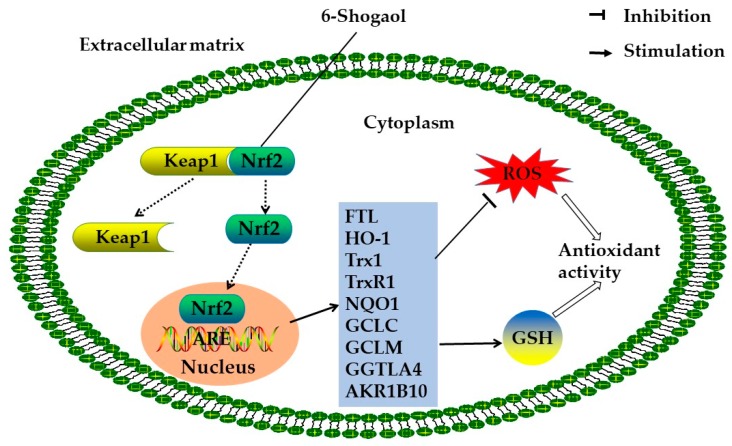
“…to diminish the renal damage induced by ADM. Green lines denote stimulatory and the red lines denote inhibitory effects. antioxidant potential by stimulating expression of Nrf2 target genes such as MT1, HO-1, and GCLC of mice, inhibited NF-jB activation and decreased IL-1b level (Mao et al. 2019).”
BackgroundShi, M., Li, X., Xing, L., Li, Z., Zhou, S., Wang, Z., Zou, X., She, Y., Zhao, R., & Qin, D. (2024) · Pharmaceutics · doi:10.3390/pharmaceutics16121556 · Cited by 26
Sakdasri, W., Kaomaneechot, S., Lasim, S., Somboon, P., Chotigavin, N., Wongpromrat, P., & Sawangkeaw, R. (2025) · LWT · doi:10.1016/j.lwt.2025.117912 · Cited by 15
Targeted dairy fortification: leveraging bioactive compounds to enhance nutritional value
Bagheri, H., Akhavan‐Mahdavi, S., Sarabi‐Aghdam, V., Razi, S. M., Beniwal, A. S., & Rashidinejad, A. (2025) · Critical Reviews in Food Science and Nutrition · doi:10.1080/10408398.2025.2522991 · Cited by 21
“This modulation of hormonal activity underscores the potential of bioactive compounds to treat and manage conditions that are influenced by hormonal imbalances (Mao et al. 2019).”
Guo, X., Chen, X., Zeng, M., Xuan, T., Xue, J., Chen, K., Gong, J., Song, G., & Shen, Q. (2025) · npj Science of Food · doi:10.1038/s41538-025-00481-0 · Cited by 21
Zheng, M., Hong, X., Liao, P., Huang, H. H., Zhang, Y., Xu, W., & Li, H. (2025) · International Journal of Nanomedicine · doi:10.2147/ijn.s572417 · Cited by 23
Self-citationUse of Selected Antioxidant-Rich Spices and Herbs in Foods
Karakol, P., & Kapı, E. (2021) · IntechOpen eBooks · doi:10.5772/intechopen.96136 · Cited by 20
“Its anti-inflammatory effects have been demonstrated in the treatment of osteomyelitis, arthritis and rheumatism [89].”
BackgroundThe Antiemetic Mechanisms of Gingerols against Chemotherapy-Induced Nausea and Vomiting
Dai, Y., Zhao, Y., & Nie, K. (2022) · Evidence-based Complementary and Alternative Medicine · doi:10.1155/2022/1753430 · Cited by 23
“*e bioactive compounds in ginger are varied [12, 21].”
BackgroundMathur, S., Pareek, S., Verma, R., Shrivastava, D., & Bisen, P. S. (2022) · Nutrire · doi:10.1186/s41110-022-00166-8 · Cited by 17
“The biological activity of ginger such as anti-inflammatory, anti-oxidant, anti-vomiting, anti-carcinogenic, antibacterial, neuroprotective, cardiovascular protection, respiratory protection, antiobesity, and anti-diabetes is mainly due to its phenolic and terpene compounds [16].”
Ginger Loaded Polyethylene Oxide Electrospun Nanomembrane: Rheological and Antimicrobial Attributes
Javaid, A., Jalalah, M., Safdar, R., Khaliq, Z., Qadir, M. B., Zulfiqar, S., Ahmad, A., Satti, A. N., Ali, A. A., Faisal, M., et al. (2022) · Membranes · doi:10.3390/membranes12111148 · Cited by 15
Nutmakul, T., & Chewchinda, S. (2023) · Heliyon · doi:10.1016/j.heliyon.2023.e13063 · Cited by 21
“Other phenolic compounds include zingerone, gingerenone, and 6-dehydrogingerdione [24], and flavonoids such as quercetin, rutin, catechin, epicatechin, kaempferol, and naringenin [25].”
BackgroundUddin, J., Ahmed, H., Asiri, Y. I., Kamal, G. M., & Musharraf, S. G. (2023) · Elsevier eBooks · doi:10.1016/b978-0-323-91740-7.00014-1 · Cited by 19
Kowser, M. A., Hossain, S. M. K., Amin, M. R., Chowdhury, M. A., Hossain, N., Madkhali, O. A. A., Rahman, M. R., Chani, M. T. S., Asiri, A. M., Uddin, J., et al. (2023) · Journal of Composites Science · doi:10.3390/jcs7030107 · Cited by 25
Maqbool, M., Chaudhary, K., Chalotra, R., Chauhan, S., & Singh, R. (2023) · Current Traditional Medicine · doi:10.2174/2215083810666230330161740 · Cited by 17
Goonathilaka, P. D. S. A., Abeysundara, P. D. A., & Jayasinghe, M. A. (2023) · Food Chemistry Advances · doi:10.1016/j.focha.2023.100319 · Cited by 15
Zhao, C., Chen, W., Wang, D., Cong, X., Zhu, M., Zhu, C., Xu, J., & Cai, J. (2023) · Journal of Ethnopharmacology · doi:10.1016/j.jep.2023.116791 · Cited by 19
Farani, M. R., Sarlak, M., Gholami, A., Azaraian, M., Binabaj, M. M., Kakavandi, S., Tambuwala, M. M., Taheriazam, A., Hashemi, M., & Ghasemi, S. (2023) · Pathology - Research and Practice · doi:10.1016/j.prp.2023.154688 · Cited by 18
Mujahid, M. H., Upadhyay, T. K., Upadhye, V. J., Sharangi, A. B., & Saeed, M. (2023) · Journal of Biomolecular Structure and Dynamics · doi:10.1080/07391102.2023.2247089 · Cited by 18
“ZOME possesses varied biological functions such as neuro-protective, anti-obesity, antioxidant, anticancerous, antie-metic, anti-inflammatory, and cardiovascular protective action (Mao et al., 2019).”
Shi, Y., Jin, H.-F., Shi, M., Cao, J., & Ye, L. (2023) · Microchemical Journal · doi:10.1016/j.microc.2023.109335 · Cited by 15
Lukhele, B. S., Bassey, K. E., & Witika, B. A. (2023) · Current Issues in Molecular Biology · doi:10.3390/cimb45120624 · Cited by 21
The Potential of Korean Bioactive Substances and Functional Foods for Immune Enhancement
Kim, M. E., & Lee, J. S. (2024) · International Journal of Molecular Sciences · doi:10.3390/ijms25021334 · Cited by 16
“It has been reported that gingerol increases the expression of NO and TNF-α , as well as myeloperoxidase in animal experiments, while shogaol inhibits the production of NO and PGE 2 in macrophages [71].”
BackgroundFarhadnejad, H., Saber, N., Tehrani, A. N., Jahromi, M. K., Mokhtari, E., Norouzzadeh, M., Teymoori, F., Asghari, G., Mirmiran, P., & Azizi, F. (2024) · Journal of Nutrition and Metabolism · doi:10.1155/2024/8300428 · Cited by 21
Siddique, R., Muhammad, F., Faisal, M. N., Akhtar, B., Saleem, A., Kousar, S., Sharif, A., Saeed, M., & Muhammad, S. (2024) · Inflammopharmacology · doi:10.1007/s10787-024-01537-5 · Cited by 17
Zarei, M., Acharya, P., & Talahalli, R. R. (2020) · Life Sciences · doi:10.1016/j.lfs.2020.118856 · Cited by 16
Mousa, M. A. E. H., Mansour, H., Eid, F. A., & Mashaal, A. (2021) · Journal of Food Biochemistry · doi:10.1111/jfbc.13819 · Cited by 17
Russo, R., Costa, M. A., Lampiasi, N., Chiaramonte, M., Provenzano, A., Mangione, M. R., Passantino, R., & Zito, F. (2023) · Food Bioscience · doi:10.1016/j.fbio.2023.102746 · Cited by 17
Nazakat, L., Ali, S., Summer, M., Nazakat, F., Noor, S., & Riaz, A. (2025) · Inflammopharmacology · doi:10.1007/s10787-025-01664-7 · Cited by 17
“Overall, in vivo and in vitro surveys have shown their strong anti-oxidant and anti-inflammatory characteristics against arthritis (Mao et al. 2019).”
Karabulut, G., DİLBER, T., & Üllen, N. B. (2025) · Materials Science and Engineering B · doi:10.1016/j.mseb.2025.118240 · Cited by 14
Chaudhary, D., Patel, S., Gururani, R., Chak, P., Jain, S., Dwivedi, J., & Sharma, S. K. (2025) · Inflammopharmacology · doi:10.1007/s10787-025-01764-4 · Cited by 22
“Cornuside (3, 10 and 30 µM) isolated from the fruit of Cornus officinalis has been found to significantly suppress the LPS-induced formation of prostaglandin E2, TNFα, nitric oxide, IL-1β, and IL-6 in RAW 264.7 cells (Gao et al. 2021).”
InfluentialMotafeghi, F. S., Mortazavi, P., Mahiny, A. H. S., Abtahi, M. M., & Shokrzadeh, M. (2022) · Drug and Chemical Toxicology · doi:10.1080/01480545.2022.2075377 · Cited by 14
“It has been used as a spice and herbal medicine throughout time (Han et al. 2013, Mao et al. 2019).”
MethodKeosaeng, K., Songoen, W., Yooboon, T., Bullangpoti, V., & Pluempanupat, W. (2022) · Natural Product Research · doi:10.1080/14786419.2022.2078818 · Cited by 14
“Zingiber officinale Roscoe (Family: Zingiberaceae), known as ginger, is a tropical garden kitchen herb consumed as a spice, owing to its unique aroma and pungency and as traditional medicines to treat many diseases since ancient times (Khan et al. 2016; Mao et al. 2019).”
BackgroundWang, K., Kong, L., Wen, X., Li, M., Su, S., Ni, Y., & Gu, J. (2023) · Nutrients · doi:10.3390/nu15040824 · Cited by 14
Choi, N. R., Kwon, M. J., Choi, W.-G., Kim, S. C., Park, J.-W., Nam, J. H., & Kim, B. J. (2023) · Journal of Ethnopharmacology · doi:10.1016/j.jep.2023.116499 · Cited by 14
In vitro conservation of commercial and threatened members of Zingiberaceae: an Indian scenario
Chakraborty, A., Santra, I., Haque, S. M., & Ghosh, B. (2023) · Biodiversity and Conservation · doi:10.1007/s10531-023-02619-6 · Cited by 14
“officinale that showed protective effects against tumour necrosis factor α (TNF-α)-induced intestinal barrier dysfunction in human intestinal cell models (Mao et al. 2019).”
BackgroundAl‐Areer, N. W., Azzam, K. M. A., Omari, R. H. A., Al‐Deeb, I., Bekbayeva, L., & Negim, E. (2023) · Pharmacia · doi:10.3897/pharmacia.70.e103936 · Cited by 19
Role of antioxidants in neutralizing oxidative stress
Bajaj, S., Singh, S., & Sharma, P. (2024) · Elsevier eBooks · doi:10.1016/b978-0-443-18951-7.00020-7 · Cited by 24
Evaluation of the anti-inflammatory potential of zingiber officinale on adjuvant-induced arthritis
Edo, G. I., Onoharigho, F. O., Kasar, K. A., Ainyanbhor, I. E., & Jikah, A. N. (2024) · Oriental Pharmacy and Experimental Medicine · doi:10.1007/s13596-024-00779-6 · Cited by 19
“7-gingerol with retention time of 3.87 and peak area of 16.99% is used as an antioxidant and anti - bacterial agent (Mao et al. 2019 ). turmerone with retention time 5.37 and peak area of 0.7% has been reported to have patients reported some level of pain and swelling alleviation (Edo et al. 2023b…”
InfluentialBaek, H.-I., Shen, L., Ha, K.-C., Park, Y. K., Kim, C. S., Kwon, J. E., & Park, S.-J. (2024) · Food & Function · doi:10.1039/d4fo01640h · Cited by 20
Yoosefian, M., Esmaeili, A., & Abass, K. S. (2025) · Scientific Reports · doi:10.1038/s41598-025-13094-0 · Cited by 15
Ji, W., Zhang, Q., Shi, H., Dong, R., Ge, D., Du, X., Ren, B., Wang, X., & Wang, Q. (2020) · Chinese Medicine · doi:10.1186/s13020-020-00334-w · Cited by 13
The Potential Role of 6-gingerol and 6-shogaol as ACE Inhibitors in Silico Study
Bare, Y., Helvina, M., Krisnamurti, G. C., & Mansur, S. (2020) · Biogenesis Jurnal Ilmiah Biologi · doi:10.24252/bio.v8i2.15704 · Cited by 15
“The herb also contains 6-gingerol, 6-shogaol, 8gingerol, 8-shogaol, 10-gingerol, and 10shogaol and other polyphenols (Mao et al., 2019) with anti-diabetic (Shivanna et al.”
BackgroundStereoselective Biocatalyzed Reductions of Ginger Active Components Recovered from Industrial Wastes
Nasti, R., Bassanini, I., Ferrandi, E. E., Linguardo, F., Bertuletti, S., Vanoni, M., Riva, S., Verotta, L., & Monti, D. (2022) · ChemBioChem · doi:10.1002/cbic.202200105 · Cited by 14
Wang, K., Li, B., Fu, R., Jiang, Z., Wen, X., & Ni, Y. (2022) · Journal of Food Science · doi:10.1111/1750-3841.16076 · Cited by 16
The Chemical Signatures of Water Extract of Zingiber officinale Rosc
Lu, F., Cai, H., Li, S., Xie, W., & Sun, R. (2022) · Molecules · doi:10.3390/molecules27227818 · Cited by 15
Chen, M., Tong, C., Wu, Q., Zhong, Z., He, Q., Zeng, L., & Xiao, L. (2023) · Integrative Cancer Therapies · doi:10.1177/15347354231172732 · Cited by 17
Current Progress and Emerging Role of Essential Oils in Drug Delivery Therapeutics
Sultana, R., Mohanto, S., Bhunia, A., Biswas, A., Akhtar, M. S., Mishra, V. K., Modi, D., Aljabali, A. A. A., Tambuwala, M. M., & Faiyazuddin, M. (2024) · Current Drug Delivery · doi:10.2174/0115672018287719240214075810 · Cited by 17
González‐Gross, M., Quesada, C., Rueda, J., Sillero‐Quintana, M., Issaly, N., Díaz, Á. E., Gesteiro, E., Escobar-Toledo, D., de Torres-Peralta, R. S., Roller, M., et al. (2021) · International Journal of Environmental Research and Public Health · doi:10.3390/ijerph18115538 · Cited by 16
Unlocking the Potential of Brazilian Plant Terpenes to Combat Antimicrobial Resistance
Bardají, D. K. R., Silva, N. B. S., Miranda, R. R., Martins, C. H. G., Savka, M. A., & Hudson, A. O. (2025) · ACS Bio & Med Chem Au · doi:10.1021/acsbiomedchemau.5c00069 · Cited by 15
“36 The peels of citrus fruits like oranges, lemons, and limes contain high levels of terpenes such as limonene, which give the fruit its distinctive scent and flavor.”
Gatabazi, A., Marais, D., Steyn, J. M., Araya, H. T., du Plooy, C., Ncube, B., & Mokgehle, S. N. (2022) · Scientia Horticulturae · doi:10.1016/j.scienta.2022.111353 · Cited by 14
Antiviral perspectives of economically important Indian medicinal plants and spices
Pebam, M., Sushma, M. V., Sankaranarayanan, S. A., Thanekar, A. M., Koyande, N. P., & Rengan, A. K. (2022) · Proceedings of the Indian National Science Academy · doi:10.1007/s43538-022-00099-w · Cited by 17
Kodikara, B., Undugoda, L. J. S., Karunarathne, H., & Kandisa, R. (2022) · Advances in Technology · doi:10.31357/ait.v2i3.5598 · Cited by 18
“Then shogaols can be converted into paradols after the hydrogenation process.[88] Ginger's essential oils and oleoresins exhibit significant antimicrobial and”
BackgroundElkhawas, Y. A., Gad, H. A., Lashkar, M. O., Khinkar, R. M., Wani, M. Y., & Khalil, N. A. (2022) · Agronomy · doi:10.3390/agronomy12112763 · Cited by 15
Chuljerm, H., Paradee, N., Katekaew, D., Nantachai, P., Settakorn, K., Srichairatanakool, S., & Koonyosying, P. (2023) · Plants · doi:10.3390/plants12162936 · Cited by 19
A Reappraisal of the Antiviral Properties of and Immune Regulation through Dietary Phytochemicals
Thakur, M., Singh, M., Kumar, S., Dwivedi, V. P., Dakal, T. C., & Yadav, V. (2023) · ACS Pharmacology & Translational Science · doi:10.1021/acsptsci.3c00178 · Cited by 14
Kongsui, R., & Jittiwat, J. (2024) · Biomedical Reports · doi:10.3892/br.2024.1773 · Cited by 13
Yit, K.-H., & Abidin, Z. Z. (2024) · Current Topics in Medicinal Chemistry · doi:10.2174/0115680266294573240328050629 · Cited by 19
Pratamı, D. K., Sahlan, M., Bayu, A., Putra, M. Y., Ibrahim, B., Siswadi, S., Qodriah, R., & Mun’im, A. (2024) · Molecules · doi:10.3390/molecules29174037 · Cited by 15
Zingiber officinale: Its Ethanobotanical Uses, Phytochemistry, and Pharmacology
Singh, P. N. D., Mishra, G., Pottoo, F. H., Singh, B. K., & Zeleke, M. M. (2022) · Springer eBooks · doi:10.1007/978-981-16-4959-2_1 · Cited by 26
Ginger in the Prevention of Cardiovascular Diseases
Cerdá, B., Marhuenda, J., Arcusa, R., Villaño, D., Ballester, P., & Zafrilla, P. (2022) · IntechOpen eBooks · doi:10.5772/intechopen.103970 · Cited by 18
Oil extracts from fresh and dried Iban ginger
Halimin, N. M. S., Abdullah, M. O., Wahab, N. A., Junin, R., Husaini, A., & Agi, A. (2022) · Chinese Journal of Analytical Chemistry · doi:10.1016/j.cjac.2022.100119 · Cited by 13
Manuhara, Y. S. W., Sugiharto, S., Kristanti, A. N., Aminah, N. S., Wibowo, A. T., Wardana, A. P., Putro, Y. K., & Sugiarso, D. (2022) · RASAYAN Journal of Chemistry · doi:10.31788/rjc.2022.1548024 · Cited by 22
Razak, A. M., Zakaria, S. N. A., Sani, N. F. A., Rani, N. A., Hakimi, N. H., Said, M. M., Tan, J. K., Gan, H. K., Nordin, M. F. M., & Makpol, S. (2023) · Frontiers in Pharmacology · doi:10.3389/fphar.2023.1006265 · Cited by 15
“GSH and glutathione levels rise as a result, and ROS levels drop (Mao et al., 2019).”
BackgroundJia, Q., Li, J., Yang, S., & Su, D. (2025) · Current Research in Food Science · doi:10.1016/j.crfs.2025.101041 · Cited by 13
“Ginger is rich in proteins, carbohydrates, dietary fiber, and bioactive components such as gingerol and terpenes, traditionally employed for therapeutic purposes, including treatment of colds, nausea, and headaches (Kiyama, 2020; Mao et al., 2019; Shahrajabian et al., 2019).”
Rani, A. N. A., Gaurav, A., Lee, V. S., Nasir, N. M., Zain, S. M., Patil, V. M., & Lee, M. T. (2025) · Archives of Pharmacal Research · doi:10.1007/s12272-025-01559-9 · Cited by 12
“The most widely used part of this plant is the underground stem, known as the rhizome, which emits an intense aroma and has been utilized for both culinary and medicinal purposes for centuries (Mao et al. 2019; Vichakshana et al. 2022).”
Anti-COVID-19 Biomedicines - A Layout Proposal for Production, Storage and Transportation
Pattanayak, S. (2021) · The Open COVID Journal · doi:10.2174/2666958702101010166 · Cited by 12
Oni, K. O., Uchegbu, N. N., Fasuan, T. O., & Idowu‐Adebayo, F. (2022) · Journal of Food Measurement & Characterization · doi:10.1007/s11694-022-01734-2 · Cited by 12
“officinale is used in the treatment of headaches, nausea, vomiting, hypertension, hyperuricemia, hypercholesteremia, and cancer [9, 11].”
BackgroundFoshati, S., Poursadeghfard, M., Heidari, Z., & Amani, R. (2023) · Food & Function · doi:10.1039/d3fo00167a · Cited by 12
Dietary Polyphenols against Oxidative Stress in Head and Neck Cancer: What's New, What's Next
Ballini, A., Zhurakivska, K., Troiano, G., Muzio, L. L., Caponio, V. C. A., Spirito, F., Porro, R., Rella, M., Cantore, S., Arrigoni, R., et al. (2023) · Journal of Cancer · doi:10.7150/jca.90545 · Cited by 14
“This antioxidant activity of flavanols is significant because XO activity has been associated with oxidative stress-related diseases, particularly ischemia [62], as the stimulation of XO can result in excessive production of free radicals.”
BackgroundFares, S., Omar, M., Laurence, A., Abu-Baker, S., Shaza, A., Haddadin, F., Jonathan, M. K., Khattar, G., SANGARAJU, K. V., Sanayeh, E. B., et al. (2024) · Aging and Disease · doi:10.14336/ad.2024.0131 · Cited by 20
Amudha, K., Sampath, S., Shanmugam, D. K., Ahmed, M. Z., Alqahtani, A. S., Madav, E., Dhinakaran, M., Prakash, M. V. D., Kavisri, M., & Asaithambi, P. (2024) · Materials Technology · doi:10.1080/10667857.2024.2318062 · Cited by 15
Sekkout, Z., Youbi, A. E. H. E., Boudaia, O., Janani, S., Radallah, D., & Amrani, N. E. (2024) · European Journal of Medicinal Chemistry Reports · doi:10.1016/j.ejmcr.2024.100146 · Cited by 20
Preciado-Ortiz, M. E., Martínez‐López, E., Pedraza‐Chaverrí, J., Medina‐Campos, O. N., Rodriguez‐Echevarría, R., Reyes-Pérez, S. D., & Rivera-Valdes, J. J. (2024) · Antioxidants · doi:10.3390/antiox13091093 · Cited by 16
Mamun, A. A., Geng, P., Wang, S., Shao, C., & Xiao, J. (2024) · Pharmacological Research · doi:10.1016/j.phrs.2024.107559 · Cited by 16
Amalraj, A., C., K. V. A., Jude, S., Nair, R. V. R., & Kuttappan, S. (2021) · ACS Food Science & Technology · doi:10.1021/acsfoodscitech.1c00073 · Cited by 13
(2022) · Biointerface Research in Applied Chemistry · doi:10.33263/briac132.141 · Cited by 16
“Ginger Zingiber officinale Gingerols, shogaols, paradols, quercetin, zingerone, gingerenone-A, and 6-dehydrogingerdione, terpene compounds Antioxidant, anti-inflammatory, antimicrobial, cardiovascular protection, antiobesity activity, antidiabetic [29]”
BackgroundAdvances in Root Vegetables Research
Kaushik, P. (2022) · IntechOpen eBooks · doi:10.5772/intechopen.100880 · Cited by 15
Arumugam, M., Manikandan, D. B., Mohan, S., Sridhar, A., Veeran, S., Jayaraman, S., & Ramasamy, T. (2022) · Biomass Conversion and Biorefinery · doi:10.1007/s13399-022-02806-5 · Cited by 13
“These bioactive compounds are found in most extracts naturally and have been demonstrated to have multiple bioactivities such as antioxidants, antibacterial and anti-inflammatory against human diseases [55, 56].”
BackgroundEffect of 6-Shogaol on the Glucose Uptake and Survival of HT1080 Fibrosarcoma Cells
Arias, A. C. R., Sequeda-Castañeda, L. G., Aristizábal-Pachón, A. F., & Morales, L. (2019) · Pharmaceuticals · doi:10.3390/ph12030131 · Cited by 13
Shukurova, M. K., Asikin, Y., Chen, Y., Kusano, M., & Watanabe, K. (2020) · Metabolites · doi:10.3390/metabo10060248 · Cited by 15
Sp, N., Kang, D. Y., Jo, E. S., Lee, J., Bae, S. W., & Jang, K. (2021) · Frontiers in Oncology · doi:10.3389/fonc.2021.781720 · Cited by 14
“Ginger is a very popular spice commonly used in Asian countries, and 6gingerol is a bioactive phenolic compound and primary pharmacological component of ginger (29).”
BackgroundNutraceuticals in the Management of Cardiovascular Risk Factors: Where is the Evidence?
Russell, C., Keshavamurthy, S., & Saha, S. P. (2021) · Cardiovascular & Haematological Disorders - Drug Targets · doi:10.2174/1871529x21666211201104124 · Cited by 16
A Review on Novel Techniques Used for Drying Medicinal Plants and Its Applications
Eapen, A. S., Bhosale, Y. K., & Roy, S. (2025) · International Journal of Biomaterials · doi:10.1155/ijbm/4533070 · Cited by 31
Zhang, Y., Gui, Y., Adams, R. D., Farragher, J. B., Itsiopoulos, C., Bow, K., Cai, M., & Han, J. X. (2025) · Nutrients · doi:10.3390/nu17152547 · Cited by 18
“[88].”
Metadata
- Authors
- Mao, Q.-Q., Xu, X.-Y., Cao, S.-Y., Gan, R.-Y., Corke, H., Beta, T., & Li, H.-B.
- Affiliations
- Guangdong Provincial Key Laboratory of Food, Nutrition and Health, Department of Nutrition, School of Public Health, Sun Yat-sen University, Guangzhou 510080, China
- Sun Yat-sen University (CN)
- Shanghai Jiao Tong University (CN)
- Department of Food & Human Nutritional Sciences, University of Manitoba, Winnipeg, MB R3T 2N2, Canada
- Corresponding author
- Gan, Ren-You
- Li, Hua-Bin
- Venue
- Foods
- Publisher
- MDPI AG
- Published
- 2019-05-30
- Volume
- 8
- Issue
- 6
- Pages
- 185
- ISSN
- 2304-8158 (ISSN-L)
- PMC
- PMC6616534
- OpenAlex
- W2947671311
- Semantic Scholar
- d16da9cb8957f5f43f25ac947958cef199e438d8
- Cited by
- 1,418
- References
- 117
- Citations by year
- 2026: 162 · 2025: 247 · 2024: 255 · 2023: 254 · 2022: 255 · 2021: 159 · 2020: 74 · 2019: 10
- FWCI
- 19.61
- Type
- journal article
- Language
- en
- Open access
- gold
- dx.doi.org
- Licence
- Locations
- Foods (publishedVersion, cc-by)
- Europe PMC (PubMed Central) (publishedVersion, cc-by)
- PubMed Central (publishedVersion, cc-by)
- PubMed (publishedVersion)
- DOAJ (DOAJ: Directory of Open Access Journals) (submittedVersion, cc-by-sa)
- Funders
- the National Key R&D Program of China (2017YFC1600100)
- Shanghai Basic and Key Program (18JC1410800)
- the Agri-X Interdisciplinary Fund of Shanghai Jiao Tong University (Agri-X2017004)
- the Key Project of Guangdong Provincial Science and Technology Program (2014B020205002)
- Topics
- Life Sciences › Pharmacology, Toxicology and Pharmaceutics › Pharmacology › Ginger and Zingiberaceae research
- Life Sciences › Agricultural and Biological Sciences › Plant Science › Garlic and Onion Studies
- Life Sciences › Pharmacology, Toxicology and Pharmaceutics › Pharmacology › Ginseng Biological Effects and Applications
- Keywords
- ginger, bioactive compounds, phenolic compounds, gingerol, shogaol, antioxidant activity, anti-inflammatory activity, antimicrobial activity, anticancer activity, neuroprotection, cardioprotection, respiratory protection, anti-obesity, antidiabetic activity, antiemetic activity, functional foods, nutraceuticals, chronic disease prevention
About these checks
Registry, retraction, Cites and statistics results are computed, not judged, with one exception: a printed reference that no index lists is read once by a model before it counts as a citation error. Claims are extracted by a model and kept only when their quote appears verbatim in the text; each cited source is then checked, with a model’s help, for whether it says what the claim relies on. Those verdicts can be wrong — read the claim’s quote and the cited source before relying on one.
Statistics and arithmetic are recomputed, not judged.
Confidence bands are shown only for fields calibrated on our annotated test set. None is calibrated yet, so no band is shown.
What counts as a claim ›How we measure confidence ›How we check this ›
Are you an author, or do you see a problem with this page? Request a review
Data sources
Bibliographic data: Semantic Scholar, OpenAlex, Crossref.
Contains information from the Semantic Scholar Academic Graph Datasets, made available under the ODC Attribution License (ODC-BY 1.0).
Semantic Scholar’s data is described in: Kinney, R., et al. (2023). The Semantic Scholar Open Data Platform. arXiv:2301.10140.
