

Bioactive Compounds and Bioactivities of Ginger (Zingiber officinale Roscoe)
Open accessThe DOI matches its Crossref record; 117 of the 117 references it cites were found in a registry or an index.
Abstract
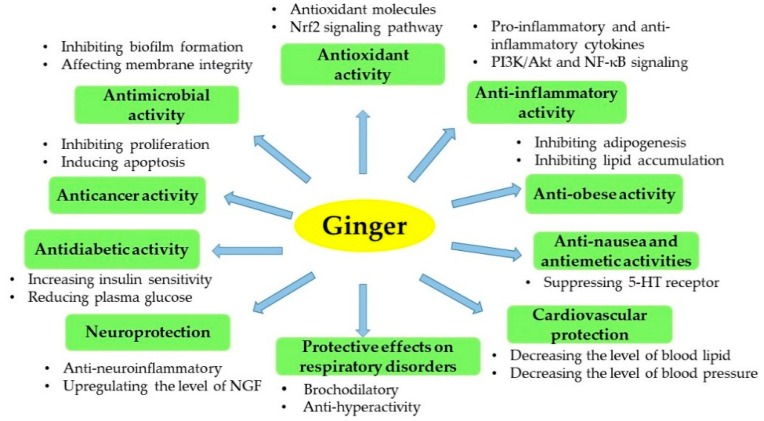
Ginger (Zingiber officinale Roscoe) is a common and widely used spice. It is rich in various chemical constituents, including phenolic compounds, terpenes, polysaccharides, lipids, organic acids, and raw fibers. The health benefits of ginger are mainly attributed to its phenolic compounds, such as gingerols and shogaols. Accumulated investigations have demonstrated that ginger possesses multiple biological activities, including antioxidant, anti-inflammatory, antimicrobial, anticancer, neuroprotective, cardiovascular protective, respiratory protective, antiobesity, antidiabetic, antinausea, and antiemetic activities. In this review, we summarize current knowledge about the bioactive compounds and bioactivities of ginger, and the mechanisms of action are also discussed. We hope that this updated review paper will attract more attention to ginger and its further applications, including its potential to be developed into functional foods or nutraceuticals for the prevention and management of chronic diseases.
Overview
The claims and statistics of this paper haven’t been checked yet.
Free: it reads the open-access text and checks the first 5 claims that cite a source we can check. Create a free account to check every claim.
Integrity signals
Registry
Cites
Statistics
Figures
Verification
Claims the paper makes
The claims and statistics of this paper haven’t been checked yet.
Free: it reads the open-access text and checks the first 5 claims that cite a source we can check. Create a free account to check every claim.
Claims other papers make about this one
Each is checked against this paper’s own text: does it say what the citing paper says it does?
In the citing paper
“A meta-analysis of 13 randomized control trials (n = 1174) found that ginger significantly improves overall pregnancy-associated nausea and vomiting, comparable to vitamin B6 [230] and as effective as standard antiemetics like dimenhydrinate [231].”
From Nutritional Approaches to Enhance GLP-1 Analogue Therapy in Obesity: A Narrative Review (2025) · cites this paper as [231]
Self-check
Percentages, sums and reported differences re-computed from the paper’s own numbers.
The self-check needs the paper’s full text.
Citations
Cites
Bray, F., Ferlay, J., Soerjomataram, I., Siegel, R. L., Torre, L. A., & Jemal, A. (2018) · CA: A Cancer Journal for Clinicians · doi:10.3322/caac.21492 · Cited by 84,109
Targeting Free Radicals in Oxidative Stress-Related Human Diseases
Poprac, P., Jomova, K., Simunkova, M., Kollar, V., Rhodes, C. J., & Valko, M. (2017) · Trends in Pharmacological Sciences · doi:10.1016/j.tips.2017.04.005 · Cited by 1,107 · cited 1×
“It has been known that overproduction of free radicals, such as reactive oxygen species (ROS), plays an important part in the development of many chronic diseases [17].”
BackgroundPlant-derived exosomal MicroRNAs shape the gut microbiota
Teng, Y., Ren, Y., Sayed, M., Hu, X., Lei, C., Kumar, A., Hutchins, E., Mu, J., Deng, Z., Luo, C., et al. (2018) · Cell Host & Microbe · doi:10.1016/j.chom.2018.10.001 · Cited by 1,027 · cited 1×
“Moreover, microRNAs of ginger exosome-like nanoparticles (GELN) ameliorated mouse colitis by inducing the production of IL-22, a barrier function improvement factor [41].”
BackgroundZhang, M., Viennois, E., Prasad, M., Zhang, Y., Wang, L., Zhang, Z., Han, M. K., Xiao, B., Xu, C., Srinivasan, S., et al. (2016) · Biomaterials · doi:10.1016/j.biomaterials.2016.06.018 · Cited by 1,026 · cited 12×
“Besides, ginger extract and zingerone inhibited NF-κB activation and decreased the level of IL-1β in the colons of mice, which alleviated colitis induced by 2, 4, 6-trinitrobenzene sulfonic acid [38].”
BackgroundInfluentialAntioxidant capacities and total phenolic contents of 62 fruits
Fu, L., Xu, B.-T., Xu, X.-R., Gan, R.-Y., Zhang, Y., Xia, E.-Q., & Li, H.-B. (2011) · Food Chemistry · doi:10.1016/j.foodchem.2011.04.079 · Cited by 757
Self-citationGinger and Its Constituents: Role in Prevention and Treatment of Gastrointestinal Cancer
Prasad, S., & Tyagi, A. K. (2015) · Gastroenterology Research and Practice · doi:10.1155/2015/142979 · Cited by 439 · cited 2×
“Besides these, polysaccharides, lipids, organic acids, and raw fibers are also present in ginger [13,16].”
BackgroundChang, J. S., Wang, K. C., Yeh, C. F., Shieh, D. E., & Chiang, L. C. (2013) · Journal of Ethnopharmacology · doi:10.1016/j.jep.2012.10.043 · Cited by 369 · cited 2×
“Ginger was effective in blocking viral attachment and internalization [52].”
BackgroundXu, X.-Y., Meng, X., Li, S., Gan, R.-Y., Li, Y., & Li, H.-B. (2018) · Nutrients · doi:10.3390/nu10101553 · Cited by 358
Self-citationLi, C.-L., Ou, C.-M., Huang, C.-C., Wu, W.-C., Chen, Y.-P., Lin, T.-E., Ho, L.-C., Wang, C.-W., Shih, C.-C., Zhou, H.-C., et al. (2014) · Journal of Materials Chemistry B · doi:10.1039/c4tb00216d · Cited by 350 · cited 2×
“The in vitro experiment found that C-dots increased the content of ROS in the HepG2 cells, which upregulated the expression of p53 and promoted apoptosis [67].”
BackgroundTotal Phenolic Contents and Antioxidant Capacities of Selected Chinese Medicinal Plants
Song, F.-L., Gan, R.-Y., Zhang, Y., Xiao, Q., Kuang, L., & Li, H.-B. (2010) · International Journal of Molecular Sciences · doi:10.3390/ijms11062362 · Cited by 346
Self-citation
Cited by
Items 501–600 of 1,001
Ullah, M. E., Probojati, R. T., Murtadlo, A. A. A., Tamam, M. B., & Naw, S. W. (2022) · SAINSTEK International Journal on Applied Science Advanced Technology and Informatics · doi:10.24036/sainstek/vol1-iss01/4 · Cited by 12
Could Zingiber officinale plant be effective against Omicron BA.2.75 of SARS-CoV-2?
Saraç, H., Demirbaş, A., & Tüzün, B. (2023) · Turkish computational and theoretical chemistry/Turkish computational and theoretical chemistry : · doi:10.33435/tcandtc.1198612 · Cited by 8
“Its rhizomes are used to alleviate or treat ailments such as colds, bronchitis, fever, headache, cough, colic, indigestion and nausea [6,8,9].”
InfluentialIn vitro regeneration, transplantation and phytochemical profiles of Kaempferia angustifolia Roscoe
Saensouk, S., Yaowachai, W., Chumroenphat, T., Nonthalee, S., & Saensouk, P. (2023) · Notulae Botanicae Horti Agrobotanici Cluj-Napoca · doi:10.15835/nbha51413190 · Cited by 9
Boarescu, I., Boarescu, P.-M., Pop, R. M., Bocșan, I. C., Gheban, D., Bulboacă, A. E., Buzoianu, A. D., & Bolboaca, S. D. (2024) · International Journal of Molecular Sciences · doi:10.3390/ijms25031781 · Cited by 8
“Ginger ( Zingiber officinale ) has been commonly used as a spice and as a herbal medicine for a long time; ginger root is used to attenuate and treat several common diseases, such as colds, nausea, headaches, and emesis [13].”
BackgroundWang, W., Portal-González, N., Wang, X., Li, J., Li, H., Portieles, R., Borrás‐Hidalgo, O., He, W., & Santos, R. (2024) · The Science of The Total Environment · doi:10.1016/j.scitotenv.2024.174395 · Cited by 8
Self-citationAli, M. E., Alsalama, S. A., Althubyani, S. A., Baazaoui, N., Ahmed, A. E., Nasser, M. E. A., & Nasr, H. A. (2024) · Veterinary World · doi:10.14202/vetworld.2024.1619-1628 · Cited by 18
“Numerous studies have shown ginger possesses anti-oxidant, anti-inflammatory, and antimicrobial properties [8].”
BackgroundAzzam, K. M. A., Al‐Areer, N. W., Omari, R. H. A., Al‐Deeb, I., Bounoua, N., Negim, E., Al-Samydai, A. M., Aboalroub, A. A., & Said, R. R. (2024) · Biomedical Chromatography · doi:10.1002/bmc.5993 · Cited by 8
Tiani, K. A., Arenaz, C. M., Spill, M. K., Foster, M., Davis, J. S., Bailey, R. L., Field, M. S., Stover, P. J., & MacFarlane, A. J. (2024) · Advances in Nutrition · doi:10.1016/j.advnut.2024.100308 · Cited by 22
Consumer sensory evaluation and quality of Sorghum-Peanut Meal-Okra snacks
Kahlon, T. S., Avena‐Bustillos, R. J., Kahlon, A. K., & Brichta, J. L. (2021) · Heliyon · doi:10.1016/j.heliyon.2021.e06874 · Cited by 8
Kaur, C., Roy, T., Das, S., Gupta, R., & Pramanik, T. (2021) · Biomass Conversion and Biorefinery · doi:10.1007/s13399-021-01806-1 · Cited by 10
“Moreover, certain groups are present in the raw material containing OH groups on the adjacent positions, for example, ascorbic acid in pine nut shells [38], leucodelphinidin and tannins in amla bark [39] and polyphenols, quercetin in ginger [40].”
BackgroundImproving the Functionality of Chocolate by Incorporating Vegetal Extracts
Muhammad, D. R. A., Fibri, D. L. N., & Prakash, S. (2022) · Springer eBooks · doi:10.1007/978-3-030-90169-1_4 · Cited by 15
Gérez, N., Zinola, G., Macías, G., Cesio, M. V., & Heinzen, H. (2022) · Microchemical Journal · doi:10.1016/j.microc.2022.107349 · Cited by 8
Amoah, R. E., Wireko‐Manu, F. D., Oduro, I., Saalia, F. K., Ellis, W. O., & Owusu, E. O. (2022) · Cogent Food & Agriculture · doi:10.1080/23311932.2022.2123766 · Cited by 8
“Studies have also shown that the use of hydroalcoholic extract as well as the oil has also been effective against certain microbes (Mao et al., 2019; Sa-Nguanpuag et al., 2011).”
BackgroundInfluentialWidowati, W., Wargasetia, T. L., Zakaria, T. M., Marthania, M., Gunadi, M. S., Halim, N., Dewi, N. S. M., & Santiadi, S. (2022) · Majalah kedokteran Bandung/Majalah Kedokteran Bandung · doi:10.15395/mkb.v54n3.2729 · Cited by 8
Anti-melanogenic effect of Moju through inhibition of tyrosinase activity
Kim, H.-R., Lee, S.-H., Noh, E., Oh, B., Kim, S., & Park, M. H. (2023) · Molecular & Cellular Toxicology · doi:10.1007/s13273-022-00329-8 · Cited by 8
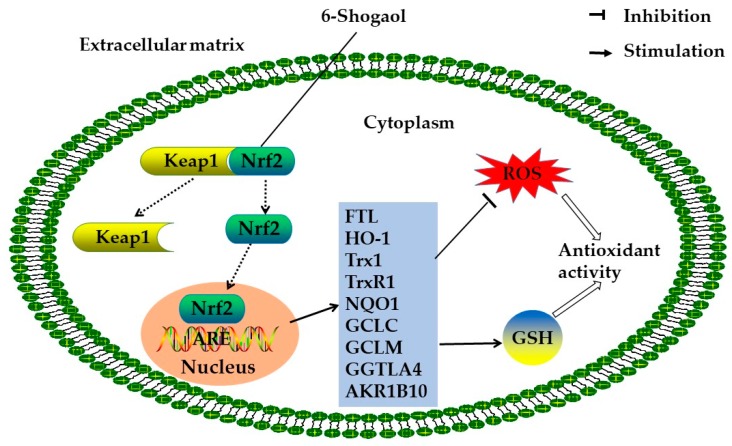
“More than 200 compounds have been identified in ginger (Mao et al. 2019), and 6-shogaol has been reported to protect human melanocytes against oxidative stress through activation of the Nrf2-antioxidant response element signaling pathway (Yang et al. 2020).”
Cellular mechanism of action of forsythiaside for the treatment of diabetic kidney disease
Xu, C., Miao, H., Chen, X., & Zhang, H. (2023) · Frontiers in Pharmacology · doi:10.3389/fphar.2022.1096536 · Cited by 9
Bonetti, A., Piva, A., & Grilli, E. (2023) · Frontiers in Veterinary Science · doi:10.3389/fvets.2023.1141561 · Cited by 8
Kury, L. T. A. (2023) · Pharmaceuticals · doi:10.3390/ph16040523 · Cited by 13
Gembe‐Olivarez, G., Preciado-Ortiz, M. E., Campos-Perez, W. Y., Rodríguez-Reyes, S. C., Martínez‐López, E., & Rivera-Valdes, J. J. (2023) · Experimental and Therapeutic Medicine · doi:10.3892/etm.2023.12035 · Cited by 15
Role of Garlic and Ginger in Anti-oxidative and Anti-inflammatory Effects in Aging
Chung, H. Y., Arulkumar, R., Bang, E., Noh, S., & Yokozawa, T. (2019) · SDRP Journal of Food Science & Technology · doi:10.25177/jfst.4.5.mr.533 · Cited by 9
“ties, such as antioxidant, anti-microbial, antiinflammatory, anti-cancer activities [28].”
BackgroundKato, Y., Uchiumi, H., Usami, R., Takatsu, H., Aoki, Y., Yanai, S., Endo, S., & Fukui, K. (2021) · Journal of Clinical Biochemistry and Nutrition · doi:10.3164/jcbn.21-10 · Cited by 10
Shah, P., Banerjee, S., Singh, A., Kulhari, H., & Saharan, V. A. (2025) · Wiley eBooks · doi:10.1002/9781119769484.ch1 · Cited by 17
Jimoh, O. A., Nwachukwu, C. U., Abosede, O. O., & Samuel, T. O. (2023) · Translational Animal Science · doi:10.1093/tas/txad106 · Cited by 12
“The main bioactive substances in ginger are gingerdione, shogaol, gingerdiol, and gingerol and their derivatives with pharmacological activity (Mao et al., 2019).”
BackgroundHardi, H., Estuworo, G. K., & Louisa, M. (2024) · Journal of Ayurveda and Integrative Medicine · doi:10.1016/j.jaim.2024.100957 · Cited by 14
“Ginger ( zingiber offici-nale ) contains shogaol, zingiberene, gingerol, zingerone, and paradol, which can regulate gastrointestinal motility and inhibit vagal nerves by inhibiting serotonin in gastrointestinal nerves [17,18].”
BackgroundKumar, K. S., Sivam, V., Teena, G., Elavarasan, K., Bindu, J., Balange, A. K., Sivaranjani, R., & Narasimhamurthy, L. (2024) · International Journal of Food Science · doi:10.1155/ijfo/9326683 · Cited by 7
Ginger extract promotes pancreatic islets regeneration in streptozotocin-induced diabetic rats
Abbood, M. S., Al‐Adsani, A. M., & Al‐Bustan, S. A. (2025) · Bioscience Reports · doi:10.1042/bsr20241510 · Cited by 8
“The safety and efficiency of ginger extract to ameliorate hyperglycemia have been reported in different studies [25–27].”
Lavanya, D., Prasanna, V. L., Firdous, A., & Thakur, S. (2025) · Cancer Treatment and Research Communications · doi:10.1016/j.ctarc.2025.100938 · Cited by 10
Salim, S. A., Abed, T., Abdelazim, E. B., Eissa, N. G., Elsabahy, M., & Kamoun, E. A. (2025) · Arabian Journal for Science and Engineering · doi:10.1007/s13369-025-10247-1 · Cited by 11
Matin, M., Wysocki, K., Horbańczuk, J. O., Rossi, L., & Atanasov, A. G. (2025) · Frontiers in Pharmacology · doi:10.3389/fphar.2025.1597599 · Cited by 8
Mechanistic advances and therapeutic applications of Zingiber officinale Roscoe
Verma, P. K., Singh, B., Sharma, P., Tukra, S., Aït‐Kaddour, A., & Bhat, Z. F. (2025) · Food Chemistry Advances · doi:10.1016/j.focha.2025.101060 · Cited by 15
Styawan, A. A., Susidarti, R. A., Purwanto, P., Irnawati, I., & Rohman, A. (2022) · Journal of Applied Pharmaceutical Science · doi:10.7324/japs.2023.50966 · Cited by 9
Indian medicinal plants are effective in the treatment and management of COVID-19
Chandra, S., Palai, S., Matias, E. F. F., Neto, I. C. P., GOMES-RAMALHO, C. L., de Andrade, E. M., de Almeida, R. S., Iriti, M., & Coutinho, H. D. M. (2023) · Biocell · doi:10.32604/biocell.2023.026081 · Cited by 11
Heikal, M. F., Putra, W. E., Sustiprijatno, Rifa’i, M., Hidayatullah, A., Ningsih, F. N., Widiastuti, D., Shuib, A. S., Zulfiani, B. F., & Hanasepti, A. F. (2023) · Tropical Life Sciences Research · doi:10.21315/tlsr2023.34.2.1 · Cited by 7
Exploring the innovation landscape of ginger: Insights from patent documentation analysis
Matin, M., Kapoor, B., Gulati, M., Mickael, M., Matin, F. B., Kamińska, A., Bensz, J., Sołdacki, D., Wierzbicka, A., Marcinkowska‐Lesiak, M., et al. (2025) · Current Research in Biotechnology · doi:10.1016/j.crbiot.2025.100299 · Cited by 8
Self-citationKhaerunnisa, K., Mahendradatta, M., & Asfar, M. (2021) · IOP Conference Series Earth and Environmental Science · doi:10.1088/1755-1315/807/2/022052 · Cited by 7
Navarro-Hoyos, M., Acuña-Quirós, M., Quirós-Fallas, M. I., Vargas-Huertas, F., Wilhelm-Romero, K., Vásquez-Castro, F., Alvarado-Corella, D., & Sánchez-Kopper, A. (2022) · Processes · doi:10.3390/pr10040691 · Cited by 7
Sandhu, D., & Morya, S. (2022) · Journal of Applied and Natural Science · doi:10.31018/jans.v14i2.3429 · Cited by 9
Sihombing, A. T., Prabharani, D., Lukman, K., & Sudjud, R. W. (2022) · Annals of Medicine and Surgery · doi:10.1016/j.amsu.2022.104865 · Cited by 11
“An experimental in vitro study revealed that 6-shogaol, 6-gingerol, and zingerone inhibited the transmission of emetic signals in vagal afferent neurons by suppressing 5-HT, and 6-shogaol receptors had the strongest inhibitory effectiveness [9].”
BackgroundInfluentialNemzer, B. V., & Kalita, D. (2023) · IntechOpen eBooks · doi:10.5772/intechopen.109774 · Cited by 10
Ihekwereme, P. C., Asomugha, R. N., Mbagwu, I. S., Oraekei, D. I., & Ajaghaku, D. L. (2023) · GSC Biological and Pharmaceutical Sciences · doi:10.30574/gscbps.2023.25.1.0396 · Cited by 12
Preciado-Ortiz, M. E., Martínez‐López, E., Rodriguez‐Echevarría, R., Pérez-Robles, M., Gembe‐Olivarez, G., & Rivera-Valdes, J. J. (2023) · Biomedical Reports · doi:10.3892/br.2023.1687 · Cited by 9
Adetutu, A., Aborisade, A. B., Ogunsina, F. A., Adegbola, P. I., & Olaniyi, T. D. (2023) · Ecotoxicology and Environmental Safety · doi:10.1016/j.ecoenv.2023.115768 · Cited by 12
Lee, F. Y., Wong, H., Chan, H., Ali, N. M., Hassan, M. R. A., Omar, H., & Mutalib, N. A. (2020) · Pharmacoepidemiology and Drug Safety · doi:10.1002/pds.5153 · Cited by 9
“Ginger, another commonly found ingredient in the suspected ADRs, have little hepatotoxic potential documented in literature, but it was reported that ginger augmented the intrinsic hepatotoxicity of paracetamol in rats.(60,67) With most TCM/HDS-associated hepatic ADRs were found to be serious, one distinct possibility…”
BackgroundFasogbon, B. M., Ademuyiwa, O. H., Bamidele, O. P., Wahab, I. E., Ola-Adedoyin, A. T., & Alakija, O. (2021) · Preventive Nutrition and Food Science · doi:10.3746/pnf.2021.26.1.1 · Cited by 7
“These latter are also responsible for its various anti-inflammatory, antiviral, antimicrobial and antioxidant activities (Mao et al., 2019).”
BackgroundInfluentialHidayatullah, A., Putra, W. E., Sustiprijatno, Permatasari, G. W., Salma, W. O., Widiastuti, D., Susanto, H., Muchtaromah, B., Sari, D. R. T., Ningsih, F. N., et al. (2021) · Chiang Mai University Journal of Natural Sciences · doi:10.12982/cmujns.2021.059 · Cited by 7
Hananiah, N., & Rahim, A. A. (2022) · Malaysian Journal of Science Health & Technology · doi:10.33102/2022240 · Cited by 9
“Therefore, the loss of flavour would be a useful physico-chemical indicator for losing antimicrobial potency [122-123].”
BackgroundEvidence‐Based Clinical Assessment of Herbal Formulations: Traditional and Modern Insights
Banerjee, D., Banerjee, S., Shah, P., Singh, A., & Saharan, V. A. (2025) · Wiley eBooks · doi:10.1002/9781119769484.ch25 · Cited by 12
Shen, C., Hassan, T., Presto, P., Payberah, D., Devega, R., Wakefield, S. M., Dunn, D. M., & Neugebauer, V. (2025) · Journal of Nutrition · doi:10.1016/j.tjnut.2025.04.006 · Cited by 9
Segneanu, A., Bradu, I.-A., Vlase, G., Vlase, T., Bejenaru, C., Bejenaru, L. E., Mogoşanu, G. D., Ciocîlteu, M. V., Herea, D.-D., & Boia, E. R. (2025) · Pharmaceutics · doi:10.3390/pharmaceutics17060751 · Cited by 6
Tong, Y., Wang, Y., Zhang, J., Guo, Y., Yuan, T., Chen, H., Zhang, H., Zhan, K., Zhao, L., Ma, Q., et al. (2025) · Poultry Science · doi:10.1016/j.psj.2025.105448 · Cited by 8
“Ginger ’ s range of biological activities, including its antioxidant, anti-inflammatory, and antimicrobial properties (Baliga et al., 2011; Mao et al., 2019), is attributed to its high polyphenol content.”
Han, Z., He, P., Geng, Y., Manzoor, M. F., Zeng, X., Hassan, S., & Afraz, M. T. (2025) · Foods · doi:10.3390/foods14152637 · Cited by 7
“This increase in gingerols (6, 8, and 10-gingerol) can be related to the increased total phenolics observed in this study as these are major phenolics found in ginger [95].”
Li, M., Wang, Z., Zhu, L., Wang, Y., Zhang, L., Jia, H., Yang, Z., Karrow, N. A., & Mao, Y. (2025) · Journal of Dairy Science · doi:10.3168/jds.2025-26997 · Cited by 9
Ali, E. M., Abdalameer, N. K., Khalaph, K. A., Hadi, F. W., & Ramadhan, A. O. (2025) · The European Physical Journal Plus · doi:10.1140/epjp/s13360-025-06873-1 · Cited by 6
Sultana, A., Heyat, M. B. B., Rahman, K., Ahmed, Z., Akhtar, F., Shamim, A. U., Khaleeq, K., & Muaad, A. Y. M. (2025) · Frontiers in Pharmacology · doi:10.3389/fphar.2025.1661035 · Cited by 18
Molzahn, V. A., Mousavi, S., Bereswill, S., & Heimesaat, M. M. (2025) · European Journal of Microbiology and Immunology · doi:10.1556/1886.2025.00069 · Cited by 6
Lgaz, H., Messali, M., & Lee, H. (2025) · International Journal of Molecular Sciences · doi:10.3390/ijms262211217 · Cited by 8
“Zingiber officinale , commonly known as ginger, stands out as a particularly rich source of such bioactive compounds [17,18].”
Nacer-Eddine, D.-K., Loukili, E. H., Lebrazi, S., Sabbahi, R., Fadil, M., Er-rajy, M., Taibi, M., Yahyaoui, M. I., Azougay, A., Asehraou, A., et al. (2026) · Scientific Reports · doi:10.1038/s41598-025-30345-2 · Cited by 6
Morasiewicz-Jeziorek, J., Buczyńska, A., Kretowski, A. J., & Adamska, A. (2026) · Nutrition Reviews · doi:10.1093/nutrit/nuaf195 · Cited by 9
“100 Ginger root is used to relieve and treat common issues, such as headache, common cold, nausea, and vomiting.”
Pharmafoods for body cleansing of toxic exposure to chemical and biological warfare agents
Adetunji, C. O., Michael, O. S., & Anani, O. A. (2021) · Elsevier eBooks · doi:10.1016/b978-0-12-821556-2.00012-8 · Cited by 6
Gollapalli, P., Gnanasekaran, T. S., Rao, S. J. A., Manjunatha, H., Shetty, P. K., & Kumari, S. (2022) · Current Drug Discovery Technologies · doi:10.2174/1570163819666220825141356 · Cited by 8
Diyet İnflamatuar İndeksi, İnflamasyon ve Beslenme
Amanpour, A., ÇELEBİ, F., Kahraman, I. G., & Çelik, F. (2022) · Türkiye Sağlık Bilimleri ve Araştırmaları Dergisi · doi:10.51536/tusbad.1133247 · Cited by 11
Okwunodulu, I. N., Obioma, V. N., Okwunodulu, F. U., Ndife, J., & Wabali, V. C. (2023) · Food Chemistry Advances · doi:10.1016/j.focha.2023.100391 · Cited by 6
Herbal Nanoparticles: A Commitment towards Contemporary Approach
Mansingh, P. P., Adhikari, L., & Dhara, M. (2023) · Indian Journal of Pharmaceutical Education and Research · doi:10.5530/ijper.57.3s.55 · Cited by 8
Pioneering ginger juice extract mediated synthesis of magnesium indate nanoparticles
Sasidhar, N., Vidya, Y. S., Manjunatha, H. C. S., Soundar, R., Munirathnam, R., Seenappa, L., Sridhar, K. N., Manjunatha, S., & Krishnakanth, E. (2023) · Journal of Physics and Chemistry of Solids · doi:10.1016/j.jpcs.2023.111682 · Cited by 6
A Review on Thrombolysis Enhancing Indian Edible Plants
Jain, V., Kunwar, B., & Verma, S. K. (2023) · Biomedical & Pharmacology Journal · doi:10.13005/bpj/2709 · Cited by 10
Nickavar, B., & Joshaghani, R. A. (2023) · Food Bioscience · doi:10.1016/j.fbio.2023.103345 · Cited by 7
Optimization of spicy red pepper paste (Awaze) formulation by D‐optimal mixture design
Kefale, B., Delele, M. A., Fanta, S. W., & Abate, S. (2023) · Food Science & Nutrition · doi:10.1002/fsn3.3874 · Cited by 6
Muthamil, S., Muthuramalingam, P., Kim, H., Jang, H., Lyu, J., Shin, U. C., Go, Y., Park, S., Lee, H. G., Shin, H., et al. (2023) · International Journal of Molecular Sciences · doi:10.3390/ijms25010156 · Cited by 7
Yanti, C. F., Usman, A. N., Ahmad, M., Ilhammudin, Ariyandi, A., & Budiaman (2024) · BIO Web of Conferences · doi:10.1051/bioconf/20249601021 · Cited by 6
Hassan, A. A., Adil, H., Alyasiri, T., Alsayed, R., Makia, R. S., Kadhom, M. A., Salman, H., & Yousif, E. A. (2024) · Results in Chemistry · doi:10.1016/j.rechem.2024.101617 · Cited by 6
Kanai, T., Shirahata, T., Nakamori, S., Koizumi, Y., Kodaira, E., Sato, N., Fuchino, H., Kawano, N., Kawahara, N., Hoshino, T., et al. (2024) · Journal of Natural Medicines · doi:10.1007/s11418-024-01837-8 · Cited by 6
Adebayo, O. G., Ben‐Azu, B., Akpofure, E., Modo, E. U., Ndidiamaka, I. P., Enya, J. I., Udoeyop, F. A., Oritsemuelebi, B., Chidebe, E. O., Chimezie, J., et al. (2024) · Phytomedicine Plus · doi:10.1016/j.phyplu.2024.100610 · Cited by 6
Zhao, B., Ye, J., Zhao, W., Liu, X., Lan, H., Sun, J., Chen, J., Cai, X., Wei, Q., Zhou, Q., et al. (2024) · Research · doi:10.34133/research.0524 · Cited by 6
Kacholi, D. S., & Amir, H. M. (2024) · BioMed Research International · doi:10.1155/bmri/8534815 · Cited by 6
Yousaf, Z., Hussain, S. M., Ali, S., Yılmaz, E., Sarker, P. K., & Shahid, M. (2024) · Aquaculture International · doi:10.1007/s10499-024-01779-8 · Cited by 6
“These constituents collectively contribute to its beneficial effects, which may vary across fish species (Krell and Stebbing 2012; Sukumaran et al. 2016; Mao et al. 2019; Luo et al. 2024).”
Mulyani, H., Artanti, N., Yuniati, R., & Yasman, Y. (2025) · Fermentation · doi:10.3390/fermentation11030128 · Cited by 11
Wang, Y., Dong, L., Han, S., You, Y., Zhang, M., Sun, B., Ni, H., Ge, R., Liu, J., & Yu, J. (2025) · Frontiers in Pharmacology · doi:10.3389/fphar.2025.1543594 · Cited by 8
Windarsih, A., Indrianingsih, A. W., Suryani, R., Wiyono, T., Noviana, E., Darsih, C., Rahayu, E. P., Pangestuti, R., Asari, S. M., Pratiwi, S. I., et al. (2025) · Chemistry & Biodiversity · doi:10.1002/cbdv.202500645 · Cited by 6
“Zingerone exhibited antioxidant, immunomodulation, various inflammatory, and anticancer activity [59, 60].”
Filho, J. M. D. M., Neto, J. N., Gomes, L. M. R. D. S., Ramos, I. S. F., Oliveira, S. S. R., de Melo, G. C. F., Silva, L. A., Moura, E. C. R., & Leal, P. D. C. (2020) · Journal of Medicinal Food · doi:10.1089/jmf.2019.0320 · Cited by 8
Shogaol, Bisdemethoxycurcumin, and Curcuminoid: Potential Zingiber Compounds Against COVID-19
(2021) · Biointerface Research in Applied Chemistry · doi:10.33263/briac115.1286912876 · Cited by 6
Dawood, S. M., Mumtaz, F., & Padiya, R. (2022) · Revista de ciencias farmaceuticas · doi:10.4322/2179-443x.0759 · Cited by 6
Wu, J., Li, X., Liang, J. Y., Xie, J. W., Deng, C.-N., Chen, Z., Lai, C.-S., & Yang, Z.-J. (2022) · Annals of Translational Medicine · doi:10.21037/atm-22-1403 · Cited by 6
“Ginger components are involved in biological activities (55) such as immunology and inflammation, apoptosis, cell cycle/DNA damage, chromatin/epigenetic regulation, cytoskeleton regulation and adhesion, and nerve cell activity.”
Influence of spices and herbs incorporation on popular Indian dairy products: A review
Sharma, D., & Kumari, K. (2022) · The Pharma Innovation · doi:10.22271/tpi.2022.v11.i6sw.13315 · Cited by 6
Genetic Diversity and Chemicals Profile of Ginger (Zingiber officinale Roscoe) in Indonesia
Subositi, D., Widodo, H., Mujahid, R., Rahmawati, N., Mustofa, F. I., Haryanti, S., Sholikhah, I. Y. M., Maruzy, A., & Widiyastuti, Y. (2022) · International Journal on Advanced Science Engineering and Information Technology · doi:10.18517/ijaseit.12.3.15660 · Cited by 6
Global use of Ethnomedicinal Plants to Treat Toothache
Álvarez-Vásquez, J. L., Solano, N. F. P., Saavedra-Cornejo, G. E., & Vásquez, X. E. E. (2022) · Biomedical & Pharmacology Journal · doi:10.13005/bpj/2421 · Cited by 13
Elegbeleye, J. A., Krishnamoorthy, S., Bamidele, O. P., Adeyanju, A. A., Adebowale, O. J., & Agbemavor, W. S. K. (2022) · Journal of Food Biochemistry · doi:10.1111/jfbc.14331 · Cited by 16
Zainal, A. A., Salleh, N. F. M., Ahmad, W. A. N. W., Rasudin, N. S., Zaabar, W. R. W., & Ghafar, N. A. (2022) · IOP Conference Series Earth and Environmental Science · doi:10.1088/1755-1315/1102/1/012049 · Cited by 6
Mahmudati, N., Nurdiana, H., Wahyono, P., & Prihanta, W. (2023) · GSC Biological and Pharmaceutical Sciences · doi:10.30574/gscbps.2023.22.1.0040 · Cited by 6
Batubara, I., Badrunanto, B., Wahyuni, W. T., & Farid, M. (2023) · International Journal on Advanced Science Engineering and Information Technology · doi:10.18517/ijaseit.13.2.17606 · Cited by 6
Ethnobotany of food plants utilized by Malay Ethnic in Belitung District, Indonesia
Chikmawati, T., Sulistijorini, S., Djuita, N. R., Prasaja, D., Yamini, T. H. A., Miftahudin, M., & Fakhrurrozi, Y. (2023) · Biodiversitas Journal of Biological Diversity · doi:10.13057/biodiv/d240552 · Cited by 6
“The emic procedure was performed through participatory observation and open-ended, semi-structural, and structural interviews (Martin 1998).”
MethodRole of bioactive components of ginger in management of osteoarthritis: a review
Maryam, H., Azhar, S., Akhtar, M. N., Asghar, A., Saeed, F., Ateeq, H., Afzaal, M., Akram, N., Munir, H., Anjum, W., et al. (2023) · International Journal of Food Properties · doi:10.1080/10942912.2023.2236811 · Cited by 9
“Ginger possesses effective anti-inflammatory and antioxidant properties due to the presence of polysaccharides, organic acids, lipids, and fibers.([7]) Recent studies reported that an active component present in ginger decreases the risk of various infections such as respiratory syncytial viral infection.”
BackgroundSahardi, N. F. N. M., & Makpol, S. (2023) · Molecules · doi:10.3390/molecules28155867 · Cited by 13
El-Hashash, S. A., El-Sakhawy, M. A.-M., Eldamaty, H. S. E., & Alqasem, A. A. (2023) · Saudi Journal of Biological Sciences · doi:10.1016/j.sjbs.2023.103824 · Cited by 6
Wahid, R. A. H., Purwaningsih, O., & Pamungkas, P. B. (2023) · Tropical Journal of Natural Product Research · doi:10.26538/tjnpr/v7i9.18 · Cited by 17
Nutraceuticals and biotics in pediatric gastrointestinal disorders
Corsello, A., Scatigno, L., Fiore, G., Baresi, S., Eletti, F., Zuccotti, G., Strisciuglio, C., Dilillo, D., & Verduci, E. (2023) · European Journal of Clinical Nutrition · doi:10.1038/s41430-023-01362-z · Cited by 8
Islam, M. R., Dhar, P. S., Akash, S., Syed, S. H., Gupta, J. K., Gandla, K., Akter, M., Rauf, A., Hemeg, H. A., Anwar, Y., et al. (2023) · Natural Products and Bioprospecting · doi:10.1007/s13659-023-00411-1 · Cited by 16
The impact of ginger and curcumin on diabetic nephropathy induced by streptozotocin in rats
Taha, A. J., Ashour, H. K., Refaat, M., & El-Khawaga, O. Y. (2023) · European Journal of Translational and Clinical Medicine · doi:10.31373/ejtcm/172884 · Cited by 7
“…• GSH – reduced glutathione • IL-6 – interleukin-6 • MDA – malondialdehyde • NF-κB – nuclear factor kappa B • OS – oxidative stress • PKC – protein kinase C • ROS – reactive oxygen species • SOD – superoxide dismutase • STZ – streptozotocin diment in various cuisines around the world [9-10].”
Sharma, P., Verma, P. K., Sood, S., Raina, R., Tukra, S., Bhat, Z. F., & Aadil, R. M. (2024) · Journal of Food Biochemistry · doi:10.1155/2024/8815630 · Cited by 6
Gao, Y., Shi, H., Xiong, Q., Rong, J., & Liu, R. (2024) · International Journal of Food Science & Technology · doi:10.1111/ijfs.17003 · Cited by 6
Lee, S., Jeon, H., Park, S., Lee, S., Chang, H. J., & Eo, W. K. (2020) · EXPLORE · doi:10.1016/j.explore.2020.10.004 · Cited by 6
Metadata
- Authors
- Mao, Q.-Q., Xu, X.-Y., Cao, S.-Y., Gan, R.-Y., Corke, H., Beta, T., & Li, H.-B.
- Affiliations
- Guangdong Provincial Key Laboratory of Food, Nutrition and Health, Department of Nutrition, School of Public Health, Sun Yat-sen University, Guangzhou 510080, China
- Sun Yat-sen University (CN)
- Shanghai Jiao Tong University (CN)
- Department of Food & Human Nutritional Sciences, University of Manitoba, Winnipeg, MB R3T 2N2, Canada
- Corresponding author
- Gan, Ren-You
- Li, Hua-Bin
- Venue
- Foods
- Publisher
- MDPI AG
- Published
- 2019-05-30
- Volume
- 8
- Issue
- 6
- Pages
- 185
- ISSN
- 2304-8158 (ISSN-L)
- PMC
- PMC6616534
- OpenAlex
- W2947671311
- Semantic Scholar
- d16da9cb8957f5f43f25ac947958cef199e438d8
- Cited by
- 1,418
- References
- 117
- Citations by year
- 2026: 162 · 2025: 247 · 2024: 255 · 2023: 254 · 2022: 255 · 2021: 159 · 2020: 74 · 2019: 10
- FWCI
- 19.61
- Type
- journal article
- Language
- en
- Open access
- gold
- dx.doi.org
- Licence
- Locations
- Foods (publishedVersion, cc-by)
- Europe PMC (PubMed Central) (publishedVersion, cc-by)
- PubMed Central (publishedVersion, cc-by)
- PubMed (publishedVersion)
- DOAJ (DOAJ: Directory of Open Access Journals) (submittedVersion, cc-by-sa)
- Funders
- the National Key R&D Program of China (2017YFC1600100)
- Shanghai Basic and Key Program (18JC1410800)
- the Agri-X Interdisciplinary Fund of Shanghai Jiao Tong University (Agri-X2017004)
- the Key Project of Guangdong Provincial Science and Technology Program (2014B020205002)
- Topics
- Life Sciences › Pharmacology, Toxicology and Pharmaceutics › Pharmacology › Ginger and Zingiberaceae research
- Life Sciences › Agricultural and Biological Sciences › Plant Science › Garlic and Onion Studies
- Life Sciences › Pharmacology, Toxicology and Pharmaceutics › Pharmacology › Ginseng Biological Effects and Applications
- Keywords
- ginger, bioactive compounds, phenolic compounds, gingerol, shogaol, antioxidant activity, anti-inflammatory activity, antimicrobial activity, anticancer activity, neuroprotection, cardioprotection, respiratory protection, anti-obesity, antidiabetic activity, antiemetic activity, functional foods, nutraceuticals, chronic disease prevention
About these checks
Registry, retraction, Cites and statistics results are computed, not judged, with one exception: a printed reference that no index lists is read once by a model before it counts as a citation error. Claims are extracted by a model and kept only when their quote appears verbatim in the text; each cited source is then checked, with a model’s help, for whether it says what the claim relies on. Those verdicts can be wrong — read the claim’s quote and the cited source before relying on one.
Statistics and arithmetic are recomputed, not judged.
Confidence bands are shown only for fields calibrated on our annotated test set. None is calibrated yet, so no band is shown.
What counts as a claim ›How we measure confidence ›How we check this ›
Are you an author, or do you see a problem with this page? Request a review
Data sources
Bibliographic data: Semantic Scholar, OpenAlex, Crossref.
Contains information from the Semantic Scholar Academic Graph Datasets, made available under the ODC Attribution License (ODC-BY 1.0).
Semantic Scholar’s data is described in: Kinney, R., et al. (2023). The Semantic Scholar Open Data Platform. arXiv:2301.10140.
