

Bioactive Compounds and Bioactivities of Ginger (Zingiber officinale Roscoe)
Open accessThe DOI matches its Crossref record; 117 of the 117 references it cites were found in a registry or an index.
Abstract
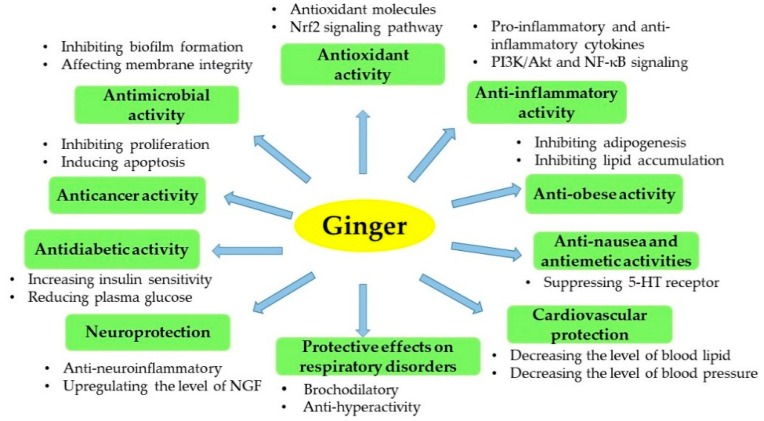
Ginger (Zingiber officinale Roscoe) is a common and widely used spice. It is rich in various chemical constituents, including phenolic compounds, terpenes, polysaccharides, lipids, organic acids, and raw fibers. The health benefits of ginger are mainly attributed to its phenolic compounds, such as gingerols and shogaols. Accumulated investigations have demonstrated that ginger possesses multiple biological activities, including antioxidant, anti-inflammatory, antimicrobial, anticancer, neuroprotective, cardiovascular protective, respiratory protective, antiobesity, antidiabetic, antinausea, and antiemetic activities. In this review, we summarize current knowledge about the bioactive compounds and bioactivities of ginger, and the mechanisms of action are also discussed. We hope that this updated review paper will attract more attention to ginger and its further applications, including its potential to be developed into functional foods or nutraceuticals for the prevention and management of chronic diseases.
Overview
The claims and statistics of this paper haven’t been checked yet.
Free: it reads the open-access text and checks the first 5 claims that cite a source we can check. Create a free account to check every claim.
Integrity signals
Registry
Cites
Statistics
Figures
Verification
Claims the paper makes
The claims and statistics of this paper haven’t been checked yet.
Free: it reads the open-access text and checks the first 5 claims that cite a source we can check. Create a free account to check every claim.
Claims other papers make about this one
Each is checked against this paper’s own text: does it say what the citing paper says it does?
In the citing paper
“A meta-analysis of 13 randomized control trials (n = 1174) found that ginger significantly improves overall pregnancy-associated nausea and vomiting, comparable to vitamin B6 [230] and as effective as standard antiemetics like dimenhydrinate [231].”
From Nutritional Approaches to Enhance GLP-1 Analogue Therapy in Obesity: A Narrative Review (2025) · cites this paper as [231]
Self-check
Percentages, sums and reported differences re-computed from the paper’s own numbers.
The self-check needs the paper’s full text.
Citations
Cites
Bray, F., Ferlay, J., Soerjomataram, I., Siegel, R. L., Torre, L. A., & Jemal, A. (2018) · CA: A Cancer Journal for Clinicians · doi:10.3322/caac.21492 · Cited by 84,109
Targeting Free Radicals in Oxidative Stress-Related Human Diseases
Poprac, P., Jomova, K., Simunkova, M., Kollar, V., Rhodes, C. J., & Valko, M. (2017) · Trends in Pharmacological Sciences · doi:10.1016/j.tips.2017.04.005 · Cited by 1,107 · cited 1×
“It has been known that overproduction of free radicals, such as reactive oxygen species (ROS), plays an important part in the development of many chronic diseases [17].”
BackgroundPlant-derived exosomal MicroRNAs shape the gut microbiota
Teng, Y., Ren, Y., Sayed, M., Hu, X., Lei, C., Kumar, A., Hutchins, E., Mu, J., Deng, Z., Luo, C., et al. (2018) · Cell Host & Microbe · doi:10.1016/j.chom.2018.10.001 · Cited by 1,027 · cited 1×
“Moreover, microRNAs of ginger exosome-like nanoparticles (GELN) ameliorated mouse colitis by inducing the production of IL-22, a barrier function improvement factor [41].”
BackgroundZhang, M., Viennois, E., Prasad, M., Zhang, Y., Wang, L., Zhang, Z., Han, M. K., Xiao, B., Xu, C., Srinivasan, S., et al. (2016) · Biomaterials · doi:10.1016/j.biomaterials.2016.06.018 · Cited by 1,026 · cited 12×
“Besides, ginger extract and zingerone inhibited NF-κB activation and decreased the level of IL-1β in the colons of mice, which alleviated colitis induced by 2, 4, 6-trinitrobenzene sulfonic acid [38].”
BackgroundInfluentialAntioxidant capacities and total phenolic contents of 62 fruits
Fu, L., Xu, B.-T., Xu, X.-R., Gan, R.-Y., Zhang, Y., Xia, E.-Q., & Li, H.-B. (2011) · Food Chemistry · doi:10.1016/j.foodchem.2011.04.079 · Cited by 757
Self-citationGinger and Its Constituents: Role in Prevention and Treatment of Gastrointestinal Cancer
Prasad, S., & Tyagi, A. K. (2015) · Gastroenterology Research and Practice · doi:10.1155/2015/142979 · Cited by 439 · cited 2×
“Besides these, polysaccharides, lipids, organic acids, and raw fibers are also present in ginger [13,16].”
BackgroundChang, J. S., Wang, K. C., Yeh, C. F., Shieh, D. E., & Chiang, L. C. (2013) · Journal of Ethnopharmacology · doi:10.1016/j.jep.2012.10.043 · Cited by 369 · cited 2×
“Ginger was effective in blocking viral attachment and internalization [52].”
BackgroundXu, X.-Y., Meng, X., Li, S., Gan, R.-Y., Li, Y., & Li, H.-B. (2018) · Nutrients · doi:10.3390/nu10101553 · Cited by 358
Self-citationLi, C.-L., Ou, C.-M., Huang, C.-C., Wu, W.-C., Chen, Y.-P., Lin, T.-E., Ho, L.-C., Wang, C.-W., Shih, C.-C., Zhou, H.-C., et al. (2014) · Journal of Materials Chemistry B · doi:10.1039/c4tb00216d · Cited by 350 · cited 2×
“The in vitro experiment found that C-dots increased the content of ROS in the HepG2 cells, which upregulated the expression of p53 and promoted apoptosis [67].”
BackgroundTotal Phenolic Contents and Antioxidant Capacities of Selected Chinese Medicinal Plants
Song, F.-L., Gan, R.-Y., Zhang, Y., Xiao, Q., Kuang, L., & Li, H.-B. (2010) · International Journal of Molecular Sciences · doi:10.3390/ijms11062362 · Cited by 346
Self-citation
Cited by
Items 101–200 of 1,001
Dietary strategies for cardiovascular disease risk factors prevention
Mazur, M., Przytula, A., Szymańska, M., & Popiołek-Kalisz, J. (2024) · Current Problems in Cardiology · doi:10.1016/j.cpcardiol.2024.102746 · Cited by 67
Chou, O., Ali, A., Subbiah, V., Barrow, C. J., Dunshea, F. R., & Suleria, H. A. R. (2021) · Fermentation · doi:10.3390/fermentation7020073 · Cited by 56
Wang, R., Lee, Y., Dhandapani, S., Baek, N., Kim, K. P., Cho, Y.-E., Xu, X., & Kim, Y.-J. (2022) · Pharmacological Research · doi:10.1016/j.phrs.2022.106610 · Cited by 54
Self-citationBioactive compounds and health benefits of pomegranate: An updated narrative review
Cheng, J., Li, J., Xiong, R.-G., Wu, S.-X., Huang, S., Zhou, D.-D., Saimaiti, A., Shang, A., Feng, Y., Gan, R., et al. (2023) · Food Bioscience · doi:10.1016/j.fbio.2023.102629 · Cited by 63
Self-citationThe Enigma of Low COVID-19 Fatality Rate in India
Samaddar, A., Gadepalli, R., Nag, V. L., & Misra, S. (2020) · Frontiers in Genetics · doi:10.3389/fgene.2020.00854 · Cited by 56
“It has been shown to inhibit influenza A virus replication in cell cultures in a dose dependent manner (Marois et al., 2014).”
BackgroundTarfaoui, K., Brhadda, N., Ziri, R., Oubihi, A., Imtara, H., Haida, S., Kamaly, O. M. A., Saleh, A., Parvez, M. K., Fettach, S., et al. (2022) · Plants · doi:10.3390/plants11111487 · Cited by 70
Medicinal Herbs: Promising Immunomodulators for the Treatment of Infectious Diseases
Alanazi, H. H., Elasbali, A. M., Alanazi, M. K., & Azab, E. F. E. (2023) · Molecules · doi:10.3390/molecules28248045 · Cited by 67
Zubair, M. S., Maulana, S., Widodo, A. A., Pitopang, R., Arba, M., & Hariono, M. (2021) · Molecules · doi:10.3390/molecules26175230 · Cited by 65
Vaghela, N. R., & Gohel, S. D. (2022) · Journal of Basic Microbiology · doi:10.1002/jobm.202200361 · Cited by 59
Eid, A. M., & Jaradat, N. A. (2020) · Frontiers in Pharmacology · doi:10.3389/fphar.2020.00046 · Cited by 67
Pagano, E., Souto, E. B., Durazzo, A., Sharifi‐Rad, J., Lucarini, M., Souto, S. B., Salehi, B., Zam, W., Montanaro, V., Lucariello, G., et al. (2020) · Phytotherapy Research · doi:10.1002/ptr.6964 · Cited by 68
“The most abundant biologically active compounds are F IGURE 1 Chemical structures of gingerols terpenes and phenolic compounds, notably gingerols (Butt & Sultan, 2011; Li et al., 2018; Mao et al., 2019; Semwal, Semwal, Combrinck, & Viljoen, 2015).”
BackgroundAhkam, A. H., Hermanto, F. E., Alamsyah, A., Aliyah, I. H., & Fatchiyah, F. (2020) · Berkala Penelitian Hayati · doi:10.23869/bphjbr.25.2.20207 · Cited by 49
Elazab, M. A. I., Khalifah, A. M., Elokil, A., Elkomy, A. E., Rabie, M. M. H., Mansour, A. T., & Morshedy, S. A. (2022) · Animals · doi:10.3390/ani12030375 · Cited by 49
Emerging Natural-Product-Based Treatments for the Management of Osteoarthritis
Lozano, M. L. P., Césaro, A., Mazor, M., Estève, É., Raboin, S., Best, T. M., Lespessailles, É., & Toumi, H. (2021) · Antioxidants · doi:10.3390/antiox10020265 · Cited by 56
Farombi, E. O., Ajayi, B. O., & Adedara, I. A. (2020) · Food and Chemical Toxicology · doi:10.1016/j.fct.2020.111483 · Cited by 53
Functional food: complementary to fight against COVID-19
Farzana, M., Shahriar, S., Jeba, F. R., Tabassum, T., Araf, Y., Ullah, M. A., Tasnim, J., Chakraborty, A., Naima, T. A., Marma, K. K. S., et al. (2022) · Beni-Suef University Journal of Basic and Applied Sciences · doi:10.1186/s43088-022-00217-z · Cited by 50
Hu, W., Yu, A., Wang, S., Bai, Q.-X., Tang, H., Yang, B., Wang, M., & Kuang, H. (2023) · Molecules · doi:10.3390/molecules28093855 · Cited by 59
Chowdhury, D. K., Sahu, N. P., Sardar, P., Deo, A. D., Bedekar, M. K., Singha, K. P., & Maiti, M. K. (2021) · Animal Feed Science and Technology · doi:10.1016/j.anifeedsci.2021.114964 · Cited by 45
Medicinal chemistry inspired by ginger: exploring the chemical space around 6-gingerol
Ahmed, S. H. H., Gonda, T., & Hunyadi, A. (2021) · RSC Advances · doi:10.1039/d1ra04227k · Cited by 49
Xue, Y., Zhang, M., Liu, M., Liu, Y., Li, L., Han, X., Sun, Z., & Chu, L. (2021) · Frontiers in Pharmacology · doi:10.3389/fphar.2021.711701 · Cited by 45
“structures and eventually leads to into heart failure (Mao et al., 2019).”
BackgroundSpence, C. J. (2023) · International Journal of Gastronomy and Food Science · doi:10.1016/j.ijgfs.2023.100793 · Cited by 63
Maghraby, Y. R., Labib, R. M., Sobeh, M., & Farag, M. A. (2023) · Food Chemistry X · doi:10.1016/j.fochx.2023.100947 · Cited by 42
“It is believed that their diet ’ s constituents, including ginger, play a vital role in lowering cancer incidence (Mao et al., 2019).”
BackgroundAntiviral Activity of Jamaican Medicinal Plants and Isolated Bioactive Compounds
Lowe, H. I. C., Steele, B., Bryant, J., Fouad, E., Toyang, N. J., & Ngwa, W. F. (2021) · Molecules · doi:10.3390/molecules26030607 · Cited by 47
Crichton, M., Marshall, S., Marx, W., Isenring, E. A., & Lohning, A. E. (2023) · Nutrition Reviews · doi:10.1093/nutrit/nuac115 · Cited by 70
Wang, F., Li, L., Deng, J., Ai, J., Mo, S., Ding, D., Xiao, Y., Hu, S., Zhu, D., Li, Q., et al. (2024) · Bioactive Materials · doi:10.1016/j.bioactmat.2024.12.001 · Cited by 92
Ginger: From serving table to salient therapy
Menon, V., Elgharib, M., El‐Awady, R., & Saleh, E. (2021) · Food Bioscience · doi:10.1016/j.fbio.2021.100934 · Cited by 51
Ginger: A complementary approach for management of cardiovascular diseases
Roudsari, N. M., Lashgari, N., Momtaz, S., Roufogalis, B. D., Abdolghaffari, A. H., & Sahebkar, A. (2021) · BioFactors · doi:10.1002/biof.1777 · Cited by 60
“The outcomes of a number of clinical studies suggest that ginger and its phytochemicals can reduce CVD manifestations and improve immune system function through the suppression of NF-κB and by increasing the FoxP3, PPARγ, and GATA3 gene expression factors involved in CVD.(92,93) A number of studies indicated that ging…”
Tzani, A., Kalafateli, S., Tatsis, G., Bairaktari, M., Kostopoulou, I., Pontillo, A. R. N., & Detsi, A. (2021) · Sustainable Chemistry · doi:10.3390/suschem2040032 · Cited by 51
Crichton, M., Marshall, S., Isenring, E. A., Lohning, A. E., McCarthy, A. L., Molassiotis, A., Bird, R. J., Shannon, C., Koh, A. H. W., McPherson, I., et al. (2023) · Journal of the Academy of Nutrition and Dietetics · doi:10.1016/j.jand.2023.09.003 · Cited by 53
Gingerol: extraction methods, health implications, bioavailability and signaling pathways
Samota, M. K., Rawat, M., Kaur, M., & Garg, D. (2024) · Sustainable Food Technology · doi:10.1039/d4fb00135d · Cited by 56
Bashir, N., Ahmad, S. B., Rehman, M. U., Bashir, S. M., Bhat, R. R., Mir, M. R., Shazly, G. A., Ibrahim, M. A., Elossaily, G. M., Sherif, A. Y., et al. (2021) · Redox Report · doi:10.1080/13510002.2021.1907518 · Cited by 43
“Several studies have reported the effectiveness of compounds isolated from ginger against inflammatory diseases [28].”
BackgroundImpact of Thermal Processing on the Composition of Secondary Metabolites of Ginger Rhizome—A Review
Zagórska, J., Czernicka, L., Kukuła‐Koch, W., Szalak, R., & Koch, W. (2022) · Foods · doi:10.3390/foods11213484 · Cited by 57
Ma, H., & Li, J. (2022) · Journal of Food Biochemistry · doi:10.1111/jfbc.14084 · Cited by 40
Yuandani, Y., Jantan, I., Haque, M. A., Rohani, A. S., Nugraha, S. E., Salim, E., Septama, A. W., Juwita, N. A., Khairunnisa, N. A., Nasution, H. R., et al. (2023) · Frontiers in Pharmacology · doi:10.3389/fphar.2023.1222195 · Cited by 44
“The major components of ginger extract are gingerols and shogaols, including 6-shogaol, 8-shogaol, 10shogaol, 10-gingerol, 8-gingerol, and 6-gingerol (Mao et al., 2019).”
BackgroundRecent advancements in natural compounds for cancer therapy and prevention
Pavithra, R., Khan, M. R., & Khan, M. S. (2024) · Phytochemistry Reviews · doi:10.1007/s11101-024-09940-0 · Cited by 54
Wattanathorn, J., Palachai, N., Thukham-mee, W., & Muchimapura, S. (2020) · Oxidative Medicine and Cellular Longevity · doi:10.1155/2020/3096826 · Cited by 38
Wang, X., Zhang, M., Woloshun, R. R., Yu, Y., Lee, J. K., Flores, S. R., Merlin, D., & Collins, J. F. (2021) · Nutrients · doi:10.3390/nu13051686 · Cited by 43
Atrazine Toxicity: The Possible Role of Natural Products for Effective Treatment
Das, S., Sakr, H. F., Al‐Huseini, I., Jetti, R., Al-Qasmi, S., Sugavasi, R., & Sirasanagandla, S. R. (2023) · Plants · doi:10.3390/plants12122278 · Cited by 47
Himtaş, D., Yalçin, E., Çavuşoğlu, K., & Acar, A. (2024) · Environmental Science and Pollution Research · doi:10.1007/s11356-023-31729-5 · Cited by 37
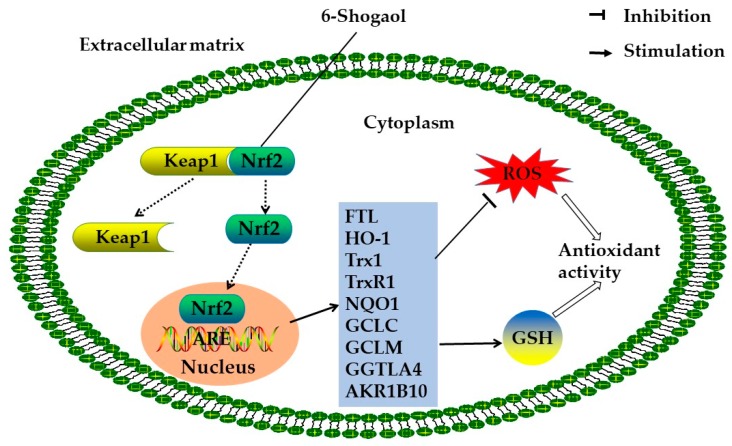
“Moreover, by increasing the expression of genes involved in glutathione synthesis, such as glutamate cysteine ligase and glutamate cysteine ligase, 6-shogaol also increases intracellular GSH levels and provides significant protection (Mao et al. 2019).”
BackgroundElucidating the Beneficial Effects of Ginger (Zingiber officinale Roscoe) in Parkinson’s Disease
Angelopoulou, E., Paudel, Y. N., Papageorgiou, S. G., & Piperi, C. (2022) · ACS Pharmacology & Translational Science · doi:10.1021/acsptsci.2c00104 · Cited by 45
Healthy Diet and Lifestyle Improve the Gut Microbiota and Help Combat Fungal Infection
Jawhara, S. (2023) · Microorganisms · doi:10.3390/microorganisms11061556 · Cited by 51
Tamene, S., Negash, M., Makonda, F. B. S., Chiwona‐Karltun, L., & Kibret, K. S. (2023) · Journal of Ethnobiology and Ethnomedicine · doi:10.1186/s13002-023-00629-w · Cited by 54
Qian, S., Fang, H., Zheng, L., & Liu, M. (2020) · Journal of Biochemical and Molecular Toxicology · doi:10.1002/jbt.22611 · Cited by 36
Al‐Obaidi, J. R., Alobaidi, K. H., Al-Taie, B. S., Wee, D. H.-S., Hussain, H., Jambari, N. N., Ahmad-Kamil, E. I., & Ariffin, N. S. (2021) · Sustainability · doi:10.3390/su13073671 · Cited by 63
Tagde, P., Tagde, S., Tagde, P., Bhattacharya, T., Monzur, S., Rahman, M. H., Otřísal, P., Behl, T., Hassan, S. S. U., Abdel‐Daim, M. M., et al. (2021) · Biomedicines · doi:10.3390/biomedicines9091266 · Cited by 37
Liao, X.-X., Hu, K., Xie, X.-H., Wen, Y.-L., Wang, R., Hu, Z., Zhou, Y.-L., Li, J.-J., Wu, M.-K., Yu, J., et al. (2023) · Journal of Ethnopharmacology · doi:10.1016/j.jep.2023.116468 · Cited by 38
Nutritional benefits of herbs and spices to the human beings
Rani, J., Kaur, P., & Chuwa, C. (2023) · Annals of Phytomedicine An International Journal · doi:10.54085/ap.2023.12.1.88 · Cited by 43
Songvut, P., Nakareangrit, W., Cholpraipimolrat, W., Kwangjai, J., Worasuttayangkurn, L., Watcharasit, P., & Satayavivad, J. (2024) · Frontiers in Pharmacology · doi:10.3389/fphar.2024.1391019 · Cited by 37
Vadakkan, K., Sathishkumar, K., Mapranathukaran, V. O., Ngangbam, A. K., Nongmaithem, B. D., Hemapriya, J., & Nair, J. B. (2024) · Bioorganic Chemistry · doi:10.1016/j.bioorg.2024.107649 · Cited by 38
RetractedPotential Herb–Drug Interactions in the Management of Age-Related Cognitive Dysfunction
Auxtero, M. D., Chalante, S., Abade, M. R., Jorge, R., & Fernandes, A. I. (2021) · Pharmaceutics · doi:10.3390/pharmaceutics13010124 · Cited by 45
[6]‐Gingerol Inhibits Chikungunya Virus Infection by Suppressing Viral Replication
Hayati, R., Better, C. D., Denis, D., Komarudin, A. G., Bowolaksono, A., Yohan, B., & Sasmono, R. T. (2021) · BioMed Research International · doi:10.1155/2021/6623400 · Cited by 40
“The compound [6]-gingerol is one of themajor pharmacologically active constituents of ginger [12].”
BackgroundBrimson, J. M., Prasanth, M. I., Malar, D. S., Sharika, R., Sivamaruthi, B. S., Kesika, P., Chaiyasut, C., Tencomnao, T., & Prasansuklab, A. (2021) · Nutrients · doi:10.3390/nu13072162 · Cited by 43
Hundare, A., Joshi, V., & Joshi, N. (2022) · Plant Stress · doi:10.1016/j.stress.2022.100070 · Cited by 42
Toschi, A., Piva, A., & Grilli, E. (2022) · Animals · doi:10.3390/ani12172188 · Cited by 39
Lai, W., Yang, S., Xia, L., Zhang, X., Huang, Y., Zhou, J., Fu, C., Li, R., & Zhang, Z. (2022) · The American Journal of Chinese Medicine · doi:10.1142/s0192415x22500410 · Cited by 42
Preparation and characterization of [6]-gingerol/β-cyclodextrin inclusion complexes
da Silva, J. A., Sampaio, P. A., Luna-Dulcey, L., Cominetti, M. R., Rabello, M. M., & Rolim, L. A. (2020) · Journal of Drug Delivery Science and Technology · doi:10.1016/j.jddst.2020.102103 · Cited by 33
Potential of Using Ginger Essential Oils-Based Nanotechnology to Control Tropical Plant Diseases
Adamu, A., Ahmad, K., Ismail, I. S., Asib, N. B., Ahmed, O. H., Ismaila, A. A., Siddiqui, Y., & Ismail, M. R. (2020) · The Plant Pathology Journal · doi:10.5423/ppj.rw.05.2020.0077 · Cited by 42
“Furthermore, Table 5 shows that ginger possess chemical classes and biological activities such as antibacterial, antifungal, antioxidant, and antiinflammatory activities (Mahboubi, 2019; Mao et al., 2019) because many monoterpene components and sesquiterpene hydrocarbons are known to be the main components of EOs.”
BackgroundSingh, P. P., Jaiswal, A. K., Kumar, A., Gupta, V. K., & Prakash, B. (2021) · Scientific Reports · doi:10.1038/s41598-021-86253-8 · Cited by 37
Salem, M. A., Zayed, A., Alseekh, S., Fernie, A. R., & Giavalisco, P. (2021) · Phytochemistry · doi:10.1016/j.phytochem.2021.112843 · Cited by 37
Gupta, S., Choudhary, M., Singh, B., Singh, R., Dhar, M. K., & Kaul, S. (2021) · Biocatalysis and Agricultural Biotechnology · doi:10.1016/j.bcab.2021.102234 · Cited by 35
Sanpinit, S., Chonsut, P., Punsawad, C., & Wetchakul, P. (2021) · Nutrients · doi:10.3390/nu14010172 · Cited by 34
Amer, S. A., & Rizk, A. (2022) · Food Production Processing and Nutrition · doi:10.1186/s43014-022-00083-3 · Cited by 43
“It has proven to display several therapeutic effects like antiplatelet antioxidant, anti-inflammatory, antimicrobial, antitumor and function (Karuppiah & Rajaram 2012; Mao et al. 2019).”
BackgroundThe Health Benefits of the Bioactive Compounds in Foods
Jaime, L., & Santoyo, S. (2021) · Foods · doi:10.3390/foods10020325 · Cited by 34
Tamene, S., Negash, M., Makonda, F. B. S., & Chiwona‐Karltun, L. (2024) · Journal of Ethnobiology and Ethnomedicine · doi:10.1186/s13002-024-00672-1 · Cited by 58
Szymczak, J., Grygiel‐Górniak, B., & Cielecka‐Piontek, J. (2024) · Nutrients · doi:10.3390/nu16050741 · Cited by 49
“The polyphenols, which are secondary plant metabolites with anti-inflammatory properties, present in ginger and turmeric can inhibit pro-inflammatory pathways [67].”
BackgroundKhanal, A., Devkota, H. P., Kaundinnyayana, S., Gyawali, P., Ananda, R., & Adhikari, R. (2021) · Ethnobotany Research and Applications · doi:10.32859/era.21.40.1-18 · Cited by 41
Alkhathlan, A. H., AL-Abdulkarim, H. A., Khan, M., Khan, M., Alkholief, M. A., Alshamsan, A., Almomen, A. A., Albekairi, N. A., Alkhathlan, H. Z., & Siddiqui, M. R. H. (2021) · Materials · doi:10.3390/ma14123368 · Cited by 36
Bioactive compounds for neuropathic pain: An update on preclinical studies and future perspectives
Shen, C., Castro, L. F., Fang, C.-Y., Castro, M., Sherali, S., White, S., Wang, R., & Neugebauer, V. (2022) · The Journal of Nutritional Biochemistry · doi:10.1016/j.jnutbio.2022.108979 · Cited by 38
Hassan, A. H. A., Youssef, I. M. I., Abdel-Atty, N. S., & Abdel‐Daim, A. S. A. (2024) · BMC Veterinary Research · doi:10.1186/s12917-024-04101-z · Cited by 42
“…fat in broiler chicken fed on diets supplemented with ginger powder may be attributed to phenolic compounds, mainly gingerenone A, 6-shogaol, and 6-gingerol which inhibit endogenous fatty acids synthesis and enhance fatty acid catabolism [47], resulting in a low-fat deposition in broiler meats.”
BackgroundLiu, J., Liu, Y., & Wang, X. (2023) · Journal of Future Foods · doi:10.1016/j.jfutfo.2023.02.009 · Cited by 31
Ethnobotanical study of medicinal plants used by the Yi people in Mile, Yunnan, China
Li, H., Huang, C., Li, Y., Wang, P., Sun, J., Bi, Z., Xia, S., Xiong, Y. H., Bai, X., & Huang, X. (2024) · Journal of Ethnobiology and Ethnomedicine · doi:10.1186/s13002-024-00656-1 · Cited by 47
“Modern pharmacological studies have reported that it exerts antioxidant, anti-inflammatory, antimicrobial, and anti-cancer effects [39].”
BackgroundSelf-citationMedicinal Plants Used as an Alternative to Treat Gingivitis and Periodontitis
Rani, N., Singla, R. K., Narwal, S., Tanushree, T., Kumar, N., & Rahman, M. M. (2022) · Evidence-based Complementary and Alternative Medicine · doi:10.1155/2022/2327641 · Cited by 42
“17 Ginger Zingiber officinale roscoe Rhizomes Gingerols, shogaols, and paradols, 6-gingerol, 8gingerol, and 10-gingerol [108, 115]”
BackgroundNovakovic, S., Jakovljevic, V. L., Jović, N., Andrić, K., Milinković, M., Anicic, T., Pindović, B., Kareva, E. N., Фисенко, В. П., Dimitrijević, A., et al. (2024) · Antioxidants · doi:10.3390/antiox13040392 · Cited by 45
“Ginger extract contains gingerols and sesquiterpens which inhibit prostaglandin production by inhibiting arachidonic acid production [15].”
Guo, P., Zhang, B., Zhao, J., Wang, C., Wang, Z., Liu, A., & Du, G. (2022) · Molecules · doi:10.3390/molecules27030901 · Cited by 34
Bekkouch, O., Dalli, M., Harnafi, M., Touiss, I., Mokhtari, I., Assri, S. E., Harnafi, H., Choukri, M. A., Ko, S., Kim, B., et al. (2022) · Antioxidants · doi:10.3390/antiox11020390 · Cited by 39
The Effect of Ginger and Its Sub-Components on Pain
Kim, S., Cheon, C., Kim, B., & Kim, W. (2022) · Plants · doi:10.3390/plants11172296 · Cited by 40
Ghazaly, M. M., Lee, G. E., Ling, N., Hědenec, P., Maulidiani, M., Hassan, N. R., Zulkifli, M. F., Mohammed, A., & Ghazali, M. S. M. (2024) · Food & medicine homology. · doi:10.26599/fmh.2025.9420068 · Cited by 42
Liu, H., Deng, Y., Li, J., Lin, W., Liu, C., Yang, X., Zhou, Z., & Jiang, Y. (2025) · Frontiers in Bioengineering and Biotechnology · doi:10.3389/fbioe.2025.1569889 · Cited by 40
Mansour, H. E. A., ElBatsh, M. M., Badawy, N., Mehanna, E. T., Mesbah, N. M., & Abo–Elmatty, D. M. (2020) · Nutrition and Cancer · doi:10.1080/01635581.2020.1823436 · Cited by 32
“Hepatic GSH was improved by administration of CNPs, CNPs DXN, free GE, and CNPs GE relative to DINA injection.”
BackgroundMethodInfluentialKhan, A., Azam, M., Allemailem, K. S., Alrumaihi, F., Almatroudi, A., Alhumaydhi, F. A., Ahmad, H. I., Khan, M. U., & Khan, M. A. (2021) · Infection and Drug Resistance · doi:10.2147/idr.s305503 · Cited by 29
“albicans.(30) Moreover, an ethanolic extract of ginger showed the inhibitory effect against the biofilm formation in C.”
BackgroundSulejmanović, M., Milić, N., Mourtzinos, I., Nastić, N. M., Kyriakoudi, A., Drljača, J., & Vidović, S. S. (2023) · Food Chemistry · doi:10.1016/j.foodchem.2023.137774 · Cited by 29
Sivalingam, A. M., & Pandian, A. (2025) · Microbial Pathogenesis · doi:10.1016/j.micpath.2025.107620 · Cited by 35
Ginger, a Possible Candidate for the Treatment of Dementias?
Schepici, G., Contestabile, V., Valeri, A., & Mazzon, E. (2021) · Molecules · doi:10.3390/molecules26185700 · Cited by 31
Samadi, M., Moradinazar, M., Khosravy, T., Soleimani, D., Jahangiri, P., & Kamari, N. (2022) · Phytotherapy Research · doi:10.1002/ptr.7390 · Cited by 30
“Thus, GSH levels increase, and ROS levels decrease (Mao et al., 2019).”
BackgroundImpact of Thermal Processing on the Selected Biological Activities of Ginger Rhizome—A Review
Zagórska, J., Czernicka, L., Kukuła‐Koch, W., Iłowiecka, K., & Koch, W. (2023) · Molecules · doi:10.3390/molecules28010412 · Cited by 36
Mbadiko, C. M., Inkoto, C. L., Gbolo, B. Z., Lengbiye, E. M., Kilembe, J. T., Matondo, A. P., Mwanangombo, D. T., Ngoyi, E. M., Bongo, G. N., Falanga, C. M., et al. (2020) · Journal of Complementary and Alternative Medical Research · doi:10.9734/jocamr/2020/v9i430150 · Cited by 34
“officinale, [66,67] it was reported that the fresh one was found to inhibit plaque formation induced by human respiratory syncytial virus (HRSV) in respiratory tract cell lines.”
BackgroundPotential therapeutic target for polysaccharide inhibition of colon cancer progression
Fan, J., Zhu, J., Zhu, H., Zhang, Y., & Xu, H. (2024) · Frontiers in Medicine · doi:10.3389/fmed.2023.1325491 · Cited by 37
Iyengar, P., Brewer, G. G., Maniyar, I., White, J., Maas, L., Parian, A. M., & Limketkai, B. N. (2024) · Nutrients · doi:10.3390/nu16070934 · Cited by 40
“The therapeutic qualities of ginger can be attributed to its bioactive terpene and phenolic compounds, such as gingerols, zingiberene, and shogaols [106].”
BackgroundInfluentialAntibacterial activity of medicinal plants and their role in wound healing
Breijyeh, Z., & Karaman, R. (2024) · Future Journal of Pharmaceutical Sciences · doi:10.1186/s43094-024-00634-0 · Cited by 52
Zargarchi, S., & Esatbeyoglu, T. (2024) · LWT · doi:10.1016/j.lwt.2024.116682 · Cited by 30
Lee, D., Lee, C.-H., Kim, K., Lim, H. J., & Kim, H. S. (2021) · Aquaculture Reports · doi:10.1016/j.aqrep.2021.100831 · Cited by 27
Lee, G., Peng, C. Y., Jeong, S.-Y., Park, S., Lee, H., Hoang, T., Kim, J., & Chae, H. (2021) · Journal of Functional Foods · doi:10.1016/j.jff.2021.104628 · Cited by 29
Saleem, M., Shazmeen, N., Nazir, M., Riaz, N., Zengin, G., Attaullah, H. M., Qurat‐ul‐Ain, Nisar, M. F., Mukhtar, M., & Tousif, M. I. (2021) · Chemistry & Biodiversity · doi:10.1002/cbdv.202100706 · Cited by 29
“Besides, gingerol is the main bioactive compound in ginger([24]) which is responsible for much of ginger’s medicinal properties; it also possesses anti-inflammatory and antioxidant potential.”
BackgroundKirdeeva, Y., Fedorova, O., Daks, A. A., Barlev, N. A., & Shuvalov, O. Y. (2022) · Pharmaceuticals · doi:10.3390/ph15070868 · Cited by 37
Ahad, T., Gull, A., Masoodi, F. A., Gani, A., Nissar, J., Ganaie, T. A., & Masoodi, L. (2023) · International Journal of Biological Macromolecules · doi:10.1016/j.ijbiomac.2023.124331 · Cited by 27
Shalaby, E. A., Shanab, S. M. M., Hafez, R. M., & El-Ansary, A. E. (2023) · Chemical and Biological Technologies in Agriculture · doi:10.1186/s40538-023-00385-9 · Cited by 26
Gupta, J., Sharma, B., Sorout, R., Singh, R. G., Ittishree, & Sharma, M. C. (2024) · Pharmacological Research - Modern Chinese Medicine · doi:10.1016/j.prmcm.2024.100561 · Cited by 71
Ginger rhizomes (Zingiber officinale) functionality in food and health perspective: a review
Indiarto, R., Subroto, E., Angeline, & Selly (2021) · Food Research · doi:10.26656/fr.2017.5(1).361 · Cited by 44
“Shogaol has an anti-coughing effect, while gingerol contributes to ginger's analgesic properties (Mao et al., 2019).”
BackgroundEffects of Spices (Saffron, Rosemary, Cinnamon, Turmeric and Ginger) in Alzheimer's Disease
Seibel, R., Schneider, R. H., & Gottlieb, M. G. V. (2021) · Current Alzheimer Research · doi:10.2174/1567205018666210716122034 · Cited by 26
Plant-Derived Natural Products as Lead Agents against Common Respiratory Diseases
Oriola, A. O., & Oyedeji, A. O. (2022) · Molecules · doi:10.3390/molecules27103054 · Cited by 30
Metadata
- Authors
- Mao, Q.-Q., Xu, X.-Y., Cao, S.-Y., Gan, R.-Y., Corke, H., Beta, T., & Li, H.-B.
- Affiliations
- Guangdong Provincial Key Laboratory of Food, Nutrition and Health, Department of Nutrition, School of Public Health, Sun Yat-sen University, Guangzhou 510080, China
- Sun Yat-sen University (CN)
- Shanghai Jiao Tong University (CN)
- Department of Food & Human Nutritional Sciences, University of Manitoba, Winnipeg, MB R3T 2N2, Canada
- Corresponding author
- Gan, Ren-You
- Li, Hua-Bin
- Venue
- Foods
- Publisher
- MDPI AG
- Published
- 2019-05-30
- Volume
- 8
- Issue
- 6
- Pages
- 185
- ISSN
- 2304-8158 (ISSN-L)
- PMC
- PMC6616534
- OpenAlex
- W2947671311
- Cited by
- 1,418
- References
- 117
- Citations by year
- 2026: 162 · 2025: 247 · 2024: 255 · 2023: 254 · 2022: 255 · 2021: 159 · 2020: 74 · 2019: 10
- FWCI
- 19.61
- Type
- journal article
- Language
- en
- Open access
- gold
- dx.doi.org
- Licence
- Locations
- Foods (publishedVersion, cc-by)
- Europe PMC (PubMed Central) (publishedVersion, cc-by)
- PubMed Central (publishedVersion, cc-by)
- PubMed (publishedVersion)
- DOAJ (DOAJ: Directory of Open Access Journals) (submittedVersion, cc-by-sa)
- Funders
- the National Key R&D Program of China (2017YFC1600100)
- Shanghai Basic and Key Program (18JC1410800)
- the Agri-X Interdisciplinary Fund of Shanghai Jiao Tong University (Agri-X2017004)
- the Key Project of Guangdong Provincial Science and Technology Program (2014B020205002)
- Topics
- Life Sciences › Pharmacology, Toxicology and Pharmaceutics › Pharmacology › Ginger and Zingiberaceae research
- Life Sciences › Agricultural and Biological Sciences › Plant Science › Garlic and Onion Studies
- Life Sciences › Pharmacology, Toxicology and Pharmaceutics › Pharmacology › Ginseng Biological Effects and Applications
- Keywords
- ginger, bioactive compounds, phenolic compounds, gingerol, shogaol, antioxidant activity, anti-inflammatory activity, antimicrobial activity, anticancer activity, neuroprotection, cardioprotection, respiratory protection, anti-obesity, antidiabetic activity, antiemetic activity, functional foods, nutraceuticals, chronic disease prevention
About these checks
Registry, retraction, Cites and statistics results are computed, not judged, with one exception: a printed reference that no index lists is read once by a model before it counts as a citation error. Claims are extracted by a model and kept only when their quote appears verbatim in the text; each cited source is then checked, with a model’s help, for whether it says what the claim relies on. Those verdicts can be wrong — read the claim’s quote and the cited source before relying on one.
Statistics and arithmetic are recomputed, not judged.
Confidence bands are shown only for fields calibrated on our annotated test set. None is calibrated yet, so no band is shown.
What counts as a claim ›How we measure confidence ›How we check this ›
Are you an author, or do you see a problem with this page? Request a review
Data sources
Bibliographic data: Semantic Scholar, OpenAlex, Crossref.
Contains information from the Semantic Scholar Academic Graph Datasets, made available under the ODC Attribution License (ODC-BY 1.0).
Semantic Scholar’s data is described in: Kinney, R., et al. (2023). The Semantic Scholar Open Data Platform. arXiv:2301.10140.
