

Obesity pharmacotherapy in older adults: a narrative review of evidence
Open accessThe DOI matches its Crossref record; 120 of the 127 references it cites were found in a registry or an index, and 4 are not checked yet; 15 of the 117 sources its claims cite were checked for support.
Abstract
The prevalence of obesity in older adults (people aged >60 years) is increasing in line with the demographic shift in global populations. Despite knowledge of obesity-related complications in younger adults (increased risk of type 2 diabetes, liver and cardiovascular disease and malignancy), these considerations may be outweighed, in older adults, by concerns regarding weight-loss induced reduction in skeletal muscle and bone mass, and the awareness of the ‘obesity paradox’. Obesity in the elderly contributes to various obesity-related complications from cardiometabolic disease and cancer, to functional decline, worsening cognition, and quality of life, that will have already suffered an age-related decline. Lifestyle interventions remain the cornerstone of obesity management in older adults, with emphasis on resistance training for muscle strength and bone mineral density preservation. However, in older adults with obesity refractory to lifestyle strategies, pharmacotherapy, using anti-obesity medicines (AOMs), can be a useful adjunct. Recent evidence suggests that intentional weight loss in older adults with overweight and obesity is effective and safe, hence a diminishing reluctance to use AOMs in this more vulnerable population. Despite nine AOMs being currently approved for the treatment of obesity, limited clinical trial evidence in older adults predominantly focuses on incretin therapy with glucagon-like peptide-1 receptor agonists (liraglutide, semaglutide, and tirzepatide). AOMs enhance weight loss and reduce cardiometabolic events, while maintaining muscle mass. Future randomised controlled trials should specifically evaluate the effectiveness of novel AOMs for long-term weight management in older adults with obesity, carefully considering the impact on body composition and functional ability, as well as health economics.
Verified 2026-10-06 · 4 references not checked yet
Overview
CoChat Summary
TL;DR
This narrative review concludes that obesity pharmacotherapy can be a useful adjunct to lifestyle intervention in older adults (>60 years), with incretin-based anti-obesity medicines producing clinically meaningful weight loss and cardiometabolic benefit while concerns about muscle and bone loss remain. It highlights that trial evidence specifically in older adults is scarce, often limited by upper age limits and poor reporting of older participants, and calls for future RCTs focused on body composition, function, and health economics.
Key findings
- Obesity prevalence is rising in older adults, with ~20% of this age group now living with a BMI ≥30 kg/m²; intentional weight loss in older adults with overweight/obesity appears effective and safe, though concerns include weight-loss-induced reduction in skeletal muscle and bone mass and the “obesity paradox.”
- Nine anti-obesity medicines (AOMs) are FDA-approved and seven are EMA-approved, but older-adult trial evidence is scarce and predominantly focuses on incretin therapy: liraglutide, semaglutide, and tirzepatide. Many trials included older adults but had upper age limits, resulting in little data for people in their 80s.
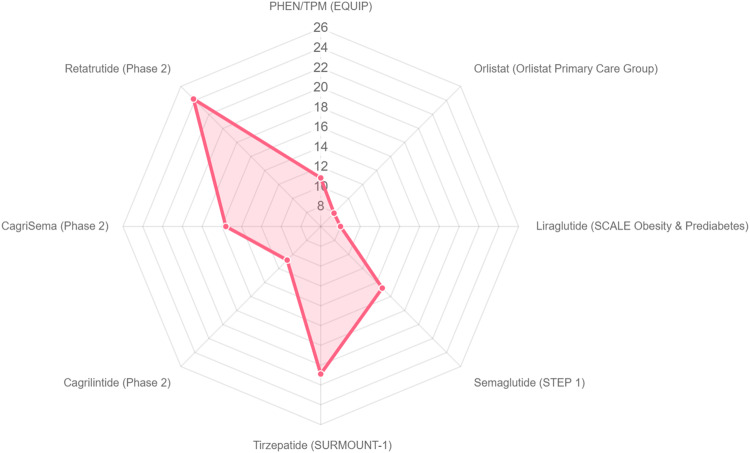
- Landmark trial weight losses include liraglutide 3 mg 8% vs 2.6% with placebo over 56 weeks (SCALE-Obesity and Prediabetes); semaglutide 2.4 mg 14.8% vs 2.4% over 68 weeks (STEP-1), with 86.4% achieving ≥5% weight loss; tirzepatide 15 mg 20.9% vs 3.1% at 72 weeks (SURMOUNT-1); and retatrutide highest dose 24.2% at 48 weeks.
- AOMs may improve cardiometabolic outcomes while preserving muscle mass; SELECT found MACE reduced by 20% with semaglutide, and pooled SURMOUNT-1/SURPASS-2 data showed reduced MACEs and cardiovascular death by 48% and 49%, respectively.
Methods
- Narrative review of evidence for obesity pharmacotherapy in older adults (people aged >60 years), synthesizing clinical trials, meta-analyses, observational studies, guidelines, and drug approval information.
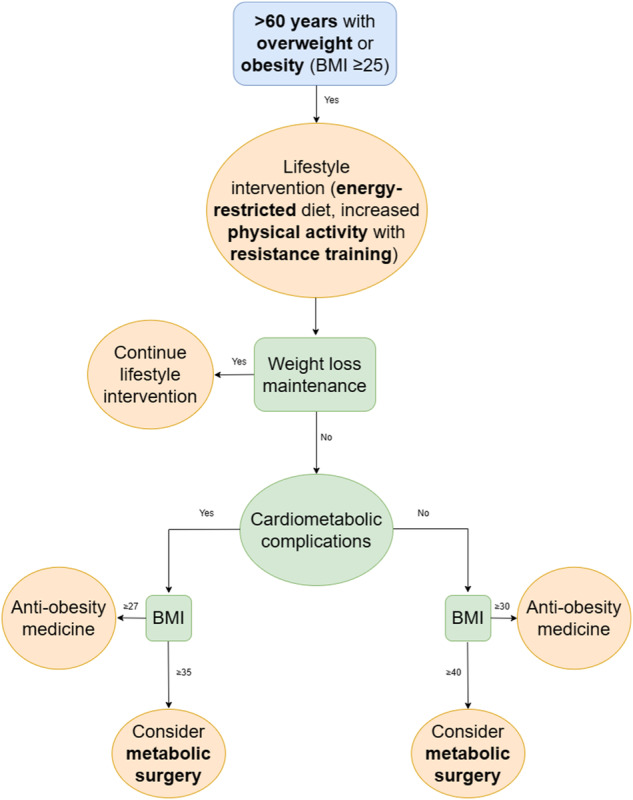
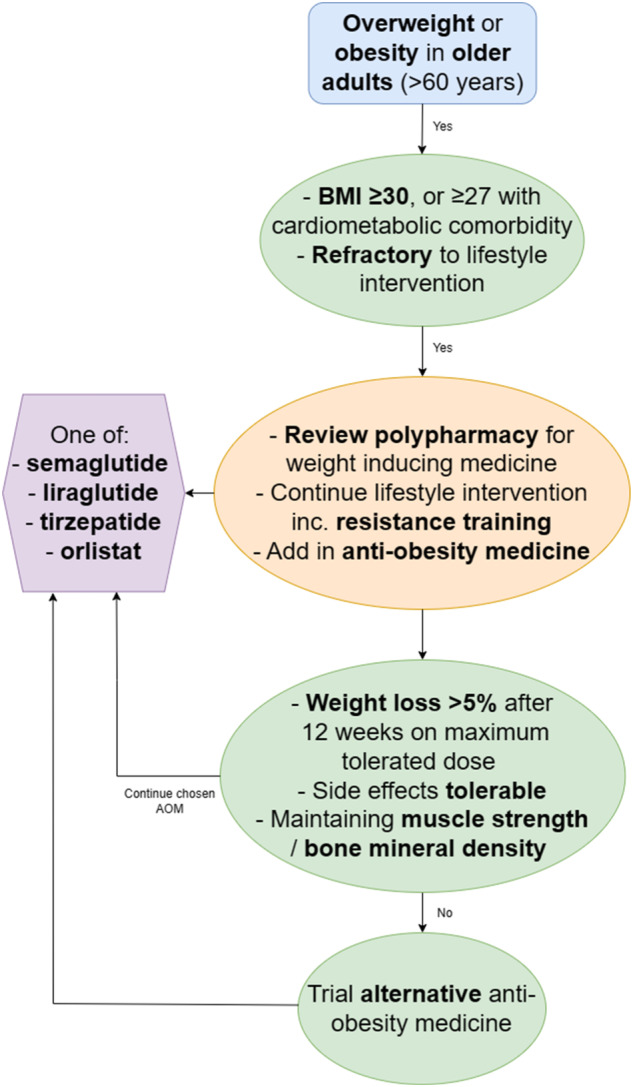
- Data from clinical trials for approved and future AOMs with evidence in older adults are presented in tables, including RCT sample size, BMI, age, follow-up, mean weight loss, proportion achieving ≥5% weight loss, and side effects, plus dosing and management algorithms.
- Main analysis is a narrative/descriptive synthesis; no systematic search strategy, formal risk-of-bias assessment, or pooled effect estimate is reported.
Limitations
- The paper states that scarce evidence exists for AOMs in older adults; many trials may have included older adults but had upper age limits, and the Summary of Product Characteristics states that therapeutic experience in patients ≥75 years is limited.
- The paper states that obesity paradox evidence is heavily confounded by whether weight loss is intentional and by use of BMI, which poorly reflects body composition in older adults; future RCTs should specifically evaluate long-term weight management, body composition, functional ability, and health economics.
- Evident from the text: this is a narrative review without a systematic search or formal quality appraisal, and many cited trials were not designed exclusively for older adults or relied on subgroup/pooled analyses, limiting certainty for this population.
Model-written summary. Check it against the paper before relying on it.
Integrity signals
Registry
Cites
Statistics
Figures
Verification
Claims the paper makes
13 Valid · 2 Not valid · 73 Not checked · 9 Own results and interpretations
The cited sources support only part of this claim — read each source’s verdict below.
In the paper
“It is believed this potential protective effect of living with obesity in older adults is restricted to those living only with overweight/lesser degrees of obesity [7]”
§ Obesity pharmacotherapy in older adults: a narrative review of evidence > Introduction
What the sources say
- Partly supportedcites [7] Flegal KM, Kit BK, Orpana H, Graubard BI. Association of all-cause mortality with overweight and obesity using standard body mass index categories: a systematic review and meta-analysis. JAMA. 2013;309:71–82. 23280227 PMC4855514 sourceExperimental — accuracy not yet measured
Table 2 reports lower all-cause mortality for adults aged 65 or older with overweight (HR 0.90), but the estimate for grade 1 obesity (HR 0.88, 95% CI 0.69–1.12) does not establish a protective effect. The estimate for grades 2 and 3 obesity is higher (HR 1.28), though also uncertain (95% CI 0.93–1.76). The pattern is consistent with the claim’s proposed restriction, but the age-specific results do not establish it. (LLM, conf=0.86)
hedgedstates an association- Asserted: passes — The authors put it forward as true.
- Checkable: passes — It can be checked against evidence.
- Load-bearing: passes — The paper’s conclusions depend on it.
- Based: passes — The paper gives a reason why it holds.
- Partly supported
Every source the paper cites for this claim was checked and supports it.
In the paper
“A meta-analysis of observational studies in older adults raised concerns regarding weight loss and mortality outcomes. Weight loss was associated with a 59% increase in mortality risk.”
§ Obesity pharmacotherapy in older adults: a narrative review of evidence > Impact of weight loss on older adults > Mortality
What the sources say
- Supportedcites [63] Alharbi TA, Paudel S, Gasevic D, Ryan J, Freak-Poli R, Owen AJ. The association of weight change and all-cause mortality in older adults: a systematic review and meta-analysis. Age Ageing. 2021;50:697–704. 33161429 source
The Abstract (p.1) and the Results section 'Weight loss and the risk of all-cause mortality' both report that, across 30 prospective observational studies (1,219,279 participants, 69,255 all-cause deaths), adults aged ≥65 with weight loss had a 59% increased risk of all-cause mortality (HR 1.59; 95%CI 1.45-1.74). This matches the claim's design (meta-analysis of observational studies), population (older adults) and magnitude (59%). The only unstated qualifier is that the included studies were community-dwelling older adults. (LLM, conf=0.95)
plainstates an association- Asserted: passes — The authors put it forward as true.
- Checkable: passes — It can be checked against evidence.
- Load-bearing: passes — The paper’s conclusions depend on it.
- Based: passes — The paper gives a reason why it holds.
- Supported
The cited sources support only part of this claim — read each source’s verdict below.
In the paper
“Recent prospectively designed studies have found higher WC increases CVD risk in older adults [27, 28]”
§ Obesity pharmacotherapy in older adults: a narrative review of evidence > Age-related changes in body composition and their sequelae > Cardiometabolic disease
What the sources say
- Partly supportedcites [27] Dey DK, Lissner L. Obesity in 70-year-old subjects as a risk factor for 15-year coronary heart disease incidence. Obes Res. 2003;11:817–27. 12855750 sourceExperimental — accuracy not yet measured
The cited study is prospective (H70, Gothenburg; WC/BMI measured at age 70, 15-year follow-up to age 85) and does report higher WC predicting first-ever CHD, but only in men: the Results ('WC and CHD') give RR 1.36 (95% CI 1.00-1.85) in the highest WC quartile in males with a significant linear trend (p=0.033), whereas in females RR was 1.08 (0.76-1.47) and the highest RR (1.30, 0.93-1.79) occurred in the second quartile. The Discussion states plainly that 'neither a high WC nor a high BMI was a significant risk factor for CHD in elderly females' and concludes 'both BMI and WC are risk factors for CHD in elderly males but not in females.' So the source supports the claim for older men but not for older adults generally, and its outcome is coronary heart disease rather than cardiovascular disease broadly. (LLM, conf=0.80)
- Not checked yetcites [28] Visscher TL, Seidell JC, Molarius A, van der Kuip D, Hofman A, Witteman JC. A comparison of body mass index, waist-hip ratio and waist circumference as predictors of all-cause mortality among the elderly: the Rotterdam study. Int J Obes Relat Metab Disord. 2001;25:1730–5. 11753597 source
plainstates a cause- Asserted: passes — The authors put it forward as true.
- Checkable: passes — It can be checked against evidence.
- Load-bearing: unclear — It is unclear whether the paper’s conclusions depend on it.
- Based: passes — The paper gives a reason why it holds.
- Partly supported
The cited sources support only part of this claim — read each source’s verdict below.
In the paper
“Weight loss of 5–10% total body weight can improve physical function and such cardiometabolic risk factors as blood pressure and lipid profile, whilst weight loss exceeding 10% can additionally improve cancer risk, fertility, and health-care costs, while further improving cardiometabolic outcomes [43, 44].”
§ Obesity pharmacotherapy in older adults: a narrative review of evidence > Impact of weight loss on older adults
What the sources say
- Not checked yetcites [43] Tahrani AA, Morton J. Benefits of weight loss of 10% or more in patients with overweight or obesity: a review. Obesity. 2022;30:802–40. 35333446 source
- Partly supportedcites [44] Ryan DH, Yockey SR. Weight loss and improvement in comorbidity: differences at 5%, 10%, 15%, and over. Curr Obes Rep. 2017;6:187–94. 28455679 PMC5497590 sourceExperimental — accuracy not yet measured
The Abstract reports that 5–10% weight loss is associated with improvements in blood pressure, HDL cholesterol, and mobility; the cardiovascular-risk-factor section also reports improvements in triglycerides. The claim’s restriction to younger adults is not supported: the paper does not establish these combined benefits specifically for that age group. (LLM, conf=0.86)
plainstates a cause- Asserted: passes — The authors put it forward as true.
- Checkable: passes — It can be checked against evidence.
- Load-bearing: unclear — It is unclear whether the paper’s conclusions depend on it.
- Based: passes — The paper gives a reason why it holds.
The cited sources support only part of this claim — read each source’s verdict below.
In the paper
“Generally, each kilogram of body weight lost constitutes ~75% fat mass and ~25% muscle mass [46], although the relationship is non-linear and governed by the magnitude of weight loss [47].”
§ Obesity pharmacotherapy in older adults: a narrative review of evidence > Impact of weight loss on older adults > Morbidity
What the sources say
- Partly supportedcites [46] Santanasto AJ, Glynn NW, Newman MA, Taylor CA, Brooks MM, Goodpaster BH, et al. Impact of weight loss on physical function with changes in strength, muscle mass, and muscle fat infiltration in overweight to moderately obese older adults: a randomized clinical trial. J Obes. 2011;2011:516576. 20953373 PMC2952914 sourceExperimental — accuracy not yet measured
Results §3.3 (page unavailable) reports that the weight-loss group lost an average of 4.9 kg of body weight and 4.4 kg of body fat; §3.4 also reports a loss of thigh muscle area. The paper therefore supports loss of both fat and muscle, but it does not establish the claimed general 75% fat/25% muscle split per kilogram lost. (LLM, conf=0.88)
hedgedstates an association- Asserted: passes — The authors put it forward as true.
- Checkable: passes — It can be checked against evidence.
- Load-bearing: unclear — It is unclear whether the paper’s conclusions depend on it.
- Based: passes — The paper gives a reason why it holds.
- Partly supported
49 more claims · 2 with their cited sources checked
Create a free account to see all 97 claims and to verify the 102 references still open.
- It may state two separate claims as one. 39
- Probably not a substantial claim. 11
Claims other papers make about this one
Each is checked against this paper’s own text: does it say what the citing paper says it does?
The source backs part of the claim, not all of it — or backs it for a different population, condition or comparison.
In the citing paper
“AEs are more frequent in older adults compared to young adults, and they are particularly noted to occur during dose escalation [12, 43, 57, 75].”
From GLP-1 Receptor Agonists for Obesity Management in Older Adults: A Scoping Review on the Risk of Sarcopenia and Sarcopenic Obesity (2026) · doi:10.1007/s13668-026-00777-x · cites this paper as [75]
Experimental — accuracy not yet measuredThe source backs part of the claim, not all of it — or backs it for a different population, condition or comparison.
In the citing paper
“the most common adverse events (AEs) of treatment are mild to moderate gastrointestinal including nausea, vomiting, diarrhea, constipation, dyspepsia, and decreased appetite.”
From GLP-1 Receptor Agonists for Obesity Management in Older Adults: A Scoping Review on the Risk of Sarcopenia and Sarcopenic Obesity (2026) · doi:10.1007/s13668-026-00777-x · cites this paper as [75]
Experimental — accuracy not yet measured
Self-check
Percentages, sums and reported differences re-computed from the paper’s own numbers.
Each contradiction between two passages listed here was confirmed by an independent check.
Rated minor: it would not touch a result — a value no result rests on, a p-value that stays on the same side of the significance level, or a conflict that is clerical, resolved elsewhere in the paper, or outside its own findings.
In the paper
§ Obesity pharmacotherapy in older adults: a narrative review of evidence > Evidence for efficacy and safety of approved anti-obesity medicines in older adults
“| Tirzepatide | SURPASS-2 (1879) [102] | 34.2 | 56.6, no upper limit | 40 | 13 (80) | Nausea, diarrhoea, and constipation |”
§ Obesity pharmacotherapy in older adults: a narrative review of evidence > Evidence for efficacy and safety of approved anti-obesity medicines in older adults > Mixed centrally and peripherally acting anti-obesity medicines with evidence for use in older adults
“SURPASS-2 demonstrated greater efficacy in the treatment of T2D compared to semaglutide in an older population (mean age 56.6 years, with no upper limit) [103].”
Citations
Cites
Sarcopenia: revised European consensus on definition and diagnosis
Cruz-Jentoft, A. J., Bahat, G., Bauer, J., Boirie, Y., Bruyère, O., Cederholm, T., Cooper, C., Landi, F., Rolland, Y., Sayer, A. A., et al. (2019) · Age and Ageing · doi:10.1093/ageing/afy169 · Cited by 13,818
Once-Weekly Semaglutide in Adults with Overweight or Obesity
Wilding, J. P. H., Batterham, R. L., Calanna, S., Davies, M., Van Gaal, L. F., Lingvay, I., McGowan, B. M., Rosenstock, J., Tran, M. T. D., Wadden, T. A., et al. (2021) · New England Journal of Medicine · doi:10.1056/nejmoa2032183 · Cited by 5,205
Self-citationThe global obesity pandemic: shaped by global drivers and local environments
Swinburn, B. A., Sacks, G., Hall, K. D., McPherson, K., Finegood, D. T., Moodie, M. L., & Gortmaker, S. L. (2011) · The Lancet · doi:10.1016/s0140-6736(11)60813-1 · Cited by 4,888 · cited 1×
“Obesity is a chronic relapsing disease process, attributable to the complex interaction between genes and environmental risk factors, characterised by excess adiposity, that adversely impairs health [13].”
Flegal, K. M., Kit, B. K., Orpana, H., & Graubard, B. I. (2013) · JAMA · doi:10.1001/jama.2012.113905 · Cited by 3,998 · cited 2×
“…potential protective effect of living with obesity in older adults is restricted to those living only with overweight/lesser degrees of obesity [7], hence the rationale for pharmacological intervention to treat excess weight in older adults is a relevant therapeutic consideration as it would…”
Tirzepatide Once Weekly for the Treatment of Obesity
Jastreboff, A. M., Aronne, L. J., Ahmad, N. N., Wharton, S., Connery, L., Alves, B., Kiyosue, A., Zhang, S., Liu, B., Bunck, M. C., et al. (2022) · New England Journal of Medicine · doi:10.1056/nejmoa2206038 · Cited by 3,838 · cited 1×
“In total, 85%, 89%, and 91% of participants lost 5% bodyweight with 5, 10, and 15 mg of tirzepatide, respectively (vs. 35% with placebo) [102].”
Sarcopenia: revised European consensus on definition and diagnosis
Cruz-Jentoft, A. J., Bahat, G., Bauer, J., Boirie, Y., Bruyère, O., Cederholm, T., Cooper, C., Landi, F., Rolland, Y., Sayer, A. A., et al. (2019) · Age and Ageing · doi:10.1093/ageing/afz046 · Cited by 3,803
European Guidelines for Obesity Management in Adults
Yumuk, V., Tsigos, C., Fried, M., Schindler, K., Busetto, L., Micic, D., & Toplak, H. (2015) · Obesity Facts · doi:10.1159/000442721 · Cited by 3,432
Semaglutide and Cardiovascular Outcomes in Obesity without Diabetes
Lincoff, A. M., Brown-Frandsen, K., Colhoun, H. M., Deanfield, J., Emerson, S. S., Esbjerg, S., Hardt-Lindberg, S., Hovingh, G. K., Kahn, S. E., Kushner, R. F., et al. (2023) · New England Journal of Medicine · doi:10.1056/nejmoa2307563 · Cited by 3,236 · cited 1×
“…on Cardiovascular Outcomes in People with Overweight or Obesity (SELECT) included adults >45 years living with overweight/obesity and established cardio-vascular disease (CVD), without T2D, and found Major Adverse Cardiovascular Events (MACE) was reduced by 20% in those taking semaglutide [99].”
A Randomized, Controlled Trial of 3.0 mg of Liraglutide in Weight Management
Pi-Sunyer, X., Astrup, A., Fujioka, K., Greenway, F., Halpern, A., Krempf, M., Lau, D. C. W., le Roux, C. W., Violante Ortiz, R., Jensen, C. B., et al. (2015) · New England Journal of Medicine · doi:10.1056/nejmoa1411892 · Cited by 2,724 · cited 3×
“In total, 63.2% (vs. 27.1% in placebo) had weight loss of ≥ 5% [83].”
InfluentialSelf-citationAhlqvist, E., Storm, P., Käräjämäki, A., Martinell, M., Dorkhan, M., Carlsson, A., Vikman, P., Prasad, R. B., Aly, D. M., Almgren, P., et al. (2018) · The Lancet Diabetes & Endocrinology · doi:10.1016/s2213-8587(18)30051-2 · Cited by 2,335 · cited 1×
“Five distinct clusters of diabetes have been proposed, of which mild age-related diabetes is the most common, making up 40% of diabetes diagnoses, and is directly attributable to ageing-related ectopic fat deposition and insulin resistance [26].”
Mechanisms of Action and Therapeutic Application of Glucagon-like Peptide-1
Drucker, D. J. (2018) · Cell Metabolism · doi:10.1016/j.cmet.2018.03.001 · Cited by 2,170
Fuller, N. R., Colagiuri, S., Schofield, D., Olson, A. D., Shrestha, R., Holzapfel, C., Wolfenstetter, S. B., Holle, R., Ahern, A. L., Hauner, H., et al. (2013) · International Journal of Obesity · doi:10.1038/ijo.2012.139 · Cited by 2,117
Tirzepatide versus Semaglutide Once Weekly in Patients with Type 2 Diabetes
Frías, J. P., Davies, M. J., Rosenstock, J., Pérez Manghi, F. C., Fernández Landó, L., Bergman, B. K., Liu, B., Cui, X., & Brown, K. (2021) · New England Journal of Medicine · doi:10.1056/nejmoa2107519 · Cited by 2,096 · cited 1×
“Cardiometabolic outcome trials: SURPASS-2 demonstrated greater ef fi cacy in the treatment of T2D compared to semaglutide in an older population (mean age 56.6 years, with no upper limit) [103].”
InfluentialA Placebo-controlled trial of subcutaneous semaglutide in nonalcoholic steatohepatitis
Newsome, P. N., Buchholtz, K., Cusi, K., Linder, M., Okanoue, T., Ratziu, V., Sanyal, A. J., Sejling, A.-S., & Harrison, S. A. (2021) · New England Journal of Medicine · doi:10.1056/nejmoa2028395 · Cited by 2,039
Socioeconomic Status and Obesity
McLaren, L. (2007) · Epidemiologic Reviews · doi:10.1093/epirev/mxm001 · Cited by 1,968
XENical in the Prevention of Diabetes in Obese Subjects (XENDOS) Study
Torgerson, J. S., Hauptman, J., Boldrin, M. N., & Sjöström, L. (2004) · Diabetes Care · doi:10.2337/diacare.27.1.155 · Cited by 1,915 · cited 1×
“They can affect ~8% of patients and may result in drug discontinuation [108].”
Reeves, G. K., Pirie, K., Beral, V., Green, J., Spencer, E., & Bull, D. (2007) · BMJ · doi:10.1136/bmj.39367.495995.ae · Cited by 1,507 · cited 1×
“In post-menopausal women, obesity is associated with breast cancer, malignant melanoma, and endometrial cancer [31, 32], whilst both older males and females are at increased risk of hepatobiliary (gallbladder and pancreatic), and genitourinary (renal, bladder, uterine, cervical and prostate)…”
Rubino, D., Abrahamsson, N., Davies, M., Hesse, D., Greenway, F. L., Jensen, C., Lingvay, I., Mosenzon, O., Rosenstock, J., Rubio, M. A., et al. (2021) · JAMA · doi:10.1001/jama.2021.3224 · Cited by 1,444 · cited 1×
“Continuation of semaglutide resulted in a further 7.9% reduction in body weight from their week 20 weight, whereas the placebo group regained 6.9% [92].”
InfluentialDavies, M., Færch, L., Jeppesen, O. K., Pakseresht, A., Pedersen, S. D., Perreault, L., Rosenstock, J., Shimomura, I., Viljoen, A., Wadden, T. A., et al. (2021) · The Lancet · doi:10.1016/s0140-6736(21)00213-0 · Cited by 1,419 · cited 1×
“…found improved body composition with reductions in central fat mass, and preserved muscular performance [86, 87], explained by increased myogenesis in myoblasts [88], and the recruitment of skeletal muscle microvasculature [89]. were reduced in those with T2D, but still signi fi cant (STEP-2) [94].”
Anabolic signaling deficits underlie amino acid resistance of wasting, aging muscle
Cuthbertson, D., Smith, K., Babraj, J., Leese, G., Waddell, T., Atherton, P., Wackerhage, H., Taylor, P. M., & Rennie, M. J. (2005) · The FASEB Journal · doi:10.1096/fj.04-2640fje · Cited by 1,211 · cited 1×
“Sarcopenia aetiology is multi-factorial, driven by progressive anabolic resistance to nutrition and physical activity [36, 37], and age-related structural (vertebral compression and unfavourable fat deposition [38]), metabolic (reduced basal metabolic rate [39]) and hormonal (lower circulating…”
Self-citationDavies, M. J., Bergenstal, R., Bode, B., Kushner, R. F., Lewin, A., Skjøth, T. V., Andreasen, A. H., Jensen, C. B., DeFronzo, R. A., & for the NN8022-1922 Study Group (2015) · JAMA · doi:10.1001/jama.2015.9676 · Cited by 1,198
Triple-Hormone-Receptor Agonist Retatrutide for Obesity — A Phase 2 Trial
Jastreboff, A. M., Kaplan, L. M., Frías, J. P., Wu, Q., Du, Y., Gurbuz, S., Coskun, T., Haupt, A., Milicevic, Z., & Hartman, M. L. (2023) · New England Journal of Medicine · doi:10.1056/nejmoa2301972 · Cited by 1,174 · cited 4×
“Novel AOMs, largely based around incretin therapy, may exceed weight loss of 20% [10, 75], however, most trials evaluating their ef fi cacy and safety were performed with younger adults, and those that include older adults often poorly de fi ne the number of participants in each age group.”
InfluentialWilding, J. P. H., Batterham, R. L., Davies, M., Van Gaal, L. F., Kandler, K., Konakli, K., Lingvay, I., McGowan, B. M., Oral, T. K., Rosenstock, J., et al. (2022) · Diabetes, Obesity and Metabolism · doi:10.1111/dom.14725 · Cited by 1,128 · cited 2×
“However, STEP 1 extension concluded that 1-year withdrawal of semaglutide results in regain of two-thirds of prior weight loss [97], highlighting that withdrawal of semaglutide results in weight regain which may be problematic in older adults who are already using polypharmacy approaches for…”
Self-citationWadden, T. A., Bailey, T. S., Billings, L. K., Davies, M., Frias, J. P., Koroleva, A., Lingvay, I., O’Neil, P. M., Rubino, D. M., Skovgaard, D., et al. (2021) · JAMA · doi:10.1001/jama.2021.1831 · Cited by 1,114 · cited 1×
“%) when semaglutide was used as an adjunct to intensive behavioural therapy (STEP-3) [93], and improved head-to-head weight reduction compared to liraglutide over 68 weeks, with possible bene fi ts in older adults given the once weekly administration of semaglutide (STEP-8) [96].”
Weight loss, exercise, or both and physical function in obese older adults
Villareal, D. T., Chode, S., Parimi, N., Sinacore, D. R., Hilton, T., Armamento-Villareal, R., Napoli, N., Qualls, C., & Shah, K. (2011) · New England Journal of Medicine · doi:10.1056/nejmoa1008234 · Cited by 1,096 · cited 1×
“Dietary intervention produces greater weight loss, whereas physical activity produces better physical function, although the combination of interventions provides superior improvement in physical function than either intervention alone [66].”
Gadde, K. M., Allison, D. B., Ryan, D. H., Peterson, C. A., Troupin, B., Schwiers, M. L., & Day, W. W. (2011) · The Lancet · doi:10.1016/s0140-6736(11)60205-5 · Cited by 1,064 · cited 1×
“It is worth noting that EQUIP and CONQUER noted mood and memory disturbance, which may be troublesome in older adults, but commonest side effects were dry mouth, paraesthesia, constipation, and insomnia [111, 112].”
Greenway, F. L., Fujioka, K., Plodkowski, R. A., Mudaliar, S., Guttadauria, M., Erickson, J., Kim, D. D., & Dunayevich, E. (2010) · The Lancet · doi:10.1016/s0140-6736(10)60888-4 · Cited by 1,036
Pooled Analysis of Prospective Cohort Studies on Height, Weight, and Breast Cancer Risk
van den Brandt, P. A. (2000) · American Journal of Epidemiology · doi:10.1093/aje/152.6.514 · Cited by 1,023 · cited 1×
“In post-menopausal women, obesity is associated with breast cancer, malignant melanoma, and endometrial cancer [31, 32], whilst both older males and females are at increased risk of hepatobiliary (gallbladder and pancreatic), and genitourinary (renal, bladder, uterine, cervical and prostate)…”
Rubino, D. M., Greenway, F. L., Khalid, U., O’Neil, P. M., Rosenstock, J., Sørrig, R., Wadden, T. A., Wizert, A., Garvey, W. T., STEP 8 Investigators, et al. (2022) · JAMA · doi:10.1001/jama.2021.23619 · Cited by 995 · cited 1×
“%) when semaglutide was used as an adjunct to intensive behavioural therapy (STEP-3) [93], and improved head-to-head weight reduction compared to liraglutide over 68 weeks, with possible bene fi ts in older adults given the once weekly administration of semaglutide (STEP-8) [96].”
Grip Strength: An Indispensable Biomarker For Older Adults
Bohannon, R. W. (2019) · Clinical Interventions in Aging · doi:10.2147/cia.s194543 · Cited by 994
Gavazzi, G., & Krause, K.-H. (2002) · The Lancet Infectious Diseases · doi:10.1016/s1473-3099(02)00437-1 · Cited by 990
Villareal, D. T., Apovian, C. M., Kushner, R. F., & Klein, S. (2005) · The American Journal of Clinical Nutrition · doi:10.1093/ajcn/82.5.923 · Cited by 880
Messier, S. P., Mihalko, S. L., Legault, C., Miller, G. D., Nicklas, B. J., DeVita, P., Beavers, D. P., Hunter, D. J., Lyles, M. F., Eckstein, F., et al. (2013) · JAMA · doi:10.1001/jama.2013.277669 · Cited by 873 · cited 1×
“When older adults lose weight under supervision, their physical function and QoL outcomes improve [48, 49].”
Anstey, K. J., Cherbuin, N., Budge, M., & Young, J. (2011) · Obesity Reviews · doi:10.1111/j.1467-789x.2010.00825.x · Cited by 855 · cited 1×
“Recent prospectively designed studies have found higher WC increases CVD risk in older adults [27, 28], whilst meta-analyses demonstrate increased risk of incident dementia following obesity in mid-life, but a reduced risk when obesity is developed in older adulthood [29, 30].”
on behalf of the NN8022-1923 Investigators, Wadden, T. A., Hollander, P., Klein, S., Niswender, K., Woo, V, Hale, P. M., & Aronne, L. (2013) · International Journal of Obesity · doi:10.1038/ijo.2013.120 · Cited by 842
Weight Loss and Improvement in Comorbidity: Differences at 5%, 10%, 15%, and Over
Ryan, D. H., & Yockey, S. R. (2017) · Current Obesity Reports · doi:10.1007/s13679-017-0262-y · Cited by 831 · cited 1×
“…of 5 – 10% total body weight can improve physical function and such cardiometabolic risk factors as blood pressure and lipid pro fi le, whilst weight loss exceeding 10% can additionally improve cancer risk, fertility, and health-care costs, while further improving cardiometabolic outcomes [43, 44].”
BMI and all-cause mortality in older adults: a meta-analysis
Winter, J. E., MacInnis, R. J., Wattanapenpaiboon, N., & Nowson, C. A. (2014) · The American Journal of Clinical Nutrition · doi:10.3945/ajcn.113.068122 · Cited by 790 · cited 3×
“People living longer with obesity may have associated comorbidity [16], involving musculoskeletal, cardiometabolic and mental health complications, with higher rates of malignancy [17], although it remains unclear the extent to which cumulative exposure to obesity impacts upon their respective…”
InfluentialKumar, V., Selby, A., Rankin, D., Patel, R., Atherton, P., Hildebrandt, W., Williams, J., Smith, K., Seynnes, O., Hiscock, N., et al. (2009) · The Journal of Physiology · doi:10.1113/jphysiol.2008.164483 · Cited by 740 · cited 1×
“Sarcopenia aetiology is multi-factorial, driven by progressive anabolic resistance to nutrition and physical activity [36, 37], and age-related structural (vertebral compression and unfavourable fat deposition [38]), metabolic (reduced basal metabolic rate [39]) and hormonal (lower circulating…”
Bariatric Surgery and Long-term Durability of Weight Loss
Maciejewski, M. L., Arterburn, D. E., Van Scoyoc, L., Smith, V. A., Yancy, W. S., Weidenbacher, H. J., Livingston, E. H., & Olsen, M. K. (2016) · JAMA Surgery · doi:10.1001/jamasurg.2016.2317 · Cited by 720 · cited 1×
“Metabolic surgery produces weight loss >30% after 1 year, that can remain >25% after 10 years [79], as well as improving prevalent comorbidities and reducing incidence of T2D, CVD, cancer and mortality [80].”
Apovian, C. M., Aronne, L., Rubino, D., Still, C., Wyatt, H., Burns, C., Kim, D., Dunayevich, E., & for the COR‐II Study Group (2013) · Obesity · doi:10.1002/oby.20309 · Cited by 720
Garvey, W. T., Ryan, D. H., Look, M., Gadde, K. M., Allison, D. B., Peterson, C. A., Schwiers, M., Day, W. W., & Bowden, C. H. (2012) · The American Journal of Clinical Nutrition · doi:10.3945/ajcn.111.024927 · Cited by 716 · cited 2×
“EQUIP, CONQUER and SEQUEL all demonstrate improvement in such cardiometabolic risk markers as WC, blood pressure, fasting glucose, insulin resistance and lipid pro fi les [111 – 113].”
Allison, D. B., Gadde, K. M., Garvey, W. T., Peterson, C. A., Schwiers, M. L., Najarian, T., Tam, P. Y., Troupin, B., & Day, W. W. (2012) · Obesity · doi:10.1038/oby.2011.330 · Cited by 711 · cited 3×
“It is worth noting that EQUIP and CONQUER noted mood and memory disturbance, which may be troublesome in older adults, but commonest side effects were dry mouth, paraesthesia, constipation, and insomnia [111, 112].”
A prospective study of obesity and cancer risk (Sweden)
Wolk, A., Gridley, G., Svensson, M., Nyrén, O., McLaughlin, J. K., Fraumeni, J. F., & Adami, H.-O. (2001) · Cancer Causes & Control · doi:10.1023/a:1008995217664 · Cited by 581 · cited 1×
“…women, obesity is associated with breast cancer, malignant melanoma, and endometrial cancer [31, 32], whilst both older males and females are at increased risk of hepatobiliary (gallbladder and pancreatic), and genitourinary (renal, bladder, uterine, cervical and prostate) cancers [33].”
Villareal, D. T., Apovian, C. M., Kushner, R. F., & Klein, S. (2005) · Obesity Research · doi:10.1038/oby.2005.228 · Cited by 579 · cited 1×
“Therefore, emphasis should be placed on combining energy-restriction with a high protein diet and physical activity, to provide the maximal anabolic stimulus, ensuring weight loss is not associated with loss of muscle mass, or, more importantly, muscle strength [67, 68].”
Effect of BMI on Lifetime Risk for Diabetes in the U.S.
Narayan, K. M. V., Boyle, J. P., Thompson, T. J., Gregg, E. W., & Williamson, D. F. (2007) · Diabetes Care · doi:10.2337/dc06-2544 · Cited by 510
Life expectancy after bariatric surgery in the Swedish obese subjects study
Carlsson, L. M. S., Sjöholm, K., Jacobson, P., Andersson-Assarsson, J. C., Svensson, P.-A., Taube, M., Carlsson, B., & Peltonen, M. (2020) · New England Journal of Medicine · doi:10.1056/nejmoa2002449 · Cited by 509 · cited 1×
“Metabolic surgery produces weight loss >30% after 1 year, that can remain >25% after 10 years [79], as well as improving prevalent comorbidities and reducing incidence of T2D, CVD, cancer and mortality [80].”
Daily Oral GLP-1 Receptor Agonist Orforglipron for Adults with Obesity
Wharton, S., Blevins, T., Connery, L., Rosenstock, J., Raha, S., Liu, R., Ma, X., Mather, K. J., Haupt, A., Robins, D., et al. (2023) · New England Journal of Medicine · doi:10.1056/nejmoa2302392 · Cited by 478 · cited 1×
“Additionally, the phase 2 trial of orforglipron, a novel non-peptide oral GLP-1 receptor agonist, included adults up to 75 years, and demonstrated mean weight loss of 14.7% (vs. 2.3% placebo) over 36 weeks [121]; with a phase 3 currently underway.”
Influential(2013) · British Dental Journal · doi:10.1038/sj.bdj.2013.131 · Cited by 478
Pedditizi, E., Peters, R., & Beckett, N. (2016) · Age and Ageing · doi:10.1093/ageing/afv151 · Cited by 474
Correa-de-Araujo, R., Addison, O., Miljkovic, I., Goodpaster, B. H., Bergman, B. C., Clark, R. V., Elena, J. W., Esser, K. A., Ferrucci, L., Harris-Love, M. O., et al. (2020) · Frontiers in Physiology · doi:10.3389/fphys.2020.00963 · Cited by 468 · cited 1×
“Muscle strength and muscle fat in fi ltration are inversely correlated [54], and it may be that targeted weight loss and resistance training improves functionality through favourable structural muscle remodelling [46].”
Pharmacotherapy of obesity: an update on the available medications and drugs under investigation
Chakhtoura, M., Haber, R., Ghezzawi, M., Rhayem, C., Tcheroyan, R., & Mantzoros, C. S. (2023) · eClinicalMedicine · doi:10.1016/j.eclinm.2023.101882 · Cited by 462 · cited 2×
“Novel AOMs, largely based around incretin therapy, may exceed weight loss of 20% [10, 75], however, most trials evaluating their ef fi cacy and safety were performed with younger adults, and those that include older adults often poorly de fi ne the number of participants in each age group.”
Determinants of adherence to lifestyle intervention in adults with obesity: A systematic review
Burgess, E., Hassmén, P., & Pumpa, K. L. (2017) · Clinical Obesity · doi:10.1111/cob.12183 · Cited by 459 · cited 1×
“Importantly, older adults adhere better to, and maintain greater weight loss from, lifestyle interventions [70 – 72], and in the real-world setting, the National Institute for Health and Care Excellence (NICE) report that older participants lose more weight than younger adults during BWMPs [73].”
Brochu, M., Tchernof, A., Dionne, I. J., Sites, C. K., Eltabbakh, G. H., Sims, E. A. H., & Poehlman, E. T. (2001) · The Journal of Clinical Endocrinology & Metabolism · doi:10.1210/jcem.86.3.7365 · Cited by 443
Visscher, T., Seidell, J., Molarius, A., van der Kuip, D., Hofman, A., & Witteman, J. (2001) · International Journal of Obesity · doi:10.1038/sj.ijo.0801787 · Cited by 434 · cited 1×
“Recent prospectively designed studies have found higher WC increases CVD risk in older adults [27, 28], whilst meta-analyses demonstrate increased risk of incident dementia following obesity in mid-life, but a reduced risk when obesity is developed in older adulthood [29, 30].”
Knop, F. K., Aroda, V. R., do Vale, R. D., Holst-Hansen, T., Laursen, P. N., Rosenstock, J., Rubino, D. M., & Garvey, W. T. (2023) · The Lancet · doi:10.1016/s0140-6736(23)01185-6 · Cited by 431 · cited 1×
“It is also worth acknowledging OASIS 1, which demonstrates mean weight loss of 15.1% (vs. 2.4% placebo) in adult participants (no upper age limit) prescribed oral semaglutide 50 mg OD over 68 weeks [120].”
InfluentialCaleyachetty, R., Barber, T. M., Mohammed, N. I., Cappuccio, F. P., Hardy, R., Mathur, R., Banerjee, A., & Gill, P. (2021) · The Lancet Diabetes & Endocrinology · doi:10.1016/s2213-8587(21)00088-7 · Cited by 429
Sarcopenia Is Associated with Mortality in Adults: A Systematic Review and Meta-Analysis
Xu, J., Wan, C. S., Ktoris, K., Reijnierse, E. M., & Maier, A. B. (2022) · Gerontology · doi:10.1159/000517099 · Cited by 427 · cited 1×
“Moreover, a recent meta-analysis demonstrates signi fi cantly higher mortality risk in patients living with sarcopenia [42].”
Rosenstock, J., Frias, J., Jastreboff, A. M., Du, Y., Lou, J., Gurbuz, S., Thomas, M. K., Hartman, M. L., Haupt, A., Milicevic, Z., et al. (2023) · The Lancet · doi:10.1016/s0140-6736(23)01053-x · Cited by 423 · cited 3×
“Moreover, retatrutide seems to be well tolerated, with the most frequent side effects being mild-to-moderate gastrointestinal disturbance reported in 13 – 50% of participants [75, 118].”
InfluentialAdiposity, Muscle Mass, and Muscle Strength in Relation to Functional Decline in Older Persons
Schaap, L. A., Koster, A., & Visser, M. (2013) · Epidemiologic Reviews · doi:10.1093/epirev/mxs006 · Cited by 423 · cited 1×
“Interestingly, loss of muscle mass in itself appears not to be associated with functional decline and disability [51] but rather maintenance of muscle strength is key to preventing functional decline [52], with randomised controlled trials (RCTs) demonstrating the bene fi t of resistance training in…”
The prediction of abdominal visceral fat level from body composition and anthropometry: ROC analysis
Rankinen, T., Kim, S.-Y., Pérusse, L., Després, J.-P., & Bouchard, C. (1999) · International Journal of Obesity · doi:10.1038/sj.ijo.0800929 · Cited by 414 · cited 2×
“…equally de fi ned in older and younger adults using a BMI ⩾ 30 kg/m 2 , with ethnic speci fi c BMI thresholds [14], although surrogate markers of fat mass and distribution, such as waist circumference (WC) and height-to-weight ratio, may more accurately de fi ne body composition in older adults [15].”
Effect of muscle mass decrease on age-related BMR changes
Tzankoff, S. P., & Norris, A. H. (1977) · Journal of Applied Physiology · doi:10.1152/jappl.1977.43.6.1001 · Cited by 401 · cited 1×
“…activity [36, 37], and age-related structural (vertebral compression and unfavourable fat deposition [38]), metabolic (reduced basal metabolic rate [39]) and hormonal (lower circulating anabolic hormones (testosterone, growth hormone and insulin-like growth factor-1)) changes; more prominent in…”
Obesity and mobility disability in the older adult
Vincent, H. K., Vincent, K. R., & Lamb, K. M. (2010) · Obesity Reviews · doi:10.1111/j.1467-789x.2009.00703.x · Cited by 382 · cited 2×
“Older adults living with severe obesity have increased healthcare use and cost [22], although the effect of obesity on years-of-life-lost is greatest in younger adults, and the magnitude of years lost with obesity decreases with ageing [16], irrespective of sex, smoking status, physical activity…”
Orlistat in the long-term treatment of obesity in primary care settings.
Hauptman, J. (2000) · Archives of Family Medicine · doi:10.1001/archfami.9.2.160 · Cited by 367 · cited 2×
“In addition, a 2-year RCT of an older subpopulation in a primary care setting demonstrated similar ef fi cacy of orlistat in both older and younger adults of around 8% [106].”
Body weight and weight change and their health implications for the elderly
Seidell, J., & Visscher, T. (2000) · European Journal of Clinical Nutrition · doi:10.1038/sj.ejcn.1601023 · Cited by 324 · cited 1×
“Unintentional weight loss, more likely driven by comorbid disease, excessively impacts metabolically active tissue over fat mass [45].”
Obesity, weight loss and prognosis in type 2 diabetes
Lean, M. E. J., Powrie, J. K., Anderson, A. S., & Garthwaite, P. H. (1990) · Diabetic Medicine · doi:10.1111/j.1464-5491.1990.tb01375.x · Cited by 318 · cited 1×
“…intentional weight loss in older adults with T2D demonstrated that every 1 kg of weight loss was an associated 3 – 4 months survival prolongation [64], and a meta-analysis of RCTs assessing the impact of intentional weight loss on mortality found a 15%, although the mean age of participants was…”
The defence of body weight: a physiological basis for weight regain after weight loss
Sumithran, P., & Proietto, J. (2013) · Clinical Science · doi:10.1042/cs20120223 · Cited by 310 · cited 1×
“We are currently amid an evolving revolution in obesity pharmacotherapy, with increasingly ef fi cacious anti-obesity medicines (AOMs), incorporating uni-, bi-and trimolecular incretin receptor agonists [8, 9].”
Effect of weight loss and exercise on frailty in obese older adults
Villareal, D. T., Banks, M., Sinacore, D. R., Siener, C., & Klein, S. (2006) · Archives of Internal Medicine · doi:10.1001/archinte.166.8.860 · Cited by 302
The Effect of Obesity on Disability vs Mortality in Older Americans
Al Snih, S. (2007) · Archives of Internal Medicine · doi:10.1001/archinte.167.8.774 · Cited by 299 · cited 1×
“Obesity, poor diet quality, and sedentariness have become more prevalent, whilst smoking has declined [3, 4].”
Lau, D. C. W., Erichsen, L., Francisco, A. M., Satylganova, A., le Roux, C. W., McGowan, B., Pedersen, S. D., Pietiläinen, K. H., Rubino, D., & Batterham, R. L. (2021) · The Lancet · doi:10.1016/s0140-6736(21)01751-7 · Cited by 278 · cited 1×
“Gastrointestinal side effects and administration site reactions that were tolerable with slow dose titration, although fatigue appears to be a unique side effect of cagrilintide over GLP-1 receptor agonists [115].”
Chronic Pain and Obesity in Elderly People: Results from the Einstein Aging Study
McCarthy, L. H., Bigal, M. E., Katz, M., Derby, C., & Lipton, R. B. (2009) · Journal of the American Geriatrics Society · doi:10.1111/j.1532-5415.2008.02089.x · Cited by 251 · cited 1×
“Chronic pain is the main driver of obesity-related disability, explained by increased mechanical load, low-grade in fl ammation and consequences of cardiometabolic disease (peripheral neuropathy and claudication) [23].”
Kim, J. E., O’Connor, L. E., Sands, L. P., Slebodnik, M. B., & Campbell, W. W. (2016) · Nutrition Reviews · doi:10.1093/nutrit/nuv065 · Cited by 238 · cited 1×
“Therefore, emphasis should be placed on combining energy-restriction with a high protein diet and physical activity, to provide the maximal anabolic stimulus, ensuring weight loss is not associated with loss of muscle mass, or, more importantly, muscle strength [67, 68].”
Effects of Bariatric Surgery in Older Patients
Sugerman, H. J., DeMaria, E. J., Kellum, J. M., Sugerman, E. L., Meador, J. G., & Wolfe, L. G. (2004) · Annals of Surgery · doi:10.1097/01.sla.0000133361.68436.da · Cited by 238 · cited 1×
“…surgical procedures following the introduction of laparoscopic approaches, RYGB and sleeve gastrectomy have greater perioperative complication rates, as well as worse weight reduction and cardiometabolic outcome ef fi cacy, in older (vs. younger) adults, largely explained by underlying CVD [81].”
le Roux, C. W., Steen, O., Lucas, K. J., Startseva, E., Unseld, A., & Hennige, A. M. (2024) · The Lancet Diabetes & Endocrinology · doi:10.1016/s2213-8587(23)00356-x · Cited by 237 · cited 1×
“Mean weight loss over 46 weeks, at the highest dose of 4.8 mg OD, was 14.9% (vs. 2.8% placebo) [119].”
InfluentialVillareal, D. T., Miller, B. V., Banks, M., Fontana, L., Sinacore, D. R., & Klein, S. (2006) · The American Journal of Clinical Nutrition · doi:10.1093/ajcn/84.6.1317 · Cited by 235 · cited 1×
“One RCT demonstrated improved cardiome-tabolic risk markers in older adults losing 8% body weight from baseline with energy-restriction and exercise (vs. placebo) [61].”
Exercise attenuates the weight-loss-induced reduction in muscle mass in frail obese older adults
FRIMEL, T. N., SINACORE, D. R., & VILLAREAL, D. T. (2008) · Medicine & Science in Sports & Exercise · doi:10.1249/mss.0b013e31816a85ce · Cited by 230 · cited 1×
“…of muscle mass in itself appears not to be associated with functional decline and disability [51] but rather maintenance of muscle strength is key to preventing functional decline [52], with randomised controlled trials (RCTs) demonstrating the bene fi t of resistance training in older adults [53].”
Buch, A., Carmeli, E., Boker, L. K., Marcus, Y., Shefer, G., Kis, O., Berner, Y., & Stern, N. (2016) · Experimental Gerontology · doi:10.1016/j.exger.2016.01.008 · Cited by 227 · cited 1×
“…of muscle mass in itself appears not to be associated with functional decline and disability [51] but rather maintenance of muscle strength is key to preventing functional decline [52], with randomised controlled trials (RCTs) demonstrating the bene fi t of resistance training in older adults [53].”
Association between late-life body mass index and dementia: The Kame Project
Hughes, T. F., Borenstein, A. R., Schofield, E., Wu, Y., & Larson, E. B. (2009) · Neurology · doi:10.1212/wnl.0b013e3181a60a58 · Cited by 217 · cited 1×
“Observational studies demonstrating associations between weight loss in older adults and adverse cardiometabolic outcomes, such as CVD and dementia, fail to discern the intentionality of weight loss [57, 58].”
Intentional Weight Loss and All-Cause Mortality: A Meta-Analysis of Randomized Clinical Trials
Kritchevsky, S. B., Beavers, K. M., Miller, M. E., Shea, M. K., Houston, D. K., Kitzman, D. W., & Nicklas, B. J. (2015) · PLOS ONE · doi:10.1371/journal.pone.0121993 · Cited by 207 · cited 1×
“…weight loss in older adults with T2D demonstrated that every 1 kg of weight loss was an associated 3 – 4 months survival prolongation [64], and a meta-analysis of RCTs assessing the impact of intentional weight loss on mortality found a 15%, although the mean age of participants was 52 years [65].”
Haqq, A. M., Chung, W. K., Dollfus, H., Haws, R. M., Martos-Moreno, G. Á., Poitou, C., Yanovski, J. A., Mittleman, R. S., Yuan, G., Forsythe, E., et al. (2022) · The Lancet Diabetes & Endocrinology · doi:10.1016/s2213-8587(22)00277-7 · Cited by 206 · cited 1×
“Finally, setmelanotide can be used in older adults with monogenic obesity, caused by mutations in the leptin signalling pathway, although this is more commonly initiated in children and younger adults with severe and complex obesity [122].”
Wadden, T. A., Tronieri, J. S., Sugimoto, D., Lund, M. T., Auerbach, P., Jensen, C., & Rubino, D. (2020) · Obesity · doi:10.1002/oby.22726 · Cited by 200 · cited 1×
“Moreover, liraglutide is able to produce weight loss outside of tertiary health care settings which demonstrates its effectiveness in the real-world [85].”
Obesity in Older Adults: A Systematic Review of the Evidence for Diagnosis and Treatment
McTigue, K. M., Hess, R., & Ziouras, J. (2006) · Obesity · doi:10.1038/oby.2006.171 · Cited by 196 · cited 2×
“Intentional weight loss of 3 – 4 kg over 1 year in older adults improves glucose tolerance, incident T2D and CVD [55].”
Amelioration of muscle wasting by glucagon‐like peptide‐1 receptor agonist in muscle atrophy
Hong, Y., Lee, J. H., Jeong, K. W., Choi, C. S., & Jun, H. (2019) · Journal of Cachexia, Sarcopenia and Muscle · doi:10.1002/jcsm.12434 · Cited by 188 · cited 1×
“…found improved body composition with reductions in central fat mass, and preserved muscular performance [86, 87], explained by increased myogenesis in myoblasts [88], and the recruitment of skeletal muscle microvasculature [89]. were reduced in those with T2D, but still signi fi cant (STEP-2) [94].”
Scoping review report: obesity in older adults
DeCaria, J. E., Sharp, C., & Petrella, R. J. (2012) · International Journal of Obesity · doi:10.1038/ijo.2012.29 · Cited by 186 · cited 1×
“…obesity may have associated comorbidity [16], involving musculoskeletal, cardiometabolic and mental health complications, with higher rates of malignancy [17], although it remains unclear the extent to which cumulative exposure to obesity impacts upon their respective clinical outcomes [18 – 21].”
Waters, D. L., & Baumgartner, R. N. (2011) · Clinics in Geriatric Medicine · doi:10.1016/j.cger.2011.03.007 · Cited by 185 · cited 2×
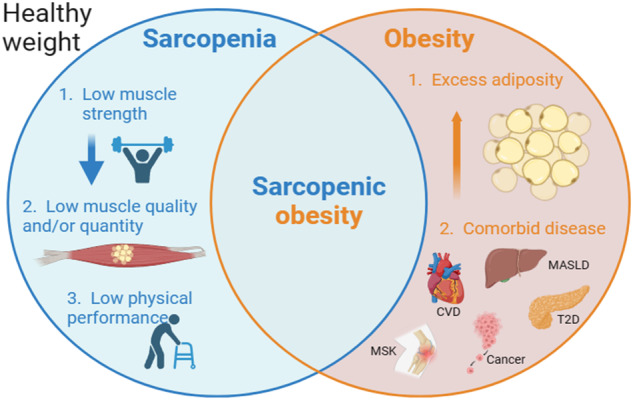
“Finally, the con fl uence of ageing and obesity epidemics has resulted in the concomitant presence of accelerated sarcopenia and obesity, termed sarcopenic obesity, which seems to be associated with a risk synergistic with those of the individual entities [12].”
Obesity paradox in elderly patients with cardiovascular diseases
Dorner, T. E., & Rieder, A. (2011) · International Journal of Cardiology · doi:10.1016/j.ijcard.2011.01.076 · Cited by 165 · cited 2×
“The obesity paradox suggests older adults living with obesity are relatively protected against mortality compared to their younger counterparts [6].”
Sarcopenia and hospitalisation costs in older adults: a cross‐sectional study
Antunes, A. C., Araújo, D. A., Veríssimo, M. T., & Amaral, T. F. (2017) · Nutrition & Dietetics · doi:10.1111/1747-0080.12287 · Cited by 165 · cited 1×
“As with obesity, reduced muscle strength in sarcopenia is associated with disability and poor QoL [25], as well as risk of adverse events and subsequent hospital care, increasing the fi nancial burden to the health service [41].”
Effect of Weight Loss with Reduction of Intra-Abdominal Fat on Lipid Metabolism in Older Men
Purnell, J. Q. (2000) · Journal of Clinical Endocrinology & Metabolism · doi:10.1210/jc.85.3.977 · Cited by 161 · cited 1×
“When weight loss is intentional, older adults signi fi cantly improve cardiometabolic risk markers [59, 60].”
Peralta, M., Ramos, M., Lipert, A., Martins, J., & Marques, A. (2018) · Scandinavian Journal of Public Health · doi:10.1177/1403494818764810 · Cited by 151 · cited 1×
“The biggest increase in prevalent obesity has been in older adults, with ~20% of this age group now living with a body mass index (BMI) ⩾ 30 kg/m 2 [5].”
Harris, T. B., Launer, L. J., Madans, J., & Feldman, J. J. (1997) · BMJ · doi:10.1136/bmj.314.7097.1791 · Cited by 144
Santanasto, A. J., Glynn, N. W., Newman, M. A., Taylor, C. A., Brooks, M. M., Goodpaster, B. H., & Newman, A. B. (2011) · Journal of Obesity · doi:10.1155/2011/516576 · Cited by 132
Houston, D. K., Ding, J., Nicklas, B. J., Harris, T. B., Lee, J. S., Nevitt, M. C., Rubin, S. M., Tylavsky, F. A., Kritchevsky, S. B., & Study, F. T. H. A. (2009) · American Journal of Epidemiology · doi:10.1093/aje/kwp007 · Cited by 132 · cited 2×
“Physical disability typically develops once the BMI exceeds 30 kg/m 2 [22], with negative impact on QoL [11].”
Body fat and fat-free mass inter-relationships: Forbes's theory revisited
Hall, K. D. (2007) · British Journal of Nutrition · doi:10.1017/s0007114507691946 · Cited by 129 · cited 1×
“Generally, each kilogram of body weight lost constitutes ~75% fat mass and ~25% muscle mass [46], although the relationship is non-linear and governed by the magnitude of weight loss [47].”
Perna, S., Guido, D., Bologna, C., Solerte, S. B., Guerriero, F., Isu, A., & Rondanelli, M. (2016) · Aging Clinical and Experimental Research · doi:10.1007/s40520-015-0525-y · Cited by 125 · cited 1×
“…liraglutide 3 mg once daily for 24 weeks found improved body composition with reductions in central fat mass, and preserved muscular performance [86, 87], explained by increased myogenesis in myoblasts [88], and the recruitment of skeletal muscle microvasculature [89]. were reduced in those…”
Benefits of weight loss of 10% or more in patients with overweight or obesity: A review
Tahrani, A. A., & Morton, J. (2022) · Obesity · doi:10.1002/oby.23371 · Cited by 125 · cited 2×
“…of 5 – 10% total body weight can improve physical function and such cardiometabolic risk factors as blood pressure and lipid pro fi le, whilst weight loss exceeding 10% can additionally improve cancer risk, fertility, and health-care costs, while further improving cardiometabolic outcomes [43, 44].”
Mazzali, G., Di Francesco, V., Zoico, E., Fantin, F., Zamboni, G., Benati, C., Bambara, V., Negri, M., Bosello, O., & Zamboni, M. (2006) · The American Journal of Clinical Nutrition · doi:10.1093/ajcn/84.5.1193 · Cited by 120 · cited 1×
“When weight loss is intentional, older adults signi fi cantly improve cardiometabolic risk markers [59, 60].”
Age of obesity onset, cumulative obesity exposure over early adulthood and risk of type 2 diabetes
Luo, J., Hodge, A. M., HENDRYX, M. S., & Byles, J. (2019) · Diabetologia · doi:10.1007/s00125-019-05058-7 · Cited by 108 · cited 2×
“The impact of cumulative exposure to, and age-of-onset of, obesity on diabetes incidence is unclear [18 – 21].”
Appetite and body weight regulation after bariatric surgery
Münzberg, H., Laque, A., Yu, S., Rezai‐Zadeh, K., & Berthoud, H. ‐. (2015) · Obesity Reviews · doi:10.1111/obr.12258 · Cited by 102 · cited 1×
“We are currently amid an evolving revolution in obesity pharmacotherapy, with increasingly ef fi cacious anti-obesity medicines (AOMs), incorporating uni-, bi-and trimolecular incretin receptor agonists [8, 9].”
Kalish, V. B. (2016) · Primary Care Clinics in Office Practice · doi:10.1016/j.pop.2015.10.002 · Cited by 101
Weng, M.-C., Tsai, C.-F., Sheu, K., Lee, Y.-T., Lee, H., Tzeng, S., Ueng, K.-C., Chen, C.-C., & Chen, S.-H. (2013) · QJM · doi:10.1093/qjmed/hct141 · Cited by 101 · cited 1×
“When prescribing AOMs in older adults, consideration of drug-drug interactions should be sought in light of polypharmacy [76], as well as side effects, either directly through the pharmacological properties of the AOM, or indirectly through rapid and maintained weight loss, that may be ampli fi ed…”
Subaran, S. C., Sauder, M. A., Chai, W., Jahn, L. A., Fowler, D. E., Aylor, K. W., Basu, A., & Liu, Z. (2014) · Clinical Science · doi:10.1042/cs20130708 · Cited by 95 · cited 1×
“…found improved body composition with reductions in central fat mass, and preserved muscular performance [86, 87], explained by increased myogenesis in myoblasts [88], and the recruitment of skeletal muscle microvasculature [89]. were reduced in those with T2D, but still signi fi cant (STEP-2) [94].”
Treatment of obesity in older persons—A systematic review
Haywood, C., & Sumithran, P. (2019) · Obesity Reviews · doi:10.1111/obr.12815 · Cited by 84 · cited 3×
“Two reviews have highlighted the impact of weight loss on reducing bone mineral density and risk of fractures, which may reduce mobility [50, 55].”
InfluentialWeight Loss, Exercise, or Both and Physical Function in Obese Older Adults
Villareal, D. T., Chode, S., Parimi, N., Sinacore, D. R., Hilton, T., Armamento-Villareal, R., Napoli, N., Qualls, C., & Shah, K. (2011) · Obstetrical & Gynecological Survey · doi:10.1097/ogx.0b013e3182352181 · Cited by 83
Gilbert, M. P., Marre, M., Holst, J. J., Garber, A. J., Baeres, F. M. M., Thomsen, H. F., & Pratley, R. E. (2015) · Endocrine Practice · doi:10.4158/ep15758.or · Cited by 82
Alharbi, T. A., Paudel, S., Gasevic, D., Ryan, J., Freak-Poli, R., & Owen, A. J. (2021) · Age and Ageing · doi:10.1093/ageing/afaa231 · Cited by 80 · cited 1×
“However, weight gain also increased all-cause mortality by 10%, and the analysis again failed to account for intentionality of weight loss [63].”
Ashtary-Larky, D., Bagheri, R., Abbasnezhad, A., Tinsley, G. M., Alipour, M., & Wong, A. (2020) · British Journal of Nutrition · doi:10.1017/s000711452000224x · Cited by 72
Warren, M., Chaykin, L., Trachtenbarg, D., Nayak, G., Wijayasinghe, N., & Cariou, B. (2018) · Diabetes, Obesity and Metabolism · doi:10.1111/dom.13331 · Cited by 70 · cited 2×
“In older adult SUSTAIN participants, 37% – 59%, and 40% – 79%, lost >5% body weight with semaglutide 0.5 mg, and 1.0 mg, respectively (vs. 4% – 17% in placebo) [98].”
InfluentialBeavers, K. M., Walkup, M. P., Weaver, A. A., Lenchik, L., Kritchevsky, S. B., Nicklas, B. J., Ambrosius, W. T., Stitzel, J. D., Register, T. C., Shapses, S. A., et al. (2018) · Journal of Bone and Mineral Research · doi:10.1002/jbmr.3555 · Cited by 69 · cited 1×
“However, a RCT of 187 older adults with obesity and cardiometabolic disease found that resistance training can counteract the reduced bone mineral density following weight loss [56].”
Obesity in 70‐Year‐Old Subjects as a Risk Factor for 15‐Year Coronary Heart Disease Incidence
Dey, D. K., & Lissner, L. (2003) · Obesity Research · doi:10.1038/oby.2003.113 · Cited by 66 · cited 1×
“Recent prospectively designed studies have found higher WC increases CVD risk in older adults [27, 28], whilst meta-analyses demonstrate increased risk of incident dementia following obesity in mid-life, but a reduced risk when obesity is developed in older adulthood [29, 30].”
Trends in the epidemiology of smoking recorded in UK general practice
Simpson, C. R., Hippisley‐Cox, J., & Sheikh, A. (2010) · British Journal of General Practice · doi:10.3399/bjgp10x483544 · Cited by 56 · cited 1×
“Obesity, poor diet quality, and sedentariness have become more prevalent, whilst smoking has declined [3, 4].”
Kolotkin, R. L., Smolarz, B. G., Meincke, H. H., & Fujioka, K. (2018) · Clinical Obesity · doi:10.1111/cob.12226 · Cited by 46 · cited 1×
“When older adults lose weight under supervision, their physical function and QoL outcomes improve [48, 49].”
Cardiovascular Safety During and After Use of Phentermine and Topiramate
Ritchey, M. E., Harding, A., Hunter, S., Peterson, C., Sager, P. T., Kowey, P. R., Nguyen, L., Thomas, S., Cainzos-Achirica, M., Rothman, K. J., et al. (2019) · The Journal of Clinical Endocrinology & Metabolism · doi:10.1210/jc.2018-01010 · Cited by 42 · cited 1×
“…is not approved for obesity pharmacotherapy by the EMA due to cardiovascular safety concerns; although one retrospective cohort analysed data from over 500,000 patients taking PHEN/TPM, 36.9% of which were >50 years (no maximum age), and found no increased risk of MACE for current users [114].”
InfluentialArdissino, M., Vincent, M., Hines, O., Amin, R., Eichhorn, C., Tang, A. R., Collins, P., Moussa, O., & Purkayastha, S. (2022) · European Heart Journal - Cardiovascular Pharmacotherapy · doi:10.1093/ehjcvp/pvaa133 · Cited by 40 · cited 1×
“Prospective data from adults >18 years (no upper limit, but mean age only 45 years) found that patients using orlistat had 23% lower rates of myocardial infarction, 32% lower rates of ischaemic stroke and 21% lower rates of new-onset heart failure [107].”
Jackson, S. E., Holter, L., & Beeken, R. J. (2019) · BMJ Open · doi:10.1136/bmjopen-2018-025680 · Cited by 37 · cited 1×
“This aligns with knowledge that older people are well motivated to lose weight and engage with weight management services [74].”
Independent regulation of age associated fat accumulation and longevity
Beas, A. O., Gordon, P. B., Prentiss, C. L., Olsen, C. P., Kukurugya, M. A., Bennett, B. D., Parkhurst, S. M., & Gottschling, D. E. (2020) · Nature Communications · doi:10.1038/s41467-020-16358-7 · Cited by 33 · cited 1×
“The prevalence of T2D in older adults correlates with BMI and WC [24, 25].”
Wrzosek, M., Wiśniewska, K., Sawicka, A., Tałałaj, M., & Nowicka, G. (2018) · Obesity Surgery · doi:10.1007/s11695-018-3381-y · Cited by 32 · cited 1×
“It has been postulated that early-onset obesity carries favourable adipose distribution, conferring a metabolically healthier phenotype than if obesity develops in older adults [20].”
Updated Meta-Analysis Assessing the Cardiovascular Efficacy of Tirzepatide
Patoulias, D., Papadopoulos, C. E., Fragakis, N., & Doumas, M. N. (2022) · The American Journal of Cardiology · doi:10.1016/j.amjcard.2022.07.003 · Cited by 28
Association between late-life body mass index and dementia: The Kame Project
(2009) · Neurology · doi:10.1212/wnl.0b013e3181b7c9b2 · Cited by 23
Obesity in older adults: Effect of degree of weight loss on cardiovascular markers and medications
Haywood, C. J., Prendergast, L. A., Lim, R., Lappas, M., Lim, W. K., & Proietto, J. (2019) · Clinical Obesity · doi:10.1111/cob.12316 · Cited by 19 · cited 1×
“Another trial randomised older adults to healthy eating, hypoca-loric diet, or very-low energy diet (VLED) groups, found that all diets improved cardiometabolic risk markers and reduced the number of people requiring T2D and CVD prevention medication, especially with VLEDs [62].”
Age of onset of obesity and risk of type 2 diabetes
Tanamas, S. K., Wong, E., Backholer, K., Abdullah, A., Wolfe, R. S., Barendregt, J. J., & Peeters, A. (2016) · Australian and New Zealand Journal of Public Health · doi:10.1111/1753-6405.12593 · Cited by 18
Body composition and comorbidity in the elderly
Bonnefoy, M., & Gilbert, T. (2015) · Gériatrie et Psychologie Neuropsychiatrie du Viellissement · doi:10.1684/pnv.2015.0528 · Cited by 17 · cited 1×
“Crucially, the obesity paradox is likely heavily confounded by two factors: (1) whether weight loss is intentional, and (2) the use of the BMI metric, which poorly re fl ects the contribution of body composition towards body weight in older adults [15, 34].”
Varlı, M., Turhan, S., Aras, S., Atlı, T., & Erdoğan, G. (2010) · Aging Clinical and Experimental Research · doi:10.1007/bf03324798 · Cited by 16 · cited 2×
“…taking orlistat had improved biventricular diastolic function and bene fi cial restructuring of their myocardium, producing a lower left ventricular mass, at the end of 6 months, although the cardiac outcomes were likely the result of weight loss rather than independent effect of orlistat [105].”
InfluentialZhang, Y., Liu, S., Fan, C., Zeng, Y., Li, J., Xie, C., Xue, Y., & Guan, M. (2019) · Europe PMC (PubMed Central) · doi:10.12122/j.issn.1673-4254.2019.04.11 · Cited by 7 · cited 1×
“…3 mg once daily for 24 weeks found improved body composition with reductions in central fat mass, and preserved muscular performance [86, 87], explained by increased myogenesis in myoblasts [88], and the recruitment of skeletal muscle microvasculature [89]. were reduced in those with…”
Age no Impediment to Effective Weight Loss with Liraglutide 3.0 Mg: Data from Two Randomized Trials
Rubino, D., Coelho, R., Kahan, S., Kushner, R., Wilding, J., Jepsen, C., Smolarz, G., & Wyatt, H. (2018) · International Journal of Nutrology · doi:10.1055/s-0038-1674366 · Cited by 4 · cited 2×
“Pooled analysis of participants from SCALE demonstrated similar 5 and 10% weight reduction rates in older and younger adults [84].”
Self-citationBatsis, J. A., Petersen, C. L., Cook, S. B., Al-Nimr, R. I., Driesse, T., Pidgeon, D., & Fielding, R. (2021) · Clinical Nutrition ESPEN · doi:10.1016/j.clnesp.2021.07.006 · Cited by 3 · cited 1×
“Suf fi cient dietary protein intake during weight loss in older adults may be achieved using whey protein supplementation [69].”
Aging and Non-communicable Disease
Arora, S. (2015) · International perspectives on aging · doi:10.1007/978-3-319-14403-0_1 · Cited by 3 · cited 1×
“Although ageing populations highlight the success of modern health care, many people living into older age, commonly considered >60 years [1], have impaired quality of life (QoL) attributable to physical disability and/or a variety of chronic diseases [2].”
Ardissino, M., Vincent, M., Hines, O., Eichhorn, C., Amin, R., Moussa, O., Collins, P., & Purkayastha, S. (2021) · Journal of the American College of Cardiology · doi:10.1016/s0735-1097(21)02865-5 · Cited by 3
Cited by
GLP-1 Receptor Agonists and Cancer Risk in Adults With Obesity
Dai, H., Li, Y., Lee, Y. A., Lu, Y., George, T. J., Donahoo, W. T., Lee, K. P., Nakshatri, H., Allen, J. M., Guo, Y. M., et al. (2025) · JAMA Oncology · doi:10.1001/jamaoncol.2025.2681 · Cited by 137
Amylin: emergent therapeutic opportunities in overweight, obesity and diabetes mellitus
Walker, C. S., Aitken, J. F., Amarsingh, G. V., Zhang, S., & Cooper, G. J. S. (2025) · Nature Reviews Endocrinology · doi:10.1038/s41574-025-01125-9 · Cited by 40
“However, rodent studies have suggested that cagrilintide-induced weight loss is primarily due to a reduction in adipose tissue mass, with no statistically significant changes in lean mass 140 .”
Aldriwesh, M. G., Alotibi, R. S., Alqurainy, N., Alrabiah, S., Arafah, A. M., Alghoribi, M. F., & Ajina, R. (2025) · Gut Microbes · doi:10.1080/19490976.2025.2607076 · Cited by 24
Salladay-Perez, I. A., Avila, I., Estrada, L., Alexandru, A. C., Ponce, C., Dhingra, A., Torres, G., Deng, C. Y., Hegde, R., Gensheimer, J., et al. (2026) · Nature Aging · doi:10.1038/s43587-026-01101-6 · Cited by 32
“The rising prevalence of global aging in parallel with an obesity epidemic underscores the need to investigate the role of senescent macrophages in driving chronic inflammation and metabolic dysfunction associated with aging 23 .”
Barazzoni, R., Sievenpiper, J. L., Genton, L., Kendall, C. W. C., Ballesteros-Pomar, M. D., Giosuè, A., Boirie, Y., Chiavaroli, L., Cederholm, T., Aas, A., et al. (2025) · Clinical Nutrition · doi:10.1016/j.clnu.2025.10.007 · Cited by 19
Metadata
- Authors
- Henney, A. E., Wilding, J. P. H., Alam, U., & Cuthbertson, D. J.
- Affiliations
- University of Liverpool (GB)
- Corresponding author
- Henney, Alex E.
- Venue
- International Journal of Obesity
- Published
- 2024-05-06
- Volume
- 49
- Issue
- 3
- Pages
- 369-380
- ISSN
- 0307-0565 (ISSN-L)
- 1476-5497
- PMC
- PMC11971046
- OpenAlex
- W4396673812
- Cited by
- 51
- References
- 127
- Citations by year
- 2026: 22 · 2025: 27 · 2024: 2
- FWCI
- 3.19
- Type
- journal article
- Language
- en
- Open access
- hybrid
- doi.org
- Licence
- cc-by
- creativecommons.org/licenses/by/4.0 (tdm)
- creativecommons.org/licenses/by/4.0 (vor)
- Locations
- International Journal of Obesity (publishedVersion, cc-by)
- PubMed Central (publishedVersion, cc-by)
- Europe PMC (PubMed Central) (publishedVersion, cc-by)
- PubMed (publishedVersion)
- Topics
- Health Sciences › Medicine › Pharmacology (medical) › Pharmacology and Obesity Treatment
- Health Sciences › Medicine › Physiology (medical) › Nutrition and Health in Aging
- Health Sciences › Medicine › Endocrinology, Diabetes and Metabolism › Diabetes Treatment and Management
- Keywords
- obesity pharmacotherapy, older adults, weight loss, obesity paradox, sarcopenia, bone mineral density, incretin-based therapy, GLP-1 receptor agonists, liraglutide, semaglutide, tirzepatide, cardiometabolic disease, functional decline, body composition, resistance training
- MeSH terms
- Aged, Humans, Middle Aged, Obesity, Weight Loss, Anti-Obesity Agents
About these checks
Registry, retraction, Cites and statistics results are computed, not judged, with one exception: a printed reference that no index lists is read once by a model before it counts as a citation error. Claims are extracted by a model and kept only when their quote appears verbatim in the text; each cited source is then checked, with a model’s help, for whether it says what the claim relies on. Those verdicts can be wrong — read the claim’s quote and the cited source before relying on one.
The claim verdicts this report counts are experimental: their accuracy is not yet measured.
A language model drew the claims from the paper on 2026-10-06, under version 3 of the claim definition (model deepseek-v4.1-flash, prompt extract-v3).
A second model labelled each claim on 2026-10-06 (model jev-1.13-20260917, definition revision gold-guideline-v0.2).
Cited sources are checked with a language model’s help (gpt-6-sol and qwen3.8-omni-flash).
Statistics and arithmetic are recomputed, not judged.
Confidence bands are shown only for fields calibrated on our annotated test set. None is calibrated yet, so no band is shown.
What counts as a claim ›How we measure confidence ›How we check this ›
Are you an author, or do you see a problem with this page? Request a review
Data sources
Bibliographic data: Semantic Scholar, OpenAlex, Crossref.
Contains information from the Semantic Scholar Academic Graph Datasets, made available under the ODC Attribution License (ODC-BY 1.0).
Semantic Scholar’s data is described in: Kinney, R., et al. (2023). The Semantic Scholar Open Data Platform. arXiv:2301.10140.
