

Biologically informed deep learning to query gene programs in single-cell atlases
Open accessPublished version of a preprint
The DOI matches its Crossref record; 120 of the 123 references it cites were found in a registry or an index.
Abstract
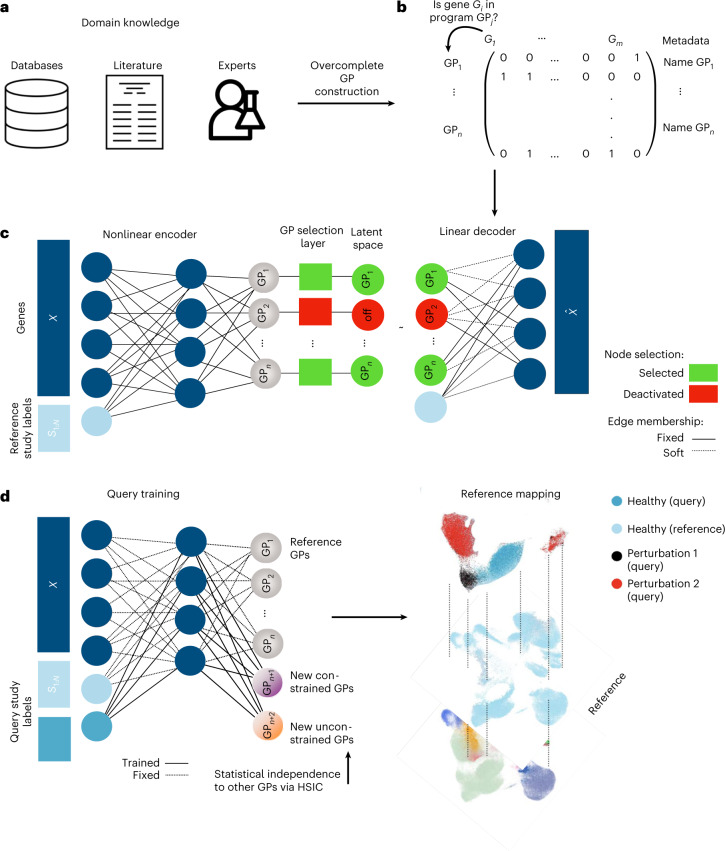
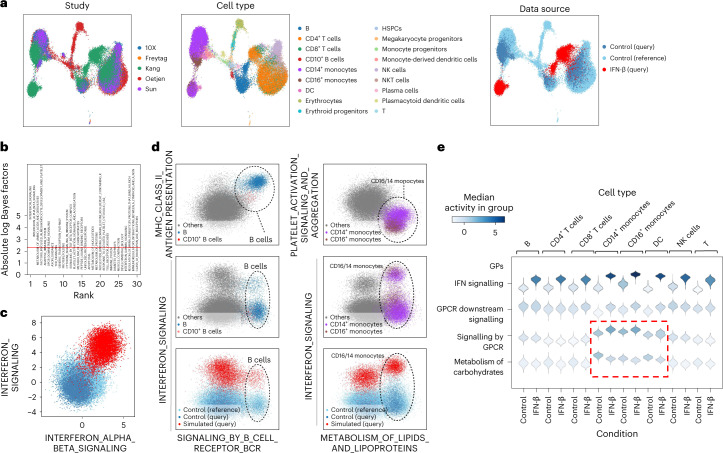
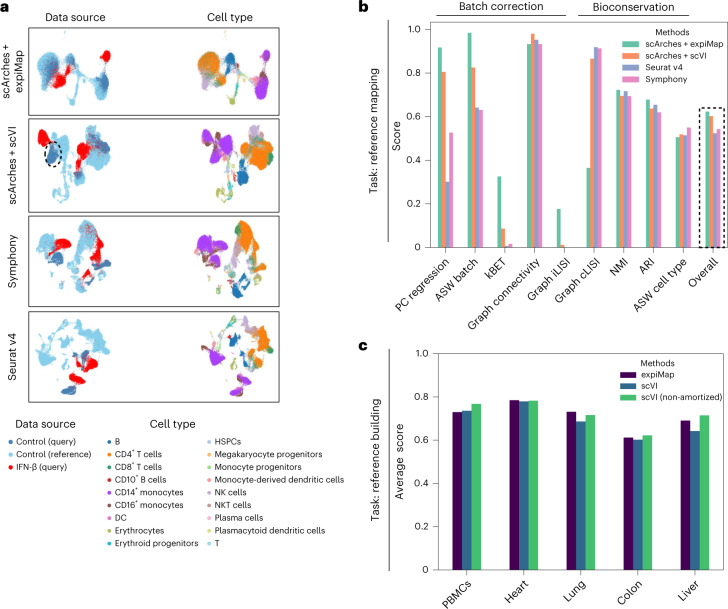
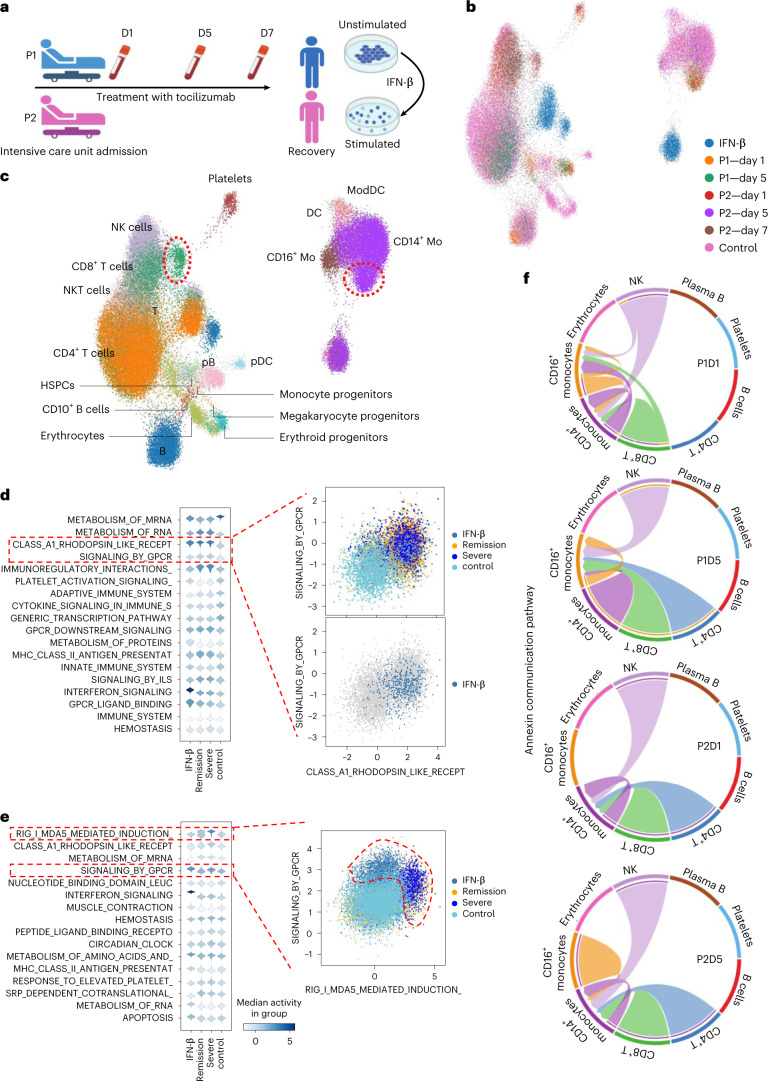
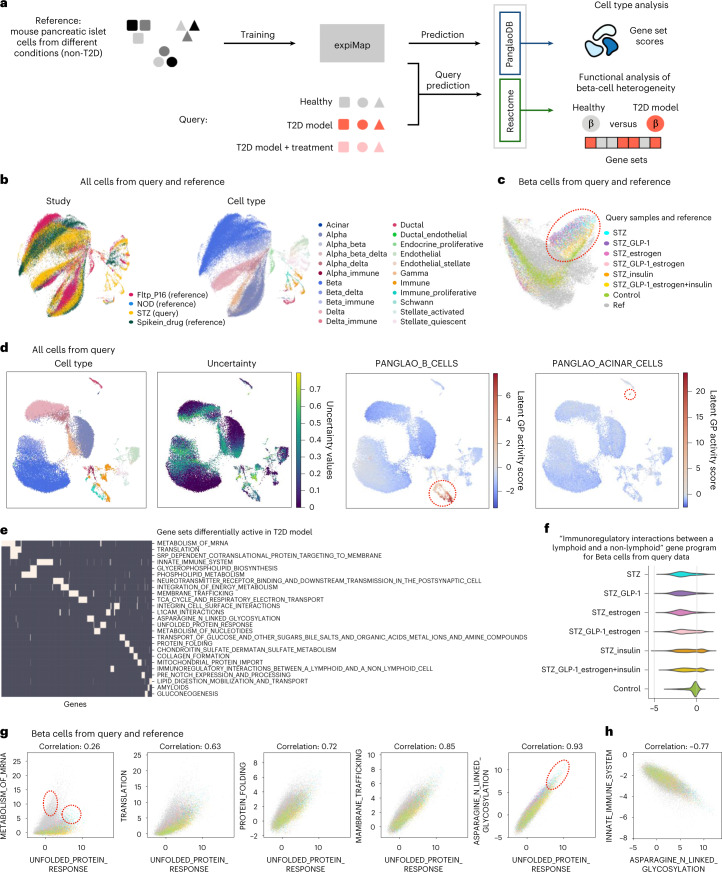
The increasing availability of large-scale single-cell atlases has enabled the detailed description of cell states. In parallel, advances in deep learning allow rapid analysis of newly generated query datasets by mapping them into reference atlases. However, existing data transformations learned to map query data are not easily explainable using biologically known concepts such as genes or pathways. Here we propose expiMap, a biologically informed deep-learning architecture that enables single-cell reference mapping. ExpiMap learns to map cells into biologically understandable components representing known ‘gene programs’. The activity of each cell for a gene program is learned while simultaneously refining them and learning de novo programs. We show that expiMap compares favourably to existing methods while bringing an additional layer of interpretability to integrative single-cell analysis. Furthermore, we demonstrate its applicability to analyse single-cell perturbation responses in different tissues and species and resolve responses of patients who have coronavirus disease 2019 to different treatments across cell types.
Overview
The claims and statistics of this paper haven’t been checked yet.
Free: it reads the open-access text and checks the first 5 claims that cite a source we can check. Create a free account to check every claim.
Integrity signals
Registry
Cites
Statistics
Figures
Verification
Claims the paper makes
The claims and statistics of this paper haven’t been checked yet.
Free: it reads the open-access text and checks the first 5 claims that cite a source we can check. Create a free account to check every claim.
Claims other papers make about this one
Each is checked against this paper’s own text: does it say what the citing paper says it does?
The source backs part of the claim, not all of it — or backs it for a different population, condition or comparison.
In the citing paper
“While multiple deep learning methods have been developed to integrate biological pathway information with neural network architectures [116,166], these methods are still limited by the predefined pathway annotations.”
From Challenges in AI-driven Biomedical Multimodal Data Fusion and Analysis (2025) · cites this paper as [166]
Experimental — accuracy not yet measuredThe cited source says what the claim attributes to it.
In the citing paper
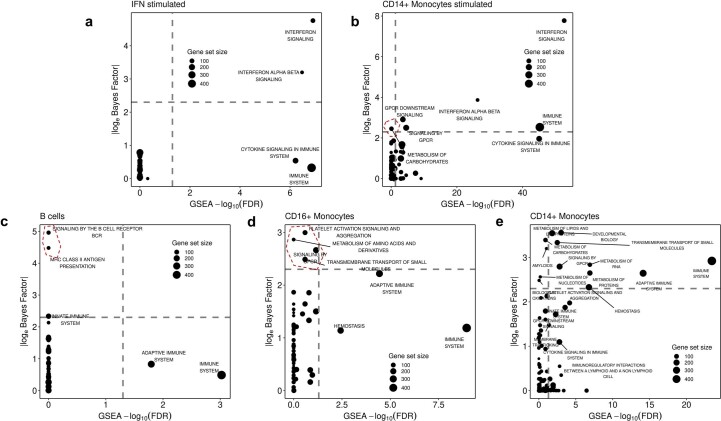
“expiMap can be more specific in retrieving biological pathways (in the form of GPs) that emerge as deregulated in a perturbation query dataset compared to the healthy reference atlas, outperforming traditional GSEA, which is prone to more generic enrichments.”
From A mini-review on perturbation modelling across single-cell omic modalities (2024) · cites this paper as [60]
The cited source says what the claim attributes to it.
In the citing paper
“For instance, Lotfollahi et al. introduced expiMap, which used biological domain databases to learn cellular gene programs and was designed for inferring de novo gene programs, which enables more efficient cellular annotation and querying of new single-cell datasets [166].”
From Challenges in AI-driven Biomedical Multimodal Data Fusion and Analysis (2025) · cites this paper as [166]
In the citing paper
“expiMap designates biological processes in normal and disease states when mapping the new queries to the atlas while maintaining comparable integration performance to relevant state-of-the-art tools.”
From A mini-review on perturbation modelling across single-cell omic modalities (2024) · cites this paper as [60]
In the citing paper
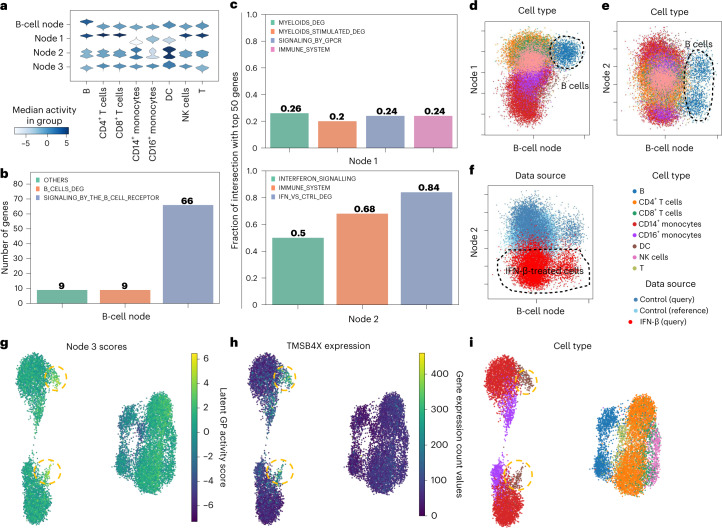
“expiMap can also learn new GPs not previously included in the reference atlas specific to the perturbed query dataset.”
From A mini-review on perturbation modelling across single-cell omic modalities (2024) · cites this paper as [60]
1 more claim about this paper
Create a free account to see every claim other papers make about this one.
Self-check
Percentages, sums and reported differences re-computed from the paper’s own numbers.
The self-check needs the paper’s full text.
Citations
Cites
Vaswani, A., Shazeer, N., Parmar, N., Uszkoreit, J., Jones, L., Gomez, A. N., Kaiser, L., & Polosukhin, I. (2017) · arXiv · doi:10.48550/arxiv.1706.03762 · Cited by 120,404
Subramanian, A., Tamayo, P., Mootha, V. K., Mukherjee, S., Ebert, B. L., Gillette, M. A., Paulovich, A., Pomeroy, S. L., Golub, T. R., Lander, E. S., et al. (2005) · Proceedings of the National Academy of Sciences · doi:10.1073/pnas.0506580102 · Cited by 53,625
Highly accurate protein structure prediction with AlphaFold
Jumper, J., Evans, R., Pritzel, A., Green, T., Figurnov, M., Ronneberger, O., Tunyasuvunakool, K., Bates, R., Žídek, A., Potapenko, A., et al. (2021) · Nature · doi:10.1038/s41586-021-03819-2 · Cited by 43,764
Robinson, M. D., McCarthy, D. J., & Smyth, G. K. (2010) · Bioinformatics · doi:10.1093/bioinformatics/btp616 · Cited by 41,364
limma powers differential expression analyses for RNA-sequencing and microarray studies
Ritchie, M. E., Phipson, B., Wu, D., Hu, Y., Law, C. W., Shi, W., & Smyth, G. K. (2015) · Nucleic Acids Research · doi:10.1093/nar/gkv007 · Cited by 40,458
Auto-Encoding Variational Bayes
Kingma, D. P., & Welling, M. (2013) · arXiv · doi:10.48550/arxiv.1312.6114 · Cited by 20,067
Integrated analysis of multimodal single-cell data
Hao, Y., Hao, S., Andersen-Nissen, E., Mauck, W. M., Zheng, S., Butler, A., Lee, M. J., Wilk, A. J., Darby, C., Zagar, M., et al. (2020) · doi:10.1101/2020.10.12.335331 · Cited by 15,508
Fast, sensitive and accurate integration of single-cell data with Harmony
Korsunsky, I., Millard, N., Fan, J., Slowikowski, K., Zhang, F., Wei, K., Baglaenko, Y., Brenner, M., Loh, P.-R., & Raychaudhuri, S. (2019) · Nature Methods · doi:10.1038/s41592-019-0619-0 · Cited by 10,488
SCANPY: large-scale single-cell gene expression data analysis
Wolf, F. A., Angerer, P., & Theis, F. J. (2018) · Genome Biology · doi:10.1186/s13059-017-1382-0 · Cited by 8,881
Self-citationInference and analysis of cell-cell communication using CellChat
Jin, S., Guerrero-Juarez, C. F., Zhang, L., Chang, I., Ramos, R., Kuan, C.-H., Myung, P., Plikus, M. V., & Nie, Q. (2021) · Nature Communications · doi:10.1038/s41467-021-21246-9 · Cited by 8,409
A scaling normalization method for differential expression analysis of RNA-seq data
Robinson, M. D., & Oshlack, A. (2010) · Genome Biology · doi:10.1186/gb-2010-11-3-r25 · Cited by 7,876
Molecular signatures database (MSigDB) 3.0
Liberzon, A., Subramanian, A., Pinchback, R., Thorvaldsdóttir, H., Tamayo, P., & Mesirov, J. P. (2011) · Bioinformatics · doi:10.1093/bioinformatics/btr260 · Cited by 7,111
voom: precision weights unlock linear model analysis tools for RNA-seq read counts
Law, C. W., Chen, Y., Shi, W., & Smyth, G. K. (2014) · Genome Biology · doi:10.1186/gb-2014-15-2-r29 · Cited by 6,155
The Reactome pathway Knowledgebase
Fabregat, A., Sidiropoulos, K., Garapati, P., Gillespie, M., Hausmann, K., Haw, R., Jassal, B., Jupe, S., Korninger, F., McKay, S., et al. (2016) · Nucleic Acids Research · doi:10.1093/nar/gkv1351 · Cited by 5,605
HOW CELLS RESPOND TO INTERFERONS
Stark, G. R., Kerr, I. M., Williams, B. R. G., Silverman, R. H., & Schreiber, R. D. (1998) · Annual Review of Biochemistry · doi:10.1146/annurev.biochem.67.1.227 · Cited by 3,932
Efremova, M., Vento-Tormo, M., Teichmann, S. A., & Vento-Tormo, R. (2020) · Nature Protocols · doi:10.1038/s41596-020-0292-x · Cited by 3,449
Simultaneous epitope and transcriptome measurement in single cells
Stoeckius, M., Hafemeister, C., Stephenson, W., Houck-Loomis, B., Chattopadhyay, P. K., Swerdlow, H., Satija, R., & Smibert, P. (2017) · Nature Methods · doi:10.1038/nmeth.4380 · Cited by 3,098
Generalizing RNA velocity to transient cell states through dynamical modeling
Bergen, V., Lange, M., Peidli, S., Wolf, F. A., & Theis, F. J. (2020) · Nature Biotechnology · doi:10.1038/s41587-020-0591-3 · Cited by 2,951
Self-citationDeep generative modeling for single-cell transcriptomics
Lopez, R., Regier, J., Cole, M. B., Jordan, M. I., & Yosef, N. (2018) · Nature Methods · doi:10.1038/s41592-018-0229-2 · Cited by 2,530
Cui, P., Zhang, S., Ding, F., Ali, S., & Xiong, L. (2014) · Genome Biology · doi:10.1186/gb-2014-15-1-r1 · Cited by 2,294
Regev, A., Teichmann, S. A., Lander, E. S., Amit, I., Benoist, C., Birney, E., Bodenmiller, B., Campbell, P., Carninci, P., Clatworthy, M., et al. (2017) · eLife · doi:10.7554/elife.27041 · Cited by 2,232
Self-citationCurrent best practices in single-cell RNA-seq analysis: a tutorial
Luecken, M. D., & Theis, F. J. (2019) · Molecular Systems Biology · doi:10.15252/msb.20188746 · Cited by 2,231
Self-citationThe reactome pathway knowledgebase
Jassal, B., Matthews, L., Viteri, G., Gong, C., Lorente, P., Fabregat, A., Sidiropoulos, K., Cook, J., Gillespie, M., Haw, R., et al. (2019) · Nucleic Acids Research · doi:10.1093/nar/gkz1031 · Cited by 2,159
Glycosylation in health and disease
Reily, C., Stewart, T. J., Renfrow, M. B., & Novak, J. (2019) · Nature Reviews Nephrology · doi:10.1038/s41581-019-0129-4 · Cited by 2,075
Immune Signaling by RIG-I-like Receptors
Loo, Y.-M., & Gale, M. (2011) · Immunity · doi:10.1016/j.immuni.2011.05.003 · Cited by 1,875
Cells of the adult human heart
Litviňuková, M., Talavera-López, C., Maatz, H., Reichart, D., Worth, C. L., Lindberg, E. L., Kanda, M., Polanski, K., Heinig, M., Lee, M., et al. (2020) · Nature · doi:10.1038/s41586-020-2797-4 · Cited by 1,729
Self-citationExploring tissue architecture using spatial transcriptomics
Rao, A., Barkley, D., França, G. S., & Yanai, I. (2021) · Nature · doi:10.1038/s41586-021-03634-9 · Cited by 1,700
A molecular cell atlas of the human lung from single-cell RNA sequencing
Travaglini, K. J., Nabhan, A. N., Penland, L., Sinha, R., Gillich, A., Sit, R. V., Chang, S., Conley, S. D., Mori, Y., Seita, J., et al. (2020) · Nature · doi:10.1038/s41586-020-2922-4 · Cited by 1,691
Chen, Y., Lun, A. T. L., & Smyth, G. K. (2016) · F1000Research · doi:10.12688/f1000research.8987.1 · Cited by 1,601
Howe, K. L., Achuthan, P., Allen, J., Allen, J., Alvarez-Jarreta, J., Amode, M. R., Armean, I. M., Azov, A. G., Bennett, R., Bhai, J., et al. (2021) · Nucleic Acids Research · doi:10.1093/nar/gkaa942 · Cited by 1,568
First-Order Methods in Optimization
Beck, A. (2017) · Society for Industrial and Applied Mathematics eBooks · doi:10.1137/1.9781611974997 · Cited by 1,563
PanglaoDB: a web server for exploration of mouse and human single-cell RNA sequencing data
Franzén, O., Gan, L.-M., & Björkegren, J. L. M. (2019) · Database · doi:10.1093/database/baz046 · Cited by 1,551
Benchmarking atlas-level data integration in single-cell genomics
Luecken, M. D., Büttner, M., Chaichoompu, K., Danese, A., Interlandi, M., Mueller, M. F., Strobl, D. C., Zappia, L., Dugas, M., Colomé-Tatché, M., et al. (2022) · Nature Methods · doi:10.1038/s41592-021-01336-8 · Cited by 1,438
Self-citationUnderstanding disentangling in $β$-VAE
Burgess, C. P., Higgins, I., Pal, A., Matthey, L., Watters, N., Desjardins, G., & Lerchner, A. (2018) · arXiv · doi:10.48550/arxiv.1804.03599 · Cited by 1,416
Regev, A., Teichmann, S. A., Lander, E. S., Amit, I., Benoist, C. O., Birney, E., Bodenmiller, B., & Campbell, P. J. (2017) · Zurich Open Repository and Archive (University of Zurich) · doi:10.5167/uzh-162597 · Cited by 1,399
Intra- and Inter-cellular Rewiring of the Human Colon during Ulcerative Colitis
Smillie, C. S., Biton, M., Ordovas-Montanes, J., Sullivan, K. M., Burgin, G., Graham, D. B., Herbst, R. H., Rogel, N., Slyper, M., Waldman, J., et al. (2019) · Cell · doi:10.1016/j.cell.2019.06.029 · Cited by 1,394
Eleven grand challenges in single-cell data science
Lähnemann, D., Köster, J., Szczurek, E., McCarthy, D. J., Hicks, S. C., Robinson, M. D., Vallejos, C. A., Campbell, K. R., Beerenwinkel, N., Mahfouz, A., et al. (2020) · Genome Biology · doi:10.1186/s13059-020-1926-6 · Cited by 1,327
Self-citationArthropod decline in grasslands and forests is associated with landscape-level drivers
Seibold, S., Gossner, M. M., Simons, N. K., Blüthgen, N., Müller, J., Ambarlı, D., Ammer, C., Bauhus, J., Fischer, M., Habel, J. C., et al. (2019) · Nature · doi:10.1038/s41586-019-1684-3 · Cited by 1,314
A Kernel Statistical Test of Independence
Gretton, A., Fukumizu, K., Teo, C. H., Song, L., Schölkopf, B., & Smola, A. J. (2007) · neural information processing systems · Cited by 1,172
Multiplexed droplet single-cell RNA-sequencing using natural genetic variation
Kang, H. M., Subramaniam, M., Targ, S., Nguyen, M., Maliskova, L., McCarthy, E., Wan, E., Wong, S., Byrnes, L., Lanata, C. M., et al. (2018) · Nature Biotechnology · doi:10.1038/nbt.4042 · Cited by 1,101
Cytokine Storm in COVID-19: The Current Evidence and Treatment Strategies
Tang, Y., Liu, J., Zhang, D., Xu, Z., Ji, J., & Wen, C. (2020) · Frontiers in Immunology · doi:10.3389/fimmu.2020.01708 · Cited by 1,094
Stoeckius, M., Zheng, S., Houck-Loomis, B., Hao, S., Yeung, B. Z., Mauck, W. M., Smibert, P., & Satija, R. (2018) · Genome Biology · doi:10.1186/s13059-018-1603-1 · Cited by 1,046
Reactome pathway analysis: a high-performance in-memory approach
Fabregat, A., Sidiropoulos, K., Viteri, G., Forner, O., Marin-Garcia, P., Arnau, V., D’Eustachio, P., Stein, L., & Hermjakob, H. (2017) · BMC Bioinformatics · doi:10.1186/s12859-017-1559-2 · Cited by 873
A Python library for probabilistic analysis of single-cell omics data
Gayoso, A., Lopez, R., Xing, G., Boyeau, P., Valiollah Pour Amiri, V., Hong, J., Wu, K., Jayasuriya, M., Mehlman, E., Langevin, M., et al. (2022) · Nature Biotechnology · doi:10.1038/s41587-021-01206-w · Cited by 789
Self-citationXu, C., Lopez, R., Mehlman, E., Regier, J., Jordan, M. I., & Yosef, N. (2021) · Molecular Systems Biology · doi:10.15252/msb.20209620 · Cited by 691
OmniPath: guidelines and gateway for literature-curated signaling pathway resources
Türei, D., Korcsmáros, T., & Saez-Rodriguez, J. (2016) · Nature Methods · doi:10.1038/nmeth.4077 · Cited by 687
scGen predicts single-cell perturbation responses
Lotfollahi, M., Wolf, F. A., & Theis, F. J. (2019) · Nature Methods · doi:10.1038/s41592-019-0494-8 · Cited by 661
Self-citationA comparison of automatic cell identification methods for single-cell RNA sequencing data
Abdelaal, T., Michielsen, L., Cats, D., Hoogduin, D., Mei, H., Reinders, M. J. T., & Mahfouz, A. (2019) · Genome Biology · doi:10.1186/s13059-019-1795-z · Cited by 628
Decoding human fetal liver haematopoiesis
Popescu, D.-M., Botting, R. A., Stephenson, E., Green, K., Webb, S., Jardine, L., Calderbank, E. F., Polanski, K., Goh, I., Efremova, M., et al. (2019) · Nature · doi:10.1038/s41586-019-1652-y · Cited by 606
Mapping single-cell data to reference atlases by transfer learning
Lotfollahi, M., Naghipourfar, M., Luecken, M. D., Khajavi, M., Büttner, M., Wagenstetter, M., Avsec, Ž., Gayoso, A., Yosef, N., Interlandi, M., et al. (2022) · Nature Biotechnology · doi:10.1038/s41587-021-01001-7 · Cited by 602
Self-citationJoint probabilistic modeling of single-cell multi-omic data with totalVI
Gayoso, A., Steier, Z., Lopez, R., Regier, J., Nazor, K. L., Streets, A., & Yosef, N. (2021) · Nature Methods · doi:10.1038/s41592-020-01050-x · Cited by 592
Mimitou, E. P., Lareau, C. A., Chen, K. Y., Zorzetto-Fernandes, A. L., Hao, Y., Takeshima, Y., Luo, W., Huang, T.-S., Yeung, B. Z., Papalexi, E., et al. (2021) · Nature Biotechnology · doi:10.1038/s41587-021-00927-2 · Cited by 529
anndata: Access and store annotated data matrices
Virshup, I., Rybakov, S., Theis, F. J., Angerer, P., & Wolf, F. A. (2024) · Journal of Open Source Software · doi:10.21105/joss.04371 · Cited by 485
Self-citationSingle-cell CUT&Tag profiles histone modifications and transcription factors in complex tissues
Bartosovic, M., Kabbe, M., & Castelo-Branco, G. (2021) · Nature Biotechnology · doi:10.1038/s41587-021-00869-9 · Cited by 483
Feature selection and dimension reduction for single-cell RNA-Seq based on a multinomial model
Townes, F. W., Hicks, S. C., Aryee, M. J., & Irizarry, R. A. (2019) · Genome Biology · doi:10.1186/s13059-019-1861-6 · Cited by 471
Biologically informed deep neural network for prostate cancer discovery
Elmarakeby, H. A., Hwang, J., Arafeh, R., Crowdis, J., Gang, S., Liu, D., AlDubayan, S. H., Salari, K., Kregel, S., Richter, C., et al. (2021) · Nature · doi:10.1038/s41586-021-03922-4 · Cited by 456
Using deep learning to model the hierarchical structure and function of a cell
Ma, J., Yu, M. K., Fong, S., Ono, K., Sage, E., Demchak, B., Sharan, R., & Ideker, T. (2018) · Nature Methods · doi:10.1038/nmeth.4627 · Cited by 435
Eze, U. C., Bhaduri, A., Haeussler, M., Nowakowski, T. J., & Kriegstein, A. R. (2021) · Nature Neuroscience · doi:10.1038/s41593-020-00794-1 · Cited by 427
Parsing the interferon transcriptional network and its disease associations
Mostafavi, S., Yoshida, H., Moodley, D., LeBoité, H., Rothamel, K., Raj, T., Ye, C. J., Chevrier, N., Zhang, S.-Y., Feng, T., et al. (2016) · Cell · doi:10.1016/j.cell.2015.12.032 · Cited by 337
Predicting cellular responses to complex perturbations in high‐throughput screens
Lotfollahi, M., Klimovskaia Susmelj, A., De Donno, C., Hetzel, L., Ji, Y., Ibarra, I. L., Srivatsan, S. R., Naghipourfar, M., Daza, R. M., Martin, B., et al. (2023) · Molecular Systems Biology · doi:10.15252/msb.202211517 · Cited by 307
Self-citationWang, T., Li, B., Nelson, C. E., & Nabavi, S. (2019) · BMC Bioinformatics · doi:10.1186/s12859-019-2599-6 · Cited by 286
Human bone marrow assessment by single-cell RNA sequencing, mass cytometry, and flow cytometry
Oetjen, K. A., Lindblad, K. E., Goswami, M., Gui, G., Dagur, P. K., Lai, C., Dillon, L. W., McCoy, J. P., & Hourigan, C. S. (2018) · JCI Insight · doi:10.1172/jci.insight.124928 · Cited by 272
RNA velocity—current challenges and future perspectives
Bergen, V., Soldatov, R. A., Kharchenko, P. V., & Theis, F. J. (2021) · Molecular Systems Biology · doi:10.15252/msb.202110282 · Cited by 271
Self-citationBetween a chicken and a grape: estimating the number of human genes
Pertea, M., & Salzberg, S. L. (2010) · Genome Biology · doi:10.1186/1465-6906-11-s1-i1 · Cited by 252
Automated methods for cell type annotation on scRNA-seq data
Pasquini, G., Rojo Arias, J. E., Schäfer, P., & Busskamp, V. (2021) · Computational and Structural Biotechnology Journal · doi:10.1016/j.csbj.2021.01.015 · Cited by 249
Comprehensive single cell mRNA profiling reveals a detailed roadmap for pancreatic endocrinogenesis
Bastidas-Ponce, A., Tritschler, S., Dony, L., Scheibner, K., Tarquis-Medina, M., Salinno, C., Schirge, S., Burtscher, I., Böttcher, A., Theis, F. J., et al. (2019) · Development · doi:10.1242/dev.173849 · Cited by 249
Self-citationanndata: Annotated dataPreprint
Virshup, I., Rybakov, S., Theis, F. J., Angerer, P., & Wolf, F. (2021) · bioRxiv · doi:10.1101/2021.12.16.473007 · Cited by 236
Self-citationEfficient and precise single-cell reference atlas mapping with Symphony
Kang, J. B., Nathan, A., Weinand, K., Zhang, F., Millard, N., Rumker, L., Moody, D. B., Korsunsky, I., & Raychaudhuri, S. (2021) · Nature Communications · doi:10.1038/s41467-021-25957-x · Cited by 231
Clarke, Z. A., Andrews, T. S., Atif, J., Pouyabahar, D., Innes, B. T., MacParland, S. A., & Bader, G. D. (2021) · Nature Protocols · doi:10.1038/s41596-021-00534-0 · Cited by 226
RIG-I triggers a signaling-abortive anti-SARS-CoV-2 defense in human lung cells
Yamada, T., Sato, S., Sotoyama, Y., Orba, Y., Sawa, H., Yamauchi, H., Sasaki, M., & Takaoka, A. (2021) · Nature Immunology · doi:10.1038/s41590-021-00942-0 · Cited by 225
Mutations in Igα (CD79a) result in a complete block in B-cell development
Minegishi, Y., Coustan-Smith, E., Rapalus, L., Ersoy, F., Campana, D., & Conley, M. E. (1999) · Journal of Clinical Investigation · doi:10.1172/jci7696 · Cited by 220
Comparison of clustering tools in R for medium-sized 10x Genomics single-cell RNA-sequencing data
Freytag, S., Tian, L., Lönnstedt, I., Ng, M., & Bahlo, M. (2018) · F1000Research · doi:10.12688/f1000research.15809.1 · Cited by 220
A molecular cell atlas of the human lung from single cell RNA sequencing
Travaglini, K. J., Nabhan, A. N., Penland, L., Sinha, R., Gillich, A., Sit, R. V., Chang, S., Conley, S. D., Mori, Y., Seita, J., et al. (2019) · bioRxiv (Cold Spring Harbor Laboratory) · doi:10.1101/742320 · Cited by 216
Guo, C., Li, B., Ma, H., Wang, X., Cai, P., Yu, Q., Zhu, L., Jin, L., Jiang, C., Fang, J., et al. (2020) · Nature Communications · doi:10.1038/s41467-020-17834-w · Cited by 206
Integrative analysis of single-cell genomics data by coupled nonnegative matrix factorizations
Duren, Z., Chen, X., Zamanighomi, M., Zeng, W., Satpathy, A. T., Chang, H. Y., Wang, Y., & Wong, W. H. (2018) · Proceedings of the National Academy of Sciences · doi:10.1073/pnas.1805681115 · Cited by 199
The dynamic plasticity of insulin production in β-cells
Boland, B. B., Rhodes, C. J., & Grimsby, J. S. (2017) · Molecular Metabolism · doi:10.1016/j.molmet.2017.04.010 · Cited by 194
Interpretable factor models of single-cell RNA-seq via variational autoencoders
Svensson, V., Gayoso, A., Yosef, N., & Pachter, L. (2020) · Bioinformatics · doi:10.1093/bioinformatics/btaa169 · Cited by 190
Benchmarking principal component analysis for large-scale single-cell RNA-sequencing
Tsuyuzaki, K., Sato, H., Sato, K., & Nikaido, I. (2020) · Genome biology · doi:10.1186/s13059-019-1900-3 · Cited by 153
Beta Cell Dedifferentiation Induced by IRE1α Deletion Prevents Type 1 Diabetes
Lee, H., Lee, Y.-S., Harenda, Q., Pietrzak, S., Oktay, H. Z., Schreiber, S., Liao, Y., Sonthalia, S., Ciecko, A. E., Chen, Y.-G., et al. (2020) · Cell Metabolism · doi:10.1016/j.cmet.2020.03.002 · Cited by 152
Causal integration of multi‐omics data with prior knowledge to generate mechanistic hypotheses
Dugourd, A., Kuppe, C., Sciacovelli, M., Gjerga, E., Gabor, A., Emdal, K. B., Vieira, V., Bekker‐Jensen, D. B., Kranz, J., Bindels, E. M. J., et al. (2021) · Molecular Systems Biology · doi:10.15252/msb.20209730 · Cited by 149
Alterations in Beta Cell Identity in Type 1 and Type 2 Diabetes
Moin, A. S. M., & Butler, A. E. (2019) · Current Diabetes Reports · doi:10.1007/s11892-019-1194-6 · Cited by 148
Targeted pharmacological therapy restores β-cell function for diabetes remission
Sachs, S., Bastidas-Ponce, A., Tritschler, S., Bakhti, M., Böttcher, A., Sánchez-Garrido, M. A., Tarquis-Medina, M., Kleinert, M., Fischer, K., Jall, S., et al. (2020) · Nature Metabolism · doi:10.1038/s42255-020-0171-3 · Cited by 147
Self-citationRole of SLC7A5 in Metabolic Reprogramming of Human Monocyte/Macrophage Immune Responses
Yoon, B. R., Oh, Y.-J., Kang, S. W., Lee, E. B., & Lee, W.-W. (2018) · Frontiers in Immunology · doi:10.3389/fimmu.2018.00053 · Cited by 143
False signals induced by single-cell imputation
Andrews, T. S., & Hemberg, M. (2018) · F1000Research · doi:10.12688/f1000research.16613.1 · Cited by 142
Altered N‐glycosylation profiles as potential biomarkers and drug targets in diabetes
Rudman, N., Gornik, O., & Lauc, G. (2019) · FEBS Letters · doi:10.1002/1873-3468.13495 · Cited by 141
Effects of Interferons and Viruses on Metabolism
Fritsch, S. D., & Weichhart, T. (2016) · Frontiers in Immunology · doi:10.3389/fimmu.2016.00630 · Cited by 136
f-scLVM: scalable and versatile factor analysis for single-cell RNA-seq
Buettner, F., Pratanwanich, N., McCarthy, D. J., Marioni, J. C., & Stegle, O. (2017) · Genome Biology · doi:10.1186/s13059-017-1334-8 · Cited by 135
Fortelny, N., & Bock, C. (2020) · Genome Biology · doi:10.1186/s13059-020-02100-5 · Cited by 135
Altered Islet Composition and Disproportionate Loss of Large Islets in Patients with Type 2 Diabetes
Kilimnik, G., Zhao, B., Jo, J., Periwal, V., Witkowski, P., Misawa, R., & Hara, M. (2011) · PLoS ONE · doi:10.1371/journal.pone.0027445 · Cited by 132
Conditional out-of-distribution generation for unpaired data using transfer VAE
Lotfollahi, M., Naghipourfar, M., Theis, F. J., & Wolf, F. A. (2020) · Bioinformatics · doi:10.1093/bioinformatics/btaa800 · Cited by 130
Self-citationAnnexins family: insights into their functions and potential role in pathogenesis of sarcoidosis
Mirsaeidi, M., Gidfar, S., Vu, A., & Schraufnagel, D. (2016) · Journal of Translational Medicine · doi:10.1186/s12967-016-0843-7 · Cited by 108
Seninge, L., Anastopoulos, I., Ding, H., & Stuart, J. (2021) · Nature Communications · doi:10.1038/s41467-021-26017-0 · Cited by 107
Single-Cell RNA-Sequencing: Assessment of Differential Expression Analysis Methods
Dal Molin, A., Baruzzo, G., & Di Camillo, B. (2017) · Frontiers in Genetics · doi:10.3389/fgene.2017.00062 · Cited by 107
AlQuraishi, M., & Sorger, P. K. (2021) · Nature Methods · doi:10.1038/s41592-021-01283-4 · Cited by 96
Information Constraints on Auto-Encoding Variational Bayes
Lopez, R., Regier, J., Jordan, M. I., & Yosef, N. (2018) · arXiv (Cornell University) · doi:10.48550/arxiv.1805.08672 · Cited by 90
Learning interpretable cellular and gene signature embeddings from single-cell transcriptomic data
Zhao, Y., Cai, H., Zhang, Z., Tang, J., & Li, Y. (2021) · Nature Communications · doi:10.1038/s41467-021-25534-2 · Cited by 87
Autoimmunity to annexin A2 predicts mortality among hospitalised COVID-19 patients
Zuniga, M., Gomes, C., Carsons, S. E., Bender, M. T., Cotzia, P., Miao, Q. R., Lee, D. C., & Rodriguez, A. (2021) · European Respiratory Journal · doi:10.1183/13993003.00918-2021 · Cited by 86
BioReader: a text mining tool for performing classification of biomedical literature
Simon, C., Davidsen, K., Hansen, C., Seymour, E., Barnkob, M. B., & Olsen, L. R. (2019) · BMC Bioinformatics · doi:10.1186/s12859-019-2607-x · Cited by 74
Sun, Z., Chen, L., Xin, H., Jiang, Y., Huang, Q., Cillo, A. R., Tabib, T., Kolls, J. K., Bruno, T. C., Lafyatis, R., et al. (2019) · Nature Communications · doi:10.1038/s41467-019-09639-3 · Cited by 72
Herbert, T., & Laybutt, D. (2016) · Diabetes · doi:10.2337/db15-1633 · Cited by 69
Integration and Querying of Multimodal Single-Cell Data with PoE-VAE
Litinetskaya, A., Shulman, M., Curion, F., Szałata, A., Omidi, A., Lotfollahi, M., & Theis, F. J. (2025) · Lecture notes in computer science · doi:10.1007/978-3-031-90252-9_36 · Cited by 66
Self-citationDrost, F., An, Y., Bonafonte-Pardàs, I., Dratva, L. M., Lindeboom, R. G. H., Haniffa, M. A., Teichmann, S. A., Theis, F. J., Lotfollahi, M., & Schubert, B. (2024) · Nature Communications · doi:10.1038/s41467-024-49806-9 · Cited by 64
Self-citationIntegration and querying of multimodal single-cell data with PoE-VAEPreprint
Litinetskaya, A., Shulman, M., Curion, F., et al. (2022) · bioRxiv (Cold Spring Harbor Laboratory) · doi:10.1101/2022.03.16.484643 · Cited by 60
Mapping the evolution of T cell states during response and resistance to adoptive cellular therapy
Bachireddy, P., Azizi, E., Burdziak, C., Nguyen, V. N., Ennis, C. S., Maurer, K., Park, C. Y., Choo, Z.-N., Li, S., Gohil, S. H., et al. (2021) · Cell Reports · doi:10.1016/j.celrep.2021.109992 · Cited by 59
Current Status of Endoplasmic Reticulum Stress in Type II Diabetes
Mustapha, S., Mohammed, M., Azemi, A. K., Jatau, A. I., Shehu, A., Mustapha, L., Aliyu, I. M., Danraka, R. N., Amin, A., Bala, A. A., et al. (2021) · Molecules · doi:10.3390/molecules26144362 · Cited by 57
CD81 marks immature and dedifferentiated pancreatic β-cells
Salinno, C., Büttner, M., Cota, P., Tritschler, S., Tarquis-Medina, M., Bastidas-Ponce, A., Scheibner, K., Burtscher, I., Böttcher, A., Theis, F. J., et al. (2021) · Molecular Metabolism · doi:10.1016/j.molmet.2021.101188 · Cited by 56
Self-citationFormyl peptide receptors in the mucosal immune system
Jeong, Y., & Bae, Y.-S. (2020) · Experimental and Molecular Medicine · doi:10.1038/s12276-020-00518-2 · Cited by 53
Marquina-Sanchez, B., Fortelny, N., Farlik, M., Vieira, A., Collombat, P., Bock, C., & Kubicek, S. (2020) · Genome Biology · doi:10.1186/s13059-020-02006-2 · Cited by 50
The Complement C5a-C5aR1 GPCR Axis in COVID-19 Therapeutics
Woodruff, T. M., & Shukla, A. K. (2020) · Trends in Immunology · doi:10.1016/j.it.2020.09.008 · Cited by 50
Learning interpretable cellular responses to complex perturbations in high-throughput screens
Lotfollahi, M., Susmelj, A. K., De Donno, C., Ji, Y., Ibarra, I. L., Wolf, F. A., Yakubova, N., Theis, F. J., & Lopez-Paz, D. (2021) · bioRxiv (Cold Spring Harbor Laboratory) · doi:10.1101/2021.04.14.439903 · Cited by 48
Self-citationSingle-cell reference mapping to construct and extend cell-type hierarchies
Michielsen, L., Lotfollahi, M., Strobl, D. C., Sikkema, L., Reinders, M. J. T., Theis, F. J., & Mahfouz, A. E. (2023) · NAR Genomics and Bioinformatics · doi:10.1093/nargab/lqad070 · Cited by 47
Self-citationYu, H., & Welch, J. D. (2021) · Genome Biology · doi:10.1186/s13059-021-02373-4 · Cited by 38
Sfaira accelerates data and model reuse in single cell genomics
Fischer, D. S., Dony, L., König, M., Moeed, A., Zappia, L., Heumos, L., Tritschler, S., Holmberg, O., Aliee, H., & Theis, F. J. (2021) · Genome Biology · doi:10.1186/s13059-021-02452-6 · Cited by 33
Self-citationBilliard, F., Karaliota, S., Wang, B., Stellas, D., Serafimidis, I., Manousopoulou, A., Koutmani, Y., Ninou, E., Golubov, J., Danave, A., et al. (2018) · Cell Reports · doi:10.1016/j.celrep.2017.12.076 · Cited by 32
Ahmed, D., & Cassol, E. (2017) · Cancer Letters · doi:10.1016/j.canlet.2017.08.037 · Cited by 27
Xu, C., Lopez, R., Mehlman, E., Regier, J., Jordan, M. I., & Yosef, N. (2019) · bioRxiv (Cold Spring Harbor Laboratory) · doi:10.1101/532895 · Cited by 24
PmVAE: learning interpretable single-cell representations with pathway modules
Gut, G., Stark, S. G., Rätsch, G., & Davidson, N. R. (2021) · doi:10.1101/2021.01.28.428664 · Cited by 24
Learning interpretable latent autoencoder representations with annotations of feature sets
Rybakov, S., Lotfollahi, M., Theis, F. J., & Wolf, F. A. (2020) · bioRxiv (Cold Spring Harbor Laboratory) · doi:10.1101/2020.12.02.401182 · Cited by 21
Self-citationIntegrating T-cell receptor and transcriptome for large-scale single-cell immune profiling analysisPreprint
Drost, F., An, Y., Dratva, L. M., et al. (2021) · bioRxiv (Cold Spring Harbor Laboratory) · doi:10.1101/2021.06.24.449733 · Cited by 21
Annexin A1 as a potential prognostic biomarker for COVID‐19 disease: Case–control study
Canacik, O., Sabırlı, R., Altıntaş, E., Karslı, E., Karış, D., Kaymaz, B., Sabirli, G. T., Kurt, Ö., & Köseler, A. (2021) · International journal of clinical practice · doi:10.1111/ijcp.14606 · Cited by 19
Sun, S., Chen, Y., Liu, Y., & Shang, X.-Q. (2019) · BMC Systems Biology · doi:10.1186/s12918-019-0699-6 · Cited by 15
Out-of-distribution prediction with disentangled representations for single-cell RNA sequencing dataPreprint
Lotfollahi, M., Dony, L., Agarwala, H., & Theis, F. (2021) · bioRxiv · doi:10.1101/2021.09.01.458535 · Cited by 8
Self-citationMapping cells to gene programsPreprint
Lotfollahi, M., Rybakov, S., Hrovatin, K., Hediyeh-zadeh, S., Talavera-López, C. N., Misharin, A. V., & Theis, F. J. (2023) · Research Square · doi:10.21203/rs.3.pex-2092/v1 · Cited by 1
Self-citation
Research works printed but not linked: 6
- Sohn, K., Lee, H. & Yan, X. Learning structured output representation using deep conditional generative models. in Advances in Neural Information Processing Systems, Vol. 28 (eds Cortes, C., Lawrence, N., Lee, D., Sugiyama, M. & Garnett, R.) (Curran Associates, 2015).
- Ainsworth, S. K., Foti, N. J., Lee, A. K. C. & Fox, E. B. oi-VAE: output interpretable VAEs for nonlinear group factor analysis. In Proc. 35th International Conference on Machine Learning (eds Dy, J. & Krause, A.) Vol. 80, 119–128 (PMLR, 2018).
- Yu, Y. On decomposing the proximal map. In Proc. 26th International Conference on Neural Information Processing Systems Vol. 1, 91–99 (Curran Associates, 2013).
- Kang, H. M. et al. Multiplexed droplet single-cell RNA-sequencing using natural genetic variation. Nat. Biotechnol.36, 89–94 (2018). PMC5784859 29227470 · DOI · Paper page
- Franzén O Gan L-M Björkegren J PanglaoDB: a web server for exploration of mouse and human single-cell RNA sequencing data Database J. Biol. Databases Curation 2019 2019 46 PMC6450036 30951143
- Hao Y Integrated analysis of multimodal single-cell data Cell 2021 184 3573 3587.e29 10.1016/j.cell.2021.04.048 34062119 PMC8238499 · doi:10.1016/j.cell.2021.04.048 · Paper page
Cited by
Improved reconstruction of single-cell developmental potential with CytoTRACE 2
Kang, M., Gulati, G. S., Brown, E. L., Qi, Z., Avagyan, S., Armenteros, J. J. A., Gleyzer, R., Zhang, W., Steen, C. B., D’Silva, J. P., et al. (2025) · Nature Methods · doi:10.1038/s41592-025-02857-2 · Cited by 229
Deep learning applications in single-cell genomics and transcriptomics data analysis
Erfanian, N., Heydari, A. A., Feriz, A. M., Iañez, P., Derakhshani, A., Ghasemigol, M., Farahpour, M., Razavi, S. M., Nasseri, S., Safarpour, H., et al. (2023) · Biomedicine & Pharmacotherapy · doi:10.1016/j.biopha.2023.115077 · Cited by 140
“Not reported [89] N. Erfanian et al. have also highlighted the need for better computational methods which can facilitate the analysis of large and complex scRNA-seq datasets.”
Quantitative characterization of cell niches in spatially resolved omics data
Birk, S., Bonafonte-Pardàs, I., Feriz, A. M., Boxall, A. R., Agirre, E., Memi, F., Maguza, A., Yadav, A., Armingol, E., Fan, R., et al. (2025) · Nature Genetics · doi:10.1038/s41588-025-02120-6 · Cited by 143
“To make embeddings interpretable, NicheCompass incorporates domain knowledge of intercellular and intracellular interaction pathways 37–42 to define spatial gene programs, with each embedding dimension incentivized to represent the activity of a specific program 43 (Fig.”
Self-citationSupervised discovery of interpretable gene programs from single-cell data
Kunes, R., Walle, T., Land, M., Nawy, T., & Pe’er, D. (2023) · Nature Biotechnology · doi:10.1038/s41587-023-01940-3 · Cited by 116
“This is despite the fact that the Spectra model was complicated by including 16 new factors, while we did not add any new factors for expiMap 9 .”
InfluentialCausal identification of single-cell experimental perturbation effects with CINEMA-OT
Dong, M., Wang, B., Wei, J., de O. Fonseca, A. H., Perry, C. J., Frey, A., Ouerghi, F., Foxman, E. F., Ishizuka, J. J., Dhodapkar, R. M., et al. (2023) · Nature Methods · doi:10.1038/s41592-023-02040-5 · Cited by 94
“e: ChemCPA [62], expiMap [63]) to achieve causally-meaningful extrapolation for unseen perturbation effects remains a promising future direction to explore.”
Background
Metadata
- Authors
- Lotfollahi, M., Rybakov, S., Hrovatin, K., Hediyeh-zadeh, S., Talavera-López, C., Misharin, A. V., & Theis, F. J.
- Affiliations
- Wellcome Sanger Institute (GB)
- Helmholtz Munich (DE)
- Walter and Eliza Hall Institute of Medical Research (AU)
- Northwestern University (US)
- Corresponding author
- Theis, Fabian J.
- ORCID
- Venue
- Nature Cell Biology
- Published
- 2023-02-02
- Volume
- 25
- Issue
- 2
- Pages
- 337-350
- ISSN
- 1465-7392 (ISSN-L)
- 1476-4679
- PMC
- PMC9928587
- OpenAlex
- W4318981406
- Cited by
- 100
- References
- 123
- Citations by year
- 2026: 11 · 2025: 32 · 2024: 35 · 2023: 20
- FWCI
- 8.73
- Type
- journal article
- Language
- en
- Open access
- hybrid
- doi.org
- Licence
- cc-by
- creativecommons.org/licenses/by/4.0 (tdm)
- creativecommons.org/licenses/by/4.0 (vor)
- Locations
- Nature Cell Biology (publishedVersion, cc-by)
- bioRxiv (Cold Spring Harbor Laboratory) (acceptedVersion, cc-by-nc-nd)
- PubMed Central (publishedVersion, cc-by)
- PubMed (publishedVersion)
- PuSH - Publication Server of Helmholtz Zentrum München (submittedVersion, cc-by)
- Funders
- Joachim Herz Stiftung
- European Commission (874656, HORIZON2020)
- Bundesministerium für Bildung und Forschung (01IS18036B, 01IS18036A)
- Helmholtz Artificial Intelligence Cooperation Unit (ZT-I-PF-5-01)
- National Institute on Aging (P01AG049665)
- National Heart, Lung, and Blood Institute (R01HL153312)
- Topics
- Life Sciences › Biochemistry, Genetics and Molecular Biology › Molecular Biology › Single-cell and spatial transcriptomics
- Life Sciences › Biochemistry, Genetics and Molecular Biology › Molecular Biology › Gene Regulatory Network Analysis
- Life Sciences › Biochemistry, Genetics and Molecular Biology › Molecular Biology › Gene expression and cancer classification
- Keywords
- gene programs, single-cell atlas, interpretability, deep learning, cell-type resolution, cross-species comparison
- MeSH terms
- Deep Learning, COVID-19, Humans, Single-Cell Analysis
About these checks
Registry, retraction, Cites and statistics results are computed, not judged, with one exception: a printed reference that no index lists is read once by a model before it counts as a citation error. Claims are extracted by a model and kept only when their quote appears verbatim in the text; each cited source is then checked, with a model’s help, for whether it says what the claim relies on. Those verdicts can be wrong — read the claim’s quote and the cited source before relying on one.
Statistics and arithmetic are recomputed, not judged.
Confidence bands are shown only for fields calibrated on our annotated test set. None is calibrated yet, so no band is shown.
What counts as a claim ›How we measure confidence ›How we check this ›
Are you an author, or do you see a problem with this page? Request a review
Data sources
Bibliographic data: Semantic Scholar, OpenAlex, Crossref.
Contains information from the Semantic Scholar Academic Graph Datasets, made available under the ODC Attribution License (ODC-BY 1.0).
Semantic Scholar’s data is described in: Kinney, R., et al. (2023). The Semantic Scholar Open Data Platform. arXiv:2301.10140.
