

Recent advances in intelligent wearable systems: from multiscale biomechanical features towards human motion intent prediction
Open accessThe DOI matches its Crossref record; 205 of the 271 references it cites were found in a registry or an index, and 1 are not checked yet; 34 of the 242 sources its claims cite were checked for support.
Abstract
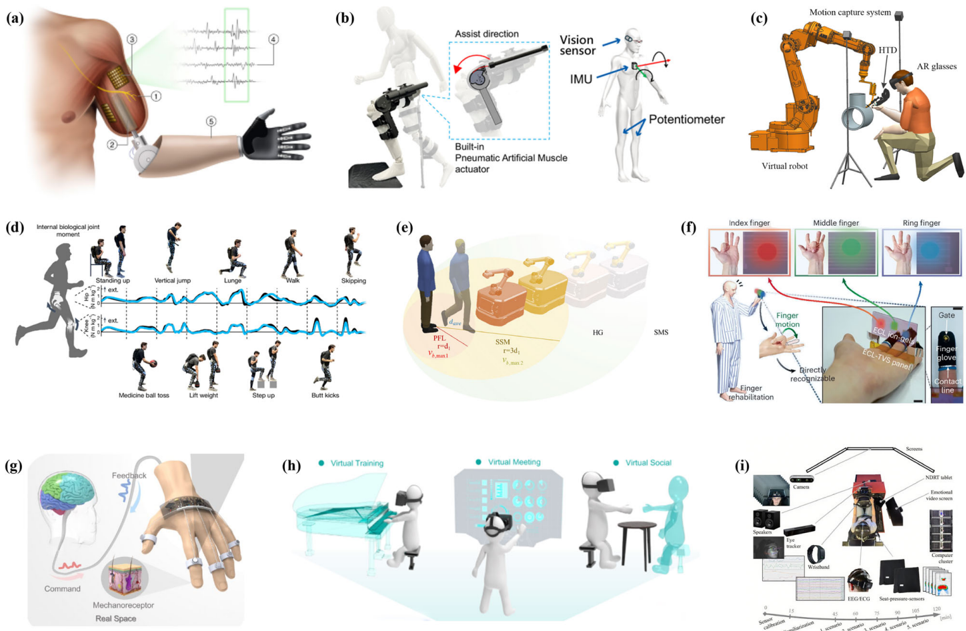
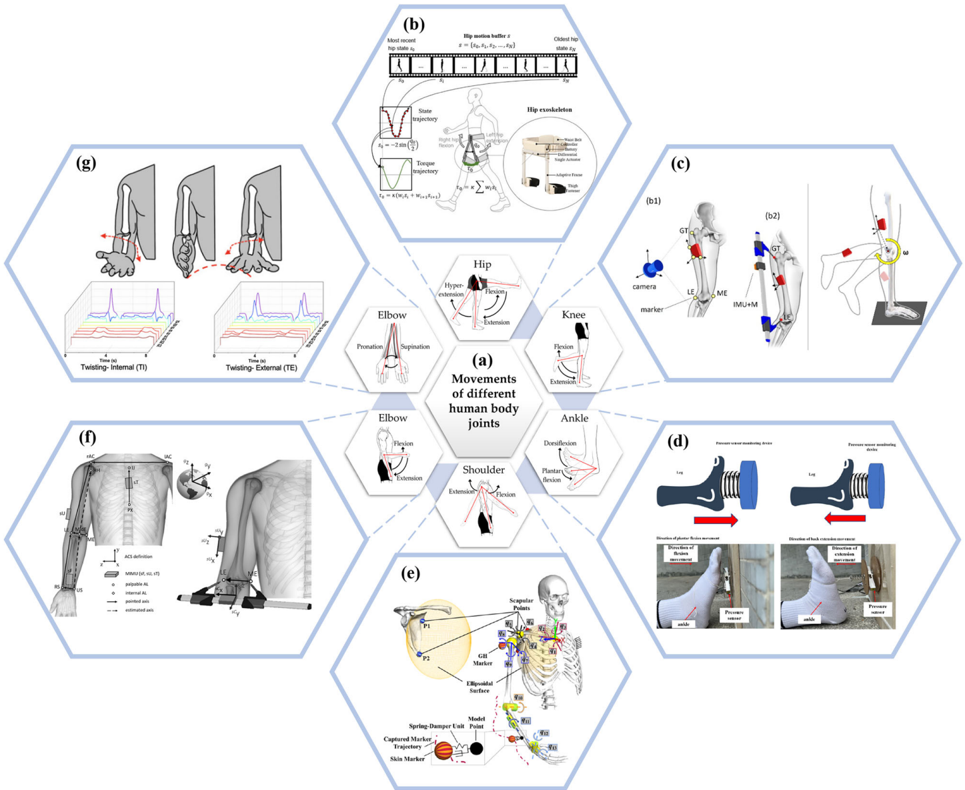
Human motion intent prediction (HMIP) combines data sources, feature extraction, modeling and prediction algorithms, etc., which is the key for providing artificial intelligent assistance and protection from intelligent wearable systems. HMIP has been intensively explored. A timely and comprehensive overview of this field is provided. Several main aspects are covered: biomechanical features of human motion, architecture of intelligent wearable systems, data processing and algorithm designs, application scenarios and challenges.
Verified 2026-10-11 · 1 reference not checked yet
Overview
CoChat Summary
TL;DR
This review synthesizes recent advances in intelligent wearable systems for human motion intent prediction (HMIP), covering multiscale biomechanical features, sensors, algorithms, devices, applications, and challenges. It concludes that multimodal sensing and deep learning improve accuracy and robustness, but standardization, fusion, adaptability, materials, power, and privacy remain barriers to real-world deployment.
Key findings
- Multiscale biomechanical features—body acceleration, joint angle/angular velocity/torque, and muscle activation/strength—provide complementary data for HMIP; trunk acceleration shows characteristic mutations approximately 200 ms before sudden movements, and muscles exhibit burst activation approximately 100 ms before movement initiation.
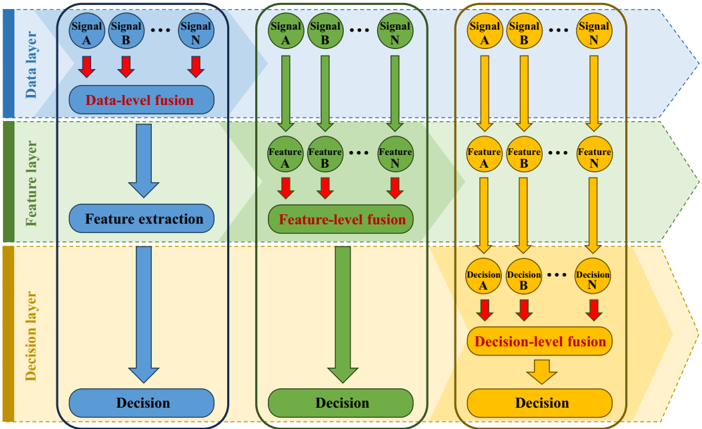
- Multimodal fusion improves accuracy: models generally show 5–15% accuracy improvement at increased computation, adding EMG to IMU-based time-domain joint analysis improves HMIP prediction accuracy by more than 10%, hand motion recognition increases by more than 11.4% versus a single sensor, and steady-state stride length recognition exceeds 98.0%.
- Algorithm trade-offs are explicit: LSTM and TCN typically achieve real-time prediction latency below 150–250 ms, lightweight ML models such as LDA and SVM often operate below 50 ms, TCN can predict up to 200 ms in advance, and ML classifiers can reach 95–100% accuracy in gesture recognition.
- Applications span prosthetics, exoskeletons, rehabilitation, sports, virtual reality, and intelligent driving; for example, wearable IMU systems for dangerous-behavior detection report recall as high as 93.0%, and pressure-sensor plus EMG analysis detects gait-intention delays as low as -1002 ± 603 ms.
Methods
- Narrative review of published work reported in the past decade, covering biomechanical features of human motion, wearable sensors, algorithms for HMIP, devices, system integration, wearable applications, and challenges.
- No datasets were generated or analyzed; data sharing is not applicable. The paper synthesizes literature and tabulates sensors, algorithms, fusion methods, applications, and reported accuracies.
Limitations
- Stated: biomechanical feature selection lacks standardized frameworks, with discrepancies in quantification criteria limiting cross-scenario generalizability; wearable systems face sensor performance trade-offs, and multimodal fusion often remains superficial feature concatenation, neglecting intermodal heterogeneity, redundancy/missing information, and computational complexity; algorithms lack systematic selection guidelines for real-time performance, interpretability, and computational efficiency.
- Stated: practical challenges include insufficient cross-individual and cross-task transferability, motion artifacts, IMU drift or saturation, EMG baseline drift/crosstalk/dropout, inadequate cloud infrastructure, material durability and signal-stability trade-offs, limited energy density, and privacy/security risks.
- Evident from the text: as a review, it does not report a systematic search protocol, quality appraisal, or meta-analysis, and it presents no primary data or quantitative synthesis beyond tabulated literature values.
Model-written summary. Check it against the paper before relying on it.
Integrity signals
Registry
Cites
Statistics
Figures
Verification
Claims the paper makes
22 Valid · 1 Not valid · 125 Not checked · 35 Own results and interpretations
The cited sources support only part of this claim — read each source’s verdict below.
In the paper
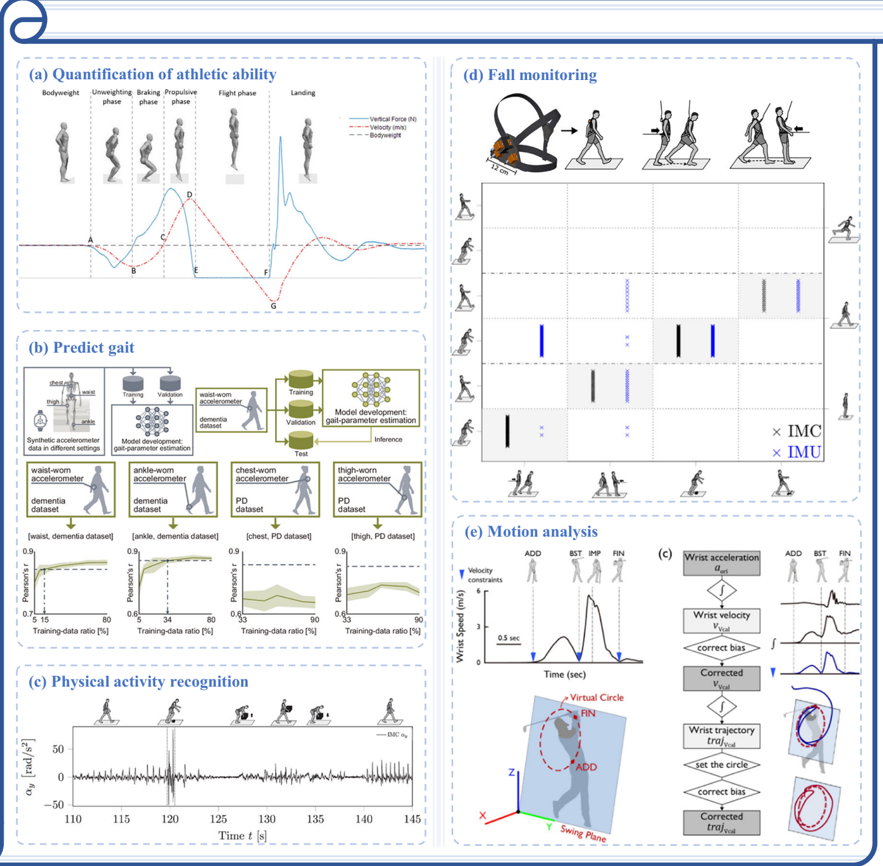
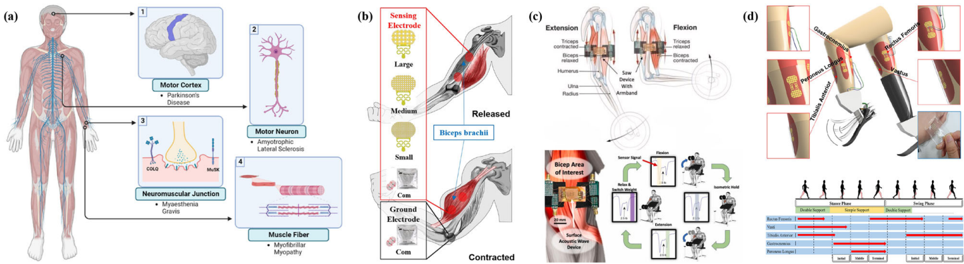
“Moreover, the strong correlation between vertical acceleration peaks and ground reaction force (GRF) reflects the energy output efficiency of lower limb muscles 67 , which can be used to quantify motor ability and assist rehabilitation training (Fig. 3a) 68 .”
§ Recent advances in intelligent wearable systems: from multiscale biomechanical features towards human motion intent prediction Check for updates > Body acceleration
What the sources say
- Partly supportedcites [67] 67. Martínez-Pascual, D. et al. Estimating vertical ground reaction forces during gait from lower limb kinematics and vertical acceleration using wearable inertial sensors. Front. Bioeng. Biotechnol. 11, (2023). sourceExperimental — accuracy not yet measured
The Introduction and Discussion (page numbers unavailable) describe a close or strong relationship between vertical acceleration and vertical ground reaction force during gait. They do not establish a correlation specifically between their peaks or say that the relationship reflects the energy output efficiency of lower-limb muscles. (LLM, conf=0.87)
- Not checked yetcites [68] 68. Amin Mohammadian, M., Mozayyany, H., Bagheri Koudakani, S. & Maloney, S. J. Validity and reliability of torso-versus waist-worn inertial measurement units in the assessment of vertical jumps. J. Biomech. 176, 112338 (2024). source
boostedstates an association- Asserted: passes — The authors put it forward as true.
- Checkable: passes — It can be checked against evidence.
- Load-bearing: passes — The paper’s conclusions depend on it.
- Based: passes — The paper gives a reason why it holds.
- Partly supported
The cited sources support only part of this claim — read each source’s verdict below.
In the paper
“Specifically, the extrema and variation frequency of acceleration can identify and distinguish between the stance and swing phases of gait 66 .”
§ Recent advances in intelligent wearable systems: from multiscale biomechanical features towards human motion intent prediction Check for updates > Body acceleration
What the sources say
- Partly supportedcites [66] 66. Mei, C., Gao, F. & Li, Y. A determination method for gait event based on acceleration sensors. Sensors 19, 5499 (2019). sourceExperimental — accuracy not yet measured
Our copy supports the extrema half of the claim: §3.1 (Gait Event) states that 'the acceleration of the heel and toe reaches the maximum, on the time of HS and TO' and that HS/TO 'are often determined by finding out the moment where the heel and toe acceleration is maximum', and that gait 'can be divided into supporting phase and swinging phase, during the time of HS and TO' — though the paper reports this as prior work ([38], [44]) and notes it is degraded by smoothing/filtering, while its own events are located from doubly integrated displacement (§4.3). The stance/swing distinction from acceleration variation is supported in §3.3.1 ('flat phase is the state in which the heel is in contact with the ground, while the non-flat phase is the period in which the heel swings in the air'), but that flat/non-flat split is produced by thresholding the comprehensive rate of acceleration change (Equations 5–8, §3.2), i.e. magnitude of variation, not 'variation frequency'. No passage of our copy uses frequency of acceleration variation as a discriminator between stance and swing (frequency appears only as filter cut-off and as frequency-domain integration, §1, §3.3), so that element of the claim is unsupported. (LLM, conf=0.72)
plainstates a cause- Asserted: passes — The authors put it forward as true.
- Checkable: passes — It can be checked against evidence.
- Load-bearing: unclear — It is unclear whether the paper’s conclusions depend on it.
- Based: passes — The paper gives a reason why it holds.
- Partly supported
The cited sources support only part of this claim — read each source’s verdict below.
In the paper
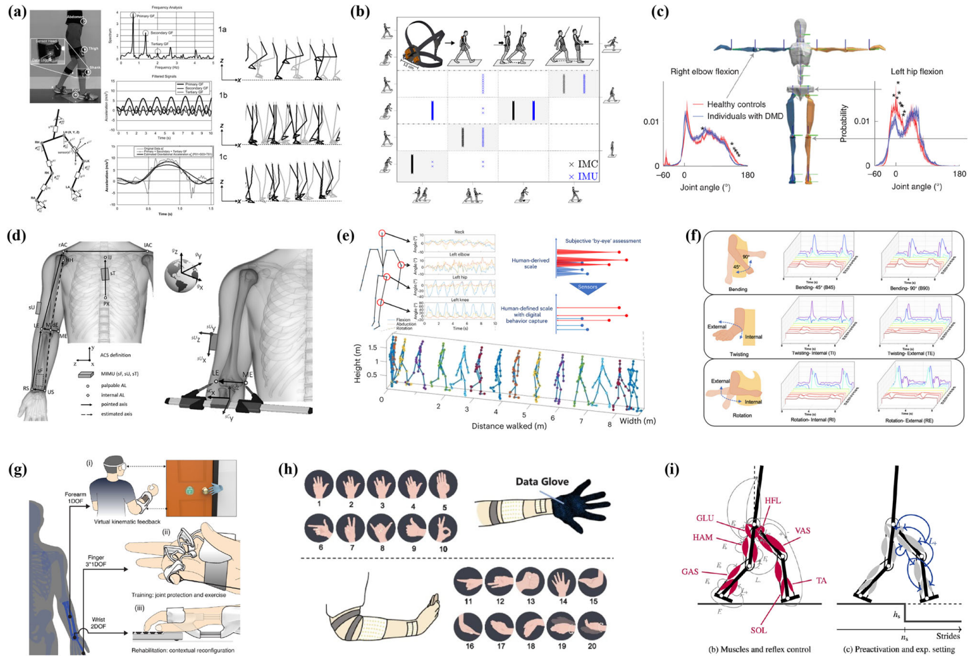
“More refined motion recognition can even be extended to the hand, where the combination of joint anatomical structure and waveform features enables dynamic analysis and classification of different gestures (Fig. 4g) 62 .”
§ Recent advances in intelligent wearable systems: from multiscale biomechanical features towards human motion intent prediction Check for updates > Body acceleration
What the sources say
- Partly supportedcites [62] 62. Zhou, Y. et al. A highly durable and UV-resistant graphene-based knitted textile sensing sleeve for human joint angle monitoring and gesture differentiation. Adv. Intell. Syst. 6, 2400124 (2024). sourceExperimental — accuracy not yet measured
Our copy of Zhou et al. (2024) supports the mechanism part of the claim: sections 2.4/2.4.2 and Figure 6-7 captions pair joint anatomy ('the knee is a large, single-axis hinge joint, that mainly allows flexion and extension'; 'Figure 7a illustrates the deformation of the elbow joint under different movements') with the resistance/IMU waveforms fed into a CNN+LSTM network to classify gestures (94.1% knee, 96.1% elbow intrasubject). However, the study covers knee and elbow only — ten participants performed six elbow gestures, and no passage in our copy (searched: hand, finger, wrist gesture) reports recognition extended to the hand; the wrist appears solely as the location of the six-axis IMU for elbow classification. The claim's hand-level extension is therefore not attributable to this source. (LLM, conf=0.78)
plainstates a cause- Asserted: passes — The authors put it forward as true.
- Checkable: passes — It can be checked against evidence.
- Load-bearing: unclear — It is unclear whether the paper’s conclusions depend on it.
- Based: passes — The paper gives a reason why it holds.
- Partly supported
Every source the paper cites for this claim was checked and supports it.
In the paper
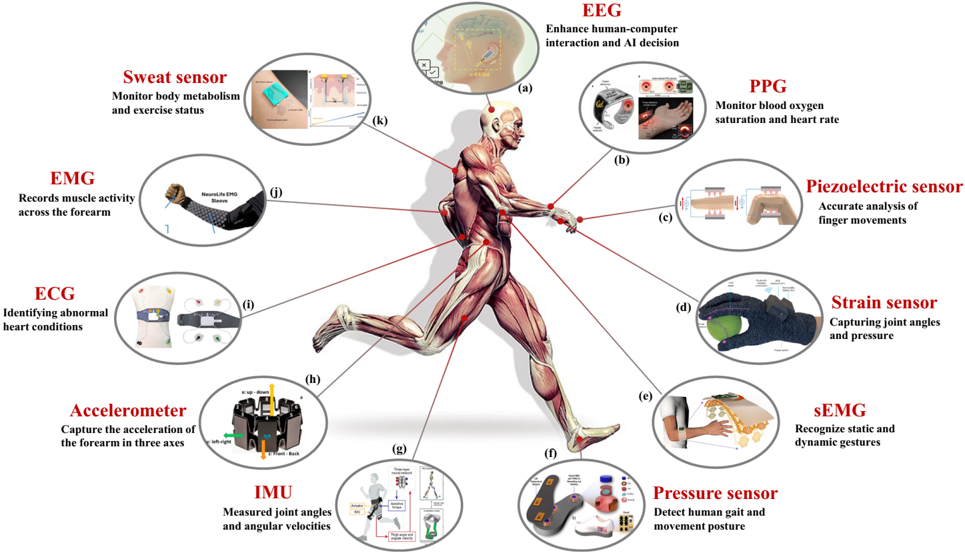
“Based on this feature, real-time measurement of muscle strength has been proven to enhance both athletic performance and rehabilitation outcomes (Fig. 5c) 95 , while sEMG sensors developed for amputees have also significantly improved prosthetic control capability (Fig. 5d) 92 .”
§ Recent advances in intelligent wearable systems: from multiscale biomechanical features towards human motion intent prediction Check for updates > Muscle activation and strength
What the sources say
- Supportedcites [92] 92. Park, J. et al. Imperceptive and reusable dermal surface EMG for lower extremity neuro-prosthetic control and clinical assessment. npj Flex. Electron. 7, 1-11 (2023). source
The Abstract states the sensors 'are tailored for amputees wearing sockets' and achieve 'a higher signal-to-noise ratio (SNR) than conventional electrodes', and that they 'wirelessly enable to control of a robotic leg for amputees, demonstrating its practical feasibility and expecting to drive forward neuro-prosthetic control'. The Results bear this out: in the static test (Assessment of the sEMG sensor in static condition for lower limb amputees) a below-knee amputee's TA signal at 18.97 dB SNR drove the robotic leg, and an above-knee amputee's VM/VL signals (18.67/18.40 dB) allowed wireless control; in the dynamic test (Assessment of the sEMG sensor in dynamic condition) an RPNI amputee's GC signals recorded inside the liner/socket triggered robotic-leg assistance while walking on flat land, uphill and stairs. The Discussion frames the device as assisting walking through robot control. The paper does not quantify a control-accuracy gain (and notes agonist/antagonist discrimination was limited in one patient), so 'significantly improved' rests on the improved signal quality plus demonstrated control rather than a measured control-performance statistic. (LLM, conf=0.80)
plainstates a cause- Asserted: passes — The authors put it forward as true.
- Checkable: passes — It can be checked against evidence.
- Load-bearing: unclear — It is unclear whether the paper’s conclusions depend on it.
- Based: passes — The paper gives a reason why it holds.
- Supported
The cited sources support only part of this claim — read each source’s verdict below.
In the paper
“Researchers employ sEMG with high-density electrodes placed over target muscle bellies to capture anticipatory mechanical signals indicated by the slope of EMG pre-activation at high sampling rates 93,94 .”
§ Recent advances in intelligent wearable systems: from multiscale biomechanical features towards human motion intent prediction Check for updates > Muscle signal capture
What the sources say
- Not checked yetcites [93] 93. Novak, D. & Riener, R. A survey of sensor fusion methods in wearable robotics. Robot. Auton. Syst. 73, 155-170 (2015). source
- Partly supportedcites [94] 94. Coker, J., Chen, H., Schall, M. C., Gallagher, S. & Zabala, M. EMG and joint angle-based machine learning to predict future joint angles at the knee. Sensors 21, 3622 (2021). sourceExperimental — accuracy not yet measured
The Materials and Methods section reports surface EMG electrodes on six thigh muscles bilaterally, with signals sampled at 1111 Hz. The Introduction explains that muscle activation is detectable before movement, supporting the anticipatory aspect. The paper does not describe high-density electrode arrays or identify the slope of EMG pre-activation as the signal used; its Methods instead describe filtering, rectification, and RMS calculation. (LLM, conf=0.87)
plainstates a cause- Asserted: passes — The authors put it forward as true.
- Checkable: passes — It can be checked against evidence.
- Load-bearing: unclear — It is unclear whether the paper’s conclusions depend on it.
- Based: passes — The paper gives a reason why it holds.
53 more claims · 6 with their cited sources checked
Create a free account to see all 183 claims and to verify the 208 references still open.
- Probably not a substantial claim. 68
- It may state two separate claims as one. 92
- The quote only partly states this claim. 1
Self-check
Percentages, sums and reported differences re-computed from the paper’s own numbers.
Each contradiction between two passages listed here was confirmed by an independent check.
Rated minor: it would not touch a result — a value no result rests on, a p-value that stays on the same side of the significance level, or a conflict that is clerical, resolved elsewhere in the paper, or outside its own findings.
In the paper
§ Recent advances in intelligent wearable systems: from multiscale biomechanical features towards human motion intent prediction Check for updates > Discussion
“| IMU and pressure sensitive insoles | Gait recognition | 3 | 98.7% | 124 |”
§ Recent advances in intelligent wearable systems: from multiscale biomechanical features towards human motion intent prediction Check for updates > References
“124. Papapicco, V. et al. A classification approach based on directed acyclic graph to predict locomotion activities with one inertial sensor on the thigh. IEEE Trans. Med. Robot. Bionics 3, 436-445 (2021).”
Citations
Cites
Items 201–268 of 268
Fully Automated Analysis of Muscle Architecture from B-Mode Ultrasound Images with DL_Track_US
Ritsche, P., Franchi, M. V., Faude, O., Finni, T., Seynnes, O., & Cronin, N. J. (2024) · Ultrasound in Medicine & Biology · doi:10.1016/j.ultrasmedbio.2023.10.011 · Cited by 20
On Predicting Transitions to Compliant Surfaces in Human Gait via Neural and Kinematic Signals
Angelidou, C., & Artemiadis, P. (2023) · IEEE Transactions on Neural Systems and Rehabilitation Engineering · doi:10.1109/tnsre.2023.3272355 · Cited by 19
Papapicco, V., Chen, B., Munih, M., Davalli, A., Sacchetti, R., Gruppioni, E., Crea, S., & Vitiello, N. (2021) · IEEE Transactions on Medical Robotics and Bionics · doi:10.1109/tmrb.2021.3075096 · Cited by 19
Robust Sensor Fusion and Biomimetic Control of a Lower-Limb Exoskeleton With Multimodal Sensors
Arceo, J. C., Yu, L., & Bai, S. (2025) · IEEE Transactions on Automation Science and Engineering · doi:10.1109/tase.2024.3421318 · Cited by 19
Explainable AI in human motion: A comprehensive approach to analysis, modeling, and generation
Olivas-Padilla, B. E., Manitsaris, S., & Glushkova, A. (2024) · Pattern Recognition · doi:10.1016/j.patcog.2024.110418 · Cited by 19
Transferable multi-modal fusion in knee angles and gait phases for their continuous prediction
Guo, Z., Zheng, H., Wu, H., Zhang, J., Zhou, G., & Long, J. (2023) · Journal of Neural Engineering · doi:10.1088/1741-2552/accd22 · Cited by 18
Lim, B., Choi, B., Roh, C., Lee, J., Kim, Y.-J., & Lee, Y. (2025) · Scientific Reports · doi:10.1038/s41598-025-95599-2 · Cited by 18
Pradhan, G. B., Bhatta, T., Shrestha, K., Sharma, S., & Park, J. Y. (2024) · Sensors and Actuators A: Physical · doi:10.1016/j.sna.2024.115985 · Cited by 18
A spatio-temporal graph neural network for fall prediction with inertial sensors
Wang, S., Li, X., Liao, G., Liu, J., Liao, C., Liu, M., Liao, J., & Liu, L. (2024) · Knowledge-Based Systems · doi:10.1016/j.knosys.2024.111709 · Cited by 18
Power-free knee rehabilitation robot for home-based isokinetic training
Feng, Y., Wu, H., Ren, J., et al. (2025) · Nature Communications · doi:10.1038/s41467-025-57578-z · Cited by 18
Karolcik, S., Manginas, V., Chanh, H. Q., Daniels, J., Giang, N. T., Huyen, V. N. T., Hoang, M. T. V., Phan Nguyen Quoc, K., Hernandez, B., Ming, D. K., et al. (2024) · eBioMedicine · doi:10.1016/j.ebiom.2024.105164 · Cited by 18
Vellios, E. E., Pinnamaneni, S., Camp, C. L., & Dines, J. S. (2020) · Current Reviews in Musculoskeletal Medicine · doi:10.1007/s12178-020-09645-9 · Cited by 17
Zhang, F., & Huang, H. (2013) · Annual International Conference of the IEEE Engineering in Medicine and Biology Society (EMBC) · doi:10.1109/embc.2013.6610660 · Cited by 17
Oh, K., Baek, J., & Park, S. (2012) · Journal of Biomechanics · doi:10.1016/j.jbiomech.2012.06.032 · Cited by 17
A compliant metastructure design with reconfigurability up to six degrees of freedom
Yang, H., Patel, D. K., Johnson, T., Zhong, K., Olson, G., Majidi, C., Islam, M. F., Zhang, T., & Yao, L. (2025) · Nature Communications · doi:10.1038/s41467-024-55591-2 · Cited by 17
Liu, G., Sun, W., & Li, P. (2024) · Scientific Reports · doi:10.1038/s41598-024-73747-4 · Cited by 17
Zhou, Y., Sun, Y., Li, Y., Shen, C., Lou, Z., Min, X., & Stewart, R. (2024) · Advanced Intelligent Systems · doi:10.1002/aisy.202400124 · Cited by 17
A Determination Method for Gait Event Based on Acceleration Sensors
Mei, C., Gao, F., & Li, Y. (2019) · Sensors · doi:10.3390/s19245499 · Cited by 16
Bioinspired preactivation reflex increases robustness of walking on rough terrain
Bunz, E. K., Haeufle, D. F. B., Remy, C. D., & Schmitt, S. (2023) · Scientific Reports · doi:10.1038/s41598-023-39364-3 · Cited by 16
Joint Angle Measurement Using Strategically Placed Accelerometers and Gyroscope
Vikas, V., & Crane, C. D. (2016) · Journal of Mechanisms and Robotics · doi:10.1115/1.4031299 · Cited by 15
EMG-Based Automatic Gesture Recognition Using Lipschitz-Regularized Neural Networks
Neacşu, A., Pesquet, J.-C., & Burileanu, C. (2024) · ACM Transactions on Intelligent Systems and Technology · doi:10.1145/3635159 · Cited by 15
EMG-based prediction of step direction for a better control of lower limb wearable devices
Anselmino, E., Mazzoni, A., & Micera, S. (2024) · Computer Methods and Programs in Biomedicine · doi:10.1016/j.cmpb.2024.108305 · Cited by 15
Guo, W., Zhao, Z., Zhou, Z., Fang, Y., Yu, Y., & Sheng, X. (2025) · Scientific Data · doi:10.1038/s41597-025-04749-8 · Cited by 15
Body Core Temperature Sensing: Challenges and New Sensor Technologies
Uth, M.-F., Koch, J., & Sattler, F. (2016) · Procedia Engineering · doi:10.1016/j.proeng.2016.11.154 · Cited by 14
Molinaro, D. D., Park, E. O., & Young, A. J. (2023) · 2023 IEEE International Conference on Robotics and Automation (ICRA) · doi:10.1109/icra48891.2023.10161286 · Cited by 14
Wearable sensing for understanding and influencing human movement in ecological contexts
Adamczyk, P. G., Harper, S. E., Reiter, A. J., Roembke, R. A., Wang, Y., Nichols, K. M., & Thelen, D. G. (2023) · Current Opinion in Biomedical Engineering · doi:10.1016/j.cobme.2023.100492 · Cited by 14
Critical Design Considerations for Longer-Term Wear and Comfort of On-Body Medical Devices
Stuart, S., de Kok, M., O’Searcoid, B., Morrisroe, H., Serban, I. B., Jagers, F., Dulos, R., Houben, S., van de Peppel, L., & van den Brand, J. (2024) · Bioengineering · doi:10.3390/bioengineering11111058 · Cited by 14
Enhancing accuracy and convenience of golf swing tracking with a wrist-worn single inertial sensor
Kim, M., & Park, S. (2024) · Scientific Reports · doi:10.1038/s41598-024-59949-w · Cited by 14
Hasan, S. M. S., Siddiquee, M. R., & Bai, O. (2019) · 2019 18th IEEE International Conference On Machine Learning And Applications (ICMLA) · doi:10.1109/icmla.2019.00242 · Cited by 13
Utility of synthetic musculoskeletal gaits for generalizable healthcare applications
Yamada, Y., Kobayashi, M., Shinkawa, K., Bilal, E., Liao, J., Nemoto, M., Ota, M., Nemoto, K., & Arai, T. (2025) · Nature Communications · doi:10.1038/s41467-025-61292-1 · Cited by 13
A Novel Compensatory Motion Detection Method Using Multiple Signals and Machine Learning
Xu, P., Xia, D., Zheng, B., Huang, L., & Xie, L. (2022) · IEEE Sensors Journal · doi:10.1109/jsen.2022.3190503 · Cited by 12
Modeling the Intent to Interact With VR Using Physiological Features
Nguyen, W., Gramann, K., & Gehrke, L. (2024) · IEEE Transactions on Visualization and Computer Graphics · doi:10.1109/tvcg.2023.3308787 · Cited by 12
Tao, Y., Wan, J., Song, Y., Li, X., Wang, B., Wang, T., & Wang, Y. (2024) · Robotics and Computer-Integrated Manufacturing · doi:10.1016/j.rcim.2024.102903 · Cited by 12
Zhu, M., Guan, X., Li, Z., Gao, Y., Zou, K., Gao, X., Wang, Z., Li, H., & Cai, K. (2022) · International Journal of Advanced Robotic Systems · doi:10.1177/17298806221119668 · Cited by 11
Spatio-Temporal Branching for Motion Prediction using Motion Increments
Wang, J., Zhou, Y., Qiang, W., Ba, Y., Su, B., & Wen, J.-R. (2023) · Proceedings of the 31st ACM International Conference on Multimedia · doi:10.1145/3581783.3612330 · Cited by 11
Takallou, M. A., Fallahtafti, F., Hassan, M., Al-Ramini, A., Qolomany, B., Pipinos, I., Myers, S., & Alsaleem, F. (2024) · Scientific Reports · doi:10.1038/s41598-023-50727-8 · Cited by 11
Human Fall Detection with Ultra-Wideband Radar and Adaptive Weighted Fusion
Huang, L., Zhu, A., Qian, M., & An, H. (2024) · Sensors · doi:10.3390/s24165294 · Cited by 11
Li, D., Wu, Y., Bai, B., & Hao, Q. (2020) · 2020 IEEE 23rd International Conference on Intelligent Transportation Systems (ITSC) · doi:10.1109/itsc45102.2020.9294182 · Cited by 10
Quiles, V., Ferrero, L., Iáñez, E., Ortiz, M., Cano, J. M., & Azorín, J. M. (2022) · Applied Sciences · doi:10.3390/app12010415 · Cited by 10
Intelligent Systems for Muscle Tracking: A Review on Sensor‐Algorithm Synergy
Putcha, A., Nguyen, T., Smith, R., Choffin, R., & Bai, W. (2023) · Advanced Intelligent Systems · doi:10.1002/aisy.202200351 · Cited by 10
Dynamic Compositional Graph Convolutional Network for Efficient Composite Human Motion Prediction
Zhang, W., Zhao, S., Meng, F., Wu, S., & Liu, M. (2023) · Proceedings of the 31st ACM International Conference on Multimedia · doi:10.1145/3581783.3612532 · Cited by 10
Leveraging High-Density EMG to Investigate Bipolar Electrode Placement for Gait Prediction Models
Hodossy, B. K., Guez, A. S., Jing, S., Huo, W., Vaidyanathan, R., & Farina, D. (2024) · IEEE Transactions on Human-Machine Systems · doi:10.1109/thms.2024.3371099 · Cited by 10
Eilbeigi, E., & Setarehdan, S. K. (2018) · Computers in Biology and Medicine · doi:10.1016/j.compbiomed.2018.05.024 · Cited by 7
Sheng, M., Wang, W.-J., Tong, T.-T., Yang, Y.-Y., Chen, H.-L., & Su, B.-Y. (2021) · Computational Intelligence and Neuroscience · doi:10.1155/2021/5631730 · Cited by 7
Attention Mechanism for Human Motion Prediction
Al-aqel, A. F., & Ali Khan, M. (2020) · 2020 3rd International Conference on Computer Applications & Information Security (ICCAIS) · doi:10.1109/iccais48893.2020.9096777 · Cited by 7
A Tensor‐based Regression Approach for Human Motion Prediction
Gril, L., Wedenig, P., Torkar, C., & Kleb, U. (2023) · Quality and Reliability Engineering International · doi:10.1002/qre.3153 · Cited by 7
MXenes for wearable pressure sensing: Progress and prospects in human motion detection
Kong, X., Fan, C., Liao, K., Zhang, W., & Xiong, H. (2025) · Alexandria Engineering Journal · doi:10.1016/j.aej.2025.01.086 · Cited by 7
A Study on Lower Limb Movement Intention Recognition Based on Multi-Source Information Fusion
Zong, S., Li, W., Sun, D., Wei, X., Chen, J., Yue, Z., & Sun, D. (2025) · IEEE Access · doi:10.1109/access.2024.3521510 · Cited by 7
Biomechanical Movement Synergies
(2009) · Biomechanics and Motor Control of Human Movement · doi:10.1002/9780470549148.ch11 · Cited by 6
Neural Network-Based Human Motion Predictor and Smoother
Graßhof, S., Bastholm, M., & Brandt, S. S. (2023) · SN Computer Science · doi:10.1007/s42979-023-02195-0 · Cited by 6
A framework to automatically detect near-falls using a wearable inertial measurement cluster
Gießler, M., Werth, J., Waltersberger, B., & Karamanidis, K. (2024) · Communications Engineering · doi:10.1038/s44172-024-00325-x · Cited by 6
Zheng, J., Wang, C., Huang, L., Gao, Y., Yan, R., Yang, C., Gao, Y., & Wang, Y. (2024) · Expert Systems · doi:10.1111/exsy.13659 · Cited by 6
Meng, J., Zhao, Y., Wang, K., Sun, J., Yi, W., Xu, F., Xu, M., & Ming, D. (2023) · Journal of Neural Engineering · doi:10.1088/1741-2552/ad0650 · Cited by 5
An Ankle Joint Flexion and Extension Movement-Monitoring Device Based on Pressure Sensors
Xu, C., Zhou, Y., Ji, J., & Wei, C. (2023) · Micromachines · doi:10.3390/mi14122141 · Cited by 5
Amin Mohammadian, M., Mozayyany, H., Bagheri Koudakani, S., & Maloney, S. J. (2024) · Journal of Biomechanics · doi:10.1016/j.jbiomech.2024.112338 · Cited by 5
Surface Acoustic Wave (SAW) force myography sensor for muscle force output identification
Kohler, M. C., Voiculescu, I., & Li, F. (2024) · Sensors and Actuators A: Physical · doi:10.1016/j.sna.2024.115959 · Cited by 5
Soodmand, I., Herrmann, S., Kleist, E., Volpert, A., Wackerle, H., Augat, P., Bader, R., Woernle, C., & Kebbach, M. (2025) · Scientific Reports · doi:10.1038/s41598-025-94394-3 · Cited by 5
Zhang, Y., Lai, J., Zhao, C., Wang, J., Yan, Y., Chen, M., Ji, L., Guo, J., Han, B., Shi, Y., et al. (2024) · Artificial Intelligence in Medicine · doi:10.1016/j.artmed.2024.102992 · Cited by 5
Best, A. N., & Wu, A. R. (2023) · Scientific Reports · doi:10.1038/s41598-023-34831-3 · Cited by 4
Fliess‐Douer, O., Mason, B., Katz, L., & So, C. R. (2016) · Training and Coaching the Paralympic Athlete · doi:10.1002/9781119045144.ch8 · Cited by 4
Ding, Z., Yang, C., Ma, J., Wei, J., & Jiang, F. (2020) · Multimedia Tools and Applications · doi:10.1007/s11042-019-07911-8 · Cited by 4
Robust Human Movement Prediction by Completion-Generative Adversarial Networks with Huber Loss
Azari, M., Rafiei, H., & Akbarzadeh-T, M.-R. (2022) · 2022 29th National and 7th International Iranian Conference on Biomedical Engineering (ICBME) · doi:10.1109/icbme57741.2022.10052859 · Cited by 4
Kim, B., Youm, C., Park, H., Choi, H., & Shin, S. (2024) · Frontiers in Public Health · doi:10.3389/fpubh.2024.1376736 · Cited by 4
Microphone Mechanomyography Sensors for Movement Analysis and Identification
Paszkiewicz, F. P., Wilson, S., Oddsson, M., McGregor, A. H., Alexandersson, A., Huo, W., & Vaidyanathan, R. (2022) · 2022 International Conference on Advanced Robotics and Mechatronics (ICARM) · doi:10.1109/icarm54641.2022.9959672 · Cited by 3
Althouse, D., Weeks, C., Spencer, S. B., Park, J., Thompson, B. J., & Louder, T. (2025) · Signals · doi:10.3390/signals6010011 · Cited by 3
Furukawa, J.-I., & Morimoto, J. (2025) · npj Robotics · doi:10.1038/s44182-025-00033-4 · Cited by 3
Research on gesture recognition method based on PSO optimized LSTM for surface muscle signals
Dai, J., Lu, G., Qin, Z., Guo, X., Liu, X., & Yin, Q. (2024) · 2024 6th Asia Symposium on Image Processing (ASIP) · doi:10.1109/asip63198.2024.00022 · Cited by 1
Biophysical Models With Adaptive Online Learning for Direct Neural Control of Prostheses
Gentinetta, J., Fernandez, M. F., Qiao, J., Gonzalez, M. E., & Herr, H. (2025) · IEEE Transactions on Neural Systems and Rehabilitation Engineering · doi:10.1109/tnsre.2025.3599114 · Cited by 1
Research works printed but not linked: 9
- 14. Ahsan, M., Ibrahimy, M. & Khalifa, O. O. EMG signal classification for human computer interaction: A review. Eur. J. Sci. Res. 33, 480-501 (2009).
- 19. Chiu, H.-K., Adeli, E., Wang, B., Huang, D.-A. & Niebles, J. C. Action- agnostic human pose forecasting. In Proc. IEEE Winter Conference on Applications of Computer Vision (WACV) 1423-1432. https://doi. org/10.1109/WACV.2019.0015 (2019). · doi:10.1109/wacv.2019.0015
- 96. Cao, C. et al. A high-precision dynamic movement recognition algorithm using multimodal biological signals for human-machine interaction. Adv. Intell. Syst. n/a, 2400483 (2024).
- 125. Gautam, A., Panwar, M., Biswas, D. & Acharyya, A. MyoNet: a transfer-learning-based LRCN for lower limb movement recognition and knee joint angle prediction for remote monitoring of rehabilitation progress from sEMG. IEEE J. Transl. Eng. Health Med. 8, 1-10 (2020).
- 142. Huu, P. N. & Phung Ngoc, T. Hand gesture recognition algorithm using SVM and HOG model for control of robotic system. J. Robot. 2021, 3986497 (2021).
- 155. Kang, P., Li, J., Jiang, S. & Shull, P. B. Reduce system redundancy and optimize sensor disposition for EMG-IMU multimodal fusion human-machine interfaces with XAI. IEEE Trans. Instrum. Meas. 72, 1-9 (2023).
- 170. Seshadri, D. R. et al. Wearable sensors for monitoring the internal and external workload of the athlete. npj Digit. Med. 2, 1-18 (2019).
- Regulation (EU) 2017/745 of the European Parliament and of the Council. OJ L vol. 117 (2017).
- 253. Marcos Mazón, D. Convolutional Recurrent Neural Network: IMU- based Locomotion Intent And Gait Phase Prediction for Transfemoral Amputees. MSc thesis , University of Groningen, The Netherlands (2021).
Cited by
Hua, R., Wang, Y., Wang, A., Zou, Y., Lu, C., Zheng, G., & Bian, G. (2026) · Expert Systems with Applications · doi:10.1016/j.eswa.2026.134367
Yang, Y. F., Wang, Z., Wu, X., Sun, Y., Cai, T., Xue, S., & Zhang, Y. (2026) · Results in Engineering · doi:10.1016/j.rineng.2026.112773
Wu, J., Wang, X., Liu, B., Cao, R., & Weng, G. (2026) · Advanced Functional Materials · doi:10.1002/adfm.78074
Editorial: Advances in smart and adaptive prosthetic and wearable technologies
Angelidou, C., Gerez, L. F., Herrin, K. R., & Welker, C. G. (2026) · Frontiers in Robotics and AI · doi:10.3389/frobt.2026.1934269
Yu, L., Yang, H., Dai, X., Cui, M., Bai, X., Mo, C., Chen, X., Liu, J., & Yang, B. (2026) · Nano Energy · doi:10.1016/j.nanoen.2026.112262
Self-citation
Metadata
- Authors
- Chen, S., Peng, C., Yang, B., Lin, J., Zhou, L., Jiang, Z., Liu, Z., Liu, Y., & Tang, L.
- Affiliations
- South China University of Technology (CN)
- Guangdong University of Technology (CN)
- Corresponding author
- Yang, Bao
- Venue
- npj Artificial Intelligence
- Published
- 2026-03-07
- Volume
- 2
- Issue
- 1
- ISSN
- 3005-1460 (ISSN-L)
- OpenAlex
- W7134126178
- Cited by
- 9
- References
- 271
- Citations by year
- 2026: 9
- FWCI
- 25.73
- Type
- journal article
- Language
- en
- Open access
- gold
- doi.org
- Licence
- cc-by-nc-nd
- creativecommons.org/licenses/by-nc-nd/4.0 (tdm)
- creativecommons.org/licenses/by-nc-nd/4.0 (vor)
- Locations
- npj Artificial Intelligence (publishedVersion, cc-by-nc-nd)
- DOAJ (DOAJ: Directory of Open Access Journals) (submittedVersion, cc-by-sa)
- Funders
- National Natural Science Foundation of China (12472179, 12472180, 12232017, 12432008, 12372181)
- Natural Science Foundation of Guangdong Province (2025A1515011999, 2023A1515012942)
- Topics
- Physical Sciences › Computer Science › Computer Vision and Pattern Recognition › Context-Aware Activity Recognition Systems
- Physical Sciences › Engineering › Biomedical Engineering › Muscle activation and electromyography studies
- Physical Sciences › Engineering › Biomedical Engineering › Prosthetics and Rehabilitation Robotics
- Keywords
- assistive technology, human motion analysis
About these checks
Registry, retraction, Cites and statistics results are computed, not judged, with one exception: a printed reference that no index lists is read once by a model before it counts as a citation error. Claims are extracted by a model and kept only when their quote appears verbatim in the text; each cited source is then checked, with a model’s help, for whether it says what the claim relies on. Those verdicts can be wrong — read the claim’s quote and the cited source before relying on one.
The claim verdicts this report counts are experimental: their accuracy is not yet measured.
A language model drew the claims from the paper on 2026-10-11, under version 3 of the claim definition (model deepseek-v4.1-flash, prompt extract-v3).
A second model labelled each claim on 2026-10-11 (model jev-1.13-20260917, definition revision gold-guideline-v0.2).
Cited sources are checked with a language model’s help (gpt-6-sol and qwen3.8-omni-flash).
Statistics and arithmetic are recomputed, not judged.
Confidence bands are shown only for fields calibrated on our annotated test set. None is calibrated yet, so no band is shown.
What counts as a claim ›How we measure confidence ›How we check this ›
Are you an author, or do you see a problem with this page? Request a review
Data sources
Bibliographic data: Semantic Scholar, OpenAlex, Crossref.
Contains information from the Semantic Scholar Academic Graph Datasets, made available under the ODC Attribution License (ODC-BY 1.0).
Semantic Scholar’s data is described in: Kinney, R., et al. (2023). The Semantic Scholar Open Data Platform. arXiv:2301.10140.
