

Recent advances in intelligent wearable systems: from multiscale biomechanical features towards human motion intent prediction
Open accessThe DOI matches its Crossref record; 205 of the 271 references it cites were found in a registry or an index, and 1 are not checked yet; 34 of the 242 sources its claims cite were checked for support.
Abstract
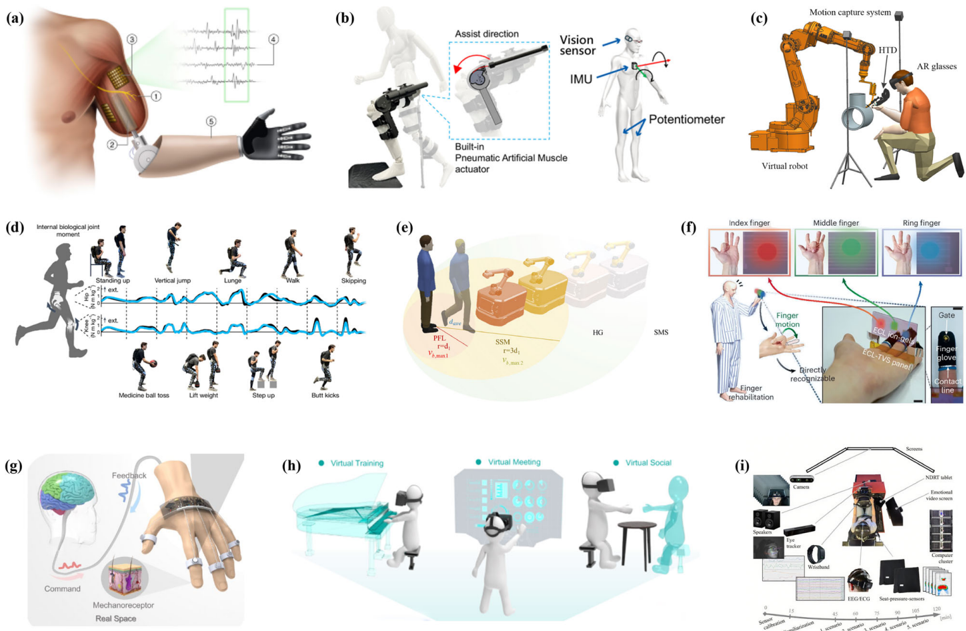
Human motion intent prediction (HMIP) combines data sources, feature extraction, modeling and prediction algorithms, etc., which is the key for providing artificial intelligent assistance and protection from intelligent wearable systems. HMIP has been intensively explored. A timely and comprehensive overview of this field is provided. Several main aspects are covered: biomechanical features of human motion, architecture of intelligent wearable systems, data processing and algorithm designs, application scenarios and challenges.
Verified 2026-10-11 · 1 reference not checked yet
Overview
CoChat Summary
TL;DR
This review synthesizes recent advances in intelligent wearable systems for human motion intent prediction (HMIP), covering multiscale biomechanical features, sensors, algorithms, devices, applications, and challenges. It concludes that multimodal sensing and deep learning improve accuracy and robustness, but standardization, fusion, adaptability, materials, power, and privacy remain barriers to real-world deployment.
Key findings
- Multiscale biomechanical features—body acceleration, joint angle/angular velocity/torque, and muscle activation/strength—provide complementary data for HMIP; trunk acceleration shows characteristic mutations approximately 200 ms before sudden movements, and muscles exhibit burst activation approximately 100 ms before movement initiation.
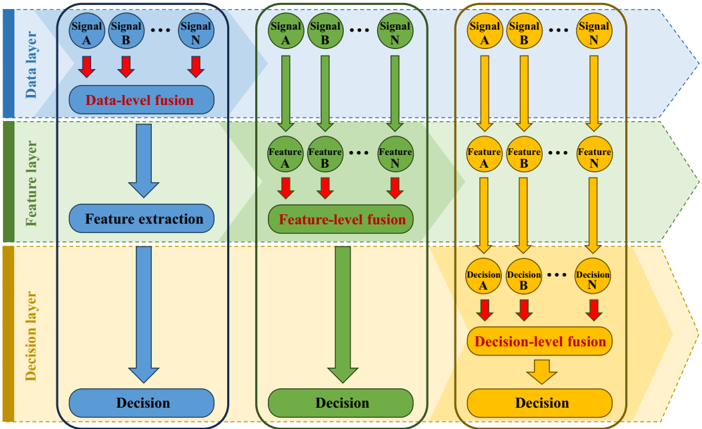
- Multimodal fusion improves accuracy: models generally show 5–15% accuracy improvement at increased computation, adding EMG to IMU-based time-domain joint analysis improves HMIP prediction accuracy by more than 10%, hand motion recognition increases by more than 11.4% versus a single sensor, and steady-state stride length recognition exceeds 98.0%.
- Algorithm trade-offs are explicit: LSTM and TCN typically achieve real-time prediction latency below 150–250 ms, lightweight ML models such as LDA and SVM often operate below 50 ms, TCN can predict up to 200 ms in advance, and ML classifiers can reach 95–100% accuracy in gesture recognition.
- Applications span prosthetics, exoskeletons, rehabilitation, sports, virtual reality, and intelligent driving; for example, wearable IMU systems for dangerous-behavior detection report recall as high as 93.0%, and pressure-sensor plus EMG analysis detects gait-intention delays as low as -1002 ± 603 ms.
Methods
- Narrative review of published work reported in the past decade, covering biomechanical features of human motion, wearable sensors, algorithms for HMIP, devices, system integration, wearable applications, and challenges.
- No datasets were generated or analyzed; data sharing is not applicable. The paper synthesizes literature and tabulates sensors, algorithms, fusion methods, applications, and reported accuracies.
Limitations
- Stated: biomechanical feature selection lacks standardized frameworks, with discrepancies in quantification criteria limiting cross-scenario generalizability; wearable systems face sensor performance trade-offs, and multimodal fusion often remains superficial feature concatenation, neglecting intermodal heterogeneity, redundancy/missing information, and computational complexity; algorithms lack systematic selection guidelines for real-time performance, interpretability, and computational efficiency.
- Stated: practical challenges include insufficient cross-individual and cross-task transferability, motion artifacts, IMU drift or saturation, EMG baseline drift/crosstalk/dropout, inadequate cloud infrastructure, material durability and signal-stability trade-offs, limited energy density, and privacy/security risks.
- Evident from the text: as a review, it does not report a systematic search protocol, quality appraisal, or meta-analysis, and it presents no primary data or quantitative synthesis beyond tabulated literature values.
Model-written summary. Check it against the paper before relying on it.
Integrity signals
Registry
Cites
Statistics
Figures
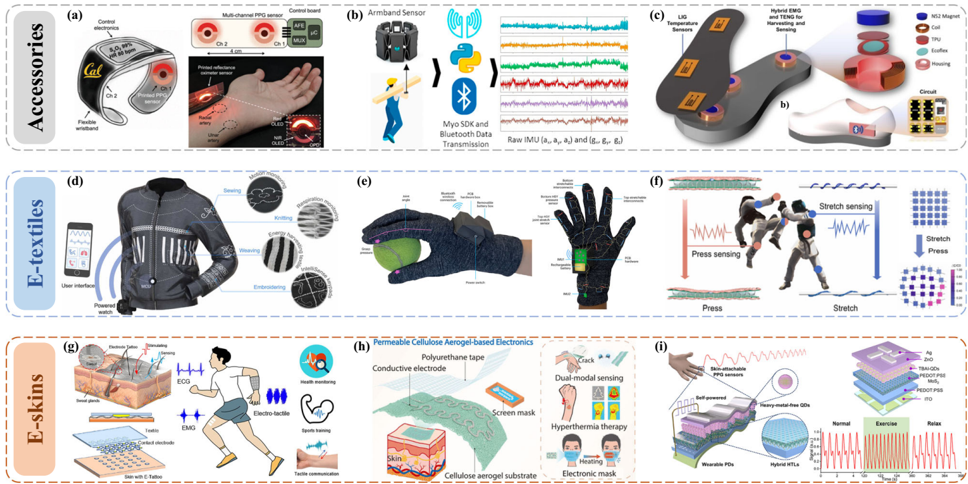
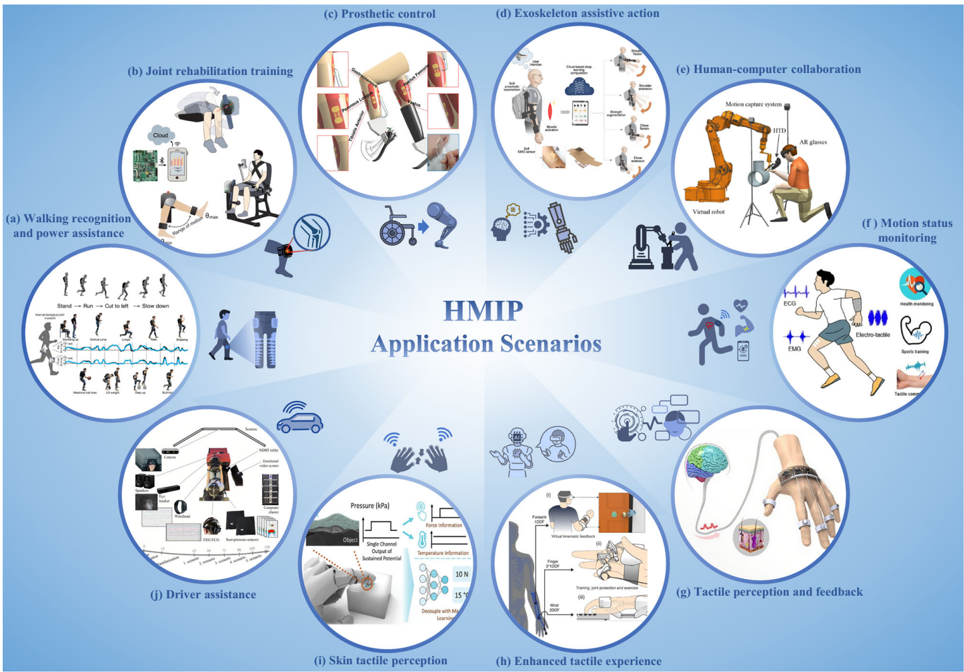
Verification
Claims the paper makes
22 Valid · 1 Not valid · 125 Not checked · 35 Own results and interpretations
The cited sources support only part of this claim — read each source’s verdict below.
In the paper
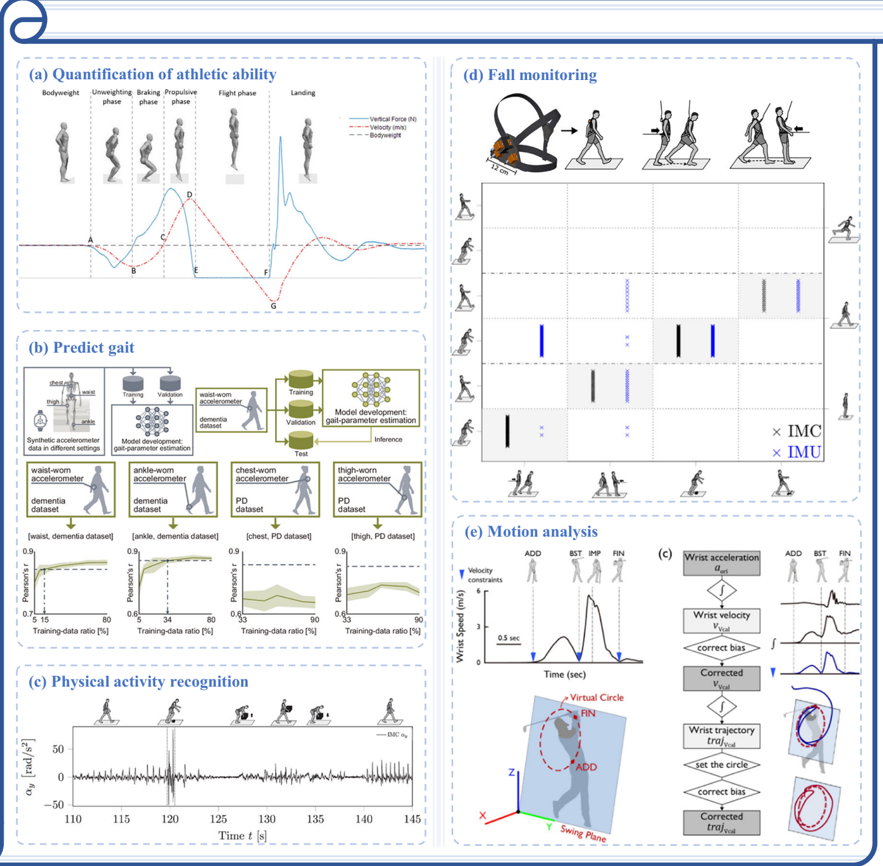
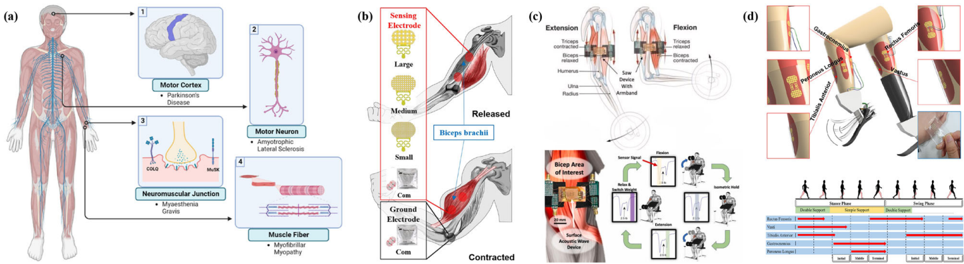
“Moreover, the strong correlation between vertical acceleration peaks and ground reaction force (GRF) reflects the energy output efficiency of lower limb muscles 67 , which can be used to quantify motor ability and assist rehabilitation training (Fig. 3a) 68 .”
§ Recent advances in intelligent wearable systems: from multiscale biomechanical features towards human motion intent prediction Check for updates > Body acceleration
What the sources say
- Partly supportedcites [67] 67. Martínez-Pascual, D. et al. Estimating vertical ground reaction forces during gait from lower limb kinematics and vertical acceleration using wearable inertial sensors. Front. Bioeng. Biotechnol. 11, (2023). sourceExperimental — accuracy not yet measured
The Introduction and Discussion (page numbers unavailable) describe a close or strong relationship between vertical acceleration and vertical ground reaction force during gait. They do not establish a correlation specifically between their peaks or say that the relationship reflects the energy output efficiency of lower-limb muscles. (LLM, conf=0.87)
- Not checked yetcites [68] 68. Amin Mohammadian, M., Mozayyany, H., Bagheri Koudakani, S. & Maloney, S. J. Validity and reliability of torso-versus waist-worn inertial measurement units in the assessment of vertical jumps. J. Biomech. 176, 112338 (2024). source
boostedstates an association- Asserted: passes — The authors put it forward as true.
- Checkable: passes — It can be checked against evidence.
- Load-bearing: passes — The paper’s conclusions depend on it.
- Based: passes — The paper gives a reason why it holds.
- Partly supported
The cited sources support only part of this claim — read each source’s verdict below.
In the paper
“Specifically, the extrema and variation frequency of acceleration can identify and distinguish between the stance and swing phases of gait 66 .”
§ Recent advances in intelligent wearable systems: from multiscale biomechanical features towards human motion intent prediction Check for updates > Body acceleration
What the sources say
- Partly supportedcites [66] 66. Mei, C., Gao, F. & Li, Y. A determination method for gait event based on acceleration sensors. Sensors 19, 5499 (2019). sourceExperimental — accuracy not yet measured
Our copy supports the extrema half of the claim: §3.1 (Gait Event) states that 'the acceleration of the heel and toe reaches the maximum, on the time of HS and TO' and that HS/TO 'are often determined by finding out the moment where the heel and toe acceleration is maximum', and that gait 'can be divided into supporting phase and swinging phase, during the time of HS and TO' — though the paper reports this as prior work ([38], [44]) and notes it is degraded by smoothing/filtering, while its own events are located from doubly integrated displacement (§4.3). The stance/swing distinction from acceleration variation is supported in §3.3.1 ('flat phase is the state in which the heel is in contact with the ground, while the non-flat phase is the period in which the heel swings in the air'), but that flat/non-flat split is produced by thresholding the comprehensive rate of acceleration change (Equations 5–8, §3.2), i.e. magnitude of variation, not 'variation frequency'. No passage of our copy uses frequency of acceleration variation as a discriminator between stance and swing (frequency appears only as filter cut-off and as frequency-domain integration, §1, §3.3), so that element of the claim is unsupported. (LLM, conf=0.72)
plainstates a cause- Asserted: passes — The authors put it forward as true.
- Checkable: passes — It can be checked against evidence.
- Load-bearing: unclear — It is unclear whether the paper’s conclusions depend on it.
- Based: passes — The paper gives a reason why it holds.
- Partly supported
The cited sources support only part of this claim — read each source’s verdict below.
In the paper
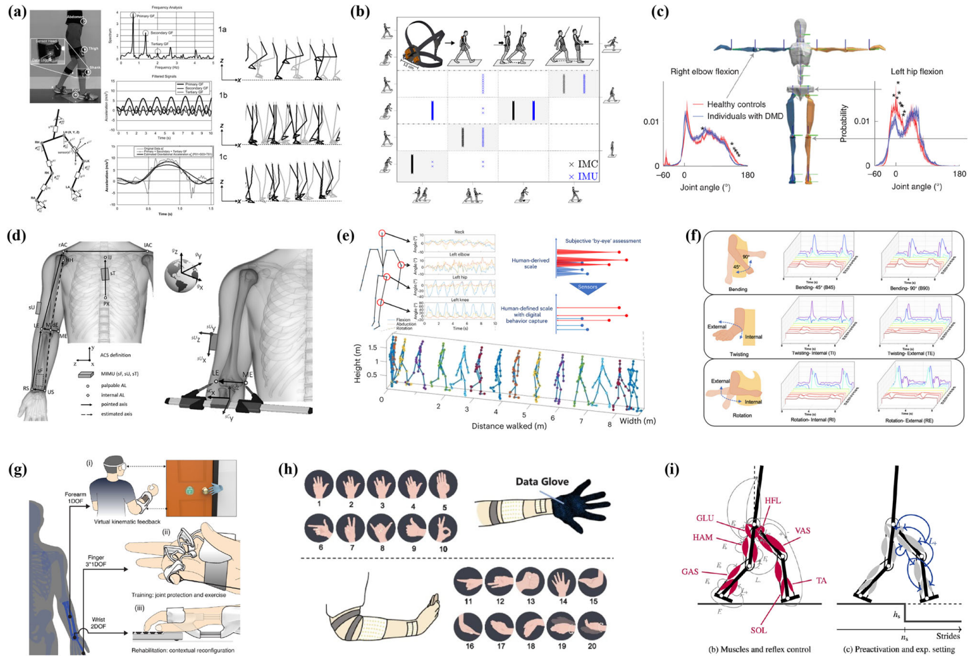
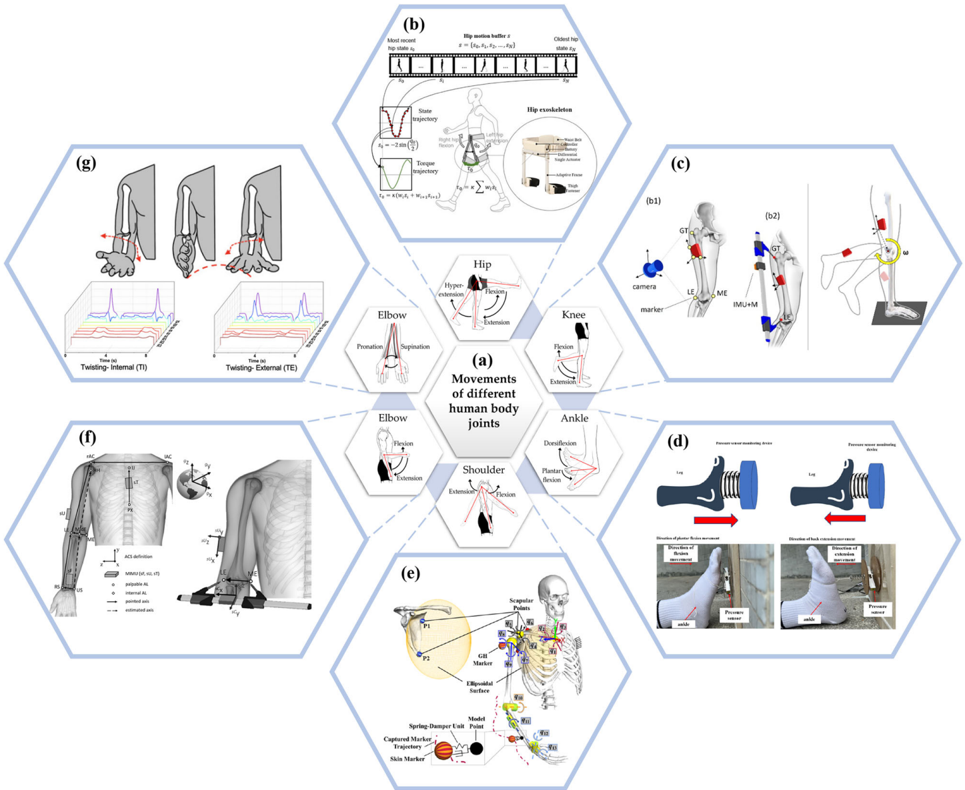
“More refined motion recognition can even be extended to the hand, where the combination of joint anatomical structure and waveform features enables dynamic analysis and classification of different gestures (Fig. 4g) 62 .”
§ Recent advances in intelligent wearable systems: from multiscale biomechanical features towards human motion intent prediction Check for updates > Body acceleration
What the sources say
- Partly supportedcites [62] 62. Zhou, Y. et al. A highly durable and UV-resistant graphene-based knitted textile sensing sleeve for human joint angle monitoring and gesture differentiation. Adv. Intell. Syst. 6, 2400124 (2024). sourceExperimental — accuracy not yet measured
Our copy of Zhou et al. (2024) supports the mechanism part of the claim: sections 2.4/2.4.2 and Figure 6-7 captions pair joint anatomy ('the knee is a large, single-axis hinge joint, that mainly allows flexion and extension'; 'Figure 7a illustrates the deformation of the elbow joint under different movements') with the resistance/IMU waveforms fed into a CNN+LSTM network to classify gestures (94.1% knee, 96.1% elbow intrasubject). However, the study covers knee and elbow only — ten participants performed six elbow gestures, and no passage in our copy (searched: hand, finger, wrist gesture) reports recognition extended to the hand; the wrist appears solely as the location of the six-axis IMU for elbow classification. The claim's hand-level extension is therefore not attributable to this source. (LLM, conf=0.78)
plainstates a cause- Asserted: passes — The authors put it forward as true.
- Checkable: passes — It can be checked against evidence.
- Load-bearing: unclear — It is unclear whether the paper’s conclusions depend on it.
- Based: passes — The paper gives a reason why it holds.
- Partly supported
Every source the paper cites for this claim was checked and supports it.
In the paper
“Based on this feature, real-time measurement of muscle strength has been proven to enhance both athletic performance and rehabilitation outcomes (Fig. 5c) 95 , while sEMG sensors developed for amputees have also significantly improved prosthetic control capability (Fig. 5d) 92 .”
§ Recent advances in intelligent wearable systems: from multiscale biomechanical features towards human motion intent prediction Check for updates > Muscle activation and strength
What the sources say
- Supportedcites [92] 92. Park, J. et al. Imperceptive and reusable dermal surface EMG for lower extremity neuro-prosthetic control and clinical assessment. npj Flex. Electron. 7, 1-11 (2023). source
The Abstract states the sensors 'are tailored for amputees wearing sockets' and achieve 'a higher signal-to-noise ratio (SNR) than conventional electrodes', and that they 'wirelessly enable to control of a robotic leg for amputees, demonstrating its practical feasibility and expecting to drive forward neuro-prosthetic control'. The Results bear this out: in the static test (Assessment of the sEMG sensor in static condition for lower limb amputees) a below-knee amputee's TA signal at 18.97 dB SNR drove the robotic leg, and an above-knee amputee's VM/VL signals (18.67/18.40 dB) allowed wireless control; in the dynamic test (Assessment of the sEMG sensor in dynamic condition) an RPNI amputee's GC signals recorded inside the liner/socket triggered robotic-leg assistance while walking on flat land, uphill and stairs. The Discussion frames the device as assisting walking through robot control. The paper does not quantify a control-accuracy gain (and notes agonist/antagonist discrimination was limited in one patient), so 'significantly improved' rests on the improved signal quality plus demonstrated control rather than a measured control-performance statistic. (LLM, conf=0.80)
plainstates a cause- Asserted: passes — The authors put it forward as true.
- Checkable: passes — It can be checked against evidence.
- Load-bearing: unclear — It is unclear whether the paper’s conclusions depend on it.
- Based: passes — The paper gives a reason why it holds.
- Supported
The cited sources support only part of this claim — read each source’s verdict below.
In the paper
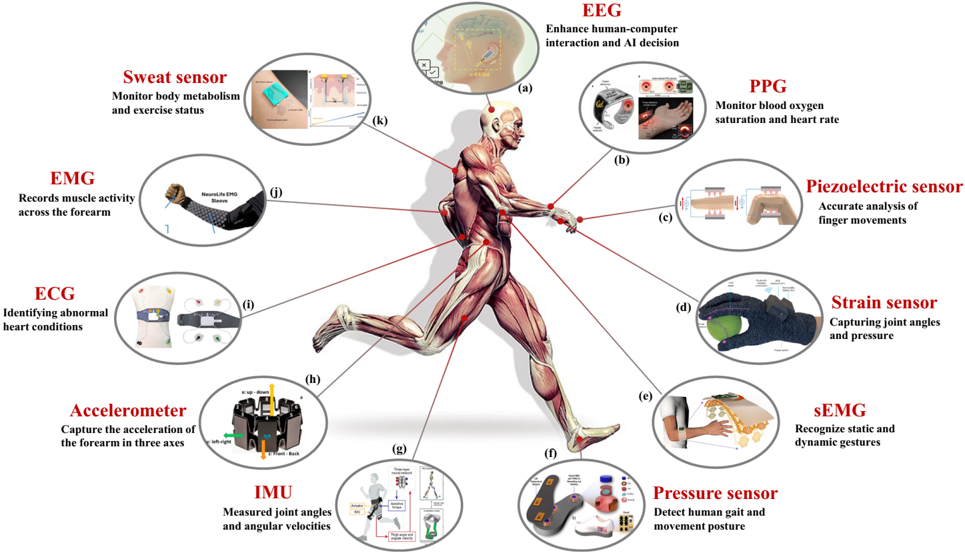
“Researchers employ sEMG with high-density electrodes placed over target muscle bellies to capture anticipatory mechanical signals indicated by the slope of EMG pre-activation at high sampling rates 93,94 .”
§ Recent advances in intelligent wearable systems: from multiscale biomechanical features towards human motion intent prediction Check for updates > Muscle signal capture
What the sources say
- Not checked yetcites [93] 93. Novak, D. & Riener, R. A survey of sensor fusion methods in wearable robotics. Robot. Auton. Syst. 73, 155-170 (2015). source
- Partly supportedcites [94] 94. Coker, J., Chen, H., Schall, M. C., Gallagher, S. & Zabala, M. EMG and joint angle-based machine learning to predict future joint angles at the knee. Sensors 21, 3622 (2021). sourceExperimental — accuracy not yet measured
The Materials and Methods section reports surface EMG electrodes on six thigh muscles bilaterally, with signals sampled at 1111 Hz. The Introduction explains that muscle activation is detectable before movement, supporting the anticipatory aspect. The paper does not describe high-density electrode arrays or identify the slope of EMG pre-activation as the signal used; its Methods instead describe filtering, rectification, and RMS calculation. (LLM, conf=0.87)
plainstates a cause- Asserted: passes — The authors put it forward as true.
- Checkable: passes — It can be checked against evidence.
- Load-bearing: unclear — It is unclear whether the paper’s conclusions depend on it.
- Based: passes — The paper gives a reason why it holds.
53 more claims · 6 with their cited sources checked
Create a free account to see all 183 claims and to verify the 208 references still open.
- Probably not a substantial claim. 68
- It may state two separate claims as one. 92
- The quote only partly states this claim. 1
Self-check
Percentages, sums and reported differences re-computed from the paper’s own numbers.
Each contradiction between two passages listed here was confirmed by an independent check.
Rated minor: it would not touch a result — a value no result rests on, a p-value that stays on the same side of the significance level, or a conflict that is clerical, resolved elsewhere in the paper, or outside its own findings.
In the paper
§ Recent advances in intelligent wearable systems: from multiscale biomechanical features towards human motion intent prediction Check for updates > Discussion
“| IMU and pressure sensitive insoles | Gait recognition | 3 | 98.7% | 124 |”
§ Recent advances in intelligent wearable systems: from multiscale biomechanical features towards human motion intent prediction Check for updates > References
“124. Papapicco, V. et al. A classification approach based on directed acyclic graph to predict locomotion activities with one inertial sensor on the thigh. IEEE Trans. Med. Robot. Bionics 3, 436-445 (2021).”
Citations
Cites
Fully integrated wearable sensor arrays for multiplexed in situ perspiration analysis
Gao, W., Emaminejad, S., Nyein, H. Y. Y., Challa, S., Chen, K., Peck, A., Fahad, H. M., Ota, H., Shiraki, H., Kiriya, D., et al. (2016) · Nature · doi:10.1038/nature16521 · Cited by 5,087
Human3.6M: Large Scale Datasets and Predictive Methods for 3D Human Sensing in Natural Environments
Ionescu, C., Papava, D., Olaru, V., & Sminchisescu, C. (2014) · IEEE Transactions on Pattern Analysis and Machine Intelligence · doi:10.1109/tpami.2013.248 · Cited by 3,653
Long-Term Recurrent Convolutional Networks for Visual Recognition and Description
Donahue, J., Hendricks, L. A., Rohrbach, M., Venugopalan, S., Guadarrama, S., Saenko, K., & Darrell, T. (2017) · IEEE Transactions on Pattern Analysis and Machine Intelligence · doi:10.1109/tpami.2016.2599174 · Cited by 1,547
Skin-inspired highly stretchable and conformable matrix networks for multifunctional sensing
Hua, Q., Sun, J., Liu, H., Bao, R., Yu, R., Zhai, J., Pan, C., & Wang, Z. L. (2018) · Nature Communications · doi:10.1038/s41467-017-02685-9 · Cited by 1,413
AMASS: Archive of Motion Capture As Surface Shapes
Mahmood, N., Ghorbani, N., Troje, N. F., Pons-Moll, G., & Black, M. (2019) · 2019 IEEE/CVF International Conference on Computer Vision (ICCV) · doi:10.1109/iccv.2019.00554 · Cited by 1,323
End-to-end design of wearable sensors
Ates, H. C., Nguyen, P. Q., Gonzalez-Macia, L., Morales-Narváez, E., Güder, F., Collins, J. J., & Dincer, C. (2022) · Nature Reviews Materials · doi:10.1038/s41578-022-00460-x · Cited by 1,306
Myoelectric control systems—A survey
Asghari Oskoei, M., & Hu, H. (2007) · Biomedical Signal Processing and Control · doi:10.1016/j.bspc.2007.07.009 · Cited by 1,244
Recurrent Network Models for Human Dynamics
Fragkiadaki, K., Levine, S., Felsen, P., & Malik, J. (2015) · 2015 IEEE International Conference on Computer Vision (ICCV) · doi:10.1109/iccv.2015.494 · Cited by 860
Wearable health devices in health care: narrative systematic review
Lu, L., Zhang, J., Xie, Y., Gao, F., Xu, S., Wu, X., & Ye, Z. (2020) · JMIR mHealth and uHealth · doi:10.2196/18907 · Cited by 701
A wavelet-based continuous classification scheme for multifunction myoelectric control
Englehart, K., Hudgin, B., & Parker, P. A. (2001) · IEEE Transactions on Biomedical Engineering · doi:10.1109/10.914793 · Cited by 697
A wearable cardiac ultrasound imager
Hu, H., Huang, H., Li, M., Gao, X., Yin, L., Qi, R., Wu, R. S., Chen, X., Ma, Y., Shi, K., et al. (2023) · Nature · doi:10.1038/s41586-022-05498-z · Cited by 644
Accelerometry: A technique for quantifying movement patterns during walking
Kavanagh, J. J., & Menz, H. B. (2008) · Gait & Posture · doi:10.1016/j.gaitpost.2007.10.010 · Cited by 617
Wearable Microfluidic Diaphragm Pressure Sensor for Health and Tactile Touch Monitoring
Gao, Y., Ota, H., Schaler, E. W., Chen, K., Zhao, A., Gao, W., Fahad, H. M., Leng, Y., Zheng, A., Xiong, F., et al. (2017) · Advanced Materials · doi:10.1002/adma.201701985 · Cited by 614
Exoskeleton robots for upper-limb rehabilitation: State of the art and future prospects
Lo, H. S., & Xie, S. Q. (2012) · Medical Engineering & Physics · doi:10.1016/j.medengphy.2011.10.004 · Cited by 571
Integrated textile sensor patch for real-time and multiplex sweat analysis
He, W., Wang, C., Wang, H., Jian, M., Lu, W., Liang, X., Zhang, X., Yang, F., & Zhang, Y. (2019) · Science Advances · doi:10.1126/sciadv.aax0649 · Cited by 564
Emerging Technologies of Flexible Pressure Sensors: Materials, Modeling, Devices, and Manufacturing
Huang, Y., Fan, X., Chen, S., & Zhao, N. (2019) · Advanced Functional Materials · doi:10.1002/adfm.201808509 · Cited by 543
Self-citationHuang, H., Zhang, F., Hargrove, L. J., Dou, Z., Rogers, D. R., & Englehart, K. B. (2011) · IEEE Transactions on Biomedical Engineering · doi:10.1109/tbme.2011.2161671 · Cited by 542
Sun, Z., Zhu, M., Shan, X., & Lee, C. (2022) · Nature Communications · doi:10.1038/s41467-022-32745-8 · Cited by 532
Effects of muscle fiber type and size on EMG median frequency and conduction velocity
Kupa, E. J., Roy, S. H., Kandarian, S. C., & De Luca, C. J. (1995) · Journal of Applied Physiology · doi:10.1152/jappl.1995.79.1.23 · Cited by 458
Pang, Y., Tian, H., Tao, L., Li, Y., Wang, X., Deng, N., Yang, Y., & Ren, T.-L. (2016) · ACS Applied Materials & Interfaces · doi:10.1021/acsami.6b08172 · Cited by 456
Byrne, C., & Lim, C. L. (2007) · British Journal of Sports Medicine · doi:10.1136/bjsm.2006.026344 · Cited by 456
Flexible Organic Electronics in Biology: Materials and Devices
Liao, C., Zhang, M., Yao, M. Y., Hua, T., Li, L., & Yan, F. (2015) · Advanced Materials · doi:10.1002/adma.201402625 · Cited by 438
Bi, L., Feleke, A. >., & Guan, C. (2019) · Biomedical Signal Processing and Control · doi:10.1016/j.bspc.2019.02.011 · Cited by 418
Wu, H., Yang, G., Zhu, K., Liu, S., Guo, W., Jiang, Z., & Li, Z. (2021) · Advanced Science · doi:10.1002/advs.202001938 · Cited by 395
Self-citationA real-time system for biomechanical analysis of human movement and muscle function
van den Bogert, A. J., Geijtenbeek, T., Even-Zohar, O., Steenbrink, F., & Hardin, E. C. (2013) · Medical & Biological Engineering & Computing · doi:10.1007/s11517-013-1076-z · Cited by 392
Wearable Sensors for Biochemical Sweat Analysis
Bandodkar, A. J., Jeang, W. J., Ghaffari, R., & Rogers, J. A. (2019) · Annual Review of Analytical Chemistry · doi:10.1146/annurev-anchem-061318-114910 · Cited by 387
Advances in graphene-based flexible and wearable strain sensors
Chen, H., Zhuo, F., Zhou, J., Liu, Y., Zhang, J., Dong, S., Liu, X., Elmarakbi, A., Duan, H., & Fu, Y. (2023) · Chemical Engineering Journal · doi:10.1016/j.cej.2023.142576 · Cited by 386
Self-citationPu, X., Hu, W., & Wang, Z. L. (2018) · Small · doi:10.1002/smll.201702817 · Cited by 378
Zheng, Y., Li, Y., Dai, K., Wang, Y., Zheng, G., Liu, C., & Shen, C. (2018) · Composites Science and Technology · doi:10.1016/j.compscitech.2018.01.019 · Cited by 369
Convolutional Sequence to Sequence Model for Human Dynamics
Li, C., Zhang, Z., Lee, W. S., & Lee, G. H. (2018) · 2018 IEEE/CVF Conference on Computer Vision and Pattern Recognition · doi:10.1109/cvpr.2018.00548 · Cited by 364
A survey of depth and inertial sensor fusion for human action recognition
Chen, C., Jafari, R., & Kehtarnavaz, N. (2017) · Multimedia Tools and Applications · doi:10.1007/s11042-015-3177-1 · Cited by 356
The development of mature gait
Sutherland, D. (1997) · Gait & Posture · doi:10.1016/s0966-6362(97)00029-5 · Cited by 351
Clinical applications of high-density surface EMG: A systematic review
Drost, G., Stegeman, D. F., van Engelen, B. G. M., & Zwarts, M. J. (2006) · Journal of Electromyography and Kinesiology · doi:10.1016/j.jelekin.2006.09.005 · Cited by 311
Exploring the Role of Wearable Technology in Sport Kinematics and Kinetics: A Systematic Review
Adesida, Y., Papi, E., & McGregor, A. H. (2019) · Sensors · doi:10.3390/s19071597 · Cited by 288
Su, Y., Ma, C., Chen, J., Wu, H., Luo, W., Peng, Y., Luo, Z., Li, L., Tan, Y., Omisore, O. M., et al. (2020) · Nanoscale Research Letters · doi:10.1186/s11671-020-03428-4 · Cited by 287
Evaluation of accelerometer based multi-sensor versus single-sensor activity recognition systems
Gao, L., Bourke, A. K., & Nelson, J. (2014) · Medical Engineering & Physics · doi:10.1016/j.medengphy.2014.02.012 · Cited by 266
Toward higher-performance bionic limbs for wider clinical use
Farina, D., Vujaklija, I., Brånemark, R., Bull, A. M. J., Dietl, H., Graimann, B., Hargrove, L. J., Hoffmann, K.-P., Huang, H., Ingvarsson, T., et al. (2021) · Nature Biomedical Engineering · doi:10.1038/s41551-021-00732-x · Cited by 263
Wearable Inertial Sensors for Human Motion Analysis: A Review
Lopez-Nava, I. H., & Munoz-Melendez, A. (2016) · IEEE Sensors Journal · doi:10.1109/jsen.2016.2609392 · Cited by 263
A wearable pH sensor with high sensitivity based on a flexible charge-coupled device
Nakata, S., Shiomi, M., Fujita, Y., Arie, T., Akita, S., & Takei, K. (2018) · Nature Electronics · doi:10.1038/s41928-018-0162-5 · Cited by 257
A survey of sensor fusion methods in wearable robotics
Novak, D., & Riener, R. (2015) · Robotics and Autonomous Systems · doi:10.1016/j.robot.2014.08.012 · Cited by 252
Progress of flexible strain sensors for physiological signal monitoring
Shen, Z., Liu, F., Huang, S., Wang, H., Yang, C., Hang, T., Tao, J., Xia, W., & Xie, X. (2022) · Biosensors and Bioelectronics · doi:10.1016/j.bios.2022.114298 · Cited by 250
Materials with Tunable Optical Properties for Wearable Epidermal Sensing in Health Monitoring
Han, F., Wang, T., Liu, G., Liu, H., Xie, X., Wei, Z., Li, J., Jiang, C., He, Y., & Xu, F. (2022) · Advanced Materials · doi:10.1002/adma.202109055 · Cited by 250
Microelectromechanical Systems (MEMS) for Biomedical Applications
Chircov, C., & Grumezescu, A. M. (2022) · Micromachines · doi:10.3390/mi13020164 · Cited by 243
Picerno, P. (2017) · Gait & Posture · doi:10.1016/j.gaitpost.2016.11.008 · Cited by 237
A generic non-invasive neuromotor interface for human-computer interaction
Kaifosh, P., Reardon, T. R., Labs, C.-L. A. R., Allen, B. D., Anderson, C., Arnoud, S., Arora, R., Atray, M., Awad, L., Ayerbe, F., et al. (2025) · Nature · doi:10.1038/s41586-025-09255-w · Cited by 232
Highly flexible and stretchable optical strain sensing for human motion detection
Guo, J., Niu, M., & Yang, C. (2017) · Optica · doi:10.1364/optica.4.001285 · Cited by 220
Recent progress, challenges, and opportunities for wearable biochemical sensors for sweat analysis
Ghaffari, R., Rogers, J. A., & Ray, T. R. (2021) · Sensors and Actuators B: Chemical · doi:10.1016/j.snb.2021.129447 · Cited by 212
Khoshmanesh, F., Thurgood, P., Pirogova, E., Nahavandi, S., & Baratchi, S. (2021) · Biosensors and Bioelectronics · doi:10.1016/j.bios.2020.112946 · Cited by 204
Semi-supervised near-miss fall detection for ironworkers with a wearable inertial measurement unit
Yang, K., Ahn, C. R., Vuran, M. C., & Aria, S. S. (2016) · Automation in Construction · doi:10.1016/j.autcon.2016.04.007 · Cited by 202
Ultrahigh-Sensitivity Piezoresistive Pressure Sensors for Detection of Tiny Pressure
Li, H., Wu, K., Xu, Z., Wang, Z., Meng, Y., & Li, L. (2018) · ACS Applied Materials & Interfaces · doi:10.1021/acsami.8b03639 · Cited by 197
Differences in muscle function during walking and running at the same speed
Sasaki, K., & Neptune, R. R. (2006) · Journal of Biomechanics · doi:10.1016/j.jbiomech.2005.06.019 · Cited by 194
Human motion prediction for human-robot collaboration
Liu, H., & Wang, L. (2017) · Journal of Manufacturing Systems · doi:10.1016/j.jmsy.2017.04.009 · Cited by 193
Monitoring Methods of Human Body Joints: State-of-the-Art and Research Challenges
Faisal, A. I., Majumder, S., Mondal, T., Cowan, D., Naseh, S., & Deen, M. J. (2019) · Sensors · doi:10.3390/s19112629 · Cited by 187
A Neural Temporal Model for Human Motion Prediction
Gopalakrishnan, A., Mali, A., Kifer, D., Giles, L., & Ororbia, A. G. (2019) · 2019 IEEE/CVF Conference on Computer Vision and Pattern Recognition (CVPR) · doi:10.1109/cvpr.2019.01239 · Cited by 185
Detecting absolute human knee angle and angular velocity using accelerometers and rate gyroscopes
Williamson, R., & Andrews, B. J. (2001) · Medical & Biological Engineering & Computing · doi:10.1007/bf02345283 · Cited by 185
Au, A. T. C., & Kirsch, R. F. (2000) · IEEE Transactions on Rehabilitation Engineering · doi:10.1109/86.895950 · Cited by 182
Tavakoli, M., Benussi, C., Alhais Lopes, P., Osorio, L. B., & de Almeida, A. T. (2018) · Biomedical Signal Processing and Control · doi:10.1016/j.bspc.2018.07.010 · Cited by 173
Xiong, Z., Stiles, M., & Zhao, J. (2017) · Computing in Cardiology Conference (CinC) · doi:10.22489/cinc.2017.066-138 · Cited by 171
Wearable devices in healthcare: Privacy and information security issues
Cilliers, L. (2020) · Health Information Management Journal · doi:10.1177/1833358319851684 · Cited by 169
Experiment-free exoskeleton assistance via learning in simulation
Luo, S., Jiang, M., Zhang, S., Zhu, J., Yu, S., Dominguez Silva, I., Wang, T., Rouse, E., Zhou, B., Yuk, H., et al. (2024) · Nature · doi:10.1038/s41586-024-07382-4 · Cited by 166
Guo, X., Huang, Y., Zhao, Y., Mao, L., Gao, L., Pan, W., Zhang, Y., & Liu, P. (2017) · Smart Materials and Structures · doi:10.1088/1361-665x/aa79c3 · Cited by 161
Tao, J., Dong, M., Li, L., Wang, C., Li, J., Liu, Y., Bao, R., & Pan, C. (2020) · Microsystems & Nanoengineering · doi:10.1038/s41378-020-0171-1 · Cited by 159
Self-citationHand Gesture Recognition Based Omnidirectional Wheelchair Control Using IMU and EMG Sensors
Kundu, A. S., Mazumder, O., Lenka, P. K., & Bhaumik, S. (2018) · Journal of Intelligent & Robotic Systems · doi:10.1007/s10846-017-0725-0 · Cited by 152
Modeling Human Motion with Quaternion-Based Neural Networks
Pavllo, D., Feichtenhofer, C., Auli, M., & Grangier, D. (2020) · International Journal of Computer Vision · doi:10.1007/s11263-019-01245-6 · Cited by 152
Fusing Higher-Order Features in Graph Neural Networks for Skeleton-Based Action Recognition
Qin, Z., Liu, Y., Ji, P., Kim, D., Wang, L., McKay, B., Anwar, S., & Gedeon, T. (2022) · IEEE Transactions on Neural Networks and Learning Systems · doi:10.1109/tnnls.2022.3201518 · Cited by 149
Self-citationFlexible all-textile dual tactile-tension sensors for monitoring athletic motion during taekwondo
Ma, Y., Ouyang, J., Raza, T., Li, P., Jian, A., Li, Z., Liu, H., Chen, M., Zhang, X., Qu, L., et al. (2021) · Nano Energy · doi:10.1016/j.nanoen.2021.105941 · Cited by 145
Tao, W., Lai, Z.-H., Leu, M. C., & Yin, Z. (2018) · Procedia Manufacturing · doi:10.1016/j.promfg.2018.07.152 · Cited by 145
Ultrasensitive and Stretchable Strain Sensors Based on Mazelike Vertical Graphene Network
Wu, S., Peng, S., Han, Z. J., Zhu, H., & Wang, C. H. (2018) · ACS Applied Materials & Interfaces · doi:10.1021/acsami.8b15848 · Cited by 144
Joint-Angle Measurement Using Accelerometers and Gyroscopes—A Survey
Cheng, P., & Oelmann, B. (2010) · IEEE Transactions on Instrumentation and Measurement · doi:10.1109/tim.2009.2024367 · Cited by 140
Fortino, G., & Giampa, V. (2010) · IEEE International Symposium on Medical Measurements and Applications (MeMeA) · doi:10.1109/memea.2010.5480201 · Cited by 140
Tashakori, A., Jiang, Z., Servati, A., Soltanian, S., Narayana, H., Le, K., Nakayama, C., Yang, C.-L., Wang, Z. J., Eng, J. J., et al. (2024) · Nature Machine Intelligence · doi:10.1038/s42256-023-00780-9 · Cited by 137
Self-citationLee, H., Lee, S., Kim, J.-S., Jung, H., Yoon, K. J., Gandla, S., Park, H., & Kim, S. (2023) · npj Flexible Electronics · doi:10.1038/s41528-023-00246-3 · Cited by 132
A multifunctional skin-like wearable optical sensor based on an optical micro-/nanofibre
Pan, J., Zhang, Z., Jiang, C., Zhang, L., & Tong, L. (2020) · Nanoscale · doi:10.1039/d0nr03446k · Cited by 130
Gait analysis using gravitational acceleration measured by wearable sensors
Takeda, R., Tadano, S., Todoh, M., Morikawa, M., Nakayasu, M., & Yoshinari, S. (2009) · Journal of Biomechanics · doi:10.1016/j.jbiomech.2008.10.027 · Cited by 128
Jochumsen, M., Niazi, I. K., Mrachacz-Kersting, N., Farina, D., & Dremstrup, K. (2013) · Journal of Neural Engineering · doi:10.1088/1741-2560/10/5/056015 · Cited by 128
Guo, X., Sun, Z., Zhu, Y., & Lee, C. (2024) · Advanced Materials · doi:10.1002/adma.202406778 · Cited by 125
Shin, J. H., Kwon, J., Kim, J. U., Ryu, H., Ok, J., Joon Kwon, S., Park, H., & Kim, T.-I. (2022) · npj Flexible Electronics · doi:10.1038/s41528-022-00164-w · Cited by 123
Liu, Z., Liu, Q., Xu, W., Liu, Z., Zhou, Z., & Chen, J. (2019) · Procedia CIRP · doi:10.1016/j.procir.2019.04.080 · Cited by 123
Self-citationZhang, S., Zhou, Z., Zhong, J., Shi, Z., Mao, Y., & Tao, T. H. (2020) · Advanced Science · doi:10.1002/advs.201903802 · Cited by 120
Rodgers, M. M., Alon, G., Pai, V. M., & Conroy, R. S. (2019) · Journal of Rehabilitation and Assistive Technologies Engineering · doi:10.1177/2055668319839607 · Cited by 119
Ricotti, V., Kadirvelu, B., Selby, V., Festenstein, R., Mercuri, E. M., Voït, T., & Faisal, A. A. (2023) · Nature Medicine · doi:10.1038/s41591-022-02045-1 · Cited by 119
3D human motion prediction: A survey
Lyu, K., Chen, H., Liu, Z., Zhang, B., & Wang, R. (2022) · Neurocomputing · doi:10.1016/j.neucom.2022.02.045 · Cited by 116
Self-citationANN-based automated scaffold builder activity recognition through wearable EMG and IMU sensors
Bangaru, S. S., Wang, C., Busam, S. A., & Aghazadeh, F. (2021) · Automation in Construction · doi:10.1016/j.autcon.2021.103653 · Cited by 114
Sun, W., Guo, Z., Yang, Z., Wu, Y., Lan, W., Liao, Y., Wu, X., & Liu, Y. (2022) · Sensors · doi:10.3390/s22207784 · Cited by 112
Self-citationDesigning wearable microgrids: towards autonomous sustainable on-body energy management
Yin, L., Kim, K. N., Trifonov, A., Podhajny, T., & Wang, J. (2022) · Energy & Environmental Science · doi:10.1039/d1ee03113a · Cited by 111
Organic Multi-Channel Optoelectronic Sensors for Wearable Health Monitoring
Khan, Y., Han, D., Ting, J., Ahmed, M., Nagisetty, R., & Arias, A. C. (2019) · IEEE Access · doi:10.1109/access.2019.2939798 · Cited by 111
Zheng, S., Wu, X., Huang, Y., Xu, Z., Yang, W., Liu, Z., Huang, S., Xie, B., & Yang, M. (2019) · Composites Part A: Applied Science and Manufacturing · doi:10.1016/j.compositesa.2019.04.014 · Cited by 109
Self-citationTask-agnostic exoskeleton control via biological joint moment estimation
Molinaro, D. D., Scherpereel, K. L., Schonhaut, E. B., Evangelopoulos, G., Shepherd, M. K., & Young, A. J. (2024) · Nature · doi:10.1038/s41586-024-08157-7 · Cited by 107
Real-Time Intended Knee Joint Motion Prediction by Deep-Recurrent Neural Networks
Huang, Y., He, Z., Liu, Y., Yang, R., Zhang, X., Cheng, G., Yi, J., Ferreira, J. P., & Liu, T. (2019) · IEEE Sensors Journal · doi:10.1109/jsen.2019.2933603 · Cited by 105
Self-citationIntent Prediction of Pedestrians via Motion Trajectories Using Stacked Recurrent Neural Networks
Saleh, K., Hossny, M., & Nahavandi, S. (2018) · IEEE Transactions on Intelligent Vehicles · doi:10.1109/tiv.2018.2873901 · Cited by 103
Conducting Polymer Electrodes for Electroencephalography
Leleux, P., Badier, J., Rivnay, J., Bénar, C., Hervé, T., Chauvel, P., & Malliaras, G. G. (2014) · Advanced Healthcare Materials · doi:10.1002/adhm.201300311 · Cited by 103
sEMG-Based Lower Limb Motion Prediction Using CNN-LSTM with Improved PCA Optimization Algorithm
Zhu, M., Guan, X., Li, Z., He, L., Wang, Z., & Cai, K. (2023) · Journal of Bionic Engineering · doi:10.1007/s42235-022-00280-3 · Cited by 102
Estimation of Upper-Limb Orientation Based on Accelerometer and Gyroscope Measurements
Hyde, R. A., Ketteringham, L. P., Neild, S. A., & Jones, R. J. S. (2008) · IEEE Transactions on Biomedical Engineering · doi:10.1109/tbme.2007.912647 · Cited by 98
A flexible wearable strain sensor for human-motion detection and a human–machine interface
Zhang, H., Zhang, D., Guan, J., Wang, D., Tang, M., Ma, Y., & Xia, H. (2022) · Journal of Materials Chemistry C · doi:10.1039/d2tc03147g · Cited by 97
Mundt, M., Johnson, W. R., Potthast, W., Markert, B., Mian, A., & Alderson, J. (2021) · Sensors · doi:10.3390/s21134535 · Cited by 95
Sharma, A., Ansari, M. Z., & Cho, C. (2022) · Sensors and Actuators A: Physical · doi:10.1016/j.sna.2022.113934 · Cited by 95
A wearable echomyography system based on a single transducer
Gao, X., Chen, X., Lin, M., Yue, W., Hu, H., Qin, S., Zhang, F., Lou, Z., Yin, L., Huang, H., et al. (2024) · Nature Electronics · doi:10.1038/s41928-024-01271-4 · Cited by 95
Kadirvelu, B., Gavriel, C., Nageshwaran, S., Chan, J. P. K., Nethisinghe, S., Athanasopoulos, S., Ricotti, V., Voït, T., Giunti, P., Festenstein, R., et al. (2023) · Nature Medicine · doi:10.1038/s41591-022-02159-6 · Cited by 94
Molinaro, D. D., Kang, I., Camargo, J., Gombolay, M. C., & Young, A. J. (2022) · IEEE Transactions on Medical Robotics and Bionics · doi:10.1109/tmrb.2022.3144025 · Cited by 90
Implementation of a Brain-Computer Interface on a Lower-Limb Exoskeleton
Wang, C., Wu, X., Wang, Z., & Ma, Y. (2018) · IEEE Access · doi:10.1109/access.2018.2853628 · Cited by 89
Chamroukhi, F., Mohammed, S., Trabelsi, D., Oukhellou, L., & Amirat, Y. (2013) · Neurocomputing · doi:10.1016/j.neucom.2013.04.003 · Cited by 88
Engineering the Comfort‐of‐Wear for Next Generation Wearables
Shimura, T., Sato, S., Zalar, P., & Matsuhisa, N. (2023) · Advanced Electronic Materials · doi:10.1002/aelm.202200512 · Cited by 86
Action Recognition in Manufacturing Assembly using Multimodal Sensor Fusion
Al-Amin, M., Tao, W., Doell, D., Lingard, R., Yin, Z., Leu, M. C., & Qin, R. (2019) · Procedia Manufacturing · doi:10.1016/j.promfg.2020.01.288 · Cited by 85
Celik, Y., Stuart, S., Woo, W., Sejdic, E., & Godfrey, A. (2022) · Information Fusion · doi:10.1016/j.inffus.2021.09.016 · Cited by 83
Deep Supervision with Shape Concepts for Occlusion-Aware 3D Object Parsing
Li, C., Zia, M. Z., Tran, Q.-H., Yu, X., Hager, G. D., & Chandraker, M. (2017) · 2017 IEEE Conference on Computer Vision and Pattern Recognition (CVPR) · doi:10.1109/cvpr.2017.49 · Cited by 82
Human activity recognition based on a sensor weighting hierarchical classifier
Banos, O., Damas, M., Pomares, H., Rojas, F., Delgado-Marquez, B., & Valenzuela, O. (2013) · Soft Computing · doi:10.1007/s00500-012-0896-3 · Cited by 79
Cereatti, A., Gurchiek, R., Mündermann, A., Fantozzi, S., Horak, F., Delp, S., & Aminian, K. (2024) · Journal of Biomechanics · doi:10.1016/j.jbiomech.2024.112225 · Cited by 79
System Design for Wearable Blood Oxygen Saturation and Pulse Measurement Device
Fu, Y., & Liu, J. (2015) · Procedia Manufacturing · doi:10.1016/j.promfg.2015.07.197 · Cited by 77
Body Pose Prediction Based on Motion Sensor Data and Recurrent Neural Network
Woźniak, M., Wieczorek, M., Siłka, J., & Połap, D. (2020) · IEEE Transactions on Industrial Informatics · doi:10.1109/tii.2020.3015934 · Cited by 77
Lee, J., Kwon, K., Soltis, I., Matthews, J., Lee, Y. J., Kim, H., Romero, L., Zavanelli, N., Kwon, Y., Kwon, S., et al. (2024) · npj Flexible Electronics · doi:10.1038/s41528-024-00297-0 · Cited by 77
A noise-tolerant human–machine interface based on deep learning-enhanced wearable sensors
Chen, X., Lou, Z., Gao, X., Yin, L., Qin, S., Lin, M., Zhang, F., Lu, Y., Ding, S., Liu, R., et al. (2025) · Nature Sensors · doi:10.1038/s44460-025-00001-3 · Cited by 77
Challenges and advances in the use of wearable sensors for lower extremity biomechanics
Hafer, J. F., Vitali, R. V., Gurchiek, R. D., Curtze, C., Shull, P. B., & Cain, S. M. (2023) · Journal of Biomechanics · doi:10.1016/j.jbiomech.2023.111714 · Cited by 74
Ni, S., Al-qaness, M. A. A., Hawbani, A., Al-Alimi, D., Abd Elaziz, M., & Ewees, A. A. (2024) · Applied Soft Computing · doi:10.1016/j.asoc.2024.112235 · Cited by 74
Son, J. W., Han, B., Bennett, J. P., Heymsfield, S., & Lim, S. (2025) · Obesity Reviews · doi:10.1111/obr.13844 · Cited by 74
Betthauser, J. L., Krall, J. T., Bannowsky, S. G., Levay, G., Kaliki, R. R., Fifer, M. S., & Thakor, N. V. (2020) · IEEE Transactions on Biomedical Engineering · doi:10.1109/tbme.2019.2943309 · Cited by 73
Non-weight-bearing neural control of a powered transfemoral prosthesis
Hargrove, L. J., Simon, A. M., Lipschutz, R., Finucane, S. B., & Kuiken, T. A. (2013) · Journal of NeuroEngineering and Rehabilitation · doi:10.1186/1743-0003-10-62 · Cited by 73
Wang, Y., Cheng, X., Jabban, L., Sui, X., & Zhang, D. (2022) · IEEE Sensors Journal · doi:10.1109/jsen.2022.3167686 · Cited by 70
Li, S., Jang, J. H., Chung, W., Seung, H., Park, S. I., Ma, H., Pyo, W. J., Choi, C., Chung, D. S., Kim, D.-H., et al. (2023) · ACS Nano · doi:10.1021/acsnano.3c05178 · Cited by 70
Hospital acquired infections (HAI) in the elderly: Comparison with the younger patients
Avci, M., Ozgenc, O., Coskuner, S. A., & Olut, A. I. (2012) · Archives of Gerontology and Geriatrics · doi:10.1016/j.archger.2011.03.014 · Cited by 69
On-field player workload exposure and knee injury risk monitoring via deep learning
Johnson, W. R., Mian, A., Lloyd, D. G., & Alderson, J. A. (2019) · Journal of Biomechanics · doi:10.1016/j.jbiomech.2019.07.002 · Cited by 69
A Locomotion Intent Prediction System Based on Multi-Sensor Fusion
Chen, B., Zheng, E., & Wang, Q. (2014) · Sensors · doi:10.3390/s140712349 · Cited by 69
A Wearable Electrocardiogram Telemonitoring System for Atrial Fibrillation Detection
Shao, M., Zhou, Z., Bin, G., Bai, Y., & Wu, S. (2020) · Sensors · doi:10.3390/s20030606 · Cited by 69
Recognition of walking environments and gait period by surface electromyography
Kyeong, S., Shin, W., Yang, M., Heo, U., Feng, J.-R., & Kim, J. (2019) · Frontiers of Information Technology & Electronic Engineering · doi:10.1631/fitee.1800601 · Cited by 68
Xu, D., Feng, Y., Mai, J., & Wang, Q. (2018) · IEEE Transactions on Neural Systems and Rehabilitation Engineering · doi:10.1109/tnsre.2018.2870152 · Cited by 67
Liu, S., Li, W., Wang, X., Lu, L., Yao, Y., Lai, S., Xu, Y., Yang, J., Hu, Z., Gong, X., et al. (2025) · ACS Nano · doi:10.1021/acsnano.4c13458 · Cited by 64
Gao, Z., Guo, L., Guan, W., Liu, A.-A., Ren, T., & Chen, S. (2021) · IEEE Transactions on Image Processing · doi:10.1109/tip.2020.3038372 · Cited by 63
Self-citationPrediction of gait intention from pre-movement EEG signals: a feasibility study
Shafiul Hasan, S. M., Siddiquee, M. R., Atri, R., Ramon, R., Marquez, J. S., & Bai, O. (2020) · Journal of NeuroEngineering and Rehabilitation · doi:10.1186/s12984-020-00675-5 · Cited by 63
Electrochemiluminescent tactile visual synapse enabling in situ health monitoring
Kim, W., Lee, K., Choi, S., Park, E., Kim, G., Ha, J., Kim, Y., Jang, J., Oh, J. H., Kim, H., et al. (2025) · Nature Materials · doi:10.1038/s41563-025-02124-x · Cited by 62
Yang, B., Cheng, J., Qu, X., Song, Y., Yang, L., Shen, J., Bai, Z., & Ji, L. (2025) · Advanced Science · doi:10.1002/advs.202408689 · Cited by 59
Self-citationElectrodermal activity as a proxy for sweat rate monitoring during physical and mental activities
Kim, S., Zhan, Y., Davis, N., Bellamkonda, S., Gillan, L., Hakola, E., Hiltunen, J. A., & Javey, A. (2025) · Nature Electronics · doi:10.1038/s41928-025-01365-7 · Cited by 59
Interactive Control of Lower Limb Exoskeleton Robots: A Review
Zhang, Y.-P., Cao, G.-Z., Li, L.-L., & Diao, D.-F. (2024) · IEEE Sensors Journal · doi:10.1109/jsen.2024.3352005 · Cited by 58
Estimation of joint torque in dynamic activities using wearable A-mode ultrasound
Jin, Y., Alvarez, J. T., Suitor, E. L., Swaminathan, K., Chin, A., Civici, U. S., Nuckols, R. W., Howe, R. D., & Walsh, C. J. (2024) · Nature Communications · doi:10.1038/s41467-024-50038-0 · Cited by 58
Skeletal Muscle Assessment Using Quantitative Ultrasound: A Narrative Review
Ashir, A., Jerban, S., Barrère, V., Wu, Y., Shah, S. B., Andre, M. P., & Chang, E. Y. (2023) · Sensors · doi:10.3390/s23104763 · Cited by 57
Picerno, P., Caliandro, P., Iacovelli, C., Simbolotti, C., Crabolu, M., Pani, D., Vannozzi, G., Reale, G., Rossini, P. M., Padua, L., et al. (2019) · Scientific Reports · doi:10.1038/s41598-019-50759-z · Cited by 57
Reliability of MEMS inertial devices in mechanical and thermal environments: A review
Xu, Y., Liu, S., He, C., Wu, H., Cheng, L., Yan, G., & Huang, Q. (2024) · Heliyon · doi:10.1016/j.heliyon.2024.e27481 · Cited by 57
EMG and Joint Angle-Based Machine Learning to Predict Future Joint Angles at the Knee
Coker, J., Chen, H., Schall, M. C., Gallagher, S., & Zabala, M. (2021) · Sensors · doi:10.3390/s21113622 · Cited by 56
Classifying the intent of novel users during human locomotion using powered lower limb prostheses
Young, A. J., Simon, A. M., Fey, N. P., & Hargrove, L. J. (2013) · 2013 6th International IEEE/EMBS Conference on Neural Engineering (NER) · doi:10.1109/ner.2013.6695934 · Cited by 55
Hand Gesture Recognition Using EMG-IMU Signals and Deep Q-Networks
Vásconez, J. P., Barona López, L. I., Valdivieso Caraguay, Á. L., & Benalcázar, M. E. (2022) · Sensors · doi:10.3390/s22249613 · Cited by 55
Tacca, N. J., Dunlap, C. F., Donegan, S., Hardin, J. O., Meyers, E., Darrow, M., Colachis, S. C., Gillman, A. S., & Friedenberg, D. A. (2024) · Scientific Reports · doi:10.1038/s41598-024-64458-x · Cited by 55
A versatile knee exoskeleton mitigates quadriceps fatigue in lifting, lowering, and carrying tasks
Divekar, N. V., Thomas, G. C., Yerva, A. R., Frame, H. B., & Gregg, R. D. (2024) · Science Robotics · doi:10.1126/scirobotics.adr8282 · Cited by 52
Low Power Bio-Impedance Sensor Interfaces: Review and Electronics Design Methodology
Xu, J., & Hong, Z. (2020) · IEEE Reviews in Biomedical Engineering · doi:10.1109/rbme.2020.3041053 · Cited by 51
Wearable biosensors for human fatigue diagnosis: A review
Zhang, J., Chen, M., Peng, Y., Li, S., Han, D., Ren, S., Qin, K., Li, S., Han, T., Wang, Y., et al. (2022) · Bioengineering & Translational Medicine · doi:10.1002/btm2.10318 · Cited by 51
Adaptive predictive systems applied to gait analysis: A systematic review
Caldas, R., Fadel, T., Buarque, F., & Markert, B. (2020) · Gait & Posture · doi:10.1016/j.gaitpost.2020.01.021 · Cited by 50
Prediction of gait trajectories based on the Long Short Term Memory neural networks
Zaroug, A., Garofolini, A., Lai, D. T. H., Mudie, K., & Begg, R. (2021) · PLOS ONE · doi:10.1371/journal.pone.0255597 · Cited by 48
Song, X., van de Ven, S. S., Chen, S., Kang, P., Gao, Q., Jia, J., & Shull, P. B. (2022) · Frontiers in Physiology · doi:10.3389/fphys.2022.811950 · Cited by 47
Self-citationBoye, A. T., Kristiansen, U. Q., Billinger, M., Nascimento, O. F. D., & Farina, D. (2008) · Biomedical Signal Processing and Control · doi:10.1016/j.bspc.2008.05.001 · Cited by 45
Kapsalyamov, A., Hussain, S., Brown, N. A. T., Goecke, R., Hayat, M., & Jamwal, P. K. (2023) · Engineering Applications of Artificial Intelligence · doi:10.1016/j.engappai.2022.105500 · Cited by 45
Nishan, A., Raju, S. M. T. U., Hossain, M. I., Dipto, S. A., Uddin, S. M. T., Sijan, A., Chowdhury, M. A. S., Ahmad, A., & Khan, M. M. H. (2024) · Heliyon · doi:10.1016/j.heliyon.2024.e27779 · Cited by 45
Kleiber, T., Kunz, L., & Disselhorst-Klug, C. (2015) · Frontiers in Physiology · doi:10.3389/fphys.2015.00215 · Cited by 44
Ultra-fine self-powered interactive fiber electronics for smart clothing
Wang, J., Yang, W., Liu, Z., Su, Y., Li, K., Li, Y., Zhang, Q., Hou, C., & Wang, H. (2023) · Nano Energy · doi:10.1016/j.nanoen.2023.108171 · Cited by 44
Self-citationAvila, E. R., Williams, S. E., & Disselhorst-Klug, C. (2023) · Journal of Biomechanics · doi:10.1016/j.jbiomech.2023.111687 · Cited by 44
Stretch, sense, and innovate: Advances in next-generation strain sensors
Maji, A., Kuila, C., Murmu, N. C., & Kuila, T. (2025) · Composites Part B: Engineering · doi:10.1016/j.compositesb.2025.112749 · Cited by 44
Online Adaptive Prediction of Human Motion Intention Based on sEMG
Ding, Z., Yang, C., Wang, Z., Yin, X., & Jiang, F. (2021) · Sensors · doi:10.3390/s21082882 · Cited by 43
Learning based lower limb joint kinematic estimation using open source IMU data
Hur, B., Baek, S., Kang, I., & Kim, D. (2025) · Scientific Reports · doi:10.1038/s41598-025-89716-4 · Cited by 43
Human Motion prediction based on attention mechanism
Sang, H.-F., Chen, Z.-Z., & He, D.-K. (2020) · Multimedia Tools and Applications · doi:10.1007/s11042-019-08269-7 · Cited by 42
Deep Learning Approaches for Enhanced Lower-Limb Exoskeleton Control: A Review
Belal, M., Alsheikh, N., Aljarah, A., & Hussain, I. (2024) · IEEE Access · doi:10.1109/access.2024.3414175 · Cited by 42
A review on EMG/EEG based control scheme of upper limb rehabilitation robots for stroke patients
Sarhan, S. M., Al-Faiz, M. Z., & Takhakh, A. M. (2023) · Heliyon · doi:10.1016/j.heliyon.2023.e18308 · Cited by 41
Imperceptible liquid metal based tattoo for Human-Machine interface on hairy skin
Lin, W., Ai, L., Wang, Y., Yang, X., Liao, J., Pan, Q., Hong, Y., Liu, S., Long, Z., Khoo, B. L., et al. (2024) · Chemical Engineering Journal · doi:10.1016/j.cej.2024.151595 · Cited by 40
Gait Neural Network for Human-Exoskeleton Interaction
Fang, B., Zhou, Q., Sun, F., Shan, J., Wang, M., Xiang, C., & Zhang, Q. (2020) · Frontiers in Neurorobotics · doi:10.3389/fnbot.2020.00058 · Cited by 39
Ojha, A., Gautam, Y., Jebelli, H., & Akanmu, A. (2024) · Automation in Construction · doi:10.1016/j.autcon.2024.105742 · Cited by 39
Measurement of arterial oxygen saturation (SpO2) using PPG optical sensor
Mohan, P. M., Nisha, A. A., Nagarajan, V., et al. (2016) · doi:10.1109/iccsp.2016.7754330 · Cited by 38
Bidirectional Transformer GAN for Long-term Human Motion Prediction
Zhao, M., Tang, H., Xie, P., Dai, S., Sebe, N., & Wang, W. (2023) · ACM Transactions on Multimedia Computing, Communications, and Applications · doi:10.1145/3579359 · Cited by 38
Osis, S. T., Hettinga, B. A., & Ferber, R. (2016) · Gait & Posture · doi:10.1016/j.gaitpost.2016.02.021 · Cited by 37
ANFIS fusion algorithm for eye movement recognition via soft multi-functional electronic skin
Dong, W., Yang, L., Gravina, R., & Fortino, G. (2021) · Information Fusion · doi:10.1016/j.inffus.2021.02.003 · Cited by 37
Early Prediction of Human Intention for Human–Robot Collaboration Using Transformer Network
Zhang, X., Tian, S., Liang, X. P., Zheng, M., & Behdad, S. (2024) · Journal of Computing and Information Science in Engineering · doi:10.1115/1.4064258 · Cited by 37
Cunningham, R. J., & Loram, I. D. (2020) · Journal of The Royal Society Interface · doi:10.1098/rsif.2019.0715 · Cited by 36
Ren, J., Wang, A., Li, H., Yue, X., & Meng, L. (2023) · Sensors · doi:10.3390/s23146547 · Cited by 34
Dimitrov, H., Bull, A. M. J., & Farina, D. (2023) · Scientific Data · doi:10.1038/s41597-023-02679-x · Cited by 34
Peng, F., Zhang, C., Xu, B., Li, J., Wang, Z., & Su, H. (2020) · Complexity · doi:10.1155/2020/8810663 · Cited by 34
Ye, X., & Wang, K. I. (2024) · Pattern Recognition · doi:10.1016/j.patcog.2024.110811 · Cited by 34
Fu, R., Zhang, B., Liang, H., Wang, S., Wang, Y., & Li, Z. (2023) · Biomedical Signal Processing and Control · doi:10.1016/j.bspc.2023.105104 · Cited by 32
Lee, H., Lee, G., Lee, S., & Ahn, C. R. (2022) · Automation in Construction · doi:10.1016/j.autcon.2022.104253 · Cited by 31
Serum Potassium Monitoring Using AI-Enabled Smartwatch Electrocardiograms
Chiu, I.-M., Wu, P.-J., Zhang, H., Hughes, J. W., Rogers, A. J., Jalilian, L., Perez, M., Lin, C.-H. R., Lee, C.-T., Zou, J., et al. (2024) · JACC: Clinical Electrophysiology · doi:10.1016/j.jacep.2024.07.023 · Cited by 31
Bio-signal based elbow angle and torque simultaneous prediction during isokinetic contraction
Zhou, Y., Liu, J., Zeng, J., Li, K., & Liu, H. (2019) · Science China Technological Sciences · doi:10.1007/s11431-018-9354-5 · Cited by 30
Park, J., Jeong, J., Kang, M., Pritish, N., Cho, Y., Ha, J., Yea, J., Jang, K.-I., Kim, H., Hwang, J., et al. (2023) · npj Flexible Electronics · doi:10.1038/s41528-023-00282-z · Cited by 30
Shen, S., Wang, X., Wu, M., Gu, K., Chen, X., & Geng, X. (2023) · IEEE Sensors Journal · doi:10.1109/jsen.2023.3236682 · Cited by 29
Directed Acyclic Graph Neural Network for Human Motion Prediction
Li, Q., Chalvatzaki, G., Peters, J., & Wang, Y. (2021) · 2021 IEEE International Conference on Robotics and Automation (ICRA) · doi:10.1109/icra48506.2021.9561540 · Cited by 29
A multimodal driver monitoring benchmark dataset for driver modeling in assisted driving automation
Dargahi Nobari, K., & Bertram, T. (2024) · Scientific Data · doi:10.1038/s41597-024-03137-y · Cited by 29
Recent advances in deterministic human motion prediction: A review
Deng, T., & Sun, Y. (2024) · Image and Vision Computing · doi:10.1016/j.imavis.2024.104926 · Cited by 29
ViT-LLMR: Vision Transformer-based lower limb motion recognition from fusion signals of MMG and IMU
Zhang, H., Yang, K., Cao, G., & Xia, C. (2023) · Biomedical Signal Processing and Control · doi:10.1016/j.bspc.2022.104508 · Cited by 28
Human Gait phases recognition based on multi-source data fusion and BILSTM attention neural network
Zhan, H., Kou, J., Cao, Y., Guo, Q., Zhang, J., & Shi, Y. (2024) · Measurement · doi:10.1016/j.measurement.2024.115396 · Cited by 28
Dey, S., & Schilling, A. F. (2023) · IEEE Transactions on Industrial Informatics · doi:10.1109/tii.2022.3158935 · Cited by 27
Tigrini, A., Verdini, F., Fioretti, S., & Mengarelli, A. (2023) · IEEE Transactions on Medical Robotics and Bionics · doi:10.1109/tmrb.2023.3320260 · Cited by 27
Lower Limb Wearable Capacitive Sensing and Its Applications to Recognizing Human Gaits
Zheng, E., Chen, B., Wei, K., & Wang, Q. (2013) · Sensors · doi:10.3390/s131013334 · Cited by 26
Yurtman, A., & Barshan, B. (2020) · IEEE Transactions on Instrumentation and Measurement · doi:10.1109/tim.2019.2930437 · Cited by 26
Wearable device for personalized EMG feedback-based treatments
Simić, M., & Stojanović, G. M. (2024) · Results in Engineering · doi:10.1016/j.rineng.2024.102472 · Cited by 26
Wibawa, A. D., Verdonschot, N., Halbertsma, J. P. K., Burgerhof, J. G. M., Diercks, R. L., & Verkerke, G. J. (2016) · Journal of Biomechanics · doi:10.1016/j.jbiomech.2016.09.041 · Cited by 25
(2009) · Biomechanics and Motor Control of Human Movement · doi:10.1002/9780470549148.ch3 · Cited by 25
Ben Chaabane, N., Conze, P.-H., Lempereur, M., Quellec, G., Rémy-Néris, O., Brochard, S., Cochener, B., & Lamard, M. (2023) · Scientific Reports · doi:10.1038/s41598-023-49883-8 · Cited by 24
Ultrasound Features of Skeletal Muscle Can Predict Kinematics of Upcoming Lower-Limb Motion
Jahanandish, M. H., Rabe, K. G., Fey, N. P., & Hoyt, K. (2021) · Annals of Biomedical Engineering · doi:10.1007/s10439-020-02617-7 · Cited by 23
Asynchronous Prediction of Human Gait Intention in a Pseudo Online Paradigm Using Wavelet Transform
Hasan, S. M. S., Siddiquee, M. R., & Bai, O. (2020) · IEEE Transactions on Neural Systems and Rehabilitation Engineering · doi:10.1109/tnsre.2020.2998778 · Cited by 22
A Novel Wearable Foot and Ankle Monitoring System for the Assessment of Gait Biomechanics
Faragó, P., Grama, L., Farago, M.-A., & Hintea, S. (2020) · Applied Sciences · doi:10.3390/app11010268 · Cited by 22
Park, S., Park, F. C., Choi, J., & Kim, H. (2019) · International Winter Conference on Brain-Computer Interface (BCI) · doi:10.1109/iww-bci.2019.8737259 · Cited by 22
iEat: automatic wearable dietary monitoring with bio-impedance sensing
Liu, M., Zhou, B., Rey, V. F., Bian, S., & Lukowicz, P. (2024) · Scientific Reports · doi:10.1038/s41598-024-67765-5 · Cited by 22
Martínez-Pascual, D., Catalán, J. M., Blanco-Ivorra, A., Sanchís, M., Arán-Ais, F., & García-Aracil, N. (2023) · Frontiers in Bioengineering and Biotechnology · doi:10.3389/fbioe.2023.1199459 · Cited by 21
Zhang, C., Yu, Z., Wang, X., Chen, Z.-J., Deng, C., & Xie, S. Q. (2024) · Biomedical Signal Processing and Control · doi:10.1016/j.bspc.2024.106551 · Cited by 21
Zhang, P., Gao, X., Miao, M., & Zhao, P. (2022) · Machines · doi:10.3390/machines10121125 · Cited by 20
Learning-Based Motion-Intention Prediction for End-Point Control of Upper-Limb-Assistive Robots
Yang, S., Garg, N. P., Gao, R., Yuan, M., Noronha, B., Ang, W. T., & Accoto, D. (2023) · Sensors · doi:10.3390/s23062998 · Cited by 20
Karakullukcu, N., & Yilmaz, B. (2022) · International Journal of Neural Systems · doi:10.1142/s0129065721500593 · Cited by 20
Abidi, M. H. (2024) · Scientific Reports · doi:10.1038/s41598-024-82624-z · Cited by 20
Research works printed but not linked: 9
- 14. Ahsan, M., Ibrahimy, M. & Khalifa, O. O. EMG signal classification for human computer interaction: A review. Eur. J. Sci. Res. 33, 480-501 (2009).
- 19. Chiu, H.-K., Adeli, E., Wang, B., Huang, D.-A. & Niebles, J. C. Action- agnostic human pose forecasting. In Proc. IEEE Winter Conference on Applications of Computer Vision (WACV) 1423-1432. https://doi. org/10.1109/WACV.2019.0015 (2019). · doi:10.1109/wacv.2019.0015
- 96. Cao, C. et al. A high-precision dynamic movement recognition algorithm using multimodal biological signals for human-machine interaction. Adv. Intell. Syst. n/a, 2400483 (2024).
- 125. Gautam, A., Panwar, M., Biswas, D. & Acharyya, A. MyoNet: a transfer-learning-based LRCN for lower limb movement recognition and knee joint angle prediction for remote monitoring of rehabilitation progress from sEMG. IEEE J. Transl. Eng. Health Med. 8, 1-10 (2020).
- 142. Huu, P. N. & Phung Ngoc, T. Hand gesture recognition algorithm using SVM and HOG model for control of robotic system. J. Robot. 2021, 3986497 (2021).
- 155. Kang, P., Li, J., Jiang, S. & Shull, P. B. Reduce system redundancy and optimize sensor disposition for EMG-IMU multimodal fusion human-machine interfaces with XAI. IEEE Trans. Instrum. Meas. 72, 1-9 (2023).
- 170. Seshadri, D. R. et al. Wearable sensors for monitoring the internal and external workload of the athlete. npj Digit. Med. 2, 1-18 (2019).
- Regulation (EU) 2017/745 of the European Parliament and of the Council. OJ L vol. 117 (2017).
- 253. Marcos Mazón, D. Convolutional Recurrent Neural Network: IMU- based Locomotion Intent And Gait Phase Prediction for Transfemoral Amputees. MSc thesis , University of Groningen, The Netherlands (2021).
Cited by
Hua, R., Wang, Y., Wang, A., Zou, Y., Lu, C., Zheng, G., & Bian, G. (2026) · Expert Systems with Applications · doi:10.1016/j.eswa.2026.134367
Yang, Y. F., Wang, Z., Wu, X., Sun, Y., Cai, T., Xue, S., & Zhang, Y. (2026) · Results in Engineering · doi:10.1016/j.rineng.2026.112773
Wu, J., Wang, X., Liu, B., Cao, R., & Weng, G. (2026) · Advanced Functional Materials · doi:10.1002/adfm.78074
Editorial: Advances in smart and adaptive prosthetic and wearable technologies
Angelidou, C., Gerez, L. F., Herrin, K. R., & Welker, C. G. (2026) · Frontiers in Robotics and AI · doi:10.3389/frobt.2026.1934269
Yu, L., Yang, H., Dai, X., Cui, M., Bai, X., Mo, C., Chen, X., Liu, J., & Yang, B. (2026) · Nano Energy · doi:10.1016/j.nanoen.2026.112262
Self-citation
Metadata
- Authors
- Chen, S., Peng, C., Yang, B., Lin, J., Zhou, L., Jiang, Z., Liu, Z., Liu, Y., & Tang, L.
- Affiliations
- South China University of Technology (CN)
- Guangdong University of Technology (CN)
- Corresponding author
- Yang, Bao
- Venue
- npj Artificial Intelligence
- Published
- 2026-03-07
- Volume
- 2
- Issue
- 1
- ISSN
- 3005-1460 (ISSN-L)
- OpenAlex
- W7134126178
- Semantic Scholar
- ca6d28ba2deea16c15a7dd9b5418e23615a9ea3f
- Cited by
- 9
- References
- 271
- Citations by year
- 2026: 9
- FWCI
- 25.73
- Type
- journal article
- Language
- en
- Open access
- gold
- doi.org
- Licence
- cc-by-nc-nd
- creativecommons.org/licenses/by-nc-nd/4.0 (tdm)
- creativecommons.org/licenses/by-nc-nd/4.0 (vor)
- Locations
- npj Artificial Intelligence (publishedVersion, cc-by-nc-nd)
- DOAJ (DOAJ: Directory of Open Access Journals) (submittedVersion, cc-by-sa)
- Funders
- National Natural Science Foundation of China (12472179, 12472180, 12232017, 12432008, 12372181)
- Natural Science Foundation of Guangdong Province (2025A1515011999, 2023A1515012942)
- Topics
- Physical Sciences › Computer Science › Computer Vision and Pattern Recognition › Context-Aware Activity Recognition Systems
- Physical Sciences › Engineering › Biomedical Engineering › Muscle activation and electromyography studies
- Physical Sciences › Engineering › Biomedical Engineering › Prosthetics and Rehabilitation Robotics
- Keywords
- assistive technology, human motion analysis
About these checks
Registry, retraction, Cites and statistics results are computed, not judged, with one exception: a printed reference that no index lists is read once by a model before it counts as a citation error. Claims are extracted by a model and kept only when their quote appears verbatim in the text; each cited source is then checked, with a model’s help, for whether it says what the claim relies on. Those verdicts can be wrong — read the claim’s quote and the cited source before relying on one.
The claim verdicts this report counts are experimental: their accuracy is not yet measured.
A language model drew the claims from the paper on 2026-10-11, under version 3 of the claim definition (model deepseek-v4.1-flash, prompt extract-v3).
A second model labelled each claim on 2026-10-11 (model jev-1.13-20260917, definition revision gold-guideline-v0.2).
Cited sources are checked with a language model’s help (gpt-6-sol and qwen3.8-omni-flash).
Statistics and arithmetic are recomputed, not judged.
Confidence bands are shown only for fields calibrated on our annotated test set. None is calibrated yet, so no band is shown.
What counts as a claim ›How we measure confidence ›How we check this ›
Are you an author, or do you see a problem with this page? Request a review
Data sources
Bibliographic data: Semantic Scholar, OpenAlex, Crossref.
Contains information from the Semantic Scholar Academic Graph Datasets, made available under the ODC Attribution License (ODC-BY 1.0).
Semantic Scholar’s data is described in: Kinney, R., et al. (2023). The Semantic Scholar Open Data Platform. arXiv:2301.10140.
