

The DOI matches its Crossref record; 229 of the 233 references it cites were found in a registry or an index; 37 of the 138 sources its claims cite were checked for support.
Delivering CRISPR: a review of the challenges and approaches
Open accessAbstract
Gene therapy has long held promise to correct a variety of human diseases and defects. Discovery of the Clustered Regularly-Interspaced Short Palindromic Repeats (CRISPR), the mechanism of the CRISPR-based prokaryotic adaptive immune system (CRISPR-associated system, Cas), and its repurposing into a potent gene editing tool has revolutionized the field of molecular biology and generated excitement for new and improved gene therapies. Additionally, the simplicity and flexibility of the CRISPR/Cas9 site-specific nuclease system has led to its widespread use in many biological research areas including development of model cell lines, discovering mechanisms of disease, identifying disease targets, development of transgene animals and plants, and transcriptional modulation. In this review, we present the brief history and basic mechanisms of the CRISPR/Cas9 system and its predecessors (ZFNs and TALENs), lessons learned from past human gene therapy efforts, and recent modifications of CRISPR/Cas9 to provide functions beyond gene editing. We introduce several factors that influence CRISPR/Cas9 efficacy which must be addressed before effective in vivo human gene therapy can be realized. The focus then turns to the most difficult barrier to potential in vivo use of CRISPR/Cas9, delivery. We detail the various cargos and delivery vehicles reported for CRISPR/Cas9, including physical delivery methods (e.g. microinjection; electroporation), viral delivery methods (e.g. adeno-associated virus (AAV); full-sized adenovirus and lentivirus), and non-viral delivery methods (e.g. liposomes; polyplexes; gold particles), and discuss their relative merits. We also examine several technologies that, while not currently reported for CRISPR/Cas9 delivery, appear to have promise in this field. The therapeutic potential of CRISPR/Cas9 is vast and will only increase as the technology and its delivery improves.
Overview
AI snapshot
Written from the paper’s full text.
TL;DR
This review summarizes CRISPR/Cas9 biology, modifications beyond gene editing, factors affecting efficacy, and delivery vehicles for in vivo gene therapy, concluding that delivery is the greatest obstacle. It surveys physical, viral, non-viral, and emerging delivery approaches and their relative merits.
Key findings
- CRISPR/Cas9 is a two-component RNA-guided nuclease that has been repurposed beyond editing, including CRISPRi, CRISPRa, base editing of A•T to G•C at ~50% efficiency with few undesired mutations in human cells, epigenetic modulation, inducible systems, CASFISH, and RNA targeting.
- Delivery remains the greatest obstacle; cargo options are DNA plasmid, Cas9 mRNA plus sgRNA, or Cas9:sgRNA ribonucleoprotein (RNP), with RNP generally giving the best editing and minimal off-target effects. Reported efficiencies include microinjection approaching 100%, DNA nanoclew ~36% versus 5% for bare Cas9:sgRNA plus PEI, gold nanoparticles ~30%, iTOP ~70% knockout, and lipid nanoparticles ~70% in vitro after lipid screening.
- Viral vector capacities differ: AAV ~4.5–5 kb, adenovirus 8 kb, and lentivirus ~10 kb up to 18 kb; AAV is ~20 nm while lentivirus/adenovirus are ~80–100 nm. Viral vectors are common for in vivo work but carry immunogenicity and integration risks.
- Efficacy factors include HDR versus NHEJ repair (in mice, HDR 0.5–20% and NHEJ 20–60%), Scr7 increasing HDR up to 19-fold, low Cas9 turnover of ~0.3–1.0 min−1, and persistent off-target cutting. Early gene therapy tragedies were delivery-related: in the SCID-X1 trial 17 were cured, five developed T-cell leukemia, and one died; an OTC patient died from an adenovirus vector inflammatory response.
Methods
- Narrative review with no primary experiments; it synthesizes published literature on CRISPR/Cas9 history, mechanism, modifications, efficacy factors, and delivery.
- Includes Table 1 comparing delivery vehicles by composition, common cargo, capacity, advantages, limitations, ease of use, and references, and discusses selected preclinical studies.
- Main analysis is qualitative synthesis; no systematic search, meta-analysis, or new data are reported.
Limitations
- Stated: delivery remains the greatest obstacle and no all-purpose method has emerged; off-target effects and poor understanding of them remain; safety and long-term toxicity of nanoparticle components have limited information; many emerging technologies are not yet proven with CRISPR.
- Stated: some methods are in vitro/ex vivo only (microinjection and electroporation generally; hydrodynamic delivery is not being considered clinically due to trauma; CPPs are not generally used in vivo); viral vectors elicit immune responses and cannot completely eliminate integration risk.
- Evident: as a narrative review, it lacks systematic search/meta-analysis and primary data; Table 1 ease-of-use is explicitly described as subjective.
Model-written summary. Check it against the paper before relying on it.
Integrity signals
Registry
Cites
Statistics
Figures
Verification
Claims the paper makes
55 Not checked yet · 42 No basis given · 35 Own interpretation · 19 Supported · 14 Partly supported · 8 Sources not found · 8 No full text of the sources · accuracy not yet measured
Every source the paper cites for this claim was checked and supports it.
In the paper
“Gene therapy may greatly benefit from CRISPR/Cas9 technology.”
§ Delivering CRISPR: a review of the challenges and approaches > Introduction
What the sources say
- Supportedcites Cox et al., 2015 source
The Abstract identifies CRISPR-associated Cas9 as a technology with therapeutic genome-editing potential. The Therapeutic Genome Editing Strategies section explains that targeted gene insertion can serve a purpose similar to viral gene therapy while offering better control over transgene copy number and expression. This supports the broad, hedged claim; the indexed passages provide no page numbers. (LLM, conf=0.88)
hedgedconditional- Asserted: passes — The authors put it forward as true.
- Checkable: unclear — It is unclear whether it could be checked against evidence.
- Load-bearing: passes — The paper’s conclusions depend on it.
- Based: passes — The paper gives a reason why it holds.
- Rests on an assumption: Effective in vivo human gene therapy with CRISPR/Cas9 is achievable once the factors influencing efficacy and delivery are addressed.
- Supported
The cited sources support only part of this claim — read each source’s verdict below.
In the paper
“Using a seventh-generation evolved transfer RNA adenosine deaminase attached to dCas9, researchers demonstrated conversion of A*T base pairs to G*C base pairs in a targeted fashion at efficiencies of around 50% with few undesired mutations in human cells.”
§ Delivering CRISPR: a review of the challenges and approaches > CRISPR: beyond gene editing
What the sources say
- Partly supportedcites Gaudelli et al., 2017 sourceExperimental — accuracy not yet measured
The Results (Characterization of Late-Stage ABEs; page unavailable) report 54% on-target editing by ABE7.10 in human cells and relatively low off-target editing. But the Results (Evolution of an adenine deaminase that processes DNA; page unavailable) say the mammalian editor replaces dCas9 with a Cas9 nickase. The claim’s dCas9 description therefore does not accurately describe the editor used for the human-cell result. (LLM, conf=0.88)
boosteddirect- Asserted: passes — The authors put it forward as true.
- Checkable: passes — It can be checked against evidence.
- Load-bearing: unclear — It is unclear whether the paper’s conclusions depend on it.
- Based: passes — The paper gives a reason why it holds.
- Partly supported
Every source the paper cites for this claim was checked and supports it.
In the paper
“Increasing access to the NLS by adding a 32 amino acid spacer between the NLS and Cas9 was shown to increase DNA cleavage activity (Shen et al., 2013).”
§ Delivering CRISPR: a review of the challenges and approaches > Factors affecting efficacy of the CRISPR/Cas9 system > Cas9 activity
What the sources say
- Supportedcites Shen et al., 2013 source
The Dear Editor section states that adding a 32-amino-acid linker between the NLS and Cas9 enabled nuclear localization and that the resulting NLS-flag-linker-Cas9 showed enhanced cleavage activity. The proposed explanation—that the NLS had been buried or shielded—is presented as a possibility, not an established mechanism. (LLM, conf=0.93)
plaindirect- Asserted: passes — The authors put it forward as true.
- Checkable: passes — It can be checked against evidence.
- Load-bearing: unclear — It is unclear whether the paper’s conclusions depend on it.
- Based: passes — The paper gives a reason why it holds.
- Supported
The cited sources support only part of this claim — read each source’s verdict below.
In the paper
“A powerful advantage of the CRISPR/Cas9 system is the ability to target any ∼23-bp sequence that contains a PAM motif on either strand of DNA.”
§ Delivering CRISPR: a review of the challenges and approaches > Factors affecting efficacy of the CRISPR/Cas9 system > Target DNA site selection and sgRNA design
What the sources say
- Partly supportedcites Ramakrishna et al., 2014 sourceExperimental — accuracy not yet measured
The Abstract (page unavailable) says that Streptococcus pyogenes Cas9 targets a sequence complementary to a 20-nt guide followed by a 3-nt NGG PAM, supporting the approximately 23-bp target description. Our copy does not state that targets can be selected on either DNA strand, and it specifies NGG rather than an unspecified PAM motif. (LLM, conf=0.82)
plaindirect- Asserted: passes — The authors put it forward as true.
- Checkable: passes — It can be checked against evidence.
- Load-bearing: unclear — It is unclear whether the paper’s conclusions depend on it.
- Based: passes — The paper gives a reason why it holds.
- Partly supported
The cited sources support only part of this claim — read each source’s verdict below.
In the paper
“Several Cas9 proteins from differing species have been identified and used for gene editing, including Staphylococcus aureus (SaCas9) (Ran et al., 2013), Neisseria meningitidis (NmCas9) (Hou et al., 2013), and S. thermophiles (St1Cas9) (Kleinstiver et al., 2015).”
§ Delivering CRISPR: a review of the challenges and approaches > Factors affecting efficacy of the CRISPR/Cas9 system > Cas9 activity
What the sources say
- Could not verifycites Ran et al., 2013 sourceExperimental — accuracy not yet measured
The Introduction identifies the Cas9 nuclease studied as coming from Streptococcus pyogenes, not Staphylococcus aureus. A search for Staphylococcus aureus and SaCas9 found no passage in our copy addressing whether SaCas9 had been identified or used for gene editing; the other species in the citing sentence have separate citations. (LLM, conf=0.76)
- Supportedcites Hou et al., 2013 source
The paper identifies NmCas9 as the Cas9 protein from Neisseria meningitidis and reports its use for genome editing in human pluripotent stem cells (opening section, passage 7; page not provided). The Hou et al. citation is attached specifically to NmCas9, not to the other species in the sentence. (LLM, conf=0.95)
- Not matchedcites Kleinstiver et al., 2015
Couldn’t be matched to a paper in Crossref, so it can’t be checked.
plain- Asserted: passes — The authors put it forward as true.
- Checkable: passes — It can be checked against evidence.
- Load-bearing: unclear — It is unclear whether the paper’s conclusions depend on it.
- Based: passes — The paper gives a reason why it holds.
- Could not verify
Every source the paper cites for this claim was checked and supports it.
In the paper
“Cas9 mutants have also been designed to reduce non-specific DNA contacts by weakening binding of the target DNA strand (Kleinstiver et al., 2016) or the non-target DNA strand (Slaymaker et al., 2016) to Cas9 while maintaining robust on-target cleavage.”
§ Delivering CRISPR: a review of the challenges and approaches > Factors affecting efficacy of the CRISPR/Cas9 system > Off-target cutting
What the sources say
- Supportedcites Kleinstiver et al., 2016 source
The Abstract describes designing SpCas9 substitutions to disrupt non-specific contacts with the target DNA strand while retaining robust on-target activity. In “Alteration of SpCas9 DNA contacts,” the authors report that the tested variants had on-target activity comparable to wild-type SpCas9 in an EGFP assay. The Kleinstiver citation is attached to the target-strand part of the sentence, not the non-target-strand part. (LLM, conf=0.91)
- Supportedcites Slaymaker et al., 2016 source
The cited paper supports the non-target-strand part of the sentence; the target-strand part is attributed to a different citation. Its reported findings state that mutations weakened Cas9 interactions with the non-target DNA strand, reduced off-target cutting, and preserved on-target activity. (LLM, conf=0.94)
plaindirect- Asserted: passes — The authors put it forward as true.
- Checkable: passes — It can be checked against evidence.
- Load-bearing: unclear — It is unclear whether the paper’s conclusions depend on it.
- Based: passes — The paper gives a reason why it holds.
- Supported
Every source the paper cites for this claim was checked and supports it.
In the paper
“Even in the presence of donor template DNA, NHEJ is the more frequent repair mechanism observed from CRISPR/Cas9 editing (Maruyama et al., 2015).”
§ Delivering CRISPR: a review of the challenges and approaches > Factors affecting efficacy of the CRISPR/Cas9 system > Incidence/efficiency of HDR
What the sources say
- Supportedcites Maruyama et al., 2015 source
The passage on baseline editing in mouse zygotes (indexed as Abstract; no page given) reports that insertional mutagenesis was less frequent than deletional mutagenesis in the same experiment. At both reported loci, deletion frequencies exceeded insertion frequencies, supporting the claim that NHEJ was more frequent despite the use of donor templates. (LLM, conf=0.92)
plain- Asserted: passes — The authors put it forward as true.
- Checkable: passes — It can be checked against evidence.
- Load-bearing: passes — The paper’s conclusions depend on it.
- Based: passes — The paper gives a reason why it holds.
- Supported
Every source the paper cites for this claim was checked and supports it.
In the paper
“Increasing the relative concentration of sgRNA to Cas9 protein was also shown in increase on-target cutting activity, presumably by ensuring all Cas9 proteins formed the active ribonucleoprotein complex (Kim et al., 2014).”
§ Delivering CRISPR: a review of the challenges and approaches > Factors affecting efficacy of the CRISPR/Cas9 system > Cas9 activity
What the sources say
- Supportedcites Kim et al., 2014 source
The Results section (‘Targeted mutagenesis in human cells using RGEN RNPs’) reports that up to a sixfold molar excess of sgRNA over Cas9 was required to maximize mutation frequencies. This supports the claim that increasing sgRNA relative to Cas9 increased on-target editing activity. (LLM, conf=0.92)
plaindirect- Asserted: passes — The authors put it forward as true.
- Checkable: passes — It can be checked against evidence.
- Load-bearing: unclear — It is unclear whether the paper’s conclusions depend on it.
- Based: passes — The paper gives a reason why it holds.
- Supported
The cited sources support only part of this claim — read each source’s verdict below.
In the paper
“The use of this system in mammalian cells reduced off-target cutting by three orders of magnitude with little to no reduction in on-target cutting efficacy (Mali et al., 2013; Ran et al., 2013; Cho et al., 2014).”
§ Delivering CRISPR: a review of the challenges and approaches > Factors affecting efficacy of the CRISPR/Cas9 system > Off-target cutting
What the sources say
- Not matchedcites Mali et al., 2013
Couldn’t be matched to a paper in Crossref, so it can’t be checked.
- Partly supportedcites Ran et al., 2013 sourceExperimental — accuracy not yet measured
The Abstract reports that paired nicking reduced off-target activity by 50–1,000-fold in cell lines without sacrificing on-target cleavage efficiency. The Results also report comparable on-target editing, but a three-orders-of-magnitude reduction is the upper end of the reported range, not the reduction observed throughout. (LLM, conf=0.86)
- Partly supportedcites Cho et al., 2014 sourceExperimental — accuracy not yet measured
The Results ('Paired Cas9 nickases,' Fig. 5A–B; page not provided) report on-target indel frequencies comparable to paired nucleases and no detectable off-target indels from paired nickases at six sites where Cas9 nucleases caused mutations. They do not establish a three-orders-of-magnitude reduction in off-target cutting: the reported 990-fold figure compares on-target with off-target activity for one nickase pair, not nickase with nuclease off-target activity. (LLM, conf=0.88)
plaindirect- Asserted: passes — The authors put it forward as true.
- Checkable: passes — It can be checked against evidence.
- Load-bearing: unclear — It is unclear whether the paper’s conclusions depend on it.
- Based: passes — The paper gives a reason why it holds.
- Not matched
The cited sources support only part of this claim — read each source’s verdict below.
In the paper
“However, several groups have shown good success with the use of Cas9:sgRNA RNP complexes (Zuris et al., 2015; Wang et al., 2016).”
§ Delivering CRISPR: a review of the challenges and approaches > Non-viral vector delivery vehicles > Lipid nanoparticles/liposomes
What the sources say
- Partly supportedcites Zuris et al., 2015 sourceExperimental — accuracy not yet measured
The Results section ('Anionic sgRNA is necessary and sufficient for Cas9 delivery'; page not available) reports successful cationic lipid-mediated delivery of Cas9:sgRNA complexes, with up to 80% targeted gene disruption. The cited paper supports the success of lipid-mediated RNP delivery, but the passages describe Lipofectamine and RNAiMAX rather than establishing the more specific claim of lipid nanoparticle delivery. (LLM, conf=0.85)
- Supportedcites Wang et al., 2016 source
The Results and Discussion report that bioreducible lipid nanoparticles delivered Cas9:sgRNA complexes into HEK cells, with several lipids producing more than 50% loss of EGFP expression. The Conclusions likewise describe nanoparticle delivery of these complexes for genome editing. This supports the success attributed to Wang et al.; the separate Zuris citation is not assessed here. (LLM, conf=0.94)
plaindirect- Asserted: passes — The authors put it forward as true.
- Checkable: passes — It can be checked against evidence.
- Load-bearing: unclear — It is unclear whether the paper’s conclusions depend on it.
- Based: passes — The paper gives a reason why it holds.
- Partly supported
The cited sources support only part of this claim — read each source’s verdict below.
In the paper
“If delivering Cas9 mRNA and sgRNA, this method is functionally like microinjection in result (Yin et al., 2016).”
§ Delivering CRISPR: a review of the challenges and approaches > Non-viral vector delivery vehicles > Lipid nanoparticles/liposomes
What the sources say
- Partly supportedcites Yin et al., 2016 sourceExperimental — accuracy not yet measured
The paper reports that lipid nanoparticles delivered Cas9 mRNA and enabled genome editing, but it delivered sgRNA by AAV, not lipid nanoparticles (Abstract; page unavailable). Its reported comparison is with high-pressure injection of DNA, not microinjection; our copy does not establish that the outcomes are functionally alike. (LLM, conf=0.86)
plaindirect- Asserted: passes — The authors put it forward as true.
- Checkable: passes — It can be checked against evidence.
- Load-bearing: unclear — It is unclear whether the paper’s conclusions depend on it.
- Based: passes — The paper gives a reason why it holds.
- Partly supported
The cited sources support only part of this claim — read each source’s verdict below.
In the paper
“Examples of LV delivery of CRISPR/Cas9 include modification of up to five genes using a single LV to deliver plasmid DNA encoding Cas9, sgRNA and a fluorescent marker to develop a mouse model of acute myeloid leukemia (Heckl et al., 2014)”
§ Delivering CRISPR: a review of the challenges and approaches > Viral vector delivery methods > Lentivirus (LV) and adenovirus (AdV)
What the sources say
- Partly supportedcites Heckl et al., 2014 sourceExperimental — accuracy not yet measured
The indexed copy’s Abstract reports lentiviral CRISPR-Cas9 editing of up to five genes and the generation of mouse AML models. It also describes a single lentiviral vector carrying Cas9, an sgRNA and a fluorescent marker. But for multiplex editing, it specifies a two-vector system and a pool of sgRNA vectors, not modification of five genes using a single lentiviral vector; it does not describe the lentivirus as delivering plasmid DNA. (LLM, conf=0.91)
plaindirect- Asserted: passes — The authors put it forward as true.
- Checkable: passes — It can be checked against evidence.
- Load-bearing: unclear — It is unclear whether the paper’s conclusions depend on it.
- Based: passes — The paper gives a reason why it holds.
- Partly supported
Every source the paper cites for this claim was checked and supports it.
In the paper
“In addition, there is evidence that injection of Cas9 mRNA and sgRNA into the zygote cytoplasm is the most efficient method for yielding normal embryos and full-term mouse pups harboring the desired modification (Horii et al., 2014).”
§ Delivering CRISPR: a review of the challenges and approaches > Physical delivery methods > Microinjection
What the sources say
- Supportedcites Horii et al., 2014 source
The Methods identify the injected RNAs as Cas9 mRNA and gRNA. The Results report that cytoplasmic RNA injection produced the highest blastocyst and full-term developmental rates among the three methods tested, and the Discussion reports the best overall knockout efficiency. Thus the claim is supported within the methods compared in this study. (LLM, conf=0.91)
hedgeddirect- Asserted: passes — The authors put it forward as true.
- Checkable: passes — It can be checked against evidence.
- Load-bearing: unclear — It is unclear whether the paper’s conclusions depend on it.
- Based: passes — The paper gives a reason why it holds.
- Supported
Every source the paper cites for this claim was checked and supports it.
In the paper
“target of herpes simplex virus-1 genome regions essential to viral protein expression during early and late phases of viral infection/reinfection to suppress infection and prevent new infection (Roehm et al., 2016)”
§ Delivering CRISPR: a review of the challenges and approaches > Viral vector delivery methods > Lentivirus (LV) and adenovirus (AdV)
What the sources say
- Supportedcites Roehm et al., 2016 source
The Results section reports that lentiviral delivery of guide RNAs targeting HSV-1 genes suppressed immediate-early, early, and late viral protein expression and reduced viral production in infected cells. It also reports that lentiviral delivery of Cas9 and guide RNAs protected cultured cells against subsequent HSV-1 infection. These are cell-culture findings, not demonstrated prevention of infection in people. (LLM, conf=0.90)
plaindirect- Asserted: passes — The authors put it forward as true.
- Checkable: passes — It can be checked against evidence.
- Load-bearing: unclear — It is unclear whether the paper’s conclusions depend on it.
- Based: passes — The paper gives a reason why it holds.
- Supported
The cited sources support only part of this claim — read each source’s verdict below.
In the paper
“Further, two microinjections, even when separated by several hours, typically results in non-viable cells (Yang et al., 2013).”
§ Delivering CRISPR: a review of the challenges and approaches > Physical delivery methods > Microinjection
What the sources say
- Partly supportedcites Yang et al., 2013 sourceExperimental — accuracy not yet measured
The Results section describes two injections into the same zygote two hours apart. It reports a low rate of targeted blastocysts from that procedure, but does not say that the injections typically made the embryos non-viable; targeting efficiency is not a measure of viability. No page number is available in our copy. (LLM, conf=0.86)
plaindirect- Asserted: passes — The authors put it forward as true.
- Checkable: passes — It can be checked against evidence.
- Load-bearing: passes — The paper’s conclusions depend on it.
- Based: passes — The paper gives a reason why it holds.
- Partly supported
Every source the paper cites for this claim was checked and supports it.
In the paper
“and the use of LV to mutate genes in mouse primary immune cells (Platt et al., 2014).”
§ Delivering CRISPR: a review of the challenges and approaches > Viral vector delivery methods > Lentivirus (LV) and adenovirus (AdV)
What the sources say
- Supportedcites Platt et al., 2014 source
The Discussion explicitly says the study mutated genes in primary immune cells using lentivirus. The Results section describes infecting mouse bone-marrow-derived dendritic cells with lentivirus carrying sgRNAs targeting MyD88 or A20 and detecting indels. (LLM, conf=0.95)
plaindirect- Asserted: passes — The authors put it forward as true.
- Checkable: passes — It can be checked against evidence.
- Load-bearing: unclear — It is unclear whether the paper’s conclusions depend on it.
- Based: passes — The paper gives a reason why it holds.
- Supported
Every source the paper cites for this claim was checked and supports it.
In the paper
“Shalem et al. (2014) delivered 64,751 unique sgRNA sequences by LV to human cancer cells”
§ Delivering CRISPR: a review of the challenges and approaches > Viral vector delivery methods > Lentivirus (LV) and adenovirus (AdV)
What the sources say
- Supportedcites Shalem et al., 2014 source
The Abstract states that the authors used lentiviral delivery of a GeCKO library containing 64,751 unique guide sequences. It also says they screened for cell viability in cancer cells and drug resistance in a melanoma model, supporting the stated cell type. (LLM, conf=0.93)
plaindirect- Asserted: passes — The authors put it forward as true.
- Checkable: passes — It can be checked against evidence.
- Load-bearing: unclear — It is unclear whether the paper’s conclusions depend on it.
- Based: passes — The paper gives a reason why it holds.
- Supported
Every source the paper cites for this claim was checked and supports it.
In the paper
“Four months post treatment, Pten gene-edited mice showed massive hepatomegaly and features of NASH.”
§ Delivering CRISPR: a review of the challenges and approaches > Viral vector delivery methods > Lentivirus (LV) and adenovirus (AdV)
What the sources say
- Supportedcites Wang et al., 2015 source
The Abstract states that mice receiving the Pten gene-editing adenovirus vector showed massive hepatomegaly and features of NASH four months after infusion. The Introduction likewise reports hepatomegaly and steatohepatitis at four months. (LLM, conf=0.95)
plaindirect- Asserted: passes — The authors put it forward as true.
- Checkable: passes — It can be checked against evidence.
- Load-bearing: passes — The paper’s conclusions depend on it.
- Based: passes — The paper gives a reason why it holds.
- Supported
The cited sources support only part of this claim — read each source’s verdict below.
In the paper
“typical AdVs and LVs elicit strong immune responses (Follenzi et al., 2007; Ahi et al., 2011).”
§ Delivering CRISPR: a review of the challenges and approaches > Viral vector delivery methods > Lentivirus (LV) and adenovirus (AdV)
What the sources say
- Not checked — no full text of the sourcecites Follenzi et al., 2007 source
- Partly supportedcites Ahi et al., 2011 sourceExperimental — accuracy not yet measured
Section 2 (Adenoviral Immunity) says first-generation adenoviral vectors stimulate cellular and humoral immune responses, and Section 3 describes immediate innate immune activation after systemic administration. The cited paper supports the AdV portion, but the passages do not establish the claim about lentiviral vectors (LVs). (LLM, conf=0.86)
plaindirect- Asserted: passes — The authors put it forward as true.
- Checkable: passes — It can be checked against evidence.
- Load-bearing: passes — The paper’s conclusions depend on it.
- Based: passes — The paper gives a reason why it holds.
Every source the paper cites for this claim was checked and supports it.
In the paper
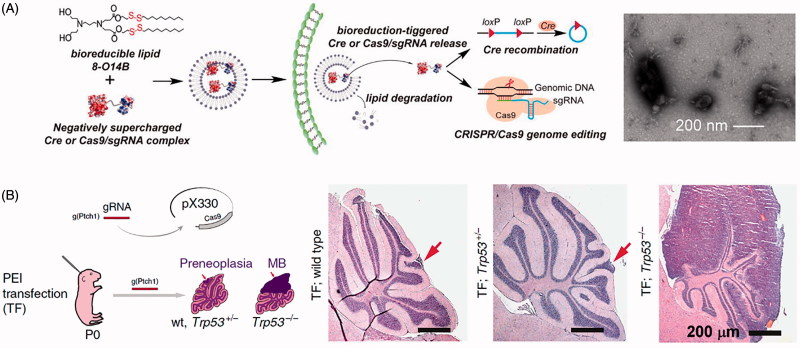
“Zuckermann et al. (2015) reported the use of PEI to deliver Cas9- and sgRNA-encoding plasmid DNA into mouse brains to generate a malignant brain tumor model (Figure 7(B)).”
§ Delivering CRISPR: a review of the challenges and approaches > Non-viral vector delivery vehicles > Lipoplexes/polyplexes
What the sources say
- Supportedcites Zuckermann et al., 2015 source
The Methods (Animal studies; page unavailable) describe injecting plasmid DNA mixed with in vivo-jetPEI into mouse brains. The Results (Postnatal somatic CRISPR/Cas-mediated deletion of Ptch1; page unavailable) report that PEI delivery of Cas9 and a Ptch1-targeting guide RNA induced medulloblastoma in Trp53-knockout mice. (LLM, conf=0.93)
plaindirect- Asserted: passes — The authors put it forward as true.
- Checkable: passes — It can be checked against evidence.
- Load-bearing: unclear — It is unclear whether the paper’s conclusions depend on it.
- Based: passes — The paper gives a reason why it holds.
- Supported
Every source the paper cites for this claim was checked and supports it.
In the paper
“Some work with CPPs and CRISPR/Cas9 was accomplished as early as 2014 by Ramakrishna et al. (2014), who showed separate delivery of CPP–Cas9 and CPP–sgRNA to multiple human cell lines.”
§ Delivering CRISPR: a review of the challenges and approaches > Non-viral vector delivery vehicles > Cell-penetrating peptides (CPPs)
What the sources say
- Supportedcites Ramakrishna et al., 2014 source
The Results section, “Application of Cas9-m9R and sgRNA:9R to several human cell types” (page not provided), reports treating multiple human cell types with the two CPP-associated components. The Methods section describes how Cas9-m9R and sgRNA:9R were prepared as distinct components; for the multiple-cell-type experiments, they were applied simultaneously rather than one after the other. (LLM, conf=0.91)
plain- Asserted: passes — The authors put it forward as true.
- Checkable: passes — It can be checked against evidence.
- Load-bearing: unclear — It is unclear whether the paper’s conclusions depend on it.
- Based: passes — The paper gives a reason why it holds.
- Supported
The cited sources support only part of this claim — read each source’s verdict below.
In the paper
“Lipofectamine has been used to deliver Cas9- and sgRNA-encoding plasmid DNA to human pluripotent stem cells to generate a model for Immunodeficiency, Centromeric region instability, Facial anomalies syndrome (ICF) syndrome with 63% transfection efficiency (Horii et al., 2013)”
§ Delivering CRISPR: a review of the challenges and approaches > Non-viral vector delivery vehicles > Lipid nanoparticles/liposomes
What the sources say
- Partly supportedcites Horii et al., 2013 sourceExperimental — accuracy not yet measured
The Transfection of Cells section says Lipofectamine 2000 was used to deliver Cas9- and sgRNA-expression plasmids into human iPS cells, and the Conclusions describe an ICF syndrome model. But the Abstract identifies 63% as the proportion of transfected clones with mutations in both DNMT3B alleles, not the transfection efficiency. (LLM, conf=0.93)
plaindirect- Asserted: passes — The authors put it forward as true.
- Checkable: passes — It can be checked against evidence.
- Load-bearing: unclear — It is unclear whether the paper’s conclusions depend on it.
- Based: passes — The paper gives a reason why it holds.
- Partly supported
Every source the paper cites for this claim was checked and supports it.
In the paper
“transfect human cells with an all-in-one expression cassette with up to seven sgRNAs and a Cas9 nuclease/nickase (Sakuma et al., 2014)”
§ Delivering CRISPR: a review of the challenges and approaches > Non-viral vector delivery vehicles > Lipid nanoparticles/liposomes
What the sources say
- Supportedcites Sakuma et al., 2014 source
The Methods (Cell culture and transfection) state that Lipofectamine LTX was used to transfect HEK293T human cells with CRISPR/Cas9 plasmids. The Results report an all-in-one vector with seven gRNAs and Cas9 nuclease transfected into those cells, and a separate vector with six gRNAs and Cas9 nickase. (LLM, conf=0.94)
plaindirect- Asserted: passes — The authors put it forward as true.
- Checkable: passes — It can be checked against evidence.
- Load-bearing: unclear — It is unclear whether the paper’s conclusions depend on it.
- Based: passes — The paper gives a reason why it holds.
- Supported
The cited sources support only part of this claim — read each source’s verdict below.
In the paper
“iTOP was used to delivery CRISPR/Cas9 RNP into primary human KBM7 and H1 cells, conferring diphtheria toxin resistance with ∼70% gene knockout efficiency.”
§ Delivering CRISPR: a review of the challenges and approaches > Non-viral vector delivery vehicles > iTOP
What the sources say
- Partly supportedcites D'Astolfo et al., 2015 sourceExperimental — accuracy not yet measured
In Protein-Mediated Gene Editing, the paper describes iTOP delivery of Cas9 protein and guide RNA to KBM7 and H1 human embryonic stem cells. Its DPH7 knockout results report diphtheria-toxin resistance in around 70% of clones for four of six guide RNAs. The claim overgeneralizes by calling both cell types primary and by presenting the approximately 70% efficiency without its guide-RNA qualifier; the paper describes KBM7 as a near-diploid clone. (LLM, conf=0.88)
plaindirect- Asserted: passes — The authors put it forward as true.
- Checkable: passes — It can be checked against evidence.
- Load-bearing: unclear — It is unclear whether the paper’s conclusions depend on it.
- Based: passes — The paper gives a reason why it holds.
- Partly supported
The cited sources support only part of this claim — read each source’s verdict below.
In the paper
“Ebina et al. (2013) used calcium phosphate transfection to deliver plasmid DNA encoding Cas9 and sgRNA into latent HIV-1-infected human 293 T cells.”
§ Delivering CRISPR: a review of the challenges and approaches > Non-viral vector delivery vehicles > Lipoplexes/polyplexes
What the sources say
- Partly supportedcites Ebina et al., 2013 sourceExperimental — accuracy not yet measured
The Methods (‘TF and flow cytometry’; page not provided) say that 293 T cells were transfected by the calcium phosphate method using hCas9 and gRNA expression vectors. The Results (‘LTR-specific editing’; page not provided) show those cells carried an HIV-1 provirus model, but the paper identifies its latency-model cells as Jurkat clones, not 293 T cells. Thus the delivery method and plasmids are supported, while the description of the 293 T cells as latently infected is not. (LLM, conf=0.91)
plain- Asserted: passes — The authors put it forward as true.
- Checkable: passes — It can be checked against evidence.
- Load-bearing: unclear — It is unclear whether the paper’s conclusions depend on it.
- Based: passes — The paper gives a reason why it holds.
- Partly supported
Every source the paper cites for this claim was checked and supports it.
In the paper
“They showed greater efficiencies for electroporation transfection versus lipofectamine”
§ Delivering CRISPR: a review of the challenges and approaches > Non-viral vector delivery vehicles > Lipid nanoparticles/liposomes
What the sources say
- Supportedcites Liang et al., 2015 source
The Discussion (page unavailable) states that electroporation produced the highest target-specific indel levels under the conditions tested. The Methods (section 2.5, page unavailable) identify Lipofectamine as the lipid-based transfection reagent used for comparison. The finding concerns genome-editing efficiency in the tested cell lines, not transfection efficiency in every setting. (LLM, conf=0.91)
plaindirectn = 11- Asserted: passes — The authors put it forward as true.
- Checkable: passes — It can be checked against evidence.
- Load-bearing: unclear — It is unclear whether the paper’s conclusions depend on it.
- Based: passes — The paper gives a reason why it holds.
- Supported
Every source the paper cites for this claim was checked and supports it.
In the paper
“introduce modular ‘AND’ gate circuits based on CRISPR/Cas9 that detects bladder cancer cells, inhibits bladder cancer cell growth, induces apoptosis, and decreases cell motility (Liu et al., 2014)”
§ Delivering CRISPR: a review of the challenges and approaches > Non-viral vector delivery vehicles > Lipid nanoparticles/liposomes
What the sources say
- Supportedcites Liu et al., 2014 source
The Cell transfection methods in Additional information state that the plasmid mixtures were introduced into cells using Lipofectamine 2000. The Abstract reports that the modular CRISPR-Cas9 AND gate circuits detected bladder cancer cells, inhibited their growth, induced apoptosis, and decreased cell motility in vitro. (LLM, conf=0.94)
plaindirect- Asserted: passes — The authors put it forward as true.
- Checkable: passes — It can be checked against evidence.
- Load-bearing: unclear — It is unclear whether the paper’s conclusions depend on it.
- Based: passes — The paper gives a reason why it holds.
- Supported
Every source the paper cites for this claim was checked and supports it.
In the paper
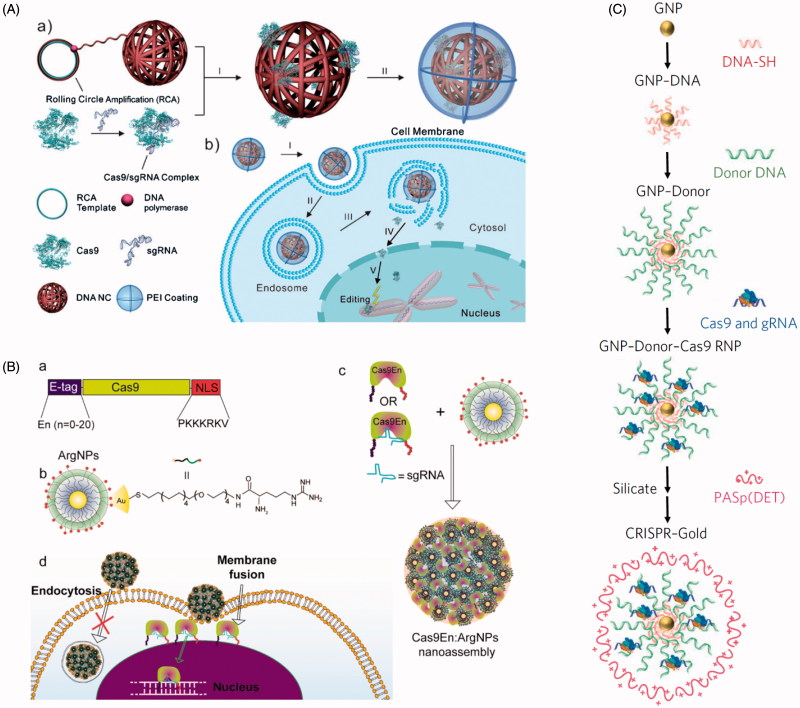
“By coating the nanoclew with PEI to induce endosomal escape (Figure 8(A-b)), the group demonstrated roughly 36% efficiency in delivery of CRISPR/Cas9 RNP with the nanoclew (compared with 5% with bare Cas9:sgRNA and PEI).”
§ Delivering CRISPR: a review of the challenges and approaches > Non-viral vector delivery vehicles > DNA nanoclew
What the sources say
- Supportedcites Sun et al., 2015 source
The paper describes coating the Cas9/sgRNA-loaded nanoclew with PEI to help induce endosomal escape. In its EGFP cell assay, the nanoclew/PEI particles reduced fluorescence in approximately 36% of cells, versus 5% for Cas9/sgRNA/PEI without the nanoclew. These percentages measure loss of EGFP fluorescence, rather than direct uptake of the RNP. (LLM, conf=0.90)
boosteddirect- Asserted: passes — The authors put it forward as true.
- Checkable: passes — It can be checked against evidence.
- Load-bearing: passes — The paper’s conclusions depend on it.
- Based: passes — The paper gives a reason why it holds.
- Supported
Every source the paper cites for this claim was checked and supports it.
In the paper
“and deliver Cas9:sgRNA RNP in vivo to modify the hair cells within mouse inner ear (Zuris et al., 2015).”
§ Delivering CRISPR: a review of the challenges and approaches > Non-viral vector delivery vehicles > Lipid nanoparticles/liposomes
What the sources say
- Supportedcites Zuris et al., 2015 source
The Results section (‘In vivo delivery of Cre recombinase and Cas9:sgRNA’) reports that Cas9:sgRNA complexed with Lipofectamine 2000 was delivered to mouse cochlea in vivo, with loss of GFP expression in 20 ± 3% of outer hair cells near the injection site. The Online Methods (‘Microinjection of proteins to mouse inner ear’) also specifies mixing Cas9:sgRNA with Lipofectamine 2000 before injection. (LLM, conf=0.94)
plaindirect- Asserted: passes — The authors put it forward as true.
- Checkable: passes — It can be checked against evidence.
- Load-bearing: unclear — It is unclear whether the paper’s conclusions depend on it.
- Based: passes — The paper gives a reason why it holds.
- Supported
Every source the paper cites for this claim was checked and supports it.
In the paper
“and lower off-target effects using RNP over plasmid DNA or mRNA cargo.”
§ Delivering CRISPR: a review of the challenges and approaches > Non-viral vector delivery vehicles > Lipid nanoparticles/liposomes
What the sources say
- Supportedcites Liang et al., 2015 source
Section 3.2 reports that, at both detected off-target sites in HEK293FT cells, the off-target-to-on-target mutation ratio was lower with Cas9 RNP than with either plasmid DNA or mRNA. The finding is limited to the sites tested; it does not establish a universal reduction across all off-target sites. (LLM, conf=0.89)
plaindirectn = 11- Asserted: passes — The authors put it forward as true.
- Checkable: passes — It can be checked against evidence.
- Load-bearing: unclear — It is unclear whether the paper’s conclusions depend on it.
- Based: passes — The paper gives a reason why it holds.
- Supported
Every source the paper cites for this claim was checked and supports it.
In the paper
“this biological delivery system is composed of a mesoporous silica nanoparticle core and a lipid membrane shell (Liu et al., 2009).”
§ Delivering CRISPR: a review of the challenges and approaches > Emerging delivery technologies > Lipid-coated mesoporous silica particles
What the sources say
- Supportedcites Liu et al., 2009 source
The paper describes liposome fusion onto a mesoporous silica particle core to create the delivery construct. It also reports a confocal image showing a green silica core and a red lipid shell, directly supporting the stated composition (passages 1 and 3). (LLM, conf=0.94)
plain- Asserted: passes — The authors put it forward as true.
- Checkable: passes — It can be checked against evidence.
- Load-bearing: unclear — It is unclear whether the paper’s conclusions depend on it.
- Based: passes — The paper gives a reason why it holds.
- Supported
The cited sources support only part of this claim — read each source’s verdict below.
In the paper
“In addition, pore size, pore chemistry, and overall particle size can be individually tailored, allowing for the loading of various types of cargo (Du et al., 2014; Durfee et al., 2016).”
§ Delivering CRISPR: a review of the challenges and approaches > Emerging delivery technologies > Lipid-coated mesoporous silica particles
What the sources say
- Not matchedcites Du et al., 2014
Couldn’t be matched to a paper in Crossref, so it can’t be checked.
- Supportedcites Durfee et al., 2016 source
The passage labeled Abstract says mesoporous silica nanoparticles have controlled size and shape, while pore size and surface chemistry can be varied widely to accommodate disparate cargos. The Synthesis Criteria for Monosized Protocells section also describes particle size and pore size as modular features. (LLM, conf=0.92)
plaindirect- Asserted: passes — The authors put it forward as true.
- Checkable: passes — It can be checked against evidence.
- Load-bearing: unclear — It is unclear whether the paper’s conclusions depend on it.
- Based: passes — The paper gives a reason why it holds.
- Not matched
The cited sources support only part of this claim — read each source’s verdict below.
In the paper
“To date, lipid-coated mesoporous silica particles have been loaded with a variety of imaging agents, chemotherapeutics, and phototherapy agents for both in vitro and in vivo work (Mackowiak et al., 2013; Wang et al., 2013; Durfee et al., 2016; Su et al., 2017).”
§ Delivering CRISPR: a review of the challenges and approaches > Emerging delivery technologies > Lipid-coated mesoporous silica particles
What the sources say
- Not checked — no full text of the sourcecites Mackowiak et al., 2013 source
- Not matchedcites Wang et al., 2013
Couldn’t be matched to a paper in Crossref, so it can’t be checked.
- Partly supportedcites Durfee et al., 2016 sourceExperimental — accuracy not yet measured
The Protocell Cargo Loading and Delivery to Targeted Cells section reports fluorescent cargo delivery in vitro and in a live chick-embryo model, and the Conclusions report delivery of the chemotherapeutic gemcitabine in vitro. The cited paper does not establish loading with phototherapy agents, and it distinguishes its ex ovo embryo work from future in vivo leukemia studies. (LLM, conf=0.88)
plain- Asserted: passes — The authors put it forward as true.
- Checkable: passes — It can be checked against evidence.
- Load-bearing: unclear — It is unclear whether the paper’s conclusions depend on it.
- Based: passes — The paper gives a reason why it holds.
In the paper
“It is important to note that both tragedies stemmed from the therapeutic delivery method (LaFountaine et al., 2015).”
§ Delivering CRISPR: a review of the challenges and approaches > Introduction
What the sources say
- Not checked — no full text of the sourcecites LaFountaine et al., 2015 source
plaindirect- Asserted: passes — The authors put it forward as true.
- Checkable: passes — It can be checked against evidence.
- Load-bearing: passes — The paper’s conclusions depend on it.
- Based: passes — The paper gives a reason why it holds.
A conclusion the paper draws from its own results — it cites no other source for it, so there is none to check. The quote shows it is in the paper.
In the paper
“The focus then turns to the most difficult barrier to potential in vivo use of CRISPR/Cas9, delivery.”
§ Delivering CRISPR: a review of the challenges and approaches > Abstract
plain- Asserted: passes — The authors put it forward as true.
- Checkable: passes — It can be checked against evidence.
- Load-bearing: passes — The paper’s conclusions depend on it.
- Based: unclear — It is unclear why the paper says it holds.
- Rests on an assumption: Effective in vivo human gene therapy with CRISPR/Cas9 is achievable once the factors influencing efficacy and delivery are addressed.
The paper states this without a source or data behind it here, so there is nothing to check it against. The quote shows it is in the paper.
In the paper
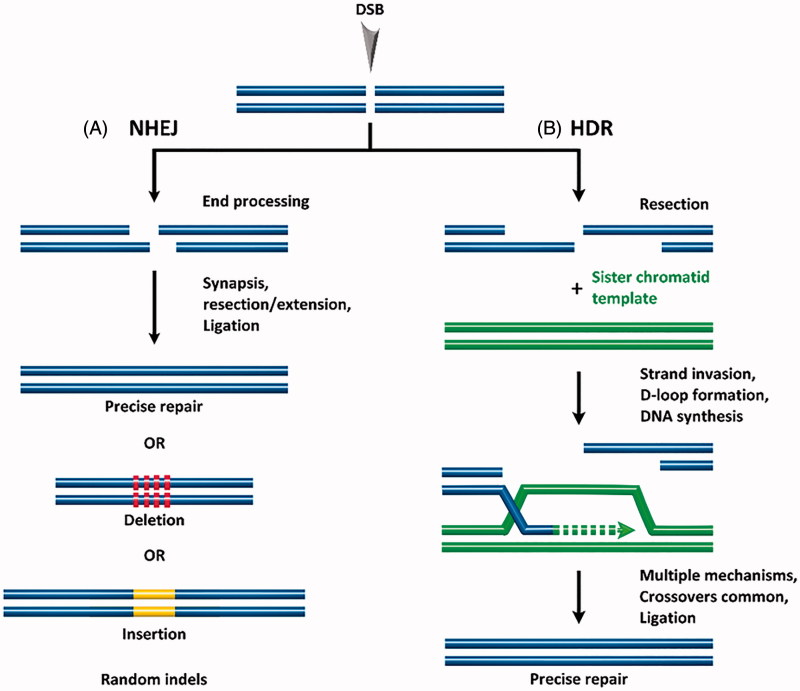
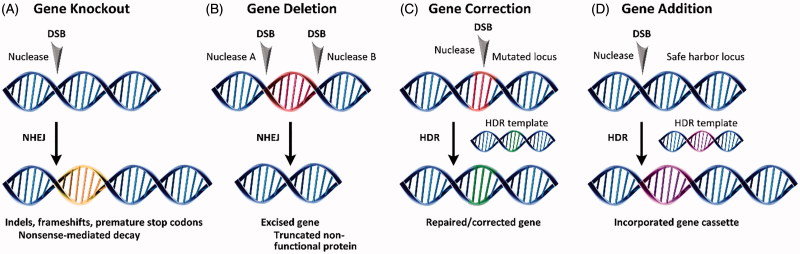
“The use of site-specific nucleases and NHEJ or HDR generally results in one of four gene editing products. Shown in Figure 2, these include gene knockout, deletion, correction, or addition.”
§ Delivering CRISPR: a review of the challenges and approaches > Gene editing
plaindirect- Asserted: passes — The authors put it forward as true.
- Checkable: passes — It can be checked against evidence.
- Load-bearing: unclear — It is unclear whether the paper’s conclusions depend on it.
- Based: passes — The paper gives a reason why it holds.
None of the sources cited for this claim have been checked yet.
In the paper
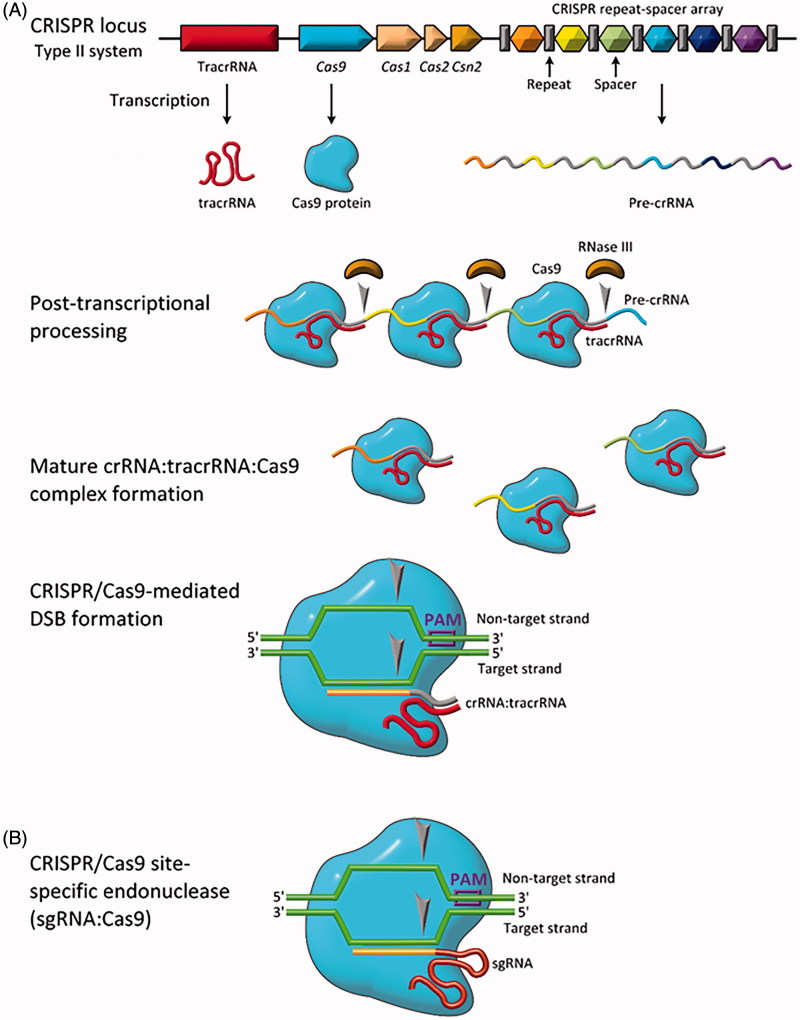
“Type II CRISPR systems require only one protein, Cas9, to scan, bind and cleave the target DNA sequence (Makarova et al., 2011).”
§ Delivering CRISPR: a review of the challenges and approaches > Biological mechanism of CRISPR
What the sources say
- Not checked yetcites Makarova et al., 2011 source
Checked before — its earlier verdict is held back until a new check runs.
plaindirect- Asserted: passes — The authors put it forward as true.
- Checkable: passes — It can be checked against evidence.
- Load-bearing: unclear — It is unclear whether the paper’s conclusions depend on it.
- Based: passes — The paper gives a reason why it holds.
- Not checked yet
A conclusion the paper draws from its own results — it cites no other source for it, so there is none to check. The quote shows it is in the paper.
In the paper
“We introduce several factors that influence CRISPR/Cas9 efficacy which must be addressed before effective in vivo human gene therapy can be realized.”
§ Delivering CRISPR: a review of the challenges and approaches > Abstract
plaindirect- Asserted: passes — The authors put it forward as true.
- Checkable: passes — It can be checked against evidence.
- Load-bearing: passes — The paper’s conclusions depend on it.
- Based: passes — The paper gives a reason why it holds.
- Rests on an assumption: Effective in vivo human gene therapy with CRISPR/Cas9 is achievable once the factors influencing efficacy and delivery are addressed.
None of the sources cited for this claim have been checked yet.
In the paper
“Of the 20 patents participating in the trial, 17 were successfully and stably cured (Cavazzana et al., 2016).”
§ Delivering CRISPR: a review of the challenges and approaches > Introduction
What the sources say
- Not checked yetcites Cavazzana et al., 2016 source
Checked before — its earlier verdict is held back until a new check runs.
plainn = 20- Asserted: passes — The authors put it forward as true.
- Checkable: passes — It can be checked against evidence.
- Load-bearing: unclear — It is unclear whether the paper’s conclusions depend on it.
- Based: passes — The paper gives a reason why it holds.
- Not checked yet
The paper states this without a source or data behind it here, so there is nothing to check it against. The quote shows it is in the paper.
In the paper
“In general, the incidence of HDR for DSB repair is extremely low compared with NHEJ, at least in instances where both pathways are equally available to an organism.”
§ Delivering CRISPR: a review of the challenges and approaches > Gene editing
plain- Asserted: passes — The authors put it forward as true.
- Checkable: passes — It can be checked against evidence.
- Load-bearing: passes — The paper’s conclusions depend on it.
- Based: passes — The paper gives a reason why it holds.
None of the sources cited for this claim have been checked yet.
In the paper
“In another tragedy, an 18-year-old male suffering from a partial deficiency of ornithine transcarbamylase (OTC) died after developing a massive inflammatory response to the genetic cargo delivery vehicle, an adenovirus vector, four hours after receiving the treatment (Marshall, 1999; Authors, 2002).”
§ Delivering CRISPR: a review of the challenges and approaches > Introduction
What the sources say
- Not checked — no full text of the sourcecites Marshall, 1999 source
- Not matchedcites Authors, 2002
Couldn’t be matched to a paper in Crossref, so it can’t be checked.
plaindirectSingle case- Asserted: passes — The authors put it forward as true.
- Checkable: passes — It can be checked against evidence.
- Load-bearing: unclear — It is unclear whether the paper’s conclusions depend on it.
- Based: passes — The paper gives a reason why it holds.
In the paper
“However, excessive sgRNA was also shown to increase off-target effects (Fu et al., 2013).”
§ Delivering CRISPR: a review of the challenges and approaches > Factors affecting efficacy of the CRISPR/Cas9 system > Cas9 activity
What the sources say
- Not matchedcites Fu et al., 2013
Couldn’t be matched to a paper in Crossref, so it can’t be checked.
plaindirect- Asserted: passes — The authors put it forward as true.
- Checkable: passes — It can be checked against evidence.
- Load-bearing: unclear — It is unclear whether the paper’s conclusions depend on it.
- Based: passes — The paper gives a reason why it holds.
- Not matched
The paper states this without a source or data behind it here, so there is nothing to check it against. The quote shows it is in the paper.
In the paper
“Regarding CRISPR/Cas9 cargoes, there are three approaches that are commonly reported: (1) DNA plasmid encoding both the Cas9 protein and the guide RNA, (2) mRNA for Cas9 translation alongside a separate guide RNA, and (3) Cas9 protein with guide RNA (ribonucleoprotein complex).”
§ Delivering CRISPR: a review of the challenges and approaches > CRISPR delivery systems
plain- Asserted: passes — The authors put it forward as true.
- Checkable: passes — It can be checked against evidence.
- Load-bearing: unclear — It is unclear whether the paper’s conclusions depend on it.
- Based: passes — The paper gives a reason why it holds.
None of the sources cited for this claim have been checked yet.
In the paper
“Additionally, directed evolution and structure-guided rational design has allowed for engineering of Cas9 variants with altered PAM sequence specificity (Kleinstiver et al., 2015; Anders et al., 2016; Hirano et al., 2016). As examples, the VGR, EQR, and VRER variants of SpCas9 have PAM sequences of 5′-NGAN-3′, 5′-NGAG-3′, and 5′-NGCG-3′, respectively, further reducing limits on genome target sele”
§ Delivering CRISPR: a review of the challenges and approaches > Factors affecting efficacy of the CRISPR/Cas9 system > Target DNA site selection and sgRNA design
What the sources say
plaindirect- Asserted: passes — The authors put it forward as true.
- Checkable: passes — It can be checked against evidence.
- Load-bearing: unclear — It is unclear whether the paper’s conclusions depend on it.
- Based: passes — The paper gives a reason why it holds.
A conclusion the paper draws from its own results — it cites no other source for it, so there is none to check. The quote shows it is in the paper.
In the paper
“As delivery remains the major obstacle for use of CRISPR for in vivo applications, efforts addressing other factors will be briefly summarized here.”
§ Delivering CRISPR: a review of the challenges and approaches > Factors affecting efficacy of the CRISPR/Cas9 system
plaindirect- Asserted: passes — The authors put it forward as true.
- Checkable: passes — It can be checked against evidence.
- Load-bearing: passes — The paper’s conclusions depend on it.
- Based: unclear — It is unclear why the paper says it holds.
- Rests on an assumption: Effective in vivo human gene therapy with CRISPR/Cas9 is achievable once the factors influencing efficacy and delivery are addressed.
A conclusion the paper draws from its own results — it cites no other source for it, so there is none to check. The quote shows it is in the paper.
In the paper
“This simplicity makes the CRISPR/Cas9 system the most convenient, simple, and flexible tool for site-directed gene editing currently available.”
§ Delivering CRISPR: a review of the challenges and approaches > Type II CRISPR/Cas9 for gene editing
plain- Asserted: passes — The authors put it forward as true.
- Checkable: passes — It can be checked against evidence.
- Load-bearing: unclear — It is unclear whether the paper’s conclusions depend on it.
- Based: passes — The paper gives a reason why it holds.
A conclusion the paper draws from its own results — it cites no other source for it, so there is none to check. The quote shows it is in the paper.
In the paper
“Reports from several groups, however, have shown that target site selection and sgRNA design are not as simple as perhaps originally assumed.”
§ Delivering CRISPR: a review of the challenges and approaches > Factors affecting efficacy of the CRISPR/Cas9 system > Target DNA site selection and sgRNA design
hedged- Asserted: passes — The authors put it forward as true.
- Checkable: passes — It can be checked against evidence.
- Load-bearing: passes — The paper’s conclusions depend on it.
- Based: passes — The paper gives a reason why it holds.
The paper states this without a source or data behind it here, so there is nothing to check it against. The quote shows it is in the paper.
In the paper
“While the use of Scr7 and other inhibitors have resulted in increased HDR-mediated gene editing efficiency, these inhibitors may have toxic effects on the host cells.”
§ Delivering CRISPR: a review of the challenges and approaches > Factors affecting efficacy of the CRISPR/Cas9 system > Incidence/efficiency of HDR
hedgedconditional- Asserted: passes — The authors put it forward as true.
- Checkable: passes — It can be checked against evidence.
- Load-bearing: unclear — It is unclear whether the paper’s conclusions depend on it.
- Based: passes — The paper gives a reason why it holds.
A conclusion the paper draws from its own results — it cites no other source for it, so there is none to check. The quote shows it is in the paper.
In the paper
“Thus, Cas9 is less like a catalytic enzyme and more like a single-shot actuator.”
§ Delivering CRISPR: a review of the challenges and approaches > Factors affecting efficacy of the CRISPR/Cas9 system > Cas9 activity
plain- Asserted: passes — The authors put it forward as true.
- Checkable: passes — It can be checked against evidence.
- Load-bearing: passes — The paper’s conclusions depend on it.
- Based: passes — The paper gives a reason why it holds.
A conclusion the paper draws from its own results — it cites no other source for it, so there is none to check. The quote shows it is in the paper.
In the paper
“Additionally, considerations for how tightly controlled the overall concentration of Cas9 is must also be made; by introducing Cas9 DNA instead of protein, it becomes more difficult to ascertain precisely how many functional Cas9 units are present in the system at any given timepoint.”
§ Delivering CRISPR: a review of the challenges and approaches > CRISPR delivery systems
plaindirect- Asserted: passes — The authors put it forward as true.
- Checkable: passes — It can be checked against evidence.
- Load-bearing: unclear — It is unclear whether the paper’s conclusions depend on it.
- Based: passes — The paper gives a reason why it holds.
The paper states this without a source or data behind it here, so there is nothing to check it against. The quote shows it is in the paper.
In the paper
“one cannot guarantee that the viral payload goes to the same precise location every time.”
§ Delivering CRISPR: a review of the challenges and approaches > Viral vector delivery methods > Lentivirus (LV) and adenovirus (AdV)
plain- Asserted: passes — The authors put it forward as true.
- Checkable: passes — It can be checked against evidence.
- Load-bearing: passes — The paper’s conclusions depend on it.
- Based: passes — The paper gives a reason why it holds.
A conclusion the paper draws from its own results — it cites no other source for it, so there is none to check. The quote shows it is in the paper.
In the paper
“Because of this, it is rare to see particularly high efficacies when delivery CRISPR/Cas9 components via lipid nanoparticles.”
§ Delivering CRISPR: a review of the challenges and approaches > Non-viral vector delivery vehicles > Lipid nanoparticles/liposomes
plain- Asserted: passes — The authors put it forward as true.
- Checkable: passes — It can be checked against evidence.
- Load-bearing: unclear — It is unclear whether the paper’s conclusions depend on it.
- Based: passes — The paper gives a reason why it holds.
The paper states this without a source or data behind it here, so there is nothing to check it against. The quote shows it is in the paper.
In the paper
“This method also allows for the controlled delivery of known quantities of the cargo, improving control over off-target effects.”
§ Delivering CRISPR: a review of the challenges and approaches > Physical delivery methods > Microinjection
plaindirect- Asserted: passes — The authors put it forward as true.
- Checkable: passes — It can be checked against evidence.
- Load-bearing: unclear — It is unclear whether the paper’s conclusions depend on it.
- Based: passes — The paper gives a reason why it holds.
A conclusion the paper draws from its own results — it cites no other source for it, so there is none to check. The quote shows it is in the paper.
In the paper
“CRISPR/Cas9 seems to be particularly well-suited to this type of delivery because Cas9 and the sgRNA as a ribonucleoprotein complex are highly anionic.”
§ Delivering CRISPR: a review of the challenges and approaches > Non-viral vector delivery vehicles > Lipid nanoparticles/liposomes
hedgedconditional- Asserted: passes — The authors put it forward as true.
- Checkable: passes — It can be checked against evidence.
- Load-bearing: passes — The paper’s conclusions depend on it.
- Based: passes — The paper gives a reason why it holds.
In the paper
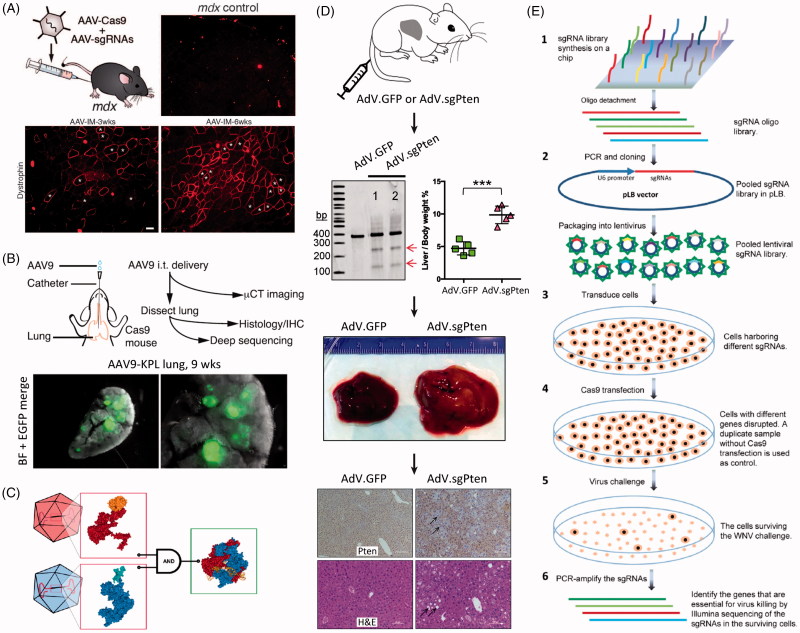
“genomics screening using CRISPR/Cas9 and LV was used to identify the genes essential for West-Nile-virus-induced cell death (Figure 6(e)) (Ma et al., 2015)”
§ Delivering CRISPR: a review of the challenges and approaches > Viral vector delivery methods > Lentivirus (LV) and adenovirus (AdV)
What the sources say
- Not matchedcites Ma et al., 2015
Couldn’t be matched to a paper in Crossref, so it can’t be checked.
plaindirect- Asserted: passes — The authors put it forward as true.
- Checkable: passes — It can be checked against evidence.
- Load-bearing: unclear — It is unclear whether the paper’s conclusions depend on it.
- Based: passes — The paper gives a reason why it holds.
- Not matched
A conclusion the paper draws from its own results — it cites no other source for it, so there is none to check. The quote shows it is in the paper.
In the paper
“Naturally, microinjection is best suited for in vitro and ex vivo work only, as the use of a microscope to target individual cells (and precisely inject cargoes to specific locations within them) precludes the use of microinjection in a true in vivo setting.”
§ Delivering CRISPR: a review of the challenges and approaches > Physical delivery methods > Microinjection
plaindirect- Asserted: passes — The authors put it forward as true.
- Checkable: passes — It can be checked against evidence.
- Load-bearing: unclear — It is unclear whether the paper’s conclusions depend on it.
- Based: passes — The paper gives a reason why it holds.
A conclusion the paper draws from its own results — it cites no other source for it, so there is none to check. The quote shows it is in the paper.
In the paper
“This indicates the importance of also studying the immunogenicity of specific Cas9s for in vivo delivery of CRISPR.”
§ Delivering CRISPR: a review of the challenges and approaches > Viral vector delivery methods > Lentivirus (LV) and adenovirus (AdV)
hedgedcorrelational- Asserted: passes — The authors put it forward as true.
- Checkable: passes — It can be checked against evidence.
- Load-bearing: passes — The paper’s conclusions depend on it.
- Based: passes — The paper gives a reason why it holds.
In the paper
“While this is within the realm of technical possibility, the SpCas9 and sgRNA are roughly 4.2kB in size, and the overall size of AAV (∼20 nm) only allows for ∼4.5–5 kb of genomic material to be packaged within it (Wu et al., 2010).”
§ Delivering CRISPR: a review of the challenges and approaches > Viral vector delivery methods > Adeno-associated virus (AAV)
What the sources say
- Not matchedcites Wu et al., 2010
Couldn’t be matched to a paper in Crossref, so it can’t be checked.
plain- Asserted: passes — The authors put it forward as true.
- Checkable: passes — It can be checked against evidence.
- Load-bearing: passes — The paper’s conclusions depend on it.
- Based: passes — The paper gives a reason why it holds.
- Not matched
The paper states this without a source or data behind it here, so there is nothing to check it against. The quote shows it is in the paper.
In the paper
“It should be noted, however, that shorter Cas9 variants identified to date have longer PAM sequences and thus greater limitations on sequences available for targeting.”
§ Delivering CRISPR: a review of the challenges and approaches > Viral vector delivery methods > Adeno-associated virus (AAV)
plaindirect- Asserted: passes — The authors put it forward as true.
- Checkable: passes — It can be checked against evidence.
- Load-bearing: unclear — It is unclear whether the paper’s conclusions depend on it.
- Based: unclear — It is unclear why the paper says it holds.
In the paper
“it is not currently possible to completely eliminate the chances of integration into the host.”
§ Delivering CRISPR: a review of the challenges and approaches > Viral vector delivery methods > Lentivirus (LV) and adenovirus (AdV)
What the sources say
- Not matchedcites Chen and Goncalves, 2016
Couldn’t be matched to a paper in Crossref, so it can’t be checked.
plain- Asserted: passes — The authors put it forward as true.
- Checkable: passes — It can be checked against evidence.
- Load-bearing: passes — The paper’s conclusions depend on it.
- Based: passes — The paper gives a reason why it holds.
- Not matched
In the paper
“With some exceptions, microinjection of CRISPR/Cas9 RNA components into cells results in a finite duration of action of the system, owing to the natural decay of mRNA within eukaryotic cells (Ross, 1995).”
§ Delivering CRISPR: a review of the challenges and approaches > Physical delivery methods > Microinjection
What the sources say
- Not checked — no full text of the sourcecites Ross, 1995 source
plaindirect- Asserted: passes — The authors put it forward as true.
- Checkable: passes — It can be checked against evidence.
- Load-bearing: unclear — It is unclear whether the paper’s conclusions depend on it.
- Based: passes — The paper gives a reason why it holds.
In the paper
“and define a signal peptide pathway required by flaviviruses (Zhang et al., 2016).”
§ Delivering CRISPR: a review of the challenges and approaches > Viral vector delivery methods > Lentivirus (LV) and adenovirus (AdV)
What the sources say
- Not matchedcites Zhang et al., 2016
Couldn’t be matched to a paper in Crossref, so it can’t be checked.
plaindirect- Asserted: passes — The authors put it forward as true.
- Checkable: passes — It can be checked against evidence.
- Load-bearing: unclear — It is unclear whether the paper’s conclusions depend on it.
- Based: passes — The paper gives a reason why it holds.
- Not matched
The paper states this without a source or data behind it here, so there is nothing to check it against. The quote shows it is in the paper.
In the paper
“Owing to the oftentimes-large amounts of voltage needed to be applied across cell membranes, however, electroporation is typically not suitable for in vivo applications.”
§ Delivering CRISPR: a review of the challenges and approaches > Physical delivery methods > Electroporation
plaindirect- Asserted: passes — The authors put it forward as true.
- Checkable: passes — It can be checked against evidence.
- Load-bearing: unclear — It is unclear whether the paper’s conclusions depend on it.
- Based: passes — The paper gives a reason why it holds.
In the paper
“Wang et al. (2014) used LV to deliver a pool of 73,000 sgRNAs to two human cells lines that had been previously engineered to express Cas9.”
§ Delivering CRISPR: a review of the challenges and approaches > Viral vector delivery methods > Lentivirus (LV) and adenovirus (AdV)
What the sources say
- Not matchedcites Wang et al., 2014
Couldn’t be matched to a paper in Crossref, so it can’t be checked.
plaindirectn = 2- Asserted: passes — The authors put it forward as true.
- Checkable: passes — It can be checked against evidence.
- Load-bearing: unclear — It is unclear whether the paper’s conclusions depend on it.
- Based: passes — The paper gives a reason why it holds.
- Not matched
None of the sources cited for this claim have been checked yet.
In the paper
“Leveraging the integration ability of LV, this system has also been used to create gene libraries for studying mechanisms of disease.”
§ Delivering CRISPR: a review of the challenges and approaches > Viral vector delivery methods > Lentivirus (LV) and adenovirus (AdV)
plaindirect- Asserted: passes — The authors put it forward as true.
- Checkable: passes — It can be checked against evidence.
- Load-bearing: unclear — It is unclear whether the paper’s conclusions depend on it.
- Based: passes — The paper gives a reason why it holds.
None of the sources cited for this claim could be matched to a paper in Crossref, so there is nothing to check it against.
In the paper
“The process of hydrodynamic delivery can be quite traumatic, resulting in potential physiological complications, including cardiac dysfunction, elevated blood pressure, and liver expansion (Suda et al., 2007; Bonamassa et al., 2011).”
§ Delivering CRISPR: a review of the challenges and approaches > Physical delivery methods > Hydrodynamic delivery
What the sources say
- Not matchedcites Suda et al., 2007
Couldn’t be matched to a paper in Crossref, so it can’t be checked.
- Not matchedcites Bonamassa et al., 2011
Couldn’t be matched to a paper in Crossref, so it can’t be checked.
plaindirect- Asserted: passes — The authors put it forward as true.
- Checkable: passes — It can be checked against evidence.
- Load-bearing: passes — The paper’s conclusions depend on it.
- Based: passes — The paper gives a reason why it holds.
- Not matched
The paper states this without a source or data behind it here, so there is nothing to check it against. The quote shows it is in the paper.
In the paper
“While none of these have been demonstrated in the literature for CRISPR/Cas9 delivery, their properties make them naturally amenable for use as CRISPR/Cas delivery vehicles.”
§ Delivering CRISPR: a review of the challenges and approaches > Emerging delivery technologies
plain- Asserted: passes — The authors put it forward as true.
- Checkable: passes — It can be checked against evidence.
- Load-bearing: unclear — It is unclear whether the paper’s conclusions depend on it.
- Based: passes — The paper gives a reason why it holds.
A conclusion the paper draws from its own results — it cites no other source for it, so there is none to check. The quote shows it is in the paper.
In the paper
“As CPPs are roughly 40-fold more efficient than transfection from bare plasmids, CPPs are a serviceable method for delivery of CRISPR/Cas9 components to cells.”
§ Delivering CRISPR: a review of the challenges and approaches > Non-viral vector delivery vehicles > Cell-penetrating peptides (CPPs)
plaindirect- Asserted: passes — The authors put it forward as true.
- Checkable: passes — It can be checked against evidence.
- Load-bearing: passes — The paper’s conclusions depend on it.
- Based: passes — The paper gives a reason why it holds.
The paper states this without a source or data behind it here, so there is nothing to check it against. The quote shows it is in the paper.
In the paper
“As shown above, however, naked plasmids can achieve tangible long-term effects with an efficiency rate of just 0.4%.”
§ Delivering CRISPR: a review of the challenges and approaches > Non-viral vector delivery vehicles > Cell-penetrating peptides (CPPs)
plaindirect- Asserted: passes — The authors put it forward as true.
- Checkable: passes — It can be checked against evidence.
- Load-bearing: passes — The paper’s conclusions depend on it.
- Based: unclear — It is unclear why the paper says it holds.
- Rests on an assumption: Naked plasmids can achieve tangible long-term effects with an efficiency rate of just 0.4%.
In the paper
“Lee et al. (2017) also reported use of AuNPs to deliver Cas9:sgRNA RNP to mice suffering from DMD.”
§ Delivering CRISPR: a review of the challenges and approaches > Non-viral vector delivery vehicles > Gold nanoparticles (AuNPs)
What the sources say
- Not checked yetcites Lee et al., 2017 source
plaindirect- Asserted: passes — The authors put it forward as true.
- Checkable: passes — It can be checked against evidence.
- Load-bearing: unclear — It is unclear whether the paper’s conclusions depend on it.
- Based: passes — The paper gives a reason why it holds.
The paper states this without a source or data behind it here, so there is nothing to check it against. The quote shows it is in the paper.
In the paper
“Delivery of CRISPR/Cas9 gene editing components has been reported using other nanocomplexes that generally rely on electrostatic interactions.”
§ Delivering CRISPR: a review of the challenges and approaches > Non-viral vector delivery vehicles > Lipoplexes/polyplexes
plaincorrelational- Asserted: passes — The authors put it forward as true.
- Checkable: passes — It can be checked against evidence.
- Load-bearing: unclear — It is unclear whether the paper’s conclusions depend on it.
- Based: passes — The paper gives a reason why it holds.
A conclusion the paper draws from its own results — it cites no other source for it, so there is none to check. The quote shows it is in the paper.
In the paper
“Finally, lipid nanoparticles are like virus particles in that the nature and size of the cargo, along with the target cell type, highly affect transfection efficiency and the types of lipids that are appropriate or useful in the system.”
§ Delivering CRISPR: a review of the challenges and approaches > Non-viral vector delivery vehicles > Lipid nanoparticles/liposomes
plaincorrelational- Asserted: passes — The authors put it forward as true.
- Checkable: passes — It can be checked against evidence.
- Load-bearing: unclear — It is unclear whether the paper’s conclusions depend on it.
- Based: passes — The paper gives a reason why it holds.
A conclusion the paper draws from its own results — it cites no other source for it, so there is none to check. The quote shows it is in the paper.
In the paper
“Because of the level of detail required for this optimization, CPPs are not generally currently utilized to deliver components in vivo.”
§ Delivering CRISPR: a review of the challenges and approaches > Non-viral vector delivery vehicles > Cell-penetrating peptides (CPPs)
plaindirect- Asserted: passes — The authors put it forward as true.
- Checkable: passes — It can be checked against evidence.
- Load-bearing: unclear — It is unclear whether the paper’s conclusions depend on it.
- Based: passes — The paper gives a reason why it holds.
The paper states this without a source or data behind it here, so there is nothing to check it against. The quote shows it is in the paper.
In the paper
“As this is a relatively new delivery technology, it has currently only been utilized in an in vitro setting.”
§ Delivering CRISPR: a review of the challenges and approaches > Non-viral vector delivery vehicles > DNA nanoclew
plain- Asserted: passes — The authors put it forward as true.
- Checkable: passes — It can be checked against evidence.
- Load-bearing: unclear — It is unclear whether the paper’s conclusions depend on it.
- Based: passes — The paper gives a reason why it holds.
In the paper
“correct the cystic fibrosis transmembrane conductor receptor locus in cultured intestinal stem cells of cystic fibrosis patients (Schwank et al., 2013)”
§ Delivering CRISPR: a review of the challenges and approaches > Non-viral vector delivery vehicles > Lipid nanoparticles/liposomes
What the sources say
- Not checked yetcites Schwank et al., 2013 source
plaindirect- Asserted: passes — The authors put it forward as true.
- Checkable: passes — It can be checked against evidence.
- Load-bearing: unclear — It is unclear whether the paper’s conclusions depend on it.
- Based: passes — The paper gives a reason why it holds.
In the paper
“PEI was also used to deliver CRISPR plasmid DNA to inhibit HBV replication and gene expression in HBV-infected mice (Zhen et al., 2015).”
§ Delivering CRISPR: a review of the challenges and approaches > Non-viral vector delivery vehicles > Lipoplexes/polyplexes
What the sources say
- Not checked — no full text of the sourcecites Zhen et al., 2015 source
plaindirect- Asserted: passes — The authors put it forward as true.
- Checkable: passes — It can be checked against evidence.
- Load-bearing: unclear — It is unclear whether the paper’s conclusions depend on it.
- Based: passes — The paper gives a reason why it holds.
The paper states this without a source or data behind it here, so there is nothing to check it against. The quote shows it is in the paper.
In the paper
“Typically, CPPs show low efficiency of the desired targeted mutation in cells – usually around 10–20%.”
§ Delivering CRISPR: a review of the challenges and approaches > Non-viral vector delivery vehicles > Cell-penetrating peptides (CPPs)
plain- Asserted: passes — The authors put it forward as true.
- Checkable: passes — It can be checked against evidence.
- Load-bearing: passes — The paper’s conclusions depend on it.
- Based: unclear — It is unclear why the paper says it holds.
- Rests on an assumption: CPPs typically show low efficiency of the desired targeted mutation in cells, usually around 10–20%.
In the paper
“In 2015, the group repurposed the nanoclew for CRISPR/Cas9 delivery by designing the palindromic sequences to be partially complementary to the sgRNA within the Cas9:sgRNA ribonucleoprotein complex (Figure 8(A-a)) (Sun et al., 2015).”
§ Delivering CRISPR: a review of the challenges and approaches > Non-viral vector delivery vehicles > DNA nanoclew
What the sources say
- Not checked yetcites Sun et al., 2015 source
plaindirect- Asserted: passes — The authors put it forward as true.
- Checkable: passes — It can be checked against evidence.
- Load-bearing: passes — The paper’s conclusions depend on it.
- Based: passes — The paper gives a reason why it holds.
A conclusion the paper draws from its own results — it cites no other source for it, so there is none to check. The quote shows it is in the paper.
In the paper
“Instead, multiple methods are seen for delivering CRISPR to cells.”
§ Delivering CRISPR: a review of the challenges and approaches > Perspective and future directions
plain- Asserted: passes — The authors put it forward as true.
- Checkable: passes — It can be checked against evidence.
- Load-bearing: passes — The paper’s conclusions depend on it.
- Based: passes — The paper gives a reason why it holds.
A conclusion the paper draws from its own results — it cites no other source for it, so there is none to check. The quote shows it is in the paper.
In the paper
“Further, the best gene editing results with minimal off-target effects are generally obtained from delivery of the ribonucleoprotein, as opposed to plasmid DNA or mRNA.”
§ Delivering CRISPR: a review of the challenges and approaches > Perspective and future directions
plaindirect- Asserted: passes — The authors put it forward as true.
- Checkable: passes — It can be checked against evidence.
- Load-bearing: passes — The paper’s conclusions depend on it.
- Based: passes — The paper gives a reason why it holds.
In the paper
“MENDs, developed by the Harashima group at Hokkaido University, are a non-viral gene editing and therapeutic delivery system that is composed of condensed plasmid DNA, a PLL core, and a lipid film shell (Kogure et al., 2004).”
§ Delivering CRISPR: a review of the challenges and approaches > Emerging delivery technologies > MENDs
What the sources say
- Not checked — no full text of the sourcecites Kogure et al., 2004 source
plain- Asserted: passes — The authors put it forward as true.
- Checkable: passes — It can be checked against evidence.
- Load-bearing: unclear — It is unclear whether the paper’s conclusions depend on it.
- Based: passes — The paper gives a reason why it holds.
The paper states this without a source or data behind it here, so there is nothing to check it against. The quote shows it is in the paper.
In the paper
“MEND has been used to successfully deliver cargoes of plasmid DNA, short interfering RNA (siRNA), and Bacillus Calmette-Guerin (BCG) cell wall therapeutic agents.”
§ Delivering CRISPR: a review of the challenges and approaches > Emerging delivery technologies > MENDs
plaindirect- Asserted: passes — The authors put it forward as true.
- Checkable: passes — It can be checked against evidence.
- Load-bearing: unclear — It is unclear whether the paper’s conclusions depend on it.
- Based: passes — The paper gives a reason why it holds.
The paper states this without a source or data behind it here, so there is nothing to check it against. The quote shows it is in the paper.
In the paper
“Addition of the cell-penetrating peptide stearyl octaarginine to the lipid shell increased transfection rates by 1000-fold over bare DNA/PLL.”
§ Delivering CRISPR: a review of the challenges and approaches > Emerging delivery technologies > MENDs
plaindirect- Asserted: passes — The authors put it forward as true.
- Checkable: passes — It can be checked against evidence.
- Load-bearing: unclear — It is unclear whether the paper’s conclusions depend on it.
- Based: passes — The paper gives a reason why it holds.
In the paper
“Walev et al. (2001) developed a system in 2001 to allow for this toxin to act in a reversible manner.”
§ Delivering CRISPR: a review of the challenges and approaches > Emerging delivery technologies > SLO
What the sources say
- Not checked — no full text of the sourcecites Walev et al., 2001 source
plaindirect- Asserted: passes — The authors put it forward as true.
- Checkable: passes — It can be checked against evidence.
- Load-bearing: unclear — It is unclear whether the paper’s conclusions depend on it.
- Based: passes — The paper gives a reason why it holds.
A conclusion the paper draws from its own results — it cites no other source for it, so there is none to check. The quote shows it is in the paper.
In the paper
“Regarding gene cargo delivery systems, this remains the greatest obstacle for CRISPR/Cas9 use, and an all-purpose delivery method has yet to emerge.”
§ Delivering CRISPR: a review of the challenges and approaches > Perspective and future directions
plain- Asserted: passes — The authors put it forward as true.
- Checkable: passes — It can be checked against evidence.
- Load-bearing: passes — The paper’s conclusions depend on it.
- Based: unclear — It is unclear why the paper says it holds.
A conclusion the paper draws from its own results — it cites no other source for it, so there is none to check. The quote shows it is in the paper.
In the paper
“however, our understanding of off-target effects remains poor.”
§ Delivering CRISPR: a review of the challenges and approaches > Perspective and future directions
plain- Asserted: passes — The authors put it forward as true.
- Checkable: passes — It can be checked against evidence.
- Load-bearing: passes — The paper’s conclusions depend on it.
- Based: unclear — It is unclear why the paper says it holds.
A conclusion the paper draws from its own results — it cites no other source for it, so there is none to check. The quote shows it is in the paper.
In the paper
“and an all-purpose delivery method has yet to emerge.”
§ Delivering CRISPR: a review of the challenges and approaches > Perspective and future directions
plain- Asserted: passes — The authors put it forward as true.
- Checkable: passes — It can be checked against evidence.
- Load-bearing: passes — The paper’s conclusions depend on it.
- Based: passes — The paper gives a reason why it holds.
The paper states this without a source or data behind it here, so there is nothing to check it against. The quote shows it is in the paper.
In the paper
“The silica core has a large internal surface area, leading to high cargo loading capacities.”
§ Delivering CRISPR: a review of the challenges and approaches > Emerging delivery technologies > Lipid-coated mesoporous silica particles
plaindirect- Asserted: passes — The authors put it forward as true.
- Checkable: passes — It can be checked against evidence.
- Load-bearing: unclear — It is unclear whether the paper’s conclusions depend on it.
- Based: passes — The paper gives a reason why it holds.
A conclusion the paper draws from its own results — it cites no other source for it, so there is none to check. The quote shows it is in the paper.
In the paper
“CRISPR/Cas9 components, whether in an RNP complex, as mRNA, or as DNA plasmids, are larger than other components that have been reported to load within the particles.”
§ Delivering CRISPR: a review of the challenges and approaches > Emerging delivery technologies > Lipid-coated mesoporous silica particles
plain- Asserted: passes — The authors put it forward as true.
- Checkable: passes — It can be checked against evidence.
- Load-bearing: passes — The paper’s conclusions depend on it.
- Based: unclear — It is unclear why the paper says it holds.
- Rests on an assumption: CRISPR/Cas9 components, whether in an RNP complex, as mRNA, or as DNA plasmids, are larger than other components that have been reported to load within lipid-coated mesoporous silica particles.
A conclusion the paper draws from its own results — it cites no other source for it, so there is none to check. The quote shows it is in the paper.
In the paper
“Within the system itself, off-target cutting remains a problem.”
§ Delivering CRISPR: a review of the challenges and approaches > Perspective and future directions
plain- Asserted: passes — The authors put it forward as true.
- Checkable: passes — It can be checked against evidence.
- Load-bearing: passes — The paper’s conclusions depend on it.
- Based: passes — The paper gives a reason why it holds.
In the paper
“Packaging the DNA/PLL core with lipids increased transfection rates by ten-fold over bare DNA/PLL.”
§ Delivering CRISPR: a review of the challenges and approaches > Emerging delivery technologies > MENDs
What the sources say
- Not checked — no full text of the sourcecites Kogure et al., 2004 source
plaindirect- Asserted: passes — The authors put it forward as true.
- Checkable: passes — It can be checked against evidence.
- Load-bearing: unclear — It is unclear whether the paper’s conclusions depend on it.
- Based: passes — The paper gives a reason why it holds.
In the paper
“This allows for the delivery of proteins of up to 100 kDa to the cytosol of both adherent and non-adherent cells in culture without compromising overall viability.”
§ Delivering CRISPR: a review of the challenges and approaches > Emerging delivery technologies > SLO
What the sources say
- Not checked — no full text of the sourcecites Walev et al., 2001 source
plaindirect- Asserted: passes — The authors put it forward as true.
- Checkable: passes — It can be checked against evidence.
- Load-bearing: passes — The paper’s conclusions depend on it.
- Based: passes — The paper gives a reason why it holds.
- It may state two separate claims as one. 65
- Probably not a substantial claim. 30
None of the sources cited for this claim have been checked yet.
In the paper
“However, five children subsequently developed T-cell leukemia, with one child dying from chemotherapy-refractory leukemia.”
§ Delivering CRISPR: a review of the challenges and approaches > Introduction
plainn = 5- Asserted: passes — The authors put it forward as true.
- Checkable: passes — It can be checked against evidence.
- Load-bearing: unclear — It is unclear whether the paper’s conclusions depend on it.
- Based: passes — The paper gives a reason why it holds.
It may state two separate claims as one.
None of the sources cited for this claim have been checked yet.
In the paper
“In NHEJ, protein factors re-ligate the broken DNA strand either directly or by including nucleotide insertions or deletions (indels) (Hefferin & Tomkinson, 2005). This process occurs without a homologous DNA template, regularly leading to mutations and deletions in the repaired strand (Bibikova et al., 2002), as shown in Figure 1(A). NHEJ is, therefore, characterized as error-prone.”
§ Delivering CRISPR: a review of the challenges and approaches > Gene editing
What the sources say
- Not checked yetcites Hefferin & Tomkinson, 2005
- Not checked — no full text of the sourcecites Bibikova et al., 2002 source
plaindirect- Asserted: passes — The authors put it forward as true.
- Checkable: passes — It can be checked against evidence.
- Load-bearing: unclear — It is unclear whether the paper’s conclusions depend on it.
- Based: passes — The paper gives a reason why it holds.
It may state two separate claims as one.
None of the sources cited for this claim have been checked yet.
In the paper
“Discovery of the Clustered Regularly-Interspaced Short Palindromic Repeats (CRISPR) (Ishino et al., 1987; Mojica et al., 1993; van Soolingen et al., 1993), their function as part of an adaptive prokaryotic immune system (CRISPR-associated system, Cas) (Bolotin et al., 2005; Mojica et al., 2005; Pourcel et al., 2005; van der Oost et al., 2009), and subsequent development into a genomic editing tool”
§ Delivering CRISPR: a review of the challenges and approaches > Introduction
What the sources say
- Not checked yetcites Ishino et al., 1987
- Not checked yetcites Jinek et al., 2012
- Not checked yetcites Mali et al., 2013
plaindirect- Asserted: passes — The authors put it forward as true.
- Checkable: passes — It can be checked against evidence.
- Load-bearing: unclear — It is unclear whether the paper’s conclusions depend on it.
- Based: passes — The paper gives a reason why it holds.
It may state two separate claims as one.
The paper states this without a source or data behind it here, so there is nothing to check it against. The quote shows it is in the paper.
In the paper
“TALENs, however, are substantially larger than ZFNs, requiring 3 kb of cDNA encoding for one TALEN versus just 1 kb for a single ZFN. This makes delivery of a pair of TALENs more challenging than a pair of ZFNs due to delivery vehicle cargo size limitations.”
§ Delivering CRISPR: a review of the challenges and approaches > Site-specific nucleases > Transcription activator-like effector nucleases (TALENS)
plaindirect- Asserted: passes — The authors put it forward as true.
- Checkable: passes — It can be checked against evidence.
- Load-bearing: unclear — It is unclear whether the paper’s conclusions depend on it.
- Based: passes — The paper gives a reason why it holds.
It may state two separate claims as one.
The paper states this without a source or data behind it here, so there is nothing to check it against. The quote shows it is in the paper.
In the paper
“The use of CRISPR/Cas9 avoids the need for protein engineering to develop a site-specific nuclease against a specific DNA target sequence, requiring only the synthesis of a new piece of RNA. This dramatically simplifies and greatly reduces the time needed for gene editing design and implementation.”
§ Delivering CRISPR: a review of the challenges and approaches > Site-specific nucleases > CRISPR/Cas9
plaindirect- Asserted: passes — The authors put it forward as true.
- Checkable: passes — It can be checked against evidence.
- Load-bearing: unclear — It is unclear whether the paper’s conclusions depend on it.
- Based: passes — The paper gives a reason why it holds.
It may state two separate claims as one.
None of the sources cited for this claim have been checked yet.
In the paper
“Single mismatches, and sometimes multiple mismatches, can be tolerated by the Cas9:RNA complex, with mismatches being more tolerated in regions downstream of the seed region (Cong et al., 2013; Sternberg et al., 2014).”
§ Delivering CRISPR: a review of the challenges and approaches > Biological mechanism of CRISPR
What the sources say
- Not checked yetcites Cong et al., 2013
- Not checked yetcites Sternberg et al., 2014
plaincorrelational- Asserted: passes — The authors put it forward as true.
- Checkable: passes — It can be checked against evidence.
- Load-bearing: unclear — It is unclear whether the paper’s conclusions depend on it.
- Based: passes — The paper gives a reason why it holds.
It may state two separate claims as one.
None of the sources cited for this claim have been checked yet.
In the paper
“Unlike ZFNs, design and engineering of TALENs is much simpler and can be done in a shorter time (Cermak et al., 2011; Reyon et al., 2012). TALENs are also not as limited as ZFNs in target site selection due to the 1:1 TALE–DNA binding (Zhu et al., 2013).”
§ Delivering CRISPR: a review of the challenges and approaches > Site-specific nucleases > Transcription activator-like effector nucleases (TALENS)
What the sources say
- Not checked yetcites Cermak et al., 2011
- Not checked yetcites Reyon et al., 2012
- Not checked yetcites Zhu et al., 2013
plaindirect- Asserted: passes — The authors put it forward as true.
- Checkable: passes — It can be checked against evidence.
- Load-bearing: unclear — It is unclear whether the paper’s conclusions depend on it.
- Based: passes — The paper gives a reason why it holds.
It may state two separate claims as one.
In the paper
“To date, over 3000 genes have been associated with disease-causing mutations (Cox et al., 2015).”
§ Delivering CRISPR: a review of the challenges and approaches > Introduction
What the sources say
- Not checked yetcites Cox et al., 2015
plaincorrelational- Asserted: passes — The authors put it forward as true.
- Checkable: passes — It can be checked against evidence.
- Load-bearing: fails — The paper’s conclusions may not depend on it.
- Based: passes — The paper gives a reason why it holds.
Probably not a substantial claim. The paper’s conclusions may not depend on it.
None of the sources cited for this claim have been checked yet.
In the paper
“In all cases of leukemia, the SCID X-1 correcting gene had inserted into the patient genome within or near tumor-promoting genes and caused transcriptional activation (Check, 2002; Kaiser, 2003; Thomas et al., 2003).”
§ Delivering CRISPR: a review of the challenges and approaches > Introduction
What the sources say
- Not checked yetcites Check, 2002
- Not checked yetcites Kaiser, 2003
- Not checked yetcites Thomas et al., 2003
plaindirectn = 5- Asserted: passes — The authors put it forward as true.
- Checkable: passes — It can be checked against evidence.
- Load-bearing: unclear — It is unclear whether the paper’s conclusions depend on it.
- Based: passes — The paper gives a reason why it holds.
It may state two separate claims as one.
None of the sources cited for this claim have been checked yet.
In the paper
“In contrast, HDR uses a homologous repair template to precisely repair the DSB (Capecchi, 1989; Takata et al., 1998) (see Figure 1(B)). HDR typically occurs in late S- or G2-phase, when a sister chromatid can serve as the repair template.”
§ Delivering CRISPR: a review of the challenges and approaches > Gene editing
What the sources say
- Not checked yetcites Capecchi, 1989
- Not checked yetcites Takata et al., 1998
plaindirect- Asserted: passes — The authors put it forward as true.
- Checkable: passes — It can be checked against evidence.
- Load-bearing: unclear — It is unclear whether the paper’s conclusions depend on it.
- Based: passes — The paper gives a reason why it holds.
It may state two separate claims as one.
The paper states this without a source or data behind it here, so there is nothing to check it against. The quote shows it is in the paper.
In the paper
“Additionally, the simplicity and flexibility of the CRISPR/Cas9 site-specific nuclease system has led to its widespread use in many biological research areas including development of model cell lines, discovering mechanisms of disease, identifying disease targets, development of transgene animals and plants, and transcriptional modulation.”
§ Delivering CRISPR: a review of the challenges and approaches > Abstract
plaindirect- Asserted: passes — The authors put it forward as true.
- Checkable: passes — It can be checked against evidence.
- Load-bearing: fails — The paper’s conclusions may not depend on it.
- Based: fails — The paper may give no reason why it holds.
Probably not a substantial claim. The paper’s conclusions may not depend on it. The paper may give no reason why it holds.
None of the sources cited for this claim have been checked yet.
In the paper
“The Cas9:RNA complex randomly interrogates DNA in the cell, searching first for the appropriate protospacer adjacent motif (PAM), a short motif (5′-NGG-3′ for Cas9 from Streptococcus pyogenes) adjacent to the target sequence (Chylinski et al., 2013).”
- Also stated in: § Biological mechanism of CRISPR · plain
“If the interrogated DNA sequence matches the crRNA target sequence, the HNH nuclease domain of the Cas9 nuclease lobe cleaves the target strand while the RuvC-like nuclease domain of the Cas9 α-helical lobe cleaves the non-target strand (Anders et al., 2014; Jinek et al., 2014; Nishimasu et al., 2015).”
§ Delivering CRISPR: a review of the challenges and approaches > Biological mechanism of CRISPR
What the sources say
- Not checked yetcites Chylinski et al., 2013
- Not checked yetcites Anders et al., 2014
- Not checked yetcites Jinek et al., 2014
plaindirect- Asserted: passes — The authors put it forward as true.
- Checkable: passes — It can be checked against evidence.
- Load-bearing: unclear — It is unclear whether the paper’s conclusions depend on it.
- Based: passes — The paper gives a reason why it holds.
It may state two separate claims as one.
- Also stated in: § Biological mechanism of CRISPR · plain
In the paper
“ZFNs are a fusion protein of Cys2-His2 zinc finger proteins (ZFPs) and a non-specific DNA restriction enzyme derived from FokI endonucleases, as shown in Figure 3(A).”
§ Delivering CRISPR: a review of the challenges and approaches > Site-specific nucleases > Zinc finger nucleases (ZFNs)
What the sources say
- Not matchedcites Bibikova et al., 2002, 2003
Couldn’t be matched to a paper in Crossref, so it can’t be checked.
plain- Asserted: passes — The authors put it forward as true.
- Checkable: passes — It can be checked against evidence.
- Load-bearing: fails — The paper’s conclusions may not depend on it.
- Based: passes — The paper gives a reason why it holds.
Probably not a substantial claim. The paper’s conclusions may not depend on it.
- Not matched
In the paper
“While off-target cutting remains a concern, TALENs have been shown in one side-by-side comparison study to be more specific and less cytotoxic than ZFNs (Mussolino et al., 2014).”
§ Delivering CRISPR: a review of the challenges and approaches > Site-specific nucleases > Transcription activator-like effector nucleases (TALENS)
What the sources say
- Not checked yetcites Mussolino et al., 2014
boosteddirect- Asserted: passes — The authors put it forward as true.
- Checkable: passes — It can be checked against evidence.
- Load-bearing: unclear — It is unclear whether the paper’s conclusions depend on it.
- Based: passes — The paper gives a reason why it holds.
It may state two separate claims as one.
None of the sources cited for this claim have been checked yet.
In the paper
“Challenges with ZFNs include design and engineering of the ZFP for high-affinity binding of the desired sequence, which can prove non-trivial (Ramirez et al., 2008). Also, not all sequences are available for ZFP binding, so site selection is limited. Using open-source ZFP domains, sites could be targeted only every 200-bps in a random DNA sequence (Gupta & Musunuru, 2014).”
- Also stated in: § Zinc finger nucleases (ZFNs) · plain
“Another significant challenge is off-target cutting (Gabriel et al., 2011; Pattanayak et al., 2011).”
§ Delivering CRISPR: a review of the challenges and approaches > Site-specific nucleases > Zinc finger nucleases (ZFNs)
What the sources say
- Not checked yetcites Ramirez et al., 2008
- Not checked yetcites Gupta & Musunuru, 2014
- Not checked yetcites Gabriel et al., 2011
plain- Asserted: passes — The authors put it forward as true.
- Checkable: passes — It can be checked against evidence.
- Load-bearing: unclear — It is unclear whether the paper’s conclusions depend on it.
- Based: passes — The paper gives a reason why it holds.
It may state two separate claims as one.
- Also stated in: § Zinc finger nucleases (ZFNs) · plain
The paper states this without a source or data behind it here, so there is nothing to check it against. The quote shows it is in the paper.
In the paper
“The most recently developed site-specific gene editing tool, CRISPR/Cas9, is a naturally occurring RNA-guided endonuclease.”
§ Delivering CRISPR: a review of the challenges and approaches > Site-specific nucleases > CRISPR/Cas9
plain- Asserted: passes — The authors put it forward as true.
- Checkable: passes — It can be checked against evidence.
- Load-bearing: fails — The paper’s conclusions may not depend on it.
- Based: fails — The paper may give no reason why it holds.
Probably not a substantial claim. The paper’s conclusions may not depend on it. The paper may give no reason why it holds.
The paper states this without a source or data behind it here, so there is nothing to check it against. The quote shows it is in the paper.
In the paper
“Vehicles used to deliver the gene editing system cargo (Table 1) can be classified into three general groups: physical delivery, viral vectors, and non-viral vectors.”
§ Delivering CRISPR: a review of the challenges and approaches > CRISPR delivery systems
plain- Asserted: passes — The authors put it forward as true.
- Checkable: passes — It can be checked against evidence.
- Load-bearing: fails — The paper’s conclusions may not depend on it.
- Based: passes — The paper gives a reason why it holds.
Probably not a substantial claim. The paper’s conclusions may not depend on it.
None of the sources cited for this claim have been checked yet.
In the paper
“While these approaches increase specificity and reduce off-target cutting, the number of potential target sites is lower due to PAM and other sgRNA design constraints. This system also significantly increased the size of the gene editing tool, providing greater constraints on in vivo delivery approaches.”
§ Delivering CRISPR: a review of the challenges and approaches > Factors affecting efficacy of the CRISPR/Cas9 system > Off-target cutting
What the sources say
- Not checked yetcites Guilinger et al., 2014
- Not checked yetcites Tsai et al., 2014
plaindirect- Asserted: passes — The authors put it forward as true.
- Checkable: passes — It can be checked against evidence.
- Load-bearing: unclear — It is unclear whether the paper’s conclusions depend on it.
- Based: passes — The paper gives a reason why it holds.
It may state two separate claims as one.
The paper states this without a source or data behind it here, so there is nothing to check it against. The quote shows it is in the paper.
In the paper
“Especially for in vivo work, viral vectors have found favor and are the most common CRISPR/Cas9 delivery vectors.”
§ Delivering CRISPR: a review of the challenges and approaches > CRISPR delivery systems
plain- Asserted: passes — The authors put it forward as true.
- Checkable: passes — It can be checked against evidence.
- Load-bearing: fails — The paper’s conclusions may not depend on it.
- Based: fails — The paper may give no reason why it holds.
Probably not a substantial claim. The paper’s conclusions may not depend on it. The paper may give no reason why it holds.
In the paper
“Strutt and colleagues demonstrated that Cas9 subtypes II-A and II-C can recognize and cleave RNA in a directed manner utilizing RNA–RNA interactions independent of the presence of a PAM site in the target RNA molecule (Strutt et al., 2018). This cleavage protected E. coli cells from infection with bacteriophage MS2 particles, suggesting that Cas9 can provide cellular defense against both DNA and R”
§ Delivering CRISPR: a review of the challenges and approaches > CRISPR: beyond gene editing
What the sources say
- Not checked yetcites Strutt et al., 2018
boosteddirect- Asserted: passes — The authors put it forward as true.
- Checkable: passes — It can be checked against evidence.
- Load-bearing: passes — The paper’s conclusions depend on it.
- Based: passes — The paper gives a reason why it holds.
It may state two separate claims as one.
In the paper
“Finally, in comparison with other enzymes, the activity of Cas9 is quite low, with a single turnover rate of ∼0.3–1.0 min−1(Jinek et al., 2012).”
§ Delivering CRISPR: a review of the challenges and approaches > Factors affecting efficacy of the CRISPR/Cas9 system > Cas9 activity
What the sources say
- Not checked yetcites Jinek et al., 2012
plain- Asserted: passes — The authors put it forward as true.
- Checkable: passes — It can be checked against evidence.
- Load-bearing: passes — The paper’s conclusions depend on it.
- Based: passes — The paper gives a reason why it holds.
It may state two separate claims as one.
A conclusion the paper draws from its own results — it cites no other source for it, so there is none to check. The quote shows it is in the paper.
In the paper
“The delivery vehicle used will often dictate which of these three cargos can be packaged, and whether the system is usable in vitro and/or in vivo.”
§ Delivering CRISPR: a review of the challenges and approaches > CRISPR delivery systems
hedgedconditional- Asserted: passes — The authors put it forward as true.
- Checkable: passes — It can be checked against evidence.
- Load-bearing: passes — The paper’s conclusions depend on it.
- Based: passes — The paper gives a reason why it holds.
It may state two separate claims as one.
In the paper
“However, caution is still needed, as shown in a recent study by Haeussler et al. (2016) that compared predictions from several sgRNA design tools with experimental results published in eight SpCas9 off-target studies. The authors showed evidence of algorithmic overfitting and the importance of using a model trained on data from the same guide RNA expression system.”
§ Delivering CRISPR: a review of the challenges and approaches > Factors affecting efficacy of the CRISPR/Cas9 system > Target DNA site selection and sgRNA design
What the sources say
- Not checked yetcites Haeussler et al., 2016
plaincorrelational- Asserted: passes — The authors put it forward as true.
- Checkable: passes — It can be checked against evidence.
- Load-bearing: passes — The paper’s conclusions depend on it.
- Based: passes — The paper gives a reason why it holds.
It may state two separate claims as one.
In the paper
“And, once bound to the target DNA sequence, displacement of Cas9 from the DNA strand, even after DSB formation, is challenging – 1 nM Cas9 cleaved ∼2.5 nM plasmid DNA after 120 min (Jinek et al., 2012).”
§ Delivering CRISPR: a review of the challenges and approaches > Factors affecting efficacy of the CRISPR/Cas9 system > Cas9 activity
What the sources say
- Not checked yetcites Jinek et al., 2012
plaindirect- Asserted: passes — The authors put it forward as true.
- Checkable: passes — It can be checked against evidence.
- Load-bearing: passes — The paper’s conclusions depend on it.
- Based: passes — The paper gives a reason why it holds.
It may state two separate claims as one.
None of the sources cited for this claim have been checked yet.
In the paper
“Microinjection is considered the ‘gold standard’ for introducing CRISPR components into cells, with efficiencies approaching 100% (Yang et al., 2013; Horii et al., 2014).”
§ Delivering CRISPR: a review of the challenges and approaches > Physical delivery methods > Microinjection
What the sources say
- Not checked yetcites Yang et al., 2013
- Not checked yetcites Horii et al., 2014
plaindirect- Asserted: passes — The authors put it forward as true.
- Checkable: passes — It can be checked against evidence.
- Load-bearing: unclear — It is unclear whether the paper’s conclusions depend on it.
- Based: passes — The paper gives a reason why it holds.
It may state two separate claims as one.
None of the sources cited for this claim have been checked yet.
In the paper
“One of the most commonly used inhibitors, Scr7, targets the NHEJ component DNA ligase IV, and has been reported to increase efficiency of HDR from Cas9 editing by up to 19-fold (Srivastava et al., 2012; Chu et al., 2015; Vartak & Raghavan, 2015).”
§ Delivering CRISPR: a review of the challenges and approaches > Factors affecting efficacy of the CRISPR/Cas9 system > Incidence/efficiency of HDR
What the sources say
- Not checked yetcites Srivastava et al., 2012
- Not checked yetcites Chu et al., 2015
- Not checked yetcites Vartak & Raghavan, 2015
plaindirect- Asserted: passes — The authors put it forward as true.
- Checkable: passes — It can be checked against evidence.
- Load-bearing: unclear — It is unclear whether the paper’s conclusions depend on it.
- Based: passes — The paper gives a reason why it holds.
It may state two separate claims as one.
In the paper
“One report suggests that CRISPR/Cas9 may be less specific than ZFNs or TALENs due to the relatively shorter targeting sequence (Cradick et al., 2013).”
§ Delivering CRISPR: a review of the challenges and approaches > Factors affecting efficacy of the CRISPR/Cas9 system > Target DNA site selection and sgRNA design
What the sources say
- Not checked yetcites Cradick et al., 2013
hedgedconditional- Asserted: passes — The authors put it forward as true.
- Checkable: passes — It can be checked against evidence.
- Load-bearing: fails — The paper’s conclusions may not depend on it.
- Based: passes — The paper gives a reason why it holds.
Probably not a substantial claim. The paper’s conclusions may not depend on it.
In the paper
“In 2012, Doudna and Charpentier showed the first use of CRISPR/Cas9 to introduce DSBs in target DNA (Jinek et al., 2012). Further, they showed that the duo-tracrRNA:crRNA units could be engineered into a single, truncated RNA chimera and still direct efficient DNA cleavage.”
§ Delivering CRISPR: a review of the challenges and approaches > Type II CRISPR/Cas9 for gene editing
What the sources say
- Not checked yetcites Jinek et al., 2012
plaindirect- Asserted: passes — The authors put it forward as true.
- Checkable: passes — It can be checked against evidence.
- Load-bearing: unclear — It is unclear whether the paper’s conclusions depend on it.
- Based: passes — The paper gives a reason why it holds.
It may state two separate claims as one.
In the paper
“This motif has been reported to occur every eight bps, on an average, for the SpCas9 PAM (Ramakrishna et al., 2014).”
§ Delivering CRISPR: a review of the challenges and approaches > Factors affecting efficacy of the CRISPR/Cas9 system > Target DNA site selection and sgRNA design
What the sources say
- Not checked yetcites Ramakrishna et al., 2014
plain- Asserted: passes — The authors put it forward as true.
- Checkable: passes — It can be checked against evidence.
- Load-bearing: fails — The paper’s conclusions may not depend on it.
- Based: passes — The paper gives a reason why it holds.
Probably not a substantial claim. The paper’s conclusions may not depend on it.
In the paper
“As an example, Cas9 protein is positively-charged, but oligonucleotides and Cas9:sgRNA RNP are negatively charged (Sun et al., 2015).”
§ Delivering CRISPR: a review of the challenges and approaches > CRISPR delivery systems
What the sources say
- Not checked yetcites Sun et al., 2015
plain- Asserted: passes — The authors put it forward as true.
- Checkable: passes — It can be checked against evidence.
- Load-bearing: unclear — It is unclear whether the paper’s conclusions depend on it.
- Based: passes — The paper gives a reason why it holds.
It may state two separate claims as one.
In the paper
“For example, Cas9-based gene editing in mice resulted in HDR repair efficiencies of 0.5–20%, while NHEJ-mediated repair occurred at 20–60% (Maruyama et al., 2015).”
§ Delivering CRISPR: a review of the challenges and approaches > Factors affecting efficacy of the CRISPR/Cas9 system > Incidence/efficiency of HDR
What the sources say
- Not checked yetcites Maruyama et al., 2015
plaindirect- Asserted: passes — The authors put it forward as true.
- Checkable: passes — It can be checked against evidence.
- Load-bearing: passes — The paper’s conclusions depend on it.
- Based: passes — The paper gives a reason why it holds.
It may state two separate claims as one.
None of the sources cited for this claim have been checked yet.
In the paper
“This contrasts with many reports that show no detectable off-target cleavage from CRISPR/Cas9 editing, with off-target effects being guide-RNA-specific (Cradick et al., 2013; Fu et al., 2013; Hsu et al., 2013; Pattanayak et al., 2013;Cho et al., 2014).”
§ Delivering CRISPR: a review of the challenges and approaches > Factors affecting efficacy of the CRISPR/Cas9 system > Target DNA site selection and sgRNA design
What the sources say
- Not checked yetcites Cradick et al., 2013
- Not checked yetcites Fu et al., 2013
- Not checked yetcites Hsu et al., 2013
plain- Asserted: passes — The authors put it forward as true.
- Checkable: passes — It can be checked against evidence.
- Load-bearing: unclear — It is unclear whether the paper’s conclusions depend on it.
- Based: passes — The paper gives a reason why it holds.
It may state two separate claims as one.
The paper states this without a source or data behind it here, so there is nothing to check it against. The quote shows it is in the paper.
In the paper
“Each has differing PAM sequences and variable activity.”
§ Delivering CRISPR: a review of the challenges and approaches > Factors affecting efficacy of the CRISPR/Cas9 system > Cas9 activity
plaincorrelational- Asserted: passes — The authors put it forward as true.
- Checkable: passes — It can be checked against evidence.
- Load-bearing: passes — The paper’s conclusions depend on it.
- Based: passes — The paper gives a reason why it holds.
It may state two separate claims as one.
The paper states this without a source or data behind it here, so there is nothing to check it against. The quote shows it is in the paper.
In the paper
“These factors include target DNA site selection, sgRNA design, off-target cutting, incidence/efficiency of HDR vs. NHEJ, Cas9 activity, and the method of delivery.”
§ Delivering CRISPR: a review of the challenges and approaches > Factors affecting efficacy of the CRISPR/Cas9 system
plaincorrelational- Asserted: passes — The authors put it forward as true.
- Checkable: passes — It can be checked against evidence.
- Load-bearing: passes — The paper’s conclusions depend on it.
- Based: passes — The paper gives a reason why it holds.
Probably not a substantial claim. It may state two separate claims as one.
In the paper
“They showed that this system, termed CRISPR interference (CRISPRi), could repress expression of multiple genes simultaneously without altering the genome. They demonstrated this gene repression in both Escherichia coli and human cells.”
§ Delivering CRISPR: a review of the challenges and approaches > CRISPR: beyond gene editing
What the sources say
- Not checked yetcites Qi et al., 2013
boosteddirect- Asserted: passes — The authors put it forward as true.
- Checkable: passes — It can be checked against evidence.
- Load-bearing: unclear — It is unclear whether the paper’s conclusions depend on it.
- Based: passes — The paper gives a reason why it holds.
It may state two separate claims as one.
None of the sources cited for this claim have been checked yet.
In the paper
“As an example, the PAM from Neisseria meningitidis Cas9 is reported to be 5′-NNNNGATT-3′ (Jiang et al., 2013; Ma et al., 2014).”
§ Delivering CRISPR: a review of the challenges and approaches > Factors affecting efficacy of the CRISPR/Cas9 system > Target DNA site selection and sgRNA design
What the sources say
- Not checked yetcites Jiang et al., 2013
- Not checked yetcites Ma et al., 2014
plain- Asserted: passes — The authors put it forward as true.
- Checkable: passes — It can be checked against evidence.
- Load-bearing: fails — The paper’s conclusions may not depend on it.
- Based: passes — The paper gives a reason why it holds.
Probably not a substantial claim. The paper’s conclusions may not depend on it.
In the paper
“While Wang et al. (2016) could achieve ∼70% in vitro modification efficiency in cells (see Figure 7(A)), that only came after an intense screen to determine the most optimal lipids with which to construct their liposomes for their system.”
§ Delivering CRISPR: a review of the challenges and approaches > Non-viral vector delivery vehicles > Lipid nanoparticles/liposomes
What the sources say
- Not checked yetcites Wang et al., 2016
hedgeddirect- Asserted: passes — The authors put it forward as true.
- Checkable: passes — It can be checked against evidence.
- Load-bearing: unclear — It is unclear whether the paper’s conclusions depend on it.
- Based: passes — The paper gives a reason why it holds.
It may state two separate claims as one.
None of the sources cited for this claim have been checked yet.
In the paper
“This can result in an increase of expression and off-target effects, or even potential damage to the cell if the insertion randomly occurs within an important cellular protein (Bestor, 2000; Papapetrou and Schambach, 2016).”
§ Delivering CRISPR: a review of the challenges and approaches > Viral vector delivery methods > Lentivirus (LV) and adenovirus (AdV)
What the sources say
- Not checked yetcites Bestor, 2000
- Not checked yetcites Papapetrou and Schambach, 2016
plainconditional- Asserted: passes — The authors put it forward as true.
- Checkable: passes — It can be checked against evidence.
- Load-bearing: passes — The paper’s conclusions depend on it.
- Based: passes — The paper gives a reason why it holds.
It may state two separate claims as one.
In the paper
“This version of Cas9 is roughly 70% the size of SpCas9 while retaining the same potent cutting ability.”
§ Delivering CRISPR: a review of the challenges and approaches > Viral vector delivery methods > Adeno-associated virus (AAV)
What the sources say
- Not checked yetcites Ran et al., 2015
plain- Asserted: passes — The authors put it forward as true.
- Checkable: passes — It can be checked against evidence.
- Load-bearing: passes — The paper’s conclusions depend on it.
- Based: passes — The paper gives a reason why it holds.
It may state two separate claims as one.
In the paper
“Importantly, in addition to displaying AdV vector-associated immunotoxicity in the liver, humoral immunity against SpCas9 was detected, as was a potential SpCas9-specific cellular immune response.”
§ Delivering CRISPR: a review of the challenges and approaches > Viral vector delivery methods > Lentivirus (LV) and adenovirus (AdV)
What the sources say
- Not checked yetcites Wang et al., 2015
hedgedcorrelational- Asserted: passes — The authors put it forward as true.
- Checkable: passes — It can be checked against evidence.
- Load-bearing: passes — The paper’s conclusions depend on it.
- Based: passes — The paper gives a reason why it holds.
It may state two separate claims as one.
In the paper
“Immune responses are eventually seen to the capsid, sometimes even causing CD-8 T-cell toxicity (Samulski and Muzyczka, 2014).”
§ Delivering CRISPR: a review of the challenges and approaches > Viral vector delivery methods > Adeno-associated virus (AAV)
What the sources say
- Not checked yetcites Samulski and Muzyczka, 2014
plaindirect- Asserted: passes — The authors put it forward as true.
- Checkable: passes — It can be checked against evidence.
- Load-bearing: unclear — It is unclear whether the paper’s conclusions depend on it.
- Based: passes — The paper gives a reason why it holds.
It may state two separate claims as one.
The paper states this without a source or data behind it here, so there is nothing to check it against. The quote shows it is in the paper.
In the paper
“The biggest difference between LV/AdV delivery and AAV delivery is the size of the particle; both LVs and AdVs are roughly 80–100 nm in diameter. Compared with the ∼20 nm diameter of AAV, larger insertions are better tolerated in these systems.”
§ Delivering CRISPR: a review of the challenges and approaches > Viral vector delivery methods > Lentivirus (LV) and adenovirus (AdV)
plaindirect- Asserted: passes — The authors put it forward as true.
- Checkable: passes — It can be checked against evidence.
- Load-bearing: passes — The paper’s conclusions depend on it.
- Based: passes — The paper gives a reason why it holds.
It may state two separate claims as one.
The paper states this without a source or data behind it here, so there is nothing to check it against. The quote shows it is in the paper.
In the paper
“Both LV and AdV can infect dividing and non-dividing cells; however, unlike LV, AdV does not integrate into the genome.”
§ Delivering CRISPR: a review of the challenges and approaches > Viral vector delivery methods > Lentivirus (LV) and adenovirus (AdV)
plain- Asserted: passes — The authors put it forward as true.
- Checkable: passes — It can be checked against evidence.
- Load-bearing: unclear — It is unclear whether the paper’s conclusions depend on it.
- Based: passes — The paper gives a reason why it holds.
It may state two separate claims as one.
The paper states this without a source or data behind it here, so there is nothing to check it against. The quote shows it is in the paper.
In the paper
“Further, microinjection is not limited by the molecular weight of the cargo, which is a significant limiting factor with viral vector delivery systems.”
§ Delivering CRISPR: a review of the challenges and approaches > Physical delivery methods > Microinjection
plain- Asserted: passes — The authors put it forward as true.
- Checkable: passes — It can be checked against evidence.
- Load-bearing: unclear — It is unclear whether the paper’s conclusions depend on it.
- Based: passes — The paper gives a reason why it holds.
It may state two separate claims as one.
A conclusion the paper draws from its own results — it cites no other source for it, so there is none to check. The quote shows it is in the paper.
In the paper
“This is advantageous in the case of CRISPR/Cas9-based editing for limiting off-target effects.”
§ Delivering CRISPR: a review of the challenges and approaches > Viral vector delivery methods > Lentivirus (LV) and adenovirus (AdV)
plaindirect- Asserted: passes — The authors put it forward as true.
- Checkable: passes — It can be checked against evidence.
- Load-bearing: passes — The paper’s conclusions depend on it.
- Based: passes — The paper gives a reason why it holds.
It may state two separate claims as one.
A conclusion the paper draws from its own results — it cites no other source for it, so there is none to check. The quote shows it is in the paper.
In the paper
“This makes consistent packaging of this construct challenging, and it is also extremely difficult to include other elements (such as reporters, fluorescent tags, multiple sgRNAs, or DNA templates for HDR) to help ensure successful delivery of CRISPR/Cas9 components to cells and meet desired gene editing objectives.”
§ Delivering CRISPR: a review of the challenges and approaches > Viral vector delivery methods > Adeno-associated virus (AAV)
plaindirect- Asserted: passes — The authors put it forward as true.
- Checkable: passes — It can be checked against evidence.
- Load-bearing: passes — The paper’s conclusions depend on it.
- Based: passes — The paper gives a reason why it holds.
It may state two separate claims as one.
The paper states this without a source or data behind it here, so there is nothing to check it against. The quote shows it is in the paper.
In the paper
“They can also, like viral particles, be utilized in vitro, ex vivo, and in vivo, allowing for extensive testing on a variety of scales of cell populations.”
§ Delivering CRISPR: a review of the challenges and approaches > Non-viral vector delivery vehicles > Lipid nanoparticles/liposomes
plain- Asserted: passes — The authors put it forward as true.
- Checkable: passes — It can be checked against evidence.
- Load-bearing: fails — The paper’s conclusions may not depend on it.
- Based: passes — The paper gives a reason why it holds.
Probably not a substantial claim. The paper’s conclusions may not depend on it.
The paper states this without a source or data behind it here, so there is nothing to check it against. The quote shows it is in the paper.
In the paper
“Electroporation is less dependent on cell type than other delivery techniques and can efficiently transfer cargo into cells that are traditionally difficult to manipulate.”
§ Delivering CRISPR: a review of the challenges and approaches > Physical delivery methods > Electroporation
plaindirect- Asserted: passes — The authors put it forward as true.
- Checkable: passes — It can be checked against evidence.
- Load-bearing: fails — The paper’s conclusions may not depend on it.
- Based: fails — The paper may give no reason why it holds.
Probably not a substantial claim. The paper’s conclusions may not depend on it. The paper may give no reason why it holds. It may state two separate claims as one.
In the paper
“However, single-stranded DNA is prone to random integration into the host genome, which may disrupt genes, result in constitutive expression of Cas9, and lead to greater off-target effects.”
§ Delivering CRISPR: a review of the challenges and approaches > Physical delivery methods > Microinjection
What the sources say
- Not checked yetcites Yang et al., 2013
hedgedconditional- Asserted: passes — The authors put it forward as true.
- Checkable: passes — It can be checked against evidence.
- Load-bearing: passes — The paper’s conclusions depend on it.
- Based: passes — The paper gives a reason why it holds.
It may state two separate claims as one.
The paper states this without a source or data behind it here, so there is nothing to check it against. The quote shows it is in the paper.
In the paper
“Delivery of cargo using this method is significantly enriched in the liver, but also includes cells of the kidneys, lung, muscles, and heart.”
§ Delivering CRISPR: a review of the challenges and approaches > Physical delivery methods > Hydrodynamic delivery
plaindirect- Asserted: passes — The authors put it forward as true.
- Checkable: passes — It can be checked against evidence.
- Load-bearing: unclear — It is unclear whether the paper’s conclusions depend on it.
- Based: passes — The paper gives a reason why it holds.
It may state two separate claims as one.
A conclusion the paper draws from its own results — it cites no other source for it, so there is none to check. The quote shows it is in the paper.
In the paper
“Lipid nanoparticles do not contain any viral components, which helps minimize safety and immunogenicity concerns.”
§ Delivering CRISPR: a review of the challenges and approaches > Non-viral vector delivery vehicles > Lipid nanoparticles/liposomes
plainconditional- Asserted: passes — The authors put it forward as true.
- Checkable: passes — It can be checked against evidence.
- Load-bearing: unclear — It is unclear whether the paper’s conclusions depend on it.
- Based: passes — The paper gives a reason why it holds.
It may state two separate claims as one.
In the paper
“The use of RNP was shown to reduce off-target effects versus plasmid transfection and be less stressful on the cells, producing two-fold more embryonic stem cell colonies than with plasmid transfection (Kim et al., 2014).”
§ Delivering CRISPR: a review of the challenges and approaches > Physical delivery methods > Electroporation
What the sources say
- Not checked yetcites Kim et al., 2014
plaindirect- Asserted: passes — The authors put it forward as true.
- Checkable: passes — It can be checked against evidence.
- Load-bearing: unclear — It is unclear whether the paper’s conclusions depend on it.
- Based: passes — The paper gives a reason why it holds.
It may state two separate claims as one.
In the paper
“Finally, unlike some other methods, the use of AAV for gene therapy provides a persistent source of the provided DNA, as AAV-delivered genomic material can exist indefinitely in cells either as exogenous DNA or, with some modification, be directly integrated into the host DNA (Deyle and Russell, 2009).”
§ Delivering CRISPR: a review of the challenges and approaches > Viral vector delivery methods > Adeno-associated virus (AAV)
What the sources say
- Not checked yetcites Deyle and Russell, 2009
plaindirect- Asserted: passes — The authors put it forward as true.
- Checkable: passes — It can be checked against evidence.
- Load-bearing: unclear — It is unclear whether the paper’s conclusions depend on it.
- Based: passes — The paper gives a reason why it holds.
It may state two separate claims as one.
In the paper
“Koike-Yusa et al. (2014) delivered 87,897 sgRNAs targeting 19,150 protein coding genes in mouse embryonic stem cells, both again constitutively expressing Cas9.”
§ Delivering CRISPR: a review of the challenges and approaches > Viral vector delivery methods > Lentivirus (LV) and adenovirus (AdV)
What the sources say
- Not checked yetcites Koike-Yusa et al., 2014
plain- Asserted: passes — The authors put it forward as true.
- Checkable: passes — It can be checked against evidence.
- Load-bearing: unclear — It is unclear whether the paper’s conclusions depend on it.
- Based: passes — The paper gives a reason why it holds.
It may state two separate claims as one.
In the paper
“The virus itself is able to efficiently infect cells while provoking little to no innate or adaptive immune response or associated toxicity, at least upon first treatment with a serotype (Daya and Berns, 2008).”
§ Delivering CRISPR: a review of the challenges and approaches > Viral vector delivery methods > Adeno-associated virus (AAV)
What the sources say
- Not checked yetcites Daya and Berns, 2008
plain- Asserted: passes — The authors put it forward as true.
- Checkable: passes — It can be checked against evidence.
- Load-bearing: unclear — It is unclear whether the paper’s conclusions depend on it.
- Based: passes — The paper gives a reason why it holds.
It may state two separate claims as one.
The paper states this without a source or data behind it here, so there is nothing to check it against. The quote shows it is in the paper.
In the paper
“PLL has been used to complex with Cas9 plasmid DNA, forming a multifunctional envelope-type nanodevice (MEND), described in the Emerging Delivery Technologies section of this review.”
§ Delivering CRISPR: a review of the challenges and approaches > Non-viral vector delivery vehicles > Lipoplexes/polyplexes
plaindirect- Asserted: passes — The authors put it forward as true.
- Checkable: passes — It can be checked against evidence.
- Load-bearing: fails — The paper’s conclusions may not depend on it.
- Based: passes — The paper gives a reason why it holds.
Probably not a substantial claim. The paper’s conclusions may not depend on it.
A conclusion the paper draws from its own results — it cites no other source for it, so there is none to check. The quote shows it is in the paper.
In the paper
“This allowed the nanoclew to attain efficiencies on the order of other high-efficiency CRISPR/Cas9 delivery systems, but still contain no viral components (or indeed, any exogenous material besides repeating DNA and PEI).”
§ Delivering CRISPR: a review of the challenges and approaches > Non-viral vector delivery vehicles > DNA nanoclew
plain- Asserted: passes — The authors put it forward as true.
- Checkable: passes — It can be checked against evidence.
- Load-bearing: passes — The paper’s conclusions depend on it.
- Based: passes — The paper gives a reason why it holds.
It may state two separate claims as one.
In the paper
“Axford et al. (2017) in which the authors demonstrated cellular and sub-cellular localization of CPP-delivered CRISPR/Cas9 RNP using confocal microscopy.”
§ Delivering CRISPR: a review of the challenges and approaches > Non-viral vector delivery vehicles > Cell-penetrating peptides (CPPs)
What the sources say
- Not checked — no full text of the sourcecites Axford et al., 2017 source
boosted- Asserted: passes — The authors put it forward as true.
- Checkable: passes — It can be checked against evidence.
- Load-bearing: fails — The paper’s conclusions may not depend on it.
- Based: passes — The paper gives a reason why it holds.
Probably not a substantial claim. The paper’s conclusions may not depend on it.
In the paper
“Mout et al. (2017) demonstrated that, by engineering Cas9:sgRNA RNP and AuNPs to associate with one another (Figure 8(B)), a complex is created that can be efficiently delivered to cells and cause a desired mutation at a rate of roughly 30%.”
§ Delivering CRISPR: a review of the challenges and approaches > Non-viral vector delivery vehicles > Gold nanoparticles (AuNPs)
What the sources say
- Not checked yetcites Mout et al., 2017
boosteddirect- Asserted: passes — The authors put it forward as true.
- Checkable: passes — It can be checked against evidence.
- Load-bearing: unclear — It is unclear whether the paper’s conclusions depend on it.
- Based: passes — The paper gives a reason why it holds.
It may state two separate claims as one.
In the paper
“SLO is a toxin produced by Group A streptococci that works by creating pores in mammalian cell membranes (Sierig et al., 2003).”
§ Delivering CRISPR: a review of the challenges and approaches > Emerging delivery technologies > SLO
What the sources say
- Not checked yetcites Sierig et al., 2003
plaindirect- Asserted: passes — The authors put it forward as true.
- Checkable: passes — It can be checked against evidence.
- Load-bearing: passes — The paper’s conclusions depend on it.
- Based: passes — The paper gives a reason why it holds.
It may state two separate claims as one.
In the paper
“AuNPs are inert and will not trigger an immune response to the nanoparticle itself (Lee et al., 2017).”
§ Delivering CRISPR: a review of the challenges and approaches > Non-viral vector delivery vehicles > Gold nanoparticles (AuNPs)
What the sources say
- Not checked yetcites Lee et al., 2017
plain- Asserted: passes — The authors put it forward as true.
- Checkable: passes — It can be checked against evidence.
- Load-bearing: passes — The paper’s conclusions depend on it.
- Based: passes — The paper gives a reason why it holds.
It may state two separate claims as one.
In the paper
“ZALs were complexed with Cas9 mRNA and sgRNA, forming nanoparticles with ∼15 nm diameter which showed effective transfection in mice, accumulating primarily in the liver, kidney, and lungs.”
§ Delivering CRISPR: a review of the challenges and approaches > Non-viral vector delivery vehicles > Lipoplexes/polyplexes
What the sources say
- Not checked yetcites Miller et al., 2017
plaindirect- Asserted: passes — The authors put it forward as true.
- Checkable: passes — It can be checked against evidence.
- Load-bearing: unclear — It is unclear whether the paper’s conclusions depend on it.
- Based: passes — The paper gives a reason why it holds.
It may state two separate claims as one.
The paper states this without a source or data behind it here, so there is nothing to check it against. The quote shows it is in the paper.
In the paper
“As another newer delivery technique, applications of iTOP have been limited to in vitro settings at this time.”
§ Delivering CRISPR: a review of the challenges and approaches > Non-viral vector delivery vehicles > iTOP
plain- Asserted: passes — The authors put it forward as true.
- Checkable: passes — It can be checked against evidence.
- Load-bearing: fails — The paper’s conclusions may not depend on it.
- Based: passes — The paper gives a reason why it holds.
Probably not a substantial claim. The paper’s conclusions may not depend on it.
In the paper
“Kennedy et al. used FuGENE-6 to deliver Cas9 and sgRNA encoding plasmid DNA, inactivating human papillomavirus E6 or E7 gene in cervical carcinoma cells, resulting in cell-cycle arrest and eventual cell death (Kennedy et al., 2014).”
§ Delivering CRISPR: a review of the challenges and approaches > Non-viral vector delivery vehicles > Lipoplexes/polyplexes
What the sources say
- Not checked yetcites Kennedy et al., 2014
plaindirect- Asserted: passes — The authors put it forward as true.
- Checkable: passes — It can be checked against evidence.
- Load-bearing: unclear — It is unclear whether the paper’s conclusions depend on it.
- Based: passes — The paper gives a reason why it holds.
It may state two separate claims as one.
In the paper
“The CRISPR construct targeted the provirus genome, blocking expression of viral components and removing internal viral genes from the host cell chromosome.”
§ Delivering CRISPR: a review of the challenges and approaches > Non-viral vector delivery vehicles > Lipoplexes/polyplexes
What the sources say
- Not checked yetcites Ebina et al., 2013
plaindirect- Asserted: passes — The authors put it forward as true.
- Checkable: passes — It can be checked against evidence.
- Load-bearing: unclear — It is unclear whether the paper’s conclusions depend on it.
- Based: passes — The paper gives a reason why it holds.
It may state two separate claims as one.
In the paper
“Still, AuNPs have been shown to stimulate immune cytokine production in general (for a recent review, see Dykman and Khlebtsov, 2017).”
§ Delivering CRISPR: a review of the challenges and approaches > Non-viral vector delivery vehicles > Gold nanoparticles (AuNPs)
What the sources say
- Not checked yetcites Dykman and Khlebtsov, 2017
plaindirect- Asserted: passes — The authors put it forward as true.
- Checkable: passes — It can be checked against evidence.
- Load-bearing: fails — The paper’s conclusions may not depend on it.
- Based: passes — The paper gives a reason why it holds.
Probably not a substantial claim. The paper’s conclusions may not depend on it.
In the paper
“Treated mice further showed partial restoration of muscle function and reduced levels of fibrosis.”
§ Delivering CRISPR: a review of the challenges and approaches > Non-viral vector delivery vehicles > Gold nanoparticles (AuNPs)
What the sources say
- Not checked yetcites Lee et al., 2017
plaindirect- Asserted: passes — The authors put it forward as true.
- Checkable: passes — It can be checked against evidence.
- Load-bearing: passes — The paper’s conclusions depend on it.
- Based: passes — The paper gives a reason why it holds.
It may state two separate claims as one.
In the paper
“A single injection of the AuNP-Cas9 conjugate corrected 5.4% of the mutated DMD-causing dystrophin gene and showed recovered dystrophin gene expression.”
§ Delivering CRISPR: a review of the challenges and approaches > Non-viral vector delivery vehicles > Gold nanoparticles (AuNPs)
What the sources say
- Not checked yetcites Lee et al., 2017
plaindirect- Asserted: passes — The authors put it forward as true.
- Checkable: passes — It can be checked against evidence.
- Load-bearing: unclear — It is unclear whether the paper’s conclusions depend on it.
- Based: passes — The paper gives a reason why it holds.
It may state two separate claims as one.
The paper states this without a source or data behind it here, so there is nothing to check it against. The quote shows it is in the paper.
In the paper
“However, branched PEI is cytotoxic.”
§ Delivering CRISPR: a review of the challenges and approaches > Non-viral vector delivery vehicles > Lipoplexes/polyplexes
plain- Asserted: passes — The authors put it forward as true.
- Checkable: passes — It can be checked against evidence.
- Load-bearing: fails — The paper’s conclusions may not depend on it.
- Based: fails — The paper may give no reason why it holds.
Probably not a substantial claim. The paper’s conclusions may not depend on it. The paper may give no reason why it holds.
The paper states this without a source or data behind it here, so there is nothing to check it against. The quote shows it is in the paper.
In the paper
“Branched PEI have high charge density, facilitating efficient plasmid DNA packing, and pH-buffering ability which enables escape from endosomes.”
§ Delivering CRISPR: a review of the challenges and approaches > Non-viral vector delivery vehicles > Lipoplexes/polyplexes
plaindirect- Asserted: passes — The authors put it forward as true.
- Checkable: passes — It can be checked against evidence.
- Load-bearing: fails — The paper’s conclusions may not depend on it.
- Based: passes — The paper gives a reason why it holds.
Probably not a substantial claim. The paper’s conclusions may not depend on it. It may state two separate claims as one.
The paper states this without a source or data behind it here, so there is nothing to check it against. The quote shows it is in the paper.
In the paper
“as efficiencies of the CPP themselves to penetrate cellular membranes vary with both attached cargo and cell type.”
§ Delivering CRISPR: a review of the challenges and approaches > Non-viral vector delivery vehicles > Cell-penetrating peptides (CPPs)
plaincorrelational- Asserted: passes — The authors put it forward as true.
- Checkable: passes — It can be checked against evidence.
- Load-bearing: fails — The paper’s conclusions may not depend on it.
- Based: fails — The paper may give no reason why it holds.
Probably not a substantial claim. The paper’s conclusions may not depend on it. The paper may give no reason why it holds.
The paper states this without a source or data behind it here, so there is nothing to check it against. The quote shows it is in the paper.
In the paper
“Each class of CPPs can facilitate uptake of different types of proteins into different cell types, and often different combinations of CPPs and the desired molecule for uptake will result in different uptake levels.”
§ Delivering CRISPR: a review of the challenges and approaches > Non-viral vector delivery vehicles > Cell-penetrating peptides (CPPs)
plaindirect- Asserted: passes — The authors put it forward as true.
- Checkable: passes — It can be checked against evidence.
- Load-bearing: fails — The paper’s conclusions may not depend on it.
- Based: fails — The paper may give no reason why it holds.
Probably not a substantial claim. The paper’s conclusions may not depend on it. The paper may give no reason why it holds. It may state two separate claims as one.
The paper states this without a source or data behind it here, so there is nothing to check it against. The quote shows it is in the paper.
In the paper
“CPPs can be used for in vitro and ex vivo work quite readily, and extensive optimization for each cargo and cell type is usually required.”
§ Delivering CRISPR: a review of the challenges and approaches > Non-viral vector delivery vehicles > Cell-penetrating peptides (CPPs)
plain- Asserted: passes — The authors put it forward as true.
- Checkable: passes — It can be checked against evidence.
- Load-bearing: unclear — It is unclear whether the paper’s conclusions depend on it.
- Based: passes — The paper gives a reason why it holds.
It may state two separate claims as one.
The paper states this without a source or data behind it here, so there is nothing to check it against. The quote shows it is in the paper.
In the paper
“The same challenges of translocating the Cas9:sgRNA complex into the nucleus once it is within the cell must also be overcome.”
§ Delivering CRISPR: a review of the challenges and approaches > Non-viral vector delivery vehicles > Cell-penetrating peptides (CPPs)
plain- Asserted: passes — The authors put it forward as true.
- Checkable: passes — It can be checked against evidence.
- Load-bearing: fails — The paper’s conclusions may not depend on it.
- Based: passes — The paper gives a reason why it holds.
Probably not a substantial claim. The paper’s conclusions may not depend on it.
A conclusion the paper draws from its own results — it cites no other source for it, so there is none to check. The quote shows it is in the paper.
In the paper
“Cas9 nickases and mutants that reduce non-specific DNA binding have been engineered specifically to ameliorate this problem, though they are an imperfect solution.”
§ Delivering CRISPR: a review of the challenges and approaches > Perspective and future directions
plaindirect- Asserted: passes — The authors put it forward as true.
- Checkable: passes — It can be checked against evidence.
- Load-bearing: unclear — It is unclear whether the paper’s conclusions depend on it.
- Based: passes — The paper gives a reason why it holds.
It may state two separate claims as one.
A conclusion the paper draws from its own results — it cites no other source for it, so there is none to check. The quote shows it is in the paper.
In the paper
“Every method has both advantages and disadvantages, and some can be quite specific or ill-suited to certain types of delivery (e.g. delivery to cells in a flask vs. delivery to a living organism).”
§ Delivering CRISPR: a review of the challenges and approaches > Perspective and future directions
plain- Asserted: passes — The authors put it forward as true.
- Checkable: passes — It can be checked against evidence.
- Load-bearing: passes — The paper’s conclusions depend on it.
- Based: passes — The paper gives a reason why it holds.
It may state two separate claims as one.
A conclusion the paper draws from its own results — it cites no other source for it, so there is none to check. The quote shows it is in the paper.
In the paper
“There is currently limited information available on where various components of nanoparticle delivery systems end up in the body, how long they stay there, and whether there is any long-term toxicity associated with any”
§ Delivering CRISPR: a review of the challenges and approaches > Perspective and future directions
plain- Asserted: passes — The authors put it forward as true.
- Checkable: passes — It can be checked against evidence.
- Load-bearing: passes — The paper’s conclusions depend on it.
- Based: fails — The paper may give no reason why it holds.
Probably not a substantial claim. The paper may give no reason why it holds.
None of the sources cited for this claim have been checked yet.
In the paper
“Other groups have used SLO for delivery of siRNA (Brito et al., 2008) and imaging agents for live-cell microscopy (Teng et al., 2017).”
§ Delivering CRISPR: a review of the challenges and approaches > Emerging delivery technologies > SLO
What the sources say
- Not checked yetcites Brito et al., 2008
- Not checked yetcites Teng et al., 2017
plaindirect- Asserted: passes — The authors put it forward as true.
- Checkable: passes — It can be checked against evidence.
- Load-bearing: unclear — It is unclear whether the paper’s conclusions depend on it.
- Based: passes — The paper gives a reason why it holds.
It may state two separate claims as one.
The paper states this without a source or data behind it here, so there is nothing to check it against. The quote shows it is in the paper.
In the paper
“Already, much has been published on the altering of cell line genotypes and phenotypes using this gene editing system.”
§ Delivering CRISPR: a review of the challenges and approaches > Perspective and future directions
plain- Asserted: passes — The authors put it forward as true.
- Checkable: passes — It can be checked against evidence.
- Load-bearing: fails — The paper’s conclusions may not depend on it.
- Based: passes — The paper gives a reason why it holds.
Probably not a substantial claim. The paper’s conclusions may not depend on it.
A conclusion the paper draws from its own results — it cites no other source for it, so there is none to check. The quote shows it is in the paper.
In the paper
“Extensive efforts have been made in understanding sgRNA binding and mismatch tolerance, leading to the development of several predictive software sgRNA design tools;”
§ Delivering CRISPR: a review of the challenges and approaches > Perspective and future directions
plaindirect- Asserted: passes — The authors put it forward as true.
- Checkable: passes — It can be checked against evidence.
- Load-bearing: fails — The paper’s conclusions may not depend on it.
- Based: fails — The paper may give no reason why it holds.
Probably not a substantial claim. The paper’s conclusions may not depend on it. The paper may give no reason why it holds.
A conclusion the paper draws from its own results — it cites no other source for it, so there is none to check. The quote shows it is in the paper.
In the paper
“Currently, there are more options for delivery of small-molecule cargo than for the relatively large protein–nucleic acid complex.”
§ Delivering CRISPR: a review of the challenges and approaches > Perspective and future directions
plain- Asserted: passes — The authors put it forward as true.
- Checkable: passes — It can be checked against evidence.
- Load-bearing: fails — The paper’s conclusions may not depend on it.
- Based: fails — The paper may give no reason why it holds.
Probably not a substantial claim. The paper’s conclusions may not depend on it. The paper may give no reason why it holds.
A conclusion the paper draws from its own results — it cites no other source for it, so there is none to check. The quote shows it is in the paper.
In the paper
“Still another barrier for delivery systems is ensuring that the chosen system is both safe and specific.”
§ Delivering CRISPR: a review of the challenges and approaches > Perspective and future directions
plain- Asserted: passes — The authors put it forward as true.
- Checkable: passes — It can be checked against evidence.
- Load-bearing: passes — The paper’s conclusions depend on it.
- Based: passes — The paper gives a reason why it holds.
Probably not a substantial claim.
The paper states this without a source or data behind it here, so there is nothing to check it against. The quote shows it is in the paper.
In the paper
“The lipid coating of the particle can also be tailored to maximize cargo loading, increase circulation times, and provide precise targeting and cargo release.”
§ Delivering CRISPR: a review of the challenges and approaches > Emerging delivery technologies > Lipid-coated mesoporous silica particles
plaindirect- Asserted: passes — The authors put it forward as true.
- Checkable: passes — It can be checked against evidence.
- Load-bearing: unclear — It is unclear whether the paper’s conclusions depend on it.
- Based: passes — The paper gives a reason why it holds.
It may state two separate claims as one.
A conclusion the paper draws from its own results — it cites no other source for it, so there is none to check. The quote shows it is in the paper.
In the paper
“a delivery vehicle that can target the desired cells with high-specificity will also limit off-target effects and improve safety.”
§ Delivering CRISPR: a review of the challenges and approaches > Perspective and future directions
plaindirect- Asserted: passes — The authors put it forward as true.
- Checkable: passes — It can be checked against evidence.
- Load-bearing: passes — The paper’s conclusions depend on it.
- Based: fails — The paper may give no reason why it holds.
Probably not a substantial claim. The paper may give no reason why it holds. It may state two separate claims as one.
The paper states this without a source or data behind it here, so there is nothing to check it against. The quote shows it is in the paper.
In the paper
“Importantly, the CRISPR field is evolving at an incredible pace, with the number of peer-reviewed scientific papers with the term CRISPR in the title or abstract increasing by 1,453% since 2011.”
§ Delivering CRISPR: a review of the challenges and approaches > Perspective and future directions
plaindirect- Asserted: passes — The authors put it forward as true.
- Checkable: passes — It can be checked against evidence.
- Load-bearing: fails — The paper’s conclusions may not depend on it.
- Based: fails — The paper may give no reason why it holds.
Probably not a substantial claim. The paper’s conclusions may not depend on it. The paper may give no reason why it holds.
- Rests on an assumption: The number of peer-reviewed scientific papers with the term CRISPR in the title or abstract has increased by 1,453% since 2011.
A conclusion the paper draws from its own results — it cites no other source for it, so there is none to check. The quote shows it is in the paper.
In the paper
“As evident through the many examples presented in the ‘Delivery Methods’ portion of this review, the therapeutic potential of CRISPR/Cas9 is great.”
§ Delivering CRISPR: a review of the challenges and approaches > Perspective and future directions
plain- Asserted: passes — The authors put it forward as true.
- Checkable: fails — It may be too vague to check against evidence.
- Load-bearing: passes — The paper’s conclusions depend on it.
- Based: passes — The paper gives a reason why it holds.
Probably not a substantial claim. It may be too vague to check against evidence.
In the paper
“Recently, a tetra-lamellar MEND (T-MEND) was developed that targeted the cellular nucleus and mitochondria, and a PEG-peptide-DOPE-conjugated MEND (PPD-MEND) was developed that targeted bladder cancer cells (Nakamura et al., 2012).”
§ Delivering CRISPR: a review of the challenges and approaches > Emerging delivery technologies > MENDs
What the sources say
- Not checked yetcites Nakamura et al., 2012
plain- Asserted: passes — The authors put it forward as true.
- Checkable: passes — It can be checked against evidence.
- Load-bearing: unclear — It is unclear whether the paper’s conclusions depend on it.
- Based: passes — The paper gives a reason why it holds.
It may state two separate claims as one.
A conclusion the paper draws from its own results — it cites no other source for it, so there is none to check. The quote shows it is in the paper.
In the paper
“However, when compared with viral and lipid/polymer based vectors, inorganic nanoparticles are simpler to generate, with reproducible composition, size, and size distribution, are simpler to characterize and chemically functionalize, and are more stable over time.”
§ Delivering CRISPR: a review of the challenges and approaches > Emerging delivery technologies > Inorganic nanoparticles
plain- Asserted: passes — The authors put it forward as true.
- Checkable: passes — It can be checked against evidence.
- Load-bearing: passes — The paper’s conclusions depend on it.
- Based: fails — The paper may give no reason why it holds.
Probably not a substantial claim. The paper may give no reason why it holds. It may state two separate claims as one.
The paper states this without a source or data behind it here, so there is nothing to check it against. The quote shows it is in the paper.
In the paper
“Work has even moved into animal models, and therapeutic effects are broad-ranging, including inhibition of viral infection, reversal of debilitating conditions such as muscular dystrophy, and elimination of tumors in cancer models.”
§ Delivering CRISPR: a review of the challenges and approaches > Perspective and future directions
plaindirect- Asserted: passes — The authors put it forward as true.
- Checkable: passes — It can be checked against evidence.
- Load-bearing: unclear — It is unclear whether the paper’s conclusions depend on it.
- Based: unclear — It is unclear why the paper says it holds.
It may state two separate claims as one.
The paper relies on this without support.
Effective in vivo human gene therapy with CRISPR/Cas9 is achievable once the factors influencing efficacy and delivery are addressed.
“We introduce several factors that influence CRISPR/Cas9 efficacy which must be addressed before effective in vivo human gene therapy can be realized.”
The paper relies on this without support.
In eukaryotic cells, Cas9 must translocate into the nucleus.
“For gene editing in eukaryotic cells, Cas9 must translocate into the nucleus.”
The paper relies on this without support.
Blood is incompressible.
“As blood is incompressible, the large bolus of liquid results in an increase in hydrodynamic pressure that temporarily enhances permeability into endothelial and parenchymal cells, allowing for cargo not normally capable of crossing a cellular membrane to pass into cells.”
The paper relies on this without support.
AAV is not known to cause or relate with any diseases in humans.
“AAV is not known to cause or relate with any diseases in humans.”
The paper relies on this without support.
Hydrodynamic delivery is not currently being considered for clinical applications.
“Despite these successes, hydrodynamic delivery is not currently being considered for clinical applications.”
The paper relies on this without support.
Nucleic acids are typically unstable outside of cells and, owing to their highly anionic nature, do not easily pass through the cell membrane.
“Nucleic acids are typically unstable outside of cells, and owing to their highly anionic nature, they do not easily pass through the cell membrane.”
The paper relies on this without support.
Branched PEI is cytotoxic.
“However, branched PEI is cytotoxic.”
The paper relies on this without support.
CPPs typically show low efficiency of the desired targeted mutation in cells, usually around 10–20%.
“Typically, CPPs show low efficiency of the desired targeted mutation in cells – usually around 10–20%.”
The paper relies on this without support.
Naked plasmids can achieve tangible long-term effects with an efficiency rate of just 0.4%.
“As shown above, however, naked plasmids can achieve tangible long-term effects with an efficiency rate of just 0.4%.”
The paper relies on this without support.
CRISPR/Cas9 components, whether in an RNP complex, as mRNA, or as DNA plasmids, are larger than other components that have been reported to load within lipid-coated mesoporous silica particles.
“CRISPR/Cas9 components, whether in an RNP complex, as mRNA, or as DNA plasmids, are larger than other components that have been reported to load within the particles.”
The paper relies on this without support.
The number of peer-reviewed scientific papers with the term CRISPR in the title or abstract has increased by 1,453% since 2011.
“Importantly, the CRISPR field is evolving at an incredible pace, with the number of peer-reviewed scientific papers with the term CRISPR in the title or abstract increasing by 1,453% since 2011.”
Claims other papers make about this one
Each is checked against this paper’s own text: does it say what the citing paper says it does?
The source backs part of the claim, not all of it — or backs it for a different population, condition or comparison.
In the citing paper
“Moreover, the constitutive expression of both Cas9 protein and gRNA increases the risk of off‐target effects (Lino et al., 2018; Papapetrou & Schambach, 2016).”
From CRISPR/Cas9 Ribonucleoprotein Nucleofection for Genome Editing in Primary Human Keratinocytes: Knockouts, Deletions, and Homology‐Directed Repair Mutagenesis (2024) · cites this paper as Lino et al., 2018
Experimental — accuracy not yet measuredThe source backs part of the claim, not all of it — or backs it for a different population, condition or comparison.
In the citing paper
“Although this method is simple, fast, efficient, and versatile, it has not yet been used in clinical applications due to possible complications.57”
From Mechanism and Applications of CRISPR/Cas-9-Mediated Genome Editing (2021) · cites this paper as [57]
Experimental — accuracy not yet measuredThe check wasn’t confident either way, so it gives no verdict — never disputed.
In the citing paper
“For a Phase I clinical trial, researchers manufactured an autologous, bispecific CD19/CD22-targeted CAR T cell therapy using the FasT CAR platform, reducing cell culture time to less than 24 hours (117,118).”
From Scalable Manufacturing of CAR T Cells for Cancer Immunotherapy (2021) · cites this paper as [117]
Experimental — accuracy not yet measuredIn the citing paper
“These materials are similar to those used for mRNA delivery.[202, 205, 207–211]”
From RNA delivery biomaterials for the treatment of genetic and rare diseases (2019) · cites this paper as [209]
In the citing paper
“Generally, these methods carry low risk of immune responses commonly associated with viral delivery [44,63,64].”
From Viral Delivery Systems for CRISPR (2019) · cites this paper as [44]
In the citing paper
“The designed sgRNA will mismatch to the non-target DNA and can result in nonspecific, unexpected genetic modification, which is called the off-target effect.57”
From Mechanism and Applications of CRISPR/Cas-9-Mediated Genome Editing (2021) · cites this paper as [57]
Self-check
Percentages, sums and reported differences re-computed from the paper’s own numbers.
Each contradiction between two passages listed here was confirmed by an independent check.
Rated minor: it would not touch a result — a value no result rests on, a p-value that stays on the same side of the significance level, or a conflict that is clerical, resolved elsewhere in the paper, or outside its own findings.
In the paper
§ Delivering CRISPR: a review of the challenges and approaches > Emerging delivery technologies
“While none of these have been demonstrated in the literature for CRISPR/Cas9 delivery, their properties make them naturally amenable for use as CRISPR/Cas delivery vehicles.”
§ Delivering CRISPR: a review of the challenges and approaches > Emerging delivery technologies > Inorganic nanoparticles
“Examples of these include AuNPs, carbon nanotubes (CNTs), bare mesoporous silica nanoparticles (MSNPs), and dense silica nanoparticles (SiNPs). The use of AuNPs for CRISPR/Cas9 delivery was described above.”
Rated minor: it would not touch a result — a value no result rests on, a p-value that stays on the same side of the significance level, or a conflict that is clerical, resolved elsewhere in the paper, or outside its own findings.
In the paper
§ Delivering CRISPR: a review of the challenges and approaches > Viral vector delivery methods > Adeno-associated virus (AAV)
“Adapted with permission from Platt et al. (2016). Copyright 2014 Elsevier Inc.”
§ Delivering CRISPR: a review of the challenges and approaches > References
“148. Platt RJ, Chen S, Zhou Y, et al (2014). CRISPR-Cas9 knockin mice for genome editing and cancer modeling.”
Rated minor: it would not touch a result — a value no result rests on, a p-value that stays on the same side of the significance level, or a conflict that is clerical, resolved elsewhere in the paper, or outside its own findings.
In the paper
§ Delivering CRISPR: a review of the challenges and approaches > Non-viral vector delivery vehicles > Lipoplexes/polyplexes
“PLL has been used to complex with Cas9 plasmid DNA, forming a multifunctional envelope-type nanodevice (MEND), described in the Emerging Delivery Technologies section of this review.”
§ Delivering CRISPR: a review of the challenges and approaches > Emerging delivery technologies
“While none of these have been demonstrated in the literature for CRISPR/Cas9 delivery, their properties make them naturally amenable for use as CRISPR/Cas delivery vehicles.”
Rated minor: it would not touch a result — a value no result rests on, a p-value that stays on the same side of the significance level, or a conflict that is clerical, resolved elsewhere in the paper, or outside its own findings.
In the paper
§ Delivering CRISPR: a review of the challenges and approaches > History of CRISPR
“Two significant advances in the understanding of the CRISPR system were then made in 2002”
§ Delivering CRISPR: a review of the challenges and approaches > History of CRISPR
“The second significant advance occurred in 2005”
Citations
Cites
A Programmable Dual-RNA–Guided DNA Endonuclease in Adaptive Bacterial Immunity
Jinek, M., Chylinski, K., Fonfara, I., Hauer, M., Doudna, J. A., & Charpentier, E. (2012) · Science · doi:10.1126/science.1225829 · Cited by 17,116
Multiplex Genome Engineering Using CRISPR/Cas Systems
Cong, L., Ran, F. A., Cox, D., Lin, S., Barretto, R., Habib, N., Hsu, P. D., Wu, X., Jiang, W., Marraffini, L. A., et al. (2013) · Science · doi:10.1126/science.1231143 · Cited by 15,339
RNA-Guided Human Genome Engineering via Cas9
Mali, P., Yang, L., Esvelt, K. M., Aach, J., Guell, M., DiCarlo, J. E., Norville, J. E., & Church, G. M. (2013) · Science · doi:10.1126/science.1232033 · Cited by 9,210
CRISPR Provides Acquired Resistance Against Viruses in Prokaryotes
Barrangou, R., Fremaux, C., Deveau, H., Richards, M., Boyaval, P., Moineau, S., Romero, D. A., & Horvath, P. (2007) · Science · doi:10.1126/science.1138140 · Cited by 5,947
Genome-scale CRISPR-Cas9 knockout screening in human cells
Shalem, O., Sanjana, N. E., Hartenian, E., Shi, X., Scott, D. A., Mikkelsen, T. S., Heckl, D., Ebert, B. L., Root, D. E., Doench, J. G., et al. (2014) · Science · doi:10.1126/science.1247005 · Cited by 5,234
Repurposing CRISPR as an RNA-Guided Platform for Sequence-Specific Control of Gene Expression
Qi, L. S., Larson, M. H., Gilbert, L. A., Doudna, J. A., Weissman, J. S., Arkin, A. P., & Lim, W. A. (2013) · Cell · doi:10.1016/j.cell.2013.02.022 · Cited by 5,016 · cited 2×
“Qu et al. repurposed CRISPR into an RNA-guided platform for controlling gene expression by developing a catalytically-dead Cas9 enzyme (dCas9) that retained its capability to recognize and bind a target DNA sequence (Qi et al., 2013).”
BackgroundIn Vivo Gene Delivery and Stable Transduction of Nondividing Cells by a Lentiviral Vector
Naldini, L., Blömer, U., Gallay, P., Ory, D., Mulligan, R., Gage, F. H., Verma, I. M., & Trono, D. (1996) · Science · doi:10.1126/science.272.5259.263 · Cited by 4,903
DNA targeting specificity of RNA-guided Cas9 nucleases
Hsu, P. D., Scott, D. A., Weinstein, J. A., Ran, F. A., Konermann, S., Agarwala, V., Li, Y., Fine, E. J., Wu, X., Shalem, O., et al. (2013) · Nature Biotechnology · doi:10.1038/nbt.2647 · Cited by 4,741
Programmable base editing of A•T to G•C in genomic DNA without DNA cleavage
Gaudelli, N. M., Komor, A. C., Rees, H. A., Packer, M. S., Badran, A. H., Bryson, D. I., & Liu, D. R. (2017) · Nature · doi:10.1038/nature24644 · Cited by 4,184
Wang, H., Yang, H., Shivalila, C. S., Dawlaty, M. M., Cheng, A. W., Zhang, F., & Jaenisch, R. (2013) · Cell · doi:10.1016/j.cell.2013.04.025 · Cited by 3,495
Research works printed but not linked: 3
- Deyle DR, 2009, Curr Opin Mol Ther, 11, 442
- Garrett RA, 2015, Life (Basel, Switzerland), 5, 783
- Tomkinson AE, 2013, Translational Cancer Res, 2, 1219
Cited by
Sorted by citations
Impact of Climate Change on Crops Adaptation and Strategies to Tackle Its Outcome: A Review
Raza, A., Razzaq, A., Mehmood, S. S., Zou, X., Zhang, X., Lv, Y., & Xu, J. (2019) · Plants · doi:10.3390/plants8020034 · Cited by 1,762
“CRISPR/Cas9 is a modern genome editing strategy based on the prokaryotic defense mechanism triggered by type II RNA organization that offers pr tection to prokaryotes against attacking viruses [146,235,236].”
BackgroundCRISPR technology: A decade of genome editing is only the beginning
Wang, J. Y., & Doudna, J. A. (2023) · Science · doi:10.1126/science.add8643 · Cited by 1,105
mRNA-based therapeutics: powerful and versatile tools to combat diseases
Qin, S., Tang, X., Chen, Y., Chen, K., Fan, N., Xiao, W., Zheng, Q., Li, G., Teng, Y., Wu, M., et al. (2022) · Signal Transduction and Targeted Therapy · doi:10.1038/s41392-022-01007-w · Cited by 852
CRISPR Gene Therapy: Applications, Limitations, and Implications for the Future
Uddin, F. Z., Rudin, C. M., & Sen, T. (2020) · Frontiers in Oncology · doi:10.3389/fonc.2020.01387 · Cited by 641
CRISPR-Cas9 DNA Base-Editing and Prime-Editing
Kantor, A., McClements, M., & MacLaren, R. (2020) · International Journal of Molecular Sciences · doi:10.3390/ijms21176240 · Cited by 462
Metadata
- Authors
- Lino, C. A., Harper, J. C., Carney, J. P., & Timlin, J. A.
- Affiliations
- Sandia National Laboratories (US)
- Corresponding author
- Timlin, Jerilyn A.
- ORCID
- Timlin, Jerilyn A.
- Venue
- Drug Delivery
- Publisher
- Informa UK Limited
- Published
- 2018-01-01
- Volume
- 25
- Issue
- 1
- Pages
- 1234-1257
- ISSN
- 1071-7544 (ISSN-L)
- 1521-0464
- PMC
- PMC6058482
- OpenAlex
- W2804566227
- Semantic Scholar
- 4323701c82b00327c9d78ad5bf360877de31d0dd
- Cited by
- 1,185
- References
- 233
- Citations by year
- 2026: 101 · 2025: 127 · 2024: 151 · 2023: 171 · 2022: 183 · 2021: 177 · 2020: 198 · 2019: 63 · 2018: 10
- FWCI
- 10.99
- Type
- journal article
- Language
- en
- Open access
- gold
- doi.org
- Licence
- Locations
- Drug Delivery (publishedVersion, cc-by)
- Europe PMC (PubMed Central) (publishedVersion, cc-by)
- PubMed Central (publishedVersion, cc-by)
- PubMed (publishedVersion)
- DOAJ (DOAJ: Directory of Open Access Journals) (submittedVersion, cc-by-sa)
- OSTI OAI (U.S. Department of Energy Office of Scientific and Technical Information) (submittedVersion)
- Funders
- Sandia National Laboratories
- US Department of Energy's National Nuclear Security Administration (DE-NA0003525)
- Topics
- Life Sciences › Biochemistry, Genetics and Molecular Biology › Molecular Biology › CRISPR and Genetic Engineering
- Life Sciences › Biochemistry, Genetics and Molecular Biology › Molecular Biology › RNA Interference and Gene Delivery
- Life Sciences › Biochemistry, Genetics and Molecular Biology › Genetics › Virus-based gene therapy research
- Keywords
- CRISPR/Cas9, gene therapy, genome editing, CRISPR/Cas9 delivery, adeno-associated virus vectors, adenoviral vector, lentiviral vectors, liposomes, polyplexes, gold nanoparticles, electroporation, microinjection, zinc finger nucleases, TALEN, in vivo gene therapy
- MeSH terms
- Gene Editing, Animals, Humans, Genetic Therapy, Gene Transfer Techniques, Clustered Regularly Interspaced Short Palindromic Repeats
About these checks
Registry, retraction, Cites and statistics results are computed, not judged, with one exception: a printed reference that no index lists is read once by a model before it counts as a citation error. Claims are extracted by a model and kept only when their quote appears verbatim in the text; each cited source is then checked, with a model’s help, for whether it says what the claim relies on. Those verdicts can be wrong — read the claim’s quote and the cited source before relying on one.
A language model drew the claims from the paper on 2026-10-10, under version 3 of the claim definition (model deepseek-v4.1-flash, prompt extract-v3).
A second model labelled each claim on 2026-10-10 (model jev-1.13-20260917, definition revision gold-guideline-v0.2).
Cited sources are checked with a language model’s help (gpt-6-sol).
Statistics and arithmetic are recomputed, not judged.
Confidence bands are shown only for fields calibrated on our annotated test set. None is calibrated yet, so no band is shown.
What counts as a claim ›How we measure confidence ›How we check this ›
Are you an author, or do you see a problem with this page? Request a review
