

Microbial involvement in Alzheimer disease development and progression
Open accessThe DOI matches its Crossref record; 128 of the 129 references it cites were found in a registry or an index.
Abstract
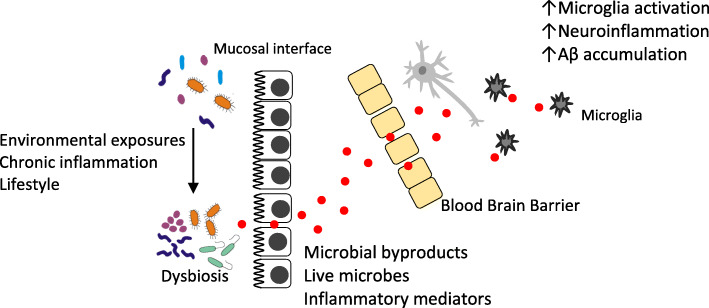
Alzheimer disease (AD) is the most prominent form of dementia and the 5th leading cause of death in individuals over 65. AD is a complex disease stemming from genetic, environmental, and lifestyle factors. It is known that AD patients have increased levels of senile plaques, neurofibrillary tangles, and neuroinflammation; however, the mechanism(s) by which the plaques, tangles, and neuroinflammation manifest remain elusive. A recent hypothesis has emerged that resident bacterial populations contribute to the development and progression of AD by contributing to neuroinflammation, senile plaque formation, and potentially neurofibrillary tangle accumulation (Fig. 1). This review will highlight recent studies involved in elucidating microbial involvement in AD development and progression.
Overview
The claims and statistics of this paper haven’t been checked yet.
Free: it reads the open-access text and checks the first 5 claims that cite a source we can check. Create a free account to check every claim.
Integrity signals
Registry
Cites
Statistics
Figures
Verification
Claims the paper makes
The claims and statistics of this paper haven’t been checked yet.
Free: it reads the open-access text and checks the first 5 claims that cite a source we can check. Create a free account to check every claim.
Claims other papers make about this one
Each is checked against this paper’s own text: does it say what the citing paper says it does?
The cited source says what the claim attributes to it.
In the citing paper
“Alterations in the host’s diet, use of antibiotics, exposure to psychosocial stress, or irregularities in the immune system may shift the relative proportions of bacterial species, resulting in a disruption of the microbiota’s composition and functionality as dysbiosis.214”
From Recent advances in Alzheimer's disease: Mechanisms, clinical trials and new drug development strategies. (2024) · cites this paper as [214]
Experimental — accuracy not yet measured
Self-check
Percentages, sums and reported differences re-computed from the paper’s own numbers.
The self-check needs the paper’s full text.
Citations
Cites
The Amyloid Hypothesis of Alzheimer’s Disease: Progress and Problems on the Road to Therapeutics
Hardy, J., & Selkoe, D. J. (2002) · Science · doi:10.1126/science.1072994 · Cited by 13,864
A human gut microbial gene catalogue established by metagenomic sequencing
MetaHIT Consortium, Qin, J., Li, R., Raes, J., Arumugam, M., Burgdorf, K. S., Manichanh, C., Nielsen, T., Pons, N., Levenez, F., et al. (2010) · Nature · doi:10.1038/nature08821 · Cited by 11,624
Amyloid oligomers exacerbate tau pathology in a mouse model of tauopathy
Selenica, M.-L. B., Brownlow, M., Jimenez, J. P., Lee, D. C., Pena, G., Dickey, C. A., Gordon, M. N., & Morgan, D. (2013) · Neurodegenerative Diseases · doi:10.1159/000337230 · Cited by 10,359
Changes of Intestinal Functions in Liver Cirrhosis
Fukui, H., & Wiest, R. (2016) · Inflammatory Intestinal Diseases · doi:10.1159/000444436 · Cited by 6,808
Revised Estimates for the Number of Human and Bacteria Cells in the Body
Sender, R., Fuchs, S., & Milo, R. (2016) · PLOS Biology · doi:10.1371/journal.pbio.1002533 · Cited by 5,425
Gut microbiota in health and disease
Sekirov, I., Russell, S. L., Antunes, L. C. M., & Finlay, B. B. (2010) · Physiological Reviews · doi:10.1152/physrev.00045.2009 · Cited by 4,182
Hearing loss and cognitive decline in older adults
Lin, F. R., Yaffe, K., Xia, J., Xue, Q.-L., Harris, T. B., Purchase-Helzner, E., Satterfield, S., Ayonayon, H. N., Ferrucci, L., Simonsick, E. M., et al. (2013) · JAMA Internal Medicine · doi:10.1001/jamainternmed.2013.1868 · Cited by 4,017
The gut microbiota--masters of host development and physiology
Sommer, F., & Bäckhed, F. (2013) · Nature Reviews Microbiology · doi:10.1038/nrmicro2974 · Cited by 3,681
Pihlstrom, B. L., Michalowicz, B. S., & Johnson, N. W. (2005) · The Lancet · doi:10.1016/s0140-6736(05)67728-8 · Cited by 3,522
Sudo, N., Chida, Y., Aiba, Y., Sonoda, J., Oyama, N., Yu, X., Kubo, C., & Koga, Y. (2004) · The Journal of Physiology · doi:10.1113/jphysiol.2004.063388 · Cited by 2,735
The gut-brain axis: interactions between enteric microbiota, central and enteric nervous systems.
(2015) · PubMed Central · Cited by 2,540
The gut microbiota influences blood-brain barrier permeability in mice
Braniste, V., Al-Asmakh, M., Kowal, C., Anuar, F., Abbaspour, A., Tóth, M., Korecka, A., Bakocevic, N., Ng, L. G., Kundu, P., et al. (2014) · Science Translational Medicine · doi:10.1126/scitranslmed.3009759 · Cited by 2,530
Altered fecal microbiota composition in patients with major depressive disorder
Jiang, H., Ling, Z., Zhang, Y., Mao, H., Ma, Z., Yin, Y., Wang, W., Tang, W., Tan, Z., Shi, J., et al. (2015) · Brain, Behavior, and Immunity · doi:10.1016/j.bbi.2015.03.016 · Cited by 2,275
Tau in physiology and pathology
Wang, Y., & Mandelkow, E. (2016) · Nature Reviews Neuroscience · doi:10.1038/nrn.2015.1 · Cited by 2,251
Gut microbiome alterations in Alzheimer’s disease
Vogt, N. M., Kerby, R. L., Dill-McFarland, K. A., Harding, S. J., Merluzzi, A. P., Johnson, S. C., Carlsson, C. M., Asthana, S., Zetterberg, H., Blennow, K., et al. (2017) · Scientific Reports · doi:10.1038/s41598-017-13601-y · Cited by 2,137
Amyloid Precursor Protein Processing and Alzheimer's Disease
O'Brien, R. J., & Wong, P. C. (2011) · Annual Review of Neuroscience · doi:10.1146/annurev-neuro-061010-113613 · Cited by 2,061
RAGE and amyloid-β peptide neurotoxicity in Alzheimer's disease
Yan, S. D., Chen, X., Fu, J., Chen, M., Zhu, H., Roher, A., Slattery, T., Zhao, L., Nagashima, M., Morser, J., et al. (1996) · Nature · doi:10.1038/382685a0 · Cited by 2,012
Dominy, S. S., Lynch, C., Ermini, F., Benedyk, M., Marczyk, A., Konradi, A., Nguyen, M., Haditsch, U., Raha, D., Griffin, C., et al. (2019) · Science Advances · doi:10.1126/sciadv.aau3333 · Cited by 1,966
Microglia in Alzheimer’s disease
Hansen, D. V., Hanson, J. E., & Sheng, M. (2018) · Journal of Cell Biology · doi:10.1083/jcb.201709069 · Cited by 1,935
Clarke, G., Grenham, S., Scully, P., Fitzgerald, P., Moloney, R. D., Shanahan, F., Dinan, T. G., & Cryan, J. F. (2013) · Molecular Psychiatry · doi:10.1038/mp.2012.77 · Cited by 1,893
Neuroinflammation in Alzheimer's disease: current evidence and future directions
Calsolaro, V., & Edison, P. (2016) · Alzheimer's & Dementia · doi:10.1016/j.jalz.2016.02.010 · Cited by 1,726
Kelly, J. R., Borre, Y., O' Brien, C., Patterson, E., El Aidy, S., Deane, J., Kennedy, P. J., Beers, S., Scott, K., Moloney, G., et al. (2016) · Journal of Psychiatric Research · doi:10.1016/j.jpsychires.2016.07.019 · Cited by 1,683
The vagus nerve at the interface of the microbiota-gut-brain axis
Bonaz, B., Bazin, T., & Pellissier, S. (2018) · Frontiers in Neuroscience · doi:10.3389/fnins.2018.00049 · Cited by 1,397
Cattaneo, A., Cattane, N., Galluzzi, S., Provasi, S., Lopizzo, N., Festari, C., Ferrari, C., Guerra, U. P., Paghera, B., Muscio, C., et al. (2017) · Neurobiology of Aging · doi:10.1016/j.neurobiolaging.2016.08.019 · Cited by 1,382
Microglial Dysfunction and Defective β-Amyloid Clearance Pathways in Aging Alzheimer's Disease Mice
Hickman, S. E., Allison, E. K., & El Khoury, J. (2008) · The Journal of Neuroscience · doi:10.1523/jneurosci.0616-08.2008 · Cited by 1,329
Alzheimer disease: Epidemiology, diagnostic criteria, risk factors and biomarkers
Reitz, C., & Mayeux, R. (2014) · Biochemical Pharmacology · doi:10.1016/j.bcp.2013.12.024 · Cited by 1,181
Hajishengallis, G., Liang, S., Payne, M. A., Hashim, A., Jotwani, R., Eskan, M. A., McIntosh, M. L., Alsam, A., Kirkwood, K. L., Lambris, J. D., et al. (2011) · Cell Host & Microbe · doi:10.1016/j.chom.2011.10.006 · Cited by 1,154
Wang, X., Sun, G., Feng, T., Zhang, J., Huang, X., Wang, T., Xie, Z., Chu, X., Yang, J., Wang, H., et al. (2019) · Cell Research · doi:10.1038/s41422-019-0216-x · Cited by 1,144
Bailey, M. T., Dowd, S. E., Galley, J. D., Hufnagle, A. R., Allen, R. G., & Lyte, M. (2011) · Brain, Behavior, and Immunity · doi:10.1016/j.bbi.2010.10.023 · Cited by 1,123
Self-citationCurrent Understanding of Dysbiosis in Disease in Human and Animal Models
DeGruttola, A. K., Low, D., Mizoguchi, A., & Mizoguchi, E. (2016) · Inflammatory Bowel Diseases · doi:10.1097/mib.0000000000000750 · Cited by 1,122
A Meta-Analysis of Cytokines in Alzheimer's Disease
Swardfager, W., Lanctôt, K., Rothenburg, L., Wong, A., Cappell, J., & Herrmann, N. (2010) · Biological Psychiatry · doi:10.1016/j.biopsych.2010.06.012 · Cited by 1,108
The Alzheimer's Disease-Associated Amyloid β-Protein Is an Antimicrobial Peptide
Soscia, S. J., Kirby, J. E., Washicosky, K. J., Tucker, S. M., Ingelsson, M., Hyman, B., Burton, M. A., Goldstein, L. E., Duong, S., Tanzi, R. E., et al. (2010) · PLoS ONE · doi:10.1371/journal.pone.0009505 · Cited by 1,060
Roles of tau protein in health and disease
Guo, T., Noble, W., & Hanger, D. P. (2017) · Acta Neuropathologica · doi:10.1007/s00401-017-1707-9 · Cited by 1,003
Kumar, D. K. V., Choi, S. H., Washicosky, K. J., Eimer, W. A., Tucker, S., Ghofrani, J., Lefkowitz, A., McColl, G., Goldstein, L. E., Tanzi, R. E., et al. (2016) · Science Translational Medicine · doi:10.1126/scitranslmed.aaf1059 · Cited by 971
Akbari, E., Asemi, Z., Daneshvar Kakhaki, R., Bahmani, F., Kouchaki, E., Tamtaji, O. R., Hamidi, G. A., & Salami, M. (2016) · Frontiers in Aging Neuroscience · doi:10.3389/fnagi.2016.00256 · Cited by 946
Bacteria–host communication: the language of hormones
Sperandio, V., Torres, A. G., Jarvis, B., Nataro, J. P., & Kaper, J. B. (2003) · Proceedings of the National Academy of Sciences · doi:10.1073/pnas.1537100100 · Cited by 902
Reduction of Abeta amyloid pathology in APPPS1 transgenic mice in the absence of gut microbiota
Harach, T., Marungruang, N., Duthilleul, N., Cheatham, V., Mc Coy, K. D., Frisoni, G., Neher, J. J., Fåk, F., Jucker, M., Lasser, T., et al. (2017) · Scientific Reports · doi:10.1038/srep41802 · Cited by 901
Gut Microbiota is Altered in Patients with Alzheimer’s Disease
Zhuang, Z.-Q., Shen, L.-L., Li, W.-W., Fu, X., Zeng, F., Gui, L., Lü, Y., Cai, M., Zhu, C., Tan, Y.-L., et al. (2018) · Journal of Alzheimer's Disease · doi:10.3233/jad-180176 · Cited by 885 · cited 3×
“count for the conflicting results, but each study had small experimental and control group sizes of 25 [26], 33 [27], and 43 [28].”
BackgroundMethodResultInfluentialMicrobiota is essential for social development in the mouse
Desbonnet, L., Clarke, G., Shanahan, F., Dinan, T. G., & Cryan, J. F. (2014) · Molecular Psychiatry · doi:10.1038/mp.2013.65 · Cited by 866
Anstey, K. J., Cherbuin, N., Budge, M., & Young, J. (2011) · Obesity Reviews · doi:10.1111/j.1467-789x.2010.00825.x · Cited by 855
Bacteremia Associated With Toothbrushing and Dental Extraction
Lockhart, P. B., Brennan, M. T., Sasser, H. C., Fox, P. C., Paster, B. J., & Bahrani-Mougeot, F. K. (2008) · Circulation · doi:10.1161/circulationaha.107.758524 · Cited by 851
Midlife and Late-Life Obesity and the Risk of Dementia: Cardiovascular Health Study
Fitzpatrick, A. L., Kuller, L. H., Lopez, O. L., Diehr, P., O’Meara, E. S., Longstreth, W. T., & Luchsinger, J. A. (2009) · Archives of Neurology · doi:10.1001/archneurol.2008.582 · Cited by 796
An overview of APP processing enzymes and products.
Chow, V. W., Mattson, M. P., Wong, P. C., & Gleichmann, M. (2010) · NeuroMolecular Medicine · doi:10.1007/s12017-009-8104-z · Cited by 684
Liu, P., Wu, L., Peng, G., Han, Y., Tang, R., Ge, J., Zhang, L., Jia, L., Yue, S., Zhou, K., et al. (2019) · Brain, Behavior, and Immunity · doi:10.1016/j.bbi.2019.05.008 · Cited by 669
Tau protein kinases: Involvement in Alzheimer's disease
Martin, L., Latypova, X., Wilson, C. M., Magnaudeix, A., Perrin, M.-L., Yardin, C., & Terro, F. (2013) · Ageing Research Reviews · doi:10.1016/j.arr.2012.06.003 · Cited by 631
Microglial dysfunction in brain aging and Alzheimer's disease
Mosher, K. I., & Wyss-Coray, T. (2014) · Biochemical Pharmacology · doi:10.1016/j.bcp.2014.01.008 · Cited by 618
Poole, S., Singhrao, S. K., Kesavalu, L., Curtis, M. A., & Crean, S. (2013) · Journal of Alzheimer’s Disease · doi:10.3233/jad-121918 · Cited by 598
Gram-negative bacterial molecules associate with Alzheimer disease pathology
Zhan, X., Stamova, B., Jin, L.-W., DeCarli, C., Phinney, B., & Sharp, F. R. (2016) · Neurology · doi:10.1212/wnl.0000000000003391 · Cited by 521
A Cell Surface Receptor Complex for Fibrillar β-Amyloid Mediates Microglial Activation
Bamberger, M. E., Harris, M. E., McDonald, D. R., Husemann, J., & Landreth, G. E. (2003) · The Journal of Neuroscience · doi:10.1523/jneurosci.23-07-02665.2003 · Cited by 501
Role of gut microbiota and nutrients in amyloid formation and pathogenesis of Alzheimer disease
Pistollato, F., Sumalla Cano, S., Elio, I., Masias Vergara, M., Giampieri, F., & Battino, M. (2016) · Nutrition Reviews · doi:10.1093/nutrit/nuw023 · Cited by 496
Neuroepithelial circuit formed by innervation of sensory enteroendocrine cells
Bohórquez, D. V., Shahid, R. A., Erdmann, A., Kreger, A. M., Wang, Y., Calakos, N., Wang, F., & Liddle, R. A. (2015) · Journal of Clinical Investigation · doi:10.1172/jci78361 · Cited by 484
Serum antibodies to periodontal pathogens are a risk factor for Alzheimer's disease
Sparks Stein, P., Steffen, M. J., Smith, C., Jicha, G., Ebersole, J. L., Abner, E., & Dawson, D. (2012) · Alzheimer's & Dementia · doi:10.1016/j.jalz.2011.04.006 · Cited by 463
The causes of intestinal dysbiosis: a review.
Hawrelak, J. A., & Myers, S. P. (2004) · PubMed · Cited by 461
Inflammation, microglia, and alzheimer's disease
Cameron, B., & Landreth, G. E. (2010) · Neurobiology of Disease · doi:10.1016/j.nbd.2009.10.006 · Cited by 444
Astrocytes accumulate Aβ42 and give rise to astrocytic amyloid plaques in Alzheimer disease brains
Nagele, R. G., D’Andrea, M. R., Lee, H., Venkataraman, V., & Wang, H.-Y. (2003) · Brain Research · doi:10.1016/s0006-8993(03)02361-8 · Cited by 416 · cited 1×
“Because it has been demonstrated that large quantities of Aβ42 accumulate in astrocytes, it is believed that astrocytes are heavily involved in Aβ deposition [56].”
BackgroundSheng, J. (2003) · Neurobiology of Disease · doi:10.1016/s0969-9961(03)00069-x · Cited by 388 · cited 2×
“coli cultures [23], APP Swe Tg mice [24]”
BackgroundGarwood, C. J., Pooler, A. M., Atherton, J., Hanger, D. P., & Noble, W. (2011) · Cell Death & Disease · doi:10.1038/cddis.2011.50 · Cited by 379
Zhao, Y., Jaber, V., & Lukiw, W. J. (2017) · Frontiers in Cellular and Infection Microbiology · doi:10.3389/fcimb.2017.00318 · Cited by 379
Riviere, G. R., Riviere, K. H., & Smith, K. S. (2002) · Oral Microbiology and Immunology · doi:10.1046/j.0902-0055.2001.00100.x · Cited by 362
Amyloid-Beta Protein Clearance and Degradation (ABCD) Pathways and their Role in Alzheimer’s Disease
Baranello, R., Bharani, K., Padmaraju, V., Chopra, N., Lahiri, D., Greig, N., Pappolla, M., & Sambamurti, K. (2015) · Current Alzheimer Research · doi:10.2174/1567205012666141218140953 · Cited by 331
Molecular Basis of Familial and Sporadic Alzheimer's Disease
Dorszewska, J., Prendecki, M., Oczkowska, A., Dezor, M., & Kozubski, W. (2016) · Current Alzheimer Research · doi:10.2174/1567205013666160314150501 · Cited by 329
16S rRNA Next Generation Sequencing Analysis Shows Bacteria in Alzheimer’s Post-Mortem Brain
Emery, D. C., Shoemark, D. K., Batstone, T. E., Waterfall, C. M., Coghill, J. A., Cerajewska, T. L., Davies, M., West, N. X., & Allen, S. J. (2017) · Frontiers in Aging Neuroscience · doi:10.3389/fnagi.2017.00195 · Cited by 317
Targeting Astrocytes Ameliorates Neurologic Changes in a Mouse Model of Alzheimer's Disease
Furman, J. L., Sama, D. M., Gant, J. C., Beckett, T. L., Murphy, M. P., Bachstetter, A. D., Van Eldik, L. J., & Norris, C. M. (2012) · The Journal of Neuroscience · doi:10.1523/jneurosci.2323-12.2012 · Cited by 313
Leser, T. D., & Mølbak, L. (2009) · Environmental Microbiology · doi:10.1111/j.1462-2920.2009.01941.x · Cited by 303
Maeda, J., Ji, B., Irie, T., Tomiyama, T., Maruyama, M., Okauchi, T., Staufenbiel, M., Iwata, N., Ono, M., Saido, T. C., et al. (2007) · The Journal of Neuroscience · doi:10.1523/jneurosci.0673-07.2007 · Cited by 300
Arweiler, N. B., & Netuschil, L. (2016) · Advances in Experimental Medicine and Biology · doi:10.1007/978-3-319-31248-4_4 · Cited by 296
Inhibition of Amyloid β Protein Aggregation and Neurotoxicity by Rifampicin
Tomiyama, T., Shoji, A., Kataoka, K.-I., Suwa, Y., Asano, S., Kaneko, H., & Endo, N. (1996) · Journal of Biological Chemistry · doi:10.1074/jbc.271.12.6839 · Cited by 295
Altered colonic function and microbiota profile in a mouse model of chronic depression
Park, A. J., Collins, J., Blennerhassett, P. A., Ghia, J. E., Verdu, E. F., Bercik, P., & Collins, S. M. (2013) · Neurogastroenterology & Motility · doi:10.1111/nmo.12153 · Cited by 293
Minter, M. R., Hinterleitner, R., Meisel, M., Zhang, C., Leone, V., Zhang, X., Oyler-Castrillo, P., Zhang, X., Musch, M. W., Shen, X., et al. (2017) · Scientific Reports · doi:10.1038/s41598-017-11047-w · Cited by 292 · cited 2×
“flammatory cytokines and chemokines, which was correlated to significant alterations of alpha and beta diversity in antibiotic-treated mice [89].”
BackgroundCommensal microbiota is fundamental for the development of inflammatory pain
Amaral, F. A., Sachs, D., Costa, V. V., Fagundes, C. T., Cisalpino, D., Cunha, T. M., Ferreira, S. H., Cunha, F. Q., Silva, T. A., Nicoli, J. R., et al. (2008) · Proceedings of the National Academy of Sciences · doi:10.1073/pnas.0711891105 · Cited by 289
Dawkins, E., & Small, D. H. (2014) · Journal of Neurochemistry · doi:10.1111/jnc.12675 · Cited by 279
Probiotic Supplementation in Patients with Alzheimer’s Dementia - An Explorative Intervention Study
Leblhuber, F., Steiner, K., Schuetz, B., Fuchs, D., & Gostner, J. M. (2018) · Current Alzheimer Research · doi:10.2174/1389200219666180813144834 · Cited by 269
Periodontal disease associates with higher brain amyloid load in normal elderly
Kamer, A. R., Pirraglia, E., Tsui, W., Rusinek, H., Vallabhajosula, S., Mosconi, L., Yi, L., McHugh, P., Craig, R. G., Svetcov, S., et al. (2015) · Neurobiology of Aging · doi:10.1016/j.neurobiolaging.2014.10.038 · Cited by 268
Söllvander, S., Nikitidou, E., Brolin, R., Söderberg, L., Sehlin, D., Lannfelt, L., & Erlandsson, A. (2016) · Molecular Neurodegeneration · doi:10.1186/s13024-016-0098-z · Cited by 267
Effects of Oral Flora on Platelets: Possible Consequences in Cardiovascular Disease
Herzberg, M. C., & Meyer, M. W. (1996) · Journal of Periodontology · doi:10.1902/jop.1996.67.10s.1138 · Cited by 260
Different Brain Regions are Infected with Fungi in Alzheimer’s Disease
Pisa, D., Alonso, R., Rábano, A., Rodal, I., & Carrasco, L. (2015) · Scientific Reports · doi:10.1038/srep15015 · Cited by 248
Specification of synaptic connectivity by cell surface interactions
de Wit, J., & Ghosh, A. (2016) · Nature Reviews Neuroscience · doi:10.1038/nrn.2015.3 · Cited by 242
Dental Plaque, Platelets, and Cardiovascular Diseases
Herzberg, M. C., & Meyer, M. W. (1998) · Annals of Periodontology · doi:10.1902/annals.1998.3.1.151 · Cited by 236
Köhler, C., Maes, M., Slyepchenko, A., Berk, M., Solmi, M., Lanctôt, K., & Carvalho, A. (2016) · Current Pharmaceutical Design · doi:10.2174/1381612822666160907093807 · Cited by 233
Comparative Analysis of Korean Human Gut Microbiota by Barcoded Pyrosequencing
Nam, Y.-D., Jung, M.-J., Roh, S. W., Kim, M.-S., & Bae, J.-W. (2011) · PLoS ONE · doi:10.1371/journal.pone.0022109 · Cited by 232
Antimicrobial Properties of Amyloid Peptides
Kagan, B. L., Jang, H., Capone, R., Teran Arce, F., Ramachandran, S., Lal, R., & Nussinov, R. (2012) · Molecular Pharmaceutics · doi:10.1021/mp200419b · Cited by 227
Liang, X., Wang, Q., Hand, T., Wu, L., Breyer, R. M., Montine, T. J., & Andreasson, K. (2005) · The Journal of Neuroscience · doi:10.1523/jneurosci.3591-05.2005 · Cited by 226
Minocycline affects microglia activation, Aβ deposition, and behavior in APP‐tg mice
Seabrook, T. J., Jiang, L., Maier, M., & Lemere, C. A. (2006) · Glia · doi:10.1002/glia.20338 · Cited by 223
Poole, S., Singhrao, S. K., Chukkapalli, S., Rivera, M., Velsko, I., Kesavalu, L., & Crean, S. (2014) · Journal of Alzheimer's Disease · doi:10.3233/jad-140315 · Cited by 215
Serum IgG Antibody Levels to Periodontal Microbiota Are Associated with Incident Alzheimer Disease
Noble, J. M., Scarmeas, N., Celenti, R. S., Elkind, M. S. V., Wright, C. B., Schupf, N., & Papapanou, P. N. (2014) · PLoS ONE · doi:10.1371/journal.pone.0114959 · Cited by 205
Aβ Amyloid Pathology Affects the Hearts of Patients With Alzheimer’s Disease
Troncone, L., Luciani, M., Coggins, M., Wilker, E. H., Ho, C.-Y., Codispoti, K. E., Frosch, M. P., Kayed, R., & del Monte, F. (2016) · Journal of the American College of Cardiology · doi:10.1016/j.jacc.2016.08.073 · Cited by 204 · cited 1×
“Soluble Aβ has been associated with decreased synaptic activity and weak nerve impulses, which suggests that Aβ contributes to synapse injury [15].”
BackgroundBeta-amyloid deposition and Alzheimer's type changes induced by Borrelia spirochetes
MIKLOSSY, J., KIS, A., RADENOVIC, A., MILLER, L., FORRO, L., MARTINS, R., REISS, K., DARBINIAN, N., DAREKAR, P., & MIHALY, L. (2006) · Neurobiology of Aging · doi:10.1016/j.neurobiolaging.2005.01.018 · Cited by 189
Can a Bacterial Endotoxin be a Key Factor in the Kinetics of Amyloid Fibril Formation?
Asti, A., & Gioglio, L. (2014) · Journal of Alzheimer's Disease · doi:10.3233/jad-131394 · Cited by 180
Towards understanding brain-gut-microbiome connections in Alzheimer’s disease
Xu, R., & Wang, Q. (2016) · BMC Systems Biology · doi:10.1186/s12918-016-0307-y · Cited by 175
Microbiota influence the development of the brain and behaviors in C57BL/6J mice
Lu, J., Synowiec, S., Lu, L., Yu, Y., Bretherick, T., Takada, S., Yarnykh, V., Caplan, J., Caplan, M., Claud, E. C., et al. (2018) · PLoS ONE · doi:10.1371/journal.pone.0201829 · Cited by 159
Rifampicin Prevents the Aggregation and Neurotoxicity of Amyloid β Protein in Vitro
Tomiyama, T., Asano, S., Suwa, Y., Morita, T., Kataoka, K., Mori, H., & Endo, N. (1994) · Biochemical and Biophysical Research Communications · doi:10.1006/bbrc.1994.2428 · Cited by 158
Kumar-Singh, S. (2000) · Human Molecular Genetics · doi:10.1093/hmg/9.18.2589 · Cited by 158
Wu, Y., Du, S., Johnson, J. L., Tung, H.-Y., Landers, C. T., Liu, Y., Seman, B. G., Wheeler, R. T., Costa-Mattioli, M., Kheradmand, F., et al. (2019) · Nature Communications · doi:10.1038/s41467-018-07991-4 · Cited by 143
Watts, A., Gatz, M., & Crimmins, E. M. (2008) · Neuropsychiatric Disease and Treatment · doi:10.2147/ndt.s3610 · Cited by 126
Rifampicin is a candidate preventive medicine against amyloid-β and tau oligomers
Umeda, T., Ono, K., Sakai, A., Yamashita, M., Mizuguchi, M., Klein, W. L., Yamada, M., Mori, H., & Tomiyama, T. (2016) · Brain · doi:10.1093/brain/aww042 · Cited by 123
Chitinase enzyme activity in CSF is a powerful biomarker of Alzheimer disease
Watabe-Rudolph, M., Song, Z., Lausser, L., Schnack, C., Begus-Nahrmann, Y., Scheithauer, M.-O., Rettinger, G., Otto, M., Tumani, H., Thal, D. R., et al. (2012) · Neurology · doi:10.1212/wnl.0b013e318247caa1 · Cited by 116
KLEIN, A. M., KOWALL, N. W., & FERRANTE, R. J. (1999) · Annals of the New York Academy of Sciences · doi:10.1111/j.1749-6632.1999.tb07845.x · Cited by 115
Chen, C.-H., Lin, C.-L., & Kao, C.-H. (2016) · PLOS ONE · doi:10.1371/journal.pone.0144589 · Cited by 114
Direct Visualization of Fungal Infection in Brains from Patients with Alzheimer's Disease
Pisa, D., Alonso, R., Juarranz, A., Rábano, A., & Carrasco, L. (2014) · Journal of Alzheimer's Disease · doi:10.3233/jad-141386 · Cited by 111
Why Most Published Research Findings Are False: Problems in the Analysis
Goodman, S., & Greenland, S. (2007) · PLoS Medicine · doi:10.1371/journal.pmed.0040168 · Cited by 109
Distrutti, E., Cipriani, S., Mencarelli, A., Renga, B., & Fiorucci, S. (2013) · PLoS ONE · doi:10.1371/journal.pone.0063893 · Cited by 107
Pathogenic functions of host microbiota
Rath, S., Rud, T., Karch, A., Pieper, D. H., & Vital, M. (2018) · Microbiome · doi:10.1186/s40168-018-0542-0 · Cited by 106
Bacterial Chat: Intestinal Metabolites and Signals in Host-Microbiota-Pathogen Interactions
Lustri, B. C., Sperandio, V., & Moreira, C. G. (2017) · Infection and Immunity · doi:10.1128/iai.00476-17 · Cited by 105
Innate Immunity Fights Alzheimer's Disease
Guillot-Sestier, M.-V., Doty, K. R., & Town, T. (2015) · Trends in Neurosciences · doi:10.1016/j.tins.2015.08.008 · Cited by 102
Alzheimer Amyloid Protein Precursor Enhances Proliferation of Neural Stem Cells from Fetal Rat Brain
Hayashi, Y., Kashiwagi, K., Ohta, J., Nakajima, M., Kawashima, T., & Yoshikawa, K. (1994) · Biochemical and Biophysical Research Communications · doi:10.1006/bbrc.1994.2755 · Cited by 94
Systemic effects of gut microbiota and its relationship with disease and modulation
Ho, J. T., Chan, G. C., & Li, J. C. (2015) · BMC Immunology · doi:10.1186/s12865-015-0083-2 · Cited by 93
Pegueroles, J., Initiative, F. T. A. D. N., Jiménez, A., Vilaplana, E., Montal, V., Carmona-Iragui, M., Pané, A., Alcolea, D., Videla, L., Casajoana, A., et al. (2018) · Oncotarget · doi:10.18632/oncotarget.26162 · Cited by 91
Christiaen, S. E. A., O'Connell Motherway, M., Bottacini, F., Lanigan, N., Casey, P. G., Huys, G., Nelis, H. J., van Sinderen, D., & Coenye, T. (2014) · PLoS ONE · doi:10.1371/journal.pone.0098111 · Cited by 88
Allen, H. B. (2016) · Journal of Alzheimer’s Disease · doi:10.3233/jad-160388 · Cited by 79
Bacterial DNA promotes Tau aggregation
Tetz, G., Pinho, M., Pritzkow, S., Mendez, N., Soto, C., & Tetz, V. (2020) · Scientific Reports · doi:10.1038/s41598-020-59364-x · Cited by 79
Bester, J., Soma, P., Kell, D. B., & Pretorius, E. (2015) · Oncotarget · doi:10.18632/oncotarget.6074 · Cited by 77
Power Calculations for Clinical Trials in Alzheimer's Disease
Ard, M. C., & Edland, S. D. (2011) · Journal of Alzheimer's Disease · doi:10.3233/jad-2011-0062 · Cited by 74
Singhrao, S. K., Chukkapalli, S., Poole, S., Velsko, I., Crean, S. J., & Kesavalu, L. (2017) · Journal of Oral Microbiology · doi:10.1080/20002297.2016.1270602 · Cited by 71
Exploring glia to better understand Alzheimer’s disease
Kim, Y. S., Jung, H. M., & Yoon, B. (2018) · Animal Cells and Systems · doi:10.1080/19768354.2018.1508498 · Cited by 71
Salbaum, J. M., & Ruddle, F. H. (1994) · Journal of Experimental Zoology · doi:10.1002/jez.1402690205 · Cited by 68
Cai, Z., Yan, & Wang (2013) · Clinical Interventions in Aging · doi:10.2147/cia.s46536 · Cited by 60
Pathogenesis of Alzheimer's Disease: Role of Amyloid-beta and Hyperphosphorylated Tau Protein
Sajjad, R., Arif, R., Shah, A. A., Manzoor, I., & Mustafa, G. (2018) · Indian Journal of Pharmaceutical Sciences · doi:10.4172/pharmaceutical-sciences.1000397 · Cited by 57
Fungal Enolase, β-Tubulin, and Chitin Are Detected in Brain Tissue from Alzheimer’s Disease Patients
Pisa, D., Alonso, R., Rábano, A., Horst, M. N., & Carrasco, L. (2016) · Frontiers in Microbiology · doi:10.3389/fmicb.2016.01772 · Cited by 53
Chitin-like Polysaccharides in Alzheimers Disease Brains
Castellani, R., Siedlak, S., Fortino, A., Perry, G., Ghetti, B., & Smith, M. (2005) · Current Alzheimer Research · doi:10.2174/156720505774330555 · Cited by 52 · cited 1×
“Within the AD brain, chitin polysaccharides, a key component of the fungi cell wall, have also been identified (Table 2) [121, 122].”
BackgroundImmunity and Alzheimer's disease: immunological perspectives on the development of novel therapies
Liu, Y.-H., Zeng, F., Wang, Y., Zhou, H., Giunta, B. N., Tan, J., & Wang, Y. (2013) · Drug Discovery Today · doi:10.1016/j.drudis.2013.07.020 · Cited by 49
Cerebrospinal Fluid from Alzheimer’s Disease Patients Contains Fungal Proteins and DNA
Alonso, R., Pisa, D., Rábano, A., Rodal, I., & Carrasco, L. (2015) · Journal of Alzheimer’s Disease · doi:10.3233/jad-150382 · Cited by 43
Amyloid precursor protein is enriched in radial glia: Implications for neuronal development
Trapp, B. D., & Hauer, P. E. (1994) · Journal of Neuroscience Research · doi:10.1002/jnr.490370413 · Cited by 41
Intranasal rifampicin for Alzheimer's disease prevention
Umeda, T., Tanaka, A., Sakai, A., Yamamoto, A., Sakane, T., & Tomiyama, T. (2018) · Alzheimer's & Dementia: Translational Research & Clinical Interventions · doi:10.1016/j.trci.2018.06.012 · Cited by 40
Molecular pathogenesis of the cell surface proteins and lipids from Treponema denticola
Ishihara, K., & Okuda, K. (1999) · FEMS Microbiology Letters · doi:10.1111/j.1574-6968.1999.tb08844.x · Cited by 38
Shie, F.-S., Montine, K. S., Breyer, R. M., & Montine, T. J. (2006) · Brain Pathology · doi:10.1111/j.1750-3639.2005.tb00509.x · Cited by 37
Mutations, associated with early-onset Alzheimer’s disease, discovered in Asian countries
Bagyinszky, E., Youn, Y. C., An, S. S. A., & Kim, S. (2016) · Clinical Interventions in Aging · doi:10.2147/cia.s116218 · Cited by 35
Host immune defence, amyloid-β peptide and Alzheimer disease
Golde, T. E. (2016) · Nature Reviews Neurology · doi:10.1038/nrneurol.2016.105 · Cited by 25
Amyloid Beta and Cardiovascular Disease
Williams, B. (2015) · Journal of the American College of Cardiology · doi:10.1016/j.jacc.2015.01.013 · Cited by 10
Cited by
Zhang, J., Zhang, Y., Wang, J., Xia, Y., Zhang, J., & Chen, L. (2024) · Signal Transduction and Targeted Therapy · doi:10.1038/s41392-024-01911-3 · Cited by 1,138
“214 Some animal studies suggested that Porphyromonas gingivalis could translocate to the brain, closely linked to the deposition of A β and tau and the occurrence of neuroin fl ammation.”
BackgroundApoE in Alzheimer’s disease: pathophysiology and therapeutic strategies
Raulin, A.-C., Doss, S. V., Trottier, Z. A., Ikezu, T. C., Bu, G., & Liu, C.-C. (2022) · Molecular Neurodegeneration · doi:10.1186/s13024-022-00574-4 · Cited by 756
“Gut microbiome More recent evidence suggests an emerging role for the gut microbiome in modulating AD pathology through metabolism and immune function [287] (Fig.”
BackgroundOral microbiome: a review of its impact on oral and systemic health
Rajasekaran, J. J., Krishnamurthy, H. K., Bosco, J., Jayaraman, V., Krishna, K., Wang, T., & Bei, K. (2024) · Microorganisms · doi:10.3390/microorganisms12091797 · Cited by 272
Liu, C.-C., Zhao, J., Fu, Y., Inoue, Y., Ren, Y., Chen, Y., Doss, S. V., Shue, F., Jeevaratnam, S., Bastea, L., et al. (2022) · Nature Neuroscience · doi:10.1038/s41593-022-01127-0 · Cited by 168
Deregulated mitochondrial microRNAs in Alzheimer's disease: Focus on synapse and mitochondria
Gowda, P., Reddy, P. H., & Kumar, S. (2022) · Ageing Research Reviews · doi:10.1016/j.arr.2021.101529 · Cited by 163
Metadata
- Authors
- Bulgart, H. R., Neczypor, E. W., Wold, L. E., & Mackos, A. R.
- Affiliations
- The Ohio State University (US)
- The Ohio State University Wexner Medical Center (US)
- Corresponding author
- Mackos, Amy R.
- Venue
- Molecular Neurodegeneration
- Published
- 2020-07-24
- Volume
- 15
- Issue
- 1
- Pages
- 42-42
- ISSN
- 1750-1326 (ISSN-L)
- PMC
- PMC7382139
- OpenAlex
- W3045169544
- Cited by
- 116
- References
- 129
- Citations by year
- 2026: 10 · 2025: 15 · 2024: 28 · 2023: 18 · 2022: 25 · 2021: 17 · 2020: 3
- FWCI
- 2.01
- Type
- journal article
- Language
- en
- Open access
- gold
- doi.org
- Licence
- cc-by
- creativecommons.org/licenses/by/4.0 (tdm)
- creativecommons.org/licenses/by/4.0 (vor)
- Locations
- Molecular Neurodegeneration (publishedVersion, cc-by)
- PubMed Central (publishedVersion, cc-by)
- PubMed (publishedVersion)
- DOAJ (DOAJ: Directory of Open Access Journals) (submittedVersion, cc-by-sa)
- Funders
- National Institute on Aging (AG057046)
- National Heart, Lung, and Blood Institute (HL139348)
- National Institute of Environmental Health Sciences (ES019923)
- Topics
- Life Sciences › Neuroscience › Cellular and Molecular Neuroscience › Alzheimer's disease research and treatments
- Life Sciences › Neuroscience › Neurology › Neuroinflammation and Neurodegeneration Mechanisms
- Life Sciences › Biochemistry, Genetics and Molecular Biology › Molecular Biology › Gut microbiota and health
- Keywords
- Alzheimer's disease, gut microbiota, neuroinflammation, amyloid plaques, neurofibrillary tangles, dementia, disease progression
- MeSH terms
- Alzheimer Disease, Amyloid, Brain, Humans, Neurofibrillary Tangles, Disease Progression, Plaque, Amyloid
About these checks
Registry, retraction, Cites and statistics results are computed, not judged, with one exception: a printed reference that no index lists is read once by a model before it counts as a citation error. Claims are extracted by a model and kept only when their quote appears verbatim in the text; each cited source is then checked, with a model’s help, for whether it says what the claim relies on. Those verdicts can be wrong — read the claim’s quote and the cited source before relying on one.
Statistics and arithmetic are recomputed, not judged.
Confidence bands are shown only for fields calibrated on our annotated test set. None is calibrated yet, so no band is shown.
What counts as a claim ›How we measure confidence ›How we check this ›
Are you an author, or do you see a problem with this page? Request a review
Data sources
Bibliographic data: Semantic Scholar, OpenAlex, Crossref.
Contains information from the Semantic Scholar Academic Graph Datasets, made available under the ODC Attribution License (ODC-BY 1.0).
Semantic Scholar’s data is described in: Kinney, R., et al. (2023). The Semantic Scholar Open Data Platform. arXiv:2301.10140.
