

The DOI matches its Crossref record; 204 of the 204 references it cites were found in a registry or an index.
TLR2 and TLR4 in Parkinson’s disease pathogenesis: the environment takes a toll on the gut
Open accessAbstract
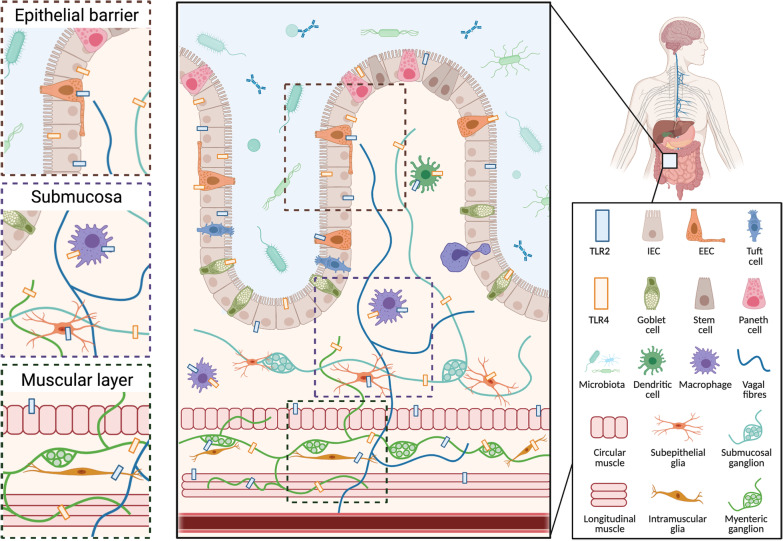
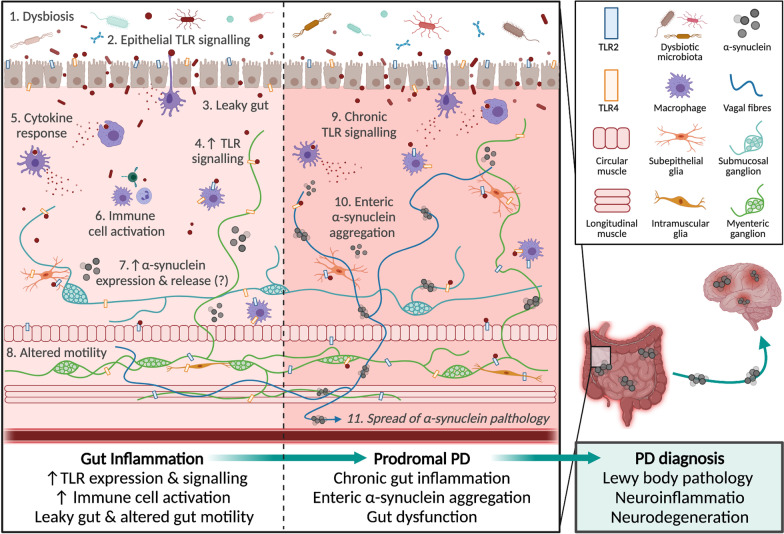
Parkinson’s disease (PD) is an incurable, devastating disorder that is characterized by pathological protein aggregation and neurodegeneration in the substantia nigra. In recent years, growing evidence has implicated the gut environment and the gut-brain axis in the pathogenesis and progression of PD, especially in a subset of people who exhibit prodromal gastrointestinal dysfunction. Specifically, perturbations of gut homeostasis are hypothesized to contribute to α-synuclein aggregation in enteric neurons, which may spread to the brain over decades and eventually result in the characteristic central nervous system manifestations of PD, including neurodegeneration and motor impairments. However, the mechanisms linking gut disturbances and α-synuclein aggregation are still unclear. A plethora of research indicates that toll-like receptors (TLRs), especially TLR2 and TLR4, are critical mediators of gut homeostasis. Alongside their established role in innate immunity throughout the body, studies are increasingly demonstrating that TLR2 and TLR4 signalling shapes the development and function of the gut and the enteric nervous system. Notably, TLR2 and TLR4 are dysregulated in patients with PD, and may thus be central to early gut dysfunction in PD. To better understand the putative contribution of intestinal TLR2 and TLR4 dysfunction to early α-synuclein aggregation and PD, we critically discuss the role of TLR2 and TLR4 in normal gut function as well as evidence for altered TLR2 and TLR4 signalling in PD, by reviewing clinical, animal model and in vitro research. Growing evidence on the immunological aetiology of α-synuclein aggregation is also discussed, with a focus on the interactions of α-synuclein with TLR2 and TLR4. We propose a conceptual model of PD pathogenesis in which microbial dysbiosis alters the permeability of the intestinal barrier as well as TLR2 and TLR4 signalling, ultimately leading to a positive feedback loop of chronic gut dysfunction promoting α-synuclein aggregation in enteric and vagal neurons. In turn, α-synuclein aggregates may then migrate to the brain via peripheral nerves, such as the vagal nerve, to contribute to neuroinflammation and neurodegeneration typically associated with PD.
Overview
The claims and statistics of this paper haven’t been checked yet.
Run the check — free, no account needed. It reads the open-access text and checks the sources it cites.
Integrity signals
Registry
Cites
Statistics
Figures
Verification
Claims the paper makes
The claims and statistics of this paper haven’t been checked yet.
Run the check — free, no account needed. It reads the open-access text and checks the sources it cites.
Claims other papers make about this one
Each is checked against this paper’s own text: does it say what the citing paper says it does?
The cited source says what the claim attributes to it.
In the citing paper
“Several studies have confirmed that Toll-like receptors, specifically TLR4, play an instrumental role in intestinal homeostasis [65].”
From Neuroprotective Effects of Sodium Butyrate by Restoring Gut Microbiota and Inhibiting TLR4 Signaling in Mice with MPTP-Induced Parkinson’s Disease (2023) · cites this paper as [65]
The cited source says what the claim attributes to it.
In the citing paper
“In addition, gut microbial dysbiosis was suggested to alter TLR2 and TLR4 signaling, promoting α-synuclein aggregation in enteric and vagal neurons, which in turn migrates to the brain via peripheral nerves and contributes to neurodegeneration.307”
From Role of neuroinflammation in neurodegeneration development (2023) · cites this paper as [307]
Self-check
Percentages, sums and reported differences re-computed from the paper’s own numbers.
The self-check needs the paper’s full text.
Citations
Cites
1 retracted
Kim, C., Kwon, S., Iba, M., Spencer, B. J., Rockenstein, E. M., Mante, M., Adame, A., Shin, S. J., Fields, J. A., Rissman, R. A., et al. (2021) · Experimental & Molecular Medicine · doi:10.1038/s12276-021-00562-6 · Cited by 42
RetractedUltrastructural Characterization of the Lower Motor System in a Mouse Model of Krabbe Disease
Cappello, V., Marchetti, L., Parlanti, P., Landi, S., Tonazzini, I., Cecchini, M., Piazza, V., & Gemmi, M. (2016) · Scientific Reports · doi:10.1038/s41598-016-0001-8 · Cited by 13,097
Akira, S., & Takeda, K. (2004) · Nature reviews. Immunology · doi:10.1038/nri1391 · Cited by 8,312
Glutamate neurotoxicity and diseases of the nervous system
Choi, D. W. (1988) · Neuron · doi:10.1016/0896-6273(88)90162-6 · Cited by 8,188
Metabolic Endotoxemia Initiates Obesity and Insulin Resistance
Cani, P. D., Amar, J., Iglesias, M. A., Poggi, M., Knauf, C., Bastelica, D., Neyrinck, A. M., Fava, F., Tuohy, K. M., Chabo, C., et al. (2007) · Diabetes · doi:10.2337/db06-1491 · Cited by 6,638
Role of the microbiota in immunity and inflammation.
Belkaid, Y., & Hand, T. W. (2014) · Cell · doi:10.1016/j.cell.2014.03.011 · Cited by 5,385
The impact of the gut microbiota on human health: an integrative view
Clemente, J. C., Ursell, L. K., Parfrey, L. W., & Knight, R. (2012) · Cell · doi:10.1016/j.cell.2012.01.035 · Cited by 3,710
Gut microbiota regulate motor deficits and neuroinflammation in a model of Parkinson's disease
Sampson, T. R., Debelius, J. W., Thron, T., Janssen, S., Shastri, G. G., Ilhan, Z. E., Challis, C., Schretter, C. E., Rocha, S., Gradinaru, V., et al. (2016) · Cell · doi:10.1016/j.cell.2016.11.018 · Cited by 3,622
Inflammaging: a new immune–metabolic viewpoint for age-related diseases
Franceschi, C., Garagnani, P., Parini, P., Giuliani, C., & Santoro, A. (2018) · Nature Reviews Endocrinology · doi:10.1038/s41574-018-0059-4 · Cited by 3,586
Toll-Like Receptor Signaling Pathways
Kawasaki, T., & Kawai, T. (2014) · Frontiers in Immunology · doi:10.3389/fimmu.2014.00461 · Cited by 3,245
Normal gut microbiota modulates brain development and behavior
Heijtz, R. D., Wang, S., Anuar, F., Qian, Y., Björkholm, B., Samuelsson, A., Hibberd, M. L., Forssberg, H., & Pettersson, S. (2011) · Proceedings of the National Academy of Sciences · doi:10.1073/pnas.1010529108 · Cited by 3,228
The gut microbiota influences blood-brain barrier permeability in mice
Braniste, V., Al-Asmakh, M., Kowal, C., Anuar, F., Abbaspour, A., Tóth, M., Korecka, A., Bakocevic, N., Ng, L. G., Kundu, P., et al. (2014) · Science Translational Medicine · doi:10.1126/scitranslmed.3009759 · Cited by 2,530
Guo, J., Huang, F., Liu, J., Chen, Y., Wang, W., Cao, B., Zou, Z., Liu, S., Pan, J., Bao, C., et al. (2016) · Scientific Reports · doi:10.1038/srep21230 · Cited by 2,148
Braak, H., R�b, U., Gai, W. P., & Del Tredici, K. (2003) · Journal of Neural Transmission · doi:10.1007/s00702-002-0808-2 · Cited by 1,683
Exercise and associated dietary extremes impact on gut microbial diversity
Clarke, S. F., Murphy, E. F., O'Sullivan, O., Lucey, A. J., Humphreys, M., Hogan, A., Hayes, P., O'Reilly, M., Jeffery, I. B., Wood-Martin, R., et al. (2014) · Gut · doi:10.1136/gutjnl-2013-306541 · Cited by 1,439
Kim, S., Kwon, S.-H., Kam, T.-I., Panicker, N., Karuppagounder, S. S., Lee, S., Lee, J. H., Kim, W. R., Kook, M., Foss, C. A., et al. (2019) · Neuron · doi:10.1016/j.neuron.2019.05.035 · Cited by 1,397
Braak, H., de Vos, R. A. I., Bohl, J., & Del Tredici, K. (2006) · Neuroscience Letters · doi:10.1016/j.neulet.2005.11.012 · Cited by 1,354
Ott, S. J., Musfeldt, M., Wenderoth, D. F., Hampe, J., Brant, O., Fölsch, U. R., Timmis, K. N., & Schreiber, S. (2004) · Gut · doi:10.1136/gut.2003.025403 · Cited by 1,311
Colonic bacterial composition in Parkinson's disease
Keshavarzian, A., Green, S. J., Engen, P. A., Voigt, R. M., Naqib, A., Forsyth, C. B., Mutlu, E., & Shannon, K. M. (2015) · Movement Disorders · doi:10.1002/mds.26307 · Cited by 1,281
Microglia initiate central nervous system innate and adaptive immune responses through multiple TLRs
Olson, J. K., & Miller, S. D. (2004) · The Journal of Immunology · doi:10.4049/jimmunol.173.6.3916 · Cited by 1,215
Australian vegetated coastal ecosystems as global hotspots for climate change mitigation
Serrano, Ó., Lovelock, C. E., Atwood, T. B., Macreadie, P. I., Canto, R., Phinn, S., Arias‐Ortiz, A., Bai, L., Baldock, J., Bedulli, C., et al. (2019) · Nature Communications · doi:10.1038/s41467-019-12176-8 · Cited by 1,193
Unger, M. M., Spiegel, J., Dillmann, K.-U., Grundmann, D., Philippeit, H., Bürmann, J., Faßbender, K., Schwiertz, A., & Schäfer, K.-H. (2016) · Parkinsonism & Related Disorders · doi:10.1016/j.parkreldis.2016.08.019 · Cited by 1,159
Estrogen–gut microbiome axis: Physiological and clinical implications
Baker, J. M., Al‐Nakkash, L., & Herbst‐Kralovetz, M. M. (2017) · Maturitas · doi:10.1016/j.maturitas.2017.06.025 · Cited by 1,056
Parkinson's disease: a dual‐hit hypothesis
Hawkes, C. H., Del Tredici, K., & Braak, H. (2007) · Neuropathology and Applied Neurobiology · doi:10.1111/j.1365-2990.2007.00874.x · Cited by 1,021
Forsyth, C. B., Shannon, K. M., Kordower, J. H., Voigt, R. M., Shaikh, M., Jaglin, J. A., Estes, J. D., Dodiya, H. B., & Keshavarzian, A. (2011) · PLoS ONE · doi:10.1371/journal.pone.0028032 · Cited by 974
Direct evidence of Parkinson pathology spread from the gastrointestinal tract to the brain in rats
Holmqvist, S., Chutna, O., Bousset, L., Aldrin-Kirk, P., Li, W., Björklund, T., Wang, Z.-Y., Roybon, L., Melki, R., & Li, J.-Y. (2014) · Acta Neuropathologica · doi:10.1007/s00401-014-1343-6 · Cited by 925
Exosomal cell-to-cell transmission of alpha synuclein oligomers
Danzer, K. M., Kranich, L. R., Ruf, W. P., Cagsal‐Getkin, O., Winslow, A. R., Zhu, L., Vanderburg, C. R., & McLean, P. J. (2012) · Molecular Neurodegeneration · doi:10.1186/1750-1326-7-42 · Cited by 880
Hill‐Burns, E. M., Debelius, J. W., Morton, J. T., Wissemann, W. T., Lewis, M. R., Wallen, Z. D., Peddada, S. D., Factor, S. A., Molho, E., Zabetian, C. P., et al. (2017) · Movement Disorders · doi:10.1002/mds.26942 · Cited by 874
Kim, C., Ho, D.-H., Suk, J.-E., You, S., Michael, S., Kang, J., Joong Lee, S., Masliah, E., Hwang, D., Lee, H.-J., et al. (2013) · Nature Communications · doi:10.1038/ncomms2534 · Cited by 856
Bendor, J. T., Logan, T. P., & Edwards, R. H. (2013) · Neuron · doi:10.1016/j.neuron.2013.09.004 · Cited by 825
Vagotomy and subsequent risk of Parkinson's disease
Svensson, E., Horváth‐Puhó, E., Thomsen, R. W., Djurhuus, J. C., Pedersen, L., Borghammer, P., & Sørensen, H. T. (2015) · Annals of Neurology · doi:10.1002/ana.24448 · Cited by 806
Brain-first versus body-first Parkinson’s disease: a multimodal imaging case-control study
Horsager, J., Andersen, K. B., Knudsen, K., Skjærbæk, C., Fedorova, T. D., Okkels, N., Schaeffer, E., Bonkat, S. K., Geday, J., Otto, M., et al. (2020) · Brain · doi:10.1093/brain/awaa238 · Cited by 782
Pivotal role for neuronal Toll-like receptors in ischemic brain injury and functional deficits
Tang, S.-C., Arumugam, T. V., Xu, X., Cheng, A., Mughal, M. R., Jo, D. G., Lathia, J. D., Siler, D. A., Chigurupati, S., Ouyang, X., et al. (2007) · Proceedings of the National Academy of Sciences · doi:10.1073/pnas.0702553104 · Cited by 779
Roles of intestinal epithelial cells in the maintenance of gut homeostasis
Okumura, R., & Takeda, K. (2017) · Experimental & Molecular Medicine · doi:10.1038/emm.2017.20 · Cited by 732
Guo, S., Al–Sadi, R., Said, H. M., & Ma, T. Y. (2012) · American Journal Of Pathology · doi:10.1016/j.ajpath.2012.10.014 · Cited by 722
Fröhlich, E. E., Farzi, A., Mayerhofer, R., Reichmann, F., Jačan, A., Wagner, B., Zinser, E., Bordag, N., Magnes, C., Fröhlich, E., et al. (2016) · Brain Behavior and Immunity · doi:10.1016/j.bbi.2016.02.020 · Cited by 720
Romano, S., Savva, G. M., Bedarf, J. R., Charles, I. G., Hildebrand, F., & Narbad, A. (2021) · npj Parkinson's Disease · doi:10.1038/s41531-021-00156-z · Cited by 707
Toll‐like receptor 4 is required for α‐synuclein dependent activation of microglia and astroglia
Fellner, L., Irschick, R., Schanda, K., Reindl, M., Klimaschewski, L., Poewe, W., Wenning, G. K., & Stefanova, N. (2013) · Glia · doi:10.1002/glia.22437 · Cited by 697
Toll-like receptor 2 controls mucosal inflammation by regulating epithelial barrier function
Cario, E., Gerken, G., & Podolsky, D. K. (2007) · Gastroenterology · doi:10.1053/j.gastro.2007.02.056 · Cited by 697
Abreu, M. T., Vora, P., Faure, E., Thomas, L. S., Arnold, E. T., & Arditi, M. (2001) · The Journal of Immunology · doi:10.4049/jimmunol.167.3.1609 · Cited by 681
Bedarf, J. R., Hildebrand, F., Coelho, L. P., Sunagawa, S., Bahram, M., Goeser, F., Bork, P., & Wüllner, U. (2017) · Genome Medicine · doi:10.1186/s13073-017-0428-y · Cited by 642
Colonic inflammation in Parkinson's disease
Devos, D., Lebouvier, T., Lardeux, B., Biraud, M., Rouaud, T., Pouclet, H., Coron, E., Bruley des Varannes, S., Naveilhan, P., Nguyen, J.-M., et al. (2013) · Neurobiology of Disease · doi:10.1016/j.nbd.2012.09.007 · Cited by 627
Waldecker, M., Kautenburger, T., Daumann, H., Busch, C., & Schrenk, D. (2008) · The Journal of Nutritional Biochemistry · doi:10.1016/j.jnutbio.2007.08.002 · Cited by 615
Triggering of inflammasome by aggregated α-synuclein, an inflammatory response in synucleinopathies
Codolo, G., Plotegher, N., Pozzobon, T., Brucale, M., Tessari, I., Bubacco, L., & de Bernard, M. (2013) · PLoS ONE · doi:10.1371/journal.pone.0055375 · Cited by 585
Crumeyrolle-Arias, M., Jaglin, M., Bruneau, A., Vancassel, S., Cardona, A., Daugé, V., Naudon, L., & Rabot, S. (2014) · Psychoneuroendocrinology · doi:10.1016/j.psyneuen.2014.01.014 · Cited by 581
Heintz‐Buschart, A., Pandey, U., Wicke, T., Sixel‐Döring, F., Janzen, A., Sittig‐Wiegand, E., Trenkwalder, C., Oertel, W. H., Mollenhauer, B., & Wilmes, P. (2018) · Movement Disorders · doi:10.1002/mds.27105 · Cited by 554
Martinez-Medina, M., Denizot, J., Dreux, N., Robin, F., Billard, E., Bonnet, R., Darfeuille-Michaud, A., & Barnich, N. (2014) · Gut · doi:10.1136/gutjnl-2012-304119 · Cited by 539
Modulation of intestinal barrier by intestinal microbiota: Pathological and therapeutic implications
Natividad, J. M. M., & Verdu, E. F. (2013) · Pharmacological Research · doi:10.1016/j.phrs.2012.10.007 · Cited by 525 · cited 1×
“The gut barrier is dynamically regulated by microbial metabolites and pattern recognition receptor signalling to simultaneously respond to symbiotic gut microbes and invading pathogens [80, 81].”
BackgroundOtte, J., Cario, E., & Podolsky, D. K. (2004) · Gastroenterology · doi:10.1053/j.gastro.2004.01.007 · Cited by 506
Lancaster, G. I., Langley, K. G., Berglund, N. A., Kammoun, H. L., Reibe, S., Estévez, E., Weir, J. M., Mellett, N. A., Pernes, G., Conway, J. R. W., et al. (2018) · Cell Metabolism · doi:10.1016/j.cmet.2018.03.014 · Cited by 488
Rahimifard, M., Maqbool, F., Moeini-Nodeh, S., Niaz, K., Abdollahi, M., Braidy, N., Nabavi, S. M., & Nabavi, S. F. (2017) · Ageing Research Reviews · doi:10.1016/j.arr.2017.02.004 · Cited by 481
Alpha-synuclein in colonic submucosa in early untreated Parkinson’s disease
Shannon, K. M., Keshavarzian, A., Mutlu, E., Dodiya, H. B., Daian, D., Jaglin, J. A., & Kordower, J. H. (2012) · Movement Disorders · doi:10.1002/mds.23838 · Cited by 469
Role of TLR4 in the gut-brain axis in Parkinson's disease: A translational study from men to mice
Perez-Pardo, P., Dodiya, H. B., Engen, P. A., Forsyth, C. B., Huschens, A. M., Shaikh, M., Voigt, R. M., Naqib, A., Green, S. J., Kordower, J. H., et al. (2019) · Gut · doi:10.1136/gutjnl-2018-316844 · Cited by 467
Chen, S. G., Stribinskis, V., Rane, M. J., Demuth, D. R., Gozal, E., Roberts, A. M., Jagadapillai, R., Liu, R., Choe, K., Shivakumar, B., et al. (2016) · Scientific Reports · doi:10.1038/srep34477 · Cited by 463
Parkinson disease and the immune system - Associations, mechanisms and therapeutics
Tan, E.-K., Chao, Y.-X., West, A., Chan, L.-L., Poewe, W., & Jankovic, J. (2020) · Nature Reviews Neurology · doi:10.1038/s41582-020-0344-4 · Cited by 457
Vagotomy and Parkinson disease: A Swedish register–based matched-cohort study
Liu, B., Fang, F., Pedersen, N. L., Tillander, A., Ludvigsson, J. F., Ekbom, A., Svenningsson, P., Chen, H., & Wirdefeldt, K. (2017) · Neurology · doi:10.1212/wnl.0000000000003961 · Cited by 447
A gut bacterial amyloid promotes α-synuclein aggregation and motor impairment in mice
Sampson, T. R., Challis, C., Jain, N., Moiseyenko, A., Ladinsky, M. S., Shastri, G. G., Thron, T., Needham, B. D., Horvath, I., Debelius, J. W., et al. (2020) · eLife · doi:10.7554/elife.53111 · Cited by 439
The aging gut microbiome and its impact on host immunity
Bosco, N., & Noti, M. (2021) · Genes and Immunity · doi:10.1038/s41435-021-00126-8 · Cited by 435
Epithelial Toll-like receptors and their role in gut homeostasis and disease
Burgueño, J. F., & Abreu, M. T. (2020) · Nature Reviews Gastroenterology & Hepatology · doi:10.1038/s41575-019-0261-4 · Cited by 422
Pathological α‐synuclein in gastrointestinal tissues from prodromal Parkinson disease patients
Stokholm, M. G., Danielsen, E. H., Hamilton‐Dutoit, S. J., & Borghammer, P. (2016) · Annals of Neurology · doi:10.1002/ana.24648 · Cited by 415
Gut-seeded α-synuclein fibrils promote gut dysfunction and brain pathology specifically in aged mice
Challis, C., Hori, A., Sampson, T. R., Yoo, B. B., Challis, R. C., Hamilton, A. M., Mazmanian, S. K., Volpicelli-Daley, L. A., & Gradinaru, V. (2020) · Nature Neuroscience · doi:10.1038/s41593-020-0589-7 · Cited by 405
Gut microbial products regulate murine gastrointestinal motility via Toll-like receptor 4 signaling
Anitha, M., Vijay–Kumar, M., Sitaraman, S. V., Gewirtz, A. T., & Srinivasan, S. (2012) · Gastroenterology · doi:10.1053/j.gastro.2012.06.034 · Cited by 397
Cultured astrocytes express toll‐like receptors for bacterial products
Bowman, C. C., Rasley, A., Tranguch, S. L., & Marriott, I. (2003) · Glia · doi:10.1002/glia.10256 · Cited by 395
Peter, I., Dubinsky, M., Bressman, S., Park, A., Lu, C., Chen, N., & Wang, A. (2018) · JAMA Neurology · doi:10.1001/jamaneurol.2018.0605 · Cited by 386
Hui, K. Y., Fernandez-Hernandez, H., Hu, J., Schaffner, A., Pankratz, N., Hsu, N.-Y., Chuang, L.-S., Carmi, S., Villaverde, N., Li, X., et al. (2018) · Science Translational Medicine · doi:10.1126/scitranslmed.aai7795 · Cited by 384 · cited 1×
“Likewise, various genetic (such as LRRK2 and TNF-α variants) [21, 22], environmental (e.”
BackgroundPrice, A. E., Shamardani, K., Lugo, K. A., Deguine, J., Roberts, A. W., Lee, B. L., & Barton, G. M. (2018) · Immunity · doi:10.1016/j.immuni.2018.07.016 · Cited by 379
Ageing of the human metaorganism: the microbial counterpart
Biagi, E., Candela, M., Fairweather‐Tait, S. J., Franceschi, C., & Brigidi, P. (2011) · AGE · doi:10.1007/s11357-011-9217-5 · Cited by 375
Multiple organ involvement by alpha-synuclein pathology in lewy body disorders
Gelpi, E., Navarro‐Otano, J., Tolosa, E., Gaig, C., Compta, Y., Rey, M. J., Martí, M. J., Hernández, I., Valldeoriola, F., Reñé, R., et al. (2014) · Movement Disorders · doi:10.1002/mds.25776 · Cited by 361
Intestinal microbiota shapes gut physiology and regulates enteric neurons and glia
Vicentini, F., Keenan, C. M., Wallace, L. E., Woods, C., Cavin, J., Flockton, A. R., Macklin, W. B., Belkind‐Gerson, J., Hirota, S. A., & Sharkey, K. A. (2021) · Microbiome · doi:10.1186/s40168-021-01165-z · Cited by 345
Microbiome-Gut-Brain Axis and Toll-Like Receptors in Parkinson’s Disease
Caputi, V., & Giron, M. C. (2018) · International Journal of Molecular Sciences · doi:10.3390/ijms19061689 · Cited by 338
Villumsen, M., Aznar, S., Pakkenberg, B., Jess, T., & Brudek, T. (2018) · Gut · doi:10.1136/gutjnl-2017-315666 · Cited by 325
TLR4 at the Crossroads of Nutrients, Gut Microbiota, and Metabolic Inflammation
Velloso, L. A., Folli, F. B., & Saad, M. J. A. (2015) · Endocrine Reviews · doi:10.1210/er.2014-1100 · Cited by 323
Triggers, Facilitators, and Aggravators: Redefining Parkinson’s Disease Pathogenesis
Johnson, M., Stecher, B., Labrie, V., Brundin, L., & Brundin, P. (2018) · Trends in Neurosciences · doi:10.1016/j.tins.2018.09.007 · Cited by 320
Schwiertz, A., Spiegel, J., Dillmann, U., Grundmann, D., Bürmann, J., Faßbender, K., Schäfer, K.-H., & Unger, M. M. (2018) · Parkinsonism & Related Disorders · doi:10.1016/j.parkreldis.2018.02.022 · Cited by 318
Kelly, L. P., Carvey, P. M., Keshavarzian, A., Shannon, K. M., Shaikh, M., Bakay, R. A. E., & Kordower, J. H. (2014) · Movement Disorders · doi:10.1002/mds.25736 · Cited by 308
Structural alterations of the intestinal epithelial barrier in Parkinson’s disease
Clairembault, T., Leclair‐Visonneau, L., Coron, E., Bourreille, A., Dily, S. L., Vavasseur, F., Heymann, M., Neunlist, M., & Derkinderen, P. (2015) · Acta Neuropathologica Communications · doi:10.1186/s40478-015-0196-0 · Cited by 305
Dodiya, H. B., Forsyth, C. B., Voigt, R. M., Engen, P. A., Patel, J., Shaikh, M., Green, S. J., Naqib, A., Roy, A., Kordower, J. H., et al. (2020) · Neurobiology of Disease · doi:10.1016/j.nbd.2018.12.012 · Cited by 305
Brun, P., Giron, M. C., Qesari, M., Porzionato, A., Caputi, V., Zoppellaro, C., Banzato, S., Grillo, A. R., Spagnol, L., De Caro, R., et al. (2013) · Gastroenterology · doi:10.1053/j.gastro.2013.08.047 · Cited by 300
Van Den Berge, N., Ferreira, N., Gram, H., Mikkelsen, T. W., Alstrup, A. K. O., Casadei, N., Tsung-Pin, P., Riess, O., Nyengaard, J. R., Tamgüney, G., et al. (2019) · Acta Neuropathologica · doi:10.1007/s00401-019-02040-w · Cited by 300
A Role for Neuronal Alpha-Synuclein in Gastrointestinal Immunity
Stolzenberg, E. D., Berry, D. L., Yang, D., Lee, E. Y., Kroemer, A., Kaufman, S. S., Wong, G. C. L., Oppenheim, J. J., Sen, S., Fishbein, T., et al. (2017) · Journal of Innate Immunity · doi:10.1159/000477990 · Cited by 295
Toll-like Receptors 3, 4, and 7 Are Expressed in the Enteric Nervous System and Dorsal Root Ganglia
Barajon, I., Serrao, G., Arnaboldi, F., Opizzi, E., Ripamonti, G., Balsari, A., & Rumio, C. (2009) · Journal of Histochemistry & Cytochemistry · doi:10.1369/jhc.2009.953539 · Cited by 287
The vermiform appendix impacts the risk of developing Parkinson’s disease
Killinger, B. A., Madaj, Z., Sikora, J. W., Rey, N. L., Haas, A. J., Vepa, Y., Lindqvist, D., Chen, H., Thomas, P. M., Brundin, P., et al. (2018) · Science Translational Medicine · doi:10.1126/scitranslmed.aar5280 · Cited by 287
Ramakrishna, C., Kujawski, M., Chu, H., Li, L., Mazmanian, S. K., & Cantin, E. M. (2019) · Nature Communications · doi:10.1038/s41467-019-09884-6 · Cited by 284
The bacterial peptidoglycan-sensing molecule Pglyrp2 modulates brain development and behavior
Arentsen, T., Qian, Y., Gkotzis, S., Femenia, T., Wang, T., Udekwu, K., Forssberg, H., & Diaz Heijtz, R. (2017) · Molecular Psychiatry · doi:10.1038/mp.2016.182 · Cited by 280
Kulkarni, S., Micci, M., Leser, J. M., Shin, C., Tang, S., Fu, Y., Liu, L., Li, Q., Saha, M., Li, C., et al. (2017) · Proceedings of the National Academy of Sciences · doi:10.1073/pnas.1619406114 · Cited by 278
Dzamko, N., Gysbers, A., Perera, G., Bahar, A., Shankar, A., Gao, J., Fu, Y., & Halliday, G. M. (2017) · Acta Neuropathologica · doi:10.1007/s00401-016-1648-8 · Cited by 273
Toll-Like Receptor 4 Promotes α-Synuclein Clearance and Survival of Nigral Dopaminergic Neurons
Stefanova, N., Fellner, L., Reindl, M., Masliah, E., Poewe, W., & Wenning, G. K. (2011) · The American Journal of Pathology · doi:10.1016/j.ajpath.2011.04.013 · Cited by 272
Tomasello, G., Mazzola, M., Leone, A., Sinagra, E., Zummo, G., Farina, F., Damiani, P., Cappello, F., Geagea, A. G., Jurjus, A. R., et al. (2016) · Biomedical Papers · doi:10.5507/bp.2016.052 · Cited by 256
Doorn, K. J., Moors, T., Drukarch, B., van de Berg, W. D., Lucassen, P. J., & van Dam, A.-M. (2014) · Acta Neuropathologica Communications · doi:10.1186/s40478-014-0090-1 · Cited by 254
ANDERSON, G., Noorian, A. R., Taylor, G. T., Anitha, M., BERNHARD, D., SRINIVASAN, S., & GREENE, J. (2007) · Experimental Neurology · doi:10.1016/j.expneurol.2007.05.010 · Cited by 245
Colitis-Associated Variant of TLR2 Causes Impaired Mucosal Repair Because of TFF3 Deficiency
Podolsky, D. K., Gerken, G., Eyking, A., & Cario, E. (2009) · Gastroenterology · doi:10.1053/j.gastro.2009.03.007 · Cited by 240
α-Synuclein in gut endocrine cells and its implications for Parkinson’s disease
Chandra, R., Hiniker, A., Kuo, Y.-M., Nussbaum, R. L., & Liddle, R. A. (2017) · JCI Insight · doi:10.1172/jci.insight.92295 · Cited by 236
Bhat, M. I., & Kapila, R. (2017) · Nutrition Reviews · doi:10.1093/nutrit/nux001 · Cited by 233
Azam, S., Jakaria, M., Kim, I., Kim, J.-S., Haque, M. E., & Choi, D. (2019) · Frontiers in Immunology · doi:10.3389/fimmu.2019.01000 · Cited by 231
Sodhi, C. P., Shi, X.-H., Richardson, W. M., et al. (2009) · Gastroenterology · doi:10.1053/j.gastro.2009.09.045 · Cited by 221
Alpha-Synuclein Expression Restricts RNA Viral Infections in the Brain
Beatman, E. L., Massey, A. R., Shives, K. D., Burrack, K. S., Chamanian, M., Morrison, T. E., & Beckham, J. D. (2015) · Journal of Virology · doi:10.1128/jvi.02949-15 · Cited by 219
Jim, K. K., Engelen-Lee, J.-Y., van der Sar, A. M., Bitter, W., Brouwer, M. C., ENDE, A. V. D., Veening, J., van de Beek, D., & Vandenbroucke‐Grauls, C. M. J. E. (2016) · Journal of Neuroinflammation · doi:10.1186/s12974-016-0655-y · Cited by 211
Targeting toll-like receptor 4 to modulate neuroinflammation in central nervous system disorders
Leitner, G. R., Wenzel, T. J., Marshall, N., Gates, E. J., & Klegeris, A. (2019) · Expert Opinion on Therapeutic Targets · doi:10.1080/14728222.2019.1676416 · Cited by 204
α-Synuclein Alters Toll-Like Receptor Expression
Béraud, D., Twomey, M. A., Bloom, B., Mittereder, A., Ton, V., Neitzke, K., Chasovskikh, S., Mhyre, T. R., & Maguire‐Zeiss, K. A. (2011) · Frontiers in Neuroscience · doi:10.3389/fnins.2011.00080 · Cited by 203
Environment, lifestyle, and Parkinson's disease: Implications for prevention in the next decade
Marras, C., Canning, C. G., & Goldman, S. M. (2019) · Movement Disorders · doi:10.1002/mds.27720 · Cited by 199
Turco, F., Sarnelli, G., Cirillo, C., Palumbo, I., Giorgi, F. D., D’Alessandro, A., Cammarota, M., Giuliano, M., & Cuomo, R. (2013) · Gut · doi:10.1136/gutjnl-2012-302090 · Cited by 193
Immune system responses in Parkinson's disease: Early and dynamic
Tansey, M. G., & Romero‐Ramos, M. (2018) · European Journal of Neuroscience · doi:10.1111/ejn.14290 · Cited by 193
Amyloid fibrils are the molecular trigger of inflammation in Parkinson's disease
Gustot, A., Gallea, J. I., Sarroukh, R., Celej, M. S., Ruysschaert, J., & Raussens, V. (2015) · Biochemical Journal · doi:10.1042/bj20150617 · Cited by 190
Exogenous α-synuclein induces toll-like receptor 4 dependent inflammatory responses in astrocytes
Rannikko, E. H., Weber, S. S., & Kahle, P. J. (2015) · BMC Neuroscience · doi:10.1186/s12868-015-0192-0 · Cited by 185
Gorecki, A. M., Preskey, L., Bakeberg, M. C., Kenna, J. E., Gildenhuys, C., MacDougall, G., Dunlop, S. A., Mastaglia, F. L., Akkari, P. A., Koengten, F., et al. (2019) · Frontiers in Neuroscience · doi:10.3389/fnins.2019.00839 · Cited by 184
Self-citationTakahashi, K., Sugi, Y., Hosono, A., & Kaminogawa, S. (2009) · The Journal of Immunology · doi:10.4049/jimmunol.0901271 · Cited by 182
Epigenetic Control of the Host Gene by Commensal Bacteria in Large Intestinal Epithelial Cells
Takahashi, K., Sugi, Y., Nakano, K., Tsuda, M., Kurihara, K., Hosono, A., & Kaminogawa, S. (2011) · Journal of Biological Chemistry · doi:10.1074/jbc.m111.271007 · Cited by 180
Hughes, C. D., Choi, M. L., Ryten, M., Hopkins, L., Drews, A., Botía, J. A., Iljina, M., Rodrigues, M., Gagliano, S. A., Gandhi, S., et al. (2019) · Acta Neuropathologica · doi:10.1007/s00401-018-1907-y · Cited by 177
The enteric nervous system in gastrointestinal disease etiology
Holland, A. M., Bon‐Frauches, A. C., Keszthelyi, D., Melotte, V., & Boesmans, W. (2021) · Cellular and Molecular Life Sciences · doi:10.1007/s00018-021-03812-y · Cited by 172
Toll like receptor 4 mediates cell death in a mouse MPTP model of Parkinson disease
Noelker, C., Morel, L., Lescot, T., Osterloh, A., Alvarez-Fischer, D., Breloer, M., Henze, C., Depboylu, C., Skrzydelski, D., Michel, P. P., et al. (2013) · Scientific Reports · doi:10.1038/srep01393 · Cited by 164
Starke Belege: Parkinson könnte im Verdauungstrakt beginnen
(2017) · Fortschritte der Neurologie · Psychiatrie · doi:10.1055/s-0043-113319 · Cited by 160
Kim, C., Spencer, B., Rockenstein, E., Yamakado, H., Mante, M., Adame, A., Fields, J. A., Masliah, D., Iba, M., Lee, H.-J., et al. (2018) · Molecular Neurodegeneration · doi:10.1186/s13024-018-0276-2 · Cited by 157
Drouin-Ouellet, J., St-Amour, I., Saint-Pierre, M., Lamontagne-Proulx, J., Kriz, J., Barker, R. A., & Cicchetti, F. (2015) · International Journal of Neuropsychopharmacology · doi:10.1093/ijnp/pyu103 · Cited by 153
Inflammatory bowel disease and Parkinson’s disease: common pathophysiological links
Lee, H.-S., Lobbestael, E., Vermeire, S., Sabino, J., & Cleynen, I. (2021) · Gut · doi:10.1136/gutjnl-2020-322429 · Cited by 151
Colonic mucosal α-synuclein lacks specificity as a biomarker for Parkinson disease
Visanji, N. P., Marras, C., Kern, D. S., AlDakheel, A., Gao, A. F., Liu, L. W. C., Lang, A. E., & Hazrati, L. (2015) · Neurology · doi:10.1212/wnl.0000000000001240 · Cited by 150
TLR2 & Co: a critical analysis of the complex interactions between TLR2 and coreceptors
van Bergenhenegouwen, J., Plantinga, T. S., Joosten, L. A. B., Netea, M. G., Folkerts, G., Kraneveld, A. D., Garssen, J., & Vos, A. P. (2013) · Journal of Leukocyte Biology · doi:10.1189/jlb.0113003 · Cited by 149
Cell-to-Cell Transmission of Tau and α-Synuclein
Uemura, N., Uemura, M. T., Luk, K. C., Lee, V. M.-Y., & Trojanowski, J. Q. (2020) · Trends in Molecular Medicine · doi:10.1016/j.molmed.2020.03.012 · Cited by 149
LPS Induces Hyper‐Permeability of Intestinal Epithelial Cells
Bein, A., Zilbershtein, A., Golosovsky, M., Davidov, D., & Schwartz, B. (2016) · Journal of Cellular Physiology · doi:10.1002/jcp.25435 · Cited by 147
Dheer, R., Santaolalla, R., Davies, J. M., Lang, J. K., Phillips, M. C., Pastorini, C., Vazquez-Pertejo, M. T., & Abreu, M. T. (2016) · Infection and Immunity · doi:10.1128/iai.01374-15 · Cited by 144
Campolo, M., Paterniti, I., Siracusa, R., Filippone, A., Esposito, E., & Cuzzocrea, S. (2018) · Brain Behavior and Immunity · doi:10.1016/j.bbi.2018.12.003 · Cited by 143
Toll-like receptors and their therapeutic potential in Parkinson’s disease and α-synucleinopathies
Kouli, A., Horne, C. B., & Williams-Gray, C. H. (2019) · Brain Behavior and Immunity · doi:10.1016/j.bbi.2019.06.042 · Cited by 143 · cited 16×
“In light of the growing evidence linking gut inflammation and α-synuclein, it has been proposed that the previously reported propagation of α-synuclein from the gut to the brain via the vagus nerve [27, 29] may represent an immune signal to prepare the CNS against future infections rather than a pathogenic prion-like…”
BackgroundInfluentialYarandi, S. S., Kulkarni, S., Saha, M., Sylvia, K. E., Sears, C. L., & Pasricha, P. J. (2020) · Gastroenterology · doi:10.1053/j.gastro.2020.03.050 · Cited by 138
Helicobacter pylori infection is associated with worse severity of Parkinson's disease
Tan, A. H., Mahadeva, S., Marras, C., Thalha, A. M., Kiew, C. K., Yeat, C. M., Ng, S. W., Ang, S. P., Chow, S. K., Loke, M. F., et al. (2014) · Parkinsonism & Related Disorders · doi:10.1016/j.parkreldis.2014.12.009 · Cited by 136
Antagonizing Neuronal Toll-like Receptor 2 Prevents Synucleinopathy by Activating Autophagy
Kim, C., Rockenstein, E., Spencer, B., Kim, H.-K., Adame, A., Trejo, M., Stafa, K., Lee, H.-J., Lee, S.-J., & Masliah, E. (2015) · Cell Reports · doi:10.1016/j.celrep.2015.09.044 · Cited by 135
Is Braak staging valid for all types of Parkinson’s disease?
Jellinger, K. A. (2018) · Journal of Neural Transmission · doi:10.1007/s00702-018-1898-9 · Cited by 135
Yun, S. P., Kim, D., Kim, S., Kim, S., Karuppagounder, S. S., Kwon, S., Lee, S., Kam, T., Lee, S.-H., Ham, S., et al. (2018) · Molecular Neurodegeneration · doi:10.1186/s13024-017-0233-5 · Cited by 134
Is COVID-19 a Perfect Storm for Parkinson’s Disease?
Brundin, P., Nath, A., & Beckham, J. D. (2020) · Trends in Neurosciences · doi:10.1016/j.tins.2020.10.009 · Cited by 134
Enteric alpha‐synuclein expression is increased in Parkinson's disease but not Alzheimer's disease
Gold, A., Turkalp, Z. T., & Munoz, D. G. (2013) · Movement Disorders · doi:10.1002/mds.25298 · Cited by 132
Deng, I. B., Corrigan, F., Zhai, G., Zhou, X., & Bobrovskaya, L. (2020) · Brain Behavior & Immunity - Health · doi:10.1016/j.bbih.2020.100060 · Cited by 129
Dietary fat intake, pesticide use, and Parkinson's disease
Kamel, F., Goldman, S. M., Umbach, D. M., Chen, H., Richardson, G., Barber, M. R., Meng, C., Marras, C., Korell, M., Kasten, M., et al. (2014) · Parkinsonism & Related Disorders · doi:10.1016/j.parkreldis.2013.09.023 · Cited by 127
Internalization, axonal transport and release of fibrillar forms of alpha-synuclein
Bieri, G., Gitler, A. D., & Brahic, M. (2017) · Neurobiology of Disease · doi:10.1016/j.nbd.2017.03.007 · Cited by 122
Scheiblich, H., Bousset, L., Schwartz, S., Griep, A., Latz, E., Melki, R., & Heneka, M. T. (2021) · The Journal of Immunology · doi:10.4049/jimmunol.2100035 · Cited by 122
Barrenschee, M., Zorenkov, D., Böttner, M., Lange, C., Cossais, F., Scharf, A., Deuschl, G., Schneider, S. A., Ellrichmann, M., Fritscher‐Ravens, A., et al. (2017) · Acta Neuropathologica Communications · doi:10.1186/s40478-016-0408-2 · Cited by 118
Naito, T., Mulet, C., Castro, C. D., Molinaro, A., Saffarian, A., Nigro, G., Berard, M., Clerc, M., Pedersen, A. B., Sansonetti, P. J., et al. (2017) · mBio · doi:10.1128/mbio.01680-17 · Cited by 117
Neuroimmunophysiology of the gut: advances and emerging concepts focusing on the epithelium
Sharkey, K. A., Beck, P. L., & McKay, D. M. (2018) · Nature Reviews Gastroenterology & Hepatology · doi:10.1038/s41575-018-0051-4 · Cited by 117
Garrido‐Gil, P., Rodriguez-Perez, A. I., Dominguez‐Meijide, A., Guerra, M. J., & Labandeira-García, J. L. (2018) · Molecular Neurobiology · doi:10.1007/s12035-018-0937-8 · Cited by 114
Enteric Neuronal Regulation of Intestinal Inflammation
Margolis, K. G., & Gershon, M. D. (2016) · Trends in Neurosciences · doi:10.1016/j.tins.2016.06.007 · Cited by 110
Functional characterization of alpha-synuclein protein with antimicrobial activity
Park, S., Moon, J. C., Shin, S. Y., Son, H., Jung, Y. J., Kim, N.-H., Kim, Y., Jang, M.-K., & Lee, J. R. (2016) · Biochemical and Biophysical Research Communications · doi:10.1016/j.bbrc.2016.08.052 · Cited by 110
TLR2 activation inhibits embryonic neural progenitor cell proliferation
Okun, E., Griffioen, K. J. S., Son, T. G., Lee, J., Roberts, N. J., Mughal, M. R., Hutchison, E. R., Cheng, A., Arumugam, T. V., Lathia, J. D., et al. (2010) · Journal of Neurochemistry · doi:10.1111/j.1471-4159.2010.06778.x · Cited by 109
Pierre, N., Deldicque, L., Barbé, C., Naslain, D., Cani, P. D., & Francaux, M. (2013) · PLoS ONE · doi:10.1371/journal.pone.0065061 · Cited by 109
Reichardt, F., Chassaing, B., Nezami, B. G., Li, G., Tabatabavakili, S., Mwangi, S. M., Uppal, K., Liang, B., Vijay–Kumar, M., Jones, D. P., et al. (2016) · The Journal of Physiology · doi:10.1113/jp273269 · Cited by 109
Activity‐dependent secretion of alpha‐synuclein by enteric neurons
Paillusson, S., Clairembault, T., Biraud, M., Neunlist, M., & Derkinderen, P. (2012) · Journal of Neurochemistry · doi:10.1111/jnc.12131 · Cited by 108
Wijeyekoon, R., Kronenberg‐Versteeg, D., Scott, K. M., Hayat, S., Kuan, W., Evans, J., Breen, D. P., Cummins, G. A., Jones, J., Clatworthy, M. R., et al. (2020) · Brain Behavior and Immunity · doi:10.1016/j.bbi.2020.01.018 · Cited by 105
Koutzoumis, D. N., Vergara, M., Pino, J. A., Buddendorff, J., Khoshbouei, H., Mandel, R. J., & Torres, G. E. (2019) · Experimental Neurology · doi:10.1016/j.expneurol.2019.113159 · Cited by 103
Dietary Modulation of the Epigenome
Ideraabdullah, F., & Zeisel, S. H. (2018) · Physiological Reviews · doi:10.1152/physrev.00010.2017 · Cited by 99
Hughes, C. D., Choi, M. L., Ryten, M., Hopkins, L., Drews, A., Botía, J. A., Iljina, M., Rodrigues, M., Taliun, S. A. G., Gandhi, S., et al. (2018) · Acta Neuropathologica · doi:10.1007/s00401-018-1919-7 · Cited by 99
Hörmann, N., Brandão, I., Jäckel, S., Ens, N., Lillich, M., Walter, U., & Reinhardt, C. (2014) · PLoS ONE · doi:10.1371/journal.pone.0113080 · Cited by 89
Bantle, C. M., Phillips, A. T., Smeyne, R. J., Rocha, S. M., Olson, K. E., & Tjalkens, R. B. (2019) · npj Parkinson's Disease · doi:10.1038/s41531-019-0090-8 · Cited by 89
Antibiotic Exposure and Risk of Parkinson's Disease in Finland: A Nationwide Case‐Control Study
Mertsalmi, T. H., Pekkonen, E., & Scheperjans, F. (2020) · Movement Disorders · doi:10.1002/mds.27924 · Cited by 88
Increased frequency of α-synuclein in the substantia nigra in human immunodeficiency virus infection
Khanlou, N., Khanlou, N., Moore, D. J., Khanlou, N., Moore, D. J., Chana, G., Cherner, M., Lazzaretto, D., Dawes, S. E., Grant, I., et al. (2009) · Journal of NeuroVirology · doi:10.1080/13550280802578075 · Cited by 87
Rota, L., Pellegrini, C., Benvenuti, L., Antonioli, L., Fornai, M., Blandizzi, C., Cattaneo, A., & Colla, E. (2019) · Translational Neurodegeneration · doi:10.1186/s40035-019-0146-z · Cited by 87
O’Donovan, S. M., Crowley, E. K., Brown, J. R. ‐., O’Sullivan, O., O’Leary, O. F., Timmons, S., Nolan, Y. M., Clarke, D. J., Hyland, N. P., Joyce, S. A., et al. (2020) · Neurogastroenterology & Motility · doi:10.1111/nmo.13726 · Cited by 86
Gastrointestinal dysfunction in Parkinson’s disease
Lubomski, M., Davis, R. L., & Sue, C. M. (2020) · Journal of Neurology · doi:10.1007/s00415-020-09723-5 · Cited by 84
Oppong, G. O., Rapsinski, G. J., Newman, T., Nishimori, J. H., Biesecker, S. G., & Tükel, Ç. (2012) · Infection and Immunity · doi:10.1128/iai.00453-12 · Cited by 82
Strekalova, T. V., Evans, M. C., Costa-Nunes, J. P., Бачурин, С. О., Yeritsyan, N., Couch, Y., Steinbusch, H. W. M., Köhler, E., Lesch, K., & Anthony, D. C. (2015) · Brain Behavior and Immunity · doi:10.1016/j.bbi.2015.02.015 · Cited by 82
TLR4 deficiency has a protective effect in the MPTP/probenecid mouse model of Parkinson’s disease
Shao, Q.-H., Chen, Y., Li, F.-F., Wang, S., Zhang, X., Yuan, Y., & Chen, N. (2019) · Acta Pharmacologica Sinica · doi:10.1038/s41401-019-0280-2 · Cited by 82
Influences of the Gut Microbiota on DNA Methylation and Histone Modification
Ye, J., Wu, W., Li, Y., & Li, L. (2017) · Digestive Diseases and Sciences · doi:10.1007/s10620-017-4538-6 · Cited by 81
TLR2 and TLR9 modulate enteric nervous system inflammatory responses to lipopolysaccharide
Burgueño, J. F., Barba, A., Eyre, E., Romero, C., Neunlist, M., & Fernández, E. (2016) · Journal of Neuroinflammation · doi:10.1186/s12974-016-0653-0 · Cited by 80
Fernandes, P., MacSharry, J. A., Darby, T. M., Fanning, A., Shanahan, F., Houston, A. M., & Brint, E. K. (2015) · Clinical & Experimental Immunology · doi:10.1111/cei.12732 · Cited by 70
Parkinsonism as a Third Wave of the COVID-19 Pandemic?
Beauchamp, L. C., Finkelstein, D. I., Bush, A. I., Evans, A. H., & Barnham, K. J. (2020) · Journal of Parkinson s Disease · doi:10.3233/jpd-202211 · Cited by 68
Yang, Y., Han, C., Guo, L., & Guan, Q. (2018) · Brain and Behavior · doi:10.1002/brb3.948 · Cited by 67
Giancola, F., Torresan, F., Repossi, R., Bianco, F., Latorre, R., Ioannou, A., Guarino, M., Volta, U., Clavenzani, P., Mazzoni, M., et al. (2016) · Neurogastroenterology & Motility · doi:10.1111/nmo.12995 · Cited by 66
Gastrointestinal Immunity and Alpha-Synuclein
Barbut, D., Stolzenberg, E. D., & ZASLOFF, M. A. (2019) · Journal of Parkinson s Disease · doi:10.3233/jpd-191702 · Cited by 66
Li, L., Nadanaciva, S., Berger, Z., Shen, W., Paumier, K. L., Schwartz, J. W., Mou, K., Loos, P., Milici, A. J., Dunlop, J., et al. (2013) · PLoS ONE · doi:10.1371/journal.pone.0085815 · Cited by 64
Schaser, A. J., Stackhouse, T. L., Weston, L. J., Kerstein, P. C., Osterberg, V. R., López, C. S., Dickson, D. W., Luk, K. C., Meshul, C. K., Woltjer, R. L., et al. (2020) · Acta Neuropathologica Communications · doi:10.1186/s40478-020-01026-0 · Cited by 63
Caputi, V., Marsilio, I., Cerantola, S., Roozfarakh, M., Lante, I., Galuppini, F., Rugge, M., Napoli, E., Giulivi, C., Orso, G., et al. (2017) · Frontiers in Pharmacology · doi:10.3389/fphar.2017.00350 · Cited by 60
GI infections are associated with an increased risk of Parkinson’s disease
Nerius, M., Doblhammer, G., & Tamgüney, G. (2019) · Gut · doi:10.1136/gutjnl-2019-318822 · Cited by 60
Rietdijk, C. D., Wezel, R. J. A. V., Garssen, J., & Kraneveld, A. D. (2016) · Neuroimmunology and Neuroinflammation · doi:10.20517/2347-8659.2015.28 · Cited by 59
Białecka, M. A., Kłodowska-Duda, G. A., Kurzawski, M., Sławek, J. W., Gorzkowska, A., Opala, G., Białecki, P., Sagan, L. M., & Droździk, M. (2008) · Parkinsonism & Related Disorders · doi:10.1016/j.parkreldis.2008.02.001 · Cited by 58
Enteric alpha-synuclein expression is increased in Crohn’s disease
Prigent, A., Lionnet, A., Durieu, E., Chapelet, G., Bourreille, A., Neunlist, M., Rolli-Derkinderen, M., & Derkinderen, P. (2019) · Acta Neuropathologica · doi:10.1007/s00401-018-1943-7 · Cited by 57
Fornai, M., Pellegrini, C., Antonioli, L., Segnani, C., Ippolito, C., Barocelli, E., Ballabeni, V., Vegezzi, G., Harraq, Z. A., Blandini, F., et al. (2015) · Journal of Pharmacology and Experimental Therapeutics · doi:10.1124/jpet.115.228510 · Cited by 56
Wang, N., Wang, H., Yao, H., WEI, Q., MAO, X.-M., Jiang, T., Xiang, J., & Dila, N.-M. (2013) · Experimental and Therapeutic Medicine · doi:10.3892/etm.2013.1214 · Cited by 54
Paveljšek, D., Ivičak‐Kocjan, K., Treven, P., Benčina, M., Jerala, R., & Rogelj, I. (2020) · Cellular Microbiology · doi:10.1111/cmi.13264 · Cited by 54
Acute brain injuries trigger microglia as an additional source of the proteoglycan NG2
Huang, W., Bai, X., Meyer, E., & Scheller, A. (2020) · Acta Neuropathologica Communications · doi:10.1186/s40478-020-01016-2 · Cited by 47
Living with the enemy: from protein-misfolding pathologies we know, to those we want to know
Emwas, A.-H. M., Alghrably, M., Dhahri, M., Sharfalddin, A. A., Alsiary, R., Jaremko, M., Faa, G., Campagna, M., Congiu, T., Piras, M., et al. (2021) · Ageing Research Reviews · doi:10.1016/j.arr.2021.101391 · Cited by 43
Onset of Skin, Gut, and Genitourinary Prodromal Parkinson's Disease: A Study of 1.5 Million Veterans
Scott, G. D., Lim, M. M., Drake, M. G., Woltjer, R., & Quinn, J. F. (2021) · Movement Disorders · doi:10.1002/mds.28636 · Cited by 42
Georgevsky, D., Retsas, S., Raoufi, N., Shimoni, O., & Golzan, M. (2019) · Translational Neurodegeneration · doi:10.1186/s40035-019-0170-z · Cited by 41
Ren, C., Zhang, Q., de Haan, B. J., Faas, M. M., Zhang, H., & de Vos, P. (2020) · Food & Function · doi:10.1039/c9fo02933h · Cited by 41
The Intersection of Parkinson’s Disease, Viral Infections, and COVID-19
Rosen, B., Kurtishi, A., Vazquez-Jimenez, G. R., & Møller, S. G. (2021) · Molecular Neurobiology · doi:10.1007/s12035-021-02408-8 · Cited by 38
Cross‐linking for the analysis of α‐synuclein in the enteric nervous system
Corbillé, A.-G., Neunlist, M., & Derkinderen, P. (2016) · Journal of Neurochemistry · doi:10.1111/jnc.13845 · Cited by 36
The Synergy of Aging and LPS Exposure in a Mouse Model of Parkinson’s Disease
Zhao, Y., Qiong-Zhang, Zhang, J., Lou, Z., Zu, H.-B., Wang, Z., Wei-cheng, Z., Kai-Yao, & Xiao, B. (2018) · Aging and Disease · doi:10.14336/ad.2017.1028 · Cited by 35
Association of TLR4 gene polymorphisms with sporadic Parkinson’s disease in a Han Chinese population
Zhao, J., Han, X., Li, X., Zhu, K., Liu, H., & Xie, A. (2015) · Neurological Sciences · doi:10.1007/s10072-015-2227-9 · Cited by 34
Mariucci, G., Pagiotti, R., Galli, F., Romani, L. R., & Conte, C. (2018) · Journal of Molecular Neuroscience · doi:10.1007/s12031-018-1057-7 · Cited by 34
Su, Y.-R., Hong, Y.-P., Mei, F., Wang, C., Li, M., Zhou, Y., Zhao, K., Yu, J., & Wang, W. (2019) · Mediators of Inflammation · doi:10.1155/2019/2512687 · Cited by 33
Polymorphisms in toll-like receptors 2, 4 and 5 are associated with Legionella pneumophila infection
Zhang, F., Gao, X., Wu, W., Gao, Y., Zhang, Y., & Wang, S.-P. (2013) · Infection · doi:10.1007/s15010-013-0444-9 · Cited by 32
Expression of TLR2 and TLR4 in murine small intestine during postnatal development
Inoüe, R., Yajima, T., & Tsukahara, T. (2016) · Bioscience Biotechnology and Biochemistry · doi:10.1080/09168451.2016.1254534 · Cited by 32
Schlossmacher, M. G., Tomlinson, J. J., dos Santos, G. M., Shutinoski, B., Brown, E. G., Manuel, D. G., & Mestre, T. (2016) · European Journal of Neuroscience · doi:10.1111/ejn.13476 · Cited by 31
Desmet, A.-S., Cirillo, C., Tack, J. F., Vandenberghe, W., & Berghe, P. V. (2017) · eLife · doi:10.7554/elife.26850 · Cited by 31
Yang, X., Gao, X., Liu, J., & Ren, H. (2017) · World Journal of Gastroenterology · doi:10.3748/wjg.v23.i26.4744 · Cited by 30
Cerantola, S., Caputi, V., Marsilio, I., Ridolfi, M., Faggin, S., Bistoletti, M., Giaroni, C., & Giron, M. C. (2020) · Cells · doi:10.3390/cells9040838 · Cited by 30
Wang, S., Chu, C., Guo, M., Jiang, L., Nie, H., Zhang, W., Wilson, B. C., Li, Y., Stewart, T., Hong, J., et al. (2016) · Journal of Neuroinflammation · doi:10.1186/s12974-016-0606-7 · Cited by 28
Kenna, J. E., Bakeberg, M. C., Gorecki, A. M., Tay, C. Y., Winter, S., Mastaglia, F. L., & Anderton, R. S. (2020) · Movement Disorders Clinical Practice · doi:10.1002/mdc3.13134 · Cited by 27
Self-citationMcCabe, K., Concannon, R. M., McKernan, D. P., & Dowd, E. (2017) · Journal of Neuroimmunology · doi:10.1016/j.jneuroim.2017.07.007 · Cited by 25
Mirkamandar, E., Nemati, M., Hayatbakhsh, M. M., et al. (2018) · The Turkish Journal of Gastroenterology · doi:10.5152/tjg.2018.17484 · Cited by 22
Chai, X., Diwakarla, S., Pustovit, R. V., McQuade, R. M., Natale, M. R. D., Ermine, C. M., Parish, C. L., Finkelstein, D. I., & Furness, J. B. (2020) · Neurogastroenterology & Motility · doi:10.1111/nmo.13893 · Cited by 21
Gorecki, A. M., Bakeberg, M. C., Theunissen, F., Kenna, J. E., Hoes, M. E., Pfaff, A. L., Akkari, P. A., Dunlop, S. A., Kõks, S., Mastaglia, F. L., et al. (2020) · Frontiers in Aging Neuroscience · doi:10.3389/fnagi.2020.603849 · Cited by 21
Self-citationManole, E., Dumitrescu, L., Niculite, C. M., Popescu, B. O., & Ceafalan, L. C. (2021) · Biocell · doi:10.32604/biocell.2021.013452 · Cited by 14
Role of enteric dopaminergic neurons in regulating peristalsis of rat proximal colon
Nakamori, H., Noda, K., Mitsui, R., et al. (2021) · Neurogastroenterology & Motility · doi:10.1111/nmo.14127 · Cited by 12
Sorting out the cell biology of Alzheimer’s disease: focus on BACE1 and APP
Annaert, W. G. (2012) · Molecular Neurodegeneration · doi:10.1186/1750-1326-7-s1-l6 · Cited by 10
Li, Z., Song, A., & Yu, H. (2018) · Journal of Clinical Neuroscience · doi:10.1016/j.jocn.2018.12.002 · Cited by 7
Research works printed but not linked: 1
- Zhang F, Gao XD, Wu WW, Gao Y, Zhang YW, Wang SP. Polymorphisms in toll-like receptors 2, 4 and 5 are associated with Legionella pneumophila infection. Infection. 2013;41(5):941–8. · DOI
Cited by
Sorted by citations
Role of neuroinflammation in neurodegeneration development
Zhang, W., Xiao, D., Mao, Q., & Xia, H. (2023) · Signal Transduction and Targeted Therapy · doi:10.1038/s41392-023-01486-5 · Cited by 1,668
“In addition, gut microbial dysbiosis was suggested to alter TLR2 and TLR4 signaling, promoting αsynuclein aggregation in enteric and vagal neurons, which in turn migrates to the brain via peripheral nerves and contributes to neurodegeneration.(307) These results provide a strong evidence for the involvement of gut mic…”
BackgroundGuo, T.-T., Zhang, Z., Sun, Y., Zhu, R.-Y., Wang, F.-X., Ma, L.-J., Jiang, L., & Liu, H.-D. (2023) · Nutrients · doi:10.3390/nu15040930 · Cited by 82
Hong, D., Zhang, C., Wu, W., Lu, X., & Zhang, L. (2023) · Frontiers in Neurology · doi:10.3389/fneur.2023.1133546 · Cited by 38
Metadata
- Authors
- Gorecki, A. M., Anyaegbu, C. C., & Anderton, R. S.
- Affiliations
- The University of Western Australia (AU)
- Curtin University (AU)
- The University of Notre Dame Australia (AU)
- Corresponding author
- Gorecki, Anastazja M.
- Venue
- Translational Neurodegeneration
- Published
- 2021-11-17
- Volume
- 10
- Issue
- 1
- Pages
- 47-47
- ISSN
- 2047-9158 (ISSN-L)
- PMC
- PMC8609261
- OpenAlex
- W3215959508
- Cited by
- 103
- References
- 204
- Citations by year
- 2026: 13 · 2025: 26 · 2024: 28 · 2023: 28 · 2022: 7 · 2021: 1
- FWCI
- 2.05
- Type
- journal article
- Language
- en
- Open access
- gold
- doi.org
- Locations
- Translational Neurodegeneration (publishedVersion, cc-by)
- PubMed Central (publishedVersion, cc-by)
- PubMed (publishedVersion)
- UWA Profiles and Research Repository (UWA) (submittedVersion, cc-by)
- ResearchOnline@ND (The University of Notre Dame) (submittedVersion)
- DOAJ (DOAJ: Directory of Open Access Journals) (submittedVersion, cc-by-sa)
- Funders
- australian government (Australian Government Research Training Program Scholarship)
- parkinson’s western australia (Zrinski Grant)
- Topics
- Health Sciences › Medicine › Clinical Neurology › Parkinson's Disease Mechanisms and Treatments
- Life Sciences › Neuroscience › Neurology › Neuroinflammation and Neurodegeneration Mechanisms
- Life Sciences › Immunology and Microbiology › Immunology › Immune Response and Inflammation
- Keywords
- Parkinson's disease, TLR2, TLR4, Toll-like receptors, gut-brain axis, alpha-synuclein aggregation, gut dysbiosis, intestinal permeability, enteric nervous system, vagus nerve, neuroinflammation, neurodegeneration, innate immunity
- MeSH terms
- Animals, Humans, Parkinson Disease, Substantia Nigra, Toll-Like Receptor 2, Toll-Like Receptor 4, Dysbiosis
About these checks
Registry, retraction, Cites and statistics results are computed, not judged, with one exception: a printed reference that no index lists is read once by a model before it counts as a citation error. Claims are extracted by a model and kept only when their quote appears verbatim in the text; each cited source is then checked, with a model’s help, for whether it says what the claim relies on. Those verdicts can be wrong — read the claim’s quote and the cited source before relying on one.
Statistics and arithmetic are recomputed, not judged.
Confidence bands are shown only for fields calibrated on our annotated test set. None is calibrated yet, so no band is shown.
What counts as a claim ›How we measure confidence ›How we check this ›
Are you an author, or do you see a problem with this page? Request a review
