

Cost Overrun Risk Assessment and Prediction in Construction Projects: A Bayesian Network Classifier Approach
Open accessThe DOI matches its Crossref record; 65 of the 65 references it cites were found in a registry or an index; 9 of the 37 sources its claims cite were checked for support.
Abstract
Cost overrun risks are declared to be dynamic and interdependent. Ignoring the relationship between cost overrun risks during the risk assessment process is one of the primary reasons construction projects go over budget. Conversely, recent studies have failed to account for potential interrelationships between risk factors in their machine learning (ML) models. Additionally, the presented ML models are not interpretable. Thus, this study contributes to the entire ML process using a Bayesian network (BN) classifier model by considering the possible interactions between predictors, which are cost overrun risks, to predict cost overrun and assess cost overrun risks. Furthermore, this study compared the BN classifier model’s performance accuracy to that of the Naive Bayes (NB) and decision tree (DT) models to determine the effect of considering possible correlations between cost overrun risks on prediction accuracy. Moreover, the most critical risks and their relationships are identified by interpreting the learned BN model. The results indicated that the 18 BN models demonstrated an average prediction accuracy of 78.86%, significantly higher than the NB and DT. The present study identified the most significant risks as an increase in the cost of materials, lack of knowledge and experience among human resources, and inflation.
Overview
CoChat Summary
TL;DR
This study applies Bayesian network classifiers to predict cost overruns and assess cost overrun risks in government construction projects in Zanjan province, using 43 expert-rated risk factors. It reports that BN models considering risk interdependencies outperform Naive Bayes and decision tree benchmarks and identifies increased material prices, lack of knowledge/experience, and inflation as the most critical risks.
Key findings
- In step 1, 18 BN classifiers averaged 78.86% accuracy, higher than NB (77.92%) and DT (65.25%); the best BN models, K2-TAN and K2GN-2, reached 80.25% accuracy. Average area under ROC for the 18 BN classifiers and NB was 0.89, versus 0.68 for DT.
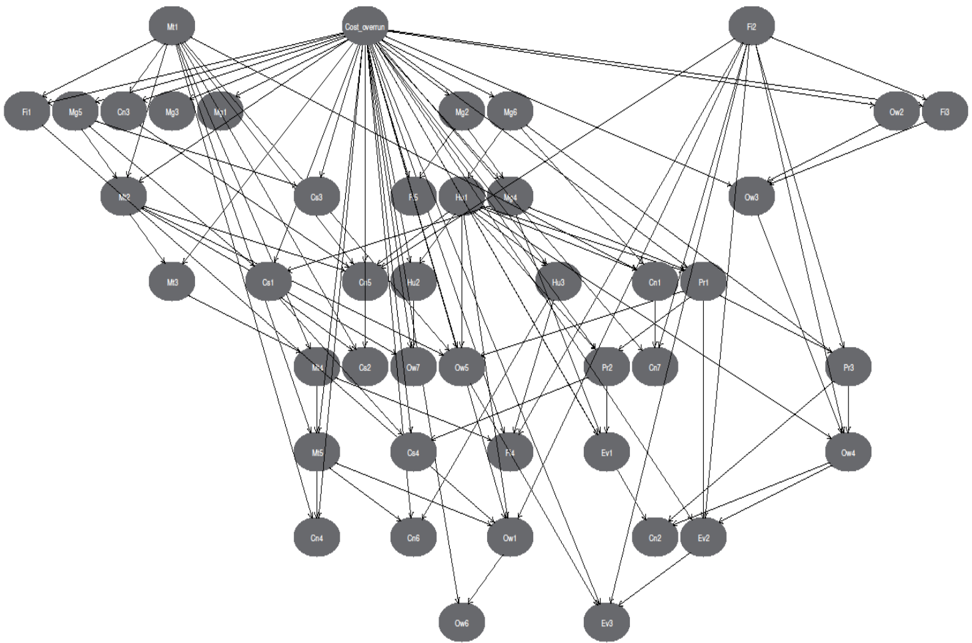
- In step 2, K2GN-Un without feature selection achieved 81.67% accuracy, 0.93 area under ROC, 0.89 precision, 0.82 recall, and 0.84 F1-score; the paper reports accuracy and the ROC index increased by about 2% and 4% versus step 1.
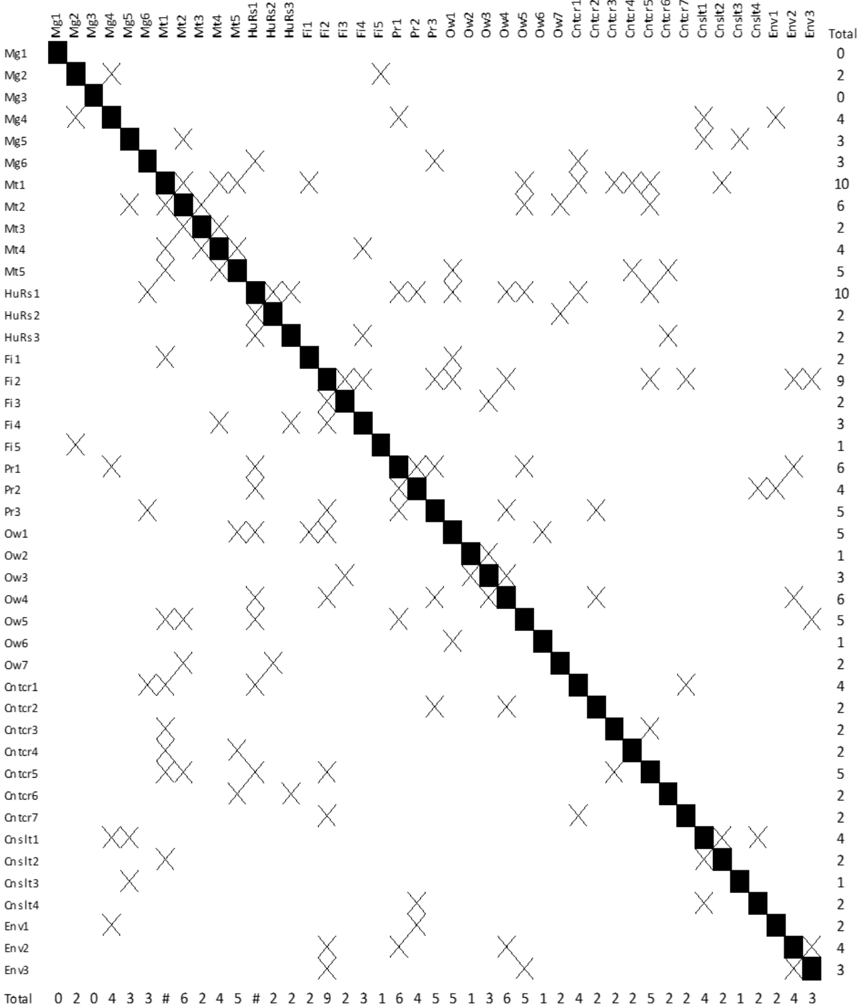
- Interpreting the learned K2GN-Un network identified the most critical risks by number of connections: increased price of materials (10), lack of knowledge and experience (10), inflation (9), owner customs policy and complexity/procurement delay (6), shortage of equipment (6), and adverse change in geological conditions (6).
- The dataset contained 43 risks, 39 qualified expert responses, Cronbach’s alpha of 0.92, and class distribution of 38.5% moderate, 61.5% high, and 0% low.
Methods
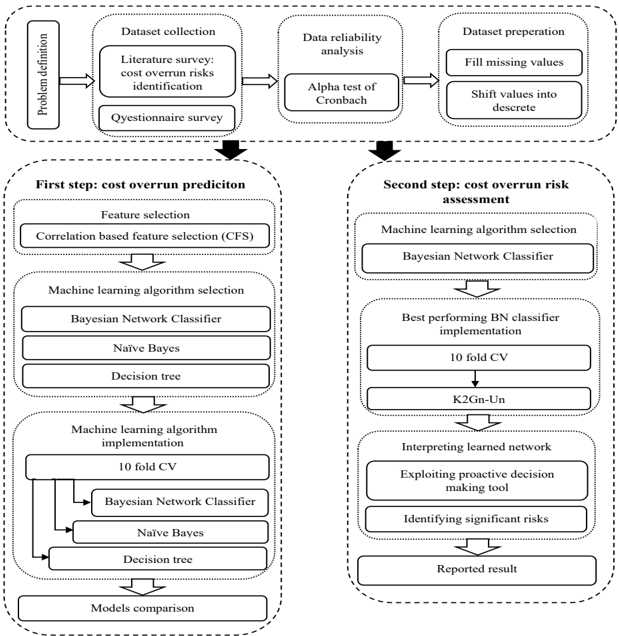
- Two-step ML design in WEKA: step 1 compared 18 BN classifiers, NB, and DT with CFS feature selection for cost overrun prediction; step 2 used the best BN (K2GN-Un) without feature selection to assess risks and interpret the learned network.
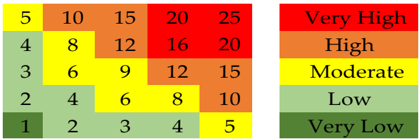
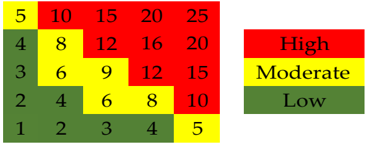
- Data: 43 cost overrun factors from literature; experts in employer, consultant, and contractor organizations of government construction projects in Zanjan province rated probability and impact on a 1–5 Likert scale; 41 experts participated, 2 responses were excluded, and 39 responses qualified. Risk magnitude was computed by multiplying probability and impact under ISO 31000:2018, and variables were converted to nominal values.
- Analysis: 10-fold cross-validation; metrics were accuracy, area under ROC, precision, recall, and F1-score. BN configurations varied learning algorithm (K2, hill-climbing, tabu search), network type (initAsNaiveBayes, General), and maximum number of parents (2, 3, None); the learned network was interpreted to identify risk relationships.
Limitations
- Stated: results can be generalized to government construction projects in Zanjan province; objective construction data are difficult to obtain, so the study relies on subjective expert judgments; comparison with prior models does not imply superiority because different datasets were used.
- Stated/evident: the dataset has no low-class instances (0% low; 38.5% moderate, 61.5% high), indicating class imbalance; the sample is 39 qualified expert responses from one province and one project-owner type, limiting broader generalization.
- Evident: no external validation or independent test set beyond 10-fold cross-validation is reported; the learned relationships are based on correlations in expert-derived data, and the paper notes that ML-induced networks from unknown causal structure can be based on observed correlations rather than causation.
Model-written summary. Check it against the paper before relying on it.
Integrity signals
Registry
Cites
Statistics
Figures
Verification
Claims the paper makes
7 Valid · 4 Not valid · 24 Not checked · 43 Own results and interpretations
The cited sources support only part of this claim — read each source’s verdict below.
In the paper
“However, the fundamental limitation of this approach is that it performs a pairwise comparison while assigning a crisp value [29] to capture uncertainty and stochastic behavior in risk data of complex projects [30].”
What the sources say
- Not checked — no full text of the sourcecites [29] 29. Huang, C.-N.; Liou, J.J.; Chuang, Y.-C. A method for exploring the interdependencies and importance of critical infrastructures. Knowl. -Based Syst. 2014 , 55 , 66-74. [CrossRef] source
- Partly supportedcites [30] 30. Valipour, A.; Yahaya, N.; Noor, N.M.; Kildien˙ e, S.; Sarvari, H.; Mardani, A. A fuzzy analytic network process method for risk prioritization in freeway PPP projects: An Iranian case study. J. Civ. Eng. Manag. 2015 , 21 , 933-947. [CrossRef] sourceExperimental — accuracy not yet measured
The Literature review (section 1) says crisp pairwise comparisons in traditional ANP are too imprecise to capture decision-makers’ uncertain judgments. Section 2.3 likewise says ANP may inadequately handle ambiguity when mapping judgments to exact numbers. The paper does not establish the broader claim about stochastic behavior in project risk data; in the printed sentence, that phrase follows a separate citation [30]. (LLM, conf=0.86)
plainstates a cause- Asserted: passes — The authors put it forward as true.
- Checkable: passes — It can be checked against evidence.
- Load-bearing: passes — The paper’s conclusions depend on it.
- Based: passes — The paper gives a reason why it holds.
The cited sources support only part of this claim — read each source’s verdict below.
In the paper
“However, Fuzzy-AHP and Fuzzy-ANP have similar drawbacks, requiring many tedious pairwise comparisons [40,41].”
What the sources say
- Partly supportedcites [40] 40. Ebrahimnejad, S.; Mousavi, S.; Tavakkoli-Moghaddam, R.; Hashemi, H.; Vahdani, B. A novel two-phase group decision making approach for construction project selection in a fuzzy environment. Appl. Math. Model. 2012 , 36 , 4197-4217. [CrossRef] sourceExperimental — accuracy not yet measured
Section 3.1 (ANP; page unavailable) describes repeated pairwise comparisons, and Section 5.2 (Discussion; page unavailable) calls manipulations in conventional fuzzy ANP comparisons “boring.” The copy does not establish that fuzzy AHP shares this drawback, so it supports the fuzzy-ANP part but not the claim about both methods. (LLM, conf=0.84)
- Supportedcites [41] 41. Islam, M.S.; Nepal, M.; Skitmore, M. Modified fuzzy group decision-making approach to cost overrun risk assessment of power plant projects. J. Constr. Eng. Manag.-ASCE 2019 , 145 , 40181261-15. [CrossRef] source
In “A Brief Overview of Fuzzy-Risk Assessment Methods,” the paper says Fuzzy-AHP is cumbersome because of pairwise risk comparisons in complex projects. It adds that ANP, like AHP, requires many tedious pairwise comparisons. (LLM, conf=0.94)
plainstates a cause- Asserted: passes — The authors put it forward as true.
- Checkable: passes — It can be checked against evidence.
- Load-bearing: unclear — It is unclear whether the paper’s conclusions depend on it.
- Based: passes — The paper gives a reason why it holds.
- Partly supported
A result the paper reports from its own data — it cites no other source for it, so there is none to check. The quote shows it is in the paper.
In the paper
“Moreover, considering possible relationships between cost overrun risks improves the ML model's cost overrun prediction accuracy for construction projects.”
- Also stated in: § 8. Conclusions · boosted
“Additionally, this stage demonstrated that considering possible relationships between cost overrun risks improves the ML model's cost overrun prediction accuracy for construction projects.”
boostedstates a cause- Asserted: passes — The authors put it forward as true.
- Checkable: passes — It can be checked against evidence.
- Load-bearing: passes — The paper’s conclusions depend on it.
- Based: passes — The paper gives a reason why it holds.
- Also stated in: § 8. Conclusions · boosted
A result the paper states — it cites no source for it, so there is none to check. The quote shows it is in the paper.
In the paper
“43 cost overrun factors were identified in a literature review as appearing most frequently or in highly cited papers.”
plain- Asserted: passes — The authors put it forward as true.
- Checkable: passes — It can be checked against evidence.
- Load-bearing: passes — The paper’s conclusions depend on it.
- Based: passes — The paper gives a reason why it holds.
A result the paper reports from its own data — it cites no other source for it, so there is none to check. The quote shows it is in the paper.
In the paper
“The increased price of materials, lack of knowledge and experience, and inflation were identified as the most critical risks regarding the number of relationships with other risks.”
plainstates an association- Asserted: passes — The authors put it forward as true.
- Checkable: passes — It can be checked against evidence.
- Load-bearing: passes — The paper’s conclusions depend on it.
- Based: passes — The paper gives a reason why it holds.
- Rests on an assumption not shown here.
22 more claims
Create a free account to see all 78 claims and to verify the 1 reference still open.
- Probably not a substantial claim. 32
- It may state two separate claims as one. 31
Self-check
Percentages, sums and reported differences re-computed from the paper’s own numbers.
Each contradiction between two passages listed here was confirmed by an independent check.
Rated minor: it would not touch a result — a value no result rests on, a p-value that stays on the same side of the significance level, or a conflict that is clerical, resolved elsewhere in the paper, or outside its own findings.
In the paper
§ 7. Discussion
“the best ML model was the NB, which had a 51.2% accuracy rate.”
§ 7. Discussion
“| Gondia et al. [22] | NB | Accuracy: 78.4% |”
Rated minor: it would not touch a result — a value no result rests on, a p-value that stays on the same side of the significance level, or a conflict that is clerical, resolved elsewhere in the paper, or outside its own findings.
In the paper
§ 7. Discussion
“the K2Gn-Un model performing at 80.25% and 0.8 WROC index”
§ 6.2. First Step: Cost Overrun Prediction
“| K2GN-Un | | General | None | 79.75 | 0.89 | 0.86 | 0.80 | 0.83 |”
Citations
Cites
The Elements of Statistical Learning
Hastie, T., Tibshirani, R., & Friedman, J. (2009) · Springer Series in Statistics · doi:10.1007/978-0-387-84858-7 · Cited by 25,970
Top 10 algorithms in data mining
Wu, X., Kumar, V., Ross Quinlan, J., Ghosh, J., Yang, Q., Motoda, H., McLachlan, G. J., Ng, A., Liu, B., Yu, P. S., et al. (2008) · Knowledge and Information Systems · doi:10.1007/s10115-007-0114-2 · Cited by 5,667 · cited 1×
“DTs are a subset of supervised learning algorithms, most of which are based on One of the significant advantages of the DT algorithm is its simplicity of comprehension and interpretation [66–68]. objective of minimizing a function called entropy.”
BackgroundFriedman, N., Geiger, D., & Goldszmidt, M. (1997) · Machine Learning · doi:10.1023/a:1007465528199 · Cited by 4,742
(1998) · Cited by 3,476
(2013) · Cited by 1,331
Emerging Artificial Intelligence Methods in Structural Engineering
Salehi, H., & Burgueño, R. (2018) · Engineering Structures · doi:10.1016/j.engstruct.2018.05.084 · Cited by 1,068 · cited 1×
“ML models can be predictive or descriptive when deriving knowledge from data [11].”
BackgroundPatrício, D. I., & Rieder, R. (2018) · Computers and Electronics in Agriculture · doi:10.1016/j.compag.2018.08.001 · Cited by 942
The Top Ten Algorithms in Data Mining
(2009) · Chapman & Hall/CRC eBooks · doi:10.1201/9781420089653 · Cited by 670
Darko, A., Chan, A. P. C., Adabre, M. A., Edwards, D. J., Hosseini, M. R., & Ameyaw, E. E. (2020) · Automation in Construction · doi:10.1016/j.autcon.2020.103081 · Cited by 603
Construction projects selection and risk assessment by fuzzy AHP and fuzzy TOPSIS methodologies
Taylan, O., Bafail, A. O., Abdulaal, R. M. S., & Kabli, M. R. (2014) · Applied Soft Computing · doi:10.1016/j.asoc.2014.01.003 · Cited by 574
Risk assessment and allocation in the UAE construction industry
El-Sayegh, S. M. (2008) · International Journal of Project Management · doi:10.1016/j.ijproman.2007.07.004 · Cited by 468 · cited 1×
“It typically entails the steps of risk identification, risk assessment, risk treatment, and stage monitoring throughout the project’s life cycle [12,46].”
BackgroundPreferred risk allocation in China’s public–private partnership (PPP) projects
Ke, Y., Wang, S., Chan, A. P. C., & Lam, P. T. I. (2010) · International Journal of Project Management · doi:10.1016/j.ijproman.2009.08.007 · Cited by 449
Types of machine learning algorithms
Oladipupo, T. (2010) · New Advances in Machine Learning · doi:10.5772/9385 · Cited by 443 · cited 3×
“The purpose of classification is to group similar items [51].”
BackgroundMethodInfluentialTowards a better modelling and assessment of construction risk: Insights from a literature review
Taroun, A. (2014) · International Journal of Project Management · doi:10.1016/j.ijproman.2013.03.004 · Cited by 387
Applications of machine learning methods for engineering risk assessment – A review
Hegde, J., & Rokseth, B. (2020) · Safety Science · doi:10.1016/j.ssci.2019.09.015 · Cited by 363
Machine learning algorithms for construction projects delay risk prediction
Gondia, A., Siam, A., El-Dakhakhni, W., & Nassar, A. H. (2020) · Journal of Construction Engineering and Management · doi:10.1061/(asce)co.1943-7862.0001736 · Cited by 327 · cited 8×
“Before proceeding to model performance metrics, a few key terms for each class need to be clarified first [22]: 1.”
BackgroundMethodInfluentialCarr, V, & Tah, J. H. M. (2001) · Advances in Engineering Software · doi:10.1016/s0965-9978(01)00036-9 · Cited by 322
Data analytics in asset management: Cost-effective prediction of the pavement condition index
Piryonesi, S. M., & El-Diraby, T. E. (2020) · Journal of Infrastructure Systems · doi:10.1061/(asce)is.1943-555x.0000512 · Cited by 295
Discrete Bayesian Network Classifiers: A Survey
Bielza, C., & Larrañaga, P. (2014) · ACM Computing Surveys · doi:10.1145/2576868 · Cited by 248
Construction Project Cost Escalation Factors
Shane, J. S., Molenaar, K. R., Anderson, S., & Schexnayder, C. (2009) · Journal of Management in Engineering · doi:10.1061/(asce)0742-597x(2009)25:4(221 · Cited by 220
Eybpoosh, M., Dikmen, I., & Talat Birgonul, M. (2011) · Journal of Construction Engineering and Management · doi:10.1061/(asce)co.1943-7862.0000382 · Cited by 217
Implications of Construction 4.0 to the workforce and organizational structures
García de Soto, B., Agustí-Juan, I., Joss, S., & Hunhevicz, J. (2022) · International Journal of Construction Management · doi:10.1080/15623599.2019.1616414 · Cited by 205
Risk paths in international construction projects: Case study from Chinese contractors
Liu, J., Zhao, X., & Yan, P. (2016) · Journal of Construction Engineering and Management · doi:10.1061/(asce)co.1943-7862.0001116 · Cited by 203
Prediction of Risk Delay in Construction Projects Using a Hybrid Artificial Intelligence Model
Yaseen, Z. M., Ali, Z. H., Salih, S. Q., & Al-Ansari, N. (2020) · Sustainability · doi:10.3390/su12041514 · Cited by 194
Machine learning as an experimental science
Langley, P. (1988) · Machine Learning · doi:10.1007/bf00115008 · Cited by 187 · cited 1×
“Nonetheless, because ML is an experimental science, it is not always ensured to improve the model’s accuracy through the feature selection step [55].”
BackgroundAfzal, F., Yunfei, S., Nazir, M., & Bhatti, S. M. (2021) · International Journal of Managing Projects in Business · doi:10.1108/ijmpb-02-2019-0047 · Cited by 172
Shoar, S., Chileshe, N., & Edwards, D. J. (2022) · Journal of Building Engineering · doi:10.1016/j.jobe.2022.104102 · Cited by 164
Islam, M. S., Nepal, M. P., Skitmore, M., & Attarzadeh, M. (2017) · Advanced Engineering Informatics · doi:10.1016/j.aei.2017.06.001 · Cited by 163 · cited 5×
“However, MCS still has difficulty recognizing probabilities since risk and unpredictability cannot be characterized as probabilistic [12].”
BackgroundInfluentialData mining in the construction industry: Present status, opportunities, and future trends
Yan, H., Yang, N., Peng, Y., & Ren, Y. (2020) · Automation in Construction · doi:10.1016/j.autcon.2020.103331 · Cited by 161
Ebrahimnejad, S., Mousavi, S. M., Tavakkoli-Moghaddam, R., Hashemi, H., & Vahdani, B. (2012) · Applied Mathematical Modelling · doi:10.1016/j.apm.2011.11.050 · Cited by 156 · cited 1×
“However, Fuzzy-AHP and Fuzzy-ANP have similar drawbacks, requiring many tedious pairwise comparisons [40,41].”
MethodLove, P. E. D., Ahiaga-Dagbui, D. D., & Irani, Z. (2016) · Transportation Research Part A: Policy and Practice · doi:10.1016/j.tra.2016.08.007 · Cited by 138
Cluster Analysis of Smart Metering Data: An Implementation in Practice
Flath, C., Nicolay, D., Conte, T., van Dinther, C., & Filipova-Neumann, L. (2012) · Business & Information Systems Engineering · doi:10.1007/s12599-011-0201-5 · Cited by 137 · cited 2×
“It combines methods from statistics, database analysis, data mining, pattern recognition, and artificial intelligence to extract trends, interrelationships, patterns of interest, and useful insights from complex data sets [43,44].”
MethodApplied artificial intelligence for predicting construction projects delay
Egwim, C. N., Alaka, H., Toriola-Coker, L. O., Balogun, H., & Sunmola, F. (2021) · Machine Learning with Applications · doi:10.1016/j.mlwa.2021.100166 · Cited by 125
Risk assessment of international construction projects using the analytic network process
Bu-Qammaz, A. S., Dikmen, I., & Birgonul, M. T. (2009) · Canadian Journal of Civil Engineering · doi:10.1139/l09-061 · Cited by 120
Valipour, A., Yahaya, N., Md Noor, N., Kildienė, S., Sarvari, H., & Mardani, A. (2015) · Journal of Civil Engineering and Management · doi:10.3846/13923730.2015.1051104 · Cited by 111 · cited 1×
“However, the fundamental limitation of this approach is that it performs a pairwise comparison while assigning a crisp value [29] to capture uncertainty and stochastic behavior in risk data of complex projects [30].”
BackgroundAdeleke, A. Q., Bahaudin, A. Y., Kamaruddeen, A. M., Bamgbade, J. A., Salimon, M. G., Khan, M. W. A., & Sorooshian, S. (2018) · Safety and Health at Work · doi:10.1016/j.shaw.2017.05.004 · Cited by 107 · cited 1×
“One of the limitations of SEM is that it does not assume the uncertainty and stochastic behavior of events [34]; therefore, it has limited applications for complex projects under high uncertainty [1].”
BackgroundA method for exploring the interdependencies and importance of critical infrastructures
Huang, C.-N., Liou, J. J. H., & Chuang, Y.-C. (2014) · Knowledge-Based Systems · doi:10.1016/j.knosys.2013.10.010 · Cited by 106 · cited 1×
“However, the fundamental limitation of this approach is that it performs a pairwise comparison while assigning a crisp value [29] to capture uncertainty and stochastic behavior in risk data of complex projects [30].”
BackgroundApplication of Support Vector Machines in Assessing Conceptual Cost Estimates
An, S.-H., Park, U.-Y., Kang, K.-I., Cho, M.-Y., & Cho, H. (2007) · Journal of Computing in Civil Engineering · doi:10.1061/(asce)0887-3801(2007)21:4(259 · Cited by 91
Predicting Phishing Websites Using Classification Mining Techniques with Experimental Case Studies
Aburrous, M., Hossain, M. A., Dahal, K., & Thabtah, F. (2010) · 2010 Seventh International Conference on Information Technology: New Generations · doi:10.1109/itng.2010.117 · Cited by 86 · cited 2×
“It combines methods from statistics, database analysis, data mining, pattern recognition, and artificial intelligence to extract trends, interrelationships, patterns of interest, and useful insights from complex data sets [43,44].”
MethodImpact of Design Risk on the Performance of Design-Build Projects
Liu, J., Xie, Q., Xia, B., & Bridge, A. (2017) · Journal of Construction Engineering and Management · doi:10.1061/(asce)co.1943-7862.0001299 · Cited by 84
Shariat, R., Roozbahani, A., & Ebrahimian, A. (2019) · Science of The Total Environment · doi:10.1016/j.scitotenv.2018.08.074 · Cited by 84
Public–Private Partnership Risk Factors in Emerging Countries: BOOT Illustrative Case Study
Rebeiz, K. S. (2012) · Journal of Management in Engineering · doi:10.1061/(asce)me.1943-5479.0000079 · Cited by 81
PRASCEVIC, N., & PRASCEVIC, Z. (2017) · Journal of Civil Engineering and Management · doi:10.3846/13923730.2017.1388278 · Cited by 77
Machine learning model for delay risk assessment in tall building projects
Sanni-Anibire, M. O., Zin, R. M., & Olatunji, S. O. (2022) · International Journal of Construction Management · doi:10.1080/15623599.2020.1768326 · Cited by 69
Li, Y., & Wang, X. (2016) · Journal of Risk Research · doi:10.1080/13669877.2016.1264451 · Cited by 69
Adeleke, A. Q., Bahaudin, A. Y., & Kamaruddeen, A. M. (2017) · Global Business Review · doi:10.1177/0972150916677460 · Cited by 65
Defect Risk Assessment Using a Hybrid Machine Learning Method
Fan, C. (2020) · Journal of Construction Engineering and Management · doi:10.1061/(asce)co.1943-7862.0001897 · Cited by 61
Islam, M. S., Nepal, M. P., & Skitmore, M. (2019) · Journal of Construction Engineering and Management · doi:10.1061/(asce)co.1943-7862.0001593 · Cited by 60 · cited 1×
“However, Fuzzy-AHP and Fuzzy-ANP have similar drawbacks, requiring many tedious pairwise comparisons [40,41].”
MethodA quantitative risk assessment methodology for construction project
Gupta, V. K., & Thakkar, J. J. (2018) · Sadhana · doi:10.1007/s12046-018-0846-6 · Cited by 58
A machine learning approach for predicting delays in construction logistics
Asadi, A., Alsubaey, M., & Makatsoris, C. (2015) · International Journal of Advanced Logistics · doi:10.1080/2287108x.2015.1059920 · Cited by 57
Ghazal, M. M., & Hammad, A. (2022) · International Journal of Construction Management · doi:10.1080/15623599.2020.1738205 · Cited by 52 · cited 9×
“Finally, class membership is defined for a tested observation by selecting the most posterior probability class [21].”
BackgroundMethodInfluentialHu, Y., Wang, Y., Zhao, T., & Phoon, K. (2020) · ASCE-ASME Journal of Risk and Uncertainty in Engineering Systems Part A Civil Engineering · doi:10.1061/ajrua6.0001059 · Cited by 45
Art Chaovalitwongse, W., Wang, W., Williams, T. P., & Chaovalitwongse, P. (2012) · Journal of Construction Engineering and Management · doi:10.1061/(asce)co.1943-7862.0000386 · Cited by 38
Structural Equation Model for Investigating Risk Factors Affecting Project Success in Surabaya
Chandra, H. P. (2015) · Procedia Engineering · doi:10.1016/j.proeng.2015.11.009 · Cited by 37
DEVELOPING A COMPREHENSIVE RISK ASSESSMENT MODEL BASED ON FUZZY BAYESIAN BELIEF NETWORK (FBBN)
Guan, L., Liu, Q., Abbasi, A., & Ryan, M. J. (2020) · Journal of Civil Engineering and Management · doi:10.3846/jcem.2020.12322 · Cited by 34
El-Kholy, A. M. (2019) · International Journal of Construction Management · doi:10.1080/15623599.2019.1580001 · Cited by 33
Integrated Risk of Progress-Based Costs and Schedule Delays in Construction Projects
Pehlivan, S., & Oztemir, A. E. (2018) · Engineering Management Journal · doi:10.1080/10429247.2018.1439636 · Cited by 32
A model for risk evaluation in construction projects based on fuzzy MADM
Ebrahimnejad, S., Mousavi, S. M., & Mojtahedi, M. (2008) · IEEE International Conference on Management of Innovation and Technology (ICMIT) · doi:10.1109/icmit.2008.4654381 · Cited by 29
Hammad, A., AbouRizk, S., & Mohamed, Y. (2013) · Journal of Management in Engineering · doi:10.1061/(asce)me.1943-5479.0000280 · Cited by 25
Nguyen, D.-T., Duc-Thang, P., Cuong, T. N.-N., & Duc-Hoc, T. (2022) · International Journal of Construction Management · doi:10.1080/15623599.2022.2106043 · Cited by 23
Machine Learning as an Experimental Science
Langley, P. (1988) · Machine Learning · doi:10.1023/a:1022623814640
Research works printed but not linked: 4
- 49. Witten, I.H.; Frank, E.; Hall, M.A. Data Mining: Practical Machine Learning Tools and Techniques ; Morgan Kaufmann: San Francisco, CA, USA, 2005.
- 62. Gliem, J.A.; Gliem, R.R. Calculating, Interpreting, and Reporting Cronbach's Alpha Reliability Coefficient for Likert-Type Scales ; Midwest Research-to-Practice Conference in Adult, Continuing, and Community: DeKalb, IL, USA, 2003.
- 65. Provost, F.; Fawcett, T. Data Science for Business: What you Need to Know about Data Mining and Data-Analytic Thinking ; O'Reilly Media, Inc.: Sebastopol, CA, USA, 2013.
- 71. Bouckaert, R.R. Bayesian Network Classifiers in WEKA for Version 3-5-7 ; Artificial Intelligence Tools; University of Waikato: Hamilton, New Zealand, 2008; Volume 11, pp. 369-387.
Cited by
Kazeem, K. O., Olawumi, T. O., & Osunsanmi, T. O. (2023) · Buildings · doi:10.3390/buildings13082061 · Cited by 86
Farmanesh, P., Dehkordi, N. S., Vehbi, A., & Chavali, K. (2025) · Sustainability · doi:10.3390/su17052162 · Cited by 97
BIM and IFC Data Readiness for AI Integration in the Construction Industry: A Review Approach
Du, S., Hou, L., Zhang, G., Tan, Y., & Mao, P. (2024) · Buildings · doi:10.3390/buildings14103305 · Cited by 70
Metadata
- Authors
- Ashtari, M. A., Ansari, R., Hassannayebi, E., & Jeong, J.
- Affiliations
- Imam Khomeini International University (IR)
- Sharif University of Technology (IR)
- Seoul National University of Science and Technology (KR)
- Corresponding author
- Ansari, Ramin
- Venue
- Buildings
- Publisher
- MDPI AG
- Published
- 2022-10-11
- Volume
- 12
- Issue
- 10
- Pages
- 1660
- ISSN
- 2075-5309 (ISSN-L)
- OpenAlex
- W4304585192
- Semantic Scholar
- 2a4d8de5061c4a04e26f1d942334eb1c57e60652
- Cited by
- 65
- References
- 65
- Citations by year
- 2026: 12 · 2025: 25 · 2024: 14 · 2023: 13 · 2022: 1
- FWCI
- 8.12
- Type
- journal article
- Language
- en
- Open access
- gold
- doi.org
- Licence
- Locations
- Buildings (publishedVersion, cc-by)
- DOAJ (DOAJ: Directory of Open Access Journals) (submittedVersion, cc-by-sa)
- Topics
- Social Sciences › Decision Sciences › Management Science and Operations Research › Construction Project Management and Performance
- Physical Sciences › Engineering › Building and Construction › BIM and Construction Integration
- Social Sciences › Economics, Econometrics and Finance › Finance › Capital Investment and Risk Analysis
- Keywords
- cost overruns, construction projects, risk assessment, Bayesian network classifiers, model interpretability, inflation, Naive Bayes comparison, decision tree comparison
About these checks
Registry, retraction, Cites and statistics results are computed, not judged, with one exception: a printed reference that no index lists is read once by a model before it counts as a citation error. Claims are extracted by a model and kept only when their quote appears verbatim in the text; each cited source is then checked, with a model’s help, for whether it says what the claim relies on. Those verdicts can be wrong — read the claim’s quote and the cited source before relying on one.
The claim verdicts this report counts are experimental: their accuracy is not yet measured.
A language model drew the claims from the paper on 2026-10-11, under version 3 of the claim definition (model deepseek-v4.1-flash, prompt extract-v3).
A second model labelled each claim on 2026-10-11 (model jev-1.13-20260917, definition revision gold-guideline-v0.2).
Cited sources are checked with a language model’s help (gpt-6-sol).
Statistics and arithmetic are recomputed, not judged.
Confidence bands are shown only for fields calibrated on our annotated test set. None is calibrated yet, so no band is shown.
What counts as a claim ›How we measure confidence ›How we check this ›
Are you an author, or do you see a problem with this page? Request a review
Data sources
Bibliographic data: Semantic Scholar, OpenAlex, Crossref.
Contains information from the Semantic Scholar Academic Graph Datasets, made available under the ODC Attribution License (ODC-BY 1.0).
Semantic Scholar’s data is described in: Kinney, R., et al. (2023). The Semantic Scholar Open Data Platform. arXiv:2301.10140.
