

Polycystic Ovary Syndrome and the Internet of Things: A Scoping Review
Open accessThe DOI matches its Crossref record; 125 of the 132 references it cites were found in a registry or an index; 175 of the 298 sources its claims cite were checked for support.
Abstract
Polycystic ovary syndrome (PCOS) is a prevalent endocrine disorder impacting women’s health and quality of life. This scoping review explores the use of the Internet of Things (IoT) in PCOS management. Results were grouped into six domains of the IoT: mobile apps, social media, wearables, machine learning, websites, and phone-based. A further domain was created to capture participants’ perspectives on using the IoT in PCOS management. Mobile apps appear to be useful for menstrual cycle tracking, symptom recording, and education. Despite concerns regarding the quality and reliability of social media content, these platforms may play an important role in disseminating PCOS-related information. Wearables facilitate detailed symptom monitoring and improve communication with healthcare providers. Machine learning algorithms show promising results in PCOS diagnosis accuracy, risk prediction, and app development. Although abundant, PCOS-related content on websites may lack quality and cultural considerations. While patients express concerns about online misinformation, they consider online forums valuable for peer connection. Using text messages and phone calls to provide feedback and support to PCOS patients may help them improve lifestyle behaviors and self-management skills. Advancing evidence-based, culturally sensitive, and accessible IoT solutions can enhance their potential to transform PCOS care, address misinformation, and empower women to better manage their symptoms.
Overview
CoChat Summary
TL;DR
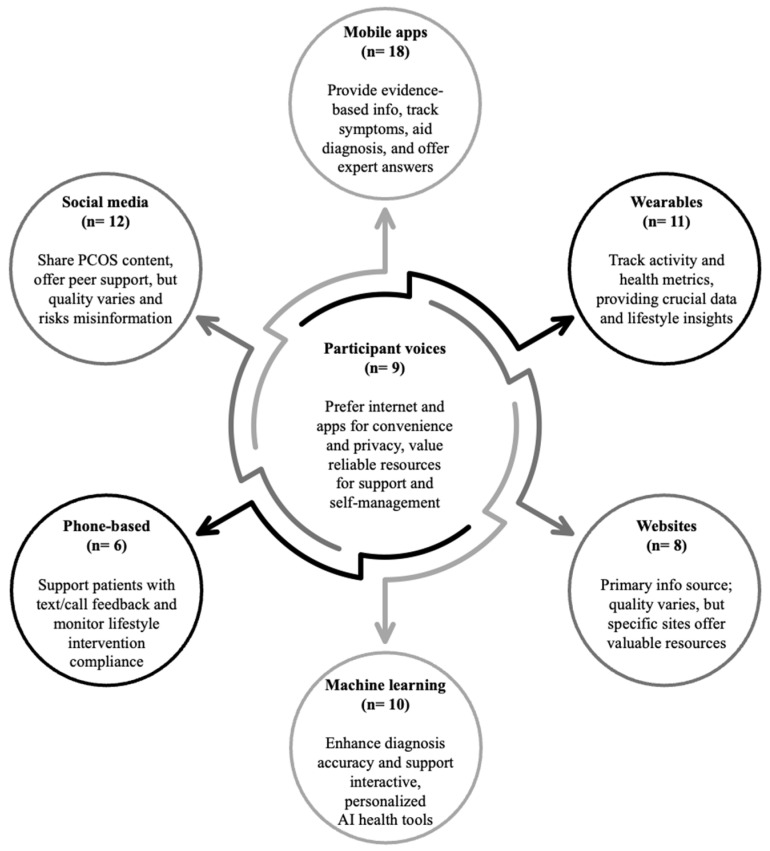
This scoping review maps Internet of Things (IoT) use in polycystic ovary syndrome (PCOS) across mobile apps, social media, wearables, machine learning, websites, phone-based tools, and participant perspectives. It finds promise for tracking, education, diagnosis support, and peer support, but persistent concerns about misinformation, content quality, commercial bias, and cultural/access gaps.
Key findings
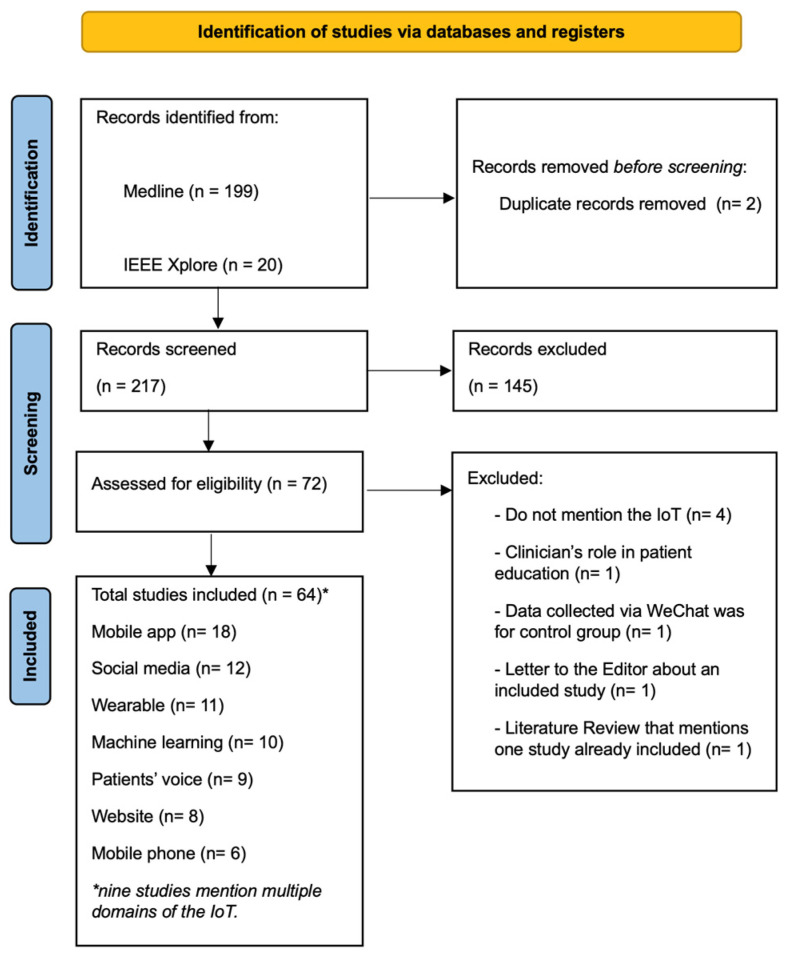
- The review included 64 publications grouped into 59 eligible studies, with domains of mobile apps (n = 18), social media (n = 12), wearables (n = 11), machine learning (n = 10), websites (n = 8), and mobile phones (n = 6); nine qualitative studies captured participant voices. Most studies (n = 42) were published since 2020, including 23 in 2023.
- Mobile apps were used for menstrual cycle tracking, symptom recording, and education: in an AskPCOS survey (n = 264), 86% would be more likely to use an app than a website (14%), 91% would use a PCOS-specific app, and important features included evidence-based information (95%), symptom recording (95%), and asking an expert (86%). One randomized trial reported 4.4% weight loss (75.84 to 72.65 kg) after 12 weeks versus 1.1% (72.98 to 72.19 kg) in the control group, with improvements in postprandial insulin, hirsutism, and depression.
- Social media reached large audiences but carried misinformation and commercial conflicts: PCOS-related TikTok content averaged 1.8 million views, and conflict of interest was present in 45% of TikTok and 89% of Instagram posts. In 85,872 YouTube comments over 12 years, where gender was identifiable (n = 13,106), 88.5% (n = 11,601) were posted by female users; misinformation about a PCOS “cure” was the key theme among male comments (n = 1506, 11.5%).
- Machine learning showed diagnostic promise but variable validation: reported accuracy ranged from 81% to 100%, with patient-data studies reporting 90.44%, 92.45%, and 98.41%; a systematic review of 31 studies found ultrasound images used in 48% and only 32% (n = 10) used standardized PCOS diagnostic criteria. Wearables found sleep-disordered breathing in 87.5% vs. 45.5% and lower sleep efficiency (82.8 ± 4.7 vs. 85.6 ± 4.3); an increment of 2000 steps/day was independently associated with decreased free androgen index. Websites often lacked quality: in a 2010 study of 15 websites, only two correctly described PCOS diagnostic criteria, and later studies noted commercial backgrounds and suboptimal accuracy.
Methods
- Scoping review following Arksey and O’Malley and Levac et al., with updated Joanna Briggs Institute guidance and PRISMA-ScR reporting; the PCC question asked what and how the IoT is used in the management of women with PCOS.
- Searches in Medline and IEEE were completed in December 2023, with no time or language limits for peer-reviewed full-text articles; inclusion covered IoT for or by people of any age diagnosed with PCOS, and exclusion covered studies without PCOS or without IoT use/evaluation.
- Screening was done independently by SG, FA, and CK, with disagreements resolved by SG and CK and full texts screened by SG; data charting used a standardized form, descriptive analysis, frequency counting, and basic coding for qualitative studies. Database searches returned 219 studies, 2 duplicates, 217 screened, 145 excluded, 72 full texts retrieved, 8 excluded, leaving 64 publications grouped into 59 studies.
Limitations
- The authors state that database selection and search strategy may have inadvertently omitted relevant literature; cultural aspects affecting digital literacy, acceptance, access, and technology use, plus local internet availability, may affect heterogeneity and generalizability; and subjectivity in synthesizing qualitative findings plus the absence of formal quality assessment (risk of bias and certainty of evidence) require cautious interpretation.
- Evident from the text: the included evidence is heterogeneous across content analyses, surveys, trials, and modeling studies, and some samples are not restricted to PCOS—for example, the Flo chatbot sample of 416,712 users is described as an international sample where the majority do not have PCOS.
Model-written summary. Check it against the paper before relying on it.
Integrity signals
Registry
Cites
Statistics
Figures
Verification
Claims the paper makes
102 Valid · 2 Not valid · 37 Not checked · 39 Own results and interpretations
The sources with a verdict support this claim; the rest weren’t checked yet, have no full text we could read, or their verdicts aren’t rated yet.
In the paper
“The majority (n = 5) involved analysis of content from search engine results [46,47,91,94,95], while one each looked at content in teen and women’s digital magazines [93], French language internet forums [90], and a specific PCOS-related website [92].”
§ Polycystic Ovary Syndrome and the Internet of Things: A Scoping Review > 3. Results > 3.5. Websites
What the sources say
- Not checked — no full text of the sourcecites [46] Chiu W. Kuczynska-Burggraf M. Gibson-Helm M. Teede H.J. Vincent A. Boyle J.A. What Can You Find about Polycystic Ovary Syndrome (PCOS) Online? Assessing Online Information on PCOS: Quality, Content, and User-Friendliness Semin. Reprod. Med. 2018 36 50 58 10.1055/s-0038-1667186 30189451 source
- Not checked — no full text of the sourcecites [47] Htet T. Cassar S. Boyle J.A. Kuczynska-Burggraf M. Gibson-Helm M. Chiu W. Stepto N.K. Moran L.J. Informing Translation: The Accuracy of Information on Websites for Lifestyle Management of Polycystic Ovary Syndrome Semin. Reprod. Med. 2018 36 80 85 10.1055/s-0038-1667309 30189455 source
- Supportedcites [91] Vågenes H. Pranić S.M. Analysis of the quality, accuracy, and readability of patient information on polycystic ovarian syndrome (PCOS) on the internet available in English: A cross-sectional study Reprod. Biol. Endocrinol. 2023 21 44 10.1186/s12958-023-01100-x 37189154 PMC10184410 source
The Methods (Electronic searches and Data collection) state that this study used Google, Bing, and Yahoo search results and analyzed the top webpages returned. This supports citing it as one of the studies that analyzed content from search engine results; the count of five is the citing paper’s tally, not a finding attributed to this source. (LLM, conf=0.93)
- Not checked — no full text of the sourcecites [94] Mousiolis A. Michala L. Antsaklis A. Polycystic ovary syndrome: Double click and right check. What do patients learn from the Internet about PCOS? Eur. J. Obstet. Gynecol. Reprod. Biol. 2012 163 43 46 10.1016/j.ejogrb.2012.03.028 22512829 source
- Not checked — no full text of the sourcecites [95] Mallappa Saroja C.S. Hanji Chandrashekar S. Polycystic ovaries: Review of medical information on the internet for patients Arch. Gynecol. Obstet. 2010 281 839 843 10.1007/s00404-010-1378-4 20143080 source
plainn = 5- Asserted: passes — The authors put it forward as true.
- Checkable: passes — It can be checked against evidence.
- Load-bearing: unclear — It is unclear whether the paper’s conclusions depend on it.
- Based: passes — The paper gives a reason why it holds.
The cited sources support only part of this claim — read each source’s verdict below.
In the paper
“Nine included studies mention the use of machine learning [63,64,65,66,67,76,87,88,89] (Supplementary File S3).”
§ Polycystic Ovary Syndrome and the Internet of Things: A Scoping Review > 3. Results > 3.4. Machine Learning
What the sources say
- Not checked — no full text of the sourcecites [63] Ajil A. Ali A. Ramachandra H.V. Nadaf T.A. Enhancing the Healthcare by an Automated Detection Method for PCOS Using Supervised Machine Learning Algorithm Proceedings of the 2023 International Conference on Recent Advances in Information Technology for Sustainable Development (ICRAIS) Manipal, India 6–7 November 2023 166 170 10.1109/ICRAIS59684.2023.10367055 source
- Not checked — no full text of the sourcecites [64] Jeswani N. Jain N. Sharma A. Roychowdhury S. Comprehensive FemTech Solution for Feminine Health Proceedings of the 2023 International Conference on Signal Processing, Computation, Electronics, Power and Telecommunication (IConSCEPT) Karaikal, India 25–26 May 2023 1 6 10.1109/IConSCEPT57958.2023.10170571 source
- Not checked — no full text of the sourcecites [65] Karia A. Poojary A. Tiwari A. Sequeira L. Sokhi M.K. BeRedy (Period Tracker & PCOS Diagnosis) Proceedings of the 2023 International Conference on Communication System, Computing and IT Applications (CSCITA) Mumbai, India 31 March–1 April 2023 142 147 10.1109/CSCITA55725.2023.10104755 source
- Not checked — no full text of the sourcecites [66] Chauhan P. Patil P. Rane N. Raundale P. Kanakia H. Comparative Analysis of Machine Learning Algorithms for Prediction of PCOS Proceedings of the 2021 International Conference on Communication information and Computing Technology (ICCICT) Mumbai, India 25–27 June 2021 1 7 10.1109/ICCICT50803.2021.9510101 source
- Partly supportedcites [67] Rodriguez E.M. Thomas D. Druet A. Vlajic-Wheeler M. Lane K.J. Mahalingaiah S. Identifying Women at Risk for Polycystic Ovary Syndrome Using a Mobile Health App: Virtual Tool Functionality Assessment JMIR Form. Res. 2020 4 e15094 10.2196/15094 32406861 PMC7256750 sourceExperimental — accuracy not yet measured
The Methods (Creating the Framework; page unavailable) describe a Bayesian-network model used to generate PCOS risk scores, supporting this paper’s inclusion as a study of an algorithmic prediction tool. They say the network’s probabilities were manually encoded, however, and our copy does not explicitly mention machine learning. This source also cannot establish the citing paper’s count of nine included studies. (LLM, conf=0.81)
- Supportedcites [76] Emanuel R.H.K. Docherty P.D. Lunt H. Campbell R.E. Comparing Literature- and Subreddit-Derived Laboratory Values in Polycystic Ovary Syndrome (PCOS): Validation of Clinical Data Posted on PCOS Reddit Forums JMIR Form. Res. 2023 7 e44810 10.2196/44810 37624626 PMC10492173 source
The Methods (Data Collection and Cleaning) explicitly state that this study used machine learning to select relevant subreddit posts and trained a convolutional neural network. The citation identifies this paper as one of the nine included studies; it need not independently establish the citing paper’s count of nine. (LLM, conf=0.93)
- Supportedcites [87] Barrera F.J. Brown E.D.L. Rojo A. Obeso J. Plata H. Lincango E.P. Terry N. Rodríguez-Gutiérrez R. Hall J.E. Shekhar S. Application of machine learning and artificial intelligence in the diagnosis and classification of polycystic ovarian syndrome: A systematic review Front. Endocrinol. 2023 14 1106625 10.3389/fendo.2023.1106625 PMC10542899 37790605 source
This citation identifies one of the nine studies counted by the citing document, rather than asking this source to establish the total of nine. The source’s Results (Machine learning methods; AI/ML models performance) explicitly discuss machine-learning methods and list AI/ML interventions in its included studies. (LLM, conf=0.90)
- Not matchedcites [88] Suriya Praba T. Reka S. Elakkiya R. Early Diagnosis of Poly Cystic Ovary Syndrome (PCOS) in young women: A Machine Learning Approach Proceedings of the 2022 IEEE International Symposium on Mixed and Augmented Reality Adjunct (ISMAR-Adjunct) Singapore 17–21 October 2022 286 288 10.1109/ISMAR-Adjunct57072.2022.00065
We searched by its title and found no matching paper.
- Supportedcites [89] Zigarelli A. Jia Z. Lee H. Machine-Aided Self-diagnostic Prediction Models for Polycystic Ovary Syndrome: Observational Study JMIR Form. Res. 2022 6 e29967 10.2196/29967 35289757 PMC8965679 source
The citation identifies this paper as one of the nine studies mentioning machine learning, rather than asking it to establish the count of nine. The Introduction (Objectives) and Discussion (Principal Findings) explicitly describe its use of machine-learning techniques for PCOS prediction. (LLM, conf=0.92)
plain- Asserted: passes — The authors put it forward as true.
- Checkable: passes — It can be checked against evidence.
- Load-bearing: unclear — It is unclear whether the paper’s conclusions depend on it.
- Based: passes — The paper gives a reason why it holds.
Every source the paper cites for this claim was checked and supports it.
In the paper
“Armband activity trackers revealed how teens and young adults with PCOS in the USA preferred bouts of activity lasting at least five to ten minutes, but less than 30 min [79].”
§ Polycystic Ovary Syndrome and the Internet of Things: A Scoping Review > 3. Results > 3.3. Wearables
What the sources say
- Supportedcites [79] Michael J.C. El Nokali N.E. Black J.J. Rofey D.L. Mood and Ambulatory Monitoring of Physical Activity Patterns in Youth with Polycystic Ovary Syndrome J. Pediatr. Adolesc. Gynecol. 2015 28 369 372 10.1016/j.jpag.2014.10.010 26165910 PMC4503514 source
The Materials and Methods describe armband monitoring of participants aged 12–21 with PCOS recruited at a US hospital. The Discussion states that they showed a preference for activity bouts lasting at least 5–10 minutes but less than 30 minutes. The authors describe the small-sample findings as preliminary. (LLM, conf=0.94)
plain- Asserted: passes — The authors put it forward as true.
- Checkable: passes — It can be checked against evidence.
- Load-bearing: unclear — It is unclear whether the paper’s conclusions depend on it.
- Based: passes — The paper gives a reason why it holds.
- Supported
The cited sources support only part of this claim — read each source’s verdict below.
In the paper
“Ten studies included information regarding the use of wearables [77,78,79,80,81,82,83,84,85,86] (Supplementary File S3).”
§ Polycystic Ovary Syndrome and the Internet of Things: A Scoping Review > 3. Results > 3.3. Wearables
What the sources say
- Supportedcites [77] Walter J.R. Lee J.Y. Snoll B. Park J.B. Kim D.H. Xu S. Barnhart K. Pregnancy outcomes in infertility patients diagnosed with sleep disordered breathing with wireless wearable sensors Sleep Med. 2022 100 511 517 10.1016/j.sleep.2022.09.026 36306629 PMC10193447 source
The Discussion describes this study's use of advanced wearable sensors for home sleep diagnosis. The source therefore qualifies as one of the cited studies providing information about wearables; the count of ten belongs to the citing document, not this individual paper. (LLM, conf=0.92)
- Not checked — no full text of the sourcecites [78] Mario F.M. Graff S.K. Spritzer P.M. Habitual physical activity is associated with improved anthropometric and androgenic profile in PCOS: A cross-sectional study J. Endocrinol. Investig. 2017 40 377 384 10.1007/s40618-016-0570-1 27771865 source
- Supportedcites [79] Michael J.C. El Nokali N.E. Black J.J. Rofey D.L. Mood and Ambulatory Monitoring of Physical Activity Patterns in Youth with Polycystic Ovary Syndrome J. Pediatr. Adolesc. Gynecol. 2015 28 369 372 10.1016/j.jpag.2014.10.010 26165910 PMC4503514 source
The Materials and Methods section says participants wore a BodyMedia SenseWear Pro armband to monitor physical activity. This confirms that the cited paper is a study providing information on wearable use; the count of ten studies is the citing paper’s synthesis, not a claim this individual source must establish. (LLM, conf=0.94)
- Not checked — no full text of the sourcecites [80] Shreeve N. Cagampang F. Sadek K. Tolhurst M. Houldey A. Hill C.M. Brook N. Macklon N. Cheong Y. Poor sleep in PCOS; Is melatonin the culprit? Hum. Reprod. 2013 28 1348 1353 10.1093/humrep/det013 23438443 source
- Supportedcites [81] Zhu J. Teng Y. Zhou J. Lu W. Tao M. Jia W. Increased mean glucose levels in patients with polycystic ovary syndrome and hyperandrogenemia as determined by continuous glucose monitoring Acta Obstet. Gynecol. Scand. 2013 92 165 171 10.1111/aogs.12031 23072215 source
The citation is offered as one of the ten studies that reported wearable-device use, and our copy of Zhu et al. (2013) is exactly such a study: the Methods section 'Oral glucose tolerance and continuous glucose monitoring' describes the wearable CGMS (Medtronic MiniMed) with monitor, subcutaneously inserted sensor and transmitter, worn on the abdomen for three days with four daily finger-stick calibrations. The Key Message and Discussion sections likewise characterise the CGM device/technique and its 72 h data output (288 values per 24 h). Thus the paper does include information regarding the use of a wearable. (LLM, conf=0.85)
- Not checked — no full text of the sourcecites [82] Mario F.M. do Amarante F. Toscani M.K. Spritzer P.M. Lean Muscle Mass in Classic or Ovulatory PCOS: Association with Central Obesity and Insulin Resistance Exp. Clin. Endocrinol. Diabetes 2012 120 511 516 10.1055/s-0032-1309006 22576259 source
- Partly supportedcites [83] Zachurzok-Buczynska A. Szydlowski L. Gawlik A. Wilk K. Malecka-Tendera E. Blood pressure regulation and resting heart rate abnormalities in adolescent girls with polycystic ovary syndrome Fertil. Steril. 2011 96 1519 1525 10.1016/j.fertnstert.2011.09.043 22032814 sourceExperimental — accuracy not yet measured
Our copy of Zachurzok-Buczynska et al. (2011) contains only one item that could ground the attribution: the Methods (Echocardiographic Assessment / 24-hour BP monitoring section) state that participants wore a Tracker NIBP2 ambulatory BP monitor on the nondominant arm for 24 hours, giving day/night BP and heart-rate data. That is a body-worn ambulatory monitoring device, but the paper never uses the term 'wearable' and reports no wearable technology of the kind such reviews pool (searched: wearable, actigraphy, accelerometer, pedometer, smartwatch/fitness tracker — no passage). The rest of the study's data come from echocardiography, transabdominal ultrasound, and biochemical assays (Clinical Study, Biochemical Study sections), so only the worn-BP-monitor element supports the claim, not 'use of wearables' as such. (LLM, conf=0.65)
- Supportedcites [84] Dmitrovic R. Katcher H.I. Kunselman A.R. Legro R.S. Continuous Glucose Monitoring During Pregnancy in Women With Polycystic Ovary Syndrome Obstet. Gynecol. 2011 118 878 885 10.1097/AOG.0b013e31822c887f 21934452 PMC3642370 source
The Study protocol describes participants using a continuous glucose monitoring system with a monitor worn on the belt. This supports citing the paper as one of the studies that included information about a wearable; the count of ten refers to the citing paper’s set of references, not a finding attributed to this source. (LLM, conf=0.91)
- Not checked — no full text of the sourcecites [85] Tao M. Zhou J. Zhu J. Lu W. Jia W. Continuous Glucose Monitoring Reveals Abnormal Features of Postprandial Glycemic Excursions in Women with Polycystic Ovarian Syndrome Postgrad. Med. 2011 123 185 190 10.3810/pgm.2011.03.2277 21474907 source
- Not checked — no full text of the sourcecites [86] Tao M. Zhu J. Zhou J. Lu W. Qin W. Teng Y. Jia W. Insulin release and daily glucose change in polycystic ovary syndrome women with normal glucose tolerance Zhong Hua Yi Xue Za Zhi 2009 89 659 663 10.3760/cma.j.issn.0376-2491.2009.10.004 19595057
plain- Asserted: passes — The authors put it forward as true.
- Checkable: passes — It can be checked against evidence.
- Load-bearing: unclear — It is unclear whether the paper’s conclusions depend on it.
- Based: passes — The paper gives a reason why it holds.
- Supported
The cited sources support only part of this claim — read each source’s verdict below.
In the paper
“Three of the included studies, originating from Turkey [68], Jamaica [69], and the UK [72], analyzed YouTube content.”
§ Polycystic Ovary Syndrome and the Internet of Things: A Scoping Review > 3. Results > 3.2. Social Media
What the sources say
- Partly supportedcites [68] Atigan A. Atigan A. Polycystic Ovary Syndrome and Exercise: Evaluation of YouTube Videos Curēus 2023 15 e35093 10.7759/cureus.35093 36945275 PMC10024815 sourceExperimental — accuracy not yet measured
The Materials and methods section says the study analyzed 198 YouTube videos, supporting the part attributed to this citation. Our copy does not identify the study as originating from Turkey; its country figures in the Results describe video uploaders, not the study’s origin. The Jamaica and UK studies have separate citations and are not judged here. (LLM, conf=0.84)
- Partly supportedcites [69] Clarke S. Jangid G. Nasr S. Atchade A. Moody B.L. Narayan G. Polycystic Ovary Syndrome (PCOS): A Cross-Sectional Observational Study Analyzing the Quality of Content on YouTube Curēus 2023 15 e45354 10.7759/cureus.45354 37849574 PMC10578195 sourceExperimental — accuracy not yet measured
The Materials and methods section states that this study reviewed YouTube videos about PCOS, supporting the part of the sentence attached to this citation that identifies it as a YouTube-content study. The passages in our copy do not establish that the study originated from Jamaica; the other two countries are attached to different citations. (LLM, conf=0.82)
- Partly supportedcites [72] Malhotra K. Kempegowda P. Appraising Unmet Needs and Misinformation Spread About Polycystic Ovary Syndrome in 85,872 YouTube Comments Over 12 Years: Big Data Infodemiology Study J. Med. Internet Res. 2023 25 e49220 10.2196/49220 37695666 PMC10520765 sourceExperimental — accuracy not yet measured
The Methods > Data Extraction section says the study collected and analyzed comments on YouTube videos about PCOS, supporting the part of the sentence attached to this citation. The available passages do not establish that this study originated from the UK; they also cannot verify the separately cited studies from Turkey and Jamaica. (LLM, conf=0.81)
plain- Asserted: passes — The authors put it forward as true.
- Checkable: passes — It can be checked against evidence.
- Load-bearing: unclear — It is unclear whether the paper’s conclusions depend on it.
- Based: passes — The paper gives a reason why it holds.
- Partly supported
50 more claims · 30 with their cited sources checked
Create a free account to see all 180 claims and to verify the 16 references still open.
- It may state two separate claims as one. 83
- Probably not a substantial claim. 60
- The quote only partly states this claim. 1
Claims other papers make about this one
Each is checked against this paper’s own text: does it say what the citing paper says it does?
The source backs part of the claim, not all of it — or backs it for a different population, condition or comparison.
In the citing paper
“Consistent with previous studies, most women with PCOS preferred apps for PCOS self-management and personal data tracking given their ease of use in terms of time and space [62].”
From Availability and Use of Digital Technology Among Women With Polycystic Ovary Syndrome: Scoping Review (2025) · cites this paper as [62]
Experimental — accuracy not yet measured
Self-check
Percentages, sums and reported differences re-computed from the paper’s own numbers.
Each contradiction between two passages listed here was confirmed by an independent check.
Rated minor: it would not touch a result — a value no result rests on, a p-value that stays on the same side of the significance level, or a conflict that is clerical, resolved elsewhere in the paper, or outside its own findings.
In the paper
§ Polycystic Ovary Syndrome and the Internet of Things: A Scoping Review > 3. Results
“This left 64 publications which met the eligibility criteria. When publications were linked to the same study, they were grouped together for reporting, resulting in 59 eligible studies.”
§ Polycystic Ovary Syndrome and the Internet of Things: A Scoping Review > 3. Results
“The 12 linked publications were: Alotaibi and Shaman 2020 [40] with Alotaibi and Alsinan 2016 [41]; Lee and Lee 2023 [42] with Choi et al., 2023 [43]; Lim et al., 2021 [44] with Ee et al., 2020 [45]; Chiu et al., 2018 [46] with Htet et al., 2018 [47]; and Dietz de Loos et al., 2022 [48] with Jiskoot et al., 2020 [49], Jiskoot et al., 2020 [50], and Jiskoot et al., 2017 [51].”
Rated minor: it would not touch a result — a value no result rests on, a p-value that stays on the same side of the significance level, or a conflict that is clerical, resolved elsewhere in the paper, or outside its own findings.
In the paper
§ Polycystic Ovary Syndrome and the Internet of Things: A Scoping Review > 3. Results
“The publishing dates ranged from 2007 [102] to 2023 [73]”
§ Polycystic Ovary Syndrome and the Internet of Things: A Scoping Review > References
“73. Naroji S. John J. Gomez-Lobo V. Understanding PCOS-Related Content across Social Media Platforms—A Cross-Sectional Analysis J. Pediatr. Adolesc. Gynecol. 2024 37 142 148”
Rated minor: it would not touch a result — a value no result rests on, a p-value that stays on the same side of the significance level, or a conflict that is clerical, resolved elsewhere in the paper, or outside its own findings.
In the paper
§ Polycystic Ovary Syndrome and the Internet of Things: A Scoping Review > 3. Results > 3.5. Websites
“Eight included studies related to PCOS content on websites [46,47,90,91,92,93,94,95]”
§ Polycystic Ovary Syndrome and the Internet of Things: A Scoping Review > 3. Results
“Chiu et al., 2018 [46] with Htet et al., 2018 [47]”
Citations
Cites
PRISMA Extension for Scoping Reviews (PRISMA-ScR): Checklist and Explanation
Tricco, A. C., Lillie, E., Zarin, W., O'Brien, K. K., Colquhoun, H., Levac, D., Moher, D., Peters, M. D. J., Horsley, T., Weeks, L., et al. (2018) · Annals of Internal Medicine · doi:10.7326/m18-0850 · Cited by 43,565 · cited 1×
“The reporting of this scoping review was also guided by the Preferred Reporting Items for Systematic Reviews and Meta-Analyses extension for Scoping Reviews (PRISMA-ScR) checklist [36] (Supplementary File S1).”
MethodScoping studies: towards a methodological framework
Arksey, H., & O'Malley, L. (2005) · International Journal of Social Research Methodology · doi:10.1080/1364557032000119616 · Cited by 36,742 · cited 3×
“Rather than focusing on the sixth step of the methodology regarding consulting key stakeholders [32], we instead followed the updated framework by the Joanna Briggs Institute (JBI) Scoping Review Methodology Group and looked at possible gaps, implications of the findings, and suggestions for future…”
BackgroundMethodRayyan-a web and mobile app for systematic reviews.
Ouzzani, M., Hammady, H., Fedorowicz, Z., & Elmagarmid, A. (2016) · Systematic Reviews · doi:10.1186/s13643-016-0384-4 · Cited by 26,092
Scoping studies: advancing the methodology
Levac, D., Colquhoun, H., & O'Brien, K. K. (2010) · Implementation Science · doi:10.1186/1748-5908-5-69 · Cited by 15,268 · cited 1×
“This scoping review was conducted following the methodology proposed by Ark-sey and O’Malley [32] and further developed by Levac et al. [33].”
MethodMunn, Z., Peters, M. D. J., Stern, C., Tufanaru, C., McArthur, A., & Aromataris, E. (2018) · BMC Medical Research Methodology · doi:10.1186/s12874-018-0611-x · Cited by 11,385 · cited 1×
“…on the sixth step of the methodology regarding consulting key stakeholders [32], we instead followed the updated framework by the Joanna Briggs Institute (JBI) Scoping Review Methodology Group and looked at possible gaps, implications of the findings, and suggestions for future work [34,35].”
MethodUpdated methodological guidance for the conduct of scoping reviews
Peters, M. D. J., Marnie, C., Tricco, A. C., Pollock, D., Munn, Z., Alexander, L., McInerney, P., Godfrey, C. M., & Khalil, H. (2020) · JBI Evidence Synthesis · doi:10.11124/jbies-20-00167 · Cited by 9,046 · cited 3×
“The research question guiding this scoping review was developed to incorporate the elements of the PCC (Population, Concept, Context) framework [35]: what and how is the IoT (concept) being used in the management (context) of women with PCOS (population)?”
BackgroundMethodThe Rotterdam ESHRE/ASRM-sponsored PCOS consensus workshop group (2004) · Human Reproduction · doi:10.1093/humrep/deh098 · Cited by 6,138
Ayers, J. W., Poliak, A., Dredze, M., Leas, E. C., Zhu, Z., Kelley, J. B., Faix, D. J., Goodman, A. M., Longhurst, C. A., Hogarth, M., et al. (2023) · JAMA Internal Medicine · doi:10.1001/jamainternmed.2023.1838 · Cited by 2,613
Peters, M., Godfrey, C., McInerney, P., Munn, Z., Tricco, A., & Khalil, H. (2019) · JBI Reviewer's Manual · doi:10.46658/jbirm-20-01 · Cited by 2,222
Azziz, R., Carmina, E., Chen, Z., Dunaif, A., Laven, J. S. E., Legro, R. S., Lizneva, D., Natterson-Horowtiz, B., Teede, H. J., & Yildiz, B. O. (2016) · Nature Reviews Disease Primers · doi:10.1038/nrdp.2016.57 · Cited by 2,005
Teede, H., Deeks, A., & Moran, L. (2010) · BMC Medicine · doi:10.1186/1741-7015-8-41 · Cited by 1,565 · cited 1×
“Polycystic ovary syndrome (PCOS) is a highly prevalent endocrine disorder with heterogeneous symptomatology (e.g., metabolic, reproductive, and psychological symptoms), which negatively impacts the health-related quality of life (HRQoL) of affected women [1–3].”
Internet Health Information Seeking and the Patient-Physician Relationship: A Systematic Review
Tan, S. S.-L., & Goonawardene, N. (2017) · Journal of Medical Internet Research · doi:10.2196/jmir.5729 · Cited by 1,101
Teede, H. J., Tay, C. T., Laven, J. J. E., Dokras, A., Moran, L. J., Piltonen, T. T., Costello, M. F., Boivin, J., Redman, L. M., Boyle, J. A., et al. (2023) · The Journal of Clinical Endocrinology & Metabolism · doi:10.1210/clinem/dgad463 · Cited by 946 · cited 6×
“The authors echo the statement for inclusiveness and stigma in the international evidence-based guideline for the assessment and management of PCOS [3,30].”
BackgroundMethodInfluentialPollock, D., Davies, E. L., Peters, M. D. J., Tricco, A. C., Alexander, L., McInerney, P., Godfrey, C. M., Khalil, H., & Munn, Z. (2021) · Journal of Advanced Nursing · doi:10.1111/jan.14743 · Cited by 769 · cited 5×
“Data charting followed a standardized data extraction form [38] and allowed for refinements according to information emerging during the review stage, as the iterative process of data extraction in scoping reviews is conducive to this [39].”
BackgroundMethodInfluentialUpdate on PCOS: consequences, challenges, and guiding treatment
Hoeger, K. M., Dokras, A., & Piltonen, T. (2021) · The Journal of Clinical Endocrinology & Metabolism · doi:10.1210/clinem/dgaa839 · Cited by 610
Ferguson, T., Olds, T., Curtis, R., Blake, H., Crozier, A. J., Dankiw, K., Dumuid, D., Kasai, D., O'Connor, E., Virgara, R., et al. (2022) · The Lancet Digital Health · doi:10.1016/s2589-7500(22)00111-x · Cited by 605 · cited 1×
“For example, wearables are increasingly used in chronic disease management [21], smart maternal healthcare [22], and to increase physical activity [23].”
BackgroundAzziz, R. (2018) · Obstetrics & Gynecology · doi:10.1097/aog.0000000000002698 · Cited by 573
Stener-Victorin, E., Teede, H., Norman, R. J., Legro, R., Goodarzi, M. O., Dokras, A., Laven, J., Hoeger, K., & Piltonen, T. T. (2024) · Nature Reviews Disease Primers · doi:10.1038/s41572-024-00511-3 · Cited by 495
Gibson-Helm, M., Teede, H., Dunaif, A., & Dokras, A. (2016) · The Journal of Clinical Endocrinology & Metabolism · doi:10.1210/jc.2016-2963 · Cited by 428 · cited 1×
“Reported gaps in knowledge among health professionals [11–14] are contributing to diagnostic delays and variations in the care provided, perpetuating patient dissatisfaction and unmet information needs [15–18].”
BackgroundThe emerging clinical role of wearables: Factors for successful implementation in healthcare
Smuck, M., Odonkor, C. A., Wilt, J. K., Schmidt, N., & Swiernik, M. A. (2021) · npj Digital Medicine · doi:10.1038/s41746-021-00418-3 · Cited by 393 · cited 1×
“Along with the internet, social media, mobile apps, and wearables have also been identified as having an emerging clinical role in healthcare [19,20].”
BackgroundWearables and the Internet of Things (IoT), Applications, Opportunities, and Challenges: A Survey
John Dian, F., Vahidnia, R., & Rahmati, A. (2020) · IEEE Access · doi:10.1109/access.2020.2986329 · Cited by 386 · cited 1×
“…use of body sensors and extensive processing capabilities [20,27], wearables can range from personal use (e.g., smartwatches or fitness trackers) [28] to devices that monitor physiological parameters (e.g., heart rate, blood glucose, and blood pressure), as well as multi-functional health…”
BackgroundNing, Z., Dong, P., Wang, X., Hu, X., Guo, L., Hu, B., Guo, Y., Qiu, T., & Kwok, R. Y. K. (2021) · IEEE Journal on Selected Areas in Communications · doi:10.1109/jsac.2020.3020645 · Cited by 381 · cited 1×
“Through the use of body sensors and extensive processing capabilities [20,27], wearables can range from personal use (e.g., smartwatches or fitness trackers) [28] to devices that monitor physiological parameters (e.g., heart rate, blood glucose, and blood pressure), as well as multi-functional…”
BackgroundAn Overview of Patient’s Health Status Monitoring System Based on Internet of Things (IoT)
Kadhim, K. T., Alsahlany, A. M., Wadi, S. M., & Kadhum, H. T. (2020) · Wireless Personal Communications · doi:10.1007/s11277-020-07474-0 · Cited by 267 · cited 2×
“Thus, despite inherent challenges related to patient privacy and data security, there is immense potential for researchers and clinicians to use the IoT in healthcare [26,29].”
BackgroundTeede, H. J., Tay, C. T., Laven, J., Dokras, A., Moran, L. J., Piltonen, T. T., Costello, M. F., Boivin, J., Redman, L. M., Boyle, J. A., et al. (2023) · Human Reproduction · doi:10.1093/humrep/dead156 · Cited by 244 · cited 6×
“The authors echo the statement for inclusiveness and stigma in the international evidence-based guideline for the assessment and management of PCOS [3,30].”
BackgroundMethodInfluentialDokras, A., Saini, S., Gibson-Helm, M., Schulkin, J., Cooney, L., & Teede, H. (2017) · Fertility and Sterility · doi:10.1016/j.fertnstert.2017.04.011 · Cited by 218 · cited 1×
“Reported gaps in knowledge among health professionals [11–14] are contributing to diagnostic delays and variations in the care provided, perpetuating patient dissatisfaction and unmet information needs [15–18].”
BackgroundLiu, J., Wu, Q., Hao, Y., Jiao, M., Wang, X., Jiang, S., & Han, L. (2021) · Human Reproduction · doi:10.1093/humrep/deaa371 · Cited by 203 · cited 1×
“The global prevalence of PCOS has increased in the past decades [4], with an estimated prevalence of 11–13% worldwide [5], and a significant related economic burden on healthcare systems.”
BackgroundThe Influence of Wearables on Health Care Outcomes in Chronic Disease: Systematic Review
Mattison, G., Canfell, O., Forrester, D., Dobbins, C., Smith, D., Töyräs, J., & Sullivan, C. (2022) · Journal of Medical Internet Research · doi:10.2196/36690 · Cited by 171
Aromataris, E., & Munn, Z. (2020) · doi:10.46658/jbirm-20-02 · Cited by 165
Van Riel, N., Auwerx, K., Debbaut, P., Van Hees, S., & Schoenmakers, B. (2017) · BJGP Open · doi:10.3399/bjgpopen17x100833 · Cited by 159
Elmannai, H., El-Rashidy, N., Mashal, I., Alohali, M. A., Farag, S., El-Sappagh, S., & Saleh, H. (2023) · Diagnostics · doi:10.3390/diagnostics13081506 · Cited by 140
Closing the accessibility gap to mental health treatment with a personalized self-referral chatbot
Habicht, J., Viswanathan, S., Carrington, B., Hauser, T. U., Harper, R., & Rollwage, M. (2024) · Nature Medicine · doi:10.1038/s41591-023-02766-x · Cited by 132
Dr Google in the ED: Searching for online health information by adult emergency department patients
Cocco, A. M., Zordan, R., Taylor, D. M., Weiland, T. J., Dilley, S. J., Kant, J., Dombagolla, M., Hendarto, A., Lai, F., & Hutton, J. (2018) · Medical Journal of Australia · doi:10.5694/mja17.00889 · Cited by 114
Holbrey, S., & Coulson, N. S. (2013) · BMC Women's Health · doi:10.1186/1472-6874-13-51 · Cited by 108
Wang, N., Deng, Z., Wen, L. M., Ding, Y., & He, G. (2019) · JMIR mhealth and uhealth · doi:10.2196/12631 · Cited by 106
Avery, J. C., & Braunack-Mayer, A. J. (2007) · BMC Women's Health · doi:10.1186/1472-6874-7-9 · Cited by 100
Farnood, A., Johnston, B., & Mair, F. S. (2020) · BMC Medical Informatics and Decision Making · doi:10.1186/s12911-020-01243-6 · Cited by 100
Li, X., Lu, Y., Fu, X., & Qi, Y. (2021) · Future Generation Computer Systems · doi:10.1016/j.future.2021.01.016 · Cited by 98 · cited 2×
“…use (e.g., smartwatches or fitness trackers) [28] to devices that monitor physiological parameters (e.g., heart rate, blood glucose, and blood pressure), as well as multi-functional health examination instruments (e.g., connecting the obstetrician to a pregnant woman using IoT technology) [22].”
BackgroundPredicting polycystic ovary syndrome with machine learning algorithms from electronic health records
Zad, Z., Jiang, V. S., Wolf, A. T., Wang, T., Cheng, J. J., Paschalidis, I. C., & Mahalingaiah, S. (2024) · Frontiers in Endocrinology · doi:10.3389/fendo.2024.1298628 · Cited by 97
Barrera, F. J., Brown, E. D. L., Rojo, A., Obeso, J., Plata, H., Lincango, E. P., Terry, N., Rodríguez-Gutiérrez, R., Hall, J. E., & Shekhar, S. (2023) · Frontiers in Endocrinology · doi:10.3389/fendo.2023.1106625 · Cited by 91
Broad, A., Biswakarma, R., & Harper, J. C. (2022) · Women s Health · doi:10.1177/17455057221095246 · Cited by 86 · cited 1×
“Due to technological advancements and increased awareness, technology-driven solutions specifically designed to address women’s health needs continue to proliferate, with predictions estimating that the “femtech” market will be worth USD 50 million by 2025 [24].”
BackgroundThe Internet of Things: Definitions, Key Concepts, and Reference Architectures
Lynn, T., Endo, P. T., Ribeiro, A. M. N. C., Barbosa, G. B. N., & Rosati, P. (2020) · Palgrave studies in digital business & enabling technologies · doi:10.1007/978-3-030-41110-7_1 · Cited by 78 · cited 1×
“…Things (IoT) comprises the ever-evolving multitude of internet-enabled technologies and devices that are capable of sensing, collecting, and processing information around them in order to then communicate it by networking with each other or with other devices and services using the internet [25].”
BackgroundJiskoot, G., Dietz de Loos, A., Beerthuizen, A., Timman, R., Busschbach, J., & Laven, J. (2020) · PLOS ONE · doi:10.1371/journal.pone.0233876 · Cited by 76
Comparative Analysis of Machine Learning Algorithms for Prediction of PCOS
Chauhan, P., Patil, P., Rane, N., Raundale, P., & Kanakia, H. (2021) · 2021 International Conference on Communication information and Computing Technology (ICCICT) · doi:10.1109/iccict50803.2021.9510128 · Cited by 76
Machine-aided self-diagnostic prediction models for polycystic ovary syndrome: observational study
Zigarelli, A., Jia, Z., & Lee, H. (2022) · JMIR Formative Research · doi:10.2196/29967 · Cited by 74
Poor sleep in PCOS; is melatonin the culprit?
Shreeve, N., Cagampang, F., Sadek, K., Tolhurst, M., Houldey, A., Hill, C. M., Brook, N., Macklon, N., & Cheong, Y. (2013) · Human Reproduction · doi:10.1093/humrep/det013 · Cited by 73
The role of internet resources in health decision-making: a qualitative study
Bussey, L. G., & Sillence, E. (2019) · DIGITAL HEALTH · doi:10.1177/2055207619888073 · Cited by 70
Rodler, S., Kopliku, R., Ulrich, D., Kaltenhauser, A., Casuscelli, J., Eismann, L., Waidelich, R., Buchner, A., Butz, A., Cacciamani, G. E., et al. (2024) · European Urology Focus · doi:10.1016/j.euf.2023.10.020 · Cited by 65
Sydora, B. C., Wilke, M. S., McPherson, M., Chambers, S., Ghosh, M., & Vine, D. F. (2023) · BMC Women's Health · doi:10.1186/s12905-023-02732-2 · Cited by 60
Copp, T., Muscat, D. M., Hersch, J., McCaffery, K. J., Doust, J., Dokras, A., Mol, B. W., & Jansen, J. (2022) · Patient Education and Counseling · doi:10.1016/j.pec.2021.05.038 · Cited by 59 · cited 1×
“Healthcare professionals have mixed views in relation to patients resorting to the internet [114] and mobile apps [115], with reservations about the sources and accuracy of information, yet highlighting that active patient engagement can support a positive patient-physician interaction [116,117].”
BackgroundPiltonen, T. T., Ruokojärvi, M., Karro, H., Kujanpää, L., Morin-Papunen, L., Tapanainen, J. S., Stener-Victorin, E., Sundrström-Poromaa, I., Hirschberg, A. L., Ravn, P., et al. (2019) · PLOS ONE · doi:10.1371/journal.pone.0226074 · Cited by 58
Gibson-Helm, M., Dokras, A., Karro, H., Piltonen, T., & Teede, H. (2018) · Seminars in Reproductive Medicine · doi:10.1055/s-0038-1667155 · Cited by 56
Jiskoot, G., Timman, R., Beerthuizen, A., Dietz de Loos, A., Busschbach, J., & Laven, J. (2020) · Obesity · doi:10.1002/oby.22980 · Cited by 56 · cited 1×
“One of the included studies from the UK, published in 2013, reported how members of a PCOS charity (n = 50, age: 33.6 ± 5.36 years) felt empowered from their participation in an online support group, through connecting and learning from others living with the same condition [101].”
BackgroundInfluentialWright, P. J., Dawson, R. M., & Corbett, C. F. (2020) · Journal of Advanced Nursing · doi:10.1111/jan.14371 · Cited by 53
Jiskoot, G., Benneheij, S. H., Beerthuizen, A., de Niet, J. E., de Klerk, C., Timman, R., Busschbach, J. J., & Laven, J. S. E. (2017) · Reproductive Health · doi:10.1186/s12978-017-0295-4 · Cited by 50
Evaluating Internet of Medical Things (IoMT)-Based Systems from a Human-Centric Perspective
Kotronis, C., Routis, I., Politi, E., Nikolaidou, M., Dimitrakopoulos, G., Anagnostopoulos, D., Amira, A., Bensaali, F., & Djelouat, H. (2019) · Internet of Things · doi:10.1016/j.iot.2019.100125 · Cited by 50 · cited 2×
“Along with the internet, social media, mobile apps, and wearables have also been identified as having an emerging clinical role in healthcare [19,20].”
BackgroundVickery, M., van Teijlingen, E., Hundley, V., Smith, G., Way, S., & Westwood, G. (2020) · European Journal of Midwifery · doi:10.18332/ejm/126625 · Cited by 48
Mario, F. M., Graff, S. K., & Spritzer, P. M. (2017) · Journal of Endocrinological Investigation · doi:10.1007/s40618-016-0570-1 · Cited by 47
Knowledge of PCOS in physicians-in-training: identifying gaps and educational opportunities
Chemerinski, A., Cooney, L., Shah, D., Butts, S., Gibson-Helm, M., & Dokras, A. (2020) · Gynecological Endocrinology · doi:10.1080/09513590.2020.1746761 · Cited by 45 · cited 1×
“Reported gaps in knowledge among health professionals [11–14] are contributing to diagnostic delays and variations in the care provided, perpetuating patient dissatisfaction and unmet information needs [15–18].”
BackgroundA snapshot of the lives of women with polycystic ovary syndrome: A photovoice investigation
Williams, S., Sheffield, D., & Knibb, R. C. (2016) · Journal of Health Psychology · doi:10.1177/1359105314547941 · Cited by 44
Fertility concerns and related information needs and preferences of women with PCOS
Holton, S., Hammarberg, K., & Johnson, L. (2018) · Human Reproduction Open · doi:10.1093/hropen/hoy019 · Cited by 43
Ismayilova, M., & Yaya, S. (2022) · BMC Women's Health · doi:10.1186/s12905-022-01734-w · Cited by 40 · cited 1×
“…individuals with PCOS have expressed the preference for multi-disciplinary, integrated care by health professionals with expertise in PCOS who will listen and help them to focus on practical skills when providing lifestyle advice, ultimately empowering them to self-manage their condition [9,10].”
Ding, T., Hardiman, P. J., Petersen, I., & Baio, G. (2018) · Human Reproduction · doi:10.1093/humrep/dey093 · Cited by 38
Ismayilova, M., & Yaya, S. (2023) · International Health · doi:10.1093/inthealth/ihac028 · Cited by 38
Transtheoretical model-based mobile health application for PCOS
Wang, L., Liu, Y., Tan, H., & Huang, S. (2022) · Reproductive Health · doi:10.1186/s12978-022-01422-w · Cited by 38
Mario, F., do Amarante, F., Toscani, M., & Spritzer, P. (2012) · Experimental and Clinical Endocrinology & Diabetes · doi:10.1055/s-0032-1309006 · Cited by 37
Characterization of polycystic ovary syndrome among Flo app users around the world
Jain, T., Negris, O., Brown, D., Galic, I., Salimgaraev, R., & Zhaunova, L. (2021) · Reproductive Biology and Endocrinology · doi:10.1186/s12958-021-00719-y · Cited by 37 · cited 1×
“Study sample sizes ranged from 28 [42] up to 416,712 [56], although it should be noted that the latter are drawn from an international sample where the majority of participants do not have PCOS.”
BackgroundEstablishing a Gold Standard for Quantitative Menstrual Cycle Monitoring
Bouchard, T. P., Yong, P. J., & Doyle–Baker, P. K. (2023) · Medicina · doi:10.3390/medicina59091513 · Cited by 37 · cited 2×
“In total, 13 studies included information regarding the use of mobile apps [42,43,52–62].”
BackgroundLau, G. M., Elghobashy, M., Thanki, M., Ibegbulam, S., Latthe, P., Gillett, C. D. T., O’Reilly, M. W., Arlt, W., Lindenmeyer, A., Kempegowda, P., et al. (2022) · Frontiers in Endocrinology · doi:10.3389/fendo.2022.1064937 · Cited by 36 · cited 1×
“Therefore, it is crucial to involve patients in the co-creation process [105].”
BackgroundEe, C., Smith, C., Moran, L., MacMillan, F., Costello, M., Baylock, B., & Teede, H. (2020) · BMC Women's Health · doi:10.1186/s12905-020-01090-7 · Cited by 35 · cited 1×
“The extent of such conflict of interest was reported to be 45% on TikTok posts and 89% on Instagram posts [73].”
BackgroundMetabolic health during a randomized controlled lifestyle intervention in women with PCOS
Dietz de Loos, A., Jiskoot, G., Beerthuizen, A., Busschbach, J., & Laven, J. (2022) · European Journal of Endocrinology · doi:10.1530/eje-21-0669 · Cited by 33
Ask PCOS: identifying need to inform evidence-based app development for polycystic ovary syndrome
Xu, R., Gilbert, E., Kuczynska-Burggraf, M., Tan, B., Teede, H., Vincent, A., Gibson-Helm, M., & Boyle, J. (2018) · Seminars in Reproductive Medicine · doi:10.1055/s-0038-1667187 · Cited by 32 · cited 1×
“The videos were mainly about yoga (n = 58, 29.3%), strength training (n = 44, 22.2%), aerobic exercise (n = 38, 19.2%), or a combination of at least two of those exercises (n = 58, 29.3”
BackgroundInfluentialUnderstanding PCOS-related content across social media platforms-a cross-sectional analysis
Naroji, S., John, J., & Gomez-Lobo, V. (2024) · Journal of Pediatric and Adolescent Gynecology · doi:10.1016/j.jpag.2023.10.007 · Cited by 32
Mousiolis, A., Michala, L., & Antsaklis, A. (2012) · European Journal of Obstetrics & Gynecology and Reproductive Biology · doi:10.1016/j.ejogrb.2012.03.028 · Cited by 30
Sanchez, N., & Jones, H. (2016) · Journal of Medical Internet Research · doi:10.2196/jmir.5417 · Cited by 30
Xie, J., Burstein, F., Teede, H., Boyle, J., & Garad, R. (2018) · Seminars in Reproductive Medicine · doi:10.1055/s-0038-1667156 · Cited by 30
Malhotra, K., & Kempegowda, P. (2023) · Journal of Medical Internet Research · doi:10.2196/49220 · Cited by 26
Dr Google as the source of health information—The results of pilot qualitative study
Kłak, A., Gawińska, E., Samoliński, B., & Raciborski, F. (2017) · Polish Annals of Medicine · doi:10.1016/j.poamed.2017.02.002 · Cited by 25
Zhang, C. Y., Li, H., Zhang, S., Suharwardy, S., Chaturvedi, U., Fischer-Colbrie, T., Maratta, L. A., Onnela, J.-P., Coull, B. A., Hauser, R., et al. (2023) · American Journal of Obstetrics and Gynecology · doi:10.1016/j.ajog.2022.10.029 · Cited by 25
Chiu, W.-L., Kuczynska-Burggraf, M., Gibson-Helm, M., Teede, H., Vincent, A., & Boyle, J. (2018) · Seminars in Reproductive Medicine · doi:10.1055/s-0038-1667186 · Cited by 24
Sbaffi, L., & King, K. (2020) · Journal of Consumer Health on the Internet · doi:10.1080/15398285.2020.1816803 · Cited by 24
Continuous Glucose Monitoring During Pregnancy in Women With Polycystic Ovary Syndrome
Dmitrovic, R., Katcher, H. I., Kunselman, A. R., & Legro, R. S. (2011) · Obstetrics & Gynecology · doi:10.1097/aog.0b013e31822c887f · Cited by 23
ZHU, J., TENG, Y., ZHOU, J., LU, W., TAO, M., & JIA, W. (2013) · Acta Obstetricia et Gynecologica Scandinavica · doi:10.1111/aogs.12031 · Cited by 23 · cited 1×
“When machine learning was tested for PCOS diagnosis prediction, the reported accuracy varied between 81% [66] and 100% [88].”
MethodAuthier, M., Normand, C., Jego, M., Gaborit, B., Boubli, L., & Courbiere, B. (2020) · Annales d'Endocrinologie · doi:10.1016/j.ando.2020.07.1110 · Cited by 23
Treatment pathways traversed by polycystic ovary syndrome (PCOS) patients: A mixed-method study
Kaur, I., Suri, V., Rana, S. V., & Singh, A. (2021) · PLOS ONE · doi:10.1371/journal.pone.0255830 · Cited by 23
Lee, H., & Lee, S.-H. (2023) · Life · doi:10.3390/life13071533 · Cited by 22 · cited 2×
“The main parameters highlighted along with exercise were hormonal balance and/or imbalance (n = 85, 42.9%), dietary recommendations (n = 74, 37.4%), and insulin resistance (n = 71, 35.9%,) [68].”
BackgroundInfluentialInternet of things in Healthcare: a conventional literature review
Singh, B., Lopez, D., & Ramadan, R. Α. (2023) · Health and Technology · doi:10.1007/s12553-023-00771-1 · Cited by 22 · cited 1×
“Thus, despite inherent challenges related to patient privacy and data security, there is immense potential for researchers and clinicians to use the IoT in healthcare [26,29].”
BackgroundSurvey analysis of quantitative and qualitative menstrual cycle tracking technologies
Stujenske, T. M., Mu, Q., Pérez Capotosto, M., & Bouchard, T. P. (2023) · Medicina · doi:10.3390/medicina59091509 · Cited by 22 · cited 1×
“Analysis of 80 PCOS-related YouTube videos with a total of 36,437,534 views found that most were uploaded by non-physicians (n = 30, 37”
BackgroundEnhancing polycystic ovarian syndrome awareness using private social network
Alotaibi, M., & Shaman, A. A. (2020) · mHealth · doi:10.21037/mhealth.2019.12.02 · Cited by 21 · cited 1×
“When publications were linked to the same study, they were grouped together for reporting, resulting in 59 eligible The 12 linked publications were: Alotaibi and Shaman 2020 [40] studies.”
MethodTop 100 #PCOS influencers: understanding who, why and how online content for PCOS is influenced
Elhariry, M., Malhotra, K., Solomon, M., Goyal, K., & Kempegowda, P. (2022) · Frontiers in Endocrinology · doi:10.3389/fendo.2022.1084047 · Cited by 21
Zachurzok-Buczynska, A., Szydlowski, L., Gawlik, A., Wilk, K., & Malecka-Tendera, E. (2011) · Fertility and Sterility · doi:10.1016/j.fertnstert.2011.09.043 · Cited by 20
Polycystic ovary syndrome: Improving policies, awareness, and clinical care
Garad, R. M., & Teede, H. J. (2020) · Current Opinion in Endocrine and Metabolic Research · doi:10.1016/j.coemr.2020.04.007 · Cited by 20 · cited 1×
“Combined with a paucity of easily accessible and evidence-based information, this is leading patients to seek help through the internet, often from sources that are of low quality, unaccredited, inaccurate, and/or commercially driven [16].”
BackgroundRodriguez, E. M., Thomas, D., Druet, A., Vlajic-Wheeler, M., Lane, K. J., & Mahalingaiah, S. (2020) · JMIR Formative Research · doi:10.2196/15094 · Cited by 18 · cited 2×
“Most of the videos (n = 133, 67.2”
BackgroundInfluentialPolycystic ovaries: Review of medical information on the internet for patients
Mallappa Saroja, C. S., & Hanji Chandrashekar, S. (2010) · Archives of Gynecology and Obstetrics · doi:10.1007/s00404-010-1378-4 · Cited by 16
Tao, M., Zhou, J., Zhu, J., Lu, W., & Jia, W. (2011) · Postgraduate Medicine · doi:10.3810/pgm.2011.03.2277 · Cited by 16
Htet, T., Cassar, S., Kuczynska-Burggraf, M., Gibson-Helm, M., Chiu, W.-L., Stepto, N., Moran, L., & Boyle, J. (2018) · Seminars in Reproductive Medicine · doi:10.1055/s-0038-1667309 · Cited by 16
Cowan, S., Grassi, A., Monahan Couch, L., Jeanes, Y., Lim, S., Pirotta, S., Harris, J., McGirr, C., & Moran, L. (2023) · Nutrients · doi:10.3390/nu15030589 · Cited by 16
Garad, R. M., Khomami, M. B., Busby, M., Burgert, T. S., Boivin, J., & Teede, H. J. (2023) · Seminars in Reproductive Medicine · doi:10.1055/s-0043-1777323 · Cited by 16 · cited 1×
“Striving to avoid miscommunication or contributing to the erasure of gender terms “woman/women” and acknowledging and respecting gender identities, diversity, and inclusivity, the authors will follow the language used in the 2023 PCOS guideline [3,30,31].”
MethodWalter, J. R., Lee, J. Y., Snoll, B., Park, J. B., Kim, D. H., Xu, S., & Barnhart, K. (2022) · Sleep Medicine · doi:10.1016/j.sleep.2022.09.026 · Cited by 15
Polycystic Ovary Syndrome Monitoring using Machine Learning
Vasavi, R. R., Priscilla Prathibha, S., Valiveti, H., Maringanti, S., & Parsa, A. (2023) · 2023 International Conference on Intelligent Data Communication Technologies and Internet of Things (IDCIoT) · doi:10.1109/idciot56793.2023.10052781 · Cited by 15 · cited 1×
“In total, 13 studies included information regarding the use of mobile apps [42,43,52–62].”
BackgroundMalhotra, K., Pan, C. S. C., Davitadze, M., Team PCOS SEva, & Kempegowda, P. (2023) · Frontiers in Endocrinology · doi:10.3389/fendo.2023.1109141 · Cited by 15
Health literacy needs in weight management of women with Polycystic Ovary Syndrome
Lim, S., Smith, C. A., Costello, M. F., MacMillan, F., Moran, L., Teede, H., & Ee, C. (2021) · Health Promotion Journal of Australia · doi:10.1002/hpja.349 · Cited by 14
Mood and Ambulatory Monitoring of Physical Activity Patterns in Youth with Polycystic Ovary Syndrome
Michael, J. C., El Nokali, N. E., Black, J. J., & Rofey, D. L. (2015) · Journal of Pediatric and Adolescent Gynecology · doi:10.1016/j.jpag.2014.10.010 · Cited by 13
Development of a practical training method for a healthcare artificial intelligence (AI) chatbot
Lin, J., Joseph, T., Parga-Belinkie, J. J., Mandel, A., Schumacher, R., Neumann, K., Scalise, L., Gaulton, J., Christ, L., Leitner, K., et al. (2021) · BMJ Innovations · doi:10.1136/bmjinnov-2020-000530 · Cited by 13
A, A., Ali, A., H V, R., A, M. S., & Nadaf, T. A. (2023) · 2023 International Conference on Recent Advances in Information Technology for Sustainable Development (ICRAIS) · doi:10.1109/icrais59684.2023.10367055 · Cited by 13 · cited 1×
“Five other studies that mention mobile apps were described in the overall context of machine learning [63–67] (Supplementary File S3).”
BackgroundLim, S., Wright, B., Savaglio, M., Goodwin, D., Pirotta, S., & Moran, L. (2021) · Seminars in Reproductive Medicine · doi:10.1055/s-0041-1735575 · Cited by 10
Vågenes, H., & Pranić, S. M. (2023) · Reproductive Biology and Endocrinology · doi:10.1186/s12958-023-01100-x · Cited by 10
Malhotra, N., Arora, T., Suri, V., Jena, S. K., Verma, A., Gowri, M., Kapoor, N., Chalga, M. S., Kulkarni, B., & Kamath, M. S. (2023) · Trials · doi:10.1186/s13063-023-07466-y · Cited by 10
BeRedy (Period Tracker & PCOS Diagnosis)
Karia, A., Poojary, A., Tiwari, A., Sequeira, L., & Sokhi, M. K. (2023) · 2023 International Conference on Communication System, Computing and IT Applications (CSCITA) · doi:10.1109/cscita55725.2023.10104755 · Cited by 9
Emanuel, R. H. K., Docherty, P. D., Lunt, H., & Campbell, R. E. (2023) · JMIR Formative Research · doi:10.2196/44810 · Cited by 9
Peven, K., Wickham, A. P., Wilks, O., Kaplan, Y. C., Marhol, A., Ahmed, S., Bamford, R., Cunningham, A. C., Prentice, C., Meczner, A., et al. (2023) · JMIR mHealth and uHealth · doi:10.2196/46718 · Cited by 9
Sang, M., Wu, Q., Tao, Y., Huang, F., Lu, L., Zhou, W., Li, A., & Bai, S. (2022) · Gynecological Endocrinology · doi:10.1080/09513590.2022.2112170 · Cited by 8
Early Diagnosis of Poly Cystic Ovary Syndrome (PCOS) in young women: A Machine Learning Approach
T, S. P., S, R., & R, E. (2022) · 2022 IEEE International Symposium on Mixed and Augmented Reality Adjunct (ISMAR-Adjunct) · doi:10.1109/ismar-adjunct57072.2022.00065 · Cited by 8
The role of menstrual apps in healthcare: provider and patient perspectives
Girling, J., Hohmann-Marriott, B., & Williams, T. (2023) · New Zealand Medical Journal · doi:10.26635/6965.5925 · Cited by 8
Tay, C. T., Williams, F., Mousa, A., Teede, H., & Burgert, T. S. (2023) · Seminars in Reproductive Medicine · doi:10.1055/s-0043-1777086 · Cited by 8 · cited 1×
“Reported gaps in knowledge among health professionals [11–14] are contributing to diagnostic delays and variations in the care provided, perpetuating patient dissatisfaction and unmet information needs [15–18].”
BackgroundPreventive online and offline health management intervention in polycystic ovary syndrome
Liu, R., Li, M., Wang, P., Yu, M., Wang, Z., & Zhang, G.-Z. (2022) · World Journal of Clinical Cases · doi:10.12998/wjcc.v10.i10.3060 · Cited by 7 · cited 1×
“The final study, which looked at the context of comments (n = 85,872) posted on YouTube videos about PCOS (n = 940) across 12 years, found that, where it was possible to identify gender (n = 13,106), 88.5% of those comments (n = 11,601) were posted by female users [72].”
BackgroundInfluentialPolycystic Ovary Syndrome and Exercise: Evaluation of YouTube Videos
Atigan, A., & Atigan, A. (2023) · Cureus · doi:10.7759/cureus.35093 · Cited by 7
(2009) · PubMed · Cited by 6
Alotaibi, M., & Alsinan, A. (2016) · 2016 SAI Computing Conference (SAI) · doi:10.1109/sai.2016.7556124 · Cited by 6
Choi, H. K., Lee, S. H., & Yang, S. Y. (2023) · Journal of Clinical Nursing · doi:10.1111/jocn.16253 · Cited by 6 · cited 2×
“In total, 13 studies included information regarding the use of mobile apps [42,43,52–62].”
BackgroundComprehensive FemTech Solution for Feminine Health
Jeswani, N., Jain, N., Sharma, A., & Roychowdhury, S. (2023) · 2023 International Conference on Signal Processing, Computation, Electronics, Power and Telecommunication (IConSCEPT) · doi:10.1109/iconscept57958.2023.10170571 · Cited by 5
Clarke, S., Jangid, G., Nasr, S., Atchade, A., Moody, B. L., & Narayan, G. (2023) · Cureus · doi:10.7759/cureus.45354 · Cited by 5
Application of WeChat Public Account for Lifestyle Management of Polycystic Ovary Syndrome
(2023) · Journal of the College of Physicians and Surgeons Pakistan · doi:10.29271/jcpsp.2023.06.715 · Cited by 2
Shabbir, D., Baig, S. A., Rahman, F., et al. (2023) · Endocrine Abstracts · doi:10.1530/endoabs.90.ep422 · Cited by 1
Baig, S. A., Banerjee, A. J., Rahman, F., et al. (2023) · Future Healthcare Journal · doi:10.7861/fhj.10-3-s63 · Cited by 1
Teede, H., Tay, C. T., Laven, J. S. E., et al. (2023) · Monash University · doi:10.26180/24003834.v1
Cited by
Riemma, G., Carotenuto, R. M., Casolari, C., Ronsini, C., Corte, L. D., Verde, M. L., Unfer, V., FRANCISCIS, P. D., Laganà, A. S., & Etrusco, A. (2025) · International Journal of Gynecology & Obstetrics · doi:10.1002/ijgo.70007 · Cited by 14
“33 In contrast, while both healthcare professionals' and patients' videos were poorly actionable, those created by healthcare professionals were closer to being understandable, emphasizing that videos created by patients were lacking in both clarity and practical usefulness.”
Taha, B. A., Al-Rawi, M. A., Addie, A. J., Abdulateef, S. A., Haider, A. J., Chaudhary, V., & Arsad, N. (2025) · Microchimica Acta · doi:10.1007/s00604-025-07415-3 · Cited by 17
“…biosensors that monitor multiple biomarkers simultaneously [113–115] Furthermore, its continuous tracking of physiological indicators, including hormone levels, insulin sensitivity, and heart rate variability, is possible with wearable technology, especially biosensors in typical devices [116].”
Wright, P. J., Burts, C., Harmon, C., & Corbett, C. F. (2025) · JMIR Infodemiology · doi:10.2196/68469 · Cited by 8
“Consistent with previous studies, most women with PCOS preferred apps for PCOS self-management and personal data tracking given their ease of use in terms of time and space [62].”
Kumari, P., & Gill, K. S. (2025) · International Conference on Artificial Intelligence for Innovations in Healthcare Industries (ICAIIHI) · doi:10.1109/icaiihi67124.2025.11403631 · Cited by 1
“PCOS is one of the leading causes of infertility and is often associated with long-term health issues such as Type 2 diabetes, cardiovascular disease, and mental health disorders [2], [3].”
Scientific Progress in Polycystic Ovary Syndrome: Little by Little
Ott, J., & Hager, M. (2025) · Journal of Clinical Medicine · doi:10.3390/jcm14010200
“As recently reported, PCOS-related content on websites often lack quality [24].”
Metadata
- Authors
- Graca, S., Alloh, F., Lagojda, L., Dallaway, A., Kyrou, I., Randeva, H. S., & Kite, C.
- Affiliations
- University of Wolverhampton (GB)
- University Hospital Coventry (GB)
- Agricultural University of Athens (GR)
- Corresponding author
- Randeva, Harpal S.
- Kite, Chris
- ORCID
- Venue
- Healthcare
- Publisher
- MDPI AG
- Published
- 2024-08-21
- Volume
- 12
- Issue
- 16
- Pages
- 1671
- ISSN
- 2227-9032 (ISSN-L)
- PMC
- PMC11354210
- OpenAlex
- W4401763477
- Semantic Scholar
- 42cba131d613007c969bdfdce5b3b048c673c32a
- Cited by
- 14
- References
- 132
- Citations by year
- 2026: 8 · 2025: 6
- FWCI
- 1.25
- Type
- journal article
- Language
- en
- Open access
- gold
- doi.org
- Licence
- Locations
- Healthcare (publishedVersion, cc-by)
- PubMed Central (publishedVersion, cc-by)
- PubMed (publishedVersion)
- Bournemouth University Research Online (Bournemouth University) (acceptedVersion)
- White Rose Research Online (University of Leeds, The University of Sheffield, University of York) (acceptedVersion)
- Pure (Coventry University) (acceptedVersion, cc-by)
- ChesterRep (University of Chester) (submittedVersion, cc-by)
- Wolverhampton Intellectual Repository and E-Theses (University of Wolverhampton) (submittedVersion)
- Funders
- University of Wolverhampton
- University Hospitals Coventry and Warwickshire NHS Trust
- Topics
- Health Sciences › Health Professions › General Health Professions › Mobile Health and mHealth Applications
- Health Sciences › Medicine › Reproductive Medicine › Ovarian function and disorders
- Social Sciences › Health › Social Media in Health Education
- Keywords
- polycystic ovary syndrome, Internet of Things, mobile health apps, social media, wearable devices, machine learning, PCOS diagnosis, online health misinformation, peer support, patient self-management, menstrual cycle tracking, patient perspectives
About these checks
Registry, retraction, Cites and statistics results are computed, not judged, with one exception: a printed reference that no index lists is read once by a model before it counts as a citation error. Claims are extracted by a model and kept only when their quote appears verbatim in the text; each cited source is then checked, with a model’s help, for whether it says what the claim relies on. Those verdicts can be wrong — read the claim’s quote and the cited source before relying on one.
The claim verdicts this report counts are experimental: their accuracy is not yet measured.
A language model drew the claims from the paper on 2026-10-10, under version 3 of the claim definition (model deepseek-v4.1-flash, prompt extract-v3).
A second model labelled each claim on 2026-10-10 (model jev-1.13-20260917, definition revision gold-guideline-v0.2).
Cited sources are checked with a language model’s help (gpt-6-sol and qwen3.8-omni-flash).
Statistics and arithmetic are recomputed, not judged.
Confidence bands are shown only for fields calibrated on our annotated test set. None is calibrated yet, so no band is shown.
What counts as a claim ›How we measure confidence ›How we check this ›
Are you an author, or do you see a problem with this page? Request a review
Data sources
Bibliographic data: Semantic Scholar, OpenAlex, Crossref.
Contains information from the Semantic Scholar Academic Graph Datasets, made available under the ODC Attribution License (ODC-BY 1.0).
Semantic Scholar’s data is described in: Kinney, R., et al. (2023). The Semantic Scholar Open Data Platform. arXiv:2301.10140.
