

The DOI matches its Crossref record; 168 of the 169 references it cites were found in a registry or an index.
The Gut-Brain Axis in Inflammatory Bowel Disease—Current and Future Perspectives
Open accessAbstract
The gut–brain axis is a bidirectional communication system driven by neural, hormonal, metabolic, immunological, and microbial signals. Signaling events from the gut can modulate brain function and recent evidence suggests that the gut–brain axis may play a pivotal role in linking gastrointestinal and neurological diseases. Accordingly, accumulating evidence has suggested a link between inflammatory bowel diseases (IBDs) and neurodegenerative, as well as neuroinflammatory diseases. In this context, clinical, epidemiological and experimental data have demonstrated that IBD predisposes a person to pathologies of the central nervous system (CNS). Likewise, a number of neurological disorders are associated with changes in the intestinal environment, which are indicative for disease-mediated gut–brain inter-organ communication. Although this axis was identified more than 20 years ago, the sequence of events and underlying molecular mechanisms are poorly defined. The emergence of precision medicine has uncovered the need to take into account non-intestinal symptoms in the context of IBD that could offer the opportunity to tailor therapies to individual patients. The aim of this review is to highlight recent findings supporting the clinical and biological link between the gut and brain, as well as its clinical significance for IBD as well as neurodegeneration and neuroinflammation. Finally, we focus on novel human-specific preclinical models that will help uncover disease mechanisms to better understand and modulate the function of this complex system.
Overview
The claims and statistics of this paper haven’t been checked yet.
Run the check — free, no account needed. It reads the open-access text and checks the sources it cites.
Integrity signals
Registry
Cites
Statistics
Figures
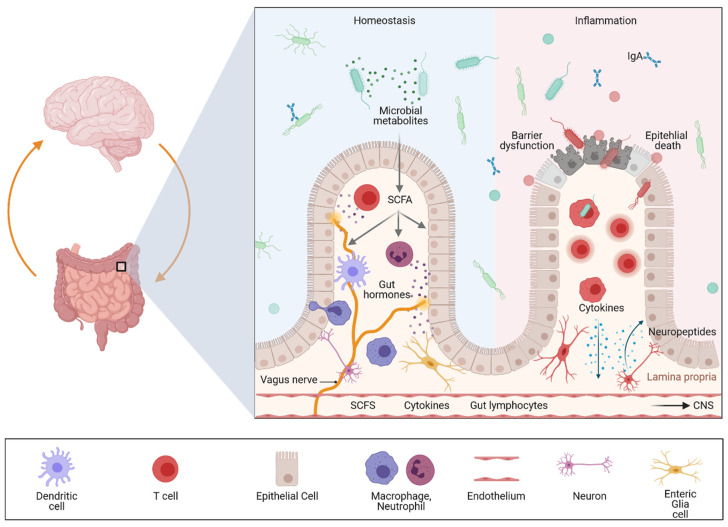
Verification
Claims the paper makes
The claims and statistics of this paper haven’t been checked yet.
Run the check — free, no account needed. It reads the open-access text and checks the sources it cites.
Claims other papers make about this one
Each is checked against this paper’s own text: does it say what the citing paper says it does?
In the citing paper
“The gut–brain axis is a complex bidirectional communication system driven by neural, hormonal, metabolic, immunological, and microbial signals [77,78].”
From Association between Childhood Onset Inflammatory Bowel Disease and Psychiatric Comorbidities in Adulthood (2023) · cites this paper as [78]
In the citing paper
“Signaling events from the gut can modulate brain function, and recent evidence suggests that the gut–brain axis may play a pivotal role in linking gastrointestinal and neuropsychiatric pathologies [78,79].”
From Association between Childhood Onset Inflammatory Bowel Disease and Psychiatric Comorbidities in Adulthood (2023) · cites this paper as [78]
Self-check
Percentages, sums and reported differences re-computed from the paper’s own numbers.
The self-check needs the paper’s full text.
Citations
Cites
Induction of Pluripotent Stem Cells from Adult Human Fibroblasts by Defined Factors
Takahashi, K., Tanabe, K., Ohnuki, M., Narita, M., Ichisaka, T., Tomoda, K., & Yamanaka, S. (2007) · Cell · doi:10.1016/j.cell.2007.11.019 · Cited by 20,221
Single Lgr5 stem cells build crypt-villus structures in vitro without a mesenchymal niche
Sato, T., Vries, R. G., Snippert, H. J., van de Wetering, M., Barker, N., Stange, D. E., van Es, J. H., Abo, A., Kujala, P., Peters, P. J., et al. (2009) · Nature · doi:10.1038/nature07935 · Cited by 7,204
Cerebral organoids model human brain development and microcephaly
Lancaster, M. A., Renner, M., Martin, C.-A., Wenzel, D., Bicknell, L. S., Hurles, M. E., Homfray, T., Penninger, J. M., Jackson, A. P., & Knoblich, J. A. (2013) · Nature · doi:10.1038/nature12517 · Cited by 5,372
A frameshift mutation in NOD2 associated with susceptibility to Crohn's disease
Ogura, Y., Bonen, D. K., Inohara, N., Nicolae, D. L., Chen, F. F., Ramos, R., Britton, H., Moran, T., Karaliuskas, R., Duerr, R. H., et al. (2001) · Nature · doi:10.1038/35079114 · Cited by 5,030
Gut microbiota regulate motor deficits and neuroinflammation in a model of Parkinson's disease
Sampson, T. R., Debelius, J. W., Thron, T., Janssen, S., Shastri, G. G., Ilhan, Z. E., Challis, C., Schretter, C. E., Rocha, S., Gradinaru, V., et al. (2016) · Cell · doi:10.1016/j.cell.2016.11.018 · Cited by 3,622
Host microbiota constantly control maturation and function of microglia in the CNS
Erny, D., Hrabě de Angelis, A. L., Jaitin, D., Wieghofer, P., Staszewski, O., David, E., Keren-Shaul, H., Mahlakoiv, T., Jakobshagen, K., Buch, T., et al. (2015) · Nature Neuroscience · doi:10.1038/nn.4030 · Cited by 3,569
Cortisone in Ulcerative Colitis
Truelove, S. C., & Witts, L. J. (1955) · BMJ · doi:10.1136/bmj.2.4947.1041 · Cited by 2,793
Genetics and pathogenesis of inflammatory bowel disease
Khor, B., Gardet, A., & Xavier, R. J. (2011) · Nature · doi:10.1038/nature10209 · Cited by 2,733
Cytokines in inflammatory bowel disease
Neurath, M. F. (2014) · Nature Reviews Immunology · doi:10.1038/nri3661 · Cited by 2,706
Self-citationGenetic risk and a primary role for cell-mediated immune mechanisms in multiple sclerosis
The International Multiple Sclerosis Genetics Consortium & The Wellcome Trust Case Control Consortium 2 (2011) · Nature · doi:10.1038/nature10251 · Cited by 2,697
Genome-wide association defines more than 30 distinct susceptibility loci for Crohn's disease
the NIDDK IBD Genetics Consortium, Barrett, J. C., the Belgian-French IBD Consortium, the Wellcome Trust Case Control Consortium, Hansoul, S., Nicolae, D. L., Cho, J. H., Duerr, R. H., Rioux, J. D., Brant, S. R., et al. (2008) · Nature Genetics · doi:10.1038/ng.175 · Cited by 2,593
Franke, A., McGovern, D. P. B., Barrett, J. C., Wang, K., Radford-Smith, G. L., Ahmad, T., Lees, C. W., Balschun, T., Lee, J., Roberts, R., et al. (2010) · Nature Genetics · doi:10.1038/ng.717 · Cited by 2,520
Nalls, M. A., Blauwendraat, C., Vallerga, C. L., Heilbron, K., Bandres-Ciga, S., Chang, D., Tan, M., Kia, D. A., Noyce, A. J., Xue, A., et al. (2019) · The Lancet Neurology · doi:10.1016/s1474-4422(19)30320-5 · Cited by 2,454
Microbial tryptophan catabolites in health and disease
Roager, H. M., & Licht, T. R. (2018) · Nature Communications · doi:10.1038/s41467-018-05470-4 · Cited by 2,236
The gut microbiota–brain axis in behaviour and brain disorders
Morais, L. H., Schreiber, H. L., & Mazmanian, S. K. (2021) · Nature Reviews Microbiology · doi:10.1038/s41579-020-00460-0 · Cited by 2,149
Stem Cells, Self-Renewal, and Differentiation in the Intestinal Epithelium
van der Flier, L. G., & Clevers, H. C. (2008) · Annual Review of Physiology · doi:10.1146/annurev.physiol.010908.163145 · Cited by 1,994
In vitro differentiation of transplantable neural precursors from human embryonic stem cells
Zhang, S., Wernig, M., Duncan, I. D., Brüstle, O., & Thomson, J. A. (2001) · Nature Biotechnology · doi:10.1038/nbt1201-1129 · Cited by 1,935
Directed differentiation of human pluripotent stem cells into intestinal tissue in vitro
Spence, J. R., Mayhew, C. N., Rankin, S. A., Kuhar, M. F., Vallance, J. E., Tolle, K. A., Hoskins, E. E., Kalinichenko, V. V., Wells, S. I., Zorn, A. M., et al. (2010) · Nature · doi:10.1038/nature09691 · Cited by 1,911
Functional cortical neurons and astrocytes from human pluripotent stem cells in 3D culture
Paşca, A. M., Sloan, S. A., Clarke, L. E., Tian, Y., Makinson, C. D., Huber, N., Kim, C. H., Park, J.-Y., O'Rourke, N. A., Nguyen, K. D., et al. (2015) · Nature Methods · doi:10.1038/nmeth.3415 · Cited by 1,609
Rothhammer, V., Mascanfroni, I. D., Bunse, L., Takenaka, M. C., Kenison, J. E., Mayo, L., Chao, C.-C., Patel, B., Yan, R., Blain, M., et al. (2016) · Nature Medicine · doi:10.1038/nm.4106 · Cited by 1,559
Self-citationA key role for autophagy and the autophagy gene Atg16l1 in mouse and human intestinal Paneth cells
Cadwell, K., Liu, J. Y., Brown, S. L., Miyoshi, H., Loh, J., Lennerz, J. K., Kishi, C., Kc, W., Carrero, J. A., Hunt, S., et al. (2008) · Nature · doi:10.1038/nature07416 · Cited by 1,542
Induced pluripotent stem cell technology: a decade of progress.
Shi, Y., Inoue, H., Wu, J. C., & Yamanaka, S. (2017) · Nature Reviews Drug Discovery · doi:10.1038/nrd.2016.245 · Cited by 1,525
Eiraku, M., Watanabe, K., Matsuo-Takasaki, M., Kawada, M., Yonemura, S., Matsumura, M., Wataya, T., Nishiyama, A., Muguruma, K., & Sasai, Y. (2008) · Cell Stem Cell · doi:10.1016/j.stem.2008.09.002 · Cited by 1,522
ETIOLOGY AND PATHOGENESIS OF PARKINSON'S DISEASE
Olanow, C. W., & Tatton, W. G. (1999) · Annual Review of Neuroscience · doi:10.1146/annurev.neuro.22.1.123 · Cited by 1,409
Kim, S., Kwon, S.-H., Kam, T.-I., Panicker, N., Karuppagounder, S. S., Lee, S., Lee, J. H., Kim, W. R., Kook, M., Foss, C. A., et al. (2019) · Neuron · doi:10.1016/j.neuron.2019.05.035 · Cited by 1,397
Assembly of functionally integrated human forebrain spheroids
Birey, F., Andersen, J., Makinson, C. D., Islam, S., Wei, W., Huber, N., Fan, H. C., Metzler, K. R. C., Panagiotakos, G., Thom, N., et al. (2017) · Nature · doi:10.1038/nature22330 · Cited by 1,365
Proinflammatory T-cell responses to gut microbiota promote experimental autoimmune encephalomyelitis
Lee, Y. K., Menezes, J. S., Umesaki, Y., & Mazmanian, S. K. (2011) · Proceedings of the National Academy of Sciences · doi:10.1073/pnas.1000082107 · Cited by 1,323
Alterations of the human gut microbiome in multiple sclerosis
Jangi, S., Gandhi, R., Cox, L. M., Li, N., von Glehn, F., Yan, R., Patel, B., Mazzola, M. A., Liu, S., Glanz, B. L., et al. (2016) · Nature Communications · doi:10.1038/ncomms12015 · Cited by 1,307
Commensal microbiota and myelin autoantigen cooperate to trigger autoimmune demyelination
Berer, K., Mues, M., Koutrolos, M., Rasbi, Z. A., Boziki, M., Johner, C., Wekerle, H., & Krishnamoorthy, G. (2011) · Nature · doi:10.1038/nature10554 · Cited by 1,251
Stabler, S. P. (2013) · New England Journal of Medicine · doi:10.1056/nejmcp1113996 · Cited by 1,224
An in vivo model of functional and vascularized human brain organoids
Mansour, A. A., Gonçalves, J. T., Bloyd, C. W., Li, H., Fernandes, S., Quang, D., Johnston, S., Parylak, S. L., Jin, X., & Gage, F. H. (2018) · Nature Biotechnology · doi:10.1038/nbt.4127 · Cited by 1,211
Human cerebral organoids recapitulate gene expression programs of fetal neocortex development
Camp, J. G., Badsha, F., Florio, M., Kanton, S., Gerber, T., Wilsch-Bräuninger, M., Lewitus, E., Sykes, A., Hevers, W., Lancaster, M., et al. (2015) · Proceedings of the National Academy of Sciences · doi:10.1073/pnas.1520760112 · Cited by 1,130
Hampe, J., Cuthbert, A. P., Croucher, P. J. P., Mirza, M. M., Mascheretti, S., Fisher, S. A., Frenzel, H., King, K., Hasselmeyer, A., Macpherson, A. J., et al. (2001) · The Lancet · doi:10.1016/s0140-6736(00)05063-7 · Cited by 1,090
Epithelial NEMO links innate immunity to chronic intestinal inflammation
Nenci, A., Becker, C., Wullaert, A., Gareus, R., Loo, G., Danese, S., Huth, M., Nikolaev, A., Neufert, C. F., Madison, B., et al. (2007) · Nature · doi:10.1038/nature05698 · Cited by 1,077
Self-citationMicroglial control of astrocytes in response to microbial metabolites
Rothhammer, V., Borucki, D. M., Tjon, E. C., Takenaka, M. C., Chao, C.-C., Ardura-Fabregat, A., de Lima, K. A., Gutiérrez-Vázquez, C., Hewson, P., Staszewski, O., et al. (2018) · Nature · doi:10.1038/s41586-018-0119-x · Cited by 1,051
Self-citationCekanaviciute, E., Yoo, B. B., Runia, T. F., Debelius, J. W., Singh, S., Nelson, C., Kanner, R., Bencosme, Y., Lee, Y. K., Hauser, S. L., et al. (2017) · Proceedings of the National Academy of Sciences · doi:10.1073/pnas.1711235114 · Cited by 1,040
Kadoshima, T., Sakaguchi, H., Nakano, T., Soen, M., Ando, S., Eiraku, M., & Sasai, Y. (2013) · Proceedings of the National Academy of Sciences · doi:10.1073/pnas.1315710110 · Cited by 999
Engineering of human brain organoids with a functional vascular-like system
Çakır, B., Xiang, Y., Tanaka, Y., Kural, M. H., Parent, M. J., Kang, Y., Chapeton, K., Patterson, B., Yuan, Y., He, C., et al. (2019) · Nature Methods · doi:10.1038/s41592-019-0586-5 · Cited by 989
Multiple sclerosis patients have a distinct gut microbiota compared to healthy controls
Chen, J., Chia, N., Kalari, K. R., Yao, J. Z., Novotna, M., Paz Soldan, M. M., Luckey, D. H., Marietta, E. V., Jeraldo, P. R., Chen, X., et al. (2016) · Scientific Reports · doi:10.1038/srep28484 · Cited by 933
Berer, K., Gerdes, L. A., Cekanaviciute, E., Jia, X., Xiao, L., Xia, Z., Liu, C., Klotz, L., Stauffer, U., Baranzini, S. E., et al. (2017) · Proceedings of the National Academy of Sciences · doi:10.1073/pnas.1711233114 · Cited by 933
Dietary fatty acids directly impact central nervous system autoimmunity via the small intestine
Haghikia, A., Jörg, S., Duscha, A., Berg, J., Manzel, A., Waschbisch, A., Hammer, A., Lee, D.-H., May, C., Wilck, N., et al. (2015) · Immunity · doi:10.1016/j.immuni.2015.09.007 · Cited by 927
Cadwell, K., Patel, K., Maloney, N. S., Liu, T., Ng, A., Storer, C. E., Head, R. D., Xavier, R. J., Stappenbeck, T. S., & Virgin, H. W. (2010) · Cell · doi:10.1016/j.cell.2010.05.009 · Cited by 927
Enterochromaffin cells are gut chemosensors that couple to sensory neural pathways
Bellono, N. W., Bayrer, J. R., Leitch, D. B., Castro, J., Zhang, C., O’Donnell, T. A., Brierley, S. M., Ingraham, H. A., & Julius, D. (2017) · Cell · doi:10.1016/j.cell.2017.05.034 · Cited by 910
Jenkins, T., Nguyen, J., Polglaze, K., & Bertrand, P. (2016) · Nutrients · doi:10.3390/nu8010056 · Cited by 904
α-synuclein toxicity in neurodegeneration: mechanism and therapeutic strategies
Wong, Y. C., & Krainc, D. (2017) · Nature Medicine · doi:10.1038/nm.4269 · Cited by 897
Guinane, C. M., & Cotter, P. D. (2013) · Therapeutic Advances in Gastroenterology · doi:10.1177/1756283x13482996 · Cited by 884
Caspase-8 regulates TNF-α-induced epithelial necroptosis and terminal ileitis
Günther, C., Martini, E., Wittkopf, N., Amann, K., Weigmann, B., Neumann, H., Waldner, M. J., Hedrick, S. Μ., Tenzer, S., Neurath, M. F., et al. (2011) · Nature · doi:10.1038/nature10400 · Cited by 882
Self-citationJo, J., Xiao, Y., Sun, A. X., Cukuroglu, E., Tran, H.-D., Göke, J., Tan, Z. Y., Saw, T. Y., Tan, C.-P., Lokman, H., et al. (2016) · Cell Stem Cell · doi:10.1016/j.stem.2016.07.005 · Cited by 861
In Vitro Expansion of Human Gastric Epithelial Stem Cells and Their Responses to Bacterial Infection
Bartfeld, S., Bayram, T., van de Wetering, M., Huch, M., Begthel, H., Kujala, P., Vries, R., Peters, P. J., & Clevers, H. (2015) · Gastroenterology · doi:10.1053/j.gastro.2014.09.042 · Cited by 820
Vertebrate Endoderm Development and Organ Formation
Zorn, A. M., & Wells, J. M. (2009) · Annual Review of Cell and Developmental Biology · doi:10.1146/annurev.cellbio.042308.113344 · Cited by 812
Hamza, T. H., Zabetian, C. P., Tenesa, A., Laederach, A., Montimurro, J. S., Yearout, D., Kay, D. M., Doheny, K. F., Paschall, J. E., Pugh, E., et al. (2010) · Nature Genetics · doi:10.1038/ng.642 · Cited by 811
Miyake, S., Kim, S., Suda, W., Oshima, K., Nakamura, M., Matsuoka, T., Chihara, N., Tomita, A., Sato, W., Kim, S.-W., et al. (2015) · PLoS ONE · doi:10.1371/journal.pone.0137429 · Cited by 809
Pathway paradigms revealed from the genetics of inflammatory bowel disease
Graham, D. B., & Xavier, R. J. (2020) · Nature · doi:10.1038/s41586-020-2025-2 · Cited by 801
Fused cerebral organoids model interactions between brain regions
Bagley, J. A., Reumann, D., Bian, S., Lévi-Strauss, J., & Knoblich, J. A. (2017) · Nature Methods · doi:10.1038/nmeth.4304 · Cited by 790
Discovery and inhibition of an interspecies gut bacterial pathway for Levodopa metabolism
Maini Rekdal, V., Bess, E. N., Bisanz, J. E., Turnbaugh, P. J., & Balskus, E. P. (2019) · Science · doi:10.1126/science.aau6323 · Cited by 753
Paneth cells as a site of origin for intestinal inflammation
Adolph, T. E., Tomczak, M. F., Niederreiter, L., Ko, H.-J., Böck, J., Martinez-Naves, E., Glickman, J. N., Tschurtschenthaler, M., Hartwig, J., Hosomi, S., et al. (2013) · Nature · doi:10.1038/nature12599 · Cited by 732
Targeting immune cell circuits and trafficking in inflammatory bowel disease
Neurath, M. F. (2019) · Nature Immunology · doi:10.1038/s41590-019-0415-0 · Cited by 723
Self-citationInduced pluripotent stem cells in disease modelling and drug discovery
Rowe, R. G., & Daley, G. Q. (2019) · Nature Reviews Genetics · doi:10.1038/s41576-019-0100-z · Cited by 704
Workman, M. J., Mahé, M. M., Trisno, S. L., Poling, H. M., Watson, C. L., Sundaram, N., Chang, C., Schiesser, J. V., Aubert, P., Stanley, E. G., et al. (2016) · Nature Medicine · doi:10.1038/nm.4233 · Cited by 652
Inflammatory bowel diseases (IBD) and the microbiome-searching the crime scene for clues
Lee, M., & Chang, E. B. (2021) · Gastroenterology · doi:10.1053/j.gastro.2020.09.056 · Cited by 645
Enteric nervous system: sensory transduction, neural circuits and gastrointestinal motility
Spencer, N. J., & Hu, H. (2020) · Nature Reviews Gastroenterology & Hepatology · doi:10.1038/s41575-020-0271-2 · Cited by 634
The bowel and beyond: The enteric nervous system in neurological disorders
Rao, M., & Gershon, M. D. (2016) · Nature Reviews Gastroenterology & Hepatology · doi:10.1038/nrgastro.2016.107 · Cited by 629
The Human and Mouse Enteric Nervous System at Single-Cell Resolution
Drokhlyansky, E., Smillie, C. S., Wittenberghe, N. V., Ericsson, M., Griffin, G. K., Eraslan, G., Dionne, D. A., Cuoco, M. S., Goder-Reiser, M. N., Sharova, T. Y., et al. (2020) · Cell · doi:10.1016/j.cell.2020.08.003 · Cited by 606
Generation of Functional Human 3D Cortico-Motor Assembloids
Andersen, J., Revah, O., Miura, Y., Thom, N., Amin, N. D., Kelley, K. W., Singh, M., Chen, X., Thete, M. V., Walczak, E. M., et al. (2020) · Cell · doi:10.1016/j.cell.2020.11.017 · Cited by 593
Heintz‐Buschart, A., Pandey, U., Wicke, T., Sixel‐Döring, F., Janzen, A., Sittig‐Wiegand, E., Trenkwalder, C., Oertel, W. H., Mollenhauer, B., & Wilmes, P. (2018) · Movement Disorders · doi:10.1002/mds.27105 · Cited by 554
Sakaguchi, H., Kadoshima, T., Soen, M., Narii, N., Ishida, Y., Ohgushi, M., Takahashi, J., Eiraku, M., & Sasai, Y. (2015) · Nature Communications · doi:10.1038/ncomms9896 · Cited by 542
Cortisone in Ulcerative Colitis
Truelove, S. C., & Witts, L. J. (1954) · BMJ · doi:10.1136/bmj.2.4884.375 · Cited by 538
Modeling human cortical development in vitro using induced pluripotent stem cells
Mariani, J., Simonini, M. V., Palejev, D., Tomasini, L., Coppola, G., Szekely, A. M., Horvath, T. L., & Vaccarino, F. M. (2012) · Proceedings of the National Academy of Sciences · doi:10.1073/pnas.1202944109 · Cited by 526
VanDussen, K. L., Marinshaw, J. M., Shaikh, N., Miyoshi, H., Moon, C., Tarr, P. I., Ciorba, M. A., & Stappenbeck, T. S. (2015) · Gut · doi:10.1136/gutjnl-2013-306651 · Cited by 525
Organoids: Modeling Development and the Stem Cell Niche in a Dish
Kretzschmar, K., & Clevers, H. C. (2016) · Developmental Cell · doi:10.1016/j.devcel.2016.08.014 · Cited by 496
Intestinal infection triggers Parkinson's disease-like symptoms in Pink1(-/-) mice
Matheoud, D., Cannon, T., Voisin, A., Penttinen, A.-M., Ramet, L., Fahmy, A. M., Ducrot, C., Laplante, A., Bourque, M.-J., Zhu, L., et al. (2019) · Nature · doi:10.1038/s41586-019-1405-y · Cited by 496
Cytokines in Inflammatory Bowel Disease
Rogler, G., & Andus, T. (1998) · World Journal of Surgery · doi:10.1007/s002689900401 · Cited by 483
Human CNS barrier-forming organoids with cerebrospinal fluid production
Pellegrini, L., Bonfio, C., Chadwick, J., Begum, F., Skehel, M. J., & Lancaster, M. A. (2020) · Science · doi:10.1126/science.aaz5626 · Cited by 471
Genetics in Parkinson disease: Mendelian versus non‐Mendelian inheritance
Hernandez, D. G., Reed, X., & Singleton, A. B. (2016) · Journal of Neurochemistry · doi:10.1111/jnc.13593 · Cited by 448 · cited 2×
“In addition, over 20 common variants with small effect sizes have been shown to modulate the risk for PD [61].”
BackgroundResultGenetics of Inflammatory Bowel Diseases
McGovern, D. P. B., Kugathasan, S., & Cho, J. H. (2015) · Gastroenterology · doi:10.1053/j.gastro.2015.08.001 · Cited by 446
Pastorelli, L., Salvo, C. D., Mercado, J. R., Vecchi, M. L., & Pizarro, T. T. (2013) · Frontiers in Immunology · doi:10.3389/fimmu.2013.00280 · Cited by 446
LRRK2 in Parkinson disease: challenges of clinical trials
TOLOSA, E. S., Vila, M., Klein, C., & Rascol, O. (2020) · Nature Reviews Neurology · doi:10.1038/s41582-019-0301-2 · Cited by 443
Generating human intestinal tissue from pluripotent stem cells in vitro
McCracken, K. W., Howell, J. C., Wells, J. M., & Spence, J. R. (2011) · Nature Protocols · doi:10.1038/nprot.2011.410 · Cited by 433
Vascularized human cortical organoids (vOrganoids) model cortical development in vivo
Shi, Y., Sun, L., Liu, J., Zhong, S., Wang, M., Li, R., Li, P., Guo, L., Fang, A., Chen, R., et al. (2020) · PLoS Biology · doi:10.1371/journal.pbio.3000705 · Cited by 412
Next-Generation Regenerative Medicine: Organogenesis from Stem Cells in 3D Culture
Sasai, Y. (2013) · Cell stem cell · doi:10.1016/j.stem.2013.04.009 · Cited by 411
Hou, Q., Ye, L., Liu, H., Huang, L., Yang, Q., Turner, J. R., & Yu, Q. (2018) · Cell Death and Differentiation · doi:10.1038/s41418-018-0070-2 · Cited by 410
Unraveling gut microbiota in Parkinson's disease and atypical parkinsonism
Barichella, M., Severgnini, M., Cilia, R., Cassani, E., Bolliri, C., Caronni, S., Ferri, V., Cancello, R., Ceccarani, C., Faierman, S., et al. (2019) · Movement Disorders · doi:10.1002/mds.27581 · Cited by 393
Disease modelling in human organoids
Lancaster, M. A., & Huch, M. (2019) · Disease Models & Mechanisms · doi:10.1242/dmm.039347 · Cited by 390
Peter, I., Dubinsky, M., Bressman, S., Park, A., Lu, C., Chen, N., & Wang, A. (2018) · JAMA Neurology · doi:10.1001/jamaneurol.2018.0605 · Cited by 386
The mucosal immune system: master regulator of bidirectional gut-brain communications
Powell, N., Walker, M. M., & Talley, N. J. (2017) · Nature Reviews Gastroenterology & Hepatology · doi:10.1038/nrgastro.2016.191 · Cited by 379
The role of inflammation in irritable bowel syndrome (IBS)
Ng, Q. X., Soh, A. Y. S., Loke, W., Lim, D. Y., & Yeo, W. S. (2018) · Journal of Inflammation Research · doi:10.2147/jir.s174982 · Cited by 373
Gut microbiota in early pediatric multiple sclerosis: a case−control study
Tremlett, H. L., Fadrosh, D. W., Faruqi, A. A., Zhu, F., Hart, J., Roalstad, S., Graves, J., Lynch, S. V., & Waubant, E. L. (2016) · European Journal of Neurology · doi:10.1111/ene.13026 · Cited by 357
Genome-wide pleiotropy between Parkinson disease and autoimmune diseases
Witoelar, A., Jansen, I. E., Wang, Y., Desikan, R. S., Gibbs, J. R., Blauwendraat, C., Thompson, W. K., Hernandez, D. G., Djurovic, S., Schork, A. J., et al. (2017) · JAMA Neurology · doi:10.1001/jamaneurol.2017.0469 · Cited by 352
Epithelial Cell Shedding and Barrier Function
Williams, J. M., Duckworth, C. A., Burkitt, M. D., Watson, A. J. M., Campbell, B. J., & Pritchard, D. M. (2014) · Veterinary Pathology · doi:10.1177/0300985814559404 · Cited by 348
Cosorich, I., Dalla-Costa, G., Sorini, C., Ferrarese, R., Messina, M. J., Dolpady, J., Radice, E., Mariani, A., Testoni, P. A., Canducci, F., et al. (2017) · Science Advances · doi:10.1126/sciadv.1700492 · Cited by 338
Th17 lymphocytes induce neuronal cell death in a human iPSC-based model of Parkinson's disease
Sommer, A., Marxreiter, F., Krach, F., Fadler, T., Grosch, J., Maroni, M., Graef, D., Eberhardt, E., Riemenschneider, M. J., Yeo, G. W., et al. (2018) · Cell Stem Cell · doi:10.1016/j.stem.2018.06.015 · Cited by 332
Self-citationVillumsen, M., Aznar, S., Pakkenberg, B., Jess, T., & Brudek, T. (2018) · Gut · doi:10.1136/gutjnl-2017-315666 · Cited by 325
Van Den Berge, N., Ferreira, N., Gram, H., Mikkelsen, T. W., Alstrup, A. K. O., Casadei, N., Tsung-Pin, P., Riess, O., Nyengaard, J. R., Tamgüney, G., et al. (2019) · Acta Neuropathologica · doi:10.1007/s00401-019-02040-w · Cited by 300
Deriving human ENS lineages for cell therapy and drug discovery in Hirschsprung disease
Fattahi, F., Steinbeck, J. A., Kriks, S., Tchieu, J. H., Zimmer, B., Kishinevsky, S., Zeltner, N., Mica, Y., El-Nachef, W. N., Zhao, H., et al. (2016) · Nature · doi:10.1038/nature16951 · Cited by 299
Food, immunity, and the microbiome
Tilg, H., & Moschen, A. R. (2015) · Gastroenterology · doi:10.1053/j.gastro.2014.12.036 · Cited by 292
T cell responses in the central nervous system
Korn, T., & Kallies, A. (2017) · Nature Reviews Immunology · doi:10.1038/nri.2016.144 · Cited by 268
Gut microorganisms act together to exacerbate inflammation in spinal cords
Miyauchi, E., Kim, S.-W., Suda, W., Kawasumi, M., Onawa, S., Taguchi-Atarashi, N., Morita, H., Taylor, T. D., Hattori, M., & Ohno, H. (2020) · Nature · doi:10.1038/s41586-020-2634-9 · Cited by 268
Increased Risk for Demyelinating Diseases in Patients With Inflammatory Bowel Disease
Gupta, G., Gelfand, J. M., & Lewis, J. D. (2005) · Gastroenterology · doi:10.1053/j.gastro.2005.06.022 · Cited by 266
Yissachar, N., Zhou, Y., Ung, L., Lai, N. Y., Mohan, J. F., Ehrlicher, A., Weitz, D. A., Kasper, D. L., Chiu, I. M., Mathis, D., et al. (2017) · Cell · doi:10.1016/j.cell.2017.02.009 · Cited by 242
A common role for Atg16L1, Atg5, and Atg7 in small intestinal Paneth cells and Crohn disease
Cadwell, K., Patel, K. K., Komatsu, M., Virgin, IV, & Stappenbeck, T. S. (2009) · Autophagy · doi:10.4161/auto.5.2.7560 · Cited by 224
TRPA1 and Substance P Mediate Colitis in Mice
Engel, M. A., Leffler, A., Niedermirtl, F., Babeș, A., Zimmermann, K., Filipović, M. R., Izydorczyk, I., Eberhardt, M. J., Kichko, T. I., Mueller–Tribbensee, S. M., et al. (2011) · Gastroenterology · doi:10.1053/j.gastro.2011.07.002 · Cited by 218
Self-citationVillarán, R. F., Espinosa‐Oliva, A. M., Soto, M. S., de Pablos, R. M., Argüelles, S., Delgado‐Cortés, M. J., Sobrino, V., van Rooijen, N., Venero, J. L., Herrera, A. J., et al. (2010) · Journal of Neurochemistry · doi:10.1111/j.1471-4159.2010.06879.x · Cited by 217
Enteric Nervous System-Derived IL-18 Orchestrates Mucosal Barrier Immunity
Jarret, A. P., Jackson, R. P., Duizer, C., Healy, M. E., Zhao, J., Rone, J. M., Bielecki, P., Sefik, E., Roulis, M., Rice, T., et al. (2020) · Cell · doi:10.1016/j.cell.2019.12.016 · Cited by 211
[On the pathogenesis of ulcerative colitis].
Polchak, I., Vokurka, V., & Skálová, M. (1960) · PubMed · Cited by 208
Gao, S., Yan, L., Wang, R., Li, J., Yong, J., Zhou, X., Wei, Y., Wu, X., Wang, X., Fan, X., et al. (2018) · Nature Cell Biology · doi:10.1038/s41556-018-0105-4 · Cited by 208
Commensal bacteria direct selective cargo sorting to promote symbiosis
Zhang, Q., Pan, Y., Yan, R., Zeng, B., Wang, H., Zhang, X., Li, W., Wei, H., & Liu, Z. (2015) · Nature Immunology · doi:10.1038/ni.3233 · Cited by 206
Nouri, M., Bredberg, A. C. A., Weström, B. R., & Lavasani, S. (2014) · PLoS ONE · doi:10.1371/journal.pone.0106335 · Cited by 206
Association Between Parkinsonʼs Disease and Inflammatory Bowel Disease
Lin, J.-C., Lin, C., Hsu, C.-W., Lin, C., & Kao, C. (2016) · Inflammatory Bowel Diseases · doi:10.1097/mib.0000000000000735 · Cited by 203
Targeting sphingosine-1-phosphate signaling in immune-mediated diseases: beyond multiple sclerosis
Pérez-Jeldres, T., Alvarez-Lobos, M., & Rivera-Nieves, J. (2021) · Drugs · doi:10.1007/s40265-021-01528-8 · Cited by 197
Identification of sensory nerve cells in a peripheral organ (the intestine) of a mammal
Kunze, W., Bornstein, J. C., & Furness, J. B. (1995) · Neuroscience · doi:10.1016/0306-4522(95)00067-s · Cited by 191
Boertien, J. M., Pereira, P. A. B., Aho, V. T. E., & Scheperjans, F. (2019) · Journal of Parkinson s Disease · doi:10.3233/jpd-191711 · Cited by 181
Inflammatory Bowel Disease and Parkinson’s Disease: A Nationwide Swedish Cohort Study
Weimers, P., Halfvarson, J., Sachs, M. C., Saunders-Pullman, R. J., Ludvigsson, J. F., Peter, I., Burisch, J. M., & Olén, O. (2018) · Inflammatory Bowel Diseases · doi:10.1093/ibd/izy190 · Cited by 173
Parkinson’s Disease and the Gastrointestinal Microbiome
Lubomski, M., Tan, A. H., Lim, S.-Y., Holmes, A. J., Davis, R. L., & Sue, C. M. (2020) · Journal of Neurology · doi:10.1007/s00415-019-09320-1 · Cited by 172
Development of the intrinsic and extrinsic innervation of the gut
Uesaka, T., Young, H. M., Pachnis, V., & Enomoto, H. (2016) · Developmental Biology · doi:10.1016/j.ydbio.2016.04.016 · Cited by 170
Interleukin-33 Promotes Serotonin Release from Enterochromaffin Cells for Intestinal Homeostasis
Chen, Z., Luo, J., Li, J., Kim, G., Stewart, A., Urban, J. F., Huang, Y., Chen, S., Wu, L., Chesler, A. T., et al. (2020) · Immunity · doi:10.1016/j.immuni.2020.10.014 · Cited by 162
RNA Sensing by Gut Piezo1 Is Essential for Systemic Serotonin Synthesis
Sugisawa, E., Takayama, Y., Takemura, N., Kondo, T., Hatakeyama, S., Kumagai, Y., Sunagawa, M., Tominaga, M., & Maruyama, K. (2020) · Cell · doi:10.1016/j.cell.2020.06.022 · Cited by 161
New insights into IL-6 family cytokines in metabolism, hepatology and gastroenterology
Giraldez, M. D., Carneros, D., Garbers, C., Rose-John, S., & Bustos, M. (2021) · Nature Reviews Gastroenterology & Hepatology · doi:10.1038/s41575-021-00473-x · Cited by 156
Gastrointestinal tract modeling using organoids engineered with cellular and microbiota niches
Min, S., Kim, S., & Cho, S. (2020) · Experimental & Molecular Medicine · doi:10.1038/s12276-020-0386-0 · Cited by 151
Wroblewski, L. E., Piazuelo, M. B., Chaturvedi, R., Schumacher, M., Aihara, E., Feng, R., Noto, J. M., Delgado, A., Israel, D. A., Zavros, Y., et al. (2015) · Gut · doi:10.1136/gutjnl-2014-307650 · Cited by 143
The risk of Parkinson’s disease in inflammatory bowel disease: A systematic review and meta-analysis
Zhu, F., Li, C., Gong, J., Zhu, W., Gu, L., & Li, N. (2019) · Digestive and Liver Disease · doi:10.1016/j.dld.2018.09.017 · Cited by 136
Boccellato, F., Wölffling, S., Imai‐Matsushima, A., Sanchez, G., Goosmann, C., Schmid, M., Berger, H., Morey, P., Denecke, C., Ordemann, J., et al. (2018) · Gut · doi:10.1136/gutjnl-2017-314540 · Cited by 133
Host–microbiota interactions in inflammatory bowel disease
Neurath, M. F. (2019) · Nature Reviews Gastroenterology & Hepatology · doi:10.1038/s41575-019-0248-1 · Cited by 131
Self-citationInteractions between host genetics and gut microbiota determine susceptibility to CNS autoimmunity
Montgomery, T. L., Künstner, A., Kennedy, J. J., Fang, Q., Asarian, L., Culp‐Hill, R., D’Alessandro, A., Teuscher, C., Busch, H. S., & Krementsov, D. N. (2020) · Proceedings of the National Academy of Sciences · doi:10.1073/pnas.2002817117 · Cited by 121
Umeno, J., Asano, K., Matsushita, T., Matsumoto, T., Kiyohara, Y., Iida, M., Nakamura, Y., Kamatani, N., & Kubo, M. (2011) · Inflammatory Bowel Diseases · doi:10.1002/ibd.21651 · Cited by 120
Tremlett, H. L., Fadrosh, D. W., Faruqi, A. A., Hart, J., Roalstad, S., Graves, J., Spencer, C. M., Lynch, S. V., Zamvil, S. S., & Waubant, E. L. (2016) · BMC Neurology · doi:10.1186/s12883-016-0703-3 · Cited by 117
Induced organoids derived from patients with ulcerative colitis recapitulate colitic reactivity
Sarvestani, S. K., Signs, S. A., Hu, B., Yeu, Y., Feng, H., Ni, Y., Hill, D. R., Fisher, R. C., Ferrandon, S., DeHaan, R. K., et al. (2021) · Nature Communications · doi:10.1038/s41467-020-20351-5 · Cited by 116
Glymphatic System as a Gateway to Connect Neurodegeneration From Periphery to CNS
Natale, G., Limanaqi, F., Busceti, C. L., Mastroiacovo, F., Nicoletti, F., Puglisi‐Allegra, S., & Fornai, F. (2021) · Frontiers in Neuroscience · doi:10.3389/fnins.2021.639140 · Cited by 116
Gut feelings about smoking and coffee in Parkinson's disease
Derkinderen, P., Shannon, K. M., & Brundin, P. (2014) · Movement Disorders · doi:10.1002/mds.25882 · Cited by 115
Multiple sclerosis and inflammatory bowel diseases: a systematic review and meta-analysis
Kosmidou, M. S., Katsanos, A. H., Katsanos, K. H., Kyritsis, A. P., Tsivgoulis, G. K., Christodoulou, D. K., & Giannopoulos, S. (2016) · Journal of Neurology · doi:10.1007/s00415-016-8340-8 · Cited by 115
Kishimoto, Y., Zhu, W. S., Hosoda, W., Sen, J. M., & Mattson, M. P. (2019) · NeuroMolecular Medicine · doi:10.1007/s12017-019-08539-5 · Cited by 115
Generation of mesenchyme free intestinal organoids from human induced pluripotent stem cells
Mithal, A., Capilla, A., Heinze, D. M., Berical, A. C., Villacorta-Martín, C., Vedaie, M., Jacob, A., Abo, K. M., Szymaniak, A. D., Peasley, M., et al. (2020) · Nature Communications · doi:10.1038/s41467-019-13916-6 · Cited by 115
Flamar, A.-L., Klose, C. S. N., Moeller, J. B., Mahlakõiv, T., Bessman, N. J., Zhang, W., Moriyama, S., Stokic-Trtica, V., Rankin, L. C., Putzel, G., et al. (2020) · Immunity · doi:10.1016/j.immuni.2020.02.009 · Cited by 108
Role of sensory neurons in colitis: increasing evidence for a neuroimmune link in the gut
Engel, M. A., Becker, C., Reeh, P. W., & Neurath, M. F. (2010) · Inflammatory Bowel Diseases · doi:10.1002/ibd.21422 · Cited by 104
Self-citationGünther, C., Ruder, B., Stolzer, I., Dorner, H., He, G.-W., Chiriac, M. T., Aden, K., Strigli, A., Bittel, M., Zeißig, S., et al. (2019) · Gastroenterology · doi:10.1053/j.gastro.2019.07.031 · Cited by 99
Self-citationCortical Inflammation is Increased in a DSS-Induced Colitis Mouse Model
Han, Y., Zhao, T., Cheng, X., Zhao, M., Gong, S.-H., Zhao, Y., Wu, H., Fan, M., & Zhu, L. (2018) · Neuroscience Bulletin · doi:10.1007/s12264-018-0288-5 · Cited by 98
Shaffiey, S. A., Jia, H., Keane, T. J., Costello, C. M., Wasserman, D., Quidgley-Martin, M., Dziki, J. L., Badylak, S. F., Sodhi, C. P., March, J. C., et al. (2015) · Regenerative Medicine · doi:10.2217/rme.15.70 · Cited by 96
Engel, M. A., Khalil, M., Mueller–Tribbensee, S. M., Becker, C., Neuhuber, W., Neurath, M. F., & Reeh, P. W. (2011) · Journal of Gastroenterology · doi:10.1007/s00535-011-0495-6 · Cited by 94
Self-citationHuman Intestinal Tissue with Adult Stem Cell Properties Derived from Pluripotent Stem Cells
Forster, R. E., Chiba, K., Schaeffer, L., Regalado, S. G., Lai, C. S., Gao, Q., Kiani, S., Farin, H. F., Clevers, H. C., Cost, G. J., et al. (2014) · Stem Cell Reports · doi:10.1016/j.stemcr.2014.05.001 · Cited by 88
Gut-Selective Integrin-Targeted Therapies for Inflammatory Bowel Disease
Lamb, C. A., O’Byrne, S., Keir, M. E., & Butcher, E. C. (2018) · Journal of Crohn s and Colitis · doi:10.1093/ecco-jcc/jjy060 · Cited by 88
TREM Receptors Connecting Bowel Inflammation to Neurodegenerative Disorders
Natale, G., Biagioni, F., Busceti, C. L., Gambardella, S., Limanaqi, F., & Fornai, F. (2019) · Cells · doi:10.3390/cells8101124 · Cited by 83
Generation of intestinal organoids derived from human pluripotent stem cells for drug testing
Yoshida, S., Miwa, H., Kawachi, T., Kume, S., & Takahashi, K. (2020) · Scientific Reports · doi:10.1038/s41598-020-63151-z · Cited by 82
The Neuromodulation of the Intestinal Immune System and Its Relevance in Inflammatory Bowel Disease
Giovangiulio, M. D., Verheijden, S., Bosmans, G., Stakenborg, N., Boeckxstaens, G. E., & Matteoli, G. (2015) · Frontiers in Immunology · doi:10.3389/fimmu.2015.00590 · Cited by 81
Neurologic Complications in Patients with Inflammatory Bowel Disease
Singh, S., Kumar, N., Loftus, E. V., & Kane, S. V. (2012) · Inflammatory Bowel Diseases · doi:10.1002/ibd.23011 · Cited by 78
The roles and functions of Paneth cells in Crohn’s disease: A critical review
Yang, E., & Shen, J. (2020) · Cell Proliferation · doi:10.1111/cpr.12958 · Cited by 77
LRRK2 but not ATG16L1 is associated with Paneth cell defect in Japanese Crohn’s disease patients
Liu, T., Naito, T., Liu, Z., VanDussen, K. L., Haritunians, T., Li, D., Endo, K., Kawai, Y., Nagasaki, M., Kinouchi, Y., et al. (2017) · JCI Insight · doi:10.1172/jci.insight.91917 · Cited by 69
Pathogenesis of ulcerative colitis.
WARREN, S., & SOMMERS, S. C. (1949) · PubMed · Cited by 67
Dempsey, E., Abautret-Daly, Á., Docherty, N. G., Medina, C., & Harkin, A. (2019) · Brain Behavior and Immunity · doi:10.1016/j.bbi.2019.05.007 · Cited by 67
Vagal innervation of the stomach reassessed: brain−gut connectome uses smart terminals
Powley, T. L., Jaffey, D., McAdams, J. L., Baronowsky, E. A., Black, D., Chesney, L., Evans, C., & Phillips, R. J. (2019) · Annals of the New York Academy of Sciences · doi:10.1111/nyas.14138 · Cited by 67
Derivation of enteric neuron lineages from human pluripotent stem cells
Barber, K., Studer, L., & Fattahi, F. (2019) · Nature Protocols · doi:10.1038/s41596-019-0141-y · Cited by 66
Jovani, M., & Danese, S. (2013) · Current Drug Targets · doi:10.2174/13894501113146660206 · Cited by 64
Hefele, M., Stolzer, I., Ruder, B., He, G.-W., Mahapatro, M., Wirtz, S. J., Neurath, M. F., & Günther, C. (2018) · Mucosal Immunology · doi:10.1038/s41385-018-0011-x · Cited by 53
Self-citationTHE PATHOGENESIS OF ULCERATIVE COLITIS
McGovern, V. J., & Archer, G. T. L. (1957) · Australasian Annals of Medicine · doi:10.1111/imj.1957.6.1.68 · Cited by 50
Modulation of sphingosine-1-phosphate in ulcerative colitis
ARGOLLO, M. C., Furfaro, F., Gilardi, D., Roda, G., Allocca, M., Peyrin‐Biroulet, L., & Danese, S. (2020) · Expert Opinion on Biological Therapy · doi:10.1080/14712598.2020.1732919 · Cited by 48
Loss-of-Function Rodent Models for Parkin and PINK1
Oliveras-Salvá, M., Rompuy, A. V., Heeman, B., den Haute, C. V., & Baekelandt, V. (2011) · Journal of Parkinson s Disease · doi:10.3233/jpd-2011-11041 · Cited by 44
Colonic inflammation affects myenteric alpha-synuclein in nonhuman primates
Resnikoff, H., Metzger, J. M., Lopez, M., Bondarenko, V., Mejia, A., Simmons, H. A., & Emborg, M. E. (2019) · Journal of Inflammation Research · doi:10.2147/jir.s196552 · Cited by 42
Multiple sclerosis and inflammatory bowel diseases: what we know and what we would need to know!
Alkhawajah, M. M., Caminero, A. B., Freeman, H. J., & Oger, J. J.-F. (2012) · Multiple Sclerosis Journal · doi:10.1177/1352458512461393 · Cited by 38
Changes in Gastrointestinal Microbiome Composition in PD: A Pivotal Role of Covariates
Cosma-Grigorov, A., Meixner, H., Mrochen, A., Wirtz, S., Winkler, J., & Marxreiter, F. (2020) · Frontiers in Neurology · doi:10.3389/fneur.2020.01041 · Cited by 38
The evidence for fungus in Crohn’s disease pathogenesis
Miyoshi, J., Sofia, M., & Pierre, J. F. (2018) · Clinical Journal of Gastroenterology · doi:10.1007/s12328-018-0886-9 · Cited by 37
Genetic variants associated with Crohn's disease
Michail, S. K., Bultron, & DePaolo, R. W. (2013) · The Application of Clinical Genetics · doi:10.2147/tacg.s33966 · Cited by 30
Karuppuchamy, T., Tyler, C. J., Lundborg, L. R., Pérez-Jeldres, T., Kimball, A. K., Clambey, E. T., Jedlicka, P., & Rivera–Nieves, J. (2019) · Inflammatory Bowel Diseases · doi:10.1093/ibd/izz174 · Cited by 30
Heß, A., Roesch, J., Saake, M., Sergeeva, M., Hirschmann, S., Neumann, H., Dörfler, A., Neurath, M. F., & Atreya, R. N. (2015) · Gastroenterology · doi:10.1053/j.gastro.2015.05.063 · Cited by 29
Self-citationAssociation between ulcerative colitis and multiple sclerosis
Pokorny, C., Beran, R. G., & Pokorny, M. J. (2007) · Internal Medicine Journal · doi:10.1111/j.1445-5994.2007.01452.x · Cited by 28
Hepatocyte turnover and regeneration: Virtually a virtuoso performance
Alison, M. R., & Lin, W. (2011) · Hepatology · doi:10.1002/hep.24252 · Cited by 23
Avasarala, J., Guduru, Z., McLouth, C. J., Wilburn, A., Talbert, J., Sutton, P., & Sokola, B. S. (2021) · Multiple Sclerosis and Related Disorders · doi:10.1016/j.msard.2021.102942 · Cited by 21
What gastroenterologists and hepatologists should know about organoids in 2019
Günther, C., Brevini, T., Sampaziotis, F., & Neurath, M. F. (2019) · Digestive and Liver Disease · doi:10.1016/j.dld.2019.02.020 · Cited by 20
Self-citationHou, Q., Ye, L., Liu, H., Huang, L., Yang, Q., Turner, J. R., & Yu, Q. (2020) · Cell Death and Differentiation · doi:10.1038/s41418-020-00630-w · Cited by 17
Inflammatory bowel disease and demyelination: more than just a coincidence?
Katsanos, A. H., & Katsanos, K. H. (2014) · Expert Review of Clinical Immunology · doi:10.1586/1744666x.2014.885381 · Cited by 11
Bittel, M., Kremer, A. E., Stürzl, M., Wirtz, S. J., Stolzer, I., Neurath, M. F., Ballon, G., & Günther, C. (2019) · Cell Death and Disease · doi:10.1038/s41419-019-2115-y · Cited by 6
Self-citation
Research works printed but not linked: 1
- Actis, 2019, The Human Gut: Inflammatory Remote Manifestations Regulated by the Microbiome, J. Gastric Disord. Ther., 4, 24
Cited by
Sorted by citations
Notting, F., Pirovano, W., Sybesma, W., & Kort, R. (2023) · Gut Microbiome · doi:10.1017/gmb.2023.14 · Cited by 135
New and Emerging Treatments for Inflammatory Bowel Disease
Higashiyama, M., & Hokari, R. (2022) · Digestion · doi:10.1159/000527422 · Cited by 111
Dong, T. S., & Mayer, E. A. (2024) · Cellular and Molecular Gastroenterology and Hepatology · doi:10.1016/j.jcmgh.2024.01.024 · Cited by 86
Gut inflammation promotes microbiota-specific CD4 T cell-mediated neuroinflammation
White, Z., Cabrera, I., Mei, L., Clevenger, M. H., Ochoa-Raya, A., Kapustka, I., Dominguez, J. R., Zhou, J., Koster, K. P., Anwar, S., et al. (2025) · Nature · doi:10.1038/s41586-025-09120-w · Cited by 72
Updating the Classification of Chronic Inflammatory Enteropathies in Dogs
Dupouy-Manescau, N., Méric, T., Sénécat, O., Drut, A., Valentin, S., Leal, R. O., & Hernandez, J. L. (2024) · Animals · doi:10.3390/ani14050681 · Cited by 80
Metadata
- Authors
- Günther, C., Rothhammer, V., Karow, M., Neurath, M., & Winner, B.
- Affiliations
- Friedrich-Alexander-Universität Erlangen-Nürnberg (DE)
- Corresponding author
- Günther, Claudia
- Winner, Beate
- Venue
- International Journal of Molecular Sciences
- Publisher
- MDPI AG
- Published
- 2021-08-18
- Volume
- 22
- Issue
- 16
- Pages
- 8870
- ISSN
- 1422-0067 (ISSN-L)
- PMC
- PMC8396333
- OpenAlex
- W3196160028
- Cited by
- 123
- References
- 169
- Citations by year
- 2026: 27 · 2025: 32 · 2024: 33 · 2023: 22 · 2022: 8 · 2021: 1
- FWCI
- 2.37
- Type
- journal article
- Language
- en
- Open access
- gold
- doi.org
- Licence
- Locations
- International Journal of Molecular Sciences (publishedVersion, cc-by)
- PubMed Central (publishedVersion, cc-by)
- PubMed (publishedVersion)
- DOAJ (DOAJ: Directory of Open Access Journals) (submittedVersion, cc-by-sa)
- GoeScholar The Publication Server of the Georg-August-Universität Göttingen (Georg-August-Universität Göttingen) (submittedVersion, cc-by)
- OPUS Repository (Kooperativer Bibliotheksverbund Berlin-Brandenburg) (submittedVersion, cc-by)
- Funders
- Deutsche Forschungsgemeinschaft (WI 3567/2-1, 270949263/GRK2162, SPP1656, TRR241, FOR 2886, TRR30, GU 1431/5-15)
- Interdisciplinary Center for Clinical Research (IZKF) of the University Erlangen-Nuremberg (30, A75, P056, P068 Jochen-Kalden funding programme N5, N7)
- European Research Council (851693 HICI)
- Topics
- Health Sciences › Medicine › Gastroenterology › Inflammatory Bowel Disease
- Life Sciences › Biochemistry, Genetics and Molecular Biology › Molecular Biology › Gut microbiota and health
- Health Sciences › Medicine › Gastroenterology › Gastrointestinal motility and disorders
- Keywords
- gut-brain axis, inflammatory bowel disease, neurodegeneration, neuroinflammation, central nervous system, gut microbiota, two-way communication, precision medicine, preclinical models
- MeSH terms
- Animals, Brain, Central Nervous System Diseases, Humans, Inflammatory Bowel Diseases
About these checks
Registry, retraction, Cites and statistics results are computed, not judged, with one exception: a printed reference that no index lists is read once by a model before it counts as a citation error. Claims are extracted by a model and kept only when their quote appears verbatim in the text; each cited source is then checked, with a model’s help, for whether it says what the claim relies on. Those verdicts can be wrong — read the claim’s quote and the cited source before relying on one.
Statistics and arithmetic are recomputed, not judged.
Confidence bands are shown only for fields calibrated on our annotated test set. None is calibrated yet, so no band is shown.
What counts as a claim ›How we measure confidence ›How we check this ›
Are you an author, or do you see a problem with this page? Request a review
