

Satellite cell response to concurrent resistance exercise and high-intensity interval training in sedentary, overweight/obese, middle-aged individuals.
Open accessThe DOI matches its Crossref record; 82 of the 82 references it cites were found in a registry or an index.
Abstract
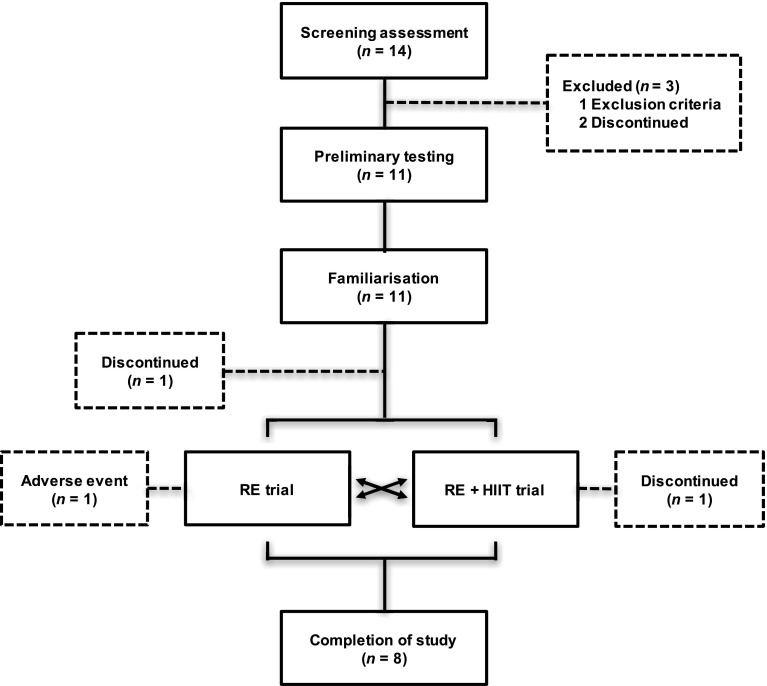
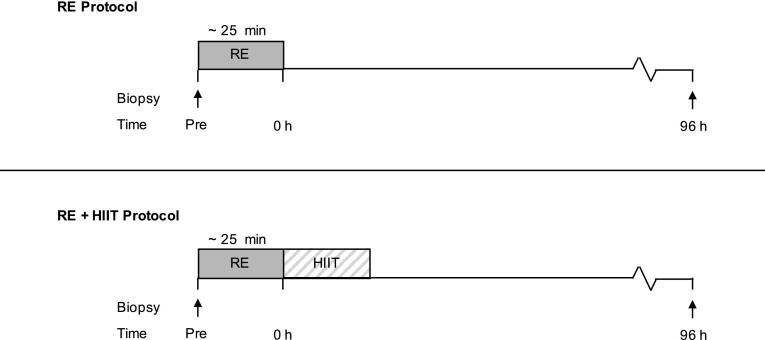
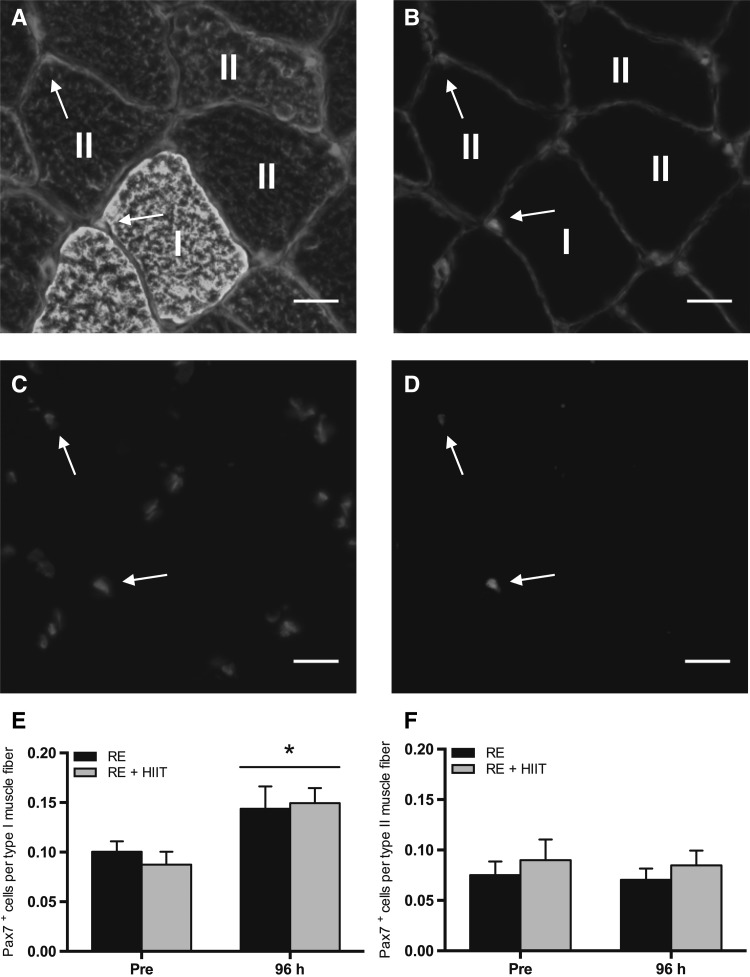
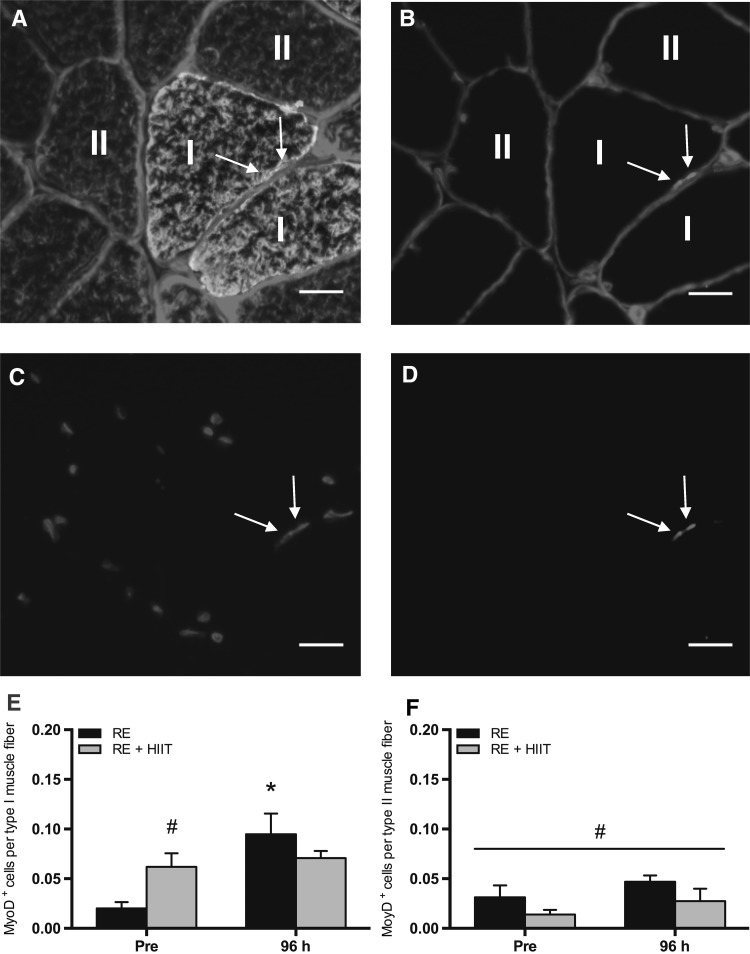
Sarcopenia can begin from the 4–5th decade of life and is exacerbated by obesity and inactivity. A combination of resistance exercise (RE) and endurance exercise is recommended to combat rising obesity and inactivity levels. However, work continues to elucidate whether interference in adaptive outcomes occur when RE and endurance exercise are performed concurrently. This study examined whether a single bout of concurrent RE and high-intensity interval training (HIIT) alters the satellite cell response following exercise compared to RE alone. Eight sedentary, overweight/obese, middle-aged individuals performed RE only (8 × 8 leg extensions at 70% 1RM), or RE + HIIT (10 × 1 min at 90% HR max on a cycle ergometer). Muscle biopsies were collected from the vastus lateralis before and 96 h after the RE component to determine muscle fiber type-specific total (Pax7 + cells) and active (MyoD + cells) satellite cell number using immunofluorescence microscopy. Type-I-specific Pax7 + ( P = 0.001) cell number increased after both exercise trials. Type-I-specific MyoD + ( P = 0.001) cell number increased after RE only. However, an elevated baseline value in RE + HIIT compared to RE ( P = 0.046) was observed, with no differences between exercise trials at 96 h ( P = 0.21). Type-II-specific Pax7 + and MyoD + cell number remained unchanged after both exercise trials (all P ≥ 0.13). Combining a HIIT session after a single bout of RE does not interfere with the increase in type-I-specific total, and possibly active, satellite cell number, compared to RE only. Concurrent RE + HIIT may offer a time-efficient way to maximise the physiological benefits from a single bout of exercise in sedentary, overweight/obese, middle-aged individuals.
Overview
The claims and statistics of this paper haven’t been checked yet.
Free: it reads the open-access text and checks the first 5 claims that cite a source we can check. Create a free account to check every claim.
Integrity signals
Registry
Cites
Statistics
Figures
Verification
Claims the paper makes
The claims and statistics of this paper haven’t been checked yet.
Free: it reads the open-access text and checks the first 5 claims that cite a source we can check. Create a free account to check every claim.
Claims other papers make about this one
Each is checked against this paper’s own text: does it say what the citing paper says it does?
The source backs part of the claim, not all of it — or backs it for a different population, condition or comparison.
In the citing paper
“Recently, Pugh et al. (2018) demonstrated that a single bout of resistance or concurrent exercise incorporating high-intensity interval cycling results in comparable increases in satellite cell content in sedentary, overweight and obese middle-aged individuals”
From Myofibre Hypertrophy in the Absence of Changes to Satellite Cell Content Following Concurrent Exercise Training in Young Healthy Men (2021) · cites this paper as Pugh et al., 2018
Experimental — accuracy not yet measuredThe source backs part of the claim, not all of it — or backs it for a different population, condition or comparison.
In the citing paper
“To date, only two studies have evaluated changes in satellite cell content in response to concurrent exercise compared to isolated resistance exercise, with mixed results.”
From Myofibre Hypertrophy in the Absence of Changes to Satellite Cell Content Following Concurrent Exercise Training in Young Healthy Men (2021) · cites this paper as Pugh et al., 2018
Experimental — accuracy not yet measured
Self-check
Percentages, sums and reported differences re-computed from the paper’s own numbers.
The self-check needs the paper’s full text.
Citations
Cites
Faul, F., Erdfelder, E., Lang, A.-G., & Buchner, A. (2007) · Behavior Research Methods · doi:10.3758/bf03193146 · Cited by 65,971 · cited 1×
“A priori sample size calculation was performed using G*Power software (Version 3.1.7; Faul et al. 2007).”
MethodInfluentialNIH Image to ImageJ: 25 years of image analysis
Schneider, C. A., Rasband, W. S., & Eliceiri, K. W. (2012) · Nature Methods · doi:10.1038/nmeth.2089 · Cited by 64,638
The metabolic syndrome—a new worldwide definition
Alberti, K. G. M., Zimmet, P., & Shaw, J. (2005) · The Lancet · doi:10.1016/s0140-6736(05)67402-8 · Cited by 9,352
Garber, C. E., Blissmer, B., Deschenes, M. R., Franklin, B. A., Lamonte, M. J., Lee, I.-M., Nieman, D. C., & Swain, D. P. (2011) · Medicine & Science in Sports & Exercise · doi:10.1249/mss.0b013e318213fefb · Cited by 9,319 · cited 1×
“Current exercise guidelines recommend that middle-aged individuals (~ 40 to 65 years) should engage in a combination of endurance and resistance exercise (RE), improve cardio-metabolic health and quality of life (Chief Medical Office 2011; Garber et al. 2011).”
BackgroundThe metabolic phenotype in obesity: Fat mass, body fat distribution, and adipose tissue function
Goossens, G. H. (2017) · Obesity Facts · doi:10.1159/000471488 · Cited by 8,481
Borg's Perceived Exertion and Pain Scales
Borg, G. A. V. (1998) · Cited by 3,366
Correlates of adults??? participation in physical activity: review and update
TROST, S. G., OWEN, N., BAUMAN, A. E., SALLIS, J. F., & BROWN, W. (2002) · Medicine & Science in Sports & Exercise · doi:10.1097/00005768-200212000-00020 · Cited by 3,040 · cited 1×
“Often a lack of time is cited as the main barrier to an individual participating in regular physical activity (Stutts 2002; Trost et al. 2002).”
BackgroundBorg's Perceived Exertion and Pain Scales
Heath, E. M. (1998) · Medicine& Science in Sports & Exercise · doi:10.1097/00005768-199809000-00018 · Cited by 3,037 · cited 2×
“For all trials, rating of perceived exertion (RPE, Category-Ratio 10 Scale) (Borg 1998) was recorded after each set of leg extensions and each 1 min bout of high-intensity cycling.”
MethodDouble muscling in cattle due to mutations in the myostatin gene
McPherron, A. C., & Lee, S.-J. (1997) · Proceedings of the National Academy of Sciences · doi:10.1073/pnas.94.23.12457 · Cited by 2,039 · cited 2×
“Myostatin is known to be a negative regulator of muscle growth (McPherron and Lee 1997; Reisz-Porszasz et al.”
BackgroundPhysiological adaptations to low-volume, high-intensity interval training in health and disease
Gibala, M. J., Little, J. P., MacDonald, M. J., & Hawley, J. A. (2012) · The Journal of Physiology · doi:10.1113/jphysiol.2011.224725 · Cited by 1,744 · cited 2×
“The data from the present study indicates that incorporating HIIT after RE does not dampen the increase in satellite cell content following a single bout of RE, while potentially providing the stimulus for important cardiovascular and metabolic adaptations previously attributed to HIIT (Gibala et al. 2012).”
BackgroundResultTjønna, A. E., Lee, S. J., Rognmo, Ø., Stølen, T. O., Bye, A., Haram, P. M., Loennechen, J. P., Al-Share, Q. Y., Skogvoll, E., Slørdahl, S. A., et al. (2008) · Circulation · doi:10.1161/circulationaha.108.772822 · Cited by 1,145
Sarcopenic obesity: definition, cause and consequences
Stenholm, S., Harris, T. B., Rantanen, T., Visser, M., Kritchevsky, S. B., & Ferrucci, L. (2008) · Current Opinion in Clinical Nutrition and Metabolic Care · doi:10.1097/mco.0b013e328312c37d · Cited by 1,070
Muscle satellite cells adopt divergent fates
Zammit, P. S., Golding, J. P., Nagata, Y., Hudon, V., Partridge, T. A., & Beauchamp, J. R. (2004) · The Journal of Cell Biology · doi:10.1083/jcb.200312007 · Cited by 921 · cited 1×
“1 3 during activation, proliferation and during the early stages of differentiation, but not in quiescent satellite cells (Zammit et al. 2004).”
BackgroundMyostatin Inhibits Myoblast Differentiation by Down-regulating MyoD Expression
Langley, B., Thomas, M., Bishop, A., Sharma, M., Gilmour, S., & Kambadur, R. (2002) · Journal of Biological Chemistry · doi:10.1074/jbc.m204291200 · Cited by 908
Myostatin negatively regulates satellite cell activation and self-renewal
McCroskery, S., Thomas, M., Maxwell, L., Sharma, M., & Kambadur, R. (2003) · The Journal of Cell Biology · doi:10.1083/jcb.200207056 · Cited by 784 · cited 1×
“2003) through the suppression of muscle protein synthesis and satellite cell activity (Langley et al. 2002; McCroskery et al. 2003; Welle et al. 2009).”
BackgroundInterference of strength development by simultaneously training for strength and endurance.
Hickson, R. C. (1980) · European Journal of Applied Physiology and Occupational Physiology · doi:10.1007/bf00421333 · Cited by 753
Bartlett, J. D., Close, G. L., MacLaren, D. P. M., Gregson, W., Drust, B., & Morton, J. P. (2011) · Journal of Sports Sciences · doi:10.1080/02640414.2010.545427 · Cited by 593
Liu, Z., & Roche, P. A. (2015) · Frontiers in Physiology · doi:10.3389/fphys.2015.00001 · Cited by 559
Review Article: Sarcopenia: Causes, Consequences, and Preventions
Marcell, T. J. (2003) · The Journals of Gerontology Series A: Biological Sciences and Medical Sciences · doi:10.1093/gerona/58.10.m911 · Cited by 536 · cited 1×
“2013), a process starting as early as the 4th or 5th decade (Marcell 2003; Jackson et al. 2012).”
BackgroundTrapp, E. G., Chisholm, D. J., Freund, J., & Boutcher, S. H. (2008) · International Journal of Obesity · doi:10.1038/sj.ijo.0803781 · Cited by 533 · cited 1×
“Given that HIIT improves the satellite cell response, but also has profound health benefits across both healthy (Trapp et al. 2008; Gillen et al. 2013; Faulkner et al. 2015) and clinical populations (Currie et al.”
BackgroundExtracellular Cysteine in Connexins: Role as Redox Sensors
Retamal, M. A., García, I. E., Pinto, B. I., Pupo, A., Báez, D., Stehberg, J., Del Rio, R., & González, C. (2016) · Frontiers in Physiology · doi:10.3389/fphys.2016.00001 · Cited by 482
Louis, E., Raue, U., Yang, Y., Jemiolo, B., & Trappe, S. (2007) · Journal of Applied Physiology · doi:10.1152/japplphysiol.00679.2007 · Cited by 478
Satellite cells in human skeletal muscle plasticity
Snijders, T., Nederveen, J. P., McKay, B. R., Joanisse, S., Verdijk, L. B., van Loon, L. J. C., & Parise, G. (2015) · Frontiers in Physiology · doi:10.3389/fphys.2015.00283 · Cited by 359 · cited 3×
“Expansion in satellite cell content peaks between 72 and 96 h following exercise, and declines thereafter (Martin and Lewis 2012; Snijders et al. 2015).”
BackgroundResultLower skeletal muscle mass in male transgenic mice with muscle-specific overexpression of myostatin
Reisz-Porszasz, S., Bhasin, S., Artaza, J. N., Shen, R., Sinha-Hikim, I., Hogue, A., Fielder, T. J., & Gonzalez-Cadavid, N. F. (2003) · American Journal of Physiology-Endocrinology and Metabolism · doi:10.1152/ajpendo.00107.2003 · Cited by 333 · cited 1×
“Myostatin is known to be a negative regulator of muscle growth (McPherron and Lee 1997; Reisz-Porszasz et al. 2003) through the suppression of muscle protein synthesis and satellite cell activity (Langley et al.”
BackgroundCrameri, R. M., Aagaard, P., Qvortrup, K., Langberg, H., Olesen, J., & Kjær, M. (2007) · The Journal of Physiology · doi:10.1113/jphysiol.2007.128827 · Cited by 319
Yang, Y., Creer, A., Jemiolo, B., & Trappe, S. (2005) · Journal of Applied Physiology · doi:10.1152/japplphysiol.01185.2004 · Cited by 290 · cited 4×
“However, it is likely that less damaging exercise results in earlier (< 96 h) peaks in mRNA expression of MRFs (Psilander et al. 2003; Yang et al. 2005).”
BackgroundInfluentialBijlsma, A. Y., Meskers, C. G. M., Ling, C. H. Y., Narici, M., Kurrle, S. E., Cameron, I. D., Westendorp, R. G. J., & Maier, A. B. (2013) · AGE · doi:10.1007/s11357-012-9384-z · Cited by 269
Changes in satellite cells in human skeletal muscle after a single bout of high intensity exercise.
Crameri, R. M., Langberg, H., Magnusson, P., Jensen, C. H., Schrøder, H. D., Olesen, J. L., Suetta, C., Teisner, B., & Kjaer, M. (2004) · The Journal of Physiology · doi:10.1113/jphysiol.2004.061846 · Cited by 262 · cited 2×
“The present study used a realistic exercise program to elicit an exercise-induced satellite cell response, in comparison to other studies (Crameri et al. 2004; Mikkelsen et al. 2009) using extreme workloads that are unfeasible and result in an exaggerated satellite cell response due to muscle damage.”
ResultSatellite cell numbers in young and older men 24 hours after eccentric exercise
Dreyer, H. C., Blanco, C. E., Sattler, F. R., Schroeder, E. T., & Wiswell, R. A. (2006) · Muscle & Nerve · doi:10.1002/mus.20461 · Cited by 256
PGC-1α-mediated adaptations in skeletal muscle
Olesen, J., Kiilerich, K., & Pilegaard, H. (2010) · Pflügers Archiv - European Journal of Physiology · doi:10.1007/s00424-010-0834-0 · Cited by 244
Physical Activity Determinants in Adults: Perceived Benefits, Barriers, and Self Efficacy
Stutts, W. C. (2002) · AAOHN Journal · doi:10.1177/216507990205001106 · Cited by 239
Gillen, J. B., Percival, M. E., Ludzki, A., Tarnopolsky, M. A., & Gibala, M. J. (2013) · Obesity · doi:10.1002/oby.20379 · Cited by 222 · cited 2×
“Given that HIIT improves the satellite cell response, but also has profound health benefits across both healthy (Trapp et al. 2008; Gillen et al. 2013; Faulkner et al. 2015) and clinical populations (Currie et al.”
BackgroundCassidy, S., Thoma, C., Hallsworth, K., Parikh, J., Hollingsworth, K. G., Taylor, R., Jakovljevic, D. G., & Trenell, M. I. (2016) · Diabetologia · doi:10.1007/s00125-015-3741-2 · Cited by 212
Adiposity Compared With Physical Inactivity and Risk of Type 2 Diabetes in Women
Rana, J. S., Li, T. Y., Manson, J. E., & Hu, F. B. (2007) · Diabetes Care · doi:10.2337/dc06-1456 · Cited by 201
The Interference Effects of Training for Strength and Endurance Simultaneously.
Hennessy, L. C., & Watson, A. W. S. (1994) · Journal of Strength and Conditioning Research · doi:10.1519/00124278-199402000-00003 · Cited by 193
Longitudinal changes in body composition associated with healthy ageing: men, aged 20–96 years
Jackson, A. S., Janssen, I., Sui, X., Church, T. S., & Blair, S. N. (2012) · British Journal of Nutrition · doi:10.1017/s0007114511003886 · Cited by 189
Low-Volume, High-Intensity Interval Training in Patients with CAD
CURRIE, K. D., DUBBERLEY, J. B., McKELVIE, R. S., & MacDONALD, M. J. (2013) · Medicine & Science in Sports & Exercise · doi:10.1249/mss.0b013e31828bbbd4 · Cited by 188 · cited 2×
“2012), with reports of high exercise adherence (Terada et al. 2013; Currie et al. 2013; Faulkner et al. 2015) and enjoyment (Bartlett et al.”
BackgroundThe Cardiometabolic Syndrome and Sarcopenic Obesity in Older Persons
Dominguez, L. J., & Barbagallo, M. (2007) · Journal of the CardioMetabolic Syndrome · doi:10.1111/j.1559-4564.2007.06673.x · Cited by 185 · cited 2×
“Sarcopenia is further accelerated in the presence of obesity and can result in physical disability and a lower quality of life (Dominguez and Barbagallo 2007; Stenholm et al.”
BackgroundMikkelsen, U. R., Langberg, H., Helmark, I. C., Skovgaard, D., Andersen, L. L., Kjær, M., & Mackey, A. L. (2009) · Journal of Applied Physiology · doi:10.1152/japplphysiol.00707.2009 · Cited by 185 · cited 3×
“The present study used a realistic exercise program to elicit an exercise-induced satellite cell response, in comparison to other studies (Crameri et al. 2004; Mikkelsen et al. 2009) using extreme workloads that are unfeasible and result in an exaggerated satellite cell response due to muscle damage.”
BackgroundResultResistance exercise alters MRF and IGF-I mRNA content in human skeletal muscle
Psilander, N., Damsgaard, R., & Pilegaard, H. (2003) · Journal of Applied Physiology · doi:10.1152/japplphysiol.00903.2002 · Cited by 178 · cited 4×
“However, it is likely that less damaging exercise results in earlier (< 96 h) peaks in mRNA expression of MRFs (Psilander et al. 2003; Yang et al. 2005).”
BackgroundInfluentialAerobic exercise does not compromise muscle hypertrophy response to short-term resistance training
Lundberg, T. R., Fernandez-Gonzalo, R., Gustafsson, T., & Tesch, P. A. (2013) · Journal of Applied Physiology · doi:10.1152/japplphysiol.01013.2012 · Cited by 168
McKay, B. R., O'Reilly, C. E., Phillips, S. M., Tarnopolsky, M. A., & Parise, G. (2008) · The Journal of Physiology · doi:10.1113/jphysiol.2008.160176 · Cited by 164 · cited 1×
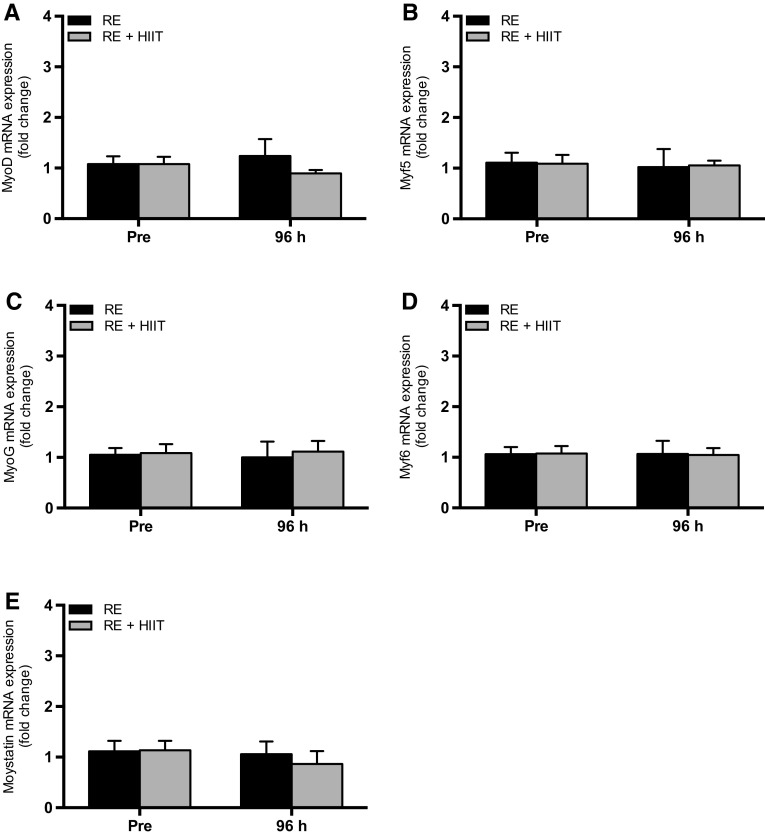
“Others have reported increases in MyoG and Myf6 mRNA expression up to 120 h after high-volume, muscle damaging RE (McKay et al. 2008).”
BackgroundMyostatin is associated with age‐related human muscle stem cell dysfunction
McKay, B. R., Ogborn, D. I., Bellamy, L. M., Tarnopolsky, M. A., & Parise, G. (2012) · The FASEB Journal · doi:10.1096/fj.11-198663 · Cited by 163 · cited 2×
“2014), or fails to respond entirely (McKay et al. 2012; Nederveen et al. 2015).”
BackgroundAssessment of satellite cell number and activity status in human skeletal muscle biopsies
Mackey, A. L., Kjaer, M., Charifi, N., Henriksson, J., Bojsen‐Moller, J., Holm, L., & Kadi, F. (2009) · Muscle & Nerve · doi:10.1002/mus.21369 · Cited by 162
Feasibility and preliminary efficacy of high intensity interval training in type 2 diabetes
Terada, T., Friesen, A., Chahal, B. S., Bell, G. J., McCargar, L. J., & Boulé, N. G. (2012) · Diabetes Research and Clinical Practice · doi:10.1016/j.diabres.2012.10.019 · Cited by 157 · cited 1×
“2012), with reports of high exercise adherence (Terada et al. 2013; Currie et al. 2013; Faulkner et al. 2015) and enjoyment (Bartlett et al.”
BackgroundEffects of endurance training on satellite cell frequency in skeletal muscle of old men.
Charifi, N., Kadi, F., Féasson, L., & Denis, C. (2003) · Muscle & Nerve · doi:10.1002/mus.10394 · Cited by 154
The Acute Satellite Cell Response and Skeletal Muscle Hypertrophy following Resistance Training
Bellamy, L. M., Joanisse, S., Grubb, A., Mitchell, C. J., McKay, B. R., Phillips, S. M., Baker, S., & Parise, G. (2014) · PLoS ONE · doi:10.1371/journal.pone.0109739 · Cited by 149
McKay, B. R., De Lisio, M., Johnston, A. P. W., O'Reilly, C. E., Phillips, S. M., Tarnopolsky, M. A., & Parise, G. (2009) · PLoS ONE · doi:10.1371/journal.pone.0006027 · Cited by 149 · cited 2×
“While previous exercise protocols using higher workloads have elicited greater increases (> 95%) in satellite cell content (Crameri et al. 2004; O’Reilly et al. 2008; McKay et al. 2009; Mikkelsen et al. 2009), the 78 ± 24% increase in the present study is comparable with data where similar workloads were used (Babcock…”
BackgroundResultVerney, J., Kadi, F., Charifi, N., Féasson, L., Saafi, M. A., Castells, J., Piehl‐Aulin, K., & Denis, C. (2008) · Muscle & Nerve · doi:10.1002/mus.21054 · Cited by 148
Madsen, S. M., Thorup, A. C., Overgaard, K., & Jeppesen, P. B. (2015) · PLOS ONE · doi:10.1371/journal.pone.0133286 · Cited by 144
Fibre type‐specific satellite cell response to aerobic training in sedentary adults
Fry, C. S., Noehren, B., Mula, J., Ubele, M. F., Westgate, P. M., Kern, P. A., & Peterson, C. A. (2014) · The Journal of Physiology · doi:10.1113/jphysiol.2014.271288 · Cited by 132 · cited 1×
“Similarly, others have shown no gender effects when using a mixed gender model (Fry et al. 2014).”
BackgroundSnijders, T., Verdijk, L. B., Smeets, J. S. J., McKay, B. R., Senden, J. M., Hartgens, F., Parise, G., Greenhaff, P. L., & van Loon, L. J. C. (2014) · AGE · doi:10.1007/s11357-014-9699-z · Cited by 123
Coffey, V. G., Jemiolo, B., Edge, J., Garnham, A. P., Trappe, S. W., & Hawley, J. A. (2009) · American Journal of Physiology-Regulatory, Integrative and Comparative Physiology · doi:10.1152/ajpregu.00351.2009 · Cited by 120
Bell, K. E., Séguin, C., Parise, G., Baker, S. K., & Phillips, S. M. (2015) · The Journals of Gerontology Series A: Biological Sciences and Medical Sciences · doi:10.1093/gerona/glu313 · Cited by 118
Welle, S., Burgess, K., & Mehta, S. (2009) · American Journal of Physiology-Endocrinology and Metabolism · doi:10.1152/ajpendo.90862.2008 · Cited by 117 · cited 1×
“2003) through the suppression of muscle protein synthesis and satellite cell activity (Langley et al. 2002; McCroskery et al. 2003; Welle et al. 2009).”
BackgroundReddigan, J. I., Ardern, C. I., Riddell, M. C., & Kuk, J. L. (2011) · The American Journal of Cardiology · doi:10.1016/j.amjcard.2011.07.005 · Cited by 117 · cited 1×
“, type 2 diabetes and cardiovascular disease) (Rana et al. 2007; Reddigan et al. 2011), and are considered major global public health issues.”
BackgroundConsecutive bouts of diverse contractile activity alter acute responses in human skeletal muscle
Coffey, V. G., Pilegaard, H., Garnham, A. P., O'Brien, B. J., & Hawley, J. A. (2009) · Journal of Applied Physiology · doi:10.1152/japplphysiol.91221.2008 · Cited by 116
Donges, C. E., Burd, N. A., Duffield, R., Smith, G. C., West, D. W. D., Short, M. J., Mackenzie, R., Plank, L. D., Shepherd, P. R., Phillips, S. M., et al. (2012) · Journal of Applied Physiology · doi:10.1152/japplphysiol.00166.2012 · Cited by 114 · cited 1×
“2016), although such evidence is equivocal (Bell et al. 1991; Shaw et al. 2009; Donges et al. 2012; Lundberg et al. 2012, 2013; Apró et al. 2013; Kazior et al. 2016).”
BackgroundThe Effects of Running, Weightlifting and a Combination of Both on Growth Hormone Release.
Craig, B. W., Lucas, J., Pohlman, R., & Stelling, H. (1991) · Journal of Strength and Conditioning Research · doi:10.1519/00124278-199111000-00005 · Cited by 114
Apró, W., Wang, L., Pontén, M., Blomstrand, E., & Sahlin, K. (2013) · American Journal of Physiology-Endocrinology and Metabolism · doi:10.1152/ajpendo.00091.2013 · Cited by 109
O'Reilly, C., McKay, B., Phillips, S., Tarnopolsky, M., & Parise, G. (2008) · Muscle & Nerve · doi:10.1002/mus.21146 · Cited by 106
Eccentric Exercise Increases Satellite Cell Content in Type II Muscle Fibers
CERMAK, N. M., SNIJDERS, T., McKAY, B. R., PARISE, G., VERDIJK, L. B., TARNOPOLSKY, M. A., GIBALA, M. J., & VAN LOON, L. J. C. (2013) · Medicine & Science in Sports & Exercise · doi:10.1249/mss.0b013e318272cf47 · Cited by 95
Overtraining: A Review of the Signs, Symptoms and Possible Causes
Stone, M. H., Keith, R. E., Kearney, J. T., Fleck, S. J., Wilson, G., & Triplett, N. T. (1991) · The Journal of Strength and Conditioning Research · Cited by 94
Fyfe, J. J., Bartlett, J. D., Hanson, E. D., Stepto, N. K., & Bishop, D. J. (2016) · Frontiers in Physiology · doi:10.3389/fphys.2016.00487 · Cited by 88 · cited 1×
“However, there is evidence to suggest that combining RE and endurance exercise will impair strength development and muscle size (Hickson 1980; Craig et al. 1991; Hennessy and Watson 1994; Coffey et al. 2009a, b; Babcock et al. 2012; Kikuchi et al. 2016; Fyfe et al. 2016), although such evidence is equivocal (Bell et a…”
BackgroundAerobic Exercise Alters Skeletal Muscle Molecular Responses to Resistance Exercise
LUNDBERG, T. R., FERNANDEZ-GONZALO, R., GUSTAFSSON, T., & TESCH, P. A. (2012) · Medicine & Science in Sports & Exercise · doi:10.1249/mss.0b013e318256fbe8 · Cited by 86
Kazior, Z., Willis, S. J., Moberg, M., Apró, W., Calbet, J. A. L., Holmberg, H.-C., & Blomstrand, E. (2016) · PLOS ONE · doi:10.1371/journal.pone.0149082 · Cited by 82
Shaw, B. S., Shaw, I., & Brown, G. A. (2009) · The Journal of Strength and Conditioning Research · doi:10.1519/jsc.0b013e3181bc191e · Cited by 81 · cited 1×
“2016), although such evidence is equivocal (Bell et al. 1991; Shaw et al. 2009; Donges et al. 2012; Lundberg et al. 2012, 2013; Apró et al. 2013; Kazior et al. 2016).”
BackgroundPhysiological Adaptations to Concurrent Endurance Training and Low Velocity Resistance Training
Bell, G., Petersen, S., Wessel, J., Bagnall, K., & Quinney, H. (1991) · International Journal of Sports Medicine · doi:10.1055/s-2007-1024699 · Cited by 73
Snijders, T., Verdijk, L. B., Beelen, M., McKay, B. R., Parise, G., Kadi, F., & van Loon, L. J. C. (2012) · Experimental Physiology · doi:10.1113/expphysiol.2011.063313 · Cited by 63
Pugh, J. K., Faulkner, S. H., Jackson, A. P., King, J. A., & Nimmo, M. A. (2015) · Physiological Reports · doi:10.14814/phy2.12364 · Cited by 63 · cited 4×
“Whereas, as we have previously shown no initial molecular interference on gene expression and protein signalling markers of muscle growth with concurrent RE followed by HIIT compared to RE alone (Pugh et al. 2015).”
BackgroundResultInfluentialSelf-citationKurosaka, M., Naito, H., Ogura, Y., Machida, S., & Katamoto, S. (2012) · Acta Physiologica · doi:10.1111/j.1748-1716.2011.02381.x · Cited by 54
The effect of exercise mode on the acute response of satellite cells in old men
Nederveen, J. P., Joanisse, S., Séguin, C. M. L., Bell, K. E., Baker, S. K., Phillips, S. M., & Parise, G. (2015) · Acta Physiologica · doi:10.1111/apha.12601 · Cited by 51 · cited 3×
“2014), or fails to respond entirely (McKay et al. 2012; Nederveen et al. 2015).”
ResultSnijders, T., Verdijk, L. B., Hansen, D., Dendale, P., & van Loon, L. J. C. (2011) · Muscle & Nerve · doi:10.1002/mus.21891 · Cited by 37
Acute vs. chronic hypoxia: What are the consequences for skeletal muscle mass?
Deldicque, L., & Francaux, M. (2013) · doi:10.7457/cmep.v2i1 · Cited by 35
Babcock, L., Escano, M., D'Lugos, A., Todd, K., Murach, K., & Luden, N. (2012) · American Journal of Physiology-Regulatory, Integrative and Comparative Physiology · doi:10.1152/ajpregu.00035.2012 · Cited by 34
Larose, J., Sigal, R. J., Khandwala, F., & Kenny, G. P. (2011) · Scandinavian Journal of Medicine and Science in Sports · doi:10.1111/j.1600-0838.2011.01412.x · Cited by 31
Satellite cell activation and number following acute and chronic exercise: A mini review
Martin, N. R., & Lewis, M. P. (2012) · Cellular and Molecular Exercise Physiology · doi:10.7457/cmep.v1i1.e3 · Cited by 27 · cited 3×
“Expansion in satellite cell content peaks between 72 and 96 h following exercise, and declines thereafter (Martin and Lewis 2012; Snijders et al. 2015).”
BackgroundResultDeveloping a Social, Cultural and Economic Report Card for a Regional Industrial Harbour
Pascoe, S. D., Tobin, R., Windle, J., Cannard, T., Marshall, N., Kabir, Z., & Flint, N. (2016) · PLoS ONE · doi:10.1371/journal.pone.0148271 · Cited by 27
Kikuchi, N., Yoshida, S., Okuyama, M., & Nakazato, K. (2016) · Journal of Strength and Conditioning Research · doi:10.1519/jsc.0000000000001315 · Cited by 20
Can AMPK mediated suppression of mTORC1 explain the concurrent training effect?
Hamilton, D. L., & Philp, A. (2013) · Cellular and Molecular Exercise Physiology · doi:10.7457/cmep.v2i1.e4 · Cited by 16 · cited 1×
“Although this evidence provides indicative responses, it is unlikely that the mechanism behind the impaired adaptations following concurrent training can be fully explained by the initial molecular interference between the signalling proteins, AMPK and mTOR (Hamilton and Philp 2013).”
BackgroundInfluentialKEMMLER, W. K., Lell, M., Scharf, M., Fraunberger, L., & von Stengel, S. (2015) · DMW - Deutsche Medizinische Wochenschrift · doi:10.1055/s-0040-100423 · Cited by 10
Faulkner, S. H., Pugh, J. K., Hood, T. M., Menon, K., King, J. A., & Nimmo, M. A. (2015) · Nottingham Trent University's Institutional Repository (Nottingham Trent Repository) · Cited by 6
Self-citation
Research works printed but not linked: 1
- Chief Medical Office (2011) Physical activity guidelines in the UK: review and recommendations
Cited by
Exercise as a prescription for patients with various diseases
Luan, X., Tian, X., Zhang, H., Huang, R., Li, N., Chen, P., & Wang, R. (2019) · Journal of Sport and Health Science · doi:10.1016/j.jshs.2019.04.002 · Cited by 441
“RE combined with HIIT was better than resistance training alone.(101) In short, the exercise methods described usually show positive effects, and the most common exercise form for treating or preventing obesity is AE.”
BackgroundYou, Y., Li, W., Liu, J., Li, X., Fu, Y., & Ma, X. (2021) · Frontiers in Public Health · doi:10.3389/fpubh.2021.697633 · Cited by 148
“HIIT program can also be used to prevent sarcopenia, a more common syndrome in middle-aged and elderly patients, which is often combined with muscle mass loss, oxidative stress, chronic low-grade inflammatory status, and adipocytokine dysfunction (105, 106).”
BackgroundZouhal, H., Ben Abderrahman, A., Khodamoradi, A., Saeidi, A., Jayavel, A., Hackney, A. C., Laher, I., Algotar, A. M., & Jabbour, G. (2020) · Obesity Reviews · doi:10.1111/obr.13039 · Cited by 54
مقدم, ب. ه., Bagheri, R., Ashtary‐Larky, D., Tinsley, G. M., Eskandari, M., Wong, A., مقدم, ب. ه., Kreider, R. B., & Baker, J. S. (2020) · The journal of nutrition health & aging · doi:10.1007/s12603-020-1431-3 · Cited by 45
“Combining high-intensity interval training after a single bout of RT does not interfere with the increase in type-I-specific total, and possibly active, SC content, compared to RT only in sedentary, overweight/obese, middle-aged individuals (23).”
Seo, M.-W., Lee, J.-M., Jung, H. C., Jung, S. W., & Song, J. K. (2019) · International Journal of Sports Medicine · doi:10.1055/a-0927-6884 · Cited by 35
Metadata
- Authors
- Pugh, J. K., Faulkner, S. H., Turner, M. C., & Nimmo, M. A.
- Affiliations
- Loughborough University (GB)
- Corresponding author
- Nimmo, Myra A.
- Venue
- European Journal of Applied Physiology
- Published
- 2017-10-25
- Volume
- 118
- Issue
- 2
- Pages
- 225-238
- ISSN
- 0020-9376 (ISSN-L)
- 1439-6319
- 1439-6327
- PMC
- PMC5767196
- OpenAlex
- W2767065610
- Semantic Scholar
- 448da513a3c8703d494a2a3fd3416bf641394219
- Cited by
- 27
- References
- 81
- Citations by year
- 2026: 1 · 2025: 3 · 2024: 1 · 2023: 5 · 2022: 2 · 2021: 2 · 2020: 7 · 2019: 5 · 2018: 1
- FWCI
- 1.45
- Type
- journal article
- Language
- en
- Open access
- hybrid
- doi.org
- Licence
- cc-by
- creativecommons.org/licenses/by/4.0 (tdm)
- Locations
- European Journal of Applied Physiology (publishedVersion, cc-by)
- PubMed Central (publishedVersion, cc-by)
- PubMed (publishedVersion)
- Nottingham Trent University's Institutional Repository (Nottingham Trent Repository) (acceptedVersion)
- Loughborough University Institutional Repository (Loughborough University) (submittedVersion, cc-by)
- Loughborough University Research Repository (Loughborough University) (submittedVersion, cc-by)
- University of Birmingham Research Portal (University of Birmingham) (submittedVersion, cc-by)
- Funders
- University Hospitals of Leicester NHS Trust
- National Institute for Health and Care Research
- Loughborough University
- Topics
- Life Sciences › Biochemistry, Genetics and Molecular Biology › Molecular Biology › Muscle Physiology and Disorders
- Health Sciences › Medicine › Physiology (medical) › Exercise and Physiological Responses
- Health Sciences › Nursing › Nutrition and Dietetics › Muscle metabolism and nutrition
- Keywords
- satellite cells, high-intensity interval training, resistance training, concurrent exercise, sarcopenia, Pax7, MyoD, muscle fiber type, vastus lateralis, middle-aged adults
- MeSH terms
- High-Intensity Interval Training, Female, Humans, Male, Middle Aged, Obesity, MyoD Protein, Satellite Cells, Skeletal Muscle, PAX7 Transcription Factor, Resistance Training, Sarcopenia
About these checks
Registry, retraction, Cites and statistics results are computed, not judged, with one exception: a printed reference that no index lists is read once by a model before it counts as a citation error. Claims are extracted by a model and kept only when their quote appears verbatim in the text; each cited source is then checked, with a model’s help, for whether it says what the claim relies on. Those verdicts can be wrong — read the claim’s quote and the cited source before relying on one.
Statistics and arithmetic are recomputed, not judged.
Confidence bands are shown only for fields calibrated on our annotated test set. None is calibrated yet, so no band is shown.
What counts as a claim ›How we measure confidence ›How we check this ›
Are you an author, or do you see a problem with this page? Request a review
Data sources
Bibliographic data: Semantic Scholar, OpenAlex, Crossref.
Contains information from the Semantic Scholar Academic Graph Datasets, made available under the ODC Attribution License (ODC-BY 1.0).
Semantic Scholar’s data is described in: Kinney, R., et al. (2023). The Semantic Scholar Open Data Platform. arXiv:2301.10140.
