

Endocrine, genetic, and microbiome nexus of obesity and potential role of postbiotics: a narrative review
Open accessThe DOI matches its Crossref record; 165 of the 165 references it cites were found in a registry or an index.
Abstract
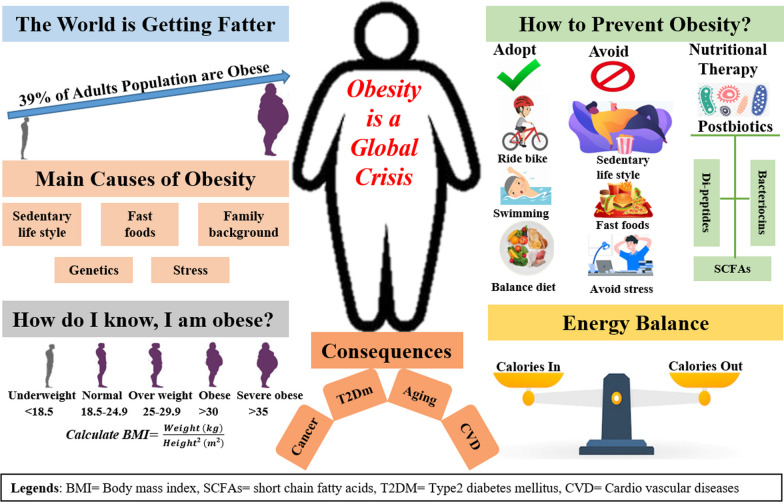
Obesity is a public health crisis, presenting a huge burden on health care and the economic system in both developed and developing countries. According to the WHO’s latest report on obesity, 39% of adults of age 18 and above are obese, with an increase of 18% compared to the last few decades. Metabolic energy imbalance due to contemporary lifestyle, changes in gut microbiota, hormonal imbalance, inherent genetics, and epigenetics is a major contributory factor to this crisis. Multiple studies have shown that probiotics and their metabolites (postbiotics) supplementation have an effect on obesity-related effects in vitro, in vivo, and in human clinical investigations. Postbiotics such as the SCFAs suppress obesity by regulating metabolic hormones such as GLP-1, and PPY thus reducing feed intake and suppressing appetite. Furthermore, muramyl di-peptides, bacteriocins, and LPS have been tested against obesity and yielded promising results in both human and mice studies. These insights provide an overview of targetable pharmacological sites and explore new opportunities for the safer use of postbiotics against obesity in the future.
Overview
The claims and statistics of this paper haven’t been checked yet.
Free: it reads the open-access text and checks the first 5 claims that cite a source we can check. Create a free account to check every claim.
Integrity signals
Registry
Cites
Statistics
Figures
Verification
Claims the paper makes
The claims and statistics of this paper haven’t been checked yet.
Free: it reads the open-access text and checks the first 5 claims that cite a source we can check. Create a free account to check every claim.
Claims other papers make about this one
Each is checked against this paper’s own text: does it say what the citing paper says it does?
The source backs part of the claim, not all of it — or backs it for a different population, condition or comparison.
In the citing paper
“Some postbiotics, particularly short-chain fatty acids (i.e., acetate, propionate, and butyrate), bacteriocins, and muramyl dipeptides, may help reduce appetite and food intake because of their ability to regulate metabolic hormones such as GLP-1 and PYY [108,112].”
From Nutrition and Physical Activity in Optimizing Weight Loss and Lean Mass Preservation in the Incretin-Based Medications Era: A Narrative Review (2025) · cites this paper as [108]
Experimental — accuracy not yet measured
Self-check
Percentages, sums and reported differences re-computed from the paper’s own numbers.
The self-check needs the paper’s full text.
Citations
Cites
1 retracted
Visfatin: A Protein Secreted by Visceral Fat That Mimics the Effects of Insulin
Fukuhara, A., Matsuda, M., Nishizawa, M., Segawa, K., Tanaka, M., Kishimoto, K., Matsuki, Y., Murakami, M., Ichisaka, T., Murakami, H., et al. (2005) · Science · doi:10.1126/science.1097243 · Cited by 1,906
RetractedAdipose Expression of Tumor Necrosis Factor-α: Direct Role in Obesity-Linked Insulin Resistance
Hotamisligil, G. S., Shargill, N. S., & Spiegelman, B. M. (1993) · Science · doi:10.1126/science.7678183 · Cited by 7,518 · cited 1×
“The synthesis of adiponectin is triggered by gluco-corticoids, prolactin, growth hormone, and catecholamine, while inhibited by androgens and the paracrine actions of TNFα [55, 56].”
BackgroundMetabolic Endotoxemia Initiates Obesity and Insulin Resistance
Cani, P. D., Amar, J., Iglesias, M. A., Poggi, M., Knauf, C., Bastelica, D., Neyrinck, A. M., Fava, F., Tuohy, K. M., Chabo, C., et al. (2007) · Diabetes · doi:10.2337/db06-1491 · Cited by 6,638 · cited 1×
“Finally, via regulating insulin sensitivity, the LPS receptor, cluster of differentiation antigen 14 (CD14) determines the cutoff point at which metabolic disorders manifest [169].”
BackgroundObesity: global epidemiology and pathogenesis
Blüher, M. (2019) · Nature Reviews Endocrinology · doi:10.1038/s41574-019-0176-8 · Cited by 5,126 · cited 1×
“Obesity prevalence and its related metabolic conditions have skyrocketed worldwide, particularly in developed countries [1, 2].”
BackgroundCardiovascular Morbidity and Mortality Associated With the Metabolic Syndrome
Isomaa, B., Almgren, P., Tuomi, T., Forsén, B., Lahti, K., Nissén, M., Taskinen, M.-R., & Groop, L. (2001) · Diabetes Care · doi:10.2337/diacare.24.4.683 · Cited by 4,760
Genetic studies of body mass index yield new insights for obesity biology
Study, T. L. C., Locke, A. E., The ADIPOGen Consortium, The AGEN-BMI Working Group, The CARDIOGRAMplusC4D Consortium, The CKDGen Consortium, The, G. L. G. C., The, I. C. B. P., The MAGIC Investigators, The MuTHER Consortium, et al. (2015) · Nature · doi:10.1038/nature14177 · Cited by 4,534 · cited 1×
“…studies performed previously several hundred genetic loci have been found by genome-wide association analysis (GWAS) studies, where sequence variants are statistically linked with BMI at the population level, however, these links show only a 3–5% contribution of variation to the BMI [82, 87, 88].”
BackgroundMaffei, M., Halaas, J., Ravussin, E., Pratley, R. E., Lee, G. H., Zhang, Y., Fei, H., Kim, S., Lallone, R., Ranganathan, S., et al. (1995) · Nature Medicine · doi:10.1038/nm1195-1155 · Cited by 3,725 · cited 1×
“Leptin is released by the white adipose tissue according to the body fat mass which induces an anorexigenic reaction and increases the expenditure of energy [49, 50].”
BackgroundA Novel Serum Protein Similar to C1q, Produced Exclusively in Adipocytes
Scherer, P. E., Williams, S., Fogliano, M., Baldini, G., & Lodish, H. F. (1995) · Journal of Biological Chemistry · doi:10.1074/jbc.270.45.26746 · Cited by 3,237 · cited 1×
“The synthesis of adiponectin is triggered by gluco-corticoids, prolactin, growth hormone, and catecholamine, while inhibited by androgens and the paracrine actions of TNFα [55, 56].”
BackgroundEffects of probiotics, prebiotics, and synbiotics on human health
Markowiak, P., & Śliżewska, K. (2017) · Nutrients · doi:10.3390/nu9091021 · Cited by 2,401 · cited 1×
“Moreover, the microbiota transplant from human to mouse resulted in increased adiposity, decreased faecal SCFAs, and increased monosaccharide and disaccharide concentration after feeding a plant carbohydrate-rich diet compared to the one received microbiota from the lean individual [131].”
BackgroundYengo, L., Sidorenko, J., Kemper, K. E., Zheng, Z., Wood, A. R., Weedon, M. N., Frayling, T. M., Hirschhorn, J., Yang, J., Visscher, P. M., et al. (2018) · Human Molecular Genetics · doi:10.1093/hmg/ddy271 · Cited by 2,367 · cited 2×
“[82, 83].”
BackgroundButyrate improves insulin sensitivity and increases energy expenditure in mice
Gao, Z., Yin, J., Zhang, J., Ward, R. E., Martin, R. J., Lefevre, M., Cefalu, W. T., & Ye, J. (2009) · Diabetes · doi:10.2337/db08-1637 · Cited by 2,204 · cited 1×
“Butyrate supplementation in the diet showed a significant reduction in diet-induced obesity and insulin resistance in obese mice models [143, 159].”
BackgroundMicrobiota-Generated Metabolites Promote Metabolic Benefits via Gut-Brain Neural Circuits
De Vadder, F., Kovatcheva-Datchary, P., Goncalves, D., Vinera, J., Zitoun, C., Duchampt, A., Bäckhed, F., & Mithieux, G. (2014) · Cell · doi:10.1016/j.cell.2013.12.016 · Cited by 2,200
The Long-Term Stability of the Human Gut Microbiota
Faith, J. J., Guruge, J. L., Charbonneau, M., Subramanian, S., Seedorf, H., Goodman, A. L., Clemente, J. C., Knight, R., Heath, A. C., Leibel, R. L., et al. (2013) · Science · doi:10.1126/science.1237439 · Cited by 2,058 · cited 2×
“The use of SCFAs and other microbial compounds produced by the host’s gut microbiota may also explain the intricacy of the pathogenic pathways linked to obesity [23, 24].”
BackgroundThe short-chain fatty acid acetate reduces appetite via a central homeostatic mechanism
Frost, G., Sleeth, M. L., Sahuri-Arisoylu, M., Lizarbe, B., Cerdan, S., Brody, L., Anastasovska, J., Ghourab, S., Hankir, M., Zhang, S., et al. (2014) · Nature Communications · doi:10.1038/ncomms4611 · Cited by 1,771 · cited 2×
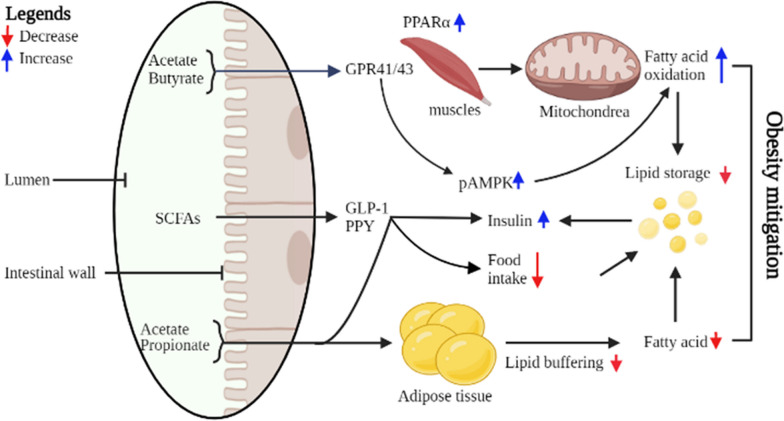
“2) [14, 154] (Fig.”
BackgroundLe Poul, E., Loison, C., Struyf, S., Springael, J.-Y., Lannoy, V., Decobecq, M.-E., Brezillon, S., Dupriez, V., Vassart, G., Van Damme, J., et al. (2003) · Journal of Biological Chemistry · doi:10.1074/jbc.m301403200 · Cited by 1,651 · cited 1×
“Propionate another SCFA has been reported to mitigate obesity and reduce feed intake through gut hormone modulation [153, 156].”
BackgroundMicrobes in Gastrointestinal Health and Disease
Neish, A. S. (2009) · Gastroenterology · doi:10.1053/j.gastro.2008.10.080 · Cited by 1,386 · cited 1×
“Interestingly Bifidobacterium showed a higher number in normal-weight compared to the obese individuals, while staphylococcus were less [128, 129].”
Lin, H. V., Frassetto, A., Kowalik Jr, E. J., Nawrocki, A. R., Lu, M. M., Kosinski, J. R., Hubert, J. A., Szeto, D., Yao, X., Forrest, G., et al. (2012) · PLoS ONE · doi:10.1371/journal.pone.0035240 · Cited by 1,378 · cited 4×
“Among others, butyrate is one of the most used SCFAs used by the intestinal mucosa, as a primary source of energy [14, 142].”
BackgroundInfluentialAcetate mediates a microbiome–brain–β-cell axis to promote metabolic syndrome
Perry, R. J., Peng, L., Barry, N. A., Cline, G. W., Zhang, D., Cardone, R. L., Petersen, K. F., Kibbey, R. G., Goodman, A. L., & Shulman, G. I. (2016) · Nature · doi:10.1038/nature18309 · Cited by 1,299
den Besten, G., Bleeker, A., Gerding, A., van Eunen, K., Havinga, R., van Dijk, T. H., Oosterveer, M. H., Jonker, J. W., Groen, A. K., Reijngoud, D.-J., et al. (2015) · Diabetes · doi:10.2337/db14-1213 · Cited by 1,125 · cited 1×
“Several pathways have also been hypothesized to link SCFA to insulin sensitivity and the progression of T2DM, including interorgan effects on adipose tissue function and lipid storage capacity, metabolism, and inflammatory activities [146–148].”
BackgroundThe Human Obesity Gene Map: The 2005 Update
Rankinen, T., Zuberi, A., Chagnon, Y. C., Weisnagel, S. J., Argyropoulos, G., Walts, B., Pérusse, L., & Bouchard, C. (2006) · Obesity · doi:10.1038/oby.2006.71 · Cited by 1,119 · cited 1×
“So far, DNA methylation has been the most thoroughly researched epigenetic mark for human disorders at the genome-wide or site-specific level, which takes place at the cytosine [83, 88, 123].”
BackgroundPostbiotics: An Evolving Term within the Functional Foods Field
Aguilar-Toalá, J. E., Garcia-Varela, R., Garcia, H. S., Mata-Haro, V., González-Córdova, A. F., Vallejo-Cordoba, B., & Hernández-Mendoza, A. (2018) · Trends in Food Science & Technology · doi:10.1016/j.tifs.2018.03.009 · Cited by 1,078
Morbidity and mortality associated with obesity
Abdelaal, M., le Roux, C. W., & Docherty, N. G. (2017) · Annals of Translational Medicine · doi:10.21037/atm.2017.03.107 · Cited by 1,052 · cited 5×
“Once hyperglycemia occurs, the toxic effect on islet cells (glucotoxicity) intensifies the problem, thus lipotoxicity takes place as a result of increased FFAs levels [26, 40].”
BackgroundInfluentialCaesar, R., Tremaroli, V., Kovatcheva-Datchary, P., Cani, P. D., & Bäckhed, F. (2015) · Cell Metabolism · doi:10.1016/j.cmet.2015.07.026 · Cited by 960 · cited 1×
“Migration of active NF-κB to the nucleus stimulates the production of proinflammatory proteins as well as signalling pathways such as JNK, p38 MAPK, and ERK, which leads to insulin resistance and obesity [166].”
Dietary gut microbial metabolites, short-chain fatty acids, and host metabolic regulation
Kasubuchi, M., Hasegawa, S., Hiramatsu, T., Ichimura, A., & Kimura, I. (2015) · Nutrients · doi:10.3390/nu7042839 · Cited by 904 · cited 1×
“Various studies performed using the mouse model explained the mechanism of propionic acid in preventing obesity by inhibiting food intake, increasing insulin sensitivity, and energy expenditure [145, 153, 158].”
BackgroundDhillon, H., Zigman, J. M., Ye, C., Lee, C. E., McGovern, R. A., Tang, V., Kenny, C. D., Christiansen, L. M., White, R. D., Edelstein, E. A., et al. (2006) · Neuron · doi:10.1016/j.neuron.2005.12.021 · Cited by 791 · cited 1×
“Overall leptin acts as a mediator for energy homeostasis, through blood glucose regulation, feed intake, and eating behaviour in humans and mice [53, 54].”
BackgroundPostbiotics—A Step Beyond Pre- and Probiotics
Żółkiewicz, J., Marzec, A., Ruszczyński, M., & Feleszko, W. (2020) · Nutrients · doi:10.3390/nu12082189 · Cited by 784 · cited 1×
“These SCFAs are the main constituent of fibre fermentation because of gut microbiota and exert significant effects on host physiology, gut health, mucous production, promoting gut integrity, and protection of the gut epithelial [23, 149].”
BackgroundEnergy balance and obesity: what are the main drivers?
On behalf of the IARC working group on Energy Balance and Obesity, Romieu, I., Dossus, L., Barquera, S., Blottière, H. M., Franks, P. W., Gunter, M., Hwalla, N., Hursting, S. D., Leitzmann, M., et al. (2017) · Cancer Causes & Control · doi:10.1007/s10552-017-0869-z · Cited by 739 · cited 1×
“In the recent era of industrialization, easy transportation, urbanization, and developments, a significant decline in physical activities leading to an imbalance of energy homeostasis cannot be ignored [29, 30].”
BackgroundClinical and molecular genetic spectrum of congenital deficiency of the leptin receptor.
Farooqi, I. S., Wangensteen, T., Collins, S., Kimber, W., Matarese, G., Keogh, J. M., Lank, E., Bottomley, B., Lopez-Fernandez, J., Ferraz-Amaro, I., et al. (2007) · New England Journal of Medicine · doi:10.1056/nejmoa063988 · Cited by 732 · cited 1×
“Six alternative splice isoforms have been identified yet, and Ob-Rb among them is found high in the hypothalamus and other cells and acts as a primary signal transducer in the JAK–STAT signalling pathway [52].”
BackgroundThe endocannabinoid system links gut microbiota to adipogenesis
Muccioli, G. G., Naslain, D., Bäckhed, F., Reigstad, C. S., Lambert, D. M., Delzenne, N. M., & Cani, P. D. (2010) · Molecular Systems Biology · doi:10.1038/msb.2010.46 · Cited by 691
Regulation of metabolism by the innate immune system
Lackey, D. E., & Olefsky, J. M. (2016) · Nature Reviews Endocrinology · doi:10.1038/nrendo.2015.189 · Cited by 667 · cited 1×
“These cytokines and/or LPS from the gingival sulci may be transported throughout the body and engage TLR-4 receptors on Kupffer cells in the liver to release proinflammatory cytokines, which may lead to insulin resistance and glucose intolerance [168].”
BackgroundObesity, Diabetes, and Gut Microbiota
Musso, G., Gambino, R., & Cassader, M. (2010) · Diabetes Care · doi:10.2337/dc10-0556 · Cited by 665
Nawrocki, A. R., Rajala, M. W., Tomas, E., Pajvani, U. B., Saha, A. K., Trumbauer, M. E., Pang, Z., Chen, A. S., Ruderman, N. B., Chen, H., et al. (2006) · Journal of Biological Chemistry · doi:10.1074/jbc.m505311200 · Cited by 639 · cited 1×
“A study performed in adiponectin knockout mice showed reduced hepatic insulin sensitivity and glucose intolerance [59].”
BackgroundFood and metabolic signalling defects in a Caenorhabditis elegans serotonin-synthesis mutant
Sze, J. Y., Victor, M., Loer, C., Shi, Y., & Ruvkun, G. (2000) · Nature · doi:10.1038/35000609 · Cited by 617
Acetate and Propionate Short Chain Fatty Acids Stimulate Adipogenesis via GPCR43
Hong, Y.-H., Nishimura, Y., Hishikawa, D., Tsuzuki, H., Miyahara, H., Gotoh, C., Choi, K.-C., Feng, D. D., Chen, C., Lee, H.-G., et al. (2005) · Endocrinology · doi:10.1210/en.2005-0545 · Cited by 612 · cited 1×
“These health benefits include energy homeostasis, improved heart function, blood generation, and memory formation [151, 152].”
BackgroundMcNabney, S., & Henagan, T. (2017) · Nutrients · doi:10.3390/nu9121348 · Cited by 508 · cited 1×
“Propionate suppresses the appetite by regulating free fatty acids receptor FFAR2/3 in the intestinal cells, which induces the glucagon-like peptide (GLP-1) and PPY peptides [157].”
BackgroundSfrp5 Is an Anti-Inflammatory Adipokine That Modulates Metabolic Dysfunction in Obesity
Ouchi, N., Higuchi, A., Ohashi, K., Oshima, Y., Gokce, N., Shibata, R., Akasaki, Y., Shimono, A., & Walsh, K. (2010) · Science · doi:10.1126/science.1188280 · Cited by 490
Imamura, F., Micha, R., Wu, J. H. Y., de Oliveira Otto, M. C., Otite, F. O., Abioye, A. I., & Mozaffarian, D. (2016) · PLOS Medicine · doi:10.1371/journal.pmed.1002087 · Cited by 479
Persistent microbiome alterations modulate the rate of post-dieting weight regain
Thaiss, C. A., Itav, S., Rothschild, D., Meijer, M. T., Levy, M., Moresi, C., Dohnalová, L., Braverman, S., Rozin, S., Malitsky, S., et al. (2016) · Nature · doi:10.1038/nature20796 · Cited by 471 · cited 1×
“For example, the postbiotics from the proximal gut microbiota showed a significant role in preventing insulin resistance because of a high-fat diet [160, 161].”
BackgroundNeuropeptides and the Microbiota-Gut-Brain Axis
Holzer, P., & Farzi, A. (2014) · Advances in Experimental Medicine and Biology · doi:10.1007/978-1-4939-0897-4_9 · Cited by 451 · cited 1×
“Not only does the gut microbiota connect with adjacent cells, but also produces and releases chemicals that can communicate with distant cells [46, 47].”
BackgroundThe mouse ascending: perspectives for human-disease models
Rosenthal, N., & Brown, S. (2007) · Nature Cell Biology · doi:10.1038/ncb437 · Cited by 442
Satapati, S., Sunny, N. E., Kucejova, B., Fu, X., He, T. T., Méndez-Lucas, A., Shelton, J. M., Perales, J. C., Browning, J. D., & Burgess, S. C. (2012) · Journal of Lipid Research · doi:10.1194/jlr.m023382 · Cited by 407 · cited 1×
“Markers of oxidative stress increase in skeletal muscle because of HFD, which induces peripheral insulin resistance and ectopic fat storage [38, 39].”
BackgroundPigeyre, M., Yazdi, F. T., Kaur, Y., & Meyre, D. (2016) · Clinical Science · doi:10.1042/cs20160136 · Cited by 402 · cited 3×
“Numerous genes related to syndromic monogenic, non-syndromic monogenic, oligogenic, and polygenic obesity have been found in attempts to understand the genetic basis of obesity [7].”
BackgroundChristiansen, C. B., Gabe, M. B. N., Svendsen, B., Dragsted, L. O., Rosenkilde, M. M., & Holst, J. J. (2018) · American Journal of Physiology-Gastrointestinal and Liver Physiology · doi:10.1152/ajpgi.00346.2017 · Cited by 401 · cited 5×
“Various studies performed using the mouse model explained the mechanism of propionic acid in preventing obesity by inhibiting food intake, increasing insulin sensitivity, and energy expenditure [145, 153, 158].”
BackgroundInfluentialFat Metabolism Links Germline Stem Cells and Longevity in C. elegans
Wang, M. C., O'Rourke, E. J., & Ruvkun, G. (2008) · Science · doi:10.1126/science.1162011 · Cited by 400 · cited 1×
“C. elegans is considered, evolutionarily distant from humans, as the many pathways related to lipid, glucose, and protein metabolism are the same in both species [118].”
BackgroundButyrate in Energy Metabolism: There Is Still More to Learn
Zhang, L., Liu, C., Jiang, Q., & Yin, Y. (2021) · Trends in Endocrinology & Metabolism · doi:10.1016/j.tem.2020.12.003 · Cited by 364 · cited 1×
“Butyrate supplementation in the diet showed a significant reduction in diet-induced obesity and insulin resistance in obese mice models [143, 159].”
BackgroundGenetics and epigenetics in obesity
Rohde, K., Keller, M., la Cour Poulsen, L., Blüher, M., Kovacs, P., & Böttcher, Y. (2019) · Metabolism · doi:10.1016/j.metabol.2018.10.007 · Cited by 355
Insulin resistance in obesity: an overview of fundamental alterations
Barazzoni, R., Gortan Cappellari, G., Ragni, M., & Nisoli, E. (2018) · Eating and Weight Disorders - Studies on Anorexia, Bulimia and Obesity · doi:10.1007/s40519-018-0481-6 · Cited by 350 · cited 2×
“Adiponectin regulates insulin and acts as an anti-inflammatory agent, which is reduced in obese conditions [28].”
BackgroundFelix, J. F., Bradfield, J. P., Monnereau, C., van der Valk, R. J. P., Stergiakouli, E., Chesi, A., Gaillard, R., Feenstra, B., Thiering, E., Kreiner-Møller, E., et al. (2016) · Human Molecular Genetics · doi:10.1093/hmg/ddv472 · Cited by 343
Model for the regulation of energy balance and adiposity by the central nervous system
Schwartz, M. W., Baskin, D. G., Kaiyala, K. J., & Woods, S. C. (1999) · The American Journal of Clinical Nutrition · doi:10.1093/ajcn/69.4.584 · Cited by 325 · cited 1×
“Both these short-term and long-term cues significantly influence energy expenditure by affecting sympathetic nerve outflow to brown adipose tissue and pituitary hormone release [44, 45].”
BackgroundGao, J., Li, Y., Wan, Y., Hu, T., Liu, L., Yang, S., Gong, Z., Zeng, Q., Wei, Y., Yang, W., et al. (2019) · Frontiers in Microbiology · doi:10.3389/fmicb.2019.00477 · Cited by 296 · cited 3×
“Lipopolysaccharides (LPS), a component of Gram-negative bacteria’s cell membrane, the function of which has been ambiguous, act as a triggering factor, causing low-grade chronic inflammation and the development of insulin resistance (IR) [19].”
BackgroundRole of Gut Microbiota in the Aetiology of Obesity: Proposed Mechanisms and Review of the Literature
Khan, M. J., Gerasimidis, K., Edwards, C. A., & Shaikh, M. G. (2016) · Journal of Obesity · doi:10.1155/2016/7353642 · Cited by 295 · cited 1×
“The secondary form binds to G-protein and leads to glucagon-like-1 peptide stimulation, which lowers circulation and hepatic triglyceride levels [126, 139].”
BackgroundYuzefovych, L., Wilson, G., & Rachek, L. (2010) · American Journal of Physiology-Endocrinology and Metabolism · doi:10.1152/ajpendo.00238.2010 · Cited by 280 · cited 1×
“The decrease in liver antioxidant enzymes glutathione (GSH) is strongly linked with a high-fat diet (HFD), whereas the NADPH oxidase, which is involved in (ROS) production, is increased [36, 37].”
BackgroundLong, X., Spycher, C., Han, Z. S., Rose, A. M., Müller, F., & Avruch, J. (2002) · Current Biology · doi:10.1016/s0960-9822(02)01091-6 · Cited by 279
McKay, R. M., McKay, J. P., Avery, L., & Graff, J. M. (2003) · Developmental Cell · doi:10.1016/s1534-5807(02)00411-2 · Cited by 269
Bessesen, D. H. (2008) · The Journal of Clinical Endocrinology & Metabolism · doi:10.1210/jc.2008-0520 · Cited by 257 · cited 2×
“Consequently, this has encouraged identifying the genes responsible for obesity using rodent and human models [40, 89].”
BackgroundInsulin Access and Affordability Working Group: Conclusions and Recommendations
Cefalu, W. T., Dawes, D. E., Gavlak, G., Goldman, D., Herman, W. H., Van Nuys, K., Powers, A. C., Taylor, S. I., Yatvin, A. L., & on behalf of the Insulin Access and Affordability Working Group (2018) · Diabetes Care · doi:10.2337/dci18-0019 · Cited by 256 · cited 1×
“Furthermore, the occurrence of obesity and metabolic phenotypes alteration in mice are similar to humans, moreover, the measurement of these phenotypes in mice is more convenient and safe compared to humans [93, 94].”
BackgroundSun, L., Ma, L., Ma, Y., Zhang, F., Zhao, C., & Nie, Y. (2018) · Protein & Cell · doi:10.1007/s13238-018-0546-3 · Cited by 253 · cited 1×
“Not only does the gut microbiota connect with adjacent cells, but also produces and releases chemicals that can communicate with distant cells [46, 47].”
BackgroundGut hormones in the control of appetite
Murphy, K. G., & Bloom, S. R. (2004) · Experimental Physiology · doi:10.1113/expphysiol.2004.027789 · Cited by 250 · cited 1×
“Both these short-term and long-term cues significantly influence energy expenditure by affecting sympathetic nerve outflow to brown adipose tissue and pituitary hormone release [44, 45].”
BackgroundVallianou, N., Stratigou, T., Christodoulatos, G. S., Tsigalou, C., & Dalamaga, M. (2020) · Current Obesity Reports · doi:10.1007/s13679-020-00379-w · Cited by 242
Propionic acid affects immune status and metabolism in adipose tissue from overweight subjects
Al‐Lahham, S., Roelofsen, H., Rezaee, F., Weening, D., Hoek, A., Vonk, R., & Venema, K. (2012) · European Journal of Clinical Investigation · doi:10.1111/j.1365-2362.2011.02590.x · Cited by 234
Muramyl Dipeptide-Based Postbiotics Mitigate Obesity-Induced Insulin Resistance via IRF4
Cavallari, J. F., Fullerton, M. D., Duggan, B. M., Foley, K. P., Denou, E., Smith, B. K., Desjardins, E. M., Henriksbo, B. D., Kim, K. J., Tuinema, B. R., et al. (2017) · Cell Metabolism · doi:10.1016/j.cmet.2017.03.021 · Cited by 232
An Ancient, Unified Mechanism for Metformin Growth Inhibition in C. Elegans and Cancer
Wu, L., Zhou, B., Oshiro-Rapley, N., Li, M., Paulo, J. A., Webster, C. M., Mou, F., Kacergis, M. C., Talkowski, M. E., Carr, C. E., et al. (2016) · Cell · doi:10.1016/j.cell.2016.11.055 · Cited by 227 · cited 1×
“Previously genetic selection using the Caenorhabditis elegans model has led to the discovery of drug targets for various diseases including depression and metabolic related disorders [116, 117].”
Clostridium ramosum Promotes High-Fat Diet-Induced Obesity in Gnotobiotic Mouse Models
Woting, A., Pfeiffer, N., Loh, G., Klaus, S., & Blaut, M. (2014) · mBio · doi:10.1128/mbio.01530-14 · Cited by 225 · cited 1×
“Furthermore, Clostridium ramo-sum, previously shown to be enriched in patients with T2D, induced obesity in mice consuming a high-fat diet [165].”
BackgroundSatoh, N., Ogawa, Y., Katsuura, G., Numata, Y., Tsuji, T., Hayase, M., Ebihara, K., Masuzaki, H., Hosoda, K., Yoshimasa, Y., et al. (1999) · Diabetes · doi:10.2337/diabetes.48.9.1787 · Cited by 223 · cited 1×
“Leptin is released by the white adipose tissue according to the body fat mass which induces an anorexigenic reaction and increases the expenditure of energy [49, 50].”
BackgroundRegulation of adipokine production in human adipose tissue by propionic acid
Al‐Lahham, S. H., Roelofsen, H., Priebe, M., Weening, D., Dijkstra, M., Hoek, A., Rezaee, F., Venema, K., & Vonk, R. J. (2010) · European Journal of Clinical Investigation · doi:10.1111/j.1365-2362.2010.02278.x · Cited by 222 · cited 1×
“Several pathways have also been hypothesized to link SCFA to insulin sensitivity and the progression of T2DM, including interorgan effects on adipose tissue function and lipid storage capacity, metabolism, and inflammatory activities [146–148].”
BackgroundThe Genetic Landscape of Type 2 Diabetes in Mice
Clee, S. M., & Attie, A. D. (2007) · Endocrine Reviews · doi:10.1210/er.2006-0035 · Cited by 220 · cited 1×
“However, there are certain limitations in the mouse model used for obesity phenotypes compared to the human model, such as the difference in obesity phenotypes, and physiology, which leads to further and safe investigation in the human model [95].”
Wernimont, S. M., Radosevich, J., Jackson, M. I., Ephraim, E., Badri, D. V., MacLeay, J. M., Jewell, D. E., & Suchodolski, J. S. (2020) · Frontiers in Microbiology · doi:10.3389/fmicb.2020.01266 · Cited by 207 · cited 1×
“Improper nutrition not only affects the composition and function of the gut microbiota, but it also has a direct impact on energy intake and can contribute to the development of obesity [12].”
BackgroundPedret, A., Valls, R. M., Calderón-Pérez, L., Llauradó, E., Companys, J., Pla-Pagà, L., Moragas, A., Martín-Luján, F., Ortega, Y., Giralt, M., et al. (2019) · International Journal of Obesity · doi:10.1038/s41366-018-0220-0 · Cited by 201
Obesity genetics in mouse and human: back and forth, and back again
Yazdi, F. T., Clee, S. M., & Meyre, D. (2015) · PeerJ · doi:10.7717/peerj.856 · Cited by 196
Acute dietary fat intake initiates alterations in energy metabolism and insulin resistance
Hernández, E. Á., Kahl, S., Seelig, A., Begovatz, P., Irmler, M., Kupriyanova, Y., Nowotny, B., Nowotny, P., Herder, C., Barosa, C., et al. (2017) · Journal of Clinical Investigation · doi:10.1172/jci89444 · Cited by 194 · cited 1×
“High fat consumption reduces the expression of the tight junction proteins zonulin and occludin, increasing the intestinal permeability of LPS, the causative cause of endotoxemia [19, 69].”
BackgroundMeta‐Analysis of Genome‐wide Linkage Studies in BMI and Obesity
Saunders, C. L., Chiodini, B., Sham, P. C., Lewis, C. M., Abkevich, V., Adeyemo, A., de Andrade, M., Arya, R., Berenson, G. S., Blangero, J., et al. (2007) · Obesity · doi:10.1038/oby.2007.269 · Cited by 191 · cited 1×
“Furthermore, these studies uncovered that several genes had undergone methylation associated with obesity [124].”
BackgroundGut Microbes and Health: A Focus on the Mechanisms Linking Microbes, Obesity, and Related Disorders
Rastelli, M., Knauf, C., & Cani, P. D. (2018) · Obesity · doi:10.1002/oby.22175 · Cited by 187 · cited 5×
“Propionic acid is the main precursor for protein synthesis, hepatic gluconeo-genesis, and lipogenesis, as well as an inhibitor of fatty acid production, and an inflammation-reducing agent [16, 48, 126].”
BackgroundInfluentialSilventoinen, K., Jelenkovic, A., Sund, R., Yokoyama, Y., Hur, Y., Cozen, W., Hwang, A. E., Mack, T. M., Honda, C., Inui, F., et al. (2017) · American Journal of Clinical Nutrition · doi:10.3945/ajcn.117.153643 · Cited by 185 · cited 1×
“Evidence showed that there has been a considerable link between genetics and obesity, with two studies claiming a heritability value of 0.77 at different ages in different regions [84, 85].”
BackgroundInfluentialSirico, F., Bianco, A., D'Alicandro, G., Castaldo, C., Montagnani, S., Spera, R., Di Meglio, F., & Nurzynska, D. (2018) · Childhood Obesity · doi:10.1089/chi.2017.0269 · Cited by 182
Role of Leptin Deficiency, Inefficiency, and Leptin Receptors in Obesity
Wasim, M., Awan, F. R., Najam, S. S., Khan, A. R., & Khan, H. N. (2016) · Biochemical Genetics · doi:10.1007/s10528-016-9751-z · Cited by 178
Stenman, L. K., Lehtinen, M. J., Meland, N., Christensen, J. E., Yeung, N., Saarinen, M. T., Courtney, M., Burcelin, R., Lähdeaho, M.-L., Linros, J., et al. (2016) · EBioMedicine · doi:10.1016/j.ebiom.2016.10.036 · Cited by 177 · cited 1×
“Growing findings suggest that microbial metabolites (postbiotics) produced by microbial fermentation have an important role in regulating host metabolism, with implications for obesity [13, 135].”
BackgroundBrahe, L. K., Le Chatelier, E., Prifti, E., Pons, N., Kennedy, S., Blædel, T., Håkansson, J., Dalsgaard, T. K., Hansen, T., Pedersen, O., et al. (2015) · British Journal of Nutrition · doi:10.1017/s0007114515001786 · Cited by 171
PCSK1 Mutations and Human Endocrinopathies: From Obesity to Gastrointestinal Disorders
Stijnen, P., Ramos-Molina, B., O'Rahilly, S., & Creemers, J. W. M. (2016) · Endocrine Reviews · doi:10.1210/er.2015-1117 · Cited by 171
Saltiel, A. R. (2001) · Nature Medicine · doi:10.1038/90911 · Cited by 166 · cited 1×
“Adiponectin stimulates glucose metabolism and fatty acid oxidation in muscle tissue [57], while in the liver it increases insulin sensitivity, limits non-esterified fatty acids inflow stimulates fatty acids oxidation, and minimizes glucose synthesis and release [58].”
BackgroundEvolutionary perspectives on the obesity epidemic: adaptive, maladaptive, and neutral viewpoints
Speakman, J. R. (2013) · Annual Review of Nutrition · doi:10.1146/annurev-nutr-071811-150711 · Cited by 163
Eckel, L. A., Langhans, W., Kahler, A., Campfield, L. A., Smith, F. J., & Geary, N. (1998) · American Journal of Physiology-Regulatory, Integrative and Comparative Physiology · doi:10.1152/ajpregu.1998.275.1.r186 · Cited by 159 · cited 1×
“The administration of leptin both peripheral and central significantly reduced the feed intake and feeding behaviour in mice [51].”
BackgroundLindsay, K. L., Kennelly, M., Culliton, M., Smith, T., Maguire, O. C., Shanahan, F., Brennan, L., & McAuliffe, F. M. (2014) · The American Journal of Clinical Nutrition · doi:10.3945/ajcn.113.079723 · Cited by 158
Modulation of the gut microbiota by prebiotic fibres and bacteriocins
Umu, Ö. C. O., Rudi, K., & Diep, D. B. (2017) · Microbial Ecology in Health and Disease · doi:10.1080/16512235.2017.1348886 · Cited by 150
Energy metabolism in weight-stable postobese individuals
Larson, D., Ferraro, R., Robertson, D. S., & Ravussin, É. (1995) · American Journal of Clinical Nutrition · doi:10.1093/ajcn/62.4.735 · Cited by 149 · cited 1×
“Adiponectin stimulates glucose metabolism and fatty acid oxidation in muscle tissue [57], while in the liver it increases insulin sensitivity, limits non-esterified fatty acids inflow stimulates fatty acids oxidation, and minimizes glucose synthesis and release [58].”
Background60 YEARS OF POMC: Regulation of feeding and energy homeostasis by α-MSH
Anderson, E. J. P., Çakir, I., Carrington, S. J., Cone, R. D., Ghamari-Langroudi, M., Gillyard, T., Gimenez, L. E., & Litt, M. J. (2016) · Journal of Molecular Endocrinology · doi:10.1530/jme-16-0014 · Cited by 146
PCSK1 Variants and Human Obesity
Ramos‐Molina, B., Martin, M., & Lindberg, I. (2016) · Progress in molecular biology and translational science · doi:10.1016/bs.pmbts.2015.12.001 · Cited by 143
Insulin-like peptide 5 is an orexigenic gastrointestinal hormone
Grosse, J., Heffron, H., Burling, K., Akhter Hossain, M., Habib, A. M., Rogers, G. J., Richards, P., Larder, R., Rimmington, D., Adriaenssens, A. A., et al. (2014) · Proceedings of the National Academy of Sciences · doi:10.1073/pnas.1411413111 · Cited by 141
Yokota, T., Kinugawa, S., Hirabayashi, K., Matsushima, S., Inoue, N., Ohta, Y., Hamaguchi, S., Sobirin, M. A., Ono, T., Suga, T., et al. (2009) · American Journal of Physiology-Heart and Circulatory Physiology · doi:10.1152/ajpheart.00267.2009 · Cited by 141 · cited 1×
“Markers of oxidative stress increase in skeletal muscle because of HFD, which induces peripheral insulin resistance and ectopic fat storage [38, 39].”
BackgroundPostbiotics: metabolites and mechanisms involved in microbiota-host interactions
Peluzio, M. D. C. G., Martinez, J. A., & Milagro, F. I. (2021) · Trends in Food Science & Technology · doi:10.1016/j.tifs.2020.12.004 · Cited by 139
Sanchez, M., Darimont, C., Panahi, S., Drapeau, V., Marette, A., Taylor, V., Doré, J., & Tremblay, A. (2017) · Nutrients · doi:10.3390/nu9030284 · Cited by 138
Global trends in the prevalence of overweight and obesity
Morgen, C. S., & Sørensen, T. I. A. (2014) · Nature Reviews Endocrinology · doi:10.1038/nrendo.2014.124 · Cited by 136
A genome-wide association study of body mass index across early life and childhood
Warrington, N. M., Howe, L. D., Paternoster, L., Kaakinen, M., Herrala, S., Huikari, V., Wu, Y. Y., Kemp, J. P., Timpson, N. J., Pourcain, B. S., et al. (2015) · International Journal of Epidemiology · doi:10.1093/ije/dyv077 · Cited by 133 · cited 1×
“In very obese patients, DNA [96, 115] methylation levels at the adiponectin gene locus in SAT were linked to BMI.”
BackgroundAbbas, Z., Sammad, A., Hu, L., Fang, H., Xu, Q., & Wang, Y. (2020) · Metabolites · doi:10.3390/metabo10080312 · Cited by 130
Dünnwald, T., Gatterer, H., Faulhaber, M., Arvandi, M., & Schobersberger, W. (2019) · Frontiers in Physiology · doi:10.3389/fphys.2019.00430 · Cited by 127 · cited 1×
“A persistent positive energy results in obesity, it just takes a 1% increase in daily energy consumption for the average person to accumulate a 10-kg gain in fat mass over a decade [32, 33].”
BackgroundHu, W., Li, L., Yang, M., Luo, X., Ran, W., Liu, D., Xiong, Z., Liu, H., & Yang, G. (2013) · The Journal of Clinical Endocrinology & Metabolism · doi:10.1210/jc.2012-2466 · Cited by 125
A Review on Role of Microbiome in Obesity and Antiobesity Properties of Probiotic Supplements
Sivamaruthi, B. S., Kesika, P., Suganthy, N., & Chaiyasut, C. (2019) · BioMed Research International · doi:10.1155/2019/3291367 · Cited by 124 · cited 3×
“High levels of saturated lipid consumption not only increase systemic exposure to potentially proin-flammatory-free fatty acids and their derivatives but also enhance the absorption of endotoxins, resulting in greater plasma LPS levels known as “endotoxemia” [8].”
BackgroundFluoxetine-Resistant Mutants in C. elegans Define a Novel Family of Transmembrane Proteins
Choy, R. K. M., & Thomas, J. H. (1999) · Molecular Cell · doi:10.1016/s1097-2765(00)80362-7 · Cited by 122 · cited 1×
“Previously genetic selection using the Caenorhabditis elegans model has led to the discovery of drug targets for various diseases including depression and metabolic related disorders [116, 117].”
Li, G., Yao, W., & Jiang, H. (2014) · Journal of Nutrition · doi:10.3945/jn.114.198531 · Cited by 120 · cited 2×
“Various studies performed using the mouse model explained the mechanism of propionic acid in preventing obesity by inhibiting food intake, increasing insulin sensitivity, and energy expenditure [145, 153, 158].”
BackgroundXiao, C., Giacca, A., & Lewis, G. F. (2007) · Diabetologia · doi:10.1007/s00125-007-0859-x · Cited by 118 · cited 1×
“Obesity causes increased circulation of free fatty acids (FFA), which in turn induces oxidative stress by stimulating the reactive oxygen species (ROS) [35].”
BackgroundMoffett, J. R., Puthillathu, N., Vengilote, R., Jaworski, D. M., & Namboodiri, A. M. (2020) · Frontiers in Physiology · doi:10.3389/fphys.2020.580171 · Cited by 115 · cited 1×
“These health benefits include energy homeostasis, improved heart function, blood generation, and memory formation [151, 152].”
BackgroundFairbrother, U. L., Kidd, E., Malagamuwa, T., & Walley, A. J. (2018) · Current Diabetes Reports · doi:10.1007/s11892-018-1053-x · Cited by 113 · cited 1×
“Evidence showed that there has been a considerable link between genetics and obesity, with two studies claiming a heritability value of 0.77 at different ages in different regions [84, 85].”
BackgroundInfluentialMinami, J.-I., Kondo, S., Yanagisawa, N., Odamaki, T., Xiao, J.-Z., Abe, F., Nakajima, S., Hamamoto, Y., Saitoh, S., & Shimoda, T. (2015) · Journal of Nutritional Science · doi:10.1017/jns.2015.5 · Cited by 112
Gurzov, E. N., Tran, M., Fernandez-Rojo, M. A., Merry, T. L., Zhang, X., Xu, Y., Fukushima, A., Waters, M. J., Watt, M. J., Andrikopoulos, S., et al. (2014) · Cell Metabolism · doi:10.1016/j.cmet.2014.05.011 · Cited by 111 · cited 1×
“The decrease in liver antioxidant enzymes glutathione (GSH) is strongly linked with a high-fat diet (HFD), whereas the NADPH oxidase, which is involved in (ROS) production, is increased [36, 37].”
BackgroundGut health benefit and application of postbiotics in animal production
Zhong, Y., Wang, S., Di, H., Deng, Z., Liu, J., & Wang, H. (2022) · Journal of Animal Science and Biotechnology/Journal of animal science and biotechnology · doi:10.1186/s40104-022-00688-1 · Cited by 111
Self-citationBehary, P., Tharakan, G., Alexiadou, K., Johnson, N., Wewer Albrechtsen, N. J., Kenkre, J., Cuenco, J., Hope, D., Anyiam, O., Choudhury, S., et al. (2019) · Diabetes Care · doi:10.2337/dc19-0449 · Cited by 110
New model for the regulation of energy balance and adiposity by the central nervous system
Kaiyala, K., Woods, S. C., & Schwartz, M. (1995) · American Journal of Clinical Nutrition · doi:10.1093/ajcn/62.5.1123s · Cited by 110 · cited 1×
“Long-term signals from the hypothalamus provide information about the body’s energy resources, an endocrine condition, and overall body condition [43].”
BackgroundEditorial: Visfatin—A True Or False Trail To Type 2 Diabetes Mellitus
Arner, P. (2006) · The Journal of Clinical Endocrinology & Metabolism · doi:10.1210/jc.2005-2391 · Cited by 106 · cited 1×
“However, visfatin did not alter the food intake or body weight in a knockout heterozygous mouse compared to the wild type [60–62].”
BackgroundGut Hormones in Health and Obesity: The Upcoming Role of Short Chain Fatty Acids
Alhabeeb, H., AlFaiz, A., Kutbi, E., AlShahrani, D., Alsuhail, A., AlRajhi, S., Alotaibi, N., Alotaibi, K., AlAmri, S., Alghamdi, S., et al. (2021) · Nutrients · doi:10.3390/nu13020481 · Cited by 106 · cited 5×
“Among others, butyrate is one of the most used SCFAs used by the intestinal mucosa, as a primary source of energy [14, 142].”
BackgroundInfluentialGoh, G. Y. S., Winter, J. J., Bhanshali, F., Doering, K. R. S., Lai, R., Lee, K., Veal, E. A., & Taubert, S. (2018) · Aging Cell · doi:10.1111/acel.12743 · Cited by 104
Tan, L., Zhu, H., He, H., Wu, K., Li, J., Chen, X., Zhang, J., Shen, H., Tian, Q., Krousel-Wood, M. A., et al. (2014) · PLoS ONE · doi:10.1371/journal.pone.0096149 · Cited by 103
Hypomorphism of Fto and Rpgrip1l causes obesity in mice
Stratigopoulos, G., Burnett, L. C., Rausch, R. N., Gill, R., Penn, D. B., Skowronski, A. A., LeDuc, C. A., Lanzano, A., Zhang, P., Storm, D. R., et al. (2016) · Journal of Clinical Investigation · doi:10.1172/jci85526 · Cited by 101
Johnson, C. N., Kogut, M. H., Genovese, K., He, H., Kazemi, S., & Arsenault, R. J. (2019) · Microorganisms · doi:10.3390/microorganisms7080268 · Cited by 100 · cited 1×
“…from the gut microbiota convert bile acid in the intestine to secondary forms such as deoxycholic acid and lithocholic acid, which bind to the TGR5 receptor (G-protein-coupled receptor) and stimulate the secretion of the incretin hormones GLP-1 and insulin, promoting energy expenditure [140].”
BackgroundDifferences in body-composition assumptions across ethnic groups: practical consequences
Deurenberg, P., & Deurenberg-Yap, M. (2001) · Current Opinion in Clinical Nutrition and Metabolic Care · doi:10.1097/00075197-200109000-00007 · Cited by 93
Probiotics, prebiotics and synbiotics for weight loss and metabolic syndrome in the microbiome era.
Ferrarese, R., Ceresola, E. R., Preti, A., & Canducci, F. (2018) · PubMed · doi:10.26355/eurrev_201811_16301 · Cited by 93 · cited 3×
“The use of SCFAs and other microbial compounds produced by the host’s gut microbiota may also explain the intricacy of the pathogenic pathways linked to obesity [23, 24].”
BackgroundEpigenetic regulation of energy metabolism in obesity
Gao, W., Liu, J.-L., Lu, X., & Yang, Q. (2021) · Journal of Molecular Cell Biology · doi:10.1093/jmcb/mjab043 · Cited by 92 · cited 3×
“CpG promoter methylation of peroxisome proliferator-activated receptor gamma (PPARc) coactivator-1alpha (PGC-1a), a transcriptional coactivator for mitochondrial biogenesis, is elevated in obese women's subcutaneous adipose tissue (SAT) [88].”
BackgroundAdiponectin: An adipokine linking adipocytes and type 2 diabetes in humans
Hara, K., Yamauchi, T., & Kadowaki, T. (2005) · Current Diabetes Reports · doi:10.1007/s11892-005-0041-0 · Cited by 87 · cited 1×
“In obese people, adiponectin, an adipokine that controls systemic energy expenditure and insulin sensitivity, is diminished in adipose tissue [125].”
BackgroundChildhood Obesity: A Role for Gut Microbiota?
Sanchez, M., Panahi, S., & Tremblay, A. (2014) · International Journal of Environmental Research and Public Health · doi:10.3390/ijerph120100162 · Cited by 85 · cited 2×
“The gut microbiota extracts energy from the diet while also modifying tissue fatty acid composition, secreting gut-derived peptides and hormones with CNS effects, and generating chronic low-grade inflammation via lipopolysaccharide release [48, 129].”
BackgroundChristensen, M., Calanna, S., Sparre-Ulrich, A. H., Kristensen, P. L., Rosenkilde, M. M., Faber, J., Purrello, F., van Hall, G., Holst, J. J., Vilsbøll, T., et al. (2015) · Diabetes · doi:10.2337/db14-0440 · Cited by 82
Body mass regulation at altitude
Westerterp, K. R., & Kayser, B. (2005) · European Journal of Gastroenterology & Hepatology · doi:10.1097/00042737-200601000-00001 · Cited by 82 · cited 1×
“Energy homeostasis refers to the intake of energy compared to its expenditure within the frontiers of thermodynamics law [31, 32].”
BackgroundFranco-Robles, E., Campos-Cervantes, A., Murillo-Ortiz, B. O., Segovia, J., López-Briones, S., Vergara, P., Pérez-Vázquez, V., Solís-Ortiz, M. S., & Ramírez-Emiliano, J. (2014) · Applied Physiology, Nutrition, and Metabolism · doi:10.1139/apnm-2013-0133 · Cited by 81
Gut Microbiota and Obesity in Adults and Children: The State of the Art
Petraroli, M., Castellone, E., Patianna, V. D., & Esposito, S. (2021) · Frontiers in Pediatrics · doi:10.3389/fped.2021.657020 · Cited by 78 · cited 4×
“Indeed, fat tissues are metabolic/endocrine organ that secretes adi-pokines, chemokines, and proinflammatory cytokines such as tumour necrosis factor-alpha (TNF-α), and interleukin-6 (IL-6), and others, thus play an important role related to obesity, and inflammation [48].”
BackgroundInfluentialHypoxia, energy balance, and obesity: An update
Kayser, B., & Vergès, S. (2021) · Obesity Reviews · doi:10.1111/obr.13192 · Cited by 72 · cited 2×
“A persistent positive energy results in obesity, it just takes a 1% increase in daily energy consumption for the average person to accumulate a 10-kg gain in fat mass over a decade [32, 33].”
BackgroundJuxtamembranous aspartic acid in Insig-1 and Insig-2 is required for cholesterol homeostasis
Gong, Y., Lee, J. N., Brown, M. S., Goldstein, J. L., & Ye, J. (2006) · Proceedings of the National Academy of Sciences · doi:10.1073/pnas.0601923103 · Cited by 68
Wu, J., Liu, Z., Meng, K., & Zhang, L. (2014) · PLoS ONE · doi:10.1371/journal.pone.0095270 · Cited by 68 · cited 1×
“The variations in these genes were also associated with severe consequences including a defective immune system, cardiovascular diseases, insulin resistance, metabolic dysfunctions, type-2 diabetes, ageing, and cancer [9].”
BackgroundKim, M., Kim, M., Kang, M., Yoo, H. J., Kim, M. S., Ahn, Y.-T., Sim, J.-H., Jee, S. H., & Lee, J. H. (2017) · Food & Function · doi:10.1039/c6fo00993j · Cited by 67
Kil, D. Y., & Swanson, K. S. (2010) · Veterinary Clinics of North America Small Animal Practice · doi:10.1016/j.cvsm.2009.10.004 · Cited by 66 · cited 2×
“The lean body maintains the normal regulation of the endocrinal system, an increase in weight causes the disproportion of several hormones and affects normal physiology [14, 41].”
BackgroundRodríguez-Nunez, I., Caluag, T., Kirby, K., Rudick, C. N., Dziarski, R., & Gupta, D. (2017) · Scientific Reports · doi:10.1038/s41598-017-00484-2 · Cited by 65 · cited 1×
“The intestinal wall absorbs acetate and butyrate in the intestine produced by the gut microbiota; regulate fatty acids, and insulin level through PPARα, GLP-1, and PPY signalling pathways lead to the accumulation of adipocytes and lipid droplet formation in the liver [163].”
BackgroundPathophysiology of melanocortin receptors and their accessory proteins
Novoselova, T. V., Chan, L. F., & Clark, A. (2018) · Best Practice & Research Clinical Endocrinology & Metabolism · doi:10.1016/j.beem.2018.02.002 · Cited by 63
Cavallari, J. F., Barra, N. G., Foley, K. P., Lee, A. J., Duggan, B. M., Henriksbo, B. D., Anhê, F. F., Ashkar, A. A., & Schertzer, J. D. (2020) · American Journal of Physiology-Endocrinology and Metabolism · doi:10.1152/ajpendo.00033.2020 · Cited by 62 · cited 1×
“Furthermore, NOD2 keeps the gut microbiota healthy [162].”
BackgroundGenome-wide genetic homogeneity between sexes and populations for human height and body mass index
Yang, J., Bakshi, A., Zhu, Z., Hemani, G., Vinkhuyzen, A. A. E., Nolte, I. M., van Vliet-Ostaptchouk, J. V., Snieder, H., Study, T. L. C., Esko, T., et al. (2015) · Human Molecular Genetics · doi:10.1093/hmg/ddv443 · Cited by 60 · cited 2×
“[82, 83].”
BackgroundSundström, L., Myhre, S., Sundqvist, M., Ahnmark, A., McCoull, W., Raubo, P., Groombridge, S. D., Polla, M., Nyström, A.-C., Kristensson, L., et al. (2017) · PLOS ONE · doi:10.1371/journal.pone.0189060 · Cited by 53
Toye, A. A., Moir, L., Hugill, A., Bentley, L., Quarterman, J., Mijat, V., Hough, T., Goldsworthy, M., Haynes, A., Hunter, A. J., et al. (2004) · Diabetes · doi:10.2337/diabetes.53.6.1577 · Cited by 49 · cited 1×
“Furthermore, the occurrence of obesity and metabolic phenotypes alteration in mice are similar to humans, moreover, the measurement of these phenotypes in mice is more convenient and safe compared to humans [93, 94].”
BackgroundMoncrieft, A. E., Llabre, M. M., McCalla, J. R., Gutt, M., Mendez, A. J., Gellman, M. D., Goldberg, R. B., & Schneiderman, N. (2016) · Psychosomatic Medicine · doi:10.1097/psy.0000000000000348 · Cited by 46 · cited 1×
“In obesity, the negative energy balance (due to increased physical activity or decreased food consumption, or both) is important concerning energy expenditure, physical and metabolic activities, and orexigenic signals [15].”
BackgroundRare Syndromes and Common Variants of the Brain-Derived Neurotrophic Factor Gene in Human Obesity
Han, J. C. (2016) · Progress in molecular biology and translational science · doi:10.1016/bs.pmbts.2015.12.002 · Cited by 45
Self-citationRubinstein, M., & Low, M. J. (2017) · FEBS Letters · doi:10.1002/1873-3468.12776 · Cited by 42
Lee, J. O., Kim, N., Lee, H., Lee, Y. W., Kim, J. K., Kim, H. I., Lee, S., Kim, S. J., Park, S. H., & Kim, H. S. (2015) · Journal of Molecular Endocrinology · doi:10.1530/jme-14-0274 · Cited by 40 · cited 3×
“However, visfatin did not alter the food intake or body weight in a knockout heterozygous mouse compared to the wild type [60–62].”
BackgroundAn Evolutionary Perspective on the Obesity Epidemic
Hochberg, Z. (2018) · Trends in Endocrinology and Metabolism · doi:10.1016/j.tem.2018.09.002 · Cited by 39 · cited 1×
“The energy intake and energy expenditure balance maintain the whole body’s energy homeostasis, when this balance is disturbed due to the contemporary lifestyle tied to the energy rich diet, the surplus energy is stored in the form of adipose tissue leading to obesity [34].”
BackgroundRittig, N. F., Svart, M. V., Thomsen, H. H., Vestergaard, E. T., Rehfeld, J. F., Hartmann, B., Holst, J. J., Johannsen, M., Møller, N., & Jessen, N. (2020) · The Journal of Clinical Endocrinology & Metabolism · doi:10.1210/clinem/dgaa483 · Cited by 38
Lenz, A., & Diamond, F. B. (2008) · Current Opinion in Endocrinology, Diabetes & Obesity · doi:10.1097/med.0b013e3282f43a5b · Cited by 37 · cited 3×
“These hormonal signals are strictly controlled in order to keep body weight/adiposity within a restricted, individually determined range, which can be influenced by factors such as calorie intake, meal composition, and lifestyle [10, 42].”
BackgroundUse of mouse models in studying type 2 diabetes mellitus
Lee, A. W. S., & Cox, R. D. (2010) · Expert Reviews in Molecular Medicine · doi:10.1017/s1462399410001729 · Cited by 36 · cited 1×
“The mouse model is widely used in studying the genetics of obesity due to its low cost, maintenance, small size, easy breeding, and short gestation period [90–92].”
MethodGuo, L., Costanzo-Garvey, D. L., Smith, D. R., Neilsen, B. K., MacDonald, R. G., & Lewis, R. E. (2016) · Molecular Metabolism · doi:10.1016/j.molmet.2016.12.004 · Cited by 36
Goñi, L., Riezu‐Boj, J. I., Milagro, F. I., Corrales, F. J., Ortiz, L., Cuervo, M., & Martínez, J. A. (2018) · Nutrients · doi:10.3390/nu10060789 · Cited by 36 · cited 1×
“In very obese patients, DNA [96, 115] methylation levels at the adiponectin gene locus in SAT were linked to BMI.”
BackgroundCoordinating ERK signaling via the molecular scaffold Kinase Suppressor of Ras
Frodyma, D., Neilsen, B., Costanzo-Garvey, D., Fisher, K., & Lewis, R. (2017) · F1000Research · doi:10.12688/f1000research.11895.1 · Cited by 35
Genes in human obesity loci are causal obesity genes in C. elegans
Ke, W., Reed, J. N., Yang, C., Higgason, N. M., Rayyan, L., Wählby, C., Carpenter, A. E., Civelek, M., & O’Rourke, E. J. (2021) · PLoS Genetics · doi:10.1371/journal.pgen.1009736 · Cited by 35 · cited 3×
“The behavioural consequences of knocking down these genes in C. elegans revealed that these obesity genes had conserved causation and therapeutic potential [86] (Table 3).”
BackgroundInfluentialGenetics of obesity: can an old dog teach us new tricks?
Yeo, G. S. H. (2017) · Diabetologia · doi:10.1007/s00125-016-4187-x · Cited by 31
Colon epithelial proliferation and carcinogenesis in diet‐induced obesity
Takahashi, H., Hosono, K., Endo, H., & Nakajima, A. (2013) · Journal of Gastroenterology and Hepatology · doi:10.1111/jgh.12240 · Cited by 30
Oliver, P. L., Bitoun, E., & Davies, K. E. (2007) · Mammalian Genome · doi:10.1007/s00335-007-9014-8 · Cited by 29 · cited 1×
“The mouse model is widely used in studying the genetics of obesity due to its low cost, maintenance, small size, easy breeding, and short gestation period [90–92].”
MethodMonzani, A., Perrone, M., Prodam, F., Moia, S., Genoni, G., Testa, S., Paglialonga, F., Rapa, A., Bona, G., Montini, G., et al. (2017) · Pediatric Nephrology · doi:10.1007/s00467-017-3840-z · Cited by 28
Ilievski, V., Cho, Y., Katwala, P., Rodriguez, H., Tulowiecka, M., Kurian, D., Leoni, L., Christman, J. W., Unterman, T. G., & Watanabe, K. (2015) · PLoS ONE · doi:10.1371/journal.pone.0136502 · Cited by 26
The Gene-Gene Interaction of INSIG-SCAP-SREBP Pathway on the Risk of Obesity in Chinese Children
Liu, F., Song, J., Shang, X., Meng, X., Ma, J., & Wang, H. (2014) · BioMed Research International · doi:10.1155/2014/538564 · Cited by 26
Self-citationŽelezná, B., Maixnerová, J., Matyšková, R., Haugvicová, R., Blokešová, D., & Maletínská, L. (2009) · Physiological Research · doi:10.33549/physiolres.931511 · Cited by 26
Yan, H., Fei, N., Wu, G. G., Zhang, C., Zhao, L., & Zhang, M. H. (2016) · Frontiers in Microbiology · doi:10.3389/fmicb.2016.01786 · Cited by 25 · cited 1×
“In germ-free mice, it was revealed that Enterobacter cloacae B29 produces endotoxins that cause obesity and insulin resistance [164].”
BackgroundKim, J. Y., Park, Y. J., Lee, H. J., Park, M. Y., & Kwon, O. (2017) · Food Science and Biotechnology · doi:10.1007/s10068-017-0296-7 · Cited by 24
New ADCY3 Variants Dance in Obesity Etiology
Tian, Y., Peng, B.-Q., & Fu, X. (2018) · Trends in Endocrinology and Metabolism · doi:10.1016/j.tem.2018.02.004 · Cited by 24
Energy Metabolism in Relation to Diet and Physical Activity: A South Asian Perspective
Wulan, S. N., Raza, Q., Prasmita, H. S., Martati, E., Maligan, J. M., Mageshwari, U., Fatima, I., & Plasqui, G. (2021) · Nutrients · doi:10.3390/nu13113776 · Cited by 24 · cited 1×
“Given the link between obesity and both short-and long-term poor somatic, psychological, and socioeconomic circumstances, various studies support the WHO's assessment that obesity is one of the most serious threats to global public health today [3–5].”
BackgroundFlack, K. D., Hays, H. M., & Moreland, J. (2020) · PLoS ONE · doi:10.1371/journal.pone.0234692 · Cited by 23 · cited 1×
“In the recent era of industrialization, easy transportation, urbanization, and developments, a significant decline in physical activities leading to an imbalance of energy homeostasis cannot be ignored [29, 30].”
BackgroundBarocrinology: The Endocrinology of Obesity from Bench to Bedside
Kalra, S., Kapoor, N., Bhattacharya, S., Aydin, H., & Coetzee, A. (2020) · Medical Sciences · doi:10.3390/medsci8040051 · Cited by 22 · cited 1×
“These hormonal signals are strictly controlled in order to keep body weight/adiposity within a restricted, individually determined range, which can be influenced by factors such as calorie intake, meal composition, and lifestyle [10, 42].”
BackgroundAssociation of the variants in the PPARG gene and serum lipid levels: a meta‐analysis of 74 studies
Li, Q., Chen, R., Bie, L., Zhao, D., Huang, C.-K., & Jiang, H. (2014) · Journal of Cellular and Molecular Medicine · doi:10.1111/jcmm.12417 · Cited by 22
Wang, B., Wang, Y., Ao, R., Tong, J., & Wang, B. (2014) · Journal of Clinical Laboratory Analysis · doi:10.1002/jcla.21814 · Cited by 22
Ma, Y., Sun, Y., Sun, L., Liu, X., Zeng, R., Lin, X., & Li, Y. (2021) · Clinical Nutrition · doi:10.1016/j.clnu.2021.09.021 · Cited by 21 · cited 2×
“The neural system regulates energy expenditure through the stimulants from the gastrointestinal tract in the form of neurotransmitters and other neuropeptides generated by gut microbiota [7, 13].”
BackgroundZhang, W., Zhao, D., Meng, Z., Wang, H., Zhao, K., Feng, X., Li, Y., Dun, A., Jin, X., & Hou, H. (2018) · Acta Diabetologica · doi:10.1007/s00592-018-1188-x · Cited by 20
Self-citationGhrelin Does Not Directly Stimulate Secretion of Glucagon-like Peptide-1
Jepsen, S. L., Vestergaard, E. T., Larraufie, P., Gribble, F. M., Reimann, F., Jørgensen, J. O. L., Holst, J. J., & Kuhre, R. E. (2019) · The Journal of Clinical Endocrinology & Metabolism · doi:10.1210/clinem/dgz046 · Cited by 14
Obesity and Hormonal Contraception: Safety and Efficacy
Jensen, J. T., & Edelman, A. B. (2012) · Seminars in Reproductive Medicine · doi:10.1055/s-0032-1328876 · Cited by 14
Shimazu‐Kuwahara, S., Kanemaru, Y., Harada, N., Ikeguchi, E., Ueda, Y., Yamane, S., Murata, Y., Yasoda, A., Kieffer, T. J., & Inagaki, N. (2018) · Journal of Diabetes Investigation · doi:10.1111/jdi.12978 · Cited by 8
Åhrén, B. (2003) · Elsevier eBooks · doi:10.1016/b0-12-341103-3/00227-8 · Cited by 1
Research works printed but not linked: 5
- Kolimechkov S, Petrov L (2020) The body mass index: a sys- tematic review. J Exerc Physiol Heal 3:21-27
- Tan LJ, Zhu H, He H, Wu KH, Li J, Chen XD, Zhang JG, Shen H, Tian Q, Krousel-Wood M et al (2014) Replication of 6 obesity genes in a meta-analysis of genome-wide association studies from diverse ancestries. PLoS ONE. https://doi.org/10.1371/JOURNAL.PONE.0096149 · DOI
- De Vadder F, Kovatcheva-Datchary P, Goncalves D, Vinera J, Zitoun C, Duchampt A, Bäckhed F, Mithieux G (2014) Microbiota-generated metabolites promote metabolic benefits via gut-brain neural circuits. Cell 156:84–96. https://doi.org/10.1016/J.CELL.2013.12.016 · DOI · Paper page
- Den Besten G, Bleeker A, Gerding A, Van Eunen K, Havinga R, Van Dijk TH, Oosterveer MH, Jonker JW, Groen AK, Reijngoud DJ et al (2015) Short-chain fatty acids protect against high-fat diet-induced obesity via a PPARγ-dependent switch from lipogenesis to fat oxidation. Diabetes 64:2398–2408. https://doi.org/10.2337/DB14-1213 · DOI · Paper page
- Perry RJ, Peng L, Barry NA, Cline GW, Zhang D, Cardone RL, Petersen KF, Kibbey RG, Goodman AL, Shulman GI (2016) Ace- tate mediates a microbiome-brain-β-cell axis to promote metabolic syndrome. Nature 534:213-217. https:// doi. org/ 10. 1038/ NATUR E18309 162. · DOI · Paper page
Cited by
Exploring the Potential of Postbiotics for Food Safety and Human Health Improvement
Isaac-Bamgboye, F. J., Mgbechidinma, C. L., Onyeaka, H. N., Isaac-Bamgboye, I. T., & Chukwugozie, D. C. (2024) · Journal of Nutrition and Metabolism · doi:10.1155/2024/1868161 · Cited by 95
“SCFAs help in increasing GLP-1 levels, which improves insulin sensitivity and reduces body fat [77].”
BackgroundAsefa, Z., Belay, A., Welelaw, E., & Haile, M. (2025) · Frontiers in Microbiomes · doi:10.3389/frmbi.2025.1489339 · Cited by 73
“Certain microbial metabolites, such as SCFAs, bioactive peptides, and exopolysaccharides, positively in fl uence metabolic health and reduce the risk of conditions like obesity, type 2 diabetes, and cardiovascular disease (Wu et al., 2023; Eslami et al., 2024).”
InfluentialMetaflammation’s Role in Systemic Dysfunction in Obesity: A Comprehensive Review
Crasan, I.-M., Tanase, M., Delia, C., Pîrcălăbioru, G. G., Cîmpean, A., & Ionica, E. (2025) · International Journal of Molecular Sciences · doi:10.3390/ijms262110445 · Cited by 47
Al-Marzooqi, S. K., Almarzooqi, F., Sadida, H. Q., Jerobin, J., Ahmed, I., Abou‐Samra, A., Fakhro, K. A., Dhawan, P., Bhat, A. A., & Akil, A. A. (2024) · Obesity Reviews · doi:10.1111/obr.13766 · Cited by 37
“144,189 Previous research has established a causal relationship between inflammatory signaling and barrier dysregulation: TNF-α and NF-kB signaling has been reported to overexpress claudin-2 expression, inducing hyper-A permeability and TJ deregulations in mice intestinal epithelium.”
The microbiome’s influence on obesity: mechanisms and therapeutic potential
Tadese, D. A., Mwangi, J., Luo, L., Zhang, H., Huang, X., Michira, B. B., Zhou, S., Kamau, P. M., Lu, Q., & Lai, R. (2024) · Science China Life Sciences · doi:10.1007/s11427-024-2759-3 · Cited by 24
“Many other postbiotic compounds, including muramyl dipeptides, bacteriocins and LPS have also been studied as potential anti-obesity agents, and have shown potential benefits in both human and mouse studies (Wu et al., 2023a).”
Metadata
- Authors
- Wu, W., Chen, Z., Han, J., Qian, L., Wang, W., Lei, J., & Wang, H.
- Affiliations
- Nanjing University of Chinese Medicine (CN)
- Changshu No.1 People's Hospital (CN)
- Corresponding author
- Chen, Zhengfang
- Wang, Huaguan
- Venue
- Eating and Weight Disorders - Studies on Anorexia, Bulimia and Obesity
- Published
- 2023-10-20
- Volume
- 28
- Issue
- 1
- Pages
- 84-84
- ISSN
- 1124-4909 (ISSN-L)
- 1590-1262
- PMC
- PMC10589153
- OpenAlex
- W4387798515
- Cited by
- 18
- References
- 165
- Citations by year
- 2026: 4 · 2025: 8 · 2024: 6
- FWCI
- 0.48
- Type
- journal article
- Language
- en
- Open access
- gold
- doi.org
- Licence
- cc-by
- creativecommons.org/licenses/by/4.0 (tdm)
- creativecommons.org/licenses/by/4.0 (vor)
- Locations
- Eating and Weight Disorders - Studies on Anorexia Bulimia and Obesity (publishedVersion, cc-by)
- PubMed Central (publishedVersion, cc-by)
- PubMed (publishedVersion)
- DOAJ (DOAJ: Directory of Open Access Journals) (submittedVersion, cc-by-sa)
- Topics
- Life Sciences › Biochemistry, Genetics and Molecular Biology › Molecular Biology › Gut microbiota and health
- Life Sciences › Agricultural and Biological Sciences › Food Science › Probiotics and Fermented Foods
- Life Sciences › Neuroscience › Endocrine and Autonomic Systems › Regulation of Appetite and Obesity
- Keywords
- obesity, postbiotics, gut microbiota, hormonal regulation, epigenetics, genetic susceptibility, short-chain fatty acids, glucagon-like peptide-1, peptide YY, appetite regulation, probiotics, muramyl dipeptide, bacteriocins, lipopolysaccharide, energy imbalance
- MeSH terms
- Gastrointestinal Microbiome, Adolescent, Adult, Animals, Humans, Obesity, Probiotics, Epigenesis, Genetic, Mice, Microbiota
About these checks
Registry, retraction, Cites and statistics results are computed, not judged, with one exception: a printed reference that no index lists is read once by a model before it counts as a citation error. Claims are extracted by a model and kept only when their quote appears verbatim in the text; each cited source is then checked, with a model’s help, for whether it says what the claim relies on. Those verdicts can be wrong — read the claim’s quote and the cited source before relying on one.
Statistics and arithmetic are recomputed, not judged.
Confidence bands are shown only for fields calibrated on our annotated test set. None is calibrated yet, so no band is shown.
What counts as a claim ›How we measure confidence ›How we check this ›
Are you an author, or do you see a problem with this page? Request a review
Data sources
Bibliographic data: Semantic Scholar, OpenAlex, Crossref.
Contains information from the Semantic Scholar Academic Graph Datasets, made available under the ODC Attribution License (ODC-BY 1.0).
Semantic Scholar’s data is described in: Kinney, R., et al. (2023). The Semantic Scholar Open Data Platform. arXiv:2301.10140.
