

The DOI matches its Crossref record; 249 of the 251 references it cites were found in a registry or an index; 112 of the 216 sources its claims cite were checked for support.
Protein oxidation - Formation mechanisms, detection and relevance as biomarkers in human diseases
Open accessAbstract
Generation of reactive oxygen species and related oxidants is an inevitable consequence of life. Proteins are major targets for oxidation reactions, because of their rapid reaction rates with oxidants and their high abundance in cells, extracellular tissues, and body fluids. Additionally, oxidative stress is able to degrade lipids and carbohydrates to highly reactive intermediates, which eventually attack proteins at various functional sites. Consequently, a wide variety of distinct posttranslational protein modifications is formed by protein oxidation, glycoxidation, and lipoxidation. Reversible modifications are relevant in physiological processes and constitute signaling mechanisms ("redox signaling"), while non-reversible modifications may contribute to pathological situations and several diseases. A rising number of publications provide evidence for their involvement in the onset and progression of diseases as well as aging processes. Certain protein oxidation products are chemically stable and formed in large quantity, which makes them promising candidates to become biomarkers of oxidative damage. Moreover, progress in the development of detection and quantification methods facilitates analysis time and effort and contributes to their future applicability in clinical routine. The present review outlines the most important classes and selected examples of oxidative protein modifications, elucidates the chemistry beyond their formation and discusses available methods for detection and analysis. Furthermore, the relevance and potential of protein modifications as biomarkers in the context of disease and aging is summarized.
Overview
AI snapshot
Written from the paper’s full text.
TL;DR
This review summarizes the chemistry, detection methods, and biomarker potential of oxidative protein modifications, including sulfur/aromatic amino acid oxidation, glycoxidation, lipoxidation, carbonylation, and nitration. It concludes that protein carbonyls and 3-nitrotyrosine are promising biomarkers, while many routinely used assays remain insufficiently specific or standardized for clinical use.
Key findings
Proteins are estimated to scavenge 50%–75% of generated reactive species, making them major oxidation targets. The review describes reversible modifications such as cysteine disulfides and methionine sulfoxide as relevant to redox signaling, and irreversible products such as cysteine sulfonic acid, dityrosine, CML, pentosidine, 4-HNE/MDA adducts, protein carbonyls, and 3-nitrotyrosine as disease/aging biomarker candidates. Aminoadipic and glutamic semialdehyde are reported to account for about 60% of total protein carbonylation in liver. Clinical studies cited mostly show elevated protein carbonyls and 3-nitrotyrosine in multiple diseases, but results for MDA, AOPP, and some glycoxidation products are inconsistent; the authors conclude MDA is not a suitable marker for human aging and age-related diseases.
Methods
Narrative review of protein oxidation mechanisms, detection/quantification methods, and biomarker relevance in human disease and aging. For the clinical biomarker section, the authors searched PubMed in November 2020 using individual biomarker terms plus “human disease,” “human age-related disease,” or “human aging,” and focused on recent clinical studies from 2015–2020. The review summarizes selected studies in tables by biomarker class, specimen, study population, method, and main outcome.
Limitations
The paper states that many frequently used routine methods are “less than optimal,” that the clinical relevance of most protein modifications as biomarkers is questionable, and that further longitudinal studies with standardized methods are needed. It also states that immunoassays often lack full chemical/structural characterization and that AOPP spectrophotometric assays are highly unspecific. Evident from the text: this is a narrative review, not a systematic review or meta-analysis, and the cited clinical studies are heterogeneous in methods, specimens, and sample sizes, including several very small groups.
Model-written summary. Check it against the paper before relying on it.
Integrity signals
Registry
Cites
Statistics
Figures
Verification
Claims the paper makes
58 No full text of the sources · 49 Partly supported · 38 Supported · 35 Own interpretation · 18 No basis given · 9 Sources not found · 8 Supported so far · 4 Not checked yet · 3 Couldn’t confirm · accuracy not yet measured
Every source the paper cites for this claim was checked and supports it.
In the paper
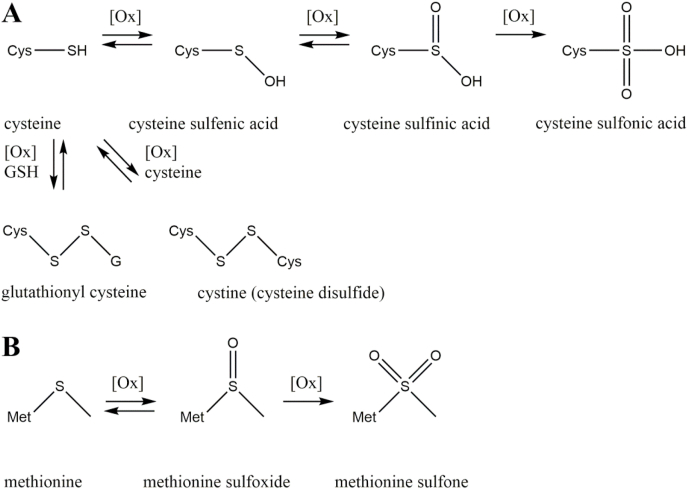
“Sulfur-containing moieties such as the sulfhydryl group of cysteine and the thioether group of methionine are targeted by oxidative stress and a plethora of posttranslational protein modifications is formed (Fig. 1) [15].”
§ Protein oxidation - Formation mechanisms, detection and relevance as biomarkers in human diseases > Mechanisms of oxidative protein modifications > Oxidation of sulfur-containing amino acids
What the sources say
- Supportedcites [15] Ryan, 2014, Oxidative post-translational modifications and their involvement in the pathogenesis of autoimmune diseases, Redox Biol. source
The “Reactive oxygen, nitrogen and chlorine species” section says that reactive species modify proteins and that cysteine’s free thiol group is readily oxidised to several products. It also describes methionine oxidation to sulfoxide and sulfone; Fig. 1 identifies both residues as sites of oxidative post-translational modification. (LLM, conf=0.94)
plaindirect- Asserted: passes — The authors put it forward as true.
- Checkable: passes — It can be checked against evidence.
- Load-bearing: unclear — It is unclear whether the paper’s conclusions depend on it.
- Based: passes — The paper gives a reason why it holds.
- Supported
The sources with a verdict support this claim; the rest weren’t checked yet, have no full text we could read, or their verdicts aren’t rated yet.
In the paper
“Furthermore, a higher level of damage may arise from increased oxidant generation and/or a decrease or failure of defense systems under several conditions such as diseases and aging [3,4].”
§ Protein oxidation - Formation mechanisms, detection and relevance as biomarkers in human diseases > Introduction
What the sources say
- Not checked — no full text of the sourcecites [3] Kregel, 2007, An integrated view of oxidative stress in aging: basic mechanisms, functional effects, and pathological considerations, Am. J. Physiol. Regul. Integr. Comp. Physiol. source
- Supportedcites [4] Liguori, 2018, Oxidative stress, aging, and diseases, Clin. Interv. Aging source
The Pathophysiology of oxidative stress section says oxidative stress can result from excess RONS production and/or an impaired ability to neutralize them or repair damage. The aging and age-related diseases sections connect oxidative damage with aging and diseases. No page numbers are provided in our copy. (LLM, conf=0.93)
hedgedconditional- Asserted: passes — The authors put it forward as true.
- Checkable: passes — It can be checked against evidence.
- Load-bearing: unclear — It is unclear whether the paper’s conclusions depend on it.
- Based: passes — The paper gives a reason why it holds.
The cited sources support only part of this claim — read each source’s verdict below.
In the paper
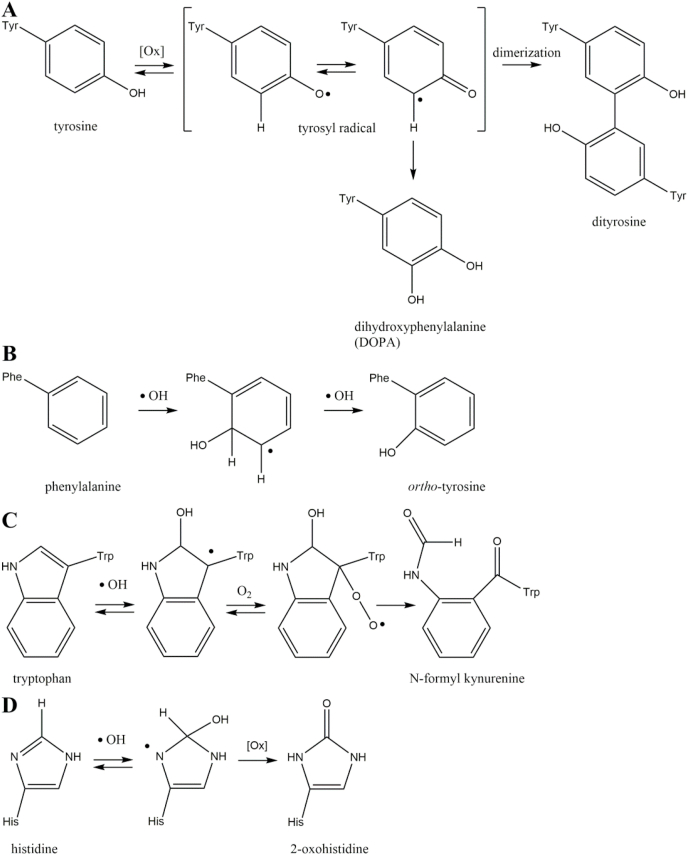
“After enolization, the main product of this reaction is the fluorescent protein crosslink ortho,ortho-dityrosine [23].”
§ Protein oxidation - Formation mechanisms, detection and relevance as biomarkers in human diseases > Mechanisms of oxidative protein modifications > Oxidation of aromatic moieties
What the sources say
- Partly supportedcites [23] Heinecke, 1993, Tyrosyl radical generated by myeloperoxidase catalyzes the oxidative cross-linking of proteins, J. Clin. Invest. sourceExperimental — accuracy not yet measured
The Introduction (page not provided) calls o,o′-dityrosine the major product of the tyrosyl-radical reaction, and the Methods describe protein-bound dityrosine measured by fluorescence. Our copy does not describe enolization as a step preceding its formation. (LLM, conf=0.88)
plaindirect- Asserted: passes — The authors put it forward as true.
- Checkable: passes — It can be checked against evidence.
- Load-bearing: unclear — It is unclear whether the paper’s conclusions depend on it.
- Based: passes — The paper gives a reason why it holds.
- Partly supported
The cited sources support only part of this claim — read each source’s verdict below.
In the paper
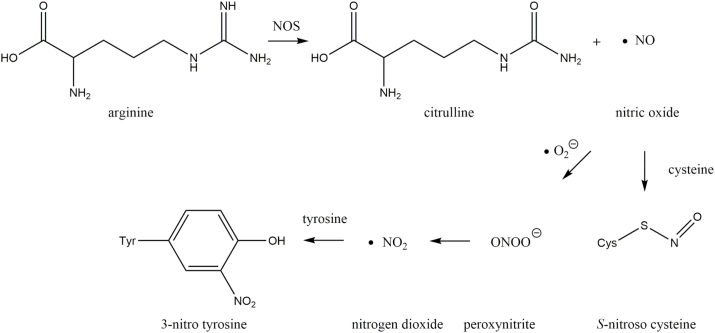
“The irreversible modification 3-nitrotyrosine (3-NT) is formed by nitration of tyrosine via attack of the nitrogen dioxide radical at the ortho-position of the aromatic ring [74].”
§ Protein oxidation - Formation mechanisms, detection and relevance as biomarkers in human diseases > Mechanisms of oxidative protein modifications > Nitration/nitrosylation
What the sources say
- Partly supportedcites [74] Bartesaghi, 2018, Fundamentals on the biochemistry of peroxynitrite and protein tyrosine nitration, Redox Biol. sourceExperimental — accuracy not yet measured
The “Nitration as a free radical process” section (page unavailable) states that nitration places a nitro group at position 3 of tyrosine’s phenolic ring and that the tyrosine radical reacts with •NO2 to yield 3-nitrotyrosine. It does not establish that the resulting 3-nitrotyrosine modification is irreversible; its discussion of reversal concerns the tyrosine-radical intermediate, not the nitrated product. (LLM, conf=0.85)
plaindirect- Asserted: passes — The authors put it forward as true.
- Checkable: passes — It can be checked against evidence.
- Load-bearing: unclear — It is unclear whether the paper’s conclusions depend on it.
- Based: passes — The paper gives a reason why it holds.
- Partly supported
The cited sources support only part of this claim — read each source’s verdict below.
In the paper
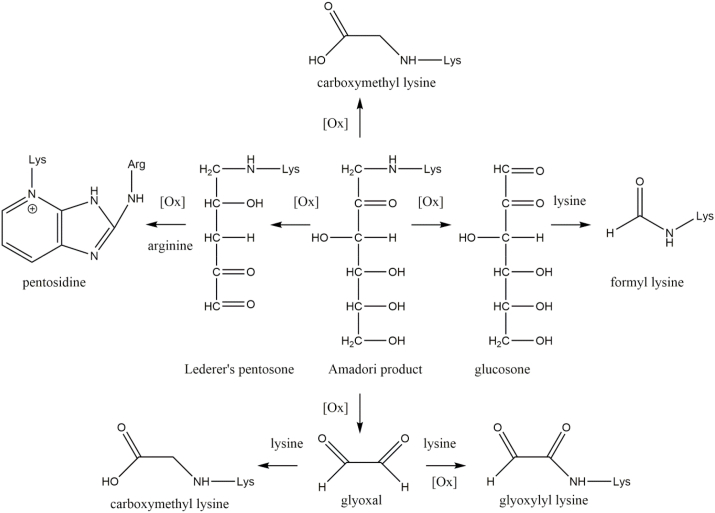
“Although the latter mechanism is non-oxidative, the reactive precursor glyoxal is mainly formed by oxidative degradation of carbohydrates, lipids, nucleotides, and serine [37].”
§ Protein oxidation - Formation mechanisms, detection and relevance as biomarkers in human diseases > Mechanisms of oxidative protein modifications > Glycoxidation
What the sources say
- Partly supportedcites [37] Rabbani, 2015, Dicarbonyl stress in cell and tissue dysfunction contributing to ageing and disease, Biochem. Biophys. Res. Commun. sourceExperimental — accuracy not yet measured
Table 1 (appearing in our copy under Closing remarks) lists lipid peroxidation, oxidative degradation of serine, monosaccharide degradation, and nucleotide degradation as sources of glyoxal. It does not say that all four pathways are oxidative or that they are collectively the main sources; it also lists degradation of glycated proteins and food and beverages. (LLM, conf=0.84)
plaindirect- Asserted: passes — The authors put it forward as true.
- Checkable: passes — It can be checked against evidence.
- Load-bearing: unclear — It is unclear whether the paper’s conclusions depend on it.
- Based: passes — The paper gives a reason why it holds.
- Partly supported
The cited sources support only part of this claim — read each source’s verdict below.
In the paper
“Protein carbonyls, 3-NT and methionine sulfoxide are biomarkers of protein oxidation which are commonly analyzed via immunochemical methods [75,82,92].”
§ Protein oxidation - Formation mechanisms, detection and relevance as biomarkers in human diseases > Analysis of oxidative protein modifications > Analysis of specific oxidation products
What the sources say
- Partly supportedcites [75] Rogowska-Wrzesinska, 2014, Analysis of protein carbonylation--pitfalls and promise in commonly used methods, Free Radic. Res. sourceExperimental — accuracy not yet measured
The indexed title identifies the paper as an analysis of protein carbonylation methods, and its keywords include “immunoaffinity.” The available passages do not say that immunochemical methods are commonly used for protein carbonyls, or address 3-nitrotyrosine or methionine sulfoxide; the broader claim is therefore not established by this copy. (LLM, conf=0.72)
- Partly supportedcites [82] Weber, 2015, Determination of protein carbonyls in plasma, cell extracts, tissue homogenates, isolated proteins: focus on sample preparation and derivatization conditions, Redox Biol sourceExperimental — accuracy not yet measured
The Introduction identifies protein carbonyls as a marker of protein oxidation and describes their detection by immunoblotting and ELISA; the Conclusion also discusses both methods. The paper mentions methionine sulfoxides as oxidation products but does not describe their immunochemical analysis, and the passages found do not address 3-nitrotyrosine. Thus it supports the sentence for protein carbonyls, not for all three biomarkers. (LLM, conf=0.88)
- Partly supportedcites [92] Teixeira, 2016, 3-Nitrotyrosine quantification methods: current concepts and future challenges, Biochimie sourceExperimental — accuracy not yet measured
Section 5, “Quantification of 3-nitrotyrosine in biological samples” (page not provided), says that a large part of 3-NT research has used antibody-based methods. The paper supports that part of the sentence, but the cited passages do not establish that protein carbonyls or methionine sulfoxide are commonly analyzed by immunochemical methods. (LLM, conf=0.88)
plaincorrelational- Asserted: passes — The authors put it forward as true.
- Checkable: passes — It can be checked against evidence.
- Load-bearing: unclear — It is unclear whether the paper’s conclusions depend on it.
- Based: passes — The paper gives a reason why it holds.
- Rests on an assumption: To function as suitable biomarkers, protein oxidation products must be stable, accumulate in detectable concentrations, and correlate with disease severity.
- Partly supported
The cited sources support only part of this claim — read each source’s verdict below.
In the paper
“Sulfur-containing amino acids, such as cysteine and methionine are highly susceptible to diverse forms of oxidation processes [118,119].”
§ Protein oxidation - Formation mechanisms, detection and relevance as biomarkers in human diseases > The relevance of biomarkers of protein oxidation in the context of human disease and aging > Sulfur-containing amino acids in human diseases and aging
What the sources say
- Supportedcites [118] Bin, 2017, Oxidation resistance of the sulfur amino acids: methionine and cysteine, BioMed Res. Int. source
The Abstract says methionine and cysteine are extremely sensitive to almost all forms of reactive oxygen species. The Methionine and Cysteine sections also describe their residues as readily oxidized. This supports the cited paraphrase. (LLM, conf=0.94)
- Partly supportedcites [119] Brosnan, 2006, The sulfur-containing amino acids: an overview, J. Nutr. sourceExperimental — accuracy not yet measured
In “Methionine and cysteine in proteins” (p. 1636S), the paper says surface-exposed methionine residues are susceptible to oxidation; the 1636S discussion also describes cysteine forming disulfide bonds. It does not say that both amino acids are highly susceptible to diverse forms of oxidation, and it limits the methionine observation to exposed residues. (LLM, conf=0.84)
plaindirect- Asserted: passes — The authors put it forward as true.
- Checkable: passes — It can be checked against evidence.
- Load-bearing: passes — The paper’s conclusions depend on it.
- Based: passes — The paper gives a reason why it holds.
- Supported
The cited sources support only part of this claim — read each source’s verdict below.
In the paper
“By using a LC-MS/MS approach, they found elevated cysteine sulfonic acid in human serum albumin of type 2 diabetes (T2D) patients compared to control subjects, indicating the potential of trioxidized peptides as prognostic biomarker of protein oxidation in human disease [125].”
§ Protein oxidation - Formation mechanisms, detection and relevance as biomarkers in human diseases > The relevance of biomarkers of protein oxidation in the context of human disease and aging > Sulfur-containing amino acids in human diseases and aging
What the sources say
- Partly supportedcites [125] Paramasivan, 2020, Serum albumin cysteine trioxidation is a potential oxidative stress biomarker of type 2 diabetes mellitus, Sci. Rep. sourceExperimental — accuracy not yet measured
The Introduction says site-specific trioxidized human serum albumin could be a biomarker of diabetes diagnosis and prognosis. The Conclusion limits the proposed prognostic use to diabetes and says its relationship to disease severity and outcomes still needs a larger longitudinal study. The claim extends that potential to human disease generally. (LLM, conf=0.86)
hedgedcorrelational- Asserted: passes — The authors put it forward as true.
- Checkable: passes — It can be checked against evidence.
- Load-bearing: passes — The paper’s conclusions depend on it.
- Based: passes — The paper gives a reason why it holds.
- Partly supported
The sources with a verdict support this claim; the rest weren’t checked yet, have no full text we could read, or their verdicts aren’t rated yet.
In the paper
“One major difficulty in detection of glycoxidation products for standardized clinical research is their structural complexity and heterogeneity, deriving from various formation mechanisms [154,155].”
§ Protein oxidation - Formation mechanisms, detection and relevance as biomarkers in human diseases > The relevance of biomarkers of protein oxidation in the context of human disease and aging > Glycoxidation in human diseases and aging
What the sources say
- Supportedcites [154] Perrone, 2020, Advanced glycation end products (AGEs): biochemistry, signaling, analytical methods, and epigenetic effects, Oxid Med Cell Longev source
Section 4, “Measurements of AGEs,” says that glycation’s complex nature and the wide range of chemical structures make AGE measurement difficult, and that no standardized method exists for comparing results across laboratories. Section 2, “AGE’s Biochemistry,” describes their heterogeneous structures and multiple formation mechanisms. The supplied passages do not give page numbers. (LLM, conf=0.91)
- Not checked — no full text of the sourcecites [155] Nedic, 2013, Molecular effects of advanced glycation end products on cell signalling pathways, ageing and pathophysiology, Free Radic. Res. source
plaindirect- Asserted: passes — The authors put it forward as true.
- Checkable: passes — It can be checked against evidence.
- Load-bearing: unclear — It is unclear whether the paper’s conclusions depend on it.
- Based: passes — The paper gives a reason why it holds.
- Supported
Every source the paper cites for this claim was checked and supports it.
In the paper
“Although ELISAs are easy to perform and ensure high sample throughput, their specificity and reproducibility have been criticized, especially by the limited description of applied antibodies, associated with different outcomes [158].”
§ Protein oxidation - Formation mechanisms, detection and relevance as biomarkers in human diseases > The relevance of biomarkers of protein oxidation in the context of human disease and aging > Glycoxidation in human diseases and aging
What the sources say
- Supportedcites [158] Ashraf, 2015, Recent advances in detection of AGEs: immunochemical, bioanalytical and biochemical approaches, IUBMB Life source
The Bioanalytical Techniques section says ELISA assays have inadequate reproducibility because antibody specificity is often difficult to characterize. The ELISA section adds that antibody specificity is often incompletely characterized and documents discrepant results, supporting the paraphrase about differing outcomes. Page numbers were not supplied in our copy. (LLM, conf=0.90)
plaincorrelational- Asserted: passes — The authors put it forward as true.
- Checkable: passes — It can be checked against evidence.
- Load-bearing: unclear — It is unclear whether the paper’s conclusions depend on it.
- Based: passes — The paper gives a reason why it holds.
- Supported
- It may state two separate claims as one. 60
- Probably not a substantial claim. 25
- The quote only partly states this claim. 2
The cited sources support only part of this claim — read each source’s verdict below.
In the paper
“The overoxidation product cysteine sulfonic acid is irreparably damaged and the affected protein has to be degraded by the proteasome [19].”
§ Protein oxidation - Formation mechanisms, detection and relevance as biomarkers in human diseases > Mechanisms of oxidative protein modifications > Oxidation of sulfur-containing amino acids
What the sources say
- Partly supportedcites [19] Xiong, 2011, S-glutathionylation: from molecular mechanisms to health outcomes, Antioxidants Redox Signal. sourceExperimental — accuracy not yet measured
Section III, “Enzymes That Catalyze the S-Glutathionylation Cycle” (page not available), says oxidation to sulfonic acid is generally irreparable and leads to proteasomal degradation of the protein. The citing sentence omits “generally” and makes degradation categorical (“has to”), overstating the review’s qualification. (LLM, conf=0.88)
plaindirect- Asserted: passes — The authors put it forward as true.
- Checkable: passes — It can be checked against evidence.
- Load-bearing: unclear — It is unclear whether the paper’s conclusions depend on it.
- Based: passes — The paper gives a reason why it holds.
It may state two separate claims as one.
- Partly supported
The cited sources support only part of this claim — read each source’s verdict below.
In the paper
“In particular, tyrosine is a redox active structure. The phenolic side-chain is easily oxidized, because the intermediary tyrosyl radical is stabilized by mesomeric delocalization of the unpaired electron (Fig. 2A) [22].”
§ Protein oxidation - Formation mechanisms, detection and relevance as biomarkers in human diseases > Mechanisms of oxidative protein modifications > Oxidation of aromatic moieties
What the sources say
- Partly supportedcites [22] Correia, 2012, UV-light exposure of insulin: pharmaceutical implications upon covalent insulin dityrosine dimerization and disulphide bond photolysis, PLoS One sourceExperimental — accuracy not yet measured
The Introduction (page unavailable) describes electron loss from excited tyrosine followed by formation of a tyrosyl radical, and the Discussion (page unavailable) calls that radical relatively stable. These passages support tyrosine's redox activity, but do not say that its phenolic side-chain is easily oxidized or attribute radical stability to mesomeric delocalization. (LLM, conf=0.84)
plaindirect- Asserted: passes — The authors put it forward as true.
- Checkable: passes — It can be checked against evidence.
- Load-bearing: unclear — It is unclear whether the paper’s conclusions depend on it.
- Based: passes — The paper gives a reason why it holds.
It may state two separate claims as one.
- Partly supported
The cited sources support only part of this claim — read each source’s verdict below.
In the paper
“Reaction of cysteine with another cysteine under non-enzymatic as well as enzyme mediated conditions leads to cystine. Cystine is a vitally important modification, because it stabilizes protein structures via intra- and intermolecular disulfide bridges.”
§ Protein oxidation - Formation mechanisms, detection and relevance as biomarkers in human diseases > Mechanisms of oxidative protein modifications > Oxidation of sulfur-containing amino acids
What the sources say
- Partly supportedcites [17] Tu, 2004, Oxidative protein folding in eukaryotes mechanisms and consequences, JCB (J. Cell Biol.) sourceExperimental — accuracy not yet measured
The Abstract (page not provided) says disulfide bonds involving cysteine residues are often crucial to protein stability and describes both spontaneous formation in vitro and assisted formation in vivo. The section on oxidative folding machinery also describes enzyme-catalyzed disulfide formation. Our copy does not explicitly identify the product as cystine or establish the claim’s distinction between intra- and intermolecular bridges. (LLM, conf=0.85)
plaindirect- Asserted: passes — The authors put it forward as true.
- Checkable: passes — It can be checked against evidence.
- Load-bearing: unclear — It is unclear whether the paper’s conclusions depend on it.
- Based: passes — The paper gives a reason why it holds.
It may state two separate claims as one.
- Partly supported
Every source the paper cites for this claim was checked and supports it.
In the paper
“Highly reactive species damage numerous sites at side-chains and backbones of proteins, while less reactive species have higher selectivity regarding targeted residues [7].”
§ Protein oxidation - Formation mechanisms, detection and relevance as biomarkers in human diseases > Introduction
What the sources say
- Supportedcites [7] Davies, 2016, Protein oxidation and peroxidation, Biochem. J. source
The Abstract states that highly reactive radicals damage multiple side-chain and backbone sites, while less reactive species are more selective about the residues they target. The Radical Reactions with Proteins section also says damage is more selective with less reactive radicals. (LLM, conf=0.95)
plaindirect- Asserted: passes — The authors put it forward as true.
- Checkable: passes — It can be checked against evidence.
- Load-bearing: unclear — It is unclear whether the paper’s conclusions depend on it.
- Based: passes — The paper gives a reason why it holds.
It may state two separate claims as one.
- Supported
The cited sources support only part of this claim — read each source’s verdict below.
In the paper
“Nitric oxide (•NO) is an important signaling molecule involved in vasodilation and neurotransmission via activation of soluble guanylate cyclase and generation of the second messenger cGMP [69].”
§ Protein oxidation - Formation mechanisms, detection and relevance as biomarkers in human diseases > Mechanisms of oxidative protein modifications > Nitration/nitrosylation
What the sources say
- Partly supportedcites [69] Murad, 1986, Cyclic guanosine monophosphate as a mediator of vasodilation, J. Clin. Invest. sourceExperimental — accuracy not yet measured
The paper’s Figure 1 caption states that nitric oxide derived from nitrovasodilators activates soluble guanylate cyclase, increases cyclic GMP synthesis, and leads to vascular relaxation. The passages in our copy do not address nitric oxide’s role in neurotransmission, so that part of the claim is unsupported. (LLM, conf=0.88)
plaindirect- Asserted: passes — The authors put it forward as true.
- Checkable: passes — It can be checked against evidence.
- Load-bearing: fails — The paper’s conclusions may not depend on it.
- Based: passes — The paper gives a reason why it holds.
Probably not a substantial claim. The paper’s conclusions may not depend on it.
- Partly supported
The cited sources that could be checked couldn’t confirm or dispute this claim.
In the paper
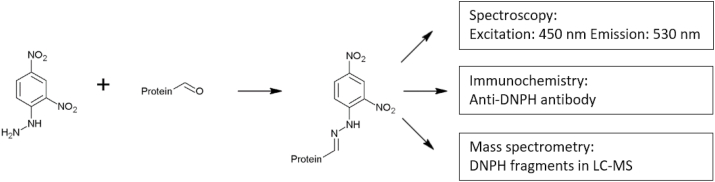
“Unbound DNPH needs to be removed from the sample, because it absorbs at the same wavelength as hydrazones (λ = 370 nm). Several washing steps of the protein are required to remove unbound DNPH leading to an inevitable loss of protein of up to 10–15% [75].”
§ Protein oxidation - Formation mechanisms, detection and relevance as biomarkers in human diseases > Analysis of oxidative protein modifications > Analysis of specific oxidation products
What the sources say
- Could not verifycites [75] Rogowska-Wrzesinska, 2014, Analysis of protein carbonylation--pitfalls and promise in commonly used methods, Free Radic. Res. sourceExperimental — accuracy not yet measured
The indexed passages are bibliographic records and keywords, with no substantive passage on DNPH absorbance or washing-related protein loss. Searches for DNPH, 370 nm, and 10–15% protein loss found no passage that verifies the claim. (LLM, conf=0.72)
plaindirect- Asserted: passes — The authors put it forward as true.
- Checkable: passes — It can be checked against evidence.
- Load-bearing: unclear — It is unclear whether the paper’s conclusions depend on it.
- Based: passes — The paper gives a reason why it holds.
It may state two separate claims as one.
- Could not verify
Every source the paper cites for this claim was checked and supports it.
In the paper
“ALEs are protein modifications formed by the nucleophilic reaction of proteins with reactive carbonyl species (RCS) originating from oxidative lipid degradation [49].”
§ Protein oxidation - Formation mechanisms, detection and relevance as biomarkers in human diseases > Mechanisms of oxidative protein modifications > Lipoxidation
What the sources say
- Supportedcites [49] Gianazza, 2019, Lipoxidation in cardiovascular diseases, Redox Biol. source
The section “Lipid peroxidation and formation of advanced lipoxidation end-products (ALEs)” says lipid peroxidation produces reactive carbonyl species (passage 7), which covalently react with nucleophilic groups on proteins to form ALEs (passages 1–2). (LLM, conf=0.92)
plaindirect- Asserted: passes — The authors put it forward as true.
- Checkable: passes — It can be checked against evidence.
- Load-bearing: fails — The paper’s conclusions may not depend on it.
- Based: passes — The paper gives a reason why it holds.
Probably not a substantial claim. The paper’s conclusions may not depend on it.
- Supported
The sources with a verdict support this claim; the rest weren’t checked yet, have no full text we could read, or their verdicts aren’t rated yet.
In the paper
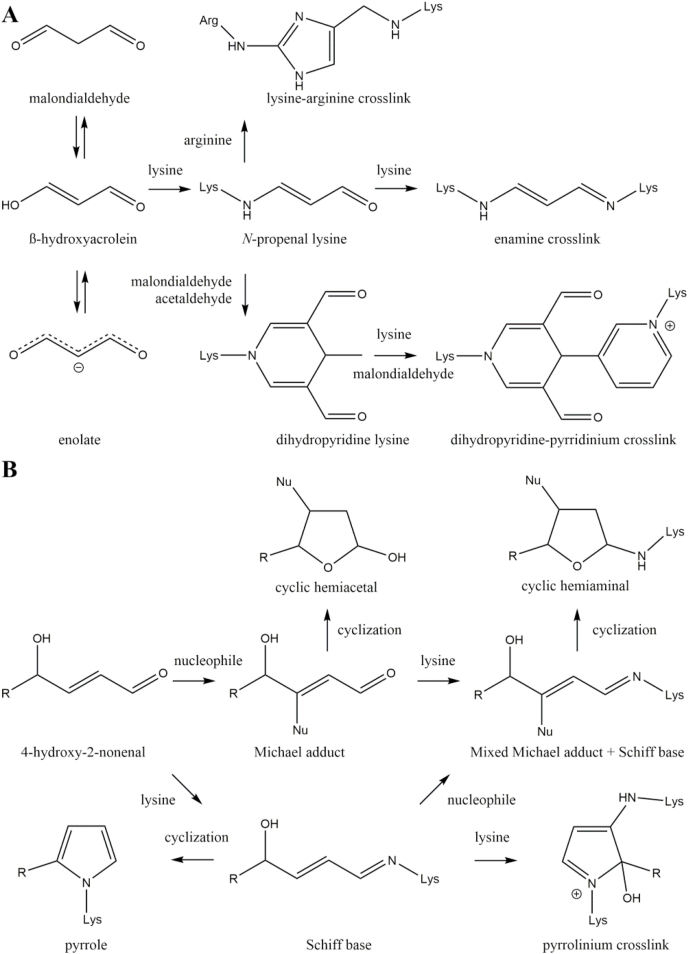
“This positive partial charge is attacked by nucleophiles such as cysteine and histidine and stable Michael adducts are formed (Fig. 4B) [50]. Nucleophilic attack of lysine forms unstable Michael adducts, which require reduction, e.g., by sodium borohydride prior to analysis [57].”
§ Protein oxidation - Formation mechanisms, detection and relevance as biomarkers in human diseases > Mechanisms of oxidative protein modifications > Lipoxidation
What the sources say
- Not checked — no full text of the sourcecites [50] Vistoli, 2013, Advanced glycoxidation and lipoxidation end products (AGEs and ALEs): an overview of their mechanisms of formation, Free Radic. Res. source
- Supportedcites [57] Requena, 1997, Quantification of malondialdehyde and 4-hydroxynonenal adducts to lysine residues in native and oxidized human low-density lipoprotein, Biochem. J. source
This source is cited for the lysine-adduct statement, not the preceding cysteine-and-histidine statement, which cites [50]. In “Characterization of lysine adducts by amino acid analysis and GC/MS,” the paper says HNE–lysine Michael adducts are labile to acid hydrolysis and that the reaction mixtures were reduced with borohydride before analysis. (LLM, conf=0.94)
plaindirect- Asserted: passes — The authors put it forward as true.
- Checkable: passes — It can be checked against evidence.
- Load-bearing: unclear — It is unclear whether the paper’s conclusions depend on it.
- Based: passes — The paper gives a reason why it holds.
It may state two separate claims as one.
The cited sources support only part of this claim — read each source’s verdict below.
In the paper
“Top-down approaches can be helpful to evaluate the total modification status on an individual protein [[93], [94], [95], [96]].”
- Also stated in: § Analysis of specific oxidation products · plain
“For example, sequence coverage in biological samples remains quite low using top-down MS due to overlapping and deconvolution effects [79].”
- Also stated in: § Analysis of specific oxidation products · plain
“Finally, top-down analysis requires high amounts of purified proteins to acquire highly resolved peaks of precursor and product ions with sufficient intensity [97].”
§ Protein oxidation - Formation mechanisms, detection and relevance as biomarkers in human diseases > Analysis of oxidative protein modifications > Analysis of specific oxidation products
What the sources say
- Partly supportedcites [79] Verrastro, 2015, Mass spectrometry-based methods for identifying oxidized proteins in disease: advances and challenges, Biomolecules sourceExperimental — accuracy not yet measured
Split into 2 atoms — 1 confirmed, 1 partially supported, 0 disputed, 0 misattributed, 0 unverifiable. Expand the claim to see per-atom verdicts.
- Not checked — no full text of the sourcecites [97] Siuti, 2007, Decoding protein modifications using top-down mass spectrometry, Nat. Methods source
plaindirect- Asserted: passes — The authors put it forward as true.
- Checkable: passes — It can be checked against evidence.
- Load-bearing: unclear — It is unclear whether the paper’s conclusions depend on it.
- Based: passes — The paper gives a reason why it holds.
It may state two separate claims as one.
- Also stated in: § Analysis of specific oxidation products · plain
The cited sources support only part of this claim — read each source’s verdict below.
In the paper
“Besides this, LC-MS/MS has been also used for proteomic analysis to identify carbonylated proteins, providing a more sensitive approach, but reveal limitations for quantitative assessments [86].”
§ Protein oxidation - Formation mechanisms, detection and relevance as biomarkers in human diseases > Analysis of oxidative protein modifications > Analysis of specific oxidation products
What the sources say
- Partly supportedcites [86] Augustyniak, 2015, Validation of protein carbonyl measurement: a multi-centre study, Redox Biol sourceExperimental — accuracy not yet measured
The Results and discussion section reports using LC–MS/MS to identify carbonylated proteins and says the method used provided no quantitative information. The Conclusions likewise describe poorly developed quantitative applications for MS. The paper does not establish the claim that LC–MS/MS is a more sensitive approach. (LLM, conf=0.86)
plaindirect- Asserted: passes — The authors put it forward as true.
- Checkable: passes — It can be checked against evidence.
- Load-bearing: unclear — It is unclear whether the paper’s conclusions depend on it.
- Based: passes — The paper gives a reason why it holds.
It may state two separate claims as one.
- Partly supported
Every source the paper cites for this claim was checked and supports it.
In the paper
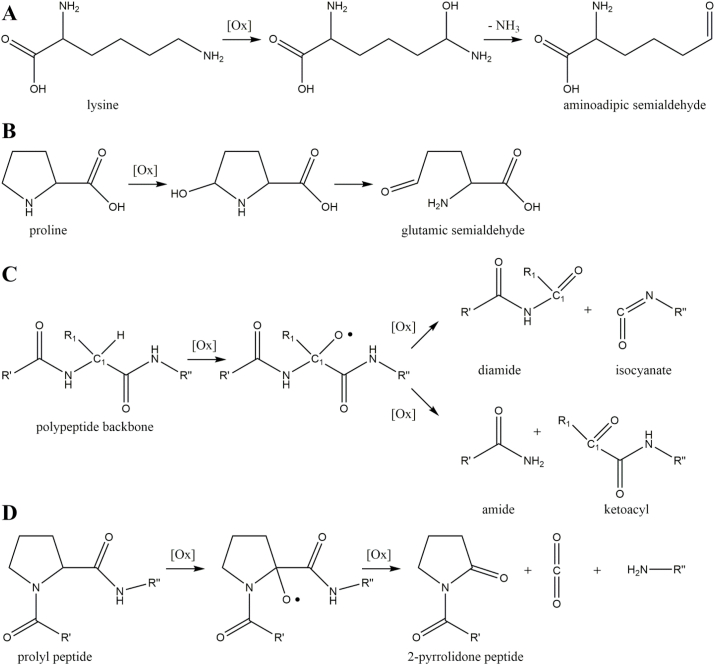
“Aminoadipic and glutamic semialdehyde are examples for direct oxidation of amino acids and responsible for about 60% of total protein carbonylation in liver [64].”
§ Protein oxidation - Formation mechanisms, detection and relevance as biomarkers in human diseases > Mechanisms of oxidative protein modifications > Carbonylation
What the sources say
- Supportedcites [64] Requena, 2001, Glutamic and aminoadipic semialdehydes are the main carbonyl products of metal-catalyzed oxidation of proteins, Proc. Natl. Acad. Sci. Unit. States Am. source
The Discussion identifies glutamic and aminoadipic semialdehydes as products of oxidation of proline, arginine, and lysine residues. The Results report that together they accounted for approximately 60% of protein carbonyl groups in the rat liver samples studied. (LLM, conf=0.91)
plaindirect- Asserted: passes — The authors put it forward as true.
- Checkable: passes — It can be checked against evidence.
- Load-bearing: unclear — It is unclear whether the paper’s conclusions depend on it.
- Based: passes — The paper gives a reason why it holds.
It may state two separate claims as one.
- Supported
Every source the paper cites for this claim was checked and supports it.
In the paper
“Several methods for their detection in blood, urine, and tissue samples have been established in recent years, such as spectrophotometry, immunohistochemistry (IHC), immunoblot, and ELISA techniques, whereas the latter has been most commonly used.”
§ Protein oxidation - Formation mechanisms, detection and relevance as biomarkers in human diseases > The relevance of biomarkers of protein oxidation in the context of human disease and aging > Glycoxidation in human diseases and aging
What the sources say
- Supportedcites [158] Ashraf, 2015, Recent advances in detection of AGEs: immunochemical, bioanalytical and biochemical approaches, IUBMB Life source
The Bioanalytical Techniques section says AGEs have conventionally been detected primarily by ELISA. The sections on Fluorescence Spectroscopy, Immunohistochemistry, and Fluorescent Phenylboronate Gel Electrophoresis describe detection in blood, urine, or tissues using spectroscopic, IHC, and anti-AGE blotting methods. Page numbers were not available in our copy. (LLM, conf=0.88)
plain- Asserted: passes — The authors put it forward as true.
- Checkable: passes — It can be checked against evidence.
- Load-bearing: unclear — It is unclear whether the paper’s conclusions depend on it.
- Based: passes — The paper gives a reason why it holds.
It may state two separate claims as one.
- Supported
The cited sources support only part of this claim — read each source’s verdict below.
In the paper
“In particular, cysteine residues are major targets of ROS undergoing a large number of posttranslational modifications, leading to functional and structural alterations of proteins.”
§ Protein oxidation - Formation mechanisms, detection and relevance as biomarkers in human diseases > The relevance of biomarkers of protein oxidation in the context of human disease and aging > Sulfur-containing amino acids in human diseases and aging
What the sources say
- Partly supportedcites [118] Bin, 2017, Oxidation resistance of the sulfur amino acids: methionine and cysteine, BioMed Res. Int. sourceExperimental — accuracy not yet measured
Section 3 (Cysteine; page unavailable) says cysteine residues are easily oxidized and react with H2O2, supporting their susceptibility to ROS. It does not establish that they are major ROS targets or describe numerous posttranslational modifications leading to functional and structural changes in proteins. (LLM, conf=0.84)
- Partly supportedcites [119] Brosnan, 2006, The sulfur-containing amino acids: an overview, J. Nutr. sourceExperimental — accuracy not yet measured
The discussion of cysteine in proteins (p. 1636S) says cysteine residues form disulfide bonds that are important to protein structure and folding. It does not say cysteine residues are major ROS targets or undergo a large number of ROS-related posttranslational modifications; its explicit discussion of ROS-related residue oxidation concerns methionine instead. (LLM, conf=0.82)
plaindirect- Asserted: passes — The authors put it forward as true.
- Checkable: passes — It can be checked against evidence.
- Load-bearing: passes — The paper’s conclusions depend on it.
- Based: passes — The paper gives a reason why it holds.
It may state two separate claims as one.
- Partly supported
Every source the paper cites for this claim was checked and supports it.
In the paper
“Guerin-Duborg and colleagues used an AGE-ELISA Kit preferentially quantifying CML and revealed no differences between non-diabetic subjects and T2D patients as well as T2D patients with and without vascular diseases.”
§ Protein oxidation - Formation mechanisms, detection and relevance as biomarkers in human diseases > The relevance of biomarkers of protein oxidation in the context of human disease and aging > Glycoxidation in human diseases and aging
What the sources say
- Supportedcites [160] Guerin-Dubourg, 2017, Association between fluorescent advanced glycation end-products and vascular complications in type 2 diabetic patients, BioMed Res. Int. source
Materials and Methods §2.4 says the AGE ELISA preferentially measures nonfluorescent AGEs, including CML and CEL. Results §3 reports no significant difference in AGE levels between diabetic patients and controls, and says only fluorescent AGE levels distinguished diabetic patients with vascular disease from those without it. The kit is not described as specific to CML alone. (LLM, conf=0.88)
plain- Asserted: passes — The authors put it forward as true.
- Checkable: passes — It can be checked against evidence.
- Load-bearing: unclear — It is unclear whether the paper’s conclusions depend on it.
- Based: passes — The paper gives a reason why it holds.
It may state two separate claims as one.
- Supported
Every source the paper cites for this claim was checked and supports it.
In the paper
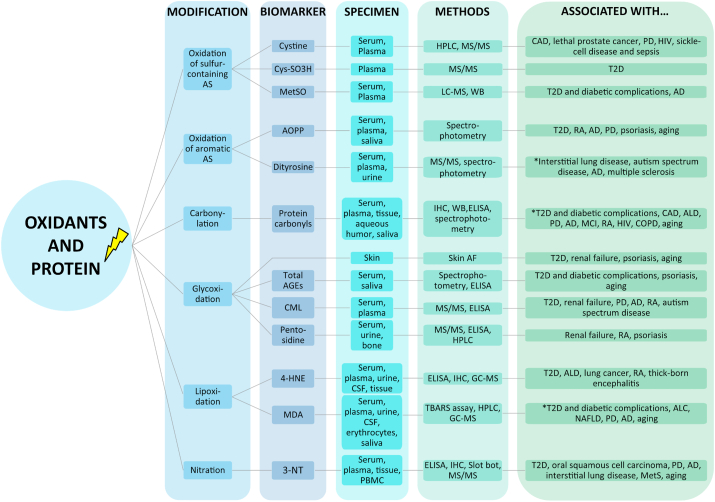
“has been applied in clinical settings, indicating elevated AGE levels in several diseases and aging, as shown in Table 5”
§ Protein oxidation - Formation mechanisms, detection and relevance as biomarkers in human diseases > The relevance of biomarkers of protein oxidation in the context of human disease and aging > Glycoxidation in human diseases and aging
What the sources say
- Supportedcites [161] Stirban, 2014, Skin autofluorescence - a non-invasive measurement for assessing cardiovascular risk and risk of diabetes, Eur. Endocrinol. source
The section on SAF as a surrogate for skin AGE accumulation reports that SAF rises with age. The chronic kidney disease section reports higher SAF in patients with CKD, and the diabetes table shows higher values in patients with type 2 diabetes than in healthy adults. These clinical measurements support the claim, although the paper does not establish SAF as routine clinical practice. (LLM, conf=0.89)
hedgedcorrelational- Asserted: passes — The authors put it forward as true.
- Checkable: passes — It can be checked against evidence.
- Load-bearing: unclear — It is unclear whether the paper’s conclusions depend on it.
- Based: passes — The paper gives a reason why it holds.
It may state two separate claims as one.
- Supported
The cited sources support only part of this claim — read each source’s verdict below.
In the paper
“The fundamental role of AGEs, including glycoxidation products, in human aging, but also in aging of vertebrate and invertebrate model organism has been reviewed in 2018 by Chaudhuri and colleagues [153]”
§ Protein oxidation - Formation mechanisms, detection and relevance as biomarkers in human diseases > The relevance of biomarkers of protein oxidation in the context of human disease and aging > Glycoxidation in human diseases and aging
What the sources say
- Partly supportedcites [153] Chaudhuri, 2018, The role of advanced glycation end products in aging and metabolic diseases: bridging association and causality, Cell Metabol. sourceExperimental — accuracy not yet measured
The Abstract describes AGE accumulation as an inevitable component of aging in humans and other eukaryotes, and the model-organism section reviews vertebrate and invertebrate studies. But the Abstract says AGEs are linked to, and only perhaps responsible for, aging-related changes; the Conclusions say their causal effects remain poorly understood. Calling their role in aging “fundamental” states that role more firmly than the review does. (LLM, conf=0.84)
plaindirect- Asserted: passes — The authors put it forward as true.
- Checkable: passes — It can be checked against evidence.
- Load-bearing: unclear — It is unclear whether the paper’s conclusions depend on it.
- Based: passes — The paper gives a reason why it holds.
It may state two separate claims as one.
- Partly supported
The sources with a verdict support this claim; the rest weren’t checked yet, have no full text we could read, or their verdicts aren’t rated yet.
In the paper
“The biological process of lipid peroxidation has been implicated in a high number of human pathologic conditions [172,173].”
§ Protein oxidation - Formation mechanisms, detection and relevance as biomarkers in human diseases > The relevance of biomarkers of protein oxidation in the context of human disease and aging > Lipoxidation in human diseases and aging
What the sources say
- Not checked — no full text of the sourcecites [172] Tsikas, 2017, Assessment of lipid peroxidation by measuring malondialdehyde (MDA) and relatives in biological samples: analytical and biological challenges, Anal. Biochem. source
- Supportedcites [173] Ramana, 2019, Lipid peroxidation products in human health and disease 2019, Oxid Med Cell Longev source
The paper’s introductory discussion says lipid peroxidation-derived products contribute to the pathophysiology of human disease and identifies cancer, diabetes, cardiovascular and neurological diseases, and inflammatory conditions. Its discussion of the 2019 issue also states that lipid peroxidation products are involved in various pathological conditions. Page numbers are not provided in our copy. (LLM, conf=0.93)
plaincorrelational- Asserted: passes — The authors put it forward as true.
- Checkable: passes — It can be checked against evidence.
- Load-bearing: fails — The paper’s conclusions may not depend on it.
- Based: passes — The paper gives a reason why it holds.
Probably not a substantial claim. The paper’s conclusions may not depend on it.
The cited sources support only part of this claim — read each source’s verdict below.
In the paper
“O'Grady et al. found higher CML levels in plasma of T2D patients compared to healthy subjects but similar pentosidine concentrations [165].”
§ Protein oxidation - Formation mechanisms, detection and relevance as biomarkers in human diseases > The relevance of biomarkers of protein oxidation in the context of human disease and aging > Glycoxidation in human diseases and aging
What the sources say
- Partly supportedcites [165] O'Grady, 2020, Development and application of mass spectroscopy assays for nepsilon-(1-carboxymethyl)-L-lysine and pentosidine in renal failure and diabetes, J Appl Lab Med sourceExperimental — accuracy not yet measured
The “Control versus T2DM patients” results (page unavailable) report significantly higher CML in T2DM patients and no significant difference in pentosidine. However, the paper identifies the measured samples as serum, not plasma, so it does not establish the claim specifically for plasma. (LLM, conf=0.88)
plaincorrelational- Asserted: passes — The authors put it forward as true.
- Checkable: passes — It can be checked against evidence.
- Load-bearing: unclear — It is unclear whether the paper’s conclusions depend on it.
- Based: passes — The paper gives a reason why it holds.
It may state two separate claims as one.
- Partly supported
The cited sources support only part of this claim — read each source’s verdict below.
In the paper
“To our knowledge, MDA modified proteins have not been used as biomarkers in recent clinical investigations although antibodies are commercially available and highly selective MS methods have been established, previously [57].”
§ Protein oxidation - Formation mechanisms, detection and relevance as biomarkers in human diseases > The relevance of biomarkers of protein oxidation in the context of human disease and aging > Lipoxidation in human diseases and aging
What the sources say
- Partly supportedcites [57] Requena, 1997, Quantification of malondialdehyde and 4-hydroxynonenal adducts to lysine residues in native and oxidized human low-density lipoprotein, Biochem. J. sourceExperimental — accuracy not yet measured
The Introduction (page not provided) says antibodies are available for measuring MDA epitopes and describes a sensitive, specific GC/MS assay for MDA–lysine adducts in proteins. It does not say the antibodies are commercially available. (LLM, conf=0.86)
boosted- Asserted: passes — The authors put it forward as true.
- Checkable: passes — It can be checked against evidence.
- Load-bearing: unclear — It is unclear whether the paper’s conclusions depend on it.
- Based: passes — The paper gives a reason why it holds.
It may state two separate claims as one.
- Partly supported
The cited sources support only part of this claim — read each source’s verdict below.
In the paper
“For instance, while Ravassa et al. found higher 3-NT levels in T2D patients with additional cardiovascular events, no differences were observed by Segre and colleagues although baseline parameters of the study populations and the used methods were similar [189,190].”
§ Protein oxidation - Formation mechanisms, detection and relevance as biomarkers in human diseases > The relevance of biomarkers of protein oxidation in the context of human disease and aging > Nitration in human diseases and aging
What the sources say
- Not checked — no full text of the sourcecites [189] Ravassa, 2015, Association of low GLP-1 with oxidative stress is related to cardiac disease and outcome in patients with type 2 diabetes mellitus: a pilot study, Free Radic. Biol. Med. source
- Partly supportedcites [190] Segre, 2015, Troponin in diabetic patients with and without chronic coronary artery disease, BMC Cardiovasc. Disord. sourceExperimental — accuracy not yet measured
The Results report no significant difference in nitrotyrosine between Segre’s diabetic patients with coronary artery disease and controls (27.9 versus 28.7; p = 0.77). The Methods and Results describe Segre’s participants and assay, but our copy does not compare their baseline characteristics or methods with Ravassa’s study, so the claimed similarity is not established by this source. (LLM, conf=0.83)
plain- Asserted: passes — The authors put it forward as true.
- Checkable: passes — It can be checked against evidence.
- Load-bearing: unclear — It is unclear whether the paper’s conclusions depend on it.
- Based: passes — The paper gives a reason why it holds.
It may state two separate claims as one.
Every source the paper cites for this claim was checked and supports it.
In the paper
“Elevated levels of 3-NT in patients with interstitial lung disease”
§ Protein oxidation - Formation mechanisms, detection and relevance as biomarkers in human diseases > The relevance of biomarkers of protein oxidation in the context of human disease and aging > Nitration in human diseases and aging
What the sources say
- Supportedcites [142] Pennathur, 2016, Oxidative modifications of protein tyrosyl residues are increased in plasma of human subjects with interstitial lung disease, Am. J. Respir. Crit. Care Med. source
The Results report higher plasma 3-nitrotyrosine (3-NT) in patients with ILD than in healthy controls (P < 0.0001). The Abstract methods state that the plasma oxidation products were quantified by tandem mass spectrometry. No page numbers are provided in the supplied passages. (LLM, conf=0.95)
plaincorrelationaln = 42- Asserted: passes — The authors put it forward as true.
- Checkable: passes — It can be checked against evidence.
- Load-bearing: unclear — It is unclear whether the paper’s conclusions depend on it.
- Based: passes — The paper gives a reason why it holds.
The quote only partly states this claim.
- Supported
In the paper
“It has been estimated that proteins can scavenge a majority (50%–75%) of generated reactive species [6].”
§ Protein oxidation - Formation mechanisms, detection and relevance as biomarkers in human diseases > Introduction
What the sources say
- Not checked — no full text of the sourcecites [6] Davies, 1999, Stable markers of oxidant damage to proteins and their application in the study of human disease, Free Radic. Biol. Med. source
hedgeddirect- Asserted: passes — The authors put it forward as true.
- Checkable: passes — It can be checked against evidence.
- Load-bearing: fails — The paper’s conclusions may not depend on it.
- Based: passes — The paper gives a reason why it holds.
Probably not a substantial claim. The paper’s conclusions may not depend on it.
In the paper
“The variety of reaction sites generates a wide range of posttranslational protein modifications consequently changing composition and folding, the net charge, as well as the hydrophobicity/hydrophilicity of proteins. This affects their functions as receptors, enzymes, carrier or structural proteins [8].”
§ Protein oxidation - Formation mechanisms, detection and relevance as biomarkers in human diseases > Introduction
What the sources say
- Not checked — no full text of the sourcecites [8] Droge, 2002, Free radicals in the physiological control of cell function, Physiol. Rev. source
plaindirect- Asserted: passes — The authors put it forward as true.
- Checkable: passes — It can be checked against evidence.
- Load-bearing: unclear — It is unclear whether the paper’s conclusions depend on it.
- Based: passes — The paper gives a reason why it holds.
It may state two separate claims as one.
The paper states this without a source or data behind it here, so there is nothing to check it against. The quote shows it is in the paper.
In the paper
“Under normal circumstances, the formation and subsequent degradation of reactive species is regulated by cellular defense systems, including scavenging enzymes able to remove oxidants or their precursors such as superoxide dismutases, catalase, thioredoxin/thioredoxin reductase, and glutathione peroxidase.”
§ Protein oxidation - Formation mechanisms, detection and relevance as biomarkers in human diseases > Introduction
plaindirect- Asserted: passes — The authors put it forward as true.
- Checkable: passes — It can be checked against evidence.
- Load-bearing: fails — The paper’s conclusions may not depend on it.
- Based: passes — The paper gives a reason why it holds.
Probably not a substantial claim. The paper’s conclusions may not depend on it.
In the paper
“Reversible modifications are relevant in physiological processes and constitute signaling mechanisms (“redox signaling”), while non-reversible modifications may contribute to pathological situations and several diseases.”
- Also stated in: § Introduction · boosted
“It has been established that reversible modifications are thought to be relevant in physiological processes and constitute signaling mechanisms under appropriate conditions (“redox signaling”), while non-reversible modifications may contribute to pathological situations and several diseases [9].”
§ Protein oxidation - Formation mechanisms, detection and relevance as biomarkers in human diseases > Abstract
What the sources say
- Not checked — no full text of the sourcecites [9] Spickett, 2012, Protein oxidation: role in signalling and detection by mass spectrometry, Amino Acids source
boostedconditional- Asserted: passes — The authors put it forward as true.
- Checkable: passes — It can be checked against evidence.
- Load-bearing: passes — The paper’s conclusions depend on it.
- Based: passes — The paper gives a reason why it holds.
It may state two separate claims as one.
- Also stated in: § Introduction · boosted
The paper states this without a source or data behind it here, so there is nothing to check it against. The quote shows it is in the paper.
In the paper
“Protein oxidation products can be determined in blood and urine samples, but also in specific tissue or cell samples.”
§ Protein oxidation - Formation mechanisms, detection and relevance as biomarkers in human diseases > Introduction
plain- Asserted: passes — The authors put it forward as true.
- Checkable: passes — It can be checked against evidence.
- Load-bearing: fails — The paper’s conclusions may not depend on it.
- Based: passes — The paper gives a reason why it holds.
Probably not a substantial claim. The paper’s conclusions may not depend on it. It may state two separate claims as one.
- Rests on an assumption: Sample availability is an important factor limiting the reliability of a biomarker.
In the paper
“However, nitric oxide reacts with superoxide at a high rate constant to give peroxynitrite (ONOO−), able to decompose spontaneously to yield nitrogen dioxide (•NO2) and hydroxyl radicals [2].”
§ Protein oxidation - Formation mechanisms, detection and relevance as biomarkers in human diseases > Introduction
What the sources say
- Not checked — no full text of the sourcecites [2] Hughes, 1970, A possible role for the species peroxonitrite in nitrification, Biochim. Biophys. Acta source
plaindirect- Asserted: passes — The authors put it forward as true.
- Checkable: passes — It can be checked against evidence.
- Load-bearing: unclear — It is unclear whether the paper’s conclusions depend on it.
- Based: passes — The paper gives a reason why it holds.
It may state two separate claims as one.
A conclusion the paper draws from its own results — it cites no other source for it, so there is none to check. The quote shows it is in the paper.
In the paper
“Moreover, progress in the development of detection and quantification methods facilitates analysis time and effort and contributes to their future applicability in clinical routine.”
§ Protein oxidation - Formation mechanisms, detection and relevance as biomarkers in human diseases > Abstract
plaindirect- Asserted: passes — The authors put it forward as true.
- Checkable: passes — It can be checked against evidence.
- Load-bearing: passes — The paper’s conclusions depend on it.
- Based: passes — The paper gives a reason why it holds.
Probably not a substantial claim. It may state two separate claims as one.
- Rests on an assumption: To function as suitable biomarkers, protein oxidation products must be stable, accumulate in detectable concentrations, and correlate with disease severity.
In the paper
“Formation of cysteine thiyl radical and sulfenic acid is a reversible process and both intermediates are highly unstable. Both serve as precursors for several oxidized cysteine modifications (Fig. 1A) [16].”
§ Protein oxidation - Formation mechanisms, detection and relevance as biomarkers in human diseases > Mechanisms of oxidative protein modifications > Oxidation of sulfur-containing amino acids
What the sources say
- Not checked — no full text of the sourcecites [16] Trujillo, 2016, One-and two-electron oxidation of thiols: mechanisms, kinetics and biological fates, Free Radic. Res. source
plaindirect- Asserted: passes — The authors put it forward as true.
- Checkable: passes — It can be checked against evidence.
- Load-bearing: unclear — It is unclear whether the paper’s conclusions depend on it.
- Based: passes — The paper gives a reason why it holds.
It may state two separate claims as one.
In the paper
“Additionally, important primary oxygen-containing compounds with reactive properties are superoxide (O2•-) and the most reactive hydroxyl radical (•OH), formed from O2•- and hydrogen peroxide (H2O2) in the presence of metal ions (Fenton reaction) with a very short half-life of approximately 10−9 s [1].”
§ Protein oxidation - Formation mechanisms, detection and relevance as biomarkers in human diseases > Introduction
What the sources say
- Not checked — no full text of the sourcecites [1] Sies, 1993, Strategies of antioxidant defense, Eur. J. Biochem. source
plaindirect- Asserted: passes — The authors put it forward as true.
- Checkable: passes — It can be checked against evidence.
- Load-bearing: fails — The paper’s conclusions may not depend on it.
- Based: passes — The paper gives a reason why it holds.
Probably not a substantial claim. The paper’s conclusions may not depend on it. It may state two separate claims as one.
A claim is checked only against the cited paper’s full text, never its abstract, and none is available for its sources.
In the paper
“In contrast to the non-enzymatic oxidation of methionine to methionine sulfoxide, the reduction is catalyzed by methionine sulfoxide reductases [20]. Further oxidation results in methionine sulfone formation, which is not targeted by methionine sulfoxide reductases and has to be considered as a stable modification [21].”
§ Protein oxidation - Formation mechanisms, detection and relevance as biomarkers in human diseases > Mechanisms of oxidative protein modifications > Oxidation of sulfur-containing amino acids
What the sources say
plaindirect- Asserted: passes — The authors put it forward as true.
- Checkable: passes — It can be checked against evidence.
- Load-bearing: unclear — It is unclear whether the paper’s conclusions depend on it.
- Based: passes — The paper gives a reason why it holds.
It may state two separate claims as one.
In the paper
“Protein carbonylation is a stable modification induced by ROS via three pathways: direct oxidation of protein-bound amino acids, oxidative cleavage of the protein backbone, and incorporation of carbonyls from glycoxidation or lipoxidation [63].”
§ Protein oxidation - Formation mechanisms, detection and relevance as biomarkers in human diseases > Mechanisms of oxidative protein modifications > Carbonylation
What the sources say
- Not checked — no full text of the sourcecites [63] Dalle-Donne, 2003, Protein carbonylation in human diseases, Trends Mol. Med. source
plaindirect- Asserted: passes — The authors put it forward as true.
- Checkable: passes — It can be checked against evidence.
- Load-bearing: unclear — It is unclear whether the paper’s conclusions depend on it.
- Based: passes — The paper gives a reason why it holds.
It may state two separate claims as one.
The paper states this without a source or data behind it here, so there is nothing to check it against. The quote shows it is in the paper.
In the paper
“Besides structural uncertainty, absolute quantification is problematic with immunochemical methods. Most commercial suppliers of immunoassays provide standards in their kits. Since there is no market wide standardization of reference material, concentration values may vary depending on the used kit.”
§ Protein oxidation - Formation mechanisms, detection and relevance as biomarkers in human diseases > Analysis of oxidative protein modifications > Analysis of specific oxidation products
plainconditional- Asserted: passes — The authors put it forward as true.
- Checkable: passes — It can be checked against evidence.
- Load-bearing: unclear — It is unclear whether the paper’s conclusions depend on it.
- Based: passes — The paper gives a reason why it holds.
It may state two separate claims as one.
In the paper
“Especially on low resolution instruments, data evaluation should be treated with caution since isobaric ions from non-modified peptides can yield false-positive results [100].”
§ Protein oxidation - Formation mechanisms, detection and relevance as biomarkers in human diseases > Analysis of oxidative protein modifications > Analysis of specific oxidation products
What the sources say
- Not checked — no full text of the sourcecites [100] Abello, 2009, Protein tyrosine nitration: selectivity, physicochemical and biological consequences, denitration, and proteomics methods for the identification of tyrosine-nitrated proteins, J. Proteome Res. source
plaindirect- Asserted: passes — The authors put it forward as true.
- Checkable: passes — It can be checked against evidence.
- Load-bearing: unclear — It is unclear whether the paper’s conclusions depend on it.
- Based: passes — The paper gives a reason why it holds.
It may state two separate claims as one.
A claim is checked only against the cited paper’s full text, never its abstract, and none is available for its sources.
In the paper
“CML was the first discovered glycoxidation product and is formed by oxidative degradation of fructoselysine (Amadori product) [35]. An alternative pathway is the reaction between the α-dicarbonyl compound glyoxal and lysine leading to CML formation via an isomerization mechanism [36].”
§ Protein oxidation - Formation mechanisms, detection and relevance as biomarkers in human diseases > Mechanisms of oxidative protein modifications > Glycoxidation
What the sources say
- Not checked — no full text of the sourcecites [35] Ahmed, 1986, Identification of N epsilon-carboxymethyllysine as a degradation product of fructoselysine in glycated protein, J. Biol. Chem. source
- Not checked — no full text of the sourcecites [36] Glomb, 1995, Mechanism of protein modification by glyoxal and glycolaldehyde, reactive intermediates of the Maillard reaction, J. Biol. Chem. source
plaindirect- Asserted: passes — The authors put it forward as true.
- Checkable: passes — It can be checked against evidence.
- Load-bearing: unclear — It is unclear whether the paper’s conclusions depend on it.
- Based: passes — The paper gives a reason why it holds.
It may state two separate claims as one.
The paper states this without a source or data behind it here, so there is nothing to check it against. The quote shows it is in the paper.
In the paper
“However, most commercial antibodies lack this characterization and their target epitopes remain unknown. Most antibodies detect different oxidation products which can be explained by poor antigen preparation and characterization.”
§ Protein oxidation - Formation mechanisms, detection and relevance as biomarkers in human diseases > Analysis of oxidative protein modifications > Analysis of specific oxidation products
plaindirect- Asserted: passes — The authors put it forward as true.
- Checkable: passes — It can be checked against evidence.
- Load-bearing: unclear — It is unclear whether the paper’s conclusions depend on it.
- Based: passes — The paper gives a reason why it holds.
It may state two separate claims as one.
A conclusion the paper draws from its own results — it cites no other source for it, so there is none to check. The quote shows it is in the paper.
In the paper
“Fully targeted analysis of oxidative protein modifications is the strategy with the highest sensitivity and most accurate quantification.”
§ Protein oxidation - Formation mechanisms, detection and relevance as biomarkers in human diseases > Analysis of oxidative protein modifications > Analysis of specific oxidation products
plain- Asserted: passes — The authors put it forward as true.
- Checkable: passes — It can be checked against evidence.
- Load-bearing: fails — The paper’s conclusions may not depend on it.
- Based: passes — The paper gives a reason why it holds.
Probably not a substantial claim. The paper’s conclusions may not depend on it.
A claim is checked only against the cited paper’s full text, never its abstract, and none is available for its sources.
In the paper
“Apart from its role in cell signaling •NO readily reacts with superoxide anions forming RNS such as peroxynitrite and nitrogen dioxide [71]. These RNS are potent oxidizing agents in vivo [72].”
§ Protein oxidation - Formation mechanisms, detection and relevance as biomarkers in human diseases > Mechanisms of oxidative protein modifications > Nitration/nitrosylation
What the sources say
- Not checked — no full text of the sourcecites [71] White, 2010, Nitrosative modifications of protein and lipid signaling molecules by reactive nitrogen species, Am. J. Physiol. Endocrinol. Metab. source
- Not checked — no full text of the sourcecites [72] Radi, 2018, Oxygen radicals, nitric oxide, and peroxynitrite: redox pathways in molecular medicine, Proc. Natl. Acad. Sci. Unit. States Am. source
plaindirect- Asserted: passes — The authors put it forward as true.
- Checkable: passes — It can be checked against evidence.
- Load-bearing: unclear — It is unclear whether the paper’s conclusions depend on it.
- Based: passes — The paper gives a reason why it holds.
It may state two separate claims as one.
The paper states this without a source or data behind it here, so there is nothing to check it against. The quote shows it is in the paper.
In the paper
“It is important to notice that carbonyl compounds can also be formed during lipid peroxidation and the Maillard reaction, leading to an overestimation of protein oxidation.”
§ Protein oxidation - Formation mechanisms, detection and relevance as biomarkers in human diseases > Analysis of oxidative protein modifications > Analysis of specific oxidation products
plaindirect- Asserted: passes — The authors put it forward as true.
- Checkable: passes — It can be checked against evidence.
- Load-bearing: fails — The paper’s conclusions may not depend on it.
- Based: fails — The paper may give no reason why it holds.
Probably not a substantial claim. The paper’s conclusions may not depend on it. The paper may give no reason why it holds.
A conclusion the paper draws from its own results — it cites no other source for it, so there is none to check. The quote shows it is in the paper.
In the paper
“However, since standard material is often not available, especially not in peptide form, this approach requires synthesis efforts or cannot always be implemented.”
§ Protein oxidation - Formation mechanisms, detection and relevance as biomarkers in human diseases > Analysis of oxidative protein modifications > Analysis of specific oxidation products
plaindirect- Asserted: passes — The authors put it forward as true.
- Checkable: passes — It can be checked against evidence.
- Load-bearing: unclear — It is unclear whether the paper’s conclusions depend on it.
- Based: passes — The paper gives a reason why it holds.
It may state two separate claims as one.
- Rests on an assumption: Standard material for oxidative modifications is often not available, especially in peptide form.
In the paper
“An important drawback of the DNPH method is its unspecific nature towards other oxidation products besides carbonyl groups. It was mentioned by Hellwig [84] that sulfenic acids, which are not of carbonyl form, still react in the assay.”
§ Protein oxidation - Formation mechanisms, detection and relevance as biomarkers in human diseases > Analysis of oxidative protein modifications > Analysis of specific oxidation products
What the sources say
- Not checked — no full text of the sourcecites [84] Hellwig, 2019, The chemistry of protein oxidation in food, Angew Chem. Int. Ed. Engl. source
plaindirect- Asserted: passes — The authors put it forward as true.
- Checkable: passes — It can be checked against evidence.
- Load-bearing: unclear — It is unclear whether the paper’s conclusions depend on it.
- Based: passes — The paper gives a reason why it holds.
It may state two separate claims as one.
In the paper
“Generally, oxidative cleavage of the peptide backbone is initiated by superoxide mediated alkoxyl radical formation at the α-carbon next to a peptide bond. The alkoxyl radical fragments either by the homolytic cleavage of the carbon-carbon bond (diamide pathway) or the carbon-nitrogen bond (α-amidation pathway) (Fig. 5C).”
§ Protein oxidation - Formation mechanisms, detection and relevance as biomarkers in human diseases > Mechanisms of oxidative protein modifications > Carbonylation
What the sources say
- Not checked — no full text of the sourcecites [66] Stringfellow, 2014, Selectivity in ROS-induced peptide backbone bond cleavage, J. Phys. Chem. source
plaindirect- Asserted: passes — The authors put it forward as true.
- Checkable: passes — It can be checked against evidence.
- Load-bearing: unclear — It is unclear whether the paper’s conclusions depend on it.
- Based: passes — The paper gives a reason why it holds.
It may state two separate claims as one.
The paper states this without a source or data behind it here, so there is nothing to check it against. The quote shows it is in the paper.
In the paper
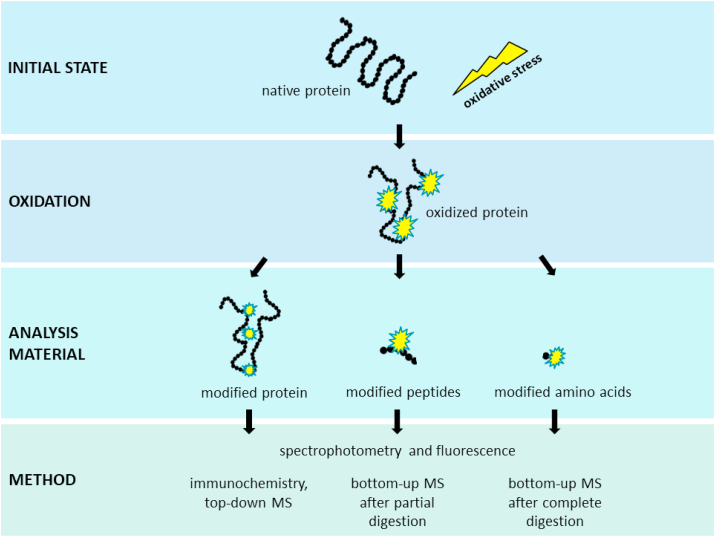
“A special case of the “bottom-up” approach is complete digestion of the protein down to individual (modified) amino acids followed by MS analysis. It was used to investigate a wide range of oxidized amino acids, thus, identifying new oxidation products and allowing total quantification of a particular product. A drawback of complete digestion is the lack of information on the specific protein that”
§ Protein oxidation - Formation mechanisms, detection and relevance as biomarkers in human diseases > Analysis of oxidative protein modifications > Analysis of specific oxidation products
plaindirect- Asserted: passes — The authors put it forward as true.
- Checkable: passes — It can be checked against evidence.
- Load-bearing: unclear — It is unclear whether the paper’s conclusions depend on it.
- Based: passes — The paper gives a reason why it holds.
It may state two separate claims as one.
In the paper
“Formation of •NO is catalyzed by three isoforms of nitric oxide synthase (NOS) (Fig. 6): endothelial NOS, neuronal NOS or inducible NOS. All NOS isoforms use arginine and oxygen to produce citrulline and •NO [70].”
§ Protein oxidation - Formation mechanisms, detection and relevance as biomarkers in human diseases > Mechanisms of oxidative protein modifications > Nitration/nitrosylation
What the sources say
- Not checked — no full text of the sourcecites [70] Hess, 2005, Protein S-nitrosylation: purview and parameters, Nat. Rev. Mol. Cell Biol. source
plaindirect- Asserted: passes — The authors put it forward as true.
- Checkable: passes — It can be checked against evidence.
- Load-bearing: fails — The paper’s conclusions may not depend on it.
- Based: passes — The paper gives a reason why it holds.
Probably not a substantial claim. The paper’s conclusions may not depend on it. It may state two separate claims as one.
The paper states this without a source or data behind it here, so there is nothing to check it against. The quote shows it is in the paper.
In the paper
“Compared to other methods available, MS is currently the gold standard and arguably the most informative technique for protein analysis.”
§ Protein oxidation - Formation mechanisms, detection and relevance as biomarkers in human diseases > Analysis of oxidative protein modifications > Analysis of specific oxidation products
boosted- Asserted: passes — The authors put it forward as true.
- Checkable: passes — It can be checked against evidence.
- Load-bearing: fails — The paper’s conclusions may not depend on it.
- Based: fails — The paper may give no reason why it holds.
Probably not a substantial claim. The paper’s conclusions may not depend on it. The paper may give no reason why it holds. It may state two separate claims as one.
In the paper
“Neutralization shifts the absorbance of protein-conjugated hydrazones from 370 nm to 450 nm, thereby eliminating the interference with unbound DNPH.”
§ Protein oxidation - Formation mechanisms, detection and relevance as biomarkers in human diseases > Analysis of oxidative protein modifications > Analysis of specific oxidation products
What the sources say
- Not checked — no full text of the sourcecites [83] Mesquita, 2014, Simplified 2,4-dinitrophenylhydrazine spectrophotometric assay for quantification of carbonyls in oxidized proteins, Anal. Biochem. source
plaindirect- Asserted: passes — The authors put it forward as true.
- Checkable: passes — It can be checked against evidence.
- Load-bearing: unclear — It is unclear whether the paper’s conclusions depend on it.
- Based: passes — The paper gives a reason why it holds.
It may state two separate claims as one.
In the paper
“The most prominent and one of the most abundant AGEs in vivo is carboxymethyl lysine (CML), which was extensively reviewed before [[32], [33], [34]].”
§ Protein oxidation - Formation mechanisms, detection and relevance as biomarkers in human diseases > Mechanisms of oxidative protein modifications > Glycoxidation
What the sources say
- Not matchedcites [[32], [33], [34]]
Couldn’t be matched to a paper in Crossref, so it can’t be checked.
plain- Asserted: passes — The authors put it forward as true.
- Checkable: passes — It can be checked against evidence.
- Load-bearing: unclear — It is unclear whether the paper’s conclusions depend on it.
- Based: passes — The paper gives a reason why it holds.
It may state two separate claims as one.
- Not matched
The paper states this without a source or data behind it here, so there is nothing to check it against. The quote shows it is in the paper.
In the paper
“Dissociation methods such as electron capture dissociation (ECD) and electron transfer dissociation (ETD) are particularly good at preserving labile posttranslational protein modifications.”
§ Protein oxidation - Formation mechanisms, detection and relevance as biomarkers in human diseases > Analysis of oxidative protein modifications > Analysis of specific oxidation products
plaindirect- Asserted: passes — The authors put it forward as true.
- Checkable: passes — It can be checked against evidence.
- Load-bearing: fails — The paper’s conclusions may not depend on it.
- Based: fails — The paper may give no reason why it holds.
Probably not a substantial claim. The paper’s conclusions may not depend on it. The paper may give no reason why it holds.
The paper states this without a source or data behind it here, so there is nothing to check it against. The quote shows it is in the paper.
In the paper
“Fluorescence spectroscopy can serve as a sum parameter for overall protein oxidation. It needs to be considered that several oxidative and also glycoxidative modifications of amino acid residues can contribute to fluorescence signals. The limited selectivity is a major drawback of fluorescence spectroscopy for studying protein oxidation products.”
§ Protein oxidation - Formation mechanisms, detection and relevance as biomarkers in human diseases > Analysis of oxidative protein modifications > Analysis of specific oxidation products
plaindirect- Asserted: passes — The authors put it forward as true.
- Checkable: passes — It can be checked against evidence.
- Load-bearing: unclear — It is unclear whether the paper’s conclusions depend on it.
- Based: passes — The paper gives a reason why it holds.
It may state two separate claims as one. The quote only partly states this claim.
In the paper
“It is important to note that the formation of AGEs does not generally require oxidative conditions and only selected AGEs are generated by oxidation. This special subset of AGEs is called glycoxidation products, because they are formed by a combination of glycation and oxidation (Fig. 3) [29].”
§ Protein oxidation - Formation mechanisms, detection and relevance as biomarkers in human diseases > Mechanisms of oxidative protein modifications > Glycoxidation
What the sources say
- Not matchedcites [29] Lima, 2013
Couldn’t be matched to a paper in Crossref, so it can’t be checked.
plain- Asserted: passes — The authors put it forward as true.
- Checkable: passes — It can be checked against evidence.
- Load-bearing: passes — The paper’s conclusions depend on it.
- Based: passes — The paper gives a reason why it holds.
It may state two separate claims as one.
- Not matched
The paper states this without a source or data behind it here, so there is nothing to check it against. The quote shows it is in the paper.
In the paper
“The accessibility and reactivity of carbonyl groups depends on the tertiary structure of proteins. Protein crosslinking or pronounced tertiary structures can hide DNPH-active carbonyl structures inside of proteins making them unavailable for detection.”
§ Protein oxidation - Formation mechanisms, detection and relevance as biomarkers in human diseases > Analysis of oxidative protein modifications > Analysis of specific oxidation products
plaindirect- Asserted: passes — The authors put it forward as true.
- Checkable: passes — It can be checked against evidence.
- Load-bearing: unclear — It is unclear whether the paper’s conclusions depend on it.
- Based: passes — The paper gives a reason why it holds.
It may state two separate claims as one.
A conclusion the paper draws from its own results — it cites no other source for it, so there is none to check. The quote shows it is in the paper.
In the paper
“Taken together, top-down MS remains an attractive technique to evaluate the overall modification status of proteins, but due to its various drawbacks, complementary techniques, such as bottom-up proteomics, need to be employed to acquire a comprehensive understanding of the protein structure.”
§ Protein oxidation - Formation mechanisms, detection and relevance as biomarkers in human diseases > Analysis of oxidative protein modifications > Analysis of specific oxidation products
plaindirect- Asserted: passes — The authors put it forward as true.
- Checkable: passes — It can be checked against evidence.
- Load-bearing: fails — The paper’s conclusions may not depend on it.
- Based: passes — The paper gives a reason why it holds.
Probably not a substantial claim. The paper’s conclusions may not depend on it. It may state two separate claims as one.
A conclusion the paper draws from its own results — it cites no other source for it, so there is none to check. The quote shows it is in the paper.
In the paper
“A method which reveals modification site, but not the type of modification is amino acid analysis.”
§ Protein oxidation - Formation mechanisms, detection and relevance as biomarkers in human diseases > Analysis of oxidative protein modifications > Analysis of total protein modification
plain- Asserted: passes — The authors put it forward as true.
- Checkable: passes — It can be checked against evidence.
- Load-bearing: unclear — It is unclear whether the paper’s conclusions depend on it.
- Based: passes — The paper gives a reason why it holds.
It may state two separate claims as one.
A conclusion the paper draws from its own results — it cites no other source for it, so there is none to check. The quote shows it is in the paper.
In the paper
“All of these studies are related to the oxidation of free amino acids or glutathione and can therefore not be considered as studies investigating direct protein oxidation.”
§ Protein oxidation - Formation mechanisms, detection and relevance as biomarkers in human diseases > The relevance of biomarkers of protein oxidation in the context of human disease and aging > Sulfur-containing amino acids in human diseases and aging
plain- Asserted: passes — The authors put it forward as true.
- Checkable: passes — It can be checked against evidence.
- Load-bearing: unclear — It is unclear whether the paper’s conclusions depend on it.
- Based: passes — The paper gives a reason why it holds.
It may state two separate claims as one.
A conclusion the paper draws from its own results — it cites no other source for it, so there is none to check. The quote shows it is in the paper.
In the paper
“In particular, the latter approaches have been used in recent human studies, providing high sensitivity, specificity and reproducibility, but are limited for routine clinical applications, because of high costs for laboratory equipment and low sample throughput.”
§ Protein oxidation - Formation mechanisms, detection and relevance as biomarkers in human diseases > The relevance of biomarkers of protein oxidation in the context of human disease and aging > Sulfur-containing amino acids in human diseases and aging
plaindirect- Asserted: passes — The authors put it forward as true.
- Checkable: passes — It can be checked against evidence.
- Load-bearing: unclear — It is unclear whether the paper’s conclusions depend on it.
- Based: passes — The paper gives a reason why it holds.
It may state two separate claims as one.
A conclusion the paper draws from its own results — it cites no other source for it, so there is none to check. The quote shows it is in the paper.
In the paper
“Therefore, the identification of valid biomarkers of protein oxidation has an indispensable relevance to improve the understanding of human disease pathogenesis and provide an important tool to capture disease state as well as develop potential treatment strategies.”
§ Protein oxidation - Formation mechanisms, detection and relevance as biomarkers in human diseases > The relevance of biomarkers of protein oxidation in the context of human disease and aging
boosteddirect- Asserted: passes — The authors put it forward as true.
- Checkable: fails — It may be too vague to check against evidence.
- Load-bearing: passes — The paper’s conclusions depend on it.
- Based: passes — The paper gives a reason why it holds.
Probably not a substantial claim. It may be too vague to check against evidence. It may state two separate claims as one.
A conclusion the paper draws from its own results — it cites no other source for it, so there is none to check. The quote shows it is in the paper.
In the paper
“However, these methods do not give any information about the type or site of modification and are therefore only of limited use for biomarker studies.”
§ Protein oxidation - Formation mechanisms, detection and relevance as biomarkers in human diseases > Analysis of oxidative protein modifications > Analysis of total protein modification
plaindirect- Asserted: passes — The authors put it forward as true.
- Checkable: passes — It can be checked against evidence.
- Load-bearing: unclear — It is unclear whether the paper’s conclusions depend on it.
- Based: passes — The paper gives a reason why it holds.
It may state two separate claims as one.
A conclusion the paper draws from its own results — it cites no other source for it, so there is none to check. The quote shows it is in the paper.
In the paper
“For detailed information on modification products and the types of proteins, MS analysis of peptides, as described above, is inevitable.”
§ Protein oxidation - Formation mechanisms, detection and relevance as biomarkers in human diseases > Analysis of oxidative protein modifications > Analysis of total protein modification
boosteddirect- Asserted: passes — The authors put it forward as true.
- Checkable: passes — It can be checked against evidence.
- Load-bearing: fails — The paper’s conclusions may not depend on it.
- Based: passes — The paper gives a reason why it holds.
Probably not a substantial claim. The paper’s conclusions may not depend on it.
A conclusion the paper draws from its own results — it cites no other source for it, so there is none to check. The quote shows it is in the paper.
In the paper
“Quantitative data can easily be achieved by using external calibration and, in case of MS analysis, internal isotope-labeled standards.”
§ Protein oxidation - Formation mechanisms, detection and relevance as biomarkers in human diseases > Analysis of oxidative protein modifications > Analysis of total protein modification
plaindirect- Asserted: passes — The authors put it forward as true.
- Checkable: passes — It can be checked against evidence.
- Load-bearing: fails — The paper’s conclusions may not depend on it.
- Based: passes — The paper gives a reason why it holds.
Probably not a substantial claim. The paper’s conclusions may not depend on it. It may state two separate claims as one.
In the paper
“Acid hydrolysis conditions lead to a loss of cysteine, cystine, and some tryptophan species, whereas alkaline conditions preserve tryptophan species, but breaks down arginine, serine, threonine and cysteine [107].”
§ Protein oxidation - Formation mechanisms, detection and relevance as biomarkers in human diseases > Analysis of oxidative protein modifications > Analysis of total protein modification
What the sources say
- Not checked — no full text of the sourcecites [107] Fountoulakis, 1998, Hydrolysis and amino acid composition of proteins, J. Chromatogr. A source
plaindirect- Asserted: passes — The authors put it forward as true.
- Checkable: passes — It can be checked against evidence.
- Load-bearing: unclear — It is unclear whether the paper’s conclusions depend on it.
- Based: passes — The paper gives a reason why it holds.
It may state two separate claims as one.
In the paper
“In contrast, Farhan et al. found elevated AGE levels comparing the latter groups by using a competitive ELISA Kit without specification of detected glycoxidation products [159,160].”
§ Protein oxidation - Formation mechanisms, detection and relevance as biomarkers in human diseases > The relevance of biomarkers of protein oxidation in the context of human disease and aging > Glycoxidation in human diseases and aging
What the sources say
- Not checked — no full text of the sourcecites [159] Farhan, 2019, Advanced glycation end products (AGEs) and their soluble receptors (sRAGE) as early predictors of reno-vascular complications in patients with uncontrolled type 2 diabetes mellitus, Diabetes Metab Syndr source
plaincorrelational- Asserted: passes — The authors put it forward as true.
- Checkable: passes — It can be checked against evidence.
- Load-bearing: unclear — It is unclear whether the paper’s conclusions depend on it.
- Based: passes — The paper gives a reason why it holds.
It may state two separate claims as one.
A conclusion the paper draws from its own results — it cites no other source for it, so there is none to check. The quote shows it is in the paper.
In the paper
“This emphasizes the importance of discrimination and selective analysis of the various structures formed by glycoxidation reactions”
§ Protein oxidation - Formation mechanisms, detection and relevance as biomarkers in human diseases > The relevance of biomarkers of protein oxidation in the context of human disease and aging > Glycoxidation in human diseases and aging
plain- Asserted: passes — The authors put it forward as true.
- Checkable: fails — It may be too vague to check against evidence.
- Load-bearing: passes — The paper’s conclusions depend on it.
- Based: passes — The paper gives a reason why it holds.
Probably not a substantial claim. It may be too vague to check against evidence.
A claim is checked only against the cited paper’s full text, never its abstract, and none is available for its sources.
In the paper
“This approach is the method of choice for the quantification of free MDA due to simplicity and low costs, but is often criticized as being unspecific and rather measuring total oxidative stress instead of MDA alone [181,182].”
§ Protein oxidation - Formation mechanisms, detection and relevance as biomarkers in human diseases > The relevance of biomarkers of protein oxidation in the context of human disease and aging > Lipoxidation in human diseases and aging
What the sources say
- Not checked — no full text of the sourcecites [181] Niki, 2014, Biomarkers of lipid peroxidation in clinical material, Biochim. Biophys. Acta source
- Not checked — no full text of the sourcecites [182] Grotto, 2007, Rapid quantification of malondialdehyde in plasma by high performance liquid chromatography-visible detection, J. Pharmaceut. Biomed. Anal. source
plain- Asserted: passes — The authors put it forward as true.
- Checkable: passes — It can be checked against evidence.
- Load-bearing: unclear — It is unclear whether the paper’s conclusions depend on it.
- Based: passes — The paper gives a reason why it holds.
It may state two separate claims as one.
A claim is checked only against the cited paper’s full text, never its abstract, and none is available for its sources.
In the paper
“Beside this assay, further methods have been developed in order to improve the specificity of MDA measurement, such as HPLC combined with UV or fluorescence detection [182,184].”
§ Protein oxidation - Formation mechanisms, detection and relevance as biomarkers in human diseases > The relevance of biomarkers of protein oxidation in the context of human disease and aging > Lipoxidation in human diseases and aging
What the sources say
- Not checked — no full text of the sourcecites [182] Grotto, 2007, Rapid quantification of malondialdehyde in plasma by high performance liquid chromatography-visible detection, J. Pharmaceut. Biomed. Anal. source
- Not checked — no full text of the sourcecites [184] Domijan, 2015, Quantification of malondialdehyde by HPLC-FL - application to various biological samples, Biomed. Chromatogr. source
plaindirect- Asserted: passes — The authors put it forward as true.
- Checkable: passes — It can be checked against evidence.
- Load-bearing: fails — The paper’s conclusions may not depend on it.
- Based: passes — The paper gives a reason why it holds.
Probably not a substantial claim. The paper’s conclusions may not depend on it.
A conclusion the paper draws from its own results — it cites no other source for it, so there is none to check. The quote shows it is in the paper.
In the paper
“protein carbonyl content can be seen as a biomarker of global oxidative protein damage, with the advantage of early formation and long circulation periods compared to other parameters of oxidative stress”
§ Protein oxidation - Formation mechanisms, detection and relevance as biomarkers in human diseases > Conclusion
plaincorrelational- Asserted: passes — The authors put it forward as true.
- Checkable: passes — It can be checked against evidence.
- Load-bearing: passes — The paper’s conclusions depend on it.
- Based: passes — The paper gives a reason why it holds.
It may state two separate claims as one.
- Rests on an assumption: Elevated levels of protein carbonyls have been observed in several human diseases and are associated with the aging process.
A conclusion the paper draws from its own results — it cites no other source for it, so there is none to check. The quote shows it is in the paper.
In the paper
“4-HNE and MDA, which presumably correlate with the amount of protein modifications formed by reaction with this carbonyl species”
§ Protein oxidation - Formation mechanisms, detection and relevance as biomarkers in human diseases > Conclusion
hedgedcorrelational- Asserted: passes — The authors put it forward as true.
- Checkable: passes — It can be checked against evidence.
- Load-bearing: fails — The paper’s conclusions may not depend on it.
- Based: fails — The paper may give no reason why it holds.
Probably not a substantial claim. The paper’s conclusions may not depend on it. The paper may give no reason why it holds.
A conclusion the paper draws from its own results — it cites no other source for it, so there is none to check. The quote shows it is in the paper.
In the paper
“protein oxidation seems to play a critical role in several pathologies and in the aging process”
§ Protein oxidation - Formation mechanisms, detection and relevance as biomarkers in human diseases > Conclusion
hedgedconditional- Asserted: passes — The authors put it forward as true.
- Checkable: passes — It can be checked against evidence.
- Load-bearing: passes — The paper’s conclusions depend on it.
- Based: fails — The paper may give no reason why it holds.
Probably not a substantial claim. The paper may give no reason why it holds. It may state two separate claims as one.
In the paper
“Weber et al. provided a simple and fast indirect ELISA method for the measurement of protein-bound 3-NT in human serum and plasma samples.”
§ Protein oxidation - Formation mechanisms, detection and relevance as biomarkers in human diseases > The relevance of biomarkers of protein oxidation in the context of human disease and aging > Nitration in human diseases and aging
What the sources say
- Not checked — no full text of the sourcecites [196] Weber, 2012, Rapid and sensitive determination of protein-nitrotyrosine by ELISA: application to human plasma, Free Radic. Res. source
plain- Asserted: passes — The authors put it forward as true.
- Checkable: passes — It can be checked against evidence.
- Load-bearing: fails — The paper’s conclusions may not depend on it.
- Based: passes — The paper gives a reason why it holds.
Probably not a substantial claim. The paper’s conclusions may not depend on it.
A claim is checked only against the cited paper’s full text, never its abstract, and none is available for its sources.
In the paper
“several limitations have been highlighted in the literature, such as low sensitivity, minor specificity of applied antibodies, the susceptibility to errors, or missing detection of free 3-NT”
§ Protein oxidation - Formation mechanisms, detection and relevance as biomarkers in human diseases > The relevance of biomarkers of protein oxidation in the context of human disease and aging > Nitration in human diseases and aging
What the sources say
- Not checked — no full text of the sourcecites [196] Weber, 2012, Rapid and sensitive determination of protein-nitrotyrosine by ELISA: application to human plasma, Free Radic. Res. source
- Not checked — no full text of the sourcecites [197] Rabbani, 2008, Assay of 3‐nitrotyrosine in tissues and body fluids by liquid chromatography with tandem mass spectrometric detection source
- Not checked — no full text of the sourcecites [198] Tsikas, 2014, Mass spectrometry and 3-nitrotyrosine: strategies, controversies, and our current perspective, Mass Spectrom. Rev. source
plain- Asserted: passes — The authors put it forward as true.
- Checkable: passes — It can be checked against evidence.
- Load-bearing: unclear — It is unclear whether the paper’s conclusions depend on it.
- Based: passes — The paper gives a reason why it holds.
It may state two separate claims as one.
A conclusion the paper draws from its own results — it cites no other source for it, so there is none to check. The quote shows it is in the paper.
In the paper
“drawing a final conclusion on glycoxidation products as relevant biomarkers of protein oxidation is hardly possible based on the included studies published in the last years”
§ Protein oxidation - Formation mechanisms, detection and relevance as biomarkers in human diseases > Conclusion
hedged- Asserted: passes — The authors put it forward as true.
- Checkable: passes — It can be checked against evidence.
- Load-bearing: passes — The paper’s conclusions depend on it.
- Based: passes — The paper gives a reason why it holds.
Probably not a substantial claim.
In the paper
“The most accurate detection of 3-NT, however, requires the combination of LC with MS/MS providing the opportunity to distinguish between free, protein-bound, or total 3-NT”
§ Protein oxidation - Formation mechanisms, detection and relevance as biomarkers in human diseases > The relevance of biomarkers of protein oxidation in the context of human disease and aging > Nitration in human diseases and aging
What the sources say
- Not checked — no full text of the sourcecites [198] Tsikas, 2014, Mass spectrometry and 3-nitrotyrosine: strategies, controversies, and our current perspective, Mass Spectrom. Rev. source
plaindirect- Asserted: passes — The authors put it forward as true.
- Checkable: passes — It can be checked against evidence.
- Load-bearing: unclear — It is unclear whether the paper’s conclusions depend on it.
- Based: passes — The paper gives a reason why it holds.
It may state two separate claims as one.
A conclusion the paper draws from its own results — it cites no other source for it, so there is none to check. The quote shows it is in the paper.
In the paper
“Despite partially inconsistent results in studies of recent years, elevated 3-NT levels are associated with multiple diseases and aging, indicating its potential as biomarker for protein oxidation in clinical research.”
§ Protein oxidation - Formation mechanisms, detection and relevance as biomarkers in human diseases > Conclusion
hedgedcorrelational- Asserted: passes — The authors put it forward as true.
- Checkable: passes — It can be checked against evidence.
- Load-bearing: passes — The paper’s conclusions depend on it.
- Based: passes — The paper gives a reason why it holds.
It may state two separate claims as one.
A conclusion the paper draws from its own results — it cites no other source for it, so there is none to check. The quote shows it is in the paper.
In the paper
“These modifications are generally more stable compared to their reactive precursors and, thus, important biomarkers for monitoring medium-to long-term oxidative and nitrosative stress.”
§ Protein oxidation - Formation mechanisms, detection and relevance as biomarkers in human diseases > Conclusion
plaincorrelational- Asserted: passes — The authors put it forward as true.
- Checkable: passes — It can be checked against evidence.
- Load-bearing: passes — The paper’s conclusions depend on it.
- Based: passes — The paper gives a reason why it holds.
It may state two separate claims as one.
A conclusion the paper draws from its own results — it cites no other source for it, so there is none to check. The quote shows it is in the paper.
In the paper
“Among the presented methods, MS is certainly the most accurate and informative technique, capable of resolving remaining questions regarding protein modifications.”
§ Protein oxidation - Formation mechanisms, detection and relevance as biomarkers in human diseases > Conclusion
boosted- Asserted: passes — The authors put it forward as true.
- Checkable: passes — It can be checked against evidence.
- Load-bearing: passes — The paper’s conclusions depend on it.
- Based: passes — The paper gives a reason why it holds.
Probably not a substantial claim. It may state two separate claims as one.
- Rests on an assumption: MS approaches are considered the gold standard for 3-NT measurement.
In the paper
“High detection limits, small sample volumes, and the opportunity for high throughput-screening makes this method useful for clinical applications”
§ Protein oxidation - Formation mechanisms, detection and relevance as biomarkers in human diseases > The relevance of biomarkers of protein oxidation in the context of human disease and aging > Nitration in human diseases and aging
What the sources say
- Not checked — no full text of the sourcecites [196] Weber, 2012, Rapid and sensitive determination of protein-nitrotyrosine by ELISA: application to human plasma, Free Radic. Res. source
plaindirect- Asserted: passes — The authors put it forward as true.
- Checkable: passes — It can be checked against evidence.
- Load-bearing: unclear — It is unclear whether the paper’s conclusions depend on it.
- Based: passes — The paper gives a reason why it holds.
It may state two separate claims as one.
A conclusion the paper draws from its own results — it cites no other source for it, so there is none to check. The quote shows it is in the paper.
In the paper
“As a result, an incredible number of distinct protein modifications is formed.”
§ Protein oxidation - Formation mechanisms, detection and relevance as biomarkers in human diseases > Conclusion
plaindirect- Asserted: passes — The authors put it forward as true.
- Checkable: passes — It can be checked against evidence.
- Load-bearing: passes — The paper’s conclusions depend on it.
- Based: passes — The paper gives a reason why it holds.
Probably not a substantial claim.
- Rests on an assumption: Impaired balance between generation and degradation of reactive oxygen and nitrogen species in aging and disease causes oxidative and nitrosative stress.
The authors state this as an assumption.
Proteins accumulate evidence of oxidative damage in relation to disease, although some associations are only associations and oxidation is not always causal but a contributing factor.
“It can be therefore assumed that proteins also accumulate evidence of oxidative damage in relation to disease, although some of these are only associations and oxidation is not always causal, but a contributing factor.”
The paper relies on this without support.
To function as suitable biomarkers, protein oxidation products must be stable, accumulate in detectable concentrations, and correlate with disease severity.
“To function as suitable biomarkers, it is critical that protein oxidation products are stable, accumulate in detectable concentrations, and correlate with disease severity.”
The paper relies on this without support.
Sample availability is an important factor limiting the reliability of a biomarker.
“Sample availability is another important factor limiting the reliability of a biomarker.”
The paper relies on this without support.
Unmodified reference material is commonly not available in biological samples.
“A major challenge in analyzing protein modifications in biological samples is that unmodified reference material is commonly not available.”
The paper relies on this without support.
Modified peptides often occur only at low abundances, making it unlikely that untargeted approaches cover them.
“However, modified peptides often occur only at low abundancies making it unlikely that they are covered by untargeted approaches.”
The paper relies on this without support.
Standard material for oxidative modifications is often not available, especially in peptide form.
“However, since standard material is often not available, especially not in peptide form, this approach requires synthesis efforts or cannot always be implemented.”
The paper relies on this without support.
MDA-modified proteins have not been used as biomarkers in recent clinical investigations.
“To our knowledge, MDA modified proteins have not been used as biomarkers in recent clinical investigations although antibodies are commercially available and highly selective MS methods have been established, previously [57].”
The paper relies on this without support.
Only Weber et al. has determined 3-NT as a function of age in three different cohorts of the MARK-AGE study.
“To our knowledge, only Weber et al. determined 3-NT as a function of age in three different cohorts of the MARK-AGE study [194].”
The paper relies on this without support.
3-NT can be measured in plasma, serum, and tissue samples by methods including IHC, ELISA, HPLC, or LC-MS/MS.
“The measurement of 3-NT can be performed in plasma, serum as well as tissue samples by different methods, including IHC, ELISA, HPLC or the combination of LC with MS/MS”
The paper relies on this without support.
MS approaches are considered the gold standard for 3-NT measurement.
“MS approaches have been considered as gold standard”
The paper relies on this without support.
Commercially available ELISAs are preferentially used for 3-NT quantification in clinical studies due to standardization, easy sample preparation, need of conventional equipment, and high sample throughput.
“commercially available ELISAs are preferentially used for 3-NT quantification in clinical studies due to standardization, easy sample preparation, the need of conventional equipment, and high sample throughput”
The paper relies on this without support.
Reactive oxygen and nitrogen species are ubiquitous side-products of metabolism.
“Reactive oxygen and nitrogen species are ubiquitous side-products of metabolism.”
The paper relies on this without support.
Impaired balance between generation and degradation of reactive oxygen and nitrogen species in aging and disease causes oxidative and nitrosative stress.
“Impaired balance between their generation and degradation in aging and disease causes oxidative and nitrosative stress.”
The paper relies on this without support.
Many biological disciplines use immunoassays as routine methods.
“Many biological disciplines use immunoassays as routine methods.”
The paper relies on this without support.
Immunological methods are often based on monoclonal antibodies or polyclonal antisera obtained after immunization with immunogens, lacking full chemical or structural characterization.
“Immunological methods are often based on monoclonal antibodies or polyclonal antisera obtained after immunization with immunogens, lacking full chemical or structural characterization.”
The paper relies on this without support.
In many cases, the epitopes recognized by the antibodies remain unknown.
“In many cases, the epitopes recognized by the antibodies remain unknown.”
The paper relies on this without support.
Recent studies on advanced lipoxidation endproducts mainly focused on the reactive intermediates 4-HNE and MDA.
“recent studies mainly focused on the reactive intermediates 4-HNE and MDA”
The paper relies on this without support.
Elevated levels of protein carbonyls have been observed in several human diseases and are associated with the aging process.
“elevated levels of protein carbonyls have been observed in several human diseases and are associated with the aging process”
Self-check
Percentages, sums and reported differences re-computed from the paper’s own numbers.
Each contradiction between two passages listed here was confirmed by an independent check.
Rated minor: it would not touch a result — a value no result rests on, a p-value that stays on the same side of the significance level, or a conflict that is clerical, resolved elsewhere in the paper, or outside its own findings.
In the paper
§ Protein oxidation - Formation mechanisms, detection and relevance as biomarkers in human diseases > The relevance of biomarkers of protein oxidation in the context of human disease and aging > Carbonylation in human diseases and aging
“Glaucoma | Serum, aqueous humor | Control subjects (n = 64) vs. glaucoma patients (n = 96) | ELISA | Higher levels of protein carbonyls in plasma and aqueous humor of glaucoma patients”
§ Protein oxidation - Formation mechanisms, detection and relevance as biomarkers in human diseases > The relevance of biomarkers of protein oxidation in the context of human disease and aging > Carbonylation in human diseases and aging
“Glaucoma | Serum, aqueous humor”
Rated minor: it would not touch a result — a value no result rests on, a p-value that stays on the same side of the significance level, or a conflict that is clerical, resolved elsewhere in the paper, or outside its own findings.
In the paper
§ Protein oxidation - Formation mechanisms, detection and relevance as biomarkers in human diseases > Analysis of oxidative protein modifications > Analysis of specific oxidation products
“In 2019, Ma and colleagues described a novel method for the detection of carbonylated proteins by frequency-shift based surface-enhanced Raman spectroscopy immunoassay, eliminating potential interferences by introducing a capture antibody [85].”
§ Protein oxidation - Formation mechanisms, detection and relevance as biomarkers in human diseases > References
“85. Swiderska M. Maciejczyk M. Zalewska A. Pogorzelska J. Flisiak R. Chabowski A. Oxidative stress biomarkers in the serum and plasma of patients with non-alcoholic fatty liver disease (NAFLD). Can plasma AGE be a marker of NAFLD?”
Rated minor: it would not touch a result — a value no result rests on, a p-value that stays on the same side of the significance level, or a conflict that is clerical, resolved elsewhere in the paper, or outside its own findings.
In the paper
§ Protein oxidation - Formation mechanisms, detection and relevance as biomarkers in human diseases > The relevance of biomarkers of protein oxidation in the context of human disease and aging > Nitration in human diseases and aging
“Already in 2008, Pacher et al. published an outstanding and detailed review about the role of peroxynitrite and 3-NT formation in human health and disease, indicating their relevance as diagnostic biomarker for several pathologic conditions [188].”
§ Protein oxidation - Formation mechanisms, detection and relevance as biomarkers in human diseases > References
“188. Pacher P. Beckman J.S. Liaudet L. Nitric oxide and peroxynitrite in health and disease Physiol. Rev. 87 2007 315 424 17237348 PMC2248324”
Rated minor: it would not touch a result — a value no result rests on, a p-value that stays on the same side of the significance level, or a conflict that is clerical, resolved elsewhere in the paper, or outside its own findings.
In the paper
§ Protein oxidation - Formation mechanisms, detection and relevance as biomarkers in human diseases > The relevance of biomarkers of protein oxidation in the context of human disease and aging > Sulfur-containing amino acids in human diseases and aging
“All of these studies are related to the oxidation of free amino acids or glutathione and can therefore not be considered as studies investigating direct protein oxidation.”
§ Protein oxidation - Formation mechanisms, detection and relevance as biomarkers in human diseases > The relevance of biomarkers of protein oxidation in the context of human disease and aging > Sulfur-containing amino acids in human diseases and aging
“Elevated levels of cysteine disulfides (protein-bound cysteine) in disease patients”
Citations
Cites
Free Radicals in the Physiological Control of Cell Function
Dröge, W. (2002) · Physiological Reviews · doi:10.1152/physrev.00018.2001 · Cited by 9,855 · cited 1×
“This affects their functions as receptors, enzymes, carrier or structural proteins [8].”
BackgroundChemistry and biochemistry of 4-hydroxynonenal, malonaldehyde and related aldehydes
Esterbauer, H., Schaur, R. J., & Zollner, H. (1991) · Free Radical Biology and Medicine · doi:10.1016/0891-5849(91)90192-6 · Cited by 6,672
Nitric Oxide and Peroxynitrite in Health and Disease
Pacher, P., Beckman, J. S., & Liaudet, L. (2007) · Physiological Reviews · doi:10.1152/physrev.00029.2006 · Cited by 6,390 · cited 1×
“published an outstanding and detailed review about the role of peroxynitrite and 3-NT formation in human health and disease, indicating their relevance as diagnostic biomarker for several pathologic conditions [188].”
Background[49] Determination of carbonyl content in oxidatively modified proteins
Levine, R. L., Garland, D. L., Oliver, C. N., Amici, A., Climent, I., Lenz, A.-G., Ahn, B. W., Shaltiel, S., & Stadtman, E. R. (1990) · Methods in enzymology on CD-ROM/Methods in enzymology · doi:10.1016/0076-6879(90)86141-h · Cited by 5,895 · cited 1×
“The derivatization of this functional group with carbonyl-specific reagents provides a method to detect and quantify protein carbonylation [81].”
MethodOxyl radicals, redox-sensitive signalling cascades and antioxidants
Genestra, M. (2007) · Cellular Signalling · doi:10.1016/j.cellsig.2007.04.009 · Cited by 4,930
Oxidative stress, aging, and diseases
Liguori, I., Russo, G., Curcio, F., Bulli, G., Aran, L., Della-Morte, D., Gargiulo, G., Testa, G., Cacciatore, F., Bonaduce, D., et al. (2018) · Clinical Interventions in Aging · doi:10.2147/cia.s158513 · Cited by 3,979
Sies, H., Berndt, C., & Jones, D. P. (2017) · Annual Review of Biochemistry · doi:10.1146/annurev-biochem-061516-045037 · Cited by 3,520
Uttara, B., Singh, A., Zamboni, P., & Mahajan, R. (2009) · Current Neuropharmacology · doi:10.2174/157015909787602823 · Cited by 3,378
Tsikas, D. (2017) · Analytical Biochemistry · doi:10.1016/j.ab.2016.10.021 · Cited by 2,190 · cited 1×
“The biological process of lipid peroxidation has been implicated in a high number of human pathologic conditions [172,173].”
BackgroundProtein S-nitrosylation: Purview and parameters
Hess, D. T., Matsumoto, A., Kim, S.-O., Marshall, H. E., & Stamler, J. S. (2005) · Nature Reviews Molecular Cell Biology · doi:10.1038/nrm1569 · Cited by 2,153
Cited by
Sorted by citations
Biomarkers of Oxidative Stress and Antioxidant Defense
Çekiç, S. D., Özkan, G., Avan, A. N., Uzunboy, S., Çapanoğlu, E., & Apak, R. (2021) · Journal of Pharmaceutical and Biomedical Analysis · doi:10.1016/j.jpba.2021.114477 · Cited by 636
Protein Oxidation in Muscle Foods: A Comprehensive Review
Domínguez, R., Pateiro, M., Munekata, P. E. S., Zhang, W., Garcia‐Oliveira, P., Carpena, M., Prieto, M. A., Bohrer, B. M., & Lorenzo, J. M. (2021) · Antioxidants · doi:10.3390/antiox11010060 · Cited by 386
“The imbalance between oxidizing agents and antioxidant molecules is responsible for oxidation and the corresponding degradation mechanisms of these products [38,39].”
BackgroundOxidative Stress and Inflammation in Acute and Chronic Lung Injuries
Bezerra, F. S., Lanzetti, M., Nesi, R. T., Nagato, A. C., Silva, C. P. E., Kennedy-Feitosa, E., Melo, A. C., Cattani‐Cavalieri, I., Pôrto, L. C., & Valença, S. S. (2023) · Antioxidants · doi:10.3390/antiox12030548 · Cited by 373
The emerging role of oxidative stress in inflammatory bowel disease
Muro, P., Zhang, L., Li, S., Zhao, Z., Jin, T., Mao, F., & Mao, Z. (2024) · Frontiers in Endocrinology · doi:10.3389/fendo.2024.1390351 · Cited by 332
“Signi fi cantly, ROS can modify amino acid residues in proteins, causing structural changes and loss of enzymatic activity (47).”
BackgroundWang, Y., Cheng, H., Wang, T., Zhang, K., Zhang, Y., & Kang, X. (2023) · Cell Proliferation · doi:10.1111/cpr.13448 · Cited by 243
“hydroxyl radicals to 3-hydroxytyrosine and hydroxytryptophan, respectively.(58) Another hallmark of protein oxidation is protein carbonylation, which mainly includes three forms: direct oxidation of protein bound amino acids, oxidative cleavage of the protein backbone, and introduction of carbonyl groups from oxidized…”
BackgroundChaudhary, M. R., Chaudhary, S., Sharma, Y., Singh, T. A., Mishra, A. K., Sharma, S. G., & Mehdi, M. M. (2023) · Biogerontology · doi:10.1007/s10522-023-10050-1 · Cited by 218
Redox Imbalance in Inflammation: The Interplay of Oxidative and Reductive Stress
Bellanti, F., Coda, A. R. D., Trecca, M. I., Buglio, A. L., Serviddio, G., & Vendemiale, G. (2025) · Antioxidants · doi:10.3390/antiox14060656 · Cited by 222
“Protein oxidation results in the formation of carbonyl groups, disulfide cross-links, and nitrosylated residues, leading to enzyme inactivation and proteostasis disruption [41].”
Molecular Mechanisms of Neuroinflammation in Aging and Alzheimer’s Disease Progression
Andronie-Cioară, F. L., Ardelean, A. I., Nistor-Cseppento, C. D., Jurcău, A., Jurcău, M. C., Pașcalău, N., & Marcu, F. M. (2023) · International Journal of Molecular Sciences · doi:10.3390/ijms24031869 · Cited by 170
“Likewise, protein oxidation markers (carbonyl residues) are increased as well [78].”
BackgroundROS signaling in innate immunity via oxidative protein modifications
Manoharan, R. R., Prasad, A., Pospı́šil, P., & Kzhyshkowska, J. G. (2024) · Frontiers in Immunology · doi:10.3389/fimmu.2024.1359600 · Cited by 169
“Superoxide anion radical generated from O 2 is converted by SOD to H 2 O 2 and later into H 2 O by catalase, glutathione peroxidase or peroxiredoxin (47).”
BackgroundRole of Oxidative Stress in Blood–Brain Barrier Disruption and Neurodegenerative Diseases
Kim, S., Jung, U. J., & Kim, S. R. (2024) · Antioxidants · doi:10.3390/antiox13121462 · Cited by 189
“Oxidative stress leads to the oxidation of proteins, resulting in the modification of amino acid side chains, fragmentation of the protein backbone, and the formation of protein aggregates [115–117].”
The Role of Reactive Oxygen Species in the Rheumatoid Arthritis-Associated Synovial Microenvironment
Wang, X., Fan, D., Cao, X., Ye, Q., Wang, Q., Zhang, M., & Xiao, C. (2022) · Antioxidants · doi:10.3390/antiox11061153 · Cited by 176
“These acids can be used as biomarkers to diagnose and classify arthritic disorders early on [36,37].”
BackgroundProtein carbonylation in food and nutrition: a concise update
Estévez, M., Díaz-Velasco, S., & Martínez, R. (2021) · Amino Acids · doi:10.1007/s00726-021-03085-6 · Cited by 123
Oxidative stress: fundamentals and advances in quantification techniques
Krishnamurthy, H. K., Pereira, M., Rajavelu, I., Jayaraman, V., Krishna, K., Wang, T., Bei, K., & Rajasekaran, J. J. (2024) · Frontiers in Chemistry · doi:10.3389/fchem.2024.1470458 · Cited by 127
Fuentes-Lemus, E., Hägglund, P., López‐Alarcón, C., & Davies, M. J. (2021) · Molecules · doi:10.3390/molecules27010015 · Cited by 100
“The large body of evidence for di-Tyr crosslinks in oxidized proteins, fluids and tissues; the stability of this species (which is immune to reduction or repair); the association of this crosslink with the onset and development of human pathologies; and advances in analytical methods for the detection and quantificati…”
BackgroundOxidative Stress-Induced Cellular Senescence: Is Labile Iron the Connecting Link?
Nousis, L., Kanavaros, P., & Barbouti, A. (2023) · Antioxidants · doi:10.3390/antiox12061250 · Cited by 103
“ROS may directly attack and cleave protein backbones, generating protein fragments, or may oxidize protein amino acids, especially the aromatic and sulfur-containing ones [109].”
BackgroundReactive oxygen species (ROS) in cancer: from mechanism to therapeutic implications
Akter, S., Madhuvilakku, R., Kar, A. K., Nila, I. S., Liu, P., Inuzuka, H., Wei, W., & Hong, Y. (2026) · Signal Transduction and Targeted Therapy · doi:10.1038/s41392-026-02583-x · Cited by 135
Health position paper and redox perspectives - Disease burden by transportation noise
Sørensen, M., Pershagen, G., Thacher, J. D., Lanki, T., Wicki, B., Röösli, M., Vienneau, D., Cantuaria, M. L., Schmidt, J. H., Aasvang, G. M., et al. (2023) · Redox Biology · doi:10.1016/j.redox.2023.102995 · Cited by 95
Endogenous Photosensitizers in Human Skin
Bastos, E. L., Quina, F. H., & Baptista, M. S. (2023) · Chemical Reviews · doi:10.1021/acs.chemrev.2c00787 · Cited by 86
Huang, Y., Sarkhel, S., Roy, A., & Mohan, A. (2023) · Critical Reviews in Food Science and Nutrition · doi:10.1080/10408398.2023.2245029 · Cited by 76
“For example, immunological techniques such as enzyme-linked immunosorbent assay (ELISA) or Western blotting with specific antibodies against MDA-modified proteins can be employed (Kehm et al. 2021; Okazaki et al. 2014).”
Zhang, J., Yang, Y., Sun, Z., et al. (2022) · Journal of Membrane Science · doi:10.1016/j.memsci.2023.121611 · Cited by 72
Application of lipids and their potential replacers in plant-based meat analogs
Chen, Q., Chen, Z., Zhang, J., Wang, Y., & Wang, Y. (2023) · Trends in Food Science & Technology · doi:10.1016/j.tifs.2023.07.007 · Cited by 70
Alkhalifa, A. E., Alkhalifa, O., Durdanovic, I., Ibrahim, D. R., & Maragkou, S. (2025) · Journal of Dementia and Alzheimer's Disease · doi:10.3390/jdad2020017 · Cited by 66
Zhou, X., Gao, S., Yue, M., Zhu, S., Liu, Q. S., & Zhao, X. (2023) · TrAC Trends in Analytical Chemistry · doi:10.1016/j.trac.2023.116978 · Cited by 61
Zhang, L., Yang, D., Luo, R., Luo, Y., & Hou, Y. (2024) · Foods · doi:10.3390/foods13203268 · Cited by 59
“Specifically, tyrosine possesses redox-active properties, with its phenolic side chains being susceptible to oxidation due to the stabilization of intermediate tyrosyl radicals through the dispersion of an unpaired electron mediator [26].”
BackgroundEffect of transglutaminase and laccase on pea protein gel properties compared to that of soybean
Li, T., Zhang, J., Hu, A., Guo, F., Zhou, H. M., & Wang, Q. (2024) · Food Hydrocolloids · doi:10.1016/j.foodhyd.2024.110314 · Cited by 54
Nuñez-Selles, A. J., Nuñez-Musa, R. A., & Guillen-Marmolejos, R. A. (2025) · Frontiers in Molecular Biosciences · doi:10.3389/fmolb.2025.1611842 · Cited by 51
Nickel-Catalyzed Antibody Bioconjugation
Bacauanu, V., Merz, Z. N., Hua, Z. L., & Lang, S. B. (2023) · Journal of the American Chemical Society · doi:10.1021/jacs.3c10185 · Cited by 48
Skin senescence—from basic research to clinical practice
Dorf, N., & Maciejczyk, M. (2024) · Frontiers in Medicine · doi:10.3389/fmed.2024.1484345 · Cited by 64
Günal‐Köroğlu, D., Yılmaz, H., Subaşı, B. G., & Çapanoğlu, E. (2024) · Food Research International · doi:10.1016/j.foodres.2024.115378 · Cited by 53
Polymer-mediated protein/peptide therapeutic stabilization: Current progress and future directions
Sivasankaran, R. P., Snell, K., Kunkel, G. E., Georgiou, P. G., Puente, E. G., & Maynard, H. D. (2024) · Progress in Polymer Science · doi:10.1016/j.progpolymsci.2024.101867 · Cited by 54
Molecularly generated light and its biomedical applications
Ran, C., & Pu, K. (2023) · Angewandte Chemie International Edition · doi:10.1002/anie.202314468 · Cited by 46
Current Insights into the Role of UV Radiation-Induced Oxidative Stress in Melanoma Pathogenesis
Gieniusz, E., Skrzydlewska, E., & Łuczaj, W. (2024) · International Journal of Molecular Sciences · doi:10.3390/ijms252111651 · Cited by 48
“Multifaceted effects exerted by oxidative stress on proteins include oxidation of amino acids’ thiol groups, carbonylation, and glycosylation [174].”
BackgroundDiabetic Retinopathy: New Treatment Approaches Targeting Redox and Immune Mechanisms
Tang, Q., Buonfiglio, F., Böhm, E. W., Zhang, L., Pfeiffer, N., Korb, C. A., & Gericke, A. (2024) · Antioxidants · doi:10.3390/antiox13050594 · Cited by 48
Mohlala, K., Offor, U., Monageng, E., Takalani, N. B., & Opuwari, C. S. (2023) · Applied Sciences · doi:10.3390/app13074387 · Cited by 43
Peroxisomal hydrogen peroxide signaling: A new chapter in intracellular communication research
Fransen, M., & Lismont, C. (2024) · Current Opinion in Chemical Biology · doi:10.1016/j.cbpa.2024.102426 · Cited by 38
Extracellular matrix-based sticky sealants for scar-free corneal tissue reconstruction
Kim, H., Jang, J., Han, W., Hwang, H.-J., Jang, J., Kim, J., & Cho, D. (2022) · Biomaterials · doi:10.1016/j.biomaterials.2022.121941 · Cited by 35
Hydroperoxide-Reducing Enzymes in the Regulation of Free-Radical Processes
Sharapov, M. G., Gudkov, S. V., & Lankin, V. Z. (2021) · Biochemistry (Moscow) · doi:10.1134/s0006297921100084 · Cited by 36
Protein adducts with lipid peroxidation products in patients with psoriasis
Wroński, A., Gęgotek, A., & Skrzydlewska, E. (2023) · Redox Biology · doi:10.1016/j.redox.2023.102729 · Cited by 33
Hidden route of protein damage through oxygen-confined photooxidation
Kim, S., Kim, E., Park, M., Kim, S. H., Kim, B., Na, S., Sadongo, V. W., Wijesinghe, W. C. B., Eom, Y., Yoon, G., et al. (2024) · Nature Communications · doi:10.1038/s41467-024-55168-z · Cited by 36
Palacio, P. L., Godoy, J. R., Aktaş, O., & Hanschmann, E.-M. (2022) · Antioxidants · doi:10.3390/antiox11061181 · Cited by 32
Day, N. J., Kelly, S. S., Lui, L., Mansfield, T. A., Gaffrey, M. J., Trejo, J. B., Sagendorf, T. J., Attah, I. K., Moore, R. J., Douglas, C. M., et al. (2024) · Aging Cell · doi:10.1111/acel.14094 · Cited by 31
“Reversible redox PTMs have been increasingly considered as a major regulatory mechanism in oxidative stress-related diseases and aging (Kehm et al., 2021).”
Muscle Protein Oxidation and Functionality: A Global View of a Once-Neglected Phenomenon
Xiong, Y. L. (2022) · Meat and Muscle Biology · doi:10.22175/mmb.14349 · Cited by 29
Naik, R. A., Mir, M. N., Malik, I. A., Bhardwaj, R., Alshabrmi, F. M., Mahmoud, M. A., Alhomrani, M., Alamri, A. S., Alsanie, W. F., Hjazi, A. M., et al. (2025) · Frontiers in Bioscience-Landmark · doi:10.31083/fbl25551 · Cited by 29
Lee, S.-S., & Yoo, Y. C. (2025) · Redox Biology · doi:10.1016/j.redox.2025.103807 · Cited by 32
Buonaurio, F., Astolfi, M. L., Pigini, D., Tranfo, G., Canepari, S., Pietroiusti, A., D’Alessandro, I., & Sisto, R. (2021) · Cancers · doi:10.3390/cancers13133167 · Cited by 28
“These oxidation reactions can also affect lipids and proteins; the oxidation of tyrosine leads to the excretion of 3-Nitrotyrosine (3-NO2Tyr), one of the most important protein oxidation biomarkers [8].”
BackgroundPathological Impact of Redox Post-Translational Modifications
Chahla, C., Kovacic, H., Ferhat, L., & Leloup, L. (2024) · Antioxidants and Redox Signaling · doi:10.1089/ars.2023.0252 · Cited by 31
“Oxidative stress can also induce less frequent protein modi fi cations, such as the formation of di-tyrosine (di-Tyr; observed in calmodulin), di-tryptophan (di-Trp; multiple isomers), and di-histidine (di-His) (Kehm et al., 2021; Malencik and Anderson, 2003).”
Oxidative Stress in Health and Disease: Mechanisms and Therapeutic Perspectives
Anwar, S., Alharbi, H. O. A., Babiker, A. Y., & Rahmani, A. H. (2026) · International Journal of Molecular Sciences · doi:10.3390/ijms27062681 · Cited by 40
Xiao, L., Zheng, S., Lin, Z., Zhang, Y., Zhang, H., Chen, J., & Wang, L. (2025) · Antioxidants · doi:10.3390/antiox14070865 · Cited by 25
“It could be drawn that sulfur-containing amino acid residues are more easily oxidized [39].”
Cysteinyl radicals in chemical synthesis and in nature
McLean, J. T., Benny, A., Nolan, M. D., Swinand, G., & Scanlan, E. M. (2021) · Chemical Society Reviews · doi:10.1039/d1cs00254f · Cited by 26
Oxidative Stress in Children and Adolescents: Insights Into Human Biology
Samsonov, A. E., & Urlacher, S. S. (2025) · American Journal of Human Biology · doi:10.1002/ajhb.24200 · Cited by 24
“Protein oxidation biomarkers are not yet well established as reliable markers of OS but have begun to be associated with chronic diseases and aging in studies with adults (Kehm et al. 2021).”
Anjo, S. I., He, Z., Hussain, Z., Farooq, A., McIntyre, A., Laughton, C. A., Carvalho, A. N., & Finelli, M. J. (2024) · Antioxidants · doi:10.3390/antiox13060681 · Cited by 23
“Several methods have been developed to study redox-PTMs, ranging from analyses of the whole proteome or of specific proteins to the detection of global redox-PTMs at specific residues or of specific redox-PTMs within proteins [15,92,96].”
BackgroundMethodInfluentialInflammasome activity regulation by PUFA metabolites
Atalay, S., Gęgotek, A., & Skrzydlewska, E. (2024) · Frontiers in Immunology · doi:10.3389/fimmu.2024.1452749 · Cited by 27
“Therefore, assessing the role of potential oxidative modi fi cations (e.g. via the formation of protein adducts with 4-HNE – Michael adduction (106, 108)) in terms of redox-sensitive amino acids may be also important for NLRP1 activation, especially regarding the FIIND domain (Figure 5).”
BackgroundTwo faces of TEMPO (2,2,6,6-tetramethylpiperidinyl-1-oxyl) – An antioxidant or a toxin?
Mołoń, M., Szlachcikowska, D., Stępień, K., Kielar, P., & Galiniak, S. (2022) · Biochimica et Biophysica Acta (BBA) - Molecular Cell Research · doi:10.1016/j.bbamcr.2022.119412 · Cited by 22
Zenghui, Q. I. A. O., Yin, M., Qi, X., et al. (2022) · Food Science and Technology · doi:10.1590/fst.91322 · Cited by 23
Bajpai, A., Bharathi, V., & Patel, B. K. (2024) · European Journal of Pharmacology · doi:10.1016/j.ejphar.2024.177187 · Cited by 22
The oxygen puzzle in FLASH radiotherapy: A comprehensive review and experimental outlook
Scarmelotto, A., Delprat, V., Michiels, C., Lucas, S., & Heuskin, A. (2024) · Clinical and Translational Radiation Oncology · doi:10.1016/j.ctro.2024.100860 · Cited by 28
“Although mass spectrometry (MS) has been extensively used to detect lipid peroxidation and protein oxidation (end products of ROS reactions) [112,113], investigations regarding the generation of primary radicals have not progressed in recent years.”
BackgroundFibrinogen Oxidation and Thrombosis: Shaping Structure and Function
Nencini, F., Giurranna, E., Borghi, S., Taddei, N., Fiorillo, C., & Becatti, M. (2025) · Antioxidants · doi:10.3390/antiox14040390 · Cited by 27
“Methionine is oxidized to methionine sulfoxide (Met-S-SO and Met-R-SO), with potentially protective or harmful effects on protein function (Figure 1) [87,89].”
InfluentialFrom bench to market: Regulatory and commercial challenges in clinical point-of-care biosensors
Sampaio, I., Santos-Briceño, F. D. C., Lopes, L. C., Catai, M. A. S., Silva, L. R. G., Stefano, J. S., & Brazaca, L. C. (2026) · TrAC Trends in Analytical Chemistry · doi:10.1016/j.trac.2026.118819 · Cited by 28
Gu, R., Li, F., Li, D., et al. (2022) · Food Chemistry Advances · doi:10.1016/j.focha.2022.100016 · Cited by 21
Li, J., Wang, Z., Xiao, N., et al. (2024) · International Journal of Biological Macromolecules · doi:10.1016/j.ijbiomac.2024.131843 · Cited by 21
Ji, Y., Wang, R., Wang, Y., Tan, D., Wang, Y., Wu, Y., Cui, H., Zhang, Y., & Wang, S. (2024) · Food Research International · doi:10.1016/j.foodres.2024.115075 · Cited by 21
Chaperones vs. oxidative stress in the pathobiology of ischemic stroke
Soldatov, V. O., Venediktov, A. A., Белых, А. Е., Piavchenko, G. A., Naimzada, M. D., Ogneva, N., Kartashkina, N. L., & Bushueva, O. Y. (2024) · Frontiers in Molecular Neuroscience · doi:10.3389/fnmol.2024.1513084 · Cited by 22
Glorieux, G., Burtey, S., Evenepoel, P., Jankowski, J., Koppe, L., Masereeuw, R., & Vanholder, R. C. (2025) · Nature Reviews Nephrology · doi:10.1038/s41581-025-01006-4 · Cited by 31
“Protein carbonylation, for instance, results from directly oxidizing amino-acid side chains, such as proline, arginine, lysine and/or threonine, introducing carbonyl groups into the protein structure 271,272 .”
The Central Role of Redox-Regulated Switch Proteins in Bacteria
Fassler, R., Zuily, L., Lahrach, N., Ilbert, M., & Reichmann, D. (2021) · Frontiers in Molecular Biosciences · doi:10.3389/fmolb.2021.706039 · Cited by 20
“Non-specific protein oxidation might lead to various posttranslational modifications of sulfur-containing residues (Cys and Met) and aromatic residues (Tyr, Trp), as well as induce undesirable disulfide bonds and affect protein cofactors, especially metal centers – all which might lead to protein inactivation, unfoldi…”
BackgroundSystemic Oxidative Stress Parameters in Skin Cancer Patients and Patients with Benign Lesions
Karampinis, E., Nechalioti, P.-M., Georgopoulou, K.-E., Goniotakis, G., Schulze, A. V. R., Zafiriou, E., & Kouretas, D. (2023) · Stresses · doi:10.3390/stresses3040054 · Cited by 20
Genesis and regulation of C-terminal cyclic imides from protein damage
Xu, W., Zhao, Z., Su, M., Jain, A. D., Lloyd, H. C., Feng, E. Y., Cox, N., & Woo, C. M. (2024) · Proceedings of the National Academy of Sciences · doi:10.1073/pnas.2415976121 · Cited by 20
Modifying pea protein by cold plasma for the development of functional vegan cheese
Chuang, B.-F., Chen, S.-Y., Lin, J., & Yen, G. (2025) · Food Bioscience · doi:10.1016/j.fbio.2025.106017 · Cited by 19
Fuentes-Lemus, E., Usgame, K., Fierro, A., & López‐Alarcón, C. (2025) · Redox Biochemistry and Chemistry · doi:10.1016/j.rbc.2025.100049 · Cited by 18
Oxidative Stress Biomarkers in Coronary Artery Disease
Simantiris, S., Papastamos, C., Antonopoulos, A. S., Theofilis, P., Sagris, Μ., Bounta, M., Konisti, G., Galiatsatos, N., Xanthaki, A., Tsioufis, K. P., et al. (2023) · Current Topics in Medicinal Chemistry · doi:10.2174/1568026623666230502140614 · Cited by 24
Using Redox Proteomics to Gain New Insights into Neurodegenerative Disease and Protein Modification
Cadenas-Garrido, P., Schonvandt-Alarcos, A., Herrera‐Quintana, L., Vázquez‐Lorente, H., Santamaría-Quiles, A., de Francisco, J. R., Moya-Escudero, M., Martín‐Oliva, D., Martín-Guerrero, S. M., Rodríguez-Santana, C., et al. (2024) · Antioxidants · doi:10.3390/antiox13010127 · Cited by 20
Zainal, I. G. (2022) · Medical Journal of Babylon · doi:10.4103/mjbl.mjbl_190_22 · Cited by 19
Nasiru, M. M., Boateng, E. F., Alnadari, F., Bako, H. K., Ibeogu, I. H., Feng, J., Song, J., Liu, H., Zhang, Q., Masisi, K., et al. (2024) · International Journal of Biological Macromolecules · doi:10.1016/j.ijbiomac.2024.138407 · Cited by 20
Sun, X., Yegambaram, M., Lü, Q., Flores, A. E. G., Pokharel, M. D., Soto, J. E., Aggarwal, S., Wang, T., Fineman, J. R., & Black, S. M. (2025) · Redox Biology · doi:10.1016/j.redox.2025.103529 · Cited by 23
“Protein oxidation has become a promising biomarker for oxidative damage in human diseases [71], and Lee et al. demonstrated that oxidative stress-mediated PHD2 dimerization is associated with the stabilization and activation of HIF-1 α in cancer cells [15].”
Wang, J., Wu, N., Yao, Y., et al. (2025) · Food Chemistry X · doi:10.1016/j.fochx.2025.102454 · Cited by 18
“Consequently, the reduction in sulfhydryl group content has emerged as a widely employed significant metric of protein oxidation (Bao & Ertbjerg, 2019; Kehm et al., 2021).”
Plasma and cerebrospinal fluid nonenzymatic protein damage is sustained in Alzheimer's disease
Dakterzada, F., Jové, M., Cantero, J. L., Pamplona, R., & Piñoll‐Ripoll, G. (2023) · Redox Biology · doi:10.1016/j.redox.2023.102772 · Cited by 17
Evaluation of meat and meat product oxidation and off-flavor formation: Managing oxidative changes
Al-Shibli, M. A., Al-Ali, R. M., Hashim, A. Z., Altemimi, A. B., Elsayed, N., & Abedelmaksoud, T. G. (2024) · Theory and practice of meat processing · doi:10.21323/2414-438x-2023-8-4-302-315 · Cited by 18
Khalefa, H. S., AbuBakr, H. O., Aljuaydi, S. H., Kotp, Y. H., Al‐Mokaddem, A. K., & Abdel-moneam, D. A. (2024) · BMC Veterinary Research · doi:10.1186/s12917-024-04094-9 · Cited by 20
“Therefore, PC can be a marker for enzyme breakdown, amino acid structure modifications, and protein function alterations [107].”
BackgroundExploring the Effects of Novel Food Processing Methods on Food Proteins: A Review
Wei, S., Kumar, A., Hailu, G. G., Choi, S., Lee, O., Chelliah, R., Oh, D., & Liu, S. (2025) · Food Science & Nutrition · doi:10.1002/fsn3.70373 · Cited by 25
“This was also supported by (Kehm et al. 2021), who reported sulfur-rich proteins (e.g., cysteine in milk β-lactoglobulin) are more prone to oxidation by cold plasma reactive species, leading to disulfide bond formation and aggregation, potentially reducing their solubility during prolonged…”
Rubio, C., Serrano-GarcíA, N., Taddei, E., Castañeda-Saucedo, E., Romo, H., & Rubio‐Osornio, M. (2025) · Biocell · doi:10.32604/biocell.2025.066320 · Cited by 16
Gas plasmas technology: from biomolecule redox research to medical therapy
Bekeschus, S. (2023) · Biochemical Society Transactions · doi:10.1042/bst20230014 · Cited by 16
Detection of biological responses to low-dose radiation in humans
Yamaguchi, M., Tatara, Y., Nugraha, E. D., Ramadhani, D., Tamakuma, Y., Sato, Y., Miura, T., Hosoda, M., Yoshinaga, S., Syaifudin, M., et al. (2022) · Free Radical Biology and Medicine · doi:10.1016/j.freeradbiomed.2022.04.006 · Cited by 15
Structural changes of proteins in liver cirrhosis and consequential changes in their function
Gligorijević, N., Minic, S. L., & Nedić, O. (2022) · World Journal of Gastroenterology · doi:10.3748/wjg.v28.i29.3780 · Cited by 15
Zhao, B., & Zhao, B. (2025) · Journal of Nutrition · doi:10.1016/j.tjnut.2025.02.010 · Cited by 15
Synthesis and conformational preferences of peptides and proteins with cysteine sulfonic acid
Bhatt, M. R., & Zondlo, N. J. (2023) · Organic & Biomolecular Chemistry · doi:10.1039/d3ob00179b · Cited by 14
Baldensperger, T., Preissler, M., & Becker, C. F. W. (2024) · RSC Chemical Biology · doi:10.1039/d4cb00221k · Cited by 17
Self-citationDefining the nuanced nature of redox biology in post-traumatic stress disorder
Reed, E. C., & Case, A. J. (2023) · Frontiers in Physiology · doi:10.3389/fphys.2023.1130861 · Cited by 14
“, oxidative stress) can lead to multiple oxidation events, creating irreversible protein alterations and species such as sulfonic acid and sulfonamide, which can ultimately target proteins for degradation by proteosomes (Kehm et al., 2021).”
BackgroundReindl, J., Abrantes, A. M., Ahire, V. R., Azimzadeh, O., Baatout, S., Baeyens, A., Baselet, B., Chauhan, V., Pieve, F. D., Delbart, W., et al. (2023) · Springer eBooks · doi:10.1007/978-3-031-18810-7_3 · Cited by 14
Type III intermediate filaments in redox interplay: key role of the conserved cysteine residue
Pajares, M. A., & Pérez‐Sala, D. (2024) · Biochemical Society Transactions · doi:10.1042/bst20231059 · Cited by 12
Bahramikia, S., Shirzadi, N., & Akbari, V. (2025) · Heliyon · doi:10.1016/j.heliyon.2025.e42518 · Cited by 15
“Non-enzymatic lipid peroxidation and formation of lipid peroxides can be initiated by adding ascorbate in the presence of oxygen and Fe or Fe ions to 3q 2q various tissue preparations such as homogenates, mitochondria, microsomes, and nuclei obtained from various tissues and species [25].”
Oxidative stress‐induced changes in wooden breast and mitigation strategies: A review
Wang, Y., Li, B., Jian, C., Gagaoua, M., Estévez, M., Puolanne, E., & Ertbjerg, P. (2025) · Comprehensive Reviews in Food Science and Food Safety · doi:10.1111/1541-4337.70148 · Cited by 13
Voß, H., Moritz, M., Pelczar, P., Gagliani, N., Huber, S., Nippert, V., Schlüter, H., & Hahn, J. (2022) · International Journal of Molecular Sciences · doi:10.3390/ijms23116132 · Cited by 12
“(3) Biomolecules released from their compartments are not protected anymore and therefore often prone to chemical reactions such as oxidation [8], reactions with other biomolecules [9], or with buffer components [10].”
BackgroundWang, N., Liu, X., Liu, K., Wang, K., & Zhang, H. (2023) · iScience · doi:10.1016/j.isci.2023.107443 · Cited by 12
“Unbalanced redox reaction can not only bring in uncontrolled ROS production but also result in excess protein oxidation which is the covalent alteration of a protein caused by either direct reactions with ROS or indirect reactions with secondary oxidative stress by-products.(40) Protein oxidation can result in the los…”
BackgroundWang, W., Jia, X., Guo, C., et al. (2023) · Food Research International · doi:10.1016/j.foodres.2023.113420 · Cited by 12
Formation of di-Tyrosine in pasteurized milk during shelf storage
D’Incecco, P., Dallavalle, S., Musso, L., et al. (2023) · Food Chemistry · doi:10.1016/j.foodchem.2023.137566 · Cited by 12
“Formation of di-Tyr has been widely investigated in human tissues, as it has been related to the onset of several neurological diseases (Al-Hilaly et al., 2016; Grune, 2020; Kehm et al., 2021), and in food products (Renzone et al., 2022).”
Lu, H.-Q., Wang, L., Wang, L., et al. (2023) · LWT · doi:10.1016/j.lwt.2023.115519 · Cited by 12
Redox signaling in cell fate: Beyond damage
Lamontagne, F., Paz‐Trejo, C., Cuervo, N. Z., & Grandvaux, N. (2024) · Biochimica et Biophysica Acta (BBA) - Molecular Cell Research · doi:10.1016/j.bbamcr.2024.119722 · Cited by 14
Tsinari, A., Roumeliotis, S. K., Neofytou, I. E., Varouktsi, G., Veljkovic, A., Stamou, A. C., Leivaditis, K., & Liakopoulos, V. (2025) · International Journal of Molecular Sciences · doi:10.3390/ijms26073376 · Cited by 14
Kurhaluk, N., Лукаш, О. В., & Ткаченко, Г. М. (2022) · Chronobiology International · doi:10.1080/07420528.2022.2115922 · Cited by 12
“Some of these mechanisms may be related to the lower production of oxidants, up-regulation of antioxidant capacity, or even higher DNA repair activity.”
BackgroundInfluentialMalondialdehyde-modified HDL particles elicit a specific IgG response in abdominal aortic aneurysm
Rodríguez‐Carrio, J., Cerro-Pardo, I., Lindholt, J. S., et al. (2021) · Free Radical Biology and Medicine · doi:10.1016/j.freeradbiomed.2021.08.004 · Cited by 11
Yang, J., Zhu, B., Zhang, J., Liang, S. H., Shen, S., & Ran, C. (2024) · Angewandte Chemie International Edition · doi:10.1002/anie.202409896 · Cited by 11
Metadata
- Authors
- Kehm, R., Baldensperger, T., Raupbach, J., & Höhn, A.
- Affiliations
- German Institute of Human Nutrition (DE)
- German Center for Diabetes Research (DE)
- Corresponding author
- Höhn, Annika
- Venue
- Redox Biology
- Publisher
- Elsevier BV
- Published
- 2021-06
- Volume
- 42
- Pages
- 101901
- ISSN
- 2213-2317 (ISSN-L)
- PMC
- PMC8113053
- OpenAlex
- W3129842026
- Semantic Scholar
- e11c1d0fd97bbda9ef5a77276a54fc8d2150ae90
- Cited by
- 348
- References
- 251
- Citations by year
- 2026: 80 · 2025: 92 · 2024: 74 · 2023: 58 · 2022: 31 · 2021: 13
- FWCI
- 11.78
- Type
- journal article
- Language
- en
- Open access
- gold
- doi.org
- Licence
- Locations
- Redox Biology (publishedVersion, cc-by-nc-nd)
- PubMed (publishedVersion)
- PubMed Central (submittedVersion, cc-by-nc-nd)
- DOAJ (DOAJ: Directory of Open Access Journals) (submittedVersion, cc-by-sa)
- Informationszentrum Lebenswissenschaften (ZB MED) (submittedVersion, cc-by-nc-nd)
- Funders
- Bundesministerium für Bildung und Forschung
- Topics
- Life Sciences › Biochemistry, Genetics and Molecular Biology › Molecular Biology › Redox biology and oxidative stress
- Health Sciences › Medicine › Biochemistry (medical) › Antioxidant Activity and Oxidative Stress
- Life Sciences › Biochemistry, Genetics and Molecular Biology › Clinical Biochemistry › Advanced Glycation End Products research
- Keywords
- protein oxidation, reactive oxygen species, oxidative stress, glycoxidation, lipid oxidation, post-translational modification, redox signaling, oxidative damage biomarkers, aging, disease
- MeSH terms
- Humans, Oxidation-Reduction, Proteins, Biomarkers, Reactive Oxygen Species, Oxidative Stress
About these checks
Registry, retraction, Cites and statistics results are computed, not judged, with one exception: a printed reference that no index lists is read once by a model before it counts as a citation error. Claims are extracted by a model and kept only when their quote appears verbatim in the text; each cited source is then checked, with a model’s help, for whether it says what the claim relies on. Those verdicts can be wrong — read the claim’s quote and the cited source before relying on one.
A language model drew the claims from the paper on 2026-10-18, under version 3 of the claim definition (model deepseek-v4.1-flash, prompt extract-v3).
A second model labelled each claim on 2026-10-18 (model jev-1.13-20260917, definition revision gold-guideline-v0.2).
Cited sources are checked with a language model’s help (gpt-6-sol).
Statistics and arithmetic are recomputed, not judged.
Confidence bands are shown only for fields calibrated on our annotated test set. None is calibrated yet, so no band is shown.
What counts as a claim ›How we measure confidence ›How we check this ›
Are you an author, or do you see a problem with this page? Request a review
