

Structure, function and diversity of the healthy human microbiome
Open accessThe DOI matches its Crossref record; 29 of the 29 references it cites were found in a registry or an index.
Abstract
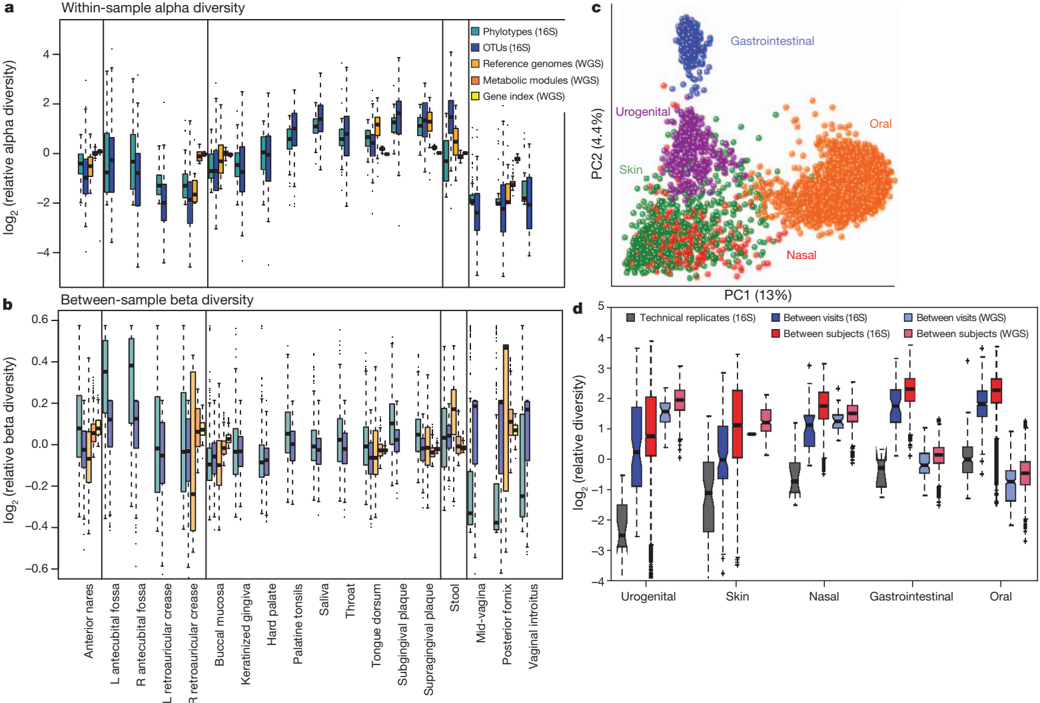
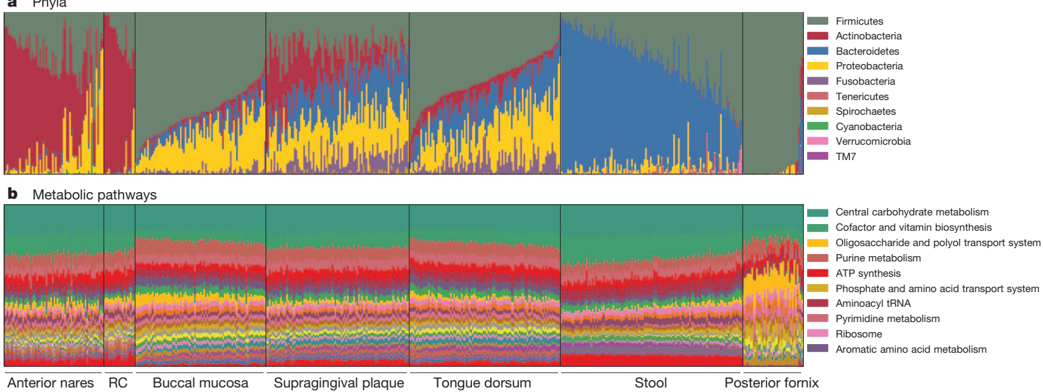
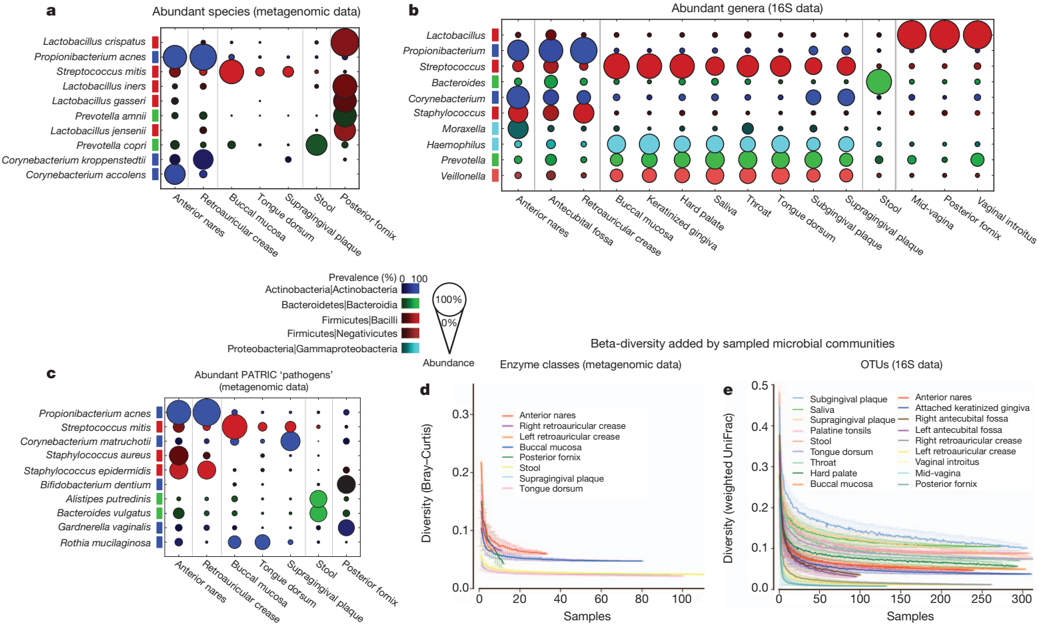
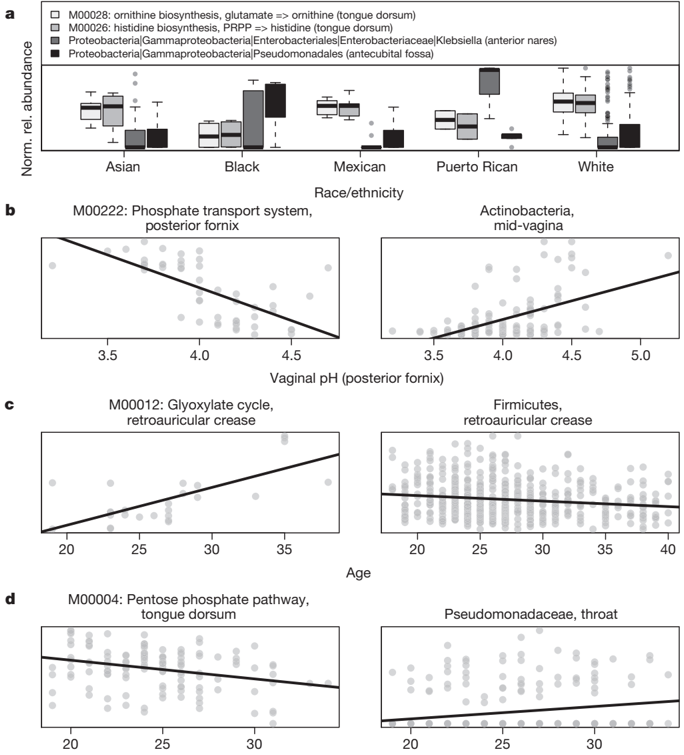
Studies of the human microbiome have revealed that even healthy individuals differ remarkably in the microbes that occupy habitats such as the gut, skin and vagina. Much of this diversity remains unexplained, although diet, environment, host genetics and early microbial exposure have all been implicated. Accordingly, to characterize the ecology of human-associated microbial communities, the Human Microbiome Project has analysed the largest cohort and set of distinct, clinically relevant body habitats so far. We found the diversity and abundance of each habitat’s signature microbes to vary widely even among healthy subjects, with strong niche specialization both within and among individuals. The project encountered an estimated 81–99% of the genera, enzyme families and community configurations occupied by the healthy Western microbiome. Metagenomic carriage of metabolic pathways was stable among individuals despite variation in community structure, and ethnic/racial background proved to be one of the strongest associations of both pathways and microbes with clinical metadata. These results thus delineate the range of structural and functional configurations normal in the microbial communities of a healthy population, enabling future characterization of the epidemiology, ecology and translational applications of the human microbiome.
Overview
The claims and statistics of this paper haven’t been checked yet.
Free: it reads the open-access text and checks the first 5 claims that cite a source we can check. Create a free account to check every claim.
Integrity signals
Registry
Cites
Statistics
Figures
Verification
Claims the paper makes
The claims and statistics of this paper haven’t been checked yet.
Free: it reads the open-access text and checks the first 5 claims that cite a source we can check. Create a free account to check every claim.
Claims other papers make about this one
Each is checked against this paper’s own text: does it say what the citing paper says it does?
The cited source doesn’t support the claim as written.
In the citing paper
“newly diagnosed cases with adenocarcinoma of the colon or rectum were recruited prior to surgery and treatment during 1985–19891, 2. Controls were patients awaiting elective surgery for non-oncologic, non-gastrointestinal conditions at these hospitals during the same period.”
From Assessment of variation in microbial community amplicon sequencing by the Microbiome Quality Control (MBQC) project consortium (2017) · cites this paper as [1]
Checked by a reasoning model — may be wrong.
Experimental — accuracy not yet measuredThe source backs part of the claim, not all of it — or backs it for a different population, condition or comparison.
In the citing paper
“Multiple factors affect the composition of the human gut microbiome, including geography, diet, infection and drug usage56,61–64.”
From Intestinal microbiota signatures of clinical response and immune-related adverse events in melanoma patients treated with anti-PD-1 (2022) · cites this paper as [64]
Experimental — accuracy not yet measuredThe source backs part of the claim, not all of it — or backs it for a different population, condition or comparison.
In the citing paper
“suggesting that no severe gut microbiome dysbiosis was present in the study group at baseline”
From Gut microbiome affects the response to anti-PD-1 immunotherapy in patients with hepatocellular carcinoma (2019) · cites this paper as [9]
Experimental — accuracy not yet measuredThe source backs part of the claim, not all of it — or backs it for a different population, condition or comparison.
In the citing paper
“Gut microbiota comprise thousands of microbial species that are involved in host metabolism by regulating energy extraction, activation of the immune system, drug metabolism, and other processes.”
From The Gut Microbiome Contributes to a Substantial Proportion of the Variation in Blood Lipids (2015) · cites this paper as [3]
Experimental — accuracy not yet measuredThe source backs part of the claim, not all of it — or backs it for a different population, condition or comparison.
In the citing paper
“The human gut microbiota contains thousands of different bacterial taxa as well as various archaea, eukaryotic microbes and viruses, more than three million genes, and harbors an enormous metabolic capacity [1, 2].”
From The athletic gut microbiota (2020) · cites this paper as [1]
Experimental — accuracy not yet measured
20 more claims about this paper
Create a free account to see every claim other papers make about this one.
Self-check
Percentages, sums and reported differences re-computed from the paper’s own numbers.
The self-check needs the paper’s full text.
Citations
Cites
Fast and accurate short read alignment with Burrows-Wheeler transform
Li, H., & Durbin, R. (2009) · Bioinformatics · doi:10.1093/bioinformatics/btp324 · Cited by 58,607
QIIME allows analysis of high-throughput community sequencing data
Caporaso, J. G., Kuczynski, J., Stombaugh, J., Bittinger, K., Bushman, F. D., Costello, E. K., Fierer, N., Peña, A. G., Goodrich, J. K., Gordon, J. I., et al. (2010) · Nature Methods · doi:10.1038/nmeth.f.303 · Cited by 34,887
Fast and accurate long-read alignment with Burrows-Wheeler transform.
Li, H., & Durbin, R. (2010) · Bioinformatics · doi:10.1093/bioinformatics/btp698 · Cited by 12,063
A human gut microbial gene catalogue established by metagenomic sequencing
MetaHIT Consortium, Qin, J., Li, R., Raes, J., Arumugam, M., Burgdorf, K. S., Manichanh, C., Nielsen, T., Pons, N., Levenez, F., et al. (2010) · Nature · doi:10.1038/nature08821 · Cited by 11,624
A core gut microbiome in obese and lean twins
Turnbaugh, P. J., Hamady, M., Yatsunenko, T., Cantarel, B. L., Duncan, A., Ley, R. E., Sogin, M. L., Jones, W. J., Roe, B. A., Affourtit, J. P., et al. (2009) · Nature · doi:10.1038/nature07540 · Cited by 7,823
Self-citationSokol, H., Pigneur, B., Watterlot, L., Lakhdari, O., Bermúdez-Humarán, L. G., Gratadoux, J.-J., Blugeon, S., Bridonneau, C., Furet, J.-P., Corthier, G., et al. (2008) · Proceedings of the National Academy of Sciences · doi:10.1073/pnas.0804812105 · Cited by 4,413
Vaginal microbiome of reproductive-age women
Ravel, J., Gajer, P., Abdo, Z., Schneider, G. M., Koenig, S. S. K., McCulle, S. L., Karlebach, S., Gorle, R., Russell, J., Tacket, C. O., et al. (2011) · Proceedings of the National Academy of Sciences · doi:10.1073/pnas.1002611107 · Cited by 4,254
Bacterial Community Variation in Human Body Habitats Across Space and Time
Costello, E. K., Lauber, C. L., Hamady, M., Fierer, N., Gordon, J. I., & Knight, R. (2009) · Science · doi:10.1126/science.1177486 · Cited by 3,231
Defining the normal bacterial flora of the oral cavity
Aas, J. A., Paster, B. J., Stokes, L. N., Olsen, I., & Dewhirst, F. E. (2005) · Journal of Clinical Microbiology · doi:10.1128/jcm.43.11.5721-5732.2005 · Cited by 3,092
Topographical and Temporal Diversity of the Human Skin Microbiome
Grice, E. A., Kong, H. H., Conlan, S., Deming, C. B., Davis, J., Young, A. C., Program, N. C. S., Bouffard, G. G., Blakesley, R. W., Murray, P. R., et al. (2009) · Science · doi:10.1126/science.1171700 · Cited by 2,953
Cited by
Items 601–700 of 1,676
Breast Cancer and Its Relationship with the Microbiota
Fernández, M. F., Reina-Pérez, I., Astorga, J. M., Rodríguez-Carrillo, A., Plaza-Díaz, J., & Fontana, L. (2018) · International Journal of Environmental Research and Public Health · doi:10.3390/ijerph15081747 · Cited by 350
Microbial Contribution to Wine Aroma and Its Intended Use for Wine Quality Improvement
Belda, I., Ruiz, J., Esteban-Fernández, A., Navascués, E., Marquina, D., Santos, A., & Moreno-Arribas, M. (2017) · Molecules · doi:10.3390/molecules22020189 · Cited by 324
Rapid changes in the gut microbiome during human evolution
Moeller, A. H., Li, Y., Mpoudi Ngole, E., Ahuka-Mundeke, S., Lonsdorf, E. V., Pusey, A. E., Peeters, M., Hahn, B. H., & Ochman, H. (2014) · Proceedings of the National Academy of Sciences · doi:10.1073/pnas.1419136111 · Cited by 340
Recent advances in inflammatory bowel disease: mucosal immune cells in intestinal inflammation
Cader, M. Z., & Kaser, A. (2013) · Gut · doi:10.1136/gutjnl-2012-303955 · Cited by 337
The gut microbiome: an orchestrator of xenobiotic metabolism
Collins, S. L., & Patterson, A. D. (2020) · Acta Pharmaceutica Sinica B · doi:10.1016/j.apsb.2019.12.001 · Cited by 348
A practical guide to the oral microbiome and its relation to health and disease
Krishnan, K., Chen, T., & Paster, B. (2017) · Oral Diseases · doi:10.1111/odi.12509 · Cited by 347
Oligotyping analysis of the human oral microbiome
Eren, A. M., Borisy, G. G., Huse, S. M., & Mark Welch, J. L. (2014) · Proceedings of the National Academy of Sciences · doi:10.1073/pnas.1409644111 · Cited by 347
Chassaing, B., Compher, C., Bonhomme, B., Liu, Q., Tian, Y., Walters, W., Nessel, L., Delaroque, C., Hao, F., Gershuni, V., et al. (2022) · Gastroenterology · doi:10.1053/j.gastro.2021.11.006 · Cited by 347
Kelly, T. N., Bazzano, L. A., Ajami, N. J., He, H., Zhao, J., Petrosino, J. F., Correa, A., & He, J. (2016) · Circulation Research · doi:10.1161/circresaha.116.309219 · Cited by 345
Clinical Application and Potential of Fecal Microbiota Transplantation
Ooijevaar, R. E., Terveer, E. M., Verspaget, H. W., Kuijper, E. J., & Keller, J. J. (2019) · Annual Review of Medicine · doi:10.1146/annurev-med-111717-122956 · Cited by 336
Microbiota and the gut-brain-axis: Implications for new therapeutic design in the CNS
Liu, L., Huh, J. R., & Shah, K. (2022) · eBioMedicine · doi:10.1016/j.ebiom.2022.103908 · Cited by 344
Computational meta'omics for microbial community studies
Segata, N., Boernigen, D., Tickle, T. L., Morgan, X. C., Garrett, W. S., & Huttenhower, C. (2013) · Molecular Systems Biology · doi:10.1038/msb.2013.22 · Cited by 326
Drivers of Microbiome Biodiversity: A Review of General Rules, Feces, and Ignorance
Reese, A. T., & Dunn, R. R. (2018) · mBio · doi:10.1128/mbio.01294-18 · Cited by 325
The influence of skin microorganisms on cutaneous immunity
Belkaid, Y., & Tamoutounour, S. (2016) · Nature Reviews Immunology · doi:10.1038/nri.2016.48 · Cited by 338
Impact of gastrointestinal physiology on drug absorption in special populations––An UNGAP review
Stillhart, C., Vučićević, K., Augustijns, P., Basit, A. W., Batchelor, H., Flanagan, T. R., Gesquiere, I., Greupink, R., Keszthelyi, D., Koskinen, M., et al. (2020) · European Journal of Pharmaceutical Sciences · doi:10.1016/j.ejps.2020.105280 · Cited by 320
Xie, H., Guo, R., Zhong, H., Feng, Q., Lan, Z., Qin, B., Ward, K. J., Jackson, M. A., Xia, Y., Chen, X., et al. (2016) · Cell Systems · doi:10.1016/j.cels.2016.10.004 · Cited by 341
High throughput sequencing methods and analysis for microbiome research
Di Bella, J. M., Bao, Y., Gloor, G. B., Burton, J. P., & Reid, G. (2013) · Journal of Microbiological Methods · doi:10.1016/j.mimet.2013.08.011 · Cited by 324
Honey bees as models for gut microbiota research
Zheng, H., Steele, M. I., Leonard, S. P., Motta, E. V. S., & Moran, N. A. (2018) · Lab Animal · doi:10.1038/s41684-018-0173-x · Cited by 334
Diversity of the Vaginal Microbiome Correlates With Preterm Birth
Hyman, R. W., Fukushima, M., Jiang, H., Fung, E., Rand, L., Johnson, B., Vo, K. C., Caughey, A. B., Hilton, J. F., Davis, R. W., et al. (2014) · Reproductive Sciences · doi:10.1177/1933719113488838 · Cited by 334
Metagenomics: The Next Culture-Independent Game Changer
Forbes, J. D., Knox, N. C., Ronholm, J., Pagotto, F., & Reimer, A. (2017) · Frontiers in Microbiology · doi:10.3389/fmicb.2017.01069 · Cited by 330
“Metagenomics and similar techniques traditionally have been applied to interrogate microbiomes of a particular ecological niche through sequencing of all nucleic acids recovered from a sample (Eckburg et al., 2005; Huttenhower et al., 2012; Mason et al., 2014).”
MethodMiquel, S., Leclerc, M., Martin, R., Chain, F., Lenoir, M., Raguideau, S., Hudault, S., Bridonneau, C., Northen, T., Bowen, B., et al. (2015) · mBio · doi:10.1128/mbio.00300-15 · Cited by 318
Potential Role of the Microbiome in Acne: A Comprehensive Review
Lee, Y. B., Byun, E. J., & Kim, H. S. (2019) · Journal of Clinical Medicine · doi:10.3390/jcm8070987 · Cited by 316
Mechanisms of Molecular Mimicry Involving the Microbiota in Neurodegeneration
Friedland, R. P. (2015) · Journal of Alzheimer's Disease · doi:10.3233/jad-142841 · Cited by 338
A predictive index for health status using species-level gut microbiome profiling
Gupta, V. K., Kim, M., Bakshi, U., Cunningham, K. Y., Davis, J. M., Lazaridis, K. N., Nelson, H., Chia, N., & Sung, J. (2020) · Nature Communications · doi:10.1038/s41467-020-18476-8 · Cited by 338
Piggyback-the-Winner in host-associated microbial communities
Silveira, C. B., & Rohwer, F. L. (2016) · npj Biofilms and Microbiomes · doi:10.1038/npjbiofilms.2016.10 · Cited by 341
“Mucosal surfaces are hotspots of microbial colonisation in metazoan hosts such as in coral mucus and the human gut and lungs.(14,15) Microbial abundance in coral mucus can be be as high as 1.”
BackgroundInflammation in Renal Diseases: New and Old Players
Andrade-Oliveira, V., Foresto-Neto, O., Watanabe, I. K. M., Zatz, R., & Câmara, N. O. S. (2019) · Frontiers in Pharmacology · doi:10.3389/fphar.2019.01192 · Cited by 330
GABA ‐producing Bifidobacterium dentium modulates visceral sensitivity in the intestine
Pokusaeva, K., Johnson, C., Luk, B., Uribe, G., Fu, Y., Oezguen, N., Matsunami, R. K., Lugo, M., Major, A., Mori‐Akiyama, Y., et al. (2017) · Neurogastroenterology & Motility · doi:10.1111/nmo.12904 · Cited by 337
Sorbara, M. T., & Pamer, E. G. (2019) · Mucosal Immunology · doi:10.1038/s41385-018-0053-0 · Cited by 320
Li, F., Hitch, T. C. A., Chen, Y., Creevey, C. J., & Guan, L. L. (2019) · Microbiome · doi:10.1186/s40168-019-0618-5 · Cited by 323
Commensal Fungi in Health and Disease
Limon, J. J., Skalski, J. H., & Underhill, D. M. (2017) · Cell Host & Microbe · doi:10.1016/j.chom.2017.07.002 · Cited by 336
“Interestingly, a clear reduction in Saccharomyces, and particularly S. cerevisiae, was observed in IBDand during active flare, whichhas alsobeen reported inmouse model (Iliev et al., 2012; Sokol et al., 2016).”
BackgroundInfluentialMake kin, not cities! Multispecies entanglements and ‘becoming-world’ in planning theory
Houston, D., Hillier, J., MacCallum, D., Steele, W., & Byrne, J. (2018) · Planning Theory · doi:10.1177/1473095216688042 · Cited by 305
“Scientists have recently shown that humans are actually colonies or assemblages of microorganisms from the bacteria in our guts to the mites in our eyebrows and the fungi on our skin (Human Microbiome Consortium, 2012).”
BackgroundDefining Dysbiosis for a Cluster of Chronic Diseases
Wilkins, L. J., Monga, M., & Miller, A. W. (2019) · Scientific Reports · doi:10.1038/s41598-019-49452-y · Cited by 318
The Evolving Microbiome of Dental Caries
Spatafora, G., Li, Y., He, X., Cowan, A., & Tanner, A. C. R. (2024) · Microorganisms · doi:10.3390/microorganisms12010121 · Cited by 285
“Most of our current knowledge of the complex human microbiome, including the oral microbiome, is derived from 16S rRNA gene sequencing [104,105].”
MethodTipping elements in the human intestinal ecosystem
Lahti, L., Salojärvi, J., Salonen, A., Scheffer, M., & de Vos, W. M. (2014) · Nature Communications · doi:10.1038/ncomms5344 · Cited by 325
Bomar, L., Brugger, S. D., Yost, B. H., Davies, S. S., & Lemon, K. P. (2016) · mBio · doi:10.1128/mbio.01725-15 · Cited by 332
High-Specificity Targeted Functional Profiling in Microbial Communities with ShortBRED
Kaminski, J., Gibson, M. K., Franzosa, E. A., Segata, N., Dantas, G., & Huttenhower, C. (2015) · PLOS Computational Biology · doi:10.1371/journal.pcbi.1004557 · Cited by 333
“The 82 sample ID's can be found in S3 Table of our paper, and downloaded from http://www.hmpdacc.org/HMASM/; Qin et al 2012—(China)—doi:10.1038/nature11450—”
MethodInfluentialBeckers, B., Op De Beeck, M., Thijs, S., Truyens, S., Weyens, N., Boerjan, W., & Vangronsveld, J. (2016) · Frontiers in Microbiology · doi:10.3389/fmicb.2016.00650 · Cited by 322
Scaling up: A guide to high‐throughput genomic approaches for biodiversity analysis
Porter, T. M., & Hajibabaei, M. (2018) · Molecular Ecology · doi:10.1111/mec.14478 · Cited by 305
“Metagenomics is a widely used technique to explore microbiomes on a small scale and can be scaled upwards for broad-scale ecological surveys (The Human Microbiome Project Consortium, 2012; Venter et al., 2004).”
MethodMicrobiome 101: Studying, Analyzing, and Interpreting Gut Microbiome Data for Clinicians
Allaband, C., McDonald, D., Vázquez-Baeza, Y., Minich, J. J., Tripathi, A., Brenner, D. A., Loomba, R., Smarr, L., Sandborn, W. J., Schnabl, B., et al. (2019) · Clinical Gastroenterology and Hepatology · doi:10.1016/j.cgh.2018.09.017 · Cited by 318
Skin Microbiome Surveys Are Strongly Influenced by Experimental Design
Meisel, J. S., Hannigan, G. D., Tyldsley, A. S., SanMiguel, A. J., Hodkinson, B. P., Zheng, Q., & Grice, E. A. (2016) · Journal of Investigative Dermatology · doi:10.1016/j.jid.2016.01.016 · Cited by 327
Müller, M., Canfora, E., & Blaak, E. (2018) · Nutrients · doi:10.3390/nu10030275 · Cited by 329
Commensal orthologs of the human autoantigen Ro60 as triggers of autoimmunity in lupus
Greiling, T. M., Dehner, C., Chen, X., Hughes, K., Iñiguez, A. J., Boccitto, M., Ruiz, D. Z., Renfroe, S. C., Vieira, S. M., Ruff, W. E., et al. (2018) · Science Translational Medicine · doi:10.1126/scitranslmed.aan2306 · Cited by 320
Li, L., Ning, Z., Zhang, X., Mayne, J., Cheng, K., Stintzi, A., & Figeys, D. (2020) · Microbiome · doi:10.1186/s40168-020-00806-z · Cited by 328
“To evaluate the overall shift of the microbiome, Bray-Curtis distance [32, 33] between drug-treated and DMSO control microbiome indicated that fructooligosaccharide (FOS), rifaximin, berberine, diclofenac, ciprofloxacin, metronidazole, and isoniazid significantly shifted the microbiome (pairwise Wilcoxon test, FDR-adj…”
BackgroundMethodInfluentialKennedy, N. A., Walker, A. W., Berry, S. H., Duncan, S. H., Farquarson, F. M., Louis, P., Thomson, J. M., surname):, O. M. N. N. W. T. M. A. L. (. B., Satsangi, J., Flint, H. J., et al. (2014) · PLoS ONE · doi:10.1371/journal.pone.0088982 · Cited by 311
Fecal Microbiota Transplantation: Current Applications, Effectiveness, and Future Perspectives
Choi, H. H., & Cho, Y.-S. (2016) · Clinical Endoscopy · doi:10.5946/ce.2015.117 · Cited by 318
Shen, Y., Xu, J., Li, Z., Huang, Y., Yuan, Y., Wang, J., Zhang, M., Hu, S., & Liang, Y. (2018) · Schizophrenia Research · doi:10.1016/j.schres.2018.01.002 · Cited by 314
Selective maternal seeding and environment shape the human gut microbiome
Korpela, K., Costea, P., Coelho, L. P., Kandels-Lewis, S., Willemsen, G., Boomsma, D. I., Segata, N., & Bork, P. (2018) · Genome Research · doi:10.1101/gr.233940.117 · Cited by 333
Duranti, S., Lugli, G. A., Mancabelli, L., Armanini, F., Turroni, F., James, K., Ferretti, P., Gorfer, V., Ferrario, C., Milani, C., et al. (2017) · Microbiome · doi:10.1186/s40168-017-0282-6 · Cited by 327
The microbiome of New World vultures
Roggenbuck, M., Bærholm Schnell, I., Blom, N., Bælum, J., Bertelsen, M. F., Sicheritz-Pontén, T., Sørensen, S. J., Gilbert, M. T. P., Graves, G. R., & Hansen, L. H. (2014) · Nature Communications · doi:10.1038/ncomms6498 · Cited by 321
Corrêa, T. A. F., Rogero, M. M., Hassimotto, N. M. A., & Lajolo, F. M. (2019) · Frontiers in Nutrition · doi:10.3389/fnut.2019.00188 · Cited by 316
“The mainly microbiota phyla are: Firmicutes, Bacteroidetes, Proteobacteria, Actinobacteria, and Verrucomicrobia (37).”
BackgroundMICOM: Metagenome-Scale Modeling To Infer Metabolic Interactions in the Gut Microbiota
Diener, C., Gibbons, S. M., & Resendis-Antonio, O. (2020) · mSystems · doi:10.1128/msystems.00606-19 · Cited by 309
Maignien, L., DeForce, E. A., Chafee, M. E., Eren, A. M., & Simmons, S. L. (2014) · mBio · doi:10.1128/mbio.00682-13 · Cited by 314
McHardy, I. H., Goudarzi, M., Tong, M., Ruegger, P. M., Schwager, E., Weger, J. R., Graeber, T. G., Sonnenburg, J. L., Horvath, S., Huttenhower, C., et al. (2013) · Microbiome · doi:10.1186/2049-2618-1-17 · Cited by 322
Salivary microbiota reflects changes in gut microbiota in cirrhosis with hepatic encephalopathy
Bajaj, J. S., Betrapally, N. S., Hylemon, P. B., Heuman, D. M., Daita, K., White, M. B., Unser, A., Thacker, L. R., Sanyal, A. J., Kang, D. J., et al. (2015) · Hepatology · doi:10.1002/hep.27819 · Cited by 325
Utilisation of Mucin Glycans by the Human Gut Symbiont Ruminococcus gnavus Is Strain-Dependent
Crost, E. H., Tailford, L. E., Le Gall, G., Fons, M., Henrissat, B., & Juge, N. (2013) · PLoS ONE · doi:10.1371/journal.pone.0076341 · Cited by 311
Impact of the gut microbiota on the development of obesity and type 2 diabetes mellitus
Moreno-Indias, I., Cardona, F., Tinahones, F. J., & Queipo-Ortuño, M. I. (2014) · Frontiers in Microbiology · doi:10.3389/fmicb.2014.00190 · Cited by 310
Vallianou, N., Stratigou, T., Christodoulatos, G. S., & Dalamaga, M. (2019) · Current Obesity Reports · doi:10.1007/s13679-019-00352-2 · Cited by 316
Unexpected guests in the tumor microenvironment: microbiome in cancer
Wong-Rolle, A., Wei, H. K., Zhao, C., & Jin, C. (2021) · Protein & Cell · doi:10.1007/s13238-020-00813-8 · Cited by 313
Total Lipopolysaccharide from the Human Gut Microbiome Silences Toll-Like Receptor Signaling
d’Hennezel, E., Abubucker, S., Murphy, L. O., & Cullen, T. W. (2017) · mSystems · doi:10.1128/msystems.00046-17 · Cited by 324
Frequent Replenishment Sustains the Beneficial Microbiome of Drosophila melanogaster
Blum, J. E., Fischer, C. N., Miles, J., & Handelsman, J. (2013) · mBio · doi:10.1128/mbio.00860-13 · Cited by 311
The inconstant gut microbiota of Drosophila species revealed by 16S rRNA gene analysis
Wong, A. C.-N., Chaston, J. M., & Douglas, A. E. (2013) · The ISME Journal · doi:10.1038/ismej.2013.86 · Cited by 328
Microbiome therapeutics — Advances and challenges
Mimee, M., Citorik, R. J., & Lu, T. K. (2016) · Advanced Drug Delivery Reviews · doi:10.1016/j.addr.2016.04.032 · Cited by 317
Viladomiu, M., Kivolowitz, C., Abdulhamid, A., Dogan, B., Victorio, D., Castellanos, J. G., Woo, V., Teng, F., Tran, N. L., Sczesnak, A., et al. (2017) · Science Translational Medicine · doi:10.1126/scitranslmed.aaf9655 · Cited by 313
Exploring the emerging role of the microbiome in cancer immunotherapy
Fessler, J., Matson, V., & Gajewski, T. F. (2019) · Journal for ImmunoTherapy of Cancer · doi:10.1186/s40425-019-0574-4 · Cited by 319
Khanna, S., Pardi, D. S., Kelly, C. R., Kraft, C. S., Dhere, T., Henn, M. R., Lombardo, M.-J., Vulic, M., Ohsumi, T., Winkler, J., et al. (2016) · Journal of Infectious Diseases · doi:10.1093/infdis/jiv766 · Cited by 321
Sencio, V., Machado, M. G., & Trottein, F. (2021) · Mucosal Immunology · doi:10.1038/s41385-020-00361-8 · Cited by 311
A Taxonomic Signature of Obesity in the Microbiome? Getting to the Guts of the Matter
Finucane, M. M., Sharpton, T. J., Laurent, T. J., & Pollard, K. S. (2014) · PLoS ONE · doi:10.1371/journal.pone.0084689 · Cited by 321
The Human Gut Microbiome and Body Metabolism: Implications for Obesity and Diabetes
Devaraj, S., Hemarajata, P., & Versalovic, J. (2013) · Clinical Chemistry · doi:10.1373/clinchem.2012.187617 · Cited by 321
Natural History's Place in Science and Society
Tewksbury, J. J., Anderson, J. G. T., Bakker, J. D., Billo, T. J., Dunwiddie, P. W., Groom, M. J., Hampton, S. E., Herman, S. G., Levey, D. J., Machnicki, N. J., et al. (2014) · BioScience · doi:10.1093/biosci/biu032 · Cited by 308
A phylogenetic transform enhances analysis of compositional microbiota data
Silverman, J. D., Washburne, A. D., Mukherjee, S., & David, L. A. (2017) · eLife · doi:10.7554/elife.21887 · Cited by 319
Gut microbiota injury in allogeneic haematopoietic stem cell transplantation
Shono, Y., & van den Brink, M. R. M. (2018) · Nature Reviews Cancer · doi:10.1038/nrc.2018.10 · Cited by 309
Gut reactions: Breaking down xenobiotic–microbiome interactions
Clarke, G., Sandhu, K. V., Griffin, B. T., Dinan, T. G., Cryan, J. F., & Hyland, N. P. (2019) · Pharmacological Reviews · doi:10.1124/pr.118.015768 · Cited by 319
Hannigan, G. D., Meisel, J. S., Tyldsley, A. S., Zheng, Q., Hodkinson, B. P., SanMiguel, A. J., Minot, S., Bushman, F. D., & Grice, E. A. (2015) · mBio · doi:10.1128/mbio.01578-15 · Cited by 291
Interactions Between the Gastrointestinal Microbiome and Clostridium difficile
Theriot, C. M., & Young, V. B. (2015) · Annual Review of Microbiology · doi:10.1146/annurev-micro-091014-104115 · Cited by 302
“The microbial diversity within the healthy human population was affected by diet, environment, host genetics, and early exposure to microbes (53).”
BackgroundMash Screen: high-throughput sequence containment estimation for genome discovery
Ondov, B. D., Starrett, G. J., Sappington, A., Kostic, A., Koren, S., Buck, C. B., & Phillippy, A. M. (2019) · Genome Biology · doi:10.1186/s13059-019-1841-x · Cited by 320
“For a reference set, we began with reported protein fragments from two samples of the Human Microbiome Project [20], SRS015937 and SRS020263, and recruited their best hits to full-length proteins in the NCBI nr database, resulting in 28,334 protein sequences.”
MethodFinding the Missing Links among Metabolites, Microbes, and the Host
Dorrestein, P. C., Mazmanian, S. K., & Knight, R. (2014) · Immunity · doi:10.1016/j.immuni.2014.05.015 · Cited by 317
16S rRNA Next Generation Sequencing Analysis Shows Bacteria in Alzheimer’s Post-Mortem Brain
Emery, D. C., Shoemark, D. K., Batstone, T. E., Waterfall, C. M., Coghill, J. A., Cerajewska, T. L., Davies, M., West, N. X., & Allen, S. J. (2017) · Frontiers in Aging Neuroscience · doi:10.3389/fnagi.2017.00195 · Cited by 317
Ultrafast and accurate 16S rRNA microbial community analysis using Kraken 2
Lu, J., & Salzberg, S. L. (2020) · Microbiome · doi:10.1186/s40168-020-00900-2 · Cited by 311
Ma, Z., Zuo, T., Frey, N., & Rangrez, A. Y. (2024) · Signal Transduction and Targeted Therapy · doi:10.1038/s41392-024-01946-6 · Cited by 259
“15,16 For example, humans lack speci fi c and ef fi cient nitrate reductases 131 which is essential to convert dietary nitrate into nitrite and Nitric oxide (NO) through the nitrate-nitrite-NO pathway.”
BackgroundIntegrated multi-omics of the human gut microbiome in a case study of familial type 1 diabetes
Heintz-Buschart, A., May, P., Laczny, C. C., Lebrun, L. A., Bellora, C., Krishna, A., Wampach, L., Schneider, J. G., Hogan, A., de Beaufort, C., et al. (2016) · Nature Microbiology · doi:10.1038/nmicrobiol.2016.180 · Cited by 316
“For each individual genome, a FASTA protein sequence database was then created by combining two FASTA databases: (1) REFSEQ protein sequences from the personalized human genome reference hg19 and (2) protein sequences containing heterozygous variants (proteins were marked if they contained homo- or heterozygous amino…”
MethodImpact of Dietary Resistant Starch on the Human Gut Microbiome, Metaproteome, and Metabolome
Maier, T. V., Lucio, M., Lee, L. H., VerBerkmoes, N. C., Brislawn, C. J., Bernhardt, J., Lamendella, R., McDermott, J. E., Bergeron, N., Heinzmann, S. S., et al. (2017) · mBio · doi:10.1128/mbio.01343-17 · Cited by 316
Heart Failure is Associated with Depletion of Core Intestinal Microbiota
Luedde, M., Winkler, T., Heinsen, F.-A., Rühlemann, M. C., Spehlmann, M. E., Bajrovic, A., Lieb, W., Franke, A., Ott, S. J., & Frey, N. (2017) · ESC Heart Failure · doi:10.1002/ehf2.12155 · Cited by 312
Sonnenborn, U. (2016) · FEMS Microbiology Letters · doi:10.1093/femsle/fnw212 · Cited by 315
Gut Microbiota, Immune System, and Bone
D’Amelio, P., & Sassi, F. (2018) · Calcified Tissue International · doi:10.1007/s00223-017-0331-y · Cited by 315
Lin, A., Bik, E. M., Costello, E. K., Dethlefsen, L., Haque, R., Relman, D. A., & Singh, U. (2013) · PLoS ONE · doi:10.1371/journal.pone.0053838 · Cited by 314
The oral microbiome diversity and its relation to human diseases
He, J., Li, Y., Cao, Y., Xue, J., & Zhou, X. (2015) · Folia Microbiologica · doi:10.1007/s12223-014-0342-2 · Cited by 314
Takagi, T., Naito, Y., Inoue, R., Kashiwagi, S., Uchiyama, K., Mizushima, K., Tsuchiya, S., Dohi, O., Yoshida, N., Kamada, K., et al. (2019) · Journal of Gastroenterology · doi:10.1007/s00535-018-1488-5 · Cited by 314
Local bacteria affect the efficacy of chemotherapeutic drugs
Lehouritis, P., Cummins, J., Stanton, M., Murphy, C. T., McCarthy, F. O., Reid, G., Urbaniak, C., Byrne, W. L., & Tangney, M. (2015) · Scientific Reports · doi:10.1038/srep14554 · Cited by 313
Westcott, S. L., & Schloss, P. D. (2015) · PeerJ · doi:10.7717/peerj.1487 · Cited by 296
Burrello, C., Garavaglia, F., Cribiù, F. M., Ercoli, G., Lopez, G., Troisi, J., Colucci, A., Guglietta, S., Carloni, S., Guglielmetti, S., et al. (2018) · Nature Communications · doi:10.1038/s41467-018-07359-8 · Cited by 307
Vermeire, S., Joossens, M., Verbeke, K., Wang, J., Machiels, K., Sabino, J., Ferrante, M., Van Assche, G., Rutgeerts, P., & Raes, J. (2016) · Journal of Crohn s and Colitis · doi:10.1093/ecco-jcc/jjv203 · Cited by 311
Bletz, M. C., Loudon, A. H., Becker, M. H., Bell, S. C., Woodhams, D. C., Minbiole, K. P. C., & Harris, R. N. (2013) · Ecology Letters · doi:10.1111/ele.12099 · Cited by 305
Gut microbiota dictates the metabolic response of Drosophila to diet
Wong, A. C.-N., Dobson, A. J., & Douglas, A. E. (2014) · Journal of Experimental Biology · doi:10.1242/jeb.101725 · Cited by 305
Microbiota in pancreatic health and disease: the next frontier in microbiome research
Thomas, R. M., & Jobin, C. (2020) · Nature Reviews Gastroenterology & Hepatology · doi:10.1038/s41575-019-0242-7 · Cited by 308
Distinct microbial and immune niches of the human colon
James, K. R., Gomes, T., Elmentaite, R., Kumar, N., Gulliver, E. L., King, H. W., Stares, M. D., Bareham, B. R., Ferdinand, J. R., Petrova, V. N., et al. (2020) · Nature Immunology · doi:10.1038/s41590-020-0602-z · Cited by 294
Qi, X., Zhang, Y., Zhang, Y., Luo, F., Song, K., Wang, G., & Ling, F. (2023) · Microbiome · doi:10.1186/s40168-023-01574-2 · Cited by 285
“Most of the gut microbiota’s contribution to host physiology is related to microbial metabolism, with bacteria contributing the most to ecosystem function in terms of relative genetic content [27, 28].”
BackgroundThe prenatal gut microbiome: are we colonized with bacteria in utero ?
Walker, R. W., Clemente, J. C., Peter, I., & Loos, R. J. F. (2017) · Pediatric Obesity · doi:10.1111/ijpo.12217 · Cited by 293
Kieffer, D. A., Piccolo, B. D., Vaziri, N. D., Liu, S., Lau, W. L., Khazaeli, M., Nazertehrani, S., Moore, M. E., Marco, M. L., Martin, R. J., et al. (2016) · American Journal of Physiology-Renal Physiology · doi:10.1152/ajprenal.00513.2015 · Cited by 308
Immune regulation by fungal strain diversity in inflammatory bowel disease
Li, X. V., Leonardi, I., Putzel, G. G., Semon, A., Fiers, W. D., Kusakabe, T., Lin, W.-Y., Gao, I. H., Doron, I., Gutierrez-Guerrero, A., et al. (2022) · Nature · doi:10.1038/s41586-022-04502-w · Cited by 302
Mining the microbiota for microbial and metabolite-based immunotherapies
Skelly, A. N., Sato, Y., Kearney, S., & Honda, K. (2019) · Nature Reviews Immunology · doi:10.1038/s41577-019-0144-5 · Cited by 306
Metadata
- Authors
- The Human Microbiome Project Consortium
- Venue
- Nature
- Published
- 2012-06
- Volume
- 486
- Issue
- 7402
- Pages
- 207-214
- ISSN
- 0028-0836 (ISSN-L)
- 1476-4687
- PMC
- PMC3564958
- OpenAlex
- W2128769815
- Semantic Scholar
- 0c431405ec1eb4b84a52ed1fcc530454a4b8bf6f
- Cited by
- 11,726
- References
- 29
- Citations by year
- 2026: 586 · 2025: 748 · 2024: 890 · 2023: 950 · 2022: 1024 · 2021: 1202 · 2020: 1137 · 2019: 1032 · 2018: 863 · 2017: 853 · 2016: 732 · 2015: 651 · 2014: 532 · 2013: 413 · 2012: 104
- FWCI
- 218.52
- Type
- journal article
- Language
- en
- Open access
- hybrid
- doi.org
- Licence
- cc-by-nc-sa
- creativecommons.org/licenses/by-nc-sa/3.0/ (tdm)
- Locations
- Nature (publishedVersion, cc-by-nc-sa)
- PubMed (publishedVersion)
- Goce Delchev University Repository (Goce Delčev University of Štip) (acceptedVersion)
- Europe PMC (PubMed Central) (acceptedVersion)
- PubMed Central (acceptedVersion)
- eScholarship (California Digital Library) (submittedVersion, cc-by)
- Rutgers University Community Repository (Rutgers University) (submittedVersion)
- Open Access Server of the Woods Hole Scientific Community (Woods Hole Scientific Community) (submittedVersion)
- eScholarship (California Digital Library) (submittedVersion)
- Funders
- National Science Foundation (DEAC02-05CH11231, 1053486, 0812111)
- Howard Hughes Medical Institute (DE-AC02-05CH11231)
- U.S. Department of Energy (-AC02-05CH11231, Contract No. DE-AC02-05-CH11231, 05CH11231, No. DE-AC02-05-CH11231, DE AC02 05CH11231, DE-AC02-)
- Gordon and Betty Moore Foundation
- Rice University
- Gladstone Institutes
- Crohn's and Colitis Foundation
- Crohn's and Colitis Foundation of Canada
- Fonds Wetenschappelijk Onderzoek (DE-AC02-05CH11231)
- Vlaamse regering
- National Institutes of Health (5r01hg005172-03, n01hg62088-6-0-1, DE-AC02–05CH11231, DBI-1053486, DP2OD001500, 5r01hg004857-03, n01ai30071-19-0-3)
- Defense Threat Reduction Agency (B104153I, DE-AC02-05CH11231, B084531I)
- Office of Science (No. DE-AC02- 05-CH11231, DEAC02–05CH11231, AC02-05CH11231, DE-AC02, 05CH11231, Contract No. DE-AC02-05CH11231)
- Horace H. Rackham School of Graduate Studies, University of Michigan
- National Human Genome Research Institute (R01HG004885, U54HG003067, R01HG005975, R01-HG004857, U54HG004969, R01HG004853, U54HG003079, U01HG004866, R01HG005969, R01-HG005172, U54HG003273, R01HG004872, R21HG005811, U54HG004968, N01 HG062088, R01HG004906, R01HG004908, U54HG004973, R01HG004856, R01HG004900, R01HG005171, R01HG004877)
- National Cancer Institute (R21CA139193)
- National Institute of General Medical Sciences (T32GM087237)
- National Institute of Allergy and Infectious Diseases (UH2AI083263, UH3AI083263, U54AI084844, T32AI007528, N01 AI030071)
- National Institute of Diabetes and Digestive and Kidney Diseases (UH2DK083990, UH3DK083993)
- National Institute of Arthritis and Musculoskeletal and Skin Diseases (UH2 AR057504, UH2AR057506, UH3-AR057504)
- National Institute of Dental and Craniofacial Research (P30DE020751, R01DE021574, U01DE016937, RC1DE0202098, R37DE016937, RC1DE020298)
- U.S. National Library of Medicine
- Division of Biological Infrastructure (DBI-1053486)
- Army Research Office (DE-AC02-05CH11231, W911NF-11-1-0473, W911NF, W911NF-11)
- Los Alamos National Laboratory (DE-AC02-05CH11231)
- Topics
- Life Sciences › Biochemistry, Genetics and Molecular Biology › Molecular Biology › Gut microbiota and health
- Physical Sciences › Environmental Science › Ecology › Microbial Community Ecology and Physiology
- Health Sciences › Dentistry › Periodontics › Oral microbiology and periodontitis research
- Keywords
- human microbiome, healthy individuals, microbial diversity, gut microbiota, skin microbiome, vaginal microbiota, ecological specialization, metabolic pathways, Human Microbiome Project, metagenomics, microbial ecology
- MeSH terms
- Adolescent, Adult, Bacteria, Female, Health, Humans, Male, Phenotype, RNA, Ribosomal, 16S, Ecosystem, Biodiversity, Metabolic Networks and Pathways, Metagenome, Young Adult, Metagenomics
About these checks
Registry, retraction, Cites and statistics results are computed, not judged, with one exception: a printed reference that no index lists is read once by a model before it counts as a citation error. Claims are extracted by a model and kept only when their quote appears verbatim in the text; each cited source is then checked, with a model’s help, for whether it says what the claim relies on. Those verdicts can be wrong — read the claim’s quote and the cited source before relying on one.
Statistics and arithmetic are recomputed, not judged.
Confidence bands are shown only for fields calibrated on our annotated test set. None is calibrated yet, so no band is shown.
What counts as a claim ›How we measure confidence ›How we check this ›
Are you an author, or do you see a problem with this page? Request a review
Data sources
Bibliographic data: Semantic Scholar, OpenAlex, Crossref.
Contains information from the Semantic Scholar Academic Graph Datasets, made available under the ODC Attribution License (ODC-BY 1.0).
Semantic Scholar’s data is described in: Kinney, R., et al. (2023). The Semantic Scholar Open Data Platform. arXiv:2301.10140.
