

Research progress on sarcopenia in the musculoskeletal system
Open accessThe DOI matches its Crossref record; 247 of the 247 references it cites were found in a registry or an index.
Abstract
Sarcopenia, a progressive and systemic skeletal muscle disorder marked by the accelerated deterioration of both muscle function and mass, is highly prevalent among the elderly population, significantly contributing to an elevated risk of adverse outcomes, including falls, fractures, and muscle weakness. Clinical investigations have identified a strong correlation between sarcopenia and several prevalent degenerative skeletal muscle disorders. This correlation is attributed to imbalances in joint mechanics resulting from localized muscle atrophy and the influence of musculoskeletal secretory factors. In this review, we discuss the broader implications of sarcopenia and critically evaluate the currently established assessment methods. Furthermore, the clinical significance of prevalent musculoskeletal disorders (including osteoporosis, osteoarthritis, and spinal pathologies) in relation to sarcopenia, alongside the underlying mechanisms influencing this relationship, is summarized. Additionally, the effects of sarcopenia on the therapeutic efficacy of medications and surgical interventions for musculoskeletal conditions are reviewed. Sarcopenia is intricately linked to the onset, progression, and prognosis of musculoskeletal disorders. Future research should prioritize elucidating the potential mechanisms that connect muscle loss with skeletal muscle diseases, and investigating whether mitigating sarcopenia symptoms could decelerate the progression of these disorders, thereby paving new pathways for therapeutic interventions.
Overview
The claims and statistics of this paper haven’t been checked yet.
Free: it reads the open-access text and checks the first 5 claims that cite a source we can check. Create a free account to check every claim.
Integrity signals
Registry
Cites
Statistics
Figures
Verification
Claims the paper makes
The claims and statistics of this paper haven’t been checked yet.
Free: it reads the open-access text and checks the first 5 claims that cite a source we can check. Create a free account to check every claim.
Claims other papers make about this one
Each is checked against this paper’s own text: does it say what the citing paper says it does?
The check wasn’t confident either way, so it gives no verdict — never disputed.
In the citing paper
“Studies utilizing dual-energy X-ray absorptiometry (DEXA) and physical performance tests—such as the Short Physical Performance Battery (SPPB) and handgrip strength assessments—have documented declines in functional status in a subset of patients receiving GLP-1 RAs, particularly in those who do not engage in concurrent physical activity interventions [57].”
From A Narrative Review on GLP-1 Receptor Agonists for Obesity in Older Women: Maximizing Weight Loss While Preserving Lean Mass (2026) · cites this paper as [57]
Experimental — accuracy not yet measuredThe check wasn’t confident either way, so it gives no verdict — never disputed.
In the citing paper
“These effects appear to be mediated, at least in part, by reductions in systemic and local low-grade inflammation and improvements in metabolic and mitochondrial efficiency [56,57,58].”
From A Narrative Review on GLP-1 Receptor Agonists for Obesity in Older Women: Maximizing Weight Loss While Preserving Lean Mass (2026) · cites this paper as [57]
Experimental — accuracy not yet measured
Self-check
Percentages, sums and reported differences re-computed from the paper’s own numbers.
The self-check needs the paper’s full text.
Citations
Cites
The Timed “Up & Go”: A Test of Basic Functional Mobility for Frail Elderly Persons
Podsiadlo, D., & Richardson, S. (1991) · Journal of the American Geriatrics Society · doi:10.1111/j.1532-5415.1991.tb01616.x · Cited by 14,418 · cited 2×
“75 Screening methods for sarcopenia within community settings must be simple, rapid, and user-friendly.”
James, S. L., Abate, D., Abate, K. H., Abay, S. M., Abbafati, C., Abbasi, N., Abbastabar, H., Abd-Allah, F., Abdela, J., Abdelalim, A., et al. (2018) · The Lancet · doi:10.1016/s0140-6736(18)32279-7 · Cited by 13,867 · cited 2×
“185 Emerging evidence suggests that select anabolic agents, including myostatin inhibitors, can simultaneously enhance muscle and bone mass. 186 Notably, the soluble activin type IIB receptor (ActRIIB-Fc) demonstrated signi fi cant ef fi cacy in a murine muscular atrophy model, increasing both…”
Sarcopenia: revised European consensus on definition and diagnosis
Cruz-Jentoft, A. J., Bahat, G., Bauer, J., Boirie, Y., Bruyère, O., Cederholm, T., Cooper, C., Landi, F., Rolland, Y., Sayer, A. A., et al. (2019) · Age and Ageing · doi:10.1093/ageing/afy169 · Cited by 13,818
Asian Working Group for Sarcopenia: 2019 Consensus Update on Sarcopenia Diagnosis and Treatment
Chen, L.-K., Woo, J., Assantachai, P., Auyeung, T.-W., Chou, M.-Y., Iijima, K., Jang, H. C., Kang, L., Kim, M., Kim, S., et al. (2020) · Journal of the American Medical Directors Association · doi:10.1016/j.jamda.2019.12.012 · Cited by 7,070 · cited 4×
“1,20 – 22 Additionally, we evaluated the strengths and limitations of these commonly used methods (Table 1).”
InfluentialSarcopenia in Asia: Consensus Report of the Asian Working Group for Sarcopenia
Chen, L.-K., Liu, L.-K., Woo, J., Assantachai, P., Auyeung, T.-W., Bahyah, K. S., Chou, M.-Y., Chen, L.-Y., Hsu, P.-S., Krairit, O., et al. (2014) · Journal of the American Medical Directors Association · doi:10.1016/j.jamda.2013.11.025 · Cited by 4,051 · cited 1×
“1,57 Due to these advantages, BIA is increasingly being considered a practical alternative to dual-energy X-ray absorptiometry (DEXA).”
Cruz-Jentoft, A. J., & Sayer, A. A. (2019) · The Lancet · doi:10.1016/s0140-6736(19)31138-9 · Cited by 3,905 · cited 1×
“10 In addition, Insulin resistance secondary to metabolic dysregulation (e.g., diabetes and dyslipidemia) compromises skeletal muscle glucose metabolism while enhancing ectopic lipid deposition through increased cellular uptake of triglycerides and free fatty acids.”
Sarcopenia: revised European consensus on definition and diagnosis
Cruz-Jentoft, A. J., Bahat, G., Bauer, J., Boirie, Y., Bruyère, O., Cederholm, T., Cooper, C., Landi, F., Rolland, Y., Sayer, A. A., et al. (2019) · Age and Ageing · doi:10.1093/ageing/afz046 · Cited by 3,803
Fielding, R. A., Vellas, B., Evans, W. J., Bhasin, S., Morley, J. E., Newman, A. B., Abellan van Kan, G., Andrieu, S., Bauer, J., Breuille, D., et al. (2011) · Journal of the American Medical Directors Association · doi:10.1016/j.jamda.2011.01.003 · Cited by 3,256
Roberts, H. C., Denison, H. J., Martin, H. J., Patel, H. P., Syddall, H., Cooper, C., & Sayer, A. A. (2011) · Age and Ageing · doi:10.1093/ageing/afr051 · Cited by 3,001 · cited 1×
“23 This evaluation requires participants to rise from a seated position in a chair and return to a seated posture without using their arms to assist.”
A 30-s chair-stand test as a measure of lower body strength in community-residing older adults.
Jones, C. J., Rikli, R. E., & Beam, W. C. (1999) · Research Quarterly for Exercise and Sport · doi:10.1080/02701367.1999.10608028 · Cited by 2,921
Muscles, exercise and obesity: skeletal muscle as a secretory organ
Pedersen, B. K., & Febbraio, M. A. (2012) · Nature Reviews Endocrinology · doi:10.1038/nrendo.2012.49 · Cited by 2,909
Studenski, S. A., Peters, K. W., Alley, D. E., Cawthon, P. M., McLean, R. R., Harris, T. B., Ferrucci, L., Guralnik, J. M., Fragala, M. S., Kenny, A. M., et al. (2014) · The Journals of Gerontology: Series A · doi:10.1093/gerona/glu010 · Cited by 2,545
Sarcopenia: origins and clinical relevance
Rosenberg, I. H. (1997) · The Journal of Nutrition · doi:10.1093/jn/127.5.990s · Cited by 2,399
Diagnosis and Treatment of Hip and Knee Osteoarthritis: A Review
Katz, J. N., Arant, K. R., & Loeser, R. F. (2021) · JAMA · doi:10.1001/jama.2020.22171 · Cited by 2,305
Osteoarthritis: an update with relevance for clinical practice
Bijlsma, J. W., Berenbaum, F., & Lafeber, F. P. (2011) · The Lancet · doi:10.1016/s0140-6736(11)60243-2 · Cited by 2,288
Steffen, T. M., Hacker, T. A., & Mollinger, L. (2002) · Physical Therapy · doi:10.1093/ptj/82.2.128 · Cited by 2,070 · cited 1×
“75,76 This test can be seamlessly integrated into routine physical examinations; it is expedient and requires neither specialized equipment nor extensive training.”
Functions of RANKL/RANK/OPG in bone modeling and remodeling
Boyce, B. F., & Xing, L. (2008) · Archives of Biochemistry and Biophysics · doi:10.1016/j.abb.2008.03.018 · Cited by 1,844 · cited 1×
“140 Given its critical function in regulating bone metabolism, the RANKL/RANK/OPG axis is indispensable for maintaining bone homeostasis, and dysregulation of system can contribute to bone-related disorders, including osteoporosis.”
Sarcopenia: Aging-Related Loss of Muscle Mass and Function
Larsson, L., Degens, H., Li, M., Salviati, L., Lee, Y. I., Thompson, W., Kirkland, J. L., & Sandri, M. (2019) · Physiological Reviews · doi:10.1152/physrev.00061.2017 · Cited by 1,797
Effects of Human Growth Hormone in Men over 60 Years Old
Rudman, D., Feller, A. G., Nagraj, H. S., Gergans, G. A., Lalitha, P. Y., Goldberg, A. F., Schlenker, R. A., Cohn, L., Rudman, I. W., & Mattson, D. E. (1990) · New England Journal of Medicine · doi:10.1056/nejm199007053230101 · Cited by 1,555
Global prevalence of sarcopenia and severe sarcopenia: a systematic review and meta‐analysis
Petermann‐Rocha, F., Balntzi, V., Gray, S. R., Lara, J., Ho, F. K., Pell, J. P., & Celis‐Morales, C. (2022) · Journal of Cachexia, Sarcopenia and Muscle · doi:10.1002/jcsm.12783 · Cited by 1,499
Epidemiology and burden of osteoarthritis
Litwic, A., Edwards, M. H., Dennison, E. M., & Cooper, C. (2013) · British Medical Bulletin · doi:10.1093/bmb/lds038 · Cited by 1,315
Epidemiology, etiology, and diagnosis of osteoporosis
Lane, N. E. (2006) · American Journal of Obstetrics and Gynecology · doi:10.1016/j.ajog.2005.08.047 · Cited by 1,293 · cited 1×
“116,117 Recently, the term “ Osteosarcopenia ” has been introduced to describe the concurrent manifestation of osteopenia or osteoporosis alongside sarcopenia.”
Attenuation of skeletal muscle and strength in the elderly: the Health ABC Study
Goodpaster, B. H., Carlson, C. L., Visser, M., Kelley, D. E., Scherzinger, A., Harris, T. B., Stamm, E., & Newman, A. B. (2001) · Journal of Applied Physiology · doi:10.1152/jappl.2001.90.6.2157 · Cited by 1,226 · cited 2×
“The technique involves a whole-body scan utilizing an X-ray source emitting at two distinct energy levels (40 and 70 keV).”
Dent, E., Morley, J. E., Cruz-Jentoft, A. J., Arai, H., Kritchevsky, S. B., Guralnik, J., Bauer, J. M., Pahor, M., Clark, B. C., Cesari, M., et al. (2018) · The Journal of nutrition, health and aging · doi:10.1007/s12603-018-1139-9 · Cited by 1,130 · cited 1×
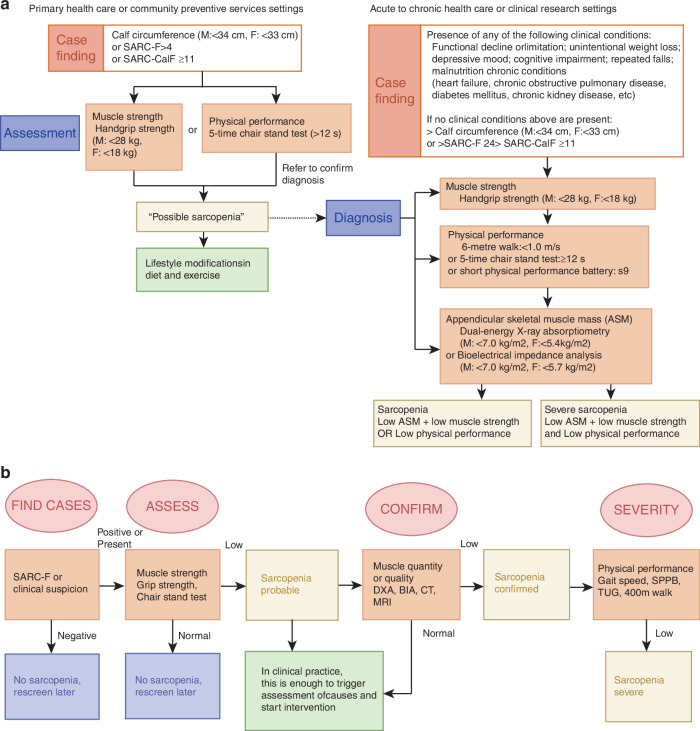
“1,22,77 Moreover, the 2019 Asian Working Group for Sarcopenia (AWGS) guidelines recommend the use of calf circumference (CC) as a screening metric for sarcopenia, setting reference thresholds at 34 cm for men and 33 cm for women.”
Epidemiology of sarcopenia: Prevalence, risk factors, and consequences
Yuan, S., & Larsson, S. C. (2023) · Metabolism · doi:10.1016/j.metabol.2023.155533 · Cited by 1,114
Shafiee, G., Keshtkar, A., Soltani, A., Ahadi, Z., Larijani, B., & Heshmat, R. (2017) · Journal of Diabetes & Metabolic Disorders · doi:10.1186/s40200-017-0302-x · Cited by 1,076
Quadriceps Weakness and Osteoarthritis of the Knee
Slemenda, C., Brandt, K. D., Heilman, D. K., Mazzuca, S., Braunstein, E. M., Katz, B. P., & Wolinsky, F. D. (1997) · Annals of Internal Medicine · doi:10.7326/0003-4819-127-2-199707150-00001 · Cited by 966 · cited 1×
“200 Unlike typical muscle atrophy, which is often characterized by type II fi ber atrophy, the muscle atrophy in osteoarthritis patients shows more uniform fi ber involvement.”
Growth Hormone, Insulin-Like Growth Factors, and the Skeleton
Giustina, A., Mazziotti, G., & Canalis, E. (2008) · Endocrine Reviews · doi:10.1210/er.2007-0036 · Cited by 914 · cited 1×
“178 The GH/IGF-I axis governs muscle cell proliferation, modulates myo fi bril size and fi ber type, promotes osteoblast proliferation and differentiation, inhibits osteoclast activity, and regulates renal 1 α -hydroxylase activity (which activates 25-OH-vitamin D) and phosphate reabsorption.”
Messier, S. P., Mihalko, S. L., Legault, C., Miller, G. D., Nicklas, B. J., DeVita, P., Beavers, D. P., Hunter, D. J., Lyles, M. F., Eckstein, F., et al. (2013) · JAMA · doi:10.1001/jama.2013.277669 · Cited by 873
Sarcopenia in daily practice: assessment and management
Beaudart, C., McCloskey, E., Bruyère, O., Cesari, M., Rolland, Y., Rizzoli, R., Araujo de Carvalho, I., Amuthavalli Thiyagarajan, J., Bautmans, I., Bertière, M.-C., et al. (2016) · BMC Geriatrics · doi:10.1186/s12877-016-0349-4 · Cited by 850 · cited 5×
“1,24 This test has been demonstrated to yield valid, reliable, and effective indicators of lower limb strength, making it a valuable tool in sarcopenia assessment.”
InfluentialCermak, N. M., Res, P. T., de Groot, L. C., Saris, W. H., & van Loon, L. J. (2012) · The American Journal of Clinical Nutrition · doi:10.3945/ajcn.112.037556 · Cited by 827 · cited 1×
“97 In a randomized double-blind controlled trial ( n = 62 male pairs), catechin supplementation alone or resistance training alone demonstrated modest improvements in muscle mass and strength versus placebo.”
Interim Report and Recommendations of the World Health Organization Task-Force for Osteoporosis
Genant, H. K., Cooper, C., Poor, G., Reid, I., Ehrlich, G., Kanis, J., Nordin, B. E. C., Barrett-Connor, E., Black, D., Bonjour, J.-P., et al. (1999) · Osteoporosis International · doi:10.1007/s001980050224 · Cited by 783 · cited 1×
“116,117 Recently, the term “ Osteosarcopenia ” has been introduced to describe the concurrent manifestation of osteopenia or osteoporosis alongside sarcopenia.”
Smith, G. I., Atherton, P., Reeds, D. N., Mohammed, B. S., Rankin, D., Rennie, M. J., & Mittendorfer, B. (2011) · The American Journal of Clinical Nutrition · doi:10.3945/ajcn.110.005611 · Cited by 665 · cited 1×
“92 However, clinical trial evidence has not demonstrated signi fi cant ef fi cacy in attenuating age-related muscle loss.”
Oxidative Stress, Molecular Inflammation and Sarcopenia
Meng, S.-J., & Yu, L.-J. (2010) · International Journal of Molecular Sciences · doi:10.3390/ijms11041509 · Cited by 637
Vitamin D Receptor Expression in Human Muscle Tissue Decreases with Age
Bischoff-Ferrari, H., Borchers, M., Gudat, F., Dürmüller, U., Stähelin, H., & Dick, W. (2004) · Journal of Bone and Mineral Research · doi:10.1359/jbmr.2004.19.2.265 · Cited by 585 · cited 2×
“149 Similarly, extensive experimental studies in animals and human cell models have provided evidence of shared genetic pathways regulating both bone and muscle mass. Genetic polymorphisms in the IGF1 gene 150,155 , myostatin (muscle growth inhibitor) 151 , low-density lipoprotein receptor-related protein 5 (LRP5) 152…”
RANKL biology: bone metabolism, the immune system, and beyond
Ono, T., Hayashi, M., Sasaki, F., & Nakashima, T. (2020) · Inflammation and Regeneration · doi:10.1186/s41232-019-0111-3 · Cited by 578 · cited 1×
“139 This process is mediated through its interaction with the nuclear factor kappa-B (RANK) receptor.”
Perry, C. G. R., Lally, J., Holloway, G. P., Heigenhauser, G. J. F., Bonen, A., & Spriet, L. L. (2010) · The Journal of Physiology · doi:10.1113/jphysiol.2010.199448 · Cited by 559 · cited 1×
“81 82 – 84 A 5-year longitudinal study involving 1 863 older adults (aged 70 – 79) in the United States revealed that sustaining moderate physical activity — de fi ned as at least 150 min of moderate-intensity exercise per week, such as brisk walking — signi fi cantly lowers the risk of developing or…”
Lean Tissue Imaging: A New Era for Nutritional Assessment and Intervention
Prado, C. M. M., & Heymsfield, S. B. (2014) · Journal of Parenteral and Enteral Nutrition · doi:10.1177/0148607114550189 · Cited by 550
Osteosarcopenia: epidemiology, diagnosis, and treatment—facts and numbers
Kirk, B., Zanker, J., & Duque, G. (2020) · Journal of Cachexia, Sarcopenia and Muscle · doi:10.1002/jcsm.12567 · Cited by 529 · cited 2×
“121 Mechanistic studies reveal that resistance training speci fi cally elevates serum levels of procollagen type 1 N-terminal peptide (P1NP), a biomarker of bone formation, while simultaneously increasing osteoblast proliferation without corresponding elevation in bone resorption markers.”
Beaudart, C., Rolland, Y., Cruz-Jentoft, A. J., Bauer, J. M., Sieber, C., Cooper, C., Al-Daghri, N., Araujo de Carvalho, I., Bautmans, I., Bernabei, R., et al. (2019) · Calcified Tissue International · doi:10.1007/s00223-019-00545-w · Cited by 528
Osteosarcopenia: where bone, muscle, and fat collide
Hirschfeld, H. P., Kinsella, R., & Duque, G. (2017) · Osteoporosis International · doi:10.1007/s00198-017-4151-8 · Cited by 527
Derstine, B. A., Holcombe, S. A., Ross, B. E., Wang, N. C., Su, G. L., & Wang, S. C. (2018) · Scientific Reports · doi:10.1038/s41598-018-29825-5 · Cited by 507 · cited 2×
“37 Additionally, Brian A. Derstine and colleagues evaluated skeletal muscle mass across vertebral levels from T10 to L5.”
Does nutrition play a role in the prevention and management of sarcopenia?
Robinson, S. M., Reginster, J. Y., Rizzoli, R., Shaw, S. C., Kanis, J. A., Bautmans, I., Bischoff-Ferrari, H., Bruyère, O., Cesari, M., Dawson-Hughes, B., et al. (2018) · Clinical Nutrition · doi:10.1016/j.clnu.2017.08.016 · Cited by 491 · cited 1×
“87 Dietary protein provides essential amino acids necessary for muscle protein synthesis.”
Correa-de-Araujo, R., Addison, O., Miljkovic, I., Goodpaster, B. H., Bergman, B. C., Clark, R. V., Elena, J. W., Esser, K. A., Ferrucci, L., Harris-Love, M. O., et al. (2020) · Frontiers in Physiology · doi:10.3389/fphys.2020.00963 · Cited by 468
Sergi, G., De Rui, M., Veronese, N., Bolzetta, F., Berton, L., Carraro, S., Bano, G., Coin, A., Manzato, E., & Perissinotto, E. (2015) · Clinical Nutrition · doi:10.1016/j.clnu.2014.07.010 · Cited by 467
Exercise for sarcopenia in older people: A systematic review and network meta‐analysis
Shen, Y., Shi, Q., Nong, K., Li, S., Yue, J., Huang, J., Dong, B., Beauchamp, M., & Hao, Q. (2023) · Journal of Cachexia, Sarcopenia and Muscle · doi:10.1002/jcsm.13225 · Cited by 464 · cited 2×
“78 Studies have demonstrated that resistance exercise stimulates muscle protein synthesis, thereby promoting hypertrophy, increasing muscle strength, and enhancing physical performance.”
Shepherd, J. A., Ng, B. K., Sommer, M. J., & Heymsfield, S. B. (2017) · Bone · doi:10.1016/j.bone.2017.06.010 · Cited by 460 · cited 1×
“26,28 In clinical practice, dual-energy X-ray absorptiometry (DXA) typically measures appendicular skeletal muscle mass (ASM), calculated as the sum of lean muscle mass in both upper and lower extremities.”
A Review of Sarcopenia Pathophysiology, Diagnosis, Treatment and Future Direction
Cho, M.-R., Lee, S., & Song, S.-K. (2022) · Journal of Korean Medical Science · doi:10.3346/jkms.2022.37.e146 · Cited by 401 · cited 1×
“100,101 Vitamin D plays a critical role in regulating bone metabolism, particularly in maintaining phosphorus and calcium homeostasis.”
Imaging of sarcopenia: old evidence and new insights
Albano, D., Messina, C., Vitale, J., & Sconfienza, L. M. (2020) · European Radiology · doi:10.1007/s00330-019-06573-2 · Cited by 400 · cited 3×
“27 34 There are two common methods for muscle mass assessment: one measures the combined cross-sectional area of the paraspinal, psoas major, and abdominal muscles in a single abdominal CT slice at the L3 level, while the other assesses the bilateral psoas major muscles at the L3 and L4 vertebral…”
Joseph, A., Adhihetty, P. J., Buford, T. W., Wohlgemuth, S. E., Lees, H. A., Nguyen, L. M. ‐., Aranda, J. M., Sandesara, B. D., Pahor, M., Manini, T. M., et al. (2012) · Aging Cell · doi:10.1111/j.1474-9726.2012.00844.x · Cited by 395
The Effectiveness of Physical Exercise on Bone Density in Osteoporotic Patients
Benedetti, M. G., Furlini, G., Zati, A., & Letizia Mauro, G. (2018) · BioMed Research International · doi:10.1155/2018/4840531 · Cited by 395 · cited 1×
“170 Resistance exercise (RE) is considered one of the most effective strategies for mitigating osteomuscular degeneration.”
Approaches to Assessment of Muscle Mass and Myosteatosis on Computed Tomography: A Systematic Review
Amini, B., Boyle, S. P., Boutin, R. D., & Lenchik, L. (2019) · The Journals of Gerontology: Series A · doi:10.1093/gerona/glz034 · Cited by 391 · cited 5×
“35 However, given variations in the precise anatomical de fi nitions across different studies, further research is warranted to evaluate the impact of measurement site variations on muscle mass indices (SMI) and indicators of myopathy, such as muscle area (MA), intermuscular adipose tissue (IMAT),…”
InfluentialMuscle and bone, two interconnected tissues
Tagliaferri, C., Wittrant, Y., Davicco, M.-J., Walrand, S., & Coxam, V. (2015) · Ageing Research Reviews · doi:10.1016/j.arr.2015.03.002 · Cited by 390 · cited 2×
“135 – 138 Conversely, prostaglandin E2 (PGE2) and Wnt3a, secreted by osteoblasts, along with osteocalcin (OCN) and IGF-1 from osteoclasts, and sclerostin from both cell types, may regulate skeletal muscle cells.”
Myostatin antibody (LY2495655) in older weak fallers: a proof-of-concept, randomised, phase 2 trial
Becker, C., Lord, S. R., Studenski, S. A., Warden, S. J., Fielding, R. A., Recknor, C. P., Hochberg, M. C., Ferrari, S. L., Blain, H., Binder, E. F., et al. (2015) · The Lancet Diabetes & Endocrinology · doi:10.1016/s2213-8587(15)00298-3 · Cited by 381
Dubé, J. J., Amati, F., Stefanovic-Racic, M., Toledo, F. G. S., Sauers, S. E., & Goodpaster, B. H. (2008) · American Journal of Physiology-Endocrinology and Metabolism · doi:10.1152/ajpendo.00769.2007 · Cited by 378
Determinants of Muscle and Bone Aging
Curtis, E., Litwic, A., Cooper, C., & Dennison, E. (2015) · Journal of Cellular Physiology · doi:10.1002/jcp.25001 · Cited by 375 · cited 2×
“176 The European Society for Clinical and Economic Aspects of Osteoporosis, Osteoarthritis, and Musculoskeletal Diseases (ESCEO) 177 advises a daily intake of 800 IU of vitamin D for postmenopausal women, aiming to maintain 25(OH)D levels above 50 nmol/L. Pharmacotherapy .”
Wnt/β-catenin signaling components and mechanisms in bone formation, homeostasis, and disease
Hu, L., Chen, W., Qian, A., & Li, Y.-P. (2024) · Bone Research · doi:10.1038/s41413-024-00342-8 · Cited by 359 · cited 1×
“145 In addition, The Wnt/ β -catenin signaling pathway plays a crucial role in skeletal muscle development, growth, and regeneration, while simultaneously suppressing intramuscular adipogenesis.”
Burt, L. A., Billington, E. O., Rose, M. S., Raymond, D. A., Hanley, D. A., & Boyd, S. K. (2019) · JAMA · doi:10.1001/jama.2019.11889 · Cited by 330
Application of ultrasound for muscle assessment in sarcopenia: 2020 SARCUS update
Perkisas, S., Bastijns, S., Baudry, S., Bauer, J., Beaudart, C., Beckwée, D., Cruz-Jentoft, A., Gasowski, J., Hobbelen, H., Jager-Wittenaar, H., et al. (2021) · European Geriatric Medicine · doi:10.1007/s41999-020-00433-9 · Cited by 329 · cited 2×
“50,51 Studies have demonstrated that the use of US to assess muscle thickness and volume yields results that are not signi fi cantly different from those obtained via MRI.”
Schweitzer, L., Geisler, C., Pourhassan, M., Braun, W., Glüer, C.-C., Bosy-Westphal, A., & Müller, M. J. (2015) · The American Journal of Clinical Nutrition · doi:10.3945/ajcn.115.111203 · Cited by 324 · cited 1×
“48 The Dixon sequence is highly effective at separating fat from water, providing an accurate quantitative assessment of sarcopenia.”
Sarcopenia: Current Concepts and Imaging Implications
Boutin, R. D., Yao, L., Canter, R. J., & Lenchik, L. (2015) · American Journal of Roentgenology · doi:10.2214/ajr.15.14635 · Cited by 323
Measurement of muscle mass in sarcopenia: from imaging to biochemical markers
Tosato, M., Marzetti, E., Cesari, M., Savera, G., Miller, R. R., Bernabei, R., Landi, F., & Calvani, R. (2017) · Aging Clinical and Experimental Research · doi:10.1007/s40520-016-0717-0 · Cited by 320 · cited 1×
“47 Studies have indicated that the lumbar L3 vertebral level is optimal for assessing total tissue volume of skeletal muscle (SM), visceral adipose tissue (VAT), and subcutaneous adipose tissue (SAT), whereas mid-thigh muscle measurements show a stronger correlation with total body muscle volume…”
Sinha-Hikim, I., Cornford, M., Gaytan, H., Lee, M. L., & Bhasin, S. (2006) · The Journal of Clinical Endocrinology & Metabolism · doi:10.1210/jc.2006-0357 · Cited by 318
RANKL inhibition improves muscle strength and insulin sensitivity and restores bone mass
Bonnet, N., Bourgoin, L., Biver, E., Douni, E., & Ferrari, S. (2019) · Journal of Clinical Investigation · doi:10.1172/jci125915 · Cited by 314 · cited 1×
“142 Additionally, RANKL blockade downregulates the expression of negative regulators of myogenesis (e.g., myostatin) and pro-in fl ammatory mediators (e.g., protein tyrosine phosphatase receptor-γ , PTPR γ ) in skeletal muscle.”
Wnt signaling and cellular metabolism in osteoblasts
Karner, C. M., & Long, F. (2017) · Cellular and Molecular Life Sciences · doi:10.1007/s00018-016-2425-5 · Cited by 295
BUCKWALTER, J., & MARTIN, J. (2006) · Advanced Drug Delivery Reviews · doi:10.1016/j.addr.2006.01.006 · Cited by 283
Phase angle and mortality: a systematic review
Garlini, L. M., Alves, F. D., Ceretta, L. B., Perry, I. S., Souza, G. C., & Clausell, N. O. (2019) · European Journal of Clinical Nutrition · doi:10.1038/s41430-018-0159-1 · Cited by 277 · cited 1×
“65,66 PhA has been found to negatively correlate with muscle mass and strength in older adults, suggesting it could serve as a valuable bioelectrical marker for assessing sarcopenia risk.”
Bioelectrical impedance analysis (BIA) -derived phase angle in sarcopenia: A systematic review
Di Vincenzo, O., Marra, M., Di Gregorio, A., Pasanisi, F., & Scalfi, L. (2021) · Clinical Nutrition · doi:10.1016/j.clnu.2020.10.048 · Cited by 269 · cited 1×
“65,66 PhA has been found to negatively correlate with muscle mass and strength in older adults, suggesting it could serve as a valuable bioelectrical marker for assessing sarcopenia risk.”
Osteosarcopenia: where osteoporosis and sarcopenia collide
Clynes, M. A., Gregson, C. L., Bruyère, O., Cooper, C., & Dennison, E. M. (2021) · Rheumatology · doi:10.1093/rheumatology/keaa755 · Cited by 268
Sarcopenia: how to measure, when and why
Tagliafico, A. S., Bignotti, B., Torri, L., & Rossi, F. (2022) · La radiologia medica · doi:10.1007/s11547-022-01450-3 · Cited by 268
Phenotype of Osteosarcopenia in Older Individuals With a History of Falling
Huo, Y. R., Suriyaarachchi, P., Gomez, F., Curcio, C. L., Boersma, D., Muir, S. W., Montero-Odasso, M., Gunawardene, P., Demontiero, O., & Duque, G. (2015) · Journal of the American Medical Directors Association · doi:10.1016/j.jamda.2014.10.018 · Cited by 264
Geng, T., Li, P., Okutsu, M., Yin, X., Kwek, J., Zhang, M., & Yan, Z. (2010) · American Journal of Physiology-Cell Physiology · doi:10.1152/ajpcell.00481.2009 · Cited by 263
Vikberg, S., Sörlén, N., Brandén, L., Johansson, J., Nordström, A., Hult, A., & Nordström, P. (2019) · Journal of the American Medical Directors Association · doi:10.1016/j.jamda.2018.09.011 · Cited by 261 · cited 1×
“79,80 Furthermore, maintaining suf fi cient physical activity can prevent or mitigate muscle loss by preserving insulin sensitivity and augmenting mitochondrial function.”
Langlois, J. A., Rosen, C. J., Visser, M., Hannan, M. T., Harris, T., Wilson, P. W. F., & Kiel, D. P. (1998) · The Journal of Clinical Endocrinology & Metabolism · doi:10.1210/jcem.83.12.5308 · Cited by 255 · cited 2×
“…human cell models have provided evidence of shared genetic pathways regulating both bone and muscle mass. Genetic polymorphisms in the IGF1 gene 150,155 , myostatin (muscle growth inhibitor) 151 , low-density lipoprotein receptor-related protein 5 (LRP5) 152 , and the vitamin D receptor (VDR)…”
Uitterlinden, A. G., Ralston, S. H., Brandi, M. L., Carey, A. H., Grinberg, D., Langdahl, B. L., Lips, P., Lorenc, R., Obermayer-Pietsch, B., Reeve, J., et al. (2006) · Annals of Internal Medicine · doi:10.7326/0003-4819-145-4-200608150-00005 · Cited by 252 · cited 1×
“…genetic pathways regulating both bone and muscle mass. Genetic polymorphisms in the IGF1 gene 150,155 , myostatin (muscle growth inhibitor) 151 , low-density lipoprotein receptor-related protein 5 (LRP5) 152 , and the vitamin D receptor (VDR) 153,154 have been linked to both bone and muscle loss.”
Myostatin (GDF-8) as a key factor linking muscle mass and bone structure.
Elkasrawy, M., & Hamrick, M. W. (2010) · PubMed · Cited by 251
Ferrari, S. L., Deutsch, S., Choudhury, U., Chevalley, T., Bonjour, J.-P., Dermitzakis, E. T., Rizzoli, R., & Antonarakis, S. E. (2004) · The American Journal of Human Genetics · doi:10.1086/420771 · Cited by 248 · cited 7×
“As a coreceptor in the Wnt signaling pathway, LRP5 plays a pivotal role in mechanotransduction by converting mechanical loading into osteogenic responses through Wnt pathway activation.”
Influential40 YEARS OF IGF1: Insulin-like growth factors: actions on the skeleton
Yakar, S., Werner, H., & Rosen, C. J. (2018) · Journal of Molecular Endocrinology · doi:10.1530/jme-17-0298 · Cited by 232 · cited 1×
“157,158 IGF-1 exerts potent mitogenic and differentiation-promoting effects on both osteoblasts and myocytes, with particularly signi fi cant actions on muscle satellite cells.”
Chou, M.-Y., Nishita, Y., Nakagawa, T., Tange, C., Tomida, M., Shimokata, H., Otsuka, R., Chen, L.-K., & Arai, H. (2019) · BMC Geriatrics · doi:10.1186/s12877-019-1199-7 · Cited by 232 · cited 1×
“72,73 The Short Physical Performance Battery (SPPB) provides an objective and comprehensive assessment of lower extremity function in older adults, incorporating evaluations of gait speed, balance, and the ability to perform chair stands.”
Molecular Mechanisms of Inflammation in Sarcopenia: Diagnosis and Therapeutic Update
Jimenez-Gutierrez, G. E., Martínez-Gómez, L. E., Martínez-Armenta, C., Pineda, C., Martínez-Nava, G. A., & Lopez-Reyes, A. (2022) · Cells · doi:10.3390/cells11152359 · Cited by 231
Muscle weakness, afferent sensory dysfunction and exercise in knee osteoarthritis
Roos, E. M., Herzog, W., Block, J. A., & Bennell, K. L. (2011) · Nature Reviews Rheumatology · doi:10.1038/nrrheum.2010.195 · Cited by 230 · cited 1×
“194 The prevalence of sarcopenia (45.2”
InfluentialInteractions Between Muscle Tissues and Bone Metabolism: INTERACTIONS BETWEEN MUSCLE AND BONE
Kawao, N., & Kaji, H. (2015) · Journal of Cellular Biochemistry · doi:10.1002/jcb.25040 · Cited by 228
Comparison of MRI and DXA to measure muscle size and age-related atrophy in thigh muscles.
Maden‐Wilkinson, T., Degens, H., Jones, D. A., & McPhee, J. S. (2013) · PubMed · Cited by 225
Aberrant mitochondrial homeostasis in the skeletal muscle of sedentary older adults
Safdar, A., Hamadeh, M. J., Kaczor, J. J., Raha, S., deBeer, J., & Tarnopolsky, M. A. (2010) · PLoS ONE · doi:10.1371/journal.pone.0010778 · Cited by 217
Risk of knee osteoarthritis with obesity, sarcopenic obesity, and sarcopenia
Misra, D., Fielding, R. A., Felson, D. T., Niu, J., Brown, C., Nevitt, M., Lewis, C. E., Torner, J., Neogi, T., & study, T. M. (2019) · Arthritis & Rheumatology · doi:10.1002/art.40692 · Cited by 209 · cited 1×
“197 Alternatively, it only demonstrates a correlation between knee osteoarthritis and high fat mass combined with low lower limb muscle mass in female patients, with no such evidence found in male OA patients.”
Future lines of research on phase angle: Strengths and limitations
Bellido, D., García-García, C., Talluri, A., Lukaski, H. C., & García-Almeida, J. M. (2023) · Reviews in Endocrine and Metabolic Disorders · doi:10.1007/s11154-023-09803-7 · Cited by 209 · cited 1×
“69 The evaluation of physical functioning Physical function, as de fi ned by the European Society for Clinical and Economic Aspects of Osteoporosis and Osteoarthritis (ESCEO), 70 refers to “ an objectively quanti fi ed measure of whole-body performance pertaining to mobility ” .”
Sarcopenia: imaging assessment and clinical application
Chianca, V., Albano, D., Messina, C., Gitto, S., Ruffo, G., Guarino, S., Del Grande, F., & Sconfienza, L. M. (2021) · Abdominal Radiology · doi:10.1007/s00261-021-03294-3 · Cited by 206 · cited 4×
“27 34 There are two common methods for muscle mass assessment: one measures the combined cross-sectional area of the paraspinal, psoas major, and abdominal muscles in a single abdominal CT slice at the L3 level, while the other assesses the bilateral psoas major muscles at the L3 and L4 vertebral…”
InfluentialMohler, M. L., Bohl, C. E., Jones, A., Coss, C. C., Narayanan, R., He, Y., Hwang, D. J., Dalton, J. T., & Miller, D. D. (2009) · Journal of Medicinal Chemistry · doi:10.1021/jm900280m · Cited by 205
Yoshimura, N., Muraki, S., Oka, H., Iidaka, T., Kodama, R., Kawaguchi, H., Nakamura, K., Tanaka, S., & Akune, T. (2017) · Osteoporosis International · doi:10.1007/s00198-016-3823-0 · Cited by 201
Current and investigational medications for the treatment of sarcopenia
Rolland, Y., Dray, C., Vellas, B., & Barreto, P. D. S. (2023) · Metabolism · doi:10.1016/j.metabol.2023.155597 · Cited by 195 · cited 3×
“100,101 Vitamin D plays a critical role in regulating bone metabolism, particularly in maintaining phosphorus and calcium homeostasis.”
Muscle force regulates bone shaping for optimal load-bearing capacity during embryogenesis
Sharir, A., Stern, T., Rot, C., Shahar, R., & Zelzer, E. (2011) · Development · doi:10.1242/dev.063768 · Cited by 193
Measuring leg muscle and fat mass in humans: comparison of CT and dual-energy X-ray absorptiometry
Levine, J. A., Abboud, L., Barry, M., Reed, J. E., Sheedy, P. F., & Jensen, M. D. (2000) · Journal of Applied Physiology · doi:10.1152/jappl.2000.88.2.452 · Cited by 192 · cited 1×
“30,31 CT .”
Yamada, Y., Nishizawa, M., Uchiyama, T., Kasahara, Y., Shindo, M., Miyachi, M., & Tanaka, S. (2017) · International Journal of Environmental Research and Public Health · doi:10.3390/ijerph14070809 · Cited by 190 · cited 2×
“60 However, the impact of ethnic variability on these equations remains unresolved.”
Aleixo, G. F. P., Shachar, S. S., Nyrop, K. A., Muss, H. B., Battaglini, C. L., & Williams, G. R. (2020) · The Oncologist · doi:10.1634/theoncologist.2019-0600 · Cited by 180 · cited 2×
“55,56 BIA is simple, affordable, widely accessible, and portable, and has been endorsed by both Asian and European guidelines as an effective tool for assessing muscle mass in sarcopenia.”
Osteosarcopenia in Patients with Hip Fracture Is Related with High Mortality
Yoo, J.-I., Kim, H., Ha, Y.-C., Kwon, H.-B., & Koo, K.-H. (2018) · Journal of Korean Medical Science · doi:10.3346/jkms.2018.33.e27 · Cited by 178
Role of IGF-I signaling in muscle bone interactions
Bikle, D. D., Tahimic, C., Chang, W., Wang, Y., Philippou, A., & Barton, E. R. (2015) · Bone · doi:10.1016/j.bone.2015.04.036 · Cited by 176 · cited 1×
“159 These mechanisms underlie IGF-1 ’ s direct anabolic effects on skeletal muscle and bone tissue.”
Osteosarcopenia: A case of geroscience
Kirk, B., Al Saedi, A., & Duque, G. (2019) · AGING MEDICINE · doi:10.1002/agm2.12080 · Cited by 174 · cited 1×
“120,121 A multitude of clinical studies have con fi rmed a robust association between sarcopenia and osteoporosis.”
Role of Wnt signaling and sclerostin in bone and as therapeutic targets in skeletal disorders
Marini, F., Giusti, F., Palmini, G., & Brandi, M. L. (2022) · Osteoporosis International · doi:10.1007/s00198-022-06523-7 · Cited by 174 · cited 1×
“143 Emerging evidence demonstrates that Wnt-mediated signaling plays an essential role in modulating osteoblast metabolism, including the stimulation of aerobic glycolysis, glutamine catabolism, and fatty acid oxidation.”
Phase angle as bioelectrical marker to identify elderly patients at risk of sarcopenia
Basile, C., Della-Morte, D., Cacciatore, F., Gargiulo, G., Galizia, G., Roselli, M., Curcio, F., Bonaduce, D., & Abete, P. (2014) · Experimental Gerontology · doi:10.1016/j.exger.2014.07.009 · Cited by 173
Quantitative imaging techniques for the assessment of osteoporosis and sarcopenia
Guerri, S., Mercatelli, D., Aparisi Gómez, M. P., Napoli, A., Battista, G., Guglielmi, G., & Bazzocchi, A. (2018) · Quantitative Imaging in Medicine and Surgery · doi:10.21037/qims.2018.01.05 · Cited by 169 · cited 4×
“24,26 Muscle mass may be expressed as skeletal muscle mass (SMM), appendicular skeletal mass (ASM), or the cross-sectional area of speci fi c muscle groups or anatomical regions.”
InfluentialMuscle–bone interactions: basic and clinical aspects
Cianferotti, L., & Brandi, M. L. (2014) · Endocrine · doi:10.1007/s12020-013-0026-8 · Cited by 167 · cited 1×
“135 – 138 Conversely, prostaglandin E2 (PGE2) and Wnt3a, secreted by osteoblasts, along with osteocalcin (OCN) and IGF-1 from osteoclasts, and sclerostin from both cell types, may regulate skeletal muscle cells.”
Muscle‐bone crosstalk and potential therapies for sarco‐osteoporosis
Li, G., Zhang, L., Wang, D., AIQudsy, L., Jiang, J. X., Xu, H., & Shang, P. (2019) · Journal of Cellular Biochemistry · doi:10.1002/jcb.28946 · Cited by 166 · cited 1×
“185 Emerging evidence suggests that select anabolic agents, including myostatin inhibitors, can simultaneously enhance muscle and bone mass. 186 Notably, the soluble activin type IIB receptor (ActRIIB-Fc) demonstrated signi fi cant ef fi cacy in a murine muscular atrophy model, increasing both…”
Self-citationHodges, P. W., James, G., Blomster, L. V., Hall, L., Schmid, A. B., Shu, C. C., Little, C. B., & Melrose, J. (2015) · Spine · doi:10.1097/brs.0000000000000972 · Cited by 164
Degenerative spondylolisthesis
Fitzgerald, J., & Newman, P. (1976) · The Journal of Bone and Joint Surgery. British volume · doi:10.1302/0301-620x.58b2.932080 · Cited by 164
Chen, L., Arai, H., Assantachai, P., Akishita, M., Chew, S. T. H., Dumlao, L. C., Duque, G., & Woo, J. (2022) · Journal of Cachexia, Sarcopenia and Muscle · doi:10.1002/jcsm.12981 · Cited by 158
Wu, H., Xia, Y., Jiang, J., Du, H., Guo, X., Liu, X., Li, C., Huang, G., & Niu, K. (2015) · Archives of Gerontology and Geriatrics · doi:10.1016/j.archger.2015.06.020 · Cited by 157 · cited 1×
“91 Omega-3 polyunsaturated fatty acids (PUFAs) enhance muscle protein synthesis in older adults through mTOR pathway activation and exhibit anti-in fl ammatory properties.”
Cheng, K. Y., Chow, S. K., Hung, V. W., Wong, C. H., Wong, R. M., Tsang, C. S., Kwok, T., & Cheung, W. (2021) · Journal of Cachexia Sarcopenia and Muscle · doi:10.1002/jcsm.12825 · Cited by 154
Mechanoflammation in osteoarthritis pathogenesis
Vincent, T. L. (2019) · Seminars in Arthritis and Rheumatism · doi:10.1016/j.semarthrit.2019.09.018 · Cited by 148
Chen, S., Xu, X., Gong, H., Chen, R., Guan, L., Yan, X., Zhou, L., Yang, Y., Wang, J., Zhou, J., et al. (2023) · Journal of Cachexia Sarcopenia and Muscle · doi:10.1002/jcsm.13392 · Cited by 148
Targeting the myostatin signaling pathway to treat muscle loss and metabolic dysfunction
Lee, S.-J. (2021) · Journal of Clinical Investigation · doi:10.1172/jci148372 · Cited by 143
Lumbar multifidus muscle degenerates in individuals with chronic degenerative lumbar spine pathology
Shahidi, B., Hubbard, J. C., Gibbons, M. C., Ruoss, S., Zlomislic, V., Allen, R. T., Garfin, S. R., & Ward, S. R. (2017) · Journal of Orthopaedic Research® · doi:10.1002/jor.23597 · Cited by 140
van de Weijer, T., Phielix, E., Bilet, L., Williams, E. G., Ropelle, E. R., Bierwagen, A., Livingstone, R., Nowotny, P., Sparks, L. M., Paglialunga, S., et al. (2015) · Diabetes · doi:10.2337/db14-0667 · Cited by 139
Zhao, W.-P., Kawaguchi, Y., Matsui, H., Kanamori, M., & Kimura, T. (2000) · Spine · doi:10.1097/00007632-200009010-00009 · Cited by 138
Developing bones are differentially affected by compromised skeletal muscle formation
Nowlan, N. C., Bourdon, C., Dumas, G., Tajbakhsh, S., Prendergast, P. J., & Murphy, P. (2010) · Bone · doi:10.1016/j.bone.2009.11.026 · Cited by 138
Osteosarcopenia: A Narrative Review on Clinical Studies
Polito, A., Barnaba, L., Ciarapica, D., & Azzini, E. (2022) · International Journal of Molecular Sciences · doi:10.3390/ijms23105591 · Cited by 138
Prokopidis, K., Giannos, P., Katsikas Triantafyllidis, K., Kechagias, K. S., Mesinovic, J., Witard, O. C., & Scott, D. (2022) · Journal of Cachexia, Sarcopenia and Muscle · doi:10.1002/jcsm.12976 · Cited by 135 · cited 1×
“103 Compared with placebo, vitamin D monotherapy demonstrated no signi fi cant improvement in grip strength (HGS), gait speed (assessed by timed up-and-go test, TUG), appendicular lean mass (ALM), overall muscle strength, or physical performance in older adults.”
Steelman, C. A., Recknor, J. C., Nettleton, D., & Reecy, J. M. (2006) · The FASEB Journal · doi:10.1096/fj.05-5125fje · Cited by 129
Asymmetric Degeneration of Paravertebral Muscles in Patients With Degenerative Lumbar Scoliosis
Shafaq, N., Suzuki, A., Matsumura, A., Terai, H., Toyoda, H., Yasuda, H., Ibrahim, M., & Nakamura, H. (2012) · Spine · doi:10.1097/brs.0b013e31824c767e · Cited by 127 · cited 2×
“74 The Timed-Up and Go (TUG) test, another widely used tool for assessing physical function in community-dwelling older adults, has been validated as a reliable and effective measure of functional mobility.”
Diagnostic Criteria and Clinical Outcomes in Sarcopenia Research: A Literature Review
Han, A., Bokshan, S., Marcaccio, S., DePasse, J., & Daniels, A. (2018) · Journal of Clinical Medicine · doi:10.3390/jcm7040070 · Cited by 126
Csapo, R., Malis, V., Sinha, U., Du, J., & Sinha, S. (2014) · BMC Musculoskeletal Disorders · doi:10.1186/1471-2474-15-209 · Cited by 125 · cited 2×
“45,46 One of the key strengths of MRI is its ability to detect both compositional and structural changes in skeletal muscle associated with aging and disease progression, including decreased muscle contractility accompanied by increased intramuscular adipose (IMAT) and connective tissues (IMCT).”
Macdonald, H. M., Reid, I. R., Gamble, G. D., Fraser, W. D., Tang, J. C., & Wood, A. D. (2018) · Journal of Bone and Mineral Research · doi:10.1002/jbmr.3442 · Cited by 122 · cited 1×
“Research indicates that vitamin D supplementation improves bone mineral density (BMD) exclusively in individuals with 25-hydroxyvitamin D [25(OH)D] levels below 30 nmol/L. 174 Notably, high-dose supplementation (>4 000 IU/day) may para-doxically increase fall and fracture risks.”
Reliability and Validity of Panoramic Ultrasound for Muscle Quantification
Scott, J. M., Martin, D. S., Ploutz-Snyder, R. J., Caine, T., Matz, T., Arzeno, N. M., Buxton, R., & Ploutz‐Snyder, L. L. (2012) · Ultrasound in Medicine & Biology · doi:10.1016/j.ultrasmedbio.2012.04.018 · Cited by 120
Genetics of the Musculoskeletal System: A Pleiotropic Approach
Karasik, D., & Kiel, D. P. (2008) · Journal of Bone and Mineral Research · doi:10.1359/jbmr.080218 · Cited by 117 · cited 3×
“149 Despite their independent development, muscle and bone form secondary relationships through mutual attachment and exhibit a high degree of reciprocal regulation.”
Fischer, M. A., Pfirrmann, C. W. A., Espinosa, N., Raptis, D. A., & Buck, F. M. (2014) · European Radiology · doi:10.1007/s00330-014-3121-1 · Cited by 112 · cited 1×
“45,46 One of the key strengths of MRI is its ability to detect both compositional and structural changes in skeletal muscle associated with aging and disease progression, including decreased muscle contractility accompanied by increased intramuscular adipose (IMAT) and connective tissues (IMCT).”
Engelke, K., Chaudry, O., Gast, L. V., Eldib, M., Wang, L., Larédo, J.-D., Schett, G. A., & Nagel, A. M. (2023) · Journal of Orthopaedic Translation · doi:10.1016/j.jot.2023.07.005 · Cited by 111 · cited 2×
“…T1-weighted imaging, Dixon sequences, T2 mapping (T2 relaxation times), diffusion-weighted imaging (DWI), and non-proton MRI, can be applied for a multifaceted evaluation of muscle mass. 29,49 However, the current use of these advanced sequences remains predominantly in the realm of research.”
Therapies for Musculoskeletal Disease: Can we Treat Two Birds with One Stone?
Girgis, C. M., Mokbel, N., & DiGirolamo, D. J. (2014) · Current Osteoporosis Reports · doi:10.1007/s11914-014-0204-5 · Cited by 110 · cited 4×
“129 The receptor activator of nuclear factor kappa-B ligand (RANKL) plays a pivotal role in physiological bone remodeling and osteoclast formation, as well as in the activation of osteoclasts under pathological conditions.”
InfluentialA myostatin and activin decoy receptor enhances bone formation in mice
Bialek, P., Parkington, J., Li, X., Gavin, D., Wallace, C., Zhang, J., Root, A., Yan, G., Warner, L., Seeherman, H. J., et al. (2014) · Bone · doi:10.1016/j.bone.2013.12.002 · Cited by 110 · cited 1×
“187 Mechanistic analysis revealed that the osteogenic effects of ActRIIB-Fc were activity-independent, with no correlation observed between bone mass changes and potential alterations in murine locomotor behavior.”
Rosen, C. J., Ackert‐Bicknell, C. L., Adamo, M. L., Shultz, K. L., Rubin, J. E., Donahue, L. R., Horton, L. G., Delahunty, K. M., Beamer, W. G., Sipos, J. A., et al. (2004) · Bone · doi:10.1016/j.bone.2004.07.008 · Cited by 110 · cited 1×
“…and human cell models have provided evidence of shared genetic pathways regulating both bone and muscle mass. Genetic polymorphisms in the IGF1 gene 150,155 , myostatin (muscle growth inhibitor) 151 , low-density lipoprotein receptor-related protein 5 (LRP5) 152 , and the vitamin D receptor (VDR)…”
Evidence for pleiotropic factors in genetics of the musculoskeletal system
Karasik, D., & Kiel, D. P. (2010) · Bone · doi:10.1016/j.bone.2010.01.382 · Cited by 109 · cited 2×
“119,126 129 Numerous studies have demonstrated a strong association between the loss of muscle and bone mass and the aging process.”
Sarcopenia: Diagnosis and Management, State of the Art and Contribution of Ultrasound
Giovannini, S., Brau, F., Forino, R., Berti, A., D’Ignazio, F., Loreti, C., Bellieni, A., D’Angelo, E., Caro, F. D., Biscotti, L., et al. (2021) · Journal of Clinical Medicine · doi:10.3390/jcm10235552 · Cited by 108 · cited 2×
“50,51 Studies have demonstrated that the use of US to assess muscle thickness and volume yields results that are not signi fi cantly different from those obtained via MRI.”
The prevalence and impact of sarcopenia on degenerative lumbar spinal stenosis
Park, S., Kim, H. J., Ko, B., Chung, J. W., Kim, S.-T., Park, S.-H., Lee, M., & Yeom, J. S. (2016) · The Bone & Joint Journal · doi:10.1302/0301-620x.98b8.37623 · Cited by 106
Sarcopenia as a Risk Factor for Prosthetic Infection After Total Hip or Knee Arthroplasty
Babu, J., Kalagara, S., Durand, W. M., Antoci, V., Deren, M. E., & Cohen, E. M. (2018) · The Journal of Arthroplasty · doi:10.1016/j.arth.2018.09.037 · Cited by 104 · cited 3×
“165 And a newly discovered locus, 17p11.”
InfluentialBrooks, N., Cloutier, G. J., Cadena, S. M., Layne, J. E., Nelsen, C. A., Freed, A. M., Roubenoff, R., & Castaneda-Sceppa, C. (2008) · Journal of Applied Physiology · doi:10.1152/japplphysiol.01346.2007 · Cited by 102
Sarcopenia and Diabetes: A Detrimental Liaison of Advancing Age
Lisco, G., Disoteo, O. E., De Tullio, A., De Geronimo, V., Giagulli, V. A., Monzani, F., Jirillo, E., Cozzi, R., Guastamacchia, E., De Pergola, G., et al. (2023) · Nutrients · doi:10.3390/nu16010063 · Cited by 101 · cited 1×
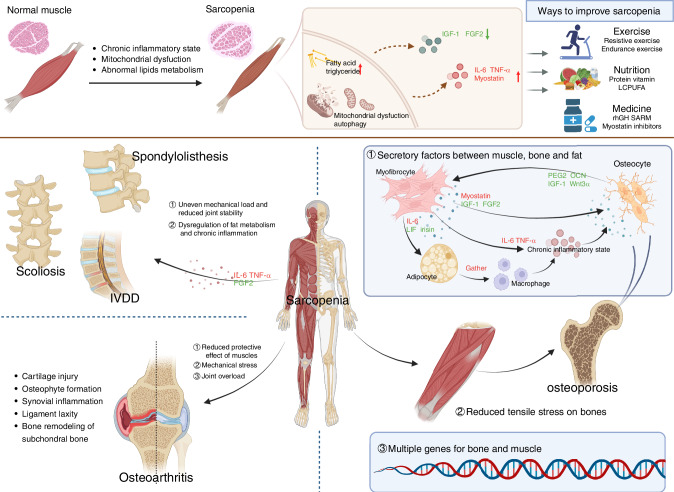
“11,12 Notably, several pathogenic mechanisms contributing to sarcopenia share common features with degenerative musculoskeletal disorders, including chronic low-grade in fl ammation, mitochondrial dysfunction, ectopic fat deposition, and metabolic dysregulation.”
Kim, H., Lee, C., Yeom, J. S., Lee, J. H., Cho, J. H., Shin, S. I., Lee, H.-J., & Chang, B. (2013) · European Spine Journal · doi:10.1007/s00586-013-2740-6 · Cited by 100 · cited 2×
“166,167 miRNAs expressed by TOM1L2 are implicated in osteogenic differentiation and skeletal muscle development, 168,169 although the speci fi c role of this gene in the musculoskeletal system remains to be clari fi ed.”
Bosaeus, I. G., Wilcox, G., Rothenberg, E. M., & Strauss, B. J. (2013) · Clinical Nutrition · doi:10.1016/j.clnu.2013.06.007 · Cited by 98
Associations between sarcopenia and degenerative lumbar scoliosis in older women
Eguchi, Y., Suzuki, M., Yamanaka, H., Tamai, H., Kobayashi, T., Orita, S., Yamauchi, K., Suzuki, M., Inage, K., Fujimoto, K., et al. (2017) · Scoliosis and Spinal Disorders · doi:10.1186/s13013-017-0116-0 · Cited by 96 · cited 1×
“15,167 Yawara et al. 168 included 971 women (average age 70.4 years) in their study and found a comorbidity rate of 59.8% between degenerative lumbar scoliosis (DLS) and sarcopenia.”
InfluentialDaly, L. E., Prado, C. M., & Ryan, A. M. (2018) · Proceedings of the Nutrition Society · doi:10.1017/s0029665118000046 · Cited by 95 · cited 1×
“35 The study reported that the critical range for SMI at the L3 level, based on abdominal CT scans, aligns closely with the fi ndings of Daly et al. 36 Combining the results, the typical SMI thresholds for sarcopenia were 52 – 55 cm 2 /m 2 in men and 39 – 41 cm 2 /m 2 in women.”
Mechanism and physical activities in bone-skeletal muscle crosstalk
Zhao, Z., Yan, K., Guan, Q., Guo, Q., & Zhao, C. (2024) · Frontiers in Endocrinology · doi:10.3389/fendo.2023.1287972 · Cited by 95 · cited 1×
“157,158 IGF-1 exerts potent mitogenic and differentiation-promoting effects on both osteoblasts and myocytes, with particularly signi fi cant actions on muscle satellite cells.”
Linkage between muscle and bone: common catabolic signals resulting in osteoporosis and sarcopenia
Kaji, H. (2013) · Current Opinion in Clinical Nutrition and Metabolic Care · doi:10.1097/mco.0b013e32835fe6a5 · Cited by 94
Calcium and/or Vitamin D Supplementation for the Prevention of Fragility Fractures: Who Needs It?
Reid, I. R., & Bolland, M. J. (2020) · Nutrients · doi:10.3390/nu12041011 · Cited by 92 · cited 1×
“176 The European Society for Clinical and Economic Aspects of Osteoporosis, Osteoarthritis, and Musculoskeletal Diseases (ESCEO) 177 advises a daily intake of 800 IU of vitamin D for postmenopausal women, aiming to maintain 25(OH)D levels above 50 nmol/L. Pharmacotherapy .”
Bimagrumab improves body composition and insulin sensitivity in insulin‐resistant individuals
Garito, T., Roubenoff, R., Hompesch, M., Morrow, L., Gomez, K., Rooks, D., Meyers, C., Buchsbaum, M. S., Neelakantham, S., Swan, T., et al. (2018) · Diabetes, Obesity and Metabolism · doi:10.1111/dom.13042 · Cited by 88 · cited 1×
“108 These pleiotropic effects suggest broader therapeutic potential, particularly for managing complex metabolic-muscle disorders such as sarcope-nic obesity or multi-morbidity-associated sarcopenia.”
Prevalence of Sarcopenia in Knee Osteoarthritis: A Systematic Review and Meta-Analysis
Pegreffi, F., Balestra, A., Lucia, O. D., Smith, L., Barbagallo, M., & Veronese, N. (2023) · Journal of Clinical Medicine · doi:10.3390/jcm12041532 · Cited by 87
Takai, Y., Ohta, M., Akagi, R., Kato, E., Wakahara, T., Kawakami, Y., Fukunaga, T., & Kanehisa, H. (2014) · The Journal of nutrition, health and aging · doi:10.1007/s12603-013-0419-7 · Cited by 86 · cited 1×
“…three predictive equation models, based on US measurements, have been proposed by two studies and have shown ef fi cacy in assessing muscle mass. 53,54 The accuracy of these models has been con fi rmed through comparisons with DEXA measurements, showing no signi fi cant statistical difference ( r 2…”
Mafi, F., Biglari, S., Ghardashi Afousi, A., & Gaeini, A. A. (2019) · Journal of Aging and Physical Activity · doi:10.1123/japa.2017-0389 · Cited by 86
Veronese, N., Stubbs, B., Punzi, L., Soysal, P., Incalzi, R. A., Saller, A., & Maggi, S. (2019) · Ageing Research Reviews · doi:10.1016/j.arr.2019.02.005 · Cited by 84 · cited 2×
“86 The key nutritional components associated with sarcopenia and frailty pathogenesis include: (1) protein/amino acids, (2) vitamin D, (3) polyphenols (e.g., catechins and iso fl avones), (4) antioxidant nutrients (carotenoids, selenium, vitamins E and C), (5) ursolic acid, and (6) long-chain…”
Chen, Y. Y., Pao, J., Liaw, C., Hsu, W., & Yang, R. (2014) · European Spine Journal · doi:10.1007/s00586-013-3148-z · Cited by 82 · cited 1×
“215 Multi fi dus muscle biopsies from individuals with lumbar spine lesions have revealed increased levels of muscle degeneration, in fl ammation, and reduced vascularization.”
Skeletal Muscle Abnormalities in Pulmonary Arterial Hypertension
Breda, A. P., de Albuquerque, A. L. P., Jardim, C., Morinaga, L. T. K., Suesada, M., Fernandes, C. J. C. D. S., Dias, B., Lourenço, R. B., Salge, J. M., & Souza, R. (2014) · PLoS ONE · doi:10.1371/journal.pone.0114101 · Cited by 82 · cited 1×
“42 Or the midpoint between the femur and lateral condyle, 43 etc. 35 Further research is needed to assess how variations in measurement site localization affect cross-sectional area (CSA), muscle area (MA), intermuscular adipose tissue (IMAT), and other parameters related to muscle mass and fat in…”
Lee, H. J., Lim, W. H., Park, J., Kwon, B. S., Ryu, K. H., Lee, J. H., & Park, Y. G. (2012) · Annals of Rehabilitation Medicine · doi:10.5535/arm.2012.36.2.173 · Cited by 78
Reiss, J., Iglseder, B., Kreutzer, M., Weilbuchner, I., Treschnitzer, W., Kässmann, H., Pirich, C., & Reiter, R. (2016) · BMC Geriatrics · doi:10.1186/s12877-016-0228-z · Cited by 78
Effects of testosterone on body composition of the aging male
Mudali, S. (2004) · Mechanisms of Ageing and Development · doi:10.1016/j.mad.2004.01.004 · Cited by 77 · cited 1×
“111 Selective androgen receptor modulators (SARMs), including enobosarm (GSK2881078), demonstrate tissue-speci fi c anabolic activity with favorable pharmacokinetic pro fi les.”
Ufuk, F., Herek, D., & Yüksel, D. (2019) · Clinical and Experimental Otorhinolaryngology · doi:10.21053/ceo.2018.01613 · Cited by 77
Dufresne, S. S., Dumont, N. A., Boulanger-Piette, A., Fajardo, V. A., Gamu, D., Kake-Guena, S.-A., David, R. O., Bouchard, P., Lavergne, É., Penninger, J. M., et al. (2016) · American Journal of Physiology-Cell Physiology · doi:10.1152/ajpcell.00285.2015 · Cited by 76
The association between morphological characteristics of paraspinal muscle and spinal disorders
Suo, M., Zhang, J., Sun, T., Wang, J., Liu, X., Huang, H., & Li, Z. (2023) · Annals of Medicine · doi:10.1080/07853890.2023.2258922 · Cited by 76
Differential features of muscle fiber atrophy in osteoporosis and osteoarthritis
Terracciano, C., Celi, M., Lecce, D., Baldi, J., Rastelli, E., Lena, E., Massa, R., & Tarantino, U. (2013) · Osteoporosis International · doi:10.1007/s00198-012-1990-1 · Cited by 75
James, G., Chen, X., Diwan, A. D., & Hodges, P. W. (2020) · European Spine Journal · doi:10.1007/s00586-020-06514-4 · Cited by 75
Suh, D. H., Han, K., Hong, J., Park, J. H., Bae, J., Moon, Y., & Kim, J. G. (2015) · Osteoarthritis and Cartilage · doi:10.1016/j.joca.2015.10.011 · Cited by 74 · cited 1×
“198 The discrepancies in the analysis of these clinical data may arise from varying de fi nitions of sarcopenia and the in fl uence of other confounding factors that can contribute to both sarcopenia and osteoarthritis.”
Sex differences in the response to resistance exercise training in older people
Da Boit, M., Sibson, R., Meakin, J. R., Aspden, R. M., Thies, F., Mangoni, A. A., & Gray, S. R. (2016) · Physiological Reports · doi:10.14814/phy2.12834 · Cited by 73 · cited 2×
“81 82 – 84 A 5-year longitudinal study involving 1 863 older adults (aged 70 – 79) in the United States revealed that sustaining moderate physical activity — de fi ned as at least 150 min of moderate-intensity exercise per week, such as brisk walking — signi fi cantly lowers the risk of developing or…”
Cunha, J. E., Barbosa, G. M., Castro, P. A. T. D. S., Luiz, B. L. F., Silva, A. C. A., Russo, T. L., Vasilceac, F. A., Cunha, T. M., Cunha, F. Q., & Salvini, T. F. (2019) · Scientific Reports · doi:10.1038/s41598-019-42546-7 · Cited by 73 · cited 2×
“199 Due to the current lack of speci fi c biomarkers that can fully validate cartilage degeneration and muscle weakness, along with the absence of uni fi ed and effective diagnostic indicators for muscle atrophy, verifying the relationship and underlying mechanisms between muscle atrophy and…”
New Insights into Wnt–Lrp5/6–β-Catenin Signaling in Mechanotransduction
Kang, K. S., & Robling, A. G. (2015) · Frontiers in Endocrinology · doi:10.3389/fendo.2014.00246 · Cited by 73 · cited 1×
“160 Meanwhile, LRP6 serves as a critical regulator of bone homeostasis, modulating both bone formation and resorption processes.”
Biological principles of adult degenerative scoliosis
Petrosyan, E., Fares, J., Lesniak, M. S., Koski, T. R., & Tecle, N. E. E. (2023) · Trends in Molecular Medicine · doi:10.1016/j.molmed.2023.05.012 · Cited by 72 · cited 3×
“166,167 miRNAs expressed by TOM1L2 are implicated in osteogenic differentiation and skeletal muscle development, 168,169 although the speci fi c role of this gene in the musculoskeletal system remains to be clari fi ed.”
Aubertin-Leheudre, M., Lord, C., Khalil, A., & Dionne, I. J. (2007) · European Journal of Clinical Nutrition · doi:10.1038/sj.ejcn.1602695 · Cited by 70
β-Hydroxy-β-methylbutyrate, mitochondrial biogenesis, and skeletal muscle health
He, X., Duan, Y., Yao, K., Li, F., Hou, Y., Wu, G., & Yin, Y. (2016) · Amino Acids · doi:10.1007/s00726-015-2126-7 · Cited by 70 · cited 1×
“90 While proven effective for maintaining muscle mass in aging adults, HMB ’ s bene fi ts for strength and physical function require further validation.”
Li, H.-Z., Zhang, J.-L., Yuan, D.-L., Xie, W., Ladel, C. H., Mobasheri, A., & Li, Y. (2024) · Military Medical Research · doi:10.1186/s40779-024-00544-5 · Cited by 69
GSK2881078, a SARM, Produces Dose-Dependent Increases in Lean Mass in Healthy Older Men and Women
Neil, D., Clark, R. V., Magee, M., Billiard, J., Chan, A., Xue, Z., & Russell, A. (2018) · The Journal of Clinical Endocrinology & Metabolism · doi:10.1210/jc.2017-02644 · Cited by 68 · cited 2×
“112 These agents effectively promote muscle hypertrophy while mitigating the adverse effects associated with conventional steroidal therapies.”
The role of TGF-β signaling in muscle atrophy, sarcopenia and cancer cachexia
Lan, X., Deng, C., Wang, Q., Zhao, L., Jiao, B., & Xiang, Y. (2024) · General and Comparative Endocrinology · doi:10.1016/j.ygcen.2024.114513 · Cited by 66
Bone health assessment in older people with or without muscle health impairment
Locquet, M., Beaudart, C., Bruyère, O., Kanis, J. A., Delandsheere, L., & Reginster, J.-Y. (2018) · Osteoporosis International · doi:10.1007/s00198-018-4384-1 · Cited by 65
The effect of muscle ageing and sarcopenia on spinal segmental loads
Ignasiak, D., Valenzuela, W., Reyes, M., & Ferguson, S. J. (2018) · European Spine Journal · doi:10.1007/s00586-018-5729-3 · Cited by 65
Pasqualini, L., Ministrini, S., Lombardini, R., Bagaglia, F., Paltriccia, R., Pippi, R., Collebrusco, L., Reginato, E., Tomaro, E. S., Marini, E., et al. (2019) · Osteoporosis International · doi:10.1007/s00198-019-04908-9 · Cited by 65
Effect of Oral Anabolic Steroid on Muscle Strength and Muscle Growth in Hemodialysis Patients
Supasyndh, O., Satirapoj, B., Aramwit, P., Viroonudomphol, D., Chaiprasert, A., Thanachatwej, V., Vanichakarn, S., & Kopple, J. D. (2012) · Clinical Journal of the American Society of Nephrology · doi:10.2215/cjn.00380112 · Cited by 64 · cited 1×
“113 Current pharmacotherapies for sarcopenia demonstrate limited ef fi cacy in improving physical function and activities of daily living, with variable responses across patient populations.”
Ho, K. K., Lau, L. C., Chau, W., Poon, Q., Chung, K.-Y., & Wong, R. M. Y. (2021) · BMC Geriatrics · doi:10.1186/s12877-020-01929-6 · Cited by 64 · cited 1×
“206 In addition, TKA surgery improves the muscle strength of the quadriceps and hamstrings in patients with knee arthritis, with gradual recovery approaching the strength of the healthy side at 1, 3, and 6 months post-surgery.”
Glisic, M., Kastrati, N., Musa, J., Milic, J., Asllanaj, E., Portilla Fernandez, E., Nano, J., Ochoa Rosales, C., Amiri, M., Kraja, B., et al. (2018) · Maturitas · doi:10.1016/j.maturitas.2018.06.012 · Cited by 63 · cited 1×
“95,96 In older adults with sarcopenia, high-to moderate-quality evidence suggests that combining nutritional interventions with exercise exerts a more pronounced effect on grip strength and multiple physical function metrics compared to exercise alone.”
Essential amino acid formulations to prevent mitochondrial dysfunction and oxidative stress
Ruocco, C., Segala, A., Valerio, A., & Nisoli, E. (2020) · Current Opinion in Clinical Nutrition & Metabolic Care · doi:10.1097/mco.0000000000000704 · Cited by 62 · cited 1×
“88 This mechanism may help mitigate age-related muscle degeneration in both physiological aging and pathological conditions.”
Guo, Y.-F., Zhang, L.-S., Liu, Y.-J., Hu, H.-G., Li, J., Tian, Q., Yu, P., Zhang, F., Yang, T.-L., Guo, Y., et al. (2013) · Human Genetics · doi:10.1007/s00439-012-1236-5 · Cited by 61 · cited 1×
“164 Medina-Gomez employed bivariate GWAS to analyze the polymorphic effects of eight loci on total-body lean mass (TB-LM) and total-body less head bone mineral density (TBLH-BMD) in children, including seven loci previously associated with bone mineral density: WNT4, GALNT3, MEPE, CPED1/WNT16,…”
Lee, S.-J., Lehar, A., Liu, Y., Ly, C. H., Pham, Q.-M., Michaud, M., Rydzik, R., Youngstrom, D. W., Shen, M. M., Kaartinen, V., et al. (2020) · Proceedings of the National Academy of Sciences · doi:10.1073/pnas.2019263117 · Cited by 59 · cited 1×
“109 Clinical evidence demonstrates that sterol supplementation effectively attenuates age-related declines in muscle mass and grip strength while increasing lean leg mass and limb strength in community-dwelling elderly males.”
Takai, Y., Ohta, M., Akagi, R., Kato, E., Wakahara, T., Kawakami, Y., Fukunaga, T., & Kanehisa, H. (2013) · Journal of Physiological Anthropology · doi:10.1186/1880-6805-32-12 · Cited by 58 · cited 2×
“…three predictive equation models, based on US measurements, have been proposed by two studies and have shown ef fi cacy in assessing muscle mass. 53,54 The accuracy of these models has been con fi rmed through comparisons with DEXA measurements, showing no signi fi cant statistical difference ( r…”
Yu, S., Powell, A., Khow, K., & Visvanathan, R. (2016) · Nutrients · doi:10.3390/nu8040189 · Cited by 58
Lin, T., Dai, M., Xu, P., Sun, L., Shu, X., Xia, X., Zhao, Y., Song, Q., Guo, D., Deng, C., et al. (2022) · Journal of the American Medical Directors Association · doi:10.1016/j.jamda.2022.02.005 · Cited by 58 · cited 1×
“13 – 18 As research on sarcopenia advances, growing evidence highlights shared pathological mechanisms between sarcopenia and musculoskeletal disorders, driving increased investigation into their common etiological factors and bidirectional interactions.”
Giraudo, C., Cavaliere, A., Lupi, A., Guglielmi, G., & Quaia, E. (2020) · Quantitative Imaging in Medicine and Surgery · doi:10.21037/qims.2019.12.15 · Cited by 55
Pin, F., Huot, J. R., & Bonetto, A. (2022) · Frontiers in Cell and Developmental Biology · doi:10.3389/fcell.2022.861622 · Cited by 55 · cited 1×
“115 However, current evidence remains limited to preclinical studies utilizing animal and cellular models.”
Biermasz, N. R., Hamdy, N. A. T., Pereira, A. M., Romijn, J. A., & Roelfsema, F. (2004) · Clinical Endocrinology · doi:10.1111/j.1365-2265.2004.02021.x · Cited by 54
Thakar, S., Sivaraju, L., Aryan, S., Mohan, D., Kiran, N. A. S., & Hegde, A. S. (2016) · Journal of Neurosurgery Spine · doi:10.3171/2015.9.spine15705 · Cited by 54
Phase Angle as a Sarcopenia Marker in Hospitalized Elderly Patients
Santana, N. D. M., Pinho, C. P. S., da Silva, C. P., dos Santos, N. F., & Mendes, R. M. L. (2018) · Nutrition in Clinical Practice · doi:10.1002/ncp.10016 · Cited by 54
Ardeljan, A. D., Polisetty, T. S., Palmer, J. R., Vakharia, R. M., & Roche, M. W. (2020) · The Journal of Knee Surgery · doi:10.1055/s-0040-1713355 · Cited by 54 · cited 1×
“204 A follow-up study of 90 438 osteoarthritis patients found that those with muscle atrophy had longer hospital stays, increased risks of medical complications and reoperation within 90 days, and a higher rate of prosthesis failure within 2 years.”
Rooks, D., Petricoul, O., Praestgaard, J., Bartlett, M., Laurent, D., & Roubenoff, R. (2020) · Journal of Cachexia, Sarcopenia and Muscle · doi:10.1002/jcsm.12639 · Cited by 54 · cited 1×
“…(particularly bimagrumab and ACE-031) signi fi cantly increase thigh muscle volume and show clinically meaningful effects on overall muscle mass. 107 Most clinical trials observed that while MSTN inhibitors increased muscle mass, these gains did not translate proportionally to measurable…”
Pinter, Z. W., Wagner, S. C., Fredericks, D. R., Xiong, A. E., Helgeson, M. D., Currier, B. L., Freedman, B. A., Kepler, C. K., Elder, B. D., Bydon, M., et al. (2021) · Clinical Orthopaedics and Related Research · doi:10.1097/corr.0000000000001621 · Cited by 53
Locquet, M., Beaudart, C., Durieux, N., Reginster, J., & Bruyère, O. (2019) · BMC Musculoskeletal Disorders · doi:10.1186/s12891-019-2752-4 · Cited by 52
Lin, W., Chow, S. K., Cui, C., Liu, C., Wang, Q., Chai, S., Wong, R. M. Y., Zhang, N., & Cheung, W. (2024) · Journal of Orthopaedic Translation · doi:10.1016/j.jot.2024.06.003 · Cited by 52 · cited 1×
“148 Current evidence clearly establishes the involvement of Wnt/ β -catenin signaling, particularly through the Wnt3a-mediated pathway, in musculoskeletal crosstalk.”
Effect of Vitamin D on Falls and Physical Performance
Dhaliwal, R., & Aloia, J. F. (2017) · Endocrinology and Metabolism Clinics of North America · doi:10.1016/j.ecl.2017.07.004 · Cited by 51 · cited 1×
“102 However, a recent systematic review of randomized controlled trials (RCTs) on vitamin D monotherapy for sarcopenia found no signi fi cant bene fi cial effects of supplementation on muscle mass or strength in older adults aged 50 years and above.”
Liao, C., Liao, Y., Liou, T., Hsieh, C.-Y., Kuo, Y., & Chen, H. (2021) · Nutrients · doi:10.3390/nu13082487 · Cited by 50 · cited 1×
“202 Liao et al. 203 found that resistance training combined with protein supplementation can effectively improve muscle mass, strength, and function, enhance joint stability and body balance in osteoarthritis patients at risk of muscle atrophy, thereby reducing pain and improving mobility.”
Real-world gait speed estimation, frailty and handgrip strength: a cohort-based study
Soltani, A., Abolhassani, N., Marques-Vidal, P. M., Aminian, K., Vollenweider, P., & Paraschiv-Ionescu, A. (2021) · Scientific Reports · doi:10.1038/s41598-021-98359-0 · Cited by 50 · cited 1×
“71 It is widely regarded as a rapid, safe, and highly reliable diagnostic tool for sarcopenia, frequently implemented in clinical practice.”
Delisle, M., Laroche, M., Dupont, H., Rochaix, P., & Rumeau, J. L. (1993) · Neuromuscular Disorders · doi:10.1016/0960-8966(93)90120-9 · Cited by 49
Advanced glycation end products are associated with sarcopenia in older women: aging marker dynamics
Eguchi, Y., Toyoguchi, T., Inage, K., Fujimoto, K., Orita, S., Suzuki, M., Kanamoto, H., Abe, K., Norimoto, M., Umimura, T., et al. (2021) · Journal of Women & Aging · doi:10.1080/08952841.2019.1697161 · Cited by 48 · cited 2×
“183,184 The U.S. Food and Drug Administration (FDA) has not approved SARM for the treatment of sarcopenia.”
Association between sarcopenia and osteoarthritis among the US adults: a cross-sectional study
Peng, P., Wu, J., Fang, W., Tian, J., He, M., Xiao, F., Lin, K. C., Xu, X., He, W., Liu, W., et al. (2024) · Scientific Reports · doi:10.1038/s41598-023-50528-z · Cited by 48 · cited 1×
“196 However, it is worth noting that some studies have not demonstrated a clear correlation between sarcopenia or thigh muscle weakness and osteoarthritis.”
Köhli, P., Schönnagel, L., Hambrecht, J., Zhu, J., Chiapparelli, E. A., Guven, A. E., Evangelisti, G., Amoroso, K., Duculan, R., Hoehl, B. U., et al. (2024) · The Spine Journal · doi:10.1016/j.spinee.2024.03.016 · Cited by 48 · cited 1×
“Paul Köhli et al. 235 examined the functional cross-sectional area (FCSA) and degree of fat in fi ltration in the psoas major, erector spinae (ES), and multi fi dus (MF) muscles in patients undergoing surgery for L4/5 level degenerative lumbar spondylolisthesis (DLS).”
Ignasiak, D., Rüeger, A., Sperr, R., & Ferguson, S. J. (2017) · Journal of Biomechanics · doi:10.1016/j.jbiomech.2017.11.033 · Cited by 47
Wang, J., Cui, C., Chim, Y. N., Yao, H., Shi, L., Xu, J., Wang, J., Wong, R. M. Y., Leung, K., Chow, S. K., et al. (2020) · Journal of Cachexia, Sarcopenia and Muscle · doi:10.1002/jcsm.12535 · Cited by 45
Stanuszek, A., Jędrzejek, A., Gancarczyk-Urlik, E., Kołodziej, I., Pisarska, M., Milczarek, O., Trompeta, J., & Chrobak, W. (2021) · Archives of Orthopaedic and Trauma Surgery · doi:10.1007/s00402-021-03754-x · Cited by 42
Effects of Exercise Training on Regulation of Skeletal Muscle Glucose Metabolism in Elderly Men
Biensø, R. S., Olesen, J., Gliemann, L., Schmidt, J. F., Matzen, M. S., Wojtaszewski, J. F. P., Hellsten, Y., & Pilegaard, H. (2015) · The Journals of Gerontology: Series A · doi:10.1093/gerona/glv012 · Cited by 41 · cited 1×
“81 82 – 84 A 5-year longitudinal study involving 1 863 older adults (aged 70 – 79) in the United States revealed that sustaining moderate physical activity — de fi ned as at least 150 min of moderate-intensity exercise per week, such as brisk walking — signi fi cantly lowers the risk of developing or…”
Research works printed but not linked: 1
- Binotto, M. A., Lenardt, M. H. & Rodríguez-Martínez, M. D. C. Physical frailty and gait speed in community elderly: a systematic review. Rev. da Esc. de. Enferm. da U S P 52, e03392 (2018). 30570081
Cited by
Araújo, L. P., Godoy, A. C. F., Frota, F. F., Lamas, C. B., Quesada, K. R., Detregiachi, C. R. P., Araújo, A. C., Miglino, M. A., Guiguer, É. L., Haber, R. S. D. A., et al. (2025) · International Journal of Molecular Sciences · doi:10.3390/ijms262412147 · Cited by 41
“…Working Group on Sarcopenia in Older People 2 (EWGSOP2) study, as a muscle disorder characterized by progressive and generalized loss of the quality and quantity of skeletal muscle structure [1], resulting in adverse events such as difficulty in locomotion [2] and, in extreme cases, mortality [3].”
Moscucci, F., Baratta, F., Pastori, D., Menichelli, D., Mattioli, A. V., Gallina, S., Lospinuso, I., Sciomer, S., Piccirillo, G., & Desideri, G. (2026) · Nutrients · doi:10.3390/nu18040632 · Cited by 11
“…physical performance tests—such as the Short Physical Performance Battery (SPPB) and handgrip strength assessments—have documented declines in functional status in a subset of patients receiving GLP-1 RAs, particularly in those who do not engage in concurrent physical activity interventions [57].”
Zhang, X., Wang, Z., Wang, J., Wu, F., Xia, L., Shi, S., Zhu, M., & Zhuang, J. (2025) · Journal of Multidisciplinary Healthcare · doi:10.2147/jmdh.s560139 · Cited by 6
“46 However, due to various limitations, they are not typically used as routine bedside tools.”
Skeletal Fiber Type in Muscle Pain and Dysfunction
Cardia, M. L., Carneiro, B. D., Tavares, I., & Pozza, D. H. (2026) · Biomedicines · doi:10.3390/biomedicines14040794 · Cited by 2
“…in Type II fibers, associated satellite cell pools, and progressive intramuscular fat infiltration, changes that are further exacerbated by systemic metabolic dysregulation, particularly insulin resistance, which promotes ectopic lipid accumulation and impaired muscle glucose metabolism [72–74].”
Azim, M. M. N., Lee, Y. K., Alam, M. J., Kim, J., & Park, J. H. (2026) · Biomedicine & Pharmacotherapy · doi:10.1016/j.biopha.2026.119441 · Cited by 7
Metadata
- Authors
- Mao, X., Lv, K., Qi, W., Cheng, W., Li, T., Sun, Y., Jin, H., Pan, H., & Wang, D.
- Affiliations
- Zhejiang Chinese Medical University (CN)
- Corresponding author
- Jin, Hongting
- Pan, Hao
- Wang, Dong
- Venue
- Bone Research
- Published
- 2025-09-23
- Volume
- 13
- Issue
- 1
- Pages
- 78-78
- ISSN
- 2095-4700 (ISSN-L)
- 2095-6231
- PMC
- PMC12457612
- OpenAlex
- W4414418007
- Cited by
- 37
- References
- 244
- Citations by year
- 2026: 34 · 2025: 3
- FWCI
- 4.80
- Type
- journal article
- Language
- en
- Open access
- gold
- doi.org
- Licence
- cc-by
- creativecommons.org/licenses/by/4.0 (tdm)
- creativecommons.org/licenses/by/4.0 (vor)
- Locations
- Bone Research (publishedVersion, cc-by)
- Europe PMC (PubMed Central) (publishedVersion, cc-by)
- PubMed (publishedVersion)
- PubMed Central (publishedVersion, cc-by)
- DOAJ (DOAJ: Directory of Open Access Journals) (submittedVersion, cc-by-sa)
- Funders
- National Natural Science Foundation of China (82405429)
- Topics
- Health Sciences › Medicine › Physiology (medical) › Nutrition and Health in Aging
- Life Sciences › Biochemistry, Genetics and Molecular Biology › Molecular Biology › Muscle Physiology and Disorders
- Health Sciences › Medicine › Geriatrics and Gerontology › Frailty in Older Adults
- Keywords
- sarcopenia, skeletal muscle atrophy, musculoskeletal disorders, osteoporosis, osteoarthritis, spinal pathology, falls and fractures, muscle weakness, joint mechanics, sarcopenia assessment
- MeSH terms
- Humans, Musculoskeletal Diseases, Musculoskeletal System, Muscle, Skeletal, Sarcopenia
About these checks
Registry, retraction, Cites and statistics results are computed, not judged, with one exception: a printed reference that no index lists is read once by a model before it counts as a citation error. Claims are extracted by a model and kept only when their quote appears verbatim in the text; each cited source is then checked, with a model’s help, for whether it says what the claim relies on. Those verdicts can be wrong — read the claim’s quote and the cited source before relying on one.
Statistics and arithmetic are recomputed, not judged.
Confidence bands are shown only for fields calibrated on our annotated test set. None is calibrated yet, so no band is shown.
What counts as a claim ›How we measure confidence ›How we check this ›
Are you an author, or do you see a problem with this page? Request a review
Data sources
Bibliographic data: Semantic Scholar, OpenAlex, Crossref.
Contains information from the Semantic Scholar Academic Graph Datasets, made available under the ODC Attribution License (ODC-BY 1.0).
Semantic Scholar’s data is described in: Kinney, R., et al. (2023). The Semantic Scholar Open Data Platform. arXiv:2301.10140.
