

Impact of early life antibiotic and probiotic treatment on gut microbiome and resistome of very-low-birth-weight preterm infants.
Open accessPublished version of a preprint
The DOI matches its Crossref record; 110 of the 115 references it cites were found in a registry or an index; 21 of the 28 sources its claims cite were checked for support.
Abstract
Preterm infants (<32 weeks gestation) are highly susceptible to necrotizing enterocolitis (NEC) and sepsis, which is exacerbated by prolonged antibiotic exposure. In this study, we profiled the gut microbiota and resistome of very-low-birth-weight (VLBW) preterm infants receiving antibiotic and probiotic therapies. We constructed over 300 metagenome-assembled genomes and obtained ~90 isolate genomes via targeted culturomics, allowing strain-level analysis. We also assessed ex vivo horizontal gene transfer (HGT) capacity of multidrug-resistant (MDR) Enterococcus using neonatal gut models. Here we show that probiotic supplementation significantly reduced antibiotic resistance gene prevalence, MDR pathogen load, and restored typical early-life microbiota profile. However, persistent MDR pathogens like Enterococcus, with high HGT potential, underscore the need for continued surveillance. Our findings underscore the complex interplay between antibiotics, probiotics, and HGT in shaping the neonatal microbiome and support further research into probiotics for antimicrobial stewardship in preterm populations.
Overview
CoChat Summary
TL;DR
This study compared 34 very-low-birth-weight preterm infants with and without probiotic supplementation and found that probiotics were associated with a more Bifidobacterium-dominated microbiome and lower antibiotic resistance gene (ARG) burden. Antibiotic exposure and hospital transmission still shaped the neonatal gut resistome, with persistent multidrug-resistant Enterococcus and evidence of plasmid-mediated ARG transfer.
Key findings
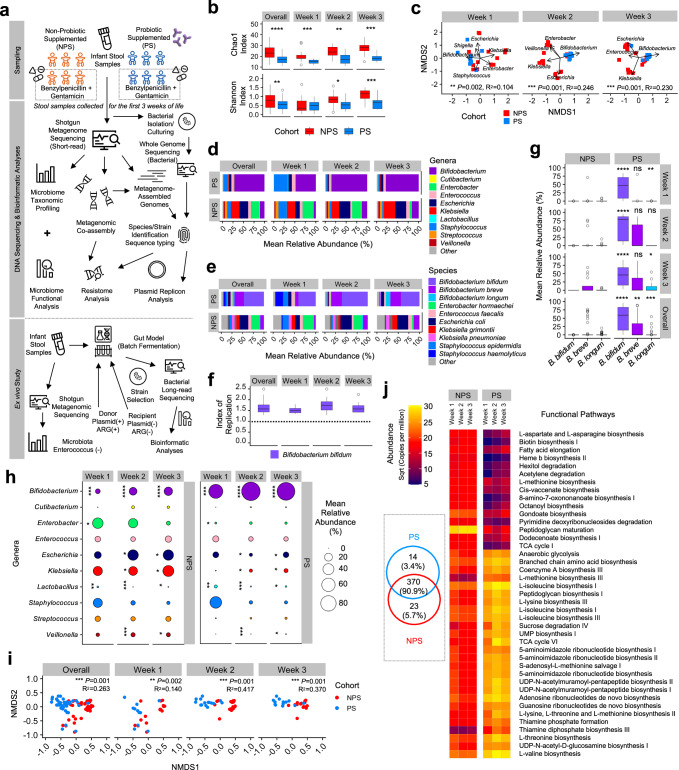
- Across the first 3 weeks of life, the probiotic-supplemented (PS) cohort had significantly higher Bifidobacterium abundance, while the non-probiotic-supplemented (NPS) cohort had more pathobionts including Klebsiella, Enterobacter, Escherichia, Enterococcus, and Staphylococcus.
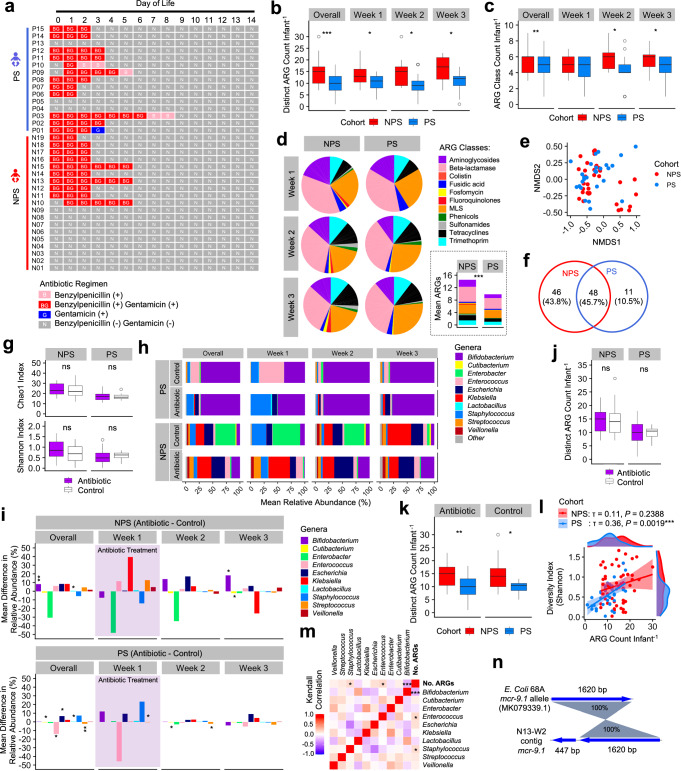
- ARG abundance was significantly higher in NPS infants than PS infants across the first 3 weeks; NPS guts also contained more ARG types, especially in weeks 2 and 3.
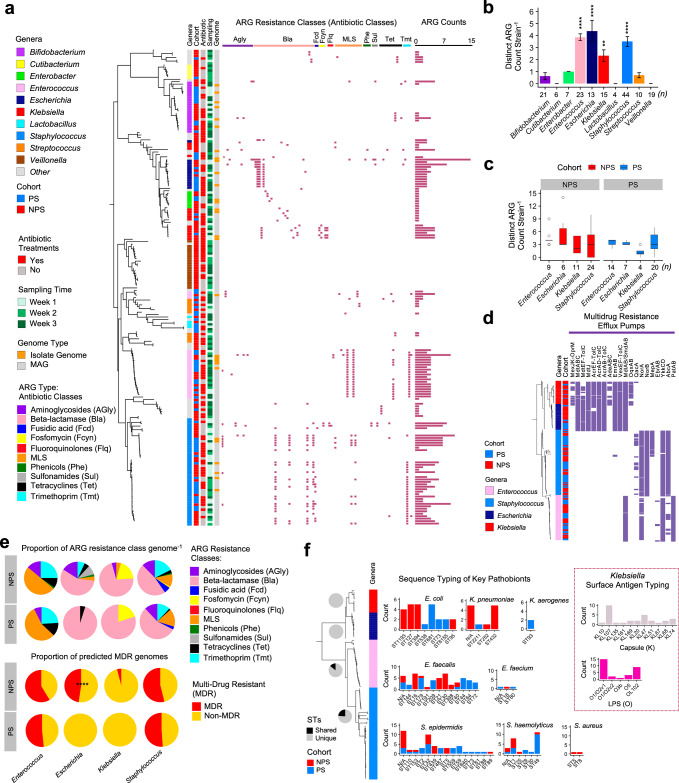
- Genome-resolved analysis recovered 322 high-quality MAGs and 89 isolate genomes, then 195 representative strains; among these, Enterococcus, Escherichia, Klebsiella, and Staphylococcus were the four most resistant genera.
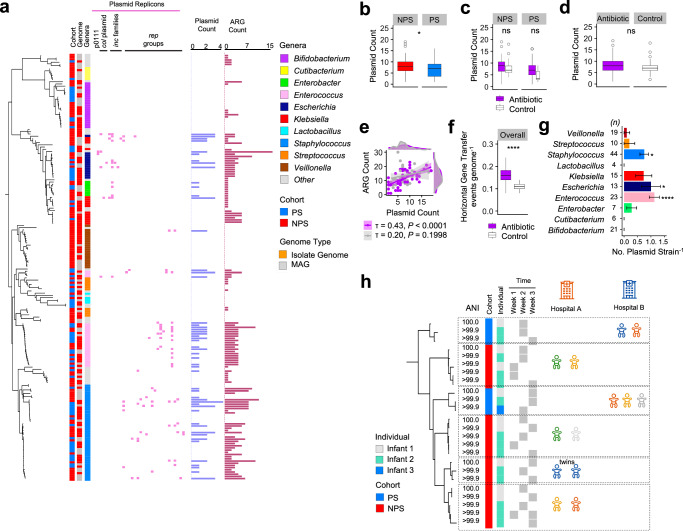
- In metagenomes, plasmid counts were significantly higher in NPS than PS infants, and plasmid replicon count and ARG count were weakly positively correlated overall (τ = 0.33; P = 0.00001), stronger in antibiotic-treated infants (τ = 0.43, P < 0.0001).
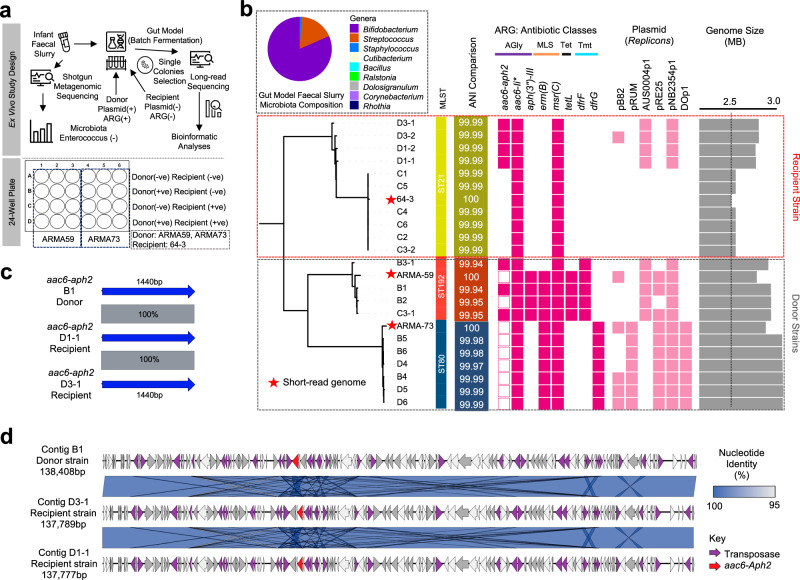
- The ex vivo Enterococcus model showed successful transfer of a ~137 kb mega-plasmid carrying aac6-aph2, which conferred gentamicin resistance to a plasmid-free recipient strain.
- The study identified 6 Enterococcus strains circulating among infants by 99.9% ANI, including identical strains across unrelated infants in both hospitals, suggesting nosocomial transmission.
Methods
- Controlled sub-study of a prior observational cohort: 34 VLBW preterm infants from 92 samples; all were human-milk-fed, with PS vs NPS cohorts and antibiotic-treated vs control infants within each cohort.
- Shotgun metagenomic sequencing of longitudinal faecal samples from weeks 1–3, plus culturomics and genome-resolved metagenomics to recover MAGs and isolate genomes for strain-level microbiome/resistome analysis.
- ARGs, plasmid replicons, MLST, ANI, HGT, and functional profiling were assessed with sequence-based bioinformatics; an ex vivo neonatal gut model was used to test Enterococcus plasmid transfer.
Limitations
- The paper states that the 3-week sampling window was relatively short and could not capture longer-term effects of antibiotics and probiotics.
- The study used samples from two hospital sites, which could introduce site-specific environmental or clinical confounding; the authors say prior work found no significant site effect, but they still acknowledge this as a potential limitation.
- The paper states that low-abundance ARGs may have been missed because of sequencing coverage limits; it also notes that 7.9% of ARGs were seen in isolate genomes but not in matching metagenomes.
Model-written summary. Check it against the paper before relying on it.
Integrity signals
Registry
Cites
Statistics
Figures
Verification
Claims the paper makes
11 Valid · 0 Not valid · 2 Not checked · 100 Own results and interpretations
Every source the paper cites for this claim was checked and supports it.
In the paper
“To assess clinical relevance, we sequence-typed a total of 193 key resistant pathobiont genomes from Escherichia, Klebsiella, Enterococcus, and Staphylococcus (Fig. 3f) using the multi-locus sequence typing (MLST)33 scheme.”
§ Impact of early life antibiotic and probiotic treatment on gut microbiome and resistome of very-low-birth-weight preterm infants > Results > Strain-level gut-derived pathobiont resistome analysis
What the sources say
- Supportedcites [33] Jolley, K. A., Bray, J. E. & Maiden, M. C. J. Open-access bacterial population genomics: BIGSdb software, the PubMLST.org website and their applications. Wellcome Open Res. 3, 124 (2018). 30345391 PMC6192448 source
The citation is attached to the MLST scheme, not to the citing authors’ own count of 193 genomes. The source’s Introduction (page unavailable) describes conventional seven-locus MLST schemes as available in PubMLST databases, supporting the method citation. (LLM, conf=0.90)
plain- Asserted: passes — The authors put it forward as true.
- Checkable: passes — It can be checked against evidence.
- Load-bearing: passes — The paper’s conclusions depend on it.
- Based: passes — The paper gives a reason why it holds.
- Supported
The cited sources support only part of this claim — read each source’s verdict below.
In the paper
“This decrease could potentially be attributed to the carbon source depletion promoted by Bifidobacterium specialised HMO utilisation in human milk-fed gut environment, which may inhibit pathobiont colonisation and growth39,40.”
§ Impact of early life antibiotic and probiotic treatment on gut microbiome and resistome of very-low-birth-weight preterm infants > Discussion
What the sources say
- Partly supportedcites [39] Sprockett, D., Fukami, T. & Relman, D. A. Role of priority effects in the early-life assembly of the gut microbiota. Nat. Rev. Gastroenterol. Hepatol. 15, 197–205 (2018). 29362469 PMC6813786 sourceExperimental — accuracy not yet measured
In “Priority effects in the infant gut” (page unavailable), the paper says Bifidobacterium consumes breast-milk HMOs and likely depletes those carbon sources, limiting later species’ colonization. It does not identify Enterococcus as an affected species or show that this mechanism explains its decrease or inhibits pathobiont growth specifically. (LLM, conf=0.86)
- Partly supportedcites [40] Horrocks, V., King, O. G., Yip, A. Y. G., Marques, I. M. & McDonald, J. A. K. Role of the gut microbiota in nutrient competition and protection against intestinal pathogen colonization. Microbiol. 169, 001377 (2023). PMC10482380 37540126 sourceExperimental — accuracy not yet measured
Split into 2 atoms — 1 confirmed, 1 partially supported, 0 disputed, 0 misattributed, 0 unverifiable. Expand the claim to see per-atom verdicts.
hedgedstates a possible cause- Asserted: passes — The authors put it forward as true.
- Checkable: passes — It can be checked against evidence.
- Load-bearing: unclear — It is unclear whether the paper’s conclusions depend on it.
- Based: passes — The paper gives a reason why it holds.
- Partly supported
The cited sources support only part of this claim — read each source’s verdict below.
In the paper
“PS infants showed an earlier and more robust colonisation of infant-associated Bifidobacterium species, particularly B. breve and B. longum subsp. infantis, compared to NPS infants51–53.”
§ Impact of early life antibiotic and probiotic treatment on gut microbiome and resistome of very-low-birth-weight preterm infants > Discussion
What the sources say
- Partly supportedcites [51] Underwood, M. A., German, J. B., Lebrilla, C. B. & Mills, D. A. Bifidobacterium longum subspecies infantis: champion colonizer of the infant gut. Pediatr. Res. 77, 229–235 (2015). 25303277 PMC4350908 sourceExperimental — accuracy not yet measured
The 'Human Milk Oligosaccharides Shape the Infant Intestinal Microbiota' section identifies B. breve and B. infantis as species that colonize infants. The 'B. infantis in Premature Infants' section reports stronger colonization by B. infantis than by B. lactis under the conditions studied, but our copy does not report earlier or more robust colonization of both named species in PS infants compared with NPS infants. Page numbers were not supplied. (LLM, conf=0.83)
- Partly supportedcites [52] Turroni, F. et al. Diversity of bifidobacteria within the infant gut microbiota. PloS One 7, e36957 (2012). 22606315 PMC3350489 sourceExperimental — accuracy not yet measured
The Results sections on core microbiota and interindividual variability (page not provided) identify B. breve and B. longum in infant samples. They do not identify B. longum subsp. infantis or compare PS with NPS infants, so they cannot support the claimed earlier or more robust colonisation in PS infants. (LLM, conf=0.82)
- Not checked — no full text of the sourcecites [53] Samara, J. et al. Supplementation with a probiotic mixture accelerates gut microbiome maturation and reduces intestinal inflammation in extremely preterm infants. Cell Host Microbe 30, 696–711.e695 (2022). 35550672 source
plainstates an association- Asserted: passes — The authors put it forward as true.
- Checkable: passes — It can be checked against evidence.
- Load-bearing: passes — The paper’s conclusions depend on it.
- Based: passes — The paper gives a reason why it holds.
- Partly supported
The cited sources support only part of this claim — read each source’s verdict below.
In the paper
“our results also showed that PS infants harboured significantly fewer ARGs than NPS infants29.”
§ Impact of early life antibiotic and probiotic treatment on gut microbiome and resistome of very-low-birth-weight preterm infants > Discussion
What the sources say
- Partly supportedcites [29] Guitor, A. K. et al. Capturing the antibiotic resistome of preterm infants reveals new benefits of probiotic supplementation. Microbiome 10, 136 (2022). 36008821 PMC9414150 sourceExperimental — accuracy not yet measured
The Results section reports significantly fewer *unique* ARGs per PS infant than per NS infant at several visits. But the Results and Discussion also state that the overall number of ARGs did not differ significantly between groups. The claim omits the distinction between unique ARGs and ARGs overall. (LLM, conf=0.88)
plainstates an association- Asserted: passes — The authors put it forward as true.
- Checkable: passes — It can be checked against evidence.
- Load-bearing: passes — The paper’s conclusions depend on it.
- Based: passes — The paper gives a reason why it holds.
- Partly supported
The cited sources support only part of this claim — read each source’s verdict below.
In the paper
“Indeed, we identified specific STs linked to neonatal infections, such as E. coli ST119347, ST73 and ST9547,48, and K. pneumoniae ST43249 strains, which are typically drug-resistant strains and of clinical significance.”
§ Impact of early life antibiotic and probiotic treatment on gut microbiome and resistome of very-low-birth-weight preterm infants > Discussion
What the sources say
- Not checked — no full text of the sourcecites [47] Nhu, N. T. K. et al. High-risk Escherichia coli clones that cause neonatal meningitis and association with recrudescent infection. Elife 12, RP91853 (2024). 38622998 PMC11021048 source
- Not checked — no full text of the sourcecites [48] Riley, L. W. Pandemic lineages of extraintestinal pathogenic Escherichia coli. Clin. Microbiol. Infect. 20, 380–390 (2014). 24766445 source
- Partly supportedcites [49] Weng, Y. et al. Multicenter study of colistin heteroresistance in carbapenem-resistant Klebsiella pneumoniae strains in China. Microbiol. Spectr. 11, e0221822 (2023). 37428093 PMC10434274 sourceExperimental — accuracy not yet measured
The Observation section reports one K. pneumoniae ST432 isolate, and Table 1 identifies it as a blood isolate carrying the KPC-2 carbapenemase gene. The paper does not link that isolate to a neonatal infection or establish that ST432 strains are typically drug-resistant; it studies one resistant ST432 isolate. The E. coli sequence types are attached to other citations, not this one. (LLM, conf=0.88)
plainstates an association- Asserted: passes — The authors put it forward as true.
- Checkable: passes — It can be checked against evidence.
- Load-bearing: passes — The paper’s conclusions depend on it.
- Based: passes — The paper gives a reason why it holds.
55 more claims
Create a free account to see all 113 claims and every source verdict.
- It may state two separate claims as one. 44
- Probably not a substantial claim. 14
Citations
Cites
Fast gapped-read alignment with Bowtie 2
Langmead, B., & Salzberg, S. L. (2012) · Nature Methods · doi:10.1038/nmeth.1923 · Cited by 56,400
fastp: an ultra-fast all-in-one FASTQ preprocessor
Chen, S., Zhou, Y., Chen, Y., & Gu, J. (2018) · Bioinformatics · doi:10.1093/bioinformatics/bty560 · Cited by 29,721
SPAdes: A New Genome Assembly Algorithm and Its Applications to Single-Cell Sequencing
Bankevich, A., Nurk, S., Antipov, D., Gurevich, A. A., Dvorkin, M., Kulikov, A. S., Lesin, V. M., Nikolenko, S. I., Pham, S., Prjibelski, A. D., et al. (2012) · Journal of Computational Biology · doi:10.1089/cmb.2012.0021 · Cited by 25,987
Dermyshi, E., Wang, Y., Yan, C., Hong, W., Qiu, G., Gong, X., & Zhang, T. (2017) · Neonatology · doi:10.1159/000454668 · Cited by 24,451
Wickham, H., Averick, M., Bryan, J., Chang, W., McGowan, L., François, R., Grolemund, G., Hayes, A., Henry, L., Hester, J., et al. (2019) · Journal of Open Source Software · doi:10.21105/joss.01686 · Cited by 22,138
Prokka: rapid prokaryotic genome annotation
Seemann, T. (2014) · Bioinformatics · doi:10.1093/bioinformatics/btu153 · Cited by 18,818
Metagenomic biomarker discovery and explanation
Segata, N., Izard, J., Waldron, L., Gevers, D., Miropolsky, L., Garrett, W. S., & Huttenhower, C. (2011) · Genome Biology · doi:10.1186/gb-2011-12-6-r60 · Cited by 16,192
Twelve years of SAMtools and BCFtools
Danecek, P., Bonfield, J. K., Liddle, J., Marshall, J., Ohan, V., Pollard, M. O., Whitwham, A., Keane, T., McCarthy, S. A., Davies, R. M., et al. (2021) · GigaScience · doi:10.1093/gigascience/giab008 · Cited by 15,343
Minimap2: Pairwise alignment for nucleotide sequences
Li, H. (2018) · Bioinformatics · doi:10.1093/bioinformatics/bty191 · Cited by 14,807
Wickham, H. (2016) · Use R! · doi:10.1007/978-3-319-24277-4_9 · Cited by 12,516
Parks, D. H., Imelfort, M., Skennerton, C. T., Hugenholtz, P., & Tyson, G. W. (2015) · Genome Research · doi:10.1101/gr.186072.114 · Cited by 12,496
Li, D., Liu, C.-M., Luo, R., Sadakane, K., & Lam, T.-W. (2015) · Bioinformatics · doi:10.1093/bioinformatics/btv033 · Cited by 9,893
Walker, B. J., Abeel, T., Shea, T., Priest, M., Abouelliel, A., Sakthikumar, S., Cuomo, C. A., Zeng, Q., Wortman, J., Young, S. K., et al. (2014) · PLoS ONE · doi:10.1371/journal.pone.0112963 · Cited by 9,197
Unicycler: Resolving bacterial genome assemblies from short and long sequencing reads
Wick, R. R., Judd, L. M., Gorrie, C. L., & Holt, K. E. (2017) · PLOS Computational Biology · doi:10.1371/journal.pcbi.1005595 · Cited by 8,653
Improved metagenomic analysis with Kraken 2
Wood, D. E., Lu, J., & Langmead, B. (2019) · Genome Biology · doi:10.1186/s13059-019-1891-0 · Cited by 7,061
VEGAN, a package of R functions for community ecology
Dixon, P. (2003) · Journal of Vegetation Science · doi:10.1111/j.1654-1103.2003.tb02228.x · Cited by 6,824
Assembly of long, error-prone reads using repeat graphs
Kolmogorov, M., Yuan, J., Lin, Y., & Pevzner, P. A. (2019) · Nature Biotechnology · doi:10.1038/s41587-019-0072-8 · Cited by 5,986
High throughput ANI analysis of 90K prokaryotic genomes reveals clear species boundaries
Jain, C., Rodriguez-R, L. M., Phillippy, A. M., Konstantinidis, K. T., & Aluru, S. (2018) · Nature Communications · doi:10.1038/s41467-018-07641-9 · Cited by 5,748
GTDB-Tk: a toolkit to classify genomes with the Genome Taxonomy Database
Chaumeil, P.-A., Mussig, A. J., Hugenholtz, P., & Parks, D. H. (2020) · Bioinformatics · doi:10.1093/bioinformatics/btz848 · Cited by 5,259
Letunic, I., & Bork, P. (2024) · Nucleic Acids Research · doi:10.1093/nar/gkae268 · Cited by 4,497 · cited 1×
“Distance tree was then mid-point rooted and visualised in iTOL v6 83 .”
Kang, D. D., Li, F., Kirton, E., Thomas, A., Egan, R., An, H., & Wang, Z. (2019) · PeerJ · doi:10.7717/peerj.7359 · Cited by 3,750
Jolley, K. A., Bray, J. E., & Maiden, M. C. J. (2018) · Wellcome Open Research · doi:10.12688/wellcomeopenres.14826.1 · Cited by 3,551 · cited 4×
“19.0 87 at default parameters through scanning contig fi les against the PubMLST 88 typing schemes (https://pubmlst.org/) sited at the University of Oxford.”
InfluentialResFinder 4.0 for predictions of phenotypes from genotypes
Bortolaia, V., Kaas, R. S., Ruppe, E., Roberts, M. C., Schwarz, S., Cattoir, V., Philippon, A., Allesoe, R. L., Rebelo, A. R., Florensa, A. F., et al. (2020) · Journal of Antimicrobial Chemotherapy · doi:10.1093/jac/dkaa345 · Cited by 3,373
Olm, M. R., Brown, C. T., Brooks, B., & Banfield, J. F. (2017) · The ISME Journal · doi:10.1038/ismej.2017.126 · Cited by 3,031
Binning metagenomic contigs by coverage and composition
Alneberg, J., Bjarnason, B. S., de Bruijn, I., Schirmer, M., Quick, J., Ijaz, U. Z., Lahti, L., Loman, N. J., Andersson, A. F., & Quince, C. (2014) · Nature Methods · doi:10.1038/nmeth.3103 · Cited by 2,800
MaxBin 2.0: an automated binning algorithm to recover genomes from multiple metagenomic datasets
Wu, Y.-W., Simmons, B. A., & Singer, S. W. (2016) · Bioinformatics · doi:10.1093/bioinformatics/btv638 · Cited by 2,793
MetaWRAP—a flexible pipeline for genome-resolved metagenomic data analysis
Uritskiy, G. V., DiRuggiero, J., & Taylor, J. (2018) · Microbiome · doi:10.1186/s40168-018-0541-1 · Cited by 2,642
BIGSdb: Scalable analysis of bacterial genome variation at the population level
Jolley, K. A., & Maiden, M. C. (2010) · BMC Bioinformatics · doi:10.1186/1471-2105-11-595 · Cited by 2,368
Bracken: estimating species abundance in metagenomics data
(2016) · doi:10.7717/peerj-cs.104 · Cited by 2,333
Beghini, F., McIver, L. J., Blanco-Míguez, A., Dubois, L., Asnicar, F., Maharjan, S., Mailyan, A., Manghi, P., Scholz, M., Thomas, A. M., et al. (2021) · eLife · doi:10.7554/elife.65088 · Cited by 2,303
(2020) · doi:10.1101/2020.11.19.388223 · Cited by 2,303
Neu, J., & Walker, W. A. (2011) · New England Journal of Medicine · doi:10.1056/nejmra1005408 · Cited by 2,141
Ohuma, E. O., Moller, A.-B., Bradley, E., Chakwera, S., Hussain-Alkhateeb, L., Lewin, A., Okwaraji, Y. B., Mahanani, W. R., Johansson, E. W., Lavin, T., et al. (2023) · The Lancet · doi:10.1016/s0140-6736(23)00878-4 · Cited by 1,614 · cited 6×
“20.0 62 (-q 20) and host-associated sequences were removed using KneadData; Kraken v2.”
InfluentialARG-ANNOT, a new bioinformatic tool to discover antibiotic resistance genes in bacterial genomes
Gupta, S. K., Padmanabhan, B. R., Diene, S. M., Lopez-Rojas, R., Kempf, M., Landraud, L., & Rolain, J.-M. (2014) · Antimicrobial Agents and Chemotherapy · doi:10.1128/aac.01310-13 · Cited by 1,476
Molecular mechanisms of antibiotic resistance revisited
Darby, E. M., Trampari, E., Siasat, P., Gaya, M. S., Alav, I., Webber, M. A., & Blair, J. M. A. (2023) · Nature Reviews Microbiology · doi:10.1038/s41579-022-00820-y · Cited by 1,398 · cited 1×
“Ef fl ux pumps, which facilitate multidrug resistance by expelling a broad range of antibiotics 41 , were also prevalent across multiple strains, particularly within Escherichia and Klebsiella , further complicating treatment options for infections by these pathogens in preterm infants.”
Self-citationLam, M. M. C., Wick, R. R., Watts, S. C., Cerdeira, L. T., Wyres, K. L., & Holt, K. E. (2021) · Nature Communications · doi:10.1038/s41467-021-24448-3 · Cited by 1,068
Changes in Pathogens Causing Early-Onset Sepsis in Very-Low-Birth-Weight Infants
Stoll, B. J., Hansen, N., Fanaroff, A. A., Wright, L. L., Carlo, W. A., Ehrenkranz, R. A., Lemons, J. A., Donovan, E. F., Stark, A. R., Tyson, J. E., et al. (2002) · New England Journal of Medicine · doi:10.1056/nejmoa012657 · Cited by 810
genoPlotR: comparative gene and genome visualization in R
Guy, L., Roat Kultima, J., & Andersson, S. G. E. (2010) · Bioinformatics · doi:10.1093/bioinformatics/btq413 · Cited by 692
Zhou, Z., Tran, P. Q., Breister, A. M., Liu, Y., Kieft, K., Cowley, E. S., Karaoz, U., & Anantharaman, K. (2022) · Microbiome · doi:10.1186/s40168-021-01213-8 · Cited by 663
Rapid Whole-Genome Sequencing for Investigation of a Neonatal MRSA Outbreak
Köser, C. U., Holden, M. T. G., Ellington, M. J., Cartwright, E. J. P., Brown, N. M., Ogilvy-Stuart, A. L., Hsu, L. Y., Chewapreecha, C., Croucher, N. J., Harris, S. R., et al. (2012) · New England Journal of Medicine · doi:10.1056/nejmoa1109910 · Cited by 654 · cited 1×
“…bacteria, including Staphylococcus , Klebsiella , Enterococcus and Escherichia are common in the preterm infant gut 5,8,14 , with their presence frequently linked to prolonged hospitalisation 15 , late-onset blood-stream infections 16 , and nosocomial infections in hospital settings 17 – 19 .”
Diversity of Bifidobacteria within the Infant Gut Microbiota
Turroni, F., Peano, C., Pass, D. A., Foroni, E., Severgnini, M., Claesson, M. J., Kerr, C., Hourihane, J., Murray, D., Fuligni, F., et al. (2012) · PLoS ONE · doi:10.1371/journal.pone.0036957 · Cited by 647
Carattoli, A., & Hasman, H. (2020) · Methods in Molecular Biology · doi:10.1007/978-1-4939-9877-7_20 · Cited by 637
Hornik, C. P., Fort, P., Clark, R. H., Watt, K., Benjamin, D. K., Smith, P. B., Manzoni, P., Jacqz-Aigrain, E., Kaguelidou, F., & Cohen-Wolkowiez, M. (2012) · Early Human Development · doi:10.1016/s0378-3782(12)70019-1 · Cited by 534 · cited 1×
“VLBW preterm infants have underdeveloped immune systems, making them particularly susceptible to morbidities such as Necrotising Enterocolitis (NEC) 4,5 and sepsis 6,7 , often involving antibiotic-resistant bacteria.”
CoverM: read alignment statistics for metagenomics
Aroney, S. T. N., Newell, R. J. P., Nissen, J. N., Camargo, A. P., Tyson, G. W., & Woodcroft, B. J. (2025) · Bioinformatics · doi:10.1093/bioinformatics/btaf147 · Cited by 511
Self-citationCarroll, L. M., Gaballa, A., Guldimann, C., Sullivan, G., Henderson, L. O., & Wiedmann, M. (2019) · mBio · doi:10.1128/mbio.00853-19 · Cited by 506
Developmental dynamics of the preterm infant gut microbiota and antibiotic resistome
Gibson, M. K., Wang, B., Ahmadi, S., Burnham, C.-A. D., Tarr, P. I., Warner, B. B., & Dantas, G. (2016) · Nature Microbiology · doi:10.1038/nmicrobiol.2016.24 · Cited by 457 · cited 1×
“These fi ndings align with reports from other NICU studies, where Enterococcus , Escherichia , and Klebsiella are common nosocomial pathogens and are often implicated in late-onset infections in preterm infants 32,45,46 .”
Bifidobacterium longum subspecies infantis: champion colonizer of the infant gut
Underwood, M. A., German, J. B., Lebrilla, C. B., & Mills, D. A. (2015) · Pediatric Research · doi:10.1038/pr.2014.156 · Cited by 439 · cited 1×
“PSinfantsshowedanearlierandmore robust colonisation of infant-associated Bi fi dobacterium species, particularly B. breve and B. longum subsp. infantis , compared to NPS infants 51 – 53 .”
Pathways for horizontal gene transfer in bacteria revealed by a global map of their plasmids
Redondo-Salvo, S., Fernández-López, R., Ruiz, R., Vielva, L., de Toro, M., Rocha, E. P. C., Garcillán-Barcia, M. P., & de la Cruz, F. (2020) · Nature Communications · doi:10.1038/s41467-020-17278-2 · Cited by 433 · cited 1×
“ARGs within gut bacterial communities can spread rapidly, primarily through horizontal gene transfer (HGT), occurring both within and between species, including from commen-sals to pathogens or vice versa, and this transfer often occurs via mobile genetic elements such as plasmids 13 .”
Role of priority effects in the early-life assembly of the gut microbiota
Sprockett, D., Fukami, T., & Relman, D. A. (2018) · Nature Reviews Gastroenterology & Hepatology · doi:10.1038/nrgastro.2017.173 · Cited by 419 · cited 1×
“This decrease could potentially be attributed to the carbon source depletion promoted by Bi fi dobacterium specialised HMOutilisationinhumanmilk-fedgutenvironment,whichmayinhibit pathobiont colonisation and growth 39,40 .”
Pandemic lineages of extraintestinal pathogenic Escherichia coli
Riley, L. W. (2014) · Clinical Microbiology and Infection · doi:10.1111/1469-0691.12646 · Cited by 412 · cited 1×
“Indeed, we identi fi ed speci fi c STs linked to neonatal infections, such as E. coli ST1193 47 , ST73 and ST95 47,48 , and K. pneumoniae ST432 49 strains, which are typically drug-resistant strains and of clinical signi fi cance.”
Measurement of bacterial replication rates in microbial communities
Brown, C. T., Olm, M. R., Thomas, B. C., & Banfield, J. F. (2016) · Nature Biotechnology · doi:10.1038/nbt.3704 · Cited by 408
Horizontal transfer of antibiotic resistance genes in the human gut microbiome
McInnes, R. S., McCallum, G. E., Lamberte, L. E., & van Schaik, W. (2020) · Current Opinion in Microbiology · doi:10.1016/j.mib.2020.02.002 · Cited by 401 · cited 1×
“Itisimportanttonotethatourgenomicanalysis indicated only a weakcorrelation between overallARG abundanceand plasmid replicon count, suggesting that plasmids are not the sole contributors to ARG dissemination, and alternative routes of HGT are likely driving ARG spread 50 .”
Self-citationNayfach, S., & Pollard, K. S. (2015) · Genome Biology · doi:10.1186/s13059-015-0611-7 · Cited by 359
Mashtree: a rapid comparison of whole genome sequence files
Katz, L., Griswold, T., Morrison, S., Caravas, J., Zhang, S., Bakker, H., Deng, X., & Carleton, H. (2019) · Journal of Open Source Software · doi:10.21105/joss.01762 · Cited by 316
Gasparrini, A. J., Wang, B., Sun, X., Kennedy, E. A., Hernandez-Leyva, A., Ndao, I. M., Tarr, P. I., Warner, B. B., & Dantas, G. (2019) · Nature Microbiology · doi:10.1038/s41564-019-0550-2 · Cited by 310
Alcon-Giner, C., Dalby, M. J., Caim, S., Ketskemety, J., Shaw, A., Sim, K., Lawson, M. A. E., Kiu, R., Leclaire, C., Chalklen, L., et al. (2020) · Cell Reports Medicine · doi:10.1016/j.xcrm.2020.100077 · Cited by 228
Self-citationBrooks, B., Olm, M. R., Firek, B. A., Baker, R., Thomas, B. C., Morowitz, M. J., & Banfield, J. F. (2017) · Nature Communications · doi:10.1038/s41467-017-02018-w · Cited by 226 · cited 1×
“…bacteria, including Staphylococcus , Klebsiella , Enterococcus and Escherichia are common in the preterm infant gut 5,8,14 , with their presence frequently linked to prolonged hospitalisation 15 , late-onset blood-stream infections 16 , and nosocomial infections in hospital settings 17 – 19 .”
Dysbiosis anticipating necrotizing enterocolitis in very premature infants
Sim, K., Shaw, A. G., Randell, P., Cox, M. J., McClure, Z. E., Li, M.-S., Haddad, M., Langford, P. R., Cookson, W. O. C. M., Moffatt, M. F., et al. (2015) · Clinical Infectious Diseases · doi:10.1093/cid/ciu822 · Cited by 224 · cited 8×
“20.0 62 (-q 20) and host-associated sequences were removed using KneadData; Kraken v2.”
InfluentialSelf-citationCarl, M. A., Ndao, I. M., Springman, A. C., Manning, S. D., Johnson, J. R., Johnston, B. D., Burnham, C.-A. D., Weinstock, E. S., Weinstock, G. M., Wylie, T. N., et al. (2014) · Clinical Infectious Diseases · doi:10.1093/cid/ciu084 · Cited by 216
Darmstadt, G. L., Jaifi, N. H. A., Arif, S., Bahl, R., Blennow, M., Cavallera, V., Chou, D., Chou, R., Comrie‐Thomson, L., Edmond, K. M., et al. (2023) · EClinicalMedicine · doi:10.1016/j.eclinm.2023.102155 · Cited by 205 · cited 1×
“In response to these challenges, WHO has recommended probiotic supplementation for very preterm ( 32 weeks ’ gestation), human-milk-fed infants 20 .”
Samara, J., Moossavi, S., Alshaikh, B., Ortega, V. A., Pettersen, V. K., Ferdous, T., Hoops, S. L., Soraisham, A., Vayalumkal, J., Dersch-Mills, D., et al. (2022) · Cell Host & Microbe · doi:10.1016/j.chom.2022.04.005 · Cited by 191 · cited 1×
“PSinfantsshowedanearlierandmore robust colonisation of infant-associated Bi fi dobacterium species, particularly B. breve and B. longum subsp. infantis , compared to NPS infants 51 – 53 .”
Mohan, R., Koebnick, C., Schildt, J., Mueller, M., Radke, M., & Blaut, M. (2008) · Pediatric Research · doi:10.1203/pdr.0b013e318181b7fa · Cited by 165
Wandro, S., Osborne, S., Enriquez, C., Bixby, C., Arrieta, A., & Whiteson, K. (2018) · mSphere · doi:10.1128/msphere.00104-18 · Cited by 144 · cited 1×
“…bacteria, including Staphylococcus , Klebsiella , Enterococcus and Escherichia are common in the preterm infant gut 5,8,14 , with their presence frequently linked to prolonged hospitalisation 15 , late-onset blood-stream infections 16 , and nosocomial infections in hospital settings 17 – 19 .”
Exploring the role of the microbiota member Bifidobacterium in modulating immune-linked diseases
O’Neill, I. J., Schofield, Z., & Hall, L. J. (2017) · Emerging Topics in Life Sciences · doi:10.1042/etls20170058 · Cited by 137 · cited 1×
“Probioticsupplementation has been associated with reduced NEC incidence, lower mortality, fewer gut pathogens, and enhanced immune maturation 8,14,21 – 28 .”
Self-citationon behalf of the Italian Society of Neonatology, Aceti, A., Gori, D., Barone, G., Callegari, M. L., Di Mauro, A., Fantini, M. P., Indrio, F., Maggio, L., Meneghin, F., et al. (2015) · Italian Journal of Pediatrics · doi:10.1186/s13052-015-0199-2 · Cited by 131
Xiao, M., Zhang, C., Duan, H., Narbad, A., Zhao, J., Chen, W., Zhai, Q., Yu, L., & Tian, F. (2024) · npj Biofilms and Microbiomes · doi:10.1038/s41522-024-00524-6 · Cited by 120 · cited 1×
“The probiotic B. bi fi dum likely facilitated the establishment of these bene fi cial species through cross-feeding on HMOs 54,55 , promoting a microbiome composition more similar to that of term infants.”
Bifidobacterial Dominance of the Gut in Early Life and Acquisition of Antimicrobial Resistance
Taft, D. H., Liu, J., Maldonado-Gomez, M. X., Akre, S., Huda, M. N., Ahmad, S. M., Stephensen, C. B., & Mills, D. A. (2018) · mSphere · doi:10.1128/msphere.00441-18 · Cited by 107
Horrocks, V., King, O. G., Yip, A. Y. G., Marques, I. M., & McDonald, J. A. K. (2023) · Microbiology · doi:10.1099/mic.0.001377 · Cited by 104 · cited 1×
“This decrease could potentially be attributed to the carbon source depletion promoted by Bi fi dobacterium specialised HMOutilisationinhumanmilk-fedgutenvironment,whichmayinhibit pathobiont colonisation and growth 39,40 .”
Esaiassen, E., Hjerde, E., Cavanagh, J. P., Pedersen, T., Andresen, J. H., Rettedal, S. I., Støen, R., Nakstad, B., Willassen, N. P., & Klingenberg, C. (2018) · Frontiers in Pediatrics · doi:10.3389/fped.2018.00347 · Cited by 102 · cited 2×
“Importantly, probiotics have also been observed to reduce the abundance of ARGs in the gut microbiota of preterm infants, bringing it closer to levels seen in full-term infants 29 – 32 .”
Robertson, C., Savva, G. M., Clapuci, R., Jones, J., Maimouni, H., Brown, E., Minocha, A., Hall, L. J., & Clarke, P. (2020) · Archives of Disease in Childhood - Fetal and Neonatal Edition · doi:10.1136/archdischild-2019-317346 · Cited by 101
Self-citationEarly-life gut microbiome modulation reduces the abundance of antibiotic-resistant bacteria
Casaburi, G., Duar, R. M., Vance, D. P., Mitchell, R., Contreras, L., Frese, S. A., Smilowitz, J. T., & Underwood, M. A. (2019) · Antimicrobial Resistance & Infection Control · doi:10.1186/s13756-019-0583-6 · Cited by 101 · cited 1×
“Bi fi do-bacterium , and Bi fi dobacterium supplementation has been associated with lower ARG abundance in the infant gut microbiome, likely due to the competitive exclusion of ARG-rich pathobionts 56 – 59 .”
Pärnänen, K. M., Hultman, J., Markkanen, M., Satokari, R., Rautava, S., Lamendella, R., Wright, J., McLimans, C. J., Kelleher, S. L., & Virta, M. P. (2022) · The American Journal of Clinical Nutrition · doi:10.1093/ajcn/nqab353 · Cited by 99
Resistome expansion in disease-associated human gut microbiomes
Fredriksen, S., de Warle, S., van Baarlen, P., Boekhorst, J., & Wells, J. M. (2023) · Microbiome · doi:10.1186/s40168-023-01610-1 · Cited by 78 · cited 1×
“The use of antibiotics in preterm infants can also lead to an enrichment of antibiotic resistance genes (ARGs), collectively known as the gut resistome 12 .”
Macesic, N., Blakeway, L. V., Stewart, J. D., Hawkey, J., Wyres, K. L., Judd, L. M., Wick, R. R., Jenney, A. W., Holt, K. E., & Peleg, A. Y. (2021) · Clinical Microbiology and Infection · doi:10.1016/j.cmi.2021.04.020 · Cited by 75 · cited 2×
“1 gene was fi rst identi fi ed in Salmonella enterica in 2019 42 , where it conferred phenotypic resistance to colistin, and has since been associated with Enterobacter and Klebsiella species, often on mobile IncHI2 plasmids 43 .”
Primary succession of Bifidobacteria drives pathogen resistance in neonatal microbiota assembly
Shao, Y., Garcia-Mauriño, C., Clare, S., Dawson, N. J. R., Mu, A., Adoum, A., Harcourt, K., Liu, J., Browne, H. P., Stares, M. D., et al. (2024) · Nature Microbiology · doi:10.1038/s41564-024-01804-9 · Cited by 75 · cited 2×
“Multidrug-resistant bacteria, including Staphylococcus , Klebsiella , Enterococcus and Escherichia are common in the preterm infant gut 5,8,14 , with their presence frequently linked to prolonged hospitalisation 15 , late-onset blood-stream infections 16 , and nosocomial infections in hospital…”
Kiu, R., Shaw, A., Sim, K., Acuna-Gonzalez, A., Price, C. A., Bedwell, H., Dreger, S. A., Fowler, W. J., Cornwell, E., Pickard, D., et al. (2023) · Nature Microbiology · doi:10.1038/s41564-023-01385-z · Cited by 74 · cited 1×
“DNAextractionwasperformed using the phenol-chloroform extraction method as described previously 61 .”
Self-citationGut microbiota of preterm infants supplemented with probiotics: sub-study of the ProPrems trial
for the ProPrems Study Group, Plummer, E. L., Bulach, D., Murray, G. L., Jacobs, S. E., Tabrizi, S. N., & Garland, S. M. (2018) · BMC Microbiology · doi:10.1186/s12866-018-1326-1 · Cited by 73
Victora, J. D., da Silveira, M. F., Tonial, C. T., Victora, C. G., Barros, F. C., Horta, B. L., Santos, I. S., Bassani, D. G., Garcia, P. C. R., Scheeren, M. F. D. C., et al. (2018) · Jornal de Pediatria · doi:10.1016/j.jped.2018.10.011 · Cited by 69
Births in the United States, 2023
Martin, J. A., Hamilton, B. E., & Osterman, M. J. K. (2024) · doi:10.15620/cdc/158789 · Cited by 67
Donnell, M. M. O., Rea, M. C., Shanahan, F., & Ross, R. P. (2018) · Frontiers in Microbiology · doi:10.3389/fmicb.2018.01844 · Cited by 55
The effect of early probiotic exposure on the preterm infant gut microbiome development
Yan, H., Smith, B., Mortensen, M. S., Krych, Ł., Sørensen, S. J., Greisen, G. O., Krogfelt, K. A., & Nielsen, D. S. (2021) · Gut Microbes · doi:10.1080/19490976.2021.1951113 · Cited by 55
Bifidobacterium infantis as a probiotic in preterm infants: a systematic review and meta-analysis
Batta, V., Rao, S. C., & Patole, S. (2023) · Pediatric Research · doi:10.1038/s41390-023-02716-w · Cited by 54
Bargheet, A., Klingenberg, C., Esaiassen, E., Hjerde, E., Cavanagh, J. P., Bengtsson-Palme, J., & Pettersen, V. K. (2023) · eBioMedicine · doi:10.1016/j.ebiom.2023.104613 · Cited by 52 · cited 1×
“These fi ndings align with reports from other NICU studies, where Enterococcus , Escherichia , and Klebsiella are common nosocomial pathogens and are often implicated in late-onset infections in preterm infants 32,45,46 .”
Osei Sekyere, J., Maningi, N. E., Modipane, L., & Mbelle, N. M. (2020) · mSystems · doi:10.1128/msystems.00148-20 · Cited by 47 · cited 1×
“Our fi nding aligns with previous retrospective studies 43,44 thatidenti fi ed mcr-9 prior to its fi rstof fi cial report, highlighting the value of metagenomics in AMR surveillance.”
Influence of probiotic supplementation on the developing microbiota in human preterm neonates
van Best, N., Trepels-Kottek, S., Savelkoul, P., Orlikowsky, T., Hornef, M. W., & Penders, J. (2020) · Gut Microbes · doi:10.1080/19490976.2020.1826747 · Cited by 47
Puengel, D., Treveil, A., Dalby, M. J., Caim, S., Colquhoun, I. J., Booth, C., Ketskemety, J., Korcsmáros, T., van Sinderen, D., Lawson, M. A., et al. (2020) · Nutrients · doi:10.3390/nu12040948 · Cited by 44
Self-citationGuitor, A. K., Yousuf, E. I., Raphenya, A. R., Hutton, E. K., Morrison, K. M., McArthur, A. G., Wright, G. D., & Stearns, J. C. (2022) · Microbiome · doi:10.1186/s40168-022-01327-7 · Cited by 44 · cited 2×
“Consistent with previous studies, our results also showed that PS infants harboured signi fi cantly fewer ARGs than NPS infants 29 .”
Neumann, C., Mahnert, A., Kumpitsch, C., Kiu, R., Dalby, M. J., Kujawska, M., Madl, T., Kurath‐Koller, S., Urlesberger, B., Resch, B., et al. (2023) · Nature Communications · doi:10.1038/s41467-023-36825-1 · Cited by 41 · cited 11×
“All NICUs in this study applied similar protocols for feeding, prescription of antibiotics and the use of prophylactic antifungal drugs.”
InfluentialSelf-citationNhu, N. T. K., Phan, M.-D., Hancock, S. J., Peters, K. M., Alvarez-Fraga, L., Forde, B. M., Andersen, S. B., Miliya, T., Harris, P. N., Beatson, S. A., et al. (2024) · eLife · doi:10.7554/elife.91853.3 · Cited by 41 · cited 2×
“Dominant sequence types (STs) included ST1193,ST127,ST394,andST681for E.coli ,whileST432wasprominent for K.pneumoniae .”
Breastfeeding and early Bifidobacterium-driven microbial colonization shape the infant gut resistome
Samarra, A., Alcañiz, A. J., Martínez-Costa, C., Marina, A., Comas, I., Segata, N., Quijada, N. M., & Collado, M. C. (2025) · Nature Communications · doi:10.1038/s41467-025-61154-w · Cited by 32 · cited 1×
“Bi fi do-bacterium , and Bi fi dobacterium supplementation has been associated with lower ARG abundance in the infant gut microbiome, likely due to the competitive exclusion of ARG-rich pathobionts 56 – 59 .”
Effect of antibiotics in the first week of life on faecal microbiota development
Daele, E. V., Kamphorst, K., Vlieger, A. M., Hermes, G. D. A., Milani, C., Ventura, M., Belzer, C., Smidt, H., van Elburg, R. M., & Knol, J. (2022) · Archives of Disease in Childhood Fetal & Neonatal · doi:10.1136/archdischild-2021-322861 · Cited by 30 · cited 1×
“However, this early-life antibiotic exposure can disrupt the normal development of the gut microbiota 8,10,11 .”
O’Connell Motherway, M., O’Brien, F., O’Driscoll, T., Casey, P. G., Shanahan, F., & van Sinderen, D. (2018) · Scientific Reports · doi:10.1038/s41598-018-29034-0 · Cited by 29 · cited 2×
“Notably, Bi fi dobacterium breve and Bi fi dobacterium longum , both associated with breastfeeding and recognised for promoting a healthy infant gut by breaking down complex carbohydrates, including human milk oligosaccharides (HMOs), appeared earlier and were more abundant in PS infants compared to NPS infants (Fig.”
Zhou, Z., Tran, P. Q., Breister, A. M., et al. (2021) · Research Square · doi:10.21203/rs.3.rs-965097/v1 · Cited by 27
GenoFig: a user-friendly application for the visualization and comparison of genomic regions
Branger, M., & Leclercq, S. O. (2024) · Bioinformatics · doi:10.1093/bioinformatics/btae372 · Cited by 27
Samarra, A., Cabrera-Rubio, R., Martínez-Costa, C., & Collado, M. C. (2024) · Gut Microbes · doi:10.1080/19490976.2024.2357176 · Cited by 25
Magnan, C., Morsli, M., Salipante, F., Thiry, B., Attar, J. E., Maio, M. D., Safaria, M., Tran, T.-A., Dunyach-Remy, C., Ory, J., et al. (2024) · Emerging Microbes & Infections · doi:10.1080/22221751.2024.2353291 · Cited by 24 · cited 1×
“Of particular note, key S. haemolyticus STs included methicillin-resistant ST1, linked to NICUs previously 34 and ST49, associated with children and often resistant to methicillin 35,36 .”
Drug utilisation in neonatal units in England and Wales: a national cohort study
Al-Turkait, A., Szatkowski, L., Choonara, I., et al. (2022) · European Journal of Clinical Pharmacology · doi:10.1007/s00228-021-03267-x · Cited by 21 · cited 11×
“All NICUs in this study applied similar protocols for feeding, prescription of antibiotics and the use of prophylactic antifungal drugs.”
InfluentialPatangia, D. V., Grimaud, G. M., O'Shea, C., Ryan, C. A., Dempsey, E. M., Stanton, C., & Ross, R. P. (2024) · Microbiome · doi:10.1186/s40168-023-01732-6 · Cited by 20
Weng, Y., Wang, T., Huang, B., Yu, H., Jia, W., Shan, B., Qu, F., Tang, Y., Chen, L., & Du, H. (2023) · Microbiology Spectrum · doi:10.1128/spectrum.02218-22 · Cited by 20
dorado: A Python package for simulating passive particle transport in shallow-water flows
Hariharan, J., Wright, K., & Passalacqua, P. (2020) · The Journal of Open Source Software · doi:10.21105/joss.02585 · Cited by 13
How frequent is routine use of probiotics in UK neonatal units?
Patel, N., NeoTRIPS Collaborative Group, Evans, K., Berrington, J. E., Szatkowski, L., Costeloe, K., Ojha, S., Fleming, P., & Battersby, C. (2023) · BMJ Paediatrics Open · doi:10.1136/bmjpo-2023-002012 · Cited by 11 · cited 2×
“Probiotics, particularly Bi fi dobacterium spp. and Lactobacillus spp., are now increasingly used in NICUs 21 , with ~40% ofNICUsintheUKadoptingthispractice 8,9 .”
Profiling novel lateral gene transfer events in the human microbiomePreprint
Hsu, T. Y., Nzabarushimana, É., Wong, D. H.-J., Luo, C., Beiko, R. G., Langille, M. G. I., Huttenhower, C., Nguyen, L. H., & Franzosa, E. A. (2023) · bioRxiv (Cold Spring Harbor Laboratory) · doi:10.1101/2023.08.08.552500 · Cited by 11
Complete Genome Sequence of the Gut Commensal and Laboratory Strain Enterococcus faecium 64/3
Bender, J. K., Fiedler, S., Klare, I., et al. (2015) · Genome Announcements · doi:10.1128/genomea.01275-15 · Cited by 10
Phillips, S., Watt, R., Atkinson, T., Savva, G. M., Hayhoe, A., Hall, L. J., on behalf of the PEARL study team, Hall, L. J., Philips, S., Watt, R., et al. (2021) · BMC Pediatrics · doi:10.1186/s12887-021-02835-5 · Cited by 9
Self-citationOcloo, R., Newton-Foot, M., Ziebuhr, W., & Whitelaw, A. C. (2023) · Frontiers in Microbiology · doi:10.3389/fmicb.2023.1239666 · Cited by 7
Dewi, D. A. P. R., Khalifa, H. O., Khandar, H., Hisatsune, J., Kutuno, S., Yu, L., Hayashi, W., Kayama, S., Mason, C. E., Sugai, M., et al. (2024) · Scientific Reports · doi:10.1038/s41598-024-79447-3 · Cited by 7 · cited 1×
“Of particular note, key S. haemolyticus STs included methicillin-resistant ST1, linked to NICUs previously 34 and ST49, associated with children and often resistant to methicillin 35,36 .”
Enterococcal bacteremia in children: Clinical Significance of vancomycin resistance
Jo, K. J., Lee, H. S., Lee, N., Byun, S. Y., Chang, C. L., & Park, S. E. (2024) · Pediatrics & Neonatology · doi:10.1016/j.pedneo.2024.01.007 · Cited by 5
Bargheet, A., Klingenberg, C., Esaiassen, E., et al. (2023) · SSRN Electronic Journal · doi:10.2139/ssrn.4325239 · Cited by 4
Nhu, N. T. K., Phan, M., Hancock, S. J., et al. (2023) · eLife · doi:10.7554/elife.91853.1 · Cited by 4
raymondkiu/Infant-Resistome-Study: Preterm-resistome-paper
Kiu, R. (2025) · Zenodo · doi:10.5281/zenodo.15975760
Self-citation
Cited by
Microbial metabolites in tumor epigenetic regulation
Zhang, W., Zhang, H., Liao, Y., Jiang, S., Zhang, H., Huang, C., Song, Z., Zhao, R., Lü, P., Kang, X., et al. (2026) · iMeta · doi:10.1002/imt2.70115 · Cited by 20
The Gut Microbiome and Colistin Resistance: A Hidden Driver of Antimicrobial Failure
Miftode, I.-L., Vâţă, A., Miftode, R.-Ş., Oancea, A. F., Pasare, M. A., Părângă, T. G., Miftode, E. G., Mititiuc, I. L., & Radu, V. D. (2025) · International Journal of Molecular Sciences · doi:10.3390/ijms26188899 · Cited by 15
“These findings demonstrate the capacity of probiotic supplementation not only to restore microbial balance but also to reduce the neonatal resistome footprint under antibiotic pressure [86].”
Profiling the gut resistome to unlock antimicrobial resistance biology and inform clinical risk
Chaudhry, Z., Cazares, A., Thomson, N. R., & Heyderman, R. S. (2026) · Nature Communications · doi:10.1038/s41467-026-75659-5 · Cited by 8
He, X., Zhao, E., Song, X. Y., Zhao, Q., Liu, J. J., Zhang, B., Xu, H., Fang, Y., Wei, X., Zhu, Y., et al. (2026) · Environmental Research · doi:10.1016/j.envres.2026.124532 · Cited by 4
Predicting macrosomia and low birth weight with interpretable machine learning
Cui, M., Yang, H., Wang, B., Zhang, J., Chu, Q., Zhang, C., Yao, Z., & Wang, L. (2026) · BMC Pregnancy and Childbirth · doi:10.1186/s12884-026-08667-4 · Cited by 2
“Neonatal birth weight serves as a critical biomarker of infant health, effectively reflecting intrauterine growth conditions and providing significant predictive value for both short-term and long-term health outcomes [1, 2].”
Metadata
- Authors
- Kiu, R., Darby, E. M., Alcon-Giner, C., Acuna-Gonzalez, A., Camargo, A., Lamberte, L. E., Phillips, S., Sim, K., Shaw, A. G., Clarke, P., van Schaik, W., Kroll, J. S., & Hall, L. J.
- Affiliations
- Norwich Research Park (GB)
- University of Birmingham (GB)
- Imperial College London (GB)
- University of East Anglia (GB)
- Corresponding author
- Kiu, Raymond
- Hall, Lindsay J.
- Venue
- Nature communications
- Published
- 2025-08-14
- Volume
- 16
- Issue
- 1
- Pages
- 7569-7569
- ISSN
- 2041-1723 (ISSN-L)
- PMC
- PMC12354744
- OpenAlex
- W4413140743
- Cited by
- 36
- References
- 115
- Citations by year
- 2026: 32 · 2025: 5
- FWCI
- 11.57
- Type
- journal article
- Language
- en
- Open access
- gold
- doi.org
- Licence
- cc-by
- creativecommons.org/licenses/by/4.0 (tdm)
- creativecommons.org/licenses/by/4.0 (vor)
- Locations
- Nature Communications (publishedVersion, cc-by)
- bioRxiv (Cold Spring Harbor Laboratory) (acceptedVersion, other-oa)
- PubMed (publishedVersion)
- UEA Digital Repository (University of East Anglia) (acceptedVersion, cc-by)
- University of Birmingham Research Portal (University of Birmingham) (submittedVersion, cc-by)
- PubMed Central (submittedVersion, cc-by)
- DOAJ (DOAJ: Directory of Open Access Journals) (submittedVersion, cc-by-sa)
- Funders
- Wellcome Trust (100974/C/13/Z)
- RCUK | Biotechnology and Biological Sciences Research Council (BB/R012490/1, BB/X011054/1, BB/S017941/1)
- Topics
- Life Sciences › Biochemistry, Genetics and Molecular Biology › Molecular Biology › Gut microbiota and health
- Health Sciences › Nursing › Nutrition and Dietetics › Infant Nutrition and Health
- Life Sciences › Agricultural and Biological Sciences › Food Science › Probiotics and Fermented Foods
- Keywords
- preterm infants, very low birth weight infants, probiotics, antibiotics, gut microbiota, resistome, antibiotic resistance genes, horizontal gene transfer
- MeSH terms
- Gastrointestinal Microbiome, Anti-Bacterial Agents
About these checks
Registry, retraction, Cites and statistics results are computed, not judged, with one exception: a printed reference that no index lists is read once by a model before it counts as a citation error. Claims are extracted by a model and kept only when their quote appears verbatim in the text; each cited source is then checked, with a model’s help, for whether it says what the claim relies on. Those verdicts can be wrong — read the claim’s quote and the cited source before relying on one.
The claim verdicts this report counts are experimental: their accuracy is not yet measured.
A language model drew the claims from the paper on 2026-10-09, under version 3 of the claim definition (model deepseek-v4.1-flash, prompt extract-v3).
A second model labelled each claim on 2026-10-09 (model jev-1.13-20260917, definition revision gold-guideline-v0.2).
Cited sources are checked with a language model’s help (gpt-6-sol).
Statistics and arithmetic are recomputed, not judged.
Confidence bands are shown only for fields calibrated on our annotated test set. None is calibrated yet, so no band is shown.
What counts as a claim ›How we measure confidence ›How we check this ›
Are you an author, or do you see a problem with this page? Request a review
Data sources
Bibliographic data: Semantic Scholar, OpenAlex, Crossref.
Contains information from the Semantic Scholar Academic Graph Datasets, made available under the ODC Attribution License (ODC-BY 1.0).
Semantic Scholar’s data is described in: Kinney, R., et al. (2023). The Semantic Scholar Open Data Platform. arXiv:2301.10140.
