

Sex and gender differences and biases in artificial intelligence for biomedicine and healthcare
Open accessThe DOI matches its Crossref record; 140 of the 140 references it cites were found in a registry or an index; 21 of the 100 sources its claims cite were checked for support.
Abstract
Precision Medicine implies a deep understanding of inter-individual differences in health and disease that are due to genetic and environmental factors. To acquire such understanding there is a need for the implementation of different types of technologies based on artificial intelligence (AI) that enable the identification of biomedically relevant patterns, facilitating progress towards individually tailored preventative and therapeutic interventions. Despite the significant scientific advances achieved so far, most of the currently used biomedical AI technologies do not account for bias detection. Furthermore, the design of the majority of algorithms ignore the sex and gender dimension and its contribution to health and disease differences among individuals. Failure in accounting for these differences will generate sub-optimal results and produce mistakes as well as discriminatory outcomes. In this review we examine the current sex and gender gaps in a subset of biomedical technologies used in relation to Precision Medicine. In addition, we provide recommendations to optimize their utilization to improve the global health and disease landscape and decrease inequalities.
Overview
CoChat Summary
TL;DR
This narrative review examines how sex and gender differences are neglected in biomedical AI and how resulting biases can harm Precision Medicine. It proposes distinguishing "desirable" from "undesirable" biases and offers recommendations to embed sex and gender considerations across data generation, AI technologies, and fairness frameworks.
Key findings
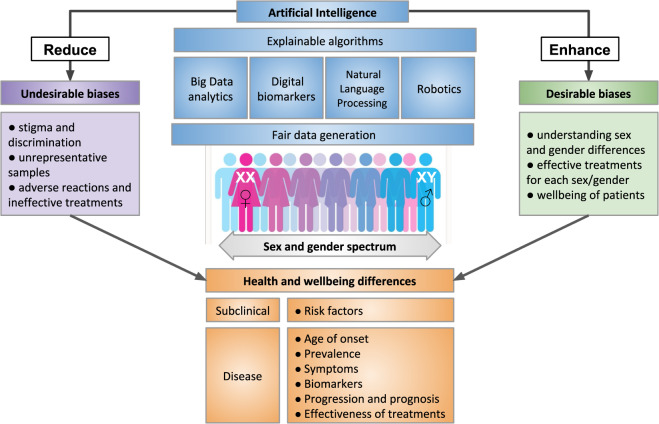
- The review defines two bias categories: *desirable* biases (deliberately accounting for sex/gender differences to improve diagnosis and treatment) and *undesirable* biases (unintended or unnecessary discrimination), and argues AI can either magnify or mitigate sex and gender inequalities depending on design.
- Sex and gender gaps persist across data sources: an analysis of 234 phenotypic traits from almost 55,000 mice showed findings influenced by sex; women are underrepresented in clinical trials (especially Phases I and II); and 67% of patients enrolled in cardiovascular device trials are male.
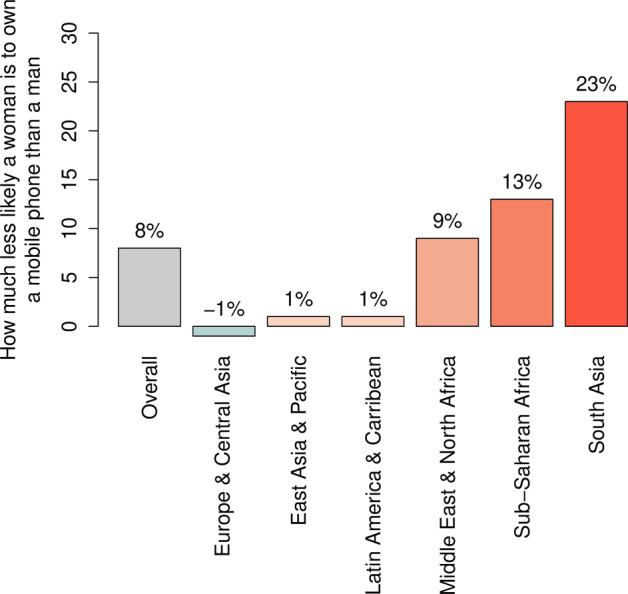
- Digital biomarker datasets show representation problems — e.g., a Parkinson's disease digital biomarker study had only 18.6% women — and access gaps exist: in low- and middle-income countries women are 10% less likely to own smartphones and 26% less likely to use the internet, with 1.2 billion women lacking mobile internet access.
- Bias also affects clinical practice and algorithms: only 17% of cardiologists correctly identified women as having greater heart disease risk than men, and a commercial algorithm using healthcare cost as a proxy for health status exhibited significant racial discrimination.
Methods
- Design: narrative review examining sex and gender gaps in a subset of biomedical technologies relevant to Precision Medicine (Big Data Analytics, Natural Language Processing, Robotics, Explainable AI, and algorithmic Fairness).
- Data/sample: synthesis of prior literature, illustrative examples, and referenced studies; no primary data collection or systematic search protocol is described.
- Analysis: conceptual/argumentative synthesis organized around data sources, AI technologies, and fairness/explainability, concluding with four recommendations for incorporating sex and gender into AI development.
Limitations
- The paper does not state explicit limitations of its own review.
- Evident from the text: it is a narrative (non-systematic) review without a stated search strategy, inclusion criteria, or formal quality appraisal, so the selection of examples and technologies may be selective rather than exhaustive.
- Evident from the text: several cited figures (e.g., the 18.6% women in the PD study, the 17% cardiologist figure) are drawn from single prior studies and are used illustratively rather than as generalizable estimates.
Model-written summary. Check it against the paper before relying on it.
Integrity signals
Registry
Cites
Statistics
Figures
Verification
Claims the paper makes
17 Valid · 5 Not valid · 58 Not checked · 32 Own results and interpretations
Every source the paper cites for this claim was checked and supports it.
In the paper
“for the diagnosis and monitoring of diabetes, haemoglobin A1c (HbA1c) levels are routinely used, despite of differences associated with ethnicities135 and gender136.”
§ Sex and gender differences and biases in artificial intelligence for biomedicine and healthcare > Introduction > Desirable vs. undesirable biases
What the sources say
- Supportedcites [135] Cavagnolli G Pimentel AL Freitas PAC Gross JL Camargo JL Effect of ethnicity on HbA1c levels in individuals without diabetes: systematic review and meta-analysis PLoS ONE 2017 12 e0171315 28192447 PMC5305058 source
The Introduction says HbA1c has long been used to assess glycaemic control and has also been used as a diagnostic criterion since 2010. The Discussion reports differences in HbA1c levels among ethnic groups and considers their implications for diagnosis and monitoring. The separate citation attached to gender is not part of the claim attributed to this source. (LLM, conf=0.92)
- Supportedcites [136] Bae JC Hemoglobin A1c values are affected by hemoglobin level and gender in non-anemic Koreans J. Diabetes Investig. 2014 5 60 65 24843738 PMC4025240 source
The Introduction describes HbA1c as a gold-standard measure of glycemic control and says it has been recommended for diagnosing diabetes. The Discussion reports gender differences in HbA1c at similar fasting glucose levels; this source supports the gender portion attached to citation 136. (LLM, conf=0.92)
plainstates an association- Asserted: passes — The authors put it forward as true.
- Checkable: passes — It can be checked against evidence.
- Load-bearing: passes — The paper’s conclusions depend on it.
- Based: passes — The paper gives a reason why it holds.
- Supported
Every source the paper cites for this claim was checked and supports it.
In the paper
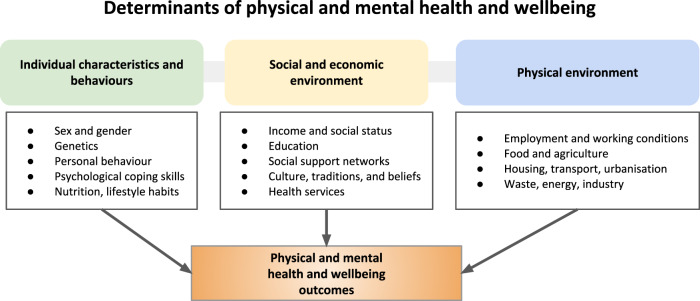
“Consequently, health research and practices can be entangled with sex and gender inequalities and biases20.”
§ Sex and gender differences and biases in artificial intelligence for biomedicine and healthcare > Introduction
What the sources say
- Supportedcites [20] Hay Katherine McDougal Lotus Percival Valerie Henry Sarah Klugman Jeni Wurie Haja Raven Joanna Shabalala Fortunate Fielding-Miller Rebecca Dey Arnab Dehingia Nabamallika Morgan Rosemary Atmavilas Yamini Saggurti Niranjan Yore Jennifer Blokhina Elena Huque Rumana Barasa Edwine Bhan Nandita Kharel Chandani Silverman Jay G Raj Anita Darmstadt Gary L Greene Margaret Eleanor Hawkes Sarah Heise Lori Henry Sarah Heymann Jody Klugman Jeni Levine Ruth Raj Anita Rao Gupta Geeta Disrupting gender norms in health systems: making the case for change The Lancet 2019 393 10190 2535 2549 PMC7233290 31155270 source
The section “How do health systems affect gender inequalities in health?” says health services prioritise care according to traditional gender norms and describes resulting biases in care. “How do gender inequalities manifest in the health-care workforce?” also reports biases in peer review of papers and grants that affect health research. Together, these passages support the claim about both research and practice. (LLM, conf=0.91)
plainstates an association- Asserted: passes — The authors put it forward as true.
- Checkable: passes — It can be checked against evidence.
- Load-bearing: passes — The paper’s conclusions depend on it.
- Based: passes — The paper gives a reason why it holds.
- Supported
The cited sources support only part of this claim — read each source’s verdict below.
In the paper
“constitute relevant sources of variation in a number of clinical and subclinical conditions, affecting risk factors, prevalence, age of onset, symptomatology manifestation, prognosis, biomarkers and treatment effectiveness2”
§ Sex and gender differences and biases in artificial intelligence for biomedicine and healthcare > Introduction
What the sources say
- Partly supportedcites [2] Regitz-Zagrosek V Sex and gender differences in health. Science & society series on sex and science EMBO Rep. 2012 13 596 603 22699937 PMC3388783 sourceExperimental — accuracy not yet measured
The Science & Society passages describe sex- and gender-related differences across many diseases, including risk, prevalence, age patterns, symptoms, outcomes and treatment efficacy. They also distinguish biological sex from socio-cultural gender. Our copy does not establish the claim's specific point about biomarkers, so the full list is not supported. (LLM, conf=0.84)
plainstates an association- Asserted: passes — The authors put it forward as true.
- Checkable: passes — It can be checked against evidence.
- Load-bearing: passes — The paper’s conclusions depend on it.
- Based: passes — The paper gives a reason why it holds.
- Partly supported
The cited sources support only part of this claim — read each source’s verdict below.
In the paper
“European male populations are the primary focus in genomics research and its derived clinical findings, neglecting other ethnicities and populations133.”
§ Sex and gender differences and biases in artificial intelligence for biomedicine and healthcare > Introduction > Desirable vs. undesirable biases
What the sources say
- Partly supportedcites [133] Bentley AR Callier S Rotimi CN Diversity and inclusion in genomic research: why the uneven progress? J. Community Genet. 2017 8 255 266 28770442 PMC5614884 sourceExperimental — accuracy not yet measured
The “Preferred Cohort” section says European-ancestry cohorts are preferred in genomic analyses and that their results are often presented as the main findings, while results for other populations receive less attention. “Informing genetic diagnoses” describes clinical consequences of excluding diverse populations. The paper does not establish that the populations receiving this focus are specifically male. (LLM, conf=0.88)
plainstates an association- Asserted: passes — The authors put it forward as true.
- Checkable: passes — It can be checked against evidence.
- Load-bearing: unclear — It is unclear whether the paper’s conclusions depend on it.
- Based: passes — The paper gives a reason why it holds.
- Partly supported
The cited sources support only part of this claim — read each source’s verdict below.
In the paper
“There is a current lack of consideration of the demonstrated age-dependent sex differences in the symptomatology related with impairments in social communication and interaction, expressive behaviour, reciprocal conversation, non-verbal gestures for diagnostic purposes123.”
§ Sex and gender differences and biases in artificial intelligence for biomedicine and healthcare > Introduction > Desirable vs. undesirable biases
What the sources say
- Partly supportedcites [123] Werling DM Geschwind DH Sex differences in autism spectrum disorders Curr. Opin. Neurol. 2013 26 146 153 23406909 PMC4164392 sourceExperimental — accuracy not yet measured
The Conclusion of Werling & Geschwind (2013) does support the 'lack of consideration for diagnostic purposes' element: it states that 'discussion continues as to whether females present the autistic phenotype differently than males, and further work is needed to determine ... if diagnostic criteria need to be adjusted to effectively identify these girls,' and the 'Presentation of ASD symptoms' section reports sex-differential symptom subdomains (externalizing vs. internalizing, repetitive/restricted behaviours) plus the Dworzynski threshold findings. However, our copy nowhere demonstrates these differences as AGE-DEPENDENT: the cited age-related references report age effects on overall severity (ref 22) and males showing more restricted/repetitive behaviour 'regardless of age' (ref 24). The specific subdomains named in the claim — expressive behaviour, reciprocal conversation, non-verbal gestures — are also absent; the paper's symptom differences concern externalizing/internalizing problems and RRBIs rather than those social-communication/ADI-ADOS items. (LLM, conf=0.75)
boosted- Asserted: passes — The authors put it forward as true.
- Checkable: passes — It can be checked against evidence.
- Load-bearing: passes — The paper’s conclusions depend on it.
- Based: passes — The paper gives a reason why it holds.
- Partly supported
48 more claims · 9 with their cited sources checked
Create a free account to see all 112 claims and to verify the 79 references still open.
- It may state two separate claims as one. 33
- Probably not a substantial claim. 36
Claims other papers make about this one
Each is checked against this paper’s own text: does it say what the citing paper says it does?
The source backs part of the claim, not all of it — or backs it for a different population, condition or comparison.
In the citing paper
“Though gender, race, and ethnicity are frequently identified as potential sources of bias, other factors may contribute to bias such as age, socioeconomic differences, and geography [58].”
From Bias in artificial intelligence algorithms and recommendations for mitigation (2023) · cites this paper as [58]
Experimental — accuracy not yet measuredThe source backs part of the claim, not all of it — or backs it for a different population, condition or comparison.
In the citing paper
“When population data is merged to form a common, model-ready input, biases can emerge through the selection of input features that are maximally available across all subjects, establishing a “one-size-fits-all” approach42.”
From Bias recognition and mitigation strategies in artificial intelligence healthcare applications (2025) · cites this paper as [42]
Experimental — accuracy not yet measuredThe source backs part of the claim, not all of it — or backs it for a different population, condition or comparison.
In the citing paper
“Data augmentation to address sparsity can generate synthetic data that fails to appropriately reflect true diversity, thus reinforcing biases42.”
From Bias recognition and mitigation strategies in artificial intelligence healthcare applications (2025) · cites this paper as [42]
Experimental — accuracy not yet measuredThe cited source says what the claim attributes to it.
In the citing paper
“Aggregation may result in bias when a “one-size-fits-all” model is used for groups with different conditional distributions [33].”
From Bias in artificial intelligence algorithms and recommendations for mitigation (2023) · cites this paper as [33]
The cited source says what the claim attributes to it.
In the citing paper
“It is clear that these powerful computational tools, if not diligently designed and audited, have the potential to perpetuate and even amplify existing biases, particularly those related to race, gender, and other societal constructs [40][41][42][43].”
From Fairness and Bias in Artificial Intelligence: A Brief Survey of Sources, Impacts, and Mitigation Strategies (2023) · cites this paper as [42]
3 more claims about this paper
Create a free account to see every claim other papers make about this one.
Citations
Cites
Dissecting racial bias in an algorithm used to manage the health of populations
Obermeyer, Z., Powers, B., Vogeli, C., & Mullainathan, S. (2019) · Science · doi:10.1126/science.aax2342 · Cited by 7,137
(2018) · Cited by 3,510
Dwork, C., Hardt, M., Pitassi, T., Reingold, O., & Zemel, R. (2012) · Proceedings of the 3rd Innovations in Theoretical Computer Science Conference · doi:10.1145/2090236.2090255 · Cited by 3,501 · cited 1×
“A theoretical implementation of such approach, also called fair af fi rmative action, has been proposed as an optimisation problem to obtain, at the same time, both group fairness (a.k.a statistical parity) and individual fairness 113 .”
BackgroundLinguistic Regularities in Continuous Space Word Representations
Mikolov, T., Yih, W.-T., & Zweig, G. (2013) · North American Chapter of the Association for Computational Linguistics · Cited by 2,912
Fitzpatrick, K. K., Darcy, A., & Vierhile, M. (2017) · JMIR Mental Health · doi:10.2196/mental.7785 · Cited by 2,730
Clinically applicable deep learning for diagnosis and referral in retinal disease
De Fauw, J., Ledsam, J. R., Romera-Paredes, B., Nikolov, S., Tomasev, N., Blackwell, S., Askham, H., Glorot, X., O’Donoghue, B., Visentin, D., et al. (2018) · Nature Medicine · doi:10.1038/s41591-018-0107-6 · Cited by 2,639
A Survey on Explainable Artificial Intelligence (XAI): Toward Medical XAI
Tjoa, E., & Guan, C. (2021) · IEEE Transactions on Neural Networks and Learning Systems · doi:10.1109/tnnls.2020.3027314 · Cited by 2,524
Reitsma, M. B., Fullman, N., Ng, M., Salama, J. S., Abajobir, A., Abate, K. H., Abbafati, C., Abera, S. F., Abraham, B., Abyu, G. Y., et al. (2017) · The Lancet · doi:10.1016/s0140-6736(17)30819-x · Cited by 2,028
The Path to Personalized Medicine
Hamburg, M. A., & Collins, F. S. (2010) · New England Journal of Medicine · doi:10.1056/nejmp1006304 · Cited by 1,970
Prediction of cardiovascular risk factors from retinal fundus photographs via deep learning
Poplin, R., Varadarajan, A. V., Blumer, K., Liu, Y., McConnell, M. V., Corrado, G. S., Peng, L., & Webster, D. R. (2018) · Nature Biomedical Engineering · doi:10.1038/s41551-018-0195-0 · Cited by 1,865
Why is depression more common among women than among men?
Kuehner, C. (2017) · The Lancet Psychiatry · doi:10.1016/s2215-0366(16)30263-2 · Cited by 1,752
Miotto, R., Li, L., Kidd, B. A., & Dudley, J. T. (2016) · Scientific Reports · doi:10.1038/srep26094 · Cited by 1,710
Mitigating Unwanted Biases with Adversarial Learning
Zhang, B. H., Lemoine, B., & Mitchell, M. (2018) · Proceedings of the 2018 AAAI/ACM Conference on AI, Ethics, and Society · doi:10.1145/3278721.3278779 · Cited by 1,387 · cited 1×
“Recent developments in bias detection and mitigation also include methods such as adopting re-sampling 118 , adversarial learning 119 , and open-source toolkits such as IBM AI Fairness 360 (AIF360) (aif360.mybluemix.net) and Aequitas (dsapp.uchicago.edu/projects/aequitas).”
MethodText and Corpus Analysis: Computer-Assisted Studies of Language and Culture
Stubbs, M. (1996) · Cited by 1,386
Ensuring fairness in machine learning to advance health equity.
Rajkomar, A., Hardt, M., Howell, M. D., Corrado, G., & Chin, M. H. (2018) · Annals of Internal Medicine · doi:10.7326/m18-1990 · Cited by 1,341
Sex differences in autism spectrum disorders
Werling, D. M., & Geschwind, D. H. (2013) · Current Opinion in Neurology · doi:10.1097/wco.0b013e32835ee548 · Cited by 1,245
Personalized medicine: Time for one-person trials
Schork, N. J. (2015) · Nature · doi:10.1038/520609a · Cited by 1,223
(2013) · Cited by 1,126
Word embeddings quantify 100 years of gender and ethnic stereotypes
Garg, N., Schiebinger, L., Jurafsky, D., & Zou, J. (2018) · Proceedings of the National Academy of Sciences · doi:10.1073/pnas.1720347115 · Cited by 1,065
Sex differences in Alzheimer disease — the gateway to precision medicine
for the Women’s Brain Project and the Alzheimer Precision Medicine Initiative, Ferretti, M. T., Iulita, M. F., Cavedo, E., Chiesa, P. A., Schumacher Dimech, A., Santuccione Chadha, A., Baracchi, F., Girouard, H., Misoch, S., et al. (2018) · Nature Reviews Neurology · doi:10.1038/s41582-018-0032-9 · Cited by 1,009
A Persona-Based Neural Conversation Model
Li, J., Galley, M., Brockett, C., Spithourakis, G., Gao, J., & Dolan, B. (2016) · Proceedings of the 54th Annual Meeting of the Association for Computational Linguistics (Volume 1: Long Papers) · doi:10.18653/v1/p16-1094 · Cited by 898
Gender differences in language use: An analysis of 14,000 text samples
Newman, M. L., Groom, C. J., Handelman, L. D., & Pennebaker, J. W. (2008) · Discourse Processes · doi:10.1080/01638530802073712 · Cited by 788
Precision Medicine: From Science To Value
Ginsburg, G. S., & Phillips, K. A. (2018) · Health Affairs · doi:10.1377/hlthaff.2017.1624 · Cited by 759
National Study of Physician Awareness and Adherence to Cardiovascular Disease Prevention Guidelines
Mosca, L., Linfante, A. H., Benjamin, E. J., Berra, K., Hayes, S. N., Walsh, B. W., Fabunmi, R. P., Kwan, J., Mills, T., & Simpson, S. L. (2005) · Circulation · doi:10.1161/01.cir.0000154568.43333.82 · Cited by 757
The Evolution of Preclinical Alzheimer’s Disease: Implications for Prevention Trials
Sperling, R., Mormino, E., & Johnson, K. (2014) · Neuron · doi:10.1016/j.neuron.2014.10.038 · Cited by 725
Mining big data: current status, and forecast to the future
Fan, W., & Bifet, A. (2013) · ACM SIGKDD Explorations Newsletter · doi:10.1145/2481244.2481246 · Cited by 677
Martin, L. A., Neighbors, H. W., & Griffith, D. M. (2013) · JAMA Psychiatry · doi:10.1001/jamapsychiatry.2013.1985 · Cited by 674
The Diophantine Equation 8x + py = z2
Qi, L., & Li, X. (2015) · The Scientific World Journal · doi:10.1155/2015/306590 · Cited by 671
What do we need to build explainable AI systems for the medical domain?
Holzinger, A., Biemann, C., Pattichis, C. S., & Kell, D. B. (2017) · arXiv · doi:10.48550/arxiv.1712.09923 · Cited by 636 · cited 14×
“In the context of Precision Medicine, the expected outputs of AI models consist of predictions of risk and diagnosis of medical conditions or recommendations of treatments, with profound in fl uence in people ’ s lives and health.”
BackgroundMethodInfluentialAutomatically Categorizing Written Texts by Author Gender
Koppel, M. (2002) · Literary and Linguistic Computing · doi:10.1093/llc/17.4.401 · Cited by 623
Halcox, J. P. J., Wareham, K., Cardew, A., Gilmore, M., Barry, J. P., Phillips, C., & Gravenor, M. B. (2017) · Circulation · doi:10.1161/circulationaha.117.030583 · Cited by 580
Sex and gender differences in health: Science & Society Series on Sex and Science
Regitz‐Zagrosek, V. (2012) · The EMBO Reports · doi:10.1038/embor.2012.87 · Cited by 572
Overview of BioCreAtIvE: critical assessment of information extraction for biology
Hirschman, L., Yeh, A., Blaschke, C., & Valencia, A. (2005) · BMC Bioinformatics · doi:10.1186/1471-2105-6-s1-s1 · Cited by 530
Self-citationMitigating Gender Bias in Natural Language Processing: Literature Review
Sun, T., Gaut, A., Tang, S., Huang, Y., ElSherief, M., Zhao, J., Mirza, D., Belding, E., Chang, K.-W., & Wang, W. Y. (2019) · Proceedings of the 57th Annual Meeting of the Association for Computational Linguistics · doi:10.18653/v1/p19-1159 · Cited by 492 · cited 1×
“Methods for bias mitigation in NLP have been recently reviewed, including learning gender-neutral embeddings and tagging the data points to preserve the gender of the source 89 .”
MethodDigital biomarkers for Alzheimer’s disease: the mobile/wearable devices opportunity
Kourtis, L. C., Regele, O. B., Wright, J. M., & Jones, G. B. (2019) · npj Digital Medicine · doi:10.1038/s41746-019-0084-2 · Cited by 476
The influence of sex and gender on the immune response
Oertelt-Prigione, S. (2012) · Autoimmunity Reviews · doi:10.1016/j.autrev.2011.11.022 · Cited by 459
Representation of Women in Randomized Clinical Trials of Cardiovascular Disease Prevention
Melloni, C., Berger, J. S., Wang, T. Y., Gunes, F., Stebbins, A., Pieper, K. S., Dolor, R. J., Douglas, P. S., Mark, D. B., & Newby, L. K. (2010) · Circulation: Cardiovascular Quality and Outcomes · doi:10.1161/circoutcomes.110.868307 · Cited by 455
Disrupting gender norms in health systems: making the case for change
Hay, K., McDougal, L., Percival, V., Henry, S., Klugman, J., Wurie, H., Raven, J., Shabalala, F., Fielding-Miller, R., Dey, A., et al. (2019) · The Lancet · doi:10.1016/s0140-6736(19)30648-8 · Cited by 442 · cited 1×
“Consequently, health research and practices can be entangled with sex and gender inequalities and biases 20 .”
BackgroundUsing deep learning to model the hierarchical structure and function of a cell
Ma, J., Yu, M. K., Fong, S., Ono, K., Sage, E., Demchak, B., Sharan, R., & Ideker, T. (2018) · Nature Methods · doi:10.1038/nmeth.4627 · Cited by 435
Gender differences in Parkinson's disease: Clinical characteristics and cognition
Miller, I. N., & Cronin‐Golomb, A. (2010) · Movement Disorders · doi:10.1002/mds.23388 · Cited by 405
Can AI Help Reduce Disparities in General Medical and Mental Health Care?
(2019) · AMA Journal of Ethics · doi:10.1001/amajethics.2019.167 · Cited by 401
Feiner, J. R., Severinghaus, J. W., & Bickler, P. E. (2007) · Anesthesia & Analgesia · doi:10.1213/01.ane.0000285988.35174.d9 · Cited by 400
Examining Gender and Race Bias in Two Hundred Sentiment Analysis Systems
Kiritchenko, S., & Mohammad, S. (2018) · Proceedings of the Seventh Joint Conference on Lexical and Computational Semantics · doi:10.18653/v1/s18-2005 · Cited by 384 · cited 1×
“For instance, while it is possible to accurately categorize texts based on the author ’ s gender 79 , performances of sentiment analysis of male-and female-authored texts are extremely variable 80 and potentially biased 81 .”
BackgroundZhan, A., Mohan, S., Tarolli, C., Schneider, R. B., Adams, J. L., Sharma, S., Elson, M. J., Spear, K. L., Glidden, A. M., Little, M. A., et al. (2018) · JAMA Neurology · doi:10.1001/jamaneurol.2018.0809 · Cited by 381
Miner, A. S., Milstein, A., Schueller, S., Hegde, R., Mangurian, C., & Linos, E. (2016) · JAMA Internal Medicine · doi:10.1001/jamainternmed.2016.0400 · Cited by 368
Developing and adopting safe and effective digital biomarkers to improve patient outcomes
Coravos, A., Khozin, S., & Mandl, K. D. (2019) · npj Digital Medicine · doi:10.1038/s41746-019-0090-4 · Cited by 361
Studying both sexes: a guiding principle for biomedicine
Clayton, J. A. (2016) · The FASEB Journal · doi:10.1096/fj.15-279554 · Cited by 358
Diversity and inclusion in genomic research: why the uneven progress?
Bentley, A. R., Callier, S., & Rotimi, C. N. (2017) · Journal of Community Genetics · doi:10.1007/s12687-017-0316-6 · Cited by 357
Are hormones a “female problem” for animal research?
Shansky, R. M. (2019) · Science · doi:10.1126/science.aaw7570 · Cited by 344
Sex differences in the association between AD biomarkers and cognitive decline
Initiative, F. T. A. N., Koran, M. E. I., Wagener, M., & Hohman, T. J. (2017) · Brain Imaging and Behavior · doi:10.1007/s11682-016-9523-8 · Cited by 339 · cited 1×
“…studies have shown that there are signi fi cant sex differences on neurodegenerative, physiological and cognitive aspects during the preclinical stages of AD 45 , it is reasonable to expect that further sex differences will be found in the digital biomarkers for this and other clinical conditions.”
BackgroundSex Differences in Cancer: Epidemiology, Genetics and Therapy
Kim, H.-I., Lim, H., & Moon, A. (2018) · Biomolecules & Therapeutics · doi:10.4062/biomolther.2018.103 · Cited by 315
Geller, S. E., Koch, A. R., Roesch, P., Filut, A., Hallgren, E., & Carnes, M. (2018) · Academic Medicine · doi:10.1097/acm.0000000000002027 · Cited by 314
The role of sex in the genomics of human complex traits
Khramtsova, E. A., Davis, L. K., & Stranger, B. E. (2019) · Nature Reviews Genetics · doi:10.1038/s41576-018-0083-1 · Cited by 303
Gender bias in research: how does it affect evidence based medicine?
Holdcroft, A. (2007) · Journal of the Royal Society of Medicine · doi:10.1177/014107680710000102 · Cited by 298
Rich-Edwards, J. W., Kaiser, U. B., Chen, G. L., Manson, J. E., & Goldstein, J. M. (2018) · Endocrine Reviews · doi:10.1210/er.2017-00246 · Cited by 273
Sex bias exists in basic science and translational surgical research
Yoon, D. Y., Mansukhani, N. A., Stubbs, V. C., Helenowski, I. B., Woodruff, T. K., & Kibbe, M. R. (2014) · Surgery · doi:10.1016/j.surg.2014.07.001 · Cited by 270
Lipsmeier, F., Taylor, K. I., Kilchenmann, T., Wolf, D., Scotland, A., Schjodt‐Eriksen, J., Cheng, W., Fernandez‐Garcia, I., Siebourg‐Polster, J., Jin, L., et al. (2018) · Movement Disorders · doi:10.1002/mds.27376 · Cited by 266
Prevalence of sexual dimorphism in mammalian phenotypic traits
Karp, N. A., Mason, J., Beaudet, A. L., Benjamini, Y., Bower, L., Braun, R. E., Brown, S. D. M., Chesler, E. J., Dickinson, M. E., Flenniken, A. M., et al. (2017) · Nature Communications · doi:10.1038/ncomms15475 · Cited by 257
Volpe, B. T., Lynch, D., Rykman-Berland, A., Ferraro, M., Galgano, M., Hogan, N., & Krebs, H. I. (2008) · Neurorehabilitation and Neural Repair · doi:10.1177/1545968307311102 · Cited by 256
Big data and black-box medical algorithms
Price, W. N. (2018) · Science Translational Medicine · doi:10.1126/scitranslmed.aao5333 · Cited by 254
Sex differences in neural processing of language among children
Burman, D. D., Bitan, T., & Booth, J. R. (2008) · Neuropsychologia · doi:10.1016/j.neuropsychologia.2007.12.021 · Cited by 254
Franconi, F., & Campesi, I. (2014) · British Journal of Pharmacology · doi:10.1111/bph.12362 · Cited by 251
Sex Differences in Clinical Predictors of Suicidal Acts After Major Depression: A Prospective Study
Oquendo, M. A., Bongiovi-Garcia, M. E., Galfalvy, H., Goldberg, P. H., Grunebaum, M. F., Burke, A. K., & Mann, J. J. (2007) · American Journal of Psychiatry · doi:10.1176/ajp.2007.164.1.134 · Cited by 249 · cited 1×
“In the context of NLP for voice recognition, the relevance of sex differences is evident in applications such as the prediction of suicidal behaviour 83 , especially considering the reported inconsistent and incomplete responses by popular conversational agents (Apple, Samsung, Microsoft) to…”
MethodSex differences in obesity, lipid metabolism, and inflammation—A role for the sex chromosomes?
Zore, T., Palafox, M., & Reue, K. (2018) · Molecular Metabolism · doi:10.1016/j.molmet.2018.04.003 · Cited by 239
Health of Non-binary and Genderqueer People: A Systematic Review
Scandurra, C., Mezza, F., Maldonato, N. M., Bottone, M., Bochicchio, V., Valerio, P., & Vitelli, R. (2019) · Frontiers in Psychology · doi:10.3389/fpsyg.2019.01453 · Cited by 218
Gendering Humanoid Robots: Robo-Sexism in Japan
Robertson, J. (2010) · Body & Society · doi:10.1177/1357034x10364767 · Cited by 216
Uncovering and Mitigating Algorithmic Bias through Learned Latent Structure
Amini, A., Soleimany, A. P., Schwarting, W., Bhatia, S. N., & Rus, D. (2019) · Proceedings of the 2019 AAAI/ACM Conference on AI, Ethics, and Society · doi:10.1145/3306618.3314243 · Cited by 206 · cited 1×
“Recent developments in bias detection and mitigation also include methods such as adopting re-sampling 118 , adversarial learning 119 , and open-source toolkits such as IBM AI Fairness 360 (AIF360) (aif360.mybluemix.net) and Aequitas (dsapp.uchicago.edu/projects/aequitas).”
MethodCoakley, M., Fadiran, E. O., Parrish, L. J., Griffith, R. A., Weiss, E., & Carter, C. (2012) · Journal of Women's Health · doi:10.1089/jwh.2012.3733 · Cited by 186
Mental Health Aspects of Women's Reproductive Health: A Global Review of the Literature
Stotland, N. L. (2010) · Psychiatric Services · doi:10.1176/appi.ps.61.4.421 · Cited by 184 · cited 1×
“An example of this is the case of the insuf fi cient representation of pregnant women in psychiatric research 22 .”
BackgroundGender and Cross-Cultural Differences in Social Media Disclosures of Mental Illness
De Choudhury, M., Sharma, S. S., Logar, T., Eekhout, W., & Nielsen, R. C. (2017) · Proceedings of the 2017 ACM Conference on Computer Supported Cooperative Work and Social Computing · doi:10.1145/2998181.2998220 · Cited by 178 · cited 1×
“Furthermore, quantitative analysis into sex and cultural differences uncovered associations with mental health and social networks 60 , showing men express higher negativity and lower desire of social support on social media compared with women.”
BackgroundA randomized controlled trial of three smartphone apps for enhancing public mental health
Bakker, D., Kazantzis, N., Rickwood, D., & Rickard, N. (2018) · Behaviour Research and Therapy · doi:10.1016/j.brat.2018.08.003 · Cited by 176
Harford, T. (2014) · Significance · doi:10.1111/j.1740-9713.2014.00778.x · Cited by 175
Big Data and Clinicians: A Review on the State of the Science
Wang, W., & Krishnan, E. (2014) · JMIR Medical Informatics · doi:10.2196/medinform.2913 · Cited by 158
Implicit Gender Bias and the Use of Cardiovascular Tests Among Cardiologists
Daugherty, S. L., Blair, I. V., Havranek, E. P., Furniss, A., Dickinson, L. M., Karimkhani, E., Main, D. S., & Masoudi, F. A. (2017) · Journal of the American Heart Association · doi:10.1161/jaha.117.006872 · Cited by 150 · cited 1×
“Indeed, physicians are typically trained to recognise patterns of angina and myocardial infarction that occur more frequently in men, resulting in women being typically under-diagnosed for coronary artery disease 115 .”
BackgroundA Persona-Based Neural Conversation Model
Li, J., Galley, M., Brockett, C., Spithourakis, G., Gao, J., & Dolan, B. (2016) · arXiv (Cornell University) · doi:10.48550/arxiv.1603.06155 · Cited by 148 · cited 1×
“A dialogue of a chatbot can be modelled with available metadata to adjust to features of the replier in terms of gender, age, and mood 90 .”
Social Robots for Hospitalized Children
Logan, D. E., Breazeal, C., Goodwin, M. S., Jeong, S., O’Connell, B., Smith-Freedman, D., Heathers, J., & Weinstock, P. (2019) · Pediatrics · doi:10.1542/peds.2018-1511 · Cited by 147
Robot task planning and explanation in open and uncertain worlds
Hanheide, M., Göbelbecker, M., Horn, G. S., Pronobis, A., Sjöö, K., Aydemir, A., Jensfelt, P., Gretton, C., Dearden, R., Janicek, M., et al. (2017) · Artificial Intelligence · doi:10.1016/j.artint.2015.08.008 · Cited by 145
Gold, M., Amatniek, J., Carrillo, M. C., Cedarbaum, J. M., Hendrix, J. A., Miller, B. B., Robillard, J. M., Rice, J. J., Soares, H., Tome, M. B., et al. (2018) · Alzheimer's & Dementia: Translational Research & Clinical Interventions · doi:10.1016/j.trci.2018.04.003 · Cited by 143 · cited 1×
“…that indicates the potential for developing a disease or medical condition in an individual who does not currently have clinically apparent disease or medical condition. a Detect cognitive changes in healthy subjects at risk of developing Alzheimer ’ s disease using a video game platform 139 .”
MethodGender-related differences in lifestyle may affect health status.
Varı́, R., Scazzocchio, B., d’Amore, A., Giovannini, C., Gessani, S., & Masella, R. (2017) · Annali dell Istituto Superiore di Sanità · doi:10.4415/ann_16_02_06 · Cited by 143
Cavagnolli, G., Pimentel, A. L., Freitas, P. A. C., Gross, J. L., & Camargo, J. L. (2017) · PLOS ONE · doi:10.1371/journal.pone.0171315 · Cited by 138
Parikh, N. I., Jeppson, R. P., Berger, J. S., Eaton, C. B., Kroenke, C. H., LeBlanc, E. S., Lewis, C. E., Loucks, E. B., Parker, D. R., Rillamas-Sun, E., et al. (2016) · Circulation · doi:10.1161/circulationaha.115.017854 · Cited by 134
Natri, H. M., García, A. R., Buetow, K. H., Trumble, B. C., & Wilson, M. A. (2019) · Trends in Genetics · doi:10.1016/j.tig.2019.04.008 · Cited by 126
Gender Differences in Individuals at High‐Risk of Psychosis: A Comprehensive Literature Review
Barajas, A., Ochoa, S., Obiols, J. E., & Lalucat-Jo, L. (2015) · The Scientific World Journal · doi:10.1155/2015/430735 · Cited by 122
Sex-Specific Gene Expression and Life Span Regulation
Tower, J. (2017) · Trends in Endocrinology & Metabolism · doi:10.1016/j.tem.2017.07.002 · Cited by 118
Gender as a Variable in Natural-Language Processing: Ethical Considerations
Larson, B. (2017) · Proceedings of the First ACL Workshop on Ethics in Natural Language Processing · doi:10.18653/v1/w17-1601 · Cited by 111 · cited 1×
“The sex and gender dimension is crucial for the development of effective NLP solutions for health since multiple sex and gender differences have been documented in written and spoken language 74 .”
BackgroundMachine ethics: The robot’s dilemma
Deng, B. (2015) · Nature · doi:10.1038/523024a · Cited by 108
Wanted: Women in Clinical Trials
Simon, V. (2005) · Science · doi:10.1126/science.1115616 · Cited by 101
Kim, G. H., Jeon, S., Im, K., Kwon, H., Lee, B. H., Kim, G. Y., Jeong, H., Han, N. E., Seo, S. W., Cho, H., et al. (2015) · PLOS ONE · doi:10.1371/journal.pone.0123251 · Cited by 101
Quantitative neurobiological evidence for accelerated brain aging in alcohol dependence
Guggenmos, M., Schmack, K., Sekutowicz, M., Garbusow, M., Sebold, M., Sommer, C., Smolka, M. N., Wïttchen, H., Zimmermann, U. S., Heinz, A., et al. (2017) · Translational Psychiatry · doi:10.1038/s41398-017-0037-y · Cited by 98
Intersex Studies: A Systematic Review of International Health Literature
Jones, T. (2018) · Sage Open · doi:10.1177/2158244017745577 · Cited by 93
Mechanical genders: how do humans gender robots?
Søraa, R. A. (2017) · Gender, Technology and Development · doi:10.1080/09718524.2017.1385320 · Cited by 87
Gender Bias in Studies for Food and Drug Administration Premarket Approval of Cardiovascular Devices
Dhruva, S. S., Bero, L. A., & Redberg, R. F. (2011) · Circulation: Cardiovascular Quality and Outcomes · doi:10.1161/circoutcomes.110.958215 · Cited by 87
Why the sexes don’t feel pain the same way
Dance, A. (2019) · Nature · doi:10.1038/d41586-019-00895-3 · Cited by 86
Marshall, Z., Welch, V. A., Minichiello, A., Swab, M., Brunger, F., & Kaposy, C. (2019) · Transgender Health · doi:10.1089/trgh.2018.0020 · Cited by 86
Wirth, M., Horn, H., Koenig, T., Stein, M., Federspiel, A., Meier, B., Michel, C., & Strik, W. (2007) · Cerebral Cortex · doi:10.1093/cercor/bhl121 · Cited by 83
Dementia detection using automatic analysis of conversations
Mirheidari, B., Blackburn, D., Walker, T., Reuber, M., & Christensen, H. (2019) · Computer Speech & Language · doi:10.1016/j.csl.2018.07.006 · Cited by 82
A Framework for Understanding Sources of Harm throughout the Machine Learning Life Cycle
Suresh, H., & Guttag, J. (2021) · Equity and Access in Algorithms, Mechanisms, and Optimization · doi:10.1145/3465416.3483305 · Cited by 82
A Framework for Understanding Sources of Harm throughout the Machine Learning Life Cycle
Suresh, H., & Guttag, J. V. (2019) · arXiv · doi:10.48550/arxiv.1901.10002 · Cited by 82 · cited 1×
“Ethical standards will have to continue to be considered by governments and regulatory organisations to guarantee the preservation of personal data privacy and security as well as to determine the way new technological tools should be employed, data should be collected, and models improved 121,122 .”
BackgroundThe NIH Big Data to Knowledge (BD2K) initiative
Bourne, P. E., Bonazzi, V., Dunn, M., Green, E. D., Guyer, M., Komatsoulis, G., Larkin, J., & Russell, B. (2015) · Journal of the American Medical Informatics Association · doi:10.1093/jamia/ocv136 · Cited by 79
Gender bias in sentiment analysis
Thelwall, M. (2018) · Online Information Review · doi:10.1108/oir-05-2017-0139 · Cited by 78
Opinions and attitudes toward humanoid robots in the Middle East
Mavridis, N., Katsaiti, M., Naef, S., Falasi, A., Nuaimi, A. S. A., Araifi, H., & Kitbi, A. (2011) · AI & Society · doi:10.1007/s00146-011-0370-2 · Cited by 77
Self-citationLiterome: PubMed-scale genomic knowledge base in the cloud
Poon, H., Quirk, C., DeZiel, C., & Heckerman, D. (2014) · Bioinformatics · doi:10.1093/bioinformatics/btu383 · Cited by 73
Light, K. P., Lovell, A. T., Butt, H., Fauvel, N. J., & Holdcroft, A. (2006) · Pharmacoepidemiology and Drug Safety · doi:10.1002/pds.1196 · Cited by 72
Effect of a mobile health, sensor-driven asthma management platform on asthma control
Barrett, M., Humblet, O., Marcus, J. E., Henderson, K., Smith, T., Eid, N. S., Sublett, J. W., Renda, A. M., Nesbitt, L., Sickle, D. V., et al. (2017) · Annals of Allergy Asthma & Immunology · doi:10.1016/j.anai.2017.08.002 · Cited by 72
Matoba, N., Akiyama, M., Ishigaki, K., Kanai, M., Takahashi, A., Momozawa, Y., Ikegawa, S., Ikeda, M., Iwata, N., Hirata, M., et al. (2019) · Nature Human Behaviour · doi:10.1038/s41562-019-0557-y · Cited by 71
Sex Differences in Neurotoxicogenetics
Torres-Rojas, C., & Jones, B. C. (2018) · Frontiers in Genetics · doi:10.3389/fgene.2018.00196 · Cited by 66
Cardiovascular Disease in Women
Stock, E. O., & Redberg, R. (2012) · Current Problems in Cardiology · doi:10.1016/j.cpcardiol.2012.07.001 · Cited by 65
Towards trustable machine learning
(2018) · Nature Biomedical Engineering · doi:10.1038/s41551-018-0315-x · Cited by 64 · cited 1×
“Indeed, the EU directive 2016/680 General Data Protection Regulation (GDPR) states the “ right to an explanation ” about the output of an algorithm 107 .”
BackgroundHow to study the impact of sex and gender in medical research: a review of resources
McGregor, A. J., Hasnain, M., Sandberg, K., Morrison, M. F., Berlin, M., & Trott, J. (2016) · Biology of Sex Differences · doi:10.1186/s13293-016-0099-1 · Cited by 64
Adverse Drug Reactions in Women's Health Care
Tharpe, N. (2011) · Journal of Midwifery & Women's Health · doi:10.1111/j.1542-2011.2010.00050.x · Cited by 64
Considerations of Sex and Gender Differences in Preclinical and Clinical Trials
Raz, L., & Miller, V. M. (2012) · Handbook of experimental pharmacology · doi:10.1007/978-3-642-30726-3_7 · Cited by 64 · cited 1×
“Consequently, some of the treatments that currently exist for several diseases are not adequately evaluated in women 27,28 who are likely to be underrepresented in clinical trials 29,30 , especially in Phases I and II 31,32 .”
BackgroundRobots in Healthcare: A Survey
Khan, A. A., & Anwar, Y. (2019) · Advances in intelligent systems and computing · doi:10.1007/978-3-030-17798-0_24 · Cited by 64
Identifying ELIXIR Core Data Resources
Durinx, C., McEntyre, J., Appel, R., Apweiler, R., Barlow, M., Blomberg, N., Cook, C., Gasteiger, E., Kim, J.-H., Lopez, R., et al. (2016) · F1000Research · doi:10.12688/f1000research.9656.1 · Cited by 61
Self-citationSex Differences Research, Precision Medicine, and the Future of Women's Health
Miller, V. M., Rocca, W. A., & Faubion, S. S. (2015) · Journal of Women's Health · doi:10.1089/jwh.2015.5498 · Cited by 58
Diagnosis and Treatment of Heart Disease: Are Women Different From Men?
Xhyheri, B., & Bugiardini, R. (2010) · Progress in Cardiovascular Diseases · doi:10.1016/j.pcad.2010.07.004 · Cited by 56
Evolving Sex and Gender in Electronic Health Records.
Burgess, C., Kauth, M. R., Klemt, C., Shanawani, H., & Shipherd, J. C. (2019) · PubMed · Cited by 54
Moreau, A., Anderer, P., Ross, M., Cerny, A., Almazan, T. H., & Peterson, B. (2018) · IEEE Journal of Biomedical and Health Informatics · doi:10.1109/jbhi.2017.2710798 · Cited by 53
Clinical Validation of Eye Vergence as an Objective Marker for Diagnosis of ADHD in Children
Varela Casal, P., Lorena Esposito, F., Morata Martínez, I., Capdevila, A., Solé Puig, M., de la Osa, N., Ezpeleta, L., Perera i Lluna, A., Faraone, S. V., Ramos-Quiroga, J. A., et al. (2019) · Journal of Attention Disorders · doi:10.1177/1087054717749931 · Cited by 52
How has big data contributed to obesity research? A review of the literature
Timmins, K. A., Green, M. A., Radley, D., Morris, M. A., & Pearce, J. (2018) · International Journal of Obesity · doi:10.1038/s41366-018-0153-7 · Cited by 52
Co-Prescription Trends in a Large Cohort of Subjects Predict Substantial Drug-Drug Interactions
Sutherland, J. J., Daly, T. M., Liu, X., Goldstein, K., Johnston, J. A., & Ryan, T. P. (2015) · PLOS ONE · doi:10.1371/journal.pone.0118991 · Cited by 52
Lee, K., Famiglietti, M. L., McMahon, A., Wei, C.-H., MacArthur, J. A. L., Poux, S., Breuza, L., Bridge, A., Cunningham, F., Xenarios, I., et al. (2018) · PLOS Computational Biology · doi:10.1371/journal.pcbi.1006390 · Cited by 47
A Gender-Centric Analysis of Calling Behavior in a Developing Economy Using Call Detail Records
Frías-Martínez, V., Frı́as-Martı́nez, E., & Oliver, N. (2010) · Cited by 46
Neurosexism: the myth that men and women have different brains
Eliot, L. (2019) · Nature · doi:10.1038/d41586-019-00677-x · Cited by 43
Frontiers of Affect-Aware Learning Technologies
Calvo, R. A., & D'Mello, S. (2012) · IEEE Intelligent Systems · doi:10.1109/mis.2012.110 · Cited by 42
Garimella, A., Banea, C., Hovy, D., & Mihalcea, R. (2019) · Proceedings of the 57th Annual Meeting of the Association for Computational Linguistics · doi:10.18653/v1/p19-1339 · Cited by 41 · cited 1×
“In fact, major differences are observed in dialogue structure 75 , word reading 76 , and even in children ’ s linguistic tasks 77 .”
BackgroundIbn Sina Steps Out: Exploring Arabic Attitudes Toward Humanoid Robots
Riek, L. D., & Ahmed, Z. A. (2010) · Cited by 41
The Smartphone Paradox: Our Ruinous Dependency in the Device Age
Reid, A. J. (2018) · doi:10.1007/978-3-319-94319-0 · Cited by 40
Hemoglobin A1c values are affected by hemoglobin level and gender in non‐anemic Koreans
Bae, J. C., Suh, S., Jin, S., Kim, S. W., Hur, K. Y., Kim, J. H., Min, Y., Lee, M., Lee, M. K., Jeon, W. S., et al. (2014) · Journal of Diabetes Investigation · doi:10.1111/jdi.12123 · Cited by 38
Norman, J. L., Fixen, D. R., Saseen, J. J., Saba, L. M., & Linnebur, S. A. (2017) · SAGE Open Medicine · doi:10.1177/2050312117707687 · Cited by 38
FDA approves pill with sensor that digitally tracks if patients have ingested their medication
(2018) · Case Medical Research · doi:10.31525/cmr-29dd732 · Cited by 27
Mavridis, N., Datta, C., Emami, S., Tanoto, A., BenAbdelkader, C., & Rabie, T. F. (2009) · ACM/IEEE International Conference on Human-Robot Interaction (HRI) · doi:10.1145/1514095.1514172 · Cited by 26
Self-citationSquires, K., Feinberg, J., Bridge, D. A., Currier, J., Ryan, R., Seyedkazemi, S., Dayaram, Y. K., & Mrus, J. (2013) · AIDS Patient Care and STDs · doi:10.1089/apc.2013.0015 · Cited by 25
Schott, A. F., Welch, J. J., Verschraegen, C. F., & Kurzrock, R. (2015) · Seminars in Oncology · doi:10.1053/j.seminoncol.2015.07.010 · Cited by 20
The Best Digital Biomarkers Papers of 2017
Snyder, C. W., Dorsey, E. R., & Atreja, A. (2018) · Digital Biomarkers · doi:10.1159/000489224 · Cited by 19
Account for sex in brain research for precision medicine
Ferretti, M. T., Chadha, A. S., & Hampel, H. J. (2019) · Nature · doi:10.1038/d41586-019-01366-5 · Cited by 13
Self-citation(2019) · Nature Human Behaviour · doi:10.1038/s41562-019-0619-1 · Cited by 11
The Smartphone Paradox : Our Ruinous Dependency in the Device Age
Reid, A. J. (2018) · Cited by 11
Sex-Specific Analysis of Cardiovascular Function
Kerkhof, P. (2018) · Data Archiving and Networked Services (DANS) · Cited by 9
Speaking one's mind: Vocal biomarkers of depression and Parkinson disease
Ghosh, S., Ciccarelli, G. A., Quatieri, T. F., & Klein, A. (2016) · The Journal of the Acoustical Society of America · doi:10.1121/1.4950530 · Cited by 6
Ensuring the Health Care Needs of Women: A Checklist for Health Exchanges
Johnson, P. A., Fitzgerald, T., Cohen, L., et al. (2013) · Cited by 1
Research works printed but not linked: 3
- McGregor, A. J. Sex bias in drug research: a call for change. Pharmaceutical J. https://www.pharmaceutical-journal.com/opinion/comment/sex-bias-in-drug-research-a-call-for-change/20200727.article (2016).
- Bolukbasi, T., Chang, K.-W., Zou, J., Saligrama, V. & Kalai, A. Man is to computer programmer as woman is to homemaker? Debiasing Word Embeddings. In Proc. 30th International Conference on Neural Information Processing Systems. (eds Lee, D. D., Luxburg, U. V., Garnett, R., Sugiyama, M., Guyon, I. M.). 4356–4364 (NIPS, Barcelona, Spain, 2016).
- Iacobacci, N. Exponential Ethics. (ATROPOS PRESS, 2018).
Cited by
Rajpurkar, P., Chen, E., Banerjee, O., & Topol, E. J. (2022) · Nature Medicine · doi:10.1038/s41591-021-01614-0 · Cited by 3,212
Artificial Intelligence and Business Value: a Literature Review
Enholm, I. M., Papagiannidis, E., Mikalef, P., & Krogstie, J. (2022) · Information Systems Frontiers · doi:10.1007/s10796-021-10186-w · Cited by 1,046
Ferrara, E. (2023) · Sci · doi:10.3390/sci6010003 · Cited by 875
Artificial intelligence for multimodal data integration in oncology
Lipkova, J., Chen, R. J., Chen, B., Lu, M. Y., Barbieri, M., Shao, D., Vaidya, A. J., Chen, C., Zhuang, L., Williamson, D. F. K., et al. (2022) · Cancer Cell · doi:10.1016/j.ccell.2022.09.012 · Cited by 777
Bias in artificial intelligence algorithms and recommendations for mitigation
Nazer, L. H., Zatarah, R., Waldrip, S., Ke, J. X. C., Moukheiber, M., Khanna, A. K., Hicklen, R. S., Moukheiber, L., Moukheiber, D., Ma, H., et al. (2023) · PLOS Digital Health · doi:10.1371/journal.pdig.0000278 · Cited by 621
“Though gender, race, and ethnicity are frequently identified as potential sources of bias, other factors may contribute to bias such as age, socioeconomic differences, and geography [58].”
Background
Metadata
- Authors
- Cirillo, D., Catuara-Solarz, S., Morey, C., Guney, E., Subirats, L., Mellino, S., Gigante, A., Valencia, A., Rementeria, M. J., Chadha, A. S., & Mavridis, N.
- Affiliations
- Barcelona Supercomputing Center (ES)
- Women's Brain Project (CH)
- Universitat Oberta de Catalunya (ES)
- Institució Catalana de Recerca i Estudis Avançats (ES)
- Corresponding author
- Cirillo, Davide
- ORCID
- Venue
- npj Digital Medicine
- Published
- 2020-06-01
- Volume
- 3
- Issue
- 1
- Pages
- 81-81
- ISSN
- 2398-6352 (ISSN-L)
- PMC
- PMC7264169
- OpenAlex
- W3029881688
- Semantic Scholar
- aa64d955454464ef5d921cc9df6682ff4921b2e3
- Cited by
- 553
- References
- 140
- Citations by year
- 2026: 71 · 2025: 115 · 2024: 114 · 2023: 103 · 2022: 86 · 2021: 59 · 2020: 5
- FWCI
- 10.57
- Type
- journal article
- Language
- en
- Open access
- gold
- doi.org
- Licence
- cc-by
- creativecommons.org/licenses/by/4.0 (tdm)
- creativecommons.org/licenses/by/4.0 (vor)
- Locations
- npj Digital Medicine (publishedVersion, cc-by)
- PubMed Central (publishedVersion, cc-by)
- PubMed (publishedVersion)
- UPCommons institutional repository (Universitat Politècnica de Catalunya) (acceptedVersion, cc-by)
- LA Referencia (Red Federada de Repositorios Institucionales de Publicaciones Científicas) (submittedVersion, cc-by)
- DOAJ (DOAJ: Directory of Open Access Journals) (submittedVersion, cc-by-sa)
- Funders
- EC | Horizon 2020 Framework Programme (116030)
- Topics
- Health Sciences › Medicine › Public Health, Environmental and Occupational Health › Sex and Gender in Healthcare
- Health Sciences › Medicine › Health Informatics › Artificial Intelligence in Healthcare and Education
- Physical Sciences › Computer Science › Artificial Intelligence › Ethics and Social Impacts of AI
- Keywords
- sex differences, gender differences, algorithmic bias, bias detection, artificial intelligence in healthcare, precision medicine, health disparities
About these checks
Registry, retraction, Cites and statistics results are computed, not judged, with one exception: a printed reference that no index lists is read once by a model before it counts as a citation error. Claims are extracted by a model and kept only when their quote appears verbatim in the text; each cited source is then checked, with a model’s help, for whether it says what the claim relies on. Those verdicts can be wrong — read the claim’s quote and the cited source before relying on one.
The claim verdicts this report counts are experimental: their accuracy is not yet measured.
A language model drew the claims from the paper on 2026-10-04, under version 3 of the claim definition (model deepseek-v4.1-flash, prompt extract-v3).
A second model labelled each claim on 2026-10-04 (model jev-1.13-20260917, definition revision gold-guideline-v0.2).
Cited sources are checked with a language model’s help (gpt-6-sol and qwen3.8-omni-flash).
Statistics and arithmetic are recomputed, not judged.
Confidence bands are shown only for fields calibrated on our annotated test set. None is calibrated yet, so no band is shown.
What counts as a claim ›How we measure confidence ›How we check this ›
Are you an author, or do you see a problem with this page? Request a review
Data sources
Bibliographic data: Semantic Scholar, OpenAlex, Crossref.
Contains information from the Semantic Scholar Academic Graph Datasets, made available under the ODC Attribution License (ODC-BY 1.0).
Semantic Scholar’s data is described in: Kinney, R., et al. (2023). The Semantic Scholar Open Data Platform. arXiv:2301.10140.
