

Personalized machine learning guided intervention for optimizing lifestyle behaviors in depression: a pilot study
Open accessThe DOI matches its Crossref record; 103 of the 103 references it cites were found in a registry or an index; 81 of the 110 sources its claims cite were checked for support.
Abstract
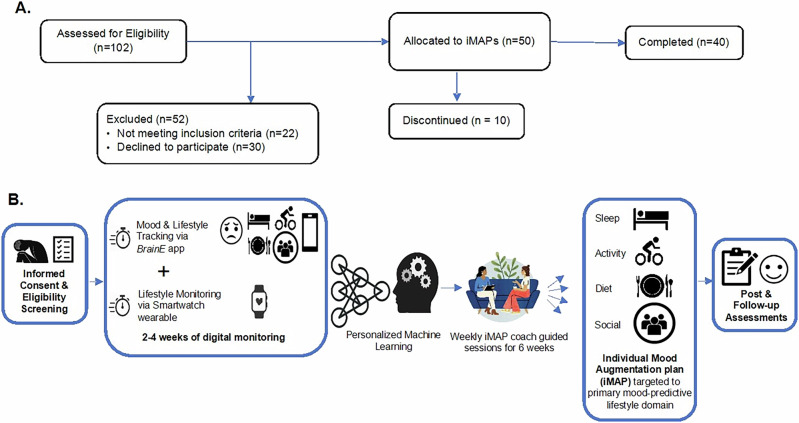
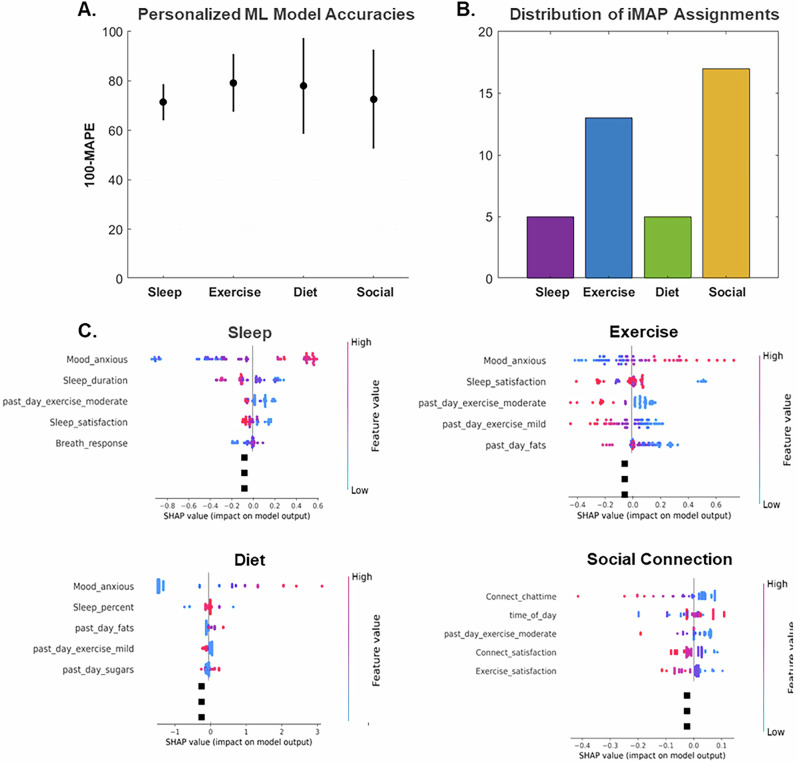
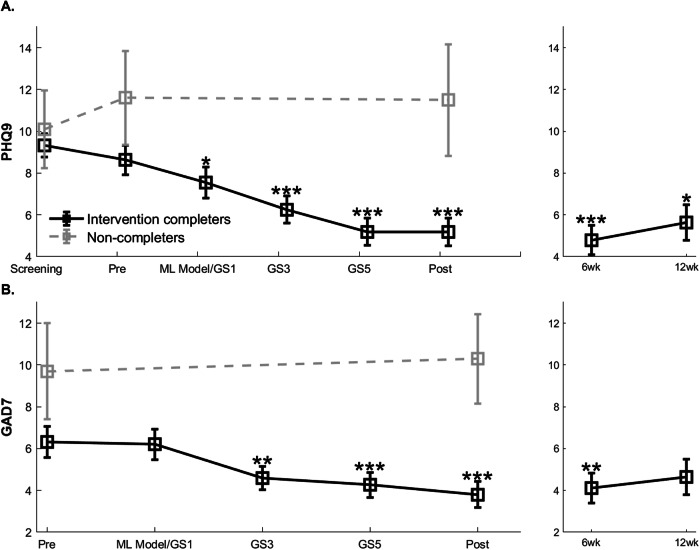
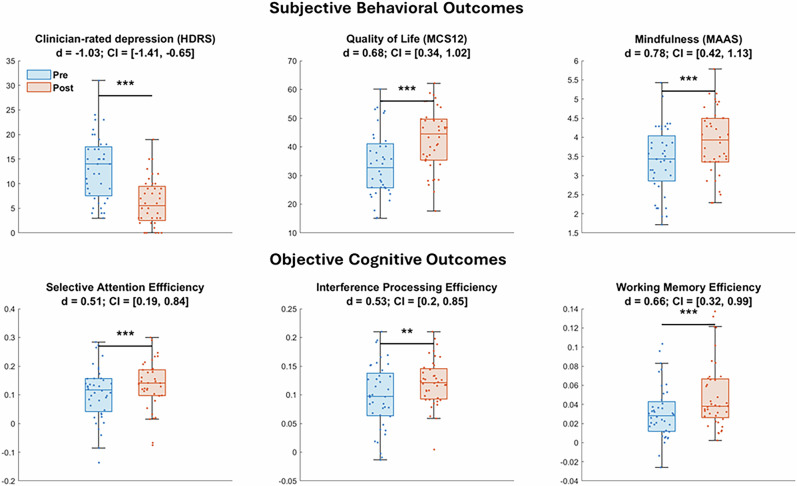
Personalized data-driven interventions for depression are much needed. Here, we leveraged N-of-1 machine learning (ML) to optimally target behavioral lifestyle interventions for depression. 50 individuals with mild-to-moderate depression enrolled in the single-arm, open-label Personalized Mood Augmentation (PerMA) pilot clinical trial (NCT05662254). Participants completed a two-week digital monitoring phase using smartphone-based ecological momentary assessments (EMAs, 4×/day) plus smartwatch tracking of mood and lifestyle factors (sleep/exercise/diet/social connection). Personalized ML models were generated from these data to identify lifestyle factors most predictive of individual mood, and results were translated to individualized mood augmentation plans (iMAPs) implemented by participants for six weeks with once-a-week health coach guidance. Intervention completers (n = 40) showed significant reduction in depression symptoms (primary outcome self-rated PHQ9 −3.5 ± 3.8, Cohen’s d = −0.89, CI [−1.25 −0.53], p < 0.001; clinician-rated HDRS −7.2 ± 6.8, d = −1.03, CI [−1.41 −0.65], p < 1E-6) with benefits sustained up to 12-week follow-up. Co-morbid anxiety was also significantly reduced (GAD7: d = −0.85, CI [−1.2, −0.49], p < 0.001) and quality of life improved (d = 0.68, CI [0.33, 1.02], p < 0.001). Additionally, objective cognitive measures impacted in depression including selective attention (d = 0.51, CI [0.18, 0.84], p < 0.001), interference processing (d = 0.53, CI [0.2, 0.85], p < 0.01) and working memory (d = 0.66, CI [0.31, 0.99], p < 0.001) showed significant enhancement. EMA tracking confirmed that improvement in depressed mood was specifically predicted by improvement in individually targeted lifestyles (β = 0.4 ± 0.09, p < 0.0005). Finally, decision algorithms and a large-language-model (LLM) could match human coach-led iMAP assignment with up to 95% accuracy. The PerMA trial presents a personalized lifestyle intervention approach for depression and merits scale-up and RCT testing to establish clinical efficacy. PERMA was registered with ClinicalTrials.gov under registry number NCT05662254.
Overview
CoChat Summary
## TL;DR
This single-arm pilot study tested a personalized, machine-learning-guided lifestyle intervention for 50 people with mild-to-moderate depression. In 40 intervention completers, depression, anxiety, quality of life, mindfulness, and several cognitive measures improved, but the authors note that a randomized controlled trial is still needed.
## Key findings
- Among trial completers (n = 40), PHQ9 depression scores declined significantly from pre- to post-intervention by −3.5 ± 3.8 with d = −0.89 and p < 1E-13; 22/40 (55%) reached remission (PHQ9 < 5) post-intervention.
- Depression improvement was sustained at follow-up: 6 weeks d = −1.06 (n = 28) and 12 weeks d = −0.52 (n = 22).
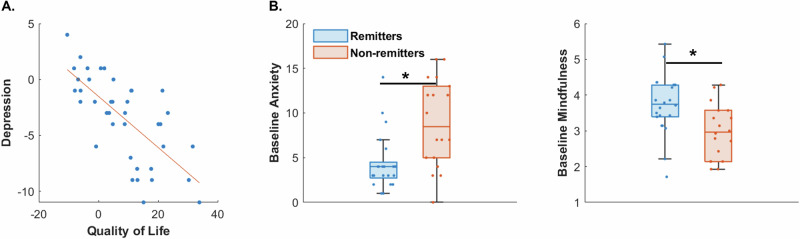
- Anxiety also improved in completers: GAD7 changed by −2.5 ± 3 with d = −0.85 and p < 1E-5; improvement persisted at 6 weeks (d = −0.59) but not 12 weeks (d = −0.3, p = 0.16).
- Secondary outcomes improved post-intervention in completers: HDRS d = −1.03, MCS12 d = 0.68, MAAS d = 0.78, and cognition improved for selective attention (d = 0.51), interference processing (d = 0.53), and working memory (d = 0.66); emotion bias did not improve (p = 0.3).
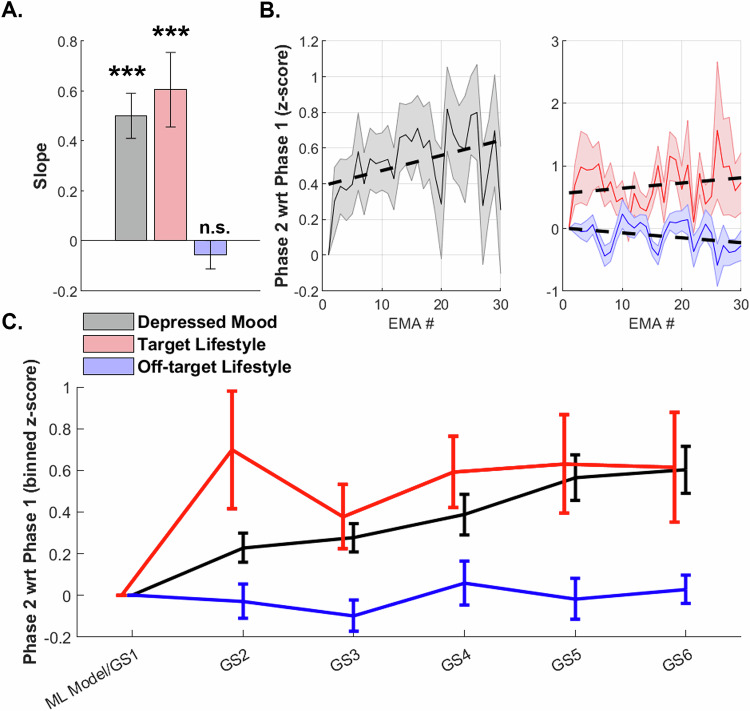
- EMA analyses found that improvement in depressed mood was linked to improvement in the individually targeted lifestyle domain: the regression coefficient for the target-domain slope was β = 0.4 ± 0.09, p < 0.0005, while the off-target slope was not significant (p > 0.1).
- Automated assignment methods matched human coach decisions well: the naïve decision algorithm matched in 87.5% of cases (35/40), the LLM in 92.5%, and the fine-tuned decision algorithm in 95%.
## Methods
- Design: Single-arm, open-label pilot trial (PerMA; NCT05662254) with two phases: about 2 weeks of digital monitoring followed by 6 weeks of individualized coach-guided intervention.
- Sample/data: 50 adults from the San Diego community with mild-to-moderate depression (PHQ9 5–17; mean age 43.3 ± 16.1, 12 males); data collection ran from Winter 2022–Fall 2024. Participants completed smartphone EMAs and wore a smartwatch; total digital monitoring aimed for 60 EMA sessions.
- Analysis: Personalized N-of-1 ML models used SHAP to rank lifestyle predictors of depressed mood and guide intervention domain assignment (sleep, exercise, diet, social connection). Outcomes were tested mainly with Friedman repeated-measures tests, signed-rank tests, robust linear regression, ANOVA/paired tests, and effect sizes reported as Cohen’s d with 95% CIs.
## Limitations
- The paper explicitly states the primary limitation is the lack of a randomized control group, so it cannot establish a causal intervention effect.
- The authors also state a modest sample size of 40 completers; this limits statistical power and generalizability.
- Evident from the text: the study is single-arm and open-label, so results may be influenced by expectancy, regression to the mean, or other non-specific effects; follow-up data were also incomplete (30% and 45% missing at 6 and 12 weeks, respectively).
Model-written summary. Check it against the paper before relying on it.
Integrity signals
Registry
Cites
Statistics
Figures
Verification
Claims the paper makes
26 Valid · 3 Not valid · 6 Not checked · 68 Own results and interpretations
Some cited sources support this claim and some don’t — read each source’s verdict below.
In the paper
“Yet, of note, all of these personalized intervention studies use predictive models based on multi-subject data.”
§ Personalized machine learning guided intervention for optimizing lifestyle behaviors in depression: a pilot study > Introduction
What the sources say
- Disputedcites [20] Xiao S, Gaier ED, Mazow ML, Stout AU, Travers DA, Angjeli E, et al. Improved adherence and treatment outcomes with an engaging, personalized digital therapeutic in amblyopia. Sci. Rep. 2020;10:8328. 32433490 PMC7239850 sourceExperimental — accuracy not yet measured
The Results – Therapeutic Design, ‘Computational algorithms’ section describes personalization through patient-selected videos and a prescription identifying the amblyopic eye. It says the treatment protocol was the same for all patients, rather than describing a predictive model based on multi-subject data. No page number is available in our copy. (LLM, conf=0.86)
Checked by a reasoning model — may be wrong.
- Not checked — no full text of the sourcecites [21] Kulzer B, Daenschel W, Daenschel I, Schramm W, Messinger D, Weissmann J, et al. Integrated personalized diabetes management improves glycemic control in patients with insulin-treated type 2 diabetes: results of the PDM-ProValue study program. Diabetes Res. Clin. Pract. 2018;144:200–12. 30205184 source
- Partly supportedcites [22] Linn AJ, van Dijk L, van Weert J, Gebeyehu BG, van Bodegraven AA, Smit EG. Creating a synergy effect: a cluster randomized controlled trial testing the effect of a tailored multimedia intervention on patient outcomes. Patient Educ. Couns. 2018;101:1419–26. 29609899 sourceExperimental — accuracy not yet measured
The Introduction and Conclusion describe this study as testing a tailored intervention, and the Discussion says its content was tailored to patients’ self-reported adherence barriers. The paper does not say that its intervention used a predictive model based on multi-subject data, or establish that all personalized intervention studies do so. (LLM, conf=0.84)
- Disputedcites [23] Chiang P-H, Wong M, Dey S. Using wearables and machine learning to enable personalized lifestyle recommendations to improve blood pressure. IEEE J. Transl. Eng. Health Med. 2021;9:1–13. PMC8577573 34765324 sourceExperimental — accuracy not yet measured
The Results and Discussion, under “Experiment Setting,” says each person’s blood-pressure–lifestyle model was trained only on that person’s data. The Conclusion also describes personalized recommendations based on an individual model, making this study a counterexample to the claim that all such studies use models trained on multi-subject data. (LLM, conf=0.92)
Checked by a reasoning model — may be wrong.
- Partly supportedcites [24] van Bronswijk SC, DeRubeis RJ, Lemmens L, Peeters F, Keefe JR, Cohen ZD, et al. Precision medicine for long-term depression outcomes using the Personalized Advantage Index approach: cognitive therapy or interpersonal psychotherapy? Psychol. Med. 2021;51:279–89. 31753043 PMC7893512 sourceExperimental — accuracy not yet measured
The Methods (Statistical analyses) describe a personalized treatment model trained on data from multiple participants: each individual's outcomes were predicted using model weights from the other four groups of the sample. The Introduction names other multivariate approaches, but our copy does not establish that all personalized intervention studies use models based on multi-subject data. (LLM, conf=0.83)
- Not checked — no full text of the sourcecites [25] Nye A, Delgadillo J, Barkham M. Efficacy of personalized psychological interventions: a systematic review and meta-analysis. J. Consult. Clin. Psychol. 2023;91:389–97. 37166831 source
plain- Asserted: passes — The authors put it forward as true.
- Checkable: passes — It can be checked against evidence.
- Load-bearing: passes — The paper’s conclusions depend on it.
- Based: passes — The paper gives a reason why it holds.
- Disputed
The cited sources support only part of this claim — read each source’s verdict below.
In the paper
“Consequently, a single lifestyle treatment domain is unlikely to be universally beneficial, and these studies fail to account for individual differences that may favor one behavioral health solution over another [17–19].”
§ Personalized machine learning guided intervention for optimizing lifestyle behaviors in depression: a pilot study > Introduction
What the sources say
- Supportedcites [17] Shah RV, Grennan G, Zafar-Khan M, Alim F, Dey S, Ramanathan D, et al. Personalized machine learning of depressed mood using wearables. Transl. Psychiatry. 2021;11:338. 34103481 PMC8187630 source
The Introduction (page not provided) says that not all lifestyle interventions work for all depressed patients and that responses to the same behavioral recommendations vary substantially between individuals. The Discussion (page not provided) contrasts this variability with standard treatment studies and advocates personalized protocols. (LLM, conf=0.88)
- Supportedcites [18] Nan J, Herbert MS, Purpura S, Henneken AN, Ramanathan D, Mishra J. Personalized machine learning-based prediction of wellbeing and empathy in healthcare professionals. Sensors. 2024;24:2640. 38676258 PMC11053570 source
The Introduction says previous interventions focused on group-level effects even though factors affecting wellbeing vary by individual, so personalized plans may identify more effective interventions. The Discussion gives a concrete example: targeting social connection would likely be suboptimal for 3 of 12 participants. (LLM, conf=0.90)
- Partly supportedcites [19] Wittenborn AK, Hosseinichimeh N. Exploring personalized psychotherapy for depression: a system dynamics approach. PLoS One. 2022;17:e0276441. 36301962 PMC9612473 sourceExperimental — accuracy not yet measured
The Introduction says responses to depression treatment vary widely and that a poor response to one treatment does not predict a poor response to another. The Discussion supports selecting psychotherapy for heterogeneous patients. The paper does not, however, establish that the behavioral-intervention studies described in the citing sentence assigned treatments homogeneously or failed to account for individual differences across lifestyle treatment domains. (LLM, conf=0.84)
plain- Asserted: passes — The authors put it forward as true.
- Checkable: passes — It can be checked against evidence.
- Load-bearing: passes — The paper’s conclusions depend on it.
- Based: passes — The paper gives a reason why it holds.
- Supported
The cited sources support only part of this claim — read each source’s verdict below.
In the paper
“Consequently, a single lifestyle treatment domain is unlikely to be universally beneficial, and these studies fail to account for individual differences that may favor one behavioral health solution over another [17–19].”
§ Personalized machine learning guided intervention for optimizing lifestyle behaviors in depression: a pilot study > Introduction
What the sources say
- Supportedcites [17] Shah RV, Grennan G, Zafar-Khan M, Alim F, Dey S, Ramanathan D, et al. Personalized machine learning of depressed mood using wearables. Transl. Psychiatry. 2021;11:338. 34103481 PMC8187630 source
The Introduction says that sleep, activity, mindfulness, and dietary interventions can benefit depressed patients, but that not all interventions work for all patients. It attributes this to substantial individual variability in response, supporting the claim that no single lifestyle treatment domain is likely to benefit everyone. (LLM, conf=0.93)
- Partly supportedcites [18] Nan J, Herbert MS, Purpura S, Henneken AN, Ramanathan D, Mishra J. Personalized machine learning-based prediction of wellbeing and empathy in healthcare professionals. Sensors. 2024;24:2640. 38676258 PMC11053570 sourceExperimental — accuracy not yet measured
The Introduction says that the factors affecting poor wellbeing vary by individual, and the Discussion says a social-connection intervention would likely be suboptimal for 3 of 12 participants. That supports the concern about a universally beneficial lifestyle domain, but the paper studies predictors of wellbeing in healthcare professionals, not the effectiveness of lifestyle treatments for depression. Page numbers are unavailable in our copy. (LLM, conf=0.86)
- Partly supportedcites [19] Wittenborn AK, Hosseinichimeh N. Exploring personalized psychotherapy for depression: a system dynamics approach. PLoS One. 2022;17:e0276441. 36301962 PMC9612473 sourceExperimental — accuracy not yet measured
The Introduction (page not provided) says responses to depression treatment vary widely and that poor response to one treatment does not predict poor response to another. This supports the general point that one treatment will not benefit everyone, but the paper addresses psychotherapy, not lifestyle treatment domains. (LLM, conf=0.85)
hedged- Asserted: passes — The authors put it forward as true.
- Checkable: passes — It can be checked against evidence.
- Load-bearing: passes — The paper’s conclusions depend on it.
- Based: passes — The paper gives a reason why it holds.
- Supported
The cited sources support only part of this claim — read each source’s verdict below.
In the paper
“Yet, a major limitation of these homogenously assigned (non-personalized) behavioral intervention studies is the heterogeneity across individuals of the specific lifestyle factors most closely linked to their depression.”
§ Personalized machine learning guided intervention for optimizing lifestyle behaviors in depression: a pilot study > Introduction
What the sources say
- Supportedcites [17] Shah RV, Grennan G, Zafar-Khan M, Alim F, Dey S, Ramanathan D, et al. Personalized machine learning of depressed mood using wearables. Transl. Psychiatry. 2021;11:338. 34103481 PMC8187630 source
The Introduction says the same behavioral recommendations do not work for all depressed patients because of substantial interindividual variability, motivating tailored treatment. The Discussion adds that personalized models revealed distinct predictors of depression for different individuals and that this variability is a problem for standard treatment studies. (LLM, conf=0.90)
- Partly supportedcites [18] Nan J, Herbert MS, Purpura S, Henneken AN, Ramanathan D, Mishra J. Personalized machine learning-based prediction of wellbeing and empathy in healthcare professionals. Sensors. 2024;24:2640. 38676258 PMC11053570 sourceExperimental — accuracy not yet measured
The Introduction says group-level interventions can miss individual differences, and the Discussion reports that the lifestyle features predicting wellbeing varied across participants. But this study modeled wellbeing and empathy in healthcare professionals, not which lifestyle factors were most closely linked to each person's depression; depressed mood was a predictor, not the outcome. (LLM, conf=0.90)
- Partly supportedcites [19] Wittenborn AK, Hosseinichimeh N. Exploring personalized psychotherapy for depression: a system dynamics approach. PLoS One. 2022;17:e0276441. 36301962 PMC9612473 sourceExperimental — accuracy not yet measured
The Introduction and Discussion (page numbers unavailable) describe widely varying responses to psychotherapy and support tailoring treatment to heterogeneous patients. The paper examines differences in stressors and rumination, but does not identify variation in specific lifestyle factors as a major limitation of uniformly assigned behavioral-intervention studies. (LLM, conf=0.84)
plainstates an association- Asserted: passes — The authors put it forward as true.
- Checkable: passes — It can be checked against evidence.
- Load-bearing: passes — The paper’s conclusions depend on it.
- Based: passes — The paper gives a reason why it holds.
- Supported
The cited sources that could be checked couldn’t confirm or dispute this claim.
In the paper
“We opted for 60-session models to minimize participant burden, as prior comparisons with 120-session models showed no significant gain in accuracy (MAPE difference = 1.5%, p = 0.3) [17].”
§ Personalized machine learning guided intervention for optimizing lifestyle behaviors in depression: a pilot study > Methods > Study procedure
What the sources say
- Could not verifycites [17] Shah RV, Grennan G, Zafar-Khan M, Alim F, Dey S, Ramanathan D, et al. Personalized machine learning of depressed mood using wearables. Transl. Psychiatry. 2021;11:338. 34103481 PMC8187630 sourceExperimental — accuracy not yet measured
The Methods (ML pipeline; page unavailable) report 120 planned MindLog assessments and an average of 93 completed per participant. The Results report MAPE for different modeling strategies, but our copy does not report a 60-versus-120-session comparison or the claimed 1.5% difference and p = 0.3 (searched: 60 sessions, 120-session comparison, and those statistics). (LLM, conf=0.76)
plain- Asserted: passes — The authors put it forward as true.
- Checkable: passes — It can be checked against evidence.
- Load-bearing: passes — The paper’s conclusions depend on it.
- Based: passes — The paper gives a reason why it holds.
- Could not verify
50 more claims · 9 with their cited sources checked
Create a free account to see all 103 claims and to verify the 3 references still open.
- Probably not a substantial claim. 19
- It may state two separate claims as one. 36
- The quote only partly states this claim. 1
Self-check
Percentages, sums and reported differences re-computed from the paper’s own numbers.
Self-check results appear here once an independent check has confirmed them.
Cited works that were retracted
Works this paper cites that were later retracted, from the retraction notices publishers deposit. Major when the notice came out before this paper was published.
Rated major: it would touch a result — a value a result rests on, reported and recomputed p-values on opposite sides of the significance level, two passages that conflict with no sign which is right, or a cited work retracted before this paper was published.
In the paper
“Livingston G, Huntley J, Sommerlad A, Ames D, Ballard C, Banerjee S, et al. Dementia prevention, intervention, and care: 2020 report of the lancet commission. Lancet. 2020;396:413–46.”
Cited work 10.1016/s0140-6736(20)30367-6 · retracted 2023-05-01 · notice 10.1016/s2468-2667(23)00083-x · this paper published 2026-05-19
Citations
Cites
1 retracted
Dementia prevention, intervention, and care: 2020 report of the Lancet Commission
Livingston, G., Huntley, J., Sommerlad, A., Ames, D., Ballard, C., Banerjee, S., Brayne, C., Burns, A., Cohen-Mansfield, J., Cooper, C., et al. (2020) · The Lancet · doi:10.1016/s0140-6736(20)30367-6 · Cited by 10,430
RetractedThe PHQ-9: Validity of a brief depression severity measure
Kroenke, K., Spitzer, R. L., & Williams, J. B. W. (2001) · Journal of General Internal Medicine · doi:10.1046/j.1525-1497.2001.016009606.x · Cited by 44,910
Statistical power analyses using G∗Power 3.1: tests for correlation and regression analyses
Faul, F., Erdfelder, E., Buchner, A., & Lang, A.-G. (2009) · Behavior Research Methods · doi:10.3758/brm.41.4.1149 · Cited by 37,615 · cited 1×
“Participants also completed once-a-day EMAs (same as those in phase 1) over the 6 weeks to track progress.”
Hamilton, M. (1960) · Journal of Neurology, Neurosurgery & Psychiatry · doi:10.1136/jnnp.23.1.56 · Cited by 32,817 · cited 1×
“…at pre-and post-intervention time-points, outcome scores were acquired for clinician-rated depression on the Hamilton Depression Rating Scale (HDRS [48]), self-rated quality of life reported on the Short Form 12 Mental Component Summary (MCS12 [49]), and mindfulness self-rated per the Mindful…”
A Brief Measure for Assessing Generalized Anxiety Disorder: The GAD-7
Spitzer, R. L., Kroenke, K., Williams, J. B. W., & Löwe, B. (2006) · Archives of Internal Medicine · doi:10.1001/archinte.166.10.1092 · Cited by 31,765
The Montreal Cognitive Assessment, MoCA: a brief screening tool for mild cognitive impairment
Nasreddine, Z. S., Phillips, N. A., Bédirian, V., Charbonneau, S., Whitehead, V., Collin, I., Cummings, J. L., & Chertkow, H. (2005) · Journal of the American Geriatrics Society · doi:10.1111/j.1532-5415.2005.53221.x · Cited by 25,553 · cited 1×
“For participants 60 years of age and older, we additionally conducted the Montreal Cognitive Assessment (MoCA) and con fi rmed normal scores ≥ 26 [40].”
Statistical Power Analysis for the Behavioral Sciences
Cohen, J. (2013) · doi:10.4324/9780203771587 · Cited by 25,373
The benefits of being present: Mindfulness and its role in psychological well-being
Brown, K. W., & Ryan, R. M. (2003) · Journal of Personality and Social Psychology · doi:10.1037/0022-3514.84.4.822 · Cited by 13,448 · cited 1×
“If shown to be effective, such a personalized approach can be a promising way to remotely deliver scalable treatment for depression that is optimized to individual lifestyles.”
The Structured Clinical Interview for DSM-III-R (SCID): I: History, Rationale, and Description
Spitzer, R. L. (1992) · Archives of General Psychiatry · doi:10.1001/archpsyc.1992.01820080032005 · Cited by 4,336
Cognition and Depression: Current Status and Future Directions
Gotlib, I. H., & Joormann, J. (2010) · Annual Review of Clinical Psychology · doi:10.1146/annurev.clinpsy.121208.131305 · Cited by 2,420 · cited 2×
“Notably, while depression can be associated with cognitive de fi cits [31 – 37], there has been a lack of intervention studies in depression showing robust cognitive bene fi ts.”
Depression Is the Leading Cause of Disability Around the World
Friedrich, M. J. (2017) · JAMA · doi:10.1001/jama.2017.3826 · Cited by 1,459
Scott, A. J., Webb, T. L., Martyn-St James, M., Rowse, G., & Weich, S. (2021) · Sleep Medicine Reviews · doi:10.1016/j.smrv.2021.101556 · Cited by 1,094 · cited 2×
“This fi nding aligns with the strong foundation in the literature that improvements in sleep, diet and exercise are linked to improvements in depression symptoms [82, 99, 100].”
Billingham, S. A., Whitehead, A. L., & Julious, S. A. (2013) · BMC Medical Research Methodology · doi:10.1186/1471-2288-13-104 · Cited by 962
Mental Health Service Provision in Low- and Middle-Income Countries
Rathod, S., Pinninti, N., Irfan, M., Gorczynski, P., Rathod, P., Gega, L., & Naeem, F. (2017) · Health Services Insights · doi:10.1177/1178632917694350 · Cited by 866 · cited 1×
“Delivering behavioral health interventions through health coaches has the added bene fi t of being cost-effective compared to repeat visits to licensed mental healthcare providers, i.e., psychiatrists or clinical psychologists, and can be particularly bene fi cial in low-income settings [28 – 30].”
Mindfulness-Based Interventions for Anxiety and Depression
Hofmann, S. G., & Gómez, A. F. (2017) · Psychiatric Clinics of North America · doi:10.1016/j.psc.2017.08.008 · Cited by 756 · cited 2×
“Within the app, participants accessed daily EMAs on a module called MindLog on which they provided mood and lifestyle ratings up to 4 times per day until they completed 60 sessions (2 – 4 weeks).”
Noetel, M., Sanders, T., Gallardo-Gómez, D., Taylor, P., del Pozo Cruz, B., van den Hoek, D., Smith, J. J., Mahoney, J., Spathis, J., Moresi, M., et al. (2024) · BMJ · doi:10.1136/bmj-2023-075847 · Cited by 707 · cited 1×
“Description of each 6-week iMAP in either sleep/ exercise/ diet/ social connection domain is provided in Supplementary Methods section S.5 and is grounded in evidence-based intervention protocols in these lifestyle domains in the context of depression [5, 6, 8, 11, 16, 68 – 70].”
The Critical Relationship Between Anxiety and Depression
Kalin, N. H. (2020) · American Journal of Psychiatry · doi:10.1176/appi.ajp.2020.20030305 · Cited by 702 · cited 1×
“If shown to be effective, such a personalized approach can be a promising way to remotely deliver scalable treatment for depression that is optimized to individual lifestyles.”
The benefits of exercise for the clinically depressed
Craft, L. L., & Perna, F. M. (2004) · The Primary Care Companion For CNS Disorders · doi:10.4088/pcc.v06n0301 · Cited by 692 · cited 1×
“This fi nding aligns with the strong foundation in the literature that improvements in sleep, diet and exercise are linked to improvements in depression symptoms [82, 99, 100].”
Schuch, F., Vancampfort, D., Firth, J., Rosenbaum, S., Ward, P., Reichert, T., Bagatini, N. C., Bgeginski, R., & Stubbs, B. (2017) · Journal of Affective Disorders · doi:10.1016/j.jad.2016.10.050 · Cited by 663
Kessler, R. C., Sampson, N. A., Berglund, P., Gruber, M. J., Al-Hamzawi, A., Andrade, L., Bunting, B., Demyttenaere, K., Florescu, S., de Girolamo, G., et al. (2015) · Epidemiology and Psychiatric Sciences · doi:10.1017/s2045796015000189 · Cited by 636 · cited 2×
“If shown to be effective, such a personalized approach can be a promising way to remotely deliver scalable treatment for depression that is optimized to individual lifestyles.”
Parletta, N., Zarnowiecki, D., Cho, J., Wilson, A., Bogomolova, S., Villani, A., Itsiopoulos, C., Niyonsenga, T., Blunden, S., Meyer, B., et al. (2019) · Nutritional Neuroscience · doi:10.1080/1028415x.2017.1411320 · Cited by 629
Fales, C. L., Barch, D. M., Rundle, M. M., Mintun, M. A., Snyder, A. Z., Cohen, J. D., Mathews, J., & Sheline, Y. I. (2008) · Biological Psychiatry · doi:10.1016/j.biopsych.2007.06.012 · Cited by 517
Biological, Psychological, and Social Determinants of Depression: A Review of Recent Literature
Remes, O., Mendes, J. F., & Templeton, P. (2021) · Brain Sciences · doi:10.3390/brainsci11121633 · Cited by 482 · cited 1×
“…with a health coach for 6 weeks, and subsequent post-intervention assessments and then follow-up assessments at 6 and 12 weeks after end of intervention. participants to initiate intervention in the chosen domain (e.g., fi xed sleep schedules due to work may constrain a person ’ s ability…”
Improving mental health access for low-income children and families in the primary care setting.
Hodgkinson, S., Godoy, L., Beers, L. S., & Lewin, A. (2017) · Pediatrics · doi:10.1542/peds.2015-1175 · Cited by 451 · cited 1×
“The personalized ML model results, thereby, revealed the speci fi c lifestyle attributes that are most impactful in predicting each individual ’ s depressed mood, and the top-ranking predictors could then be used to guide each participant ’ s iMAP.”
Lifestyle medicine for depression
Sarris, J., O’Neil, A., Coulson, C. E., Schweitzer, I., & Berk, M. (2014) · BMC Psychiatry · doi:10.1186/1471-244x-14-107 · Cited by 450 · cited 3×
“%) of all depression cases fall in the category of mild-to-moderate depression [3] for which integrative behavioral health treatments are recommended fi rst-line as effective and scalable solutions [4].”
InfluentialMindfulness and Behavior Change
Schuman-Olivier, Z., Trombka, M., Lovas, D. A., Brewer, J. A., Vago, D. R., Gawande, R., Dunne, J. P., Lazar, S. W., Loucks, E. B., & Fulwiler, C. (2020) · Harvard Review of Psychiatry · doi:10.1097/hrp.0000000000000277 · Cited by 435 · cited 1×
“If shown to be effective, such a personalized approach can be a promising way to remotely deliver scalable treatment for depression that is optimized to individual lifestyles.”
Forced-choice staircases with fixed step sizes: asymptotic and small-sample properties
Garcı́a-Pérez, M. A. (1998) · Vision Research · doi:10.1016/s0042-6989(97)00340-4 · Cited by 423
Hertenstein, E., Trinca, E., Wunderlin, M., Schneider, C. L., Züst, M. A., Fehér, K. D., Su, T., Straten, A. V., Berger, T., Baglioni, C., et al. (2022) · Sleep Medicine Reviews · doi:10.1016/j.smrv.2022.101597 · Cited by 391 · cited 3×
“Description of each 6-week iMAP in either sleep/ exercise/ diet/ social connection domain is provided in Supplementary Methods section S.5 and is grounded in evidence-based intervention protocols in these lifestyle domains in the context of depression [5, 6, 8, 11, 16, 68 – 70].”
InfluentialCognitive impairment in depression: recent advances and novel treatments
Perini, G., Cotta Ramusino, M., Sinforiani, E., Bernini, S., Petrachi, R., & Costa, A. (2019) · Neuropsychiatric Disease and Treatment · doi:10.2147/ndt.s199746 · Cited by 384 · cited 1×
“Description of each 6-week iMAP in either sleep/ exercise/ diet/ social connection domain is provided in Supplementary Methods section S.5 and is grounded in evidence-based intervention protocols in these lifestyle domains in the context of depression [5, 6, 8, 11, 16, 68 – 70].”
Cuijpers, P., Miguel, C., Harrer, M., Plessen, C. Y., Ciharova, M., Ebert, D., & Karyotaki, E. (2023) · World Psychiatry · doi:10.1002/wps.21069 · Cited by 354
Quality of life assessments in major depressive disorder: a review of the literature
Papakostas, G. I., Petersen, T., Mahal, Y., Mischoulon, D., Nierenberg, A. A., & Fava, M. (2004) · General Hospital Psychiatry · doi:10.1016/j.genhosppsych.2003.07.004 · Cited by 331 · cited 1×
“Notably, we found that improvements in quality of life (QOL), i.e., how participants felt about their psychosocial functioning and ability to derive pleasure from their life activities [80], was signi fi cantly related to improvement in depression at post-intervention as well as at follow-ups.”
Paying attention to attention in depression
Keller, A. S., Leikauf, J. E., Holt-Gosselin, B., Staveland, B. R., & Williams, L. M. (2019) · Translational Psychiatry · doi:10.1038/s41398-019-0616-1 · Cited by 329 · cited 1×
“Here, we show that personalized lifestyle intervention signi fi cantly improves selective attention, interference processing as well as working memory in individuals with depressive symptoms – cognitive domains that are all impacted in depression [93 – 96].”
Randomized Trial of a Generative AI Chatbot for Mental Health Treatment
Heinz, M. V., Mackin, D. M., Trudeau, B. M., Bhattacharya, S., Wang, Y., Banta, H. A., Jewett, A. D., Salzhauer, A. J., Griffin, T. Z., & Jacobson, N. C. (2025) · NEJM AI · doi:10.1056/aioa2400802 · Cited by 287 · cited 1×
“While arti fi cial intelligence (AI) chatbot based therapy is gaining traction [74 – 76], the depth of understanding and empathy provided by a human coach are still unmatched by chatbots [77 – 79], hence, we decided to integrate human coaches that had remote weekly video check-ins with each patient.”
Francis, H. M., Stevenson, R. J., Chambers, J. R., Gupta, D., Newey, B., & Lim, C. K. (2019) · PLOS ONE · doi:10.1371/journal.pone.0222768 · Cited by 277
Baker, L. D., Espeland, M. A., Whitmer, R. A., Snyder, H. M., Leng, X., Lovato, L., Papp, K. V., Yu, M., Kivipelto, M., Alexander, A. S., et al. (2025) · JAMA · doi:10.1001/jama.2025.12923 · Cited by 270 · cited 1×
“There is much evidence that lifestyle intervention and adoption of healthy lifestyles promotes cognitive health and staves off cognitive decline [85 – 92], but again effects of personalized lifestyle optimization for cognition in depression have not been studied.”
Evidence that response inhibition is a primary deficit in ADHD
Wodka, E. L., Mark Mahone, E., Blankner, J. G., Gidley Larson, J. C., Fotedar, S., Denckla, M. B., & Mostofsky, S. H. (2007) · Journal of Clinical and Experimental Neuropsychology · doi:10.1080/13803390600678046 · Cited by 264
Illusory generalizability of clinical prediction models
Chekroud, A. M., Hawrilenko, M., Loho, H., Bondar, J., Gueorguieva, R., Hasan, A., Kambeitz, J., Corlett, P. R., Koutsouleris, N., Krumholz, H. M., et al. (2024) · Science · doi:10.1126/science.adg8538 · Cited by 251 · cited 1×
“Further, such models based on data from speci fi c populations may not be generalizable and thus may fail to properly assign the optimal treatment [26].”
Opie, R. S., O’Neil, A., Itsiopoulos, C., & Jacka, F. N. (2015) · Public Health Nutrition · doi:10.1017/s1368980014002614 · Cited by 243 · cited 2×
“…up to 20% attrition, so as to obtain at least 40 complete study samples that were powered to detect a statistically meaningful medium effect size (Cohen ’ s d > 0.45) primary outcome difference in pre vs post comparisons of PHQ9 scores at 0.8 power and alpha level of 0.05, computed a priori [41].”
Influential“It happened to be the perfect thing”: experiences of generative AI chatbots for mental health
Siddals, S., Torous, J., & Coxon, A. (2024) · npj Mental Health Research · doi:10.1038/s44184-024-00097-4 · Cited by 241
Taylor, C. T., Lyubomirsky, S., & Stein, M. B. (2017) · Depression and Anxiety · doi:10.1002/da.22593 · Cited by 233 · cited 2×
“Description of each 6-week iMAP in either sleep/ exercise/ diet/ social connection domain is provided in Supplementary Methods section S.5 and is grounded in evidence-based intervention protocols in these lifestyle domains in the context of depression [5, 6, 8, 11, 16, 68 – 70].”
Self-citationMerikangas, K. R., Swendsen, J., Hickie, I. B., Cui, L., Shou, H., Merikangas, A. K., Zhang, J., Lamers, F., Crainiceanu, C., Volkow, N. D., et al. (2019) · JAMA Psychiatry · doi:10.1001/jamapsychiatry.2018.3546 · Cited by 231 · cited 1×
“The app sent regular noti fi cations daily to all participants following the methodology of recent research on longitudinal mood monitoring [17, 18, 44].”
The Economic Burden of Adults with Major Depressive Disorder in the United States (2019)
Greenberg, P., Chitnis, A., Louie, D., Suthoff, E., Chen, S.-Y., Maitland, J., Gagnon-Sanschagrin, P., Fournier, A.-A., & Kessler, R. C. (2023) · Advances in Therapy · doi:10.1007/s12325-023-02622-x · Cited by 223 · cited 2×
“Besides the negative health impacts of depression, its socio-economic cost burden was recently estimated at greater than $380 billion with healthcare as the major cost driver alongside household and work-related costs [3].”
Khawaja, Z., & Bélisle-Pipon, J.-C. (2023) · Frontiers in Digital Health · doi:10.3389/fdgth.2023.1278186 · Cited by 214 · cited 1×
“While arti fi cial intelligence (AI) chatbot based therapy is gaining traction [74 – 76], the depth of understanding and empathy provided by a human coach are still unmatched by chatbots [77 – 79], hence, we decided to integrate human coaches that had remote weekly video check-ins with each patient.”
Carney, C. E., Edinger, J. D., Kuchibhatla, M., Lachowski, A. M., Bogouslavsky, O., Krystal, A. D., & Shapiro, C. M. (2017) · Sleep · doi:10.1093/sleep/zsx019 · Cited by 212
Culpepper, L., Lam, R. W., & McIntyre, R. S. (2017) · The Journal of Clinical Psychiatry · doi:10.4088/jcp.tk16043ah5c · Cited by 211 · cited 3×
“…we used a multidimensional approach to evaluate trial outcomes; symptom assessments were complemented with evaluation of change in subjective mental health behaviors and quality of life, as well as change in objective measures of neuro-cognition that are impacted in depression [31 – 37].”
Influential(2020) · PubMed · Cited by 208
Nikolin, S., Tan, Y. Y., Schwaab, A., Moffa, A., Loo, C. K., & Martin, D. (2021) · Journal of Affective Disorders · doi:10.1016/j.jad.2021.01.084 · Cited by 205
Exercise is medicine: a call to action for physicians to assess and prescribe exercise
Sallis, R. (2015) · The Physician and Sportsmedicine · doi:10.1080/00913847.2015.1001938 · Cited by 198
Relationship between mindfulness, depression, anxiety and stress: Mediating role of self-efficacy
Sharma, P. K., & Kumra, R. (2022) · Personality and Individual Differences · doi:10.1016/j.paid.2021.111363 · Cited by 155
Artificial Intelligence-Powered Cognitive Behavioral Therapy Chatbots, a Systematic Review
Farzan, M., Ebrahimi, H., Pourali, M., & Sabeti, F. (2024) · Iranian Journal of Psychiatry · doi:10.18502/ijps.v20i1.17395 · Cited by 150
Distracted and down: neural mechanisms of affective interference in subclinical depression
Kaiser, R. H., Andrews-Hanna, J. R., Spielberg, J. M., Warren, S. L., Sutton, B. P., Miller, G. A., Heller, W., & Banich, M. T. (2015) · Social Cognitive and Affective Neuroscience · doi:10.1093/scan/nsu100 · Cited by 147 · cited 1×
“Here, we show that personalized lifestyle intervention signi fi cantly improves selective attention, interference processing as well as working memory in individuals with depressive symptoms – cognitive domains that are all impacted in depression [93 – 96].”
Lindheimer, J. B., O’Connor, P. J., & Dishman, R. K. (2015) · Sports Medicine · doi:10.1007/s40279-015-0303-1 · Cited by 143 · cited 1×
“Lifestyle targeted behavioral interventions in depression have typically shown small-to-medium effect sizes of ~0.3 – 0.5 [4 – 16], while the placebo effect of behavioral interventions are even smaller ~0.2 in RCTs [101, 102].”
InfluentialEfficacy of Personalized Psychological Interventions: A Systematic Review and Meta-Analysis
Nye, A., Delgadillo, J., & Barkham, M. (2023) · Journal of Consulting and Clinical Psychology · doi:10.1037/ccp0000820 · Cited by 142 · cited 2×
“A recent systematic review and meta-analysis of multiple personalized psychological interventions found that personalization signi fi cantly improves the effect size of treatment compared to standard therapy [25].”
InfluentialNon-pharmacological treatment of depression: a systematic review and evidence map
Farah, W. H., Alsawas, M., Mainou, M., Alahdab, F., Farah, M. H., Ahmed, A. T., Mohamed, E. A., Almasri, J., Gionfriddo, M. R., Castaneda-Guarderas, A., et al. (2016) · Evidence Based Medicine · doi:10.1136/ebmed-2016-110522 · Cited by 141 · cited 2×
“Within the app, participants accessed daily EMAs on a module called MindLog on which they provided mood and lifestyle ratings up to 4 times per day until they completed 60 sessions (2 – 4 weeks).”
Thornicroft, G., Ahuja, S., Barber, S., Chisholm, D., Collins, P. Y., Docrat, S., Fairall, L., Lempp, H., Niaz, U., Ngo, V., et al. (2019) · The Lancet Psychiatry · doi:10.1016/s2215-0366(18)30298-0 · Cited by 138 · cited 2×
“Delivering behavioral health interventions through health coaches has the added bene fi t of being cost-effective compared to repeat visits to licensed mental healthcare providers, i.e., psychiatrists or clinical psychologists, and can be particularly bene fi cial in low-income settings [28 – 30].”
Physical Exercise for Treatment of Mood Disorders: A Critical Review
Hearing, C. M., Chang, W. C., Szuhany, K. L., Deckersbach, T., Nierenberg, A. A., & Sylvia, L. G. (2016) · Current Behavioral Neuroscience Reports · doi:10.1007/s40473-016-0089-y · Cited by 137
Braund, T. A., Tillman, G., Palmer, D. M., Gordon, E., Rush, A. J., & Harris, A. W. F. (2021) · Translational Psychiatry · doi:10.1038/s41398-021-01533-1 · Cited by 135 · cited 1×
“…up to 20% attrition, so as to obtain at least 40 complete study samples that were powered to detect a statistically meaningful medium effect size (Cohen ’ s d > 0.45) primary outcome difference in pre vs post comparisons of PHQ9 scores at 0.8 power and alpha level of 0.05, computed a priori [41].”
InfluentialOpie, R. S., O'Neil, A., Jacka, F. N., Pizzinga, J., & Itsiopoulos, C. (2018) · Nutritional Neuroscience · doi:10.1080/1028415x.2017.1312841 · Cited by 130 · cited 2×
“Description of each 6-week iMAP in either sleep/ exercise/ diet/ social connection domain is provided in Supplementary Methods section S.5 and is grounded in evidence-based intervention protocols in these lifestyle domains in the context of depression [5, 6, 8, 11, 16, 68 – 70].”
Personalized machine learning of depressed mood using wearables
Shah, R. V., Grennan, G., Zafar-Khan, M., Alim, F., Dey, S., Ramanathan, D., & Mishra, J. (2021) · Translational Psychiatry · doi:10.1038/s41398-021-01445-0 · Cited by 123 · cited 10×
“We have previously demonstrated high accuracy ML modeling of individual depressed mood based on ecological momentary assessments (EMA) and passive smart watch data [17, 18, 27].”
InfluentialSelf-citationCognitive Behavioral Therapy for Insomnia in Depression
Asarnow, L. D., & Manber, R. (2019) · Sleep Medicine Clinics · doi:10.1016/j.jsmc.2019.01.009 · Cited by 115 · cited 1×
“Description of each 6-week iMAP in either sleep/ exercise/ diet/ social connection domain is provided in Supplementary Methods section S.5 and is grounded in evidence-based intervention protocols in these lifestyle domains in the context of depression [5, 6, 8, 11, 16, 68 – 70].”
The use of artificial intelligence in psychotherapy: development of intelligent therapeutic systems
Spytska, L. (2025) · BMC Psychology · doi:10.1186/s40359-025-02491-9 · Cited by 113
The effect of adherence on cognition in a multidomain lifestyle intervention (FINGER)
Ngandu, T., Lehtisalo, J., Korkki, S., Solomon, A., Coley, N., Antikainen, R., Bäckman, L., Hänninen, T., Lindström, J., Laatikainen, T., et al. (2022) · Alzheimer's & Dementia · doi:10.1002/alz.12492 · Cited by 101 · cited 1×
“…up to 20% attrition, so as to obtain at least 40 complete study samples that were powered to detect a statistically meaningful medium effect size (Cohen ’ s d > 0.45) primary outcome difference in pre vs post comparisons of PHQ9 scores at 0.8 power and alpha level of 0.05, computed a priori [41].”
InfluentialShort Form 12 Health Survey (SF-12)
Turner‐Bowker, D. M., & Hogue, S. J. (2014) · Springer eBooks · doi:10.1007/978-94-007-0753-5_2698 · Cited by 97
Cognitive Dysfunction in Major Depressive Disorder: Assessment, Impact, and Management
Chakrabarty, T., Hadjipavlou, G., & Lam, R. W. (2016) · Focus · doi:10.1176/appi.focus.20150043 · Cited by 84
Influence of placebo effect in mental disorders research: A systematic review and meta‐analysis
López, R. F., Gallego, B. R., Bueno‐Cavanillas, A., & Khan, K. S. (2022) · European Journal of Clinical Investigation · doi:10.1111/eci.13762 · Cited by 78
Kulzer, B., Daenschel, W., Daenschel, I., Schramm, W., Messinger, D., Weissmann, J., Vesper, I., Parkin, C. G., & Heinemann, L. (2018) · Diabetes Research and Clinical Practice · doi:10.1016/j.diabres.2018.09.002 · Cited by 77 · cited 2×
“…sessions with a health coach for 6 weeks, and subsequent post-intervention assessments and then follow-up assessments at 6 and 12 weeks after end of intervention. participants to initiate intervention in the chosen domain (e.g., fi xed sleep schedules due to work may constrain a person ’ s…”
Gawande, R., To, M. N., Pine, E., Griswold, T., Creedon, T. B., Brunel, A., Lozada, A., Loucks, E. B., & Schuman-Olivier, Z. (2019) · Journal of General Internal Medicine · doi:10.1007/s11606-018-4739-5 · Cited by 75 · cited 2×
“Mindfulness was intentionally assessed as it can facilitate behavior change through greater self-awareness and control over decision-making [51, 52].”
van Bronswijk, S. C., DeRubeis, R. J., Lemmens, L. H. J. M., Peeters, F. P. M. L., Keefe, J. R., Cohen, Z. D., & Huibers, M. J. H. (2021) · Psychological Medicine · doi:10.1017/s0033291719003192 · Cited by 75 · cited 1×
“A depression intervention study that used a personalized advantage index (PAI) to assign either cognitive or interpersonal therapy to individuals showed decreased long-term symptom severity in patients receiving PAI-indicated vs. PAI-non-indicated treatment [24].”
Cognitive dysfunction in major depression: From assessment to novel therapies
Atique-Ur-Rehman, H., & Neill, J. C. (2019) · Pharmacology & Therapeutics · doi:10.1016/j.pharmthera.2019.05.013 · Cited by 72
Chiang, P.-H., Wong, M., & Dey, S. (2021) · IEEE Journal of Translational Engineering in Health and Medicine · doi:10.1109/jtehm.2021.3098173 · Cited by 64 · cited 1×
“Studies across multiple fi elds of healthcare have shown that personalizing treatment leads to higher treatment adherence as well as improved satisfaction [20 – 23].”
Cognitive and Neural Correlates of Loneliness and Wisdom during Emotional Bias
Grennan, G., Balasubramani, P. P., Alim, F., Zafar-Khan, M., Lee, E. E., Jeste, D. V., & Mishra, J. (2021) · Cerebral Cortex · doi:10.1093/cercor/bhab012 · Cited by 57
Self-citationTaylor, C. T., Stein, M. B., Simmons, A. N., He, F., Oveis, C., Shakya, H. B., Sieber, W. J., Fowler, J. H., & Jain, S. (2024) · Biological Psychiatry · doi:10.1016/j.biopsych.2023.07.024 · Cited by 53 · cited 1×
“Participants also completed once-a-day EMAs (same as those in phase 1) over the 6 weeks to track progress.”
Self-citationLeitner, J., Chiang, P.-H., Agnihotri, P., & Dey, S. (2024) · JMIR Cardio · doi:10.2196/51916 · Cited by 53 · cited 1×
“Although purely digital health studies might have larger sample sizes such as a similar designed behavioral health intervention for hypertension [104], our study combines aspects of digital health therapies and a one-to-one patient-coach/clinician component.”
Yonatan‐Leus, R., & Brukner, H. (2024) · Counselling and Psychotherapy Research · doi:10.1002/capr.12832 · Cited by 53 · cited 1×
“While arti fi cial intelligence (AI) chatbot based therapy is gaining traction [74 – 76], the depth of understanding and empathy provided by a human coach are still unmatched by chatbots [77 – 79], hence, we decided to integrate human coaches that had remote weekly video check-ins with each patient.”
Grennan, G., Withers, M. C., Ramanathan, D., & Mishra, J. (2023) · PLOS Climate · doi:10.1371/journal.pclm.0000125 · Cited by 45
Self-citationXiao, S., Gaier, E. D., Mazow, M. L., Stout, A. U., Travers, D. A., Angjeli, E., Wu, H. C., Binenbaum, G., & Hunter, D. G. (2020) · Scientific Reports · doi:10.1038/s41598-020-65234-3 · Cited by 44 · cited 1×
“Studies across multiple fi elds of healthcare have shown that personalizing treatment leads to higher treatment adherence as well as improved satisfaction [20 – 23].”
Mapping cognitive brain functions at scale
Balasubramani, P. P., Ojeda, A., Grennan, G., Maric, V., Le, H., Alim, F., Zafar-Khan, M., Diaz-Delgado, J., Silveira, S., Ramanathan, D., et al. (2021) · NeuroImage · doi:10.1016/j.neuroimage.2020.117641 · Cited by 39
Self-citationSimultaneous Gut-Brain Electrophysiology Shows Cognition and Satiety Specific Coupling
Balasubramani, P. P., Walke, A., Grennan, G., Purpura, S., Perley, A. S., Ramanathan, D., Coleman, T. P., & Mishra, J. (2022) · Sensors · doi:10.3390/s22239242 · Cited by 34
Self-citationJaiswal, S., Purpura, S. R., Manchanda, J. K., Nan, J., Azeez, N., Ramanathan, D., & Mishra, J. (2024) · JMIR Mental Health · doi:10.2196/49467 · Cited by 34 · cited 1×
“…included assessments of neuro-cognition completed using the BrainE app, speci fi cally tests of selective attention, interference processing, working memory and emotion bias, described in several prior publications [17, 54 – 66] and also in Supplementary Methods section S.1 and Supplementary Fig.”
Self-citationLinn, A. J., van Dijk, L., van Weert, J. C. M., Gebeyehu, B. G., van Bodegraven, A. A., & Smit, E. G. (2018) · Patient Education and Counseling · doi:10.1016/j.pec.2018.03.017 · Cited by 31 · cited 1×
“The coaches received 8 h of training consisting of both didactic training as well as practical skills development with role play of realistic participant-coach interactions supervised with feedback from the study psychiatrist (co-author DR).”
Ding, Z., Leung, P.-Y., Lee, T.-L., & Chan, A. S. (2023) · Ageing Research Reviews · doi:10.1016/j.arr.2023.101886 · Cited by 31
Mapping Large-Scale Networks Associated with Action, Behavioral Inhibition and Impulsivity
Fakhraei, L., Francoeur, M. J., Balasubramani, P. P., Tang, T., Hulyalkar, S., Buscher, N., Claros, C., Terry, A., Gupta, A., Xiong, H., et al. (2021) · eNeuro · doi:10.1523/eneuro.0406-20.2021 · Cited by 23
Self-citationDissociable neural mechanisms of cognition and well-being in youth versus healthy aging.
Grennan, G., Balasubramani, P. P., Vahidi, N. W., Ramanathan, D., Jeste, D. V., & Mishra, J. (2022) · Psychology and Aging · doi:10.1037/pag0000710 · Cited by 23
Self-citationPersonalized Machine Learning-Based Prediction of Wellbeing and Empathy in Healthcare Professionals
Nan, J., Herbert, M. S., Purpura, S., Henneken, A. N., Ramanathan, D., & Mishra, J. (2024) · Sensors · doi:10.3390/s24082640 · Cited by 22 · cited 4×
“We have previously demonstrated high accuracy ML modeling of individual depressed mood based on ecological momentary assessments (EMA) and passive smart watch data [17, 18, 27].”
InfluentialSelf-citationFakhraei, L., Francoeur, M. J., Balasubramani, P. P., Tang, T., Hulyalkar, S., Buscher, N., Mishra, J., & Ramanathan, D. (2021) · Cerebral Cortex Communications · doi:10.1093/texcom/tgab034 · Cited by 22
Self-citationUtility of Cognitive Neural Features for Predicting Mental Health Behaviors
Kato, R., Balasubramani, P. P., Ramanathan, D., & Mishra, J. (2022) · Sensors · doi:10.3390/s22093116 · Cited by 21
Self-citationNicolucci, A., Haxhi, J., D’Errico, V., Sacchetti, M., Orlando, G., Cardelli, P., Vitale, M., Bollanti, L., Conti, F., Zanuso, S., et al. (2022) · Sports Medicine · doi:10.1007/s40279-021-01556-0 · Cited by 19 · cited 1×
“This is aligned with evidence showing that improvements in all lifestyle domains that we targeted is associated with improvements in the QOL mental component summary measure [5, 6, 70, 81, 82].”
Vidyanti, A. N., Rahmawati, F., Rahman, R. H., Prodjohardjono, A., & Gofir, A. (2025) · The Journal of Prevention of Alzheimer's Disease · doi:10.1016/j.tjpad.2024.100028 · Cited by 19
Zou, C., Amos-Richards, D., Jagannathan, R., & Kulshreshtha, A. (2024) · BMC Geriatrics · doi:10.1186/s12877-024-04798-5 · Cited by 17
Balsamo, F., Berretta, E., Meneo, D., Baglioni, C., & Gelfo, F. (2024) · Brain Sciences · doi:10.3390/brainsci14070654 · Cited by 17
Parietal alpha underlies slower cognitive responses during interference processing in adolescents
Mo, Z., Grennan, G., Kulkarni, A., Ramanathan, D., Balasubramani, P. P., & Mishra, J. (2023) · Behavioural Brain Research · doi:10.1016/j.bbr.2023.114356 · Cited by 16
Self-citationMartínez-Pérez, I., García-Rodríguez, A., Morales-Rodríguez, F. M., & Pérez-Mármol, J. M. (2023) · Sustainability · doi:10.3390/su15064729 · Cited by 16
(2003) · doi:10.1176/appi.books.9781615377268.lg04 · Cited by 16
Towards Personalised Mood Prediction and Explanation for Depression from Biophysical Data
Chatterjee, S., Mishra, J., Sundram, F., & Roop, P. (2023) · Sensors · doi:10.3390/s24010164 · Cited by 15 · cited 1×
“We have previously demonstrated high accuracy ML modeling of individual depressed mood based on ecological momentary assessments (EMA) and passive smart watch data [17, 18, 27].”
Self-citationRamanathan, D., Nan, J., Grennan, G., Jaiswal, S., Purpura, S. R., Manchanda, J. K., Maric, V., Balasubramani, P. P., & Mishra, J. (2024) · Biological Psychiatry Global Open Science · doi:10.1016/j.bpsgos.2024.100384 · Cited by 15
Self-citationQuality of life after response to acute-phase cognitive therapy for recurrent depression
Vittengl, J. R., Jha, M. K., Minhajuddin, A., Thase, M. E., & Jarrett, R. B. (2021) · Journal of Affective Disorders · doi:10.1016/j.jad.2020.09.059 · Cited by 12 · cited 1×
“Further, QOL improvement has been evidenced to predict lower odds of depression relapse and recurrence and thus, is a very important outcome for interventions [83].”
Exploring personalized psychotherapy for depression: A system dynamics approach
Wittenborn, A. K., & Hosseinichimeh, N. (2022) · PLOS ONE · doi:10.1371/journal.pone.0276441 · Cited by 9 · cited 1×
“Consequently, a single lifestyle treatment domain is unlikely to be universally bene fi cial, and these studies fail to account for individual differences that may favor one behavioral health solution over another [17 – 19].”
Neural activity during inhibitory control predicts suicidal ideation with machine learning
Nan, J., Grennan, G., Ravichandran, S., Ramanathan, D., & Mishra, J. (2024) · NPP—Digital Psychiatry and Neuroscience · doi:10.1038/s44277-024-00012-x · Cited by 9
Self-citationBreath-Focused Mindfulness and Compassion Training in Parent-Child Dyads: Pilot Intervention Study
Jaiswal, S., Nan, J., Dizon, S., Young, J. O., Purpura, S. R., Manchanda, J. K., Ramanathan, D., Kuo, D. J., & Mishra, J. (2025) · JMIR Formative Research · doi:10.2196/69607 · Cited by 7 · cited 1×
“Mindfulness has also been shown to facilitate behavior change through greater self-awareness and control over decision-making [51, 52], which is why brief mindful attention to breathing was part of the digital schedule of the study [65].”
Self-citationDepartment of Mental Rehabilitation, R. H. O. H. P., Liu, L., Wang, K., Department of Clinical psychiatry, R. H. O. H. P., Xu, D., Department of Mental Rehabilitation, R. H. O. H. P., Wang, Y., Department of Clinical psychiatry, R. H. O. H. P., Xu, X., Department of Clinical psychiatry, R. H. O. H. P., et al. (2024) · ALPHA PSYCHIATRY · doi:10.5152/alphapsychiatry.2024.241731 · Cited by 5 · cited 1×
“In a meta-analysis of randomized controlled trials, cognitive behavioral therapy (CBT) for depression was con fi rmed to bene fi t attention and verbal learning but no other domains of cognition [84].”
Moradi, F., Heshmati, J., Daneshzad, E., Ahmadi, A., Jafari, T., Persad, E., & Fazelian, S. (2021) · Clinical Nutrition ESPEN · doi:10.1016/j.clnesp.2021.07.013 · Cited by 4 · cited 1×
“This fi nding aligns with the strong foundation in the literature that improvements in sleep, diet and exercise are linked to improvements in depression symptoms [82, 99, 100].”
Association Between Healthy Lifestyle and Cognitive Function in Middle-Aged and Older Adults
Naaman, R. K., Alashmali, S., Bakhsh, M. A., Alneami, S. A., Algamdi, E. S., Al-Ghamdi, G. A., & Alqarni, S. M. (2025) · Healthcare · doi:10.3390/healthcare13101140 · Cited by 3
Tang, Y., Gierc, M., La, H., Liu, S., Lam, R. W., Puterman, E., & Faulkner, G. (2025) · PLOS One · doi:10.1371/journal.pone.0321958 · Cited by 2
Research works printed but not linked: 1
- Sekhon, S & Marwaha, R. Depressive cognitive disorders. 2025. 32644682
Cited by
Individualized machine-learning predictions of pain intensity in chronic low back pain
Herbert, M. S., Nan, J., Fishbein, J. N., Bulls, H. W., Bustamante, S., Fikingas, S., Wang, Y., Ramanathan, D., & Mishra, J. (2026) · Journal of Pain · doi:10.1016/j.jpain.2026.106456
Self-citation
Metadata
- Authors
- Nan, J., Purpura, S., Jaiswal, S., Afshar, H., Maric, V., Manchanda, J. K., Taylor, C. T., Ramanathan, D., & Mishra, J.
- Affiliations
- University of California San Diego (US)
- Corresponding author
- Nan, Jason
- Mishra, Jyoti
- ORCID
- Venue
- NPP—Digital Psychiatry and Neuroscience
- Published
- 2026-05-19
- Volume
- 4
- Issue
- 1
- ISSN
- 2948-1570 (ISSN-L)
- PMC
- PMC13184138
- OpenAlex
- W7161581526
- Cited by
- 1
- References
- 92
- Citations by year
- 2026: 1
- FWCI
- 5.88
- Type
- journal article
- Language
- en
- Open access
- gold
- doi.org
- Licence
- cc-by
- creativecommons.org/licenses/by/4.0 (tdm)
- creativecommons.org/licenses/by/4.0 (vor)
- Locations
- NPP—Digital Psychiatry and Neuroscience (publishedVersion, cc-by)
- PubMed Central (publishedVersion, cc-by)
- PubMed (publishedVersion)
- DOAJ (DOAJ: Directory of Open Access Journals) (submittedVersion, cc-by-sa)
- Funders
- Hope for Depression Research Foundation (N/A)
- Topics
- Social Sciences › Psychology › Applied Psychology › Digital Mental Health Interventions
- Social Sciences › Psychology › Experimental and Cognitive Psychology › Mental Health Research Topics
- Social Sciences › Psychology › Experimental and Cognitive Psychology › Anxiety, Depression, Psychometrics, Treatment, Cognitive Processes
- Keywords
- depression, personalized interventions, lifestyle modification, ecological momentary assessment, health coaching, large language models, anxiety comorbidity, quality of life, cognitive function, sleep, physical activity, diet, social connectedness, digital mental health, PHQ-9, Hamilton Depression Rating Scale, GAD-7, working memory, selective attention
About these checks
Registry, retraction, Cites and statistics results are computed, not judged, with one exception: a printed reference that no index lists is read once by a model before it counts as a citation error. Claims are extracted by a model and kept only when their quote appears verbatim in the text; each cited source is then checked, with a model’s help, for whether it says what the claim relies on. Those verdicts can be wrong — read the claim’s quote and the cited source before relying on one.
The claim verdicts this report counts are experimental: their accuracy is not yet measured.
A language model drew the claims from the paper on 2026-10-09, under version 3 of the claim definition (model deepseek-v4.1-flash, prompt extract-v3).
A second model labelled each claim on 2026-10-09 (model jev-1.13-20260917, definition revision gold-guideline-v0.2).
Cited sources are checked with a language model’s help (gpt-6-sol).
Statistics and arithmetic are recomputed, not judged.
Confidence bands are shown only for fields calibrated on our annotated test set. None is calibrated yet, so no band is shown.
What counts as a claim ›How we measure confidence ›How we check this ›
Are you an author, or do you see a problem with this page? Request a review
Data sources
Bibliographic data: Semantic Scholar, OpenAlex, Crossref.
Contains information from the Semantic Scholar Academic Graph Datasets, made available under the ODC Attribution License (ODC-BY 1.0).
Semantic Scholar’s data is described in: Kinney, R., et al. (2023). The Semantic Scholar Open Data Platform. arXiv:2301.10140.
