

Contributions of memory and brain development to the bioregulation of naps and nap transitions in early childhood
Open accessThe DOI matches its Crossref record; 114 of the 114 references it cites were found in a registry or an index.
Abstract
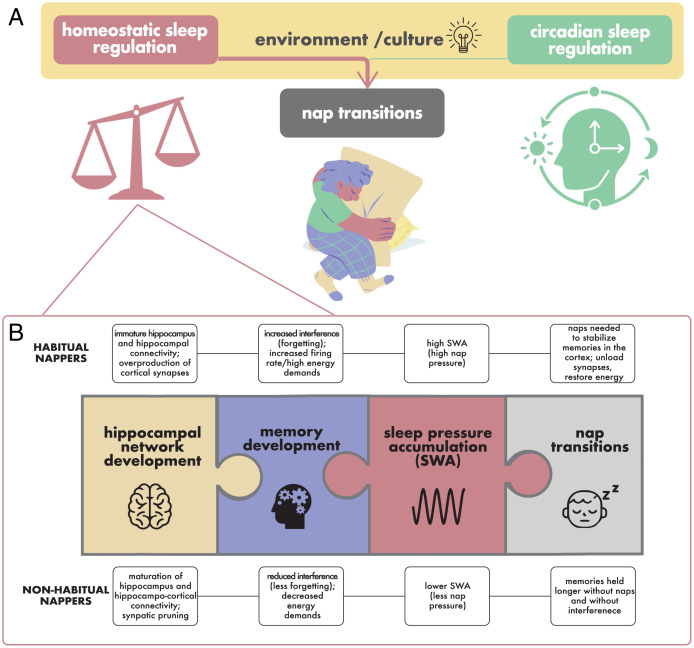
The transition from multiple sleep bouts each day to a single overnight sleep bout (i.e., nap transition) is a universal process in human development. Naps are important during infancy and early childhood as they enhance learning through memory consolidation. However, a normal part of development is the transition out of naps. Understanding nap transitions is essential in order to maximize early learning and promote positive long-term cognitive outcomes. Here, we propose a novel hypothesis regarding the cognitive, physiological, and neural changes that accompany nap transitions. Specifically, we posit that maturation of the hippocampal-dependent memory network results in more efficient memory storage, which reduces the buildup of homeostatic sleep pressure across the cortex (as reflected by slow-wave activity), and eventually, contributes to nap transitions. This hypothesis synthesizes evidence of bioregulatory mechanisms underlying nap transitions and sheds new light on an important window of change in development. This framework can be used to evaluate multiple untested predictions from the field of sleep science and ultimately, yield science-based guidelines and policies regarding napping in childcare and early education settings.
Overview
The claims and statistics of this paper haven’t been checked yet.
Free: it reads the open-access text and checks the first 5 claims that cite a source we can check. Create a free account to check every claim.
Integrity signals
Registry
Cites
Statistics
Figures
Verification
Claims the paper makes
The claims and statistics of this paper haven’t been checked yet.
Free: it reads the open-access text and checks the first 5 claims that cite a source we can check. Create a free account to check every claim.
Claims other papers make about this one
Each is checked against this paper’s own text: does it say what the citing paper says it does?
The check wasn’t confident either way, so it gives no verdict — never disputed.
In the citing paper
“Compared with adults, infants and children spent more time in SWS and REM sleep”
From Sleep—A brain-state serving systems memory consolidation (2023) · cites this paper as [246]
Experimental — accuracy not yet measured
Self-check
Percentages, sums and reported differences re-computed from the paper’s own numbers.
The self-check needs the paper’s full text.
Citations
Cites
Two-Process Model of Sleep Regulation
(2009) · Encyclopedia of Neuroscience · doi:10.1007/978-3-540-29678-2_6166 · Cited by 3,899 · cited 1×
“The two-process model of sleep regulation is a prominent conceptual model, which posits that sleep regulation emerges from the interaction of two distinct biological processes (18, 19).”
BackgroundRegional Brain Changes in Aging Healthy Adults: General Trends, Individual Differences and Modifiers
Raz, N., Lindenberger, U., Rodrigue, K. M., Kennedy, K. M., Head, D., Williamson, A., Dahle, C., Gerstorf, D., & Acker, J. D. (2005) · Cerebral Cortex · doi:10.1093/cercor/bhi044 · Cited by 2,875
Rasch, B., & Born, J. (2013) · Physiological Reviews · doi:10.1152/physrev.00032.2012 · Cited by 2,783
The Medial Temporal Lobe and Recognition Memory
Eichenbaum, H., Yonelinas, A. P., & Ranganath, C. (2007) · Annual Review of Neuroscience · doi:10.1146/annurev.neuro.30.051606.094328 · Cited by 2,580 · cited 1×
“For example, memory for novel objects alone is not reliant on the hippocampus, whereas memory requiring binding of an object with a location or ordering with another object does (67).”
BackgroundTononi, G., & Cirelli, C. (2014) · Neuron · doi:10.1016/j.neuron.2013.12.025 · Cited by 2,356
Sleep function and synaptic homeostasis
Tononi, G., & Cirelli, C. (2006) · Sleep Medicine Reviews · doi:10.1016/j.smrv.2005.05.002 · Cited by 2,151 · cited 1×
“Thus, we posit that early childhood is a time of competing demands of learning, which loads the brain (the hippocampus in particular), and sleeping, which may unload synapses across the cortex (42) and free up the hippocampus for ongoing learning (43).”
BackgroundBrain development in children and adolescents: Insights from anatomical magnetic resonance imaging
Lenroot, R. K., & Giedd, J. N. (2006) · Neuroscience & Biobehavioral Reviews · doi:10.1016/j.neubiorev.2006.06.001 · Cited by 1,863
Coordinated memory replay in the visual cortex and hippocampus during sleep
Ji, D., & Wilson, M. A. (2007) · Nature Neuroscience · doi:10.1038/nn1825 · Cited by 1,669 · cited 1×
“Numerous studies in animals have demonstrated that patterns of hippocampal activation associated with a learning episode are seen again in subsequent sleep and not in the prior sleep bouts (68).”
BackgroundThe two‐process model of sleep regulation: a reappraisal
Borbély, A. A., Daan, S., Wirz‐Justice, A., & Deboer, T. (2016) · Journal of Sleep Research · doi:10.1111/jsr.12371 · Cited by 1,577
Schizophrenia: Caused by a fault in programmed synaptic elimination during adolescence?
Feinberg, I. (1982) · Journal of Psychiatric Research · doi:10.1016/0022-3956(82)90038-3 · Cited by 1,395
Sleep Duration From Infancy to Adolescence: Reference Values and Generational Trends
Iglowstein, I., Jenni, O. G., Molinari, L., & Largo, R. H. (2003) · Pediatrics · doi:10.1542/peds.111.2.302 · Cited by 1,315
Natural waking and sleep states: a view from inside neocortical neurons
Steriade, M., Timofeev, I., & Grenier, F. (2001) · Journal of Neurophysiology · doi:10.1152/jn.2001.85.5.1969 · Cited by 1,296 · cited 1×
“Slow waves emerge from bistability of cortical neurons in non-rapid eye movement (non-REM) sleep, oscillating between wake-like tonic firing (up state) and neuronal silence (down state) (25).”
BackgroundMorphometric study of human cerebral cortex development
Huttenlocher, P. R. (1990) · Neuropsychologia · doi:10.1016/0028-3932(90)90031-i · Cited by 1,239
Odor cues during slow-wave sleep prompt declarative memory consolidation
Rasch, B., Büchel, C., Gais, S., & Born, J. (2007) · Science · doi:10.1126/science.1138581 · Cited by 1,181 · cited 1×
“Further support for the role of slow-wave sleep is provided by studies that represent auditory or odor cues associated with learned material during subsequent slow-wave sleep, which results in enhanced consolidation of cue-related material (62).”
BackgroundMechanisms of systems memory consolidation during sleep
Klinzing, J. G., Niethard, N., & Born, J. (2019) · Nature Neuroscience · doi:10.1038/s41593-019-0467-3 · Cited by 1,176 · cited 1×
“Growing support for both the synaptic homeostasis hypothesis and the active systems consolidation view has brought many to agree that these memory-supporting mechanisms in sleep are not mutually exclusive (74, 75).”
BackgroundLong-axis specialization of the human hippocampus
Poppenk, J., Evensmoen, H. R., Moscovitch, M., & Nadel, L. (2013) · Trends in Cognitive Sciences · doi:10.1016/j.tics.2013.03.005 · Cited by 1,100 · cited 1×
“The hippocampus is a complex structure composed of multiple subfields (cornu ammonis [CA] areas 1 to 4, dentate gyrus, and subiculum) that are distributed disproportionately along its longitudinal axis (head, body, tail) (45, 46).”
BackgroundImaging structural and functional brain development in early childhood
Gilmore, J. H., Knickmeyer, R. C., & Gao, W. (2018) · Nature Reviews Neuroscience · doi:10.1038/nrn.2018.1 · Cited by 1,013
Association of Child Poverty, Brain Development, and Academic Achievement
Hair, N. L., Hanson, J. L., Wolfe, B. L., & Pollak, S. D. (2015) · JAMA Pediatrics · doi:10.1001/jamapediatrics.2015.1475 · Cited by 1,001 · cited 1×
“, environmental factors can also contribute to brain development (109)].”
BackgroundHandbook of developmental cognitive neuroscience
O’Connor, T. G. (2002) · Attachment & Human Development · Cited by 874
Staresina, B. P., Bergmann, T. O., Bonnefond, M., van der Meij, R., Jensen, O., Deuker, L., Elger, C. E., Axmacher, N., & Fell, J. (2015) · Nature Neuroscience · doi:10.1038/nn.4119 · Cited by 831 · cited 1×
“Replay activity is associated with hippocampal ripples, which co-occur with sleep spindles and slow oscillations (71).”
BackgroundNormal sleep patterns in infants and children: A systematic review of observational studies
Galland, B. C., Taylor, B. J., Elder, D. E., & Herbison, P. (2012) · Sleep Medicine Reviews · doi:10.1016/j.smrv.2011.06.001 · Cited by 734
Molecular Dissection of Two Distinct Actions of Melatonin on the Suprachiasmatic Circadian Clock
Liu, C., Weaver, D. R., Jin, X., Shearman, L. P., Pieschl, R. L., Gribkoff, V. K., & Reppert, S. M. (1997) · Neuron · doi:10.1016/s0896-6273(00)80350-5 · Cited by 723 · cited 1×
“Although melatonin does not promote sleep per se, it is released from the pineal gland in darkness and reciprocally inhibits the SCN, dampening its alertness-promoting actions and ultimately, demoting wakefulness (21).”
BackgroundOverlapping memory replay during sleep builds cognitive schemata
Lewis, P. A., & Durrant, S. J. (2011) · Trends in Cognitive Sciences · doi:10.1016/j.tics.2011.06.004 · Cited by 512 · cited 2×
“Mechanistically, the synaptic homeostasis hypothesis contends that the association between SWA and memory consolidation over the sleep interval reflects synaptic downscaling over sleep, with superfluous synapses (incidental memories) being downscaled, while intentionally learned memories are benefited by reduced signa…”
BackgroundSleep and sleep ecology in the first 3 years: a web-based study
SADEH, A., MINDELL, J. A., LUEDTKE, K., & WIEGAND, B. (2009) · Journal of Sleep Research · doi:10.1111/j.1365-2869.2008.00699.x · Cited by 510
Old brains come uncoupled in sleep: slow wave-spindle synchrony, brain atrophy, and forgetting
Helfrich, R. F., Mander, B. A., Jagust, W. J., Knight, R. T., & Walker, M. P. (2018) · Neuron · doi:10.1016/j.neuron.2017.11.020 · Cited by 497 · cited 1×
“Although hippocampal ripples cannot be measured noninvasively in humans, spindle–slow oscillation coupling predicts performance changes over sleep in adults (72, 73).”
BackgroundMemory and Brain Systems: 1969–2009
Squire, L. R. (2009) · The Journal of Neuroscience · doi:10.1523/jneurosci.3575-09.2009 · Cited by 473
Children's Sleep: An Interplay Between Culture and Biology
Jenni, O. G., & O'Connor, B. B. (2005) · Pediatrics · doi:10.1542/peds.2004-0815b · Cited by 465
Uematsu, A., Matsui, M., Tanaka, C., Takahashi, T., Noguchi, K., Suzuki, M., & Nishijo, H. (2012) · PLoS ONE · doi:10.1371/journal.pone.0046970 · Cited by 378 · cited 1×
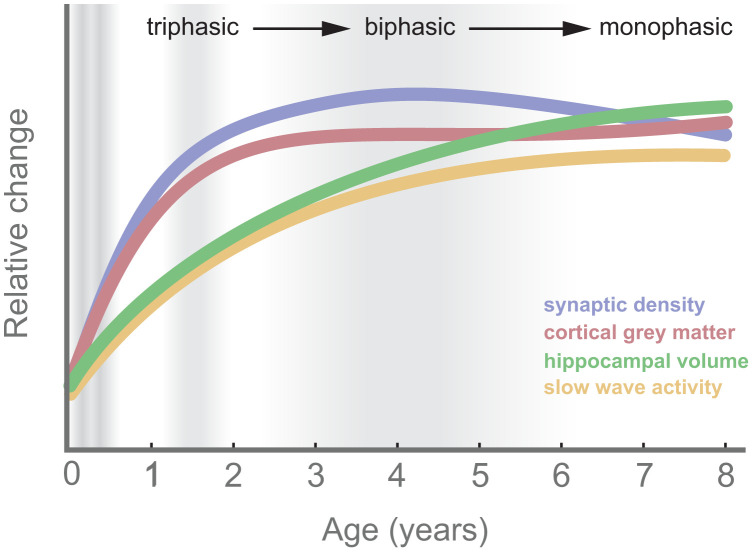
“Synaptic density [prefrontal cortex (113)], hippocampal volume (114, 115), cortical gray matter (116), and SWA (117) are illustrated.”
BackgroundKurth, S., Ringli, M., Geiger, A., LeBourgeois, M., Jenni, O. G., & Huber, R. (2010) · The Journal of Neuroscience · doi:10.1523/jneurosci.2532-10.2010 · Cited by 373 · cited 2×
“Specifically, SWA, which peaks maximally over occipital regions in younger children, shifts to a peak over frontal regions by adolescence, a trajectory that mirrors that of cortical maturation [cortical thickness (93, 94)] and is predictive of brain myelin”
BackgroundEsser, S. K., Hill, S. L., & Tononi, G. (2007) · Sleep · doi:10.1093/sleep/30.12.1617 · Cited by 315
Sleep and waking modulate spine turnover in the adolescent mouse cortex
Maret, S., Faraguna, U., Nelson, A. B., Cirelli, C., & Tononi, G. (2011) · Nature Neuroscience · doi:10.1038/nn.2934 · Cited by 315 · cited 1×
“Rather, we focus on the importance of sleep for memory—as it both stabilizes existing memories in cortical regions and optimizes synaptic organization (76), which ultimately frees up the hippocampus for ongoing learning.”
BackgroundBuilding hippocampal circuits to learn and remember: Insights into the development of human memory
Lavenex, P., & Banta Lavenex, P. (2013) · Behavioural Brain Research · doi:10.1016/j.bbr.2013.02.007 · Cited by 309
Longitudinal Modeling of Developmental Changes in Psychological Research
Ferrer, E., & McArdle, J. J. (2010) · Current Directions in Psychological Science · doi:10.1177/0963721410370300 · Cited by 293
Sleep and human cognitive development
Mason, G. M., Lokhandwala, S., Riggins, T., & Spencer, R. M. C. (2021) · Sleep Medicine Reviews · doi:10.1016/j.smrv.2021.101472 · Cited by 274
Self-citationEEG sleep slow-wave activity as a mirror of cortical maturation
Buchmann, A., Ringli, M., Kurth, S., Schaerer, M., Geiger, A., Jenni, O. G., & Huber, R. (2011) · Cerebral Cortex · doi:10.1093/cercor/bhq129 · Cited by 273 · cited 3×
“Specifically, SWA, which peaks maximally over occipital regions in younger children, shifts to a peak over frontal regions by adolescence, a trajectory that mirrors that of cortical maturation [cortical thickness (93, 94)] and is predictive of brain myelin”
BackgroundSleep spindles in midday naps enhance learning in preschool children
Kurdziel, L., Duclos, K., & Spencer, R. M. C. (2013) · Proceedings of the National Academy of Sciences · doi:10.1073/pnas.1306418110 · Cited by 266 · cited 2×
“Sleep-related declarative memory benefits in children have also been associated with sleep spindles and accompanying slow oscillations in children 3 to 5 y (82, 83).”
BackgroundMethodSelf-citationDevelopmental changes in source memory
Drummey, A. B., & Newcombe, N. S. (2002) · Developmental Science · doi:10.1111/1467-7687.00243 · Cited by 256
Sleep and Sleep Disorders in Children and Adolescents
Meltzer, L. J., & Mindell, J. A. (2006) · Psychiatric Clinics of North America · doi:10.1016/j.psc.2006.08.004 · Cited by 253 · cited 2×
“Sleep regulation is also altered in neurodevelopmental disorders (e.g., autism, Down syndrome, Attention-deficit/hyperactivity disorder or ADHD) (11, 12).”
Cross-cultural differences in the sleep of preschool children
Mindell, J. A., Sadeh, A., Kwon, R., & Goh, D. Y. T. (2013) · Sleep Medicine · doi:10.1016/j.sleep.2013.09.002 · Cited by 242
Never Enough Sleep: A Brief History of Sleep Recommendations for Children
Matricciani, L. A., Olds, T. S., Blunden, S., Rigney, G., & Williams, M. T. (2012) · Pediatrics · doi:10.1542/peds.2011-2039 · Cited by 238 · cited 1×
“Thirty percent of children aged 6 to 11 y have insufficient sleep (111).”
BackgroundSpectral Analysis of the Sleep Electroencephalogram During Adolescence
(2004) · Sleep · doi:10.1093/sleep/27.4.774 · Cited by 231
Precise Slow Oscillation–Spindle Coupling Promotes Memory Consolidation in Younger and Older Adults
Muehlroth, B. E., Sander, M. C., Fandakova, Y., Grandy, T. H., Rasch, B., Shing, Y. L., & Werkle-Bergner, M. (2019) · Scientific Reports · doi:10.1038/s41598-018-36557-z · Cited by 226 · cited 1×
“Although hippocampal ripples cannot be measured noninvasively in humans, spindle–slow oscillation coupling predicts performance changes over sleep in adults (72, 73).”
BackgroundRacial Differences in Reported Napping and Nocturnal Sleep in 2- to 8-Year-Old Children
Crosby, B. (2005) · PEDIATRICS · doi:10.1542/peds.2004-0815d · Cited by 207 · cited 2×
“However, there is significant variability in the timing of the transition from triphasic and biphasic sleep (ranging from 6 to 18 mo) and even more variability in the transition out of biphasic sleep (which can be as early as 2 y and as late as 8 y of age) (13, 16).”
BackgroundBinding, relational memory, and recall of naturalistic events: a developmental perspective
Sluzenski, J., Newcombe, N. S., & Kovacs, S. L. (2006) · Journal of Experimental Psychology: Learning, Memory, and Cognition · doi:10.1037/0278-7393.32.1.89 · Cited by 196
Scullin, M. K. (2013) · Psychology and Aging · doi:10.1037/a0028830 · Cited by 181 · cited 1×
“example, in one study, adults retained memory for more word pairs following an interval with sleep compared with an equivalent interval awake (61).”
BackgroundGeneralization of word meanings during infant sleep
Friedrich, M., Wilhelm, I., Born, J., & Friederici, A. D. (2015) · Nature Communications · doi:10.1038/ncomms7004 · Cited by 176
Understanding sleep–wake behavior and sleep disorders in children: the value of a model
Jenni, O. G., & LeBourgeois, M. K. (2006) · Current Opinion in Psychiatry · doi:10.1097/01.yco.0000218599.32969.03 · Cited by 172
Sleep Patterns in Preschool-Age Children With Autism, Developmental Delay, and Typical Development
GOODLIN-JONES, B. L., TANG, K., LIU, J., & ANDERS, T. F. (2008) · Journal of the American Academy of Child & Adolescent Psychiatry · doi:10.1097/chi.0b013e3181799f7c · Cited by 166 · cited 1×
“Moreover, sleep is particularly reduced in low-income and atypically developing children (112) of this age and thus, contributes to known health disparities that are widespread and have far-reaching impacts.”
BackgroundInfantile Amnesia: A Neurobiological Perspective
Nadel, L., & Zola-Morgan, S. M. (1984) · Springer eBooks · doi:10.1007/978-1-4615-9364-5_7 · Cited by 164
Developmental aspects of sleep slow waves
Ringli, M., & Huber, R. (2011) · Progress in brain research · doi:10.1016/b978-0-444-53839-0.00005-3 · Cited by 161
Naps in Children: 6 Months– 7 Years
Weissbluth, M. (1995) · Sleep · doi:10.1093/sleep/18.2.82 · Cited by 159
The Role of Sleep in Childhood Psychiatric Disorders
Alfano, C. A., & Gamble, A. L. (2009) · Child & Youth Care Forum · doi:10.1007/s10566-009-9081-y · Cited by 156 · cited 1×
“Disorders of sleep regulation result in insufficient sleep, which is associated with depression and anxiety, even in childhood (10).”
BackgroundMolecular Mechanisms of Sleep Homeostasis in Flies and Mammals
Allada, R., Cirelli, C., & Sehgal, A. (2017) · Cold Spring Harbor Perspectives in Biology · doi:10.1101/cshperspect.a027730 · Cited by 155
Sleep and motor learning: Is there room for consolidation?
Pan, S. C., & Rickard, T. C. (2015) · Psychological Bulletin · doi:10.1037/bul0000009 · Cited by 154
Dutil, C., Walsh, J. J., Featherstone, R. B., Gunnell, K. E., Tremblay, M. S., Gruber, R., Weiss, S. K., Cote, K. A., Sampson, M., & Chaput, J.-P. (2018) · Sleep Medicine Reviews · doi:10.1016/j.smrv.2018.08.003 · Cited by 153
Gómez, R. L., & Edgin, J. O. (2016) · Developmental Cognitive Neuroscience · doi:10.1016/j.dcn.2015.08.009 · Cited by 151
Sleep Behavior and Sleep Regulation from Infancy through Adolescence: Normative Aspects
Jenni, O. G., & Carskadon, M. A. (2007) · Sleep Medicine Clinics · doi:10.1016/j.jsmc.2007.05.001 · Cited by 151
Memory and Sleep: How Sleep Cognition Can Change the Waking Mind for the Better
Paller, K. A., Creery, J. D., & Schechtman, E. (2021) · Annual Review of Psychology · doi:10.1146/annurev-psych-010419-050815 · Cited by 150 · cited 1×
“Growing support for both the synaptic homeostasis hypothesis and the active systems consolidation view has brought many to agree that these memory-supporting mechanisms in sleep are not mutually exclusive (74, 75).”
BackgroundThe Effects of Napping on Cognitive Function in Preschoolers
Lam, J. C., Mahone, E. M., Mason, T., & Scharf, S. M. (2011) · Journal of Developmental & Behavioral Pediatrics · doi:10.1097/dbp.0b013e318207ecc7 · Cited by 149 · cited 1×
“In one such study, children who performed better on a cognitive battery were found to take fewer naps than those with lower performance (88).”
BackgroundWilhelm, I., Metzkow‐Mészàros, M., Knapp, S., & Born, J. (2012) · Developmental Science · doi:10.1111/j.1467-7687.2012.01146.x · Cited by 143 · cited 1×
“However, when children receive additional training, performance improves following sleep relative to wake (78), which may suggest that, like adults, hippocampal engagement with encodingmay be essential to sleep-dependent memory consolidation.”
BackgroundA Role for Non-Rapid-Eye-Movement Sleep Homeostasis in Perceptual Learning
Aeschbach, D., Cutler, A. J., & Ronda, J. M. (2008) · The Journal of Neuroscience · doi:10.1523/jneurosci.5548-07.2008 · Cited by 142 · cited 1×
“Conversely, when SWA, the primary spectral power of slowwave sleep, is reduced, performance benefits following sleep are absent (63).”
BackgroundSlow oscillation-spindle coupling predicts enhanced memory formation from childhood to adolescence
Hahn, M. A., Heib, D., Schabus, M., Hoedlmoser, K., & Helfrich, R. F. (2020) · eLife · doi:10.7554/elife.53730 · Cited by 140 · cited 1×
“Moreover, a longitudinal study of older children (9 y) who were tested subsequently at 16 y of age showed that developmental increases in coupling strength between spindles and slow oscillations provided a strong predictor of developmental changes in sleep-related benefits on a word-pair learning task (84).”
BackgroundMcClelland, J. L., McNaughton, B. L., & Lampinen, A. K. (2020) · Philosophical Transactions of the Royal Society B: Biological Sciences · doi:10.1098/rstb.2019.0637 · Cited by 136 · cited 3×
“existing knowledge and integrating new knowledge into these existing frameworks (41).”
BackgroundInfluentialEmergence of preconfigured and plastic time-compressed sequences in early postnatal development
Farooq, U., & Dragoi, G. (2019) · Science · doi:10.1126/science.aav0502 · Cited by 131 · cited 1×
“Such “replay events” undergo developmental changes early in life (69) and have been linked with the emergence of episodic-like memory in rodents (70).”
BackgroundMemory binding in early childhood: evidence for a retrieval deficit
Lloyd, M. E., Doydum, A. O., & Newcombe, N. S. (2009) · Child Development · doi:10.1111/j.1467-8624.2009.01353.x · Cited by 127
Genetic and Environmental Influences on Daytime and Nighttime Sleep Duration in Early Childhood
Touchette, É., Dionne, G., Forget‐Dubois, N., Petit, D., Pérusse, D., Falissard, B., Tremblay, R. E., Boivin, M., & Montplaisir, J. Y. (2013) · PEDIATRICS · doi:10.1542/peds.2012-2284 · Cited by 125
Kurth, S., Ringli, M., LeBourgeois, M. K., Geiger, A., Buchmann, A., Jenni, O. G., & Huber, R. (2012) · NeuroImage · doi:10.1016/j.neuroimage.2012.03.053 · Cited by 124 · cited 1×
“Indeed, changes in SWA have been shown to precede improvements in some motor skills, which in turn, preceded decreases in gray matter in a cross-sectional sample of those 2 to 26 y of age (98).”
BackgroundInsausti, R., & Amaral, D. G. (2012) · Elsevier eBooks · doi:10.1016/b978-0-12-374236-0.10024-0 · Cited by 123
Evidence of hippocampal learning in human infants
Ellis, C. T., Skalaban, L. J., Yates, T. S., Bejjanki, V. R., Córdova, N. I., & Turk‐Browne, N. B. (2021) · Current Biology · doi:10.1016/j.cub.2021.04.072 · Cited by 120
Eckenhoff, M. F., & RAKIC, P. T. (1991) · Developmental Brain Research · doi:10.1016/0165-3806(91)90216-6 · Cited by 118 · cited 2×
“Specifically, within the hippocampus, although immature cells continue to accrue within the dentate gyrus throughout the first year of postnatal life [and may be related to the onset of other cognitive abilities, such as spatial navigation (50)], elevated rates of dendritic development and synapse formation persist un…”
BackgroundNapping, development and health from 0 to 5 years: a systematic review
Thorpe, K., Staton, S., Sawyer, E., Pattinson, C., Haden, C., & Smith, S. (2015) · Archives of Disease in Childhood · doi:10.1136/archdischild-2014-307241 · Cited by 115
Binder, S., Baier, P. C., Mölle, M., Inostroza, M., Born, J., & Marshall, L. (2011) · Neurobiology of Learning and Memory · doi:10.1016/j.nlm.2011.12.004 · Cited by 113
Riggins, T., Geng, F., Botdorf, M., Canada, K., Cox, L., & Hancock, G. R. (2018) · NeuroImage · doi:10.1016/j.neuroimage.2018.03.009 · Cited by 111 · cited 1×
“across the early childhood period (51, 97).”
Self-citationStaton, S., Rankin, P. S., Harding, M., Smith, S. S., Westwood, E., LeBourgeois, M. K., & Thorpe, K. J. (2019) · Sleep Medicine Reviews · doi:10.1016/j.smrv.2019.101247 · Cited by 107 · cited 2×
“Every young child naps and transitions out of naps at some point in early childhood—but the age at which this transition takes places varies dramatically (14, 15, 110).”
BackgroundRiggins, T. (2014) · Developmental Psychology · doi:10.1037/a0033622 · Cited by 104 · cited 2×
“In fact, children’s ability to remember such details shows accelerated rates of change between 5 and 7 y of age (55).”
BackgroundSelf-citationSleep-dependency of episodic-like memory consolidation in rats
Inostroza, M., Binder, S., & Born, J. (2013) · Behavioural Brain Research · doi:10.1016/j.bbr.2012.09.011 · Cited by 98
Parental report of sleep problems in Down syndrome
Breslin, J. H., Edgin, J. O., Bootzin, R. R., Goodwin, J. L., & Nadel, L. (2011) · Journal of Intellectual Disability Research · doi:10.1111/j.1365-2788.2011.01435.x · Cited by 96 · cited 2×
“Sleep regulation is also altered in neurodevelopmental disorders (e.g., autism, Down syndrome, Attention-deficit/hyperactivity disorder or ADHD) (11, 12).”
Development of the human hypothalamus
Swaab, D. F. (1995) · Neurochemical Research · doi:10.1007/bf01694533 · Cited by 91 · cited 1×
“For example, hypothalamic development may follow a similar time line (99).”
BackgroundCoordinated emergence of hippocampal replay and theta sequences during post-natal development
Muessig, L., Lasek, M., Varsavsky, I., Cacucci, F., & Wills, T. J. (2019) · Current Biology · doi:10.1016/j.cub.2019.01.005 · Cited by 91
Bauer, P. J., Doydum, A. O., Pathman, T., Larkina, M., Güler, O. E., & Burch, M. (2012) · Journal of Experimental Child Psychology · doi:10.1016/j.jecp.2012.06.007 · Cited by 85
The Ontogeny of Hippocampus-Dependent Memories
Donato, F., Alberini, C. M., Amso, D., Dragoi, G., Dranovsky, A., & Newcombe, N. S. (2021) · The Journal of Neuroscience · doi:10.1523/jneurosci.1651-20.2020 · Cited by 75
The Timing of the Circadian Clock and Sleep Differ between Napping and Non-Napping Toddlers
Akacem, L. D., Simpkin, C. T., Carskadon, M. A., Wright, K. P., Jenni, O. G., Achermann, P., & LeBourgeois, M. K. (2015) · PLoS ONE · doi:10.1371/journal.pone.0125181 · Cited by 74 · cited 2×
“There is evidence that these changes in environment alter the onset of melatonin and ultimately, timing of sleep (33).”
BackgroundGenetic and Environmental Influences on Infant Sleep
Fisher, A., van Jaarsveld, C. H. M., Llewellyn, C. H., & Wardle, J. (2012) · PEDIATRICS · doi:10.1542/peds.2011-1571 · Cited by 73
Sleep and Early Cortical Development
Kurth, S., Olini, N., Huber, R., & LeBourgeois, M. (2015) · Current Sleep Medicine Reports · doi:10.1007/s40675-014-0002-8 · Cited by 69
Zeitgebers and their association with rest-activity patterns
Quante, M., Mariani, S., Weng, J., Marinac, C. R., Kaplan, E. R., Rueschman, M., Mitchell, J. A., James, P., Hipp, J. A., Cespedes Feliciano, E. M., et al. (2019) · Chronobiology International · doi:10.1080/07420528.2018.1527347 · Cited by 69 · cited 1×
“mealtimes and exercise, can serve as zeitgebers (20).”
BackgroundCanada, K. L., Ngo, C. T., Newcombe, N. S., Geng, F., & Riggins, T. (2019) · Cerebral Cortex · doi:10.1093/cercor/bhy211 · Cited by 65
Self-citationLerner, I., & Gluck, M. A. (2019) · Sleep Medicine Reviews · doi:10.1016/j.smrv.2019.05.004 · Cited by 64
Jones, C. H. D., & Ball, H. L. (2014) · Infant and Child Development · doi:10.1002/icd.1848 · Cited by 61
Development of nap neurophysiology: preliminary insights into sleep regulation in early childhood
Kurth, S., Lassonde, J. M., Pierpoint, L. A., Rusterholz, T., Jenni, O. G., McClain, I. J., Achermann, P., & LeBourgeois, M. K. (2016) · Journal of Sleep Research · doi:10.1111/jsr.12427 · Cited by 50
Riggins, T., & Spencer, R. M. C. (2020) · Scientific Reports · doi:10.1038/s41598-020-72231-z · Cited by 49
Self-citationGalland, B., Meredith-Jones, K., Gray, A., Sayers, R., Lawrence, J., Taylor, B., & Taylor, R. (2016) · Sleep Medicine · doi:10.1016/j.sleep.2015.10.013 · Cited by 47 · cited 1×
“Every young child naps and transitions out of naps at some point in early childhood—but the age at which this transition takes places varies dramatically (14, 15, 110).”
BackgroundTelevision use and its effects on sleep in early childhood
Helm, A. F., & Spencer, R. M. C. (2019) · Sleep Health · doi:10.1016/j.sleh.2019.02.009 · Cited by 45
Self-citationMemory-related hippocampal activation in the sleeping toddler
Prabhakar, J., Johnson, E. G., Nordahl, C. W., & Ghetti, S. (2018) · Proceedings of the National Academy of Sciences · doi:10.1073/pnas.1805572115 · Cited by 44 · cited 1×
“Moreover, a study in toddlers supports that hippocampal-based memories are reactivated during a nap even in children as young as 2 y (79), providing evidence that the hippocampus is functional during sleep and directly related tomemory at an early age.”
BackgroundKelemen, E., Bahrendt, M., Born, J., & Inostroza, M. (2014) · Hippocampus · doi:10.1002/hipo.22266 · Cited by 43
Sandoval, M., Leclerc, J. A., & Gómez, R. L. (2017) · Child Development · doi:10.1111/cdev.12723 · Cited by 42 · cited 1×
“For example, one study that used a verb-learning task, which required generalization to a novel exemplar, failed to find a difference in performance between habitual and nonhabitual nappers following intervals of wake and sleep (which benefited both groups) (102).”
ResultSleep-dependent enhancement of emotional memory in early childhood
Kurdziel, L. B. F., Kent, J., & Spencer, R. M. C. (2018) · Scientific Reports · doi:10.1038/s41598-018-30980-y · Cited by 41 · cited 2×
“Subsequently, other studies have found similar differences between habitually and nonhabitually napping children with a word-learning task (89) and an emotional face-learning task (80).”
BackgroundResultSelf-citationSlow wave sleep in naps supports episodic memories in early childhood
Lokhandwala, S., & Spencer, R. M. C. (2021) · Developmental Science · doi:10.1111/desc.13035 · Cited by 41 · cited 1×
“Sleep-related declarative memory benefits in children have also been associated with sleep spindles and accompanying slow oscillations in children 3 to 5 y (82, 83).”
BackgroundSelf-citationNapping in English preschool children and the association with parents’ attitudes
Jones, C. H. D., & Ball, H. L. (2013) · Sleep Medicine · doi:10.1016/j.sleep.2012.12.010 · Cited by 38
Canada, K. L., Hancock, G. R., & Riggins, T. (2021) · Developmental Cognitive Neuroscience · doi:10.1016/j.dcn.2021.100947 · Cited by 38 · cited 1×
“across the early childhood period (51, 97).”
Self-citationNapping reduces emotional attention bias during early childhood
Cremone, A., Kurdziel, L. B. F., Fraticelli‐Torres, A., McDermott, J. M., & Spencer, R. M. C. (2017) · Developmental Science · doi:10.1111/desc.12411 · Cited by 36
Self-citationA simple sleep EEG marker in childhood predicts brain myelin 3.5 years later
LeBourgeois, M. K., Dean, D., Deoni, S., Kohler, M., & Kurth, S. (2019) · NeuroImage · doi:10.1016/j.neuroimage.2019.05.072 · Cited by 35
Sleep and behavior of preschool children under typical and nap-promoted conditions
Spencer, R. M. C., Campanella, C., de Jong, D. M., Desrochers, P. C., Root, H., Cremone, A., & Kurdziel, L. B. F. (2016) · Sleep Health · doi:10.1016/j.sleh.2015.12.009 · Cited by 29 · cited 4×
“Despite these external influences, many children will nap even in the absence of nap promotion, and some children are unable to nap even in sleep-promoting conditions (6).”
BackgroundSelf-citationSleep physiology in toddlers: Effects of missing a nap on subsequent night sleep
Lassonde, J. M., Rusterholz, T., Kurth, S., Schumacher, A. M., Achermann, P., & LeBourgeois, M. K. (2016) · Neurobiology of Sleep and Circadian Rhythms · doi:10.1016/j.nbscr.2016.08.001 · Cited by 28
Unhealthy Diet Is Associated With Poor Sleep in Preschool-Aged Children
Holmes, J. F., Laurent, C. W. S., & Spencer, R. M. C. (2021) · The Journal of Genetic Psychology · doi:10.1080/00221325.2021.1905598 · Cited by 24
Self-citationMany faces of sleep regulation: beyond the time of day and prior wake time
Duhart, J. M., Inami, S., & Koh, K. (2021) · FEBS Journal · doi:10.1111/febs.16320 · Cited by 24 · cited 1×
“, diet, illness (108)] that are likely to contribute to the presence of naps but not the persistence of naps and nap transitions.”
BackgroundNapping and toddlers’ memory for fast-mapped words
Axelsson, E. L., Swinton, J., Winiger, A. I., & Horst, J. S. (2018) · First Language · doi:10.1177/0142723718785490 · Cited by 23 · cited 1×
“Notable here is that nap-related generalization was associated with the EEG sigma power, the frequency range of sleep spindles (10 to 15 Hz) (86, 87).”
BackgroundMindell, J. A. A. (1997) · Cited by 20
The Role of Sleep in Retention of New Words in Habitually and Non-Habitually Napping Children
Esterline, K., & Gómez, R. L. (2021) · Brain Sciences · doi:10.3390/brainsci11101320 · Cited by 20 · cited 1×
“Subsequently, other studies have found similar differences between habitually and nonhabitually napping children with a word-learning task (89) and an emotional face-learning task (80).”
ResultBedsharing in Early Childhood: Frequency, Partner Characteristics, and Relations to Sleep
Mason, G. M., Holmes, J. F., Andre, C. J., & Spencer, R. M. C. (2021) · The Journal of Genetic Psychology · doi:10.1080/00221325.2021.1916732 · Cited by 17
Self-citationMindell, J. A. A., Owens, J. A., Babcock, D. A., Crabtree, V. M., & Ingram, D. G. (2016) · Clinical Pediatrics · doi:10.1177/0009922816678977 · Cited by 10
A call for action regarding translational research in pediatric sleep
Gruber, R., Anders, T. F., Beebe, D. W., Bruni, O., Buckhalt, J. A., Carskadon, M. A., Côté, K. A., Crabtree, V. M., El‐Sheikh, M., Gozal, D., et al. (2016) · Sleep Health · doi:10.1016/j.sleh.2016.03.003 · Cited by 9 · cited 1×
“Understanding children’s sleep needs can be used to promote optimal cognitive function and is deemed a priority in sleep research (3).”
BackgroundThe neurobiological underpinning of the circadian wake signal
Zeitzer, J. M. (2020) · Biochemical Pharmacology · doi:10.1016/j.bcp.2020.114386 · Cited by 9 · cited 1×
“The need to nap is driven by the bioregulation of sleep and wakefulness (9).”
BackgroundImages in neuroscience. Cortical GABA-ergic interneurons
Benes, F. M., & Tamminga, C. A. (1994) · American Journal of Psychiatry · doi:10.1176/ajp.151.8.1104 · Cited by 3
Huttenlocher (1997) · doi:10.1002/(sici)1096-9861(19971020)387:2<167::aid-cne1>3.0.co;2-z · cited 1×
“Synaptic density [prefrontal cortex (113)], hippocampal volume (114, 115), cortical gray matter (116), and SWA (117) are illustrated.”
Background
Research works printed but not linked: 1
- D. Rumelhart, Schmeta: The Building Blocks of Cognition (Routledge, 2017).
Cited by
Sleep—A brain-state serving systems memory consolidation
Brodt, S., Inostroza, M., Niethard, N., & Born, J. (2023) · Neuron · doi:10.1016/j.neuron.2023.03.005 · Cited by 343
The functions of sleep: A cognitive neuroscience perspective
Simon, K. C. N. S., Nadel, L., & Payne, J. D. (2022) · Proceedings of the National Academy of Sciences · doi:10.1073/pnas.2201795119 · Cited by 74
Sleep Across the Lifespan: A Neurobehavioral Perspective
Simon, K. C. N. S., Cadle, C. E., Shuster, A. E., & Malerba, P. (2025) · Current Sleep Medicine Reports · doi:10.1007/s40675-025-00322-2 · Cited by 37
“On average, between ages 20 to 50 years, men show greater evening preference than women on average [21], and these sex differences dis - appear after the age of 50, coinciding with menopause in women [ 22 ].”
Sleep’s contribution to memory formation
Lutz, N. D., Harkotte, M., & Born, J. (2025) · Physiological Reviews · doi:10.1152/physrev.00054.2024 · Cited by 59
Ltifi, M. A., Chong, K. H., Ben-Bouzaiene, G., Okely, A. D., & Chelly, M. S. (2024) · Sports Medicine and Health Science · doi:10.1016/j.smhs.2024.08.001 · Cited by 12
“37 Similarly, napping following learning has been shown to enhance various forms of memory the following day, as well as improve executive functions such as attention and emotional regulation.”
Metadata
- Authors
- Spencer, R. M. C., & Riggins, T.
- Affiliations
- University of Massachusetts Amherst (US)
- University of Maryland, College Park (US)
- Corresponding author
- Spencer, Rebecca M. C.
- Venue
- Proceedings of the National Academy of Sciences
- Publisher
- National Academy of Sciences
- Published
- 2022-10-24
- Volume
- 119
- Issue
- 44
- Pages
- e2123415119-e2123415119
- ISSN
- 0027-8424 (ISSN-L)
- 1091-6490
- PMC
- PMC9636905
- OpenAlex
- W4307188337
- Semantic Scholar
- 71c8163025b713f8e5cce130777781e6f0afff01
- Cited by
- 41
- References
- 114
- Citations by year
- 2026: 15 · 2025: 10 · 2024: 10 · 2023: 3 · 2022: 3
- FWCI
- 3.35
- Type
- journal article
- Language
- en
- Open access
- hybrid
- doi.org
- Licence
- Locations
- Proceedings of the National Academy of Sciences (publishedVersion, cc-by)
- PubMed Central (publishedVersion, cc-by)
- PubMed (publishedVersion)
- Funders
- National Science Foundation (BCS 1749280)
- HHS | National Institutes of Health (NIH R21 HD094758, NIH R01 HL111695)
- Topics
- Life Sciences › Neuroscience › Cognitive Neuroscience › Sleep and Wakefulness Research
- Social Sciences › Psychology › Experimental and Cognitive Psychology › Sleep and related disorders
- Life Sciences › Neuroscience › Endocrine and Autonomic Systems › Circadian rhythm and melatonin
- Keywords
- napping, early childhood sleep, sleep homeostasis, slow-wave activity, hippocampal-dependent memory, memory consolidation, brain development, sleep regulation
- MeSH terms
- Memory Consolidation, Brain, Child, Preschool, Cognition, Humans, Learning, Sleep, Wakefulness
About these checks
Registry, retraction, Cites and statistics results are computed, not judged, with one exception: a printed reference that no index lists is read once by a model before it counts as a citation error. Claims are extracted by a model and kept only when their quote appears verbatim in the text; each cited source is then checked, with a model’s help, for whether it says what the claim relies on. Those verdicts can be wrong — read the claim’s quote and the cited source before relying on one.
Statistics and arithmetic are recomputed, not judged.
Confidence bands are shown only for fields calibrated on our annotated test set. None is calibrated yet, so no band is shown.
What counts as a claim ›How we measure confidence ›How we check this ›
Are you an author, or do you see a problem with this page? Request a review
Data sources
Bibliographic data: Semantic Scholar, OpenAlex, Crossref.
Contains information from the Semantic Scholar Academic Graph Datasets, made available under the ODC Attribution License (ODC-BY 1.0).
Semantic Scholar’s data is described in: Kinney, R., et al. (2023). The Semantic Scholar Open Data Platform. arXiv:2301.10140.
