

Coaching in undergraduate and graduate medical education: a scoping review of success factors, barriers, and outcomes
Open accessThe DOI matches its Crossref record; 164 of the 164 references it cites were found in a registry or an index; 96 of the 203 sources its claims cite were checked for support.
Abstract
PURPOSE: Wanting to implement a sustainable learner coaching program in academic medicine and prior exposure to coaching initiatives raised questions, including planning, implementation and assessment, and resource allocation. This scoping review examines coaching across medical learners, reported program elements, success factors, and barriers. METHODS: Following the PRISMA-ScR guidelines, which were informed by Levac et al. on Arksey and O'Malley's framework and Braun and Clarke's thematic analysis, PubMed, Scopus, and ERIC were searched through May 2024. Articles were screened, the data were extracted and coded. The mixed methods analysis included descriptive statistics and thematic analysis. Themes/domains were developed and refined through consensus. RESULTS: = 43). Six domains emerged: overview/general, coaching program related, coaching process related, coaching outcomes, coaching success factors, and coaching barriers. The articles reflected a broad conceptualization of coaching in academic medicine. Coaching programs varied in structure but commonly aimed to support competency, wellness, interpersonal skills, and self-directed learning. Reporting on coach recruitment, training, and compensation was inconsistent. Coaching processes incorporated reflection, goal setting, and observation. The coaching outcomes encompassed skills development and personal and professional growth. Success factors included institutional support and coach training; barriers involved time constraints, role ambiguity, and coachee readiness. CONCLUSIONS: Coaching is increasingly used in academic medicine to address diverse and evolving learner needs across settings, within the United States and internationally. This review reveals the conceptual breadth and structural variability of coaching programs and the flexibility of coaching as a practice for individualizing learner success. The findings offer insights and serve as a resource for institutions seeking to develop, implement, or refine coaching initiatives.
Overview
CoChat Summary
TL;DR
This PRISMA-ScR scoping review analyzed 141 articles on coaching in undergraduate and graduate medical education, finding broad conceptual and structural variability. Coaching programs commonly targeted competency, wellness, interpersonal skills, and self-directed learning, with success tied to institutional support and coach training and barriers including time constraints, role ambiguity, and coachee readiness.
Key findings
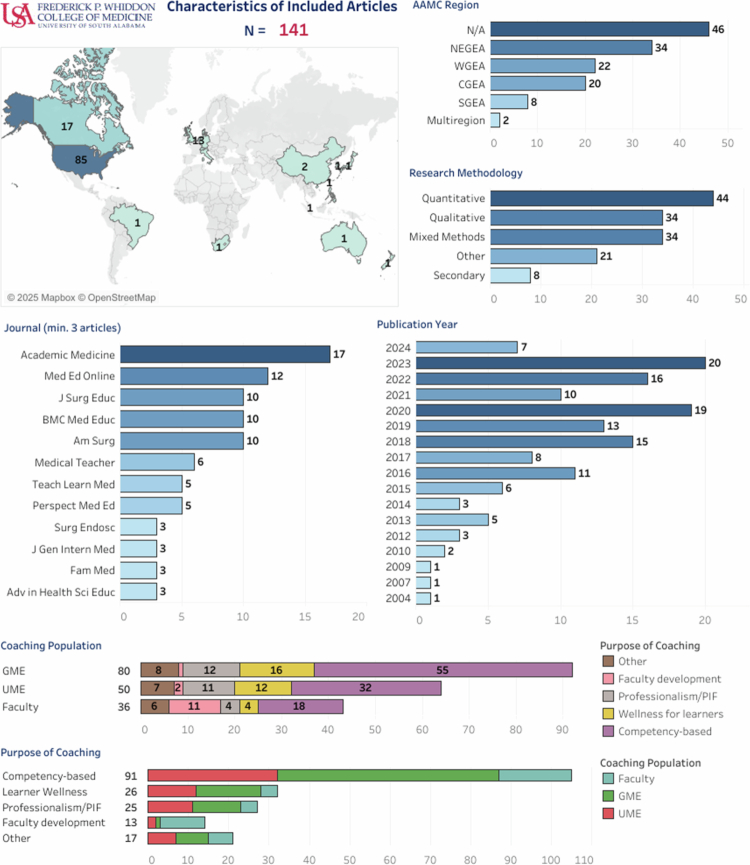
- Of 801 articles screened, 141 were included; publications increased over time and peaked in 2023 (n = 20).
- Competency-based coaching was most common (n = 91), followed by learner wellness (n = 26); GME was studied more often (n = 92) than UME (n = 64) or faculty (n = 43).
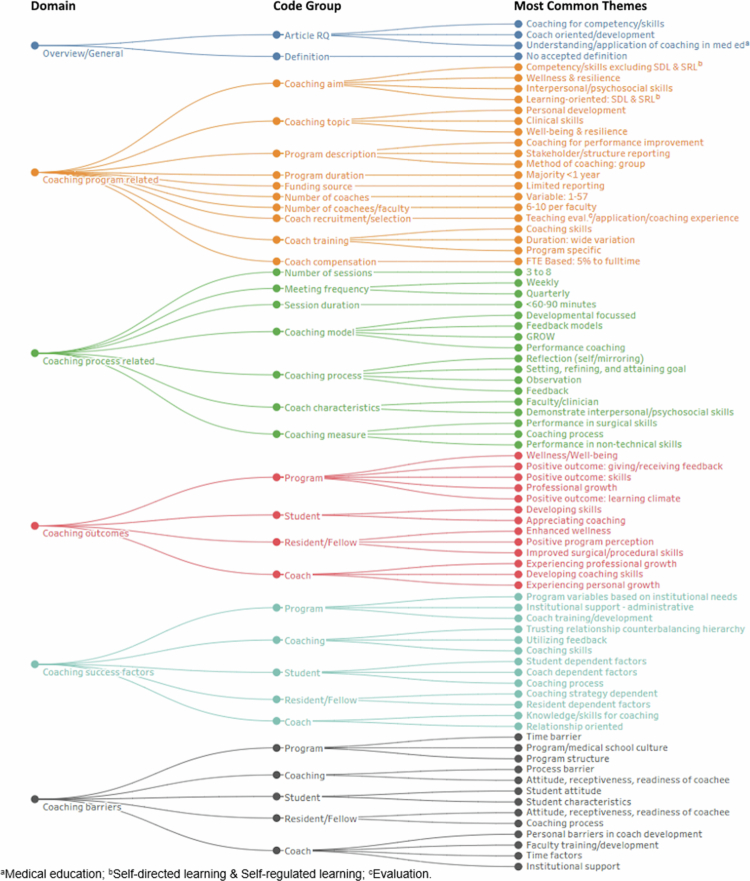
- Six domains emerged: overview/general, coaching program related, coaching process related, coaching outcomes, coaching success factors, and coaching barriers.
- Success factors included institutional support and coach training; barriers included time constraints, role ambiguity, and coachee readiness. Reporting on coach recruitment, training, and compensation was inconsistent.
Methods
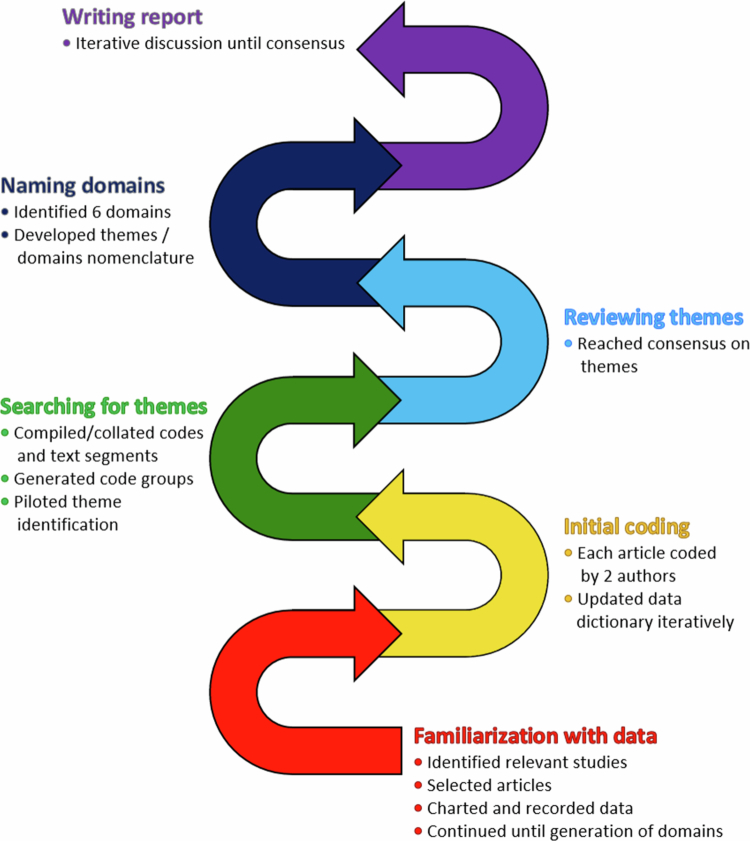
- Scoping review following PRISMA-ScR, informed by Levac et al. on Arksey and O’Malley’s framework and Braun and Clarke’s thematic analysis.
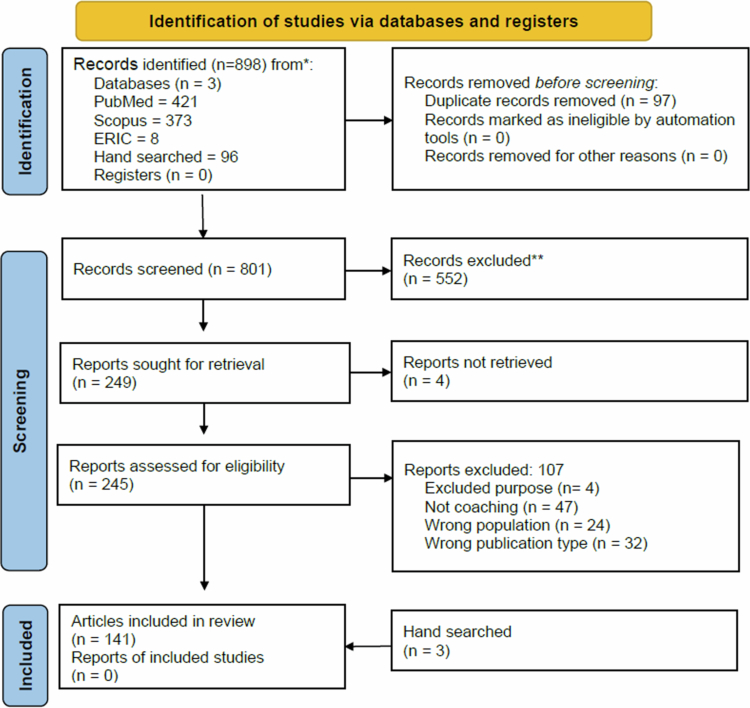
- PubMed, Scopus, and ERIC were searched through May 2024; 801 articles were screened, 245 full texts reviewed, and 141 articles included.
- Mixed methods analysis used descriptive statistics and inductive thematic analysis; no critical appraisal was performed, and consultation involved about 25 coaches.
Limitations
- The paper states that scoping review and thematic analysis limitations apply: some relevant articles may have been missed due to the lack of a MeSH term for coaching, interchangeable use of mentoring and coaching, no grey literature search, and use of “education” rather than student/resident/fellow search terms.
- The paper states that despite reflexivity, coding and interpretation were influenced by the team’s experiences, so other researchers might find variations.
- Evident from the text: the protocol was not registered, English-language articles only were included, and articles on other health science professions, opinion/perspective pieces, and commentaries were excluded.
Model-written summary. Check it against the paper before relying on it.
Integrity signals
Registry
Cites
Statistics
Figures
Verification
Claims the paper makes
65 Valid · 2 Not valid · 198 Not checked · 136 Own results and interpretations
The cited sources support only part of this claim — read each source’s verdict below.
In the paper
“The most commonly reported method of coaching was in groups [113].”
§ Coaching in undergraduate and graduate medical education: a scoping review of success factors, barriers, and outcomes > Results > Thematic analysis of included articles
What the sources say
- Partly supportedcites [113] Fainstad T, Mann A, Suresh K, et al. Effect of a novel online group-coaching program to reduce burnout in female resident physicians: a randomized clinical trial. JAMA Netw Open. 2022; 5(5): e2210752. doi: 10.1001/jamanetworkopen.2022.10752 35522281 PMC9077483 sourceExperimental — accuracy not yet measured
The Methods (Description of Intervention) identify this as a group-coaching program, and the Results (Engagement) report 45 group-coaching calls. The paper does not establish that group coaching was the most commonly reported method across coaching studies, so it supports the group-method part but not the comparative claim. (LLM, conf=0.85)
plain- Asserted: passes — The authors put it forward as true.
- Checkable: passes — It can be checked against evidence.
- Load-bearing: unclear — It is unclear whether the paper’s conclusions depend on it.
- Based: passes — The paper gives a reason why it holds.
- Partly supported
The cited sources support only part of this claim — read each source’s verdict below.
In the paper
“In both UME and GME, coaching emphasizes the skills needed for autonomy in learning [7,27,28,148].”
§ Coaching in undergraduate and graduate medical education: a scoping review of success factors, barriers, and outcomes > Discussion
What the sources say
- Partly supportedcites [7] Wolff M, Stojan J, Buckler S, et al. Coaching to improve self‐directed learning. Clin Teach. 2020; 17(4): 408– 412. doi: 10.1111/tct.13109 31749307 sourceExperimental — accuracy not yet measured
The introduction (indexed under Abstract; page not provided) describes coaching as supporting self-reflection, goal setting, and accountability—skills relevant to autonomy in learning. The Conclusions report improved self-directed learning behaviors in preclerkship medical students, supporting the UME portion. The paper does not establish the same point for GME learners. (LLM, conf=0.84)
- Partly supportedcites [27] van Houten-Schat MA, Berkhout JJ, van Dijk N, et al. Self-regulated learning in the clinical context: a systematic review. Med Educ. 2018; 52(10): 1008– 1015. doi: 10.1111/medu.13615 29943415 PMC6175376 sourceExperimental — accuracy not yet measured
The Results section describes mentoring or coaching as support for self-regulated learning and reports that residents became more independent in setting learning goals. The Discussion broadly links coach or mentor support to medical students’ and residents’ learning, but the coaching studies described in the Results concern residents; the paper does not establish the same coaching emphasis specifically in UME. Page numbers were not available in our copy. (LLM, conf=0.82)
- Not checked — no full text of the sourcecites [28] Cutrer WB, Miller B, Pusic MV, et al. Fostering the development of master adaptive learners: a conceptual model to guide skill acquisition in medical education. Acad Med. 2017; 92(1): 70– 75. doi: 10.1097/ACM.0000000000001323 27532867 source
plain- Asserted: passes — The authors put it forward as true.
- Checkable: passes — It can be checked against evidence.
- Load-bearing: unclear — It is unclear whether the paper’s conclusions depend on it.
- Based: passes — The paper gives a reason why it holds.
- Partly supported
The cited sources support only part of this claim — read each source’s verdict below.
In the paper
“These concepts, particularly mentoring, advising, and giving feedback, have been used interchangeably with coaching in the medical literature, leading to confusion and difficulty in accurately characterizing coaching interventions, synthesizing research findings, and establishing the best [12–14] practices.”
§ Coaching in undergraduate and graduate medical education: a scoping review of success factors, barriers, and outcomes > Introduction
What the sources say
- Partly supportedcites [12] Santiesteban L, Young E, Tiarks GC, et al. Defining advising, coaching, and mentoring for student development in medical education. Cureus. 2022; 14(7): e27356. doi: 10.7759/cureus.27356 36043012 PMC9411822 sourceExperimental — accuracy not yet measured
The Introduction and background says that mentorship, coaching, and advising are mistakenly interchanged in medical education, causing confusion about their attributes. It treats feedback as an attribute used to distinguish these approaches, not as a term used interchangeably with coaching. The passage also does not address difficulty synthesizing research findings or establishing best practices. Page numbers are not provided in our copy. (LLM, conf=0.86)
- Not checked — no full text of the sourcecites [13] Lovell B. What do we know about coaching in medical education? A literature review. Med Educ. 2018; 52(4): 376– 390. doi: 10.1111/medu.13482 29226349 source
- Not checked — no full text of the sourcecites [14] Lovell B. Bringing meaning to coaching in medical education. Med Educ. 2019; 53(5): 426– 427. doi: 10.1111/medu.13833 30907439 source
plainstates an association- Asserted: passes — The authors put it forward as true.
- Checkable: passes — It can be checked against evidence.
- Load-bearing: passes — The paper’s conclusions depend on it.
- Based: passes — The paper gives a reason why it holds.
- Partly supported
The sources with a verdict support this claim; the rest weren’t checked yet, have no full text we could read, or their verdicts aren’t rated yet.
In the paper
“In addition, studies have shown that coaching in medical education can positively impact both learners and faculty serving as coaches [16–18].”
§ Coaching in undergraduate and graduate medical education: a scoping review of success factors, barriers, and outcomes > Introduction
What the sources say
- Not checked — no full text of the sourcecites [16] Marcus CH, Michelson CD, Luff D, et al. Participation in a resident-as-teacher rotation: motivations of and impacts on faculty coaches. Acad Med. 2022; 97(12): 1832– 1840. doi: 10.1097/ACM.0000000000004778 35703138 source
- Supportedcites [17] Tippit TL, Chi I, Servey JT. A model curriculum for new faculty coaches in undergraduate medical education. J Med Educ Curric Dev. 2024; 11: 23821205231217896. doi: 10.1177/23821205231217896 38204977 PMC10777770 source
The Introduction describes coaching relationships as mutually beneficial: students develop self-regulated learning skills and receive feedback supporting professional identity development, while faculty coaches gain greater connection and meaningful interaction with students. This supports the cited claim about positive impacts on both groups. (LLM, conf=0.93)
- Not checked — no full text of the sourcecites [18] Selling SK, Rooholamini SN, Grow HM, et al. The effects of coaching pediatric residents on faculty coaches’ relationships, learning, and professional identity formation. Acad Med J Assoc Am Med Coll. 2023; 98(3): 376– 383. doi: 10.1097/ACM.0000000000005011 36205486 source
plainstates a cause- Asserted: passes — The authors put it forward as true.
- Checkable: passes — It can be checked against evidence.
- Load-bearing: passes — The paper’s conclusions depend on it.
- Based: passes — The paper gives a reason why it holds.
The sources with a verdict support this claim; the rest weren’t checked yet, have no full text we could read, or their verdicts aren’t rated yet.
In the paper
“| Coach selection | Coach characteristics | [8,49,145] | |”
§ Coaching in undergraduate and graduate medical education: a scoping review of success factors, barriers, and outcomes > Results > Overview of articles included in the review
What the sources say
- Supportedcites [8] Gonzalo JD, Wolpaw DR, Krok KL, et al. A developmental approach to internal Medicine residency education: lessons learned from the design and implementation of a novel longitudinal coaching program. Med Educ Online. 2019; 24(1): 1591256. doi: 10.1080/10872981.2019.1591256 30924404 PMC6442085 source
The Methods section (‘Coaching program—Goals and recruitment’) says applicants’ approach and developmental perspective were weighed heavily when selecting coaches. It also states that selected coaches were trained in internal medicine and practiced in an internal-medicine-based specialty, supporting the claim that coach characteristics factored into selection. (LLM, conf=0.93)
- Could not verifycites [49] Winkel AF, Gillespie C, Park A, et al. Bridging the gap from student to doctor: developing coaches for the transition to residency. Med Educ Online. 2023; 28(1). doi: 10.1080/10872981.2022.2145103 PMC9662029 36351566 sourceExperimental — accuracy not yet measured
The Results section on evaluation of faculty coaching skills describes characteristics such as trust-building and listening, but does not say they influenced coach selection. The Materials and Methods passage describes assigning coaches to interns, not selecting coaches; searches for recruitment and selection criteria found no passage addressing the claim. (LLM, conf=0.72)
- Not checked — no full text of the sourcecites [145] Wolff M, Morgan H, Jackson J, et al. Academic coaching: insights from the medical student’s perspective. Med Teach. 2020; 42(2): 172– 177. doi: 10.1080/0142159X.2019.1670341 31630595 source
plainstates an association- Asserted: passes — The authors put it forward as true.
- Checkable: passes — It can be checked against evidence.
- Load-bearing: unclear — It is unclear whether the paper’s conclusions depend on it.
- Based: passes — The paper gives a reason why it holds.
- Supported
190 more claims · 23 with their cited sources checked
Create a free account to see all 401 claims and to verify the 6 references still open.
- Probably not a substantial claim. 168
- It may state two separate claims as one. 44
- The quote only partly states this claim. 10
Self-check
Percentages, sums and reported differences re-computed from the paper’s own numbers.
Each contradiction between two passages listed here was confirmed by an independent check.
Rated major: it would touch a result — a value a result rests on, reported and recomputed p-values on opposite sides of the significance level, two passages that conflict with no sign which is right, or a cited work retracted before this paper was published.
In the paper
“After title and abstract review, 556 were excluded, leaving 245 articles for full-text review. 107 articles were excluded, leaving 141 for the final analysis (Figure 1).”
§ Coaching in undergraduate and graduate medical education: a scoping review of success factors, barriers, and outcomes > Results > Overview of articles included in the review
Reported 141 · recomputed 138
Rated minor: it would not touch a result — a value no result rests on, a p-value that stays on the same side of the significance level, or a conflict that is clerical, resolved elsewhere in the paper, or outside its own findings.
In the paper
§ Coaching in undergraduate and graduate medical education: a scoping review of success factors, barriers, and outcomes > Results > Thematic analysis of included articles
“The duration of coaching varied depending on expected outcomes, with the majority lasting less than one year [123], including unscheduled [132] coaching”
§ Coaching in undergraduate and graduate medical education: a scoping review of success factors, barriers, and outcomes > Results > Overview of articles included in the review
“| Program duration | <1 year | [16,35,52,53,55,56,60,65,67,75,77,78,83,91,94,100–103,109,113,114,117,123,127,135] | | | Program duration | 1 year | [7,8,49,73,74,85,92,96,104,106,110,121,126,140,160] | | | Program duration | >1 year | [32,36,42,44,45,48,59,66,68,69,72,74,79,80,88,98,105,122,128,129,133,140,153,155,159] | |”
Rated minor: it would not touch a result — a value no result rests on, a p-value that stays on the same side of the significance level, or a conflict that is clerical, resolved elsewhere in the paper, or outside its own findings.
In the paper
§ Coaching in undergraduate and graduate medical education: a scoping review of success factors, barriers, and outcomes > Results > Overview of articles included in the review
“Table 1 contains all the themes, code groups, and domains related to each article included [4,7–10,16–18,27,29–160].”
§ Coaching in undergraduate and graduate medical education: a scoping review of success factors, barriers, and outcomes > Results > Overview of articles included in the review
“| Coaching program related | Coaching aim | Learning-oriented (includes SDL/SRLc/MALd) | [7,8,10,27,28,45,50,67,80,110,111,117,121,131,134,137,143] |”
Citations
Cites
Using thematic analysis in psychology
Braun, V., & Clarke, V. (2006) · Qualitative Research in Psychology · doi:10.1191/1478088706qp063oa · Cited by 194,414
Harris, P. A., Taylor, R., Thielke, R., Payne, J., Gonzalez, N., & Conde, J. G. (2009) · Journal of Biomedical Informatics · doi:10.1016/j.jbi.2008.08.010 · Cited by 51,384
PRISMA Extension for Scoping Reviews (PRISMA-ScR): Checklist and Explanation
Tricco, A. C., Lillie, E., Zarin, W., O'Brien, K. K., Colquhoun, H., Levac, D., Moher, D., Peters, M. D. J., Horsley, T., Weeks, L., et al. (2018) · Annals of Internal Medicine · doi:10.7326/m18-0850 · Cited by 43,565
Rayyan-a web and mobile app for systematic reviews.
Ouzzani, M., Hammady, H., Fedorowicz, Z., & Elmagarmid, A. (2016) · Systematic Reviews · doi:10.1186/s13643-016-0384-4 · Cited by 26,092
Scoping studies: advancing the methodology
Levac, D., Colquhoun, H., & O'Brien, K. K. (2010) · Implementation Science · doi:10.1186/1748-5908-5-69 · Cited by 15,268
Competency-based medical education: Theory to practice.
Frank, J. R., Snell, L. S., Cate, O. T., Holmboe, E. S., Carraccio, C., Swing, S. R., Harris, P., Glasgow, N. J., Campbell, C., Dath, D., et al. (2010) · Medical Teacher · doi:10.3109/0142159x.2010.501190 · Cited by 2,883
Methley, A. M., Campbell, S., Chew-Graham, C., McNally, R., & Cheraghi-Sohi, S. (2014) · BMC Health Services Research · doi:10.1186/s12913-014-0579-0 · Cited by 2,706
Dyrbye, L. N., West, C. P., Satele, D., Boone, S., Tan, L., Sloan, J., & Shanafelt, T. D. (2014) · Academic Medicine · doi:10.1097/acm.0000000000000134 · Cited by 2,040
Prevalence of Burnout Among Physicians: A Systematic Review
Rotenstein, L. S., Torre, M., Ramos, M. A., Rosales, R. C., Guille, C., Sen, S., & Mata, D. A. (2018) · JAMA · doi:10.1001/jama.2018.12777 · Cited by 1,904
Cutrer, W. B., Miller, B., Pusic, M. V., Mejicano, G., Mangrulkar, R. S., Gruppen, L. D., Hawkins, R. E., Skochelak, S. E., & Moore, D. E. (2017) · Academic Medicine · doi:10.1097/acm.0000000000001323 · Cited by 420
Self‐regulated learning in the clinical context: a systematic review
van Houten‐Schat, M. A., Berkhout, J. J., van Dijk, N., Endedijk, M. D., Jaarsma, A. D. C., & Diemers, A. D. (2018) · Medical Education · doi:10.1111/medu.13615 · Cited by 289
What do we know about coaching in medical education? A literature review
Lovell, B. (2018) · Medical Education · doi:10.1111/medu.13482 · Cited by 277
Bonrath, E. M., Dedy, N. J., Gordon, L. E., & Grantcharov, T. P. (2015) · Annals of Surgery · doi:10.1097/sla.0000000000001214 · Cited by 260
Coaching: a new model for academic and career achievement
Deiorio, N. M., Carney, P. A., Kahl, L. E., Bonura, E. M., & Juve, A. M. (2016) · Medical Education Online · doi:10.3402/meo.v21.33480 · Cited by 229
Postgame Analysis: Using Video-Based Coaching for Continuous Professional Development
Hu, Y.-Y., Peyre, S. E., Arriaga, A. F., Osteen, R. T., Corso, K. A., Weiser, T. G., Swanson, R. S., Ashley, S. W., Raut, C. P., Zinner, M. J., et al. (2012) · Journal of the American College of Surgeons · doi:10.1016/j.jamcollsurg.2011.10.009 · Cited by 221
Cognitive apprenticeship in clinical practice: can it stimulate learning in the opinion of students?
Stalmeijer, R. E., Dolmans, D. H. J. M., Wolfhagen, I. H. A. P., & Scherpbier, A. J. J. A. (2009) · Advances in Health Sciences Education · doi:10.1007/s10459-008-9136-0 · Cited by 205
Brinkman, W. B., Geraghty, S. R., Lanphear, B. P., Khoury, J. C., Gonzalez del Rey, J. A., DeWitt, T. G., & Britto, M. T. (2007) · Archives of Pediatrics & Adolescent Medicine · doi:10.1001/archpedi.161.1.44 · Cited by 204
Essentials of consensual qualitative research.
Hill, C. E., & Knox, S. (2021) · doi:10.1037/0000215-000 · Cited by 196
Complementing Operating Room Teaching With Video-Based Coaching
Hu, Y.-Y., Mazer, L. M., Yule, S. J., Arriaga, A. F., Greenberg, C. C., Lipsitz, S. R., Gawande, A. A., & Smink, D. S. (2017) · JAMA Surgery · doi:10.1001/jamasurg.2016.4619 · Cited by 163
Singh, P., Aggarwal, R., Tahir, M., Pucher, P. H., & Darzi, A. (2015) · Annals of Surgery · doi:10.1097/sla.0000000000000857 · Cited by 160
Coaching Non-technical Skills Improves Surgical Residents’ Performance in a Simulated Operating Room
Yule, S., Parker, S. H., Wilkinson, J., McKinley, A., MacDonald, J., Neill, A., & McAdam, T. (2015) · Journal of Surgical Education · doi:10.1016/j.jsurg.2015.06.012 · Cited by 152
The R2C2 Model in Residency Education: How Does It Foster Coaching and Promote Feedback Use?
Sargeant, J., Lockyer, J. M., Mann, K., Armson, H., Warren, A., Zetkulic, M., Soklaridis, S., Könings, K. D., Ross, K., Silver, I., et al. (2018) · Academic Medicine · doi:10.1097/acm.0000000000002131 · Cited by 148
Simulation-Based Training in Cardiac Surgery
Feins, R. H., Burkhart, H. M., Conte, J. V., Coore, D. N., Fann, J. I., Hicks, G. L., Nesbitt, J. C., Ramphal, P. S., Schiro, S. E., Shen, K. R., et al. (2017) · The Annals of Thoracic Surgery · doi:10.1016/j.athoracsur.2016.06.062 · Cited by 148
Fainstad, T., Mann, A., Suresh, K., Shah, P., Dieujuste, N., Thurmon, K., & Jones, C. D. (2022) · JAMA Network Open · doi:10.1001/jamanetworkopen.2022.10752 · Cited by 148
Video Coaching as an Efficient Teaching Method for Surgical Residents—A Randomized Controlled Trial
Soucisse, M., Boulva, K., Sidéris, L., Drolet, P. A., Morin, M., & Dubé, P. (2016) · Journal of surgical education · doi:10.1016/j.jsurg.2016.09.002 · Cited by 134
Stalmeijer, R. E., Dolmans, D. H. J. M., Snellen-Balendong, H. A. M., van Santen-Hoeufft, M., Wolfhagen, I. H. A. P., & Scherpbier, A. J. J. A. (2013) · Academic Medicine · doi:10.1097/acm.0b013e31828fff12 · Cited by 124
de Lasson, L., Just, E., Stegeager, N., & Malling, B. (2016) · BMC Medical Education · doi:10.1186/s12909-016-0684-3 · Cited by 115
Identifying coaching skills to improve feedback use in postgraduate medical education
Armson, H., Lockyer, J. M., Zetkulic, M., Könings, K. D., & Sargeant, J. (2019) · Medical Education · doi:10.1111/medu.13818 · Cited by 115
Physician Coaching to Enhance Well-being: A Qualitative Analysis of a Pilot Intervention
Schneider, S., Kingsolver, K., & Rosdahl, J. (2014) · EXPLORE · doi:10.1016/j.explore.2014.08.007 · Cited by 92
Where philosophy meets culture: exploring how coaches conceptualise their roles
Watling, C. J., & LaDonna, K. A. (2019) · Medical Education · doi:10.1111/medu.13799 · Cited by 91
Online Well-Being Group Coaching Program for Women Physician Trainees: A Randomized Clinical Trial
Mann, A., Shah, A. N., Thibodeau, P. S., Dyrbye, L. N., Syed, A., Woodward, M. A., Thurmon, K., Jones, C. D., Dunbar, K. S., & Fainstad, T. L. (2023) · JAMA Network Open · doi:10.1001/jamanetworkopen.2023.35541 · Cited by 87
Karam, M. D., Thomas, G. W., Koehler, D. M., Westerlind, B. O., Lafferty, P. M., Ohrt, G. T., Marsh, J. L., Van Heest, A. E., & Anderson, D. D. (2015) · Journal of Bone and Joint Surgery · doi:10.2106/jbjs.n.00748 · Cited by 81
Hall, P., Byszewski, A., Sutherland, S., & Stodel, E. J. (2012) · Academic Medicine · doi:10.1097/acm.0b013e318253dacd · Cited by 80
Krishna, L. K. R., Renganathan, Y., Tay, K. T., Tan, B. J. X., Chong, J. Y., Ching, A. H., Prakash, K., Quek, N. W. S., Peh, R. H., Chin, A., et al. (2019) · BMC Medical Education · doi:10.1186/s12909-019-1872-8 · Cited by 80
Workplace coaching: a meta-analysis and recommendations for advancing the science of coaching
Cannon-Bowers, J. A., Bowers, C. A., Carlson, C. E., Doherty, S. L., Evans, J., & Hall, J. (2023) · Frontiers in Psychology · doi:10.3389/fpsyg.2023.1204166 · Cited by 77
Randomized controlled trial on the effect of coaching in simulated laparoscopic training
Cole, S. J., Mackenzie, H., Ha, J., Hanna, G. B., & Miskovic, D. (2014) · Surgical Endoscopy · doi:10.1007/s00464-013-3265-0 · Cited by 69
You can have both: Coaching to promote clinical competency and professional identity formation
Parsons, A. S., Kon, R. H., Plews-Ogan, M., & Gusic, M. E. (2020) · Perspectives on Medical Education · doi:10.1007/s40037-020-00612-1 · Cited by 69
Palamara, K., Kauffman, C., Chang, Y., Barreto, E. A., Yu, L., Bazari, H., & Donelan, K. (2018) · Journal of General Internal Medicine · doi:10.1007/s11606-018-4589-1 · Cited by 69
The self of the coach: Conceptualization, issues, and opportunities for practitioner development.
Bachkirova, T. (2016) · Consulting Psychology Journal: Practice and Research · doi:10.1037/cpb0000055 · Cited by 67
A Novel Pediatric Residency Coaching Program: Outcomes After One Year
Rassbach, C. E., & Blankenburg, R. (2018) · Academic Medicine · doi:10.1097/acm.0000000000001825 · Cited by 63
Multiple‐role mentoring: mentors’ conceptualisations, enactments and role conflicts
Meeuwissen, S. N. E., Stalmeijer, R. E., & Govaerts, M. (2019) · Medical Education · doi:10.1111/medu.13811 · Cited by 62
Coaching in undergraduate medical education: a national survey
Wolff, M., Hammoud, M., Santen, S., Deiorio, N., & Fix, M. (2020) · Medical Education Online · doi:10.1080/10872981.2019.1699765 · Cited by 62
Palamara, K., McKinley, S. K., Chu, J. T., Merrill, A. L., Yu, L., Parangi, S., Makowski, M. S., Park, Y. S., Donelan, K., & Stein, S. L. (2023) · Annals of Surgery · doi:10.1097/sla.0000000000005562 · Cited by 60
Garcia, I., James, R. W., Bischof, P., & Baroffio, A. (2017) · Teaching and Learning in Medicine · doi:10.1080/10401334.2017.1279056 · Cited by 60
Choosing When to Advise, Coach, or Mentor
Marcdante, K., & Simpson, D. (2018) · Journal of Graduate Medical Education · doi:10.4300/jgme-d-18-00111.1 · Cited by 59
Beyond advising and mentoring: Competencies for coaching in medical education
Wolff, M., Deiorio, N. M., Miller Juve, A., Richardson, J., Gazelle, G., Moore, M., Santen, S. A., & Hammoud, M. M. (2021) · Medical Teacher · doi:10.1080/0142159x.2021.1947479 · Cited by 59
Orr, C., & Sonnadara, R. (2019) · Advances in Medical Education and Practice · doi:10.2147/amep.s191470 · Cited by 58
Doctor Coach: A Deliberate Practice Approach to Teaching and Learning Clinical Skills
Gifford, K. A., & Fall, L. H. (2014) · Academic Medicine · doi:10.1097/acm.0000000000000097 · Cited by 56
Liao, W.-C., Leung, J., Wang, H.-P., Chang, W.-H., Chu, C.-H., Lin, J.-T., Wilson, R., Lim, B., & Leung, F. (2013) · Endoscopy · doi:10.1055/s-0033-1344224 · Cited by 54
Lau, B. D., Arnaoutakis, G. J., Streiff, M. B., Howley, I. W., Poruk, K. E., Beaulieu, R., Ellison, T. A., Van Arendonk, K. J., Kraus, P. S., Hobson, D. B., et al. (2016) · Annals of Surgery · doi:10.1097/sla.0000000000001512 · Cited by 53
Wang, Q., Li, H., Pang, W., Liang, S., & Su, Y. (2016) · BMC Medical Education · doi:10.1186/s12909-015-0516-x · Cited by 53
A Video-Based Coaching Intervention to Improve Surgical Skill in Fourth-Year Medical Students
Alameddine, M. B., Englesbe, M. J., & Waits, S. A. (2018) · Journal of surgical education · doi:10.1016/j.jsurg.2018.04.003 · Cited by 52
Bakke, B. M., Sheu, L., & Hauer, K. E. (2020) · Academic Medicine · doi:10.1097/acm.0000000000003012 · Cited by 50
Hauer, K. E., Iverson, N., Quach, A., Yuan, P., Kaner, S., & Boscardin, C. (2018) · Perspectives on Medical Education · doi:10.1007/s40037-018-0449-2 · Cited by 49
Kim, M. J., Boehler, M. L., Ketchum, J. K., Bueno, R., Williams, R. G., & Dunnington, G. L. (2010) · The American Journal of Surgery · doi:10.1016/j.amjsurg.2009.08.016 · Cited by 48
Who Benefits Most? A Multisite Study of Coaching and Resident Well-being
Palamara, K., Chu, J. T., Chang, Y., Yu, L., Cosco, D., Higgins, S., Tulsky, A., Mourad, R., Singh, S., Steinhauser, K., et al. (2022) · Journal of General Internal Medicine · doi:10.1007/s11606-021-06903-5 · Cited by 47
Executive/life coaching for first year medical students: a prospective study
Cameron, D., Dromerick, L. J., Ahn, J., & Dromerick, A. W. (2019) · BMC Medical Education · doi:10.1186/s12909-019-1564-4 · Cited by 46
Rindos, N. B., Biglan, M. C. W., Ecker, A. M., Lee, T. T., & Donnellan, N. M. (2017) · Journal of Minimally Invasive Gynecology · doi:10.1016/j.jmig.2016.12.020 · Cited by 45
GP supervisors’ experience in supporting self-regulated learning: a balancing act
Sagasser, M. H., Kramer, A. W. M., van Weel, C., & van der Vleuten, C. P. M. (2015) · Advances in Health Sciences Education · doi:10.1007/s10459-014-9561-1 · Cited by 43
Improving Physician–Patient Communication Through Coaching of Simulated Encounters
Ravitz, P., Lancee, W. J., Lawson, A., Maunder, R., Hunter, J., Leszcz, M., McNaughton, N., & Pain, C. (2013) · Academic Psychiatry · doi:10.1176/appi.ap.11070138 · Cited by 43
Song, Y., Swendiman, R. A., Shannon, A. B., Torres-Landa, S., Khan, F. N., Williams, N. N., Dumon, K. R., Brooks, A. D., DeMatteo, R. P., & Aarons, C. B. (2020) · Journal of Surgical Education · doi:10.1016/j.jsurg.2020.04.014 · Cited by 42
Kötter, T., & Niebuhr, F. (2016) · Advances in Medical Education and Practice · doi:10.2147/amep.s110424 · Cited by 40
Wang, Q., Li, H., & Pang, W. (2016) · Medical Education Online · doi:10.3402/meo.v21.31973 · Cited by 39
Using a Smartphone App and Coaching Group Sessions to Promote Residents’ Reflection in the Workplace
Könings, K. D., van Berlo, J., Koopmans, R., Hoogland, H., Spanjers, I. A. E., ten Haaf, J. A., van der Vleuten, C. P. M., & van Merriënboer, J. J. G. (2016) · Academic Medicine · doi:10.1097/acm.0000000000000989 · Cited by 39
Gonzalo, J. D., Wolpaw, D. R., Krok, K. L., Pfeiffer, M. P., & McCall-Hosenfeld, J. S. (2019) · Medical Education Online · doi:10.1080/10872981.2019.1591256 · Cited by 39
Becoming a coach: experiences of faculty educators learning to coach medical students
Brooks, J. V., Istas, K., & Barth, B. E. (2020) · BMC Medical Education · doi:10.1186/s12909-020-02119-z · Cited by 39
Academic coaching: Insights from the medical student’s perspective
Wolff, M., Morgan, H., Jackson, J., Skye, E., Hammoud, M., & Ross, P. T. (2020) · Medical Teacher · doi:10.1080/0142159x.2019.1670341 · Cited by 37
Soetikno, R., Cabral-Prodigalidad, P. A., Kaltenbach, T., DeLusong, M. A., Malvar, C., Nguyen-Vu, T., Asokkumar, R., Soetikno, A., DeSimio, T., Chin, S., et al. (2020) · Gastroenterology · doi:10.1053/j.gastro.2020.06.096 · Cited by 37
Surgical Coaching for Advancement of Global Surgical Skills and Capacity: A Systematic Review
El-Gabri, D., McDow, A. D., Quamme, S. P., Hooper-Lane, C., Greenberg, C. C., & Long, K. L. (2020) · Journal of Surgical Research · doi:10.1016/j.jss.2019.09.039 · Cited by 37
Heeneman, S., & de Grave, W. (2017) · Medical Teacher · doi:10.1080/0142159x.2017.1286308 · Cited by 36
Guseh, S. H., Chen, X. P., & Johnson, N. R. (2015) · International Journal of Medical Education · doi:10.5116/ijme.5658.0a6b · Cited by 35
Coaching in Surgical Education: A Systematic Review
Louridas, M., Sachdeva, A. K., Yuen, A., Blair, P., & MacRae, H. (2022) · Annals of Surgery · doi:10.1097/sla.0000000000004910 · Cited by 34
Solms, L., van Vianen, A., Koen, J., Theeboom, T., de Pagter, A. P. J., & De Hoog, M. (2021) · BMJ Open · doi:10.1136/bmjopen-2020-041708 · Cited by 34
Hauer, K. E., Chang, A., van Schaik, S. M., Lucey, C., Cowell, T., & Teherani, A. (2023) · Teaching and Learning in Medicine · doi:10.1080/10401334.2022.2111570 · Cited by 33
Gagnon, L.-H., & Abbasi, N. (2018) · The American Journal of Surgery · doi:10.1016/j.amjsurg.2017.05.003 · Cited by 32
Training junior faculty to become clinical teachers: The value of personalized coaching
Bajwa, N. M., Grasset, J. D., Audétat, M., Jastrow, N., Richard-Lepouriel, H., Dao, M. D., NENDAZ, M. R., & Perron, N. J. (2020) · Medical Teacher · doi:10.1080/0142159x.2020.1732316 · Cited by 31
Differences in Coaching Needs Among Underrepresented Minority Medical Students
Najibi, S., Carney, P. A., Thayer, E. K., & Deiorio, N. M. (2019) · Family Medicine · doi:10.22454/fammed.2019.100305 · Cited by 30
Mizota, T., Kurashima, Y., Poudel, S., Watanabe, Y., Shichinohe, T., & Hirano, S. (2018) · The American Journal of Surgery · doi:10.1016/j.amjsurg.2017.12.008 · Cited by 29
Coaching to improve self‐directed learning
Wolff, M., Stojan, J., Buckler, S., Cranford, J., Whitman, L., Gruppen, L., & Santen, S. (2020) · The Clinical Teacher · doi:10.1111/tct.13109 · Cited by 29
Coaching the Coach: A Program for Development of Faculty Portfolio Coaches
Kopechek, J., Bardales, C., Lash, A. T., Walker, C., Pfeil, S., & Ledford, C. H. (2017) · Teaching and Learning in Medicine · doi:10.1080/10401334.2016.1273781 · Cited by 28
MacKenzie, C., Chan, T. M., & Mondoux, S. E. (2019) · AEM Education and Training · doi:10.1002/aet2.10345 · Cited by 28
Facilitated transitions: coaching to improve the medical school to residency continuum
Wolff, M., Ross, P. T., Jackson, J., Skye, E. P., Gay, T. L., Dobson, M. L., Hughes, D. T., & Morgan, H. K. (2020) · Medical Education Online · doi:10.1080/10872981.2020.1856464 · Cited by 27
Bull, N. B., Silverman, C. D., & Bonrath, E. M. (2020) · Surgery · doi:10.1016/j.surg.2019.08.002 · Cited by 27
Competencies of Coaches that Predict Client Behavior Change
Boyatzis, R., Liu, H., Smith, A., Zwygart, K., & Quinn, J. (2024) · The Journal of Applied Behavioral Science · doi:10.1177/00218863231204050 · Cited by 27
Using a Learning Coach to Develop Family Medicine Residents' Goal-Setting and Reflection Skills
George, P., Reis, S., Dobson, M., & Nothnagle, M. (2013) · Journal of Graduate Medical Education · doi:10.4300/jgme-d-12-00276.1 · Cited by 26
Sheu, L., Hauer, K. E., Schreiner, K., van Schaik, S. M., Chang, A., & O’Brien, B. C. (2020) · Academic Medicine · doi:10.1097/acm.0000000000002900 · Cited by 26
SMARTer Goalsetting: A Pilot Innovation for Coaches During the Transition to Residency
Winkel, A. F., Chang, L. Y., McGlone, P., Gillespie, C. C., & Triola, M. M. (2023) · Academic Medicine · doi:10.1097/acm.0000000000005153 · Cited by 26
Wolff, M., Hammoud, M., & Carney, M. (2023) · Western Journal of Emergency Medicine · doi:10.5811/westjem.2022.12.57636 · Cited by 25
Defining Advising, Coaching, and Mentoring for Student Development in Medical Education
Santiesteban, L., Young, E., Tiarks, G. C., Boemi, M. G., Patel, R. K., Bauckman, K. A., Fine, L., Padilla, M. E., & Rajput, V. (2022) · Cureus · doi:10.7759/cureus.27356 · Cited by 25
MacNeil, K. A., Cuncic, C., Voyer, S., Butler, D. L., & Hatala, R. A. (2019) · Advances in Health Sciences Education · doi:10.1007/s10459-019-09948-8 · Cited by 25
Mann, A., Fainstad, T., Shah, P., Dieujuste, N., Thurmon, K., Dunbar, K., & Jones, C. (2022) · BMC Medical Education · doi:10.1186/s12909-022-03729-5 · Cited by 24
Evaluating Surgical Coaching: A Mixed Methods Approach Reveals More Than Surveys Alone
Mazer, L. M., Hu, Y.-Y., Arriaga, A. F., Greenberg, C. C., Lipsitz, S. R., Gawande, A. A., Smink, D. S., & Yule, S. J. (2018) · Journal of Surgical Education · doi:10.1016/j.jsurg.2018.03.009 · Cited by 24
Dickerson, P., Grande, S. W., Evans, D., Levine, B. R., & Coe, M. P. (2019) · Journal of surgical education · doi:10.1016/j.jsurg.2018.10.002 · Cited by 24
Development of a career coaching model for medical students
Hur, Y. (2016) · Korean Journal of Medical Education · doi:10.3946/kjme.2016.19 · Cited by 23
Bridging the Gap from Student to Doctor: Developing Coaches for the Transition to Residency
Winkel, A. F., Gillespie, C., Park, A., Branzetti, J., Cocks, P., Greene, R. E., Zabar, S., & Triola, M. (2023) · Medical Education Online · doi:10.1080/10872981.2022.2145103 · Cited by 23
Coaching Residents in the Ambulatory Setting: Faculty Direct Observation and Resident Reflection
Graddy, R., Reynolds, S. S., & Wright, S. M. (2018) · Journal of Graduate Medical Education · doi:10.4300/jgme-17-00788.1 · Cited by 23
Navigating the Landscape of Precision Education: Insights From On-the-Ground Initiatives
Garibaldi, B. T., Hollon, M. M., Woodworth, G. E., Winkel, A. F., & Desai, S. V. (2024) · Academic Medicine · doi:10.1097/acm.0000000000005606 · Cited by 22
Goal co‐construction and dialogue in an internal medicine longitudinal coaching programme
Farrell, L., Cuncic, C., Hartford, W., Hatala, R., & Ajjawi, R. (2023) · Medical Education · doi:10.1111/medu.14942 · Cited by 21
How group coaching contributes to organisational understanding among newly graduated doctors
Malling, B., de Lasson, L., Just, E., & Stegeager, N. (2020) · BMC Medical Education · doi:10.1186/s12909-020-02102-8 · Cited by 21
Practical strategies to enhance resident engagement in clinical quality improvement
Koller, J. P., Cochran, K. A., & Headrick, L. A. (2022) · BMC Medical Education · doi:10.1186/s12909-022-03134-y · Cited by 21
Elster, M. J., O’Sullivan, P. S., Muller-Juge, V., Sheu, L., Kaiser, S. V., & Hauer, K. E. (2021) · Perspectives on Medical Education · doi:10.1007/s40037-021-00676-7 · Cited by 20
Bechara Secchin, L. D. S., da Silva Ezequiel, O., Vitorino, L. M., Lucchetti, A. L. G., & Lucchetti, G. (2020) · Academic Psychiatry · doi:10.1007/s40596-019-01141-8 · Cited by 19
(2012) · PubMed · Cited by 19
A Novel Operative Coaching Program for General Surgery Chief Residents Improves Operative Efficiency
Chen, X. (., Cochran, A., Harzman, A. E., & Ellison, E. C. (2021) · Journal of Surgical Education · doi:10.1016/j.jsurg.2020.12.006 · Cited by 18
Alken, A., Luursema, J.-M., Weenk, M., Yauw, S., Fluit, C., & van Goor, H. (2018) · The American Journal of Surgery · doi:10.1016/j.amjsurg.2017.08.011 · Cited by 18
Hur, Y., Cho, A. R., Song, E. J., & Kim, S. (2018) · Journal of Educational Evaluation for Health Professions · doi:10.3352/jeehp.2018.15.10 · Cited by 18
van den Eertwegh, V., & Stalmeijer, R. E. (2023) · BMC Medical Education · doi:10.1186/s12909-023-04481-0 · Cited by 18
Pohl, S. D., Van Hala, S., Ose, D., Tingey, B., & Leiser, J. P. (2020) · Family Medicine · doi:10.22454/fammed.2020.679626 · Cited by 17
Culture and language coaching for bilingual residents: the first 10 years of the CHiCoS model
Cowden, J. D., Martinez, F. J., Dickmeyer, J. J., & Bratcher, D. (2023) · Teaching and Learning in Medicine · doi:10.1080/10401334.2022.2092113 · Cited by 17
Kakarala, R., Smith, S. J., Barreto, E. A., Donelan, K., & Palamara, K. (2018) · Cureus · doi:10.7759/cureus.3138 · Cited by 17
Feasibility and acceptability of virtually coaching residents on communication skills: a pilot study
Sasnal, M., Miller-Kuhlmann, R., Merrell, S. B., Beres, S., Kipp, L., Lee, S., Threlkeld, Z., Nassar, A. K., & Gold, C. A. (2021) · BMC Medical Education · doi:10.1186/s12909-021-02936-w · Cited by 16
Development of a systematic career coaching program for medical students
Hur, Y., Cho, A.-R., & Kwon, M. (2018) · Korean journal of medical education · doi:10.3946/kjme.2018.80 · Cited by 16
Tanaka, R., DeAsis, F. J., Vigneswaran, Y., Linn, J. G., Carbray, J. M., Denham, W., Haggerty, S. P., & Ujiki, M. B. (2017) · Surgical Endoscopy · doi:10.1007/s00464-017-5992-0 · Cited by 16
Timberlake, M. D., Stefanidis, D., & Gardner, A. K. (2018) · Surgical Endoscopy · doi:10.1007/s00464-018-6163-7 · Cited by 16
Carney, P. A., Bonura, E., Kraakevik, J. A., Juvé, A. M., Kahl, L. E., & Deiorio, N. M. (2019) · Journal of General Internal Medicine · doi:10.1007/s11606-019-04888-w · Cited by 16
Coaching in emergency medicine
LeBlanc, C. H., & Sherbino, J. (2010) · Canadian Journal of Emergency Medicine · doi:10.1017/s1481803500012756 · Cited by 15
Scaffolding the Transition to Residency: A Qualitative Study of Coach and Resident Perspectives
Park, A., Gillespie, C., Triola, M., Buckvar-Keltz, L., Greene, R. E., & Winkel, A. F. (2024) · Academic Medicine · doi:10.1097/acm.0000000000005446 · Cited by 15
Selling, S. K., Rooholamini, S. N., Grow, H. M., McPhillips, H., Hoang, K., Blankenburg, R., & Rassbach, C. (2023) · Academic Medicine · doi:10.1097/acm.0000000000005011 · Cited by 15
Resident Training in Robotic Thoracic Surgery
Mitzman, B., Smith, B. K., & Varghese, T. K. (2023) · Thoracic Surgery Clinics · doi:10.1016/j.thorsurg.2022.07.009 · Cited by 15
Clay, A. S., Ming, D. Y., Knudsen, N. W., Engle, D. L., Grochowski, C. O., Andolsek, K. M., & Chudgar, S. M. (2017) · Academic Medicine · doi:10.1097/acm.0000000000001193 · Cited by 14
Archetypes of Coaching Across the Medical Education Continuum
Love, L. M., Simonsen, K. A., Bowler, C., et al. (2021) · Academic Medicine · doi:10.1097/acm.0000000000004169 · Cited by 14
Pepe, R. J., Diggs, L., Foley, F. W., Moore, T., Williams, D. A., & Patel, N. M. (2023) · Journal of Surgical Education · doi:10.1016/j.jsurg.2023.06.020 · Cited by 14
Srinivasa, K. K., Moir, F., & Goodyear‐Smith, F. (2022) · Journal of surgical education · doi:10.1016/j.jsurg.2022.05.009 · Cited by 14
A Mentor, Advisor, and Coach (MAC) Program to Enhance the Resident and Mentor Experience
Patel, D., Windish, D., & Hay, S. (2020) · MedEdPORTAL · doi:10.15766/mep_2374-8265.11005 · Cited by 13
Peer-Assisted Learning in Undergraduate Medical Education for Resilience and Well-being
Snapp, C., Bassett, C. N., Baldwin, A. E., et al. (2022) · Medical Science Educator · doi:10.1007/s40670-022-01702-x · Cited by 13
Bringing meaning to coaching in medical education
Lovell, B. (2019) · Medical Education · doi:10.1111/medu.13833 · Cited by 12
Awadallah, N. S., Jones, T. S., Christian, N., Fainstad, T., Nyquist, J., Schreiber, J., Fung, C.-C., Rumack, C. M., Nehler, M., & Jaiswal, K. R. (2023) · Journal of Surgical Education · doi:10.1016/j.jsurg.2022.09.021 · Cited by 12
Adapting Compassionate Conversations for Virtual Mediated Communication
Rivet, E. B., Feldman, M., Khandelwal, S., Anderson, A., Bedros, N., Haynes, S., McDonough, E., Cholyway, R. M., Lange, P. A., Edwards, C. D., et al. (2023) · Journal of surgical education · doi:10.1016/j.jsurg.2023.06.012 · Cited by 12
Graduating With Honors in Resilience: Creating a Whole New Doctor
Mikhaiel, J. P., Pollack, J., Buck, E., Williams, M., Lott, A., Penner, J. C., & Ann Cary, M. (2020) · Global Advances in Health and Medicine · doi:10.1177/2164956120976356 · Cited by 11
Graddy, R., Reynolds, S. S., & Wright, S. M. (2020) · Perspectives on Medical Education · doi:10.1007/s40037-020-00573-5 · Cited by 11
Coppola, V., Autorino, G., Cerulo, M., et al. (2021) · Journal of Laparoendoscopic & Advanced Surgical Techniques · doi:10.1089/lap.2020.0826 · Cited by 11
Learning in a clinical education programme in primary care: the Maastricht Adoption Programme
Mainhard, T., van den Hurk, M. M., van de Wiel, M. W. J., Crebolder, H. F. J. M., & Scherpbier, A. J. J. A. (2004) · Medical Education · doi:10.1111/j.1365-2929.2004.02016.x · Cited by 10
Cultivating leaders for primary health care: A revised approach for transformative development
Pressentin, K. B. V., de Sá, A., Pampallis, P., & Ras, T. (2024) · African Journal of Primary Health Care & Family Medicine · doi:10.4102/phcfm.v16i1.4410 · Cited by 10
Tchekmedyian, V., Shields, H. M., Pelletier, S. R., & Pazo, V. (2017) · Academic Medicine · doi:10.1097/acm.0000000000001686 · Cited by 10
Professional Coaching in Medicine and Health Care
Stephany, A. M., Archuleta, P., Sharma, P., & Hull, S. K. (2023) · Clinics in Sports Medicine · doi:10.1016/j.csm.2022.11.001 · Cited by 10
Tait, G. R., & Kulasegaram, K. M. (2022) · Education Sciences · doi:10.3390/educsci12040249 · Cited by 9
Shamaskin-Garroway, A., DeCaporale-Ryan, L., Bell, K., & McDaniel, S. (2022) · Journal of Clinical Psychology in Medical Settings · doi:10.1007/s10880-021-09808-x · Cited by 9
Jain, P. G., McBride, M. E., Caliendo, A., & Eppich, W. (2022) · Journal of Graduate Medical Education · doi:10.4300/jgme-d-21-00936.1 · Cited by 8
Bronchoscopy Teaching Without a Gold Standard
Brady, A. K., Town, J. A., Robins, L., & Bowen, J. L. (2021) · CHEST Journal · doi:10.1016/j.chest.2021.06.006 · Cited by 8
Participation in a Resident-as-Teacher Rotation: Motivations of and Impacts on Faculty Coaches
Marcus, C. H., Michelson, C. D., Luff, D., & Newman, L. R. (2022) · Academic Medicine · doi:10.1097/acm.0000000000004778 · Cited by 8
A Model Curriculum For New Faculty Coaches in Undergraduate Medical Education
Tippit, T. L., Chi, I., & Servey, J. T. (2024) · Journal of Medical Education and Curricular Development · doi:10.1177/23821205231217896 · Cited by 8
Twelve tips for designing and implementing an academic coaching program
King, S. M., Anas, S., Carnicer Hijazo, R., Jordaan, J., Potter, J. D. F., & Low-Beer, N. (2024) · Medical Teacher · doi:10.1080/0142159x.2024.2308058 · Cited by 8
Processing multisource feedback during residency under the guidance of a non-medical coach
Buis, C. A. M., Umans-Eckenhausen, M. A. W., & ten Cate, O. (2018) · International Journal of Medical Education · doi:10.5116/ijme.5a7f.169d · Cited by 8
Personal-professional Development Program Fosters Resilience During COVID-Pandemic
van de Pol, M. H. J., van Gurp, P. J. M., van Ede, A. E., Terlouw, A. J., Hameleers, R. J. M. G., & Laan, R. (2022) · Journal of Medical Education and Curricular Development · doi:10.1177/23821205221098470 · Cited by 8
Jordan, J., Dorfsman, M. L., Wagner, M. J., & Wolf, S. J. (2018) · Western Journal of Emergency Medicine · doi:10.5811/westjem.2018.9.39416 · Cited by 7
Chang, A., Pierluissi, E., Cornes, S., Ishizaki, A., Teherani, A., Davis, J. A., Hauer, K. E., & Lucey, C. R. (2023) · Academic Medicine · doi:10.1097/acm.0000000000004955 · Cited by 7
Thyness, C., Grimstad, H., & Steinsbekk, A. (2023) · PLoS ONE · doi:10.1371/journal.pone.0285014 · Cited by 7
Schulte, E. E. (2023) · The Journal of Pediatrics · doi:10.1016/j.jpeds.2023.113827 · Cited by 7
Redman, C., Chung, C. G., McFarlane, D. J., Meara, A. S., & Ejaz, A. M. (2024) · Medical Education Online · doi:10.1080/10872981.2024.2342102 · Cited by 6
East meets West: Shadow coaching to support online reflective practice
Byszewski, A., Fraser, A., & Lochnan, H. (2018) · Perspectives on Medical Education · doi:10.1007/s40037-018-0476-z · Cited by 5
Tilsed, F., Cattermole, H., & Mills, C. (2023) · Education for Primary Care · doi:10.1080/14739879.2022.2153750 · Cited by 5
How We Do It: Remediation Pathways in a Surgical Simulation Curriculum for Competency Improvement
Lovasik, B. P., Fay, K. T., Hinman, J. M., Delman, K. A., Srinivasan, J. K., & Santore, M. T. (2022) · The American Surgeon · doi:10.1177/00031348221083942 · Cited by 5
Laverdure, M., Gomez-Garibello, C. A., & Snell, L. S. (2023) · Journal of surgical education · doi:10.1016/j.jsurg.2023.05.003 · Cited by 5
A Resident-as-Leader Curriculum for Managing Inpatient Teams
Ricotta, D. N., Freed, J. A., Hale, A. J., Targan, E., Smith, C. C., & Huang, G. C. (2023) · Teaching and Learning in Medicine · doi:10.1080/10401334.2021.2009347 · Cited by 4
Optimizing surgical teaching through the lens of sociocultural learning theory
Sutkin, G., Littleton, E. B., Arnold, L., & Kanter, S. L. (2022) · The American Journal of Surgery · doi:10.1016/j.amjsurg.2022.03.009 · Cited by 4
Rixon, A., Lister, V., Wong, L. Y., Elder, E. G., & Wilson, S. G. (2025) · Emergency Medicine Australasia · doi:10.1111/1742-6723.70076 · Cited by 4
Craighead, P., Loewen, S., & Verma, S. (2019) · Healthcare Quarterly · doi:10.12927/hcq.2019.26013 · Cited by 3
A Portfolio Coach–Informed Professional Development Framework
Bose-Brill, S., Bardales, C., Anjum, P., Prater, L., Otsubo, M., Walker, C., Miles, L., Kreger, C., Childerhose, J. E., & Kopechek, J. (2023) · Journal of Continuing Education in the Health Professions · doi:10.1097/ceh.0000000000000502 · Cited by 3
Coaching the coaches: Employing role modeling and coaching as a faculty development strategy
Price, I., Hubinette, M., Armstrong, L., & Buckley, H. (2021) · Medical Teacher · doi:10.1080/0142159x.2021.1929908 · Cited by 3
Spatz, C., Romanowski, K., Wolfheimer, J., & Adonizio, T. (2021) · The Guthrie Journal · doi:10.53481/rseg4469 · Cited by 3
Mukherjee, B., Shelley-Tremblay, J. F., Barber, W. H., & Trepman, E. (2023) · Southern Medical Journal · doi:10.14423/smj.0000000000001623 · Cited by 3
Self-citationGifford, K. A., Ryan, W., Hessabi, R., Rees, C., Mehta, D., Berkowitz, J., Di Cocco, B., Kettering, A., & Rodriguez, S. (2021) · Academic Medicine · doi:10.1097/acm.0000000000004329 · Cited by 3
Galvan, E., Ahn, C. E., Hansen, M., Evoh, O. V., Gebreyohanns, Y., Estelle, C. D., Cryer, B., Yin, H. L., Harris, T. B., Collins, C., et al. (2024) · Academic Medicine · doi:10.1097/acm.0000000000005723 · Cited by 2
Coaching medical students to give quality feedback
Bonnett, R., Robson, J. O., Anderson, K., & Fix, M. (2024) · Medical Education · doi:10.1111/medu.15353 · Cited by 1
Research works printed but not linked: 5
- Gawande AA. The coach in the operating room the new yorker. New Yorker. 2011;(3): 44– 53.
- Whitmore J. Coaching for Performance: The Principles and Practice of Coaching and Leadership. Fifth ed. Nicholas Brealey Publishing; 2017.
- Tuma F, Nassar AK. Feedback in medical education In: StatPearls. StatPearls Publishing; 2025. Accessed December 15, 2025. http://www.ncbi.nlm.nih.gov/books/NBK544311/ 31335031
- Hammoud MM, Deiorio NM, Moore MA, Wolff M, editors. Coaching in Medical Education: Students, Residents, and Faculty. 1st ed. Elsevier; 2023. Accessed May 30, 2026. https://www.us.elsevierhealth.com/coaching-in-medical-education-9780323847261.html
- Home - MeSH - NCBI Accessed October 5, 2025. https://www.ncbi.nlm.nih.gov/mesh/
Cited by
The 7Ps Framework - Development of a Conceptual Framework on Lifelong Learning Skills
Dattathreya, P., Ellis, D., Headley, A., McDaniel, M., & Tavenier-Durand, C. (2026) · Medical Science Educator · doi:10.1007/s40670-026-02867-5
Metadata
- Authors
- Mukherjee, B., Pfleeger, J., Custodio, H., Roca, M. R., Khalsa, G., & Clanton, C.
- Affiliations
- University of South Alabama (US)
- Corresponding author
- Mukherjee, Binata
- ORCID
- Venue
- Medical Education Online
- Publisher
- Informa UK Limited
- Published
- 2026-06-15
- Volume
- 31
- Issue
- 1
- Pages
- 2687304-2687304
- ISSN
- 1087-2981 (ISSN-L)
- PMC
- PMC13274505
- OpenAlex
- W7164909750
- Cited by
- 1
- References
- 163
- Citations by year
- 2026: 1
- FWCI
- 1.52
- Type
- journal article
- Language
- en
- Open access
- gold
- doi.org
- Licence
- Locations
- Medical Education Online (publishedVersion, cc-by-nc)
- PubMed (publishedVersion)
- PubMed Central (publishedVersion, cc-by-nc)
- DOAJ (DOAJ: Directory of Open Access Journals) (submittedVersion)
- Funders
- Health Resources and Services Administration
- Topics
- Social Sciences › Education › Innovations in Medical Education
- Social Sciences › Psychology › Applied Psychology › Coaching Methods and Impact
- Social Sciences › Education › Mentoring and Academic Development
- Keywords
- medical education, undergraduate medical education, graduate medical education, coaching outcomes, coach education, institutional support, self-directed learning, social skills, goal setting, reflection, program implementation
- MeSH terms
- Mentoring, Academia, Education, Medical, Graduate, Education, Medical, Undergraduate, Humans
About these checks
Registry, retraction, Cites and statistics results are computed, not judged, with one exception: a printed reference that no index lists is read once by a model before it counts as a citation error. Claims are extracted by a model and kept only when their quote appears verbatim in the text; each cited source is then checked, with a model’s help, for whether it says what the claim relies on. Those verdicts can be wrong — read the claim’s quote and the cited source before relying on one.
The claim verdicts this report counts are experimental: their accuracy is not yet measured.
A language model drew the claims from the paper on 2026-10-10, under version 3 of the claim definition (model deepseek-v4.1-flash, prompt extract-v3).
A second model labelled each claim on 2026-10-10 (model jev-1.13-20260917, definition revision gold-guideline-v0.2).
Cited sources are checked with a language model’s help (gpt-6-sol).
Statistics and arithmetic are recomputed, not judged.
Confidence bands are shown only for fields calibrated on our annotated test set. None is calibrated yet, so no band is shown.
What counts as a claim ›How we measure confidence ›How we check this ›
Are you an author, or do you see a problem with this page? Request a review
Data sources
Bibliographic data: Semantic Scholar, OpenAlex, Crossref.
Contains information from the Semantic Scholar Academic Graph Datasets, made available under the ODC Attribution License (ODC-BY 1.0).
Semantic Scholar’s data is described in: Kinney, R., et al. (2023). The Semantic Scholar Open Data Platform. arXiv:2301.10140.
