

Preferred reporting items for systematic reviews and meta-analyses: the PRISMA statement
Open accessThe DOI matches its Crossref record; 53 of the 56 references it cites were found in a registry or an index; none of the 31 sources its claims cite is checked for support yet.
Abstract
David Moher and colleagues introduce PRISMA, an update of the QUOROM guidelines for reporting systematic reviews and meta-analyses
Overview
CoChat Summary
TL;DR
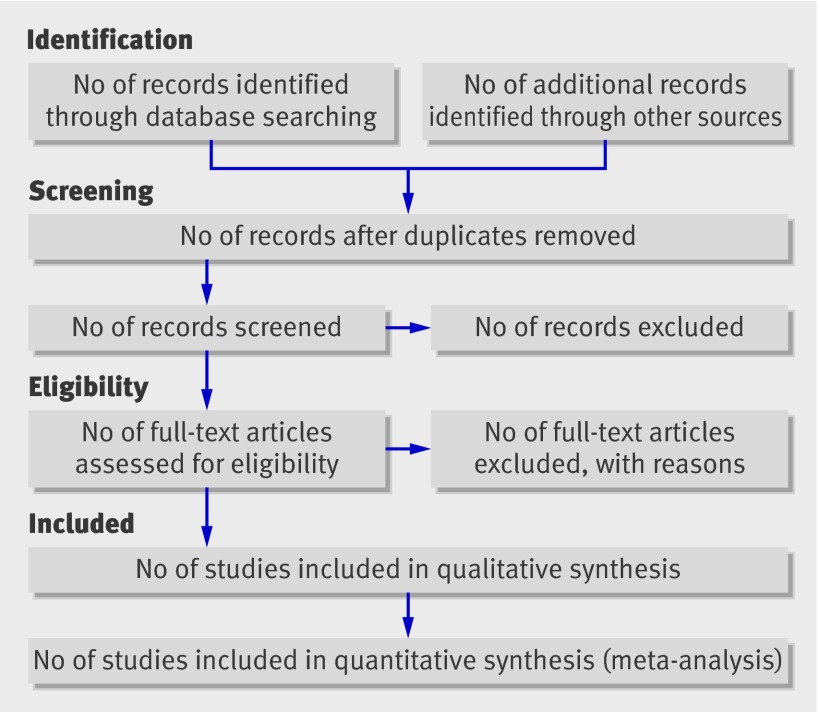
PRISMA is a 2009 revision of the QUOROM reporting guideline for systematic reviews and meta-analyses, consisting of a 27-item checklist and a four-phase flow diagram. It aims to improve reporting transparency and completeness, while acknowledging that it is not a quality assessment instrument.
Key findings
- PRISMA replaces QUOROM and comprises a 27-item checklist plus a four-phase flow diagram for reporting systematic reviews and meta-analyses.
- The revision adds new items on protocol/registration, risk of bias across studies, funding, and explicit objectives using PICOS; it also renames “quality assessment” as “risk of bias” and introduces outcome-level assessment.
- The guideline development meeting was held in Ottawa in June 2005 with 29 participants; the checklist was revised 11 times before group approval.
- The paper cites prior evidence of suboptimal reporting: Mulrow found none of 50 review articles met all eight explicit scientific criteria; Sacks et al. found reporting was generally poor, with a mean of 7.7 (SD 2.7) of 23 characteristics adequately reported; and in a review of 300 systematic reviews, few authors reported assessing publication bias.
Methods
- Guideline development: a three-day meeting in Ottawa, Canada, in June 2005 with 29 participants, including review authors, methodologists, clinicians, medical editors, and a consumer.
- Pre-meeting activities included a systematic review of studies examining reporting quality, a comprehensive literature search, and an international survey of review authors, consumers, and commissioning/using groups.
- A draft checklist was circulated, comments and revisions were compiled in a disposition file, and the checklist was revised 11 times before approval of the checklist, flow diagram, and summary paper.
Limitations
- Stated: no direct evidence was found to support retaining or adding some checklist items; evidence from other domains was believed relevant.
- Stated: PRISMA focuses on randomised trials, though it can be used as a basis for other research types; modifications may be necessary for diagnostic reviews, individual patient data meta-analyses, and other contexts.
- Stated: the PRISMA checklist is not a quality assessment instrument to gauge the quality of a systematic review.
- Evident: the paper does not report empirical validation that adopting PRISMA improves review quality or outcomes; it presents the guideline and its development process rather than testing its impact.
Model-written summary. Check it against the paper before relying on it.
Integrity signals
Registry
Cites
Statistics
Figures
Verification
Claims the paper makes
0 Valid · 0 Not valid · 20 Not checked · 11 Own results and interpretations
None of the sources cited for this claim could be matched to a paper, so there is nothing to check it against.
In the paper
“The quality of reporting of systematic reviews is still not optimal.”
- Also stated in: § Discussion · plain
“The quality of reporting of systematic reviews is still not optimal.9 30 31 32 33 34”
What the sources say
- Not matchedcites [9] 9. Moher D, Tetzlaff J, Tricco AC, Sampson M, Altman DG. Epidemiology and reporting characteristics of systematic reviews. PLoS Med 2007; 4: e78, 10.1371/journal.pmed.0040078. 17388659 10.1371/journal.pmed.0040078 PMC1831728
Couldn’t be matched to a paper, so it can’t be checked.
- Not matchedcites [30] 30. Bhandari M, Morrow F, Kulkarni AV, Tornetta P. Meta-analyses in orthopaedic surgery: a systematic review of their methodologies. J Bone Joint Surg Am 2001;83-A:15-24. 11205853
Couldn’t be matched to a paper, so it can’t be checked.
- Not matchedcites [31] 31. Kelly KD, Travers A, Dorgan M, Slater L, Rowe BH. Evaluating the quality of systematic reviews in the emergency medicine literature. Ann Emerg Med 2001; 38: 518-26. 11679863 10.1067/mem.2001.115881
Couldn’t be matched to a paper, so it can’t be checked.
plain- Asserted: passes — The authors put it forward as true.
- Checkable: passes — It can be checked against evidence.
- Load-bearing: passes — The paper’s conclusions depend on it.
- Based: passes — The paper gives a reason why it holds.
- Also stated in: § Discussion · plain
In the paper
“For studies included in a systematic review, a thorough assessment of the risk of bias requires both a study-level assessment (such as adequacy of allocation concealment) and, for some features, a newer approach called outcome-level assessment.”
§ Preferred reporting items for systematic reviews and meta-analyses: the PRISMA statement > Conceptual issues in the evolution from QUOROM to PRISMA > Study-level versus outcome-level assessment of risk of bias
What the sources say
- Not checked yetcites [11] 11. Guyatt GH, Oxman AD, Vist GE, Kunz R, Falck-Ytter Y, Alonso-Coello P, et al, for the GRADE Working Group. GRADE: an emerging consensus on rating quality of evidence and strength of recommendations. BMJ 2008; 336: 924-6. 18436948 10.1136/bmj.39489.470347.AD PMC2335261
plainstates a cause- Asserted: passes — The authors put it forward as true.
- Checkable: passes — It can be checked against evidence.
- Load-bearing: passes — The paper’s conclusions depend on it.
- Based: passes — The paper gives a reason why it holds.
None of the sources cited for this claim have been checked yet.
In the paper
“Different types of reporting biases may hamper the conduct and interpretation of systematic reviews.”
§ Preferred reporting items for systematic reviews and meta-analyses: the PRISMA statement > Conceptual issues in the evolution from QUOROM to PRISMA > Importance of reporting biases
What the sources say
- Not checked yetcites [13] 13. Dickersin K. Publication bias: recognizing the problem, understanding its origins and scope, and preventing harm. In: Rothstein HR, Sutton AJ, Borenstein M, eds. Publication bias in meta-analysis—prevention, assessment and adjustments. Chichester: John Wiley, 2005:11-33.
- Not checked yetcites [14] 14. Chan AW, Hrobjartsson A, Haahr MT, Gøtzsche PC, Altman DG. Empirical evidence for selective reporting of outcomes in randomized trials: comparison of protocols to published articles. JAMA 2004; 291: 2457-65. 15161896 10.1001/jama.291.20.2457
- Not checked yetcites [15] 15. Chan AW, Krleza-Jeric K, Schmid I, Altman DG. Outcome reporting bias in randomized trials funded by the Canadian Institutes of Health Research. CMAJ 2004; 171: 735-40. 15451835 10.1503/cmaj.1041086 PMC517858
hedgedstates a possible cause- Asserted: passes — The authors put it forward as true.
- Checkable: passes — It can be checked against evidence.
- Load-bearing: passes — The paper’s conclusions depend on it.
- Based: passes — The paper gives a reason why it holds.
In the paper
“In 1987 Mulrow examined 50 review articles published in four leading medical journals in 1985 and 1986 and found that none met all eight explicit scientific criteria, such as a quality assessment of included studies.5”
§ Preferred reporting items for systematic reviews and meta-analyses: the PRISMA statement > Abstract
What the sources say
- Not checked yetcites [5] 5. Mulrow CD. The medical review article: state of the science. Ann Intern Med 1987; 106: 485-8. 3813259 10.7326/0003-4819-106-3-485
plain- Asserted: passes — The authors put it forward as true.
- Checkable: passes — It can be checked against evidence.
- Load-bearing: passes — The paper’s conclusions depend on it.
- Based: passes — The paper gives a reason why it holds.
In the paper
“Although the implications of these biases on the conduct and reporting of systematic reviews themselves are unclear, some research has identified that selective outcome reporting may occur also in the context of systematic reviews.16”
§ Preferred reporting items for systematic reviews and meta-analyses: the PRISMA statement > Conceptual issues in the evolution from QUOROM to PRISMA > Importance of reporting biases
What the sources say
- Not checked yetcites [16] 16. Silagy CA, Middleton P, Hopewell S. Publishing protocols of systematic reviews: comparing what was done to what was planned. JAMA 2002; 287: 2831-4. 12038926 10.1001/jama.287.21.2831
hedged- Asserted: passes — The authors put it forward as true.
- Checkable: passes — It can be checked against evidence.
- Load-bearing: unclear — It is unclear whether the paper’s conclusions depend on it.
- Based: passes — The paper gives a reason why it holds.
6 more claims
Create a free account to see all 31 claims and to verify the 28 references still open.
- Probably not a substantial claim. 16
- It may state two separate claims as one. 8
Claims other papers make about this one
Each is checked against this paper’s own text: does it say what the citing paper says it does?
The source backs part of the claim, not all of it — or backs it for a different population, condition or comparison.
In the citing paper
“Many groups have called for the widespread preparation and registration of systematic review protocols in order to increase the availability and accessibility of a priori methods for systematic reviews [12–14].”
From Preferred reporting items for systematic review and meta-analysis protocols (PRISMA-P) 2015 statement (2015) · cites this paper as [13]
Experimental — accuracy not yet measuredThe source backs part of the claim, not all of it — or backs it for a different population, condition or comparison.
In the citing paper
“This systematic review and meta‐analysis meet the preferred reporting items for systematic reviews and meta‐analysis statement requirements (PRISMA) [14, 15].”
From Meta-Analysis: Chronic Gastrointestinal Symptoms and Comorbidities in Hypermobile Ehlers-Danlos Syndrome and Hypermobility Spectrum Disorders (2026) · cites this paper as [14]
Experimental — accuracy not yet measuredThe source backs part of the claim, not all of it — or backs it for a different population, condition or comparison.
In the citing paper
“Our review followed established review procedures developed by PRISMAScR and the Joanna Briggs Institute (Lockwood et al., 2019; Moher et al., 2009).”
From Mortality management and climate action: A review and reference for using Terror Management Theory methods in interdisciplinary environmental research (2022) · cites this paper as Moher et al., 2009
Experimental — accuracy not yet measuredThe source backs part of the claim, not all of it — or backs it for a different population, condition or comparison.
In the citing paper
“Our strategies for literature search were based on the guidelines of the Preferred Reporting Items for Systematic Reviews and Meta-Analyses (PRISMA), a framework for reporting and synthesising literature review (Moher et al., 2009).”
From Dimensions of teachers’ data literacy: A systematic review of literature from 1990 to 2021 (2024) · cites this paper as Moher et al., 2009
Experimental — accuracy not yet measuredThe source backs part of the claim, not all of it — or backs it for a different population, condition or comparison.
In the citing paper
“To this end, we conducted a systematic literature review in accordance with the Preferred Reporting Items for Systematic reviews and Meta-Analyses (PRISMA) method (Moher et al., 2009) (cf. Figure 2).”
From The Impact of Machine Learning on 2D/3D Registration for Image-Guided Interventions: A Systematic Review and Perspective (2021) · cites this paper as Moher et al., 2009
Experimental — accuracy not yet measured
66 more claims about this paper
Create a free account to see every claim other papers make about this one.
Citations
Cites
Liberati, A., Altman, D. G., Tetzlaff, J., Mulrow, C., Gøtzsche, P. C., Ioannidis, J. P. A., Clarke, M., Devereaux, P. J., Kleijnen, J., & Moher, D. (2009) · PLoS Medicine · doi:10.1371/journal.pmed.1000100 · Cited by 28,164
Self-citationGRADE: an emerging consensus on rating quality of evidence and strength of recommendations
Guyatt, G. H., Oxman, A. D., Vist, G. E., Kunz, R., Falck-Ytter, Y., Alonso-Coello, P., & Schünemann, H. J. (2008) · BMJ · doi:10.1136/bmj.39489.470347.ad · Cited by 23,305
von Elm, E., Altman, D. G., Egger, M., Pocock, S. J., Gøtzsche, P. C., Vandenbroucke, J. P., & Initiative, F. T. S. (2007) · PLoS Medicine · doi:10.1371/journal.pmed.0040296 · Cited by 23,020
Self-citationLiberati, A., Altman, D. G., Tetzlaff, J., Mulrow, C., Gotzsche, P. C., Ioannidis, J. P. A., Clarke, M., Devereaux, P. J., Kleijnen, J., & Moher, D. (2009) · BMJ · doi:10.1136/bmj.b2700 · Cited by 17,648
Self-citationLiberati, A., Altman, D. G., Tetzlaff, J., Mulrow, C., Gøtzsche, P. C., Ioannidis, J. P. A., Clarke, M., Devereaux, P. J., Kleijnen, J., & Moher, D. (2009) · Annals of Internal Medicine · doi:10.7326/0003-4819-151-4-200908180-00136 · Cited by 10,349
Self-citationVandenbroucke, J. P., von Elm, E., Altman, D. G., Gøtzsche, P. C., Mulrow, C. D., Pocock, S. J., Poole, C., Schlesselman, J. J., Egger, M., & Initiative, F. T. S. (2007) · PLoS Medicine · doi:10.1371/journal.pmed.0040297 · Cited by 8,613
Self-citationMoher, D., Cook, D. J., Eastwood, S., Olkin, I., Rennie, D., & Stroup, D. F. (1999) · The Lancet · doi:10.1016/s0140-6736(99)04149-5 · Cited by 4,826
Self-citationThe Revised CONSORT Statement for Reporting Randomized Trials: Explanation and Elaboration
Altman, D. G., Schulz, K. F., Moher, D., Egger, M., Davidoff, F., Elbourne, D., Gøtzsche, P. C., Lang, T., & for the CONSORT Group (2001) · Annals of Internal Medicine · doi:10.7326/0003-4819-134-8-200104170-00012 · Cited by 3,835
Self-citationVandenbroucke, J. P., Elm, E. V., Altman, D. G., Gøtzsche, P. C., Mulrow, C. D., Pocock, S. J., Poole, C., Schlesselman, J. J., Egger, M., & initiative, F. T. S. (2007) · Annals of Internal Medicine · doi:10.7326/0003-4819-147-8-200710160-00010-w1 · Cited by 3,543
Self-citationTowards complete and accurate reporting of studies of diagnostic accuracy: The STARD Initiative.
Bossuyt, P. M., Reitsma, J. B., Bruns, D. E., Gatsonis, C. A., Glasziou, P. P., Irwig, L. M., Lijmer, J. G., Moher, D., Rennie, D., de Vet, H. C. W., et al. (2003) · Annals of Internal Medicine · doi:10.7326/0003-4819-138-1-200301070-00010 · Cited by 3,219
Cited by
Items 4,801–4,900 of 7,584
Slater, H., Campbell, J. M., Stinson, J. N., Burley, M. M., & Briggs, A. M. (2017) · Journal of Medical Internet Research · doi:10.2196/jmir.8888 · Cited by 155
Gwadry-Sridhar, F. H., Manias, E., Lal, L., Salas, M., Hughes, D. A., Ratzki-Leewing, A., & Grubisic, M. (2013) · Value in Health · doi:10.1016/j.jval.2013.03.1631 · Cited by 155
Muka, T., Oliver-Williams, C., Colpani, V., Kunutsor, S., Chowdhury, S., Chowdhury, R., Kavousi, M., & Franco, O. H. (2016) · PLOS ONE · doi:10.1371/journal.pone.0157417 · Cited by 155
Chiu, K., Clark, D. M., & Leigh, E. (2021) · Journal of Affective Disorders · doi:10.1016/j.jad.2020.10.055 · Cited by 155
Challenges in Assessing Mobile Health App Quality
Grundy, Q. H., Wang, Z., & Bero, L. A. (2016) · American Journal of Preventive Medicine · doi:10.1016/j.amepre.2016.07.009 · Cited by 154
Redican, E., Nolan, E., Hyland, P., Cloitre, M., McBride, O., Karatzias, T., Murphy, J., & Shevlin, M. (2021) · Journal of Anxiety Disorders · doi:10.1016/j.janxdis.2021.102381 · Cited by 156
Intimate Partner Violence in the Golden Age: Systematic Review of Risk and Protective Factors
Gerino, E., Caldarera, A. M., Curti, L., Brustia, P., & Rollè, L. (2018) · Frontiers in Psychology · doi:10.3389/fpsyg.2018.01595 · Cited by 155
Abd El Aziz, M. S., Kahle, M., Meier, J. J., & Nauck, M. A. (2017) · Diabetes, Obesity and Metabolism · doi:10.1111/dom.12804 · Cited by 155
Abajobir, A. A., Kisely, S., Maravilla, J. C., Williams, G., & Najman, J. M. (2017) · Child Abuse & Neglect · doi:10.1016/j.chiabu.2016.11.023 · Cited by 155
Prevalence of depression among young people with Type 1 diabetes: a systematic review
Johnson, B., Eiser, C., Young, V., Brierley, S., & Heller, S. (2013) · Diabetic Medicine · doi:10.1111/j.1464-5491.2012.03721.x · Cited by 155
Peh, K. Q. E., Kwan, Y. H., Goh, H., Ramchandani, H., Phang, J. K., Lim, Z. Y., Loh, D. H. F., Østbye, T., Blalock, D. V., Yoon, S., et al. (2021) · Journal of General Internal Medicine · doi:10.1007/s11606-021-06648-1 · Cited by 151
Certal, V. F., Zaghi, S., Riaz, M., Vieira, A. S., Pinheiro, C. T., Kushida, C., Capasso, R., & Camacho, M. (2015) · The Laryngoscope · doi:10.1002/lary.25032 · Cited by 154
The efficacy of mindfulness-based interventions in primary care: a meta-analytic review.
Demarzo, M. M. P., Montero-Marin, J., Cuijpers, P., Zabaleta-del-Olmo, E., Mahtani, K. R., Vellinga, A., Vicens, C., Lopez-del-Hoyo, Y., & Garcia-Campayo, J. (2015) · The Annals of Family Medicine · doi:10.1370/afm.1863 · Cited by 152
Duan, Y., Xie, Z., Dong, F., Wu, Z., Lin, Z., Sun, N., & Xu, J. (2017) · Journal of Human Hypertension · doi:10.1038/jhh.2016.99 · Cited by 154
Hungin, A. P. S., Mitchell, C. R., Whorwell, P., Mulligan, C., Cole, O., Agréus, L., Fracasso, P., Lionis, C., Mendive, J., Philippart de Foy, J. ‐., et al. (2018) · Alimentary Pharmacology & Therapeutics · doi:10.1111/apt.14539 · Cited by 154
Thomson, K., Moffat, M., Arisa, O., Jesurasa, A., Richmond, C., Odeniyi, A., Bambra, C., Rankin, J., Brown, H., Bishop, J., et al. (2021) · BMJ Open · doi:10.1136/bmjopen-2020-042753 · Cited by 154
Predictive value of APOE- 4 allele for progression from MCI to AD-type dementia: a meta-analysis
Elias-Sonnenschein, L. S., Viechtbauer, W., Ramakers, I. H. G. B., Verhey, F. R. J., & Visser, P. J. (2011) · Journal of Neurology, Neurosurgery & Psychiatry · doi:10.1136/jnnp.2010.231555 · Cited by 154
Light therapy for non-seasonal depression: systematic review and meta-analysis
Perera, S., Eisen, R., Bhatt, M., Bhatnagar, N., de Souza, R., Thabane, L., & Samaan, Z. (2016) · BJPsych Open · doi:10.1192/bjpo.bp.115.001610 · Cited by 153
Batelaan, N. M., Bosman, R. C., Muntingh, A., Scholten, W. D., Huijbregts, K. M., & van Balkom, A. J. L. M. (2017) · BMJ · doi:10.1136/bmj.j3927 · Cited by 153
Abbing, A., Ponstein, A., van Hooren, S., de Sonneville, L., Swaab, H., & Baars, E. (2018) · PLOS ONE · doi:10.1371/journal.pone.0208716 · Cited by 154
Lee, Y.-C., Yang, H.-J., Chen, V. C.-H., Lee, W.-T., Teng, M.-J., Lin, C.-H., & Gossop, M. (2016) · Research in Developmental Disabilities · doi:10.1016/j.ridd.2015.11.009 · Cited by 153
Casula, M., Soranna, D., Catapano, A. L., & Corrao, G. (2013) · Atherosclerosis Supplements · doi:10.1016/s1567-5688(13)70005-9 · Cited by 152
Kite, C., Lahart, I. M., Afzal, I., Broom, D. R., Randeva, H., Kyrou, I., & Brown, J. E. (2019) · Systematic Reviews · doi:10.1186/s13643-019-0962-3 · Cited by 155
Soklaridis, S., Lin, E., Lalani, Y., Rodak, T., & Sockalingam, S. (2020) · General Hospital Psychiatry · doi:10.1016/j.genhosppsych.2020.08.007 · Cited by 153
Hunter, A., Tussis, L., & MacBeth, A. (2017) · Journal of Affective Disorders · doi:10.1016/j.jad.2017.07.004 · Cited by 153
Peter, L.-J., Schindler, S., Sander, C., Schmidt, S., Muehlan, H., McLaren, T., Tomczyk, S., Speerforck, S., & Schomerus, G. (2021) · Psychological Medicine · doi:10.1017/s0033291721000854 · Cited by 141
Gao, S.-Y., Wu, Q.-J., Sun, C., Zhang, T.-N., Shen, Z.-Q., Liu, C.-X., Gong, T.-T., Xu, X., Ji, C., Huang, D.-H., et al. (2018) · BMC Medicine · doi:10.1186/s12916-018-1193-5 · Cited by 152
Fernández, C. E., Maturana, C. A., Coloma, S. I., Carrasco-Labra, A., & Giacaman, R. A. (2021) · Journal of Dental Research · doi:10.1177/00220345211003828 · Cited by 152
Evidence of emotion dysregulation as a core symptom of adult ADHD: A systematic review
Soler-Gutiérrez, A.-M., Pérez-González, J.-C., & Mayas, J. (2023) · PLOS ONE · doi:10.1371/journal.pone.0280131 · Cited by 152
Wood, B., Williams, O., Nagarajan, V., & Sacks, G. (2021) · Globalization and Health · doi:10.1186/s12992-021-00667-7 · Cited by 152
Hannemann, P. F. W., Mommers, E. H. H., Schots, J. P. M., Brink, P. R. G., & Poeze, M. (2014) · Archives of Orthopaedic and Trauma Surgery · doi:10.1007/s00402-014-2014-8 · Cited by 151
Gomes-Neto, M., Durães, A. R., Reis, H. F. C. D., Neves, V. R., Martinez, B. P., & Carvalho, V. O. (2017) · European Journal of Preventive Cardiology · doi:10.1177/2047487317728370 · Cited by 151
Statins, cognition, and dementia-systematic review and methodological commentary
Power, M. C., Weuve, J., Sharrett, A. R., Blacker, D., & Gottesman, R. F. (2015) · Nature Reviews Neurology · doi:10.1038/nrneurol.2015.35 · Cited by 150
The role of inflammatory cytokines in suicidal behavior: A systematic review
Serafini, G., Pompili, M., Elena Seretti, M., Stefani, H., Palermo, M., Coryell, W., & Girardi, P. (2013) · European Neuropsychopharmacology · doi:10.1016/j.euroneuro.2013.06.002 · Cited by 151
Prognosis of Brief Psychotic Episodes: A Meta-analysis
Fusar-Poli, P., Cappucciati, M., Bonoldi, I., Hui, L. M. C., Rutigliano, G., Stahl, D. R., Borgwardt, S., Politi, P., Mishara, A. L., Lawrie, S. M., et al. (2016) · JAMA Psychiatry · doi:10.1001/jamapsychiatry.2015.2313 · Cited by 151
Effect of Pulmonary Rehabilitation on Symptoms of Anxiety and Depression in COPD
Gordon, C. S., Waller, J. W., Cook, R. M., Cavalera, S. L., Lim, W. T., & Osadnik, C. R. (2019) · Chest · doi:10.1016/j.chest.2019.04.009 · Cited by 152
Lomas, T., Medina, J. C., Ivtzan, I., Rupprecht, S., & Eiroa-Orosa, F. J. (2019) · Mindfulness · doi:10.1007/s12671-018-1062-5 · Cited by 152
Labrie, N. H. M., van Veenendaal, N. R., Ludolph, R. A., Ket, J. C. F., van der Schoor, S. R. D., & van Kempen, A. A. M. W. (2021) · Patient Education and Counseling · doi:10.1016/j.pec.2021.04.023 · Cited by 151
Büchter, R. B., Weise, A., & Pieper, D. (2020) · BMC Medical Research Methodology · doi:10.1186/s12874-020-01143-3 · Cited by 151
Tsabouri, S., Tseretopoulou, X., Priftis, K., & Ntzani, E. E. (2014) · The Journal of Allergy and Clinical Immunology: In Practice · doi:10.1016/j.jaip.2014.02.001 · Cited by 151
Describing reporting guidelines for health research: a systematic review
Moher, D., Weeks, L., Ocampo, M., Seely, D., Sampson, M., Altman, D. G., Schulz, K. F., Miller, D., Simera, I., Grimshaw, J., et al. (2011) · Journal of Clinical Epidemiology · doi:10.1016/j.jclinepi.2010.09.013 · Cited by 151
Self-citationDose-Response Meta-Analysis on Tooth Loss With the Risk of Cognitive Impairment and Dementia
Qi, X., Zhu, Z., Plassman, B. L., & Wu, B. (2021) · Journal of the American Medical Directors Association · doi:10.1016/j.jamda.2021.05.009 · Cited by 151
Obesity and Risk of Hip Fracture in Adults: A Meta-Analysis of Prospective Cohort Studies
Tang, X., Liu, G., Kang, J., Hou, Y., Jiang, F., Yuan, W., & Shi, J. (2013) · PLoS ONE · doi:10.1371/journal.pone.0055077 · Cited by 150
Weicker, J., Villringer, A., & Thöne-Otto, A. (2016) · Neuropsychology · doi:10.1037/neu0000227 · Cited by 147
Reed, D. A., Fletcher, K. E., & Arora, V. M. (2010) · Annals of Internal Medicine · doi:10.7326/0003-4819-153-12-201012210-00010 · Cited by 149
Meade, L. B., Bearne, L. M., Sweeney, L. H., Alageel, S. H., & Godfrey, E. L. (2019) · British Journal of Health Psychology · doi:10.1111/bjhp.12324 · Cited by 152
Byrne, M. L., Whittle, S., Vijayakumar, N., Dennison, M., Simmons, J. G., & Allen, N. B. (2017) · Developmental Cognitive Neuroscience · doi:10.1016/j.dcn.2016.12.004 · Cited by 150
The Prevalence of Self-injurious Behaviour in Autism: A Meta-analytic Study
Steenfeldt-Kristensen, C., Jones, C. A., & Richards, C. (2020) · Journal of Autism and Developmental Disorders · doi:10.1007/s10803-020-04443-1 · Cited by 150
Pharmacotherapy for Cocaine Use Disorder—a Systematic Review and Meta-analysis
Chan, B., Kondo, K., Freeman, M., Ayers, C., Montgomery, J., & Kansagara, D. (2019) · Journal of General Internal Medicine · doi:10.1007/s11606-019-05074-8 · Cited by 150
Lin, X., Zhang, I., Li, A., Manson, J. E., Sesso, H. D., Wang, L., & Liu, S. (2016) · The Journal of Nutrition · doi:10.3945/jn.116.237644 · Cited by 150
Zimmerman, A., Garman, E., Avendano-Pabon, M., Araya, R., Evans-Lacko, S., McDaid, D., Park, A.-L., Hessel, P., Diaz, Y., Matijasevich, A., et al. (2021) · BMJ Global Health · doi:10.1136/bmjgh-2020-004661 · Cited by 150
Gheyas, I. A., & Abdallah, A. E. (2016) · Big Data Analytics · doi:10.1186/s41044-016-0006-0 · Cited by 150
Willmott, M., Nicholson, A., Busse, H., MacArthur, G. J., Brookes, S., & Campbell, R. (2016) · Archives of Disease in Childhood · doi:10.1136/archdischild-2015-308875 · Cited by 149
Padilha, C. S., Marinello, P. C., Galvão, D. A., Newton, R. U., Borges, F. H., Frajacomo, F., & Deminice, R. (2017) · Journal of Cancer Survivorship · doi:10.1007/s11764-016-0592-x · Cited by 149
Youkhana, S., Dean, C. M., Wolff, M., Sherrington, C., & Tiedemann, A. (2016) · Age and Ageing · doi:10.1093/ageing/afv175 · Cited by 149
Storebø, O. J., Skoog, M., Damm, D., Thomsen, P. H., Simonsen, E., & Gluud, C. (2011) · Cochrane Database of Systematic Reviews · doi:10.1002/14651858.cd008223.pub2 · Cited by 149
Lau, Y., Htun, T. P., Wong, S. N., Tam, W. S. W., & Klainin-Yobas, P. (2017) · Journal of Medical Internet Research · doi:10.2196/jmir.6712 · Cited by 149
Pioglitazone for Secondary Stroke Prevention: A Systematic Review and Meta-Analysis
Lee, M., Saver, J. L., Liao, H.-W., Lin, C.-H., & Ovbiagele, B. (2017) · Stroke · doi:10.1161/strokeaha.116.013977 · Cited by 147
Forbes, C. A., Deshpande, S., Sorio-Vilela, F., Kutikova, L., Duffy, S., Gouni-Berthold, I., & Hagström, E. (2018) · Current Medical Research and Opinion · doi:10.1080/03007995.2018.1477747 · Cited by 149
Rosário, F., Santos, M. I., Angus, K., Pas, L., Ribeiro, C., & Fitzgerald, N. (2021) · Implementation Science · doi:10.1186/s13012-020-01073-0 · Cited by 141
Jefferson, A., & Adolphus, K. (2019) · Frontiers in Nutrition · doi:10.3389/fnut.2019.00033 · Cited by 149
Barriers and facilitators to healthy eating for nurses in the workplace: an integrative review
Nicholls, R., Perry, L., Duffield, C., Gallagher, R., & Pierce, H. (2017) · Journal of Advanced Nursing · doi:10.1111/jan.13185 · Cited by 149
Probyn, K., Bowers, H., Mistry, D., Caldwell, F., Underwood, M., Patel, S., Sandhu, H. K., Matharu, M., & Pincus, T. (2017) · BMJ Open · doi:10.1136/bmjopen-2017-016670 · Cited by 149
Bonde, J. H., Sandri, M.-T., Gary, D. S., & Andrews, J. C. (2020) · Journal of Lower Genital Tract Disease · doi:10.1097/lgt.0000000000000494 · Cited by 149
Borle, P., Reichel, K., Niebuhr, F., & Voelter-Mahlknecht, S. (2021) · International Journal of Environmental Research and Public Health · doi:10.3390/ijerph18168673 · Cited by 149
Conceptualizing prognostic awareness in advanced cancer: A systematic review
Applebaum, A. J., Kolva, E. A., Kulikowski, J. R., Jacobs, J. D., DeRosa, A., Lichtenthal, W. G., Olden, M. E., Rosenfeld, B., & Breitbart, W. (2014) · Journal of Health Psychology · doi:10.1177/1359105313484782 · Cited by 145
Psychological therapies for women who experience intimate partner violence
Hameed, M., O'Doherty, L., Gilchrist, G., Tirado-Muñoz, J., Taft, A., Chondros, P., Feder, G., Tan, M., & Hegarty, K. (2020) · Cochrane Database of Systematic Reviews · doi:10.1002/14651858.cd013017.pub2 · Cited by 146
Eng, G. K., Sim, K., & Chen, S.-H. A. (2015) · Neuroscience & Biobehavioral Reviews · doi:10.1016/j.neubiorev.2015.03.002 · Cited by 148
A Systematic Review of Semantic Feature Analysis Therapy Studies for Aphasia
Efstratiadou, E. A., Papathanasiou, I., Holland, R., Archonti, A., & Hilari, K. (2018) · Journal of Speech, Language, and Hearing Research · doi:10.1044/2018_jslhr-l-16-0330 · Cited by 146
Effects of Ginkgo biloba on dementia: an overview of systematic reviews
Yuan, Q., Wang, C.-W., Shi, J., & Lin, Z.-X. (2017) · Journal of Ethnopharmacology · doi:10.1016/j.jep.2016.12.005 · Cited by 148
Heasman, P. A., Holliday, R., Bryant, A., & Preshaw, P. M. (2015) · Journal of Clinical Periodontology · doi:10.1111/jcpe.12330 · Cited by 148
Use of Ecological Momentary Assessment to Study Suicidal Thoughts and Behavior: a Systematic Review
Sedano-Capdevila, A., Porras-Segovia, A., Bello, H. J., Baca-García, E., & Barrigon, M. L. (2021) · Current Psychiatry Reports · doi:10.1007/s11920-021-01255-7 · Cited by 148
Van Dessel, N., Den Boeft, M., van der Wouden, J. C., Kleinstäuber, M., Leone, S. S., Terluin, B., Numans, M. E., van der Horst, H. E., & van Marwijk, H. (2014) · Cochrane Database of Systematic Reviews · doi:10.1002/14651858.cd011142 · Cited by 148
Povitz, M., Bolo, C. E., Heitman, S. J., Tsai, W. H., Wang, J., & James, M. T. (2014) · PLoS Medicine · doi:10.1371/journal.pmed.1001762 · Cited by 147
Harrop, E. N., Mensinger, J. L., Moore, M., & Lindhorst, T. (2021) · International Journal of Eating Disorders · doi:10.1002/eat.23519 · Cited by 148
Yuan, K., Huang, X.-L., Yan, W., Zhang, Y.-X., Gong, Y.-M., Su, S.-Z., Huang, Y.-T., Zhong, Y., Wang, Y.-J., Yuan, Z., et al. (2022) · Molecular Psychiatry · doi:10.1038/s41380-021-01295-8 · Cited by 148
Barbui, C., Purgato, M., Abdulmalik, J., Caldas-de-Almeida, J. M., Eaton, J., Gureje, O., Hanlon, C., Nosè, M., Ostuzzi, G., Saraceno, B., et al. (2021) · The British Journal of Psychiatry · doi:10.1192/bjp.2020.144 · Cited by 148
Farrand, P., & Woodford, J. (2013) · Clinical Psychology Review · doi:10.1016/j.cpr.2012.11.001 · Cited by 125
Jansen, J. E., Gleeson, J., Bendall, S., Rice, S., & Alvarez-Jimenez, M. (2020) · Schizophrenia Research · doi:10.1016/j.schres.2019.11.016 · Cited by 144
Nduka, C. U., Stranges, S., Sarki, A. M., Kimani, P. K., & Uthman, O. A. (2016) · Journal of Human Hypertension · doi:10.1038/jhh.2015.97 · Cited by 147
Home telemonitoring effectiveness in COPD: a systematic review.
Cruz, J., Brooks, D., & Marques, A. (2014) · International Journal of Clinical Practice · doi:10.1111/ijcp.12345 · Cited by 147
Cruz, J., White, P. C. L., Bell, A., & Coventry, P. A. (2020) · International Journal of Environmental Research and Public Health · doi:10.3390/ijerph17228581 · Cited by 147
Braithwaite, J., Ludlow, K., Testa, L., Herkes, J., Augustsson, H., Lamprell, G., McPherson, E., & Zurynski, Y. (2020) · BMJ Open · doi:10.1136/bmjopen-2019-036453 · Cited by 147
Tzioras, M., Davies, C., Newman, A., Jackson, R., & Spires‐Jones, T. (2019) · Neuropathology and Applied Neurobiology · doi:10.1111/nan.12529 · Cited by 147
Downs, J., Blackmore, A. M., Epstein, A., Skoss, R., Langdon, K., Jacoby, P., Whitehouse, A. J. O., Leonard, H., Rowe, P. W., Glasson, E. J., et al. (2018) · Developmental Medicine & Child Neurology · doi:10.1111/dmcn.13555 · Cited by 148
Czech, O., Wrzeciono, A., Rutkowska, A., Guzik, A., Kiper, P., & Rutkowski, S. (2021) · Journal of Clinical Medicine · doi:10.3390/jcm10153248 · Cited by 151
Mindfulness and Other Buddhist-Derived Interventions in Correctional Settings: A Systematic Review
Shonin, E., Van Gordon, W., Slade, K., & Griffiths, M. D. (2013) · Aggression and Violent Behavior · doi:10.1016/j.avb.2013.01.002 · Cited by 147
Tian, F., Heighes, P. T., Allingstrup, M. J., & Doig, G. S. (2018) · Critical Care Medicine · doi:10.1097/ccm.0000000000003152 · Cited by 147
Setting-based interventions to promote mental health at the university: a systematic review
Fernandez, A., Howse, E., Rubio-Valera, M., Thorncraft, K., Noone, J., Luu, X., Veness, B., Leech, M., Llewellyn, G., & Salvador-Carulla, L. (2016) · International Journal of Public Health · doi:10.1007/s00038-016-0846-4 · Cited by 147
Ross, A. M., Morgan, A. J., Jorm, A. F., & Reavley, N. J. (2019) · Social Psychiatry and Psychiatric Epidemiology · doi:10.1007/s00127-018-1608-9 · Cited by 146
WONG, V. W. Y., COWLING, B. J., & AIELLO, A. E. (2014) · Epidemiology and Infection · doi:10.1017/s095026881400003x · Cited by 146
Treanor, C., Kyaw, T., & Donnelly, M. (2018) · Journal of Cancer Survivorship · doi:10.1007/s11764-017-0645-9 · Cited by 146
Bø, K., & Hilde, G. (2013) · Neurourology and Urodynamics · doi:10.1002/nau.22292 · Cited by 146
Diversity in Alzheimer's disease drug trials: the importance of eligibility criteria
Franzen, S., Smith, J. E., van den Berg, E., Rivera Mindt, M., van Bruchem‐Visser, R. L., Abner, E. L., Schneider, L. S., Prins, N. D., Babulal, G. M., & Papma, J. M. (2022) · Alzheimer's & Dementia · doi:10.1002/alz.12433 · Cited by 146
Ahn, S., Romo, R. D., & Campbell, C. L. (2020) · Patient Education and Counseling · doi:10.1016/j.pec.2020.03.012 · Cited by 155
Valotto Neto, L. J., Reverete de Araujo, M., Moretti Junior, R. C., Mendes Machado, N., Joshi, R. K., dos Santos Buglio, D., Barbalho Lamas, C., Direito, R., Fornari Laurindo, L., Tanaka, M., et al. (2024) · Antioxidants · doi:10.3390/antiox13040393 · Cited by 146
Measuring psychological resilience to disasters: are evidence-based indicators an achievable goal?
Rodriguez-Llanes, J. M., Vos, F., & Guha-Sapir, D. (2013) · Environmental Health · doi:10.1186/1476-069x-12-115 · Cited by 146
Hu, X. F., Singh, K., & Chan, H. M. (2018) · Environmental Health Perspectives · doi:10.1289/ehp2863 · Cited by 146
van Iersel, L., Brokke, K. E., Adan, R. A. H., Bulthuis, L. C. M., van den Akker, E. L. T., & van Santen, H. M. (2019) · Endocrine Reviews · doi:10.1210/er.2018-00017 · Cited by 146
Scott-Sheldon, L. A. J., Gathright, E. C., Donahue, M. L., Balletto, B., Feulner, M. M., DeCosta, J., Cruess, D. G., Wing, R. R., Carey, M. P., & Salmoirago-Blotcher, E. (2020) · Annals of Behavioral Medicine · doi:10.1093/abm/kaz020 · Cited by 145
Metadata
- Authors
- Moher, D., Liberati, A., Tetzlaff, J., Altman, D. G., & for the PRISMA Group
- Affiliations
- University of Ottawa (CA)
- University of Modena and Reggio Emilia (IT)
- Ottawa Hospital Research Institute (CA)
- University of Oxford (GB)
- Corresponding author
- Moher, D.
- Venue
- BMJ
- Publisher
- BMJ
- Published
- 2009-07-21
- Volume
- 339
- Issue
- jul21 1
- Pages
- b2535-b2535
- ISSN
- 0007-1447 (ISSN-L)
- 0959-8138
- 1468-5833
- PMC
- PMC2714657
- OpenAlex
- W2156098321
- Cited by
- 83,823
- References
- 56
- Citations by year
- 2026: 1223 · 2025: 2325 · 2024: 3601 · 2023: 5067 · 2022: 7278 · 2021: 14834 · 2020: 12076 · 2019: 8599 · 2018: 6635 · 2017: 6088 · 2016: 5138 · 2015: 3942 · 2014: 2914 · 2013: 1936 · 2012: 1174
- FWCI
- 54.09
- Type
- journal article
- Language
- en
- Open access
- hybrid
- doi.org
- Licence
- cc-by-nc
- Locations
- BMJ (publishedVersion, cc-by-nc)
- Europe PMC (PubMed Central) (publishedVersion, cc-by-nc)
- PubMed Central (publishedVersion, cc-by-nc)
- PubMed (publishedVersion)
- Archivio Istituzionale della Ricerca (Universita Degli Studi Di Milano) (submittedVersion, other-oa)
- Funders
- GlaxoSmithKline
- Health Services Research and Development
- Johns Hopkins University
- University of Ottawa
- University of Bern
- Ottawa Hospital Research Institute
- McMaster University
- Cancer Research UK
- University of Ioannina
- Johns Hopkins Bloomberg School of Public Health
- Canadian Institutes of Health Research
- Medical Research Council
- Care and Public Health Research Institute, Universiteit Maastricht
- Topics
- Social Sciences › Decision Sciences › Statistics, Probability and Uncertainty › Meta-analysis and systematic reviews
- Health Sciences › Medicine › Public Health, Environmental and Occupational Health › Clinical practice guidelines implementation
- Social Sciences › Sociology and Political Science › Delphi Technique in Research
- Keywords
- PRISMA statement, reporting guidelines, systematic reviews, meta-analysis, reporting quality
- MeSH terms
- Humans, Terminology as Topic, Periodicals as Topic, Publishing, Quality Control, Review Literature as Topic, Meta-Analysis as Topic, Publication Bias, Evidence-Based Practice
About these checks
Registry, retraction, Cites and statistics results are computed, not judged, with one exception: a printed reference that no index lists is read once by a model before it counts as a citation error. Claims are extracted by a model and kept only when their quote appears verbatim in the text; each cited source is then checked, with a model’s help, for whether it says what the claim relies on. Those verdicts can be wrong — read the claim’s quote and the cited source before relying on one.
A language model drew the claims from the paper on 2026-09-30, under version 3 of the claim definition (model deepseek-v4.1-flash, prompt extract-v3).
A second model labelled each claim on 2026-09-30 (model jev-1.13-20260917, definition revision gold-guideline-v0.2).
Statistics and arithmetic are recomputed, not judged.
Confidence bands are shown only for fields calibrated on our annotated test set. None is calibrated yet, so no band is shown.
What counts as a claim ›How we measure confidence ›How we check this ›
Are you an author, or do you see a problem with this page? Request a review
Data sources
Bibliographic data: Semantic Scholar, OpenAlex, Crossref.
Contains information from the Semantic Scholar Academic Graph Datasets, made available under the ODC Attribution License (ODC-BY 1.0).
Semantic Scholar’s data is described in: Kinney, R., et al. (2023). The Semantic Scholar Open Data Platform. arXiv:2301.10140.
