

Decoding of grasping information from neural signals recorded using peripheral intrafascicular interfaces
Open accessThe DOI matches its Crossref record; 43 of the 43 references it cites were found in a registry or an index; 1 of the 16 sources its claims cite were checked for support.
Abstract
BACKGROUND: The restoration of complex hand functions by creating a novel bidirectional link between the nervous system and a dexterous hand prosthesis is currently pursued by several research groups. This connection must be fast, intuitive, with a high success rate and quite natural to allow an effective bidirectional flow of information between the user's nervous system and the smart artificial device. This goal can be achieved with several approaches and among them, the use of implantable interfaces connected with the peripheral nervous system, namely intrafascicular electrodes, is considered particularly interesting. METHODS: Thin-film longitudinal intra-fascicular electrodes were implanted in the median and ulnar nerves of an amputee's stump during a four-week trial. The possibility of decoding motor commands suitable to control a dexterous hand prosthesis was investigated for the first time in this research field by implementing a spike sorting and classification algorithm. RESULTS: The results showed that motor information (e.g., grip types and single finger movements) could be extracted with classification accuracy around 85% (for three classes plus rest) and that the user could improve his ability to govern motor commands over time as shown by the improved discrimination ability of our classification algorithm. CONCLUSIONS: These results open up new and promising possibilities for the development of a neuro-controlled hand prosthesis.
Overview
CoChat Summary
TL;DR
Thin-film longitudinal intrafascicular electrodes implanted in an amputee’s median and ulnar nerves allowed decoding of grasp-related motor commands, including grip types and single-finger movement. Classification accuracy reached about 85% for three movement classes plus rest, with performance improving over two days and with daily classifier retraining.
Key findings
- Motor information such as grip types and single-finger movements could be extracted from tfLIFE signals; the paper reports classification accuracy around 85% for three classes plus rest (Table 1: rest vs little vs pinch vs palmar = 85%; Table 2 with retraining: little, pinch, palmar plus rest = 0.85).
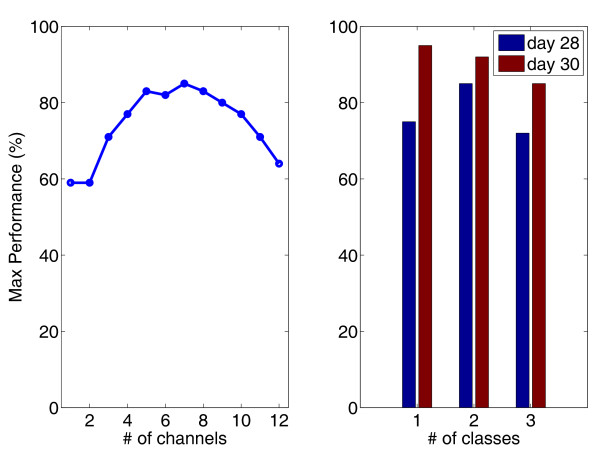
- Best recognition ratios varied by task: rest vs pinch = 100%, rest vs palmar = 95%, rest vs little = 93%, rest vs little vs palmar = 92%, rest vs little vs pinch = 90%, rest vs pinch vs palmar = 87%, and rest vs activity = 87%.
- Without daily retraining, performance was lower (0.72 for little, pinch, palmar plus rest) than with retraining (0.85); the user also improved classification performance over two training days.
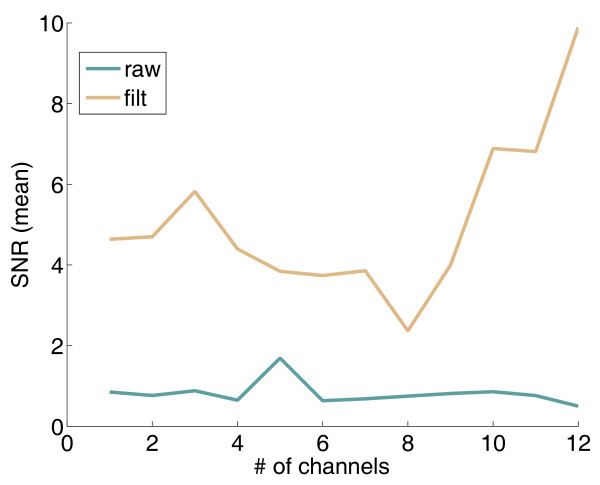
- Increasing the number of recording channels improved classification performance up to a limit, after which performance degraded due to overfitting.
Methods
- Single case: P.P., a 26-year-old male with left arm amputation two years before implantation; two tfLIFE4s were implanted in the median and ulnar nerves during a four-week trial, with motor-signal trials conducted in the last week.
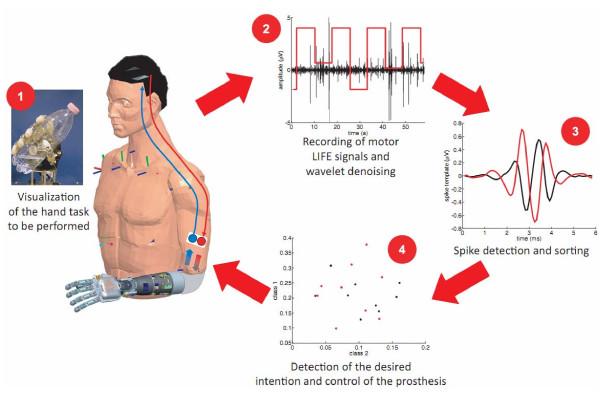
- The subject was visually cued to perform palmar grasp, pinch grasp, little-finger flexion, or rest; LIFE motor signals were recorded via 4-channel amplifiers, wavelet-denoised, spike-sorted into templates, and classified with a one-against-one SVM using leave-one-out validation and relative spike-rate features.
- Inter-day robustness was tested by training the classifier on the first day of recordings and applying it unchanged on subsequent days, compared with daily retraining.
Limitations
- Stated in the paper: time limitations prevented increasing the number of grip types; the learning effect was observed only for two consecutive days and needs confirmation in longer tests; future chronic experiments with an implanted hand prosthesis are needed.
- Stated in the paper: some unexpected channels contributed to best classification, possibly because the user could not deliver the natural (“correct”) neurophysiological commands.
- Evident from the text: this is a single-amputee case, so generalizability is not established; the no-retraining vs retraining comparison also indicates that signal time-variance or recalibration needs may remain despite the reported stability.
Model-written summary. Check it against the paper before relying on it.
Integrity signals
Registry
Cites
Statistics
Figures
Verification
Claims the paper makes
1 Valid · 0 Not valid · 7 Not checked · 17 Own results and interpretations
The cited sources support only part of this claim — read each source’s verdict below.
In the paper
“In fact, after appropriate control in experimental models to test their biocompatibility and efficacy [18], LIFEs have been recently used to control artificial devices [6,7,22-25] showing good results during short-term trials with human amputees.”
§ Decoding of grasping information from neural signals recorded using peripheral intrafascicular interfaces > I. Introduction
What the sources say
- Not checked yetcites [6] Dhillon GS Horch KW Direct neural sensory feedback and control of a prosthetic arm IEEE Trans Neural Syst Rehabil Eng 2005 13 468 472 10.1109/TNSRE.2005.856072 16425828 source
- Not checked yetcites [7] Jia X Koenig MA Zhang X Zhang J Chen T Chen Z Residual motor signal in long-term human severed peripheral nerves and feasibility of neural signal-controlled artificial limb J Hand Surg Am 2007 32 657 666 10.1016/j.jhsa.2007.02.021 17482005 source
- Not checked yetcites [22] Dhillon GS Lawrence SM Hutchinson DT Horch KW Residual function in peripheral nerve stumps of amputees: implications for neural control of artificial limbs J Hand Surg Am 2004 29 605 615 discussion 616-608 10.1016/j.jhsa.2004.02.006 15249083 source
- Partly supportedcites [23] Dhillon GS Kruger TB Sandhu JS Horch KW Effects of short-term training on sensory and motor function in severed nerves of long-term human amputees J Neurophysiol 2005 93 2625 2633 10.1152/jn.00937.2004 15846000 sourceExperimental — accuracy not yet measured
The INTRODUCTION of Kemere et al. (2008) does support the general part of the claim: prototype implementations 'have demonstrated that monkeys and humans can achieve some level of real-time control over motor ... or communication ... prostheses' recorded with 'chronically implanted microelectrode arrays' (citing Kennedy and Bakay 1998; Kennedy et al. 2000; Hochberg et al. 2006; Serruya et al. 2002; Taylor et al. 2002 — the intracortical/LIFE-type systems). But the population it describes is patients with spinal cord injury or neurodegenerative disease who are paralyzed (its Hochberg reference is titled '...by a human with tetraplegia'; Kennedy 1998 is '...from a paralyzed patient'), not amputees, and the paper nowhere reports short-term trials in amputees or grades their results as good — it explicitly hedges to 'some level' of control and frames these systems as requiring human intervention and suffering performance losses when neural-state transitions are undetected (INTRODUCTION; RESULTS). The 'human amputees' and 'good results during short-term trials' elements are therefore not attributable to this source. (LLM, conf=0.75)
- Not checked yetcites [24] Rossini PM Micera S Benvenuto A Carpaneto J Cavallo G Citi L Cipriani C Denaro L Denaro V Di Pino G Ferreri F Guglielmelli E Hoffmann K-P Raspopovic S Rigosa J Rossini L Tombini M Dario P Double nerve intraneural interface implant on a human amputee for robotic hand control Clin Neurophysiol 2010 121 777 783 10.1016/j.clinph.2010.01.001 20110193
- Not checked yetcites [25] Micera S Citi L Rigosa J Carpaneto J Raspopovic S Di Pino G Rossini L Yoshida K Denaro L Dario P Rossini PM Decoding Information From Neural Signals Recorded Using Intraneural Electrodes: Toward the Development of a Neurocontrolled Hand Prosthesis Proc IEEE 2010 98 407 417
plainstates a cause- Asserted: passes — The authors put it forward as true.
- Checkable: passes — It can be checked against evidence.
- Load-bearing: unclear — It is unclear whether the paper’s conclusions depend on it.
- Based: passes — The paper gives a reason why it holds.
A result the paper reports from its own data — it cites no other source for it, so there is none to check. The quote shows it is in the paper.
In the paper
“the user could improve his ability to govern motor commands over time as shown by the improved discrimination ability of our classification algorithm.”
- Also stated in: § IV Discussion · plain
“our amputee subject was able to improve his performance during the consecutive trials.”
§ Decoding of grasping information from neural signals recorded using peripheral intrafascicular interfaces > Abstract > Results
plainstates a causeSingle case- Asserted: passes — The authors put it forward as true.
- Checkable: passes — It can be checked against evidence.
- Load-bearing: passes — The paper’s conclusions depend on it.
- Based: passes — The paper gives a reason why it holds.
- Also stated in: § IV Discussion · plain
In the paper
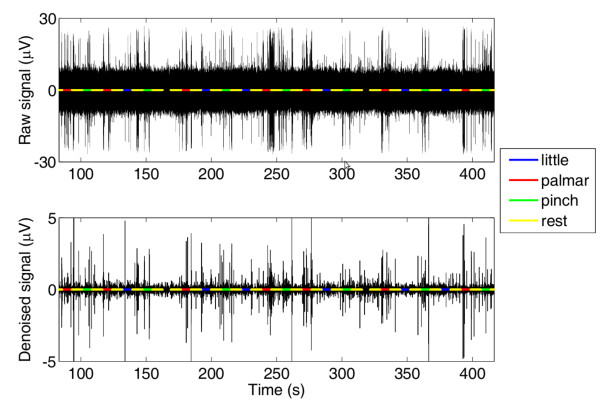
“The quality of the recording after denoising can be considered good similarly to the considerations done in [35].”
§ Decoding of grasping information from neural signals recorded using peripheral intrafascicular interfaces > III. Results
What the sources say
- Not checked yetcites [35] Suner S Fellows MR Vargas-Irwin C Nakata GK Donoghue JP Reliability of signals from a chronically implanted, silicon-based electrode array in non-human primate primary motor cortex IEEE Trans Neural Syst Rehabil Eng 2005 13 524 541 10.1109/TNSRE.2005.857687 16425835
plainSingle case- Asserted: passes — The authors put it forward as true.
- Checkable: unclear — It is unclear whether it could be checked against evidence.
- Load-bearing: passes — The paper’s conclusions depend on it.
- Based: passes — The paper gives a reason why it holds.
A result the paper reports from its own data — it cites no other source for it, so there is none to check. The quote shows it is in the paper.
In the paper
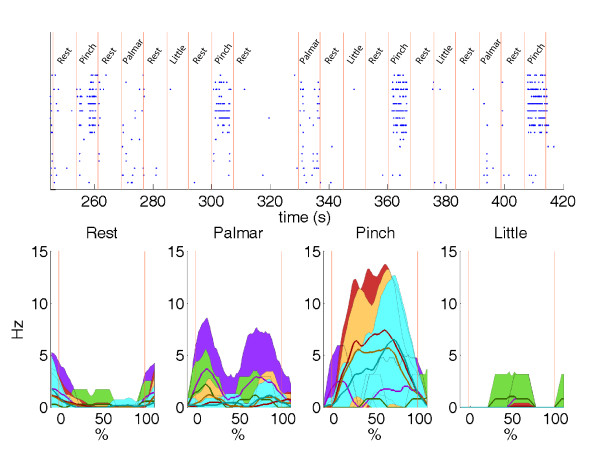
“In most cases, a combination of features coming from all the three tfLIFE channels is required to obtain the best recognition ratio (rr).”
§ Decoding of grasping information from neural signals recorded using peripheral intrafascicular interfaces > III. Results
plainstates a causeSingle case- Asserted: passes — The authors put it forward as true.
- Checkable: passes — It can be checked against evidence.
- Load-bearing: passes — The paper’s conclusions depend on it.
- Based: passes — The paper gives a reason why it holds.
In the paper
“This spike-based approach was used because it already showed to allow high classification accuracy in animal experiments [28].”
§ Decoding of grasping information from neural signals recorded using peripheral intrafascicular interfaces > II. Materials and methods > C. Off-line Processing algorithms of LIFE signals
What the sources say
- Not checked yetcites [28] Citi L Carpaneto J Yoshida K Hoffmann KP Koch KP Dario P Micera S On the use of wavelet denoising and spike sorting techniques to process electroneurographic signals recorded using intraneural electrodes J Neurosci Methods 2008 172 294 302 10.1016/j.jneumeth.2008.04.025 18534683
plainstates a cause- Asserted: passes — The authors put it forward as true.
- Checkable: passes — It can be checked against evidence.
- Load-bearing: passes — The paper’s conclusions depend on it.
- Based: passes — The paper gives a reason why it holds.
5 more claims
Create a free account to see all 25 claims and to verify the 15 references still open.
- It may state two separate claims as one. 10
- The quote only partly states this claim. 2
- Probably not a substantial claim. 5
Claims other papers make about this one
Each is checked against this paper’s own text: does it say what the citing paper says it does?
The source backs part of the claim, not all of it — or backs it for a different population, condition or comparison.
In the citing paper
“Nevertheless, ENG signals have a low signal-to-noise ratio and limited stability.[363]”
From Flexible Electronics and Devices as Human–Machine Interfaces for Medical Robotics (2022) · cites this paper as [363]
Experimental — accuracy not yet measuredThe source backs part of the claim, not all of it — or backs it for a different population, condition or comparison.
In the citing paper
“For example, intrafascicular electrodes, such as the transverse intrafascicular multichannel electrode (TIME) and the longitudinal intrafascicular electrode (LIFE), transduce signals that have amplitudes less than 100 µVpp [62, 66, 71, 79, 82, 109].”
From Implantable neurotechnologies: a review of integrated circuit neural amplifiers (2016) · cites this paper as [82]
Experimental — accuracy not yet measuredThe source backs part of the claim, not all of it — or backs it for a different population, condition or comparison.
In the citing paper
“Due to the noise constraints placed on recording instrumentation, electrophysiological recordings from the PNS are largely performed using commercial bench-top low-noise amplifier setups [75, 82, 109] that require subjects to be tethered to the equipment.”
From Implantable neurotechnologies: a review of integrated circuit neural amplifiers (2016) · cites this paper as [82]
Experimental — accuracy not yet measuredThe source backs part of the claim, not all of it — or backs it for a different population, condition or comparison.
In the citing paper
“It has been implanted in clinical trials, and has demonstrated good performance with prosthetic arms. Multiple electrodes were implanted in different nerves and the amputees improved their control with training [91, 92].”
From Interfaces with the peripheral nervous system for the control of a neuroprosthetic limb: a review (2020) · cites this paper as [91]
Experimental — accuracy not yet measuredIn the citing paper
“Most recently, Micera et al. used peripheral nerve stimulation to evoke graded sensory perceptions in a human amputee subject while using the subject’s residual muscle activity to decode movement intention and actuate a robotic arm (Fig. 10) [82, 109].”
From Implantable neurotechnologies: a review of integrated circuit neural amplifiers (2016) · cites this paper as [82]
Self-check
Percentages, sums and reported differences re-computed from the paper’s own numbers.
Each contradiction between two passages listed here was confirmed by an independent check.
Rated minor: it would not touch a result — a value no result rests on, a p-value that stays on the same side of the significance level, or a conflict that is clerical, resolved elsewhere in the paper, or outside its own findings.
In the paper
§ Decoding of grasping information from neural signals recorded using peripheral intrafascicular interfaces > II. Materials and methods > B. Experimental protocol
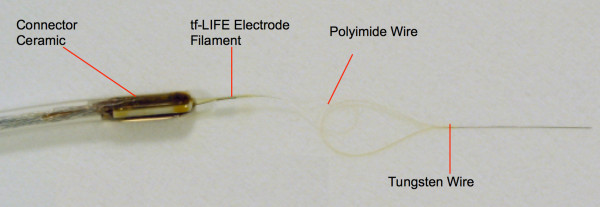
“two tfLIFE4s (Figure 1) were inserted in the ulnar and the median nerves 45° obliquely”
§ Decoding of grasping information from neural signals recorded using peripheral intrafascicular interfaces > III. Results
“M1 an M2 indicate the two tfLIFE implanted in the median nerve whereas U indicates the tfLIFE implanted in the ulnar nerve.”
Citations
Cites
Cortes, C., & Vapnik, V. (1995) · Machine Learning · doi:10.1007/bf00994018 · Cited by 59,421
Cortes, C., & Vapnik, V. (1995) · Machine-mediated learning · doi:10.1023/a:1022627411411 · Cited by 48,445
LIBSVM: A library for support vector machines
Chang, C.-C., & Lin, C.-J. (2011) · ACM Transactions on Intelligent Systems and Technology · doi:10.1145/1961189.1961199 · Cited by 40,918 · cited 2×
“Chang C, Lin C: LIBSVM: a Library for Support Vector Machines.”
MethodTranslation-Invariant De-Noising
Coifman, R. R., & Donoho, D. L. (1995) · Lecture Notes in Statistics · doi:10.1007/978-1-4612-2544-7_9 · Cited by 1,914
A robust, real-time control scheme for multifunction myoelectric control
Englehart, K., & Hudgins, B. (2003) · IEEE Transactions on Biomedical Engineering · doi:10.1109/tbme.2003.813539 · Cited by 1,743 · cited 1×
“Several solutions are possible and are currently investigated by independent research groups using non-invasive [3-5], and invasive [6-8] approaches.”
BackgroundCortical control of a prosthetic arm for self-feeding
Velliste, M., Perel, S., Spalding, M. C., Whitford, A. S., & Schwartz, A. B. (2008) · Nature · doi:10.1038/nature06996 · Cited by 1,591 · cited 2×
“Several solutions are possible and are currently investigated by independent research groups using non-invasive [3-5], and invasive [6-8] approaches.”
BackgroundTargeted Muscle Reinnervation for Real-time Myoelectric Control of Multifunction Artificial Arms
Kuiken, T. A. (2009) · JAMA · doi:10.1001/jama.2009.116 · Cited by 1,089 · cited 1×
“The transposition of residual nerves of amputees to other muscles in or near the amputation site can be also implemented [12-14].”
BackgroundNavarro, X., Krueger, T. B., Lago, N., Micera, S., Stieglitz, T., & Dario, P. (2005) · Journal of the Peripheral Nervous System · doi:10.1111/j.1085-9489.2005.10303.x · Cited by 845 · cited 2×
“Several invasive PNS interfaces have been developed in the past [18].”
BackgroundSelf-citationHuang, Y., Englehart, K. B., Hudgins, B., & Chan, A. D. C. (2005) · IEEE Transactions on Biomedical Engineering · doi:10.1109/tbme.2005.856295 · Cited by 643
Control of Multifunctional Prosthetic Hands by Processing the Electromyographic Signal
Zecca, M., Micera, S., Carrozza, M. C., & Dario, P. (2002) · Critical Reviews? in Biomedical Engineering · doi:10.1615/critrevbiomedeng.v30.i456.80 · Cited by 606 · cited 1×
“This approach can be implemented by processing electromyographic (EMG) signals recorded using either non-invasive [9] or invasive [10,11] electrodes.”
Self-citation
Cited by
Flexible Electronics and Devices as Human–Machine Interfaces for Medical Robotics
Heng, W., Solomon, S., & Gao, W. (2022) · Advanced Materials · doi:10.1002/adma.202107902 · Cited by 609
Toward higher-performance bionic limbs for wider clinical use
Farina, D., Vujaklija, I., Brånemark, R., Bull, A. M. J., Dietl, H., Graimann, B., Hargrove, L. J., Hoffmann, K.-P., Huang, H., Ingvarsson, T., et al. (2021) · Nature Biomedical Engineering · doi:10.1038/s41551-021-00732-x · Cited by 263
“However, electroneurographic signals have a low signal-to-noise ratio and limited stability 106 , making it challenging to decode the activity of efferent fibres with intrafascicular nerve implants 113 .”
BackgroundSelf-citationWendelken, S., Page, D. M., Davis, T., Wark, H. A. C., Kluger, D. T., Duncan, C., Warren, D. J., Hutchinson, D. T., & Clark, G. A. (2017) · Journal of NeuroEngineering and Rehabilitation · doi:10.1186/s12984-017-0320-4 · Cited by 216
Implantable neurotechnologies: a review of micro- and nanoelectrodes for neural recording
Patil, A. C., & Thakor, N. V. (2016) · Medical & Biological Engineering & Computing · doi:10.1007/s11517-015-1430-4 · Cited by 175
Multi-Modal Sensing Techniques for Interfacing Hand Prostheses: A Review
Fang, Y., Hettiarachchi, N., Zhou, D., & Liu, H. (2015) · IEEE Sensors Journal · doi:10.1109/jsen.2015.2450211 · Cited by 172
“[77] demonstrates that motor information, like grip types and single finger movements, could be extracted from PNIs and users could improve their ability to govern motor commands over time.”
BackgroundMethodBorton, D., Micera, S., Millán, J. D. R., & Courtine, G. (2013) · Science Translational Medicine · doi:10.1126/scitranslmed.3005968 · Cited by 171
“Instead, researchers have focused on extracting position and velocity information from muscle activity (38), peripheral nerve signals (39), and dorsal root ganglion (DRG) (40, 41) (Fig.”
BackgroundSelf-citationShaping high-performance wearable robots for human motor and sensory reconstruction and enhancement
Xia, H., Zhang, Y., Rajabi, N., Taleb, F., Yang, Q., Kragić, D., & Li, Z. (2024) · Nature Communications · doi:10.1038/s41467-024-46249-0 · Cited by 164
Stereovision and augmented reality for closed-loop control of grasping in hand prostheses
Markovic, M., Dosen, S., Cipriani, C., Popovic, D., & Farina, D. (2014) · Journal of Neural Engineering · doi:10.1088/1741-2560/11/4/046001 · Cited by 136
“Also, implantable interfaces such as intra-fascicular neural electrodes [20] and implantable myoelectric sensors [21] have been tested for the same purpose.”
BackgroundSelf-citation(2016) · IEEE Journal of Solid-State Circuits · doi:10.1109/jssc.2015.2512935 · Cited by 145
“N EURAL amplifiers are essential building blocks in numerous neuroscience experiments [1]–[3] and in neural prostheses [4]–[8], which are becoming increasingly widespread for the treatment of several neurological diseases.”
BackgroundSartori, M., Durandau, G., Došen, S., & Farina, D. (2018) · Journal of Neural Engineering · doi:10.1088/1741-2552/aae26b · Cited by 148
Human motor decoding from neural signals: a review
Tam, W.-K., Wu, T., Zhao, Q., Keefer, E. W., & Yang, Z. (2019) · BMC Biomedical Engineering · doi:10.1186/s42490-019-0022-z · Cited by 120
Interfaces with the peripheral nervous system for the control of a neuroprosthetic limb: a review
Yildiz, K. A., Shin, A. Y., & Kaufman, K. R. (2020) · Journal of NeuroEngineering and Rehabilitation · doi:10.1186/s12984-020-00667-5 · Cited by 113
Interfaces with the Peripheral Nerve for the Control of Neuroprostheses
del Valle, J., & Navarro, X. (2013) · International Review of Neurobiology · doi:10.1016/b978-0-12-420045-6.00002-x · Cited by 105
Self-citationChronic interfacing with the autonomic nervous system using carbon nanotube (CNT) yarn electrodes
McCallum, G. A., Sui, X., Qiu, C., Marmerstein, J., Zheng, Y., Eggers, T. E., Hu, C., Dai, L., & Durand, D. M. (2017) · Scientific Reports · doi:10.1038/s41598-017-10639-w · Cited by 102
Zhou, H., & Alıcı, G. (2022) · IEEE Sensors Journal · doi:10.1109/jsen.2022.3169492 · Cited by 101
Tissue-engineered peripheral nerve interfaces
Spearman, B. S., Desai, V. H., Mobini, S., McDermott, M. D., Graham, J. B., Otto, K. J., Judy, J. W., & Schmidt, C. E. (2018) · Advanced Functional Materials · doi:10.1002/adfm.201701713 · Cited by 96
Implantable neurotechnologies: a review of integrated circuit neural amplifiers
Ng, K. A., Greenwald, E., Xu, Y. P., & Thakor, N. V. (2016) · Medical & Biological Engineering & Computing · doi:10.1007/s11517-015-1431-3 · Cited by 83
Irwin, Z. T., Schroeder, K. E., Vu, P. P., Tat, D. M., Bullard, A. J., Woo, S. L., Sando, I. C., Urbanchek, M. G., Cederna, P. S., & Chestek, C. A. (2016) · Journal of Neural Engineering · doi:10.1088/1741-2560/13/4/046007 · Cited by 78
“Though these issues could be somewhat mitigated by further signal processing [9, 33] or physical shielding of the array [34], successful recording and control have not been demonstrated for longer than one month, with questions remaining as to nerve health under longer-term implantation of these electrodes.”
BackgroundFascicular topography of the human median nerve for neuroprosthetic surgery
Delgado-Martínez, I., Badia, J., Pascual-Font, A., Rodríguez-Baeza, A., & Navarro, X. (2016) · Frontiers in Neuroscience · doi:10.3389/fnins.2016.00286 · Cited by 77
“Morphological quantification was carried out by ID, JB, and AP.”
BackgroundSelf-citationInnovations in Prosthetic Interfaces for the Upper Extremity
Kung, T. A., Bueno, R. A., Alkhalefah, G. K., Langhals, N. B., Urbanchek, M. G., & Cederna, P. S. (2013) · Plastic and Reconstructive Surgery · doi:10.1097/prs.0b013e3182a97e5f · Cited by 71
Badia, J., Raspopovic, S., Carpaneto, J., Micera, S., & Navarro, X. (2016) · IEEE Transactions on Neural Systems and Rehabilitation Engineering · doi:10.1109/tnsre.2015.2440768 · Cited by 65
Self-citationMotor-commands decoding using peripheral nerve signals: a review
Hong, K.-S., Aziz, N., & Ghafoor, U. (2018) · Journal of Neural Engineering · doi:10.1088/1741-2552/aab383 · Cited by 63
Ottaviani, M. M., Vallone, F., Micera, S., & Recchia, F. A. (2022) · Frontiers in Cardiovascular Medicine · doi:10.3389/fcvm.2022.866957 · Cited by 61
“Different from epineural electrodes that can only provide a global picture of neural signal trafficking (147, 171), we employed intraneural electrodes to enhance selectivity (147, 169) and to map a possible spatial functional organization of VN fascicles.”
MethodSelf-citationNeural signal recording and processing in somatic neuroprosthetic applications. A review
Raspopović, S., Cimolato, A., Panarese, A., Vallone, F., del Valle, J., Micera, S., & Navarro, X. (2020) · Journal of Neuroscience Methods · doi:10.1016/j.jneumeth.2020.108653 · Cited by 56
“Later, Nenadic and Burdick (2005) proposed a more robust algorithm for low SNR conditions, which has been used also for PNS recordings (Salmanpour et al., 2010; Micera et al., 2011).”
BackgroundSelf-citationBergmeister, K. D., Vujaklija, I., Muceli, S., Sturma, A., Hruby, L. A., Prahm, C., Riedl, O., Salminger, S., Manzano-Szalai, K., Aman, M., et al. (2017) · Frontiers in Neuroscience · doi:10.3389/fnins.2017.00421 · Cited by 52
“For example, an alternative approach is the direct recording from efferent fibers in peripheral nerves (Micera et al., 2011; Carboni et al., 2016; Ng et al., 2016), which however presents problems related to low signal amplitude and signal-to-noise ratio, small number of identified spike patterns, and potential intran…”
BackgroundSystematic analysis of wavelet denoising methods for neural signal processing
Baldazzi, G., Solinas, G., del Valle, J., Barbaro, M., Micera, S., Raffo, L., & Pani, D. (2020) · Journal of Neural Engineering · doi:10.1088/1741-2552/abc741 · Cited by 53
Self-citationRecording and decoding for neural prostheses
Warren, D. J., Kellis, S., Nieveen, J. G., Wendelken, S. M., Dantas, H., Davis, T. S., Hutchinson, D. T., Normann, R. A., Clark, G. A., & Mathews, V. J. (2016) · Proceedings of the IEEE · doi:10.1109/jproc.2015.2507180 · Cited by 52
“are commonly used to identify motor intention from ECoG signals [74], [116]–[119], and from PNS signals [9], [12], [120], [121].”
BackgroundSensory- and Action-Oriented Embodiment of Neurally-Interfaced Robotic Hand Prostheses
Di Pino, G., Romano, D., Spaccasassi, C., Mioli, A., D’Alonzo, M., Sacchetti, R., Guglielmelli, E., Zollo, L., Di Lazzaro, V., Denaro, V., et al. (2020) · Frontiers in Neuroscience · doi:10.3389/fnins.2020.00389 · Cited by 52
Regenerative Scaffold Electrodes for Peripheral Nerve Interfacing
Clements, I. P., Mukhatyar, V. J., Srinivasan, A., Bentley, J. T., Andreasen, D. S., & Bellamkonda, R. V. (2013) · IEEE Transactions on Neural Systems and Rehabilitation Engineering · doi:10.1109/tnsre.2012.2217352 · Cited by 46
“the extraction of relevant neural information [63].”
Clinical Perspectives in Upper Limb Prostheses: An Update
Roche, A. D., Lakey, B., Guerra, I. M., Vujaklija, I., Farina, D., & Aszmann, O. C. (2019) · Current Surgery Reports · doi:10.1007/s40137-019-0227-z · Cited by 52
“have provided useful information in the laboratory setting [58–61], but concerns over long-term tissue degradation and resulting loss of useable signal quality have prevented their long-term implantation [62].”
BackgroundA Wireless Multi-Channel Peripheral Nerve Signal Acquisition System-on-Chip
Ng, K. A., Yuan, C., Rusly, A., Do, A.-T., Zhao, B., Liu, S.-C., Peh, W. Y. X., Thow, X. Y., Voges, K., Lee, S., et al. (2019) · IEEE Journal of Solid-State Circuits · doi:10.1109/jssc.2019.2909158 · Cited by 47
“To date, many promising applications of peripheral nerve ENG acquisition, such as that in [1] and [2], have been demonstrated.”
BackgroundInfluentialBionic hand as artificial organ: Current status and future perspectives
Aman, M., Sporer, M. E., Gstoettner, C., Prahm, C., Höfer, C., Mayr, W., Farina, D., & Aszmann, O. C. (2019) · Artificial Organs · doi:10.1111/aor.13422 · Cited by 47
EMG and ENG-envelope pattern recognition for prosthetic hand control
Noce, E., Bellingegni, A. D., Ciancio, A. L., Sacchetti, R., Davalli, A., Guglielmelli, E., & Zollo, L. (2018) · Journal of Neuroscience Methods · doi:10.1016/j.jneumeth.2018.10.004 · Cited by 37
The future of upper extremity rehabilitation robotics: research and practice
Vu, P. P., Chestek, C. A., Nason, S. R., Kung, T. A., Kemp, S. W. P., & Cederna, P. S. (2020) · Muscle & Nerve · doi:10.1002/mus.26860 · Cited by 38
Vallone, F., Ottaviani, M. M., Dedola, F., Cutrone, A., Romeni, S., Panarese, A. M., Bernini, F., Cracchiolo, M., Strauss, I., Gabisonia, K., et al. (2021) · Journal of Neural Engineering · doi:10.1088/1741-2552/ac0d42 · Cited by 35
Self-citationPerruchoud, D., Pisotta, I., Carda, S., Murray, M. M., & Ionta, S. (2016) · Journal of Neural Engineering · doi:10.1088/1741-2560/13/4/041001 · Cited by 35
“Being directly inserted inside the nerve fascicles, intraneural electrodes can record peripheral activity (Rossini et al 2010, Micera et al 2010a, 2010b) to exploit relevant tasks, such as natural grasping (Micera et al 2011, Di Pino et al 2012).”
BackgroundKim, E. K., Wellnitz, S. A., Bourdon, S. M., Lumpkin, E. A., & Gerling, G. J. (2012) · Journal of NeuroEngineering and Rehabilitation · doi:10.1186/1743-0003-9-45 · Cited by 34
“In the near future, however, advanced prosthetics may help reconstitute their motor and sensory function [2-4].”
BackgroundNsugbe, E. (2021) · Journal of Medical Engineering & Technology · doi:10.1080/03091902.2020.1854357 · Cited by 32
Design and assessment of a low-cost, electromyographically controlled, prosthetic hand
Gargiulo, G. D., Polisiero, Bifulco, Liccardo, A., Cesarelli, M., Romano, D'Apuzzo, & McEwan, A. L. (2013) · Medical Devices Evidence and Research · doi:10.2147/mder.s39604 · Cited by 32
“These constraints excluded the vast majority of high-performance but complex solutions (eg, as in Micera et al 15 ), which usually also involve feedback transducers.”
Zanos, T. P. (2019) · Cold Spring Harbor Perspectives in Medicine · doi:10.1101/cshperspect.a034157 · Cited by 31
“However, surface recordings have a lower signal-to-noise ratio and spatial specificity (Wodlinger and Durand 2009) than recordings from electrodes inside the nerve (Micera et al. 2011; Kundu et al. 2014; McCallum et al. 2017).”
BackgroundDeep Learning-Based Approaches for Decoding Motor Intent From Peripheral Nerve Signals
Luu, D. K., Nguyen, A. T., Jiang, M. X., Xu, J., Drealan, M. W., Cheng, J., Keefer, E. W., Zhao, Q., & Yang, Z. (2021) · Frontiers in Neuroscience · doi:10.3389/fnins.2021.667907 · Cited by 31
Influence of nerve cuff channel count and implantation site on the separability of afferent ENG
Silveira, C. R. A., Brunton, E., Spendiff, S., & Nazarpour, K. (2018) · Journal of Neural Engineering · doi:10.1088/1741-2552/aabca0 · Cited by 30
“Even though existing prosthetic solutions [6, 8, 9, 13, 14] are able to restore some function to the users, these devices cannot rival the functionality of natural limbs.”
BackgroundNizamis, K., Stienen, A. H. A., Kamper, D. G., Keller, T., Plettenburg, D. H., Rouse, E. J., Farina, D., Koopman, H. F. J. M., & Sartori, M. (2019) · IEEE Transactions on Medical Robotics and Bionics · doi:10.1109/tmrb.2019.2912453 · Cited by 24
“New control methods explored include peripheral nerve interfaces [90] and”
MethodSergi, P. N., Roccasalvo, I. M., Tonazzini, I., Cecchini, M. G., & Micera, S. (2013) · PLoS ONE · doi:10.1371/journal.pone.0070304 · Cited by 22
Self-citationYeganegi, H., Fathi, Y., & Erfanian, A. (2018) · Scientific Reports · doi:10.1038/s41598-017-18971-x · Cited by 20
“The possibility of decoding motor commands from peripheral nerve signals was also investigated 16 .”
BackgroundCharkhkar, H., Christie, B. P., Pinault, G. J., Tyler, D. J., & Triolo, R. J. (2019) · Journal of Neuroscience Methods · doi:10.1016/j.jneumeth.2019.108414 · Cited by 19
Pino, G. D., Benvenuto, A., Tombini, M., Cavallo, G., Denaro, L., Denaro, V., Ferreri, F., Rossini, L., Micera, S., Guglielmelli, E., et al. (2012) · IEEE/RAS-EMBS International Conference on Biomedical Robotics and Biomechatronics (BioRob) · doi:10.1109/biorob.2012.6290808 · Cited by 19
“For efferent signals processing, a method consisting of extracting selected features as input to an artificial neural network, wavelet denoising and spike-sorting using a template creation and matching approach has been developed [24, 25].”
BackgroundMethodSelf-citationReal-Time Performance of a Tactile Neuroprosthesis on Awake Behaving Rats
Öztürk, S., Devecıoğlu, İ., Beygi, M., Atasoy, A., Mutlu, S., Özkan, M., & Güçlü, B. (2019) · IEEE Transactions on Neural Systems and Rehabilitation Engineering · doi:10.1109/tnsre.2019.2910320 · Cited by 18
“hardware or software, as well as for help creating adaptive movement strategies by the user [9], [10].”
BackgroundValencia, D., Fard, S. F., & Alimohammad, A. (2020) · IEEE Transactions on Circuits and Systems I Regular Papers · doi:10.1109/tcsi.2020.3003769 · Cited by 18
“Comparing our ASIC implementation results with recently implemented neural recording and/or stimulation brain implants [46]–[48] suggests that the designed ANN processor architecture can be used for in-vivo processing of brain neural signals, such as decoding motor signals to control a prosthesis [49].”
ResultEngineered Graphene Material Improves the Performance of Intraneural Peripheral Nerve Electrodes
Rodríguez‐Meana, B., del Valle, J., Viana, D., Walston, S. T., Ria, N., Masvidal‐Codina, E., Garrido, J. A., & Navarro, X. (2024) · Advanced Science · doi:10.1002/advs.202308689 · Cited by 17
Self-citationCracchiolo, M., Panarese, A., Valle, G. D., Strauss, I., Granata, G., Iorio, R. D., Stieglitz, T., Rossini, P. M., Mazzoni, A., & Micera, S. (2021) · Journal of Neural Engineering · doi:10.1088/1741-2552/abef3a · Cited by 17
“For this and for all subsequent approaches we applied a support vector machine (SVM) classifier, a widely popular learning architecture that has been successfully employed in many decoding applications [32, 37, 38].”
Self-citationReal-Time Neural Signals Decoding onto Off-the-Shelf DSP Processors for Neuroprosthetic Applications
Pani, D., Barabino, G., Citi, L., Meloni, P., Raspopović, S., Micera, S., & Raffo, L. (2016) · IEEE Transactions on Neural Systems and Rehabilitation Engineering · doi:10.1109/tnsre.2016.2527696 · Cited by 17
Self-citationSong, K., Park, S. E., Hwang, D., & Youn, I. (2018) · Annals of Biomedical Engineering · doi:10.1007/s10439-018-02181-1 · Cited by 16
Nielsen, T. N., Sevcencu, C., & Struijk, J. J. (2014) · IEEE Transactions on Neural Systems and Rehabilitation Engineering · doi:10.1109/tnsre.2013.2278479 · Cited by 15
Petrini, F. M., Mazzoni, A., Rigosa, J., Giambattistelli, F., Granata, G., Barra, B., Pampaloni, A., Guglielmelli, E., Zollo, L., Capogrosso, M., et al. (2019) · BioMedical Engineering OnLine · doi:10.1186/s12938-019-0659-9 · Cited by 15
Self-citationContinuous decoding of grasping tasks for a prospective implantable cortical neuroprosthesis
Carpaneto, J., Raos, V., Umiltà, M. A., Fogassi, L., Murata, A., Gallese, V., & Micera, S. (2012) · Journal of NeuroEngineering and Rehabilitation · doi:10.1186/1743-0003-9-84 · Cited by 15
“Electrodes have been implanted invasively a) in peripheral nerves to achieve a bi-directional control of hand prostheses in amputees [6,7]; b) in the cortex, to extract user’s motor commands from movement-related cortical signals [2,8,9] or to deliver a sensory feedback by stimulating selected sectors of the somatosen…”
BackgroundSelf-citationKim, E. K., Sugg, K., Langhals, N. B., Lightbody, S. M., Baltrusaitis, M. E., Urbanchek, M. G., Cedema, P. S., & Gerling, G. J. (2013) · World Haptics Conference · doi:10.1109/whc.2013.6548415 · Cited by 14
“The introduction of touch feedback into prosthetic technologies is being attempted via both central [3] and peripheral [4-7] nervous system approaches.”
BackgroundKarczewski, A. M., Dingle, A. M., & Poore, S. O. (2021) · Frontiers in Neurorobotics · doi:10.3389/fnbot.2021.711028 · Cited by 13
Coker, R., Zellmer, E. R., & Moran, D. W. (2019) · Journal of Neural Engineering · doi:10.1088/1741-2552/aaefcf · Cited by 12
Can Prosthetic Hands Mimic a Healthy Human Hand?
Ng, K. H., Nazari, V., & Alam, M. (2021) · Prosthesis · doi:10.3390/prosthesis3010003 · Cited by 11
Kotamraju, B. P., Eggers, T. E., McCallum, G. A., & Durand, D. M. (2023) · Journal of Neural Engineering · doi:10.1088/1741-2552/ad1611 · Cited by 10
“In the case of thin-film longitudinal intrafas-cicular electrode (tf-LIFE) electrodes, which have been widely used and even implanted in human median and ulnar nerves, the maximum SNR before applying a denoising algorithm is 6 dB(calculated as 20 ∗ log 10 (max(reported SNR values))) [13].”
MethodTaghlabi, K. M., Cruz-Garza, J. G., Hassan, T., Potnis, O., Bhenderu, L. S. S., Guerrero, J. R., Whitehead, R. E., Wu, Y. C., Luan, L., Xie, C., et al. (2024) · Journal of Neural Engineering · doi:10.1088/1741-2552/ad200f · Cited by 9
“Multi-channel recording [72] presents research opportunities going forward, providing a technique to improve classification performance by obtaining more data.”
BackgroundInfluentialGuedan-Duran, A., Jemni-Damer, N., Orueta-Zenarruzabeitia, I., Guinea, G. V., Pérez‐Rigueiro, J., González‐Nieto, D., & Panetsos, F. (2020) · Frontiers in Bioengineering and Biotechnology · doi:10.3389/fbioe.2020.584823 · Cited by 9
Rubin, N., Hinson, R. M., Saul, K. R., Hu, X., & Huang, H. (2023) · IEEE Transactions on Neural Systems and Rehabilitation Engineering · doi:10.1109/tnsre.2023.3336543 · Cited by 8
“To address this challenge, designing a neural-machine interface has become a popular approach to directly integrate the user’s intent in driving control of assistive and rehabilitative devices [2], [3], [4].”
MethodBioelectric Medicine and Devices for the Treatment of Spinal Cord Injury
Torregrosa, T., & Koppes, R. A. (2016) · Cells Tissues Organs · doi:10.1159/000446698 · Cited by 8
“On the other hand, implanted intrafascicular electrodes into peripheral nerves have a higher specificity and employ physiological muscle recruitment, but require complex surgical procedures and can fail over time due to encapsulation and scarring [Kuiken et al., 2009; Micera et al., 2011].”
BackgroundVujaklija, I., & Farina, D. (2022) · Springer eBooks · doi:10.1007/978-3-031-10355-1_41 · Cited by 8
A Chopper-Stabilized Switched-Capacitor Front-End for Peripheral Nervous System Recording
Liu, J., & Allstot, D. J. (2023) · IEEE Transactions on Circuits and Systems I Regular Papers · doi:10.1109/tcsi.2023.3282555 · Cited by 8
“about 500 Hz - 7 kHz [10], [11], [12], [13], [14], [15], [16].”
Kim, Y., Kim, K., Kim, J., Choi, H., Shin, M., & Son, D. (2026) · Advanced Functional Materials · doi:10.1002/adfm.202523385 · Cited by 7
“Particularly, in these systems, conventional invasive neural interfaces, such as longitudinal interfascicular electrodes (LIFE) and transverse interfascicular multichannel electrodes (TIME), are used to treat and assist damaged nerves [12, 13].”
Decoding hindlimb kinematics from descending and ascending neural signals during cat locomotion
Fathi, Y., & Erfanian, A. (2021) · Journal of Neural Engineering · doi:10.1088/1741-2552/abd82a · Cited by 7
“Recordings from the peripheral nerve have also been used to decode kinematic information [6–8], to detect gait events [9], to recover motor activation [10] using cuff electrodes, and to extract grasp information (e.g. grip types and single finger movement) using intrafascicular electrodes [11, 12].”
In-silico development and assessment of a Kalman filter motor decoder for prosthetic hand control
Gamal, M., Mousa, M. H., Eldawlatly, S., & Elbasiouny, S. M. (2021) · Computers in Biology and Medicine · doi:10.1016/j.compbiomed.2021.104353 · Cited by 6
Effect of Anesthesia and Diurnal Variation on Chronic Vagus Nerve Activity in Rats
Rodrigues, A. J., Marmerstein, J. T., Kotamraju, B. P., McCallum, G. A., & Durand, D. M. (2025) · Journal of Neuroscience Research · doi:10.1002/jnr.70045 · Cited by 5
“Wavelet symlets 7 (sym7) were employed for wavelet denoising (Diedrich et al. 2003; Micera et al. 2011).”
Directional Growth of cm-Long PLGA Nanofibers by a Simple and Fast Wet-Processing Method
Betz-Güttner, E., Righi, M., Micera, S., & Fraleoni‐Morgera, A. (2022) · Materials · doi:10.3390/ma15020687 · Cited by 5
“In particular, we targeted flexible neural interfaces of the TIME type [60], designed and developed at the Biorobotics Institute of the Sant’Anna University, for in vivo testing in rats [61,62].”
MethodSelf-citationAbdelghani, M., Abbas, J. J., Horch, K., & Jung, R. (2014) · Frontiers in Neuroscience · doi:10.3389/fnins.2014.00371 · Cited by 5
“…the central nervous system (CNS) (Wolpaw et al., 1991; Zhu et al., 2005; Huang et al., 2012; Onose et al., 2012) or the peripheral nervous system (PNS) (Dhillon and Horch, 2005; Durand et al., 2008; Micera et al., 2008, 2011; Kamavuako et al., 2010; Tang et al., 2011; Wodlinger and Durand, 2011).”
BackgroundInfluentialSharpened and mechanically durable carbon fiber electrode arrays for neural interfacingPreprint
Welle, E. J., Woods, J. E., Jiman, A. A., Richie, J. M., Bottorff, E. C., Ouyang, Z., Seymour, J. P., Patel, P. R., Bruns, T. M., & Chestek, C. A. (2021) · bioRxiv (Cold Spring Harbor Laboratory) · doi:10.1101/2021.01.21.427697 · Cited by 5
On sensory feedback in hand prostheses
Antfolk, C. (2012) · Lund University Publications (Lund University) · Cited by 5
Kharboush, R., Valdunciel, A. P., Boesendorfer, A., Baumgartner, B., Aszmann, O. C., Ibáñez, J., & Farina, D. (2026) · IEEE Transactions on Neural Systems and Rehabilitation Engineering · doi:10.1109/tnsre.2026.3661849 · Cited by 4
“While each method has its merits, PNS-interfaces are not suitable for individuals with proximal amputations or impaired peripheral nerves, and the invasiveness of existing CNS-interfaces and their inconsistent outcomes have limited their widespread adoption [14], [15], [16], [17].”
An intrafascicular electrode with integrated amplifiers for peripheral nerve recording
Ng, K. A., Cutrone, A., Bossi, S., Nag, S., Delgado-Martínez, I., Sheshadri, S., Poulard, C. A., Xu, Y. P., Yen, S., & Thakor, N. V. (2015) · International IEEE/EMBS Conference on Neural Engineering · doi:10.1109/ner.2015.7146642 · Cited by 4
“Longitudinal intrafasicular electrodes based on polyimide thin films (tfLIFE) have recently been used to perform chronic neural recording from the nerves of human amputees [1], [2], thus establishing the framework for future peripheral nerve prostheses.”
MethodMorphology and morphometry of the ulnar nerve in the forelimb of pigs
Andreis, F. R., Metcalfe, B., Janjua, T. A. M., Fazan, V. P. S., Jensen, W., Meijs, S., & Nielsen, T. N. (2023) · Anatomia Histologia Embryologia · doi:10.1111/ahe.12972 · Cited by 4
“In addition to nerve repair, the UN is commonly used to develop peripheral nerve interfaces to restore sensorimotor functions after limb amputation (Micera et al., 2011; Raspopovic et al., 2014) and probe the neural circuitry (Janjua et al., 2021).”
MethodValle, G. D., Carpaneto, J., & Micera, S. (2023) · Handbook of Neuroengineering · doi:10.1007/978-981-16-5540-1_27 · Cited by 5
Self-citationCorrelation between muscular and nerve signals responsible for hand grasping in non-human primates
Sheshadri, S., Kortelainen, J., Nag, S., Ng, K. A., Bazley, F. A., Michoud, F., Patil, A., Orellana, J., Libedinsky, C., Lahiri, A., et al. (2014) · Annual International Conference of the IEEE Engineering in Medicine and Biology Society (EMBC) · doi:10.1109/embc.2014.6944083 · Cited by 3
“Direct recording from the nerve has been successfully used for the control of a prosthetic arm in amputees [9], but grasp control of the hand using nerve signals have not been previously attempted.”
MethodHand neuro-motor characterization and motor intention decoding in Duchenne muscular dystrophy
Nizamis, K. (2019) · doi:10.3990/1.9789036547833 · Cited by 3
Electrical Biosensors: Peripheral Nerve Sensors
Eder, C. F., & Demosthenous, A. (2015) · Springer eBooks · doi:10.1007/978-1-4614-6623-9_28-1 · Cited by 2
Sheshadri, S., Kortelainen, J., Rigosa, J., Cutrone, A., Bossi, S., Libedinsky, C., Lahiri, A., Chan, L., Chng, K., Thakor, N. V., et al. (2015) · International IEEE/EMBS Conference on Neural Engineering · doi:10.1109/ner.2015.7146692 · Cited by 2
“5 in [6]).”
Self-citationEvaluation of Time-Domain Features of Sensory ENG Signals
Silveira, C. R. A., Brunton, E., Khushaba, R. N., & Nazarpour, K. (2018) · Annual International Conference of the IEEE Engineering in Medicine and Biology Society (EMBC) · doi:10.1109/embc.2018.8512798 · Cited by 2
Sensor Fusion for Closed-loop Control of Upper-limb Prostheses
Marković, M. (2016) · eDiss (Georg-August-Universität Göttingen) · doi:10.53846/goediss-5733 · Cited by 2
Silveira, C. R. A., Brunton, E., Spendiff, S., & Nazarpour, K. (2018) · Annual International Conference of the IEEE Engineering in Medicine and Biology Society (EMBC) · doi:10.1109/embc.2018.8512751 · Cited by 1
“With the aim of providing sensory feedback, numerous neural interfaces, such as nerve cuffs [3], [9], [10], the longitudinally implanted intrafascicular electrodes (LIFEs) [5], [11], the transverse intrafascicular multichannel electrodes (TIMEs) [12] and the high-density Utah slanted electrode array (HD-USEA) [13], ha…”
MethodNovel Auto-Calibrating Neural Motor Decoder for Robust Prosthetic Control
Montgomery, A. E. (2018) · CORE Scholar (Wright State University) · Cited by 1
Modern approaches of signal processing for bidirectional neural interfaces
Cimolato, A., Katic, N., & Raspopović, S. (2021) · Elsevier eBooks · doi:10.1016/b978-0-12-822828-9.00016-2 · Cited by 1
Intracortical microstimulation for tactile feedback in awake behaving rats
Devecıoğlu, İ., Öztürk, S., & Güçlü, B. (2021) · Elsevier eBooks · doi:10.1016/b978-0-12-822828-9.00013-7 · Cited by 1
Electrical Biosensors: Peripheral Nerve Sensors
Eder, C. F., & Demosthenous, A. (2022) · Springer eBooks · doi:10.1007/978-1-4614-3447-4_28 · Cited by 1
Bionic Human: A Review of Interface Modalities for Externally Powered Prosthetic Limbs
Mundkur, N. (2019) · McGill Science Undergraduate Research Journal · doi:10.26443/msurj.v14i1.53 · Cited by 1
Soghoyan, G. A., Biktimirov, A., Piliugin, N., Chekh, I., Matvienko, Y., Sintsov, M. Y., & Lebedev, M. (2023) · International IEEE/EMBS Conference on Neural Engineering · doi:10.1109/ner52421.2023.10123783 · Cited by 1
“All in all, using spikes sorted from transverse intrafascicular multichannel electrode (TIME) recordings, it is possible to produce three hand gestures (Micera et al., 2011) for prosthetic control in amputees.”
MethodFalcone, J., Liu, T., Goldman, L., Pogue, D. D., Straka, M., Rieth, L. W., Bouton, C. E., & Sohal, H. S. (2018) · bioRxiv (Cold Spring Harbor Laboratory) · doi:10.1101/402925 · Cited by 1
Restoring Fine Motor Prosthetic Hand Control via Peripheral Neural Technology
Vu, P. P. (2019) · Deep Blue (University of Michigan) · Cited by 1
Biocompatibility and functionality of graphene-based neural interfaces
Rodríguez‐Meana, B. (2023) · Dipòsit Digital de Documents de la UAB (Universitat Autònoma de Barcelona) · Cited by 1
Zellmer, E. R. (2014) · Open Scholarship Institutional Repository (Washington University in St. Louis) · doi:10.7936/k7ww7fnt
Augmenting neuroprosthetic hand control through evaluation of a bioacoustic interface
Mace, M., Subbich, S., Naeem, A. A., & Vaidyanathan, R. (2013) · IEEE/RSJ International Conference on Intelligent Robots and Systems (IROS) · doi:10.1109/iros.2013.6696547
“This allows specific nerve groups to be targeted using and their associated action potentials captured [14].”
Guerra, A., Ferreri, F., Ponzo, D., Vollero, L., Pino, G. D., Petrichella, S., Benvenuto, A., Tombini, M., Rossini, L., Denaro, L., et al. (2014) · Clinical Neurophysiology · doi:10.1016/s1388-2457(14)50327-6
“This interfacing strategy, mimicking the restoration of the pre-existing neural connections, seems to represent a direct and natural approach, as aimed by the implementation of innovative cybernetic hand prostheses (Micera et al., 2011).”
BackgroundSelf-citationAlgorithms for Neural Prosthetic Applications
Padmanaban, S. (2017)
Characteristics and usefulness of interfascicular contacts in peripheral nerve recording
Kolb, I. (2013) · OhioLink ETD Center (Ohio Library and Information Network)
Metadata
- Authors
- Micera, S., Rossini, P. M., Rigosa, J., Citi, L., Carpaneto, J., Raspopovic, S., Tombini, M., Cipriani, C., Assenza, G., Carrozza, M. C., Hoffmann, K.-P., Yoshida, K., Navarro, X., & Dario, P.
- Affiliations
- Scuola Superiore Sant'Anna (IT)
- Agostino Gemelli University Polyclinic (IT)
- Università Campus Bio-Medico (IT)
- Fraunhofer Institute for Biomedical Engineering (DE)
- Indiana University – Purdue University Indianapolis (US)
- Universitat Autònoma de Barcelona (ES)
- Corresponding author
- Micera, Silvestro
- ORCID
- Venue
- Journal of NeuroEngineering and Rehabilitation
- Published
- 2011
- Volume
- 8
- Issue
- 1
- Pages
- 53
- ISSN
- 1743-0003 (ISSN-L)
- PMC
- PMC3177892
- OpenAlex
- W2164012737
- Cited by
- 100
- References
- 43
- Citations by year
- 2025: 2 · 2024: 3 · 2023: 7 · 2022: 5 · 2021: 13 · 2020: 8 · 2019: 12 · 2018: 11 · 2017: 6 · 2016: 10 · 2015: 5 · 2014: 5 · 2013: 8 · 2012: 5
- FWCI
- 2.38
- Type
- journal article
- Language
- en
- Open access
- gold
- doi.org
- Licence
- cc-by
- Locations
- Journal of NeuroEngineering and Rehabilitation (publishedVersion, cc-by)
- PubMed Central (publishedVersion, cc-by)
- PubMed (publishedVersion)
- Open Access at Essex (University of Essex) (acceptedVersion)
- SDL (submittedVersion, cc-by-nc-nd)
- BOA (University of Milano-Bicocca) (submittedVersion, other-oa)
- Dipòsit Digital de Documents de la UAB (Universitat Autònoma de Barcelona) (submittedVersion, cc-by)
- LA Referencia (Red Federada de Repositorios Institucionales de Publicaciones Científicas) (submittedVersion, cc-by)
- DOAJ (DOAJ: Directory of Open Access Journals) (submittedVersion)
- Infoscience (Ecole Polytechnique Fédérale de Lausanne) (submittedVersion)
- Infoscience (Ecole Polytechnique Fédérale de Lausanne) (submittedVersion, cc-by-nc-nd)
- Fraunhofer-Publica (Fraunhofer-Gesellschaft) (submittedVersion)
- PubliCatt (Università Cattolica del Sacro Cuore) (submittedVersion, other-oa)
- CINECA IRIS Institutional Research Information System (Sant'Anna School of Advanced Studies) (submittedVersion, other-oa)
- Repository for Publications and Research Data (ETH Zurich) (submittedVersion, cc-by)
- ETH Zürich Research Collection (cc-by)
- Topics
- Life Sciences › Neuroscience › Cellular and Molecular Neuroscience › Neuroscience and Neural Engineering
- Physical Sciences › Engineering › Biomedical Engineering › Muscle activation and electromyography studies
- Life Sciences › Neuroscience › Cognitive Neuroscience › EEG and Brain-Computer Interfaces
- Keywords
- intrafascicular electrodes, peripheral nerve interfaces, neural decoding, amputees, median nerve, ulnar nerve, spike sorting, spike classification, neuroplasticity
- MeSH terms
- Adult, Algorithms, Artificial Limbs, Electrodes, Implanted, Hand, Humans, Male, Prosthesis Design, Robotics, User-Computer Interface, Hand Strength
About these checks
Registry, retraction, Cites and statistics results are computed, not judged, with one exception: a printed reference that no index lists is read once by a model before it counts as a citation error. Claims are extracted by a model and kept only when their quote appears verbatim in the text; each cited source is then checked, with a model’s help, for whether it says what the claim relies on. Those verdicts can be wrong — read the claim’s quote and the cited source before relying on one.
The claim verdicts this report counts are experimental: their accuracy is not yet measured.
A language model drew the claims from the paper on 2026-10-04, under version 3 of the claim definition (model deepseek-v4.1-flash, prompt extract-v3).
A second model labelled each claim on 2026-10-04 (model jev-1.13-20260917, definition revision gold-guideline-v0.2).
Cited sources are checked with a language model’s help (qwen3.8-omni-flash).
Statistics and arithmetic are recomputed, not judged.
Confidence bands are shown only for fields calibrated on our annotated test set. None is calibrated yet, so no band is shown.
What counts as a claim ›How we measure confidence ›How we check this ›
Are you an author, or do you see a problem with this page? Request a review
Data sources
Bibliographic data: Semantic Scholar, OpenAlex, Crossref.
Contains information from the Semantic Scholar Academic Graph Datasets, made available under the ODC Attribution License (ODC-BY 1.0).
Semantic Scholar’s data is described in: Kinney, R., et al. (2023). The Semantic Scholar Open Data Platform. arXiv:2301.10140.
