

Profiling the resistome and virulome of Bacillus strains used for probiotic-based sanitation: a multicenter WGS analysis
Open accessThe DOI matches its Crossref record; 87 of the 87 references it cites were found in a registry or an index; 54 of the 74 sources its claims cite were checked for support.
Abstract
Healthcare-associated infections (HAIs) caused by microbes that acquire antimicrobial resistance (AMR) represent an increasing threat to human health worldwide... This study aimed to assess in depth the genetic content of PBS-Bacillus isolates to evaluate any eventual variations that occurred during their usage. WGS analysis was used for the precise identification of PBS-Bacillus species and detailed profiling of their SNPs, resistome, virulome, and mobilome. Analyses were conducted on both the original PBS detergent and 172 environmental isolates from eight hospitals sanitized with PBS over a 30-month period. The two species B. subtilis and B. velezensis were identified in both the original product and the hospital environment, and SNP analysis revealed the presence of two clusters in each species. No virulence/resistance gene acquisition or transfer was observed.
Overview
CoChat Summary
TL;DR
This multicenter WGS study profiled Bacillus strains used in probiotic-based sanitation (PCHS®) from eight Italian hospitals over 30 months and found no newly acquired virulence genes, no mobile plasmids, and no evidence of harmful genetic alteration in environmental isolates. The only Bacillus species confirmed by WGS were *B. subtilis* and *B. velezensis*, with low within-cluster SNP variation, supporting high genetic stability.
Key findings
- Of approximately 200 collected Bacillus isolates, 172 were found to be derived from the PCHS detergent and taken forward for WGS; 23/172 (13%) failed assembly QC, leaving 149 environmental genomes plus 2 detergent genomes for downstream analyses.
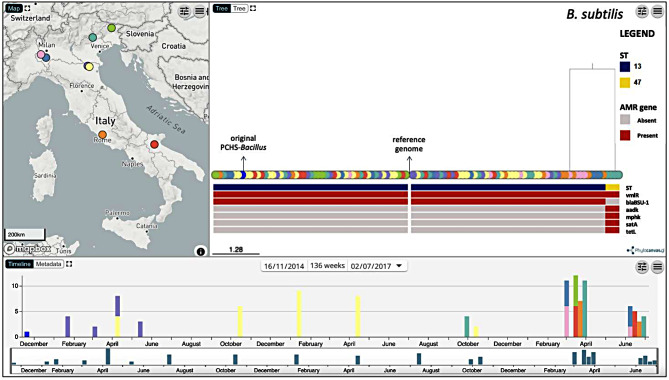
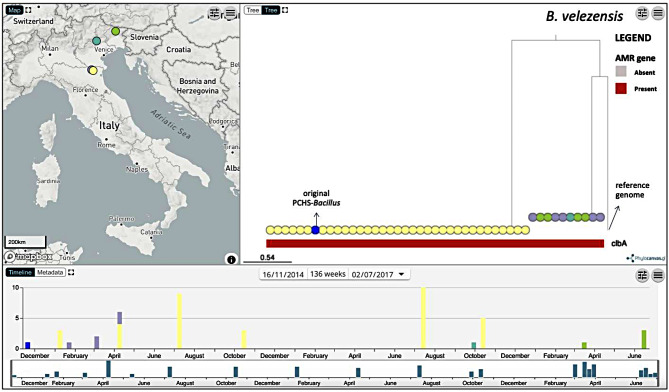
- WGS identified two species in both detergent and hospital environments: *B. subtilis* (105/149, 70.5%) and *B. velezensis* (44/149, 29.5%).
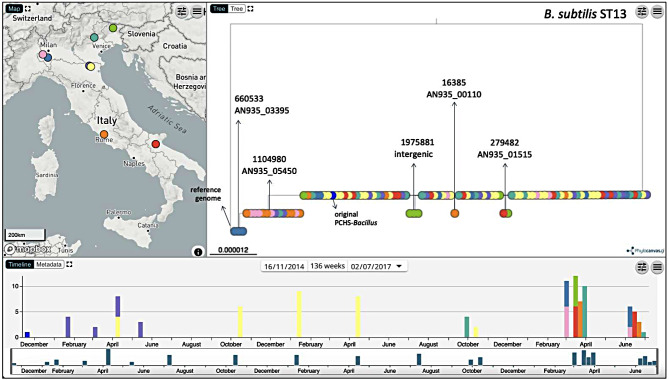
- *B. subtilis* split into two sequence types: ST13 (101/105, 96.2%) and ST47 (4/105, 3.8%); *B. velezensis* also showed two clusters, a major group (34/44, 77.3%) and a minor group (10/44, 22.7%).
- SNP distances were very small within major clusters: *B. subtilis* ST13 genomes differed by a mean of 1 SNP (range 0–2), ST47 genomes were identical (0 SNPs), and genomes within each major *B. velezensis* cluster had 0 SNP differences.
- No virulence genes and no mobile plasmid sequences were detected in any analyzed genome; detected resistance genes were reported as intrinsic to the species, including *blaBSU-1*, *vmlR*, *aadK*, *tetL* in *B. subtilis* and *clbA* in *B. velezensis*.
Methods
- Retrospective multicenter study of Bacillus isolates collected from eight Italian hospitals from 20 January 2015 to 28 June 2017 during routine PCHS sanitation, plus colonies directly isolated from the original PCHS detergent.
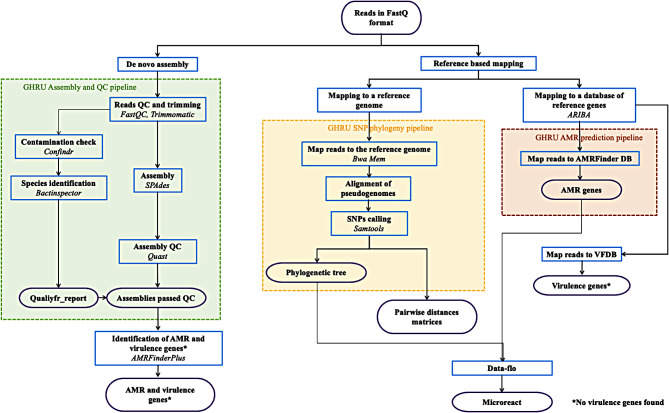
- Isolates were initially identified by PCR and 16S rRNA amplicon sequencing; selected isolates then underwent WGS on Illumina NovaSeq 6000 with assembly/QC, species assignment, MLST, SNP phylogeny, resistome/virulome screening, and plasmid detection using tools including Bactinspector, PathogenWatch, AMRFinderPlus, ARIBA, and Inctyper.
- The main analyses were reference-based SNP phylogenetics and pairwise SNP comparisons, plus gene-content screening for AMR genes, virulence factors, and plasmid replicons.
Limitations
- The paper states that the sample size could be enlarged to include more settings and countries, and that the ~2-year duration may be insufficient to exclude very long-term changes.
- The paper states that phylogenetic conclusions would be stronger with outgroup analysis, which was lacking.
- Evident from the text: the study is limited to Bacillus isolates from one PBS system (PCHS®) in Italian hospitals, so generalizability to other products, species, countries, or non-hospital environments is not established by this dataset.
Model-written summary. Check it against the paper before relying on it.
Integrity signals
Registry
Cites
Statistics
Figures
Verification
Claims the paper makes
20 Valid · 3 Not valid · 10 Not checked · 47 Own results and interpretations
Some cited sources support this claim and some don’t — read each source’s verdict below.
In the paper
“This type of sanitation has been shown to reduce surface pathogens 80% more than chemical disinfectants without selecting resistant strains but rather decreasing the prevalence of preexisting AMR up to 99.9%, resulting in a > 50% decrease in HAI incidence [8, 29–35].”
§ Profiling the resistome and virulome of Bacillus strains used for probiotic-based sanitation: a multicenter WGS analysis > Background
What the sources say
- Supportedcites [8] D’Accolti M, Soffritti I, Bonfante F, Ricciardi W, Mazzacane S, Caselli E. Potential of an eco-sustainable probiotic-cleaning formulation in reducing infectivity of enveloped viruses. Viruses. 2021;13. PMC8617880 34835033 source
The Discussion (page not available) reports that PCHS decreased healthcare-associated infection incidence by 52%, which supports the claimed decrease of more than 50%. The paper presents this as a previously reported finding, not a result of its antiviral experiments. (LLM, conf=0.93)
- Supportedcites [29] D’accolti M, Soffritti I, Mazzacane S, Caselli E. Fighting Amr in the healthcare environment: Microbiome-based sanitation approaches and monitoring tools. Int J Mol Sci. 2019;20. PMC6479322 30934725 source
Section 4 reports that, in an 18-month multicentre pre–post study across six Italian hospitals, PCHS use was associated with a 52% reduction in HAI incidence. That supports the attributed claim of a decrease greater than 50%, though the paper describes an association rather than establishing causation. (LLM, conf=0.94)
- Supportedcites [30] D’accolti M, Soffritti I, Bini F, Mazziga E, Mazzacane S, Caselli E. Pathogen control in the built environment: A Probiotic-Based system as a remedy for the spread of antibiotic resistance. Microorganisms. 2022;10. PMC8876034 35208679 source
Section 4 reports that, in healthcare settings, PCHS use was associated with a 52% reduction in healthcare-associated infection (HAI) incidence. That supports the claimed decrease of more than 50%. (LLM, conf=0.94)
- Disputedcites [31] Caselli E. Hygiene: microbial strategies to reduce pathogens and drug resistance in clinical settings. Microb Biotechnol. 2017;10. PMC5609343 28677216 sourceExperimental — accuracy not yet measured
The paper reports reduced pathogens on PCHS-treated surfaces, not a measured reduction in HAI incidence. In the passage supplied under Abstract (no page given), it says whether that surface reduction leads to fewer HAIs still needs to be verified and describes an ongoing study to test it. (LLM, conf=0.88)
Checked by a reasoning model — may be wrong.
- Not checked — no full text of the sourcecites [32] Caselli E, Antonioli P, Mazzacane S. Safety of probiotics used for hospital environmental sanitation. J Hosp Infect. 2016;94. 27436618 source
- Supportedcites [33] Caselli E, Arnoldo L, Rognoni C, D’Accolti M, Soffritti I, Lanzoni L et al. Impact of a probiotic-based hospital sanitation on antimicrobial resistance and HAI-associated antimicrobial consumption and costs: A multicenter study. Infect Drug Resist. 2019;12. PMC6398408 30881055 source
The Discussion (page not provided) reports a 52% reduction in the number of patients with at least one HAI and describes a significant drop in HAI incidence during the PCHS phase. This supports the cited claim of a decrease greater than 50%. (LLM, conf=0.91)
- Partly supportedcites [34] Caselli E, Brusaferro S, Coccagna M, Arnoldo L, Berloco F, Antonioli P et al. Reducing healthcare-associated infections incidence by a probiotic-based sanitation system: A multicentre, prospective, intervention study. PLoS ONE. 2018;13. PMC6042698 30001345 sourceExperimental — accuracy not yet measured
The Results (Impact of sanitation on HAI incidence; page unavailable) report a fall from 4.8% before PCHS to 2.3% during PCHS—just over 50%. The Discussion describes PCHS as associated with the reduction in the studied hospital wards, so the claim’s unqualified causal wording goes beyond the paper’s conclusion. (LLM, conf=0.84)
- Partly supportedcites [35] Caselli E, D’Accolti M, Vandini A, Lanzoni L, Camerada MT, Coccagna M et al. Impact of a probiotic-based cleaning intervention on the microbiota ecosystem of the hospital surfaces: focus on the resistome remodulation. PLoS ONE. 2016;11. PMC4757022 26886448 sourceExperimental — accuracy not yet measured
The Discussion (page unavailable) speculates that the observed decrease in surface pathogens might be associated with fewer HAI episodes; it does not report a measured reduction in HAI incidence. The Results (page unavailable) note six patients with signs of HAI among 159 hospitalized during the study, but give no comparison establishing the claimed >50% decrease. (LLM, conf=0.88)
boostedstates a cause- Asserted: passes — The authors put it forward as true.
- Checkable: passes — It can be checked against evidence.
- Load-bearing: passes — The paper’s conclusions depend on it.
- Based: passes — The paper gives a reason why it holds.
- Supported
Some cited sources support this claim and some don’t — read each source’s verdict below.
In the paper
“Similar results were obtained when other PBS formulations, including Bacillus probiotics, were used, revealing their generally greater effectiveness in controlling nosocomial pathogens and AMR [37] than disinfectants or other detergents [38].”
§ Profiling the resistome and virulome of Bacillus strains used for probiotic-based sanitation: a multicenter WGS analysis > Background
What the sources say
- Partly supportedcites [37] Neidhöfer C, Rathore K, Parčina M, Sieber MA. ESKAPEE pathogen biofilm control on surfaces with probiotic lactobacillaceae and Bacillus species. Antibiotics. 2023;12:871. 37237774 PMC10215598 sourceExperimental — accuracy not yet measured
The Introduction and Conclusions (pages unavailable) report that probiotic cleaning formulations, including those using Bacillus species, may suppress hospital pathogens and potentially reduce AMR-related risks. They do not establish that these formulations are generally more effective; the Conclusions say the evidence does not permit a conclusive assessment of efficacy on hospital surfaces. The comparison with disinfectants or detergents is attached to a different citation, [38]. (LLM, conf=0.88)
- Disputedcites [38] Leistner R, Kohlmorgen B, Brodzinski A, Schwab F, Lemke E, Zakonsky G, et al. Environmental cleaning to prevent hospital-acquired infections on non-intensive care units: a pragmatic, single-centre, cluster randomized controlled, crossover trial comparing soap-based, disinfection and probiotic cleaning. EClinicalMedicine. 2023;59:101958. 37089619 PMC10113752 sourceExperimental — accuracy not yet measured
The Discussion (page not provided) says this trial found similar results for probiotic cleaning and the other two strategies, especially disinfection, and no overall significant effect on multidrug-resistant-organism infections. Although it mentions earlier studies showing reductions in surface pathogens or resistance markers, it does not find that probiotic cleaning is generally more effective than disinfectants or detergents. (LLM, conf=0.88)
Checked by a reasoning model — may be wrong.
plainstates a cause- Asserted: passes — The authors put it forward as true.
- Checkable: passes — It can be checked against evidence.
- Load-bearing: unclear — It is unclear whether the paper’s conclusions depend on it.
- Based: passes — The paper gives a reason why it holds.
- Partly supported
The cited sources support only part of this claim — read each source’s verdict below.
In the paper
“While disinfectants are rapidly effective, they have several important limitations, including temporary action [7, 8], high environmental impact, and a tendency to increase the degree of antimicrobial resistance (AMR) in potential human pathogens [9].”
§ Profiling the resistome and virulome of Bacillus strains used for probiotic-based sanitation: a multicenter WGS analysis > Background
What the sources say
- Partly supportedcites [9] Kampf G. Biocidal agents used for disinfection can enhance antibiotic resistance in Gram-Negative species. Antibiotics. 2018;7:110. 30558235 PMC6316403 sourceExperimental — accuracy not yet measured
The Abstract reports that several disinfectant agents can increase antibiotic resistance in Gram-negative species, including pathogens relevant to healthcare-associated infections. But the review concerns sublethal exposure and also reports no described cross-resistance for seven agents; it does not establish a general tendency for chemical disinfectants as a whole. (LLM, conf=0.86)
plainstates a possible cause- Asserted: passes — The authors put it forward as true.
- Checkable: passes — It can be checked against evidence.
- Load-bearing: passes — The paper’s conclusions depend on it.
- Based: passes — The paper gives a reason why it holds.
- Partly supported
The cited sources support only part of this claim — read each source’s verdict below.
In the paper
“This type of sanitation has been shown to reduce surface pathogens 80% more than chemical disinfectants without selecting resistant strains but rather decreasing the prevalence of preexisting AMR up to 99.9%, resulting in a > 50% decrease in HAI incidence [8, 29–35].”
§ Profiling the resistome and virulome of Bacillus strains used for probiotic-based sanitation: a multicenter WGS analysis > Background
What the sources say
- Supportedcites [8] D’Accolti M, Soffritti I, Bonfante F, Ricciardi W, Mazzacane S, Caselli E. Potential of an eco-sustainable probiotic-cleaning formulation in reducing infectivity of enveloped viruses. Viruses. 2021;13. PMC8617880 34835033 source
The Discussion (page not available) explicitly reports that PCHS decreased pathogens 80% more than chemical disinfectants. It presents this as a finding from earlier work, which supports the citing sentence without making it a result of this paper’s virus experiments. (LLM, conf=0.95)
- Partly supportedcites [29] D’accolti M, Soffritti I, Mazzacane S, Caselli E. Fighting Amr in the healthcare environment: Microbiome-based sanitation approaches and monitoring tools. Int J Mol Sci. 2019;20. PMC6479322 30934725 sourceExperimental — accuracy not yet measured
Section 4 (page unavailable) reports that PCHS reduced surface pathogen contamination by up to 90% more than conventional disinfectants, but it does not report the claimed 80% figure. The same section supports the absence of resistant-strain selection and reports a 52% reduction in HAI incidence; it reports up to 99% reduction in a methicillin-resistance marker, not 99.9% reduction in preexisting AMR. (LLM, conf=0.88)
- Supportedcites [30] D’accolti M, Soffritti I, Bini F, Mazziga E, Mazzacane S, Caselli E. Pathogen control in the built environment: A Probiotic-Based system as a remedy for the spread of antibiotic resistance. Microorganisms. 2022;10. PMC8876034 35208679 source
Section 4 states that studies in healthcare settings found PCHS abated major nosocomial pathogens around 80% more than chemical disinfection. This supports the attributed comparison for surface pathogens in that setting. (LLM, conf=0.94)
- Partly supportedcites [31] Caselli E. Hygiene: microbial strategies to reduce pathogens and drug resistance in clinical settings. Microb Biotechnol. 2017;10. PMC5609343 28677216 sourceExperimental — accuracy not yet measured
The Abstract reports that PCHS reduced surface pathogens more than conventional disinfectants, but gives the magnitude as up to 90% more, not 80% more. The comparison is supported; the specific percentage attributed to this source is not. (LLM, conf=0.87)
- Not checked — no full text of the sourcecites [32] Caselli E, Antonioli P, Mazzacane S. Safety of probiotics used for hospital environmental sanitation. J Hosp Infect. 2016;94. 27436618 source
- Supportedcites [33] Caselli E, Arnoldo L, Rognoni C, D’Accolti M, Soffritti I, Lanzoni L et al. Impact of a probiotic-based hospital sanitation on antimicrobial resistance and HAI-associated antimicrobial consumption and costs: A multicenter study. Infect Drug Resist. 2019;12. PMC6398408 30881055 source
The Introduction reports that PCHS reduced surface pathogens by up to 90% more than conventional sanitizers. The Results report a mean 83% decrease in detected pathogens compared with the pre-intervention phase, supporting the citing sentence’s approximate 80% figure. (LLM, conf=0.89)
- Partly supportedcites [34] Caselli E, Brusaferro S, Coccagna M, Arnoldo L, Berloco F, Antonioli P et al. Reducing healthcare-associated infections incidence by a probiotic-based sanitation system: A multicentre, prospective, intervention study. PLoS ONE. 2018;13. PMC6042698 30001345 sourceExperimental — accuracy not yet measured
The Results section (Impact of sanitation on hospital surface microbiota; page not provided) reports a mean 83% decrease in surface pathogen load after hospitals replaced chemical-based cleaning with PCHS. That supports an approximately 80% lower load during PCHS use, but not the claim that PCHS reduces pathogens 80% more than chemical disinfectants do. (LLM, conf=0.84)
- Partly supportedcites [35] Caselli E, D’Accolti M, Vandini A, Lanzoni L, Camerada MT, Coccagna M et al. Impact of a probiotic-based cleaning intervention on the microbiota ecosystem of the hospital surfaces: focus on the resistome remodulation. PLoS ONE. 2016;11. PMC4757022 26886448 sourceExperimental — accuracy not yet measured
The Results section reports that surface pathogen counts fell by up to 98% after PCHS replaced conventional disinfectant cleaning, although Enterobacteriaceae did not decline significantly. It does not report that PCHS reduced pathogens 80% more than chemical disinfectants; that figure misstates the measured comparison. (LLM, conf=0.88)
boostedstates a cause- Asserted: passes — The authors put it forward as true.
- Checkable: passes — It can be checked against evidence.
- Load-bearing: unclear — It is unclear whether the paper’s conclusions depend on it.
- Based: passes — The paper gives a reason why it holds.
- Supported
The cited sources support only part of this claim — read each source’s verdict below.
In the paper
“Most Bacillus species, including the B. subtilis group, B. pumilus, B. megaterium, B. velezensis, and other Bacillus species, meet these requirements for QPS [43].”
§ Profiling the resistome and virulome of Bacillus strains used for probiotic-based sanitation: a multicenter WGS analysis > Background
What the sources say
- Partly supportedcites [43] EFSA BIOHAZ Panel. Statement on the update of the list of qps-recommended biological agents intentionally added to food or feed as notified to EFSA 15: suitability of taxonomic units notified to EFSA until September 2021. https://efsa.onlinelibrary.wiley.com/doi/epdf/10.2903/j.efsa.2022.7045 PMC8792879 35126735 sourceExperimental — accuracy not yet measured
Table 3 in ‘Taxonomic changes in bacilli included in the QPS list’ lists B. subtilis, B. pumilus, B. megaterium (now Priestia megaterium), and B. velezensis among QPS-listed species. It does not establish that most Bacillus species meet QPS requirements, and the table notes qualifications for some listed species. Page numbers are unavailable in our copy. (LLM, conf=0.86)
plain- Asserted: passes — The authors put it forward as true.
- Checkable: passes — It can be checked against evidence.
- Load-bearing: unclear — It is unclear whether the paper’s conclusions depend on it.
- Based: passes — The paper gives a reason why it holds.
- Partly supported
39 more claims · 6 with their cited sources checked
Create a free account to see all 80 claims and every source verdict.
- Probably not a substantial claim. 11
- It may state two separate claims as one. 28
- Borderline: one of the tests for a substantial claim is unclear. 1
Citations
Cites
Trimmomatic: a flexible trimmer for Illumina sequence data
Bolger, A. M., Lohse, M., & Usadel, B. (2014) · Bioinformatics · doi:10.1093/bioinformatics/btu170 · Cited by 65,548 · cited 1×
“39 [51].”
The Sequence Alignment/Map format and SAMtools
Li, H., Handsaker, B., Wysoker, A., Fennell, T., Ruan, J., Homer, N., Marth, G., Abecasis, G., Durbin, R., & 1000 Genome Project Data Processing Subgroup (2009) · Bioinformatics · doi:10.1093/bioinformatics/btp352 · Cited by 62,041 · cited 1×
“4.1 were used to identify SNPs [64, 65], which were subsequently used to generate maximum likelihood phylogenetic trees with 1000 boot-strap via IQ-Tree v1.”
InfluentialSPAdes: A New Genome Assembly Algorithm and Its Applications to Single-Cell Sequencing
Bankevich, A., Nurk, S., Antipov, D., Gurevich, A. A., Dvorkin, M., Kulikov, A. S., Lesin, V. M., Nikolenko, S. I., Pham, S., Prjibelski, A. D., et al. (2012) · Journal of Computational Biology · doi:10.1089/cmb.2012.0021 · Cited by 25,987 · cited 1×
“15.3 for the assembly [55], and then Quast v5.”
InfluentialIQ-TREE 2: New Models and Efficient Methods for Phylogenetic Inference in the Genomic Era
Minh, B. Q., Schmidt, H. A., Chernomor, O., Schrempf, D., Woodhams, M. D., von Haeseler, A., & Lanfear, R. (2020) · Molecular Biology and Evolution · doi:10.1093/molbev/msaa015 · Cited by 16,873 · cited 1×
“6.8 [66].”
InfluentialBundesgesundheitsblatt - Gesundheitsforschung - Gesundheitsschutz
(2013) · Bundesgesundheitsblatt - Gesundheitsforschung - Gesundheitsschutz · doi:10.1007/103.1437-1588 · Cited by 11,796
QUAST: quality assessment tool for genome assemblies
Gurevich, A., Saveliev, V., Vyahhi, N., & Tesler, G. (2013) · Bioinformatics · doi:10.1093/bioinformatics/btt086 · Cited by 11,172 · cited 1×
“0.2 was used to summarize the assembly metrics of each genome [56].”
InfluentialMultiQC: summarize analysis results for multiple tools and samples in a single report
Ewels, P., Magnusson, M., Lundin, S., & Käller, M. (2016) · Bioinformatics · doi:10.1093/bioinformatics/btw354 · Cited by 10,143 · cited 1×
“4.6 to generate a report with the results of all the assembly pipeline steps for all the genomes [57, 58].”
InfluentialAligning sequence reads, clone sequences and assembly contigs with BWA-MEM
Li, H. (2013) · DROPS (Schloss Dagstuhl – Leibniz Center for Informatics) · doi:10.48550/arxiv.1303.3997 · Cited by 5,159 · cited 1×
“7.17 [61].”
InfluentialCarattoli, A., Zankari, E., García-Fernández, A., Voldby Larsen, M., Lund, O., Villa, L., Møller Aarestrup, F., & Hasman, H. (2014) · Antimicrobial Agents and Chemotherapy · doi:10.1128/aac.02412-14 · Cited by 4,877 · cited 1×
“0.1 to identify contigs containing plasmid Inc. genes [67, 68].”
InfluentialNextflow enables reproducible computational workflows
Di Tommaso, P., Chatzou, M., Floden, E. W., Barja, P. P., Palumbo, E., & Notredame, C. (2017) · Nature Biotechnology · doi:10.1038/nbt.3820 · Cited by 4,001
Mash: fast genome and metagenome distance estimation using MinHash
Ondov, B. D., Treangen, T. J., Melsted, P., Mallonee, A. B., Bergman, N. H., Koren, S., & Phillippy, A. M. (2016) · Genome biology · doi:10.1186/s13059-016-0997-x · Cited by 3,373 · cited 1×
“1 [50], and subsequently, the reads were trimmed to remove the adapters via Trimmomatic v0.”
Alcock, B. P., Huynh, W., Chalil, R., Smith, K. W., Raphenya, A. R., Wlodarski, M. A., Edalatmand, A., Petkau, A., Syed, S. A., Tsang, K. K., et al. (2023) · Nucleic Acids Research · doi:10.1093/nar/gkac920 · Cited by 2,441
Drake, J. W., Charlesworth, B., Charlesworth, D., & Crow, J. F. (1998) · Genetics · doi:10.1093/genetics/148.4.1667 · Cited by 1,932
Feldgarden, M., Brover, V., Gonzalez-Escalona, N., Frye, J. G., Haendiges, J., Haft, D. H., Hoffmann, M., Pettengill, J. B., Prasad, A. B., Tillman, G. E., et al. (2021) · Scientific Reports · doi:10.1038/s41598-021-91456-0 · Cited by 1,653 · cited 1×
“14.4 tool, which instead allows sequence reads to be mapped onto several reference gene databases [69, 70].”
InfluentialSNP-sites: rapid efficient extraction of SNPs from multi-FASTA alignments
Page, A. J., Taylor, B., Delaney, A. J., Soares, J., Seemann, T., Keane, J. A., & Harris, S. R. (2016) · Microbial Genomics · doi:10.1099/mgen.0.000056 · Cited by 1,392 · cited 1×
“4.1 were used to identify SNPs [64, 65], which were subsequently used to generate maximum likelihood phylogenetic trees with 1000 boot-strap via IQ-Tree v1.”
InfluentialResistance Plasmid Families in Enterobacteriaceae
Carattoli, A. (2009) · Antimicrobial Agents and Chemotherapy · doi:10.1128/aac.01707-08 · Cited by 1,229 · cited 1×
“Finally, since the presence of mobile plasmids is associated with AMR and has the general ability to mobilize and exchange genetic material between bacterial cells [68, 102], both original PCHS-Bacillus and PCHS- Bacillus isolates were analyzed for this aspect.”
Defining and combating antibiotic resistance from One Health and Global Health perspectives
Hernando-Amado, S., Coque, T. M., Baquero, F., & Martínez, J. L. (2019) · Nature Microbiology · doi:10.1038/s41564-019-0503-9 · Cited by 1,224 · cited 1×
“…measures to fight AMR, introducing policies to reduce the general use of antibiotics in healthcare and nonhealthcare environments, according to the “One Health” approach [23], supporting surveillance programs, and introducing procedures to prevent the spread of resistant microorganisms [24, 25].”
Plasmids carrying antimicrobial resistance genes in Enterobacteriaceae
Rozwandowicz, M., Brouwer, M. S. M., Fischer, J., Wagenaar, J. A., Gonzalez-Zorn, B., Guerra, B., Mevius, D. J., & Hordijk, J. (2018) · Journal of Antimicrobial Chemotherapy · doi:10.1093/jac/dkx488 · Cited by 1,012 · cited 2×
“0.1 to identify contigs containing plasmid Inc. genes [67, 68].”
InfluentialUpdate on acquired tetracycline resistance genes
Roberts, M. C. (2005) · FEMS Microbiology Letters · doi:10.1016/j.femsle.2005.02.034 · Cited by 1,010 · cited 1×
“The four B. subtilis ST47 genomes also harbored vmlR but lacked blaBSU-1 , which instead carried the aadK gene, conferring resistance to aminoglycosides [81], and the tetL gene, which confers tetracycline resistance [82].”
Bacillus As Potential Probiotics: Status, Concerns, and Future Perspectives
Elshaghabee, F. M. F., Rokana, N., Gulhane, R. D., Sharma, C., & Panwar, H. (2017) · Frontiers in Microbiology · doi:10.3389/fmicb.2017.01490 · Cited by 940
Cassini, A., Plachouras, D., Eckmanns, T., Abu Sin, M., Blank, H.-P., Ducomble, T., Haller, S., Harder, T., Klingeberg, A., Sixtensson, M., et al. (2016) · PLOS Medicine · doi:10.1371/journal.pmed.1002150 · Cited by 929
Longitudinal analysis of microbial interaction between humans and the indoor environment
Lax, S., Smith, D. P., Hampton-Marcell, J., Owens, S. M., Handley, K. M., Scott, N. M., Gibbons, S. M., Larsen, P., Shogan, B. D., Weiss, S., et al. (2014) · Science · doi:10.1126/science.1254529 · Cited by 917 · cited 1×
“The control of microbial bioburden in the hospital environment is crucial to prevent the risk of acquiring HAIs, which represents a global concern [3, 86].”
The genome sequence of Bacillus anthracis Ames and comparison to closely related bacteria
Read, T. D., Peterson, S. N., Tourasse, N., Baillie, L. W., Paulsen, I. T., Nelson, K. E., Tettelin, H., Fouts, D. E., Eisen, J. A., Gill, S. R., et al. (2003) · Nature · doi:10.1038/nature01586 · Cited by 825 · cited 2×
“14.4 tools produced different results regarding two further resistance genes, mphK , encoding resistance to macrolides through the expression of a macrolide phosphotransfer-ase [84], and satA , encoding a streptothricin acetyltransferase conferring resistance to streptothricin antibiotics [85].”
InfluentialMicroreact: visualizing and sharing data for genomic epidemiology and phylogeography
Argimón, S., Abudahab, K., Goater, R. J. E., Fedosejev, A., Bhai, J., Glasner, C., Feil, E. J., Holden, M. T. G., Yeats, C. A., Grundmann, H., et al. (2016) · Microbial Genomics · doi:10.1099/mgen.0.000093 · Cited by 732 · cited 1×
“The merged data were uploaded into the visualization tool Microreact [77] along with the phylogenetic trees for B. subtilis and B. velezensis .”
Self-citationEnvironmental antimicrobial resistance and its drivers: a potential threat to public health
Samreen, Ahmad, I., Malak, H. A., & Abulreesh, H. H. (2021) · Journal of Global Antimicrobial Resistance · doi:10.1016/j.jgar.2021.08.001 · Cited by 727
Dancer, S. J. (2014) · Clinical Microbiology Reviews · doi:10.1128/cmr.00020-14 · Cited by 679 · cited 1×
“Persistent microbial contamination of the hospital environment has been associated with an increased risk of acquiring healthcare-associated infections (HAIs), which represent an increasing global concern [1, 2].”
ARIBA: rapid antimicrobial resistance genotyping directly from sequencing reads
Hunt, M., Mather, A. E., Sánchez-Busó, L., Page, A. J., Parkhill, J., Keane, J. A., & Harris, S. R. (2017) · Microbial Genomics · doi:10.1099/mgen.0.000131 · Cited by 660 · cited 1×
“14.4 tool, which instead allows sequence reads to be mapped onto several reference gene databases [69, 70].”
InfluentialThe role of environmental cleaning in the control of hospital-acquired infection
Dancer, S. J. (2009) · Journal of Hospital Infection · doi:10.1016/j.jhin.2009.03.030 · Cited by 580 · cited 1×
“Persistent microbial contamination of the hospital environment has been associated with an increased risk of acquiring healthcare-associated infections (HAIs), which represent an increasing global concern [1, 2].”
Bacillus velezensis: A Valuable Member of Bioactive Molecules within Plant Microbiomes
Rabbee, M. F., Ali, M. S., Choi, J., Hwang, B. S., Jeong, S. C., & Baek, K.-H. (2019) · Molecules · doi:10.3390/molecules24061046 · Cited by 550 · cited 1×
“Since B. pumilus and B. velezensis show a very high degree of homology, as reported in studies regarding Bacillus phylogenetic tree reorganization [93], these results highlight the importance of using deep sequencing procedures to obtain precise taxonomic allocation of Bacillus species.”
Increased antimicrobial resistance during the COVID-19 pandemic
Lai, C.-C., Chen, S.-Y., Ko, W.-C., & Hsueh, P.-R. (2021) · International Journal of Antimicrobial Agents · doi:10.1016/j.ijantimicag.2021.106324 · Cited by 436
Bacillus strains as human probiotics: characterization, safety, microbiome, and probiotic carrier
Lee, N.-K., Kim, W.-S., & Paik, H.-D. (2019) · Food Science and Biotechnology · doi:10.1007/s10068-019-00691-9 · Cited by 382
Tackling antimicrobial resistance in the COVID-19 pandemic
Getahun, H., Smith, I., Trivedi, K., Paulin, S., & Balkhy, H. H. (2020) · Bulletin of the World Health Organization · doi:10.2471/blt.20.268573 · Cited by 325 · cited 2×
“Consistent with this, during the COVID-19 pandemic, when chemical disinfection was significantly increased in both sanitary and non-sanitary settings, a significant increase in AMR was recorded [5, 10, 11, 21].”
Wand, M. E., Bock, L. J., Bonney, L. C., & Sutton, J. M. (2017) · Antimicrobial Agents and Chemotherapy · doi:10.1128/aac.01162-16 · Cited by 313 · cited 1×
“Indeed, AMR has become one of the major threats to human health, emerging and spreading, particularly in hospital environments, as a result of the selective pressures exerted by the widespread use of disinfectants and antibiotics in these settings [16].”
Biocidal Agents Used for Disinfection Can Enhance Antibiotic Resistance in Gram-Negative Species
Kampf, G. (2018) · Antibiotics · doi:10.3390/antibiotics7040110 · Cited by 230 · cited 1×
“While disinfectants are rapidly effective, they have several important limitations, including temporary action [7, 8], high environmental impact, and a tendency to increase the degree of antimicrobial resistance (AMR) in potential human pathogens [9].”
(BIOHAZ), E. P. O. B. H., Koutsoumanis, K., Allende, A., Alvarez‐Ordóñez, A., Bolton, D., Bover‐Cid, S., Chemaly, M., Davies, R., De Cesare, A., Hilbert, F., et al. (2020) · EFSA Journal · doi:10.2903/j.efsa.2020.6174 · Cited by 169
Low, A., Koziol, A. G., Manninger, P., Blais, B. W., & Carrillo, C. D. (2019) · PeerJ · doi:10.7717/peerj.6995 · Cited by 166
Excessive use of disinfectants against COVID-19 posing a potential threat to living beings
Ghafoor, D., Khan, Z., Khan, A., Ualiyeva, D., & Zaman, N. (2021) · Current Research in Toxicology · doi:10.1016/j.crtox.2021.02.008 · Cited by 151 · cited 4×
“The phenomenon of cross-resistance between disin-fectants and antimicrobials has been reported for several disinfectants and is associated with a further increase in AMR during the pandemic period [5, 10, 11].”
InfluentialArgimón, S., Yeats, C. A., Goater, R. J., Abudahab, K., Taylor, B., Underwood, A., Sánchez-Busó, L., Wong, V. K., Dyson, Z. A., Nair, S., et al. (2021) · Nature Communications · doi:10.1038/s41467-021-23091-2 · Cited by 146
Self-citation(BIOHAZ), E. P. O. B. H., Koutsoumanis, K., Allende, A., Alvarez‐Ordóñez, A., Bolton, D., Bover‐Cid, S., Chemaly, M., Davies, R., De Cesare, A., Hilbert, F., et al. (2022) · EFSA Journal · doi:10.2903/j.efsa.2022.7045 · Cited by 143
Hard Surface Biocontrol in Hospitals Using Microbial-Based Cleaning Products
Vandini, A., Temmerman, R., Frabetti, A., Caselli, E., Antonioli, P., Balboni, P. G., Platano, D., Branchini, A., & Mazzacane, S. (2014) · PLoS ONE · doi:10.1371/journal.pone.0108598 · Cited by 132 · cited 3×
“As a part of PCHS studies, each enrolled HS was monitored by performing regular microbial environmental sampling by collecting surface samples seven hours after sanitation [7, 34, 35].”
Self-citation(EFSA), E. F. S. A. (2005) · EFSA Journal · doi:10.2903/j.efsa.2005.226 · Cited by 122
Caselli, E., D’Accolti, M., Vandini, A., Lanzoni, L., Camerada, M. T., Coccagna, M., Branchini, A., Antonioli, P., Balboni, P. G., Di Luca, D., et al. (2016) · PLOS ONE · doi:10.1371/journal.pone.0148857 · Cited by 110 · cited 10×
“Each Bacillus isolate, either from PCHS detergent or from the hospital environment, was initially identified via PCR and amplicon sequencing, as previously described [35].”
InfluentialSelf-citationMassive use of disinfectants against COVID-19 poses potential risks to urban wildlife
Nabi, G., Wang, Y., Hao, Y., Khan, S., Wu, Y., & Li, D. (2020) · Environmental Research · doi:10.1016/j.envres.2020.109916 · Cited by 110 · cited 1×
“The control of hospital bioburden, which is essential for preventing HAI risk, has been addressed through the use of chemical disinfectants, the use of which has further increased during the COVID-19 pandemic in an attempt to prevent SARS-CoV‐2 transmission through contaminated surfaces [5, 6].”
PRO: The COVID-19 pandemic will result in increased antimicrobial resistance rates
Clancy, C. J., Buehrle, D. J., & Nguyen, M. H. (2020) · JAC-Antimicrobial Resistance · doi:10.1093/jacamr/dlaa049 · Cited by 102 · cited 2×
“The phenomenon of cross-resistance between disin-fectants and antimicrobials has been reported for several disinfectants and is associated with a further increase in AMR during the pandemic period [5, 10, 11].”
Caselli, E., Brusaferro, S., Coccagna, M., Arnoldo, L., Berloco, F., Antonioli, P., Tarricone, R., Pelissero, G., Nola, S., La Fauci, V., et al. (2018) · PLOS ONE · doi:10.1371/journal.pone.0199616 · Cited by 101
Self-citationDillingham, M. S., Soultanas, P., & Wigley, D. B. (1999) · Nucleic Acids Research · doi:10.1093/nar/27.16.3310 · Cited by 94 · cited 1×
“…helicase that belongs to the UvrD/Rep helicase family with double activity, ssDNA translocation and duplex destabilization; its mutation may thus lead to a loss of protein function, with an inability to hydrolyze ATP and thus to make conformational changes essential for binding to ssDNA [95].”
Isolation and characterization of four types of plasmids from Bacillus subtilis (natto).
Tanaka, T., & Koshikawa, T. (1977) · Journal of Bacteriology · doi:10.1128/jb.131.2.699-701.1977 · Cited by 89 · cited 1×
“Notably, plasmids have been reported in other B. subtilis strains [103], highlighting the differences existing between Bacillus strains even within a single species, and the consequent need to carefully check each strain intended for sanitation purposes since the results regarding some strains are…”
Golnari, M., Bahrami, N., Milanian, Z., Rabbani Khorasgani, M., Asadollahi, M. A., Shafiei, R., & Fatemi, S. S.-A. (2024) · Scientific Reports · doi:10.1038/s41598-024-51823-z · Cited by 86
D’Accolti, M., Soffritti, I., Mazzacane, S., & Caselli, E. (2019) · International Journal of Molecular Sciences · doi:10.3390/ijms20071535 · Cited by 82 · cited 2×
“This type of sanitation has been shown to reduce surface pathogens 80% more than chemical disinfectants without selecting resistant strains but rather decreasing the prevalence of pre-existing AMR up to 99.9%, resulting in a > 50% decrease in HAI incidence [8, 29–35].”
InfluentialSelf-citationThe effect of improved hand hygiene on nosocomial MRSA control
Marimuthu, K., Pittet, D., & Harbarth, S. (2014) · Antimicrobial Resistance and Infection Control · doi:10.1186/2047-2994-3-34 · Cited by 81 · cited 1×
“…measures to fight AMR, introducing policies to reduce the general use of antibiotics in healthcare and nonhealthcare environments, according to the “One Health” approach [23], supporting surveillance programs, and introducing procedures to prevent the spread of resistant microorganisms [24, 25].”
The evolution of substrate discrimination in macrolide antibiotic resistance enzymes
Pawlowski, A. C., Stogios, P. J., Koteva, K., Skarina, T., Evdokimova, E., Savchenko, A., & Wright, G. D. (2018) · Nature Communications · doi:10.1038/s41467-017-02680-0 · Cited by 79 · cited 3×
“…with two different tools (AMRFinderPlus and ARIBA), revealed the presence of the genes blaBSU-1 , vmlR , aadK , and tetL in the B. subtilis genomes, revealing that this species can be resistant to beta-lactams, strep-togramin A/lincosamide, aminoglycosides and tetracycline [79, 80, 83, 84].”
InfluentialCaselli, E., Arnoldo, L., Rognoni, C., D'Accolti, M., Soffritti, I., Lanzoni, L., Bisi, M., Volta, A., Tarricone, R., Brusaferro, S., et al. (2019) · Infection and Drug Resistance · doi:10.2147/idr.s194670 · Cited by 77 · cited 2×
“Total DNA was extracted from microbial pellets by the QIAmp UCP Pathogen Mini Kit (Qiagen, Hilden, Germany) following the manufacturer’s instructions [33, 34].”
Self-citationCason, C., D’Accolti, M., Soffritti, I., Mazzacane, S., Comar, M., & Caselli, E. (2022) · Frontiers in Microbiology · doi:10.3389/fmicb.2022.969863 · Cited by 72 · cited 1×
“Since the control of microbial contamination in health-care settings is an essential practice to prevent HAIs and ensure patient safety [3, 27], several recent studies have focused on the search for new potential long-term sanitation approaches, ideally without worsening earth/water pollution and…”
Self-citationHygiene: microbial strategies to reduce pathogens and drug resistance in clinical settings
Caselli, E. (2017) · Microbial Biotechnology · doi:10.1111/1751-7915.12755 · Cited by 71 · cited 1×
“Bacillus spp. have been used safely for decades in many applications aimed at preserving human, animal, and plant health [28, 31], and studies of microbiological surveillance during their use as sanitizers revealed the absence of Bacillus -induced infections and Bacillus -positive clinical samples…”
Self-citationDetection of hidden antibiotic resistance through real-time genomics
Sauerborn, E., Pinzón, N. E. C., Reska, T., Perlas, A., Atum, S. V. F., Goldman, N., Wantia, N., da Costa, C. P., Foster-Nyarko, E., & Urban, L. (2024) · Nature Communications · doi:10.1038/s41467-024-49851-4 · Cited by 63 · cited 1×
“The statistical analysis of the data obtained for both phylogenetic and resistance/virulence analyses was carried out using quality metrics implemented in each of the software packages used, similar to what previously reported [74, 75].”
Nagaraj, G., Shamanna, V., Govindan, V., Rose, S., Sravani, D., Akshata, K. P., Shincy, M. R., Venkatesha, V., Abrudan, M. I., Argimón, S., et al. (2021) · Clinical Infectious Diseases · doi:10.1093/cid/ciab767 · Cited by 62
Self-citationKRINKO (2022) · Bundesgesundheitsblatt - Gesundheitsforschung - Gesundheitsschutz · doi:10.1007/s00103-022-03576-1 · Cited by 62
Gu, H.-J., Sun, Q.-L., Luo, J.-C., Zhang, J., & Sun, L. (2019) · Frontiers in Cellular and Infection Microbiology · doi:10.3389/fcimb.2019.00183 · Cited by 57
The Order Bacillales Hosts Functional Homologs of the Worrisome cfr Antibiotic Resistance Gene
Hansen, L. H., Planellas, M. H., Long, K. S., & Vester, B. (2012) · Antimicrobial Agents and Chemotherapy · doi:10.1128/aac.00673-12 · Cited by 53 · cited 3×
“In contrast, all the B. velezensis genomes were found to contain a unique intrinsic ARG, the clbA gene, which confers resistance to streptogramins chloramphenicol, and clindamycin [83].”
Klassert, T. E., Zubiria-Barrera, C., Neubert, R., Stock, M., Schneegans, A., López, M., Driesch, D., Zakonsky, G., Gastmeier, P., Slevogt, H., et al. (2022) · Clinical Microbiology and Infection · doi:10.1016/j.cmi.2022.02.032 · Cited by 51 · cited 1×
“…on the use of probiotics as sanitizers (probiotic-based sanitation, PBS) were recently proposed on the basis of studies showing the ability of PBS to provide stable decreases in pathogens and AMR, accompanied in most cases by a significant reduction in associated HAIs [29, 33, 34, 37, 38, 87–92].”
Leistner, R., Kohlmorgen, B., Brodzinski, A., Schwab, F., Lemke, E., Zakonsky, G., & Gastmeier, P. (2023) · eClinicalMedicine · doi:10.1016/j.eclinm.2023.101958 · Cited by 48 · cited 2×
“Similar results were obtained when other PBS formulations, including Bacillus probiotics, were used, revealing their generally greater effectiveness in controlling nosocomial pathogens and AMR [37] than disinfectants or other detergents [38].”
Interspecies Bacterial Comjugation by Plasmids from Marine Environments Visualized by gfp Expression
Dahlberg, C., Bergstrom, M., Andreasen, M., Christensen, B. B., Molin, S., & Hermansson, M. (1998) · Molecular Biology and Evolution · doi:10.1093/oxfordjournals.molbev.a025935 · Cited by 45 · cited 1×
“…absence of any new acquired resistance/virulence genes in the totality of PCHS-Bacillus isolates, unless their continuous contact with pathogens, supports the conclusion that HGT events are unlikely on colonized surfaces, although inter-species HGT has been reported in natural environments [106].”
Obana, N., Takada, H., Crowe-McAuliffe, C., Iwamoto, M., Egorov, A. A., Wu, K. J. Y., Chiba, S., Murina, V., Paternoga, H., Tresco, B. I. C., et al. (2023) · Nucleic Acids Research · doi:10.1093/nar/gkad193 · Cited by 42 · cited 2×
“…with two different tools (AMRFinderPlus and ARIBA), revealed the presence of the genes blaBSU-1 , vmlR , aadK , and tetL in the B. subtilis genomes, revealing that this species can be resistant to beta-lactams, strep-togramin A/lincosamide, aminoglycosides and tetracycline [79, 80, 83, 84].”
Safety of probiotics used for hospital environmental sanitation
Caselli, E., Antonioli, P., & Mazzacane, S. (2016) · Journal of Hospital Infection · doi:10.1016/j.jhin.2016.06.021 · Cited by 41 · cited 3×
“…and studies of microbiological surveillance during their use as sanitizers revealed the absence of Bacillus -induced infections and Bacillus -positive clinical samples in more than 30,000 tests, corresponding to approximately 90,000 hospitalized patients, in the structures generated via PCHS [32].”
Self-citationD’Accolti, M., Soffritti, I., Bini, F., Mazziga, E., Mazzacane, S., & Caselli, E. (2022) · Microorganisms · doi:10.3390/microorganisms10020225 · Cited by 39
Self-citationSurfactin Facilitates Horizontal Gene Transfer in Bacillus subtilis
Danevčič, T., Dragoš, A., Spacapan, M., Stefanic, P., Dogsa, I., & Mandic-Mulec, I. (2021) · Frontiers in Microbiology · doi:10.3389/fmicb.2021.657407 · Cited by 35
Kin discrimination promotes horizontal gene transfer between unrelated strains in Bacillus subtilis
Stefanic, P., Belcijan, K., Kraigher, B., Kostanjšek, R., Nesme, J., Madsen, J. S., Kovac, J., Sørensen, S. J., Vos, M., & Mandic-Mulec, I. (2021) · Nature Communications · doi:10.1038/s41467-021-23685-w · Cited by 33 · cited 1×
“Indeed, Bacillus HGT can also occur via other mechanisms, including transformation-mediated processes [96, 104, 105].”
Complete genome analysis of Bacillus velezensis TS5 and its potential as a probiotic strain in mice
Chen, B., Zhou, Y., Duan, L., Gong, X., Liu, X., Pan, K., Zeng, D., Ni, X., & Zeng, Y. (2023) · Frontiers in Microbiology · doi:10.3389/fmicb.2023.1322910 · Cited by 32 · cited 1×
“…that can be found in both B. subtilis and B. velezensis species, such as capBCA (encoding membrane-associated enzymes facilitating systemic invasion) and hemolysin A ( hlyA , a pore-forming toxin that possesses hemolytic, cytotoxic, dermonecrotic, and vascular permeability activities) [100, 101].”
Slomka, S., Françoise, I., Hornung, G., Asraf, O., Biniashvili, T., Pilpel, Y., & Dahan, O. (2020) · Genetics · doi:10.1534/genetics.120.303401 · Cited by 31 · cited 2×
“Considering the period of sample collection and the natural mutation rates of Bacillus [96, 97], the absence of substantial genetic variability among the genomes belonging to the same cluster was expected.”
Soffritti, I., D'Accolti, M., Cason, C., Lanzoni, L., Bisi, M., Volta, A., Campisciano, G., Mazzacane, S., Bini, F., Mazziga, E., et al. (2022) · Infection and Drug Resistance · doi:10.2147/idr.s356740 · Cited by 30 · cited 1×
“PCHS has also been shown to provide long-lasting decontamination from enveloped viruses in vitro [8], and its usage was tested during the COVID-19 pandemic, showing significant effectiveness against SARS-CoV-2 in both sanitary and non-sanitary environments [20, 36].”
Self-citationWash, P., Batool, A., Mulk, S., Nazir, S., Yasmin, H., Mumtaz, S., Alyemeni, M. N., Kaushik, P., & Hassan, M. N. (2022) · International Journal of Environmental Research and Public Health · doi:10.3390/ijerph192214997 · Cited by 30 · cited 1×
“Notably, all the detected ARGs were intrinsic to Bacillus [98, 99], located on the bacterial chromosome and not on mobile plasmids, suggesting that they could not be easily transferred to other bacteria by HGT.”
D’Accolti, M., Soffritti, I., Bini, F., Mazziga, E., Arnoldo, L., Volta, A., Bisi, M., Antonioli, P., Laurenti, P., Ricciardi, W., et al. (2023) · International Journal of Molecular Sciences · doi:10.3390/ijms24076535 · Cited by 30 · cited 1×
“Approximately 200 Bacillus isolates previously collected over a 30-month period from eight Italian hospitals routinely sanitized by PCHS [7, 34, 35, 78] were included in the molecular analysis.”
Self-citationAn Innovative Approach to Hospital Sanitization Using Probiotics: In Vitro and Field Trials
Fauci, V. L. (2015) · Journal of Microbial & Biochemical Technology · doi:10.4172/1948-5948.1000198 · Cited by 29 · cited 1×
“…on the use of probiotics as sanitizers (probiotic-based sanitation, PBS) were recently proposed on the basis of studies showing the ability of PBS to provide stable decreases in pathogens and AMR, accompanied in most cases by a significant reduction in associated HAIs [29, 33, 34, 37, 38, 87–92].”
D’Accolti, M., Soffritti, I., Bonfante, F., Ricciardi, W., Mazzacane, S., & Caselli, E. (2021) · Viruses · doi:10.3390/v13112227 · Cited by 29 · cited 4×
“PCHS has also been shown to provide long-lasting decontamination from enveloped viruses in vitro [8], and its usage was tested during the COVID-19 pandemic, showing significant effectiveness against SARS-CoV-2 in both sanitary and non-sanitary environments [20, 36].”
InfluentialSelf-citationBrutscher, L. M., Gebrechristos, S., Garvey, S. M., & Spears, J. L. (2024) · Microorganisms · doi:10.3390/microorganisms12030436 · Cited by 29
Noguchi, N., Sasatsu, M., & Kono, M. (1993) · FEMS Microbiology Letters · doi:10.1111/j.1574-6968.1993.tb06549.x · Cited by 28 · cited 1×
“The four B. subtilis ST47 genomes also harbored vmlR but lacked blaBSU-1 , which instead carried the aadK gene, conferring resistance to aminoglycosides [81], and the tetL gene, which confers tetracycline resistance [82].”
An Innovative Strategy for the Effective Reduction of MDR Pathogens from the Nosocomial Environment
Caselli, E., D’Accolti, M., Soffritti, I., Lanzoni, L., Bisi, M., Volta, A., Berloco, F., & Mazzacane, S. (2019) · Advances in experimental medicine and biology · doi:10.1007/5584_2019_399 · Cited by 28 · cited 2×
“Bacillus spp. have been used safely for decades in many applications aimed at preserving human, animal, and plant health [28, 31], and studies of microbiological surveillance during their use as sanitizers revealed the absence of Bacillus -induced infections and Bacillus -positive clinical samples…”
Self-citationD’Accolti, M., Soffritti, I., Bini, F., Mazziga, E., Cason, C., Comar, M., Volta, A., Bisi, M., Fumagalli, D., Mazzacane, S., et al. (2023) · Microbiome · doi:10.1186/s40168-023-01512-2 · Cited by 27 · cited 3×
“…the hospital environment are often drugs, multidrug (MDR), or totally drug resistant (TDR), posing a significant threat to public health, as they can cause severe/lethal infections and spread to other sanitary and nonsanitary settings, including community environments and mass transport [17–20].”
Self-citationDecatur, A., & Losick, R. (1996) · Journal of Bacteriology · doi:10.1128/jb.178.16.5039-5041.1996 · Cited by 24
Can probiotic cleaning solutions replace chemical disinfectants in dental clinics?
Al-Marzooq, F. I., Bayat, S. A., Sayyar, F., Ishaq, H., Nasralla, H., Koutaich, R., & Kawas, S. A. (2018) · European Journal of Dentistry · doi:10.4103/ejd.ejd_124_18 · Cited by 20
ESKAPEE Pathogen Biofilm Control on Surfaces with Probiotic Lactobacillaceae and Bacillus species
Neidhöfer, C., Rathore, K., Parčina, M., & Sieber, M. A. (2023) · Antibiotics · doi:10.3390/antibiotics12050871 · Cited by 15 · cited 2×
“Similar results were obtained when other PBS formulations, including Bacillus probiotics, were used, revealing their generally greater effectiveness in controlling nosocomial pathogens and AMR [37] than disinfectants or other detergents [38].”
Modelling pathogen spread in a healthcare network: Indirect patient movements
Piotrowska, M. J., Sakowski, K., Karch, A., et al. (2020) · PLoS Computational Biology · doi:10.1371/journal.pcbi.1008442 · Cited by 14
PROBIOTIC-BASED SANITATION AS ALTERNATIVES TO CHEMICAL DISINFECTANTS
Геннадьевна, А. А., Краева, Л. А., Afinogenov, G. E., & Veretennikov, V. V. (2018) · Russian Journal of Infection and Immunity · doi:10.15789/2220-7619-2017-4-419-424 · Cited by 11
Kleintjes, W. G., Prag, R., Ebrahim, M., & Kotzee, E. P. (2020) · South African Journal of Plastic & Reconstructive Aesthetic Surgery & Burns · doi:10.7196/sajprasb.2020.v3i2.42 · Cited by 7
Regional patient transfer patterns matter for the spread of hospital-acquired pathogens
Xia, H., Horn, J., Piotrowska, M. J., et al. (2024) · Scientific Reports · doi:10.1038/s41598-023-50873-z · Cited by 4 · cited 1×
“…the hospital environment are often drugs, multidrug (MDR), or totally drug resistant (TDR), posing a significant threat to public health, as they can cause severe/lethal infections and spread to other sanitary and nonsanitary settings, including community environments and mass transport [17–20].”
Marzooq, F. A., Kawas, S. A., Bayat, S. A., et al. (2019) · Journal of Infection and Public Health · doi:10.1016/j.jiph.2018.10.074 · Cited by 3
Research works printed but not linked: 4
- ECDC. Surveillance of antimicrobial resistance in Europe 2020. Ecdc. 2020;1244:1–71.
- O’Neill J. Antimicrobial resistance: tackling a crisis for the health and wealth of nations. Rev Antimicrob Resist. 2016;December:1–16.
- NCBI, Sequence. https://www.ncbi.nlm.nih.gov/nucleotide/CP013984.1. Accessed 20 Oct 2022.
- NCBI, Sequence. https://www.ncbi.nlm.nih.gov/nucleotide/NZ_CP085505.1. Accessed 3 Nov 2022.
Cited by
Soffritti, I., D’Accolti, M., Bini, F., Mazziga, E., Volta, A., Bisi, M., Mazzacane, S., & Caselli, E. (2025) · Microbial Biotechnology · doi:10.1111/1751-7915.70177 · Cited by 7
“Moreover, despite Bacillus safety being assessed in sanitary studies (Caselli et al. 2016; Bini et al. 2025), the widespread use of PBS in community BEs would significantly elevate human exposure to Bacillus spores and vegetative cells, suggesting the need for long-term studies to assess any…”
Self-citationBayona, D. A. E., Pinilla, C. M. B., Flores, J., Salazar, B. M., Navarro, J. V., Trelles, J. R., Flores-Jimenez, K., Ruiz, J., Alcántara, R., & Escudero, F. G. (2026) · Microorganisms · doi:10.3390/microorganisms14020287 · Cited by 5
“Although some Bacillus strains have shown probiotic properties, including the absence of ARG, further characterization is needed of B. velezensis [57].”
Xie, H., Li, J., Liu, C., Zheng, J., Gao, S., Shen, H., & Cao, X. (2025) · Clinica Chimica Acta · doi:10.1016/j.cca.2025.120460 · Cited by 3
Probiotic-Based Cleaning Solutions: From Research Hypothesis to Infection Control Applications
Falagas, M. E., Kontogiannis, D. S., Σαργιάνου, Μ., Falaga, E. M., Chatzimichali, M., & Michaeloudes, C. (2025) · Biology · doi:10.3390/biology14081043 · Cited by 5
“Furthermore, a study demonstrated that the tested Bacillus spp. lacked virulence genes [57].”
Pattapulavar, V., Sanjai Kumar, S., Ramanujam, S., Subburaj, S., & John, G. C. (2026) · Frontiers in Microbiology · doi:10.3389/fmicb.2026.1736436 · Cited by 3
“…long-term hospital trials using Bacillus subtilis and B. velezensis consortia have demonstrated genomic stability under studied conditions, with neither virulence nor resistance determinants, making them environmentally safe and capable of minimizing pathogen bioburden (Bini et al., 2025).”
Metadata
- Authors
- Bini, F., Soffritti, I., D’Accolti, M., Mazziga, E., Caballero, J. D., David, S., Argimon, S., Aanensen, D. M., Volta, A., Bisi, M., Mazzacane, S., & Caselli, E.
- Affiliations
- University of Ferrara (IT)
- University of Oxford (GB)
- Corresponding author
- Caselli, Elisabetta
- ORCID
- Venue
- BMC Genomics
- Published
- 2025-04-18
- Volume
- 26
- Issue
- 1
- Pages
- 382-382
- ISSN
- 1471-2164 (ISSN-L)
- PMC
- PMC12007294
- OpenAlex
- W4409562261
- Cited by
- 11
- References
- 87
- Citations by year
- 2026: 8 · 2025: 3
- FWCI
- 8.39
- Type
- journal article
- Language
- en
- Open access
- gold
- doi.org
- Licence
- cc-by
- creativecommons.org/licenses/by/4.0 (tdm)
- creativecommons.org/licenses/by/4.0 (vor)
- Locations
- BMC Genomics (publishedVersion, cc-by)
- PubMed Central (publishedVersion, cc-by)
- PubMed (publishedVersion)
- Institutional Research Information System University of Ferrara (University of Ferrara) (submittedVersion, cc-by)
- DOAJ (DOAJ: Directory of Open Access Journals) (submittedVersion, cc-by-sa)
- Funders
- Bill and Melinda Gates Foundation (INV-004891)
- Topics
- Health Sciences › Medicine › Infectious Diseases › Infection Control in Healthcare
- Health Sciences › Medicine › Microbiology (medical) › Antibiotic Resistance in Bacteria
- Life Sciences › Immunology and Microbiology › Applied Microbiology and Biotechnology › Antimicrobial agents and applications
- Keywords
- Bacillus, Bacillus subtilis, Bacillus velezensis, resistome, virulome, mobilome, antimicrobial resistance, virulence genes, horizontal gene transfer, genetic stability, nosocomial infections, hospital disinfection, environmental isolates, single nucleotide polymorphisms
- MeSH terms
- Whole Genome Sequencing, Bacillus, Humans, Sanitation, Genome, Bacterial, Probiotics, Polymorphism, Single Nucleotide, Drug Resistance, Bacterial
About these checks
Registry, retraction, Cites and statistics results are computed, not judged, with one exception: a printed reference that no index lists is read once by a model before it counts as a citation error. Claims are extracted by a model and kept only when their quote appears verbatim in the text; each cited source is then checked, with a model’s help, for whether it says what the claim relies on. Those verdicts can be wrong — read the claim’s quote and the cited source before relying on one.
The claim verdicts this report counts are experimental: their accuracy is not yet measured.
A language model drew the claims from the paper on 2026-10-09, under version 3 of the claim definition (model deepseek-v4.1-flash, prompt extract-v3).
A second model labelled each claim on 2026-10-09 (model jev-1.13-20260917, definition revision gold-guideline-v0.2).
Cited sources are checked with a language model’s help (gpt-6-sol).
Statistics and arithmetic are recomputed, not judged.
Confidence bands are shown only for fields calibrated on our annotated test set. None is calibrated yet, so no band is shown.
What counts as a claim ›How we measure confidence ›How we check this ›
Are you an author, or do you see a problem with this page? Request a review
Data sources
Bibliographic data: Semantic Scholar, OpenAlex, Crossref.
Contains information from the Semantic Scholar Academic Graph Datasets, made available under the ODC Attribution License (ODC-BY 1.0).
Semantic Scholar’s data is described in: Kinney, R., et al. (2023). The Semantic Scholar Open Data Platform. arXiv:2301.10140.
