

Bistable auto-aggregation phenotype in Lactiplantibacillus plantarum emerges after cultivation in in vitro colonic microbiota
Open accessThe DOI matches its Crossref record; 79 of the 80 references it cites were found in a registry or an index; 6 of the 36 sources its claims cite were checked for support.
Abstract
Aggregation is a desired property to promote colonization of the gut... Whole genome sequencing analysis did not reveal any mutation responsible for the auto-aggregation phenotype. Transcriptome analysis showed highly significant upregulation of LP_RS05225 (msa) at 4.1–4.4 log2-fold-change and LP_RS05230 (marR) at 4.5–5.4 log2-fold-change in all auto-aggregating strains compared to non-aggregating. These co-expressed genes encode a mannose-specific adhesin protein and transcriptional regulator, respectively. Mapping of the RNA-sequence reads to the promoter region of the msa-marR operon revealed a DNA inversion in this region that is predominant in auto-aggregating but not in non-aggregating strains. This strongly suggests a role of this inversion in the auto-aggregation phenotype.
Overview
CoChat Summary
## TL;DR
Cultivation of *Lactiplantibacillus plantarum* NZ3400 in a modelled human colonic microbiota selected for an auto-aggregating subpopulation. The phenotype was linked to high expression of the msa-marR operon and a DNA inversion in the msa promoter region, not to new mutations in the genome.
## Key findings
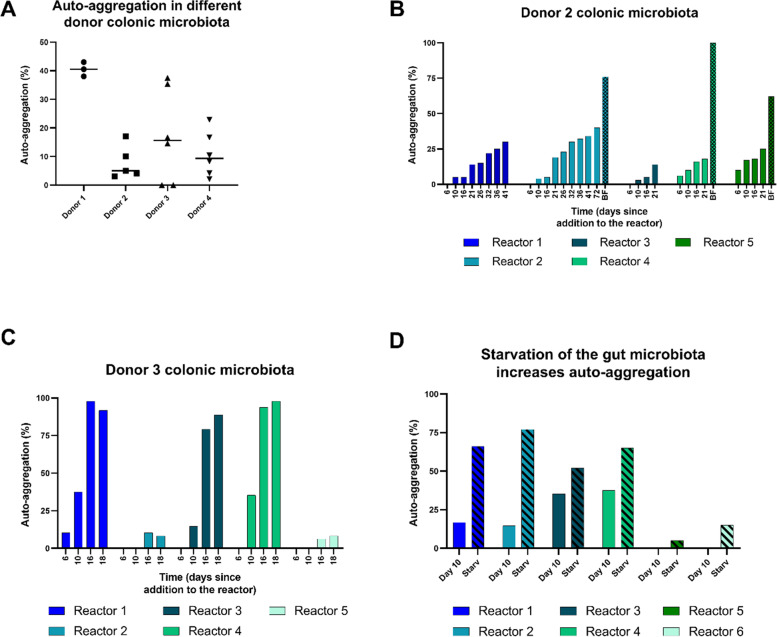
- Auto-aggregation was detected in isolates recovered from all four adult microbiota models, at 8–41% after 10 days, and increased over time in donor 2 models to about 15% and 30% after 21 and 42 days, respectively.
- In donor 3 reactors, auto-aggregation rose much more strongly in some reactors, reaching 88–89% after 18 days, but only 8% in others at the same time point.
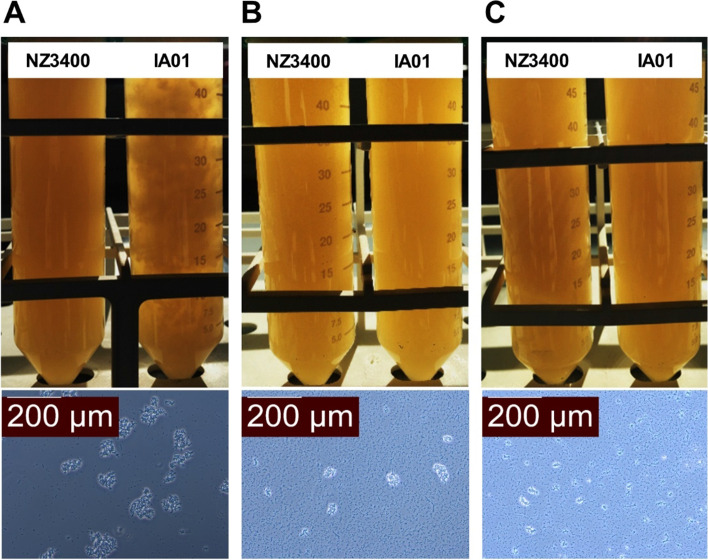
- The phenotype was unstable in nutrient-rich MRS medium: 15 auto-aggregating isolates remained strongly aggregating after 1 overnight culture, but aggregation was no longer visually detectable after the second and was barely detectable microscopically after the third.
- RNA-seq showed strong upregulation of LP_RS05225 (msa) and LP_RS05230 (marR) in auto-aggregating strains, with log2-fold changes of 4.1–4.4 for msa and 4.5–5.4 for marR; genome sequencing found no shared SNPs or rearrangements explaining the phenotype.
## Methods
- The study used L. plantarum NZ3400 and derivatives recovered after cultivation in PolyFermS continuous in vitro human colonic microbiota models inoculated with fecal microbiota from healthy adults; isolates were taken from reactor effluent and biofilms.
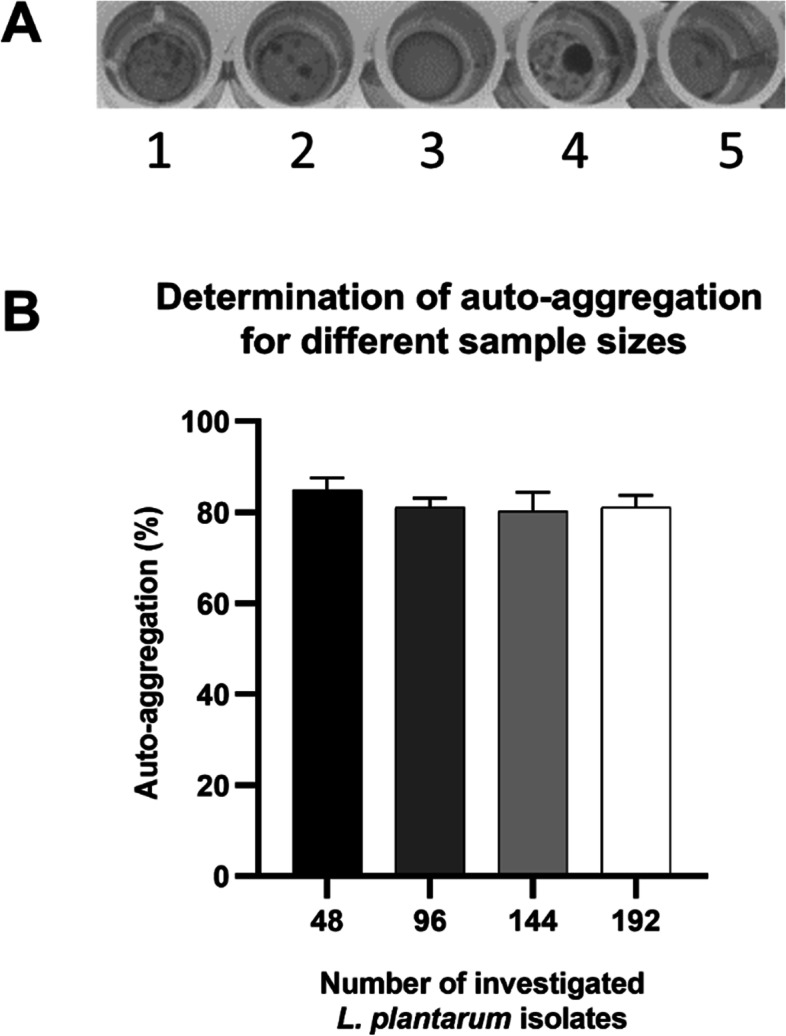
- A high-throughput microscopy-based aggregation screen in 96-well plates was developed; 48 colonies were used per condition after testing showed larger sets did not change the aggregation percentage significantly.
- Main analyses included growth-condition tests (MRS, minimal medium with different carbon sources, EMS medium), biofilm assays, phenotype stability tests, whole-genome sequencing, RNA sequencing, and PCR/Bowtie2/breseq-based analysis of promoter inversion upstream of msa.
## Limitations
- The authors state that the exact regulation remains unclear for the promoter inversion and that it is uncertain whether the inversion occurs spontaneously or is induced by the fermenter environment.
- The paper’s own text makes evident that the study is limited to one strain background (NZ3400/WCFS1 derivative) and in vitro fermentation models; applicability to in vivo human colonization is therefore not directly shown.
- The paper also makes evident that the mechanism is inferred largely from association between phenotype, transcriptome, and promoter inversion; no definitive causal experiment is reported in the provided text.
Model-written summary. Check it against the paper before relying on it.
Integrity signals
Registry
Cites
Statistics
Figures
Verification
Claims the paper makes
6 Valid · 0 Not valid · 11 Not checked · 62 Own results and interpretations
The cited sources support only part of this claim — read each source’s verdict below.
In the paper
“This new junction was not identified in the transcriptome samples from the wild type, IA01t4, nor in the samples of a previously constructed non-aggregating lamC knockout strain L. plantarum ΔLP_RS14990 [40] (Isenring, unpublished results).”
§ Bistable auto-aggregation phenotype in Lactiplantibacillus plantarum emerges after cultivation in in vitro colonic microbiota > Results > DNA inversion predominates in auto-aggregating L. plantarum strains
What the sources say
- Partly supportedcites [40] Isenring J Geirnaert A Hall AR Jans C Lacroix C Stevens MJA In vitro gut modeling as a tool for adaptive evolutionary engineering of Lactiplantibacillus plantarum mSystems 2021 6 e01085 e01020 10.1128/mSystems.01085-20 33850040 PMC8546992 sourceExperimental — accuracy not yet measured
The Materials and Methods section (“Plasmid construction and LP_RS14990 gene replacement”; page unavailable) confirms that the authors constructed an L. plantarum ΔLP_RS14990 knockout strain. The passages do not identify LP_RS14990 as lamC or establish that the knockout is non-aggregating. The transcriptome-junction finding is separately attributed to unpublished results, not to this citation. (LLM, conf=0.84)
plain- Asserted: passes — The authors put it forward as true.
- Checkable: passes — It can be checked against evidence.
- Load-bearing: passes — The paper’s conclusions depend on it.
- Based: passes — The paper gives a reason why it holds.
- Partly supported
The cited sources support only part of this claim — read each source’s verdict below.
In the paper
“However, plotting RNAseq reads on the wild type genome revealed two novel DNA-junctions in the promoter region of LP_RS05225, that apparently could only be detected with the high read numbers produced in RNAseq experiments and the dedicated breseq software with a low detection limit for identification of variations in the genome [55].”
§ Bistable auto-aggregation phenotype in Lactiplantibacillus plantarum emerges after cultivation in in vitro colonic microbiota > Discussion
What the sources say
- Partly supportedcites [55] Deatherage DE Traverse CC Wolf LN Barrick JE Detecting rare structural variation in evolving microbial populations from new sequence junctions using breseq Front Genet 2015 5 468 10.3389/fgene.2014.00468 25653667 PMC4301190 sourceExperimental — accuracy not yet measured
The Methods section (page unavailable) describes breseq detecting new structural-variant junctions from sequencing reads, and the Results section says greater read-depth coverage is the primary consideration for detecting rare junctions. The paper does not report RNA-seq analysis or two junctions in the promoter of LP_RS05225, so it does not support that specific observation. (LLM, conf=0.85)
hedged- Asserted: passes — The authors put it forward as true.
- Checkable: passes — It can be checked against evidence.
- Load-bearing: passes — The paper’s conclusions depend on it.
- Based: passes — The paper gives a reason why it holds.
- Partly supported
A result the paper reports from its own data — it cites no other source for it, so there is none to check. The quote shows it is in the paper.
In the paper
“However, whole genome sequencing analysis did not reveal any shared single nucleotide polymorphisms nor genetic reorganization in seven auto-aggregating isolates compared to NZ3400.”
§ Bistable auto-aggregation phenotype in Lactiplantibacillus plantarum emerges after cultivation in in vitro colonic microbiota > Results > Genome and transcriptome analyses of auto-aggregating L. plantarum isolates
plain- Asserted: passes — The authors put it forward as true.
- Checkable: passes — It can be checked against evidence.
- Load-bearing: passes — The paper’s conclusions depend on it.
- Based: passes — The paper gives a reason why it holds.
A result the paper reports from its own data — it cites no other source for it, so there is none to check. The quote shows it is in the paper.
In the paper
“Comparison of aggregating IA01t0 and non-aggregating IA01t4 resulted in 583 significantly up- and 632 downregulated genes in IA01t0 (Additional file 4: Table S2).”
§ Bistable auto-aggregation phenotype in Lactiplantibacillus plantarum emerges after cultivation in in vitro colonic microbiota > Results > Genome and transcriptome analyses of auto-aggregating L. plantarum isolates
plainstates an association- Asserted: passes — The authors put it forward as true.
- Checkable: passes — It can be checked against evidence.
- Load-bearing: passes — The paper’s conclusions depend on it.
- Based: passes — The paper gives a reason why it holds.
A result the paper reports from its own data — it cites no other source for it, so there is none to check. The quote shows it is in the paper.
In the paper
“Auto-aggregation was detected in L. plantarum isolates recovered from all four microbiota at levels between 8 and 41% (Fig. 2A).”
§ Bistable auto-aggregation phenotype in Lactiplantibacillus plantarum emerges after cultivation in in vitro colonic microbiota > Results > L. plantarum auto-aggregation increases in biofilm, during starvation and during cultivation in in vitro colonic microbiota
plainn = 4- Asserted: passes — The authors put it forward as true.
- Checkable: passes — It can be checked against evidence.
- Load-bearing: passes — The paper’s conclusions depend on it.
- Based: passes — The paper gives a reason why it holds.
39 more claims
Create a free account to see all 79 claims and to verify the 1 reference still open.
- Probably not a substantial claim. 12
- It may state two separate claims as one. 28
Citations
Cites
Fast gapped-read alignment with Bowtie 2
Langmead, B., & Salzberg, S. L. (2012) · Nature Methods · doi:10.1038/nmeth.1923 · Cited by 56,400
Hill (2014) · doi:10.1038/nrgastro.2014.66 · Cited by 9,592
A medium for the cultivation of lactobacilli
De MAN, J. C., ROGOSA, M., & SHARPE, M. E. (1960) · Journal of Applied Bacteriology · doi:10.1111/j.1365-2672.1960.tb00188.x · Cited by 5,311
Complete genome sequence of Lactobacillus plantarum WCFS1
Kleerebezem, M., Boekhorst, J., van Kranenburg, R., Molenaar, D., Kuipers, O. P., Leer, R., Tarchini, R., Peters, S. A., Sandbrink, H. M., Fiers, M. W. E. J., et al. (2003) · Proceedings of the National Academy of Sciences · doi:10.1073/pnas.0337704100 · Cited by 1,472
[6] Genetic approaches to study of biofilms
O'Toole, G. A., Pratt, L. A., Watnick, P. I., Newman, D. K., Weaver, V. B., & Kolter, R. (1999) · Methods in Enzymology · doi:10.1016/s0076-6879(99)10008-9 · Cited by 835
Charteris, Kelly, Morelli, & Collins (1998) · Journal of Applied Microbiology · doi:10.1046/j.1365-2672.1998.00407.x · Cited by 774
Bacterial coaggregation: an integral process in the development of multi-species biofilms
Rickard, A. H., Gilbert, P., High, N. J., Kolenbrander, P. E., & Handley, P. S. (2003) · Trends in Microbiology · doi:10.1016/s0966-842x(02)00034-3 · Cited by 765
Adhesion, autoaggregation and hydrophobicity of 13 strains of Bifidobacterium longum
Del Re, B., Sgorbati, B., Miglioli, M., & Palenzona, D. (2000) · Letters in Applied Microbiology · doi:10.1046/j.1365-2672.2000.00845.x · Cited by 731
Adhesion and aggregation properties of probiotic and pathogen strains
Collado, M. C., Meriluoto, J., & Salminen, S. (2008) · European Food Research and Technology · doi:10.1007/s00217-007-0632-x · Cited by 603
Macfarlane, G. T., Macfarlane, S., & Gibson, G. R. (1998) · Microbial Ecology · doi:10.1007/s002489900072 · Cited by 539
Molecular switches — the ON and OFF of bacterial phase variation
Henderson, I. R., Owen, P., & Nataro, J. P. (1999) · Molecular Microbiology · doi:10.1046/j.1365-2958.1999.01555.x · Cited by 501
Trunk, T., Bacterial Cell Surface Group, S. F. G. A. E. B., S. Khalil, H., & C. Leo, J. (2018) · AIMS Microbiology · doi:10.3934/microbiol.2018.1.140 · Cited by 444
Quality assurance criteria for probiotic bacteria
Tuomola, E., Crittenden, R., Playne, M., Isolauri, E., & Salminen, S. (2001) · The American Journal of Clinical Nutrition · doi:10.1093/ajcn/73.2.393s · Cited by 432
Cui, Y., Liu, Z., Li, Y., Zhou, F., Chen, H., & Lin, Y. (2018) · Scientific Reports · doi:10.1038/srep46937 · Cited by 418
Characterization of potential probiotic lactic acid bacteria isolated from camel milk
Abushelaibi, A., Al-Mahadin, S., El-Tarabily, K., Shah, N. P., & Ayyash, M. (2017) · LWT - Food Science and Technology · doi:10.1016/j.lwt.2017.01.041 · Cited by 329
Pretzer, G., Snel, J., Molenaar, D., Wiersma, A., Bron, P. A., Lambert, J., de Vos, W. M., van der Meer, R., Smits, M. A., & Kleerebezem, M. (2005) · Journal of Bacteriology · doi:10.1128/jb.187.17.6128-6136.2005 · Cited by 316
Henkin, T. M., Grundy, F. J., Nicholson, W. L., & Chambliss, G. H. (1991) · Molecular Microbiology · doi:10.1111/j.1365-2958.1991.tb00728.x · Cited by 314
Imberty, A., Wimmerová, M., Mitchell, E. P., & Gilboa-Garber, N. (2004) · Microbes and Infection · doi:10.1016/j.micinf.2003.10.016 · Cited by 314
Barrick, J. E., Colburn, G., Deatherage, D. E., Traverse, C. C., Strand, M. D., Borges, J. J., Knoester, D. B., Reba, A., & Meyer, A. G. (2014) · BMC Genomics · doi:10.1186/1471-2164-15-1039 · Cited by 299
Site-directed mutagenesis of a catabolite repression operator sequence in Bacillus subtilis.
Weickert, M. J., & Chambliss, G. H. (1990) · Proceedings of the National Academy of Sciences · doi:10.1073/pnas.87.16.6238 · Cited by 293
Adlerberth, I., Ahrne, S., Johansson, M. L., Molin, G., Hanson, L. A., & Wold, A. E. (1996) · Applied and Environmental Microbiology · doi:10.1128/aem.62.7.2244-2251.1996 · Cited by 293
Krausova, G., Hyrslova, I., & Hynstova, I. (2019) · Fermentation · doi:10.3390/fermentation5040100 · Cited by 287
Adhesion abilities of dairy Lactobacillus plantarum strains showing an aggregation phenotype
García-Cayuela, T., Korany, A. M., Bustos, I., P. Gómez de Cadiñanos, L., Requena, T., Peláez, C., & Martínez-Cuesta, M. C. (2014) · Food Research International · doi:10.1016/j.foodres.2014.01.010 · Cited by 286
Surface Properties of Bifidobacterial Strains of Human Origin
Pérez, P. F., Minnaard, Y., Disalvo, E. A., & De Antoni, G. L. (1998) · Applied and Environmental Microbiology · doi:10.1128/aem.64.1.21-26.1998 · Cited by 268
Hallet, B., & Sherratt, D. J. (2006) · FEMS Microbiology Reviews · doi:10.1111/j.1574-6976.1997.tb00349.x · Cited by 222
Surface properties of lactobacilli isolated from the small intestine of pigs
Wadstroum, T., Andersson, K., Sydow, M., Axelsson, L., Lindgren, S., & Gullmar, B. (1987) · Journal of Applied Bacteriology · doi:10.1111/j.1365-2672.1987.tb02683.x · Cited by 192
Fonseca, H. C., de Sousa Melo, D., Ramos, C. L., Dias, D. R., & Schwan, R. F. (2021) · Probiotics and Antimicrobial Proteins · doi:10.1007/s12602-020-09659-2 · Cited by 188
Johansson, M.-L., Nobaek, S., Berggren, A., Nyman, M., Björck, I., Ahrné, S., Jeppsson, B., & Molin, G. (1998) · International Journal of Food Microbiology · doi:10.1016/s0168-1605(98)00055-5 · Cited by 187
Triggers for microbial aggregation in activated sludge
Bossier, P., & Verstraete, W. (1996) · Applied Microbiology and Biotechnology · doi:10.1007/s002530050640 · Cited by 168
DNA rearrangements and phenotypic switching in prokaryotes
Dybvig, K. (1993) · Molecular Microbiology · doi:10.1111/j.1365-2958.1993.tb00919.x · Cited by 163
Spatial metagenomic characterization of microbial biogeography in the gut
Sheth, R. U., Li, M., Jiang, W., Sims, P. A., Leong, K. W., & Wang, H. H. (2019) · Nature Biotechnology · doi:10.1038/s41587-019-0183-2 · Cited by 162
Goh, Y. J., & Klaenhammer, T. R. (2010) · Applied and Environmental Microbiology · doi:10.1128/aem.00030-10 · Cited by 149
Bowel Biofilms: Tipping Points between a Healthy and Compromised Gut?
Tytgat, H. L. P., Nobrega, F. L., van der Oost, J., & de Vos, W. M. (2019) · Trends in Microbiology · doi:10.1016/j.tim.2018.08.009 · Cited by 144
Sorroche, F. G., Spesia, M. B., Zorreguieta, Á., & Giordano, W. (2012) · Applied and Environmental Microbiology · doi:10.1128/aem.07826-11 · Cited by 139
Lactobacillus plantarum WCFS 1 and its host interaction: a dozen years after the genome
van den Nieuwboer, M., van Hemert, S., Claassen, E., & de Vos, W. M. (2016) · Microbial Biotechnology · doi:10.1111/1751-7915.12368 · Cited by 139
Characterization of the aggregation promoting factor from Lactobacillus gasseri , avaginal isolate
Boris, S., Suárez, J. E., & Barbés, C. (1997) · Journal of Applied Microbiology · doi:10.1046/j.1365-2672.1997.00250.x · Cited by 138
High frequency of conjugation in Lactobacillus mediated by an aggregation-promoting factor
Reniero, R., Cocconcelli, P., Bottazzi, V., & Morelli, L. (1992) · Journal of General Microbiology · doi:10.1099/00221287-138-4-763 · Cited by 137
Remus, D. M., van Kranenburg, R., van Swam, I. I., Taverne, N., Bongers, R. S., Wels, M., Wells, J. M., Bron, P. A., & Kleerebezem, M. (2012) · Microbial Cell Factories · doi:10.1186/1475-2859-11-149 · Cited by 131
Mechanism of antigenic variation in Mycoplasma pulmonis: interwoven, site‐specific DNA inversions
Bhugra, B., Voelker, L. L., Zou, N., Yu, H., & Dybvig, K. F. (1995) · Molecular Microbiology · doi:10.1111/j.1365-2958.1995.mmi_18040703.x · Cited by 128
Lactobacillus crispatus and its Nonaggregating Mutant in Human Colonization Trials
Cesena, C., Morelli, L., Alander, M., Siljander, T., Tuomola, E., Salminen, S., Mattila-Sandholm, T., Vilpponen-Salmela, T., & von Wright, A. (2001) · Journal of Dairy Science · doi:10.3168/jds.s0022-0302(01)74559-6 · Cited by 123
Farrell, A., & Quilty, B. (2002) · Journal of Industrial Microbiology and Biotechnology · doi:10.1038/sj.jim.7000249 · Cited by 122
Wold, A. E., Thorssén, M., Hull, S., & Edén, C. S. (1988) · Infection and Immunity · doi:10.1128/iai.56.10.2531-2537.1988 · Cited by 119
Nath, S., Sikidar, J., Roy, M., & Deb, B. (2020) · Food Quality and Safety · doi:10.1093/fqsafe/fyaa026 · Cited by 119
Zakaria Gomaa, E. (2013) · The Journal of General and Applied Microbiology · doi:10.2323/jgam.59.425 · Cited by 116
DNA inversions in phages and bacteria
van de Putte, P., & Goosen, N. (1992) · Trends in Genetics · doi:10.1016/0168-9525(92)90331-w · Cited by 106
Probiotic properties of lactobacilli species isolated from children's feces
Tulumoglu, S., Yuksekdag, Z. N., Beyatli, Y., Simsek, O., Cinar, B., & Yaşar, E. (2013) · Anaerobe · doi:10.1016/j.anaerobe.2013.09.006 · Cited by 105
Auto-aggregation and Co-aggregation ability in bifidobacteria and clostridia
Vlková, E., Rada, V., Šmehilová, M., & Killer, J. (2008) · Folia Microbiologica · doi:10.1007/s12223-008-0040-z · Cited by 103
Spencer, R. J., & Chesson, A. (1994) · Journal of Applied Bacteriology · doi:10.1111/j.1365-2672.1994.tb03066.x · Cited by 102
Voltan, S., Castagliuolo, I., Elli, M., Longo, S., Brun, P., D'Incà, R., Porzionato, A., Macchi, V., Palù, G., Sturniolo, G. C., et al. (2007) · Clinical and Vaccine Immunology · doi:10.1128/cvi.00079-07 · Cited by 96
Deatherage, D. E., Traverse, C. C., Wolf, L. N., & Barrick, J. E. (2015) · Frontiers in Genetics · doi:10.3389/fgene.2014.00468 · Cited by 93
Aggregation ability of potential probiotic Lactobacillus plantarum strains
Janković, T., Frece, J., Abram, M., & Gobin, I. (2012) · Cited by 90
Molecular mechanisms of Campylobacter fetus surface layer protein expression
Dworkin, J., & Blaser, M. J. (1997) · Molecular Microbiology · doi:10.1046/j.1365-2958.1997.6151958.x · Cited by 84
Alonso, J. C., Weise, F., & Rojo, F. (1995) · Journal of Biological Chemistry · doi:10.1074/jbc.270.7.2938 · Cited by 74
A Novel Site-specific Recombinase Encoded by the Streptococcus pyogenes Plasmid pSM19035
Rojo, F., & Alonso, J. C. (1994) · Journal of Molecular Biology · doi:10.1006/jmbi.1994.1278 · Cited by 70
Factors involved in binding of Lactobacillus plantarum Lp6 to rat small intestinal mucus
Sun, J., Le, G.-W., Shi, Y.-H., & Su, G.-W. (2007) · Letters in Applied Microbiology · doi:10.1111/j.1472-765x.2006.02031.x · Cited by 70
Germ Theory Vs. Community Theory in Understanding and Controlling the Proliferation of Biofilms
Caldwell, D. E., Atuku, E., Wilkie, D. C., Wivcharuk, K. P., Karthikeyan, S., Korber, D. R., Schmid, D. F., & Wolfaardt, G. M. (1997) · Advances in Dental Research · doi:10.1177/08959374970110011501 · Cited by 68
Sui, Y., Liu, J., Liu, Y., Wang, Y., Xiao, Y., Gao, B., & Zhu, D. (2021) · Food Bioscience · doi:10.1016/j.fbio.2020.100843 · Cited by 63
Role of nonadsorbing polymers in bacterial aggregation
Eboigbodin, K. E., Newton, J. R. A., Routh, A. F., & Biggs, C. A. (2005) · Langmuir · doi:10.1021/la051740u · Cited by 62
Malik, S., Petrova, M. I., Claes, I. J. J., Verhoeven, T. L. A., Busschaert, P., Vaneechoutte, M., Lievens, B., Lambrichts, I., Siezen, R. J., Balzarini, J., et al. (2013) · Applied and Environmental Microbiology · doi:10.1128/aem.00926-13 · Cited by 61
Wang, J., Wang, J., Yang, K., Liu, M., Zhang, J., Wei, X., & Fan, M. (2018) · Annals of Microbiology · doi:10.1007/s13213-018-1386-3 · Cited by 57
Forty-five-year evolution of probiotic therapy
Puebla-Barragan, S., & Reid, G. (2019) · Microbial Cell · doi:10.15698/mic2019.04.673 · Cited by 55
Weinacht, K. G., Roche, H., Krinos, C. M., Coyne, M. J., Parkhill, J., & Comstock, L. E. (2004) · Molecular Microbiology · doi:10.1111/j.1365-2958.2004.04219.x · Cited by 51
Probiotic properties of lactic acid bacteria strains isolated from pastırma
Topçu, K. C., Kaya, M., & Kaban, G. (2020) · LWT · doi:10.1016/j.lwt.2020.110216 · Cited by 50
Zuo, F., Yu, R., Xiao, M., Khaskheli, G. B., Sun, X., Ma, H., Ren, F., Zhang, B., & Chen, S. (2018) · Scientific Reports · doi:10.1038/s41598-018-35286-7 · Cited by 47
Aziz, G., Fakhar, H., Rahman, S. U., Tariq, M., & Zaidi, A. (2019) · The Journal of Applied Poultry Research · doi:10.3382/japr/pfz042 · Cited by 43
Mannose-sensitive Haemagglutinins in Adherence of Vibrio cholerae eltor to Intestine
BHATTACHARJEE, J. W., & SRIVASTAVA, B. S. (1978) · Journal of General Microbiology · doi:10.1099/00221287-107-2-407 · Cited by 41
Lenich, A. G., & Glasgow, A. C. (1994) · Journal of Bacteriology · doi:10.1128/jb.176.13.4160-4164.1994 · Cited by 39
León-Romero, Á., Domínguez-Manzano, J., Garrido-Fernández, A., Arroyo-López, F. N., & Jiménez-Díaz, R. (2016) · Applied and Environmental Microbiology · doi:10.1128/aem.02727-15 · Cited by 38
Moses, E. K., Good, R. T., Sinistaj, M., Billington, S. J., Langford, C. J., & Rood, J. I. (1995) · Molecular Microbiology · doi:10.1111/j.1365-2958.1995.mmi_17010183.x · Cited by 36
Hevia, A., Martínez, N., Ladero, V., Álvarez, M. A., Margolles, A., & Sánchez, B. (2013) · Applied and Environmental Microbiology · doi:10.1128/aem.01657-13 · Cited by 35
Aslanzadeh, J., & Paulissen, L. J. (1992) · Microbiology and Immunology · doi:10.1111/j.1348-0421.1992.tb02034.x · Cited by 35
Epigenetic Phase Variation in Bacterial Pathogens
van der Woude, M. W. (2017) · Epigenetics and human health · doi:10.1007/978-3-319-55021-3_7 · Cited by 26
Phagocytosis of bacterial aggregates by granulocytes
Galdiero, F., Carratelli, C. R., Nuzzo, I., Bentivoglio, C., & Galdiero, M. (1988) · European Journal of Epidemiology · doi:10.1007/bf00146398 · Cited by 21
Canosa, I., Lurz, R., Rojo, F., & Alonso, J. C. (1998) · Journal of Biological Chemistry · doi:10.1074/jbc.273.22.13886 · Cited by 21
Holst, B., Glenting, J., Holmstrøm, K., Israelsen, H., Vrang, A., Antonsson, M., Ahrné, S., & Madsen, S. M. (2019) · Applied and Environmental Microbiology · doi:10.1128/aem.02954-18 · Cited by 21
Horlbog, J. A., Stevens, M. J. A., Stephan, R., & Guldimann, C. (2019) · Microorganisms · doi:10.3390/microorganisms7100455 · Cited by 18
Self-citationIsenring, J., Geirnaert, A., Hall, A. R., Jans, C., Lacroix, C., & Stevens, M. J. A. (2021) · mSystems · doi:10.1128/msystems.01085-20 · Cited by 17
Self-citationStevens, M. J. A. (2008) · doi:10.18174/121944 · Cited by 14
Self-citationNoor, B. W. M., & Aqma, W. S. (2013) · Dublin City University Open Access Institutional Repository (Dublin City University) · Cited by 2
Cited by
Alkalbani, N. S., Osaili, T. M. I., Al‐Nabulsi, A. A., Olaimat, A. N., Liu, S., Shah, N. P., Apostolopoulos, V., & Ayyash, M. M. (2022) · Journal of Fungi · doi:10.3390/jof8040365 · Cited by 83
Fentie, E. G., Lim, K., Jeong, M., & Shin, J. (2024) · Comprehensive Reviews in Food Science and Food Safety · doi:10.1111/1541-4337.13424 · Cited by 58
Natural Aggregation of Lactobacillus: Mechanisms and Influencing Factors
Wang, S., Li, L., Yu, L., Tian, F., Zhao, J., Zhai, Q., & Chen, W. (2024) · Food Bioscience · doi:10.1016/j.fbio.2024.105007 · Cited by 34
Gościniak, A., Eder, P., Walkowiak, J., & Cielecka‐Piontek, J. (2022) · Nutrients · doi:10.3390/nu14132560 · Cited by 38
Nanocoating of lactic acid bacteria: properties, protection mechanisms, and future trends
Fan, Q., Zeng, X., Wu, Z. F., Guo, Y., Du, Q., Tu, M., & Pan, D. (2023) · Critical Reviews in Food Science and Nutrition · doi:10.1080/10408398.2023.2220803 · Cited by 29
Metadata
- Authors
- Isenring, J., Geirnaert, A., Lacroix, C., & Stevens, M. J. A.
- Affiliations
- ETH Zurich (CH)
- University of Zurich (CH)
- Corresponding author
- Lacroix, Christophe
- Venue
- BMC Microbiology
- Published
- 2021-10-05
- Volume
- 21
- Issue
- 1
- Pages
- 268-268
- ISSN
- 1471-2180 (ISSN-L)
- PMC
- PMC8493755
- OpenAlex
- W3203938054
- Cited by
- 42
- References
- 80
- Citations by year
- 2026: 12 · 2025: 8 · 2024: 9 · 2023: 9 · 2022: 4
- FWCI
- 3.28
- Type
- journal article
- Language
- en
- Open access
- gold
- doi.org
- Licence
- cc-by
- creativecommons.org/licenses/by/4.0 (tdm)
- creativecommons.org/licenses/by/4.0 (vor)
- Locations
- BMC Microbiology (publishedVersion, cc-by)
- Europe PMC (PubMed Central) (publishedVersion, other-oa)
- PubMed Central (publishedVersion, cc-by)
- PubMed (publishedVersion)
- Zurich Open Repository and Archive (University of Zurich) (acceptedVersion, cc-by)
- DOAJ (DOAJ: Directory of Open Access Journals) (submittedVersion, cc-by-sa)
- Repository for Publications and Research Data (ETH Zurich) (submittedVersion, cc-by)
- Zurich Open Repository and Archive (University of Zurich) (submittedVersion, cc-by)
- ETH Zürich Research Collection (cc-by)
- Zurich Open Repository and Archive (University of Zurich)
- Funders
- Eidgenössische Technische Hochschule Zürich
- Topics
- Life Sciences › Agricultural and Biological Sciences › Food Science › Probiotics and Fermented Foods
- Life Sciences › Biochemistry, Genetics and Molecular Biology › Molecular Biology › Gut microbiota and health
- Life Sciences › Biochemistry, Genetics and Molecular Biology › Genetics › Bacterial Genetics and Biotechnology
- Keywords
- Lactobacillus plantarum, self-aggregation, colonic microbiota, biofilm formation, nutrient deprivation, DNA inversion, transcriptome, intestinal colonization, strain history
- MeSH terms
- Gastrointestinal Microbiome, Adaptation, Physiological, Humans, Lactobacillaceae, Mutation, Phenotype, Biofilms, Gene Expression Profiling, Transcriptome
About these checks
Registry, retraction, Cites and statistics results are computed, not judged, with one exception: a printed reference that no index lists is read once by a model before it counts as a citation error. Claims are extracted by a model and kept only when their quote appears verbatim in the text; each cited source is then checked, with a model’s help, for whether it says what the claim relies on. Those verdicts can be wrong — read the claim’s quote and the cited source before relying on one.
The claim verdicts this report counts are experimental: their accuracy is not yet measured.
A language model drew the claims from the paper on 2026-10-11, under version 3 of the claim definition (model deepseek-v4.1-flash, prompt extract-v3).
A second model labelled each claim on 2026-10-11 (model jev-1.13-20260917, definition revision gold-guideline-v0.2).
Cited sources are checked with a language model’s help (gpt-6-sol).
Statistics and arithmetic are recomputed, not judged.
Confidence bands are shown only for fields calibrated on our annotated test set. None is calibrated yet, so no band is shown.
What counts as a claim ›How we measure confidence ›How we check this ›
Are you an author, or do you see a problem with this page? Request a review
Data sources
Bibliographic data: Semantic Scholar, OpenAlex, Crossref.
Contains information from the Semantic Scholar Academic Graph Datasets, made available under the ODC Attribution License (ODC-BY 1.0).
Semantic Scholar’s data is described in: Kinney, R., et al. (2023). The Semantic Scholar Open Data Platform. arXiv:2301.10140.
