

Do hospital-to-home transitions work for older adults with multiple long-term conditions including dementia? A realist review
Open accessThe DOI matches its Crossref record; 99 of the 99 references it cites were found in a registry or an index; 148 of the 363 sources its claims cite were checked for support.
Abstract
Background: Hospital-to-home transitions involve multiple providers and are particularly complex for older adults with dementia, who often live with additional conditions. Frequent transitions increase the risk of errors, miscommunication, and treatment delays, compromising patient safety and leading to potentially increased mortality, morbidity, and preventable readmissions. Understanding what works and does not work in these processes is essential to improving outcomes. Aim: This realist review synthesised existing literature to explore how, for whom, and to what extent hospital-to-home transitions work for older adults with multiple long-term conditions including dementia. Methods: Nine databases were systematically searched using key terms to identify evidence on hospital-to-home transitions for older adults (65+) with multiple long-term conditions including dementia. Interactions between contexts, mechanisms, and outcomes influencing transitions were identified and synthesised to develop a programme theory. Results: We included 68 peer-reviewed and 2 grey literature documents. Integral features of how transitions work were identified, including generic components of transitions, and five dementia-specific components which were the focus of this review: dementia care management, knowledge, information exchange standards, system features, and the role of friends/family. Fragmented care pathways and poor collaboration led to delays, unsafe discharges, and increased reliance on carers, exacerbating service gaps. Limited dementia training for providers and non-standardised documentation hindered effective discharge planning. Carers faced emotional distress and decision-making conflicts, often managing care responsibilities without adequate training, increasing risks of readmissions, particularly for unmanaged conditions. Conclusions: Hospital-to-home transitions are complex, requiring tailored interventions that address population-specific challenges. A realist approach provides valuable insights to inform development of relevant, supportive interventions in the future. Study registration: This review was preregistered with PROSPERO (CRD42023494003). Clinical trial number: Clinical trial number: not applicable.
Overview
CoChat Summary
TL;DR
This realist review found that hospital-to-home transitions for older adults with multiple long-term conditions including dementia are shaped by fragmented systems, poor communication, limited dementia training, and heavy reliance on unpaid carers. It synthesized 68 peer-reviewed and 2 grey literature documents to build a programme theory showing why transitions often fail and where tailored, dementia-specific support may help.
Key findings
- The review included 68 peer-reviewed and 2 grey literature documents; the documents spanned 2004–2024, with 49% (n = 34) published since 2020.
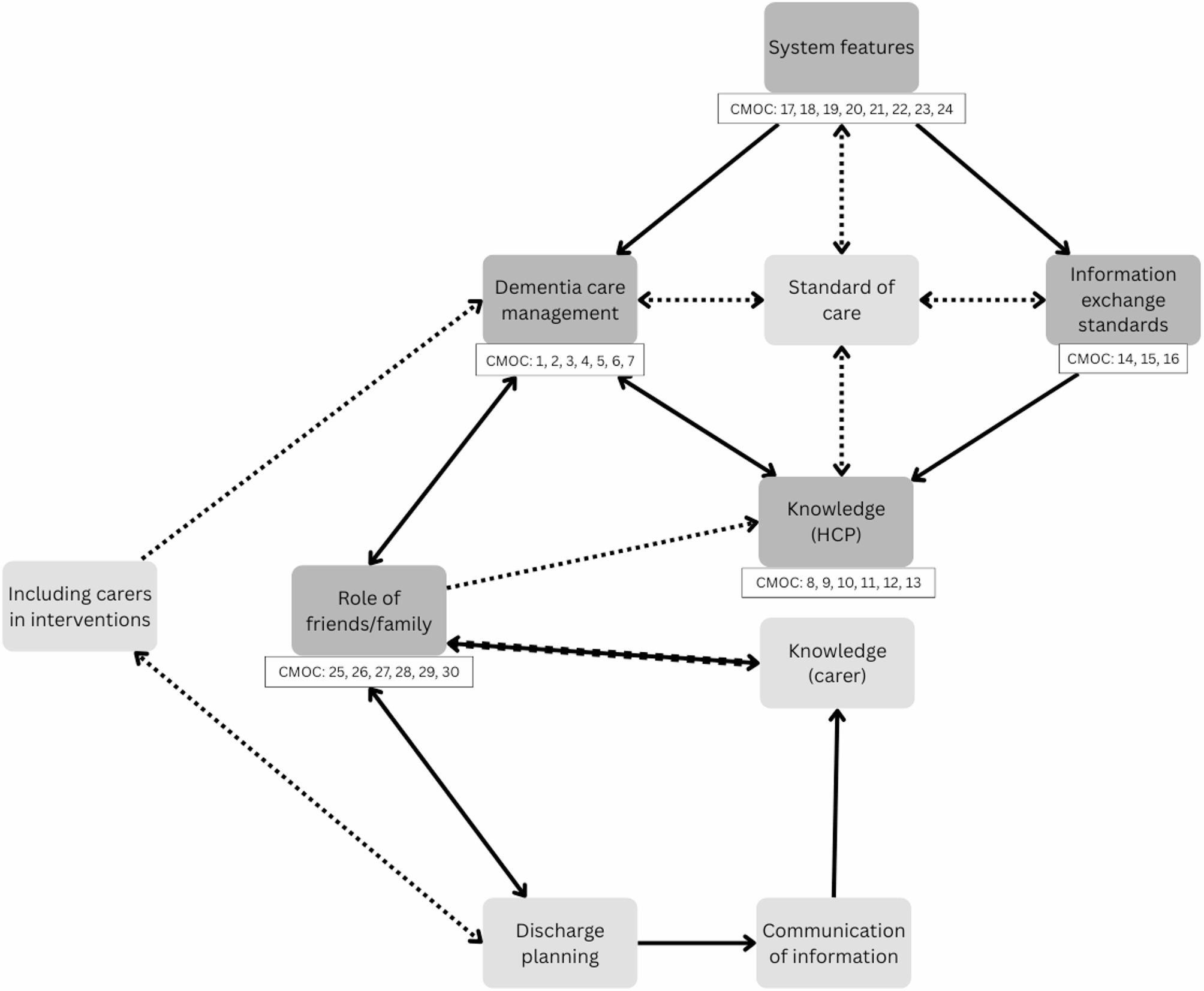
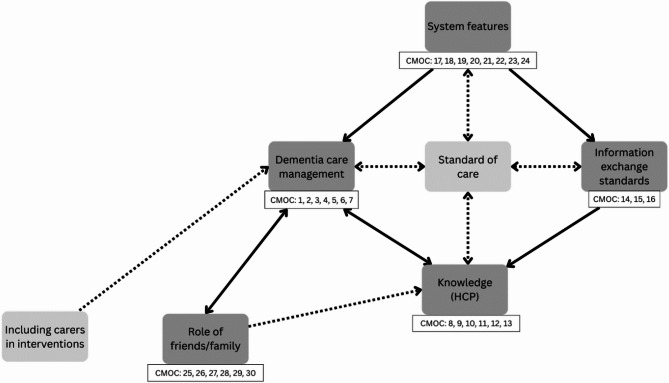
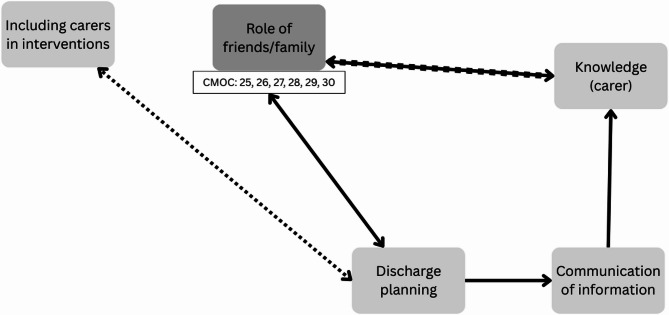
- The refined programme theory identified five dementia-specific components affecting transitions: dementia care management, healthcare professional knowledge, information exchange standards, system features, and the role of friends/family; these produced 30 CMOCs.
- Fragmented care pathways, poor collaboration, and non-standardized documentation were associated with delays, unsafe discharges, increased reliance on carers, and increased readmissions.
- The paper reports that 49% (n = 34) of included documents were from the USA, UK (n = 10), Canada (n = 8), Australia (n = 7), Europe (n = 8), and South East Asia (n = 5), and that the most common design was statistical association using administrative data (n = 28).
Methods
- Design: Realist review using context-mechanism-outcome configurations (CMOCs) to develop and refine a programme theory; preregistered with PROSPERO (CRD42023494003) and reported in line with RAMESES/PRISMA.
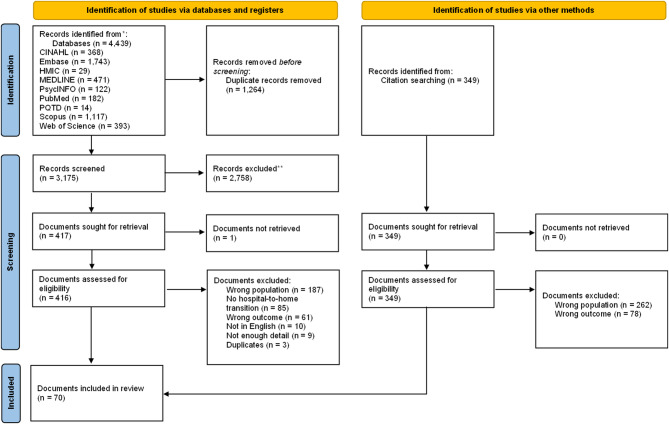
- Data/sample: Searches across 7 electronic databases and 2 grey literature databases (searched Feb 23–28, 2024), plus hand-searching and cited-by searching; included English-language documents on hospital-to-home transitions for adults 65+ with dementia and at least one other long-term condition.
- Analysis: Iterative extraction and synthesis in Excel/NVivo using inductive, deductive, and retroductive coding; the team refined the theory by confirming/refuting evidence, with input from 15 public contributors.
Limitations
- The paper states that most included documents came from the USA (n = 32) and other English-speaking countries (n = 25), which may limit generalizability across different health and social care systems.
- It notes that only English-language articles were included, which may have excluded relevant research.
- It says the final programme theory can only represent the available knowledge, so it may be a partial understanding of transitions; it also states that additional documents may have been found by more purposive website searching, which is a limitation.
Model-written summary. Check it against the paper before relying on it.
Integrity signals
Registry
Cites
Statistics
Figures
Verification
Claims the paper makes
65 Valid · 6 Not valid · 45 Not checked · 65 Own results and interpretations
Some cited sources support this claim and some don’t — read each source’s verdict below.
In the paper
“Interventions to support carers were limited, though online self-care education showed potential to improve mental health, wellbeing, and self-efficacy, helping carers feel more confident in their roles, and supported higher engagement in patient-focused interventions (CMOC30) [28, 44, 52, 63, 68, 100, 101].”
§ Do hospital-to-home transitions work for older adults with multiple long-term conditions including dementia? A realist review > Results > Role of friends/family
What the sources say
- Not checked — no full text of the sourcecites [28] Parker KJ, Hickman LD, Phillips JL, Ferguson C. Interventions to optimise transitional care coordination for older people living with dementia and concomitant Multimorbidity and their caregivers: A systematic review. Contemp Nurse. 2020;56(5–6):505–33. 32820702 source
- Not checked — no full text of the sourcecites [44] Kovaleva MA, Kleinpell R, Dietrich MS, et al. Caregivers’ experience with Tele-Savvy caregiver program post-hospitalization. Geriatr Nurs. 2023;51:156–66. 36990041 source
- Partly supportedcites [52] Boltz M, Mogle J, Kuzmik A, et al. Testing an intervention to improve posthospital outcomes in persons living with dementia and their family care partners. Innovation in Aging; 2023. PMC10573730 37841214 sourceExperimental — accuracy not yet measured
The Discussion says this intervention focused on the person with dementia and did not improve care partners’ anxiety, strain, or burden; it calls for strategies supporting care partners’ well-being. That supports a limitation of this intervention, but the paper does not establish that interventions to support carers were generally limited. (LLM, conf=0.82)
- Disputedcites [63] Duggleby W, Ploeg J, McAiney C, et al. A comparison of users and nonusers of a Web-Based intervention for carers of older persons with alzheimer disease and related dementias: mixed methods secondary analysis. J Med Internet Res. 2019;21(10):e14254. 31625947 PMC6913509 sourceExperimental — accuracy not yet measured
The Introduction says web-based interventions to support family carers are increasingly available, rather than describing interventions as limited. It identifies limited interaction with other carers as a concern, but that is a limitation of the interventions, not a claim that interventions themselves were limited. (LLM, conf=0.77)
Checked by a reasoning model — may be wrong.
- Partly supportedcites [68] Boltz M, Chippendale T, Resnick B, Galvin JE. Testing family-centered, function-focused care in hospitalized persons with dementia. Neurodegenerative Disease Manage. 2015;5(3):203–15. PMC4529403 26107319 sourceExperimental — accuracy not yet measured
In “The role of the family caregiver of the hospitalized person with dementia” (page unavailable), the paper says interventions that let family caregivers practice appropriate care during hospitalization are “greatly needed.” That supports a shortage in this specific setting, but it does not establish that interventions to support carers generally were limited. (LLM, conf=0.78)
- Partly supportedcites [100] Duggleby W, Ploeg J, McAiney C, et al. Study protocol: pragmatic randomized control trial of an internet-based intervention (My tools 4 care) for family carers. BMC Geriatr. 2017;17(1):181. 28806917 PMC5557259 sourceExperimental — accuracy not yet measured
The Background describes a lack of resources and insufficient information for family carers of people with dementia, while the Discussion says there is a great need for effective interventions. But the Discussion also says multiple internet interventions are available, so the paper does not establish that carer-support interventions generally were limited. Page numbers were not available in our copy. (LLM, conf=0.80)
- Partly supportedcites [101] Duggleby W, Ploeg J, McAiney C, et al. Web-Based intervention for family carers of persons with dementia and multiple chronic conditions (My tools 4 Care): Pragmatic Randomized Controlled Trial. J Med Internet Res. 2018;20(6):e10484. 29959111 PMC6045794 sourceExperimental — accuracy not yet measured
The Introduction (page unavailable) says carers of people with dementia lack resources to support them through caregiving transitions and that most reviewed web-based intervention studies were pilots. This supports a narrower claim about gaps in support, but not the broad statement that interventions to support carers generally were limited. (LLM, conf=0.82)
plain- Asserted: passes — The authors put it forward as true.
- Checkable: passes — It can be checked against evidence.
- Load-bearing: unclear — It is unclear whether the paper’s conclusions depend on it.
- Based: passes — The paper gives a reason why it holds.
The cited sources support only part of this claim — read each source’s verdict below.
In the paper
“Fragmented transitions can also lower physical and psychological wellbeing of those with MLTCiD and unpaid carers (referred to as ‘carers’) [18, 19].”
§ Do hospital-to-home transitions work for older adults with multiple long-term conditions including dementia? A realist review > Introduction
What the sources say
- Partly supportedcites [18] Ryman FV, Erisman JC, Darvey LM, Osborne J, Swartsenburg E, Syurina EV. Health effects of the relocation of patients with dementia: A scoping review to inform medical and policy decision-making. Gerontologist. 2019;59(6):e674–82. 29718293 sourceExperimental — accuracy not yet measured
The Physical Effects and Psychological and/or Social Effects sections (pages not provided) report declines in physical and psychological well-being after relocation, while Negative Impact links disrupted continuity of care to harm in patients with dementia. The review concerns relocation of people with dementia, not fragmented transitions across the broader MLTCiD population; it mentions stress and burden for family members but does not establish declines in unpaid carers’ physical and psychological well-being. (LLM, conf=0.87)
- Not checked — no full text of the sourcecites [19] Sadak T, Zdon SF, Ishado E, Zaslavsky O, Borson S. Potentially preventable hospitalizations in dementia: family caregiver experiences. Int Psychogeriatr. 2017;29(7):1201–11. 28349858 source
plainstates a possible cause- Asserted: passes — The authors put it forward as true.
- Checkable: passes — It can be checked against evidence.
- Load-bearing: passes — The paper’s conclusions depend on it.
- Based: passes — The paper gives a reason why it holds.
- Partly supported
The cited sources support only part of this claim — read each source’s verdict below.
In the paper
“Substantial cognitive decline, behavioural and psychological symptoms of dementia (BPSD) increased reliance on carers to manage care needs [28, 46, 69].”
§ Do hospital-to-home transitions work for older adults with multiple long-term conditions including dementia? A realist review > Results > Dementia care management
What the sources say
- Not checked — no full text of the sourcecites [28] Parker KJ, Hickman LD, Phillips JL, Ferguson C. Interventions to optimise transitional care coordination for older people living with dementia and concomitant Multimorbidity and their caregivers: A systematic review. Contemp Nurse. 2020;56(5–6):505–33. 32820702 source
- Partly supportedcites [46] Surr CA, Kelley R, Griffiths A, et al. Enabling people with dementia to access and receive cancer treatment and care: the crucial role of supportive networks. J Geriatric Oncol. 2020;11(7):1125–31. PMC7544010 32253158 sourceExperimental — accuracy not yet measured
The Results section (‘Reliance on Family Support’; page unavailable) says dementia increased reliance on relatives for practical support and describes carers filling gaps caused by memory problems. The Discussion (page unavailable) also identifies difficulties with memory, communication and behaviours. The paper does not specifically establish substantial cognitive decline or psychological symptoms of dementia as causes of that increased reliance. (LLM, conf=0.82)
- Partly supportedcites [69] Kuzmik A, Best I, Al Harrasi AM, Boltz M. Mediating role of care partner burden among dementia care partners during post-hospital transition. Aging Ment Health. 2024;28(12):1753–9. 38915264 PMC11560607 sourceExperimental — accuracy not yet measured
The Results (page unavailable) associate poorer patient cognition and greater BPSD with greater care partner burden. The Introduction (page unavailable) also describes increased care dependency after hospitalization. The paper does not establish that cognitive decline and BPSD caused increased reliance on carers to manage care needs; its limitations explicitly say the cross-sectional analysis cannot establish causation. (LLM, conf=0.82)
plainstates a cause- Asserted: passes — The authors put it forward as true.
- Checkable: passes — It can be checked against evidence.
- Load-bearing: passes — The paper’s conclusions depend on it.
- Based: passes — The paper gives a reason why it holds.
The sources with a verdict support this claim; the rest weren’t checked yet, have no full text we could read, or their verdicts aren’t rated yet.
In the paper
“Similarly, transitional care interventions focused on including carers before discharge to support their engagement with care at home [44, 52, 68].”
§ Do hospital-to-home transitions work for older adults with multiple long-term conditions including dementia? A realist review > Results > Refined programme theory
What the sources say
- Not checked — no full text of the sourcecites [44] Kovaleva MA, Kleinpell R, Dietrich MS, et al. Caregivers’ experience with Tele-Savvy caregiver program post-hospitalization. Geriatr Nurs. 2023;51:156–66. 36990041 source
- Supportedcites [52] Boltz M, Mogle J, Kuzmik A, et al. Testing an intervention to improve posthospital outcomes in persons living with dementia and their family care partners. Innovation in Aging; 2023. PMC10573730 37841214 source
The Intervention section describes working with family care partners during hospitalization, involving them in care planning and discharge teaching, then providing postdischarge education and coaching to support care at home. The supplied passages do not specify page numbers. (LLM, conf=0.92)
- Supportedcites [68] Boltz M, Chippendale T, Resnick B, Galvin JE. Testing family-centered, function-focused care in hospitalized persons with dementia. Neurodegenerative Disease Manage. 2015;5(3):203–15. PMC4529403 26107319 source
The Methods (Implementation of the intervention; page not specified) describe involving family caregivers during hospitalization through education and jointly developed care plans, followed by postacute follow-up. The Family-centered function-focused care section explains that this was intended to strengthen caregivers’ roles as care managers and providers; the Results (Treatment fidelity) report follow-through with care plans after discharge, including at home. (LLM, conf=0.90)
plain- Asserted: passes — The authors put it forward as true.
- Checkable: passes — It can be checked against evidence.
- Load-bearing: passes — The paper’s conclusions depend on it.
- Based: passes — The paper gives a reason why it holds.
The cited sources support only part of this claim — read each source’s verdict below.
In the paper
“Post-discharge follow-up was linked to carers understanding of condition management, and confidence to support the patient’s needs [28, 44, 53–55, 58–60, 62–65].”
§ Do hospital-to-home transitions work for older adults with multiple long-term conditions including dementia? A realist review > Results > Refined programme theory
What the sources say
- Not checked — no full text of the sourcecites [28] Parker KJ, Hickman LD, Phillips JL, Ferguson C. Interventions to optimise transitional care coordination for older people living with dementia and concomitant Multimorbidity and their caregivers: A systematic review. Contemp Nurse. 2020;56(5–6):505–33. 32820702 source
- Not checked — no full text of the sourcecites [44] Kovaleva MA, Kleinpell R, Dietrich MS, et al. Caregivers’ experience with Tele-Savvy caregiver program post-hospitalization. Geriatr Nurs. 2023;51:156–66. 36990041 source
- Not checked — no full text of the sourcecites [53] Bunn F, Burn A-M, Goodman C, et al. Comorbidity and dementia: a mixed method study on improving healthcare for people with dementia (CoDem). Health Services and Delivery Research; 2016. 26937541 source
- Not checked — no full text of the sourcecites [54] Sawan MJ, Jeon YH, Bond C, et al. Caregivers’ experiences of medication management advice for people living with dementia at discharge. J Eval Clin Pract. 2021;27(6):1252–61. 33586327 source
- Partly supportedcites [55] Fleming MO, Haney TT. Improving patient outcomes with better care transitions: the role for home health. Cleve Clin J Med. 2013;80(Electronic Suppl 1):eS2–6. 23420797 sourceExperimental — accuracy not yet measured
The CARE TRANSITIONS AND ADVANCED HOME CARE MODELS section (page not specified) says caregiver engagement with the care transitions tool improves the likelihood of understanding and following care recommendations. It also links information from home health staff to lower caregiver burden, but does not report a link between post-discharge follow-up and carers’ confidence to support the patient. (LLM, conf=0.84)
- Not checked — no full text of the sourcecites [58] Agarwal KS, Kazim R, Xu J, Borson S, Taffet GE. Unrecognized cognitive impairment and its effect on heart failure readmissions of elderly adults. J Am Geriatr Soc. 2016;64(11):2296–301. 27676328 source
- Not checked — no full text of the sourcecites [59] Nguyen HQ, Vallejo JD, Macias M, et al. A mixed-methods evaluation of home-based primary care in dementia within an integrated system. J Am Geriatr Soc. 2022;70(4):1136–46. 34936090 source
- Not matchedcites [60] Lazaroff A, Morishita L, Schoephoerster G, McCarthy T. Using dementia as the organizing principle when caring for patients with dementia and comorbidities. Minn Med. 2013;96(1):41–6. 23437584
Its entry has no title and year that we can search by.
- Partly supportedcites [62] Clark JL, Phoenix S, Bilbrey AC, et al. Cultural competency in dementia care: an African American case study. Clin Gerontologist. 2018;41(3):255–60. PMC5935110 29338663 sourceExperimental — accuracy not yet measured
In “The Memory Support Program” (page unavailable), the paper describes one point of contact following patients and families and offering education and caregiver support. “Commitment to Family—A Case Study” (page unavailable) describes a family meeting to align the siblings’ understanding of care needs. It does not establish a link between post-discharge follow-up and carers’ understanding or confidence to meet the patient’s needs. (LLM, conf=0.78)
- Could not verifycites [63] Duggleby W, Ploeg J, McAiney C, et al. A comparison of users and nonusers of a Web-Based intervention for carers of older persons with alzheimer disease and related dementias: mixed methods secondary analysis. J Med Internet Res. 2019;21(10):e14254. 31625947 PMC6913509 sourceExperimental — accuracy not yet measured
The Results and Discussion report higher general self-efficacy among carers who used the MT4C web intervention, but do not link that confidence to post-discharge follow-up or to understanding condition management. Searches for post-discharge follow-up and condition-management understanding found no passage addressing the claimed relationship. Page numbers were not available in our copy. (LLM, conf=0.72)
plainstates an association- Asserted: passes — The authors put it forward as true.
- Checkable: passes — It can be checked against evidence.
- Load-bearing: passes — The paper’s conclusions depend on it.
- Based: passes — The paper gives a reason why it holds.
75 more claims · 26 with their cited sources checked
Create a free account to see all 181 claims and to verify the 5 references still open.
- Probably not a substantial claim. 39
- It may state two separate claims as one. 75
- The quote only partly states this claim. 1
Citations
Cites
The PRISMA 2020 statement: An updated guideline for reporting systematic reviews
Page, M. J., McKenzie, J. E., Bossuyt, P. M., Boutron, I., Hoffmann, T. C., Mulrow, C. D., Shamseer, L., Tetzlaff, J. M., Akl, E. A., Brennan, S. E., et al. (2021) · BMJ · doi:10.1136/bmj.n71 · Cited by 108,283
Rayyan-a web and mobile app for systematic reviews.
Ouzzani, M., Hammady, H., Fedorowicz, Z., & Elmagarmid, A. (2016) · Systematic Reviews · doi:10.1186/s13643-016-0384-4 · Cited by 26,092 · cited 1×
“Remaining documents were then exported into Rayyan, an electronic software tool used to facilitate screening [34].”
Realist review - a new method of systematic review designed for complex policy interventions
Pawson, R., Greenhalgh, T., Harvey, G., & Walshe, K. (2005) · Journal of Health Services Research & Policy · doi:10.1258/1355819054308530 · Cited by 3,190 · cited 5×
“It builds a programme theory based on assumptions of how an intervention works and its expected impacts, refined using empirical evidence [29, 30].”
InfluentialTransitions Theory: Middle Range and Situation Specific Theories in Nursing Research and Practice
Meleis, A. I. (2010) · Medical Entomology and Zoology · Cited by 1,977
RAMESES publication standards: realist syntheses
Wong, G., Greenhalgh, T., Westhorp, G., Buckingham, J., & Pawson, R. (2013) · BMC Medicine · doi:10.1186/1741-7015-11-21 · Cited by 1,374 · cited 4×
“Quality was assessment for relevance (i.e. contributed to IPT development/testing) and rigour (ensuring data were credible and trustworthy) [36].”
InfluentialRAMESES II reporting standards for realist evaluations
Wong, G., Westhorp, G., Manzano, A., Greenhalgh, J., Jagosh, J., & Greenhalgh, T. (2016) · BMC Medicine · doi:10.1186/s12916-016-0643-1 · Cited by 880 · cited 1×
“It builds a programme theory based on assumptions of how an intervention works and its expected impacts, refined using empirical evidence [29, 30].”
Kingston, A., Robinson, L., Booth, H., Knapp, M., Jagger, C., & for the MODEM project (2018) · Age and Ageing · doi:10.1093/ageing/afx201 · Cited by 839 · cited 1×
“Many systems lacked a standardised approach to sharing dementia diagnoses (information exchange standards; CMOC 14–16), which influenced the knowledge HCPs had about dementia (CMOC 8–13).”
Personalised care planning for adults with chronic or long-term health conditions
Coulter, A., Entwistle, V. A., Eccles, A., Ryan, S., Shepperd, S., & Perera, R. (2015) · Cochrane Database of Systematic Reviews · doi:10.1002/14651858.cd010523.pub2 · Cited by 592
Dementia: assessment, management and support for people living with dementia and their carers
Duff, C. (2018) · Lincoln Repository (University of Lincoln) · Cited by 538
Dewing, J., & Dijk, S. (2016) · Dementia · doi:10.1177/1471301213520172 · Cited by 318 · cited 2×
“Whilst care coordination through a single point of contact has been a longstanding recommendation, evidence is limited to support their use [106, 109].”
Wong, G., Greenhalgh, T., Westhorp, G., & Pawson, R. (2014) · Health Services and Delivery Research · doi:10.3310/hsdr02300 · Cited by 276 · cited 1×
“The realist approach followed processes set out by Pawson et al. and the Realist and Meta-narrative Evidence Synthesis: Evolving Standards (RAMESES) [29, 32].”
Zhang, T., Pang, C., Li, N., Zhou, E., & Zhao, K. (2013) · BMC Medicine · doi:10.1186/1741-7015-11-1 · Cited by 270
Comorbidity of dementia: a cross-sectional study of primary care older patients
Poblador-Plou, B., Calderón-Larrañaga, A., Marta-Moreno, J., Hancco-Saavedra, J., Sicras-Mainar, A., Soljak, M., & Prados-Torres, A. (2014) · BMC Psychiatry · doi:10.1186/1471-244x-14-84 · Cited by 256 · cited 1×
“Older adults (aged ≥ 65 years) with dementia have approximately 4.6 additional, long-term conditions, resulting in complex care needs [5].”
InfluentialTransitions in Care for Older Adults with and without Dementia
Callahan, C. M., Arling, G., Tu, W., Rosenman, M. B., Counsell, S. R., Stump, T. E., & Hendrie, H. C. (2012) · Journal of the American Geriatrics Society · doi:10.1111/j.1532-5415.2012.03905.x · Cited by 253 · cited 1×
“In the United Kingdom (UK), people with dementia occupy one in four hospital beds and face heightened risks as they return home from hospital, often encountering adverse outcomes that compromise safety [1, 2].”
Hesselink, G., Flink, M., Olsson, M., Barach, P., Dudzik-Urbaniak, E., Orrego, C., Toccafondi, G., Kalkman, C., Johnson, J. K., Schoonhoven, L., et al. (2012) · BMJ Quality & Safety · doi:10.1136/bmjqs-2012-001165 · Cited by 203 · cited 3×
“Analysis suggested that pressure to comply with the system-level focus on occupancy targets and minimising length of stay further fuelled these beliefs, as older adults with dementia typically stay longer in hospital [41, 43, 48, 50, 75, 78, 84, 89, 91–93].”
Zekry, D., Herrmann, F. R., Grandjean, R., Meynet, M.-P., Michel, J.-P., Gold, G., & Krause, K.-H. (2008) · Age and Ageing · doi:10.1093/ageing/afm132 · Cited by 198 · cited 3×
“Our findings suggest that there is a clear lack of appropriate knowledge and training for HCPs on dementia, which had a knock-on effect on discharge planning and patient access to services [46, 50, 51, 54, 59, 61, 73, 74, 77, 78, 80–86].”
Projections of care for older people with dementia in England: 2015 to 2040
Wittenberg, R., Hu, B., Jagger, C., Kingston, A., Knapp, M., Comas-Herrera, A., King, D., Rehill, A., & Banerjee, S. (2020) · Age and Ageing · doi:10.1093/ageing/afz154 · Cited by 149
Evidence-Based Interventions for Transitions in Care for Individuals Living With Dementia
Hirschman, K. B., & Hodgson, N. A. (2018) · The Gerontologist · doi:10.1093/geront/gnx152 · Cited by 129 · cited 2×
“In the wider literature, most transitional care interventions have not focused on dementia [103]; indeed, patients with dementia or complex care needs are often excluded from transition research [104].”
Multi-domain interventions for the prevention of dementia and cognitive decline
Hafdi, M., Hoevenaar-Blom, M. P., & Richard, E. (2021) · Cochrane Database of Systematic Reviews · doi:10.1002/14651858.cd013572.pub2 · Cited by 124
Surr, C. A., & Gates, C. (2017) · International Journal of Nursing Studies · doi:10.1016/j.ijnurstu.2017.08.002 · Cited by 107 · cited 2×
“Research has also found that HCPs responsible for discharge planning are more likely to learn ‘on the job’ and training programmes often lack follow-up over time, limiting sustained improvements [102, 107, 108].”
Storeng, S. H., Vinjerui, K. H., Sund, E. R., & Krokstad, S. (2020) · BMC Geriatrics · doi:10.1186/s12877-020-1425-3 · Cited by 106 · cited 1×
“This emphasises the importance of improving these areas to support integrated approaches to managing MLTCiD, as highlighted by carers, healthcare and social care professionals [26, 27].”
The influence of multimorbidity on clinical progression of dementia in a population-based cohort
Melis, R. J. F., Marengoni, A., Rizzuto, D., Teerenstra, S., Kivipelto, M., Angleman, S. B., & Fratiglioni, L. (2013) · PLoS ONE · doi:10.1371/journal.pone.0084014 · Cited by 96
Family caregiver challenges in dementia care in a country with undeveloped dementia services
Wang, J., Xiao, L. D., He, G., & De Bellis, A. (2014) · Journal of Advanced Nursing · doi:10.1111/jan.12299 · Cited by 95 · cited 1×
“Carers’ knowledge (e.g., health literacy, the patient’s care needs) was linked to their experience of carer burden, and use of urgent care after returning home, and contributed to the ways they engaged with information provided at discharge [43, 44, 57, 59, 60, 64, 66, 67].”
Testing Family-Centered, Function-Focused Care in Hospitalized Persons with Dementia
Boltz, M., Chippendale, T., Resnick, B., & Galvin, J. E. (2015) · Neurodegenerative Disease Management · doi:10.2217/nmt.15.10 · Cited by 85 · cited 3×
“Existing structures that had been adapted for dementia (e.g., online education programmes) reported some improvement in preparing carers to support the patient’s needs during transitions, but often neglected to provide health and wellbeing support for the carer [28, 44, 52, 63, 68, 100, 101].”
Parke, B., Hunter, K. F., Strain, L. A., Marck, P. B., Waugh, E. H., & McClelland, A. J. (2013) · International Journal of Nursing Studies · doi:10.1016/j.ijnurstu.2012.11.005 · Cited by 81 · cited 10×
“Consequently, underlying medical complaints masked by symptoms of confusion or BPSD had potential to be overlooked (known as under-triage), increasing risk of harm and readmission [56, 60, 76, 77].”
InfluentialAssociation of dementia with early rehospitalization among Medicare beneficiaries
Daiello, L. A., Gardner, R., Epstein-Lubow, G., Butterfield, K., & Gravenstein, S. (2014) · Archives of Gerontology and Geriatrics · doi:10.1016/j.archger.2014.02.010 · Cited by 81 · cited 1×
“This was rarely inclusive of dementia-specific needs, such as reducing the number of different visitors at home or fitting around the patient’s routine to reduce distress, which was linked to increased readmissions [43, 54, 95, 96].”
Unrecognized Cognitive Impairment and Its Effect on Heart Failure Readmissions of Elderly Adults
Agarwal, K. S., Kazim, R., Xu, J., Borson, S., & Taffet, G. E. (2016) · Journal of the American Geriatrics Society · doi:10.1111/jgs.14471 · Cited by 76 · cited 5×
“This reduced confidence in their ability to identify and diagnose dementia, subsequently limiting the extent to which discharge planning reflected the patient’s care needs (CMOC8) [49, 50, 58, 79–82].”
InfluentialHospital readmission in persons with dementia: A systematic review
Ma, C., Bao, S., Dull, P., Wu, B., & Yu, F. (2019) · International Journal of Geriatric Psychiatry · doi:10.1002/gps.5140 · Cited by 74 · cited 2×
“Research suggests that this population has a high risk of readmission, most of which are thought to be preventable and resulting from failures in continuity of care [16, 17].”
Mitchell, R., Harvey, L., Brodaty, H., Draper, B., & Close, J. (2016) · Disability and Rehabilitation · doi:10.3109/09638288.2015.1123306 · Cited by 72 · cited 2×
“As a result, collaboration between HCPs was associated with delayed discharges, emphasising the problem in care co-ordination (CMOC19) [40, 42, 74, 83, 88, 91, 92].”
Bunn, F., Burn, A.-M., Goodman, C., Robinson, L., Rait, G., Norton, S., Bennett, H., Poole, M., Schoeman, J., & Brayne, C. (2016) · Health Services and Delivery Research · doi:10.3310/hsdr04080 · Cited by 72 · cited 10×
“As a result, HCPs working outside of geriatric care were often unaware of dementia diagnoses (CMOC14) [50, 53, 59, 66, 79, 86, 89].”
Influential30‐Day Emergency Department Revisit Rates among Older Adults with Documented Dementia
Kent, T., Lesser, A., Israni, J., Hwang, U., Carpenter, C., & Ko, K. J. (2019) · Journal of the American Geriatrics Society · doi:10.1111/jgs.16114 · Cited by 68 · cited 1×
“Additionally, fragmentation between health and social care contributed to reduced responsibility for HCPs in emergency departments to support social and non-urgent needs, likely increasing the patient’s risk of under-triage (CMOC13) [47, 49, 56, 60, 76, 77, 82, 90, 93, 94].”
Duggleby, W., Ploeg, J., McAiney, C., Peacock, S., Fisher, K., Ghosh, S., Markle-Reid, M., Swindle, J., Williams, A., Triscott, J. A., et al. (2018) · Journal of Medical Internet Research · doi:10.2196/10484 · Cited by 67 · cited 2×
“Existing structures that had been adapted for dementia (e.g., online education programmes) reported some improvement in preparing carers to support the patient’s needs during transitions, but often neglected to provide health and wellbeing support for the carer [28, 44, 52, 63, 68, 100, 101].”
Multi-domain interventions for the prevention of dementia and cognitive decline
Hafdi, M., Hoevenaar-Blom, M. P., & Richard, E. (2020) · Cochrane Database of Systematic Reviews · doi:10.1002/14651858.cd013572 · Cited by 65
Discharge diagnosis and comorbidity profile in hospitalized older patients with dementia
Zuliani, G., Galvani, M., Sioulis, F., Bonetti, F., Prandini, S., Boari, B., Guerzoni, F., & Gallerani, M. (2012) · International Journal of Geriatric Psychiatry · doi:10.1002/gps.2722 · Cited by 54 · cited 4×
“Analysis suggested that pressure to comply with the system-level focus on occupancy targets and minimising length of stay further fuelled these beliefs, as older adults with dementia typically stay longer in hospital [41, 43, 48, 50, 75, 78, 84, 89, 91–93].”
InfluentialChenoweth, L., Kable, A., & Pond, D. (2015) · Australasian Journal on Ageing · doi:10.1111/ajag.12205 · Cited by 53 · cited 2×
“This has been reflected in the wider research, which suggests that hospital discharge procedures do not support the higher levels of coordination, communication and consultation required in complex discharge planning, leaving service gaps for those with dementia [102].”
Transitional care programs: who is left behind? A systematic review
Piraino, E., Heckman, G. A., Glenny, C., & Stolee, P. (2012) · International Journal of Integrated Care · doi:10.5334/ijic.805 · Cited by 52 · cited 2×
“In the wider literature, most transitional care interventions have not focused on dementia [103]; indeed, patients with dementia or complex care needs are often excluded from transition research [104].”
Potentially preventable hospitalizations in dementia: family caregiver experiences
Sadak, T., Foster Zdon, S., Ishado, E., Zaslavsky, O., & Borson, S. (2017) · International Psychogeriatrics · doi:10.1017/s1041610217000217 · Cited by 52 · cited 1×
“Fragmented transitions can also lower physical and psychological wellbeing of those with MLTCiD and unpaid carers (referred to as ‘carers’) [18, 19].”
Chronic disease self-management support for persons with dementia, in a clinical setting
Ibrahim, J. E., Anderson, L., MacPhail, A., Lovell, J. J., Davis, M.-C., & Winbolt, M. (2017) · Journal of Multidisciplinary Healthcare · doi:10.2147/jmdh.s121626 · Cited by 51 · cited 2×
“Key features of discharge planning included developing meaningful care plans, which were communicated to all involved in the transition, informed by the patient’s goals of care and provided opportunities for follow-up in the community [28, 39, 43–61].”
Integrated Memory Care Clinic: Design, Implementation, and Initial Results
Clevenger, C. K., Cellar, J., Kovaleva, M., Medders, L., & Hepburn, K. (2018) · Journal of the American Geriatrics Society · doi:10.1111/jgs.15528 · Cited by 49 · cited 4×
“For example, integrated memory care combining condition reviews with symptom management showed promise in reducing readmissions and urgent care use, which were not affected by number of conditions [65, 98].”
InfluentialHealth care transitions for persons living with dementia and their caregivers
Ashbourne, J., Boscart, V., Meyer, S., Tong, C. E., & Stolee, P. (2021) · BMC Geriatrics · doi:10.1186/s12877-021-02235-5 · Cited by 49 · cited 9×
“Carers’ knowledge (e.g., health literacy, the patient’s care needs) was linked to their experience of carer burden, and use of urgent care after returning home, and contributed to the ways they engaged with information provided at discharge [43, 44, 57, 59, 60, 64, 66, 67].”
InfluentialDifficult Hospital Inpatient Discharge Decisions: Ethical, Legal and Clinical Practice Issues
Swidler, R. N., Seastrum, T., & Shelton, W. (2007) · The American Journal of Bioethics · doi:10.1080/15265160601171739 · Cited by 46 · cited 5×
“Carers often received no training for these skills, and were frequently reported as unhappy, uncom-fortable, and unprepared to deliver this support [44, 46, 47, 53].”
InfluentialHolley, A. P. H., Gorawara‐Bhat, R., Dale, W., Hemmerich, J., & Cox‐Hayley, D. (2009) · Journal of the American Geriatrics Society · doi:10.1111/j.1532-5415.2009.02452.x · Cited by 45 · cited 2×
“Carers’ knowledge (e.g., health literacy, the patient’s care needs) was linked to their experience of carer burden, and use of urgent care after returning home, and contributed to the ways they engaged with information provided at discharge [43, 44, 57, 59, 60, 64, 66, 67].”
Ryman, F. V. M., Erisman, J. C., Darvey, L. M., Osborne, J., Swartsenburg, E., & Syurina, E. V. (2019) · The Gerontologist · doi:10.1093/geront/gny031 · Cited by 44 · cited 1×
“Fragmented transitions can also lower physical and psychological wellbeing of those with MLTCiD and unpaid carers (referred to as ‘carers’) [18, 19].”
Caregivers' experiences of medication management advice for people living with dementia at discharge
Sawan, M. J., Jeon, Y., Bond, C., Hilmer, S. N., Chen, T. F., Wennekers, D., & Gnjidic, D. (2021) · Journal of Evaluation in Clinical Practice · doi:10.1111/jep.13551 · Cited by 41
Failure at the transition of care: Challenges in the discharge of the vulnerable elderly patient
Cumbler, E., Carter, J., & Kutner, J. (2008) · Journal of Hospital Medicine · doi:10.1002/jhm.304 · Cited by 38 · cited 2×
“As a result, collaboration between HCPs was associated with delayed discharges, emphasising the problem in care co-ordination (CMOC19) [40, 42, 74, 83, 88, 91, 92].”
Dementia in acute hospital inpatients: the role of the geriatrician
Russ, T. C., Shenkin, S. D., Reynish, E., Ryan, T., Anderson, D., & MacLullich, A. M. J. (2012) · Age and Ageing · doi:10.1093/ageing/afs048 · Cited by 37 · cited 7×
“As a result, HCPs working outside of geriatric care were often unaware of dementia diagnoses (CMOC14) [50, 53, 59, 66, 79, 86, 89].”
InfluentialAshley, L., Kelley, R., Griffiths, A., Cowdell, F., Henry, A., Inman, H., Hennell, J., Ogden, M., Walsh, M., Jones, L., et al. (2021) · Age and Ageing · doi:10.1093/ageing/afaa210 · Cited by 37 · cited 9×
“Fragmentation between health and social care further contributed to unmet needs, as the distribution of responsibilities limited the care needs covered by support packages from providers (e.g. personal care), creating difficulties organising post-discharge care [45, 90].”
InfluentialTolppanen, A., Taipale, H., Purmonen, T., Koponen, M., Soininen, H., & Hartikainen, S. (2015) · Alzheimer's & Dementia · doi:10.1016/j.jalz.2014.10.005 · Cited by 36 · cited 5×
“Our findings suggest that there is a clear lack of appropriate knowledge and training for HCPs on dementia, which had a knock-on effect on discharge planning and patient access to services [46, 50, 51, 54, 59, 61, 73, 74, 77, 78, 80–86].”
InfluentialUsing a Nursing Minimum Data Set with older patients with dementia in an acute care setting
Park, M., Delaney, C., Maas, M., & Reed, D. (2004) · Journal of Advanced Nursing · doi:10.1111/j.1365-2648.2004.03097.x · Cited by 35 · cited 5×
“Standardised reporting of who had received the discharge education was advocated for, but not reported elsewhere (CMOC16) [72].”
InfluentialVoss, S., Black, S., Brandling, J., Buswell, M., Cheston, R., Cullum, S., Kirby, K., Purdy, S., Solway, C., Taylor, H., et al. (2017) · BMJ Open · doi:10.1136/bmjopen-2017-016651 · Cited by 35 · cited 2×
“Older adults with MLTCiD experience more transitions than those without dementia, which are more likely to involve fragmented care [13].”
Stockwell‐Smith, G., Moyle, W., Marshall, A. P., Argo, A., Brown, L., Howe, S., Layton, K., Naidoo, O., Santoso, Y., Soleil‐Moudiky‐Joh, E., et al. (2018) · Journal of Clinical Nursing · doi:10.1111/jocn.14144 · Cited by 35 · cited 1×
“Research has also found that HCPs responsible for discharge planning are more likely to learn ‘on the job’ and training programmes often lack follow-up over time, limiting sustained improvements [102, 107, 108].”
Bronskill, S. E., Maclagan, L. C., Walker, J. D., Guan, J., Wang, X., Ng, R., Rochon, P. A., Yates, E. A., Vermeulen, M. J., & Maxwell, C. J. (2020) · BMJ Open · doi:10.1136/bmjopen-2020-037485 · Cited by 35 · cited 2×
“As a result, collaboration between HCPs was associated with delayed discharges, emphasising the problem in care co-ordination (CMOC19) [40, 42, 74, 83, 88, 91, 92].”
Dementia and the risk of short-term readmission and mortality after a pneumonia admission
Graversen, S. B., Pedersen, H. S., Sandbaek, A., Foss, C. H., Palmer, V. J., & Ribe, A. R. (2021) · PLOS ONE · doi:10.1371/journal.pone.0246153 · Cited by 34 · cited 3×
“Our findings suggest that in practice however, admission and discharge procedures prioritise the admission diagnosis, and do not adequately account for dementia symptoms (e.g. cognitive decline, BPSD) [47, 49, 56, 60, 76, 77, 90, 93].”
Health Care Utilization Among Elderly Medicare Beneficiaries With Coexisting Dementia and Cancer
Kedia, S. K., Chavan, P. P., Boop, S. E., & Yu, X. (2017) · Gerontology and Geriatric Medicine · doi:10.1177/2333721416689042 · Cited by 31 · cited 2×
“Analysis suggested that pressure to comply with the system-level focus on occupancy targets and minimising length of stay further fuelled these beliefs, as older adults with dementia typically stay longer in hospital [41, 43, 48, 50, 75, 78, 84, 89, 91–93].”
Nguyen, H. Q., Borson, S., Khang, P., Langer‐Gould, A., Wang, S. E., Carrol, J., & Lee, J. S. (2022) · Alzheimer's & Dementia: Translational Research & Clinical Interventions · doi:10.1002/trc2.12279 · Cited by 29 · cited 3×
“Our findings suggest that there is a clear lack of appropriate knowledge and training for HCPs on dementia, which had a knock-on effect on discharge planning and patient access to services [46, 50, 51, 54, 59, 61, 73, 74, 77, 78, 80–86].”
Improving best practice for patients receiving hospital discharge letters: a realist review protocol
Weetman, K., Wong, G., Scott, E., Schnurr, S., & Dale, J. (2017) · BMJ Open · doi:10.1136/bmjopen-2017-018353 · Cited by 29 · cited 1×
“Data from each document were systematically examined by the research team to confirm, refute, or refine the theory using previously reported strategies such as juxtaposition, reconciliation, adjudication, and consolidation [37, 38].”
Co-morbidities in dementia: time to focus more on assessing and managing co-morbidities
Subramaniam, H. (2019) · Age and Ageing · doi:10.1093/ageing/afz007 · Cited by 28 · cited 1×
“Current guidelines and literature inadequately addresses the complexity of managing MLTCiD with a tendency for a single-disease focus (i.e., only one of 13 NICE guidance documents acknowledged the impact of dementia on care management [20]) [21–24].”
Parker, K. J., Hickman, L. D., Phillips, J. L., & Ferguson, C. (2020) · Contemporary Nurse · doi:10.1080/10376178.2020.1812416 · Cited by 27 · cited 10×
“Post-discharge follow-up was linked to carers understanding of condition management, and confidence to support the patient’s needs [28, 44, 53–55, 58–60, 62–65].”
InfluentialDisparities in 30‐day readmission rates among Medicare enrollees with dementia
Gilmore‐Bykovskyi, A., Zuelsdorff, M., Block, L., Golden, B., Kaiksow, F., Sheehy, A. M., Bartels, C. M., Kind, A. J. H., & Powell, W. R. (2023) · Journal of the American Geriatrics Society · doi:10.1111/jgs.18311 · Cited by 25 · cited 1×
“Analysis suggested that pressure to comply with the system-level focus on occupancy targets and minimising length of stay further fuelled these beliefs, as older adults with dementia typically stay longer in hospital [41, 43, 48, 50, 75, 78, 84, 89, 91–93].”
How to manage comorbidities in people with dementia: A scoping review
Ma, D., Wang, Y., Zhao, Y., Meng, X., Su, J., Zhi, S., Song, D., Gao, S., Sun, J., & Sun, J. (2023) · Ageing Research Reviews · doi:10.1016/j.arr.2023.101937 · Cited by 25 · cited 2×
“Health and social care system features (e.g. design, fragmented pathways) were associated with challenges patients faced accessing care to support their needs and influenced the support HCPs gave (CMOC 17–24).”
NHS Health Check programme: a protocol for a realist review
Duddy, C., Wong, G., Gadsby, E. W., Krska, J., & Hibberd, V. (2021) · BMJ Open · doi:10.1136/bmjopen-2021-048937 · Cited by 24 · cited 1×
“Data from each document were systematically examined by the research team to confirm, refute, or refine the theory using previously reported strategies such as juxtaposition, reconciliation, adjudication, and consolidation [37, 38].”
Dementia care navigation: A systematic review on different service types and their prevalence
Giebel, C., Reilly, S., Gabbay, M., Dickinson, J., Tetlow, H., Hogan, H., Griffiths, A., & Cooper, C. (2023) · International Journal of Geriatric Psychiatry · doi:10.1002/gps.5977 · Cited by 24 · cited 1×
“In contrast to the model’s recommendation and our findings, some research suggests that dementia care coordination is mostly a non-clinical role placed in the community, who are likely to face barriers due to access, and lack of standardised documentation [110, 111].”
Turbow, S. D., Ali, M. K., Culler, S. D., Rask, K. J., Perkins, M. M., Clevenger, C. K., & Vaughan, C. P. (2023) · JAMA Network Open · doi:10.1001/jamanetworkopen.2023.13592 · Cited by 23 · cited 2×
“Key features of discharge planning included developing meaningful care plans, which were communicated to all involved in the transition, informed by the patient’s goals of care and provided opportunities for follow-up in the community [28, 39, 43–61].”
Improving patient outcomes with better care transitions: The role for home health
Fleming, M. O., & Haney, T. T. (2013) · Cleveland Clinic Journal of Medicine · doi:10.3949/ccjm.80.e-s1.02 · Cited by 22 · cited 3×
“This included acting as a single point of contact in the initial post-discharge period, to improve communication, reduce confusion and subsequently prevent avoidable rehospitalisation, however evidence of their effectiveness was limited (CMOC23) [53, 55, 60].”
Duggleby, W., Ploeg, J., McAiney, C., Fisher, K., Jovel Ruiz, K., Ghosh, S., Peacock, S., Markle-Reid, M., Williams, A., Triscott, J., et al. (2019) · Journal of Medical Internet Research · doi:10.2196/14254 · Cited by 22 · cited 2×
“Existing structures that had been adapted for dementia (e.g., online education programmes) reported some improvement in preparing carers to support the patient’s needs during transitions, but often neglected to provide health and wellbeing support for the carer [28, 44, 52, 63, 68, 100, 101].”
Surr, C. A., Kelley, R., Griffiths, A. W., Ashley, L., Cowdell, F., Henry, A., Collinson, M., Mason, E., & Farrin, A. J. (2020) · Journal of Geriatric Oncology · doi:10.1016/j.jgo.2020.03.015 · Cited by 22 · cited 10×
“Feelings of obligation influenced acceptance of the carer role; cultural norms, in which family members typically look after their elder relatives, likely contributed to this, as expectations were stronger for closer relatives (e.g. children) to assume responsibility for care (CMOC25) [40, 46].”
InfluentialGilmore-Bykovskyi, A. L., Block, L. M., Walljasper, L., Hill, N., Gleason, C., & Shah, M. N. (2018) · Journal of the American Medical Informatics Association · doi:10.1093/jamia/ocy070 · Cited by 21 · cited 5×
“As a result, HCPs working outside of geriatric care were often unaware of dementia diagnoses (CMOC14) [50, 53, 59, 66, 79, 86, 89].”
InfluentialSupporting self-care of long-term conditions in people with dementia: A systematic review
Rees, J., Tuijt, R., Burton, A., Walters, K., & Cooper, C. (2021) · International Journal of Nursing Studies · doi:10.1016/j.ijnurstu.2019.103432 · Cited by 21 · cited 4×
“Conversely, evidence suggested that adherence to self-management in the community was improved when patients managed other conditions before dementia onset, as cognitive decline impacted condition knowledge less (CMOC2) [27, 53].”
InfluentialAnderson, T. S., Marcantonio, E. R., McCarthy, E. P., Ngo, L., Schonberg, M. A., & Herzig, S. J. (2022) · Journal of General Internal Medicine · doi:10.1007/s11606-022-07549-7 · Cited by 21 · cited 1×
“This was rarely inclusive of dementia-specific needs, such as reducing the number of different visitors at home or fitting around the patient’s routine to reduce distress, which was linked to increased readmissions [43, 54, 95, 96].”
Chan, E. Y., Wu, L. T., Ng, E. J. Y., Glass, G. F., & Tan, R. H. T. (2022) · BMC Health Services Research · doi:10.1186/s12913-022-08317-3 · Cited by 19 · cited 1×
“In the literature, transitional care support remains patient-focused, which may mean that interventions to improve capability to care may be limited by a failure to support the needs of the carer [112].”
Cultural Competency in Dementia Care: An African American Case Study
Clark, J. L., Phoenix, S., Bilbrey, A. C., McManis, T., Escal, K. A., Arulanantham, R., Sisay, T., & Ghatak, R. (2018) · Clinical Gerontologist · doi:10.1080/07317115.2017.1420725 · Cited by 18 · cited 1×
“Post-discharge follow-up was linked to carers understanding of condition management, and confidence to support the patient’s needs [28, 44, 53–55, 58–60, 62–65].”
Determinants of hospital readmissions in older people with dementia: a narrative review
Browne, B., Ali, K., Ford, E., & Tabet, N. (2024) · BMC Geriatrics · doi:10.1186/s12877-024-04905-6 · Cited by 18 · cited 1×
“When HCPs did not develop ‘workarounds’, patients were discharged into unsafe living situations, and readmissions were increased [90, 97]”
Duggleby, W., Ploeg, J., McAiney, C., Fisher, K., Swindle, J., Chambers, T., Ghosh, S., Peacock, S., Markle-Reid, M., Triscott, J., et al. (2017) · BMC Geriatrics · doi:10.1186/s12877-017-0581-6 · Cited by 17 · cited 2×
“Existing structures that had been adapted for dementia (e.g., online education programmes) reported some improvement in preparing carers to support the patient’s needs during transitions, but often neglected to provide health and wellbeing support for the carer [28, 44, 52, 63, 68, 100, 101].”
The ‘unworthy’ patient with dementia in geriatric rehabilitation hospitals
Digby, R., Lee, S., & Williams, A. (2018) · Collegian · doi:10.1016/j.colegn.2017.10.002 · Cited by 15 · cited 5×
“Fragmentation between health and social care further contributed to unmet needs, as the distribution of responsibilities limited the care needs covered by support packages from providers (e.g. personal care), creating difficulties organising post-discharge care [45, 90].”
InfluentialA mixed‐methods evaluation of home‐based primary care in dementia within an integrated system
Nguyen, H. Q., Vallejo, J. D., Macias, M., Shiffman, M. G., Rosen, R., Mowry, V., Omotunde, O., Hong, B., Liu, I. A., & Borson, S. (2022) · Journal of the American Geriatrics Society · doi:10.1111/jgs.17627 · Cited by 15 · cited 5×
“As a result, HCPs working outside of geriatric care were often unaware of dementia diagnoses (CMOC14) [50, 53, 59, 66, 79, 86, 89].”
InfluentialBoltz, M., Mogle, J., Kuzmik, A., BeLue, R., Leslie, D., Galvin, J. E., & Resnick, B. (2023) · Innovation in Aging · doi:10.1093/geroni/igad083 · Cited by 15 · cited 5×
“…to support carers were limited, though online self-care education showed potential to improve mental health, wellbeing, and self-efficacy, helping carers feel more confident in their roles, and supported higher engagement in patient-focused interventions (CMOC30) [28, 44, 52, 63, 68, 100, 101].”
InfluentialCharacteristics and Outcome Determinants of Hospitalized Older Patients with Cognitive Dysfunction
Chao, Y.-T., Kuo, F.-H., Lee, Y.-S., Huang, Y.-H., Weng, S.-C., Chou, Y.-Y., Lin, C.-S., & Lin, S.-Y. (2022) · International Journal of Environmental Research and Public Health · doi:10.3390/ijerph19010584 · Cited by 14
The need for integrating palliative care in ageing and dementia policies
Van den Block, L. (2014) · The European Journal of Public Health · doi:10.1093/eurpub/cku084 · Cited by 12 · cited 2×
“When dementia was diagnosed, limited knowledge often prevented HCPs from effectively planning care or addressing the impact of dementia symptoms on condition management (CMOC9) [46, 51, 54, 73, 74, 77, 83–85].”
Patient and caregiver outcomes at the integrated memory care clinic
Kovaleva, M. A., Higgins, M., Jennings, B. M., Song, M.-K., Clevenger, C. K., Griffiths, P. C., & Hepburn, K. (2020) · Geriatric Nursing · doi:10.1016/j.gerinurse.2020.05.006 · Cited by 12 · cited 4×
“Post-discharge follow-up was linked to carers understanding of condition management, and confidence to support the patient’s needs [28, 44, 53–55, 58–60, 62–65].”
InfluentialA Scoping Review of Care Trajectories across Multiple Settings for Persons with Dementia
Kosteniuk, J. G., Morgan, D., Elliot, V., Chow, A. F., Bayly, M., Watson, E., Osman, M., Osman, B. A., O’Connell, M. E., Kirk, A., et al. (2021) · Canadian Journal on Aging / La Revue canadienne du vieillissement · doi:10.1017/s0714980821000167 · Cited by 12 · cited 1×
“…of this synthesis was older adults with MLTCiD returning to the community to self-manage their conditions, therefore these exclusion criteria were applied as these populations were very likely to have different outcomes after transitions that would not be relevant to our programme theory [35].”
Impact of Dementia on Long-Term Hip Fracture Surgery Outcomes: An Electronic Health Record Analysis
Xue, T. (., Pan, W., Tsumura, H., Wei, S., Lee, C., & McConnell, E. S. (2023) · Journal of the American Medical Directors Association · doi:10.1016/j.jamda.2022.11.006 · Cited by 12 · cited 3×
“Our findings suggest that there is a clear lack of appropriate knowledge and training for HCPs on dementia, which had a knock-on effect on discharge planning and patient access to services [46, 50, 51, 54, 59, 61, 73, 74, 77, 78, 80–86].”
Hirschman, K. B., McHugh, M., & Morgan, B. (2023) · Alzheimer's & Dementia: Translational Research & Clinical Interventions · doi:10.1002/trc2.12391 · Cited by 11 · cited 1×
“Furthermore, when interventions exist, they primarily focus on outcomes such as health-care resource use or cost rather than elements of care coordination [105].”
(2013) · PubMed · Cited by 10
Wood, S. J., Bell, J. S., Magliano, D. J., Fanning, L., Cesari, M., Keen, C. S., & Ilomäki, J. (2021) · The Journal of Frailty & Aging · doi:10.14283/jfa.2021.6 · Cited by 9 · cited 1×
“In contrast, we found evidence of HCPs tailoring care for patients with MLTCiD by adapting diabetic medications management, based on patients’ ability to follow dosage instructions, but this approach was not widespread (CMOC11) [53, 87].”
The role of patient navigators: Case studies in Singapore
Mustapha, N. Z. B., Yi, X., Mohd Razali, M. R. B., Najumudin, N. B., & Barman, H. B. (2016) · Proceedings of Singapore Healthcare · doi:10.1177/2010105816632539 · Cited by 8 · cited 2×
“When multiple carers were involved, differences of opinion created uncertainty and hindered decision-making on the patient’s behalf (CMOC28) [46, 99].”
Integrating health and social care
Moffat, P. (2022) · Journal of Health Visiting · doi:10.12968/johv.2022.10.3.93 · Cited by 8
Jones, A., Watt, J. A., Maclagan, L. C., Swayze, S., Jaakkimainen, L., Schull, M. J., & Bronskill, S. E. (2023) · Journal of the American Geriatrics Society · doi:10.1111/jgs.18457 · Cited by 8 · cited 4×
“Our findings suggest that in practice however, admission and discharge procedures prioritise the admission diagnosis, and do not adequately account for dementia symptoms (e.g. cognitive decline, BPSD) [47, 49, 56, 60, 76, 77, 90, 93].”
InfluentialAbrams, R., Spiers, J., Maben, J., Grosvenor, W., Touray, M., & Gage, H. (2024) · BMC Medicine · doi:10.1186/s12916-024-03806-0 · Cited by 8 · cited 1×
“In contrast to the model’s recommendation and our findings, some research suggests that dementia care coordination is mostly a non-clinical role placed in the community, who are likely to face barriers due to access, and lack of standardised documentation [110, 111].”
A Scoping Review of Care Trajectories across Multiple Settings for Persons with Dementia
Kosteniuk, J. G., Morgan, D., Elliot, V., Chow, A. F., Bayly, M. K., Watson, E., Osman, M., Osman, B. A., O'Connell, M. E., Kirk, A., et al. (2022) · Project Muse (Johns Hopkins University) · Cited by 7
Chronic disease management and dementia: a qualitative study of knowledge and needs of staff
Baird, C., Woolford, M. H., Young, C., Winbolt, M., & Ibrahim, J. (2019) · Australian Journal of Primary Health · doi:10.1071/py18197 · Cited by 6 · cited 3×
“Furthermore, support was often short-term, leaving service gaps for those with long-term care needs [46, 53, 80].”
Elliott, T., Eckmann, L., & Moga, D. C. (2021) · Frontiers in Pharmacology · doi:10.3389/fphar.2021.584667 · Cited by 6 · cited 3×
“As a result, HCPs working outside of geriatric care were often unaware of dementia diagnoses (CMOC14) [50, 53, 59, 66, 79, 86, 89].”
Caregivers’ experience with Tele-Savvy Caregiver Program post-hospitalization
Kovaleva, M. A., Kleinpell, R., Dietrich, M. S., Jones, A. C., Boon, J. T., Duggan, M. C., Dennis, B. M., Lauderdale, J., & Maxwell, C. A. (2023) · Geriatric Nursing · doi:10.1016/j.gerinurse.2023.03.002 · Cited by 6 · cited 10×
“Carers’ knowledge (e.g., health literacy, the patient’s care needs) was linked to their experience of carer burden, and use of urgent care after returning home, and contributed to the ways they engaged with information provided at discharge [43, 44, 57, 59, 60, 64, 66, 67].”
InfluentialDementia is Associated With Inferior Outcomes Following Emergency General Surgery
Verma, A., Branche, C., Chervu, N. L., Sakowitz, S., Bakhtiyar, S. S., Hadaya, J., & Benharash, P. (2023) · The American Surgeon™ · doi:10.1177/00031348231175447 · Cited by 6 · cited 1×
“As a result, collaboration between HCPs was associated with delayed discharges, emphasising the problem in care co-ordination (CMOC19) [40, 42, 74, 83, 88, 91, 92].”
Aspinal, F., Willcox, A., Murphy, D., Sanders, T., & Brooks, J. (2023) · Journal of Long Term Care · doi:10.31389/jltc.194 · Cited by 6
Lu, Y. Z., Huang, C.-W., Koyama, S., Taitano, M., Lee, E. A., Shen, E., & Nguyen, H. Q. (2023) · Archives of Gerontology and Geriatrics · doi:10.1016/j.archger.2023.104973 · Cited by 5
Understanding the hospital discharge planning process for medical patients with dementia
Duah-Owusu White, M., Kelly, F., Vassallo, M., & Nyman, S. R. (2023) · Contemporary Nurse · doi:10.1080/10376178.2023.2266530 · Cited by 4 · cited 1×
“As a result, collaboration between HCPs was associated with delayed discharges, emphasising the problem in care co-ordination (CMOC19) [40, 42, 74, 83, 88, 91, 92].”
Mediating role of care partner burden among dementia care partners during post-hospital transition
Kuzmik, A., Best, I., Al Harrasi, A. M., & Boltz, M. (2024) · Aging & Mental Health · doi:10.1080/13607863.2024.2370441 · Cited by 3 · cited 2×
“Substantial cognitive decline, behavioural and psychological symptoms of dementia (BPSD) increased reliance on carers to manage care needs [28, 46, 69].”
Provencher, V., Viscogliosi, C., Lacerte, J., D’Amours, M., Mailhot-Bisson, D., Gagnon, L., & Lacombe, G. (2024) · Journal of Patient Experience · doi:10.1177/23743735241259553 · Cited by 3 · cited 2×
“Subsequently, this was linked to emotional distress in carers, and increased hospital readmissions for patients when care needs were unmet (CMOC27) [44, 46, 47, 53, 67].”
Lin, P.-J., Zhong, Y., Fillit, H. M., Chen, E., & Neumann, P. J. (2016) · Alzheimer's & Dementia · doi:10.1016/j.jalz.2016.06.1645 · Cited by 2 · cited 2×
“As a result, collaboration between HCPs was associated with delayed discharges, emphasising the problem in care co-ordination (CMOC19) [40, 42, 74, 83, 88, 91, 92].”
Research works printed but not linked: 7
- Chuansangeam M. Transitional care of older adults from hospital to home. Asian Med J Altern Med. 2023;23(Supplemental):S51–8.
- Wong G. Realist reviews in health policy and systems research. Evidence synthesis for health policy and systems: a methods guide. World Health Organization; 2018. 33877749
- Zuo J, Ouellet J. Family Matters: Failure to Thrive in a Married Older Couple. American Geriatrics Society Annual Scientific Meeting; 2022; Orlando, Florida: Journal of the American Geriatrics Society.
- Agostinho J, Alves P, Rigueira J et al. Comorbidities in heart failure patients: the impact on re-hospitalization and long-term mortality. World Congress on Acute Heart Failure; 2017; Paris, France: European Journal of Heart Failure.
- Scrutton J, Brancati CU. Dementia and comorbidities. Ensuring parity of care London. UK: ILC; 2016.
- Lee D, Neel I. Acute coronary syndrome in a patient with undiagnosed dementia: the challenge of ascertaining capacity and adequate consent in emergency care. American Geriatrics Society Annual Scientific Meeting; 2021: Journal of the American Geriatrics Society.
- Horvitz Y, Okoukhov A, Siebzehner M, Barel H, Sugarman H. Goals versus outcomes: accuracy of prediction of walking outcomes in geriatric rehabilitation. Netherlands: Physiotherapy: World Physical Therapy; 2011.
Cited by
Singh, H., Nelson, M. L. A., Tang, T., Kuluski, K., Udofia, A., Ghanbari, H. M., Felipe, I. C. V., Nie, J. X., Thavorn, K., Reid, R. J., et al. (2026) · Health Expectations · doi:10.1111/hex.70727 · Cited by 2
“Many adverse events are preventable and may result from gaps in care continuity [10–13].”
Improving communication of prognostic uncertainty in advanced illness: a realist review
Etkind, S. N., Weetman, K., Hyams, K., Acharya, T., Shokraneh, F., & MacArtney, J. I. (2026) · BMJ Open · doi:10.1136/bmjopen-2025-115385 · Cited by 3
Dufour, I., Courteau, J., Randlett, M., Deschênes, C., Brou, S. E., Mailhot‐Bisson, D., Dubois, M., Delli-Colli, N., Chebbihi, H., Legault, V., et al. (2026) · BMC Geriatrics · doi:10.1186/s12877-026-07150-1
“In addition to the fragmentation of care and medication management, these processes may have negative impacts, including risks of deconditioning, undernutrition, delirium, disability, and death [11], and transitions are reported to be even more challenging for patients with dementia [12].”
Rafiei, N. (2026) · Sequential Analysis · doi:10.1080/07474946.2026.2634402
“These models assist health-care leaders and care teams in prioritizing key actions within specific timeframes (Coulter et al. 2015; Lawson et al. 2025).”
Dzurec, L. C., & Hehl, J. M. (2026) · Nursing Outlook · doi:10.1016/j.outlook.2026.102771
Metadata
- Authors
- Lawson, L., Cooper, M., Tolley, C., Hand, A., & Nazar, H.
- Affiliations
- Newcastle University (GB)
- Newcastle upon Tyne Hospitals NHS Foundation Trust (GB)
- Corresponding author
- Lawson, Lauren
- Venue
- BMC Geriatrics
- Published
- 2025-07-09
- Volume
- 25
- Issue
- 1
- Pages
- 511-511
- ISSN
- 1471-2318 (ISSN-L)
- PMC
- PMC12239264
- OpenAlex
- W4412150940
- Semantic Scholar
- 3db4c3e23d78b6ac984829dc936289b82665fe51
- Cited by
- 10
- References
- 96
- Citations by year
- 2026: 10
- FWCI
- 2.79
- Type
- journal article
- Language
- en
- Open access
- gold
- doi.org
- Licence
- cc-by
- creativecommons.org/licenses/by/4.0 (tdm)
- creativecommons.org/licenses/by/4.0 (vor)
- Locations
- BMC Geriatrics (publishedVersion, cc-by)
- PubMed Central (publishedVersion, cc-by)
- PubMed (publishedVersion)
- DOAJ (DOAJ: Directory of Open Access Journals) (submittedVersion, cc-by-sa)
- Newcastle University ePrints (Newcastle Univesity) (cc-by)
- Funders
- National Institute for Health and Care Research (NIHR) Newcastle Patient Safety Research Collaboration (NIHR204291)
- Topics
- Health Sciences › Nursing › Leadership and Management › Hospital Admissions and Outcomes
- Health Sciences › Medicine › Geriatrics and Gerontology › Pharmaceutical Practices and Patient Outcomes
- Health Sciences › Medicine › Geriatrics and Gerontology › Geriatric Care and Nursing Homes
- Keywords
- hospital-to-home transition, older adults, dementia, multimorbidity, discharge planning, interprofessional collaboration, caregiver burden, dementia care management, patient safety, hospital readmission, data exchange standards, family caregivers
- MeSH terms
- Multiple Chronic Conditions, Aged, Aged, 80 and over, Dementia, Home Care Services, Humans, Patient Discharge
About these checks
Registry, retraction, Cites and statistics results are computed, not judged, with one exception: a printed reference that no index lists is read once by a model before it counts as a citation error. Claims are extracted by a model and kept only when their quote appears verbatim in the text; each cited source is then checked, with a model’s help, for whether it says what the claim relies on. Those verdicts can be wrong — read the claim’s quote and the cited source before relying on one.
The claim verdicts this report counts are experimental: their accuracy is not yet measured.
A language model drew the claims from the paper on 2026-10-09, under version 3 of the claim definition (model deepseek-v4.1-flash, prompt extract-v3).
A second model labelled each claim on 2026-10-09 (model jev-1.13-20260917, definition revision gold-guideline-v0.2).
Cited sources are checked with a language model’s help (gpt-6-sol).
Statistics and arithmetic are recomputed, not judged.
Confidence bands are shown only for fields calibrated on our annotated test set. None is calibrated yet, so no band is shown.
What counts as a claim ›How we measure confidence ›How we check this ›
Are you an author, or do you see a problem with this page? Request a review
Data sources
Bibliographic data: Semantic Scholar, OpenAlex, Crossref.
Contains information from the Semantic Scholar Academic Graph Datasets, made available under the ODC Attribution License (ODC-BY 1.0).
Semantic Scholar’s data is described in: Kinney, R., et al. (2023). The Semantic Scholar Open Data Platform. arXiv:2301.10140.
