

The DOI matches its Crossref record; 330 of the 330 references it cites were found in a registry or an index; 5 of the 192 sources its claims cite were checked for support.
Intrinsically disordered proteins play diverse roles in cell signaling
Open accessAbstract
Signaling pathways allow cells to detect and respond to a wide variety of chemical (e.g. Ca 2+ or chemokine proteins) and physical stimuli (e.g., sheer stress, light). Together, these pathways form an extensive communication network that regulates basic cell activities and coordinates the function of multiple cells or tissues. The process of cell signaling imposes many demands on the proteins that comprise these pathways, including the abilities to form active and inactive states, and to engage in multiple protein interactions. Furthermore, successful signaling often requires amplifying the signal, regulating or tuning the response to the signal, combining information sourced from multiple pathways, all while ensuring fidelity of the process. This sensitivity, adaptability, and tunability are possible, in part, due to the inclusion of intrinsically disordered regions in many proteins involved in cell signaling. The goal of this collection is to highlight the many roles of intrinsic disorder in cell signaling. Following an overview of resources that can be used to study intrinsically disordered proteins, this review highlights the critical role of intrinsically disordered proteins for signaling in widely diverse organisms (animals, plants, bacteria, fungi), in every category of cell signaling pathway (autocrine, juxtacrine, intracrine, paracrine, and endocrine) and at each stage (ligand, receptor, transducer, effector, terminator) in the cell signaling process. Thus, a cell signaling pathway cannot be fully described without understanding how intrinsically disordered protein regions contribute to its function. The ubiquitous presence of intrinsic disorder in different stages of diverse cell signaling pathways suggest that more mechanisms by which disorder modulates intra- and inter-cell signals remain to be discovered. Graphical abstract:
Overview
AI snapshot
Written from the paper’s full text.
TL;DR
This review argues that intrinsically disordered proteins/regions are pervasive and functionally critical across cell signaling, from ligands and receptors to transducers, effectors, and terminators, in all kingdoms and signaling categories. It synthesizes examples and mechanisms—binding-induced folding, fuzzy complexes, PTM/alternative-splicing integration, scaffolding, and allostery—showing that signaling pathways cannot be fully described without considering intrinsic disorder.
Key findings
- IDPs/IDRs are present in signaling proteins across animals, plants, bacteria, and fungi, and in every signaling category (autocrine, juxtacrine, intracrine, paracrine, endocrine) and at each stage (ligand, receptor, transducer, effector, terminator).
- Disorder enables key signaling properties: binding-induced folding decouples affinity from specificity; fuzzy complexes preserve disorder in bound states; low energetic barriers support reversible sensing; IDRs facilitate allosteric regulation, PTM/alternative-splicing integration (the IDP-AS-PTM toolkit), and scaffold-mediated amplification.
- In the Wnt pathway analysis of 117 proteins, no proteins were very structured and only two were mostly disordered; the remaining 115 were moderately or highly disordered. Other examples include a 111-amino-acid intrinsically disordered region in the Notch intracellular domain, a 148-amino-acid disordered connexin C-terminal domain, an 852-residue mostly disordered axin scaffold, a 2,843-residue massively disordered APC protein, and Gab2 (74 kDa) with a ~550-amino-acid disordered region in which only two ~20-amino-acid regions bind Grb2.
- Proteome predictions indicate ~15–30% of encoded residues are disordered in archaeal/eubacterial proteomes and ~30–50% in eukaryotic proteomes; top three disorder predictors achieved balanced accuracies of 76–80% on 646 proteins; >90% of transcription factors contain IDRs or are entirely disordered; and 15% of all disordered proteins bind lipid.
Methods
- Narrative review, not primary research. The stated aims are to summarize best practices for identifying intrinsically disordered regions, highlight diverse cell signaling pathways that employ disordered proteins, and identify known molecular mechanisms implemented by these proteins and regions.
- Evidence base includes literature examples across kingdoms and pathway categories, computational disorder predictions and tools (e.g., PONDR, IUPred, MoRF/ANCHOR predictors), and cited experimental studies; it includes a summary table of ID-enabled mechanisms.
- No systematic search strategy, inclusion criteria, or meta-analysis is described in the text.
Limitations
- The paper does not state a formal limitations section.
- Evident from the text: it is a narrative review with illustrative examples rather than a systematic or exhaustive survey; some analyses are described as “work in progress” (e.g., protein interaction domains binding DBRs in IDRs), and some epigenetic implications are stated as unknown to the authors.
- Evident: many mechanistic claims rely on computational predictions and cited secondary literature, and the review notes that more mechanisms by which disorder modulates signaling remain to be discovered.
Model-written summary. Check it against the paper before relying on it.
Integrity signals
Registry
Cites
Statistics
Figures
Verification
Claims the paper makes
117 Not checked yet · 15 Own interpretation · 4 No basis given · 2 Supported · 1 Supported so far · 1 Partly supported · 1 Own result · accuracy not yet measured
The cited sources support only part of this claim — read each source’s verdict below.
In the paper
“Mechanical stretching similarly unfolds talin and other mechanosensitive proteins, thus exposing cryptic binding sites [225, 226].”
§ Intrinsically disordered proteins play diverse roles in cell signaling > IDRS/IDPS pervade pathways that respond to a wide variety of signals
What the sources say
- Partly supportedcites [225] Goult BT, Yan J, Scwartz MA. Talin as a mechanosensitive signaling hub. J Cell Biol. 2018;217:3776–84. sourceExperimental — accuracy not yet measured
The section on talin rod domains as mechanochemical switches describes force-induced unfolding that changes which ligands bind talin. The Temporal interactions section also discusses an exposed vinculin-binding helix. These passages support the claim for talin, but do not establish that stretching unfolds other mechanosensitive proteins to expose their binding sites. (LLM, conf=0.84)
- Supportedcites [226] Margadant F, Chew LL, Hu X, Bate N, Zhang X, Sheetz M. Mechanotransduction in vivo by repeated Talin stretch-relaxation events depends upon Vinculin. PLoS Biol. 2011;9:e1001223. source
The Discussion (Figure 6) describes mechanically pulled talin unfolding in steps that enable vinculin binding. The Introduction also says stretching proteins can uncover binding sites in talin and phosphorylation sites in p130Cas, supporting the broader mechanosensitive-protein point. (LLM, conf=0.89)
plaindirect- Asserted: passes — The authors put it forward as true.
- Checkable: passes — It can be checked against evidence.
- Load-bearing: unclear — It is unclear whether the paper’s conclusions depend on it.
- Based: passes — The paper gives a reason why it holds.
- Partly supported
Every source the paper cites for this claim was checked and supports it.
In the paper
“Intriguingly, the disordered linker is required to transduce the pH-dependent status of the periplasmic sensing domain to the DNA binding domain via dimerization.”
§ Intrinsically disordered proteins play diverse roles in cell signaling > IDRS/IDPS pervade pathways that respond to a wide variety of signals
What the sources say
- Supportedcites [161] Buchner S, Schlundt A, Lassak J, Sattler M, Jung K. Structural and functional analysis of the signal-transducing linker in the pH-responsive one-component system CadC of Escherichia coli. J Mol Biol. 2015;427:2548–61. source
The Abstract (p. 3) proposes that the disordered CadC linker transduces the periplasmic pH response through a rearrangement that facilitates dimerization of the cytoplasmic DNA-binding domain. The manuscript (pp. 15–16) likewise describes the linker as coupling the periplasmic sensor to DNA-binding-domain dimer formation; the proposed mechanism matches the citing sentence. (LLM, conf=0.91)
plaindirect- Asserted: passes — The authors put it forward as true.
- Checkable: passes — It can be checked against evidence.
- Load-bearing: passes — The paper’s conclusions depend on it.
- Based: passes — The paper gives a reason why it holds.
- Supported
The sources with a verdict support this claim; the rest weren’t checked yet, have no full text we could read, or their verdicts aren’t rated yet.
In the paper
“The two kinases phosphorylate residues within a long IDR at β-catenin’s amino terminus [259, 260].”
§ Intrinsically disordered proteins play diverse roles in cell signaling > IDRS/IDPS are found in every category of cell signaling pathways
What the sources say
- Supportedcites [259] Xue B, Romero PR, Noutsou M, Maurice MM, Rüdiger SG, William AM Jr, et al. Stochastic machines as a colocalization mechanism for scaffold protein function. FEBS Lett. 2013;587:1587–91. source
The Introduction says CKI-α phosphorylates β-catenin first, followed by GSK-3β at three other sites. Results and discussion (‘Intrinsic disorder in the β-catenin destruction complex’; page unavailable) describes β-catenin’s termini as disordered, and ‘The Stochastic Machine Mechanism’ identifies the phosphorylation sites as Ser45, Thr41, Ser37, and Ser33—residues near its amino terminus. (LLM, conf=0.85)
- Not checked yetcites [260] Kimelman D, Xu W. beta-catenin destruction complex: insights and questions from a structural perspective. Oncogene. 2006;25:7482–91. source
plaindirect- Asserted: passes — The authors put it forward as true.
- Checkable: passes — It can be checked against evidence.
- Load-bearing: unclear — It is unclear whether the paper’s conclusions depend on it.
- Based: passes — The paper gives a reason why it holds.
- Supported
Every source the paper cites for this claim was checked and supports it.
In the paper
“Cleavage of heparan sulfate by Heparanase releases these signaling proteins [280].”
§ Intrinsically disordered proteins play diverse roles in cell signaling > IDRS/IDPS are found in every step of cell signaling pathways
What the sources say
- Supportedcites [280] Koganti R, Suryawanshi R, Shukla D. Heparanase, cell signaling, and viral infections. Cell Mol Life Sci. 2020;77:5059–77. source
The Abstract states that heparanase cleaves heparan sulfate side chains and that the resulting changes release multiple signaling molecules. The HPSE–VEGF signaling section gives a specific example: cleavage of heparan sulfate chains liberates bound VEGF. (LLM, conf=0.91)
plaindirect- Asserted: passes — The authors put it forward as true.
- Checkable: passes — It can be checked against evidence.
- Load-bearing: unclear — It is unclear whether the paper’s conclusions depend on it.
- Based: passes — The paper gives a reason why it holds.
- Supported
The paper states this without a source or data behind it here, so there is nothing to check it against. The quote shows it is in the paper.
In the paper
“The remaining 115 proteins are either moderately disordered or highly disordered”
§ Intrinsically disordered proteins play diverse roles in cell signaling > IDRS/IDPS are found in every step of cell signaling pathways
plain- Asserted: passes — The authors put it forward as true.
- Checkable: passes — It can be checked against evidence.
- Load-bearing: unclear — It is unclear whether the paper’s conclusions depend on it.
- Based: passes — The paper gives a reason why it holds.
A conclusion the paper draws from its own results — it cites no other source for it, so there is none to check. The quote shows it is in the paper.
In the paper
“This sensitivity, adaptability, and tunability are possible, in part, due to the inclusion of intrinsically disordered regions in many proteins involved in cell signaling.”
§ Intrinsically disordered proteins play diverse roles in cell signaling > Abstract
hedgedconditional- Asserted: passes — The authors put it forward as true.
- Checkable: passes — It can be checked against evidence.
- Load-bearing: passes — The paper’s conclusions depend on it.
- Based: unclear — It is unclear why the paper says it holds.
None of the sources cited for this claim have been checked yet.
In the paper
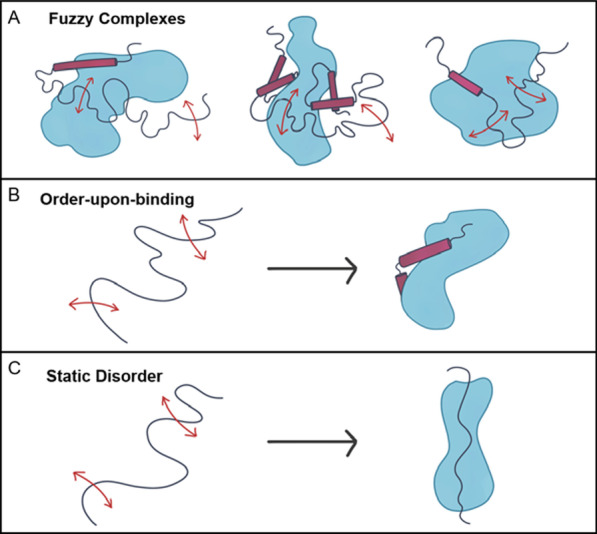
“Some IDPs/IDRs may remain unfolded and dynamic even in the bound state [19–23], creating fuzzy complexes (Fig. 1) [24, 25].”
§ Intrinsically disordered proteins play diverse roles in cell signaling > Background
What the sources say
- Not checked yetcites [19] Borgia A, Borgia MB, Bugge K, Kissling VM, Heidarsson PO, Fernandes CB, et al. Extreme disorder in an ultrahigh-affinity protein complex. Nature. 2018;55:61–6. source
- Not checked yetcites [20] Borg M, Mittag T, Pawson T, Tyers M, Forman-Kay JD, Chan HS. Polyelectrostatic interactions of disordered ligands suggest a physical basis for ultrasensitivity. Proc Natl Acad Sci USA. 2007;104:9650–5. source
- Not checked yetcites [21] Permyakov SE, Millett IS, Doniach S, Perkyakov EA, Uversky VN. Natively unfolded C-terminal domain of caldesmon remains substantially unstructured after the effective binding to calmodulin. Proteins. 2003;53:855–62. source
- Not checked yetcites [22] Sigalov AB, Zhuravleva A, Orekhov VY. Binding of intrinsically disordered proteins is not necessarily accompanied by a structural transition to a folded form. Biochimie. 2007;89:419–21. source
- Not checked yetcites [23] Sigalov AB. Protein intrinsic disorder and oligomericity in cell signaling. Mol Biosyst. 2010;6:451–61. source
- Not checked yetcites [24] Fuxreiter M, Simon I, Bondos S. Dynamic protein-DNA recognition: beyond what can be seen. Trends Biochem Sci. 2011;36:415–23. source
- Not checked yetcites [25] Fuxreiter M, Tompa P. Fuzzy complexes: a more stochastic view of protein function. Adv Exp Med Biol. 2012;725:1–14. source
hedgedconditional- Asserted: passes — The authors put it forward as true.
- Checkable: passes — It can be checked against evidence.
- Load-bearing: unclear — It is unclear whether the paper’s conclusions depend on it.
- Based: passes — The paper gives a reason why it holds.
None of the sources cited for this claim have been checked yet.
In the paper
“Many IDPs/IDRs are capable of at least partial ordering upon interaction with specific partners [7–18].”
§ Intrinsically disordered proteins play diverse roles in cell signaling > Background
What the sources say
- Not checked yetcites [7] Wright PE, Dyson HJ. Intrinsically unstructured proteins: re-assessing the protein structure-function paradigm. J Mol Biol. 1999;293:321–31. source
- Not checked yetcites [8] Dunker AK, Obradović Z. The protein trinity - linking function and disorder. Nat Biotechnol. 2001;19:805–6. source
- Not checked yetcites [9] Dunker AK, Brown CJ, Lawson JD, Iakoucheva LM, Obradović Z. Intrinsic disorder and protein function. Biochemistry. 2002;41:6573–82. source
- Not checked yetcites [10] Dunker AK, Cortese MS, Romero P, Iakoucheva LM, Uversky VN. Flexible nets: the roles of intrinsic disorder in protein interaction networks. FEBS J. 2005;272:5129–48. source
- Not checked yetcites [11] Daughdrill GW, Pielak GJ, Uversky VN, Cortese MS, Dunker AK. Natively disordered proteins. In: Buchner J, Kiefhaber T, editors. Handbook of protein folding. Weinheim: Wiley, Verlag GmbH & Co KGaA; 2005. p. 271–353.
- Not checked yetcites [12] Dyson HJ, Wright PE. Coupling of folding and binding for unstructured proteins. Curr Opin Struct Biol. 2002;12:54–60. source
- Not checked yetcites [13] Wright DHJPE. Intrinsically unstructured proteins and their functions. Nat Rev Mol Cell Biol. 2005;6:197–208. source
- Not checked yetcites [14] Iakoucheva LM, Brown CJ, Lawson JD, Obradović Z, Dunker AK. Intrinsic disorder in cell-signaling and cancer-associated proteins. J Mol Biol. 2002;323:573–84. source
- Not checked yetcites [15] Plaxco KW, Gross M. Cell biology. The importance of being unfolded. Nature. 1997;386:657–9. source
- Not checked yetcites [16] Pontius BW. Close encounters: why unstructured, polymeric domains can increase rates of specific macromolecular association. Trends Biochem Sci. 1993;18:181–6. source
plainconditional- Asserted: passes — The authors put it forward as true.
- Checkable: passes — It can be checked against evidence.
- Load-bearing: passes — The paper’s conclusions depend on it.
- Based: passes — The paper gives a reason why it holds.
A conclusion the paper draws from its own results — it cites no other source for it, so there is none to check. The quote shows it is in the paper.
In the paper
“These conflicting needs have been resolved to a large extent by including intrinsically disordered proteins in cell signaling pathways through biological evolution.”
§ Intrinsically disordered proteins play diverse roles in cell signaling > Background
plaindirect- Asserted: passes — The authors put it forward as true.
- Checkable: passes — It can be checked against evidence.
- Load-bearing: passes — The paper’s conclusions depend on it.
- Based: passes — The paper gives a reason why it holds.
A conclusion the paper draws from its own results — it cites no other source for it, so there is none to check. The quote shows it is in the paper.
In the paper
“Thus, a cell signaling pathway cannot be fully described without understanding how intrinsically disordered protein regions contribute to its function.”
§ Intrinsically disordered proteins play diverse roles in cell signaling > Abstract
plaindirect- Asserted: passes — The authors put it forward as true.
- Checkable: unclear — It is unclear whether it could be checked against evidence.
- Load-bearing: passes — The paper’s conclusions depend on it.
- Based: passes — The paper gives a reason why it holds.
None of the sources cited for this claim have been checked yet.
In the paper
“Upon binding of an IDP/IDR to a signaling partner, the free energy required to bring about the disorder-to-order transition subtracts from the interfacial, contact-free energy, resulting in a highly specific interaction that can be combined with a low net free energy of association [3, 18].”
§ Intrinsically disordered proteins play diverse roles in cell signaling > Background
What the sources say
- Not checked yetcites [3] Dunker AK, Lawson JD, Brown CJ, Williams RM, Romero P, Oh JS, et al. Intrinsically disordered protein. J Mol Graph Model. 2001;19:26–59. source
- Not checked yetcites [18] Schulz GE. Nucleotide binding proteins. In: Balaban M, editor. Molecular mechanism of biological recognition. New York: Elsevier/North-Holland Biomedical Press; 1979. p. 79–94.
plaindirect- Asserted: passes — The authors put it forward as true.
- Checkable: passes — It can be checked against evidence.
- Load-bearing: passes — The paper’s conclusions depend on it.
- Based: passes — The paper gives a reason why it holds.
In the paper
“Recruitment and the extent of activation of membrane-associated PTEN depends on the composition, and thus the surface characteristics such as charge, of the membrane (reviewed in [187]).”
§ Intrinsically disordered proteins play diverse roles in cell signaling > IDRS/IDPS pervade pathways that respond to a wide variety of signals
What the sources say
- Not checked yetcites [187] Mingo J, Luna S, Gaafar A, Nunes-Xavier E, Torices L, Mosteiro L. Precise definition of PTEN C-terminal epitopes and its implications in clinical oncology. Precision Oncol. 2019;3:11. source
plaindirect- Asserted: passes — The authors put it forward as true.
- Checkable: passes — It can be checked against evidence.
- Load-bearing: unclear — It is unclear whether the paper’s conclusions depend on it.
- Based: passes — The paper gives a reason why it holds.
In the paper
“The resulting collection of PTMs constitutes a “histone code” that elicits unique gene regulatory responses [44].”
§ Intrinsically disordered proteins play diverse roles in cell signaling > Background
What the sources say
- Not checked yetcites [44] Strahl BD, Allis CD. The language of covalent histone modifications. Nature. 2000;403:41–5. source
plaindirect- Asserted: passes — The authors put it forward as true.
- Checkable: passes — It can be checked against evidence.
- Load-bearing: unclear — It is unclear whether the paper’s conclusions depend on it.
- Based: passes — The paper gives a reason why it holds.
A conclusion the paper draws from its own results — it cites no other source for it, so there is none to check. The quote shows it is in the paper.
In the paper
“The strong preferences of PTMs and protein segments encoded by alternative splicing to be colocalized in IDRs means that alternative splicing and PTMs will commonly work together to orchestrate signaling.”
§ Intrinsically disordered proteins play diverse roles in cell signaling > Background
boosteddirect- Asserted: passes — The authors put it forward as true.
- Checkable: passes — It can be checked against evidence.
- Load-bearing: passes — The paper’s conclusions depend on it.
- Based: passes — The paper gives a reason why it holds.
In the paper
“Indeed, the signaling functions carried out by G protein-coupled receptors (GPCRs), which are transmembrane proteins; the nuclear factors of activated T cells (NFATs), which are transcription factors; and the Src family kinases (SFKs), which are signaling enzymes, are all modulated by the collaboration of PTMs and alternative splicing that map to the same IDRs [39].”
§ Intrinsically disordered proteins play diverse roles in cell signaling > Background
What the sources say
- Not checked yetcites [39] Zhou J, Zhao S, Dunker AK. Intrinsically disordered proteins link alternative splicing and post-translational modifications to complex cell signaling and regulation. J Mol Biol. 2018;430:2342–59. source
plaindirect- Asserted: passes — The authors put it forward as true.
- Checkable: passes — It can be checked against evidence.
- Load-bearing: unclear — It is unclear whether the paper’s conclusions depend on it.
- Based: passes — The paper gives a reason why it holds.
In the paper
“When protein interaction sites are located within intrinsically disordered regions, the protein associations required to propagate cell signaling pathways are significantly accelerated [29].”
§ Intrinsically disordered proteins play diverse roles in cell signaling > Background
What the sources say
- Not checked yetcites [29] Misiura MM, Kolomeisky AB. Role of intrinsically disordered regions in acceleration of protein-protein association. J Phys Chem B. 2002;124:20–7. source
plaindirect- Asserted: passes — The authors put it forward as true.
- Checkable: passes — It can be checked against evidence.
- Load-bearing: unclear — It is unclear whether the paper’s conclusions depend on it.
- Based: passes — The paper gives a reason why it holds.
In the paper
“The mRNA involved in alternative splicing shows a strong preference to code for disorder rather than for structure (with structured-domain-encoding exon skipping being the main exception to this preference); adding and deleting protein segments is much less disruptive in IDRs than in structured regions [40].”
§ Intrinsically disordered proteins play diverse roles in cell signaling > Background
What the sources say
- Not checked yetcites [40] Romero PR, Zaidi S, Fang YY, Uversky VN, Radivojac P, Oldfield CJ, et al. Alternative splicing in concert with protein intrinsic disorder enables increased functional diversity in multicellular organisms. Proc Natl Acad Sci USA. 2006;103:8390–5. source
boostedcorrelational- Asserted: passes — The authors put it forward as true.
- Checkable: passes — It can be checked against evidence.
- Load-bearing: unclear — It is unclear whether the paper’s conclusions depend on it.
- Based: passes — The paper gives a reason why it holds.
None of the sources cited for this claim have been checked yet.
In the paper
“The combined use of intrinsic disorder, alternative splicing and PTM widely enables the context-dependent orchestration of signaling in developmental biology and other complex processes [38, 39].”
§ Intrinsically disordered proteins play diverse roles in cell signaling > Background
What the sources say
- Not checked yetcites [38] Dunker AK, Silman I, Uversky VN, Sussman JL. Function and structure of inherently disordered proteins. Curr Opin Struct Biol. 2008;18:756–64. source
- Not checked yetcites [39] Zhou J, Zhao S, Dunker AK. Intrinsically disordered proteins link alternative splicing and post-translational modifications to complex cell signaling and regulation. J Mol Biol. 2018;430:2342–59. source
boosteddirect- Asserted: passes — The authors put it forward as true.
- Checkable: passes — It can be checked against evidence.
- Load-bearing: unclear — It is unclear whether the paper’s conclusions depend on it.
- Based: passes — The paper gives a reason why it holds.
In the paper
“Indeed, multiple signaling pathways reversibly add different PTMs to the disordered tails of histone proteins [43].”
§ Intrinsically disordered proteins play diverse roles in cell signaling > Background
What the sources say
- Not checked yetcites [43] Cheung P, Allis CD, Sassone-Corsi P. Signaling to chromatin through histone modifications. Cell. 2000;103:263–71. source
plaindirect- Asserted: passes — The authors put it forward as true.
- Checkable: passes — It can be checked against evidence.
- Load-bearing: unclear — It is unclear whether the paper’s conclusions depend on it.
- Based: passes — The paper gives a reason why it holds.
None of the sources cited for this claim have been checked yet.
In the paper
“Indeed, the presence of intrinsically disordered regions increases the potential for allosteric regulation [32, 33].”
§ Intrinsically disordered proteins play diverse roles in cell signaling > Background
What the sources say
- Not checked yetcites [32] Li L, Uversky VN, Dunker AK, Meroueh SO. A computational investigation of allostery in the catabolite activator protein. J Am Chem Soc. 2007;129:15668–76. source
- Not checked yetcites [33] Hilser VJ, Thompson EB. Intrinsic disorder as a mechanism to optimize allosteric coupling in proteins. Proc Natl Acad Sci USA. 2007;104:8311–5. source
plaindirect- Asserted: passes — The authors put it forward as true.
- Checkable: passes — It can be checked against evidence.
- Load-bearing: unclear — It is unclear whether the paper’s conclusions depend on it.
- Based: passes — The paper gives a reason why it holds.
None of the sources cited for this claim have been checked yet.
In the paper
“The low energetic barriers that characterize the transition between active and inactive states in intrinsically disordered proteins help shift the equilibrium toward the active state [27, 28].”
§ Intrinsically disordered proteins play diverse roles in cell signaling > Background
What the sources say
- Not checked yetcites [27] Kreiger JM, Fusco G, Lewitzky M, Simister PC, Marchant J, Camilloni C, et al. Conformational recognition of an intrinsically disordered protein. Biophys J. 2014;106:1771–9. source
- Not checked yetcites [28] Ma B, Nussinov R. Amplification of signaling via cellular allosteric relay and protein disorder. Proc Natl Acad Sci USA. 2009;106:6887–8. source
plaindirect- Asserted: passes — The authors put it forward as true.
- Checkable: passes — It can be checked against evidence.
- Load-bearing: unclear — It is unclear whether the paper’s conclusions depend on it.
- Based: passes — The paper gives a reason why it holds.
In the paper
“The problem is further complicated by the nesting doll (Matryoshka)-like organization of the cellular signaling, which represents a complex network of networks, with even a single node in a protein–protein interaction network representing a multileveled network itself [54].”
§ Intrinsically disordered proteins play diverse roles in cell signaling > Background
What the sources say
- Not checked yetcites [54] Uversky VN, Giuliani A. Networks of networks: an essay on multi-level biological organization. Front Genet. 2021;12:706260. source
plain- Asserted: passes — The authors put it forward as true.
- Checkable: passes — It can be checked against evidence.
- Load-bearing: unclear — It is unclear whether the paper’s conclusions depend on it.
- Based: passes — The paper gives a reason why it holds.
In the paper
“Experiments and predictions indicate that for all of these proteins the multiple PTMs are located in IDRs [52].”
§ Intrinsically disordered proteins play diverse roles in cell signaling > Background
What the sources say
- Not checked yetcites [52] Pejaver V, Hsu W-L, Xin F, Dunker AK, Uversky VN, Radivojac P, et al. The structural and functional signatures of proteins that undergo multiple events of post-translational modification. Protein Sci. 2014;23:1077–93. source
hedgedcorrelational- Asserted: passes — The authors put it forward as true.
- Checkable: passes — It can be checked against evidence.
- Load-bearing: passes — The paper’s conclusions depend on it.
- Based: passes — The paper gives a reason why it holds.
In the paper
“The combination of allosteric regulation with a catalytic output (e.g. kinase activity) can also amplify the response to the signal, ensuring it successfully reaches the nucleus [31].”
§ Intrinsically disordered proteins play diverse roles in cell signaling > Background
What the sources say
- Not checked yetcites [31] Zhu L, Anslyn EV. Signal amplification by allosteric catalysis. Angew Chem Int Ed Engl. 2006;45:1190–6. source
plaindirect- Asserted: passes — The authors put it forward as true.
- Checkable: passes — It can be checked against evidence.
- Load-bearing: unclear — It is unclear whether the paper’s conclusions depend on it.
- Based: passes — The paper gives a reason why it holds.
In the paper
“Furthermore, the protein–protein interactions that propagate the intracellular signal often allosterically trigger post-translational modifications (PTMs) [30].”
§ Intrinsically disordered proteins play diverse roles in cell signaling > Background
What the sources say
- Not checked yetcites [30] Flock T, Hauser AS, Lund N, Gloriam DE, Balaji S, Babu MM. Selectivity determinants of GPCR-G-protein binding. Nature. 2017;545:317–22. source
plaindirect- Asserted: passes — The authors put it forward as true.
- Checkable: passes — It can be checked against evidence.
- Load-bearing: unclear — It is unclear whether the paper’s conclusions depend on it.
- Based: passes — The paper gives a reason why it holds.
In the paper
“Recently, based on the comprehensive bioinformatics analysis of human GPCRs and G proteins supported, at least in part, by experimental evidence, it was concluded that intrinsic disorder and associated structural plasticity are crucial for this signaling system [213].”
§ Intrinsically disordered proteins play diverse roles in cell signaling > IDRS/IDPS pervade pathways that respond to a wide variety of signals
What the sources say
- Not checked yetcites [213] Fonin AV, Darling AL, Kuznetsova IM, Tuoverov KK, Uversky VN. Multi-functionality of proteins involved in GPCR and G protein signaling: making sense of structure-function continuum with intrinsic disorder-based proteoforms. Cell Mol Life Sci. 2019;76:4461–92. source
boosteddirect- Asserted: passes — The authors put it forward as true.
- Checkable: passes — It can be checked against evidence.
- Load-bearing: passes — The paper’s conclusions depend on it.
- Based: passes — The paper gives a reason why it holds.
In the paper
“Indeed, the ratio of VEGF165b/VEGF165 corelates with lymph node metastases [201].”
§ Intrinsically disordered proteins play diverse roles in cell signaling > IDRS/IDPS pervade pathways that respond to a wide variety of signals
What the sources say
- Not checked yetcites [201] Boudria A, Faycal CA, Jia T, Gout S, Keramidas M, Didier C, et al. VEGF165b, a splice variant of VEGF-A, promotes lung tumor progression and escape from anti-angiogenic therapies through a b1 integrin/VEGFR autocrine loop. Oncogene. 2019;38:1050–66. source
plaincorrelational- Asserted: passes — The authors put it forward as true.
- Checkable: passes — It can be checked against evidence.
- Load-bearing: unclear — It is unclear whether the paper’s conclusions depend on it.
- Based: passes — The paper gives a reason why it holds.
In the paper
“These results suggest that interactions of other proteins with osteopontin generally occur via conformational selection [198].”
§ Intrinsically disordered proteins play diverse roles in cell signaling > IDRS/IDPS pervade pathways that respond to a wide variety of signals
What the sources say
- Not checked yetcites [198] Kurzbach D, Platzer G, Schwarz TC, Henen MA, Konrat R, Hinderberger D. Cooperative unfolding of compact conformations of the intrinsically disordered protein osteopontin. Biochemistry. 2013;52:5167–75. source
hedgeddirect- Asserted: passes — The authors put it forward as true.
- Checkable: passes — It can be checked against evidence.
- Load-bearing: unclear — It is unclear whether the paper’s conclusions depend on it.
- Based: passes — The paper gives a reason why it holds.
In the paper
“In other words, this intrinsic disorder-based multifunctionality of the GPCR-G protein signaling system represents an important illustration of the structure–function continuum concept applied to cellular signaling [213].”
§ Intrinsically disordered proteins play diverse roles in cell signaling > IDRS/IDPS pervade pathways that respond to a wide variety of signals
What the sources say
- Not checked yetcites [213] Fonin AV, Darling AL, Kuznetsova IM, Tuoverov KK, Uversky VN. Multi-functionality of proteins involved in GPCR and G protein signaling: making sense of structure-function continuum with intrinsic disorder-based proteoforms. Cell Mol Life Sci. 2019;76:4461–92. source
plaincorrelational- Asserted: passes — The authors put it forward as true.
- Checkable: passes — It can be checked against evidence.
- Load-bearing: unclear — It is unclear whether the paper’s conclusions depend on it.
- Based: passes — The paper gives a reason why it holds.
In the paper
“Unliganded osteopontin interconverts between extended, random coil-like conformations as well as a collapsed, cooperatively folded state capable of generating sigmoidal structural denaturation curves [198].”
§ Intrinsically disordered proteins play diverse roles in cell signaling > IDRS/IDPS pervade pathways that respond to a wide variety of signals
What the sources say
- Not checked yetcites [198] Kurzbach D, Platzer G, Schwarz TC, Henen MA, Konrat R, Hinderberger D. Cooperative unfolding of compact conformations of the intrinsically disordered protein osteopontin. Biochemistry. 2013;52:5167–75. source
plain- Asserted: passes — The authors put it forward as true.
- Checkable: passes — It can be checked against evidence.
- Load-bearing: unclear — It is unclear whether the paper’s conclusions depend on it.
- Based: passes — The paper gives a reason why it holds.
In the paper
“The UVR8 photoreceptor in plants is crucial for generating photomorphogenic and protective responses to UV light [162].”
§ Intrinsically disordered proteins play diverse roles in cell signaling > IDRS/IDPS pervade pathways that respond to a wide variety of signals
What the sources say
- Not checked yetcites [162] Camacho IS, Theisen A, Johannissen LO, Diaz-Raos LA, Christie JM, Jenkins GI, et al. Native mass spectrometry reveals the conformational diversity of the UVR8 photoreceptor. Proc Natl Acad Sci USA. 2019;116:1116–25. source
plaindirect- Asserted: passes — The authors put it forward as true.
- Checkable: passes — It can be checked against evidence.
- Load-bearing: unclear — It is unclear whether the paper’s conclusions depend on it.
- Based: passes — The paper gives a reason why it holds.
In the paper
“Unlike many structured protein domains, the function of IDPs/IDRs can persist in extreme environmental conditions.”
§ Intrinsically disordered proteins play diverse roles in cell signaling > IDRS/IDPS pervade pathways that respond to a wide variety of signals
What the sources say
- Not checked yetcites [26] Launay H, Receveur-Brechot V, Carriere F, Gontero B. Ochestration of algal metabolism by protein disorder. Arch Biochem Biophys. 2019;672:108070. source
plain- Asserted: passes — The authors put it forward as true.
- Checkable: passes — It can be checked against evidence.
- Load-bearing: unclear — It is unclear whether the paper’s conclusions depend on it.
- Based: passes — The paper gives a reason why it holds.
In the paper
“The disordered tail is also modified via ubiquitination as part of protein degradation, and by acetylation, sumoylation, and S-nitrosylation [192].”
§ Intrinsically disordered proteins play diverse roles in cell signaling > IDRS/IDPS pervade pathways that respond to a wide variety of signals
What the sources say
- Not checked yetcites [192] Malaney P, Uversky VN, Davé V. Identification of intrinsically disordered region in PTEN and delineation of its function via a network approach. Methods. 2015;77–78:69–74. source
plaindirect- Asserted: passes — The authors put it forward as true.
- Checkable: passes — It can be checked against evidence.
- Load-bearing: unclear — It is unclear whether the paper’s conclusions depend on it.
- Based: passes — The paper gives a reason why it holds.
None of the sources cited for this claim have been checked yet.
In the paper
“By ineffectively occupying a binding site on the receptor, the VEGFXXXb isoforms inhibit the function of the VEGFXXX variants [36, 200].”
§ Intrinsically disordered proteins play diverse roles in cell signaling > IDRS/IDPS pervade pathways that respond to a wide variety of signals
What the sources say
- Not checked yetcites [36] Kawamura H, Li X, Harper SJ, Bates DO, Claesson-Welsh L. Vascular endothelial growth factor (VEGF)-A165b is a weak in vitro agonist for VEGF receptor-2 due to lack of coreceptor binding and deficient regulation of kinase activity. Cancer Res. 2008;68:4683–92. source
- Not checked yetcites [200] Woolard J, Wang WY, Bevan HS, Qiu Y, Morbidelli L, Pritchard-Jones RO, et al. VEGF165b, an inhibitory vascular endothelial growth factor splice variant: mechanism of action in vivo effect on aniogenesis and endogenous protein expression. Cancer Res. 2004;64:7822–35. source
plaindirect- Asserted: passes — The authors put it forward as true.
- Checkable: passes — It can be checked against evidence.
- Load-bearing: unclear — It is unclear whether the paper’s conclusions depend on it.
- Based: passes — The paper gives a reason why it holds.
In the paper
“Again, this protein appears to take advantage of the previously described IDP-AS-PTM Toolkit [39].”
§ Intrinsically disordered proteins play diverse roles in cell signaling > IDRS/IDPS pervade pathways that respond to a wide variety of signals
What the sources say
- Not checked yetcites [39] Zhou J, Zhao S, Dunker AK. Intrinsically disordered proteins link alternative splicing and post-translational modifications to complex cell signaling and regulation. J Mol Biol. 2018;430:2342–59. source
hedgedconditional- Asserted: passes — The authors put it forward as true.
- Checkable: passes — It can be checked against evidence.
- Load-bearing: unclear — It is unclear whether the paper’s conclusions depend on it.
- Based: passes — The paper gives a reason why it holds.
In the paper
“The UVR8 protein includes intrinsically disordered N- and C-terminal tails which regulate protein activity [162].”
§ Intrinsically disordered proteins play diverse roles in cell signaling > IDRS/IDPS pervade pathways that respond to a wide variety of signals
What the sources say
- Not checked yetcites [162] Camacho IS, Theisen A, Johannissen LO, Diaz-Raos LA, Christie JM, Jenkins GI, et al. Native mass spectrometry reveals the conformational diversity of the UVR8 photoreceptor. Proc Natl Acad Sci USA. 2019;116:1116–25. source
plaindirect- Asserted: passes — The authors put it forward as true.
- Checkable: passes — It can be checked against evidence.
- Load-bearing: unclear — It is unclear whether the paper’s conclusions depend on it.
- Based: passes — The paper gives a reason why it holds.
In the paper
“The vegf mRNA is alternatively spliced to produce a family of protein isoforms with varying affinities for different VEGF receptors [199].”
§ Intrinsically disordered proteins play diverse roles in cell signaling > IDRS/IDPS pervade pathways that respond to a wide variety of signals
What the sources say
- Not checked yetcites [199] Robinson CJ, Stringer SE. The splice variants of vascular endothelial growth factor (VEGF) and their reeptors. J Cell Sci. 2001;114:853–65. source
plaindirect- Asserted: passes — The authors put it forward as true.
- Checkable: passes — It can be checked against evidence.
- Load-bearing: unclear — It is unclear whether the paper’s conclusions depend on it.
- Based: passes — The paper gives a reason why it holds.
None of the sources cited for this claim have been checked yet.
In the paper
“The VEGF “B” splice variants are generated by use of an alternate 3’ acceptor site for exon 8, lengthening the intrinsically disordered C-terminal tail by an additional 6 amino acids (e.g., VEGF165 versus VEGF165b) [36, 200].”
§ Intrinsically disordered proteins play diverse roles in cell signaling > IDRS/IDPS pervade pathways that respond to a wide variety of signals
What the sources say
- Not checked yetcites [36] Kawamura H, Li X, Harper SJ, Bates DO, Claesson-Welsh L. Vascular endothelial growth factor (VEGF)-A165b is a weak in vitro agonist for VEGF receptor-2 due to lack of coreceptor binding and deficient regulation of kinase activity. Cancer Res. 2008;68:4683–92. source
- Not checked yetcites [200] Woolard J, Wang WY, Bevan HS, Qiu Y, Morbidelli L, Pritchard-Jones RO, et al. VEGF165b, an inhibitory vascular endothelial growth factor splice variant: mechanism of action in vivo effect on aniogenesis and endogenous protein expression. Cancer Res. 2004;64:7822–35. source
plaindirect- Asserted: passes — The authors put it forward as true.
- Checkable: passes — It can be checked against evidence.
- Load-bearing: unclear — It is unclear whether the paper’s conclusions depend on it.
- Based: passes — The paper gives a reason why it holds.
In the paper
“Therefore, multifunctionality of GPCRs and G proteins, which is required for recognition of a wide variety of extracellular signals and for transmission of this extracellular information for triggering a multitude of the intracellular pathways, is determined by the presence of intrinsic disorder.”
§ Intrinsically disordered proteins play diverse roles in cell signaling > IDRS/IDPS pervade pathways that respond to a wide variety of signals
What the sources say
- Not checked yetcites [213] Fonin AV, Darling AL, Kuznetsova IM, Tuoverov KK, Uversky VN. Multi-functionality of proteins involved in GPCR and G protein signaling: making sense of structure-function continuum with intrinsic disorder-based proteoforms. Cell Mol Life Sci. 2019;76:4461–92. source
plaindirect- Asserted: passes — The authors put it forward as true.
- Checkable: passes — It can be checked against evidence.
- Load-bearing: passes — The paper’s conclusions depend on it.
- Based: passes — The paper gives a reason why it holds.
In the paper
“Mechanical stress is transmitted between cells via cell–cell adhesion adherens junctions composed of the ABE complex (alpha-catenin, beta-catenin, and epithelial cadherin cytoplasmic domain) [223].”
§ Intrinsically disordered proteins play diverse roles in cell signaling > IDRS/IDPS pervade pathways that respond to a wide variety of signals
What the sources say
- Not checked yetcites [223] Bush M, Alhanshali BM, Qian S, Stanley CB, Heller WT, Matsui T, et al. An ensemble of flexible conformations underlies mechanotransduction by the cadherin-catenin adhesion complex. Proc Natl Acad Sci USA. 2019;116:21545–55. source
plaindirect- Asserted: passes — The authors put it forward as true.
- Checkable: passes — It can be checked against evidence.
- Load-bearing: unclear — It is unclear whether the paper’s conclusions depend on it.
- Based: passes — The paper gives a reason why it holds.
None of the sources cited for this claim have been checked yet.
In the paper
“Prior to Wnt signaling, the transcription factor β-catenin is maintained at low levels by the β-catenin destruction complex, which is an assembly of the 852 residue mostly disordered scaffold protein axin, the 2,843 residue massively disordered protein adenomatous polyposis coli (APC), and the three mostly structured proteins β-catenin, casein kinase Ia (CKI-a), and glycogen synthetase kinase 3b (”
§ Intrinsically disordered proteins play diverse roles in cell signaling > IDRS/IDPS are found in every category of cell signaling pathways
What the sources say
- Not checked yetcites [259] Xue B, Romero PR, Noutsou M, Maurice MM, Rüdiger SG, William AM Jr, et al. Stochastic machines as a colocalization mechanism for scaffold protein function. FEBS Lett. 2013;587:1587–91. source
- Not checked yetcites [260] Kimelman D, Xu W. beta-catenin destruction complex: insights and questions from a structural perspective. Oncogene. 2006;25:7482–91. source
plaindirect- Asserted: passes — The authors put it forward as true.
- Checkable: passes — It can be checked against evidence.
- Load-bearing: unclear — It is unclear whether the paper’s conclusions depend on it.
- Based: passes — The paper gives a reason why it holds.
In the paper
“Upon ligand binding, the Notch intracellular domain, which includes a 111-amino acid intrinsically disordered region, binds the transcription factor CSL (an acronym of human and mouse CBF1/RBPJ-κ, Drosophila Suppressor of Hairless, and C. elegans Lag-1), the coactivator Mastermind, and Notch target DNA [251].”
§ Intrinsically disordered proteins play diverse roles in cell signaling > IDRS/IDPS are found in every category of cell signaling pathways
What the sources say
- Not checked yetcites [251] Wilson JJ, Kovall RA. Crystal structure of the CSL-Notch-Mastermind complex bounds to DNA. Cell. 2006;124:985–96. source
plaindirect- Asserted: passes — The authors put it forward as true.
- Checkable: passes — It can be checked against evidence.
- Load-bearing: unclear — It is unclear whether the paper’s conclusions depend on it.
- Based: passes — The paper gives a reason why it holds.
None of the sources cited for this claim have been checked yet.
In the paper
“Both have long cytoplasmic C-terminal intrinsically disordered domains (CTDs) [169, 255].”
§ Intrinsically disordered proteins play diverse roles in cell signaling > IDRS/IDPS are found in every category of cell signaling pathways
What the sources say
- Not checked yetcites [169] Warnet XL, Krog HB, Sevillano-Quispe OG, Poulsen H, Kjaergaard M. The C-terminal domains of the NMDA receptor: how intrinsically disordered tails affect signaling, plasticity, and disease. Eur J Neurosci. 2020. https://doi.org/10.1111/EJN.14842. source
- Not checked yetcites [255] Enz R. Structure of metabotropic glutamate receptor C-terminal domains in contact with interacting proteins. Front Mol Neurosci. 2012;5:52.
plain- Asserted: passes — The authors put it forward as true.
- Checkable: passes — It can be checked against evidence.
- Load-bearing: unclear — It is unclear whether the paper’s conclusions depend on it.
- Based: passes — The paper gives a reason why it holds.
In the paper
“The Arabidopsis thaliana dehydrin Early Response to Dehydration 14 (ERD14) can increase the viability of E. coli subjected to 15 min at 50 °C [230].”
§ Intrinsically disordered proteins play diverse roles in cell signaling > IDRS/IDPS pervade pathways that respond to a wide variety of signals
What the sources say
- Not checked yetcites [230] Murvai N, Kalmar L, Szalaine Agoston B, Szabo B, Tantos A, Csikos G, et al. Interplay of structural disorder and short binding elements in the cellular chaperone function of plant dehydrin ERD14. Cells. 2020;9:1856. source
plaindirect- Asserted: passes — The authors put it forward as true.
- Checkable: passes — It can be checked against evidence.
- Load-bearing: unclear — It is unclear whether the paper’s conclusions depend on it.
- Based: passes — The paper gives a reason why it holds.
In the paper
“The intrinsically disordered C-terminal domain of connexins (148 amino acids) determines whether the channel is open or closed.”
§ Intrinsically disordered proteins play diverse roles in cell signaling > IDRS/IDPS are found in every category of cell signaling pathways
What the sources say
- Not checked yetcites [253] Sorgen PL, Trease AJ, Spagnol G, Delmmar M, Nielsen MS. Protein-protein interactions with Connexin 43” Regulation and function. Int J Mol Sci. 2018;19:1428. source
plaindirect- Asserted: passes — The authors put it forward as true.
- Checkable: passes — It can be checked against evidence.
- Load-bearing: unclear — It is unclear whether the paper’s conclusions depend on it.
- Based: passes — The paper gives a reason why it holds.
In the paper
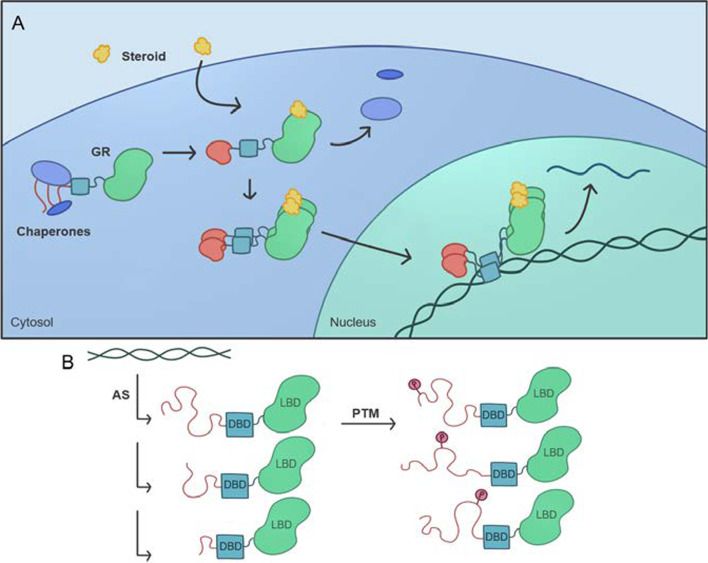
“Collectively, these abilities clearly indicate that the activity of ERs relies on intrinsic disorder [17].”
§ Intrinsically disordered proteins play diverse roles in cell signaling > IDRS/IDPS are found in every category of cell signaling pathways
What the sources say
- Not checked yetcites [17] Uversky VN, Oldfield CJ, Dunker AK. Showing your ID: intrinsic disorder as an ID for recognition, regulation and cell signaling. J Mol Recognit. 2005;18:343–84. source
boosteddirect- Asserted: passes — The authors put it forward as true.
- Checkable: passes — It can be checked against evidence.
- Load-bearing: unclear — It is unclear whether the paper’s conclusions depend on it.
- Based: passes — The paper gives a reason why it holds.
A conclusion the paper draws from its own results — it cites no other source for it, so there is none to check. The quote shows it is in the paper.
In the paper
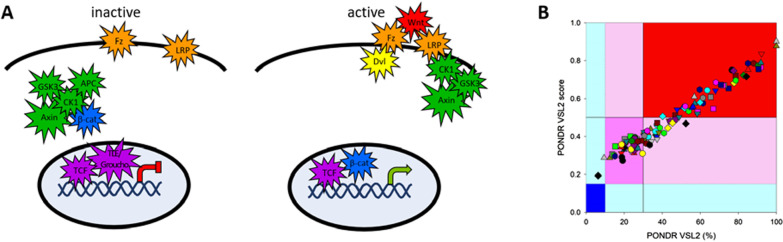
“The Wnt signaling pathway exemplifies how intrinsic disorder can play multiple roles in a single pathway (Fig. 2).”
§ Intrinsically disordered proteins play diverse roles in cell signaling > IDRS/IDPS are found in every category of cell signaling pathways
plaincorrelational- Asserted: passes — The authors put it forward as true.
- Checkable: passes — It can be checked against evidence.
- Load-bearing: unclear — It is unclear whether the paper’s conclusions depend on it.
- Based: passes — The paper gives a reason why it holds.
In the paper
“Likewise, the E. coli periplasmic protein HdeA behaves as an acid-inducible chaperone [227].”
§ Intrinsically disordered proteins play diverse roles in cell signaling > IDRS/IDPS pervade pathways that respond to a wide variety of signals
What the sources say
- Not checked yetcites [227] Hong W, Jiao W, Hu J, Zhang J, Liu C, Fu X, et al. Perplasmic protein HdeA exhibits chaperone-like activity exclusively within stomach pH range by transforming into disordered conformation. J Biol Chem. 2005;280:27029–34. source
plain- Asserted: passes — The authors put it forward as true.
- Checkable: passes — It can be checked against evidence.
- Load-bearing: unclear — It is unclear whether the paper’s conclusions depend on it.
- Based: passes — The paper gives a reason why it holds.
None of the sources cited for this claim have been checked yet.
In the paper
“Next, the β-catenin proteins undergo proteasomal destruction [259, 260], which is greatly accelerated by the presence of IDRs in addition to the bound ubiquitin signal [262].”
§ Intrinsically disordered proteins play diverse roles in cell signaling > IDRS/IDPS are found in every category of cell signaling pathways
What the sources say
- Not checked yetcites [259] Xue B, Romero PR, Noutsou M, Maurice MM, Rüdiger SG, William AM Jr, et al. Stochastic machines as a colocalization mechanism for scaffold protein function. FEBS Lett. 2013;587:1587–91. source
- Not checked yetcites [260] Kimelman D, Xu W. beta-catenin destruction complex: insights and questions from a structural perspective. Oncogene. 2006;25:7482–91. source
- Not checked yetcites [262] Prakash S, Tian L, Ratliff KS, Lehotzky RE, Matouschek A. An unstructured initiation site is required for efficient proteasome-mediated degradation. Nat Struct Mol Biol. 2004;11:830–7. source
plaindirect- Asserted: passes — The authors put it forward as true.
- Checkable: passes — It can be checked against evidence.
- Load-bearing: unclear — It is unclear whether the paper’s conclusions depend on it.
- Based: passes — The paper gives a reason why it holds.
In the paper
“Like Wnt, all ten additional developmental pathways also extensively used proteins containing IDRs [267].”
§ Intrinsically disordered proteins play diverse roles in cell signaling > IDRS/IDPS are found in every step of cell signaling pathways
What the sources say
- Not checked yetcites [267] Dunker AK, Bondos SE, Huang F, Oldfield CJ. Intrinsically disordered proteins and multicellular organisms. Semin Cell Dev Biol. 2015;37:44–55. source
plaincorrelational- Asserted: passes — The authors put it forward as true.
- Checkable: passes — It can be checked against evidence.
- Load-bearing: passes — The paper’s conclusions depend on it.
- Based: passes — The paper gives a reason why it holds.
In the paper
“Proteins bind heparin via intrinsically disordered sequences rich in lysine and arginine [259].”
§ Intrinsically disordered proteins play diverse roles in cell signaling > IDRS/IDPS are found in every step of cell signaling pathways
What the sources say
- Not checked yetcites [259] Xue B, Romero PR, Noutsou M, Maurice MM, Rüdiger SG, William AM Jr, et al. Stochastic machines as a colocalization mechanism for scaffold protein function. FEBS Lett. 2013;587:1587–91. source
plaindirect- Asserted: passes — The authors put it forward as true.
- Checkable: passes — It can be checked against evidence.
- Load-bearing: unclear — It is unclear whether the paper’s conclusions depend on it.
- Based: passes — The paper gives a reason why it holds.
In the paper
“GFs bound to HSPGs are sequestered and thus not active [280].”
§ Intrinsically disordered proteins play diverse roles in cell signaling > IDRS/IDPS are found in every step of cell signaling pathways
What the sources say
- Not checked yetcites [280] Koganti R, Suryawanshi R, Shukla D. Heparanase, cell signaling, and viral infections. Cell Mol Life Sci. 2020;77:5059–77. source
plaindirect- Asserted: passes — The authors put it forward as true.
- Checkable: passes — It can be checked against evidence.
- Load-bearing: unclear — It is unclear whether the paper’s conclusions depend on it.
- Based: passes — The paper gives a reason why it holds.
None of the sources cited for this claim have been checked yet.
In the paper
“Many receptors require intrinsically disordered cytoplasmic tails to function properly [169, 281–283].”
§ Intrinsically disordered proteins play diverse roles in cell signaling > IDRS/IDPS are found in every step of cell signaling pathways
What the sources say
- Not checked yetcites [169] Warnet XL, Krog HB, Sevillano-Quispe OG, Poulsen H, Kjaergaard M. The C-terminal domains of the NMDA receptor: how intrinsically disordered tails affect signaling, plasticity, and disease. Eur J Neurosci. 2020. https://doi.org/10.1111/EJN.14842. source
- Not checked yetcites [281] Cornish J, Chamerlain SG, Own D, Mott HR. Intrinsically disordered proteins and membranes: a marriage of convenience for cell signaling? Biochem Soc Trans. 2020;48:2669–89. source
- Not checked yetcites [282] Keppel TR, Sarpong K, Murray EM, Monsey J, Zhu J, Bose R. Biophysical evidence for intrinsic disorder in the C-terminal tails of the Epidermal Growth Factor Receptor (EGFR) and HER3 Receptor Tyrosine Kinases. J Biol Chem. 2017;292:597–610. source
- Not checked yetcites [283] Sigalov AB, Uversky VN. Differential occurrence of protein intrinsic disorder in the cytoplasmic signaling domains of cell receptors. Self Nonself. 2011;2:55–72. source
plaindirect- Asserted: passes — The authors put it forward as true.
- Checkable: passes — It can be checked against evidence.
- Load-bearing: unclear — It is unclear whether the paper’s conclusions depend on it.
- Based: passes — The paper gives a reason why it holds.
In the paper
“Thus, the destruction complex works by random movements of a ‘‘stochastic machine,’’ not by cooperative conformational changes [259].”
§ Intrinsically disordered proteins play diverse roles in cell signaling > IDRS/IDPS are found in every category of cell signaling pathways
What the sources say
- Not checked yetcites [259] Xue B, Romero PR, Noutsou M, Maurice MM, Rüdiger SG, William AM Jr, et al. Stochastic machines as a colocalization mechanism for scaffold protein function. FEBS Lett. 2013;587:1587–91. source
plaindirect- Asserted: passes — The authors put it forward as true.
- Checkable: passes — It can be checked against evidence.
- Load-bearing: passes — The paper’s conclusions depend on it.
- Based: passes — The paper gives a reason why it holds.
In the paper
“These experiments provide strong experimental validation of the stochastic machine model [259].”
§ Intrinsically disordered proteins play diverse roles in cell signaling > IDRS/IDPS are found in every category of cell signaling pathways
What the sources say
- Not checked yetcites [259] Xue B, Romero PR, Noutsou M, Maurice MM, Rüdiger SG, William AM Jr, et al. Stochastic machines as a colocalization mechanism for scaffold protein function. FEBS Lett. 2013;587:1587–91. source
boosteddirect- Asserted: passes — The authors put it forward as true.
- Checkable: passes — It can be checked against evidence.
- Load-bearing: passes — The paper’s conclusions depend on it.
- Based: passes — The paper gives a reason why it holds.
In the paper
“The affinity of growth factors/cytokines for heparin correlates with the percentage of disordered residues in heparin-binding sites [259].”
§ Intrinsically disordered proteins play diverse roles in cell signaling > IDRS/IDPS are found in every step of cell signaling pathways
What the sources say
- Not checked yetcites [259] Xue B, Romero PR, Noutsou M, Maurice MM, Rüdiger SG, William AM Jr, et al. Stochastic machines as a colocalization mechanism for scaffold protein function. FEBS Lett. 2013;587:1587–91. source
plaincorrelational- Asserted: passes — The authors put it forward as true.
- Checkable: passes — It can be checked against evidence.
- Load-bearing: unclear — It is unclear whether the paper’s conclusions depend on it.
- Based: passes — The paper gives a reason why it holds.
In the paper
“Indeed, most protein phosphorylation occur in IDRs [41].”
§ Intrinsically disordered proteins play diverse roles in cell signaling > IDRS/IDPS are found in every category of cell signaling pathways
What the sources say
- Not checked yetcites [41] Iakoucheva LM, Radivojac P, Brown CJ, O’Connor TR, Sikes JG, Obradovic Z, Dunker AK. The importance of intrinsic disorder for protein phosphorylation. Nucleic Acids Res. 2004;32:1037–49. source
plaincorrelational- Asserted: passes — The authors put it forward as true.
- Checkable: passes — It can be checked against evidence.
- Load-bearing: unclear — It is unclear whether the paper’s conclusions depend on it.
- Based: passes — The paper gives a reason why it holds.
In the paper
“Furthermore, addition of this disordered segment to solutions of β-catenin and GSK3b greatly accelerates the rate of phosphorylation of β-catenin by GSK3b.”
§ Intrinsically disordered proteins play diverse roles in cell signaling > IDRS/IDPS are found in every category of cell signaling pathways
What the sources say
- Not checked yetcites [263] Noutsou M, Duarte AM, Anvarian Z, Didenko T, Minde DP, Kuper I, et al. Critical scaffolding regions of the tumor suppressor Axin1 are natively unfolded. J Mol Biol. 2011;405:773–86. source
plaindirect- Asserted: passes — The authors put it forward as true.
- Checkable: passes — It can be checked against evidence.
- Load-bearing: passes — The paper’s conclusions depend on it.
- Based: passes — The paper gives a reason why it holds.
A conclusion the paper draws from its own results — it cites no other source for it, so there is none to check. The quote shows it is in the paper.
In the paper
“Intrinsically disordered proteins play many diverse, yet critical roles in cell signaling pathways.”
§ Intrinsically disordered proteins play diverse roles in cell signaling > Conclusions
plain- Asserted: passes — The authors put it forward as true.
- Checkable: passes — It can be checked against evidence.
- Load-bearing: passes — The paper’s conclusions depend on it.
- Based: passes — The paper gives a reason why it holds.
- Rests on an assumption: The examples reviewed are representative of cell signaling pathways generally.
A conclusion the paper draws from its own results — it cites no other source for it, so there is none to check. The quote shows it is in the paper.
In the paper
“IDPs/IDRs are uniquely suited to solving these problems, as demonstrated by several examples detailed in this review (Table 1).”
§ Intrinsically disordered proteins play diverse roles in cell signaling > Conclusions
boosteddirect- Asserted: passes — The authors put it forward as true.
- Checkable: passes — It can be checked against evidence.
- Load-bearing: passes — The paper’s conclusions depend on it.
- Based: passes — The paper gives a reason why it holds.
- Rests on an assumption: The examples reviewed are representative of cell signaling pathways generally.
In the paper
“Many kinases include IDRs, which facilitate the intermolecular interactions critical for the function and specificity of the signaling cascade [318].”
§ Intrinsically disordered proteins play diverse roles in cell signaling > IDRS/IDPS are found in every step of cell signaling pathways
What the sources say
- Not checked yetcites [318] Kathiriya JJ, Pathak RR, Clayman E, Xue B, Uversky VN. Davé. Presence and utility of intrinsically disordered regions in kinases. Mol BioSyst. 2014;10:2876–88. source
plaindirect- Asserted: passes — The authors put it forward as true.
- Checkable: passes — It can be checked against evidence.
- Load-bearing: unclear — It is unclear whether the paper’s conclusions depend on it.
- Based: passes — The paper gives a reason why it holds.
In the paper
“Many cell signaling pathways require large multi-site docking proteins to transduce signal from the activated receptor to downstream intracellular effectors [305].”
§ Intrinsically disordered proteins play diverse roles in cell signaling > IDRS/IDPS are found in every step of cell signaling pathways
What the sources say
- Not checked yetcites [305] Ding CB, Yu WN, Feng JH, Luo JM. Structure and function of Gab2 and its role in cancer. Mol Med Rep. 2015;12:4007–14. source
plaindirect- Asserted: passes — The authors put it forward as true.
- Checkable: passes — It can be checked against evidence.
- Load-bearing: unclear — It is unclear whether the paper’s conclusions depend on it.
- Based: passes — The paper gives a reason why it holds.
None of the sources cited for this claim have been checked yet.
In the paper
“Greater than 90% of transcription factors either contain IDRs or are entirely intrinsically disordered, thus it is not surprising that transcription factors regulated by cell signaling are also likely to include intrinsically disorder [275, 323].”
§ Intrinsically disordered proteins play diverse roles in cell signaling > IDRS/IDPS are found in every step of cell signaling pathways
What the sources say
- Not checked yetcites [275] Liu J, Perumal NB, Oldfield CJ, Su EW, Uversky VN, Dunker AK. Intrinsic disorder in transcription factors. Biochemistry. 2006;45:6873–88. source
- Not checked yetcites [323] Minezaki Y, Homma K, Kinjo AR, Nishikawa R. Human transcription factors contain a high fraction of intrinsically disordered regions essential for transcriptional regulation. J Mol Biol. 2006;359:1137–49. source
plain- Asserted: passes — The authors put it forward as true.
- Checkable: passes — It can be checked against evidence.
- Load-bearing: unclear — It is unclear whether the paper’s conclusions depend on it.
- Based: passes — The paper gives a reason why it holds.
In the paper
“The enrichment of positively charged amino acids within disordered regions enables electrostatic interactions with lipid head groups, which can induce membrane curvature [281].”
§ Intrinsically disordered proteins play diverse roles in cell signaling > IDRS/IDPS are found in every step of cell signaling pathways
What the sources say
- Not checked yetcites [281] Cornish J, Chamerlain SG, Own D, Mott HR. Intrinsically disordered proteins and membranes: a marriage of convenience for cell signaling? Biochem Soc Trans. 2020;48:2669–89. source
plaindirect- Asserted: passes — The authors put it forward as true.
- Checkable: passes — It can be checked against evidence.
- Load-bearing: unclear — It is unclear whether the paper’s conclusions depend on it.
- Based: passes — The paper gives a reason why it holds.
In the paper
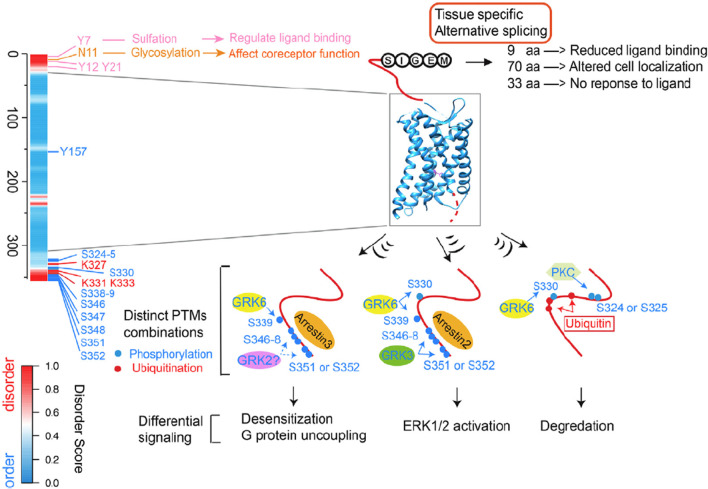
“Alternative splicing and PTMs, localized in intrinsically disordered regions, direct differential CXCR4 signaling.”
§ Intrinsically disordered proteins play diverse roles in cell signaling > IDRS/IDPS are found in every step of cell signaling pathways
What the sources say
- Not checked yetcites [39] Zhou J, Zhao S, Dunker AK. Intrinsically disordered proteins link alternative splicing and post-translational modifications to complex cell signaling and regulation. J Mol Biol. 2018;430:2342–59. source
plaindirect- Asserted: passes — The authors put it forward as true.
- Checkable: passes — It can be checked against evidence.
- Load-bearing: passes — The paper’s conclusions depend on it.
- Based: passes — The paper gives a reason why it holds.
None of the sources cited for this claim have been checked yet.
In the paper
“it is perhaps not surprising that 15% of all disordered proteins bind lipid [288, 289].”
§ Intrinsically disordered proteins play diverse roles in cell signaling > IDRS/IDPS are found in every step of cell signaling pathways
What the sources say
- Not checked yetcites [288] Deryusheva E, Nemashkalova E, Galloux M, Richard C-A, Eléouët J-F, Kovacs D, et al. Does intrinsic disorder in proteins favor their interaction with lipids? Proteomics. 2019;19:e1800098. source
- Not checked yetcites [289] Fuglebakk Reuter N. A model for hydrophobic protrusions on peripheral membrane proteins. PLoS Comput Biol. 2018;14:e1006325. source
plain- Asserted: passes — The authors put it forward as true.
- Checkable: passes — It can be checked against evidence.
- Load-bearing: unclear — It is unclear whether the paper’s conclusions depend on it.
- Based: passes — The paper gives a reason why it holds.
In the paper
“Disorder would expose any hydrophobic side chains, allowing their insertion into the membrane [281].”
§ Intrinsically disordered proteins play diverse roles in cell signaling > IDRS/IDPS are found in every step of cell signaling pathways
What the sources say
- Not checked yetcites [281] Cornish J, Chamerlain SG, Own D, Mott HR. Intrinsically disordered proteins and membranes: a marriage of convenience for cell signaling? Biochem Soc Trans. 2020;48:2669–89. source
hedgeddirect- Asserted: passes — The authors put it forward as true.
- Checkable: passes — It can be checked against evidence.
- Load-bearing: unclear — It is unclear whether the paper’s conclusions depend on it.
- Based: passes — The paper gives a reason why it holds.
In the paper
“Furthermore, the orientation of one protein to the membrane can expose or hide protein binding sites and thus regulate signal progression through the pathway [290].”
§ Intrinsically disordered proteins play diverse roles in cell signaling > IDRS/IDPS are found in every step of cell signaling pathways
What the sources say
- Not checked yetcites [290] Neale C, Garia AE. The plasma membrane as a competitive inhibitor and positive allosteric modulator of KRas4B signaling. Biophys J. 2020;118:1129–41. source
plaindirect- Asserted: passes — The authors put it forward as true.
- Checkable: passes — It can be checked against evidence.
- Load-bearing: unclear — It is unclear whether the paper’s conclusions depend on it.
- Based: passes — The paper gives a reason why it holds.
In the paper
“Furthermore, oncogenic mutations that stabilize the juxtamembrane region cause EGFR to be constitutively active [287].”
§ Intrinsically disordered proteins play diverse roles in cell signaling > IDRS/IDPS are found in every step of cell signaling pathways
What the sources say
- Not checked yetcites [287] Eck MJ, Hahn EC. EGR in limbo. Cell. 2012;149:735–7. source
plaindirect- Asserted: passes — The authors put it forward as true.
- Checkable: passes — It can be checked against evidence.
- Load-bearing: unclear — It is unclear whether the paper’s conclusions depend on it.
- Based: passes — The paper gives a reason why it holds.
In the paper
“In the absence of DNA and β-catenin, the helix I and the C-terminal end of Helix III of the LEF-1 HMG domain are unstable, fluctuating on the millisecond to microsecond timescale.”
§ Intrinsically disordered proteins play diverse roles in cell signaling > IDRS/IDPS are found in every step of cell signaling pathways
What the sources say
- Not checked yetcites [271] Love JL, Li X, Chung J, Dyson HJ, Wright PE. The LEF high-mobility group domain undergoes a disorder-to-order transition upon formation of a complex with cognate DNA. Biochemistry. 2004;43:8725–34. source
plaindirect- Asserted: passes — The authors put it forward as true.
- Checkable: passes — It can be checked against evidence.
- Load-bearing: unclear — It is unclear whether the paper’s conclusions depend on it.
- Based: passes — The paper gives a reason why it holds.
None of the sources cited for this claim have been checked yet.
In the paper
“These tails also act as a hub to form and regulate intracellular protein complexes [292–294].”
§ Intrinsically disordered proteins play diverse roles in cell signaling > IDRS/IDPS are found in every step of cell signaling pathways
What the sources say
- Not checked yetcites [292] Humphries JD, Byron A, Bass MD, Craig SE, Pinney JW, Knight D, Humphries MJ. Proteomic analysis of integrin-associated complexes identifies RCC2 as a dual regulator of Rac1 and Arf6. Sci Signal. 2009;2:ra51. source
- Not checked yetcites [293] Legate KR, Fässler R. Mechanisms that regulate adaptor binding to beta-integrin cytoplasmic tails. J Cell Sci. 2009;122:187–98. source
- Not checked yetcites [294] Shattil SJ, Kim C, Ginsberg MH. The final steps of integrin activation: the end game. Nat Rev Mol Cell Biol. 2010;11:288–300. source
plaindirect- Asserted: passes — The authors put it forward as true.
- Checkable: passes — It can be checked against evidence.
- Load-bearing: unclear — It is unclear whether the paper’s conclusions depend on it.
- Based: passes — The paper gives a reason why it holds.
- It may state two separate claims as one. 63
- Probably not a substantial claim. 11
None of the sources cited for this claim have been checked yet.
In the paper
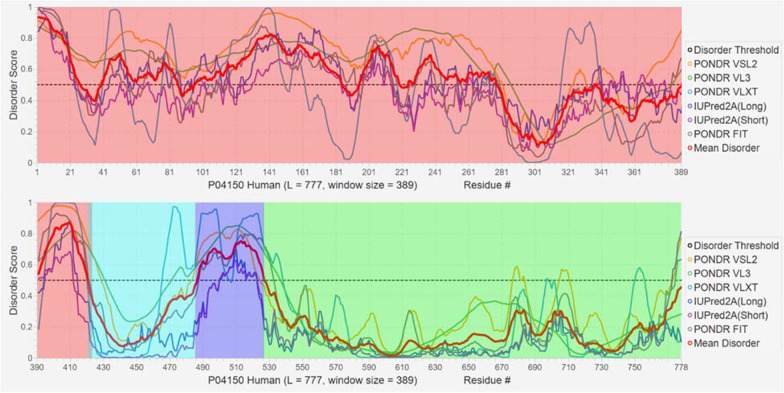
“Clearly, the N-terminal domain and a hinge region are mostly disordered”
§ Intrinsically disordered proteins play diverse roles in cell signaling > IDRS/IDPS pervade pathways that respond to a wide variety of signals
What the sources say
- Not checked yetcites [179] Obradovic Z, Peng K, Vucetic S, Radivojac P, Dunker AK. Exploiting heterogeneous sequence properties improves prediction of protein disorder. Protein. 2005;61:176–82. source
- Not checked yetcites [180] Obradovic Z, Peng K, Vucetic S, Radivojac P, Brown CJ, Dunker AK. Predicting intrinsic disorder from amino acid sequence. Protein. 2003;53:566–72. source
- Not checked yetcites [181] Xue B, Dunbrack RL, Williams RW, Dunker AK, Uversky VN. PONDR-FIT: a meta-predictor of intrinsically disordered amino acids. Biochim Biophys Acta. 2010;1804:996–1010. source
boosted- Asserted: passes — The authors put it forward as true.
- Checkable: passes — It can be checked against evidence.
- Load-bearing: unclear — It is unclear whether the paper’s conclusions depend on it.
- Based: passes — The paper gives a reason why it holds.
It may state two separate claims as one.
A result the paper reports from its own data — it cites no other source for it, so there is none to check. The quote shows it is in the paper.
In the paper
“It is noteworthy that no Wnt pathway proteins are very structured (dark blue) and only two proteins can be considered”
§ Intrinsically disordered proteins play diverse roles in cell signaling > IDRS/IDPS are found in every step of cell signaling pathways
plain- Asserted: passes — The authors put it forward as true.
- Checkable: passes — It can be checked against evidence.
- Load-bearing: unclear — It is unclear whether the paper’s conclusions depend on it.
- Based: passes — The paper gives a reason why it holds.
It may state two separate claims as one.
The paper states this without a source or data behind it here, so there is nothing to check it against. The quote shows it is in the paper.
In the paper
“So far more than 30 of these protein interaction domains have been shown by published experiments and/or by prediction to bind to DBRs in IDRs, with none so far binding to structured domains (work in progress).”
§ Intrinsically disordered proteins play diverse roles in cell signaling > IDRS/IDPS are found in every step of cell signaling pathways
plain- Asserted: passes — The authors put it forward as true.
- Checkable: passes — It can be checked against evidence.
- Load-bearing: passes — The paper’s conclusions depend on it.
- Based: passes — The paper gives a reason why it holds.
It may state two separate claims as one.
A conclusion the paper draws from its own results — it cites no other source for it, so there is none to check. The quote shows it is in the paper.
In the paper
“Thus binding-induced folding decouples binding affinity from specificity, enabling cell signaling to be reversible.”
§ Intrinsically disordered proteins play diverse roles in cell signaling > Background
plaindirect- Asserted: passes — The authors put it forward as true.
- Checkable: passes — It can be checked against evidence.
- Load-bearing: passes — The paper’s conclusions depend on it.
- Based: passes — The paper gives a reason why it holds.
It may state two separate claims as one.
In the paper
“An extreme example of this behavior is provided by two highly disordered human proteins, histone H1 and its nuclear chaperone prothymosin-α, which form a picomolar affinity complex, but in which they preserve completely their structural disorder, their long-range flexibility, and their highly dynamic character [19].”
§ Intrinsically disordered proteins play diverse roles in cell signaling > Background
What the sources say
- Not checked yetcites [19] Borgia A, Borgia MB, Bugge K, Kissling VM, Heidarsson PO, Fernandes CB, et al. Extreme disorder in an ultrahigh-affinity protein complex. Nature. 2018;55:61–6. source
plain- Asserted: passes — The authors put it forward as true.
- Checkable: passes — It can be checked against evidence.
- Load-bearing: unclear — It is unclear whether the paper’s conclusions depend on it.
- Based: passes — The paper gives a reason why it holds.
It may state two separate claims as one.
None of the sources cited for this claim have been checked yet.
In the paper
“The PTEN protein contains an N-terminal PI(4,5)P2 binding site, and a structured catalytic domain followed by an intrinsically disordered auto-inhibitory C-terminal tail which culminates in a PDZ binding domain [188, 189].”
§ Intrinsically disordered proteins play diverse roles in cell signaling > IDRS/IDPS pervade pathways that respond to a wide variety of signals
What the sources say
- Not checked yetcites [188] Lesli NR, Batty IH, Maccario H, Davidson L, Downes CP. Understanding PTEN regulation: PIP2, polarity and protein stability. Oncogene. 2008;27:5464–76. source
- Not checked yetcites [189] Odriozola L, Singh G, Hoang T, Chang AM. Regulation of PTEN activity by its carboxyl-terminal autoinhibitory domain. J Biol Chem. 2007;282:23306–15. source
plain- Asserted: passes — The authors put it forward as true.
- Checkable: passes — It can be checked against evidence.
- Load-bearing: unclear — It is unclear whether the paper’s conclusions depend on it.
- Based: passes — The paper gives a reason why it holds.
It may state two separate claims as one.
A conclusion the paper draws from its own results — it cites no other source for it, so there is none to check. The quote shows it is in the paper.
In the paper
“The concentration of both PTMs and segments encoded by alternative splicing within IDRs suggest these two sequence modifications may be co-localized, providing an opportunity to integrate two different regulatory inputs.”
§ Intrinsically disordered proteins play diverse roles in cell signaling > Background
hedgedconditional- Asserted: passes — The authors put it forward as true.
- Checkable: passes — It can be checked against evidence.
- Load-bearing: unclear — It is unclear whether the paper’s conclusions depend on it.
- Based: passes — The paper gives a reason why it holds.
It may state two separate claims as one.
None of the sources cited for this claim have been checked yet.
In the paper
“Likewise, phosphorylation [41] and many but not all other PTMs [42] show a strong preference to be localized in IDRs, likely because flexibility enhances the ability of a motif, destined for PTM addition, to enter and bind to the active site of the corresponding enzyme.”
§ Intrinsically disordered proteins play diverse roles in cell signaling > Background
What the sources say
- Not checked yetcites [41] Iakoucheva LM, Radivojac P, Brown CJ, O’Connor TR, Sikes JG, Obradovic Z, Dunker AK. The importance of intrinsic disorder for protein phosphorylation. Nucleic Acids Res. 2004;32:1037–49. source
- Not checked yetcites [42] Gao J, Xu D. Correlation between posttranslational modification and intrinsic disorder in protein. In: Pacific symposium on Biocomputing;2012. p. 94–103. source
boostedcorrelational- Asserted: passes — The authors put it forward as true.
- Checkable: passes — It can be checked against evidence.
- Load-bearing: unclear — It is unclear whether the paper’s conclusions depend on it.
- Based: passes — The paper gives a reason why it holds.
It may state two separate claims as one.
In the paper
“Consequently, PTEN is not only a powerful tumor suppressor, but also a prognostic marker that predicts response in many human cancers [187].”
§ Intrinsically disordered proteins play diverse roles in cell signaling > IDRS/IDPS pervade pathways that respond to a wide variety of signals
What the sources say
- Not checked yetcites [187] Mingo J, Luna S, Gaafar A, Nunes-Xavier E, Torices L, Mosteiro L. Precise definition of PTEN C-terminal epitopes and its implications in clinical oncology. Precision Oncol. 2019;3:11. source
plaincorrelational- Asserted: passes — The authors put it forward as true.
- Checkable: passes — It can be checked against evidence.
- Load-bearing: unclear — It is unclear whether the paper’s conclusions depend on it.
- Based: passes — The paper gives a reason why it holds.
It may state two separate claims as one.
A conclusion the paper draws from its own results — it cites no other source for it, so there is none to check. The quote shows it is in the paper.
In the paper
“Because some signaling IDPs/IDRs lack stable (secondary) structure, the energetic barriers between the bound and free states are low, allowing disordered regions to act as reversible, extremely sensitive sensors.”
§ Intrinsically disordered proteins play diverse roles in cell signaling > Background
plaindirect- Asserted: passes — The authors put it forward as true.
- Checkable: passes — It can be checked against evidence.
- Load-bearing: passes — The paper’s conclusions depend on it.
- Based: passes — The paper gives a reason why it holds.
It may state two separate claims as one.
None of the sources cited for this claim have been checked yet.
In the paper
“Finally, disordered proteins provide many avenues for integrating multiple signaling pathways [27], including providing a scaffold that binds proteins from multiple pathways [34], regulating multiple disordered substrates through PTMs, and varying pathway components through alternative mRNA splicing [35–37].”
§ Intrinsically disordered proteins play diverse roles in cell signaling > Background
What the sources say
- Not checked yetcites [27] Kreiger JM, Fusco G, Lewitzky M, Simister PC, Marchant J, Camilloni C, et al. Conformational recognition of an intrinsically disordered protein. Biophys J. 2014;106:1771–9. source
- Not checked yetcites [34] Martin-Yken H, Francois JM, Zerbib D. Knr4: a disordered hub protein at the heart of fungal cell wall signalling. Cell Microbiol. 2016;18:1217–27. source
- Not checked yetcites [35] Gough J, Dunker AK. Sequences and topology: disorder, modularity, and post/pre-translation modifications. Curr Opin Struct Biol. 2013;23:417–9. source
- Not checked yetcites [36] Kawamura H, Li X, Harper SJ, Bates DO, Claesson-Welsh L. Vascular endothelial growth factor (VEGF)-A165b is a weak in vitro agonist for VEGF receptor-2 due to lack of coreceptor binding and deficient regulation of kinase activity. Cancer Res. 2008;68:4683–92. source
- Not checked yetcites [37] Li J, White JT, Saavedra H, Wrabl JO, Motlagh HN, Liu K, Sower J, et al. Genetically tunable frustration controls allostery in an intrinsically disordered transcription factor. eLife. 2017;6:e30688. source
plaindirect- Asserted: passes — The authors put it forward as true.
- Checkable: passes — It can be checked against evidence.
- Load-bearing: unclear — It is unclear whether the paper’s conclusions depend on it.
- Based: passes — The paper gives a reason why it holds.
It may state two separate claims as one.
In the paper
“These differences can carry over to following generations, indicating that these multiple PTMs provide the basis for an epigenetic mechanism.”
§ Intrinsically disordered proteins play diverse roles in cell signaling > Background
What the sources say
- Not checked yetcites [44] Strahl BD, Allis CD. The language of covalent histone modifications. Nature. 2000;403:41–5. source
hedgeddirect- Asserted: passes — The authors put it forward as true.
- Checkable: passes — It can be checked against evidence.
- Load-bearing: unclear — It is unclear whether the paper’s conclusions depend on it.
- Based: passes — The paper gives a reason why it holds.
It may state two separate claims as one.
In the paper
“Finally, histone tails may be accessible or may adhere to the nucleosome and be inaccessible for protein interactions, demonstrating that the context provided by the nucleosome is also a key contributor [53].”
§ Intrinsically disordered proteins play diverse roles in cell signaling > Background
What the sources say
- Not checked yetcites [53] Morrison EA, Bowerman S, Sylvers KL, Wereszczynski J, Musselman CA. The conformation of the histone H3 tail inhibits association of the BPTG PHD finger with the nucleosome. eLife. 2018;7:e31481. source
boostedconditional- Asserted: passes — The authors put it forward as true.
- Checkable: passes — It can be checked against evidence.
- Load-bearing: unclear — It is unclear whether the paper’s conclusions depend on it.
- Based: passes — The paper gives a reason why it holds.
It may state two separate claims as one.
A conclusion the paper draws from its own results — it cites no other source for it, so there is none to check. The quote shows it is in the paper.
In the paper
“Whether or not stable structure results from the interaction, ligand or protein interactions shift the conformational ensemble of the IDP/IDR, linking protein function to binding.”
§ Intrinsically disordered proteins play diverse roles in cell signaling > Background
plaindirect- Asserted: passes — The authors put it forward as true.
- Checkable: passes — It can be checked against evidence.
- Load-bearing: passes — The paper’s conclusions depend on it.
- Based: passes — The paper gives a reason why it holds.
It may state two separate claims as one.
None of the sources cited for this claim have been checked yet.
In the paper
“Phosphorylation of most of these amino acids forces PTEN into a closed, more stable, inactive conformation, in which membrane association, PDZ binding, ubiquitination, and degradation are all suppressed [188, 190].”
§ Intrinsically disordered proteins play diverse roles in cell signaling > IDRS/IDPS pervade pathways that respond to a wide variety of signals
What the sources say
- Not checked yetcites [188] Lesli NR, Batty IH, Maccario H, Davidson L, Downes CP. Understanding PTEN regulation: PIP2, polarity and protein stability. Oncogene. 2008;27:5464–76. source
- Not checked yetcites [190] Rahdar M, Inoue T, Zhang J, Vazquez F, Devreotes PN. A phosphorylation-dependent intramolecular interactions regulates the membrane association and activity of the tumor suppressor PTEN. Proc Natl Acad Sci USA. 2009;106:480–5. source
plaindirect- Asserted: passes — The authors put it forward as true.
- Checkable: passes — It can be checked against evidence.
- Load-bearing: unclear — It is unclear whether the paper’s conclusions depend on it.
- Based: passes — The paper gives a reason why it holds.
It may state two separate claims as one.
In the paper
“Furthermore, the supplemental data in Zhou et al., 2018 show that all of these proteins undergo alternative splicing, suggesting the possibility that alternative splicing could be a previously unsuspected regulator of the epigenetic effects resulting from the histone code [39].”
§ Intrinsically disordered proteins play diverse roles in cell signaling > Background
What the sources say
- Not checked yetcites [39] Zhou J, Zhao S, Dunker AK. Intrinsically disordered proteins link alternative splicing and post-translational modifications to complex cell signaling and regulation. J Mol Biol. 2018;430:2342–59. source
hedgedconditional- Asserted: passes — The authors put it forward as true.
- Checkable: passes — It can be checked against evidence.
- Load-bearing: fails — The paper’s conclusions may not depend on it.
- Based: passes — The paper gives a reason why it holds.
Probably not a substantial claim. The paper’s conclusions may not depend on it. It may state two separate claims as one.
In the paper
“Inactive PTEN exists in a cytoplasmic pool and lacks substrate access [188].”
§ Intrinsically disordered proteins play diverse roles in cell signaling > IDRS/IDPS pervade pathways that respond to a wide variety of signals
What the sources say
- Not checked yetcites [188] Lesli NR, Batty IH, Maccario H, Davidson L, Downes CP. Understanding PTEN regulation: PIP2, polarity and protein stability. Oncogene. 2008;27:5464–76. source
plain- Asserted: passes — The authors put it forward as true.
- Checkable: passes — It can be checked against evidence.
- Load-bearing: unclear — It is unclear whether the paper’s conclusions depend on it.
- Based: passes — The paper gives a reason why it holds.
It may state two separate claims as one.
A conclusion the paper draws from its own results — it cites no other source for it, so there is none to check. The quote shows it is in the paper.
In the paper
“Thus, IDRs are an important feature of both the PTM code and the epigenetic effects observed for the histone code.”
§ Intrinsically disordered proteins play diverse roles in cell signaling > Background
plaincorrelational- Asserted: passes — The authors put it forward as true.
- Checkable: passes — It can be checked against evidence.
- Load-bearing: passes — The paper’s conclusions depend on it.
- Based: passes — The paper gives a reason why it holds.
It may state two separate claims as one.
None of the sources cited for this claim have been checked yet.
In the paper
“Osteopontin is a multifunctional cytokine with key roles in inflammation, cell viability, and tissue repair, which also functions as a bone matrix protein that mediates osteoclast adhesion [196, 197].”
§ Intrinsically disordered proteins play diverse roles in cell signaling > IDRS/IDPS pervade pathways that respond to a wide variety of signals
What the sources say
- Not checked yetcites [196] Icer MA, Gezmen-Karadag M. The multiple functions and mechanisms of osteopontin. Clin Biochem. 2018;59:17–24. source
- Not checked yetcites [197] O’Regan A, Berman JS. Osteopontin: a key cytokine in cell-mediated and granulomatous inflammation. Int J Exp Pathol. 2000;81:373–90. source
plaindirect- Asserted: passes — The authors put it forward as true.
- Checkable: passes — It can be checked against evidence.
- Load-bearing: fails — The paper’s conclusions may not depend on it.
- Based: passes — The paper gives a reason why it holds.
Probably not a substantial claim. The paper’s conclusions may not depend on it. It may state two separate claims as one.
None of the sources cited for this claim have been checked yet.
In the paper
“Interactions with other proteins via the PDZ binding domain or other regions of the protein both enhances PTEN stability and diversifies its function [188, 192].”
§ Intrinsically disordered proteins play diverse roles in cell signaling > IDRS/IDPS pervade pathways that respond to a wide variety of signals
What the sources say
- Not checked yetcites [188] Lesli NR, Batty IH, Maccario H, Davidson L, Downes CP. Understanding PTEN regulation: PIP2, polarity and protein stability. Oncogene. 2008;27:5464–76. source
- Not checked yetcites [192] Malaney P, Uversky VN, Davé V. Identification of intrinsically disordered region in PTEN and delineation of its function via a network approach. Methods. 2015;77–78:69–74. source
plaindirect- Asserted: passes — The authors put it forward as true.
- Checkable: passes — It can be checked against evidence.
- Load-bearing: unclear — It is unclear whether the paper’s conclusions depend on it.
- Based: passes — The paper gives a reason why it holds.
It may state two separate claims as one.
In the paper
“This trait allows IDPs to reliably sense extreme conditions and instigate responsive signaling pathways [26].”
§ Intrinsically disordered proteins play diverse roles in cell signaling > IDRS/IDPS pervade pathways that respond to a wide variety of signals
What the sources say
- Not checked yetcites [26] Launay H, Receveur-Brechot V, Carriere F, Gontero B. Ochestration of algal metabolism by protein disorder. Arch Biochem Biophys. 2019;672:108070. source
plaindirect- Asserted: passes — The authors put it forward as true.
- Checkable: passes — It can be checked against evidence.
- Load-bearing: passes — The paper’s conclusions depend on it.
- Based: passes — The paper gives a reason why it holds.
It may state two separate claims as one.
A conclusion the paper draws from its own results — it cites no other source for it, so there is none to check. The quote shows it is in the paper.
In the paper
“Signaling pathways activated by proteins often are regulated by IDPs/IDRs in multiple steps of the pathway.”
§ Intrinsically disordered proteins play diverse roles in cell signaling > IDRS/IDPS pervade pathways that respond to a wide variety of signals
plaindirect- Asserted: passes — The authors put it forward as true.
- Checkable: passes — It can be checked against evidence.
- Load-bearing: passes — The paper’s conclusions depend on it.
- Based: fails — The paper may give no reason why it holds.
Probably not a substantial claim. The paper may give no reason why it holds.
In the paper
“Thus, it is not surprising that PTEN and PTEN-L exhibit different substrate specificities and mechanisms of membrane binding [195].”
§ Intrinsically disordered proteins play diverse roles in cell signaling > IDRS/IDPS pervade pathways that respond to a wide variety of signals
What the sources say
- Not checked yetcites [195] Masson GR, Perisic O, Burke JE, Williams RL. The intrinsically disordered tails of PTEN and PTEN-L have distinct roles in regulating substrate specificity and membrane activity. Biochem J. 2016;473:135–44. source
plain- Asserted: passes — The authors put it forward as true.
- Checkable: passes — It can be checked against evidence.
- Load-bearing: unclear — It is unclear whether the paper’s conclusions depend on it.
- Based: passes — The paper gives a reason why it holds.
It may state two separate claims as one.
None of the sources cited for this claim have been checked yet.
In the paper
“The complexity of this machinery is determined by the multitude of the members of the GPCR family (in humans, there are more than 850 different GPCRs [202–205]) that are capable of being recognized and activated by more than one thousand natural and artificial extracellular ligands, ranging from photons to amines, lipids, nucleotides, organic odorants, peptides, and proteins [30, 204].”
§ Intrinsically disordered proteins play diverse roles in cell signaling > IDRS/IDPS pervade pathways that respond to a wide variety of signals
What the sources say
- Not checked yetcites [202] Bjarnadottir TK, Gloriam DE, Hellstrand SH, Kristiansson H, Fredriksson R, Schioth HB. Comprehensive repertoire and phylogenetic analysis of the G protein-coupled receptors in human and mouse. Genomics. 2006;88:263–73. source
- Not checked yetcites [203] Anantharaman V, Abhiman S, de Souza RF, Aravind L. Comparative genomics uncovers novel structural and functional features of the heterotrimeric GTPase signaling system. Gene. 2011;475:63–78. source
- Not checked yetcites [204] Fredriksson R, Lagerstrom MC, Lundin LG, Schioth HB. The G-protein-coupled receptors in the human genome form five main families. Phylogenetic analysis, paralogon groups, and fingerprints. Mol Pharmacol. 2003;63:1256–72. source
- Not checked yetcites [205] Southan C, Sharman JL, Benson HE, Faccenda E, Pawson AJ, Alexander SP, et al. The IUPHAR/BPS Guide to PHARMACOLOGY in 2016: towards curated quantitative interactions between 1300 protein targets and 6000 ligands. Nucl Acids Res. 2016;44:D1054–68. source
- Not checked yetcites [30] Flock T, Hauser AS, Lund N, Gloriam DE, Balaji S, Babu MM. Selectivity determinants of GPCR-G-protein binding. Nature. 2017;545:317–22. source
plain- Asserted: passes — The authors put it forward as true.
- Checkable: passes — It can be checked against evidence.
- Load-bearing: fails — The paper’s conclusions may not depend on it.
- Based: passes — The paper gives a reason why it holds.
Probably not a substantial claim. The paper’s conclusions may not depend on it.
In the paper
“The extent of disorder, and thus the activity, of CP12 is determined by redox conditions, although CP12 remains highly mobile in both the oxidized and reduced states.”
§ Intrinsically disordered proteins play diverse roles in cell signaling > IDRS/IDPS pervade pathways that respond to a wide variety of signals
What the sources say
- Not checked yetcites [26] Launay H, Receveur-Brechot V, Carriere F, Gontero B. Ochestration of algal metabolism by protein disorder. Arch Biochem Biophys. 2019;672:108070. source
plaindirect- Asserted: passes — The authors put it forward as true.
- Checkable: passes — It can be checked against evidence.
- Load-bearing: unclear — It is unclear whether the paper’s conclusions depend on it.
- Based: passes — The paper gives a reason why it holds.
It may state two separate claims as one.
In the paper
“Furthermore, cells contain ~ 40 of the regulator of G signaling (RGS) proteins (which are G protein effectors, modulators, and scaffold proteins) that are capable of interaction with various Gαβγ heterotrimers or their dissociated subunits [212].”
§ Intrinsically disordered proteins play diverse roles in cell signaling > IDRS/IDPS pervade pathways that respond to a wide variety of signals
What the sources say
- Not checked yetcites [212] Temple BR, Jones CD. Jones AM (2010) Evolution of a signaling nexus constrained by protein interfaces and conformational States. PLoS Comput Biol. 2010;6:e1000962. source
hedged- Asserted: passes — The authors put it forward as true.
- Checkable: passes — It can be checked against evidence.
- Load-bearing: fails — The paper’s conclusions may not depend on it.
- Based: passes — The paper gives a reason why it holds.
Probably not a substantial claim. The paper’s conclusions may not depend on it.
In the paper
“In humans, there are 23 Gα, 6 Gβ, and 12 Gγ subunits that can be assembled into numerous different heterotrimers [211].”
§ Intrinsically disordered proteins play diverse roles in cell signaling > IDRS/IDPS pervade pathways that respond to a wide variety of signals
What the sources say
- Not checked yetcites [211] Downes GB, Gautam N. The G protein subunit gene families. Genomics. 1999;62:544–52. source
plain- Asserted: passes — The authors put it forward as true.
- Checkable: passes — It can be checked against evidence.
- Load-bearing: fails — The paper’s conclusions may not depend on it.
- Based: passes — The paper gives a reason why it holds.
Probably not a substantial claim. The paper’s conclusions may not depend on it. It may state two separate claims as one.
None of the sources cited for this claim have been checked yet.
In the paper
“Multiple alternate translation and splicing start sites in the PTEN gene creates many versions of the protein, most notably PTEN-L, which contains an extra 173 amino acids on the N-terminus [187, 192, 193].”
§ Intrinsically disordered proteins play diverse roles in cell signaling > IDRS/IDPS pervade pathways that respond to a wide variety of signals
What the sources say
- Not checked yetcites [187] Mingo J, Luna S, Gaafar A, Nunes-Xavier E, Torices L, Mosteiro L. Precise definition of PTEN C-terminal epitopes and its implications in clinical oncology. Precision Oncol. 2019;3:11. source
- Not checked yetcites [192] Malaney P, Uversky VN, Davé V. Identification of intrinsically disordered region in PTEN and delineation of its function via a network approach. Methods. 2015;77–78:69–74. source
- Not checked yetcites [193] Masson GR, Williams RL. Structural mechanisms of PTEN regulation. Cold Spring Harbor Perspect Med. 2020;10:a036152. source
plaindirect- Asserted: passes — The authors put it forward as true.
- Checkable: passes — It can be checked against evidence.
- Load-bearing: unclear — It is unclear whether the paper’s conclusions depend on it.
- Based: passes — The paper gives a reason why it holds.
It may state two separate claims as one.
In the paper
“This region is also primarily disordered and post-translationally modified [192].”
§ Intrinsically disordered proteins play diverse roles in cell signaling > IDRS/IDPS pervade pathways that respond to a wide variety of signals
What the sources say
- Not checked yetcites [192] Malaney P, Uversky VN, Davé V. Identification of intrinsically disordered region in PTEN and delineation of its function via a network approach. Methods. 2015;77–78:69–74. source
plain- Asserted: passes — The authors put it forward as true.
- Checkable: passes — It can be checked against evidence.
- Load-bearing: unclear — It is unclear whether the paper’s conclusions depend on it.
- Based: passes — The paper gives a reason why it holds.
It may state two separate claims as one.
None of the sources cited for this claim have been checked yet.
In the paper
“This addition reverses the function of VEGF: while VEGF165 is a potent stimulator of angiogenesis, VEGF165b binds VEGF receptors but fails to activate them in a robust, sustained manner.”
§ Intrinsically disordered proteins play diverse roles in cell signaling > IDRS/IDPS pervade pathways that respond to a wide variety of signals
What the sources say
- Not checked yetcites [36] Kawamura H, Li X, Harper SJ, Bates DO, Claesson-Welsh L. Vascular endothelial growth factor (VEGF)-A165b is a weak in vitro agonist for VEGF receptor-2 due to lack of coreceptor binding and deficient regulation of kinase activity. Cancer Res. 2008;68:4683–92. source
- Not checked yetcites [200] Woolard J, Wang WY, Bevan HS, Qiu Y, Morbidelli L, Pritchard-Jones RO, et al. VEGF165b, an inhibitory vascular endothelial growth factor splice variant: mechanism of action in vivo effect on aniogenesis and endogenous protein expression. Cancer Res. 2004;64:7822–35. source
plaindirect- Asserted: passes — The authors put it forward as true.
- Checkable: passes — It can be checked against evidence.
- Load-bearing: unclear — It is unclear whether the paper’s conclusions depend on it.
- Based: passes — The paper gives a reason why it holds.
It may state two separate claims as one.
In the paper
“High-resolution solution NMR spectroscopy demonstrated that this long-lived pB intermediate is characterized by a noticeable level of disorder and exists as an ensemble of multiple conformers interconverting on a millisecond time scale [220].”
§ Intrinsically disordered proteins play diverse roles in cell signaling > IDRS/IDPS pervade pathways that respond to a wide variety of signals
What the sources say
- Not checked yetcites [220] Rubinstenn G, Vuister GW, Mulder FAA, Düx PE, Boelens R, Hellingwerf KJ, et al. Structural and dynamic changes of photoactive yellow protein during its photocycle in solution. Nat Struct Biol. 1998;5:568–70. source
boostedSingle case- Asserted: passes — The authors put it forward as true.
- Checkable: passes — It can be checked against evidence.
- Load-bearing: passes — The paper’s conclusions depend on it.
- Based: passes — The paper gives a reason why it holds.
It may state two separate claims as one.
In the paper
“In dark or oxidizing conditions, CP12 forms limited, marginally stable structure and 2 disulfide bonds which are required to bind and inactivate two enzymes that participate in the Calvin-Benson-Bassham cycle (glyceraldehyde-3-phosphate dehydrogenase (GAPDH) and phorphoribulokinase (PRK)).”
§ Intrinsically disordered proteins play diverse roles in cell signaling > IDRS/IDPS pervade pathways that respond to a wide variety of signals
What the sources say
- Not checked yetcites [26] Launay H, Receveur-Brechot V, Carriere F, Gontero B. Ochestration of algal metabolism by protein disorder. Arch Biochem Biophys. 2019;672:108070. source
plaindirect- Asserted: passes — The authors put it forward as true.
- Checkable: passes — It can be checked against evidence.
- Load-bearing: unclear — It is unclear whether the paper’s conclusions depend on it.
- Based: passes — The paper gives a reason why it holds.
It may state two separate claims as one.
In the paper
“In fact, human GPCRs and G proteins represent dynamic conformational ensembles containing multiple IDPRs and numerous PTMs and MoRFs, and the entire mode of action of these proteins is based on the recognition of a signal followed by conformational change needed for recognition of another partner that is crucial for the downstream transmission of the signal [213].”
§ Intrinsically disordered proteins play diverse roles in cell signaling > IDRS/IDPS pervade pathways that respond to a wide variety of signals
What the sources say
- Not checked yetcites [213] Fonin AV, Darling AL, Kuznetsova IM, Tuoverov KK, Uversky VN. Multi-functionality of proteins involved in GPCR and G protein signaling: making sense of structure-function continuum with intrinsic disorder-based proteoforms. Cell Mol Life Sci. 2019;76:4461–92. source
plaindirect- Asserted: passes — The authors put it forward as true.
- Checkable: passes — It can be checked against evidence.
- Load-bearing: passes — The paper’s conclusions depend on it.
- Based: passes — The paper gives a reason why it holds.
It may state two separate claims as one.
In the paper
“Photoexcitation of UVR8 triggers dimer dissociation and enables the extended C-terminal tail to bind COP1, which regulates light signaling in plants, and propagates the signal [162].”
§ Intrinsically disordered proteins play diverse roles in cell signaling > IDRS/IDPS pervade pathways that respond to a wide variety of signals
What the sources say
- Not checked yetcites [162] Camacho IS, Theisen A, Johannissen LO, Diaz-Raos LA, Christie JM, Jenkins GI, et al. Native mass spectrometry reveals the conformational diversity of the UVR8 photoreceptor. Proc Natl Acad Sci USA. 2019;116:1116–25. source
plaindirect- Asserted: passes — The authors put it forward as true.
- Checkable: passes — It can be checked against evidence.
- Load-bearing: unclear — It is unclear whether the paper’s conclusions depend on it.
- Based: passes — The paper gives a reason why it holds.
It may state two separate claims as one.
In the paper
“In light/reducing conditions, the disulfides bonds break and the CP12-GAPDH-PRK ternary complex dissociates, re-activating the enzymes and thus carbon fixation.”
§ Intrinsically disordered proteins play diverse roles in cell signaling > IDRS/IDPS pervade pathways that respond to a wide variety of signals
What the sources say
- Not checked yetcites [26] Launay H, Receveur-Brechot V, Carriere F, Gontero B. Ochestration of algal metabolism by protein disorder. Arch Biochem Biophys. 2019;672:108070. source
plaindirect- Asserted: passes — The authors put it forward as true.
- Checkable: passes — It can be checked against evidence.
- Load-bearing: unclear — It is unclear whether the paper’s conclusions depend on it.
- Based: passes — The paper gives a reason why it holds.
It may state two separate claims as one.
The paper states this without a source or data behind it here, so there is nothing to check it against. The quote shows it is in the paper.
In the paper
“Most of the intrinsically disordered proteins with well-studied roles in signaling operate in endocrine signaling pathways.”
§ Intrinsically disordered proteins play diverse roles in cell signaling > IDRS/IDPS are found in every category of cell signaling pathways
plaincorrelational- Asserted: passes — The authors put it forward as true.
- Checkable: passes — It can be checked against evidence.
- Load-bearing: fails — The paper’s conclusions may not depend on it.
- Based: fails — The paper may give no reason why it holds.
Probably not a substantial claim. The paper’s conclusions may not depend on it. The paper may give no reason why it holds.
In the paper
“Phosphorylation of the C-terminal domain of Connexin 43 inhibits channel function, whereas phosphorylation of Connexin 32 stimulates channel function [254].”
§ Intrinsically disordered proteins play diverse roles in cell signaling > IDRS/IDPS are found in every category of cell signaling pathways
What the sources say
- Not checked yetcites [254] Trease AJ, Li H, Spagnol G, Zheng L, Stauch KL, Sorgen PL. Regulation of Connexin32 by ephrin receptors and T-cell protein-tyrosine phosphatase. J Biol Chem. 2019;294:341–50. source
plaindirect- Asserted: passes — The authors put it forward as true.
- Checkable: passes — It can be checked against evidence.
- Load-bearing: unclear — It is unclear whether the paper’s conclusions depend on it.
- Based: passes — The paper gives a reason why it holds.
It may state two separate claims as one.
None of the sources cited for this claim have been checked yet.
In the paper
“These modifications diversify the intracellular sites available for protein interactions, allowing different complexes to be formed and altering the transmitted signal [169, 255].”
§ Intrinsically disordered proteins play diverse roles in cell signaling > IDRS/IDPS are found in every category of cell signaling pathways
What the sources say
- Not checked yetcites [169] Warnet XL, Krog HB, Sevillano-Quispe OG, Poulsen H, Kjaergaard M. The C-terminal domains of the NMDA receptor: how intrinsically disordered tails affect signaling, plasticity, and disease. Eur J Neurosci. 2020. https://doi.org/10.1111/EJN.14842. source
- Not checked yetcites [255] Enz R. Structure of metabotropic glutamate receptor C-terminal domains in contact with interacting proteins. Front Mol Neurosci. 2012;5:52.
plaindirect- Asserted: passes — The authors put it forward as true.
- Checkable: passes — It can be checked against evidence.
- Load-bearing: unclear — It is unclear whether the paper’s conclusions depend on it.
- Based: passes — The paper gives a reason why it holds.
It may state two separate claims as one.
None of the sources cited for this claim have been checked yet.
In the paper
“In line with this hypothesis, there are several studies showing that ERα contains an intrinsically disordered transactivation domain (AF1) in its N terminus [244], activity of which is regulated by phosphorylation and associated phosphorylation-coupled proline isomerization [245, 246].”
§ Intrinsically disordered proteins play diverse roles in cell signaling > IDRS/IDPS are found in every category of cell signaling pathways
What the sources say
- Not checked yetcites [244] Peng Y, Cao S, Kiselar J, Xiao X, Du Z, Hsieh A, et al. A metastable contact and structural disorder in the estrogen receptor transactivation domain. Structure. 2019;27:229–40. source
- Not checked yetcites [245] Rajbhandari P, Finn G, Solodin NM, Singarapu KK, Sahu SC, Markley JL, et al. Regulation of estrogen receptor α N-terminus conformation and function by peptidyl prolyl isomerase Pin1. Mol Cell Bol. 2012;32:445–57. source
- Not checked yetcites [246] Rajbhandari P, Szatkowski Ozers M, Solodin NM, Warren CL, Alarid ET. Peptidylprolyl isomerase Pin1 directly enhances the DNA binding functions of Estrogen Receptor α. J Biol Chem. 2015;290:13749–62. source
plaindirect- Asserted: passes — The authors put it forward as true.
- Checkable: passes — It can be checked against evidence.
- Load-bearing: unclear — It is unclear whether the paper’s conclusions depend on it.
- Based: passes — The paper gives a reason why it holds.
It may state two separate claims as one.
In the paper
“Phosphorylation in this region regulates protein interaction, channel assembly, channel degradation, and metabolic and electrical coupling, and thus controls trafficking through the channel [253].”
§ Intrinsically disordered proteins play diverse roles in cell signaling > IDRS/IDPS are found in every category of cell signaling pathways
What the sources say
- Not checked yetcites [253] Sorgen PL, Trease AJ, Spagnol G, Delmmar M, Nielsen MS. Protein-protein interactions with Connexin 43” Regulation and function. Int J Mol Sci. 2018;19:1428. source
plaindirect- Asserted: passes — The authors put it forward as true.
- Checkable: passes — It can be checked against evidence.
- Load-bearing: unclear — It is unclear whether the paper’s conclusions depend on it.
- Based: passes — The paper gives a reason why it holds.
It may state two separate claims as one.
None of the sources cited for this claim have been checked yet.
In the paper
“In vitro, interactions with metal ions, other proteins, and sodium dodecyl sulfate induce the formation of limited structure for some dehydrins [228, 229], which can be transiently stable in vivo [230].”
§ Intrinsically disordered proteins play diverse roles in cell signaling > IDRS/IDPS pervade pathways that respond to a wide variety of signals
What the sources say
- Not checked yetcites [228] Yu ZY, Wang X, Zhang LS. Structural and functional dynamics of dehydrins: a plant protector protein under abiotic stress. Int J Mol Sci. 2018;19:3420. source
- Not checked yetcites [229] Yokoyama T, Ohkubo T, Kamiya K, Hara M. Cryoprotective activity of Arabidopsis KS-type dehydrin depends on the hydrophobic amino acids of the two active segments. Arch Biochem Biophys. 2020;691:108510. source
- Not checked yetcites [230] Murvai N, Kalmar L, Szalaine Agoston B, Szabo B, Tantos A, Csikos G, et al. Interplay of structural disorder and short binding elements in the cellular chaperone function of plant dehydrin ERD14. Cells. 2020;9:1856. source
plaindirect- Asserted: passes — The authors put it forward as true.
- Checkable: passes — It can be checked against evidence.
- Load-bearing: unclear — It is unclear whether the paper’s conclusions depend on it.
- Based: passes — The paper gives a reason why it holds.
It may state two separate claims as one.
None of the sources cited for this claim have been checked yet.
In the paper
“The CTDs of both receptors are alternatively spliced, and post-translationally modified (phosphorylation and SUMOylation for metabotropic receptors, phosphorylation and palmitoylation for ionotropic receptors) [169, 255].”
§ Intrinsically disordered proteins play diverse roles in cell signaling > IDRS/IDPS are found in every category of cell signaling pathways
What the sources say
- Not checked yetcites [169] Warnet XL, Krog HB, Sevillano-Quispe OG, Poulsen H, Kjaergaard M. The C-terminal domains of the NMDA receptor: how intrinsically disordered tails affect signaling, plasticity, and disease. Eur J Neurosci. 2020. https://doi.org/10.1111/EJN.14842. source
- Not checked yetcites [255] Enz R. Structure of metabotropic glutamate receptor C-terminal domains in contact with interacting proteins. Front Mol Neurosci. 2012;5:52.
plain- Asserted: passes — The authors put it forward as true.
- Checkable: passes — It can be checked against evidence.
- Load-bearing: unclear — It is unclear whether the paper’s conclusions depend on it.
- Based: passes — The paper gives a reason why it holds.
It may state two separate claims as one.
In the paper
“Interestingly, a mutation in the prodomain, V66M, is present 20% of humans and increases the occurrence of anxiety disorders, depression, memory deficits, and impairs recovery after traumatic brain injury (reviewed in [248]).”
§ Intrinsically disordered proteins play diverse roles in cell signaling > IDRS/IDPS are found in every category of cell signaling pathways
What the sources say
- Not checked yetcites [248] Wang J, Anastasia A, Bains H, Giza JI, Clossey DG, Deng J, et al. Zinc induced structural changes in the intrinsically disordered BDNF Met prodomain confer synaptic elimination. Metallomics. 2020;12:1208. source
plaindirect- Asserted: passes — The authors put it forward as true.
- Checkable: passes — It can be checked against evidence.
- Load-bearing: unclear — It is unclear whether the paper’s conclusions depend on it.
- Based: passes — The paper gives a reason why it holds.
It may state two separate claims as one.
In the paper
“Many cellular processes that are regulated by chemical stimuli, such as proliferation, differentiation, motility, and survival, are also influenced by the mechanical properties of the substrate supporting the cells [221].”
§ Intrinsically disordered proteins play diverse roles in cell signaling > IDRS/IDPS pervade pathways that respond to a wide variety of signals
What the sources say
- Not checked yetcites [221] Janmey PA, Miller RT. Mechanisms of mechanical signaling in development and disease. J Cell Sci. 2011;124:9–18. source
plaincorrelational- Asserted: passes — The authors put it forward as true.
- Checkable: passes — It can be checked against evidence.
- Load-bearing: fails — The paper’s conclusions may not depend on it.
- Based: passes — The paper gives a reason why it holds.
Probably not a substantial claim. The paper’s conclusions may not depend on it.
In the paper
“Dehydrins protect plants from dehydration and from cold [228].”
§ Intrinsically disordered proteins play diverse roles in cell signaling > IDRS/IDPS pervade pathways that respond to a wide variety of signals
What the sources say
- Not checked yetcites [228] Yu ZY, Wang X, Zhang LS. Structural and functional dynamics of dehydrins: a plant protector protein under abiotic stress. Int J Mol Sci. 2018;19:3420. source
plaindirect- Asserted: passes — The authors put it forward as true.
- Checkable: passes — It can be checked against evidence.
- Load-bearing: unclear — It is unclear whether the paper’s conclusions depend on it.
- Based: passes — The paper gives a reason why it holds.
It may state two separate claims as one.
In the paper
“Dehydrins are a family of intrinsically disordered proteins that act as effectors whose expression is induced by signaling pathways that sense abiotic stresses, such as cold or draught.”
§ Intrinsically disordered proteins play diverse roles in cell signaling > IDRS/IDPS pervade pathways that respond to a wide variety of signals
What the sources say
- Not checked yetcites [228] Yu ZY, Wang X, Zhang LS. Structural and functional dynamics of dehydrins: a plant protector protein under abiotic stress. Int J Mol Sci. 2018;19:3420. source
plaindirect- Asserted: passes — The authors put it forward as true.
- Checkable: passes — It can be checked against evidence.
- Load-bearing: unclear — It is unclear whether the paper’s conclusions depend on it.
- Based: passes — The paper gives a reason why it holds.
It may state two separate claims as one.
A conclusion the paper draws from its own results — it cites no other source for it, so there is none to check. The quote shows it is in the paper.
In the paper
“Despite the large variety of signal transmission mechanisms used, IDRs/IDPs act as crucial components in each of these different categories.”
§ Intrinsically disordered proteins play diverse roles in cell signaling > IDRS/IDPS are found in every category of cell signaling pathways
plaincorrelational- Asserted: passes — The authors put it forward as true.
- Checkable: passes — It can be checked against evidence.
- Load-bearing: passes — The paper’s conclusions depend on it.
- Based: fails — The paper may give no reason why it holds.
Probably not a substantial claim. The paper may give no reason why it holds.
None of the sources cited for this claim have been checked yet.
In the paper
“The Wnt family signaling proteins are both glycosylated and palmitoylated and are universal across multicellular members of the animal kingdom but absent in single cell members, with a few paralogues in sponges and with 19 paralogues in humans [257, 258, and The Wnt Homepage (stanford.edu)].”
§ Intrinsically disordered proteins play diverse roles in cell signaling > IDRS/IDPS are found in every category of cell signaling pathways
What the sources say
- Not checked yetcites [257] Nusse R, Clevers H. Wnt/β-catenin signaling, disease, and emerging therapeutic modalities. Cell. 2017;169:985–99. source
- Not checked yetcites [258] Eubelen M, Bostaille N, Cabochette P, Gauquier A, Tebabi P, Dumitru AC, et al. A molecular mechanism for Wnt ligand-specific signaling. Science. 2018;361:eaat1178. source
plain- Asserted: passes — The authors put it forward as true.
- Checkable: passes — It can be checked against evidence.
- Load-bearing: fails — The paper’s conclusions may not depend on it.
- Based: passes — The paper gives a reason why it holds.
Probably not a substantial claim. The paper’s conclusions may not depend on it. It may state two separate claims as one.
In the paper
“The BDNF proprotein must be cleaved to form an intrinsically disordered N-terminal prodomain, and a structured C-terminal protein which dimerizes to form mature BDNF (mBDNF), both of which are secreted and have activity [248].”
§ Intrinsically disordered proteins play diverse roles in cell signaling > IDRS/IDPS are found in every category of cell signaling pathways
What the sources say
- Not checked yetcites [248] Wang J, Anastasia A, Bains H, Giza JI, Clossey DG, Deng J, et al. Zinc induced structural changes in the intrinsically disordered BDNF Met prodomain confer synaptic elimination. Metallomics. 2020;12:1208. source
plaindirect- Asserted: passes — The authors put it forward as true.
- Checkable: passes — It can be checked against evidence.
- Load-bearing: unclear — It is unclear whether the paper’s conclusions depend on it.
- Based: passes — The paper gives a reason why it holds.
It may state two separate claims as one.
In the paper
“This selectivity can be achieved by formation of larger Wnt-receptor complexes, in which Fz interaction is mediated by conserved Wnt residues, and divergent, intrinsically disordered regions of the same Wnt bind additional receptors, such as Reck [258].”
§ Intrinsically disordered proteins play diverse roles in cell signaling > IDRS/IDPS are found in every category of cell signaling pathways
What the sources say
- Not checked yetcites [258] Eubelen M, Bostaille N, Cabochette P, Gauquier A, Tebabi P, Dumitru AC, et al. A molecular mechanism for Wnt ligand-specific signaling. Science. 2018;361:eaat1178. source
plaindirect- Asserted: passes — The authors put it forward as true.
- Checkable: passes — It can be checked against evidence.
- Load-bearing: passes — The paper’s conclusions depend on it.
- Based: passes — The paper gives a reason why it holds.
It may state two separate claims as one.
In the paper
“For instance, the CadC protein is a pH-responsive one-component signaling system composed of an N-terminal winged helix-turn-helix DNA binding domain, followed by a 50 amino acid intrinsically disordered region linking to a single transmembrane helix and ending in a C-terminal pH sensing domain which extends into the periplasm [161].”
§ Intrinsically disordered proteins play diverse roles in cell signaling > IDRS/IDPS pervade pathways that respond to a wide variety of signals
What the sources say
- Not checked yetcites [161] Buchner S, Schlundt A, Lassak J, Sattler M, Jung K. Structural and functional analysis of the signal-transducing linker in the pH-responsive one-component system CadC of Escherichia coli. J Mol Biol. 2015;427:2548–61. source
plain- Asserted: passes — The authors put it forward as true.
- Checkable: passes — It can be checked against evidence.
- Load-bearing: unclear — It is unclear whether the paper’s conclusions depend on it.
- Based: passes — The paper gives a reason why it holds.
It may state two separate claims as one.
In the paper
“Due to its prominent physiological function, the Wnt/β-catenin signaling must be strictly controlled because its dysregulation, which is caused by different stimuli and also by many different mutations that lead to alterations in cell proliferation, apoptosis, inflammation-associated cancer or alterations in stem cell proliferation or self-renewal, for both embryonic and various types of adult”
§ Intrinsically disordered proteins play diverse roles in cell signaling > IDRS/IDPS are found in every category of cell signaling pathways
What the sources say
- Not checked yetcites [257] Nusse R, Clevers H. Wnt/β-catenin signaling, disease, and emerging therapeutic modalities. Cell. 2017;169:985–99. source
plaindirect- Asserted: passes — The authors put it forward as true.
- Checkable: passes — It can be checked against evidence.
- Load-bearing: unclear — It is unclear whether the paper’s conclusions depend on it.
- Based: passes — The paper gives a reason why it holds.
It may state two separate claims as one.
In the paper
“The two kinases and β-catenin bind to Axin’s long intrinsically disordered region, thereby connecting structured proteins with flexible linkers.”
§ Intrinsically disordered proteins play diverse roles in cell signaling > IDRS/IDPS are found in every category of cell signaling pathways
What the sources say
- Not checked yetcites [259] Xue B, Romero PR, Noutsou M, Maurice MM, Rüdiger SG, William AM Jr, et al. Stochastic machines as a colocalization mechanism for scaffold protein function. FEBS Lett. 2013;587:1587–91. source
plaindirect- Asserted: passes — The authors put it forward as true.
- Checkable: passes — It can be checked against evidence.
- Load-bearing: passes — The paper’s conclusions depend on it.
- Based: passes — The paper gives a reason why it holds.
It may state two separate claims as one.
None of the sources cited for this claim have been checked yet.
In the paper
“Upon ligand binding, the transmembrane helix re-arranges and EGFR forms active dimers [284, 285].”
§ Intrinsically disordered proteins play diverse roles in cell signaling > IDRS/IDPS are found in every step of cell signaling pathways
What the sources say
- Not checked yetcites [284] Arkhipov A, Shan Y, Das R, Endres NF, Eastwood MP, Wemmer DE, et al. Architecture and membrane interactions of the EGF receptor. Cell. 2013;152:557–69. source
- Not checked yetcites [285] Endres NF, Das R, Smith AW, Arkhipov A, Kovacs E, Huang Y, et al. Conformation coupling across the plasma membrane in activation of the EGF receptor. Cell. 2013;152:543–56. source
plaindirect- Asserted: passes — The authors put it forward as true.
- Checkable: passes — It can be checked against evidence.
- Load-bearing: unclear — It is unclear whether the paper’s conclusions depend on it.
- Based: passes — The paper gives a reason why it holds.
It may state two separate claims as one.
In the paper
“The phosphorylation modifications signal β-catenin’s subsequent ubiquitination, which also occurs primarily within IDRs [261].”
§ Intrinsically disordered proteins play diverse roles in cell signaling > IDRS/IDPS are found in every category of cell signaling pathways
What the sources say
- Not checked yetcites [261] Radivojac P, Vacic V, Haynes C, Cocklin RR, Mohan A, Heyen JW, et al. Identification, analysis, and prediction of protein ubiquitination sites. Proteins. 2010;78:365–80. source
plaindirect- Asserted: passes — The authors put it forward as true.
- Checkable: passes — It can be checked against evidence.
- Load-bearing: unclear — It is unclear whether the paper’s conclusions depend on it.
- Based: passes — The paper gives a reason why it holds.
It may state two separate claims as one.
A conclusion the paper draws from its own results — it cites no other source for it, so there is none to check. The quote shows it is in the paper.
In the paper
“Intrinsic disorder may be present, and provide regulatory opportunities, for any of the following steps: ligand production, ligand activity, ligand bioavailability, receptor structure, intracellular transmission, termination/intracellular trafficking, and effector proteins (Fig. 4).”
§ Intrinsically disordered proteins play diverse roles in cell signaling > IDRS/IDPS are found in every step of cell signaling pathways
hedgedconditional- Asserted: passes — The authors put it forward as true.
- Checkable: passes — It can be checked against evidence.
- Load-bearing: passes — The paper’s conclusions depend on it.
- Based: passes — The paper gives a reason why it holds.
It may state two separate claims as one.
In the paper
“Laboratory experiments show that a 55 residue segment of axin containing binding sites for both β-catenin and GSK3b has the biophysical properties of an unstructured protein [263], which is in agreement with the predictions of disorder on this protein.”
§ Intrinsically disordered proteins play diverse roles in cell signaling > IDRS/IDPS are found in every category of cell signaling pathways
What the sources say
- Not checked yetcites [263] Noutsou M, Duarte AM, Anvarian Z, Didenko T, Minde DP, Kuper I, et al. Critical scaffolding regions of the tumor suppressor Axin1 are natively unfolded. J Mol Biol. 2011;405:773–86. source
plaincorrelational- Asserted: passes — The authors put it forward as true.
- Checkable: passes — It can be checked against evidence.
- Load-bearing: passes — The paper’s conclusions depend on it.
- Based: passes — The paper gives a reason why it holds.
It may state two separate claims as one.
In the paper
“Heparin binds > 400 proteins, including many involved in cell signaling [279].”
§ Intrinsically disordered proteins play diverse roles in cell signaling > IDRS/IDPS are found in every step of cell signaling pathways
What the sources say
- Not checked yetcites [279] Peysselon F, Richard-Blum S. Heparin-protein interactions: from affinity and kinetics to biological roles. Application to an interaction network regulating angiogenesis. Matrix Biol. 2014;35:73–81. source
plain- Asserted: passes — The authors put it forward as true.
- Checkable: passes — It can be checked against evidence.
- Load-bearing: unclear — It is unclear whether the paper’s conclusions depend on it.
- Based: passes — The paper gives a reason why it holds.
It may state two separate claims as one.
In the paper
“Random movements of the bound proteins enabled by the flexible linkers bring about frequent kinase-substrate collisions, which, in turn, lead to efficient phosphorylation.”
§ Intrinsically disordered proteins play diverse roles in cell signaling > IDRS/IDPS are found in every category of cell signaling pathways
What the sources say
- Not checked yetcites [259] Xue B, Romero PR, Noutsou M, Maurice MM, Rüdiger SG, William AM Jr, et al. Stochastic machines as a colocalization mechanism for scaffold protein function. FEBS Lett. 2013;587:1587–91. source
plaindirect- Asserted: passes — The authors put it forward as true.
- Checkable: passes — It can be checked against evidence.
- Load-bearing: passes — The paper’s conclusions depend on it.
- Based: passes — The paper gives a reason why it holds.
It may state two separate claims as one.
None of the sources cited for this claim have been checked yet.
In the paper
“Since intrinsic disordered regions are highly prevalent in transcription factors [273–277], intrinsic disorder is a major factor in regulating the production of cell signals.”
§ Intrinsically disordered proteins play diverse roles in cell signaling > IDRS/IDPS are found in every step of cell signaling pathways
What the sources say
- Not checked yetcites [273] Brodsky S, Jana T, Mittelman K, Chapal M, Kumar DK, Carmi M, et al. Intrinsically disordered regions direct transcription factor in vivo binding specificity. Mol Cell. 2020;79:459–71. source
- Not checked yetcites [274] Clark S, Myers J, King A, Fiala R, Novacek J, Pearce G, et al. Multivalency regulates activity in an intrinsically disordered transcription factor. eLife. 2018;2018(7):e36258. source
- Not checked yetcites [275] Liu J, Perumal NB, Oldfield CJ, Su EW, Uversky VN, Dunker AK. Intrinsic disorder in transcription factors. Biochemistry. 2006;45:6873–88. source
- Not checked yetcites [276] Tarczewska A, Greb-Markiewicz B. The significance of the intrinsically disordered regions for the functions of the bHLH transcription factors. Int J Mol Sci. 2019;20:5306. source
- Not checked yetcites [277] Vuzman D, Levy Y. Intrisically disordered regions as affinity tuners in protein-DNA interactions. Mol BioSyst. 2012;8:47–57. source
plaindirect- Asserted: passes — The authors put it forward as true.
- Checkable: passes — It can be checked against evidence.
- Load-bearing: passes — The paper’s conclusions depend on it.
- Based: passes — The paper gives a reason why it holds.
It may state two separate claims as one.
The paper states this without a source or data behind it here, so there is nothing to check it against. The quote shows it is in the paper.
In the paper
“The resultant molecular complex Wnt-Fzd-LRP5/6-Dvl forms a structural region for Axin interaction that disrupts Axin-mediated phosphorylation/degradation of the transcriptional co-activator β-catenin, thereby allowing it to stabilize and accumulate in the nucleus where it activates the expression of multiple Wnt-dependent genes.”
§ Intrinsically disordered proteins play diverse roles in cell signaling > IDRS/IDPS are found in every category of cell signaling pathways
plaindirect- Asserted: passes — The authors put it forward as true.
- Checkable: passes — It can be checked against evidence.
- Load-bearing: unclear — It is unclear whether the paper’s conclusions depend on it.
- Based: passes — The paper gives a reason why it holds.
It may state two separate claims as one.
None of the sources cited for this claim have been checked yet.
In the paper
“This binding promotes recruitment of the scaffolding protein disheveled (Dvl), which results in the phosphorylation of the cytoplasmic domain of LRP5/6, a domain whose disorder [264, 265] reflects disorder in the cytoplasmic domains of other single pass membrane proteins [266] and like most other segments that undergo phosphorylation [41, 265].”
§ Intrinsically disordered proteins play diverse roles in cell signaling > IDRS/IDPS are found in every category of cell signaling pathways
What the sources say
- Not checked yetcites [264] Harnoš J, Cañizal MCA, Jurásek M, Kumar J, Holler C, Schambony A, et al. Dishevelled-3 conformation dynamics analyzed by FRET-based biosensors reveals a key role of casein kinase 1. Nat Commun. 2019;10:1804. source
- Not checked yetcites [265] Hanáková K, Bernatík O, Kravec M, Micka M, Kumar J, Harnoš J, et al. Comparative phosphorylation map of Dishevelled 3 links phosphor-signatures to biological outputs. Cell Commun Signal. 2019;17:170. source
- Not checked yetcites [266] Burgi J, Xue B, Uversky VN, van der Groot G. Intrinsic disorder in transmembrane proteins: roles in signaling and topology prediction. PLoS ONE. 2016;11:e0158594. source
plaincorrelational- Asserted: passes — The authors put it forward as true.
- Checkable: passes — It can be checked against evidence.
- Load-bearing: unclear — It is unclear whether the paper’s conclusions depend on it.
- Based: passes — The paper gives a reason why it holds.
It may state two separate claims as one.
In the paper
“Overall, these data show that the phosphorylation rate enhancement occurs by the binding of both the kinase and the substrate to a single flexible tether and not by activation resulting from the binding of axin to the enzyme or the substrate [263].”
§ Intrinsically disordered proteins play diverse roles in cell signaling > IDRS/IDPS are found in every category of cell signaling pathways
What the sources say
- Not checked yetcites [263] Noutsou M, Duarte AM, Anvarian Z, Didenko T, Minde DP, Kuper I, et al. Critical scaffolding regions of the tumor suppressor Axin1 are natively unfolded. J Mol Biol. 2011;405:773–86. source
boosteddirect- Asserted: passes — The authors put it forward as true.
- Checkable: passes — It can be checked against evidence.
- Load-bearing: passes — The paper’s conclusions depend on it.
- Based: passes — The paper gives a reason why it holds.
It may state two separate claims as one.
None of the sources cited for this claim have been checked yet.
In the paper
“Gab2 is a type of LMD protein that operates as part of many signaling pathways [308, 311] and transmits signals from integrins, receptor tyrosine kinases, cytokine receptors, multi-chain immune recognition receptors, and G protein-coupled receptors, and is required to activate Akt, Ras/Raf, Rac, c-fos, Jak/Stat, Rac, and a host of other intracellular transducers [308, 311, 312].”
§ Intrinsically disordered proteins play diverse roles in cell signaling > IDRS/IDPS are found in every step of cell signaling pathways
What the sources say
- Not checked yetcites [308] Simister PC, Feller SM. Order and disorder in large multi-site docking proteins of the Gab family—implications for signaling complex formation and inhibitor design strategies. Mol BioSyst. 2012;8:33–46. source
- Not checked yetcites [311] Hunzicker-DunnME Lopez-Biladeau B, Law NC, Fiedler SE, Carr DW, Maizels ET. PKA and GAB2 play central roles in the FSH signaling pathways to PI3K and AKT in ovarian granulosa cells. Proc Natl Acad Sci USA. 2012;109:E2979–88. source
- Not checked yetcites [312] Wöhrle FU, Daly RJ, Brummer T. Function, regulation and pathological roles of the Gab/DOS docking proteins. Cell Commun Signaling. 2009;7:22. source
plaindirect- Asserted: passes — The authors put it forward as true.
- Checkable: passes — It can be checked against evidence.
- Load-bearing: unclear — It is unclear whether the paper’s conclusions depend on it.
- Based: passes — The paper gives a reason why it holds.
It may state two separate claims as one.
In the paper
“Similar regulatory mechanisms have been established for G-Protein Coupled Receptors (Fig. 5), which were recently reviewed by Zhou et al. [39].”
§ Intrinsically disordered proteins play diverse roles in cell signaling > IDRS/IDPS are found in every step of cell signaling pathways
What the sources say
- Not checked yetcites [39] Zhou J, Zhao S, Dunker AK. Intrinsically disordered proteins link alternative splicing and post-translational modifications to complex cell signaling and regulation. J Mol Biol. 2018;430:2342–59. source
boosted- Asserted: passes — The authors put it forward as true.
- Checkable: passes — It can be checked against evidence.
- Load-bearing: fails — The paper’s conclusions may not depend on it.
- Based: passes — The paper gives a reason why it holds.
Probably not a substantial claim. The paper’s conclusions may not depend on it.
None of the sources cited for this claim have been checked yet.
In the paper
“Thus, LMDs bind to both integrate signals from multiple pathways and coordinate the downstream response [27, 307, 308].”
§ Intrinsically disordered proteins play diverse roles in cell signaling > IDRS/IDPS are found in every step of cell signaling pathways
What the sources say
- Not checked yetcites [27] Kreiger JM, Fusco G, Lewitzky M, Simister PC, Marchant J, Camilloni C, et al. Conformational recognition of an intrinsically disordered protein. Biophys J. 2014;106:1771–9. source
- Not checked yetcites [307] McDonald CB, Seldeen KL, Deegan BJ, Bhat V, Farooq A. Assembly of the Sos1-Grb2-Gab1 ternary signaling complex is under allosteric control. Arch Biochem Biophys. 2010;494:216–25. source
- Not checked yetcites [308] Simister PC, Feller SM. Order and disorder in large multi-site docking proteins of the Gab family—implications for signaling complex formation and inhibitor design strategies. Mol BioSyst. 2012;8:33–46. source
plaindirect- Asserted: passes — The authors put it forward as true.
- Checkable: passes — It can be checked against evidence.
- Load-bearing: passes — The paper’s conclusions depend on it.
- Based: passes — The paper gives a reason why it holds.
It may state two separate claims as one.
In the paper
“The α-helical propensity, dynamics, and affinity in the β tails of integrins strongly suggest that conformational entropy plays an important role in Talin binding, with a preformed helix binding more readily than a disordered one [299].”
§ Intrinsically disordered proteins play diverse roles in cell signaling > IDRS/IDPS are found in every step of cell signaling pathways
What the sources say
- Not checked yetcites [299] Anthis NJ, Wegener KL, Critchley DR, Campbell ID. Structural diversity in integrin/talin interactions. Structure. 2010;18:1654–66. source
boosteddirect- Asserted: passes — The authors put it forward as true.
- Checkable: passes — It can be checked against evidence.
- Load-bearing: unclear — It is unclear whether the paper’s conclusions depend on it.
- Based: passes — The paper gives a reason why it holds.
It may state two separate claims as one.
In the paper
“Integrins not only mediate two-way communication between the cell interior and the extracellular matrix, but they also regulate ion channels, growth factor receptors, and the activity of cytoplasmic kinases [291].”
§ Intrinsically disordered proteins play diverse roles in cell signaling > IDRS/IDPS are found in every step of cell signaling pathways
What the sources say
- Not checked yetcites [291] Giancotti FG, Ruoslahti E. Integrin signaling. Science. 1999;285:1028–33. source
plaindirect- Asserted: passes — The authors put it forward as true.
- Checkable: passes — It can be checked against evidence.
- Load-bearing: unclear — It is unclear whether the paper’s conclusions depend on it.
- Based: passes — The paper gives a reason why it holds.
It may state two separate claims as one.
None of the sources cited for this claim have been checked yet.
In the paper
“The disorder in the tail enables the occurrence of PTMs that add lipids and other groups to the tail, regulating membrane anchoring, domain positioning, auto-inhibition, effector protein binding, and, ultimately, Ras-mediated signaling [320, 321].”
§ Intrinsically disordered proteins play diverse roles in cell signaling > IDRS/IDPS are found in every step of cell signaling pathways
What the sources say
- Not checked yetcites [320] Nussinov R, Jang H, Tsai C-J, Liao T-J, Li S, Fushman D, et al. Intrinsic protein disorder in oncogenic KRAS signaling. Cell Mol Life Sci. 2017;74:3245–61. source
- Not checked yetcites [321] Abdelkarim H, Banerjee A, Grudzien P, Leschinsky N, Abushaer M, Gaponenko V. The hypervariable region of K-Ras4B governs molecular recognition and function. Int J Mol Sci. 2019;20:5718. source
plaindirect- Asserted: passes — The authors put it forward as true.
- Checkable: passes — It can be checked against evidence.
- Load-bearing: unclear — It is unclear whether the paper’s conclusions depend on it.
- Based: passes — The paper gives a reason why it holds.
It may state two separate claims as one.
In the paper
“This conformational change promotes autophosphorylation, and hence activation, of the two tyrosine kinase domains [281].”
§ Intrinsically disordered proteins play diverse roles in cell signaling > IDRS/IDPS are found in every step of cell signaling pathways
What the sources say
- Not checked yetcites [281] Cornish J, Chamerlain SG, Own D, Mott HR. Intrinsically disordered proteins and membranes: a marriage of convenience for cell signaling? Biochem Soc Trans. 2020;48:2669–89. source
plaindirect- Asserted: passes — The authors put it forward as true.
- Checkable: passes — It can be checked against evidence.
- Load-bearing: unclear — It is unclear whether the paper’s conclusions depend on it.
- Based: passes — The paper gives a reason why it holds.
It may state two separate claims as one.
The paper relies on this without support.
The examples reviewed are representative of cell signaling pathways generally.
“IDPs/IDRs are uniquely suited to solving these problems, as demonstrated by several examples detailed in this review (Table 1).”
Claims other papers make about this one
Each is checked against this paper’s own text: does it say what the citing paper says it does?
The source backs part of the claim, not all of it — or backs it for a different population, condition or comparison.
In the citing paper
“Disordered proteins (regions) are characterized by broad and heterogeneous ensembles where the differences in the relative conformational stabilities are small, or even minor and the barriers are low.”
From AlphaFold, Artificial Intelligence (AI), and Allostery (2022) · cites this paper as [132]
Experimental — accuracy not yet measured
Self-check
Percentages, sums and reported differences re-computed from the paper’s own numbers.
Each contradiction between two passages listed here was confirmed by an independent check.
Rated minor: it would not touch a result — a value no result rests on, a p-value that stays on the same side of the significance level, or a conflict that is clerical, resolved elsewhere in the paper, or outside its own findings.
In the paper
§ Intrinsically disordered proteins play diverse roles in cell signaling > IDRS/IDPS pervade pathways that respond to a wide variety of signals
“Figure: Fig. 3 The function of the glucocorticoid receptor is regulated in part by its intrinsically disordered C-terminal tail.”
§ Intrinsically disordered proteins play diverse roles in cell signaling > IDRS/IDPS pervade pathways that respond to a wide variety of signals
“Positions of the N-terminal domain (residues 1–420), DNA binding domain (residues 420–485), a hinge region (residues 486–527), and ligand binding domain (residues 528–777) are shown as red, cyan, blue and lime shaded areas. Clearly, the N-terminal domain and a hinge region are mostly disordered”
Rated minor: it would not touch a result — a value no result rests on, a p-value that stays on the same side of the significance level, or a conflict that is clerical, resolved elsewhere in the paper, or outside its own findings.
In the paper
§ Intrinsically disordered proteins play diverse roles in cell signaling > IDRS/IDPS are found in every category of cell signaling pathways
“Signaling via glutamate is a critical component of long-term potentiation and long-term depression, which alter the strength of downstream signaling in response to glutamine binding to receptor.”
§ Intrinsically disordered proteins play diverse roles in cell signaling > IDRS/IDPS are found in every category of cell signaling pathways
“Glutamate is the primary neurotransmitter for excitatory stimulation.”
Rated minor: it would not touch a result — a value no result rests on, a p-value that stays on the same side of the significance level, or a conflict that is clerical, resolved elsewhere in the paper, or outside its own findings.
In the paper
§ Intrinsically disordered proteins play diverse roles in cell signaling > IDRS/IDPS are found in every category of cell signaling pathways
“The Wnt signaling pathway exemplifies how intrinsic disorder can play multiple roles in a single pathway (Fig. 2).”
§ Intrinsically disordered proteins play diverse roles in cell signaling > IDRS/IDPS pervade pathways that respond to a wide variety of signals
“Figure: Fig. 2 Intrinsic disorder predisposition of human glucocorticoid receptor (UniProt ID: P04150)”
Citations
Cites
The language of covalent histone modifications
Strahl, B. D., & Allis, C. D. (2000) · Nature · doi:10.1038/47412 · Cited by 8,679
Network biology: understanding the cell's functional organization
Barabási, A.-L., & Oltvai, Z. N. (2004) · Nature Reviews Genetics · doi:10.1038/nrg1272 · Cited by 7,903
G PROTEINS: TRANSDUCERS OF RECEPTOR-GENERATED SIGNALS
Gilman, A. G. (1987) · Annual Review of Biochemistry · doi:10.1146/annurev.bi.56.070187.003151 · Cited by 6,405
A novel genetic system to detect protein–protein interactions
Fields, S., & Song, O.-K. (1989) · Nature · doi:10.1038/340245a0 · Cited by 6,152
Lethality and centrality in protein networks
Jeong, H., Mason, S., Barabási, A., & Oltvai, Z. (2001) · Nature · doi:10.1038/35075138 · Cited by 5,327
Wnt/β-Catenin Signaling, Disease, and Emerging Therapeutic Modalities
Nusse, R., & Clevers, H. (2017) · Cell · doi:10.1016/j.cell.2017.05.016 · Cited by 4,342
Intrinsically unstructured proteins and their functions
Dyson, H. J., & Wright, P. E. (2005) · Nature Reviews Molecular Cell Biology · doi:10.1038/nrm1589 · Cited by 3,871
Giancotti, F. G., & Ruoslahti, E. (1999) · Science · doi:10.1126/science.285.5430.1028 · Cited by 3,869
Intrinsically unstructured proteins: re-assessing the protein structure-function paradigm
Wright, P. E., & Dyson, H. J. (1999) · Journal of Molecular Biology · doi:10.1006/jmbi.1999.3110 · Cited by 2,968
Fredriksson, R., Lagerström, M. C., Lundin, L.-G., & Schiöth, H. B. (2003) · Molecular Pharmacology · doi:10.1124/mol.63.6.1256 · Cited by 2,941
Research works printed but not linked: 4
- Dunker AK, Obradovic Z, Romero P, Kissinger C, Villafranca JE. On the importance of being disordered. Protein Data Bank Q Newsl. 1997;81:3–5.
- Daughdrill GW, Pielak GJ, Uversky VN, Cortese MS, Dunker AK. Natively disordered proteins. In: Buchner J, Kiefhaber T, editors. Handbook of protein folding. Weinheim: Wiley, Verlag GmbH & Co KGaA; 2005. p. 271–353.
- Schulz GE. Nucleotide binding proteins. In: Balaban M, editor. Molecular mechanism of biological recognition. New York: Elsevier/North-Holland Biomedical Press; 1979. p. 79–94.
- Meek DW, Anderson CW. Post-translational modiication of p53” cooperative integrators of function. Cold Spring Harb Perspect Biol. 2009;1:a000950.
Cited by
Sorted by citations
Intrinsically Disordered Proteins: An Overview
Trivedi, R., & Nagarajaram, H. A. (2022) · International Journal of Molecular Sciences · doi:10.3390/ijms232214050 · Cited by 277
Vidović, M., & Rikalović, M. (2022) · Cells · doi:10.3390/cells11111732 · Cited by 214
AlphaFold, Artificial Intelligence (AI), and Allostery
Nussinov, R., Zhang, M., Liu, Y., & Jang, H. (2022) · The Journal of Physical Chemistry B · doi:10.1021/acs.jpcb.2c04346 · Cited by 190
Macromolecular condensation buffers intracellular water potential
Watson, J. L., Seinkmane, E., Styles, C. T., Mihut, A., Krüger, L. K., McNally, K. E., Planelles-Herrero, V. J., Dudek, M., McCall, P. M., Barbiero, S., et al. (2023) · Nature · doi:10.1038/s41586-023-06626-z · Cited by 178
On the roles of intrinsically disordered proteins and regions in cell communication and signaling
Bondos, S. E., Dunker, A. K., & Uversky, V. N. (2021) · Cell Communication and Signaling · doi:10.1186/s12964-021-00774-3 · Cited by 113
Self-citation
Metadata
- Authors
- Bondos, S. E., Dunker, A. K., & Uversky, V. N.
- Affiliations
- Texas A&M Health Science Center (US)
- Indiana University Indianapolis (US)
- Russian Academy of Sciences (RU)
- Corresponding author
- Bondos, Sarah E.
- Venue
- Cell Communication and Signaling
- Published
- 2022-02-17
- Volume
- 20
- Issue
- 1
- Pages
- 20-20
- ISSN
- 1478-811X (ISSN-L)
- PMC
- PMC8851865
- OpenAlex
- W4212940766
- Semantic Scholar
- fe30172eab9a4c8b8f27061cb9011b6e6d6de4c2
- Cited by
- 222
- References
- 330
- Citations by year
- 2026: 50 · 2025: 62 · 2024: 45 · 2023: 46 · 2022: 18
- FWCI
- 4.45
- Type
- journal article
- Language
- en
- Open access
- gold
- doi.org
- Locations
- Cell Communication and Signaling (publishedVersion, cc-by)
- PubMed Central (publishedVersion, cc-by)
- PubMed (publishedVersion)
- IUScholarWorks (Indiana University) (submittedVersion, cc-by)
- Digital Commons - University of South Florida (University of South Florida) (submittedVersion, cc-by)
- DOAJ (DOAJ: Directory of Open Access Journals) (submittedVersion, cc-by-sa)
- Funders
- National Institutes of Health (GM099827-06)
- National Institute on Aging (RF1 AG055088)
- Topics
- Life Sciences › Biochemistry, Genetics and Molecular Biology › Molecular Biology › Protein Structure and Dynamics
- Life Sciences › Biochemistry, Genetics and Molecular Biology › Molecular Biology › Receptor Mechanisms and Signaling
- Life Sciences › Biochemistry, Genetics and Molecular Biology › Molecular Biology › Protein Kinase Regulation and GTPase Signaling
- Keywords
- intrinsically disordered proteins, intrinsically disordered regions, signal transduction, protein-protein interaction, ligand binding, receptor signaling, transducers, signal amplification, signal termination, autocrine signaling, paracrine signaling, hormone signaling, juxtacrine signaling, intracrine signaling, intercellular communication
- MeSH terms
- Animals, Cell Communication, Signal Transduction, Intrinsically Disordered Proteins
About these checks
Registry, retraction, Cites and statistics results are computed, not judged, with one exception: a printed reference that no index lists is read once by a model before it counts as a citation error. Claims are extracted by a model and kept only when their quote appears verbatim in the text; each cited source is then checked, with a model’s help, for whether it says what the claim relies on. Those verdicts can be wrong — read the claim’s quote and the cited source before relying on one.
A language model drew the claims from the paper on 2026-10-09, under version 3 of the claim definition (model deepseek-v4.1-flash, prompt extract-v3).
A second model labelled each claim on 2026-10-09 (model jev-1.13-20260917, definition revision gold-guideline-v0.2).
Cited sources are checked with a language model’s help (gpt-6-sol).
Statistics and arithmetic are recomputed, not judged.
Confidence bands are shown only for fields calibrated on our annotated test set. None is calibrated yet, so no band is shown.
What counts as a claim ›How we measure confidence ›How we check this ›
Are you an author, or do you see a problem with this page? Request a review
