

The DOI matches its Crossref record; 35 of the 35 references it cites were found in a registry or an index.
Gut microbiota as the key controllers of 'healthy' aging of elderly people
Abstract
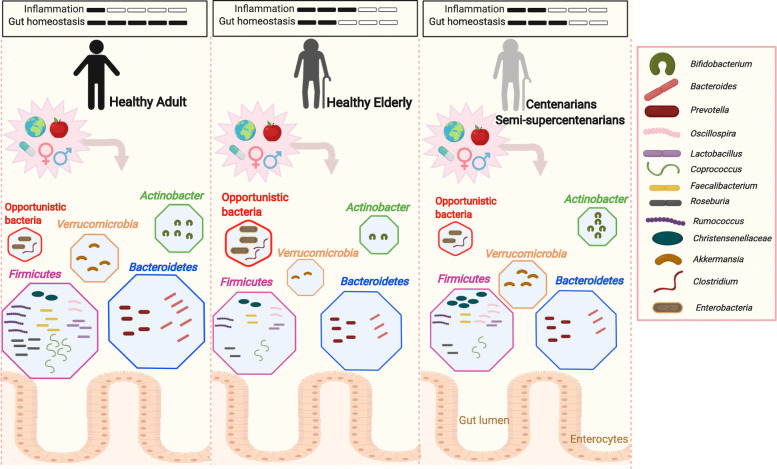
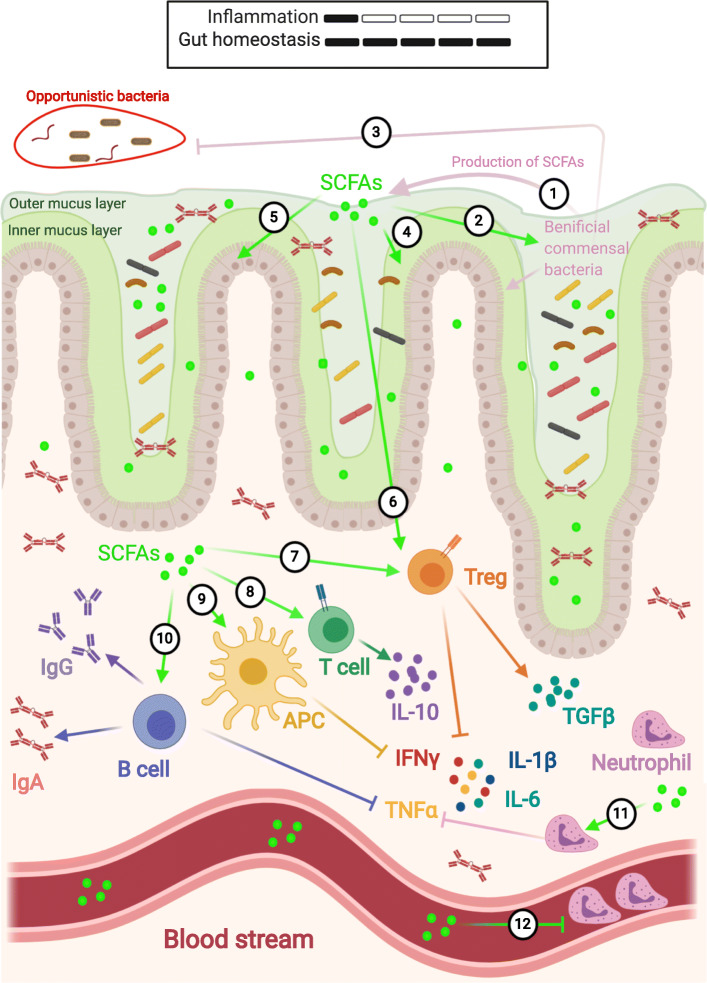
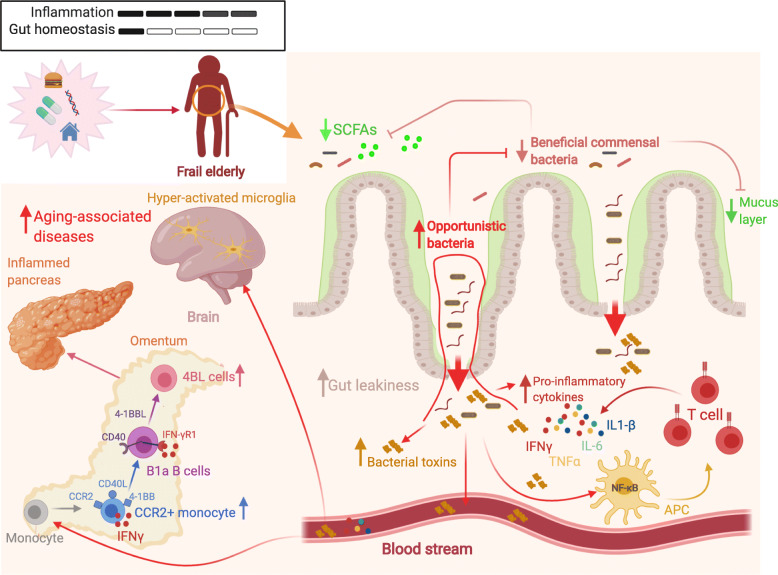
Extrinsic factors, such as lifestyle and diet, are shown to be essential in the control of human healthy aging, and thus, longevity. They do so by targeting at least in part the gut microbiome, a collection of commensal microorganisms (microbiota), which colonize the intestinal tract starting after birth, and is established by the age of three. The composition and abundance of individual microbiota appears to continue to change until adulthood, presumably reflecting lifestyle and geographic, racial, and individual differences. Although most of these changes appear to be harmless, a major shift in their composition in the gut (dysbiosis) can trigger harmful local and systemic inflammation. Recent reports indicate that dysbiosis is increased in aging and that the gut microbiota of elderly people is enriched in pro-inflammatory commensals at the expense of beneficial microbes. The clinical consequence of this change remains confusing due to contradictory reports and a high degree of variability of human microbiota and methodologies used. Here, we present the authors’ thoughts that underscore dysbiosis as a primary cause of aging-associated morbidities, and thus, premature death of elderly people. We provide evidence that the dysbiosis triggers a chain of pathological and inflammatory events. Examples include alteration of levels of microbiota-affected metabolites, impaired function and integrity of the gastrointestinal tract, and increased gut leakiness. All of these enhance systemic inflammation, which when associated with aging is termed inflammaging, and result in consequent aging-associated pathologies.
Overview
The claims and statistics of this paper haven’t been checked yet.
Run the check — free, no account needed. It reads the open-access text and checks the sources it cites.
Integrity signals
Registry
Cites
Statistics
Figures
Verification
Claims the paper makes
The claims and statistics of this paper haven’t been checked yet.
Run the check — free, no account needed. It reads the open-access text and checks the sources it cites.
Claims other papers make about this one
Each is checked against this paper’s own text: does it say what the citing paper says it does?
The source backs part of the claim, not all of it — or backs it for a different population, condition or comparison.
In the citing paper
“caloric restriction diets induce structural changes of the gut microbiome increasing the abundance of Lactobacillus and other species that influence healthy aging.”
From Hallmarks of aging: An expanding universe (2023) · cites this paper as [292]
Experimental — accuracy not yet measured
Self-check
Percentages, sums and reported differences re-computed from the paper’s own numbers.
The self-check needs the paper’s full text.
Citations
Cites
Diet rapidly and reproducibly alters the human gut microbiome
David, L. A., Maurice, C. F., Carmody, R. N., Gootenberg, D. B., Button, J. E., Wolfe, B. E., Ling, A. V., Devlin, A. S., Varma, Y., Fischbach, M. A., et al. (2014) · Nature · doi:10.1038/nature12820 · Cited by 10,100
Human gut microbiome viewed across age and geography
Yatsunenko, T., Rey, F. E., Manary, M. J., Trehan, I., Dominguez-Bello, M. G., Contreras, M., Magris, M., Hidalgo, G., Baldassano, R. N., Anokhin, A. P., et al. (2012) · Nature · doi:10.1038/nature11053 · Cited by 7,815
De Filippo, C., Cavalieri, D., Di Paola, M., Ramazzotti, M., Poullet, J. B., Massart, S., Collini, S., Pieraccini, G., & Lionetti, P. (2010) · Proceedings of the National Academy of Sciences · doi:10.1073/pnas.1005963107 · Cited by 5,579
Commensal microbe-derived butyrate induces the differentiation of colonic regulatory T cells
Furusawa, Y., Obata, Y., Fukuda, S., Endo, T. A., Nakato, G., Takahashi, D., Nakanishi, Y., Uetake, C., Kato, K., Kato, T., et al. (2013) · Nature · doi:10.1038/nature12721 · Cited by 5,549
The Microbial Metabolites, Short-Chain Fatty Acids, Regulate Colonic T reg Cell Homeostasis
Smith, P. M., Howitt, M. R., Panikov, N., Michaud, M., Gallini, C. A., Bohlooly-Y, M., Glickman, J. N., & Garrett, W. S. (2013) · Science · doi:10.1126/science.1241165 · Cited by 5,413
den Besten, G., van Eunen, K., Groen, A. K., Venema, K., Reijngoud, D.-J., & Bakker, B. M. (2013) · Journal of Lipid Research · doi:10.1194/jlr.r036012 · Cited by 5,048
The gut microbiota shapes intestinal immune responses during health and disease
Round, J. L., & Mazmanian, S. K. (2009) · Nature Reviews Immunology · doi:10.1038/nri2515 · Cited by 5,029
Metabolites produced by commensal bacteria promote peripheral regulatory T-cell generation
Arpaia, N., Campbell, C., Fan, X., Dikiy, S., van der Veeken, J., deRoos, P., Liu, H., Cross, J. R., Pfeffer, K., Coffer, P. J., et al. (2013) · Nature · doi:10.1038/nature12726 · Cited by 4,838
Induction of Colonic Regulatory T Cells by Indigenous Clostridium Species
Atarashi, K., Tanoue, T., Shima, T., Imaoka, A., Kuwahara, T., Momose, Y., Cheng, G., Yamasaki, S., Saito, T., Ohba, Y., et al. (2011) · Science · doi:10.1126/science.1198469 · Cited by 3,752
Treg induction by a rationally selected mixture of Clostridia strains from the human microbiota
Atarashi, K., Tanoue, T., Oshima, K., Suda, W., Nagano, Y., Nishikawa, H., Fukuda, S., Saito, T., Narushima, S., Hase, K., et al. (2013) · Nature · doi:10.1038/nature12331 · Cited by 2,872
Brown, A. J., Goldsworthy, S. M., Barnes, A. A., Eilert, M. M., Tcheang, L., Daniels, D., Muir, A. I., Wigglesworth, M. J., Kinghorn, I., Fraser, N. J., et al. (2003) · Journal of Biological Chemistry · doi:10.1074/jbc.m211609200 · Cited by 2,409
Plovier, H., Everard, A., Druart, C., Depommier, C., Van Hul, M., Geurts, L., Chilloux, J., Ottman, N., Duparc, T., Lichtenstein, L., et al. (2017) · Nature Medicine · doi:10.1038/nm.4236 · Cited by 2,204
The microbiome and butyrate regulate energy metabolism and autophagy in the mammalian colon
Donohoe, D. R., Garge, N., Zhang, X., Sun, W., O'Connell, T. M., Bunger, M. K., & Bultman, S. J. (2011) · Cell Metabolism · doi:10.1016/j.cmet.2011.02.018 · Cited by 2,003 · cited 1×
“Extracellular SCFAs are also utilized as substrates for β-oxydation of fatty acids in CD8 T cell [70] and colonocyte metabolism [71] after they are taken up by several G-protein coupled receptors (GPRs).”
BackgroundDiet Drives Convergence in Gut Microbiome Functions Across Mammalian Phylogeny and Within Humans
Muegge, B. D., Kuczynski, J., Knights, D., Clemente, J. C., González, A., Fontana, L., Henrissat, B., Knight, R., & Gordon, J. I. (2011) · Science · doi:10.1126/science.1198719 · Cited by 1,988
Zmora, N., Zilberman-Schapira, G., Suez, J., Mor, U., Dori-Bachash, M., Bashiardes, S., Kotler, E., Zur, M., Regev-Lehavi, D., Brik, R. B.-Z., et al. (2018) · Cell · doi:10.1016/j.cell.2018.08.041 · Cited by 1,695
Le Poul, E., Loison, C., Struyf, S., Springael, J.-Y., Lannoy, V., Decobecq, M.-E., Brezillon, S., Dupriez, V., Vassart, G., Van Damme, J., et al. (2003) · Journal of Biological Chemistry · doi:10.1074/jbc.m301403200 · Cited by 1,651
Through Ageing, and Beyond: Gut Microbiota and Inflammatory Status in Seniors and Centenarians
Biagi, E., Nylund, L., Candela, M., Ostan, R., Bucci, L., Pini, E., Nikkïla, J., Monti, D., Satokari, R., Franceschi, C., et al. (2010) · PLoS ONE · doi:10.1371/journal.pone.0010667 · Cited by 1,483
Antibiotics, birth mode, and diet shape microbiome maturation during early life
Bokulich, N. A., Chung, J., Battaglia, T., Henderson, N., Jay, M., Li, H., D. Lieber, A., Wu, F., Perez-Perez, G. I., Chen, Y., et al. (2016) · Science Translational Medicine · doi:10.1126/scitranslmed.aad7121 · Cited by 1,469
O’Toole, P. W., & Jeffery, I. B. (2015) · Science · doi:10.1126/science.aac8469 · Cited by 1,202
A defined commensal consortium elicits CD8 T cells and anti-cancer immunity
Tanoue, T., Morita, S., Plichta, D. R., Skelly, A. N., Suda, W., Sugiura, Y., Narushima, S., Vlamakis, H., Motoo, I., Sugita, K., et al. (2019) · Nature · doi:10.1038/s41586-019-0878-z · Cited by 1,145
Normalizing the environment recapitulates adult human immune traits in laboratory mice
Beura, L. K., Hamilton, S. E., Bi, K., Schenkel, J. M., Odumade, O. A., Casey, K. A., Thompson, E. A., Fraser, K. A., Rosato, P. C., Filali-Mouhim, A., et al. (2016) · Nature · doi:10.1038/nature17655 · Cited by 1,072
Akkermansia muciniphila and its role in regulating host functions
Derrien, M., Belzer, C., & de Vos, W. M. (2017) · Microbial Pathogenesis · doi:10.1016/j.micpath.2016.02.005 · Cited by 1,044
Gut Microbial Metabolites Fuel Host Antibody Responses
Kim, M., Qie, Y., Park, J., & Kim, C. H. (2016) · Cell Host & Microbe · doi:10.1016/j.chom.2016.07.001 · Cited by 893 · cited 1×
“By supporting differentiation of antibody-producing B cells, SCFAs increase both intestinal IgA and systemic IgG responses to combat pathogens [90].”
BackgroundRivera-Chávez, F., Zhang, L. F., Faber, F., Lopez, C. A., Byndloss, M. X., Olsan, E. E., Xu, G., Velazquez, E. M., Lebrilla, C. B., Winter, S. E., et al. (2016) · Cell Host & Microbe · doi:10.1016/j.chom.2016.03.004 · Cited by 864
Dynamics and stabilization of the human gut microbiome during the first year of life
Bäckhed, F., Roswall, J., Peng, Y., Feng, Q., Jia, H., Kovatcheva-Datchary, P., Li, Y., Xia, Y., Xie, H., Zhong, H., et al. (2015) · Cell Host & Microbe · doi:10.1016/j.chom.2015.05.012 · Cited by 738 · cited 1×
“of age and becomes progressively diverse [25, 26, 33, 35, 36].”
Bachem, A., Makhlouf, C., Binger, K. J., de Souza, D. P., Tull, D., Hochheiser, K., Whitney, P. G., Fernandez-Ruiz, D., Dähling, S., Kastenmüller, W., et al. (2019) · Immunity · doi:10.1016/j.immuni.2019.06.002 · Cited by 702
Clark, R. I., Salazar, A., Yamada, R., Fitz-Gibbon, S., Morselli, M., Alcaraz, J., Rana, A., Rera, M., Pellegrini, M., Ja, W. W., et al. (2015) · Cell Reports · doi:10.1016/j.celrep.2015.08.004 · Cited by 510
The gut microbiota and healthy aging: A mini-review
Kim, S., & Jazwinski, S. M. (2018) · Gerontology · doi:10.1159/000490615 · Cited by 427
Composition and temporal stability of the gut microbiota in older persons
Jeffery, I. B., Lynch, D. B., & O’Toole, P. W. (2016) · The ISME Journal · doi:10.1038/ismej.2015.88 · Cited by 421
Fecal Microbiota Composition and Frailty
van Tongeren, S. P., Slaets, J. P. J., Harmsen, H. J. M., & Welling, G. W. (2005) · Applied and Environmental Microbiology · doi:10.1128/aem.71.10.6438-6442.2005 · Cited by 333 · cited 1×
“Fecal microbiota markedly differs in people living in community-dwelling and long-term care nursing facilities [12, 13, 57, 58], consistent with its role in healthy aging.”
BackgroundMatsumoto, M., Kurihara, S., Kibe, R., Ashida, H., & Benno, Y. (2011) · PLoS ONE · doi:10.1371/journal.pone.0023652 · Cited by 290 · cited 1×
“It also induces stress-response genes, regulates NFκB activation, inhibits pro-inflammatory cytokines from macrophages, suppresses colonic senescence, maintains colonic tight junctions and mucus production, and even prolongs longevity in mice [55, 67], implying that Bifidobacterium supplementation may also reverse agi…”
BackgroundCollino, S., Montoliu, I., Martin, F.-P. J., Scherer, M., Mari, D., Salvioli, S., Bucci, L., Ostan, R., Monti, D., Biagi, E., et al. (2013) · PLoS ONE · doi:10.1371/journal.pone.0056564 · Cited by 270
Aging progression of human gut microbiota
Xu, C., Zhu, H., & Qiu, P. (2019) · BMC Microbiology · doi:10.1186/s12866-019-1616-2 · Cited by 258
Commensal bacteria contribute to insulin resistance in aging by activating innate B1a cells
Bodogai, M., O’Connell, J., Kim, K., Kim, Y., Moritoh, K., Chen, C., Gusev, F., Vaughan, K., Shulzhenko, N., Mattison, J. A., et al. (2018) · Science Translational Medicine · doi:10.1126/scitranslmed.aat4271 · Cited by 182
Self-citationGui, Q., Wang, A., Zhao, X., Huang, S., Tan, Z., Xiao, C., & Yang, Y. (2020) · European Journal of Clinical Nutrition · doi:10.1038/s41430-020-0670-z · Cited by 49
Research works printed but not linked: 88
- Galen, et al. Hygiene, Loeb classical library, vol. 2. Cambridge: Harvard University Press; 2018.
- Metchnikoff E, Mitchell PC. The prolongation of life; optimistic studies. London: W. Heinemann; G.P. Putnam's Sons. xx; 1907. p. 343.
- Gill SR, et al. Metagenomic analysis of the human distal gut microbiome. Science. 2006;312(5778):1355–9. · DOI · Paper page
- Honda K, Littman DR. The microbiota in adaptive immune homeostasis and disease. Nature. 2016;535(7610):75–84. · DOI · Paper page
- Atarashi K, et al. Th17 cell induction by adhesion of microbes to intestinal epithelial cells. Cell. 2015;163(2):367–80. · DOI · Paper page
- Satoh-Takayama N, et al. Bacteria-induced group 2 innate lymphoid cells in the stomach provide immune protection through induction of IgA. Immunity. 2020;52(4):635–649 e4. · DOI
- Hansson J, et al. Influence of gut microbiota on mouse B2 B cell ontogeny and function. Mol Immunol. 2011;48(9–10):1091–101. · DOI
- Magrone T, Jirillo E. The interaction between gut microbiota and age-related changes in immune function and inflammation. Immun Ageing. 2013;10(1):31. · DOI · Paper page
- Claesson MJ, et al. Gut microbiota composition correlates with diet and health in the elderly. Nature. 2012;488(7410):178–84. · DOI · Paper page
- Langille MG, et al. Microbial shifts in the aging mouse gut. Microbiome. 2014;2(1):50. · DOI · Paper page
- Hearps AC, et al. Aging is associated with chronic innate immune activation and dysregulation of monocyte phenotype and function. Aging Cell. 2012;11(5):867–75. · DOI · Paper page
- Bouchlaka MN, et al. Aging predisposes to acute inflammatory induced pathology after tumor immunotherapy. J Exp Med. 2013;210(11):2223–37. · DOI
- Biagi E, et al. Gut microbiota and extreme longevity. Curr Biol. 2016;26(11):1480–5. · DOI · Paper page
- Brestoff JR, Artis D. Commensal bacteria at the interface of host metabolism and the immune system. Nat Immunol. 2013;14(7):676–84. · DOI · Paper page
- Trompette A, et al. Gut microbiota metabolism of dietary fiber influences allergic airway disease and hematopoiesis. Nat Med. 2014;20(2):159–66. · DOI · Paper page
- Trompette A, et al. Dietary fiber confers protection against flu by shaping Ly6c(−) patrolling monocyte hematopoiesis and CD8(+) T cell metabolism. Immunity. 2018;48(5):992–1005 e8. · DOI · Paper page
- Ivanov II, et al. Induction of intestinal Th17 cells by segmented filamentous bacteria. Cell. 2009;139(3):485–98. · DOI · Paper page
- Dominguez-Bello MG, et al. Delivery mode shapes the acquisition and structure of the initial microbiota across multiple body habitats in newborns. Proc Natl Acad Sci U S A. 2010;107(26):11971–5. · DOI · Paper page
- Hill CJ, et al. Evolution of gut microbiota composition from birth to 24 weeks in the INFANTMET cohort. Microbiome. 2017;5(1):4. · DOI · Paper page
- Nagpal R, et al. Evolution of gut Bifidobacterium population in healthy Japanese infants over the first three years of life: a quantitative assessment. Sci Rep. 2017;7(1):10097. · DOI
- Nagpal R, et al. Gut dysbiosis following C-section instigates higher colonisation of toxigenic Clostridium perfringens in infants. Benefic Microbes. 2017;8(3):353–65. · DOI
- Penders J, et al. Factors influencing the composition of the intestinal microbiota in early infancy. Pediatrics. 2006;118(2):511–21. · DOI · Paper page
- Tsuji H, et al. Molecular monitoring of the development of intestinal microbiota in Japanese infants. Benefic Microbes. 2012;3(2):113–25. · DOI
- Favier CF, et al. Molecular monitoring of succession of bacterial communities in human neonates. Appl Environ Microbiol. 2002;68(1):219–26. · DOI
- Cheng J, et al. Discordant temporal development of bacterial phyla and the emergence of core in the fecal microbiota of young children. ISME J. 2016;10(4):1002–14. · DOI
- Eckburg PB, et al. Diversity of the human intestinal microbial flora. Science. 2005;308(5728):1635–8. · DOI · Paper page
- Arumugam M, et al. Enterotypes of the human gut microbiome. Nature. 2011;473(7346):174–80. · DOI · Paper page
- Jeffery IB, et al. The microbiota link to irritable bowel syndrome: an emerging story. Gut Microbes. 2012;3(6):572–6. · DOI
- Wang N, et al. Enriched taxa were found among the gut microbiota of centenarians in East China. PLoS One. 2019;14(10):e0222763. · DOI
- Kong F, et al. Gut microbiota signatures of longevity. Curr Biol. 2016;26(18):R832–3. · DOI
- He F, et al. Differences in composition and mucosal adhesion of bifidobacteria isolated from healthy adults and healthy seniors. Curr Microbiol. 2001;43(5):351–4. · DOI
- Hopkins MJ, Macfarlane GT. Changes in predominant bacterial populations in human faeces with age and with Clostridium difficile infection. J Med Microbiol. 2002;51(5):448–54. · DOI
- Makivuokko H, et al. The effect of age and non-steroidal anti-inflammatory drugs on human intestinal microbiota composition. Br J Nutr. 2010;103(2):227–34. · DOI
- Mitchell EL, et al. Reduced intestinal motility, mucosal barrier function, and inflammation in aged monkeys. J Nutr Health Aging. 2017;21(4):354–61. · DOI
- Odamaki T, et al. Age-related changes in gut microbiota composition from newborn to centenarian: a cross-sectional study. BMC Microbiol. 2016;16:90. · DOI · Paper page
- Rea MC, et al. Clostridium difficile carriage in elderly subjects and associated changes in the intestinal microbiota. J Clin Microbiol. 2012;50(3):867–75. · DOI
- Konikoff T, Gophna U. Oscillospira: a central, enigmatic component of the human gut microbiota. Trends Microbiol. 2016;24(7):523–4. · DOI
- Waters JL, Ley RE. The human gut bacteria Christensenellaceae are widespread, heritable, and associated with health. BMC Biol. 2019;17(1):83. · DOI
- Schneeberger M, et al. Akkermansia muciniphila inversely correlates with the onset of inflammation, altered adipose tissue metabolism and metabolic disorders during obesity in mice. Sci Rep. 2015;5:16643. · DOI · Paper page
- Sela DA, et al. The genome sequence of Bifidobacterium longum subsp. infantis reveals adaptations for milk utilization within the infant microbiome. Proc Natl Acad Sci U S A. 2008;105(48):18964–9. · DOI
- Kinross J, Nicholson JK. Gut microbiota: dietary and social modulation of gut microbiota in the elderly. Nat Rev Gastroenterol Hepatol. 2012;9(10):563–4. · DOI
- Rooks MG, Garrett WS. Gut microbiota, metabolites and host immunity. Nat Rev Immunol. 2016;16(6):341–52. · DOI · Paper page
- Maffei VJ, et al. Biological aging and the human gut microbiota. J Gerontol A Biol Sci Med Sci. 2017;72(11):1474–82. · DOI · Paper page
- Jackson MA, et al. Signatures of early frailty in the gut microbiota. Genome Med. 2016;8(1):8. · DOI · Paper page
- Barcenilla A, et al. Phylogenetic relationships of butyrate-producing bacteria from the human gut. Appl Environ Microbiol. 2000;66(4):1654–61. · DOI
- Louis P, Flint HJ. Diversity, metabolism and microbial ecology of butyrate-producing bacteria from the human large intestine. FEMS Microbiol Lett. 2009;294(1):1–8. · DOI · Paper page
- Mueller S, et al. Differences in fecal microbiota in different European study populations in relation to age, gender, and country: a cross-sectional study. Appl Environ Microbiol. 2006;72(2):1027–33. · DOI · Paper page
- Correa-Oliveira R, et al. Regulation of immune cell function by short-chain fatty acids. Clin Transl Immunol. 2016;5(4):e73. · DOI · Paper page
- Ghorbani P, et al. Short-chain fatty acids affect cystic fibrosis airway inflammation and bacterial growth. Eur Respir J. 2015;46(4):1033–45. · DOI
- Thangaraju M, et al. GPR109A is a G-protein-coupled receptor for the bacterial fermentation product butyrate and functions as a tumor suppressor in colon. Cancer Res. 2009;69(7):2826–32. · DOI · Paper page
- Ulven T. Short-chain free fatty acid receptors FFA2/GPR43 and FFA3/GPR41 as new potential therapeutic targets. Front Endocrinol (Lausanne). 2012;3:111. · DOI
- Goncalves P, Araujo JR, Di Santo JP. A cross-talk between microbiota-derived short-chain fatty acids and the host mucosal immune system regulates intestinal homeostasis and inflammatory bowel disease. Inflamm Bowel Dis. 2018;24(3):558–72. · DOI
- Singh N, et al. Activation of Gpr109a, receptor for niacin and the commensal metabolite butyrate, suppresses colonic inflammation and carcinogenesis. Immunity. 2014;40(1):128–39. · DOI · Paper page
- Sun M, et al. Microbiota-derived short-chain fatty acids promote Th1 cell IL-10 production to maintain intestinal homeostasis. Nat Commun. 2018;9(1):3555. · DOI
- Daroqui MC, Augenlicht LH. Transcriptional attenuation in colon carcinoma cells in response to butyrate. Cancer Prev Res (Phila). 2010;3(10):1292–302. · DOI
- Davie JR. Inhibition of histone deacetylase activity by butyrate. J Nutr. 2003;133(7 Suppl):2485S–93S. · DOI · Paper page
- Sekhavat A, Sun JM, Davie JR. Competitive inhibition of histone deacetylase activity by trichostatin A and butyrate. Biochem Cell Biol. 2007;85(6):751–8. · DOI
- Thangaraju M, et al. Colon cancer cells maintain low levels of pyruvate to avoid cell death caused by inhibition of HDAC1/HDAC3. Biochem J. 2009;417(1):379–89. · DOI
- Wong JM, et al. Colonic health: fermentation and short chain fatty acids. J Clin Gastroenterol. 2006;40(3):235–43. · DOI · Paper page
- Mowat AM, Agace WW. Regional specialization within the intestinal immune system. Nat Rev Immunol. 2014;14(10):667–85. · DOI
- Schulthess J, et al. The short chain fatty acid butyrate imprints an antimicrobial program in macrophages. Immunity. 2019;50(2):432–445 e7. · DOI · Paper page
- Usami M, et al. Butyrate and trichostatin A attenuate nuclear factor kappaB activation and tumor necrosis factor alpha secretion and increase prostaglandin E2 secretion in human peripheral blood mononuclear cells. Nutr Res. 2008;28(5):321–8. · DOI
- Vinolo MA, et al. Suppressive effect of short-chain fatty acids on production of proinflammatory mediators by neutrophils. J Nutr Biochem. 2011;22(9):849–55. · DOI
- Thorburn AN, et al. Evidence that asthma is a developmental origin disease influenced by maternal diet and bacterial metabolites. Nat Commun. 2015;6:7320. · DOI
- Zhang Z, et al. Dietary fiber intake regulates intestinal microflora and inhibits ovalbumin-induced allergic airway inflammation in a mouse model. PLoS One. 2016;11(2):e0147778. · DOI
- Erny D, et al. Host microbiota constantly control maturation and function of microglia in the CNS. Nat Neurosci. 2015;18(7):965–77. · DOI · Paper page
- Sherry CL, et al. Sickness behavior induced by endotoxin can be mitigated by the dietary soluble fiber, pectin, through up-regulation of IL-4 and Th2 polarization. Brain Behav Immun. 2010;24(4):631–40. · DOI
- Kespohl M, et al. The microbial metabolite butyrate induces expression of Th1-associated factors in CD4(+) T cells. Front Immunol. 2017;8:1036. · DOI · Paper page
- Park J, et al. Author correction: bidirectional regulatory potentials of short-chain fatty acids and their G-protein-coupled receptors in autoimmune neuroinflammation. Sci Rep. 2019;9(1):17511. · DOI
- Sampson TR, et al. Gut microbiota regulate motor deficits and neuroinflammation in a model of Parkinson’s disease. Cell. 2016;167(6):1469–1480 e12. · DOI · Paper page
- Belzer C, et al. Microbial metabolic networks at the mucus layer lead to diet-independent butyrate and vitamin B12 production by intestinal symbionts. mBio. 2017;8(5). · DOI
- Fachi JL, et al. Butyrate protects mice from Clostridium difficile-induced colitis through an HIF-1-dependent mechanism. Cell Rep. 2019;27(3):750–761 e7. · DOI · Paper page
- Derrien M, et al. The Mucin degrader Akkermansia muciniphila is an abundant resident of the human intestinal tract. Appl Environ Microbiol. 2008;74(5):1646–8. · DOI
- Rampelli S, et al. Functional metagenomic profiling of intestinal microbiome in extreme ageing. Aging (Albany NY). 2013;5(12):902–12. · DOI · Paper page
- Byndloss MX, et al. Microbiota-activated PPAR-gamma signaling inhibits dysbiotic Enterobacteriaceae expansion. Science. 2017;357(6351):570–5. · DOI
- Cox MA, et al. Short-chain fatty acids act as antiinflammatory mediators by regulating prostaglandin E (2) and cytokines. World J Gastroenterol. 2009;15(44):5549–57. · DOI · Paper page
- Lee-Chang C, et al. Aging converts innate B1a cells into potent CD8+ T cell inducers. J Immunol. 2016;196(8):3385–97. · DOI
- Lee-Chang C, et al. Accumulation of 4-1BBL+ B cells in the elderly induces the generation of granzyme-B+ CD8+ T cells with potential antitumor activity. Blood. 2014;124(9):1450–9. · DOI · Paper page
- Woodmansey EJ. Intestinal bacteria and ageing. J Appl Microbiol. 2007;102(5):1178–86. · DOI
- Salazar N, et al. Age-associated changes in gut microbiota and dietary components related with the immune system in adulthood and old age: a cross-sectional study. Nutrients. 2019;11(8). · DOI
- Laurin D, et al. Fibre intake in elderly individuals with poor masticatory performance. J Can Dent Assoc. 1994;60(5):443–6, 449.
- Tiihonen K, Ouwehand AC, Rautonen N. Human intestinal microbiota and healthy ageing. Ageing Res Rev. 2010;9(2):107–16. · DOI
- Guinan J, et al. Antibiotic-induced decreases in the levels of microbial-derived short-chain fatty acids correlate with increased gastrointestinal colonization of Candida albicans. Sci Rep. 2019;9(1):8872. · DOI
- Bouskra D, et al. Lymphoid tissue genesis induced by commensals through NOD1 regulates intestinal homeostasis. Nature. 2008;456(7221):507–10. · DOI · Paper page
- Conley MN, et al. Aging and serum MCP-1 are associated with gut microbiome composition in a murine model. PeerJ. 2016;4:e1854. · DOI
- Fransen F, et al. Aged gut microbiota contributes to systemical inflammaging after transfer to germ-free mice. Front Immunol. 2017;8:1385. · DOI · Paper page
- Wachholz PA, et al. Effectiveness of probiotics on the occurrence of infections in older people: systematic review and meta-analysis. Age Ageing. 2018;47(4):527–36. · DOI
- Rera M, Clark RI, Walker DW. Intestinal barrier dysfunction links metabolic and inflammatory markers of aging to death in Drosophila. Proc Natl Acad Sci U S A. 2012;109(52):21528–33. · DOI
Cited by
Sorted by citations
Hallmarks of aging: An expanding universe
López-Otín, C., Blasco, M. A., Partridge, L., Serrano, M., & Kroemer, G. (2023) · Cell · doi:10.1016/j.cell.2022.11.001 · Cited by 6,549
Meta-hallmarks of aging and cancer
López-Otín, C., Pietrocola, F., Roiz-Valle, D., Galluzzi, L., & Kroemer, G. (2023) · Cell Metabolism · doi:10.1016/j.cmet.2022.11.001 · Cited by 529
Immunology of aging: the birth of inflammaging
Fulop, T., Larbi, A., Pawelec, G., Khalil, A., Cohen, A. A., Hirokawa, K., Witkowski, J. M., & Franceschi, C. (2021) · Clinical Reviews in Allergy & Immunology · doi:10.1007/s12016-021-08899-6 · Cited by 464
Chronic inflammation and the hallmarks of aging
Baechle, J. J., Chen, N., Makhijani, P., Winer, S., Furman, D., & Winer, D. A. (2023) · Molecular Metabolism · doi:10.1016/j.molmet.2023.101755 · Cited by 471
Aging Hallmarks and Progression and Age-Related Diseases: A Landscape View of Research Advancement
Tenchov, R., Sasso, J. M., Wang, X., & Zhou, Q. A. (2024) · ACS Chemical Neuroscience · doi:10.1021/acschemneuro.3c00531 · Cited by 276
Metadata
- Authors
- Ragonnaud, E., & Biragyn, A.
- ORCID
- Biragyn, Arya
- Venue
- Immunity & Ageing
- Published
- 2021-01-05
- Volume
- 18
- Issue
- 1
- ISSN
- 1742-4933
- PMC
- PMC7784378
- Cited by
- 383
- References
- 35
- Language
- en
- Funders
- National Institute on Aging (IRP)
About these checks
Registry, retraction, Cites and statistics results are computed, not judged, with one exception: a printed reference that no index lists is read once by a model before it counts as a citation error. Claims are extracted by a model and kept only when their quote appears verbatim in the text; each cited source is then checked, with a model’s help, for whether it says what the claim relies on. Those verdicts can be wrong — read the claim’s quote and the cited source before relying on one.
Statistics and arithmetic are recomputed, not judged.
Confidence bands are shown only for fields calibrated on our annotated test set. None is calibrated yet, so no band is shown.
What counts as a claim ›How we measure confidence ›How we check this ›
Are you an author, or do you see a problem with this page? Request a review
