

Transplantation of human umbilical cord-derived mesenchymal stem cells improves age-related ovarian functional decline via regulating the local renin–angiotensin system on inflammation and oxidative stress
Open accessThe DOI matches its Crossref record; 76 of the 76 references it cites were found in a registry or an index; 28 of the 63 sources its claims cite were checked for support.
Abstract
BACKGROUND: Age-related reproductive aging is a natural and irreversible physiological process, and delaying childbearing is increasingly common all over the world. Transplantation of mesenchymal stem cells (MSCs) is considered a new and effective therapy to restore ovarian function, but the relevant mechanisms remain unclear. Recently, it has been found that there is a local Renin-angiotensin system (RAS) in human ovary and it plays a key role. METHODS: After collecting follicular fluid from women who received oocyte retrieval for pure male factor infertility, the level of RAS components in it were detected, and the correlation analysis by linear regression. Then, the in vivo experiments on female C57BL/6 mice were designed to measure ovarian function, and the transcription and translation levels of RAS pathway were detected by molecular biology methods. Moreover, the role of RAS in regulating inflammation and oxidative stress in the co-culture system were explored in in vitro experiments on KGN cells. RESULTS: First, a total of 139 samples of analyzable follicular fluid were obtained. The local RAS of ovary, which is independent of systemic RAS (P > 0.05), is affected by age (Pearson r < 0, P < 0.05) and related to ovarian function, inflammation, oxidative stress indexes and assisted reproduction laboratory outcomes (P < 0.05). Next, the ovary/body weight of aging mice decreased significantly and serum sex hormones levels changed significantly (P < 0.01). The number of functional follicles decreased, while the atresia follicles increased (P < 0.05). After MSCs transplantation, all the above measures have been partially recovered (P < 0.05). Although several RAS components in aging ovary changed, MSCs only improved the expression level of AT1R (P < 0.05). Furthermore, the secretion ability and mitochondrial membrane potential of aging KGN cells decreased, while the intracellular ROS level and the aging cells ratio increased (P < 0.01). All the above measures have been partially recovered when co-cultured with MSCs (P < 0.05). After Ang(1-7) were added into the co-culture system, the above have been more significantly restored compared with Ang II (P < 0.05). Nevertheless, there was no statistical difference in estradiol level no matter which one was added (P > 0.05). CONCLUSIONS: Together, our findings indicate that a novel possible mechanism to explain how stem cells restore age-related ovarian functional decline.
Overview
CoChat Summary
TL;DR
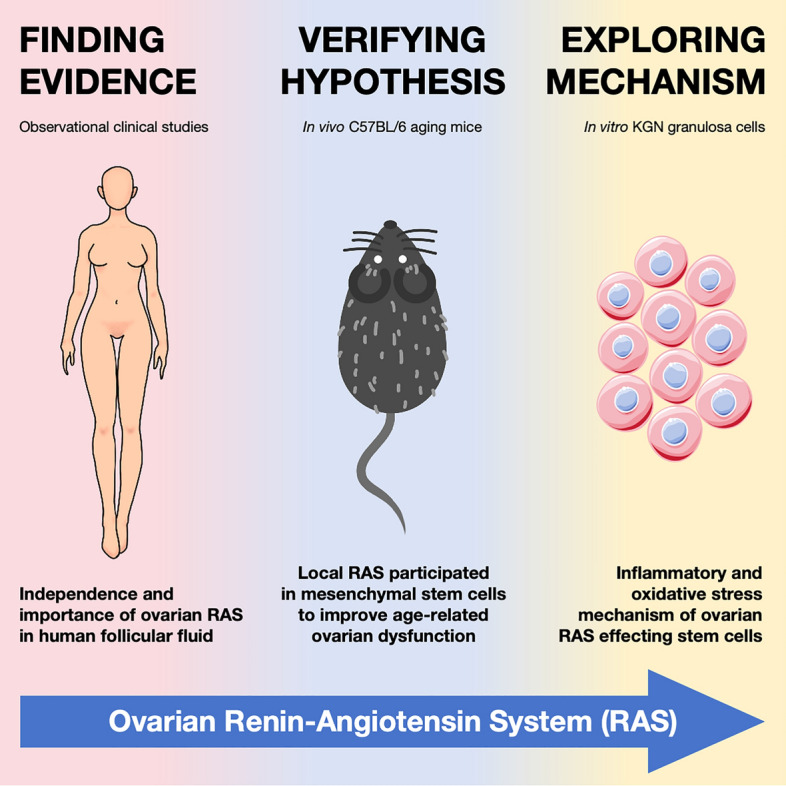
In 139 human follicular fluid samples, ovarian local RAS was independent of systemic RAS, affected by age, and correlated with ovarian function, inflammation, oxidative stress, and IVF laboratory outcomes. In aging mice and H₂O₂-treated KGN cells, human umbilical cord MSC transplantation/co-culture partially restored ovarian function and inflammatory/oxidative stress markers, with Ang(1–7) enhancing recovery more than Ang II.
Key findings
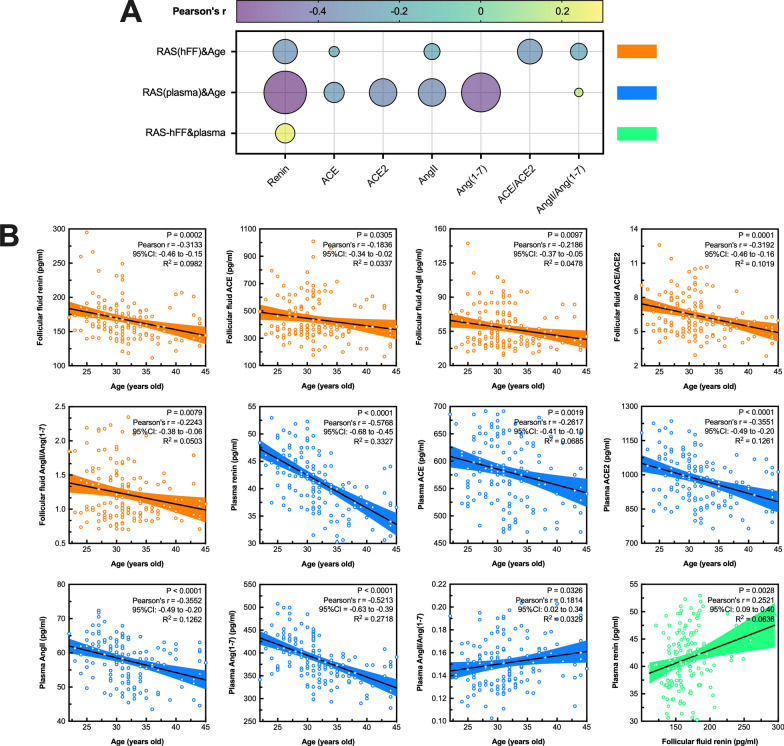
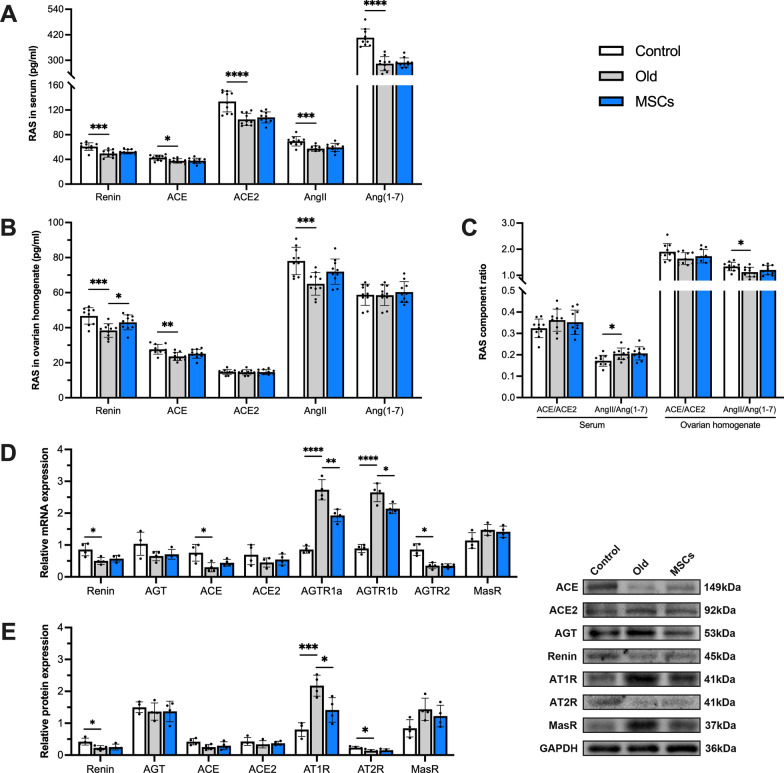
- Among 139 hFF samples, ovarian RAS was independent of systemic RAS (P > 0.05), except renin (r = 0.2521, P < 0.01). Age negatively correlated with hFF renin (r = −0.3133, P < 0.01), ACE (r = −0.1836, P < 0.05), Ang II (r = −0.2186, P < 0.01), ACE/ACE2 (r = −0.3192, P < 0.01), and Ang II/Ang(1–7) (r = −0.2243, P < 0.01).
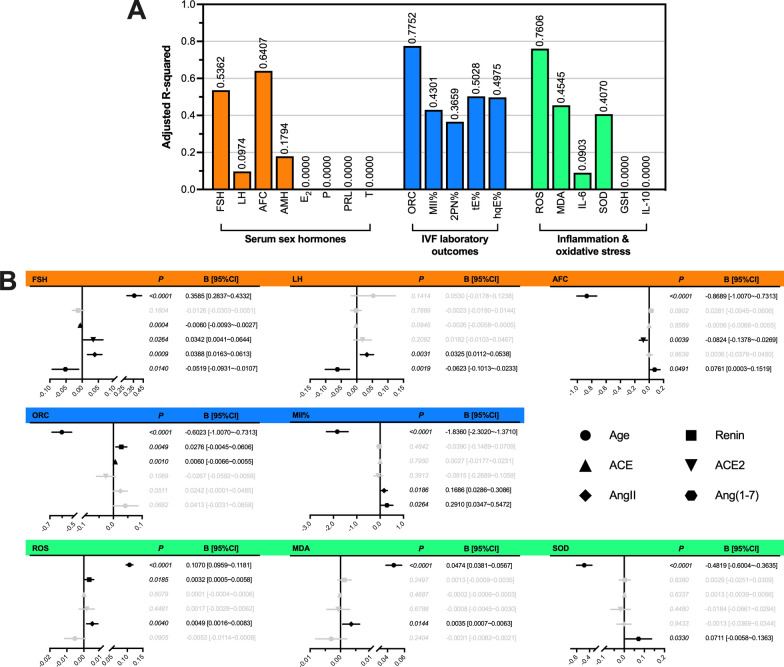
- The multiple regression model with ovarian RAS and age explained 53.62% of FSH, 64.07% of AFC, 77.52% of oocyte retrieval count, 76.06% of ROS, 45.45% of MDA, and 40.70% of SOD variation (P < 0.05).
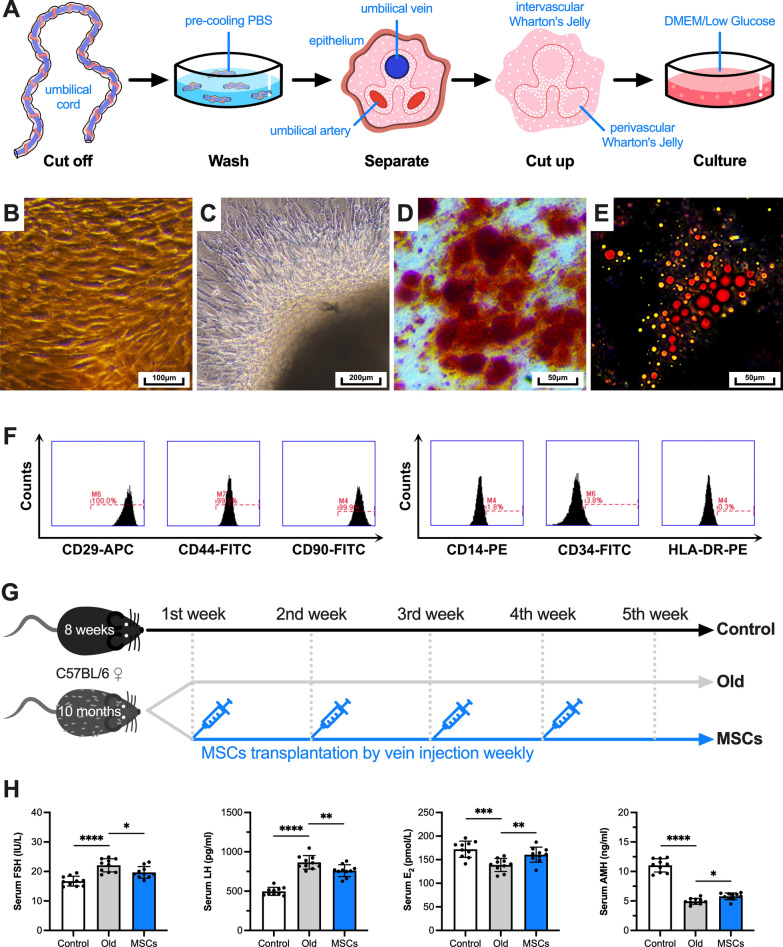
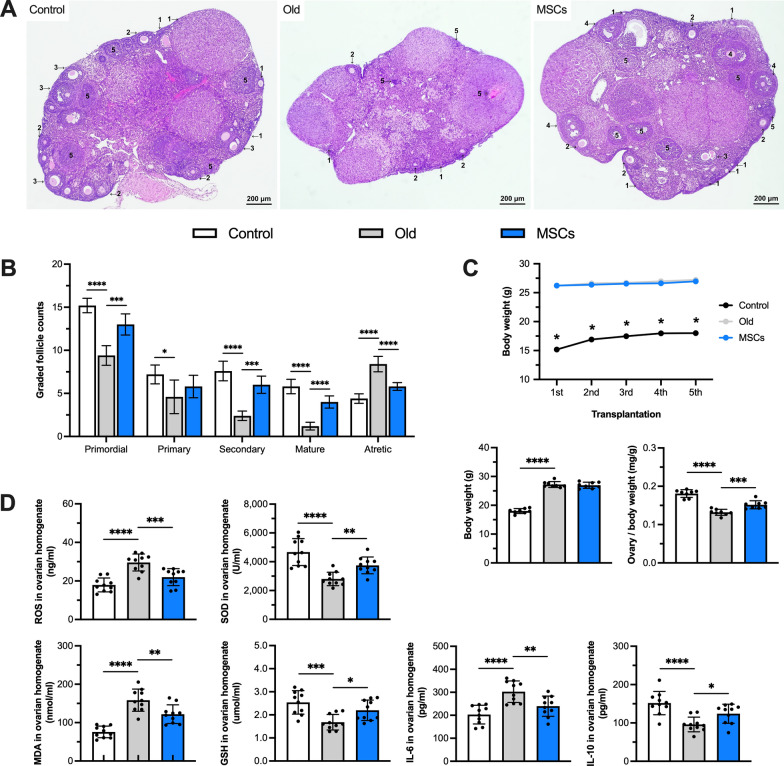
- In aging mice, ovary/body weight decreased and serum sex hormones changed (P < 0.01); functional follicles decreased while atretic follicles increased (P < 0.05). After MSC transplantation, these measures partially recovered (P < 0.05), and among RAS components only AT1R expression improved (P < 0.05).
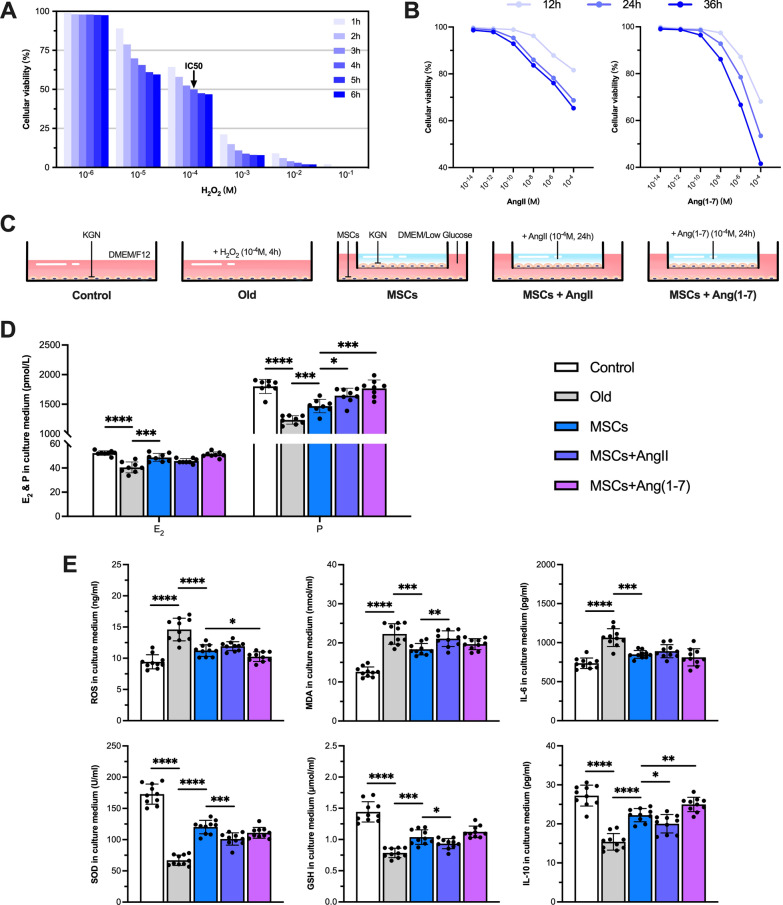
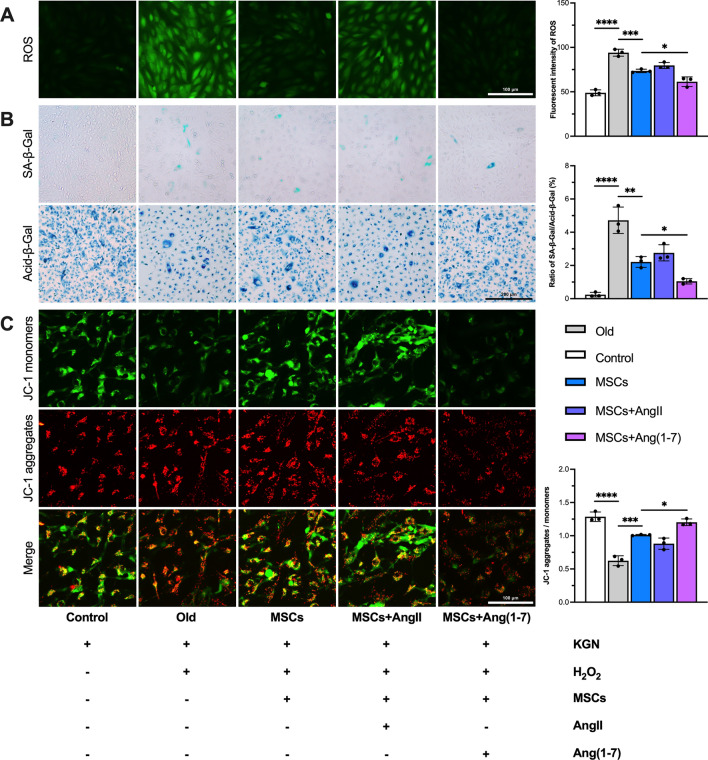
- In H₂O₂-treated KGN cells, secretion ability and mitochondrial membrane potential decreased while intracellular ROS and aging cell ratio increased (P < 0.01); co-culture with MSCs partially recovered these (P < 0.05). Adding Ang(1–7) restored measures more significantly than Ang II (P < 0.05), but estradiol level did not differ statistically with either addition (P > 0.05).
Methods
- Clinical study: follicular fluid from women receiving IVF for pure male factor infertility at the First Affiliated Hospital of Soochow University, January 2021–February 2022; 139 analyzable hFF samples. RAS components, inflammation, oxidative stress, and sex hormones were measured by ELISA/test kits; simple and multiple linear regression were used.
- In vivo: 24 female C57BL/6 mice, with 8 at 6 weeks (Control) and 16 at 40 weeks randomized to Old or MSCs groups (8/group). MSCs were injected via tail vein at 1 × 10⁶ cells in 300 μl PBS in four weekly passages; ovarian histology, qRT-PCR, Western blot, and ELISA were performed.
- In vitro: KGN cells in five groups (Control, Old, MSCs, MSCs + Ang II, MSCs + Ang(1–7)); aging was induced with 100 μM H₂O₂ for 4 h, co-culture used Transwell with MSCs, and Ang II or Ang(1–7) was added at 10⁻⁴ M for 24 h. Assays included CCK-8, ELISA, DCFH-DA, β-galactosidase staining, and JC-1.
Limitations
- Stated: hFF was collected after ovarian stimulation, which may cover up or confuse the relationship between RAS and steroid hormones; IVF embryo outcomes were confounded by uncontrolled male factors; follicular fluid from healthy couples could not be collected.
- Stated: the in vitro experiments may exaggerate the role of MSCs in inflammation and oxidative stress because H₂O₂ was used to construct the aging model of KGN cells; the relationship between the Ang II axis and Ang(1–7) axis was not fully clarified.
- Evident from text: in vivo groups contained only 8 mice each, and the in vitro work used a single KGN cell line, limiting generalizability.
Model-written summary. Check it against the paper before relying on it.
Integrity signals
Registry
Cites
Statistics
Figures
Verification
Claims the paper makes
17 Valid · 2 Not valid · 10 Not checked · 77 Own results and interpretations
The cited sources support only part of this claim — read each source’s verdict below.
In the paper
“Recently, it has been found that there is a local Renin–angiotensin system (RAS) in human ovary and it plays a key role.”
- Also stated in: § Background · boosted
“Ovary as the second largest source of renin in human, the ovarian RAS has been confirmed by a large number of studies.”
§ Transplantation of human umbilical cord-derived mesenchymal stem cells improves age-related ovarian functional decline via regulating the local renin–angiotensin system on inflammation and oxidative stress > Abstract > Background
What the sources say
- Not checked — no full text of the sourcecites [5] Palumbo A, Ávila J, Naftolin F. The ovarian renin–angiotensin system (OVRAS): a major factor in ovarian function and disease. Reproduct Sci (Thousand Oaks Calif). 2016;23(12):1644–55. 10.1177/1933719116672588. 27821561 source
- Partly supportedcites [6] Herr D, Bekes I, Wulff C. Local renin–angiotensin system in the reproductive system. Front Endocrinol. 2013;4:150. 10.3389/fendo.2013.00150. PMC3798827 24151488 sourceExperimental — accuracy not yet measured
The “Ovary and follicular development” section explicitly says a local RAS is present in the adult ovary and that its components have been found in the human ovary. The Conclusion considers it potentially important for reproductive regulation, but cautions that most functional conclusions remain speculative; “plays a key role” states that role more definitively than the review does. (LLM, conf=0.86)
- Partly supportedcites [7] Gonçalves PB, Ferreira R, Gasperin B, Oliveira JF. Role of angiotensin in ovarian follicular development and ovulation in mammals: a review of recent advances. Reproduct (Cambridge Engl). 2012;143(1):11–20. 10.1530/REP-11-0192. 22046052 sourceExperimental — accuracy not yet measured
The Ovarian RAS and Summary and conclusion sections describe a local ovarian RAS involved in ovarian physiology. The Regulation of RAS members during follicle development section reports angiotensin findings in women, but the review emphasizes species differences and does not establish that this system plays a key role specifically in the human ovary. Page numbers were not available in our copy. (LLM, conf=0.83)
boostedstates a cause- Asserted: passes — The authors put it forward as true.
- Checkable: passes — It can be checked against evidence.
- Load-bearing: passes — The paper’s conclusions depend on it.
- Based: passes — The paper gives a reason why it holds.
- Also stated in: § Background · boosted
Every source the paper cites for this claim was checked and supports it.
In the paper
“At the same time, during severe inflammatory physiology and diseases, the RAS is an important part of inflammatory response regulation [62, 63].”
§ Transplantation of human umbilical cord-derived mesenchymal stem cells improves age-related ovarian functional decline via regulating the local renin–angiotensin system on inflammation and oxidative stress > Discussion
What the sources say
- Supportedcites [62] Bekassy Z, Lopatko Fagerström I, Bader M, Karpman D. Crosstalk between the renin-angiotensin, complement and kallikrein-kinin systems in inflammation. Nat Rev Immunol. 2022;22(7):411–28. 10.1038/s41577-021-00634-8. 34759348 PMC8579187 source
The RAS section identifies inflammatory modulation as a function of the RAS and links prolonged stimulation to inflammatory diseases. The Conclusion describes the RAS as one of the interacting pathways contributing to severe inflammatory conditions, including sepsis and COVID-19. (LLM, conf=0.92)
- Supportedcites [63] Poznyak AV, Bharadwaj D, Prasad G, Grechko AV, Sazonova MA, Orekhov AN. Renin–angiotensin system in pathogenesis of atherosclerosis and treatment of CVD. Int J Mol Sci. 2021;22(13):6702. 10.3390/ijms22136702. 34206708 PMC8269397 source
Section 2, “RAAS System: Inflammation,” calls RAAS a key player in inflammatory response regulation and describes its role in recruiting inflammatory cells to sites of injury. The paper discusses this role in the context of atherosclerosis and cardiovascular disease; it does not specifically define the phrase “severe inflammatory physiology.” (LLM, conf=0.90)
plainstates an association- Asserted: passes — The authors put it forward as true.
- Checkable: passes — It can be checked against evidence.
- Load-bearing: passes — The paper’s conclusions depend on it.
- Based: passes — The paper gives a reason why it holds.
- Supported
The cited sources support only part of this claim — read each source’s verdict below.
In the paper
“Age-related reproductive aging is a natural and irreversible physiological process, and inflammatory and oxidative stress play an irreplaceable role in it.”
§ Transplantation of human umbilical cord-derived mesenchymal stem cells improves age-related ovarian functional decline via regulating the local renin–angiotensin system on inflammation and oxidative stress > Results > MSCs improves ovarian histomorphology and inflammation & oxidative stress in mice
What the sources say
- Not checked — no full text of the sourcecites [60] Liu Y, Gao J. Reproductive aging: biological pathways and potential interventive strategies. J Genet Genom. 2023;50(3):141–50. 10.1016/j.jgg.2022.07.002. 35840100 source
- Partly supportedcites [61] Secomandi L, Borghesan M, Velarde M, Demaria M. The role of cellular senescence in female reproductive aging and the potential for senotherapeutic interventions. Hum Reprod Update. 2022;28(2):172–89. 10.1093/humupd/dmab038. 34918084 PMC8888999 sourceExperimental — accuracy not yet measured
The “Oxidative stress” section suggests that excess oxidative stress plays a key role in age-related female infertility, while “Proinflammatory cytokine and inflammaging” describes adverse effects of inflammation on fertility and ovarian function. The paper calls reproductive aging multifactorial and does not establish that either process is irreplaceable. (LLM, conf=0.86)
boostedstates a cause- Asserted: passes — The authors put it forward as true.
- Checkable: passes — It can be checked against evidence.
- Load-bearing: passes — The paper’s conclusions depend on it.
- Based: passes — The paper gives a reason why it holds.
The sources with a verdict support this claim; the rest weren’t checked yet, have no full text we could read, or their verdicts aren’t rated yet.
In the paper
“The age-related ovarian functional decline is essentially a concrete manifestation of reproductive aging, the relationship between inflammation, oxidative stress and reproductive aging is more credible [60, 61].”
§ Transplantation of human umbilical cord-derived mesenchymal stem cells improves age-related ovarian functional decline via regulating the local renin–angiotensin system on inflammation and oxidative stress > Discussion
What the sources say
- Not checked — no full text of the sourcecites [60] Liu Y, Gao J. Reproductive aging: biological pathways and potential interventive strategies. J Genet Genom. 2023;50(3):141–50. 10.1016/j.jgg.2022.07.002. 35840100 source
- Supportedcites [61] Secomandi L, Borghesan M, Velarde M, Demaria M. The role of cellular senescence in female reproductive aging and the potential for senotherapeutic interventions. Hum Reprod Update. 2022;28(2):172–89. 10.1093/humupd/dmab038. 34918084 PMC8888999 source
The ‘Oxidative stress’ section links age-related increases in ovarian oxidative stress to female infertility. The ‘Proinflammatory cytokine and inflammaging’ section describes inflammation associated with reproductive aging and its proposed negative effects on fertility. Together, these passages support the cited relationship, without requiring it to be established as causal. (LLM, conf=0.90)
boostedstates an association- Asserted: passes — The authors put it forward as true.
- Checkable: passes — It can be checked against evidence.
- Load-bearing: passes — The paper’s conclusions depend on it.
- Based: passes — The paper gives a reason why it holds.
The cited sources support only part of this claim — read each source’s verdict below.
In the paper
“In particular, we should not ignore the counteracting effect of Ang(1–7) on the overactivated Ang II axis [28–30].”
§ Transplantation of human umbilical cord-derived mesenchymal stem cells improves age-related ovarian functional decline via regulating the local renin–angiotensin system on inflammation and oxidative stress > Discussion
What the sources say
- Supportedcites [28] Vargas Vargas RA, Varela Millán JM, Fajardo Bonilla E. Renin–angiotensin system: basic and clinical aspects-A general perspective. Endocrinologia Diabetes y Nutricion. 2022;69(1):52–62. 10.1016/j.endien.2022.01.005. 34723133 PMC8547789 source
The “Classic RAS vs alternative RAS” section identifies the classic system as the ACE/Ang II/AT1 axis and says the alternative system counter-regulates its actions. It identifies Ang1-7 acting through the MAS receptor as part of that alternative axis. The Angiotensin section also describes reduced alternative-RAS action in pathologies involving the classic system. No page numbers are available in our copy. (LLM, conf=0.90)
- Supportedcites [29] Laghlam D, Jozwiak M, Nguyen LS. Renin-angiotensin-aldosterone system and immunomodulation: a state-of-the-art review. Cells. 2021;10(7):1767. 10.3390/cells10071767. 34359936 PMC8303450 source
Section 2.1 describes Ang(1–7) as part of a counter-regulatory system and says it mediates effects antagonistic to Ang II. That supports the cited claim that Ang(1–7) counteracts the Ang II axis. (LLM, conf=0.91)
- Could not verifycites [30] Takimoto-Ohnishi E, Murakami K. Renin–angiotensin system research: from molecules to the whole body. J Physiol Sci. 2019;69(4):581–7. 10.1007/s12576-019-00679-4. 31028527 PMC10717639 sourceExperimental — accuracy not yet measured
Our full (untruncated) copy of Takimoto-Ohnishi & Murakami (2019) contains no mention of angiotensin-(1-7), ACE2 or the Mas receptor; searches for 'angiotensin 1-7 / ACE2 / Mas', 'counter-regulatory heptapeptide' and 'angiotensin fragments / local tissue RAS' returned only the classical cascade descriptions (Introduction, p.1; Summary) and the authors' mouse work. The only 'counteracting' statement in the paper is receptor-level — 'AII activates AT1 and AT2, which have mutually counteracting hemodynamic effects' (AII receptor gene or ACE gene knockout mice) — which concerns AT2, not Ang(1-7), and so neither supports nor contradicts the attributed claim. The citing sentence's bracket [28-30] also points elsewhere in this paper's own numbering (AT1a/AT1b double-knockout and ACE-knockout studies), reinforcing that this point is not the review's. (LLM, conf=0.65)
plainstates a cause- Asserted: passes — The authors put it forward as true.
- Checkable: passes — It can be checked against evidence.
- Load-bearing: unclear — It is unclear whether the paper’s conclusions depend on it.
- Based: passes — The paper gives a reason why it holds.
- Supported
46 more claims
Create a free account to see all 106 claims and to verify the 6 references still open.
- Probably not a substantial claim. 20
- It may state two separate claims as one. 40
- The quote only partly states this claim. 3
Self-check
Percentages, sums and reported differences re-computed from the paper’s own numbers.
Each contradiction between two passages listed here was confirmed by an independent check.
Rated minor: it would not touch a result — a value no result rests on, a p-value that stays on the same side of the significance level, or a conflict that is clerical, resolved elsewhere in the paper, or outside its own findings.
In the paper
§ Transplantation of human umbilical cord-derived mesenchymal stem cells improves age-related ovarian functional decline via regulating the local renin–angiotensin system on inflammation and oxidative stress > Results > Ovarian RAS is influenced by age and independent of systemic RAS
“At last, there was a nonlinear correlation between ovary and circulation in most RAS components, including renin, ACE, ACE2, Ang II, Ang(1–7), ACE/ACE2 and Ang II/Ang(1–7) (P > 0.05).”
§ Transplantation of human umbilical cord-derived mesenchymal stem cells improves age-related ovarian functional decline via regulating the local renin–angiotensin system on inflammation and oxidative stress > Results > Ovarian RAS is influenced by age and independent of systemic RAS
“However, the correlation between ovarian and systemic RAS was only manifested in renin (r = 0.2521, P < 0.01) (Fig. 1B).”
Rated minor: it would not touch a result — a value no result rests on, a p-value that stays on the same side of the significance level, or a conflict that is clerical, resolved elsewhere in the paper, or outside its own findings.
In the paper
§ Transplantation of human umbilical cord-derived mesenchymal stem cells improves age-related ovarian functional decline via regulating the local renin–angiotensin system on inflammation and oxidative stress > Methods > Isolation, culture and identification of MSCs
“Calcium nodules were closely monitored, and alizarin red staining was performed after approximately 2–4 weeks.”
§ Transplantation of human umbilical cord-derived mesenchymal stem cells improves age-related ovarian functional decline via regulating the local renin–angiotensin system on inflammation and oxidative stress > Results > Transplantation of MSCs after isolation, culture and identification improves ovarian function indexes in mice
“a large number of calcium deposition on the cell surface can be dyed reddish brown by the von Kossa staining (Fig. 3D).”
Rated minor: it would not touch a result — a value no result rests on, a p-value that stays on the same side of the significance level, or a conflict that is clerical, resolved elsewhere in the paper, or outside its own findings.
In the paper
§ Transplantation of human umbilical cord-derived mesenchymal stem cells improves age-related ovarian functional decline via regulating the local renin–angiotensin system on inflammation and oxidative stress > Results > RAS regulate inflammatory and oxidative stress of KGN cells co-cultured with MSCs
“such as 65.36% and 39.55% cells were inhibited by Ang II and Ang(1–7) with 10−4 M for 36 h, respectively.”
§ Transplantation of human umbilical cord-derived mesenchymal stem cells improves age-related ovarian functional decline via regulating the local renin–angiotensin system on inflammation and oxidative stress > Results > RAS regulate inflammatory and oxidative stress of KGN cells co-cultured with MSCs
“For treatment of 10−4 M Ang II, the cellular viability was similar whether 24 h (68.69%) or 36 h (65.36%).”
Citations
Cites
Men and mice: Relating their ages
Dutta, S., & Sengupta, P. (2016) · Life Sciences · doi:10.1016/j.lfs.2015.10.025 · Cited by 1,710 · cited 1×
“Depending on the timing (35 years old) of human reproductive aging, 10-month-old mice were correspondingly selected [13], and modeling was performed according to the protocol (Fig.”
MethodPlasticity of mesenchymal stem cells in immunomodulation: pathological and therapeutic implications
Wang, Y., Chen, X., Cao, W., & Shi, Y. (2014) · Nature Immunology · doi:10.1038/ni.3002 · Cited by 1,452 · cited 2×
“Fortunately, the rapid development of regenerative medicine brings promising hope in recent years, and the transplantation of mesenchymal stem cells (MSCs) is considered a new and effective therapy [3].”
BackgroundImmunoregulatory mechanisms of mesenchymal stem and stromal cells in inflammatory diseases
Shi, Y., Wang, Y., Li, Q., Liu, K., Hou, J., Shao, C., & Wang, Y. (2018) · Nature Reviews Nephrology · doi:10.1038/s41581-018-0023-5 · Cited by 1,223 · cited 1×
“In their research, MSCs exert their therapeutic effects largely through their paracrine actions, and their communication with the inflammatory microenvironment is an essential part of this process [3, 58, 59].”
BackgroundWorld Population Prospects 2022: Summary of Results
Nations, U. (2022) · Statistical Papers - United Nations (Ser. A), Population and Vital Statistics Report · doi:10.18356/9789210014380 · Cited by 1,010
Han, Y., Yang, J., Fang, J., Zhou, Y., Candi, E., Wang, J., Hua, D., Shao, C., & Shi, Y. (2022) · Signal Transduction and Targeted Therapy · doi:10.1038/s41392-022-00932-0 · Cited by 720 · cited 1×
“In their research, MSCs exert their therapeutic effects largely through their paracrine actions, and their communication with the inflammatory microenvironment is an essential part of this process [3, 58, 59].”
BackgroundOocyte environment: follicular fluid and cumulus cells are critical for oocyte health
Dumesic, D. A., Meldrum, D. R., Katz-Jaffe, M. G., Krisher, R. L., & Schoolcraft, W. B. (2015) · Fertility and Sterility · doi:10.1016/j.fertnstert.2014.11.015 · Cited by 640 · cited 1×
“Therefore, correct recognition of reliable biomarkers in hFF will be conducive to clinical assessment of oocyte quality and prediction of IVF outcome [43].”
BackgroundRenin-angiotensin-aldosterone (RAAS): The ubiquitous system for homeostasis and pathologies
Patel, S., Rauf, A., Khan, H., & Abu-Izneid, T. (2017) · Biomedicine & Pharmacotherapy · doi:10.1016/j.biopha.2017.07.091 · Cited by 626 · cited 1×
“At first, it was thought that RAS was just an endocrine system composed of substrates or enzymes from different tissues [14].”
BackgroundCounter-regulatory renin–angiotensin system in cardiovascular disease
Paz Ocaranza, M., Riquelme, J. A., García, L., Jalil, J. E., Chiong, M., Santos, R. A. S., & Lavandero, S. (2020) · Nature Reviews Cardiology · doi:10.1038/s41569-019-0244-8 · Cited by 561
Qiao, J., & Feng, H. L. (2011) · Human Reproduction Update · doi:10.1093/humupd/dmq032 · Cited by 479
Ovarian hyperstimulation syndrome: pathophysiology and prevention
Nastri, C. O., Ferriani, R. A., Rocha, I. A., & Martins, W. P. (2010) · Journal of Assisted Reproduction and Genetics · doi:10.1007/s10815-010-9387-6 · Cited by 233 · cited 1×
“It should be pointed out that the positive results of renin dose not refute the independence of ovarian RAS The reason is that the ovary is the second largest source of systemic renin, and ovarian stimulation activates local RAS to produce more renin [31].”
BackgroundSecomandi, L., Borghesan, M., Velarde, M., & Demaria, M. (2022) · Human Reproduction Update · doi:10.1093/humupd/dmab038 · Cited by 208 · cited 1×
“The age-related ovarian functional decline is essentially a concrete manifestation of reproductive aging, the relationship between inflammation, oxidative stress and reproductive aging is more credible [60, 61].”
BackgroundReis, F. M., Bouissou, D. R., Pereira, V. M., Camargos, A. F., dos Reis, A. M., & Santos, R. A. (2011) · Fertility and Sterility · doi:10.1016/j.fertnstert.2010.06.060 · Cited by 193 · cited 1×
“In the human ovary, local RAS is involved in many important physiological processes such as supporting oogenesis, regulating ovulation function, synthesizing steroid hormones, and mediating gonadotropin function [7, 23–25].”
BackgroundCrosstalk between the renin–angiotensin, complement and kallikrein–kinin systems in inflammation
Bekassy, Z., Lopatko Fagerström, I., Bader, M., & Karpman, D. (2022) · Nature reviews. Immunology · doi:10.1038/s41577-021-00634-8 · Cited by 167 · cited 1×
“At the same time, during severe inflammatory physiology and diseases, the RAS is an important part of inflammatory response regulation [62, 63].”
BackgroundAmbekar, A. S., Nirujogi, R. S., Srikanth, S. M., Chavan, S., Kelkar, D. S., Hinduja, I., Zaveri, K., Prasad, T. S. K., Harsha, H. C., Pandey, A., et al. (2013) · Journal of Proteomics · doi:10.1016/j.jprot.2013.05.017 · Cited by 164 · cited 1×
“There are a large number of renin original substrates AGT in hFF with healthy oocytes [32, 33], and the content ranks 11th–14th [34].”
BackgroundRenin-Angiotensin System in Pathogenesis of Atherosclerosis and Treatment of CVD
Poznyak, A. V., Bharadwaj, D., Prasad, G., Grechko, A. V., Sazonova, M. A., & Orekhov, A. N. (2021) · International Journal of Molecular Sciences · doi:10.3390/ijms22136702 · Cited by 142 · cited 1×
“At the same time, during severe inflammatory physiology and diseases, the RAS is an important part of inflammatory response regulation [62, 63].”
BackgroundProteomic analysis of human follicular fluid from fertile women
Zamah, A. M., Hassis, M. E., Albertolle, M. E., & Williams, K. E. (2015) · Clinical Proteomics · doi:10.1186/s12014-015-9077-6 · Cited by 132 · cited 1×
“There are a large number of renin original substrates AGT in hFF with healthy oocytes [32, 33], and the content ranks 11th–14th [34].”
BackgroundRenin–Angiotensin–Aldosterone System and Immunomodulation: A State-of-the-Art Review
Laghlam, D., Jozwiak, M., & Nguyen, L. S. (2021) · Cells · doi:10.3390/cells10071767 · Cited by 96
Local Renin-Angiotensin System in the Reproductive System
Herr, D., Bekes, I., & Wulff, C. (2013) · Frontiers in Endocrinology · doi:10.3389/fendo.2013.00150 · Cited by 91 · cited 2×
“The local RAS emphasizes a complex network of precursors, peptides, enzymes and receptors [5], which is involved in regulating ovarian function, oogenesis and ovarian diseases or abnormalities via paracrine and autocrine [6, 7].”
BackgroundYin, N., Wu, C., Qiu, J., Zhang, Y., Bo, L., Xu, Y., Shi, M., Zhu, S., Yang, G., & Mao, C. (2020) · Stem Cell Research & Therapy · doi:10.1186/s13287-019-1537-x · Cited by 91
Self-citationPereira, V. M., Reis, F. M., Santos, R. A. S., Cassali, G. D., Santos, S. H. S., Honorato-Sampaio, K., & dos Reis, A. M. (2009) · Reproductive Sciences · doi:10.1177/1933719109343309 · Cited by 88 · cited 2×
“Animal models provide more evidence that Ang(1–7) through MasR has effects on the establishment of dominant follicles [65], response to gonadotropin [66, 67], the regulation of local steroid production and ovulation [68–70].”
BackgroundResultHuman follicular fluid and effects on reproduction
Basuino, L., & Silveira, C. F. (2016) · JBRA · doi:10.5935/1518-0557.20160009 · Cited by 84 · cited 1×
“It is an extremely complex process for oocytes from maturation to expulsion, and a constantly changing intrafollicular microenvironment is crucial [26, 27].”
BackgroundRenin–angiotensin system: Basic and clinical aspects—A general perspective
Vargas, R., Millán, J. M. V., & Bonilla, E. F. (2021) · Endocrinología Diabetes y Nutrición · doi:10.1016/j.endinu.2021.05.012 · Cited by 82
The role of angiotensin II in the early stages of bovine ovulation
Ferreira, R., Oliveira, J. F., Fernandes, R., Moraes, J. F., & Gonçalves, P. B. (2007) · Reproduction · doi:10.1530/rep-07-0239 · Cited by 81
Honorato‐Sampaio, K., Pereira, V. M., Santos, R. A. S., & Reis, A. M. (2012) · Experimental Physiology · doi:10.1113/expphysiol.2011.061960 · Cited by 75 · cited 2×
“Animal models provide more evidence that Ang(1–7) through MasR has effects on the establishment of dominant follicles [65], response to gonadotropin [66, 67], the regulation of local steroid production and ovulation [68–70].”
BackgroundResultImmunohistochemical localization of renin and angiotensin II in human ovaries
Palumbo, A., Jones, C., Lightman, A., Carcangiu, M. L., DeCherney, A. H., & Naftolin, F. (1989) · American Journal of Obstetrics and Gynecology · doi:10.1016/0002-9378(89)90077-x · Cited by 75 · cited 1×
“Con-sistenting with previous reports, the activity of intra-follicular AngII may facilitate oocyte maturation [39], ovulation [40], and corpus luteum regression [41].”
BackgroundAngiotensin-(1–7): A Novel Peptide in the Ovary
Costa, A. P. R., Fagundes-Moura, C. R., Pereira, V. M., Silva, L. F., Vieira, M. A. R., Santos, R. A. S., & Dos Reis, A. M. (2003) · Endocrinology · doi:10.1210/en.2002-220787 · Cited by 75 · cited 1×
“In fact, the relationship between ovarian RAS and reproductive endocrine has been studied for a long time, whereas this is still a dilemma [71, 72].”
BackgroundAging conundrum: A perspective for ovarian aging
Wu, J., Liu, Y., Song, Y., Wang, L., Ai, J., & Li, K. (2022) · Frontiers in Endocrinology · doi:10.3389/fendo.2022.952471 · Cited by 73 · cited 1×
“The age-related reproductive aging is a natural and irreversible physiological process, especially for oocytes [2].”
BackgroundBokal, E. V., Vrtovec, H. M., Klun, I. V., & Verdenik, I. (2005) · Human Reproduction · doi:10.1093/humrep/deh789 · Cited by 69 · cited 1×
“Renin levels in hFF also show differently in a variety of ovarian diseases or abnormalities according to a large number of proteomic analyses [36–38], and all above have provided the premise for the important physiological role of ovarian RAS.”
BackgroundThe Ovarian Renin-Angiotensin System (OVRAS): A Major Factor in Ovarian Function and Disease
Palumbo, A., Ávila, J., & Naftolin, F. (2016) · Reproductive Sciences · doi:10.1177/1933719116672588 · Cited by 65 · cited 1×
“The local RAS emphasizes a complex network of precursors, peptides, enzymes and receptors [5], which is involved in regulating ovarian function, oogenesis and ovarian diseases or abnormalities via paracrine and autocrine [6, 7].”
BackgroundRenin–angiotensin system research: from molecules to the whole body
Takimoto-Ohnishi, E., & Murakami, K. (2019) · The Journal of Physiological Sciences · doi:10.1007/s12576-019-00679-4 · Cited by 62 · cited 2×
“In particular, we should not ignore the counteracting effect of Ang(1–7) on the overactivated Ang II axis [28–30].”
BackgroundSansoè, G., Aragno, M., & Wong, F. (2020) · Liver International · doi:10.1111/liv.14272 · Cited by 61 · cited 1×
“Later, it was gradually discovered that relatively independent RAS in almost all organs and tissues can play a local role in many organs and tissues through paracrine/autocrine [15–21].”
BackgroundProteomic analysis of the microenvironment of developing oocytes
Twigt, J., Steegers‐Theunissen, R. P., Bezstarosti, K., & Demmers, J. A. A. (2012) · PROTEOMICS · doi:10.1002/pmic.201100240 · Cited by 58 · cited 1×
“There are a large number of renin original substrates AGT in hFF with healthy oocytes [32, 33], and the content ranks 11th–14th [34].”
BackgroundTonellotto dos Santos, J., Ferreira, R., Gasperin, B. G., Siqueira, L. C., de Oliveira, J. F., Santos, R. A., Reis, A. M., & Gonçalves, P. B. (2012) · Journal of the Renin-Angiotensin-Aldosterone System · doi:10.1177/1470320311417273 · Cited by 57
Gonçalves, P. B., Ferreira, R., Gasperin, B., & Oliveira, J. F. (2012) · Reproduction · doi:10.1530/rep-11-0192 · Cited by 57 · cited 3×
“In the human ovary, local RAS is involved in many important physiological processes such as supporting oogenesis, regulating ovulation function, synthesizing steroid hormones, and mediating gonadotropin function [7, 23–25].”
BackgroundAngiotensin II Signaling Promotes Follicle Growth and Dominance in Cattle
Ferreira, R., Gasperin, B., Rovani, M., Santos, J., Barreta, M., Bohrer, R., Price, C., & Bayard Dias Gonçalves, P. (2011) · Endocrinology · doi:10.1210/en.2011-1146 · Cited by 51 · cited 1×
“Con-sistenting with previous reports, the activity of intra-follicular AngII may facilitate oocyte maturation [39], ovulation [40], and corpus luteum regression [41].”
BackgroundViana, G. E. N., Pereira, V. M., Honorato-Sampaio, K., Oliveira, C. A., Santos, R. A. S., & Reis, A. M. (2011) · Experimental Physiology · doi:10.1113/expphysiol.2011.058453 · Cited by 51 · cited 1×
“Animal models provide more evidence that Ang(1–7) through MasR has effects on the establishment of dominant follicles [65], response to gonadotropin [66, 67], the regulation of local steroid production and ovulation [68–70].”
BackgroundAngiotensin-(1–7) in human follicular fluid correlates with oocyte maturation
Cavallo, I. K., Dela Cruz, C., Oliveira, M. L., Del Puerto, H. L., Dias, J. A., Lobach, V. N., Casalechi, M., Camargos, M. G., Reis, A. M., Santos, R. A., et al. (2017) · Human Reproduction · doi:10.1093/humrep/dex072 · Cited by 51 · cited 2×
“Since it was first proved that the Ang(1–7) axis exists in the human ovary in 2011 [24], the most valuable research result is the discovery that Ang(1–7) is positively correlated with oocyte maturation rate [64].”
BackgroundResultRenin–angiotensin system: Basic and clinical aspects—A general perspective
Vargas Vargas, R. A., Varela Millán, J. M., & Fajardo Bonilla, E. (2022) · Endocrinología, Diabetes y Nutrición (English ed.) · doi:10.1016/j.endien.2022.01.005 · Cited by 51
Farahzadi, R., Fathi, E., Mesbah‐Namin, S. A., & Vietor, I. (2023) · Regenerative Therapy · doi:10.1016/j.reth.2023.04.004 · Cited by 51
Phipps, J. A., Dixon, M. A., Jobling, A. I., Wang, A. Y., Greferath, U., Vessey, K. A., & Fletcher, E. L. (2019) · Experimental Eye Research · doi:10.1016/j.exer.2019.107753 · Cited by 48
Therapeutic Targeting of Cancer Stem Cells via Modulation of the Renin-Angiotensin System
Roth, I. M., Wickremesekera, A., Wickremesekera, S. K., Davis, P. F., & Tan, S. T. (2019) · Frontiers in Oncology · doi:10.3389/fonc.2019.00745 · Cited by 45
Fathi, E., Azarbad, S., Farahzadi, R., Javanmardi, S., & Vietor, I. (2021) · Current Gene Therapy · doi:10.2174/1566523221666210519111933 · Cited by 45 · cited 2×
“100 μl of the cell suspension was dispensed into flow tubes, to which about 5 μl of each of the antibodies CD29, CD44, CD90, CD14, CD34, and HLA-DR were added [10–12].”
MethodThe role of the renin–angiotensin–aldosterone system in cardiovascular progenitor cell function
Qian, C., Schoemaker, R. G., van Gilst, W. H., & Roks, A. J. M. (2009) · Clinical Science · doi:10.1042/cs20080157 · Cited by 44 · cited 1×
“This conjecture was first verified in cardiovascular progenitor cells which have the closest relationship with RAAS [44].”
BackgroundThe renin-angiotensin system as a target to solve the riddle of endocrine pancreas homeostasis
Graus-Nunes, F., & Souza-Mello, V. (2019) · Biomedicine & Pharmacotherapy · doi:10.1016/j.biopha.2018.10.191 · Cited by 43
The role of the brain renin-angiotensin system (RAS) in mild traumatic brain injury (TBI)
Vadhan, J. D., & Speth, R. C. (2021) · Pharmacology & Therapeutics · doi:10.1016/j.pharmthera.2020.107684 · Cited by 42
Human follicular fluid shows diverse metabolic profiles at different follicle developmental stages
Yang, J., Feng, T., Li, S., Zhang, X., & Qian, Y. (2020) · Reproductive Biology and Endocrinology · doi:10.1186/s12958-020-00631-x · Cited by 40 · cited 1×
“It is an extremely complex process for oocytes from maturation to expulsion, and a constantly changing intrafollicular microenvironment is crucial [26, 27].”
BackgroundAngiotensin II profile and mRNA encoding RAS proteins during bovine follicular wave
Ferreira, R., Gasperin, B., Santos, J., Rovani, M., Santos, R. A., Gutierrez, K., Oliveira, J. F., Reis, A. M., & Gonçalves, P. B. (2011) · Journal of the Renin-Angiotensin-Aldosterone System · doi:10.1177/1470320311403786 · Cited by 39 · cited 1×
“As the core of ACE-Ang II-AT1/2R axis, Ang II has important effects on follicle growth and oocyte maturation, which has been verified in many mammals [48–52].”
BackgroundBarreta, M. H., Oliveira, J. F. C., Ferreira, R., Antoniazzi, A. Q., Gasperin, B. G., Sandri, L. R., & Gonçalves, P. B. D. (2008) · Reproduction · doi:10.1530/rep-08-0268 · Cited by 38
Involvement of ACE2/Ang-(1-7)/MAS1 Axis in the Regulation of Ovarian Function in Mammals
Domińska, K. (2020) · International Journal of Molecular Sciences · doi:10.3390/ijms21134572 · Cited by 38 · cited 1×
“Since it was first proved that the Ang(1–7) axis exists in the human ovary in 2011 [24], the most valuable research result is the discovery that Ang(1–7) is positively correlated with oocyte maturation rate [64].”
BackgroundReproductive aging: biological pathways and potential interventive strategies
Liu, Y., & Gao, J. (2023) · Journal of Genetics and Genomics · doi:10.1016/j.jgg.2022.07.002 · Cited by 38
Localization of angiotensin II in pig ovary and its effects on oocyte maturation in vitro
Li, Y., Jiao, L., Liu, R. H., Chen, X. L., Wang, H., & Wang, W. H. (2003) · Theriogenology · doi:10.1016/s0093-691x(03)00246-2 · Cited by 35 · cited 1×
“As the core of ACE-Ang II-AT1/2R axis, Ang II has important effects on follicle growth and oocyte maturation, which has been verified in many mammals [48–52].”
Background(2018) · PubMed · doi:10.26355/eurrev_201810_16056 · Cited by 35 · cited 1×
“Among them, the umbilical cord-derived MSCs are considered as an ideal source, furthermore, they have been proved effective by a large number of scientific and clinical research [4].”
BackgroundBarreta, M. H., Gasperin, B. G., Ferreira, R., Rovani, M., Pereira, G. R., Bohrer, R. C., de Oliveira, J. F., & Gonçalves, P. B. D. (2015) · Journal of the Renin-Angiotensin-Aldosterone System · doi:10.1177/1470320313491996 · Cited by 34 · cited 1×
“Animal models provide more evidence that Ang(1–7) through MasR has effects on the establishment of dominant follicles [65], response to gonadotropin [66, 67], the regulation of local steroid production and ovulation [68–70].”
Backgrounddos Reis, F. M., & dos Reis, A. M. (2020) · Clinical Science · doi:10.1042/cs20200865 · Cited by 34 · cited 1×
“Of course, this also includes the reproductive system [6, 7, 22, 23].”
BackgroundEffect of angiotensin II on human luteinized granulosa cells
Rainey, W. E., Bird, I. M., Byrd, W., & Carr, B. R. (1993) · Fertility and Sterility · doi:10.1016/s0015-0282(16)55630-1 · Cited by 31 · cited 1×
“In fact, the relationship between ovarian RAS and reproductive endocrine has been studied for a long time, whereas this is still a dilemma [71, 72].”
BackgroundBastos, A. C., Magalhães, G. S., Gregório, J. F., Matos, N. A., Motta-Santos, D., Bezerra, F. S., Santos, R. A. S., Campagnole Santos, M. J., & Rodrigues-Machado, M. G. (2020) · Immunobiology · doi:10.1016/j.imbio.2019.12.002 · Cited by 29
Peña, Ó., Palumbo, A., González-Fernández, R., Hernández, J., Naftolin, F., & Ávila, J. (2010) · Fertility and Sterility · doi:10.1016/j.fertnstert.2009.03.092 · Cited by 26 · cited 1×
“A negative correlation was found between the ratio of AT1R/ AT2R and age in a study on human granulosa cells (GCs) [42], which provided detail for studying the relationship between ovarian Ang II axis and age.”
BackgroundEffects of the renin angiotensin system on vasculogenesis-related progenitor cells
Roks, A. J., Rodgers, K., & Walther, T. (2011) · Current Opinion in Pharmacology · doi:10.1016/j.coph.2011.01.002 · Cited by 26 · cited 1×
“Local RAS has been proved to be the key to regulating repair and regeneration in epidermal and vasculogenesis related progenitor cells [8, 9].”
BackgroundThe Role of the Renin–Angiotensin System in the Cancer Stem Cell Niche
Kilmister, E. J., & Tan, S. T. (2021) · Journal of Histochemistry & Cytochemistry · doi:10.1369/00221554211026295 · Cited by 26 · cited 1×
“Then what is getting more and more attention is that cancer stem cells, which are considered the fundamental cause of metastasis and recurrence, are similarly regulated by the local RAS [45–47].”
BackgroundOżegowska, K., Bogacz, A., Bartkowiak-Wieczorek, J., Seremak‐Mrozikiewicz, A., & Pawelczyk, L. A. (2016) · Molecular Medicine Reports · doi:10.3892/mmr.2016.5910 · Cited by 24
Role of the angiotensin II system in regulation of ovulation and blood flow in the rat ovary
Mitsube, K., Mikuni, M., Matousek, M., Zackrisson, U., & Brannstrom, M. (2003) · Reproduction · doi:10.1530/rep.0.1250425 · Cited by 22 · cited 1×
“Con-sistenting with previous reports, the activity of intra-follicular AngII may facilitate oocyte maturation [39], ovulation [40], and corpus luteum regression [41].”
BackgroundOh, J. W., Kim, S. K., Cho, K., Kim, M., Suh, C. S., Lee, J. R., & Kim, K. P. (2017) · PROTEOMICS · doi:10.1002/pmic.201600333 · Cited by 22 · cited 1×
“Renin levels in hFF also show differently in a variety of ovarian diseases or abnormalities according to a large number of proteomic analyses [36–38], and all above have provided the premise for the important physiological role of ovarian RAS.”
BackgroundKim, Y. J., Park, K. E., Kim, Y. Y., Kim, H., Ku, S., Suh, C. S., Kim, S. H., & Choi, Y. M. (2017) · Tissue Engineering and Regenerative Medicine · doi:10.1007/s13770-016-0006-1 · Cited by 21 · cited 1×
“Another verified that the expression of AT II was decreased after adding E 2 in ovarian follicle in vitro maturation [75].”
BackgroundLiao, X., Xiao, J., Li, S.-H., Xiao, L.-L., Cheng, B., Fu, X.-B., Cui, T., & Liu, H.-W. (2019) · Biochimica et Biophysica Acta (BBA) - Molecular Basis of Disease · doi:10.1016/j.bbadis.2019.07.006 · Cited by 21 · cited 1×
“Local RAS has been proved to be the key to regulating repair and regeneration in epidermal and vasculogenesis related progenitor cells [8, 9].”
BackgroundCiftciler, R., & Haznedaroglu, I. C. (2020) · Frontiers in Endocrinology · doi:10.3389/fendo.2020.00425 · Cited by 20 · cited 1×
“Later, it was gradually discovered that relatively independent RAS in almost all organs and tissues can play a local role in many organs and tissues through paracrine/autocrine [15–21].”
BackgroundPhysiological and pathological roles of Ang II and Ang- (1-7) in the female reproductive system
Liu, Y., Hao, H., Lan, T., Jia, R., Cao, M., Zhou, L., Zhao, Z., & Pan, W. (2022) · Frontiers in Endocrinology · doi:10.3389/fendo.2022.1080285 · Cited by 20 · cited 2×
“In the human ovary, local RAS is involved in many important physiological processes such as supporting oogenesis, regulating ovulation function, synthesizing steroid hormones, and mediating gonadotropin function [7, 23–25].”
BackgroundAngiotensin II (AII) modulation of steroidogenesis by luteinized granulosa cells in vitro
Morris, R. S., Francis, M. M., Do, Y. S., Hsueh, W. A., Løbo, R. A., & Paulson, R. J. (1994) · Journal of Assisted Reproduction and Genetics · doi:10.1007/bf02332088 · Cited by 17 · cited 1×
“There was a previous study on Ang II was consistent with our results, however Ang(1–7) was not verified when the importance of Ang(1–7) axis has not been realized [73].”
ResultKilmister, E. J., & Tan, S. T. (2022) · Frontiers in Surgery · doi:10.3389/fsurg.2022.868187 · Cited by 13
Montrezor, L. H., Piccinato, C. D. A., Collares, C. V. A., et al. (2014) · Animal Reproduction Science · doi:10.1016/j.anireprosci.2014.11.013 · Cited by 11 · cited 1×
“A study provides a new clue for this, which shows that GCs differentiation and steroidogenic enzyme enzymes are regulated by Ang II [74].”
BackgroundGenetic deletion of the Angiotensin-(1–7) receptor Mas leads to a reduced ovulatory rate
Honorato-Sampaio, K., Andrade, R. F., Bader, M., Martins, A. D. S., Santos, R. A. S., & Reis, A. M. (2018) · Peptides · doi:10.1016/j.peptides.2018.08.007 · Cited by 9 · cited 1×
“Animal models provide more evidence that Ang(1–7) through MasR has effects on the establishment of dominant follicles [65], response to gonadotropin [66, 67], the regulation of local steroid production and ovulation [68–70].”
BackgroundNazeer, K., Lone, N. M., Sadique, S., Sultan, S., Eupash, A. Z., & Riaz, S. (2021) · Saudi Journal of Biological Sciences · doi:10.1016/j.sjbs.2021.03.014 · Cited by 9
Wiegel, R. E., Danser, A. H. J., van Duijn, L., Willemsen, S. P., Laven, J. S. E., Steegers, E. A. P., Baart, E. B., & Steegers-Theunissen, R. P. M. (2023) · Human Reproduction · doi:10.1093/humrep/dead030 · Cited by 8 · cited 1×
“The latest cohort study shows that the increase of prorenin related to larger oocyte, faster cleavage and better implantation [35].”
BackgroundIncreased levels of angiotensin II type 1 receptor autoantibodies in female infertility
Liu, F., Yang, G., Guo, R., Li, X., Wang, L., Guo, J., & Yang, X. (2020) · Systems Biology in Reproductive Medicine · doi:10.1080/19396368.2020.1829172 · Cited by 7
Chen, C., Wang, W., Yang, G., & Guo, C. (2021) · Reproductive Sciences · doi:10.1007/s43032-021-00786-x · Cited by 6
Jung, Y. W., Jeon, Y. J., Park, H. M., Lee, B. E., Rah, H., Lee, W. S., Yoon, T. K., & Kim, N. K. (2012) · Menopause The Journal of The North American Menopause Society · doi:10.1097/gme.0b013e3182733921 · Cited by 5
Bruno, J. B., Lima-Verde, I. B., Celestino, J. J. H., de Lima, L. F., Matos, M. H. T., Faustino, L. R., Donato, M. A. M., Peixoto, C. A., Campello, C. C., Silva, J. R. V., et al. (2015) · Zygote · doi:10.1017/s0967199415000544 · Cited by 4
Cited by
Qian, F., Zhu, Z., Luo, C., Qi, R., Wei, L., Bo, L., Jiang, W., & Mao, C. (2025) · Molecular Nutrition & Food Research · doi:10.1002/mnfr.202400814 · Cited by 10
“Research has demonstrated that an imbalance in the two signaling pathways is linked to folliculogenesis and ovulation disorders, possibly involving a local oxidative stress imbalance in the ovaries and increased apoptosis [20, 21].”
Self-citationPursuing healthy aging and longevity through natural product and stem cell-driven rejuvenation
Wu, D., Xu, Q., Wu, S., Tan, J., Khan, F. A., Pandupuspitasari, N. S., & Huang, C. (2025) · Biochemical Pharmacology · doi:10.1016/j.bcp.2025.117359 · Cited by 11
Ovarian aging at single-cell resolution: Current paradigms and perspectives
Liang, J., Gai, S., Na, X., Hu, J. M., Zhao, Z., Zi, D., Na, Z., Gao, W., Bi, F., & Li, D. (2025) · Ageing Research Reviews · doi:10.1016/j.arr.2025.102807 · Cited by 13
ACE2 Activation in Intestinal Epithelial Cells Prevents Radiation-Induced Intestinal Injury
Song, X., Peng, R., Chen, Z., Dai, J., Zhang, Y., Dong, S., Wang, S., Yu, H., Jiang, Q., Li, W., et al. (2026) · Antioxidants and Redox Signaling · doi:10.1177/15230864261428120 · Cited by 4
“Numerous research indicates that RAS also has an essential role in in fl ammation (Li et al., 2024b; Wei et al., 2024; Xiao et al., 2024; Zhang et al., 2025).”
Mesenchymal stem cells and their promise in reversing ovarian aging
Yao, D., Chen, H., Yuan, J., Xu, P., Guo, X., Gao, J., Li, X., Wang, T., Wang, Y., Liu, B., et al. (2025) · Journal of Ovarian Research · doi:10.1186/s13048-025-01876-z · Cited by 4
Metadata
- Authors
- Wei, L., Bo, L., Luo, C., Yin, N., Jiang, W., Qian, F., Zhou, A., Lu, X., Guo, H., & Mao, C.
- Affiliations
- First Affiliated Hospital of Soochow University (CN)
- International Peace Maternity & Child Health Hospital (CN)
- Soochow University (CN)
- Corresponding author
- Guo, Huiping
- Mao, Caiping
- ORCID
- Venue
- Stem Cell Research & Therapy
- Published
- 2024-10-23
- Volume
- 15
- Issue
- 1
- Pages
- 377-377
- ISSN
- 1757-6512 (ISSN-L)
- PMC
- PMC11515572
- OpenAlex
- W4403681812
- Cited by
- 11
- References
- 75
- Citations by year
- 2026: 5 · 2025: 6
- FWCI
- 4.53
- Type
- journal article
- Language
- en
- Open access
- gold
- doi.org
- Licence
- cc-by-nc-nd
- creativecommons.org/licenses/by-nc-nd/4.0 (tdm)
- creativecommons.org/licenses/by-nc-nd/4.0 (vor)
- Locations
- Stem Cell Research & Therapy (publishedVersion, cc-by-nc-nd)
- PubMed Central (publishedVersion, cc-by-nc-nd)
- PubMed (publishedVersion)
- DOAJ (DOAJ: Directory of Open Access Journals) (submittedVersion)
- Funders
- National Natural Science Foundation of China (81671535)
- Postgraduate Research & Practice Innovation Program of Jiangsu Province (KYCX24_3340)
- Suzhou Major Project Research (20220901)
- Suzhou Key Clinical Specialty (2023001312100001)
- Suzhou Basic Research Pilot Project (SSD2024034)
- Topics
- Health Sciences › Medicine › Reproductive Medicine › Reproductive Biology and Fertility
- Life Sciences › Biochemistry, Genetics and Molecular Biology › Cell Biology › Mesenchymal stem cell research
- Health Sciences › Medicine › Reproductive Medicine › Ovarian function and disorders
- Keywords
- mesenchymal stem cell transplantation, human umbilical cord-derived stem cells, local renin-angiotensin system, ovarian function, follicular fluid, follicular atresia, inflammation, oxidative stress, angiotensin II, angiotensin-(1-7), angiotensin II type 1 receptor, mitochondrial membrane potential
- MeSH terms
- Adult, Aging, Angiotensin I, Animals, Female, Humans, Inflammation, Mice, Inbred C57BL, Ovary, Renin-Angiotensin System, Umbilical Cord, Follicular Fluid, Oxidative Stress, Mesenchymal Stem Cell Transplantation, Mice, Mesenchymal Stem Cells
About these checks
Registry, retraction, Cites and statistics results are computed, not judged, with one exception: a printed reference that no index lists is read once by a model before it counts as a citation error. Claims are extracted by a model and kept only when their quote appears verbatim in the text; each cited source is then checked, with a model’s help, for whether it says what the claim relies on. Those verdicts can be wrong — read the claim’s quote and the cited source before relying on one.
The claim verdicts this report counts are experimental: their accuracy is not yet measured.
A language model drew the claims from the paper on 2026-10-10, under version 3 of the claim definition (model deepseek-v4.1-flash, prompt extract-v3).
A second model labelled each claim on 2026-10-10 (model jev-1.13-20260917, definition revision gold-guideline-v0.2).
Cited sources are checked with a language model’s help (gpt-6-sol and qwen3.8-omni-flash).
Statistics and arithmetic are recomputed, not judged.
Confidence bands are shown only for fields calibrated on our annotated test set. None is calibrated yet, so no band is shown.
What counts as a claim ›How we measure confidence ›How we check this ›
Are you an author, or do you see a problem with this page? Request a review
Data sources
Bibliographic data: Semantic Scholar, OpenAlex, Crossref.
Contains information from the Semantic Scholar Academic Graph Datasets, made available under the ODC Attribution License (ODC-BY 1.0).
Semantic Scholar’s data is described in: Kinney, R., et al. (2023). The Semantic Scholar Open Data Platform. arXiv:2301.10140.
