

The Effect of Different Psychological Interventions on Athletes' Competitive Anxiety: A Systematic Review and Bayesian Network Meta-Analysis.
Open accessThe DOI matches its Crossref record; 102 of the 107 references it cites were found in a registry or an index; 25 of the 56 sources its claims cite were checked for support.
Abstract
Background: Competitive anxiety is a common psychological challenge among athletes and can negatively affect sports performance. Although several psychological interventions have been shown to reduce competitive anxiety, their relative effectiveness has not been well established. This study aimed to compare the effectiveness of different psychological interventions in reducing competitive anxiety in athletes. Methods: We searched the Cochrane Library, Embase, PubMed, Scopus, and Web of Science from inception to March 2025, with additional screening of Google Scholar and reference lists. Randomized controlled trials published in English were eligible. Risk of bias was evaluated using the revised Cochrane Risk of Bias Tool. A Bayesian random-effects network meta-analysis was conducted using the 'multinma' package. Subgroup analyses examined anxiety dimensions and competitive level. Effects were expressed as standardized mean differences (SMDs) with 95% credible intervals (CrIs). Results: A total of 46 trials involving 2,049 participants were included. Mindfulness-Acceptance-Commitment (MAC) showed the largest overall point estimate for reducing competitive anxiety (SMD = − 1.33; 95% CrI: −2.31 to − 0.43). Across anxiety dimensions, relaxation was associated with the largest point estimate for reductions in cognitive anxiety (SMD = − 1.54, 95% CrI: −3.31 to 0.21), while MAC showed the largest estimated effect on somatic anxiety (SMD = − 1.24, 95% CrI: −1.57 to − 0.90). Intervention effects appeared to vary by competitive level: imagery showed the largest point estimate among elite athletes (SMD = − 0.88, 95% CrI: −1.84 to 0.14), MAC among semi-elite athletes (SMD = − 1.37, 95% CrI: −3.11 to − 0.17), and biofeedback among junior athletes (SMD = − 1.07, 95% CrI: −2.26 to 0). Exploratory study-level mediation analyses suggested that reductions in competitive anxiety were associated with improvements in sports performance. Conclusions: MAC showed the highest estimated effects overall; however, uncertainty remains substantial given the wide credible intervals and limited data for several intervention nodes. Psychological interventions were associated with improved sport performance, and changes in competitive anxiety may be one contributing factor. These findings support the potential value of tailored psychological training approaches for athletes, while underscoring the need for more robust comparative evidence. Key Points: Mindfulness–Acceptance–Commitment tended to show relatively larger effect estimates than several other interventions, although optimal approaches differed depending on anxiety type and competitive level. Basic single-skill interventions may show larger point estimates than multi-component packages; however, credible intervals are wide and direct head-to-head evidence remains limited. This study preliminarily examined whether reductions in competitive anxiety were associated with improvements in sports performance at the study level.
Overview
CoChat Summary
## TL;DR
This systematic review and Bayesian network meta-analysis included 46 randomized controlled trials with 2,049 participants to compare psychological interventions for reducing athletes’ competitive anxiety. Mindfulness-Acceptance-Commitment (MAC) had the largest overall estimated effect, but the authors emphasize substantial uncertainty and low-to-very-low certainty of evidence.
## Key findings
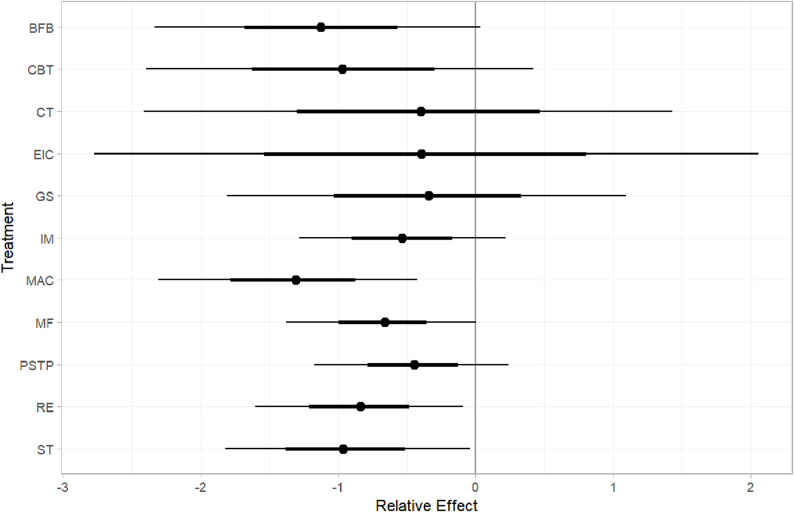
- Across 46 trials and 2,049 participants, MAC showed the largest overall point estimate for reducing competitive anxiety: SMD = −1.33 (95% CrI −2.31 to −0.43).
- For cognitive anxiety, relaxation had the largest point estimate: SMD = −1.54 (95% CrI −3.31 to 0.21); for somatic anxiety, MAC was largest: SMD = −1.24 (95% CrI −1.57 to −0.90).
- Effects differed by competitive level: imagery ranked highest among elite athletes (SMD = −0.88, 95% CrI −1.84 to 0.14), MAC among semi-elite athletes (SMD = −1.37, 95% CrI −3.11 to −0.17), and biofeedback among junior athletes (SMD = −1.07, 95% CrI −2.26 to 0).
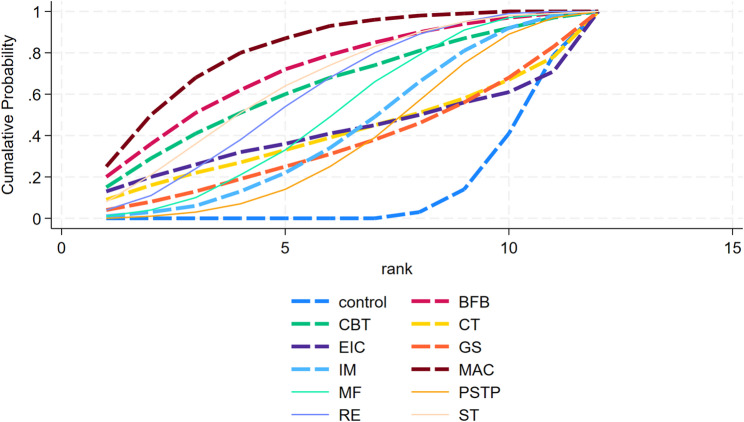
- The ranking analysis gave MAC a mean rank of 3.05 and SUCRA = 81%; BFB had SUCRA = 71%, ST 65%, and CBT 63%, but the paper notes wide credible intervals and sparse evidence for many nodes.
## Methods
- Systematic review and Bayesian random-effects network meta-analysis conducted according to PRISMA; protocol was prospectively registered in PROSPERO (CRD42025642363).
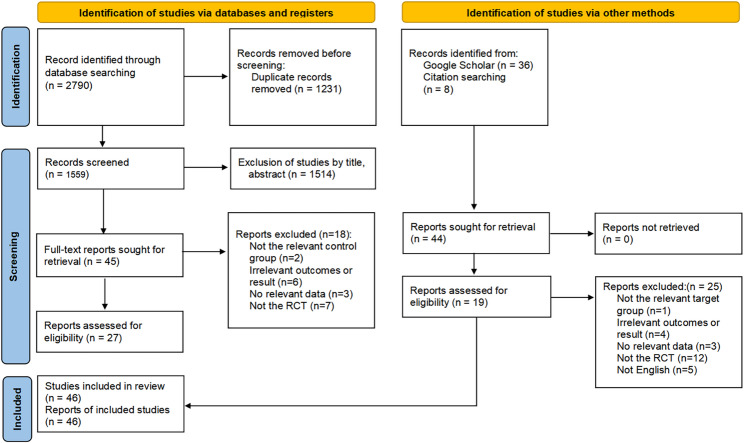
- Searched Cochrane Library, Embase, PubMed, Scopus, and Web of Science from inception to March 2025, plus Google Scholar and reference lists; included English-language randomized controlled trials of healthy athletes with validated competitive-anxiety outcomes.
- Used the revised Cochrane Risk of Bias Tool (RoB 2) and analyzed effects as standardized mean differences (SMDs) with 95% credible intervals in the multinma package; also did subgroup analyses by anxiety dimension and competitive level, plus exploratory meta-regression.
## Limitations
- The paper states that overall certainty of evidence was low to very low, mainly because of risk of bias, between-study heterogeneity, and imprecision (credible intervals including zero).
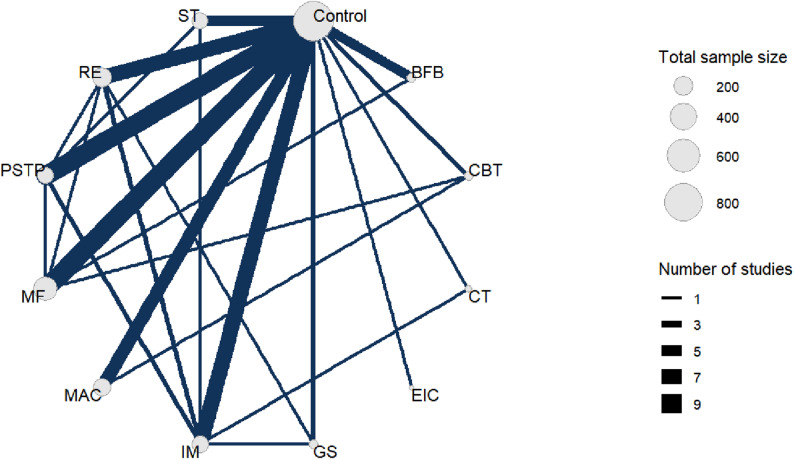
- The authors note that several interventions had sparse network connections, which may compromise the transitivity assumption and make some indirect comparisons and SUCRA rankings unstable.
- They also state that many studies lacked detailed reporting, especially on randomization, outcome measurement, intervention reproducibility, and some anxiety subscale scores.
- Evident from the text: the review was limited to English-language publications and to healthy athletes, so findings may not generalize to non-English studies or athletes with diagnosed conditions.
Model-written summary. Check it against the paper before relying on it.
Integrity signals
Registry
Cites
Statistics
Figures
Verification
Claims the paper makes
18 Valid · 1 Not valid · 11 Not checked · 152 Own results and interpretations
The sources with a verdict support this claim; the rest weren’t checked yet, have no full text we could read, or their verdicts aren’t rated yet.
In the paper
“For example, studies by Bagherpour et al. [48] and Isar et al. [65] reported that interventions incorporating two psychological skills were more effective than those relying on a single technique.”
§ The Effect of Different Psychological Interventions on Athletes’ Competitive Anxiety: A Systematic Review and Bayesian Network Meta-Analysis > Discussion > Comparison with Previous Studies and Mechanistic Explanations Despite limited evidence, MAC was associated with comparatively larger reductions in competitive anxiety among athletes. This aligns with previous findings by Dehghani et al. [56] and Fahimi et al. [58], which reported significant reductions in anxiety following MAC. The intervention may enhance attention and awareness of present thoughts and emotions, which could facilitate regulation of disruptive feelings [58, 90, 91]. By promoting acceptance of negative thoughts and emotions, MAC reduces experiential avoidance, fosters cognitive flexibility, and improves metacognitive control, thereby helping athletes break cycles of rumination during performance [58, 92]. MAC has also been shown to be particularly effective in reducing somatic anxiety. Wang et al. [30] found that mindfulness-based interventions had a substantial impact on somatic anxiety (g = 0.84). The mindfulness component of MAC likely contributes to these effects, consistent with research demonstrating negative associations between mindfulness and somatic anxiety [19, 88, 93]. By encouraging nonjudgmental attention to thoughts, bodily sensations, and emotions, MAC supports athletes’ ability to manage stress and regulate somatic anxiety more effectively [94–96]. Furthermore, MAC appeared especially beneficial for semi-elite athletes, potentially due to its association with mental toughness, a psychological trait that distinguishes elite from semi-elite performers [97, 98]. By emphasizing acceptance and positive coping, MAC may strengthen resilience and the capacity to manage competitive anxiety in this group [99, 100]. Relaxation showed relatively larger point estimates for cognitive anxiety, consistent with previous findings by Bagherpour et al. [48] and Elliott et al. [57], which reported moderate yet significant effects. Relaxation techniques are commonly divided into two types: “mind-to-muscle” and “muscle-to-mind.” Autogenic relaxation (AGR) represents the mind-to-muscle approach, emphasizing cognitive engagement [101]. Through self-suggestion or guided imagery, athletes develop positive attitudes and systematically focus on bodily sensations, which alleviates cognitive anxiety and promotes psychological relaxation that subsequently supports physical relaxation [102–104]. Progressive Muscle Relaxation (PMR), as a muscle-to-mind technique, involves sequentially tensing and relaxing major muscle groups from head to toe [105]. By increasing awareness of muscle tension and learning to release it, athletes cultivate a state of calm that reduces cognitive anxiety, allowing better coping with stressful or pressure-filled situations [101, 106, 107]. Both AGR and PMR not only mitigate cognitive anxiety but also help regulate physiological stress responses, thereby supporting overall performance. Biofeedback showed comparatively larger point estimates among junior-level athletes. Studies by Cantón et al. [26] and Zadkhosh et al. [89] reported significant anxiety reductions in junior athletes following biofeedback training. Yu et al. [108] also noted that junior athletes benefited more from biofeedback than elite athletes. Commonly applied methods include heart rate variability (HRV) and neurofeedback. HRV biofeedback may improve autonomic regulation via resonant frequency breathing, counteracting sympathetic hyperactivity associated with anxiety [25]. Neurofeedback allows athletes to monitor and regulate brain activity, enhancing emotional control in high-pressure situations [108]. These effects are particularly pronounced in junior athletes, who may have less developed physiological and emotional regulation strategies. By providing immediate physiological feedback, biofeedback training facilitates the development of self-regulation skills, allowing athletes to manage emotional responses more effectively and enhance their ability to cope with stress and competitive anxiety in competitive settings [89, 109]. In contrast to junior athletes, elite performers appear to benefit more from interventions that rely on advanced cognitive skills and accumulated performance experience. Imagery showed comparatively larger point estimates among elite athletes. Evidence indicates that imagery enhances confidence, reduces perceived threat, and improves emotional control, thereby alleviating competitive anxiety [70, 110, 111]. Elite athletes may derive greater benefit from imagery due to higher performance experience and psychological preparedness [112–114]. Although our study defined elite athletes as those competing at national or top junior levels, interpretations may vary across sports and events. The findings suggest that basic psychological skills such as imagery, self-talk, relaxation, and centering may be more effective in reducing competitive anxiety than multi-component psychological skills training packages. This indicates that the number of techniques included may not directly determine effectiveness. Although direct comparisons between single-skill and multi-skill interventions remain limited, some evidence supports the benefit of combining a small number of basic skills. For example, studies by Bagherpour et al. [48] and Isar et al. [65] reported that interventions incorporating two psychological skills were more effective than those relying on a single technique. One possible explanation relates to the frequency or intensity of skill use. Previous research has shown that frequent use of psychological skills is associated with larger reductions in competitive anxiety, potentially through increased effort, motivation, self-efficacy, and improved regulation of anxiety responses [3, 115–118]. In contrast, the comparatively smaller effects observed for PSTP may reflect the time required for skill acquisition and integration. Psychological training programs typically progress through three stages: an initial learning phase, in which athletes are introduced to multiple techniques; a training phase, during which selected skills are practiced and refined; and an application phase, in which these skills are implemented under competitive pressure [101]. When multiple techniques are introduced simultaneously, athletes may remain in earlier stages for longer periods, delaying observable improvements in competitive anxiety. As many of the included studies employed relatively short intervention durations, the potential longer-term benefits of PSTP may not have been fully captured. Exploratory meta-regression analyses indicated that reductions in competitive anxiety were statistically associated with improvements in sport performance across studies. This pattern is consistent with prior evidence suggesting an inverse relationship between anxiety and performance, whereby higher anxiety tends to be linked to poorer performance outcomes [119]. Although these findings may suggest that anxiety-related changes are related to performance outcomes, the analysis was based on aggregated study-level data and heterogeneous outcome measures. Therefore, the results should be interpreted as hypothesis-generating rather than confirmatory evidence of mediation. Previous research has proposed several potential mechanisms underlying the effects of psychological interventions on performance, including self-confidence [120, 121], self-efficacy [122], emotion regulation [123], and rumination [124]. These exploratory findings do not establish a specific mediating role of competitive anxiety. Future research using individual-level data and formal meta-analytic structural equation modeling is needed to more rigorously evaluate potential mechanisms and clarify causal pathways.
What the sources say
- Not checked — no full text of the sourcecites [48] Bagherpour T, Hashim HA, Saha S, Ghosh AK. Effects of progressive muscle relaxation and internal imagery on competitive state anxiety inventory – 2R among Taekwondo athletes. Int Proc Econ Dev Res. 2012. 10.13140/2.1.2184.4161. source
- Supportedcites [65] Isar MAHM, Rasyid NM, Aziz SA. Effects of imagery training and self-talk towards state anxiety and archery performance. Int J Hum Mov Sports Sci. 2022. 10.13189/saj.2022.101307. source
The Abstract reports that the combined imagery-and-self-talk group showed a better effect than the self-talk-only and imagery-only groups. The Discussion likewise reports significant changes in the combined group compared with the other treatment groups. (LLM, conf=0.90)
plainstates a cause- Asserted: passes — The authors put it forward as true.
- Checkable: passes — It can be checked against evidence.
- Load-bearing: unclear — It is unclear whether the paper’s conclusions depend on it.
- Based: passes — The paper gives a reason why it holds.
The cited sources support only part of this claim — read each source’s verdict below.
In the paper
“The mindfulness component of MAC likely contributes to these effects, consistent with research demonstrating negative associations between mindfulness and somatic anxiety [19, 88, 93].”
§ The Effect of Different Psychological Interventions on Athletes’ Competitive Anxiety: A Systematic Review and Bayesian Network Meta-Analysis > Discussion > Comparison with Previous Studies and Mechanistic Explanations Despite limited evidence, MAC was associated with comparatively larger reductions in competitive anxiety among athletes. This aligns with previous findings by Dehghani et al. [56] and Fahimi et al. [58], which reported significant reductions in anxiety following MAC. The intervention may enhance attention and awareness of present thoughts and emotions, which could facilitate regulation of disruptive feelings [58, 90, 91]. By promoting acceptance of negative thoughts and emotions, MAC reduces experiential avoidance, fosters cognitive flexibility, and improves metacognitive control, thereby helping athletes break cycles of rumination during performance [58, 92]. MAC has also been shown to be particularly effective in reducing somatic anxiety. Wang et al. [30] found that mindfulness-based interventions had a substantial impact on somatic anxiety (g = 0.84). The mindfulness component of MAC likely contributes to these effects, consistent with research demonstrating negative associations between mindfulness and somatic anxiety [19, 88, 93]. By encouraging nonjudgmental attention to thoughts, bodily sensations, and emotions, MAC supports athletes’ ability to manage stress and regulate somatic anxiety more effectively [94–96]. Furthermore, MAC appeared especially beneficial for semi-elite athletes, potentially due to its association with mental toughness, a psychological trait that distinguishes elite from semi-elite performers [97, 98]. By emphasizing acceptance and positive coping, MAC may strengthen resilience and the capacity to manage competitive anxiety in this group [99, 100]. Relaxation showed relatively larger point estimates for cognitive anxiety, consistent with previous findings by Bagherpour et al. [48] and Elliott et al. [57], which reported moderate yet significant effects. Relaxation techniques are commonly divided into two types: “mind-to-muscle” and “muscle-to-mind.” Autogenic relaxation (AGR) represents the mind-to-muscle approach, emphasizing cognitive engagement [101]. Through self-suggestion or guided imagery, athletes develop positive attitudes and systematically focus on bodily sensations, which alleviates cognitive anxiety and promotes psychological relaxation that subsequently supports physical relaxation [102–104]. Progressive Muscle Relaxation (PMR), as a muscle-to-mind technique, involves sequentially tensing and relaxing major muscle groups from head to toe [105]. By increasing awareness of muscle tension and learning to release it, athletes cultivate a state of calm that reduces cognitive anxiety, allowing better coping with stressful or pressure-filled situations [101, 106, 107]. Both AGR and PMR not only mitigate cognitive anxiety but also help regulate physiological stress responses, thereby supporting overall performance. Biofeedback showed comparatively larger point estimates among junior-level athletes. Studies by Cantón et al. [26] and Zadkhosh et al. [89] reported significant anxiety reductions in junior athletes following biofeedback training. Yu et al. [108] also noted that junior athletes benefited more from biofeedback than elite athletes. Commonly applied methods include heart rate variability (HRV) and neurofeedback. HRV biofeedback may improve autonomic regulation via resonant frequency breathing, counteracting sympathetic hyperactivity associated with anxiety [25]. Neurofeedback allows athletes to monitor and regulate brain activity, enhancing emotional control in high-pressure situations [108]. These effects are particularly pronounced in junior athletes, who may have less developed physiological and emotional regulation strategies. By providing immediate physiological feedback, biofeedback training facilitates the development of self-regulation skills, allowing athletes to manage emotional responses more effectively and enhance their ability to cope with stress and competitive anxiety in competitive settings [89, 109]. In contrast to junior athletes, elite performers appear to benefit more from interventions that rely on advanced cognitive skills and accumulated performance experience. Imagery showed comparatively larger point estimates among elite athletes. Evidence indicates that imagery enhances confidence, reduces perceived threat, and improves emotional control, thereby alleviating competitive anxiety [70, 110, 111]. Elite athletes may derive greater benefit from imagery due to higher performance experience and psychological preparedness [112–114]. Although our study defined elite athletes as those competing at national or top junior levels, interpretations may vary across sports and events. The findings suggest that basic psychological skills such as imagery, self-talk, relaxation, and centering may be more effective in reducing competitive anxiety than multi-component psychological skills training packages. This indicates that the number of techniques included may not directly determine effectiveness. Although direct comparisons between single-skill and multi-skill interventions remain limited, some evidence supports the benefit of combining a small number of basic skills. For example, studies by Bagherpour et al. [48] and Isar et al. [65] reported that interventions incorporating two psychological skills were more effective than those relying on a single technique. One possible explanation relates to the frequency or intensity of skill use. Previous research has shown that frequent use of psychological skills is associated with larger reductions in competitive anxiety, potentially through increased effort, motivation, self-efficacy, and improved regulation of anxiety responses [3, 115–118]. In contrast, the comparatively smaller effects observed for PSTP may reflect the time required for skill acquisition and integration. Psychological training programs typically progress through three stages: an initial learning phase, in which athletes are introduced to multiple techniques; a training phase, during which selected skills are practiced and refined; and an application phase, in which these skills are implemented under competitive pressure [101]. When multiple techniques are introduced simultaneously, athletes may remain in earlier stages for longer periods, delaying observable improvements in competitive anxiety. As many of the included studies employed relatively short intervention durations, the potential longer-term benefits of PSTP may not have been fully captured. Exploratory meta-regression analyses indicated that reductions in competitive anxiety were statistically associated with improvements in sport performance across studies. This pattern is consistent with prior evidence suggesting an inverse relationship between anxiety and performance, whereby higher anxiety tends to be linked to poorer performance outcomes [119]. Although these findings may suggest that anxiety-related changes are related to performance outcomes, the analysis was based on aggregated study-level data and heterogeneous outcome measures. Therefore, the results should be interpreted as hypothesis-generating rather than confirmatory evidence of mediation. Previous research has proposed several potential mechanisms underlying the effects of psychological interventions on performance, including self-confidence [120, 121], self-efficacy [122], emotion regulation [123], and rumination [124]. These exploratory findings do not establish a specific mediating role of competitive anxiety. Future research using individual-level data and formal meta-analytic structural equation modeling is needed to more rigorously evaluate potential mechanisms and clarify causal pathways.
What the sources say
- Partly supportedcites [19] Harita ANW, Suryanto S, Ardi R. Effect of Mindfulness Sport Performance Enhancement (MSPE) to reduce competitive state anxiety on karate athletes. Jurnal SPORTIF:Jurnal Penelitian Pembelajaran. 2022. 10.29407/js_unpgri.v8i2.17807. sourceExperimental — accuracy not yet measured
The Hypothesis test result section reports that somatic anxiety fell after MSPE training, supporting a link between a mindfulness-based intervention and reduced somatic anxiety in karate athletes. The Discussion’s limitations state that changes in mindfulness were not measured, so the study does not demonstrate a negative association between mindfulness levels and somatic anxiety or isolate the mindfulness component of MAC. (LLM, conf=0.85)
- Supportedcites [88] Yu MG, Dou GB, Gong C. Effects of mindfulness intervention on competition state anxiety in sprinters - a randomized controlled trial. Front Psychol. 2024. 10.3389/fpsyg.2024.1418094. 39545139 PMC11560779 source
The Introduction states that mindfulness is negatively correlated with somatic anxiety in cross-sectional research. The Results also report a significant decrease in somatic anxiety in the mindfulness-intervention group. These passages support the cited association and the cautious suggestion that mindfulness contributes to the effect; this paper tested MAIC, not MAC. (LLM, conf=0.90)
- Not matchedcites [93] Muangnapoe P, Morris T, Kuan G. The effect of mindfulness meditation and progressive relaxation training on somatic and cognitive state anxiety. ASPASP-JPASPEX Spec Ed. 2016;1(1):1–4.
Its entry has no title and year that we can search by.
hedgedstates a possible cause- Asserted: passes — The authors put it forward as true.
- Checkable: passes — It can be checked against evidence.
- Load-bearing: unclear — It is unclear whether the paper’s conclusions depend on it.
- Based: passes — The paper gives a reason why it holds.
- Partly supported
The cited sources support only part of this claim — read each source’s verdict below.
In the paper
“Elite athletes may derive greater benefit from imagery due to higher performance experience and psychological preparedness [112–114].”
§ The Effect of Different Psychological Interventions on Athletes’ Competitive Anxiety: A Systematic Review and Bayesian Network Meta-Analysis > Discussion > Comparison with Previous Studies and Mechanistic Explanations Despite limited evidence, MAC was associated with comparatively larger reductions in competitive anxiety among athletes. This aligns with previous findings by Dehghani et al. [56] and Fahimi et al. [58], which reported significant reductions in anxiety following MAC. The intervention may enhance attention and awareness of present thoughts and emotions, which could facilitate regulation of disruptive feelings [58, 90, 91]. By promoting acceptance of negative thoughts and emotions, MAC reduces experiential avoidance, fosters cognitive flexibility, and improves metacognitive control, thereby helping athletes break cycles of rumination during performance [58, 92]. MAC has also been shown to be particularly effective in reducing somatic anxiety. Wang et al. [30] found that mindfulness-based interventions had a substantial impact on somatic anxiety (g = 0.84). The mindfulness component of MAC likely contributes to these effects, consistent with research demonstrating negative associations between mindfulness and somatic anxiety [19, 88, 93]. By encouraging nonjudgmental attention to thoughts, bodily sensations, and emotions, MAC supports athletes’ ability to manage stress and regulate somatic anxiety more effectively [94–96]. Furthermore, MAC appeared especially beneficial for semi-elite athletes, potentially due to its association with mental toughness, a psychological trait that distinguishes elite from semi-elite performers [97, 98]. By emphasizing acceptance and positive coping, MAC may strengthen resilience and the capacity to manage competitive anxiety in this group [99, 100]. Relaxation showed relatively larger point estimates for cognitive anxiety, consistent with previous findings by Bagherpour et al. [48] and Elliott et al. [57], which reported moderate yet significant effects. Relaxation techniques are commonly divided into two types: “mind-to-muscle” and “muscle-to-mind.” Autogenic relaxation (AGR) represents the mind-to-muscle approach, emphasizing cognitive engagement [101]. Through self-suggestion or guided imagery, athletes develop positive attitudes and systematically focus on bodily sensations, which alleviates cognitive anxiety and promotes psychological relaxation that subsequently supports physical relaxation [102–104]. Progressive Muscle Relaxation (PMR), as a muscle-to-mind technique, involves sequentially tensing and relaxing major muscle groups from head to toe [105]. By increasing awareness of muscle tension and learning to release it, athletes cultivate a state of calm that reduces cognitive anxiety, allowing better coping with stressful or pressure-filled situations [101, 106, 107]. Both AGR and PMR not only mitigate cognitive anxiety but also help regulate physiological stress responses, thereby supporting overall performance. Biofeedback showed comparatively larger point estimates among junior-level athletes. Studies by Cantón et al. [26] and Zadkhosh et al. [89] reported significant anxiety reductions in junior athletes following biofeedback training. Yu et al. [108] also noted that junior athletes benefited more from biofeedback than elite athletes. Commonly applied methods include heart rate variability (HRV) and neurofeedback. HRV biofeedback may improve autonomic regulation via resonant frequency breathing, counteracting sympathetic hyperactivity associated with anxiety [25]. Neurofeedback allows athletes to monitor and regulate brain activity, enhancing emotional control in high-pressure situations [108]. These effects are particularly pronounced in junior athletes, who may have less developed physiological and emotional regulation strategies. By providing immediate physiological feedback, biofeedback training facilitates the development of self-regulation skills, allowing athletes to manage emotional responses more effectively and enhance their ability to cope with stress and competitive anxiety in competitive settings [89, 109]. In contrast to junior athletes, elite performers appear to benefit more from interventions that rely on advanced cognitive skills and accumulated performance experience. Imagery showed comparatively larger point estimates among elite athletes. Evidence indicates that imagery enhances confidence, reduces perceived threat, and improves emotional control, thereby alleviating competitive anxiety [70, 110, 111]. Elite athletes may derive greater benefit from imagery due to higher performance experience and psychological preparedness [112–114]. Although our study defined elite athletes as those competing at national or top junior levels, interpretations may vary across sports and events. The findings suggest that basic psychological skills such as imagery, self-talk, relaxation, and centering may be more effective in reducing competitive anxiety than multi-component psychological skills training packages. This indicates that the number of techniques included may not directly determine effectiveness. Although direct comparisons between single-skill and multi-skill interventions remain limited, some evidence supports the benefit of combining a small number of basic skills. For example, studies by Bagherpour et al. [48] and Isar et al. [65] reported that interventions incorporating two psychological skills were more effective than those relying on a single technique. One possible explanation relates to the frequency or intensity of skill use. Previous research has shown that frequent use of psychological skills is associated with larger reductions in competitive anxiety, potentially through increased effort, motivation, self-efficacy, and improved regulation of anxiety responses [3, 115–118]. In contrast, the comparatively smaller effects observed for PSTP may reflect the time required for skill acquisition and integration. Psychological training programs typically progress through three stages: an initial learning phase, in which athletes are introduced to multiple techniques; a training phase, during which selected skills are practiced and refined; and an application phase, in which these skills are implemented under competitive pressure [101]. When multiple techniques are introduced simultaneously, athletes may remain in earlier stages for longer periods, delaying observable improvements in competitive anxiety. As many of the included studies employed relatively short intervention durations, the potential longer-term benefits of PSTP may not have been fully captured. Exploratory meta-regression analyses indicated that reductions in competitive anxiety were statistically associated with improvements in sport performance across studies. This pattern is consistent with prior evidence suggesting an inverse relationship between anxiety and performance, whereby higher anxiety tends to be linked to poorer performance outcomes [119]. Although these findings may suggest that anxiety-related changes are related to performance outcomes, the analysis was based on aggregated study-level data and heterogeneous outcome measures. Therefore, the results should be interpreted as hypothesis-generating rather than confirmatory evidence of mediation. Previous research has proposed several potential mechanisms underlying the effects of psychological interventions on performance, including self-confidence [120, 121], self-efficacy [122], emotion regulation [123], and rumination [124]. These exploratory findings do not establish a specific mediating role of competitive anxiety. Future research using individual-level data and formal meta-analytic structural equation modeling is needed to more rigorously evaluate potential mechanisms and clarify causal pathways.
What the sources say
- Not matchedcites [112] Shearer DA, Thomson R, Mellalieu SD, Shearer CR. The relationship between imagery type and collective efficacy in elite and nonelite athletes. J Sports Sci Med. 2007;6(2):180. 24149327 PMC3786238
Its entry has no title and year that we can search by.
- Partly supportedcites [113] Yarayan YE, Solmaz S, Aslan M, Batrakoulis A, Al-Mhanna SB, Keskin K. Sex differences in athletic performance response to the imagery and mental toughness of elite Middle-and Long-Distance runners. Sports. 2024;12(6):141. 10.3390/sports12060141. 38921835 PMC11207883 sourceExperimental — accuracy not yet measured
The Results and Discussion (pages unavailable) report higher imagery levels among high-performing female athletes and note that imagery’s effect may vary with experience. They do not show that elite athletes benefit more than less-experienced athletes, or that greater benefit is due to performance experience and psychological preparedness; the study found no significant relationship in men. (LLM, conf=0.86)
- Partly supportedcites [114] Demir GT, Namlı S, Çakır E, Batu B, Ateş F, Yılmaz E, Güvendi B, Adaş SK, Çağın M. The role of mental toughness, sport imagery and anxiety in athletic performance: structural equation modelling analysis. BMC psychol. 2025;13(1):869. 10.1186/s40359-025-03250-6. 40764935 PMC12326591 sourceExperimental — accuracy not yet measured
The Methods (Research group; page unavailable) describe a sample of elite athletes with substantial competitive experience, and the Introduction says athletes with higher mental toughness may use imagery more effectively. The paper does not show that elite athletes benefit more from imagery than other athletes, or that greater experience and psychological preparedness explain such a difference. (LLM, conf=0.83)
hedgedstates a possible cause- Asserted: passes — The authors put it forward as true.
- Checkable: passes — It can be checked against evidence.
- Load-bearing: passes — The paper’s conclusions depend on it.
- Based: passes — The paper gives a reason why it holds.
- Not matched
The cited sources support only part of this claim — read each source’s verdict below.
In the paper
“HRV biofeedback may improve autonomic regulation via resonant frequency breathing, counteracting sympathetic hyperactivity associated with anxiety [25].”
§ The Effect of Different Psychological Interventions on Athletes’ Competitive Anxiety: A Systematic Review and Bayesian Network Meta-Analysis > Discussion > Comparison with Previous Studies and Mechanistic Explanations Despite limited evidence, MAC was associated with comparatively larger reductions in competitive anxiety among athletes. This aligns with previous findings by Dehghani et al. [56] and Fahimi et al. [58], which reported significant reductions in anxiety following MAC. The intervention may enhance attention and awareness of present thoughts and emotions, which could facilitate regulation of disruptive feelings [58, 90, 91]. By promoting acceptance of negative thoughts and emotions, MAC reduces experiential avoidance, fosters cognitive flexibility, and improves metacognitive control, thereby helping athletes break cycles of rumination during performance [58, 92]. MAC has also been shown to be particularly effective in reducing somatic anxiety. Wang et al. [30] found that mindfulness-based interventions had a substantial impact on somatic anxiety (g = 0.84). The mindfulness component of MAC likely contributes to these effects, consistent with research demonstrating negative associations between mindfulness and somatic anxiety [19, 88, 93]. By encouraging nonjudgmental attention to thoughts, bodily sensations, and emotions, MAC supports athletes’ ability to manage stress and regulate somatic anxiety more effectively [94–96]. Furthermore, MAC appeared especially beneficial for semi-elite athletes, potentially due to its association with mental toughness, a psychological trait that distinguishes elite from semi-elite performers [97, 98]. By emphasizing acceptance and positive coping, MAC may strengthen resilience and the capacity to manage competitive anxiety in this group [99, 100]. Relaxation showed relatively larger point estimates for cognitive anxiety, consistent with previous findings by Bagherpour et al. [48] and Elliott et al. [57], which reported moderate yet significant effects. Relaxation techniques are commonly divided into two types: “mind-to-muscle” and “muscle-to-mind.” Autogenic relaxation (AGR) represents the mind-to-muscle approach, emphasizing cognitive engagement [101]. Through self-suggestion or guided imagery, athletes develop positive attitudes and systematically focus on bodily sensations, which alleviates cognitive anxiety and promotes psychological relaxation that subsequently supports physical relaxation [102–104]. Progressive Muscle Relaxation (PMR), as a muscle-to-mind technique, involves sequentially tensing and relaxing major muscle groups from head to toe [105]. By increasing awareness of muscle tension and learning to release it, athletes cultivate a state of calm that reduces cognitive anxiety, allowing better coping with stressful or pressure-filled situations [101, 106, 107]. Both AGR and PMR not only mitigate cognitive anxiety but also help regulate physiological stress responses, thereby supporting overall performance. Biofeedback showed comparatively larger point estimates among junior-level athletes. Studies by Cantón et al. [26] and Zadkhosh et al. [89] reported significant anxiety reductions in junior athletes following biofeedback training. Yu et al. [108] also noted that junior athletes benefited more from biofeedback than elite athletes. Commonly applied methods include heart rate variability (HRV) and neurofeedback. HRV biofeedback may improve autonomic regulation via resonant frequency breathing, counteracting sympathetic hyperactivity associated with anxiety [25]. Neurofeedback allows athletes to monitor and regulate brain activity, enhancing emotional control in high-pressure situations [108]. These effects are particularly pronounced in junior athletes, who may have less developed physiological and emotional regulation strategies. By providing immediate physiological feedback, biofeedback training facilitates the development of self-regulation skills, allowing athletes to manage emotional responses more effectively and enhance their ability to cope with stress and competitive anxiety in competitive settings [89, 109]. In contrast to junior athletes, elite performers appear to benefit more from interventions that rely on advanced cognitive skills and accumulated performance experience. Imagery showed comparatively larger point estimates among elite athletes. Evidence indicates that imagery enhances confidence, reduces perceived threat, and improves emotional control, thereby alleviating competitive anxiety [70, 110, 111]. Elite athletes may derive greater benefit from imagery due to higher performance experience and psychological preparedness [112–114]. Although our study defined elite athletes as those competing at national or top junior levels, interpretations may vary across sports and events. The findings suggest that basic psychological skills such as imagery, self-talk, relaxation, and centering may be more effective in reducing competitive anxiety than multi-component psychological skills training packages. This indicates that the number of techniques included may not directly determine effectiveness. Although direct comparisons between single-skill and multi-skill interventions remain limited, some evidence supports the benefit of combining a small number of basic skills. For example, studies by Bagherpour et al. [48] and Isar et al. [65] reported that interventions incorporating two psychological skills were more effective than those relying on a single technique. One possible explanation relates to the frequency or intensity of skill use. Previous research has shown that frequent use of psychological skills is associated with larger reductions in competitive anxiety, potentially through increased effort, motivation, self-efficacy, and improved regulation of anxiety responses [3, 115–118]. In contrast, the comparatively smaller effects observed for PSTP may reflect the time required for skill acquisition and integration. Psychological training programs typically progress through three stages: an initial learning phase, in which athletes are introduced to multiple techniques; a training phase, during which selected skills are practiced and refined; and an application phase, in which these skills are implemented under competitive pressure [101]. When multiple techniques are introduced simultaneously, athletes may remain in earlier stages for longer periods, delaying observable improvements in competitive anxiety. As many of the included studies employed relatively short intervention durations, the potential longer-term benefits of PSTP may not have been fully captured. Exploratory meta-regression analyses indicated that reductions in competitive anxiety were statistically associated with improvements in sport performance across studies. This pattern is consistent with prior evidence suggesting an inverse relationship between anxiety and performance, whereby higher anxiety tends to be linked to poorer performance outcomes [119]. Although these findings may suggest that anxiety-related changes are related to performance outcomes, the analysis was based on aggregated study-level data and heterogeneous outcome measures. Therefore, the results should be interpreted as hypothesis-generating rather than confirmatory evidence of mediation. Previous research has proposed several potential mechanisms underlying the effects of psychological interventions on performance, including self-confidence [120, 121], self-efficacy [122], emotion regulation [123], and rumination [124]. These exploratory findings do not establish a specific mediating role of competitive anxiety. Future research using individual-level data and formal meta-analytic structural equation modeling is needed to more rigorously evaluate potential mechanisms and clarify causal pathways.
What the sources say
- Partly supportedcites [25] Zhang X, Chang Z, Zhao S, Ning Z. The effects of biofeedback training on athletes’ mental health and performance: a systematic review and Bayesian meta-analysis. Front Psychol. 2025. 10.3389/fpsyg.2025.1662868. 41194890 PMC12583207 sourceExperimental — accuracy not yet measured
The Introduction (page unavailable) links HRV biofeedback to resonance-frequency training and increased parasympathetic activation. The Discussion (page unavailable) links parasympathetic dominance to anxiety reduction and describes breathing adjustments, but does not specifically say that the intervention counteracts sympathetic hyperactivity associated with anxiety. (LLM, conf=0.82)
hedgedstates a possible cause- Asserted: passes — The authors put it forward as true.
- Checkable: passes — It can be checked against evidence.
- Load-bearing: unclear — It is unclear whether the paper’s conclusions depend on it.
- Based: passes — The paper gives a reason why it holds.
- Partly supported
The cited sources support only part of this claim — read each source’s verdict below.
In the paper
“Studies by Cantón et al. [26] and Zadkhosh et al. [89] reported significant anxiety reductions in junior athletes following biofeedback training.”
§ The Effect of Different Psychological Interventions on Athletes’ Competitive Anxiety: A Systematic Review and Bayesian Network Meta-Analysis > Discussion > Comparison with Previous Studies and Mechanistic Explanations Despite limited evidence, MAC was associated with comparatively larger reductions in competitive anxiety among athletes. This aligns with previous findings by Dehghani et al. [56] and Fahimi et al. [58], which reported significant reductions in anxiety following MAC. The intervention may enhance attention and awareness of present thoughts and emotions, which could facilitate regulation of disruptive feelings [58, 90, 91]. By promoting acceptance of negative thoughts and emotions, MAC reduces experiential avoidance, fosters cognitive flexibility, and improves metacognitive control, thereby helping athletes break cycles of rumination during performance [58, 92]. MAC has also been shown to be particularly effective in reducing somatic anxiety. Wang et al. [30] found that mindfulness-based interventions had a substantial impact on somatic anxiety (g = 0.84). The mindfulness component of MAC likely contributes to these effects, consistent with research demonstrating negative associations between mindfulness and somatic anxiety [19, 88, 93]. By encouraging nonjudgmental attention to thoughts, bodily sensations, and emotions, MAC supports athletes’ ability to manage stress and regulate somatic anxiety more effectively [94–96]. Furthermore, MAC appeared especially beneficial for semi-elite athletes, potentially due to its association with mental toughness, a psychological trait that distinguishes elite from semi-elite performers [97, 98]. By emphasizing acceptance and positive coping, MAC may strengthen resilience and the capacity to manage competitive anxiety in this group [99, 100]. Relaxation showed relatively larger point estimates for cognitive anxiety, consistent with previous findings by Bagherpour et al. [48] and Elliott et al. [57], which reported moderate yet significant effects. Relaxation techniques are commonly divided into two types: “mind-to-muscle” and “muscle-to-mind.” Autogenic relaxation (AGR) represents the mind-to-muscle approach, emphasizing cognitive engagement [101]. Through self-suggestion or guided imagery, athletes develop positive attitudes and systematically focus on bodily sensations, which alleviates cognitive anxiety and promotes psychological relaxation that subsequently supports physical relaxation [102–104]. Progressive Muscle Relaxation (PMR), as a muscle-to-mind technique, involves sequentially tensing and relaxing major muscle groups from head to toe [105]. By increasing awareness of muscle tension and learning to release it, athletes cultivate a state of calm that reduces cognitive anxiety, allowing better coping with stressful or pressure-filled situations [101, 106, 107]. Both AGR and PMR not only mitigate cognitive anxiety but also help regulate physiological stress responses, thereby supporting overall performance. Biofeedback showed comparatively larger point estimates among junior-level athletes. Studies by Cantón et al. [26] and Zadkhosh et al. [89] reported significant anxiety reductions in junior athletes following biofeedback training. Yu et al. [108] also noted that junior athletes benefited more from biofeedback than elite athletes. Commonly applied methods include heart rate variability (HRV) and neurofeedback. HRV biofeedback may improve autonomic regulation via resonant frequency breathing, counteracting sympathetic hyperactivity associated with anxiety [25]. Neurofeedback allows athletes to monitor and regulate brain activity, enhancing emotional control in high-pressure situations [108]. These effects are particularly pronounced in junior athletes, who may have less developed physiological and emotional regulation strategies. By providing immediate physiological feedback, biofeedback training facilitates the development of self-regulation skills, allowing athletes to manage emotional responses more effectively and enhance their ability to cope with stress and competitive anxiety in competitive settings [89, 109]. In contrast to junior athletes, elite performers appear to benefit more from interventions that rely on advanced cognitive skills and accumulated performance experience. Imagery showed comparatively larger point estimates among elite athletes. Evidence indicates that imagery enhances confidence, reduces perceived threat, and improves emotional control, thereby alleviating competitive anxiety [70, 110, 111]. Elite athletes may derive greater benefit from imagery due to higher performance experience and psychological preparedness [112–114]. Although our study defined elite athletes as those competing at national or top junior levels, interpretations may vary across sports and events. The findings suggest that basic psychological skills such as imagery, self-talk, relaxation, and centering may be more effective in reducing competitive anxiety than multi-component psychological skills training packages. This indicates that the number of techniques included may not directly determine effectiveness. Although direct comparisons between single-skill and multi-skill interventions remain limited, some evidence supports the benefit of combining a small number of basic skills. For example, studies by Bagherpour et al. [48] and Isar et al. [65] reported that interventions incorporating two psychological skills were more effective than those relying on a single technique. One possible explanation relates to the frequency or intensity of skill use. Previous research has shown that frequent use of psychological skills is associated with larger reductions in competitive anxiety, potentially through increased effort, motivation, self-efficacy, and improved regulation of anxiety responses [3, 115–118]. In contrast, the comparatively smaller effects observed for PSTP may reflect the time required for skill acquisition and integration. Psychological training programs typically progress through three stages: an initial learning phase, in which athletes are introduced to multiple techniques; a training phase, during which selected skills are practiced and refined; and an application phase, in which these skills are implemented under competitive pressure [101]. When multiple techniques are introduced simultaneously, athletes may remain in earlier stages for longer periods, delaying observable improvements in competitive anxiety. As many of the included studies employed relatively short intervention durations, the potential longer-term benefits of PSTP may not have been fully captured. Exploratory meta-regression analyses indicated that reductions in competitive anxiety were statistically associated with improvements in sport performance across studies. This pattern is consistent with prior evidence suggesting an inverse relationship between anxiety and performance, whereby higher anxiety tends to be linked to poorer performance outcomes [119]. Although these findings may suggest that anxiety-related changes are related to performance outcomes, the analysis was based on aggregated study-level data and heterogeneous outcome measures. Therefore, the results should be interpreted as hypothesis-generating rather than confirmatory evidence of mediation. Previous research has proposed several potential mechanisms underlying the effects of psychological interventions on performance, including self-confidence [120, 121], self-efficacy [122], emotion regulation [123], and rumination [124]. These exploratory findings do not establish a specific mediating role of competitive anxiety. Future research using individual-level data and formal meta-analytic structural equation modeling is needed to more rigorously evaluate potential mechanisms and clarify causal pathways.
What the sources say
- Not matchedcites [26] Cantón E, Pérez-Córdoba E, Estrada O, Díaz-Rodríguez C, Peris-Delcampo D. Effect of Biofeedback on the Anxiety of Amateur Athletes: Biofeedback sobre la ansiedad de los deportistas. Rev Psicol Deporte. 2022;31(2):220–8.
Its entry has no title and year that we can search by.
- Supportedcites [89] Zadkhosh SM, Gharayagh Zandi H, Hemayattalab R. Neurofeedback versus mindfulness on young football players anxiety and performance. Turk J Kinesiol. 2018. 10.31459/turkjkin.467470. source
The Abstract describes young football players receiving alpha/theta neurofeedback training and reports a significant reduction in anxiety in the experimental groups. The Results also report a significantly greater reduction in sport anxiety than in the control group. The paper discusses neurofeedback as a form of biofeedback used with athletes. (LLM, conf=0.91)
plainstates a cause- Asserted: passes — The authors put it forward as true.
- Checkable: passes — It can be checked against evidence.
- Load-bearing: unclear — It is unclear whether the paper’s conclusions depend on it.
- Based: passes — The paper gives a reason why it holds.
- Not matched
104 more claims
Create a free account to see all 182 claims and to verify the 4 references still open.
- It may state two separate claims as one. 52
- Probably not a substantial claim. 30
- Borderline: one of the tests for a substantial claim is unclear. 1
- The quote only partly states this claim. 4
Self-check
Percentages, sums and reported differences re-computed from the paper’s own numbers.
Rated major: it would touch a result — a value a result rests on, reported and recomputed p-values on opposite sides of the significance level, two passages that conflict with no sign which is right, or a cited work retracted before this paper was published.
In the paper
“When individual areas were examined, the randomization process was rated as low risk in 36 studies, raised some concerns in 6 studies, and was high risk in 5 studies.”
§ The Effect of Different Psychological Interventions on Athletes’ Competitive Anxiety: A Systematic Review and Bayesian Network Meta-Analysis > Result > Results of Risk of Bias Assessment
Reported 46 · recomputed 47
Citations
Cites
Page, M. J., Moher, D., Bossuyt, P. M., Boutron, I., Hoffmann, T. C., Mulrow, C. D., Shamseer, L., Tetzlaff, J. M., Akl, E. A., Brennan, S. E., et al. (2021) · BMJ · doi:10.1136/bmj.n160 · Cited by 13,262 · cited 1×
“This systematic review and network meta-analysis was conducted in accordance with the Preferred Reporting Items for Systematic Reviews and Meta-Analyses (PRISMA) guidelines [34].”
Graphical tools for network meta-analysis in STATA
Chaimani, A., Higgins, J. P. T., Mavridis, D., Spyridonos, P., & Salanti, G. (2013) · PLoS ONE · doi:10.1371/journal.pone.0076654 · Cited by 2,473 · cited 1×
“Treatments were ordered according to intervention intensity (active control, wait-list, no intervention) to reflect an a priori assumption regarding the possible direction of small-study effects [43, 44].”
Puhan, M. A., Schunemann, H. J., Murad, M. H., Li, T., Brignardello-Petersen, R., Singh, J. A., Kessels, A. G., Guyatt, G. H., & for the GRADE Working Group (2014) · BMJ · doi:10.1136/bmj.g5630 · Cited by 1,812 · cited 1×
“The overall certainty of evidence was assessed using the Grading of Recommendations Assessment, Development and Evaluation (GRADE) framework [45].”
Kruschke, J. K., & Liddell, T. M. (2018) · Psychonomic Bulletin & Review · doi:10.3758/s13423-016-1221-4 · Cited by 1,288 · cited 2×
“This framework is also well suited to evidence networks with small or imbalanced sample sizes and provides more stable estimates than conventional frequentist methods [33, 40].”
Dias, S., Sutton, A. J., Ades, A. E., & Welton, N. J. (2013) · Medical Decision Making · doi:10.1177/0272989x12458724 · Cited by 1,207 · cited 1×
“This approach follows the hierarchical Bayesian framework for network meta-analysis described by Lu and Ades (2004) and Dias et al. (2013), which allows continuous outcomes, including standardized mean differences, to be modeled at the arm level using a normal likelihood [37, 38].”
McNulty, K. L., Elliott-Sale, K. J., Dolan, E., Swinton, P. A., Ansdell, P., Goodall, S., Thomas, K., & Hicks, K. M. (2020) · Sports Medicine · doi:10.1007/s40279-020-01319-3 · Cited by 812 · cited 1×
“A Bayesian approach was selected because it estimates the full probability distribution of treatment effects rather than relying on binary significance testing, allowing more informative interpretation of effect sizes and associated uncertainty [40, 41].”
Understanding psychological preparation for sport: theory and practice of elite performers
(1997) · Choice Reviews Online · doi:10.5860/choice.35-0972 · Cited by 672
Chaimani, A., & Salanti, G. (2012) · Research Synthesis Methods · doi:10.1002/jrsm.57 · Cited by 521 · cited 2×
“Treatments were ordered according to intervention intensity (active control, wait-list, no intervention) to reflect an a priori assumption regarding the possible direction of small-study effects [43, 44].”
van der Velden, A. M., Kuyken, W., Wattar, U., Crane, C., Pallesen, K. J., Dahlgaard, J., Fjorback, L. O., & Piet, J. (2015) · Clinical Psychology Review · doi:10.1016/j.cpr.2015.02.001 · Cited by 455 · cited 1×
“By encouraging nonjudgmental attention to thoughts, bodily sensations, and emotions, MAC supports athletes’ ability to manage stress and regulate somatic anxiety more effectively [94–96].”
Gardner, F. L., & Moore, Z. E. (2004) · Behavior Therapy · doi:10.1016/s0005-7894(04)80016-9 · Cited by 416 · cited 1×
“These programs encourage athletes to observe their thoughts and emotions nonjudgmentally while remaining committed to valued actions and performance goals [21, 22].”
GetReal in network meta-analysis: a review of the methodology
Efthimiou, O., Debray, T. P. A., van Valkenhoef, G., Trelle, S., Panayidou, K., Moons, K. G. M., Reitsma, J. B., Shang, A., Salanti, G., & on behalf of GetReal Methods Review Group (2016) · Research Synthesis Methods · doi:10.1002/jrsm.1195 · Cited by 401 · cited 2×
“Multi-arm trials contributed all eligible intervention arms simultaneously to the corresponding nodes, with within-study correlations appropriately accounted for through the arm-based model specification [37].”
Birrer, D., Röthlin, P., & Morgan, G. (2012) · Mindfulness · doi:10.1007/s12671-012-0109-2 · Cited by 352 · cited 1×
“These programs encourage athletes to observe their thoughts and emotions nonjudgmentally while remaining committed to valued actions and performance goals [21, 22].”
Nieuwenhuys, A., & Oudejans, R. R. D. (2012) · Psychological Research · doi:10.1007/s00426-011-0384-x · Cited by 265 · cited 1×
“A substantial body of evidence indicates that both cognitive and somatic anxiety can divert attention from task-relevant cues, impair athletic performance, and increase injury risk [1, 8, 9].”
Meta-analytic structural equation modeling with moderating effects on SEM parameters.
Jak, S., & Cheung, M. W. L. (2020) · Psychological Methods · doi:10.1037/met0000245 · Cited by 262 · cited 1×
“Since the correlation coefficients required for a two-stage meta-analytic structural equation model were not consistently reported, this approach could not be applied [46].”
Mindfulness and acceptance approaches in sport performance
Bernier, M., Thienot, E., Codron, R., & Fournier, J. F. (2009) · Journal of Clinical Sport Psychology · doi:10.1123/jcsp.3.4.320 · Cited by 246 · cited 1×
“By promoting acceptance of negative thoughts and emotions, MAC reduces experiential avoidance, fosters cognitive flexibility, and improves metacognitive control, thereby helping athletes break cycles of rumination during performance [58, 92].”
The Effect of Heart Rate Variability Biofeedback on Performance Psychology of Basketball Players
Paul, M., & Garg, K. (2012) · Applied Psychophysiology and Biofeedback · doi:10.1007/s10484-012-9185-2 · Cited by 238
Sport-related anxiety: Current insights.
Ford, J., Ildefonso, K., Jones, M., & Arvinen-Barrow, M. (2017) · Open Access Journal of Sports Medicine · doi:10.2147/oajsm.s125845 · Cited by 231 · cited 2×
“A substantial body of evidence indicates that both cognitive and somatic anxiety can divert attention from task-relevant cues, impair athletic performance, and increase injury risk [1, 8, 9].”
Gross, M., Moore, Z. E., Gardner, F. L., Wolanin, A. T., Pess, R., & Marks, D. R. (2018) · International Journal of Sport and Exercise Psychology · doi:10.1080/1612197x.2016.1250802 · Cited by 213 · cited 2×
“In recent years, mindfulness-based interventions and biofeedback training have gained increasing attention as alternative approaches [16, 17].”
Effects of a mindfulness intervention on sports-anxiety, pessimism, and flow in competitive cyclists
Scott‐Hamilton, J., Schutte, N. S., & Brown, R. F. (2016) · Applied Psychology: Health and Well-Being · doi:10.1111/aphw.12063 · Cited by 174
Josefsson, T., Ivarsson, A., Gustafsson, H., Stenling, A., Lindwall, M., Tornberg, R., & Böröy, J. (2019) · Mindfulness · doi:10.1007/s12671-019-01098-7 · Cited by 161 · cited 1×
“Previous research has proposed several potential mechanisms underlying the effects of psychological interventions on performance, including self-confidence [120, 121], self-efficacy [122], emotion regulation [123], and rumination [124].”
Coping self‐efficacy, pre‐competitive anxiety, and subjective performance among athletes
Nicholls, A. R., Polman, R. C. J., & Levy, A. R. (2010) · European Journal of Sport Science · doi:10.1080/17461390903271592 · Cited by 158 · cited 1×
“Previous research has proposed several potential mechanisms underlying the effects of psychological interventions on performance, including self-confidence [120, 121], self-efficacy [122], emotion regulation [123], and rumination [124].”
Reinebo, G., Alfonsson, S., Jansson‐Fröjmark, M., Rozental, A., & Lundgren, T. (2023) · Sports Medicine · doi:10.1007/s40279-023-01931-z · Cited by 156 · cited 1×
“These included basic psychological skills training (e.g., imagery, goal setting, concentrating, self-talk, and relaxation) [3], psychological skills training packages combining two or more psychological skills [36]”
Josefsson, T., Ivarsson, A., Lindwall, M., Gustafsson, H., Stenling, A., Böröy, J., Mattsson, E., Carnebratt, J., Sevholt, S., & Falkevik, E. (2017) · Mindfulness · doi:10.1007/s12671-017-0711-4 · Cited by 150 · cited 1×
“Previous research has proposed several potential mechanisms underlying the effects of psychological interventions on performance, including self-confidence [120, 121], self-efficacy [122], emotion regulation [123], and rumination [124].”
The relationship between psychological skills usage and competitive anxiety responses
Fletcher, D., & Hanton, S. (2001) · Psychology of Sport and Exercise · doi:10.1016/s1469-0292(00)00014-5 · Cited by 137 · cited 1×
“Previous research has shown that frequent use of psychological skills is associated with larger reductions in competitive anxiety, potentially through increased effort, motivation, self-efficacy, and improved regulation of anxiety responses [3, 115–118].”
Performance enhancement in sport: A cognitive behavioral domain
Whelan, J., Mahoney, M. J., & Meyers, A. W. (1991) · Behavior Therapy · doi:10.1016/s0005-7894(05)80369-7 · Cited by 135
Types of Imagery Associated with Sport Confidence in Netball Players of Varying Skill Levels
Callow, N., & Hardy, L. (2001) · Journal of Applied Sport Psychology · doi:10.1080/10413200109339001 · Cited by 135 · cited 1×
“Evidence indicates that imagery enhances confidence, reduces perceived threat, and improves emotional control, thereby alleviating competitive anxiety [70, 110, 111].”
Current practices in meta‐regression in psychology, education, and medicine
Tipton, E., Pustejovsky, J. E., & Ahmadi, H. (2019) · Research Synthesis Methods · doi:10.1002/jrsm.1339 · Cited by 121 · cited 1×
“When covariate data were missing, observations were excluded from the relevant analyses [42].”
Effects of Different Types of Goals on Processes That Support Performance
Kingston, K. M., & Hardy, L. (1997) · The Sport Psychologist · doi:10.1123/tsp.11.3.277 · Cited by 120
Moore, Z. E. (2009) · Journal of Clinical Sport Psychology · doi:10.1123/jcsp.3.4.291 · Cited by 120 · cited 1×
“The intervention may enhance attention and awareness of present thoughts and emotions, which could facilitate regulation of disruptive feelings [58, 90, 91].”
Walter, N., Nikoleizig, L., & Alfermann, D. (2019) · Sports · doi:10.3390/sports7060148 · Cited by 107
A meta-analysis of the intervention effect of mindfulness training on athletes’ performance
Wei, X., Yang, Z. K., & Feng, X. (2024) · Frontiers in Psychology · doi:10.3389/fpsyg.2024.1375608 · Cited by 95
The Relationship between Coaches' and Athletes' Competitive Anxiety,and their Performance.
Mottaghi, M., Atarodi, A., & Rohani, Z. (2013) · PubMed Central · Cited by 95
Relationship between Mindfulness, Psychological Skills, and Mental Toughness in College Athletes
Wu, C., Nien, J., Lin, C.-Y., Nien, Y.-H., Kuan, G., Wu, T.-Y., Ren, F.-F., & Chang, Y. (2021) · International Journal of Environmental Research and Public Health · doi:10.3390/ijerph18136802 · Cited by 92 · cited 1×
“Furthermore, MAC appeared especially beneficial for semi-elite athletes, potentially due to its association with mental toughness, a psychological trait that distinguishes elite from semi-elite performers [97, 98].”
Effects of psychological interventions on competitive anxiety in sport: A meta-analysis
Ong, N. C. H., & Chua, J. H. E. (2021) · Psychology of Sport and Exercise · doi:10.1016/j.psychsport.2020.101836 · Cited by 91 · cited 3×
“Subscales related to directionality and self-confidence in the Competitive State Anxiety Inventory were largely unavailable, despite recommendations to include directional measures [6].”
Dehghani, M., Delbar Saf, A., Vosoughi, A., Tebbenouri, G., & Ghazanfari Zarnagh, H. (2018) · Electronic Physician · doi:10.19082/6749 · Cited by 86 · cited 1×
“This aligns with previous findings by Dehghani et al. [56] and Fahimi et al. [58], which reported significant reductions in anxiety following MAC.”
Perry, J. E., Ross, M., Weinstock, J., & Weaver, T. (2017) · The Sport Psychologist · doi:10.1123/tsp.2016-0130 · Cited by 81
Myall, K., Montero-Marin, J., Gorczynski, P., Kajee, N., Syed Sheriff, R., Bernard, R., Harriss, E., & Kuyken, W. (2023) · British Journal of Sports Medicine · doi:10.1136/bjsports-2022-105596 · Cited by 73 · cited 1×
“Subsequent reviews have tended to focus on specific intervention types, particularly mindfulness-based approaches [30–32], without systematically comparing the relative effectiveness of different psychological interventions.”
Rooks, J. D., Morrison, A. B., Goolsarran, M., Rogers, S. L., & Jha, A. P. (2017) · Journal of Cognitive Enhancement · doi:10.1007/s41465-017-0016-5 · Cited by 72
Lange-Smith, S., Cabot, J., Coffee, P., Gunnell, K., & Tod, D. (2024) · International Journal of Sport and Exercise Psychology · doi:10.1080/1612197x.2023.2168725 · Cited by 67 · cited 1×
“Traditional psychological skills training encompasses a broad range of techniques designed to regulate mental states and enhance performance [10].”
Chun, D.-R., Lee, M. Y., Kim, S. W., Cho, E.-Y., & Lee, B. (2022) · International Journal of Environmental Research and Public Health · doi:10.3390/ijerph20010334 · Cited by 64 · cited 1×
“Previous research has proposed several potential mechanisms underlying the effects of psychological interventions on performance, including self-confidence [120, 121], self-efficacy [122], emotion regulation [123], and rumination [124].”
Hagan, J. E., Pollmann, D., & Schack, T. (2017) · Frontiers in Psychology · doi:10.3389/fpsyg.2017.02280 · Cited by 64
Using emotional intelligence in coaching high-performance athletes: a randomised controlled trial
Barlow, A., & Banks, A. P. (2014) · Coaching An International Journal of Theory Research and Practice · doi:10.1080/17521882.2014.939679 · Cited by 59
Tosti, B., Corrado, S., Mancone, S., Libero, T. D., Carissimo, C., Cerro, G., Rodio, A., da Silva, V. F., Coimbra, D. R., Andrade, A., et al. (2024) · Brain Sciences · doi:10.3390/brainsci14101036 · Cited by 59 · cited 1×
“Biofeedback is another non-pharmacological strategy that uses real-time physiological signals, such as heart rate, muscle activity, or brain activity, to increase awareness of internal states [24–26].”
Tóth, R., Turner, M. J., Mannion, J., & Tóth, L. (2023) · BMC Psychology · doi:10.1186/s40359-023-01486-8 · Cited by 57
Pusenjak, N., Grad, A., Tusak, M., Leskovsek, M., & Schwarzlin, R. (2015) · The Physician and Sportsmedicine · doi:10.1080/00913847.2015.1069169 · Cited by 56
Stress Management and Athletic Performance
Kerr, G. A., & Leith, L. M. (1993) · The Sport Psychologist · doi:10.1123/tsp.7.3.221 · Cited by 55
Scott-Hamilton, J., & Schutte, N. S. (2016) · Journal of Clinical Sport Psychology · doi:10.1123/jcsp.2015-0020 · Cited by 50 · cited 1×
“By encouraging nonjudgmental attention to thoughts, bodily sensations, and emotions, MAC supports athletes’ ability to manage stress and regulate somatic anxiety more effectively [94–96].”
The relationship between imagery type and collective efficacy in elite and non elite athletes.
Shearer, D. A., Thomson, R., Mellalieu, S. D., & Shearer, C. (2007) · Europe PMC (PubMed Central) · Cited by 50
Thomas, O., Hanton, S., & Maynard, I. (2007) · Journal of Applied Sport Psychology · doi:10.1080/10413200701599132 · Cited by 49 · cited 1×
“Drawing on cognitive and behavioral approaches developed from the mid-20th century onward, these interventions typically include imagery or visualization, goal setting, attentional control, self-talk, and relaxation strategies [11–13].”
Analysis of Progressive Muscle Relaxation on Psychophysiological Variables in Basketball Athletes
Battaglini, M. P., Filho, D. M. P., Calais, S. L., Miyazaki, M. C. D. O. S., Neiva, C. M., Espada, M. C., de Moraes, M. G., & Verardi, C. E. L. (2022) · International Journal of Environmental Research and Public Health · doi:10.3390/ijerph192417065 · Cited by 49
Naderi, A., Shaabani, F., Gharayagh Zandi, H., Calmeiro, L., & Brewer, B. W. (2020) · Journal of Sport and Exercise Psychology · doi:10.1123/jsep.2019-0003 · Cited by 48
Slimani, M., Chamari, K., Boudhiba, D., & Chéour, F. (2016) · Sport Sciences for Health · doi:10.1007/s11332-016-0265-1 · Cited by 48 · cited 1×
“Previous research has proposed several potential mechanisms underlying the effects of psychological interventions on performance, including self-confidence [120, 121], self-efficacy [122], emotion regulation [123], and rumination [124].”
Mindfulness in Sport Performance
Pineau, T. R., Glass, C. R., & Kaufman, K. A. (2014) · The Wiley Blackwell Handbook of Mindfulness · doi:10.1002/9781118294895.ch52 · Cited by 48
Anxiety Management through Psychophysiological Techniques: Relaxation and Psyching-Up in Sport
Pineschi, G., & Di Pietro, A. (2013) · Journal of Sport Psychology in Action · doi:10.1080/21520704.2013.820247 · Cited by 47 · cited 3×
“By increasing awareness of muscle tension and learning to release it, athletes cultivate a state of calm that reduces cognitive anxiety, allowing better coping with stressful or pressure-filled situations [101, 106, 107].”
Hayslip, B., Petrie, T. A., MacIntire, M. M., & Jones, G. M. (2010) · Journal of Applied Sport Psychology · doi:10.1080/10413200903554281 · Cited by 47 · cited 1×
“Previous research has shown that frequent use of psychological skills is associated with larger reductions in competitive anxiety, potentially through increased effort, motivation, self-efficacy, and improved regulation of anxiety responses [3, 115–118].”
Basic Psychological Skills Usage and Competitive Anxiety Responses: Perceived Underlying Mechanisms
Wadey, R., & Hanton, S. (2008) · Research Quarterly for Exercise and Sport · doi:10.1080/02701367.2008.10599500 · Cited by 46 · cited 2×
“Previous research has shown that frequent use of psychological skills is associated with larger reductions in competitive anxiety, potentially through increased effort, motivation, self-efficacy, and improved regulation of anxiety responses [3, 115–118].”
Duncan, M. J., Smith, M., Bryant, E., Eyre, E., Cook, K., Hankey, J., Tallis, J., Clarke, N., & Jones, M. V. (2016) · European Journal of Sport Science · doi:10.1080/17461391.2014.979248 · Cited by 44 · cited 1×
“A substantial body of evidence indicates that both cognitive and somatic anxiety can divert attention from task-relevant cues, impair athletic performance, and increase injury risk [1, 8, 9].”
The effects of relaxing music for anxiety control on competitive sport anxiety
Elliott, D., Polman, R., & Taylor, J. (2014) · European Journal of Sport Science · doi:10.1080/17461391.2012.693952 · Cited by 42 · cited 1×
“Relaxation showed relatively larger point estimates for cognitive anxiety, consistent with previous findings by Bagherpour et al. [48] and Elliott et al. [57], which reported moderate yet significant effects.”
Marshall, E. A., & Gibson, A.-M. (2017) · Journal of Imagery Research in Sport and Physical Activity · doi:10.1515/jirspa-2016-0009 · Cited by 40 · cited 1×
“Evidence indicates that imagery enhances confidence, reduces perceived threat, and improves emotional control, thereby alleviating competitive anxiety [70, 110, 111].”
Liang, D., Chen, S., Zhang, W., Xu, K., Li, Y., Li, D., Cheng, H., Xiao, J., Wan, L., & Liu, C. (2021) · Frontiers in Psychology · doi:10.3389/fpsyg.2020.617541 · Cited by 40
Georgakaki, S. K., & Karakasidou, E. (2017) · Psychology · doi:10.4236/psych.2017.85044 · Cited by 38
Sánchez-Sánchez, L. C., Franco, C., Amutio, A., García-Silva, J., & González-Hernández, J. (2023) · Healthcare · doi:10.3390/healthcare11060898 · Cited by 38
Chen, J., Zhou, D., Gong, D., Wu, S., & Chen, W. (2024) · Frontiers in Psychology · doi:10.3389/fpsyg.2024.1371501 · Cited by 37
Varieties of relaxation methods and their unique effects
Lehrer, P. M. (1996) · International Journal of Stress Management · doi:10.1007/bf01857884 · Cited by 34
The effect of mental skills training on competitive anxiety in schoolboy rugby players
Ong, N. C. H., & Griva, K. (2016) · International Journal of Sport and Exercise Psychology · doi:10.1080/1612197x.2016.1153129 · Cited by 34
Niering, M., Monsberger, T., Seifert, J., & Muehlbauer, T. (2023) · Behavioral Sciences · doi:10.3390/bs13110910 · Cited by 32 · cited 1×
“Niering et al. extended this work through 2022 and confirmed similar findings for performance anxiety in athletes [29].”
Terry, P., Coakley, L., & Karageorghis, C. (1995) · Perceptual and Motor Skills · doi:10.2466/pms.1995.81.1.287 · Cited by 30
The Effect of EEG Neurofeedback Training on Sport Performance: A Systematic Review and Meta‐Analysis
Yu, C., Cheng, M., An, X., Chueh, T., Wu, J., Wang, K., & Hung, T. (2025) · Scandinavian Journal of Medicine & Science in Sports · doi:10.1111/sms.70055 · Cited by 26 · cited 2×
“Yu et al. [108] also noted that junior athletes benefited more from biofeedback than elite athletes.”
The impact of Mindfulness and Mental Skills Protocols on Athletes’ Competitive Anxiety
Dana, A., Shahir, V. A., & Ghorbani, S. (2022) · Biomedical Human Kinetics · doi:10.2478/bhk-2022-0017 · Cited by 25
Wang, M., Chen, H., Yang, F., Xu, X., & Li, J. (2023) · Journal of Affective Disorders · doi:10.1016/j.jad.2023.06.057 · Cited by 25 · cited 2×
“In addition, most prior reviews have relied on traditional pairwise meta-analysis, limiting comparisons to interventions directly contrasted in primary studies and precluding simultaneous evaluation of multiple approaches [33].”
O treinamento mental gera efeito positivo na ansiedade competitiva de jovens nadadores?
Fortes, L. D. S., Lira, H. A. A. D. S., Lima, R. C. R. D., Almeida, S. S., & Ferreira, M. E. C. (2016) · Brazilian Journal of Kinanthropometry and Human Performance · doi:10.5007/1980-0037.2016v18n3p353 · Cited by 24 · cited 3×
“Drawing on cognitive and behavioral approaches developed from the mid-20th century onward, these interventions typically include imagery or visualization, goal setting, attentional control, self-talk, and relaxation strategies [11–13].”
Use of Multimodal Imagery with Precompetitive Anxiety and Stress of Elite Tennis Players
Coelho, R. W., Keller, B., Kuczynski, K. M., Ribeiro, E., Lima, M. C. D. A. M., Greboggy, D., & Stefanello, J. M. F. (2012) · Perceptual and Motor Skills · doi:10.2466/02.05.15.pms.114.2.419-428 · Cited by 24 · cited 1×
“Evidence indicates that imagery enhances confidence, reduces perceived threat, and improves emotional control, thereby alleviating competitive anxiety [70, 110, 111].”
EFFECTS OF A PSYCHOLOGICAL SKILL TRAINING PROGRAM ON ANXIETY LEVELS IN TOP KARATE ATHLETES
Vesković, A., Koropanovski, N., Dopsaj, M., & Jovanović, S. (2019) · Revista Brasileira de Medicina do Esporte · doi:10.1590/1517-869220192505173969 · Cited by 23
Donachie, T. C., Hill, A. P., & Madigan, D. J. (2019) · Journal of Sport and Exercise Psychology · doi:10.1123/jsep.2018-0317 · Cited by 23
Gan, Y., Wang, R., Wang, X., Li, J., & Fan, H. (2023) · International Journal of Sports Science & Coaching · doi:10.1177/17479541231159171 · Cited by 22
Mindfulness, Emotion Regulation, and Performance
Moore, Z. E. (2016) · Mindfulness and Performance · doi:10.1017/cbo9781139871310.003 · Cited by 20
Yarayan, Y. E., Solmaz, S., Aslan, M., Batrakoulis, A., Al-Mhanna, S. B., & Keskin, K. (2024) · Sports · doi:10.3390/sports12060141 · Cited by 20
Dali, M. S., & Parnabas, V. A. (2018) · Malaysian Journal of Movement Health & Exercise · doi:10.15282/mohe.v7i1.174 · Cited by 19
Effects of mindfulness-based programs on competitive anxiety in sports: A meta-analysis
Wang, X., Nasiruddin, N. J. B. M., Ji, S., Gao, X., Hassan, M. Z. B., Dong, D., & Samsudin, S. B. (2024) · Current Psychology · doi:10.1007/s12144-024-05648-8 · Cited by 18 · cited 2×
“Wang et al. [30] found that mindfulness-based interventions had a substantial impact on somatic anxiety (g = 0.84).”
InfluentialFekih, S., Zguira, M. S., Koubaa, A., Bettaieb, A., Hajji, J., Bragazzi, N. L., & Jarraya, M. (2021) · Frontiers in Nutrition · doi:10.3389/fnut.2021.713296 · Cited by 17
Barnicle, S. P., & Burton, D. (2016) · Europe PMC (PubMed Central) · Cited by 17
THE EFFECTIVENESS OF PSYCHOLOGICAL SKILLS TRAINING PROGRAM ON NETBALL SHOOTING PERFORMANCE
Shaari, J. S., Hooi, L. B., & Siswantoyo, S. (2019) · Jurnal Cakrawala Pendidikan · doi:10.21831/cp.v38i1.23206 · Cited by 16 · cited 1×
“By increasing awareness of muscle tension and learning to release it, athletes cultivate a state of calm that reduces cognitive anxiety, allowing better coping with stressful or pressure-filled situations [101, 106, 107].”
Effects of Relaxation Exercises to Reduce Anxiety in Beginner Athletes
Jermaina, N., Kusmaedi, N., Mamun, A., Gaffar, V., Purnomo, E., & Marheni, E. (2022) · International Journal of Human Movement and Sports Sciences · doi:10.13189/saj.2022.100618 · Cited by 16 · cited 1×
“By increasing awareness of muscle tension and learning to release it, athletes cultivate a state of calm that reduces cognitive anxiety, allowing better coping with stressful or pressure-filled situations [101, 106, 107].”
Neurofeedback versus mindfulness on young football players anxiety and performance
ZADKHOSH, S. M., GHARAYAGH ZANDİ, H., & HEMAYATTALAB, R. (2018) · Turkish Journal of Kinesiology · doi:10.31459/turkjkin.467470 · Cited by 13 · cited 2×
“Studies by Cantón et al. [26] and Zadkhosh et al. [89] reported significant anxiety reductions in junior athletes following biofeed-back training.”
Widhi Harita, A. N., Suryanto, S., & Ardi, R. (2022) · Jurnal SPORTIF : Jurnal Penelitian Pembelajaran · doi:10.29407/js_unpgri.v8i2.17807 · Cited by 13 · cited 2×
“Common mindfulness-based programs used in sport include Mindfulness-Accep-tance-Commitment (MAC) [18], Mindfulness Sport Performance Enhancement (MSPE) [19], and the Mind-fulness, Acceptance, and Self-Compassion approach (MASCS) [20].”
Demir, G. T., Namlı, S., Çakır, E., Batu, B., Ateş, F., Yılmaz, E., Güvendi, B., Adaş, S. K., & Çağın, M. (2025) · BMC Psychology · doi:10.1186/s40359-025-03250-6 · Cited by 12 · cited 1×
“Elite athletes may derive greater benefit from imagery due to higher performance experience and psychological preparedness [112–114].”
Josefsson, T., Gustafsson, H., Robinson, P., Cedenblad, M., Sievert, E., & Ivarsson, A. (2024) · Scandinavian Journal of Sport and Exercise Psychology · doi:10.7146/sjsep.v6i.140996 · Cited by 12 · cited 1×
“Common mindfulness-based programs used in sport include Mindfulness-Accep-tance-Commitment (MAC) [18], Mindfulness Sport Performance Enhancement (MSPE) [19], and the Mind-fulness, Acceptance, and Self-Compassion approach (MASCS) [20].”
Yu, M. G., Dou, G. B., & Gong, C. (2024) · Frontiers in Psychology · doi:10.3389/fpsyg.2024.1418094 · Cited by 10 · cited 1×
“The mindfulness component of MAC likely contributes to these effects, consistent with research demonstrating negative associations between mindfulness and somatic anxiety [19, 88, 93].”
Vaccaro, M. G., Bertollo, M., Guidetti, L., Quattrone, A., & Emerenziani, G. P. (2021) · Sport Sciences for Health · doi:10.1007/s11332-021-00767-2 · Cited by 10 · cited 1×
“By providing immediate physiological feedback, biofeedback training facilitates the development of self-regulation skills, allowing athletes to manage emotional responses more effectively and enhance their ability to cope with stress and competitive anxiety in competitive settings [89, 109].”
Terzioğlu, Z. A., & Çakir-Çelebi, G. (2025) · Journal of Applied Sport Psychology · doi:10.1080/10413200.2024.2370794 · Cited by 10 · cited 2×
“Common mindfulness-based programs used in sport include Mindfulness-Accep-tance-Commitment (MAC) [18], Mindfulness Sport Performance Enhancement (MSPE) [19], and the Mind-fulness, Acceptance, and Self-Compassion approach (MASCS) [20].”
Munnik, J. B., van Niekerk, R. L., & Turner, M. J. (2024) · Psychology of sport and exercise · doi:10.1016/j.psychsport.2024.102706 · Cited by 8
Effects of Imagery Training and Self-Talk towards State Anxiety and Archery Performance
Isar, M. A. H. M., Rasyid, N. M., & Aziz, S. A. (2022) · International Journal of Human Movement and Sports Sciences · doi:10.13189/saj.2022.101307 · Cited by 7 · cited 1×
“For example, studies by Bagherpour et al. [48] and Isar et al. [65] reported that interventions incorporating two psychological skills were more effective than those relying on a single technique.”
Bagherpour, T., Hashim, H. A., Saha, S., & Ghosh, A. K. (2012) · Unpublished · doi:10.13140/2.1.2184.4161 · Cited by 7
Effectiveness of “PIM” Training on Putting Performance and Pre-Competitive Anxiety of the Golfers
Ismail, M. (2016) · International Journal of Golf Science · doi:10.1123/ijgs.2014-0013 · Cited by 6
Komarudin, K., Hermawan, H. A., & AniHastuti, T. (2021) · doi:10.36295/asro.2021.24354 · Cited by 6 · cited 1×
“Progressive Muscle Relaxation (PMR), as a muscle-to-mind technique, involves sequentially tensing and relaxing major muscle groups from head to toe [105].”
Zhang, X., Chang, Z., Zhao, S., & Ning, Z. (2025) · Frontiers in Psychology · doi:10.3389/fpsyg.2025.1662868 · Cited by 5 · cited 1×
“HRV biofeedback may improve autonomic regulation via resonant frequency breathing, counteracting sympathetic hyperactivity associated with anxiety [25].”
Khaleghi, B., Sheykhzadeh, G. R., Derakhshan, S., & Eyni, S. (2025) · Sport Sciences for Health · doi:10.1007/s11332-025-01411-z · Cited by 5 · cited 1×
“By emphasizing acceptance and positive coping, MAC may strengthen resilience and the capacity to manage competitive anxiety in this group [99, 100].”
Thazhakkattu Vasu, D., Mohd Nordin, N. A., Xu, S. X., Ghazali, S. E., & Abu Zarim, S. N. (2020) · Malaysian Journal of Public Health Medicine · doi:10.37268/mjphm/vol.20/no.3/art.561 · Cited by 5 · cited 1×
“Through self-sugges-tion or guided imagery, athletes develop positive attitudes and systematically focus on bodily sensations, which alleviates cognitive anxiety and promotes psychological relaxation that subsequently supports physical relaxation [102–104].”
Assessment of pre-competition emotional states of different mastery women-basketball players
Sniras, S. A., & Ušpurienė, A. B. (2018) · Physical Education of Students · doi:10.15561/20755279.2018.0307 · Cited by 4 · cited 1×
“Because of its well-documented association with sport performance, competitive anxiety has become a central construct in sport psychology research [2–5] and is often used to frame the study of anxiety in athletic contexts [2, 6].”
Imamah, I. N. (2020) · STRADA Jurnal Ilmiah Kesehatan · doi:10.30994/sjik.v9i2.507 · Cited by 4 · cited 1×
“Through self-sugges-tion or guided imagery, athletes develop positive attitudes and systematically focus on bodily sensations, which alleviates cognitive anxiety and promotes psychological relaxation that subsequently supports physical relaxation [102–104].”
Su, Y.-T., Huang, P.-H., & Hsiao, T. (2025) · Journal of Functional Morphology and Kinesiology · doi:10.3390/jfmk10010065 · Cited by 3
Tsebe, K., & Niekerk, R. L. V. (2021) · African Journal for Physical Activity and Health Sciences (AJPHES) · doi:10.37597/ajphes.2021.27.2.5 · Cited by 3
Mindfulness Meditation from the Eastern Inner Science Tradition
Muhr, C., & Handberg, L. (2014) · Wiley eBooks · doi:10.1002/9781118294895.ch5 · Cited by 2
Galanis, E., Mylonopoulos, A., Comoutos, N., Theodorakis, Y., & Hatzigeorgiadis, A. (2023) · University of Thessaly Institutional Repository (University of Thessaly) · doi:10.26253/heal.uth.ojs.ispe.2022.1670 · Cited by 2
FAHİMİ, M., AKBARPOUR BENİ, M., RAHMAN GHOLHAKİ, M., & MİRGALOUYE BAYAT, M. (2023) · Turkish Journal of Kinesiology · doi:10.31459/turkjkin.1316135 · Cited by 1 · cited 3×
“By promoting acceptance of negative thoughts and emotions, MAC reduces experiential avoidance, fosters cognitive flexibility, and improves metacognitive control, thereby helping athletes break cycles of rumination during performance [58, 92].”
Netto, F. N., Nunes, S. A. N., Menuchi, M. R. T. P., & Fernandes, M. G. (2024) · Psicologia Argumento · doi:10.7213/psicolargum.42.116.ao12 · Cited by 1
multinma: Bayesian Network Meta-Analysis of Individual and Aggregate Data
Phillippo, D. M. (2026) · Zenodo · doi:10.5281/zenodo.3904454
Research works printed but not linked: 16
- Mellalieu SD, Hanton S, Fletcher D. A competitive anxiety review: Recent directions in sport psychology research. In: Hanton S, Mellalieu SD, editors. Literature reviews in sport psychology. New York: Nova Science; 2009. pp. 251–306.
- Martens R, Burton D, Vealey RS, Bump LA, Smith DE. Development and validation of the competitive state anxiety inventory-2. Compet Anxiety Sport. 1990;3(1):117–90.
- Kanniyan A. Competitive state anxiety: impact of positive self-talk training on junior level football players. Sport Mont J. 2015;13(43–44–45):42–9.
- Cantón E, Pérez-Córdoba E, Estrada O, Díaz-Rodríguez C, Peris-Delcampo D. Effect of Biofeedback on the Anxiety of Amateur Athletes: Biofeedback sobre la ansiedad de los deportistas. Rev Psicol Deporte. 2022;31(2):220–8.
- Hammond DC. Neurofeedback for the enhancement of athletic performance and physical balance. J Am Board Sport Psychol. 2007;1(1):1–9.
- Faridnia M, Shojaei M, Rahimi A. The effect of neurofeedback training on the anxiety of elite female swimmers. Ann Biol Res. 2012;3(2):1020–8.
- Chandler J, Cumpston M, Li T, Page MJ, Welch VJH. Cochrane handbook for systematic reviews of interventions. 2nd ed. New York: The Cochrane Collaboration and John Wiley & Sons; 2019.
- Davisson S. The effect of psychological skills training on competitive state anxiety in collegiate swimmers. Mod Psychol Stud. 2008;14(1):8.
- Grobbelaar HW, Duthie KR, Fanton ER. Effect of a group multimodal anxiety management programme on competitive state anxiety and self-confidence of amateur golfers. S Afr J Res Sport Phys Educ Recreat. 2018;40(2):69–80.
- Ilhan A. The effect of psychological skills training on anxiety, motivation, attention and service scores in tennis players. Int J Contemp Educ Stud. 2024. 10.61087/IntJCES.2024.17i. · doi:10.61087/intjces.2024.17i
- Moghadam MS, Sayadi E, Samimifar M, Moharer A. Impact assessment of mindfulness techniques education on anxiety and sports performance in badminton players Isfahan. Int Res J Appl Basic Sci. 2013;4(5):1170–5.
- Sakhare N, Sharma K, Syal A. Effect of progressive muscular relaxation technique and autogenic relaxation technique on pre competitive state anxiety and self-confidence in athletes. Int J Adv Res Ideas Innov Technol. 2018;4(6):403–10.
- Subathra PME, Subramani A. Influence of mental training on aggression and sports competition anxiety among volleyball players. Gorteria. 2021;34:377–82.
- Yahya F, Ismail M, Amer A. The idea of using practice in mind training program for rugby players to Iimprove anxiety and kicking performance. Int J Sports Sci. 2016. 10.5923/j.sports.20160602.09. · doi:10.5923/j.sports.20160602.09
- Muangnapoe P, Morris T, Kuan G. The effect of mindfulness meditation and progressive relaxation training on somatic and cognitive state anxiety. ASPASP-JPASPEX Spec Ed. 2016;1(1):1–4.
- Roemer L, Orsillo SM. Mindfuiness-and acceptance-based Strategies. In: Persons JB, editor. Mindfulness-and acceptance-based behavioral therapies in practice. New York: Guilford Press; 2008. pp. 119–33.
Cited by
Theanthong, A., Suwankan, S., & Kemarat, S. (2026) · The Open Psychology Journal · doi:10.2174/0118743501454997260618213718
Li, L., Zhao, Z., Li, X., & Yi, Y. (2026) · BMC Sports Science Medicine and Rehabilitation · doi:10.1186/s13102-026-01888-2
“Complementary findings from a systematic review and Bayesian network meta-analysis suggest that effectiveness varies across intervention types, with consistent support for both cognitive-behavioral approaches and mindfulness-and acceptance-based interventions [24].”
Self-citationGoumni, C., Tannoubi, A., Hawani, A., Khalıfa, R., Srem‐Sai, M., Hagan, J. E., & Geantă, V. A. (2026) · Sport Sciences for Health · doi:10.1007/s11332-026-01931-2 · Cited by 3
“Furthermore, sprinting involves short-duration, high-intensity, and highly time-constrained motor execution, which differs substantially from the performance demands of many sports represented in the existing MAC literature [32, 35].”
Mapping the use of mental imagery for stress management in athletes: a scoping review
Zhao, L., Wang, Y., & Anuar, N. A. (2026) · Frontiers in Psychology · doi:10.3389/fpsyg.2026.1931753
“Li et al. (2026) synthesised trials of differing psychological interventions on competitive-state anxiety in athletes, and Zhang et al. (2025) examined the dosage and delivery parameters of imagery practice in relation to athletes’ mental skills.”
Abosamrah, M. (2025) · Thrita journal of neuron. · doi:10.5812/thrita-174714
Metadata
- Authors
- Li, L., Wang, J., Li, Q., & Fu, Q.
- Affiliations
- Capital University of Physical Education and Sports (CN)
- ORCID
- Venue
- Sports Medicine - Open
- Published
- 2026-03-22
- Volume
- 12
- Issue
- 1
- ISSN
- 2198-9761 (ISSN-L)
- PMC
- PMC13006484
- OpenAlex
- W7140030641
- Cited by
- 5
- References
- 97
- Citations by year
- 2026: 4
- FWCI
- 9.57
- Type
- journal article
- Language
- en
- Open access
- gold
- doi.org
- Licence
- cc-by-nc-nd
- creativecommons.org/licenses/by-nc-nd/4.0 (tdm)
- creativecommons.org/licenses/by-nc-nd/4.0 (vor)
- Locations
- Sports Medicine - Open (publishedVersion, cc-by-nc-nd)
- PubMed (publishedVersion)
- PubMed Central (publishedVersion, cc-by-nc-nd)
- DOAJ (DOAJ: Directory of Open Access Journals) (submittedVersion, cc-by-sa)
- Funders
- China Association for Science and Technology Graduate Student Science Popularization Ability Improvement Program (KXYJS2024007)
- Beijing Municipal University Great Wall Scholar Training Program (CIT&TCD20180335)
- Topics
- Social Sciences › Psychology › Developmental and Educational Psychology › Sport Psychology and Performance
- Social Sciences › Psychology › Clinical Psychology › Psychological Treatments and Assessments
- Social Sciences › Psychology › Experimental and Cognitive Psychology › Anxiety, Depression, Psychometrics, Treatment, Cognitive Processes
- Keywords
- competitive anxiety, athletes, psychological intervention, relaxation training, mental imagery, biofeedback, cognitive anxiety, somatic anxiety, athletic performance, elite athletes, youth athletes, intervention comparison, anxiety dimensions
About these checks
Registry, retraction, Cites and statistics results are computed, not judged, with one exception: a printed reference that no index lists is read once by a model before it counts as a citation error. Claims are extracted by a model and kept only when their quote appears verbatim in the text; each cited source is then checked, with a model’s help, for whether it says what the claim relies on. Those verdicts can be wrong — read the claim’s quote and the cited source before relying on one.
The claim verdicts this report counts are experimental: their accuracy is not yet measured.
A language model drew the claims from the paper on 2026-10-11, under version 3 of the claim definition (model deepseek-v4.1-flash, prompt extract-v3).
A second model labelled each claim on 2026-10-11 (model jev-1.13-20260917, definition revision gold-guideline-v0.2).
Cited sources are checked with a language model’s help (gpt-6-sol).
Statistics and arithmetic are recomputed, not judged.
Confidence bands are shown only for fields calibrated on our annotated test set. None is calibrated yet, so no band is shown.
What counts as a claim ›How we measure confidence ›How we check this ›
Are you an author, or do you see a problem with this page? Request a review
Data sources
Bibliographic data: Semantic Scholar, OpenAlex, Crossref.
Contains information from the Semantic Scholar Academic Graph Datasets, made available under the ODC Attribution License (ODC-BY 1.0).
Semantic Scholar’s data is described in: Kinney, R., et al. (2023). The Semantic Scholar Open Data Platform. arXiv:2301.10140.
