

Neutralizing misinformation through inoculation: Exposing misleading argumentation techniques reduces their influence
Open accessThe DOI matches its Crossref record; 78 of the 80 references it cites were found in a registry or an index.
Abstract
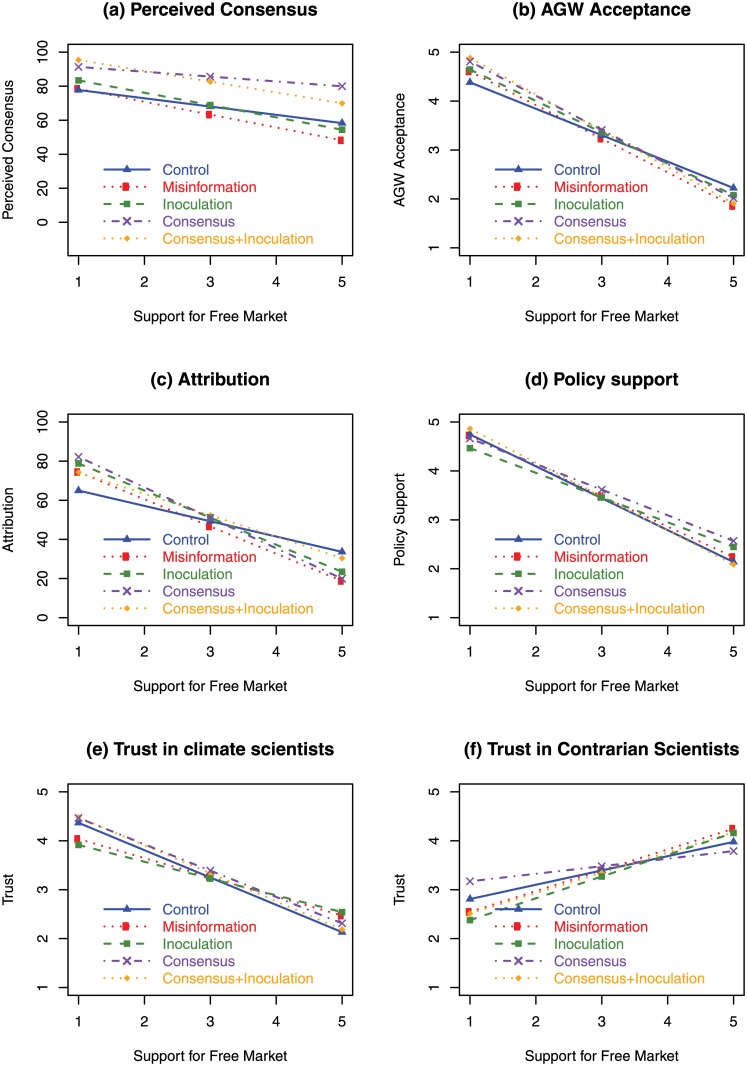
Misinformation can undermine a well-functioning democracy. For example, public misconceptions about climate change can lead to lowered acceptance of the reality of climate change and lowered support for mitigation policies. This study experimentally explored the impact of misinformation about climate change and tested several pre-emptive interventions designed to reduce the influence of misinformation. We found that false-balance media coverage (giving contrarian views equal voice with climate scientists) lowered perceived consensus overall, although the effect was greater among free-market supporters. Likewise, misinformation that confuses people about the level of scientific agreement regarding anthropogenic global warming (AGW) had a polarizing effect, with free-market supporters reducing their acceptance of AGW and those with low free-market support increasing their acceptance of AGW. However, we found that inoculating messages that (1) explain the flawed argumentation technique used in the misinformation or that (2) highlight the scientific consensus on climate change were effective in neutralizing those adverse effects of misinformation. We recommend that climate communication messages should take into account ways in which scientific content can be distorted, and include pre-emptive inoculation messages.
Overview
The claims and statistics of this paper haven’t been checked yet.
Free: it reads the open-access text and checks the first 5 claims that cite a source we can check. Create a free account to check every claim.
Integrity signals
Registry
Cites
Statistics
Figures

Verification
Claims the paper makes
The claims and statistics of this paper haven’t been checked yet.
Free: it reads the open-access text and checks the first 5 claims that cite a source we can check. Create a free account to check every claim.
Claims other papers make about this one
Each is checked against this paper’s own text: does it say what the citing paper says it does?
The check wasn’t confident either way, so it gives no verdict — never disputed.
In the citing paper
“Inoculation, while effective in preemptively refuting misinformation in specific domains (27–30), may not improve discernment when evaluating a diverse array of real-world news content.”
From A digital media literacy intervention increases discernment between mainstream and false news in the United States and India (2020) · cites this paper as [29]
Experimental — accuracy not yet measuredIn the citing paper
“focusing on the manipulation techniques and rhetorical strategies that underpin misinformation may significantly improve the potential scalability of inoculation interventions (17).”
From Psychological inoculation improves resilience against misinformation on social media (2022) · cites this paper as [17]
Self-check
Percentages, sums and reported differences re-computed from the paper’s own numbers.
The self-check needs the paper’s full text.
Citations
Cites
Maps of Bounded Rationality: Psychology for Behavioral Economics
Kahneman, D. (2003) · American Economic Review · doi:10.1257/000282803322655392 · Cited by 5,377
A Theory of Psychological Reactance
Torrance, E. P., & Brehm, J. W. (1968) · The American Journal of Psychology · doi:10.2307/1420824 · Cited by 4,759
Ohanian, R. (1990) · Journal of Advertising · doi:10.1080/00913367.1990.10673191 · Cited by 4,043 · cited 1×
“Five items measuring trust in climate scientists were adapted from Ohanian [55].”
BackgroundWhen Corrections Fail: The Persistence of Political Misperceptions
Nyhan, B., & Reifler, J. (2010) · Political Behavior · doi:10.1007/s11109-010-9112-2 · Cited by 3,173 · cited 1×
“For example, in one study, conservatives became more likely to believe that Iraq had weapons of mass destruction (WMDs) immediately before the war of 2003 after reading retractions clarifying that no WMDs existed at the time [11].”
BackgroundMisinformation and Its Correction: Continued Influence and Successful Debiasing
Lewandowsky, S., Ecker, U. K. H., Seifert, C. M., Schwarz, N., & Cook, J. (2012) · Psychological Science in the Public Interest · doi:10.1177/1529100612451018 · Cited by 2,920
Self-citationMcCright, A. M., & Dunlap, R. E. (2011) · The Sociological Quarterly · doi:10.1111/j.1533-8525.2011.01198.x · Cited by 2,340
The Scientific Consensus on Climate Change
Oreskes, N. (2004) · Science · doi:10.1126/science.1103618 · Cited by 1,814 · cited 1×
“Several studies have found nearly unanimous agreement among publishing climate 5 scientists that humans are causing global warming [22,23,24], and a similar pervasive consensus 6 exists in the scientific literature [25,26].”
BackgroundBalance as bias: global warming and the US prestige press
Boykoff, M. T., & Boykoff, J. M. (2004) · Global Environmental Change · doi:10.1016/j.gloenvcha.2003.10.001 · Cited by 1,699
Cultural cognition of scientific consensus.
Kahan, D. M., Jenkins‐Smith, H., & Braman, D. (2011) · Journal of Risk Research · doi:10.1080/13669877.2010.511246 · Cited by 1,686 · cited 1×
“Accordingly, climate change perceptions and attitudes have repeatedly been found to be strongly associated with political worldview [15,16,17,18].”
BackgroundConsensus on consensus: a synthesis of consensus estimates on human-caused global warming
Cook, J., Oreskes, N., Doran, P. T., Anderegg, W. R. L., Verheggen, B., Maibach, E. W., Carlton, J. S., Lewandowsky, S., Skuce, A. G., Green, S. A., et al. (2016) · Environmental Research Letters · doi:10.1088/1748-9326/11/4/048002 · Cited by 1,441
Self-citation
Cited by
Pennycook, G., & Rand, D. G. (2019) · Cognition · doi:10.1016/j.cognition.2018.06.011 · Cited by 2,022
“Alternatively, adding a pre-emptive inoculation statement (Cook et al., 2017), such as a warning that not all news stories are accurate, may further increase the strength of the correlation between analytic thinking and media truth discernment.”
Beyond misinformation: Understanding and coping with the “post-truth” era.
Lewandowsky, S., Ecker, U. K. H., & Cook, J. (2017) · Journal of Applied Research in Memory and Cognition · doi:10.1016/j.jarmac.2017.07.008 · Cited by 1,985
“…for correcting misnformation are bound to remain helpful and necessary, and ffectively pointing out logical flaws in argumentation will coninue to be valuable in inoculating people against potential isinformation campaigns (Cook et al., 2017; Ecker, Hogan, & ewandowsky, 2017; Schwarz et al., 2016).”
BackgroundSelf-citationThe psychological drivers of misinformation belief and its resistance to correction
Ecker, U. K. H., Lewandowsky, S., Cook, J., Schmid, P., Fazio, L. K., Brashier, N., Kendeou, P., Vraga, E. K., & Amazeen, M. A. (2022) · Nature Reviews Psychology · doi:10.1038/s44159-021-00006-y · Cited by 1,372
Self-citationPennycook, G., & Rand, D. G. (2021) · Trends in Cognitive Sciences · doi:10.1016/j.tics.2021.02.007 · Cited by 1,360
“, in the context of climate change [103]) may be more scalable.”
BackgroundGuess, A. M., Lerner, M., Lyons, B., Montgomery, J. M., Nyhan, B., Reifler, J., & Sircar, N. (2020) · Proceedings of the National Academy of Sciences · doi:10.1073/pnas.1920498117 · Cited by 773
Countering Misinformation and Fake News Through Inoculation and Prebunking
Lewandowsky, S., & van der Linden, S. (2021) · European Review of Social Psychology · doi:10.1080/10463283.2021.1876983 · Cited by 773
Self-citationPennycook, G., Bear, A., Collins, E. T., & Rand, D. G. (2020) · Management Science · doi:10.1287/mnsc.2019.3478 · Cited by 714
“…reasoning: explicit warnings have been found to reduce the effects of subsequently corrected misinfor-mation (Ecker et al. 2010, Lewandowsky et al. 2012, Chan et al. 2017) and to combat politicized interpretations of science (Bolsen and Druckman 2015, Cook et al. 2017, van der Linden et al. 2018).”
BackgroundFake news game confers psychological resistance against online misinformation
Roozenbeek, J., & van der Linden, S. (2019) · Palgrave Communications · doi:10.1057/s41599-019-0279-9 · Cited by 708
Chou, W.-Y. S., & Budenz, A. (2020) · Health Communication · doi:10.1080/10410236.2020.1838096 · Cited by 675
Inoculating Against Fake News About COVID-19
van der Linden, S., Roozenbeek, J., & Compton, J. (2020) · Frontiers in Psychology · doi:10.3389/fpsyg.2020.566790 · Cited by 632
Misinformation: susceptibility, spread, and interventions to immunize the public
van der Linden, S. (2022) · Nature Medicine · doi:10.1038/s41591-022-01713-6 · Cited by 570
Toward effective government communication strategies in the era of COVID-19
Hyland-Wood, B., Gardner, J., Leask, J., & Ecker, U. K. H. (2021) · Humanities and Social Sciences Communications · doi:10.1057/s41599-020-00701-w · Cited by 488
Self-citationThe fake news game: actively inoculating against the risk of misinformation
Roozenbeek, J., & van der Linden, S. (2019) · Journal of Risk Research · doi:10.1080/13669877.2018.1443491 · Cited by 479
“For example, Bolsen and Druckman (2015), Cook, Lewandowsky, and Ecker (2017), and van der Linden, Leiserowitz et al. (2017) all found that a general warning was effective in immunizing participants against politicizing messages.”
BackgroundInfluentialCitizens Versus the Internet: Confronting Digital Challenges With Cognitive Tools
Kozyreva, A., Lewandowsky, S., & Hertwig, R. (2020) · Psychological Science in the Public Interest · doi:10.1177/1529100620946707 · Cited by 479
Self-citationPsychological inoculation improves resilience against misinformation on social media
Roozenbeek, J., van der Linden, S., Goldberg, B., Rathje, S., & Lewandowsky, S. (2022) · Science Advances · doi:10.1126/sciadv.abo6254 · Cited by 472
“However, focusing on the manipulation techniques and rhetorical strategies that underpin misinformation may significantly improve the potential scalability of inoculation interventions ( 17 ).”
Self-citationOnline misinformation about climate change
Treen, K. M. D., Williams, H. T. P., & O'Neill, S. J. (2020) · WIREs Climate Change · doi:10.1002/wcc.665 · Cited by 441
“…motivated attempts to spread misinformation helps to “promote and protect” public attitudes about the scientific consensus on climate change, while Cook et al. (2017) find that pre-emptive inoculation is an appropriate method for “neutralizing” the adverse effects of misinformation about…”
BackgroundMethodCommunicating uncertainty about facts, numbers and science
van der Bles, A. M., van der Linden, S., Freeman, A. L. J., Mitchell, J., Galvao, A. B., Zaval, L., & Spiegelhalter, D. J. (2019) · Royal Society Open Science · doi:10.1098/rsos.181870 · Cited by 456
The diffusion of misinformation on social media: Temporal pattern, message, and source
Shin, J., Jian, L., Driscoll, K., & Bar, F. (2018) · Computers in Human Behavior · doi:10.1016/j.chb.2018.02.008 · Cited by 401
Social Media, Echo Chambers, and Political Polarization
Barberá, P. (2020) · Social Media and Democracy · doi:10.1017/9781108890960.004 · Cited by 373
Basol, M., Roozenbeek, J., & Van der Linden, S. (2020) · Journal of Cognition · doi:10.5334/joc.91 · Cited by 368
Building trust while influencing online COVID-19 content in the social media world
Limaye, R. J., Sauer, M., Ali, J., Bernstein, J., Wahl, B., Barnhill, A., & Labrique, A. (2020) · The Lancet Digital Health · doi:10.1016/s2589-7500(20)30084-4 · Cited by 357
“10 For example, a common myth circulating on social media is that COVID-19 was engineered in a lab.”
BackgroundUnderstanding (and Reducing) Inaction on Climate Change
Hornsey, M. J., & Fielding, K. S. (2020) · Social Issues and Policy Review · doi:10.1111/sipr.12058 · Cited by 326
Long-term effectiveness of inoculation against misinformation: Three longitudinal experiments.
Maertens, R., Roozenbeek, J., Basol, M., & van der Linden, S. (2021) · Journal of Experimental Psychology: Applied · doi:10.1037/xap0000315 · Cited by 321
“Moreover, in an attempt to make inoculation theory scalable beyond specific issues, a second innovation has been a move away from argument-specific narrow-spectrum inoculations to broad-spectrum inoculations that focus on conferring resistance against a range of common techniques used in the production of misinformati…”
BackgroundClimate Change Disinformation and How to Combat It
Lewandowsky, S. (2021) · Annual Review of Public Health · doi:10.1146/annurev-publhealth-090419-102409 · Cited by 307
Self-citationA review of the effects of uncertainty in public science communication
Gustafson, A., & Rice, R. E. (2020) · Public Understanding of Science · doi:10.1177/0963662520942122 · Cited by 291
Misinformation, Disinformation, and Online Propaganda
Guess, A. M., & Lyons, B. A. (2020) · Social Media and Democracy · doi:10.1017/9781108890960.003 · Cited by 284
The Emergence of COVID-19 in the US: A Public Health and Political Communication Crisis
Gollust, S. E., Nagler, R. H., & Fowler, E. F. (2020) · Journal of Health Politics, Policy and Law · doi:10.1215/03616878-8641506 · Cited by 277
Basol, M., Roozenbeek, J., Berriche, M., Uenal, F., McClanahan, W. P., & Linden, S. V. D. (2021) · Big Data & Society · doi:10.1177/20539517211013868 · Cited by 271
“To help scale the approach further, recent work has shifted away from inoculating against individual arguments towards conferring resistance against the techniques that underlie many instances of misinformation (Cook et al., 2017; Roozenbeek and van der Linden, 2018; van der Linden et al., 2021).”
BackgroundThe gateway belief model: a large-scale replication
van der Linden, S., Leiserowitz, A., & Maibach, E. (2019) · Journal of Environmental Psychology · doi:10.1016/j.jenvp.2019.01.009 · Cited by 262
Effective strategies for rebutting science denialism in public discussions
Schmid, P., & Betsch, C. (2019) · Nature Human Behaviour · doi:10.1038/s41562-019-0632-4 · Cited by 264
Buchanan, T. (2020) · PLOS ONE · doi:10.1371/journal.pone.0239666 · Cited by 255
“Individuals’ choices to share, like and so on will thus be guided primarily by heuristics or contextual cues [14].”
BackgroundAI model GPT-3 (dis)informs us better than humans
Spitale, G., Biller-Andorno, N., & Germani, F. (2023) · Science Advances · doi:10.1126/sciadv.adh1850 · Cited by 241
Porter, E., & Wood, T. J. (2021) · Proceedings of the National Academy of Sciences · doi:10.1073/pnas.2104235118 · Cited by 235
“Scholars have studied a wide range of misinformation topics, including healthcare (21), climate change (22), and political candidates (23).”
BackgroundYou are fake news: political bias in perceptions of fake news
van der Linden, S., Panagopoulos, C., & Roozenbeek, J. (2020) · Media, Culture & Society · doi:10.1177/0163443720906992 · Cited by 235
“…Rand, 2019), cognitive style (Bronstein et al., 2019), the spread of fake news during elections (Allcott and Gentzkow, 2017; Grinberg et al., 2019) and potential solutions, such as preemptively inoculating individuals against fake news (Cook et al., 2017; Roozenbeek and van der Linden, 2018, 2019).”
BackgroundPoliticization and COVID-19 vaccine resistance in the U.S.
(2022) · Progress in Molecular Biology and Translational Science · doi:10.1016/bs.pmbts.2021.10.002 · Cited by 234
Bolsen, T., & Druckman, J. N. (2018) · Group Processes & Intergroup Relations · doi:10.1177/1368430217737855 · Cited by 228
“In particular, in contrast to other recent work, our warning did not incorporate a detailed refutation of the politicization claim (Cook et al., 2017; van der Linden et al., 2017).”
BackgroundResultBarzilai, S., & Chinn, C. A. (2020) · Educational Psychologist · doi:10.1080/00461520.2020.1786388 · Cited by 227
Psychological Inoculation against Misinformation: Current Evidence and Future Directions
Traberg, C. S., Roozenbeek, J., & van der Linden, S. (2022) · The ANNALS of the American Academy of Political and Social Science · doi:10.1177/00027162221087936 · Cited by 224
“(2017), Cook, Lewandowsky, and Ecker (2017) tested whether inoculation messages that focused on exposing the misleading argumentation techniques used in misinformation would also confer attitudinal resistance.”
BackgroundResultInfluentialMena, P. (2020) · Policy & Internet · doi:10.1002/poi3.214 · Cited by 223
Hameleers, M. (2022) · Information, Communication & Society · doi:10.1080/1369118x.2020.1764603 · Cited by 223
“…has focused on the effects of retractions in the form of fact-checkers (e.g., Cobb et al., 2013; Hameleers & Van der Meer, 2019; Nyhan et al., 2019; Wood & Porter, 2018) – we know markedly little about the effects of news media literacy interventions (Cook et al., 2017 and Tully et al., 2020).”
BackgroundInfluentialHow behavioural sciences can promote truth, autonomy and democratic discourse online
Lorenz-Spreen, P., Lewandowsky, S., Sunstein, C. R., & Hertwig, R. (2020) · Nature Human Behaviour · doi:10.1038/s41562-020-0889-7 · Cited by 223
“Being informed about manipulative methods before encountering them online enables an individual to detect parasitic imitations of trustworthy sources and other sinister tactics 117,118 .”
BackgroundSelf-citationTiming matters when correcting fake news
Brashier, N. M., Pennycook, G., Berinsky, A. J., & Rand, D. G. (2021) · Proceedings of the National Academy of Sciences · doi:10.1073/pnas.2020043118 · Cited by 216
“As examples, reading about “fake experts” protects people from climate science myths (5), and playing a game involving common disinformation tactics (e.”
BackgroundEvidence-based strategies to combat scientific misinformation
Farrell, J., McConnell, K., & Brulle, R. (2019) · Nature Climate Change · doi:10.1038/s41558-018-0368-6 · Cited by 215
Bora, K., Das, D., Barman, B., & Borah, P. (2018) · Pathogens and Global Health · doi:10.1080/20477724.2018.1507784 · Cited by 213
“ments and reject them as deceiving [42,43].”
Five Lessons from COVID-19 for Advancing Climate Change Mitigation
Klenert, D., Funke, F., Mattauch, L., & O’Callaghan, B. (2020) · Environmental and Resource Economics · doi:10.1007/s10640-020-00453-w · Cited by 214
Bryanov, K., & Vziatysheva, V. (2021) · PLOS ONE · doi:10.1371/journal.pone.0253717 · Cited by 211
Nan, X., Wang, Y., & Thier, K. (2022) · Social Science & Medicine · doi:10.1016/j.socscimed.2022.115398 · Cited by 202
Compton, J., van der Linden, S., Cook, J., & Basol, M. (2021) · Social and Personality Psychology Compass · doi:10.1111/spc3.12602 · Cited by 205
“Similar to van der Linden, Leiserowitz, et al. (2017), Cook et al. (2017) found that false‐balance reduces perceptions of scientific agreement and that misinformation had a polarizing effect so that strong free‐market supporters lowered their belief in global warming whereas low free‐ market…”
BackgroundMethodResultInfluentialSelf-citationDesigning and Testing News Literacy Messages for Social Media
Tully, M., Vraga, E. K., & Bode, L. (2020) · Mass Communication and Society · doi:10.1080/15205436.2019.1604970 · Cited by 195
The different forms of COVID-19 misinformation and their consequences
Enders, A. M., Uscinski, J. E., Klofstad, C., & Stoler, J. (2020) · Harvard Kennedy School Misinformation Review · doi:10.37016/mr-2020-48 · Cited by 193
“This precise approach has proved efficacious in inoculating people against climate change misinformation (Cook et al., 2017).”
BackgroundSpread of misinformation on social media: What contributes to it and how to combat it
Chen, S., Xiao, L., & Kumar, A. (2023) · Computers in Human Behavior · doi:10.1016/j.chb.2022.107643 · Cited by 187
Public Health Messaging during the COVID-19 Pandemic and Beyond: Lessons from Communication Science
Nan, X., Iles, I. A., Yang, B., & Ma, Z. (2022) · Health Communication · doi:10.1080/10410236.2021.1994910 · Cited by 182
“More recently, inoculation messages have been effectively utilized to reduce the effects of misinformation about climate change (Cook et al., 2017) and vaccination (Jolley & Douglas, 2017).”
BackgroundDeconstructing climate misinformation to identify reasoning errors
Cook, J., Ellerton, P., & Kinkead, D. (2018) · Environmental Research Letters · doi:10.1088/1748-9326/aaa49f · Cited by 173
“Climate misinformation also disproportionately influences conservatives (Cook et al 2017, van der Linden et al 2017), contributing to growing polarization over recent decades (McCright and Dunlap 2011).”
BackgroundMethodInfluentialSelf-citationCreating News Literacy Messages to Enhance Expert Corrections of Misinformation on Twitter
Vraga, E. K., Bode, L., & Tully, M. (2022) · Communication Research · doi:10.1177/0093650219898094 · Cited by 175
“Inoculation research has found that warning people about misleading tactics can neutralize the effects of misinformation messages (J. Cook et al., 2017; van der Linden et al., 2017).”
BackgroundStecula, D. A., & Merkley, E. (2019) · Frontiers in Communication · doi:10.3389/fcomm.2019.00006 · Cited by 169
“press disseminates uncertainty frames about climate change, such information might play a negative role in people’s attitudes about climate change and climate change mitigation policies (Cook et al., 2017; Jolley and Douglas, 2017).”
BackgroundMaertens, R., Anseel, F., & van der Linden, S. (2020) · Journal of Environmental Psychology · doi:10.1016/j.jenvp.2020.101455 · Cited by 167
“This indicates, consistent with Bond and Williams (2020) and Cook et al. (2017), that communicating the consensus on its own may have a positive protective effect against misinformation, even without inoculation (see Supplementary Figure S2).”
InfluentialVraga, E. K., Kim, S. C., & Cook, J. (2019) · Journal of Broadcasting & Electronic Media · doi:10.1080/08838151.2019.1653102 · Cited by 162
“Inoculation has been shown to be effective in reducing misperceptions across a range of issues, including health (Compton, Jackson, & Dimmock, 2016), politics (Compton & Ivanov, 2013), and climate change (Cook et al., 2017; van der Linden et al., 2017), as well as across modes and audiences (Banas & Rains, 2010).”
BackgroundSelf-citationBallew, M. T., Pearson, A. R., Goldberg, M. H., Rosenthal, S. A., & Leiserowitz, A. (2020) · Global Environmental Change · doi:10.1016/j.gloenvcha.2019.102024 · Cited by 163
Educative Interventions to Combat Misinformation: Evidence from a Field Experiment in India
BADRINATHAN, S. (2021) · American Political Science Review · doi:10.1017/s0003055421000459 · Cited by 159
Steffens, M. S., Dunn, A. G., Wiley, K. E., & Leask, J. (2019) · BMC Public Health · doi:10.1186/s12889-019-7659-3 · Cited by 159
Encouraging COVID-19 Vaccine Uptake Through Effective Health Communication
Motta, M., Sylvester, S., Callaghan, T., & Lunz-Trujillo, K. (2021) · Frontiers in Political Science · doi:10.3389/fpos.2021.630133 · Cited by 159
Ecker, U. K. H., & Antonio, L. M. (2021) · Memory & Cognition · doi:10.3758/s13421-020-01129-y · Cited by 114
“…to seek out fact-checks from experts are common, and common sense would suggest that advice from experts on complex matters should be more influential than advice from non-experts, especially when it comes to fact-checks (Kim, Moravec, & Dennis, 2019; but also see Lewandowsky, Ecker, & Cook, 2017).”
BackgroundSelf-citationConfirmation Bias and the Persistence of Misinformation on Climate Change
Zhou, Y., & Shen, L. (2022) · Communication Research · doi:10.1177/00936502211028049 · Cited by 155
“Research has shown that, while preemptive inoculation exhibits some effectiveness (e.g., Cook et al., 2017), the utility of corrective information (i.e., providing scientific evidence) is generally limited (e.g., Nyhan & Reifler, 2015).”
BackgroundTesting the Effectiveness of Correction Placement and Type on Instagram
Vraga, E. K., Kim, S. C., Cook, J., & Bode, L. (2020) · The International Journal of Press/Politics · doi:10.1177/1940161220919082 · Cited by 147
“Previous studies on climate change have found logic-focused corrections describing fake experts (Cook et al. 2017; van der Linden et al. 2017) and cherry-picking (Schmid and Betsch 2019) successfully reduced misperceptions.”
BackgroundResultInfluentialSelf-citationInfluencing climate change attitudes in the United States: A systematic review and meta-analysis
Rode, J. B., Dent, A. L., Benedict, C. N., Brosnahan, D., Martinez, R. L., & Ditto, P. H. (2021) · Journal of Environmental Psychology · doi:10.1016/j.jenvp.2021.101623 · Cited by 180
The psychological roots of intellectual humility: The role of intelligence and cognitive flexibility
Zmigrod, L., Zmigrod, S., Rentfrow, P. J., & Robbins, T. W. (2019) · Personality and Individual Differences · doi:10.1016/j.paid.2019.01.016 · Cited by 142
Computer-assisted classification of contrarian claims about climate change
Coan, T., Boussalis, C., Cook, J., & Nanko, M. O. (2021) · Scientific Reports · doi:10.1038/s41598-021-01714-4 · Cited by 265
“Given observed class imbalances, we examined four variations of the ULMFiT architecture: a model that (1) ignored class imbalance; (2) applies oversampling of each minibatch to adjust for class imbalance; (3) weights the loss function for class imbalance following the “balanced” procedure used in the scikit-learn libr…”
BackgroundMethodSelf-citationUsing the president’s tweets to understand political diversion in the age of social media
Lewandowsky, S., Jetter, M., & Ecker, U. K. H. (2020) · Nature Communications · doi:10.1038/s41467-020-19644-6 · Cited by 138
Self-citationBreaking Harmony Square: A game that “inoculates” against political misinformation
Roozenbeek, J., & van der Linden, S. (2020) · Harvard Kennedy School Misinformation Review · doi:10.37016/mr-2020-47 · Cited by 137
“…(which has been the standard in inoculation research), Harmony Square builds cognitive resistance against the techniques that underpin a whole range of political misinformation in an attempt to achieve broad-spectrum resistance against manipulation (Basol et al., 2020; Cook et al., 2017).”
BackgroundGuidelines for communicating about bats to prevent persecution in the time of COVID-19
MacFarlane, D., & Rocha, R. (2020) · Biological Conservation · doi:10.1016/j.biocon.2020.108650 · Cited by 155
“, 2010); (ii) Study the tactics used by those spreading misinformation (Thaler and Shiffman, 2015) and, before misleading stories gain traction, pre-emptively explain the flawed argumentation techniques used (e.g., fake experts, doctored images, oversimplified scientific concepts; Cook et al., 2017; Cook et al., 2018,…”
McKenna, R. (2023) · doi:10.1093/oso/9780192888822.001.0001 · Cited by 146
Countering Misinformation: Evidence, Knowledge Gaps, and Implications of Current Interventions
Roozenbeek, J., Culloty, E., & Suiter, J. (2023) · European Psychologist · doi:10.1027/1016-9040/a000492 · Cited by 188
Inoculating against misinformation
van der Linden, S., Maibach, E., Cook, J., Leiserowitz, A., & Lewandowsky, S. (2017) · Science · doi:10.1126/science.aar4533 · Cited by 126
Self-citationSocial Media and Democracy: The State of the Field, Prospects for Reform
(2020) · Cambridge University Press eBooks · doi:10.1017/9781108890960 · Cited by 295
Zheng, H., Jiang, S., & Wu, Q. J. (2021) · Patient Education and Counseling · doi:10.1016/j.pec.2021.09.023 · Cited by 130
“For instance, health authorities can present lay people information regarding counterarguments to misinformation and misinformation dissemination strategies used by those anti-vaccine groups in order to promote skepticism toward misinformation about vaccines in the public [48].”
Research note: Fighting misinformation or fighting for information?
Acerbi, A., Altay, S., & Mercier, H. (2022) · Harvard Kennedy School Misinformation Review · doi:10.37016/mr-2020-87 · Cited by 124
Imhoff, R., Lamberty, P., & Klein, O. (2018) · Personality and Social Psychology Bulletin · doi:10.1177/0146167218768779 · Cited by 122
van der Linden, S. (2021) · Current Opinion in Psychology · doi:10.1016/j.copsyc.2021.01.005 · Cited by 149
Martel, C., & Rand, D. G. (2023) · Current Opinion in Psychology · doi:10.1016/j.copsyc.2023.101710 · Cited by 122
Evaluation of a template for countering misinformation—Real-world Autism treatment myth debunking
Paynter, J., Luskin-Saxby, S., Keen, D., Fordyce, K., Frost, G., Imms, C., Miller, S., Trembath, D., Tucker, M., & Ecker, U. (2019) · PLOS ONE · doi:10.1371/journal.pone.0210746 · Cited by 121
Self-citationCook, J., Ecker, U. K. H., Trecek-King, M., Schade, G., Jeffers-Tracy, K., Fessmann, J., Kim, S. C., Kinkead, D., Orr, M., Vraga, E. K., et al. (2022) · Environmental Education Research · doi:10.1080/13504622.2022.2085671 · Cited by 166
“, 2020; Schmid & Betsch, 2019) but the logic-based approach carries unique benefits: The approach is generalizable in that inoculating people against a rhetorical technique used in one topic can convey resistance against the same technique used in a different topic (Cook et al., 2017; Lewandowsky & Yesilada, 2021).”
BackgroundInfluentialSelf-citationPetersen, A. M., Vincent, E. M., & Westerling, A. L. (2019) · Nature Communications · doi:10.1038/s41467-019-09959-4 · Cited by 119
Siegel, A. A. (2020) · Social Media and Democracy · doi:10.1017/9781108890960.005 · Cited by 99
Amazeen, M. A., Vargo, C. J., & Hopp, T. (2019) · Communication Monographs · doi:10.1080/03637751.2018.1521984 · Cited by 117
Lu, C., Hu, B., Li, Q., Bi, C., & Ju, X.-D. (2023) · Journal of Medical Internet Research · doi:10.2196/49255 · Cited by 118
Goldberg, M. H., van der Linden, S., Ballew, M. T., Rosenthal, S. A., Gustafson, A., & Leiserowitz, A. (2019) · Science Communication · doi:10.1177/1075547019874361 · Cited by 116
A toolkit for understanding and addressing climate scepticism
Hornsey, M. J., & Lewandowsky, S. (2022) · Nature Human Behaviour · doi:10.1038/s41562-022-01463-y · Cited by 155
Self-citationChadwick, A., & Stanyer, J. (2021) · Communication Theory · doi:10.1093/ct/qtab019 · Cited by 182
Ha, L., Andreu Perez, L., & Ray, R. (2021) · American Behavioral Scientist · doi:10.1177/0002764219869402 · Cited by 113
“Inoculating people by providing them with factual evidence before the misinformation is circulated has been proposed as a strategy to counter its negative effects (Cook et al., 2017; Van der Linden et al., 2017).”
BackgroundZerback, T., Töpfl, F., & Knöpfle, M. (2021) · New Media & Society · doi:10.1177/1461444820908530 · Cited by 111
“…context of misor disinformation, their studies do not deal with astroturfing campaigns or state-induced propaganda in general, but rather with conspiracy theories (Banas and Miller, 2013), media reports on climate change (Cook et al., 2017), and front-group stealth campaigns (Pfau et al., 2007).”
BackgroundA comparison of prebunking and debunking interventions for implied versus explicit misinformation
Tay, L. Q., Hurlstone, M. J., Kurz, T., & Ecker, U. K. H. (2022) · British Journal of Psychology · doi:10.1111/bjop.12551 · Cited by 109
Self-citationBayes, R., Bolsen, T., & Druckman, J. N. (2020) · Environmental Communication · doi:10.1080/17524032.2020.1805343 · Cited by 134
“…increases people’s perception of the level of scientific agreement (Bolsen & Druckman, 2018; Brewer & McKnight, 2017; Cook & Lewandowsky, 2016; Cook et al., 2017; Deryugina & Shurchkov, 2016; Ding et al., 2011; Goldberg, van der Linden, Ballew, et al., 2019; McCright et al., 2013; van der…”
BackgroundThe Emerging Science of Content Labeling: Contextualizing Social Media Content Moderation
Morrow, G., Swire‐Thompson, B., Polny, J. M., Kopec, M., & Wihbey, J. (2020) · Journal of the Association for Information Science and Technology · doi:10.1002/asi.24637 · Cited by 163
“So-called “ inoculation ” has been found to reduce the continued influence effect (Cook et al., 2017; Guess et al., 2020) and to boost cognitive resistance to conspiratorial thinking (Banas & Miller, 2013; Lewandowsky & Cook, 2020), including anti-vaccination theories (Jolley & Douglas, 2017).”
BackgroundMaertens, R., Götz, F. M., Golino, H. F., Roozenbeek, J., Schneider, C. R., Kyrychenko, Y., Kerr, J. R., Stieger, S., McClanahan, W. P., Drabot, K., et al. (2023) · Behavior Research Methods · doi:10.3758/s13428-023-02124-2 · Cited by 104
“With false and moral-emotional media spreading faster and deeper than more accurate and nuanced content (Brady et al., 2017; Vosoughi et al., 2018), the importance of information veracity has become a central debate for scholars and policymakers (Lewandowsky et al., 2017, 2020).”
BackgroundLazić, A., & Žeželj, I. L. (2021) · Public Understanding of Science · doi:10.1177/09636625211011881 · Cited by 135
“However, preemptively exposing people to corrective information might “inoculate” against future persuasion attempts (Cook et al., 2017; McGuire and Papageorgis, 1961; cf. Žeželj et al., 2006), including in the domain of vaccination (Jolley and Douglas, 2017).”
BackgroundMisinformation and Disinformation in Food Science and Nutrition: Impact on Practice
Diekman, C. B., Ryan, C. D., & Oliver, T. L. (2022) · Journal of Nutrition · doi:10.1016/j.tjnut.2022.10.001 · Cited by 145
Understanding and Countering Misinformation About Climate Change
Cook, J. (2019) · Advances in media, entertainment and the arts (AMEA) book series · doi:10.4018/978-1-5225-8535-0.ch016 · Cited by 121
Self-citationMisinformation on Instagram: The Impact of Trusted Endorsements on Message Credibility
Mena, P., Barbe, D., & Chan-Olmsted, S. (2020) · Social Media + Society · doi:10.1177/2056305120935102 · Cited by 102
“The spread of misinformation on social media has generated public concern due to its implications for society (Cook et al., 2017).”
BackgroundCreative (Climate) Communications: Productive Pathways for Science, Policy and Society
Boykoff, M. (2019) · Cambridge University Press eBooks · doi:10.1017/9781108164047 · Cited by 158
COVID-19 and the “Film Your Hospital” Conspiracy Theory: Social Network Analysis of Twitter Data
Ahmed, W., Seguí, F. L., Vidal‐Alaball, J., & Katz, M. S. (2020) · Journal of Medical Internet Research · doi:10.2196/22374 · Cited by 112
Metadata
- Authors
- Cook, J., Lewandowsky, S., & Ecker, U. K. H.
- Affiliations
- George Mason University (US)
- The University of Western Australia (AU)
- Corresponding author
- Cook, John
- Lewandowsky, Stephan
- Ecker, Ullrich K. H.
- Venue
- PLOS ONE
- Publisher
- Public Library of Science (PLoS)
- Published
- 2017-05-05
- Volume
- 12
- Issue
- 5
- Pages
- e0175799
- ISSN
- 1932-6203 (ISSN-L)
- PMC
- PMC5419564
- OpenAlex
- W2610353045
- Cited by
- 971
- References
- 80
- Citations by year
- 2026: 120 · 2025: 124 · 2024: 110 · 2023: 129 · 2022: 135 · 2021: 116 · 2020: 130 · 2019: 59 · 2018: 29 · 2017: 19
- FWCI
- 165.41
- Type
- journal article
- Language
- en
- Open access
- gold
- doi.org
- Licence
- Locations
- PLoS ONE (publishedVersion, cc-by)
- PubMed Central (publishedVersion, cc-by)
- UWA Profiles and Research Repository (UWA) (publishedVersion, cc-by)
- PubMed (publishedVersion)
- RePEc: Research Papers in Economics (submittedVersion)
- DOAJ (DOAJ: Directory of Open Access Journals) (submittedVersion, cc-by-sa)
- Figshare (submittedVersion, cc-by)
- Bristol Research (University of Bristol) (submittedVersion, cc-by)
- Explore Bristol Research (submittedVersion, cc-by)
- George Mason University (cc-by)
- Funders
- Australian Research Council
- Royal Society
- Psychonomics Society
- Topics
- Social Sciences › Sociology and Political Science › Climate Change Communication and Perception
- Social Sciences › Sociology and Political Science › Misinformation and Its Impacts
- Social Sciences › Economics, Econometrics and Finance › Economics and Econometrics › Climate Change Policy and Economics
- Keywords
- misinformation, inoculation, climate change misinformation, false balance, scientific consensus, anthropogenic climate change, free market ideology, political polarization, argumentation techniques, climate change communication
- MeSH terms
- Information Services, Climate Change
About these checks
Registry, retraction, Cites and statistics results are computed, not judged, with one exception: a printed reference that no index lists is read once by a model before it counts as a citation error. Claims are extracted by a model and kept only when their quote appears verbatim in the text; each cited source is then checked, with a model’s help, for whether it says what the claim relies on. Those verdicts can be wrong — read the claim’s quote and the cited source before relying on one.
Statistics and arithmetic are recomputed, not judged.
Confidence bands are shown only for fields calibrated on our annotated test set. None is calibrated yet, so no band is shown.
What counts as a claim ›How we measure confidence ›How we check this ›
Are you an author, or do you see a problem with this page? Request a review
Data sources
Bibliographic data: Semantic Scholar, OpenAlex, Crossref.
Contains information from the Semantic Scholar Academic Graph Datasets, made available under the ODC Attribution License (ODC-BY 1.0).
Semantic Scholar’s data is described in: Kinney, R., et al. (2023). The Semantic Scholar Open Data Platform. arXiv:2301.10140.
