

The DOI matches its Crossref record; 59 of the 60 references it cites were found in a registry or an index; none of the 44 sources its claims cite is checked for support yet.
Effect of Probiotic Supplementation on Cognitive Function and Metabolic Status in Alzheimer's Disease: A Randomized, Double-Blind and Controlled Trial
Open accessAbstract
Alzheimer's disease (AD) is associated with severe cognitive impairments as well as some metabolic defects. Scant studies in animal models indicate a link between probiotics and cognitive function. This randomized, double-blind and controlled clinical trial was conducted among 60 AD patients to assess the effects of probiotic supplementation on cognitive function and metabolic status. The patients were randomly divided into two groups (n=30 in each group) treating with either milk (control group) or a mixture of probiotic (probiotic group). The probiotic supplemented group took 200 ml/day probiotic milk containing Lactobacillus acidophilus, Lactobacillus casei, Bifidobacterium bifidum and Lactobacillus fermentum (2×10⁹ CFU/g for each) for 12 weeks. Mini-mental state examination (MMSE) score was recorded in all subjects before and after the treatment. Pre- and post-treatment fasting blood samples were obtained to determine the related markers. After 12 weeks intervention, compared with the control group (-5.03%±3.00), the probiotic treated (+27.90%±8.07) patients showed a significant improvement in the MMSE score (P<0.001). In addition, changes in plasma malondialdehyde (-22.01%±4.84 vs. +2.67%±3.86 µmol/L, P<0.001), serum high-sensitivity C-reactive protein (-17.61%±3.70 vs. +45.26%±3.50 µg/mL, P<0.001), homeostasis model of assessment-estimated insulin resistance (+28.84%±13.34 vs.+76.95%±24.60, P=0.002), Beta cell function (+3.45%±10.91 vs. +75.62%±23.18, P=0.001), serum triglycerides (-20.29%±4.49 vs. -0.16%±5.24 mg/dL, P=0.003) and quantitative insulin sensitivity check index (-1.83±1.26 vs. -4.66±1.70, P=0.006) in the probiotic group were significantly varied compared to the control group. We found that the probiotic treatment had no considerable effect on other biomarkers of oxidative stress and inflammation, fasting plasma glucose and other lipid profiles. Overall, the current study demonstrated that probiotic consumption for 12 weeks positively affects cognitive function and some metabolic statuses in the AD patients.
Overview
AI snapshot
Written from the paper’s full text.
TL;DR
In a 12-week randomized, double-blind controlled trial of 60 Alzheimer’s disease patients, probiotic milk supplementation improved MMSE scores and some metabolic/inflammatory markers compared with control milk. The authors conclude probiotics may have favorable effects on cognition and selected metabolic statuses in AD, but not on all oxidative stress, inflammation, glucose, or lipid measures.
Key findings
- MMSE score improved in the probiotic group (+27.90% ± 8.07) versus worsening in the control group (−5.03% ± 3.00; P < 0.001).
- Probiotic treatment significantly changed plasma MDA (−22.01% ± 4.84 vs. +2.67% ± 3.86 μmol/L, P < 0.001), serum hs-CRP (−17.61% ± 3.70 vs. +45.26% ± 3.50 μg/mL, P < 0.001), HOMA-IR (+28.84% ± 13.34 vs. +76.95% ± 24.60, P = 0.002), HOMA-B (+3.45% ± 10.91 vs. +75.62% ± 23.18, P = 0.001), serum triglycerides (−20.29% ± 4.49 vs. −0.16% ± 5.24 mg/dL, P = 0.003), and QUICKI (−1.83 ± 1.26 vs. −4.66 ± 1.70, P = 0.006).
- No considerable effect was found on other oxidative stress and inflammation biomarkers, fasting plasma glucose, or other lipid profiles (LDL, HDL, total cholesterol).
- No side effects were reported following probiotic administration.
Methods
- Randomized, double-blind, controlled 12-week clinical trial in 60 AD patients aged 60–95 years residing at welfare organizations in Kashan and Esfahan, Iran; participants were randomized to control milk (n = 30) or probiotic milk (n = 30), matched at baseline for disease severity based on gender, BMI, and age.
- Probiotic group received 200 ml/day milk containing Lactobacillus acidophilus, Lactobacillus casei, Bifidobacterium bifidum, and Lactobacillus fermentum (2 × 10^9 CFU/g for each) for 12 weeks; control group received milk.
- Primary outcome was MMSE; secondary outcomes included oxidative stress, inflammation, and metabolic biomarkers from fasting blood samples at weeks 0 and 12. Analyses used intention-to-treat with LOCF for missing values, independent t-tests, and ANCOVA adjustment for baseline biochemical values, age, and BMI.
Limitations
- The paper states that measuring fecal bacteria loads before and after probiotic supplementation in AD patients was very difficult.
- The paper states that cognition was assessed only with the MMSE, and that other cognitive criteria and additional inflammatory/oxidative biomarkers such as IL-6, TNF-α, catalase, and SOD would be informative.
- Evident from the text: the sample was small (60 randomized; 52 completed), with deaths/dropouts during the study, and baseline serum triglycerides, VLDL, and HDL differed significantly between groups, although the authors report adjustment did not considerably change findings.
Model-written summary. Check it against the paper before relying on it.
Integrity signals
Registry
Cites
Statistics
Figures
Verification
Claims the paper makes
33 Not checked yet · 21 Own result · 19 Own method · 4 Own interpretation
A result the paper reports from its own data — it cites no other source for it, so there is none to check. The quote shows it is in the paper.
In the paper
“Overall, the current study demonstrated that 12 weeks consumption of probiotic in the AD patients had favorable effects on MDA, hs-CRP, markers of insulin metabolism, and serum levels of triglyceride and VLDL.”
§ Effect of Probiotic Supplementation on Cognitive Function and Metabolic Status in Alzheimer's Disease: A Randomized, Double-Blind and Controlled Trial > Discussion
boosteddirect- Asserted: passes — The authors put it forward as true.
- Checkable: passes — It can be checked against evidence.
- Load-bearing: passes — The paper’s conclusions depend on it.
- Based: passes — The paper gives a reason why it holds.
A result the paper reports from its own data — it cites no other source for it, so there is none to check. The quote shows it is in the paper.
In the paper
“No side effects were reported following administration with probiotic in AD patients throughout the study.”
§ Effect of Probiotic Supplementation on Cognitive Function and Metabolic Status in Alzheimer's Disease: A Randomized, Double-Blind and Controlled Trial > Results
plain- Asserted: passes — The authors put it forward as true.
- Checkable: passes — It can be checked against evidence.
- Load-bearing: unclear — It is unclear whether the paper’s conclusions depend on it.
- Based: passes — The paper gives a reason why it holds.
A result the paper reports from its own data — it cites no other source for it, so there is none to check. The quote shows it is in the paper.
In the paper
“Findings of the current study indicated that while the probiotic supplementation decreased the plasma MDA and the serum hs-CRP levels it was ineffective on other biomarkers of oxidative stress and inflammation.”
- Also stated in: § Discussion · boosted
“Overall, the current study demonstrated that 12 weeks consumption of probiotic in the AD patients had favorable effects on MDA, hs-CRP, markers of insulin metabolism, and serum levels of triglyceride and VLDL.”
§ Effect of Probiotic Supplementation on Cognitive Function and Metabolic Status in Alzheimer's Disease: A Randomized, Double-Blind and Controlled Trial > Discussion
boosteddirect- Asserted: passes — The authors put it forward as true.
- Checkable: passes — It can be checked against evidence.
- Load-bearing: passes — The paper’s conclusions depend on it.
- Based: passes — The paper gives a reason why it holds.
- Also stated in: § Discussion · boosted
A result the paper reports from its own data — it cites no other source for it, so there is none to check. The quote shows it is in the paper.
In the paper
“Overall, the current study demonstrated that 12 weeks consumption of probiotic in the AD patients had favorable effects on MDA, hs-CRP, markers of insulin metabolism, and serum levels of triglyceride and VLDL.”
§ Effect of Probiotic Supplementation on Cognitive Function and Metabolic Status in Alzheimer's Disease: A Randomized, Double-Blind and Controlled Trial > Discussion
boosteddirect- Asserted: passes — The authors put it forward as true.
- Checkable: passes — It can be checked against evidence.
- Load-bearing: passes — The paper’s conclusions depend on it.
- Based: passes — The paper gives a reason why it holds.
A result the paper reports from its own data — it cites no other source for it, so there is none to check. The quote shows it is in the paper.
In the paper
“However, the pobiotic treatment was inefective on other biomarkers of oxidative stress and inflammation, FPG, and other lipid profiles.”
§ Effect of Probiotic Supplementation on Cognitive Function and Metabolic Status in Alzheimer's Disease: A Randomized, Double-Blind and Controlled Trial > Discussion
plain- Asserted: passes — The authors put it forward as true.
- Checkable: passes — It can be checked against evidence.
- Load-bearing: unclear — It is unclear whether the paper’s conclusions depend on it.
- Based: passes — The paper gives a reason why it holds.
A result the paper reports from its own data — it cites no other source for it, so there is none to check. The quote shows it is in the paper.
In the paper
“Although the concentration of VLDL was reduced in the probiotic subjects compared to their control counterparts (−20.29% ± 4.49 vs. −0.16% ± 5.24 mg/dl, P = 0.003)”
§ Effect of Probiotic Supplementation on Cognitive Function and Metabolic Status in Alzheimer's Disease: A Randomized, Double-Blind and Controlled Trial > Results > Biochemical measurements
plaindirect- Asserted: passes — The authors put it forward as true.
- Checkable: passes — It can be checked against evidence.
- Load-bearing: unclear — It is unclear whether the paper’s conclusions depend on it.
- Based: passes — The paper gives a reason why it holds.
A result the paper reports from its own data — it cites no other source for it, so there is none to check. The quote shows it is in the paper.
In the paper
“The probiotic treatment caused a significant decrease (P <0.001) in the MDA of the probiotic group (−22.01% ± 4.84 μmol/l) in comparison to the control patients (+2.67% ± 3.86 μmol/l).”
§ Effect of Probiotic Supplementation on Cognitive Function and Metabolic Status in Alzheimer's Disease: A Randomized, Double-Blind and Controlled Trial > Results > Biochemical measurements
plaindirect- Asserted: passes — The authors put it forward as true.
- Checkable: passes — It can be checked against evidence.
- Load-bearing: passes — The paper’s conclusions depend on it.
- Based: passes — The paper gives a reason why it holds.
A result the paper reports from its own data — it cites no other source for it, so there is none to check. The quote shows it is in the paper.
In the paper
“Findings of the current study indicated that while the probiotic supplementation decreased the plasma MDA and the serum hs-CRP levels it was ineffective on other biomarkers of oxidative stress and inflammation.”
- Also stated in: § Discussion · plain
“However, the pobiotic treatment was inefective on other biomarkers of oxidative stress and inflammation, FPG, and other lipid profiles.”
§ Effect of Probiotic Supplementation on Cognitive Function and Metabolic Status in Alzheimer's Disease: A Randomized, Double-Blind and Controlled Trial > Discussion
plain- Asserted: passes — The authors put it forward as true.
- Checkable: passes — It can be checked against evidence.
- Load-bearing: unclear — It is unclear whether the paper’s conclusions depend on it.
- Based: passes — The paper gives a reason why it holds.
- Also stated in: § Discussion · plain
A result the paper reports from its own data — it cites no other source for it, so there is none to check. The quote shows it is in the paper.
In the paper
“however, the other lipid profiles (LDL, HDL and cholesterol) were insensitive to the probiotic treatment.”
§ Effect of Probiotic Supplementation on Cognitive Function and Metabolic Status in Alzheimer's Disease: A Randomized, Double-Blind and Controlled Trial > Results > Biochemical measurements
plain- Asserted: passes — The authors put it forward as true.
- Checkable: passes — It can be checked against evidence.
- Load-bearing: unclear — It is unclear whether the paper’s conclusions depend on it.
- Based: passes — The paper gives a reason why it holds.
A result the paper reports from its own data — it cites no other source for it, so there is none to check. The quote shows it is in the paper.
In the paper
“However, the pobiotic treatment was inefective on other biomarkers of oxidative stress and inflammation, FPG, and other lipid profiles.”
§ Effect of Probiotic Supplementation on Cognitive Function and Metabolic Status in Alzheimer's Disease: A Randomized, Double-Blind and Controlled Trial > Discussion
plain- Asserted: passes — The authors put it forward as true.
- Checkable: passes — It can be checked against evidence.
- Load-bearing: unclear — It is unclear whether the paper’s conclusions depend on it.
- Based: passes — The paper gives a reason why it holds.
- It may state two separate claims as one. 23
- Probably not a substantial claim. 35
A result the paper reports from its own data — it cites no other source for it, so there is none to check. The quote shows it is in the paper.
In the paper
“Twelve weeks intervention resulted in an improvement in MMSE score in the probiotic group (+27.90% ± 8.07) compared to their control counterparts (−5.03% ± 3.00). The difference between the two groups of testing was statistically significant (P <0.001).”
§ Effect of Probiotic Supplementation on Cognitive Function and Metabolic Status in Alzheimer's Disease: A Randomized, Double-Blind and Controlled Trial > Results > Cognitive assessment
plaindirect- Asserted: passes — The authors put it forward as true.
- Checkable: passes — It can be checked against evidence.
- Load-bearing: passes — The paper’s conclusions depend on it.
- Based: passes — The paper gives a reason why it holds.
It may state two separate claims as one.
A result the paper reports from its own data — it cites no other source for it, so there is none to check. The quote shows it is in the paper.
In the paper
“The probiotic treatment considerably reduced the HOMA-B index (+3.45% ± 10.91) in the probiotic compared to the control (+75.62% ± 23.18) patients leading to a significant variation between the two groups (P = 0.001).”
§ Effect of Probiotic Supplementation on Cognitive Function and Metabolic Status in Alzheimer's Disease: A Randomized, Double-Blind and Controlled Trial > Results > Biochemical measurements
boosteddirect- Asserted: passes — The authors put it forward as true.
- Checkable: passes — It can be checked against evidence.
- Load-bearing: passes — The paper’s conclusions depend on it.
- Based: passes — The paper gives a reason why it holds.
It may state two separate claims as one.
A result the paper reports from its own data — it cites no other source for it, so there is none to check. The quote shows it is in the paper.
In the paper
“On the other hand, the probiotic supplementation was ineffective on the FBP; the changes are (3.41% ± 2.12) and (4.50% ± 4.39) mg/dl in the probiotic and control groups, respectively.”
§ Effect of Probiotic Supplementation on Cognitive Function and Metabolic Status in Alzheimer's Disease: A Randomized, Double-Blind and Controlled Trial > Results > Biochemical measurements
plain- Asserted: passes — The authors put it forward as true.
- Checkable: passes — It can be checked against evidence.
- Load-bearing: unclear — It is unclear whether the paper’s conclusions depend on it.
- Based: passes — The paper gives a reason why it holds.
It may state two separate claims as one.
A result the paper reports from its own data — it cites no other source for it, so there is none to check. The quote shows it is in the paper.
In the paper
“however, the changes in other biomarkers of oxidative stress and inflammation, FPG and other lipid profiles are negligible.”
§ Effect of Probiotic Supplementation on Cognitive Function and Metabolic Status in Alzheimer's Disease: A Randomized, Double-Blind and Controlled Trial > Discussion
plain- Asserted: passes — The authors put it forward as true.
- Checkable: passes — It can be checked against evidence.
- Load-bearing: passes — The paper’s conclusions depend on it.
- Based: passes — The paper gives a reason why it holds.
It may state two separate claims as one.
A result the paper reports from its own data — it cites no other source for it, so there is none to check. The quote shows it is in the paper.
In the paper
“HOMH-IR index decreased in the probiotic group (+28.84% ± 13.34) compared to their control counterparts (+76.95% ± 24.60, P = 0.002).”
§ Effect of Probiotic Supplementation on Cognitive Function and Metabolic Status in Alzheimer's Disease: A Randomized, Double-Blind and Controlled Trial > Results > Biochemical measurements
plaindirect- Asserted: passes — The authors put it forward as true.
- Checkable: passes — It can be checked against evidence.
- Load-bearing: passes — The paper’s conclusions depend on it.
- Based: passes — The paper gives a reason why it holds.
It may state two separate claims as one.
A result the paper reports from its own data — it cites no other source for it, so there is none to check. The quote shows it is in the paper.
In the paper
“The changes in hs-CRP were −17.61% ± 3.70 and +45.26% ± 3.50 μg/ml in the probiotic and control groups, respectively (P <0.001).”
§ Effect of Probiotic Supplementation on Cognitive Function and Metabolic Status in Alzheimer's Disease: A Randomized, Double-Blind and Controlled Trial > Results > Biochemical measurements
plaindirect- Asserted: passes — The authors put it forward as true.
- Checkable: passes — It can be checked against evidence.
- Load-bearing: passes — The paper’s conclusions depend on it.
- Based: passes — The paper gives a reason why it holds.
It may state two separate claims as one.
A result the paper reports from its own data — it cites no other source for it, so there is none to check. The quote shows it is in the paper.
In the paper
“The QUICKI level was significantly (P = 0.006) increased in the probiotic subjects (−1.83% ± 1.26) in comparison to their control counterparts (−4.66% ± 1.70).”
§ Effect of Probiotic Supplementation on Cognitive Function and Metabolic Status in Alzheimer's Disease: A Randomized, Double-Blind and Controlled Trial > Results > Biochemical measurements
plaindirect- Asserted: passes — The authors put it forward as true.
- Checkable: passes — It can be checked against evidence.
- Load-bearing: passes — The paper’s conclusions depend on it.
- Based: passes — The paper gives a reason why it holds.
It may state two separate claims as one.
What the paper did — it cites no source for this, so there is none to check. The quote shows it is in the paper.
In the paper
“Informed consent was received from all patients before beginning the study.”
§ Effect of Probiotic Supplementation on Cognitive Function and Metabolic Status in Alzheimer's Disease: A Randomized, Double-Blind and Controlled Trial > Materials and methods > Ethics statements
plain- Asserted: passes — The authors put it forward as true.
- Checkable: passes — It can be checked against evidence.
- Load-bearing: passes — The paper’s conclusions depend on it.
- Based: passes — The paper gives a reason why it holds.
Probably not a substantial claim.
In the paper
“The MMSE was used to assess cognition in the AD subjects (Folstein et al., 1975).”
§ Effect of Probiotic Supplementation on Cognitive Function and Metabolic Status in Alzheimer's Disease: A Randomized, Double-Blind and Controlled Trial > Materials and methods > Assessment of outcomes
What the sources say
- Not checked yetcites Folstein et al., 1975 source
plain- Asserted: passes — The authors put it forward as true.
- Checkable: passes — It can be checked against evidence.
- Load-bearing: passes — The paper’s conclusions depend on it.
- Based: passes — The paper gives a reason why it holds.
Probably not a substantial claim.
In the paper
“In our previous work, we have shown that probiotics efficiently reverse the impaired spatial learning and memory as well as synaptic transmission in diabetes mellitus (Davari et al., 2013).”
§ Effect of Probiotic Supplementation on Cognitive Function and Metabolic Status in Alzheimer's Disease: A Randomized, Double-Blind and Controlled Trial > Discussion
What the sources say
- Not checked yetcites Davari et al., 2013 source
boosteddirect- Asserted: passes — The authors put it forward as true.
- Checkable: passes — It can be checked against evidence.
- Load-bearing: fails — The paper’s conclusions may not depend on it.
- Based: passes — The paper gives a reason why it holds.
Probably not a substantial claim. The paper’s conclusions may not depend on it. It may state two separate claims as one.
None of the sources cited for this claim have been checked yet.
In the paper
“It is demonstrated that other brain related disorders such as multiple sclerosis (Kouchaki et al., 2016) and stress are also influenced by probiotics (Liang et al., 2015).”
§ Effect of Probiotic Supplementation on Cognitive Function and Metabolic Status in Alzheimer's Disease: A Randomized, Double-Blind and Controlled Trial > Discussion
What the sources say
boosteddirect- Asserted: passes — The authors put it forward as true.
- Checkable: passes — It can be checked against evidence.
- Load-bearing: fails — The paper’s conclusions may not depend on it.
- Based: passes — The paper gives a reason why it holds.
Probably not a substantial claim. The paper’s conclusions may not depend on it. It may state two separate claims as one.
What the paper did — it cites no source for this, so there is none to check. The quote shows it is in the paper.
In the paper
“This trial was performed in accordance with the Declaration of Helsinki.”
§ Effect of Probiotic Supplementation on Cognitive Function and Metabolic Status in Alzheimer's Disease: A Randomized, Double-Blind and Controlled Trial > Materials and methods > Ethics statements
plain- Asserted: passes — The authors put it forward as true.
- Checkable: passes — It can be checked against evidence.
- Load-bearing: fails — The paper’s conclusions may not depend on it.
- Based: passes — The paper gives a reason why it holds.
Probably not a substantial claim. The paper’s conclusions may not depend on it.
What the paper did — it cites no source for this, so there is none to check. The quote shows it is in the paper.
In the paper
“The research was approved by the ethics committee of Kashan University of Medical Sciences (KUMS) and was registered in the Iranian website for registration of clinical trials (http://www.irct.ir) IRCT201511305623N60.”
§ Effect of Probiotic Supplementation on Cognitive Function and Metabolic Status in Alzheimer's Disease: A Randomized, Double-Blind and Controlled Trial > Materials and methods > Ethics statements
plain- Asserted: passes — The authors put it forward as true.
- Checkable: passes — It can be checked against evidence.
- Load-bearing: fails — The paper’s conclusions may not depend on it.
- Based: passes — The paper gives a reason why it holds.
Probably not a substantial claim. The paper’s conclusions may not depend on it. It may state two separate claims as one.
What the paper did — it cites no source for this, so there is none to check. The quote shows it is in the paper.
In the paper
“This study was a 12-week randomized, double-blind, and controlled clinical trial.”
§ Effect of Probiotic Supplementation on Cognitive Function and Metabolic Status in Alzheimer's Disease: A Randomized, Double-Blind and Controlled Trial > Materials and methods > Trial design
plain- Asserted: passes — The authors put it forward as true.
- Checkable: passes — It can be checked against evidence.
- Load-bearing: passes — The paper’s conclusions depend on it.
- Based: passes — The paper gives a reason why it holds.
Probably not a substantial claim.
None of the sources cited for this claim have been checked yet.
In the paper
“Increased biomarkers of oxidative stress (Furman et al., 2016), inflammation and chronic neuroinflammation are reported to be associated with many neurodegenerative disorders of central nervous system (CNS) including AD (Leszek et al., 2016).”
§ Effect of Probiotic Supplementation on Cognitive Function and Metabolic Status in Alzheimer's Disease: A Randomized, Double-Blind and Controlled Trial > Background
What the sources say
plaincorrelational- Asserted: passes — The authors put it forward as true.
- Checkable: passes — It can be checked against evidence.
- Load-bearing: fails — The paper’s conclusions may not depend on it.
- Based: passes — The paper gives a reason why it holds.
Probably not a substantial claim. The paper’s conclusions may not depend on it.
What the paper did — it cites no source for this, so there is none to check. The quote shows it is in the paper.
In the paper
“The participants were then randomly divided into two groups to receive either milk (control group, n = 30: 24 females and 6 males) or milk containing a mixture of probiotics (probiotic group, n = 30: 24 females and 6 males) for 12 weeks.”
§ Effect of Probiotic Supplementation on Cognitive Function and Metabolic Status in Alzheimer's Disease: A Randomized, Double-Blind and Controlled Trial > Materials and methods > Study design
plainn = 30- Asserted: passes — The authors put it forward as true.
- Checkable: passes — It can be checked against evidence.
- Load-bearing: passes — The paper’s conclusions depend on it.
- Based: passes — The paper gives a reason why it holds.
Probably not a substantial claim.
In the paper
“Gareau reported that intestinal dysbiosis in germ free animals (containing no microbiota), bacterial infection with an enteric pathogen and administration of probiotics can modulate cognitive behaviors including learning and memory (Gareau, 2014).”
§ Effect of Probiotic Supplementation on Cognitive Function and Metabolic Status in Alzheimer's Disease: A Randomized, Double-Blind and Controlled Trial > Background
What the sources say
- Not checked yetcites Gareau, 2014 source
plaindirect- Asserted: passes — The authors put it forward as true.
- Checkable: passes — It can be checked against evidence.
- Load-bearing: passes — The paper’s conclusions depend on it.
- Based: passes — The paper gives a reason why it holds.
It may state two separate claims as one.
What the paper did — it cites no source for this, so there is none to check. The quote shows it is in the paper.
In the paper
“At the onset of the study, all subjects were matched for disease severity based on gender, BMI, and age.”
§ Effect of Probiotic Supplementation on Cognitive Function and Metabolic Status in Alzheimer's Disease: A Randomized, Double-Blind and Controlled Trial > Materials and methods > Study design
plain- Asserted: passes — The authors put it forward as true.
- Checkable: passes — It can be checked against evidence.
- Load-bearing: fails — The paper’s conclusions may not depend on it.
- Based: passes — The paper gives a reason why it holds.
Probably not a substantial claim. The paper’s conclusions may not depend on it.
What the paper did — it cites no source for this, so there is none to check. The quote shows it is in the paper.
In the paper
“All inter- and intra-assay CVs for NO, TAC, GSH, MDA, FPG, and lipid profiles were lower than 5%.”
§ Effect of Probiotic Supplementation on Cognitive Function and Metabolic Status in Alzheimer's Disease: A Randomized, Double-Blind and Controlled Trial > Materials and methods > Assessment of biochemical parameters
plain- Asserted: passes — The authors put it forward as true.
- Checkable: passes — It can be checked against evidence.
- Load-bearing: fails — The paper’s conclusions may not depend on it.
- Based: passes — The paper gives a reason why it holds.
Probably not a substantial claim. The paper’s conclusions may not depend on it.
None of the sources cited for this claim have been checked yet.
In the paper
“AD patients are predisposed to some complications including increased oxidative stress (Sultana et al., 2011), morbidity, mortality (Schelke et al., 2016), microvascular disease, dyslipidemia, and insulin resistance (Sridhar et al., 2015).”
§ Effect of Probiotic Supplementation on Cognitive Function and Metabolic Status in Alzheimer's Disease: A Randomized, Double-Blind and Controlled Trial > Discussion
What the sources say
plaincorrelational- Asserted: passes — The authors put it forward as true.
- Checkable: passes — It can be checked against evidence.
- Load-bearing: fails — The paper’s conclusions may not depend on it.
- Based: passes — The paper gives a reason why it holds.
Probably not a substantial claim. The paper’s conclusions may not depend on it. It may state two separate claims as one.
In the paper
“Missing values were treated based on Last-Observation-Carried-Forward method (LOCF) (Lachin, 2016).”
§ Effect of Probiotic Supplementation on Cognitive Function and Metabolic Status in Alzheimer's Disease: A Randomized, Double-Blind and Controlled Trial > Materials and methods > Statistical methods
What the sources say
- Not checked yetcites Lachin, 2016 source
plain- Asserted: passes — The authors put it forward as true.
- Checkable: passes — It can be checked against evidence.
- Load-bearing: fails — The paper’s conclusions may not depend on it.
- Based: passes — The paper gives a reason why it holds.
Probably not a substantial claim. The paper’s conclusions may not depend on it.
None of the sources cited for this claim have been checked yet.
In the paper
“Probiotics intake may improve markers of insulin metabolism and lipid profiles by reducing cytokines and suppressing the nuclear factor kappa-light-chain-enhancer of activated B cells (NF-κB) pathway (Shi et al., 2006) and gut microbiota-short chain fatty acids (SCFA)-hormone axis (Yadav et al., 2013).”
§ Effect of Probiotic Supplementation on Cognitive Function and Metabolic Status in Alzheimer's Disease: A Randomized, Double-Blind and Controlled Trial > Discussion
What the sources say
hedgedconditional- Asserted: passes — The authors put it forward as true.
- Checkable: passes — It can be checked against evidence.
- Load-bearing: passes — The paper’s conclusions depend on it.
- Based: passes — The paper gives a reason why it holds.
It may state two separate claims as one.
What the paper did — it cites no source for this, so there is none to check. The quote shows it is in the paper.
In the paper
“Mean age, height, weight, and BMI at baseline and end of trial were not statistically different between the two groups (Table 1).”
§ Effect of Probiotic Supplementation on Cognitive Function and Metabolic Status in Alzheimer's Disease: A Randomized, Double-Blind and Controlled Trial > Results
plainn = 60- Asserted: passes — The authors put it forward as true.
- Checkable: passes — It can be checked against evidence.
- Load-bearing: unclear — It is unclear whether the paper’s conclusions depend on it.
- Based: passes — The paper gives a reason why it holds.
It may state two separate claims as one.
In the paper
“Consumption of symbiotic bread containing the heat-resistant probiotic Lactobacillus sporogenes (1 × 10⁸ CFU/g) for 8 weeks also decreased the serum triglyceride and VLDL concentrations in patients with type 2 diabetes (Shakeri et al., 2014).”
§ Effect of Probiotic Supplementation on Cognitive Function and Metabolic Status in Alzheimer's Disease: A Randomized, Double-Blind and Controlled Trial > Discussion
What the sources say
- Not checked yetcites Shakeri et al., 2014 source
plaindirect- Asserted: passes — The authors put it forward as true.
- Checkable: passes — It can be checked against evidence.
- Load-bearing: fails — The paper’s conclusions may not depend on it.
- Based: passes — The paper gives a reason why it holds.
Probably not a substantial claim. The paper’s conclusions may not depend on it.
In the paper
“Accordingly, high lipid levels could be one of the risk factors for AD (Reitz et al., 2010).”
§ Effect of Probiotic Supplementation on Cognitive Function and Metabolic Status in Alzheimer's Disease: A Randomized, Double-Blind and Controlled Trial > Discussion
What the sources say
- Not checked yetcites Reitz et al., 2010 source
hedgedconditional- Asserted: passes — The authors put it forward as true.
- Checkable: passes — It can be checked against evidence.
- Load-bearing: fails — The paper’s conclusions may not depend on it.
- Based: passes — The paper gives a reason why it holds.
Probably not a substantial claim. The paper’s conclusions may not depend on it.
In the paper
“Oxidative stress is a frequently observed feature of AD, although its pathological significance is not understood (Selvarajah et al., 2011).”
§ Effect of Probiotic Supplementation on Cognitive Function and Metabolic Status in Alzheimer's Disease: A Randomized, Double-Blind and Controlled Trial > Discussion
What the sources say
- Not checked yetcites Selvarajah et al., 2011 source
plain- Asserted: passes — The authors put it forward as true.
- Checkable: passes — It can be checked against evidence.
- Load-bearing: fails — The paper’s conclusions may not depend on it.
- Based: passes — The paper gives a reason why it holds.
Probably not a substantial claim. The paper’s conclusions may not depend on it. It may state two separate claims as one.
What the paper did — it cites no source for this, so there is none to check. The quote shows it is in the paper.
In the paper
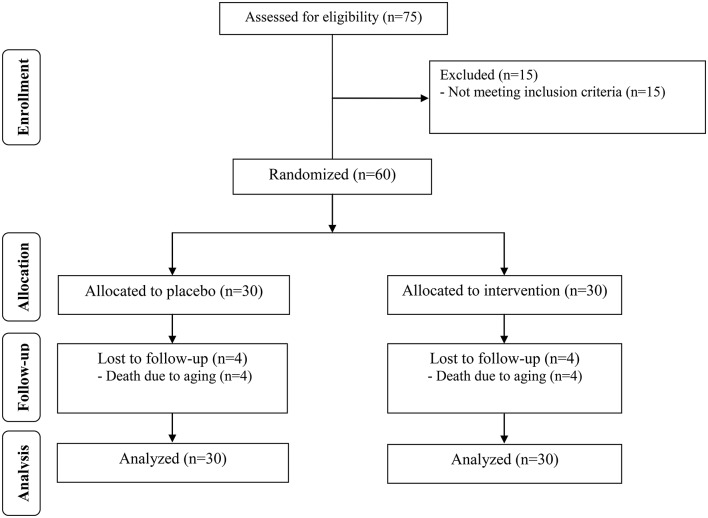
“During the study 4 out of 30 patients in the two groups were died and a total of 52 subjects [control (n = 26) and probiotic (n = 26)] completed the experiments (Figure 1).”
§ Effect of Probiotic Supplementation on Cognitive Function and Metabolic Status in Alzheimer's Disease: A Randomized, Double-Blind and Controlled Trial > Results
plainn = 52- Asserted: passes — The authors put it forward as true.
- Checkable: passes — It can be checked against evidence.
- Load-bearing: fails — The paper’s conclusions may not depend on it.
- Based: passes — The paper gives a reason why it holds.
Probably not a substantial claim. The paper’s conclusions may not depend on it. It may state two separate claims as one.
What the paper did — it cites no source for this, so there is none to check. The quote shows it is in the paper.
In the paper
“Randomization assignment was conducted using computer-generated random numbers.”
§ Effect of Probiotic Supplementation on Cognitive Function and Metabolic Status in Alzheimer's Disease: A Randomized, Double-Blind and Controlled Trial > Materials and methods > Statistical methods
plain- Asserted: passes — The authors put it forward as true.
- Checkable: passes — It can be checked against evidence.
- Load-bearing: passes — The paper’s conclusions depend on it.
- Based: passes — The paper gives a reason why it holds.
Probably not a substantial claim.
What the paper did — it cites no source for this, so there is none to check. The quote shows it is in the paper.
In the paper
“http://www.irct.ir: IRCT201511305623N60.”
§ Effect of Probiotic Supplementation on Cognitive Function and Metabolic Status in Alzheimer's Disease: A Randomized, Double-Blind and Controlled Trial > Clinical registration
plain- Asserted: passes — The authors put it forward as true.
- Checkable: passes — It can be checked against evidence.
- Load-bearing: fails — The paper’s conclusions may not depend on it.
- Based: passes — The paper gives a reason why it holds.
Probably not a substantial claim. The paper’s conclusions may not depend on it.
In the paper
“Evidence indicates that, through production of reactive oxygen species, oxidative stress acts as vehicle for deposition and accumulation of amyloid β (Aβ) in AD (Kim et al., 2015).”
§ Effect of Probiotic Supplementation on Cognitive Function and Metabolic Status in Alzheimer's Disease: A Randomized, Double-Blind and Controlled Trial > Discussion
What the sources say
- Not checked yetcites Kim et al., 2015 source
hedgeddirect- Asserted: passes — The authors put it forward as true.
- Checkable: passes — It can be checked against evidence.
- Load-bearing: fails — The paper’s conclusions may not depend on it.
- Based: passes — The paper gives a reason why it holds.
Probably not a substantial claim. The paper’s conclusions may not depend on it.
What the paper did — it cites no source for this, so there is none to check. The quote shows it is in the paper.
In the paper
“However, as the analysis was based on the ITT principle, all 60 patients were included in the final analysis.”
§ Effect of Probiotic Supplementation on Cognitive Function and Metabolic Status in Alzheimer's Disease: A Randomized, Double-Blind and Controlled Trial > Results
plaindirectn = 60- Asserted: passes — The authors put it forward as true.
- Checkable: passes — It can be checked against evidence.
- Load-bearing: fails — The paper’s conclusions may not depend on it.
- Based: passes — The paper gives a reason why it holds.
Probably not a substantial claim. The paper’s conclusions may not depend on it.
What the paper did — it cites no source for this, so there is none to check. The quote shows it is in the paper.
In the paper
“Therefore, we controlled the analyses for the baseline values of biochemical parameters, age, and baseline BMI. Nevertheless, this adjustment indicated no considerable changes in our findings (Data not shown).”
§ Effect of Probiotic Supplementation on Cognitive Function and Metabolic Status in Alzheimer's Disease: A Randomized, Double-Blind and Controlled Trial > Results > Biochemical measurements
hedged- Asserted: passes — The authors put it forward as true.
- Checkable: passes — It can be checked against evidence.
- Load-bearing: passes — The paper’s conclusions depend on it.
- Based: passes — The paper gives a reason why it holds.
It may state two separate claims as one.
What the paper did — it cites no source for this, so there is none to check. The quote shows it is in the paper.
In the paper
“The randomized allocation sequence, enrolling subjects and allocating them to interventions were conducted by a trained staff at the Welfare Organizations.”
§ Effect of Probiotic Supplementation on Cognitive Function and Metabolic Status in Alzheimer's Disease: A Randomized, Double-Blind and Controlled Trial > Materials and methods > Statistical methods
plain- Asserted: passes — The authors put it forward as true.
- Checkable: passes — It can be checked against evidence.
- Load-bearing: fails — The paper’s conclusions may not depend on it.
- Based: passes — The paper gives a reason why it holds.
Probably not a substantial claim. The paper’s conclusions may not depend on it.
In the paper
“For example, it was reported that 6 weeks probiotic treatment caused no significant change in inflammatory factors of diabetic patients (Mazloom et al., 2013).”
§ Effect of Probiotic Supplementation on Cognitive Function and Metabolic Status in Alzheimer's Disease: A Randomized, Double-Blind and Controlled Trial > Discussion
What the sources say
- Not checked yetcites Mazloom et al., 2013
plain- Asserted: passes — The authors put it forward as true.
- Checkable: passes — It can be checked against evidence.
- Load-bearing: fails — The paper’s conclusions may not depend on it.
- Based: passes — The paper gives a reason why it holds.
Probably not a substantial claim. The paper’s conclusions may not depend on it.
None of the sources cited for this claim have been checked yet.
In the paper
“Dysfunctions in GABA-signaling are linked to anxiety and depression, defects in synaptogenesis and cognitive impairments (Aziz et al., 2013; Mitew et al., 2013).”
§ Effect of Probiotic Supplementation on Cognitive Function and Metabolic Status in Alzheimer's Disease: A Randomized, Double-Blind and Controlled Trial > Discussion
What the sources say
plaincorrelational- Asserted: passes — The authors put it forward as true.
- Checkable: passes — It can be checked against evidence.
- Load-bearing: unclear — It is unclear whether the paper’s conclusions depend on it.
- Based: passes — The paper gives a reason why it holds.
It may state two separate claims as one.
In the paper
“Also the glutamatergic NMDA receptors are involved in the most important excitatory neurotransmission of brain (Talaei et al., 2016) which is engaged in the neural circuits involved in learning and memory.”
§ Effect of Probiotic Supplementation on Cognitive Function and Metabolic Status in Alzheimer's Disease: A Randomized, Double-Blind and Controlled Trial > Discussion
What the sources say
- Not checked yetcites Talaei et al., 2016 source
plaincorrelational- Asserted: passes — The authors put it forward as true.
- Checkable: passes — It can be checked against evidence.
- Load-bearing: fails — The paper’s conclusions may not depend on it.
- Based: passes — The paper gives a reason why it holds.
Probably not a substantial claim. The paper’s conclusions may not depend on it.
In the paper
“Furthermore, 8 weeks consumption of capsules containing 108 CFU/g of L. casei by the people suffered from rheumatoid arthritis displayed no significant within- and between-group changes in MDA and TAC levels (Vaghef-Mehrabany et al., 2015).”
§ Effect of Probiotic Supplementation on Cognitive Function and Metabolic Status in Alzheimer's Disease: A Randomized, Double-Blind and Controlled Trial > Discussion
What the sources say
- Not checked yetcites Vaghef-Mehrabany et al., 2015 source
plain- Asserted: passes — The authors put it forward as true.
- Checkable: passes — It can be checked against evidence.
- Load-bearing: fails — The paper’s conclusions may not depend on it.
- Based: passes — The paper gives a reason why it holds.
Probably not a substantial claim. The paper’s conclusions may not depend on it.
In the paper
“In addition, Zarrati et al. (2014) showed that 8 weeks consumption of yogurt, enriched by L. acidophilus, Bifidobacterium langum, and L. casei (108 CFU/g each) decreased inflammatory cytokines in overweight people.”
§ Effect of Probiotic Supplementation on Cognitive Function and Metabolic Status in Alzheimer's Disease: A Randomized, Double-Blind and Controlled Trial > Discussion
What the sources say
- Not checked yetcites Zarrati et al., 2014 source
plaindirect- Asserted: passes — The authors put it forward as true.
- Checkable: passes — It can be checked against evidence.
- Load-bearing: fails — The paper’s conclusions may not depend on it.
- Based: passes — The paper gives a reason why it holds.
Probably not a substantial claim. The paper’s conclusions may not depend on it.
In the paper
“Some evidence from clinical studies support the fact that abnormal cholesterol metabolism in the brain leads to progressive cognitive dysfunction (Wang et al., 2014).”
§ Effect of Probiotic Supplementation on Cognitive Function and Metabolic Status in Alzheimer's Disease: A Randomized, Double-Blind and Controlled Trial > Discussion
What the sources say
- Not checked yetcites Wang et al., 2014 source
hedgeddirect- Asserted: passes — The authors put it forward as true.
- Checkable: passes — It can be checked against evidence.
- Load-bearing: fails — The paper’s conclusions may not depend on it.
- Based: passes — The paper gives a reason why it holds.
Probably not a substantial claim. The paper’s conclusions may not depend on it.
What the paper did — it cites no source for this, so there is none to check. The quote shows it is in the paper.
In the paper
“Randomization and allocation were concealed from the researchers and individuals until the final analyses were completed.”
§ Effect of Probiotic Supplementation on Cognitive Function and Metabolic Status in Alzheimer's Disease: A Randomized, Double-Blind and Controlled Trial > Materials and methods > Statistical methods
plain- Asserted: passes — The authors put it forward as true.
- Checkable: passes — It can be checked against evidence.
- Load-bearing: passes — The paper’s conclusions depend on it.
- Based: passes — The paper gives a reason why it holds.
Probably not a substantial claim.
What the paper did — it cites no source for this, so there is none to check. The quote shows it is in the paper.
In the paper
“Analyses were conducted based on an intention-to-treat (ITT) principle.”
§ Effect of Probiotic Supplementation on Cognitive Function and Metabolic Status in Alzheimer's Disease: A Randomized, Double-Blind and Controlled Trial > Materials and methods > Statistical methods
plain- Asserted: passes — The authors put it forward as true.
- Checkable: passes — It can be checked against evidence.
- Load-bearing: passes — The paper’s conclusions depend on it.
- Based: passes — The paper gives a reason why it holds.
Probably not a substantial claim.
None of the sources cited for this claim have been checked yet.
In the paper
“Further, findings from germ free animals indicated a decreased level of brain derived neurotrophic factor (BDNF), important neurotrophic factor in the neuronal growth and survival, and a reduced expression of some subunits of N-Methyl-D-aspartate (NMDA) receptors (Sudo et al., 2004) involved in most abundant neurotransmission in brain (Salami et al., 2000).”
§ Effect of Probiotic Supplementation on Cognitive Function and Metabolic Status in Alzheimer's Disease: A Randomized, Double-Blind and Controlled Trial > Discussion
What the sources say
hedgeddirect- Asserted: passes — The authors put it forward as true.
- Checkable: passes — It can be checked against evidence.
- Load-bearing: passes — The paper’s conclusions depend on it.
- Based: passes — The paper gives a reason why it holds.
It may state two separate claims as one.
In the paper
“Emerging evidence has demonstrated that brain insulin resistance, as a key mediator in prediabetes and diabetes mellitus, may take a role in AD (Cervellati et al., 2016).”
§ Effect of Probiotic Supplementation on Cognitive Function and Metabolic Status in Alzheimer's Disease: A Randomized, Double-Blind and Controlled Trial > Discussion
What the sources say
- Not checked yetcites Cervellati et al., 2016 source
hedgedconditional- Asserted: passes — The authors put it forward as true.
- Checkable: passes — It can be checked against evidence.
- Load-bearing: fails — The paper’s conclusions may not depend on it.
- Based: passes — The paper gives a reason why it holds.
Probably not a substantial claim. The paper’s conclusions may not depend on it.
In the paper
“It has also been postulated that oxidative stress may decrease the activity of α-secretase, which promotes the expression and activity of β and γ-secretase, leading to the increased production of Aβ (Tan et al., 2013).”
§ Effect of Probiotic Supplementation on Cognitive Function and Metabolic Status in Alzheimer's Disease: A Randomized, Double-Blind and Controlled Trial > Discussion
What the sources say
- Not checked yetcites Tan et al., 2013 source
hedgedconditional- Asserted: passes — The authors put it forward as true.
- Checkable: passes — It can be checked against evidence.
- Load-bearing: fails — The paper’s conclusions may not depend on it.
- Based: passes — The paper gives a reason why it holds.
Probably not a substantial claim. The paper’s conclusions may not depend on it. It may state two separate claims as one.
A conclusion the paper draws from its own results — it cites no other source for it, so there is none to check. The quote shows it is in the paper.
In the paper
“The current study demonstrated that the probiotic administration for 12 weeks has favorable effects on MMSE score, MDA, hs-CRP, markers of insulin metabolism and triglycerides levels of the AD patients;”
§ Effect of Probiotic Supplementation on Cognitive Function and Metabolic Status in Alzheimer's Disease: A Randomized, Double-Blind and Controlled Trial > Discussion
boosteddirect- Asserted: passes — The authors put it forward as true.
- Checkable: passes — It can be checked against evidence.
- Load-bearing: passes — The paper’s conclusions depend on it.
- Based: passes — The paper gives a reason why it holds.
It may state two separate claims as one.
In the paper
“Insulin resistance plays an important role in the development of cognitive impairment in primary elderly hypertensive patients (Ma et al., 2015).”
§ Effect of Probiotic Supplementation on Cognitive Function and Metabolic Status in Alzheimer's Disease: A Randomized, Double-Blind and Controlled Trial > Discussion
What the sources say
- Not checked yetcites Ma et al., 2015
plaindirect- Asserted: passes — The authors put it forward as true.
- Checkable: passes — It can be checked against evidence.
- Load-bearing: fails — The paper’s conclusions may not depend on it.
- Based: passes — The paper gives a reason why it holds.
Probably not a substantial claim. The paper’s conclusions may not depend on it.
A conclusion the paper draws from its own results — it cites no other source for it, so there is none to check. The quote shows it is in the paper.
In the paper
“Altogether, since the microbiota-gut-brain axis conduits some of its main actions through nerve pathways both dysbiosis and probiotic treatment could have profound effects on the CNS functions.”
§ Effect of Probiotic Supplementation on Cognitive Function and Metabolic Status in Alzheimer's Disease: A Randomized, Double-Blind and Controlled Trial > Discussion
hedgedconditional- Asserted: passes — The authors put it forward as true.
- Checkable: passes — It can be checked against evidence.
- Load-bearing: passes — The paper’s conclusions depend on it.
- Based: passes — The paper gives a reason why it holds.
It may state two separate claims as one.
In the paper
“Consistently, in a meta-analysis study, Kasińska and Drzewoski (2015) reported a reduced HOMA-IR and insignificant FGP in probiotic treated subjects.”
§ Effect of Probiotic Supplementation on Cognitive Function and Metabolic Status in Alzheimer's Disease: A Randomized, Double-Blind and Controlled Trial > Discussion
What the sources say
- Not checked yetcites Kasińska and Drzewoski, 2015
plaindirect- Asserted: passes — The authors put it forward as true.
- Checkable: passes — It can be checked against evidence.
- Load-bearing: fails — The paper’s conclusions may not depend on it.
- Based: passes — The paper gives a reason why it holds.
Probably not a substantial claim. The paper’s conclusions may not depend on it. It may state two separate claims as one.
In the paper
“Consistent to our findings, a significant reduction in MDA levels was reported in type 2 diabetic patients after consuming probiotic yogurt (Ejtahed et al., 2012).”
§ Effect of Probiotic Supplementation on Cognitive Function and Metabolic Status in Alzheimer's Disease: A Randomized, Double-Blind and Controlled Trial > Discussion
What the sources say
- Not checked yetcites Ejtahed et al., 2012 source
plaindirect- Asserted: passes — The authors put it forward as true.
- Checkable: passes — It can be checked against evidence.
- Load-bearing: fails — The paper’s conclusions may not depend on it.
- Based: passes — The paper gives a reason why it holds.
Probably not a substantial claim. The paper’s conclusions may not depend on it.
What the paper did — it cites no source for this, so there is none to check. The quote shows it is in the paper.
In the paper
“The authors declare that the research was conducted in the absence of any commercial or financial relationships that could be construed as a potential conflict of interest.”
§ Effect of Probiotic Supplementation on Cognitive Function and Metabolic Status in Alzheimer's Disease: A Randomized, Double-Blind and Controlled Trial > Author contributions > Conflict of interest statement
plain- Asserted: passes — The authors put it forward as true.
- Checkable: passes — It can be checked against evidence.
- Load-bearing: fails — The paper’s conclusions may not depend on it.
- Based: passes — The paper gives a reason why it holds.
Probably not a substantial claim. The paper’s conclusions may not depend on it.
The paper relies on this without support.
No direct study has considered gut microbiota manipulation in Alzheimer's disease patients.
“However, no direct study has considered the gut microbiota manipulation in AD patients.”
The paper relies on this without support.
Studies considering the effect of probiotic supplements on brain behavioral phenomena are scant.
“Studies considering the effect of probiotic supplements on brain behavioral phenomena are scant.”
The paper relies on this without support.
This study is the first to evaluate the beneficial effects of probiotic supplementation on cognitive function, biomarkers of oxidative stress, inflammation, and metabolic status in patients with Alzheimer's disease.
“To the best of our knowledge, this study is the first evaluating the beneficial effects of probiotic supplementation on cognitive function, biomarkers of oxidative stress, inflammation and metabolic status in patients with AD.”
The paper relies on this without support.
The probiotic intervention changed the gut microbiota in the AD patients.
“Measurement of fecal bacteria loads before and after the probiotic supplementation in the AD patients was very difficult.”
Claims other papers make about this one
Each is checked against this paper’s own text: does it say what the citing paper says it does?
The source backs part of the claim, not all of it — or backs it for a different population, condition or comparison.
In the citing paper
“Recently, a probiotic mixture containing B. longum and different Lactobacillus strains positively affected cognitive function and metabolic status in Alzheimer's disease patients (Akbari et al., 2016).”
From The Microbiota-Gut-Brain Axis (2019) · cites this paper as Akbari et al., 2016
Experimental — accuracy not yet measuredThe cited source says what the claim attributes to it.
In the citing paper
“Clinical trials have shown that probiotic supplementation can improve cognitive function and reduce inflammation in AD patients218.”
From Artificial intelligence-driven multi-omics approaches in Alzheimer's disease: Progress, challenges, and future directions (2025) · cites this paper as [218]
In the citing paper
“and could improve cognitive, sensory and emotional function in AD patients (Akbari et al. 2016).”
From Therapeutic effect of GLP-1 engineered strain on mice model of Alzheimer’s disease and Parkinson’s disease (2020) · cites this paper as Akbari et al. 2016
In the citing paper
“while the assumption of a probiotic fermented milk drink containing L. acidophilus, L. casei, B. bifidum, and L. fermentum improves cognitive function in AD patients [323].”
From The Interplay between Gut Microbiota and Parkinson’s Disease: Implications on Diagnosis and Treatment (2022) · cites this paper as [323]
In the citing paper
“Probiotics have been shown to improve cognitive symptoms and biochemical markers in participants with various dysbiosis-related disorders, including Alzheimer’s disease (476), fibromyalgia (477, 478), and irritable bowel syndrome (IBS) (479).”
From Signalling cognition: The gut microbiota and hypothalamic-pituitary-adrenal axis (2023) · cites this paper as [476]
Citations
Cites
2 retracted
Kouchaki, E., Tamtaji, O. R., Salami, M., Bahmani, F., Daneshvar Kakhaki, R., Akbari, E., Tajabadi-Ebrahimi, M., Jafari, P., & Asemi, Z. (2017) · Clinical Nutrition · doi:10.1016/j.clnu.2016.08.015 · Cited by 317 · cited 1×
“It is demonstrated that other brain related disorders such as multiple sclerosis (Kouchaki et al., 2016) and stress are also influenced by probiotics (Liang et al., 2015).”
BackgroundSelf-citationRetractedMohammadi, A. A., Jazayeri, S., Khosravi‐Darani, K., Solati, Z., Mohammadpour, N., Asemi, Z., Adab, Z., Djalali, M., Tehrani‐Doost, M., Hosseini, M., et al. (2015) · Nutritional Neuroscience · doi:10.1179/1476830515y.0000000023 · Cited by 241
Self-citationRetractedFolstein, M. F., Folstein, S. E., & McHugh, P. R. (1975) · Journal of Psychiatric Research · doi:10.1016/0022-3956(75)90026-6 · Cited by 88,282 · cited 2×
“It is generally agreed that probiotic strains should be of host origin with a beneficial effect on the host, withstand into food stuff with a high count, withstand transits through intestine and colonize lumen of the tract, produce antimicrobial agents, and technologically appropriate for…”
BackgroundMethodMcKhann, G., Drachman, D., Folstein, M., Katzman, R., Price, D., & Stadlan, E. M. (1984) · Neurology · doi:10.1212/wnl.34.7.939 · Cited by 27,915
The Ferric Reducing Ability of Plasma (FRAP) as a Measure of “Antioxidant Power”: The FRAP Assay
Benzie, I. F. F., & Strain, J. (1996) · Analytical Biochemistry · doi:10.1006/abio.1996.0292 · Cited by 23,027 · cited 1×
“Plasma total antioxidant capacity (TAC) was measured using the ferric reducing antioxidant power method developed by Benzie and Strain (1996).”
MethodHirono, N., Mori, E., Ikejiri, Y., Imamura, T., Shimomura, T., Hashimoto, M., Yamashita, H., & Ikeda, M. (1997) · PubMed · Cited by 21,012
Kok, J. S., Berg, I. J., & Scherder, E. J. A. (2013) · Dementia and Geriatric Cognitive Disorders Extra · doi:10.1159/000353441 · Cited by 20,589
Older Adults' Reasons for Using Technology while Aging in Place
Peek, S. T. M., Luijkx, K. G., Rijnaard, M. D., Nieboer, M. E., van der Voort, C. S., Aarts, S., van Hoof, J., Vrijhoef, H. J., & Wouters, E. (2015) · Gerontology · doi:10.1159/000430949 · Cited by 19,852
Sensitivity and False Alarm Rate of a Fall Sensor in Long-Term Fall Detection in the Elderly
Kangas, M., Korpelainen, R., Vikman, I., Nyberg, L., & Jämsä, T. J. (2014) · Gerontology · doi:10.1159/000362720 · Cited by 19,007
Mind-altering microorganisms: the impact of the gut microbiota on brain and behaviour
Cryan, J. F., & Dinan, T. G. (2012) · Nature Reviews Neuroscience · doi:10.1038/nrn3346 · Cited by 4,572 · cited 2×
“The difference between the two groups of testing was statistically significant (P < 0.001).”
BackgroundInfluential
Research works printed but not linked: 1
- Shewale, 2014, Selection criteria for probiotics: a review, Int. J. Probiotics Prebiotics, 9, 17
Cited by
Sorted by citations
Items 201–300 of 951
The Role of Diet and Gut Microbiota in Alzheimer’s Disease
Dissanayaka, D. M. S., Jayasena, V., Rainey‐Smith, S. R., Martins, R. N., & Fernando, W. M. A. D. B. (2024) · Nutrients · doi:10.3390/nu16030412 · Cited by 84
“…milk containing Lactobacillus acidophilus , Lactobacillus casei , Bifidobacterium bifidum , and Lactobacillus fermentum is associated with significantly improved Mini-Mental State Examination (MMSE) scores, reduced plasma malondialdehyde (MDA), and decreased plasma C-reactive protein (CRP) [146].”
BackgroundBeneficial microbiota. Probiotics and pharmaceutical products in functional nutrition and medicine
Novik, G. I., & Savich, V. V. (2019) · Microbes and Infection · doi:10.1016/j.micinf.2019.06.004 · Cited by 79
Rezaeiasl, Z., Salami, M., & Sepehri, G. (2019) · Preventive Nutrition and Food Science · doi:10.3746/pnf.2019.24.3.265 · Cited by 78
“In recent years, the role of probiotic supplements as a therapeutic strategy to improve memory function in a rat model of AD has emerged as a novel and intriguing area for research (Akbari et al., 2016; Jiang et al., 2017).”
BackgroundResultInfluentialSelf-citationCogliati, S., Clementi, V., Francisco, M., Crespo, C., Argañaraz, F., & Grau, R. R. (2019) · Journal of Alzheimer s Disease · doi:10.3233/jad-190837 · Cited by 79
Kim, H., Su-Min, K., Park, S.-J., Park, G., Shin, H., Park, M. S., & Kim, J. (2021) · Frontiers in Aging Neuroscience · doi:10.3389/fnagi.2021.709091 · Cited by 79
Microbiome Gut-Brain-Axis: Impact on Brain Development and Mental Health
Ramadan, Y. N., Alqifari, S. F., Alshehri, K., Alhowiti, A., Mirghani, H. O., Alrasheed, T., Aljohani, F., Alghamdi, A. M., & Hetta, H. F. (2025) · Molecular Neurobiology · doi:10.1007/s12035-025-04846-0 · Cited by 100
“…of attacks of seizures in patients with drug-resistant epilepsy [204], improvement of patients’ difficulties in learning and spatial memory through the use of a fermented milk mixture [205], and a decrease in motor impairment and dopaminergic neurodegeneration in MitoPark PD mouse models [206].”
Microbiota and neurodegenerative diseases
Marizzoni, M., Provasi, S., Cattaneo, A., & Frisoni, G. B. (2017) · Current Opinion in Neurology · doi:10.1097/wco.0000000000000496 · Cited by 79
Welcome, M. O. (2019) · NeuroMolecular Medicine · doi:10.1007/s12017-019-08547-5 · Cited by 77
Syeda, T., Sánchez‐Tapia, M., Pinedo‐Vargas, L., Granados, O., Cuervo-Zanatta, D., Rojas-Santiago, E., Díaz-Cintra, S. Y., Torres, N., & Perez‐Cruz, C. (2018) · Journal of Alzheimer s Disease · doi:10.3233/jad-180556 · Cited by 80
Zhong, H., Xu, J., Yang, M., Hussain, M., Liu, X., Feng, F., & Guan, R. (2023) · Nutrients · doi:10.3390/nu15030496 · Cited by 78
Probiotics for Neurodegenerative Diseases: A Systemic Review
Ojha, S., Patil, N., Jain, M., Kole, C., & Kaushik, P. (2023) · Microorganisms · doi:10.3390/microorganisms11041083 · Cited by 80
A systematic review and meta-analysis of the probiotics and synbiotics effects on oxidative stress
Heshmati, J., Farsi, F., Shokri, F., Rezaeinejad, M., Almasi‐Hashiani, A., Vesali, S., & Sepidarkish, M. (2018) · Journal of Functional Foods · doi:10.1016/j.jff.2018.04.049 · Cited by 74
Probiotics: Protecting Our Health from the Gut
Varela-Trinidad, G. U., Domínguez-Díaz, C., Solórzano-Castanedo, K., Íñiguez-Gutiérrez, L., Hernández-Flores, T. D. J., & Fafutis‐Morris, M. (2022) · Microorganisms · doi:10.3390/microorganisms10071428 · Cited by 80
Fang, X., Zhou, X., Miao, Y., Han, Y., Wei, J., & Chen, T. (2020) · AMB Express · doi:10.1186/s13568-020-01014-6 · Cited by 70
Mohammadi, G., Dargahi, L., Peymani, A., Mirzanejad, Y., Alizadeh, S. A., Naserpour, T., & Nassiri‐Asl, M. (2018) · Journal of the American College of Nutrition · doi:10.1080/07315724.2018.1487346 · Cited by 76
“Over the last decade, there has been emerging evidence that the intestinal microbiota can influence neurological functions and behavior in the brain (21–24) via the CONTACT Marjan Nassiri-Asl marjannassiriaslm@gmail.com Cellular and Molecular Research Center, Department of Pharmacology, Qazvin University of Medical Sc…”
BackgroundThe Gut Microbiome as a Therapeutic Target for Cognitive Impairment
Sun, Y., Baptista, L. C. P., Roberts, L. M., Jumbo-Lucioni, P., McMahon, L. L., Buford, T. W., & Carter, C. S. (2019) · The Journals of Gerontology Series A · doi:10.1093/gerona/glz281 · Cited by 73
“Akbari and colleagues reported 12-week of probiotic treatment with a supplement containing Lactobacillus acidophilus, Lactobacillus casei, Bifidobacterium bifidum, and Lactobacillus fermentum positively affected cognitive function and metabolic homeostasis in AD patients (35).”
BackgroundNosrani, E. A., Tamtaji, O. R., Alibolandi, Z., Sarkar, P., Ghazanfari, M., Tameh, A. A., Taghizadeh, M., Banikazemi, Z., Hadavi, R., & Taheri, M. N. (2020) · Journal of Immunoassay and Immunochemistry · doi:10.1080/15321819.2020.1833917 · Cited by 70
Self-citationChen, Q., Wu, J., Dong, X., Yin, H., Shi, X., Su, S., Che, B., Li, Y., & Yang, J. (2021) · Journal of Photochemistry and Photobiology B Biology · doi:10.1016/j.jphotobiol.2021.112152 · Cited by 69
Zou, B., Li, J., Ma, R., Cheng, X.-Y., Ma, R.-Y., Zhou, T.-Y., Wu, Z., Yao, Y., & Li, J. (2023) · Aging and Disease · doi:10.14336/ad.2022.1127 · Cited by 76
“fermentum) on cognitive function and metabolic status in 60 patients with AD [122].”
BackgroundGut Microbiota Influences Alzheimer’s Disease Pathogenesis by Regulating Acetate in Drosophila Model
Kong, Y., Jiang, B., & Luo, X. (2018) · Future Microbiology · doi:10.2217/fmb-2018-0185 · Cited by 69
Role of Probiotics and Diet in the Management of Neurological Diseases and Mood States: A Review
Thangaleela, S., Sivamaruthi, B. S., Kesika, P., & Chaiyasut, C. (2022) · Microorganisms · doi:10.3390/microorganisms10112268 · Cited by 73
Yang, S., Qiao, J., Zhang, M., Kwok, L., Matijašić, B. B., Zhang, H., & Zhang, W. (2024) · Journal of Advanced Research · doi:10.1016/j.jare.2024.06.006 · Cited by 73
“These findings suggest a substantial improvement following the probiotic intervention [143].”
Neuromicrobiology: How Microbes Influence the Brain
de la Fuente‐Núñez, C., Meneguetti, B. T., Franco, O. L., & Lu, T. K. (2017) · ACS Chemical Neuroscience · doi:10.1021/acschemneuro.7b00373 · Cited by 75
Yahfoufi, N., Matar, C., & Ismail, N. (2020) · The Journals of Gerontology Series A · doi:10.1093/gerona/glaa006 · Cited by 70
“Exposure to Lactobacillus acidophilus, Lactobacillus casei, Bifidobacterium bifidum, and Lactobacillus fermentum for 12 weeks improves the performance on the minimental state examination (MMSE), a cognitive test used to assess learning and memory (99).”
MethodGut microbiota in dementia. Critical review of novel findings and their potential application
Łuc, M., Misiak, B., Pawłowski, M., Stańczykiewicz, B., Zabłocka, A., Szcześniak, D. M., Pałęga, A., & Rymaszewska, J. (2020) · Progress in Neuro-Psychopharmacology and Biological Psychiatry · doi:10.1016/j.pnpbp.2020.110039 · Cited by 69
“This effect was mediated via metabolic pathways such as the reduction of insulin resistance, oxidative stress, and inflammatory processes intensity (Akbari et al., 2016).”
BackgroundTargeting the Microbiota in Pharmacology of Psychiatric Disorders
Pascale, A., Marchesi, N., Govoni, S., & Barbieri, A. (2020) · Pharmacological Research · doi:10.1016/j.phrs.2020.104856 · Cited by 67
Go, J., Chang, D., Ryu, Y., Park, H., Lee, I.-B., Noh, J., Hwang, D. Y., Kim, B., Kim, K., & Lee, C. (2020) · Nutrition Research · doi:10.1016/j.nutres.2020.12.010 · Cited by 69
Białecka-Dębek, A., Granda, D., Szmidt, M. K., & Zielińska, D. (2021) · Nutrients · doi:10.3390/nu13082514 · Cited by 69
“6 MMSE no TAC, GSH, hs-CRP, MDA, NO, HOMA-B, HOMA-IR, QUICK, FPG, TG, TC, LDL, HDL, VLDL, TC/HDL, insulin, weight, BMI dietary intakes (3-day food records) Iran [101]”
Cheng, W., Ho, J. Y. S., & Chang, R. C. (2022) · Ageing Research Reviews · doi:10.1016/j.arr.2022.101620 · Cited by 71
Aberrant energy metabolism in Alzheimer’s disease
Yu, L., Jin, J., Xu, Y., & Zhu, X. (2022) · Journal of Translational Internal Medicine · doi:10.2478/jtim-2022-0024 · Cited by 65
“[144] Recently, studies showed that treatment with a probiotic mixture containing Bifidobacterium longum and different Lactobacillus strains positively influenced the cognitive function and metabolic status of patients with AD.[145] In addition, Helicobacter pylori (H.”
BackgroundLiang, Y., Liu, C., Cheng, M., Geng, L., Li, J., Du, W., Song, M., Chen, N., Yeleen, T. A. N., Li, S., et al. (2024) · Alzheimer s & Dementia · doi:10.1002/alz.14057 · Cited by 73
“74 Similarly, one meta-analysis showed that compared to controls, individuals who received probiotics had significantly improved cognitive function, and decreased levels of malondialdehyde and high-sensitivity C-reactive protein.”
Salami, M. (2021) · Frontiers in Neuroscience · doi:10.3389/fnins.2021.613120 · Cited by 67
“In a clinical trial, a mixture of Lactobacillus acidophilus, Lactobacillus casei, Bifidobacterium bifidum, and Lactobacillus fermentum decreased MDA, and the inflammatory protein marker, highsensitivity C-reactive protein (h-CRP) in AD patients (Akbari et al., 2016). Ho et al. (2019) also showed that probiotic treatme…”
BackgroundMethodInfluentialSelf-citationBlivet, G., Meunier, J., Roman, F. J., & Touchon, J. (2018) · Alzheimer s & Dementia Translational Research & Clinical Interventions · doi:10.1016/j.trci.2017.12.003 · Cited by 67
“Conversely, a recent study demonstrated that a 12-week probiotic supplement positively affected cognitive functions and some metabolic statuses in AD patients [50].”
BackgroundProbiotics in Extraintestinal Diseases: Current Trends and New Directions
Kiousi, D. E., Karapetsas, A., Karolidou, K., Panayiotidis, M. I., Pappa, A., & Galanis, Α. (2019) · Nutrients · doi:10.3390/nu11040788 · Cited by 82
Lv, T., Ye, M., Luo, F., Hu, B., Wang, A., Chen, J., Yan, J., He, Z., Chen, F., Qian, C., et al. (2020) · Neuroscience & Biobehavioral Reviews · doi:10.1016/j.neubiorev.2020.10.027 · Cited by 67
The effect of probiotics on cognitive function across the human lifespan: A systematic review
Eastwood, J., Walton, G., van Hemert, S., Williams, C. M., & Lamport, D. J. (2021) · Neuroscience & Biobehavioral Reviews · doi:10.1016/j.neubiorev.2021.06.032 · Cited by 65
Huang, H.-J., Chen, J.-L., Liao, J.-F., Chen, Y., Chieu, M.-W., Ke, Y.-Y., Hsu, C.-C., Tsai, Y.-C., & Hsieh‐Li, H. M. (2021) · BMC Complementary Medicine and Therapies · doi:10.1186/s12906-021-03426-8 · Cited by 65
Qiao, L., Chen, Y., Song, X., Dou, X., & Xu, C. (2022) · International Journal of Nanomedicine · doi:10.2147/ijn.s374024 · Cited by 70
“Akbari et al found that a probiotic combination containing Lactobacillus acidophilus, Lactobacillus casei, Bifidobacterium bifidum, and Lactobacillus fermentum positively affects cognitive function and metabolic status in AD patients.(20) In an exploratory intervention study using probiotic supplementation in AD patie…”
BackgroundPotential health benefits of fermented blueberry: A review of current scientific evidence
Sivapragasam, N., Neelakandan, N., & Rupasinghe, H. P. V. (2023) · Trends in Food Science & Technology · doi:10.1016/j.tifs.2023.01.002 · Cited by 66
Gut Microbiota Regulation and Their Implication in the Development of Neurodegenerative Disease
Sun, P., Su, L., Zhu, H., Li, X., Guo, Y., Du, X., Zhang, L., & Qin, C. (2021) · Microorganisms · doi:10.3390/microorganisms9112281 · Cited by 68
Neuroinflammation in neurodegeneration via microbial infections
Tran, V. T. A., Lee, L. P., & Cho, H. (2022) · Frontiers in Immunology · doi:10.3389/fimmu.2022.907804 · Cited by 72
Singh, J., Vanlallawmzuali, Singh, A. K., Biswal, S., Zomuansangi, R., Lalbiaktluangi, C., Singh, B. P., Singh, P. K., Vellingiri, B., Iyer, M., et al. (2024) · Asian Journal of Psychiatry · doi:10.1016/j.ajp.2024.104068 · Cited by 71
Pourrajab, B., Fatahi, S., Sohouli, M. H., Găman, M.-A., & Shidfar, F. (2022) · Critical Reviews in Food Science and Nutrition · doi:10.1080/10408398.2020.1821166 · Cited by 82
“the study examined the effects of foods fortified with probiotics or synbiotics (Bakhshimoghaddam et al. 2018; Asemi et al. 2012; Akbari et al. 2016; Ejtahed et al. 2012, م أ ذ ن ی et al. 2018; Kullisaar et al. 2003; Naruszewicz et al. 2002; Songisepp et al. 2005; Arani et al. 2018; Miraghajani et al. 2017; Hariri et…”
BackgroundNithya, A., Misra, S., Panigrahi, C., Dalbhagat, C. G., & Mishra, H. N. (2023) · Food Chemistry Advances · doi:10.1016/j.focha.2023.100381 · Cited by 67
Neuropsychiatric Disorders: Influence of Gut Microbe to Brain Signalling
Scriven, M., Wall, M., Cryan, J. F., & Dinan, T. G. (2018) · Diseases · doi:10.3390/diseases6030078 · Cited by 62
Functional Foods: An Approach to Modulate Molecular Mechanisms of Alzheimer’s Disease
Atlante, A., Amadoro, G., Bobba, A., & Latina, V. (2020) · Cells · doi:10.3390/cells9112347 · Cited by 67
Contribution of Gut Microbiota to Immunological Changes in Alzheimer’s Disease
van Olst, L., Roks, S. J. M., Kamermans, A., Verhaar, B. J. H., van der Geest, A. M., Muller, M., van der Flier, W. M., & de Vries, H. E. (2021) · Frontiers in Immunology · doi:10.3389/fimmu.2021.683068 · Cited by 68
Dietary Regulation of Gut-Brain Axis in Alzheimer’s Disease: Importance of Microbiota Metabolites
Frausto, D. M., Forsyth, C. B., Keshavarzian, A., & Voigt, R. M. (2021) · Frontiers in Neuroscience · doi:10.3389/fnins.2021.736814 · Cited by 61
Recent Progress in the Pharmacotherapy of Alzheimer’s Disease
Khoury, R., Patel, K., Gold, J., Hinds, S., & Grossberg, G. T. (2017) · Drugs & Aging · doi:10.1007/s40266-017-0499-x · Cited by 62
Microbiome Influence in the Pathogenesis of Prion and Alzheimer’s Diseases
D’Argenio, V., & Sarnataro, D. (2019) · International Journal of Molecular Sciences · doi:10.3390/ijms20194704 · Cited by 64
Exploring the microbiota-gut-brain axis: impact on brain structure and function
Yassin, L. K., Nakhal, M. M., Alderei, A., Almehairbi, A., Mydeen, A. B., Akour, A. A., & Hamad, M. I. K. (2025) · Frontiers in Neuroanatomy · doi:10.3389/fnana.2025.1504065 · Cited by 64
Immunoregulatory effect of mast cells influenced by microbes in neurodegenerative diseases
Girolamo, F., Coppola, C., & Ribatti, D. (2017) · Brain Behavior and Immunity · doi:10.1016/j.bbi.2017.06.017 · Cited by 61
Sleep and circadian rhythm disruption and stress intersect in Alzheimer's disease
Phan, T., & Malkani, R. G. (2018) · Neurobiology of Stress · doi:10.1016/j.ynstr.2018.10.001 · Cited by 66
Stenman, L. K., Patterson, E., Meunier, J., Roman, F. J., & Lehtinen, M. J. (2019) · Behavioural Brain Research · doi:10.1016/j.bbr.2019.112376 · Cited by 62
“Deficits in cognitive function following stress have previously been reported in rodents [22] and in humans [28] and probiotics have proven efficacious in alleviating such cognitive dysfunction [22,29].”
Chandra, S., Di Meco, A., Dodiya, H. B., Popovic, J., Cuddy, L. K., Weigle, I. Q., Zhang, X., Sadleir, K., Sisodia, S. S., & Vassar, R. (2023) · Molecular Neurodegeneration · doi:10.1186/s13024-023-00635-2 · Cited by 58
The Role of the Microbiota-Gut-Brain Axis in the Development of Alzheimer’s Disease
Wiatrak, B., Balon, K., Jawień, P., Bednarz, D., Jęśkowiak, I., & Szeląg, A. (2022) · International Journal of Molecular Sciences · doi:10.3390/ijms23094862 · Cited by 58
Target Dysbiosis of Gut Microbes as a Future Therapeutic Manipulation in Alzheimer’s Disease
Zhu, F., Li, C., Chu, F., Tian, X., & Zhu, J. (2020) · Frontiers in Aging Neuroscience · doi:10.3389/fnagi.2020.544235 · Cited by 59
Effect of nutrition in Alzheimer’s disease: A systematic review
Lou, I. X., Ali, K., & Chen, Q. (2023) · Frontiers in Neuroscience · doi:10.3389/fnins.2023.1147177 · Cited by 70
Prebiotics and probiotics as potential therapy for cognitive impairment
Romo‐Araiza, A., & Ibarra, A. (2019) · Medical Hypotheses · doi:10.1016/j.mehy.2019.109410 · Cited by 61
Preventive and therapeutic aspects of fermented foods
Baruah, R., Ray, M., & Halami, P. M. (2022) · Journal of Applied Microbiology · doi:10.1111/jam.15444 · Cited by 60
Cheng, L., Chou, P.-Y., Hou, A.-T., Huang, C.-L., Shiu, W.-L., & Wang, S. (2022) · Food & Function · doi:10.1039/d2fo00165a · Cited by 57
The Gut Microbiome–Brain Crosstalk in Neurodegenerative Diseases
Ghezzi, L., Cantoni, C., Rotondo, E., & Galimberti, D. (2022) · Biomedicines · doi:10.3390/biomedicines10071486 · Cited by 61
RETRACTED: Decrypting the potential role of α-lipoic acid in Alzheimer's disease
Kaur, D., Behl, T., Sehgal, A., Singh, S., Sharma, N., Chigurupati, S., Alhowail, A., Abdeen, A., Ibrahim, S. F., Vargas-De-La-Cruz, C. B., et al. (2021) · Life Sciences · doi:10.1016/j.lfs.2021.119899 · Cited by 57
RetractedWang, Y., Du, W., Hu, X., Yu, X., Guo, C., Jin, X., & Wang, W. (2023) · Acta Pharmaceutica Sinica B · doi:10.1016/j.apsb.2023.08.009 · Cited by 58
“Furthermore, twelve-week probiotics treatment had a beneficial effect on insulin metabolism markers and triglycerides, and contributed to improving cognitive and metabolic disorders in AD patients 156 .”
BackgroundXie, C., & Prasad, A. A. (2020) · Microorganisms · doi:10.3390/microorganisms8111661 · Cited by 59
Subramaniam, C. B., Bowen, J. M., Gladman, M. A., Lustberg, M. B., Mayo, S. J., & Wardill, H. R. (2020) · Neuroscience & Biobehavioral Reviews · doi:10.1016/j.neubiorev.2020.07.002 · Cited by 59
Labarre, A., Guitard, E., Tossing, G., Forest, A., Bareke, E., Labrecque, M., Tétreault, M., Ruiz, M., & Parker, J. A. (2022) · Communications Biology · doi:10.1038/s42003-022-04295-8 · Cited by 55
Pei, Y., Yan, L., Li, H., Jiang, C., & Wang, L. (2023) · Frontiers in Aging Neuroscience · doi:10.3389/fnagi.2023.1174599 · Cited by 60
Amyotrophic lateral sclerosis and intestinal microbiota—toward establishing cause and effect
Gotkine, M., Kviatcovsky, D., & Elinav, E. (2020) · Gut Microbes · doi:10.1080/19490976.2020.1767464 · Cited by 55
The gut microbiota is an emerging target for improving brain health during ageing
Boehme, M., Guzzetta, K. E., Wasén, C., & Cox, L. M. (2022) · Gut Microbiome · doi:10.1017/gmb.2022.11 · Cited by 57
“Supplementation with a probiotic milk containing Lactobacillus acidophilus, Lactobacillus casei, Bifidobacterium bifidum and Lactobacillus fermentum another Iranian study showed improved insulin sensitivity, lower levels of the inflammatory marker CRP, and an improved cognitive score in the Mini-Mental State Examinati…”
Vitamin K2 Holds Promise for Alzheimer’s Prevention and Treatment
Popescu, A., & German, M. (2021) · Nutrients · doi:10.3390/nu13072206 · Cited by 57
Clinical and Preclinical Studies of Fermented Foods and Their Effects on Alzheimer’s Disease
Kumar, M. R., Azizi, N. F., Yeap, S. K., Abdullah, J. O., Khalid, M., Omar, A. R., Osman, M. A., Leow, T. C., Mortadza, S. A. S., & Alitheen, N. B. (2022) · Antioxidants · doi:10.3390/antiox11050883 · Cited by 60
Updates on the Role of Probiotics against Different Health Issues: Focus on Lactobacillus
Un-Nisa, A., Khan, A., Zakria, M., Siraj, S., Ullah, S., Tipu, M. K., Ikram, M. A., & Kim, M. O. (2022) · International Journal of Molecular Sciences · doi:10.3390/ijms24010142 · Cited by 64
Modifying the diet and gut microbiota to prevent and manage neurodegenerative diseases
Gates, E. J., Bernath, A. K., & Klegeris, A. (2022) · Reviews in the Neurosciences · doi:10.1515/revneuro-2021-0146 · Cited by 59
“In addition, this fermented beverage has favorable effects on insulinmetabolismand serum levels of triglycerides, MDA, and CRP, indicating improved energy metabolism and decreased oxidative stress and inflammation (Akbari et al. 2016).”
BackgroundMechanisms of Cognitive Impairment in Depression. May Probiotics Help?
Dobielska, M., Bartosik, N. K., Zyzik, K. A., Kowalczyk, E., & Karbownik, M. S. (2022) · Frontiers in Psychiatry · doi:10.3389/fpsyt.2022.904426 · Cited by 57
Gut Microbiota and Alzheimer’s Disease: How to Study and Apply Their Relationship
Nguyen, N. M., Cho, J., & Lee, C.-H. (2023) · International Journal of Molecular Sciences · doi:10.3390/ijms24044047 · Cited by 60
Ruiz‐González, C., Román, P., Rueda‐Ruzafa, L., Rodríguez-Arrastia, M. J., & Cardona, D. (2020) · Progress in Neuro-Psychopharmacology and Biological Psychiatry · doi:10.1016/j.pnpbp.2020.110189 · Cited by 52
Evidences for a Role of Gut Microbiota in Pathogenesis and Management of Epilepsy
Amlerová, J., Šroubek, J., Angelucci, F., & Hort, J. (2021) · International Journal of Molecular Sciences · doi:10.3390/ijms22115576 · Cited by 57
Jiang, J., Chu, C., Wu, C., Wang, C., Zhang, C., Li, T., Zhai, Q., Yu, L., Tian, F., & Chen, W. (2021) · Food & Function · doi:10.1039/d0fo03203d · Cited by 52
Non-drug Therapies for Alzheimer’s Disease: A Review
Li, X., Ji, M., Zhang, H., Liu, Z., Chai, Y., Cheng, Q., Yang, Y., Cordato, D. J., & Gao, J. (2022) · Neurology and Therapy · doi:10.1007/s40120-022-00416-x · Cited by 52
Effects of gut microbiota on neurodegenerative diseases
Khatoon, S., Kalam, N., Rashid, S., & Bano, G. (2023) · Frontiers in Aging Neuroscience · doi:10.3389/fnagi.2023.1145241 · Cited by 55
“In addition, glucose and lipid metabolism modifications were noted, which were believed to improve the cognitive evaluation score (Akbari et al., 2016).”
BackgroundCeccarelli, G., Brenchley, J. M., Cavallari, E. N., Scheri, G. C., Fratino, M., Pinacchio, C., Schietroma, I., Fard, S. N., Scagnolari, C., Mezzaroma, I., et al. (2017) · Nutrients · doi:10.3390/nu9111269 · Cited by 51
Impact of Fermented Foods on Human Cognitive Function—A Review of Outcome of Clinical Trials
Sivamaruthi, B. S., Kesika, P., & Chaiyasut, C. (2018) · Scientia Pharmaceutica · doi:10.3390/scipharm86020022 · Cited by 51
Clinical Trials of Probiotic Strains in Selected Disease Entities
Dudek-Wicher, R. K., Junka, A., Paleczny, J., & Bartoszewicz, M. (2020) · International Journal of Microbiology · doi:10.1155/2020/8854119 · Cited by 53
“showed that a probiotic supplement consisting of Lactobacillus acidophilus, Lactobacillus casei, Bifidobacterium bifidum, and Lactobacillus fermentum administered for 3 months improves the cognitive functions of patients with AD [36].”
BackgroundZhong, S.-R., Kuang, Q., Zhang, F., Chen, B., & Zhong, Z.-G. (2021) · Translational Neuroscience · doi:10.1515/tnsci-2020-0206 · Cited by 56
“Studies based on germ-free (GF) animals [26], antibiotics [27], probiotics [28], or fecal microbiota transplantation [29] support the pivotal role of gut microbiota in modulating cognition, behavior, and central nervous system (CNS) physiology.”
BackgroundShamsipour, S., Sharifi, G., & Taghian, F. (2021) · Neuroscience Letters · doi:10.1016/j.neulet.2021.135949 · Cited by 54
Nutrition and Alzheimer Disease
Fernández, S. S. M., & Ribeiro, S. M. L. (2018) · Clinics in Geriatric Medicine · doi:10.1016/j.cger.2018.06.012 · Cited by 50
Nutrients for neurocognition in health and disease: Measures, methodologies and mechanisms
Scholey, A. (2018) · Proceedings of The Nutrition Society · doi:10.1017/s0029665117004025 · Cited by 49
Influence of the Microbiota-Gut-Brain Axis on Cognition in Alzheimer’s Disease
Escobar, Y.-N. H., O’Piela, D., Wold, L. E., & Mackos, A. R. (2022) · Journal of Alzheimer s Disease · doi:10.3233/jad-215290 · Cited by 52
Garcez, M. L., Jacobs, K. R., & Guillemin, G. J. (2019) · Neurotoxicity Research · doi:10.1007/s12640-019-00057-3 · Cited by 51
Brown, T., Sykes, D., & Allen, A. R. (2021) · Biomedicines · doi:10.3390/biomedicines9020189 · Cited by 51
Diet-Microbiota-Brain Axis in Alzheimer’s Disease
Kincaid, H. J., Nagpal, R., & Yadav, H. (2021) · Annals of Nutrition and Metabolism · doi:10.1159/000515700 · Cited by 51
“A randomized double-blind controlled human trial looking at the effects of a 12-weeks consumption of a probiotic combination of Lactobacillus acidophilus, Lactobacillus casei, Bifidobacterium bifidum, and Lactobacillus fermentum, reported significant positive effects on cognitive functioning, although no effects on ox…”
BackgroundAzuma, N., Mawatari, T., Saito, Y., Tsukamoto, M., Sampei, M., & Iwama, Y. (2023) · Nutrients · doi:10.3390/nu15194175 · Cited by 54
Fecal microbiota transplantation: a novel strategy for treating Alzheimer’s disease
Xiang, W., Xiang, H., Wang, J., Jiang, Y., Pan, C., Ji, B.-J., & Zhang, A. (2023) · Frontiers in Microbiology · doi:10.3389/fmicb.2023.1281233 · Cited by 49
Impact of Microbiome–Brain Communication on Neuroinflammation and Neurodegeneration
Stolzer, I., Scherer, E., Süß, P., Rothhammer, V., Winner, B., Neurath, M. F., & Günther, C. (2023) · International Journal of Molecular Sciences · doi:10.3390/ijms241914925 · Cited by 49
“For example, it has been shown that supplementing AD patients with a probiotic mix containing Lactobacillus and Bifidobacterium resulted in improved cognitive functions and reduced levels of inflammatory markers [55].”
Wu, W.-G., Zhao, Z., Zhao, Z., Zhang, D., Zhang, Q., Zhang, J., Fang, Z., Bai, Y., & Guo, X. (2023) · Nutrients · doi:10.3390/nu15234901 · Cited by 47
Microglia and gut microbiota: A double-edged sword in Alzheimer's disease
Bano, N., Khan, S., Ahamad, S., Kanshana, J. S., Dar, N. J., Khan, S. J., Nazir, A., & Bhat, S. A. (2024) · Ageing Research Reviews · doi:10.1016/j.arr.2024.102515 · Cited by 50
Rianda, D., Agustina, R., Setiawan, E. A., & Manikam, N. R. M. (2019) · Beneficial Microbes · doi:10.3920/bm2019.0068 · Cited by 49
Targeting Gut Microbiota Dysbiosis: Potential Intervention Strategies for Neurological Disorders
Wu, W., Kong, Q., Tian, P., Zhai, Q., Wang, G., Liu, X., Zhao, J., Zhang, H., Lee, Y. K., & Chen, W. (2020) · Engineering · doi:10.1016/j.eng.2019.07.026 · Cited by 52
“[82] reported that the treatment of AD patients with milk enriched with Lactobacillus acidophilus, Lactobacillus casei, Bifidobacterium bifidum, and Lactobacillus fermentum for 12 weeks significantly elevated learning and memory capacity in the mini-mental-state examination (MMSE) test.”
BackgroundMudaliar, S. B., Poojary, S. S., Prasad, A. S. B., & Mazumder, N. (2024) · Probiotics and Antimicrobial Proteins · doi:10.1007/s12602-024-10214-6 · Cited by 53
Metadata
- Authors
- Akbari, E., Asemi, Z., Daneshvar Kakhaki, R., Bahmani, F., Kouchaki, E., Tamtaji, O. R., Hamidi, G. A., & Salami, M.
- Affiliations
- Kashan University of Medical Sciences (IR)
- Corresponding author
- Asemi, Zatollah
- Salami, Mahmoud
- ORCID
- Venue
- Frontiers in Aging Neuroscience
- Publisher
- Frontiers Media SA
- Published
- 2016-11-10
- Volume
- 8
- Pages
- 256-256
- ISSN
- 1663-4365 (ISSN-L)
- PMC
- PMC5105117
- OpenAlex
- W2549210709
- Semantic Scholar
- 7a1f1dc8208ef2c3d7013ce699ff50704195c24d
- Cited by
- 946
- References
- 60
- Citations by year
- 2026: 75 · 2025: 111 · 2024: 120 · 2023: 136 · 2022: 139 · 2021: 119 · 2020: 94 · 2019: 87 · 2018: 44 · 2017: 19
- FWCI
- 63.01
- Type
- journal article
- Language
- en
- Update notices
- expression_of_concern (2020-10-07)
- Open access
- gold
- doi.org
- Licence
- cc-by
- Locations
- Frontiers in Aging Neuroscience (publishedVersion, cc-by)
- Europe PMC (PubMed Central) (publishedVersion, cc-by)
- PubMed Central (publishedVersion, cc-by)
- PubMed (publishedVersion)
- DOAJ (DOAJ: Directory of Open Access Journals) (submittedVersion)
- Funders
- Kashan University of Medical Sciences
- Topics
- Life Sciences › Agricultural and Biological Sciences › Food Science › Probiotics and Fermented Foods
- Health Sciences › Medicine › Psychiatry and Mental health › Dementia and Cognitive Impairment Research
- Life Sciences › Neuroscience › Cellular and Molecular Neuroscience › Alzheimer's disease research and treatments
- Keywords
- Alzheimer's disease, probiotics, probiotic milk, cognitive function, metabolic status, Lactobacillus acidophilus, Lactobacillus casei, Bifidobacterium bifidum, Lactobacillus fermentum, malondialdehyde, oxidative stress, C-reactive protein, insulin resistance, beta-cell function, triglycerides, Mini-Mental State Examination
About these checks
Registry, retraction, Cites and statistics results are computed, not judged, with one exception: a printed reference that no index lists is read once by a model before it counts as a citation error. Claims are extracted by a model and kept only when their quote appears verbatim in the text; each cited source is then checked, with a model’s help, for whether it says what the claim relies on. Those verdicts can be wrong — read the claim’s quote and the cited source before relying on one.
A language model drew the claims from the paper on 2026-10-06, under version 3 of the claim definition (model deepseek-v4.1-flash, prompt extract-v3).
A second model labelled each claim on 2026-10-06 (model jev-1.13-20260917, definition revision gold-guideline-v0.2).
Statistics and arithmetic are recomputed, not judged.
Confidence bands are shown only for fields calibrated on our annotated test set. None is calibrated yet, so no band is shown.
What counts as a claim ›How we measure confidence ›How we check this ›
Are you an author, or do you see a problem with this page? Request a review
